Brick One- and Two-Family Houses · Six-Story Apartment Buildings · Newer Walk-Ups · Night-Shift and Rotating-Shift Households
Alarm Installation in Wingate
A Mode for Sleeping in Daylight · Alerts That Reach a Silenced Phone · Hand-Offs at Shift Change · Brooklyn List Prices
Wingate is a small grid of brick houses and six-story apartment buildings between Empire Boulevard and the hospital campuses on Clarkson Avenue. Kings County Hospital sits directly across Winthrop Street from Wingate Park, SUNY Downstate is a block further on, and in ZIP 11203, which takes in the southern half of the neighborhood, 44 percent of working residents are employed in education, health care or social assistance, against 29 percent across Brooklyn. That shows up at the front door. Many households here run on hospital hours: someone leaves at six in the evening, someone else comes in at eight in the morning, and somebody is often asleep upstairs in the middle of the day, the 9-to-5 hours in which half of the home burglaries in the public NYPD record for these blocks began. This page explains how we set up an alarm for a house that is rarely empty but often asleep, on streets where sirens never stop, at our published Brooklyn prices.
We book the visit around the sleeper, not around our van
4.7★ from 201 Google reviews of our Brooklyn work
Reviewed and updated October 22, 2026, against NYPD complaint records and NYC PLUTO (both via NYC Open Data), the American Community Survey 2020–2024 (via Census Reporter), the NYPD 71st Precinct page, NYC Parks' Wingate Park history, Wikipedia's Wingate, Kings County Hospital Center, SUNY Downstate and George W. Wingate High School articles, cityneighborhoods.nyc, BK Reader (2016, 2024, 2025), the Brooklyn Borough President's office (2022), Our Time Press (2018), StreetEasy (2021), Brick Underground and 6sqft (2016), DNAinfo (2016), Brownstoner (2011), Brooklyn Paper, The Neighborhoods (2024), Forgotten New York (2025), New York State DEC (2025) and Administrative Code § 24-238 · Anwar Timothy, NYS license #12000287431 · crews sent from our Troy Avenue office
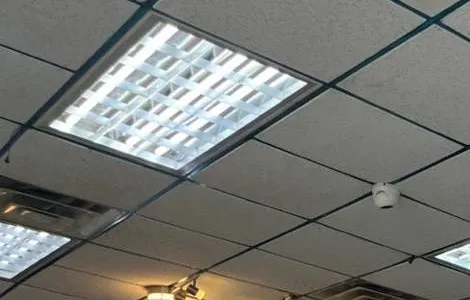
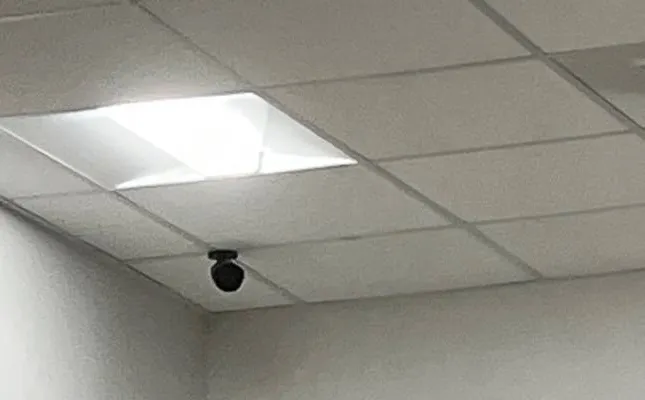
AESS job-library photo, not taken in Wingate: a small white dome on a drop ceiling next to a light panel. In a Wingate house where someone sleeps through the day, ceiling devices like this go on the floors below the sleeper, so the bedroom floor can stay quiet while the doors below stay armed.
Wingate Alarm Request
A brick one- or two-family, an apartment in a six-story building, a newer walk-up, or a shop or office on the avenues
✅
Request Sent!
We will call about the Wingate address at a time you tell us you are awake.
25+
Years Experience
✓
Same-Day Estimates
100%
Licensed & Insured
4.7★
201 Google Reviews
Start with the household's week, not the floor plan. Before we count windows, we ask who sleeps when. Text (347) 934-8335 a photo of the front door from inside, one of the back or yard door, and a line such as: "two-family, we're on the top two floors, I work 7 p.m. to 7 a.m. three nights a week at the hospital, my husband works days, our son is home from school at 3." From that a technician can usually tell you the same day which Brooklyn list line the job is likely to fall on, which doors need to stay armed while someone is asleep upstairs, and when to book the visit so nobody's sleep is broken.
The photo review and the walkthrough cost nothing
Every quote shows New York State license #12000287431, and boards, owners and managing agents can have our certificate of insurance on request
Central-station monitoring is your choice and runs month to month; without it, the alerts simply come to the family phones we set up and test with you
The Neighborhood
Why Wingate Properties Need Alarm Installation
Wingate is small enough to walk across in ten minutes and hard to pin down on a map. Wikipedia draws it from Empire Boulevard south to Winthrop Street and from New York Avenue east to Troy Avenue, and says it is sometimes counted as part of Crown Heights, East Flatbush or Prospect Lefferts Gardens. Another neighborhood guide, cityneighborhoods.nyc, runs it down to Clarkson Avenue. Older writing about the same ground calls it Pigtown, after the small animal farms that NYC Parks says lasted here well into the twentieth century, and sets the west edge at Nostrand Avenue. The name Wingate came from George W. Wingate High School and Wingate Park. The dates conflict too: NYC Parks says old Kingston Avenue Hospital buildings were demolished in 1954 to build the school, Wikipedia gives the school's opening as 1956 and cityneighborhoods.nyc as 1955; NYC Parks says the city bought the park land in 1952 and opened the park in 1957, while cityneighborhoods.nyc dates the field to 1941. The NYPD's own 71st Precinct page lists Wingate by name, alongside the southern part of Crown Heights and Prospect Lefferts.
What every version shares is the hospital district to the south. NYC Parks describes Kings County Hospital Center as standing directly opposite Wingate Park on the south side of Winthrop Street. Wikipedia lists the hospital at 451 Clarkson Avenue with 627 beds and calls it a Level I trauma center; SUNY Downstate's College of Medicine is at 450 Clarkson Avenue and reported about 8,000 faculty and staff in 2018; Kingsboro Psychiatric Center is further east at 681 Clarkson Avenue. BK Reader's 2024 profile of Wingate names Kings County as a major local employer, and cityneighborhoods.nyc says growth around these institutions from the 1920s to the 1950s drew health professionals and support workers to the surrounding blocks.
The census shows what that means for daily life. In ZIP 11203, which covers the southern half of Wingate and much of East Flatbush, 44.1 percent of employed residents work in education, health care or social assistance; across Brooklyn the figure is 29.3 percent. In the same ZIP, 20.9 percent of commuters leave for work before 5 a.m., between noon and 4 p.m., or between 4 p.m. and midnight, against 14.9 percent borough-wide. Those are the people who come home in daylight and sleep while the street is busy. The ZIPs are larger than Wingate, so treat the figures as the character of the area rather than a count of any one block.
Then look at when burglaries here began. We pulled every NYPD burglary complaint from 2021 through 2025 inside a rectangle bounded by Empire Boulevard, Troy Avenue, Winthrop Street and New York Avenue, using the city's open complaint data. There are 66 records; 38 are homes, 28 of them apartments and 10 one- or two-family houses. Nineteen of those 38 home burglaries have a starting time between 9 a.m. and 5 p.m., and nine started between midnight and 6 a.m. The starting time is when the reported window began, not a confirmed moment of entry, but the pattern is plain enough: the hours a night-shift worker is asleep with the curtains drawn are the hours most of these homes were entered.
That is the thesis of this page. A standard alarm is designed around two states: everybody out, or everybody in bed at night. A Wingate household is often in a third state, with one person asleep at noon, a phone face-down on Do Not Disturb, a partner at work, and a teenager due home at three. Add a street where ambulance sirens are part of the background, and a summer concert series a block or two away, and the design questions change: which doors stay armed while the sleeper's floor stays quiet, how an alert gets through a silenced phone, who the monitoring center calls when the only person home cannot answer, and what makes a neighbor look up when a siren sounds. The rest of the page works through those questions for the actual buildings here.
Wingate facts that shape an alarm design
Boundaries disagree. Empire Boulevard is the only edge every source shares; the south edge is Winthrop Street or Clarkson Avenue, the west edge New York or Nostrand Avenue (Wikipedia, cityneighborhoods.nyc, The Neighborhoods, 2024)
Police: the 71st Precinct, 421 Empire Boulevard, names Wingate among its neighborhoods; 65 of the 66 burglary records in our rectangle carry the 71st Precinct code, one the 67th (NYPD; NYC Open Data)
Housing: 941 residential lots with 5,507 homes in the rectangle: 340 two-family houses, 274 three-family houses and walk-ups, 234 one-family houses, 33 condominium lots and 32 elevator buildings that hold half of all the homes (NYC PLUTO)
Age: 448 of the residential lots carry a recorded year between 1920 and 1939; 154 were built in 1990 or later (NYC PLUTO)
Work: 44.1 percent of employed residents of ZIP 11203 work in education, health care or social assistance (ACS 2020–2024)
Transit: the Winthrop Street station on Nostrand Avenue opened on August 23, 1920; the 2 runs at all times and the 5 on weekdays, with the B12 and B44 buses (Wikipedia)
A neighborhood that changed names, not character
The Neighborhoods, a 2024 local-history newsletter, describes Pigtown as one of the last parts of Brooklyn to get paved roads and sewers, settled by squatters and farmers in the nineteenth century and by a large Italian population in the early twentieth; it places Rudy Giuliani's childhood apartment on Hawthorne Street and notes a Hasidic community closer to the Crown Heights border and a West Indian community closer to Nostrand Avenue and Winthrop Street. Forgotten New York points out that Empire Boulevard itself was Malbone Street until the subway wreck of November 1, 1918, and that a short stretch between New York Avenue and Clove Road still carries the old name. None of that changes how a door sensor works, but it explains the mix of buildings and households a technician meets on a single block.
It also explains the cross-sell we make most often here. A household that sleeps by day usually wants to see who is ringing the bell without going downstairs, so the doorbell camera and the alarm are planned together. Many Wingate owners also ask about a video intercom for a two-family street door so the upstairs tenant can answer their own visitors.
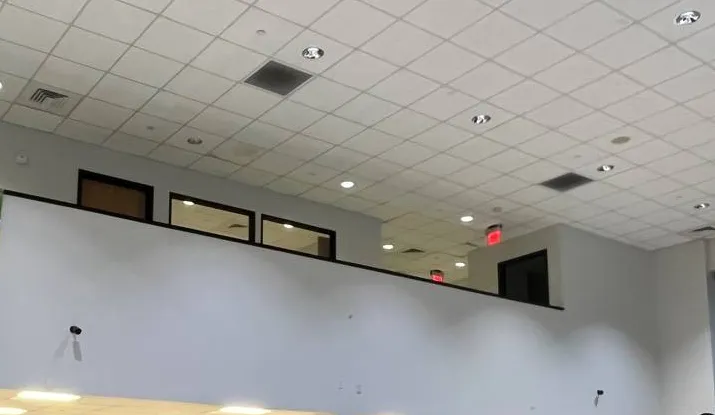
AESS job-library photo, not taken in Wingate: two small devices high on a tall plain wall under a row of interior windows. In a Wingate house the same idea applies on the stair: a device placed high covers the route to the bedrooms without anyone brushing past it.
A Keypad Chirping Through Your Day-Sleep, a Back Door That Never Shows Closed, or a Sensor That Drops Off: Same-Day Alarm Repair in Wingate
Most repair calls from houses like these are small faults that cost someone their sleep: a low battery chirp at noon, a yard door that has swollen away from its magnet in August, a motion sensor that trips when the radiator kicks in, or a panel that lost its cellular signal after a carrier update. Call (347) 934-8335 with the panel brand and the exact message on the keypad or app. Most of these are fixed on the first visit, usually within an hour or two once the technician is at the door, and we can usually come the same day across Wingate.
If the siren is sounding and someone could be inside, leave the house and let the monitoring center or 911 handle it. If it is clearly a fault, we can often talk you through silencing the trouble beep over the phone so the sleeper can go back to bed until the technician arrives. Service visits that are not part of a new installation are billed at $195 an hour with a three-hour minimum ($585), as on our other Brooklyn pages.
What We Install
Alarm Installation Services in Wingate
Every system below is quoted from the same Brooklyn list. What changes in Wingate is the order we design in: who sleeps when first, then which doors stay armed during that sleep, then everything else.
A day-sleep mode
A custom arming setting for the hours someone sleeps after a night shift: exterior doors and reachable windows armed, the sleeper's floor quiet, chimes off near the bedroom, and every alert routed to people who are awake.
Alerts that reach a silenced phone
App notifications set up as critical alerts where the platform allows it, and the monitoring center's number saved as a contact that rings through Do Not Disturb, so a real alarm wakes the right person.
Shift-change arming
Codes and fobs for each person, a reminder when the last person out leaves the house unarmed, and a hand-off routine for couples who cross at the door at seven.
Front and back of brick row houses
Contacts on the front door, vestibule door and yard door, glass-break for the rear room, and motion on the stair that leads to the bedrooms.
Two households, one panel
Separate areas for the owner's floors and the tenant's floor in a two- or three-family, each with its own codes, so one household's schedule never disarms the other's.
Apartments in six-story buildings
Wireless systems for apartments on Lefferts Avenue, Kingston Avenue, Brooklyn Avenue or Albany Avenue that go up without drilling the building's door frame, and come down when you move.
Smoke, heat and carbon monoxide
Monitored detectors that stay on in every mode, so a fire or a faulty boiler wakes a day sleeper even when the burglary side is quiet.
Shops, offices and garages
Business alarms for the stores under apartments on Albany Avenue, the garages and offices along East New York Avenue, and medical and dental offices near the hospitals.
Repairs and kit rescues
Takeovers of old panels, swaps of dead 3G communicators, and labor-only installs of a kit you already bought, set up for a household that keeps hospital hours.
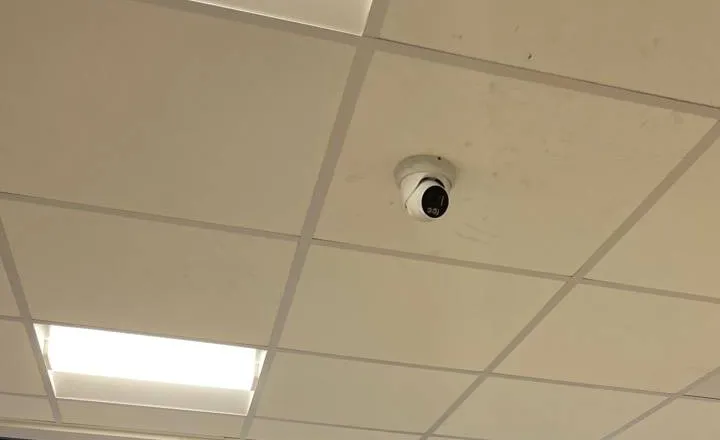
AESS job-library photo, not taken in Wingate: a white turret camera in a drop ceiling between two light panels. Offices near the Wingate hospital campuses with drop ceilings like this get motion sensors and cameras placed where the light panels will not blind them.
Building Specialists
Alarm Installation for Wingate's Architecture
The city's property file, PLUTO, lets us count what stands on these blocks instead of guessing. Inside the rectangle from Empire Boulevard to Winthrop Street and New York Avenue to Troy Avenue there are 941 residential lots. Most are small brick houses; half of the homes are in a few dozen elevator buildings. Each type needs a slightly different plan.
One-family brick row houses
234 lots, mostly recorded as built between 1920 and 1939. Typically attached, two stories over a cellar, with a front door and vestibule up a short stoop and a yard door at the back. The bedroom floor is the top floor, which makes a day-sleep mode simple.
Two-family brick houses
340 lots, the most common building here. The owner usually lives on one floor and rents the other, so the panel gets two areas, and the stair hall both households share is planned before anything else.
Three-family houses and walk-ups
274 lots in PLUTO's walk-up classes, from 1920s three-family houses to walk-ups built since 1990. More doors in the shared hall, more people with keys, and often a basement unit with its own entrance.
Six-story pre-war apartment buildings
Thirteen of the 32 elevator buildings date from 1920 to 1939, most six stories, on Lefferts Avenue, Kingston Avenue, Brooklyn Avenue and Empire Boulevard. Apartment systems here are wireless and leave the building's door frame alone.
Postwar and tower apartments
Six-story buildings from the 1950s and 1960s on Albany Avenue, Fenimore Street and New York Avenue, plus a 16-floor building on Brooklyn Avenue from 1959 and a 20-floor tower on East New York Avenue from 1968, as PLUTO records them.
Newer infill and condos
154 residential lots carry a year of 1990 or later: walk-ups, small condo buildings and five- to nine-story buildings on Winthrop Street and East New York Avenue. Many have through-wall air-conditioner sleeves and lighter doors than the brick houses around them.
Method notes by building type
Brick row houses. Solid masonry party walls carry wireless signals poorly from one end of a deep house to the other, so we site the panel toward the center of the plan, not beside the front door, and check each device's reading from the exact place it will be mounted before a single screw goes in. Front doors on these houses are often original or heavy replacements with a glazed vestibule door behind them; both get contacts so the alarm knows whether someone got through the first door or both. The yard door at the back is the one most often found unlocked in our experience, and it gets a contact plus a glass-break detector for the rear room.
Two- and three-family houses. Here the shared stair hall decides the design. If the tenant's entrance is the same street door, that door belongs to neither area alone: it can chime for both and arm only when both households are out, or it can be left off the owner's area entirely and covered by the inner door to the owner's floors. We draw the choice on the survey sheet and let both households read it. A basement unit with its own entrance under the stoop gets its own area if the tenant wants protection, and nothing at all if they do not.
Pre-war elevator apartments. The apartment door is the main way in, with a fire-escape window or two at the back. A contact on the apartment door, a motion sensor that sees the hall inside it, and contacts or glass-break on the fire-escape windows cover most of these apartments. Everything is wireless, mounted with adhesive or small screws in the apartment's own trim, and comes off when you move. If the building is a co-op, we send the board the device list and our insurance certificate before the visit.
Newer walk-ups and condos. Buildings from the 1990s onward tend to have lighter hollow-metal or composite doors, sliding doors to small rear decks, and through-wall sleeves for air conditioners. Brownstoner, writing in 2011 about a block of Rutland Road between Albany and Troy Avenues, called the newer brick houses there "Fedders houses", a Brooklyn nickname that Brooklyn Paper traces to the brand name on their through-the-wall air-conditioner sleeves. A sleeve is a hole in the wall with a unit sitting in it, so we treat it the way we treat a window: a glass-break or a motion sensor covers the room it opens into, because there is no sash to put a contact on. Where the building was wired for an alarm during construction, we test the existing cable before choosing wireless.
The campus buildings. CAMBA Gardens on the Kings County Hospital grounds is supportive and affordable housing with its own management: Phase II is at 560 Winthrop Street, and PLUTO shows two hospital-owned 2012 buildings at 690 and 738 Albany Avenue whose 209 homes match the size 6sqft gives for Phase I. We install inside individual apartments there only with the tenant's and management's agreement, and building-wide systems are management's decision.
Owners who also want the street door recorded often pair the alarm with security camera installation in Brooklyn; we plan both from the same survey so the camera and the door contact see the same door.
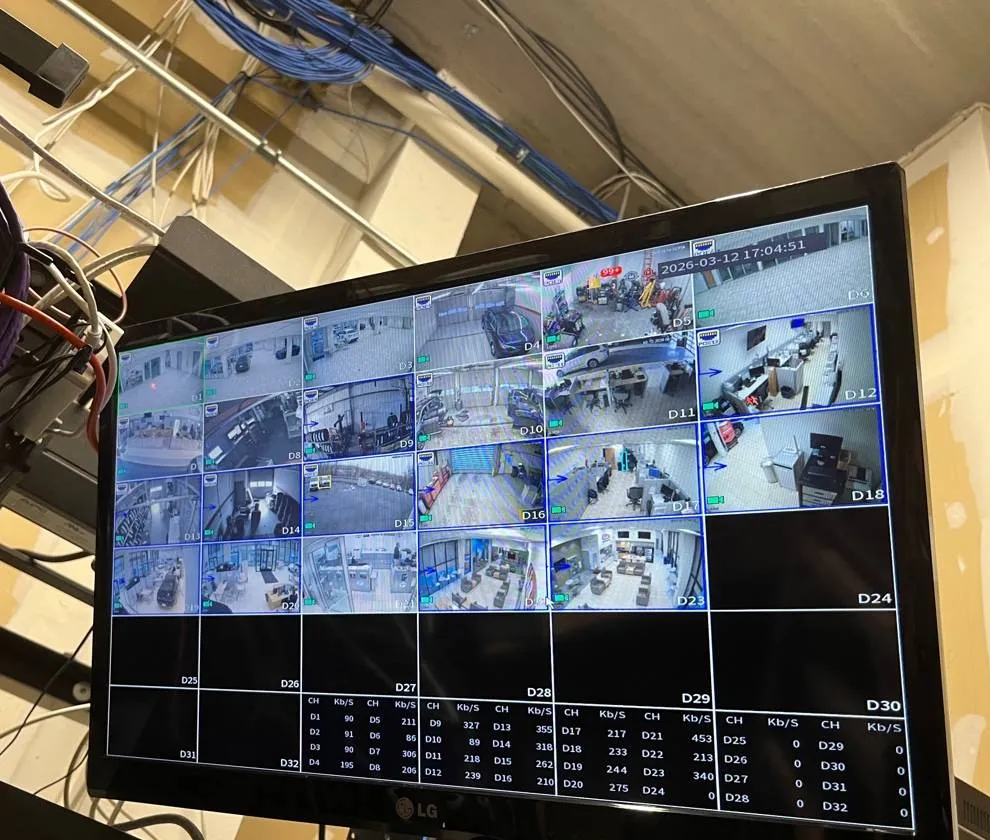
AESS job-library photo, not taken in Wingate: a recorder screen showing many camera tiles, with cable bundles overhead. Larger Wingate buildings, such as the six-story apartment houses on Lefferts and Kingston Avenues, often already have cabling like this, which we test before choosing wired or wireless sensors.
Day-Sleep Households
An Alarm for a House Where Someone Is Asleep at Noon
Most alarm systems come with three ready-made settings: away, for an empty house; stay, for people at home; and night, for everyone in bed after dark. None of them fits a nurse who comes off a twelve-hour shift at 7:30 in the morning and sleeps until four in the afternoon while the rest of the family is out. Away would trigger the moment she walks to the bathroom. Stay usually leaves the interior unprotected and keeps the door chime on, which wakes her every time someone comes in. Night mode often assumes every bedroom is occupied and every floor below is empty, which may be right or wrong depending on who else is home.
So for a household on hospital hours we build a fourth setting, which we call a day-sleep mode, using the custom-mode or per-sensor options on the panels we install. Every exterior door and every window someone could reach from the yard, a fire escape or the stoop rail stays armed. Motion sensors stay armed on floors where nobody should be moving, usually the living floor and the cellar. The sleeper's floor goes quiet: no motion sensor there, no chime from the bedroom keypad, and a dimmed or switched-off keypad screen so the room stays dark. The entry delay on the front door is kept short, because anyone legitimately coming home has a fob or a code, and a burglar should not get thirty seconds to walk up the stairs.
Two things never go quiet. The smoke, heat and carbon monoxide detectors stay live in every mode, because a fire in the kitchen at noon is the most dangerous thing that can happen to someone asleep upstairs. And the indoor sounder on the sleeper's floor stays loud. If someone forces the yard door at two in the afternoon, the first person who should know is the person in the house, and a siren on their own landing will wake them faster than any phone.
Getting an alert through Do Not Disturb
A night-shift worker's phone is usually silenced while they sleep. That is sensible, and it is also the reason many alarm alerts go unseen. Phone makers and alarm platforms have answers for it. Alarm.com's support material describes a Critical Alerts setting in its iPhone app that lets alarm-type notifications through Do Not Disturb; SimpliSafe's help pages describe the same for iPhone and a Do Not Disturb access permission on Android, and recommend saving the monitoring center's number as a contact allowed through Focus or Do Not Disturb. Text-message alerts, both companies note, may still be muted.
We set those options at handover, on the actual phones, and then we test them: the sleeper puts the phone on Do Not Disturb, we trip a sensor in test mode, and we watch whether it rings. If it does not, we change the setting until it does. For households that would rather not be woken by a phone at all, the indoor sounder does that job and the phone alerts go only to people who are awake.
The first minute of an afternoon alarm
If the alarm trips while the only person home is asleep, the plan should already exist. The sounder wakes them. Their bedroom has a panic button or a keypad they can reach without going downstairs. The monitoring center's call list starts with the person most likely to answer at that hour, which in a day-sleep household is usually the one at work, then the sleeper on a contact that rings through, then anyone else. The family agrees beforehand that the sleeper stays upstairs behind a closed door and does not go down to look. We write that order down with you; it changes by household, and sometimes by day of the week.
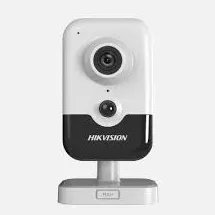
Manufacturer product photo, not taken in Wingate: a small Hikvision indoor cube camera on a stand. Some day-sleep households put one in the downstairs hall so the person at work can check the house without waking the sleeper.
Rotating Shifts
When the Rota Changes Every Week, the Alarm Cannot Run on a Timetable
Many alarm guides recommend a schedule: arm at 8:30 every weekday, disarm at 5:30. In a house where one person works three twelve-hour nights one week and four days the next, a schedule is wrong more often than it is right. It arms while someone is home, so they learn to disarm it the moment they wake up and then forget to re-arm; or it waits for a time that never comes, and the house sits unarmed. A system that keeps fighting the family's schedule tends to end up switched off, which is the worst outcome of all.
What works better is telling the system when the house has emptied, rather than when it should. Several approaches can be combined. A reminder can be sent when the last door closes and no motion follows for a set time while the system is disarmed. Some platforms can use a phone's location to notice that every enrolled phone has left, and prompt whoever left last. An arming reminder can also go to the family group at a few fixed check times, such as 9 a.m. and 9 p.m., only if the system is still off. None of these arms the house by itself unless you want it to; they make sure somebody notices.
Each person gets their own code and, if they want one, a fob. The code identifies them in the event history, so a family that works around each other can see that the house was armed at 7:12 by the day worker and set to day-sleep at 8:20 by the night worker, without anyone having to text. When someone leaves the household, or a relative who had a code moves away, that one code is deleted and nobody else's changes.
The hand-off at shift change
The busiest moment for an alarm in these houses is the morning or evening crossover, when one person is leaving for a 7 o'clock start and the other is on the way home. This is when mistakes are most likely: the day worker disarms the whole house to make breakfast, the night worker walks in to a system that is half armed, or the teenager opens the yard door during the five minutes nobody is sure about. We set up the crossover deliberately. The person leaving arms the exterior and leaves the stair motion off. The person arriving uses a fob at the door, which disarms only the entry route. Day-sleep mode then goes on from the bedroom keypad, and the alerts switch to whoever is now at work.
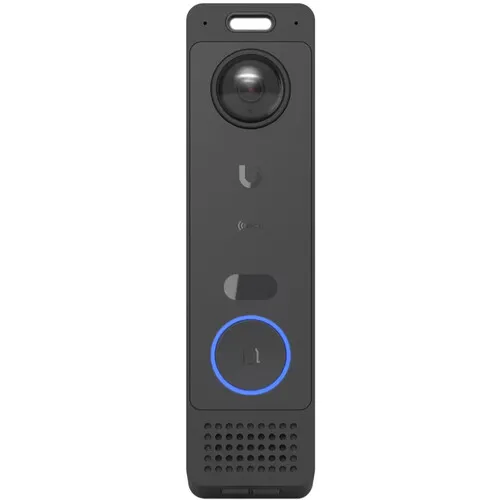
Manufacturer product photo, not taken in Wingate: a black video doorbell with a camera above and a blue-ringed button below. For a day sleeper, the doorbell's chime is switched to the phones of people who are awake, so a delivery at noon does not ring through the house.
Next to the Hospitals
On a Street Where Sirens Never Stop, the Siren Is Not the Alarm
A 2021 StreetEasy listing for a condo on New York Avenue in Wingate warned buyers plainly that the building is near Kings County Hospital and SUNY Downstate, so street noise and sirens may be an issue. Anyone who has lived on Winthrop Street, Clarkson Avenue or the avenues leading to the emergency entrances knows it. Wikipedia describes Kings County as a Level I trauma center, and emergency traffic to it is part of daily life on the surrounding streets.
That changes what an outdoor siren is good for. On a quiet block in southern Brooklyn a siren on the front of a house makes neighbors look out of the window. Here it competes with a regular soundtrack of emergency vehicles and is easy to ignore, and New York City's Administrative Code, section 24-238, requires a building's audible burglar alarm to shut itself off within fifteen minutes in any case. So in Wingate we treat the outdoor siren as a deterrent and a locator, not as the way anyone gets help. What gets help is the monitoring center, the phones, and a person you have named.
If you want the outside of the house to say something, a flashing strobe at the door does more than volume, because it tells a neighbor which house it is. A spoken warning at the yard door ("This door is alarmed, the police have been called") is heard by the person standing there and nobody else. A named neighbor who is home by day, often a retired relative or a neighbor with a different shift, gets a phone call from the monitoring center and can look out of the window without going outside. Those cost less than a second outdoor siren and do more on this kind of street.
What we do not change because of the hospitals
Hospital traffic does not mean an alarm should be quieter inside. The indoor sounder stays loud, because it is meant for the people in the house and for the intruder. It does not mean glass-break detectors misfire either; modern glass-break sensors listen for the particular combination of a thud and breaking glass, and a passing siren is not that. Each one is tested with a simulator after it goes up.
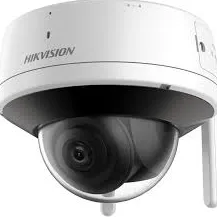
Manufacturer product photo, not taken in Wingate: a white Hikvision dome camera with two antennas. A camera like this over a yard door lets the person called first see what tripped the alarm before deciding whether to wake the sleeper.
Summer Evenings
Concert Nights at Wingate Park
Wingate Park is a 5.89-acre jointly operated playground at the southeast corner of Brooklyn Avenue and Rutland Road, with fields, a track and courts. It is best known for the summer concerts. The Borough President's office said in June 2022 that the Wingate Concert Series began in the late 1970s under Marty Markowitz, a Wingate High School graduate, and was scaled back during the pandemic before Antonio Reynoso reinstated it. BK Reader in 2016 described Monday-night concerts at 7:30 on Brooklyn Avenue between Rutland Road and Winthrop Street, opposite Kings County Hospital; Our Time Press listed August 2018 nights co-presented by WLIB and WBLS; and BK Reader in July 2025 listed three city-run Rise Up NYC concerts at the park over one weekend, with doors at 5 and shows at 6.
On those evenings the blocks around the field fill with people and parked cars, and many Wingate families go themselves. That is a reason to think about the alarm before the evening, not a reason to worry. If the whole household walks over, arm the house fully, not in stay mode, because there is nobody inside. Decide who keeps a phone in hand; in a crowd with speakers going, a buzz in a back pocket is easy to miss, so we suggest the person called first set a loud ringtone for the monitoring center's number for that night. Check the app at the break. If you stay home, the usual evening setting is fine, with the doorbell camera's motion alerts turned down so a crowd passing the stoop does not send fifty notifications.
The Public Record
What Five Years of NYPD Burglary Records Show for These Blocks
We drew a rectangle on the city's open crime data from Empire Boulevard to Winthrop Street and from New York Avenue to Troy Avenue, and pulled every complaint the NYPD classified as burglary with a start date from January 2021 to December 2025. The result is 66 records. It is a small number for five years, which is worth saying first: Wingate is not a high-burglary neighborhood by the standards of the city. But the records are consistent about when and where, and that is what an alarm is designed around.
Thirty-eight of the 66 were homes: 28 recorded as an apartment in a residential building and 10 as a house. Nineteen of the 38 have a reported starting time between 9 a.m. and 5 p.m., and fifteen between noon and 6 p.m.; nine began between midnight and 6 a.m. Of the other 28 records, ten were recorded on the street, four at construction sites, three at commercial buildings, two at houses of worship, and one each at a doctor's or dentist's office, a hospital, a small merchant, a real estate office, a public parking garage and an inside mailbox. Two of the 66 were recorded as attempts rather than completed burglaries.
Two cautions. The time is the start of the window the victim reported, so a burglary discovered at 6 p.m. by someone who left at 8 a.m. is recorded at 8 a.m.; daytime absences inflate the morning. And a burglary of an apartment where someone was asleep upstairs would be recorded the same way as one in an empty apartment. Even so, the shape fits what we see on installs: these blocks are entered while people are at work or asleep, mostly through doors, and a design that protects the house only at night misses most of it.
Published news reports of individual burglaries inside Wingate itself are scarce. The nearest we found is a DNAinfo 71st Precinct blotter from July 2016, which reported two women arrested after using a hammer to break a window from a fire escape at 501 New York Avenue at about 1 p.m.; DNAinfo filed it under Crown Heights, and New York Avenue is the street Wikipedia uses as Wingate's western edge.
Commercial Alarm Installation
Business Alarm Installation in Wingate
Wingate has no single shopping street. Its businesses are spread along the avenues and the diagonal of East New York Avenue, usually one or two to a block, often with apartments above. PLUTO records 24 lots in the rectangle as stores or offices with homes above, plus a handful of garages, offices, schools, houses of worship and the hospital campuses at the southern edge.
Albany Avenue
A run of two-story store-and-apartment buildings in the 560s and 570s, recorded as built around 1931, plus churches and community buildings. Small shops here need the shop door, the rear and the cellar on one panel and the apartments upstairs left alone.
East New York Avenue
Garages, parking lots, a few offices and small commercial buildings among newer five- to seven-story apartment buildings. Garage doors, side doors to lots, and offices with one person closing up.
Kingston and Brooklyn Avenues
Mixed store-and-apartment buildings near the park and school, and community facilities. Closing times vary through the week, so arming reminders follow the actual closing, not a fixed hour.
Empire Boulevard
The northern edge, shared with Crown Heights and Prospect Lefferts Gardens: the 71st Precinct station at 421, six-story pre-war apartment buildings and an eight-story building PLUTO dates to 2020.
Medical and dental offices
Offices that serve the hospital district. The NYPD record includes one burglary at a doctor's or dentist's office in the rectangle in December 2022. These offices usually want a medication or records room on its own zone.
Houses of worship and schools
Churches, synagogues and religious schools account for many of the non-residential lots, especially toward Albany and Troy Avenues. Their buildings are open at different hours every day and usually have several keyholders.
What a Wingate business alarm needs
A store under apartments on Albany or Kingston Avenue usually starts from the back: the service or yard door gets both a contact and a shock sensor, because that is where a forced entry is least visible. The street door gets a contact, the shop window a glass-break detector, and the stockroom a motion sensor. The panel reports by cellular so a cut internet line changes nothing. Staff each have their own code, the owner hears about it if nobody has armed the shop an hour after closing, and the log shows who locked up.
For garages and small offices on East New York Avenue, overhead and roll-up doors get heavy-duty contacts mounted so the door can be left a few inches open for air without tripping; offices get a door contact and a motion sensor, and the person who closes up gets a fob. For medical and dental offices, we often split the system so a medication or records room is armed separately, around the clock, and only two people can disarm it.
Rules a Wingate business alarm has to respect
Noise from a shop alarm: the families living over an Albany Avenue store hear its siren first, and city law (Administrative Code § 24-238) already makes it stop by itself after fifteen minutes. We set a shop's siren to run for a few minutes at most and lean on the monitoring call instead.
Check the installer, not just the equipment: before letting anyone wire your store, ask for their state alarm license number and look it up with the Department of State. We work under #12000287431, held by Anwar Timothy.
The landlord: in a store under apartments, anything on the building's facade or in the shared hall needs the owner's permission; we install inside your space unless the owner agrees otherwise.
Code-required fire systems: smoke detectors on a burglar panel help a household, but they do not replace a fire alarm system a building is required to have; that is a separate job, described on our Brooklyn fire alarm installation page.
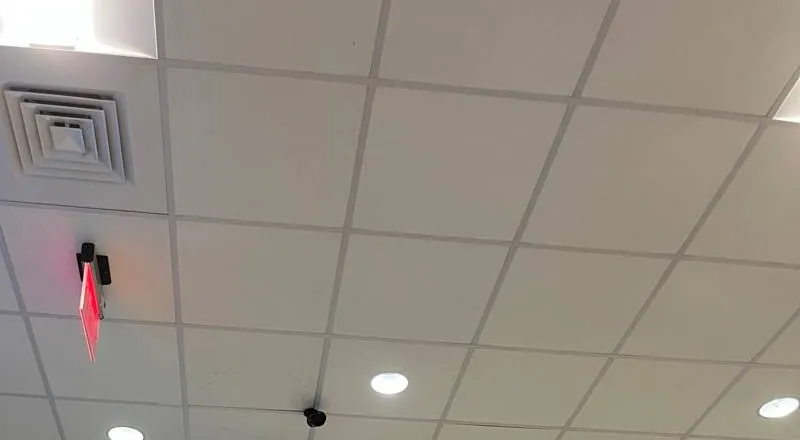
AESS job-library photo, not taken in Wingate: a camera beside a lit exit sign on a tiled ceiling, with a second dome behind it. Medical and dental offices near the Wingate hospitals often look like this inside; the exit door under the sign is the first one we put a contact on.
Your Questions Answered
Alarm Installation in Wingate: Questions Answered
Nurses, technicians, residents, security officers and their families raise the same handful of problems when we survey a Wingate house. Here they are, grouped by situation, with the answers we give at the door. The FAQ near the bottom of the page deals with other subjects.
Sleeping while the street is awake
After a night shift I sleep from mid-morning until late afternoon, often alone in the house. Which mode should the alarm be in during those hours, and what stays off?
A custom day-sleep mode, not stay and not away. Every exterior door and every window someone could reach from the yard, the stoop rail or a fire escape stays armed, and so do the motion sensors on floors where nobody should be moving, usually the living floor and the cellar. What goes quiet is your own floor: no motion sensor there, no chime from the keypad nearest the bedroom, and its screen dimmed or off.
The front door gets a short entry delay, because anyone who belongs in the house has a fob or a code. Smoke, heat and carbon monoxide detection stays on in every mode, and the sounder on your landing stays loud, because you are the first person who needs to know if a door is forced at two in the afternoon. We set the mode to one button or one tap, so arming it at the end of a shift takes a second.
My phone is on Do Not Disturb while I sleep after a shift. Will an alarm alert still get through to me?
Only if it is set up to. Alarm.com's iPhone app has a Critical Alerts setting that lets alarm-type notifications through Do Not Disturb, and SimpliSafe documents the same on iPhone and a Do Not Disturb access permission on Android. Ordinary notifications and text-message alerts can still be muted. The monitoring center's calls get through if its number is saved as a contact you allow through Focus or Do Not Disturb.
At handover we set this on your actual phone, put it on Do Not Disturb, trip a sensor in test mode and watch whether it rings. If it does not, we change the setting until it does. If you would rather your phone never wake you, we leave it silent and rely on the indoor sounder, with the phone alerts going to whoever is awake.
Who should the monitoring center call first when the alarm trips at two in the afternoon and the only person home is asleep after a night shift?
Usually the person at work, not the sleeper. At 2 p.m. the day worker can answer, see the camera clip if there is one, and give the password or ask for dispatch. The sleeper is woken by the sounder in the house and comes second on the list, on a number saved to ring through Do Not Disturb. A neighbor or relative who is home by day can be third.
The household also agrees what the sleeper does: stay upstairs behind a closed door with the phone and the bedroom panic button, and never go down to look. We write the order on the account with you, and if it differs by day of the week, for example because the person at work changes, we set the list for the most common pattern and show you how to check it.
A rota instead of a routine
Our shifts change every week, so a fixed arming schedule never fits. How does the system notice that the last person has left and nobody armed it?
By watching the house rather than the clock. A reminder can go out when the last door closes and no motion follows for a set number of minutes while the system is disarmed. On platforms that support it, a phone's location can tell the system that every enrolled phone has left, and the last person out gets a prompt. A plain check at two or three fixed times a day, sent only if the system is still off, catches anything else.
None of these arms the house by itself unless you ask for that. They make sure someone notices, and arming then takes one tap in the app. We switch on only the reminders your household will actually read, because a phone that buzzes four times a day is soon ignored.
Two of us work opposite twelve-hour shifts and cross at the front door around seven. How do we hand the house over without a false alarm?
Set the crossover up on purpose. The person leaving arms the exterior and leaves the stair motion off, so the house is protected but not hostile to the person arriving. The person arriving uses a fob at the door, which disarms only the entry route, then sets day-sleep mode from the bedroom keypad. Alerts switch automatically to whoever is now at work, because the event history knows whose fob was used.
We rehearse it once at handover with both of you, at the real time if you can manage it, and look at the event history together after the first week. Most problems at shift change come from one person disarming the whole house out of habit, and that shows up straight away in the log.
Living next to the hospitals
Our block is used to hearing ambulances day and night. How do we make our alarm something the neighbors will actually react to?
Make it specific rather than louder. A flashing strobe at the door tells a neighbor which house it is; a spoken warning at the yard door is heard by the person standing there; and a call from the monitoring center to a named neighbor who is home by day gets someone to look out of the window without going outside. Those do more on a street full of sirens than a second outdoor siren.
An outdoor siren is still worth having as a deterrent and to mark the house, and city law caps it at fifteen minutes in any case. But in Wingate we plan as if nobody will act on the noise alone, and put the money into monitoring, phones that ring through and the neighbor call.
Getting home in the morning
I get home around eight in the morning with my hands full and want to be asleep within minutes. What is the quickest safe way in?
A fob on your key ring, or a keypad mounted inside the door at a height you can reach with a bag on your arm. The fob disarms only the entry route; the rest of the house stays armed until you set day-sleep mode from upstairs, which is one button on the bedroom keypad or the fob itself. You never have to cross the living floor to a keypad by the kitchen.
If you prefer your phone, many current systems disarm from the app as you reach the door, but phones run flat after a twelve-hour shift, so we always set a fob or code as the backup. A duress code, which disarms normally but tells the monitoring center you are being forced, is worth learning too; it costs nothing to set.
AESS job-library photo, not taken in Wingate: a small black dome in a ceiling corner. In a Wingate stair hall the same corner position lets a camera see the street door and the stair together, so the person called at work can check before waking the sleeper.
Equipment
Types of Alarm Systems We Install in Wingate
Cellular panels with custom modes
Panels that report over cellular rather than the house's internet, and that let us build a day-sleep mode alongside away, stay and night. Older 3G communicators are replaced.
Door and window contacts
Small wireless contacts for front, vestibule and yard doors, cellar doors and reachable windows, fitted to old wood frames and newer metal doors alike.
Glass-break detectors
For rear rooms with large windows or doors to a deck, and for rooms opening onto through-wall air-conditioner sleeves, where there is no sash to put a contact on.
Motion sensors
Pet-tolerant where needed, placed on the living floor, the stair and the cellar, and left off the sleeper's floor in day-sleep mode.
Keypads and fobs
A keypad by the main door, a second one at the bedroom door that can go dark and silent, and a fob for everyone who comes home tired.
Panic buttons
Within arm's reach of the day sleeper's pillow, wall-mounted or worn, so help can be summoned without walking past the stair.
Smoke, heat and carbon monoxide
Monitored detectors that stay live in every arming mode, so a fire or a faulty boiler wakes a day sleeper even when burglary protection is quiet.
Sirens, strobes and voice
An indoor sounder on the sleeper's floor, an optional outdoor siren with strobe, and spoken warnings at the yard door, all set within the city's fifteen-minute limit.
Doorbell cameras and indoor cameras
A video doorbell whose chime rings phones of people who are awake, and indoor cameras that let the person called first check the house without waking anyone.
ADT, Ring and SimpliSafe compared with a local installer
ADT is the best-known national brand and offers professional installation and monitoring, typically under a contract. What matters for a Wingate household is whether the installer will build a custom day-sleep mode and test your phones through Do Not Disturb; ask before you sign, because a standard install uses the standard modes.
Ring Alarm and SimpliSafe are do-it-yourself kits with optional professional monitoring. They are good value, and SimpliSafe publishes clear instructions for getting alarm alerts through a silenced phone. The limits show in brick houses: a base station placed by the front door may not reach the yard door through two masonry walls, and the ready-made modes may not separate the sleeper's floor. We install and set up these kits too, labor only, if you already own one.
A local licensed installer, which is what we are, sees the house before choosing anything, places the panel where the signal survey says, builds the modes around the household's week, sets monitoring month to month and comes back when something goes wrong. The price list is published below, so you can compare like with like.
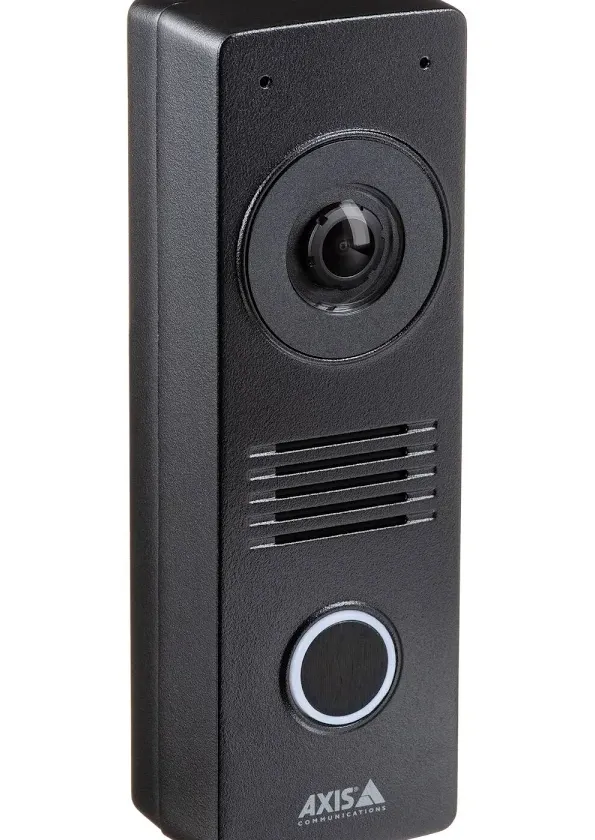
Manufacturer product photo, not taken in Wingate: a black Axis video door station with a camera and one call button. On a Wingate two-family street door, a station like this lets each household answer its own visitors, so the day sleeper's floor is never rung.
AI Overview Reality Check
What AI Gets Wrong About Alarm Installation in Wingate
Google's AI Overview was not reachable from the environment we research in, so we quote none of it. Instead, here are seven ideas that turn up again and again in one-size-fits-all alarm advice, on national lead sites such as Angi, HomeAdvisor and Fixr and in chatbot answers, each tested against the Wingate records.
"An alarm only needs to be on when nobody is home."
This is the most common idea in one-size-fits-all alarm advice and AI summaries: arm it when you leave, arm it at bedtime. It assumes a house is either empty or asleep at night.
In Wingate that misses the biggest risk. Nineteen of the 38 home burglaries in the 2021–2025 NYPD record for these blocks had a reported starting time between 9 a.m. and 5 p.m., the hours a night-shift worker is usually asleep, and the census shows a far larger share of night and evening commuters in ZIP 11203 than in Brooklyn as a whole.
The answer is a mode for being home and asleep in daylight, with the doors and the floors below armed and the sleeper's floor quiet. Most panels can do it; few installs set it up unless someone asks.
"Set an arming schedule and forget about it."
Schedules are often presented as the easy fix for people who forget to arm. They are, for people with regular hours.
For a household on rotating hospital shifts, a fixed schedule arms when someone is home and waits when nobody is, and the family ends up disarming it out of habit. A system that fights the household tends to end up switched off.
Reminders based on what the house is doing, such as the last door closing with no motion after it, or every phone having left, work with a rota instead of against it, and leave the decision to arm with a person.
"The siren is what scares burglars off and brings help."
Many summaries treat the outdoor siren as the core of an alarm. A loud siren is a real deterrent, and it marks the house.
On blocks within earshot of a Level I trauma center, sirens are background noise, and a 2021 StreetEasy listing nearby warned buyers about exactly that. City law also shuts a building's burglar alarm siren off within fifteen minutes.
Help comes from the monitoring center, from phones that ring through Do Not Disturb and from a named neighbor who is home by day. A strobe and a spoken warning at the door do more to identify the house than extra volume.
"Phone alerts mean you'll always know."
App-based kits are often sold on the idea that the alert is in your pocket, wherever you are.
A night-shift worker's phone is silenced while they sleep, and ordinary notifications and texts stay silent too. Alarm.com and SimpliSafe both publish settings to get alarm alerts through Do Not Disturb, which tells you how common the problem is.
Those settings have to be switched on and tested on each phone. We do it at handover, and we keep the indoor sounder loud because the house wakes the sleeper faster than any phone.
"Wireless sensors work the same in every house."
Online cost guides tend to price an alarm by the number of sensors, as if every house were the same.
Wingate's brick row houses and two-families have solid masonry walls and deep plans, and a base station by the front door can struggle to hear a sensor at the yard door two walls away. The newer walk-ups behave differently again.
We hold every sensor in its final spot while the panel reads its signal before anything is fastened, place the panel near the middle of the house, and add a repeater only where the numbers say so.
"An apartment is too small to need an alarm."
Advice aimed at renters often says a camera or a smart lock is enough for an apartment.
In the Wingate record, 28 of the 38 home burglaries were apartments, and the one news report we found from the edge of the neighborhood involved a fire-escape window at about one in the afternoon.
A door contact, a motion sensor inside the door and coverage on the fire-escape windows protect most apartments here, wirelessly, without touching the building's door frame, and the whole system leaves with you.
AI answers and national lead sites tend to quote wide national ranges that sound expensive.
A basic wireless system on our published Brooklyn list is $600 and up, most landing below $1,200; if you already own a kit we install it for $200 to $400, and monitoring, if you want it at all, begins at $19.99 a month.
Bigger houses with two households, smoke and carbon monoxide detection and a day-sleep mode cost more, and the quote shows every line before any work starts.
Tell Us Who Sleeps When, and Start a Wingate Quote
A photo of each door and one line about the household's shifts is enough for a first plan. We call back at a time you say you are awake.
Tell us the address, the building type and who in the house sleeps by day. We will call at a time you say you are awake.
✅
Request Received
We will phone about the Wingate address at the time you chose.
How It Works
Our Installation Process
1. Photos and the household's week
Send photos of the front and yard doors and a line about who works which shifts and who sleeps when. We reply with a first plan and a visit time that avoids the sleeper's hours.
2. Walk the house from the entry route
The technician follows the route people actually use, usually the front door and the stair, then the yard door, the cellar and every window reachable from outside.
3. Signal survey
Before anything is fixed, each sensor is tried at its mounting point and its signal strength noted; if a reading is poor, the panel is moved toward the center of the house or a repeater is added.
4. Written price the same day
Each device and service on its own line at Brooklyn list prices, then sales tax, with the deposit and balance terms on the same page.
5. Install and name every device
Contacts, motion sensors, keypads and detectors go up with plain names such as yard door or top-floor hall, grouped so noisy work happens while the sleeper is awake.
6. Build the modes and test the phones
Away, stay, night and day-sleep modes are built and armed in front of you; every phone is tested through Do Not Disturb and the call order is written down.
7. Review after the first rota
Once every person in the house has worked through a complete rota with the system, we go over the log together and adjust whatever got in the way, whether a delay, a reminder or a code too many people know.
What is left with you at handover
A one-page sheet with every device by name, which modes arm which devices, the monitoring call order and password, the fob and code holders, and the date of the review visit. It goes on the fridge or in a drawer, not in an email nobody reads after a night shift.
Coverage Area
Alarm Installation Near Wingate's Landmarks
Wingate Park
5.89 acres at the southeast corner of Brooklyn Avenue and Rutland Road, opened in 1957 per NYC Parks, with fields, a track and courts, and the summer concerts. Houses on the facing blocks plan for concert evenings.
Kings County Hospital Center
451 Clarkson Avenue, directly opposite the park across Winthrop Street, a 627-bed Level I trauma center per Wikipedia. Many Wingate households work there, and its ambulances set the street's soundscape.
SUNY Downstate
The College of Medicine at 450 Clarkson Avenue, with about 8,000 faculty and staff reported in 2018 and 2,259 students in fall 2025 per Wikipedia. Residents and students rent apartments on the surrounding blocks.
The Wingate school campus
The former George W. Wingate High School building at 600 Kingston Avenue, now home to four smaller schools per Wikipedia. The neighborhood takes its name from the school and the park.
71st Precinct
The NYPD station house at 421 Empire Boulevard, on Wingate's northern edge. Its precinct page names Wingate, southern Crown Heights and Prospect Lefferts among the areas it covers.
Winthrop Street station
The 2 and 5 trains at Nostrand Avenue and Winthrop Street, opened in 1920, with the B12 and B44 buses. It is the nearest subway for the western blocks.
We also install across the neighborhoods that share Wingate's edges: Crown Heights to the north and east, Prospect Lefferts Gardens to the west, East Flatbush to the south, and Flatbush beyond Nostrand Avenue. Each of those pages was researched separately.
Pricing
Alarm Installation Cost in Wingate
There is no Wingate premium. The table shows our Brooklyn base list, the same figures we use from Greenpoint to Coney Island, and your written quote breaks the job into one line per device or service, with the city's 8.875 percent sales tax added at the end. Work under $500 is paid when you book it; larger jobs take a 50 percent deposit to schedule and the balance on completion.
What you are buying
Brooklyn list price
Typical Wingate fit
Basic wireless residential alarm
from $600; typically $600–$1,200
One-family row house, or an apartment in a six-story building
Complete home protection
from $2,500
Three-story house with a day-sleep mode, smoke and CO, every reachable window
Custom hardwired, full coverage
$2,000–$6,000
Newer buildings wired for an alarm during construction
Hybrid wired and wireless, multi-story house
$2,500–$6,000
Two- or three-family split into separate areas
Panel replacement on existing wiring
$800–$1,500
An older house with a working wired system and a dead panel
Commercial alarm, small business
$1,500–$3,000
Shop under apartments on Albany Avenue, garage or office
Cameras added to an alarm
add $1,000–$2,500
A video doorbell on the stoop, one camera covering the back
Per-unit setup for a landlord
$400–$800 per unit
Owner of a three-family or small walk-up
Labor-only install of your own kit
$200–$400
A Ring or SimpliSafe kit you already own
Central-station monitoring
from $19.99 a month, no long-term contract
Optional; many start with phone alerts only
Service visits outside a new installation
$195/hr, 3-hour minimum ($585)
Callbacks and repairs
What moves a Wingate quote up or down
Number of households. A one-family row house with one household sits comfortably in the basic range. A two- or three-family with separate areas, keypads or fobs for each household and the shared hall worked out moves toward the hybrid line.
The day-sleep mode. Building it costs nothing extra in labor; the extra cost comes from what it needs, usually a second keypad at the bedroom door and a panic button by the bed, each priced per device.
Masonry and depth. A deep brick house sometimes needs a repeater to reach the yard door or the top floor. We only add one when the signal survey shows weak readings, and the reading goes on the survey sheet.
Add-ons. We do not print guessed prices for extras. A repeater, a second keypad, a panic button, water probes, carbon monoxide detectors or a smart lock each get their own figure once the free survey has shown how many the house needs.
Get a Written Brooklyn-List Price Before the First Sensor Goes Up
The number on the written quote after the survey is the number you pay, unless you later ask for more devices. Call, text us for a fast estimate, or pick a visit time when the person on nights is awake.
For a single-household row house or an apartment: a panel that reports by cellular, sensors on the street door, the yard or fire-escape side and as many as five windows within reach, one motion detector, an indoor sounder, two key fobs, the signal check and a walk-through for everyone who lives there.
Shift-Work Household — from $2,500
Built for a house where somebody works nights: the starter equipment across two or three floors, a programmed day-sleep setting, a keypad by the bedroom that stays dark and quiet, a panic button beside the bed, monitored smoke and CO detectors, separate areas for a tenant floor, and every phone checked against Do Not Disturb.
Shop or Office on the Avenues — from $1,500
For a store, garage or office: a commercial-grade panel, the back or service door covered against both opening and prying, the street door and window covered, a motion detector in the stockroom, separate codes for staff and a message to the owner when nobody has armed up after hours.
Already bought a kit? Labor-only installation
If a Ring Alarm, SimpliSafe or other boxed kit is already sitting in the closet, we fit it for $200 to $400, the figure depending on the device count. You get the same signal checks as one of our own systems, sensor placement that suits a brick house, readable device names in the app, the Do Not Disturb settings switched on and tested, and a lesson for the household. Where the kit's base station cannot hear the yard door or the top floor, we tell you which of the maker's own extenders solves it before you spend anything.
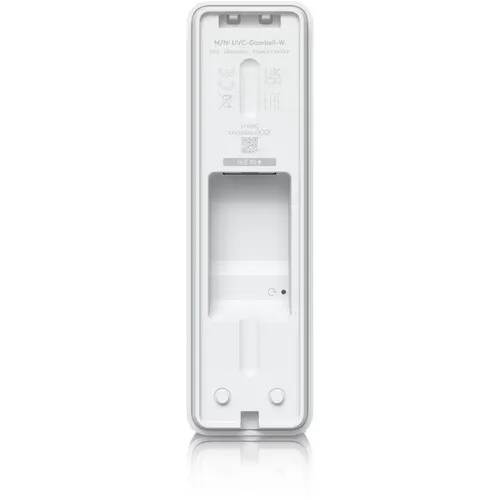
Manufacturer product photo, not taken in Wingate: the back plate of a wired doorbell camera, with its cable opening and screw slots. On a brick Wingate stoop the plate is fixed into the mortar joint, not the brick face, so it can be removed later without damage.
Field Notes: Ask Who Is Asleep Before You Ask Where the Doors Are
This describes how we survey a house where someone works nights; it is our method, not the story of one job. The technician's first question is not about doors. It is who lives here, what hours each person works, and who is likely to be asleep while he is in the house. If the answer is that someone is asleep upstairs right now, he works downstairs quietly and comes back to the bedroom floor at the end.
Then he walks the route people actually use, from the stoop through the vestibule to the stair, and asks which door the night worker comes in by at eight in the morning. That door gets the fob reader or the keypad. He looks at the bedroom: where a keypad can go that will be reachable from the bed but dark, where a panic button sits, and whether the windows in that room can be reached from outside. Only then does he count windows and doors, and hold each sensor in place while the panel reads its signal.
The last part of the visit is the phones. Each person sets their phone the way they would at night or at noon, and he trips a sensor in test mode to see whose phone rings. In our experience that ten minutes, and the written call order that comes out of it, decide whether a shift-work household is still using its alarm a year later.
FAQ
Wingate Alarm Installation FAQ
What does an alarm for a brick two-family in Wingate cost on your Brooklyn list?
+
For a brick two-family we price from the ordinary Brooklyn list; nothing is added for the neighborhood. Protecting just the floors the owner lives on is normally a basic wireless job, which starts at $600 and usually ends up between $600 and $1,200. Covering both households with separate areas, both doors in the shared hall, the cellar and the yard door, plus smoke and carbon monoxide detection, more often lands on the hybrid or complete-home lines, from $2,500. Monitoring is optional from $19.99 a month, and sales tax is added on the written quote.
Do you cover every block that maps call Wingate, including streets some listings put in Crown Heights, East Flatbush or Prospect Lefferts Gardens?
+
Yes. Sources draw Wingate differently: Wikipedia runs it from Empire Boulevard to Winthrop Street and New York Avenue to Troy Avenue, another guide runs it to Clarkson Avenue, and older Pigtown descriptions go west to Nostrand Avenue. We work on every one of those blocks, and on the surrounding neighborhoods, at the same Brooklyn prices, so the name on your listing makes no difference to the quote.
Can your technician work on the ground floor while I sleep upstairs after a night shift?
+
Yes, and we plan the visit that way when you ask. Drilling, testing sirens and work on your bedroom floor are grouped into one short window at the start or end of the visit, at a time you choose. The rest, mostly door and window contacts, the panel and the cellar, is quiet work. Sounder tests are done at the lowest volume the panel allows, with one full-volume test at the end, when you are awake.
The sensors and the keypad have small status lights. Can those be turned off in a bedroom kept dark for daytime sleep?
+
Usually. Most current keypads let the screen dim or switch off after a few seconds and come back when touched, and many sensors let their indicator light be disabled in programming. We set the bedroom keypad dark and silent while leaving the one by the front door normal. If a particular device cannot be dimmed, we move it out of the bedroom's line of sight or choose a model that can.
Can alarm alerts go to a personal phone and a family group at the same time, rather than to one person?
+
Yes. The app can notify every enrolled user, and each person chooses which alerts they want: alarms only, or also arming and disarming. A text-message group can receive alerts too, though texts can be muted by Do Not Disturb. For households on shifts, we usually send alarms to everyone, and arming and disarming only to the person who likes to keep track.
After a twelve-hour shift I sometimes punch in the wrong code. What is the safest way to cancel a false alarm when I am exhausted?
+
Use the fob or the app instead of the keypad, and keep the monitoring password short and easy to say. If you set the alarm off by mistake, disarm it, then answer the monitoring center's call and give the password; if you miss the call, phone them back. We put the center's number in your phone at handover, labelled clearly, so you are not searching for it half asleep.
Can the installation be split across two shorter visits so it fits between my night shifts?
+
Yes. A typical Wingate two-family can be done in one working day, but it splits easily: the survey, panel and downstairs devices on the first visit, and the bedroom floor, the day-sleep mode and the household handover on the second, when the person who sleeps by day is awake to learn it. There is no extra charge for splitting a new installation into two visits within the same week.
We moved from a building with a doorman. What does an alarm in a two-family house do that the doorman used to do?
+
Part of it. A doorman watched the door, took packages and knew who belonged. An alarm watches every door and window, records who came and went by name, and calls for help when something is forced. It cannot sign for a delivery or recognize a visitor, which is why many households add a doorbell camera so they can see and talk to the stoop from upstairs. Together they cover most of what you had, at any hour, including the hours you sleep.
All Areas Served
Alarm Installation Across Brooklyn, New York City, Long Island and the Hudson Valley
We read everything below in October 2026, and each local fact on the page traces to one of these entries. Two things are ours rather than anyone else's: the prices, which are our published Brooklyn list, and the methods, meaning the day-sleep setting, phone testing, call order, shift hand-off and survey routine. The crime and building counts are our own queries of the city's open data, run over a rectangle we drew, so the edges are approximate.
NYC Open Data, NYPD Complaint Data Historic (dataset qgea-i56i) — every complaint classified as burglary with a start date from January 1, 2021, inside latitude 40.6562–40.6636 and longitude −73.9472 to −73.9366 (an approximate rectangle from Empire Boulevard to Winthrop Street and New York Avenue to Troy Avenue): 66 records, premises types, starting hours, precinct codes and attempted/completed status.
NYC Open Data, PLUTO (dataset 64uk-42ks) — building class, year built, floors and residential units for every lot in the same rectangle: 941 residential lots and 5,507 homes; the elevator buildings, store-and-apartment buildings, garages, schools and houses of worship named on this page. Because large lots are located by their center point, the rectangle also catches parts of the hospital campuses south of Winthrop Street.
American Community Survey 2020–2024 5-year, via Census Reporter — table B08302 (time of departure to go to work) and table C24050 (industry by occupation) for ZCTAs 11203 and 11225 and Kings County.
NYPD 71st Precinct page — station house address (421 Empire Boulevard, 11225) and the list of neighborhoods it patrols, which names Wingate between southern Crown Heights and Prospect Lefferts.
NYC Parks, Wingate Park history and park page — former Kingston Avenue Hospital buildings demolished for the high school in 1954; Kings County Hospital Center opposite the park on the south side of Winthrop Street; Pigtown name; property bought 1952 at the southeast corner of Brooklyn Avenue and Rutland Road, park opened 1957, renamed 1987; 5.89 acres; ZIP 11203; Community Board 9.
Wikipedia, "Wingate, Brooklyn" — boundaries (Empire Boulevard, Troy Avenue, Winthrop Street, New York Avenue), Community District 9, the Pigtown boundaries (Empire, Midwood Street, Albany Avenue, Nostrand Avenue), the name's origin and the 'Banjo School' nickname.
Wikipedia, Kings County Hospital Center, SUNY Downstate Health Sciences University, Kingsboro Psychiatric Center, George W. Wingate High School, Winthrop Street station, Martin Luther King Jr. Concert Series — addresses, 627 beds, Level I trauma center; 450 Clarkson Avenue, about 8,000 faculty and staff (fall 2018), 2,259 students (fall 2025); 681 Clarkson Avenue and the redevelopment; 1956 opening, 2006 closing, four schools on the campus, alumni; the station's 1920 opening, services and buses; the concerts' run 'since the 1980s'.
cityneighborhoods.nyc, Wingate — an alternative boundary to Clarkson Avenue; low-rise apartment buildings, postwar brick complexes; growth around the medical institutions from the 1920s to 1950s; a 1955 opening for the high school and a 1941 date for the field.
BK Reader, May 15, 2024, July 15, 2016 and July 14, 2025 — neighborhood profile (row houses, apartments, newer condominiums; Kings County a major employer; the annual park concert); the Monday-night Martin Luther King Jr. Concert Series at Wingate Field opposite Kings County Hospital; the July 2025 Rise Up NYC concerts at the park, doors at 5 and shows at 6.
Brooklyn Borough President's office, June 21, 2022 — the Wingate Concert Series' start in the late 1970s under Marty Markowitz, its scaling back in the pandemic and reinstatement; doors 5 p.m., concert 6–11 p.m.; entrances on Brooklyn Avenue and Winthrop Street and an accessible entrance on Rutland Road; health partners including Kings County and SUNY Downstate.
Our Time Press, August 13, 2018 — Wingate Concert Series nights co-presented by WLIB and WBLS at Wingate Field, Brooklyn Avenue, Rutland Road and Winthrop Street.
StreetEasy, May 18, 2021 — a condo listing at 651 New York Avenue describing Wingate as a submarket of East Flatbush and warning of street noise and sirens near Kings County Hospital and SUNY Downstate.
Brick Underground and 6sqft, July 2016 — CAMBA Gardens Phase II at 560 Winthrop Street on the Kings County Hospital campus, 110 affordable units; CAMBA Gardens I opened in fall 2013 with 209 residences.
DNAinfo, July 21, 2016 — 71st Precinct blotter: two women arrested after breaking a window from a fire escape at 501 New York Avenue at about 1 p.m.
Brownstoner, June 28, 2011 — a one-story-plus-basement Renaissance Revival row house on Rutland Road between Albany and Troy Avenues, one of two older buildings left on a block of newer brick houses.
Brooklyn Paper, "In Bay Ridge, Fedders doesn't mean cool" — the term 'Fedders building' for plain newer buildings named after their through-the-wall air-conditioner sleeves; used only to describe the sleeves.
The Neighborhoods (Rob Stephenson), January 18, 2024 — Pigtown's history and its boundaries (Empire, Winthrop, Troy, Nostrand); Hasidic and West Indian communities; Hawthorne Street.
Forgotten New York, January 6, 2025 — Malbone Street renamed Empire Boulevard after the November 1, 1918 wreck; a stretch between New York Avenue and Clove Road still named Malbone Street.
New York State DEC Environmental Notice Bulletin, April 2, 2025 — the Kingsboro Psychiatric Center mixed-use project at 681 Clarkson Avenue, phased from 2025 to 2034.
Alarm.com (via Alarm Grid) and SimpliSafe support pages — settings that let alarm notifications through iPhone Do Not Disturb and Android Do Not Disturb, and the advice to save the monitoring center's number as an allowed contact; text alerts may still be muted.
New York City Administrative Code and New York Department of State — used for two rules only: the fifteen-minute self-silencing requirement in section 24-238 that shapes our siren settings over shops, and the Article 6-D license that every Wingate installer, including us, must hold.
Where sources disagree: the south edge (Winthrop Street per Wikipedia, Clarkson Avenue per cityneighborhoods.nyc) and west edge (New York Avenue, or Nostrand Avenue for Pigtown); the high school's date (demolition for it in 1954 per NYC Parks, opening 1955 per cityneighborhoods.nyc and PLUTO's 1955 year built, 1956 per Wikipedia); the park's date (1957 per NYC Parks, 1941 per cityneighborhoods.nyc); and the concert series' start (late 1970s per the Borough President's office, 'since the 1980s' per Wikipedia). Each is stated with its source where it is used.
What we could not use: from where we do our research, Google's question boxes, its related searches and AI Overview, Answer the Public, the Bing and DuckDuckGo suggestion lists and Yelp's low-star reviews would not load. Reddit threads about Wingate appeared in search results only as short excerpts (one describing the area as relatively quiet, another saying Wingate ends at Troy Avenue) and could not be read in full, so none is quoted. The Census Bureau's own API required a key and was not used; the same ACS tables were read through Census Reporter. We found no dated news report of a burglary inside Wingate's interior blocks and describe none.
The App Says the Yard Door Opened and the Only Person Home Is Asleep: Call the Wingate Line
Treat a sounding siren as real until proven otherwise: whoever is upstairs keeps the bedroom door shut and leaves the response to 911 or the monitoring center. Most of the time, though, the culprit turns out to be ordinary, such as a damp yard door that has drifted off its magnet, a tired battery, or radiator heat in front of a motion detector. Call (347) 934-8335, read us the panel’s make and the exact message, and we will bring the likely part with us and book the visit for when the sleeper is up.
Wingate Alarm Systems From a Licensed, Insured Brooklyn Company
Whether it is a Rutland Road two-family, a six-story pre-war on Lefferts Avenue, a recent walk-up on Winthrop Street or a store on Albany Avenue, one number reaches the people who will do the work: (347) 934-8335. Photos of the doors and a note about who works which shifts are easiest to send by WhatsApp. Quotes and invoices come from Abstract Enterprises Security Systems, 1282 Troy Ave, Brooklyn, NY 11203.
Two numbers worth checking before you hire anyone: our 4.7★ average from 201 Google reviews of Brooklyn jobs, and New York State license #12000287431, under which every Wingate installation is done. Boards, owners and managing agents who need a certificate of insurance get it before the visit, not after.
Full terms — including 50% deposit, the 30-day warranty and optional paid extended warranty, and the late-fee schedule — are set out in the service agreement. See our warranty page.
Revision log, October 22, 2026: this page was rebuilt from new research around Wingate's hospital-hours households, using the NYPD's 2021–2025 burglary records and the city's PLUTO building file for the blocks between Empire Boulevard and Winthrop Street, census data on work and commuting times, the conflicting boundary definitions, the summer concerts at Wingate Park and the businesses along the avenues. Prices are the published Brooklyn base list.