What are you looking for?
About Us Contact Us Careers Get a Free Quote (800) 486-0943
Pick a service
✅ Got Your Own System?
🎬 Home TheatreQuote 🎶 AV SoundQuote 🔑 Access ControlQuote
Now pick your area
Pick your area
Long Island
Hudson Valley
Services available
Pricing & Tools
Pick a service for pricing
🚪 Intercom Pricing 🔔 Buzzer Repair Pricing
Calculators
📹 Camera System Calculator 🚨 Alarm Calculator ⚡ Cabling Quote Builder ✅ Got Your Own System?
Select your area
Prospect Heights alarm beeping, a door sensor that will not clear before an arena night, or a break-in on the block? Same-day line: (347) 934-8335
Home › Alarm Installation Brooklyn › Prospect Heights
Historic District Row Houses · Prewar Apartments on the Parkway · Towers by the Arena · Vanderbilt and Washington Avenue Restaurants

Burglar Alarm
Installation in
Prospect Heights

Arming Settings for Arena Nights · Call Lists That Work When the Streets Are Closed · Sensors That Ignore Crowds · Nothing on a Landmarked Facade

Prospect Heights is a small neighborhood with a big calendar. The Barclays Center sits on its northwest corner at 620 Atlantic Avenue, close enough that residents measured one Dean Street building at 247 feet from the arena in its first winter. Vanderbilt Avenue closes to cars from Friday to Sunday as an Open Street between Atlantic Avenue and Park Place. The Grand Army Plaza Greenmarket fills the southwest corner every Saturday of the year, and on Labor Day the city shuts Grand Army Plaza, the Eastern Parkway service roads and Washington Avenue from Sterling Place south for the West Indian American Day Parade. An alarm here has to work on those days as well as on a quiet Tuesday. This page explains how we set one up in the row houses of the historic district, the prewar apartment buildings, the towers near the arena and the restaurants and shops along Vanderbilt, Washington and Flatbush Avenues.

  • Call the Prospect Heights line or send the short request form; tell us your cross street so we can check the closure map for it
  • The technician walks every opening, asks about the days your street changes, and leaves a written price the same day
  • 4.7★ across 201 Google reviews of our Brooklyn work

Reviewed and updated October 22, 2026, against Wikipedia's articles on Prospect Heights and the Barclays Center, NY1's September 2026 closure guide for J'Ouvert and the parade, the NYC DOT Open Streets presentation for Prospect Heights, GrowNYC's Greenmarket listing, the Prospect Heights Neighborhood Development Council's note on the 2009 historic district, Patch's 2011 history of the old street grid, Brooklyn News Service's 2013 report on living beside the arena, 6sqft's June 2026 report on the Pacific Park plan, and reports from DNAinfo, Brooklyn Paper, Patch and Hoodline · Anwar Timothy, NYS license #12000287431 · crews sent from our Troy Avenue office in Brooklyn

Prospect Heights, Brooklyn alarm installation reference: a small white turret camera set into a square ceiling tile beside a recessed fluorescent light panel
AESS job-library photo, not taken in Prospect Heights: a white turret camera in a drop-ceiling tile next to a light panel. A tidy ceiling like this is where most of the work in a Prospect Heights shop or office ends up, because the outside of a building in the historic district stays untouched.
Prospect Heights Alarm Request
Row house, prewar apartment, tower unit near the arena, or a shop on Vanderbilt, Washington or Flatbush Avenue

✅
Request Sent!
A technician will call about the Prospect Heights address before the end of the working day.
25+
Years Experience
✓
Same-Day Estimates
100%
Licensed & Insured
4.7★
201 Google Reviews

Before anyone visits, tell us three things. First, your cross street, because in Prospect Heights a block on Dean Street near Sixth Avenue, a house on Sterling Place a few doors from Washington Avenue and an apartment on Plaza Street each sit inside a different set of event-day closures. Second, the kind of building: a row house, an apartment in a prewar building, a unit in one of the newer towers, or a shop or restaurant. Third, the days your household is most often out: arena nights, Saturday mornings at the market, Labor Day. Text that, with a photo of your front door from inside and of any old keypad on the wall, to (347) 934-8335. Most people hear back the same day with a suggested set of arming modes, a count of openings and the line of our Brooklyn price list the job is likely to fall on.

  • Reading your photos and the walkthrough itself cost nothing
  • Every written quote carries our state license number, #12000287431, so a co-op board, condo manager or insurer can check it
  • Prices are our published Brooklyn list, with no Prospect Heights surcharge and no extra charge for a landmarked house
The Neighborhood

Why Prospect Heights Properties Need Alarm Installation

Wikipedia describes Prospect Heights as relatively small, bounded by Flatbush Avenue on the west, Atlantic Avenue on the north, Washington Avenue on the east and Eastern Parkway, beginning at Grand Army Plaza, on the south. Inside those lines are rows of brownstone-style houses, some built as early as 1890, larger apartment buildings on blocks such as Lincoln Place and St. Johns Place between Underhill and Washington Avenues, a glass condominium tower by Richard Meier completed off Grand Army Plaza in 2008, and, in the north, the Pacific Park towers over the Vanderbilt rail yards. Much of the neighborhood is a city historic district, designated by the Landmarks Preservation Commission on June 23, 2009; the Prospect Heights Neighborhood Development Council counts about 850 buildings in it and notes that it was the largest district created in more than twenty years.

None of that is unusual for brownstone Brooklyn. What is unusual is what happens on the edges. The Barclays Center has been on the northwest corner since 2012, seating 17,732 for basketball and about 20,000 for concerts. In its first winter, residents near Dean Street described concert bass and vibration inside their apartments, packed streets after shows, and buses and black cars idling on Sixth Avenue behind the arena. Vanderbilt Avenue has been an Open Street since May 2020 and, in the city's 2022 plan, closes fully to cars from Friday through Sunday. Every Saturday of the year the Greenmarket runs from 8 a.m. to 4 p.m. at the northwest entrance of Prospect Park. On Labor Day, Grand Army Plaza and the parkway are closed for the parade, and Flatbush Avenue south of the plaza is closed overnight for J'Ouvert.

An alarm that was designed for an ordinary block can behave badly on those days. A shock sensor stuck to a parlor window facing the arena can trip on a concert night. A monitoring call that goes first to someone driving in from New Jersey is no use when the car cannot get past Flatbush Avenue. A restaurant that arms its main area at 1 a.m. while staff are still carrying tables in from the street will either false-alarm or be left unarmed. So the question we ask on every Prospect Heights survey is not only which doors and windows are reachable, but which days the street outside changes, and what the alarm, and the people on its call list, should do on each of them.

Burglary still happens here, of course. The record we checked includes a restaurant office entered through a wall cut on Carlton Avenue at Park Place in May 2015, a 3:30 a.m. front-door break-in at a restaurant at Vanderbilt and St. Marks Avenues in which an ATM holding about $13,000 was taken, a five-week run of smash-and-grab burglaries across sixteen Brooklyn neighborhoods, Prospect Heights among them, in August and September 2026, and a bicycle taken from a residential building near Underhill Avenue and Dean Street on an October afternoon in 2026. The precinct map also splits the neighborhood: east of Vanderbilt Avenue is the 77th Precinct, west of it the 78th, whose station house is at 65 Sixth Avenue.

Prospect Heights facts that shape an alarm design

  • Population 19,849 in the 2010 census on 237.30 acres, about 83.6 people per acre; ZIP codes 11217 and 11238; Community District 8 (Wikipedia)
  • Historic district designated June 23, 2009 and approved by the City Council on September 17, 2009; the fifth largest in the city; National Register listing 1983
  • Barclays Center at 620 Atlantic Avenue, opened 2012; 17,732 seats for basketball and about 20,000 for concerts; no dedicated parking lot
  • Vanderbilt Avenue Open Street from Atlantic Avenue to Park Place, full closure Friday to Sunday; Underhill Avenue limited local access Monday to Friday (NYC DOT, June 2022)
  • Grand Army Plaza Greenmarket every Saturday, 8 a.m. to 4 p.m., year-round, since 1989 (GrowNYC)
  • Labor Day 2026: Grand Army Plaza circle, the Eastern Parkway main and service roads from Plaza Street East, and Washington Avenue from Sterling Place to Lincoln Road closed (NY1)
  • One firehouse in the neighborhood: Engine 219 and Ladder 105 at 494 Dean Street
Prospect Heights, schematic (not to scale)Traditional boundaries per Wikipedia: Flatbush Ave (W), Atlantic Ave (N), Washington Ave (E), Eastern Pkwy from Grand Army Plaza (S)ATLANTIC AVENUEWASHINGTON AVEEASTERN PARKWAYFLATBUSHAVENUEVanderbilt AveUnderhill AveCarlton Ave77th Precinct(east of Vanderbilt Ave)78th Precinct(west of Vanderbilt Ave)Barclays Center620 Atlantic AvePacific Park blocksover the Vanderbilt YardOpen Street: Atlantic Aveto Park Place, Fri–SunProspect Heights Historic District (roughly Flatbush Ave–Sterling Pl–Washington Ave–St. Marks Ave;a section reaches north to Pacific St). LPC designation June 23, 2009; about 850 buildings.Old 1830s lot linesmost visible betweenUnderhill & WashingtonGAPGrand Army Plaza · Central LibraryBrooklyn Museum · Botanic Garden (south side of the parkway)Engine 219 / Ladder 105494 Dean StSources: Wikipedia (boundaries, precincts, firehouse, historic district); phndc.org (850 buildings); NYC DOT 2022 (Open Street); Patch 2011 (old grid). Positions approximate.
Schematic only: streets are drawn straight and spacing is approximate.
Two precincts, one neighborhoodWikipedia: the 77th covers Prospect Heights east of Vanderbilt Avenue, the 78th covers it west of Vanderbilt78th Precinct• West of Vanderbilt Avenue• Station house: 65 Sixth Avenue (NYPD)• Also serves Park Slope and Prospect Park• Flatbush Ave and the arena blocks77th Precinct• East of Vanderbilt Avenue• Station house: 127 Utica Avenue (NYPD)• Also serves northern Crown Heights• Underhill and Washington Ave blocksWhy it matters: a police report for an insurance claim is filed with the precinct for your side of the avenue. 77th address from our Crown Heights research (NYPD page).
The split matters most after an incident: the police report an insurer asks for is handled by the station house for your side of the avenue.
Prospect Heights at a glanceEach figure from the source named under it19,849residents, 2010 censusWikipedia237.30acresWikipedia83.6people per acreWikipedia11217 · 11238ZIP codesWikipedia~850buildings in the historic districtPHNDC2009LPC designation, June 23Wikipedia17,732arena seats for basketballWikipedia1989Greenmarket at Grand Army Plaza siGrowNYC1,468responses to DOT's 2021 open-streeNYC DOT~66%of them visit nearby restaurants oNYC DOT2police precincts, split at VanderbWikipedia1firehouse: Engine 219 / Ladder 105Wikipedia
Twelve numbers, each with its source.

Many Prospect Heights households that call us about an alarm also ask about the door. If you want a video doorbell at the stoop or a replacement for an old buzzer panel in a converted row house, we price it on the same visit; see our intercom installation in Prospect Heights page for that side of the work.

A Keypad That Will Not Arm, a Door Zone Stuck Open Before a Game Night, or a Break-In Next Door: Same-Day Alarm Repair in Prospect Heights

The repair calls we get from Prospect Heights are rarely dramatic: a backup battery that has given up, a contact knocked out of line when a parlor door was refinished, a wireless sensor that lost its signal after a new router went in, or a communicator still trying to dial a landline the house cancelled years ago. Call (347) 934-8335 and read us what the keypad screen says. If it is fixable on the phone, we will talk you through it. If not, we try to send someone the same day and fix it in one or two hours on site, with the part already in the van. Service visits outside a new installation are billed at $195 an hour with a three-hour minimum, and we say so before anyone is sent.

What We Install

Alarm Installation Services in Prospect Heights

Nothing below is bundled by default. The quote breaks the job into these pieces so that a household can drop the ones it has no use for and still see the cost of the rest.

Arming modes for the calendar

Beyond the usual away and stay settings, we set up a garden-level mode for arena and open-street evenings, a full night mode, and an away mode with a closure-day call list. Each is one button or one fob press.

Door and window contacts

Contacts on every street door, the door under the stoop, garden-level and parlor windows within reach of the sidewalk or stoop, rear windows over yards, and the roof hatch. Original wood sash gets small contacts mounted out of sight on the frame.

Glass-break and interior motion

Acoustic glass-break for storefront glass and large garden-level panes; motion sensors in halls and offices where a person has to pass. We test both before they go on a monitored zone.

Owner and rental areas

For a row house with a garden-level or top-floor rental, the panel is split into areas so each household arms its own floors with its own codes, and shared halls are covered the way the owner chooses.

Cellular plus internet reporting

Every system we install reports over cellular, and on blocks near the arena we add the home's internet as a second path so signals are not held up on a crowded night.

Restaurant and shop alarms

Zones that follow how a Vanderbilt or Washington Avenue restaurant closes: storage room first, kitchen heat detection, cellar, office, then the main room, with an 'armed' text to the owner.

Doorbell cameras that notify, not dispatch

A video doorbell at the stoop can tell your phone that someone is outside without calling the monitoring center, which matters on a block where crowds pass after events.

Takeovers of older systems

Many Prospect Heights houses still have a panel from a previous owner. We test the old wiring and contacts, keep what works, and replace the panel and communicator.

Repairs and false alarms

Battery replacements, sensors knocked out of line, zones that will not clear, and the false alarms that start on event nights. We read the panel's history first, so the fix addresses the cause.

Prospect Heights, Brooklyn alarm installation reference: a wide shop drop ceiling with two long fluorescent fixtures, an air vent, a round ceiling speaker and small white mini dome cameras
AESS job-library photo, not taken in Prospect Heights: a store ceiling with mini domes, a speaker and light fixtures. For a narrow shop on Vanderbilt or Washington Avenue, the same ceiling usually takes the glass-break detector that listens toward the front window.
Building Specialists

Alarm Installation for Prospect Heights' Architecture

Most Prospect Heights jobs fall into one of six kinds of building. The opening list is different for each, so the survey starts by placing the house or apartment in one of them.

Italianate and neo-Grec row houses

The bulk of the historic district. Garden level with a door under the stoop, a parlor floor above the stoop, two or three floors above that, a cellar and a roof hatch. Party walls on both sides, a rear yard behind.

Row houses divided into units

Some brownstones now hold an owner's duplex or triplex and one or two rentals, or three or four condominium units. Each household needs its own area and codes; the street door and hall need a decision.

Prewar apartment buildings

Lincoln Place and St. Johns Place between Underhill and Washington Avenues and the large buildings on Eastern Parkway and Plaza Street. The apartment door is the perimeter, plus any fire-escape or low windows.

Glass towers

The 2008 Richard Meier tower at Grand Army Plaza and the Pacific Park buildings north of Dean Street. The building controls the lobby and garage; the alarm covers the unit, its terrace and anything stored in the building.

Buildings on the old grid

Between Underhill and Washington Avenues, some houses and lots still follow the 1830s street plan at about 45 degrees to today's streets, leaving wedge-shaped rooms and a few buildings with no street frontage at all.

Apartments over shops

On Vanderbilt, Washington and Flatbush Avenues, flats sit over restaurants and stores. Rear windows face yards and extensions; the stair door is shared with nobody or with the shop.

Four kinds of Prospect Heights home, four starting pointsWhat we look at first on a survey, by building type (AESS practice)Row house, historic districGarden level and under-stoop doorParlor windows by the stoopRoof hatchOwner + rental areasPrewar apartment buildingApartment entry doorFire-escape windowsGround-floor street windowsBuilding rules on drillingGlass tower (Meier, PacificEntry door and terraceBuilding-run accessSignal at the panel spotManagement approvalApartment over a shopRear windows over yardsShared stair doorSmoke from the store belowSeparate from the shop's alarmThe Wikipedia article on the neighborhood describes mostly brownstone-style row houses, some from 1890, larger apartment buildings onblocks such as Lincoln Place and St. Johns Place between Underhill and Washington, the 2008 Richard Meier tower at Grand Army Plaza,and the Pacific Park towers to the north.Building stock: Wikipedia 'Prospect Heights, Brooklyn'; first-look lists are AESS practice.
The same neighborhood, four quite different jobs.

Method notes by building type

Row houses in the district. We plan nothing on the outside of the house. The Landmarks Preservation Commission's permit guidebook asks that security equipment not go on or in front of the primary facade unless there is no alternative, that it be small and discreet, and that visible conduit be kept to a few inches; interior work that needs no Department of Buildings permit and does not affect the exterior generally needs no LPC permit at all. Wireless contacts and sensors inside, a panel in a closet or the garden-level hall, and an indoor siren keep the job entirely inside those lines. Where original wood sash or interior shutters survive, contacts go on the frame where they cannot be seen with the window closed.

The garden level and the stoop. In a row house, the floor with the most exposure is the one half below the sidewalk. The door under the stoop, the garden-level front windows behind the areaway railing and the rear door to the yard all sit at standing height for anyone outside. On blocks near the arena and the open street, these are also the openings that crowds walk past late at night. They get contacts, the front windows usually get glass-break as well, and the hall behind the under-stoop door gets a motion sensor, because that hall is the one route every person entering at that level has to cross.

The parlor floor. Tall front windows beside the stoop are reachable from the stoop itself. They get contacts. We do not rely on shock or vibration sensors for windows that face the arena blocks or a busy avenue, because traffic, crowds and concert bass make glass move; residents described exactly that kind of vibration in 2013. On the quieter rear of the house, shock sensors on fixed panes can be useful after testing.

Upper floors and the roof. Rear windows on the second and third floors matter where an extension roof or a neighbor's yard structure puts them in reach; front upper windows rarely do. The roof hatch or bulkhead always gets a contact, because rooflines run continuously along a row.

Divided row houses. We set the panel up in areas, one per household, with a shared area for the street door and common hall if the owners want it covered. In a condominium conversion with three or four owners, the board decides who controls the shared door; each owner's unit stays private to that owner.

Section through a typical Prospect Heights row houseItalianate or neo-Grec brownstone of the kind in the historic district; AESS device plan, not to scaleTop floor (bedrooms)Third floorParlor floorGarden levelCellarStoopUnder-stoopdoorCCCC+GCCCCMMHWroof hatchC contact · G glass-break · M motion (garden hall and parlor hall) · H roof hatch contact · W water sensor at the boiler. Nothing on the facade.AESS practice. Historic district exterior rules: NYC Landmarks Preservation Commission Permit Guidebook (re-used from silo research).
Every device in this drawing is inside the house.
Owner and rental areas in a divided row houseOne panel, two households; AESS practiceTop floorOwner areaThird floorOwner areaParlor floorOwner areaGarden levelRental areaCellarShared: owner's choiceOwner• Own codes and fobs• Street door and stair as a shared zone• Roof hatch and rear windows• Sees only owner-area eventsTenant• Own codes, own app login• Under-stoop door and garden windows• Own call list if they want monitoring• Old codes deleted at move-outAESS practice. Privacy: each household's history is visible only to its own users unless both agree otherwise.
A common row-house arrangement is an owner upstairs and a tenant on the garden level.
Opening checklist for a four-story row house, floor by floorWhat we count on a survey and what each opening usually gets; AESS practiceFloorOpenings we checkUsual deviceNotes for Prospect HeightsCellarBulkhead or areaway door, cellar windowsContact; water sensor at boilerShared with a rental? decide the areaGarden levelUnder-stoop door, 2 front windows, rear doorContacts, glass-break, hall motionCrowds pass these late on event nightsParlor floorFront door, 2–3 tall front windows, rear windowsContacts; motion in the hallNo shock sensors on the street sideThird floorRear windows over an extension roofContacts where reachableFront windows rarely reachableTop floorRear windows, skylightContact on skylight if it opensBedroom motion off at nightRoofHatch or bulkhead doorContactRooflines run along the whole rowAESS practice; a real house may have more or fewer openings. Each one becomes a line on the quote.
The counting is mechanical.
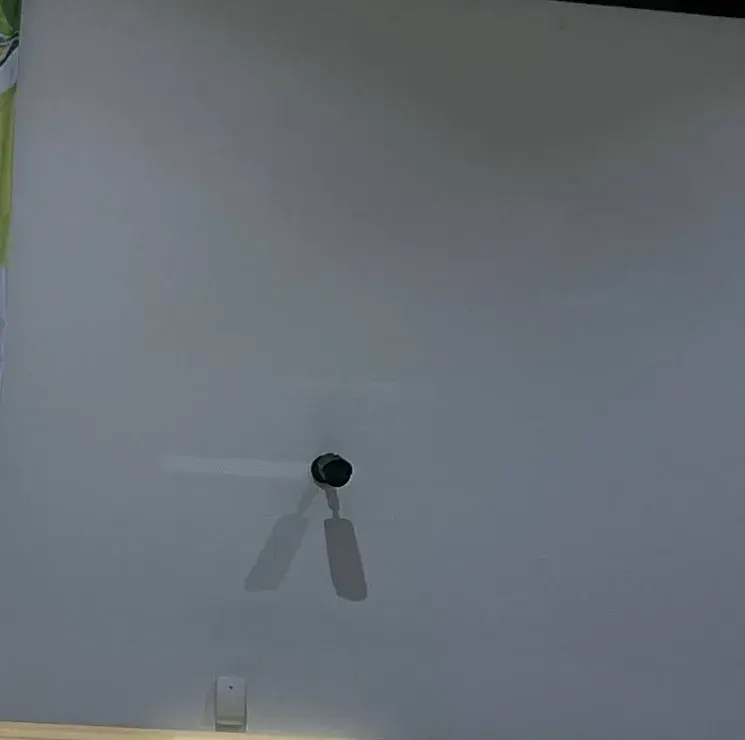
Prospect Heights, Brooklyn alarm installation reference: a small black camera on a short mount high on a plain grey wall, casting a long shadow, with a small white device near the bottom of the frame
AESS job-library photo, not taken in Prospect Heights: a camera high on a plain wall with its shadow below. Inside a row house we put devices on plain plaster like this rather than on original moldings, so nothing old has to be drilled.

Row-house owners who are adding cameras at the same time usually want them under the stoop or inside the vestibule rather than on the facade. Our security camera installation in Prospect Heights page explains how we place them in the historic district.

The Prospect Heights Calendar

An Alarm Planned Around the Days the Street Changes

Most alarm advice assumes the street outside a house is the same every day. In Prospect Heights it is not, and the differences are predictable enough to plan for. We group them into four kinds of day: arena nights, Labor Day, open-street weekends and market Saturdays. A fifth, slower calendar belongs to construction, because the Pacific Park plan published in June 2026 still has seven buildings to come over the rail yard. Each kind of day changes something specific about the alarm: which sensors are trustworthy, which arming mode the household uses, who the monitoring center should call first, and how that person gets to the door.

A Prospect Heights year, as an alarm planner reads it52 Saturdays of the Grand Army Plaza Greenmarket, the Friday–Sunday Vanderbilt Open Street, Labor Day, and an arena that books nights all yearJanFebMarAprMayJunJulAugSepOctNovDecGreenmarketEvery Saturday, 8 a.m.–4 p.m., year-round (GrowNYC)Open StreetVanderbilt Ave closed to cars Fri–Sun (DOT 2022)Labor DayJ'Ouvert + parade closures, first Monday of SeptArena nightsBarclays Center events: games, concerts, showsMuseum/gardenBrooklyn Museum and Botanic Garden visitor daysReading: there is almost no week in which the streets around a Prospect Heights house are simply quiet. AESS plans arming, call lists and sensor choice for that.Open Street hours vary by season and permit; check the PHNDC or DOT notice. Arena schedule: barclayscenter.com. Bars show presence by month, not frequency.
The calendar is the reason this page exists.

Arena nights

The Barclays Center opened in 2012 with a sold-out Jay-Z concert and has been home to the Brooklyn Nets ever since; the New York Liberty play there too. Its address is 620 Atlantic Avenue, it has two truck and bus entrances with elevators down to a loading dock, and it has no dedicated parking lot. In January 2013 Brooklyn News Service spoke with residents who had lived through the arena's first months. They described concert bass heard inside their buildings, loud crowds after a reggae concert, buses, black cars and limousines idling or double-parked on Sixth Avenue behind the arena, and dozens of calls to 311 about night construction at Flatbush Avenue and Dean Street. One Dean Street building, they said, stood 247 feet, 6 inches from the arena.

Forest City Ratner later added a green roof to the arena. Brooklyn Paper quoted the company's spokeswoman acknowledging that it would 'probably do something about sound'; Wikipedia records that it was being installed in February 2015. We have no measurement of how much it changed what neighbors feel, and we do not claim one. What matters for an alarm is simpler: on the blocks closest to the arena, glass and window frames move on some nights for reasons that have nothing to do with a burglar.

How close the arena isFigures from Brooklyn News Service (Jan 7, 2013) and Wikipedia; drawing not to scaleBarclays Center620 Atlantic Avenue · opened 201217,732 seats for basketballabout 20,000 for concertsA Dean Street buildingmeasured by residents in 2013247 feet 6 inchesWhat residents reported in the arena's first months (2013): concert bass felt inside apartments, crowds after events,buses and black cars idling on Sixth Avenue behind the arena, and dozens of 311 calls about construction at Flatbush and Dean.Our design response is on this page: contacts before vibration sensors, and a night setting that suits late foot traffic.Sources: Jermecia Edwards, 'Learning to live with the Barclays Center', Brooklyn News Service, Jan 7, 2013; Wikipedia 'Barclays Center'.
Two hundred forty-seven feet is closer than most people's walk to the corner.

That shapes three decisions. The first is sensor choice. A magnetic contact reports only that a door or window has opened, so vibration does not bother it; a shock sensor reports that the glass or frame has been struck or shaken, which is exactly what bass and traffic do. On the street side of houses near the arena, contacts come first, glass-break second, and shock sensors not at all unless they pass a test on an event night. The second decision is arming. People are awake and home in the early evening and asleep when the crowds pass, so we give the garden level its own area that can be armed alone before the doors open on an event night, and a night mode that arms the whole perimeter at bedtime. The third is outdoor notification. A video doorbell or a camera over the stoop can tell your phone that someone is on the steps; set to notify, not to sound the siren or call the monitoring center, it lets you see a fan sitting on your stoop at 11 p.m. without anyone being dispatched.

Which sensor for which opening, near the arena and the open streetAESS practice; ✓ = first choice, ○ = acceptable with testing, × = avoid as the only sensorOpeningContactGlass-breakShock / vibrationMotion insideWhyParlor-floor front window✓○×○Bass, traffic and crowds shake glass; a contact only reports openingGarden-level street window✓✓×○Closest to the sidewalk; add glass-break for a smashed paneUnder-stoop or garden door✓—×✓Door contact plus a motion sensor in the hall behind itRear parlor and yard windows✓○○○Quiet side; shock sensors work better here than on the streetRoof hatch or bulkhead✓—○—Contact on the hatch; vibration only if the hatch is fixed shutStorefront plate glass○✓×✓Glass-break across the room plus motion; doors get contactsRestaurant office or cash room✓—○✓Interior motion catches entry through a wall or ceilingHigh floor in a tower✓——○Entry door first; windows rarely reachableAESS practice from Brooklyn installations; any vibration-type sensor is tested in place before it is put on a monitored zone.
The left column is the list we walk through on a survey.
Contact, glass-break, shock: what each one actually noticesPlain-language comparison; AESS practiceMagnetic contactNotices: the door or window openingIgnores: vibration, noise, bassMisses: glass broken and reached throughBest on: every door, every reachable sashAcoustic glass-breakNotices: the sound pattern of breaking glassIgnores: most other loud sounds, if placed wellMisses: a window opened without breakingBest on: storefronts, big garden panesShock / vibrationNotices: the glass or frame being struckReacts to: bass, buses, crowds, slammed doorsMisses: nothing early, but trips falselyBest on: quiet rear panes, fixed hatchesNear the arena and on the avenues: contacts first, glass-break second, shock sensors only after a test on a busy night.
Each sensor answers a different question.
An event night on a block near the arena, and what the alarm is doingIllustration of an arena evening; times are typical planning blocks, not a published schedule5p6p7p8p9p10p11p12a1a2aStreetarrivalscrowds leaveHousedisarmed, people homegarden level armednight modePhonestoop camera: notify only1. Before the crowd leaves, the garden level goes into its own armed area so nobody has to remember the door under the stoop.2. Full night mode at bedtime: perimeter armed, interior motion off upstairs.3. Outdoor camera alerts go to phones only; no siren and no dispatch for someone sitting on a stoop.AESS practice. Arena event times vary; check the venue's calendar.
Nothing here needs special equipment.
Four scene buttons for a Prospect Heights row houseWhat each one arms; AESS practiceSceneGarden levelParlor floorUpper floorsRear & roofDoorbell cameraDayChime onlyOffOffArmedNotifyEvent nightArmedOffOffArmedNotifyNightArmedArmed (windows)Motion offArmedNotifyAway / closure dayArmedArmedArmedArmedNotify + recordGuests (parade day)Off, chime onOffArmedArmedNotifyA garden-level rental is a separate area with its own codes and is not changed by these buttons.AESS practice. Scene names are examples; we use whatever words the household prefers.
Four buttons cover nearly every day on the calendar.
Someone on the stoop at 11 p.m.: notify, don't dispatchAESS practice for doorbell cameras on blocks near the arenaPerson detected on the stoop Clip to household phones Look, speak through the doorbell, or ignore Alarm only if a door or window opens No siren and no monitoring call for a person on the steps. Quiet hours can mute the phone between, say, 1 and 6 a.m. while stillrecording, so a household is not woken by every fan walking to the subway.
The doorbell camera keeps the household informed; the alarm keeps its siren and its monitoring call for an actual break-in.

Labor Day

The West Indian American Day Parade marches down Eastern Parkway to Grand Army Plaza on Labor Day, and J'Ouvert runs before it in the early morning. NY1's guide for Monday, September 7, 2026 set out the closures. J'Ouvert closures began at 11:30 p.m. on Sunday and lasted until 11 a.m. on Monday, covering Flatbush Avenue from Grand Army Plaza to Empire Boulevard, Empire Boulevard from Flatbush to Nostrand Avenue and Nostrand Avenue from Empire Boulevard to Rutland Road; spectator access opened at 2 a.m. Parade closures started at 6 a.m. and grew around 10:30 a.m. Near Prospect Heights the whole Grand Army Plaza circle was closed, Flatbush Avenue was closed from the plaza to Caton Avenue, Washington Avenue from Sterling Place to Lincoln Road, and Eastern Parkway's main and service roads from Plaza Street East. Spectators entered through 13 screened entry points; bicycles, scooters, large bags and blankets were not allowed inside them.

Officials expected hundreds of thousands of people. For a house on the southern blocks of Prospect Heights, that means about eighteen hours in which a car cannot reach the front door, the nearest open crossing may be blocks away, and anyone coming on foot may have to go around barriers and checkpoints. A monitoring call that reaches the right person is only useful if that person can get to the house. We therefore write a Labor Day version of the call list for households on these blocks: the first names on it are people who can walk to the door, and the dispatch note tells responders which direction to approach from.

Labor Day, Monday September 7, 2026: closure timelineFrom NY1's Sept 4, 2026 guide; spectator access to J'Ouvert opened at 2 a.m.11p12a1a2a3a4a5a6a7a8a9a10a11a12p1p2p3p4p5p6pJ'Ouvert street closures11:30 p.m. Sun – 11 a.m.: Flatbush Ave GAP–Empire Blvd, Empire Blvd, Nostrand AveJ'Ouvert spectatorsSpectator access from 2 a.m.; procession 6–11 a.m.Parade closures begin6 a.m., expanding about 10:30 a.m.Parade11 a.m. at Eastern Pkwy & Rochester Ave → Grand Army Plaza, ends 5:30 p.m.Grand Army PlazaEntire circle closedEastern Pkwy service rdsMain and service roads closed from Plaza Street EastWashington AveClosed from Sterling Place to Lincoln RoadWhat it means for an alarm: for about eighteen hours the western and southern edges of Prospect Heights are walk-in only. Plan who can reach the house on foot.Source: NY1, 'J'Ouvert, West Indian Day Parade 2026: street closures and security', published Sept 4, updated Sept 7, 2026. Times rounded to the half hour.
The closures are announced each year, usually in the last week of August.
Labor Day 2026 closures at the southern edge of Prospect HeightsSchematic from NY1's closure list; lines show closed roads, not exact curb positionsProspect Heights (interior streets stay open to residents on foot)Eastern Parkway main + service roads closed from Plaza Street EastWashington Ave closedSterling Pl → Lincoln RdSterling PlGAP closedFlatbush Ave closedGAP → Empire Blvd (J'Ouvert,11:30 p.m.–11 a.m.); GAP → CatonAve for the paradeFlatbush Ave (west edge)For a house on these blocks• Cars cannot reach the door for most of the day• Approach on foot from the north (Atlantic side)• 13 screened entry points control the crowd area• Bicycles and scooters not allowed inside themSource: NY1, Sept 4/7, 2026. 'Approach from the north' is AESS planning advice, not an official route.
Drawn for planning a call list, not for navigation.
Labor Day week 2026, day by dayWhat was scheduled around Prospect Heights; FOX 5 (Aug 28, 2026) and NY1 (Sept 4, 2026)Mon Aug 31Last week of August: closure notices usually published Thu Sep 3Check call list; confirm who is in town AESS practiceFri Sep 4NY1 closure guide published Sat Sep 5Greenmarket 8–4; Junior Carnival 9 a.m. (St. John's Pl & Kingston Ave); Panorama at the museum, gates 6 p.m. Sun Sep 6J'Ouvert road closures from 11:30 p.m. Mon Sep 7J'Ouvert 6–11 a.m.; parade 11 a.m.–5:30 p.m. Tue Sep 8Put the usual call-list order back AESS practiceGreen headings are our suggested household steps; red headings are published schedule items.
The holiday is predictable.
Who can reach a Prospect Heights house when the streets are closed?AESS practice for building a call list: rank people by how they would actually get to the door on a closure dayLives on the blockWalks out the front door Arrival on a closure day:MinutesLives elsewhere in Prospect HeightsWalks from a few blocks away; may need to go around a barrier Arrival on a closure day:Under 20 minLives in Park Slope / Crown HeightsSubway or a long walk; crossing Flatbush or the parkway may be blocked Arrival on a closure day:30–60 minDrives in from elsewhereCar cannot get near the house; parking is gone Arrival on a closure day:UnreliableRule we use: on Labor Day, arena event nights and open-street weekends, the first person the monitoring center calls should be someone in the first two columns.Times are illustrative planning bands, not measured response times.AESS practice. Closure extents: NY1 (Sept 2026), NYC DOT Open Streets (2022).
A call list is usually written in order of family closeness.
What happens in the first minutes after an alarm tripsTypical central-station sequence; AESS practice for setting it up0 sDoor or window opens while armed; entry delay starts if it is an entry door ~30 sDelay ends; siren inside; signal sent over cellular and internet Seconds laterPush alert to every app user; doorbell clip if set 1–2 minMonitoring center calls the first name on the list PasscodeRight passcode cancels; wrong or none, next name or dispatch 15 minSiren stops by law (Admin. Code § 24-238) Times are typical and depend on the monitoring provider and the panel's programmed delays.
On a closure day the fourth box is the one that changes: who the center calls first, and whether they can get there.
A call list card for a closure weekendFill-in example; AESS practice. Real names, numbers and the passcode go on your card, never on a websiteOrderWhoHow they get here on Labor DayWhat they can do1Neighbor two doors downOn foot, minutesHas a key, no code2Owner, Park PlaceOn foot, under 20 minHas code and app3Owner's partnerOut of townApp only4Building super (co-op)On site weekdaysLobby access only• Before the weekend: confirm the order with the monitoring center; move a walker-reachable person to the top.• Passcode: one word everyone on the list can say clearly over crowd noise.• After the weekend: put the usual order back. A temporary order left in place is a common reason calls go to the wrong person.• Write the dispatch note: 'House is between Flatbush and Vanderbilt; Grand Army Plaza closed; approach from the north.'AESS practice; example entries are invented placeholders, not customers.
The order of this list matters more on one Monday in September than on any other day of the year.

Households that host friends for the parade have the opposite problem: the front door opens dozens of times. For that day we suggest leaving the main area disarmed and the door chime on, while the rear of the house, the upper floors and the cellar stay armed as their own area. The garden-level rental, if there is one, arms on its own schedule. When the last guest leaves, one button returns the house to its normal night setting.

Open-street weekends on Vanderbilt Avenue

Vanderbilt Avenue joined the city's Open Streets program in 2020. NYC DOT's June 2022 presentation for Prospect Heights shows Vanderbilt fully closed to cars from Friday through Sunday, from Atlantic Avenue to Park Place, and Underhill Avenue with limited local access from Monday to Friday. In DOT's 2021 survey of 1,468 people, about two-thirds said they visited nearby restaurants or bars. Brooklyn Paper reported that the Borough President wants Vanderbilt to become a permanent public plaza; DOT had not confirmed that. The Prospect Heights Neighborhood Development Council organizes and maintains the open street.

For a household on Vanderbilt, the open street means foot traffic outside the garden-level windows on three evenings a week from spring into fall, and later nights than on other blocks. The same garden-level mode used on arena nights covers it. For a restaurant, it means tables, chairs, heaters and planters on the roadway, staff carrying them in at closing, and a closing time that changes with the weather. That changes the order in which a restaurant should arm, which is covered in the business section below.

A typical week on the avenues, hour by hourShaded = when the street outside is busiest with foot traffic (AESS planning view from the sources below)0003060912151821MonTueWedThuFriSatSunEvent-night cells on Tue/Thu/Fri/Sat stand for a typical arena evening; on any given week the arena's own calendar decides.Greenmarket hours (GrowNYC), Open Street Fri–Sun (NYC DOT 2022). Shading intensity is a planning estimate, not a measured count.
The darker cells are when a closing shop or a household heading out is least likely to have the street to itself.
The Vanderbilt Avenue Open Street, block by blockAtlantic Avenue to Park Place; cross streets in order from north to southAtlantic AvenuePacific StreetDean StreetBergen StreetSt. Marks AvenueProspect PlacePark PlaceVANDERBILT AVEFriday–Sunday• Roadway closed to cars• Restaurant seating on the street• Foot traffic into the evening• Deliveries before the closureAlarm consequences• Garden-level mode for houses• Storage room contact for gear• Later closing reminders• Glass-break tested for crowd noiseSt. Joseph's Co-Cathedral: Pacific Street between Vanderbilt and UnderhillOpen Street extent: Brooklyn Paper and NYC DOT (2022). Cross-street order from the street grid; consequences are AESS practice.
Six blocks of avenue.

Market Saturdays and museum days

GrowNYC lists the Grand Army Plaza Greenmarket as Saturday only, 8 a.m. to 4 p.m., year-round, at the northwest entrance of Prospect Park, where it has operated since 1989. The Central Library sits at Grand Army Plaza, and the Brooklyn Museum and Botanic Garden face the neighborhood across Eastern Parkway; on the Saturday before Labor Day 2026, the Panorama steel-pan competition at the museum opened its gates at 6 p.m. These days do not close streets in the way the parade does, but they shape household habits. Saturday morning is when many people on the western blocks leave together for the market and the park, often with top-floor windows open in summer. The alarm answer is to arm the perimeter with only the openings that are deliberately left open bypassed, and to have the panel say which ones those are as it arms.

Every Saturday of 2026 at Grand Army PlazaGrowNYC lists the Greenmarket as Saturday only, 8:00 a.m. to 4:00 p.m., year-round, at Prospect Park West and Flatbush AvenueJan3Jan10Jan17Jan24Jan31Feb7Feb14Feb21Feb28Mar7Mar14Mar21Mar28Apr4Apr11Apr18Apr25May2May9May16May23May30Jun6Jun13Jun20Jun27Jul4Jul11Jul18Jul25Aug1Aug8Aug15Aug22Aug29Sep5Sep12Sep19Sep26Oct3Oct10Oct17Oct24Oct31Nov7Nov14Nov21Nov28Dec5Dec12Dec19Dec26Highlighted: Saturday, September 5, 2026 — Junior Carnival meets at St. John's Place and Kingston Avenue at 9 a.m.; Panorama at the Brooklyn Museum from 6 p.m. (FOX 5, Aug 28, 2026).Market days computed from the GrowNYC schedule; the market's vendor count changes week to week (36 producers were listed when we checked).
Fifty-two market Saturdays.

The construction calendar

Pacific Park, first proposed in 2003 as Atlantic Yards, had nine of its fifteen planned buildings finished by December 2023, when the developer defaulted on its loans. A revised plan unveiled on June 29, 2026 adds seven buildings on six sites, platforms over the rail yard and towers up to 799 feet, with construction possible from 2028, according to 6sqft. For an alarm that is a long-range note: blocks next to the rail yard may again sit beside scaffolding and night work, as they did when residents called 311 about the B2 site in 2012, and when that happens we revisit sensor choices and any openings a neighbor's scaffold makes reachable.

Pacific Park in numbers (June 2026 plan)6sqft, June 30, 2026; figures as reportedBuildings finished by Dec 20239 · of 15 plannedNew buildings in the 2026 plan7 · on six sitesNew homes in the 2026 plan5,600 · of 8,812 totalIncome-restricted new homes1,242 · about 30%Tallest planned tower (feet)799 · Site 5Environmental review expected from September 2026; construction possible as early as 2028.
Construction is not imminent, but it is coming to the blocks beside the rail yard.
Prospect Heights in dates that matter for a building's alarmEach date from the sources named at the bottom of this page1833Diagonal lots sold1839City grid redrawn1846Carlton Ave & Dean St open1852Flatbush Ave moved1889Name 'Prospect Heights' in the Eagle1912St. Joseph's built1983National Register listing2008Meier tower at Grand Army Plaza2009LPC district, about 850 bldgs2012Barclays Center opens2020Vanderbilt Open Street2023Pacific Park developer defaults2026Revised Pacific Park planWikipedia; Patch 2011; phndc.org; 6sqft (June 30, 2026); NYC DOT 2022. Spacing is by order, not by years.
Two centuries of building on top of an older map.
The Old Street Grid

Wedge-Shaped Rooms and Buildings With No Street Frontage

Prospect Heights' grid hides an older one. In a 2011 article for Patch, Stephanie Keith traced it back to 1833, when Charles Hoyt and James E. Underhill sold 25-by-100-foot lots on a street plan laid at about 45 degrees to today's streets and oriented to the old Flatbush Turnpike, itself a widened Lenape path. In 1839 the city redrew the grid. Carlton Avenue and Dean Street opened in 1846, Flatbush Avenue moved to its present line in 1852 and the remaining streets followed in the 1850s. Where the new streets crossed the old property lines, the city kept many of the 1834 lot lines, so some buildings still sit at an angle to the street. Patch names 323 Prospect Place as one of them and describes three buildings inside the block that are reached only by an alley and a doorway through another building. The effect is most visible between Underhill and Washington Avenues.

Two alarm problems follow from that history. The first is geometry. A motion sensor is designed to look out from a corner across a room, and a wedge-shaped room has one acute corner that looks mostly at two walls. We put the sensor where it can see the longest stretch of floor that a person entering must cross, usually from the square corner toward the window, and walk-test it from the door to make sure.

A room built on an old lot linePlan of a wedge-shaped rear room of the kind the 1833–1839 grids left between Underhill and Washington Avenues; AESS sensor placementparty wall (old lot line runs at about 45°)angled walldoorrear windowMMotion in the square corner, lookingacross the long diagonal toward the window×Avoid the acute corner: it looks at two walls and little floor.Old-grid history: Patch, 'Lost on the Old Grid', Feb 17, 2011. Sensor placement is AESS practice.
When a room has no square corner, the motion sensor goes where it can see the longest stretch of floor that a person must cross, which is rarely the obvious corner.

The second is finding the building. Emergency responders go to an address. If the alarm account for a mid-block building gives only its address, the first person to arrive may stand in front of the wrong door. The monitoring account therefore carries a dispatch note that says how to reach the building, such as which front door or passage to use, and the call list includes someone who knows the route. The door from the passage gets its own contact, because it is the only way in. We also test the radio signal at the panel's spot: a building enclosed by others on every side can be a poor place for cellular reception, and an outdoor antenna or a second reporting path may be needed.

A building with no street frontagePatch (2011) describes three angled buildings reached only by an alley and a doorway through another buildingSTREETfront buildingmid-block buildingpassage / doorway throughthe front buildingAlarm checklistDispatch note: 'enter through No. __front door, rear passage'Signal test at the panel spotContact on the passage doorKeyholder who knows the routeBuilding arrangement from Patch, Feb 17, 2011 ('Lost on the Old Grid'); checklist is AESS practice. No address is shown.
A responder who arrives at the street address sees the front building.
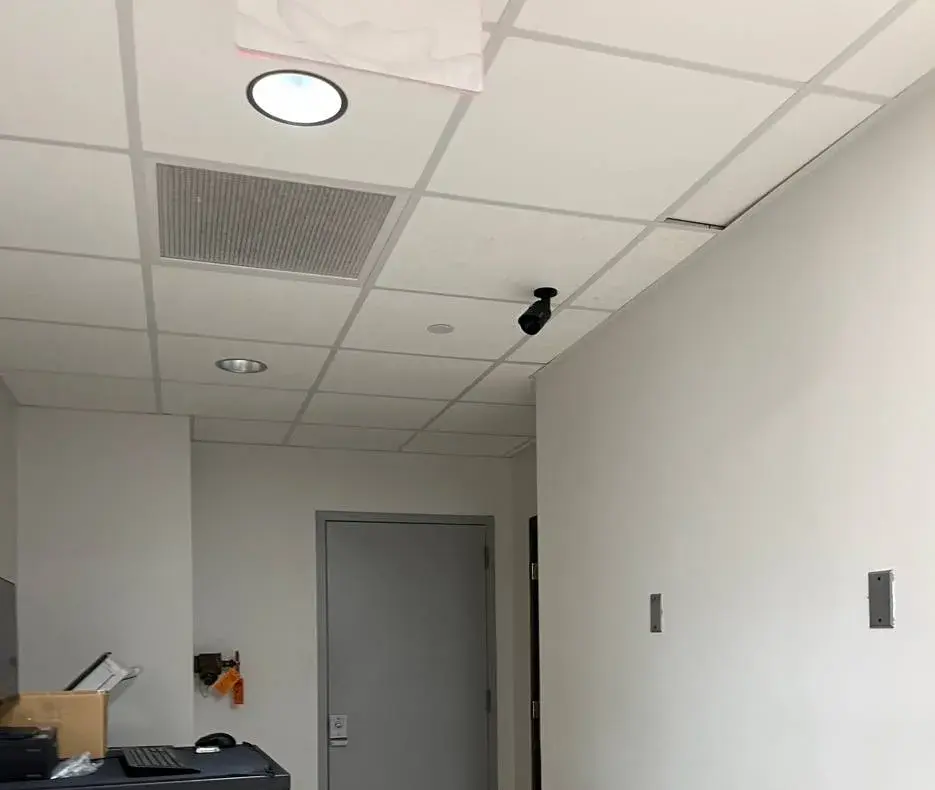
Prospect Heights, Brooklyn alarm installation reference: a short white hallway with a drop ceiling, a small black camera near the ceiling and a grey steel door at the far end
AESS job-library photo, not taken in Prospect Heights: a back hallway ending at a grey steel door. In a building reached through a passage from the street, a door like this is often the only way in, and it is the first contact we fit.

Buildings like these often share a stair or a passage with a front building. Where the shared door has a buzzer or an old intercom, its condition matters to everyone who uses it; our door buzzer repair in Prospect Heights page covers the work we do on those.

Apartments and Towers

Prewar Buildings on the Parkway and Glass Towers by the Arena

Not everyone in Prospect Heights lives in a row house. The north side of Eastern Parkway is lined with large prewar apartment buildings; Wikipedia compares the parkway between Grand Army Plaza and Washington Avenue to Manhattan's Museum Mile, and the New York Post has written about 135 Eastern Parkway as a grand prewar co-op. Lincoln Place and St. Johns Place between Underhill and Washington Avenues have larger multi-unit buildings, and a February 2023 fire injured four people in a large apartment building at Underhill Avenue and St. Johns Place. To the north, the Pacific Park towers and the 2008 Meier tower at Grand Army Plaza are newer, glass-fronted and run by managing agents.

In a prewar building, the apartment door is the perimeter. We fit a contact on it and on any window onto a fire escape, a courtyard ledge or the street at low floors, put a motion sensor in the hall, and connect smoke and carbon monoxide detection to the panel if the household wants it monitored. Fire-escape windows never get anything that makes them harder to open. On the parkway, a low apartment facing the parade route is worth arming as its own area on Labor Day even with people home, because the street outside is packed from early morning.

In a tower, the building controls the lobby, the elevators, the garage and often the apartment's smart lock. The alarm still has work to do: an entry-door contact, a terrace door if there is one, a motion sensor, sometimes a sensor on a storage locker or bike cage downstairs, and an app the household controls rather than the building. The practical questions are the management office's approval, cellular signal inside the unit and whether the building's Wi-Fi can be used as a second path.

A tower apartment near the arena: what the alarm coversGeneric one-bedroom plan; AESS practice for building-managed towerswindow wall (not reachable)entry door: contactLivingBedroomMterrace door: contactPanel by the door on a Wi-Fi + cellular plan; keypad optional; nothing drilled into the window wall.
In a tower the perimeter is short: one door, maybe a terrace.
Testing the signal where the panel will hangExample readings taken on a survey; AESS practice, not measurements from a specific buildingEntry hall closetCellular weak; Wi-Fi strongKitchen wallBoth acceptableLiving room by windowCellular strongInterior bathroomAvoidRule: the panel goes where at least one path is strong and the other is usable, even if that is not the spot by the door.
Glass towers and buildings enclosed by others are where we most often move the panel from its first planned spot.
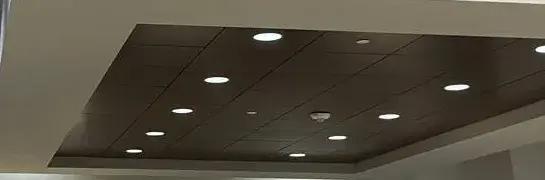
Prospect Heights, Brooklyn alarm installation reference: a dark wood-finished coffered ceiling panel with rows of round downlights set into it
AESS job-library photo, not taken in Prospect Heights: a dark coffered ceiling with rows of downlights. Finished ceilings like the ones in newer lobbies near the arena are a reason we use small wireless devices that do not need cable pulled through them.
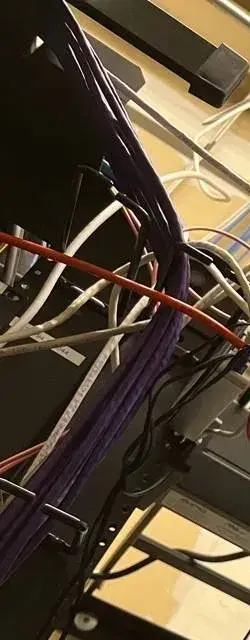
Prospect Heights, Brooklyn alarm installation reference: bundles of purple and white low-voltage cable running down the side of a black equipment rack
AESS job-library photo, not taken in Prospect Heights: cable bundles dressed down an equipment rack. In a tower or a large prewar building, the router and modem that carry the alarm's second signal path often sit in a closet like this.
Two ways out for every alarm signalWhy we pair cellular with the home's internet on blocks near the arena (AESS practice)Alarm panelbattery backedCellular radioshares towers with the crowdHome internetrouter on its own UPSMonitoring centerand your phonesOn a night when about 20,000 people leave the arena at once, a single cellular path can be slow. A second path through the home'sinternet means the signal does not wait. The panel also reports if either path stops working.Arena concert capacity from Wikipedia. Network behavior described generally; no carrier-specific claim is made.
Belt and braces.
Inside or outside? Alarm work in the Prospect Heights Historic DistrictSummary of the LPC Permit Guidebook rules our silo research recorded; not legal adviceUsually no LPC permitWireless contacts and motion sensors insideKeypads, panels and indoor sirensLow-voltage cable fished inside wallsRepairs and battery changesOrdinary maintenance of safety equipmentAsk first: exterior workAnything on or in front of the primary facadeWork in front, side or rear yardsConduit runs visible outside (keep tiny)Cameras: small buildings, at most two per 25 ftEquipment on cast iron or carved stoneOur default in the district: nothing goes on the outside of the house. A siren, if wanted, goes inside; a camera, if wanted, goesunder the stoop or in a discreet spot the owner and LPC staff agree on. We say this before any quote is written.NYC Landmarks Preservation Commission Permit Guidebook (general and Chapter 11). District designated June 23, 2009.
The rules are about the outside of the building.
Where a glass-break detector hears best in a narrow storefrontAESS practice; acoustic detectors usually listen within a manufacturer-stated range, so placement is testedplate glassGBon the ceiling or back wall, facing the glassMmotion in the back cornerNot behind a display, not next to a speaker, not in a kitchen pass. Tested with a simulator before handover.
In September 2026 police were looking for two people who broke into shops across Brooklyn, Prospect Heights included, by throwing something through the front window.
Commercial Alarm Installation

Business Alarm Installation in Prospect Heights

Wikipedia notes that a commercial zone has grown along Vanderbilt Avenue and Washington Avenue since 2000, with new bars, restaurants and specialty shops. Flatbush Avenue on the west edge and Atlantic Avenue on the north carry larger stores and the arena's ground floor. Each corridor raises a different first question for a business alarm.

Vanderbilt Avenue

Restaurants, bars, cafés and shops, with the Open Street outside from Friday to Sunday. The first question is what is still outside at closing and where it goes overnight.

Washington Avenue

Restaurants and shops along the Crown Heights edge, inside the Labor Day closure from Sterling Place south. The first question is who opens and closes on the holiday, and how they get there.

Flatbush Avenue

Storefronts facing Park Slope on a bus route that never really sleeps. Large plate glass, deliveries at the curb, and a street that is busy at 3 a.m. as well as 3 p.m.

Atlantic Avenue and the arena blocks

Ground-floor retail in and around Pacific Park and near the transit hub. Crowds before and after events at the door, and building-managed back-of-house corridors.

Underhill Avenue

Shops and cafés on a street with limited local access on weekdays. Deliveries come to side doors and the curb, so the service door is usually the one that matters.

Eastern Parkway

Institutions and large apartment buildings rather than storefronts. Offices on lower floors and doctors' suites in residential buildings need small, quiet systems.

Business corridors, and the alarm question each one raisesCorridors named in Wikipedia and local reporting; the question column is AESS practiceCorridorWhat is thereFirst alarm questionVanderbilt AvenueRestaurants, bars, shops; Open Street Fri–SunWhat is outside at closing?Washington AvenueRestaurants and shops on the Crown Heights edgeWho closes on Labor Day?Flatbush AvenueStores facing Park Slope; busy bus routeGlass on a 24-hour streetAtlantic AvenueArena, transit hub, Pacific Park ground floorsEvent-night crowds at the doorUnderhill AvenueOpen street with limited local access Mon–FriDeliveries and side doorsEastern ParkwayInstitutions and large apartment housesLobbies, not storefrontsSources: Wikipedia (Vanderbilt and Washington commercial zone since 2000); NYC DOT 2022 (Open Streets); Wikipedia 'Barclays Center'.
Six corridors on the edges and through the middle of a small neighborhood.

What a Prospect Heights restaurant alarm needs

The documented break-ins on these avenues do not all come through the front door. In May 2015, DNAinfo reported that a thief at a restaurant on Carlton Avenue at Park Place used a kitchen knife to cut through a wall into the owner's office some time between midnight and 9 a.m., then pried open a file cabinet and took $856 in cash. An alarm built only from door and window contacts would not have noticed. A motion sensor in the office that can see its walls, and in this case its ceiling, would have. We therefore treat any office or room where cash, a safe or records are kept as its own zone with interior motion, whatever the doors look like.

Brooklyn Paper reported a different pattern at a restaurant at Vanderbilt and St. Marks Avenues: on an August 11 (the item gives no year) the front door was broken at about 3:30 a.m. and an ATM holding about $13,000 was taken along with three iPads. And between August 3 and September 10, 2026, according to Hoodline, police were looking for two people who broke into businesses in sixteen Brooklyn neighborhoods, Prospect Heights among them, by throwing an object through the store window and taking cash and merchandise. Both are fast entries through the front. The parts that help are a contact on every door, an acoustic glass-break detector placed to hear the storefront glass, motion in the bar or register area, and a monitoring plan that calls a manager who can actually get there.

Prospect Heights business incidents in the record we checkedOnly items whose location and date we could confirm from a published reportWhenWhereHowWhat it teaches an alarm designMay 4, 2015, overnightRestaurant, Carlton Ave at Park PlWall cut into owner's officeInterior motion in offices, not only door contactsAug 11 (year not given), ~3:30 a.m.Restaurant, Vanderbilt & St. Marks AvesFront door broken; ATM takenFast glass/door detection; ATM area on motionAug 3 – Sept 10, 2026Shops in 16 neighborhoods incl. Prospect HtsObject thrown through windowGlass-break on storefront glass; quick dispatchOct 8, 2026, ~4:45 p.m.Residential building near Underhill & DeanBicycle taken from buildingContacts on garage and bike-room doorsFeb 3, 2023, ~5 a.m.Apartment building, Underhill & St. Johns PlFirst-floor fire, four injuredMonitored smoke detection in mixed buildingsSources: DNAinfo 2015; Brooklyn Paper (undated item); Hoodline Sept 15, 2026; Hoodline Oct 2026; Patch Feb 3, 2023. Business and resident names omitted.
Five items is not a crime statistic and we do not present it as one.
A Vanderbilt Avenue restaurant: zones for an open-street weekendAESS practice for a narrow storefront with an office, a cellar and an outdoor seating area on the streetstorefront glassDining roomGlass-break across the room, motion high in the back cornerBar & registerMotion; register drawer not alarmedKitchenHeat detector, no motion near the hoodOfficeMotion covering walls and ceiling; safe sensorBack door & cellar stairContacts; cellar on its own areaOutdoor seating on the open street: not on the alarm. Furniture and heaters come inside before arming, or go in a locked, contacted storage room.Office-through-the-wall example: DNAinfo, May 14, 2015 (Carlton Avenue at Park Place). Layout is a generic example, not a specific business.
The office gets motion that can see its walls because, in at least one Prospect Heights restaurant, the way in was a hole cut through a wall into the office rather than a door.

The open street adds one more thing. On a busy weekend night, tables, chairs, heaters and planters are on the roadway until closing, and staff carry them in while the last guests leave. If the alarm's main area is armed too early, someone trips it with a stack of chairs; if it is armed too late, the manager has gone home and nobody notices it was never set. We set up the closing in order: the outdoor equipment goes into a storage room with its own contact, the kitchen is shut down with its heat detector still live, the cellar is armed, then the office, then the main room with the closing manager's personal code. If the owner has not received an 'armed' text by an agreed time, the panel sends a 'not armed' reminder instead.

Closing an open-street restaurant in the right orderAESS practice: the arming steps that fit a night when tables and heaters are still outside at closing time1Bring in furniture, heaters, planters2Lock storage room (contact closes)3Kitchen off: heat detector stays live4Arm cellar area5Office door shut, office armed6Staff out the front7Arm main area with personal code8Owner gets the 'armed' textAESS practice. If step 8 has not arrived by the time the owner set, the panel sends a 'not armed' reminder instead.
Most closing mistakes we see are order mistakes: the main area armed while someone is still carrying chairs, or the cellar left off because it was armed last and forgotten.
When a Vanderbilt Avenue restaurant's 'not armed' reminder should fireExample settings by day; AESS practice, set with each owner21p22p23p12a1a2a3aMon–ThuFri (open street)Sat (open street)Sun (open street)Blue: last service and teardown (example). Red dot: if no 'armed' signal by then, the owner gets a 'not armed' text.Times are examples for illustration, not any restaurant's real hours.
A single fixed reminder time is wrong for most of the week on an open street.
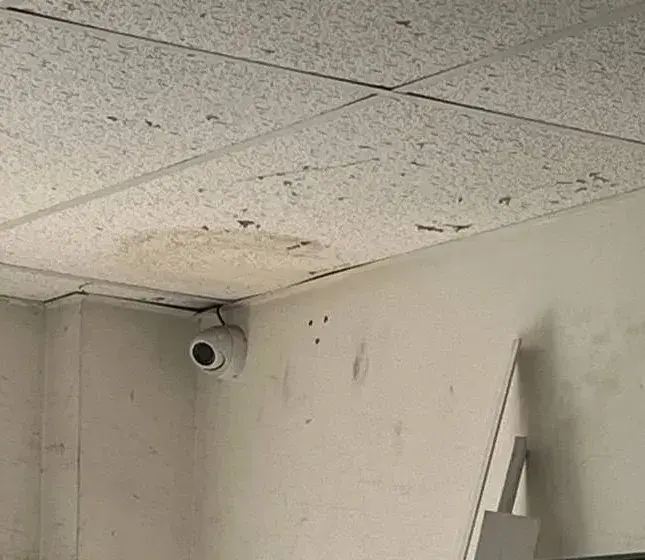
Prospect Heights, Brooklyn alarm installation reference: a white dome camera mounted high in the corner of a bare storage room under stained, cracked ceiling tiles
AESS job-library photo, not taken in Prospect Heights: a dome camera in the corner of a bare storeroom. A restaurant's back storage room, where tables and heaters from the open street spend the night, gets a door contact and often a motion sensor of its own.
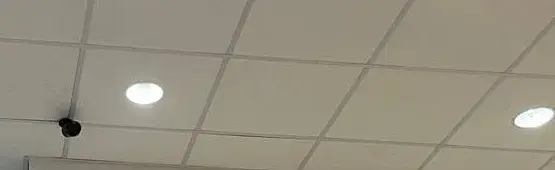
Prospect Heights, Brooklyn alarm installation reference: a small black camera on a white ceiling grid between two round recessed lights
AESS job-library photo, not taken in Prospect Heights: a small black camera between two recessed lights. In a restaurant dining room we keep motion sensors and cameras away from lights and heat that change through the night.

Rules a Prospect Heights business alarm has to respect

How long the siren may sound. Fifteen minutes, then it must cut itself off: that is the rule in § 24-238 of the city's Administrative Code for audible burglar alarms on buildings. We set the cutoff on every panel at installation. Above a restaurant, the tenants upstairs care about that limit at least as much as the owner does.

The installer's license. New York's Department of State licenses alarm installers under Article 6-D of the General Business Law and fingerprints the people they employ. A business owner is entitled to see that license before work starts. Ours, #12000287431, is on the quote.

Landmark rules for storefronts. Inside the historic district, work on a storefront facade, including new signs, cameras or equipment on the front, needs the Landmarks Preservation Commission's review. A business alarm normally lives entirely inside, so it does not. If you want an exterior siren or camera, we raise it before the quote.

Fire and smoke. A burglar alarm can carry smoke and heat detectors for the business, but it does not replace a fire alarm system the building or the code requires. For restaurants we use heat detectors near cooking areas, where smoke detectors would false-alarm.

Restaurants that want their cameras and their alarm on one app usually also need cabling for the recorder, the router and the point-of-sale terminals. We do that work too; see structured cabling installation in Prospect Heights.

Your Questions Answered

Alarm Installation in Prospect Heights: Questions Answered

These are the questions Prospect Heights households and business owners ask us most, in the order the calendar raises them. Each answer is written for this neighborhood.

Event days and closures

On Labor Day morning the plaza, the parkway's service roads and Washington Avenue are closed from before dawn. If our alarm trips then, who can actually get to the house?

Only people who can walk there. For about eighteen hours on Labor Day the southern and western edges of the neighborhood are closed to cars, and checkpoints control foot traffic near the parade. Before the weekend, ask the monitoring center to put a neighbor or a nearby friend first on your call list, add a dispatch note saying which direction to approach from, and switch the list back afterwards. If no one on foot is available, the monitoring center can still dispatch police; your list just decides who meets them.

We host friends for the parade every year and the front door opens all day. How do we keep the alarm doing anything useful?

Split the house. Leave the main floor and the front door disarmed with the door chime on, and keep the rear windows, the upper floors and the cellar armed as a separate area, so a guest who wanders upstairs or out to the yard is noticed. If there is a garden-level rental, it stays on its own codes. When the last guest leaves, a single button or fob press returns everything to the normal night setting, and the panel tells you if any window is still open.

Can the alarm know when there is a game or a concert at the arena and change its settings by itself?

Not directly. Alarm panels and apps do not read the arena's event calendar. What most current systems can do is run a scene or a schedule, so you can set the garden-level mode to start at a fixed time on chosen days, or create a one-press 'event night' scene and a phone reminder for the dates you care about. We usually recommend the one-press scene, because event times change and a schedule that arms while people are still coming home causes false alarms.

After games and concerts, people sit on stoops along our block until late. Can we be told about someone on our steps without the police being called?

Yes. A video doorbell or a small camera over the stoop can send a notification and a short clip to your phone when it detects a person, while the alarm itself stays out of it. We set these devices to notify only: no siren and no monitoring call. That way you can see who is outside, speak through the doorbell if you want, and keep monitored dispatch for an actual opening of a door or window.

Restaurants and shops

Our tables, heaters and planters stay out on the Vanderbilt Avenue roadway until closing. Can the alarm protect equipment that spends the evening outside?

Not while it is outside. Nothing we would put on a public roadway could tell a passer-by from a thief, and a sensor on a heater would trip every time a guest moved it. What works is a place for the equipment overnight: a back storage room or cellar space with a door contact, and a closing order in which the furniture goes in before the main area is armed. A camera on the storage door, set to record, covers the time when it is open.

We live over a restaurant on Washington Avenue. If a fire starts downstairs after it closes, will our apartment alarm know?

Only if smoke or heat reaches a detector connected to your panel. Your system covers your apartment; it has no sensors in the restaurant. A monitored smoke detector in your hall and a heat detector at the top of the stair, if the stair is yours, are the parts that can warn you and call the fire department. Ask the landlord what the restaurant's own fire protection is, and keep the battery smoke alarms the city requires in every unit as well.

Row houses and the old grid

Our back room is wedge-shaped because the house follows an old lot line. Where does a motion sensor go in a room with no square corner?

Usually in the square corner, if there is one, looking along the room's longest diagonal toward the window or the door a person would use. The acute corner is the worst spot because it looks mostly at two walls. We place the sensor, then walk the room from each opening while the panel is in test mode, and move it if any path is missed. A wedge room sometimes needs a contact on its window instead, if no sensor position sees the whole floor.

Our building sits inside the block and is reached through a passage from the street. How would a responder find it?

From a dispatch note on your monitoring account. The note gives the street address of the front building or passage and a plain description of the route, so that police or firefighters do not stop at the wrong door. We also put someone who knows the route near the top of your call list, fit a contact on the passage door, and test the radio signal where the panel will hang, because buildings enclosed on all sides can have weak cellular reception.

We are replacing our front windows with wood replicas approved by the Landmarks Commission. Should the alarm go in before or after?

After, or at least the window contacts should. A contact is aligned to the sash and frame it sits on, and new windows almost always move that line. If you need protection during the work, we can install the panel, the door contacts and interior motion first, then add the window contacts once the new sash is in and has settled. Both visits can go on one written quote.

Our 1890s house still has its original iron areaway gate. Can the gate be on the alarm without drilling the ironwork?

Often, but we rarely recommend it as a monitored zone. A gate swings in the wind and is opened by delivery people and neighbors, so it makes a poor trigger for a siren. If you want to know when it opens, a small wireless contact can be clamped or banded to a plain bar and its magnet to the post without drilling, set to chime or notify your phone. The doors and windows behind the gate are where the monitored protection belongs.

An apartment over a restaurant: which detector is whoseSection through a mixed building on an avenue; AESS practiceRestaurant (landlord's / tenant's systems)Your apartment (your alarm)SSHstair(yours?)In your unitS smoke in hallS smoke in bedroomH heat at topof a stair you ownAsk the landlordWhat protects therestaurant at night?Who is called?Is it monitored?
Your panel only knows what reaches your detectors.
A contact on an iron areaway gate, without drillingAESS practice for historic ironwork; set to chime or notify, not to dispatchpostCcontact clamped to a plain barmagnet banded to the postno holes in historic ironwork
Gates swing in wind and are opened by delivery people, so this is an information zone.
Replacing landmark windows and adding an alarm: the orderAESS practice for a house getting new LPC-approved wood windowsBeforePanel, door contacts, interior motion DuringWindow work; hall motion covers the floor After 1–2 wksSash settled; window contacts fitted FinalWalk test every window; zones named Window approvals are the owner's and the window contractor's; LPC rules from the Permit Guidebook.
Contacts are aligned to a sash; a new sash moves that line, so the contacts come last.
Equipment

Types of Alarm Systems We Install in Prospect Heights

Touchscreen panels with dual-path reporting

Panels that report over cellular and the home's internet, with battery backup. On blocks near the arena the second path keeps signals moving on crowded nights.

Magnetic door and window contacts

Small wireless contacts for original wood sash and doors; recessed wired contacts where a door is being refinished anyway. Unaffected by vibration.

Acoustic glass-break detectors

For storefront glass and large garden-level panes. They listen for the sound pattern of breaking glass, so placement is tested with a simulator.

Pet-tolerant motion sensors

For garden-level halls, parlor halls, offices and wedge-shaped rooms on the old grid. Placed for the route a person must take, not for the nearest corner.

Shock sensors, used sparingly

For fixed rear panes and hatches on the quiet side of a house. Never the only sensor on a window facing the arena blocks or a busy avenue.

Smoke, heat and carbon monoxide

Monitored smoke detectors in halls, heat detectors in kitchens and near restaurant cooking areas, and CO detectors near fuel-burning equipment.

Indoor sirens and keypads

Sirens inside the house, not on a landmarked facade, programmed to stop within fifteen minutes; keypads placed by the door you actually use.

Key fobs and scene buttons

One-press 'event night', 'night' and 'away' scenes for households that switch modes often; personal fobs for each person.

Video doorbells and stoop cameras

Set to notify your phone, not to dispatch, so a crowd on the steps is a picture on your screen rather than a false alarm.

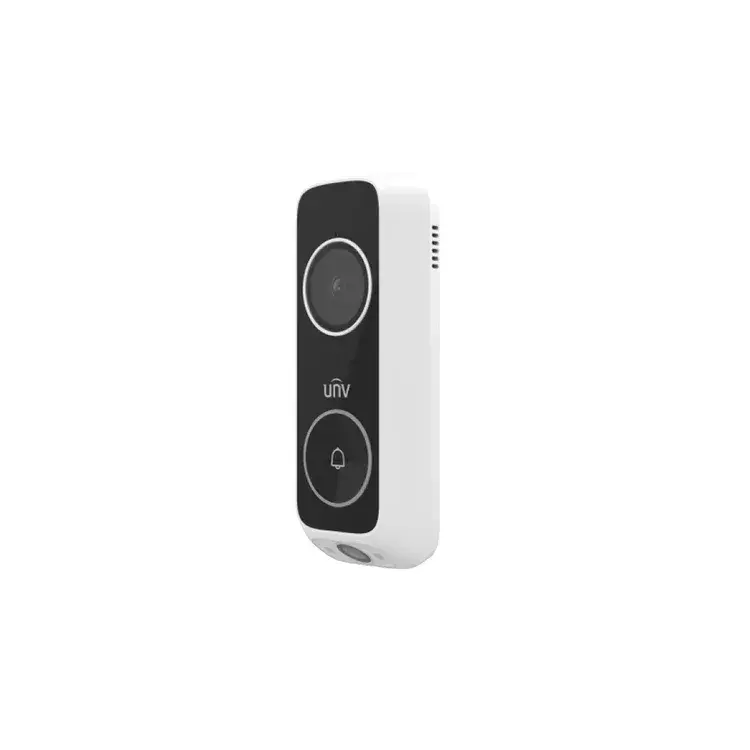
Prospect Heights, Brooklyn alarm add-on reference: manufacturer product photo of a slim white Uniview video doorbell with a camera lens at the top and a round bell button below
Manufacturer product photo, not taken in Prospect Heights: a Uniview video doorbell. On a stoop that crowds walk past after an arena event, a doorbell camera set to notify a phone is how a household sees who is outside without opening the door.
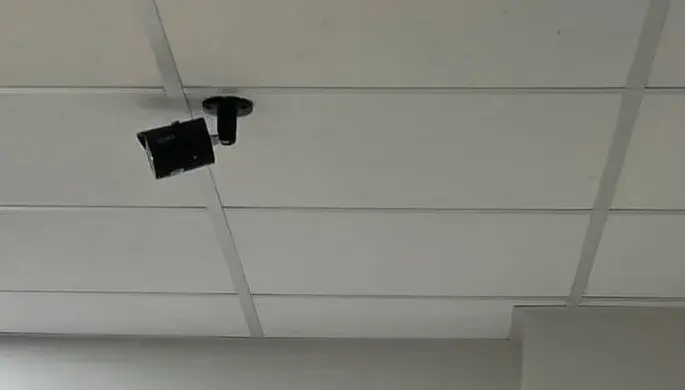
Prospect Heights, Brooklyn alarm installation reference: a black bullet camera hanging from a short black pole mount in a white drop ceiling
AESS job-library photo, not taken in Prospect Heights: a bullet camera on a short pole from a drop ceiling. In an office behind a dining room this is the kind of spot from which a motion sensor can see both the walls and the ceiling.

ADT, Ring and SimpliSafe compared with a local installer

National brands sell good equipment, and we install Ring and SimpliSafe kits at our labor-only rate for people who already own them. The differences that matter in Prospect Heights are about setup rather than hardware. A self-install kit arrives with generic placement advice: a sensor on the front door, a motion sensor in the living room, a keypad by the entrance. It does not know that the door under your stoop is the one crowds pass at midnight, that shock sensors on your parlor windows will react to concert bass, or that your Labor Day call list should start with someone who can walk to the house. ADT and similar companies install for you, but many of their offers have historically been tied to multi-year monitoring agreements, and people on Reddit describe three-year contracts and installation fees running over a thousand dollars; read any agreement before signing.

A local installer's advantage is that the person who walks your house knows the neighborhood's days. We write that knowledge into the arming modes, the sensor choices and the monitoring account, and our monitoring starts at $19.99 a month with no long-term contract. If a national kit suits your house better, we will say so.

Shops and offices that also need controlled doors for staff, such as a code or card on the back door, can add access control to the same visit; see access control installation in Prospect Heights.

AI Overview Reality Check

What AI Gets Wrong About Alarm Installation in Prospect Heights

We could not open Google's AI Overview or the People Also Ask panels from our research environment, so nothing below quotes them word for word. The claims in quotation marks are the common generic statements we hear repeated about alarm installation, and the answers are our correction for Prospect Heights.

"An alarm system works the same way on any street."

This is the assumption behind most generic advice, and it is the one Prospect Heights most clearly breaks. AI summaries of alarm installation typically recommend a contact on each entry door, a motion sensor in the main room and an outdoor siren, and they treat the street as a constant. Here the street changes several times a week, and a few times a year it closes altogether.

On arena nights crowds pass the garden-level windows late. On open-street weekends Vanderbilt Avenue fills with diners until closing. On Labor Day the plaza, the parkway's service roads and Washington Avenue from Sterling Place south are closed for most of a day. An alarm that ignores these patterns either false-alarms on them or protects badly through them.

The correction is not more equipment. It is a few arming modes set up for the days that recur, a call list that accounts for closures, and sensor choices that suit the vibration and noise of the busiest blocks.

"Shock sensors on windows give you early warning."

Shock and vibration sensors do react before glass breaks, and that is useful on a quiet rear window. The trouble is that they react to anything that shakes the glass. Residents near the arena described bass and vibration in their buildings in its first months, and Flatbush Avenue's traffic shakes storefront glass all day.

A sensor that trips on a concert, a bus or a crowd gets bypassed by a frustrated household within weeks, and then it protects nothing. False alarms also cost money and goodwill with the monitoring center.

On the street side of houses near the arena and on the avenues, we use contacts first and acoustic glass-break second. Shock sensors go only where they pass a test on an actual event night.

"Put the outdoor siren where the neighbors will hear it."

Many AI answers recommend an exterior siren and strobe as a deterrent. In much of Prospect Heights, that advice runs into the historic district. The Landmarks Preservation Commission's guidebook asks that security equipment not go on or in front of the primary facade unless there is no alternative, and that whatever is visible be small and discreet.

There is also a practical point. On a street where crowds are loud after events, an outdoor siren is easy to ignore, and it is limited by city law to fifteen minutes of sound anyway.

Our default in the district is an indoor siren, which is loud enough to make an intruder leave and needs no exterior work. If an owner wants an outdoor sounder, we discuss a discreet location and the LPC review before quoting it.

"The monitoring center will send help, so your call list doesn't matter much."

Monitoring centers do dispatch police when an alarm is not cancelled, but they usually call the people on your list first to verify. Who those people are, and whether they can reach the house, decides what happens next.

In Prospect Heights, the answer changes with the day. On Labor Day a contact who drives in cannot get near the house. On an arena night, parking near the arena blocks disappears. A call list written once and never revisited can send the monitoring center's first call to the one person who cannot help.

We ask households to rank their contacts by who can arrive on foot, write a closure-day version of the list for the weekend that needs it, and add a dispatch note for buildings that are hard to find from the street.

"A building with a doorman or a managed lobby doesn't need an apartment alarm."

Lobbies, cameras and staff reduce some risks, and the newer towers near Grand Army Plaza and the arena have all three. But the building's systems protect the building, not your unit, and they are run by people who also let in couriers, contractors and staff.

Theft also happens inside shared spaces: in October 2026 a bicycle was reported taken from inside a residential building near Underhill Avenue and Dean Street on a weekday afternoon.

An apartment alarm covers the one door that is yours, a terrace if you have one and anything you store in the building, and it reports to you. It is small and inexpensive in a tower, because the perimeter is short.

"Alarm installation costs $1,000 to $2,000, wherever you live."

National averages from sites like Angi, HomeAdvisor and Fixr are reasonable starting points, but they mix very different jobs: a kit installed in a small apartment and a wired system in a four-story house are not the same work.

Our Brooklyn list, which Prospect Heights uses unchanged, starts at $600 for a basic wireless system and typically runs $600 to $1,200 for an apartment, starts at $2,500 for complete home protection, and runs $2,000 to $6,000 for hardwired full coverage of a larger house. A small business system is $1,500 to $3,000.

Being in the historic district does not add to the price, because the work stays inside. What changes the price is the number of openings, the number of households and whether old wiring can be reused.

"Anyone handy can install an alarm."

Self-install kits are designed to be put up by their owners, and many people do it well. Installing or servicing alarms for other people is different: in New York State it requires a Department of State license under Article 6-D of the General Business Law, and the license holder's employees must be fingerprinted.

The parts of a Prospect Heights job that go wrong without experience are rarely the screws. They are the sensor choices for the arena blocks, the area setup in a divided row house, the closing order for a restaurant on the open street, and the call list for a closure day.

Ask any installer for their license number before they come in. Ours, #12000287431, is printed on every quote and invoice.
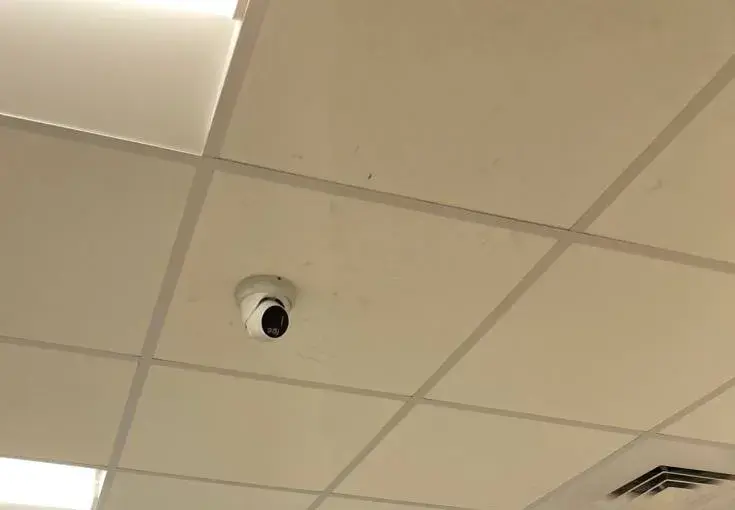
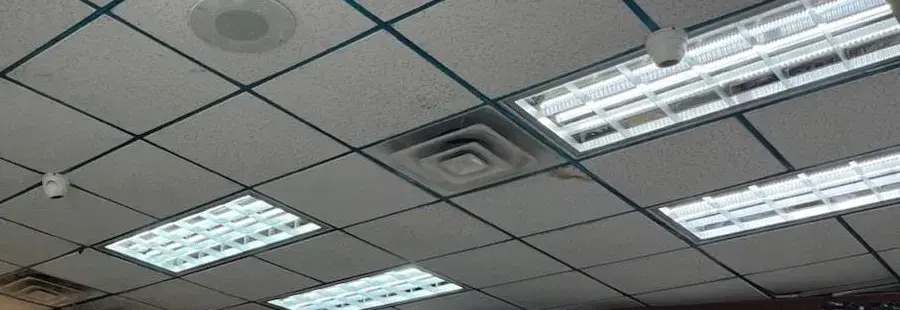
Tell Us Your Cross Street and We Will Check It Against the Closure Map

Send the street, the building type and a photo of the front door. We reply with the arming modes we would suggest for your block, the openings we expect to cover and a likely price from our Brooklyn list.

Get In Touch

Request a Free Quote

Whether it is a brownstone on Prospect Place, a co-op on Eastern Parkway, a tower unit on Dean Street or a kitchen on Vanderbilt Avenue, the form below is enough for us to plan the visit. Name your cross street and the days your block changes. Rather phone? (347) 934-8335.

✅

Request Received

Thank you. We will call to arrange the walkthrough, avoiding arena event nights and closure days near your block where we can. If a siren is sounding right now, do not wait for our call: phone (347) 934-8335.

How It Works

Our Installation Process

Plan on a morning for a unit in one of the towers and on most of a working day for a brownstone split between an owner and a tenant. The order of work does not change with the size of the job.

1. Your street, your building, your photos

By text or the form: cross street, building type, which event days touch your block, a photo of the main door from inside and one of any keypad already on the wall. Our reply suggests arming modes and a price band.

2. Walk every opening with you

A technician walks the garden level, the stoop, the parlor floor, the rear and the roof hatch, or the apartment door and terrace, and checks signal where the panel will go.

3. Agree the modes and the call list

Together we set the arming modes you will actually use, including any event-night or closure-day setting, and rank the call list by who can reach the house on foot.

4. Written price the same day

Every device, area and service is a line on the quote, priced from the Brooklyn list, with sales tax shown and the license number printed.

5. Install inside, test every zone

Contacts, motion and smoke detectors go in with nothing on the facade. Each zone is tested from the panel's final position, and both reporting paths are tested.

6. Handover with the whole household

Each person arms and disarms with their own code or fob, tries the scene buttons, and hears a test call from the monitoring center.

7. Review after the first event night or week

Once the house has lived through its first arena night or open-street weekend, or seven days at most, we go through the event log together, change whatever tripped for the wrong reason, and only then hand the account to the central station.

Once a year, before Labor Day: a five-minute call-list check

In the last week of August, when the city publishes the closures, we suggest every household on the southern and western blocks reads its call list again, confirms who will be in town and can walk over, and changes the order for the weekend if needed. It is the single most useful five minutes of alarm maintenance in Prospect Heights.

The first two weeks after a Prospect Heights installAESS practice; dated against a typical calendar so the first event night falls inside the review windowDay 0Install, name sensors, test both signal paths Day 1–3Self-monitoring: alerts to phones only First event nightTry the garden-level and night settings Day 7We read the history with you Day 8Central station switched on, call list confirmed Day 14Second check if a closure weekend is coming AESS practice.
We prefer the first week to include an arena night or an open-street weekend, so that the settings are tried on the kind of night they were built for.
Two short checks a year, timed to the Prospect Heights calendarAESS practiceWhenCheckWhy thenLate MarchTest every zone; replace weak batteriesBefore the open-street season and warm-weather windowsLate MarchReview the event-night sceneArena and street schedules change with the seasonLate AugustRead the call list; who is in town?Labor Day closures are published that weekLate AugustConfirm the passcode with everyoneA crowded call is hard to hearAfter any renovationWalk test the changed roomsNew windows or walls move sensor lines
Ten minutes in March and ten in August.
Coverage Area

Alarm Installation Near Prospect Heights' Landmarks

When we confirm an appointment we usually describe the address by its nearest landmark from this list. The details given for each come from the reading listed under Sources.

Barclays Center

620 Atlantic Avenue, opened in 2012, home of the Brooklyn Nets and the New York Liberty; 17,732 seats for basketball and about 20,000 for concerts, with a transit hub at its entrance plaza.

Grand Army Plaza

The southwest corner of the neighborhood, with the Central Library of the Brooklyn Public Library on its edge and the Saturday Greenmarket at the park entrance since 1989.

Brooklyn Museum

On the south side of Eastern Parkway, across from the neighborhood; its grounds host the Panorama steel-pan competition on the Saturday of the Labor Day weekend.

Co-Cathedral of St. Joseph

856 Pacific Street between Vanderbilt and Underhill Avenues, built in 1912 in the Spanish Colonial style for the Roman Catholic Diocese of Brooklyn.

Engine 219 and Ladder 105

The FDNY firehouse at 494 Dean Street, the one fire station inside Prospect Heights.

Vanderbilt Avenue Open Street

Atlantic Avenue to Park Place, closed to cars from Friday to Sunday and organized by the Prospect Heights Neighborhood Development Council.

We also serve the neighborhoods around Prospect Heights: Crown Heights east of Washington Avenue, Fort Greene north of Atlantic Avenue, Park Slope across Flatbush Avenue and Clinton Hill to the northeast.

Prospect Heights, Brooklyn alarm installation reference: a lit red exit sign hanging from a tiled ceiling near an air vent, with a small camera and a recessed light nearby
AESS job-library photo, not taken in Prospect Heights: an exit sign and a small camera on a tiled ceiling. Near the bar's exit we mount the keypad on the closing manager's route out, at a height and spot where it cannot crowd the doorway during service.
Pricing

Alarm Installation Cost in Prospect Heights

There is no Prospect Heights premium: every figure in this table is the base Brooklyn list, used here as is. Your quote itemizes each device and each piece of labor, then adds the city's 8.875 percent sales tax at the bottom. Anything that totals less than $500 is paid in full before the visit; above $500 we ask for half to book the date and the other half when the system is handed over.

What you are buyingBrooklyn list priceTypical Prospect Heights fit
Basic wireless residential alarmfrom $600; typically $600–$1,200Tower or prewar apartment
Complete home protectionfrom $2,500Single-family row house
Custom hardwired, full coverage$2,000–$6,000Four-story house with old wiring in good order
Hybrid wired and wireless, multi-story house$2,500–$6,000Row house with owner and rental areas
Panel replacement on existing wiring$800–$1,500Inherited system with a dead panel
Commercial alarm, small business$1,500–$3,000Restaurant or shop on Vanderbilt, Washington or Flatbush
Cameras added to an alarmadd $1,000–$2,500Stoop and rear yard, or a store floor and back door
Per-unit setup for a landlord$400–$800 per unitA divided row house with two or three rentals
Labor-only install of your own kit$200–$400A Ring or SimpliSafe kit already bought
Central-station monitoringfrom $19.99 a month, no long-term contractAny of the above
Service visits outside a new installation$195/hr, 3-hour minimum ($585)Callbacks and repairs
Brooklyn list ranges (Prospect Heights uses them unchanged)Published AESS Brooklyn prices; sales tax of 8.875% is added on the quoteLabor-only, your own kit$200–$400Per unit, landlord set-up$400–$800Basic wireless alarm$600–$1,200Panel replacement, existing wiring$800–$1,500Small business alarm$1,500–$3,000Hardwired full coverage$2,000–$6,000Hybrid multi-story house$2,500–$6,000Complete home protection starts at $2,500; monitoring from $19.99 a month; service visits $195/hr with a 3-hour minimum ($585).
These are the Brooklyn base prices.

What moves a Prospect Heights quote up or down

Households, not just floors. A row house with one family needs one area; a row house with an owner's triplex and a garden-level rental needs two, with keypads or fobs for each. That moves a house from the complete-home figure toward the hybrid range.

The garden level and the stoop. The garden level usually carries the most devices on a row house: the under-stoop door, two front windows, the rear door and a hall motion sensor. The parlor floor above it may need only two or three contacts.

Wire left by an earlier installer. A good number of the brownstones we survey still have copper running to the doors and lower windows from a system fitted decades ago. If our meter says those runs are sound, a new panel and communicator on the old wire is often cheaper than going fully wireless.

A second reporting path. Adding internet reporting to a cellular panel is a small line item, and on blocks near the arena we recommend it.

What does not move the price. Being in the historic district, being on a closure street and being near the arena add nothing in themselves. The settings for those days are part of the programming we do on every job.

What is not on this list. Water sensors, extra fobs, extra keypads and a second siren are priced individually on the quote. If you are not sure whether you need them, ask; we will not add them by default.

Get a Written Brooklyn-List Price for Your Prospect Heights Home or Business

One visit, one written quote, every line priced. Call or send the form and tell us the cross street.

Shop Our Systems

Alarm Installation Packages & Pricing

Apartment or Tower Unit — from $600

Suited to a co-op on the parkway or a rental in the towers: a dual-path panel by the door, the entry door plus up to five windows or one terrace door on contacts, a motion sensor that ignores a cat, an indoor sounder, a pair of fobs, two scene buttons and an app walkthrough for everyone who lives there.

Row House, Every Floor — from $2,500

A panel with an area for each household if there is a rental, contacts on the street door, under-stoop door, garden-level and parlor windows, rear doors and roof hatch, motion in the garden and parlor halls, smoke detectors on the panel, and event-night, night and away scenes.

Restaurant or Shop — from $1,500

Built for an avenue storefront: a commercial panel, an acoustic detector listening to the front glass, motion over the dining floor, the bar and the office, contacts on the service door, cellar and the room where outdoor furniture spends the night, heat detection by the line, a code per employee, and owner texts for both 'armed' and 'not armed'.

Already bought a kit? Labor-only installation

Bought a kit online and never got round to it? We will put up a Ring Alarm, SimpliSafe or similar system for $200 to $400, depending on how many pieces are in the box: sensors positioned for your block's busy nights, the app set up, every device named and the same household walkthrough at the end. If the kit cannot do something your house needs, such as keep a tenant's floor separate, you hear that from us on the phone, not after the visit.

Complete Services

Every Alarm Installation Service in Prospect Heights

Security cameras

Under-stoop, vestibule and rear-yard cameras that respect the historic district. Security camera installation in Prospect Heights.

Building intercoms

Video entry for divided row houses and small buildings. Intercom installation in Prospect Heights.

Buzzer repairs

Dead buttons, hums and door releases that stopped working. Door buzzer repair in Prospect Heights.

Access control

Codes, cards and fobs for back doors and offices. Access control in Prospect Heights.

Fire alarm systems

Where a building or business needs more than smoke detectors on a burglar panel. Fire alarm installation in Prospect Heights.

Network cabling

Cable for recorders, routers and point-of-sale. Structured cabling in Prospect Heights.

Field Notes

Field Notes: Ask About the Calendar Before the Windows

The habit that serves us best in Prospect Heights is to begin a survey with a question that sounds unrelated to alarms: what happens on your street on a game night, on a Saturday morning and on Labor Day? The answers decide more than people expect. A family on a block near the arena tells us their parlor windows hum during concerts, which takes shock sensors off the list for that side of the house. A couple on a southern block tells us they spend every Labor Day with relatives in New Jersey, which means their usual first contact is the one person who cannot get back. A restaurant owner on Vanderbilt Avenue tells us closing time is midnight on a Tuesday and close to two on an open-street Saturday, which changes the time her 'not armed' reminder should go out.

Only after that do we walk the house, starting at the garden level and the door under the stoop, then the parlor floor, the rear and the roof. By the time we get to the windows, we already know which ones face the crowds and which face the yards, and the plan almost writes itself. This is a description of how we work, not a story about a particular customer.

The survey sheet we fill in on a Prospect Heights visitBlank form, AESS practice; nothing on it is a real customerCalendarArena-facing block? yes / noOn a Labor Day closure street?Open-street frontage?Saturday market traffic?BuildingRow house / prewar / tower / over a shopIn the historic district?Old-grid angles or rear building?Floors and householdsOpeningsUnder-stoop or garden doorStreet windows within reachRear windows and yard doorsRoof hatch / bulkheadPeopleWho can reach the house on footWho answers the monitoring callCodes vs fobsTenants and guestsAESS practice. The calendar block is specific to Prospect Heights pages.
The calendar questions come first on a Prospect Heights sheet.
FAQ

Prospect Heights Alarm Installation FAQ

What would an alarm for a four-story Prospect Heights row house with one household cost on your Brooklyn list?
+

Most single-household row houses we quote here start at the complete-home figure of $2,500 and rise with the number of openings, because the garden level, parlor floor, rear windows and roof hatch all need covering. If old wired contacts test clean, a panel replacement from $800 to $1,500 plus added wireless devices can come in lower. Sales tax is added to the written figure.

Will you book our installation around arena events and the Labor Day weekend?
+

Yes. When we schedule a Prospect Heights job, we check the arena's calendar and the closure notices for your block and avoid those days where we can, because a crew that cannot park near the house loses time carrying equipment. If the only day that suits you is an event day, we come early and plan for the walk.

With twenty thousand people leaving the arena at once, can the alarm's cellular signal get through?
+

Usually, but we do not rely on one path near the arena. Cellular networks can be slow when a crowd that size is in one place, so we pair the cellular communicator with the home's internet connection as a second path. The panel sends each signal over whichever path is available and reports if either stops working.

If the alarm trips while we are in the parade crowd on Eastern Parkway, can we cancel it from a phone?
+

Yes, from the app, if the alarm turns out to be one of you. Disarming in the app stops the siren, and the monitoring center's call can then be answered with your passcode. In a crowd it is hard to hear, so choose a passcode that is easy to say clearly, and make sure at least one person on the call list is not in the crowd that day.

Do the sensors show on original woodwork in a landmarked house?
+

Very little. Wireless contacts are small and go on the frame's inner edge, where they are hidden when the window or door is closed. On a door that is being refinished anyway, a recessed contact can go inside the frame and disappear entirely. We avoid carved moldings and plaster ornament, and nothing goes on the outside of the house.

Our block association has a group chat. Should our alarm alerts go there?
+

We advise against it. Alarm alerts say when your house is armed, disarmed or empty, which is exactly what you would not want strangers to read. Keep alerts to the household and the people on your call list. If a neighbor is willing to check on the house, put them on the call list by name instead.

The previous owners left an alarm company's sign in the window and stickers on the glass. Should we keep them up?
+

Only if the system is real and monitored. A sign for a company that no longer serves the house tells anyone who looks it up that nobody is watching. Take them down, or replace them once the new system is monitored; a sticker inside the glass needs no approval in the historic district.

When you replace an old system, do you take out the old keypads and patch the holes?
+

The quote says which old devices come out, which stay as junction points and how the openings they leave will be finished, so there is no surprise on the day. Old wire inside the walls that is no longer used is normally cut back and left in place rather than pulled, because pulling it would mean opening plaster.

What does the monitoring center need from us before monitoring starts?
+

A call list in the order you want, with one passcode everyone on it can say, the address and any dispatch note about how to reach the door, and whether a garden-level rental or another household is on the same account. We collect all of it at the handover and do a live test call before switching monitoring on.

Can you quote from a video call if we cannot be home on a weekday?
+

For an apartment or a small shop, often yes. Walk the space with your phone camera while the technician asks questions, and we can usually write a price from that, confirmed on installation day. For a whole row house, we prefer to visit, because the garden level, the roof hatch and old wiring are hard to judge on a screen.

All Areas Served

Alarm Installation Across Brooklyn, New York City, Long Island and the Hudson Valley

Our Brooklyn alarm installation page sits above this one, and above that is the citywide alarm installation hub. Below, the neighborhoods that touch Prospect Heights are listed first, then the other Brooklyn pages we have rebuilt from their own research, then the rest of the region.

Once the alarm is in, the next request on a row house or a restaurant is usually about cameras, the front-door intercom or a coded back door. For buildings anywhere in the borough, see commercial camera installation in Brooklyn, Brooklyn intercom repair and Brooklyn access control; the company behind all of them, Abstract Enterprises Security Systems, is introduced on our about us page.

Sources

Where the Prospect Heights Facts Come From

We read everything below in October 2026, and each statement about Prospect Heights on this page can be traced to one of these items. Where no source is named, the content is ours: prices are from the AESS Brooklyn list, and survey steps, arming scenes and call-list advice describe how we work rather than any official rule.

  • Wikipedia, "Prospect Heights, Brooklyn" — boundaries, precinct split at Vanderbilt Avenue, building stock, Meier tower, historic district dates and size rank, old street grid, Co-Cathedral of St. Joseph, 2010 census figures, ZIP codes, Engine 219/Ladder 105, commercial zone on Vanderbilt and Washington Avenues.
  • Wikipedia, "Barclays Center" — address, opening and first event, capacities, tenants, loading arrangement, no dedicated parking, green roof installation in 2015, transit connection.
  • Brooklyn News Service (Brooklyn College), January 7, 2013, "Learning to live with the Barclays Center" by Jermecia Edwards — residents' reports of bass, crowds, idling on Sixth Avenue, 311 calls, and the 247-foot-6-inch distance.
  • Brooklyn Paper, "Green roof to help noise-proof Barclays Center" (undated) — the company's statement that the roof would "probably do something about sound".
  • CBS New York, April 18, 2012 — residents' concerns about late-night rowdiness after events, raised at a 78th Precinct community meeting.
  • NY1, September 4, 2026 (updated September 7), J'Ouvert and West Indian Day Parade 2026 street closures and security — times, routes, closures, entry points and prohibited items.
  • FOX 5 New York, August 28, 2026 — parade date and the Junior Carnival and Panorama times on September 5, 2026.
  • NYC Department of Transportation, June 2022, Prospect Heights Open Streets presentation — Vanderbilt full closure Friday to Sunday, Underhill limited local access, 2021 survey results.
  • Brooklyn Paper, report on the Borough President's call for a permanent Vanderbilt Avenue plaza — Atlantic Avenue to Park Place, Open Streets since 2020, PHNDC management.
  • GrowNYC, Grand Army Plaza Greenmarket — Saturdays 8 a.m. to 4 p.m., year-round, since 1989.
  • Prospect Heights Neighborhood Development Council, "Landmarks Commission designates Prospect Heights Historic District" — about 850 buildings; largest district in more than twenty years.
  • Patch, February 17, 2011, "Lost on the Old Grid" by Stephanie Keith — the 1833 lots, the 1839 grid, 323 Prospect Place and the buildings reached only by an alley.
  • 6sqft, June 30, 2026, "$5B plan unveiled to finish Brooklyn's Pacific Park megadevelopment" — buildings completed, the 2023 default, the 2025 acquisition, the revised plan and its timeline.
  • DNAinfo, May 14, 2015 — the Carlton Avenue restaurant office entered through a wall.
  • Brooklyn Paper, report of an ATM taken from a restaurant at Vanderbilt and St. Marks Avenues (the item gives August 11 without a year).
  • Hoodline, September 15, 2026 — NYPD search for two suspects in 19 commercial burglaries in sixteen Brooklyn neighborhoods including Prospect Heights, August 3 to September 10, 2026.
  • Hoodline, October 2026 — bicycle reported stolen from a residential building near Underhill Avenue and Dean Street on October 8, 2026.
  • Patch, February 3, 2023 — early-morning fire in an apartment building at Underhill Avenue and St. Johns Place.
  • NYPD, 78th Precinct page — station house at 65 Sixth Avenue.
  • NYC Landmarks Preservation Commission, Permit Guidebook — rules for security equipment and exterior work in historic districts.
  • New York City Administrative Code § 24-238 — building audible burglar alarms must stop automatically within fifteen minutes.
  • New York Department of State, security or fire alarm installer license — Article 6-D, qualifying education, employee fingerprinting.
  • Reddit, r/homesecurity and r/homeowners (excerpts) — reports of multi-year monitoring contracts and installation fees.
  • Tried, but not usable: our research tools could not load Yelp, Answer the Public, Bing or DuckDuckGo suggestions, or Google's AI Overview, People Also Ask and related-search panels, and a Reddit post about a Sterling Place fire would not open. We quote none of them. Searching Reddit for Prospect Heights break-ins and alarms turned up nothing on point.

Alarm Acting Up Before a Game Night or a Closure Weekend? Call the Prospect Heights Line

Before a busy night the usual culprits are a battery near the end of its life, a contact nudged out of line, or a sensor that reacts to the shaking on your block. Ring (347) 934-8335, tell us the keypad brand and what its screen says, and we will try to fix it the same day, usually in an hour or two on site.

Prospect Heights Alarm Systems From a Licensed, Insured Brooklyn Company

Our office address, 1282 Troy Ave, Brooklyn, NY 11203, and our legal name, Abstract Enterprises Security Systems, appear at the top of every estimate. The Prospect Heights line is (347) 934-8335; if a keypad screen or a cracked frame is easier to photograph than to explain, the same team reads WhatsApp messages during working hours.

201 Google reviewers have given our Brooklyn jobs an average of 4.7★. The license behind every installation on this page is New York State #12000287431; managing agents, boards and insurers who need our insurance certificate get it before we arrive.

Full terms — including 50% deposit, the 30-day warranty and optional paid extended warranty, and the late-fee schedule — are set out in the service agreement. See our warranty page.

Revision log, October 22, 2026: this page was rebuilt from new research around what shapes an alarm in Prospect Heights — the days the street changes (arena nights at the Barclays Center, the Vanderbilt Avenue Open Street, Saturday Greenmarket mornings and the Labor Day closures), the row houses of the 2009 historic district, the wedge-shaped rooms and hidden buildings of the old 1830s grid, the prewar apartment buildings and newer towers, and the restaurants and shops on Vanderbilt, Washington and Flatbush Avenues. Prices are the published Brooklyn base list.

Also rebuilt in this batch: Pelham Gardens, Bronx alarm installation