What are you looking for?
About Us Contact Us Careers Get a Free Quote (800) 486-0943
Pick a service
✅ Got Your Own System?
🎬 Home TheatreQuote 🎶 AV SoundQuote 🔑 Access ControlQuote
Now pick your area
Pick your area
Long Island
Hudson Valley
Services available
Pricing & Tools
Pick a service for pricing
🚪 Intercom Pricing 🔔 Buzzer Repair Pricing
Calculators
📹 Camera System Calculator 🚨 Alarm Calculator ⚡ Cabling Quote Builder ✅ Got Your Own System?
Select your area
A 1920s co-op facing the park on Prospect Park Southwest, apartments over shops on Prospect Avenue, a Calder row two-family or a new building by Machate Circle? Windsor Terrace door buzzer installation line: (347) 934-8335
Home › Door Buzzer Installation Brooklyn › Windsor Terrace
Park-Side Prewar Co-ops · Prospect Avenue Apartments Over Shops · Calder Row Two-Families · A 1990 Rental on Terrace Place · New Buildings at the Park's Southwest Corner

Door Buzzer
Installation in
Windsor Terrace

Real Faults Separated From User Error · Remote Doorman Services Planned In · Every Apartment Tested From the Sidewalk · Written Price Before Ordering · Brooklyn Rate

Door buzzer installation in Windsor Terrace covers a small neighborhood with an unusually wide spread of front doors. Sixteen-apartment walk-up co-ops from 1920 and 1931 face Prospect Park along Prospect Park Southwest, one of them with a remote doorman service on top of its intercom. Prospect Avenue has apartment houses that share the sidewalk with its shops. The side streets are lined with Calder's row houses, many of them two-families. And at the park's southwest corner, buildings with 98 and 375 homes have opened with lobbies designed around remote attendants. Below is how we plan each kind of door and where it lands on our Brooklyn price list.

Reviewed and updated November 11, 2026, against Brownstoner's May 2021 profile of 135 Prospect Park Southwest; CityRealty's building records for 10 and 149 Prospect Park Southwest; Openigloo's records for 155 Terrace Place and 551 16th Street; New York YIMBY's reports on 1 Park Point (August 2024) and The Windsor at 23 Ocean Parkway (June 2026); New York's Multiple Dwelling Law §50-a; Habitat magazine's February 2024 report on co-op intercom obligations; the NYC 311 HPD complaint guide; two DHCR administrative review decisions on buzzer and intercom service (2003 and 2018); Brick Underground's NYC intercom repair guide; Brownstoner forum threads on small-building buzzers; the Landmarks Preservation Commission's permit guidebook; the HomeAdvisor and Swiftlane cost guides; ButterflyMX's NYC intercom law guide; Aiphone's GT Series page; Allegion's fail-safe guide; the building code's sensor-release provisions; HPD's Tenant Data Privacy Law page; the 2010 ADA Standards; and, for neighborhood background, Wikipedia, the Landmarks Preservation Commission's 2013 firehouse designation report, Brownstoner's Calder row-house listings and Marketproof's April 2026 permit report for 1259 Prospect Avenue. · Abstract Enterprises Security Systems, NYS license #12000287431 · crews dispatched from our Troy Avenue office in Brooklyn

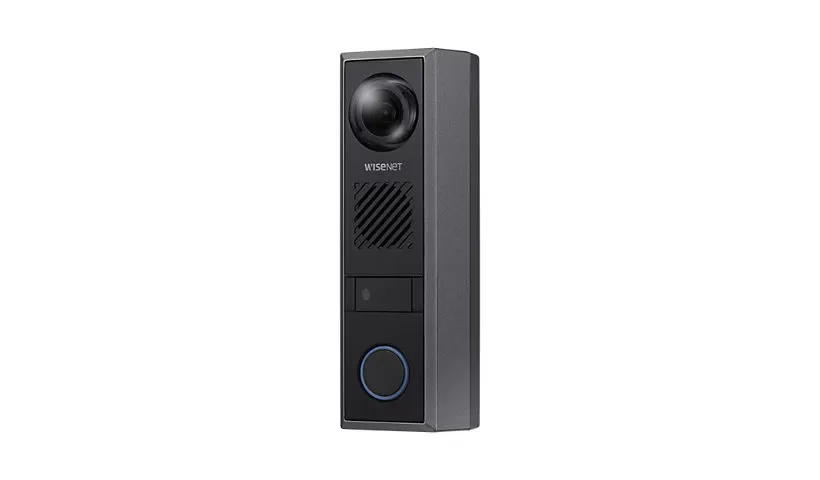
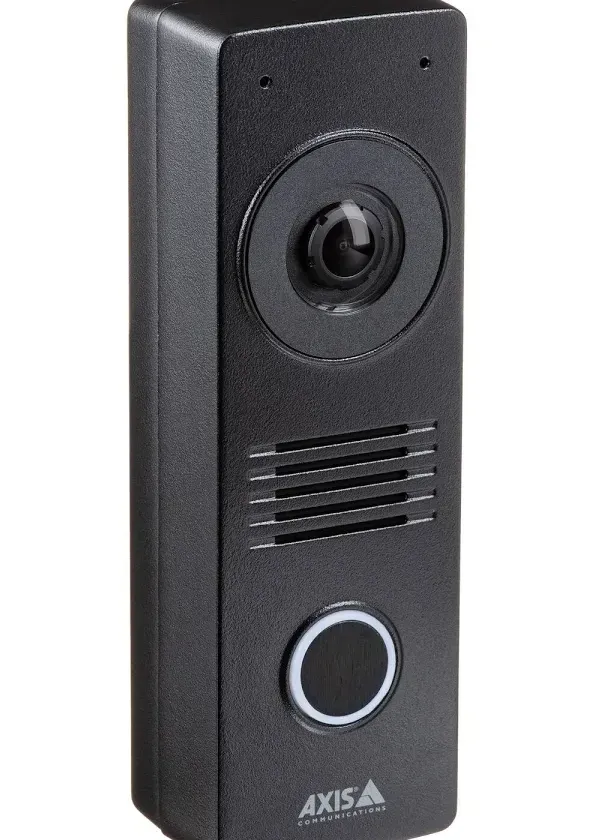
Windsor Terrace, Brooklyn door buzzer installation: black rectangular video door station with a camera, speaker grille and round lit call button
A photo from the AESS job library, not taken in Windsor Terrace: a black rectangular video door station with a camera lens, a speaker grille and one round call button that lights up. A single-button station like this belongs at the street door of a Calder row house that is still one household, or at the door of a remote doorman building where the visitor's call goes to an attendant first rather than to a row of apartment buttons.
Windsor Terrace Buzzer Request
Co-op, rental, two-family, new building or shop: tell us the street, how many apartments the system must reach and what is at the street door now, and a technician calls back with the range

✅
Request Sent!
Thank you. A technician will call you about the Windsor Terrace address, usually within two hours during working hours.
25+
Years Experience
✓
Same-Day Estimates
100%
Licensed & Insured
4.7★
201 Google Reviews

Owner-operated since 2002 · Thousands of jobs completed · Booked within 2 hours

Quick answer: door buzzer installation in Windsor Terrace runs $400 to $900 on our Brooklyn list for an audio station with an electric strike release at a one- or two-household house or a single shop door, $700 to $1,800 for a video door station with indoor stations or phone answering at a row house, a two-family or a small building, and from about $2,500 to past $10,000 for a full entry system in a sixteen-apartment co-op, a mid-size rental or a new building with a lobby. The price covers the door station, the apartment stations, the battery-backed power supply, the release, the cable and the labor, and it is set in writing after we have walked the building from the sidewalk to the cellar and the top floor. If your building pays a remote doorman company, that company's monthly fee is separate and is named on the quote so nobody confuses the two. Send photos of the street door, the panel and one apartment station to (347) 934-8335 or on WhatsApp, and we reply with the range that fits, usually within two hours during working hours.

  • Looking at your photos and quoting a new system costs nothing. If an existing system has to be tested in person before we can quote, that is the $250 service call booked online, and the $250 is applied toward the work.
  • All work is done under New York State license #12000287431. We install the low-voltage entry equipment; if the power supply needs a new 120-volt outlet or circuit, a licensed electrician does that part, and you know before the price is set.
  • We work for whoever controls the street door: a co-op or condo board and its managing agent, a building owner, a homeowner, or a shop tenant with the landlord's written approval.
The Neighborhood

Why Windsor Terrace Properties Need Door Buzzer Installation

Windsor Terrace is the narrow neighborhood wedged between Prospect Park and Green-Wood Cemetery, with Park Slope to the north, Kensington to the south and Borough Park beyond McDonald Avenue. Wikipedia measures it at about half a square mile, split between ZIP codes 11215 and 11218. It is small, but for anyone planning a door buzzer it holds almost every kind of front door Brooklyn has, built over a century, and each one asks a different question of an entry system.

The oldest apartment doors face the park. Along Prospect Park Southwest, CityRealty lists 10 Prospect Park Southwest as a 1920 co-op of 16 apartments on five floors and 149 Prospect Park Southwest as a 1931 co-op of 16 apartments on four floors, both walk-ups; the second lists an intercom among its amenities. Brownstoner's 2021 profile of 135 Prospect Park Southwest describes a six-story co-op completed in 1931 for the Lourose Realty Corporation, designed by the Flatbush firm Cohn Brothers in pale brick with Gothic arches and mock corner towers, and run with a live-in super and a virtual doorman. These buildings are nearly a century old, their intercoms have been repaired many times by many hands, and their boards are the people who decide what replaces them.

The second group is the apartment houses along Prospect Avenue and near Fort Hamilton Parkway. The Landmarks Preservation Commission's history of the neighborhood credits the Seeley Investors company with apartment buildings on Prospect Avenue and commercial buildings on 11th Avenue in the 1920s. Prospect Avenue is still one of the neighborhood's three shopping streets, with Prospect Park West and Fort Hamilton Parkway, and where apartments rise over its stores the residents' door shares the sidewalk with shop customers and delivery drivers. A door buzzer there has to serve tenants upstairs while people who have nothing to do with the apartments stand a few feet away.

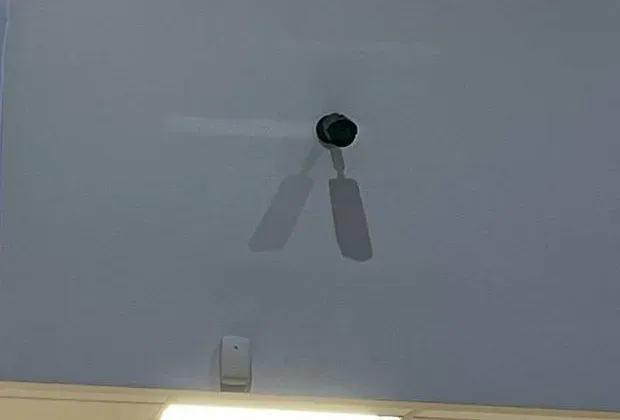
Windsor Terrace, Brooklyn door buzzer installation: small black camera mounted high on a pale wall casting two shadows, with a small white wall device below
A photo from the AESS job library, not taken in Windsor Terrace: a small black camera mounted high on a pale wall, casting two shadows, with a small white device fixed below it. In the lobby of a park-side co-op with a remote doorman service, a camera placed high like this is what lets the off-site attendant see who has actually come through the street door after a release, not only the face at the panel outside.

The third group is the houses. Between 1902 and 1919 the builder William Calder put up roughly 700 row houses here, according to the Landmarks Commission, and Brownstoner's listings describe Calder two-families laid out as an owner's duplex with a floor-through rental above. A two-household house sits outside every intercom law, so whether it has a working buzzer depends entirely on what the owner chooses to install.

The fourth group is new, and it is large. At the southwest corner of the park, New York YIMBY reported in August 2024 that 1 Park Point, formerly 11 Ocean Parkway, was finishing construction with 375 rental units, about 5,388 square feet of retail and 18,850 square feet of community space. In June 2026 it reported the sales launch of The Windsor at 23 Ocean Parkway, nine stories with 98 condominiums, a part-time attended lobby, a package room and a "cyber doorman." Between these two ends sit buildings like 155 Terrace Place, which Openigloo lists as 55 units on four floors built in 1990, with one tenant writing that the "package situation is a bit crazy."

Put together, that is the reason this page exists. The same phrase, door buzzer installation, means a board replacing handsets in a 1931 walk-up, a landlord answering to the state's intercom rule in a 1990 rental, an owner adding a release to a Calder two-family's front door, and a condo deciding how a remote attendant, a panel and a package room fit together. They share a price list. They do not share a plan.

Six facts that shape a Windsor Terrace buzzer installation

  • The park-side co-ops are small. 10 and 149 Prospect Park Southwest each have 16 apartments, which puts a full entry system near the lower end of our multi-unit range rather than at tower prices.
  • They are older than the intercom law's date. Built in 1920 and 1931, they fall before the January 1, 1968 line in Multiple Dwelling Law §50-a, which changes how the duty to provide an intercom arises, though not the duty to keep a working one in repair.
  • At least one already layers a remote doorman on top. 135 Prospect Park Southwest lists a live-in super and a virtual doorman, so a new panel there has to hand calls to an outside service as well as to apartments.
  • A 1990 building is on the other side of the line. 155 Terrace Place, with 55 units built in 1990, is the kind of building §50-a reaches directly: built after 1968 with eight or more apartments.
  • The newest buildings run into the hundreds. 1 Park Point's 375 rentals and The Windsor's 98 condos need directory panels and remote services, not button plates.
  • The row houses are mostly below every threshold. A two-family has no legal intercom requirement at all, and a DHCR decision in 2003 found no duty to provide a buzzer in a building with fewer than eight apartments.

Where this page applies. Maps draw Windsor Terrace slightly differently, but this page covers the blocks from Prospect Park West and Prospect Park Southwest west to Green-Wood Cemetery, from Bartel-Pritchard Square and the Park Slope line south to Caton Avenue and McDonald Avenue, on both sides of the Prospect Expressway. For the rest of the borough see our door buzzer installation in Brooklyn page, and for the whole city our NYC door buzzer installation page.

Repair or Replace in Windsor Terrace

Need Repair in Windsor Terrace? Check the Fault Before Anyone Buys a New System

Many installation calls from Windsor Terrace begin as a repair call that nobody has diagnosed. A shareholder reports that her station is dead, a board member hears from three more residents, and within a month the board is collecting quotes for a whole new system. Sometimes that is right. Sometimes the problem is a single loose connection, and sometimes it is no fault at all. "A lot of times it's user error," Pete Carmello of the Brooklyn company Lock and Tech told Brick Underground, describing residents who do not hold a button long enough or wait long enough for an answer.

So before a Windsor Terrace building is priced for replacement, we sort its problems into three piles. The first is user error, which we fix by showing residents how the stations work and, where it helps, by changing how long the release stays active. The second is a single part: the power supply in the cellar or the lobby ceiling, a strike that has worked loose in an old frame, one apartment's station or the pair that feeds it. The third is the system itself, when the risers have been spliced so often that every repair causes the next fault, or when the equipment is too old to get parts for. Only the third pile justifies a new system, and if your building's problems are in the first two, we price a repair and say so. Our Brooklyn door buzzer team does both kinds of work.

What We Install

Door Buzzer Installation Services in Windsor Terrace

Every service below is priced from the same Brooklyn door buzzer list. The number of apartments sets the size of the system and the door decides which release it can take. In Windsor Terrace, the age of the building, whether an outside remote doorman company is involved and whether shops share the entrance decide much of the labor.

Co-op entry replacements

New street panels, apartment stations and power for the sixteen-apartment walk-up co-ops on Prospect Park Southwest, quoted so a board can see what is reused, what is new and why.

Panels built for remote doormen

Door stations and releases chosen so an outside attendant can see, talk to and admit a visitor, with the apartments still reachable when that service is off line.

Fault-finding before replacement

A diagnosis that separates user error, a single failed part and a worn-out system, so a board or owner only replaces what has actually stopped working.

Audio-to-video upgrades

A video street panel and new stations over riser cable that meters sound, for residents of older walk-ups who want to see the visitor before they release the door.

Mixed-use entrances

Separate stations and power for the residents' door and the shops on Prospect Avenue, so a customer or a shop's delivery never rings an apartment upstairs.

First buzzers for two-families

A two-button station at the street door of a Calder row house, a release in the original frame and an answering station on each household's main floor.

Entry systems for new buildings

Panel location, riser routes and station positions planned with the architect for small infill buildings with apartments over a store, roughed in before the walls close.

Strikes, closers and door preparation

Fail-secure electric strikes cut into sound frames, closers set so a heavy prewar street door shuts and latches every time, and the door trued before any release goes on it.

Shop and office buzz-in doors

Buzz-in doors for stores and offices on Prospect Park West, Prospect Avenue and Fort Hamilton Parkway, wired apart from the apartments' system upstairs.

Windsor Terrace, Brooklyn door buzzer installation: slim dark grey wired doorbell with a camera lens, speaker slots and a round push button
A photo from the AESS job library, not taken in Windsor Terrace: a slim dark grey wired doorbell with a camera lens, speaker slots and a round push button. On the narrow frame beside the front door of a Calder row house that is still a single household, a unit this slim fits on the trim where a wide apartment panel would not, and it can still be wired to release the door.
Building Specialists

Door Buzzer Installation for Windsor Terrace's Architecture

Six kinds of building make up nearly every entry system we plan in Windsor Terrace. They differ in how many households sit behind the street door, who has the authority to order the work, which part of the law applies, and whether anyone other than residents will be answering the door. Each also has one mistake that shows up when the job is rushed.

Park-side walk-up co-ops

Four- and five-story brick co-ops of about sixteen apartments on Prospect Park Southwest, built in 1920 and 1931, with intercoms that have outlived several repair companies.

Co-ops with a remote doorman

Larger prewar co-ops such as the six-story 1931 building at 135 Prospect Park Southwest, where a live-in super and a virtual doorman sit on top of the entry system.

Apartment houses over shops

1920s apartment buildings on Prospect Avenue and near Fort Hamilton Parkway where the residents' entrance shares the sidewalk with storefronts.

Calder row houses and two-families

About 700 row houses built between 1902 and 1919, many now an owner's duplex with a floor-through rental above, behind one street door.

Late-twentieth-century rentals

Mid-size buildings such as 155 Terrace Place, 55 units on four floors from 1990, built after 1968 and therefore squarely inside the state's intercom rule.

New buildings at the park's corner

1 Park Point's 375 rentals and The Windsor's 98 condos near Machate Circle and Ocean Parkway, plus small infill buildings with apartments over a store.

Park-side walk-up co-ops: sixteen apartments, a volunteer board and a system nobody remembers buying

The two park-side co-ops CityRealty describes are a good picture of the type. 10 Prospect Park Southwest went up in 1920 with 16 apartments on five floors; 149 Prospect Park Southwest followed in 1931 with 16 apartments on four floors. Both are listed as walk-ups, and both are co-ops, which means the entry system belongs to the corporation and the decision sits with a board of shareholders who serve as volunteers and who change every few years.

The mistake we see in buildings like these is replacing on frustration rather than on evidence. After decades of service calls, the entry system in a building this age is a mix of the original cable, a panel from one era, stations from two or three more and splices left by whoever answered the last emergency call. Residents learn which buttons to hold and which stations never worked. When the board finally asks for quotes, the first question it hears is how many apartments, and the second is a price. We ask a different second question: which apartments actually fail, and how. That answer decides whether sixteen new stations are needed, whether the riser is worth keeping, and whether the bill sits near the bottom of our multi-unit range or well above it.

A sixteen-apartment walk-up is a manageable job. Brick Underground quoted Daniel Vasquez of Paragon Security and Locksmith saying a five-apartment building can be replaced in a day, and a building of sixteen is usually a matter of days rather than weeks once the equipment is in. What makes it take longer is access: every apartment whose station is replaced has to be opened, and in a walk-up that means a schedule with each shareholder.

Co-ops with a remote doorman: the panel now answers to two masters

Brownstoner's profile of 135 Prospect Park Southwest, the Cohn Brothers building completed in 1931, lists a live-in super and a virtual doorman, not a staffed desk. In a building like that, a visitor at the street door may be talking to an attendant in an office somewhere else, who checks the visitor against the residents' instructions and then either calls the apartment or releases the door. The intercom is no longer just a line between the street and each apartment. It is the front end of a service.

That changes the installation. The door station needs a camera and audio good enough for a stranger on a screen miles away to make a decision, the release has to accept a command from the remote service as well as from the apartments, and a second camera inside the lobby lets the attendant confirm the door has closed behind the visitor. Above all, the apartments have to keep working if the outside service has a bad day. We plan so that a resident can always answer and release from their own station, whatever is happening at the remote office.

Apartment houses over shops: residents, customers and couriers on one stretch of sidewalk

Prospect Avenue's 1920s apartment buildings, which the Landmarks Commission ties to the Seeley Investors company, and the newer buildings filed along it put the residents' door within a few steps of shop entrances. That is good for the street and hard on an intercom. A driver with a carton for the store presses whatever button is closest. A customer looking for a business upstairs rings the first apartment on the panel. The result, in buildings that have lived with it for years, is residents who stop answering their stations at all.

The fix is mostly planning. The shop gets its own door station, its own release and its own power, so the apartments' system never sees its traffic. The residents' panel is labeled clearly as residential, with a directory or numbered buttons that do not invite a guess. And where a shop's back room opens into the building's hall, that door is treated as a building door, locked from the shop side and on the residents' system, never left to the store's discretion.

Calder row houses and two-families: one street door, two households and no legal requirement

The row houses William Calder built between 1902 and 1919 are the neighborhood's signature, and Brownstoner's listings describe Calder two-families laid out as an owner's duplex with a floor-through rental upstairs. A two-family is a private dwelling under the Multiple Dwelling Law, outside every intercom rule. Many still have the bell their first owners installed and nothing more, and the upstairs tenant walks down to answer the door.

The mistake here is the store-bought shortcut: a single video doorbell at the street door that rings the owner's phone, leaving the tenant to wait for a text. A two-family needs two buttons, a station on each household's main floor and a release that either household can use. Our Park Slope and South Slope pages cover the blocks just to the north; wherever the house, the release is chosen to suit the door and frame that are actually there, not the other way round.

Late-twentieth-century rentals: inside the law, and run by a managing agent

155 Terrace Place is the clearest local example. Openigloo lists it at 55 units on four floors, built in 1990 and managed by Habitat Management. A building of that size and date is exactly what Multiple Dwelling Law §50-a describes: a class A multiple dwelling erected after January 1, 1968 with eight or more apartments, which must have an intercom at the self-locking entrance with voice communication to each apartment and remote release of the door. There is no majority-request question here. The duty is simply to have one and keep it working.

The mistake in buildings like this is treating the intercom as a line item that nobody owns. A managing agent handles dozens of buildings and calls whoever is available when a complaint comes in. Over thirty-odd years that produces exactly the patchwork the park-side co-ops have, only faster, because a rental building turns over residents and keys far more often. We write these jobs with a clear record of what is installed and a service plan the managing agent can hold a vendor to, which is covered in the questions further down.

New buildings at the park's corner: hundreds of homes, attendants and package rooms

The two large new buildings near Machate Circle and Ocean Parkway show where entry systems are heading. New York YIMBY reported 1 Park Point as 375 rental units over 13 stories with retail, community space and 106 enclosed parking spaces, and The Windsor at 23 Ocean Parkway as 98 condominiums over nine stories with a part-time attended lobby, a package room, cold storage and a "cyber doorman." Buildings of that size need directory panels with search rather than buttons, apartment answering by station or by phone, and a door plan that keeps lobby, garage, package room and amenity doors each on their own permissions.

At the other end of new construction are small infill buildings. Marketproof reported an April 2026 permit filing for a three-story building at 1259 Prospect Avenue with six apartments and commercial space. A building that size sits below §50-a's eight-apartment line, so nothing obliges a talk-back system; the questions below cover what we would still specify there, and why it is cheapest to decide while the walls are open.

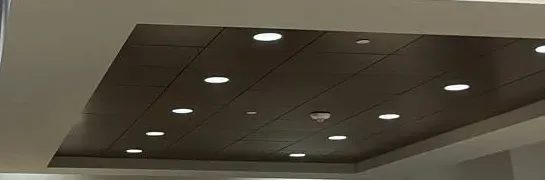
Windsor Terrace, Brooklyn door buzzer installation: dark recessed ceiling panel with round downlights and a small round device framed by a lighter ceiling
A photo from the AESS job library, not taken in Windsor Terrace: a dark recessed ceiling panel with round downlights and a small round device, framed by a lighter ceiling. New lobbies like those at the park's southwest corner are often finished with a feature ceiling like this, and the cable from the street panel to the riser room and the remote doorman's equipment is far easier to place above it before it closes.
Field Notes

Field Notes: Repeat the Complaint, Find the Power Supply, Then Count the Hands That Touched It

This is how our technician spends the first hour in an existing Windsor Terrace building, before anything is priced.

First, the complaint, repeated with the person who made it. If a shareholder says her station is dead, we ask her to show us what she does when the bell rings, while a colleague presses her button at the street. Some stations really are dead. Others need the talk button held, or answer only after a second ring, or release the door on a different button from the one the resident has been pressing for years. Every complaint that turns out to be use rather than failure is one less station on the quote.

Second, the power supply. Brick Underground's repair guide notes that the power supply may be in the basement or in the lobby ceiling, and in a building that has had many repairers it can be in either place, or somewhere nobody on the current board remembers. A tired supply makes a whole building's intercom flaky, and it is the cheapest part of the system to replace.

Third, the history. In the cellar we follow the riser cable up from the power supply and count the splices, and at the panel we look for mismatched screws, mixed brands of station and handwritten labels. Each one is a different repair company's visit. A riser with a few clean splices is usually worth keeping; one with a splice on every floor is often the reason the building keeps calling for service, and it goes on the quote as new cable, with the reason written next to it.

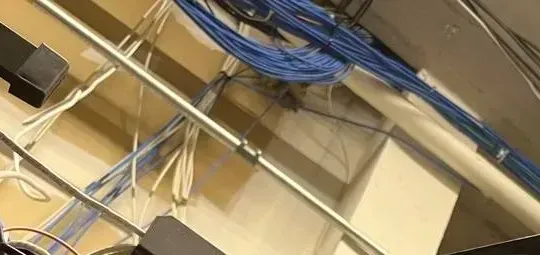
Windsor Terrace, Brooklyn door buzzer installation: bundles of blue low-voltage cable laid over a ceiling beam and a metal pipe in an open ceiling
A photo from the AESS job library, not taken in Windsor Terrace: bundles of blue low-voltage cable laid over a ceiling beam beside a metal pipe in an open ceiling. In the cellar of a 1920s walk-up co-op, the riser cable usually starts from a ceiling like this one, and following it from the power supply to the point where it rises is how we count how many repairs the system has already had.
The Rules, Building by Building

Which Windsor Terrace Buildings Must Have a Working Intercom, and Who Answers for It

Windsor Terrace is a useful place to explain New York's intercom rules, because its buildings land on every side of them. The law turns on three facts about a building: when it was built or converted, how many apartments it has, and whether it already has an intercom. Here is how those facts play out on the neighborhood's blocks. This is a plain-language summary to help owners and boards plan, not legal advice; a building with a dispute in front of it should talk to a housing lawyer.

Built after 1968 with eight or more apartments: the intercom is required

Multiple Dwelling Law §50-a requires every class A multiple dwelling erected or converted after January 1, 1968 with eight or more apartments to have a self-locking main entrance door and an intercommunication system that lets residents talk to a visitor and release the door from their apartments. ButterflyMX's summary of the law puts the requirement simply: the system "must support two-way communication at the main entrance and allow residents to release the entrance door remotely." In Windsor Terrace that describes 155 Terrace Place, built in 1990 with 55 units, and the new buildings near the park's southwest corner. For these owners the only questions are which system and how well it is kept.

Built before 1968 with eight or more apartments: the tenants can ask for one

The park-side co-ops of 1920 and 1931 and the 1920s apartment houses on Prospect Avenue predate the 1968 line. For buildings like these, §50-a requires the owner to install the self-locking door and the intercom when tenants occupying a majority of the apartments request it in writing, with the work begun within 90 days and finished within six months. Most of these buildings got intercoms long ago, and once one exists the city's Housing Maintenance Code expects it to work. Habitat magazine's February 2024 report put the point bluntly for co-ops: "As a result, the co-op has a legal obligation to repair or replace the intercom," said Nancy Kourland, a real estate litigation partner at Lasser Law Group, adding that courts have treated intercoms as an essential service.

Fewer than eight apartments: no intercom rule, but tenants still notice

Calder two-families, three-families, and small buildings like the six-apartment building filed at 1259 Prospect Avenue sit below the eight-apartment line. A 2003 decision of the state housing agency, DHCR, reversed a rent reduction a tenant in a three-apartment building had won for the lack of a buzzer, finding that "there was no legal requirement to provide a buzzer system in a building containing fewer than eight apartments." That does not stop owners from installing one, and in a building of three to seven apartments most owners do, because the alternative is tenants throwing keys out of windows or walking down three flights for every delivery.

What residents can do when a required intercom stops working

The city's 311 guide lists "doorbells, buzzers, or intercoms that are broken or missing" as an apartment and public-area complaint that HPD investigates. HPD tries to reach the managing agent and warns that a violation may be issued, and if the condition is not corrected it can send a Code Enforcement inspector without telling the owner the date. Habitat's report lists the options a co-op shareholder has: a letter to the board, a 311 complaint, an HP proceeding in Housing Court, which can be started without a lawyer, or withholding maintenance under the proprietary lease. Owners and boards in Windsor Terrace are better off never reaching that list.

Rent-stabilized buildings and changes in service

Where an older rental building contains rent-stabilized apartments, a change in how residents answer the door can be a change in a required service. In a 2018 administrative review, DHCR approved an owner's replacement of a hard-wired intercom with a telephone-based system and of keys with key fobs, but only with conditions that included extra fobs at no charge and a permanent rent reduction. An owner considering a phone-based or app-based system in a stabilized building should check with DHCR or a housing lawyer before ordering, and we write the equipment description in a form an owner can attach to that filing.

  • Tenant data. Where a class A multiple dwelling uses a smart access system, such as app, code or fob entry that collects data, HPD's Tenant Data Privacy Law page says owners need a written policy and consent, may collect only limited data and must offer a way in that does not require the smart system, such as a key.
  • Who orders the work. In a co-op or condo it is the board, through its managing agent; in a rental it is the owner; in a two-family it is the homeowner. We do not take instructions from a single resident to change a building's entry system.
  • What we do and do not do. We install and document the system and leave a test sheet an owner can use as proof of a repair. We do not file certifications with HPD or DHCR, or represent anyone before them.
Remote Doormen and the Street Door

Planning a Windsor Terrace Buzzer Around a Virtual Doorman, a Live-In Super and a Package Room

Two of the buildings on this page describe their lobbies in words that did not exist when the park-side co-ops were built. 135 Prospect Park Southwest lists a "virtual doorman," and The Windsor at 23 Ocean Parkway lists a "cyber doorman" alongside a part-time attended lobby and a package room. Both mean the same thing in practice: at some or all hours, a visitor at the street door is answered by an attendant who is not in the building. For a door buzzer installer, that changes the job in three ways.

The door station has to work for a stranger on a screen

A resident who hears a friend's voice will release the door on a grainy picture. An attendant who has never met the visitor will not, and should not. The street panel at a remote doorman building needs a camera placed to show a face, not the top of a head, lighting that works after dark under a deep entrance, and audio clear enough over traffic on the avenue for the attendant to understand a name. We add a second camera inside the lobby, so the attendant can confirm that the person admitted is the person who came in, and that nobody walked in behind them.

The release has to take orders from more than one place

The electric strike or lock on the street door must open on a command from each apartment station, from the remote service and, usually, from the live-in super. Each path goes through the same power supply and the same release, so that supply is sized for all of them and has battery backup. We wire the remote service's connection so that it can be disconnected without touching the apartments, which matters the day a building changes doorman companies.

The building must still work when the service does not

An outside service depends on the building's internet connection and on someone being on shift at the other end. Residents should never be locked out of their own front door, or unable to let a guest in, because either has failed. We set up apartment stations to call and release on their own, keep a key or code entry for residents that does not depend on the service, and explain to the board in writing what still works, and what does not, when the remote service is off line. Where a package room is part of the plan, its door gets its own permissions, so that admitting a courier to the lobby does not also open the room where everyone's deliveries sit.

Commercial Door Buzzer

Business Door Buzzer Installation in Windsor Terrace

Windsor Terrace's businesses sit on a few short commercial streets, most of them with apartments overhead. A buzzer at a shop or office here is usually about controlling one door during the hours staff are busy elsewhere in the space, and about keeping that door's traffic away from the residents' entrance next to it.

Prospect Park West

The shops and restaurants toward Bartel-Pritchard Square, including Farrell's, a bar since 1933, on blocks where a back or side door can open into a building's shared spaces.

Prospect Avenue

One of the neighborhood's shopping streets, with stores below 1920s apartment houses and new small buildings like the one filed at 1259 Prospect Avenue with commercial space.

Fort Hamilton Parkway

The third commercial corridor Wikipedia names for the neighborhood, near the Fort Hamilton Parkway subway station, with apartment buildings among the storefronts.

11th Avenue

The street the Landmarks Commission ties to the Seeley Investors' commercial buildings of the 1920s; a shop door there and any residents' door beside it are kept on separate systems.

Terrace Place and 19th Street

A small cluster of businesses by the expressway, such as the Terrace Coffee Shop that Forgotten NY noted at 19th Street and Terrace Place.

Ocean Parkway and Machate Circle

The retail and community space in the new buildings at the park's southwest corner, about 5,388 square feet of retail at 1 Park Point alone.

The common job on these streets is a door that should be locked while a small staff is busy at the back: an office upstairs from a shop, a studio, a store's stockroom door to the side street, or the residents' door of a mixed-use building that the shop tenant has been propping open for deliveries. We fit a door station where visitors stand, a release at the counter or desk, and a separate power supply from the apartments', and we set the release time so the door has closed and latched before staff are back at work. A camera on the same visit is often worth it; installing together usually saves our customers $200 to $400 in labor.

Rules that apply to business entry installations in Windsor Terrace

  • Free exit is not optional. A buzzer release controls entry only. Anyone inside must be able to leave by the lever, knob or bar without a key, code or button, whatever the state of the power.
  • Fail-secure strikes are the usual choice. Allegion's guide explains that "fail secure products are locked when power is removed," while with an electric strike "you can exit by turning the lever" either way. That is why most shop and residential street doors here get fail-secure strikes.
  • Magnetic locks bring extra hardware. Allegion notes that "electromagnetic locks are only available fail safe." The building code's provisions for electrically locked egress doors require a sensor on the egress side, a manual release near the door marked "PUSH TO EXIT," and release on loss of power and on fire alarm activation.
  • Fire alarm tie-ins are checked first. If the building or the store has a fire alarm system, we find out before quoting whether the door's lock must release with it.
  • Reach for visitors with disabilities. The 2010 ADA Standards set the high forward reach at 48 inches maximum for operable parts. We mount shop and office door stations within that range.
  • Landlord approval comes first. A shop tenant needs the landlord's written approval before we cut a strike into a building's door or frame.
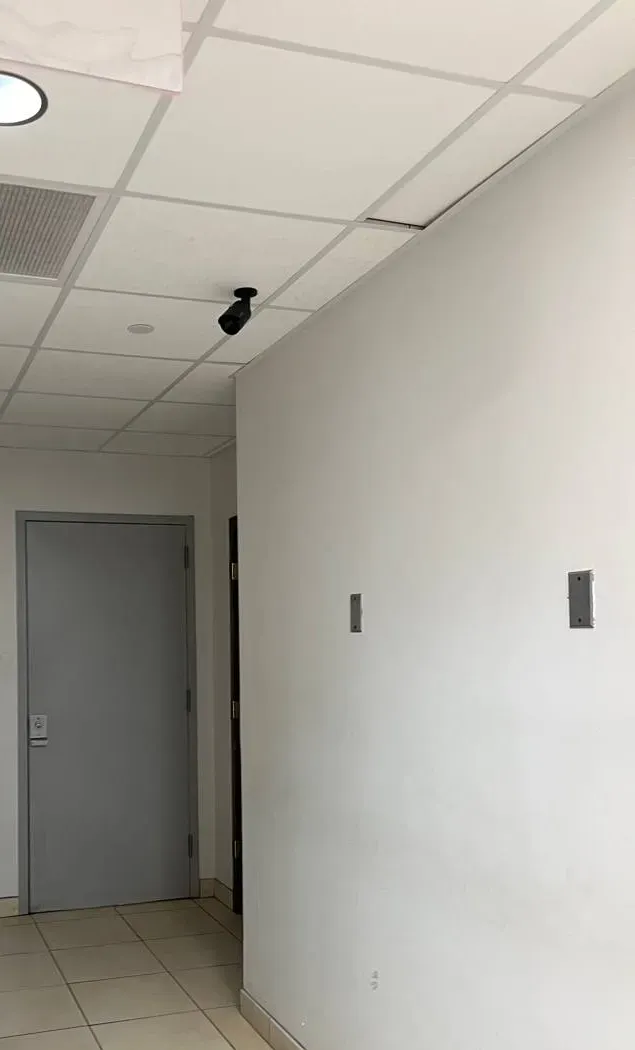
Windsor Terrace, Brooklyn door buzzer installation: tiled corridor with white walls and small wall plates ending at a grey steel door with a lever handle under a drop ceiling with a small camera
A photo from the AESS job library, not taken in Windsor Terrace: a tiled corridor with white walls and small wall plates, ending at a grey steel door with a lever handle under a drop ceiling with a small camera. Behind a store on Prospect Avenue, a corridor like this often runs from the shop's stockroom to a side or rear door, and the lever on that steel door is what lets staff leave freely while a fail-secure strike keeps the door locked from outside.
Your Questions Answered

Door Buzzer Installation in Windsor Terrace: Questions Answered

Park-side co-ops and their old systems

Our co-op board suspects that half the "broken buzzer" reports from residents are really people pressing the wrong button or letting go too soon. How do you tell user error from a real fault before we spend money?

By watching each resident do what they normally do. On the first visit, we ask every resident who has reported a problem to be at their station while someone rings from the street, and we watch the whole sequence: whether the chime sounds, whether they lift the handset or press talk, how long they hold it, which button they press to release, and whether the door actually opens downstairs. Brick Underground quoted Pete Carmello of Lock and Tech in Brooklyn saying "a lot of times it's user error," and in buildings where the same system has been in place for decades, with stations of different ages from different repairs, it is easy for a resident to learn the wrong habit on a station that works differently from the neighbor's.

What we write down is a list, apartment by apartment, with one of three results: works when used correctly, works but needs an adjustment such as a longer release time or a louder chime, or fails. Only the third group is a fault. If most of your reports turn out to be the first group, the right spend is an hour showing residents how their stations work and a one-page card for each apartment, not a new system.

One repair company told our board that the old system is basically fine and another said it is obsolete. Which one is right?

Often both, about different parts of it. Brick Underground quoted Daniel Vasquez of Paragon Security and Locksmith on both sides of the argument: that an older system's core wiring is typically still fine even when the system is outdated, and that "intercoms are getting outdated" as owners increasingly want a camera at the door. The cable in the walls and the equipment on them age at very different rates. Copper pairs that were installed properly in a riser can carry signal for a very long time; panels, stations and power supplies wear out, lose parts support and fall behind what residents expect.

So we answer the question in two parts. For the cable, we meter each pair from the panel to the apartment and report which pass, which are marginal and which fail. For the equipment, we tell you whether parts are still available for what you have and what residents would gain by changing it. A building can easily have sound cable and obsolete equipment, which is the best case: a new panel and stations over the old riser, at the lower end of our multi-unit range.

Our 1920s co-op's intercom has been patched by several repair companies over the years, and nobody can tell us what make or model it is. Can it be identified, and does that matter?

It can usually be identified, and it matters more than most boards expect. The maker's name and model are normally printed on the back of the street panel, on the power supply in the cellar or inside an apartment station, and the wiring pattern at the panel tells an experienced technician a great deal even when the labels are gone. In a building that several companies have serviced, we often find two or three generations of equipment working together, which is itself useful information.

It matters for three reasons. First, it tells you whether replacement parts can still be had, which decides whether a repair is a sensible option at all. Second, it tells you what the old cable was designed to carry, which narrows the choice of new system: some modern two-wire systems are built to run on a single pair per apartment, while others need more conductors or a network cable. Third, it tells the board what it actually owns, which is the starting point for any written quote, from us or anyone else.

If the system cannot be identified, or turns out to be several systems spliced together, we say so in writing, and we price the riser test before we price any new equipment.

Our building pays a virtual doorman company, but a different company installed the street panel years ago. When the door will not release for a visitor, whose problem is it?

It depends on where in the chain the release fails, and the fastest way to find out is to test the chain in pieces. A release command can come from the remote attendant, from an apartment station or from the super. If the door opens when an apartment presses release but not when the attendant does, the fault is on the remote service's side or in the connection between its equipment and your panel. If it fails from every source, the problem is almost certainly the strike, the power supply or the wiring to the door, which belongs to whoever services the entry system.

Buildings get stuck when nobody has drawn that line. Each company tests its own part, finds it working, and points at the other. We document, on one sheet, every path a release command takes to the door, which company is responsible for each, and where the two systems connect, so that the next time the door will not open the board can call the right company first.

When we install a new panel in a building with a remote service, that connection point is built so that it can be tested and disconnected separately from the apartments. The remote company can then be changed, or dropped, without touching the residents' system.

Rentals, mixed-use buildings and large new lobbies

Our Prospect Avenue building has stores on both sides of the residents' door, and the shops' delivery drivers keep ringing apartments to get let in. How can the panel stop that?

Mostly by making it obvious which door and which panel belong to whom, and by giving the shops their own. A driver standing on the sidewalk with a hand truck is looking for the quickest way to get rid of a delivery. If the residents' panel is the only buzzer in sight, or is labeled only with apartment numbers that mean nothing to him, he will press buttons until someone opens. The first step is a separate station at each shop's door, ringing inside the shop, so that its deliveries have somewhere to go.

The residents' panel then gets clear, visible labeling as a residential entrance, a directory or numbered buttons laid out so a stranger cannot guess his way in, and, on video systems, a camera that lets residents see a hand truck before they press release. If a shop really does need to receive through the building's hall, for example because its only rear access is through the residents' corridor, that becomes a separate controlled door with its own release, not a reason to buzz drivers into the stair.

We manage a 55-apartment rental near Terrace Place that went up in 1990. What should a service agreement for its entry system include, so it does not end up patched by whoever is free that week?

A written description of what is installed, a named response for the kinds of failure that matter, and records that stay with the building. The description is the start: the make and model of the panel, stations and power supply, where the power supply and the riser are, which pairs serve which apartments, and any connection to fob readers, cameras or an outside service. Without it, every visit begins with a new technician rediscovering the building.

The agreement should then separate a door that will not lock or will not release, which needs attention the same day, from a single apartment's dead station, which can be scheduled. It should say who supplies parts and on what warranty, and what happens to the records if the agreement ends. A building of this size, built after 1968 with more than eight apartments, falls under §50-a and the Housing Maintenance Code, so the managing agent also needs, after every repair, a dated record of which apartments were tested and what the result was.

We do not insist that a building sign anything with us to get a quote or an installation. But when we install a system, we leave the building the description, the wiring record and the test sheet, so that whoever services it next, us or anyone else, starts from facts.

In a lobby that serves hundreds of apartments, what happens when two visitors try to call from the panel at the same moment?

On most panels, the second visitor waits. A typical door station handles one call at a time: while one visitor is talking to an apartment or to the attendant, the next sees a busy indication or simply waits until the screen is free. In a building of a few dozen apartments that is rarely noticed. In a building like 1 Park Point, with 375 rental units, a single street panel can become a queue at the busy hours of the day, especially when food deliveries, couriers and guests all arrive in the same evening hour.

The answers are physical and procedural. Physically, a large lobby can have more than one call station, for example one at the street door and one at a second entrance or in a vestibule, each able to call any apartment. Procedurally, frequent visitors such as couriers can be given a separate path, such as a delivery code that opens only the package room or a vestibule, so that they do not use the panel at all.

When we plan a large new building's entry, we ask the managing agent or developer how many visitors arrive at the peak hour and how many of them are deliveries, and size the number of panels to that. It is far cheaper to add a second call station while the lobby is being finished than afterward.

Row houses and small new buildings

The intercom maker told us it would design a system for our three-family Calder house for free. Why would we still pay an installer to come and look at the house?

Because the manufacturer designs from what you tell it, and the installer finds out what is actually there. A Brownstoner reader asking about a simple buzzer and intercom for a three-family was told to call Aiphone, which would "design the system for you for free," and that is good advice as far as it goes. A manufacturer's design will tell you which door station, which apartment stations and which power supply fit three apartments, and that part is genuinely useful.

What it cannot tell you is whether the front door's frame will take an electric strike without being replaced, whether the old bell wire to the upper floors is usable or has to be replaced, where the cable can run through a row house whose party walls are shared with the neighbors, whether there is a place in the cellar for the power supply near an outlet, and how the door station will sit on the facade. Those are the things that decide the price, and they are only learned standing in the house.

The two work well together. If you already have a manufacturer's design, send it with your photos, and we will price the installation from it, flag anything the house will not allow, and tell you which of our Brooklyn ranges it falls in, usually $700 to $1,800 for a three-household video system with existing wiring reused where it tests well.

We are putting up a small building on Prospect Avenue with six apartments over a store. Nothing in the intercom law reaches six apartments. What would you still put in, and when?

A talk-and-release system to every apartment, a separate door station for the store, and cable for both installed while the framing is open. The law's eight-apartment line in §50-a is a minimum, not a design, and a six-apartment rental without a working intercom is a building whose tenants prop the street door, lose packages and complain to the owner every week. The cost difference between doing this at framing and after the walls are closed is large, because almost all of it is labor to run cable.

At design we mark the street door station, the store's own door station, the indoor station position in each apartment, the riser route from the cellar and the location of the power supply. At framing, the riser gets its own path from the cellar to each floor, back boxes go in at each apartment, and the street door frame is ordered prepared for the strike. At finishing, the panel and stations go up after the paint, and every apartment is tested from the street before the first tenant moves in.
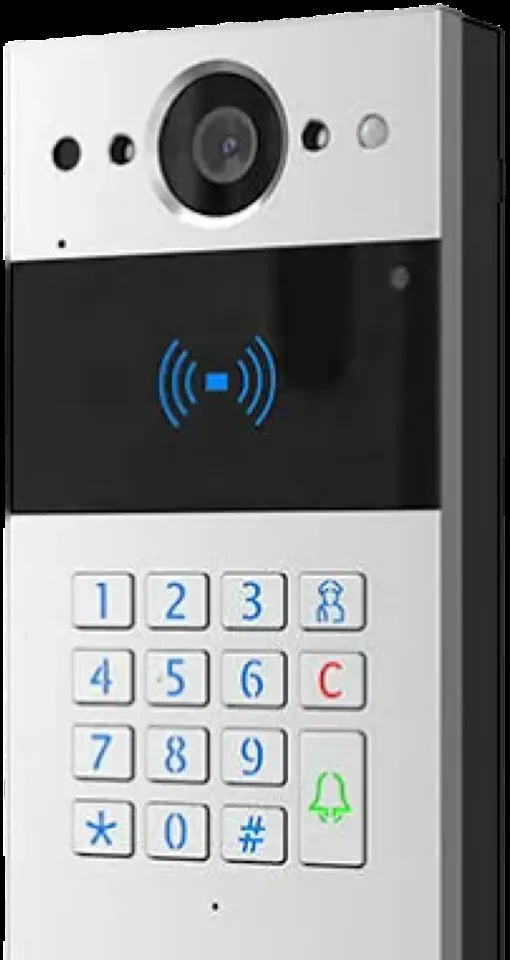
Windsor Terrace, Brooklyn door buzzer installation: silver and black keypad door station with a camera lens at the top, a blue card-reader symbol, a numeric keypad and a green bell key
A photo from the AESS job library, not taken in Windsor Terrace: a silver and black keypad door station with a camera lens at the top, a blue card-reader symbol, a numeric keypad and a green bell key. At the street door of a mid-size rental like the 1990 building near Terrace Place, a station like this lets residents come in by code or card while a visitor presses the bell key and is called through to the apartment.
Equipment

Types of Door Buzzer Systems We Install

We quote a reliable non-branded system by default and install a named brand when a board, owner or developer asks for one; the intercom brands we work with include Aiphone, ButterflyMX, 2N, Akuvox, Comelit and DoorBird. These are the kinds of equipment that come up most often in Windsor Terrace, and where each fits.

Button panels

Two- to sixteen-button audio or video panels for row houses, two-families and the park-side walk-up co-ops, where a directory would be more than the building needs.

Directory panels

Searchable directories with a camera for the large new buildings near Machate Circle, with a keypad or reader for residents and a second call station where traffic needs one.

Two-wire multi-tenant systems

Audio and video over one pair per apartment, the practical choice for 1920s and 1930s co-ops whose riser cable meters sound.

Remote-doorman-ready stations

Door stations with a camera and audio good enough for an off-site attendant, and a release that takes commands from the service, the apartments and the super.

Apartment video stations

Wall stations with a screen and a release button, for residents who want to see a visitor before letting anyone into the building.

Audio handsets

Simple talk-and-release stations for residents who want nothing more, able to share a system with video stations on many models.

Phone and app answering

Door stations that ring residents' phones as well as, or instead of, a station, with any subscription named on the quote before anyone chooses.

Fail-secure electric strikes

Releases cut into the frame that stay locked without power and let anyone inside leave by the knob or lever, matched to the lock on the door.

Battery-backed power supplies

Dedicated low-voltage supplies with battery backup in a locked cellar box, sized for the panel, every station, the release and any remote service.

Audio panel, wired video or remote doorman ready: which fits a Windsor Terrace building?

What mattersAudio panel and handsetsWired video stationsPanel with a remote doorman service
Who answers the visitorThe resident, by voiceThe resident, by voice and pictureAn attendant first, then the resident
Works for residents without smartphonesYesYesYes, with apartment stations kept
Needs internet at the buildingNoNoYes, for the remote service
Reuses old riser cableOftenOften, with two-wire systemsApartments often; the panel needs a network connection
Monthly feesNoneNoneThe service company's fee, separate from our price
Brooklyn list range$400–$900 small; from $2,500 for a building$700–$1,800 small; from $2,500 for a buildingFrom $2,500 for the entry hardware, plus the service's own fee

ADT, Ring and SimpliSafe compared with a local installer for a Windsor Terrace door

For one household in a Calder row house, a store-bought video doorbell may be all that is wanted, and we say so. For anything more it runs into limits. It rings the phones of whoever set it up, not a station in each household. It does not release the street door unless it is separately wired to a strike. A Brownstoner reader who used a SimpliSafe doorbell with plug-in chimes did so because the house's old doorbell wiring was too deteriorated to use, which is a workaround for one household, not an entry system for a two-family, a sixteen-apartment co-op or a building that §50-a requires to have talk and release in every apartment.

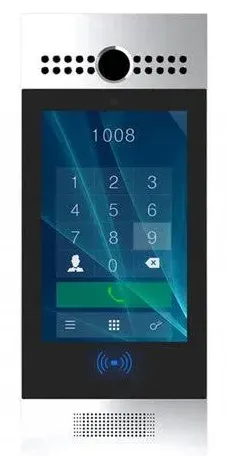
Windsor Terrace, Brooklyn door buzzer installation: touchscreen entry panel showing a dial pad with a four-digit apartment code entered, a camera above and a card-reader symbol below
A photo from the AESS job library, not taken in Windsor Terrace: a touchscreen entry panel showing a dial pad with a four-digit apartment code entered, a camera above and a card-reader symbol below. In a lobby serving hundreds of homes, like the new rentals at the park's southwest corner, a visitor dials an apartment code on a screen like this instead of hunting along a wall of buttons.
AI Overview Reality Check

What AI Gets Wrong About Door Buzzer Installation in Windsor Terrace

Ask an AI assistant or a search summary about installing a buzzer and you get confident numbers drawn from national cost guides and intercom vendors' blogs. Most are accurate somewhere. Here are seven claims we see repeated, each checked against its source and against what Windsor Terrace's buildings actually need.

"Installing an intercom system costs an average of $2,500"

That figure comes from HomeAdvisor's national cost guide, which also gives a range of $1,500 to $15,000. An average across every kind of building in the country is not a price for any one of them.

On our Brooklyn list, $2,500 is roughly where a full multi-unit entry system begins, which is about right for a sixteen-apartment park-side co-op on sound riser cable. The same figure would be far too much for an audio station at a two-family, which runs $400 to $900, and far too little for a directory system in a building with hundreds of apartments.

Ask for a price based on your apartment count and your cable, not an average.

"Wireless systems are the best option if you want to DIY"

HomeAdvisor says this and prices wireless systems at $150 to $1,500. For a single-family house where the owner just wants to hear the door upstairs, that can be true.

A wireless chime does not release a street door. Releasing a door needs a strike in the frame, power to drive it and a wire or controller to command it, and in a two-family or an apartment building that work involves the building's door and its other households. A Brownstoner thread about a double glass front door captured the reality: "You'll need to open up the walls, probably quite a bit."

Wireless is a good way to add a chime. It is not a substitute for an entry system.

"$1,000 to $5,000 or more per entry door"

Swiftlane's apartment intercom cost guide uses that per-door figure for IP and video systems, and it is a fair description of some cloud-connected panels in large buildings.

Most Windsor Terrace buildings have one street door, and the apartments, not the door, drive the cost. A park-side co-op's single door can carry a sixteen-apartment two-wire system over its existing cable for a total near the bottom of our multi-unit range.

Per-door pricing makes sense for large buildings with several entrances. For a walk-up with one door, ask for a total.

"Software subscriptions commonly add $5 to $15 per unit per month"

The figure is real; Swiftlane gives it, along with $30 to $100 per door per month, for cloud intercoms. What gets lost is that it applies only to systems that need a subscription.

A wired audio or video system has no monthly fee at all. A remote doorman service has its own fee, set by that company, which is separate from the entry hardware. A board comparing options needs to see each cost on its own line over ten years.

Our quotes name any subscription a chosen system would carry before anyone signs.

Every New York apartment building must have an intercom

The rule in Multiple Dwelling Law §50-a is narrower. It reaches class A multiple dwellings erected or converted after January 1, 1968 with eight or more apartments, and older buildings of that size when tenants occupying a majority of the apartments ask in writing.

That puts 155 Terrace Place, built in 1990 with 55 units, directly inside the rule, while the park-side co-ops of 1920 and 1931 reach it through the majority-request route, and a Calder two-family not at all. A 2003 DHCR decision found no legal requirement for a buzzer in a three-apartment building.

Once an intercom is installed, though, the city expects it to work, and tenants and shareholders can complain to 311 when it does not.

A virtual doorman means the building no longer needs an intercom

This one appears in listings and conversations more than in any single source, and it gets the relationship backwards. A remote doorman service sits on top of an entry system; it does not replace one.

The attendant still needs a door station to see and hear the visitor, a release to open the door and, for any visitor bound for an apartment, a way to reach that apartment. 135 Prospect Park Southwest's listing names a virtual doorman alongside a live-in super for exactly that reason: the service and the hardware are different things.

If the service ends, the building still needs a working intercom, and in a building covered by §50-a it is still required.

"If the existing wires are in good condition, they can be reused"

That is Aiphone's own upgrade guidance, and it is correct. The condition is the whole sentence.

In a building whose intercom has been patched by several companies, "good condition" has to be proven pair by pair with a meter, from the panel to each apartment. Brick Underground's sources put most intercom faults in the wire connections at the lobby, the apartment, the strike or the power supply, and a riser full of old splices is where they hide.

We meter every pair before promising reuse, and any pair that might fail is priced before you order, not discovered on installation day.

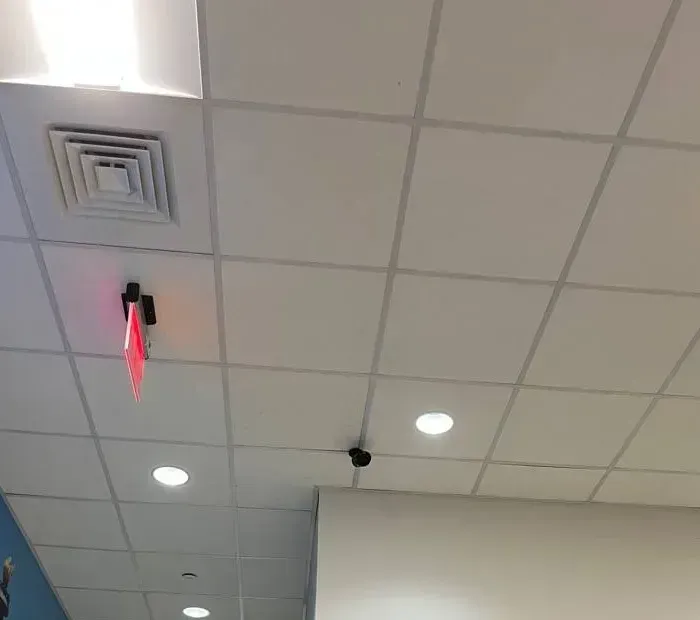
Windsor Terrace, Brooklyn door buzzer installation: drop ceiling with a lit red exit sign, an air diffuser, round recessed lights and a small black camera
A photo from the AESS job library, not taken in Windsor Terrace: a drop ceiling with a lit red exit sign, an air diffuser, round recessed lights and a small black camera. In the ground-floor office or shop of a mixed-use building on Prospect Avenue, the exit sign over the door is a reminder that the buzzer release controls only who comes in; the way out has to stay free.

Park-Side Co-op, Prospect Avenue Rental or Calder Two-Family? Speak to a Tech

Send the address, a photo of the street door and the panel, and one of an apartment station, along with how many apartments the system must reach and whether a remote doorman service is involved. A technician will tell you which approach fits and where it falls on our Brooklyn ranges. Call or text (347) 934-8335, send photos on WhatsApp, or fill in the form below.

Get In Touch

Request a Free Quote

✅
Request Sent!
Thank you. A technician will call you about the Windsor Terrace address, usually within two hours during working hours.
How It Works

Our Installation Process

1. Read the photos and the building

The office reads your photos of the street door, the panel and one station, notes the building's age and apartment count, and confirms who controls the door: a board, an owner, a managing agent or a shop tenant.

2. Sort user error from real faults

On an existing system, the technician repeats each reported problem with the resident who reported it, so a button held too briefly is not mistaken for a dead station.

3. Walk every door, floor and service

From the sidewalk through every door to the top floor and the cellar, noting any remote doorman service, fob reader or shop door that shares the entrance.

4. Meter the cable and find the power

Each pair is metered from panel to apartment, the power supply is found in the cellar or the lobby ceiling, and every splice on the riser is counted.

5. Price the job in writing

A written price from the Brooklyn list names what is reused, what is new, any outside service fee and anything that depends on a test, before anything is ordered.

6. Order and schedule

Equipment is ordered once the deposit is in. The installation date is set when it arrives, and residents and any remote doorman company are told in advance.

7. Install, conceal and label

Panel, release, battery-backed power and stations go in, cable is concealed where the building allows, and every pair is labeled at both ends.

8. Test from the sidewalk and hand over

Standing where visitors stand, the technician calls and releases every apartment, checks the door with power off, shows the super or board how to run it and leaves a test sheet and wiring record.

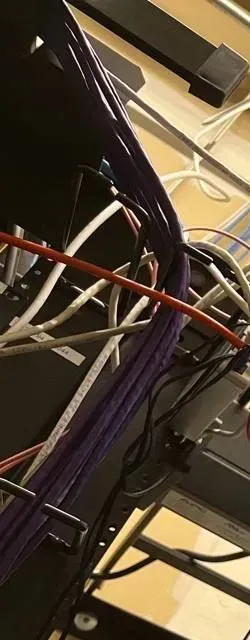
Windsor Terrace, Brooklyn door buzzer installation: purple, white and red cable bundles dropping down beside a black equipment rack
A photo from the AESS job library, not taken in Windsor Terrace: purple, white and red cable bundles dropping down beside a black equipment rack. In a large new building, the entry panel's network cable, the remote doorman's connection and the lobby cameras often meet at a rack like this, and labeling each bundle in step 7 is what lets the next technician find the one that matters quickly.
Coverage Area

Door Buzzer Installation Near Windsor Terrace's Landmarks

Engine 240 firehouse

The 1895 firehouse at 1307–1309 Prospect Avenue, home of Engine 240 and Battalion 48, designated an individual landmark by the Landmarks Preservation Commission in February 2013.

Holy Name of Jesus

The parish the Landmarks Commission's history dates to 1878, with its school from 1885, the parish of the Irish families who settled the area in the nineteenth century.

Bartel-Pritchard Square

The circle at the park's western corner, dating to 1922, where Prospect Park West meets Prospect Park Southwest and the park-side co-ops begin.

Fort Hamilton Parkway and 15th Street stations

The two subway stations that opened on October 7, 1933, on the line that runs under the neighborhood's avenues.

The Prospect Expressway crossings

The expressway cut through between 1953 and 1960, crossed by footbridges including the Greenwood Avenue bridge beside the Keck World War I memorial.

Green-Wood Cemetery

The cemetery founded in 1838 that forms the neighborhood's western edge.

We also serve Park Slope, South Slope, Kensington and Prospect Park South at the same Brooklyn rate, along with Greenwood Heights and Borough Park. See our door buzzer installation in Brooklyn page for the whole borough.

Pricing

Door Buzzer Installation Cost in Windsor Terrace

Windsor Terrace is billed at our standard Brooklyn rate, with no outer-borough travel premium. The final figure follows photos and a walkthrough, because the number of apartments and stations, the condition of the cable, the state of the street door and any remote doorman connection all move the labor.

JobTypical Windsor Terrace propertyBrooklyn range
Audio station or replacement with electric strike release, existing wiring reused where it tests wellA Calder row house or two-family, a single shop or office door$400–$900
Video door station with indoor stations or phone answeringTwo- and three-family houses, small apartment buildings over a store$700–$1,800
Multi-unit entry system, audio or video by apartment count, with optional fob or code entry and remote doorman connectionPark-side walk-up co-ops, Prospect Avenue apartment houses, mid-size rentals, new buildingsfrom $2,500 to $10,000+
In-person diagnosis of an existing system, booked onlineAny building where the old system must be tested before quoting$250, applied toward the work
Monthly subscriptionAny building choosing a wired, no-subscription system$0

What moves a Windsor Terrace job inside its range is predictable. In a park-side co-op, the riser test decides most of it: sixteen apartments on cable that meters well sit near the bottom of the multi-unit range, while new cable up four or five floors of a walk-up moves it up. In a mixed-use building, a separate station for each shop adds a door station and power, not a second system. A remote doorman connection adds the hardware it needs at the door and the lobby, but the service company's monthly fee is never part of our price, and it is named separately so a board can compare like with like. In a two-family, the front door's frame and the path for cable to the upper floor are the two things that move the number.

Full terms — including 50% deposit, one-year parts-only warranty on AESS-supplied products, and the late-fee schedule — are set out in the service agreement.

Find Out Which Range Your Windsor Terrace Building Falls In

Tell us the street, how many apartments the system must reach, every door people use, whether a remote doorman is involved and what is at the street door now, and we will tell you which range fits and what the walkthrough needs to confirm. Call or text (347) 934-8335, send photos on WhatsApp, or fill in the form.

Shop Our Systems

Door Buzzer Installation Packages & Pricing

Three typical Windsor Terrace jobs, each placed inside the matching range on our Brooklyn list. The exact figure comes from the photos and the walkthrough.

Row house or single door audio: $400–$900

An audio station at a Calder row house or a shop door, a fail-secure strike in the frame, a closer set so the door latches, an answering station inside and battery-backed power.

Two-family or small building video: $700–$1,800

A two- or three-button video panel at the street door, video stations on each household's main floor or phone answering if wanted, and a separate station for a store below where there is one.

Building entry system: from about $2,500

A button or directory panel at the lobby door, stations or phone answering for every apartment, tested or new riser cable, a release with free exit, power in a locked box and, where needed, the connection a remote doorman service requires, rising toward $10,000 or more with apartments and entrances.

Bring your own equipment. If your board, owner or developer has already bought a panel or intercom kit, we can install it as labor-only work, quoted flat once we have seen the door, the frame and the cable path through the building. Tell us the make and model, and we will say before the visit whether it can reach every apartment and release your door. Equipment you supply is covered by its maker's warranty, not ours.

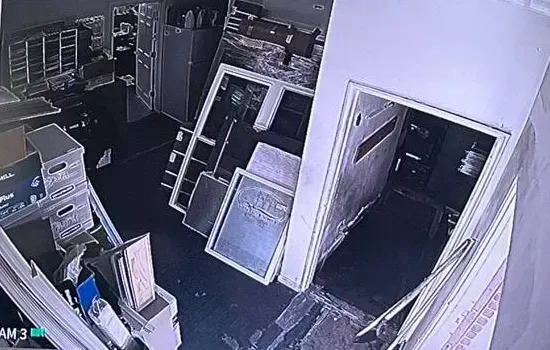
Windsor Terrace, Brooklyn door buzzer installation: black-and-white night camera view of a cluttered room with an open doorway into a dark back room
A photo from the AESS job library, not taken in Windsor Terrace: a black-and-white night camera view of a cluttered room with an open doorway into a dark back room. For a shop on Prospect Avenue whose stockroom connects to a building's hall, a camera on the same visit as the buzzer shows who used that inner door after hours, and installing the two together saves labor.
Complete Services

Every Door Buzzer Service in Windsor Terrace

Co-ops and rentals

Fault-finding, riser testing, replacements, video upgrades and remote doorman connections for existing buildings. Request a quote

Houses, shops and new buildings

First buzzers for two-families, buzz-in shop doors and entry systems planned at framing. Call (347) 934-8335

Across Brooklyn

The same list in every neighborhood. Brooklyn door buzzer installation

Across New York City

Every borough's buildings and rules. NYC door buzzer installation

FAQ

Windsor Terrace Door Buzzer Installation FAQ

Our co-op faces Prospect Park. Does a new door station on our building need anything from the Parks Department?
+

No. The park across the street is city parkland, but your street door and facade are private property, so the approvals that matter are your board's and, only if your block sits inside a historic district, the Landmarks Preservation Commission's. Where the Landmarks rules do apply, its permit guidebook allows one intercom panel per door opening, placed within or beside the door, neutral and discreet, and approvable by staff with the maker's cut sheets.

Is our virtual doorman company's monthly fee included in the price you quote?
+

No. We quote the entry hardware and its installation: the door station, the release, the power supply, the apartment stations, the lobby camera the service needs and the cable. The remote doorman company sets and bills its own fee. We name that fee on our quote as a separate line, as you give it to us, so the board sees the full yearly cost of the building's front door in one place.

Will you coordinate the changeover day with the company that runs our building's remote doorman?
+

Yes. Before the installation date we contact the remote doorman company, with the board's permission, to agree when its connection to the old panel will be cut over to the new one and what it needs from us to do that. On the day, apartments are switched first and the remote service last, and we test a visitor call through the attendant before our crew leaves.

Can a visitor's call ring the apartment first and go to the remote attendant only if nobody answers?
+

On many systems, yes. The order in which a call is routed, apartment first, attendant first, or both at once, depends on the panel and on what the remote service supports, and it can often be set differently for day and night. We confirm with the service company what it can accept before the board chooses equipment, so the routing the board wants is possible on the system it buys.

Another company says our intercom must be replaced. Will you give us a second opinion before the board decides?
+

Yes. If photos are not enough, the in-person diagnosis is the $250 service call booked online, applied toward the work if you go ahead with us. We test the stations residents have reported, meter the riser and check the power supply and the release, and we tell you in writing whether we agree with the other company, and why, whichever way it comes out.

In a building with apartments over a store, who usually pays for the store's own door station?
+

That is set by the lease between the owner and the shop tenant, not by us. What we do is price the store's station, release and power as separate lines on the quote, apart from the residents' system, so the owner can bill or absorb that part as the lease says. If the owner is installing everything at once during construction, it is usually simplest for the owner to pay for both and recover the shop's share through the lease.

Our walk-up co-op has five floors and no elevator. Does carrying equipment and cable up the stairs raise the price?
+

The stairs themselves are not a line on the quote. What a walk-up does affect is how cable reaches the upper floors and how many visits it takes to get into every apartment, and both are part of the labor we price after the walkthrough. A five-story walk-up of sixteen apartments on a riser that tests well is still a job near the lower end of our multi-unit range.

Can the camera in our new street panel be the one our remote attendant sees, or does the service need its own camera?
+

It depends on the panel and the service. Some remote doorman services can take the door station's own camera and audio directly, while others want their own camera beside the door. We check with your service company before ordering, and where both are needed we mount them so the facade carries as little hardware as possible and the attendant still sees a visitor's face clearly.

Our live-in super is handy. Can he pull some of the cable to bring the price down?
+

We install, terminate and test all cable on our jobs ourselves, because we stand behind the system and need to know every run was done the same way. Where a super really saves money is access: keys to the cellar and the roof, a schedule for entering every apartment, notices to residents and someone on site who knows the building. Those save hours of labor, and we price the job knowing he will be there.

Does the multi-unit starting price cover the stations inside the apartments, or only the panel at the street door?
+

It covers the whole system: the street panel, a station or phone answering for every apartment, the release, the battery-backed power supply, the cable work and the labor. The $2,500 figure is where that complete system starts for a building with a modest number of apartments on cable that tests well. Each added apartment, entrance, video station or new cable run moves the total up toward the top of the range.

More Door Buzzer Installation near Windsor Terrace

Door Buzzer Installation Brooklyn NY | Brownstones & Condos · Door Buzzer Installation NYC | Apartment & Building Entry · Door Buzzer Installation Manhattan NY | Apartments & Co-ops · Door Buzzer Installation Queens NY | Co-ops & Apartments · Door Buzzer Installation Bronx NY | Co-ops & Apartments · Door Buzzer Installation Staten Island NY | Homes & Apts · Door Buzzer Installation Long Island NY | Nassau & Suffolk · Door Buzzer Installation Hudson Valley NY | Apartments · Door Buzzer Installation Nassau County NY | Homes & Co-ops · Door Buzzer Installation Suffolk County NY | Homes · Door Buzzer Installation Westchester County NY | Co-ops · Door Buzzer Installation Rockland County NY | Homes & Apts · Door Buzzer Installation Orange County NY | Homes & Farms · Door Buzzer Installation Putnam County NY | Lake Homes · Door Buzzer Installation Dutchess County NY | Homes · Door Buzzer Installation Ulster County NY | Kingston

Door Buzzer Installation Bath Beach Brooklyn NY · Door Buzzer Installation Bay Ridge Brooklyn NY · Door Buzzer Installation Bedford-Stuyvesant Brooklyn NY · Door Buzzer Installation Bensonhurst Brooklyn NY · Door Buzzer Installation Bergen Beach Brooklyn NY · Door Buzzer Installation Beverley Square Brooklyn NY · Door Buzzer Installation Boerum Hill Brooklyn NY · Door Buzzer Installation Brooklyn Navy Yard, Brooklyn NY · Door Buzzer Installation Brooklyn NY | Brownstones & Condos · Door Buzzer Installation Brownsville Brooklyn NY · Door Buzzer Installation Bushwick Brooklyn NY · Door Buzzer Installation Cadman Plaza Brooklyn NY · Door Buzzer Installation Canarsie Brooklyn NY · Door Buzzer Installation Carroll Gardens Brooklyn NY · Door Buzzer Installation City Line Brooklyn NY · Door Buzzer Installation Clinton Hill Brooklyn NY · Door Buzzer Installation Cobble Hill Brooklyn NY · Door Buzzer Installation Columbia Street Waterfront Brooklyn · Door Buzzer Installation Coney Island Brooklyn NY · Door Buzzer Installation Crown Heights Brooklyn NY · Door Buzzer Installation Cypress Hills Brooklyn NY · Door Buzzer Installation Ditmas Park Brooklyn NY · Door Buzzer Installation Downtown Brooklyn NY · Door Buzzer Installation DUMBO Brooklyn NY | Loft Entry

Other services in Windsor Terrace

Intercom Installation Windsor Terrace Brooklyn NY · Security Camera Installation Windsor Terrace Brooklyn NY · Door Buzzer Repair Windsor Terrace Brooklyn NY · Fire Alarm Installation Windsor Terrace Brooklyn NY · Structured Cabling Installation Windsor Terrace Brooklyn NY · Alarm Installation Windsor Terrace Brooklyn NY · Access Control Installation Windsor Terrace Brooklyn NY · TV Installation Windsor Terrace Brooklyn NY | Mounting

Ready for a Windsor Terrace Street Door That Rings Every Apartment and Opens Only for the Right Visitor?

Send a photo of the street door and the panel, with the street, how many apartments the system must reach, every door people use and whether a remote doorman service is involved, and we will tell you which approach fits and where it lands on our Brooklyn list. Call or text (347) 934-8335, message us on WhatsApp, or use the request form. Licensed under NYS license #12000287431, rated 4.7★ across 201 Google Reviews, with same-day estimates on most weekdays.