A landmarked house on Hudson Avenue with no buzzer at all, a renovation on Gold Street with the walls open, or a Front Street condo still on its first voice intercom? Vinegar Hill door buzzer installation line: (347) 934-8335
Landmarked Row Houses · Wood-Frame Houses · Former Shop Fronts · Post-2000 Condos · Lofts and Small Apartment Houses
Door Buzzer Installation in Vinegar Hill
Landmarks-Ready Panel Placement · Cable Run Inside, Not Up the Facade · Planned Around Your Renovation · Written Price Before Ordering · Brooklyn Rate
Door buzzer installation in Vinegar Hill is mostly about putting a first real entry system into houses that were built long before anyone pressed a button at a door: two- and three-family brick row houses and wood-frame houses inside a city historic district, ground floors that were stores until the 1970s, and small condos and rentals built since 2002 that need their original voice intercoms brought up to date. The work has to satisfy the Landmarks Preservation Commission at the doorway, reach every household inside without wires crawling up the front, and fit around the renovations that keep opening walls on Hudson Avenue. Here is how we plan each one and where it lands on our Brooklyn price list.
Prices come from our Brooklyn door buzzer list, and the total, with every possible extra named, is agreed in writing before anything is ordered
Rated 4.7★ across 201 Google Reviews
Reviewed and updated November 11, 2026, against the Landmarks Preservation Commission's Permit Guidebook chapter on health, safety and utility equipment and its permit-types page; the 1997 Vinegar Hill Historic District designation report; NYC Department of Buildings DOB NOW permit records for Hudson Avenue, Front Street, Gold Street and Plymouth Street (queried November 11, 2026); NYC Administrative Code §28-105.4.7 on low-voltage wiring; New York's Multiple Dwelling Law §50-a; CityRealty's building page for The Vista on Vinegar Hill; Compass and Homes.com listings for Commodore's Court at 85 Hudson Avenue; a Nooklyn listing at 68 Gold Street; Brownstoner's forum threads on buzzers and video doorbells in two- and three-family houses; CityLand's report on NYCHA's security upgrades at Farragut Houses; Swiftlane's 2026 video intercom cost guide; Contractor+'s New York video doorbell cost page; Allegion's fail-safe and fail-secure guide; and Aiphone's GT Series page. · Abstract Enterprises Security Systems, NYS license #12000287431 · crews dispatched from our Troy Avenue office in Brooklyn
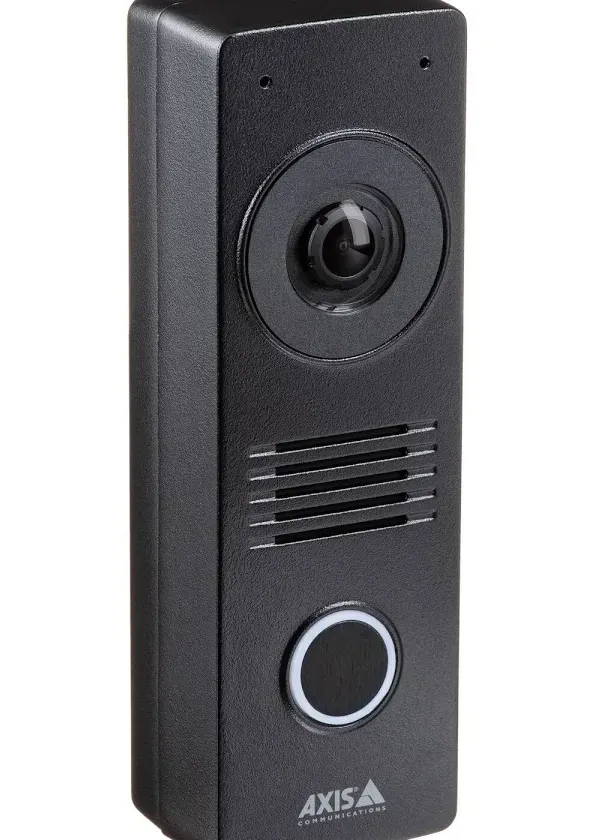
A photo from the AESS job library, not taken in Vinegar Hill: a black rectangular video door station with a camera lens, a speaker grille and one round call button that lights up. On a single-family or owner-occupied house on Hudson Avenue, one button is all the doorway needs, and a station this plain is the kind of neutral, discreet unit that suits a doorway inside the historic district.
Vinegar Hill Buzzer Request
Row house, wood-frame house, former shop, condo, loft or business: tell us the street, how many households the buzzer must reach and what is at the door now, and a technician calls back with the range
✅
Request Sent!
Thank you. A technician will call you about the Vinegar Hill address, usually within two hours during working hours.
25+
Years Experience
✓
Same-Day Estimates
100%
Licensed & Insured
4.7★
201 Google Reviews
Owner-operated since 2002 · Thousands of jobs completed · Booked within 2 hours
Quick answer: door buzzer installation in Vinegar Hill runs $400 to $900 on our Brooklyn list for an audio button and a new electric release at a one- or two-household house or a single shop door, $700 to $1,800 for a video door station with indoor stations or phone answering in a two- or three-family row house or a wood-frame house, and from about $2,500 to past $10,000 for a full entry system in a small apartment house, a loft building or a condo like the nine- and thirty-five-unit buildings on Hudson Avenue and Front Street. The price covers the door station, the indoor stations, the power supply, the electric strike, the cable and the labor, and it is fixed in writing after we have seen the doorway, the route inside and, inside the historic district, the spot the Landmarks rules allow. Anything that depends on a test or an approval, such as old bell wire that might fail or a door frame that needs reinforcing, is named and priced before you order. Send photos of the street door and the wall beside it to (347) 934-8335 or on WhatsApp, and we reply with the range that fits, usually within two hours during working hours.
Looking at your photos and quoting a new system costs nothing. If an existing system has to be tested in person before we can quote, that is the $250 service call booked online, and the $250 is applied toward the work.
All work is done under New York State license #12000287431. We install the low-voltage entry equipment; if the power supply needs a new 120-volt outlet or circuit, a licensed electrician does that part, and you know before the price is set.
We work for whoever controls the door: an owner of a house, a condo board and its managing agent, a landlord of a small apartment house, or a business tenant with the landlord's written approval.
The Neighborhood
Why Vinegar Hill Properties Need Door Buzzer Installation
Vinegar Hill is one of the smallest neighborhoods in Brooklyn, about six blocks squeezed between DUMBO, the Brooklyn Navy Yard fence and the Con Edison site on the river, with Farragut Houses and the expressway to the south. Its oldest streets were made a city historic district on January 14, 1997, in three separate pieces: the Front Street row from 225 to 249 with 202 and 204 Front, the houses at 69 to 77 Gold Street with 280 to 286 Water Street, and the Hudson Avenue blocks from 49 to 79 with 312 Water Street. What matters for a buzzer is not the history itself but what it left at the doors.
Most of the houses here were built for one family or for a family over a shop. The Landmarks Preservation Commission's designation report describes Hudson Avenue as a busy commercial strip in the nineteenth century, and notes that newcomers in the 1970s converted most of the storefronts to residential use. Brownstoner's Suzanne Spellen described the typical older building here as three stories of brick with two floors of apartments over a storefront. So a house that now holds two or three households often still has the front door of a one-family house or a shop, with a doorknocker, a single bell button or nothing at all. When the house is divided, sold or renovated, the owner suddenly needs a button for each household, a way to talk to the visitor and a release that opens the street door from upstairs.
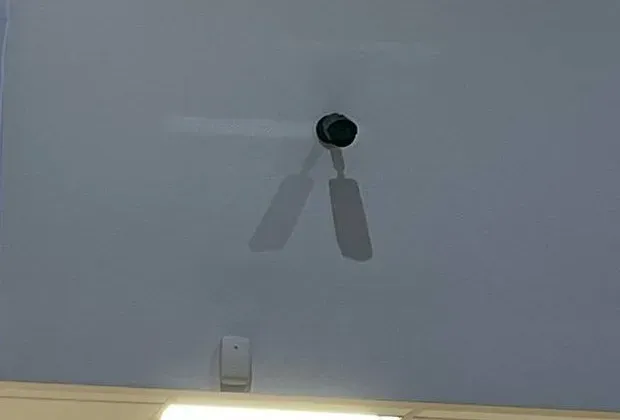
A photo from the AESS job library, not taken in Vinegar Hill: a small black camera mounted high on a pale wall, casting two shadows, with a small white device fixed below it. Inside the front hall of a divided Hudson Avenue house, a plain wall like this is where the indoor end of a new buzzer usually lands, out of sight from the sidewalk and well away from the landmarked facade.
The second thing that shapes the work is that so many of those doorways sit inside the historic district. A new intercom panel on a landmarked building needs a permit from the Landmarks Preservation Commission. The Commission's Permit Guidebook lets its staff approve one if it is installed "within or adjacent to a door opening," with "a maximum of two light fixtures and one intercom panel" per door opening, in a design, size and finish that is "neutral and discreet." The same chapter says equipment "must not be attached through cast iron or on any decorative surfaces," which rules out the obvious spot on some Front Street houses whose original cast-iron fences and gates are named in the designation report. Getting the panel position right before anything is bought is a large part of a Vinegar Hill job.
The third is construction. Vinegar Hill's houses are being renovated, and city records show it. When we searched the Department of Buildings' DOB NOW permits on November 11, 2026, 69 Hudson Avenue had an interior renovation permit issued in December 2024 with an estimated cost of $268,000, covering new ceiling finishes and kitchen and bathroom renovations, plus structural work to sister old floor joists. 59 Hudson Avenue had a permit issued in September 2025 for a new bathroom on its second, third and fourth floors. 54 Hudson Avenue had permits in 2025 for alterations to its commercial space. Every one of those jobs is a moment when ceilings and walls are open and buzzer cable can reach every floor for a fraction of the cost of fishing it later.
Six facts that shape a Vinegar Hill buzzer installation
The district covers three separate clusters. The 1997 designation takes in parts of Front Street, Gold and Water Streets and Hudson Avenue; a house one door outside those boundaries follows different rules from its neighbor.
Landmarks staff approve one intercom panel per door opening. It goes within or beside the opening, or on a fence or wall in front of the entranceway, in a neutral, discreet finish.
Low-voltage buzzer wiring needs no electrical permit. NYC Administrative Code §28-105.4.7 exempts wiring designed to run under 50 volts, which covers the buzzer itself, though not a new 120-volt outlet for its power supply.
Renovations are open right now. DOB NOW shows permits at 69, 59 and 54 Hudson Avenue between 2024 and 2025, the cheapest moments to wire a buzzer to every floor.
The condos are crossing the eight-unit line. Multiple Dwelling Law §50-a requires an intercom with voice and remote release in post-1968 buildings of eight or more apartments, which reaches the 2002 and 2005 condos but not a three-family row house.
The towers next door are NYCHA's. Farragut Houses' entry doors and intercoms are managed by NYCHA, which reported completing security upgrades there in 2023 that included new intercoms.
Where this page applies. Sources draw the edges a little differently, but this page covers Vinegar Hill from the Navy Yard fence west to Bridge Street, and from the waterfront and the Con Edison site south toward the Farragut Houses, including Hudson Avenue and Front, Water, Plymouth, Gold, Evans and Little Streets. For DUMBO's loft buildings see our DUMBO door buzzer installation page, for the rest of the borough our door buzzer installation in Brooklyn page, and for the whole city our NYC door buzzer installation page.
Repair or Replace in Vinegar Hill
Need Repair in Vinegar Hill? Keep the Old Bell, Replace the Plate or Install a New System
Plenty of Vinegar Hill installation calls start as repair calls. A bell that went quiet after a kitchen was gutted, a voice intercom in a 2002 condo whose handsets are no longer made, or a two-family house where the upstairs tenant has been coming downstairs to open the door for years. Before any equipment is chosen, we decide which of three paths fits, and we say so plainly.
The first path is a repair, when one part is the whole problem: a bell transformer that has failed, a strike that has worked loose in an old wooden frame, a cracked button. The second is a partial replacement: a new door station and power supply on bell wire that still tests sound, keeping the indoor chimes or handsets that work. The third is a full installation, for houses that never had more than a doorknocker, houses whose wire was lost in a renovation, and condos ready to move from voice to video. If repair is all your house needs, we price it as a repair, and our Brooklyn door buzzer team handles both kinds of work.
What We Install
Door Buzzer Installation Services in Vinegar Hill
Every service below is priced from the same Brooklyn door buzzer list. The number of households sets the size of the system, the door decides what release it can take, and in Vinegar Hill the historic district, the age of the walls and whether a renovation is under way decide much of the labor.
First buzzers for divided houses
A button for each household at the street door, talk and release to every floor, for row houses and frame houses that were built for one family and now hold two or three.
Rough-in during renovations
Cable pulled to every floor, back boxes set at the right height and the strike prepared while the walls and ceilings are open, then finished after the painters leave.
Landmarks-ready doorway panels
A single neutral panel within or beside the door opening, mounted at mortar joints or plain masonry, with the cut sheet and position ready for the owner's Landmarks filing.
Voice-to-video upgrades for condos
New video door stations and apartment monitors for the small elevator condos built since 2002, reusing riser cable where it tests sound.
Fence and areaway stations
A door station on an areaway fence or a wall in front of the entrance, where the doorway itself has no plain surface and the Landmarks rules allow it.
Former shop doorways
Entry systems for houses whose street door is the old store entrance, opening straight into what is now a living room, with a camera so the household sees who is there first.
Phone answering for owners away
Door stations that ring the owner's phone as well as the indoor station, for houses where the owner travels or rents the upper floor, with any monthly charge stated up front.
Strikes, closers and old frames
Fail-secure electric strikes cut into wooden and steel frames, closers set so a heavy old door latches every time, and frames trued before any release goes in.
Restaurant, shop and studio doors
Buzz-in doors for restaurants and cafés on Hudson Avenue, studios and offices in the lofts toward Bridge Street, wired apart from any apartments above.
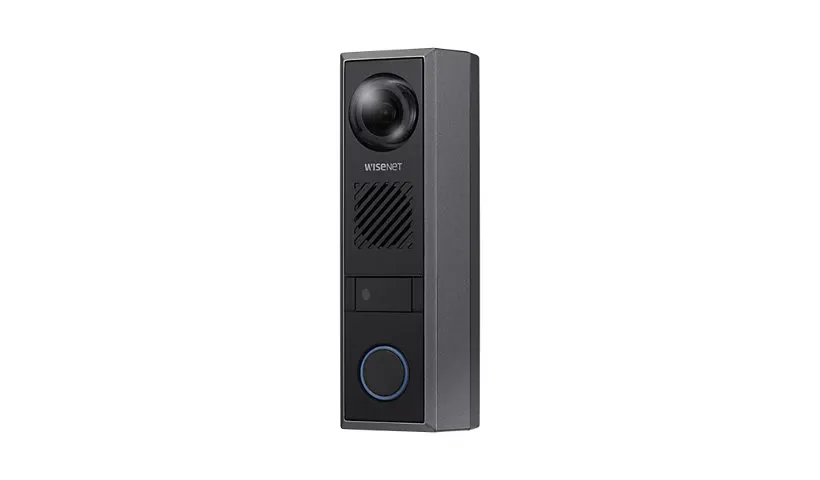
A photo from the AESS job library, not taken in Vinegar Hill: a slim dark grey wired doorbell with a camera lens, speaker slots and a round push button. Many Vinegar Hill doorways are framed by a narrow brick or wood pier with little room to spare, and a station this slim can sit inside the opening, the position the Landmarks guidebook names first.
Building Specialists
Door Buzzer Installation for Vinegar Hill's Architecture
Six kinds of building account for nearly every entry system we plan in Vinegar Hill. They differ in how many households sit behind the street door, what the doorway is made of, how cable can travel inside and who must approve the work. Each has one mistake that shows up when the job is rushed.
Greek Revival brick row houses
Three-story brick houses of the 1830s to 1850s on Front Street, Gold Street and Hudson Avenue, many now two or three households, almost all inside the historic district.
Wood-frame houses
Clapboard and frame houses behind brick or stucco fronts on Hudson Avenue, such as 51, 53, 55 and 70, where the wall beside the door may be wood rather than masonry.
Houses with a former shop floor
Buildings whose ground floor was a store until the 1970s conversions, with the street door still set in the old shopfront between display windows or bulkheads.
The 1870s apartment house
Four-story Italianate buildings like 312 Water Street, built as apartments, with first-story security grilles and a fire escape, and several households behind one door.
Condos built since 2002
Small elevator condos such as Commodore's Court at 85 Hudson Avenue and The Vista on Vinegar Hill at 206 Front Street, run by boards with managing agents.
Lofts, the firehouse and shops
The former Constitution Engine Co. No. 7 at 225–227 Front Street, converted to housing in 1976, the old factory buildings toward Bridge Street and the restaurants on Hudson Avenue.
Greek Revival brick row houses: a stoop, a narrow opening and a district that watches the doorway
The houses on the north side of Front Street between 225 and 249, and the row at 69 to 77 Gold Street, are what most people picture when they think of Vinegar Hill. Their doorways are narrow, set in brick, and often reached by a stoop with an iron railing. Most were built for one family. Today many are divided into a parlor-floor owner's apartment and one or two rentals above, or into floor-through apartments, and the front door has had at most a single bell button added sometime in the last century.
The mistake here is buying the panel first. A three-button station that fits a doorway in a newer building may be too wide for the brick pier beside a Greek Revival door, and a surface-mounted box with conduit running down the brick to the cellar is exactly what the Landmarks guidebook steers away from. We start with the opening: is there room within it, on the reveal or the frame, for a slim station? Is there plain brick beside it where the station can be anchored into mortar joints? Can the cable go straight back through the masonry into the front hall, so that no more than a few inches of conduit, if any, shows outside? Only once those answers are known do we choose the station.
Inside, the work is usually easy. These houses have a straight stair and a front hall, and cable from the door can drop into the cellar and rise through the stair wall or a closet to each floor. Where a parlor floor has original plaster and moldings, we route through the cellar and up behind cabinetry or inside closets rather than cutting the front parlor.
Wood-frame houses: a different wall, a different anchor
The designation report records several frame houses on Hudson Avenue: 51, a clapboard house built around 1840 to 1847 by a carpenter and shipbuilder; 53, a wood-frame house with a brick front; 55, a frame house with a brick facade and an exposed clapboard side wall; and 70, with clapboard above a stucco base. On a frame house, the material beside the door may be painted wood trim rather than brick, and the frame of the door itself is often softer and older than a steel or hardwood frame in a newer building.
That changes two things. The station is screwed into solid wood trim or blocking, never into thin siding that will split, and the Landmarks guidebook allows equipment to be attached at wood as well as at mortar joints and plain masonry. And the electric strike goes into a frame that may need a hardwood block or a reinforcing plate behind it before it can hold. We look at the frame closely on the walkthrough, and if it needs reinforcing, that is a named line on the quote, not a surprise on install day.
Houses with a former shop floor: the street door opens into a living room
Brownstoner noted that the storefronts on these houses survive "in varying degrees of original authenticity." Some still have their display windows behind brick bulkheads, like 55 Hudson Avenue; others had the shop entrance sealed, like the first story of 53 Hudson Avenue closed with cinder block. Where the former shop door is still the way into the house, it often opens straight into what is now a living room or kitchen, with no vestibule between the sidewalk and the household.
For those houses we almost always recommend video rather than audio. If pressing release lets a visitor step directly into your front room, you want to see who it is first, and a camera at the door shows the whole person and the sidewalk behind them. The station can usually sit on the wooden pier or frame of the old shop entrance, which counts as wood or metalwork rather than a decorative surface, and the cable runs back through the frame into the room.
The 1870s apartment house: several households, one door and the eight-unit line
312 Water Street, described in the designation report as a four-story Italianate apartment house of around 1869 to 1876, with first-story security grilles and a fire escape, is the kind of building that was meant for several households from the start. A building like this may be well under the eight-apartment line in Multiple Dwelling Law §50-a, so no law forces an intercom, yet its tenants expect one. If old bell wire already reaches each apartment, we meter it before deciding whether a two-wire system can reuse it.
Lofts, the firehouse and shops: a garage door, a loading door and a dining room
The former firehouse at 225–227 Front Street, Constitution Engine Co. No. 7, has a replacement wooden garage door in what was the apparatus opening, according to the designation report, and was converted to housing in 1976. The old factory and warehouse buildings toward Bridge Street and Plymouth Street now hold apartments, studios and offices. And Hudson Avenue's restaurants, Vinegar Hill House at 72 Hudson since 2008 and Café Gitane at 70 Hudson since 2018, have back and side doors that take deliveries. Each of these needs its own entry plan: a personnel door beside a garage door, a loft lobby with a directory, a delivery door with a buzzer kept apart from any apartment upstairs.
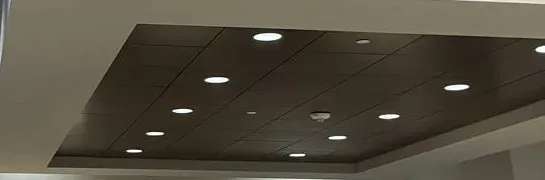
A photo from the AESS job library, not taken in Vinegar Hill: a dark recessed ceiling panel with round downlights and a small round device, framed by a lighter ceiling. Lobbies in the small condos built on Hudson Avenue and Front Street since 2002 often have a dropped feature ceiling like this, and it is the easiest path for new cable from the street panel to the elevator riser during a voice-to-video upgrade.
Field Notes
Field Notes: Measure the Doorway, Find the Wall Behind It, Then Choose the Station
This is how our technician spends the first part of a visit to a Vinegar Hill house, before any equipment is chosen.
First, the doorway. With a tape, the technician measures the reveal inside the opening, the face of the frame and any plain brick or wood beside it, and photographs each surface. On a district house those three numbers decide which stations can be considered at all, because the panel has to fit within or beside the opening without covering a decorative surface. A station that is a quarter-inch too wide for the frame is a station we do not order.
Second, the wall behind. From inside the front hall, the technician checks what is directly behind the chosen spot: a plaster wall with a cavity, solid brick, a stair stringer or a radiator. The best position outside is useless if the cable has to come out of the wall into a finished parlor. We look for the spot where the cable can pass straight through the masonry and land inside a closet, a stair wall or the cellar ceiling.
Third, the route down and up. In the cellar, the technician finds the best place for the power supply, near an outlet and away from damp walls, and traces how a cable can rise to each floor: alongside the stair, through a closet stacked above another closet, or with the plumbing if a renovation has opened a chase. On a house that is mid-renovation, this step is a conversation with the general contractor about when each ceiling closes.
The Historic District
A New Door Station on a Landmarked Vinegar Hill Doorway: What Landmarks Staff Approve and What We Prepare
Installing a buzzer where there was none before is a new piece of equipment on the facade, and inside the Vinegar Hill Historic District that is work the Landmarks Preservation Commission reviews. The good news is that the Commission has written down what its staff can approve without a public hearing, and a carefully planned door station fits inside those rules. The Commission's Permit Guidebook, in its chapter on health, safety and utility equipment, sets out the criteria.
Where the panel goes. "Light fixtures and intercom panels, as well as doorbells, must be installed within or adjacent to a door opening." The guidebook adds that "an intercom can also be installed on a fence or wall in front of the entranceway."
How many. "A maximum of two light fixtures and one intercom panel can be installed per door opening." One door, one panel, whatever the number of households.
What it looks like. The "design, size, and finish of installations must be compatible with the architecture of the building (i.e., neutral and discreet)."
What it is attached to. Equipment "must be attached at mortar joints, plain masonry, wood, or metalwork," and "must not be attached through cast iron or on any decorative surfaces."
How the cable travels. Conduit "must be concealed by going through plain masonry or wall cladding behind the installation." If that is impossible, "staff may approve a maximum of approximately ten inches of visible conduit," painted to match the surface behind it.
What is filed. A complete application includes manufacturer cut sheets and, at visible facades, color specifications or paint cards.
Two more points from the Commission matter to Vinegar Hill owners. The guidebook says a permit is not required for "ordinary maintenance, repair, and retrofitting" of health, safety and utility equipment, so fixing an existing bell is a different matter from adding a new panel. And the Commission's permit-types page says that "while there is no fee to submit an application, there are fees to cover costs associated with issuing permits for certain kinds of work"; the city's business portal lists the Permit for Minor Work as no fee. What kind of permit a given doorway needs is the Commission's decision, made on the application.
Where the Front Street fences come in
The designation report describes an original cast-iron fence and gate at 237 and 239 Front Street, with a wrought-iron gate under the stoop. A fence in front of the entranceway is one of the places the guidebook allows an intercom, but the same chapter forbids attaching equipment through cast iron. So on a house with an original cast-iron fence, the fence is not the easy answer it looks like, and the station usually belongs in or beside the doorway instead. On a house whose areaway fence is a later replacement in plain metal, the answer may be different. We point out which is which on the walkthrough, and the Commission's staff make the final call.
What we prepare, and what stays with the owner
We prepare the manufacturer cut sheet for the station, a photo of the doorway marked with the exact position, the finish we propose, and a short description of how the cable enters the building and how much conduit, if any, will show.
The owner files. The permit belongs to the building, and the owner, or the architect or expediter already working on a renovation, files it with the Commission.
We wait for the permit. The station goes on the doorway once the owner has the approval. Indoor cable, the power supply and indoor stations can often be installed first, so the job finishes quickly when the permit arrives.
Nothing is ordered on a guess. If the Commission's staff ask for a different finish or position, we change the order before it is placed, which is why we do not order a doorway station until the plan is agreed.
Renovations
Open Walls on Hudson Avenue: Wiring the Buzzer While Your Renovation Is Under Way
The cheapest door buzzer in Vinegar Hill is the one whose cable goes in while the house is open. City records show how often that moment comes. The DOB NOW permits we read on November 11, 2026 include, at 69 Hudson Avenue, an interior renovation "with restoration of floors, stair treads at existing location, new ceiling finishes, kitchen and bathroom renovations," issued in December 2024 with an estimated cost of $268,000, followed in January 2025 by structural work "sistering existing wood floor joists to remove slope," and in March 2025 by a heat pump air-conditioning system. At 59 Hudson Avenue, a permit issued in September 2025 covers general construction for a new bathroom on the second, third and fourth floors. At 54 Hudson Avenue, permits in January and April 2025 cover alterations to an existing commercial space, with mechanical, structural and plumbing work.
Every one of those jobs opens ceilings, floors or stair walls on several floors. While they are open, a cable from the street door to every floor is a few hours' work. Once the plaster is back and painted, the same cable has to be fished through finished walls, and in an old house with solid brick party walls and joists running the wrong way, that can take a day and still leave small openings to patch.
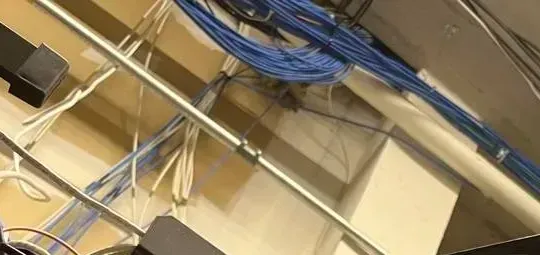
A photo from the AESS job library, not taken in Vinegar Hill: bundles of blue low-voltage cable laid over a ceiling beam beside a metal pipe in an open ceiling. A renovation like the ones filed for Hudson Avenue houses leaves ceilings this open for only a few weeks, and that is the window in which buzzer cable reaches each floor for the least labor.
What to do, and when, in the renovation schedule
Before demolition. Tell us how many households the house will hold when it is finished, not how many it holds now. A house being turned from one family into an owner's duplex and a rental needs two buttons and stations on more than one floor.
At rough-in. We pull cable from the doorway to the cellar and up to each indoor station position, set back boxes at the height you choose, usually near the kitchen and at the top of the stair, and leave a spare pair to each floor for later.
At the door. If the street door or its frame is being restored or replaced, the frame is prepared for the electric strike before it goes back in, so no one cuts a restored frame afterward.
At finish. Indoor stations go on after the painters, the doorway station after the Landmarks permit and the facade work, and the system is tested before you move back in.
Condos and Small Apartment Buildings
From Voice to Video in Vinegar Hill's Newer Condos and Rentals
Vinegar Hill's newer buildings are few, small and well documented. Commodore's Court at 85 Hudson Avenue is listed by Compass as ten units on five stories, built in 2002, with an elevator, bike room, common roof deck and a "Voice Intercom"; other listings call it a 9-unit building. The Vista on Vinegar Hill is "a seven story, 35 unit condominium at 206 Front Street, completed in 2005," whose building page lists a part-time doorman, a video intercom, a residents' lounge, a planted courtyard and "a private garage" on the lower level. A rental listing at 68 Gold Street advertises an elevator, video intercom, bike storage and private parking.
These buildings share three things that shape an entry project. They have an elevator, so the riser cable runs in a shaft or a stacked closet rather than up a stair wall. They have more than one door residents use: the lobby, and often a garage, a courtyard gate or a side door. And they are run by condo boards or managing agents who must approve the work and pay for it from a reserve.
The questions a board should settle before choosing equipment
What the riser will carry. We meter the existing pairs from the lobby panel to each apartment. If they test sound, a two-wire video system can often reuse them, which is the cheapest path from voice to video. Aiphone, for example, says its GT Series "offers the advantage of using existing wire and infrastructure."
Which doors get stations. A garage door, courtyard gate or side door that residents use every day needs its own station or reader, or it becomes the door that gets propped.
How residents answer. A video monitor in each apartment works without phones or Wi-Fi and has no subscription. Phone answering is convenient for owners who travel, but cloud services often carry a per-apartment or per-door monthly charge, and Swiftlane's 2026 guide puts those at "$5–$15 per unit per month or $30–$100 per door per month."
Who manages it. Someone has to hold the administrator login, add a new owner's name to the directory and delete a seller's. We set the system up in the board's or managing agent's name, never in ours, and hand over the login at the end.
Rules and Responsibilities
Which Vinegar Hill Buildings Must Have a Buzzer, Which Approvals Apply and Who Orders the Work
Newer buildings of eight or more apartments must have an intercom. Multiple Dwelling Law §50-a requires a self-locking main entrance door and an intercom allowing voice communication and remote release in Class A multiple dwellings erected or converted after January 1, 1968 with eight or more apartments. That covers the condos built on Hudson Avenue and Front Street since 2002.
Older buildings install one when a majority of tenants ask. For buildings put up before that date, the same section requires the door and intercom once tenants occupying a majority of the apartments request or consent in writing, with installation started within 90 days and completed within six months.
Small houses are the owner's choice. A two- or three-family row house or frame house is outside §50-a's mandate. Owners put in a buzzer because tenants, buyers and their own households expect one, not because a statute requires it.
The historic district reviews the doorway. A new intercom panel on a landmarked building needs a Landmarks permit; the staff-level criteria are set out in the section above.
The buzzer wiring needs no electrical permit. Administrative Code §28-105.4.7 exempts wiring designed to operate under 50 volts. A new 120-volt outlet or circuit for the power supply is electrical work for a licensed electrician.
Fire doors stay latched. Allegion notes that fire doors need fail-secure strikes, and that "fail secure products are locked when power is removed," so a rated door into a stair or cellar stays latched in a fire while still opening from inside by the lever.
Magnetic locks need the full package. Allegion also notes that "electromagnetic locks are only available fail safe." On the rare Vinegar Hill door where one is truly needed, the building code's sensor-release rules apply in full: a sensor on the egress side, a "PUSH TO EXIT" button 40 to 48 inches above the floor within 5 feet of the door, release on fire alarm activation and UL 294 listed equipment.
None of this is legal advice for a particular building. An owner answering a tenants' request, a board planning a new lobby panel or an owner reading the Landmarks rules for a doorway should confirm the details with the managing agent, the architect, a lawyer or the Commission itself. What we provide is a system that meets the requirement that applies and paperwork showing what was installed.
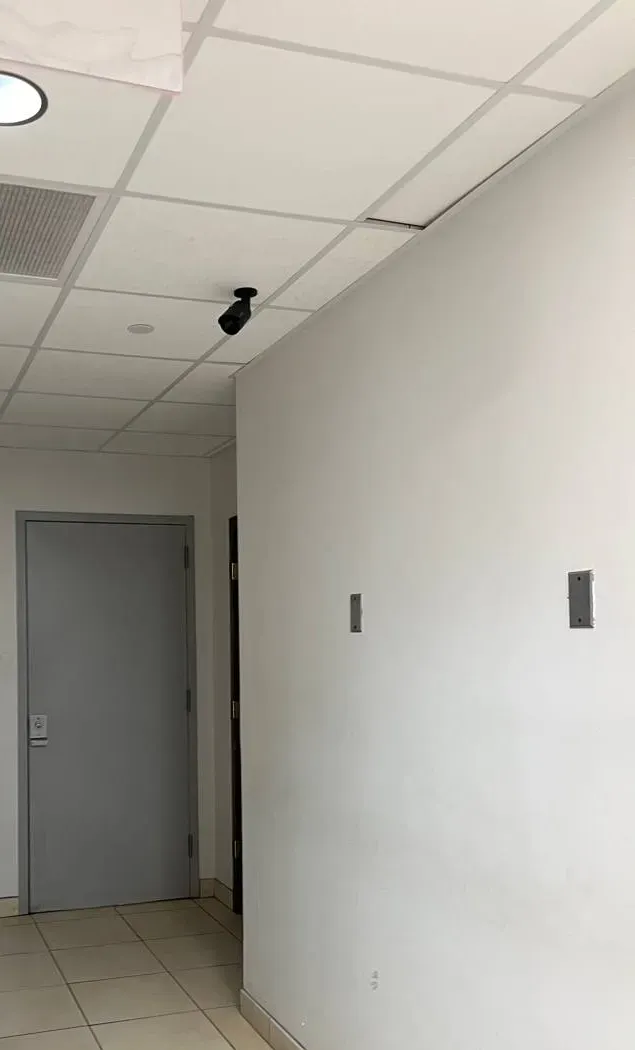
A photo from the AESS job library, not taken in Vinegar Hill: a tiled corridor with white walls and small wall plates ending at a grey steel door with a lever handle, under a drop ceiling with a small camera. In a converted loft building toward Bridge Street, a corridor like this often leads to a rear stair door that must stay latched against outsiders yet always open from inside with one turn of the lever.
Commercial Door Buzzer Installation
Business Door Buzzer Installation in Vinegar Hill
Vinegar Hill's businesses are few and close together: restaurants and cafés on Hudson Avenue, studios and offices in the old industrial buildings toward Bridge and Plymouth Streets, small offices in former shop floors, and the businesses just over the fence in the Navy Yard. A business buzzer here is usually about one of three doors: a delivery door that has to open before the doors open to the public, an upstairs studio or office that buzzes clients in one at a time, or a ground-floor space that shares a street door with the apartments above.
Hudson Avenue
The old commercial strip, now home to Vinegar Hill House at 72 Hudson since 2008 and Café Gitane at 70 Hudson since 2018, where a restaurant door and a residential door may share one house.
The commercial space at 54 Hudson
One of the shopfronts on the avenue that DOB records show being altered in 2025, the kind of space whose new tenant needs its own entry plan.
Front Street
The landmarked row, the former firehouse at 225–227 and the six-story 1908 factory building at 231–233, where loft and office doors sit beside houses.
Plymouth and Water Streets
Belgian block streets lined with former warehouses and factories toward DUMBO, now studios, offices and apartments behind shared lobby doors.
Bridge Street and Gold Street
The western and southern edges, where newer rentals with elevators and video intercoms meet older loft buildings.
The Navy Yard edge
The industrial campus behind the fence at the end of Hudson Avenue, whose tenants work under the Navy Yard's own rules.
The commonest business request here is a buzzer on a door that has always been left unlocked during service or opened with a key: a restaurant's side or back door that takes deliveries in the morning, a ground-floor studio that wants clients to ring rather than walk in, or an upstairs office that sees a visitor on camera before releasing the street door. Each gets its own station, release and power, kept separate from any apartment system in the building, so a fault in one never takes out the other. For businesses inside the Navy Yard itself, our Brooklyn Navy Yard door buzzer installation page covers those buildings, and for the loft buildings just west of Bridge Street see our DUMBO page.
Rules that apply to business entry installations in Vinegar Hill
Anyone inside can always get out. A business door with a buzzer, code or reader still opens from inside without a key. With an electric strike, Allegion's guide notes, "you can exit by turning the lever" whether the strike is fail-safe or fail-secure.
A landmarked shopfront is still a landmarked doorway. A restaurant or shop in one of Hudson Avenue's district houses follows the same Landmarks criteria as the house door: one intercom panel per door opening, neutral and discreet, attached at plain masonry, wood or metalwork, never through cast iron or a decorative surface.
Tenants need the landlord's written approval. A restaurant, shop or studio that rents its space orders a buzzer only with the building owner's written permission, especially where the work touches a shared street door or the apartments' cable.
Places where people gather get extra care. A dining room or event space that fills up at set times must let everyone leave at once, so its releases and any magnetic locks follow the sensor-release rules in full.
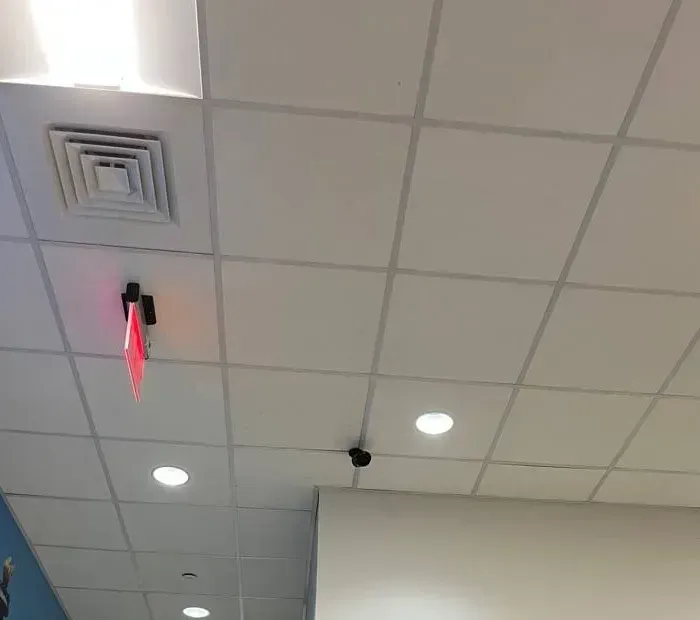
A photo from the AESS job library, not taken in Vinegar Hill: a drop ceiling with a lit red exit sign, an air diffuser, round recessed lights and a small black camera. Studios and offices in the converted buildings toward Plymouth Street often have a ceiling like this over the corridor to the street door, and the exit sign states the rule every business buzzer we install follows: whatever locks the door from outside, it opens from inside.
Your Questions Answered
Door Buzzer Installation in Vinegar Hill: Questions Answered
Old shopfronts and narrow doorways
Our Hudson Avenue house kept two doorways from its shop days, the house door and the old store door beside it, and we use both. If Landmarks staff allow one intercom panel per door opening, should each door get its own station, or can one station release both?
Either can work, and the choice depends on who uses each door. If the old store door now leads to a separate household or a ground-floor office, give it its own station: one panel within or beside that opening, ringing only the people behind it, with its own release. The guidebook's limit is one panel per door opening, so two doorways can carry one each. If both doors lead into the same household, a single station at the door visitors actually use is usually better, with a second release wired to the other door so the household can open whichever one a delivery is standing at.
What we avoid is a station placed between the two doors so that visitors cannot tell which door will open. On a narrow old shopfront, the station belongs in or beside the door it serves, and the indoor station should say which door is ringing. We draw both options on the photo of your shopfront, and the one you choose is what goes into the Landmarks filing.
The wooden pier beside our Front Street door is only about four inches wide, and the rest of the opening is brick with stone trim. Can a station that slim still hold a camera and buttons for three households?
Yes. Narrow video stations made for door frames and mullions are built for exactly this, with a camera at the top and two to four buttons stacked below, and several fit within a face of about four inches. The station is screwed into solid wood, which the Landmarks guidebook lists alongside plain masonry and metalwork as an acceptable surface, and the cable goes straight back through the pier into the hall, so nothing has to cross the brick or the stone.
The question to settle first is whether the pier is original decorative woodwork or plain trim. The guidebook says equipment must not go on decorative surfaces, so a carved or molded pier is not the place for it. If yours is plain, the slim station is usually the most discreet answer on the whole doorway. If it is decorative, the next choice is within the opening on the reveal, and we measure both on the walkthrough.
Renovations, permits and timing
Our general contractor closes the ceilings in three weeks, but we have not chosen a door station and our Landmarks filing is not in yet. Can the cable go in now and the station be chosen after approval?
Yes, and that is the order we prefer. Inside the house, the cable from the doorway to the cellar and up to each floor does not depend on which station you choose, as long as we pull a cable that every station we might propose can use. We rough it in while the ceilings are open, set the indoor back boxes, prepare the door frame for the strike if the frame is out, and cap and label every end.
Outside, nothing goes on the doorway until the Landmarks permit is in hand. If you need the door to work before that, a temporary button can be fitted inside the vestibule or on the door frame's inner face, where it changes nothing on the facade, and replaced by the approved station once the permit arrives. The quote shows the rough-in and the finish as two visits, so you know what each costs.
A DOB permit for our gut renovation is already open. Does adding a buzzer mean amending that permit or filing anything new with the Department of Buildings?
For the buzzer itself, normally not. The wiring for a door station, indoor stations and a strike runs well under 50 volts, and Administrative Code §28-105.4.7 says an electrical permit is not required for wiring designed to operate below that level. The buzzer does not change the building's use, egress or occupancy, which is the language the renovation permits on Hudson Avenue all repeat.
Two things can bring other trades in. If the power supply needs a new 120-volt outlet in the cellar, that is electrical work your licensed electrician does under the renovation's electrical filing. And if the doorway is in the historic district, the station needs its Landmarks permit, which is separate from DOB. Your architect or expediter will know whether anything in the renovation's own filings needs updating; we give them the equipment list so they can check.
We would like the cable pulled now, during our renovation, but the buzzer itself installed in a year or two when the budget allows. Will cable left in the walls that long still be usable?
Yes, if it is the right cable and it is protected. Low-voltage cable left capped in a dry wall does not wear out in a year or two. What ruins it is being cut, painted over or buried without labels by the next trade. So we pull a cable suited to video as well as audio, leave a generous loop in each back box, cover every box with a blank plate, label both ends and give you a one-page sketch of where each run goes.
When you are ready, the installation is a short visit: the station on the door, the strike, the power supply and the indoor stations, with no walls to open. The rough-in is priced on its own now, and the finish is quoted when you call, at the Brooklyn list price at that time.
Condos and small buildings
Our five-story condo's voice intercom dates from 2002, and only some owners want video. If the lobby panel goes to video, must every apartment change its handset on the same day?
On many systems, no. Several multi-tenant systems let video monitors and audio handsets sit on the same lobby panel, so the board can replace the panel and power supply as one building project and let each owner choose a video monitor or a simpler audio station for their own apartment. The deciding factor is the riser cable: we meter each pair from the lobby to the apartments, and if it carries the new system's signal, apartments can be changed one at a time.
What cannot be phased is the lobby panel itself, because the old handsets and the new panel rarely talk to each other across brands. So the usual plan is one installation day for the panel and every apartment's station, audio or video as each owner chooses, with the board's share and each owner's share shown separately on the quote. Owners who chose audio can move to video later without the lobby being touched again.
Our ground floor is a restaurant with a private dining room upstairs, and guests reach it through the house's own street door. Can they be buzzed up to that room without getting access to the apartment on the top floor?
Yes, by deciding which doors inside the house lock and who releases them. The street door gets a station that rings the restaurant, the restaurant releases it for guests, and the door from the stair to the top-floor apartment stays locked from the stair side while always opening from inside the apartment. The apartment keeps its own button at the street door, ringing only upstairs, so its visitors are never answered by the restaurant.
Because a dining room can fill with guests at once, the doors they use to leave must open with a single push or turn from inside, and if a magnetic lock is ever proposed on that route, the full sensor-release package applies. The building owner approves the plan in writing, since the stair and the street door serve both the restaurant and the household.
Mail and the doorway
Our house is now three households but still has one mail slot in the door. Can mailboxes for each household go up when the buzzer goes in, and does Landmarks treat them like the station?
They can go up on the same visit, and the Landmarks guidebook has its own criteria for them. Its staff can approve mailboxes and mail key lockboxes installed "within or adjacent to the door opening," attached to a gate or door underneath the stoop or on a plain stoop wall beside the opening, or on an areaway fence or a freestanding post in the areaway. That is separate from the limit of one intercom panel per door opening, so a station and a mailbox group can both be planned for the same doorway.
The practical step is to plan them together so they do not compete for the same piece of plain brick. We mark both on the photo of your doorway, the station at the height a visitor reaches easily and the mailboxes where the carrier can reach them, and the owner files them in one Landmarks application. If the carrier needs to enter a locked vestibule to reach the mailboxes, that is a separate question for the Postal Service about its access lock.
A photo from the AESS job library, not taken in Vinegar Hill: a touchscreen entry panel showing a dial pad with a four-digit apartment code entered, a camera above and a card-reader symbol below. A code panel like this suits the lobby of a 35-unit condo on Front Street, where a wall of buttons would be wider than the doorway allows and residents want to come in without a key.
Equipment
Types of Door Buzzer Systems We Install
We quote a reliable non-branded system by default and install a named brand when an owner or board asks for one; the intercom brands we work with include Aiphone, ButterflyMX, 2N, Akuvox, Comelit and DoorBird. These are the kinds of equipment that come up most often in Vinegar Hill, and where each fits.
Slim frame-mount stations
Narrow video or audio stations made for door frames and piers, for Greek Revival and frame-house doorways with only a few inches of plain wood or brick.
One- to four-button panels
Small panels for houses of one to four households, in neutral finishes chosen to suit brick, painted wood or dark ironwork.
Directory and code panels
Panels with a directory or code entry for the condos and rentals with ten to thirty-five units, with a keypad or reader for residents.
Two-wire multi-tenant systems
Video and audio over one pair per apartment, the practical upgrade path for small condos whose original intercom risers still test sound.
Indoor video monitors
Wall monitors with a screen and a release button, placed in the kitchen and on the bedroom floor of houses where one household spans two or three levels.
Audio handsets and chimes
Simple talk-and-release stations for households that want nothing more, and for rental floors where the tenant changes.
Phone and app answering
Door stations that ring the owner's or tenant's phone as well as the indoor station, with any subscription named on the quote before anyone chooses.
Fail-secure electric strikes
Releases cut into wooden and steel frames that stay locked without power, so a nineteenth-century door is never left unlatched, and let anyone inside leave by the lever.
Battery-backed power supplies
Dedicated low-voltage supplies with battery backup, mounted in a dry corner of the cellar near an outlet and sized for the station, the indoor stations and the release.
Audio button, wired video or cloud phone answering: which fits a Vinegar Hill house or building?
What matters
Audio button and handsets
Wired video stations
Cloud panel with phone answering
See the visitor before releasing
No
Yes, on the indoor monitor
Yes, on the phone or an added station
Fits a narrow landmarked doorway
Yes, smallest stations
Yes, with slim frame-mount stations
Often larger panels; check the size first
Works without internet at the house
Yes
Yes
No
Answer while away from home
No
On models with an app add-on
Yes
Reuses old bell or riser wire
Often
Often, with two-wire systems
Panel only; residents over the internet
Monthly fees
None
None
Often a per-apartment or per-door charge
Brooklyn list range
$400–$900 for a house; from $2,500 for a building
$700–$1,800 for a house; from $2,500 for a building
Within the same ranges, plus any subscription quoted separately
ADT, Ring and SimpliSafe compared with a local installer for a Vinegar Hill doorway
National brands come up in almost every conversation about a front door. For one household in a one-family house, a store-bought video doorbell may be all that is wanted, and a Brownstoner commenter described wiring a SimpliSafe doorbell camera into a foyer and adding plug-in chimes for about $40. For the houses on this page, the limits arrive quickly. A video doorbell rings the phones of whoever set it up, not a station on each floor. It gives a three-household house one button, not three. It does not release the street door unless it is separately wired to a strike and a power supply. And on a landmarked doorway it is still a piece of equipment on the facade, which counts against the one intercom panel the guidebook allows per opening and needs the same permit as any other station. That is the difference between a doorbell and a buzzer, and it is what the price of a wired system pays for.
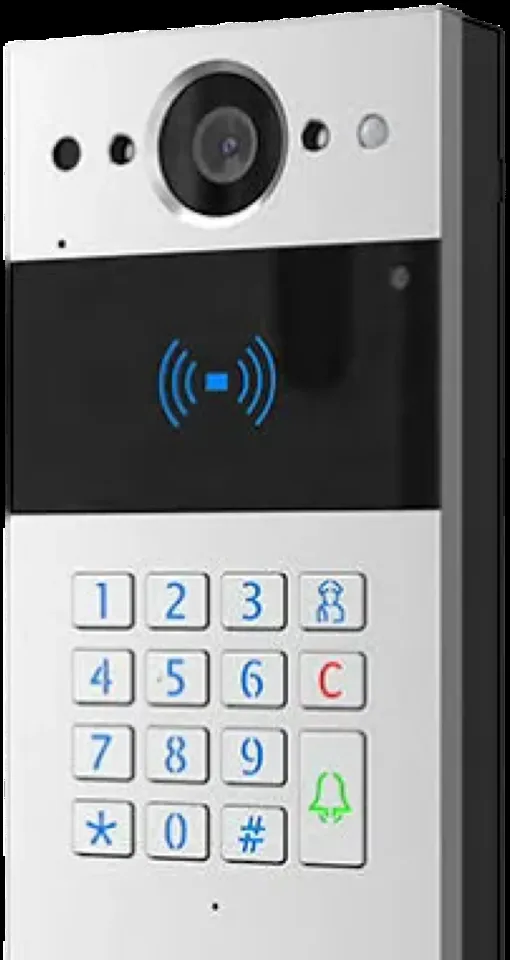
A photo from the AESS job library, not taken in Vinegar Hill: a silver and black keypad door station with a camera lens at the top, a blue card-reader symbol, a numeric keypad and a green bell key. At the garage or side entrance of one of the small elevator condos on Hudson Avenue, a station like this lets residents come in by code or card while a visitor presses the bell key and rings the right apartment.
AI Overview Reality Check
What AI Gets Wrong About Door Buzzer Installation in Vinegar Hill
Ask a search summary or an AI assistant what a door buzzer costs in New York, or whether you need a permit, and the answer is assembled from vendor guides and national cost pages. Some of it is right somewhere, but little of it was written with a two-family Greek Revival house in a historic district in mind. Here are seven claims we see repeated, each checked against its source and against what we find at doorways here.
"Video intercom costs typically range from $1,500 to $50,000+"
That is the quick answer in Swiftlane's 2026 video intercom guide, which also puts a single door at $1,500 to $5,000 and small properties at $1,000 to $5,000. The range is honest for the market Swiftlane sells into, which is mostly apartment buildings with managed, cloud-connected doors.
It tells a Vinegar Hill owner very little. A video station with indoor monitors and a strike for a two- or three-household row house sits at $700 to $1,800 on our Brooklyn list, and only the condos and small apartment houses move into the multi-unit range that starts around $2,500.
The useful question is not the national range but what your doorway, your households and your cable route add up to, which is why our price is written after the walkthrough, with every part listed.
"Installing a video doorbell in New York costs $363.94 to $727.88"
Contractor+'s New York cost page gives that range, broken into three phases: remove the old doorbell, connect the wires to a bracket and set up the app. For a one-family house with working bell wire and a door that only needs a ring, that may be close.
A Vinegar Hill buzzer is a different job. The phases that page leaves out are the ones that take the time here: a station that fits a narrow landmarked opening, cable taken back through brick rather than along it, a fail-secure strike in an old wooden frame, a power supply in the cellar and a station on each floor for each household.
"A video doorbell may need a permit, typically around $150–$300"
The same page says that "installing a video doorbell may require a permit depending on local regulations" and that the permit "is typically around $150-$300." In New York City, that mixes up two different authorities.
The Department of Buildings does not require an electrical permit for low-voltage wiring: Administrative Code §28-105.4.7 exempts wiring designed to operate below 50 volts. What a Vinegar Hill doorway may need is a permit from the Landmarks Preservation Commission, if the house is inside the 1997 district, and the Commission says there is no fee to submit an application, with the Permit for Minor Work listed by the city as no fee.
The real cost of a landmarked doorway is not a permit fee but planning time: the right station, the right position and a complete application with cut sheets, which we prepare for the owner to file.
"Many video doorbells are designed for easy DIY installation"
Contractor+ answers "Can I install a video doorbell myself?" with "Yes," and for a doorbell that clips onto existing wires in an unlandmarked house, it often is easy.
On a doorway inside the historic district, a do-it-yourself doorbell is still new equipment on the facade. The guidebook allows one intercom panel per door opening, attached at mortar joints, plain masonry, wood or metalwork and never through cast iron or on a decorative surface. A doorbell screwed into a molded frame or onto an original iron gate is the kind of installation that review is there to prevent.
And a doorbell alone still does not open the street door. The moment an owner wants the door released from upstairs, the job involves the frame, a strike and a power supply, which is where installers earn their price.
"Labor typically runs $50–$100 an hour"
Swiftlane's guide gives that hourly range for intercom labor, with installations running "from a single day to several days for complex deployments."
An hourly figure is the wrong way to think about an old house. Fishing cable through a finished nineteenth-century wall can take far longer than the same run in a renovation with the ceilings open, and the hours depend on the house, not on the installer's rate. Our Brooklyn list prices the job, not the hour, and the price is fixed in writing before the work starts.
"An electrician would install it"
That was one reply in a Brownstoner thread from the owner of a Brooklyn three-family asking for smart buzzer advice, and it is a common assumption. Another reply in the same thread said that unless the system is hardwired, "an electrician does not install them but a homeowner can."
Door buzzers are low-voltage systems, and in New York they are installed by low-voltage contractors; ours work under New York State license #12000287431. An electrician is needed for one piece: a new 120-volt outlet or circuit for the power supply, if the cellar does not already have one in the right place.
The two trades work well together, especially on a renovation, and our quote says plainly which part is ours and which part, if any, belongs to your electrician.
"Connect the doorbell wires to the new device"
Cost pages assume the old bell wire is there and ready. Contractor+'s second phase is simply "Connect the doorbell wires to the new device," and many summaries say a video doorbell can run on the existing doorbell wiring.
In Vinegar Hill's houses, that wire may be decades old, may have been cut during an earlier renovation, or may never have reached the upper floors. The Brownstoner commenter who wired a doorbell camera said "the doorbell wiring was too old," which is a common finding in houses of this age.
So we meter any old wire before we quote. If it tests sound and suits the new equipment, it is reused and you save the cost. If it does not, the new run and its price are on the quote before you approve, never discovered on install day.
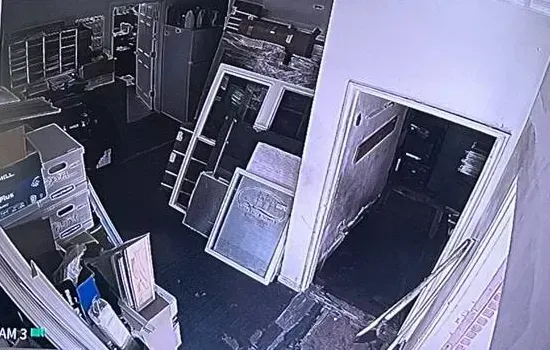
A photo from the AESS job library, not taken in Vinegar Hill: a black-and-white night camera view of a cluttered room with an open doorway into a dark back room. The storerooms behind Hudson Avenue's restaurants and shops often lead to a side or back door, and a buzzer on that door, with a camera inside watching it after hours, keeps the delivery entrance from becoming the building's easiest way in.
Landmarked Doorway or Renovation Under Way? Speak to a Tech
Send the address, a photo of the street door straight on and one of the wall or fence beside it, tell us how many households the buzzer must reach and whether walls are open right now, and a technician will tell you which approach fits, what the Landmarks rules mean for your doorway and where the job falls on our Brooklyn ranges. Call or text (347) 934-8335, send photos on WhatsApp, or fill in the form below.
Get In Touch
Request a Free Quote
✅
Request Sent!
Thank you. A technician will call you about the Vinegar Hill address, usually within two hours during working hours.
How It Works
Our Installation Process
1. Send photos and the address
Photos of the street door, its frame and the wall or fence beside it, with the address, how many households the buzzer must reach, what is at the door now and whether any walls are open for renovation.
2. Check the district and the permits
The office checks whether the address falls inside one of the historic district's three clusters and whether DOB records show a renovation under way, so the plan fits the approvals and the contractor's schedule.
3. Walk the house from sidewalk to cellar
The technician measures the doorway, checks the wall behind the chosen spot, finds a dry place for the power supply and traces how cable can rise to each floor without crossing finished plaster.
4. Fix the door before the release
The street door is opened and closed by hand. If it drifts, binds or fails to latch, the closer, hinges or lockset are corrected first, because no strike can hold a door that does not close.
5. Prepare the Landmarks submission
For a doorway in the district, you receive the station's cut sheet, a marked photo of its position, the proposed finish and a note on how the cable enters, ready for the owner or architect to file.
6. Price the job in writing
A written price from the Brooklyn list, with every possible extra named, such as a frame that needs reinforcing or old wire that may fail its test, before anything is ordered.
7. Install, conceal and label
Cable runs inside walls, joists or closets, the strike and battery-backed power supply go in, indoor stations go on after the painters and the doorway station once the permit is in hand, with every pair labeled.
8. Test from the sidewalk and hand over
Standing where a visitor stands, the technician rings and releases every household, checks the door with power off, shows you how the system works and leaves a test sheet and wiring record.
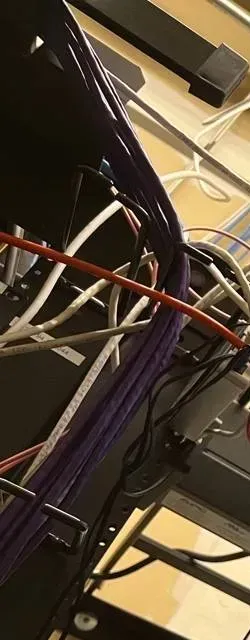
A photo from the AESS job library, not taken in Vinegar Hill: purple, white and red cable bundles dropping down beside a black equipment rack. In the cellar or riser closet of a small elevator condo on Hudson Avenue or Front Street, the cable from every apartment arrives at one point like this, and labeling each run in step 7 is what lets the next technician find one apartment's pair in minutes.
Coverage Area
Door Buzzer Installation Near Vinegar Hill's Landmarks
The Front Street row
The Greek Revival houses at 225 to 249 Front Street, the northern cluster of the 1997 historic district, with stoops, iron railings and some original cast-iron fences.
Hudson Avenue
The old commercial strip of the 1800s, its Belgian block still in place, lined with brick and frame houses whose ground floors were stores until the 1970s.
Constitution Engine Co. No. 7
The firehouse of about 1855 at 225–227 Front Street, decommissioned and converted to housing in 1976, with a wooden door where the engines once rolled out.
The Commandant's House
The Federal-style Quarters A of 1806, just inside the Navy Yard edge near Evans and Little Streets, one of the oldest houses in the area.
Vinegar Hill House
The restaurant at 72 Hudson Avenue since 2008, in a building put up around 1870 by the grocer John Shutte.
Farragut Houses
NYCHA's ten 13- and 14-story buildings on the neighborhood's southern side, opened in 1952, where NYCHA reported new intercoms among its 2023 security upgrades.
Vinegar Hill is billed at our standard Brooklyn rate. The final figure follows photos and a walkthrough, because the number of households, the doorway, the route inside an old house and whether the walls are open drive the total far more than the brand on the station.
Job
Typical Vinegar Hill property
Brooklyn range
Audio button and station with electric strike release, existing wiring reused where it tests well
One- and two-household row houses and frame houses, a restaurant's delivery door, a single studio door
$400–$900
Video door station with indoor stations or phone answering
Two- and three-household houses on Front Street, Gold Street and Hudson Avenue, former shop-floor houses, the 1870s apartment house
$700–$1,800
Multi-unit entry system, audio or video by apartment count, with optional fob or code entry
The elevator condos built since 2002, loft buildings toward Bridge Street, rentals on Gold Street
from $2,500 to $10,000+
In-person diagnosis of an existing system, booked online
Any house or building where the old bell or intercom must be tested before quoting
$250, applied toward the work
Monthly subscription
Any property choosing a wired, no-subscription system
$0
What moves a Vinegar Hill job inside its range is easy to predict. First the households: a two-household house with one station each sits low in the video range, while an owner's duplex with monitors on two levels plus a rental floor pushes it up, and in a condo every apartment and every extra door adds to the total. Then the route: a house with its ceilings open for renovation costs the least labor, a finished house with solid brick walls and original plaster costs more, and a riser that meters sound in a condo costs nothing extra. Then the doorway: a narrow landmarked opening that needs a slim frame-mount station, a wooden frame that needs reinforcing before a strike goes in, or a door that needs a new closer before it will latch. If the job also adds a camera at the door, installing it on the same visit usually saves $200 to $400 in labor compared with a separate trip. Preparing the cut sheet, the marked photo and the conduit note for a Landmarks filing is part of planning the job, and anything that depends on a test or an approval is named on the quote with its price before you approve.
Full terms — including 50% deposit, one-year parts-only warranty on AESS-supplied products, and the late-fee schedule — are set out in the service agreement.
Find Out Which Range Your Vinegar Hill House or Building Falls In
Tell us the street, how many households the buzzer must reach, every door people use, what is at the door now and whether a renovation is under way, and we will tell you which Brooklyn range fits and what would move it. Call or text (347) 934-8335, send photos on WhatsApp, or fill in the form.
Shop Our Systems
Door Buzzer Installation Packages & Pricing
Three typical Vinegar Hill jobs, each placed inside the matching range on our Brooklyn list. The exact figure comes from the photos and the walkthrough.
House or shop door audio: $400–$900
A slim audio station within or beside the opening, a fail-secure strike in the frame, a closer set so the door latches, an answering station inside and battery-backed power in the cellar, for a one- or two-household house or a restaurant's delivery door.
Divided-house video: $700–$1,800
A slim video station with a button for each household, a monitor on each household's main floor, phone answering if wanted, and cable run inside the house, for two- and three-household row houses, frame houses and former shop-floor houses.
Condo or loft entry system: from about $2,500
A button, directory or code panel at the lobby door, apartment monitors or handsets on tested or new riser cable, a station at the garage or side door, a release with free exit and power in a locked box, rising toward $10,000 or more with apartments and entrances.
Bring your own equipment. If you have already bought a door station or intercom kit, we can install it as labor-only work, quoted flat once we have seen the doorway, the frame and the route through the house. Tell us the make and model first: on a narrow landmarked opening, we will say before the visit whether it fits and whether it can serve every household and release your door. Equipment you supply is covered by its maker's warranty, not ours.
Complete Services
Every Door Buzzer Service in Vinegar Hill
Houses and renovations
First buzzers for divided houses, rough-in while the walls are open, slim stations for landmarked doorways and the paperwork for the Landmarks filing. Request a quote
Condos, lofts and businesses
Voice-to-video upgrades, garage and side-door stations, studio and restaurant buzz-in doors. Call (347) 934-8335
A previous owner ran a bell wire in surface conduit down the brick of our facade. Can it come off when the new buzzer goes in?
+
Yes, and on a landmarked doorway it usually should. The new cable goes back through the masonry behind the station, so the old surface run is no longer needed, and removing it brings the facade closer to what the Landmarks guidebook asks for. We take the conduit and its clips off. We do not repoint or patch brick, so if the old run left holes or marks a mason should finish, we point them out before the work starts.
Can we see the actual station held up against our doorway before it is ordered or filed with Landmarks?
+
Yes, as far as it can be shown without buying the station. With the quote you receive the station's cut sheet with its exact dimensions and a photo of your doorway marked with the position we propose, so you can judge its size against the brick, wood or stone. The same marked photo goes into the owner's filing. Nothing is ordered until you and, where needed, the Commission's staff are happy with it.
Do we have to wait for the Landmarks permit before you give us a written price?
+
No. The written price comes after the walkthrough and is based on the station and position we propose. If the Commission's staff accept the plan as filed, that price stands. If they ask for a different station or position, we revise the price before anything is ordered, and the change is limited to the part that changed. Indoor work that does not depend on the permit can be scheduled while the application is under review.
Our house is inside the district, but its front door and frame are modern replacements. Does that change what can go on the doorway?
+
It may make mounting easier, but the doorway is still part of a landmarked building, so a new station still goes through Landmarks review. A newer plain frame is often a good surface for a slim station, because it is wood or metal without decoration, which the guidebook accepts. Whether it is the best spot, and whether the Commission's staff agree, is decided on the application. We show both the frame and any plain masonry beside it as options.
Our tenant put a battery doorbell camera on our landmarked doorway without asking. Does it have to come down before the new station goes up?
+
That is the owner's decision, but it is worth deciding before the Landmarks filing. The guidebook allows one intercom panel per door opening, so a second device on the same doorway works against the plan. Most owners have us take the battery doorbell off when the new station goes in, since a video station that rings the tenant's monitor and phone does everything the doorbell did and releases the door as well. We remove it carefully and hand it back to the tenant.
What happens if the station approved for our doorway is discontinued before it is ordered?
+
We tell you straight away and propose the closest replacement in size, finish and function, with its cut sheet. Because the permit was based on a specific station, the owner should check with the Commission's staff whether the substitute needs an amended approval before we order it. We never swap a station on a landmarked doorway without telling you, even if the replacement looks almost identical.
Our house shares a party wall and a cellar line with the house next door. Will any of the work need access to our neighbor's side?
+
Almost never. The cable stays on your side of the party wall, running from your doorway through your own front wall, cellar and stair. We do not drill into a party wall to reach a cellar or closet that belongs to the house next door. If the only sensible route would cross into your neighbor's property, we say so on the walkthrough and plan another one rather than ask you to negotiate access.
We bought a door station online and it turned out wider than our door frame. Can you still install it somewhere on the doorway?
+
Sometimes, on plain masonry beside the opening or on a fence or wall in front of the entrance, which the Landmarks guidebook also allows. On a narrow Greek Revival doorway there may be no plain surface wide enough, in which case we will tell you before the visit rather than mount it badly. If it can be used, we install it as labor-only work at a flat price. If not, the return window with the seller is usually the better option than forcing it onto the facade.
Is preparing the information for the Landmarks application included in your quote?
+
Yes. The cut sheet for the station, the marked photo of its position, the proposed finish and the note on how the cable enters the building are part of planning the job, and we hand them to the owner or architect with the quote. Filing the application and corresponding with the Commission stay with the owner, the architect or an expediter, since the permit belongs to the building. We are glad to answer the Commission's staff if they have a question about the equipment.
Can the strike and power supply be installed during our renovation and the door station added in the same visit as the other trades' final touches?
+
Yes. We fit the strike while the door frame is out or prepared, mount the power supply in the cellar once its outlet is in, and come back for the finish visit when the painters and any facade work are done and the Landmarks permit is in hand. On that visit the doorway station and the indoor stations go on and the whole system is tested from the sidewalk. Your general contractor tells us when the house is ready, and the finish visit is booked with a two-hour arrival window.
Ready for a Vinegar Hill Doorway That Rings Every Household and Still Looks Like 1840?
Send a photo of your street door straight on and one of the wall beside it, with the street, how many households the buzzer must reach and whether walls are open right now, and we will tell you which station fits the opening, what the Landmarks rules mean for it and where the job falls on our Brooklyn ranges. Call or text (347) 934-8335, message us on WhatsApp, or use the request form. Licensed under NYS license #12000287431, rated 4.7★ across 201 Google Reviews, with same-day estimates on most weekdays.