What are you looking for?
About Us Contact Us Careers Get a Free Quote (800) 486-0943
Pick a service
✅ Got Your Own System?
🎬 Home TheatreQuote 🎶 AV SoundQuote 🔑 Access ControlQuote
Now pick your area
Pick your area
Long Island
Hudson Valley
Services available
Pricing & Tools
Pick a service for pricing
🚪 Intercom Pricing 🔔 Buzzer Repair Pricing
Calculators
📹 Camera System Calculator 🚨 Alarm Calculator ⚡ Cabling Quote Builder ✅ Got Your Own System?
Select your area
A brownstone whose bell went silent in the last renovation, a double duplex with one button too many, or a park-block walk-up where tenants still walk down to open the door? Fort Greene door buzzer installation line: (347) 934-8335
Home › Door Buzzer Installation Brooklyn › Fort Greene
Italianate Brownstones · Double Duplexes · Prewar Walk-Ups by the Park · Shop-and-Apartment Buildings on Fulton, DeKalb and Myrtle

Door Buzzer
Installation in
Fort Greene

Buttons Matched to How the House Is Lived In · Landmark-Fit Mounting · Written Price Before Ordering · Brooklyn Rate

Door buzzer installation in Fort Greene means fitting a modern entry system to houses that were built as single homes in the 1850s and 1860s and have been divided, combined and divided again ever since. A brownstone on Willoughby Avenue can be a legal four-family that its owners live in as two duplexes; a house on Carlton Avenue can go from four apartments to one. The panel has to match the households that actually live behind the door today, the mounting has to satisfy the Landmarks Preservation Commission on most of the rowhouse blocks, and the cable has to reach parlor floors, garden floors and top floors without scarring plaster that has survived a century and a half. Below is how we plan each of those jobs and where each one sits on our Brooklyn price list.

Reviewed and updated November 11, 2026, against the Landmarks Preservation Commission's Permit Guidebook chapter on health, safety and utility equipment; NYC 311's guidance on broken or missing doorbells, buzzers and intercoms; New York's Multiple Dwelling Law §50-a as summarized in ButterflyMX's guide to intercom repair in New York City; Habitat magazine's February 2024 article on co-op intercom duties; Brick Underground's November 2019 NYC intercom repair guide; three Brownstoner forum threads on brownstone buzzers, double-door strikes and video doorbells for divided houses; the Brownstoner listing for 51 Willoughby Avenue; 6sqft's September 2014 report on a Carlton Avenue conversion; Openigloo's record for 50 Fort Greene Place; DNAinfo's May 2014 report from Ingersoll Houses; the NYC Comptroller's September 2022 survey of NYCHA entrance doors; the city's business improvement district directory for Myrtle Avenue and the Fulton Area Business Alliance; Aiphone's GT Series pages; Allegion's fail-safe and fail-secure guide; the building code's sensor-release provisions; the HomeAdvisor and Swiftlane cost guides; ButterflyMX's call box guide; and the 2010 ADA Standards. · Abstract Enterprises Security Systems, NYS license #12000287431 · crews dispatched from our Troy Avenue office in Brooklyn
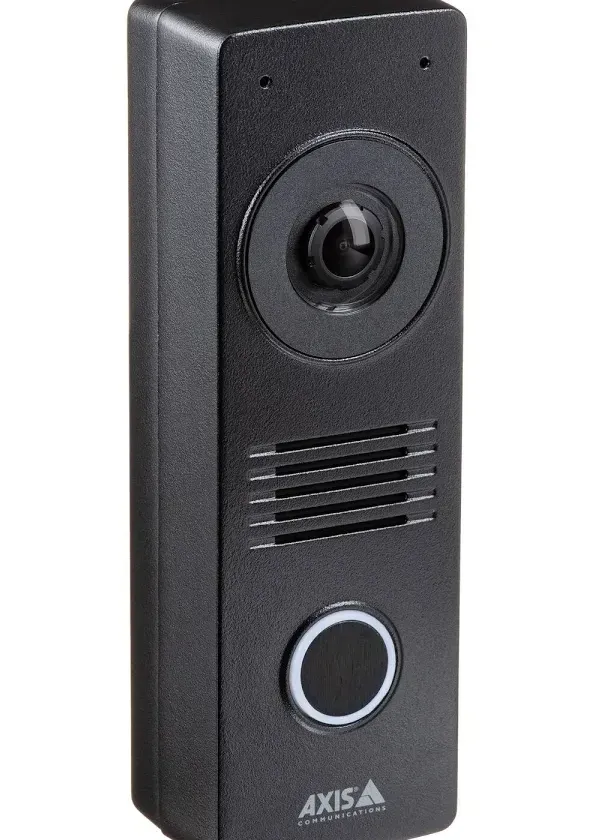
Fort Greene, Brooklyn door buzzer installation: black rectangular video door station with a camera, speaker grille and round lit call button
A photo from the AESS job library, not taken in Fort Greene: a black rectangular video door station with a camera, a speaker grille and one round call button that lights up. A one-button station of this size is what a Fort Greene house kept as a single home usually needs, and it fits inside the door opening of an Italianate brownstone without touching the carved surround.
Fort Greene Buzzer Request
Brownstone, double duplex, park-block walk-up, apartments over a shop or an office suite: tell us the address, how many households or businesses the door serves and who controls the building, and a technician calls back with the range

✅
Request Sent!
Thank you. A technician will call you about the Fort Greene address, usually within two hours during working hours.
25+
Years Experience
✓
Same-Day Estimates
100%
Licensed & Insured
4.7★
201 Google Reviews

Owner-operated since 2002 · Thousands of jobs completed · Booked within 2 hours
Quick answer: door buzzer installation in Fort Greene costs $400 to $900 on our Brooklyn list for an audio buzzer with a new door release on a brownstone kept as one home or a two-household house, $700 to $1,800 for a video door station with indoor monitors or phone answering on a divided brownstone or a small walk-up, and from about $2,500 to past $10,000 for a full entry system with a panel and answering for every apartment in a larger prewar building, condo or mixed-use building on Fulton Street, DeKalb Avenue or Myrtle Avenue. Each price covers the door station, the answering stations or app accounts, the power supply, the electric strike or other approved lock, the cable and the labor. It is fixed in writing after we have seen the doorway, with any possible extra named and priced first, such as an old bell pair that might fail its test, a closer that has to be replaced so the door relatches, or a mounting detail the Landmarks Preservation Commission needs to approve. Fort Greene is billed at the Brooklyn rate. Send photos of the stoop and the doorway to (347) 934-8335 or on WhatsApp, and we reply with the range that fits, usually within two hours of your message during working hours.

  • Reviewing your photos and quoting a new system costs nothing. If an existing system has to be diagnosed in person first, that is the $250 service call booked online, and the $250 is applied toward the work.
  • All work is done under New York State license #12000287431. We install low-voltage entry equipment; if a doorway needs a new 120-volt outlet or circuit for its power supply, a licensed electrician does that part, and you know before the job is priced.
  • We take instructions from whoever controls the door: the owner, the managing agent, a co-op or condo board, or, for an office or shop, the tenant with the landlord's written approval.
The Neighborhood

Why Fort Greene Properties Need Door Buzzer Installation

Fort Greene covers a little over half a square mile between the Brooklyn Navy Yard and Flushing Avenue to the north, Downtown Brooklyn and the Flatbush Avenue Extension to the west, Atlantic Avenue to the south and Vanderbilt Avenue and Clinton Hill to the east. Most of its side streets were built up in the 1850s and 1860s as rows of brick and brownstone houses, and Portland, Oxford, Cumberland, Carlton and Adelphi carry the names of London terraces. The Landmarks Preservation Commission designated the Fort Greene and Brooklyn Academy of Music historic districts in 1978. Around those rowhouse blocks sit Fort Greene Park, the Walt Whitman and Ingersoll public housing developments to the north, prewar apartment buildings, newer towers at the Downtown edge, and three commercial spines: Fulton Street, DeKalb Avenue and Myrtle Avenue.

For a buzzer installer, the defining fact about Fort Greene is that almost none of its houses still hold the number of households they were built for, and many have changed more than once. A Brownstoner listing for 51 Willoughby Avenue, a four-story brownstone built in 1905, describes it as "a four family home" that is "currently used as a double duplex": two households on four floors, each with a duplex. In 2014, 6sqft reported on a Carlton Avenue brownstone that MANIFOLD Architecture Studio turned from "an existing four-family residence" into a single-family home by combining the three upper apartments into an owner's triplex. Openigloo lists 50 Fort Greene Place, built in 1931, as three apartments on four floors. Each of those houses needs a different entry system, and the old bell plate on the front of each one was almost certainly designed for a household count that no longer exists.

That is why a buzzer here so often stops working without anyone noticing at first. When a house is renovated, the old bell wire is the first thing a demolition crew pulls out of a wall, because nobody marked it. One Brownstoner thread about a three-family brownstone starts exactly that way: the contractor removed a working doorbell, and the owner then had to find someone to install a new bell and intercom from scratch. In another thread, the owner of a divided brownstone with an old two-apartment buzzer wanted to see who was at the door, and was quoted more than $1,500, later remembered as about $3,000, for wired video. A reply described the cheap alternative many owners try first: a doorbell camera wired into the foyer and plug-in chimes, because the house's "old doorbell wiring was too deteriorated." That gives a picture, but it does not give the upstairs household a button that opens the door.

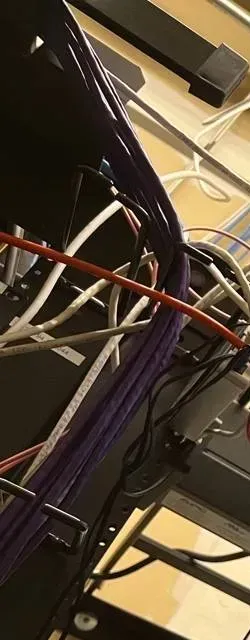
Fort Greene, Brooklyn door buzzer installation: purple, white and red cable bundles dropping down beside a black equipment rack
A photo from the AESS job library, not taken in Fort Greene: purple, white and red cable bundles dropping down beside a black equipment rack. In a Fort Greene condo building or prewar walk-up, the entry system's power supply and controller usually end up in a cellar room like this one, beside the internet equipment, and we confirm who holds the key to that room before anything is installed.

And in the larger buildings, the door itself matters most. The NYC Comptroller's resident-led survey of public housing entrances in 2022 found 40.1 percent of entrance door locks broken and 36.8 percent of entrance doors standing open across the 262 developments visited. Fort Greene's Whitman and Ingersoll Houses are run under the Housing Authority's own programs, but the lesson applies to every private walk-up and condo here too: an entry system is only as good as the door it releases. A station that calls every apartment perfectly is wasted on a door that drifts open behind each visitor.

Six facts that shape a Fort Greene buzzer installation

  • Landmarked fronts on most rowhouse blocks. The Fort Greene and BAM historic districts date to 1978. The Commission's staff can approve intercom panels that meet its criteria, one panel per door opening, fixed at mortar joints, plain masonry, wood or metalwork, never through cast iron or decorative surfaces.
  • Households that do not match the building's paperwork. 51 Willoughby Avenue is listed as a four-family used as a double duplex; a Carlton Avenue four-family became one home in 2014. We plan buttons from the households living there now and leave room for the next change.
  • Small prewar buildings below the legal threshold. 50 Fort Greene Place has three apartments on four floors. Multiple Dwelling Law §50-a's talk-and-release requirement applies to class A buildings of eight or more apartments built or converted after 1968, and to older ones when a majority of tenants ask in writing, so many Fort Greene houses are outside it and install a buzzer by choice.
  • A broken buzzer is a recognized complaint. NYC 311 lists "Doorbells, buzzers, or intercoms that are broken or missing" as both an apartment and a public-area maintenance complaint, and HPD investigates and issues violations to owners.
  • Courts treat the intercom as essential. Habitat magazine reported in February 2024 that courts have found "intercoms are an essential service" under the warranty of habitability, and that a co-op "has a legal obligation to repair or replace the intercom."
  • Busy commercial corridors with apartments above. The Myrtle Avenue business district counts 179 ground-floor retail businesses on 40 block faces across Fort Greene and Clinton Hill, and the Fulton Area Business Alliance covers 37 block faces, many of them shops with apartments upstairs reached by a separate residential door.

Where this page applies. It covers Fort Greene from Flushing Avenue and the Navy Yard edge south to Atlantic Avenue, and from the Flatbush Avenue Extension east to Vanderbilt Avenue, including the park blocks, the Fort Greene and BAM historic districts, the Fulton Street, DeKalb Avenue and Myrtle Avenue corridors, and the towers around Hanson Place and Ashland Place. For the rest of the borough see our door buzzer installation in Brooklyn page, and for the whole city our NYC door buzzer installation page.

Repair or Replace in Fort Greene

Need Repair in Fort Greene? Revive the Old Bell Plate, Rebuild Around It, or Replace It: How We Decide First

A Fort Greene call that begins "the buzzer is dead, we need a new one" ends up as one of three jobs once we have looked. The first is a system that is basically sound with one failed part: a transformer in the cellar, a strike that has worn out, one apartment station, or a splice that came loose when someone moved a radiator. The second is a system that still works but no longer fits the house: a brownstone divided into duplexes, a garden apartment that became part of the owner's home, a top floor that became a separate rental. The third is a house with nothing to save, because the bell plate was removed during a renovation, the wire was cut in a gut job, or the house has never had a way to answer the street door from upstairs.

Photos usually tell us which group a house belongs to. Send a picture of the doorway from the sidewalk, a close-up of whatever is beside the door, and any station inside you can reach, to (347) 934-8335 or on WhatsApp. If the system has to be tested in person, that is the $250 service call booked online, and the $250 goes toward whichever path you take. Where a repair and a replacement are both reasonable, you get both prices and a plain recommendation, and we will not sell a new system to a house that one part would fix.

Brick Underground's NYC intercom repair guide, quoting Daniel Vasquez of Paragon Security and Locksmith, explains why testing comes before replacing: the trouble is usually in the connections, at the base unit, an apartment station, the door strike or the power supply "in the basement or the lobby ceiling," and the core wiring of older systems is often fine even when the equipment is dated. In a Fort Greene brownstone, where opening plaster is the most expensive and least welcome part of any job, a sound old pair behind the wall is worth a lot. This page is about installing, extending and replacing; straight repairs are handled on our repair pages.

What We Install

Door Buzzer Installation Services in Fort Greene

Every service below is priced from the same Brooklyn door buzzer list. The number of households sets the size of the system and the doors decide what release each entrance can take. In Fort Greene, three more things decide much of the labor: whether the front is landmarked, whether old wire survived the last renovation, and how many floors each household spreads across.

First buzzers for single-family brownstones

A one-button station at the doorway, answering stations on the floors where the family actually spends the day, and a release on the street door, for houses that have only ever had a pull bell or a knocker.

Panels re-planned after a division

A new button layout and new answering stations when a brownstone becomes a two-family, a double duplex or a house with a garden rental, so each button rings one household and nobody else.

Systems for combined houses

Fewer buttons, more answering points: when apartments are merged into one home, the panel shrinks and the stations move to the parlor, the kitchen floor and the top floor.

Buzzers restored after renovation

A new system planned with the architect or contractor before walls close, or fished into finished walls afterward, for houses whose bell went into the dumpster with the old lath.

Landmark-fit door stations

Slim, neutral stations inside or beside the door opening, fastened at mortar joints, wood or metalwork, with concealed conduit, chosen to meet the Commission's staff-level criteria where a permit is needed.

Video and phone answering

Video door stations answered on wall monitors, on residents' phones or both, for top-floor households that cannot see the stoop and for owners who travel.

Prewar walk-up and condo panels

Button or directory panels with a station or app account for every apartment in the small apartment buildings near the park and the condo conversions around Hanson Place.

Releases, closers and power

Electric strikes fitted to original wood doors and frames, closers set so the door relatches, and battery-backed power on a circuit the owner controls.

Business and office doors

Buzzers for shops, restaurants, offices and arts spaces on Fulton, DeKalb, Myrtle and Lafayette, answered at a desk or on a phone, kept separate from the apartments upstairs.

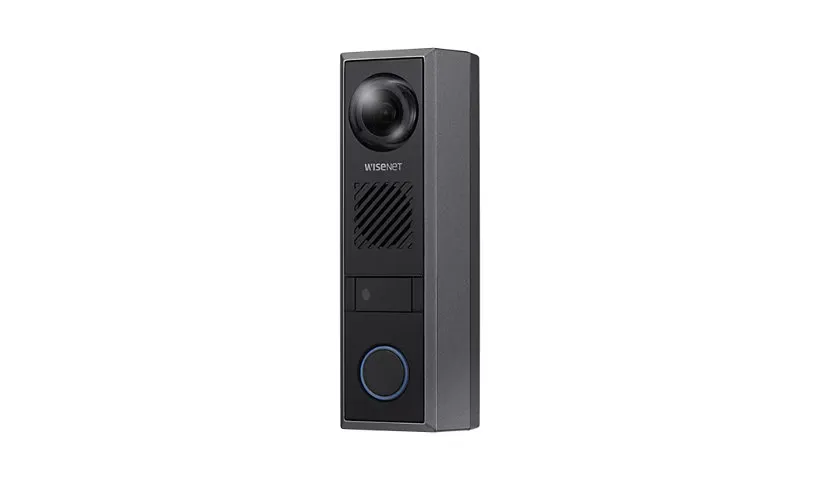
Fort Greene, Brooklyn door buzzer installation: slim dark grey wired doorbell with a camera lens, speaker slots and a round push button
A photo from the AESS job library, not taken in Fort Greene: a slim dark grey wired doorbell with a camera lens, speaker slots and a round push button. A station this narrow can sit on the wood frame inside a Fort Greene door opening, which keeps it off the brownstone face and inside the location the Landmarks guidebook asks for.
Building Specialists

Door Buzzer Installation for Fort Greene's Architecture

Six kinds of building account for nearly every buzzer we plan in Fort Greene. They differ in how many households share the street door, how many floors each household covers, how the cable can travel without damaging plaster, and who signs for the work. Each has a mistake we see when the job is rushed.

Brownstones kept as one home

Four-story Italianate and Greek Revival houses on the park blocks and the Oxford, Portland and Elliott streets, with one household from the garden floor to the top.

Two- and three-family brownstones

Houses divided into separate floor-through apartments, often with the owner on the garden and parlor floors and tenants above, all sharing one stoop door.

Double duplexes

Houses legally set up for three or four families but lived in as two duplexes, each household spread across two floors with its own inner door.

Prewar walk-ups near the park

Small apartment buildings from the early twentieth century, such as the 1931 three-apartment building at 50 Fort Greene Place, with a shared vestibule and a stair.

Condos and conversions

Condominium buildings, including the apartments created inside the Williamsburgh Savings Bank Tower at 1 Hanson Place between 2005 and 2007, and newer buildings at the Downtown edge.

Shop-and-apartment buildings

Three- and four-story buildings on Fulton Street, DeKalb Avenue and Myrtle Avenue with a store at street level and apartments above, reached by a narrow residential door.

Brownstones kept as one home: the button is easy, the answering points are not

A single-family brownstone needs only one button, so owners often assume the job is a doorbell. The hard part is upstairs. A family that cooks on the garden floor, sits on the parlor floor and sleeps on the top two floors cannot hear a single chime from every room, and walking down three flights to see who rang defeats the purpose. The design question is where to put answering stations so that whoever is home can see or hear the visitor and press release from the floor they are on.

Our usual plan is a station on the garden floor near the kitchen, one on the parlor floor and one on the top floor landing, or phone answering for everyone with one wall station as a backup. Cable reaches the upper floors best through a stacked closet, a disused dumbwaiter or the back of a built-in, so the plaster in the front rooms stays untouched. Where there is no such path, phone answering with one wired station can cover the house with far less cutting.

Two- and three-family brownstones: one stoop, separate households

The most common Fort Greene buzzer job is a brownstone with two or three households sharing the stoop door. Typically the owner occupies the garden and parlor floors and rents the upper floors as one or two floor-through apartments. Each household needs its own button, its own answering station, and the ability to talk to a visitor and release the street door without involving anyone else.

The vestibule is where these houses differ. Many have an outer door at the top of the stoop and an inner door with glass behind it, and in a divided house the tenants and the owner both pass through both. We decide with the owner which door the buzzer releases, which stays on a key, and whether the owner's part of the house has its own inner door that should never be released by a tenant's button. The panel goes inside the door opening or on the frame, sized for two or three buttons, and the cable usually runs down to the cellar and up a back wall or a closet stack.

The mistake we see most is a separate store-bought video doorbell for each household. Each family then has a camera but no release, so someone still walks down to open the door, and the stoop door ends up on the latch for deliveries. A proper two- or three-button system costs less than most owners expect, and it is the thing that actually lets the tenants upstairs answer their own door.

Double duplexes: two buttons on a house built for four

Double duplexes are especially common in Fort Greene's larger brownstones. The house may be a legal three- or four-family on paper, as at 51 Willoughby Avenue, but in practice it holds two households, each across two floors: a parlor and garden duplex below and an upper duplex above. The old bell plate on such houses often still shows four buttons, two of which ring nothing.

The right panel has the buttons the house uses today, two in this case, with each household answered on both of its floors. That means two answering stations per household, or one station and phone answering, and a release reachable from either floor. If the owner wants the option to rent the floors separately again, we leave labeled cable to each floor and choose a panel that can take more buttons by programming or a larger faceplate without new holes in the stone. What we do not do is install four live buttons for two households, because visitors press the wrong one and nobody answers.

Prewar walk-ups near the park: three to a dozen apartments and a vestibule

Between the brownstone rows, Fort Greene has small apartment buildings from the first decades of the twentieth century. 50 Fort Greene Place is one example in the public record: three apartments on four floors, built in 1931. Buildings like this have a proper vestibule, a stair hall and an apartment door on each landing, and usually an old audio system with a brass or aluminum plate and handsets in the apartments.

They are often the best candidates for reusing old wire. The bell pairs run up the stair hall in a single path, sometimes in a small conduit, and a modern two-wire system can often run on them once each pair is tested. Aiphone describes its GT Series as built for "new builds and retrofit projects," with the advantage of "using existing wire and infrastructure." Where a pair fails, we replace that one run in a painted raceway along the stair stringer, which tenants barely notice.

Condos and conversions: a board, a lobby and a system someone else chose

Fort Greene's condo buildings range from small conversions of a single brownstone to the apartments created inside the Williamsburgh Savings Bank Tower at 1 Hanson Place, the 41-story former bank designated an exterior landmark in 1977 and converted to condominiums between 2005 and 2007. Newer condo and rental buildings line the Flatbush Avenue Extension side of the neighborhood. In all of them, the entry system was chosen by a developer, and the people who live there now have to manage it.

The work in these buildings starts with paperwork. Who owns the system and its software account, who holds the administrator login, whether there is a subscription and who pays it, and whether the board or the managing agent can approve work in the lobby. Once that is clear, the job may be as small as recovering the account and rebuilding the directory, or as large as replacing a panel that no one can program. The board gets a written price that separates the shared parts, the lobby panel, the strike and the power, from any work inside individual apartments.

Shop-and-apartment buildings: the residential door beside the store

On Fulton Street, DeKalb Avenue and Myrtle Avenue, the typical building has a store, café or restaurant across most of the ground floor and a narrow residential door to one side leading straight to the stair. The apartments above need a buzzer; the business below often needs its own, for a back or side door, and the two must never be able to release each other's doors.

We keep them as two separate systems even when their cables share a cellar. The residential panel calls only apartments and its power supply sits on the landlord's circuit. The store's station calls the register or the manager's phone and releases only the store's door. Labeling in the cellar makes clear which is which, so the next technician does not connect the restaurant's door to apartment 3.

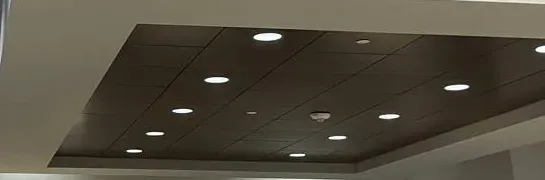
Fort Greene, Brooklyn door buzzer installation: dark recessed ceiling panel with round downlights and a small round device framed by a lighter ceiling
A photo from the AESS job library, not taken in Fort Greene: a dark recessed ceiling panel with round downlights and a small round device in a lighter surrounding ceiling. Finished lobby ceilings like this are found in Fort Greene's condo buildings near Hanson Place and the Flatbush Avenue Extension, where a new entry system's cable has to travel above the ceiling rather than across it.
Field Notes

Field Notes: Count the Households, Read the Doorway, Then Find Where the Old Bell Wire Went

These notes describe how our technicians approach a buzzer installation in a Fort Greene rowhouse or small walk-up. They are our standard practice, not a story about any one address.

Count the households, not the buttons. Before anything else, the technician asks the owner who lives in the house and how. Which floors does each household use? Which doors do they come and go through? Is anyone planning to rent a floor separately, or to combine two? The old bell plate is checked against those answers. In a house that has been a four-family, a two-family and a double duplex in the space of a few decades, the plate is often the least reliable record in the building.

Read the doorway. Next, the technician looks at the opening the way the Landmarks Preservation Commission does: where is the plain masonry, the wood frame, the metalwork? Is there carved stone, cast iron or decorative molding that nothing may be fixed to? Is there already an intercom plate whose spot the new one can take? Then the doors themselves: does the stoop door close and latch by itself, is it a single leaf or a pair, is there glass, and does the inner vestibule door matter to anyone?

Find where the old bell wire went. Last, the technician goes to the cellar and looks for the transformer and the old pairs. Do they rise through a closet stack, a dumbwaiter shaft, the back of the stair, or behind the front-room plaster? Were they cut in a renovation upstairs? Each pair that survives is tested. The transformer's circuit is noted, along with whose meter it is on, because a buzzer fed from a tenant's outlet goes dead whenever that tenant's power is shut off.

Everything from that walk goes on the written price: the button count, the station locations on each floor, the closer, the strike, the pairs that will be reused and the ones that will be replaced, any Landmarks permit work and the route the new cable takes. Nothing is discovered on installation day.

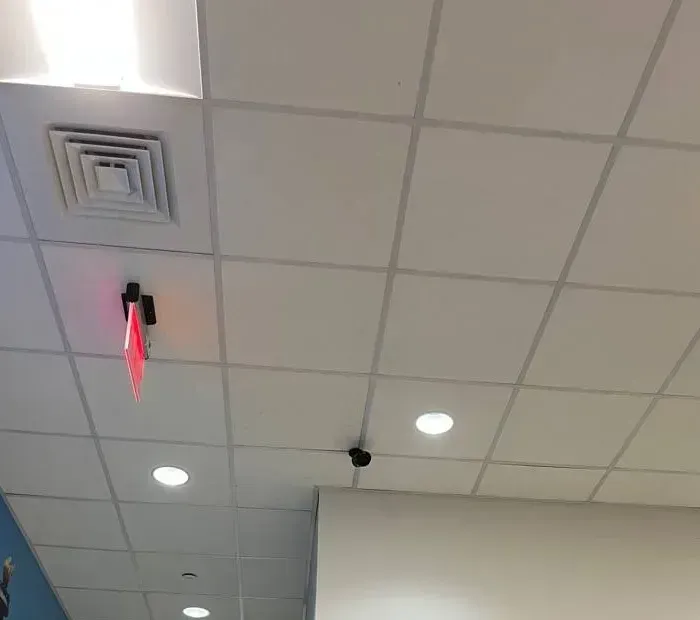
Fort Greene, Brooklyn door buzzer installation: drop ceiling with a lit red exit sign, an air diffuser, round recessed lights and a small black camera
A photo from the AESS job library, not taken in Fort Greene: a drop ceiling with a lit red exit sign, an air diffuser, round recessed lights and a small black camera. Corridors like this belong to the offices and arts organizations in Fort Greene's larger buildings along Lafayette Avenue and Fulton Street, and the exit sign is the reminder that any door a buzzer locks must still let people out freely.
Landmarked Doorways

One Panel per Door Opening and About Ten Inches of Conduit: What the Landmarks Guidebook Means for a Fort Greene Buzzer

Because the Fort Greene and BAM historic districts take in most of the neighborhood's rowhouse blocks, the Landmarks Preservation Commission's rules shape more buzzer installations here than almost anywhere else in Brooklyn. The rules are less mysterious than owners fear. The Commission's Permit Guidebook has a chapter on health, safety and utility equipment that covers intercoms, light fixtures, cameras and mailboxes in plain terms. What follows is how we read it for a buzzer job; it is not legal advice, and the Commission itself answers questions by email at info@lpc.nyc.gov.

Some work needs no permit at all. The guidebook says no permit is needed for "ordinary maintenance, repair, and retrofitting of health, safety, and utility equipment." It also says in-kind replacement of existing intercoms is exempt from the elevation and large-scale detail drawings a new installation may require. For a Fort Greene owner, that makes the existing plate valuable information: replacing a working or dead intercom panel with a similar one in the same place is a different and simpler matter than adding a new panel where none has been. We photograph and measure what is there before proposing anything.

New panels can be approved by staff. Where a permit is needed, "Staff can issue permits approving light fixtures and intercom panels" when the work meets the Commission's criteria, which avoids a public hearing. Those criteria are specific. Intercom panels and doorbells "must be installed within or adjacent to a door opening." An intercom may also go on "a fence or wall in front of the entranceway." Equipment "cannot be on or in front of a primary facade unless no other option exists." And "A maximum of two light fixtures and one intercom panel can be installed per door opening."

How it is fastened matters as much as where. The guidebook requires equipment to "be attached at mortar joints, plain masonry, wood, or metalwork" and says it "must not be attached through cast iron or on any decorative surfaces." On a Fort Greene stoop, that rules out the carved brownstone surround, any cast-iron railing or newel, and ornamental moldings. In practice, the cleanest location is usually the wood door frame inside the opening or the plain reveal beside it, and a slim station sized for the number of households is the panel most likely to fit there. The finish should be "compatible with the architecture of the building," which in practice means neutral and discreet, and painted to blend where possible.

Conduit is meant to disappear. Cable "must be concealed by going through plain masonry" or behind the installation. Where concealment is impossible, staff may approve "a maximum of approximately ten inches of visible conduit," painted to match and fixed into mortar joints. That rule pushes the cable route inside: through the door frame, down into the vestibule floor or the cellar, and up through the house. It is also one reason we test the old wire carefully, because an old pair that already passes through the frame is a route the Commission will never see.

One panel per opening shapes the design. Many Fort Greene rowhouses have two doorways: the stoop door to the parlor floor and the door under the stoop to the garden floor. The one-panel rule applies to each opening, so a house that wants both doors on the system plans one station at each and decides which households each one calls. A house that wants a separate panel for every apartment at a single doorway cannot have it; it gets one panel with a button for each.

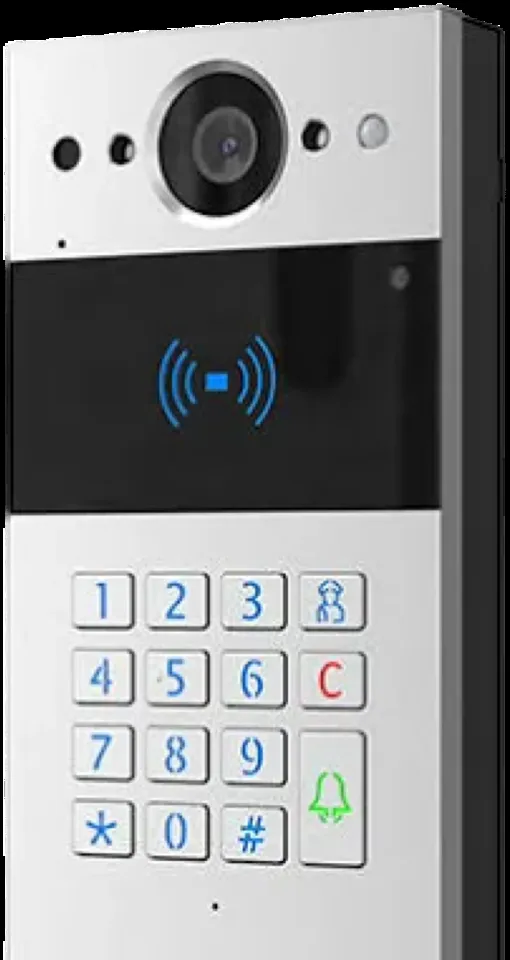
Fort Greene, Brooklyn door buzzer installation: silver and black keypad door station with a camera lens at the top, a blue card-reader symbol, a numeric keypad and a green bell key
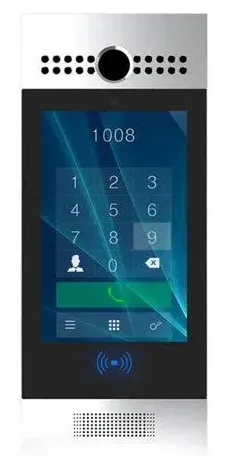
A photo from the AESS job library, not taken in Fort Greene: a silver and black keypad door station with a camera lens at the top, a blue card-reader symbol, a numeric keypad and a green bell key. A combined unit like this one suits the plain steel or wood entrance of a Fort Greene condo or office building outside the historic districts; on a landmarked stoop, a smaller station inside the door opening is usually the better fit.
Original Doors

Paired Leaves, Glass Panels and the Astragal: Fitting a Release to an Original Fort Greene Stoop Door

Many Fort Greene brownstones still have tall paired front doors at the top of the stoop, often with glass panels, and the question of whether such doors can take a buzzer release has been asked on Brownstoner for nearly two decades. In a 2007 thread, a brownstone owner with glass-windowed double front doors said they had been told no system could accommodate a buzzer on doors like theirs. A renovator who had done two sets of double doors replied that it could be done but warned: "You'll need to open up the walls, probably quite a bit," along with a channel behind the astragal, the strip where the two leaves meet, and a hole drilled through one door.

That answer is accurate for how many older installations were done, and it explains why owners put the job off. It is not the only way. The planning starts with which leaf people actually open. On most paired stoop doors, one leaf is active and carries the lock, and the other is held shut with bolts at the top and bottom. The release has to go where the active leaf latches, which on a pair is the inactive leaf or the astragal, not the frame. That is the reason the work is harder than on a single door: the release lives in a door that moves, or in a strip fixed to it, instead of in a solid frame.

There are three main ways to solve it, and the right one depends on the doors. On a pair where the inactive leaf stays bolted and the astragal is solid wood, a narrow strike can be set into the inactive leaf at the latch, with its wire brought through a power transfer hinge or a concealed loop at the hinge edge and down into the frame and the floor. On a door whose lock already has a motorized or electrified version made for it, replacing the lock body can avoid cutting the astragal at all, with power again reaching the door through the hinge. And where the original doors are too fragile or valuable to alter, the release can move to the inner vestibule door, which is often a simpler single leaf, with the outer pair kept on a key and left open during the day if the household wants.

Installation Day

No Door Left Unlocked for the Installer: Installation-Day Rules Shaped by a Fort Greene Lesson

In May 2014, DNAinfo reported from Ingersoll Houses at 88 St. Edwards Street, where the Housing Authority had told residents to give contractors "daily access" to their apartments for two weeks of electrical, plumbing, kitchen and closet work. Some residents left their apartment doors unlocked while they were out, and two apartments were burglarized on May 20. One resident, a retired teacher home at the time, described the moment she realized someone else was inside: "I heard my front door click." Afterward, the Housing Authority ordered its contractor to lock stairwells, hallways and apartment doors when no work was underway and to make sure workers displayed their IDs.

That was a public housing renovation, not a buzzer job, and the contractor was not ours. But it describes exactly the risk that comes with any work that needs entry to every apartment, and an entry-system installation in a Fort Greene walk-up or condo needs exactly that. Each apartment station has to be mounted, connected and tested from the street. The easy way to get it done is to ask tenants to leave their doors open. We never do.

  • No unlocked apartment doors, ever. A technician enters a unit only when the resident is home, or when the owner, super or managing agent lets them in and stays. If neither is possible on the day, the unit moves to a second visit.
  • The street door is never propped. The new strike and power go in first, so the street door keeps locking throughout. Where the door has to be off its lock for a few minutes while the strike is fitted, a technician stays at the door.
  • Names in advance. The owner or managing agent receives the names of the technicians coming and the dates, and passes them to residents with the notice. Technicians identify themselves at every door.
  • Two-hour arrival windows. Each unit gets an arrival window agreed in advance, so residents can plan to be home rather than leaving a key under a mat.
  • A list of what is left. At the end of each day, the owner receives a list of units finished, units missed and what remains, so nobody is left wondering whether a stranger is still expected.
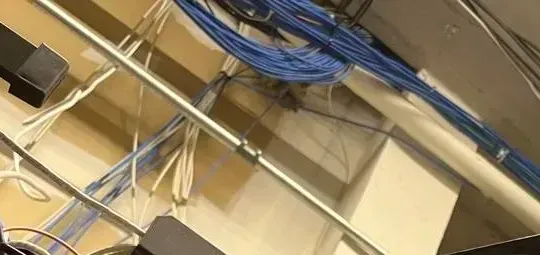
Fort Greene, Brooklyn door buzzer installation: bundles of blue low-voltage cable laid over a ceiling beam and a metal pipe in an open ceiling
A photo from the AESS job library, not taken in Fort Greene: bundles of blue low-voltage cable laid over a ceiling beam and a metal pipe in an open ceiling. The cellar of a Fort Greene walk-up or brownstone often looks like this, and running the common cable there first means most of an installation is finished before a technician needs to enter any apartment.
The Rules

An Essential Service, Not an Amenity: What New York Expects of Fort Greene Owners, Boards and Landlords

Fort Greene's buildings run from single-family houses that no entry rule touches to condos and walk-ups with a dozen or more apartments, so the rules land differently from door to door. Here is how they apply in plain terms. None of it is legal advice.

Larger apartment buildings must have talk and release. New York's Multiple Dwelling Law covers New York City, and its §50-a requires every class A multiple dwelling built or converted after January 1, 1968 with eight or more apartments to have a self-locking main entrance door and an intercommunication system that lets tenants talk with a visitor and release the door from their apartments. Older buildings of that size must install both when tenants occupying a majority of the apartments ask or consent in writing; the work has to begin within 90 days and finish within six months. Most Fort Greene brownstones are well under eight apartments, but condo buildings, conversions and some prewar buildings are not.

A broken buzzer is a reportable condition. NYC 311 lists "Doorbells, buzzers, or intercoms that are broken or missing" as a maintenance complaint both inside apartments and in public areas, and asks residents to try the owner, managing agent or super first. "HPD investigates maintenance complaints and issues violations to owners who break the law." The same ButterflyMX guide sets out HPD's general correction periods: 90 days for class A violations, 30 days for class B and 24 hours for most class C conditions, and it notes a 2022 Bronx Housing Court decision that recorded a class B violation for an inoperable bell and return-buzzer system. If you have received a violation, tell us its class and date when you ask for a quote, because the deadline shapes the schedule.

Co-ops and condos carry the duty too. Habitat magazine's February 2024 article on co-op intercoms reported that courts have found "intercoms are an essential service" under the warranty of habitability. Nancy Kourland of the Lasser Law Group put it directly: "As a result, the co-op has a legal obligation to repair or replace the intercom." The article lists the remedies a shareholder has: a written demand to the board, a 311 complaint and an HP proceeding in housing court. For a Fort Greene board, that is a strong reason to plan a replacement before the system fails completely, rather than after the first complaint.

Everyone must be able to leave. Any door with a buzzer still has to open from the inside without a key, a code or special knowledge. With an electric strike that is automatic; Allegion's guide explains that with a strike "you can exit by turning the lever" whether it is fail-safe or fail-secure. Magnetic locks hold the whole door, so the building code's sensor-release provisions call for a sensor on the egress side, a manual release marked "PUSH TO EXIT" 40 to 48 inches above the floor within five feet of the door, release when power is lost or the fire alarm or sprinklers activate, and hardware listed to UL 294. On a Fort Greene stoop door we use strikes almost without exception.

Commercial Door Buzzer Installation

Business Door Buzzer Installation in Fort Greene

Fort Greene's businesses sit in three kinds of place: the avenue storefronts that serve the neighborhood, the cultural blocks around the Brooklyn Academy of Music, and the offices and practices tucked into rowhouse ground floors and larger buildings near Downtown. Their doors have the same need: stay locked when they should, open for the right visitor without someone walking to the door, and never interfere with the apartments upstairs.

Fulton Street, Rockwell Place to Classon Avenue

The Fulton Area Business Alliance district, 37 block faces of shops, restaurants and services, many with apartments above and a residential door beside the storefront.

DeKalb Avenue along the park

Restaurants, cafés and shops facing Fort Greene Park and running east toward Vanderbilt Avenue, with staff and delivery doors at the side or rear.

Myrtle Avenue

The Myrtle Avenue business district, with 179 ground-floor retail businesses on 40 block faces across Fort Greene and Clinton Hill, opposite the Whitman Houses.

Lafayette Avenue and Ashland Place

The blocks around BAM's Peter Jay Sharp Building at 30 Lafayette Avenue and the BAM Fisher on Ashland Place, with arts organizations and offices that receive visitors by appointment.

Hanson Place and the Flatbush Avenue Extension

The tower edge of the neighborhood, where the Williamsburgh Savings Bank Tower's lower level connects to the Atlantic Terminal subway, with commercial and residential lobbies side by side.

Rowhouse ground floors on the side streets

Small offices, practices and studios in garden floors on streets like Carlton Avenue and Adelphi Street, sharing a house with the apartments above.

For a shop or restaurant with apartments above, the usual job is a buzzer at the staff or delivery door, answered at the register or on the manager's phone. Deliveries can be let in without the door being propped, and staff can see or hear who is there first. The store's system has its own power supply and its own station and has no wire in common with the residential panel, so nobody at the counter can release the tenants' door.

For an arts organization or office near BAM that receives scheduled visitors, the job is usually a station at the street or suite door answered at a front desk, sometimes with a code for regular staff and contractors. Event days change the pattern: the door may be attended during an event and buzzer-only the rest of the time, and the system should make both easy without anyone wedging the door.

Rules that apply to Fort Greene business entry installations

  • Free exit at all times. Every business door with a buzzer, code or reader must still open from inside without a key or code; an electric strike keeps the inside lever working, so it is our default.
  • Sensor release for magnetic locks. Where a magnetic lock is the only workable option, the building code calls for an egress-side sensor, a push-to-exit device near the door, release on power loss and fire alarm activation, and UL 294 listed hardware.
  • Fire doors take fail-secure hardware. Allegion notes that fire doors need fail-secure strikes so they stay latched in a fire; stair and corridor doors in larger Fort Greene buildings are often rated, and we check the label before choosing hardware.
  • Accessible reach. Buttons, keypads and readers on public doors stay between 15 and 48 inches above the floor, inside the 2010 ADA Standards' reach range.
  • Landmarks on storefront buildings too. Mixed-use buildings inside the historic districts follow the same one-panel-per-opening and fastening rules as rowhouses, and storefront cast iron is never drilled.
  • Landlord approval in writing. Work on a shared street or corridor door starts only once the landlord or managing agent has approved it.

If a business also wants a camera on its entrance, it can be installed on the same visit and priced with the buzzer; customers who combine the two typically save $200 to $400 in labor.

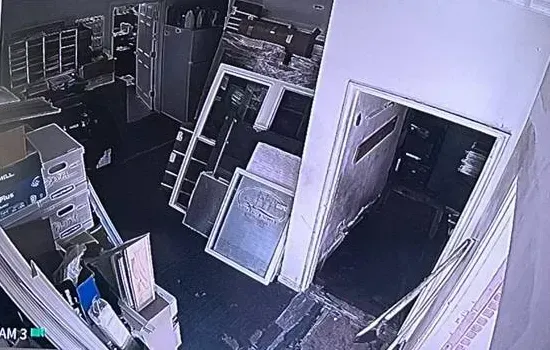
Fort Greene, Brooklyn door buzzer installation: black-and-white night camera view of a cluttered room with an open doorway into a dark back room
A photo from the AESS job library, not taken in Fort Greene: a black-and-white night camera view of a cluttered room with an open doorway into a dark back room. The back rooms of restaurants and shops on DeKalb Avenue and Fulton Street usually lead to the delivery door, which is where a buzzer and a camera installed on the same visit do the most good.
Your Questions Answered

Door Buzzer Installation in Fort Greene: Questions Answered

Questions Fort Greene owners, tenants and businesses bring to us, together with ones raised in Brownstoner forum threads, Brick Underground, Habitat magazine and the city's own guidance, answered for the houses and buildings here.

Houses that keep changing shape

Our brownstone is a legal four-family on paper, but we and one other household live in it as two duplexes. How many buttons belong on the new panel?

Two live buttons, one per household, with each household able to answer and release from both of its floors. A panel that shows four buttons for two households confuses every courier and guest, and the two dead buttons are the ones a stranger presses at night. Each duplex gets either a station on each of its floors or one wall station plus phone answering, so nobody has to run down a flight to reach the release.

If you might rent the floors separately later, we leave labeled cable at each floor and choose a station that can take more buttons by programming or a matching faceplate in the same opening. That keeps the option open without new holes in the doorway, which on a landmarked front is worth avoiding.

Our contractor gutted the parlor and garden floors and the old bell wire went with the plaster. What should happen before the new walls close?

Plan the buzzer with the electrical rough-in, not after the painters. We mark the station locations on each floor with the owner, pull low-voltage cable from the doorway to the cellar and up to each location while the studs are open, add a spare pair for a future station, and leave the ends labeled and coiled in boxes. The door station and the answering stations go in once the finish work is done.

The Brownstoner thread about a three-family brownstone whose contractor removed a working doorbell shows why this matters: once the walls are closed, the choices narrow to fishing cable through finished plaster or running raceway across it. A few hours of rough-in during the renovation costs far less than either.

Doorways, stoops and old wire

Our neighbor put a doorbell camera on the brownstone surround next door. If we want ours inside the door frame instead, is that just taste, or does it matter?

It matters on a landmarked block. The Commission's guidebook says equipment must not be attached "on any decorative surfaces" and should be "within or adjacent to a door opening," fixed at mortar joints, plain masonry, wood or metalwork. A camera screwed into carved brownstone is the opposite of that, whatever the neighbor did. The wood frame inside the opening is usually the location least likely to cause a problem.

Our wired video quote for a two-apartment brownstone came in well over $1,500. Why does it cost so much more than a $40 doorbell camera with plug-in chimes?

Because it does more. The doorbell-camera workaround described on Brownstoner shows one household a picture and rings a chime; it does not give the second household its own button, and it does not release the door. A wired system puts a station for each household at the door, an answering station or phone account in each apartment, a strike in the frame, a closer that shuts the door and a battery-backed power supply, all wired so a guest can be let in from upstairs.

On our Brooklyn list, a video door station for a divided brownstone or small building falls in the $700 to $1,800 range, and an audio system with a release sits in the $400 to $900 range. Where a house lands depends on how many floors each household spans, whether old pairs can be reused and what the doors need, all named on the written price.

Tenants, boards and who pays

I rent the top floor of a three-family brownstone and the buzzer has been dead for months. What can I actually do, and can I hire you myself?

Write to the landlord first and keep a copy; 311's guidance asks residents to try the owner, managing agent or super before filing. If nothing happens, a 311 complaint about a broken doorbell, buzzer or intercom goes to HPD, which can inspect and issue a violation. Rent-stabilized tenants have other remedies, and a tenant attorney or tenants' group can advise on those.

We can install or repair only with the authorization of whoever controls the building, because the work touches the shared street door, the cellar and other apartments. If your landlord agrees in writing, we are glad to quote and work with you on access; you are welcome to pass along this page or our number.

Our condo board inherited the developer's entry system, and two board members disagree about replacing it. What should the board see before it votes?

Three things: what is actually wrong, what each option costs over several years, and who will manage it afterward. We test the existing panel, the strike, the power and a sample of apartment stations, check whether the software account and any subscription can be transferred to the board, and price both keeping it and replacing it. Swiftlane's cost guide puts software subscriptions at $5 to $15 per unit per month or $30 to $100 per door per month, so on a small condo the subscription can outweigh the hardware within a few years.

Businesses and mixed buildings

Our office takes the garden floor of a brownstone, and our clients use the door under the stoop. How do we keep them from ringing the family upstairs?

Give the garden door its own station that calls only the office, and label the two entrances clearly. Clients who are told to use the door under the stoop then find one button marked with the office name, and the stoop door's panel lists only the households above. Each station releases only its own door.

If the garden door is also the family's back route to the garden or the cellar, we decide with the owner whether the office's release should open it after hours. Usually the answer is a schedule: the office's station rings the office desk during business hours and the owner's phone at other times.

Our café on DeKalb Avenue has apartments above, and their residential door is a few feet from ours. Can our delivery driver be let in early without anyone upstairs being disturbed?

Yes, if the café's delivery door has its own station or code, separate from the residential panel. The driver rings the café's station, which calls the manager's phone, or uses a code that works only at that door and only during delivery hours. Nobody upstairs hears a thing, and the café's release can never open the apartments' door.

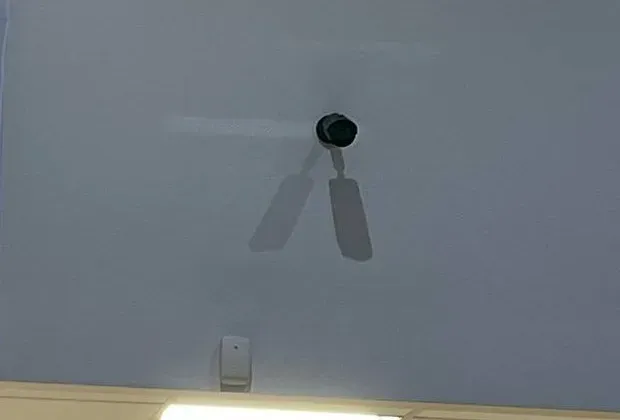
Fort Greene, Brooklyn door buzzer installation: small black camera mounted high on a pale wall casting two shadows, with a small white wall device below
A photo from the AESS job library, not taken in Fort Greene: a small black camera mounted high on a pale wall casting two shadows, with a small white wall device below it. In a Fort Greene prewar walk-up's vestibule or a condo's entry hall, a camera placed like this watches the door the buzzer releases, so an owner or board can see who came in after a release was pressed.
Equipment

Types of Door Buzzer Systems We Install

We quote a reliable non-branded system by default and install a named brand when an owner asks for one; the intercom brands we work with include Aiphone, ButterflyMX, 2N, Akuvox, Comelit and DoorBird. These are the kinds of equipment that come up most in Fort Greene houses and buildings, and where each one fits.

Slim one-button stations

Narrow audio or video stations sized for a wood door frame or reveal, for single-family brownstones and offices with their own entrance.

Two- and three-button stoop panels

Compact panels with a button per household, set inside the door opening of a divided brownstone, in finishes chosen to stay neutral beside brownstone and painted wood.

Two-wire systems for old cable

Door stations and apartment monitors that carry voice, video, power and release on one pair, often on a prewar building's existing bell wire once it tests sound.

Multi-floor answering

Extra stations, extension chimes or phone answering so a household spread over two or four floors can answer from any of them.

Directory and code panels

Panels where visitors scroll a list or enter a unit code, for condo lobbies and buildings whose apartments change hands often.

Phone and app answering

Stations that call residents' or staff phones, alone or beside wall monitors, for owners who travel and offices with staff on the move.

Electric strikes and electrified locks

Fail-secure strikes for wood and metal frames, strikes for the inactive leaf of a paired door, and electrified lock bodies where cutting an original astragal is not wise.

Closers and door hardware

Closers sized for tall wood stoop doors and heavy street doors, hinge work and latch alignment, so the door relatches after every visitor.

Power supplies and backup

Battery-backed low-voltage supplies on an owner-controlled circuit, mounted in the cellar and labeled, so no tenant's breaker can silence the house.

Audio station, two-wire video or phone answering: which fits a Fort Greene house?

What mattersAudio stationTwo-wire videoPhone or app answering
Typical Fort Greene fitTwo- and three-family brownstones where the stoop is visible from the parlorDouble duplexes, top-floor households and prewar walk-ups with sound bell wireOwners who travel, offices, condos with residents often away
How people answerWall station with release keyWall monitor, often with a phone optionPhone, sometimes with a desk or wall station
Cable through the houseA pair to each stationA pair to each monitor, often the old pairDoor power and release only, plus internet or cellular at the door
Size at the doorwaySmall, easy to fit inside the openingSmall to medium, with a camera lensVaries; some app panels are larger
When the house changesNew buttons and stationsNew monitors on the same pairNew accounts, no new wiring
Monthly feesNoneNone unless an app service chargesOften per unit or per door
Brooklyn list range$400–$900 small; from about $2,500 for a building$700–$1,800 small; from about $2,500 for a building$700–$1,800 small; from about $2,500 for a building

ADT, Ring and SimpliSafe compared with a local installer for a Fort Greene brownstone

Owners ask about the national names, so here is a straight comparison. Ring sells video doorbells and cameras that a household installs itself; a Ring doorbell can suit a single-family brownstone that only wants to see the stoop, but it has no door release and cannot give the second and third households in a divided house their own buttons. SimpliSafe sells self-installed alarm systems, and ADT sells professionally installed and monitored security, chiefly alarms and cameras; neither is built around a door station that calls each household and releases a stoop door. What a Fort Greene doorway needs is a station placed to suit the Landmarks rules, a strike fitted to an old wood frame or a paired door, a closer that works, and cable routed through a house without wrecking its plaster. That is on-site work by a licensed installer.

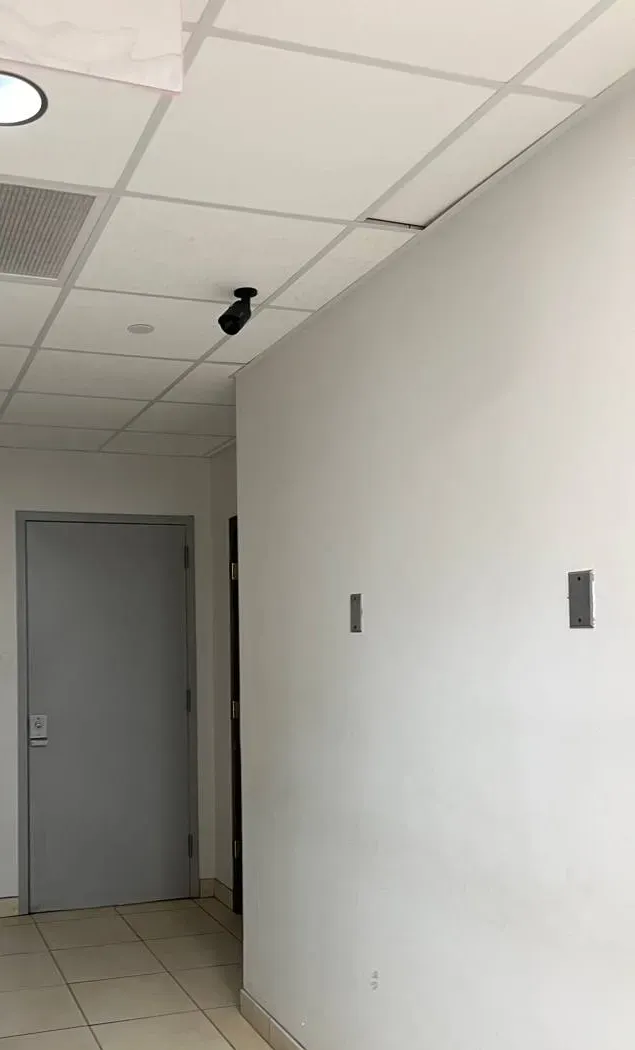
Fort Greene, Brooklyn door buzzer installation: tiled corridor with white walls and small wall plates ending at a grey steel door with a lever handle under a drop ceiling with a small camera
A photo from the AESS job library, not taken in Fort Greene: a tiled corridor with white walls and small wall plates ending at a grey steel door with a lever handle, under a drop ceiling with a small camera. Steel corridor doors like this one are found at the back of Fort Greene's larger mixed-use and commercial buildings, and a lever-handle door takes an electric strike while anyone inside can still leave by turning the lever.
AI Overview Reality Check

What AI Gets Wrong About Door Buzzer Installation in Fort Greene

Search for buzzer installation and you get confident summaries assembled from national cost guides and vendor blogs. Some of it holds; some does not fit a Fort Greene brownstone at all. Below are seven common claims, where they come from and what the field shows. We have not quoted any AI-generated answer word for word; the claims come from the published guides those answers draw on.

"An intercom installation averages about $2,500"

HomeAdvisor's cost guide gives that average, with a range of $1,500 to $15,000, wireless systems at $150 to $1,500 and hard-wired systems at $1,000 to $15,000.

For a Fort Greene owner, the national average hides the two things that actually move the price here: how many floors each household spans and how the cable gets through the house. A two-family brownstone with an audio station and a release can sit at $400 to $900 on our Brooklyn list. A condo building with a directory panel and an answering point in every apartment sits in the building range, from about $2,500 to past $10,000.

Two houses with the same number of households on the same block can be far apart, because one still has sound pairs up a closet stack and the other lost every wire in a gut renovation.

"Wireless is the do-it-yourself option"

HomeAdvisor says so, and for a single home that only wants a chime it can be true.

It does not hold for a divided brownstone. The stoop door still needs a strike, power and a closer, which no wireless kit supplies. Radio through brick party walls and four floors of plaster is unreliable, and a tenant upstairs needs a release, not just a picture.

Brick Underground's repair guide advises against working on the wiring yourself. In our experience, the parts that fail on Fort Greene doors are the strike's alignment in an old wood frame, the closer and the power supply, and none of those are wireless.

"Allow one to two hours per station"

HomeAdvisor gives that per-station time, and Brick Underground's sources estimated about a day to replace a five-apartment building's system.

Those figures assume the wire is there. In a Fort Greene brownstone, a station on a floor with an open stud wall takes little time; a station on a finished floor with no surviving pair can take most of a morning, fishing cable down from an attic or up from the cellar without opening the front-room plaster.

The honest schedule comes from the cellar walk, not a per-station figure, and it goes on the written plan with the price.

"You can't put a modern buzzer on a landmarked house"

Owners hear this from neighbors and some installers.

The Commission's guidebook says the opposite: "Staff can issue permits approving light fixtures and intercom panels" that meet its criteria, and in-kind replacement of an existing intercom is exempt from the detailed drawing requirements. The criteria are about location, size, finish, fastening and conduit, not about whether the technology is modern.

A slim video station inside the door opening, fixed to the wood frame with its cable concealed, can meet them. A large panel bolted to the carved surround with surface conduit down the stoop will not.

"A cellular call box needs no building wiring"

ButterflyMX says its intercom "requires no building wiring," and cellular call boxes are widely sold as needing no data cable at the door.

The panel may need no data cable, but it still needs power, a strike in a sound frame and a closer that shuts the door. A recessed stoop doorway between two brick houses can also have weak cellular signal, which has to be tested at the mounting point before anyone relies on it.

On a landmarked front, any panel also has to fit the one-panel-per-opening and fastening rules, whatever its connection.

"Old buzzer wiring should always be replaced"

Summaries often treat century-old bell wire as a reason to start over.

Brick Underground's sources said the core wiring of older systems is typically fine and that problems sit in the connections, and Aiphone builds its GT Series for retrofit with "existing wire and infrastructure." The ButterflyMX guide adds the honest caveat that reuse "can't be promised in advance."

So we test. In a Fort Greene house, every pair we can reuse is a wall we do not open, and every pair that fails is named on the price before you approve.

"Video is required now"

Vendor material sometimes implies New York's rules call for video or app access.

ButterflyMX's own guide to the law says §50-a "does not, by itself, require video, mobile access, or remote management," and most Fort Greene brownstones are too small to fall under §50-a at all.

Video is still worth it in many houses here, because nobody above the parlor floor can see the stoop. It is a choice to make on its merits, not a legal requirement.

Not Sure Whether Your Doorway Can Take a New Panel, or Whether the Old Wire Survived? Speak to a Tech

Send a photo of the doorway from the sidewalk, a close-up of whatever is beside the door, and any station inside you can reach, with the address and how many households live there, to (347) 934-8335 or on WhatsApp. A technician will tell you where a station can go, whether the job is likely to need a Landmarks permit, and whether a repair, an extension or a new system makes more sense, before anyone visits. Or use the request form and we will call you back.

Get In Touch

Request a Free Quote

✅
Request Sent!
Thank you. A technician will call you about the Fort Greene address, usually within two hours during working hours.
How It Works

Our Installation Process

1. Send photos, the address and how the house is really lived in

Photos of every entrance and the old bell plate, plus a list of the households, offices or businesses the system must reach, including any duplex that spans two floors.

2. Check whether the doorway is in a historic district

If the house is in the Fort Greene or BAM historic district, the station's size, location, fastening and conduit are planned to the Landmarks criteria from the first sketch.

3. Agree who signs and how access will work

The owner, managing agent, board or a commercial tenant with landlord approval signs, and entry to each unit is planned so no apartment or street door is ever left unlocked.

4. Test the doors and the old wire

Every entrance is opened and released to check that it shuts and latches, paired doors and frames are checked for a strike, and each surviving bell pair is tested from the cellar.

5. Price everything in writing

Door station, answering stations or app accounts, strike, closer, power, cable route and labor on one written price, with every possible add-on named before anything is ordered.

6. Prepare the door and the power

The closer is set so the door relatches, the strike goes into the frame or inactive leaf, and the battery-backed supply goes on an owner-controlled circuit, with an electrician for any 120-volt work.

7. Install, conceal and label

Cable is reused or run on the least visible interior route, stations go in on each floor, and every button, pair and station is labeled with its household or business.

8. Test every button from the sidewalk and hand over

Each household is called from the street, talks and releases while the door is watched relocking; the owner gets the wiring record, the test sheet and resident instructions.

Fort Greene, Brooklyn door buzzer installation: touchscreen entry panel showing a dial pad with a four-digit apartment code entered, a camera above and a card-reader symbol below
A photo from the AESS job library, not taken in Fort Greene: a touchscreen entry panel showing a dial pad with a four-digit apartment code entered, a camera above and a card-reader symbol below. A code panel like this suits a Fort Greene condo lobby whose residents change often, because codes can be reissued without a new faceplate, and step 8 checks every one of them from the sidewalk.
Coverage Area

Door Buzzer Installation Near Fort Greene's Landmarks

Fort Greene Park

The 30-acre park laid out by Olmsted and Vaux, crowned by the Prison Ship Martyrs Monument and ringed by brownstone and prewar blocks on three sides.

Brooklyn Academy of Music

BAM's Peter Jay Sharp Building at 30 Lafayette Avenue, opened in 1908, at the heart of the BAM Historic District's offices, venues and rowhouses.

Williamsburgh Savings Bank Tower

The 512-foot former bank at 1 Hanson Place, a landmark since 1977 and condominiums since the 2000s, marking the neighborhood's southwest corner.

Brooklyn Technical High School

The school on Fort Greene Place facing the park's DeKalb Avenue entrance, surrounded by some of the neighborhood's best-known brownstone streets.

Walt Whitman Library

The Brooklyn Public Library's Carnegie branch at 93 St. Edwards Street, opened in 1908 between the park and the public housing developments.

Brooklyn Hospital Center

The hospital on the park's western side along DeKalb Avenue, at the edge where Fort Greene meets Downtown Brooklyn.

We also serve Clinton Hill, Boerum Hill, Downtown Brooklyn and the Brooklyn Navy Yard at the same Brooklyn rate, along with Prospect Heights to the south. See our door buzzer installation in Brooklyn page for the whole borough.

Pricing

Door Buzzer Installation Cost in Fort Greene

Fort Greene is billed at our Brooklyn rate, with no premium for historic-district addresses. Final pricing follows a look at the doorway, because the number of households, how many floors each one covers, whether old pairs survived the last renovation, the doors themselves and any Landmarks detail drive the total far more than the brand on the panel.

JobTypical Fort Greene buildingBrooklyn range
Audio buzzer or replacement with electric strike release, existing wiring reused where it tests wellSingle-family brownstone, two-household house, an office's garden-floor door$400–$900
Video door station with indoor monitors or smartphone door releaseDivided brownstone, double duplex, small prewar walk-up$700–$1,800
Directory or button panel with every unit wired or on app answering, audio or video by unit count, optional fob integrationCondo building, larger prewar building, apartments over a Fulton, DeKalb or Myrtle storefront$2,500–$10,000+
Service call booked onlineDiagnosis of an existing system before deciding to repair or replace$250, applied toward the work
Monthly fee on a wired systemAny house or building choosing the no-subscription option$0
Buzzer and entrance camera on the same visitVestibules, condo lobbies and business doorsTypically saves $200–$400 in labor

What moves a Fort Greene job within its range is predictable. First, households and floors: a two-family whose households each live on one floor needs two answering stations, while a double duplex needs four or phone answering. Then the wire: sound pairs in a closet stack or a prewar stair hall keep a job near the bottom of its range, and fishing new cable through four finished floors pushes it up. Then the doors: a closer to replace, a strike in the inactive leaf of a paired door, a vestibule door to add. Then the extras: video instead of audio, phone answering, Landmarks application details. Anything that depends on a test, such as an old pair that might fail or a cellular signal that might be weak in a recessed doorway, is named on the quote with its price before you approve.

Full terms — including 50% deposit, one-year parts-only warranty on AESS-supplied products, and the late-fee schedule — are set out in the service agreement.

Find Out Which Range Your Fort Greene House Falls In

Tell us the address, how many households live behind the door and on which floors, which entrances people use, and whether the street door closes and latches on its own, and we will tell you which of the three Brooklyn ranges fits and what would move it. Call or text (347) 934-8335, send photos on WhatsApp, or fill in the form.

Shop Our Systems

Door Buzzer Installation Packages & Pricing

Three typical Fort Greene jobs, each placed inside the matching range on our Brooklyn list. The exact figure comes from the walkthrough.

Brownstone or two-household buzzer: $400–$900

An audio station inside the door opening with a button for each household, an answering station and release on each household's main floor, a fail-secure strike fitted to the frame, a closer set to relatch and a battery-backed power supply in the cellar.

Video for a divided brownstone or double duplex: $700–$1,800

A slim video door station sized for a landmarked doorway, monitors or phone answering on each floor a household uses, old pairs tested and reused where sound, a strike chosen for the door or paired leaves, and concealed cable.

Condo, walk-up or mixed-use building system: from about $2,500

A button, directory or code panel at each entrance residents use, wall stations, app answering or both for every unit, the old riser tested or new cable run, strike or approved lock, owner-controlled power and a board-ready written price, rising toward $10,000 or more with unit count, doors and cable work.

Bring your own equipment. If you have already bought a door station, video kit or intercom set, we can install it as labor-only work, quoted flat once we have seen the doorway, the doors and the cable path. Tell us the make and model when you write, and we will tell you before the visit whether it can reach every household and release your door, and whether its size suits a landmarked opening.

Complete Services

Every Door Buzzer Service in Fort Greene

Brownstones and duplexes

First buzzers, panels re-planned after divisions, multi-floor answering, strikes for original doors. Request a quote

Walk-ups, condos and shops

Prewar retrofits on old wire, condo board reviews, separate shop and apartment systems. Call (347) 934-8335

Across Brooklyn

The same list in every neighborhood. Brooklyn door buzzer installation

Across New York City

Every borough's buildings and rules. NYC door buzzer installation

FAQ

Fort Greene Door Buzzer Installation FAQ

Can the new station go exactly where our old bell plate was, so the brownstone gets no new holes?
+

Often, yes. We measure the old plate and its fixings before choosing the station, and where a model of similar size fits the same spot, its screws can go into the existing anchors and its cable through the existing opening. If the new station is smaller, a trim plate covers the old outline. Reusing the old location also keeps the work close to an in-kind replacement, which the Landmarks guidebook treats more simply than a new panel.

If cable has to be fished through our finished plaster, do your technicians patch and paint the access openings?
+

No. We do not do plaster or paint work. We fish cable with the fewest and smallest openings the route allows, usually inside closets or behind baseboards, and every opening is named on the written price beforehand. Your plasterer or painter finishes them afterward, and on a renovation the cable goes in while the walls are open so no openings are needed at all.

The easiest cable route runs through the cellar we share with the house next door. Can the buzzer use it?
+

Only with your neighbor's written agreement, and we usually suggest avoiding it. A cable that passes through another owner's cellar can be cut or disturbed in their next renovation, and servicing it means asking for access every time. We look for a route that stays entirely inside your own house first and price both if the shared route is much shorter.

During a blackout on our block, will the stoop door stay locked, and can anyone upstairs still answer it?
+

With the fail-secure strike we normally use, the door stays locked when power is lost and opens from inside with the lever as usual. A battery-backed power supply keeps the door station and wired answering stations working through a short outage. Phone answering also depends on the house's internet staying up, so wired stations are the dependable backup.

Do you also install buzzers in Clinton Hill, Boerum Hill, Downtown Brooklyn and around the Navy Yard?
+

Yes. Those neighborhoods are served at the same Brooklyn rate and from the same price list as Fort Greene, as is Prospect Heights to the south. Crews are dispatched from our Troy Avenue office in Brooklyn, and the same planning, written pricing and testing apply wherever the house is.

Our brownstone is a two-unit condo with two owners. Who signs for the stoop panel and the strike?
+

Usually both owners, or the condo's board if it has one, because the stoop door, the panel and the power supply are common parts. Each owner can then decide separately on the answering stations inside their own unit. The written price separates the shared parts from each owner's stations, so the cost can be split the way your condo documents say.

Will the station's camera show a visitor standing at the bottom of the stoop, or only someone right at the door?
+

Mainly someone at the door. A door station's camera is aimed at the face of a person standing in front of it, so a visitor waiting on the sidewalk below a high stoop may show only as a distant figure or not at all. If seeing the bottom of the stoop matters, a separate entrance camera can cover the steps and the sidewalk, installed on the same visit.

Can regular staff at our Lafayette Avenue office use a code while visitors ring the front desk?
+

Yes. A station with a keypad or reader gives each staff member a personal code or card, and the call button rings the desk for everyone else. Codes can be limited to working hours and removed the day someone leaves. If the building's street door belongs to the landlord, we need the landlord's written approval before working on it.

How many households can one stoop panel serve before it no longer fits inside a brownstone doorway?
+

A slim station with up to about four buttons usually fits on the wood frame or the plain reveal inside a Fort Greene door opening. Beyond that, a directory or code panel, which shows any number of households on a small screen or keypad, keeps the size down. The Landmarks rule of one panel per door opening means larger houses get a better panel, not a second one.

A tenant mounted her own doorbell camera beside our door. Should it come down when the new system goes in?
+

That is between you and your tenant, but two devices at one doorway confuse visitors, and on a landmarked front a second device may not meet the one-panel rule. A video station with a button for her unit usually gives her what the camera did, plus a release. If she keeps a camera, we can suggest a spot where it does not sit on the stone.

Can our tenants see who is outside before pressing release, so they stop buzzing in anyone who rings?
+

Yes, that is the main reason to choose video in a divided brownstone. Each household sees the visitor on a monitor or phone and talks to them before deciding to release the door. On audio systems, tenants can still speak to the caller first, and we leave short written instructions for each household asking them to do so.

If our home internet goes down, does the stoop button still ring the floors upstairs?
+

On a wired system, yes. Wired door and answering stations talk to each other over their own cable and keep ringing, talking and releasing with no internet at all. Only phone or app answering stops until the connection returns, which is why we suggest at least one wired station in each household that relies on phone answering.

More Door Buzzer Installation near Fort Greene

Door Buzzer Installation Brooklyn NY | Brownstones & Condos · Door Buzzer Installation NYC | Apartment & Building Entry · Door Buzzer Installation Manhattan NY | Apartments & Co-ops · Door Buzzer Installation Queens NY | Co-ops & Apartments · Door Buzzer Installation Bronx NY | Co-ops & Apartments · Door Buzzer Installation Staten Island NY | Homes & Apts · Door Buzzer Installation Long Island NY | Nassau & Suffolk · Door Buzzer Installation Hudson Valley NY | Apartments · Door Buzzer Installation Nassau County NY | Homes & Co-ops · Door Buzzer Installation Suffolk County NY | Homes · Door Buzzer Installation Westchester County NY | Co-ops · Door Buzzer Installation Rockland County NY | Homes & Apts · Door Buzzer Installation Orange County NY | Homes & Farms · Door Buzzer Installation Putnam County NY | Lake Homes · Door Buzzer Installation Dutchess County NY | Homes · Door Buzzer Installation Ulster County NY | Kingston

Door Buzzer Installation Bath Beach Brooklyn NY · Door Buzzer Installation Bay Ridge Brooklyn NY · Door Buzzer Installation Bedford-Stuyvesant Brooklyn NY · Door Buzzer Installation Bensonhurst Brooklyn NY · Door Buzzer Installation Bergen Beach Brooklyn NY · Door Buzzer Installation Beverley Square Brooklyn NY · Door Buzzer Installation Boerum Hill Brooklyn NY · Door Buzzer Installation Brooklyn Navy Yard, Brooklyn NY · Door Buzzer Installation Brooklyn NY | Brownstones & Condos · Door Buzzer Installation Brownsville Brooklyn NY · Door Buzzer Installation Bushwick Brooklyn NY · Door Buzzer Installation Cadman Plaza Brooklyn NY · Door Buzzer Installation Canarsie Brooklyn NY · Door Buzzer Installation Carroll Gardens Brooklyn NY · Door Buzzer Installation City Line Brooklyn NY · Door Buzzer Installation Clinton Hill Brooklyn NY · Door Buzzer Installation Cobble Hill Brooklyn NY · Door Buzzer Installation Columbia Street Waterfront Brooklyn · Door Buzzer Installation Coney Island Brooklyn NY · Door Buzzer Installation Crown Heights Brooklyn NY · Door Buzzer Installation Cypress Hills Brooklyn NY · Door Buzzer Installation Ditmas Park Brooklyn NY · Door Buzzer Installation Downtown Brooklyn NY · Door Buzzer Installation DUMBO Brooklyn NY | Loft Entry

Other services in Fort Greene

Structured Cabling Installation Fort Greene Brooklyn NY · Access Control Installation Fort Greene Brooklyn NY · Intercom Installation Fort Greene Brooklyn NY · Security Camera Installation Fort Greene Brooklyn NY · Sonos Installation Fort Greene, Brooklyn NY | AESS · Alarm Installation Fort Greene Brooklyn NY | Beyond Cameras · Fire Alarm Installation Fort Greene Brooklyn NY · TV Installation Fort Greene Brooklyn · Door Buzzer Repair Fort Greene Brooklyn NY

Ready for a Fort Greene Doorway With the Right Buttons, a Station on Every Floor You Use, and a Door That Opens When You Press Release?

Send a photo of your doorway and whatever is beside it now, with the address, the households living behind the door and the floors they use, and we will tell you which system fits and where it falls on our Brooklyn ranges. Call or text (347) 934-8335, message us on WhatsApp, or use the request form. Licensed under NYS license #12000287431, rated 4.7★ across 201 Google Reviews, with same-day estimates on most weekdays.