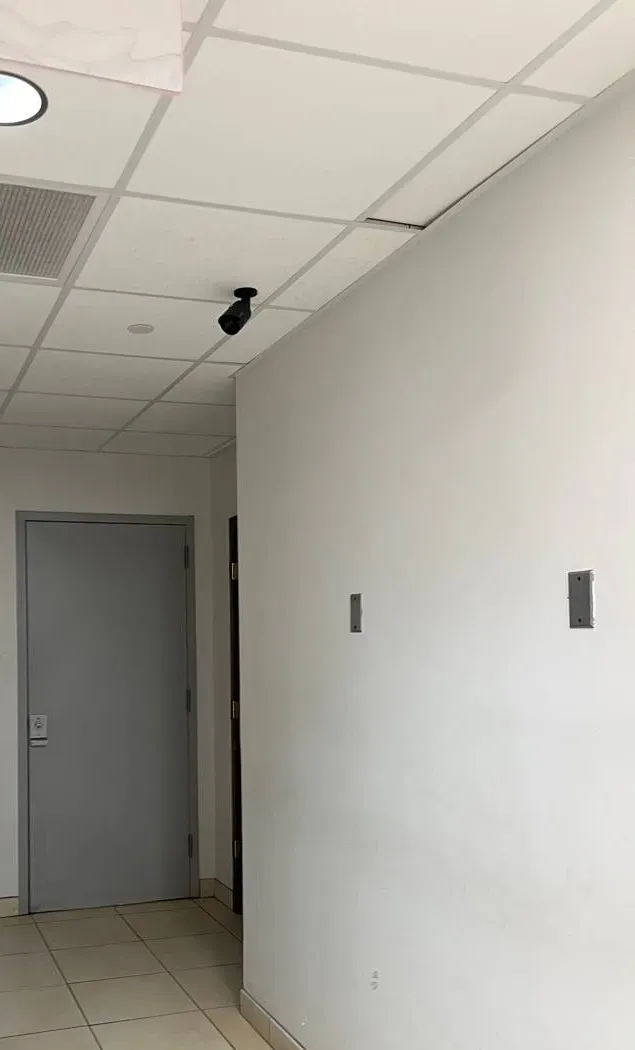
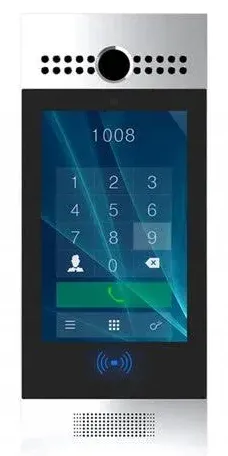
Every Door Counted · Mounted at the Mortar Joint · Power Kept Above the 2012 Waterline · Written Price Before Ordering · Brooklyn Rate
Door buzzer installation in Fulton Ferry is planned around three things most Brooklyn jobs never have to think about together: a city historic district whose rules say exactly where a door station may sit, buildings that were warehouses, a railroad office and an 1830s commercial row long before they were homes, and a riverfront that put seawater into cellars on lower Old Fulton Street in 2012. A new buzzer here has to reach every apartment and business, release a door that may be more than a century old, sit within or beside the door opening without a single fastener through cast iron, and keep its power supply out of the cellar corner most likely to flood. Below is how we plan that for the co-ops, condos, lofts and shops of the district, and where each job sits on our Brooklyn price list.
Reviewed and updated November 11, 2026, against the Landmarks Preservation Commission's Permit Guidebook, Chapter 11 (light fixtures, intercom panels and equipment on designated buildings); the Commission's 1977 Fulton Ferry Historic District designation report; CityRealty's building record for 8 Old Fulton Street; brokerage listing details for 28 Old Fulton Street and 4 Water Street; the Brooklyn Eagle's November 1, 2012 report on Superstorm Sandy in DUMBO and lower Old Fulton Street; NYC Buildings Bulletin 2022-001 on flood-resistant construction; Brooklyn Bridge Park's FY2025 annual report; Habitat's February 2024 article on the legal duty to keep an intercom working and its December 2015 report on a Brooklyn co-op's entry system; CooperatorNews' October 2021 report on updating buzzer systems; Brick Underground's November 2019 NYC intercom guide; a Brownstoner forum thread on electric strikes; New York's Multiple Dwelling Law §50-a; Allegion's fail-safe and fail-secure guide; the building code's sensor-release provisions; the HomeAdvisor and Swiftlane cost guides; ButterflyMX's call box guide; Aiphone's GT Series pages; and the 2010 ADA Standards. · Abstract Enterprises Security Systems, NYS license #12000287431 · crews dispatched from our Troy Avenue office in Brooklyn

Owner-operated since 2002 · Thousands of jobs completed · Booked within 2 hours
Quick answer: door buzzer installation in Fulton Ferry runs $400 to $900 on our Brooklyn list for an audio buzzer with a new door release on a single entrance, such as a shop door, an office suite or a private alley door to one home, $700 to $1,800 for a video door station with indoor monitors or phone answering on a small co-op or condo, and from about $2,500 to past $10,000 for a full entry system with a station or app answering for every apartment in a larger warehouse co-op or a building with several doors. Each price covers the door station, the answering units, the power supply, the electric strike or approved lock, the cable and the labor, and it is fixed in writing after a walkthrough, with every possible extra, such as an old cable pair that might fail its test or a closer that has to be replaced before the release can work, named and priced before you order. Fulton Ferry is billed at the Brooklyn rate, and for buildings inside the historic district we supply the manufacturer cut sheet and a mounting detail for the Landmarks application. Send photos of the door and whatever is on the wall beside it to (347) 934-8335 or on WhatsApp, and we reply with the range that fits, usually within two hours of your message during working hours.
Fulton Ferry is one of the smallest named neighborhoods in Brooklyn: a few blocks at the foot of Old Fulton Street where the ferry to Manhattan landed for almost three centuries, squeezed between the Brooklyn Bridge, DUMBO, Brooklyn Heights and the river. Most of it lies inside the Fulton Ferry Historic District, designated by the Landmarks Preservation Commission in 1977, and its buildings are a short, unusual list. There is a 1830s commercial row on Cadman Plaza West built as stores with lodgings above, the 1861 Brooklyn City Railroad Company building at 8 Old Fulton Street, the cast-iron Long Island Safe Deposit Company building on Front Street, the eight-story Eagle Warehouse of 1893 at 28 Old Fulton Street, and a run of warehouses along Water Street. Newer condominiums sit at the edges, from small buildings like 4 Water Street to the larger development at Pier 1.
Almost none of these buildings were designed for people to live in, and that is what makes a door buzzer installation here different from one in a Brooklyn row house. The railroad building was turned into apartments in the 1970s; CityRealty describes it as a five-story building "erected in 1861 and converted to cooperatives in 1975," with ten apartments. The Eagle Warehouse, built for furniture and valuables storage, became an apartment co-op around 1980. Each conversion put a buzzer system into a building that had never had one, with whatever equipment and cable made sense at the time. Where those systems were never replaced, they are now several decades old, and in our experience the volunteer boards that inherit them rarely have drawings, a record of where the cable runs or anyone who remembers the original installer.
The second difference is the facade. Inside a New York City historic district, a new door station is a change to a designated building, and the Landmarks Preservation Commission's Permit Guidebook spells out where its staff can approve one without a public hearing: within or beside the door opening, one panel per opening, and never fastened through cast iron or decorative surfaces. In a neighborhood of cast-iron fronts, granite quoins and carved entrances, those rules decide where the panel goes before anyone talks about brands.

The third difference is the river. Superstorm Sandy put seawater into cellars on lower Old Fulton Street in 2012, and a buzzer system's power supply has traditionally hung on a cellar wall near the electric service. A new installation is the best chance a building will get to move that equipment up and out of the way.
Finally, the neighborhood is a front door to one of the busiest parks in the city. Brooklyn Bridge Park's FY2025 annual report says "approximately 5 million people visited the Park between Memorial Day and Labor Day," and Old Fulton Street is one of the park's few entrances, lined with pizzerias and ice cream shops that draw lines down the sidewalk. Residents of the small co-ops on these blocks live with a constant stream of people walking past their front doors. A buzzer that works, on a street door that closes and locks by itself, is what lets those residents keep the building closed without coming downstairs every time someone arrives.
Where this page applies. It covers Fulton Ferry from Cadman Plaza West and Doughty Street down to Fulton Ferry Landing, including Old Fulton Street, Front Street, the Water Street blocks inside the historic district, Furman Street by Pier 1 and the short streets and alleys between them. For the rest of the borough see our door buzzer installation in Brooklyn page, and for the whole city our NYC door buzzer installation page.
A Fulton Ferry board that calls about "a new buzzer" is usually facing one of three situations. In the first, the system is basically sound and one piece has given out: a strike that no longer pulls in, a single apartment handset, a power supply that has lost its capacity, a splice in the cellar that has corroded. In the second, the system works but no longer fits the building, because lofts were combined or split, an owner added a private entrance, a garage door was never connected, or a restaurant downstairs needs its own buzzer. In the third, the conversion-era equipment has reached the end of its life and parts for it are no longer made, so every repair is a scavenger hunt.
We sort out which one a building is in before anyone prices a new system. Photos of the street door, the panel and any apartment station a resident can reach, sent to (347) 934-8335 or on WhatsApp, usually tell us. When the existing system has to be tested on site, that is the $250 service call booked online, and the $250 goes toward whatever the board decides, a repair or a new installation. Where both are realistic, the board gets both prices and a plain recommendation. Repairs have their own page on our site; this page is about installation: replacing a system that is past saving, adding doors and homes to one that is not, and putting a first buzzer into a building or business door that has never had one.
The reason to test first is simple. Brick Underground's NYC intercom guide quotes Daniel Vasquez of Paragon Security and Locksmith: "It's all in the wire connections." When the connections and the cable are sound, a new system can often reuse them, which keeps both the price and the dust down; when they are not, it is far better to learn that before the board votes than after the new equipment is on the wall.
Every service below is priced from the same Brooklyn door buzzer list. The number of homes and businesses sets the size of the system, the doors decide which release each entrance can take, and in Fulton Ferry the facade, the route the cable can take through thick masonry and the height of the cellar above the river decide much of the labor.
New door stations and apartment stations for co-ops whose buzzer went in when the building became apartments, with the old cable tested pair by pair and kept only where it proves sound.
Compact panels chosen to fit within or beside the door opening, fixed at mortar joints or plain masonry, finished to blend with the entrance, with the cut sheet and mounting detail ready for a Landmarks application.
Single-button stations for a home's own alley or side door, set to ring only that home and release only that door, without giving anyone a way into the lobby.
Door stations that reach a lobby desk while it is staffed and every apartment directly when it is not, with the desk able to release the door without leaving its post.
Keypads or call stations for garage, bike-room and service doors in condos and larger co-ops, on the same system as the street door but releasing only the door they serve.
Video stations answered on wall monitors, on residents' phones or both, for owners who are away part of the year or live on the river side with no view of the street door.
A residential system for the apartment door beside a storefront, kept completely separate from any buzzer the shop or restaurant uses at its own front or back door.
Fail-secure strikes fitted to old frames, closers set to beat the wind off the river, and battery-backed power supplies placed on an owner-controlled circuit above the cellar floor.
Buzzers for suites and studios in the Water Street buildings, answered at a desk or on staff phones, with written approval from the building's landlord before any work on a shared door.

Six kinds of building account for almost every buzzer installation we plan in Fulton Ferry. They differ in what the facade is made of, how many doors people use, how the cable can reach each home and who signs for the work, and each one has a mistake that shows up when the job is rushed.
Tall masonry storage buildings turned into apartment co-ops around 1980, with dozens of homes, a staffed lobby, a live-in super and a handful of homes with their own doors onto the street or an alley.
Mid-1800s commercial buildings such as the railroad building, turned into about ten lofts in the 1970s and run by volunteer boards, often with one street door, one side door and shared laundry and storage.
The 1830s commercial row on Cadman Plaza West and its neighbors, built with shops below and rooms above, where the residential door is a narrow opening beside a storefront.
Buildings whose ground floor is cast iron or dressed stone, such as the Long Island Safe Deposit Company building and the railroad building's piers, where the panel cannot be fastened to the most obvious surface.
Elevator condominiums built since 2000 on the blocks around Water Street and Furman Street, usually with a developer-installed video panel, a garage or service door and a board that never saw the original specification.
Brick warehouses along Water Street built for trade, where business tenants share a landlord's street door and often want their own buzzer at their own suite.
The Eagle Warehouse at 28 Old Fulton Street is the example everyone in the neighborhood knows: an eight-story storage building of 1893 that became a co-op of more than eighty apartments. A recent listing for one of its homes describes "a doorman, live-in super, fitness center, bike storage, and laundry on every floor," and a triplex with "3 separate entrances," one of them "a second private entrance that opens directly onto the tranquil, Doughty Alley," which lets the owner "enter and exit without going through the lobby." That one listing contains most of the design questions a buzzer installation in a building like this has to answer.
The main door needs a station that works in two modes: calling the desk while the doorman is on duty and calling apartments directly when the desk is empty, with the change between the two handled by a schedule or a switch the staff control, not by memory. The private entrances need their own stations, each wired to ring only the home behind it and release only that door, so the alley door is never a back way into the rest of the building.
8 Old Fulton Street, the former Brooklyn City Railroad Company building, is the model here: a red-brick building of 1861 with granite quoins and window surrounds, converted to cooperative apartments in 1975, with ten apartments and, according to CityRealty, a "laundry room and storage" and "a red door on the ground floor" on one side facade. Buildings of this size sit right around the Multiple Dwelling Law's eight-apartment line, which is one reason their boards take the intercom seriously, and they are small enough that no one is paid to manage it day to day.
For a building like this the right system is usually a two-wire or networked panel with one button or code per apartment, a station or phone answering in each loft, and a release on every door residents use. Ten apartments is few enough that a full replacement, including new apartment stations, is a contained job, and it is often cheaper over ten years than nursing along a conversion-era system that needs a visit every few months. The side door gets the same attention as the front: either it goes on the system, with its own station or keypad, or it is set to lock and stay locked, but it is never left as a door that only some residents know how to open.
The Commission's designation report describes the row at 7 to 23 Cadman Plaza West, built between 1836 and 1839, as stores with lodgings above, and that is still roughly how such buildings work: a shop, café or office on the ground floor and a few apartments upstairs reached by a separate narrow door. The residential door is often the original opening, a few feet wide, with a transom above and very little flat wall on either side.
These buildings need two systems that never touch. The apartments get a panel that calls only apartments and a release that opens only the residential door, on a power supply the building owner controls. The ground-floor business, if it wants a buzzer for a back or side door, gets its own station answered at the counter. Nothing the business presses can open the residential door, and no resident's button can let anyone into the shop.
The designation report notes that the railroad building's ground floor stands on cast-iron piers and that the Long Island Safe Deposit Company building of 1868 to 1869 has a cast-iron front. On fronts like these, the obvious place for a door station, the flat iron pier beside the door, is the one place the Permit Guidebook rules out: equipment "must not be attached through cast iron or on any decorative surfaces." Granite and carved brownstone surrounds raise the same issue in a different material.
There are almost always options. A station can sit within the reveal of the door opening on a plain wood or masonry surface, on the door frame itself, or on a plain panel inside a vestibule if the outer doors stand open during the day. Where none of those works, the Guidebook allows an intercom "on a fence or wall in front of the entranceway." On brick, fasteners go into mortar joints rather than the face of the brick, so a future owner who removes the station can repoint the joint and leave no trace.
The condominiums built in and around the neighborhood since 2000 came with modern entry systems. A listing for 4 Water Street, a six-floor building of thirteen units completed in 2007, names a "Video Intercom" among its amenities along with an elevator and a garage. Buildings like this rarely need a buzzer because they have none; they need one because the developer's system has aged, its maker has changed its product line, or the board has discovered it does not hold the administrator login.
We start with an inventory. Which doors are on the system, including the garage and any service door. Who holds the admin account, and whether it can be transferred. Whether the panel depends on a monthly subscription, what it costs and who pays it. Whether apartment monitors can stay if the street panel changes. Sometimes the answer is to recover the account, replace one failed component and update the directory; sometimes it is to replace the panel with one the board can run without a contract. Either way, the board ends up holding the keys to its own front door.
The warehouses along Water Street, including the Tobacco Inspection Warehouse and Empire Stores that the designation report describes, were built for trade rather than housing. Where a building on that stretch holds offices, studios, shops or event space and nobody lives in it, the residential intercom rules do not apply in the same way, but every tenant still needs to let visitors and deliveries in without walking a long way to the street or leaving a door on the latch.
Two layers work best. The landlord controls the street door and a directory panel listing each tenant, with a release for each. Each tenant can then have its own buzzer at its own suite door, answered at a reception desk or on staff phones. The street panel decides who gets into the building; the suite buzzer decides who gets past the suite door. Neither tenant can open the other's space, and neither can change the landlord's schedule for the street door.

This is how our technician spends the first half hour at a Fulton Ferry building, before a single price is written down. It is our standard practice here, not a story about one job.
First, every opening. The technician walks the outside of the building and lists each door people actually use: the street door, any vestibule door behind it, side and alley doors, the garage, the service entrance, the bike room. A board that asks for "a buzzer at the front" often has four doors, and the quote has to say which ones are on the system.
Second, the surface. At each door that gets a station, the technician photographs the opening and marks the plain surfaces within it or beside it: wood frame, plain brick, a smooth stone reveal. Cast iron, carved stone and decorative trim are marked as off limits. That photo becomes the mounting detail for a Landmarks application.
Third, the water. In the cellar, the technician looks for the marks the 2012 surge left, asks the board where the water reached, and notes where the old transformer, the electric service and any new equipment could sit above that line. The power supply's new home is chosen before the cable route, not after.

For most buildings in Fulton Ferry, the first question about a new buzzer is not which brand but whether the Landmarks Preservation Commission's staff can approve it quickly. The Commission's Permit Guidebook, Chapter 11, covers light fixtures, intercom panels and other equipment on designated buildings, and it is written so that an installation meeting its criteria can be approved by staff rather than sent to a public hearing. A board that plans the panel around those criteria from the start keeps the project simple; a board that picks a panel first and then tries to fit it to the facade often does not.
The location rule is short. "Light fixtures and intercom panels, as well as doorbells, must be installed within or adjacent to a door opening," and "an intercom can also be installed on a fence or wall in front of the entranceway." In practice that means inside the reveal of the doorway, on the door frame, or on the wall immediately beside the opening, and only rarely anywhere else on the front. The number rule is shorter: "A maximum of two light fixtures and one intercom panel can be installed per door opening." If a building wants a camera, a keypad and call buttons at one door, they have to be part of one panel or placed somewhere the rules treat differently, which is a strong argument for a combined station rather than three separate boxes.
The attachment rule is the one that catches Fulton Ferry buildings. Equipment "must be attached at mortar joints, plain masonry, wood, or metalwork, and must not be attached through cast iron or on any decorative surfaces." On a brick front, fasteners go into the mortar, not the brick. On a cast-iron front or a carved stone surround, the station has to go somewhere else: the plain wood of the frame, a smooth part of the reveal, or a plain panel inside the vestibule if the outer doors stand open during the day. The design rule asks that the finish be "compatible with the architecture of the building (i.e., neutral and discreet)," and the general criteria ask that equipment be "as small as possible and painted to blend with surrounding building material, if possible." That rules out the large, shiny directory panels some vendors propose for small buildings.
Then there is the cable. The Guidebook says conduit "must be concealed by going through plain masonry," and if that is not possible, "staff may approve a maximum of approximately ten inches of visible conduit along a wall surface," painted to match and secured into mortar joints. For a door station, that usually means drilling straight back through the wall behind the station into the vestibule, the lobby or the cellar stair, and running the cable inside. Where the inside face behind the best station location is a finished wall a board does not want opened, we look for the next-best location with a clean path behind it, rather than surface-running cable across the front.

The application itself is mostly paperwork the installer can help with. The Guidebook lists what staff need, including manufacturer cut sheets "for light fixtures, intercoms, security cameras, and mailboxes," color specifications for visible facades, and large-scale details "showing no or minimally exposed conduit." We supply the cut sheet for the station we propose, a photo of the opening marked with the exact location and fastening points, the station's dimensions and finish, and a sketch of the cable path through the wall. Many boards file through their own architect or expediter, who uses that material; some file directly. Either way, the equipment is ordered only once the board is ready to proceed.
In a Brooklyn row house, a buzzer installation is one door and a few apartments. In Fulton Ferry it is usually a list. The warehouse conversions have a main door, private entrances for some homes, a service door, a bike room and sometimes a garage. The small conversions have a street door and a side door. The commercial-row buildings have a residential door, a shop door and a cellar door that the shop uses. The first thing we hand a board is that list, with a line for each door saying whether it will be on the new system, what kind of station or keypad it gets, who it calls and what it releases.
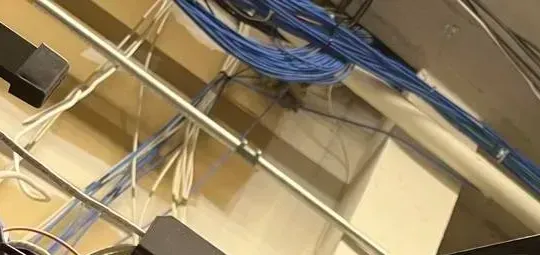
Getting cable from the door to each home is where these buildings cost time. Warehouse walls are thick masonry built to carry heavy loads; office conversions have brick party walls and timber floors; the commercial rows often have a shop or restaurant occupying the whole ground floor, so the only way from the street door to the stair is through the business's ceiling or its cellar. We look for a stacked path first, a shaft, a closet column, an old dumbwaiter or the space beside a plumbing riser, and only then for runs along corridors in painted raceway.

One more door deserves mention because it is so often forgotten: the inner door. Many Fulton Ferry buildings have a vestibule between the street door and the lobby or stair. If both doors lock, both need a release, and the system has to open them in the right order so a visitor is not trapped between them. If only the outer door locks, the inner door is just a door. We settle that during the walkthrough, because it changes the hardware, the cable and the price.
Every buzzer system has a heart that is easy to forget: a power supply, sometimes a controller, and the junction where the cable from the door meets the cable to the homes. In older Brooklyn buildings that equipment usually hangs in the cellar next to the electric service, because that is where power was easy to reach. In Fulton Ferry, the 2012 surge showed what that costs. The Brooklyn Eagle reported a basement on lower Old Fulton Street "flooded from floor to ceiling with murky seawater," and carousel restorer Jane Walentas told the paper that the carousel's basement "that houses all the electronics was totally flooded with approximately 5 feet of water."
A new installation is the moment to put that equipment somewhere better. New York City's flood-resistant construction rules, as summarized in Buildings Bulletin 2022-001, say that utilities serving residential units "are prohibited from being located within dry floodproofed enclosures below the design flood elevation," and the same applies to systems serving both commercial and residential uses in mixed-use buildings. Whether a given building's project triggers those rules is a question for its architect or engineer, but the direction is clear, and a low-voltage power supply is small enough to move easily: a ground-floor closet, the space above a lobby ceiling, the first-floor landing of a stair, or a locked cabinet in a common hall.
Wherever it goes, three things go with it. A battery backup, so the door station and release keep working through a short outage. An outlet on a circuit the building controls, not one that belongs to a shop or a single apartment, installed by a licensed electrician if a new one is needed. And a label on the cabinet saying what the equipment is, who installed it and how to reach them, because the next person to open it may be a new board member or a contractor called in the middle of the night.
None of this is legal advice for a particular building; a board with a specific question about its obligations should ask its own attorney. What we can do is install a system that meets the technical side of each rule, and hand the board the documentation that shows it.
Fulton Ferry's businesses are packed into a few blocks and almost all of them share a building with something else: apartments upstairs, a landlord's lobby, a park next door. That makes a business buzzer here less about letting the public in, since restaurants and shops are open to everyone during the day, and more about the doors that are not public: the staff entrance, the delivery door, the office suite, the cellar hatch and the hours before opening and after closing.
The neighborhood's main street, running down to the landing, with pizzerias and an ice cream shop at street level, apartments above several of them, and back and side doors that kitchens use for deliveries early in the day.
Restaurants and shops in some of the district's oldest commercial buildings, including the cast-iron Long Island Safe Deposit Company building, where staff and delivery doors sit in historic fronts.
Warehouse buildings of the 1850s to 1880s along the river, where offices, studios and shops share street doors controlled by a landlord and want their own suite buzzers.
The pier at the foot of Old Fulton Street and the businesses around it on the water, from restaurants to a concert barge, with service doors facing the park and the ferry.
The newer buildings where Furman Street meets Brooklyn Bridge Park, with a hotel, condominiums and park concessions whose service entrances open onto a busy promenade.
The 1830s commercial row and its neighbors at the top of the district, with ground-floor businesses and a separate narrow door to the floors above.
The commonest business request in a neighborhood like this is a buzzer at a kitchen or delivery door. Restaurants on Old Fulton Street and Front Street take deliveries before they open and run long hours after; staff come and go through a back or side door while the front is full of customers. A station at that door, answered on a phone or a small unit in the kitchen, lets the door stay locked all day without someone propping it with a bucket. Where the business shares the building with apartments, that station is on its own system, and it never releases the residential door.

Yes, and it should be planned that way from the start rather than added later. The alley door gets its own single-button station, mounted within or beside the opening under the same Landmarks criteria as the main door, wired to an answering unit or phone in your home and to a release on the alley door only. It does not appear on the lobby panel, and nothing on it can open the lobby or any other door in the building.
At the street door, not at the desk. When the doorman is on duty, visitors normally speak to him in person, so the station's job then is to call him if he has stepped away or to reach him from outside when the door is locked. When the desk is empty, the station has to call apartments directly. Both jobs need it where visitors stand, outside or in the vestibule, within the door opening that Landmarks allows.
The desk gets its own console or monitor showing who is at the door, with a release button, and the system is set to route calls to the desk on a schedule or when the doorman switches it over, and to apartments the rest of the time.
Only if the board wants visitors to come in that way. Many boards prefer to keep the garage on residents' remotes alone, so that every visitor arrives at the front door where the station and camera are. Others want a courier with a large delivery, or a guest who drives, to be let into the garage. If so, the garage door gets its own station or keypad on the same system, with its own release and its own rules about who can open it.
In advance, with the restaurant's owner, and on a day and time the restaurant chooses. The co-op or building owner arranges the access, since the cable serves the building, and we agree with the restaurant the hours we will be in its space, usually before it opens or on its quietest day. We cover the floor and anything under the work area, work from a ladder rather than leaving equipment overnight, and close up every ceiling tile or access panel we open before we leave.
It depends on how bad the current system is and on what the masonry work will touch. If the existing buzzer works well enough to last another year, waiting is usually sensible, because masons repointing the entrance or replacing stone around the door can damage a new station or need it removed and reinstalled. If the current system is failing, install now, but plan the station so it can be taken off and put back without disturbing its wiring, and ask the masonry contractor to protect it.
Sometimes, and it is worth asking about at the start. If the steps are part of the building's historic front, the station still has to go within or beside the door opening at the top. But the Permit Guidebook also allows an intercom "on a fence or wall in front of the entranceway," so where there is a railing, a low wall or a fence at the foot of the steps, a second station can sometimes be placed there, within the reach range of the 2010 ADA Standards, calling the same apartments.
Two stations on one entrance cost more and need their own Landmarks review, so we show the board both options with prices. Where no suitable fence or wall exists, the alternative is a phone-based system, where a visitor can call a resident directly from the sidewalk and the resident releases the door remotely.
Not for a small building. The figures come from Habitat's 2015 report on a 114-unit Ditmas Park co-op built in 1961, where rewiring every apartment was the expensive option and a phone-based system that skipped the in-apartment wiring was much cheaper. A later postscript to the article notes that some of the prices it reported are out of date. In a Fulton Ferry co-op of ten or fifteen apartments, the gap between rewiring and not rewiring is much smaller, simply because there are fewer runs.
What matters more is the condition of the existing cable and how hard it is to replace. In a warehouse with thick masonry walls and no clear riser, new cable to every home can be a large share of the cost; in a building with a clean shaft or a closet stack, it may not be. We test the old cable before quoting, and the written price shows the rewire option and the no-rewire option side by side wherever both are realistic, on our Brooklyn ranges.
Yes. The usual answer is a timed hold-open: the doorman, the super or a board member presses a button or uses the system's app to keep the door released for a set period, say an hour, and the door returns to buzzer-only on its own when the time runs out. Nobody has to remember to undo it, and the door is never wedged with a doormat or a piece of wood that damages the frame.
Possibly, but it makes the Landmarks side harder. Staff can approve "one intercom panel" per door opening, and an old plate still mounted beside the door looks like a second one even if it no longer works. If the board wants to keep it, the application should explain that the old plate is being retained as a historic element and is disconnected, and staff may or may not accept a new station alongside it. The simpler route is usually to mount the new station in the old plate's place and keep the plate inside the building as a record.
Anything that holds the system together should go up: the power supply, the battery backup, any controller or network switch, and the main junction where the door's cable meets the cable to the homes. Those are small enough to fit in a ground-floor closet, a common hall cabinet or above a lobby ceiling. What has to stay low is what serves the door itself: the station at the entrance, the strike in the frame and the short run of cable between them, which we choose and seal for weather.

We quote a reliable non-branded system by default and install a named brand when a board asks for one; the intercom brands we work with include Aiphone, ButterflyMX, 2N, Akuvox, Comelit and DoorBird. These are the kinds of equipment that come up most often in Fulton Ferry buildings, and where each one fits.
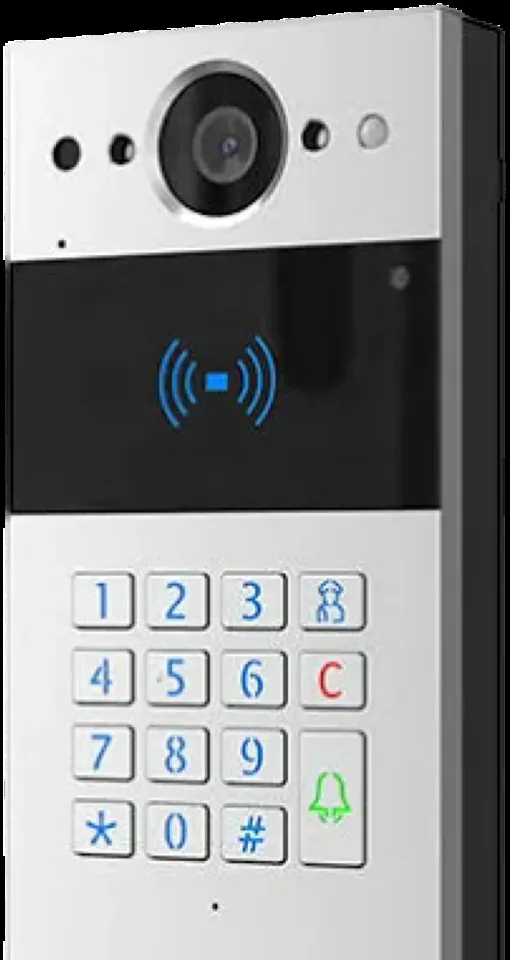
Narrow audio or video stations with a short column of buttons, small enough to sit in a door reveal or on a frame, for co-ops of up to about fifteen homes inside the historic district.
Systems that carry voice, video, power and release over a single pair, which can sometimes reuse a conversion-era building's cable once each pair tests sound. Aiphone describes its GT Series as built "for new builds and retrofit projects."
Panels where a visitor enters a unit code or scrolls a list, for larger warehouse co-ops where a row of eighty buttons would never fit within one door opening.
Monitors with a release key at a doorman's desk, showing the street door and any secondary entrance and switching calls between the desk and the apartments on a schedule.
Stations that call residents' phones, alone or with wall monitors, for owners away for long periods and for buildings where running new cable to every home is impractical.
One housing holding a camera, keypad, card reader and call key, which keeps a landmarked opening to the single panel the rules allow.
Strikes sized for old wood and steel frames that stay locked when power is lost and leave the inside lever free, so residents can always leave.
Closers strong enough to pull a heavy door shut against the wind off the river and latches adjusted so the strike engages every time.
Low-voltage supplies with standby batteries, mounted above the cellar floor on an owner-controlled circuit and labeled with what they power.
| What matters | Compact button station | Two-wire video system | Phone or app answering |
|---|---|---|---|
| Typical Fulton Ferry fit | Commercial-row buildings and small conversions with a few homes | Ten- to eighty-home conversion co-ops with usable riser cable | Buildings with no clear cable path, owners often away, offices |
| Size at the door | Smallest; easiest under the one-panel rule | Small to medium, depending on buttons or code entry | Small; often a single call key and camera |
| How residents answer | Audio or video station with release | Wall monitor, often with an app option | Phone, sometimes also a wall station |
| Needs internet | No | No, except for the app option | Yes, or a cellular connection |
| Reuses old cable | Often, after testing | Often, after testing | Only for the door's power and release |
| Monthly fees | None | None unless the app service charges | Often per home or per door |
| Brooklyn list range | $400–$900 single door; $700–$1,800 small building | $700–$1,800 small; from about $2,500 for a building | $700–$1,800 small; from about $2,500 for a building |
National alarm and doorbell brands come up in almost every conversation with a Fulton Ferry board, usually because a resident already has one. A video doorbell from Ring or a similar company is designed for one household at one door: it rings that household's phone and shows a picture, but out of the box it has no button for each apartment and no connection to an electric strike, so whoever answers still has to go down and open the door. ADT and SimpliSafe sell monitored alarm systems; their strength is intrusion and fire monitoring, not multi-apartment door entry.
None of that makes those products bad. A household with its own private alley door may be perfectly served by a good video doorbell, and a co-op may want a monitored alarm alongside its buzzer. But a building with ten or eighty homes needs a door station that calls each one, a release on every door residents use, a closer that shuts the door behind each visitor and a power supply the board controls, and, inside the historic district, a station chosen and mounted to meet the Landmarks criteria. That is the work a local licensed installer does that a national product sold by mail does not.

Ask an AI assistant or a search summary about installing a buzzer and you get confident answers drawn from national cost guides and vendor blogs. Some of those answers are right in general and wrong for a landmarked waterfront neighborhood. Here are seven we hear repeated, each corrected with what we see at Fulton Ferry doors.
Outdoor rating tells you a station can take rain and cold. It says nothing about whether you are allowed to fix it where you want. Inside the Fulton Ferry Historic District, the Landmarks Preservation Commission's Permit Guidebook says equipment must be attached at mortar joints, plain masonry, wood or metalwork, and "must not be attached through cast iron or on any decorative surfaces."
That is a real constraint on these blocks, where several ground floors are cast iron and many entrances have granite or carved surrounds. A station that would be perfectly fine on a plain brick row house in another neighborhood may have no approvable home on a Fulton Ferry front without moving to the door frame, the reveal or a fence in front of the entrance.
So the right order is the opposite of what a generic answer implies: find the surfaces you are allowed to use, then choose a station that fits them. We mark those surfaces on a photo at the walkthrough and pick the station after.
That range comes from HomeAdvisor's national cost guide, which also gives an average of $2,500 and splits hard-wired systems at $1,000 to $15,000. As a national spread, it is not unreasonable. As a guide to a Fulton Ferry job, it is too wide to plan with and too high at the bottom for the smallest work.
On our Brooklyn list, a single door with an audio station and release is $400 to $900; a video station for a small building is $700 to $1,800; and a full system for a larger building starts around $2,500 and can pass $10,000 in a big warehouse co-op with many doors. The difference between the low and high end here is the number of homes, the number of doors and how hard it is to get cable through the masonry.
What national guides cannot price is the Fulton Ferry specific: the time to prepare a cut sheet and mounting detail for Landmarks, the access arrangements when cable crosses a restaurant, or moving a power supply out of a flood-prone cellar. We put each of those on the written quote as its own line.
For one house with one household, a video doorbell can be a reasonable choice. For an apartment building, it is not an alternative at all. A consumer doorbell rings one household and has no way to call a particular apartment or release an electric strike, so visitors still wait while someone walks down.
For buildings covered by Multiple Dwelling Law §50-a, the required system is specific: a self-locking main door and an intercommunication system that lets residents talk to the visitor and release the door from their apartment. Many of Fulton Ferry's co-ops were converted after 1968 and have more than eight apartments, which on its face puts them in that group.
Swiftlane's cost guide puts software subscriptions at "$5 to $15 per unit per month, or $30 to $100 per door per month." Per apartment, that does sound small. Multiplied out for a Fulton Ferry building, it is not: ten apartments at $5 to $15 each is $50 to $150 a month, or $600 to $1,800 a year, and an eighty-apartment co-op at the same rates is $400 to $1,200 a month.
Over the life of a system, that can exceed the cost of the hardware. For some buildings it is worth it, because the app features matter to residents or because running cable to every home would be expensive. For others, a wired system with no monthly fee does the same job.
Electrically, that is true; a low-voltage power supply needs only an outlet. In a neighborhood where the Brooklyn Eagle found a basement on lower Old Fulton Street "flooded from floor to ceiling with murky seawater" in 2012, the outlet nearest the old transformer is often the worst possible place.
The city's flood-resistant construction rules, as Buildings Bulletin 2022-001 summarizes them, keep utilities serving residential units out of dry-floodproofed enclosures below the design flood elevation. Whatever a given building's legal position, putting a new buzzer's power supply, battery and controller above the flood line costs little extra at installation time and avoids losing the whole system in the next surge.
The outlet also has to be the building's. A supply plugged into a shop's or an apartment's circuit goes dark when that circuit is switched off. A licensed electrician adds a building-controlled outlet where one is needed, and we tell the board before the job is priced.
Magnetic locks are strong, and they work on doors where a strike is hard to fit. But Allegion's guide is blunt that "electromagnetic locks are only available fail safe," meaning they unlock when power is lost. On a street door that is a security problem; on a building with an old riser and an occasional outage, it is a recurring one.
The building code's sensor-release provisions add an egress-side sensor, a push-to-exit device near the door, release on power loss and on fire alarm activation, and listed hardware. On a landmarked entrance, each of those is another piece of visible equipment that has to be justified to Landmarks staff.
For most Fulton Ferry doors, a fail-secure electric strike in a sound frame, with a closer strong enough to pull the door shut, is the better answer. It stays locked during an outage, leaves the inside lever free for exit and adds nothing to the outside of the door.
Sometimes it does, and sometimes it is perfectly good. Aiphone's upgrade guidance says that "if the existing wires are in good condition, they can be reused," and its GT Series is pitched for retrofit projects. In a warehouse co-op where every new run means drilling through thick masonry, reusing sound cable can save a large share of the labor.
The danger is assuming either way. CooperatorNews reported in 2021 on a pre-war co-op that kept its old wiring, installed new equipment and found calls going to the wrong apartments, then rewired anyway. Buzr Labs' Tony Liebel told the paper: "Existing wiring that's the biggest obstacle to replacement."
The answer is to test. We check each pair for continuity, shorts and noise before quoting, mark which ones pass, and price replacement only for the ones that fail, so the board knows exactly what it is paying for.
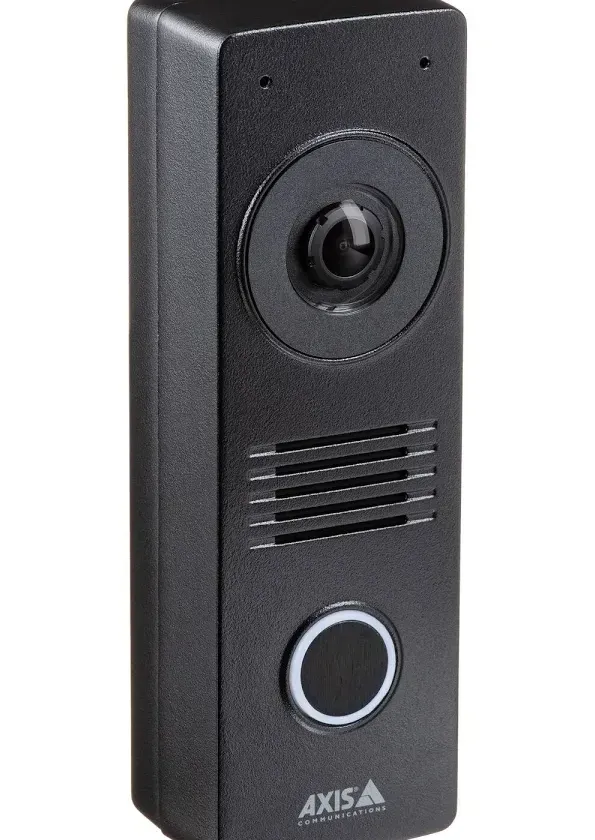
Send photos of the street door, the panel beside it and, if you can, the equipment in the cellar, along with the number of homes and doors, and a technician will tell you which path looks likely and what it would cost on our Brooklyn ranges. Call or text (347) 934-8335, send photos on WhatsApp, or fill in the form below.
Photos of every street, alley, garage and side door, and a current list of the apartments, lofts and businesses the system has to reach, with the name of whoever signs for the building.
Who authorizes the work, whether the doors are inside the historic district, and the cut sheet and marked mounting photo the board or its architect will file.
Each door is opened and released repeatedly to confirm it shuts and latches by itself, and its frame is checked for the strike or lock it can take.
Old pairs are tested where they exist, the route to every home is mapped, and power supplies and controllers are placed above the level water reached in 2012.
Station, answering units, door hardware, power, cable and labor on one written price, with every possible extra named and priced before anything is ordered.
The closer is set so the door relatches, the strike goes into the frame, and the supply goes on a building circuit, with a licensed electrician for any 120-volt work.
Stations are fixed at mortar joints or approved surfaces, cable is run or reused, apartment stations or app accounts go in, and every button, pair and station is labeled.
Every home and business is called from each door, answers, talks and releases while the door is watched relocking; the board gets the wiring record and test sheet.

The pier at the foot of Old Fulton Street where ferry service began in 1642, reopened after refurbishment in 1997 and served again by boats to Manhattan.
The 1893 storage warehouse at 28 Old Fulton Street, converted to apartments around 1980 and known for the clock window high on its front.
The 1861 office building at 8 Old Fulton Street, with cast-iron piers at street level, turned into a ten-apartment co-op in 1975.
The cast-iron building of 1868 to 1869 at 1 Front Street, one of the clearest examples of why the district bars fasteners through ironwork.
The Water Street warehouses of the mid to late 1800s that the 1977 designation report describes, along the river at the district's edge.
The park entrance from Old Fulton Street and Furman Street, where the Pier 1 Pavilion and its concession opened in recent seasons.
We also serve DUMBO, Cadman Plaza, Downtown Brooklyn and the Columbia Street Waterfront at the same Brooklyn rate, along with Brooklyn Heights and Vinegar Hill. See our door buzzer installation in Brooklyn page for the whole borough, and door buzzer installation in Manhattan for buildings across the river.
Fulton Ferry is billed at our Brooklyn rate, with no premium for the historic district. The final figure follows a walkthrough, because the number of homes, the number of doors people use, the condition of the conversion-era cable and the route through the masonry drive the total far more than the brand on the panel.
| Job | Typical Fulton Ferry building | Brooklyn range |
|---|---|---|
| Audio buzzer or replacement with electric strike release, existing wiring reused where it tests well | A private alley door to one home, a shop's delivery door, an office suite | $400–$900 |
| Video door station with indoor monitors or smartphone door release | Commercial-row building with a few apartments, small condo | $700–$1,800 |
| Directory, code or button panel with every home wired or on app answering, audio or video by unit count, optional fob integration | Ten-apartment office conversion, large warehouse co-op with several doors | $2,500–$10,000+ |
| Service call booked online | Diagnosis of an existing system before choosing repair or replacement | $250, applied toward the work |
| Monthly fee on a wired system | Any building choosing the no-subscription option | $0 |
What moves a Fulton Ferry job inside its range is predictable. First the homes and the cable: a ten-apartment co-op with sound pairs in a clean riser stays near the bottom of its range, while new cable through warehouse masonry to eighty homes pushes it up. Then the doors: every alley, garage, bike-room or side door adds a station or keypad and a release. Then the building's specifics: preparing Landmarks material, moving a power supply out of the cellar, crossing a restaurant's ceiling. Anything that depends on a test, such as an old pair that might fail, is named on the quote with its price before you approve.
Full terms — including 50% deposit, one-year parts-only warranty on AESS-supplied products, and the late-fee schedule — are set out in the service agreement.Tell us the address, the number of homes or businesses, every door people use and whether the building is inside the historic district, and we will tell you which Brooklyn range fits and what would move it. Call or text (347) 934-8335, send photos on WhatsApp, or fill in the form.
Three typical Fulton Ferry jobs, each placed inside the matching range on our Brooklyn list. The exact figure comes from the walkthrough.
An audio station for a home's own alley door, a shop's delivery door or an office suite, with an answering unit or phone answering, a fail-secure strike in a sound frame, a closer that shuts the door and battery-backed power.
A compact video station sized for a landmarked opening on a commercial-row building or small condo, with monitors or phone answering for each home, old cable tested and reused where sound, and a strike and closer set for the door.
A button, code or directory panel at the main door, stations for secondary entrances, wall stations or app answering for every home, tested or new riser cable, a desk console where there is a doorman and power above the cellar floor, rising toward $10,000 or more with homes and doors.
Bring your own equipment. If the board has already bought a door station or intercom kit, we can install it as labor-only work, quoted flat once we have seen the doors, the frames and the cable path. Tell us the make and model, and we will say before the visit whether it can reach every home, release your doors and fit within your door opening.
Conversion-era replacements, landmark-ready stations, desk consoles and secondary doors. Request a quote
Delivery-door buzzers, suite stations and separate shop systems. Call (347) 934-8335
The same list in every neighborhood. Brooklyn door buzzer installation
Every borough's buildings and rules. NYC door buzzer installation
Stations with a sealed metal faceplate, stainless or a powder-coated finish, and buttons without exposed seams hold up best against salt air and wind-driven rain. We seal the hole behind every station, choose stainless or coated fasteners set in mortar joints, and, inside the historic district, pick a finish dark or neutral enough to blend with the entrance as the Landmarks criteria ask.
Yes. The bike room door gets its own keypad or reader on the same system, so residents use a code or credential there and the board can remove a code when someone moves out, while the street door keeps its call buttons. The bike room release opens only that door, and the price includes its strike, closer and cable as a separate line on the quote.
With the fail-secure electric strike we install by default, the door stays locked from outside during a power failure and still opens from inside with the lever. A battery backup on the power supply keeps the station and release working through a short outage, so residents can still buzz visitors in. A magnetic lock would do the opposite and unlock when power is lost.
Yes. We plan the job around the building's alteration rules from the start, schedule arrival in two-hour windows inside the permitted hours, and split a larger installation across several days if needed. The street door is kept locking at the end of every day, and the board gets a written plan of what will be done each day before work begins.
Yes. The release time is a setting, usually a few seconds by default, and we set it with the board at handover so a resident with a stroller or a visitor with a suitcase can get through comfortably. The closer is adjusted at the same time so the door does not slam on someone halfway through or swing so slowly that it stays open after the release ends.
Sometimes, but it is a separate project involving the elevator. Some networked entry systems can tell an elevator controller which floor a visitor is allowed to reach, and that work needs the building's elevator contractor as well as us. We can tell the board at the walkthrough whether the elevator and the system chosen can support it, and price the entry side so the board can decide.
One recommended system, priced in full, based on what we saw at the doors and in the cellar. If the board wants to compare a named brand, a video option or a no-subscription alternative, we price those on request so the board can see the difference line by line. Every option is fixed in writing before anything is ordered.
Yes. We replace the hold-open arm with a standard closer arm and set the closer so the door is easy to open but always shuts and latches. A door contact can then alert the board or super if the door is held open longer than a set time, and a timed hold-open on the system gives residents a legitimate way to keep it open for deliveries or moves.
It changes the hardware, not the idea. An outward-swinging door usually needs a strike designed for that swing and a frame that can take it, and the closer has to resist wind pulling the door open as well as pushing it shut. We check the swing, the latch and the frame at the walkthrough and price the right strike, so the release works whichever way the door opens.
It can help, but it does not remove all wiring. A cellular call box calls residents' phones over the mobile network, so no cable runs to the apartments, but the box still needs power and a connection to the strike at the door. ButterflyMX says its intercom requires no building wiring; in practice the door end still has to be wired, and cell reception at the entrance has to be tested first.
Door Buzzer Installation Brooklyn NY | Brownstones & Condos · Door Buzzer Installation NYC | Apartment & Building Entry · Door Buzzer Installation Manhattan NY | Apartments & Co-ops · Door Buzzer Installation Queens NY | Co-ops & Apartments · Door Buzzer Installation Bronx NY | Co-ops & Apartments · Door Buzzer Installation Staten Island NY | Homes & Apts · Door Buzzer Installation Long Island NY | Nassau & Suffolk · Door Buzzer Installation Hudson Valley NY | Apartments · Door Buzzer Installation Nassau County NY | Homes & Co-ops · Door Buzzer Installation Suffolk County NY | Homes · Door Buzzer Installation Westchester County NY | Co-ops · Door Buzzer Installation Rockland County NY | Homes & Apts · Door Buzzer Installation Orange County NY | Homes & Farms · Door Buzzer Installation Putnam County NY | Lake Homes · Door Buzzer Installation Dutchess County NY | Homes · Door Buzzer Installation Ulster County NY | Kingston
Door Buzzer Installation Bath Beach Brooklyn NY · Door Buzzer Installation Bay Ridge Brooklyn NY · Door Buzzer Installation Bedford-Stuyvesant Brooklyn NY · Door Buzzer Installation Bensonhurst Brooklyn NY · Door Buzzer Installation Bergen Beach Brooklyn NY · Door Buzzer Installation Beverley Square Brooklyn NY · Door Buzzer Installation Boerum Hill Brooklyn NY · Door Buzzer Installation Brooklyn Navy Yard, Brooklyn NY · Door Buzzer Installation Brooklyn NY | Brownstones & Condos · Door Buzzer Installation Brownsville Brooklyn NY · Door Buzzer Installation Bushwick Brooklyn NY · Door Buzzer Installation Cadman Plaza Brooklyn NY · Door Buzzer Installation Canarsie Brooklyn NY · Door Buzzer Installation Carroll Gardens Brooklyn NY · Door Buzzer Installation City Line Brooklyn NY · Door Buzzer Installation Clinton Hill Brooklyn NY · Door Buzzer Installation Cobble Hill Brooklyn NY · Door Buzzer Installation Columbia Street Waterfront Brooklyn · Door Buzzer Installation Coney Island Brooklyn NY · Door Buzzer Installation Crown Heights Brooklyn NY · Door Buzzer Installation Cypress Hills Brooklyn NY · Door Buzzer Installation Ditmas Park Brooklyn NY · Door Buzzer Installation Downtown Brooklyn NY · Door Buzzer Installation DUMBO Brooklyn NY | Loft Entry
Security Camera Installation Fulton Ferry Brooklyn NY · TV Installation Fulton Ferry Brooklyn · Access Control Installation Fulton Ferry Brooklyn NY · Door Buzzer Repair Fulton Ferry Brooklyn NY | Co-op Lobbies · Fire Alarm Installation Fulton Ferry Brooklyn NY · Intercom Installation Fulton Ferry Brooklyn NY · Alarm Installation Fulton Ferry Brooklyn NY | Lofts & Flood · Structured Cabling Installation Fulton Ferry Brooklyn NY
Send a photo of your street door and whatever is mounted beside it, with the address, the number of homes or businesses and every door people use, and we will tell you which system fits, how it can be mounted within the Landmarks rules and where it falls on our Brooklyn ranges. Call or text (347) 934-8335, message us on WhatsApp, or use the request form. Licensed under NYS license #12000287431, rated 4.7★ across 201 Google Reviews, with same-day estimates on most weekdays.