What are you looking for?
About Us Contact Us Careers Get a Free Quote (800) 486-0943
Pick a service
✅ Got Your Own System?
🎬 Home TheatreQuote 🎶 AV SoundQuote 🔑 Access ControlQuote
Now pick your area
Pick your area
Long Island
Hudson Valley
Services available
Pricing & Tools
Pick a service for pricing
🚪 Intercom Pricing 🔔 Buzzer Repair Pricing
Calculators
📹 Camera System Calculator 🚨 Alarm Calculator ⚡ Cabling Quote Builder ✅ Got Your Own System?
Select your area
A tower lobby on one of the loops, a store in the shopping center on Pennsylvania Avenue, or an apartment door in the hallway that has never had a bell? Starrett City door buzzer installation line: (347) 934-8335
Home › Door Buzzer Installation Brooklyn › Starrett City
46 Towers Under One Owner · Eight Sections and Their Garages · Shopping Center Stores and Offices · Newer Buildings Toward Fountain Avenue · Apartment Doors Inside the Towers

Door Buzzer
Installation in
Starrett City

Pilot Lobby Before Rollout · Door Hardware First · Fits the Building's Network · Written Price Before Ordering · Brooklyn Rate

Door buzzer installation in Starrett City is a different job depending on whose door it is. The 46 towers of Spring Creek Towers belong to one owner, so a new lobby entry system is that owner's project, planned across eight sections and thousands of apartments and tested at one entrance before it spreads to the rest. A store or office in the shopping center needs its landlord's yes and a door that still lets customers out freely. A resident inside a tower can still add a proper bell or chime at their own apartment door, with the management office's written approval. Below is how each of those is planned and where each lands on our Brooklyn price list.

Reviewed and updated November 11, 2026, against the Spring Creek Towers management letter of October 6, 2021 published in the Spring Creek Sun; Honeywell's August 2013 announcement of the Spring Creek Towers building-management retrofit; NYC 311 service requests for ZIP 11239 (NYC Open Data); Department of Buildings job filings for the Starrett City area; HUD's NSPIRE inspection standards; New York State Homes and Community Renewal's guide to the Mitchell-Lama rent increase process; New York's Multiple Dwelling Law §50-a; the Brooklyn Eagle's July 2021 report on the complex's Mitchell-Lama agreement; Wikipedia's Starrett City entry; New York YIMBY's reports on The Fountains (2021) and Alafia (2025); East Brooklyn Congregations on Sarah Plowden Place; Habitat magazine's February 2023 report on hallway video doorbells; Brick Underground's intercom guide; a July 2025 r/Brooklyn thread from a new Starrett City resident; ButterflyMX's apartment buzzer guide; the HomeAdvisor and Swiftlane cost guides; and Allegion's fail-safe guide. · Abstract Enterprises Security Systems, NYS license #12000287431 · crews dispatched from our Troy Avenue office in Brooklyn

Starrett City, Brooklyn door buzzer installation: black rectangular video door station with a camera, speaker grille and round lit call button
A photo from the AESS job library, not taken in Starrett City: a black rectangular video door station with a camera, a speaker grille and one round call button that lights up. A single-button station like this is the kind of thing that belongs on the door of a store or office suite in the shopping center, or at a staff door, rather than on a tower lobby with more than a hundred households behind it.
Starrett City Buzzer Request
Tower lobby, store, office, newer building or your own apartment door: tell us which door, who controls it and what is there now, and a technician calls back with the range

✅
Request Sent!
Thank you. A technician will call you about the Starrett City door, usually within two hours during working hours.
25+
Years Experience
✓
Same-Day Estimates
100%
Licensed & Insured
4.7★
201 Google Reviews

Owner-operated since 2002 · Thousands of jobs completed · Booked within 2 hours

Quick answer: door buzzer installation in Starrett City is priced on our Brooklyn list at $400 to $900 for an audio station with a door release at a single store, office or staff door, $700 to $1,800 for a video station with answering stations or phone answering at a suite or small building, and from about $2,500 to past $10,000 for a multi-apartment entry system, with a tower lobby of more than a hundred apartments sitting at or beyond the top of that range. The price covers the door station, the answering stations, the power supply, the electric strike or approved lock, the cable and the labor, and it is fixed in writing once we have seen the door, its frame and the route to power. In the towers that work is ordered by the owner, and we quote each lobby separately. A resident who wants a bell or chime at their own apartment door gets a small-job price from photos, once the management office has said yes in writing. Send photos to (347) 934-8335 or on WhatsApp, and we reply with the range that fits, usually within two hours during working hours.

  • Looking at photos and quoting a new installation costs nothing. If an existing system has to be tested in person before we can quote, that is the $250 service call booked online, and the $250 is applied toward the work.
  • All work is done under New York State license #12000287431. We install the low-voltage entry equipment; if a power supply needs a new 120-volt outlet or circuit, a licensed electrician does that part, and you know before the price is set.
  • We work for whoever controls the door: the complex's owner or its managing agent for the towers, a landlord or tenant with the landlord's consent for a store, a developer or general contractor for a building under construction, and a resident only for equipment on their own side of their own apartment door.
The Neighborhood

Why Starrett City Properties Need Door Buzzer Installation

Starrett City sits on the Jamaica Bay shore at the southeastern edge of Brooklyn, between Fresh Creek and Hendrix Creek, with Flatlands Avenue to the north and the Belt Parkway to the south. Most of it is one property: Spring Creek Towers, 46 buildings of 11 to 20 stories holding 5,881 rental apartments, grouped into eight sections that each have their own five-story garage. The Brooklyn Eagle reported in July 2021 that 3,569 of those apartments are under a HUD Section 8 contract and 2,312 are not, and that the owners agreed with the state to keep the complex in Mitchell-Lama through 2069, with about $140 million more in repairs planned by 2030. For anyone thinking about a door buzzer, that structure is the first fact that matters: almost every front door in the neighborhood answers to the same owner.

That owner has said publicly that it wants new entrances. In an October 2021 letter to residents, published in the Spring Creek Sun, management wrote that it had designs for new hallways and new lobbies and had "begun to 'mock-up' each of these spaces," testing each "so we can see what works and what can be improved before we roll out the upgrades across the entire community." The same letter said it was interviewing architects to replace the building frontages, and that "obtaining inventory has been challenging." A lobby door system is exactly the kind of equipment that gets decided at a mock-up and then repeated dozens of times, so the choices made at the first entrance follow every household in the complex for years.

The towers already have more building technology behind their doors than most Brooklyn apartment houses. Honeywell announced in 2013 a $2 million retrofit at Spring Creek Towers that added a central building management system, a local network and "new sensors in critical areas that alert operators to doors that should not be open," along with a passive optical network that carries video and phone traffic. Upgrading access control was listed as a possible next step. A new buzzer at a lobby door therefore cannot be treated as a box on the wall. It meets door sensors, cameras and a control room that existed before it, and it has to be planned to work with them.

The city's complaint record shows why the entrances keep coming up. Since January 2024, residents of ZIP 11239 have filed 104 complaints with 311 under the descriptor for doors and 99 under the one for bells, buzzers and intercoms, plus 15 more about door frames. A new resident who moved in during 2025 asked on r/Brooklyn, "Should I trust my packages being left downstairs?" A Yelp review of the management company describes an intercom that "stopped working for nearly two months." Installation done well is how those complaints stop: a door that latches, a panel that reaches every apartment, and a record of how it was wired so the next repair is quick.

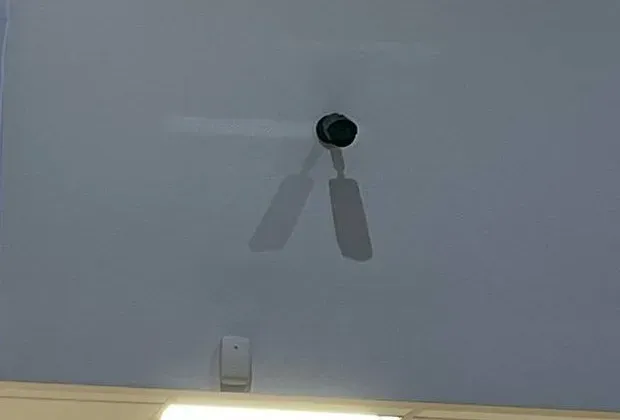
Starrett City, Brooklyn door buzzer installation: small black camera mounted high on a pale wall casting two shadows, with a small white wall device below
A photo from the AESS job library, not taken in Starrett City: a small black camera mounted high on a pale wall, casting two shadows, with a small white device on the wall below it. Inside a tower vestibule, a camera and a small wall device like this are the sort of existing equipment a new lobby door station has to sit beside and, ideally, report to the same control room as.

Six Starrett City facts that decide how a door buzzer gets installed

  • One owner decides for the towers. Spring Creek Towers' 46 buildings and 5,881 apartments are a single rental property, so lobby, garage and service-door systems are ordered by the owner, not by residents or individual buildings.
  • The owner tests before it rolls out. Management's 2021 letter described mocking up new lobbies and hallways and testing each before rolling the upgrade out across the community, which makes the first installed entrance a pilot for all the others.
  • The doors already report somewhere. Honeywell's 2013 retrofit added door sensors that alert operators to doors left open and a network that carries video, so new entry equipment should connect to that system rather than ignore it.
  • Doors draw as many complaints as buzzers. Since 2024, 311 has logged 104 door complaints and 99 bell, buzzer and intercom complaints in ZIP 11239; at addresses on the tower loops and Twin Pines Drive alone, 19 were about buzzers and 15 about doors and frames.
  • The towers sit on the post-1968 side of the intercom law. The complex was dedicated in 1974, and Multiple Dwelling Law §50-a requires an intercom with remote release at the self-locking entrance of any class A multiple dwelling of eight or more apartments erected after January 1, 1968.
  • Thousands of new apartments have opened next door. The Fountains finished 1,163 apartments across six buildings east of Hendrix Creek in 2021, and Alafia's first phase added 576 more in December 2025, each with entrances of its own.

Where this page applies. Starrett City runs from Louisiana Avenue and Fresh Creek in the west to Van Siclen Avenue and Hendrix Creek in the east, with Pennsylvania Avenue running through the middle and the loops of the eight sections on either side of it. This page covers the towers, the shopping center and offices on the grounds, the schools and recreation buildings, and the newer buildings just east toward Erskine Street and Fountain Avenue. For the rest of the borough, see our door buzzer installation in Brooklyn page.

Repair Before Replacing

Panel Dead for Weeks or a Store Door That Won't Hold? Find Out Whether You Need a Repair Visit Before Anyone Orders New Equipment

A fair number of the calls we get about "installing a buzzer" in Starrett City are really about something already on the wall. A store in the shopping center has a release button that stopped working after a renovation. A program's suite door has a strike that buzzes and does nothing. A management office wants to know whether a lobby that has been patched for years is worth another repair or should be first in line for replacement. Before any new equipment is chosen, we sort the job into one of three paths, and we say plainly which one it is.

The first path is a targeted repair, when one part is the whole problem: a power supply that has failed, a strike whose keeper has drifted out of line with the latch, a closer that no longer pulls the door the last inch. The second is a partial replacement, with a new door station and supply on cable that still tests sound. The third is a new installation, when the cable, the panel and the door hardware have all reached the end of their useful life, or when the door never had a release in the first place. If a repair is all you need, our Brooklyn door buzzer team prices it as a repair, and the $250 online service call is applied toward that work.

In the towers there is one more question we ask before anything else: whether the lobby is already on the owner's list for the new-lobby program. A repair that keeps a door working for the next year is worth doing even if a new panel is coming. A large replacement six months before the owner's own contractor rebuilds the entrance usually is not, and we would rather tell the managing agent that than sell equipment that comes off the wall with the old frontage.

What We Install

Door Buzzer Installation Services in Starrett City

Every service below is priced from the same Brooklyn door buzzer list. Who controls the door decides who can order the work, the number of households behind it sets the size of the system, and the door itself decides which release it can take. In Starrett City, the existing building network and the owner's rollout plan shape the rest.

Tower lobby entry systems

Directory or code panels at the plaza door of a tower, reaching every apartment above it, with the strike, closer and door-position reporting planned as one job for the owner.

Pilot entrances for a rollout

One fully documented lobby installed first, tested by residents and staff, then used as the written standard for every other tower in the section or the complex.

Garage and service doors

Keypads, card readers or call stations at the pedestrian doors of the section garages and at service entrances, so staff and residents stop relying on keys.

Connections to the control room

Door-held, door-forced and release signals wired from the entry system to the building's existing monitoring, so operators see the same door the panel controls.

Apartment-door bells and chimes

A bell button at a tower apartment's hallway door, a wired or plug-in chime inside, or a louder or second chime for a back bedroom, fitted only after the management office approves it.

Store and office buzz-in doors

Release buttons behind the counter or at the front desk for shops and second-floor offices in the shopping center, with free exit from inside at all times.

School, club and program doors

Call stations and releases for staffed front desks at schools, the recreation center and community programs, routed to whoever is on the desk.

Systems for buildings under construction

Entry systems specified and installed with the general contractor for new buildings east of the towers, finished and tested before residents move in.

Labeling and handover records

A dated record of every pair, setting and code at each entrance, kept with the owner, so the next repair or the next lobby starts from facts rather than guesswork.

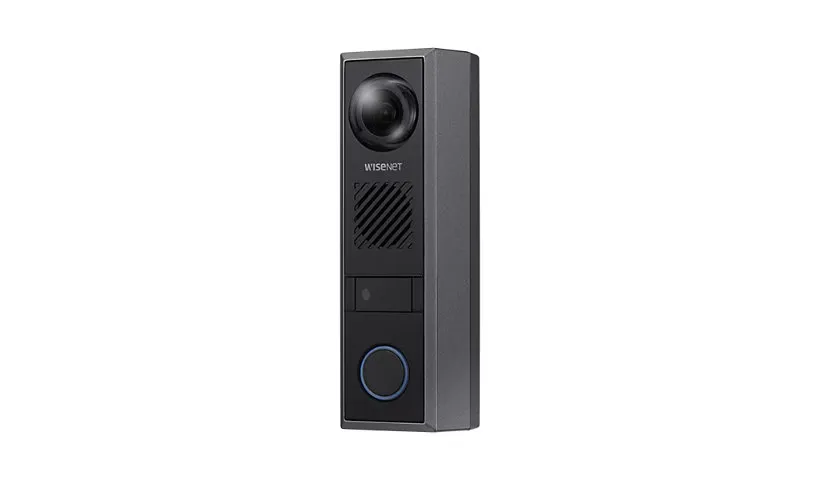
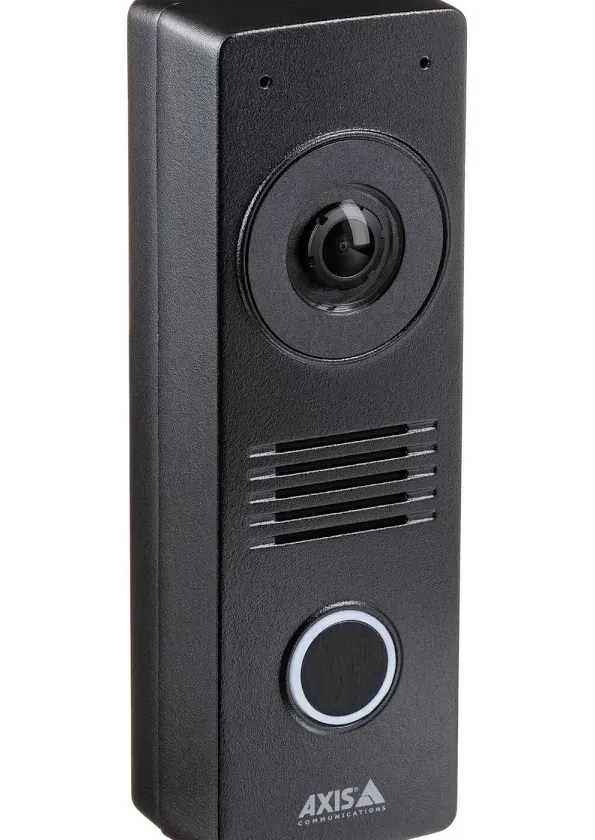
Starrett City, Brooklyn door buzzer installation: slim dark grey wired doorbell with a camera lens, speaker slots and a round push button
A photo from the AESS job library, not taken in Starrett City: a slim dark grey wired doorbell with a camera lens, speaker slots and one round push button. A narrow unit like this is the size that fits beside a store's glass door or a suite door in the shopping center; at a tower apartment's hallway door, management usually prefers a plain button, and a camera there needs its written approval first.
Building Specialists

Door Buzzer Installation for Starrett City's Architecture

For an entry system, Starrett City's buildings fall into six kinds of property. The style matters less than three questions: who owns the door, how many households sit behind it, and what the door already connects to.

Tower lobbies

The plaza entrances of the 11- to 20-story towers designed by Herman Jessor, each serving well over a hundred apartments, where the panel, the strike and the closer are worked hard every hour of the day.

Section garages and their doors

The five-story garages, one per section, with pedestrian doors, stairs and service rooms that need staff and resident entry but not a visitor directory.

Apartments inside the towers

The resident's own hallway door, the one piece of the entrance a tenant can ask to change, and only with management's approval.

The shopping center and offices

Stores on the grounds facing Pennsylvania Avenue and the offices and suites above them, where buzz-in doors protect staff without trapping customers.

Schools, the recreation center and programs

The school buildings on Pennsylvania Avenue, the recreation center that opened in 1978 and the programs that rent space, all with staffed front desks.

Newer buildings to the east

The Fountains, Alafia and Sarah Plowden Place, built since 2021 toward Erskine Street and Fountain Avenue, each with modern entry systems and their own owners.

Tower lobbies: one entrance, more than a hundred households and a door that never rests

Each tower's lobby door is the only way most residents and every visitor reach the elevators, and 5,881 apartments across 46 buildings means the average lobby serves about 128 households. A door like that opens hundreds of times a day. The hardware that matters most is not the panel but the strike and the closer, because they move every time. When we install at a tower lobby, the strike is sized for continuous duty, the closer is adjusted so the door shuts and latches against the plaza wind without slamming, and the frame is checked for the wear that years of heavy use leave around the keeper.

The panel itself is chosen for scale. A tower of this size needs a directory or code panel, not a row of buttons, and it needs to reach apartments over the cable already running up the building or over new cable or a network connection where the old pairs fail. We test the existing risers line by line before quoting, because a riser that passes in one tower can fail in its identical neighbor, and the owner needs to know which lobbies can reuse cable before it budgets the rollout.

On our list a tower lobby sits at or beyond the top of the $2,500 to $10,000-plus multi-unit range, and we quote each lobby on its own sheet. That matters for an owner with 46 of them: it shows exactly what one entrance costs, what a riser repair adds, and what drops out when cable can be reused.

Section garages and service doors: entry for staff and residents, not for visitors

The eight section garages are five stories tall and connect the parking decks to the grounds and, through service rooms, to the buildings' mechanical spaces. McGowan Builders' account of the boiler decentralization project describes modular boiler plants installed outside the garage mechanical spaces, one set for each section, which tells you how much equipment and staff traffic now passes through those buildings. The pedestrian and service doors there need a different system from a lobby. Nobody is visiting a boiler room, so a directory panel makes no sense; what the doors need is entry for the right people and a record of who went in.

For those doors we install keypads or card readers with an electric strike, set so that the door stays locked from outside and opens freely from inside. Where a call is needed, such as a garage stair door residents use after parking, a small call station can ring the Public Safety desk or the management office rather than any apartment. Each door's codes or cards are managed separately from the lobbies, so a contractor's code for a garage service room never opens a tower.

Garage and service doors usually land in the $400 to $900 audio range per door, or the $700 to $1,800 range where video or a networked reader is wanted, priced door by door on the same quote as the lobbies they serve.

Apartments inside the towers: the part of the entrance a resident can ask to change

A resident of a tower does not own the lobby panel, the riser or the station on the apartment wall that answers the lobby. Those belong to the building. What a resident lives with every day, though, is the apartment's own hallway door, and many of those doors have a bell button that was painted over years ago, a chime that rings too softly to hear from a back bedroom, or nothing at all, so neighbors and visitors knock. That is a small installation, and it is one a resident can arrange, with one condition: the management office must approve it in writing before anything is fixed to the door or the hallway wall.

The equipment is simple. A wired button at the door with a chime inside the apartment, or a wireless button and a plug-in chime that needs no cable through the wall, or a second chime for the far end of a large apartment. A camera at the hallway door is a separate question. Habitat magazine reported in 2023 that New York City has no law banning doorbell cameras in apartment hallways, but that building rules control the question, and a lawyer who represents boards told it that a resident "can't just unilaterally do what you'd like to do in the common hallways." In a rental complex with one owner, that means the office decides, and many owners limit where a camera can point and what it can record.

This is priced from photos as a small job, and we tell you the figure before you book. If the apartment's lobby station itself is dead, that is the building's repair, and the right first call is the management office.

The shopping center and the offices above it: buzz-in doors that never trap anyone

The shopping center on the grounds faces Pennsylvania Avenue, with a supermarket, a CVS, food counters and services, and offices and suites above. Building records show how often those storefronts change: a 2014 filing at 1340 Pennsylvania Avenue proposed a new storefront entrance and three fire-rated doors, and a 2018 filing at 1380 Pennsylvania Avenue covered a supermarket renovation that included the main entrance. Each change of tenant or layout is a chance to put in a proper buzz-in door instead of a key and a bell.

For a store, the usual installation is a release button behind the counter, a strike in the door frame and, if the owner wants to see who is outside after dark, a small video station at the door. For an upstairs office or clinic, it is a door station at the street-level stair door or the suite door, ringing the front desk. In every case the door must open from inside with one motion, without a key, and fire-rated doors take fail-secure strikes.

Store and office doors usually land in the $400 to $900 audio range or the $700 to $1,800 video range, and the landlord's written consent comes first, because the frame and the storefront belong to the center.

Schools, the recreation center and programs: a staffed desk that buzzes all day

The school buildings on Pennsylvania Avenue, the recreation center that opened in 1978 and now houses the Brooklyn Sports Club, and the programs and senior services that rent space on the grounds all have one thing in common: someone at a desk lets people in. Building records show the entrances at 1400 Pennsylvania Avenue have been reworked more than once, with all of the exterior entry doors replaced in 2001 and, in 2018, accessibility ramps added at two entrances along with "ADA compliant hardware at exterior door." An entry system at a building like that has to work with whatever hardware is already approved on the door.

The installation here is a video call station at the entrance, a master station or desk console at the front desk with a release button, and a strike or electrified lever that suits the existing door. Reach ranges matter: the 2010 ADA Standards set 48 inches as the maximum high forward reach, so the call button goes no higher. Where the desk is not staffed all day, calls can roll over to a second station or a phone. Public schools are run by the city, and their entrances are the city's decision, so we work at schools only when the school's facility staff or the city's contractor engages us.

Newer buildings to the east: entry systems built in, not added later

East of Hendrix Creek, the neighborhood has changed more in five years than in the forty before. New York YIMBY reported that The Fountains, built by the Arker Companies on the former Brooklyn Developmental Center site, finished 1,163 apartments in six buildings of six to nine stories, at addresses including 11629 Seaview Avenue, 911 Erskine Street and 894 Fountain Avenue. Alafia's first phase, opened in December 2025, added 452 supportive apartments in joined 12- and 15-story buildings and 124 more in a six-story building, with five more phases planned toward about 2,400 homes. East Brooklyn Congregations cut the ribbon on Sarah Plowden Place, 183 homes for seniors at 890 Erskine Street, in September 2026.

Buildings like these are designed with entry systems in the drawings, and the work is usually let to a low-voltage subcontractor through the general contractor. For a later phase, we install, test and document the system before the first residents arrive, so the property's own staff are not discovering on move-in day which apartments the panel cannot reach. For a building already open, we take on additions, such as a second entrance or a package room door, for its owner or managing agent.

These are multi-unit jobs, priced from the drawings and a site visit within the $2,500 to $10,000-plus range per entrance or above it for a large building, and broken out line by line so the general contractor can carry them in a bid.
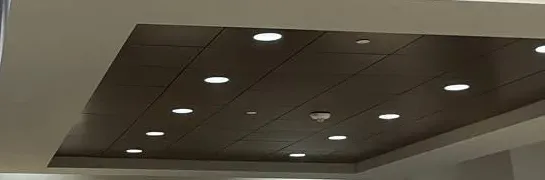
Starrett City, Brooklyn door buzzer installation: dark recessed ceiling panel with round downlights and a small round device framed by a lighter ceiling
A photo from the AESS job library, not taken in Starrett City: a dark recessed ceiling panel with round downlights and a small round device, framed by a lighter ceiling. A rebuilt lobby ceiling like this is where the cable for a new tower entry panel often runs, and it is easier to route before the finished ceiling closes than after.
Field Notes

Field Notes: Watch the Door for Ten Minutes, Find the Wire That Already Reports It, Then Ring the Top Floor

This is how our technician spends the first part of a visit to a Starrett City entrance, before anything is priced.

First, the door at work. Before opening any panel, the technician stands at the lobby or store door for ten minutes and watches it. How often it opens, whether it closes and latches every time, whether anyone props it, how hard the wind off the bay pushes it, whether deliveries come through it or through another door. That ten minutes decides the strike, the closer setting and whether the door hardware is the real job.

Second, what already watches the door. The technician looks for a door-position switch on the frame, a camera aimed at the entrance and any wiring that leaves the door for somewhere other than the panel. In a building with a monitoring network, that wire usually goes to a control panel that reports the door to operators. We note what it reports and where, because the new entry system should send its signals to the same place.

Third, the farthest apartment or room. With the owner's staff, the technician calls the highest floor or the back office from the door and listens for clear speech both ways. In a tower, a test call to the top floor tells us more about the riser than any drawing does.

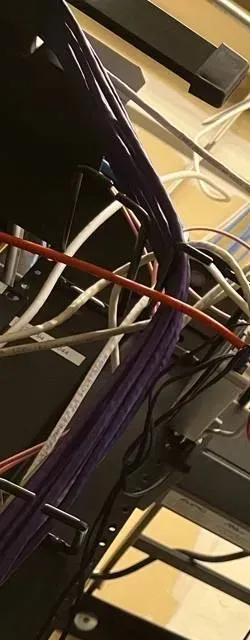
Starrett City, Brooklyn door buzzer installation: purple, white and red cable bundles dropping down beside a black equipment rack
A photo from the AESS job library, not taken in Starrett City: purple, white and red cable bundles dropping down beside a black equipment rack. In a tower or garage service room, the entry controller, its power supply and the link to the building's monitoring network belong in a locked rack like this rather than on an open wall.

The Pilot Lobby: What One Mock-Up Entrance Has to Prove Before 45 Other Towers Get the Same Door System

Management's own approach to the new lobbies is the right one for an entry system, and it is worth spelling out what the test should cover. The 2021 letter said each space would be mocked up and tested "so we can see what works and what can be improved before we roll out the upgrades across the entire community." For finishes and lighting, a mock-up answers questions of taste. For a door entry system, it answers questions that are expensive to get wrong 46 times: whether the panel reaches every apartment over the cable in that tower, whether the strike survives the traffic, whether residents and visitors can actually use the directory, and whether the door reports correctly to the people watching it.

We plan a pilot lobby as a full installation with a written test plan attached. Before the panel goes live, every apartment line is called from the lobby and logged as clear, weak or dead. After it goes live, the strike, closer and panel are checked again at set intervals during the first months, because a lobby door at that traffic level shows its weak points quickly. Residents' questions to the management office during those weeks are worth collecting too, since the same questions will come from every other tower.

What the pilot should measure

  • Reach. The share of apartment lines that work on the existing riser, the share that need repair and the share that need new cable or a network path. That one figure decides most of the rollout budget.
  • Door behavior. How many times the door fails to latch on its own in a week, how often it is found propped, and whether the closer setting needs to change with the season.
  • Visitor use. Whether first-time visitors find their apartment on the directory without help, whether the code format is clear, and whether couriers can reach the right household.
  • Reporting. Whether door-held and door-forced signals reach the control room, and whether a released door is shown as released rather than forced.
  • Parts on hand. Which parts fail first and how long a replacement takes to arrive, so spares can be ordered before the next lobby goes in.

The last point comes straight from the 2021 letter, which said inventory had been hard to get. A rollout across dozens of lobbies is only as good as the parts supply behind it. If the pilot shows that a particular strike or power supply takes weeks to arrive, the owner should stock it before the second tower, not discover it with a lobby door standing open.

Turning the pilot into a standard

Once the pilot has run long enough to show its problems, we write it up as a standard for the remaining lobbies: the panel model and settings, the directory format, the strike and closer, the mounting heights, the cable and labeling scheme, and the connections to the monitoring network. Each new tower is then a known job with a known price, quoted on its own sheet, with only the riser test left to discover. That is how an owner keeps 46 entrances consistent enough that a technician who has worked in one tower can work in any of them.

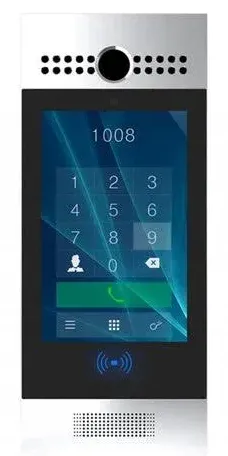
Starrett City, Brooklyn door buzzer installation: touchscreen entry panel showing a dial pad with a four-digit apartment code entered, a camera above and a card-reader symbol below
A photo from the AESS job library, not taken in Starrett City: a touchscreen entry panel showing a dial pad with a four-digit apartment code entered, a camera above it and a card-reader symbol below. A code panel like this is one option for a pilot tower lobby, and the pilot is where the owner learns whether visitors find the right code without help.

A Buzzer in a Complex That Already Watches Its Doors: Fitting New Entry Equipment to the Towers' Building Network

Most apartment buildings in Brooklyn have an entry system and nothing else at the door. Spring Creek Towers is different. Honeywell's 2013 announcement described a centralized building management system linked to a local area network, new sensors "that alert operators to doors that should not be open" and to elevator problems, a replacement for an aging alarm system, and a passive optical network supporting video surveillance and phone traffic. Management's 2021 letter added more than 30 cameras. A door buzzer installed at a tower lobby lands in the middle of all of that.

That changes how the installation is wired. A door-position sensor on its own reports only that the door is open. It cannot tell whether the door is open because a resident buzzed in a guest, because someone has propped it, or because someone forced it. The entry system knows the first of those, and a properly wired installation passes that knowledge on. The usual way is to connect the entry controller's release output, or its door-held and door-forced outputs, to the same monitoring panel the existing sensor reports to, so operators see "released" when a resident presses the button and "forced" only when nobody did.

What we connect, and what we leave alone

We connect the entry system's outputs to inputs on the building's monitoring equipment, label them and test them with the operator on the line. We do not reprogram the building management system itself; that belongs to whoever maintains it for the owner, and we coordinate with them on the day. Where the owner wants the new panel to run over the building's existing network rather than new cable, we ask the network's administrator for a port, an address and the security rules, because an entry panel that shares a network with cameras and building controls should be kept apart from them logically even when it shares the fiber.

Two practical rules follow. First, the entry system must keep working when the building network does not. A lobby panel that cannot call apartments because a switch upstairs has failed is a lobby door that gets propped, so the call path to apartments should not depend on the same network as the cameras. Second, the door must still open from inside with one motion when everything is off. Those two rules shape the equipment we recommend for the towers far more than any brochure does.

Starrett City, Brooklyn door buzzer installation: bundles of blue low-voltage cable laid over a ceiling beam and a metal pipe in an open ceiling
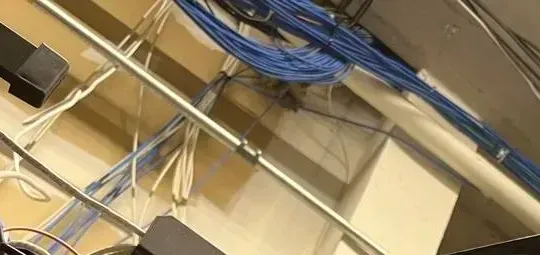
A photo from the AESS job library, not taken in Starrett City: bundles of blue low-voltage cable laid over a ceiling beam and a metal pipe in an open ceiling. Above a tower lobby or in a garage service room, the cable from a new entry controller to the building's monitoring panel runs alongside existing network cable like this, labeled at both ends.

Your Apartment Door, Not the Lobby: What a Tower Resident Can Have Installed, and What Needs the Office's Yes First

Residents call us because the lobby is where the frustration is: a panel that does not ring, a door that does not latch, a courier who cannot get in. We understand that, and we also have to be straight about it. In a rental complex with one owner, the lobby system is the owner's equipment, and we work on it only when the owner or its managing agent engages us. A resident who hires a contractor to open the lobby panel is asking for trouble with the lease and with the next repair, and we will not do it. Brick Underground's intercom guide makes the same point from the installer's side: building authorization comes before any repair, though, as one Brooklyn locksmith put it, "a tenant can handle the communication."

That communication is usually the most useful thing a resident can do. A written note to the management office that names the building, the lobby, the apartment and exactly what fails ("the lobby calls ring but the release does not open the door," or "visitors cannot hear us from the plaza") gets a repair moving faster than a general complaint, and a 311 complaint creates a city record if the office does not act.

What is yours to improve

  • A bell at your own door. A wired or wireless button outside the apartment door, with a chime inside, for visitors who have already come up from the lobby, such as neighbors, staff and deliveries brought upstairs.
  • A chime you can hear. A second chime for a back bedroom, or a plug-in chime that is louder or easier to notice than whatever came with the apartment.
  • A camera, only with written approval. A video doorbell at a hallway door looks onto shared space, and the office decides whether it can go up, where it can point and what it can record.

Everything on that list is installed without touching the lobby system or the apartment's lobby station, without drilling a fire-rated apartment door, and in a way that can be removed when you move out. Wireless buttons can be fixed to the frame with removable mounts; a wired button needs a small hole and a short cable, which is why approval comes first.

Who Pays for New Lobby Entry in a Mitchell-Lama Rental, and What the Law Already Requires at a 1974 Tower Door

Two questions come up whenever a large lobby project is discussed here: who ends up paying, and whether the work is optional. Both have clearer answers in Starrett City than in most of Brooklyn, because the complex sits under state Mitchell-Lama supervision and a federal housing contract, and because its towers went up after New York's intercom rule took effect.

How a capital project reaches the budget

New York State Homes and Community Renewal describes the Mitchell-Lama rent process this way: every two years the housing company prepares a two-year, line-item budget that includes "capital expenditures and reserve provisions." If the budget shows that rents and other income will not cover the development's obligations, the owner can apply for a rent increase. Residents are served the application, the owner's projections and HCR's own preliminary projections, and they can comment in writing within a 30-day period, followed by a meeting with the owner and HCR. In rental developments, "specific funds of the development are made available for the tenants association to engage the services of a Certified Public Accountant" to review the numbers. Developments with HUD involvement have additional notice and approval steps.

For a resident, the practical point is that a large entry-system program would show up as a line in a budget that tenants have a formal chance to review. That is the place to ask what the lobby program costs, how many entrances it covers and over how many years. A written quote per lobby, which is how we price this work, is the kind of document that makes that line easy to check.

What the intercom law asks of these towers

Multiple Dwelling Law §50-a requires every class A multiple dwelling erected after January 1, 1968 with eight or more apartments to have a self-locking main entrance door and an intercommunication system that lets residents talk to a visitor at that door and release it from their apartments. The towers were dedicated in October 1974 and each holds far more than eight apartments, so they sit on the post-1968 side of that rule. The intercom is not an amenity the owner can decide to retire. It is required equipment, which is why installation and repair at the lobbies is continuing work rather than a one-time project.

What a HUD inspector looks at

With more than 3,500 apartments under a Section 8 contract, the complex is also inspected under HUD's NSPIRE standards. Those standards treat an apartment entry door that "cannot be secured" by at least one installed lock as a deficiency, flag a self-closing mechanism that "does not pull the door closed and engage the latch," give a fire-labeled door that does not close and latch a 24-hour correction time, and list a damaged, inoperable or missing exterior door component with a 60-day correction time. None of that names an intercom, but every item on that list sits on the same doors an entry installation touches, which is why we check the closer and the latch on every door we work on and write down what we find.

None of this is legal advice. It is the framework we keep in mind when we quote an entrance here, and it is why our quotes list the door hardware as plainly as the electronics.

Commercial Door Buzzer Installation

Business Door Buzzer Installation in Starrett City

The businesses that need buzz-in doors here are clustered in a few places: the shopping center on the grounds, the offices and suites above it, the recreation and program buildings, and the large retail center just to the east. Each has a landlord or institution that controls the frame, so we start with whoever signs the lease.

Stores in the shopping center

The supermarket, CVS, food counters and service shops facing Pennsylvania Avenue, where a release behind the counter lets staff hold the door after dark while customers inside leave freely.

Offices and suites upstairs

Medical, social service and professional offices above the stores, where a door station at the stair or suite door rings a reception desk and keeps the waiting room separate from the hall.

The management office

The Spring Creek Towers management office, listed at 1255 Pennsylvania Avenue, and similar staff offices, where a buzz-in door controls the line between public counter and back office.

The recreation center and programs

The Brooklyn Sports Club in the recreation center that opened in 1978, the boxing gym and the programs and senior services on the grounds, each with a front desk that lets members and visitors in.

Gateway Center

The big retail center east of the complex, opened in 2002 with a second phase in 2014, where tenants want staff doors, receiving doors and back offices on keypads or call stations.

Ground-floor space in the newer buildings

Commercial and community space at the foot of the newer buildings, such as the roughly 21,700 square feet at The Fountains, which needs entry systems kept separate from the apartments above.

Rules that apply to business and institutional entry installations here

  • Free exit comes first. Whatever releases a door from outside, the door must open from inside with one motion, without a key or special knowledge. An electric strike in the frame allows that by design.
  • Magnetic locks need the full arrangement. The building code allows electrically locked egress doors only with a sensor on the inside, a push-to-exit button 40 to 48 inches above the floor within five feet of the door, unlocking on loss of power and on fire alarm or sprinkler activation, and UL 294 listed parts.
  • Fire-rated doors take fail-secure strikes. Allegion's guidance notes that fire doors need fail-secure hardware so they stay latched in a fire; the storefront filing at 1340 Pennsylvania Avenue that added three fire-rated doors is a reminder that these doors are common here.
  • Reach ranges are fixed. At doors open to the public, the 2010 ADA Standards set the high forward reach at 48 inches maximum, so call buttons and keypads go no higher.
  • The landlord's consent is in writing. Store and office frames belong to the center's owner, so we ask for written consent before cutting a frame or running cable through common areas.
Starrett City, Brooklyn door buzzer installation: tiled corridor with white walls and small wall plates ending at a grey steel door with a lever handle under a drop ceiling with a small camera
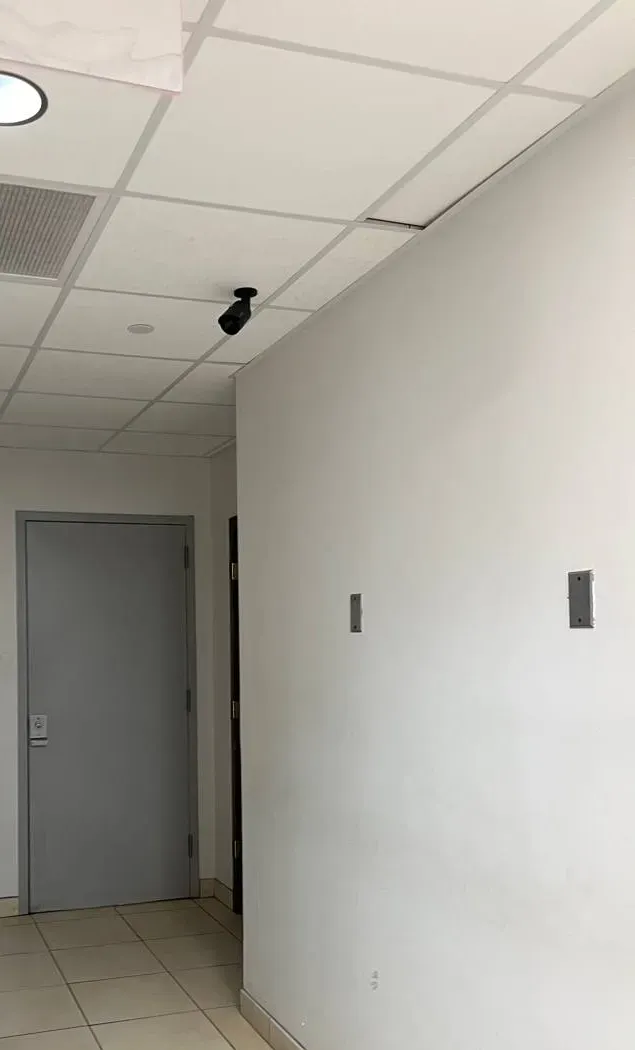
A photo from the AESS job library, not taken in Starrett City: a tiled corridor with white walls and small wall plates, ending at a grey steel door with a lever handle under a drop ceiling with a small camera. The back corridor behind a store or the stair door to an upstairs office in a shopping center often looks like this, and a door of this kind takes a fail-secure strike with the lever left free on the inside.
Your Questions Answered

Door Buzzer Installation in Starrett City: Questions Answered

Planning a lobby program across the towers

Management tested a mock-up lobby before rolling out new finishes. How long should a pilot door system run before the same equipment goes into the next tower?

Long enough to see the door fail the ways it is going to fail. For a tower lobby, we suggest at least a full season of use, with checks of the strike, closer and panel at set points and a log of every service call. A door that behaves in October can stick in January, and a panel that works with a few test calls can show weak lines once every household is using it.

The pilot does not have to hold up planning. Riser tests in the next towers can start while the pilot runs, so that when the standard is settled, each lobby's price is already known.

The 2021 letter said inventory was hard to get. If a part runs out halfway through a rollout, what keeps a tower's door working?

Planning, mostly. The parts that wear or fail first at a busy lobby are the strike, the power supply and the panel's front, so we recommend the owner buy a small stock of each with the first order and keep it on the property. If a part is back-ordered, the lobby that is waiting keeps its old system running until the new one is ready; we do not take a working door apart before the replacement is in hand.

Where a standard part has gone out of production, the written standard names an approved substitute, so the next lobby does not stall waiting for a decision.

The towers' monitoring already flags doors left open. How does a new lobby system tell the operator that a door was buzzed open rather than forced?

By sending its own signal to the same monitoring panel. The entry controller has an output that changes when a resident or staff member releases the door, and most controllers also have door-held and door-forced outputs that work with a position switch on the frame. We wire those outputs to inputs on the building's monitoring equipment and test them with the operator on the phone.

The result is that the operator sees a released door as released, a propped door as held, and only a door opened with no release as forced. That cuts false alarms without hiding the real ones.

Can new lobby panels use the fiber network the complex installed in 2013, instead of new cable up every tower?

Sometimes, for the panel's own connection to management software, and only with the network administrator's agreement. Honeywell's announcement described a passive optical network carrying video and phone traffic, and a networked panel can use a port on a network like that if it is given its own segment and security rules.

What the network does not replace is the path from the lobby to each apartment. That still runs over the riser, a new cable or a separate system, and we design it so that apartments can still be called if the building network is down.

Residents, rules and who decides

Our tenants association wants to understand what a lobby program would cost before it shows up in the budget. What should a per-lobby quote show?

Separate lines for the panel and apartment-side equipment, the door hardware, the cable or riser work, the connection to monitoring, labor and any electrician's work, plus a list of items that depend on a test and what each would cost. One sheet per lobby makes it possible to multiply by the number of entrances and see what changes from tower to tower.

HCR's process gives tenants associations in Mitchell-Lama rentals access to funds for a certified public accountant to review the budget, and a quote laid out this way is the kind of document an accountant can check against it.

With so many apartments under a HUD contract, does a HUD inspection look at the work an entry installation leaves behind?

It looks at the doors. HUD's NSPIRE standards list entry doors that cannot be locked, self-closing hardware that does not pull the door shut and latch it, fire-labeled doors that do not close and latch, and damaged or inoperable exterior door components among the deficiencies inspectors record. An entry installation touches all of those parts.

That is why we leave every door we work on closing and latching on its own, and write down its condition before and after. If a door was failing before we arrived, the record says so.

A new resident on r/Brooklyn asked whether packages left downstairs can be trusted. Is there anything an entry installation can do about deliveries in a tower?

At the lobby, yes, and it is the owner's decision. A lobby panel can give couriers a delivery code that opens only a secure package room, or route courier calls to staff, so that boxes are not left on the lobby floor. In buildings with a staffed desk, the desk console can let a courier into a locked room and log it.

A resident's own part is smaller but real: keep the apartment listed correctly on the directory, answer the lobby station, and report a dead station quickly, because a courier who cannot reach anyone leaves the box wherever they are standing.

Does a lobby door in Starrett City have to have an intercom by law, or is it the owner's choice?

The towers were dedicated in 1974, after the January 1, 1968 date in Multiple Dwelling Law §50-a, and each has well over eight apartments, so the law requires a self-locking entrance door with an intercom that lets residents speak to a visitor and release the door. It is required equipment, not an optional amenity.

The same rule applies to the newer buildings to the east, which are far more recent and far larger than eight units. The houses on the Nehemiah side are not multiple dwellings and fall outside it.

Stores, programs and newer buildings

Our office upstairs in the shopping center shares a stair with other tenants. Can our door be on a buzzer without locking the others out of the stair?

Yes. The buzzer goes on your suite door, not on the shared stair door, so the stair stays as the landlord and the other tenants use it today. Visitors climb the stair, ring at your door and are released into your reception area. If the landlord wants the stair door itself on a system, that becomes a shared project with every tenant's calls on one panel.

We ask for the landlord's written consent before cutting your suite door frame, since the frame belongs to the building.

Our program's front desk is not staffed for part of the day. Where should visitor calls go when nobody is sitting there?

To a second station or a phone. A desk console can be set to ring a back-office station or a staff member's phone after a set number of rings, or on a schedule, and either can release the door. Visitors at the entrance never hear a call go unanswered just because the desk is empty for an hour.

If the door should stay unlocked during program hours and lock afterward, the controller can follow a schedule, with the desk able to override it.

We are on the team for a later phase of the new development by Fountain Avenue. What does the entry installer need from the drawings?

The door schedule with hardware for every entrance, the low-voltage riser and closet locations, the apartment count by floor, the location of any front desk or package room, and the network plan if the panel will use the building's internet. With those, we can price every entrance before the walls close.

The most useful thing a general contractor can do is put the entry system's power and cable pathways on the drawings early, so the system is installed and tested before the first move-in rather than finished around new residents.

Equipment

Types of Door Buzzer Systems We Install

Quotes default to our own non-branded system, sized to the door and the building. If you want a particular brand, ask, and we will tell you which of the brands we carry fit your door, your cable and your network.

Directory and code panels

For tower lobbies and large new buildings, where visitors scroll a directory or enter an apartment code, and residents enter with a code, card or fob.

Two-wire multi-tenant systems

For towers whose risers test sound, reaching many apartments over existing pairs so the lobby can be modernized without new cable to every floor.

Networked lobby panels

For owners who want management software, remote directory updates and call logs, connected on their own network segment.

Keypads and card readers

For garage pedestrian doors, service rooms and staff doors, with codes managed separately from the lobbies.

Desk consoles and master stations

For staffed desks at programs, schools and offices, showing which door is calling and releasing it from the desk.

Single-door video stations

For store doors, suite doors and receiving doors, ringing a counter, office or phone.

Electric strikes and door hardware

Fail-secure strikes sized for continuous duty at lobby doors, closers adjusted to latch every time, and door-position switches for monitoring.

Apartment-door bells and chimes

Wired or wireless buttons and plug-in chimes for a resident's own hallway door, removable at move-out.

Starrett City, Brooklyn door buzzer installation: silver and black keypad door station with a camera lens at the top, a blue card-reader symbol, a numeric keypad and a green bell key
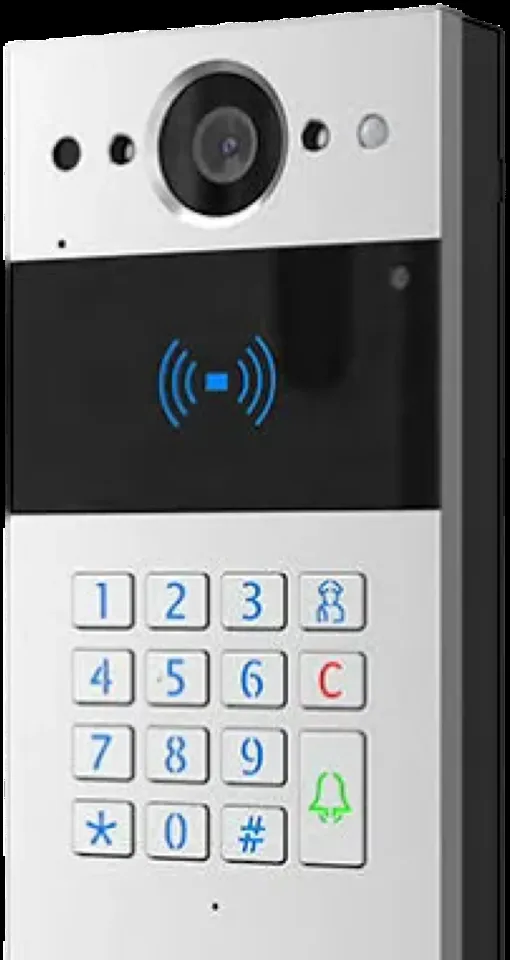
A photo from the AESS job library, not taken in Starrett City: a silver and black keypad door station with a camera lens at the top, a blue card-reader symbol, a numeric keypad and a green bell key. A combined station like this suits a section garage's pedestrian door or a staff entrance, where residents and staff use a code or card and the rare visitor presses the bell.

National alarm and doorbell brands, or a local entry installer, for a Starrett City door

ADT sells monitored security for homes and businesses, and Ring and SimpliSafe sell video doorbells a person can fit to existing doorbell wiring or run on a battery. For a store owner who wants to see the front door on a phone, or a resident who has approval for a camera at an apartment door, one of those products can be a reasonable choice, and we will say so.

Where they stop is the shared entrance. A video doorbell does not call more than a hundred apartments from a tower lobby, does not release an electric strike from an apartment upstairs, does not report a released door to a control room, and does not meet the state intercom rule for a building of eight or more apartments. It also depends on a Wi-Fi signal reaching the door, which in a concrete tower hallway is not something to assume.

A local low-voltage installer fits the system to the door, the building and the owner's network, prices it in writing, and is reachable afterward. That is the work we do under NYS license #12000287431, and on a door where a doorbell is all that is needed, we tell you that too.

AI Overview Reality Check

What AI Gets Wrong About Door Buzzer Installation in Starrett City

AI summaries of door buzzer installation draw mostly on national cost guides, contractor directories such as Angi, HomeAdvisor and Fixr, and intercom vendors' blogs. Here are seven claims those sources make, each checked against how entrances actually work in Starrett City.

"An intercom installation costs an average of $2,500"

HomeAdvisor's guide says installing an intercom system "costs an average of $2,500," with most jobs between $1,500 and $15,000. That average blends doorbells for houses with systems for apartment buildings across the whole country, and it describes almost no single door in Starrett City.

A buzz-in door for a store in the shopping center can come in well under that figure, inside our $400 to $900 audio range. A tower lobby serving more than a hundred apartments, with its strike, closer, riser test and connection to monitoring, sits at or beyond the top of our $2,500 to $10,000-plus multi-unit range.

The more useful number for an owner here is the price of one lobby, multiplied across 46, adjusted lobby by lobby for what each riser test finds. That is why we quote towers one sheet at a time.

"Wireless systems are the best option if you want to do it yourself"

The same HomeAdvisor guide says wireless systems "are the best option if you want to DIY." That may be true in a house the owner controls. In a tower, the lobby system belongs to the building, and a resident who installs anything on it, wireless or not, is working on someone else's equipment.

What a resident can do is limited to their own apartment door, and even there, a wireless button fixed to the frame in the hallway touches shared space. In a complex with one owner, the management office decides, and a quick written request is the first step.

For store owners, a do-it-yourself buzzer often runs into the frame: cutting a strike pocket into a storefront that belongs to the center's owner needs consent, and doing it badly can leave a door that neither latches nor releases.

"Cloud intercoms need no building wiring"

ButterflyMX describes its intercom as one that "requires no building wiring," because residents answer on their phones. That is true of the path to the apartment. It is not true of the door, which still needs power, an electric strike or lock, a network connection and someone to fit the strike into the frame.

In a tower, phone answering also raises questions a house never does: residents without smartphones, residents whose numbers change, and a building network that cameras and building controls already share. Each of those needs an answer before the panel goes up.

Phone answering can be part of a tower lobby system, and many residents like it. It works best alongside a path to apartment stations rather than as the only way to reach a household.

"Software subscriptions add $5 to $15 per unit per month"

Swiftlane's cost guide says subscriptions "commonly add $5 to $15 per unit per month." For a small building that sounds like little. Applied to 5,881 apartments, that range works out to roughly $29,400 to $88,200 a month for the complex as a whole, which is a large line in any budget.

That arithmetic does not mean subscription systems are wrong for the towers. It means the subscription is a long-term cost the owner should compare with a wired system that has none, in writing, before choosing, and that in a Mitchell-Lama rental it is a cost that ends up in a budget tenants can review.

Our quotes show the monthly cost line plainly, including $0 when the chosen system has no subscription.

"A five-apartment building takes a day, so a big building is a few days' work"

Brick Underground's intercom guide quotes one installer estimating that a five-apartment building could be done in a day and another saying a 100-unit building might take about two days. Those estimates are reasonable for a single entrance with sound cable.

Starrett City is 46 entrances, not one. A complex-wide program runs as a sequence: a pilot lobby, a test period, a written standard, then lobby after lobby, each with its own riser test. Each lobby can still be a short job on installation day; the program as a whole takes much longer.

"No law stops you from putting a doorbell camera on your apartment door"

Habitat magazine reported that New York City has no law banning doorbell cameras in apartment hallways. AI summaries often stop there. The same report noted that building rules control the question, and quoted a lawyer for boards saying a resident "can't just unilaterally do what you'd like to do in the common hallways."

In a rental complex, the lease and the owner's rules are what apply. A camera that records the hallway records neighbors, and many owners limit where a camera can point, whether it can record and how long footage is kept.

The safe order is approval first, equipment second. We install hallway-facing equipment in the towers only with the management office's written approval.

"Magnetic locks are the standard way to lock a lobby door"

Many AI answers present magnetic locks as the default for apartment lobbies. Allegion's guidance says the opposite about the market: "Fail secure products are more common than fail safe due to security concerns," and electromagnetic locks "are only available fail safe," meaning they unlock when power is lost.

A magnetic lock can be used on an egress door only with the full arrangement the building code sets out: an inside sensor, a push-to-exit button within reach of the door, release on power loss and on fire alarm activation, and listed parts. That adds cost and makes the door depend on its power supply.

For tower lobby doors and most store doors here, a fail-secure electric strike is our default. The door stays locked from outside when power fails and still opens from inside with the lever, so nobody is trapped and the door is not left open.

Starrett City, Brooklyn door buzzer installation: drop ceiling with a lit red exit sign, an air diffuser, round recessed lights and a small black camera
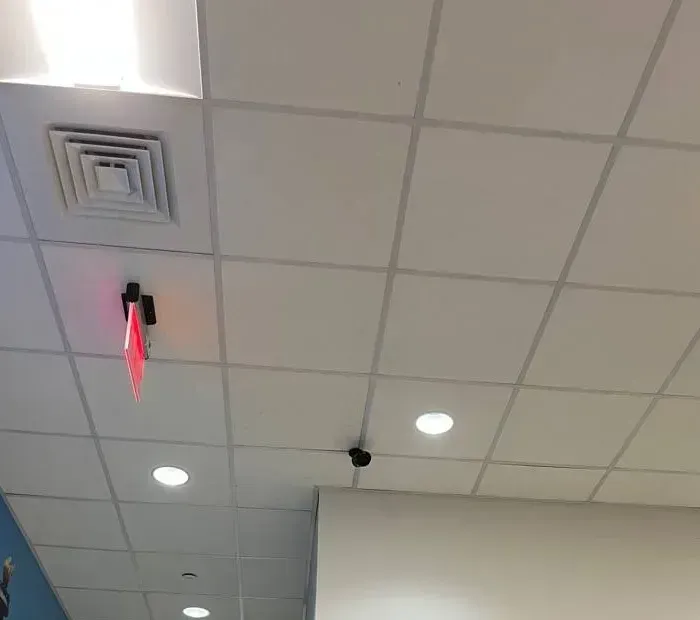
A photo from the AESS job library, not taken in Starrett City: a drop ceiling with a lit red exit sign, an air diffuser, round recessed lights and a small black camera. Under an exit sign like this, at a store or a program's entrance, the door must open from inside without a key whatever the entry system does from outside, which is the reason fail-secure strikes are our default.

Not Sure Whether Your Door Needs a Repair, a Pilot Lobby or Just a Bell? Speak to a Tech

Send a photo of the door, whatever is mounted beside it and the frame where the latch meets it, with the address or loop, who owns or manages the door, and what goes wrong. A technician will tell you which approach fits and where it falls on our Brooklyn ranges. Call or text (347) 934-8335, send photos on WhatsApp, or fill in the form below.

Get In Touch

Request a Free Quote

✅
Request Sent!
Thank you. A technician will call you about the Starrett City door, usually within two hours during working hours.
How It Works

Our Installation Process

1. Find out who controls the door

We confirm whether the door belongs to the complex's owner, a store's landlord, a developer or the resident, and get that party's written authorization before pricing.

2. Photograph and list every door

We list each lobby, garage, service, rear and suite door the system must cover, with photos of the door, its frame and whatever is mounted beside it now.

3. Check the door before the electronics

We make sure the door closes and latches by itself and choose the strike or lock that suits its frame and fire rating, because no panel fixes a door that will not shut.

4. Trace power, cable and the building network

We meter existing pairs, find the nearest power, identify any monitoring panel or network the system must report to, and map the cable route.

5. Write the price and the plan

We place the job on the Brooklyn list in writing, name every extra that depends on a test, and, for an owner with many lobbies, mark which entrance is the pilot.

6. Install the door hardware first

We fit the strike, adjust or replace the closer and add a door-position switch where monitoring needs one, so the door is right before the station goes up.

7. Mount, wire and program

We mount the door station and answering stations, run and label the cable, program the directory, codes and call routing, and connect the reporting outputs.

8. Test every call and leave a record

We ring every apartment or station from outside, release the door from each, confirm it relatches and reports correctly, and leave a dated wiring and settings record.

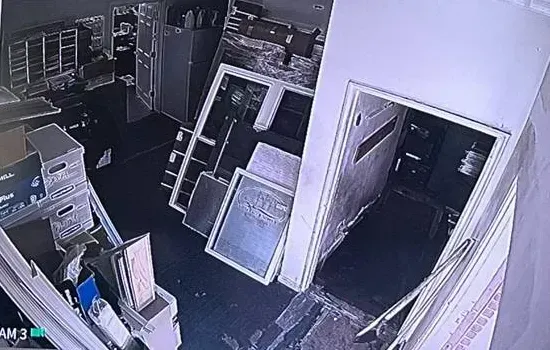
Starrett City, Brooklyn door buzzer installation: black-and-white night camera view of a cluttered room with an open doorway into a dark back room
A photo from the AESS job library, not taken in Starrett City: a black-and-white night camera view of a cluttered room with an open doorway into a dark back room. A store's stockroom looks like this at night, and during step 2 the door from a stockroom to a receiving corridor is one of the doors we list, because it often needs a release of its own.
Coverage Area

Door Buzzer Installation Near Starrett City's Landmarks

Spring Creek Towers management office

The office listed at 1255 Pennsylvania Avenue, where lobby, garage and service-door work for the towers is authorized.

The PS 346 building, 1400 Pennsylvania Avenue

The school building whose exterior doors were all replaced in 2001 and whose entrances gained ramps and accessible door hardware in 2018.

Brooklyn Sports Club

The complex's recreation center, opened in 1978, with a membership desk that lets residents and members in.

Schroeder's Walk at The Fountains

The one-acre public plaza at the heart of The Fountains, the six-building development finished in 2021 east of Hendrix Creek.

Alafia, Fountain Avenue and Seaview Avenue

The new development bounded by Fountain Avenue, Schroeders Walk, Seaview Avenue and Erskine Street, whose first phase opened in December 2025.

Shirley Chisholm State Park

The 407-acre park on the former Pennsylvania Avenue and Fountain Avenue landfills, opened in 2019, across the Belt Parkway from the towers.

We also serve Canarsie across Fresh Creek, New Lots, Cypress Hills and City Line, and every other neighborhood on our door buzzer installation in Brooklyn page.

Pricing

Door Buzzer Installation Cost in Starrett City

Starrett City is billed at our standard Brooklyn rate. The final figure follows photos and a walkthrough, because the number of households behind the door, the state of the riser, the condition of the door and frame, and whether the system must report to building monitoring drive the total far more than the brand on the panel.

JobTypical Starrett City doorBrooklyn range
Audio station or replacement with electric strike release, existing wiring reused where it tests wellA store door in the shopping center, a garage pedestrian door, a staff or service door$400–$900
Video door station with answering stations or phone answeringAn upstairs office or clinic suite, a program's front desk, a receiving door at Gateway Center$700–$1,800
Multi-unit entry system, audio or video by apartment count, with optional code or card entryAn entrance of a newer building east of the towers; a tower lobby sits at or beyond the top of this range and is quoted lobby by lobbyfrom $2,500 to $10,000+
In-person diagnosis of an existing system, booked onlineAny door where the old equipment must be tested before quoting$250, applied toward the work
Monthly subscriptionAny door with a wired, no-subscription system$0

What moves a job inside its range is predictable. For a tower lobby, the riser is the biggest variable: lines that test sound cost nothing extra, while lines that need repair or replacement add labor floor by floor. The door is next, since a frame worn around the keeper or a tired closer has to be put right before a strike goes in. Then the connections: wiring the entry system's outputs into the building's monitoring adds a little cable and a test session with the operator. For a store, the frame material decides most of it, with an aluminum storefront taking a different strike from a steel door in a steel frame. If the job also adds a camera over the entrance, installing it on the same visit usually saves $200 to $400 in labor compared with a separate trip. Anything that depends on a test is named on the quote with its price before you approve. A resident's apartment-door bell or chime is priced from photos as a small job.

Full terms — including 50% deposit, one-year parts-only warranty on AESS-supplied products, and the late-fee schedule — are set out in the service agreement.

Find Out Which Range Your Starrett City Door Falls In

Tell us the building or loop, which door, who controls it, how many households or staff use it and what is mounted there now, and we will tell you which Brooklyn range fits and what would move it. Call or text (347) 934-8335, send photos on WhatsApp, or fill in the form.

Shop Our Systems

Door Buzzer Installation Packages & Pricing

Three typical Starrett City jobs, each placed inside the matching range on our Brooklyn list. The exact figure comes from photos and the walkthrough.

Store or service door: $400–$900

An audio call station or keypad at a shopping center store, garage pedestrian door or staff door, a fail-secure strike in the frame, a release button at the counter or desk, a battery-backed supply and free exit from inside.

Suite or front desk video: $700–$1,800

A video door station at an office, clinic or program entrance, a desk console or answering station with release, call rollover to a second station or phone, and the strike and closer set to latch every time.

Building entrance system: from about $2,500

A directory or code panel, apartment stations or phone answering for every household, riser testing, door hardware, outputs to building monitoring and a written standard, rising toward $10,000 or more with apartments and entrances; a tower lobby is quoted on its own sheet at or beyond the top.

Bring your own equipment. If an owner, store or program has already bought a panel, keypad or door station, we can install it as labor-only work, quoted flat once we have seen the door, the frame and the cable path. Tell us the make and model, and we will say before the visit whether it can reach every household, release your door and report to the building's monitoring. Equipment you supply is covered by its maker's warranty, not ours.

Complete Services

Every Door Buzzer Service in Starrett City

Tower lobbies and garages

Pilot lobbies, rollout standards, riser testing, garage keypads and monitoring connections for the owner. Call (347) 934-8335

Stores, offices and programs

Buzz-in doors, desk consoles and receiving-door stations on the grounds and at Gateway Center. Request a quote

Across Brooklyn

The same price list in every neighborhood. Brooklyn door buzzer installation

Across New York City

Every borough's buildings and rules. NYC door buzzer installation

FAQ

Starrett City Door Buzzer Installation FAQ

Where does a buzz-in door for a store in the shopping center land on your price list?
+

Most land in the $400 to $900 audio range: a call station or button at the door, a fail-secure strike in the frame and a release at the counter. Adding a video station so staff can see who is outside after dark moves it into the $700 to $1,800 range. The landlord's written consent comes before we cut the frame.

Can a store owner have one release button at the register and another in the back office?
+

Yes. Two or more release buttons can be wired to the same strike, and a video answering station can sit in the office while a plain button sits at the register. Whoever sees the customer first lets them in, and the door locks again behind them.

Should a store's panic button also lock the buzz-in door?
+

It can stop the door from releasing from outside, but it must never stop people inside from leaving. The strike keeps the door locked from outside and the inside lever always opens it. We can wire a panic button so the outside release is disabled while the alarm is active, and we explain exactly what it does before it goes in.

Can a contractor working in a section garage get a code that expires when the job is finished?
+

Yes, on keypad and card systems. Codes can be given a start and end date, limited to certain doors and certain hours, and removed early from the management software or the keypad. A garage service code set up that way never opens a tower lobby.

Will residents get new codes or fobs when their tower's lobby is changed over?
+

That depends on the system the owner chooses and whether it keeps the existing credentials. Where new codes or fobs are needed, the owner sets how they are handed out, and the old method keeps working until the new panel is live, so nobody is locked out on the changeover day.

If residents dislike the pilot lobby, can it be changed before the rollout?
+

That is the point of a pilot. Directory layout, call timing, volume and code format are settings, and they can be changed without new equipment. If the pilot shows a hardware problem, the written standard for the other towers is changed before any more is ordered, and the pilot lobby is brought up to the new standard.

Can the owner do one section's towers this year and the rest later at the same per-lobby price?
+

Each lobby is quoted on its own sheet, so phasing by section is straightforward. Equipment prices change over time, so a quote for later lobbies is valid for the period it states, and we requote the rest when the owner is ready, keeping the same standard so every lobby matches.

If the owner uses a different installer for some towers, what happens to the wiring records?
+

The records belong to the owner. We leave a dated record of every pair, setting and code at each lobby we install, written so any qualified technician can follow it. Keeping one written standard across installers is what stops 46 lobbies from turning into 46 different systems.

Will a wireless doorbell button at my apartment door reach a chime through the tower's concrete walls?
+

Usually, over the short distance from a door to a chime inside the same apartment, but concrete and a steel door frame weaken the signal. We test the button and chime in the spot you want before fixing anything, and if the signal is weak we move the chime or suggest a wired button, once management approves it.

When I move out, can my apartment-door bell come off without damage?
+

Yes, if it was fitted the way we fit them. Wireless buttons go on with removable mounts, and plug-in chimes simply unplug. A wired button leaves a small hole that is filled when it comes out. We note what was installed so you can show the management office at move-out.

Does a door-position switch on a lobby door record who comes and goes?
+

No. A position switch only reports whether the door is open or closed. The entry system may log which apartment released the door or which code was used, depending on how the owner sets it up, and we explain what the chosen system records before it is ordered.

Do you work for the owners of the newer buildings east of the towers as well as for Spring Creek Towers?
+

Yes. Those buildings have their own owners and managing agents, and we work for whichever one controls the door, whether that is a tower lobby, an entrance at one of the newer buildings or a building still under construction with its general contractor.

More Door Buzzer Installation near Starrett City

Door Buzzer Installation Brooklyn NY | Brownstones & Condos · Door Buzzer Installation NYC | Apartment & Building Entry · Door Buzzer Installation Manhattan NY | Apartments & Co-ops · Door Buzzer Installation Queens NY | Co-ops & Apartments · Door Buzzer Installation Bronx NY | Co-ops & Apartments · Door Buzzer Installation Staten Island NY | Homes & Apts · Door Buzzer Installation Long Island NY | Nassau & Suffolk · Door Buzzer Installation Hudson Valley NY | Apartments · Door Buzzer Installation Nassau County NY | Homes & Co-ops · Door Buzzer Installation Suffolk County NY | Homes · Door Buzzer Installation Westchester County NY | Co-ops · Door Buzzer Installation Rockland County NY | Homes & Apts · Door Buzzer Installation Orange County NY | Homes & Farms · Door Buzzer Installation Putnam County NY | Lake Homes · Door Buzzer Installation Dutchess County NY | Homes · Door Buzzer Installation Ulster County NY | Kingston

Door Buzzer Installation Bath Beach Brooklyn NY · Door Buzzer Installation Bay Ridge Brooklyn NY · Door Buzzer Installation Bedford-Stuyvesant Brooklyn NY · Door Buzzer Installation Bensonhurst Brooklyn NY · Door Buzzer Installation Bergen Beach Brooklyn NY · Door Buzzer Installation Beverley Square Brooklyn NY · Door Buzzer Installation Boerum Hill Brooklyn NY · Door Buzzer Installation Brooklyn Navy Yard, Brooklyn NY · Door Buzzer Installation Brooklyn NY | Brownstones & Condos · Door Buzzer Installation Brownsville Brooklyn NY · Door Buzzer Installation Bushwick Brooklyn NY · Door Buzzer Installation Cadman Plaza Brooklyn NY · Door Buzzer Installation Canarsie Brooklyn NY · Door Buzzer Installation Carroll Gardens Brooklyn NY · Door Buzzer Installation City Line Brooklyn NY · Door Buzzer Installation Clinton Hill Brooklyn NY · Door Buzzer Installation Cobble Hill Brooklyn NY · Door Buzzer Installation Columbia Street Waterfront Brooklyn · Door Buzzer Installation Coney Island Brooklyn NY · Door Buzzer Installation Crown Heights Brooklyn NY · Door Buzzer Installation Cypress Hills Brooklyn NY · Door Buzzer Installation Ditmas Park Brooklyn NY · Door Buzzer Installation Downtown Brooklyn NY · Door Buzzer Installation DUMBO Brooklyn NY | Loft Entry

Other services in Starrett City

Intercom Installation Starrett City Brooklyn NY · Door Buzzer Repair Starrett City Brooklyn NY · Alarm Installation Starrett City Brooklyn NY | Apartments · Security Camera Installation Starrett City Brooklyn NY · Access Control Installation Starrett City Brooklyn NY · TV Installation Starrett City Brooklyn | Spring Creek Mount · Structured Cabling Installation Starrett City Brooklyn NY · Fire Alarm Installation Starrett City Brooklyn NY

Ready for a Starrett City Entrance That Latches Every Time and Tells the Control Room the Truth?

Send a photo of the door, its frame and whatever is mounted beside it, with the building or loop, who controls the door and what goes wrong, and we will tell you which system fits, how it should connect to what the building already has and where it falls on our Brooklyn ranges. Call or text (347) 934-8335, message us on WhatsApp, or use the request form. Licensed under NYS license #12000287431, rated 4.7★ across 201 Google Reviews, with same-day estimates on most weekdays.