Call, Voice and Release Tested Separately · Brooklyn Price List · Repair Priced in Writing First
ZIP 11239 holds three very different kinds of front door. There are the lobbies of the 46 Spring Creek Towers buildings, all run by one owner; the newer rental and senior buildings east of the towers, on and around Erskine Street, Elton Street, Schroeders Avenue and Fountain Avenue, where most of the neighborhood's buzzer complaints to the city now come from; and the Nehemiah Spring Creek houses, where the "buzzer" is a bell button and a chime. We repair all three, and we start every job by working out who owns the door and who can open the apartments we need to test.
Reviewed and updated November 11, 2026 by Abstract Enterprises Security Systems, NYS license #12000287431 · Sources: NYC Open Data 311 service requests (bell/buzzer/intercom) and HPD Housing Maintenance Code violations for ZIP 11239 (queried November 11, 2026); the Spring Creek Sun's October 6, 2021 community update from Spring Creek Towers management; the Spring Creek Towers website; Wikipedia on Starrett City; the Brooklyn Eagle on the 2021 Mitchell-Lama agreement; East Brooklyn Congregations on Nehemiah Spring Creek and Sarah Plowden Place; NYC311's apartment maintenance complaint page; HPD's self-closing door page; the NY Attorney General's Tenants' Rights Guide; and published repair guidance from Impera Security, UA Security, Swiftlane and ButterflyMX · Dispatched from 1282 Troy Ave, Brooklyn

Owner-operated since 2002 · Thousands of jobs completed · Booked within 2 hours
Door buzzer repair in Starrett City is billed from our Brooklyn price list: a $250 service call covers on-site diagnosis, and the repair is priced in writing before any part goes in. Most calls here come down to an entry panel that stopped calling some or all apartments, an electric strike that clicks without letting the door go, a worn release button or relay, a failing power supply, or a closer that no longer pulls the door shut and locked. Single faults are usually fixed on that first visit; a lobby panel or a riser pair is priced from what we measure. We book within 2 hours of your request into a 2-hour weekday arrival window. For the towers, we work for the owner or its managing agent; for the newer buildings, the houses and the stores, for whoever owns the door. Call (347) 934-8335 or use the form.
Starrett City has more apartments behind fewer front doors than almost anywhere in Brooklyn, and every one of those doors leans on a buzzer. The complex now called Spring Creek Towers is 5,881 rental apartments in 46 buildings of 11 to 20 stories, grouped into eight sections, each with its own garage, on a peninsula between Fresh Creek and Hendrix Creek that Pennsylvania Avenue runs straight through. One owner controls every lobby. Around and east of the towers, the same ZIP code, 11239, now takes in newer rental and senior buildings and the one- and two-family houses of Nehemiah Spring Creek. When a buzzer fails in any of them, the people stuck outside are residents with groceries, home attendants, delivery drivers and visiting family, and in a tower lobby that can be dozens of households at once.
We wanted to see how often that happens, so on November 11, 2026 we queried NYC Open Data for every 311 complaint in ZIP 11239 filed under the city's "bell/buzzer/intercom" category. The file holds 145 since 2020: 16 in 2020, 10 in 2021, 15 in 2022, just 5 in 2023 and 12 in 2024, then 36 in 2025 and 51 so far in 2026. The last two years alone, 87 complaints, are more than the five years before them combined. HPD's violation file adds 24 intercom violations in the ZIP between May 2018 and October 20, 2026, the most recent written at a building on Fountain Avenue.
The more useful finding is where the complaints come from. Sorted by address, the top of the list is not the towers. One building on Elton Street accounts for 32 complaints by itself; a second Elton Street address has 14, an address on Pennsylvania Avenue has 15, one on Schroeders Avenue has 12, and one on Erskine Street has 10. The loop addresses inside the tower sections, Ardsley, Bethel, Delmar, Freeport, Geneva and Hornell, appear only once or twice each, with Freeport Loop's seven the exception. A low count at a tower does not prove its lobby works well; a building whose residents report problems to the management office instead of to 311 will not show up at all. But it does tell us that the newer buildings, with newer entry systems, are where city inspectors are being called most often.
The third pattern is about the door rather than the electronics. Since January 2022, HPD has written 247 self-closing door violations in ZIP 11239, roughly ten for every intercom violation it has written there since 2018. A buzzer that rings every apartment is worth nothing if the door it releases drifts open behind each visitor or never latches. That is why our Starrett City visits always include the closer, the latch and the strike, not just the panel, and why the written record we leave says what each door does when it closes on its own.

We move first on an entrance that no longer locks, a door nobody can buzz open, and a building where a whole group of apartments has stopped getting calls. Call (347) 934-8335 and tell us four things: which building and which door, which apartments fail and which still work, what the door does when someone inside presses release, and whether anything changed first, such as a power interruption, lobby work, a new closer, or a contractor in the equipment room. We book within 2 hours of your request into a 2-hour weekday arrival window; we don't promise same-day repairs. From a good description we can usually tell you before we arrive whether we are looking at the strike, the power supply, the panel or a single station, and if a part has to be ordered, a door that must lock is left locking before we go.
Everything below comes from two queries we ran on November 11, 2026: the 311 service request file filtered to the "bell/buzzer/intercom" descriptor for ZIP 11239, and HPD's violation file filtered to violations in the ZIP whose description mentions an intercom. Neither file is a full count of broken buzzers. A tower resident who reports a dead handset to the management office, a homeowner whose own bell fails, or a store whose back-door buzzer quits will not appear in either. What the files do show is where residents felt they had to call the city.
For five years the count stayed low and fairly flat: 16 complaints in 2020, 10 in 2021, 15 in 2022, 5 in 2023 and 12 in 2024. Then it tripled. There were 36 in 2025, and by November 11, 2026 there were already 51. We can't tell from the file alone why, and we won't guess at a single cause. For an owner, the practical point is simpler: if your address is one of the ones driving that number, an inspector is more likely to be at your entrance soon, and a repair that only fixes the apartment that complained will probably be followed by another complaint.
Of the 145 complaints, 83 came from five addresses: 32 at one building on Elton Street, 15 at one on Pennsylvania Avenue, 14 at a second Elton Street address, 12 at one on Schroeders Avenue and 10 at one on Erskine Street. Further down the list are 516 Vandalia Avenue and 1440 Freeport Loop with seven each, an address on Fountain Avenue with six and one on Vital Avenue with five. Everything else is in ones and twos, including single-complaint addresses on Bethel Loop, Ardsley Loop and Geneva Loop. A building that shows up once had a bad week. A building that shows up a dozen or thirty times is a building whose entry system is being repaired one symptom at a time, or not being repaired at all, and the record will keep growing until somebody tests the whole system in one visit.
HPD writes buzzer and intercom violations under § 27-2005 of the Housing Maintenance Code, and the wording on recent ZIP 11239 violations tells a technician exactly which path to test. A July 17, 2026 violation on Schroeders Avenue reads: "PROPERLY REPAIR OR REPLACE THE BROKEN OR DEFECTIVE INTERCOM SYSTEM AT BUILDING FRONT TO RETURN BUZZER AT WEST WALL IN THE PRIVATE HALLWAY LOCATED AT APT 3A." An October 20, 2026 violation on Fountain Avenue orders repair "FROM BUILDING FRONT TO NORTH WALL IN THE FOYER" of an apartment on the fifth story. A June 2026 violation on Vital Avenue names the "INTERCOM/BELL/BUZZER AT NORTH WALL IN THE ENTRANCE" of an apartment on the sixth story. In each case the order runs from the building's front entrance to a station on a particular wall inside a particular apartment. That is the circuit a repair has to restore and prove: a call from the front, voice both ways, and the release that opens the front door from that station.
Two details in the list matter for owners. The same apartment at the Schroeders Avenue building was written twice within six weeks in 2026, once on June 4 and again on July 17, which is what happens when the first visit didn't fix the cause. And several violations in the file show as dismissed, while new ones were written at the same addresses later. A dismissed violation says something about the paperwork on the day; it doesn't say the system stayed fixed. The dated test record we leave, listing every apartment and door we tested and what each did, is the evidence an owner can actually stand on.
The figure that surprised us most was the door count. HPD's file holds 247 self-closing door violations in ZIP 11239 since the start of 2022. HPD describes a defective self-closing door in a multiple dwelling as an immediately hazardous class C violation and gives the owner 14 days from the notice to correct it. Many are apartment and stair doors, not entrances. But the lesson for a buzzer repair is direct. An entrance door that drifts open, slams and bounces back, or stops short of its latch defeats the lock no matter how well the panel works, and a technician who replaces a strike without watching the door close on its own has done half the job.

The first thing we settle on any Starrett City call is not the brand of the panel. It is who owns the door. Here it depends on which kind of building you are standing in front of, and getting it right saves a wasted visit.
Every lobby, side entrance, garage door and service door in the 46 towers belongs to the complex. The owner group that bought Starrett City in 2018 took full ownership in 2021, and the complex remains in the state's Mitchell-Lama program, with 3,569 apartments under a federal Section 8 contract and 2,312 outside it, according to the Brooklyn Eagle's report on the 2021 agreement. The entry panel at a tower lobby, the strike in its door, the power supply behind it and the stations in the apartments are all building systems. A repair to them is booked by the owner or its managing agent, and work happens on the complex's terms, with its own maintenance staff and its own Department of Public Safety officers on the grounds.
That means a resident whose handset has gone quiet, or who can't buzz a guest in, starts with the management office, and if that doesn't produce a repair, with 311, whose apartment maintenance and public area complaints both cover "doorbells, buzzers, or intercoms that are broken or missing." We are glad to explain to any resident what the fault is likely to be, but we will not open a building system we haven't been hired by its owner to work on. When management or the owner books us, we work alongside the complex's own staff, and our report separates what we tested and repaired from anything that belongs to another contractor.
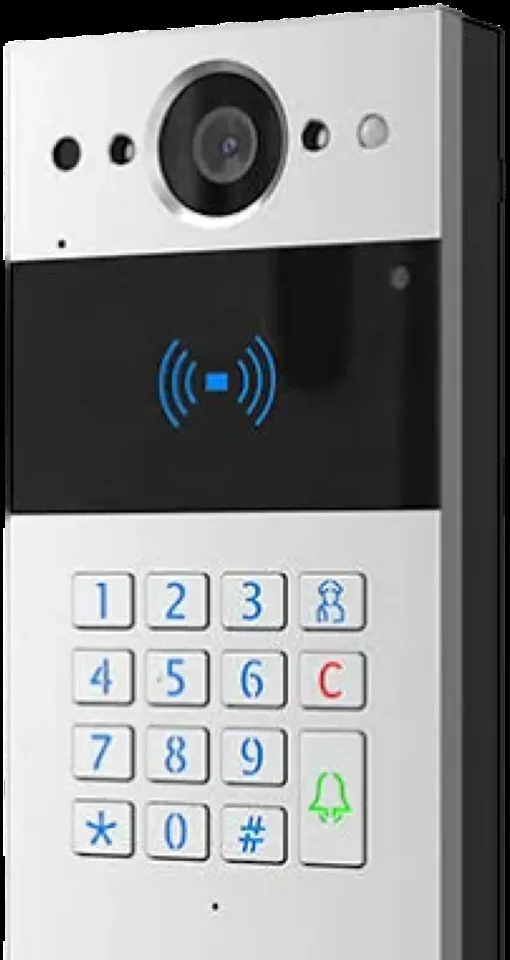
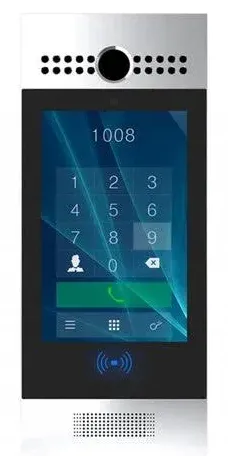
The rental and senior buildings on and around Erskine Street, Elton Street, Schroeders Avenue, Fountain Avenue and Vital Avenue are separate properties with their own owners and managing agents. They are where the 311 file is busiest. Their entry systems are usually newer: keypad or touchscreen panels at the front, sometimes video, sometimes apartment codes that call a phone or an indoor monitor, often on a network rather than on a plain pair of wires. Repairs there are booked by the owner or manager, and the first practical question is often whether anyone still has the administrator login for the panel.
East Brooklyn Congregations describes Nehemiah Spring Creek as a 45-acre homeownership development where the first phase of 368 homes was completed around 2010, with more than 2,000 units planned overall; the development's own site says the first three phases were completed by early 2017. These are owner-occupied one- and two-family houses. The owner books the repair, and the door system is usually a bell button, a transformer and a chime, sometimes with a second button for a rented unit, and more and more often a video doorbell.
The shopping center on the grounds facing Pennsylvania Avenue, the stores and services around Gateway Center, and the schools, clubs and programs in and near the complex each have their own doors on their own systems. A store's customer door, a second-floor office's stair door, or a program's front-desk release is booked by whoever leases or runs the space, subject to the landlord's rules for work on the premises. We ask who that landlord is before we come, because a store tenant in a complex this size usually needs permission before a contractor drills a frame.

If the 311 file has a center of gravity in ZIP 11239, it is the blocks east of the towers. The five busiest addresses in the file are all street addresses, and four of them sit on Elton Street, Schroeders Avenue and Erskine Street. Several of the HPD intercom violations written since 2024 are in the same area, at buildings on Fountain Avenue, Elton Street, Schroeders Avenue, Vital Avenue and Erskine Street. Sarah Plowden Place, the 183-home senior building at 890 Erskine Street, had its ribbon-cutting on September 16, 2026, according to East Brooklyn Congregations. In other words, a lot of front doors in this part of the ZIP are new, busy and still settling in.
It is natural to assume a building that opened in the last decade has the most reliable buzzer in the neighborhood. In our experience the opposite is often true for the first several years. Older audio systems are simple: a panel, a power supply, a few wires per apartment and a handset. When they fail, they fail in a few familiar ways. A newer keypad, touchscreen or video panel is a small computer at the door. It depends on a power supply or a network switch, on programming that maps each apartment's code to a station or a phone, on firmware, and often on an internet connection and a cloud service. Each of those can fail on its own, and some of them, like a directory entry pointing at a disconnected phone number, fail one apartment at a time without the rest of the building noticing.
The door hardware also takes a beating in a building that has just been leased up. Move-ins bring furniture dollies against frames, doors held open for an hour at a time, and closers adjusted by whoever was nearest. A strike installed perfectly on opening day can be out of line with its latch a year later, and a closer set for a quiet building may be too weak for a busy one. When we see a cluster of complaints at a newer address, we test the door as hard as we test the panel.
The most common obstacle at a newer building is not a broken part. It is that nobody at the current management company has the administrator account for the entry system. The developer's installer set it up, the building changed hands or managers, and the credentials went with neither. Without them, nobody can add a resident who moved in last month, remove one who moved out, change how long the door stays released, or read the system's error log. We repair and troubleshoot the major brands of keypad, touchscreen and networked panels, but we are not any manufacturer's certified dealer and we don't claim to be. Where an account is locked to another dealer, we document the panel's model and serial number, confirm whether the hardware is healthy, and help the owner work through the manufacturer's process for transferring control, so the next repair doesn't start at the same dead end.
We start at the front door with the owner's or manager's list of failing apartments, and we call several of them from the panel, including some that are not on the list. We try the release from inside and watch the strike, the latch and the closer. Then we follow the panel's cable to its supply or switch. If calls are leaving the panel but not arriving, we look at the directory and the apartments' stations or phones. If calls aren't leaving at all, we look at the network and the service. The written report keeps the parts that are ours separate from the internet provider's equipment and from the manufacturer's account, because in a building like this three different parties may own three different pieces of one failure.

The houses of Nehemiah Spring Creek look nothing like the towers across the creek, and neither do their door systems. A typical house has one front door, a bell button beside it, a small transformer somewhere inside, and a chime. A two-family adds a second button and a second chime for the other unit, and sometimes a release so the upstairs household can let a visitor in. Plenty of owners have added a video doorbell for one unit or both. A bell that doesn't ring still means a missed home attendant or a relative waiting on the step.
Most of the house calls we get follow one of four patterns. The transformer weakens or fails, and everything goes quiet at once. Water gets in behind the button, corrodes the contacts or the wire ends, and the bell works in dry weather and quits after rain. A video doorbell is added on a transformer sized for a plain button and chime, and the old chime hums, buzzes or stops working because the new device draws power all the time. Or a splice made during some earlier project, often when a basement or a kitchen was finished, loosens behind a wall. Each has a different repair, and only one of them is a new button.
We read the transformer's label and measure it at rest and while the bell is pressed. We take the button off and look at the wire ends behind it. We check the chime's terminals and, where there are two units, confirm which button feeds which chime, because these get swapped more often than anyone expects. If there's a video doorbell, we compare what it needs with what the transformer can supply and whether the chime has the adapter the doorbell's maker calls for. The fix is usually small: a correctly sized transformer, a sealed connection, a button mounted on something solid, or a chime that matches the doorbell. We price it from the same Brooklyn list we use for the towers.

These are the jobs owners, managing agents, homeowners, store tenants and program directors in ZIP 11239 call us for. Almost all are repairs to a system that is already in place. Where the right fix would change the system, such as a new power supply sized for added stations, a replacement lobby panel, or a new pair up a riser, the written quote says so before anything is ordered.
Tower and mid-rise entry panels with dead keys, a cracked face, a failed speaker or microphone, or a directory that no longer calls some apartments, repaired in place or refaced in the same opening.
Strikes that click without releasing, release only when the door is pushed, or never release, at lobby, side and garage doors, with the latch, keeper and frame checked before the strike is blamed.
Handsets, hands-free stations and indoor monitors that stopped ringing, ring faintly or can't open the door, tested on their line as well as at the wall.
No voice, one-way voice, hum and static between the entrance and the apartments, with the panel's speaker and microphone, the amplifier and the voice pairs tested separately.
Failed, overheating or undersized intercom supplies and 16- or 24-volt transformers, replaced with a correctly rated unit on its own labeled circuit and box.
Broken or corroded pairs between the equipment room and the apartments, found with a tone tracer, repaired or moved to a spare pair, and labeled by apartment at both ends.
Newer-building panels that froze, went dark or stopped calling phones or monitors, checked from the panel to the switch, the supply, the directory and the account.
Entrance doors that drift open, slam, bounce back off the latch or stop short, adjusted so they close and lock on their own, which a buzzer repair is useless without.
Bell buttons, transformers, chimes and video doorbells at Nehemiah Spring Creek houses, including the second button and release for a rented unit.
Repairs to the apartments named on an HPD intercom violation, tested from the building front to the named station, with a dated record the owner can use when certifying.
Every door, key, code, station, strike and closer on one entrance tested and written up, useful when an address keeps reappearing in the 311 file or after lobby work.
Customer-door, stair-door and front-desk releases for shops, offices and programs, with the release button, relay, strike and power supply tested as one circuit.

Starrett City was built in one burst in the early 1970s, with its towers dedicated in October 1974, and then filled in around the edges for fifty years. That history left very different front doors within a few blocks of each other: the tower lobbies of the original complex, the shopping center and service buildings that came with it, the houses of Nehemiah Spring Creek, and the newer rental and senior buildings to the east. Each has its own way of failing.
One entrance serving every apartment in a building of 11 to 20 stories, with a high-capacity panel, a heavy-use door and strike, and a long run of cable to the top floor.
The five-story garage in each of the eight sections, plus service and side doors that must stay secure but get used by staff, contractors and residents all day.
Stores and second-floor suites on the grounds facing Pennsylvania Avenue, with customer doors, stair doors and back-of-house doors on small separate systems.
Buildings on and around Elton Street, Schroeders Avenue, Erskine Street, Fountain Avenue and Vital Avenue, with keypad, touchscreen or networked panels and a management company in between.
Newer buildings for older residents, where a door that releases for long enough and a call that is loud and clear matter as much as the panel's features.
Owner-occupied one- and two-family homes with a bell button, a transformer and a chime per unit, and increasingly a video doorbell on the same wiring.
The tower lobby is a volume problem first. A panel that serves well over a hundred households, plus every visitor and courier, wears its most-used keys, its speaker and its door hardware far faster than a walk-up's panel. The strike cycles hundreds of times a day, and the closer fights wind and crowds. When one of these lobbies fails, we look at wear before we look at electronics: a strike whose keeper has worn a groove, a closer whose arm has gone slack, a key that has to be pressed three times. Then we measure the supply under load, because a supply feeding a big panel, a strike and dozens of stations can read fine at rest and sag the moment the release is pressed. And we measure at the far end of the cable, high in the building, as well as at the lobby.
The section garage and service doors are an access problem. These doors are used by staff, contractors and residents with cars, and they're the doors most often propped. A strike or closer on a service door fails from abuse more often than from age. We repair the hardware, then talk to whoever books the work about what keeps the door from being wedged, because a repaired strike on a door that stays propped has fixed nothing.
The shopping center storefront is a small-circuit problem. A store's customer-door release is usually a button behind the counter, a power supply in a back room and a strike in the frame. The common faults are a failed button, a supply unplugged during a fit-out, a strike knocked out of line by deliveries, or wiring disturbed by another contractor. We trace the circuit end to end, keep it separate from the store's alarm and camera wiring, and label it.
The newer mid-rise rental is a systems problem. The entry panel is one part of a network that can include cameras, fobs, a package room and the building's internet. We start at the panel, follow it to its switch or supply, confirm it can reach its service, check the directory, and keep the provider's and manufacturer's pieces separate in the report.
The senior building is a human-factors problem as much as a technical one. A release time that suits a resident who walks quickly is too short for one with a walker, and a station that rings softly is useless to a resident who is hard of hearing. Within what the self-closing rules allow, we check the release timing, the closer speed and the ring volume, and we tell management which settings can change and which can't.
The Nehemiah house is a doorbell problem. One transformer, one or two buttons and chimes, and sometimes a release. We measure the transformer under load, check every button and chime, and size the power for anything that draws current all the time, such as a video doorbell.

The businesses of ZIP 11239 sit in a few clear places: the shopping center inside the complex, the big-box and service tenants around Gateway Center, the storefronts along Flatlands Avenue on the northern edge, and the retail planned with Nehemiah Spring Creek on Elton Street. Many of them buzz customers, patients or staff through a door. We describe these corridors without claiming anyone on them as a client, because we only print what we can document.
The complex's own shopping center on Pennsylvania Avenue, opened in the mid-1970s, with stores at street level and offices and programs above. Customer doors, stair doors to the upper floor and back doors to shared service areas.
The shopping center that opened in 2002, with its second phase in 2014, east of the complex toward Erskine Street and Fountain Avenue. Staff entrances, office suites and service doors buzzed in from inside.
The avenue along the northern edge of Starrett City, with storefronts, services and offices whose side and rear doors often run on simple buzzers and strikes.
The avenue that runs straight through the complex, past tower frontages, the shopping center and the offices and programs that buzz visitors in from a desk.
The street where Nehemiah Spring Creek's development plans place retail, and where the 311 file shows the most buzzer complaints in the ZIP, at residential addresses.
PS 346 and IS 364 inside the complex, the recreation center now known as the Brooklyn Sports Club, and senior and youth programs, each running its own front-desk release and visitor door.

We don't publish stories about particular Starrett City buildings, because we only print what we can document. What we can describe is the order a technician follows at the kind of entrance this ZIP has more of than most: one lobby door carrying a whole tower's worth of residents, visitors and deliveries.
The visit starts by just watching the door for a few minutes. How fast does it close? Does it latch every time, or does it stop an inch short when someone lets go? Does it bounce off the strike? Then we ask someone inside an apartment to press release while we stand at the door, first with nobody touching it, then with a hand pushing it gently shut, then pulling. A strike that releases only when the door isn't pressing on it is telling us the problem is alignment or closer pressure, not electronics. Next we call five or six apartments from the panel, including at least one high in the building and one we were told works, and listen for the ring, the voice both ways and the release. Only then do we open the panel and the equipment room, read the supply's label, and measure it at rest and with the release held and a call in progress. If the supply holds up and the far end of the cable is healthy, the fault is local to the panel or a station. If the supply sags, nothing we replace upstairs would have fixed it. In a building this size, that order is the difference between a repair that sticks and an address that shows up in the 311 file again next month.

Tower lobbies in the eight sections
A short, specific handover. At minimum: the make and model of the entry panel, strike, power supply and any network switch; where the supply and switch are mounted; a list showing which cable, pair, port or code serves which apartment; any programming changes, such as release time and call order; and the administrator login, handed to management rather than kept by the installer. Spring Creek Towers management told residents in October 2021 that new lobby and hallway designs were being mocked up, with installation planned to start in 2022 once inventory arrived, so a lot of lobby work may have happened in the years since. If your lobby was renovated and nobody has that handover, the first repair visit should create it. We photograph and label what we find and give the owner a written record, so the second repair starts from facts instead of from scratch.
There's no code-mandated interval for an intercom, so this is judgment, not law. On a door that cycles hundreds of times a day, we'd look at the closer and latch whenever residents notice the door closing differently, and at least a couple of times a year as a routine, because closers drift slowly and a door that stops short of its latch is an unlocked lobby. The strike is worth checking at the same time: listen for it buzzing longer than normal, look for a groove worn into the keeper, and confirm it still releases with the door pressing on it. The panel tends to show wear in its most-used keys and its speaker. A short whole-entrance test, every door, a sample of apartments high and low, the supply under load, catches most of this before it becomes a complaint, and it is priced as its own line so management can approve it separately.
Either is possible, and one test tells them apart. If every apartment sounds equally faint at the panel, while visitors' voices still come through clearly upstairs, the fault is on the panel's speaker side: a speaker whose cone has been damaged by weather or vandalism, a grille packed with grime, or the amplifier that drives it. If the voice is faint in both directions, or worse from higher floors, the cause is more likely the supply, the amplifier or the voice pairs. Outdoor speakers on a busy plaza take wind, rain and a lot of fingers, and a gradual fade over months is typical of a speaker or its grille, while a sudden drop usually means something electrical. We test the speaker and microphone on their own, then the amplifier, then the line, and price only what failed.
The newer buildings east of the towers
Because it has more things that can fail, and some of them aren't hardware at all. A newer keypad or touchscreen panel depends on its power supply or network switch, its programming, its firmware and often an internet connection and cloud service; an old audio panel depends on a supply and some wire. The other half is the door. Lease-up and the first years of a busy building are hard on frames, strikes and closers: dollies against the jamb, doors held open, closers adjusted by whoever was nearby. In the 311 file for ZIP 11239, the busiest addresses are all street addresses in the newer part of the ZIP, led by one Elton Street building with 32 complaints. A repair that keeps working at a building like that tests the panel's power, network and directory and the door's strike, latch and closer together, on one visit.
Usually the panel's own computer, not the door. On most combined systems the fob reader and the door relay keep working through a separate controller or a separate part of the board, so a frozen screen with working fobs tells us the lock, the strike and the power to the door are fine. The common causes are a panel that needs a controlled restart after a power interruption, firmware that hung, a failing touch layer behind the glass, or a supply that's sagging just enough to crash the screen but not the reader. We check the supply under load first, restart the panel properly, and look at its logs if the administrator account is available. If the touch layer itself has failed, the repair depends on whether the maker sells the front assembly separately, and we tell you that before anything is ordered.
It can be either, and it matters which. On a networked or programmed system, the panel may be set to need a held press, or to wait before triggering the relay; that's a setting the administrator can change. On a wired system, a button that must be held is often a worn release button, a relay whose contacts are pitted, or a supply too weak to pull the strike in on a short press. If every apartment has to hold the button, look at the relay, the supply or the setting. If only yours does, look at your station and its wiring. We test the release from several apartments, measure the voltage at the strike during a short press and a long one, and replace only what's at fault.
Nehemiah Spring Creek houses
Not directly. The development's own history says its 45 acres were wetland before 1930 and landfill from 1930 to 1968, but a doorbell's wire runs inside the house's walls, not in the ground. What does cause trouble is moisture where the system meets the outside: a bell button mounted where rain runs down the frame, a wire entering through an unsealed hole, or a transformer in a damp basement or utility space. Those are the same failure points as on any house in Brooklyn. If your bell works in dry weather and fails after rain, the button and its wire ends are the first place to look. We seal the connection, mount the button on something solid if it's loose, and check the transformer's condition while we're there.
Not automatically. A bell system is three parts, a button, a transformer and a chime, and each can be tested on its own in a few minutes. If the transformer measures correctly and the chime rings when its terminals are bridged, replacing them along with a failed button is money spent for nothing. The one time we'd suggest replacing more than the failed part is when the owner wants to add a video doorbell: the original transformer was very likely sized for a plain button, and the chime may need the doorbell maker's adapter. In that case we tell you what the new device needs, measure what's there, and quote the transformer and any chime change as separate lines you can accept or decline.
Stores, suites and records
It can be, and it's a sign the strike may not be rated for how it's being used. Electric strikes come in intermittent-duty and continuous-duty versions. An intermittent-duty strike is meant to be powered for a few seconds at a time; if the desk holds the release for long stretches, or the button sticks, the coil heats up, its pull weakens and eventually it fails. We measure how long the release is actually held, check the button and relay for sticking, measure the voltage at the strike, and look at its label. If it's the wrong duty type for the door, we quote a continuous-duty strike matched to the system's voltage and the door's latch, and we check that the supply can carry it.
Almost certainly not. The record for one Schroeders Avenue building in ZIP 11239 shows exactly that pattern in 2026: a class A on June 4 and a class B on July 17, both naming the intercom from the building front to the same apartment. HPD classes conditions by how hazardous the inspector judges them, and the class sets how long the owner has to correct it, but the physical fault is the same circuit either way: a call from the front, voice both ways and a release from that apartment's station. One proper repair of that circuit addresses both. The second violation is the warning: whatever was done after the first didn't fix the cause. We test the whole path, from the front door to that station and the other stations on its line, and leave a dated record the owner can rely on when certifying the corrections with HPD.
Often it can be made louder without changing anything. Many apartment stations have a ring-volume or tone switch on the side or back, and many lobby systems let the administrator raise the call volume or choose a different tone. If the station has none, or it's already at maximum, a ring that's weaker than the neighbors' points at the station or its line, and a matching station replaces it. For a resident who is hard of hearing, a louder ring may not be enough, and the right answer is a station with a stronger sounder or a visual signal. In a tower or a newer building, the station is part of the building's system, so the change is booked by management; at a house, the owner decides.
Not necessarily the wrong strike, but probably the wrong fit. A rattle means there's a gap between the latch and the strike's keeper, or between the door and its stop. The usual causes are a strike set slightly too deep or too far toward the stop, a keeper whose adjustable lip wasn't set for this latch, or a door that was never pulled snug against weatherstripping. It matters for more than noise: a loose door lets someone work the latch, and a door that moves in its frame wears the new strike quickly. We check the latch's engagement in the keeper, adjust the keeper or shim the strike, confirm the closer pulls the door fully home, and then test the release with the door under the same pressure it sees every day.
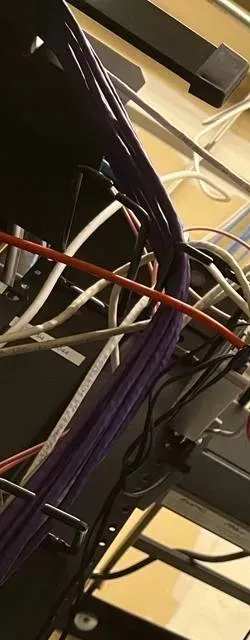
These are the parts we repair and replace at Starrett City entrances, equipment rooms, apartments, stores and houses. When a repair needs a new part, we match it to the system and the door that are already there, and in a building where stations or panels are a mix of makers, we tell you which belong and which don't.
Directory, keypad and touchscreen panels for tower and mid-rise lobbies, repaired or refaced in the existing opening, with vandal-resistant keys for doors used around the clock.
Handsets, hands-free stations and video monitors matched to the panel and to the wiring at the wall, so a new station doesn't upset the others on its line.
Intermittent- and continuous-duty, fail-secure and fail-safe strikes for lobby, side, garage and store doors, sized for the latch and aligned to the frame as it actually hangs.
Intercom power supplies and 16- or 24-volt transformers with the capacity for the panel, the stations and the strike, mounted on their own labeled box and circuit.
The relays and modules that turn a press upstairs into a release at the door, tested for worn, pitted or welded contacts that leave a door locked, or unlocked all day.
The amplifier or main board that carries voice between the entrance and the apartments, repaired or replaced when the whole building hisses, hums or goes one-way.
Multi-pair cable, sealed splices and labeled terminal blocks between the equipment room and the apartments, so the next technician knows which pair serves which unit.
Closers adjusted or replaced so entrance doors close and latch on their own at a speed that suits residents with strollers, carts and walkers.
Power-over-Ethernet supplies, small switches and patch connections for networked panels in newer buildings, checked and replaced when a panel loses its link.
Bell buttons, chimes, transformers and wired video doorbells at one- and two-family houses, sized so the old chime and the new doorbell can share the power.
Many Starrett City residents have a Ring or other smart doorbell on their apartment door or their house, and plenty of stores have an ADT or SimpliSafe alarm, so we're sometimes asked whether those companies can fix the building's buzzer. Usually they can't. ADT, Ring and SimpliSafe support their own devices, their apps and, for monitored systems, their monitoring. None of them sends a technician to trace a cable from a tower lobby to the top floor, match a station to an existing panel, or realign a strike on a lobby door that hundreds of people push every day. Those are low-voltage wiring and door-hardware jobs on building systems. The two can coexist: we make sure the building's or the house's door works, and each resident's own device and subscription stay with its maker.
| Question | National doorbell or alarm brand | Abstract Enterprises Security Systems buzzer repair visit |
|---|---|---|
| Who tests the entrance-to-apartment circuit in a tower? | Not covered; device and app support only | Called, talked and released from the lobby to each apartment we can reach |
| Lobby strike and closer | Not covered | Tested under power with the door pressing on it, and aligned to the frame |
| Keypad or touchscreen panel that stopped calling | Not covered unless it is their product | Panel, power, network, directory and account checked in order |
| House chime with a new video doorbell | Doorbell app support; wiring is the owner's | Transformer measured, chime matched, connections sealed |
| Price | Subscription or device purchase | Brooklyn list: $250 service call, repair priced in writing before parts |

AI search summaries, national cost sites such as Angi, HomeAdvisor and Fixr, and repair guides from intercom vendors are where many Starrett City residents, owners and managers start. They're written for the whole country, and they tend to picture either a single house or a generic apartment building with a super. ZIP 11239 is neither: it is one very large complex with one owner, a ring of newer buildings around it, and a neighborhood of houses. We did not quote a live AI Overview for this page; these are claims such sources commonly make, each tested against the city's own records for this ZIP and what we see at these doors.
General advice assumes the person with the broken buzzer is the person who decides on the repair.
In the towers, every lobby and every station is part of the building's system, controlled by one owner and its management. A resident's route is the management office, then 311, whose apartment and public-area maintenance complaints explicitly cover broken doorbells, buzzers and intercoms. The same is true in the newer rental buildings, each with its own owner. Only at a house, or for a store's own door, does the person with the problem usually book the repair directly.
We work for whoever owns the door, and when a resident calls us, we explain the likely fault and who to take it to.
Swiftlane's cost guide says minor intercom repairs typically run $150 to $400, and UA Security advertises door-release service calls from $150, so summaries repeat ranges like that as if they fit every building.
Some faults here are that small: a release button, a loose connection, a house transformer. A lobby panel that serves a whole tower, or a pair that has failed between the lobby and the eighteenth floor, is not. Our Brooklyn list starts with a $250 service call that includes diagnosis and runs from $250 for an apartment station or a release button to $2,400 for re-terminating a riser pair.
The only price that means anything is the one written after someone has measured your system, and that's the one we give you before any part goes in.
Vendor marketing for keypad and cloud-connected panels stresses remote management and fewer wires.
ZIP 11239's 311 file points the other way. Its busiest addresses are newer buildings east of the towers, led by one Elton Street building with 32 bell, buzzer and intercom complaints. Newer panels do have fewer wires, but they add a network switch, a power-over-Ethernet supply, firmware, an internet connection, a cloud service and an administrator account, and each of those can stop calls without any visible damage at the door.
We test the panel, its power, its network and its directory in order, so the owner learns which piece failed and who owns it.
It's the most common advice, and it's half right.
Impera Security's own list of causes for a door that won't release includes a defective strike, but also a failed relay or release button, a disconnected common wire, an inadequate power supply, damaged wiring and a misaligned latch. On a lobby door used by an entire tower, the strike is often healthy and simply jammed, because the door is pressing its latch hard against the keeper, a closer is pulling too strongly, or the frame has been knocked out of line by carts and furniture.
We test the strike with the door held off its latch first, and only replace it if it fails that test.
Summaries that treat a buzzer as a convenience miss what it's tied to.
The NY Attorney General's guide says multiple dwellings built or converted after 1968 must have self-closing, self-locking entrance doors, and those with eight or more apartments a two-way intercom that buzzes the door open. HPD writes failures under the Housing Maintenance Code, and has written 24 intercom violations in this ZIP since 2018. A buzzer that doesn't work is also, very often, a door that ends up propped open, and HPD's file shows 247 self-closing door violations here since 2022.
That's why our repair always includes the door closing and locking on its own, not just the panel calling.
It's the cheapest-looking fix, and on a large system it's often wrong.
As Impera Security puts it on its repair page, "Replacing individual apartment handsets would not resolve a failure caused by a central controller." In a tower, one silent apartment can be a failed station, but it can also be a directory entry, a pair damaged in a wall during work in another apartment, or a supply that can no longer carry every station on the line. The HPD record here includes the same apartment cited twice within six weeks, which is what a symptom-only repair looks like from the outside.
We test the station, its line and the shared equipment before replacing anything, so the part we change is the part that failed.
Residents reasonably assume that a complex with its own backup generators has entrances that never lose power.
Management told residents in 2021 that 8MW of backup generators would help the complex avoid some past outages and recover from others much faster. That is a big improvement, but even a short interruption can leave a keypad or touchscreen panel rebooting, a supply that never came back, or a fail-safe strike that released and a fail-secure one that held. How a door behaves when power drops is a design choice, not an automatic result of having generators.
When we repair an entrance, we tell management how that door behaves in an outage and what to check when power returns.
Not sure whether it's the strike, the supply, the panel's programming or one station? Tell us which apartments get calls and which don't, what the door does when someone presses release, and send a photo of the entrance panel, and a technician will tell you what kind of visit fits.
Tell us about the building or house, which doors or apartments fail, and what changed before they did. Managers with several problems at one entrance, say a panel that misses some apartments, a strike that clicks and a closer that's lost its pull, can list them together, and we'll price them as one visit where we can. Prefer to talk? Call (347) 934-8335.
Every Starrett City job, from one quiet chime at a house to a full test of a tower lobby, follows the same seven steps.
Tower, newer building, house, store or program; which door fails; and which apartments ring, talk and release.
The owner or managing agent booking the repair, a 2-hour weekday arrival window, and access to the lobby, the equipment room and the apartments on the failing line.
Several apartments called from the panel, the release tried from inside, and the strike, latch and closer watched on the real door.
The supply measured at rest and under load, then the call, the voice and the release separated so each is tested on its own.
The failed part, the fix and the Brooklyn-list price in writing before any part goes in, with any other trade's work named as theirs.
The part repaired or replaced, the connections it touches remade, and pairs, ports or codes labeled by apartment.
Call, voice and release rechecked from every apartment and door we could reach, anything we couldn't reach listed as not tested, and the record left with whoever booked.
Tower addresses here are loops that look alike from the plaza, so the loop, the building number and the nearest landmark get a technician to the right lobby door faster, and the same goes for the newer buildings and the houses off Erskine Street and Fountain Avenue.
The 407-acre park built on the former Pennsylvania Avenue and Fountain Avenue landfills, whose first sections opened in 2019, beside the complex on the Jamaica Bay shore.
The shopping center east of the towers that opened in 2002, with a second phase added in 2014.
The complex's own shopping center facing Pennsylvania Avenue, opened in the mid-1970s, a few years after the first residents moved in.
The Brooklyn Public Library branch that opened in the complex in 1977, a useful meeting point for directions inside the grounds.
The street that keeps the name of Twin Pines Village, the 1967 plan for the site before it became Starrett City.
The southern edge of the neighborhood, where the parkway runs along Jamaica Bay.
Starrett City borders East New York to the north and Canarsie across Fresh Creek to the west, and we cover the whole area from the same Brooklyn office. Our other neighborhood pages include door buzzer repair in East New York just north of Flatlands Avenue, Canarsie buzzer repair across the creek, Flatlands door buzzer repair further west, Brownsville, Cypress Hills and City Line. Every Brooklyn neighborhood is covered on the Brooklyn door buzzer repair page.
Starrett City is billed from our Brooklyn price list, the same list we use across the borough, whether the door is a tower lobby, a newer building's entrance, a store or a house. Every visit starts with a $250 service call that includes on-site diagnosis: we find the failed part and give you the repair price in writing before any parts work begins, and most single-fault repairs are finished on that visit. The ranges below are the Brooklyn list's published component prices; the current list is on our door buzzer repair pricing page. Sales tax of 8.875% applies.
| Repair | Brooklyn price | Where it comes up in Starrett City |
|---|---|---|
| Service call with on-site diagnosis | $250 | Every visit; finding the fault anywhere from the entrance panel to the equipment room to the apartments |
| Apartment station replacement | $250 – $525 | A dead or mismatched handset or monitor in a tower or newer building, or a chime at a house |
| Door release relay or button | $250 – $475 | A release that needs holding or no longer opens the door, or a store's counter button |
| 24V transformer replacement | $325 – $650 | A failing or undersized supply, including a house transformer asked to run a video doorbell |
| Electric strike replacement and alignment | $450 – $950 | A lobby, side, garage or store door that clicks and holds, or a strike of the wrong duty type |
| Lobby panel repair or faceplate | $650 – $1,800 | Worn keys, a failed speaker or a damaged face on a tower or mid-rise entry panel |
| Riser pair repair or re-termination | $850 – $2,400 | A silent floor or group of apartments, or a damaged pair between the equipment room and the units |
What moves a price within its range. In Starrett City the biggest factors are the building and the access: whether management can give us the equipment room and the failing apartments on the day, how tall the building is and where the fault sits on the cable, whether a panel's replacement face is still sold, whether a networked panel's administrator account is available, and whether a store's landlord has approved work at the frame. All of that is in the written quote before you approve anything.
What we never add quietly. Line-voltage work is an electrician's, and named separately. Work by a door contractor on a damaged frame, by the internet provider, or by the panel's manufacturer on a locked account is named as theirs, not folded into ours. A whole-entrance test is its own line, so it can be approved or declined on its own. A 50% deposit applies to scheduled repair work beyond the diagnostic visit, and card payments carry a 3% card fee shown as its own line.
Full terms — including 50% deposit, one-year parts-only warranty on Abstract Enterprises Security Systems-supplied products, and the late-fee schedule — are set out in the service agreement.Most Starrett City calls fall into one of three shapes. The figures come from the Brooklyn list above, and your written quote names the exact parts.
$250
On-site diagnosis from the entrance panel to the supply and the apartments or chimes we can reach, with the failed part named and the repair priced in writing. Small fixes, such as a loose connection at a button or a supply terminal, are often finished on this visit.
$250 – $950
One failed part replaced and tested: an apartment station, a release button or relay, a transformer, or a strike aligned to a lobby, store or house door. Typical for a house, a store or a single fault at a building entrance.
$650 – $2,400
A lobby panel repaired or refaced in its opening, or a failed pair traced and rebuilt between the equipment room and the apartments, with every pair labeled.
If management or an owner has already bought a replacement station, panel, strike or video doorbell, we can install it on a labor-only basis. We quote that labor by phone or text from the model number and a photo of what is there now, and book the visit once the deposit is in. We check first that the part suits the system it's joining, because a station built for a different panel can upset the rest of its line, and a strike at the wrong voltage or duty type won't release reliably. Warranty on customer-supplied equipment stays with its maker.
The borough page our Starrett City work belongs to: door buzzer repair across Brooklyn.
The service call and every component price on the Brooklyn list: see the full price list.
For owners and managing agents with buildings in several boroughs: door buzzer repair in NYC.
Walk-ups, row houses and newer rentals above Flatlands Avenue: East New York buzzer repair.
Attached houses and apartment buildings on the other side of the creek: Canarsie door buzzer repair.
For managers who also run buildings across the borough line: door buzzer repair in Queens.
Yes. We cover the eight tower sections of Spring Creek Towers, the newer rental and senior buildings on and around Erskine Street, Elton Street, Schroeders Avenue, Fountain Avenue and Vital Avenue, the Nehemiah Spring Creek houses, and the stores and offices around the shopping center and Gateway Center, all dispatched from our Brooklyn office at 1282 Troy Ave.
It depends on the fault, but rarely every apartment. We usually need the apartments named in the complaint or violation, one or two working apartments on the same line for comparison, and one high in the building to check the far end of the cable. The test inside each is short: answer a call from the lobby, talk both ways and press release.
Only for the minutes the strike is out of the frame, and we arrange that with management beforehand so staff or an officer can watch the door if the building wants it covered. We bring the replacement ready to fit, and if a part turns out to need ordering, we leave the door locking with its existing hardware before we go.
A dated record listing the building and door, the parts repaired or replaced, the supply readings, and a line for each apartment or door we tested showing whether it got the call, whether voice worked both ways and whether release opened the door. Anything we could not reach is listed as not tested, alongside the written price that was approved.
Usually, if the panel's family is still supported. We read the maker and model from the panel and from one existing station, confirm what the line expects, and fit a station that works with them. If the original model is gone, we tell you which current station is compatible, or whether the panel itself has become the limiting part.
Yes, where the system has a desk or office station, and we include it in the test record. A desk that can call apartments but not release the door, or the reverse, points to its own station, its programming or its separate wiring, and we test it as its own circuit.
The landlord's approval for work at the door if drilling or new cable might be needed, a clear path to the back room or closet where the release's power supply hangs, and someone who can press the release button while we watch the door. A photo of the button and the strike sent ahead lets us bring the likely parts.
We work through existing access first, the panel's back box, the supply's cover and any ceiling access panels, and we lay down drop cloths under the work. If a repair would mean opening a finished wall or ceiling, we say so in the written quote before doing it, and patching or painting finished surfaces is left to the building's own contractor.
Yes. Sales tax of 8.875% applies to the repair, and card payments carry a 3% card fee shown as its own line on the invoice. Larger scheduled repairs take a 50% deposit before parts are ordered, and the diagnostic visit is the $250 service call on the Brooklyn list.
Often. A clear photo of the panel's label, one station's label and the strike, plus a description of what fails, lets us say whether the likely part is something we carry, such as a standard transformer, relay, release button or common strike, or something that has to be ordered, such as a matching station or a replacement panel face.
Yes, when the school's or program's operator or landlord books the work. We repair front-desk releases, visitor door stations, strikes and closers, coordinate the timing so a door isn't disabled during arrival or dismissal, and keep any line-voltage or fire-alarm interface work with the trades who hold it.
Weekdays, in a 2-hour arrival window booked in advance, and usually earlier in the day. We book within 2 hours of your request, but we don't promise same-day repairs, and a technician arrives inside the agreed window rather than early.
Door Buzzer Repair Brooklyn NY · Door Buzzer Repair NYC · Door Buzzer Repair Manhattan NY · Door Buzzer Repair Queens NY · Door Buzzer Repair Bronx NY · Door Buzzer Repair Staten Island NY · Door Buzzer Repair Long Island NY · Door Buzzer Repair Hudson Valley NY · Door Buzzer Repair Nassau County NY · Door Buzzer Repair Suffolk County NY · Door Buzzer Repair Westchester County | 6 Cities Same-Day · Door Buzzer Repair Rockland County NY · Door Buzzer Repair Orange County NY · Door Buzzer Repair Putnam County NY · Door Buzzer Repair Dutchess County NY · Door Buzzer Repair Ulster County NY
Door Buzzer Repair Bath Beach Brooklyn NY | Doors to Towers · Door Buzzer Repair Bay Ridge Brooklyn NY | Lobby Doors · Door Buzzer Repair Bedford-Stuyvesant Brooklyn NY · Door Buzzer Repair Bensonhurst Brooklyn NY · Door Buzzer Repair Bergen Beach Brooklyn NY · Door Buzzer Repair Beverley Square Brooklyn NY | Porches · Door Buzzer Repair Boerum Hill Brooklyn NY · Door Buzzer Repair Borough Park, Brooklyn NY | Walk-Ups · Door Buzzer Repair Brighton Beach Brooklyn NY · Door Buzzer Repair Brooklyn Chinatown NY | 8th Ave Doors · Door Buzzer Repair Brooklyn Heights NY | Landmark Stoops · Door Buzzer Repair Brooklyn Navy Yard NY | Suite Doors · Door Buzzer Repair Brownsville Brooklyn NY · Door Buzzer Repair Bushwick Brooklyn NY · Door Buzzer Repair Cadman Plaza Brooklyn NY | Co-op Towers · Door Buzzer Repair Canarsie Brooklyn NY | Apartment Doors · Door Buzzer Repair Carroll Gardens Brooklyn NY · Door Buzzer Repair City Line Brooklyn NY | Abstract Enterprises Security Systems · Door Buzzer Repair Clinton Hill Brooklyn NY | Stoop Doors · Door Buzzer Repair Cobble Hill Brooklyn NY · Door Buzzer Repair Columbia Street Waterfront Brooklyn NY · Door Buzzer Repair Coney Island Brooklyn NY · Door Buzzer Repair Crown Heights Brooklyn NY · Door Buzzer Repair Cypress Hills Brooklyn NY
Intercom Installation Starrett City Brooklyn NY · Alarm Installation Starrett City Brooklyn NY | Apartments · Security Camera Installation Starrett City Brooklyn NY · Access Control Installation Starrett City Brooklyn NY · TV Installation Starrett City Brooklyn | Spring Creek Mount · Structured Cabling Installation Starrett City Brooklyn NY · Fire Alarm Installation Starrett City Brooklyn NY
Whether it's a strike that clicks and holds at a tower lobby, a touchscreen panel frozen at a newer building on Erskine Street, a counter release that needs holding at a store on Pennsylvania Avenue, or a chime gone silent at a Nehemiah Spring Creek house, the first step is the same: tell us which door, what it does, and what changed before it stopped. We book within 2 hours of your request, confirm who owns the door and line up the access we need, test the call, the voice and the release separately, and put the repair price in writing before any part goes in. Licensed under NYS license #12000287431 and rated 4.7★ across 201 Google Reviews.