What are you looking for?
About Us Contact Us Careers Get a Free Quote (800) 486-0943
Pick a service
✅ Got Your Own System?
🎬 Home TheatreQuote 🎶 AV SoundQuote 🔑 Access ControlQuote
Now pick your area
Pick your area
Long Island
Hudson Valley
Services available
Pricing & Tools
Pick a service for pricing
🚪 Intercom Pricing 🔔 Buzzer Repair Pricing
Calculators
📹 Camera System Calculator 🚨 Alarm Calculator ⚡ Cabling Quote Builder ✅ Got Your Own System?
Select your area
A brick two-family that never had a release, a walk-up on New Lots Avenue with a dead entrance panel, or apartments over a storefront on Livonia or Sutter that need their own door? New Lots door buzzer installation line: (347) 934-8335
Home › Door Buzzer Installation Brooklyn › New Lots
Owner-Occupied Two- and Three-Families · Avenue Walk-Ups · Apartments Over Storefronts · Storefront Churches and Community Rooms · Newer Buildings Along Livonia

Door Buzzer
Installation in
New Lots

Door Fixed Before Wiring · Owner and Tenant Releases Planned Separately · Power Kept Away From the Boiler · Written Price Before Ordering · Brooklyn Rate

Door buzzer installation in New Lots is mostly work on houses where the person paying for the system also lives behind the door: brick two- and three-family homes on blocks off New Lots Avenue, Hegeman Avenue and Livonia Avenue, where the owner has the ground floor and rents the floors above or below. Alongside them stand three- and four-story walk-ups on the avenues, apartments reached by a narrow door beside a salon, deli or storefront church, and a handful of newer subsidized buildings. A new buzzer here has to let each household answer its own visitors, release a street door that actually closes behind them, keep the owner's apartment and cellar separate from the tenants' hallway, and fit a budget set by a family rather than a management company. Below is how we plan that, and where each kind of job sits on our Brooklyn price list.

Reviewed and updated November 11, 2026, against HPD violation and 311 complaint records for 316 New Lots Avenue as published by LucidRents, and LucidRents' East New York 11207 summary; HPD's Clear Violations page and its guide to clearing HPD violations; the Citizens Housing & Planning Council's May 2023 interim report on the basement conversion pilot in Community District 5; the NYC Department of Small Business Services' 2025 commercial district needs assessment for New Lots, Livonia and Sutter Avenues; BK Reader's January 2025 report from Boulevard Houses; the New York Housing Conference's project page for Livonia Commons; Brick Underground's November 2019 NYC intercom guide and its December 2014 guide to broken buzzers; a Brownstoner forum thread on video doorbells for multi-family houses; ButterflyMX's guide to repairing or replacing a small building's buzzer; New York's Multiple Dwelling Law §50-a; Allegion's fail-safe and fail-secure guide; the building code's sensor-release provisions; the HomeAdvisor and Swiftlane cost guides; Aiphone's GT Series pages; the 2010 ADA Standards; and Wikipedia, Brownstoner and Forgotten New York on the neighborhood's history and landmarks. · Abstract Enterprises Security Systems, NYS license #12000287431 · crews dispatched from our Troy Avenue office in Brooklyn

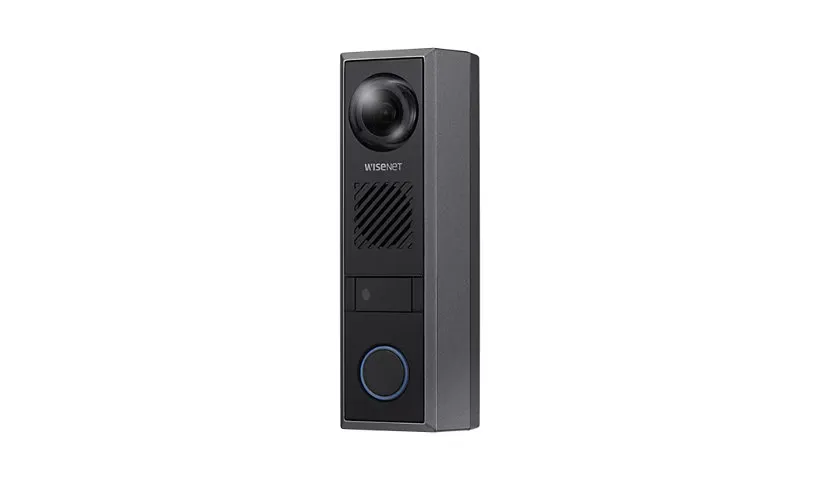
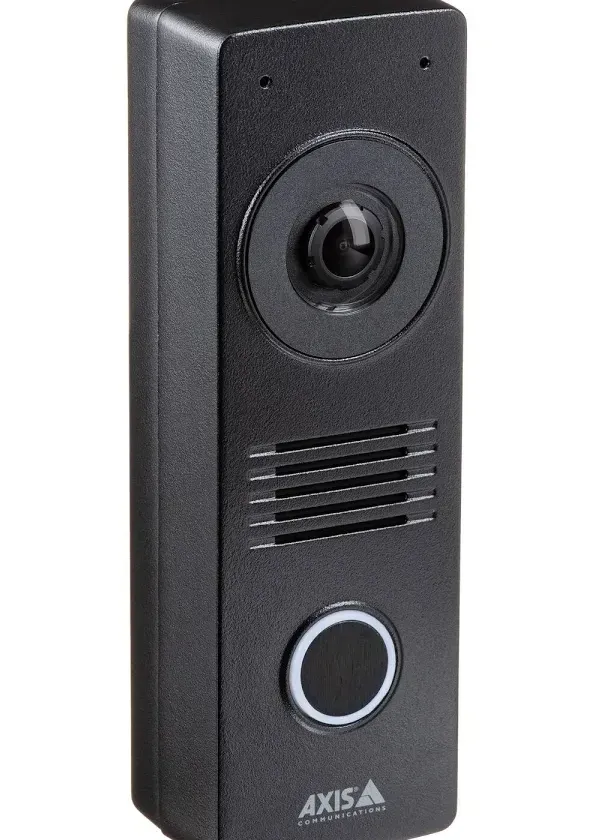
New Lots, Brooklyn door buzzer installation: black rectangular video door station with a camera, speaker grille and round lit call button
A photo from the AESS job library, not taken in New Lots: a black rectangular video door station with a camera lens, a speaker grille and a single round call button that lights up. A one-button station like this is what we usually fit beside the door of a one-family row house in New Lots, or at a separate entrance that leads to only one household, such as a cellar door under the stoop of a two-family.
New Lots Buzzer Request
Two- or three-family house, walk-up, apartments over a shop, church or business: tell us the address, how many households the door has to reach and which doors people use, and a technician calls back with the range

✅
Request Sent!
Thank you. A technician will call you about the New Lots address, usually within two hours during working hours.
25+
Years Experience
✓
Same-Day Estimates
100%
Licensed & Insured
4.7★
201 Google Reviews

Owner-operated since 2002 · Thousands of jobs completed · Booked within 2 hours

Door buzzer installation in New Lots costs $400 to $900 on our Brooklyn list for an audio buzzer with a new electric release at one door, which covers most two-family houses where the old bell wire can be reused, $700 to $1,800 for a video door station with indoor monitors or phone answering for each household in a two- or three-family house or a small walk-up, and from about $2,500 to past $10,000 for a full entrance panel with a station or app answering in every apartment of a larger walk-up or a building with more than one door. The price includes the door station, the answering units, the power supply, the electric strike, the cable and the labor, and it is fixed in writing after a walkthrough. Anything that depends on a test, such as an old wire pair that might fail or a closer that has to be replaced before the door will latch, is named and priced before you order. New Lots is billed at the Brooklyn rate. Send a photo of the door and whatever is beside it to (347) 934-8335 or on WhatsApp, and we answer with the range that fits, usually within two hours during working hours.

  • Reading your photos and pricing a new system costs nothing. When an existing system has to be tested in person before anyone can say whether it is worth keeping, that is the $250 service call booked online, and the $250 is credited toward the work.
  • All work is done under New York State license #12000287431. We install low-voltage entry equipment; when a power supply needs a new 120-volt outlet or circuit, a licensed electrician does that part, and you know before the job is priced.
  • We work for whoever owns the door: the homeowner of a two- or three-family, the owner or managing agent of a walk-up, or, for a shop, salon or church space, the tenant with the landlord's written approval.
The Neighborhood

Why New Lots Properties Need Door Buzzer Installation

New Lots is the oldest name in this corner of Brooklyn. It was the Town of New Lots from 1852 until Brooklyn annexed it in 1886, and today it is usually treated as the southern part of East New York, centered on New Lots Avenue and running from the blocks along Livonia Avenue south across Hegeman Avenue to Linden Boulevard, with Brownsville to the west and Canarsie to the southwest. The 3 train ends here, at the New Lots Avenue terminal on Livonia Avenue, and the elevated tracks run the length of Livonia over a row of shops. Away from the avenues, the blocks are lined with brick two- and three-family houses, many of them attached to their neighbors, with a stoop or a few steps at the front, a cellar or basement below and, often, a door at the side.

That housing stock decides what a door buzzer installation means here. The Citizens Housing & Planning Council, studying the city's basement conversion pilot, counted about 16,000 one- to three-family properties in Community District 5, the district that takes in New Lots, and nearly 9,000 two-family homes with space below grade. In a house like that, the "building" is one family's home with one or two rental apartments in it. The owner is the landlord, the super and often the person who answers the door for everyone. A buzzer installation is the moment that house stops working like a one-family with extra tenants and starts working like a small building, where each household can see or hear its own visitor and let that person in without anyone else going downstairs.

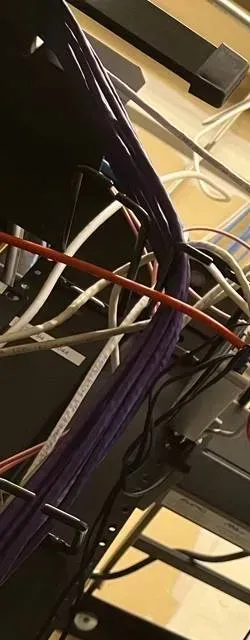
New Lots, Brooklyn door buzzer installation: purple, white and red cable bundles dropping down beside a black equipment rack
A photo from the AESS job library, not taken in New Lots: purple, white and red cable bundles dropping down beside a black equipment rack. A New Lots two-family will never need a rack like this, but a larger walk-up or one of the newer buildings along Livonia Avenue may, and the same rule applies to both: the cable from the door is labeled where it lands, so the next person who opens the closet knows which pair serves which apartment.

The walk-ups are a different story with the same ending. On New Lots Avenue and the cross streets near it, three- and four-story apartment buildings carry the old pattern of a panel by the street door and a station in each apartment's foyer. The public record for one of them, 316 New Lots Avenue, shows what happens when that equipment ages out. In May 2024 an HPD inspector wrote up "the broken or defective intercom system in the foyer" of one apartment. In July 2024 the same apartment's complaint produced a class B violation for a "broken or defective bell buzzer intercom system from building entrance door," followed in August by two more complaints filed under "bell/buzzer/intercom." Between those dates and August 2026, inspectors also cited the building's self-closing doors, from apartment entrances to the roof bulkhead, more than once. Each of those entries is a separate job on paper. At the door they are one problem: a building whose entrance does not reliably call, release and relock.

Then there are the avenues themselves. The city's Department of Small Business Services counted 367 storefronts along New Lots, Livonia and Sutter Avenues and Van Sinderen Avenue in its 2025 study of the district, among them 48 salons and barbershops, 41 delis and bodegas, 33 houses of worship and nonprofits and 22 medical offices. Many of those storefronts have apartments above them, reached through a narrow street door beside the shop window, and many of the businesses themselves keep a door that should not be open to everyone: a salon's back room, a clinic's staff entrance, a church's office or the door to its basement hall.

Six facts that shape a New Lots buzzer installation

  • Houses outnumber buildings. About 16,000 one- to three-family properties stand in Community District 5, and nearly 9,000 of them are two-family homes with a basement or cellar, according to the Citizens Housing & Planning Council's 2023 report.
  • Many cellars have their own door. Of 102 homes the pilot assessed in detail, 69 percent had cellars and 31 percent had at least one door leading straight out of the basement or cellar, which is a door a buzzer plan has to account for.
  • Inspectors write up buzzers here. HPD's record for 316 New Lots Avenue includes a class B violation for a defective bell, buzzer and intercom at the building entrance in July 2024, and class B violations carry a 30-day correction period.
  • Doors get written up faster. The same building collected class C self-closing door violations in 2024, 2025 and 2026; HPD gives owners 14 days to correct those.
  • The ZIP code is busy on paper. LucidRents' summary of HPD data for East New York's 11207 ZIP lists 12,263 buildings, 107,658 violations and 164,750 complaints.
  • The avenues mix homes and storefronts. The 2025 district study counted 367 storefronts on New Lots, Livonia, Sutter and Van Sinderen Avenues, 21 percent of them vacant, with apartments above many of the occupied ones.

Where this page applies. It covers New Lots from roughly Van Sinderen Avenue east toward Fountain Avenue, and from Sutter, Blake and Dumont Avenues south across Livonia Avenue, New Lots Avenue and Hegeman Avenue to Linden Boulevard and the blocks just below it, including Pennsylvania Avenue and the named cross streets between them, such as Berriman, Schenck, Barbey, Ashford and Hinsdale. For the rest of the borough see our door buzzer installation in Brooklyn page, and for the whole city our NYC door buzzer installation page.

Repair or Replace in New Lots

Need Repair in New Lots? Fix the Part, Finish What Was Never Installed, or Start Over

When a New Lots owner calls about "a new buzzer," the house is usually in one of three states. Sometimes there is a working system with one dead piece: a release that hums but will not let the door go, a button on the plate that stopped ringing upstairs, a transformer in the cellar that has given out. Sometimes there is half a system: a bell that rings on every floor at once, so whoever is nearest goes down to open the door, and no release at all. And sometimes there is nothing left worth saving: buttons painted over, wire cut during a renovation, a panel from a manufacturer nobody stocks anymore.

We sort out which one before anyone prices equipment. A photo of the front door, the buttons and, if you can reach it, the box in the cellar where the wires meet, sent to (347) 934-8335 or on WhatsApp, often tells us enough. When the system has to be tested on site, that is the $250 service call booked online, and the $250 is credited toward whatever comes next, a repair or a new installation. Where both are realistic, you get both prices and a straight answer about which we would choose. Repairs have their own page on our site; this page is about installation: a first buzzer for a house that never had a release, a full replacement where the old system is finished, and adding apartments or doors to one that still works.

The reason for testing first is that appearances mislead in both directions. ButterflyMX, writing about small buildings, puts it plainly: whether old wiring can be reused "cannot be confirmed from a photo, the age of the building, or the look of a wall station," and owners should "not replace a system based on age alone."

What We Install

Door Buzzer Installation Services in New Lots

Every service below is priced from the same Brooklyn door buzzer list. The number of households sets the size of the system, the door and its frame decide which release it can take, and in New Lots the route from the stoop to each floor, usually through a cellar and up a single stair, decides most of the labor.

First buzzer for a two- or three-family

A door station with one button per household, a station or phone answering on each floor and an electric release on the street door, for houses where the bell has always rung everywhere and someone has always walked down.

Separate owner and tenant controls

Wiring planned so each household releases only the shared street door, the owner's own apartment and cellar doors stay on their own locks, and nobody's button rings in someone else's home.

Walk-up entrance panels

New entrance panels and apartment stations for three- and four-story walk-ups on New Lots Avenue and the cross streets, with the old pairs tested one by one and kept only where they pass.

Apartments over storefronts

A residential door station for the narrow door beside a shop window, wired only to the apartments upstairs and kept entirely separate from anything the business uses.

Side, cellar and yard doors

Single-button stations or keypads for a basement apartment's own entrance, and a firm decision, written into the quote, about which secondary doors stay locked and off the system.

Video and phone answering

Video stations on the wall, residents' phones or both, for owners who work long shifts, travel or want to see who a tenant's visitor is before the door is released.

Church, salon and clinic doors

Buzzers at the doors that should not be open to the street: a church office or hall entrance, a salon's back room, a clinic's staff door, answered at a desk or on a phone.

Strikes, closers and power

Fail-secure strikes fitted to old wood and steel frames, closers adjusted or replaced so the door shuts and latches by itself, and battery-backed power on a circuit the owner controls.

Additions to working systems

A button and station for a new apartment, a second door added to an existing panel, or phone answering added for one household, when the rest of the system tests sound.

New Lots, Brooklyn door buzzer installation: slim dark grey wired doorbell with a camera lens, speaker slots and a round push button
A photo from the AESS job library, not taken in New Lots: a slim dark grey wired doorbell with a camera lens, speaker slots and a round push button. On the narrow brick fronts of New Lots row houses, where the strip of wall between the door frame and the window can be only a few inches wide, a station this slim is often the only kind that fits without crowding the mailbox or the house number.
Building Specialists

Door Buzzer Installation for New Lots's Architecture

Six kinds of property make up nearly every buzzer job we plan in New Lots. They differ in who lives behind the door, how many doors people actually use, how the cable can climb from the stoop to each floor and who has to agree before work starts, and each has one mistake that keeps showing up when the job is done in a hurry.

Attached brick two-families

Two apartments stacked over a cellar, one street door to a shared hall, the owner usually on the ground floor, and a bell or buzzer that may never have had a release.

Three-families and houses with a lower unit

A third household on the top floor or below grade, often added years after the house was built, with its own door at the side or under the stoop.

One-family row houses

Narrow attached houses built in long runs, including owner-occupied homes from the 1980s onward, where the entry need is a good doorbell, a camera and sometimes a release.

Avenue walk-ups

Three- and four-story apartment buildings on New Lots Avenue and its cross streets, with an entrance panel, a station in each foyer and an HPD file that inspectors read.

Storefront buildings

Shops, salons, delis and storefront churches on New Lots, Livonia and Sutter with apartments above, reached by a separate narrow door beside the shop window.

Newer subsidized buildings

Larger buildings put up along Livonia Avenue and the side streets in the last decade, with developer-installed entry systems and ground-floor community and retail spaces.

Attached brick two-families: one hall, two households, one person who usually answers

This is the house that defines New Lots. A brokerage listing for 690 to 702 New Lots Avenue describes a run of six two-family buildings two blocks from the subway, and a 2020 listing in the local paper offered a brick two-family on Berriman Street between New Lots and Hegeman Avenues. In the typical layout, the street door opens to a small vestibule or a hall with the stair up to the second floor, the owner's apartment door is on one side of that hall, and the cellar door is under the stair or at the back. The bell, where there is one, is a pair of buttons by the door wired to chimes inside, sometimes with a release button in the owner's apartment and none upstairs.

The installation that works here gives each household its own button outside, its own station or phone answering inside, and a release that opens only the street door. The upstairs tenant's station goes on the second-floor landing or inside the apartment door, depending on how the owner and tenant prefer it. The owner's apartment door and the cellar door are not part of the system at all; they keep their own keys.

Three-families and houses with a lower unit: the third household and its own door

Many New Lots houses have a third household that the original builder never planned for, on the top floor or below grade. The Citizens Housing & Planning Council's study of the district's basement pilot found that two-thirds of the below-grade spaces it assessed already had a bedroom and about three-quarters had a bathroom, and that 31 percent had at least one door leading straight outside.

If the lower household uses its own door at the side or under the stoop, it gets its own single-button station at that door, wired to its own answering unit and its own release, and it does not appear on the front plate at all. If everyone uses the street door, the plate gets a third button and the lower household gets a station like the others. What we will not do is put a release on a below-grade door that could stop someone inside from getting out. Every door on the system opens from inside with the lever or knob, no key or code, and that matters most on the door that may be the only way out of a basement.

One-family row houses: a doorbell that works, a camera and sometimes a lock

East New York also has long runs of narrow attached one-family houses, among them the owner-occupied Nehemiah homes that the East Brooklyn Congregations began building in East New York and Brownsville in 1982. What their owners usually ask for is a wired video doorbell that rings inside and on their phones, sometimes a release or a smart lock on the front door so a relative can be let in remotely, and a chime that can be heard at the back of the house and on the top floor.

Room is the constraint on these fronts: the wall between the door frame and the front window can be a few inches of brick or siding, already holding a mailbox, a house number and a light. We choose a station slim enough for the strip that is there, use the existing doorbell wire where it tests well, and run a new cable through the door frame or the wall behind the station when it does not.

Avenue walk-ups: a panel, a foyer station in every apartment and a public record

The walk-ups on New Lots Avenue and the side streets near it are the buildings that HPD inspects most often for door and buzzer problems, because they are multiple dwellings with tenants who can file complaints and inspectors who come out. Their systems usually follow the classic pattern: a panel of buttons by the street door, a pair of wires to each apartment, an audio station in each foyer with a talk button and a door button, a strike in the street door and a transformer in the cellar.

Replacing a system like this starts with the cable, not the panel. The panel is sized for the number of apartments plus any the owner plans to add, the strike and the closer are fixed so the door latches every time, and the owner gets a written test sheet for every apartment, which matters when an inspector comes back.

Storefront buildings: the apartments' door and the business's door never share a system

Along the commercial avenues, a typical building has a shop at street level and one to four apartments above, reached by a narrow door to one side of the storefront.

We keep two systems that never touch. The apartments get a panel at their own door that calls only the apartments and releases only that door, powered from the building owner's supply. The business, if it wants one, gets its own buzzer at its own door, answered at a counter, a chair or a desk. Nothing a customer or an employee presses downstairs can open the residential door, and no tenant's button can let anyone into the shop after hours.

Newer subsidized buildings: the developer's panel, the community room and the door nobody planned

Livonia Commons, built by Dunn Development, L+M Development Partners and the Housing Partnership along the Livonia Avenue corridor, is the largest recent example: four buildings with 278 affordable apartments and 51 supportive units, and about 28,000 square feet of shops and community space at street level, according to the New York Housing Conference.

Where we come in is usually the edge of the building: a nonprofit or arts group that leases a ground-floor space and needs its own door buzzer, a management office that wants a service or community-room door added to an existing panel, or a small owner nearby who has seen the new buildings' video panels and wants the same for a walk-up.

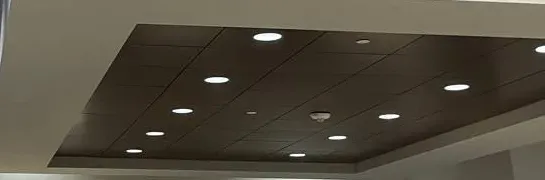
New Lots, Brooklyn door buzzer installation: dark recessed ceiling panel with round downlights and a small round device framed by a lighter ceiling
A photo from the AESS job library, not taken in New Lots: a dark recessed ceiling panel with round downlights and a small round device, framed by a lighter ceiling. Finished lobby ceilings like this one are what the newer buildings along Livonia Avenue have to hide cable in, while a New Lots two-family or walk-up usually sends its buzzer cable through the cellar and up the stair instead.
Field Notes

Field Notes: Close the Door, Count the Households, Then Go Down to the Cellar

This is the order our technician works in at a New Lots house or walk-up, before any price is written. It is our standard practice on these blocks, not an account of one particular job.

First, the door. The technician opens the street door, lets it go and watches it. Does it close by itself, and does the latch catch? Is there an iron gate or a storm door in front of it, a police lock or a chain behind it, a strike someone installed and later disconnected?

Second, the households. The technician asks who lives on each floor, who owns the house, whether anyone uses a side or cellar door, and who should be able to let visitors in. An answer such as "my mother on the first floor, a tenant upstairs and my son in the basement" tells us at once how many buttons, stations and releases the house needs.

Third, the cellar. Downstairs, the technician finds where the old bell wire comes in, where the transformer hangs and which ceiling bays run toward the stair. The power supply's new home is chosen there too, somewhere dry and reachable, away from the boiler and above the floor, before the cable route is drawn.

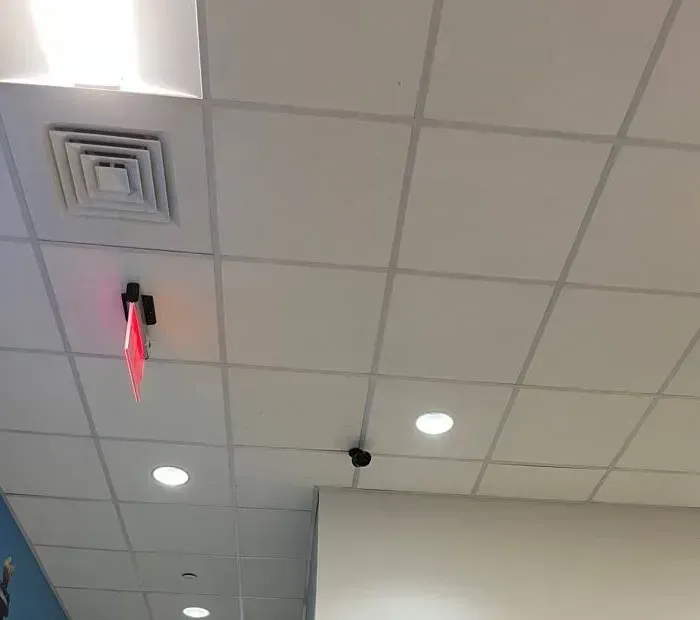
New Lots, Brooklyn door buzzer installation: drop ceiling with a lit red exit sign, an air diffuser, round recessed lights and a small black camera
A photo from the AESS job library, not taken in New Lots: a drop ceiling with a lit red exit sign, an air diffuser, round recessed lights and a small black camera. Storefront churches, clinics and salons on New Lots and Sutter Avenues often have a ceiling like this, and when the apartments' buzzer cable has to cross the ground-floor tenant's space to reach the stair, this is the space it travels through.
When the Landlord Lives Downstairs

The Owner Answers for Everyone: Planning a Buzzer for a New Lots House Where the Landlord Lives on the Ground Floor

In most of Brooklyn's apartment buildings, the person who owns the entry system never hears it ring. In New Lots, the owner of a two- or three-family usually lives in the house and has been the building's buzzer for years: the bell rings, the owner walks to the door, looks out and opens it, whether the visitor is a relative, a tenant's guest or a delivery driver. A new installation changes that arrangement, and the decisions behind it are not technical ones. They are about who controls the front door of a family home that also has tenants.

The first decision is who can release the street door. The usual answer, and the one we recommend, is every household: each one has its own button outside, its own station inside and its own release, so tenants let in their own visitors and the owner stops being the doorman. Owners who want more oversight than that get it through video and release records, never through a lock only the owner can open, because tenants have to be able to let people into their own homes.

The second decision is which doors stay out of the system. The owner's apartment door, the cellar door, the door from the hall to the backyard and any door to a storage room the owner uses should open with keys only. Only the street door, and a lower household's own entrance if it has one, gets an electric release.

The third decision is how the owner answers when not at home. Owners work night shifts, travel for weeks at a time, spend winters away with family or care for parents who live on another floor. Phone answering lets the owner's call ring a phone anywhere, see the visitor if the station has a camera and release the door remotely, while the wall station inside the apartment still rings for whoever is home.

The last decision is what happens when a tenant leaves. On a wired system, the button and the station stay; the owner changes the name or apartment label on the plate. On an app-based system, the departing tenant's account has to be removed and the new tenant added, and the owner has to hold the administrator login to do it.

The Walk-Up's File

Foyer Stations, the Entrance Call and the Door Hardware: Reading a New Lots Walk-Up's HPD Record Before Pricing a New System

For a walk-up owner, the public record is often where a buzzer project starts, whether or not the owner has looked at it. The HPD entries for 316 New Lots Avenue, republished by LucidRents, are a useful example because they show three different kinds of entry that all trace back to the same entrance. In May 2024 an inspector issued a class A violation to "properly repair or replace the broken or defective intercom system in the foyer" of apartment 2A. In July 2024 the same apartment's entry became a class B violation for a "broken or defective bell buzzer intercom system from building entrance door." In August 2024 two more complaints were logged under "bell/buzzer/intercom." Over the same two years, and again in January 2025 and August 2026, the building was cited for self-closing doors with defective hinges, a missing or defective latch and a defective door and frame, including the door to the roof bulkhead.

Read together, those entries describe a building whose entry chain is failing at several points at once: the station in the apartment, the call from the street, and the doors that are supposed to close and latch behind people. When we price a new system for a walk-up, we start from the building's own record, list every violation or complaint that touches the entrance, the intercom or the doors, and make sure the quote addresses each of them or says plainly that it is outside our work.

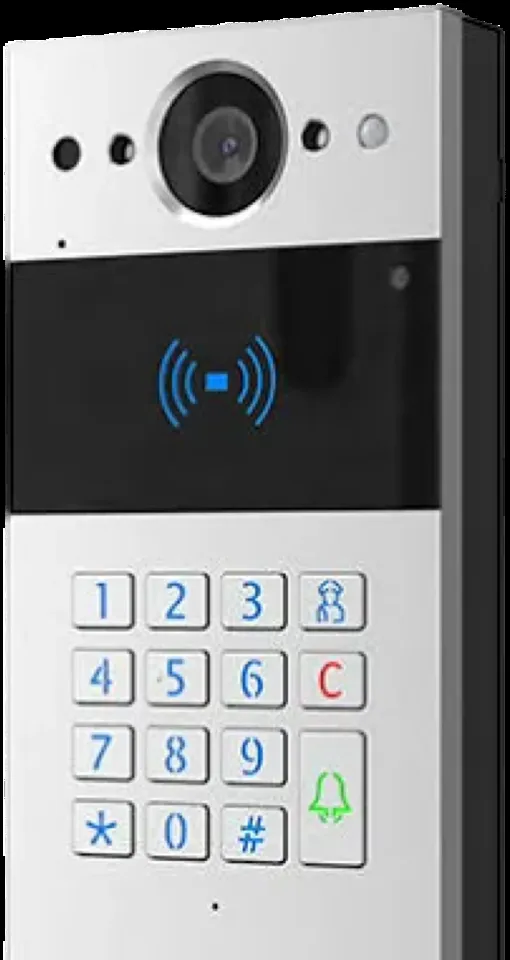
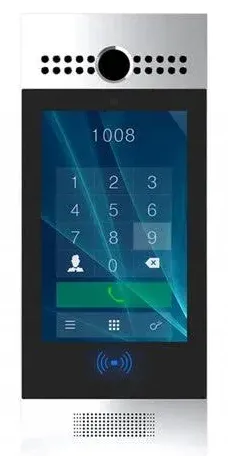
New Lots, Brooklyn door buzzer installation: silver and black keypad door station with a camera lens at the top, a blue card-reader symbol, a numeric keypad and a green bell key
A photo from the AESS job library, not taken in New Lots: a silver and black keypad door station with a camera lens at the top, a blue card-reader symbol, a numeric keypad and a green bell key. In a New Lots walk-up of eight or ten apartments, a combined unit like this replaces a column of worn buttons with a code for each apartment, a camera for the stations upstairs and a reader for residents' cards or fobs.

The timing matters as much as the scope. HPD's Clear Violations page gives owners 90 days to correct a class A violation, 30 days for class B and 14 days for a class C self-closing door violation, and the certification of correction has to be filed by the date on the notice, either through HPD's free eCertification system or on a notarized paper form. HPD's guide adds that eCertification is open only to owners, officers and managing agents on a current registration, so the installer cannot certify for the owner. It is also blunt about what a certification is worth if the work is not real: "A certification will be invalidated if, upon inspection, the condition still exists," and HPD "may audit any certification of correction submitted to the agency."

So the practical order is this. The door hardware, the closer, hinges and latch, comes first, because its correction period is the shortest and because a buzzer cannot pass a test on a door that does not close. The intercom work follows on a schedule that fits inside the class B period where possible, and the owner gets, at handover, a test sheet showing every apartment called, answered and released from the street door, with the date.

Tenants see the same problem from the other side. Brick Underground's guide to broken buzzers describes one renter who waited three months for an inspector after a 311 complaint about a malfunctioning intercom and a propped-open door. And a broken entrance does not stay a private inconvenience for long. In January 2025, BK Reader reported a resident of fifteen years at Boulevard Houses, the NYCHA development in East New York, describing what a broken entrance lock had done to her lobby: "A lot of the kids come in, and the door is not fixed." Doors in public housing are NYCHA's responsibility, and residents there go to NYCHA for repairs, but privately owned walk-ups a few blocks away face the same dynamic on a smaller scale.

Below the Stoop

Cellars, Side Doors and the Room Under the Stoop: Running Buzzer Cable and Power Through a New Lots Basement

In almost every New Lots house we work on, the cellar is the route. The cleanest way to get cable from one to the other is down through the floor near the door, along the cellar ceiling and up beside the stair or through a closet stacked above it.

The cellar is also where most of these houses keep their electric service, their boiler and their water heater, which is why the old bell transformer usually hangs beside one of them. A new buzzer's power supply is small and needs only an outlet, but where it goes matters. Close to a boiler it sits in heat and dust; low on a wall it is in the path of water. The U.S. Geological Survey documented decades ago that the water table in this part of Brooklyn rose sharply after groundwater pumping stopped, and reported basement flooding in the area from 1975 on. We mount the power supply and its battery high on a dry wall, away from the boiler and the floor, on a circuit the owner controls, and label it.

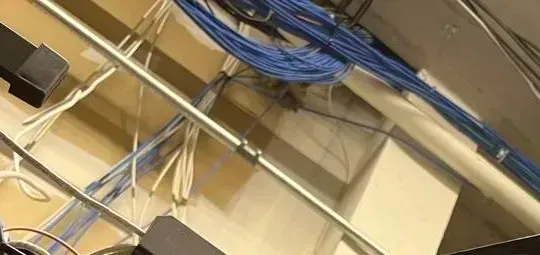
New Lots, Brooklyn door buzzer installation: bundles of blue low-voltage cable laid over a ceiling beam and a metal pipe in an open ceiling
A photo from the AESS job library, not taken in New Lots: bundles of blue low-voltage cable laid over a ceiling beam and a metal pipe in an open ceiling. In a New Lots two-family the cellar ceiling is usually where the buzzer cable runs from the street door toward the stair, and it is fastened to the joists and kept off the heating and water pipes rather than left draped over them like this.

The basement study gives a sense of how often a cellar here is more than a cellar. Of 102 homes assessed in the pilot, 69 percent had cellars rather than basements, and two-thirds of the below-grade spaces already had a bedroom. Only 2 percent of the properties had active fire suppression. Nothing we install restricts anyone's way out of a below-grade room: every door with a release opens freely from inside, and we will not put a magnetic lock or a keyed-both-sides arrangement on a door that may be someone's exit. And where a lower household has its own door, its station and release are on the same battery-backed supply as the rest of the house, so that door still answers and still locks during a short outage.

The side door gets its own decision. Many New Lots houses have a door at the side, down a narrow passage or a driveway, that leads to the cellar stair or the yard. If a household uses it as its entrance, it can go on the system with its own station. If nobody should be coming in that way, it stays locked and off the system, and we say so on the quote, because a door that everyone assumes someone else locked is the one left open.

The Rules

What New York Law, HPD and the Building Code Expect at a New Lots Front Door

  • Which buildings must have an intercom. Multiple Dwelling Law §50-a requires every class A multiple dwelling built or converted after January 1, 1968 with eight or more apartments to have a self-locking main door and an intercommunication system that lets residents talk to a visitor and release the door. Older buildings must install one if tenants of a majority of apartments ask in writing. Most New Lots two- and three-family houses fall outside that rule; walk-ups that went up before 1968 are covered only if tenants ask.
  • Once it is there, it is inspected. HPD's record for 316 New Lots Avenue shows inspectors writing up a defective bell, buzzer and intercom at a building entrance as a class B condition, with a 30-day correction period, and self-closing door defects as class C, with 14 days.
  • Free exit, always. Every door with a buzzer still has to open from inside without a key, a code or a button. An electric strike leaves the inside lever or knob working, which is why it is our default; Allegion's guide notes that "you can exit by turning the lever" whether the strike is fail-safe or fail-secure.
  • Magnetic locks come with conditions. The building code's sensor-release provisions call for a sensor on the egress side, a push-to-exit device near the door, release on loss of power and on fire alarm activation, and listed hardware. On a house or walk-up door, a strike is almost always simpler and safer.
  • Fire-rated doors keep their rating. Allegion notes that fire doors need fail-secure strikes, which stay latched in a fire. Stair and hall doors in walk-ups and the doors between a storefront and the residential hall are often rated, and we read the label before choosing hardware.
  • Reach. On the doors of businesses and other public spaces, buttons and keypads go between 15 and 48 inches above the ground, the reach range in the 2010 ADA Standards, and we use the same range on residential doors wherever the stoop allows.

None of this is legal advice about a particular building; an owner with a specific question about obligations, a violation or a tenant's rights should ask an attorney or HPD directly. What we can do is install a system that meets the technical side of each rule and give the owner the paperwork that shows what was installed and tested.

Commercial Door Buzzer Installation

Business Door Buzzer Installation in New Lots

New Lots businesses are small. The Department of Small Business Services surveyed 122 merchants on the district's corridors and found a median of two full-time employees, with 72 percent renting their space. In a shop run by one or two people, nobody can leave the chair, the counter or the exam room every time someone knocks at a back or side door, which is exactly what a business buzzer is for.

New Lots Avenue

The neighborhood's spine, with salons, delis, clinics and storefront churches below apartments, and the 1823 New Lots Reformed Church at Schenck Avenue among its oldest buildings.

Livonia Avenue under the el

Shops in the shade of the elevated 3 line, with apartment doors beside many storefronts and the newer Livonia Commons buildings and their ground-floor spaces farther along.

Sutter Avenue

A busy commercial stretch at the northern edge of the area, home to the 75th Precinct station house at 1000 Sutter Avenue, with businesses and apartments sharing narrow fronts.

Van Sinderen Avenue

The short corridor beside the tracks at the western edge, where the 2025 district study found most storefronts vacant and new tenants fitting out spaces from scratch.

Around the New Lots Avenue station

The blocks near the terminal at Livonia Avenue and Ashford Street, where foot traffic from the train passes shop doors and the residential doors beside them all day.

Churches and community spaces

The 33 houses of worship and nonprofits the district study counted, many in converted storefronts, with an office door, a hall door and sometimes an apartment upstairs.

The most common business request here is a buzzer at a door that should stay locked during the day: the back door of a salon that opens onto a hall shared with the apartments, the staff entrance of a medical office, the side door of a deli where deliveries come in, the office door of a church that holds services three evenings a week. A station at that door, answered on a phone or a small unit at the counter, lets it stay shut without anyone propping it with a chair.

Vacant storefronts are part of the picture too. The district study counted 78 of the 367 storefronts as vacant, 21 percent against a citywide average of 12.1 percent, and a new tenant moving into a long-empty space is usually starting the door from nothing: no working closer, a frame that has been forced more than once, a dead bell wire from a previous business.

Rules that apply to New Lots business entry installations

  • Everyone can get out. A business door with a buzzer, code or reader still opens from inside without a key or code; a strike that leaves the inside lever free is the usual choice.
  • Rated doors keep their rating. The door between a storefront and a building's residential hall or stair is often fire-rated, and it needs fail-secure hardware that stays latched in a fire.
  • Magnetic locks only with sensor release. Where a magnetic lock is the only option, the building code calls for an egress-side sensor, a push-to-exit device, release on power loss and on fire alarm activation, and listed hardware.
  • The landlord signs first. Most businesses here rent, so work on a shared door, a hall or the cellar starts only after the building owner approves it in writing.
  • Separate from the apartments. The business system and the residential system have separate power supplies and separate releases, and nothing in the shop can open the apartments' door.
  • Reach range. Buttons and keypads on public doors stay between 15 and 48 inches above the ground, inside the 2010 ADA Standards' range.
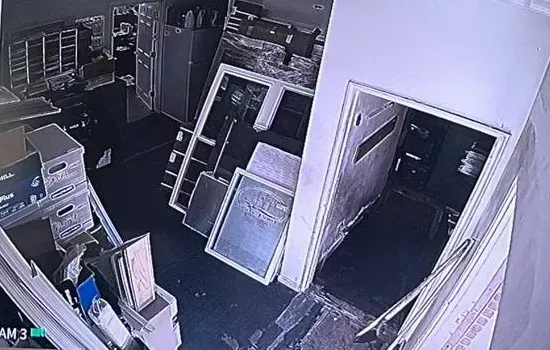
New Lots, Brooklyn door buzzer installation: black-and-white night camera view of a cluttered room with an open doorway into a dark back room
A photo from the AESS job library, not taken in New Lots: a black-and-white night camera view of a cluttered room with an open doorway into a dark back room. The back rooms of small shops and salons on New Lots and Livonia Avenues look much like this, and the door at the far end, often onto a shared hall or a yard, is the one a business buzzer keeps locked while staff are busy out front.
Your Questions Answered

Door Buzzer Installation in New Lots: Questions Answered

Houses where the owner lives too

Our front door has a police lock, the steel bar that braces it from inside. Will an electric release still let a visitor in when the bar is set?

No. A brace lock holds the door shut no matter what the latch does, so while the bar is in place the electric strike can release the latch and the door still will not move. That is not a fault in the buzzer; it is what the bar is for. Most owners keep the bar for night-time, when everyone is home, and leave it off during the day so the buzzer works. If a household upstairs needs to let people in at night, the bar has to stay off or the house needs a stronger strike and frame instead, which we can price.

Our stoop is closed in by an iron enclosure with its own locked gate. Should the door station go on that gate or at the house door behind it?

Wherever the visitor stops. If the enclosure gate is kept locked, the visitor cannot reach the house door, so the station belongs at the gate and the release has to work the gate's lock, which means bringing power to a gate that swings, usually through a flexible loop at the hinge side. If the gate stands open during the day and only the house door locks, the station goes at the house door as usual.

Our tenant upstairs lets in her own visitors, which is fine, but we would like to know when the street door is released. Can the system tell us?

Some systems can. App-based and networked stations can keep a record of calls and releases, and some can send the owner a notification when the door opens; a door contact on the street door can do the same on almost any system. A basic wired audio system cannot. If you want this, tell us at the walkthrough so we choose equipment that supports it, and tell your tenant too: a household should know if the system records when its visitors are let in.

The old bell transformer is screwed to a joist right next to our boiler. Is that a bad place for the new power supply?

Usually, yes. A boiler throws off heat and dust, its area needs to stay clear for service, and the space around it is often where water collects when something leaks. We move the new power supply and battery to a dry wall a few feet away, high enough to stay clear of the floor, near the electric service and on a circuit the owner controls. If there is no suitable outlet there, a licensed electrician adds one before we install, and that cost is on the quote. The old transformer is disconnected and left safe.

Walk-ups and buildings on the avenues

Kids press every button on our walk-up's panel on their way home from school. Is there an installation choice that cuts down on those calls without making it harder for real visitors?

Nothing stops a hand from pressing a button, but a few choices help. Video stations let residents see who is calling and ignore it, which takes the fun out of it quickly. A camera on the panel, and a panel placed where it can be seen from the street, discourage it. A code panel, where a visitor has to enter an apartment number, makes random calls slower than a column of buttons.

A fire upstairs damaged the hall and the old intercom, and our insurer is paying for the repairs. What does an adjuster usually want from the buzzer installer?

A clear, itemized written price for putting back what was there, and a separate line for anything that would be an upgrade. We photograph the damaged panel, stations, wiring and power supply before anything is removed, note the make and model where we can read them, and list door hardware, cable, stations and labor separately, so the adjuster can match each line to the loss. Whether a particular item is covered is between the owner and the insurer; we provide the facts and the price, and do not order equipment until the owner approves the written quote.

The door at the back of our walk-up's hall opens to the yard where tenants keep the bins. Does that door need anything from a buzzer job?

It needs attention, not a station. Visitors should never be let in through the yard, so that door does not go on the system. What it needs is to close and latch on its own, open freely from inside, and lock from outside so that anyone in the yard who does not live there cannot walk into the hall. We check its closer and latch during the walkthrough, because a street door that locks perfectly does little good if the yard door behind it is held open with a brick.

I own a walk-up on New Lots Avenue and a two-family a few blocks away. Can both be managed from one account?

If both get app-based or networked systems from the same maker, often yes: one administrator account can hold more than one site, and you add or remove residents at either from your phone. If one building gets a wired audio system with no network connection, there is nothing to manage remotely, and the account question only applies to the other.

Getting the work done in a lived-in house

Our old bell wire still runs up inside the walls from the cellar. Can the new cable be pulled through on it, so nothing has to be opened?

Sometimes. If the old wire runs loose in a clear channel, we can tie the new cable to it in the cellar and pull from above, and it comes out where the old wire did. If the old wire is stapled to the studs or plastered into the wall, which is common in older houses, it will not move, and we fish the new cable separately with rods and tape through the same bays. Where a small opening is unavoidable we tell you first, and the patching and painting are left to your own painter or contractor.

How much dust and noise should we expect inside the house on installation day?

Less than most people expect, with a few loud minutes. Drilling through brick for the door station and through the floor near the door is the noisy, dusty part, and it is short; we lay drop cloths, hold a vacuum at the bit and clean up as we go. Mounting stations upstairs means a few small holes in each apartment. We arrive within a two-hour window, tell each household when we will need to be in their apartment, and the street door is locking again before we leave each day.

Old cable from three past doorbells and a cable company is stapled across our brick front. Can that come down as part of the job?

The doorbell and buzzer cable that is ours to remove, yes. Once the new system works, we take down the dead bell and intercom wire we can trace and confirm is out of service, and pull its staples. Cable belonging to a phone, internet or television provider is not ours to touch; if some of it is dead, the provider can remove it.

Choosing what goes in

Money is tight this year. Which parts of a buzzer installation are worth paying for now, and which can wait without being wasted?

Pay now for the door and the wiring. A closer and latch that work, a strike that fits the frame, a power supply with a battery, and cable to every household that tests clean are the parts that make any system reliable, and redoing them later costs twice. The stations themselves are where you can economize: audio now, with cable chosen so video stations can replace them later, or phone answering for one household now and the others when they want it.

For a stoop that faces the street all day, which holds up better: a metal push-button station or a touchscreen panel?

For a two- or three-family on a New Lots stoop, we generally prefer a metal station with physical buttons. It takes rain, cold and hard use well, it can be read and pressed by anyone, and a damaged button is a small repair. Touchscreen panels suit a larger walk-up or a building with a directory too long for buttons, but they need shade from direct sun, a sheltered spot and more careful mounting.

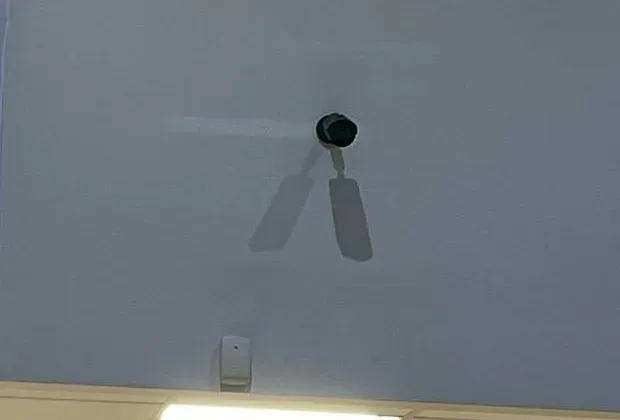
New Lots, Brooklyn door buzzer installation: small black camera mounted high on a pale wall casting two shadows, with a small white wall device below
A photo from the AESS job library, not taken in New Lots: a small black camera mounted high on a pale wall casting two shadows, with a small white wall device below. In the shared hall of a New Lots two-family, a camera placed like this, or the camera built into the door station, lets the owner see who a tenant's visitor is once the street door has been released.
Equipment

Types of Door Buzzer Systems We Install

By default we quote a reliable non-branded system, and we install a named brand when an owner asks for one; the intercom brands we work with include Aiphone, ButterflyMX, 2N, Akuvox, Comelit and DoorBird. These are the pieces of equipment that come up most often on New Lots jobs, and the houses and buildings each one suits.

Two- and three-button stations

Compact metal stations with one button per household, audio or video, sized for the narrow brick strip beside a two- or three-family's door.

Single-button video stations

For a one-family row house, a lower household's own door or a business's back door, ringing one answering unit or phone.

Two-wire apartment systems

Systems that carry voice, video, power and release over a single pair, which can often reuse a walk-up's old cable once each pair tests sound. Aiphone describes its GT Series as made "for new builds and retrofit projects."

Code and keypad panels

Panels where a visitor enters an apartment number, for walk-ups whose button column has worn out or grown too long, often with a reader for residents.

Phone and app answering

Stations that ring residents' phones, alone or with a wall station, for owners who are often out and households who want to answer from anywhere.

Wall and handset stations

Indoor stations with a screen or a simple talk-and-door button, for tenants and older relatives who want to answer without a phone.

Fail-secure electric strikes

Strikes sized for old wood frames and newer steel ones that stay locked when power is lost and leave the inside lever free for exit.

Closers and latch work

New or adjusted closers so a heavy street door shuts every time, and latches aligned so the strike catches, the first step on most New Lots doors.

Battery-backed power supplies

Low-voltage supplies with standby batteries, mounted high and dry in the cellar or a closet, on the owner's circuit, labeled with what they serve.

Audio station, video station or phone answering: which suits a New Lots house or walk-up?

What mattersAudio stationsVideo stationsPhone or app answering
Best New Lots fitTwo-families on a budget where the old bell wire tests soundTwo- and three-families and walk-ups where residents want to see the visitorOwners who work away from home; houses where cable upstairs is hard to run
How a household answersTalk-and-door station on the wallScreen on the wall, sometimes with an appPhone, with or without a wall station
Needs internetNoNo, unless the app option is usedYes, or a cellular connection
Reuses old wireOften, after testingOften on two-wire systems, after testingOnly for the door's power and release
Monthly feesNoneNone unless an app service chargesOften per apartment or per door
Brooklyn list range$400–$900 one door$700–$1,800 small house or building$700–$1,800 small; from about $2,500 for a walk-up

ADT, Ring and SimpliSafe compared with a local installer for a New Lots house

Many New Lots front doors already carry a store-bought video doorbell, usually put up by one household for itself. Ring and similar doorbells are designed for one family at one door: they ring that family's phone, but they have no separate button for each household and, out of the box, no connection to an electric strike, so someone still walks down to open the door. ADT and SimpliSafe are best known for monitored alarm systems, which protect against break-ins and fire rather than letting each apartment answer the door.

A one-family row house may be well served by a good wired video doorbell, and a two-family may want an alarm as well as a buzzer. But a house with two or three households needs a button for each one, an answering unit or phone for each one, a release on the street door, a closer that shuts it behind every visitor and a power supply the owner controls. That is the work a local licensed installer does at the door itself, and it is the part a doorbell bought online leaves undone.

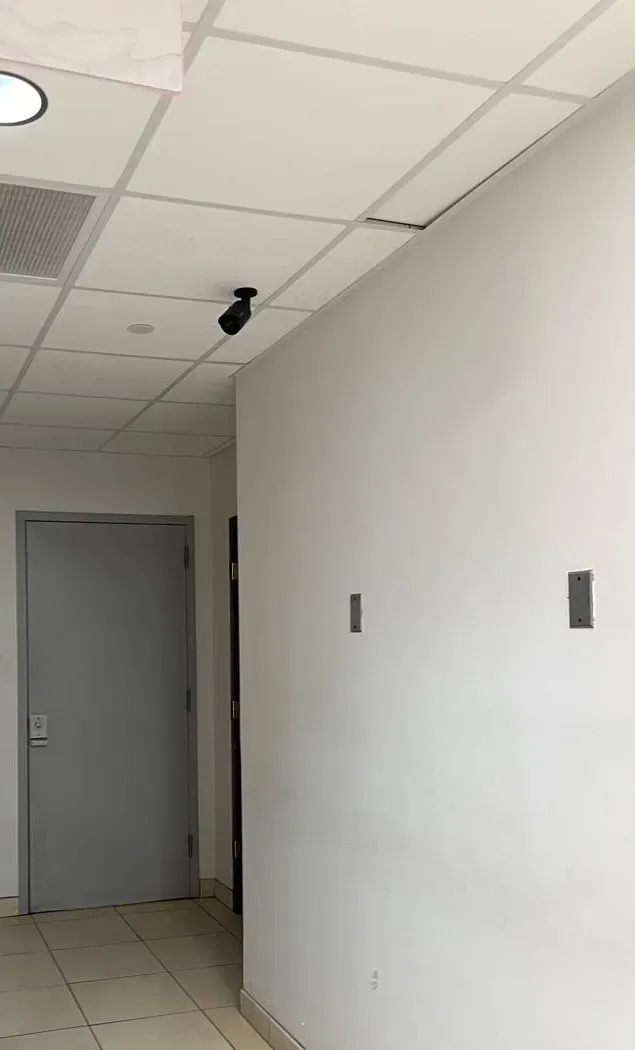
New Lots, Brooklyn door buzzer installation: tiled corridor with white walls and small wall plates ending at a grey steel door with a lever handle under a drop ceiling with a small camera
A photo from the AESS job library, not taken in New Lots: a tiled corridor with white walls and small wall plates ending at a grey steel door with a lever handle, under a drop ceiling with a small camera. A steel door at the end of a hall like this is typical of the rear and service doors in New Lots walk-ups and storefront buildings, and its lever handle is what keeps the way out free when a fail-secure strike goes on the frame.
AI Overview Reality Check

What AI Gets Wrong About Door Buzzer Installation in New Lots

Search summaries and AI assistants answer buzzer questions from national cost guides and vendor blogs. Here are seven claims we hear repeated, each checked against what we find at New Lots doors.

"Intercom installation costs between $1,500 and $15,000"

That is HomeAdvisor's national range, with an average of $2,500. For a New Lots two-family it starts too high, and for a walk-up it says nothing useful about where in that span the job will land.

On our Brooklyn list, an audio buzzer with a release at one door is $400 to $900, a video station with answering for each household in a small house or building is $700 to $1,800, and a full panel for a larger walk-up starts around $2,500 and can pass $10,000. The difference comes from the number of households, the condition of the old wire and how many doors need work.

What a national range cannot show is the local cost driver that matters most here: the door. A closer that has to be replaced, a frame that has been forced and repaired, an iron gate in front of the house door. We price those as their own lines so an owner can see them.

"Wireless systems are the best option if you want to DIY"

HomeAdvisor says exactly that, and for a doorbell it can be true. A Brooklyn owner on a Brownstoner thread about a multi-family house described the common version: "The doorbell wiring was too old and we opted to get the plug in bells that sync with the doorbell cam."

That solves the ringing, not the door. A plug-in chime tells a household someone is there; it does not let that household open the street door, so someone still walks down. And radio signals have to get through floors and brick walls between the stoop and the top apartment, which in a solid New Lots house is not something to assume.

The release is the part that has to be wired: a strike in the frame, a power supply and a cable from each household's station. Once that cable is in, the stations on it can be anything from audio to video.

"App subscriptions only add a few dollars per apartment"

Swiftlane's cost guide puts software subscriptions at "$5 to $15 per unit per month, or $30 to $100 per door per month."

Multiplied out, it is not. A three-family at $5 to $15 per unit pays $15 to $45 a month, or $180 to $540 a year, for as long as the system runs; an eight-apartment walk-up pays $40 to $120 a month. For an owner-occupied house on a family budget, that can exceed the cost of the stations within a few years.

App answering is worth it for some households, and a wired system can include phone answering for one floor while the others use wall stations. We show the monthly cost, if any, next to the installation price, and a wired system can run with no fee at all.

"Only buildings with eight or more apartments need to worry about their intercom"

That is a simplified reading of Multiple Dwelling Law §50-a, which requires an intercom in newer class A buildings of eight or more apartments and in older ones when a majority of tenants ask in writing.

It leaves out what happens once an intercom exists. HPD's record for 316 New Lots Avenue shows a tenant complaint turning into a class B violation for a defective bell, buzzer and intercom at the building entrance, with a 30-day correction period. Inspectors write up what is installed and broken, not only what the law requires a building to have.

For a two- or three-family owner, the practical point is simpler: tenants expect the buttons by the door to work. A system that is installed properly and tested on handover keeps that expectation met.

"A magnetic lock is the simplest way to add a release"

Allegion's guide is clear, though, that "electromagnetic locks are only available fail safe," meaning the door unlocks when power is lost.

On a street door, that turns every outage into an open house. To be installed properly, a magnetic lock also needs the building code's sensor-release arrangement: an egress-side sensor, a push-to-exit device, release on loss of power and fire alarm, listed hardware. None of that is simple on a two-family's front door.

For nearly every New Lots door, a fail-secure electric strike, with a closer that shuts the door firmly, is the better answer. It stays locked during an outage, leaves the inside knob or lever free and adds nothing to the outside of the house.

"Old buzzer wiring can be reused"

Sometimes. Aiphone's upgrade guidance says "if the existing wires are in good condition, they can be reused," and one installer on Reddit's access-control forum described a typical plan: "keep the existing GT system, repair the damaged cable, and only upgrade those tenants that desire app connectivity."

The condition is the whole point. ButterflyMX warns that whether wire can be reused "cannot be confirmed from a photo, the age of the building, or the look of a wall station." In New Lots houses, old bell wire may have been cut and spliced during a renovation, run through a damp cellar or stapled to a beam that later got wet.

So we test each pair before quoting, mark which pass, and price new cable only where a pair fails.

"Installation takes one to two hours per station"

Brick Underground's intercom guide gives a building-level view: about a day for a five-apartment building and about two days for a hundred apartments.

In a New Lots house, the time goes into the door and the route more than the stations. Adjusting or replacing a closer, cutting a strike into an old frame, drilling through brick at the stoop and finding a path from the cellar to the top floor are what fill the day.

For most two- and three-family houses, that is one working day with the street door locking again before we leave. A walk-up with many apartments, or a house where the cable route is hard, can take longer, and the quote says how long.
Not Sure Whether Your House Needs New Wire, a Better Door or Just More Buttons? Speak to a Tech

Send a photo of the street door, the buttons beside it and, if you can, the box where the wires meet in the cellar, with the number of households and the doors people use, and a technician will tell you which path looks likely and where it falls on our Brooklyn list. Call or text (347) 934-8335, send photos on WhatsApp, or fill in the form below.

Get In Touch

Request a Free Quote

✅
Request Sent!
Thank you. A technician will call you about the New Lots address, usually within two hours during working hours.
How It Works

Our Installation Process

1. Count the households and the doors

Photos of the stoop door and any side, yard or cellar door, and a list of every household and business the system must reach, with who owns the house and who lives in it.

2. Agree who decides and who answers

Who signs for the work, which homes get stations, which doors stay off the system, and which households want phone answering instead of, or as well as, a wall station.

3. Make the door close and latch first

Each door is opened and released again and again; the closer, latch, frame and any police lock or iron gate are checked, and the hardware the frame can take is noted.

4. Test the old wire and plan the route

Old pairs are tested one by one, the path from the door to each floor is mapped through the cellar or a closet, and a dry, reachable spot away from the boiler is chosen for power.

5. Write the price before ordering

Station, answering units, strike, closer work, power, cable and labor on one written price from the Brooklyn list, with every possible extra named before anything is ordered.

6. Fit the door hardware and power

The closer is set so the door relatches, the strike goes into the frame and the supply goes on the owner's circuit, with a licensed electrician for any new outlet.

7. Mount, wire and label

The door station is mounted, cable is run or reused, each household's station or phone answering is set up, and every button, pair and device is labeled.

8. Test from the sidewalk and hand over

Every household is called from the door, answers, talks and releases while the door is watched relocking; the owner receives the wiring record, test sheet and settings.

New Lots, Brooklyn door buzzer installation: touchscreen entry panel showing a dial pad with a four-digit apartment code entered, a camera above and a card-reader symbol below
A photo from the AESS job library, not taken in New Lots: a touchscreen entry panel showing a dial pad with a four-digit apartment code entered, a camera above and a card-reader symbol below. A code panel like this suits a larger New Lots walk-up or one of the newer buildings on Livonia Avenue, where a sheltered entrance protects the screen and a column of buttons would be too long.
Coverage Area

Door Buzzer Installation Near New Lots's Landmarks

New Lots Reformed Church

The church at 630 New Lots Avenue at Schenck Avenue, built in 1823 to 1824 by volunteers and a city landmark since 1966, with its old cemetery beside it.

New Lots Library

The Brooklyn Public Library branch at 665 New Lots Avenue, on this site since 1957 and being rebuilt to a new design, with completion expected in 2028.

African Burial Ground Square

The square between New Lots and Livonia Avenues, from Barbey Street to Schenck Avenue, named in 2013 to mark the burial ground on the site.

East New York Farms Youth Farm

The half-acre UCC Youth Farm on Schenck Avenue between New Lots and Livonia, home of a Saturday farmers' market in season.

New Lots Avenue Station

The terminal of the 3 train at Livonia Avenue and Ashford Street, opened on October 16, 1922, at the end of the elevated line over Livonia.

75th Precinct Station House

The station house at 1000 Sutter Avenue for the precinct that covers East New York and Cypress Hills, New Lots included.

We also serve Cypress Hills, City Line, Brownsville and Canarsie at the same Brooklyn rate, along with the rest of East New York, Spring Creek and Starrett City. See our Brooklyn door buzzer installation page for the whole borough, and door buzzer installation in Queens for houses a short drive east in Ozone Park.

Pricing

Door Buzzer Installation Cost in New Lots

New Lots is billed at our Brooklyn rate. The final number follows a walkthrough, because the households, the doors people use, the state of the old wire and the work the street door needs decide the total far more than the brand on the station.

JobTypical New Lots propertyBrooklyn range
Audio buzzer or replacement with electric strike release, existing wiring reused where it tests wellA two-family with a sound bell wire, a lower household's own door, a salon or clinic back door$400–$900
Video door station with indoor monitors or smartphone door releaseTwo- or three-family houses, apartments over a storefront, a small walk-up$700–$1,800
Directory, code or button panel with every apartment wired, audio or video by unit count, optional fob integrationLarger walk-ups on the avenues, buildings with more than one door$2,500–$10,000+
Service call booked onlineTesting an existing system before choosing repair or replacement$250, credited toward the work
Monthly fee on a wired systemAny property choosing the no-subscription option$0

Inside each range, the price moves for reasons you can see. The households and the wire come first: a two-family whose old pair tests clean stays low, while new cable fished to a third floor through an attached house moves it up. Then the doors: a side or cellar entrance on the system adds a station and a release, and a street door that needs a new closer or a repaired frame adds that work. Anything that depends on a test is named on the quote with its price before you approve.

Full terms — including 50% deposit, one-year parts-only warranty on AESS-supplied products, and the late-fee schedule — are set out in the service agreement.

Find Out Which Range Your New Lots House or Building Falls In

Tell us the street, how many households live behind the door, which doors they use and what is there now, and we will tell you which Brooklyn range fits and what would move it. Call or text (347) 934-8335, send photos on WhatsApp, or fill in the form.

Shop Our Systems

Door Buzzer Installation Packages & Pricing

Three typical New Lots jobs, each placed inside its range on our Brooklyn list. The exact figure comes from the walkthrough.

One door, one release: $400–$900

An audio buzzer for a two-family whose bell wire tests sound, or a single station at a lower household's own door or a business's back door, with a fail-secure strike, closer work and battery-backed power.

Video for every household: $700–$1,800

A two- or three-button video station at the stoop, a screen or phone answering for each household, old wire reused where it passes and new cable where it does not, and the door set to latch.

Walk-up entrance system: from about $2,500

A button or code panel at the street door, a station or app answering in every apartment, tested or new cable, the strike and closer brought up to date and power on the owner's circuit, rising toward $10,000 or more with apartments and doors.

Bring your own equipment. If you have already bought a door station or intercom kit, we can install it as labor-only work, quoted flat once we have seen the door, the frame and the cable route. Tell us the make and model first, and we will say before the visit whether it can reach every household and release your door.

Complete Services

Every Door Buzzer Service in New Lots

Houses and walk-ups

First buzzers, replacements, separate household stations and lower-unit doors. Request a quote

Shops, salons, clinics and churches

Back-door, staff-door and office buzzers kept separate from the apartments. Call (347) 934-8335

Across Brooklyn

The same list in every neighborhood. Brooklyn door buzzer installation

Across New York City

Every borough's houses and buildings. NYC door buzzer installation

FAQ

New Lots Door Buzzer Installation FAQ

Do you keep door stations and strikes on the truck, or is equipment ordered for each job?
+

Door stations and apartment stations are ordered for each job once the written price is approved, so they match the number of households and the finish you chose, and strikes are matched to your frame at the walkthrough. If a station has to be special-ordered from a maker that does not keep stock nearby, we tell you before you approve, and the installation date is set once it arrives.

If nobody is home, can the system keep a picture of who rang or let the visitor leave a message?
+

Many video and app-based stations can save a snapshot or short clip of each call and show missed visitors on the indoor screen or in the app, and some let a visitor leave a short message. A basic audio system cannot. If this matters to your household, say so at the walkthrough and we choose a station that does it, and we tell your tenants what it records.

Can the indoor station sit on a table instead of being fixed to the wall?
+

Some indoor stations come with a desk stand, and we can mount one that way where the household prefers it, usually near a table or counter in the kitchen. The cable still has to reach that spot, so we run it to a neat wall plate nearby rather than leaving it loose across the floor. Wall mounting is more common because the station stays put and out of the way.

Our front door has a knob that locks by itself every time the door closes. Does that work with a buzzer release?
+

Usually, yes. A self-locking knob works well with an electric strike, because the strike releases the latch from the frame side while the knob stays locked, and the door relocks the moment it shuts. We check that the latch lines up with the strike and that the door closes firmly enough to catch every time, and adjust or replace the closer if it does not.

After the warranty runs out, will you still come back to service a system you installed?
+

Yes. We keep the wiring record and test sheet from your installation, so a later visit starts from what we know about your house. Service after the warranty is booked like any service call and priced on our Brooklyn list.

Can the station inside our apartment be mounted low enough for a family member who uses a wheelchair?
+

Yes. We mount it at whatever height the household asks for, and for a resident who uses a wheelchair we keep the screen and buttons within the reach range the 2010 ADA Standards use, no higher than 48 inches above the floor. A second station or phone answering can be added in the room where that person spends most of the day, so nobody has to cross the house to answer.

Can one household turn off its ring at night without affecting the rest of the house?
+

On most stations, yes. Many indoor units have a volume control or a do-not-disturb setting that silences that one household's ring while the others keep working, and app answering can be muted on the phone. We show each household how to use its own setting at handover, and the owner's station and the door itself are not affected.

Does cutting the frame for an electric strike make the street door easier to force?
+

Not when it is done properly. A strike replaces the existing strike plate and sits in a pocket cut to fit it, and a fail-secure strike holds the latch as firmly as the plate it replaces. Where an old wood frame is soft or split, we tell you before installing and quote a reinforcement or a carpenter's repair, because a weak frame is weak with or without a buzzer.

Can the indoor station be a cordless handset we carry around the house?
+

A few systems offer one, and phone answering does the same job on a phone everyone already carries. A wall or table station is still useful as the fixed place where the ring is always heard, especially for older relatives.

Is the old bell wire inside our walls a safety hazard once it is out of service?
+

Bell and buzzer wire is low voltage, and once its transformer is disconnected it carries nothing. The part of an old system that matters for safety is the transformer, which is wired to the house's 120-volt supply, so we disconnect it and leave it safe or have it removed by the electrician.

How many technicians come on installation day?
+

For most two- and three-family houses, one experienced technician. A walk-up with many apartments may need a second person or more than one day, so that the door, the cellar and each apartment can be finished and tested properly. The quote says how many people and how many days to expect.

More Door Buzzer Installation near New Lots

Door Buzzer Installation Brooklyn NY | Brownstones & Condos · Door Buzzer Installation NYC | Apartment & Building Entry · Door Buzzer Installation Manhattan NY | Apartments & Co-ops · Door Buzzer Installation Queens NY | Co-ops & Apartments · Door Buzzer Installation Bronx NY | Co-ops & Apartments · Door Buzzer Installation Staten Island NY | Homes & Apts · Door Buzzer Installation Long Island NY | Nassau & Suffolk · Door Buzzer Installation Hudson Valley NY | Apartments · Door Buzzer Installation Nassau County NY | Homes & Co-ops · Door Buzzer Installation Suffolk County NY | Homes · Door Buzzer Installation Westchester County NY | Co-ops · Door Buzzer Installation Rockland County NY | Homes & Apts · Door Buzzer Installation Orange County NY | Homes & Farms · Door Buzzer Installation Putnam County NY | Lake Homes · Door Buzzer Installation Dutchess County NY | Homes · Door Buzzer Installation Ulster County NY | Kingston

Door Buzzer Installation Bath Beach Brooklyn NY · Door Buzzer Installation Bay Ridge Brooklyn NY · Door Buzzer Installation Bedford-Stuyvesant Brooklyn NY · Door Buzzer Installation Bensonhurst Brooklyn NY · Door Buzzer Installation Bergen Beach Brooklyn NY · Door Buzzer Installation Beverley Square Brooklyn NY · Door Buzzer Installation Boerum Hill Brooklyn NY · Door Buzzer Installation Brooklyn Navy Yard, Brooklyn NY · Door Buzzer Installation Brooklyn NY | Brownstones & Condos · Door Buzzer Installation Brownsville Brooklyn NY · Door Buzzer Installation Bushwick Brooklyn NY · Door Buzzer Installation Cadman Plaza Brooklyn NY · Door Buzzer Installation Canarsie Brooklyn NY · Door Buzzer Installation Carroll Gardens Brooklyn NY · Door Buzzer Installation City Line Brooklyn NY · Door Buzzer Installation Clinton Hill Brooklyn NY · Door Buzzer Installation Cobble Hill Brooklyn NY · Door Buzzer Installation Columbia Street Waterfront Brooklyn · Door Buzzer Installation Coney Island Brooklyn NY · Door Buzzer Installation Crown Heights Brooklyn NY · Door Buzzer Installation Cypress Hills Brooklyn NY · Door Buzzer Installation Ditmas Park Brooklyn NY · Door Buzzer Installation Downtown Brooklyn NY · Door Buzzer Installation DUMBO Brooklyn NY | Loft Entry

Other services in New Lots

Access Control Installation New Lots Brooklyn NY · Intercom Installation New Lots Brooklyn NY · Fire Alarm Installation New Lots Brooklyn NY · TV Installation New Lots Brooklyn NY · Security Camera Installation New Lots Brooklyn NY · Structured Cabling Installation New Lots Brooklyn NY · Alarm Installation New Lots Brooklyn NY | Shops & Homes · Door Buzzer Repair New Lots Brooklyn NY | Row Houses

Ready for a New Lots Front Door Where Every Household Answers Its Own Visitors?

Send a photo of your street door and the buttons beside it, with the address, the number of households and every door people use, and we will tell you which system fits, what the door needs first and where the job falls on our Brooklyn list. Call or text (347) 934-8335, message us on WhatsApp, or use the request form. Licensed under NYS license #12000287431, rated 4.7★ across 201 Google Reviews, with same-day estimates on most weekdays.