A family condo going up on Wallabout Street, a Keap Street walk-up with an HPD intercom violation, a tower on Clymer Street or a shul's front door? South Williamsburg door buzzer installation line: (347) 934-8335
New Family-Size Condos · Prewar Walk-Ups · Lottery Rentals · Mid-Century Towers · Shuls, Yeshivas and Shops on Lee and Bedford Avenues
Door Buzzer Installation in South Williamsburg
City Record Checked First · Every Apartment Tested From the Sidewalk · Stations on Every Level of a Duplex · Written Price Before Ordering · Brooklyn Rate
Door buzzer installation in South Williamsburg means planning entry systems for buildings that are still being built, buildings that have been inspected by the city for broken intercoms, and buildings that are not homes at all. Six-story condos with three huge family apartments are rising on vacant lots, seven-story buildings mix condos with a community-facility floor and stores, prewar walk-ups on Keap and Hooper Streets carry HPD intercom violations, and synagogues and schools are spending state security grants on their doors. Below is how we plan each one and where it lands on our Brooklyn price list.
Prices come from our Brooklyn door buzzer list, and the total, with every possible extra named, is agreed in writing before anything is ordered
Rated 4.7★ across 201 Google Reviews
Reviewed and updated November 11, 2026, against NYC Open Data's HPD Housing Maintenance Code Violations and HPD Complaints and Problems datasets for ZIP codes 11206, 11211 and 11249 (queried November 11, 2026); New York YIMBY's reports on permits for 293 Wallabout Street (November 2025) and 170 Williamsburg Street East (May 2026) and on the housing lottery at 100 South 9th Street (April 2026); the Governor's September 8, 2026 announcement of Securing Communities Against Hate Crimes grants; Southside United HDFC (Los Sures) and CBS New York's report on its work; Wikipedia's articles on South Williamsburg, Independence Towers and the Taylor–Wythe Houses; New York's Multiple Dwelling Law §50-a; HPD's Tenant Data Privacy Law page (Local Law 63 of 2021); the New York Times' January 2024 guide to broken intercoms; Reddit's r/AskNYC threads on small-building buzzers; the Vertex Security, NYHLS, ASM Integrators and Douglas Security cost guides; ButterflyMX's apartment buzzer guide; Aiphone's GT Series page; Allegion's fail-safe guide; the building code's sensor-release provisions; and the 2010 ADA Standards. · Abstract Enterprises Security Systems, NYS license #12000287431 · crews dispatched from our Troy Avenue office in Brooklyn
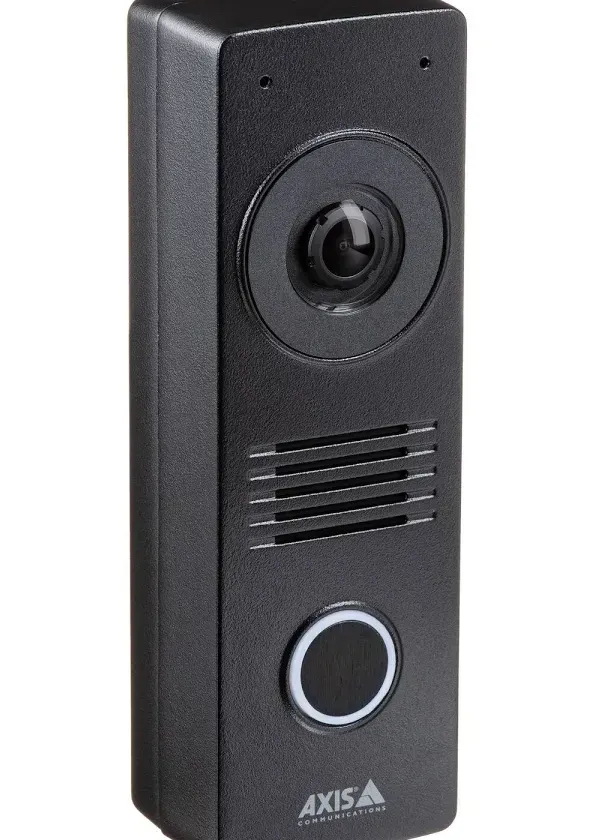
A photo from the AESS job library, not taken in South Williamsburg: a black rectangular video door station with a camera lens, a speaker grille and a single round call button that lights up. A one-button station like this suits the street door of a new six-story building with only three family apartments, where a panel full of buttons would be pointless and a lit button helps a visitor at night find where to press.
South Williamsburg Buzzer Request
New building, walk-up, tower, shul, school or shop: tell us the street, how many apartments or levels the system must reach and what is at the door now, and a technician calls back with the range
✅
Request Sent!
Thank you. A technician will call you about the South Williamsburg address, usually within two hours during working hours.
25+
Years Experience
✓
Same-Day Estimates
100%
Licensed & Insured
4.7★
201 Google Reviews
Owner-operated since 2002 · Thousands of jobs completed · Booked within 2 hours
Quick answer: door buzzer installation in South Williamsburg runs $400 to $900 on our Brooklyn list for an audio station with a new door release at a small building or a single shop door, $700 to $1,800 for a video door station with indoor stations or phone answering in a row house, a small condo or a family duplex, and from about $2,500 to past $10,000 for a full entry system in a walk-up, a lottery rental or a mid-century tower. The price covers the door station, the apartment stations, the power supply, the electric strike or approved lock, the cable and the labor, and it is fixed in writing after we have walked the building from the sidewalk to the cellar and the top floor. Anything that depends on a test, such as a riser pair that might fail or a closer that might need replacing, is named and priced before you order. Send photos of the street door, the panel and one apartment station to (347) 934-8335 or on WhatsApp, and we reply with the range that fits, usually within two hours during working hours.
Looking at your photos and quoting a new system costs nothing. If an existing system has to be tested in person before we can quote, that is the $250 service call booked online, and the $250 is applied toward the work.
All work is done under New York State license #12000287431. We install the low-voltage entry equipment; if the power supply needs a new 120-volt outlet or circuit, a licensed electrician does that part, and you know before the price is set.
We work for whoever controls the door: an owner or developer, a condo or co-op board and its managing agent, a congregation or school administrator, or a shop tenant with the landlord's written approval.
The Neighborhood
Why South Williamsburg Properties Need Door Buzzer Installation
South Williamsburg is the part of Williamsburg south of Division Avenue and Broadway, running to Flushing Avenue and the East River, with the Hasidic community centered on Lee and Bedford Avenues and a long-standing Puerto Rican community in the blocks once called Los Sures. Wikipedia puts its 2020 population at about 47,000. For anyone planning a door buzzer, though, the neighborhood is best described by what is happening to its front doors right now, and three things stand out.
The first is construction. Vacant lots are being filled with buildings designed for very large households. In November 2025 New York YIMBY reported permits for a six-story building at 293 Wallabout Street, between Harrison and Throop Avenues, with just three residences averaging 2,794 square feet each. In May 2026 it reported permits for a seven-story building at 170 Williamsburg Street East with 20 residences, a 7,072-square-foot community facility and 6,797 square feet of commercial space. And the six-story rental at 100 South 9th Street opened its housing lottery in April 2026 with 45 apartments. Every one of these buildings needs an entry system designed before its walls close, and each needs a different one.
The second is the city's own record of broken intercoms. When we queried NYC Open Data on November 11, 2026, HPD had recorded 107 Housing Maintenance Code violations mentioning an intercom across the three ZIP codes that cover South Williamsburg since January 1, 2025: 55 in 11206, 38 in 11211 and 14 in 11249. Tenants filed 320 complaints in the same period whose category mentioned an intercom. Those ZIP codes also take in north Williamsburg, East Williamsburg and parts of Bushwick and Bedford-Stuyvesant, so the numbers describe the wider area rather than South Williamsburg alone, but the individual records name streets right in the middle of it: Keap Street, Hooper Street, Clymer Street, Wilson Street, Union Avenue and Broadway.
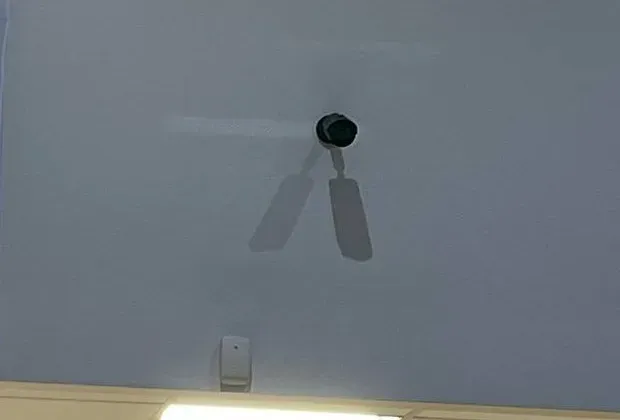
A photo from the AESS job library, not taken in South Williamsburg: a small black camera mounted high on a pale wall, casting two shadows, with a small white device fixed below it. In the vestibule of a prewar walk-up on a street like Keap or Hooper, the wall above the inner door is where a camera watching who comes in after the buzzer releases the door usually goes, clear of the panel and out of reach.
The third is that many of the busiest doors in South Williamsburg are not apartment doors at all. Synagogues, yeshivas, community halls and offices fill the blocks around Lee and Bedford Avenues, and those buildings are now buying door security with public money. On September 8, 2026 the Governor announced a record $70 million in Securing Communities Against Hate Crimes grants to 290 nonprofits, 147 of them in New York City for a total of $35,792,289, with locks and access controls among the eligible uses. "As the Holiday season approaches, our schools, synagogues, and institutions are feeling more vulnerable than ever," Rabbi Yeruchim Silber of Agudath Israel of America said in the same announcement. A buzzer at the front door of such a building is a security device that must also let a crowd out in seconds.
Behind all three is the older housing stock: brick walk-ups, the rehabilitated buildings and co-ops of Southside United HDFC, known as Los Sures, founded in 1972, which says it has been involved in rehabilitating and building more than 5,000 units in over 340 buildings and co-ops, and the public housing towers of Independence Towers and the Taylor–Wythe Houses.
Six facts that shape a South Williamsburg buzzer installation
The new buildings are built for big households. 293 Wallabout Street will hold three homes averaging 2,794 square feet, so one apartment may span two floors and need stations on each.
Mixed-use is the norm on new lots. 170 Williamsburg Street East combines 20 residences, a community facility and commercial space, three groups of users behind one facade.
Intercom violations are routine in these ZIP codes. HPD recorded 107 intercom violations in 11206, 11211 and 11249 between January 1, 2025 and November 11, 2026.
Many of them sit high up. Records in the neighborhood name apartments on the fifth, sixth, eighth, ninth and tenth stories, where a dead station means a long walk down to the street door.
Community buildings are funding door security. New York City organizations received 147 Securing Communities Against Hate Crimes grants in the September 2026 round, with requests of up to $250,000 each.
The intercom law has an eight-apartment line. Multiple Dwelling Law §50-a requires an intercom in buildings erected or converted after 1968 with eight or more apartments, which reaches the 20-unit and 45-unit buildings above but not a three-unit condo.
Where this page applies. Sources draw South Williamsburg's edges slightly differently, but this page covers the blocks south of Division Avenue and Broadway to Flushing Avenue, from the waterfront along Kent Avenue east toward Union Avenue and the Broadway Triangle, including the Los Sures blocks below the Williamsburg Bridge. For the rest of the borough see our door buzzer installation in Brooklyn page, and for the whole city our NYC door buzzer installation page.
Repair or Replace in South Williamsburg
Need Repair in South Williamsburg? Fix the Part, Replace the Panel or Install the Whole System
A good share of the installation calls we get from South Williamsburg start as something else: a tenant's complaint to 311, an HPD violation with a correction deadline, a board that has paid for one repair too many, or a building that changed hands and came with a panel nobody has the password for. Before any equipment is chosen, we decide which of three paths fits the building, and we say so plainly.
The first path is a targeted repair, when one part is the whole problem: a power supply in the cellar that sags under load, a strike that has come loose in the frame, a single apartment's station or the pair that feeds it. The second is a partial replacement: a new street panel and power supply on a riser that meters sound, with only the failed apartment stations replaced. The third is a full installation with new cable, for buildings whose risers have been spliced so often that every repair causes the next fault, or for buildings that never had more than a row of bell buttons. If a repair is all your building needs, we price it as a repair, and our Brooklyn door buzzer team handles both kinds of work.
What We Install
Door Buzzer Installation Services in South Williamsburg
Every service below is priced from the same Brooklyn door buzzer list. The number of apartments or levels sets the size of the system, the doors decide what release each can take, and in South Williamsburg the stage of construction, the condition of the risers and who else uses the building decide much of the labor.
Entry systems for buildings going up
Panel location, riser routes, slab sleeves and apartment station positions planned with the architect and the general contractor, roughed in while the framing is open and finished after the walls are painted.
Stations on every level of a duplex
For family apartments that span two floors, a station on each level, usually the kitchen and the bedroom floor, all ringing together when that apartment's button is pressed.
Replacing violated building intercoms
Full replacements for walk-ups and elevator buildings where HPD has written the intercom up, scheduled against the correction period and documented apartment by apartment.
Audio-to-video upgrades
A video street panel and new apartment stations over riser cable that meters sound, so residents on the upper floors can see who is downstairs before they release the door.
Separate entries for mixed-use buildings
Residents' door, community-facility door and shop door each on their own station and power, so a visitor to the ground floor never gets buzzed into the residential stair.
Doors for shuls, yeshivas and halls
Video call stations and releases on doors that lock between services or classes, with free exit kept for crowds and itemized paperwork for grant-funded projects.
Phone answering for owners and boards
Door stations that ring residents' phones as well as their apartment stations, with any monthly charge stated before the board chooses, and a station kept for residents without smartphones.
Strikes, closers and door preparation
Fail-secure electric strikes cut into sound frames, closers set so a heavy street door shuts and latches every time, and the door trued before any release goes on it.
Shop and office buzz-in doors
Buzz-in doors for stores, offices and showrooms on Lee Avenue, Bedford Avenue, Broadway and Flushing Avenue, wired apart from the apartments' system upstairs.
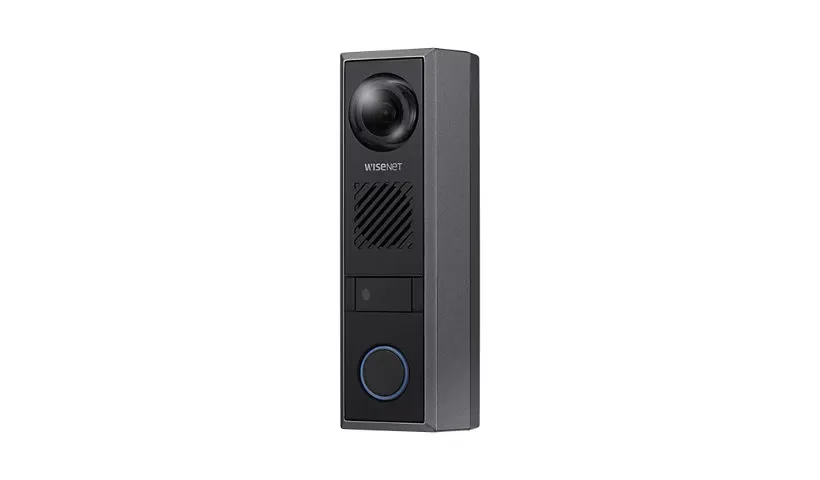
A photo from the AESS job library, not taken in South Williamsburg: a slim dark grey wired doorbell with a camera lens, speaker slots and a round push button. On the narrow brick frame of a row-house door off Bedford Avenue, or at the private entrance a duplex apartment sometimes has at street level, a unit this narrow fits where a wide apartment panel would cover the trim.
Building Specialists
Door Buzzer Installation for South Williamsburg's Architecture
Six kinds of building account for nearly every entry system we plan in South Williamsburg. They differ in how many households sit behind the street door, how cable can reach them, who has the authority to order the work and which part of the law applies. Each also has one mistake that shows up when the job is rushed.
Family-size new condos
Six-story buildings on former vacant lots with a handful of very large apartments, like the three homes averaging 2,794 square feet planned at 293 Wallabout Street.
Mixed-use new buildings
Seven-story buildings that combine condos with a community-facility floor and stores, like the 20-residence building planned at 170 Williamsburg Street East near the Marcy Avenue station.
New lottery rentals
Six-story elevator rentals with dozens of apartments and amenity spaces, like 100 South 9th Street with its 45 residences, bike storage, laundry and rooftop terrace.
Prewar walk-ups
Five- and six-story brick buildings on streets such as Keap and Hooper, where the riser cable has served several generations of equipment and HPD has written intercoms up.
Rehabilitated and HDFC buildings
Buildings and co-ops rehabilitated through groups like Los Sures, run by a nonprofit manager or a volunteer co-op board with a fixed budget.
Mid-century and later towers
Taller buildings toward the waterfront and around Clymer, Wilson and Kent, where HPD records name apartments on the eighth, ninth and tenth stories.
Family-size new condos: three apartments, six floors and a station on every level that people use
A building like the one planned at 293 Wallabout Street is the clearest example of how South Williamsburg's new construction differs from the rest of Brooklyn. Six stories, 74 feet tall, and only three residences, each averaging 2,794 square feet according to the permit filings New York YIMBY reported. Apartments that size are usually duplexes, two full floors each, built for households with many children, a large kitchen and a dining room that seats a crowd. The street door station needs only three buttons. The work is inside the apartments.
The mistake here is the one developers make everywhere: one indoor station per apartment, mounted by the apartment's entry door because that is where the drawings put it. In a duplex, the entry door is on one floor and half the family lives on the other. We plan two stations per apartment at minimum, one in or near the kitchen, which is where the household spends the day, and one on the bedroom floor, both ringing at once. A video station on the kitchen level lets whoever is cooking see the visitor and release the door with wet hands still at the sink.
A building with three apartments sits well below the eight-apartment line in Multiple Dwelling Law §50-a, so no intercom law forces the choice. That is exactly why it gets left off the plans until the last minute, and why we prefer to be called while the framing is open. Cable to a second station on the upper level of a duplex costs little before the sheetrock goes up and a great deal afterward.
Mixed-use new buildings: condos, a community floor and a store behind one facade
The 170 Williamsburg Street East filing describes a seven-story building with 24,556 square feet of residential space for 20 residences, 7,072 square feet of community facility and 6,797 square feet of commercial space. In South Williamsburg, a community facility in a new building often means a place of worship, a school room, a hall or offices, used by people who do not live there. That changes the entry plan completely. With 20 apartments the building is inside §50-a, so the residents' entrance needs talk and release to every home, while the community facility and the store each get their own door station, release and power, planned before the slab sleeves are cast. The questions below cover how the three groups are kept apart.
New lottery rentals: 45 apartments, elevators and a lobby that works without a doorman
100 South 9th Street, a six-story building that YIMBY places in South Williamsburg, opened its housing lottery in April 2026 with 45 residences, elevators, bike storage, laundry and a rooftop terrace. That is a typical new rental here: enough apartments that a row of buttons becomes a directory or code panel, amenity rooms that tenants reach with a fob, and no doorman. The lobby panel does the doorman's job.
For buildings like this we usually plan a directory panel with video at the street door, apartment stations or phone answering for each unit, and a keypad or reader for residents, always with a key or another non-app way in, as the city's tenant data rules require.
Prewar walk-ups: the riser has been patched for decades and HPD has the record
The walk-ups on streets like Keap and Hooper are where the city's violation records cluster. In July 2026 HPD wrote a class B violation at 332 Keap Street to "properly repair or replace the broken or defective intercom system" for apartment 3K on the fifth story. In December 2025 it wrote one at 178 Hooper Street for the "bell buzzer/intercom from building vestibule" serving an apartment on the fifth story. The wording tells you what tenants live with: a fifth-floor apartment with a station that does not ring or does not release, in a building with no elevator.
Many of these buildings predate the 1968 line in §50-a, so the duty to install an intercom where none existed arises only when tenants occupying a majority of the apartments ask in writing. Once a system is there, though, the Housing Maintenance Code section cited in every one of these violations, §27-2005, requires the owner to keep it in good repair. For an owner tired of repairing the same riser, a full replacement is usually cheaper over five years than another round of patches, and we price it both ways.
Rehabilitated and HDFC buildings: a board, a regulatory budget and residents who have waited
Los Sures, the community housing organization founded on the Southside in 1972, describes its work as the rehabilitation and construction of more than 5,000 units in over 340 buildings and co-ops, and CBS New York reported that its work has grown to 44 properties. Buildings of that history are now reaching the age at which their entry systems were last replaced a generation ago. Some are managed by a nonprofit, some are HDFC co-ops run by volunteer shareholder boards.
These are careful buyers, and rightly so. We write the quote so a board can read it at a meeting: what is reused, what is new, what the system costs over ten years including any subscription, and how residents without smartphones, who are often the older shareholders, will answer the door. Where a board can only fund part of the work this year, we tell it which part keeps the building safe first.
Towers: the eighth floor is a long way from a street door that will not release
HPD's records show the other end of the scale. In November 2024 it wrote a violation at 73 Wilson Street for apartment 8E on the eighth story; in August 2024 one at 450 Kent Avenue for apartment 9K on the ninth story; in June 2026 one at 126 Clymer Street for apartment 10D on the tenth story, describing a "return buzzer" that did not work. In a tall building a dead station is not an inconvenience; it means a resident takes the elevator down every time a visitor or a delivery arrives.
Towers need a panel with a directory, two-wire or IP apartment stations depending on what the risers will carry, battery-backed power in a locked room and, very often, a second station at a side or garage door. Public housing towers such as Independence Towers and the Taylor–Wythe Houses are managed by NYCHA or its private PACT partners and order their entry systems through those managers, not through individual tenants; residents there should report a broken intercom to management.
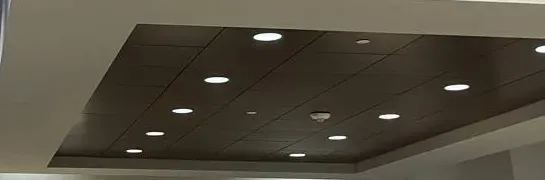
A photo from the AESS job library, not taken in South Williamsburg: a dark recessed ceiling panel with round downlights and a small round device, framed by a lighter ceiling. New lobbies in buildings like the lottery rentals south of Broadway are often finished with a feature ceiling like this, and the cable from the street panel to the riser closet is far easier to place above it before the ceiling is closed than after.
Field Notes
Field Notes: Read the Violation Line, Ring the Top Floor, Then Find the Last Splice
This is how our technician spends the first part of a visit to an existing South Williamsburg building, before anything is priced.
First, the record. Every HPD intercom violation names the apartment, the story and the wall where the station hangs, as in "apartment 3K, 5th story." Before the visit the office looks the building up, so the technician arrives knowing which stations the city has already found dead. Those are tested first, from the street panel, with someone standing in the apartment.
Second, the top floor. The technician presses the button for an apartment on the highest floor and walks up to it, listening on the way for the chime and checking whether voice carries both ways and the strike releases. On a walk-up, the top floor is where a weak power supply or a long run of tired cable shows first.
Third, the splices. In the cellar the technician follows the riser cable from the power supply to the point where it rises, and counts the splices. Every patch a previous repair left behind is a place the next fault will start. A riser with one or two clean splices is worth keeping; one with a splice on every floor is usually the reason the building keeps getting violations, and it goes on the quote as new cable.
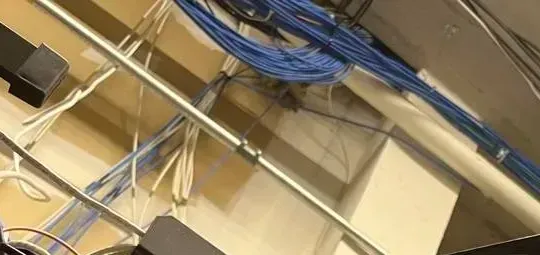
A photo from the AESS job library, not taken in South Williamsburg: bundles of blue low-voltage cable laid over a ceiling beam beside a metal pipe in an open ceiling. In a new building going up on a lot near Wallabout Street, the ceilings look like this for only a few weeks, and that is the window in which entry-system cable reaches every floor of a duplex at the lowest cost.
The City's Intercom Record
What 107 HPD Intercom Violations Say About South Williamsburg Doors, and What Owners Should Do With Them
HPD's open data shows what actually happens at doors here, and it is worth reading before anyone spends money. Our November 11, 2026 query found 107 intercom violations and 320 intercom complaint problems since January 1, 2025 across ZIP codes 11206, 11211 and 11249, with the complaints split 159, 106 and 55. Those ZIP codes reach beyond South Williamsburg, so treat the totals as the wider area's; the street-level records below are inside the neighborhood.
Three things stand out when you read the individual records. The first is the wording. Nearly every violation reads "§ 27-2005 HMC: properly repair or replace the broken or defective intercom system from building entrance to" a named wall in a named room of a named apartment. HPD is not citing the building for lacking an intercom; it is citing the owner for failing to maintain one. The duty that matters for most South Williamsburg buildings is the duty to keep what is there working.
The second is where the failures are. The records inside the neighborhood name apartments on high floors again and again: the fifth story at 332 Keap Street and 178 Hooper Street, the sixth story at 186 Clymer Street, the eighth at 73 Wilson Street, the ninth at 450 Kent Avenue and the tenth at 126 Clymer Street. That matches what we see. Faults accumulate at the far end of a riser, where voltage drop, old splices and the longest runs combine, and they are felt most by residents who have the longest walk to the door.
The third is the status. Of the South Williamsburg records we read, several are marked "violation dismissed," one at 381 Hooper Street is marked "violation closed," and the newest, at 332 Keap Street and 360 Bedford Avenue, still read "NOV sent out," meaning the notice has gone to the owner and the correction is pending. A dismissed or closed violation tells you the city's file on that item ended; it does not tell you whether the same riser will fail again next winter, or whether the repair was a new station on the same tired cable.
How we use the record on a South Williamsburg job
Before the visit. We look up the building's violations and complaints so the technician knows which apartments the city has already found without a working station.
When pricing. If the record shows intercom violations at several apartments on the upper floors, we price the riser as well as the stations, because replacing stations alone on a failing riser is how buildings end up back in the record.
When scheduling. An open class B violation comes with a correction period. We schedule against it and tell you honestly if a special-order panel will not arrive inside it, so a repair can hold the door until the new system goes in.
At handover. We leave a test sheet that lists every apartment with its result for call, voice and release, the document an owner needs when certifying a correction to HPD.
One honest limit: we install and document the system; we do not file certifications with HPD or represent owners before it. That is the owner's or managing agent's job, and our test sheet is what they file with.
New Construction
Planning the Buzzer on a New South Williamsburg Building Before the Walls Close
South Williamsburg's new buildings are going up on lots that New York YIMBY describes as vacant, so there is no old system to reuse and no excuse for a bad one. The entry system on a new building is cheapest and best when it is designed alongside the rest of the low-voltage work. Here is the order we work in with developers, architects and general contractors.
At design: count the households, not the apartments
The drawings show units. The entry system has to serve people. A three-unit building of family duplexes needs three buttons and six or more indoor stations. A mixed-use building with a community facility needs a second door station for the people who use that floor and a third for the store. We mark every door station, indoor station, release, power supply and riser route on a single plan sheet the architect can drop into the set.
At framing: sleeves, boxes and the riser path
Before the slabs are poured or the shafts are closed, the riser needs a dedicated sleeve or conduit from the cellar to every floor, separate from the electrician's power risers. Back boxes for indoor stations go in while the studs are open, at the height we agree with the owner, usually near a kitchen doorway and at the top of the internal stair of each duplex. The street door frame is ordered prepared for the electric strike the door hardware schedule calls for, so nobody cuts a new steel frame on site.
At finishing: panel, stations and the test
The panel goes on once the facade is finished, the stations once the walls are painted, and the system is programmed and tested before the temporary certificate of occupancy inspections. We test every apartment from the street, with the doors closed, and leave the developer a wiring record and a programming record to hand to the condo board or managing agent.
Community Buildings and Security Grants
Shuls, Yeshivas and Halls: Fitting a Buzzer Into a Securing Communities Against Hate Crimes Project
A synagogue, a yeshiva or a community hall has a different door problem from an apartment building. It is locked most of the time and open to hundreds of people at a time a few times a day. Staff need to see who is outside before opening it, and anyone inside needs to be able to leave instantly. A video door station with a release, a camera view on the office screen and a lock that always opens from inside is the core of most of the door projects we plan for these buildings.
Many of these projects are now paid for with grants. The Governor's September 8, 2026 announcement said the latest Securing Communities Against Hate Crimes round distributed a record $70 million to 290 nonprofits, with 147 grants totaling $35,792,289 in New York City, and that eligible organizations could request up to $250,000 each. Eligible organizations include religious organizations and houses of worship, community and civic centers, cultural museums and daycare centers. The release lists eligible improvements including "lighting, locks, alarms, panic buttons, fencing, barriers, access controls, shatter-resistant glass, blast-resistant film, public address systems." The same release reported that NYPD-recorded hate crimes in the five boroughs rose 16 percent, 425 against 367, through August 30, 2026, with anti-Jewish crimes up 8 percent and making up 53.9 percent of the confirmed total. A month earlier, it noted, $32 million in federal Nonprofit Security Grant Program money had gone to more than 150 New York nonprofits.
What that means in practice for a door project here:
The grant decides the scope, not us. Applicants submit a vulnerability assessment and a project description. We price exactly the door work in the approved project, line by line, so it matches what the organization was funded for.
We give paperwork a grant file can use. An itemized quote with equipment, labor and any electrician's work shown separately, product cut sheets, and after installation a completion record with photos and the test sheet.
We do not write the application or the assessment. Those belong to the organization and whoever prepares its security assessment. We are happy to answer the assessor's questions about what a given door can take.
Grantee names are not public. DCJS does not disclose recipients because that would pose a security risk, and we do not publish the names or door layouts of the organizations we work for.
Free exit comes first. Every lock and release we add to a place of assembly opens from inside without a key, code or special knowledge, and a door that needs a magnetic lock gets the full sensor-release package the building code requires.
Rules and Responsibilities
Which South Williamsburg Buildings Must Have a Buzzer, What It Has to Do and Who Pays
Newer buildings of eight or more apartments must have one. Multiple Dwelling Law §50-a requires a self-locking main entrance and an intercom that allows voice communication and remote release in Class A multiple dwellings erected or converted after January 1, 1968 with eight or more apartments.
Older buildings install one when a majority of tenants ask. For buildings put up before that date, the duty arises when tenants occupying a majority of the apartments request or consent in writing, with installation started within 90 days and completed within six months.
Every existing system must be kept working. The intercom violations written in South Williamsburg cite Housing Maintenance Code §27-2005, the owner's duty to keep the building and its systems in good repair. As the New York Times put it in January 2024, "A working intercom isn't just a convenience when visitors or food deliveries arrive — it's a legal requirement in most buildings."
Small buildings are the owner's choice. A building of fewer than eight apartments, like a three-unit family condo or a two-family row house, is outside §50-a's mandate, which is why tenants on r/AskNYC regularly ask whether a four-unit or a brand-new three-unit Brooklyn building has to have a buzzer at all.
Keyless systems bring data rules. HPD's Tenant Data Privacy Law (Local Law 63 of 2021) covers owners of multiple dwellings that use smart access systems: consent "in writing, or through a mobile application," authentication data destroyed "no later than 90 days" after collection unless anonymized, and no requirement that tenants use a smart access system to enter their own apartments.
Magnetic locks need the full package. Electromagnetic locks are made only fail-safe, and the building code's sensor-release provisions require a sensor on the egress side, a manual "PUSH TO EXIT" device 40 to 48 inches above the floor within 5 feet of the door that keeps it unlocked for at least 30 seconds, release on fire alarm or sprinkler activation, and UL 294 listed equipment.
Fire doors stay latched. Allegion's guide notes that fire doors need fail-secure strikes, so a rated door into a stair or cellar latches in a fire; the release must carry the right listing for the door.
None of this is legal advice for a particular building. An owner answering a tenants' request, a board planning a keyless lobby or a developer reading §50-a against a new filing should confirm the details with a housing lawyer, the managing agent or the architect. What we provide is a system that meets the requirement that applies and paperwork showing what was installed.
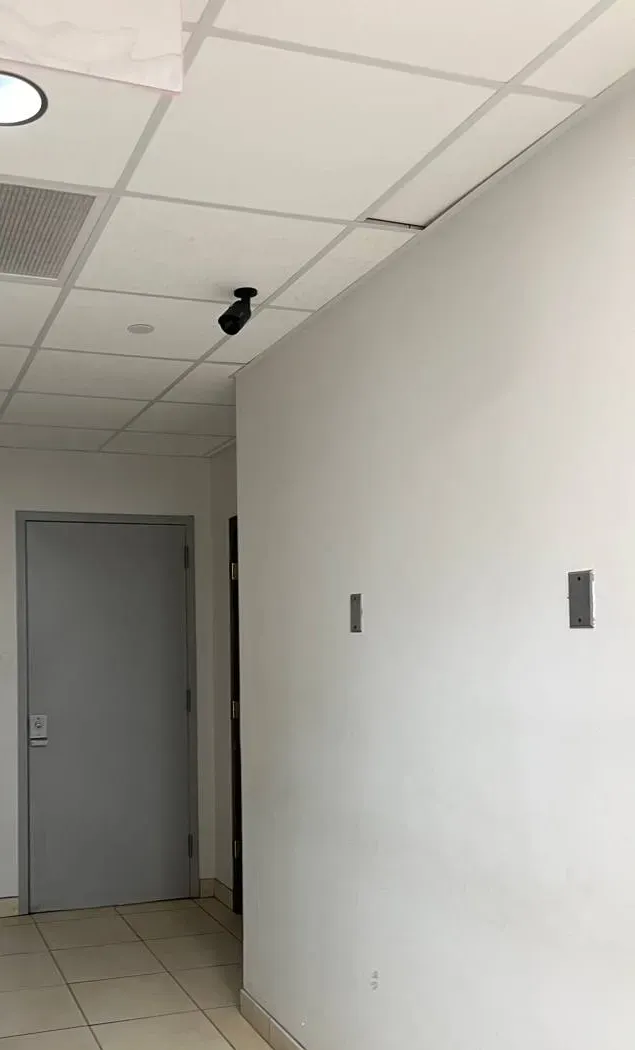
A photo from the AESS job library, not taken in South Williamsburg: a tiled corridor with white walls and small wall plates ending at a grey steel door with a lever handle, under a drop ceiling with a small camera. In a new mixed-use building like the one filed for Williamsburg Street East, a corridor like this often joins the community-facility floor to a rear stair, and its door has to stay latched against outsiders while always opening from inside with a turn of the lever.
Commercial Door Buzzer Installation
Business Door Buzzer Installation in South Williamsburg
South Williamsburg's commercial doors are as varied as its housing: storefronts below apartments on Lee Avenue, offices and showrooms on upper floors, commercial and former industrial buildings toward Flushing Avenue and the Navy Yard, and community facilities written into new buildings. A business buzzer here is usually about one of three doors: a delivery door at the back, an upstairs office that buzzes clients in one at a time, or a ground-floor space that must stay apart from the apartments above.
Lee Avenue
The neighborhood's main shopping street, with stores at street level and apartments above, where the residents' door is a few steps from the shop entrance and both need their own system.
Bedford Avenue
A long avenue of apartment buildings, institutions and storefronts, with HPD intercom records at addresses like 360 Bedford Avenue.
Broadway under the el
The northern edge, beneath the J, M and Z tracks, where upper-floor offices and the apartments over shops share narrow street doors close to the elevated stations.
Flushing Avenue
The southern edge toward the Navy Yard, where former industrial land such as the old Pfizer sites is being rebuilt and commercial buildings have loading and office doors that each need their own buzzer.
Union Avenue and the Broadway Triangle
The eastern side, where new mixed-use buildings and older walk-ups meet, and where HPD wrote an intercom violation at 268 Union Avenue in August 2025.
Kent and Wythe Avenues
The waterfront side, with former factories, newer towers and ground-floor commercial spaces that often share an entrance with residents.
The commonest business request is a buzzer on a door that has always been propped or locked with a key: an upstairs office that wants to see a visitor before letting them up, a store that takes deliveries before opening, or a community room that should lock behind each person. Each gets its own station, release and power, fully separate from any apartment system in the building. If your business is in a converted industrial building nearer the Navy Yard, our Brooklyn Navy Yard door buzzer installation page covers those doors in more detail.
Rules that apply to business entry installations in South Williamsburg
Anyone inside can always get out. A business door with a buzzer, code or reader still opens from inside without a key. As Allegion's guide puts it, with an electric strike "you can exit by turning the lever" whether the strike is fail-safe or fail-secure.
Places of assembly get extra care. A community room, hall or classroom that fills up at set times must let everyone out at once, so its releases and any magnetic locks follow the sensor-release rules in full.
Tenants need the landlord's written approval. A shop or office that rents its space orders its own buzzer only with the building owner's written permission, especially where the work touches a shared street door or the apartments' cable.
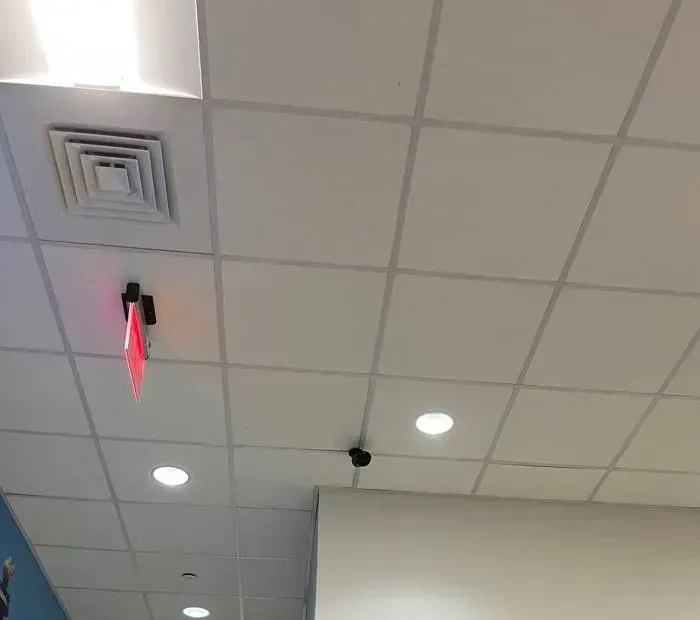
A photo from the AESS job library, not taken in South Williamsburg: a drop ceiling with a lit red exit sign, an air diffuser, round recessed lights and a small black camera. Offices and community rooms in buildings along Flushing Avenue often have ceilings like this, and the exit sign states the rule every business buzzer we install follows: whatever locks the door from outside, it always opens from inside.
Your Questions Answered
Door Buzzer Installation in South Williamsburg: Questions Answered
New buildings and family-size apartments
We are developing a six-story building with three family duplexes. Should a second indoor station on the upper level be standard in every apartment, or an option each buyer pays for?
Make the cable standard and the station a choice. The expensive part of a second station is not the station itself but the cable from the riser to the upper level of the duplex, and that cable costs very little while the framing is open and a great deal once the apartment is finished, painted and lived in. If every duplex gets a back box and a pulled cable on the upper level during construction, a buyer who wants the second station later pays only for the station and an hour of work.
In practice most developers building family-size apartments in South Williamsburg find the second station is expected, not optional. In a home of nearly 2,800 square feet over two floors, a station by the apartment's entry door on the lower level is out of earshot of the bedrooms, and the kitchen, where the household spends most of the day, may be on either floor. We would put both stations in the base specification, price them per apartment on the quote so the developer can see the cost, and leave the buyer to choose video or audio for the second one.
Our new building will have condos upstairs, a community facility on the lower floors and a store at street level. Can people who come for the community floor be kept out of the residential stair?
Yes, and it is far easier to plan now than to fix later. The principle is that each group of users is admitted only to the doors it needs. Residents' visitors are buzzed through the residents' entrance into a lobby that leads to the elevator and residential stair. Visitors to the community facility arrive at its own entrance, are buzzed in by its own staff, and reach only its floors. Where the building's design means the two groups share a stair for exit, the doors from that stair back into the residential floors are kept locked from the stair side while always opening from the residential side for anyone leaving.
The hardware is ordinary; the planning is what matters. It needs a door schedule that says, for every door, who may enter from which side and when, agreed by the developer and whoever will run the community facility. We draw that schedule, the architect puts it on the plans, and the fire-safety rules on exit doors are respected at every step.
The city's record and older buildings
Several intercom violations on our block show "violation dismissed" in HPD's records. Does that mean those intercoms were fixed?
Not necessarily. A dismissed status means HPD's file on that violation was closed without the violation standing, and the public dataset does not say why. Among the South Williamsburg records we read, violations at 126 and 186 Clymer Street, 178 Hooper Street, 208 Broadway, 268 Union Avenue, 73 Wilson Street and 450 Kent Avenue all carry that status. Some will have been repaired; the dataset alone cannot tell you which.
For an owner, the useful question is not the status but the pattern. If the same building has had intercom violations at several apartments on its upper floors over two or three years, whatever the status, the riser or the power supply is probably the common cause, and another round of station-by-station repairs will lead to another round of complaints. That is the situation in which we price a full replacement alongside the repair, so the owner can compare five-year costs.
HPD wrote our walk-up for one dead station on the fifth floor. Can you replace just that apartment's station, or does the riser have to be replaced too?
Often just the station, if the cable to it meters sound. The first test is at the cellar end: we meter the pair that serves the fifth-floor apartment and compare it with a pair to a working apartment on the same line. If it reads the same, the fault is in the station or its connection, and a matching station is a quick fix. If the reading is wrong, the fault is in the cable, and we follow it floor by floor until we find the failed section.
What decides whether the whole riser should go is what we find on the way. A riser with clean conductors and one damaged section is worth repairing. One where each floor has a splice from an old repair, or where the cable's insulation has hardened and cracks when it is moved, will keep producing violations like the ones written at 332 Keap Street and 178 Hooper Street, and we would say so in writing with both prices.
Tenants on the top floors of our building keep calling 311 about the intercom. Can a group of tenants hire you directly to put in a new system?
Not for the building's own system. The street door, the panel and the riser belong to the building, and only the owner, the board or the managing agent can order work on them. What tenants can do is use the routes the law gives them. In a building with an existing system, a complaint to HPD leads to an inspection and, if the intercom is broken, a violation under Housing Maintenance Code §27-2005. In an older building without one, Multiple Dwelling Law §50-a requires the owner to install a self-locking door and an intercom once tenants occupying a majority of the apartments request it in writing.
If the owner then calls us, we are happy to meet the tenants' representatives as part of the walkthrough, because they know which apartments fail and when. Tenants on r/AskNYC describe the same frustration everywhere in the city, a top-floor walk-up resident who "can't allow guests, packages, food delivery" into the building, and the fastest fix is usually an owner who sees a written price for solving it once.
Shuls, schools and community buildings
Our shul received a Securing Communities Against Hate Crimes grant that includes the entrance. What does your quote need to show for the grant file?
It should match the approved project exactly and break the cost into parts a reviewer can check. Our quote for a grant-funded door lists each door separately, then each item on it: the door station, the indoor or office station, the electric strike or lock, the power supply, any exit device, the cable and the labor, with any work by a licensed electrician shown as its own line. It names the make and model of each piece of equipment, and we attach the cut sheets.
After installation you receive a completion record for the file: photos of each door before and after, the test sheet showing each release and exit tested, and the wiring record. The Governor's September 2026 announcement describes eligible improvements, including locks and access controls, and notes that applicants submit vulnerability assessments; what was approved for your organization is in your award documents, and we price to those, not to our own idea of what the building needs.
Hundreds of people leave our hall at once after an event. Does an electric release on the main doors slow them down?
It should not, and if it would, it is the wrong hardware. On a door with an electric strike, the strike only controls the outside: from inside, people leave by pushing the bar or turning the lever exactly as they would without it, and Allegion's guide confirms that exit works the same whether the strike is fail-safe or fail-secure. On assembly doors we pair the release with the exit hardware the door already needs, so leaving the building is a single push.
Our yeshiva's office is on the second floor. How can staff see and admit a parent at the street door without walking down every time?
With a video door station at the street entrance and a video station in the office with a release button. The parent presses the call button, the office sees and speaks to them, and staff release the door from their desk. If more than one room needs to answer, such as the office and an administrator's room, each gets a station or a release button, and every one rings when the street door calls.
Two details make this work in a school. First, the camera at the door should show the whole person and the space behind them, so staff can see whether anyone is following the parent in. Second, the release time should be short, just long enough for one person to enter, and the door's closer set so it shuts and latches firmly behind them. Children leaving the building go out by the exit hardware as normal; the buzzer only controls who comes in.
Co-ops, owners and shops
Our HDFC co-op wants video, but many of our shareholders do not use apps. Is a wired video system without phone answering a sensible choice in 2026?
Yes, and for many co-ops it is the best one. A wired video system puts a station with a screen and a release button in every apartment, works without anyone's phone or Wi-Fi, carries no monthly subscription and is easy for an older shareholder to use: the screen lights when someone rings, and one button opens the door. Systems such as Aiphone's GT Series are made for multi-tenant buildings and, in Aiphone's words, offer "the advantage of using existing wire and infrastructure," which keeps the cable cost down where the risers test sound.
Phone answering can be added for the shareholders who want it on many systems, but it should be an extra, never the only way to answer. That also keeps the co-op clear of a per-apartment software fee it would have to pay every year whether residents use the app or not.
Our Lee Avenue store wants a buzzer on its back door, which opens into the building's cellar corridor next to the apartments' meters. Whose permission do we need, and should it join the building's system?
You need the building owner's written approval, because the door, the corridor and the cellar are part of the building, and the work touches shared space the residents' system also runs through. Once approved, the store's buzzer should be its own system: its own call station outside the back door, a release controlled from inside the store, and its own power supply on the store's circuit. It should not share a power supply or a cable with the apartments.
Keeping it separate protects everyone. A delivery buzzed in by the store reaches the store, not the residential stair, a fault in the store's equipment never takes out the apartments' door, and when the store changes tenants the next one can remove or replace its buzzer without anyone touching the residents' system.
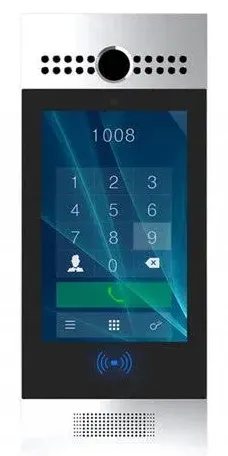
A photo from the AESS job library, not taken in South Williamsburg: a touchscreen entry panel showing a dial pad with a four-digit apartment code entered, a camera above and a card-reader symbol below. In a 45-apartment lottery rental like the one on South 9th Street, a code panel like this replaces a wall of buttons, and the reader gives residents a way in that the managing agent can add and remove without cutting keys.
Equipment
Types of Door Buzzer Systems We Install
We quote a reliable non-branded system by default and install a named brand when an owner, developer or board asks for one; the intercom brands we work with include Aiphone, ButterflyMX, 2N, Akuvox, Comelit and DoorBird. These are the kinds of equipment that come up most often in South Williamsburg, and where each fits.
Small button panels
Three- to six-button audio or video panels for family condos and small walk-ups, where a directory would be more than the building needs.
Directory and code panels
Scrolling directories or code entry with a camera for lottery rentals and towers with dozens of apartments, with a keypad or reader for residents.
Two-wire multi-tenant systems
Audio and video over one pair per apartment, the practical choice for prewar walk-ups and older towers whose risers meter sound.
Apartment video stations
Wall stations with a screen and a release button, placed in the kitchen and on the bedroom level of family duplexes, all ringing together.
Audio handsets
Simple talk-and-release stations for shareholders and residents who want nothing more, able to sit on the same system as video stations on many models.
Phone and app answering
Door stations that ring residents' or staff phones as well as their stations, with any subscription named on the quote before anyone chooses.
Office and front-desk stations
Video stations with release buttons for shul offices, school front desks and community-facility reception, with a second release point where staff need it.
Fail-secure electric strikes
Releases cut into the frame that stay locked without power and let anyone inside leave by the lever or bar, matched to the lock or exit device on the door.
Battery-backed power supplies
Dedicated low-voltage supplies with battery backup, mounted in a locked cellar box or riser room and sized for the panel, the stations and every release.
Audio panel, wired video or cloud phone answering: which fits a South Williamsburg building?
What matters
Audio panel and handsets
Wired video stations
Cloud panel with phone answering
See the visitor before releasing
No
Yes, on the apartment screen
Yes, on the phone or a station
Works for residents without smartphones
Yes
Yes
Only with a station as well
Needs internet at the building
No
No
Yes
Stations on two levels of a duplex
Yes
Yes
Phones anywhere, stations if added
Reuses old riser cable
Often
Often, with two-wire systems
Panel only; apartments over the internet
Tenant data rules for multiple dwellings
Not usually
Not usually
Yes, where it is a smart access system
Monthly fees
None
None
Often a per-apartment or per-door charge
Brooklyn list range
$400–$900 small; from $2,500 for a building
$700–$1,800 small; from $2,500 for a building
Within the same ranges, plus any subscription quoted separately
ADT, Ring and SimpliSafe compared with a local installer for a South Williamsburg building
National brands come up in nearly every conversation about a front door. For one household in a row house, a store-bought video doorbell may be all that is wanted. For the buildings on this page it runs into hard limits. It rings the phones of whoever set it up, not a station in each apartment. It does not release the street door unless it is separately wired to a strike. It gives a three-family condo one button, not three, and it cannot serve the 20 or 45 apartments of a new building that must, under §50-a, have an intercom with talk and release for every apartment.
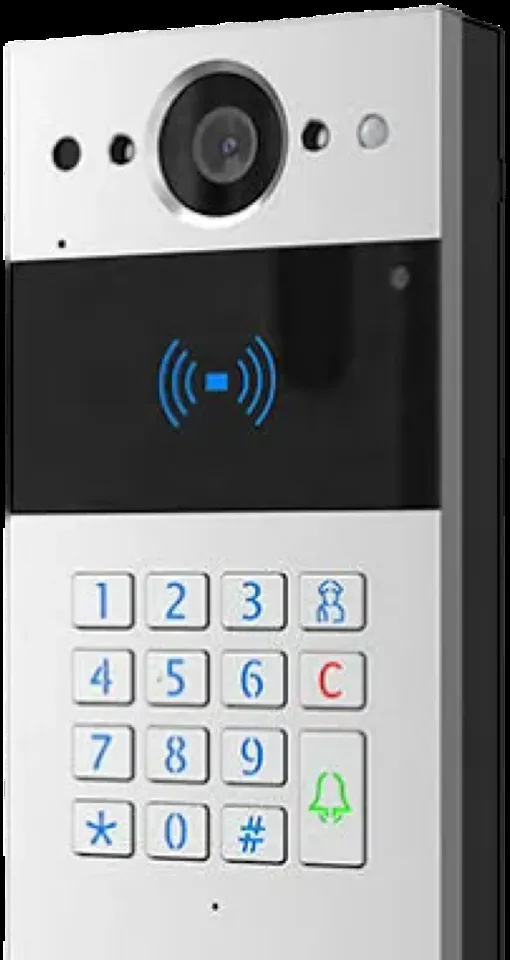
A photo from the AESS job library, not taken in South Williamsburg: a silver and black keypad door station with a camera lens at the top, a blue card-reader symbol, a numeric keypad and a green bell key. At the separate entrance of a community facility in a new mixed-use building, a station like this lets staff come in by code or card while a visitor presses the bell key and rings only the facility's office.
AI Overview Reality Check
What AI Gets Wrong About Door Buzzer Installation in South Williamsburg
Ask an AI assistant or a search summary what a buzzer costs in New York and you get confident numbers pulled from installers' cost guides, many of them written for Manhattan towers or for a single house. Some are right somewhere and wrong for a three-family condo on Wallabout Street or a walk-up on Keap Street. Here are seven claims we see repeated, each checked against its source and against what we find at doors here.
"Basic audio buzzers cost $500 to $1,500 per unit installed"
That range comes from Vertex Security's guide to intercom upgrade costs in New York City, which prices the entry-level hardware tier per unit. It is a reasonable figure for some buildings, but "per unit" does a lot of work in that sentence.
On our Brooklyn list, an audio station with a new release for a small building or a single door runs $400 to $900 for the whole job, and a full multi-unit entry system starts at about $2,500. A 20-apartment audio system on sound risers lands near the bottom of the multi-unit range, not at twenty times a per-unit figure.
The lesson is to ask any installer, us included, for the whole-building price with the parts listed, not a per-unit rate.
"Intercom installation costs $1,500 to $5,000 per unit or more"
ASM Integrators' guide to intercom costs in New York and New Jersey gives that range, "depending on the system's complexity and the building's infrastructure." For a high-end IP system in a luxury building it may hold. For a South Williamsburg lottery rental or HDFC co-op it would put a 45-apartment system somewhere between $67,500 and $225,000.
That is far above what wired systems cost on our list, where a multi-unit building runs from about $2,500 and a larger video system can pass $10,000.
Where a building truly needs new cable to every floor, we price it as cable, by the riser, so the board can see exactly what it is paying for.
"A video intercom for a small building with one entrance costs about $4,000 to $5,000"
Douglas Security's 2026 NYC price guide gives that figure, and separately puts IP or cloud intercoms at about $2,500 to $7,000 per door fully installed.
A three-family condo with one street door needs a video station, three or six indoor stations and a release. On our list that is a $700 to $1,800 job when the cable is roughed in during construction, and only buildings with many apartments move into the multi-unit range.
"Small building" covers everything from three apartments to thirty, so a single figure for it tells an owner very little.
"Wireless systems cost $350 to $1,100, so they are always the cheap option"
NYHLS's door buzzer guide does give wireless systems at $350 to $1,100 installed against $450 to $1,900 for wired ones.
In an apartment building the release in the frame still needs wire and power, the panel still needs dependable power, and wireless apartment stations must reach through brick walls and concrete floors. ButterflyMX markets its cellular intercom as needing "no building wiring," but that describes the panel's connection, not the strike, and residents answer on phones or added stations.
Wireless is a tool for awkward runs, not a way to skip the door hardware, and it is rarely the cheapest choice for a walk-up whose risers still test sound.
"New York law requires every apartment building to have an intercom"
Close, but not quite. The New York Times was careful to say a working intercom is "a legal requirement in most buildings." Multiple Dwelling Law §50-a requires one automatically in Class A multiple dwellings built or converted after January 1, 1968 with eight or more apartments; older buildings must install one when a majority of tenants ask in writing; smaller buildings are outside the mandate.
That is why tenants on r/AskNYC ask whether a four-unit Brooklyn building, or a brand-new three-unit one with "no buzzer and one mailbox," is allowed. In South Williamsburg the same split runs through the new construction: the 20- and 45-apartment buildings are inside the rule, the three-residence condo is not.
And wherever a system exists, the Housing Maintenance Code requires it to be kept working, which is what nearly every HPD intercom violation here cites.
"Your old wiring can carry any new system"
Aiphone's own upgrade guidance is more careful: "If the existing wires are in good condition, they can be reused." The condition is the whole point.
In the walk-ups that keep appearing in HPD's records, the riser has often been spliced so many times that it is the cause of the failures. Reusing it saves money only until the next violation.
So the old cable is metered before the quote, pair by pair, and if any section is not usable, the new run and its price are on the quote before you approve.
"A cloud intercom costs less because there is no wiring to run"
The installation can cost less, but the monthly bill is the part summaries leave out. Swiftlane's apartment intercom guide says software subscriptions commonly add five to fifteen dollars per unit per month, or thirty to one hundred dollars per door per month.
Cloud systems also bring HPD's Tenant Data Privacy Law into play in multiple dwellings, with its rules on consent and on destroying authentication data within 90 days, and the requirement that tenants are never forced to use the app to reach their own apartments.
For an HDFC co-op or a family condo board watching every dollar, a wired system with no subscription is often the better buy over ten years, and we quote both so the board can compare.
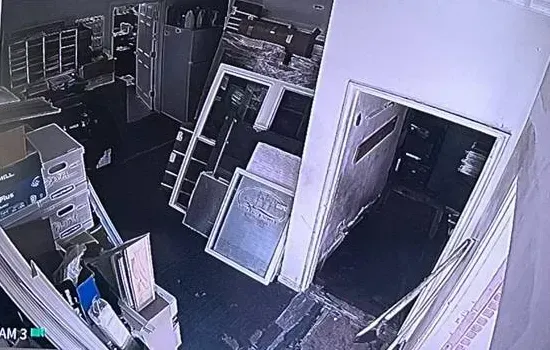
A photo from the AESS job library, not taken in South Williamsburg: a black-and-white night camera view of a cluttered room with an open doorway into a dark back room. Stockrooms behind stores on Lee Avenue often lead to a back door into the building's cellar corridor, and a buzzer on that door, with a camera inside watching it after hours, keeps the store's back entrance from becoming the building's weak point.
Building Going Up or Walk-Up Back in the HPD Record? Speak to a Tech
Send the address, a photo of the street door and the panel, and one of an apartment station or, for a new building, the floor plans and the door schedule, along with how many apartments or levels the system must reach. A technician will tell you which approach fits and where it falls on our Brooklyn ranges. Call or text (347) 934-8335, send photos on WhatsApp, or fill in the form below.
Get In Touch
Request a Free Quote
✅
Request Sent!
Thank you. A technician will call you about the South Williamsburg address, usually within two hours during working hours.
How It Works
Our Installation Process
1. Read the record and the photos
Before anyone visits, the office looks up the building's HPD record for intercom violations and reads the photos you send of the street door, the panel and one apartment station, or the plans if the building is still going up.
2. Walk every door and floor
The technician walks from the sidewalk through the vestibule to the cellar and up to the top floor, listing every entrance people use and every apartment, duplex level, office or community room the system must reach.
3. Make the door close and latch
The street door is opened and released by hand. If it does not close and latch on its own, the closer, hinges or lockset are fixed first, because no release can hold a door that drifts.
4. Meter the old cable and plan the new
Each existing pair is metered from the cellar, and any new route is planned through risers, closets or open framing, with slab sleeves and conduit marked on new construction.
5. Price the job in writing
You get a written price from the Brooklyn list with every possible extra named, such as a failed riser pair or a closer that needs replacing, before anything is ordered.
6. Order and schedule
Equipment is ordered once the deposit is in. Stock systems are scheduled right away, special-order stations are booked once they arrive, and every visit gets a two-hour arrival window, early in the week where we can.
7. Install, conceal and label
The panel, release and battery-backed power supply go in, cable is run or reconnected with as little showing as the building allows, stations or phone answering are set up, and every pair is labeled at both ends.
8. Test from the sidewalk and hand over
Standing where visitors stand, the technician calls and releases every apartment, checks the door with the buzzer power off, shows the owner or super how to manage the system and leaves the test sheet and wiring record.
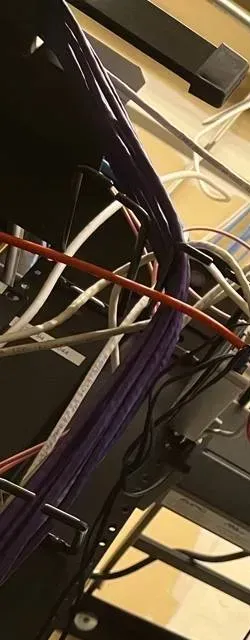
A photo from the AESS job library, not taken in South Williamsburg: purple, white and red cable bundles dropping down beside a black equipment rack. In a tower near Clymer or Wilson Street, the cable from every line of apartments arrives at one cellar room like this, and labeling each bundle in step 7 is what lets the next technician find the tenth-floor pair HPD wrote up in minutes rather than hours.
Coverage Area
Door Buzzer Installation Near South Williamsburg's Landmarks
Lee Avenue
The neighborhood's main shopping street, the center of the Hasidic community with Bedford Avenue, lined with stores below apartments.
Hewes Street and Marcy Avenue stations
Stops on the Broadway elevated line, which opened on June 25, 1888 and still marks the neighborhood's northern edge.
Kings County Savings Bank building
The landmark Second Empire bank at Broadway and Bedford Avenue, now home to the Williamsburg Art and Historical Center.
Independence Towers
Six 21-story buildings between Clymer and Wilson Streets, completed in 1965 and renovated under PACT, with new doors among the work.
Taylor–Wythe Houses
Five buildings of 8 to 13 stories with 525 apartments, completed in 1974 near the waterfront.
The former Pfizer sites
The blocks around Walton, Gerry and Union where the 2017 rezoning allowed 1,146 new homes, part of the wave of new entry systems in the neighborhood.
Door Buzzer Installation Cost in South Williamsburg
South Williamsburg is billed at our standard Brooklyn rate. The final figure follows photos and a walkthrough, or the plans for a new building, because the number of apartments and stations, the condition of the risers, the stage of construction and the state of the street door drive the total far more than the brand on the panel.
Job
Typical South Williamsburg property
Brooklyn range
Audio station or replacement with electric strike release, existing wiring reused where it tests well
Row houses and two-families, a single shop or office door, a store's back door
$400–$900
Video door station with indoor stations or phone answering
Three-family condos with stations on each duplex level, a shul or school office door, small walk-ups
$700–$1,800
Multi-unit entry system, audio or video by apartment count, with optional fob or code entry
Walk-ups on Keap and Hooper Streets, lottery rentals, mixed-use new buildings, towers
from $2,500 to $10,000+
In-person diagnosis of an existing system, booked online
Any building where the old system must be tested before quoting
$250, applied toward the work
Monthly subscription
Any building choosing a wired, no-subscription system
$0
What moves a South Williamsburg job inside its range is easy to predict. First the count: a three-family condo with one station per apartment sits near the bottom of the video range, while two stations per duplex push it up, and in a multi-unit building every apartment and every extra entrance adds to the total. Then the cable: risers that meter sound cost nothing extra, a riser spliced on every floor has to be replaced, and on new construction a cable pulled while the framing is open costs a fraction of one fished through finished walls. Then the door: a heavy street door that needs a new closer, a frame that needs reinforcing before a strike goes in, or a community-facility door that needs exit hardware matched to the release. If the job also adds cameras at the entrances, installing them on the same visit usually saves $200 to $400 in labor compared with a separate trip. Anything that depends on a test is named on the quote with its price before you approve.
Full terms — including 50% deposit, one-year parts-only warranty on AESS-supplied products, and the late-fee schedule — are set out in the service agreement.
Find Out Which Range Your South Williamsburg Building Falls In
Tell us the street, how many apartments or levels the system must reach, every door people use and what is at the street door now, or send the plans if the building is still going up, and we will tell you which Brooklyn range fits and what would move it. Call or text (347) 934-8335, send photos on WhatsApp, or fill in the form.
Shop Our Systems
Door Buzzer Installation Packages & Pricing
Three typical South Williamsburg jobs, each placed inside the matching range on our Brooklyn list. The exact figure comes from the photos, the plans and the walkthrough.
Single door audio: $400–$900
An audio station at a row house, a store's back door or an upstairs office, a fail-secure strike in the frame, a closer set so the door latches, an answering station inside and battery-backed power.
Family condo or office video: $700–$1,800
A small video panel at the street door of a three-family building or a community entrance, video stations in each kitchen and on each bedroom level or in the office, phone answering if wanted, and cable roughed in during construction.
Building entry system: from about $2,500
A button, directory or code panel at the lobby door, apartment stations or phone answering for every home, tested or new riser cable, a release with free exit and power in a locked box, rising toward $10,000 or more with apartments, entrances and separate systems for a community floor or store.
Bring your own equipment. If you or your developer have already bought a panel or intercom kit, we can install it as labor-only work, quoted flat once we have seen the door, the frame and the cable path through the building. Tell us the make and model, and we will say before the visit whether it can reach every apartment and release your door. Equipment you supply is covered by its maker's warranty, not ours.
Complete Services
Every Door Buzzer Service in South Williamsburg
New buildings and condos
Entry design with the architect, rough-in at framing, stations on every duplex level and separate entries for community floors and stores. Request a quote
Walk-ups, co-ops and towers
Violation-driven replacements, riser testing, video upgrades and phone answering for existing buildings. Call (347) 934-8335
Should the panel on a new building have spare button capacity in case a family duplex is later divided into two apartments?
+
It is worth planning for. A button panel is sized to the apartments it serves, and adding a button later can mean replacing the faceplate or the whole panel. For a small building of family duplexes we usually choose a panel that can take one or two more buttons, or a small code panel that can list any number of apartments, and we leave a spare pair in the riser to each duplex. The extra cost at construction is small next to replacing a panel after the building is finished.
Our security grant pays us back only after the work is done. How does your deposit work in that case?
+
Our terms are the same for every customer: a deposit before equipment is ordered and the balance when the work is complete and tested, as set out in the service agreement. How the organization covers those payments until its reimbursement arrives is between it and its funder. What we can do is give you an itemized quote, an itemized invoice and a completion record that match the approved project line by line, so the reimbursement claim is easy to support.
Will you patch the brick or plaster where the old panel and handsets come off?
+
We do not patch or paint walls. What we do is plan the new equipment so it covers the old openings wherever possible: a new panel chosen to fit over the old cutout, apartment stations mounted on the old handset positions when the location still makes sense. Where a gap or old screw holes would show, we tell you before the work starts, so a mason or painter can be booked to finish it after we leave.
Can the community facility's door station ring a staff member's phone after the office closes, without ringing any apartment?
+
Yes, on systems that support phone answering. The community facility's station is a separate system from the residents' panel, so it only ever calls the facility. During office hours it rings the office station; after hours it can be set to ring one or more staff phones instead, and the release can be limited so a staff member answering remotely can talk to the visitor without opening the door. Any monthly charge for phone answering is named on the quote.
If another trade on our construction site knocks an apartment station off the wall before handover, is that covered?
+
No. Damage by other trades is physical damage, which is outside the warranty, and replacing the station is billed as a service visit. The simple way to avoid it is the order we already work in: we rough in cable and back boxes while the walls are open, then mount the stations only after the painters have finished, and the panel only once the facade is complete. Until then the cable is capped and labeled inside the box.
Can the street door of our school be released from both the front office and the principal's room?
+
Yes. A door station can ring more than one indoor station, and each can carry its own release button, so whoever answers first can see the visitor and open the door. A plain release button can also be added at a second desk that does not need its own screen. We place each one where the staff member can see the door station's picture before pressing it, so nobody releases the door blind.
Our new condos will sell over several months. Can each apartment be switched on as it closes, rather than all at once?
+
Yes. The whole system is installed and tested before the first closing, so the street door works for everyone from day one, and each apartment's button and station are simply set up in the directory or programming when its buyer moves in. Until then an unsold apartment's button can ring the developer's or sales office's phone, so deliveries and visitors for the sales team are still answered.
How soon after we approve the quote can the installation begin?
+
Equipment is ordered once the deposit is in. When the system is in stock with our suppliers, the installation is scheduled right away with a two-hour arrival window. Special-order panels are booked only once they arrive, and we tell you before the deposit if the system you chose is special order. On a new building, rough-in is scheduled to match the general contractor's framing schedule and the finish work to the painting.
Our developer buys the same intercom in bulk for all his buildings. Will you install equipment he supplies?
+
Yes, as labor-only work, quoted flat once we have seen the plans or the site. Tell us the make and model in advance and we will confirm it can reach every apartment and level and release the street door the way the building needs. Supplied equipment is covered by its maker's warranty, so problems with the hardware itself go back to the supplier, while our workmanship on the installation is ours to stand behind.
Does an intercom replacement in an occupied walk-up mean someone has to be in every apartment on installation day?
+
We need access to every apartment whose station is being replaced, because each new station has to be mounted, connected and tested from the street door. The owner or managing agent gives tenants notice and arranges access, and we work floor by floor so each apartment is visited once. If an apartment cannot be reached that day, its station is left for a return visit, and the job is not finished until it has been tested.
More Door Buzzer Installation near South Williamsburg
Ready for a South Williamsburg Street Door That Rings Every Apartment, Every Level and Every Office?
Send a photo of the street door and the panel, or the plans for a building still going up, with the street, how many apartments or levels the system must reach and every door people use, and we will tell you which system fits, how it meets the rules that apply and where it falls on our Brooklyn ranges. Call or text (347) 934-8335, message us on WhatsApp, or use the request form. Licensed under NYS license #12000287431, rated 4.7★ across 201 Google Reviews, with same-day estimates on most weekdays.