What are you looking for?
About Us Contact Us Careers Get a Free Quote (800) 486-0943
Pick a service
✅ Got Your Own System?
🎬 Home TheatreQuote 🎶 AV SoundQuote 🔑 Access ControlQuote
Now pick your area
Pick your area
Long Island
Hudson Valley
Services available
Pricing & Tools
Pick a service for pricing
🚪 Intercom Pricing 🔔 Buzzer Repair Pricing
Calculators
📹 Camera System Calculator 🚨 Alarm Calculator ⚡ Cabling Quote Builder ✅ Got Your Own System?
Select your area
A Lee Avenue street door that hums but will not let go, a walk-up condo panel that stopped ringing upstairs, or a lobby door that no longer latches behind the family? South Williamsburg buzzer line, same day: (347) 934-8335
Home › Door Buzzer Repair Brooklyn › South Williamsburg
Brick Row Houses off Lee Avenue · Walk-Up Condos · Store Buildings on Bedford and Broadway · New Buildings near Kent and Flushing Avenues

Door Buzzer
Repair in
South Williamsburg

Door Locks Before Anything Else · Mechanical Arrangements Left As We Found Them · Written Parts Price · Brooklyn Rate

A street door in South Williamsburg is asked to do two different jobs in the same week. From Sunday to Friday afternoon it behaves like any buzzer door in Brooklyn: a visitor rings, someone upstairs answers, the strike lets the latch go and the door closes and locks behind them. From Friday evening to Saturday night, in buildings where many residents keep Shabbat, the same door is expected to open by key or by a latch set in advance, with nobody pressing a button. Between Division Avenue, Broadway, Flushing Avenue and the East River that door may belong to a brick row house off Lee Avenue, a four-story walk-up condo, a store building on Bedford Avenue or a new building near Kent Avenue. This page explains how we find the part that has failed, how we repair it without undoing the door's mechanical arrangement, and how we prove the result before we leave.

Reviewed and updated October 26, 2026, against Wikipedia's articles on South Williamsburg, Independence Towers, the Taylor–Wythe Houses, Hewes Street station and Congregation Yetev Lev D'Satmar (Hooper Street); CityNeighborhoods.nyc's South Williamsburg profile; the Gotham Center for New York City History blog; Frieda Vizel's writing on Hasidic architecture; Brooklyn Magazine's February 2021 report on staggered balconies; CityLand's November 2017 report on the Pfizer Sites rezoning; Chabad.org's October 2025 article on unlocking doors on Shabbat; Dinonline's June 15, 2026 ruling on electric doors; Peninei Halakha; DeltrexUSA's Shabbat access-control page; JFeed's September 7, 2026 and Hoodline's September 2026 reports on the Shabbat-morning break-in and the Brooklyn commercial burglary spree; Habitat Magazine's February 2024 article on intercom law; the New York State Attorney General's Tenants' Rights Guide; HPD's page on self-closing doors; an Albany law firm's case study on a dismissed HPD intercom violation; CityRealty's record for 217 Lee Avenue; and the Swiftlane, ButterflyMX and HomeAdvisor pages tested in the reality check below · Anwar Timothy, NYS license #12000287431 · technicians sent from our Troy Avenue office in Brooklyn

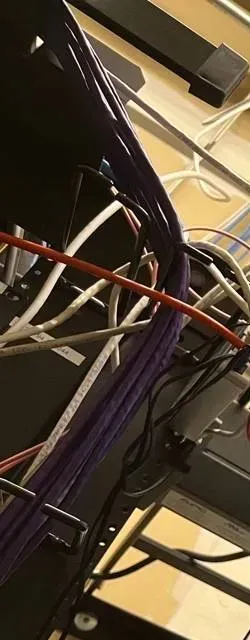
South Williamsburg, Brooklyn door buzzer repair reference: purple, white and red cable bundles dropping down beside a black equipment rack
AESS job-library photo, not taken in South Williamsburg: colored cable bundles dropping beside a black equipment rack. In the newer condo and rental buildings near Kent and Flushing Avenues, the lobby panel's cable often ends in a cellar room like this one; in a brick row house off Lee Avenue the same job is done by a few thin wires and a small transformer.
South Williamsburg Buzzer Repair Request
Row house, walk-up condo, store building or larger building: a cross street and what happens when someone rings is enough to start

✅
Request Sent!
A technician will call you about the South Williamsburg address before the end of the working day.
25+
Years Experience
✓
Same-Day Estimates
100%
Licensed & Insured
4.7★
201 Google Reviews

Before anyone comes out, a few photos usually narrow the fault to one part of the door. Take a picture of the button plate or lobby panel from the sidewalk, one apartment station or handset upstairs, and the edge of the door where the latch meets the frame. Then add one sentence: the bell rings but the door stays shut, the door opens but nobody hears anybody, one apartment is silent, the whole building is dead, or the door no longer latches behind people. Tell us the nearest cross street and, if the fault seems to follow a pattern, such as starting on Friday night or after rain, say so, because a weekly or weather-linked fault points somewhere different from a steady one. Text it all to (347) 934-8335. Most customers hear back the same day with the likely cause and a sense of how long the work will take.

  • Looking at your photos and texting back is free; the hourly rate begins when the technician reaches the door
  • All work is carried out under New York State license #12000287431, and an insurance certificate can go to a condo board, owner or managing agent before the visit
  • When the trouble is the door, its closer or its lock rather than the buzzer, we tell you so instead of replacing electronics that still work
The Neighborhood

Why South Williamsburg Properties Need Door Buzzer Repair

South Williamsburg takes its name, by way of Williamsburg, from Jonathan Williams, the U.S. Army engineer who surveyed this stretch of the East River shore in the 1790s. Wikipedia draws the neighborhood as the land between Division Avenue to the north, Broadway to the northeast, Flushing Avenue to the south and the river to the west, inside Brooklyn Community District 1 and the 90th Precinct. The opening of the Williamsburg Bridge in 1903 brought Jewish families across from the Lower East Side, and CityNeighborhoods.nyc records that by 1910 South Williamsburg was among the most densely populated districts in New York. Reformers of the early twentieth century described its overcrowded tenements as some of the poorest housing in Brooklyn. Every door system in the neighborhood today descends, one way or another, from that era of tight lots and shared stairs: the buzzer was added to buildings whose entrances were already a century old, or it was built into the replacements that went up on the same narrow parcels.

The second shaping force was the arrival, beginning in the late 1940s, of thousands of Hasidic Jews, many of them Holocaust survivors from Hungary and Romania. Sources differ on the exact year the Satmar rebbe settled here; a historian's blog says 1946 and Wikipedia says Rabbi Joel Teitelbaum reached the United States in 1947, so we give both. The Gotham Center's history of the community notes that many Satmar families moved into new public housing, including Jonathan Williams Plaza and Independence Towers, because good private housing was scarce. Later, community developers built their own condominium buildings, and growth has since pushed into parts of Clinton Hill and Bedford-Stuyvesant that some call "New Williamsburg." For a buzzer technician this history means three generations of entrance in a few blocks: old brick buildings with wiring added piece by piece, mid-century towers with building-wide systems, and newer condos whose panels were chosen by a developer and then handed to a board.

The buildings themselves are shaped by the families who live in them. Frieda Vizel's writing on Hasidic architecture, filmed partly on South 9th Street, describes large kosher kitchens, dining rooms that matter more than living rooms, and small bedrooms for many children. Brooklyn Magazine's February 2021 report adds that apartments here tend to be larger, with many bedrooms, and that the zig-zag balconies seen west of Bedford Avenue are staggered so that each family's sukkah is open to the sky; some older row houses have had modern front balconies added. CityRealty lists 217 Lee Avenue, a four-apartment condominium walk-up completed in 2024, with an intercom among its features, and walk-up condos of nine and twenty-four apartments appear in Williamsburg listings along Havemeyer Street. Big households, small buildings, and a lot of comings and goings: the street door, its closer and its strike take hard daily use, and a handset is often answered by whoever in a busy home reaches it first.

Recent news put front doors in the foreground. In September 2026, JFeed, citing the hyperlocal outlet Williamsburg 365, reported that an intruder walked into an occupied home at about five in the morning on a Shabbat while the family slept; Hoodline placed it on Ross Street near Hooper Street. Roughly a month earlier, two Hooper Street homes had been burglarized. Both reports say the suspect had been seen testing front doors, rear entrances, ground-floor windows and porches until he found one that gave way, and Hoodline reports that rabbis ruled that calling 911 during an apparent break-in on Shabbat is obligatory, a point the Williamsburg Shomrim coordinator repeated. A buzzer cannot stop a determined burglar, and we do not pretend otherwise. What the reports show plainly is that a door which only looks shut is the one that gets opened. Every repair on this page ends with someone pulling the door from the sidewalk side to make sure it has really latched.

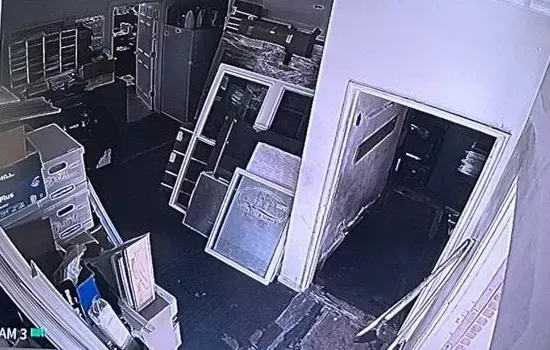
South Williamsburg, Brooklyn door buzzer repair reference: black-and-white night camera view of a cluttered room with an open doorway into a dark back room
AESS job-library photo, not taken in South Williamsburg: a night camera's view of a cluttered room and an open doorway into darkness. A rear door or a vestibule door left resting against its frame in a row house off Lee Avenue looks just like this to someone walking the block before dawn, which is why our last test on every job is a firm pull from outside.

Some things we could not find, and we will not fill the gaps with guesses. We did not reach HPD's violation counts, 311 buzzer complaint figures or Department of Buildings permit records for South Williamsburg addresses, our search of Reddit returned no buzzer or intercom threads from the neighborhood, and we found no Landmarks Preservation Commission guidance aimed at entry panels here. So this page does not say that buzzers in South Williamsburg fail more often than elsewhere, and it quotes no crime rate. What it does describe, from the sources named above, is how the age of the buildings, the size of the households and the weekly rhythm of Shabbat change where a technician looks and what a repair has to leave intact.

Six facts about South Williamsburg that shape a buzzer repair

  • A dense, young neighborhood. Wikipedia gives a 2020 estimate of 47,065 residents for South Williamsburg, across the 11206 and 11211 ZIP codes. A UJA-Federation study from 2023, reported for Williamsburg as a whole rather than the south side alone, counted 36,000 Jewish adults and 32,000 children in 21,000 households.
  • Few owners on the door. A Nextdoor profile of the Havemeyer and Broadway area lists 5,839 residents and a homeownership rate of 28 percent. In most buildings, then, the person who presses the release and the person who pays to fix it are different people.
  • Towers from the 1960s and 1970s. Independence Towers, six 21-story buildings between Clymer and Wilson Streets and Wythe Place and Bedford Avenue, took its first tenants in January 1965; its PACT conversion began in February 2020 and the renovation renewed roofs, windows, elevators, doors and flooring. The Taylor–Wythe Houses, completed June 30, 1974, have 525 apartments in five buildings of 8 to 13 stories.
  • New housing on industrial land. On October 31, 2017, the City Council approved the Pfizer Sites rezoning, 38 to 6, for the blocks bounded by Walton Street, Gerry Street, Harrison Avenue and Union Avenue, allowing 1,146 apartments and 62,810 square feet of commercial space (CityLand). Pfizer had operated near Flushing Avenue from 1849 to 2007.
  • Weekday and Shabbat doors. Chabad.org's October 2025 guidance says doors opened by electronic key cards, fobs or keypads may not be used on Shabbat, while a mechanical key generally raises no issue. A residential lobby here therefore needs a working mechanical way in alongside its buzzer.
  • A railway older than the buzzer. Hewes Street and Marcy Avenue stations on the Broadway elevated line opened on June 25, 1888. The store buildings along Broadway have had trains passing their upper floors for more than a century, and their residents' doors open onto a sidewalk under the steel.

Where this page begins and ends. Sources do not agree on the edges. Wikipedia uses Division Avenue, Broadway, Flushing Avenue and the river; CityNeighborhoods.nyc names Division Street and Kent Avenue; a 2009 New York Times blog described the Hasidic section as roughly Division Avenue, Broadway, Heyward Street and the Brooklyn Navy Yard. We cover all of it at the same Brooklyn rate, including the waterfront blocks in 11249. If your building sits just across one of those lines, our pages for East Williamsburg, Bedford-Stuyvesant, Clinton Hill and the Brooklyn Navy Yard describe the buildings there, and the Brooklyn door buzzer repair page covers the rest of the borough.

Condo boards here who call about a dead buzzer often ask in the same breath about the rear door, the yard gate or a second entrance that has never been on any system. We can look at those on the repair visit, and many buildings pair a buzzer repair with keyed access control on a side door; we will tell you honestly whether the existing power supply can carry anything extra.

Same-Day Repair in South Williamsburg

Need Repair in South Williamsburg? A Door That Will Not Release, a Silent Floor, or a Latch That Will Not Catch

Four complaints account for most of the buzzer calls we get from these blocks. The first is the ring that goes nowhere: the bell sounds upstairs, the resident presses the door button, and the visitor is still pulling on a locked door. That points at the strike, its power, the wire between them, or a door that presses so hard against its frame that the latch cannot slide. The second is silence on the voice side while the release still works, which sends us to the speaker, the microphone and the talk pair. The third is one apartment or one floor dead while everyone else is fine, which usually means that station or a splice on the way to it. The fourth, which matters more here than almost anywhere, is a door that will not latch or lock after it closes, whether from a worn keeper, a tired closer, a stuck relay holding the strike open, or a lock that was swapped for the wrong kind.

Many of these are found and fixed on the first visit, often within one to two hours of the technician arriving, because strikes, keepers, transformers and common stations are carried on the van. Call (347) 934-8335 and describe what you hear when the button is pressed. If the street door is standing unlocked, say so first: we make that door close and lock before we touch anything else, even if the rest of the repair waits for a part. And if it is Thursday or Friday, tell us, so the visit is booked to finish with time to spare before Shabbat. Repair visits are $195 an hour with a three-hour minimum ($585), whoever installed the system.

What We Install

Door Buzzer Repair Services in South Williamsburg

Street-door release repair

Strikes that hum without letting go, keepers worn by heavy family traffic, strikes that release only if someone leans on the door, and frames that have moved since the strike was set. We check how the door sits in its frame before we condemn any electronics.

Latching and locking faults

Doors that come to rest on the latch without catching, strikes left energized by a stuck button or relay, closers that stall a few inches short, and locksets replaced with a different function from the original.

Row-house bell and release wiring

Tracing two- and four-wire runs in brick row houses off Lee and Bedford Avenues, from the door to the cellar transformer and up to each floor, through walls renovated more than once.

Walk-up condo systems

Panels, power supplies and apartment stations in four- to twenty-four-unit condo walk-ups, where a developer chose the system and a board now looks after it.

Store-building residents' doors

Buildings on Lee Avenue, Bedford Avenue and Broadway where the apartments' door sits beside a shopfront and the buzzer's power may share a cellar or circuit with the store.

Phone-calling and video panels

Panels that dial residents' phones, keypads and video door stations in newer buildings near Kent and Flushing Avenues, checked in order: power, door hardware, line or network, then settings.

Building Specialists

Door Buzzer Repair for South Williamsburg's Architecture

CityNeighborhoods.nyc describes Bedford and Lee Avenues as streets of modest brick row houses, yeshivas and kosher bakeries, and Kent Avenue as a former factory strip now mixing glass towers, converted lofts and waterfront parks. Between those two pictures sit walk-up condos, store buildings and mid-century towers. Five kinds of building cover nearly every buzzer we are asked to repair on the south side.

The brick row house

Two or three stories of brick on a narrow lot, lived in by one family or split between related households. One street door, a button or two, a transformer in the cellar, and wiring that every renovation has added to.

The walk-up condo

A four-story building of four to two dozen apartments, many built in the last twenty years, with a panel at the door and a station in each apartment. The developer picked the system; the board inherits it.

The store building

A shop at street level on Lee Avenue, Bedford Avenue or Broadway, with apartments above reached by a narrow residents' door. Two users, one cellar, sometimes one circuit.

The mid-century tower

Independence Towers and the Taylor–Wythe Houses: tall buildings with lobby panels, risers and many lines of apartments, managed under public-housing arrangements in which residents report faults to management.

The new building on old industrial land

Rental and condo buildings near Kent Avenue and on the rezoned blocks off Flushing Avenue, with networked or phone-calling panels, door controllers and a cellar equipment room.

The brick row house: a family system with a busy door

In a row house the whole buzzer is a short chain: a button outside, a strike in the frame, a transformer in the cellar, and a station or bell on each floor. When the house is shared by parents downstairs and grown children upstairs, as many are, the system is nominally private but used by two or three households who all depend on it. Typical complaints are a bell that rings on the ground floor but not upstairs, a release that works from one floor only, or a strike that has grown lazy after years of being yanked by children and strollers. Because the run is short, the fault is usually found quickly. What takes time is the history: buttons for apartments that were later combined, a second transformer from a bell nobody uses, wires cut off behind a kitchen cabinet during a renovation. We take dead parts out of service and label the live ones at the button plate and in the cellar so the next repair starts from a clear map.

The door is the delicate part. Many of these houses have a metal or wood street door that has been rehung or replaced over the years, sometimes with a new lockset that does not match the original function. Before fitting a new strike we check what the lockset does, what the household expects it to do on Shabbat, and whether the latch actually reaches the strike when the door is closed gently rather than slammed. A strike set a sixteenth of an inch out of line will work for a slam and fail for a soft close, which is exactly the kind of close that leaves a door resting on its latch.

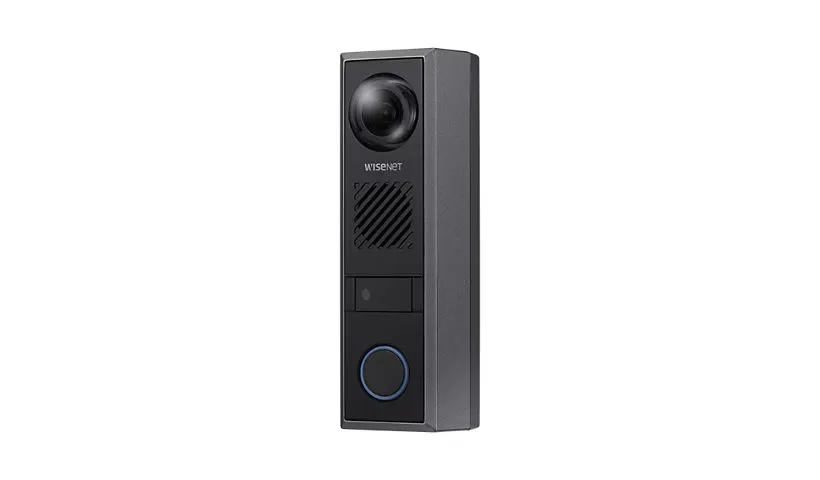
South Williamsburg, Brooklyn door buzzer repair reference: slim dark grey wired doorbell with a camera lens, speaker slots and a round push button
AESS job-library photo, not taken in South Williamsburg: a slim wired doorbell with a lens, speaker slots and a round button. On a narrow brick row house a station this slim can often take the place of an old button on the existing pair of wires, though households that keep Shabbat should look at how its camera and lights behave before choosing one.

The walk-up condo: a board that inherited somebody else's choice

Condo walk-ups are the newest common building on these blocks, and their buzzers bring a particular kind of trouble. The system was chosen and installed during construction, often by a subcontractor nobody can name a few years later, and the board or a single volunteer owner now has to look after it. The panel may dial residents' phones, show video, or both. The power supply is usually in a small cellar room or closet, sometimes sharing a shelf with the internet equipment. When something fails, the first question is often who has the installer's login or programming code. We start where every system is the same, with power and the door hardware, and work outward; where a programming step needs a code the building does not have, we tell the board before we spend time on it.

Size matters for the law as well as the wiring. A four-unit building falls below the eight-apartment line in the state's intercom rule for post-1968 buildings, while a twenty-four-unit building is well above it. We explain the difference in the questions further down, but either way the building's doors must still close and lock by themselves, and the board needs a written record of what was repaired and tested.

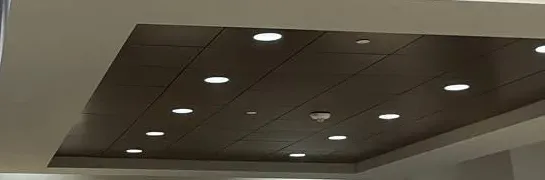
South Williamsburg, Brooklyn door buzzer repair reference: dark recessed ceiling panel with round downlights and a small round device, framed by a lighter ceiling
AESS job-library photo, not taken in South Williamsburg: a dark recessed ceiling with downlights and a small round device. Newer condo lobbies near Kent Avenue often have a dropped feature ceiling like this, and the panel's cable usually crosses above it on the way to the cellar, so a lobby lighting job is a common reason a whole building's buzzer goes quiet.

The store building: two sets of hours, one cellar

Lee Avenue is the neighborhood's commercial spine, lined with kosher grocers, Judaica shops and bakeries, and its buildings, like those on Bedford Avenue and Broadway, often put apartments above a store. The residents' door is a narrow street door beside the shopfront, and the transformer or power supply is in a cellar the store uses for stock. On Lee Avenue, commercial activity slows sharply on Shabbat, so the store is closed at exactly the hours when residents most need their own door to work mechanically. We trace the residents' wiring separately from anything the shop uses, label it in the cellar, and where the two share a power source, recommend separating them so that a shop renovation or a tripped breaker in the store does not silence the apartments.

The mid-century tower: report it to management

The towers are building-wide systems with lobby panels, amplifiers and risers serving many floors, and their entrances were part of large renovation programs; Wikipedia notes that the Independence Towers renovation renewed doors among other things. In public-housing buildings, residents report entrance faults to the building's management, which arranges its own repairs. We mention them here so that residents are not left wondering: if you live in one of these buildings, start with management. Privately managed buildings of similar size are a different matter, and there the method is the same as anywhere tall: test the lobby, test the riser line by line, and find where the signal stops.

The new building: the panel is part of the network

The buildings rising on the rezoned blocks off Flushing Avenue and along the waterfront use panels that behave more like small computers than bells. A panel may call phones over a line or the internet, read credentials, keep a log and send a release signal to a door controller that powers the strike. Faults there can be a lost connection, an expired account or a failed controller as easily as a broken wire. Our order of work does not change: power first, then the door, then the line or network, then the settings. One extra step matters here. Before anything is reprogrammed or replaced, we confirm with management how the building's keyed or mechanical entrance is supposed to work without power, so that a repair to the electronic side does not quietly remove it.

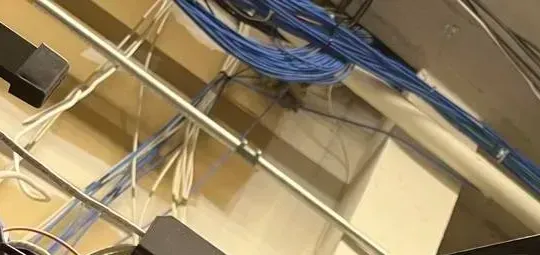
South Williamsburg, Brooklyn door buzzer repair reference: bundles of blue low-voltage cable laid over a ceiling beam and a metal pipe in an open ceiling
AESS job-library photo, not taken in South Williamsburg: blue low-voltage cable lying across a beam and a metal pipe. In the cellar of a brick row house off Bedford Avenue, buzzer wire resting on pipes like this is a frequent find; when we rerun a section, it goes onto hangers fixed to the framing and is labelled at both ends.

Row-house owners who get the buzzer working again often ask about a camera covering the street door or a better lock on the rear door at the same visit. We can quote either while we are there, after first checking that nothing new will draw on an old transformer that has no power to spare.

Before Shabbat

Shabbat and the Street Door: What a Buzzer Repair Must Leave Intact

Most buzzer pages treat the door as a box the electronics happen to be attached to. In South Williamsburg the door is half the system, because for roughly a day each week, and for longer runs over some festivals, many residents will not press a button, tap a fob or touch a keypad. Peninei Halakha states that using the intercom button to be let in is prohibited on Shabbat because it uses electricity, and Chabad.org's 2025 guidance says doors opened by electronic cards, fobs or keypads may not be used, while a purely mechanical key or mechanical combination lock generally raises no such problem. We do not rule on any of this. Residents and their rabbis decide what is acceptable. What we can do is make sure a repair does not take away whatever mechanical arrangement the building already relies on, and tell the building in plain words what each door now does.

A June 2026 ruling from Dinonline explains the arrangement many buildings use. It says that residential intercom doors often take a regular key, and that their locks often have a mechanical latch which can be set before Shabbos so the door opens without electricity, and which can be moved on Shabbos because it is entirely mechanical. It also says the building can test this on a weekday by switching off the power to the intercom and the lock and opening the door by hand. That test is the heart of what we do on any South Williamsburg door repair. Before we start, we ask whether the door is meant to open by key or by a latch setting when the power is off, and after we finish, with the building's agreement, we switch the buzzer supply off and try it. If the key turns and the door opens, the mechanical way through has survived the repair. If it does not, we have changed something we should not have, and we put it right before leaving.

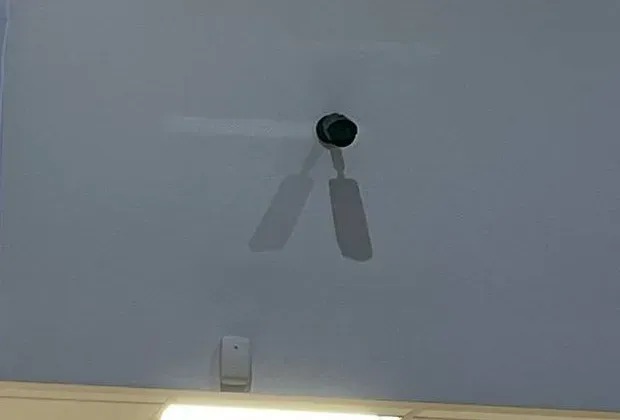
South Williamsburg, Brooklyn door buzzer repair reference: small black camera mounted high on a pale wall casting two shadows, with a small white wall device below and a light fixture at the bottom edge
AESS job-library photo, not taken in South Williamsburg: a small camera high on a pale wall with a little white device beneath it. In a walk-up vestibule the same stretch of wall often carries the release wiring, a junction box and sometimes a switch or sensor, and the same ruling advises checking that no lights or switches sit in the path residents use on Shabbat.

The same ruling describes the points where a door can change its character without anyone noticing. Magnetic locks, it says, are problematic, because a magnet holds the door with power and has no mechanical latch to set. Electromagnetic and mechanical combinations need checking for lights or microswitches on the path. A time switch that releases a door during Shabbat needs the agreement of the neighbors, because the whole building lives with it. For a buzzer repair, those cautions turn into a short list of things we will not do on our own initiative: swap an electric strike for a magnetic lock, fit a lockset that lacks the original's latch function, add a lit button or sensor to the residents' path, or wire a timer into the door. If a building wants any of those, the decision belongs to the owner or board after the residents have been consulted, and we explain the consequences before fitting anything.

There is a security side as well. Chabad.org lists workarounds such as taping a latch or putting paper in the latch hole, but only where security is not a concern, and the September 2026 reports of a suspect testing doors on these streets show that it often is. A mechanical latch that keeps a door unlocked from Friday to Saturday night is a building decision with real trade-offs, and it is not ours to make. Our part is narrower and practical: make sure the latch, the strike, the closer and the key all do what the building thinks they do, so that whatever arrangement the residents choose works as intended, and that on the other six days the door shuts and locks every time someone walks through it.

Some buildings go further and install equipment designed for Shabbat use. DeltrexUSA, a Brooklyn firm, describes "gramma" or indirect-action and modified-current systems for apartment buildings, synagogues and yeshivas, and says they work with magnetic locks, electric locks and electric strikes. Where a door carries a system of that kind, we treat the controller as somebody else's equipment: we repair the strike, closer, wiring or power supply around it, match the voltage and type the controller expects, and leave its logic alone, as the questions below explain.

Nothing on this page is a ruling on Jewish law. Where we describe what residents may ask of a door, we are quoting the published sources named above so that owners and boards can see why we ask the questions we ask.

Commercial Door Buzzer Repair

Business Door Buzzer Repair in South Williamsburg

Commercial buzzer work on the south side comes in three kinds: shops whose back doors or offices use a release, residents' doors in buildings shared with a business, and institutions such as synagogues, yeshivas and offices that buzz visitors in during the day. The corridors below are where most of it is.

Lee Avenue

The main commercial street, with kosher grocers, Judaica shops and bakeries. Stores with apartments above, a residents' door beside each shopfront, and a weekly rhythm in which the street slows sharply on Shabbat and the stores' own doors must stay locked unattended.

Bedford Avenue

Brick row houses, yeshivas and shops on the stretch south of Division Avenue, ending at the Broadway corner where the former Kings County Savings Bank building now houses the Williamsburg Art and Historical Center.

Broadway

The northeastern edge, under the elevated J and M line that opened in 1888, with store buildings whose upstairs doors open onto a noisy, shaded sidewalk. A 2026 guide notes that Broadway cuts the ZIP code in half.

Kent Avenue and the waterfront

Once lined with factories and warehouses, now glass towers and converted lofts, with Congregation Yetev Lev D'Satmar at Kent Avenue and Hooper Street. Ground-floor offices and shops with their own doors beside residential lobbies.

Flushing Avenue

The southern edge, where the Pfizer Sites rezoning allowed 62,810 square feet of commercial space in new buildings. Retail and community spaces whose doors should stay separate from the residents' entry controller.

Hoodline reported in September 2026 that NYPD was looking for two suspects linked to 19 commercial burglaries across Brooklyn between August 3 and September 10, with Williamsburg among the neighborhoods hit. That was a smash-and-grab pattern, not a story about buzzers, and we do not claim a buzzer would have stopped it. The lesson for shops is a smaller one: a back door left on the latch because the release has failed, or wedged open because nobody can buzz the bakery delivery in, is an easy door at any hour. Repairing the release costs less than living with the workarounds a broken one creates, and it matters most on the days a store is closed and nobody is there to notice.

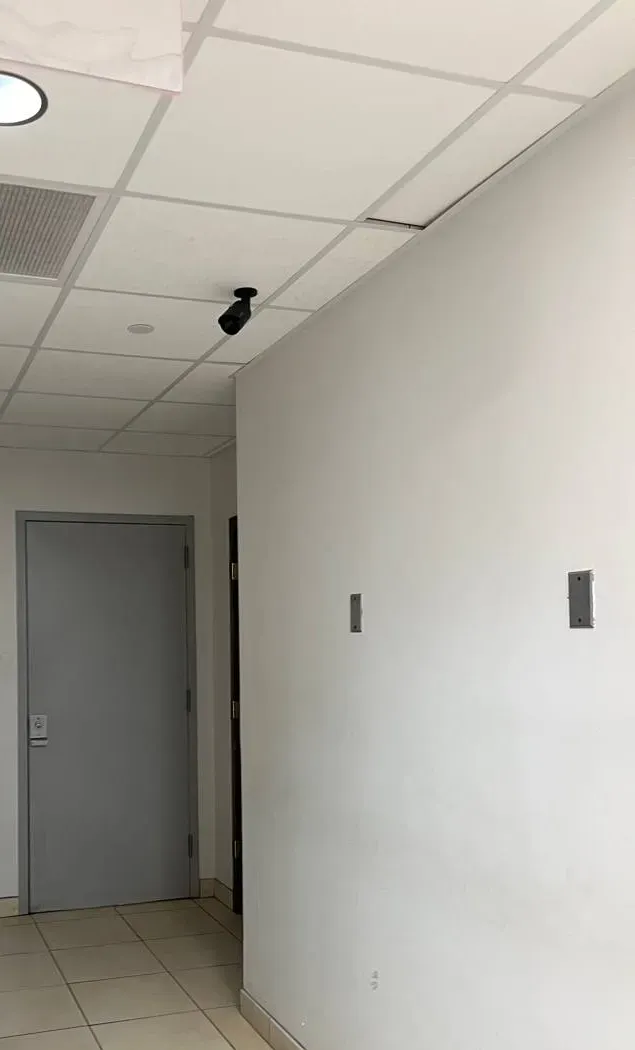
South Williamsburg, Brooklyn door buzzer repair reference: tiled corridor with white walls and small wall plates ending at a grey steel door with a lever handle under a drop ceiling with a small camera
AESS job-library photo, not taken in South Williamsburg: a tiled corridor leading to a grey steel door with a lever handle. Store buildings on Lee Avenue often have a back passage like this between the shop and the residents' stair, and whoever controls the passage is responsible for keeping the release on that door working.

A store's release is used differently from a residents' buzzer. A shop's delivery door may be released a few times before opening and must then lock firmly at closing, including the long closure over Shabbat. An office or yeshiva may buzz visitors in all day, so its strike and closer wear faster and a sticky desk button is noticed at once. The residents' door in the same building has to work for every apartment around the clock, and on Shabbat it has to work mechanically. We keep each of these on its own circuit wherever we can, so that a shop renovation, a delivery cart that bends a keeper, or a tripped breaker in the store affects one door and not all of them.

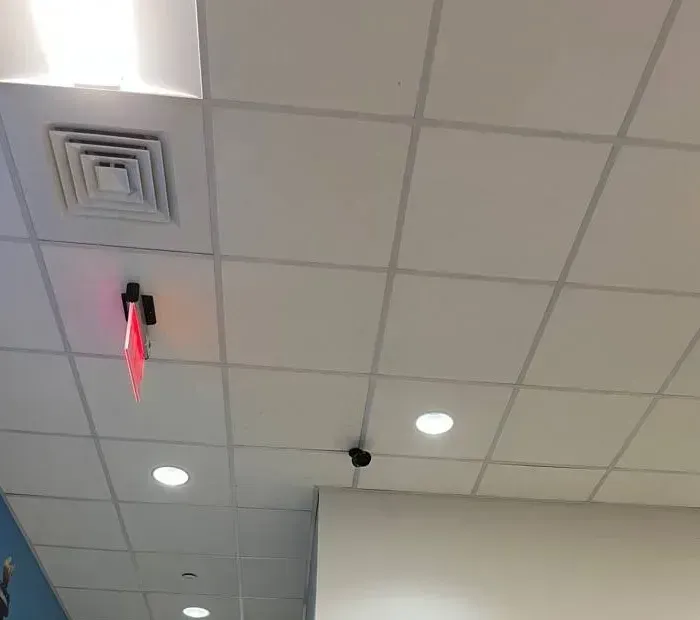
South Williamsburg, Brooklyn door buzzer repair reference: drop ceiling with a lit red exit sign, an air diffuser, round recessed lights and a small black camera
AESS job-library photo, not taken in South Williamsburg: an office ceiling with a lit exit sign, a diffuser, recessed lights and a small camera. Where an exit sign marks a door in a ground-floor office or community space near Flushing Avenue, any electric lock on that door must still let people out freely, which shapes how its release can be repaired.

Compliance notes for South Williamsburg buildings and businesses

  • Entrance doors by building age. The Attorney General's Tenants' Rights Guide says multiple dwellings built after January 1, 1968 must have automatic self-closing and self-locking doors at all entrances, and those with eight or more apartments also a two-way voice intercom that can buzz the door open. Older buildings must have self-locking doors and a two-way intercom if a majority of the apartments request it, and the landlord may recover the cost under Multiple Dwelling Law § 50-a.
  • Self-closing doors. HPD classes a defective self-closing door as a class C immediately hazardous violation, to be corrected within 14 days of receiving the notice, and reinspects within 20 days of the correction date. Under Local Law 71 of 2022, HPD proactively inspects 300 class A multiple dwellings a year for these doors. A repair that leaves a door unable to close and latch on its own is not finished.
  • How HPD writes buzzer faults. In HPD's violation data, buzzer faults appear under § 27-2005 of the Housing Maintenance Code with wording such as repairing the bell, buzzer and intercom system "from the building entrance door" to the apartment, and the classes recorded include A, B and C. The whole path from the street door counts, not just the handset.
  • Complaints. 311's apartment maintenance category covers doorbells, buzzers or intercoms that are broken or missing.
  • Line voltage. The Department of Buildings requires a licensed electrician, and a permit, for electrical work. We work on the low-voltage side of the transformer; if its line side or its circuit needs work, an electrician does it.
  • Magnetic locks and exits. Building-code rules for sensor release of electrically locked egress doors apply where an office, shop or lobby uses a magnetic lock, and the 2010 ADA Standards set 48 inches as the maximum high forward reach for controls such as a release button or call panel.
Your Questions Answered

Door Buzzer Repair in South Williamsburg: Questions Answered

These questions come from the doors this neighborhood actually has: locksets whose latches are set before Shabbat, controllers built for Shabbat use, big households and their strollers, condo walk-ups below and above the eight-apartment line, and front doors that people have been seen testing. Each is answered here in full, and none is repeated in the FAQ further down.

The door's Shabbat arrangement

A handyman replaced our worn street-door lockset during a buzzer repair, and the small button residents pressed on Friday to hold the latch back is gone. What changed?

The lock's function changed. Locksets are sold in many functions that look alike from the street. Some mortise locks have a pair of small buttons in the edge of the door, often called stop works, that hold the latch retracted or locked from the inside; some cylindrical locks have a similar hold-back setting. A replacement chosen only to fit the hole, often a storeroom or entry function picked off a shelf, can lack that feature entirely, and the strike will still release the door on weekdays, so nobody notices until Friday afternoon. Dinonline's June 2026 ruling describes exactly this kind of mechanical latch as the way many intercom doors are opened without electricity on Shabbat. The fix is usually a lockset of the original function and backset, or, where the old body is still sound, refitting it with a new cylinder or latch. We check the new lock against the strike so that the latch, when it is not held back, still drops fully into the keeper. We will not decide whether the hold-back should be used; that is for the building and its residents, bearing in mind that a door held unlatched is also a door anyone can open. We simply restore the arrangement the building had before the handyman's visit and show the owner how it works.

Our synagogue's side door has an indirect-action Shabbat controller installed by a specialist. Can a general buzzer technician replace the failing strike without upsetting it?

Yes, as long as the technician treats the controller as someone else's equipment and matches what it expects. DeltrexUSA describes its gramma, or indirect-action, and modified-current systems as working with magnetic locks, electric locks and electric strikes, which means the controller is designed around a particular kind of lock at a particular voltage and current. A replacement strike of a different voltage, a different current draw or a different fail mode can make the controller behave differently even though the weekday release still seems normal. So before fitting anything we read the existing strike's rating and fail mode, measure what the controller actually delivers to it, and fit a strike that matches. We do not open, reset or rewire the controller's own logic, and if its documentation or the installer's contact is on site we would rather speak to them first. After the work, the door is tested on its ordinary weekday release in front of whoever looks after the door, and the building tests the Shabbat function in whatever way its own advisers prefer. If the controller itself has failed, we say so and leave it to the people who installed it.

Every Friday night the intercom in our two-family goes dead, and it comes back on Saturday night. What could follow the calendar like that?

A fault that keeps a weekly schedule nearly always comes from power, not wiring. The most common cause we would look for is a plug-in transformer or power adapter feeding the intercom from an outlet that is on a Shabbat timer, or on the same circuit as lights controlled by a time switch. When the timer turns that outlet off for Shabbat, the intercom goes with it, and when it turns back on, the system recovers as if nothing happened. The second possibility is a power supply sharing a circuit with something the household switches off before Shabbat, such as a hot plate or water urn on a breaker of its own. Because the outage happens on a schedule, it can be diagnosed on a weekday: we trace which outlet or breaker feeds the intercom and which timers sit upstream. The usual remedy is to give the intercom a supply that no timer touches, either by moving the plug to an untimed outlet or by having an electrician add a dedicated circuit for a hard-wired supply. Whether the household or the building wants any part of the door itself on a timer is a separate decision, and Dinonline notes that a time switch on a shared door needs the neighbors' agreement.

Our new video panel lights up and starts recording whenever someone walks up to it. Can that be changed for Shabbat without disabling the buzzer the rest of the week?

Often, but it depends on the panel, and we will not promise a setting a model does not have. Many video door stations wake their screen, light their buttons or begin recording when a sensor sees motion, and some can only do that when a call is made. On some panels those behaviors can be switched off, reduced or put on a schedule; on others they are fixed. Chabad.org's 2025 article mentions that smart locks which automatically lock or log entries should ideally be disabled before Shabbat, and owners who keep Shabbat sometimes raise the same concern about a panel that responds to a passer-by. Whether that matters, and what would satisfy it, is a question for the resident's rabbi rather than for us. Our part is technical: on the visit we open the panel's settings with whoever holds the administrator access, show which features respond to motion and which only to a press, and set them as the owner or board decides. If the panel cannot be configured the way the building wants, we tell you plainly, and the building can decide whether that is acceptable or whether the residents' Shabbat entrance should be a different door that has no panel on it.

Guests coming for Shabbat meals will not press our street panel's call button. Is there a non-electric way for them to let the family upstairs know they have arrived?

There are mechanical options, though which of them a household uses is for the household and its rabbi to decide. Peninei Halakha says pressing an intercom button to be let in is prohibited on Shabbat, so a guest standing at an electric panel has no way to announce themselves. The simplest mechanical signal is a door knocker fitted to the street door, which needs no power at all; on a multi-family building it only reaches whoever is nearest the door, so it suits a row house better than a walk-up. Some families arrange to have someone come down at the time guests are expected, and some give regular guests a key in advance, although Chabad.org notes that carrying is a separate question from opening. What we would steer a building away from is leaving the street door unlatched for the evening in the hope that guests arrive before anyone else does; the September 2026 reports of a suspect testing doors on these streets make the cost of that plain. If you would like a knocker or another mechanical fitting added to the door during a buzzer visit, we can fit it, checking first that it does not interfere with the closer, the strike or the way the door seals.

The doorway and its frame

The mezuzah on our street door is on the same doorpost where the new strike has to go. Will cutting for the strike disturb it?

Usually not, because the two sit at different heights. A mezuzah is generally placed on the right-hand doorpost as you enter, in the upper part of the post, while a strike sits at latch height, roughly level with the handle. Whether they share a doorpost depends on which way the door swings: if the door is hinged on the left as you walk in, the latch side and the mezuzah side are the same post. Cutting the strike pocket happens well below the case. The wire is the part to think about, because a strike's cable sometimes runs up inside the jamb to the head of the frame before entering the wall, and that route passes behind the area where the mezuzah is fixed. Where possible we take the wire down or sideways into the wall instead, which avoids the upper post altogether. If a frame repair truly needs the case to come off, we stop and let the household take it down and put it back in the way it prefers; we do not remove a mezuzah ourselves. We also keep the fixing screws for the strike within the jamb's own material, so the post is not split or weakened anywhere near the case.

The man reported near Ross and Hooper Streets was seen testing front doors until one opened. What faults let a street door open to a simple pull?

Several, and most of them leave a door that looks perfectly closed. A strike can be held released by a stuck button upstairs, a shorted wire, a failed relay or a power supply wired the wrong way for its fail mode, so the door opens to anyone who pulls. A keeper that has worked loose or been bent by carts lets the latch rest on its lip instead of dropping in. A latch whose deadlocking plunger never presses in, because the strike was set too far from the door, can be pushed back with a card. A closer that has lost its final latching push lets the door drift the last inch and stop. A lockset with its hold-back left on, or a latch taped over, defeats everything else. The JFeed and Hoodline reports describe a suspect testing front doors, rear entrances, ground-floor windows and porches; on our side of the problem, the only defense is a door that really locks. So after every repair we close the door gently, the way a tired resident does, and pull it from the sidewalk; we press each release and confirm the strike re-locks; and we check the latch for slack. If any of those fails, the job is not done.

Buildings and their rules

HPD wrote an intercom violation at our four-unit condo after the board replaced the wired system with a virtual doorman. Does a building that small have to have an intercom at all?

Possibly not, and a board in that position has had a violation dismissed before. An Albany law firm describes a case in which a four-unit condominium replaced its hard-wired intercom with a virtual doorman, HPD issued a violation, and the board had it dismissed because no provision of the Multiple Dwelling Law required an intercom at that size. The state rule the Attorney General summarizes requires a two-way voice intercom in buildings erected or converted after January 1, 1968 with eight or more apartments; for older buildings the requirement arises when a majority of apartments ask for it. Habitat Magazine adds that the city's Housing Maintenance Code also requires a functioning intercom, and vendor sites cite different code sections and thresholds, so the details are worth checking with the building's lawyer rather than taken from any website, ours included. Two things stay true whatever the answer. A small multiple dwelling still needs entrance doors that close and lock by themselves, and whatever system the building does provide should work. Four-unit buildings like the 2024 condo at 217 Lee Avenue are common here, so we often write up exactly what is installed at the door and what it does, which is the record a board needs whichever way the question goes.

Our row house had a front balcony added years ago, and the bell wire to the upper floors now runs up the outside wall behind the balcony brackets. When it fails, is that run worth keeping?

Usually not. Brooklyn Magazine's 2021 report notes that some older houses here have had modern front balconies added, and when that happens the bell wire that once ran inside the front wall is sometimes rerouted outside, clipped to the brick behind the new steel. An outdoor run takes sun, rain and freeze-thaw cycles that indoor bell wire was never meant for, and the brackets that hold the balcony are exactly where water collects and where anyone repainting the steel scrapes along the wall. Faults there are often intermittent at first, working on dry days and failing after rain. When the run fails, we look for a way back inside: up a closet or chase, through the cellar and up the rear, or along an existing interior route the original wire used. Where an outside section truly cannot be avoided, it goes in outdoor-rated conduit fixed into mortar joints rather than into the balcony's anchor points. We found no Landmarks Preservation Commission guidance that applies to South Williamsburg entrances, so if you believe your house is landmarked, check the Commission's map before any exterior change.

Before Pesach we wiped down every surface in the apartment, including the intercom handset, and since then it does nothing. Can cleaning damage it?

Yes, and it is one of the more common ways a handset that was working fine stops overnight. An apartment station is a small piece of low-voltage electronics in a plastic case, and its weak points are the hook switch the handset rests on, the buttons and the grille. Liquid sprayed onto it, or a cloth wrung out only loosely, runs into those openings and sits on the contacts, where it can short them, leave a film that stops them closing, or start corrosion that shows up a few days later. Strong cleaners can also craze the plastic and soften the button seals. Sometimes a station recovers once it has dried thoroughly, so if it was cleaned recently, leave it alone for a day or two before deciding it has failed. If it stays dead, we test it at its terminals and at the cellar end of its pair; if the station is the fault, we replace it with one that matches the building's system, so that one new unit does not upset the others on the line. For next year, a cloth that is barely damp, no spray, and no prying at the case will clean it without harm.

Strollers parked in our walk-up's vestibule keep the inner door from closing all the way. Is that something a buzzer repair fixes?

Not by itself, and turning up the closer will not fix it either. A door closer can only pull a door shut through clear space; if a stroller wheel or handle sits in the door's path, the door stops against it, the latch never reaches the strike, and the door stays unlocked however well the buzzer works. In a neighborhood of large families and small vestibules this is a real and recurring problem. Increasing the closer's force to shove past an obstruction only makes the door hard for children and older residents to open and harder on its hinges. The practical fixes are about the space: agree where strollers go, which may mean a marked area clear of the door's swing or a hook or fold-up spot elsewhere; fit a floor stop that keeps parked items out of the door's arc; and check that the door's own sweep and threshold are not adding drag. Once the path is clear, we set the closer's latching speed so the door finishes its last inch firmly and catches every time. This matters legally too: HPD treats a self-closing door that does not close as a class C immediately hazardous violation.

A three-day Yom Tov is coming and nobody will reset anything while it lasts. Which door faults are worth fixing beforehand, and which can wait?

Fix first anything that affects whether the door locks or whether the mechanical way through works, because those are the faults that cannot be dealt with once the holiday begins. That means a strike that sometimes stays released, a keeper that has worked loose, a closer that stops short, a lockset whose key or latch setting no longer opens the door with the power off, and a power supply that runs hot, hums loudly or has been tripping a breaker. Each of these can leave a door either stuck locked against residents who will not use the buzzer, or stuck open to anyone, for several days. The test Dinonline describes, switching off the intercom and lock power on a weekday and opening the door by hand, is the quickest way to find out where you stand, and we are glad to do it with you. Faults that can usually wait until after the holiday are the inconvenient but contained ones: a single apartment station that has gone silent, a voice that is faint at the top of the building, a button that sticks, or a cosmetic panel repair. Book early in the week before, not on the last afternoon, so there is time to order a part if one is needed.

What the Law Asks of a South Williamsburg Intercom, and Where the Rules Get Murky

Many buzzer calls start with an owner asking two things: whether the building must have a working intercom at all, and how fast the broken one has to be fixed. The honest answer depends on when the building went up, how many apartments it has, and which section of the code you are reading. The published sources do not fully agree. South Williamsburg has old tenement-era walk-ups, 1930s and 1960s public housing, and small condos finished in the last few years, so the answer can change from one block to the next. Below is what the sources say, where they conflict, and what that means for a repair.

The baseline for larger and newer buildings

State law sets the clearest rule. Under the multiple dwelling law, a building built or converted after 1968 with eight or more units must have a two-way voice intercom linking the front door to each apartment. The city's housing maintenance code also requires the intercom to work. A panel that is only installed does not meet the rule, and neither does a system where half the apartments can talk to the door and the other half cannot. A unit that hears the buzz but cannot release the door, or a floor that has gone silent, is the kind of fault that keeps a building out of compliance.

One vendor that writes about New York building security makes a point many boards miss. It says the law requires a working two-way intercom with door release, not a video intercom. Owners sometimes assume that a broken audio system obliges them to buy a camera panel. Based on that reading, the requirement is voice and release. Video is a choice the building can make, not a legal minimum. In practice, this means the first repair to price is getting the existing audio system talking and releasing again. A full replacement should come up only if the owners want features beyond the baseline, or the old equipment cannot be saved.

Older walk-ups and the majority-request rule

Much of South Williamsburg's housing predates 1968. The neighborhood was among the most densely populated districts in New York by 1910. Early 20th-century reformers described overcrowded tenements here as some of Brooklyn's poorest housing. Brick rowhouses line Bedford Avenue and Lee Avenue. For buildings from that era, the rule works differently. Under Multiple Dwelling Law § 50-a, self-locking doors and a two-way intercom must be installed in a pre-1968 building if a majority of tenants request them. The landlord may recover the cost from the tenants.

This matters for repair because some older walk-ups have an intercom that was added later, often after tenants asked for one. When it breaks, owners and tenants can disagree about whose job the fix is and who pays. We cannot settle a landlord-tenant dispute. We can tell both sides what is wrong with the system, what it will take to make it work again, and whether the door still self-locks after the repair. The self-locking door is part of the same section of law as the intercom. A buzzer repair that leaves the street door unable to latch on its own has not restored what § 50-a describes.

Small buildings and the four-unit condo case

The newest housing in the area includes many small condos. A 4-apartment condo built in 2024 at 217 Lee Avenue is listed as a walk-up with an intercom. Across Williamsburg more broadly, condo walk-ups are common. Listings include 102 and 104 Havemeyer Street, each four floors with 24 units, and 165 Havemeyer Street with 9 units. Those listings cover all of Williamsburg, not only the south side. Still, they show the size range of the buildings where buzzers get daily use.

For the smallest of these buildings, a law firm's case study is worth knowing about. A four-unit condo replaced its hard-wired intercom with a virtual doorman. HPD issued a violation. The board got the violation dismissed because no Multiple Dwelling Law provision required an intercom at that size. The result applied to that building and those facts. It does not mean every small building can drop its intercom without consequence. It does show that the unit count matters, and that a small condo board facing a violation should check which rule actually applies before paying for a rebuild.

Where the sources disagree

The details of the city code are where the published sources diverge. One security vendor cites Administrative Code § 27-2045 and says it applies to buildings of three or more units. The same vendor describes a broken intercom as a class B violation. A second vendor cites § 27-2044, gives a threshold of more than eight units, and calls the violation class A. These cannot all be correct as written. Some of the difference may come from mixing up separate sections, separate building categories, or separate kinds of defects. We do not have neighborhood-level violation counts, 311 intercom complaint totals, or building-permit data for South Williamsburg to put beside these claims.

Our advice is simple. Do not rely on a vendor's summary, including ours, to tell you your building's legal obligation or violation class. If an HPD notice is already in hand, the notice says which section was cited. Check that section against the current Administrative Code, or ask the building's attorney or managing agent. Our job is to make the system work, document what we found and what we fixed, and give the building a record it can show if the violation needs to be cleared.

What this means for the repair itself

A few practical points follow from all of this. First, a repair that restores two-way voice and door release to every apartment covers the requirement the sources agree on, whatever the violation class. Second, the street door has to close and latch on its own after a release. A buzzer that unlocks the door but leaves it hanging open does not serve the self-locking purpose behind the older-building rule. Third, a building replacing a hard-wired system with something different, whether an app, a virtual doorman, or a cloud panel, should confirm that the new setup still gives each apartment voice contact and release where the law requires it. The four-unit case was dismissed on size, not because the substitute system was found equivalent.

In South Williamsburg there is a fourth point that the code does not address. Many residents keep Shabbat. A rabbinic Q&A notes that residential intercom door locks often have a mechanical latch that can be set before Shabbos so the door opens without electricity. A repair or replacement can meet every legal requirement and still remove that mechanical path. Before any part is swapped, the building should know whether its current door has that path and whether the new hardware will keep it.

How South Williamsburg's History Shapes the Buzzers We Find Here

Every buzzer we open in this neighborhood reflects when the building was put up and who it was built for. A tenement-era walk-up off Lee Avenue, a tower from the 1960s, and a small condo finished last year each bring different wiring, different door hardware, and different expectations from residents. Knowing a little of the area's history helps explain why one building's system is a pair of wires and a transformer, while the building next door has a newer panel that calls residents' phones.

The shape of the neighborhood

South Williamsburg is generally described as bounded by Division Avenue to the north, Broadway to the northeast, Flushing Avenue to the south, and the East River to the west. It is in Brooklyn Community District 1 and is served by the 90th Precinct. A 2026 neighborhood guide notes that Broadway cuts the ZIP code in half, which is one reason addresses on either side can feel like separate neighborhoods. The wider area takes its name from Jonathan Williams, a U.S. Army engineer who surveyed this stretch of the East River shoreline in the 1790s.

The streets fall into a few broad types. Lee Avenue is the main commercial spine, lined with kosher grocers, Judaica shops and bakeries. Bedford Avenue and Lee Avenue are dominated by Hasidic communities, with brick rowhouses, yeshivas and kosher bakeries. Kent Avenue, once lined with factories and warehouses, now mixes glass towers with converted lofts and waterfront parks. The Satmar congregation Yetev Lev D'Satmar stands at Kent Avenue and Hooper Street, in a building constructed in 2006 by followers of Aaron Teitelbaum. A neighborhood profile of the area around Havemeyer Street and Broadway lists 5,839 residents, with 28 percent homeowners. That suggests many of the people pressing these buttons are renters who depend on an owner or manager to get repairs done.

Bridge-era density and the tenement stock

The Williamsburg Bridge brought Jewish families over from the Lower East Side. Within a few years the area was among the most crowded in the city. By 1910 South Williamsburg was one of the most densely populated districts in New York, and reformers of the period counted its overcrowded tenements among Brooklyn's poorest housing. The buildings from that wave were not designed with intercoms. Any system in them was added later, threaded through walls and stairwells that were never planned for low-voltage cable.

Those retrofits are why older walk-ups here often have the oldest working equipment we see. One Brooklyn security firm describes a 1971-era Lee Dan panel in a Bed-Stuy walk-up that had failed because of its transformer. That firm sells retrofit work, so its claims are marketing. Still, the example is familiar. A single power supply in the basement or a closet feeds the whole building, and when it fails, every apartment goes quiet at once. The same firm says retrofit kits from makers such as Comelit, Aiphone and Akuvox can reuse legacy 2-wire and 6-wire cable without wall work. It quotes a repair range of $150 to $1,500. Those figures come from a vendor's marketing, not an independent survey, and a real price depends on what is actually wrong. The broader point holds, though. In a tenement building where opening walls is disruptive and expensive, how much of the existing cable can be reused often decides the cost of the job.

The postwar arrivals and the public housing years

The Orthodox community grew after the bridge opened. Beginning in the late 1940s, thousands of Hasidic Jews settled here, many of them Holocaust survivors from Hungary and Romania. Accounts of the Satmar Rebbe's arrival differ. A historian-run blog dates his settling in Williamsburg to 1946, while Wikipedia says Rabbi Joel Teitelbaum arrived in the United States in 1947. Either way, the community that formed around him shaped the neighborhood's rhythm, its commerce, and the way its buildings are used.

Public housing is a large part of the local building stock. The Williamsburg Houses were built from 1936 to 1938 as a federal project later run by NYCHA, on a site where nearly six hundred mostly frame structures were demolished. Later projects followed. Independence Towers is six 21-story buildings between Clymer and Wilson Streets, Wythe Place and Bedford Avenue. Tenants moved in from January 1965, and the complex was completed that October. A PACT conversion began there in February 2020, with renovations that renewed roofs, windows, elevators, doors and flooring. The Taylor-Wythe Houses, completed in 1974, are five buildings of 8, 11, 12 and 13 stories with 525 units on 4.27 acres. One account notes that many Satmar families moved into new public housing, including Jonathan Williams Plaza and Independence Towers, because good private housing was scarce in Williamsburg.

Entry systems in public housing are generally managed by the housing operator, not by individual tenants, and repair requests usually go through that channel. We mention these complexes because they explain the neighborhood's density and the scale of daily traffic through its front doors. A 21-story tower and a four-unit walk-up both need a door that releases on command and latches behind the person who walks in. Everything else about them is different.

Builders working for the community

Later development was shaped partly by Hasidic builders. Simon Dushinsky's Rabsky Group completed a $40 million, six-building condo complex called Park Plaza for Hasidic residents in 2002. The source does not say where it stands, so we will not guess. Projects like it, and the small new condos along streets like Lee Avenue, show a pattern. Newer buildings are planned around large households, heavy family traffic, and a weekly cycle in which the front door is used very differently for one day of the week.

The community has also grown beyond its old borders. Satmar families have moved into nearby parts of Clinton Hill and Bedford-Stuyvesant, an area sometimes called "New Williamsburg." The same concerns about buzzers, latches and Shabbat travel with them. A building owner in Bed-Stuy whose tenants keep Shabbat faces the same questions as one on Lee Avenue, even though the brownstone and the condo were built for very different people.

Phones, flip phones, and phone-based buzzers

One common type of buzzer suits this neighborhood well. Phone-based buzzers do not need an indoor station in every apartment. When a visitor presses a resident's button, the system calls that resident's landline or cell phone. The resident answers and presses 9 to release the door. This works with any phone that can take a call and send a keypad tone. A resident's blog about life in South Williamsburg notes that you will see lots of flip phones on the neighborhood's sidewalks. A system that works through an ordinary call and a single keypress fits basic phones. A system that only works through a smartphone app does not.

That affects how a repair or upgrade is scoped. When a phone-based entry panel fails, the fix may be in the panel, its phone line or cellular connection, or its directory programming. The answer is rarely to replace it with something that requires residents to install software. If a building is considering a newer panel, the first question should be whether residents can still let visitors in by answering a call on whatever phone they already carry. A modern touchscreen panel that drops phone-call release forces residents into new devices they may not want or use.

On Shabbat the phone-based release does not help observant residents. Peninei Halakha says using the intercom button to be let in is prohibited because it uses electricity, and the same reasoning would apply to answering a call and pressing 9. That is why the mechanical side of the door matters so much here. Phone-based release covers the six weekdays. The manual latch, set before Shabbos so the door opens without power, covers the seventh. A good repair keeps both working.

Why an upgrade can quietly remove the Shabbat path

The rabbinic Q&A at Dinonline describes the arrangement many residents rely on. Residential intercom door locks often include a mechanical latch that can be set before Shabbos, so the door opens without electricity. The Q&A suggests testing this on a weekday by cutting power to the intercom and the lock, then checking whether the door still opens by hand. That test belongs in every repair and every replacement in South Williamsburg.

The risk comes from swapping parts. If a failed electric strike is replaced with a different model, or a building trades its door hardware for a touchscreen or app-only intercom package, the mechanical path can disappear without anyone noticing until Friday night. We read the guidance this way: a buzzer repair in a Hasidic building may need to keep the manual-latch or Shabbat-mode behavior intact, and an app-only replacement could take it away. We do not decide what is permitted on Shabbat. Residents and their rabbis decide that. What we can do is test the door with the power off before work starts, tell the building what the current hardware does, and test again after the repair to show that nothing changed.

For buildings that want an electrified approach built for Shabbat use, there are specialized products. A Brooklyn firm, DeltrexUSA, sells Shabbat-compliant access control. It says its "gramma," or indirect-action, systems and modified-current systems serve apartment buildings, synagogues and yeshivas, and work with maglocks, electric locks and electric strikes. Whether a particular product is acceptable for a particular household is a question for the household and its rabbi, not for an installer. If a building already has such a system, a buzzer repair should be planned around it, not run through it. If a building is weighing one, it should make that decision before replacing the door hardware, so the new lock and the Shabbat equipment work together.

The resident's blog also describes the eruv, a wire boundary that turns the public streets into a private space for Shabbat purposes. The eruv concerns carrying, not electricity. Some residents may carry a key on Shabbat within it, while others will not. A building cannot assume that every observant resident will carry a key. That is one more reason the manual latch, and not only a key cylinder, matters to many households.

Front doors and this year's break-ins

A buzzer is only part of a building's security, but the front door it controls is often the first thing an intruder tries. In September 2026, Hoodline, citing Williamsburg 365 and JFeed, reported a break-in at an occupied home on Ross Street near Hooper Street on a Shabbat morning. According to the report, the suspect has been observed testing front doors, rear entrances, ground-floor windows and porches until he finds an unlocked way in. That pattern targets doors that do not latch, not doors that are hard to defeat.

This is where Shabbat arrangements and security can conflict. A latch set to open without power is a deliberate choice for one day a week. A latch left in that position all week, or a street door that never fully closes because its closer or strike is failing, is an opening for someone checking doors. Our repair checks cover both. We confirm that the door closes and latches on its own after a release, and that the closer brings it fully shut from any angle. We also confirm that the electric strike or lock holds when it should and releases when it should. We point out to the building any arrangement that leaves the door unlatched outside the hours residents intend. The rear and side entrances named in the report get the same check whenever they are part of the entry system.

The same reports carry an important instruction for residents. Rabbis ruled that calling 911 during an apparent break-in on Shabbat is obligatory under pikuach nefesh, the principle that saving a life overrides Shabbat restrictions. Williamsburg Shomrim coordinator Yanky Itzkowitz said residents should report intruders regardless of Shabbat restrictions. No door hardware replaces that. A building's entry system is meant to slow someone down and keep doors shut. It is not a reason to hesitate before calling for help.

Commercial owners have had their own warnings. A separate September 2026 report said NYPD was looking for two suspects tied to 19 commercial burglaries across Brooklyn between August 3 and September 10, 2026, with Williamsburg among the neighborhoods hit. That case involved businesses, not apartment lobbies, so it does not say anything about residential buzzers. For a Lee Avenue shop or a mixed-use building with a store on the ground floor, it is a reason to check that the commercial entrance, and any shared door between the store and the residential stairs, locks properly when the business is closed.

What we take from all this

Put together, the history explains what we tend to find. Tenement-era walk-ups often have retrofit wiring and a single aging power supply. Larger postwar and later buildings carry the legal two-way intercom requirement and more daily traffic. Small new condos may fall below some legal thresholds but still need a door that works for large families. Phone-based release suits a community where many people carry basic phones. And in almost every building, there is a seventh day when the electronics stand aside and the mechanical latch does the work.

A buzzer repair in South Williamsburg is finished when every apartment can talk to the door and release it, when the door closes and latches behind each visitor, and when the building's chosen Shabbat path still works with the power switched off. If a repair cannot meet all three, the building should hear that before the work begins, not discover it on a Friday night.
Equipment

Types of Door Buzzer Systems We Repair in South Williamsburg

Electric strikes and keepers

The part in the frame that lets the latch go. Allegion's guidance explains that fail-secure strikes stay locked when power is lost and fail-safe strikes unlock, and that with a strike you can always leave by the lever. We match the replacement to the door, the frame, the lock and any controller on the door.

Locksets and latches

Mortise and cylindrical locks whose function decides how the door behaves when the buzzer is off: whether the key opens it, whether a latch can be held back, and whether the door still locks every time it closes. We replace like for like unless the building decides otherwise.

Transformers and power supplies

The cellar or closet unit that feeds the whole system. We check its output under load, its circuit and anything else sharing it, including timers, before blaming the stations upstairs.

Apartment stations and handsets

Handsets, speaker stations and bells on each floor. A replacement is matched to the building's system so that one new unit does not upset the others on the line.

Door closers

The closer decides whether the latch reaches the strike. We set closing and latching speed so the door finishes its last inch firmly without becoming hard for children and older residents to open.

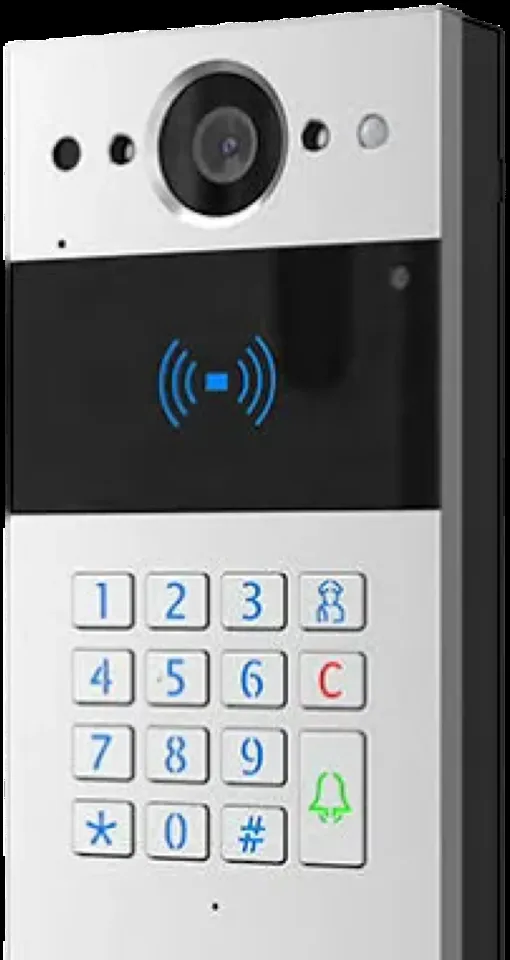
South Williamsburg, Brooklyn door buzzer repair reference: door-entry equipment from the AESS job library
AESS job-library photo, not taken in South Williamsburg. Before any part like this is changed on a South Williamsburg door, we note what the existing hardware does with the power off, so the replacement keeps the same behavior.
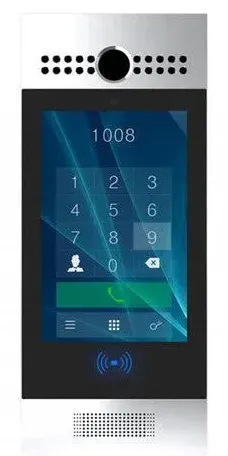
South Williamsburg, Brooklyn door buzzer repair reference: intercom system component from the AESS job library
AESS job-library photo, not taken in South Williamsburg. In walk-up condos and row houses alike, we test each part of the chain in order: power, door hardware, wiring, then settings.
South Williamsburg, Brooklyn door buzzer repair reference: buzzer and door hardware from the AESS job library
AESS job-library photo, not taken in South Williamsburg. Every repair ends the same way: the door is closed gently and pulled from the sidewalk side to confirm it has really latched.
FAQ

South Williamsburg Door Buzzer Repair FAQ

How much does a door buzzer repair in South Williamsburg cost?

Repair visits are $195 an hour with a three-hour minimum ($585). Any part is priced in writing before it goes on the door, and looking at your photos and texting back is free.

Do you repair buzzer systems you did not install?

Yes. We repair row-house bells, walk-up condo panels, store-building residents' doors and phone-calling panels whoever installed them, at the same Brooklyn rate.

Can you send an insurance certificate to our condo board or managing agent?

Yes. We are licensed and insured in New York State (license #12000287431), and a certificate can go to the board, owner or managing agent before the visit.

How quickly can a technician come out?

Most customers hear back the same day. Many faults are found and fixed on the first visit, often within one to two hours of the technician arriving, because common parts are carried on the van.

What is the fastest way to get started?

Text photos of the panel, an apartment station and the latch edge of the door, with the nearest cross street, to (347) 934-8335, or use the request form on this page.

Full terms — including 50% deposit, the 30-day warranty and optional paid extended warranty, and the late-fee schedule — are set out in the service agreement.

Request a South Williamsburg Buzzer Repair

Tell us the cross street and what happens when someone rings. Prefer to talk? Call (347) 934-8335.

More Door Buzzer Repair near South Williamsburg

Door Buzzer Repair Brooklyn NY · Door Buzzer Repair NYC · Door Buzzer Repair Manhattan NY · Door Buzzer Repair Queens NY · Door Buzzer Repair Bronx NY · Door Buzzer Repair Staten Island NY · Door Buzzer Repair Long Island NY · Door Buzzer Repair Hudson Valley NY · Door Buzzer Repair Nassau County NY · Door Buzzer Repair Suffolk County NY · Door Buzzer Repair Westchester County | 6 Cities Same-Day · Door Buzzer Repair Rockland County NY · Door Buzzer Repair Orange County NY · Door Buzzer Repair Putnam County NY · Door Buzzer Repair Dutchess County NY · Door Buzzer Repair Ulster County NY

Door Buzzer Repair Bath Beach Brooklyn NY · Door Buzzer Repair Bay Ridge Brooklyn NY | Lobby Doors · Door Buzzer Repair Bedford-Stuyvesant Brooklyn NY · Door Buzzer Repair Bensonhurst Brooklyn NY · Door Buzzer Repair Bergen Beach Brooklyn NY · Door Buzzer Repair Beverley Square Brooklyn NY | Porches · Door Buzzer Repair Boerum Hill Brooklyn NY · Door Buzzer Repair Borough Park Brooklyn NY · Door Buzzer Repair Brighton Beach Brooklyn NY · Door Buzzer Repair Brooklyn Chinatown NY | 8th Ave Doors · Door Buzzer Repair Brooklyn Heights NY | Landmark Stoops · Door Buzzer Repair Brooklyn Navy Yard NY | Suite Doors · Door Buzzer Repair Brownsville Brooklyn NY · Door Buzzer Repair Bushwick Brooklyn NY · Door Buzzer Repair Cadman Plaza Brooklyn NY · Door Buzzer Repair Canarsie Brooklyn NY · Door Buzzer Repair Carroll Gardens Brooklyn NY · Door Buzzer Repair City Line Brooklyn NY · Door Buzzer Repair Clinton Hill Brooklyn NY · Door Buzzer Repair Cobble Hill Brooklyn NY · Door Buzzer Repair Columbia Street Waterfront Brooklyn NY · Door Buzzer Repair Coney Island Brooklyn NY · Door Buzzer Repair Crown Heights Brooklyn NY · Door Buzzer Repair Cypress Hills Brooklyn NY

Other services in South Williamsburg

Fire Alarm Installation South Williamsburg Brooklyn NY · Alarm Installation South Williamsburg Brooklyn NY · Intercom Installation South Williamsburg Brooklyn NY · Security Camera Installation South Williamsburg Brooklyn NY · Structured Cabling South Williamsburg Brooklyn NY · Access Control Installation South Williamsburg Brooklyn NY · TV Installation South Williamsburg Brooklyn