One Button per Household · A Release Each Floor Can Press · Written Price Before Ordering · Brooklyn Rate
Door buzzer installation in Mapleton is mostly a job of giving houses built for one family a way to answer the door for two or three. The blocks between 57th and 65th Streets were filled in the 1910s and 1920s, after the Sea Beach line opened in 1915, with one- and two-family brick and clapboard houses, many with porches, and 18th Avenue gained its rows of stores with apartments above around 1931. Today those houses hold an owner downstairs and tenants or relatives upstairs, and new three-story buildings of three to twelve apartments are replacing some of them, the larger ones crossing the line where New York law requires an entry system. Below is how we plan each job and where it sits on our Brooklyn price list.
Reviewed and updated November 11, 2026, against New York's Multiple Dwelling Law §50-a; ButterflyMX's guide to the New York City intercom law; Habitat magazine's February 2024 article on intercom duties; Brick Underground's November 2019 NYC intercom repair guide and its guide to getting a landlord to fix a broken buzzer; four Brownstoner forum threads on three-family intercoms, smart buzzers, double-door strikes and a tenant who refused a new station; Marketproof's new-building permit reports for 1835 51st Street, 5606 18th Avenue, 2001 53rd Street and 986 Dahill Road; Wikipedia's Mapleton and 20th Avenue station entries; Forgotten New York's 2020 Mapleton walk; Brownstoner's 2012 summary of the New York Times Mapleton profile; Allegion's fail-safe and fail-secure guide; the HomeAdvisor and Swiftlane cost guides; and the 2010 ADA Standards. · Abstract Enterprises Security Systems, NYS license #12000287431 · crews dispatched from our Troy Avenue office in Brooklyn

Owner-operated since 2002 · Thousands of jobs completed · Booked within 2 hours
Quick answer: door buzzer installation in Mapleton costs $400 to $900 on our Brooklyn list for an audio buzzer with a new door release on a one-family or two-family house, $700 to $1,800 for a video door station with indoor monitors or phone answering on a two- or three-family house or a small building, and from about $2,500 to past $10,000 for a full entry system with a panel and an answering point for every apartment in a larger building, such as a new eight- or twelve-unit building or a shop-and-apartment building on 18th Avenue. Each price covers the door station, answering stations or app accounts, power supply, strike, cable and labor. It is fixed in writing after we have seen the doorway, with any possible extra named and priced first, such as an old bell pair that might fail its test, a porch door that does not close on its own, or a second entrance that turns out to need its own station. Mapleton is billed at the Brooklyn rate. Send photos of the door and the porch to (347) 934-8335 or on WhatsApp, and we reply with the range that fits, usually within two hours of your message during working hours.
Mapleton is a small neighborhood in southwest Brooklyn, usually drawn from 16th or 17th Avenue east to Dahill Road and from 57th Street south to 65th Street, though a 2012 New York Times profile let it reach as far north as 47th Street and many residents north of 60th Street simply say they live in Borough Park. It belongs to Community Board 11 with Bensonhurst, Bath Beach and Gravesend, and its mail goes to Brooklyn 11204. The land was farms until about 1910. William Sugarman's Alco Building Company began selling "Mapleton Park" lots from 1908, and when the Sea Beach line opened through its open cut in June 1915, with stations at 18th Avenue, 20th Avenue and Bay Parkway, the side streets filled quickly with one- and two-family houses of brick or clapboard, many of them with front porches.
For a buzzer installer, that history explains almost everything about the job. Those houses were built for one household, and the door was answered by whoever was home walking to it. Brownstoner's 2012 summary of the Times profile counted about 27,000 residents, including Chinese and other Asian families, Orthodox Jewish families, Italian Americans, Poles, Latinos, Pakistanis and Russians, and many of the houses now hold more than one household: an owner on the first floor and a tenant upstairs, grown children over parents, or two related families sharing a front door. The bell that came with the house rings a chime in the downstairs hall. Nobody upstairs can open the door without walking down a flight, and the visitor waiting on the porch often cannot tell which household they have reached.
The commercial blocks add a second kind of building. Along 18th Avenue, listing records show three-story, three-apartment buildings from 1931 at 5001 and 6417 18th Avenue, the familiar pattern of a store across the ground floor and a narrow residential door beside it leading straight to the stair. Those apartments need a buzzer that calls each one and releases a street door the store never touches. And the newest buildings bring a third: Marketproof's permit reports show an eight-unit, three-story building filed in September 2025 at 1835 51st Street, a twelve-unit mixed-use building filed in 2021 at 5606 18th Avenue, and three-unit buildings filed at 986 Dahill Road in May 2025 and at 2001 53rd Street in March 2026, each replacing an older house or low-rise. Some of those new buildings are large enough that New York law, not the owner's preference, decides what the entry system must do.

Where this page applies. It covers Mapleton from 16th Avenue to Dahill Road and from 57th Street to 65th Street, including the blocks north of 60th Street that many residents call Borough Park, the 18th Avenue, 20th Avenue and Bay Parkway shopping stretches, and the side streets near Gravesend Park and the Sea Beach cut. For the rest of the borough see our door buzzer installation in Brooklyn page, and for the whole city our NYC door buzzer installation page.
Mapleton calls that start with "we need a buzzer" sort into three groups once we have seen the house. The first is a house with only a doorbell: a button on the porch post or the door frame and a chime in the front hall, wired to a small transformer in the cellar. Nothing in it can talk to a visitor or release the door, so the job is a first entry system, even though there is wire in the walls. The second is a house or building with a real intercom that has partly failed: one station dead, a strike that hums but no longer opens, a power supply that cooks in a hot cellar. The third is a building with a system that works but no longer fits: a second household added upstairs, a basement made into a home office, a store whose back door now needs its own station.
Photos usually tell us which group a house belongs to. Send a picture of the front door from the sidewalk, a close-up of whatever button or plate is beside it, and the chime or station inside, to (347) 934-8335 or on WhatsApp. If an existing system has to be tested in person, that is the $250 service call booked online, and the $250 goes toward whichever path you choose. Where a repair and a replacement are both reasonable, you get both prices and a plain recommendation, and we will not sell a new system to a building that one part would fix.
Brick Underground's NYC intercom repair guide explains why testing comes first. Daniel Vasquez of Paragon Security and Locksmith told the site, "It's all in the wire connections," and the guide places most trouble at the base unit, an apartment station, the door strike or the power supply rather than in the wiring inside walls. This page is about installing, extending and replacing; straight repairs are handled on our repair pages.
Every service below is priced from the same Brooklyn door buzzer list. The number of households sets the size of the system, and the door decides what release it can take. In Mapleton, three more things decide much of the labor: whether the house has a porch between the sidewalk and the front door, whether the upstairs household has its own side or rear entrance, and whether the building is old enough to have a cellar route for cable or new enough that the walls are still open.
A two-button station at the porch or front door, an answering station with a release key on each household's floor, and an electric strike in the street door, replacing a bell that only rang a chime downstairs.
Button panels sized for every household, with each button ringing one apartment only, for houses that gained a third floor apartment, a basement unit or a rear apartment over the years.
A second door station at the driveway or back door for an upstairs household that has its own entrance, wired so its button and release never reach the owner's door.
A panel at the residential door beside the storefront that calls only the apartments upstairs, on a power supply the landlord controls, kept apart from anything the store installs.
Talk-and-release systems planned with the developer or general contractor for new three-, eight- and twelve-unit buildings, with cable pulled while the walls are open and the administrator account handed to the owner.
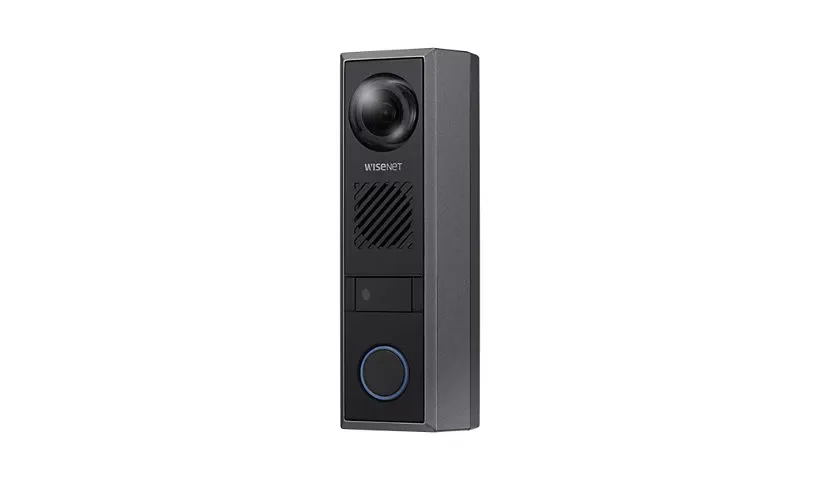
Video door stations answered on wall monitors, on residents' phones or both, for top-floor households that cannot see the porch and for owners who are often out.
Button or directory panels with a station or app account for every apartment in the small apartment buildings and co-ops on Mapleton blocks that have them.
Electric strikes fitted to wood and steel frames, closers set so a porch or street door relatches on its own, and battery-backed power on a circuit the owner controls.
Buzzers for stores, offices and practices on 18th Avenue, 20th Avenue, Bay Parkway and 16th Avenue, answered at a counter or on a phone and kept separate from the apartments above.

Six kinds of building account for nearly every buzzer we plan in Mapleton. They differ in how many households share a door, which doors those households actually use, how cable can travel from the street to each apartment, and who signs for the work. Each one has a mistake we see when the job is rushed.
Brick or clapboard houses near the three Sea Beach stations, many with a front porch, still lived in by one family across two floors.
The most common Mapleton house: an owner or one household on the first floor, a second household upstairs, sharing a front door or using a separate side door.
Houses that gained an attic apartment, a rear unit or a legal basement apartment, with three or more households and often two entrances.
Three-story buildings on 18th Avenue such as 5001 and 6417 18th Avenue, with three apartments above a store and a narrow street door beside the shopfront.
Three-story buildings filed since 2021, from three units at 986 Dahill Road and 2001 53rd Street to eight at 1835 51st Street and twelve at 5606 18th Avenue.
The walk-ups and small co-ops found on some Mapleton blocks among the houses, with a shared vestibule, a stair and an old intercom riser.
A Mapleton house kept as one home needs only one button, so owners often think of the job as a doorbell. The useful part is upstairs. A family in a back kitchen cannot always hear a chime in the front hall, and a parent upstairs should not have to come down to find out who rang.
Our usual plan is one station by the kitchen, one on the second-floor landing, and phone answering for anyone who wants it. The porch adds a decision most rowhouse neighborhoods never face: whether the door station belongs at the top of the porch steps, at the front door behind the porch, or on a front gate if the yard is fenced. The release goes on whichever door actually locks.
The most common Mapleton buzzer job is a two-family house where the owner's household lives on one floor and a tenant or relatives live on the other. Each household needs its own button at the door, its own answering station, and the ability to talk to its own visitors and release the street door without involving the other. That sounds simple, and it is, once one question is settled: which door does the upstairs household come through?
In some houses both households share the front door and a small hall, with the upstairs apartment's door at the top of the stair. Then one two-button station at the front door and a strike on that door does the job, and the owner's own apartment door inside the hall stays on a key. In others, the upstairs household has its own door at the side of the house or up a rear stair, and the front door belongs to the owner alone. Then each entrance gets its own station, and the cable from the side door has to reach the upstairs apartment without passing through the owner's rooms, usually through the cellar and up an outside wall or a closet.
The mistake we see most is a battery video doorbell for each household, bought separately and stuck beside the same door. Each household then sees a picture on its phone, but neither can release the door, so someone walks down anyway and the door ends up on the latch for deliveries. A proper two-button system costs less than many owners expect, and it is the thing that actually lets the upstairs household answer its own door.
Mapleton's larger houses have often gained households over time: an apartment made in the attic, a rear unit, a basement converted into a legal apartment. By the time an owner calls us, the house may have three or four households and two or three doors, and the old bell buttons on the front no longer match anyone. The right panel has one live button for each household living there now, and each button rings that household only.
On 18th Avenue, a typical building from around 1931 has a store across the ground floor and a narrow door to one side leading straight up a stair to the apartments. Listing records describe 5001 18th Avenue and 6417 18th Avenue this way, each with three apartments. The apartments need a panel at that narrow door that calls each of them and releases it, and the panel has to be visible and clearly labeled beside a storefront that draws far more visitors than the apartments do.
The store may need its own buzzer too, usually at a back or side door for deliveries, and the two systems must never be able to release each other's doors. We keep them as separate systems, each on its own power supply, with labels in the cellar saying which is which.
Mapleton's newest buildings are three stories tall and, from the permit reports, range from three units to twelve. For an entry system, the best moment in a building's life is while the walls are open, and the worst is the week before the certificate of occupancy, when the developer discovers the panel was never ordered. We work with the developer, the architect or the general contractor to decide the system early, mark the station locations in each apartment, pull cable to each one during rough-in, and leave a spare pair for the future.
Where a Mapleton block has a small apartment building or co-op instead of houses, it usually has a proper vestibule, a stair hall and an apartment door on each landing. Buildings like these usually have an audio system already, with a metal button plate at the door and handsets in the apartments, and they are often the best candidates for reusing old wire. The pairs run up the stair hall in a single path, and a modern two-wire system can often use them once each pair is tested.

These notes describe how our technicians approach a buzzer installation in a Mapleton house or small building. They are our standard practice, not a story about any one address.
Find the door each household really uses. The first walk is outside. Many Mapleton houses have a front door behind a porch, a side door off a driveway or a path, and sometimes a rear stair. The technician asks each household which one its visitors come to, which one couriers use, and which one the household itself uses when it comes home. If the upstairs family's guests always go to the side door, that is where their button belongs.
Then find the chime. Inside, the technician looks for the existing doorbell chime, usually high on a wall in the front hall, and follows its wire. The chime tells us where the porch button's pair goes, and the transformer in the cellar tells us whether it is a plain doorbell circuit or part of an older intercom. A plain doorbell pair cannot carry an intercom's audio as it is, but if it is a sound pair running from the porch to the cellar, it may be reusable for a two-wire door station once tested. The technician also checks the porch door and the front door: does each one close and latch on its own, is the frame wood or steel, and is there glass beside the lock?
Then find the meter. Last, the technician notes where the new power supply can go and which electric meter feeds that outlet. In a two-family house the owner and the tenant often have separate meters. A buzzer powered from the tenant's side goes dead when the tenant's power is shut off or a breaker trips upstairs, so the supply goes on the owner's or the house's circuit, and if no suitable outlet exists, the written price says a licensed electrician will add one.
Everything from that walk goes on the written price: the doors that get stations, the households each button calls, the strike, the closer, the pairs we will reuse and the ones we will replace, the power source and the route each new cable takes. Nothing is discovered on installation day.

Mapleton has been rebuilding one lot at a time. Marketproof's reports on new-building permits give a picture of the scale: three-story buildings, about 30 to 35 feet tall, replacing a house or a one-story store. What matters for an entry system is the unit count, because New York's Multiple Dwelling Law draws a line at eight apartments, and Mapleton's new buildings land on both sides of it.
| Address | Filed | What was filed | What it replaces | Side of the line |
|---|---|---|---|---|
| 5606 18th Avenue | September 14, 2021 | Three stories, 12 units, mixed-use with commercial space | A one-story low-rise built in 1931 | Above: talk-and-release required |
| 1835 51st Street | September 17, 2025 | Three stories, 8 units, 35 feet | A three-floor building recorded as a 2005 townhouse | On the line: eight is enough |
| 986 Dahill Road | May 22, 2025 | Three stories, 3 units, 35 feet | A two-story house built in 1920 | Below: owner's choice |
| 2001 53rd Street | March 13, 2026 | Three stories, 3 units, 34 feet | A three-floor townhouse built in 1925 | Below: owner's choice |
Some of these addresses sit north of 57th Street, in the wider Mapleton that Marketproof uses. The permit reports do not say whether or when each building is finished, and nothing here is a statement about any of those owners; the table simply shows the range of new buildings being filed.
At eight apartments and above, the law decides the basics. Multiple Dwelling Law §50-a requires every class A multiple dwelling built or converted after January 1, 1968 with eight or more apartments to have a self-locking main entrance door and an intercommunication system that lets residents talk with a visitor at that entrance and release the door from their apartments. ButterflyMX's guide to the New York City rule describes it the same way: the system must "let residents communicate with visitors at the main entrance and release the entrance door remotely." A new eight-unit or twelve-unit Mapleton building is squarely inside that rule. The developer cannot treat the intercom as an optional finish, and a building whose system is missing or dead when tenants move in starts life with a reportable condition.
Below eight, the owner chooses, and should still choose well. The same guide says class A buildings with fewer than eight units are "Not generally under this rule." A three-unit building on Dahill Road or 53rd Street is not required by §50-a to have talk and release. But a three-unit building with no way to answer the door is a building where tenants prop the street door for deliveries and walk down to let in guests, and Habitat magazine's February 2024 article noted that courts treat a failure to maintain an intercom as a breach of the warranty of habitability. Once a system is there, keeping it working is part of running the building.
A new twelve-unit building with stores on the ground floor, like the one filed at 5606 18th Avenue, also needs the commercial and residential doors kept separate from day one. The residential panel should call only apartments; any store or office station should call only that business and release only its door; and the power supplies should be on the owner's circuit, not on a commercial tenant's meter that may be shut off when the space is between tenants.

Most Mapleton houses have never had a buzzer that opens the door. They have a doorbell, and the household walks to the door. In a house where one family lives across two floors, that is often fine. In a house with a second household upstairs, it means the tenant either comes down every time a guest arrives, or leaves the street door unlocked, or does what Brooklyn renters have done for generations and drops a key from the window. Brownstoner's 2007 thread on buzzers for brownstone double doors captured all three habits. One resident asked, "You don't want to just toss the key out the window?" and noted it was common where they lived. Another said, "We chose not to do the buzzer option for safety reasons," preferring that residents open the door in person.
Both are reasonable instincts, and neither is a reason to skip a proper system in a two-family house. A key thrown from a window can be picked up by anyone, a door left on the latch is open to every visitor, and walking down only works while the person walking down is able and at home. A door station with two-way voice or video lets each household see or hear who is there before deciding anything, and the release opens the door for the length of time it takes to push it, then the door locks again behind the visitor.
The safety question is really about how the system is used, and we plan for that. Each household gets its own button, so nobody is buzzing in a stranger who rang the wrong floor. Video lets a household see the porch, and an audio station still lets them speak to the caller first. The release time is short, so the door is not left unlatched for long. And the closer is set so that the door shuts and latches on its own after every visitor, because a release is pointless on a door that does not relatch.
The porches that came with so many Mapleton houses change the placement decision. On an open porch, the front door is the door that locks, and the station goes beside it, out of the rain, at a height a visitor faces naturally. On a porch that was closed in with windows long ago, the porch door has become the outer door, and the station usually belongs at the porch door, with the release on it, while the original front door behind it stays on a key for the owner's household. If the house has a fenced yard and a gate that stays locked, the station may need to go at the gate, which brings its own questions of cable, power and weather.
Almost every Mapleton house has a doorbell pair from the porch to a chime and a transformer. It was never meant for voice or video, and a plain chime circuit cannot be turned into an intercom by changing the button. What the pair can sometimes do is carry a modern two-wire system, which puts voice, video, power and the release signal on one pair. Aiphone describes its GT Series as working for "new builds and retrofit projects" with the advantage of "using existing wire and infrastructure," and Aiphone's upgrade guidance puts it simply: "If the existing wires are in good condition, they can be reused." So the pair gets tested end to end before anyone promises it will work, and any replacement cable is named on the price.
A system that needs a station in every apartment needs entry to every apartment, and in any building with tenants that is where schedules slip. A Brownstoner thread from September 2009 described what can happen. A Park Slope landlord had replaced the intercoms in 11 of a building's 12 apartments, but the twelfth tenant refused to let the electrician in. Three months later the job was still unfinished, and tenants had started propping the lobby door open for deliveries, which the poster called "not safe." Asked whether the electrician could simply work around the missing unit, another forum member replied, "Yes, the one station can just be bypassed."
That reply is correct about the wiring, and it points to how we plan the work in a Mapleton three- or four-family or a small building. The common parts go in first: the door station, the strike, the closer, the power supply and the cable to each apartment's door. Each apartment station is then connected and tested as the tenant is home. A unit that cannot be reached on the day is left out of the circuit cleanly, so the rest of the building has a working system and the street door locks normally, and the missing station is installed on a second visit. Nobody props the door in the meantime, and nobody waits three months for the building to work.
Getting the access right is the owner's part, and we help. In the same thread, one member pointed out that leases usually give the landlord access for necessary repairs, and cited the city's housing maintenance code on access. We cannot give legal advice on a refusing tenant, but we can make the request easy to say yes to.

Mapleton's buildings run from single-family houses that no entry rule touches to new buildings that the intercom law covers in full, so the rules land differently from door to door. The eight-apartment rule in Multiple Dwelling Law §50-a is set out in the new-buildings section above; older buildings of that size must also install talk and release when tenants occupying a majority of the apartments ask in writing, with work started within 90 days and finished within six months. The rest applies more widely. None of it is legal advice, and an owner with a violation or a tenant dispute should speak to a lawyer or the city.
A working intercom is part of habitability. Habitat magazine's February 2024 article, drawing on a New York Times "Ask Real Estate" column, reported that the housing maintenance code requires a functioning intercom and that courts have found failing to maintain one breaches the warranty of habitability. Nancy Kourland of the Lasser Law Group put it plainly in that piece: "As a result, the co-op has a legal obligation to repair or replace the intercom." The article listed the steps a resident can take: a written demand, a complaint to 311 and an HP proceeding in Housing Court.
An unlocked door can become the landlord's problem. Brick Underground reported that the New York Attorney General's tenants' rights guide says a landlord could be held liable if a crime occurs because a broken buzzer left the door unlocked. For a Mapleton owner renting the upstairs of a two-family, that is a reason to fix or replace a failed release quickly, not a reason to remove it.
Everyone must be able to leave. Any door with a buzzer still has to open from the inside without a key, a code or special knowledge. With an electric strike that is automatic; Allegion's guide explains that with a strike "you can exit by turning the lever" whether the strike is fail-safe or fail-secure. Magnetic locks hold the whole door shut, so the building code's sensor-release provisions call for a sensor on the egress side, a manual release marked "PUSH TO EXIT" 40 to 48 inches above the floor within five feet of the door, release on loss of power or fire alarm activation, and UL 294 listed hardware. On a Mapleton house or small building we use strikes almost without exception.
Buttons within reach. On public and commercial doors, buttons, keypads and readers stay within the 2010 ADA Standards' reach range: no higher than 48 inches and no lower than 15 inches above the floor for a forward reach. We use the same range on houses, because a station an older resident or a child cannot reach is a station that does not get used.
Mapleton's businesses sit along a handful of avenues that cross its grid of numbered streets, most of them in buildings where apartments, offices or other businesses share the walls. Their doors need to stay locked, open for the right visitor and never interfere with the apartments upstairs.
The neighborhood's main shopping street, lined with stores in one-story buildings and three-story shop-and-apartment buildings from about 1931, some now being replaced with taller mixed-use buildings.
The avenue of the 20th Avenue Sea Beach station between 63rd and 64th Streets, whose platforms still look much as they did in 1915, and of Franklin Delano Roosevelt High School near 59th Street.
The avenue at the neighborhood's southeast side, crossing the Sea Beach cut at the Bay Parkway station and running toward Washington Cemetery's main entrance near McDonald Avenue.
The western edge, where the 66th Precinct station house stands at 5822 16th Avenue and the Maple Lanes bowling alley operated at 60th Street from 1960 until its sale in 2012.
The eastern edge along the F line, where Community Board 11's boundary runs and where Marketproof lists a new-building filing at 1490 McDonald Avenue.
Where an office, practice or small business takes the ground floor of a house or new building on a numbered street, it shares a front or side door with the households above.
For a store on 18th Avenue with apartments above, the usual job is a buzzer at the store's back or side door, answered at the counter or on the owner's phone, so deliveries can be let in without the door being wedged open. The store's system gets its own power supply on the store's own circuit and its own station, and it has no wire in common with the residential panel at the apartments' door, so nobody at the counter can release the tenants' door and no tenant can open the store.
If a business also wants a camera on its entrance or delivery door, it can be installed on the same visit and priced with the buzzer; customers who combine the two typically save $200 to $400 in labor.

Questions Mapleton owners, developers, tenants and businesses bring to us, together with ones raised in Brownstoner forum threads, Brick Underground and Habitat magazine, answered for the houses and buildings here.
Usually the porch door, because it is now the house's outer door and the one a visitor reaches first. The station goes beside the porch door, the strike goes in the porch door's frame, and the original front door behind it stays on a key. That keeps the release on the door a stranger would try, and it leaves the owner's household with a second locked door between the porch and the rooms.
If the porch door is a light storm door whose thin frame will not hold a strike, the release stays on the original front door instead. We look at both frames before deciding.
The owner's or the house's, never the tenant's. A buzzer whose power supply is plugged into the tenant's outlet goes dead when her breaker trips, when she is between leases and the account is closed, or when she is away and switches things off. The supply belongs on a circuit the owner controls, usually in the cellar near the owner's panel.
On our reading, yes. Multiple Dwelling Law §50-a applies to class A multiple dwellings of eight or more apartments built or converted after January 1, 1968, and a new building is built after that date. The main entrance door must be self-locking, and the system must let residents talk with a visitor at that door and release it from their apartments. Your architect or expediter should confirm how the building is classified, and we work from that.
The law sets a minimum, not a design. It does not require video or phone answering. It does mean every apartment needs an answering point that can talk and release, so the cable or the network to each apartment has to be planned during construction, not after the tenants arrive.
A three-button audio station at the main door, an answering station with a release key in each apartment, a fail-secure strike in the frame, a closer that shuts and latches the door, and a battery-backed power supply on the house circuit. That is the system that lets each household let in its own guests, and it sits at the low end of our Brooklyn list for a small building.
If the budget allows, run cable to each apartment that can carry video later, even if you install audio now. The cable costs little with the walls open, and it lets a future owner upgrade without opening finished walls.
Ask four things in writing: which system will be installed, who supplies and programs it, who tests every apartment from the street door, and who receives the wiring record and any administrator login at the end. An electrician can pull cable very well and still leave a building with a panel nobody has programmed or a strike that was never wired. If the answers are vague, the entry system will be the last unfinished item on the punch list.
A two-family house is far below the eight-apartment line in §50-a, so no part of that law requires one, and we are not aware of a rule that makes an owner add a talk-and-release system to a two-family. The practical case is strong anyway. Without one, every guest and delivery means the tenant walking down or the door being left unlocked, and Brick Underground reported that a landlord could be held liable if a crime occurs because a broken buzzer left a door unlocked.
It is usually the best time. With the apartment empty, the technician can route cable, mount the station and test it without arranging access around someone's work schedule, and any cable that has to run through the upstairs rooms can go in before the new tenant's furniture does. The owner's floor still needs one visit for its own station.
From inside your own space. The power supply mounts on a wall or in a ceiling near the back door, on an outlet on your store's circuit, and the cable runs along the wall or above a hung ceiling to the station at the door and to the answering point at your counter. No cellar is needed. If there is no outlet near the back door, an electrician adds one, which is on the written price.
Yes, prepare it, but do not install the station. Run a conduit with a pull string from a ceiling or utility space to the commercial door's frame, order the door and frame with a strike preparation, and leave a labeled outlet location for a power supply on the commercial meter. When a tenant arrives, their buzzer goes in in a few hours without cutting into a finished storefront.
Do not connect that door to the residential panel, even temporarily.

We quote a reliable non-branded system by default and install a named brand when an owner asks for one; the intercom brands we work with include Aiphone, ButterflyMX, 2N, Akuvox, Comelit and DoorBird. These are the kinds of equipment that come up most in Mapleton houses and buildings, and where each one fits.
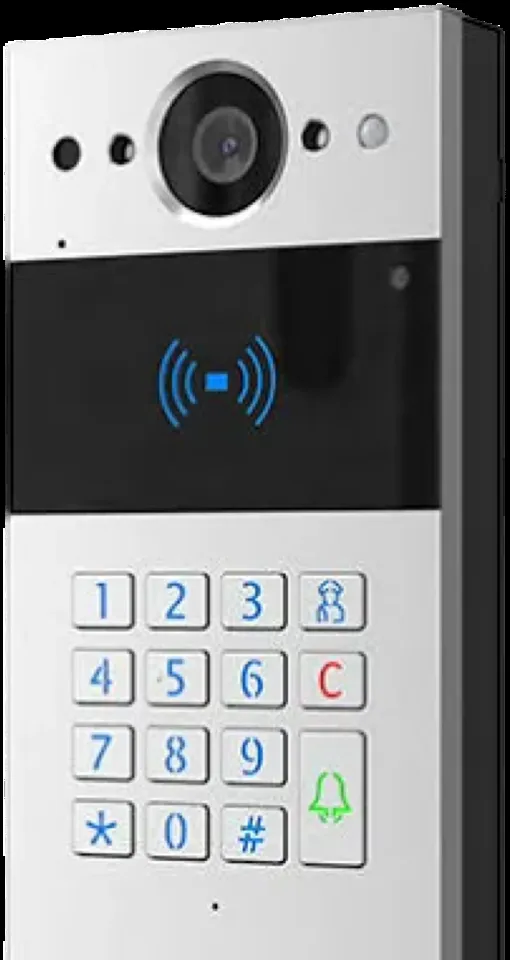
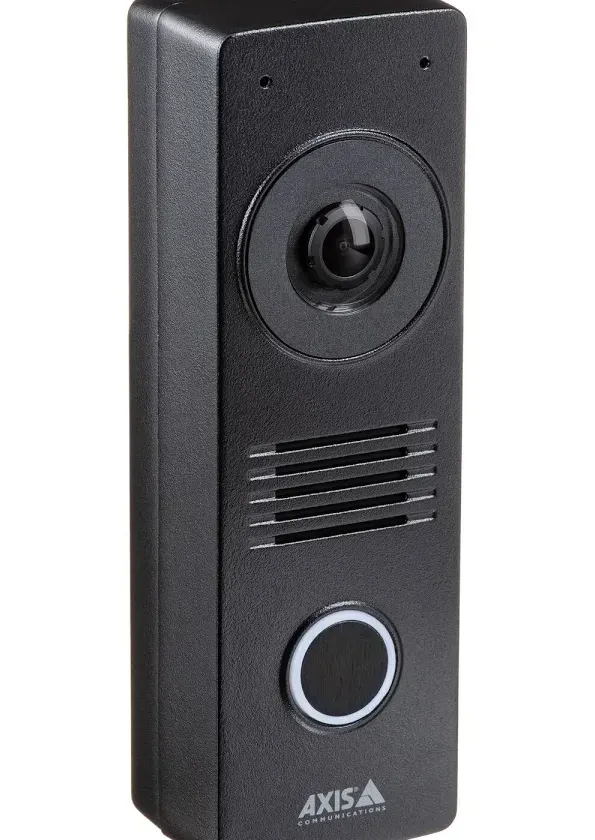
Narrow audio or video stations sized for a door trim or a porch post, for one- and two-family houses where each household gets its own button.
Compact panels with a button per household for three- and four-family houses and 1931 shop-and-apartment buildings on 18th Avenue.
Door stations and indoor monitors that carry voice, video, power and release on one pair, often on the porch-to-cellar doorbell pair once it tests sound.
Matching stations for side, rear and driveway doors, each calling only the household that uses that door and releasing only that door.
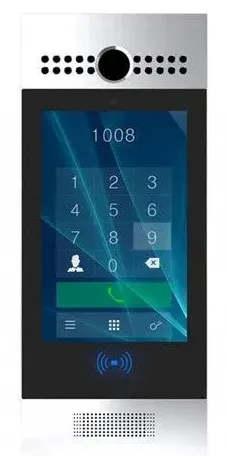
Panels where visitors enter an apartment number or scroll a list, for new eight- and twelve-unit buildings and small co-ops.
Stations that call residents' phones, alone or beside wall monitors, for households often out at work and for owners who manage from elsewhere.
Fail-secure strikes for wood and steel frames, narrow strikes for storefront aluminum, and electrified lock bodies where a frame cannot take a strike.
Closers sized for porch doors, heavy street doors and new steel entrance doors, with hinge and latch work so the door relatches after every visitor.
Battery-backed low-voltage supplies on an owner-controlled circuit, mounted in the cellar or utility room and labeled, so no tenant's breaker can silence the house.
| What matters | Audio station | Two-wire video | Phone or app answering |
|---|---|---|---|
| Typical Mapleton fit | Two-family houses where each household is home much of the day; new three-unit buildings on a budget | Houses with an older relative upstairs, porch houses where the door cannot be seen from inside, 18th Avenue apartments | Households out at work, owners who manage from elsewhere, new buildings with a managing agent |
| How people answer | Wall station with a release key | Wall monitor, often with a phone option | Phone, sometimes with a wall station as backup |
| Cable through the house | A pair to each station | A pair to each monitor, sometimes the old doorbell pair | Door power and release only, plus internet or cellular at the door |
| Works when the internet is down | Yes | Yes, on the wired monitors | Only on a wired backup station |
| When a household changes | New label; same station | New label; same monitor | New account; old one removed |
| Monthly fees | None | None unless an app service charges | Often per unit or per door |
| Brooklyn list range | $400–$900 for a house; from about $2,500 for a building | $700–$1,800 for a house or small building; from about $2,500 for a building | $700–$1,800 for a house or small building; from about $2,500 for a building |
Owners ask about the national names, so here is a straight comparison. Ring sells video doorbells and cameras that a household installs itself; a Ring doorbell can suit a one-family house that only wants to see the porch, but it has no door release and cannot give the upstairs household of a two-family its own button and its own way to open the door. SimpliSafe sells self-installed alarm systems, and ADT sells professionally installed and monitored security, chiefly alarms and cameras; neither is built around a door station that calls each household and releases a street door. A Mapleton house needs a station where visitors stand, a strike in the frame, a working closer and owner-side power, which is on-site work for a licensed installer.

Search for buzzer installation and you get confident summaries assembled from national cost guides, vendor blogs and old forum threads. Some of it does not fit Mapleton. Below are seven common claims, where they come from and what the field shows. We have not quoted any AI-generated answer word for word; the claims come from the published guides and threads those answers draw on.
Summaries of the New York City rule often drop its limits. Brick Underground's guide and ButterflyMX's guide both tie the requirement to buildings of at least eight apartments, and Multiple Dwelling Law §50-a applies it to class A buildings built or converted after January 1, 1968, with older ones required to install when a majority of tenants ask in writing.
In Mapleton that limit decides most cases. The one- and two-family houses that fill the side streets, the three-apartment buildings on 18th Avenue and new three-unit buildings like those filed at 986 Dahill Road and 2001 53rd Street are all below eight. A new eight-unit building like the one filed at 1835 51st Street, or the twelve-unit building at 5606 18th Avenue, is above it.
Below the line, an entry system is still the practical answer to propped doors and keys thrown from windows; it just is not a legal requirement.
Brick Underground's 2014 guide repeated a New York Times figure of around $500 per apartment for video intercoms, and in the same piece a security company representative estimated repairs or installation at $2,000 to $50,000 depending on the work.
The Times figure was about large buildings, where the cost of a lobby panel is spread over many apartments. A Mapleton two-family has one door station, one strike, one closer and one power supply shared by two households, so a per-apartment number from a large building says little about it. On our Brooklyn list, a video door station with monitors or phone answering for a house or small building falls in the $700 to $1,800 range.
The useful question is what the door needs, not the cost per apartment.
Swiftlane's cost guide gives "$1,000 to $5,000 or more per entry door for modern IP or video systems," and HomeAdvisor's guide puts the national average installation at about $2,500 within a range of $1,500 to $15,000.
Those figures describe networked lobby panels and whole-house systems across the country. An audio buzzer with a new release on a Mapleton one- or two-family house sits at $400 to $900 on our Brooklyn list, well below that per-door figure. The building range, from about $2,500 to past $10,000, is where a new eight- or twelve-unit building with a directory panel and a station or app account in every apartment usually lands.
National averages also miss what moves a Mapleton price: the old doorbell pair, a separate side door, and whether the walls are still open.
Some vendor material leads with hardware prices and mentions subscriptions later, if at all.
Swiftlane's own guide says software subscriptions "commonly add $5 to $15 per unit per month, or $30 to $100 per door per month." On a new twelve-unit Mapleton building at $5 to $15 a unit, that is $60 to $180 a month, every month, for as long as the service runs. On a two-family house it is smaller but still permanent.
A wired audio or two-wire video system has no monthly fee at all, and that is the default we quote. Where an owner wants app answering, we name any subscription, who pays it and who owns the account on the written price.
A Brownstoner reply to a three-family owner explained that Wi-Fi relays can be added to existing systems at the latch contacts, matched to the system's voltage, and warned that "the hard part will be programming the system to your smart phones."
The bigger problem in Mapleton comes first: a relay can only trigger a release that exists. Most of the houses here have a doorbell and a chime, not a door release, so there is nothing for a relay to operate. A relay also adds no button for a second household, no talk-back and no closer.
Where a house has only a doorbell, a relay is the last piece of a real system, not a substitute for one.
Kits are sold online, and forum threads swap wiring diagrams. The same Brownstoner thread drew the opposite answer from a home inspector: "Hardwired systems must be installed by a low voltage electrician."
The truth sits between the two. A battery doorbell that only rings a chime is a homeowner project. A system that releases a street door shared by two or more households, draws power from a house circuit and puts cable through a cellar and walls is low-voltage work for a licensed installer, and any new 120-volt outlet is work for a licensed electrician. We do the low-voltage part under NYS license #12000287431, and the price tells you if an electrician is needed.
Brick Underground's repair guide gives the same advice from the other side: do not work on the electrical wiring yourself.
Brick Underground quoted Daniel Vasquez estimating that a five-apartment building takes about a day, and Pete Carmello estimating about two days for 100 units.
The installation day is often that short. What takes longer is everything around it: entry to every apartment, a landlord's approval, an electrician's outlet, or a new building's walls and doors. The Brownstoner landlord whose twelfth tenant refused the electrician was still waiting three months later.
We give a realistic schedule with the written price, including everything that has to happen before the installation days.
Send a photo of the front door and the porch from the sidewalk, a close-up of the button or plate beside the door, the chime or station inside, and the side door if a household uses one, with the address and how many households live there, to (347) 934-8335 or on WhatsApp. A technician will tell you where a station can go, which door should get the release, and whether a repair, an extension or a new system makes more sense, before anyone visits. Or use the request form and we will call you back.
Photos of every entrance, the existing bell or chime and the cellar, plus a list of the households, tenants or businesses the door serves and which door each one uses.
We count the apartments and note when the building was built or converted, and agree whether the job is a legal talk-and-release system or the owner's choice.
The owner, managing agent, developer or board signs, and entry to each apartment is scheduled with someone present, so no apartment or street door is left unlocked.
Each entrance is opened and closed to check that it relatches, the frame is checked for a strike, surviving doorbell pairs are tested and the outlet is traced to its meter.
Door station, answering stations or app accounts, strike, closer, power, cable route and labor on one written price, with every possible add-on named before anything is ordered.
The closer is set so the door relatches, the strike goes into the frame, and the battery-backed supply goes on an owner-controlled circuit, with an electrician for any 120-volt work.
Cable is reused or run along the cellar and the least visible interior route, stations go in for each household, and every button, pair and station is labeled.
Each household is called from the street, talks and releases while the door is watched relocking; the owner gets the wiring record, the test sheet and resident instructions.

The 6.38-acre park on 18th Avenue between 56th and 57th Streets, opened in 1917 and renovated in 2016, with ball fields, handball and basketball courts at the neighborhood's northern edge.
The Sea Beach line's open-cut station between 63rd and 64th Streets, opened on June 22, 1915, one of the three stations that drew the first houses to Mapleton.
The cemetery of roughly 100 acres in use since the mid-1850s, split into sections by 20th and 21st Avenues, Bay Parkway and McDonald Avenue, with its main entrance on Bay Parkway.
The public high school on 20th Avenue near 59th Street, surrounded by blocks of one- and two-family houses.
The Brooklyn Public Library branch at 1702 60th Street, in its building since 1955 and closed for a renovation of its roof, facade, heating and safety systems.
The elementary school at 18th Avenue and 60th Street, in the middle of the neighborhood's main shopping street.
We also serve Bensonhurst, Bath Beach and Dyker Heights at the same Brooklyn rate, along with Borough Park, Kensington and Midwood to the north and east. See our door buzzer installation in Brooklyn page for the whole borough.
Mapleton is billed at our Brooklyn rate. Final pricing follows a look at the doorway, because the number of households, which doors they use, whether the old doorbell pair survives its test, the doors themselves and, on a new building, how far construction has progressed drive the total far more than the brand on the panel.
| Job | Typical Mapleton building | Brooklyn range |
|---|---|---|
| Audio buzzer or replacement with electric strike release, existing wiring reused where it tests well | One-family house, two-family house sharing a front door, a store's back door | $400–$900 |
| Video door station with indoor monitors or smartphone door release | Two- or three-family house, porch house with a side entrance, 1931 shop-and-apartment building | $700–$1,800 |
| Directory or button panel with every unit wired or on app answering, audio or video by unit count, optional fob integration | New eight- or twelve-unit building, small co-op, larger mixed-use building on 18th Avenue | $2,500–$10,000+ |
| Service call booked online | Diagnosis of an existing system before deciding to repair or replace | $250, applied toward the work |
| Monthly fee on a wired system | Any house or building choosing the no-subscription option | $0 |
| Buzzer and entrance camera on the same visit | Front halls, new building entrances and store delivery doors | Typically saves $200–$400 in labor |
What moves a Mapleton job within its range is predictable. First, households and doors: a two-family sharing one front door needs one two-button station, while a house whose upstairs tenant uses a side door needs a second station and a second strike. Then the wire: a sound doorbell pair from the porch to the cellar keeps a job near the bottom of its range, and a new cable from a side door up an outside wall pushes it up. Then the doors: a porch door that will not close on its own, a frame too thin for a strike, a new closer. On a new building, open walls lower the labor and a late start raises it. Anything that depends on a test, such as an old pair that might fail or a frame that might need reinforcing, is named on the quote with its price before you approve.
Full terms — including 50% deposit, one-year parts-only warranty on AESS-supplied products, and the late-fee schedule — are set out in the service agreement.Tell us the address, how many households live behind the door and which doors they use, what bell or system is there now, and, for a new building, how many apartments and how far construction has gone, and we will tell you which of the three Brooklyn ranges fits and what would move it. Call or text (347) 934-8335, send photos on WhatsApp, or fill in the form.
Three typical Mapleton jobs, each placed inside the matching range on our Brooklyn list. The exact figure comes from the walkthrough.
A two-button audio station at the door visitors actually use, an answering station with a release key on each household's floor, a fail-secure strike in the frame, a closer set to relatch and a battery-backed power supply on the owner's circuit in the cellar.
A slim video door station, monitors or phone answering for each household, a second station at a side door where one household uses it, the old doorbell pair tested and reused where sound, a strike chosen for each door and cable run along the cellar.
A button, directory or code panel at each entrance residents use, wall stations, app answering or both for every apartment, cable pulled during rough-in, strike or approved lock, owner-controlled power and a handover of every login and record, rising toward $10,000 or more with unit count, doors and cable work.
Bring your own equipment. If you have already bought a door station, video kit or intercom set, we can install it as labor-only work, quoted flat once we have seen the doorway, the doors and the cable path. Tell us the make and model when you write, and we will tell you before the visit whether it can reach every household and release your door.
First buzzers, second-household buttons, side-door stations, multi-floor answering and strikes for original doors. Request a quote
Rough-in planning with developers, 18th Avenue shop-and-apartment panels, store delivery doors and co-op reviews. Call (347) 934-8335
The same list in every neighborhood. Brooklyn door buzzer installation
Every borough's buildings and rules. NYC door buzzer installation
Usually it can stay. The strike goes into the door frame on the latch side, not into the door, so what matters is whether the frame is solid enough to cut and whether the latch lines up with it. We check both at the walkthrough. If the frame is split or the door has sagged, the hinges and frame are repaired or reinforced first, and that is named on the written price.
It can, but we rarely recommend it. A station on a shared landing can be used by anyone on the stair, and the household cannot answer it from inside. The usual place is just inside the apartment's entry door, where the household can answer without opening its own door. If cable is hard to get inside, phone answering with the wired station inside is the better compromise.
Choose a system that can take a second door station, and while the cellar is open for the front-door cable, pull a spare cable to a point near the side door and label it. That adds little to today's job. Next year the side station, its strike and its connection go in without new cable through the house.
Usually straight down through the floor beside the door frame into the cellar below, or along the foundation from the side of the porch if the porch sits on its own footings. Inside the cellar it runs along the joists to the power supply and then up to each household. We choose the route at the walkthrough and put it on the written price.
Before the walls close, which on a three-story building usually means at framing or electrical rough-in. That is when station locations are marked, cable is pulled to each apartment and the entrance door is ordered with a strike preparation. The door station and apartment stations go in near the end, once finishes are done and the entrance door is hung.
Most of it can. The cable, the power supply and the apartment stations can be installed and tested while the door is on order. The door station and the strike wait for the door and frame, and the final test from the sidewalk happens once the door is hung and its closer is set.
Yes. We work across Mapleton, Borough Park, Bensonhurst and the surrounding neighborhoods at the same Brooklyn rate and from the same Brooklyn price list, whatever name your block goes by. Crews are dispatched from our Troy Avenue office in Brooklyn.
Yes. Sealed backup batteries lose capacity with age and eventually need replacing. We write the installation date on the battery and on the wiring record, so the owner knows how old it is, and we check it at any later service visit. Replacing it is a short job on the power supply in the cellar.
Usually the building owner, if it is wired to the landlord's door and frame and is meant to stay with the space. Then each new store tenant gets the station reprogrammed to ring their counter or phone, and nothing is removed when they leave. If a store tenant installs its own system, the lease should say whether it stays or goes when they leave.
Clear access to the front door, any side door, the cellar near the power supply and the spot inside each apartment where a station goes. Someone from each household should be home during their arrival window, or the owner should be present to let the technician in.
On many two-wire systems, yes, by adding a gateway or an indoor monitor with phone forwarding, without new cable to the door. Not every model offers it, so if phone answering is likely later, tell us now and we choose a model that supports it. The wired stations keep working either way, including when the internet is down.
Not much for an electric strike, which goes in the frame on the latch side whichever way the door swings. It matters more for the closer, which has to fit on the hall side without hitting the ceiling or a light, and for any magnetic lock, which we avoid on houses. We check the swing, the hall width and the head height at the walkthrough.
Door Buzzer Installation Brooklyn NY | Brownstones & Condos · Door Buzzer Installation NYC | Apartment & Building Entry · Door Buzzer Installation Manhattan NY | Apartments & Co-ops · Door Buzzer Installation Queens NY | Co-ops & Apartments · Door Buzzer Installation Bronx NY | Co-ops & Apartments · Door Buzzer Installation Staten Island NY | Homes & Apts · Door Buzzer Installation Long Island NY | Nassau & Suffolk · Door Buzzer Installation Hudson Valley NY | Apartments · Door Buzzer Installation Nassau County NY | Homes & Co-ops · Door Buzzer Installation Suffolk County NY | Homes · Door Buzzer Installation Westchester County NY | Co-ops · Door Buzzer Installation Rockland County NY | Homes & Apts · Door Buzzer Installation Orange County NY | Homes & Farms · Door Buzzer Installation Putnam County NY | Lake Homes · Door Buzzer Installation Dutchess County NY | Homes · Door Buzzer Installation Ulster County NY | Kingston
Door Buzzer Installation Bath Beach Brooklyn NY · Door Buzzer Installation Bay Ridge Brooklyn NY · Door Buzzer Installation Bedford-Stuyvesant Brooklyn NY · Door Buzzer Installation Bensonhurst Brooklyn NY · Door Buzzer Installation Bergen Beach Brooklyn NY · Door Buzzer Installation Beverley Square Brooklyn NY · Door Buzzer Installation Boerum Hill Brooklyn NY · Door Buzzer Installation Brooklyn Navy Yard, Brooklyn NY · Door Buzzer Installation Brooklyn NY | Brownstones & Condos · Door Buzzer Installation Brownsville Brooklyn NY · Door Buzzer Installation Bushwick Brooklyn NY · Door Buzzer Installation Cadman Plaza Brooklyn NY · Door Buzzer Installation Canarsie Brooklyn NY · Door Buzzer Installation Carroll Gardens Brooklyn NY · Door Buzzer Installation City Line Brooklyn NY · Door Buzzer Installation Clinton Hill Brooklyn NY · Door Buzzer Installation Cobble Hill Brooklyn NY · Door Buzzer Installation Columbia Street Waterfront Brooklyn · Door Buzzer Installation Coney Island Brooklyn NY · Door Buzzer Installation Crown Heights Brooklyn NY · Door Buzzer Installation Cypress Hills Brooklyn NY · Door Buzzer Installation Ditmas Park Brooklyn NY · Door Buzzer Installation Downtown Brooklyn NY · Door Buzzer Installation DUMBO Brooklyn NY | Loft Entry
Fire Alarm Installation Mapleton Brooklyn NY · Access Control Installation Mapleton Brooklyn NY · Alarm Installation Mapleton Brooklyn NY | Built to Rebuild · Structured Cabling Installation Mapleton Brooklyn NY · Door Buzzer Repair Mapleton Brooklyn NY | 4-Family Doors · TV Installation Mapleton Brooklyn · Intercom Installation Mapleton Brooklyn NY | AESS · Security Camera Installation Mapleton Brooklyn NY
Send a photo of your front door, porch and any side door, with the address, the households living behind them and what bell is there now, and we will tell you which system fits and where it falls on our Brooklyn ranges. Call or text (347) 934-8335, message us on WhatsApp, or use the request form. Licensed under NYS license #12000287431, rated 4.7★ across 201 Google Reviews, with same-day estimates on most weekdays.