What are you looking for?
About Us Contact Us Careers Get a Free Quote (800) 486-0943
Pick a service
✅ Got Your Own System?
🎬 Home TheatreQuote 🎶 AV SoundQuote 🔑 Access ControlQuote
Now pick your area
Pick your area
Long Island
Hudson Valley
Services available
Pricing & Tools
Pick a service for pricing
🚪 Intercom Pricing 🔔 Buzzer Repair Pricing
Calculators
📹 Camera System Calculator 🚨 Alarm Calculator ⚡ Cabling Quote Builder ✅ Got Your Own System?
Select your area
A front gate nobody can open from the house, a two-family with one bell for both floors, or a new 13th Avenue building that still needs its entry system? Dyker Heights door buzzer installation line: (347) 934-8335
Home › Door Buzzer Installation Brooklyn › Dyker Heights
Detached Houses Behind Front Gates · Semi-Detached Two-Families · Rebuilt Large Houses · Small 13th Avenue Condos · New Rental Buildings on Former House Lots

Door Buzzer
Installation in
Dyker Heights

Gate-to-House Entry · A Button for Every Household · Door Release From Any Floor · Brooklyn Rate

Door buzzer installation in Dyker Heights is mostly about distance and households. Most of the neighborhood is one- and two-family houses, many of them detached, set back behind a front yard, a fence and a gate, so the visitor is often standing thirty feet or more from the door they want opened, and the person answering may be two floors up or in the back of the house. Mixed in are semi-detached two-families with one stoop and two families, small condo buildings on 13th Avenue, and a new run of rental buildings going up on old house lots, which bring apartment-building entry rules to blocks that never had them. Below is how we handle each of those doors, how we deal with the package thefts residents here have complained about for years, and where each job sits on our Brooklyn price list.

Reviewed and updated November 11, 2026, against Brooklyn Paper's August 2019 report on the Dyker Heights package thief; an r/Brooklyn thread warning about a package stealer in the neighborhood; the NYU Furman Center's profile of Bay Ridge/Dyker Heights (last updated May 2026); New York YIMBY's October 2024 report on 1302 83rd Street and its January 2026 report on 7924 13th Avenue; StreetEasy's building record for 6605 13th Avenue; the Homes.com Dyker Heights neighborhood guide; CityLand's July 2007 report on the Dyker Heights and Fort Hamilton rezoning; the Wikipedia entry for Dyker Heights; the NYC Department of Buildings page on illegal conversions; New York's Multiple Dwelling Law §50-a; Allegion's fail-safe and fail-secure guide; Aiphone's GT Series pages; the NYHLS, Swiftlane and HomeAdvisor cost guides; ButterflyMX's NYC video intercom guide; the building code's sensor-release provisions; and the 2010 ADA Standards. · Abstract Enterprises Security Systems, NYS license #12000287431 · crews dispatched from our Troy Avenue office in Brooklyn

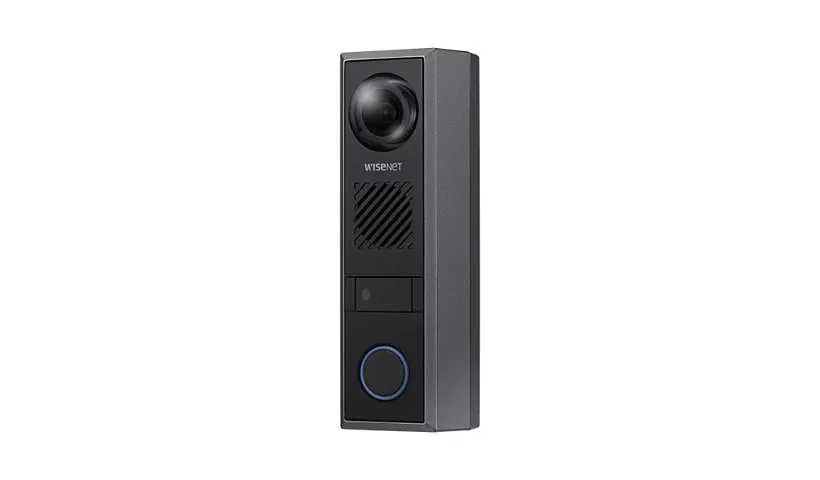
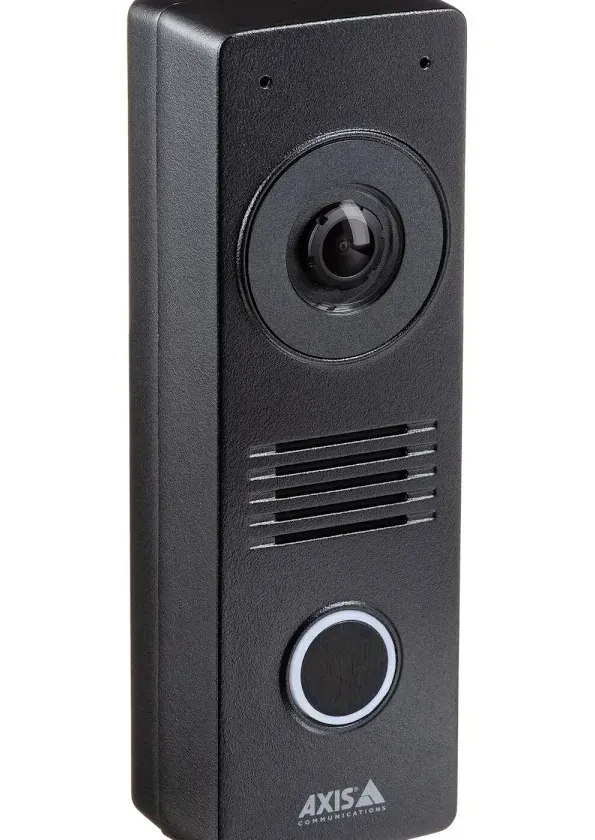
Dyker Heights, Brooklyn door buzzer installation: black rectangular video door station with a camera, speaker grille and round lit call button
A photo from the AESS job library, not taken in Dyker Heights: a black rectangular video door station with a camera at the top, a speaker grille and one round call button that lights up. A single-button station like this is the most common thing we put at a Dyker Heights front gate or front door, because most houses here hold one household, and the lit button is easy for a visitor to find at the end of a dark front walk.
Dyker Heights Door Buzzer Request
Detached house, two-family, semi-detached pair, condo, walk-up or new building: tell us the address, how many households the door serves and whether visitors start at a gate, and a technician calls back with the range

✅
Request Sent!
Thank you. A technician will call you about the Dyker Heights address, usually within two hours during working hours.
25+
Years Experience
✓
Same-Day Estimates
100%
Licensed & Insured
4.7★
201 Google Reviews

Owner-operated since 2002 · Thousands of jobs completed · Booked within 2 hours

Quick answer: door buzzer installation in Dyker Heights runs $400 to $900 on our Brooklyn list for an audio buzzer with an electric door release on a one- or two-household house, $700 to $1,800 for a video door station with indoor monitors or phone answering, and from about $2,500 to past $10,000 for a full entry system with a directory panel and a station or app for every apartment in a condo, walk-up or new rental building. Each price covers the door station, the answering stations inside, the power supply, the electric strike or approved lock, the cable and the labor, and it is fixed in writing after a walkthrough. On a Dyker Heights house, the thing that most often moves the job inside its range is not the brand of station but the route: whether the station goes on the front gate or at the door, how far the cable has to travel across the yard or driveway, and whether old bell wire in the walls can be reused. Every possible extra, such as a trench across a paved path or an old wire that might fail its test, is named and priced before you approve. Dyker Heights is billed at the Brooklyn rate. Send a photo of the gate and the door to (347) 934-8335 or on WhatsApp, and we reply with the range that fits, usually within two hours of your message during working hours.

  • Looking at your photos and quoting a new system costs nothing. If an existing buzzer is dead and has to be diagnosed in person first, that is the $250 service call booked online, and the $250 is applied toward the work.
  • All work falls under New York State license #12000287431. We install low-voltage entry equipment; when a power supply needs a new 120-volt outlet or circuit, a licensed electrician does that part, and you know before the job is priced.
  • We work for whoever controls the door: the owner of the house, both owners where a house is held by two households, the condo board, or the builder or owner of a new building. A tenant can book work on their own apartment station; work on a shared door needs the owner's written approval.
  • Crews install on weekdays in two-hour arrival windows, and the technician arrives inside the window you booked.
The Neighborhood

Why Dyker Heights Properties Need Door Buzzer Installation

Dyker Heights sits on the high ground of southwest Brooklyn, roughly between 7th and 14th Avenues from 65th Street down to the Belt Parkway, in ZIP code 11228 and Community District 10. It began in 1895 as a planned suburb of large houses on big lots, and the deed restrictions of that era set houses back from the street. A 2007 rezoning of 159 blocks, approved by the City Council 48 to 0, locked that pattern in: much of the neighborhood is now zoned for detached houses only, with detached and semi-detached houses allowed in the next band and rowhouses only at the edges. Homes.com sums up the result plainly, describing housing here as "a limited inventory of single- and two-family homes." For an entry installer, that is the starting point. A Dyker Heights front door is rarely a lobby door. It is a house door, often behind a yard, a fence and a gate.

That shape creates the first problem we are asked to solve. On a house set back from the sidewalk, a visitor who rings a plain bell at the door has already walked through the gate and up the path, so the gate has to be left unlatched for anyone to reach the bell at all. Owners who want the gate kept shut, for children, for dogs, for the bins and the car, or simply to keep strangers off the porch, need a way to talk to the visitor at the gate and open it from inside the house. Owners who live upstairs in a two-family want to answer without walking down two flights. And owners who have rebuilt or enlarged a house often find that the old bell wire went into the dumpster with the old plaster.

The second problem is packages. Residents here have complained for years about parcels disappearing from stoops and porches. In August 2019, Brooklyn Paper reported that one package thief had "plagued her neighbors for nearly 20 years," that a package was taken from a stoop by 78th Street and 11th Avenue that July, and that she had been arrested five times in Dyker Heights and Bensonhurst that year alone. One resident told the paper, "My neighbors and I try to take in packages for each other so as to not have her come stealing, but it's hard sometimes." Years later, an r/Brooklyn thread titled "Beware: Dyker Heights Package stealer" warned of a man with "large tote bags" who "will swoop in to steal after it's delivered." A door station does not stop a determined thief on its own, but the way it is set up decides whether a courier can talk to someone, whether the parcel can go somewhere locked, and whether the house has a clear picture of who came up the walk.

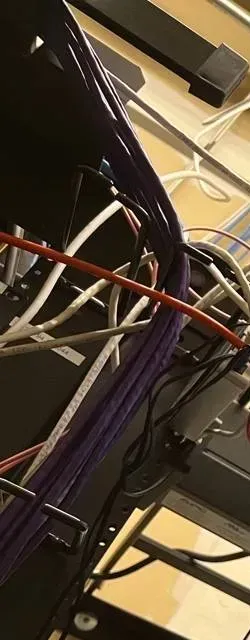
Dyker Heights, Brooklyn door buzzer installation: purple, white and red cable bundles dropping down beside a black equipment rack
A photo from the AESS job library, not taken in Dyker Heights: purple, white and red cable bundles dropping down beside a black equipment rack. Houses in Dyker Heights rarely have a rack like this, but the new rental buildings now going up on 13th Avenue and the side streets usually do, in a cellar or ground-floor equipment room, and that is where a building-wide entry system's power supply and controller should land.

The third problem is new. A neighborhood with very few apartment buildings is starting to get some. New York YIMBY reported in October 2024 that permits had been filed for a three-story, 11-apartment building with a cellar and eight open parking spaces at 1302 83rd Street, and in January 2026 that permits had been filed for a five-story, 22-apartment mixed-use building with ground-floor commercial space at 7924 13th Avenue, on a corner lot by the 79th Street D station. Small new condo buildings have also come to market along 13th Avenue. Each of those buildings needs a real multi-apartment entry system, built to the city's intercom rules, on blocks where neighbors are used to a single doorbell.

Finally, a lot of houses here hold more than one household, and some hold more than their paperwork says. The NYU Furman Center counted 168 sales of two-to-four-family buildings in Bay Ridge and Dyker Heights in 2025, more than the 135 one-family sales. The Department of Buildings defines an illegal conversion as altering a building "to create additional apartment units without first obtaining the proper permits," for example "adding an apartment in the basement, attic or garage." We wire a door station for the households a house legally has, and we tell owners plainly when a request for an extra button would advertise an apartment the city does not know about. That conversation is better had before the job than after an inspector counts the buttons.

Dyker Heights facts that change how a door buzzer is installed

  • Houses, not lobbies. The Furman Center puts the homeownership rate in Bay Ridge/Dyker Heights at 41.0 percent in 2024, against 32.7 percent citywide, and lists no public housing at all in the district. Most of our Dyker Heights jobs are for owners who live in the house.
  • Two-to-four-family houses trade more than any other type. In 2025 the district recorded 168 two-to-four-family sales, 135 one-family sales, 57 condo sales and only 25 sales of buildings with five or more apartments, per the Furman Center. New owners of a two-family are one of our most common callers.
  • Zoning keeps houses apart. CityLand's report on the 2007 rezoning lists R3A and R3X districts where only detached houses are allowed, R4A, R4B and R4-1 districts for detached and semi-detached houses, and R5B rowhouse districts, with commercial overlays on Fort Hamilton Parkway, 11th Avenue and 13th Avenue cut back in depth. Distance from the sidewalk to the door is the norm, not the exception.
  • Apartment buildings are arriving on house lots. The 11-apartment building filed at 1302 83rd Street and the 22-apartment building filed at 7924 13th Avenue are both large enough to fall under the city's intercom requirement for newer buildings of eight or more apartments.
  • Older small buildings sit below that line. StreetEasy lists 6605 13th Avenue as a mixed-use building from 1931 with three stories and six units, the size of building where the owner decides how good the entry should be.
  • Rental housing is watched closely. The Furman Center records 85.3 serious housing code violations per 1,000 privately owned rental units in the district in its latest year. A dead intercom in a building that is required to have one is a violation HPD writes.

Where this page applies. It covers Dyker Heights from 65th Street south to the Belt Parkway and Dyker Beach Park, and from 7th Avenue east to 14th Avenue, including Dyker Heights Boulevard on 13th Avenue, the 86th Street edge, the 11th Avenue and Fort Hamilton Parkway blocks, and the lights blocks in the low and mid 80s. For the rest of the borough see our door buzzer installation in Brooklyn page, and for the whole city our NYC door buzzer installation page.

Repair or Replace in Dyker Heights

Need Repair in Dyker Heights? A Gate That Will Not Open From the House, an Upstairs Bell That Went Dead, or a Rebuilt House With No Buzzer at All

Repair calls from Dyker Heights fall into three patterns. The first is a working system with one dead part: a release button upstairs that hums but does not open the gate, a station on the second floor that rings but has no voice, a front door that releases and then will not latch again. The second is a house that changed and left its buzzer behind: the stoop was rebuilt and the station removed, the house was gut renovated and the old bell wire cut, or a second household moved upstairs and both families now share one bell. The third is a house that never had a buzzer, only a plain bell, and an owner who now wants to keep the gate shut.

Each one starts the same way: a call to (347) 934-8335 or photos on WhatsApp of the station, the door, the gate and the cellar wall where the wires come in. Where an existing system has to be diagnosed in person, that is the $250 service call booked online, and the $250 is applied toward the repair or toward a new system if replacing turns out to be the better value. You get both numbers and a plain recommendation. On a house with one or two households, a repair is often a single part, a new strike, a new power supply or a new indoor station, and we say so rather than selling a whole system.

The physical faults follow a pattern too. On houses here, the most common causes of a release that stopped working are a strike that has drifted out of line with its latch as the frame moved, a power supply in the cellar that has aged or been unplugged during other work, and wire damaged where it runs outside, along a fence, under a gate post or through a rotted sill. The part inside the walls is usually fine. When the gate station itself is dead, water is the usual reason, because a station on a gate pier takes rain and snow on its face all winter, and older units were not always mounted under a hood or sealed at the back.

When the house has changed and the buzzer went with it, the question is not repair but how to start again without opening finished walls. We cover that in the sections below: the route from the gate, the old intercom cable that some houses still have, and the cases where a wireless link or a two-wire system saves a renovated house from new holes.

What We Install

Door Buzzer Installation Services in Dyker Heights

Every service below is priced from the same Brooklyn door buzzer list. The number of households sets the size of the system, the doors and the gate decide what release each entrance can take, and in Dyker Heights the distance from the sidewalk to the house decides a good part of the labor.

Front gate stations

A weatherproof audio or video station on the gate pier or fence post, with a release for the gate lock, so visitors are answered and let in at the sidewalk instead of walking up to a front door they cannot open.

Front and side door releases

Electric strikes fitted into the frame of the front door or the side door off the driveway, so a household can open for a visitor from the kitchen, the bedroom floor or the office upstairs.

Two-household systems

A two-button station for a two-family house or a semi-detached house shared by two families, with each button ringing only its own floor and each household releasing the door from its own station or phone.

Indoor monitors on every floor

Video monitors or audio handsets on the main floor, the bedroom floor and the finished basement of a large detached house, so nobody runs down the stairs to see who is at the gate.

Driveway gate links

A tie-in from the door station to an existing motorized driveway gate, so the same call that opens the walk gate can open the car gate for a family member or a contractor's van, where the gate's controller allows it.

Phone answering

App answering added to a wired system for owners who want to see and talk to a courier from work, without giving up the indoor monitor that the rest of the family uses.

New-building entry systems

Directory or code panels, apartment stations and release hardware for new rental and condo buildings on 13th Avenue and the side streets, planned with the builder before the walls close.

Practice and office doors

Buzzers for doctors', dentists', accountants' and other offices that use the ground floor of a house, answered at the front desk and kept separate from the family's own door.

Partial-failure repairs

Finding why one floor stopped ringing, why the gate no longer releases or why the door will not relatch, and fixing that part instead of replacing a system that otherwise works.

Dyker Heights, Brooklyn door buzzer installation: slim dark grey wired doorbell with a camera lens, speaker slots and a round push button
A photo from the AESS job library, not taken in Dyker Heights: a slim dark grey wired doorbell with a camera lens, speaker slots and a round push button. A station this narrow fits the casing beside the side door off a Dyker Heights driveway, where the trim is too thin for a full door station, and it is a common choice for the side or back door of a house whose front door is the formal entrance nobody uses.
Building Specialists

Door Buzzer Installation for Dyker Heights' Architecture

Seven kinds of building account for nearly every entry job in Dyker Heights. They differ in how far the visitor stands from the door, how many households the station must reach, how cable can get from the door to the people answering, and who has the right to decide, and each one has its own mistake that turns a simple job into a messy one.

The surviving 1890s houses

About half of the roughly 150 houses built in the original development still stand, with deep porches, high first-floor ceilings and full cellars, and many still carry decades of patched-in bell wire.

Brick detached houses with side drives

The 1920s and 1930s detached houses on the side streets, with a driveway along one side, a garage at the back and a front walk from a fenced yard.

Semi-detached pairs

Postwar semi-detached houses, often two-families, sharing a wall and sometimes a stoop or a front walk with the house next door.

Rebuilt large houses

Houses that replaced older ones, often larger, with new masonry fronts, iron gates on piers, big entry doors and several floors of living space.

Attached rows at the edges

The rowhouse blocks in the R5B zones at the neighborhood's edges, where houses meet the sidewalk more closely and the stoop is the front yard.

Small condos and walk-ups

Small condo buildings and older mixed-use walk-ups on and near 13th Avenue, with a shared street door, a short directory and owners who may not live in the building.

New rentals on former house lots

New buildings of roughly 10 to 25 apartments, such as those filed at 1302 83rd Street and 7924 13th Avenue, built under today's codes and the city's intercom rules.

The surviving 1890s houses: big rooms, many layers of old wire

The houses that survive from the first development were built for a single family with room to spare. A Brooklyn Eagle description from 1899, quoted in the neighborhood's Wikipedia entry, mentions first-floor ceilings of about ten feet, five rooms on each of the first two floors, four more on the third and a cellar under the house. That generosity is the challenge. The distance from the front door to a bedroom on the third floor is long, the walls are plaster on wood lath, and over a century most of these houses have had a speaking tube, a battery bell, a transformer bell, a room-to-room intercom and a wireless doorbell, often with bits of each left in the walls.

Our approach is to find a single clean path from the door to the cellar, because the cellar is usually open and is the easiest place to reach every floor from. From there, closets that stack, an old chimney chase or a disused laundry chute often carry new cable upward without opening finished rooms. Where none exists, a two-wire system that runs power, voice, video and release over one pair lets us reuse a single good old pair to each floor. Porches add one more decision: whether the station goes at the porch steps, at the door under the porch roof, or at the front gate, and each choice changes how far the visitor is from the household and how well the camera sees a face.

These houses also tend to have heavy original doors. A release on an old wood door has to be sized for the door's weight and for frames that have moved over the years, and we check the latch and strike line before quoting. A strike that is fitted to a frame that is out of square will buzz and do nothing.

Brick detached houses with side drives: two doors, a gate and a garage

The detached brick houses that fill much of the side streets were built with a car in mind. A typical lot has a front yard behind a low wall or fence, a walk to a front door that is formal and little used, and a driveway down one side to a side door near the kitchen and a garage at the back. In practice the side door is where the family comes and goes, and many deliveries end up there too.

That makes the first question which door the station belongs on, and the honest answer is often both, or neither, with the station at the gate instead. If the front gate is kept locked, the station goes at the gate and one release opens it. If the gate stays open by day and the family wants visitors at the side door, the station goes there, with a sign or a lit button at the front to send people round. If both doors get visitors, a two-door system with one indoor monitor that shows which door is calling avoids a second set of equipment.

Cable in these houses usually comes up from the cellar, which runs under the whole house. The side door is often a few feet above the driveway, with the cellar wall right behind it, which makes it one of the easiest doors in Brooklyn to wire. The front door, with a stoop and a porch, and the gate, out by the sidewalk, take more work, which is why the route matters so much on the quote.

Semi-detached pairs: one wall, two families, one walk

Semi-detached houses are the most common two-family stock in the neighborhood's middle zones. Each house in the pair is its own property, but the pair shares a party wall and sometimes a stoop, a walk or a front gate. Inside each house there are often two households, one per floor, with a single street door and an inner hall to two apartment doors.

The entry system in a pair has to respect two boundaries. The first is between the two houses: a station and its cable should stay on the owner's side of the wall, and a shared gate belongs to both owners, so either both agree on how it is controlled or each keeps its own key. The second is inside the house: each household needs its own button and its own way to answer, and the downstairs family should not hear every call for the tenants upstairs. A two-button audio or video station with one station on each floor covers that, and it is the job we do most often in two-family houses here.

The mistake we see is a single consumer video doorbell put on a two-family's shared door, with one household holding the account. It works until the household that owns the account moves out or stops sharing access, and then the other family has no way to answer at all.

Rebuilt large houses: new fronts, big doors, finished walls

Many lots in Dyker Heights now carry a newer, larger house. These houses tend to have masonry fronts, iron gates set between piers, wide or oversized entry doors and several finished floors, and they are often wired from scratch during construction. When the builder thought about the door station, these are the easiest houses in the neighborhood to finish: a pipe from the gate pier to the cellar, a cable to each floor and a box by the door. When the builder did not, they can be the hardest, because the walls are new, finished and no owner wants them opened.

The answer depends on what the walls already hold. New houses often have network cable to each floor for Wi-Fi or a television, and an idle pair in that bundle can carry a two-wire system. Where there is nothing, a wireless link from the gate to the house, or a video station that answers on the family's phones with one wired monitor near the stair, keeps holes to a minimum. Large entry doors add the second question: a pivot door or an oversized double door needs a release chosen for that door, which we cover in the questions below.

Attached rows at the edges: stoops at the sidewalk

At the edges of the neighborhood, where the 2007 rezoning mapped R5B rowhouse districts, houses sit in attached rows with stoops close to the sidewalk and small front areas. These look more like the rest of southwest Brooklyn than like the detached blocks, and the entry work is closer to a standard Brooklyn two-family: a two-button station by the door, a strike in the street door, a station on each floor and cable through the cellar and up an interior wall or a closet stack. The difference from the detached blocks is that there is rarely a gate, so the station goes at the door and the camera can see the visitor from a few feet away.

Small condos and walk-ups: shared doors and absentee owners

The small condo buildings and older walk-ups on and near 13th Avenue serve a handful of households behind one street door. StreetEasy lists 6605 13th Avenue, for example, as a 1931 mixed-use building with three stories and six units. In a building like that, the entry system serves people who may not know each other, owners who may rent out their units, and sometimes a store on the ground floor with its own door. A short directory panel with a button or a code per apartment, a strike that latches every time, and a closer that pulls the door shut behind every visitor are the basics. Who controls the directory and who pays for repairs should be written down when the system goes in, especially in a condo with a small board.

New rentals on former house lots: apartment rules on a house block

The new buildings filed at 1302 83rd Street and 7924 13th Avenue, with 11 and 22 apartments, are the clearest sign that Dyker Heights is adding apartment buildings to its house blocks. Buildings of eight or more apartments put up after 1968 must have an intercommunication system at a self-locking main door under the Multiple Dwelling Law, and a new building will be inspected against that. For these buildings we work from the drawings: where the main entrance and the rear or parking entrance are, where the equipment room is, where each apartment's station or app answering will be, and which trade pulls which cable. Getting that settled before the walls close is the cheapest entry system the builder will ever buy.

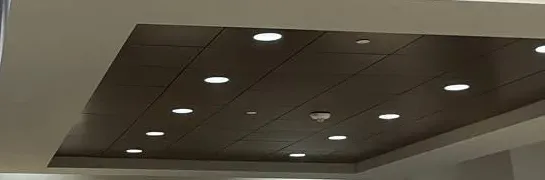
Dyker Heights, Brooklyn door buzzer installation: dark recessed ceiling panel with round downlights and a small round device framed by a lighter ceiling
A photo from the AESS job library, not taken in Dyker Heights: a dark recessed ceiling panel with round downlights and a small round device, framed by a lighter ceiling. Entry vestibules in the new buildings on 13th Avenue are often finished like this, and the ceiling over the street door is where we look for a path to bring the door station's cable in from the equipment room without surface raceway on the walls.
Field Notes

Field Notes: Stand at the Sidewalk, Walk to the Door, Then Go Down to the Cellar

These notes describe how our technicians approach a house in a neighborhood like Dyker Heights. They are our standard practice, not a story about one address.

Start where the visitor starts. The technician stands at the sidewalk first, not at the door. Is there a gate? Is it kept locked? Can a courier tell which door to use? Is the house number visible at night? A plan built from the front door outward often misses that the visitor never gets that far.

Walk the route and measure it. Next, the walk from the gate to each door visitors use, with the distance, the surface the cable would cross and anything in the way: steps, a paved walk, a planting bed, a driveway. That distance is the biggest single number on many Dyker Heights quotes.

Find the way down. Last, the cellar. Where do the old bell wires come through the wall? Is there an outlet for a power supply on a circuit the owner controls? Which closets or chases stack above it? On most houses here, the cellar is what makes the job clean or messy, and we would rather know that before writing a number than after.

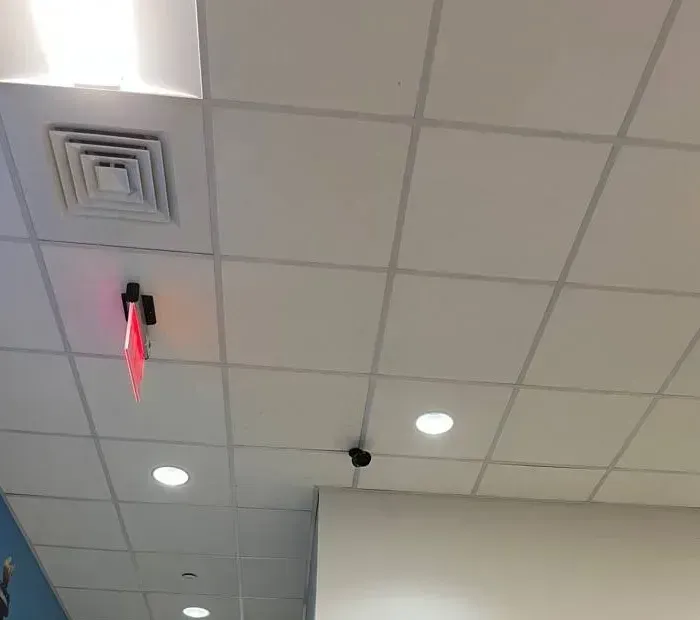
Dyker Heights, Brooklyn door buzzer installation: drop ceiling with a lit red exit sign, an air diffuser, round recessed lights and a small black camera
A photo from the AESS job library, not taken in Dyker Heights: a drop ceiling with a lit red exit sign, an air diffuser, round recessed lights and a small black camera. This is the kind of ceiling found in a ground-floor office or store on 13th Avenue, where the exit sign marks the door that has to open freely from inside no matter what the buzzer is doing.
Gate to Door

Thirty Feet From the Sidewalk: Putting the Station at the Gate, at the Door, or Both

The single most common Dyker Heights entry question is where the station goes. On a house that sits back from the street behind a fence, the answer decides how much cable has to be run, what kind of lock goes on the gate, how well the camera sees a face, and whether a visitor at night can find the button at all. There are three workable setups, and each one suits a different household.

Setup 1: the station at the gate, the gate locked

This is the setup for owners who want the yard closed. The station mounts on the gate pier or the fence post beside the gate, and the release is an electric lock or strike on the gate itself. A visitor presses the button, the household answers on an indoor monitor or a phone, and if they open, the gate unlocks for a few seconds and a closer or spring pulls it shut again. The front door keeps its normal key lock, because nobody needs to open it remotely: the household walks the visitor in or meets them at the door.

The work is mostly outside. Cable has to run from the gate to the house, and on a Dyker Heights lot that usually means across a front yard, under a walk or along the base of a fence. Gate locks need power and a gate that closes reliably; a sagging gate that has to be lifted to latch will defeat any release, so we check the hinges and the latch line first and say so if the gate needs work before the electronics go on. Iron gates also need a way to carry cable onto the moving leaf if the lock is mounted there, usually a protected loop at the hinge side.

The payoff is that the household decides who reaches the porch. For families with small children or dogs in the front yard, for owners who were burned by packages left on the stoop, and for houses on blocks that fill with visitors in December, this is the setup we recommend most.

Setup 2: the station at the door, the gate unlocked

This is the setup for owners who are happy to let people up the walk and want to answer at the door. The station goes beside the front or side door, a strike goes into the door frame, and the household can talk to the visitor and open the door from inside. The gate stays on a simple latch, or has no lock at all. It is the cheaper of the two outdoor setups because the cable path is short, often straight down into the cellar behind the door.

The downside is that a stranger gets to the door before anyone has spoken to them, and a parcel left there sits on an open porch. For many households that is fine, especially where the side door is under a carport or the porch is enclosed. Where the front door is far from the room the family lives in, we put an indoor monitor where people actually spend the day, usually the kitchen, and a second one upstairs.

Setup 3: a station at the gate and a station at the door

Some houses need both: a gate station so the yard can stay closed, and a door station because family members and regular helpers come up the driveway to the side door. One indoor monitor can answer both, with the screen showing which entrance is calling. This is also the right setup for a two-family where the downstairs household uses the side door and the upstairs household uses the front: each door gets its own station, and the gate station has two buttons.

Whatever the setup, a few details make it work on a Dyker Heights lot. The station needs a hood or a recessed mount where it faces the weather. The button should light, because a front walk under trees is dark by five o'clock in winter. The house number should be on or near the station, so couriers stop at the right gate. And the cable should be sleeved where it runs outside, because shovels, edgers and contractors' equipment find unprotected cable within a season.

Wired, wireless or a mix across the yard

Wired is still the most reliable way to connect a gate station to a house. Where the route crosses lawn or a planting bed, a shallow trench with cable in conduit is quick. Where it crosses a paved walk, a stone path or a driveway, the choices are to cut a narrow slot and patch it, to go around the paving along a fence line, or to bore under it. Each has a price, and the quote names the one we plan to use.

Wireless links between the gate and the house exist and work over the distances typical here, but they depend on batteries or a separate power feed at the gate, and on a clear signal through whatever stands between the gate and the house. A brick house with a metal-framed porch can be a poor path. We use wireless where trenching would damage something an owner cares about, such as a new paver driveway, and we test the signal at the gate before we commit to it. HomeAdvisor's cost guide prices wireless intercom systems at $150 to $1,500 and hard-wired ones at $1,000 to $15,000, but on a house the difference is mostly the labor across the yard, not the equipment.

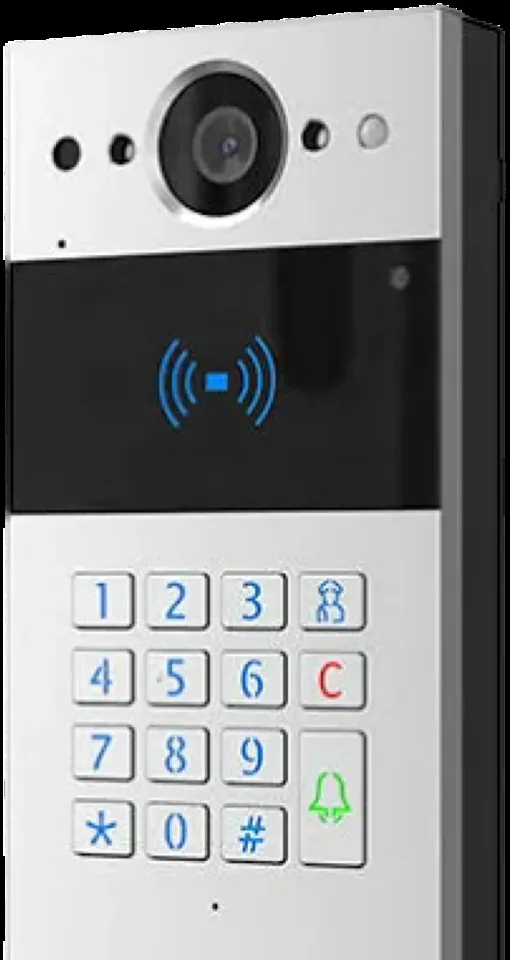
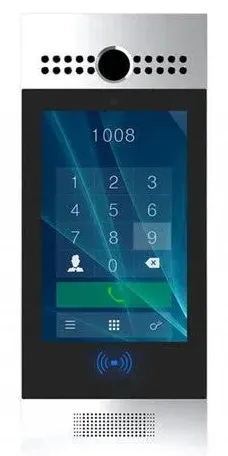
Dyker Heights, Brooklyn door buzzer installation: silver and black keypad door station with a camera lens at the top, a blue card-reader symbol, a numeric keypad and a green bell key
A photo from the AESS job library, not taken in Dyker Heights: a silver and black keypad door station with a camera lens at the top, a blue card-reader symbol, a numeric keypad and a green bell key. A combined station like this suits a Dyker Heights gate pier, because visitors press the bell key while family members and regular helpers open the gate with a code or a card instead of carrying a gate key.
Packages and Stoops

Twenty Years of Stolen Parcels: What a Door Station Can and Cannot Do for Dyker Heights Deliveries

Package theft is the complaint we hear most from Dyker Heights callers, and the local record explains why. Brooklyn Paper's 2019 report described a thief who had worked the stoops of Dyker Heights and Bensonhurst for close to two decades, who was arrested again and again, and whose penalty that year was five days of community service, because petty larceny is a misdemeanor and, the paper reported, judges could not weigh the many charges together at sentencing. One resident had caught the thief on her own surveillance cameras taking parcels off her porch, and she was arrested and came back anyway. The lesson residents drew was not that cameras failed. It was that a recording after the fact does not keep the parcel.

That is the right frame for an entry system too. A door station helps with packages in three specific ways, and none of them is magic. The first is conversation: a courier who rings and is answered can be told where to leave the parcel, whether behind the side gate, inside the enclosed porch or with the neighbor two doors down, instead of dropping it on the top step in view of the street. The second is a locked place to leave it: with a gate station and a release, the household can let the courier into the yard, or into an enclosed porch or vestibule, and the gate or outer door locks again behind them. The third is a clear picture of who came up the walk, taken at face height by a camera that was positioned for faces rather than for the whole street.

What it cannot do is replace someone being reachable. A release only works if a person answers. That is why, for households that are out all day, we pair the indoor monitors with phone answering, so the courier's ring reaches whoever is free, and why we set the release time on a gate or outer door to the shortest interval that still lets a courier with a box get through.

The neighbor network, done properly

The resident who told Brooklyn Paper that she and her neighbors take in each other's packages was describing the oldest package system in Brooklyn. A modern entry system can support that habit instead of replacing it. Many current video stations with app answering let an owner add another person's phone as a user, with or without the right to release the door, and remove that person again later. A neighbor who is home during the day can then answer a courier at your gate, see the courier on screen and let them leave the box inside your yard. We set those permissions up with the owner at handover so they are deliberate, named and easy to remove.

An enclosed porch or vestibule as the parcel room

Many Dyker Heights houses have an enclosed front porch or a vestibule between an outer and an inner door. That space can act as a small parcel room. The outer door gets a strike and the station; the inner door keeps its key lock. When a courier rings, the household releases the outer door, the courier sets the box down inside, and the outer door shuts and locks behind them. The house itself is never opened. Two details matter: the outer door must relatch reliably, which means a closer set for the door's weight and the wind on that side of the house, and the inner door must stay locked whenever the outer one is released, so the porch never becomes a path into the house.

Where the camera should look

The cameras built into door stations are set up to show the face of the person standing in front of them, not the sidewalk. On a gate pier that is exactly what you want: the person pressing the button, at arm's length, lit by the station's own light at night. A separate camera covering the porch, the steps and the walk is a different job, and on most houses we recommend both when packages are the concern, with the station camera for who rang and the porch camera for where the parcel went. Where the owner already has cameras on a recorder, we check whether the new indoor monitor or app can show them in the same place.

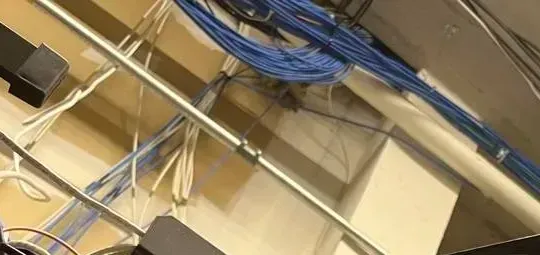
Dyker Heights, Brooklyn door buzzer installation: bundles of blue low-voltage cable laid over a ceiling beam and a metal pipe in an open ceiling
A photo from the AESS job library, not taken in Dyker Heights: bundles of blue low-voltage cable laid over a ceiling beam and a metal pipe in an open ceiling. An open cellar ceiling like this, which most Dyker Heights houses have, is how cable from a gate or porch station reaches the stair and closets that carry it up to every floor without opening finished rooms.
New Buildings

Eleven and Twenty-Two Apartments on a House Block: Planning Entry for the New Buildings Going Up in Dyker Heights

For most of its history Dyker Heights has had very few apartment buildings, and the Wikipedia entry for the neighborhood still describes its housing as mainly detached and semi-detached one- and two-family homes. That is changing at the margins. New York YIMBY's reports on the permits for 1302 83rd Street, a three-story building of 11 apartments with a cellar and eight open parking spaces, and for 7924 13th Avenue, a five-story corner building with 22 apartments over about 5,000 square feet of commercial space near the 79th Street D station, describe the kind of project we are now asked to quote. Small new condo buildings on 13th Avenue have also been listed for sale as brand new.

A building of that size is a different entry job from a house. It needs a main-door panel that can reach every apartment, a station or app answering in each unit, a release on a self-locking door, a second entrance from the parking area or the rear, a power supply and controller in an equipment room, and a written plan for who keeps the directory current as tenants come and go. It is also a building the law treats differently, which we explain in the rules section below. The best time to plan all of that is while the walls are open.

What the builder should decide before the walls close

Four decisions shape the cost of a new building's entry system more than anything else, and all four are cheap to make on paper and expensive to change later. The first is how residents will answer: a wall station in every apartment, app answering on residents' phones, or both. A wired station needs a cable or a pair to every unit, pulled during rough-in. App answering needs a reliable network at the panel and, ideally, a cellular backup. Doing both means pulling the cable anyway and adding the app on top.

The second is which doors get panels. The main entrance always does. A rear or side door from parking usually gets either a smaller station or a reader for residents only, so visitors are sent to the front. A package room, a trash room door or a roof door may need a release or a door-held-open alert. Each one is a conduit run and a box location to put on the drawings.

The third is where the brains live. The controller, the power supply and any network switch should sit in a dry, ventilated room the owner controls, on a circuit the owner controls, ideally with a battery backup. In a small building that is often a corner of the cellar or a ground-floor telecom closet. The fourth is the door itself: the main entrance should be specified with a frame and hardware that can take an electric strike or another approved lock, a closer strong enough to pull it shut every time, and a free-exit device on the inside. Changing a storefront-style aluminum door after the fact to fit a release is one of the most common avoidable costs we see.

Who pulls the cable

On a new building, entry cable can be pulled by the electrician during rough-in or by the low-voltage contractor. Either works, as long as one party owns it, the cable is the type the chosen system needs, every run is labeled at both ends, and the boxes are where the drawings say. What fails is the split where the electrician pulls a generic cable because the system has not been chosen yet, and the installer arrives months later to find the wrong cable to every apartment. If the builder brings us in at the drawing stage, we supply a one-page cable and box schedule that the electrician can price and follow.

The parking door and the store

The two new buildings above show the two complications that set Dyker Heights new construction apart from a standard walk-up. A building with open parking at the back has a second entrance that residents will use more than the front, often after dark, and that door needs to lock behind every person, be lit, and be reachable from the parking area without a long walk around. A building with a store on the ground floor has a commercial tenant whose deliveries, staff and customers must never be routed through the residential door, and whose own buzzer, if it has one, should be a separate system. Planning both at the start keeps the residents' entry simple.

The Rules

The Intercom Law, Free Exit and Legal Unit Counts: What a Dyker Heights Owner or Builder Is Responsible For

Most Dyker Heights houses are one- and two-family homes, and for those the city does not dictate what kind of buzzer an owner installs. The rules start to matter in three situations: a building with enough apartments to fall under the state Multiple Dwelling Law, any door that people must be able to leave by, and any house whose number of buttons does not match its legal number of apartments. This is a plain summary, not legal advice; a building owner with a specific question should check with the city agency or a lawyer.

Buildings of eight or more apartments

Section 50-a of the Multiple Dwelling Law says that every Class A multiple dwelling erected or converted after January 1, 1968, with eight or more apartments, "shall also be equipped with an intercommunication system" at a self-locking main entrance door, allowing a tenant to talk to a visitor and release the door from the apartment. Older buildings of that size must install self-locking doors and an intercom if tenants occupying a majority of the apartments ask in writing, with installation to begin within 90 days and finish within six months. Both new Dyker Heights buildings described above, with 11 and 22 apartments, fall on the required side of that line. An intercom that stops working in a covered building can be written up by HPD.

Buildings below eight apartments

For smaller buildings, such as the six-unit 1931 building StreetEasy lists at 6605 13th Avenue, that section does not require an intercom. A Brooklyn tenant on r/AskNYC put it bluntly about a four-unit building: the landlord "isn't required to put in a buzzer system or a self-locking front door." Many owners of small buildings install one anyway, because a street door that nobody can release from upstairs ends up propped open, and a propped street door is how strangers and package thieves get to the apartment doors.

Free exit, always

Whatever the building, the people inside must be able to leave without a key, a code or power. That is why we fit fail-secure electric strikes on most house and street doors: Allegion's guide explains that with a strike, "you can exit by turning the lever" whether the strike is fail-safe or fail-secure, and that fail-secure products stay locked from outside when power is removed. Magnetic locks are a different case. Allegion notes they "are only available fail safe," and on an egress door the building code requires a sensor on the inside, a manual push-to-exit button between 40 and 48 inches above the floor within five feet of the door, release on loss of power and release on a fire alarm. We use them only where a strike cannot work, and only with all of those parts.

Buttons and the legal unit count

The Department of Buildings treats an apartment added "in the basement, attic or garage" without permits as an illegal conversion, and a row of extra buttons by the door is one of the most visible signs of one. We wire stations for the households the house legally has. If an owner is legalizing a unit through the city's process, we can leave capacity for one more button and add it when the paperwork is done. We will not label a button for an apartment that does not legally exist, and we would rather explain that on the phone than on installation day.

Reach heights for the panel

For panels on new multi-apartment buildings and on businesses that serve the public, we mount buttons and controls within the 2010 ADA Standards' reach ranges, which set the high forward reach at "48 inches (1220 mm) maximum" and the low forward reach at 15 inches minimum. On a private house the owner chooses, and we usually mount at a height that suits both an adult and a child or a visitor in a wheelchair.

Commercial Door Buzzer Installation

Business Door Buzzer Installation in Dyker Heights

Dyker Heights has one main commercial district and a few overlay strips, and the 2007 rezoning cut those overlays back in depth to keep stores from spreading into the side streets. That leaves a short list of places where business entry work happens, plus a long list of offices tucked into houses on residential blocks.

13th Avenue from Bay Ridge Avenue to 86th Street

The stretch co-named Dyker Heights Boulevard in 2001, the neighborhood's only real commercial district, with pharmacies, bakeries, salons, offices and restaurants, many with apartments or offices above and a rear door to an alley or yard.

86th Street

The cross street where tour buses drop off December visitors at 12th Avenue, with storefronts and offices near the corners that take deliveries at side doors off the avenue.

11th Avenue overlay blocks

Stores and services in the narrowed commercial overlay, usually single storefronts in buildings with an apartment above and a shared or separate street door.

Fort Hamilton Parkway

The overlay along the parkway at the northern side, with service businesses, offices and stores that mix customers, staff and suppliers at the same few doors.

Offices inside houses

Medical, dental, legal and accounting practices on the ground floor of houses on residential blocks, with patients and clients at a door that the owner's family may also use.

New mixed-use corners

Ground-floor commercial space in new buildings such as the one filed at 7924 13th Avenue, where the store and the apartments above need separate entries from day one.

On 13th Avenue the most common request is a back or side door that can be answered from inside: the bakery's delivery door, the salon's staff entrance, the office upstairs that keeps its street door locked. An audio or video station at the back door, answered at the counter or the desk, with a strike that relatches every time, is the core of nearly every one of these jobs. For practices inside houses, the job is mostly about separating two kinds of visitor: patients who should reach the waiting room and nowhere else, and family and friends who should reach the house. The questions below include one of those in detail.

Rules that apply to Dyker Heights business entry installations

  • Free exit at all times. Every door on an exit path must open from inside without a key, a code or power. Strikes on business doors are fitted so the inside lever always works.
  • Magnetic locks only with the full package. Where a glass storefront door cannot take a strike, a magnetic lock needs an inside sensor, a push-to-exit button 40 to 48 inches up within five feet of the door, release on power loss and release on fire alarm activation.
  • Reach range for public-facing panels. Buttons on a panel the public uses go within the 2010 ADA Standards' reach ranges, no higher than 48 inches for a forward reach.
  • Landlord approval in writing. A tenant business needs the building owner's written approval before a strike goes into a door frame, and we ask for it before scheduling.
  • Licensed work. The entry system is low-voltage work under NYS license #12000287431; any new 120-volt outlet or circuit is done by a licensed electrician.
  • Separate residential and commercial doors. In mixed-use buildings, the store's buzzer never releases the apartments' street door, and the apartments' system never opens the store.
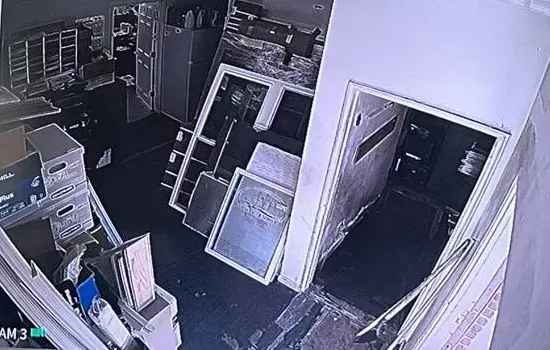
Dyker Heights, Brooklyn door buzzer installation: black-and-white night camera view of a cluttered room with an open doorway into a dark back room
A photo from the AESS job library, not taken in Dyker Heights: a black-and-white night camera view of a cluttered room with an open doorway into a dark back room. The back rooms behind 13th Avenue storefronts often look like this, and the door at the far end, the one deliveries come through, is the door a store's buzzer usually belongs on.
Your Questions Answered

Door Buzzer Installation in Dyker Heights: Questions Answered

Questions Dyker Heights owners, builders, condo boards and business owners ask us about new entry systems, grouped by the part of the job they concern. Each answer is the one we would give on the phone, before anyone has been out.

Gates, yards and doors

Getting cable from our front gate to the house means crossing a paved path and part of the driveway. Do you dig it up, cut a slot, or go wireless?

It depends on what the paving is and how much you care about it. Across poured concrete or asphalt, a narrow saw-cut slot with the cable in a small conduit, sealed over, is usually the cleanest and lasts as long as the paving. Across pavers or stone, we can often lift a single row, lay conduit beneath, and reset them, which leaves no visible patch. Where the paving is new, decorative or expensive to match, we look first for a route around it, along the fence and the side of the walk, even if that is a longer run.

Wireless is the fallback, not the first choice. A wireless link between the gate and the house avoids the paving entirely, but it needs power at the gate, either a battery that someone has to change or a small power cable that brings back the trench question, and it needs a clear signal through whatever stands between the gate and the inside unit. We test the signal at the gate before quoting it.

Whichever route we choose is written on the quote with its price, including the patching. If the ground is frozen hard in midwinter and a trench is the only route, we say so and offer the next workable date rather than patching a slot that will crack in the spring.

Our driveway gate already has its own motor and remote openers. Can the door station open it too, or does it need a separate intercom?

Usually the door station can trigger it. Most gate operators have an input for an external push button or a relay, the same input a wall button in the house would use, and a door station with a spare relay output can close that contact when someone at the station is let in. That lets one call open the walk gate, the driveway gate, or either one, from the same indoor monitor or phone.

Before we promise it, we need the make and model of the gate operator and a photo of its control board. Some operators are under a service contract with the company that installed them, and some newer ones are app-controlled with no spare input. In those cases the simplest answer may be a separate button on the indoor monitor wired to the operator, or leaving the car gate on its remotes and handling only the walk gate.

One safety point: a motorized gate must keep its own safety sensors and reversing functions. The door station only sends the same open command a wall button would. It never bypasses anything in the operator.

The lock on our front gate is on the swinging iron leaf, not on the post. How does a release get power on a gate that moves?

Through a protected cable loop at the hinge side, or by moving the electric part to the post. The usual way is a flexible armored loop that crosses from the fixed post to the moving leaf at the hinges, so the cable bends as the gate swings without being pinched. The release on the leaf is then wired through the gate's frame or along its rail.

Often it is simpler to reverse the arrangement: put an electric strike or keeper on the fixed post, where power is easy to reach, and keep the mechanical latch on the leaf. That works when the gate closes squarely against the post. On older iron gates that sag or bind, the gate has to be rehung or adjusted first, or no release will work reliably.

Either way, the station itself goes on the fixed pier or post, never on the moving leaf, so it is not shaken every time the gate slams.

Our rebuilt house has a tall pivot front door. Can it take an electric release?

Sometimes, but it needs a release chosen for that door. A pivot door turns on a pin near one edge instead of on hinges, and many have a long latch or a multipoint lock on the opposite edge. A standard strike does not fit those. The options are an electric strike made for the specific latch, a motorized multipoint lock from the door's own manufacturer, or, on a door that will never have one, leaving the front door on its key and putting the release on the gate or a side door.

We ask for the door's make and the lock's model before quoting. If the manufacturer offers a motorized lock for that door, it is usually the cleanest option, because it is designed for the door's weight and seal. Fitting a generic strike into a premium pivot door's frame risks damaging a door that cost far more than the entry system.

Our 1970s house still has a room-to-room intercom with speakers in several rooms. Can its wiring carry a new video system?

Often, yes. Old whole-house intercoms were usually wired with multi-conductor cable from a master unit to each room speaker and to the door. That cable, if it tests clean, can frequently carry a two-wire system, which needs only one good pair between the door station and each indoor station. Aiphone's upgrade guide puts it simply: "If the existing wires are in good condition, they can be reused."

The test is what decides it. We check each run for continuity, shorts and damage at both ends, and we find where each one actually goes, because cable in houses that age has often been cut, spliced or abandoned. Good runs get reused; bad ones get replaced or bypassed. The old master unit and room speakers come out and the openings are covered with plates or the new stations themselves, so you do not end up with dead speakers in the walls.

If the old cable is beyond saving, the fallback is a route through the cellar and up a stacked closet or chase, or wireless indoor units on the upper floors where running cable would mean opening finished walls.

Packages, neighbors and households

Our neighbors and we take in each other's deliveries. Can a neighbor's phone be set up to answer our gate for a courier, and taken off again later?

On many video stations with app answering, yes. The owner of the system can add another person as a user, choose whether that person can only see and talk to the visitor or can also release the door, and remove them at any time. A neighbor who is home in the daytime can then answer a courier at your gate, tell them to leave the box inside the yard, and open the gate for a few seconds.

We set this up deliberately at handover: who is on the list, what each person can do, and how to remove them. We also recommend that a neighbor's access be limited to the gate or the outer porch door, never the house door, so the arrangement covers parcels and nothing else.

Our dental practice uses the ground floor of the house our family lives in. Can patients be buzzed into the office during hours without being able to reach the stairs to our home?

Yes, and it usually takes two doors and two schedules. The practice gets its own station at its entrance, answered at the front desk, with a release on the practice door only. The family's door, or the inner door to the family's stair, stays on its own station and its own release, answered upstairs. Patients can be let in to the waiting room but have no way to open the family's door, and the family's visitors never ring the front desk.

Where the practice and the family share one outer door, the outer door gets a two-button station, one for the office and one for the house, and the inner doors do the separating. Many systems also let the office button be set to ring the front desk only during office hours and to ring the house, or nobody, after closing, so a late visitor does not reach an empty desk.

New buildings and small condos

We are building an 11-apartment rental on a side street. Which trade should carry the entry system in the bid package: the general contractor, the electrician or a low-voltage installer?

Any of the three can carry it, but one of them has to own it from the drawings to the final test. The common working split is that the electrician provides the 120-volt circuit and any conduit and boxes the plans call for, and the low-voltage installer supplies the system, pulls or approves the entry cable, terminates, programs and tests. The general contractor coordinates the door hardware so the main entrance arrives ready for a strike or an approved lock.

What causes trouble is leaving the system unchosen until late. Then the electrician pulls a generic cable to every apartment, the door is ordered without a prepared frame, and the installer arrives to find the wrong cable and a door that cannot take a release. If you bring us in at the drawing stage, we give the electrician a cable and box schedule and the door supplier a hardware note, and the bid prices line up.

Because a new building of 11 apartments falls under the Multiple Dwelling Law's intercom requirement, the system should be in, tested and documented before the building is occupied.

Our new building has open parking at the back, and residents will mostly come in through the rear door. Should that door have a full intercom panel too?

Usually not a full visitor panel, but it does need real access control. If visitors can ring at both the front and the back, they will choose whichever is closer to where they parked, and the rear door becomes a second lobby with nobody watching it. The better arrangement in most small buildings is a resident-only reader or keypad at the rear door, plus a small sign directing visitors to the front panel.

The rear door also needs the basics that the front gets: a strike or approved lock that relatches every time, a closer strong enough to pull it shut in wind, good lighting and a camera if the owner has one elsewhere. Where the owner does want visitors to use the rear, a compact station there that calls the same apartments keeps the directory in one place.

The store on our new corner building's ground floor will take deliveries after hours. Should its door be on the same entry system as the 22 apartments above?

No. Keep them separate. The apartments' system should serve residents and their visitors only, with a directory, codes and permissions managed for the building. The store's door should have its own station, answered at the counter or on the store manager's phone, with its own release and its own users. Mixing them means a store employee or a delivery driver ends up holding a code or a permission that opens the residents' door, and a tenant turnover at the store becomes a security question for the whole building.

Separate systems can still share infrastructure the owner controls, such as conduit space and an equipment room, but the store's equipment should be the tenant's to manage under its lease. We price the two as separate scopes so the owner can bill the commercial tenant if the lease says so.

The 2007 rezoning left our block zoned for detached houses only. Does that zoning limit what we can mount on the front of the house or on the gate?

Not for the entry system itself. Zoning decides what kind of building can stand on the lot, how big it can be and how it is used; CityLand's account of the 2007 rezoning describes districts limited to detached houses, others allowing semi-detached houses, and rowhouse districts at the edges. A door station on a gate pier, an electric strike in a door frame and a low-voltage cable in a trench are not what those rules govern.

Where something else can come into play is a new structure. If the plan is to build new masonry piers or a new fence to hold the gate station, that is construction, and the owner should confirm what is allowed for front-yard walls and fences before a mason starts. We mount on what is there; we do not build piers or fences. Separately, if a house is an individual city landmark, exterior changes go through the Landmarks Preservation Commission first.

The zoning does shape the job in one practical way: because so much of the neighborhood is detached houses set back from the sidewalk, the gate-to-house route described above is the normal case here rather than the exception.
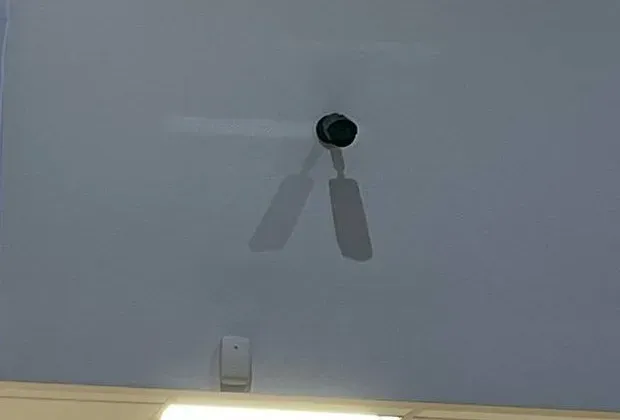
Dyker Heights, Brooklyn door buzzer installation: small black camera mounted high on a pale wall casting two shadows, with a small white wall device below
A photo from the AESS job library, not taken in Dyker Heights: a small black camera mounted high on a pale wall, casting two shadows, with a small white wall device below it. On a Dyker Heights side door off the driveway, a camera placed high like this covers the door and the drive, while the door station beside the frame shows the face of whoever rang.
Equipment

Types of Door Buzzer Systems We Install

We quote a reliable non-branded system by default and install a named brand when an owner, board or builder asks for one. What matters more than the name on the panel is that the system fits the distance, the number of households and the way the people inside want to answer.

Gate and pier stations

Weatherproof audio or video stations with a hood or recessed back box for gate piers and fence posts, with lit buttons and a house number plate for dark front walks.

Two-wire house systems

Door and indoor stations that carry voice, video, power and release over one pair, ideal for old houses where one good pair to each floor already exists.

Indoor monitors and handsets

Wall monitors with a screen and release button for kitchens, bedroom floors and basements, and audio handsets for owners who want the simplest possible station.

App-answering video stations

Stations that ring household phones as well as, or instead of, indoor monitors, with user lists the owner controls, for couriers and visitors while the family is out.

Directory and code panels

Multi-button or code panels for small condos, walk-ups and new rental buildings, with a station or app answering in every apartment.

Gate locks and strikes

Electric strikes for wood and steel doors, gate locks and keepers for iron and steel gates, and motorized locks for doors that cannot take a strike.

Closers and gate springs

Door closers and gate closers set so every door and gate pulls itself shut and latches after a visitor goes through.

Gate operator interfaces

Relay links that let a door station or indoor monitor trigger an existing motorized driveway gate through its push-button input.

Power and backup

Low-voltage power supplies with battery backup, mounted in the cellar or equipment room on a circuit the owner controls.

Comparing the three main systems for a Dyker Heights house or new building

What mattersAudio buzzer with releaseWired video with indoor monitorsVideo station with app answering
Typical Dyker Heights fitOne- or two-family house wanting the simplest gate or door releaseLarge detached houses and two-families with several floorsHouseholds out all day, small condos, new rental buildings
See the visitorNoYes, on each monitorYes, on phones and any monitors
Answer away from homeNoOnly if an app module is addedYes
Needs the home's internetNoNoYes, for the app
Works over old bell wireOftenOften, as a two-wire systemAt the door; inside it uses Wi-Fi
Monthly feesNoneNoneNone on many models; some charge per apartment
Brooklyn range$400–$900$700–$1,800 for a house$700–$1,800 for a house; from about $2,500 for a building

ADT, Ring and SimpliSafe compared with a local installer for a Dyker Heights door

The national names come up on almost every call, so here is the honest comparison. Ring and SimpliSafe sell video doorbells and alarm systems that owners can install themselves; ADT sells and installs alarm and camera packages, usually with a monitoring contract. All three are good at what they are built for, which is a doorbell camera on one door of one household. None of them, as sold off the shelf, puts a release on your front gate, gives a second household its own button and indoor station, or carries the call to a monitor on the third floor without relying on the home's Wi-Fi. That is entry-system work, and it is what a local low-voltage installer does.

Plenty of Dyker Heights households have both, and that is a sensible combination: a doorbell camera or porch camera for recording, and a door station with a release for answering and letting people in. Where an owner already has a Ring or similar doorbell they like, we can often leave it in place for recording and put the entry station at the gate. What we do not do is wire a consumer doorbell to release a shared door in a two-family, for the account reasons explained above.

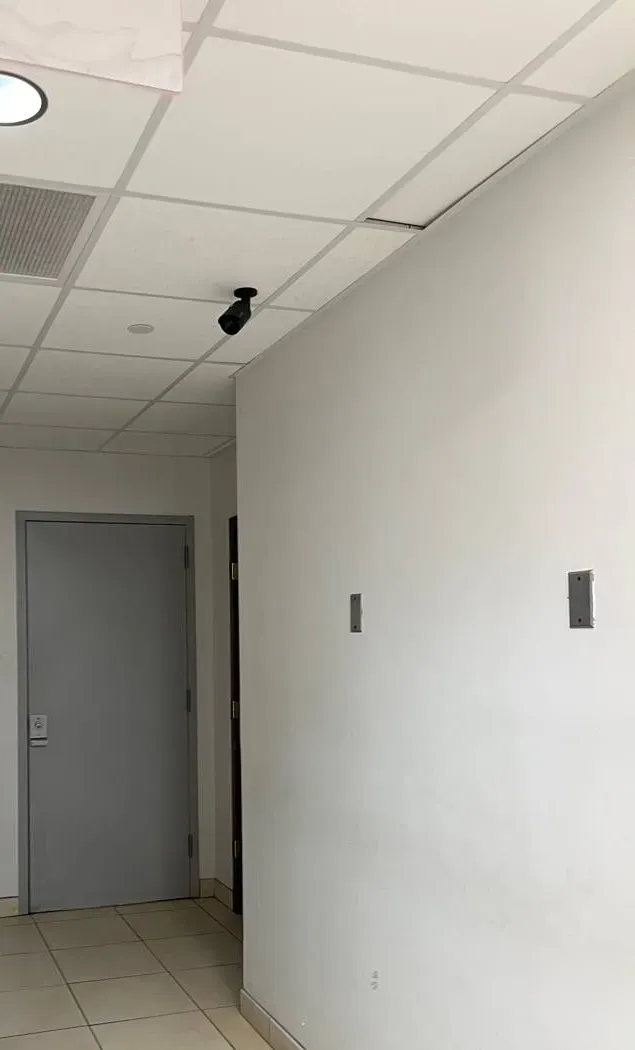
Dyker Heights, Brooklyn door buzzer installation: tiled corridor with white walls and small wall plates ending at a grey steel door with a lever handle under a drop ceiling with a small camera
A photo from the AESS job library, not taken in Dyker Heights: a tiled corridor with white walls and small wall plates ending at a grey steel door with a lever handle, under a drop ceiling with a small camera. The rear door from the parking area in a new Dyker Heights rental building usually looks like this, a steel door with a lever that must open freely from inside, and it is where a resident reader and a strong closer belong.
AI Overview Reality Check

What AI Gets Wrong About Door Buzzer Installation in Dyker Heights

Ask a search engine or an AI assistant about door buzzers and the answer is usually stitched together from national cost guides and the marketing pages of intercom makers. Those sources are not wrong about what they cover. They are written for an average house or a large apartment building somewhere else, and a Dyker Heights lot, with its gate, its yard and its two households, is rarely average. Here are seven claims you will meet, where each came from, and what actually happens on a job here.

"Wireless systems cost $350 to $1,100, while wired systems range from $450 to $1,900 installed"

That is the summary at the top of the NYHLS buzzer guide, and its table splits the costs neatly into hardware and installation for audio, wireless and video systems. As a national starting point it is reasonable, and its ranges overlap our own Brooklyn list for a house: $400 to $900 for audio, $700 to $1,800 for video.

What the table cannot show is the distance. Its figures assume a station at the door and a short run inside. On a Dyker Heights house where the station goes on the front gate, the cable has to cross a yard, a walk or a driveway, and that labor can be a larger share of the job than the equipment. The wired-versus-wireless line also blurs here: wireless only saves money if the gate already has power, and on most gates it does not.

So use national figures to sanity-check a quote, not to set one. The number that matters is the one written after someone has measured from your gate to your door and looked at what lies between.

"Repair runs $150 to $250, a like-for-like audio replacement $1,000 to $3,000 per door"

Swiftlane's buzzer guide breaks costs into three tiers: a repair, a like-for-like audio replacement priced per door, and a smart video upgrade. The tiers make sense for apartment buildings, where a single lobby door serves many apartments and the replacement cost is spread across them.

On a one- or two-family house the tiers look different. A like-for-like audio replacement on a house door with a sound strike and reusable wire usually falls in our $400 to $900 range, well under a per-door building figure. And the repair tier is often not the station at all but the strike, the closer or the power supply.

Where the per-door framing does fit Dyker Heights is the new buildings: an 11- or 22-apartment rental with a main entrance and a rear door from parking is exactly the kind of property those tiers were written for, and there our building range, from about $2,500 to past $10,000, applies.

"Audio-only intercoms and buzzer systems no longer meet the demands of today's residents"

ButterflyMX says this in its guide to video intercoms in New York City, and for a large rental building competing for tenants it may well be true. Seeing a visitor before opening the door is a real improvement, and we install far more video than audio.

But plenty of Dyker Heights households are well served by audio. An owner who wants a gate kept shut and a simple way to let the family's regular visitors in, without screens or apps, may be happiest with an audio station at the gate and a handset in the kitchen. It costs less, has fewer parts to fail and nothing to update.

The better question is what the household will actually do with the system. If people will want to see who is at the gate from upstairs or answer from work, buy video. If they will always walk to the window anyway, audio with a good release may be the smarter purchase, and video can be added later on most two-wire systems without pulling new cable.

"For a new development, choose a system without building wiring or in-unit hardware"

Also from ButterflyMX's NYC guide, aimed at developers watching their budgets. A panel that calls residents' phones over a cellular or internet connection, with no cable to the apartments and no stations on the walls, does save money at construction.

For a new Dyker Heights rental of 11 or 22 apartments, the trade-off deserves a hard look. The Multiple Dwelling Law requires an intercom that lets tenants talk to a visitor and release the door from the apartment. A phone-only system meets that only while every tenant has a working phone, a working app and a signal, and while the building's connection is up. Residents who prefer not to use an app, older relatives visiting from abroad, or a tenant whose phone is off are left without a way to answer.

Pulling a cable to every apartment during rough-in costs little compared with adding it after the walls are closed. Our usual recommendation for a new building here is to pull the cable anyway, choose a panel that supports both stations and app answering, and let the owner decide unit by unit.

"Most commercial and multi-tenant installations require NYC electrical or low-voltage permits"

Some installer blogs say this in their FAQ, and the instinct behind it, that entry work in a building is regulated, is sound. The details are where these summaries get vague.

What an owner can rely on is this. The entry system is low-voltage work, and in New York State it should be done by a licensed installer; ours is NYS license #12000287431. Any new 120-volt outlet or circuit for the power supply is electrical work for a licensed electrician. On a new building, the entry system is part of the work the building's own filings and inspections cover, which is why the builder's team should plan it.

If an installer tells you a permit is needed, ask which agency issues it and for which part of the work. A clear answer is a good sign; a vague one is worth a second quote.

"Allow one to two hours per station"

HomeAdvisor's intercom cost guide gives that figure for installing stations, and inside a house with open walls or reusable wire it is about right. Mounting an indoor monitor on a prepared box and connecting a pair really does take an hour or so.

It leaves out the parts that take time on a Dyker Heights job: the route from the gate, the strike that has to be fitted to an old frame, the door closer that has to be adjusted so the door relatches, the cable that has to be fished up three floors of a century-old house, and the testing. A gate-to-house video system with a station on every floor of a large detached house is often a full day for two technicians.

We tell you the expected time when we write the quote, and the technicians arrive inside the two-hour arrival window you booked, so the household can plan the day.

"Software subscriptions commonly add $5 to $15 per unit per month"

Swiftlane's cost guide gives that range for cloud intercom subscriptions, along with $30 to $100 per door per month on some systems. For an apartment building with a cloud panel it is a fair warning, and owners should see that cost before they choose.

For a Dyker Heights house it is usually beside the point. A wired audio or video system with indoor monitors has no monthly fee at all, and many video stations with app answering charge nothing for basic calling and release. A one- or two-family house rarely needs the cloud management features those subscriptions pay for.

Where a system does carry a subscription, such as some cloud panels on new buildings, we put the monthly cost on the quote beside the hardware, so the owner can compare five years of ownership rather than the day-one price.

Not Sure Whether the Station Belongs at the Gate or the Door? Speak to a Tech

Send one photo from the sidewalk showing the gate and the house, one of the front door, and one of the cellar wall behind it if you can reach it, with the address and the number of households, to (347) 934-8335 or on WhatsApp. A technician will tell you which setup fits, roughly where it falls on our Brooklyn ranges and whether anything about the route needs a closer look, before anyone visits. Or use the request form and we will call you back.

Get In Touch

Request a Free Quote

✅
Request Sent!
Thank you. A technician will call you about the Dyker Heights address, usually within two hours during working hours.
How It Works

Our Installation Process

1. Send photos from the sidewalk and the door

The front gate, the walk, every door visitors use, the old bell or intercom and the cellar wall where the wires come in, with the address and the number of households.

2. Confirm who controls each door

Which owner, household, condo board or builder approves the work, how many dwelling units the building legally has, and whether a gate motor or an alarm already sits on the door.

3. Walk the route from the gate to the door

A technician measures from the gate to the house, checks the surface the cable must cross, tests any old wire pair by pair, and checks that each door and frame can take a release.

4. Write the scope and the price

Equipment, mounting points, cable route, door hardware and every possible add-on, such as a trench, a gate motor tie-in or old wire that might fail, priced in writing before anything is ordered.

5. Prepare the doors, the gate and the power

The strike goes into a sound frame, the closer is set so the door relatches, gate hardware is fitted, and the power supply goes on an owner-controlled circuit, with an electrician for 120-volt work.

6. Install, program and test

Stations are mounted, cable is run or reused, each household gets its own button, and every station is called from the street while each door is released and watched relatching.

7. Hand over the system

The owner gets the wiring record, the admin access, a written way to add and remove phones, and a short guide for everyone in the household.

Dyker Heights, Brooklyn door buzzer installation: touchscreen entry panel showing a dial pad with a four-digit apartment code entered, a camera above and a card-reader symbol below
A photo from the AESS job library, not taken in Dyker Heights: a touchscreen entry panel showing a dial pad with a four-digit apartment code entered, a camera above and a card-reader symbol below. A code panel like this is what we would plan for the main door of a new 22-apartment building on 13th Avenue, where visitors enter an apartment code and residents use a card, and step 6 checks every code against the right apartment.
Coverage Area

Door Buzzer Installation Near Dyker Heights' Landmarks

79th Street station

The D train stop at the corner where permits were filed in January 2026 for a five-story, 22-apartment building at 7924 13th Avenue, also addressed as 1283 80th Street.

Dyker Heights Boulevard

The name given in 2001 to 13th Avenue from 86th Street to Bay Ridge Avenue, the neighborhood's only true commercial district, many of its stores with apartments or offices above.

St. Bernadette Church

The parish church on 13th Avenue between 82nd and 83rd Streets, a block from new condo buildings listed for sale at 8315 and 8323 13th Avenue.

The top of the hill

The high point around 11th Avenue and 82nd Street, about 110 feet above sea level, in the detached-house blocks the original 1890s development was built around.

St. George Coptic Orthodox Church

The church at 1105 67th Street, opened in 1973, near the 11th Avenue blocks in the 60s where the neighborhood's Coptic community settled.

McKinley Park Library

The Brooklyn Public Library branch at 6802 Fort Hamilton Parkway, on the northern overlay strip where stores and services mix with houses.

We also serve Bay Ridge, Bensonhurst and Bath Beach at the same Brooklyn rate, along with Fort Hamilton and Borough Park. See our door buzzer installation in Brooklyn page for the whole borough.

Pricing

Door Buzzer Installation Cost in Dyker Heights

Dyker Heights is billed at our Brooklyn rate, with no premium for large houses or for the southern end of the borough. Final pricing follows a walkthrough, because the number of households, the route from the gate to the door, the doors and frames, and the condition of any old wire drive the total far more than the brand on the station.

JobTypical Dyker Heights propertyBrooklyn range
Audio buzzer or replacement with electric strike release, existing wiring reused where it tests wellOne-family or two-family house, a side door off the driveway, an office door in a house$400–$900
Video door station with indoor monitors or smartphone door releaseLarge detached house with several floors, two-family with a station per household, gate station on a house set back from the street$700–$1,800
Directory or code panel with every apartment wired or on app answering, audio or video by unit count, optional fob integrationSmall condo or walk-up on 13th Avenue, new rental building of 10 to 25 apartments$2,500–$10,000+
Service call booked onlineDiagnosis of an existing buzzer, a dead release or a station that stopped ringing$250, applied toward the work
Monthly fee on a wired systemAny house or building choosing the no-subscription option$0
Buzzer and entrance camera on the same visitPorches, side doors, gates and store back doorsTypically saves $200–$400 in labor

What moves a house job inside its range is predictable. First is where the station goes: at the door, the cable run is short and usually straight into the cellar; at the gate, the cable has to cross the yard, and the surface it crosses, lawn, pavers, concrete or a driveway, sets much of the labor. Second is the number of indoor stations: one monitor in the kitchen is the base, and each extra floor adds a station and a cable route. Third is the door and gate hardware: a sound frame and a gate that closes squarely take a standard strike, while an old frame that has moved, a sagging gate or a pivot door needs more. Fourth is the old wire: if a pair tests sound it is reused, and if it might fail, the cost of replacing it is named on the quote before you approve.

For a new building, the apartment count and the stage of construction decide most of it. A system planned at the drawing stage, with cable pulled during rough-in, costs much less than the same system added after the walls are closed. A rear entrance from parking, a package room door and a separate store door each add to the scope, and each is listed separately so the owner can see what it costs. Where a building chooses an app system with a subscription, that monthly cost is listed on the quote beside the hardware.

Full terms — including 50% deposit, one-year parts-only warranty on AESS-supplied products, and the late-fee schedule — are set out in the service agreement.

Find Out Which Range Your Dyker Heights House or Building Falls In

Tell us the address, how many households the door serves, whether visitors start at a gate and how far it is from the door, and what is there now, and we will tell you which of the three Brooklyn ranges fits and what would move it up or down. Call or text (347) 934-8335, send photos on WhatsApp, or fill in the form.

Shop Our Systems

Door Buzzer Installation Packages & Pricing

Three typical Dyker Heights jobs, each placed inside the matching range on our Brooklyn list. The exact figure comes from the walkthrough.

Door buzzer for one house or a side door: $400–$900

An audio station at the front or side door of a one- or two-household house, with a handset in the kitchen, a fail-secure strike fitted to a sound frame, the closer set so the door relatches every time, and a battery-backed power supply in the cellar.

Video entry for a house or two-family: $700–$1,800

A video station at the gate or the door, with a monitor on each floor or phone answering, a separate button and station for a second household, a strike or gate lock sized for the door or gate, and the cable run across the yard or reused from old wire that tests sound.

Condo, walk-up or new building system: from about $2,500

A directory or code panel at the main entrance, a station or app answering in every apartment, a resident reader at a rear or parking door, strike or approved lock, power in the equipment room and a checked directory, rising toward $10,000 or more with apartment count and doors.

Bring your own equipment. If you have already bought a door station, a video intercom kit or a gate lock, we can install it as labor-only work, quoted flat once we have seen the gate, the doors, the frames and the route. Tell us the make and model when you write, and we will tell you before the visit whether it can reach every floor and household, release your gate or door, and stand up to a gate pier in the weather, or whether it is only a doorbell.

Complete Services

Every Door Buzzer Service in Dyker Heights

Houses and two-families

Gate and door stations, releases, indoor monitors on every floor and separate buttons per household. Request a quote

Condos and new buildings

Directory panels, apartment stations, rear-door readers and cable schedules for builders. Call (347) 934-8335

Across Brooklyn

The same list in every neighborhood. Brooklyn door buzzer installation

Across New York City

Every borough's houses, buildings and rules. NYC door buzzer installation

FAQ

Dyker Heights Door Buzzer Installation FAQ

Is a station on the front gate priced the same as one at the front door?
+

The station itself costs about the same, but the job usually does not. A gate station needs cable run across the yard or walk, a release suited to the gate rather than a door frame, and often a hood against the weather, so a gate job tends to sit higher in the same Brooklyn range than a door job on the same house. The quote shows the route and its cost separately so you can compare the two setups.

Our house has a front door, a side door off the driveway and a front gate. Can one indoor monitor answer all three?
+

Yes, on most video systems. Each entrance gets its own outdoor station and its own release, and the indoor monitor shows which one is calling and opens only that one. Many monitors accept several outdoor stations, so the family answers every door from the same screen in the kitchen or upstairs instead of having separate equipment for each.

Does a door buzzer system use much electricity?
+

Very little. The power supply runs low-voltage stations that sit idle most of the day, and indoor monitors draw more only while their screens are on during a call. The strike or gate lock draws power only for the few seconds it is released on a fail-secure setup. On a typical house the system's use is small next to everyday appliances.

Can a door buzzer be installed in an older house that still has knob-and-tube wiring?
+

Yes. The entry system is low-voltage and runs on its own cable, separate from the house's power wiring. The only point where it meets the house's electricity is the power supply, which plugs into an outlet or is wired to a circuit. If the nearest outlet is on old knob-and-tube wiring, we recommend a licensed electrician add a modern outlet for the power supply, and we tell you that before the job is priced.

Can the indoor monitor go on a tiled kitchen wall or a backsplash?
+

It can, though we usually prefer a painted wall nearby. Drilling tile is routine with the right bit, but the cable has to reach the spot from behind, and a backsplash often has cabinets, plumbing or outlets in the way. We pick the location with the owner during the walkthrough, at eye height where the family actually stands, and note it on the quote.

We salt the stoop and the walk all winter. Will that damage the door station?
+

Not if it is mounted with that in mind. Outdoor stations are built for rain and snow, but salt spray and slush thrown up from a walk are hard on any metal finish over the years. We mount stations above splash height, under a hood where they face the weather, and seal the back box so meltwater cannot run in behind. Wiping the face down after a heavy salting season helps it last.

Can the indoor monitor also show the driveway and yard cameras we already have?
+

Sometimes. Some video intercom monitors can display network cameras, and some camera recorders can show the door station in their app. Whether your cameras and the new station can share a screen depends on the specific models. Send us the make and model of your recorder before the visit, and we will tell you whether they can be combined or should stay on separate apps.

Can the menus on the indoor station be set to a language other than English for older relatives?
+

On many current monitors, yes, with several menu languages to choose from, though the list varies by model and maker. If a grandparent will be the one answering the door, tell us which language they read, and we will check the model's options before ordering and set it up at handover. For anyone who prefers no menus at all, a simple audio handset with one talk button and one door button needs no reading.

Does the camera on the door station record people walking past on the sidewalk all day?
+

On most intercom-style door stations, no. The camera shows a picture when someone presses the button and during the call, and many stations keep a snapshot of each caller, but they are not set up to record the street continuously. Consumer video doorbells are different and often record on motion. If you want continuous recording of the walk or the gate, that is a separate camera with its own settings.

Can a buzzer release go on the sliding glass door to our back yard?
+

Rarely, and we usually advise against it. Sliding doors lock with a hook bolt rather than a latch, so a standard strike does not fit, and the electric locks made for sliders are specialized and often clash with the door's own lock. For a back yard entrance, a release on the yard gate or on a hinged side door is almost always the simpler and more secure choice.

Can a station be put on a post at the driveway so a driver can ring from the car window?
+

Yes. A station on a short post or gooseneck pedestal beside the driveway, at car-window height, lets a family member, a caregiver or a contractor ring without getting out. It is usually paired with a motorized driveway gate, with the indoor monitor opening the gate through the operator's input. The post needs a footing and a cable run in conduit, both of which are priced on the quote.

More Door Buzzer Installation near Dyker Heights

Door Buzzer Installation Brooklyn NY | Brownstones & Condos · Door Buzzer Installation NYC | Apartment & Building Entry · Door Buzzer Installation Manhattan NY | Apartments & Co-ops · Door Buzzer Installation Queens NY | Co-ops & Apartments · Door Buzzer Installation Bronx NY | Co-ops & Apartments · Door Buzzer Installation Staten Island NY | Homes & Apts · Door Buzzer Installation Long Island NY | Nassau & Suffolk · Door Buzzer Installation Hudson Valley NY | Apartments · Door Buzzer Installation Nassau County NY | Homes & Co-ops · Door Buzzer Installation Suffolk County NY | Homes · Door Buzzer Installation Westchester County NY | Co-ops · Door Buzzer Installation Rockland County NY | Homes & Apts · Door Buzzer Installation Orange County NY | Homes & Farms · Door Buzzer Installation Putnam County NY | Lake Homes · Door Buzzer Installation Dutchess County NY | Homes · Door Buzzer Installation Ulster County NY | Kingston

Door Buzzer Installation Bath Beach Brooklyn NY · Door Buzzer Installation Bay Ridge Brooklyn NY · Door Buzzer Installation Bedford-Stuyvesant Brooklyn NY · Door Buzzer Installation Bensonhurst Brooklyn NY · Door Buzzer Installation Bergen Beach Brooklyn NY · Door Buzzer Installation Beverley Square Brooklyn NY · Door Buzzer Installation Boerum Hill Brooklyn NY · Door Buzzer Installation Brooklyn Navy Yard, Brooklyn NY · Door Buzzer Installation Brooklyn NY | Brownstones & Condos · Door Buzzer Installation Brownsville Brooklyn NY · Door Buzzer Installation Bushwick Brooklyn NY · Door Buzzer Installation Cadman Plaza Brooklyn NY · Door Buzzer Installation Canarsie Brooklyn NY · Door Buzzer Installation Carroll Gardens Brooklyn NY · Door Buzzer Installation City Line Brooklyn NY · Door Buzzer Installation Clinton Hill Brooklyn NY · Door Buzzer Installation Cobble Hill Brooklyn NY · Door Buzzer Installation Columbia Street Waterfront Brooklyn · Door Buzzer Installation Coney Island Brooklyn NY · Door Buzzer Installation Crown Heights Brooklyn NY · Door Buzzer Installation Cypress Hills Brooklyn NY · Door Buzzer Installation Ditmas Park Brooklyn NY · Door Buzzer Installation Downtown Brooklyn NY · Door Buzzer Installation DUMBO Brooklyn NY | Loft Entry

Other services in Dyker Heights

Alarm Installation Dyker Heights Brooklyn | Outages & Lights · Structured Cabling Installation Dyker Heights Brooklyn NY · Fire Alarm Installation Dyker Heights Brooklyn NY · Door Buzzer Repair Dyker Heights Brooklyn NY · TV Installation Dyker Heights Brooklyn · Security Camera Installation Dyker Heights Brooklyn NY · Access Control Installation Dyker Heights Brooklyn NY · Intercom Installation Dyker Heights Brooklyn NY

Ready for a Dyker Heights Gate and Front Door You Can Answer From Any Floor?

Send a photo from the sidewalk of your gate and your front door, with the address, the number of households and what is there now, and we will tell you which setup fits and where it falls on our Brooklyn ranges. Call or text (347) 934-8335, message us on WhatsApp, or use the request form. Licensed under NYS license #12000287431 and rated 4.7★ across 201 Google Reviews, with crews dispatched from our Troy Avenue office in Brooklyn.