One Button per Household, Counted Before Pricing · Release on the Leaf That Actually Opens · Power Where the Owner Can Reach It · Brooklyn Rate
Door buzzer installation in Highland Park, Brooklyn is mostly about houses that hold more than one household: semi-detached two-families on Sunnyside Avenue with a finished basement and its own outside door, two-story buildings from about 1910 with four apartments behind one front door, a house from 2004 on Highland Boulevard with two entrances, and new two- and three-unit buildings filed on empty lots and old sites near Jamaica Avenue. Each one needs the same three things done in the right order: a front door that closes and locks on its own, a release on the door leaf people actually open, and a button and station for every household that gets visitors. Below is how we plan that for each kind of building on the hill, and where it falls on our Brooklyn price list.
Reviewed and updated November 12, 2026. This page draws on HPD's page for the Basement Apartment Conversion Pilot Program in East New York and Cypress Hills; Brooklyn Paper's report on that pilot's progress as of May 2023; Epicenter-NYC's June 2025 guide to the state basement legalization law and its 15 community districts; New York's Multiple Dwelling Law §4 and §50-a; the Buildings Department rule 1 RCNY §42-01 on entrance doors and intercommunication systems; property listings for 211 Sunnyside Avenue, 133 Sunnyside Avenue, 68 Sunnyside Avenue, the lot at 25 Sunnyside Avenue and 215 Highland Boulevard; Marketproof's reports of new building permits filed for 488 and 494 Jamaica Avenue; Allegion's knowledge center on electric strikes for pairs of doors and its fail-safe and fail-secure guide; a 2007 Brownstoner forum thread on double doors; two BiggerPockets threads; ButterflyMX's October 2026 guide to small-building buzzer replacement; Habitat Magazine's May 2017 report on phone-based entry; Ring's support page for Ring Intercom; the HomeAdvisor, Swiftlane and CountBricks cost guides; Aiphone's GT Series page; the 2010 ADA Standards; Wikipedia, NYC Parks, Brownstoner and Forgotten New York on the park and the houses around it. · Abstract Enterprises Security Systems, NYS license #12000287431 · crews dispatched from our office at 1282 Troy Avenue, Brooklyn

Owner-operated since 2002 · Thousands of jobs completed · Booked within 2 hours
Quick answer: door buzzer installation in Highland Park costs $400 to $900 on our Brooklyn list for an audio door station, apartment stations and a new release at a one- or two-family house, $700 to $1,800 for a video door station with indoor stations or phone answering at a two-family or a building of three or four apartments, and from about $2,500 to past $10,000 for a full entry system in one of the large apartment houses at the top of the hill. The price covers the door station, a station for each household, the electric release in the frame and a battery-backed power supply, installed and tested from the sidewalk to every apartment. Send photos of the front door and the cellar to (347) 934-8335 or on WhatsApp, and we reply with the range that fits, usually within two hours during working hours.
Highland Park takes its name from the 141-acre park on the Brooklyn and Queens line, and the houses that climb toward it from Jamaica Avenue are usually described as a section of Cypress Hills rather than a neighborhood of their own. On this page we mean the hill between Jamaica Avenue and Highland Boulevard: Sunnyside Avenue, Highland Place, Miller Avenue, Barbey and Hendrix Streets, Vermont Street, Arlington Avenue near Barbey and Schenck, and the short courts off the side streets. Brownstoner's architecture column has written up runs of brick porch houses from 1900 to 1920 on Sunnyside Avenue, brick singles with Dutch gambrel roofs from 1908 to 1912 on Arlington Avenue, and an Arts and Crafts house from before 1915 on Highland Boulevard. That is the stock most buzzer calls from the hill come from.
Those houses were mostly built for one family or two. Over a century, many of them have come to hold more. A listing for 211 Sunnyside Avenue describes a semi-detached two-family from 1910 with separate electric and gas meters for every apartment and "a full finished basement with outside separate entrance." A listing for 133 Sunnyside Avenue describes two upper units over a garden level. A rental listing for 68 Sunnyside Avenue shows four apartments on two stories in a building from 1910, behind a gate. In each of those houses the front door that once opened for one family now has to answer for two, three or four, and the bell that used to ring in the front hall now has to reach a kitchen two floors up.
That is the most common reason we are called to install a buzzer here. An owner rents out a floor, or an adult child moves into the basement, and suddenly someone is walking down the stairs every time the bell rings to find out who it is for. Or a tenant asks why the front door depends on whoever left last remembering to lock it. A landlord on a real-estate forum described the problem in one sentence about a three-family with no intercom: "the front door relies on tenants remembering to lock it behind them as they leave." A buzzer fixes both halves of that. Each household gets its own button and its own way to answer, and the front door locks every time it shuts, because the people inside can let a visitor in without leaving it on the latch.

The second reason is building. Highland Park is not a neighborhood of big new projects, but it does have empty lots and old houses being replaced. A lot at 25 Sunnyside Avenue has been listed for sale as the site of a planned two-family residence. Marketproof reported new building permits filed in 2025 for a three-story, three-unit building at 488 Jamaica Avenue, replacing a two-story building from 1915, and for a three-story, two-unit building at 494 Jamaica Avenue, replacing a low-rise from 1899. A rental listing for 215 Highland Boulevard describes a two-apartment house built in 2004 with two entrances and a voice intercom. A new house is the cheapest place there is to install a buzzer properly, because the cable can go in while the walls are open, and the most expensive place to get it wrong, because a missing pipe or box is found only after the plaster is painted.
The third reason is the basement. Highland Park sits in Brooklyn Community District 5, where the city ran a pilot from 2019 to help owners of one- to three-unit homes in East New York and Cypress Hills turn basements and cellars into legal apartments. HPD's page for that program now says it is no longer accepting applications, and the state law that opened a new path for basement apartments in 2025 covers 15 community districts, not including Brooklyn's District 5. Owners on the hill still ask us about basement doors constantly, because so many of these houses already have a finished basement with its own way out. What a basement door should and should not have on the buzzer is a question with a clear answer, and we cover it below.
Where this page applies. We use Highland Park for the hill between Jamaica Avenue and Highland Boulevard, from roughly Vermont Street east past Miller Avenue, and we serve every address there at our standard Brooklyn rate. The large six-story apartment houses at the top of the boulevard are part of the neighborhood too, and their lobby systems are priced from the same list, but most of this page is about the houses below them, because that is where most installation calls come from. For addresses farther south, see our Cypress Hills door buzzer installation page, and for the whole borough our door buzzer installation in Brooklyn page.
Some calls that reach us as installation calls are repairs, and the other way round. A two-family on Sunnyside Avenue that has had a working buzzer for twenty years and stopped ringing last week usually needs a repair: a transformer in the cellar, a button that corroded, a strike that worked its screws loose in a soft frame. Those are priced as repairs, starting with the $250 service call booked online, which is applied toward the work.
The quickest way to tell which you have is to count. If the number of buttons at the door matches the number of households that get visitors, and each household has a station that rings and releases, it is probably a repair. If the count does not match, or the release works from only one place, you are looking at an installation, and our Brooklyn door buzzer installation team prices it from the installation list.
Every service below is priced from the same Brooklyn door buzzer list. On the hill, the number of households sets the size of the system, the front door decides what kind of release it can take, and the cellar decides most of the labor: where the old bell wire runs, where the power supply can live, and how cable gets from there to each floor.
A door station with one button per household, a station in each apartment and a release in the frame, for one-family houses that became two- or three-family over the years and still have one bell in the front hall.
Adding a button, a station and a cable run when a floor is rented for the first time, an adult child moves into a finished basement, or an owner splits a large house, so the new household answers its own visitors.
Cable, boxes and a planned power location while the walls of a new two-family or three-unit building are open, then the door station, stations and release once the doors and finishes are in.
Camera door stations and video apartment stations for houses built in recent decades with a plain voice intercom, using the existing cable where it tests sound and the system allows.
Electric strikes for wide front entries with two leaves, fitted to the leaf that is held by bolts so the everyday leaf opens on release and the pair still locks together.
Closer adjustment or replacement, latch and lock work, and removal or blocking of hold-back buttons so the front door shuts and locks every time a visitor goes through.
Locks, closers and, where a household lives there, a button and station for basement walk-outs and side doors, kept separate from the front door so neither one undoes the other.
Door stations that also ring an owner's or a resident's phone, for families who manage a house on the hill from another neighborhood or work long shifts away from home.
A release at the counter for storefronts and small offices under the el, and a separate panel and power for the apartments' door beside them.

Six kinds of building account for almost every installation we are asked to price on the hill. What separates them for a buzzer is not their style but four practical things: how many households share the front door, how the front door is built, where the cellar is and who can get into it, and whether the walls are open, plaster or brick.
Semi-detached and attached brick houses from about 1910, often with separate meters for each apartment and a finished basement with its own outside door, where one front door serves two households and sometimes a third person downstairs.
Two- and three-story buildings with two apartments per floor behind one door, sometimes behind a gate, where the front door is used many times a day and is the one most often left unlocked.
The bigger old houses on and near Highland Boulevard, some divided long ago and some being planned into apartments now, where a buzzer decision is part of an architect's drawings.
Newer two-apartment houses with two entrances and a builder-installed voice intercom, where the cable is usually modern and the question is what to add rather than what to replace.
Two- and three-unit buildings going up on lots like 25 Sunnyside Avenue and on Jamaica Avenue sites like 488 and 494, where the entry system should be planned before the walls close.
The 1928 and 1940 buildings facing the park, with dozens of households on one lobby panel, priced as full multi-unit systems from the top of our list.
The commonest house we see on Sunnyside Avenue, Highland Place and the side streets is a brick two-family, often semi-detached, with the owner's apartment on one floor and a tenant on the other. The front door opens into a small hall with the stair going straight up. In many of them there is also a basement that has been finished at some point, and in some, like the listing for 211 Sunnyside Avenue, that basement has its own outside door.
For the buzzer, that means two buttons at the front door, one station on each floor and a release in the front door's frame. It also means a decision about the third door. If no one lives in the basement, that door needs a good lock and a closer, not a button. If someone does, they need their own button somewhere a visitor will find it, and their door needs to lock as reliably as the front. We go through that with the owner at the walkthrough rather than guessing from the outside of the house.
Separate meters are worth noticing too. When each apartment pays for its own electricity, the power supply for a shared front door should not be plugged into either apartment's outlet. It belongs on the house's own circuit, in the cellar or the hall, where the owner can reach it and no tenant's unpaid bill or tripped breaker turns off the front door for everyone.
A two-story building with four apartments behind one door, like the 1910 building at 68 Sunnyside Avenue described in its rental listing, has a front door that opens and closes more often than any house door and less often than a lobby. Four households means four sets of visitors, four sets of deliveries and four sets of people coming home late. It is also, under the Multiple Dwelling Law, a multiple dwelling: three or more families living independently.
These buildings need a small button panel rather than a single doorbell, a station in every apartment and a release that is built for a busy door. The door itself matters more here than anywhere else on the hill. A closer that slams or drifts, a latch that misses its keeper one time in ten, or a lock with a hold-back button someone has pressed will leave the door open for all four households, and no buzzer can fix that by itself.
Where there is a locked gate in front, as the listing for 68 Sunnyside Avenue notes, the visitor's first stop is the gate, not the door. Then the question is whether the release should open the gate, the door or both, and whether the panel belongs at the gate. We answer that on the sidewalk, standing where a courier would stand, rather than from a drawing.
Some of the bigger old houses on and near Highland Boulevard have been apartments for decades. Others are being planned into apartments now, with an architect filing with the Buildings Department. When a house goes from one or two families to three, it becomes a multiple dwelling, and the drawings for the conversion are the right place to decide where the panel, the stations and the power supply go.
We work from the architect's floor plans, mark a cable route to each new apartment, and agree with the contractor when the cable goes in. That is usually after framing and before insulation and drywall, with a box at each station location and a protected path from the cellar. The panel and stations themselves go in at the end, once the front door is hung and the apartments have walls to mount on. Doing it in that order means nothing has to be chased into a finished wall later.

At a Highland Park house our technician spends the first half hour of a walkthrough on three counts, before any equipment is discussed. Those counts decide most of the price, and most of the mistakes we see in older installations come from getting one of them wrong.
The first count is households. The technician asks who lives where and who receives visitors, not how many apartments the deed shows. A two-family may have an adult son in the finished basement, a top floor shared by two roommates who each want their own calls, or a grandparent on the ground floor who answers the door for everyone. Each household that gets its own visitors gets its own button.
The second count is doors. Front door, basement walk-out, side door to the yard, a gate at the sidewalk, a door from the garage. The technician opens each one, lets it go and watches whether it closes and latches by itself. A door that people use but nobody locks is the door that undoes the buzzer, so every one goes on the list, even if most only need a closer and a lock.
The third count is leaves. Many of the older front entries on the hill are wide, and some are a pair. The technician checks which leaf people actually open, which one is held shut by bolts, whether those bolts are ever used, and what kind of lock the everyday leaf has. That decides where the release goes, and it is the step most often skipped.
Then, and only then, the cellar: where the old bell transformer hangs, what wire runs where, whether the cellar is reached from the hall or only through an apartment, and where a battery-backed power supply can be mounted on the house's own circuit. Every old pair gets metered. Sound pairs are reused, failed ones are replaced, and the quote says which.

Basement doors come up on almost every walkthrough on the hill. Many houses here have a finished basement, and some, like the 1910 two-family at 211 Sunnyside Avenue described in its listing, have one with walk-out access and its own outside entrance. Owners want to know whether that door belongs on the buzzer, whether it should have a button, and whether they should wire for a basement apartment they might add one day. The answers depend on one question the buzzer cannot answer for you: does a separate household live down there legally?
Highland Park is part of Brooklyn Community District 5, East New York and Cypress Hills. That district was the site of the city's Basement Apartment Conversion Pilot Program, which HPD ran with the Cypress Hills Local Development Corporation. According to HPD, the pilot offered owner-occupants of one-, two- and three-unit homes low- or no-interest loans of up to $120,000 to convert a basement or cellar into a legal apartment, under building code changes passed in February 2019. HPD's page now says it is no longer accepting applications.
The pilot was small. Brooklyn Paper reported that, as of May 2023, more than 8,000 homes had been identified as possible candidates, just over 100 had passed the city's screening, and five were enrolled, with one under construction. Howard Slatkin of the Citizens Housing and Planning Council, which studied the pilot, told the paper: "Often these property owners are immigrant families renting to immigrant families." The cost of digging out a cellar to the required ceiling height was one of the main reasons so few homes went ahead.
In 2025 a state law opened a new path to legalizing existing basement apartments in New York City, effective June 16, 2025, with applications allowed until April 20, 2029. Epicenter-NYC's guide lists the 15 community districts it covers. In Brooklyn they are Districts 4, 10, 11 and 17. District 5 is not on the list. Among the conditions the guide describes are a ceiling of at least seven feet and "at least one door leading outside."
We install buzzers; we do not decide whether a basement is a legal apartment, and a button on a door does not make it one. What we can say is how each situation is handled at the door.
Wiring for the future is cheap when the system is being installed anyway. Most button panels come in sizes, and choosing one with a spare button, plus a spare pair in the cable to the basement, costs little at installation and saves a second visit if a third household ever comes. We do that on request; we do not label or connect a button for a unit that does not exist.

A buzzer is only as good as the door it opens. On the hill, the front doors of the older houses are often wide, heavy and original, and a fair number are pairs: two narrower leaves that meet in the middle, one opened every day and one that stays shut. They are handsome doors. They are also where most first-time installations go wrong, because the release ends up on the wrong side or the lock on the everyday leaf was never meant to latch into anything electric.
In a 2007 Brownstoner forum thread, a Brooklyn owner asked whether "a door buzzer (electric strike door) can be installed on double doors or not." One reply came from an owner who had done it on two sets of double doors during a renovation and warned, "You'll need to open up the walls, probably quite a bit," and that "the wiring needs to run down the doors." Another asked, half joking, "You don't want to just toss the key out the window?" That is still how many two-families on the hill let a visitor in.
The answer is that a pair of doors can take a buzzer, and the walls usually need far less opening than that owner found, if the release goes in the right place. Allegion's knowledge center, the lock maker's own reference, explains that on a pair the electric strike goes on the inactive leaf, the one held shut by bolts, and that where that leaf is "held closed with flush or surface bolts" a strike made for a pair is used. The everyday leaf keeps its own lock and latch. When someone presses release, the strike in the edge of the inactive leaf lets the active leaf's latch go, and the active leaf swings open.
First, the inactive leaf has to really be inactive. On many old pairs the top and bottom bolts have not been thrown in years, or one of them is missing, and the second leaf is held shut by nothing more than habit. A strike in its edge will not hold anything if the leaf behind it can be pushed open. So the bolts are checked and, where needed, repaired before the strike is fitted, and that work is named on the quote.
Second, the cable has to reach the strike. With the strike in the inactive leaf, the wire runs from the frame into that leaf, either through a hinge made to carry power or a small protected loop near the top hinge, and down inside the leaf's edge to the strike. Allegion also notes that some combinations, such as an electric strike with a vertical rod device, are "not for use in fire rated openings." House front doors are rarely rated, but if a door between a hall and a stair is, we say so and choose hardware that fits it.
Third, the lock on the active leaf has to have a latch that will release cleanly into a strike. Old mortise locks with a worn or short latch bolt sometimes do not. When that is the case, the lock body is replaced with one that matches the old trim where possible, and the keys change with it.
Many locks have a small button or slide on the edge or the inside that holds the latch back so the door can be pushed open without a key. It is useful when moving furniture. In a house with several households, it is also the most common reason a front door stays unlocked for days: someone presses it, forgets, and the door swings shut without latching. A buzzer cannot fix that, because the door was never locked in the first place.
When we install a release, we look for that button, show it to the owner and, if the owner agrees, disable it or replace the lock with one that does not have it. Tenants then get in with a key and visitors with the buzzer, and nobody needs to leave the door on the latch. If the owner wants a way to keep the door open on moving day, the right answer is a release that can be held for a set time from the owner's station or phone, not a button on the lock that anyone can press.

None of this is legal advice for a particular building. If you are not sure which rules apply to yours, HPD, the Buildings Department or your own lawyer can tell you. What we do is install a system that meets those rules where they apply and leave a written record of what was installed and tested.
Highland Park is a residential hill, and most of its business doors are at its foot, along Jamaica Avenue under the elevated J and Z, or in buildings that mix a shop with apartments. That shapes every commercial job here. The shop's door and the residents' door are planned together, kept on separate systems with separate power, and wired so that work on one never takes the other down.
Shops on Jamaica Avenue between the stations want a buzz-in door they can lock during slow hours, with the release at the counter and the door station placed where a roll-down gate cannot cover it.
The narrow door to the apartments over a store needs its own panel and its own power supply, separate from anything the shop uses, so a store closing or changing tenants never leaves the apartments without a working door.
Small new buildings filed on the avenue, such as the three-unit building at 488 Jamaica Avenue, are best planned with a residents' entry and, where there is commercial space, a separate shop entry from the start.
A rear or side door answered from inside, so staff do not leave the register to let in a delivery, kept apart from the residential stair so a driver buzzed into a stockroom never ends up in the apartments' hall.
The most common business request at the foot of the hill is simple: a shop or office that wants to see who is outside before letting them in, with the release button under the counter. The second is a delivery door at the back, answered from inside. Both are usually single-door jobs in the $400 to $900 range on our Brooklyn list, or $700 to $1,800 with video, and both are kept separate from the apartments' system. If your business is farther south toward Fulton Street or Atlantic Avenue, our Cypress Hills door buzzer installation page covers those doors, and for blocks east toward the city line, our City Line door buzzer installation page.

It should be part of the plan, but probably not as a button. A basement walk-out is a second way into the house, and a front door with a buzzer protects nothing if the basement door is left on the latch. So it gets looked at on the walkthrough like any other door: does it close on its own, does it lock, can it be opened from inside without a key, and does anyone use it day to day.
If it is a storage or laundry door, it usually needs a sound lock and, if people carry bins or laundry through it, a closer. It does not need a station or a button, and putting one there would send visitors to a door nobody answers. If the basement is part of the ground-floor apartment, a second chime or station downstairs lets that household hear the front door while they are below. We price those on the same quote, so the whole house locks together.
According to Epicenter-NYC's guide to the law, it covers 15 community districts, and in Brooklyn those are Districts 4, 10, 11 and 17. Highland Park is in District 5, East New York and Cypress Hills, which is not on the list. The district's own earlier program, HPD's Basement Apartment Conversion Pilot, is no longer accepting applications. Whether a basement in your house can become a legal apartment is a question for an architect and the Buildings Department, not for us.
What we can do cheaply is leave room. A door panel with one spare button and a spare pair in the cable to the basement costs little when the system goes in, and turns a future third household into an afternoon's work rather than a new installation. We leave the spare button blank and unconnected until there is a legal unit to connect it to.
Three are worth deciding on the drawings. The first is the panel: three buttons, or a code panel if the household count may change again. The second is the cable route: one run per apartment from a single point in the cellar or hall, planned so it goes in after framing and before drywall. The third is the power supply: on the house's own circuit, not inside any apartment, where the owner can reach it. Going from two families to three also moves the house into the Multiple Dwelling Law's definition of a multiple dwelling, and HPD's description of the basement pilot shows the same line, with two-to-three conversions handled under that law.
The city's intercom rule itself starts at eight apartments, so a three-apartment house is not required to have one. But it will have three households sharing one front door, and a conversion is the cheapest moment there will ever be to give each of them a button, a station and a door that locks. Ask your architect what the conversion requires of the doors themselves; we build the entry system to match.
Either can work if the job is split properly. The parts that belong with the builder are the ones that happen early: a 120-volt outlet where the power supply will live, a front door and frame ordered so they can take an electric strike, and boxes in the walls where the stations will go. The parts that belong with a low-voltage installer are the cable plan, the release, the door station, the stations and the programming. We do not do electrical work, so the outlet is always the electrician's.
What goes wrong is a builder's kit chosen in the last week, after the door is hung and the walls closed, with the strike cut into a frame that was never prepared for one. If you call us while the framing is up, we mark the station locations with you, run the cable and leave it coiled and labeled, then come back to finish once the door and walls are done. On our list a two-family video system usually lands in the $700 to $1,800 range, and the quote shows the prewire visit and the finishing visit as separate lines.
Often, yes. Houses of that age usually have modern multi-pair or network cable behind the stations, and there is a reasonable chance it can carry a video system. The technician meters every run and checks what kind of cable it is. If it is suitable, the old door station and apartment stations come off, and a video door station and video stations go onto the same wires.
If the builder used one thin pair that will not carry video, the old cable often makes a good pull string for the new one along the same route, so the walls still stay closed. Either way the quote says which it is before anything is ordered. If the house has two entrances, as many of these newer two-apartment houses do, each one gets its own station on the same system, and each apartment sees whichever door the visitor is at.
Not by itself. An electric strike only matters when the latch is out and the door is locked; if the latch is held back, the door just swings open and the strike never comes into play. So the fix is at the lock. The hold-back button is either disabled or the lock is replaced with one that does not have it, and the owner decides which.
Then the buzzer takes away the reason people used the button in the first place. Tenants come and go with their keys, visitors are buzzed in from upstairs, and deliveries are answered at the station instead of by leaving the door open for the afternoon. If the owner wants a way to keep the door open for a move, we set that up as a timed release from the owner's station or phone, not as a button anyone can press.
Usually the outer porch door gets both. The visitor's first stop is the porch door, so that is where the station belongs, and that is the door the release has to open, because otherwise the visitor is buzzed into a porch and left facing a second locked door. The house door then works like an apartment door: locked with a key, or with its own release if the owner wants one.
For the stations, sometimes; for the door, no. Owners on landlord forums often ask for a buzzer "that doesn't require hardwiring," and one owner with a three-family noted that big brands like Ring and Nest seemed designed for single-family homes. That is the problem in a nutshell. A store-bought doorbell rings the phones of whoever set it up, has one button and does not release a strike unless someone wires it to one.
The release in the frame is wired whatever the stations are, and it needs a power supply that will not drop out. Wired stations on cable through the cellar keep working when the internet does not, and if you want to compare, we price a wired system and a wireless one side by side. Where a single run truly cannot be made, we use wireless for that one station and say so on the quote.
For two households, an audio door station, a station on each floor, a new fail-secure release in the front door's frame and a battery-backed power supply falls in the $400 to $900 range. With a video door station and video stations, or phone answering for one or both households, it falls in the $700 to $1,800 range. A second station or chime in the basement for the ground-floor household, and a lock and closer for the basement walk-out, are priced as lines on the same quote.
Where in each range it lands depends on the door, the cable route and the cellar. A sound single door and a short run up an interior wall sit near the bottom. A pair of doors with missing bolts, a mortise lock that has to be replaced, or a route that has to avoid a finished basement ceiling sit higher. If an entrance camera is added on the same visit, it usually saves $200 to $400 in labor compared with a separate trip.
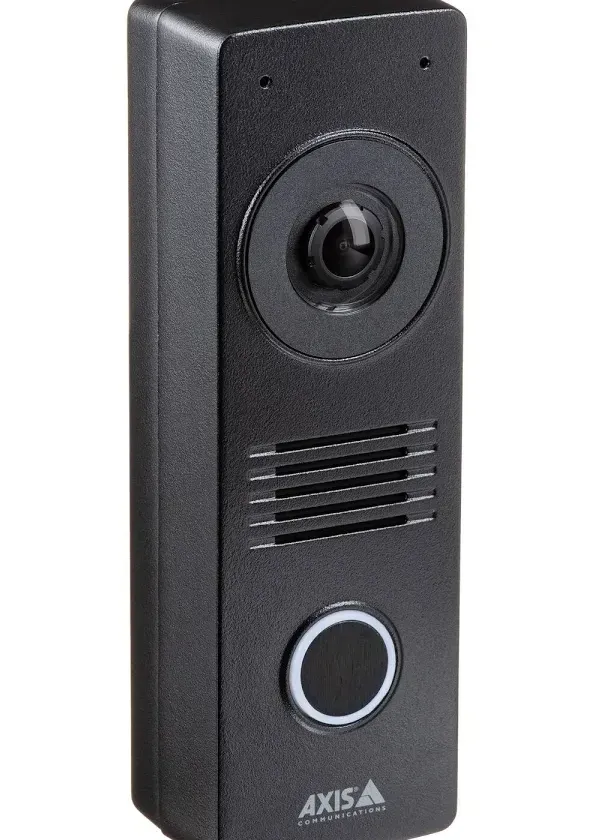
We quote a reliable non-branded system by default and install a named brand when an owner asks for one; the intercom brands we work with include Aiphone, ButterflyMX, 2N, Akuvox, Comelit and DoorBird. These are the kinds of equipment that come up most at Highland Park doors, and where each fits on the hill.
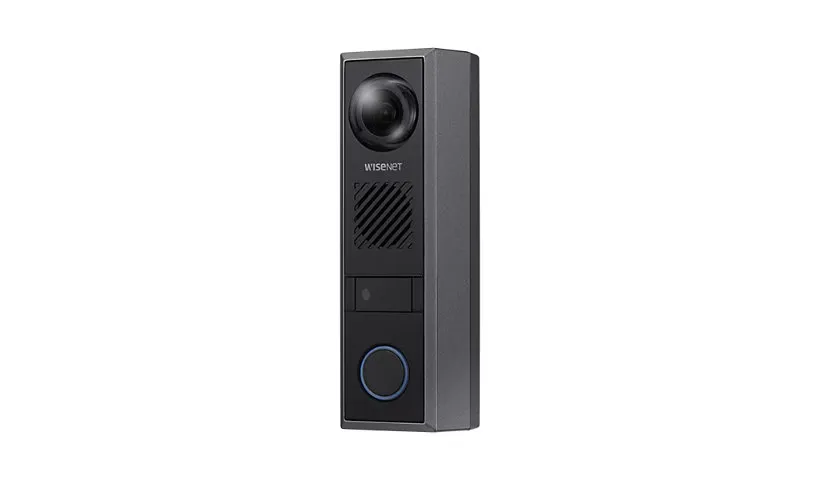
One button, one camera and a speaker, for a one-family house that has just rented a floor or a house where one household answers for everyone.
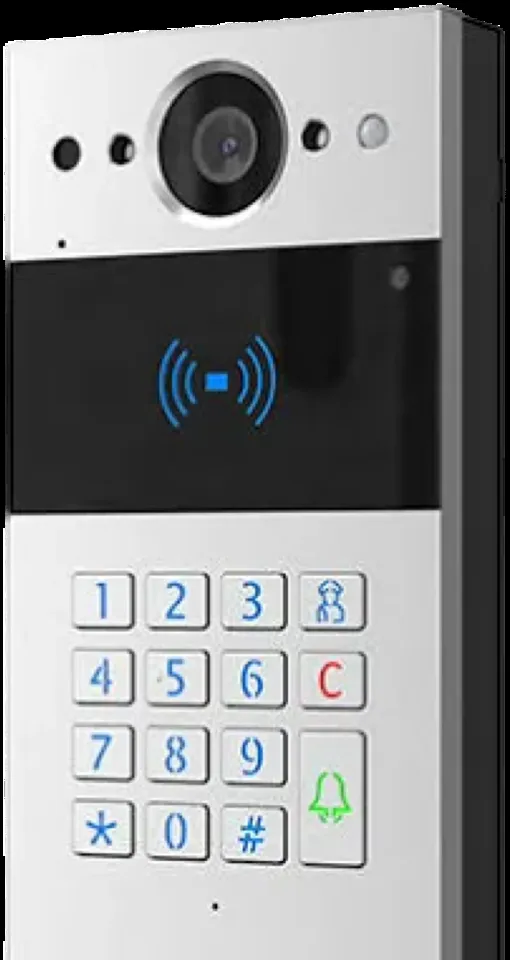
Audio or video panels with a labeled button for each household, sized for two-families and the small buildings of three or four apartments on Sunnyside Avenue.
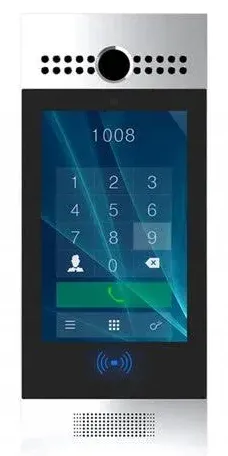
Panels that dial apartments by code or scroll a directory, with a keypad for residents, for buildings whose household count may change or where tenants want codes instead of keys.
Audio and video over one pair per apartment, the usual answer where an old house has a single bell pair to each floor that meters sound and the walls are plaster.
Simple talk-and-release stations for households that want a button and a voice and nothing to learn, including older residents who never use the phone app.
Wall stations with a screen and a release button, for households that want to see the visitor before opening, mounted in the kitchen or by the apartment door.
Door stations that ring residents' or owners' phones, alone or alongside a station in the apartment, for owners who manage the house from elsewhere.
Releases cut into the frame or into the inactive leaf of a pair, which stay locked in a power cut and never stop anyone leaving from inside.
Dedicated low-voltage power with battery backup on the house's own circuit, in the cellar or hall where the owner can reach it, never in one tenant's apartment.

| What matters | Bell and release only | Audio talk-back | Video stations or phone answering |
|---|---|---|---|
| Each household knows who is outside | No | By voice | By voice and picture |
| Fits a two-family with one front door | Yes, two buttons | Yes | Yes |
| Works for residents without smartphones | Yes | Yes | Yes with stations; phones optional |
| Reuses an old bell pair to each floor | Usually | Often | Often, on two-wire systems |
| Needs internet at the house | No | No | Only for phone answering |
| Easy to add a household later | With a spare button | With a spare button | Code panels add one in settings |
| Monthly fees | None | None | None for wired stations; some phone services charge |
| Brooklyn list range | Within $400–$900 for a house | $400–$900 for a house; from $2,500 for a large building | $700–$1,800 for a house or small building; from $2,500 for a large building |
National brands come up in nearly every conversation about a front door on the hill. For a one-family house, a store-bought video doorbell may be all anyone needs. For a two-family, a three-family or four apartments behind one door, it runs into hard limits. It has one button, not one per household. It rings the phones of whoever set it up, not a station in each apartment. It does not release the front door unless it is separately wired to a strike and a power supply. Alarm companies such as ADT and SimpliSafe are built around alarms rather than multi-household entry. We install the entry system the house needs and, where an owner also wants an entrance camera, put it in on the same visit.
Ask an AI assistant or a search summary about installing a buzzer and you get tidy answers drawn from cost guides, vendor blogs and news about city programs. Some are right somewhere. Here are seven we see repeated, each traced to where it comes from and set against what we find at the two-families, small buildings and new houses of Highland Park.
This comes from the wave of coverage in 2025 when a state law opened a path to legalizing existing basement apartments in New York City, effective June 16, 2025, with applications until April 20, 2029. Summaries often present it as citywide.
It is not. Epicenter-NYC's guide lists 15 community districts, and in Brooklyn only Districts 4, 10, 11 and 17. Highland Park is in District 5. The district's own pilot, run by HPD with the Cypress Hills Local Development Corporation, is no longer accepting applications, and Brooklyn Paper's report on it counted five enrolled homes as of May 2023 out of more than 8,000 identified candidates.
For a buzzer, that means we never assume a basement is an apartment because a summary said it could be. A basement door on the hill gets a lock and a closer; a button goes on it only when a legal household lives there.
HomeAdvisor's intercom cost guide gives that average, with a spread from $1,500 to $15,000, wireless systems from $150 to $1,500 and hard-wired systems from $1,000 to $15,000. Its numbers blend whole-house room intercoms in suburban homes with entry systems, which are different products.
For Highland Park the average lands in the wrong place for nearly everyone. A two-family here usually pays well under it for a first system: $400 to $900 for audio and $700 to $1,800 for video on our Brooklyn list. A six-story building at the top of the boulevard pays well over it.
On our list, $2,500 is roughly where a multi-unit entry system for a large building starts, not where a typical job on the hill ends. The useful figure is the range for your house, which is why we price from photos and a count of households rather than a national average.
CountBricks' 2026 guide to New York intercom rates gives per-unit figures of "approximately $500–$1,500 per audio-only unit" and "$1,000–$3,000 per video intercom unit," and attributes them to other installers' sites rather than its own data.
Multiplied out, those figures would put a two-family's video system at $2,000 to $6,000 and a four-apartment building's at $4,000 to $12,000. That is not what we see on the hill. The door station, the release and the power supply are shared by every household; each extra household adds a button, a station and a cable run, not another whole system.
Reviews and announcements of Ring Intercom, a small box that connects an existing apartment intercom to a phone app, circulate widely, and summaries sometimes recommend it to anyone with an old buzzer.
Ring's own support page says the information applies only to customers in the United Kingdom, the European Union and Australia, and states: "This device is not available in the US." It also notes that a residence "might have rules limiting the installation and use of Ring Intercom."
In a Highland Park two-family the owner can add phone answering legitimately, either with a door station that rings phones as well as stations or with an adapter made for the specific system already installed. We price that as part of the installation, and the quote shows any monthly fee separately.
The idea shows up in landlord forums. One owner on BiggerPockets with a three-family and no intercom asked for a system that would not need hardwiring and ideally offered keyless entry; another with a four-unit building wanted "an intercom/buzzer system that also has a key fob entry for the tenants." Neither thread got a working answer.
A smart lock solves the key problem and the forgotten-lock problem for residents. It does not give each household a way to talk to a visitor and let them in from upstairs, which is the whole point of a buzzer. Visitors still end up texting someone to come down.
The two fit together. A door station with a keypad, a button per household and a release in the frame gives residents codes instead of keys and gives visitors a way to reach the right apartment. That is what we recommend for the three- and four-apartment buildings on Sunnyside Avenue.
Summaries often say a panel that rings phones avoids wiring the apartments. Habitat Magazine reported back in 2017 that a ButterflyMX installation cost about $5,000 to $7,000 plus $2.50 per unit per month, and that telephone-entry systems need a dedicated phone line and offer no video. Swiftlane's cost guide puts software subscriptions at "$5 to $15 per unit per month, or $30 to $100 per door per month."
The panel at the door still needs power, a release wired into the frame and a data connection, and the release still needs cable from the power supply. In a two-family, the cable to the apartments is a short run up an interior wall, often on an old bell pair that already exists.
Phone answering has a place on the hill, especially for owners who manage a house from another neighborhood. We usually add it alongside stations in the apartments rather than instead of them, so older residents and anyone without a smartphone can still answer.
Cost guides treat a buzzer as an electronic product and the door as a given. HomeAdvisor's guide, for example, puts installation at one to two hours per station and describes wireless systems as the best option for doing it yourself.
On the hill, the door is where the work is. Allegion's reference shows that on a pair of doors the strike belongs on the inactive leaf, held closed with flush or surface bolts, and that some strike and exit-device combinations are not for fire-rated openings. A Brooklyn owner who put strikes on two pairs of double doors in 2007 found the wiring had to "run down the doors."

Send the address, a photo of the front door from outside and inside, and tell us how many households live behind it and which other doors people use. We will tell you whether it is a first system, an upgrade on old cable or a prewire for a new house, and where it sits on our Brooklyn ranges. Call or text (347) 934-8335, send photos on WhatsApp, or fill in the form below.
From your photos and a short call, the office lists every household that gets visitors and every door people use: front, basement walk-out, side, gate or garage.
We confirm who owns the house and approves the work, and whether any apartment is planned, under construction or not yet legal, so buttons match real households.
The front door is opened and let go. Closer, hinges, lock type, any pair of leaves and their bolts, and any hold-back button are noted and priced first.
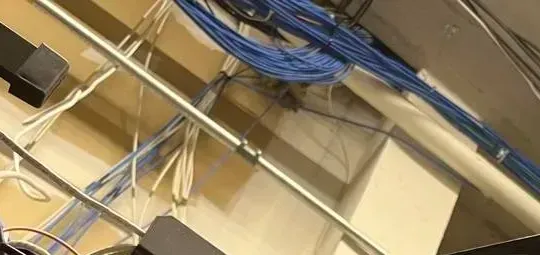
Old bell and intercom pairs are traced and metered from the cellar to each floor, and a place on the house's own circuit is chosen for the battery-backed supply.
The quote comes from our Brooklyn list, with any extra that depends on a test named and priced before you approve, so nothing new appears on installation day.
Equipment is ordered after the deposit. The visit is booked in a two-hour arrival window, and the household is told how the door will be opened while work is under way.
The strike goes on the correct leaf, then the power supply, door station and apartment stations; cable is hidden where the walls allow and labeled at both ends.
From where a visitor stands, the technician calls each household, talks, releases and confirms the door shuts and relatches, then leaves a test sheet and button list.

The 141-acre park on the Brooklyn and Queens line, established in 1901, whose name the houses below it borrow; the blocks facing it are a large share of our calls here.
The roughly 50-acre former reservoir across Highland Boulevard on the Queens side, begun in 1856 and now a natural area listed on the National Register in 2018.
The 500-ton steel viaduct of 1897 that Forgotten New York records among the Vermont streets at the western end of the park, close to the two-families on Highland Place.
The national cemetery that bounds the old reservoir on its eastern side, one more stretch of green that the houses along the top of the hill face instead of neighbors.
The parkway built in the 1930s as the Interboro, running along the north side of the reservoir and the park toward Queens.
The street of brick porch houses from 1900 to 1920 that runs across the hill, where many of the two-families and small buildings on this page stand.
We also serve Cypress Hills, City Line, East New York, Bushwick and Ocean Hill at the same Brooklyn rate. See our door buzzer installation in Brooklyn page for the whole borough, and our Queens door buzzer installation page for Glendale and Ridgewood across the line.
Highland Park is billed at our standard Brooklyn rate. The final figure follows photos and a walkthrough, because the number of households, the front door, the old wire and the route from the cellar drive the total far more than the brand on the panel.
| Job | Typical Highland Park property | Brooklyn range |
|---|---|---|
| Audio door station, apartment stations and a new release, reusing wire that tests well | One- and two-family houses, a single shop door on Jamaica Avenue | $400–$900 |
| Video door station with indoor stations or phone answering | Two-families, buildings of three or four apartments, newer houses with an old voice intercom | $700–$1,800 |
| Multi-unit entry system, audio or video by apartment count | The six-story apartment houses on Highland Boulevard | from $2,500 to $10,000+ |
| In-person diagnosis of an existing system, booked online | Any house where the old system must be tested before quoting | $250, applied toward the work |
| Monthly subscription | Any house choosing a wired system | $0 |
What moves a Highland Park job inside its range is predictable. First the households: one or two sit near the bottom, four near the top of the video range. Then the door: a single sound leaf costs nothing extra, while a pair with missing bolts, a worn mortise lock or a hold-back lock that has to be replaced adds a line. Then the wire: sound old pairs cost nothing extra, a new run up an interior wall is quick, and a route around a finished basement ceiling takes longer. If the job also adds an entrance camera, doing it on the same visit usually saves $200 to $400 in labor compared with a separate trip. Anything that depends on a test is named on the quote with its price before you approve.
Full terms — including 50% deposit, one-year parts-only warranty on AESS-supplied products, and the late-fee schedule — are set out in the service agreement.Tell us the street, how many households live behind the door and what is there now, and send a photo of the door from both sides. We reply with the range, what would move it and whether the old wire is worth testing first. Call or text (347) 934-8335, send photos on WhatsApp, or fill in the form.
Three typical Highland Park jobs, each placed in its range on our Brooklyn list. Your exact figure follows the walkthrough.
An audio door station with two buttons, a station on each floor, a fail-secure release in the front door's frame and a battery-backed power supply on the house circuit, reusing old bell pairs where they test sound.
A video door station with a button or code for each household, video or audio stations in each apartment, phone answering where wanted, and the door work that makes the front door close and lock by itself.
A button, directory or code panel at the lobby door, stations in every apartment on tested or new riser cable, and a written test sheet, for the large buildings at the top of the hill.
Bring your own equipment. If you have already bought a door station or an intercom kit, we can install it as labor-only work. Send us the make and model and photos of the door and the house, and we quote the labor by phone or text. We do not do walk-throughs on customer-supplied equipment, and the equipment itself, including any wireless signal it depends on, is covered by its maker's warranty rather than ours; our workmanship on the installation is ours to stand behind.
First systems, a button for a new household, basement doors and pairs of front doors. Request a quote
Prewire, code panels for tenants, video on old builder intercoms and Jamaica Avenue shop doors. Call (347) 934-8335
The same list in every neighborhood. Brooklyn door buzzer installation
Every borough's buildings and rules. NYC door buzzer installation
The Brooklyn list. Every address on the hill between Jamaica Avenue and Highland Boulevard is billed at our standard Brooklyn rate, with no travel or parking charge, and the reservoir and the park across the street do not change that. If you also own a building on the Queens side in Glendale or Ridgewood, tell us and we will price that one from the Queens list.
Yes, with notice. Most of the work in a two-family happens at the front door and in the cellar, so the downstairs household needs to know the date and let the technician through for the cellar part of the visit. We book in a two-hour arrival window so the tenant does not wait all day. Where possible we mount the power supply somewhere the owner can reach later without going through an apartment, such as the front hall or a common area of the cellar.
No. On a pair, the strike is set into the edge of the inactive leaf where the two leaves meet, so from outside nothing shows except the door station beside the entry. The cable runs inside the leaf and into the frame near the top hinge. The original faces, panels and hardware stay as they are; the bolts on the inactive leaf may be repaired so it holds firmly.
Yes. The door station, stations, release and power supply are fixed to the building and stay with it. At handover we leave a written button list, a test sheet and, for systems with an app or codes, the administrator login, so the next owner can take over without calling the last one. If the system rings your phone, you remove your phone from it and the new owner adds theirs.
No. Most old systems on the hill have no paperwork and their labels have faded. For a new installation we do not need to know what the old one was; we need to know whether its wire is usable, and the technician finds that out by metering each pair from the cellar to every floor. Photos of the old door plate, the stations and the transformer in the cellar help us prepare before the visit.
Yes. Equipment is ordered only after the written price is approved and the deposit is paid, and the balance is due when the installation is finished and tested. Payment goes through the link on our invoice or by Zelle. Special-order stations are booked for installation once they arrive, and we tell you the arrival date as soon as the supplier confirms it.
We do not share customers' addresses or contact details, because the families who live in those houses did not agree to visitors. What we can send is the specification and product photos of the exact door station and apartment stations on your quote, and you can read what customers say about our work in our Google reviews.
In most cases, yes. An electric strike replaces the keeper in the frame or in the inactive leaf, not the lock in the door, so the cylinder and keys stay the same. If the lock has a hold-back button you want gone, or its latch is too worn to engage a strike, the lock is replaced, and then new keys come with it. We tell you at the walkthrough which applies.
No. Each button is wired to a floor, not to a family, so when households swap floors the wiring stays exactly as it is. What changes is the labels at the door, and, on systems with phone answering or codes, whose phone each button rings and whose codes are active. Those are settings the owner can change from the administrator login we hand over, or we can do it on a short visit.
Yes. Photos, the walkthrough findings and the written price can all be handled by phone, text and email, the deposit and balance are paid through the invoice link, and the quote is approved in writing. Someone still has to let the technician into the house and the apartments on the walkthrough and installation days, usually a tenant or a relative, and we agree who that is before booking. The test sheet and the administrator login are sent to you at the end.
Door Buzzer Installation Brooklyn NY | Brownstones & Condos · Door Buzzer Installation NYC | Apartment & Building Entry · Door Buzzer Installation Manhattan NY | Apartments & Co-ops · Door Buzzer Installation Queens NY | Co-ops & Apartments · Door Buzzer Installation Bronx NY | Co-ops & Apartments · Door Buzzer Installation Staten Island NY | Homes & Apts · Door Buzzer Installation Long Island NY | Nassau & Suffolk · Door Buzzer Installation Hudson Valley NY | Apartments · Door Buzzer Installation Nassau County NY | Homes & Co-ops · Door Buzzer Installation Suffolk County NY | Homes · Door Buzzer Installation Westchester County NY | Co-ops · Door Buzzer Installation Rockland County NY | Homes & Apts · Door Buzzer Installation Orange County NY | Homes & Farms · Door Buzzer Installation Putnam County NY | Lake Homes · Door Buzzer Installation Dutchess County NY | Homes · Door Buzzer Installation Ulster County NY | Kingston
Door Buzzer Installation Bath Beach Brooklyn NY · Door Buzzer Installation Bay Ridge Brooklyn NY · Door Buzzer Installation Bedford-Stuyvesant Brooklyn NY · Door Buzzer Installation Bensonhurst Brooklyn NY · Door Buzzer Installation Bergen Beach Brooklyn NY · Door Buzzer Installation Beverley Square Brooklyn NY · Door Buzzer Installation Boerum Hill Brooklyn NY · Door Buzzer Installation Borough Park Brooklyn NY · Door Buzzer Installation Brighton Beach Brooklyn NY · Door Buzzer Installation Brooklyn Chinatown Brooklyn NY · Door Buzzer Installation Brooklyn Heights, Brooklyn NY · Door Buzzer Installation Brooklyn Navy Yard, Brooklyn NY · Door Buzzer Installation Brooklyn NY | Brownstones & Condos · Door Buzzer Installation Brownsville Brooklyn NY · Door Buzzer Installation Bushwick Brooklyn NY · Door Buzzer Installation Cadman Plaza Brooklyn NY · Door Buzzer Installation Canarsie Brooklyn NY · Door Buzzer Installation Carroll Gardens Brooklyn NY · Door Buzzer Installation City Line Brooklyn NY · Door Buzzer Installation Clinton Hill Brooklyn NY · Door Buzzer Installation Cobble Hill Brooklyn NY · Door Buzzer Installation Columbia Street Waterfront Brooklyn · Door Buzzer Installation Coney Island Brooklyn NY · Door Buzzer Installation Crown Heights Brooklyn NY
Door Buzzer Repair Highland Park Brooklyn NY · Access Control Installation Highland Park Brooklyn NY · Fire Alarm Installation Highland Park Brooklyn NY · Security Camera Installation Highland Park Brooklyn NY · Alarm Installation Highland Park Brooklyn NY | Hillside · Intercom Installation Highland Park Brooklyn NY | AESS · Structured Cabling Installation Highland Park Brooklyn NY · TV Installation Highland Park Brooklyn · Security Camera Repair Highland Park Brooklyn NY
Send a photo of the front door from both sides, or just tell us the street and how many households live behind it, and we reply with the range on our Brooklyn list and the next step. Call or text (347) 934-8335, message us on WhatsApp, or use the request form. Licensed under NYS license #12000287431, rated 4.7★ across 201 Google Reviews, with same-day estimates on most weekdays.