Vestibule to Apartment, Tested Line by Line · Door Hardware Checked First · Written Price Before Ordering · Brooklyn Rate
Door buzzer installation in Fort Hamilton is mostly a job about the path between the vestibule and each apartment. When HPD writes up a broken intercom in the blocks south of 86th Street, the notice usually names that path: "from vestibule to panel at west wall," "bell/buzzer intercom in the foyer," "at north wall in the private hallway." We pulled every HPD intercom violation in ZIP 11209 since January 2023 and found 11 at nine addresses in this part of Bay Ridge, from 87th Street to 100th Street and along Shore Road, while the same blocks drew 979 self-closing door violations. So we plan both halves of the job: a door that closes and latches on its own, and a tested line from the panel to every apartment station, for the six-story Shore Road buildings, the row houses on the numbered streets, the small condos that replaced two-family houses, and the shops and offices on the avenues.
Reviewed and updated November 11, 2026, against NYC Open Data's HPD housing maintenance code violations for ZIP 11209 (intercom and self-closing door violations since January 1, 2023, pulled November 11, 2026); NYC 311 service requests for bell and buzzer complaints in Brooklyn Community Board 10, 2020 to 2026; New York's Multiple Dwelling Law §50-a; Wikipedia's Bay Ridge and Fort Hamilton articles; Brooklyn Magazine's 2014 piece on the Fort Hamilton name; Brownstoner's 2013 Fort Hamilton profile and its 2026 listing of 9437 Shore Road; City Planning's 2007 Dyker Heights and Fort Hamilton rezoning; BK Reader's April 2026 report on the proposed building at 9305 Fifth Avenue; Reddit threads in r/AskNYC, r/Landlord, r/accesscontrol and r/chicago; Aiphone's GT Series pages; Allegion's fail-safe and fail-secure guide; the building code's sensor-release provisions; the HomeAdvisor, Swiftlane, Enterkey and NYHLS cost and lifespan guides; ButterflyMX's buzzer and call box guides; and the 2010 ADA Standards. · Abstract Enterprises Security Systems, NYS license #12000287431 · crews dispatched from our Troy Avenue office in Brooklyn

Owner-operated since 2002 · Thousands of jobs completed · Booked within 2 hours
Quick answer: door buzzer installation in Fort Hamilton is priced from our Brooklyn list: $400 to $900 for an audio buzzer with talk-back and a door release on a row house or a two- or three-family, $700 to $1,800 for a video door station with indoor monitors or phone answering on a house or a small building, and from about $2,500 to past $10,000 for a Shore Road apartment house, a co-op or a condo with every apartment wired. Each price covers the door station, the answering units, the electric strike, the power supply and the labor, and there is no monthly fee on a wired system. Send photos to (347) 934-8335 or on WhatsApp and we reply with the range that fits; requests are booked within two hours, and a $250 service call booked online is credited toward the work if you go ahead.
Fort Hamilton is the part of Bay Ridge south of 86th Street, the old village that took its name from the Army post at its southern tip. Wikipedia calls it a sub-neighborhood that is "sometimes considered" separate from Bay Ridge, and Brooklyn Magazine argued in 2014 that the name survives mainly as a postal designation, carried by the Fort Hamilton post office on Fifth Avenue and the Fort Hamilton library on Fourth Avenue. For a buzzer installer the label matters less than what sits on the blocks: rows of attached houses on the numbered streets from 87th to 101st, tall six-story apartment houses along Shore Road facing the park and the Narrows, small condo buildings put up where two-family houses once stood, and mixed buildings with shops and offices on Third, Fourth and Fifth Avenues down to where Fourth and Fifth meet at the Fort Hamilton Triangle.
Each of those buildings answers its door differently, and each fails differently. The big Shore Road buildings went up in the 1930s and early 1940s with a lobby panel at the entrance and a talk-back station in every apartment, wired through a riser that runs down to the cellar. Brownstoner's August 2026 listing for 9437 Shore Road, for example, describes a six-story, 55-unit co-op that began as a rental in 1940; Zumper lists 9303 Shore Road as a 23-unit rental. Those systems have been patched for decades. The row houses usually started with a single doorbell and a mechanical bell, and many now hold two households with one shared street door. The condos that replaced two-family houses in the 1990s and 2000s, which Wikipedia's Bay Ridge article ties to the "Fedder homes" builders, came with whatever intercom the developer chose, and in many of them nobody now knows how to program it.
HPD's own records show where the trouble sits. Since January 2023 the agency has written 64 violations citing a broken or defective intercom anywhere in ZIP 11209. Eleven of them were at nine addresses south of 86th Street, and their wording is precise about the failure: "intercom system from vestibule to west wall panel" in a first-floor apartment on 90th Street, "bell/buzzer intercom in the foyer" on 96th Street, "inoperative intercom system from vestibule to panel at west wall" on 100th Street, "intercom system at north wall in the private hallway" at two buildings on Shore Road. Those are the run from the door to the apartment and the station at the end of it, which is exactly what a new installation replaces or proves.

The doors are the other half, and the bigger one. Over the same period and the same blocks, HPD wrote 979 violations for doors that do not close by themselves, roughly 89 door violations for every intercom violation. Some single addresses on Shore Road account for more than forty each. A door that has to be pulled shut by hand defeats any buzzer, because a visitor can walk in behind a tenant and the release button opens a door that was never locked. In the 311 record for Community Board 10, which covers Bay Ridge, Dyker Heights and Fort Hamilton, residents filed 684 complaints about doors and 104 about door frames from 2023 to November 11, 2026, against a steady fifty to seventy-odd buzzer complaints a year. A buzzer job here that ignores the closer and the strike is only half a job.
The people behind those doors shape the installation too. Brownstoner's 2013 profile of the area passed on a New York Times description of the Fort Hamilton section as a "naturally occurring retirement community": long-time owners and renters who have answered the same handset for decades. Next to them are newer households, including families of soldiers and civilians assigned to the post, who often expect to answer the door from a phone. A good installation here gives both what they need on one system, a wall station that works the way the old one did and an app or phone option for those who want it, rather than forcing a building to choose.
Where this page applies. It covers Fort Hamilton from 86th Street south to the Belt Parkway and the post, and from Shore Road east to Fort Hamilton Parkway, including the strip east of the Gowanus Expressway that City Planning labeled "Ft. Hamilton" in its 2007 rezoning. North of 86th Street, see our Bay Ridge door buzzer installation page; east of Seventh Avenue, the Dyker Heights page. For the whole borough there is our door buzzer installation in Brooklyn page, and for every borough our NYC door buzzer installation page.
A lot of calls that begin "we need a new intercom" in Fort Hamilton turn out to be one of three narrower problems. Sometimes a single apartment's line is broken somewhere between the vestibule and the foyer, and the other apartments work fine; that is a repair. Sometimes the panel at the door has worn out, its buttons stuck or its speaker gone, while the apartment stations and the wire behind them are still sound; that can be a panel replacement over the old cable. And sometimes the system has been patched so many times that calls ring the wrong floor, half the stations are a different brand from the other half, and the riser wiring no longer matches any drawing; that is the point at which a full installation costs less over the next ten years than another round of repairs.
We sort that out before we quote anything. Photos of the panel, two or three apartment stations and the cellar end of the wiring, sent to (347) 934-8335 or on WhatsApp, usually tell us which of the three you have. If it is a single line or a worn part, we say so and point you to repair. If the building needs a new system, the photos also tell us how much of the old wire is likely to be reusable, which is the biggest single factor in where a Shore Road building lands on the price list.
Straight repairs have their own page on our site. This page is about new installations: buildings that have never had a buzzer, systems that are being replaced outright, and extensions such as a second door, a new apartment or video added to a building that had audio only.
Every service below is priced from the same Brooklyn list. What changes from one Fort Hamilton building to the next is how many apartments the door has to reach, how much of the old cable passes its test, and how much work the street door needs before a release will hold it.
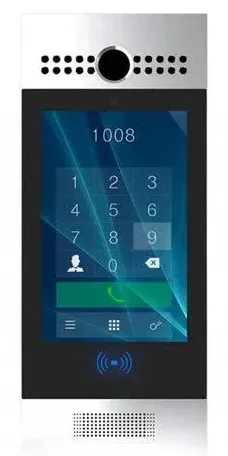
New audio or video entrance panels for Shore Road and avenue apartment buildings, mounted in or over the old opening, with every button or directory entry checked against the apartment it should call.
New talk-back or video stations in each foyer, kitchen or private hallway, placed where the old handset was or moved to where residents actually hear it, with the run tested end to end.
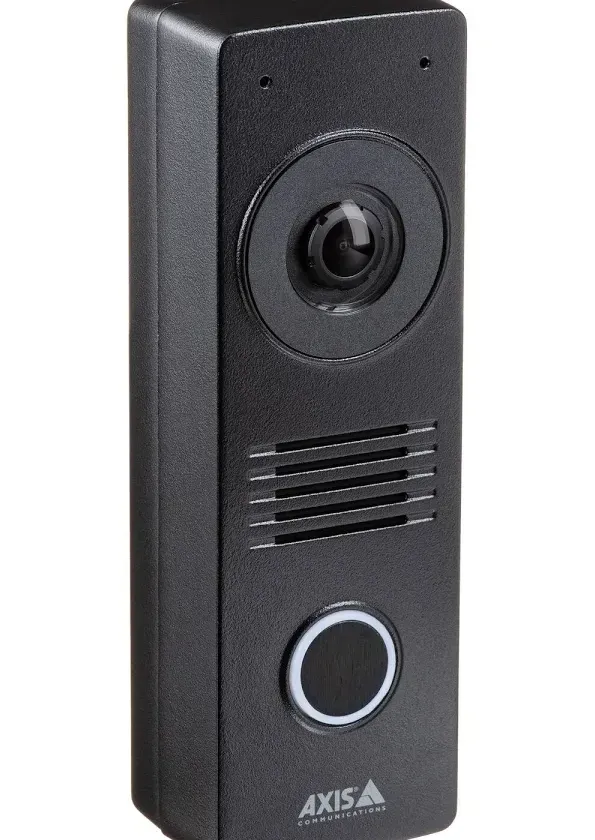
A door station, an electric release and an answering unit for attached houses on the numbered streets that have only ever had a doorbell, with one button per household.
Separate buttons and separate stations for the owner's floor and the rental floors of a shared street door, so each call rings only the household it is meant for.
Small condo buildings whose developer-installed system nobody can program: we identify the equipment, recover or reset the administration where possible, and replace it only when that fails.
A release on the inner vestibule door, the outer door or both, set up so a visitor cannot be trapped between them and so the mail and package area stays behind a lock.
Video door stations answered on wall monitors, on residents' phones, or both on the same system, so long-time residents keep a wall station while newer households use an app.
Closers set or replaced so the door shuts and latches on its own, electric strikes sized to the frame, and the lock checked so the door still opens freely from inside.
Buzzers for stores, offices and medical practices on Third, Fourth and Fifth Avenues, kept separate from the apartments' system in a mixed building.

Six kinds of building make up almost every buzzer job in Fort Hamilton. Bay Ridge's history explains the mix: row houses filled the blocks after the subway reached 86th Street in 1916 and the 95th Street terminal opened in 1925, apartment houses multiplied in the 1920s and 1930s, and small multi-unit buildings replaced many two-family houses from the 1990s until rezonings in 2005 and 2007 slowed that down. Each type needs a different installation.
Art Deco and Art Moderne buildings from the 1930s and early 1940s facing Shore Road Park, many now co-ops, with a lobby panel, a riser and dozens of apartment stations.
Two- and three-story brick and limestone houses from the subway era, many holding two households behind one street door and a small front yard.
Four- to twelve-unit buildings put up where one- and two-family houses stood, often with a basement garage and an intercom chosen by a developer who is long gone.
Buildings on Third, Fourth and Fifth Avenues with stores or offices at street level and apartments above, reached through a narrow residential door beside the shopfront.
The City Planning "Ft. Hamilton" strip between Seventh Avenue and the Gowanus Expressway, with houses, two-families and some six- to twelve-unit buildings.
Condo and rental buildings from the last twenty years, and possibly a very large one at the Triangle, where entry is a system with codes, apps and a garage door rather than a single panel.
The Shore Road buildings are where the largest Fort Hamilton installations happen, and they are also where the most can be saved or lost on the wire. A building like the 55-unit co-op at 9437 Shore Road has, behind its lobby panel, a bundle of cable that drops into the cellar and then climbs the building in one or more risers, splitting off to each apartment's station. In buildings of this age the original cable is often still there, sometimes in good condition, sometimes cut and spliced by every repairman who came after. Whether it can carry a new system is the question that decides whether the job sits near the bottom of our building range or well up it.
So the installation starts in the cellar, not in the lobby. Every pair is toned from the panel end to the apartment it serves, tested for continuity and leakage, and written down. Pairs that pass can carry a two-wire audio or video system of the kind Aiphone describes for retrofit projects, where the manufacturer notes that existing wires in good condition can be reused. Pairs that fail are replaced along the riser, which in a building with plaster over masonry means running new cable in the same paths the old one used, through closets, along the riser chase or in surface raceway in the public halls where the board allows it.
The lobby itself needs care. Many of these entrances have original metalwork, terrazzo or marble around the door, and a panel opening cut to the size of the 1930s or 1950s equipment. We measure that opening before choosing the new panel, so the replacement either fits the existing recess or sits on a trim plate that covers it cleanly, and we keep the new power supply and any network equipment in the cellar or a locked closet rather than in the lobby.
The row houses on 87th through 101st Streets are mostly two or three stories, built close to the sidewalk with a small front yard or areaway, and many have been two-family houses for generations. The typical starting point is a single doorbell button that rings a chime in the downstairs hall, sometimes with a second button someone added later that rings the same chime. Nobody upstairs can answer it, and nobody can let a visitor in without walking down.
A proper installation for one of these houses is small but complete: a two-button door station at the street door, a talk-back or video station on each floor, an electric strike in the frame of the street door, and a power supply in the cellar. Each button rings only its own household, and each household can release the street door without being able to open the other family's apartment door. Where the house has no cellar access to the front, the cable can usually follow the stair hall or the inside of a closet stack rather than crossing finished rooms.
What owners most often get wrong here is buying a consumer video doorbell for the street door and expecting it to serve two families. It rings one account, it cannot release the door, and the second household ends up sharing a login or getting nothing. A two-button station costs more than a consumer doorbell, but it is the smallest job on our Brooklyn list and it does what the house actually needs.
Wikipedia's Bay Ridge article describes how "Fedder homes" and similar buildings replaced two-family houses across the neighborhood in the 1990s and 2000s, and City Planning's 2007 rezoning for the Fort Hamilton strip noted one- and two-family homes being torn down for attached buildings of six to twelve units. A condo on Fort Hamilton Parkway listed on Trulia as built in 2005 is typical of the age. These buildings usually came with a modest intercom, sometimes a video one, picked by the developer and installed by a subcontractor nobody can now name.
The first job in one of these buildings is an audit, not a sale. We identify the brand and model of the panel and stations, find out whether the system has an administration code or app account and who holds it, and test whether the cable behind it is ordinary intercom wire or something proprietary. If the system is a current model and the board can get its administration back, a reprogramming and a few new stations may be all that is needed. If it is a discontinued model with no parts, or the account cannot be recovered, a replacement over the same cable is usually possible.
Condo buildings of this size often have no managing agent, only a board of three or four owners. We put the system details, the administration codes and the wiring list in writing and hand them to the board, not to one owner, so the knowledge of how the door works does not leave when someone sells.
On Third, Fourth and Fifth Avenues south of 86th Street, many buildings have a store, an office or a medical practice at street level and two or three floors of apartments above. The apartments are reached through a narrow door beside the shopfront, often with a small vestibule and a row of mailboxes, and that door is where the buzzer goes. City Planning's 2007 rezoning also noted mixed medical office and residence buildings in the Fort Hamilton strip, which bring a second set of visitors to the same block.
We keep the business and the apartments on separate systems even when they share a cellar and a power source. The store should not be able to release the apartments' door, and a tenant should not be able to buzz anyone into the store after hours. Where both need a buzzer, each gets its own station and its own release, labelled clearly so the next technician does not cross them.
The physical challenge is the residential door itself. Avenue doors take heavy use from tenants, deliveries and passers-by, and they are the ones most likely to show up in HPD's self-closing door records. We check the closer, the hinges and the latch before quoting, and the price includes whatever the door needs to shut and latch on its own.
East of the Gowanus Expressway, in the strip City Planning called "Ft. Hamilton," the houses are more often detached or semi-detached, with side entrances, driveways and sometimes a separate door for an upstairs or basement apartment. The installation question there is which door visitors actually use. If most people come up the driveway, the station belongs at the side door, with the front door left on a key.
These houses usually have more room to run cable, through a basement or along an exterior wall under the siding, and they rarely need the kind of riser work a Shore Road building does. A one- or two-button station, a release on the door that visitors use, and an answering unit on each floor is the typical job, at the bottom of the Brooklyn list.
Where a house shares a wall and a stoop with the house next door, the station and its cable stay on the owner's side, and the power supply goes on the owner's own circuit, so a sale or a dispute next door never leaves the buzzer without power.
Larger buildings from the last two decades, and the 292-apartment building proposed for 9305 Fifth Avenue, need entry planned as a system: a lobby panel with a searchable directory or codes, a separate door or reader for the garage, a package room or vestibule, residents who answer on phones, and a management office that adds and removes people every month. BK Reader's report on the proposal noted 75 underground parking spaces and a possible supermarket on the site, which would mean residential, garage and retail entrances on one building.
For buildings like that we work from the drawings with the owner's architect or engineer, specify the panel, the strikes or locks on each door, the power and the network, and set out who will administer the system when the building opens. The cost sits at the top of our building range or beyond it, and the written proposal names every door separately.
For existing newer buildings, the common problem is not the hardware but the account. A panel installed ten or fifteen years ago may still be registered to a developer or a former management company. Recovering that account, or moving the building to a system it controls, is often the first thing we do.
These notes describe how our technicians approach a Fort Hamilton installation. They are our working practice, not a story about a particular address.
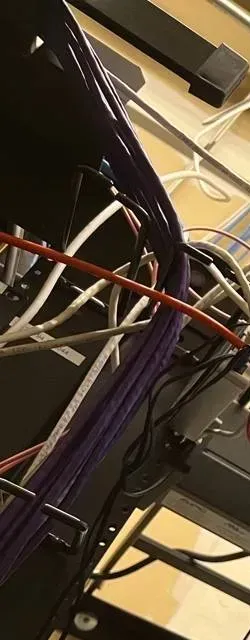
Start in the cellar. In a Shore Road building or a walk-up on the avenues, the cellar end of the wiring tells you more than the lobby. The technician finds where the panel's cable lands, counts the pairs, looks for splices and for cable that has been cut and taped, and checks whether the old power supply is on its own circuit or plugged into an outlet somebody could unplug. A building whose cellar has taken water also gets its power supply and junctions moved up the wall.
Read the violation text. If HPD has written up the intercom, the violation names the apartment, the floor and often the wall where the station is. We read that before the walkthrough, because it tells us which runs to test first and where a station may have been moved or removed by a previous tenant.
Close the door ten times. Before anything is priced, the technician opens and lets go of the street door and the vestibule door again and again. If either one fails to shut and latch on its own, the closer, the hinges or the strike goes on the quote, because the buzzer cannot do its job without it.
Call every apartment from the sidewalk. At the end of the installation, every button or code is called from the street, every apartment answers, talks and releases, and the door is checked to relatch behind the visitor. Anything that fails is fixed before we leave, and anything we could not reach, because nobody was home, is listed for a return visit.

We pulled HPD's housing maintenance code violations for ZIP 11209 from NYC Open Data on November 11, 2026, and kept only addresses south of 86th Street: the numbered streets from 87th to 101st, avenue, Shore Road, Ridge Boulevard, Colonial Road and Fort Hamilton Parkway addresses numbered 8600 and up, and the short streets near the water such as Marine Avenue, Gatling Place and Mackay Place. From January 1, 2023 to the day of the pull, those blocks had 11 violations for a broken or defective intercom and 979 for doors that do not close by themselves. The door violations were spread across about 160 addresses. A handful of large buildings carried dozens each: 48 at one Shore Road address, 41 at another, 32 at a third and 32 at a building on Fourth Avenue.
A self-closing violation is not always about the street door; it can be an apartment's entrance door or a stair door. But the pattern is clear enough to change how we quote. In a building where the doors do not close, a new buzzer adds very little security, because the street door is open to anyone who follows a tenant in, and the release button is opening a door that was never latched. In a building where the doors do close but the intercom does not work, residents walk down to let visitors in, or prop the door so they do not have to, and that propping is one of the ways a door ends up failing an inspection.
So every installation we quote here includes three checks on the door before we price the buzzer.
The closer. A door closer is a hydraulic arm with a sweep speed and a latch speed. On a heavy prewar door that has been adjusted by guesswork for years, the arm often closes too slowly to latch, or slams and bounces off the strike. We test it, adjust it where it can be adjusted, and price a replacement where the arm leaks or the bracket has torn loose from the frame.
The strike and the latch. An electric strike replaces the fixed plate in the frame and lets the latch pass when the release is pressed. It only works if the latch meets the strike squarely. On doors that have sagged on their hinges, the latch rides high or low, and the strike has to be set to where the latch actually lands, or the hinges tightened first.
The frame and the door. Some street doors are past saving: frames rusted at the bottom, doors that have been forced and bent, glass replaced with panels that no longer fit. Those are named on the quote as a separate item, with the choice of repairing or replacing the door left to the owner, so the buzzer is never installed into a door that cannot hold it.
There is one more reason to start with the door. HPD's intercom violations south of 86th Street name the vestibule again and again: "from vestibule to west wall panel," "from vestibule to panel at west wall." The vestibule is where the outer door, the inner door, the mailboxes and the panel all meet. Getting both doors to latch, and the panel to release the right one, is the part of the job residents notice first.

The 311 system logs complaints by community board, and Fort Hamilton sits in Brooklyn Community Board 10 with the rest of Bay Ridge and Dyker Heights. Complaints that name a bell, buzzer or intercom have run between 49 and 72 a year since 2020, and 2026 has already reached 71 with seven weeks left in the year.
| Year | 311 bell, buzzer and intercom complaints, Brooklyn CB10 |
|---|---|
| 2020 | 50 |
| 2021 | 50 |
| 2022 | 59 |
| 2023 | 72 |
| 2024 | 49 |
| 2025 | 54 |
| 2026, through November 11 | 71 |
Those numbers are small next to the door complaints in the same board, 684 about doors and 104 about door frames from 2023 to November 11, 2026, but they are steady. Each one usually means a household that has gone weeks without being able to answer the door, and in a co-op or a rental building it often means several households on the same riser.
Two things in that record matter to an installer. The first is that a complaint is usually filed by one apartment about its own station, while the fault is often in a shared part: the panel, the power supply, or a splice in the cellar that feeds a whole line. That is why we test every run, not only the apartment that complained. The second is that HPD's follow-up depends on getting into the apartment. Two of the ZIP 11209 intercom violations we pulled carry the status "first no access to re-inspect," meaning the inspector came back and could not get in. A new installation has the same problem in reverse: the crew needs to get into every apartment to mount and test its station.
So access is part of the plan, not an afterthought.
For older residents, the second visit is also when we check that each person can use the new station: which button talks, which one opens the door, and how loud the call is. A one-page guide stays with every station.

Fort Hamilton's buildings range from one-family row houses to apartment houses with more than fifty units, and the rules are different at each end. These are the ones that shape an installation here.
Apartment buildings of eight or more units built after 1967. New York's Multiple Dwelling Law, which applies in cities of 325,000 people or more, says in §50-a that every Class A multiple dwelling erected or converted after January 1, 1968 with eight or more apartments must have a self-locking main entrance door and an intercommunication system that lets a resident talk to the visitor and release the door from the apartment. The small condo buildings of the 1990s and 2000s that reach eight units fall under that rule.
Older buildings, by tenant request. The same section lets tenants of older buildings ask for a self-locking door and an intercom. If tenants occupying a majority of the apartments request or consent in writing, the owner has to start installing within 90 days and finish within six months. Most of Shore Road's six-story buildings went up before 1968, so this is the clause that applies to them.
Smaller houses. Two- and three-family houses and buildings under eight apartments are not covered by the §50-a intercom requirement. A buzzer there is the owner's choice, and the tenant in a four-unit building on Reddit's r/AskNYC who noted that their landlord "isn't required to put in a buzzer system or a self-locking front door" was describing exactly that line.
Audio is enough. The law requires voice communication and a remote release. It does not require video or an app. Video is worth having in many Fort Hamilton buildings, but it is a choice, and a well-installed audio system meets the requirement.
Free exit at all times. A buzzer controls who comes in; it must never stop anyone getting out. With an electric strike, Allegion notes that you can still leave by turning the lever whether the strike is fail-safe or fail-secure. A magnetic lock is different: it holds the door with power, so the building code's sensor-release provisions call for a sensor on the egress side, a manual release device between 40 and 48 inches above the floor within five feet of the door with a "PUSH TO EXIT" sign, unlocking on loss of power and on fire alarm activation.
Fire doors take fail-secure strikes. Allegion's guide also notes that fire-rated doors need fail-secure strikes, which stay latched when power is lost, because a fire door has to stay closed. Stair and cellar doors in larger buildings are often rated.
Buttons within reach. The 2010 ADA Standards set the high forward reach at 48 inches above the floor. We mount panels so the buttons and keypad fall inside that range, which also suits the older residents who use them most.
What this means for the job. An installation in a Fort Hamilton apartment building is priced to meet the intercom rule with audio as the base, with video and apps as options, a door that latches on its own, and an exit that works without power or a key. A house installation is priced to what the household wants, with the same exit rule.
Fort Hamilton's businesses sit on a few streets: the avenues that run south from 86th Street toward the Triangle and the post, and 86th Street itself. Most are small: stores, restaurants, offices, medical and dental practices, and the services that come with a neighborhood of long-time residents. Their entry needs are simpler than an apartment building's but different in one way that matters: they usually want the door open during business hours and controlled after them.
Apartment buildings and ground-floor offices and stores between 86th Street and the Triangle, past the Fort Hamilton library at 9424 Fourth Avenue.
One of Bay Ridge's main shopping streets, with the Fort Hamilton post office at 8801 Fifth Avenue and Engine 242's firehouse at 9219 Fifth Avenue.
Restaurants, stores and mixed buildings with apartments above, many with a narrow residential door beside the shop.
The shopping street at the northern edge of Fort Hamilton, with the R train's 86th Street station at Fourth Avenue and upper floors of offices and apartments reached from side doors.
Where Fourth and Fifth Avenues merge, including the Staples site at 9305 Fifth Avenue proposed for an 11-story building with a possible supermarket.
The medical office and residence buildings City Planning noted east of the expressway, where a practice and apartments share an entrance.
For a store with apartments above, the usual job is two systems: a buzzer or video station at the shop's rear or side door so the staff can let in deliveries without leaving the counter, and the apartments' own panel at the residential door. They share nothing but the cellar route, and each is labelled at both ends.
For a medical or dental practice, the pattern is a door that is unlocked or on a timer during intake hours and on the buzzer at other times, with a release button at the front desk and a door that relatches behind each patient. Where the practice shares an entrance with apartments, the practice's release opens only the practice's inner door, never the residents' street door.
For a restaurant, the job is usually a back door for deliveries before opening, answered from the kitchen or the office. That door is often a steel door into a corridor or the cellar stairs, and it needs a strike sized for steel and a closer that pulls it shut against the draft.
For an office upstairs from a store on 86th Street, the street-level side door is often shared by several tenants. We set up one panel with a button or code per suite, each tenant releasing only the street door, and each suite door on its own key or reader.
If a business also wants a camera at its door, it can usually go in on the same visit; the Brooklyn list notes a typical saving of $200 to $400 in labor when a buzzer and a camera are installed together.

Questions Fort Hamilton owners, boards, residents and shopkeepers bring to us about new entry systems, answered from the HPD record, the rules above and how we install.
A return buzzer is the signal that goes the other way: when a resident presses the button in the apartment, it sounds at the door so the visitor knows the door is unlocked and can push it open. In older systems it is often a separate buzzer or a tone in the panel, and when it fails, visitors stand outside pushing on a door that is already released, or give up before it relocks. Several HPD intercom violations in ZIP 11209 name it in exactly those words, "return buzzer at east wall in the foyer" or "bell, buzzer and return intercom," as part of what has to work.
Every system we install gives the visitor a clear signal that the door is open, whether it is a buzz, a tone with a light on the panel, or the sound of the strike itself, and we set the release time long enough for someone with a stroller or a cane to get to the handle. We test it from the sidewalk for every apartment before we leave.
Yes, with a mounting plate or a short post rather than screwing the station straight onto the curve. Several Shore Road buildings of that era have rounded corners and faceted walls at the entrance; a broker's page for 9701 Shore Road, for example, describes curved corners and an Art Deco façade. A flat station screwed to a curve rocks, leaks at the edges and cracks the stone around its anchors.
The cleaner options are a flush mount in the flat jamb of the doorway, a stainless or bronze-finished backplate shaped to the wall, or a slim pedestal at the side of the steps. We sketch the choice on a photo of your entrance before anything is ordered, so the board can see it.
By choosing stations that work the way the old ones did, and by teaching each person at their own station. For a building where many residents are older, the right station has large, clearly marked buttons, one for talk and one for door, a loud call tone, and no menus. Video is optional; some residents want to see the visitor, others find a screen confusing. Phone answering can be added for the people who want it without changing anyone else's station.
On installation day the technician shows each resident which button talks and which opens the door, adjusts the volume, and leaves a one-page guide beside the station. On the second visit we check again with anyone who was unsure. If a resident has trouble hearing, the call can also flash a light or ring a louder chime in a second room.
Because the vestibule is where every part of the system meets. The outer door, the inner door, the panel, the strike, the mailboxes and, in many buildings, the cable's way into the wall all sit within a few feet of each other. Of the 11 intercom violations HPD wrote south of 86th Street since January 2023, several trace the defect "from vestibule" to a panel or station, and others place it in an apartment's foyer at the far end of the same run.
In practice the vestibule takes the most wear: doors slammed thousands of times a month, a panel pressed and leaned on, water tracked in from Shore Road and the avenues, and splices made in the panel's back box by every repair that came before. That is why a new installation here starts by opening the vestibule panel and the back box, testing each run from that point, and checking both doors, before anyone decides what goes on the wall.
As part of it, on the same quote. South of 86th Street the door violations outnumber the intercom ones by about 89 to 1, and a new buzzer on doors that do not latch gives residents a release button for a door that is already open. If the doors are fixed separately and later, the buzzer may be installed and tested against doors that are then adjusted, and the strikes may have to be moved.
Doing both together means the closer is set, the strike is placed where the latch actually lands, and the door is tested ten times before and after. The door work is priced as its own line, so you can see exactly what is the door and what is the buzzer.
Often, but not always. HPD's violations south of 86th Street place the old stations in foyers, kitchens and private hallways, which is where the original cable comes out of the wall. Reusing that spot saves opening the wall and keeps the price down. But in larger prewar apartments the foyer can be far from where people spend their time, and a resident at the back of the apartment may never hear the call.
Where the cable allows, we can move the station a short distance, add a second chime or station in the kitchen or bedroom, or set the call to ring a phone as well. We ask each household during the walkthrough, and the price names any station that moves.

We quote a reliable non-branded system by default and name brands only if you ask. Every category below is installed in Fort Hamilton buildings at the Brooklyn rate.
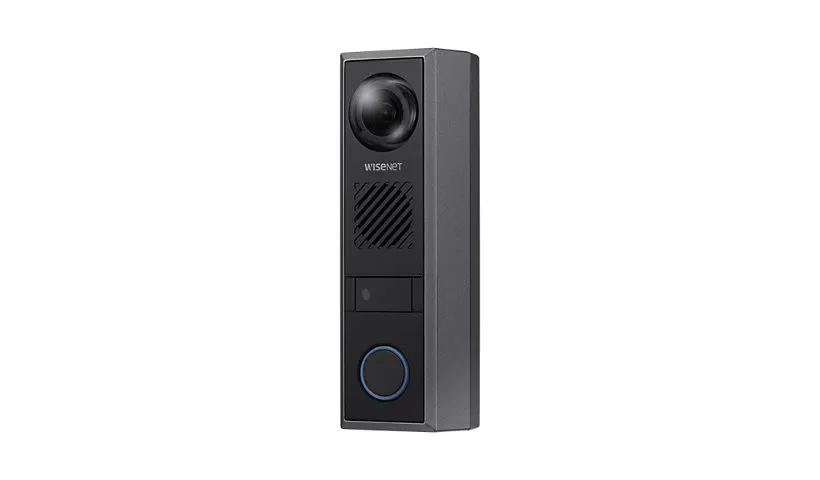
Weather-sealed button panels with one button per apartment, for row houses, two-families and walk-ups whose residents want a simple talk-and-release system.
Door stations and apartment monitors that carry voice, video and the release over one pair of wires, often over the cable a Shore Road building already has.
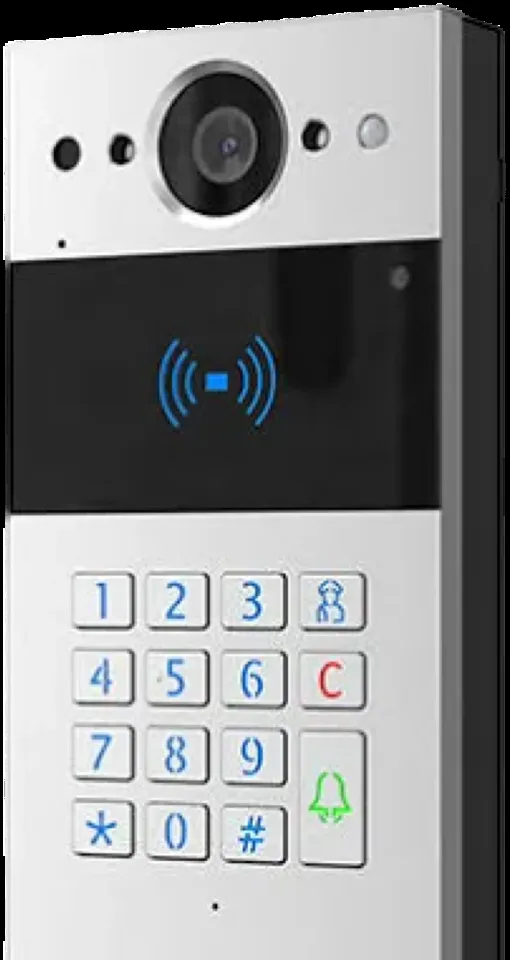
Panels where visitors scroll a list or enter an apartment code, for buildings of thirty or more apartments where a button board would be too long.
Systems that call residents' phones, alone or alongside wall stations, for households who are often out or want to answer from anywhere.
Combined keypad, card reader and call button units that replace the key cylinder on an inner vestibule door or a garage door.
Slim one- or two-button audio or video stations for a row house door, a side entrance or a separate basement apartment door.
Fail-secure and fail-safe strikes sized for wood, hollow metal and aluminum frames, with corrosion-resistant finishes for doors facing the water.
Heavy-duty closers, hinge work and latch adjustment so street and vestibule doors shut and latch on their own every time.
Low-voltage power supplies on their own labelled circuit, with battery backup, mounted well above any cellar floor that has taken water.
| Question | Audio entrance panel | Two-wire video | App or phone answering |
|---|---|---|---|
| Where it fits best here | Row houses, two-families and small walk-ups | Shore Road buildings and condos whose old pairs pass their test | Households often away, and offices and practices |
| What residents answer on | A wall station with talk and door buttons | A wall monitor, with an app option on many models | A phone, with a desk or wall station optional |
| Internet needed | No | Only for the app option | Yes, or a cellular connection |
| Uses the old cable | Usually | Usually, after every pair is tested | For door power and release only |
| Easiest for long-time residents | Yes | Yes, with a simple monitor | Only for those who use smartphones |
| Monthly fees | None | None, unless the app service charges | Often per apartment or per door |
| Brooklyn list range | $400–$900 for a house; from about $2,500 for a building | $700–$1,800 for a house or small building; from about $2,500 for a building | $700–$1,800 for a house or small building; from about $2,500 for a building |
Owners often ask whether a national brand would be simpler. ADT, Ring and SimpliSafe sell alarm systems and video doorbells for single households, and a Ring-style doorbell is a reasonable choice for a one-family row house that only wants to see and talk to visitors on a phone. None of them sells a multi-apartment entrance panel with a station in each apartment and a release on the street door, which is what a two-family, a condo or a Shore Road building needs, and a consumer doorbell cannot open a door by itself.
What a local installer adds is the part those brands leave out: tracing and testing the old cable, fitting the strike and the closer to a door that has been in service for decades, separating households and businesses in one building, and leaving the building with a written record of how it is wired. If you already own a consumer doorbell and want to keep it, we can usually install a proper entry system for the street door and leave the doorbell on the apartment door.

Search summaries about buzzer installation draw on national cost guides and vendor blogs. The seven claims below are taken from those guides, each quoted and then followed by what it means for a building south of 86th Street.
HomeAdvisor's intercom cost guide gives an average of $2,500 and a range of $1,500 to $15,000, with wireless systems at $150 to $1,500 and hard-wired ones at $1,000 to $15,000. As a national picture that is fair, and our own Brooklyn list overlaps it.
The average hides almost everything that matters in Fort Hamilton. A two-family row house with one shared street door sits at the bottom of any range. A six-story Shore Road building with fifty apartments sits near the top, and where it lands depends mainly on how many of its old pairs pass their test.
The useful number is not an average but the range for your building type, plus a list of what could move it: wire that fails, a closer that needs replacing, a station that has to move. That is what our written quote gives.
SmartRent's guide to door buzzer systems says owners can install a system without a professional electrician, saving time and cost. For a battery doorbell on a one-family house, that is true.
It does not hold for a building with tenants. ButterflyMX's own guide to apartment buzzers says shared wiring, electrical components, locks and fire-rated doors require qualified professionals. A strike that will not hold, a power supply on the wrong circuit or a release wired so the door cannot be opened from inside are all safety problems, not cosmetic ones.
In New York, low-voltage entry work in a multiple dwelling should be done under a license and with insurance, and the owner should get a wiring list at the end. All of our work is under NYS license #12000287431.
NYHLS's buzzer guide gives those lifespans, and the comparison is broadly right: wired equipment outlasts battery-powered wireless equipment.
The figure is misleading in a different way. The cable in many Fort Hamilton buildings is far older than fifteen years and still passes its test; it is the panel, the stations and the door hardware that wear out. Treating the whole system as having one lifespan leads owners to rip out cable that could have been reused.
Plan instead for parts with different lives: cable that may outlast the building's next two systems, stations that last about as long as the guide says, and closers and strikes that need checking every year on a busy door.
Enterkey's comparison lists phone-forwarding apps for existing buzzers at $3.99 to $18.99 a month. For one resident whose building already has a phone-based panel, that can be true.
It does not describe the building. The same comparison notes that building-wide panels from ButterflyMX were listing at roughly $4,000 to $6,500 each in July 2026, plus about $30 to $42 per unit per year in software fees. And an app that forwards a call cannot help in a building whose panel does not work, which is the situation in every HPD violation we pulled.
For a Fort Hamilton building, the question is what the panel and the stations will be and who pays any recurring fee, not which app a single resident subscribes to.
Swiftlane's cost guide gives that range for cloud systems, or $30 to $100 per door per month. It is an honest figure for the systems Swiftlane describes.
Applied to a building the size of the 23-unit rental Zumper lists at 9303 Shore Road, $5 to $15 per unit per month comes to about $1,380 to $4,140 a year, every year, on top of the hardware. For a 55-unit co-op it would be more than double that. Summaries rarely add it up.
A wired system has no monthly fee. Where a building wants phone answering, we can usually offer it on a two-wire system whose app has no per-unit charge, or limit the cloud service to the households that want it.
HomeAdvisor estimates one to two hours per station. For a single wall station in a house with an open basement, that is close.
In a Shore Road building, the time goes elsewhere: testing every pair from the cellar, getting into every apartment, setting the street and vestibule doors, and calling each apartment from the sidewalk at the end. The station itself is the quickest part.
A realistic plan counts access days, not station-hours, and includes a second visit for apartments nobody could open. That is how we schedule a building installation.
Summaries of New York's rule usually stop at the first sentence of §50-a: apartment buildings of eight or more units erected or converted after January 1, 1968 must have one. That part is right.
They leave out the second part, which matters most here. Tenants of older buildings can require a self-locking door and an intercom if those occupying a majority of the apartments ask in writing, and the owner then has 90 days to start and six months to finish. Most of Shore Road's six-story buildings predate 1968.
Smaller houses remain the owner's choice. But in a large prewar building, "not required" is only true until a majority of the tenants sign a letter.
Send a photo of the street door from the sidewalk, the panel close up, one apartment station and, if you can, the cellar wall where the wires end, to (347) 934-8335 or on WhatsApp. A technician will tell you which part most likely needs work and which of the Brooklyn ranges your building falls in. Or use the request form and we will call you back.
Photos of the street door, the vestibule, the old panel, a couple of apartment stations and the cellar wall where the wires end, with the number of apartments or households the door has to reach.
Whether the owner, managing agent, co-op or condo board, or the household signs, and who will let the crew into the cellar and each apartment on installation day.
The street and vestibule doors are closed again and again to see whether they shut and latch on their own; the closer, the strike plate and the frame are noted.
Each old pair is toned from the panel to its apartment and tested; new cable is planned for any run that is broken, missing or shared by two apartments.
Station, answering units, door hardware, power, cable and every possible add-on go into one written price before any equipment is ordered.
The closer is adjusted or replaced so the door relatches, the strike is fitted where the latch lands, and the power supply goes on the wall with battery backup.
Door station and apartment stations are mounted, every run is connected and labelled in the cellar, and the directory, codes or phone answering are programmed.
Each apartment is called from the street door, talks and releases, and the door is checked to relatch; then the wiring list, guide and warranty terms are handed over.

The garrison at Brooklyn's southwest tip, completed in 1831, with its Main Gate on Fort Hamilton Parkway at 101st Street and the Harbor Defense Museum inside.
The 5.32-acre park on 101st Street between Fourth Avenue and Fort Hamilton Parkway, also known locally as Cannonball Park.
The R train's southern terminal, opened in 1925, which brought the row-house and apartment building of the blocks around it.
The Brooklyn Public Library branch at 9424 Fourth Avenue, between 94th and 95th Streets, one of the places that keeps the Fort Hamilton name in use.
The waterfront park along the Narrows, faced by the six-story apartment houses of Shore Road.
The bridge that opened in 1964, landing beside the post; Fort Lafayette was demolished for its Brooklyn tower.
We also serve Bay Ridge, Dyker Heights, Bath Beach and Bensonhurst at the same Brooklyn rate, along with every other Brooklyn neighborhood. See our door buzzer installation in Brooklyn page for the whole borough, and door buzzer installation on Staten Island for buildings across the bridge.
Fort Hamilton is billed at our Brooklyn rate, with no extra charge for the blocks near the bridge or the post. These are the ranges from our published Brooklyn door buzzer list, matched to the buildings they usually fit here.
| Job | Typical Fort Hamilton property | Brooklyn range |
|---|---|---|
| Audio buzzer or replacement with an electric strike release | One- or two-family row house, a house east of the expressway, a practice's front door | $400–$900 |
| Video door station with indoor monitors or smartphone door release | Two- or three-family house, small walk-up over an avenue store, small condo | $700–$1,800 |
| Directory or button panel with every apartment wired, audio or video | Shore Road apartment house or co-op, larger walk-up, newer condo | $2,500–$10,000+ |
| Service call booked online | Diagnosis of an existing system before deciding to repair or replace | $250, applied toward the work |
| Monthly fee on a wired system | Any building that chooses the no-subscription option | $0 |
| Buzzer and entrance camera on the same visit | Vestibules, lobbies and business doors | Typically saves $200–$400 in labor |
Inside each range, three things move the price. The first is the cable: a Shore Road building whose old pairs pass their test stays near the bottom of the building range, while one that needs new cable up every riser moves well up it. The second is the doors: a closer to replace, a strike to reset on a sagging door, a vestibule door that needs its own release. The third is the options: video instead of audio, phone answering, a second chime in a back room, a code panel instead of buttons. Anything that depends on a test, such as an old pair that might fail, is named on the quote with its price before you approve, so nothing new appears on installation day.
Full terms — including 50% deposit, one-year parts-only warranty on AESS-supplied products, and the late-fee schedule — are set out in the service agreement.Tell us the address, the number of apartments, whether there is an inner vestibule door, and whether the street door closes and latches on its own, and we will tell you which of the three Brooklyn ranges fits and what would move it up or down. Call or text (347) 934-8335, send photos on WhatsApp, or fill in the form.
Three typical Fort Hamilton jobs, each placed in its range on the Brooklyn list. Your written quote names the exact equipment and every add-on before you approve it.
An audio door station with a button for each household, a talk-back station on each floor, an electric strike in the street-door frame and a power supply in the cellar, for a row house on the numbered streets or a house east of the expressway.
A video door station with indoor monitors, phone answering where wanted, and a release on the street door, for a two- or three-family, a small condo, or a walk-up over a Third, Fourth or Fifth Avenue store.
A button, directory or code panel in the lobby, a tested run and a station in every apartment, the street and vestibule doors set to latch, and battery-backed power, reaching $10,000 and beyond for the largest buildings.
Bring your own equipment. If you have already bought a door station, monitors or a smart lock, we can install it for labor only. We look at the equipment first to make sure it suits the door and the building, quote the labor flat after the walkthrough, and the warranty then covers our work rather than the equipment you supplied.
Lobby panels, apartment stations, vestibule releases, directories and condo system takeovers. Request a quote
First buzzers, two-household doors, delivery doors and front-desk releases. Call (347) 934-8335
The same list in every neighborhood of the borough. Brooklyn door buzzer installation
Every borough's buildings and rules. NYC door buzzer installation
Yes. Many Shore Road buildings split their apartments between two or more risers that meet in the cellar. One lobby panel can serve all of them; we test each riser separately, label every run by riser and apartment, and keep a separate junction for each so a fault on one side does not take down the other.
Only with written permission from the housing company that manages on-post homes, and with access arranged through the post, since entry to the installation is controlled. Most of our Fort Hamilton work is in the privately owned buildings and houses off post.
Whoever controls the common elements under the condo's declaration and bylaws, which may still be the sponsor or may already be the owners' board. We take the order from the party those documents name, and we put the system's administration in the condo's name rather than any one person's.
On many current multi-apartment systems, yes. The lobby panel has to be a video panel, but each apartment can then have an audio station or a video monitor, so a shareholder can pay for the upgrade in their own unit without changing anyone else's.
Some multi-apartment systems include an all-call or message feature and most do not. If the board wants it, we choose a model that has it and confirm the feature in writing before anything is ordered, rather than promising it after the fact.
Usually yes. Each entrance gets its own panel listing only the apartments behind it, so visitors are not sent to the wrong door, while the two panels share one power supply and one cellar junction so the system is managed as one.
In a locked enclosure or a locked room that only the owner, the super and our technicians can open, with the cable run along the building's side of the cellar. That keeps the store's staff and deliveries away from the power supply and the apartment runs.
Yes. The directory, buttons or codes can follow the building's own letters and numbers exactly, so a visitor looking for E5 finds E5, and the labels in the cellar use the same scheme so every run can be traced to its apartment.
Only if it is placed and angled for it. We check the camera's view from the bottom step during the walkthrough and, where needed, mount the station lower or choose a wider-angle model so the resident can see who is on the steps.
On systems with phone answering, yes. The apartment station rings as usual, and the same call can ring a family member's phone, who can talk to the visitor and, if the household agrees, release the door.
Door Buzzer Installation Brooklyn NY | Brownstones & Condos · Door Buzzer Installation NYC | Apartment & Building Entry · Door Buzzer Installation Manhattan NY | Apartments & Co-ops · Door Buzzer Installation Queens NY | Co-ops & Apartments · Door Buzzer Installation Bronx NY | Co-ops & Apartments · Door Buzzer Installation Staten Island NY | Homes & Apts · Door Buzzer Installation Long Island NY | Nassau & Suffolk · Door Buzzer Installation Hudson Valley NY | Apartments · Door Buzzer Installation Nassau County NY | Homes & Co-ops · Door Buzzer Installation Suffolk County NY | Homes · Door Buzzer Installation Westchester County NY | Co-ops · Door Buzzer Installation Rockland County NY | Homes & Apts · Door Buzzer Installation Orange County NY | Homes & Farms · Door Buzzer Installation Putnam County NY | Lake Homes · Door Buzzer Installation Dutchess County NY | Homes · Door Buzzer Installation Ulster County NY | Kingston
Door Buzzer Installation Bath Beach Brooklyn NY · Door Buzzer Installation Bay Ridge Brooklyn NY · Door Buzzer Installation Bedford-Stuyvesant Brooklyn NY · Door Buzzer Installation Bensonhurst Brooklyn NY · Door Buzzer Installation Bergen Beach Brooklyn NY · Door Buzzer Installation Beverley Square Brooklyn NY · Door Buzzer Installation Boerum Hill Brooklyn NY · Door Buzzer Installation Brooklyn Navy Yard, Brooklyn NY · Door Buzzer Installation Brooklyn NY | Brownstones & Condos · Door Buzzer Installation Brownsville Brooklyn NY · Door Buzzer Installation Bushwick Brooklyn NY · Door Buzzer Installation Cadman Plaza Brooklyn NY · Door Buzzer Installation Canarsie Brooklyn NY · Door Buzzer Installation Carroll Gardens Brooklyn NY · Door Buzzer Installation City Line Brooklyn NY · Door Buzzer Installation Clinton Hill Brooklyn NY · Door Buzzer Installation Cobble Hill Brooklyn NY · Door Buzzer Installation Columbia Street Waterfront Brooklyn · Door Buzzer Installation Coney Island Brooklyn NY · Door Buzzer Installation Crown Heights Brooklyn NY · Door Buzzer Installation Cypress Hills Brooklyn NY · Door Buzzer Installation Ditmas Park Brooklyn NY · Door Buzzer Installation Downtown Brooklyn NY · Door Buzzer Installation DUMBO Brooklyn NY | Loft Entry
Door Buzzer Repair Fort Hamilton Brooklyn NY · Intercom Installation Fort Hamilton Brooklyn NY · Alarm Installation Fort Hamilton Brooklyn NY | Off-Post · Structured Cabling Installation Fort Hamilton Brooklyn NY · Fire Alarm Installation Fort Hamilton Brooklyn NY · TV Installation Fort Hamilton Brooklyn · Security Camera Installation Fort Hamilton Brooklyn NY · Access Control Installation Fort Hamilton Brooklyn NY
Send a photo of your street door and whatever is beside it now, a lobby panel, a two-button plate or a single doorbell, and tell us how many apartments or households it has to reach. Call or text (347) 934-8335, message us on WhatsApp, or use the request form. Licensed under NYS license #12000287431, rated 4.7★ across 201 Google Reviews, owner-operated since 2002, with crews dispatched from our Troy Avenue office in Brooklyn.