Any Brand, Any Installer · Checked Through the Porch Glass · Footage Copied Before Anything Is Touched · Written Price Before Parts
Security camera repair in Windsor Terrace starts with our $150 Brooklyn service call, which pays for the on-site diagnosis and is credited to the repair if you go ahead. On our published Brooklyn list, most single faults cost $150 to $700, and a new recorder or a rewired group of cameras runs $700 to $1,500. We fix systems other companies put in: the camera inside the enclosed porch of a Calder row house on Windsor Place, the yard camera behind a two-family that backs toward Green-Wood, the lobby and garage cameras of a Prospect Park Southwest co-op or condo, the hallway cameras of an Ocean Parkway apartment house, and the counter camera of a shop on Prospect Avenue. Requests are booked within 2 hours, visits get a two-hour arrival window, and you hear the cause and a written price before any part is replaced.
Reviewed and updated November 12, 2026, against Con Edison's July 3, 2026 notice asking customers in Windsor Terrace and five nearby neighborhoods to conserve power during an 8 percent voltage reduction; the NYPD's 72nd Precinct CompStat report for 2026; Hoodline's September 2026 report on the 19-business smash-and-grab spree and Bklyner's 2017 report on 11 burglaries in Windsor Terrace and Kensington; Brooklyn Paper and Patch reporting from Kermit Place and Windsor Place; Brownstoner on the Calder rows and their enclosed porches; Security Sales & Integration on the Park Vanderbilt co-op's cameras and recorders; CityRealty, NY YIMBY and Openigloo on Prospect Park Southwest and Ocean Parkway buildings; NYC Parks and 311 rules on street trees; the Landmarks Preservation Commission's permit guidebook; Brick Underground on landlords and footage; HomeAdvisor's Brooklyn cost page; and the New York Department of State on installer licensing. · Abstract Enterprises Security Systems, NYS license #12000287431 · crews dispatched from our Troy Avenue office in Brooklyn

Owner-operated since 2002 · Thousands of jobs completed · Booked within 2 hours
Security camera repair in Windsor Terrace usually comes down to three things in front of, around or behind the camera: the glass, the green and the grid. The glass is the window of an enclosed porch. Many of the Calder row houses here were sold around 1915 with open porches that owners closed in with glass by about 1940, so a camera put "safely inside" the porch now looks out through old panes that bounce its own infrared light back into the lens after dark. The green is the park, the cemetery and the street trees, which fill a camera's view with leaves for half the year, put branches and spider webs in front of the lens, and send squirrels along the cables. The grid is the power. On July 3, 2026, Con Edison cut the voltage by 8 percent across an area of 122,000 customers that it listed as Windsor Terrace, Kensington, Flatbush, Borough Park, Bensonhurst and Dyker Heights, and asked people to stop running washers, dryers and microwaves. Plug-in camera supplies, small switches and battery backups do not always come through a day like that unharmed. Send an after-dark screenshot and a photo of where the camera hangs to (347) 934-8335 or on WhatsApp, and we will tell you which of the three it looks like and what that repair costs on our Brooklyn list before you book.
Windsor Terrace is a small, comma-shaped neighborhood of about half a square mile, held between Prospect Park on one side and Green-Wood Cemetery on the other, with Park Slope to the north, Kensington across Caton Avenue and Borough Park past McDonald Avenue. The Prospect Expressway cuts a trench through the middle of it. Most of its houses are the brick and limestone rows that the builder William Calder and others put up between 1902 and 1919, often two-families with an owner's duplex and a floor-through rental; there are older wood-frame houses and cottages, prewar apartment houses near Fort Hamilton Parkway and Ocean Parkway, a run of co-ops facing the park on Prospect Park Southwest, and a handful of newer condos and rentals at the edges. That is the background. For a camera repair, what matters is what each camera looks through, what grows in front of it, and how its power behaves.
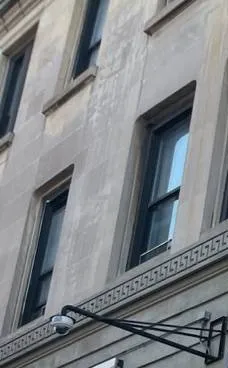
Start with the porches. Brownstoner's histories of the Calder rows describe 1915 sales ads promising open front porches, and tax photographs from around 1940 showing many of those porches already enclosed. Today a lot of Windsor Terrace houses have two front doors: a light porch door at the top of the steps and the original house door inside. Owners and installers like to put the camera in the porch, where it is out of the rain and out of reach. By day that works. At night the camera switches on its infrared lamps, and the nearest pane of glass sends that light straight back, so the recording shows a bright fog, the porch's own furniture reflected in the window, and nothing on the steps. It looks like a broken camera. It is almost always a camera in the wrong place relative to the glass, and the repair is a mount, a shroud, a setting or a move, not a new system.

Then the green. Windsor Terrace has more trees in a camera's view than most of Brooklyn, because so many blocks run up to the park or the cemetery, and the side streets are planted. A camera aimed down a quiet street in February is aimed at a wall of leaves by June. In autumn, branches moving in the wind and leaves falling past the lens set off motion alerts all night. Spider webs on an infrared camera glow like large bright objects, which is one of the most common causes of false night alerts. Cables strung along back fences and eaves get chewed. None of that is a defect in the camera, but every one of them ends as a call saying the camera is useless. Fixing it means changing what the camera looks at and how it decides something is worth recording, within the city's rules, which make it illegal to damage a street tree and require a permit to work on or within 50 feet of one.
Then the grid. Con Edison's notice on July 3, 2026 named Windsor Terrace first in a list of six neighborhoods, 122,000 customers in all, where it had reduced the voltage by 8 percent while crews made repairs; it asked customers not to use washers, dryers and microwaves and to limit air conditioning. A voltage reduction is not a blackout, and a good recorder and PoE switch will normally ride through it. What does not always ride through it is the cheap end of a system: the 12-volt plug-in adapters feeding older cameras at the end of long, thin cable, the battery backup whose battery is already worn, a power strip shared with an air conditioner. Next door in Park Slope, the February 2026 outage began, as ABC7 reported, with "flickering lights and appliances that cut out unexpectedly" before the power went out entirely. Faults from events like these tend to surface weeks later: a camera that drops every evening, a backup that beeps, a drive that will not mount.
And the reasons people go looking for footage. The NYPD's 72nd Precinct, which covers Windsor Terrace and Sunset Park from 830 Fourth Avenue, counted 86 burglaries and 645 petit larcenies in 2026 through its week-44 report, against 90 and 603 at the same point in 2025; those are precinct-wide figures, not Windsor Terrace alone. Hoodline reported that between August 3 and September 10, 2026, two people broke into 19 Brooklyn businesses by throwing an object through a window, in neighborhoods that included Windsor Terrace. In 2017 Bklyner reported 11 commercial burglaries along a two-mile stretch of Windsor Terrace and Kensington, including Prospect Avenue and Fort Hamilton Parkway, through windows and crowbarred doors. And in 2020 Brooklyn Paper reported that a house on Kermit Place was burglarized twice in a month, and that the second time the burglar took the battery camera. Each of those is a moment when someone discovers whether their camera was actually working.
So a camera repair in Windsor Terrace is rarely just "make the dark camera light up." It is getting the porch camera to see past its own glass, getting the yard and street cameras to keep a useful view through the leafy months and to stop crying wolf in the windy ones, making sure the power side of the system survives the next hot July, and confirming that the recorder is saving what the cameras show. Many owners also have us look at the door buzzer or video intercom on the same porch door, because on these houses the same doorway carries both.
Where this page applies. It covers Windsor Terrace from Prospect Park Southwest and the park's edge to the Green-Wood side, and from the Park Slope line near Bartel-Pritchard Square and 15th and 16th Streets south past the Prospect Expressway to Caton Avenue and the Kensington border, in ZIP codes 11215 and 11218. Neighborhood lines are loose here, so if your house is on a block some people call South Slope or Kensington, we cover it at the same Brooklyn rate.
Urgent calls from Windsor Terrace tend to arrive in three shapes. The first is the missing package or the tried door: something happened on the porch or the steps, a neighbor asks what your camera caught, and the night clip is a glowing rectangle of reflected light. The second is the shop break-in: the window went in during the night, and the camera over the register shows the shop filling with glass but not the person outside who threw something. The third is the slow failure: since a hot week in July, one or two cameras drop off every evening and come back later, and nobody noticed until they went to play something back.
If footage from a particular day matters, leave the recorder running and do not unplug, restart or reset it. Recorders overwrite their oldest video once the drive fills, so the clock is already running, and a restart can clear the log that shows when a camera dropped or the drive stopped writing. If the camera was a battery or cloud camera, do not delete or re-add it in the app, because that can remove the clips stored against it. Text us the date and time you need, which camera it should be on and a photo of the recorder or the app screen, and we plan the visit so that clip is copied before anything else is touched.
For everything else the path is short. The $150 Brooklyn service call books a two-hour arrival window. The technician finds the fault, tells you what failed and why, and writes the price from our Brooklyn list before any part is replaced. Most single-fault repairs are finished on the same visit, with each camera checked in daylight and again in low light, by covering the lens and lighting the scene the way the porch and the block look after dark.
Every repair below is priced from our Brooklyn camera repair list. The service call pays for finding the fault; the repair is priced by what failed, how many cameras it touches and how hard each cable is to reach, whether that is a porch camera on a Calder row on Sherman Street or a garage camera in a Prospect Park Southwest condo.
Cameras inside enclosed porches, storm doors and shop windows that record a white glow, a ghost image of the room or their own lamps at night. We re-seat them against the glass with a shroud, switch to outside lighting, or move them under the porch roof outside the panes.
Cameras that lose the street behind summer leaves or fire alerts at every branch and falling leaf. We re-aim, change the lens or field of view, redraw detection zones and switch to person and vehicle detection where the camera supports it.
Plug-in adapters, PoE switch ports, power boxes and battery backups that failed or weakened after a voltage cut or a hard outage. We measure what each camera is actually getting at its end of the cable and replace only what is failing.
DVRs and NVRs that stopped saving, beep, restart, show a disk error or keep only a few days. We copy what can be copied, replace the drive or the recorder, and confirm playback before we leave.
One camera or several dark at once: power, switch port, connector, cable, camera or recorder channel, tested in that order, so you pay for the part that failed and not the three around it.
Connectors that let water in at the porch roof or the back eave, cables chewed along a yard fence near the cemetery, and runs pinched by a porch window or cut during a deck or facade job, reterminated or replaced along the existing path.
Systems that look sharp live but save blocky clips, or that fill the drive in days because a camera faces a busy avenue or a moving tree. We set the saved stream, schedule and drive size so the hours that matter are kept at a usable quality.
Apps that stopped connecting after an internet provider change, lost admin passwords, and sellers or former tenants still on the account. We recover access, remove old users and put the logins in the right names.
Clips for the 72nd Precinct, an insurer, a landlord, a co-op board or a court, exported in the recorder's original format with its own timestamps, and a short lesson so you can do it yourself next time.
Windsor Terrace's housing comes in a few distinct kinds, and each one hides its recorder, routes its cable and fails in its own way. Openigloo counts 322 buildings in the neighborhood; most are small, and many are two-families. These are the ones we meet.
Brick and limestone row houses from 1902 to 1919 whose porches were glassed in later. Camera inside the porch, cable down through the porch floor to the cellar, recorder near the old basement laundry.
Porches still open to the street, like the Doric-columned run on Fuller Place. Cameras on columns or porch ceilings, exposed to weather and easy to knock out of aim.
Older wood houses and the small cottages on streets like East 5th Street, some under aluminum or vinyl siding. Cable behind siding, soft wood under mounts.
Prewar and postwar apartment houses facing the park, from walk-ups to elevator buildings with live-in supers. Lobby, courtyard, stair and laundry cameras on a recorder in the basement.
Prewar apartment houses of 60 to 80-odd units near Machate Circle and the parkway, with long hallways, package areas and back service doors.
Buildings from 1990 onward, including ones with full-service or enclosed garages and virtual doorman lobbies. Network cameras on the building's own network, often installed by the developer.
Brownstoner describes Windsor Terrace's Calder houses as "Calderville," more than 700 homes by 1919, many of them two-families with the owner in a duplex and a floor-through rental above. A typical camera layout here is one camera inside the enclosed porch looking at the steps, one at the back looking over the yard from the kitchen or the rear deck, sometimes a third over the side of the stoop, all running down to a recorder in the cellar. The porch camera is the one that brings us out most often, for the glass reason above. The second most common is the back camera, because the rear deck several steps above the yard puts it in the drip line of the deck boards and gives it a long view toward the next row, where neighbors' lights shine in. In both cases we look at where the camera is before we look at the camera.
Method on these houses: the cable from a porch camera usually drops through the porch floor or down beside the stoop into the cellar, so a fault there is often at the point where it passes through the floor, where water and foot traffic work on it. We test that section first. Where a camera has to come off the glass and go outside, it goes under the porch roof or on the plain masonry beside the porch, never through decorative stone, and the old holes are covered by the new mount where possible. We do not patch or paint walls, so we tell you beforehand if a move will leave a hole that needs a painter.
Where the porch is still open, like the row of Doric-columned porches on Fuller Place that 6sqft described as largely unchanged since the 1910s, cameras are mounted on a column, a beam or the porch ceiling. They get rained on sideways, knocked by ladders and strollers and pushed out of aim by anyone who wants them pointing elsewhere. The repairs are usually connectors that let water in, cable that was left to hang across the porch ceiling and has sagged, and cameras that were set to a view that no longer covers the steps. Infrared reflection is less of a problem here, but the porch railing can catch the light at night and wash out the picture if the camera looks along it.
Forgotten NY has written about the small "jewel box" houses on East 5th Street, and Windsor Terrace has more wood-frame houses than most rowhouse neighborhoods. On these, cable often runs behind aluminum or vinyl siding that went up decades after the house was built, and mounts are screwed into wood that has softened under layers of paint. A camera that slowly droops toward the sidewalk is usually a mount pulling out of soft wood, not a failing camera, and it is fixed with a proper base and longer fasteners into solid framing. Cable failures behind siding are traced with a tone tester first, so the siding only comes off where it has to.
The apartment houses along Prospect Park Southwest range from a 1931 six-story co-op designed by Cohn Brothers, which Brownstoner lists with a live-in super and a virtual doorman, to the Algonquin at 175 Prospect Park Southwest, a 27-unit 1970 walk-up co-op with an intercom and no doorman, to 185 Prospect Park Southwest, a 58-unit elevator co-op with a live-in super and porter. Their camera systems are usually a lobby camera or two, the front and service doors, a courtyard or back yard, the laundry and sometimes the elevator cab, on a recorder in the basement or the super's office. Repairs here go through the board or the managing agent, and the super is usually the person who knows where the recorder is and who has the password. We work through whoever the board names, and nothing on a building system is changed without the owner's approval.
At the Kensington end, buildings like 39 Ocean Parkway (1929, 83 units) and 101 Ocean Parkway (1935, 60 units, six floors) are prewar apartment houses with long corridors, mailboxes in the lobby and service doors at the back. A tenant review on Openigloo for 101 Ocean Parkway says, "Package theft used to be a big issue but not so much right now," and a former tenant at 39 Ocean Parkway advised the owners to "Update to a video intercom for security." In buildings like these, the camera calls are mostly about the lobby and the mailboxes: a camera over the mailboxes that shows only the tops of heads, a hallway camera whose cable runs through a corridor ceiling that was patched, and a recorder whose drive was last replaced long ago.
CityRealty lists the Windsor Terrace Apartments at 207 Prospect Park Southwest as a nine-story condo completed in 1990, with 35 units and a full-service garage. 155 Terrace Place, also from 1990, has 55 units, and its Openigloo reviews range from "no issues with package/mail theft" to "Package situation is a bit crazy." Newer still, NY YIMBY reports that 1 Park Point at Machate Circle has 375 rental units and 106 enclosed parking spaces, and that The Windsor at 23 Ocean Parkway, with 98 condos, offers a part-time attended lobby and a "cyber doorman." In these buildings the cameras are network cameras on the building's own network switch, and the repair often involves the building's IT or internet contractor and, where there is one, the virtual doorman service that relies on the lobby camera. We sort out which part is ours before we start.
This is how our technicians approach the most common Windsor Terrace call, written as our working method rather than a story about any one house. The owner says the porch camera "doesn't work at night." Before booking, we ask for three pictures: a screenshot from that camera after dark, a screenshot from the same camera in daylight, and a phone photo of the porch taken from the sidewalk, showing where the camera hangs. The third one usually settles it. If the camera sits inside the porch glass with a gap between its lens and the pane, the night screenshot will be a bright haze or a ghostly picture of the porch, and the daylight one will be fine. That camera is working; it is fighting the glass. If the daylight picture is also bad, or the camera is outside the glass, the fault is somewhere else, and we plan the visit around testing power, cable and recorder in order.
For yard and street cameras we ask one more question: when did it start? A view that "went bad in May" on a tree-lined block is almost always leaves. Alerts that "went crazy in October" are wind and falling leaves. Cameras that "started dropping in July" send us to the power side first. None of this costs anything, and it means the technician arrives with the right mount, the right lens or the right supply, or tells you before the visit that no part is needed at all.
A security camera with night vision lights the scene itself with a ring of infrared lamps around the lens. Put a pane of glass a few inches in front of it and most of that light reflects off the glass and back into the lens, so the camera sees its own glow, the frame of the window and whatever inside the porch is lit, instead of the steps outside. Old porch glass makes it worse, because it is often wavy, dirty on the inside and double-layered with a storm sash. By day there is no infrared, so the picture looks normal, which is why owners are puzzled.
There are four fixes, in order of cost. The camera's own infrared can be turned off and the steps lit from outside by a porch light or a small motion light, which lets the camera see through glass at night. The camera can be pressed right up to the pane with a soft shroud around the lens, which blocks most reflection. A camera with a separate external illuminator can be set so the light comes from outside the glass. Or the camera can go outside, under the porch roof, where it sees the steps without glass in the way. We test each option on site with the porch lights the way you actually leave them at night.
A camera aimed at a street in winter, when the trees are bare, can lose most of its view by late spring. The camera is not failing; the tree in front of it has grown back. Because street trees are protected, the answer is on the camera's side: lower the camera beneath the canopy, move it a few feet along the facade, narrow the field of view to the part of the street that matters, or change the lens so it looks under the branches at the sidewalk. In autumn the same tree causes the opposite problem, a flood of alerts as branches move and leaves fall. Modern cameras can be told to alert only on people and vehicles inside a drawn zone, which cuts most of that out without missing someone at the gate.
Spider webs and insects are the night version of the same problem. Infrared lamps attract insects, and a web across the lens lights up at night so brightly that it looks like a large moving object; one vendor's guidance says insects and webs near infrared lights "can appear extremely large and bright at night." The fix is cleaning, a camera with its illuminator set back from the lens, or moving the light source off the camera. Squirrels along the back fences toward Green-Wood and the park are the other green fault: cable that is not in conduit near the camera gets chewed, and the usual advice, which we follow, is metal conduit as close to the camera as you can get it.
During a voltage reduction like Con Edison's on July 3, 2026, the power coming into the house is a little lower than normal for hours. A well-made recorder, PoE switch and camera will usually ignore it, because their supplies are built for a range of input voltages. The weaker parts are the problem. A cheap 12-volt plug-in adapter feeding an older camera at the end of 80 feet of thin cable may already be delivering barely enough at the camera; shave a little more off and the camera reboots every time something else in the house switches on. A battery backup with a battery a few years old may have been running hot all summer and quit when it was finally needed. And a camera system plugged into the same strip as a window air conditioner sees the dips every time the compressor starts.
An installer's guide we agree with puts it well: cameras that stay dark after the power comes back are usually something upstream, "a tripped GFCI in an outdoor cabinet, a breaker that didn't reset, a failed switch power supply, or a burnt switch will keep a whole group dark while the rest of the system looks normal." On a repair we measure the voltage at the far end of each camera's cable, not at the supply, replace adapters that are weak, move cameras that can be moved onto PoE, and check the backup's battery, its runtime and what it is actually protecting.
Many Windsor Terrace systems are older than their owners think. The Park Vanderbilt co-op at 651 Vanderbilt Street, a 148-unit building that listings file under Windsor Terrace, added nine cameras and two 16-channel DVRs in its intercom project in winter 2015, according to Security Sales & Integration; recorders from that era are now about eleven years old. One security company puts the life of an NVR or DVR at 5 to 10 years, depending on care and environment. Hard drives in a recorder write every second of every day, and a staff reply on the IPCamTalk installers' forum says surveillance drives "should last for the warranty period plus one day," adding that frequent failures point to temperature or vibration.
The dangerous failure is the quiet one. An NYC installer's troubleshooting guide says it bluntly: "A live camera picture does not prove that usable footage is being recorded." The live view can look perfect while the drive has stopped writing, the schedule has been turned off or the drive is full with overwrite disabled. On every repair we check that the recorder is saving each camera, how many days it actually keeps, and whether it will tell someone when it stops.
Windsor Terrace homes change hands, and Calder two-families change tenants upstairs. Each change leaves a camera system with a seller's phone still on the account, a tenant's Wi-Fi password in the cameras, or a recorder whose admin password left with a contractor. These are repairs too. We recover access through the manufacturer's reset process where it exists, set new logins in the owner's name, remove every old user, and check that the cameras still record once the old network is gone. If someone else's account is tied to a cloud camera, removing it properly matters, because the old account can keep seeing your porch.
Windsor Terrace's businesses sit along a few streets: Prospect Park West at the north end, Prospect Avenue and Fort Hamilton Parkway through the middle, the blocks of Eleventh Avenue that the Seeley Investors built for commerce in the 1920s, and Caton Avenue and McDonald Avenue at the southern edge. They are small shops, bars, restaurants, delis, pharmacies and services, mostly with apartments above. The footage owners go looking for is usually from the hours they were closed, and this year the way in was often the front window.
The Windsor Terrace stretch below 15th Street and Bartel-Pritchard Square, with bars and restaurants, including Farrell's, open since 1933. Door cameras that have to show faces at closing time, not just a crowd.
The neighborhood's main street between the park side and the expressway, with the landmarked 1895 firehouse at 1307–1309, shops under apartments, and new building on the way, including a six-unit building with a store filed for 1259 Prospect Avenue in 2026.
Shops and services around the F and G station, which opened in 1933. Corner cameras that face constant foot traffic and fill a drive quickly.
Small commercial blocks near the expressway crossings, including the Terrace Coffee Shop at 19th Street and Terrace Place. Back doors on side streets and alleys.
Ground-floor retail in the new 1 Park Point and the apartment houses near the circle, where cameras share a building's network and the landlord controls the switch.
The Kensington edge, where Bklyner reported a pharmacy at 119 Church Avenue burglarized in 2014 while "the store's cameras were not working." The lesson travels a few blocks north.

Most small-shop camera systems were laid out to watch the register, the aisles and the staff. That is the footage owners need on a normal day. Hoodline's report on the late-summer 2026 spree described two people breaking into 19 Brooklyn businesses, including ones in Windsor Terrace, by throwing an object through a window. For a store like that, the most useful seconds happen outside the glass, and a camera inside facing the counter records the window breaking and little else. A repair visit can usually fix this without new cameras: turn one inside camera to face the front glass from the side, so it sees out and not into its own reflection, set it to keep full quality overnight, and check that the recorder holds several seconds before motion, not only after. Where a camera outside is justified, we add it on the same visit and price it separately.
For bars on Prospect Park West and restaurants on Prospect Avenue, the hard footage is at the door around closing, when people are moving, the light is low and the street is bright. Motion blur, not darkness, is what spoils those clips: a camera that lengthens its exposure to cope with the dark turns every moving face into a smear. The repair is a shorter shutter setting, more light at the door, or a camera with a larger sensor at that one spot. Kitchens add grease and steam on lenses in back halls, which is a cleaning and placement job more often than a camera replacement.
In New York, companies that install or service security and CCTV systems for others need a license from the Department of State; we work under NYS license #12000287431. Businesses can opt in, at no cost, to the NYPD's program that links store cameras to the department with access times the owner sets; we can make sure the cameras are working and their clocks are right before you decide. We are not your lawyer; we tell you where a repair touches one of these rules so you can decide before work starts.
These are the questions Windsor Terrace owners, boards and shopkeepers bring to us about cameras that already hang on their buildings. Each answer is what we would tell you on the phone before a visit.
Yes on both counts. A new insulated unit has two panes with an air space between them, and many carry a low-emissivity coating on one of the inner surfaces. Each of those surfaces reflects a little of the camera's own infrared light back at it, so a camera that gave a passable night picture through one thin old pane can turn to glare behind the new unit. Ask the carpenter whether the glass is coated, then decide where the camera goes with the new windows in mind: pressed flat to the glass inside a soft shroud, with its infrared switched off and the steps lit from outside, or moved outside the glass under the porch roof. While the old sash is out, the camera should come down, with its cable coiled, labeled and capped against dust, because window crews often pinch or cut a cable they did not know ran through the frame. If the porch ceiling or trim is being opened anyway, that is the cheapest moment to reroute the cable so the camera can sit outside the glass for good. Tell us the start date and we time the visit around the carpenter.
Treat it as a two-step job with a hand-off in the middle. Before the crew starts, we take the cameras down, mark on the wall where each cable comes out, label every cable at both ends, pull enough slack to keep it clear of the work and cap the ends. The siding crew then installs around those marks, ideally setting a mounting block, the flat square trim piece sold for fixtures, at each camera position, so the camera gets a flat, sealed base on the new siding instead of being screwed through its ridges. When the crew is done, we come back, remount each camera on its block, seal the cable entry, re-aim and test in daylight and after dark. Because the wall is open anyway, it is also the moment to move a camera that never had a good view. The usual failure when nobody plans this is a cable nailed through or cut behind the new siding, which then has to be traced with a tester and spliced from the outside.

Moved, if a better spot is within reach of the cables. The 1915 sales ads for these houses promised a basement laundry, and a century later that corner is still where the water, the heat and the lint are. A washer hose that bursts or a standpipe that backs up throws water straight up into whatever sits above it, and a dryer close by adds warm, dusty air to a box that already runs hot all day. A good place for a recorder is dry, has no water pipes running overhead, gets some air around its vents, sits off the floor and is not plugged into the same outlet as the washer or the dryer. In most Calder cellars that means a shelf on the opposite wall or a ventilated cabinet near the electrical panel. Moving it usually takes a few feet of cable extension or a new patch point, which we price before we start. If moving it is not practical, lift it, put a drip shield above it that leaves the vents open, and give it a battery backup of its own.
Probably not. A recorder saves space by storing mostly what changes from one frame to the next, so a view full of moving branches makes nearly every frame different and the camera has to send far more data to keep the same picture. An NYC installer's troubleshooting guide makes the same point: "Busy sidewalks, trees, headlights and delivery traffic can increase actual recording time." If the camera is set with a hard limit on its data rate, that same wind shows up instead as blocky, smeared clips, because the camera runs out of allowance. The fix is in the settings rather than the hardware: give that camera a variable rate with a sensible ceiling, narrow its view so less of the frame is foliage, record on motion with person detection overnight rather than nonstop at full quality, and size the drive for the windiest, leafiest month rather than for February. Before we call the job done, we check how many days the recorder actually keeps with the trees moving.
Because dusk is when the cameras switch on their infrared lamps, which raises the power each one draws, and the two at the end of the longest runs were already getting the least voltage. Thin power wire loses voltage over distance. Add the infrared load, a supply whose output has drifted down with age and a summer of heat and low-voltage days, and the far cameras drop below what they need just as the light fades, while the near ones, on short runs, still have enough. That is why we measure the voltage at each camera's end of the cable with its infrared on, never only at the box. The fix may be a new supply with adjustable output, a heavier power pair on the long runs, a small supply closer to those two cameras, or replacing them with network cameras powered from a PoE switch, which carries power over distance better. We price each option on its own line so you can choose.
The split is usually clear once the picture is traced. The camera, its cable, the building's network switch and the recorder belong to the building; the remote attendant's equipment is typically a small device or connection that takes the camera's feed and sends it out over the internet. We look at the lobby camera on the building's own recorder first. If it is frozen there too, the fault is in the building's system and that is our repair. If the recorder shows a live picture but the service still sees nothing, the problem is in the link to the service or on its side, and we give the managing agent a short written note of what we tested so the service can act on it. At least two Windsor Terrace buildings are listed with one, the 1931 co-op at 135 Prospect Park Southwest with a virtual doorman and The Windsor at 23 Ocean Parkway with a "cyber doorman," so on buildings like these we also make sure the lobby camera's address, model and login are written down and handed to the board, because the service usually needs them after a camera is replaced.

Yes, and it is worth doing the same day, because a shop with a boarded or cracked window is an easy target until the glass is in. Cracked glass scatters the camera's own infrared and the street lights, so the picture through it is often worse than no glass at all. The quick fixes are to turn the camera so it looks out through an intact pane, to move it a few feet so it sees the doorway from the side, or, if the window is boarded, to set a camera temporarily at the edge of the board with its cable fixed along the frame. Sometimes the simplest move is to swing a camera that watches the back of the shop toward the front for the week. Before anything moves, we export the break-in footage with the recorder's own timestamps, because the 72nd Precinct and your insurer will both ask for it. When the new glass goes in, the camera goes back to its final position and is tested after dark against the new pane.
It depends on where the camera kept its clips. A battery camera that uploads each clip to the maker's cloud as it records will usually have saved the moments before it was pulled down, as long as the plan is active and the Wi-Fi reached the porch. One that stores clips only on a memory card inside the camera loses everything when the camera leaves with the thief. A wired camera recording to a recorder in the cellar keeps its footage in the house, and the recorder logs the moment the camera went offline. If you rely on battery cameras at the front of the house, check in the app that clips are actually uploading, and put at least one wired camera where it is hard to reach, such as high under the porch roof or on the masonry beside the porch, recording to the recorder downstairs. When we remount a camera we use a solid base and tamper-resistant screws, so taking it down takes tools and time rather than a tug.

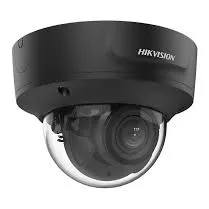
We work on systems from any maker and any installer. These are the kinds of equipment we find most often on Windsor Terrace porches, in Calder cellars, in park-side co-ops and behind shop counters, and what tends to go wrong with each one here.
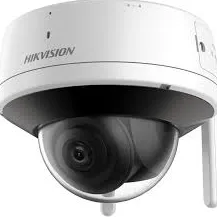
The older wired systems in many row houses and two-families, with coaxial cable down to a DVR in the cellar. Connectors at the porch roof and the back eave take in water, and the shared power box fails first. Often upgraded on the same cable.
Standard in the 1990 condos and newer rentals and in recent shop systems, powered and connected by one cable from a PoE switch or NVR. Faults are usually a switch port, a connector, a password or an address change after the internet was switched.
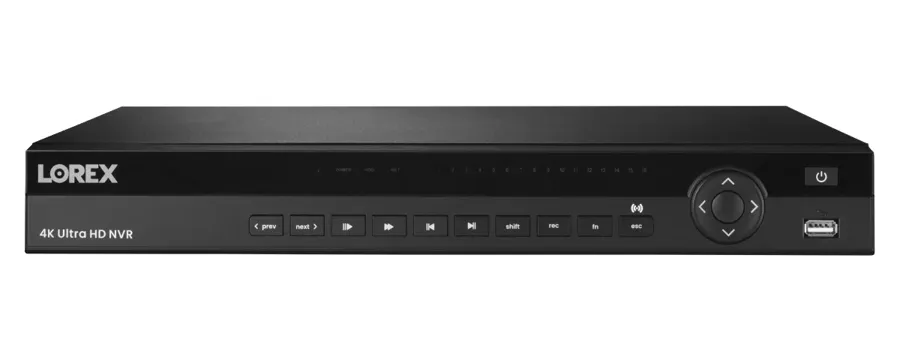
The box that keeps the video, usually on a cellar shelf or in a super's office. Drives wear out, settings vanish after power trouble, updates break phone viewing. Hybrid recorders let a house keep its coax cameras and add network ones.
Cameras working behind enclosed porch windows, storm doors and shop glass. We fit shrouds, change the light source or move them outside the glass, the single most common Windsor Terrace repair.
Cameras whose lens zooms after mounting, for long apartment-house corridors, deep shop floors and porch steps where a face has to fill more of the frame.
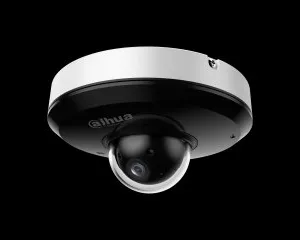
Motorized cameras in shops, lobbies and courtyards. Motors, saved positions and a dome left pointing the wrong way after the last time someone moved it are what we fix most.
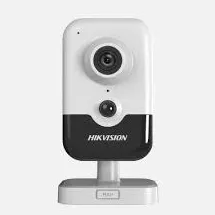
Consumer cameras on porches, in floor-throughs and in back yards. Wi-Fi through brick party walls, batteries in cold porches, and app accounts tied to a seller or a past tenant are the usual trouble.
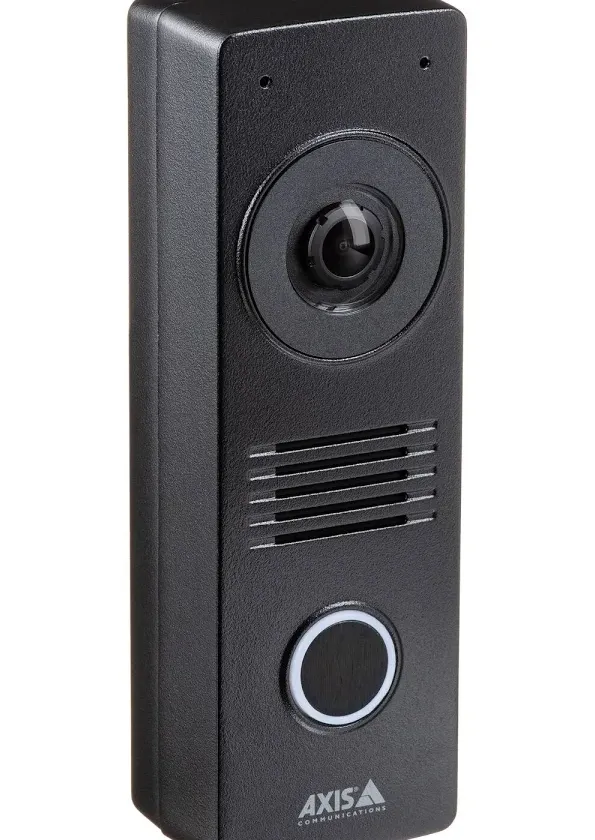
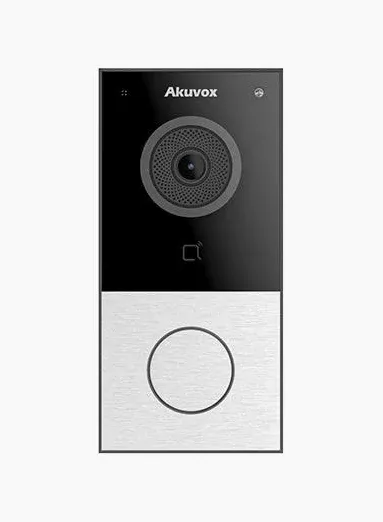
Intercom stations with built-in cameras at porch doors and building entrances. Sometimes the main recorder saves them, sometimes it does not; we check before promising footage from one.
The parts that feed everything and suffer most from low-voltage days and hard outages. Measured at the camera end on every power-related call and sized for the load when replaced.


Owners with Ring, Arlo, Nest, Wyze or SimpliSafe cameras often ask whether to call the brand or us. For a sealed consumer camera that has failed outright, the brand's warranty or a replacement is the right path; there is nothing inside to repair, and we will say so. What a brand's support line cannot see is that the camera sits behind enclosed-porch glass that reflects its own lights, that the Wi-Fi does not reach the back yard through two brick party walls, or that a battery camera on an unheated porch drains in a cold week. Those are placement, signal and power problems, and a visit fixes them. Wired systems with a recorder are a different matter: their makers generally sell through installers and do not send technicians, so a licensed local repair is the normal route. If your cameras came with an ADT or similar monitoring contract, read the contract first; the company that owns the agreement may be responsible for its own equipment.
| What you have in Windsor Terrace | Usually best handled by |
|---|---|
| A sealed consumer camera that is dead and still under warranty | The brand's warranty |
| A consumer camera that works but sees glare through porch glass, loses Wi-Fi or drains its battery | A local visit to fix placement, signal or power |
| Wired cameras on a DVR or NVR in the cellar, office or shop | A licensed local repair |
| Cameras that came with a monitoring contract | That company first, under the contract |
| A co-op, condo or rental building's common-area system | A licensed repair approved by the board, owner or managing agent |


Search summaries and home-service sites such as Angi, HomeAdvisor and Fixr give general advice on camera repair, and a lot of it is sound. Some of it falls apart on a block of glassed-in porches between a park and a cemetery. These are the general claims we hear repeated most, and what we actually find on Windsor Terrace repairs.
On a camera hanging in open air, a sudden white haze can mean failing infrared lamps or a stuck day-night filter. On a Windsor Terrace porch, the far more common cause is the window. Many Calder porches were enclosed by about 1940, and a camera set inside one is lighting the glass a few inches in front of it.
The quick test is to look at the daylight picture. If it is clear by day and white by night, the camera's eye is working and the glass is the problem. If it is bad in both, the camera itself is suspect.
Replacing a camera that is fighting a pane of glass buys a new camera that fights the same pane. A shroud, an outside light or a move under the porch roof fixes it, usually for less than the cost of the camera.
Not if it is a street tree. NYC Parks requires a Tree Work Permit to work on or within 50 feet of a street tree, and the Administrative Code makes it illegal to damage one, even by accident. That applies to homeowners and contractors alike.
The city will not prune for a camera, either. 311 takes pruning requests only for specific conditions, such as branches blocking a street light, a sign or the sidewalk, a dead branch or a branch hitting a building; it says outright that routine maintenance requests are not accepted.
So on Windsor Terrace's planted blocks the fix is on the camera's side: lower it beneath the canopy, slide it along the facade, narrow its view or change its lens. We plan the view for June, not for the bare branches of the day we visit.
On July 3, 2026, Con Edison reduced voltage by 8 percent across 122,000 customers in an area it described as Windsor Terrace, Kensington, Flatbush, Borough Park, Bensonhurst and Dyker Heights, and asked people to hold off on washers, dryers and microwaves. Nothing went dark for most of them, and most well-built recorders carried on.
The parts that do suffer are the marginal ones: worn backup batteries that worked hard all day, cheap plug-in adapters already near their limit, cameras at the end of long thin runs. Installer guidance on power events notes that damage can surface later as "a switch port that fails weeks later, intermittent camera reboots, or corrupted NVR storage."
That is the pattern we see after hot weeks: cameras that drop at dusk, a backup that beeps, a drive that will not mount in August. Testing the power at the camera end, not just at the wall, is where those repairs start.
Only if the drive is big enough for what the cameras see. One NYC installer's example works it out: eight cameras at 2 megabits per second each, recording continuously for 30 days, need about 5.18 terabytes. Many older home recorders shipped with a drive a fraction of that size.
Windsor Terrace cameras make the problem worse in the leafy months. Moving branches, headlights and a busy avenue all raise the amount of data a camera sends, so the same drive that held a month in February may hold ten days in October.
We check retention against the real views, and set the drive, the recording schedule and each camera's data rate together, so the days you need are still there when you go looking.
Sometimes true, often not. One security company puts the working life of an NVR or DVR at 5 to 10 years, depending on care and environment, and drives inside them wear out sooner. But cameras, cable and the work of running cable through a Calder house last much longer than a recorder.
The integrator rule of thumb we use is simple: if the repair costs more than half of what it would cost to replace that component, replace it. Applied part by part, that often means keeping the cameras and cable and replacing only the recorder, or keeping the recorder and replacing one camera.
Where the cameras are old coax models that still work, a hybrid recorder can keep them running and take new network cameras later. We put both prices on paper so the decision is yours, not ours.
That range describes one consumer camera on a simple house. HomeAdvisor's Brooklyn page puts the average surveillance camera install or repair at $1,416, with a typical range of $680 to $2,145, a mix that includes full installations.
On our Brooklyn list, a connector or PoE port repair runs $150 to $350, a single camera replacement $250 to $600, a hard drive swap $200 to $450 and a full DVR or NVR replacement with drive and setup $700 to $1,500. The $150 service call is credited to whatever repair you approve.
The repairs that cost the most are the ones done twice: a new camera bought for a porch-glass problem, or a new recorder bought when its power supply was the real fault. Testing in order prevents both.
Neither is a general rule in New York City. Brick Underground, quoting real estate attorneys, explains that NYC buildings are not required to have working cameras, and that landlords are not obligated to show tenants footage outside a legal process, though they must turn it over when the police request it or a court orders it.
For tenants in a Windsor Terrace walk-up or the floor-through of a two-family, that means the practical route after a package theft is to report it, give the precinct the date and time, and ask the owner to preserve the footage before it is overwritten.
For owners and boards, it means a working, well-kept system is a choice rather than an obligation, and one worth making. Footage that exists, is kept long enough and can be exported cleanly is what lets the 72nd Precinct use it.
Send a daylight screenshot, an after-dark screenshot and a photo from the sidewalk showing where the camera hangs. A good share of Windsor Terrace "broken camera" calls turn out to be porch glass, a summer canopy or a tired power supply, and we would rather tell you that before you spend money on hardware.
Rather talk it through with someone who works on cameras every day? Message a technician on WhatsApp.
Give us the address, the kind of building, how many cameras there are, which ones are out and where the recorder sits. Say whether the camera looks through porch or shop glass, whether the trouble is worse at night or in the leafy months, and whether it started after a hot spell or an outage. If you need footage from a particular date, put it in the message and we plan the visit around copying it first. For anything urgent, call (347) 934-8335.

Text or WhatsApp a screenshot from the camera that worries you, one taken after dark, a photo from the sidewalk or yard showing where it hangs, and a photo of the recorder, with the Windsor Terrace address and the kind of building. Mention any date whose footage has to be kept.
Owner, upstairs tenant, co-op board, condo, managing agent or shop owner. We confirm who approves the work, who holds the recorder login, and who can open the cellar, the enclosed porch, the super's office or the back room before we book.
The $150 Brooklyn service call books a two-hour arrival window and is credited to the repair if you go ahead. Requests are booked within 2 hours. If the trouble only shows after dark or behind porch glass, we plan the test for those conditions.
Any clip you need is exported to USB with the recorder's own timestamps before a cable, drive or setting is touched. If the drive looks like it is failing, we copy first and test second.
Outlet and backup, power supplies and PoE switch, recorder and drive, then each cable, connector and camera, then the network and the phone app. Voltage is measured at the camera end, with the infrared on.
You hear what failed and why, and get a written price from the Brooklyn list before any part is replaced. When there is more than one fault, each gets its own line, so you choose what to do now and what can wait.
Parts are replaced and every camera is checked in bright light and in low light, including through any porch or shop glass that stays in front of it, with recorded playback confirmed and not only the live view.
Channels and cables are labeled, camera-loss and drive alerts go to the right phones, old users are removed, the clock is set to sync, and you are shown how to find and export a clip yourself.
The circle at the park's edge where Prospect Park West meets Prospect Park Southwest at 15th Street, named in 1922, and the line where Windsor Terrace meets Park Slope.
The 1838 cemetery that forms the neighborhood's western side, which is why so many Windsor Terrace yard cameras look out over trees.
The 1895 firehouse at 1307–1309 Prospect Avenue, in service since January 1896 and designated a city landmark in 2013, the only individual landmark we found in the neighborhood.
The neighborhood's old parish, whose church went up in 1878 and whose school followed in 1885, and whose congregation fought the expressway in the 1950s.
The pedestrian and bike bridge over the Prospect Expressway trench, built through the neighborhood in the 1950s, with a World War I memorial beside it.
The F and G stop that opened with the line in October 1933, at the center of the parkway's shops, delis and services.
We also repair cameras in the neighborhoods around Windsor Terrace at the same Brooklyn rate. Our Park Slope camera repair page covers the brownstone blocks north of 15th Street, the Kensington page covers the apartment houses across Caton Avenue, the Greenwood Heights page covers the far side of the cemetery, and Prospect Park South has its own page for its freestanding houses. Owners anywhere in the borough can start from Abstract Enterprises' Brooklyn security camera repair page.
Windsor Terrace is billed at our standard Brooklyn rate, with no travel markup. Every repair starts with the $150 service call, which covers the on-site diagnosis and is credited to the repair if you go ahead. The figures below come from our published list of Brooklyn security camera repair prices; your own price is written down on the visit, once the fault is found, and nothing is replaced until you agree to it.
| Repair | Brooklyn price |
|---|---|
| Service call: on-site diagnosis, full system test and written repair price | $150, credited to the repair |
| Connector reterminate or PoE port swap | $150–$350 |
| Camera power supply repair or replacement | $150–$400 |
| Dome or front cover replacement | $30–$80 part, plus labor |
| Hard drive swap | $200–$450 |
| Indoor camera repair | $200–$450 |
| Single camera replacement on a working system | $250–$600 |
| DVR not working, including drive and labor | $300–$700 |
| NVR not recording | $400–$900 |
| Vandalized camera, per camera, plus cable repair | $400–$900 |
| Pan-tilt (PTZ) camera repair | $450–$1,200 |
| Hybrid recorder swap, keeping coax cameras and adding IP | $700–$1,200 |
| DVR or NVR replacement with drive and setup | $700–$1,500 |
| Lightning or surge damage, depending on system size | $700–$3,500 |
| Annual clean and check visit | $250–$800 |
Three things move a Windsor Terrace price within those ranges. The first is the glass and the reach: a camera that has to come out of an enclosed porch and go under the porch roof takes more time than one swapped in place, and a camera under the cornice of a three-story row or over a shop sign on Prospect Avenue takes more ladder work than one beside a door. The second is how many parts failed together, which is why repairs after a hot spell or an outage are often priced higher than a single dead camera: a supply, a switch port and a drive can all go in the same week. The third is access: a recorder in a super's office, a tenant's cellar or a locked building closet takes time to arrange. Whatever the case, you see the number before work starts, with each fault on its own line.
Full terms — including 50% deposit, one-year parts-only warranty on AESS-supplied products, and the late-fee schedule — are set out in the service agreement.Most Windsor Terrace repairs fall into one of three shapes, priced from our Brooklyn list.
One fault on one visit: a porch camera moved out from behind the glass or fitted with a shroud, a yard camera re-aimed under the canopy with new detection zones, a water-damaged connector at the porch roof replaced, a weak supply or PoE port swapped after the summer, a worn drive replaced, or a lost login recovered. Typical for a Calder row, a frame house or a small shop.
The recorder or several runs at once: a DVR or NVR replaced after old age or power trouble, coax cameras moved onto a hybrid recorder, or several cameras rewired after a porch, siding or cellar renovation. Typical for a two-family with cameras on both floors, a walk-up co-op or a store with apartments above.
Every camera checked in bright and low light, domes and porch glass cleaned, connectors and supplies tested, drive health read, backups tested, views re-checked after the leaves come in, alerts confirmed and a test clip exported. Homes start at $250, commercial properties at $400, and owners with several buildings run $500 to $800.
Bring your own equipment. If you have already bought a replacement camera or recorder, we fit it at labor-only rates. Send us the exact make and model and we quote the labor by phone or text; the visit is booked once it is paid. We do not do walk-throughs for customer-supplied equipment, and equipment you supply is installed as supplied: we cannot vouch for parts we did not provide, and a Wi-Fi camera's signal depends on your own network. If a model will not work with your recorder or app, we tell you before we start.
Dark cameras, porch-glass glare, leaf-blocked views, water at the porch roof and cables cut in renovations. Request a repair
DVRs, NVRs, switches, supplies and backups on cellar shelves, in super's offices and under counters. Security camera repair in Brooklyn
The full list behind every figure on this page. Brooklyn camera repair price list
Owners, boards and managing agents with buildings in more than one borough. NYC security camera repair
It means the technician arrives at some point inside the two hours you booked, for example between 10 and 12, and never before the window opens. You get a text when the technician is on the way, so you can be at the porch door, have the cellar unlocked or let the super know. If the window no longer works for you, tell us and we move the visit to another day rather than squeezing it into a shorter slot.
We do not do electrical work, so a new hard-wired light fixture or a new outlet on the porch is a job for a licensed electrician. What we do is tell you exactly what light the camera needs and where, set the camera to use it, and adjust the camera once the light is in. Often the existing porch light, a bulb change or a separate low-voltage illuminator powered from the camera system is enough, and those we can handle as part of the camera repair. We will tell you which applies before the visit ends.
If the same model is still sold, yes, and it is the simplest swap: same mount, same cable, same settings on the recorder. Many models are discontinued within a few years, so the usual answer is a current camera that works with your recorder and fits the old mounting holes or a base that covers them. We check compatibility with your recorder before ordering, because a camera that does not speak to an older recorder correctly may show a picture but not record or alert properly.
Yes. A recorder on an open shelf by the cellar stairs or under a shop counter is the first thing a careful burglar takes. We can move it into a ventilated lockbox fixed to the wall or a closet with a lock, as long as it gets enough air to stay cool, and keep it on a battery backup so it records through a cut power line. For extra protection, some recorders can also send clips or snapshots off site, so the most important moments survive even if the box is taken.
Only the $150 service call. That covers the visit, the diagnosis and the written answer: what failed, why, and what fixing or replacing it would cost from our Brooklyn list. If you decide not to go ahead, there is nothing more to pay. If you do go ahead, the $150 is credited to the repair. We would rather tell you that an old camera is not worth fixing than charge you to repair it twice.
Drop cloths go down under every ladder and work area, and ladders are padded where they lean against porch columns, trim or a finished wall. On original woodwork and stone we reuse existing holes wherever we can and choose mounts that cover old ones. We do not patch or paint walls, so if a camera move will leave a hole that needs a painter, we tell you before we start rather than after. Anything we disturb in the cellar, such as stored boxes, we put back where it was.
Usually not. If the recorder stays, so does its app, and we reconnect it and check it works on every phone that should have it. If the recorder has to be replaced with a different brand, the app changes with it, and we set up the new app on your phones before we leave, walk you through finding and exporting a clip, and remove the old app's access so nobody is left watching through an account that no longer matters.
Yes. Every cable we work on is labeled at the recorder or switch and at the camera end, every channel on the recorder is renamed to say where the camera is, such as porch steps or rear deck, and you get a short written list of cameras, channels, model numbers and where the recorder, supply and backup sit. On a Calder two-family or a co-op, that list is what lets the next person, or the next owner, fix a problem in minutes instead of hours.
Text us a screenshot of what the camera shows and the date it started, and do not reset anything. We look at it remotely or from your photos first, because a repeat fault often points to something the first visit could not see, such as water that only gets in during a storm from one direction, or a power dip that only happens when a certain appliance runs. Parts we supplied are covered under the warranty terms written on your invoice, and we will tell you plainly whether the new problem is the same fault or a different one.
Raindrops and snowflakes close to the lens catch the camera's own infrared light and show up as bright streaks and specks, which also set off motion alerts. A longer hood, a position under the porch roof out of the falling weather, an infrared light mounted away from the camera, or a camera that uses outside light instead of its own all reduce it. Person detection with a drawn zone cuts the false alerts. It is a placement and settings fix, not a sign the camera is failing.
In most cases, yes. We book the visit before opening or during the quiet afternoon hours, work on one camera at a time so the rest keep recording, and keep ladders out of the path of staff and customers. Work on the recorder itself is the one part that takes the whole system offline, usually briefly, so we schedule that for when the room is empty and tell you beforehand how long it will be down.
Security Camera Repair Brooklyn | Same-Day | Brownstone Pros · Security Camera Repair NYC | Same-Day | Abstract Enterprises · Security Camera Repair Manhattan | Same-Day | Co-op COI · Security Camera Repair Queens | Same-Day | Driveway Pros · Security Camera Repair Bronx | Same-Day | Home Base · Security Camera Repair Staten Island | Same-Day | Sandy Zone · Security Camera Repair Long Island | Nassau & Suffolk · Security Camera Repair Hudson Valley | Westchester to Ulster · Security Camera Repair Nassau County | Same-Day · Security Camera Repair Suffolk County | Hamptons + East End · Security Camera Repair Westchester County | Same-Day · Security Camera Repair Rockland County NY | Nyack, Suffern · Security Camera Repair Orange County | Newburgh, Goshen · Security Camera Repair Putnam County NY | Carmel, Mahopac · Security Camera Repair Dutchess County | Poughkeepsie · Security Camera Repair Ulster County | Kingston Woodstock
Security Camera Repair Bath Beach Brooklyn NY · Security Camera Repair Bay Ridge Brooklyn NY | AESS · Security Camera Repair Bedford-Stuyvesant Brooklyn NY · Security Camera Repair Bensonhurst Brooklyn NY | AESS · Security Camera Repair Bergen Beach Brooklyn NY · Security Camera Repair Beverley Square Brooklyn NY · Security Camera Repair Boerum Hill Brooklyn NY · Security Camera Repair Borough Park Brooklyn NY · Security Camera Repair Brighton Beach Brooklyn NY · Security Camera Repair Brooklyn Chinatown Brooklyn NY · Security Camera Repair Brooklyn Heights, Brooklyn NY · Security Camera Repair Brooklyn Navy Yard, Brooklyn NY · Security Camera Repair Brownsville Brooklyn NY | AESS · Security Camera Repair Bushwick Brooklyn NY | AESS · Security Camera Repair Cadman Plaza Brooklyn NY · Security Camera Repair Canarsie Brooklyn NY | AESS · Security Camera Repair Carroll Gardens Brooklyn NY · Security Camera Repair City Line, Brooklyn NY | Any Brand · Security Camera Repair Clinton Hill Brooklyn NY | AESS · Security Camera Repair Cobble Hill Brooklyn NY | AESS · Security Camera Repair Columbia Street Waterfront Brooklyn · Security Camera Repair Coney Island Brooklyn NY · Security Camera Repair Crown Heights Brooklyn NY | AESS · Security Camera Repair Cypress Hills Brooklyn NY | AESS
Intercom Installation Windsor Terrace Brooklyn NY · Security Camera Installation Windsor Terrace Brooklyn NY · Door Buzzer Repair Windsor Terrace Brooklyn NY | Row Houses · Fire Alarm Installation Windsor Terrace Brooklyn NY · Structured Cabling Installation Windsor Terrace Brooklyn NY · Door Buzzer Installation Windsor Terrace Brooklyn NY · Alarm Installation Windsor Terrace Brooklyn NY · Access Control Installation Windsor Terrace Brooklyn NY · TV Installation Windsor Terrace Brooklyn NY | Mounting
Send an after-dark screenshot, a photo of where the camera hangs, the address and the date of any footage you need. We book within 2 hours, give you a two-hour arrival window, copy your footage first, and write down the repair price before any part is replaced.
Prefer to send photos? Message a technician on WhatsApp.