What are you looking for?
About Us Contact Us Careers Get a Free Quote (800) 486-0943
Pick a service
βœ… Got Your Own System?
🎬 Home TheatreQuote 🎢 AV SoundQuote πŸ”‘ Access ControlQuote
Now pick your area
Pick your area
Long Island
Hudson Valley
Services available
Pricing & Tools
Pick a service for pricing
πŸšͺ Intercom Pricing πŸ”” Buzzer Repair Pricing
Calculators
πŸ“Ή Camera System Calculator 🚨 Alarm Calculator ⚑ Cabling Quote Builder βœ… Got Your Own System?
Select your area
Gate camera gone dark at the end of the garden path, a cellar recorder that got wet in the last downpour, or a shop camera on Smith or Court Street that recorded nothing the night you needed it? Carroll Gardens camera repair line, booked within 2 hours: (347) 934-8335
Home β€Ί Security Camera Repair Brooklyn β€Ί Carroll Gardens
Rowhouses Behind Deep Front Gardens Β· The 1973 Historic District Β· Tenements Toward Hoyt Street Β· Shops and Restaurants on Court and Smith

Security Camera
Repair in
Carroll Gardens

Any Brand, Any Installer Β· Gate to Cellar, Tested End to End Β· Footage Copied Before Anything Is Touched Β· Written Price First

Security camera repair in Carroll Gardens starts with our $150 Brooklyn service call, which pays for the on-site diagnosis and is credited to the repair if you go ahead. On our published Brooklyn list most single faults run $150 to $700, and a replaced recorder or several rewired cameras run $700 to $1,500. We fix systems that other companies put in: the camera on a gate post thirty-odd feet in front of a rowhouse on First Place, the recorder on a damp cellar shelf on Union Street, the hallway cameras of a walk-up toward Hoyt Street, and the counter and back-door cameras of a shop or restaurant on Court or Smith. Requests are booked within 2 hours, visits come in two-hour arrival windows, and you get the cause and a written price before any part is replaced.

Reviewed and updated November 12, 2026, against the Landmarks Preservation Commission's permit guidebook (Chapter 11) and its 2018 rules amendments; the Department of City Planning's 2008 Carroll Gardens zoning study on the front-yard blocks; Wikipedia's entries on Carroll Gardens and the Carroll Gardens Historic District; the Gowanus Community Advisory Group's notes on DEP's sewer plan and BK Reader's Hurricane Ida flooding report; the Court Street Journal, Patch, DNAinfo, Brooklyn Paper and News 12 on local burglaries and break-ins; Penn Realty's 2026 report on Court and Smith Street openings and closings; Brick Underground on tenants and building footage; HomeAdvisor's Brooklyn cost page; Yelp's Carroll Gardens security listings; and the New York Department of State on installer licensing. Β· Abstract Enterprises Security Systems, NYS license #12000287431 Β· crews dispatched from our Troy Avenue office in Brooklyn

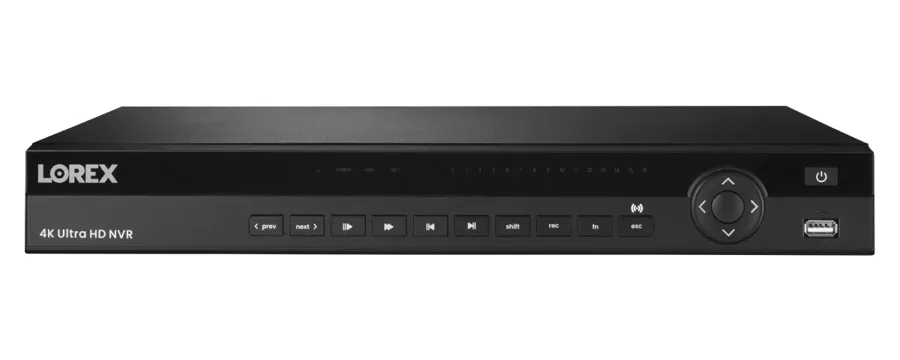
Carroll Gardens, Brooklyn security camera repair: front panel of a 16-channel desktop network video recorder
A product photo from the AESS job library, not taken in Carroll Gardens: the front panel of a 16-channel desktop network video recorder. On a Carroll Gardens rowhouse this box usually sits in the cellar under the stoop, near the boiler and the water meter, or in a closet on the garden floor. In a Court Street shop it is in the basement or behind the counter. It holds the footage, logs when each camera dropped out, and decides how much of what the cameras see is actually kept, which is why most of our repairs start here.
Carroll Gardens Camera Repair Request
Rowhouse, walk-up, condo, shop or restaurant: tell us the address and what the screen shows, and a technician calls back with the next step

βœ…
Request Sent!
Thank you. A technician will contact you about the Carroll Gardens address shortly.
25+
Years Experience
βœ“
Same-Day Estimates
100%
Licensed & Insured
4.7β˜…
201 Google Reviews

Owner-operated since 2002 Β· Thousands of jobs completed Β· Booked within 2 hours

Security camera repair in Carroll Gardens means fixing a system that is unusually long for a Brooklyn house: it runs from a camera at the garden gate, back across the front yard to the facade, down through the house and into a cellar that sits in one of the parts of the borough the city plans to re-sewer for flooding. A fault can live anywhere along that line. The gate camera fails because the cable under the garden path has taken water or was cut by a spade. The facade camera fails at a connector that has been rained on for years. The recorder fails because a drive written around the clock wears out, or because the cellar got wet and nobody checked the box afterward. And on Court and Smith Streets, where the ground floors are shops and restaurants, the camera that should have caught a late-night break-in turns out to have been recording a black screen for a month. Send a photo of the dead camera's tile and of the recorder to (347) 934-8335 or on WhatsApp, and we will tell you which part of the line it looks like and what that repair usually costs on our Brooklyn list before you book.

  • Looking at your photos costs nothing. The $150 service call covers the on-site diagnosis and is credited to the repair if you go ahead.
  • We work under New York State license #12000287431. State rules treat maintaining a closed-circuit television or video surveillance system as alarm-system work, so the company that repairs cameras for you should hold this license.
  • We repair any brand and any installer's system, and we tell you plainly when an old camera or recorder is not worth the cost of fixing.
The Neighborhood

Why Carroll Gardens Properties Need Security Camera Repair

Carroll Gardens is a small, dense neighborhood in Brooklyn Community District 6, in ZIP code 11231, roughly bounded by Degraw and Warren Streets to the north, Hoyt and Smith Streets to the east, Ninth Street and the Gowanus Expressway to the south and the Brooklyn-Queens Expressway to the west. Its streets are mostly three- and four-story rowhouses from the late 1860s to the early 1880s, many of them inside a city historic district, with older tenements and walk-ups thickening toward Hoyt and Bond Streets and two shopping streets, Court and Smith, running north to south through the middle. That is the backdrop. For a camera repair the part that matters is how those buildings lay a camera system out, and where along that layout things tend to break.

Start with the gardens that give the neighborhood its name. A Brooklyn law of 1846 set deep courtyards in front of the houses on certain blocks between Henry and Smith Streets, and the Department of City Planning's 2008 study measured the result: on First, Second, Third and Fourth Places between Henry and Smith, and on Second, Carroll and President Streets between Smith and Hoyt, the mapped street is 100 to 130 feet wide, even though the sidewalk and roadway together take up only about 50 feet. The rest is front garden, usually behind an iron fence. For a camera system, that garden is distance. The camera that watches the gate either sits on the house, a long way from the gate, or sits on or near the gate itself, with a cable that has to cross the garden to reach the house. In our repair work, that cable is one of the first places a Carroll Gardens system fails.

Then the facade. The Carroll Gardens Historic District, designated by the Landmarks Preservation Commission on September 25, 1973, covers about 130 rowhouses, including the blocks of Carroll and President Streets between Smith and Hoyt, built between 1869 and 1884 in late Italianate and neo-Grec styles, with uniform setbacks and fenced, landscaped front yards. Cameras on those fronts are equipment the Commission has rules about. The LPC's 2018 rules amendments codified staff practice for installing objects on facades and areaways, security cameras included, and its permit guidebook gives a specific path for replacing an existing camera in kind. That makes the way a camera is repaired on a district house different from the way it is first installed, and it is one reason we ask where a camera sits before we quote replacing it.

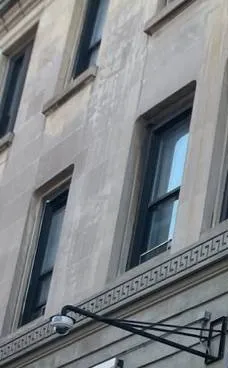
Carroll Gardens, Brooklyn facade camera repair: bullet camera on a long black steel wall arm under a carved Greek-key band on pale stone with tall sash windows
A photo from the AESS job library, not taken in Carroll Gardens: a bullet camera on a long black steel arm below a carved Greek-key band on pale stone, beside tall sash windows. On a Carroll Gardens brownstone or brick front, an arm like this is how a camera reaches past a cornice or window hood to see down toward the garden and the gate. When one of these fails, the repair question is whether the new camera can go back on the same arm and the same anchors, which on a landmarked front is usually the simplest path.

Under the house is the cellar, and in this part of Brooklyn the cellar is where water goes. The Gowanus Community Advisory Group's notes describe the city Department of Environmental Protection's plan to re-sewer all of Carroll Gardens and Gowanus, from Court Street to the canal and from Douglass Street to Fourth Street at Public Place. In neighboring Gowanus, BK Reader reported a resident who found two feet of water in her basement during Hurricane Ida, in an area with many basement units that predate federal flood protection standards. We do not claim any particular Carroll Gardens block flooded in that storm. But recorders, power supplies and PoE switches are commonly installed on cellar shelves or on the cellar floor beside the meters, and a recorder that has been wet, or has spent a summer in a damp cellar, is a frequent repair.

Finally, the street. Court and Smith Streets carry the neighborhood's shops, bakeries, bars and restaurants, with apartments above, and the zoning study maps commercial overlays along both. This year has brought both openings and break-ins. Penn Realty's summer report counted new kitchens such as Prince Street Pizza at 271 Smith Street, which opened April 23, 2026, and Trudie's Tavern at 524 Court Street, which opened June 19, while Court Pastry Shop at 298 Court Street closed at the end of April. The Court Street Journal reported this fall that Line Bagels, at Smith and Ninth Streets, was burglarized and money taken from the register, and that the same person is thought to have hit two other businesses, including Organic Convenience Corp on Court Street at Huntington. Each of those stories is, for a camera owner, a question about whether the system was recording, at what quality, and whether anyone could get the clip off it the next morning.

So camera repair here is rarely only "make the black tile come back." It is finding which part of a long system failed, fixing it without disturbing a landmarked front or a carefully planted garden, getting the recorder out of harm's way if water is the problem, and leaving the owner with alerts that say when something stops working. Owners often pair the repair with a look at the doorbell or intercom at the same gate or vestibule, because on these houses the same front door carries both.

Six Carroll Gardens facts that shape a camera repair

  • The street includes the garden. On the 1846 courtyard blocks, the City Map's street is 100 to 130 feet wide while the sidewalk and roadway total about 50 feet, according to the Department of City Planning's 2008 study. The law that set those courtyards specified 33 feet 5ΒΌ inches. Cameras and cables at the gate live in that space.
  • A historic district covers about 130 houses. The Landmarks Preservation Commission designated the Carroll Gardens Historic District in 1973, and it was added to the National Register in 1983. The LPC's guidebook has a specific criterion for replacing existing security cameras in kind with no or minimally exposed conduit, with the manufacturer's cut sheet in the application.
  • The cellars sit in a re-sewer zone. DEP's plan, as described in the Gowanus Community Advisory Group's minutes, is to re-sewer all of Carroll Gardens and Gowanus from Court Street to the canal. Recorders on cellar floors are at risk whenever the sewers back up.
  • The precinct is the 76th. The NYPD's 76th Precinct at 191 Union Street covers Carroll Gardens, Cobble Hill, Red Hook and parts of Gowanus. That is where most footage requests from here end up.
  • Burglaries here have come in waves. Brooklyn Paper reported 97 burglaries in the precinct by mid-November 2008 against 78 a year earlier, a 24.3 percent rise centered in Carroll Gardens and mostly between 8 a.m. and 5 p.m. DNAinfo reported a 61.7 percent rise in 2015, 76 against 47 through August 2, with most entries made by breaking a door lock while residents were away.
  • Repair is priced by the fault, not the block. HomeAdvisor's Brooklyn page puts the average surveillance camera install or repair at $1,416, with a typical range of $680 to $2,145 across all job sizes. Most single repairs on our Brooklyn list fall between $150 and $700.

Where this page applies. It covers Carroll Gardens from Degraw and Warren Streets south to Ninth Street, and from the Brooklyn-Queens Expressway east to Hoyt Street, including Court, Smith, Clinton, Henry and Hoyt Streets, First through Fourth Places, Carroll Park and the blocks around the Carroll Street and Smith–Ninth Streets stations. Neighbors to the north are on our Boerum Hill security camera repair page and Brooklyn Heights camera repair page, the canal blocks are on our Gowanus camera repair page, and the rest of the borough is on our main Brooklyn security camera repair page. Carroll Gardens is billed at the standard Brooklyn rate.

Same-Day Repair in Carroll Gardens

Need Repair in Carroll Gardens? A Shop Break-In Overnight, a Gate Camera Gone Black, or a Recorder That Sat in Water

Urgent calls from Carroll Gardens tend to arrive in three forms. The first comes from a shop owner on Court or Smith Street the morning after a break-in: the police want the clip, and the owner discovers that the camera over the register shows the right room but the recorder has nothing for the hours that matter, or saved it at a quality too poor to show a face. The second comes from a rowhouse owner whose gate camera has gone dark, usually after rain, a frost or a day of garden work, and who now has no view of the one spot where packages and visitors arrive. The third comes after water: the cellar took an inch or two in a storm, the recorder came back on when it dried out, and nobody is sure whether it is recording, or whether it is safe to leave plugged in.

If footage from a particular night matters, do not unplug, restart or reset the recorder. Recorders overwrite their oldest video once the drive is full, so the window to save a clip is already closing, and a restart can wipe the log that shows when a camera dropped out or the drive stopped writing. The one exception is a recorder that is still standing in water or showing signs of damage: then cut its power at the outlet or breaker, not at the box, and leave the drive where it is. Text us the date and time you need, which camera should have caught it, and a photo of the recorder and the floor around it. We plan the visit so the clip is copied before anything else is touched.

Everything else follows a short path. The $150 Brooklyn service call books a two-hour arrival window. The technician finds the fault, explains what failed and why, and writes down the price from our Brooklyn list before any part is replaced. Most single-fault repairs here are finished on the same visit, with the repaired camera checked in daylight and in low light, and the recorder's playback checked as well as its live view, before we leave.

What We Install

Security Camera Repair Services in Carroll Gardens

Each repair below is priced from our Brooklyn camera repair list. The service call pays for finding the fault. The repair is priced by what failed, how many cameras it affects and how hard each cable is to reach, whether that means a gate camera at the end of a planted garden on Third Place or a ceiling camera in a basement prep room under a Court Street storefront.

Gate and garden camera repair

Cameras on or near the iron gate that went dark, flicker or drop out in the rain: the cable across the garden traced and tested, a cut or flooded run replaced along its old path, connectors sealed, and power rechecked at the far end where voltage drops.

Facade camera replacement

Dead or fogged cameras on brick and brownstone fronts, replaced on the same bracket and anchors where possible, with any conduit kept tight to a mortar joint. On landmarked houses we work to the LPC's in-kind replacement criteria and supply the cut sheet you need.

Wet and damp recorder recovery

Recorders, power supplies and switches that sat in water or in a damp cellar. We copy what can be copied, test what survived, replace what did not, and move the equipment off the floor to a place the next storm cannot reach.

Recorder and drive repair

DVRs and NVRs that stopped saving, beep, restart or report a disk error, and drives worn out by years of nonstop writing. Drive replaced or recorder swapped, schedules restored, playback confirmed before we leave.

Shop and restaurant systems

Register, aisle, back-door and basement cameras on Court and Smith Streets that are live but not recording, recording too little, or saving clips too blocky to show a face. Settings, drive size and camera placement fixed together.

Roof, rear-yard and fire-escape cameras

Cameras on the rear wall, at the yard door and on the roof bulkhead of rowhouses and storefront buildings, where water, sun and pigeons do their damage and cable runs climb three or four floors.

Dead camera diagnosis

One camera or several dark at once: outlet, supply, switch port, connector, cable, camera and recorder channel, tested in that order so you pay for the part that failed and not the three around it.

Phone viewing and logins

Apps that stopped connecting after a router swap, admin passwords nobody remembers, and former owners or tenants still on the account. Access recovered, old users removed and logins handed to the right people.

Footage export for the 76th Precinct

Clips for police, an insurer, a landlord or a court, exported in the recorder's original format with its own timestamps, and a short lesson so you can export the next one yourself.

Building Specialists

Security Camera Repair for Carroll Gardens' Architecture

A failed camera is a different job on each kind of Carroll Gardens building, because the cable path, the surface it is fixed to, the place the recorder lives and the person who signs off all change. These are the buildings we are called to most.

Garden-block rowhouses

Three- and four-story houses set back behind deep front gardens on First through Fourth Places and on Second, Carroll and President Streets. The camera system stretches from the gate to the cellar, often with a run under the garden.

Historic district houses

About 130 rowhouses inside the 1973 district, late Italianate and neo-Grec, with brownstone and brick fronts, iron fences and stoops. Replacement cameras go back where the old ones were, at a similar size, into mortar joints.

Rowhouses on the streets without deep gardens

Houses on the cross streets and avenue blocks with ordinary areaways and stoops. Cameras sit over the door or under the stoop, and the recorder is a flight of stairs away.

Tenements and walk-ups

Older four- and five-story buildings toward Hoyt and Bond Streets and over the Court and Smith storefronts, with shared hallways, a street door, a buzzer panel and a landlord's recorder in the cellar.

Small condos and co-ops

Converted rowhouses and small buildings split into a handful of units, where the camera system belongs to everyone and therefore to no one in particular.

Storefront buildings on Court and Smith

Shops, bakeries, bars and restaurants on the ground floor, often with a basement for storage or prep and two or three apartments above, and often with two separate camera systems.

Garden-block rowhouses: thirty feet of cable nobody can see

On the courtyard blocks, the most useful camera is the one that shows who comes through the gate, and the most fragile part of it is the cable that reaches it. Installers handle the garden in a few ways. Some mount the camera on the house and run nothing across the yard, which keeps the cable safe but leaves the camera far from the gate. Some fix a camera to the fence or a gate post and staple the cable along the fence, under the hedge or along the edge of the path. Some bury it, with or without conduit, under the path or a bed. Each of these fails in its own way. Stapled cable gets chewed, pulled by vines, cut by hedge trimmers or crushed by a fallen branch. Buried cable without conduit takes water at every nick in its jacket and eventually corrodes inside. Even buried conduit can fill with water if its ends were not sealed, and the connector at the gate end sits in that water.

The repair starts by proving the fault is in the run and not the camera. We test the camera on a short known-good cable at the gate, then test the run from the house end. If the run is bad, the choice is between replacing it along the same path, pulling a new cable through existing conduit if there is one, or rerouting it along the fence line where it can be reached next time. We tell you which disturbs the garden least and what each costs before any bed is opened. If the garden is being redone anyway, that is the moment to put a sleeve under the path, and we will say so, but we do not dig up a healthy garden to fix a connector.

Historic district houses: putting it back the same way

On a house inside the district, the question for any facade camera repair is whether the work is a replacement in kind. The LPC's permit guidebook, in its chapter on health and safety equipment, has a criterion for in-kind replacement of existing light fixtures, intercoms, security cameras and mailboxes that show no or minimally exposed conduit, and it asks for manufacturer cut sheets for the new item. Its broader rules for new cameras ask that they be small, well spaced, attached at mortar joints, plain masonry, wood or metalwork, never through cast iron or decorative surfaces, and with very little visible conduit. In practice, a dead camera replaced with a similar one on the same bracket and the same anchors, with its cable leaving the way the old one did, is the simple case. Moving it, adding one, or swapping a small dome for a large bullet on a long arm is a different conversation, and we have it with you before any drill touches the brownstone.

Brownstone is soft and spalls; a new hole a few inches from an old one can take a corner of carved stone with it. So even off the district, we reuse existing anchor holes where they are sound, seal old holes we do not reuse, and fix to joints rather than to the face of the stone. If you are not sure whether your house is inside the district, the LPC publishes a map searchable by address, and the boundary runs lot by lot, so the house next door may be in when yours is out.

Rowhouses on the streets without deep gardens: the stoop and the cellar

Not every Carroll Gardens house has a long front yard. On many cross streets and on the avenue blocks, the house has an ordinary areaway, a stoop and an under-stoop door to the garden floor. The camera system is shorter, but the faults are familiar: a camera over the parlor door whose dome has gone cloudy, an under-stoop camera that got knocked or sprayed, and a recorder in the cellar under the stoop that nobody has looked at since it was installed. On these houses the cellar matters as much as the facade. Cable comes down through the vestibule floor or the front wall, and in a wet season the bottom of that run, where it enters the cellar, is often where corrosion starts.

Tenements and walk-ups: the landlord's box and the tenants' complaints

Toward Hoyt and Bond Streets and above the shops on Court and Smith, older walk-ups have a street door, a narrow hall and a stair, with cameras in the hall and at the door and a recorder in the cellar or in a locked closet. Tenants notice first when a hallway camera dies, especially after a package goes missing. City rules matter here in a specific way. The Multiple Dwelling Law's section on entrances covers doors, locks and intercom systems, and a broken intercom in a covered building is a hazardous violation that HPD can enforce. There is no general city law that requires cameras in apartment buildings, although insurers often ask for them. So a dead hallway camera is not usually a violation in itself, but the intercom or door station on the same wall may be, and we check both on the same visit if you want.

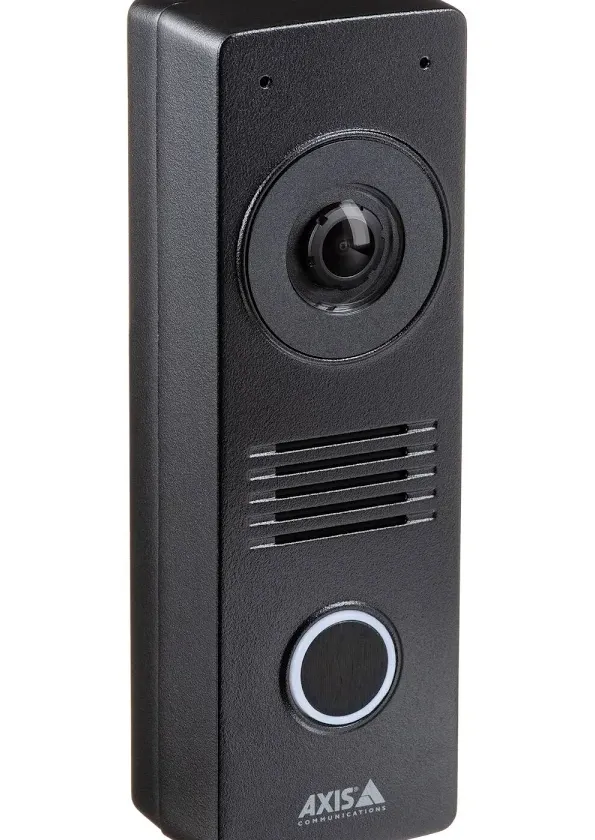
Carroll Gardens, Brooklyn walk-up entrance camera repair: black video intercom door station with a camera lens, speaker grille and an illuminated call button
A product photo from the AESS job library, not taken in Carroll Gardens: a black video intercom door station with a camera lens, a speaker grille and a lit call button. On a walk-up near Hoyt Street or above a Smith Street shop, a station like this at the street door often has the only camera that sees faces up close. Whether the main recorder keeps its video depends on how it was connected, which is the first thing we check before promising anyone footage from it.

Small condos and co-ops: who holds the password

Carroll Gardens has many rowhouses converted into a few condo or co-op units. Their camera systems were often installed by the developer or by one owner on everyone's behalf, and years later nobody knows the admin password, whose phone the alerts go to, or who is allowed to pay for a repair. A court case written up by one law firm turned on the fact that a four-unit condominium was too small for the Multiple Dwelling Law's intercom provisions to apply, which is a reminder that small buildings are often governed more by their own bylaws than by city rules. Before we repair a shared system, we ask the board or the owners to name one person who approves the work and receives the admin login, and we leave a written note of what was changed so the next owner does not start from nothing.

Storefront buildings on Court and Smith: two systems, one building

A typical storefront building on Court or Smith Street has a business on the ground floor, a basement used for storage, a walk-in or a prep kitchen, and apartments upstairs reached by a separate street door. The business usually owns its own cameras and recorder. The landlord may have a separate set covering the residential door and stair. When something fails, the first job is sorting out which camera belongs to which recorder and who owns each one. We label every cable and channel as we go, so the next call does not start with an hour of tracing, and we make sure a repair for the tenant does not quietly change the landlord's system, or the other way round.

Field Notes

Field Notes: Why We Ask Carroll Gardens Owners Where the Recorder Sits Before Anything Else

This is the way our technicians approach a Carroll Gardens camera call, written as working method, not as a story about any particular customer or house. When an owner says a camera is out, the first question we ask is not which camera, but where the recorder lives and what the floor around it looks like. On a rowhouse here the answer is usually the cellar, often under the stoop or beside the boiler, and that single fact changes the visit. If the recorder sits on the floor or on a low shelf, we ask whether the cellar has taken water in the last year, and for a photo of the box and of any water line on the wall behind it. If it has been wet, we plan to copy footage before testing anything, bring a replacement drive and supply in case they did not survive, and come prepared to move the equipment up.

The second question is about the garden. If the dead camera is at the gate, we ask how its cable reaches the house: along the fence, under the path or through the beds, and whether anyone has worked in the garden lately. That tells us whether to bring a length of direct-burial cable and a cable locator, or only a connector kit. The third question is whether the house is in the historic district, because that decides how a facade camera is replaced. Three short answers by text usually mean the technician arrives with the right parts and a plan the owner has already agreed to, instead of a first visit that only finds the problem.

Fault by Fault

Wet Cellars, Long Garden Runs, Weathered Facades, Worn Drives and Missed Nights: How Carroll Gardens Camera Systems Fail

Wet cellars: what water does to a recorder, even after it dries

A recorder that has stood in water is not fixed because it turns on again. Water leaves minerals and corrosion on the board and the connectors, and a recorder that boots fine the week after a storm can begin restarting, losing its drive or dropping cameras weeks later as corrosion spreads. Hard drives are sealed against dust, not against water, and a drive that sat in a flooded cellar may still read for a while and then fail without warning. Plug-in camera power supplies and PoE switches usually live on the same shelf and suffer the same way. Even without standing water, a cellar that stays damp through a humid summer does slow damage to the same parts.

The repair after water has three parts. First, copy whatever footage matters to a separate drive, because the original drive is now the part most likely to fail. Second, test every powered part in the chain, not just the recorder: the supply, the switch and the backup unit, if there is one. Third, move the equipment so the next storm cannot reach it. That might mean a wall shelf well above the floor, a ventilated cabinet on the garden floor, or a closet upstairs with the cables re-run to it. When the recorder moves, a few long cable runs may need to be extended, which is priced on the visit. Given DEP's stated plan to re-sewer the whole area from Court Street to the canal, we would rather move a recorder once than replace it twice.

Long garden runs: water, roots, shovels and voltage drop

A cable that crosses a front garden lives in soil, mulch, rain and frost, and it was not always the right cable for that. Indoor-rated cable stapled along a fence lasts a few seasons before its jacket cracks in the sun. Cable laid under mulch without conduit lets water travel along its length into the connector. A spade or an edging tool finds a shallow run within a year or two of planting. Long runs also lose voltage. A camera powered by a small plug-in supply in the cellar, sixty or eighty feet of cable away by the time the run climbs out of the cellar and crosses the garden, may work in summer and drop out on cold nights when its infrared turns on and it draws more power. A PoE camera on a long run can fail the same way if its switch port gives only the minimum.

The fix depends on what we find. A corroded connector is cut back and replaced with a sealed one, in a weatherproof box above the soil. A damaged run is replaced with outdoor, direct-burial cable along the same path or through a sleeve. A voltage problem is solved by powering the camera from a better supply, from a PoE switch that gives more power per port, or from a supply nearer the camera. We measure the voltage at the camera end before and after, because a run that fails only on winter nights will not show its fault on a mild afternoon.

Weathered facades: fog, haze and failed seals

Cameras on south- or west-facing fronts take years of sun, and cameras under window hoods and cornices take the drip line of every storm. The commonest failures are a dome cover yellowed and scratched until the picture is hazy, a seal that has let moisture in so the lens fogs from inside on humid mornings, and a connector behind the camera that has turned green inside its junction box. A hazy cover can sometimes be cleaned or replaced on its own. Fogging from inside usually means the seal has failed, and a camera that has fogged once will fog again, so replacing it is the honest answer. A corroded connector behind a working camera is the cheapest repair on this list, but it means opening the box and re-sealing it properly, not wrapping it in tape.

Worn drives: the part that never stops working

A recorder writing four or eight cameras around the clock wears its hard drive out, and our own Brooklyn repair notes put the usual life of a drive in that duty at three to five years. When a drive starts to fail, the recorder may keep showing live video while saving nothing, or saving in pieces, so the problem is discovered only when someone goes looking for a clip. Most recorders can warn about a failing or full drive, but only if alerts were set up and go to a phone someone reads. In a Carroll Gardens cellar, nobody sees the warning light on the front of the box. Replacing a drive is one of the most common and least expensive repairs we do; the important part is copying what can be copied first and setting alerts so the next drive does not fail in silence.

Missed nights: live view fine, recording empty

Several of the Carroll Gardens incidents in the news were overnight. Patch's Carroll Gardens police blotter described a trattoria on Columbia Street, just across the expressway, burglarized at 4:30 on a Sunday morning, with the intruder caught on video. A Yahoo News report described a burglar who cut a hole above the Smith & 9th Street Deli and Grocery on Ninth Street near Smith Street around 3:15 a.m. on a November 1, and who was last seen on camera boarding a Manhattan-bound train. Overnight is exactly when a badly set recorder lets an owner down. Some systems record only on motion, with a sensitivity too low to wake for a person in a dark shop. Some keep a low-quality stream to save space. Some have a schedule that stops recording after closing because whoever set it up thought that was sensible. The camera is fine, and the recording is useless. We check those settings on every repair, set the cameras that matter to record continuously at full quality, and size the drive to keep enough days that a loss found on Monday morning can still be looked up.

Commercial Security Camera Repair

Business Security Camera Repair in Carroll Gardens

Carroll Gardens' businesses are concentrated on Court and Smith Streets, where the zoning study maps commercial overlays on the ground floors of residential buildings, with a few more around the edges of the neighborhood. These are small businesses in old buildings: a bakery with a basement, a restaurant with a back yard, a grocery with a cellar reached through sidewalk doors. Their camera systems tend to be modest, a handful of cameras and a recorder in the back, and they tend to fail in quiet ways that are discovered only after something has happened.

Court Street

The older shopping street, with long-running bakeries and Italian food shops alongside newer openings like Trudie's Tavern at 524 Court Street. Register, display-case and cellar cameras, often installed years ago and rarely checked since.

Smith Street

A dining street since the 1990s, with Prince Street Pizza newly at 271 Smith Street this spring. Late closing hours, kitchens, back yards and back doors, and cameras that have to show faces in a dim dining room.

Smith and Ninth Streets

The southern end of the neighborhood, near the elevated Smith–Ninth Streets station. This fall the Court Street Journal reported a burglary at Line Bagels here, with money taken from the register.

Court Street at Huntington

The same report linked the Line Bagels burglary to a break-in at Organic Convenience Corp on Court at Huntington Street. Corner shops with glass fronts and a register near the door.

The Columbia Street edge

Just west across the expressway, where Patch's Carroll Gardens blotter logged a trattoria burglary caught on video at 4:30 a.m. and a resident whose camera recorded someone trying to get into his apartment.

Hoyt Street and the Gowanus edge

Tenements and walk-ups along the eastern side, where the neighborhood meets Gowanus. Street-door, hallway and cellar cameras on landlords' recorders, and storefronts on the corners.

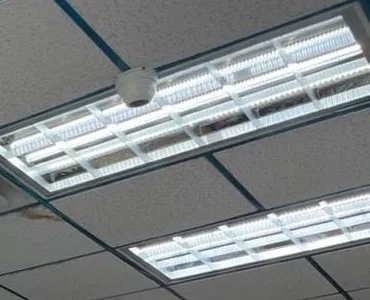
Carroll Gardens, Brooklyn shop camera repair: compact white dome camera on grey acoustic ceiling tiles beside a long louvered fluorescent light fixture
A photo from the AESS job library, not taken in Carroll Gardens: a compact white dome camera on grey acoustic ceiling tiles beside a long louvered fluorescent light fixture. In a Court Street grocery or a Smith Street cafe with a drop ceiling, this is the camera over the register or the aisle. It rarely dies outright. What usually goes wrong is that a new light, a sign or a taller shelf ends up in front of it, and it keeps recording a picture nobody can use.

Bakeries, delis and groceries: the register and the cellar

The camera owners most often go looking for is the one over the register, and the second is the one at the cellar stairs or the back door. Food shops on Court Street often have a basement reached by an inside stair or by steel doors in the sidewalk, used for storage, refrigeration and prep. Cameras down there face cold air, condensation near the walk-ins and flour or grease in the air, and the recorder is often down there with them. We see domes clouded by a film of grease or flour, connectors corroded by damp, and recorders on the floor beside a compressor. The repair usually combines a clean or a new cover, a better position, a camera suited to the room, and moving the recorder to a dry shelf. We also check how many days the recorder keeps, because a missing delivery or a cash discrepancy is often found days later.

Restaurants and bars: late hours, dim rooms, back yards

Smith Street restaurants close late, many have a garden or yard behind, and the dining room is kept dim on purpose. Cameras that looked fine during the installer's daytime visit can show grain and smear at ten at night, when the room is lit by candles and pendants. Back-yard cameras deal with string lights, umbrellas and weather. Back-door cameras face a dark yard or alley. Most of the repairs here are not new hardware. They are exposure settings that suit the room at service time, a camera moved away from a pendant that blinds it, a yard camera re-aimed past the umbrellas, and a recording schedule that keeps full quality after closing, when the room is empty and break-ins happen.

Recording the night that matters

The burglaries reported around Smith and Ninth this year, and the older Patch items about restaurants and delis broken into in the small hours, share one lesson for camera owners: the hours between closing and opening are the ones the system has to get right. We check that recording runs continuously on the register, door and back-door cameras overnight rather than only on motion, that the recorder keeps the high-quality stream rather than the low one, that its clock is correct so a detective can match a clip to a report, and that its drive holds at least a week. We also check that the recorder itself is somewhere a burglar cannot simply unplug or carry off, because a recorder sitting next to the register is often the first thing taken.

Rules that touch a commercial camera repair

In New York, companies that install or service security and CCTV systems for others need a license from the Department of State, and the state's rules treat a CCTV system used to watch for intrusion, theft or movement as part of that licensed work. We work under NYS license #12000287431. A business owner or an employee who installs a system on the owner's own premises is exempt, but most shops call a licensed company once something has to be fixed properly. Employers who watch staff by camera should know that New York Labor Law Section 203-c bars video recording in restrooms, locker rooms and changing rooms, and that a separate state law requires notice before employee communications are monitored electronically. The NYPD also runs a free program through which businesses can register where their cameras are, so detectives know whom to ask after an incident. We are not your lawyer; we tell you where a repair touches one of these rules, so you can decide before work starts.

Your Questions Answered

Security Camera Repair in Carroll Gardens: Questions Answered

The gate, the garden and the front of the house

Our gate camera is bolted to the iron fence at the sidewalk end of a front garden more than thirty feet deep. It works on dry days and blacks out when it rains. Is that the camera or the cable crossing the garden?

A fault that comes and goes with rain is almost always water getting into a connection, and on a gate camera the likely spots are the connector behind the camera, a junction where the cable was spliced along the fence, or the point where it enters the house. Cameras themselves are sealed and rarely fail only when wet unless their housing has cracked. We test the camera on a short known-good cable at the gate, then test the run from the house, and dry-test the suspect joints. In most cases the fix is a sealed connector in a weatherproof box above the soil, not a new camera.

A landscaper re-edged the beds beside our front path, and the gate camera has shown nothing since. Will fixing it mean taking up the path?

Usually not. A cable cut by an edging tool is normally cut where it ran shallow along the edge of a bed, and that is the spot we look first, with a cable locator if the run is buried. If the cut is in a reachable place, a sealed splice or a short new section along the same line fixes it. If the run is damaged in several places or sits under the path itself, we price both a replacement along the old route and a new route along the fence where it can be reached next time, and you choose before anything is dug.

Landmarks staff asked us for a manufacturer's cut sheet before our dead facade camera is swapped. What is that, and can you provide it?

A cut sheet is the manufacturer's one- or two-page product sheet showing the camera's size, shape, color and mounting, usually with a dimensioned drawing. The LPC's permit guidebook asks for cut sheets for security cameras, light fixtures, intercoms and mailboxes, including on in-kind replacements of existing equipment. We send the cut sheet for the exact model we propose, choose a model close in size and color to the one being replaced, and plan to reuse the existing bracket and cable exit so that little or no conduit shows. Filing remains the owner's step; we give you what the application needs.

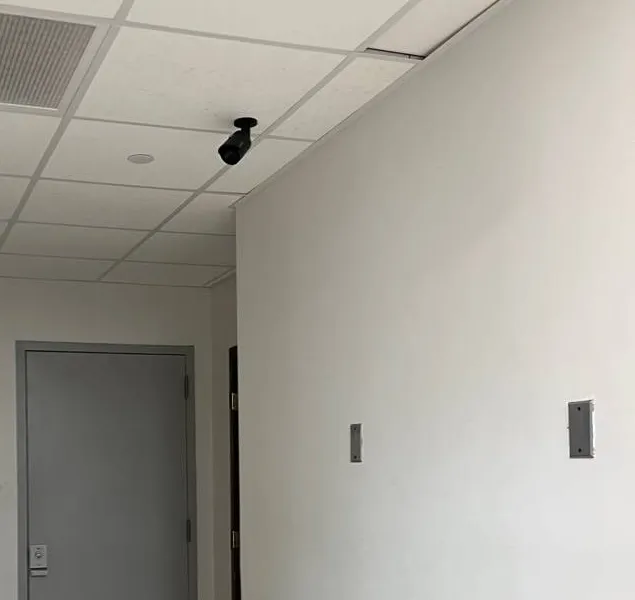
Carroll Gardens, Brooklyn cellar door camera repair: small black bullet camera hanging from a white ceiling-tile grid, aimed down a short hallway at a grey steel service door
A photo from the AESS job library, not taken in Carroll Gardens: a small black bullet camera hanging from a white ceiling-tile grid, aimed down a short hallway at a grey steel service door. In a Court Street shop this is the camera on the corridor to the basement stairs or the rear exit; in a walk-up it covers the cellar door. It sees whoever comes through only for a second or two, which is why we check its frame rate and saved quality on a repair, not just whether it lights up.

Our gate camera came back after a summer repair, but now it drops out on cold nights once its night lights switch on. What changed?

Most likely the power, not the camera. When a camera's infrared lights come on at dusk, it draws noticeably more power, and on cold nights some cameras also run a small heater. On a long run from the cellar across the garden, a small plug-in supply or a weak switch port that was just enough in summer is no longer enough, so the camera browns out and restarts. We measure the voltage at the camera end with its lights on, and fix it with a stronger supply, a PoE port with more power, or a supply nearer the gate.

The cellar and the power

Our recorder sits on the same cellar shelf as the outlet for the sump pump. When the pump kicks on in a storm, the recorder sometimes restarts. Are the two connected?

Very possibly. A pump motor starting on the same circuit, or on an outlet strip shared with the recorder, pulls a sharp dip in voltage for a moment, and some recorders and supplies restart on a dip they cannot ride through. Every restart risks the drive and leaves a gap in recording, exactly during a storm. The fix is to put the recorder on its own outlet, ideally on a different circuit from the pump, through a small battery backup sized for the recorder and switch. Moving the outlet or circuit is an electrician's job, which we do not do; we tell you exactly what is needed and set up the camera side.

Every spring the front wall of our cellar under the stoop gets damp right where the camera cables come in, and the two front cameras fail more often than the rest. Is that a coincidence?

Probably not. Where a cable passes through a damp masonry wall, it usually has a connector or splice on the inside face, and that joint sits in damp air for months. Corrosion there causes flicker, drop-outs and eventually a dead camera, while the cameras on dry runs keep working. We open the joint, cut back to clean cable, use sealed connectors, mount the junction a little higher on the dry side of the wall, and seal the cable entry. If the wall itself is wet, that is a mason's job, but the camera side can be made to tolerate it.

Shops and restaurants on Court and Smith

After the break-ins around Smith and Ninth this fall, a detective asked shops near us for overnight video. Ours covered the register, but the clip is too blocky to read a face. What needs to change on the recorder?

Usually the recording settings, not the camera. Many recorders keep a low-resolution sub-stream, or a heavily compressed main stream, to stretch the drive, and in a dark shop at night that compression turns faces into blocks. We set the register and door cameras to record their full-quality stream continuously, raise the bit rate to suit a low-light scene, check that the camera's night mode is not smearing motion, and size the drive to keep at least a week at that quality. Then we export a test clip so you can see the difference before we leave.

Our Court Street shop shares a basement with the building's meters and boiler, and our recorder is plugged into the landlord's circuit. When the super shuts that breaker for work, we lose recording. How should this be set up?

The recorder should run from a circuit the business controls, or at least from an outlet nobody switches off for routine work, through a battery backup that keeps it running for a short shutdown and closes it down cleanly on a long one. We also turn on the recorder's power-loss and video-loss alerts so you know the moment it goes off, and label the outlet and breaker so the super knows what it feeds. Rewiring the outlet is for the landlord's electrician; we set up everything on the camera side and tell them exactly what is needed.

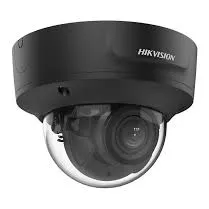
Carroll Gardens, Brooklyn store aisle camera repair: black varifocal dome camera, product photo
A product photo from the AESS job library, not taken in Carroll Gardens: a black varifocal dome camera. Its lens can be zoomed after mounting, which is how a register camera in a narrow Court Street shop can be set to fill the frame with the counter and the customer's face rather than the whole room.

We opened on Smith Street this year in a space where the last tenant left dome cameras in the ceiling but took the recorder. Can those cameras work with a new recorder?

Often, yes. We first find out what they are: coax cameras need a DVR of the matching type, and network cameras need an NVR or a switch and software that support them. Network cameras left behind are usually still locked with the old tenant's password and need a factory reset. We test each camera and its cable, tell you which are worth keeping, and price a recorder that fits them. If the cameras are old or a mix of types, we will tell you when a new recorder plus a few new cameras costs less than nursing the old ones along.

Walk-ups, condos and footage

Packages keep going missing from the hallway of our walk-up toward Hoyt Street. The landlord says the hallway camera records but will not let us watch it. Do tenants have a right to see the recording?

Not automatically. Lawyers quoted by Brick Underground said landlords generally are not obliged to show tenants footage outside a legal process, and that city buildings are not required to have working cameras at all. One of them, attorney Catherine Grad, added, "I don't think that it's such an arduous duty to impose on the landlord" to review footage when thefts keep happening. In practice, file a police report, which lets the precinct request the video, and ask the landlord to check the recorder is actually keeping the hallway. If the landlord books a repair, we work for the owner and follow the owner's instructions on who sees what.

Our tenement's only street-door camera is the one built into the intercom panel. The panel still rings upstairs, but the recorder shows no picture from it. Which part failed?

If the panel rings and talks, the station itself is working, so the fault is usually the video link from the panel to the recorder: a converter, a separate video cable, a network port or a setting on the recorder. Some door stations were never connected to the recorder at all and only show video on the apartment monitors. We check how it was wired, test the video at the panel and at the recorder, and tell you whether recording it needs a repair or a small addition. Since a broken intercom in a covered building is an HPD violation, we look after the intercom side as carefully as the camera side.

A bike chained inside our vestibule was taken, and the vestibule camera shows only the top of a head. Can it be lowered without new wiring?

Usually, yes. DNAinfo once reported a thief on Smith Street who removed part of a vestibule banister to free a chained bike, so the thief at the bike, not the street door, is the face the camera needs. A camera mounted high and aimed down sees scalps. Moving it a foot or two lower on the same wall, or re-aiming it across the vestibule at head height, usually needs only a short extension of the existing cable. If the vestibule has a glass outer door, we also check for glare and night reflections at the new angle, and confirm the recorder keeps the full-quality stream from that camera.

We are selling our Carroll Gardens rowhouse. Should the camera system be repaired, reset or removed before the closing?

That depends on the contract, so check with your lawyer whether the cameras are fixtures staying with the house. If they stay, it is fair to the buyer to leave them working, factory-reset with your accounts removed, with the admin login and the recorder's location written down for them. Either way, your own footage should be copied off or wiped and your phone removed from the app. If you are taking the system, we can take it down; leftover holes in the facade are the masonry contractor's work, not ours, so plan that before closing.

Equipment

Types of Security Cameras and Recorders We Repair

We repair systems from any maker and any installer. These are the kinds of equipment we find most on Carroll Gardens rowhouses, walk-ups and storefronts, and what usually goes wrong with each.

Coax and HD-over-coax cameras

The older systems on many rowhouses, wired with coaxial cable to a DVR in the cellar, often powered from one multi-camera supply. Connectors corrode at damp walls and garden joints, and the supply tends to fail first. Many can be upgraded in place on the same cable.

Network (IP) cameras

Powered and connected by one cable to a PoE switch or NVR, common in newer shop systems and renovated houses. Faults are usually a switch port, a connector, a power budget too small for a long garden run, or an address change after a router swap.

DVRs, NVRs and hybrid recorders

The box that keeps the video, usually in a cellar. Drives wear out, damp corrodes boards, outages wipe settings and clocks. A hybrid recorder lets a house keep working coax cameras while adding network ones.

Varifocal domes and bullets

Cameras whose lens can be zoomed after mounting, useful at a gate far from the house, over a narrow shop counter, or down a walk-up hallway where a face must fill more of the frame.

Outdoor bullets on arms and brackets

The usual facade and gate camera. Sun yellows them, drip lines from cornices and hoods find their seals, and brackets loosen in soft brownstone. Replaced on the same fixings where we can.

Pan-tilt and 360-degree cameras

Motorized or fisheye cameras in larger shops and on some rear walls. Motors, saved positions and fogged domes are what we fix most often.

Wi-Fi, battery and cube cameras

Consumer cameras in apartments, on stoops and in back gardens. Weak signal through brick walls, batteries in winter, and app accounts tied to someone who moved away are the usual problems.

Video door stations

Intercom stations with built-in cameras at walk-up street doors and some garden gates. Sometimes recorded by the main system, sometimes not; we check which before promising footage.

PoE switches, supplies and battery backups

The parts that power everything, and the first to suffer from damp, power dips and long runs. Checked on every call and sized properly when replaced.

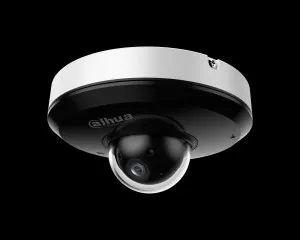
Carroll Gardens, Brooklyn pan-tilt camera repair: small pan-tilt dome camera with a white body and a black lens bubble
A product photo from the AESS job library, not taken in Carroll Gardens: a small pan-tilt dome camera with a white body and a black lens bubble. In a Court Street shop or a restaurant dining room it can be swung from a phone to look at the register, the door or a table. Its motors and saved positions are what usually need repair, and we often find one left pointing at the ceiling since the last time someone moved it.
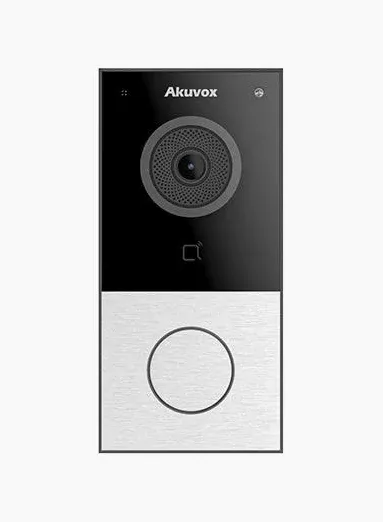
Carroll Gardens, Brooklyn gate station camera repair: narrow video door station with a camera lens at the top and a big round call button
A product photo from the AESS job library, not taken in Carroll Gardens: a narrow video door station with a camera lens at the top and a big round call button. On a Carroll Gardens house a station like this may sit at the street door of a walk-up or on the gate post at the end of a front garden, the one place a caller's face is close to a lens. Its link back to the house crosses the same garden as any gate camera, and it fails in the same places.

National brands versus a local licensed repair

Owners with Ring, Arlo, Nest, Wyze or SimpliSafe cameras often ask whether to call the brand or us. For a sealed consumer camera that has simply died, the brand's warranty or a replacement is usually cheaper; there is nothing inside to repair. What a brand cannot do is stand in your front garden and see that the gate is beyond the Wi-Fi's reach through a brownstone front, that the battery drains because the camera wakes for every passing car, or that the camera is behind glass that reflects its own light. Our own Brooklyn notes record brownstone back yards and garden floors with Wi-Fi signal near -85 dBm, too weak for a wireless camera to stream reliably. That is where a visit pays for itself. For wired systems with a recorder, a licensed local repair is the normal route, because the makers of those systems sell through installers and do not send technicians. ADT and similar monitored services repair their own equipment under their contracts; if your cameras came with one, read the contract before calling anyone else. Ring ended its "Request for Assistance" tool for police in January 2024, News 12 reported, though police can still obtain video with a warrant, which matters to owners deciding where their footage should live.

SituationUsually best handled by
Sealed consumer camera dead, still under warrantyThe brand's warranty
Consumer camera works, but the garden is out of Wi-Fi range or the battery keeps drainingA local visit, often to wire it or add an access point
Wired cameras with a DVR or NVR in the cellarA licensed local repair
Facade camera on a landmarked houseA licensed repair that replaces in kind and supplies the cut sheet
Cameras under a monitoring company's contractThat company first, under its contract
Shared system in a small condo or co-opA licensed repair approved by the board or the owners' chosen contact
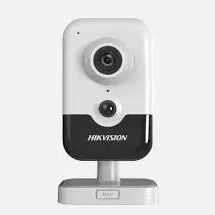
Carroll Gardens, Brooklyn apartment camera repair: small white cube camera for indoor use, product photo
A product photo from the AESS job library, not taken in Carroll Gardens: a small white cube camera for indoor use. Renters in walk-ups toward Hoyt Street and owners on a garden floor often set one on a shelf facing the door. When it stops connecting, the cause is usually the apartment's Wi-Fi, a changed router password or an app account in someone else's name, rather than the camera.
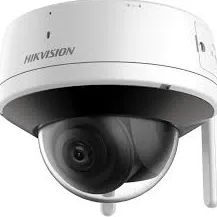
Carroll Gardens, Brooklyn back garden Wi-Fi camera repair: outdoor Wi-Fi dome camera with an external antenna, product photo
A product photo from the AESS job library, not taken in Carroll Gardens: an outdoor Wi-Fi dome camera with an external antenna. On a Carroll Gardens rowhouse a camera like this is often meant to cover the back garden or the front gate, with two brick or brownstone walls between it and the router. The antenna's direction, or an access point closer to the camera, often matters more than the camera.
AI Overview Reality Check

What AI Gets Wrong About Security Camera Repair in Carroll Gardens

Search summaries and home-service sites such as Angi, HomeAdvisor and Fixr hand out general advice on camera repair. Much of it is right anywhere. Some of it misses how camera systems are laid out and how they fail on these blocks. These are the claims we hear repeated most, and what we actually find on Carroll Gardens repairs.

"If a camera keeps disconnecting, replace the camera"

On a camera next to its recorder, that might be a reasonable guess. On a Carroll Gardens gate camera, the camera is usually the least likely part to have failed. Between it and the recorder there may be a garden, a fence line, a foundation wall and a flight of cellar stairs, and every joint along that route is a candidate.

A camera that drops out in rain points to water in a connector. One that drops out on cold nights points to power on a long run. One that died the day the garden was worked on points to a cut cable. None of those is fixed by a new camera, and a new camera on the same faulty run fails the same way.

So we test the camera on a short cable at its own location before we suggest replacing it. If it works there, the money goes into the run, which is where the fault is.

"Wireless cameras are the easy fix when wiring fails"

In an open suburban yard, sometimes. In a Carroll Gardens rowhouse, the router is usually indoors behind a masonry front, and the gate may be thirty or forty feet beyond that, past an iron fence. Our own Brooklyn notes record signal at brownstone back yards and garden floors around -85 dBm, too weak for a camera to stream reliably.

A wireless camera at the gate can work if an outdoor access point is placed to reach it, and if it still gets steady power. But "wireless" cameras are rarely power-free; battery models need charging, more often in winter, and wired-power models still need a cable.

Replacing a failing gate cable with a well-sealed outdoor cable in a sleeve is often more reliable than any wireless option, and it fails less often. We price both when both make sense.

"Landmark rules mean you cannot touch a camera on a historic house without a permit"

The LPC's rules do cover cameras on facades; its 2018 amendments codified staff practice for installing security cameras and other equipment on facades and areaways. But its permit guidebook also sets a specific criterion for in-kind replacement of existing security cameras, intercoms and light fixtures with no or minimally exposed conduit.

In practice, a dead camera replaced with a similar one, in the same spot, with the cable leaving the way it did before, is the simple case. The application asks for the manufacturer's cut sheet for the new camera, which we provide.

What draws more scrutiny is new or moved equipment, a much larger camera, or new visible conduit. We tell you before the visit if a repair crosses that line, so it does not turn into a facade problem after the fact.

"If the recorder turns back on after a flood, it's fine"

Recorders and drives that have stood in water often boot normally at first. Corrosion on the board and the connectors keeps working for weeks, and a drive that was wet can fail without warning months later. A cellar that floods is the exact place where a recorder keeps the footage you might need.

The first step after water is to copy anything important to a separate drive, then test every part of the chain, including supplies, switches and any backup battery, rather than trusting the live view.

The step most people skip is moving the equipment. With DEP planning to re-sewer the whole area from Court Street to the canal, a recorder that goes back on the cellar floor is simply waiting for the next storm.

"Motion recording saves space and catches everything"

It saves space. It does not catch everything, especially in a dark shop at 3 a.m. Motion detection that is not tuned may wake late, miss a slow-moving person, or trigger on headlights and miss the person behind them. Smart detection is better but still has to be set up for the scene.

The overnight burglaries reported around Smith and Ninth Streets, and the older Patch reports of restaurants and delis broken into before dawn, are exactly the hours when a shop is empty and every second of footage counts.

For the register, door and back-door cameras of a business, continuous recording at full quality is the safer setting, with motion recording reserved for quieter cameras. The drive is sized to match. That is a settings repair, not new hardware.

"Any handyman or electrician can fix a camera system"

In New York, companies that install or maintain security systems for others are licensed by the Department of State, and the state's rules count CCTV and video surveillance as part of that work. An electrician can add the outlet a recorder needs; the cameras, cabling, recorder and network are licensed low-voltage work.

The tools are different too. Most of the faults on this page are found with a cable tester, a PoE tester, the recorder's logs, a moisture meter and a voltage reading at the far end of a garden run, not with a meter on the house wiring.

If someone has already been in, tell us what they changed. It saves time, and it is common for a well-meant fix to have moved the fault rather than cured it.

"Camera repair costs about $100 to $300"

General national guides put a service call at $75 to $150 for the diagnosis and a typical repair at $150 to $400. HomeAdvisor's Brooklyn page puts the average surveillance camera install or repair at $1,416, with a typical range of $680 to $2,145 across all job sizes. Both are averages of very different jobs.

On our Brooklyn list, a settings or connector fix can fall inside the $150 service call or run $150 to $350, a single camera replacement runs $250 to $600, and a recorder replacement runs $700 to $1,500. A gate run replaced across a garden is priced on the visit by length and route.

The expensive repairs are the ones done twice: a camera replaced when the cable was the problem, a drive replaced when damp was killing the recorder. Testing in order is how we avoid paying for the same fault two times.
Talk to a Technician Before You Buy a New Camera for a Fault That May Be in the Cable

Send a photo of the camera that is out, a photo of the recorder and the floor around it, and a word about how its cable reaches the house. Many Carroll Gardens "dead camera" calls turn out to be a wet connector, a cut garden run or a recorder that was never set to keep the night, and we would rather tell you that before you spend money.

Prefer to talk to someone who works on cameras every day? Message a technician on WhatsApp.

Get In Touch

Request a Free Quote

Tell us the address, the kind of building, how many cameras there are, which ones are out and where the recorder sits. Say whether the dead camera is at the gate, on the facade, at the back or inside, whether the cellar has taken water, and whether the house is in the historic district if you know. If you need footage from a particular date, put it in the message and we will plan the visit around copying it first. For anything urgent, call (347) 934-8335.

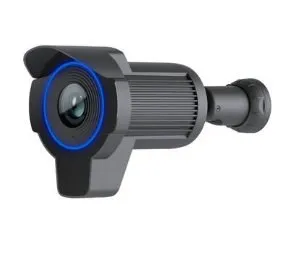
Carroll Gardens, Brooklyn gate camera repair: black bullet camera with an extended sun hood and a glowing blue ring around the lens, product photo
A product photo from the AESS job library, not taken in Carroll Gardens: a black bullet camera with an extended sun hood and a glowing blue ring around the lens. On a gate post or a south-facing brownstone front, a long hood keeps rain and direct sun off the lens and the seal, which is one of the simplest ways to make a replacement outlast the camera it replaces.

βœ…
Request Sent!
Thank you. A technician will contact you about the Carroll Gardens address shortly.
How It Works

Our Repair Process

1. Send photos of the camera, the recorder and where it sits

A frame from the camera that worries you, a photo of the recorder and the floor or shelf around it, the Carroll Gardens address and the kind of building, by text, WhatsApp or the form. Tell us any date whose footage must be kept and whether the cellar has taken water.

2. Settle who owns and approves the system

Owner, landlord, tenant, condo board or shop. We confirm who approves the work, who holds the recorder login, and who can open the cellar, the garden gate or the back office before we book.

3. Book the service call

The $150 Brooklyn service call books a two-hour arrival window and is credited to the repair if you go ahead. Requests are booked within 2 hours. If the fault only shows in rain or on cold nights, tell us, and we plan the tests around it.

4. Copy the footage that matters

Clips you need are exported to USB in the recorder's own format with its own timestamps before a cable, drive or setting is touched. A recorder that was wet, or a drive that looks weak, is copied first and tested second.

5. Trace the fault along the whole run

Outlet and backup, supply or PoE switch, recorder and drive, then each cable from the cellar through the house, across the garden or up to the roof, each connector and each camera, then the network and the phone app, in that order.

6. Name the cause and write the price

You hear what failed and why, and get a written price from the Brooklyn list before any part is replaced. If there is more than one fault, each is priced on its own line so you can choose what to fix now.

7. Repair, seal and test

Parts are replaced, outdoor joints are sealed in boxes above the soil, facade fixings go back into the same mortar joints, and each repaired camera is checked in live view and in recorded playback, in daylight and in low light.

8. Label, set alerts and hand over

Cables and channels are labeled, camera-loss, drive and power alerts go to the right phones, old users are removed, the clock is set to sync, and you are shown how to find and export a clip yourself.

Coverage Area

Security Camera Repair Near Carroll Gardens' Landmarks

Carroll Park

The park bounded by Court, Smith, Carroll and President Streets, bought by the city in 1853 and among the oldest parks in Brooklyn, at the center of the neighborhood between its two shopping streets.

John Rankin House

The house at 440 Clinton Street, built around 1840, an individual city landmark since 1970, older than the rowhouse boom that filled the blocks around it.

South Congregational Church

The church complex at 358–366 Court Street, with buildings dating from 1851 and 1857, designated a city landmark in 1982.

St. Mary Star of the Sea

The Court Street church begun in 1853 to a design by the architect Patrick Keely, which makes its parish older than nearly every house on the blocks around it.

Carroll Gardens Library

The Brooklyn Public Library branch at 396 Clinton Street, a Carnegie-funded branch that opened in 1905.

Smith–Ninth Streets station

The F and G platform high on the Culver Viaduct over the Gowanus Canal, at 87.5 feet the highest station in the subway system, at the neighborhood's southern end.

We also serve the neighborhoods around Carroll Gardens, including Cobble Hill, Boerum Hill, Gowanus and Red Hook, at the same Brooklyn rate. Our Boerum Hill camera repair page covers the blocks north and east of Hoyt Street, our Gowanus security camera repair page covers the canal side, our Park Slope camera repair page covers the slope beyond Fourth Avenue, and owners anywhere in the borough can start from Abstract Enterprises' Brooklyn security camera repair page.

Pricing

Security Camera Repair Cost in Carroll Gardens

Carroll Gardens is billed at our standard Brooklyn rate. Every repair starts with the $150 service call, which covers the on-site diagnosis and is credited to the repair if you go ahead. The figures below come from our published list of Brooklyn security camera repair prices; your own price is written down on the visit, once the fault is found, and nothing is replaced until you agree to it.

RepairBrooklyn price
Service call: on-site diagnosis and written repair price$150, credited to the repair
Recording, motion, alert or login settings with no partsUsually within the $150 service call
Clean and check for a hazy or dirty picture$80
Connector reterminate or PoE port swap$150–$350
Power supply repair$150–$400
Dome or front cover replacement$30–$80 part, plus labor
Hard drive swap$200–$450
Indoor camera repair$200–$450
Single camera replacement on a working system$250–$600
Outdoor camera body replacement with weatherproofing$250–$600
Night picture repair$250–$650
DVR not working, including drive and labor$300–$700
NVR not recording$400–$900
Vandalized camera, per camera, plus cable repair$400–$900
Pan-tilt (PTZ) camera repair$450–$1,200
Hybrid recorder swap, coax and IP$700–$1,200
DVR or NVR replacement with drive and setup$700–$1,500
Lightning or surge damage, depending on system size$700–$3,500
Annual maintenance visit$250–$800

Three things move a Carroll Gardens price within those ranges. The first is distance and route: a gate camera whose run crosses a deep front garden, or a roof camera whose cable climbs four floors, takes longer to trace and longer to replace than a camera beside the recorder, and a garden run is priced by its length and by whether it can follow the fence or has to go under the path. The second is how many parts failed together, which is why repairs after water are often priced higher than a single dead camera: the drive, the supply and a switch can all go in the same storm. The third is surface and access: a facade camera on a landmarked brownstone takes more care to put back in the same joint, and a recorder in a tenant's cellar or a shop basement reached through sidewalk doors takes time to arrange. Whatever the case, you see the number before work starts, and each separate fault is priced on its own line.

Full terms β€” including 50% deposit, one-year parts-only warranty on AESS-supplied products, and the late-fee schedule β€” are set out in the service agreement.
Shop Our Systems

Security Camera Repair Packages & Pricing

Three ways Carroll Gardens repairs usually come together, priced from our Brooklyn list.

Single-issue repair: $150–$700

One fault, one visit: a wet connector at the gate re-made and sealed, a fogged facade camera replaced on its old bracket, a worn drive swapped, a supply replaced on a long run, or a shop recorder set to keep the night at full quality. Typical for a garden-block rowhouse, a walk-up hallway or a small shop on Court Street.

Major system repair: $700–$1,500

The recorder or several runs: a DVR or NVR replaced after water or old age and moved off the cellar floor, coax cameras moved onto a hybrid recorder, or a damaged gate run and two facade cameras done together. Typical for a rowhouse after a storm, a walk-up with several dead cameras, or a restaurant with front, kitchen and yard systems.

Annual maintenance: $250–$800

Every camera checked by day and in low light, domes and lenses cleaned, garden and facade joints inspected, supplies tested, drive health read, alerts confirmed and a test clip exported. Homes start at $250, commercial properties at $400, and owners with several buildings run $500 to $800.

Bring your own equipment. If you have already bought a replacement camera or recorder, we can fit it at labor-only rates. Send us the exact model and we quote the labor by phone or text, and the visit is booked once it is paid. Equipment you supply is installed as supplied: we cannot vouch for parts we did not provide, and if a model will not work with your recorder or app, we tell you before we start rather than after. On a landmarked facade, send us its cut sheet too, so we can say whether it suits an in-kind replacement.

Complete Services

Every Security Camera Repair Service in Carroll Gardens

Gate, facade and cable repair

Gate cameras across the garden, foggy facade cameras, wet connectors and cut runs. Request a repair

Recorder, drive and water repair

DVRs, NVRs, switches, supplies and backups in cellars, closets and shop basements. Security camera repair in Brooklyn

Brooklyn repair prices

The full list behind every number on this page. Brooklyn camera repair price list

Citywide repair

Owners and managing agents with buildings in more than one borough. NYC security camera repair

FAQ

Carroll Gardens Security Camera Repair FAQ

How many days of video should the recorder in a Carroll Gardens rowhouse keep, and what decides it?
+

We aim for at least a week at the quality that shows a face, and two weeks or more where the drive allows. What decides it is the number of cameras, their resolution, whether they record continuously or on motion, and the size of the drive. Because burglaries here have often been discovered when owners came home, and package thefts are noticed days later, a few extra days of history is worth more than a little extra sharpness. On a repair we read the recorder's actual retention, not the box's claim, and set the drive and schedule to reach your target.

Can our repaired gate camera alert us only when a person comes through the gate, and not for every passing car or windblown branch?
+

Usually, if the camera or recorder supports person detection, which most systems from the last several years do. We draw the detection zone around the gate and the path rather than the sidewalk, turn on person or vehicle classification, and set a short delay so one visitor sends one alert. Older cameras without smart detection can still be improved with a tighter zone and lower sensitivity. If yours cannot do it at all, we tell you what a camera that can would cost before suggesting it.

Our system is supposedly still under the original installer's warranty, but the company no longer answers. Will your repair affect that?
+

A warranty that nobody honors is not worth much, but check your paperwork first. If the installer's warranty covers parts and they will not respond, the manufacturer's own warranty on the camera or recorder may still apply, and we can help you find the model and serial numbers for a claim. Our repair does not take away a manufacturer's warranty on equipment we do not open. We note on the invoice exactly what we changed, so any later claim is clear about what was original and what was replaced.

Can our recorder copy its video to the cloud, so a flooded or stolen box does not take everything with it?
+

Many can, either through the maker's own cloud service or by sending event clips to an online storage account, and some cameras can save to a memory card of their own as a second copy. Continuous cloud recording of several cameras needs a strong upload connection and usually a subscription, so most owners keep full recording on the recorder and send only alerts and short clips offsite. For a cellar that takes water or a shop where the recorder sits near the register, that second copy is cheap insurance.

Our house still runs an older coax camera system. Is it worth repairing, or should we move to network cameras?
+

It is often worth repairing. Coax that is already inside the walls and across the garden is valuable, because replacing it is the costly part of any new system. Newer HD-over-coax cameras and hybrid recorders can raise the picture quality on the same cable, and a hybrid recorder lets you add network cameras later where you want them. We move a house to all network cameras when the old cable is damaged in several places, when you want features coax cannot offer, or when the repair would cost close to a new system.

We have masons coming to repoint our brownstone front. What should we tell them about the cameras, and should you be there?
+

Tell them where every camera, bracket and cable runs on the facade, and ask them not to cut, bend or paint over any cable. If cameras must come off for the work, it is better to have us remove them, cap the cables and put them back afterward, ideally into the same joints so a landmarked front keeps its in-kind replacement. Facade work is one of the commonest causes of cut or painted cables, and a short visit before and after usually costs less than finding the damage later.

Our shop has its own cameras and the apartments upstairs have the landlord's. Can both run on one recorder?
+

Technically yes, but it is rarely a good idea. One recorder means one owner of the drive, the logins and the footage, and a shop and a landlord usually need separate control, separate retention and separate people to answer a detective. Two recorders also mean one failure does not blind both. What we often do instead is label both systems clearly, put each recorder on its own protected outlet, and agree in writing which cameras belong to whom, so a repair to one never disturbs the other.

Is there a simple way to know each morning that the cellar recorder is still alive without walking down there?
+

Yes. Most recorders can send alerts when a camera loses video, when the drive fails or fills, and when recording stops, and many apps show whether the recorder is online. Some can also send a daily snapshot or a scheduled health email. We set up whichever your system supports, send it to a phone or address someone actually reads, and trigger each alert once in front of you so you know what it looks like. A quick playback of a random hour each month catches anything the alerts miss.

Can the gate camera's picture show on a tablet or screen in the parlor floor, so we can see who is outside before we walk out?
+

Yes, on almost any working system. A tablet or small monitor can run the recorder's app or connect to the recorder directly, and it can be set to open the gate camera when the doorbell rings or when someone is detected at the gate. On a house set far back from the sidewalk, that view saves a walk down the stoop and through the garden every time someone pauses at the fence. We set it up on the visit, or as a small add-on to a repair.

The cable to our gate camera has failed twice. Would a wireless camera at the gate be the better repair?
+

Sometimes, but only if two things are solved: power and signal. A camera at the gate still needs steady power, and battery models need charging more often in cold weather. Signal from a router behind a masonry front to a gate thirty or more feet away is often too weak to stream reliably without an outdoor access point. Where both can be solved, wireless is a reasonable choice. Where they cannot, a properly sealed outdoor cable in a sleeve along the fence usually outlasts either.

Does it cost more to repair cameras in Carroll Gardens than elsewhere in the borough?
+

No. Carroll Gardens is billed at our standard Brooklyn rate, with the same $150 service call credited to the repair. What can make one job here cost more than another is the work itself: a long gate run across a garden, a camera high on a four-story front, a landmarked facade that needs an in-kind replacement, or several parts damaged together after water. Those are priced on the visit from the Brooklyn list, and you see each line before anything is replaced.

More Security Camera Repair near Carroll Gardens

Security Camera Repair Brooklyn | Same-Day | Brownstone Pros Β· Security Camera Repair NYC | Same-Day | Abstract Enterprises Β· Security Camera Repair Manhattan | Same-Day | Co-op COI Β· Security Camera Repair Queens | Same-Day | Driveway Pros Β· Security Camera Repair Bronx | Same-Day | Home Base Β· Security Camera Repair Staten Island | Same-Day | Sandy Zone Β· Security Camera Repair Long Island | Nassau & Suffolk Β· Security Camera Repair Hudson Valley | Westchester to Ulster Β· Security Camera Repair Nassau County | Same-Day Β· Security Camera Repair Suffolk County | Hamptons + East End Β· Security Camera Repair Westchester County | Same-Day Β· Security Camera Repair Rockland County NY | Nyack, Suffern Β· Security Camera Repair Orange County | Newburgh, Goshen Β· Security Camera Repair Putnam County NY | Carmel, Mahopac Β· Security Camera Repair Dutchess County | Poughkeepsie Β· Security Camera Repair Ulster County | Kingston Woodstock

Security Camera Repair Bath Beach Brooklyn NY Β· Security Camera Repair Bay Ridge Brooklyn NY | AESS Β· Security Camera Repair Bedford-Stuyvesant Brooklyn NY Β· Security Camera Repair Bensonhurst Brooklyn NY | AESS Β· Security Camera Repair Bergen Beach Brooklyn NY Β· Security Camera Repair Beverley Square Brooklyn NY Β· Security Camera Repair Boerum Hill Brooklyn NY Β· Security Camera Repair Borough Park Brooklyn NY Β· Security Camera Repair Brighton Beach Brooklyn NY Β· Security Camera Repair Brooklyn Chinatown Brooklyn NY Β· Security Camera Repair Brooklyn Heights, Brooklyn NY Β· Security Camera Repair Brooklyn Navy Yard, Brooklyn NY Β· Security Camera Repair Brownsville Brooklyn NY | AESS Β· Security Camera Repair Bushwick Brooklyn NY | AESS Β· Security Camera Repair Cadman Plaza Brooklyn NY Β· Security Camera Repair Canarsie Brooklyn NY | AESS Β· Security Camera Repair Coney Island Brooklyn NY Β· Security Camera Repair Crown Heights Brooklyn NY | AESS Β· Security Camera Repair Cypress Hills Brooklyn NY | AESS Β· Security Camera Repair Ditmas Park Brooklyn NY | AESS Β· Security Camera Repair Downtown Brooklyn NY | AESS Β· Security Camera Repair DUMBO Brooklyn NY | AESS Β· Security Camera Repair Dyker Heights Brooklyn NY | AESS Β· Security Camera Repair East Flatbush Brooklyn NY

Other services in Carroll Gardens

Structured Cabling Installation Carroll Gardens Brooklyn NY Β· Door Buzzer Installation Carroll Gardens Brooklyn NY Β· TV Installation Carroll Gardens Brooklyn Β· Security Camera Installation Carroll Gardens Brooklyn NY Β· Alarm Installation Carroll Gardens Brooklyn NY Β· Door Buzzer Repair Carroll Gardens Brooklyn NY Β· Fire Alarm Installation Carroll Gardens Brooklyn NY Β· Access Control Installation Carroll Gardens Brooklyn NY Β· Intercom Installation Carroll Gardens Brooklyn NY

Ready to Have Your Carroll Gardens Cameras Working From the Gate to the Cellar Again

Send a photo of the camera that is out, a photo of the recorder and where it sits, the address, and the date of any footage you need. We book within 2 hours, give you a two-hour arrival window, copy your footage first, and write down the repair price before any part is replaced.

Prefer to send photos? Message a technician on WhatsApp.