What are you looking for?
About Us Contact Us Careers Get a Free Quote (800) 486-0943
Pick a service
✅ Got Your Own System?
🎬 Home TheatreQuote 🎶 AV SoundQuote 🔑 Access ControlQuote
Now pick your area
Pick your area
Long Island
Hudson Valley
Services available
Pricing & Tools
Pick a service for pricing
🚪 Intercom Pricing 🔔 Buzzer Repair Pricing
Calculators
📹 Camera System Calculator 🚨 Alarm Calculator ⚡ Cabling Quote Builder ✅ Got Your Own System?
Select your area
Garage camera at the bottom of the driveway dead after the last downpour, a recorder that came back wrong when the lights went out, or a store on Avenue L asked for footage you can't pull? Canarsie camera repair line, booked within 2 hours: (347) 934-8335
Home › Security Camera Repair Brooklyn › Canarsie
Brick Two-Families South of Avenue L · Sloping Driveways and Sunken Garages · Basement Apartments · Shops on Avenue L, Rockaway Parkway, Flatlands and Remsen Avenues

Security Camera
Repair in
Canarsie

Any Brand, Any Installer · Low Connections Found and Raised · Footage Copied Before Anything Is Touched · Written Price Before Parts

Security camera repair in Canarsie starts with our $150 Brooklyn service call, which pays for the on-site diagnosis and is credited to the repair if you go ahead. On our published Brooklyn list most single faults run $150 to $700, and a new recorder or a rewire of several cameras runs $700 to $1,500. We fix systems other companies put in: the camera over a garage at the foot of a sloping driveway, the recorder in the basement of a brick two-family, the side-door camera of a basement apartment, the cameras on a gated condo, and the counter and door cameras of shops on Avenue L and Rockaway Parkway. Requests are booked within 2 hours, visits come in two-hour arrival windows, and you get the cause and a written price before any part is replaced.

Reviewed and updated November 12, 2026, against the NYC Department of City Planning's Resilient Neighborhoods report on Canarsie and its Canarsie rezoning study; Canarsie Courier coverage of 69th Precinct community council meetings and of the local flooding and house-sinking study; News 12 Brooklyn and Gothamist reporting from October 2026; CBS New York on the 2020 East 78th Street water main break; City Limits on Hurricane Sandy damage in Canarsie basements; the Brooklyn Eagle on the post-Sandy flood maps; NYCHA's announcements on cameras at Bay View Houses; the Mayor's Office on the LockerNYC site at 1380 Rockaway Parkway; BKReader on Rockaway Parkway; and the New York Department of State on installer licensing. · Abstract Enterprises Security Systems, NYS license #12000287431 · crews dispatched from our Troy Avenue office in Brooklyn

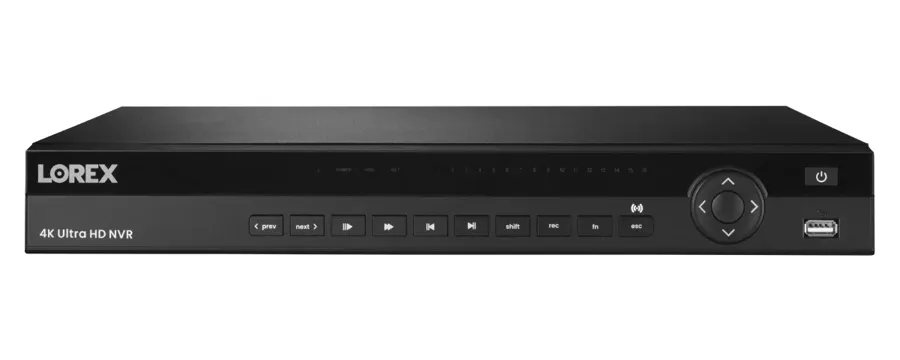
Canarsie, Brooklyn security camera repair: front panel of a 16-channel desktop network video recorder
A product photo from the AESS job library, not taken in Canarsie: the front panel of a 16-channel desktop network video recorder. In a Canarsie two-family this box usually ends up in the basement, often on a low shelf near the boiler or the electric meters, and that location is the single biggest reason recorders here fail. Most of our Canarsie repairs start at this box, because it holds the footage, keeps a log of which camera dropped and when, and is the first thing water, a sewer backup or a hard power return reaches.
Canarsie Camera Repair Request
Two-family, attached row, detached house, condo, apartment or store: send the address and what the screen shows, and a technician calls back with the next step

✅
Request Sent!
Thank you. A technician will contact you about the Canarsie address shortly.
25+
Years Experience
✓
Same-Day Estimates
100%
Licensed & Insured
4.7★
201 Google Reviews

Owner-operated since 2002 · Thousands of jobs completed · Booked within 2 hours

Security camera repair in Canarsie is mostly a question of height: how low on the property each part of the system sits, and how often water, damp and power trouble reach it. The city's own planning report found roughly two of every three residential buildings in Canarsie inside the floodplain, with Sandy pushing water five to seven feet above grade in parts of the neighborhood, and the Canarsie Courier reports that a preliminary local survey found about 40 to 43 percent of homes dealing with some kind of structural damage from flooding and sinking ground. Cameras here fail for the ordinary reasons too, like worn hard drives and dead power supplies, but the pattern we see is a recorder on a basement shelf, a junction box at the foot of a sunken driveway, a connector in a side alley that floods with every storm, and a house that has shifted enough to pull a cable tight. Send a photo of the recorder screen and the camera that is out to (347) 934-8335 or on WhatsApp, and we will tell you which kind of fault it looks like and what that repair costs on our Brooklyn list before you book.

  • Looking at your photos costs nothing. The $150 service call covers the on-site diagnosis and is credited to the repair if you go ahead.
  • We work under New York State license #12000287431, the state license required of companies that install or service security and CCTV systems for other people.
  • We repair any brand and any installer's system, including older recorders other companies would rather replace, and we tell you plainly when something is not worth the money to fix.
The Neighborhood

Why Canarsie Properties Need Security Camera Repair

Canarsie sits at Brooklyn's southeastern edge, bounded roughly by Ralph Avenue and Linden Boulevard, the Bay Ridge freight branch, Fresh Creek Basin and the Belt Parkway along Jamaica Bay. Most of its houses went up between the end of the Second World War and the 1970s on filled marshland, and most of them are one- and two-family homes: detached and semi-detached houses, attached rows, brick two-families with a finished basement and a private driveway, a smaller number of three-families and condos, the gated Seaview Estates, and the NYCHA campuses at Breukelen and Bay View. That background matters for one reason. A camera system on a Canarsie house is usually a small residential system, wired by the owner or a local installer, recorded in a basement, and exposed to a set of conditions that most Brooklyn neighborhoods do not have to think about.

The Department of City Planning's Resilient Neighborhoods report on Canarsie describes those conditions in detail. Front yards slope down one to four feet toward a garage under the house. A common layout is a garage at the front with a recreation room behind it. Back yards sit several feet below the street. Basements and cellars have been turned into apartments, and garages into dens. When Sandy came in through Fresh Creek and Paerdegat Basin, water rose five to seven feet above grade in parts of the neighborhood, and the report notes that the systems many houses depend on, boilers, electric panels and the like, were sitting in those basements. City Limits, writing two months after the storm, described thousands of homes with one to six feet of water in basements and first floors. A camera recorder is one of those systems. So is the power supply that feeds the cameras, and so is the network switch that the newer systems use.

Sandy was the extreme case, but it is not the one that fills our repair calendar. The planning department notes that even in smaller storms, street flooding and sewer backups cause damage across Canarsie. The Canarsie Courier, reporting on a study with a NOAA sub-organization, describes a community that regularly deals with sinkholes, flooded basements and overflowing catch basins. And in 2020 a water main break on East 78th Street flooded basements on the block; one resident told CBS New York, "All my electrical stuff, it was on the floor, so I couldn't really save anything due to how fast the water was coming in." For a camera system the damage often does not show on the day. A recorder that sat in an inch of water may power up; a connector that was wet for an afternoon may work for a month and then corrode open. The call comes weeks later, when someone tries to play something back.

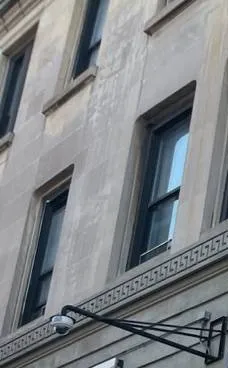
Canarsie, Brooklyn facade camera repair: bullet camera on a long black steel wall arm under a carved Greek-key band on pale stone with tall sash windows
A photo from the AESS job library, not taken in Canarsie: a bullet camera held out on a long black steel wall arm below a carved Greek-key band, on pale stone with tall sash windows. Canarsie's facades are mostly brick and siding rather than carved stone, but the arm is the same tool we use on a two-family whose garage sits at the bottom of a sloping driveway: it lets the camera reach out from the wall to see down the slope to the garage door, and it keeps the camera itself well above the level water reaches on the driveway.

The second reason cameras matter here is the one the 69th Precinct keeps repeating. The Canarsie Courier has reported officers for Sector B, which runs from East 94th to East 102nd Street between Flatlands Avenue and the Shore Parkway, describing break-ins after midnight while residents were away and recommending that homeowners and renters install security cameras. At another precinct meeting, police reported a rise in thefts of 2022 to 2024 Toyota Highlanders and Honda CR-Vs and noted that package theft climbs in the holiday season; Sector C reported three grand larcenies in common driveways around East 78th and East 79th Streets near Flatlands Avenue. On October 19, 2026, News 12 Brooklyn showed home camera footage of a new car being taken from a family's driveway near Avenue J and East 106th Street. Eleven days later, after a body was found at Avenue L and East 93rd Street, Gothamist reported officers going store to store along the avenue asking for surveillance video, and News 12 reported that private footage showed what happened a block away. In Canarsie, camera footage is not a gadget. It is what police ask neighbors and shopkeepers for.

Put those two threads together and the case for repair is simple. A system that is dead, that records on a drive nobody has checked in three years, or that loses half its cameras every time it rains is a system that will not have the footage on the night it is needed. Most of what fails can be fixed without starting over, and much of the fixing is moving the vulnerable parts higher, sealing the low connections and setting the system to tell you when it stops. Owners who already have a technician coming often pair the repair with a look at the door buzzer or intercom at the same entrance, since on a two-family the same front steps usually carry both.

Six Canarsie facts that shape a camera repair

  • Most buildings are in the floodplain. The planning department counted about 12,000 residential buildings in Canarsie, roughly two-thirds of them in the floodplain, and noted that critical building systems often sit in basements below the design flood elevation.
  • The flood maps changed under people's feet. The Brooklyn Eagle reported that no Canarsie properties fell within the 2007 FEMA flood zone before Sandy, but about half the neighborhood's units are covered by the updated 2015 map.
  • The ground itself is moving. A preliminary survey cited by the Canarsie Courier suggests around 40 to 43 percent of homes have some kind of structural damage tied to flooding and sinking. Settling walls stretch cables, open cracks behind junction boxes and tilt camera mounts.
  • Police ask for footage, block by block. Precinct meetings have recommended cameras after overnight break-ins in Sector B, and in October 2026 officers canvassed Avenue L stores for video. A working recorder with the right clock matters as much as the camera.
  • Driveways are where the thefts are. Police have flagged newer Highlanders and CR-Vs and reported grand larcenies in shared driveways near Flatlands Avenue. A driveway camera that drops out every storm is the weak link.
  • The shopping streets are stressed. The Canarsie Courier has described dark storefronts locked behind metal gates on Rockaway Parkway. Shops that survive often run on aging recorders, and vacated ones leave systems behind with no owner.

Where this page applies. It covers Canarsie from about Ralph Avenue and Linden Boulevard to the Belt Parkway, from the Bay Ridge branch and Paerdegat Basin to Fresh Creek, including Avenue L, Rockaway Parkway, Flatlands Avenue, Remsen Avenue, Seaview Avenue, Avenue D and the blocks around Canarsie Plaza and the Brooklyn Terminal Market. Bergen Beach and Mill Basin across Paerdegat Basin have their own pages, such as our Bergen Beach security camera repair page, and the rest of the borough is on our main Brooklyn security camera repair page. Canarsie is billed at the standard Brooklyn rate.

Same-Day Repair in Canarsie

Need Repair in Canarsie? A Driveway Camera Gone Dark, a Recorder That Took Water, or Footage the Precinct Is Waiting For

Urgent calls from Canarsie come in three shapes. The first is the morning-after call: a car is gone from the driveway or a package from the steps, the family next door has a clip and yours shows nothing, because the driveway camera went dark in the last storm and nobody noticed. The second is the wet basement: water or a sewer backup reached the recorder shelf, the box is off, and you need to know whether anything on the drive can be saved. The third is the request from outside: a detective, an insurer or a neighbor asks for video from a particular night, and the recorder either will not export, will not log in, or shows a date stamp that is hours or years off.

If footage from a particular day matters, do not unplug, restart or reset a recorder that is still running. Recorders overwrite their oldest video once the drive fills, so the clock is already ticking, and a restart can clear the log that shows when a camera dropped. If the recorder took water and is now off, leave it off. Powering up a wet recorder is the surest way to lose what is on its drive. Text us the date and time you need, the camera it should be on, and a photo of the recorder and the spot where it sits. We plan the visit so the clip, or the drive, is dealt with before anything else is touched.

For everything else the path is short. The $150 Brooklyn service call books a two-hour arrival window. The technician finds the fault, tells you what failed and why, and writes down the price from our Brooklyn list before any part is replaced. Most single-fault repairs on Canarsie houses are finished on the same visit, and before we leave, the camera that was out is checked in daylight, in low light and in playback, not just on the live screen.

What We Install

Security Camera Repair Services in Canarsie

Every repair below is priced from our Brooklyn camera repair list. The service call pays for finding the fault; the repair is priced by what failed, how many cameras it touches and how hard each run is to reach, whether that is a garage camera at the foot of a driveway off Seaview Avenue or a counter camera in a shop on Rockaway Parkway.

Water and damp recovery

Recorders, switches and supplies that sat in water or in a damp basement, and the connectors that corroded afterward. We pull the drive before power goes back on, test what survived, replace what did not and move the gear above the level water has reached on that lot.

Low-point connection repair

Junction boxes and splices at the bottom of sloping driveways, in side alleys and under basement stairs, where water sits after a storm. Reterminated with weatherproof connectors and, where possible, moved up the wall out of the puddle line.

Recorder and hard drive repair

DVRs and NVRs that stopped saving, beep, restart or show a disk error, and drives worn out by years of nonstop writing. We copy what can be copied, replace the drive or the recorder, and confirm playback before we go.

Outage and surge recovery

Recorders that lost settings or their clock, PoE switch ports that no longer power a camera, and supplies that died when power came back. Every part in the chain checked, with protection added where it is worth the money.

Settling and stretched cable

Cameras that have tilted on a mount, cables pulled tight across a corner as the house moved, and junction boxes split by a crack in the wall. Remounted, given slack and resealed so the next shift in the house does not break the run again.

Dead camera diagnosis

One camera or several dark at once: power, switch port, connector, cable, camera or recorder channel, tested in order, so you pay for the part that failed and not the three around it.

Driveway and plate views

Driveway cameras that see the car but not the person at the driver's door, or the plate by day but not at night. Re-aimed, refocused or swapped for a varifocal lens, with the saved quality checked so the clip holds up.

Phone viewing and logins

Apps that stopped connecting after a provider swapped the router, lost admin passwords, and former tenants or relatives still on the account. We recover access, remove old users and set logins for the right people.

Footage export for incidents

Clips for the 69th Precinct, an insurer, a landlord or a court, exported in the recorder's original format with its own timestamps, plus a short lesson so the next request takes minutes.

Building Specialists

Security Camera Repair for Canarsie's Architecture

The same dead camera is a different repair on each kind of Canarsie building, because the cable path, the mounting surface, where the recorder lives and how low each part sits all change. City Planning's rezoning study notes multi-family row houses generally between East 88th Street and Paerdegat, and one-story shops and two- to three-story mixed-use buildings along the commercial streets. These are the buildings we see most.

Brick two-families with a finished basement

The classic Canarsie listing: a 1950s brick two-family, a private driveway and a finished basement with its own entrance. Cameras on the front, the driveway and the basement door, with the recorder in the basement.

Houses with a garage under the front

Front yards that slope down one to four feet to a garage, often with a den behind it. The garage camera and its connections sit at the lowest point on the lot.

Attached rows

Narrow lots of 20 feet or less, attached on both sides, with a rear yard several feet below the street and shared driveways behind some rows.

Detached and semi-detached houses

Lots 20 to 50 feet wide, with a side alley or a shared drive between houses. Cameras on three sides, and runs that cross a strip of ground that floods.

Older frame houses and bungalows

Wooden houses with siding on blocks such as East 95th Street and bungalow-style houses toward eastern Conklin Avenue, where cable goes through siding into wood.

Condos and gated developments

Smaller condo buildings and the gated Seaview Estates, where the association owns the gate and common-area cameras and each owner owns their own.

Brick two-families: the recorder lives in the part of the house that floods

Listings for Canarsie are full of the same house: a brick two-family on a tree-lined block, built around 1955, with a private driveway and a full finished basement with a separate entrance. That basement is where the camera system almost always ends up. The internet modem is there, the electric panel is there, and so is the closet nobody uses. The trouble is that in the planning department's survey, about 30 percent of respondents said their entire basement flooded in Sandy, and many more houses have taken water from sewer backups since. When we repair a recorder in one of these houses, we are not just fixing the box; we are deciding where it should live next. The usual answer is the first floor, a closet on the owner's side, a shelf high on a basement wall if nothing else works, with the power supply and the switch going with it. The camera cables can usually stay where they are and be extended up, which costs far less than rewiring.

The second issue in two-families is whose power the cameras run on. Installers plug the recorder and supplies into the nearest outlet, which in a finished basement may be on the tenant's meter. When that tenant moves out and the account closes, or a breaker trips in the apartment, the whole system goes dark. Part of a two-family repair is putting the system on the owner's circuit and, if there is a basement tenant, placing the recorder somewhere the owner can reach without knocking on that tenant's door.

Houses with a garage under the front: the lowest connection on the lot

The garage at the bottom of a sloping driveway is a Canarsie signature, and the camera that watches it is the one we replace most often. The camera itself is usually mounted on the house wall above the garage door, which is high enough. The problem is the cable. Installers often bring it down the face of the house to a junction box beside the garage door, or into the garage ceiling through a hole near the door track, because that is the shortest path to the basement. That box sits at the foot of the slope where every downpour collects and where a blocked trench drain leaves standing water. A connector there can be wet for hours after a storm. The repair is to move the splice up, inside the house or high on the wall, use weather-rated connectors with a drip loop below each entry, and seal the hole. When the garage has been turned into a den or a basement unit, we also check that the camera's cable is not now running through a finished ceiling someone else lives under.

Attached rows: low back yards and shared driveways

On attached rows the front camera is the easy one. The back camera looks down into a yard several feet below the street, often across a shared driveway that serves the whole row. Police reported grand larcenies in exactly those common driveways near Flatlands Avenue. A back camera mounted at the roof edge sees the tops of heads and the roofs of cars; one mounted at the kitchen door sees a sliver of the drive. Repairs here are often a lens change rather than a new camera: a varifocal camera zoomed to the stretch of driveway behind your own house, aimed so it stays on your lot and does not stare into a neighbor's windows. New York's Civil Rights Law section 52-a lets a residential owner or tenant sue over certain camera placements that look into their back yard, so the aim matters on these tightly packed rows.

Detached and semi-detached houses: the side alley and the shared drive

Detached and semi-detached houses have doors on three sides and a side alley or drive between them and the house next door. Cameras on the side of the house are often wired along the fence or across the alley to reach the back yard, and those runs cross ground that floods or gets dug up. When a neighbor replaces a fence, repaves a shared drive or has a sewer line dug out, the cable that ran along it is often cut or crushed, and the camera goes dark the same week. We trace the run, repair it where it can be reached, and where it keeps getting hit, reroute it up the house wall and across at eave height, which is harder to damage and stays out of standing water.

Older frame houses and bungalows: water follows the cable into the wall

Forgotten New York's 2026 walk through Canarsie noted attached wooden houses with siding on East 95th Street and bungalow-style houses toward the eastern end of Conklin Avenue. On houses like these, a camera is screwed through siding into wood and its cable goes through a hole beside it. If that hole was not sealed and the cable was not looped below it, rain runs along the cable into the wall and into the connector, and the camera fails months later with green corrosion inside a junction box. We seal what we open, replace taped connectors with weatherproof ones, and look at the wall around the hole as well as the camera.

Condos and gated developments: whose camera is it?

In a condo or a gated community like Seaview Estates, the association owns the gate, the guard booth and the common-area cameras, and each owner owns the cameras on their own house or unit. Most of our calls there are about an owner's own system, which we repair like any house. When the camera is on a common wall, a gate or a shared drive, we ask for the board's or the manager's approval before we touch it, and if the association wants its gate cameras checked, we work through whoever manages the property and leave a written note of what was changed.

Field Notes

Field Notes: Why We Ask Canarsie Owners Where the Water Stopped

This is how our technicians approach the most common Canarsie call, written as our working method rather than a story about any one house. The owner says some cameras "keep going out." Before booking, we ask three things: which cameras, whether they come back on their own, and whether it happens after rain. If the same one or two cameras die after a storm and come back a day or two later, the fault is almost never the camera. It is a connection somewhere low that gets wet and dries out, and we arrive looking for it. If every camera died at once and stayed dead, we look at the recorder, the switch and the supply, and the outlet they plug into. If the system has been fine but the house has had work done, a new fence, a repaved drive or a sewer job, we start at the place the digging happened.

The other question we always ask is where water has reached on that property, in Sandy or since. Most owners know to the inch: the second step of the basement stairs, the bottom of the boiler, a stain on the paneling. That line is the most useful number on the job. Everything we install or move in the repair goes above it, and any connection we cannot move above it gets sealed and looped so water runs off it rather than into it. It is a short conversation, it costs nothing, and it is the difference between a repair that lasts and one we come back for after the next storm.

Fault by Fault

Wet Connections, Shifting Walls, Hard Power Returns, Worn Drives and Saved Quality: How Canarsie Camera Systems Go Wrong

Wet connections: the camera that dies after every storm and comes back

The most common Canarsie fault is intermittent. A camera drops out during or after heavy rain, stays dark for a few hours or a couple of days, then comes back on its own. Owners assume a failing camera, but cameras rarely heal themselves. What does change with the weather is moisture in a connection. A coax connector, a network plug or a power splice that sits low, in a junction box beside the garage door, under a basement window or in a side alley, takes on water when the ground floods or the catch basins back up, shorts or loses signal, and recovers when it dries. Each cycle leaves a little more corrosion, until one day it does not come back. The repair is to find that connection, cut back to clean copper, reterminate with a weather-rated connector, and move the splice above the water line wherever the cable allows. Where it does not, a sealed box with the cable entering from below and a drip loop keeps it from flooding again.

Basements add a second kind of moisture: damp. A recorder or a power supply in a basement that has flooded before lives in humid air even when it is dry, and its fans pull that air across the circuit boards all day. Over a few years that shows up as rust on the case screws, green on the connectors and random restarts. Moving the electronics upstairs, or at least off the floor and away from the dehumidifier's drip, adds years to the next recorder.

Shifting walls: when the house moves and the camera does not

The Canarsie Courier's reporting on flooding and house sinking describes a problem residents see in cracked walls and doors that stick. Cameras feel it too. A camera mounted on one wall with its cable running around a corner to another can end up with that cable pulled tight as the house settles, until the connector pulls out of its housing or the cable jacket splits. A junction box screwed across a crack opens with it and lets water in. A mount on a sagging soffit tilts until the camera looks at the ground. We fix these by remounting on solid structure, leaving a service loop of slack at each end of the run so small movements do not pull on anything, and moving boxes off cracks. If a camera keeps drifting out of aim, we tell you that the wall it is on is moving, because that is worth knowing for reasons that have nothing to do with cameras.

Hard power returns: what does not come back after the lights do

When power drops and returns, a recorder can come back with its drive unmounted, its settings lost or its clock reset to a factory date. A PoE switch can lose a port, so one camera stays dark while the rest work. Small plug-in supplies fail outright. In a basement that has had water, a power return can also be the moment a corroded connection finally fails. None of this always shows on the live view, so the first sign is often a playback gap found weeks later. After any outage we check every part in the chain, set the recorder's time to sync automatically so a detective's clip shows the right hour, and size any battery backup to what it actually has to carry.

Worn drives: the part that works every minute of every day

A recorder writing four or eight cameras around the clock wears its hard drive out; in our experience across the city, recorder drives commonly give out somewhere around the third to fifth year of nonstop use. When one starts to fail, the recorder may still show live video while saving nothing, or saving in pieces. Many recorders can warn about it, but only if alerts were set up and sent to a phone someone reads. On a basement shelf in a two-family, nobody sees the warning light. A drive swap is one of the most common and least expensive Canarsie repairs; the important part is checking what can be copied off the old drive first and setting alerts so the next one does not die in silence.

Saved quality: a good live picture and a useless clip

Many systems show a sharp main stream when you watch live but record a lower-quality stream to save space, or record only on motion with a sensitivity set so low that the first seconds of an event are missed. On a driveway, those first seconds are the person walking up to the car. The camera is fine; the recorder was set up to keep the wrong thing. On every repair we check what is actually being saved, set the driveway and door cameras to keep full quality around the clock, and size the drive so a week or more is kept at that quality. That is the difference between a clip that helps the precinct and one that shows a shape.

Commercial Security Camera Repair

Business Security Camera Repair in Canarsie

Canarsie's businesses sit on a handful of streets. The planning department counted more than 400 retail properties on its commercial corridors, mostly one- to three-story buildings on Flatlands Avenue, Rockaway Parkway and Avenue L, and noted that those corridors sit largely outside the floodplain and took little damage in Sandy. Store systems here fail less often from water and more often from age, heat, grease and neglect, and they are the systems police ask for first when something happens on the block.

Avenue L

Restaurants, bars, groceries, beauty supply and services under apartments. Surveillance video from Avenue L businesses has figured in more than one police case in 2026, so a recorder that exports quickly is part of the repair.

Rockaway Parkway

The long corridor from the L train terminal toward the water, with banks, pharmacies, clothing and phone stores, and a growing number of dark storefronts behind metal gates.

Flatlands Avenue

Medical and dental offices, funeral homes, churches and shops, including the St. Jude medical building between East 94th and 95th Streets. Upstairs offices often share one street door with the store below.

Remsen Avenue

Auto repair and tire shops among the houses, with bays, roll-down doors and lots of customers' cars left overnight.

Canarsie Plaza and Avenue D

The shopping center that opened on Avenue D in 2011 with about 278,000 square feet of retail. Tenants run their own interior systems while the center runs the lot.

Brooklyn Terminal Market

The wholesale produce and goods market at the neighborhood's western edge, with high ceilings, truck bays and early-morning hours.

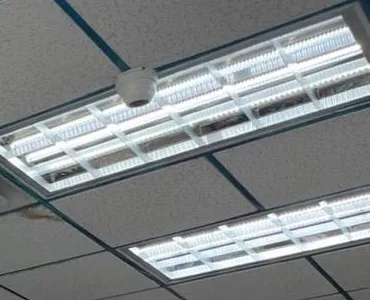
Canarsie, Brooklyn store camera repair: compact white dome camera on grey acoustic ceiling tiles beside a long louvered fluorescent light fixture
A photo from the AESS job library, not taken in Canarsie: a compact white dome camera on grey acoustic ceiling tiles next to a long louvered fluorescent light. In a pharmacy or grocery on Rockaway Parkway or Avenue L, this is the camera over an aisle or a register. When it stops being useful, the cause is often the store around it changing, a taller shelf, a new sign or a brighter light panel, rather than the camera failing.

Corridor stores: the request comes the next morning

When something happens on Avenue L or Rockaway Parkway, the first thing officers do is walk the block looking for cameras, as Gothamist described after the October 2026 case at Avenue L and East 93rd Street. BKReader has reported robberies on Rockaway Parkway caught on camera, including a 73-year-old pushed to the ground inside 1938 Rockaway Parkway around 8:40 in the morning, and the Canarsie Courier has written about robberies outside the Chase branch at 1764 Rockaway Parkway. A store whose recorder has a dead drive, a clock that is hours off, or a password only the former manager knew cannot help, even if the cameras look fine. A store repair here always ends with three checks: the recorder keeps enough days, the clock is synced, and whoever opens the store in the morning can find and export a clip.

Restaurants and bars: grease, steam and late nights

News 12 reported that surveillance video showed a March 2026 shooting outside a bar and restaurant on Avenue L. Restaurant systems carry a double load: front cameras that face a bright window by day and a dark street at night, and kitchen and back-door cameras that collect grease and steam until the picture goes soft. Recorders end up in basements next to compressors and mop sinks. Repairs usually combine a clean, a better position, a camera rated for the space, and moving the recorder off the floor and away from heat.

Auto and tire shops on Remsen Avenue: bays, gates and the lot

Forgotten New York's 2026 walk noted the auto repair and tire shops scattered among the houses on Remsen Avenue. Their cameras live hard lives: impact guns and compressors shake mounts loose, roll-down doors hit cable that was run too close to the track, and the lot camera's cable runs under ground that tow trucks drive over. We remount on solid structure with lock washers, move cable away from door tracks, and run lot cameras along walls or overhead rather than under the gravel.

Dark storefronts and orphaned systems

The Canarsie Courier has described storefronts on Rockaway Parkway that served generations of families now sitting dark behind metal gates. When a store closes, its cameras usually stay on the building. The next tenant or the landlord inherits a recorder nobody has the password to, cameras on someone else's cloud account, and cable of unknown age. Before a new tenant opens, we can sort out what is reusable, reset what belongs to the building, and tell you plainly what is cheaper to replace than to fix.

Rules that touch a commercial camera repair

In New York, companies that install or service security and CCTV systems for others need a license from the Department of State under Article 6-D of the General Business Law; we work under NYS license #12000287431. Employers who record staff should know that New York Labor Law section 203-c bars video recording in restrooms, locker rooms and changing rooms. In a mixed-use building where the store's cameras and the residential entrance's cameras share a doorway, we confirm which cameras belong to the tenant and which to the landlord before changing anything. We are not your lawyer; we tell you where a repair touches one of these rules so you can decide before work starts.

Your Questions Answered

Security Camera Repair in Canarsie: Questions Answered

Settling walls and low entrances

Our house has been settling, a crack now runs down the wall right beside the side camera's junction box, and the camera has slowly tipped until it shows mostly ground. Should we fix the camera now or wait until the wall is repaired?

Fix the camera now, but do it in a way the wall repair will not undo. We take the camera and box off the crack, remount them on a sound section of wall or on the eave, leave a loop of slack in the cable so a little more movement does not pull it, and seal every opening so water does not follow the crack inside. That costs far less than waiting months with no view of the side of the house. Tell whoever repairs the wall that a camera cable passes nearby, and send us a photo afterward if the camera's view has shifted; a re-aim is a short job.

The camera over our basement tenant's door sits at the bottom of an outside stairwell, and the drain at the foot of the stairs clogs with leaves. Twice this fall water pooled up to the door. Can a camera stay down there?

The camera can, if it is mounted high on the stairwell wall or under the landing above, well clear of where water collects. What should not stay down there is any connection. In many stairwells we find the cable spliced in a little box near the bottom step, which is the first thing to flood. We move the splice up to grade level or inside the house, use a weather-rated connector, and run the cable so it enters from below with a drip loop. The camera itself is rated for rain; it is not rated to sit in a puddle. Keeping the drain clear helps the door, the tenant and the camera alike.

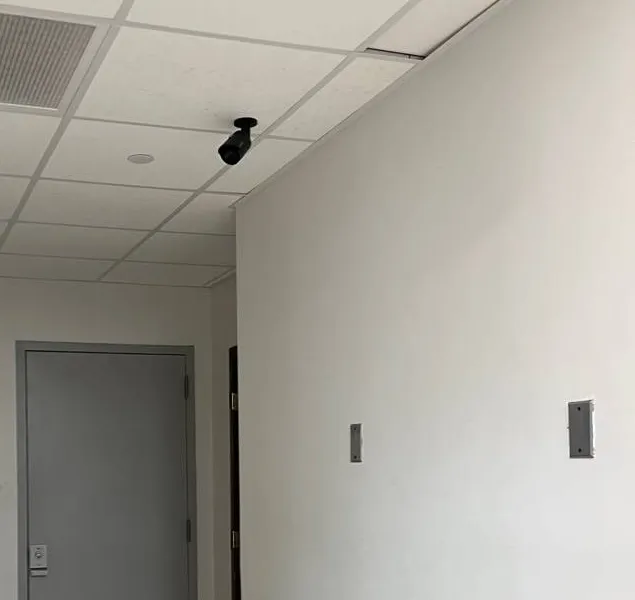
Canarsie, Brooklyn basement entrance camera repair: small black bullet camera hanging from a white ceiling-tile grid, aimed down a short hallway at a grey steel service door
A photo from the AESS job library, not taken in Canarsie: a small black bullet camera hanging from a white ceiling-tile grid, aimed down a short hallway at a grey steel service door. In a Canarsie two-family the equivalent is the camera inside a finished basement watching the side or rear door that a basement tenant uses, or the back corridor of a store on Rockaway Parkway. Indoor cameras like this survive basement flooding far better than the connections below them, which is why we look at the wiring near the floor first.

Driveways, garages and the street

Years ago our garage under the front of the house was turned into a den. The camera that used to watch the overhead door was left inside and now films the couch. Should it move outside, and will the old cable still work?

Move it outside, above the old garage opening or on the house wall beside it, aimed down the driveway, because that is the entrance the slope of a Canarsie front yard leads straight to. The old cable is often reusable if it was run inside the walls and never sat in water; we test it before reusing it. If the den is now a living space for a family member or a tenant, a camera inside it should come out anyway. The usual repair is to extend the existing cable a few feet through the wall to an outdoor camera, seal the hole, and retire the indoor one.

After the October case on Avenue L, police were asking houses near us for footage too. Our front camera faces the street. How far down the block can a house camera actually show something useful, and can it be aimed to help without looking into the neighbors' windows?

A typical wide camera on a house front shows useful detail, a face or a clear outline of a car, out to roughly the width of your own lot and the sidewalk, and only shapes beyond that. To be useful farther down the block, a camera needs a narrower lens, which means giving up width. We usually split the job: keep the wide camera on your steps and driveway, and, if you want to help with the street, add or convert one camera to a varifocal aimed along the sidewalk and the parked cars at a low angle, below the line of the neighbors' windows. Most recorders can also mask any part of the picture you do not want recorded.

The city put a LockerNYC package locker at 1380 Rockaway Parkway. Is it still worth fixing the camera over our front steps, or should we just have packages sent to the locker?

Use the locker if it suits you; the city chose its sites partly from NYPD package theft data, and it takes the package problem off your steps. But the camera over your steps does more than watch boxes. It shows who rings the bell, who tries the door at night, and who walks up the driveway toward the car, which is what the 69th Precinct asks residents for after break-ins. A front camera that has gone dark is usually one of the cheaper repairs on our list, a connector or supply or a single camera, so we would not let the locker be the reason to leave it broken.

There is a bus stop right in front of our house, and the front camera sends an alert every few minutes from people waiting. Can it ignore the stop and still watch our steps and driveway?

Yes. We redraw the camera's detection zone so it covers your steps, walk and driveway and leaves out the sidewalk where people wait, switch the alerts to person detection that ignores passing buses, and, if the camera supports it, add a line-crossing rule so only someone walking onto your property triggers a notification. The camera can still record the whole picture, bus stop included, around the clock; it just stops waking your phone for it. If the camera is too old for zones or person detection, that is the point where a replacement starts to make sense.

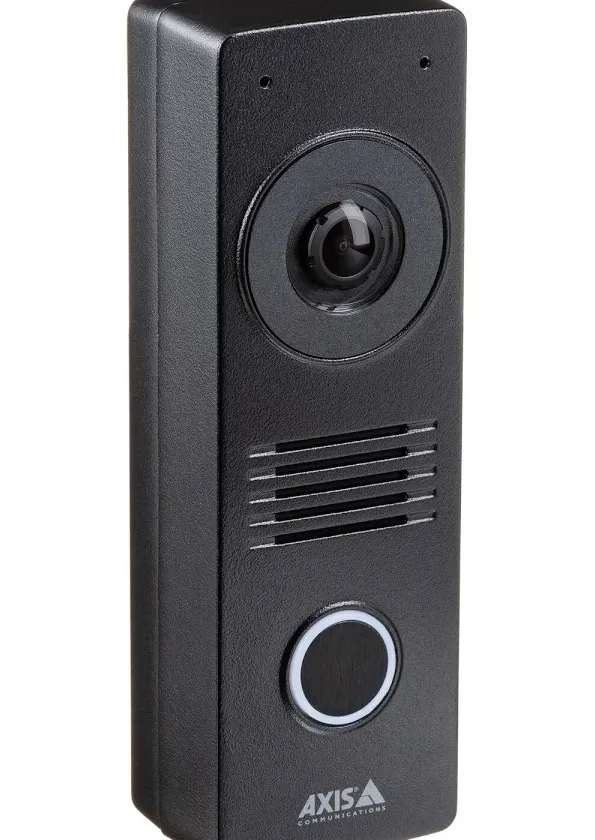
Canarsie, Brooklyn front door camera repair: black video intercom door station with a camera lens, speaker grille and an illuminated call button
A product photo from the AESS job library, not taken in Canarsie: a black video intercom door station with a camera lens, a speaker grille and an illuminated call button. On a Canarsie two-family, a station like this at the top of the front steps does double duty as the front camera. Whether its video is saved by the house's recorder depends entirely on how it was connected, so we check that before telling anyone their door station has footage.

Gated developments and apartments

We live in a gated development where the association runs the gate and guard booth cameras. Can the camera on our own house be connected so we can also see the gate from our phones?

Only with the association's permission, because the gate cameras and their recorder belong to it. If the board agrees, the usual method is for the association's recorder to share one view with a limited login for each owner who asks, rather than wiring your house camera into their system. That keeps the two systems separate, so a fault in one does not take down the other and your house cameras stay private. We can repair your own cameras on any visit, and if the association wants its gate cameras looked at, we work through whoever manages the property.

I rent at Breukelen Houses and put a small Wi-Fi camera inside my apartment, facing my door. It disconnects every evening and comes back in the morning. Is that something you would fix, and am I allowed to have it?

A camera inside your own apartment, on a shelf or table and not fixed to a common wall, is generally your own business, but check your lease, because NYCHA's rules govern anything mounted on its walls or pointed into hallways, and a Bronx NYCHA tenant was once served an eviction notice over cameras she installed. The evening dropouts are usually Wi-Fi congestion, when everyone in the building comes home and starts streaming, or the camera being too far from the router through block walls. Moving the router or the camera, switching the camera to the less crowded band if it supports it, or a small mesh point usually fixes it. Cameras that NYCHA or its management installed in the buildings are theirs to repair; report those to management.

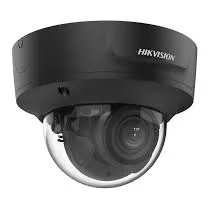
Canarsie, Brooklyn driveway camera repair: black varifocal dome camera, product photo
A product photo from the AESS job library, not taken in Canarsie: a black varifocal dome camera. Its lens can be zoomed after it is mounted, which makes it the usual fix for a Canarsie driveway camera that sees the whole drive but not the face of the person at the car door, or for a camera on an attached row that should cover the shared driveway behind your own house and no farther.

Shops, offices and services

Our tire shop on Remsen Avenue has cameras inside the bays looking out through the open roll-up doors. On sunny afternoons the inside of the bay is black on the recording and only the street shows. Can that be fixed?

Yes. The camera is exposing for the bright street behind the door and leaving the bay in shadow. We first try the camera's wide dynamic range and backlight settings, which many installers leave off. If that is not enough, we turn the camera so it looks across the bay or back toward the office rather than straight out the door, and add a second camera outside above the door looking in at the bay entrance. Between them you get faces inside and plates outside. Mounts near impact guns and compressors also get lock washers so they stop drifting.

When officers came into our store on Avenue L asking for video, the cashier on shift could not figure out how to export it, and the owner was away. How do we make sure whoever is working can hand over a clip in minutes, without being able to delete anything?

Give the recorder a staff login that can play back and export but cannot delete, change settings or format the drive; most recorders allow that. Then keep a one-page instruction taped inside the office, with the steps for picking a camera, a time and a USB stick, and a stick kept beside the recorder. We set this up on every store repair and walk whoever opens and closes through one export, timed. Check the recorder's clock while we are there, because a clip whose timestamp is off by an hour can confuse an investigation.

Our store is in Canarsie Plaza, and the shopping center's cameras cover the parking lot. When a customer's car was hit in front of our door, the center's video did not show it. Can our own camera be aimed at the lot?

Usually you can aim a camera inside your own storefront glass at the sidewalk and the first row of parking in front of it, and many tenants do. Mounting a camera on the outside of the building or the canopy normally needs the landlord's approval under your lease, so check before we drill. A camera behind glass needs a shroud against the window to stop reflections and its own infrared turned off at night, or it will show only itself. Ask the center's management how long its lot video is kept, too; footage that exists for only a few days is often gone before anyone asks.

We run a funeral home on Flatlands Avenue. Families do not want a camera recording in the chapel during services, but we want the building covered at night. Can the cameras follow a schedule?

Yes. Most recorders can switch individual cameras to stop recording, or to mask the picture, during set hours, and resume automatically. We can set the chapel camera to record only after closing, keep the entrance, parking and office cameras on around the clock, and put a manual override in the staff login for a late visitation. We will also make sure the camera is visibly off or covered when it is not recording, if that reassures families. Holy Family Church and other congregations along Rockaway Parkway and Flatlands Avenue face the same question with their sanctuaries.

Our dental office is upstairs on Flatlands Avenue. The waiting-room camera was moved during a renovation and now shows the front desk computer screen and patients' faces at check-in. What is the right position?

Aim it at the door and the path from the door to the desk, from behind and above the reception counter, so it records who comes in and goes out but not the screen, the paperwork or a patient standing at the desk for long. A camera covering a public waiting area is common; one that can read your screen is a risk you do not need. We re-aim or move the camera a few tiles, mask any part of the frame that still shows the desk, and confirm with you what is recorded before we leave. Treatment rooms should not have cameras at all.

Equipment

Types of Security Cameras and Recorders We Repair

We repair systems from any manufacturer and any installer. These are the kinds of equipment we meet most on Canarsie houses, apartments and avenue stores, and what usually goes wrong with each on this side of Brooklyn.

Coax and HD-over-coax cameras

The most common system on Canarsie two-families, wired with coaxial cable to a DVR in the basement. Connectors corrode where they sit low or outdoors, and a single multi-camera power box often fails first. Many can be upgraded in place to a sharper picture on the same cable.

Network (IP) cameras

Newer house and store systems, powered and connected by one cable to a PoE switch or NVR. Faults are usually a switch port, a connector, a password, or an address change after the internet provider swapped the router.

DVRs, NVRs and hybrid recorders

The box that keeps the video, and the part most exposed to basement water and damp. Drives wear out, settings vanish in outages, and firmware updates break phone viewing. Hybrid recorders let a house keep its coax cameras while adding network ones.

Varifocal domes and bullets

Cameras whose lens can be zoomed after mounting. The answer for long driveways, shared rear drives behind attached rows, deep store aisles and any view where a face has to fill more of the frame.

Wide dynamic range cameras

Cameras built to see a person in shade against a bright background: a garage interior, a shop bay with the door up, a vestibule looking out at the street. The usual replacement where faces turn into silhouettes.

Pan-tilt and 360-degree cameras

Motorized or fisheye cameras on house corners, store floors and lots. Motors, saved positions and domes fogged by damp are what we fix most often.

Wi-Fi, battery and cube cameras

Consumer cameras on steps, in apartments and in back yards. Signal through brick and block walls, batteries in cold weather, and app accounts tied to a relative or former tenant are the usual problems.

Video door stations and doorbells

Door stations and video doorbells at the top of the steps or at a basement entrance, sometimes recorded by the main system and sometimes not. We check which before promising footage from them.

PoE switches, supplies and battery backups

The parts that power everything, and the ones that fail when power or water misbehaves. Checked on every outage or flood call, moved above the water line and sized properly when replaced.

Canarsie, Brooklyn pan-tilt camera repair: small pan-tilt dome camera with a white body and a black lens bubble
A product photo from the AESS job library, not taken in Canarsie: a small pan-tilt dome camera with a white body and a black lens bubble. In a Canarsie store or on the corner of a detached house it can be turned from the phone to look at a register, a gate or the far end of a lot. Its motor and saved positions are what usually need repair, and we often find it parked facing a wall since the last time someone moved it.
Canarsie, Brooklyn two-family door camera repair: narrow video door station with a camera lens at the top and a big round call button
A product photo from the AESS job library, not taken in Canarsie: a narrow video door station with a camera lens at the top and a big round call button. On a Canarsie two-family one of these often sits beside the upstairs door at the top of the front steps, with a second one at the basement entrance below. The lower station is the one water reaches, and its wiring is the part we check first when it goes dark.

National brands, monitoring companies and a local licensed repair

Owners with Ring, Arlo, Nest, Wyze, Blink or SimpliSafe cameras often ask whether to call the brand or a local company. For a sealed consumer camera that has failed outright, the brand's warranty or a replacement is usually the cheaper path; there is nothing inside to repair. What a brand cannot do is come to the house and see that the camera's Wi-Fi has to pass through a brick wall and a steel garage door to reach the router in the basement, that the outdoor outlet it plugs into sits at the bottom of the driveway and trips every storm, or that its battery drains because the camera wakes for every bus that stops outside. That is where a visit pays for itself. For wired systems with a recorder, a licensed local repair is the normal route: the companies that make them sell through installers and do not send technicians. ADT and other monitored services repair their own equipment under their contracts; if your cameras came with one, check that contract before calling anyone else. We will tell you honestly which of these fits your situation.

Situation on a Canarsie propertyUsually best handled by
Sealed consumer camera dead, still under warrantyThe brand's warranty
Consumer camera works, but Wi-Fi, power outlet, battery or placement is the problemA local visit
Wired cameras with a DVR or NVR, including after water or an outageA licensed local repair
Cameras under a monitoring company's contractThat company first, under its contract
Gate or common-area cameras in a condo or gated developmentA licensed repair approved by the association or manager
Cameras NYCHA or its PACT manager installed at Breukelen or Bay ViewNYCHA or the development's management
Canarsie, Brooklyn apartment camera repair: small white cube camera for indoor use, product photo
A product photo from the AESS job library, not taken in Canarsie: a small white cube camera for indoor use. Renters at Breukelen and Bay View and in Canarsie basement apartments often keep one on a shelf facing the door. When it stops connecting, the cause is usually the apartment's Wi-Fi, a changed password, or an app account in someone else's name rather than the camera.
Canarsie, Brooklyn back yard Wi-Fi camera repair: outdoor Wi-Fi dome camera with an external antenna, product photo
A product photo from the AESS job library, not taken in Canarsie: an outdoor Wi-Fi dome camera with an external antenna. On a Canarsie house the back yard sits several feet below the street and the router is usually in the basement or the front room, so the yard camera fights brick, block and distance. The antenna's direction and an access point near the back of the house often matter more than the camera.
AI Overview Reality Check

What AI Gets Wrong About Security Camera Repair in Canarsie

Search summaries, chat assistants and home-service sites such as Angi, HomeAdvisor and Fixr give general advice about camera repair. Much of it is right everywhere. Some of it misses how cameras fail in a low-lying neighborhood of postwar houses on filled marsh. These are the claims we hear repeated most often, and what we find on Canarsie repairs.

"Outdoor cameras are weatherproof, so rain is not a repair issue"

The camera body usually is weatherproof. The connections behind it often are not, and in Canarsie they tend to be placed low: in a box beside a garage door at the foot of a sloping driveway, at the bottom of a basement stairwell, along a fence in a side alley that floods. Those are the places water collects after a storm or a sewer backup.

So the pattern we see is not cameras failing in the rain but cameras dying after it and coming back when things dry, over and over, until the corrosion wins. That is a connection fault, and replacing the camera does not fix it.

A lasting repair finds the low connection, rebuilds it with weather-rated parts, and moves it above where water reaches on that lot. One local competitor rightly pitches exterior-rated housings and attention to moisture and corrosion near the waterfront. We would add: look at the wiring at ground level, not just the camera on the wall.

"Keep the recorder in the basement where it is out of sight"

Out of sight, yes. Out of harm, no. The planning department's report on Canarsie found critical building systems commonly sitting in basements below the flood elevation, and Sandy put five to seven feet of water above grade in parts of the neighborhood. Smaller events, a sewer backup or the 2020 water main break on East 78th Street, reach basement floors far more often.

A recorder on a low basement shelf is the part of a camera system most likely to be lost, and it is the part with the footage on it. The resident who told CBS New York that everything electrical on his floor was lost in minutes was describing exactly how recorders die.

The better answer for most Canarsie houses is a closet on the first floor, a locked cabinet, or at worst a shelf high on a basement wall well above the known water line, with the supply and switch moved with it. Hidden from burglars and out of reach of water is achievable; the basement floor is neither.

"If a camera goes dark, replace the camera"

Cameras are the least likely part of a system to fail outright. On a typical Canarsie call where one camera is out, the cause is far more often a connector, a cable crushed by a fence or driveway job, a dead channel on a multi-camera power box, or a PoE switch port that did not survive a power return.

Replacing a camera when the fault is upstream costs you a camera and leaves the problem in place. The new camera dies the next time it rains, or never lights up at all.

Testing in order, power first, then the switch or supply, then the cable and connector, and only then the camera, is how a repair stays cheap. It takes a cable tester and a PoE tester, and it usually takes less time than unboxing a new camera.

"A battery backup protects your camera system from outages"

A small backup keeps a recorder running through a flicker or a few minutes. It does not carry a recorder, a switch and eight cameras through a long outage, and a backup sitting on a basement floor is one more thing water can reach.

The realistic goal for most homes is to ride through short drops without a restart, shut down cleanly on a long one so the drive is not damaged, and restart properly when power returns. That needs a backup sized to the real load, placed above the water line, and connected so it can tell the recorder to shut down.

After an outage, the useful repair is checking what did not come back: a drive that will not mount, a switch port, a supply, the recorder's clock. The live view looking normal does not mean recording is.

"Footage from home cameras rarely matters to police"

In Canarsie it matters often. Officers at 69th Precinct community meetings have recommended that homeowners and renters install cameras after overnight break-ins, and in October 2026 police went store to store on Avenue L asking for video, while News 12 reported that private footage helped show what happened nearby. Home camera footage also documented the October 19 driveway car theft near Avenue J and East 106th Street.

What decides whether your footage helps is boring: the drive is still recording, the clock is right, the saved stream is sharp enough, and someone in the house knows how to export a clip without restarting the recorder.

Those are repair items, and they are cheap ones. A system that looks like it works but has a dead drive or a clock set to a factory date is the most common reason footage that should exist does not.

"Any handyman or electrician can fix a camera system"

In New York, companies that install or service security and CCTV systems for other people are licensed by the Department of State. An electrician can fix the outlet the recorder plugs into, and after a flood an electrician should check the house wiring first. The cameras, cabling, recorder and network are low-voltage work.

The skills differ, too. Most Canarsie camera faults are found with a cable tester, the recorder's logs and a look at the lowest connection on the property, not with a meter on the house wiring.

If someone has already worked on the system, tell us what was changed. It saves time, and well-meant fixes often move a problem rather than solve it.

"Camera repair costs a flat national average"

National averages describe a single consumer camera on a dry house. They do not describe a recorder that took water, a run cut by a fence job, or a two-family whose cameras run on the tenant's power.

On our Brooklyn list, a setting fix can be covered within the $150 service call, a connector or PoE port repair runs $150 to $350, a single camera replacement $250 to $600, and a recorder replacement $700 to $1,500. The fault decides the price, and you see it in writing first.

The expensive repairs are the ones done twice: a camera replaced when the connection was the problem, or a recorder put back on the same low shelf it drowned on. Fixing the cause, not just the part, is what keeps the second bill from coming.
Talk to a Technician Before You Replace a Camera That Might Only Need a Dry Connection

Send a photo of the recorder screen, the camera that is out and the spot where the recorder sits, and tell us whether it started after rain or an outage. Many Canarsie "dead camera" calls turn out to be a wet connector, a tripped outlet or a recorder that lost its settings, and we would rather tell you that before you buy anything.

Prefer to talk to someone who works on cameras every day? Message a technician on WhatsApp.

Get In Touch

Request a Free Quote

Tell us the address, the kind of house or building, how many cameras there are, which ones are out and where the recorder sits. Say whether the trouble started after heavy rain, a sewer backup, an outage or work on the house or the house next door, and how high water has reached on the property if it ever has. If you need footage from a particular date, put it in the message and we will plan the visit around copying it first. For anything urgent, call (347) 934-8335.

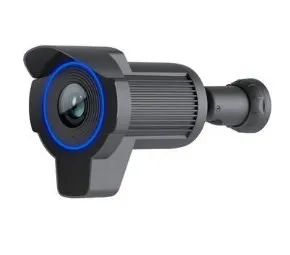
Canarsie, Brooklyn garage camera repair: black bullet camera with an extended sun hood and a glowing blue ring around the lens, product photo
A product photo from the AESS job library, not taken in Canarsie: a black bullet camera with an extended sun hood and a glowing blue ring around the lens. Over a Canarsie garage door, a bullet like this is mounted high on the house wall and aimed down the slope of the driveway; the long hood keeps rain and low sun off the lens, and the camera's own cable should enter the wall right behind it, not travel down to a box at the bottom of the drive.

✅
Request Sent!
Thank you. A technician will contact you about the Canarsie address shortly.
How It Works

Our Repair Process

1. Send photos of the recorder, the camera and the low spots

A photo of the recorder screen, the camera that is out, and where the recorder and power boxes sit, plus the Canarsie address, by text, WhatsApp or the form. Tell us whether it started after rain, an outage or work on the house, and any date whose footage has to be kept.

2. Confirm who owns and approves the system

Owner, landlord, basement tenant, condo association, store owner or manager. We confirm who approves the work, who holds the recorder login, and who can open the basement, garage or back office before we book.

3. Book and pay the service call

The $150 Brooklyn service call books a two-hour arrival window and is credited to the repair if you go ahead. Requests are booked within 2 hours.

4. Copy any footage that matters

Clips you need are exported to USB with the recorder's own timestamps before a cable, drive or setting is changed. A recorder that took water stays off until its drive has been looked at.

5. Trace the fault from the lowest point up

Outlet, backup and supplies, then the recorder and drive, then every junction box and connector, starting with the ones lowest on the house, then each camera, the network and the phone app.

6. Name the cause and write the price

You hear what failed and why, and get a written price from the Brooklyn list before any part is replaced. Each separate fault is priced on its own line so you can choose what to do now.

7. Repair, raise and seal

Failed parts are replaced, low connections are moved up or sealed with drip loops, the recorder and supplies go above the level water has reached on that property, and every hole opened in brick, siding or a ceiling is sealed.

8. Test, label, set alerts and hand over

Each camera is checked by day, in low light and in playback. Cables and channels are labeled, camera-loss and drive alerts go to the right phones, old users are removed, the clock is set to sync, and you are shown how to export a clip.

Coverage Area

Security Camera Repair Near Canarsie's Landmarks

Paerdegat Basin

The inlet on Canarsie's western side; the planning department names it, with Fresh Creek, as one of the two routes Sandy's surge took into the neighborhood, and the blocks near it saw some of the worst basement flooding.

Fresh Creek Basin

The eastern boundary waterway, where the planning department found pockets with flood elevations higher than the rest of Canarsie, and houses whose basement systems sit closest to the risk.

Canarsie Pier

The pier at the foot of Rockaway Parkway on Jamaica Bay, opened in 1926 and run today by the National Park Service as part of Gateway National Recreation Area.

Canarsie Park

The park along the Belt Parkway with a skate park, a cricket field and a nature trail, bordering residential blocks whose back yards sit below the street.

Bay View Houses

The NYCHA development of 23 eight-story buildings and 1,609 apartments, where the authority announced 30 new cameras in 2012 and which is now going through a large PACT renovation.

Canarsie Plaza

The shopping center on Avenue D that opened in 2011 with about 278,000 square feet of stores, where tenants run their own interior cameras and the center covers the lot.

We also serve the neighborhoods around Canarsie at the same Brooklyn rate, including Flatlands, Bergen Beach, Mill Basin, East Flatbush, Brownsville and the Spring Creek and Starrett City blocks to the east. Our Flatlands camera repair page covers the blocks west of Ralph Avenue, our Mill Basin page covers the peninsula across Paerdegat Basin, our East Flatbush page picks up north of Linden Boulevard, and owners anywhere in the borough can start from Abstract Enterprises' Brooklyn security camera repair page.

Pricing

Security Camera Repair Cost in Canarsie

Canarsie is billed at our standard Brooklyn rate; there is no surcharge for being near the water. Every repair starts with the $150 service call, which covers the on-site diagnosis and is credited to the repair if you go ahead. The figures below come from our published list of Brooklyn security camera repair prices; your own price is written down on the visit, once the fault is found, and nothing is replaced until you agree to it.

RepairBrooklyn price
Service call: on-site diagnosis and written repair price$150, credited to the repair
Motion zones, alerts, logins or picture settings with no partsUsually within the $150 service call
Clean and check for a hazy or dirty picture$80
Connector reterminate or PoE port swap$150–$350
Power supply repair$150–$400
Dome or front cover replacement$30–$80 part, plus labor
Hard drive swap$200–$450
Indoor camera repair$200–$450
Single camera replacement on a working system$250–$600
Outdoor camera body replacement with weatherproofing$250–$600
Night picture repair$250–$650
DVR not working, including drive and labor$300–$700
NVR not recording$400–$900
Vandalized camera, per camera, plus cable repair$400–$900
Pan-tilt (PTZ) camera repair$450–$1,200
Hybrid recorder swap, coax and IP$700–$1,200
DVR or NVR replacement with drive and setup$700–$1,500
Lightning or surge damage, depending on system size$700–$3,500
Annual maintenance visit$250–$800

Three things move a Canarsie price inside those ranges. The first is water: a system that has been wet usually has more than one failed part, a drive, a supply and a couple of connectors, and moving the recorder and supplies up out of the basement adds cable and time, though it is almost always cheaper than replacing the same parts after the next storm. The second is reach: a camera at the eave of a two-story house over a sloping driveway takes more ladder work than one beside a door, and a run that has to be rerouted off a fence and up the wall takes longer than a straight swap. The third is access: a recorder in a basement apartment, a locked store office or an association's equipment room adds time to arrange. Whatever the case, you see the number before work starts, and if there is more than one fault, each is priced on its own line.

Full terms — including 50% deposit, one-year parts-only warranty on AESS-supplied products, and the late-fee schedule — are set out in the service agreement.
Shop Our Systems

Security Camera Repair Packages & Pricing

Three ways Canarsie repairs usually come together, priced from our Brooklyn list.

Single-issue repair: $150–$700

One fault, one visit: a garage camera's low connection rebuilt and moved up, a dead power box or PoE port replaced after an outage, a worn drive swapped, a camera remounted off a cracked wall, or a login recovered. Typical for a brick two-family, an attached row or a small shop on Avenue L.

Major system repair: $700–$1,500

The recorder or several runs: a DVR or NVR replaced after water or old age and moved above the flood line with its supply and switch, coax cameras moved onto a hybrid recorder, or several runs rerouted off a fence or out of a flooded basement. Typical after a storm, or for a store with apartments above.

Annual maintenance: $250–$800

Every camera checked by day and in low light, domes and lenses cleaned, every low connection inspected for corrosion, supplies and backups tested, drive health read, alerts confirmed and a test clip exported. Homes start at $250, commercial properties at $400, and owners with several properties run $500 to $800.

Bring your own equipment. If you have already bought a replacement camera or recorder, we can fit it at labor-only rates. Send us the exact model and we quote the labor by phone or text, and the visit is booked once it is paid. Equipment you supply is installed as supplied: we cannot vouch for parts we did not provide, and if a model will not work with your recorder or app, we will tell you before we start rather than after.

Complete Services

Every Security Camera Repair Service in Canarsie

Camera, connection and cable repair

Dark cameras, wet and corroded connections, runs cut by fence or driveway work, and mounts pulled loose by a settling house. Request a repair

Recorder, drive and flood recovery

DVRs, NVRs, switches, supplies and backups on basement shelves and in store offices, raised above the water line. Security camera repair in Brooklyn

Brooklyn repair prices

The full list behind every number on this page. Brooklyn camera repair price list

Citywide repair

Owners and managers with properties in more than one borough. NYC security camera repair

FAQ

Canarsie Security Camera Repair FAQ

Two companies told us our eight-year-old DVR has to be thrown out. Will you try to repair it before selling us a new one?
+

Yes. Older recorders often need only a new hard drive, a new power adapter or a settings reset, and on our Brooklyn list a drive swap runs $200 to $450 while a full recorder replacement runs $700 to $1,500. We test the recorder first and tell you which it is. If the board itself has failed, or the model can no longer connect to a phone app, we say so plainly and show you the cheapest way forward, which is sometimes a hybrid recorder that keeps every camera and cable you already have.

Our cameras went in with our burglar alarm, and that alarm company has since closed. Can you take over the cameras even if we keep the alarm as it is?
+

Yes. We repair the cameras as a separate system, recover or reset the recorder login, and leave the alarm untouched unless you ask us to look at it too. If the cameras draw power from the alarm's cabinet, we can give them their own supply so a problem with one system does not take down the other. Because we also install and service alarms under the same state license, we can look at the alarm on the same visit if you want, but nothing about it changes without your say.

If you move our recorder from the basement up to the first floor, does the video already on it come along?
+

Yes. The video lives on the hard drive inside the recorder, so when the recorder moves, the drive and everything on it move with it. Before we unplug anything we export any clip you have asked us to keep, then shut the recorder down properly rather than pulling the plug, carry it up and extend the camera cables to the new spot. When it starts again, we play back an hour from before the move to confirm nothing was lost.

Can you leave us a written record of which cable goes to which camera, so the next repair does not start from scratch?
+

Yes, and we do it on every repair. Each cable is labeled at the recorder and at the camera end, each channel on the recorder is named for what it watches, and you get a short written sheet listing every camera, where its cable runs, where any junction box sits and where the power comes from. On a Canarsie house we also note the height of the recorder and supplies against the water line you gave us, so anyone working later knows not to move them back down.

When in the year is the best time to have our cameras checked, if we only do it once?
+

Late spring or early summer, before hurricane season and before the late-year holiday stretch when police say package theft rises. A check then catches connections that took a winter of freeze and thaw, drives that have been writing all year, and backups whose batteries have aged, while there is still time to fix them before the storms. Our annual maintenance visit runs $250 for a home on our Brooklyn list and covers cleaning, connection checks, drive health, alerts and a test export.

Our internet modem and router are in the basement next to the recorder. Should they move up too?
+

Ideally, yes. If the recorder moves up but the router stays in the basement, the next time the basement takes water the cameras will keep recording but you will lose phone viewing and alerts until the router is replaced. The internet provider owns the modem and usually has to move its own line, so ask them about that part; we can then move the router and network switch up with the recorder and reconnect everything. If the provider will not move it, a short network cable from the router to a point above the water line still protects the recorder.

Should we cover our outdoor cameras with plastic bags when a big storm is on the way?
+

No. Outdoor cameras are built to take rain, and a bag traps moisture against the camera, blinds it while the storm is on, and can tear loose and fly off in the wind. What does need attention before a storm is anything low: lift power boxes, extension cords and battery backups off basement floors, and make sure the recorder is not sitting where water collected last time. If you know a connection sits in a spot that floods, that is the part to have fixed before the season, not the camera on the wall.

After a heavy storm, how can we tell quickly that every camera came back and is recording?
+

Open the app and look at every camera's live picture, then play back ten minutes from the middle of the storm on each one. If a camera is live but its playback has a gap, the recorder or drive lost power or stopped writing; if a camera is dark, note which one and whether it comes back over the next day. Send us a photo of the recorder screen and the list of dark cameras. Recorders can also send a video-loss alert the moment a camera drops, and we set that up on every repair so you hear about it during the storm, not afterward.

Burglars sometimes take the recorder to get rid of the evidence. Can ours be locked away somewhere they will not find it, but where water will not reach it either?
+

Yes. The usual answer on a Canarsie house is a small locked metal cabinet in a first-floor or upstairs closet, out of sight from the doors and windows, with enough ventilation that the recorder does not overheat. The camera cables are extended up to it, and the cabinet's own power and network connections stay inside. We can also set the recorder to send copies of motion clips to a phone or cloud account, so the most important footage survives even if the box is taken.

If our old recorder cannot be saved, will our existing cameras work with a new recorder from a different maker?
+

Usually. Coax cameras generally work on any modern recorder that supports their signal type, and hybrid recorders accept the common types side by side. Network cameras usually work with other makers' recorders through a shared standard, though some features such as person detection may only work on the matching brand. Before we order a replacement we check the model numbers of your cameras and confirm they will work with it, so you are not paying for new cameras you do not need.

Can the cameras be shown on the living room TV upstairs as well as on our phones?
+

Yes. If the recorder moves up to the first floor, it can connect straight to a TV by cable. If it stays in the basement, a long video cable or a small streaming box connected to the TV can show the cameras through the home network. Many families in two-family houses also put a small monitor by the upstairs door, so whoever is home can check the steps and the driveway without finding a phone. We set the screen to show the cameras that matter most at a glance.

Is a house in Spring Creek, Starrett City or Flatlands billed the same as one in Canarsie?
+

Yes. All of Brooklyn, including Flatlands, Bergen Beach, Mill Basin, Spring Creek, Starrett City and East New York, is billed at the same Brooklyn rate, starting with the $150 service call that is credited to the repair. The price changes with the fault, the number of cameras and how hard each run is to reach, not with the neighborhood. Our technicians are dispatched from our office on Troy Avenue in Brooklyn, and requests are booked within 2 hours.

More Security Camera Repair near Canarsie

Security Camera Repair Brooklyn | Same-Day | Brownstone Pros · Security Camera Repair NYC | Same-Day | Abstract Enterprises · Security Camera Repair Manhattan | Same-Day | Co-op COI · Security Camera Repair Queens | Same-Day | Driveway Pros · Security Camera Repair Bronx | Same-Day | Home Base · Security Camera Repair Staten Island | Same-Day | Sandy Zone · Security Camera Repair Long Island | Nassau & Suffolk · Security Camera Repair Hudson Valley | Westchester to Ulster · Security Camera Repair Nassau County | Same-Day · Security Camera Repair Suffolk County | Hamptons + East End · Security Camera Repair Westchester County | Same-Day · Security Camera Repair Rockland County NY | Nyack, Suffern · Security Camera Repair Orange County | Newburgh, Goshen · Security Camera Repair Putnam County NY | Carmel, Mahopac · Security Camera Repair Dutchess County | Poughkeepsie · Security Camera Repair Ulster County | Kingston Woodstock

Security Camera Repair Bath Beach Brooklyn NY · Security Camera Repair Bay Ridge Brooklyn NY | AESS · Security Camera Repair Bedford-Stuyvesant Brooklyn NY · Security Camera Repair Bensonhurst Brooklyn NY | AESS · Security Camera Repair Bergen Beach Brooklyn NY · Security Camera Repair Beverley Square Brooklyn NY · Security Camera Repair Boerum Hill Brooklyn NY · Security Camera Repair Borough Park Brooklyn NY · Security Camera Repair Brighton Beach Brooklyn NY · Security Camera Repair Brooklyn Chinatown Brooklyn NY · Security Camera Repair Brooklyn Heights, Brooklyn NY · Security Camera Repair Brooklyn Navy Yard, Brooklyn NY · Security Camera Repair Brownsville Brooklyn NY | AESS · Security Camera Repair Bushwick Brooklyn NY | AESS · Security Camera Repair Cadman Plaza Brooklyn NY · Security Camera Repair Coney Island Brooklyn NY · Security Camera Repair Crown Heights Brooklyn NY | AESS · Security Camera Repair Cypress Hills Brooklyn NY | AESS · Security Camera Repair Ditmas Park Brooklyn NY | AESS · Security Camera Repair Downtown Brooklyn NY | AESS · Security Camera Repair DUMBO Brooklyn NY | AESS · Security Camera Repair Dyker Heights Brooklyn NY | AESS · Security Camera Repair East Flatbush Brooklyn NY · Security Camera Repair East New York Brooklyn NY | AESS

Other services in Canarsie

Access Control Installation Canarsie Brooklyn NY · Security Camera Installation Canarsie Brooklyn NY | AESS · Fire Alarm Installation Canarsie Brooklyn NY · Door Buzzer Installation Canarsie Brooklyn NY · Intercom Installation Canarsie Brooklyn NY | AESS · Alarm Installation Canarsie Brooklyn NY | Garages & Floods · Structured Cabling Installation Canarsie Brooklyn NY · Door Buzzer Repair Canarsie Brooklyn NY | Apartment Doors · TV Installation Canarsie Brooklyn

Ready to Have Your Canarsie Cameras Recording After the Next Storm?

Send a photo of the recorder screen and the camera that is out, the address, and the date of any footage you need. We book within 2 hours, give you a two-hour arrival window, copy your footage first, move what needs moving above the water line, and write down the repair price before any part is replaced.

Prefer to send photos? Message a technician on WhatsApp.