What are you looking for?
About Us Contact Us Careers Get a Free Quote (800) 486-0943
Pick a service
✅ Got Your Own System?
🎬 Home TheatreQuote 🎶 AV SoundQuote 🔑 Access ControlQuote
Now pick your area
Pick your area
Long Island
Hudson Valley
Services available
Pricing & Tools
Pick a service for pricing
🚪 Intercom Pricing 🔔 Buzzer Repair Pricing
Calculators
📹 Camera System Calculator 🚨 Alarm Calculator ⚡ Cabling Quote Builder ✅ Got Your Own System?
Select your area
Camera over the parking pad gone dark, a cellar recorder that quietly stopped saving, or a building camera someone taped over? East New York camera repair line, booked within 2 hours: (347) 934-8335
Home › Security Camera Repair Brooklyn › East New York
Nehemiah Houses and Semi-Detached Two-Families · Legal Basement Units · Fourteen-Story Buildings on Atlantic Avenue · Shops on Pitkin, Liberty and New Lots Avenues · The Industrial Business Zone

Security Camera
Repair in
East New York

Any Brand, Any Installer · Connector First, Then Cable · Footage Copied Before Anything Is Touched · Written Price Before Parts

Security camera repair in East New York means finding the one part that actually failed: a connector at the camera over a Nehemiah house's parking pad, a worn-out drive in a recorder on the cellar shelf of a semi-detached two-family, a power supply that went down with a tenant's circuit, the lobby cameras of a new 14-story building on Atlantic Avenue, or the counter camera of a shop on Pitkin, Liberty or New Lots Avenue. We repair systems other companies installed, any brand. Requests are booked within 2 hours, every repair is quoted per job at our standard Brooklyn rate, and you hear the cause and get a written price before any part is replaced. If you need a clip from a particular night, it is copied off the recorder first.

Reviewed and updated November 12, 2026, against Wikipedia's entries on East New York, the Louis Heaton Pink Houses and the Cypress Hills Houses; the Mayor's Office 2014 announcement of the Boulevard Houses camera installation and the Brooklyn Eagle's list of Brooklyn developments in that program; the NYCHA Federal Monitor's May 2023 safety and security report; the City Comptroller's 2018 survey of NYCHA doors; City Limits on the City Council's NYCHA safety hearing and on the East New York Industrial Business Zone; NYCHA's November 2023 press release on campus safety upgrades; Brownstoner on 2700 and 2683 Atlantic Avenue, The Highland at 268 Barbey Street and 30 Inspiration Lane; the Gotham Center for New York City History on the Nehemiah plan; Architectural Record on Nehemiah Spring Creek; NYC HPD on the Basement Apartment Conversion Pilot Program and the Tenant Data Privacy Law; the Multiple Dwelling Law; and the New York Department of State and 19 NYCRR 195.2 on installer licensing. · Abstract Enterprises Security Systems, NYS license #12000287431 · crews dispatched from our Troy Avenue office in Brooklyn

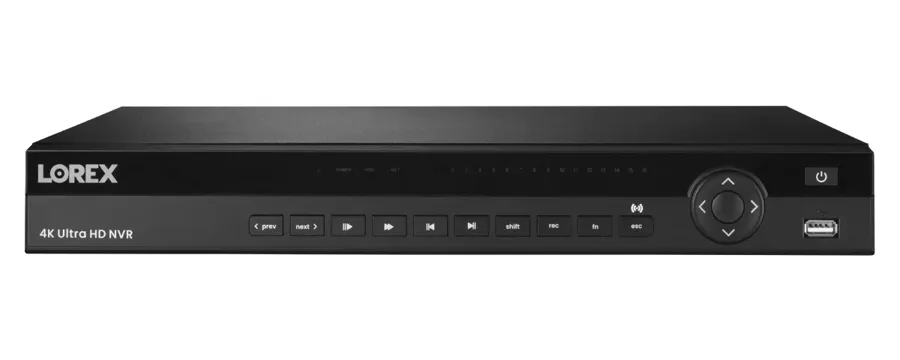
East New York, Brooklyn security camera repair: front panel of a 16-channel desktop network video recorder
A product photo from the AESS job library, not taken in East New York: a 16-channel desktop network video recorder. In an East New York house this box usually sits on a shelf in the full basement, near the furnace and the electric meters; in a semi-detached two-family it may be in the owner's cellar or in a closet that now belongs to a legal basement unit; in a new Atlantic Avenue building it sits in a locked telecom room. Most repairs start here, because the recorder keeps the video, logs when each camera dropped, and decides what quality of picture is saved.
East New York Camera Repair Request
House, two-family, apartment building, store or yard: send the cross street and what the screen shows, and a technician calls back with the next step

✅
Request Sent!
Thank you. A technician will contact you about the East New York address shortly.
25+
Years Experience
✓
Same-Day Estimates
100%
Licensed & Insured
4.7★
201 Google Reviews

Owner-operated since 2002 · Thousands of jobs completed · Booked within 2 hours

Security camera repair in East New York is mostly about systems that have been running a long time with nobody responsible for checking them. No city law requires cameras in a house or an apartment building, so when one goes dark there is no inspector, no violation and no deadline, and a dead camera can stay dead until the night someone needs the footage. That is the pattern we see across this part of Brooklyn: a Nehemiah house whose owner added cameras fifteen years ago and has never replaced the recorder's drive, a two-family whose cameras are powered from the tenant's side of the house, a new building on Atlantic Avenue whose logins left with the developer's installer, and a store whose counter camera was knocked crooked during a renovation and never re-aimed. The repair is finding which part failed, fixing that part, and setting the system to warn you the next time it stops. Send a photo of the recorder screen and of the camera that is out to (347) 934-8335 or on WhatsApp, and we will tell you what kind of fault it looks like before you book.

  • Looking at your photos costs nothing, and the visit and the repair are quoted to you per job before anything is replaced.
  • We work under New York State license #12000287431, the Department of State license required of companies that install or service security and CCTV systems for other people.
  • We repair any brand and any installer's system, and we tell you plainly when an old camera or recorder is not worth paying to fix.
The Neighborhood

Why East New York Properties Need Security Camera Repair

East New York runs from the cemeteries and the Queens line on its north side down to Jamaica Bay, with the Queens line again to the east and the rail lines along Van Sinderen Avenue to the west. It takes in the ZIP codes 11207, 11208 and 11239, makes up most of Brooklyn Community District 5, and is patrolled by the NYPD's 75th Precinct. Its main roads are Linden Boulevard, Pennsylvania Avenue and Atlantic Avenue. The housing is a mix of semi-detached homes, two- to four-family houses and apartment buildings, including condos and co-ops, together with the Nehemiah houses built from the 1980s on, a ring of public housing campuses, and the newer mid-rise and high-rise buildings that followed the 2016 rezoning. North of Atlantic Avenue, between Sheffield Avenue and Powell Street, is an industrial zone of warehouses, metal shops, bus lots and storage buildings. Each of those property types fails its cameras in its own way, and that is what this page is about.

Start with the rule that shapes almost every repair call here. There is no general New York City law that makes an owner put cameras in an apartment building, and none that covers a private house. What the Multiple Dwelling Law does require, in Class A apartment buildings of eight or more units built or converted after January 1, 1968, is a working intercom, and a broken intercom can be reported to 311 and lead to an HPD violation. Video, though, is not part of that requirement. So in a typical East New York building the buzzer gets fixed because it has to be, and the cameras get fixed when someone decides they matter. In a house, nobody but the owner ever looks. A camera that went dark during a storm two winters ago, a recorder whose hard drive filled with errors last spring, a phone app that stopped connecting when the internet provider swapped the router: none of these announce themselves. They are discovered the morning after a car is broken into or a package disappears, when the owner opens playback and finds nothing there.

Public housing shows the same thing at a much larger scale, and it gives a useful vocabulary for how cameras fail. In 2014 the city began a camera installation at the Boulevard Houses in East New York that the City Council had paid for, and the Brooklyn Eagle's list of developments in that program also named the Cypress Hills Houses. Those systems are now more than a decade old. When the federal monitor overseeing NYCHA published its safety and security report in May 2023, its photographs from developments around the city showed a surveillance camera spray-painted over, cameras missing from beside a building entrance, an elevator with its security camera gone, a defective elevator camera, and a camera taped over. A 2018 survey by the City Comptroller found that 47 percent of the NYCHA front entrances it checked had no security camera at all, and at a City Council hearing a NYCHA official said 52 developments had none. Residents of the Pink Houses, the Cypress Hills Houses or the converted PACT developments cannot hire a private company to fix a building camera that belongs to the housing authority or its management partner, and we do not touch those systems. But the list of failures in that report, covered, painted, missing, defective, never installed, is the same list we work through on private buildings and stores a few blocks away.

Owner-occupied houses fail more quietly. The East Brooklyn Congregations built about 4,500 Nehemiah houses over roughly three decades starting in 1983, two- and three-bedroom brick homes with full basements, double-glazed windows, gas furnaces and a parking pad out front, set on staggered building lines so the houses do not form one flat wall. "Grassroots are shallow roots. Our roots are deep roots," the Rev. Johnny Ray Youngblood said of the organizing behind them, as the Gotham Center for New York City History recounts. Many of those families have stayed for decades, and the cameras they added along the way have aged with them: coaxial cameras on an early digital recorder, a drive that has been writing around the clock since it was new, plug-in power supplies on a basement shelf, a phone app account set up by a son or daughter who has since moved away. Later Nehemiah homes at Spring Creek, near Gateway Center, were built differently, from factory-made modules with steel frames, fiber cement siding and concrete floors, which changes how cables run and how far a Wi-Fi camera can reach.

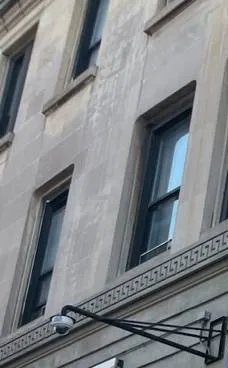
East New York, Brooklyn facade camera repair: bullet camera reaching out on a long black steel wall arm beneath a carved Greek-key band on pale stone with tall sash windows
A photo from the AESS job library, not taken in East New York: a bullet camera on a long black steel arm below a carved Greek-key band on a pale stone facade with tall sash windows. East New York's older masonry buildings along its avenues, and the corner storefront buildings with apartments above, use arms like this to push a camera out past a cornice or a sign so it can see down the sidewalk. When we repair one, we check the arm's anchors and the connector inside it as well as the camera, because a loose arm lets the camera drift off its view and lets rain run down the cable into the joint.

The two-, three- and four-family houses that make up much of the neighborhood add a problem of ownership. Cameras on a multi-family house are usually the owner's, but they are often plugged into whichever outlet was closest during the install, and that can be the tenant's. The city's Basement Apartment Conversion Pilot Program, which ran in Community District 5 with technical help from the Cypress Hills Local Development Corporation, turned some cellars into legal apartments with their own certificates of occupancy. A recorder that used to sit in an owner's cellar may now be inside someone else's home. When a tenant moves and closes an electric account, when a breaker is flipped on the wrong floor, or when a contractor moves a power supply behind a new ceiling, cameras go dark for reasons that have nothing to do with the cameras.

The newer buildings bring a different set of faults. The 2016 East New York Neighborhood Plan was the first rezoning under the city's Mandatory Inclusionary Housing rules, and it has been followed by buildings like 2683 Atlantic Avenue, a 13-story, 229-unit building that replaced a row of two- and three-story mixed-use buildings; The Highland at 268 Barbey Street, a 14-story, 320-unit building attached to the landmarked Empire State Dairy; 2700 Atlantic Avenue, a 14-story building whose ground-floor commercial space has floor-to-ceiling glass; and the first 386-unit building of the Innovative Urban Village at 30 Inspiration Lane. Their camera hardware is usually modern network cameras on a PoE switch in a telecom room. What fails first in buildings like these is rarely a camera. It is access: passwords, cloud accounts and network settings that still sit with the developer's installer, a property manager who changed, or a sponsor who handed over the building without handing over the system.

Businesses fill out the picture. Atlantic, Pitkin, New Lots, Pennsylvania and Liberty Avenues carry discount stores, bodegas, Caribbean restaurants, barbershops, auto repair shops, laundromats and pharmacies, alongside a growing number of new retail spaces. In the industrial zone, City Limits counted 6,265 employees at more than 100 businesses in 2019, including Belmont Metals, school bus companies with large lots and at least six storage warehouses. Store cameras get knocked out of position by stock, signs and renovations; yard cameras get hit by trucks, lose power on long outdoor runs and sit unwatched all weekend. Many owners pair a camera repair with a check of the door buzzer or video intercom at the same entrance, because on these buildings the same doorway usually carries both.

Six East New York facts that shape a camera repair

  • Nobody is required to keep cameras working. There is no general city law requiring cameras in apartment buildings, while the Multiple Dwelling Law requires a working intercom in Class A buildings of eight or more units built or converted after 1968. Video is not part of that requirement, which is why dead cameras here can sit for years.
  • Public housing camera programs are now more than ten years old. The Council-funded installation at the Boulevard Houses began in 2014, and the Cypress Hills Houses were on the same year's list. Citywide, the 2018 Comptroller survey found 47 percent of NYCHA front entrances it checked without a camera.
  • The public housing is large. The Louis Heaton Pink Houses alone are 22 eight-story buildings with 1,500 apartments on 31.1 acres bordered by Crescent Street, Linden Boulevard, Elderts Lane and Stanley Avenue, and the Cypress Hills Houses between Sutter Avenue and Linden Boulevard were completed in May 1955.
  • A housing authority benchmark for how long to keep video exists. When NYCHA announced safety upgrades at 23 campuses in November 2023, it described 1,400 cameras with 21-day retention. It is a useful yardstick for a private building deciding how big its recorder's drive should be.
  • Thousands of owner-occupied houses. The East Brooklyn Congregations built about 4,500 Nehemiah houses from 1983 on, and Nehemiah Spring Creek had 248 more homes complete with 330 planned when Architectural Record described it, built from steel-framed modules stacked two to four high.
  • A large industrial zone with long cable runs. The East New York Industrial Business Zone covers 57 blocks from Atlantic to Sutter Avenue and Sheffield Avenue to Powell Street, with more than 100 businesses, bus lots and storage warehouses, where cameras are spread across yards and fences rather than tucked under one roof.

Where this page applies. It covers East New York from the Cypress Hills edge and Broadway Junction south through the blocks around Pitkin, Liberty, Sutter and Blake Avenues to Linden Boulevard, the Nehemiah blocks, the industrial zone north of Atlantic Avenue, and down toward Spring Creek and Gateway Center. Neighbors have their own pages: Cypress Hills camera repair, New Lots camera repair, Brownsville camera repair and Highland Park camera repair. Everything else in the borough is on our main Brooklyn security camera repair page. East New York is billed at our standard Brooklyn rate.

Fast Repair in East New York

Need Repair in East New York? A Car Hit on the Pad, a Camera Taped Over in the Hallway, or a Recorder That Saved Nothing for Weeks

Urgent camera calls from East New York tend to arrive in one of three ways. The first is the morning after: something happened at the house or the store, a car on the parking pad, a gate, a package on the step, a register, and the owner goes to the recorder for the first time in months and finds a camera dark, a drive full of errors or a timeline that simply stops weeks earlier. The second is tampering: a camera in a hallway or over a back door has been covered with tape, sprayed, turned to the wall or pulled off its bracket, and the owner wants it back up before the person returns. The third is the slow failure that suddenly matters: the picture has been flickering for a while, a camera drops out every few hours and comes back, and now there is a reason to need it to work tonight.

If footage from a particular day matters, leave the recorder running and do not unplug it, restart it or reset it. Recorders overwrite their oldest video once the drive fills, so the clock is already running, and a restart can clear the log that shows when a camera went offline or when the drive stopped writing. A reset to factory settings can also wipe the recording schedule and, on some models, the index that lets the recorder find old video at all. Text us the date and time you need, which camera it should be on and a photo of the recorder's front or screen. We plan the visit so the clip is exported before anything else is touched, in the recorder's own format with its own timestamps, which is what detectives from the 75th Precinct or, on parts of Pitkin Avenue, the 73rd Precinct usually want to see.

For everything else the path is short. We book the request within 2 hours and give you an arrival window. The technician finds the fault, tells you what failed and why, and writes down the price before any part is replaced. Many single-fault repairs, a corroded connector, a failed power supply, a dead switch port, a worn drive, a camera knocked off its aim, are finished on the first visit when the part is on the truck. Before we leave, each repaired camera is checked in daylight and in low light, and a recorded clip, not just the live picture, is played back in front of you.

What We Install

Security Camera Repair Services in East New York

Every repair below is quoted per job at the standard Brooklyn rate. The price depends on what failed, how many cameras it touches and how hard each cable is to reach, whether that is a camera on the corner of a Nehemiah house over the parking pad, a hallway camera in a four-story walk-up near Pennsylvania Avenue, or a pole camera at the back of a bus lot in the industrial zone.

Connector and termination repair

The most common hidden fault on our Brooklyn calls: a coax or network connector at the camera end that has corroded, loosened or been crushed, while the cable itself is fine. Cut off, reterminated with a weatherproof connector and sealed, so the camera stops flickering or dropping out.

Dead camera diagnosis

One camera or several dark at once: outlet, power supply, PoE switch port, connector, cable, camera and recorder channel, tested in that order so you pay for the part that failed and not the three beside it.

Recorder and hard drive repair

DVRs and NVRs that beep, restart, show disk errors or quietly stopped saving. We copy what can be copied, replace the drive or recorder, rebuild the recording schedule and confirm playback before we go.

Tampered and vandalized cameras

Cameras taped over, sprayed, twisted toward the wall or torn off a bracket. We clean or replace the camera, repair the cable, and reposition it so the approach to the camera is itself on video next time.

Power problems in multi-family houses

Cameras that die with a tenant's breaker or electric account, supplies hidden behind new ceilings, extension cords run out of windows. Moved onto the owner's circuit with the supply where the owner can reach it.

Wi-Fi camera dropouts

Consumer cameras that lose their connection through brick, concrete floors or steel-framed walls. We find where the signal fails and fix it with an access point, a wired run or a different camera, whichever is simplest.

Logins, apps and account handovers

Recorders locked by a former installer, apps tied to a relative's or a previous owner's account, buildings whose developer kept the passwords. Access recovered, old users removed, logins given to the right people.

Recording quality and retention

Systems that look sharp live but save blocky clips, or keep only a few days. The saved stream, schedule and drive size are set so the hours that matter are kept at a quality you can use.

Footage export for incidents

Clips for the 75th or 73rd Precinct, an insurer, a landlord, HPD or a court, exported in the recorder's original format with its own timestamps, plus a short lesson so you can do it yourself next time.

Building Specialists

Security Camera Repair for East New York's Architecture

The same dead camera is a different job on each kind of East New York building, because the cable path, the mounting surface, the place the recorder lives and the person who approves the work all change. These are the buildings our technicians meet most often in 11207, 11208 and 11239.

The thousand-square-foot Nehemiah house

Brick homes from the 1980s and 1990s with a full basement, a parking pad and double-glazed windows. Cameras sit at the corners and over the door, with cables dropping through the brick into the basement recorder.

Steel-module houses at Spring Creek

Factory-built homes with steel frames, fiber cement siding and concrete floors, stacked two to four modules high with raised front doors and a stoop. Cable routes and Wi-Fi behave differently than in brick.

Semi-detached multi-family rows

The neighborhood's most common house: two to four families under one roof, sharing a wall with the house next door, with the owner's cameras and the tenants' outlets mixed together.

A cellar that became a legal apartment

Houses converted under the Community District 5 basement pilot, where the old recorder shelf, the camera power supplies and the side-door camera now sit inside or beside someone's home.

Fourteen-story lottery buildings

The rezoning-era buildings on and near Atlantic Avenue, with network cameras, a locked telecom room, a managing agent and, often, logins that never left the developer's installer.

Shops and plants in the industrial zone

Steel and masonry buildings, fenced yards and bus lots, where cameras hang on poles and fences far from the recorder and are hit by trucks, weather and long empty weekends.

The Nehemiah house: start where the cable goes through the brick

On a Nehemiah house the outside cameras are close to the recorder in distance but separated from it by a brick wall and a basement ceiling. A typical system has a camera over the front door, one at the corner covering the parking pad and the sidewalk, one or two at the back over the yard, and a recorder on a basement shelf. The cables usually pass through the brick in a drilled hole beside the camera, and the connector sits either inside the camera's base or just behind it in a small junction box. That point is where most of these systems fail. Rain runs down the cable, into the hole and into the connector; the copper corrodes; the picture starts to flicker, then roll, then drop. The owner sees a dead camera and assumes the camera died. Often it did not. When we open one of these, we check the connector first, cut back to clean copper, reterminate with a weatherproof connector, put a drip loop below the entry and seal the hole. The camera, if it still works, goes back up on the same anchors.

The basement end matters as much. The recorder in a Nehemiah basement often shares the space with the gas furnace, the water heater and a washer and dryer, sits on a shelf that also holds paint cans and holiday decorations, and is plugged into a power strip with half a dozen other things. A recorder that has run in a warm, dusty corner for years has a clogged fan and a tired drive. A good repair cleans it or replaces it, puts it on its own protected outlet, and gets it off the floor and away from anything that drips.

Spring Creek: steel frames, concrete floors and fiber cement

Nehemiah Spring Creek, as Architectural Record described it, was built on about 30 acres of former landfill from 20-by-40-foot modules with steel frames, fiber cement siding and concrete floors, stacked two, three or four high, with raised front doors reached by a stoop and a choice of twelve siding colors. Those materials change a camera repair. Fiber cement is hard and brittle; a camera that was screwed straight into a panel without the right fastener can crack it, and a cable that was pushed through a rough hole can chafe. Steel framing and concrete floors also weaken Wi-Fi far more than wood, so a wireless camera that worked when the router sat in one room can drop out when the router moves. When we repair a camera on one of these homes, we fasten into framing rather than into the panel alone, seal every opening we make or reuse, and test the signal at the camera before deciding whether a wireless camera can stay wireless.

Semi-detached multi-family rows: two sets of outlets, one set of cameras

In a two- or three-family house the cameras usually belong to the owner, who often lives on one floor, while the outlets the cameras use may belong to whichever apartment was closest when they went up. A camera on the back of the house might be powered from an outlet in the ground-floor tenant's kitchen. A power supply might sit in a hallway closet on the tenant's circuit. When that tenant's breaker trips, or when the tenant moves out and the electric account closes, those cameras go dark and nobody connects the two events. Part of a multi-family repair is mapping which cameras are on whose power and moving them onto the owner's circuit, with the supply or PoE switch somewhere the owner can reach without knocking on a door. Because these houses share a wall with the house next door, we also check whose camera is whose before touching anything on the shared side.

A cellar that became a legal apartment: give the recorder somewhere else to live

The basement pilot in Community District 5 offered owner-occupied one- to three-unit homes loans and technical help to turn cellars into legal apartments that needed a Department of Buildings certificate of occupancy; the program is now closed to new applications. On houses that went through it, and on houses converted other ways, the camera system often still assumes the cellar is the owner's. The recorder is on a shelf that is now inside the new unit, the side-door camera watches what is now the tenant's front door, and the supply for the back cameras is above the new ceiling. A repair is the moment to move the recorder to the owner's part of the house, run the cameras from the owner's circuit, and think about which views the tenant should and should not be in.

Fourteen-story lottery buildings: getting the building back into its own system

The buildings that went up after the rezoning, on Atlantic Avenue and on sites like Barbey Street and Inspiration Lane, are concrete and steel with network cameras on a PoE switch and an NVR in a telecom room, sometimes linked to the video intercom so residents see the lobby on an apartment screen or a phone. Their cable runs are stable. What breaks is usually invisible: a recorder license, a cloud account in the installer's name, a switch reset during an internet upgrade, a camera address that changed when the network did. Repairs here begin with the managing agent getting administrator access to the building's own system, then move to the camera that is actually out. Work in garages, roofs and risers follows the building's contractor rules: an insurance certificate, a freight elevator booking and sign-in at the desk.

Shops and plants in the industrial zone: long runs and nobody watching on Sunday

In the industrial zone, a single business can have cameras on a building, on a fence line and on light poles across a yard, with cable runs far longer than any house. Long outdoor runs pick up surges and water, poles get clipped by trucks backing in, and cameras on fences get knocked by whatever leans against them. Because the yard may be empty from Friday evening to Monday morning, a camera that dies on Saturday can stay dead until someone happens to look. These repairs combine testing every run end to end, replacing damaged sections or connectors, protecting long runs where they enter the building, and setting the recorder to send a video-loss alert to a phone someone actually reads over the weekend.

Field Notes

Field Notes: Why We Ask Whose Electric Bill Powers Each Camera

This is how our technicians approach one of the most common East New York calls, written as a working method rather than a story about any one house. The owner of a two- or three-family says several cameras went dark at once and the recorder is fine. Before we book, we ask two questions that sound unrelated to cameras: did a tenant move out, change apartments or have their power shut off recently, and did anyone have electrical or renovation work done in the house? When several cameras fail at the same moment while the recorder keeps running, the cause is almost always shared power, not three cameras dying together. The answer to those two questions often tells us which outlet, which closet and which breaker to look at first.

On the visit we follow the power before we touch a camera. We find the supply or PoE switch for the dark cameras, find the outlet it plugs into, and trace that outlet to its panel. If it turns out to be on a tenant's meter, the repair is a short move onto the owner's circuit, with the supply mounted where the owner can see it. If it is on the owner's side, we test the supply under load, because a supply that has run hot for years can show the right voltage with nothing connected and sag the moment four cameras draw on it. Only then do we move outward to connectors and cameras. The order matters, because replacing three cameras when the problem was a closed electric account is the most expensive way to fix it, and the cameras would have gone dark again with the next tenant.

Fault by Fault

Corroded Connectors, Shared Power, Weak Wi-Fi, Silent Recorders and Tampering: How East New York Camera Systems Break

The connector at the camera end

When an owner tells us a cable has gone bad, the cable is often not the problem. On our own Brooklyn repair calls, most of what gets described as a failed cable run turns out to be a damaged connector at the camera end: a BNC connector on a coax camera that has let water in, or an RJ45 plug on a network camera whose contacts have corroded or whose latch has cracked. The cable behind it, inside the wall or the soffit, is usually still good. This matters in East New York because so many cameras here are on the outside of brick houses, where the connector sits in a shallow box or a base exposed to every storm. A flickering picture, rolling lines, a camera that drops off for a few seconds and comes back, a network camera that reconnects every few minutes: all of these can be a connector. Replacing it takes a fraction of the time of pulling new cable, and it is the first thing we test.

The fix is not to tape the old connector, which only traps water inside. We cut back to clean conductor, put on a new compression or weatherproof connector, add a drip loop so water runs off below the entry instead of into it, and seal the junction box or the base. If the jacket of the cable has cracked where it was exposed to sun, we cut back further or splice in a short weatherproof section. Where the same connector failure shows up on several cameras, we look at how the whole system was terminated, because one installer's habit usually repeats on every camera.

Shared power and the dead cluster

A group of cameras going dark at once points to something they share: a multi-camera power supply on the basement shelf, a PoE switch, the outlet both plug into, or the circuit that outlet is on. In multi-family houses, that circuit may be a tenant's. Multi-camera supplies also fail in their own way. Their individual fuses blow one at a time, their output sags as they age, and they cook themselves when they sit in a warm closet with no airflow. A PoE switch can lose single ports, so one camera stays dark while its neighbors on the same switch work fine. We test each of these under the real load before replacing anything, because a part that looks fine with a meter and nothing attached can fail the moment the cameras draw power.

Wi-Fi through brick, concrete and steel

Battery and Wi-Fi cameras are common on East New York houses because they go up without cable. They also drop out more than wired cameras here, because the signal has to get from a router in the front room through brick walls, concrete floors in newer buildings, or steel framing in the Spring Creek homes. A camera that showed three bars the day it went up can sit at the edge of its range, and it fails when the router moves, a new appliance goes in, a neighbor's network crowds the channel, or the battery cools in winter and can no longer power the radio at full strength. Our repair starts with measuring the signal at the camera, not at the router. Sometimes an access point or a mesh node in the right room solves it; sometimes the camera needs a wired connection; sometimes a different camera that can take a cable from the house is the honest answer.

The recorder that shows live video and saves nothing

A recorder writing four or eight cameras around the clock wears its hard drive out, and when the drive starts to fail the recorder can keep showing a perfect live picture while saving nothing, or saving in fragments. Many recorders can warn about it, but only if alerts were set up and go to a phone someone reads. On a basement shelf in a house, nobody sees the warning light. The same symptom comes from a recording schedule that was wiped by a reset, a drive that was never formatted after a replacement, or motion settings so strict that only the last second of anything is kept. Each repair here includes copying what can be copied, finding which of these it is, fixing it, and then setting video-loss, drive-error and recording-stopped alerts and triggering each one in front of you so you know what it looks like when it comes.

Tape, paint and a camera turned to the wall

The NYCHA federal monitor's photographs showed exactly what happens to cameras people do not want watching them: tape over the lens, spray paint, cameras pulled down. In a Brooklyn laundry-room burglary that CBS New York covered, the surveillance video shows the suspect covering the camera before he drilled into a washing machine's coin lock. Private hallways, back doors and store rear exits see the same thing. A covered camera is a repair, but it is also a design lesson: the approach to the camera was recorded, and the face of the person reaching for it was usually in frame for a moment. When we put a tampered camera back, we often move it so a second camera can see the first one, raise it out of easy reach, choose a vandal-resistant housing, and set the recorder to alert when a camera's picture suddenly goes dark or uniform, which is what tape or paint looks like to the software.

Wrong clocks and clips nobody can open

When a clip finally matters, two faults show up that nobody noticed before. The first is the time: a recorder that lost power and came back with its clock reset, or that never synced to an internet time source, stamps everything with the wrong date or hour. The second is the export: a file copied to a USB stick in a format that only the recorder's own player opens, or a phone screen recording that has lost the original quality and timestamp. We set the recorder to sync its clock automatically, check the date and time on every repair, and show you how to export a clip in the recorder's native format along with its player, which is how detectives and insurers can verify it came from your system unaltered.

Commercial Security Camera Repair

Business Security Camera Repair in East New York

East New York's businesses line a handful of long avenues and fill the industrial zone north of Atlantic Avenue. The corridors carry discount stores, bodegas, Caribbean restaurants, barbershops, auto repair shops, laundromats and pharmacies, and the industrial zone holds metal works, bus companies, carting and recycling firms, self-storage and warehouses. Their camera repairs have little in common with a house's. A store camera has to show a face and a hand at a counter in mixed light, survive shelving and sign changes, and keep enough days of video for a loss found at inventory. A yard camera has to survive trucks and weather on a long cable run and keep recording when nobody is there.

Pitkin Avenue's shops

The neighborhood's oldest shopping street, with clothing, beauty supply, phone and discount stores under apartments. Counter and door cameras, cameras behind front windows and rear-hall cameras over back doors.

Liberty Avenue

Groceries, restaurants, barbershops and services toward the Queens line. Storefront cameras under awnings and sign boxes, and back-door cameras in narrow rear yards.

New Lots Avenue

Corner stores, pharmacies and services near the subway stops at the neighborhood's south end. Many systems here are older coax installs that have been added to over the years.

Pennsylvania Avenue

A main road running south toward Linden Boulevard and Gateway Center, with auto shops, gas stations, churches and stores whose cameras face a wide, busy roadway.

Atlantic Avenue's new ground floors

Retail in the rezoning-era buildings, such as the floor-to-ceiling glass commercial space at 2700 Atlantic Avenue, alongside older garages and one-story lots on the same avenue.

The industrial business zone

Fifty-seven blocks of steel and iron works, bus lots, carting yards, self-storage and warehouses between Atlantic and Sutter Avenues, with pole and fence cameras far from the recorder.

East New York, Brooklyn store camera repair: compact white dome camera fixed to grey acoustic ceiling tiles next to a long louvered fluorescent light fixture
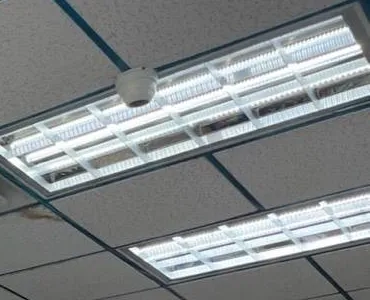
A photo from the AESS job library, not taken in East New York: a small white dome camera on grey acoustic ceiling tiles beside a long louvered fluorescent light panel. In a pharmacy on New Lots Avenue or a discount store on Pitkin Avenue, this is the camera that watches an aisle or the register. When a light fixture is replaced with a brighter one, or a tall display goes up underneath, the camera keeps working but stops seeing, and the repair is usually a move of a few tiles or a narrower lens rather than a new system.

Counters, aisles and the moment that matters

Store robberies and thefts in this part of Brooklyn are often over in a minute. Hoodline reported in October 2026 on a robbery at a beauty supply store at 1603 Pitkin Avenue, handled by the 73rd Precinct, in which the robber pretended to have a gun and fled with hair products, and noted a store robbery at 130 New Lots Avenue the week before. For a store owner, the question afterward is whether the camera over the counter showed the person's face clearly enough to use, and whether the aisle camera showed what was taken. In our experience the camera itself has rarely failed in those cases. It has drifted: knocked by stock, blocked by a new shelf, washed out by a new light, or set to save a low-quality stream. A store repair here starts with a test clip from each camera at the time of day the store is busiest, then a re-aim, a lens change or a move of a few feet, then checking that the recorder keeps enough days that a loss found at the end of the week can still be looked up.

Restaurants, barbershops and laundromats: heat, steam, lint and mirrors

The corridors' restaurants, barbershops and laundromats are hard on cameras in ways that have nothing to do with crime. Kitchen and back-door cameras collect grease and steam until the picture is soft; laundromat recorders choke on lint; barbershop cameras face mirrors and bright chair lights. Recorders end up in basements reached through sidewalk doors, next to compressors and water heaters. Most of these repairs combine a cleaning, a better position, a camera or housing rated for the environment, and moving the recorder off the floor and away from the heat. We schedule around opening hours where we can, because a store with its cameras down for an afternoon is a store without video for the busiest part of its day.

Yards, lots and fences in the industrial zone

The industrial zone's cameras live outside. A school bus company's lot, a carting yard or a self-storage building may have cameras on light poles and fences hundreds of feet from the recorder, connected by buried cable, cable on a messenger wire, or a wireless link. Each of those fails differently: buried cable takes water at its ends and is cut by digging; aerial cable is snagged by tall trucks; wireless links drift out of alignment when a pole leans. Long outdoor runs also pick up surges that a short indoor run never sees. The repair is testing each run from end to end, replacing only the section that failed, protecting runs where they enter the building, and setting the recorder to send a video-loss alert to someone who will see it on a Sunday. For businesses with several buildings, we can also put every recorder into one app so the owner sees the whole site at once.

Rules that touch a commercial camera repair

In New York, companies that install or service security and CCTV systems for others need a license from the Department of State; the state's rules at 19 NYCRR 195.2 apply that to closed-circuit television used, full- or part-time, to detect or monitor intrusion, theft, movement, sound or fire. We work under NYS license #12000287431. The same rules exempt an owner who installs a system personally, or has an employee install it, on the owner's own property or place of business. Employers who watch staff on camera should know that New York requires notice to employees of electronic monitoring, and sources we checked point to posted notice and written acknowledgment under Labor Law Section 203-c; cameras in restrooms, locker rooms and changing rooms are off limits. The NYPD runs a free camera registration and integration program, which tells the police where a business's cameras are and can give them real-time access to the feeds; whether to join is the owner's decision, and joining changes who can see the cameras, not how they are repaired. New York's retail security tax credit was written up as an incentive for 2024 and 2025 and may no longer be open, so ask your accountant before counting on it. We are not your lawyer; we tell you where a repair touches one of these rules so you can decide before work starts.

Your Questions Answered

Security Camera Repair in East New York: Questions Answered

Houses: Nehemiah homes, two-families and basement units

Our Nehemiah house is set back a few feet from the house next door, because the builders staggered the fronts. The corner camera's view down the sidewalk ends at the neighbor's front wall. Can it be fixed without putting a camera on their house?

Usually, yes. The staggered building lines on Nehemiah blocks mean a camera on the corner of a recessed house looks straight into the side of the next house's projecting front. Moving the camera a short way out from the wall on an arm, or a foot or two toward the street end of your own facade, often clears the corner and opens the view down the sidewalk. Where that is not enough, a second small camera aimed the other way, or a varifocal camera zoomed past the corner, covers the stretch you care about. Nothing has to go on your neighbor's wall, and we check the new view on the screen before anything is drilled.

We put an indoor camera behind our double-paned front window to keep it out of the weather, and the picture shows a faint second outline of everything. Is the camera bad?

No. Double-glazed windows, which Nehemiah houses were built with, have two panes of glass, and each one reflects a little. A camera sitting a few inches back from the window sees the scene and a dimmer copy of it bounced between the panes, and at night it sees its own infrared light reflected as a glare. The fix is to mount the camera with its lens pressed close to the inner pane inside a shroud, square to the glass rather than at an angle, with its own infrared turned off and the outside lit by a fixture of your own. Done that way, a camera behind the window can give a clean picture of the step and the pad.

Our basement unit is waiting on its certificate of occupancy inspection, and there is an old camera on the side door that the tenant will use. Does that camera need to work for the inspection, or should it come down?

There is no general city law that requires cameras on a house, so a working camera is not something we would expect the unit's inspection to require; your architect or the program's technical advisers can confirm what the inspection itself covers. What does matter is that the camera, its cable and its supply do not block the unit's door or exit path, and that the tenant's entrance is not watched in a way that records inside the apartment. If the camera stays, we can repair it, aim it at the walk outside rather than into the doorway, and move its power and recorder onto the owner's side of the house.

In our cellar, several camera cables are joined with twisted wire and electrical tape where someone extended them. Could those joints be why three cameras flicker?

Very likely. A twisted-and-taped joint on a coax or network cable breaks the cable's shielding and changes its electrical behavior, so the signal reflects at the joint and noise gets in, which shows up as rolling lines, snow, a camera that drops out and comes back, or a network camera that keeps reconnecting. Tape also dries out and lets moisture in. We cut out each splice and replace it with proper connectors and a coupler, or with a continuous run where the old cable is short enough to replace, and test each camera's signal afterward. It is usually a much smaller job than the flickering suggests.

Apartment buildings: public housing, PACT developments and the rezoning towers

Our tenants' association wants to report the building cameras that have been taped over, painted or pulled down. What should we write down so the report gets acted on?

Be as specific as the federal monitor's photos were: the building number and entrance, the floor, and exactly where the camera is, whether it is taped, painted, missing, hanging or simply dark, the date you noticed, and a photo from the hallway. Note whether the camera covers an entrance, a lobby, an elevator or a stairwell, since those are the locations the monitor's report singled out. Send it through your development's management office or PACT partner and keep a copy. We cannot repair cameras that belong to the housing authority or its management partner, but a clear, dated list is what gets a repair scheduled.

East New York, Brooklyn building entrance camera repair: black video intercom door station with a camera lens, speaker grille and an illuminated call button
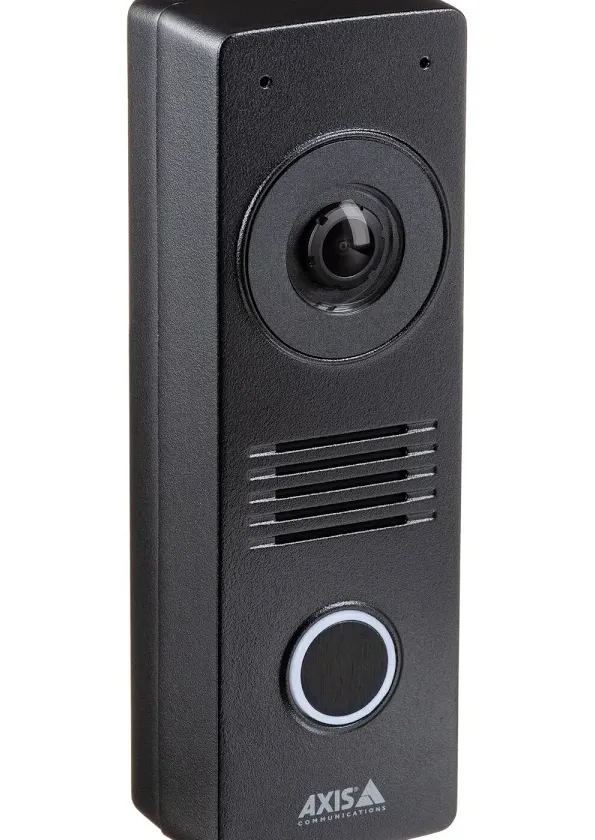
A product photo from the AESS job library, not taken in East New York: a black video intercom door station with a camera, a speaker grille and a lit call button. Newer buildings on Atlantic Avenue and the converted apartment buildings near Pennsylvania Avenue use stations like this at the street door. The audio intercom is the part New York law requires in larger buildings; the camera in the station is extra, which is why it is so often the part left broken.

The camera in our building's door station has been black for months, but residents can still talk to visitors and buzz them in. Is the dead camera an HPD violation?

Generally not. The Multiple Dwelling Law requires a working intercom in Class A buildings of eight or more apartments built or converted after 1968, and a broken intercom can be reported to 311 and lead to an HPD violation, but video is not part of that requirement. A station that still lets residents talk and buzz the door is doing what the law asks. The camera is still worth fixing, because residents use it to decide whether to open the door, and it may be the only camera on the entrance. Often the fault is a connector or a setting rather than the station, and we test both before suggesting a replacement.

Our landlord wants the repaired entry system to open the lobby door by face recognition. Can tenants refuse?

Yes, in an important way. The city's Tenant Data Privacy Law, Local Law 63 of 2021, covers smart and digital entry systems in apartment buildings: tenants must consent before their data is collected, and they cannot be required to use the smart system to get into their own apartment, so a key or another non-smart way in has to remain. In rent-stabilized buildings, changing a required service can also need approval from the state's housing agency first. A camera repair does not have to add any of this. If the owner wants it, the owner should settle consent and the alternative entry method before the work is scheduled, and we can repair the cameras either way.

Some apartments in our new building are set aside for domestic violence survivors. When the lobby and hallway cameras are repaired, what settings protect those residents?

Limit who can watch and who can export. The live view should go to a small number of named staff, not to a lobby monitor anyone can see or to a shared login that circulates among porters. Every person who can export video should have their own account, so the recorder's log shows who pulled what and when. Hallway cameras should watch common areas and doors to stairs and elevators, not look into apartments when doors open. Clips should leave the building only through a written request to management. We set accounts, permissions and camera views this way during the repair, and management decides the policy that goes with it.

East New York, Brooklyn rear corridor camera repair: small black bullet camera suspended from a white ceiling-tile grid, pointed down a short hallway at a grey steel service door
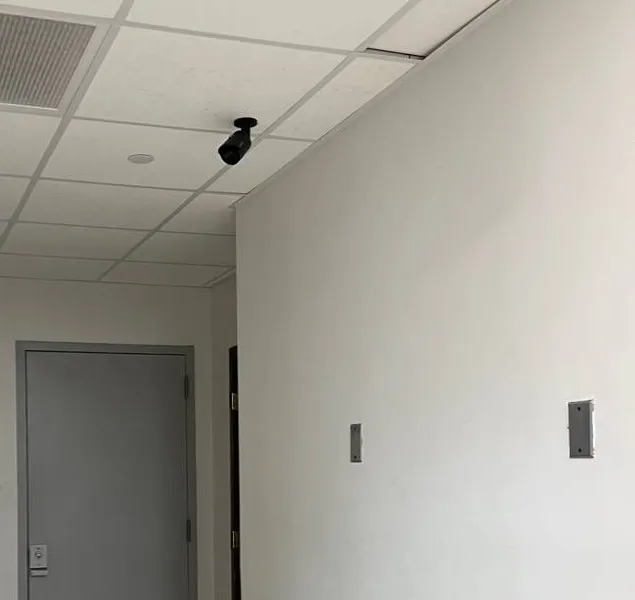
A photo from the AESS job library, not taken in East New York: a small black bullet camera hanging from a white ceiling-tile grid and aimed down a short corridor at a grey steel service door. In a rezoning-era building this is the camera on a trash room, a garage door or a back corridor; in a Pitkin Avenue store it watches the rear exit. Because it is within reach of anyone coming through that door, it is also the kind of camera that gets covered or turned, so we often place a second camera where it can see this one.

Stores, restaurants and businesses

The camera aimed at the ATM in our bodega was knocked off its bracket when the ATM company swapped the machine. Who repairs it, us or them?

It depends on whose camera it is. If the camera is built into the ATM, it belongs to the ATM operator and only they should touch it. If it is your camera, on your recorder, aimed at the machine from the ceiling or a wall, it is yours, and we can remount and re-aim it. Before we do, check whether the ATM company's crew needs to be present to move the machine, and decide what the camera should show: the person using the machine and their face, not a close-up of the keypad, so it never records customers entering their PINs. We test the new view with someone standing at the machine.

We read that New York had a retail security tax credit for cameras. Does a camera repair at our store count toward it?

We cannot tell you that, and you should not assume it. The state's retail security tax credit was described as an incentive for small businesses in 2024 and 2025, and the sources we checked write about it in the past tense, so it may have ended. Whether a repair, as opposed to new equipment, would ever have qualified is a question for your accountant. What we can do is give you an itemized invoice that separates parts, new equipment and labor, which is what an accountant would need to decide.

Our restaurant on Liberty Avenue plays music through big speakers on weekend nights, and two cameras near the speakers keep dropping out on those nights. Could the sound be doing it?

It can. Heavy bass shakes whatever the camera is mounted to, and over months that vibration loosens connectors, works screws out of drywall or tile, and makes a camera's picture shake enough to trip motion detection. A loose connector that drops the signal for a second each time the bass hits looks like a camera failing. We check the mount and the connectors on those cameras first, tighten or replace them, add a vibration-damping mount if the wall itself moves, and if a camera is right beside a speaker, move it a few feet away. The cameras on the other side of the room are a useful comparison.

Equipment

Types of Security Cameras and Recorders We Repair

We repair systems from any manufacturer and any installer. These are the kinds of equipment we meet most on East New York houses, apartment buildings, avenue stores and industrial yards, and what usually goes wrong with each.

Coax and HD-over-coax cameras

The older systems on many Nehemiah and multi-family houses, wired with coaxial cable to a DVR in the basement and powered by a separate multi-camera supply. Connectors corrode at the wall and supplies fail first; often upgraded to higher resolution on the same cable.

Network (IP) cameras

Standard in the rezoning-era buildings and newer store systems, powered and connected over one cable from a PoE switch or NVR. Faults are usually a switch port, a plug, a password or an address change after a network update.

DVRs, NVRs and hybrid recorders

The box that keeps the video. Drives wear out, settings vanish after resets, firmware breaks phone viewing. A hybrid recorder lets a house keep working coax cameras while adding network ones.

Varifocal domes and bullets

Cameras whose lens can be zoomed after mounting. The answer for staggered house fronts, long store aisles and yards where a face or a plate has to fill more of the frame.

Vandal-resistant domes

Domes with impact-rated housings for hallways, back doors and stairwells within reach. They do not stop tape or paint, but they survive being hit, and a cleaner can usually restore them.

Pan-tilt and 360-degree cameras

Motorized or fisheye cameras on store floors, building corners and yard poles. Motors, saved positions and fogged domes are what we fix most often.

Wi-Fi, battery and cube cameras

Consumer cameras on stoops, inside apartments and over yards. Signal through brick, concrete and steel, batteries in winter, and accounts in someone else's name are the usual problems.

Video door stations

Intercom stations with built-in cameras at building entrances and house doors. Sometimes recorded by the main system, often not; we check which before promising footage from one.

PoE switches, supplies and backups

The parts that power everything and fail when the power misbehaves or a circuit changes owners. Checked on every multi-camera outage and sized properly when replaced.

East New York, Brooklyn varifocal camera repair: black varifocal dome camera shown as a product photo
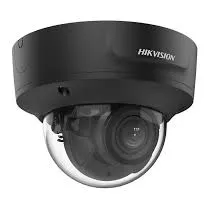
A product photo from the AESS job library, not taken in East New York: a black varifocal dome camera. Its lens can be zoomed and focused after it is mounted, which is how we fix a corner camera on a staggered Nehemiah block that sees mostly the neighbor's wall, or a store camera on Pitkin Avenue whose aisle has grown longer than its wide lens can read.
East New York, Brooklyn pan-tilt camera repair: small pan-tilt dome camera with a white body and a black lens bubble
A product photo from the AESS job library, not taken in East New York: a mini pan-tilt dome camera with a white housing over a black lens dome. On a discount store floor or in a bus company's office it can be steered from a phone to look at a register, a door or a lot. Its motor and its saved positions are what usually need repair, and we often find one parked pointing at the ceiling since the last person used it.
East New York, Brooklyn house door camera repair: narrow video door station with a camera lens at the top and a big round call button
A product photo from the AESS job library, not taken in East New York: a slim video door station with a camera lens at the top and a large round call button. On a two- or three-family house, a station like this beside the street door often serves every apartment, and whether its camera is recorded at all depends on how it was wired. When residents say the picture is gone but the bell still works, the fault is often a single connector behind the station.

National brands, self-repair and a licensed local repair

Owners with Ring, Arlo, Nest, Wyze or SimpliSafe cameras often ask whether to call the brand or us. For a sealed consumer camera that has died outright and is still under warranty, the brand is usually the cheaper route; there is nothing inside to repair. What the brands cannot do is come to the house and see that the camera is behind a double-glazed window, that the Wi-Fi does not reach through two brick walls and a concrete floor, or that the battery drains because the camera wakes for every car on Linden Boulevard. For wired systems with a recorder, a licensed local repair is the normal route; the manufacturers sell through installers and do not send technicians. ADT and other monitored services repair their own equipment under their contracts, so if your cameras came with one, check the contract first. And if you own the property, New York's rules let you, or an employee, work on your own system without a license; call us when the fault is past what you can test, or when you would rather it be done once.

Full terms — including 50% deposit, one-year parts-only warranty on AESS-supplied products, and the late-fee schedule — are set out in the service agreement.

SituationUsually best handled by
Sealed consumer camera dead and still under warrantyThe brand's warranty
Consumer camera works but signal, glass, placement or battery is the problemA local visit
Wired cameras with a DVR or NVRA licensed local repair
Cameras under a monitoring company's contractThat company first, under its contract
Simple fault on a system you own, and you are comfortable testing itYou or your employee; no license needed on your own property
NYCHA or PACT building camerasThe development's management, reported by residents
Condo, co-op or rental building systemA licensed repair approved by the board, owner or managing agent
East New York, Brooklyn indoor camera repair: small white cube camera for indoor use, product photo
A product photo from the AESS job library, not taken in East New York: a white indoor cube camera. Renters in East New York walk-ups and lottery apartments often put one on a shelf facing their own door. When it stops connecting, the usual cause is the apartment's Wi-Fi, a changed router password or an app account in someone else's name, not the camera, and none of those need a ladder.
East New York, Brooklyn Wi-Fi camera repair: outdoor Wi-Fi dome camera with an external antenna, product photo
A product photo from the AESS job library, not taken in East New York: a Wi-Fi dome camera with an external antenna. On a Nehemiah house the back-yard camera sits behind brick walls from a router in the front room, and in a Spring Creek home behind steel framing, so the antenna's direction and an access point near the back of the house often matter more than the camera itself.
AI Overview Reality Check

What AI Gets Wrong About Security Camera Repair in East New York

Search summaries and home-service sites such as Angi, HomeAdvisor and Fixr give general advice about fixing security cameras. Some of it holds everywhere. Some of it misses how cameras fail, and who is responsible for them, on these particular blocks. These are the claims we see repeated most often, and what we find on East New York repairs.

"Apartment buildings in New York City must have working cameras, so the landlord has to fix them"

There is no general city law requiring cameras in apartment buildings. What the Multiple Dwelling Law requires, in Class A buildings of eight or more units built or converted after January 1, 1968, is a working intercom. A broken intercom can be reported to 311 and lead to an HPD violation; a dead camera usually cannot.

That gap is why cameras in some East New York buildings stay dark for years while the buzzer gets fixed. Tenants who want building cameras repaired generally have to persuade the owner, the board or the managing agent rather than rely on an inspector.

Lease terms, a building's own policies or a regulatory agreement can change that for a particular building, so check yours. But do not assume a broken camera is a violation, and do not assume nobody can fix it either. An owner who wants it repaired can have it done in a visit.

"If a camera goes dark, the cable has failed and the run needs to be replaced"

On our own Brooklyn repair calls, most of what gets described as a failed cable turns out to be a damaged connector at the camera end. The cable inside the wall is usually still sound; the connector at the facade let water in or worked loose.

On the brick Nehemiah houses and multi-family rows that line East New York's side streets, that connector sits in a shallow box or a camera base exposed to every storm. A cut-and-reterminate takes a small fraction of the time of pulling new cable through brick and a finished basement ceiling.

So we test the connector first, then the cable with a tester, and only then decide whether a new run is needed. Pulling new cable without testing is how owners end up paying for the hardest repair when the easiest one would have worked.

"Wireless cameras work anywhere; just move the router closer"

Wi-Fi does not pass well through brick, concrete floors or steel framing, and East New York has all three: brick Nehemiah houses and multi-family rows, concrete floors in the rezoning-era buildings, and steel-framed modules at Spring Creek. Moving the router a few feet rarely solves it.

A camera at the edge of its range works on a mild day and drops out when the battery cools, a neighbor's network crowds the channel, or someone closes a door. Owners read that as a broken camera.

The real fix is measuring the signal at the camera and then choosing: an access point in the right room, a wired connection, or a camera that can take a cable from inside the house. On some walls, a wired camera is the only one that will stay connected.

"Anyone handy can repair a camera system; there's no license for it"

In New York, companies that install or service security and CCTV systems for other people need a license from the Department of State, and the state's rules apply that to closed-circuit television used for detecting or monitoring intrusion, theft or movement. We work under NYS license #12000287431.

The same rules exempt owners who work on their own property, personally or through an employee. So a homeowner or a store owner can swap a camera or a drive themselves, but a handyman doing it for hire is supposed to hold the license.

The skills also differ from electrical work. Most camera faults are found with a cable tester, a PoE tester, the recorder's logs and the camera's settings, not with the house wiring. If someone has already tried a fix, tell us what was changed; it saves time.

"If you can see the live picture, the system is recording"

Live view and recording are separate jobs. A recorder with a failing drive, a wiped schedule or an unformatted replacement drive can show a perfect live picture on the monitor and the phone while saving nothing at all.

This is the most painful discovery we see in East New York: an owner who checked the cameras every day on the phone and only learned after a break-in that the recorder had stopped saving weeks before. Nothing on the live view gave it away.

The cure is simple: health alerts sent to a phone someone reads, and a monthly two-minute check where you pick a random hour from last week and play it back. We set both up on every repair.

"Thirty days of video is the legal standard"

There is no city rule that sets how long a private home, store or apartment building must keep camera video. Retention is a choice, limited by drive size, the number of cameras and the quality saved.

One public benchmark is NYCHA's own: when it announced upgrades at 23 campuses in November 2023, it described 1,400 cameras with 21-day retention. For many private buildings and stores, two to three weeks at full quality on the cameras that matter is a reasonable target, because thefts and damage are often noticed days later.

We size the drive and set the schedule to reach the number of days you choose, and we tell you honestly when the recorder you have cannot get there without a larger drive.

"Once a camera is covered or painted, the recording is worthless"

The approach to the camera is usually on video. In the Brooklyn laundry-room burglary CBS New York reported, the footage shows the suspect covering the camera before he drilled into a machine; the act of covering it was the recording that mattered.

The NYCHA monitor's photographs of taped and spray-painted cameras show how common it is. What makes the difference is placement: a camera mounted out of easy reach, and ideally a second camera that can see the first, so whoever reaches for one is recorded by the other.

Recorders can also alert when a camera's picture suddenly turns dark or uniform, which is what tape or paint looks like to the software. We turn that on when we repair a tampered camera, so the next attempt reaches your phone the same night.
Talk to a Technician Before You Buy a New System for a Camera That Might Need a Connector

Send a photo of the recorder screen, the camera that is out and the cable where it goes into the wall. Many East New York "dead camera" calls turn out to be a corroded connector, a tenant's tripped breaker or a recorder that stopped saving, and we would rather tell you that before you spend money on new cameras.

Prefer to talk to someone who works on cameras every day? Message a technician on WhatsApp.

Get In Touch

Request a Free Quote

Tell us the cross street, the kind of building, how many cameras there are, which ones are out and where the recorder sits. Say whether the problem started after a storm, a tenant moving, a renovation or someone tampering with a camera, and who owns the system. If you need footage from a particular date, put it in the message and we will plan the visit around copying it first. For anything urgent, call (347) 934-8335.

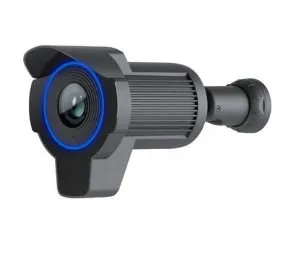
East New York, Brooklyn outdoor camera repair: black bullet camera with an extended sun hood and a glowing blue ring around the lens, product photo
A product photo from the AESS job library, not taken in East New York: a black bullet camera with a long hood and a blue-lit ring around the lens. On the corner of a brick house over a parking pad, the hood keeps rain off the lens and away from the front of the housing, and the connector behind a camera like this is the first thing we open when the picture starts flickering after a storm.

✅
Request Sent!
Thank you. A technician will contact you about the East New York address shortly.
How It Works

Our Repair Process

1. Send photos, the cross street and who owns the system

A photo of the recorder screen or app, the camera that is out and the cable where it enters the wall, plus the cross street and the type of building, by text, WhatsApp or the form. Tell us who owns the cameras and who pays the electric bill for the outlets they use.

2. Settle who approves the work

Owner, landlord, tenant, condo board, managing agent or business. We confirm who approves the repair, who holds the recorder login, and who can open the basement, telecom room or back office before we book.

3. Book the visit

Requests are booked within 2 hours with an arrival window. The visit and the repair are quoted to you per job at the standard Brooklyn rate, so you know where you stand before anyone arrives.

4. Copy the footage that matters

Any clip you need for the 75th or 73rd Precinct, an insurer, a landlord or a court is exported with the recorder's own timestamps before a cable, drive or setting is changed. If a drive looks like it is failing, we copy first and test second.

5. Trace the fault from the outlet to the phone

Outlet and circuit, supply or PoE switch, recorder and drive, then each connector, cable and camera, then the network and the app, in that order, so the part that failed is the part that gets fixed.

6. Written price, repair and playback check

You hear the cause and get a written price before any part is replaced. After the repair, each camera is checked in daylight and in low light, a recorded clip is played back in front of you, and video-loss, drive-error and recording-stopped alerts are set to a phone someone reads.

FAQ

East New York Security Camera Repair: Frequently Asked Questions

Do you repair camera systems that another company installed?

Yes. We repair any brand and any installer's system, and we tell you plainly when an old camera or recorder is not worth paying to fix.

How quickly can you book a repair in East New York?

Requests are booked within 2 hours with an arrival window. Call or text (347) 934-8335, or send photos of the recorder screen and the dark camera.

How much does a camera repair cost?

Every repair is quoted per job at our standard Brooklyn rate. You hear the cause and get a written price before any part is replaced, and looking at your photos costs nothing.

I need footage from a specific night. What should I do before you arrive?

Leave the recorder running and do not unplug, restart or reset it. Text us the date, time and camera, and we export the clip with the recorder's own timestamps before anything else is touched.

Several cameras went dark at once. Are they all broken?

Usually not. When several cameras fail together while the recorder keeps running, the cause is almost always shared power: a supply, a PoE switch, an outlet or a circuit, sometimes one on a tenant's meter. We trace the power before touching a camera.

Can you fix NYCHA or PACT building cameras?

No. Cameras that belong to the housing authority or its management partner are repaired by that development's management. Residents should report the camera's location, condition and date through the management office.

Are you licensed?

Yes. Abstract Enterprises Security Systems works under New York State license #12000287431, the Department of State license required of companies that install or service security and CCTV systems for others.

More Security Camera Repair near East New York

Security Camera Repair Brooklyn | Same-Day | Brownstone Pros · Security Camera Repair NYC | Same-Day | Abstract Enterprises · Security Camera Repair Manhattan | Same-Day | Co-op COI · Security Camera Repair Queens | Same-Day | Driveway Pros · Security Camera Repair Bronx | Same-Day | Home Base · Security Camera Repair Staten Island | Same-Day | Sandy Zone · Security Camera Repair Long Island | Nassau & Suffolk · Security Camera Repair Hudson Valley | Westchester to Ulster · Security Camera Repair Nassau County | Same-Day · Security Camera Repair Suffolk County | Hamptons + East End · Security Camera Repair Westchester County | Same-Day · Security Camera Repair Rockland County NY | Nyack, Suffern · Security Camera Repair Orange County | Newburgh, Goshen · Security Camera Repair Putnam County NY | Carmel, Mahopac · Security Camera Repair Dutchess County | Poughkeepsie · Security Camera Repair Ulster County | Kingston Woodstock

Security Camera Repair Bath Beach Brooklyn NY · Security Camera Repair Bay Ridge Brooklyn NY | AESS · Security Camera Repair Bedford-Stuyvesant Brooklyn NY · Security Camera Repair Bensonhurst Brooklyn NY | AESS · Security Camera Repair Bergen Beach Brooklyn NY · Security Camera Repair Beverley Square Brooklyn NY · Security Camera Repair Boerum Hill Brooklyn NY · Security Camera Repair Borough Park Brooklyn NY · Security Camera Repair Brighton Beach Brooklyn NY · Security Camera Repair Brooklyn Chinatown Brooklyn NY · Security Camera Repair Brooklyn Heights, Brooklyn NY · Security Camera Repair Brooklyn Navy Yard, Brooklyn NY · Security Camera Repair Brownsville Brooklyn NY | AESS · Security Camera Repair Bushwick Brooklyn NY | AESS · Security Camera Repair Cadman Plaza Brooklyn NY · Security Camera Repair Coney Island Brooklyn NY · Security Camera Repair Crown Heights Brooklyn NY | AESS · Security Camera Repair Cypress Hills Brooklyn NY | AESS · Security Camera Repair Ditmas Park Brooklyn NY | AESS · Security Camera Repair Downtown Brooklyn NY | AESS · Security Camera Repair DUMBO Brooklyn NY | AESS · Security Camera Repair Dyker Heights Brooklyn NY | AESS · Security Camera Repair East Flatbush Brooklyn NY · Security Camera Repair East Williamsburg Brooklyn NY

Other services in East New York

Fire Alarm Installation East New York Brooklyn NY · Structured Cabling Installation East New York Brooklyn NY · Alarm Installation East New York Brooklyn NY · Security Camera Installation East New York Brooklyn NY · Door Buzzer Repair East New York, Brooklyn NY | Walk-Ups · Access Control Installation East New York Brooklyn NY · TV Installation East New York Brooklyn NY · Intercom Installation East New York Brooklyn NY