Warehouse camera dark after a break-in, a loft corridor camera that went black during construction, or a recorder that never came back after the Montrose Avenue outage? East Williamsburg camera repair, booked within 2 hours: (347) 934-8335
Converted Factory Lofts · Corrugated-Steel Warehouses and Workshops · Tenements on the Side Streets · Grand Street, Graham Avenue and Metropolitan Avenue Storefronts
Security Camera Repair in East Williamsburg
Any Brand or Installer · Clips Copied Off Before Repairs Begin · Written Price Before Parts · Brooklyn Rate
Security camera repair in East Williamsburg begins with a $150 Brooklyn service call that pays for finding the fault on site and is credited back if you approve the repair. On our published Brooklyn price list, most single faults come in between $150 and $700, while a new recorder or rewiring several runs costs $700 to $1,500. We work on systems other companies installed, from a four-camera kit in a Seigel Street tenement to a sixteen-channel recorder in the office of a Morgan Avenue warehouse or a loft building with cameras on every floor. Your request is put on the schedule within 2 hours, the technician arrives inside a two-hour window, and you are told what broke and given the price in writing before a single part is swapped.
All prices here are taken from our published Brooklyn camera repair list, and yours is put in writing before work begins
Rated 4.7★ across 201 Google Reviews
Reviewed and updated November 12, 2026, against News 12 Brooklyn's May 2026 report on the two food truck generator thefts outside 599 Johnson Avenue, its November 2025 report on the burglary of a Stagg Street commercial building and the released surveillance video, its February 2026 report on the Montrose Avenue manhole fire and outage, and its August 2025 report on the Irving Avenue manhole fire; DNAinfo's 2016 report on the Randolph Street office burglary caught on camera; ABC7 New York on the July 2025 Kent Avenue clothing burglary; a 2015 New York State Division of Housing and Community Renewal ruling on a building's disconnected vestibule camera; Brick Underground on a Williamsburg renter, a landlord and camera footage; the April 2025 City Council public housing hearing on NYCHA's cameras; NYCEDC on 500 Stagg Street; BK Reader on the NYPD's Connect New York pilot; Reolink's guide to camera video loss; HomeAdvisor's Brooklyn cost page; and the New York Department of State on security and CCTV installer licensing. · Abstract Enterprises Security Systems, NYS license #12000287431 · crews dispatched from our Troy Avenue office in Brooklyn
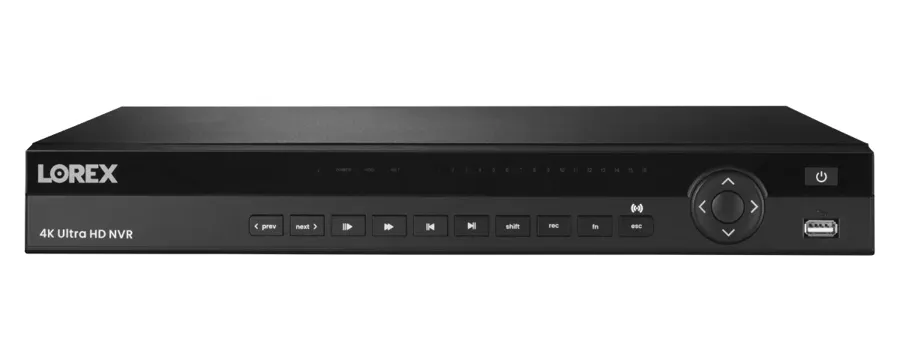
A product photo from the AESS job library, not taken in East Williamsburg: a sixteen-channel network video recorder of the desktop kind. This is the box we find on a shelf in a warehouse office off Johnson Avenue, in a locked closet on the ground floor of a converted loft, or under the counter of a Grand Street shop. When it stops saving, every camera on the building is effectively off, so it is the first thing a technician looks at on an East Williamsburg call.
East Williamsburg Camera Repair Request
Loft building, warehouse, workshop, walk-up or storefront: send the address and what the screen shows, and a technician calls you back with the next step
✅
Request Sent!
Thank you. A technician will be in touch about the East Williamsburg address shortly.
25+
Years Experience
✓
Same-Day Estimates
100%
Licensed & Insured
4.7★
201 Google Reviews
Owner-operated since 2002 · Thousands of jobs completed · Booked within 2 hours
In East Williamsburg, the camera that matters is usually the one watching a back door, a loading bay or a curb where something valuable sits overnight. That is where the repair starts. When a building here calls us, it is most often because something already happened: a rear door was forced, a generator was lifted off a truck, a corridor was entered at three in the morning, and the owner opened the recorder to find a blank tile or a week-old gap. So the technician copies whatever video still exists before anything else, then tracks down why the system stopped. In lofts and warehouses the usual causes are a PoE switch or power supply that died in an outage, a cable cut by a contractor during conversion or legalization work, a recorder drive worn out by heat in an unventilated office, and passwords that left with a former tenant. Send a photo of the recorder screen to (347) 934-8335 or on WhatsApp, and we will tell you what it looks like and what that kind of repair costs on our Brooklyn list before you book anything.
Reviewing your photos is free. The $150 service call pays for the diagnosis at the property and comes off the repair if you go ahead.
Every job is done under New York State license #12000287431. The state requires a license from any company that installs or services security and CCTV systems for someone else.
Any brand, any installer, any age of system, and an honest answer when an old part is not worth the money to fix.
The Neighborhood
Why East Williamsburg Properties Need Security Camera Repair
East Williamsburg is the industrial and loft district between the BQE and Flushing Avenue, running east from Bushwick Avenue toward the Queens line at Newtown Creek. One neighborhood guide lists its arteries as Metropolitan Avenue, Grand Street and Johnson Avenue, and its loft and factory streets as Morgan Avenue, Meadow Street, Ingraham Street, Bogart Street, Ten Eyck Street and Boerum Street. The building stock is mixed in a way few Brooklyn neighborhoods are: low-rise brick manufacturing buildings, corrugated-steel warehouses, nineteenth-century factories turned into studios, timber and concrete lofts from the 1920s, small tenements and row houses on the residential blocks near Graham and Bushwick Avenues, and new glass apartment buildings on what used to be empty lots. A camera system here is as likely to watch a roll-up door and a truck yard as a stoop.
That mix decides what a repair looks like, and the recent incident record shows why it matters. At about 1:40 in the morning on October 30, 2025, four men went in through the rear door of a commercial building on Stagg Street while it was empty and took roughly $60,000 in merchandise, according to News 12 Brooklyn. The building's cameras caught them, hooded, some in ski masks, and one looking straight into the lens wearing glasses, and the police released the footage to ask for help naming them. Six months later, around 7 a.m. on May 2, 2026, two people broke into a food truck parked outside 599 Johnson Avenue and took a generator worth about $2,500 and a cooler of soda; about ten minutes later the same group took a second generator from another truck through an open window and drove off in a white pickup. Again, the public description came from surveillance images. Going back further, DNAinfo reported in 2016 that a man got into an office at 218 Randolph Street through an air vent and filled a cardboard box with computers, and the building's camera recorded him lowering himself in with his feet dangling.
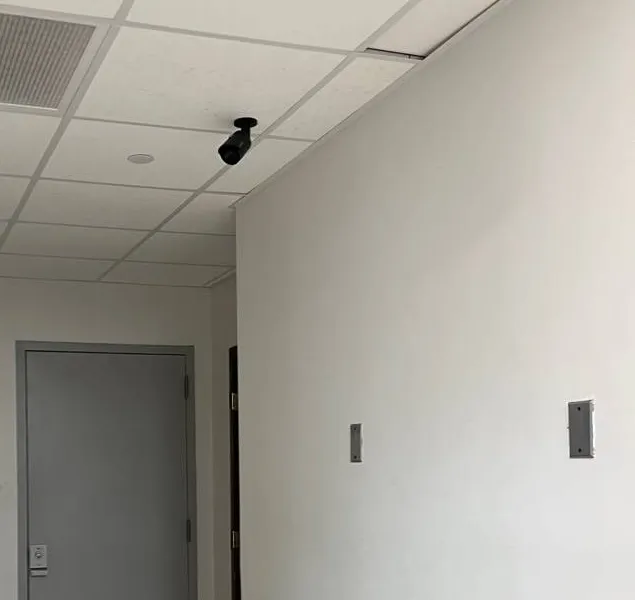
A photo from the AESS job library, not taken in East Williamsburg: a small black bullet camera hanging from a white ceiling-tile grid and aimed down a short corridor at a grey steel service door. That is the view a Stagg Street or Morgan Avenue building needs at its rear entrance, because it shows anyone coming through the door from the inside, where they cannot reach the camera. When a camera like this goes dark, nobody notices until the night the back door is used.
Those three cases have something in common. In each, the camera was on the back side of the building or the side street, not the showy front, and in each the footage was what everyone went to first. In East Williamsburg the dangerous hours are when a warehouse is empty and the industrial blocks are quiet, and the entry points are rear doors, loading docks, vents and curbside vehicles. A system that is recording on the street side and dark on the back is worse than useless, because the owner believes the building is covered.
Power is the second pressure. Just before 1 p.m. on February 16, 2026, the FDNY answered a manhole fire at 101 Montrose Avenue, and by that evening 535 customers were without electricity. Con Edison said it was repairing damage done when snow and road salt seep into underground equipment, and the city opened a warming center at I.S. 49 on Graham Avenue. On August 7, 2025, a manhole fire just over the line in Bushwick, in front of 18 Irving Avenue at Jefferson Street, left about 240 customers dark at the peak; one resident told News 12 that the lights flickered, there was a loud pop, and everything went out. Camera systems rarely fail while the power is off. They fail as it returns: a recorder that was writing to its drive at the moment of the cut, a PoE switch port that took the surge, a power supply that came back with one channel dead.
The third pressure is change. East Williamsburg buildings change hands, change tenants and change use constantly. Former manufacturing lofts are being legalized as housing under the Loft Law; plans were filed in December 2024 to legalize 43 residential units in one East Williamsburg interim multiple dwelling, and 222 Varet Street is another loft building that has sought to legalize apartments. Industrial space is being carved into smaller units, such as the 10,000 square feet of affordable industrial space that Evergreen, NYCEDC and ANHD closed on at 500 Stagg Street. Each change brings contractors who cut cables, tenants who leave with the passwords, and landlords who inherit a recorder nobody can log into. Every one of those is a camera repair waiting to be discovered.
So a repair in East Williamsburg is not just a dead camera swapped for a live one. It means getting the system recording again on the sides of the building that are actually at risk, putting the recorder and switch on protected power, labeling the cables so the next contractor does not cut them, and making sure the person who owns the building, not a departed tenant, holds the login. Many of the loft and warehouse owners who call us for camera work also ask about the entrance; a building with a camera at the door usually pairs it with a working intercom or access control, and we can look at both on one trip.
Six East Williamsburg facts that change how a camera gets repaired
Break-ins here come from the back. The October 2025 Stagg Street burglary came through a rear door, the 2016 Randolph Street burglary came through an air vent, and the May 2026 food truck thefts happened at the curb on Johnson Avenue. Repairs that only restore the front of a building miss the places these buildings are actually entered.
Underground power trouble is a winter problem too. Con Edison blamed the February 2026 Montrose Avenue outage on road salt and snowmelt reaching underground equipment. Every restart after a cut like that is felt by the power supplies, switches and recorders on the block.
Many buildings are mid-conversion. Loft Law legalization, subdivided industrial space and new residential construction mean contractors in the walls and ceilings for months, and camera cables in their way.
A camera can become a legal service. In a 2015 ruling, the state's housing agency upheld rent reductions after its inspector found the antenna cable disconnected from a building's vestibule security camera, noting the service had been provided for 19 years and the landlord was required to maintain it. In a rent-regulated loft or tenement, a camera tenants have relied on for years is not optional to repair.
Nobody is required to keep cameras working by default. A housing attorney quoted by Brick Underground, answering a Williamsburg renter, said city buildings are not required to have working cameras, and that a landlord does not have to share footage outside a legal process. Repairs happen when an owner, a manager or a tenants' group decides they will.
Repairs are priced by what broke, not by the neighborhood. HomeAdvisor's Brooklyn page gives an average of $1,416 for surveillance camera installation or repair, but that blends new systems with fixes. A single repair on our Brooklyn list usually falls between $150 and $700.
Where this page applies. It covers East Williamsburg from Bushwick Avenue and Graham Avenue east through the Morgan Avenue and Bogart Street blocks to the Queens line, and from the BQE south to Flushing Avenue. For the rest of the borough, see our main Brooklyn security camera repair page. The price depends on the fault, not on which side of Grand Street you are on.
Same-Day Repair in East Williamsburg
Need Repair in East Williamsburg? A Back-Door Camera That Missed the Break-In, or a Recorder That Lost Its Settings When the Power Returned
Urgent camera calls from East Williamsburg come in three shapes. The first is the morning-after call: a warehouse, workshop, studio or truck was hit overnight and the owner, or a detective, needs the video today. The second is the after-outage call: the block lost power, everything else came back, and the recorder is stuck on a setup screen or showing half its cameras. The third is the discovery call: a loft tenant, a property manager or an insurance adjuster asks for footage, and the owner learns that a camera on the rear or the roof has been dead for months.
If you need footage from an incident, leave the recorder running. Do not restart it, unplug it, or let a well-meaning tenant "reset" it. A recorder writes over its oldest video once the drive is full, so the clock is already ticking, and a restart can wipe the error log that explains a gap. Call (347) 934-8335, tell us the date and the window of time you need, and saving that footage becomes the first task on the visit. If a detective has already asked for a copy, say so when you book: we export to USB with the recorder's original timestamps and write down the difference between the recorder's clock and the real time, so nobody can argue later about when it happened.
For everything else the order is the same. The $150 service call reserves a two-hour arrival window, the technician tests the system until the cause is clear, and you receive a written price before anything is replaced. Requests are booked within 2 hours. We do not promise every repair finished the same day, because some recorders and cameras have to be ordered, but most single-camera, drive and power-supply faults are fixed on the first visit when the right part is on the truck. For warehouses and workshops, tell us the hours you are open and when trucks are loading, and we will plan around them.
What We Install
Security Camera Repair Services in East Williamsburg
Each repair below is priced from our Brooklyn camera repair list. The service call covers finding the fault; the repair is then priced by what failed, how many cameras it affects, and how hard the run is to reach, whether that is a dome over a tenement vestibule or a bullet camera twenty feet up the side of a steel warehouse.
Rear door and loading bay repair
The cameras covering back doors, roll-up gates, loading docks and yard fences, which are the ones East Williamsburg buildings lose first and need most. We restore the picture, check the aim against the way people actually come in, and test the view with the gate down and the yard lights off.
Recorder and drive repair
DVRs and NVRs in warehouse offices, loft closets, server racks and shop back rooms that beep, restart, refuse to save or keep only a few days. The drive is tested and replaced with a surveillance-rated one, and any footage you need is copied off first.
After-outage recovery
Systems that came back wrong after a cut like the February 2026 Montrose Avenue outage: recorders asking to be initialized, switch ports that no longer power cameras, clocks reset to the factory date. We restore settings, test each power source and fit battery backup where it belongs.
PoE switch and power supply repair
The switch that powers network cameras in a loft or warehouse, and the central power box or plug-in adapters on older systems. A single failed switch can take down every camera on a floor at once, which is why it is one of the first things we test.
Cable repair after construction
Runs cut, crushed, painted over or buried by crews doing loft legalization, sprinkler work, new partitions or roof repairs. We trace the break, replace the damaged section and label the run at both ends so the next crew can see it.
Low-light and show-light picture repair
Cameras that turn to grey grain on dark industrial blocks, white glare behind glass, or useless haze in a venue. We fix failed infrared, re-aim away from light sources, and adjust exposure for the real lighting, not a showroom.
Logins and remote viewing
Apps that stopped connecting after an internet change, accounts in a former tenant's or installer's name, and recorders nobody can unlock. We recover access for the person who owns the system and change every default password.
Footage export for police and insurers
Clips copied to USB with original timestamps for detectives, insurance adjusters, landlords and attorneys, with a written note of any gap between the recorder clock and real time.
Whole-building checkups
Every camera on a loft building, warehouse or shop checked in one visit, with a written list of what works, what is failing and what each fix costs, so an owner, a building committee or a business can decide what comes first.
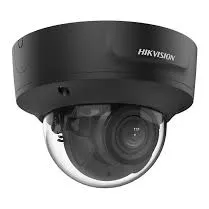
A product photo from the AESS job library, not taken in East Williamsburg: a black varifocal dome camera, the kind whose lens can be zoomed in or out after it is mounted. In a converted loft lobby or a long warehouse corridor, that adjustable lens is often the repair: a dome that was set wide years ago can be tightened onto the door it is supposed to watch, so faces fill the frame instead of the ceiling.
Building Specialists
Security Camera Repair for East Williamsburg's Architecture
Six kinds of buildings account for nearly every camera repair call we take from East Williamsburg. Each fails in its own way, and each decides where the recorder lives, how the cables travel, and who has to say yes before a technician touches anything.
Converted factory lofts
Brick, timber and concrete buildings from the manufacturing era, now studios, offices or legalized apartments. Long open floors, high ceilings, many tenants and many doors, often with cameras added piecemeal by different people.
Corrugated-steel warehouses
Single-story and two-story metal buildings on the industrial blocks, used for storage, food distribution, construction yards and fabrication. Heat, dust and metal walls shape every repair.
Brick workshops and small factories
Low-rise masonry buildings housing machine shops, woodworkers, breweries and makers, usually with a roll-up door, a small office and a recorder on a shelf near the machines.
Tenements and row houses
The older residential blocks near Graham Avenue, Bushwick Avenue and Grand Street, with a vestibule, a narrow stair and a recorder in the cellar or a hall closet.
Mixed-use avenue buildings
Shops on Grand Street, Graham Avenue and Metropolitan Avenue with apartments upstairs, where the store's cameras and the building's cameras may share a cellar, a power circuit or a cable path.
New glass apartment buildings
Recent construction on former empty lots, with network cameras, a managed internet system and a lobby full of glass, where the first failures are logins, handover gaps and glare.
Converted factory lofts: many tenants, one recorder, and decades of additions
The typical East Williamsburg loft building has been through several lives. It made something for decades, sat partly empty, filled with artists and small businesses, and in many cases is now being legalized as residential space under the Loft Law. Its camera system usually reflects that history. There may be an old analog system in the stairwells from the manufacturing days, a few network cameras a landlord added in the corridors, and tenants' own cameras inside their units or over their doors. The recorder is often in a ground-floor closet, the building's electrical room or the office of whichever tenant offered the space years ago.
On a loft repair, the first job is working out what belongs to whom. We trace each cable from the recorder to its camera, separate the building's cameras from tenants' private ones, and note which are connected to nothing at all. Long open floors mean long cable runs, and loft buildings often have network cameras at the far ends of runs that come close to the practical limit for an ordinary data cable, so an intermittent camera here is often a run, a connector or an extender rather than a dead camera. The heavy timber or concrete structure makes it hard to add new paths, so repairs usually reuse the existing cable routes, which is another reason to label them.
The other loft-specific issue is construction. A building going through legalization has crews in its walls and ceilings for months, installing fire-rated partitions, sprinklers, new electrical service and new stairs. Each crew can cut, unplug or bury a camera cable without realizing it. When a loft's cameras die one by one over a renovation season, we trace the runs, repair the damaged sections, and give the building's representative a labeled diagram to hand to the next contractor.
Corrugated-steel warehouses: heat, dust and walls that block signal
Metal warehouses on the industrial blocks are hard on electronics. In summer the inside of an uninsulated steel building can run far hotter than the street, and a recorder sitting on a shelf in a small office with no air movement wears out its drive and its power supply faster. In winter some of these buildings go unheated over weekends and holidays, which brings condensation. Dust from stock, cardboard, construction materials and trucks settles on everything, including fans and lenses. A warehouse repair often starts with moving the recorder to a cooler, cleaner spot and replacing a drive that has been cooked.
The steel itself matters too. Corrugated walls and roofs block Wi-Fi far more than brick does, so wireless cameras that worked in a showroom struggle inside a warehouse and fail outright between buildings on the same lot. Long wired runs across a yard to a gate or a second building pick up surges and take damage from trucks and forklifts. We repair the run, put the outdoor section in conduit or overhead where trucks cannot reach it, and add surge protection where a cable leaves the building.
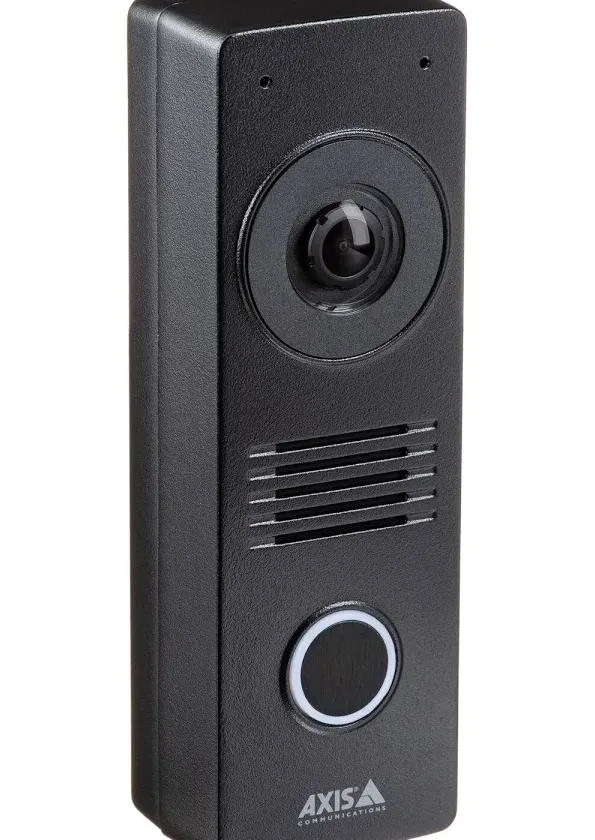
A product photo from the AESS job library, not taken in East Williamsburg: a black video intercom door station with a camera, a speaker grille and a lit call button. In many East Williamsburg loft buildings and tenements, the only camera at the front door is the one built into a station like this. When residents see a blank screen on their monitors, the fault can be in the station's camera, its cable or the monitor, and we test each before saying which needs replacing.
Brick workshops and small factories: machines, sparks and one shelf for everything
The machine shops, metal fabricators, furniture makers and breweries in East Williamsburg's low-rise brick buildings usually have small systems: four to eight cameras, a recorder on a shelf in the office or above the workbench, and a modem and router on the same shelf. They fail in ways an apartment building's system does not. Welding and grinding throw sparks and metal dust that pit lenses and clog the recorder's fan. Compressors, saws and other large motors on the same circuit can cause momentary power dips that make cheap adapters drop their cameras. Steam, wood dust and flour-fine sawdust coat domes until the picture fogs.
Repairs here are about separation. We move the recorder away from the machines, put it and the switch on a battery backup that smooths out the dips when a motor starts, replace adapters with a central power supply, and choose housings and locations that keep lenses out of the spray. The cameras that matter most are almost always the ones on the roll-up door and the yard, and those get tested with the door closed and the outside lights off.
Tenements and row houses: the residential East Williamsburg
The older residential blocks near Graham Avenue, Bushwick Avenue and Grand Street hold small tenements and row houses with three to eight apartments, a street door, a vestibule and a narrow stair. Their camera systems are usually simple: a camera on the stoop or street door, one in the vestibule, one in the hallway, maybe one in the back yard, wired to a recorder in the cellar or a locked closet under the stairs. Many of these buildings are rent-regulated, and as the 2015 state housing ruling on a disconnected vestibule camera shows, a camera service tenants have long relied on can become one the landlord is expected to maintain.
The common tenement faults are the cellar recorder plugged into a power strip shared with a boiler or washing machine, a vestibule dome cracked or spray-painted, and hallway cameras that stopped when a ceiling was repaired after a leak. The neighborhood's broader record of door problems matters here too. HPD wrote 302 self-closing door violations in the East Williamsburg area in 2026 through November 11. A vestibule camera only helps if the door it watches closes and latches; when it does not, we say so in the written report.
Mixed-use avenue buildings: the shop's system and the building's system
On Grand Street, Graham Avenue and Metropolitan Avenue, the ground floor is a store, bar, restaurant or office and the floors above are apartments. Often there are two camera systems: the business's, covering its counter, stock and door, and the building's, covering the residential entrance and halls. Sometimes there is only one, installed by whichever party needed it first, and the other party relies on it. Repairs go wrong when nobody is sure whose system is whose.
We confirm ownership before touching anything, then keep the two systems separate if they are separate: different recorders, different power, different logins. If one recorder serves both, we can give the business and the building separate viewing accounts so each sees only its own cameras. A shared cellar or a shared power circuit is a common source of faults, especially when one party's work cuts power to the other's equipment.
New glass apartment buildings: newer cameras, newer problems
The newest East Williamsburg apartment buildings use network cameras connected to a managed internet system, often with a cloud viewing service set up by the developer's contractor. These systems rarely suffer the cable and connector failures of older buildings. Their first problems are administrative: the contractor who set it up has left, the cloud account is in the developer's name, firmware has not been updated, the recorder is set to keep only a few days, or some cameras were never added to the recorder at all. Glass lobbies bring a second issue: cameras pointed at windows that turn every visitor into a silhouette in the afternoon.
A repair in a new building often starts with documentation. We list what is installed, who holds which passwords, what each camera should be showing and how long each is keeping video, then fix what is wrong and hand the owner or managing agent a record that survives the next change of staff.
Field Notes
Field Notes: Repairing a Camera System in an East Williamsburg Loft or Warehouse
These notes describe how our technicians work through a typical East Williamsburg loft building or warehouse when several cameras are out and nobody knows why. They are the method, not a story about one building.
Copy first, test second. If anyone needs footage from a recent night, the technician exports it before restarting or unplugging anything, and writes down the recorder's clock compared with the real time.
Find every entrance. East Williamsburg buildings often run through the block or have doors on two or three streets. The technician walks every door, dock and gate and checks which ones have a camera and whether it actually sees someone using it.
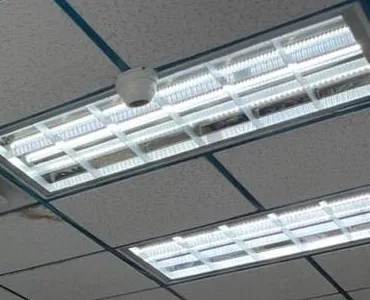
A photo from the AESS job library, not taken in East Williamsburg: a small white dome camera on grey acoustic ceiling tiles right beside a long louvered fluorescent light. Warehouse offices and converted loft floors in East Williamsburg often have drop ceilings like this, with camera cables laid on top of the tiles. When an electrician or a ceiling crew works up there, the cable is easy to unplug or crush, and the camera beside the light fixture is usually the one that goes dark.
Start at the power and the switch. In the office, closet or rack, the technician checks the outlet, the battery backup if there is one, the PoE switch and any central power supply, because an outage or a motor on the same circuit shows up there first.
Trace and label every run. Unlabeled cables are toned out and labeled at both ends as they are identified, so the recorder's channel names match the cameras on the walls and the next contractor can see what not to cut.
Check the far end in its real conditions. At each dark or weak camera, the technician tests power and signal at the camera, then looks for heat, dust, water, sparks or construction damage. Rear and yard cameras are checked with the gate down and the lights in their night state.
Price before parts, then leave a record. You hear the cause and get a written price before anything is replaced. After the repair, every camera is checked by day and in low light, alerts for lost video and drive errors are switched on, and you get the logins and a list of what is connected where.
Fault by Fault
Outages, Construction, Heat, Logins and Blind Spots: Why East Williamsburg Camera Systems Fail
Five causes explain most of the camera failures we find in East Williamsburg lofts, warehouses, workshops and storefronts. Telling them apart early is what separates a $150 visit from a new system.
Outages: the damage happens when the power returns
When the electricity drops and comes back, three things can happen to a camera system. If the recorder was writing to its drive at the moment of the cut, the file system can be damaged, leaving it stuck at a setup screen or asking to format the disk. A surge on return can kill adapters, power supply channels or PoE switch ports, so some cameras come back and others never do. And settings held in memory, including the clock and network addresses, can reset. The February 2026 Montrose Avenue outage, which Con Edison tied to road salt in underground equipment, is exactly the kind of event that produces these calls. A battery backup on the recorder and switch, sized to ride through short cuts and shut down cleanly in long ones, prevents most of them.
Construction: the cable nobody saw
East Williamsburg has more construction inside existing buildings than almost anywhere in Brooklyn: lofts being legalized, warehouses being subdivided, new partitions, new sprinklers, new electrical service. Every crew works where camera cables run. When a camera dies the same week as a new ceiling, a new wall or a new internet line, the work almost always cut, unplugged or buried it. We trace the run, repair the damaged section, label it so the next crew can see it, and tell you who was working there so you can raise it with them.
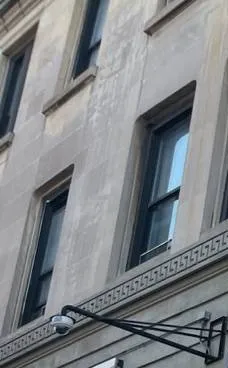
A photo from the AESS job library, not taken in East Williamsburg: a bullet camera on a long black steel wall arm, mounted below a carved Greek-key band on a pale stone facade with tall sash windows. Older masonry buildings along Grand Street and Metropolitan Avenue have the same kind of decorative stone. A long arm keeps the camera off the carving and lets it see down the sidewalk, but it also catches wind and leverage, so on a repair we check that the arm is still tight and the cable entry is still sealed.
Heat and dust: what a warehouse office does to a recorder
Recorders run around the clock and depend on a fan to stay cool. In a steel warehouse office in July, on a shelf above a workbench, or in a closed closet next to a boiler, the drive and the power supply run hot all day and wear out years early. Dust clogs the fan and makes it worse. The signs are a recorder that restarts on hot afternoons, a drive that starts reporting errors, and gaps in recording that line up with the hottest hours. The repair is a new surveillance-rated drive and, more importantly, a new home for the recorder where air can move.
Logins: when the person who set it up has moved on
A large share of East Williamsburg repair calls involve no broken hardware at all. The cameras work and the recorder records, but nobody can see anything, because the app account belongs to a former tenant, a former manager, a studio that moved to another neighborhood, or an installer who closed. In loft buildings with dozens of tenants, the person who once held the password may be long gone. The fix is to recover the recorder, set new passwords, register the account to the building's owner or manager, and write down who holds it.
Blind spots: the camera works, but not where it counts
Sometimes the system is fine and the coverage is not. The October 2025 Stagg Street burglary came through a rear door, the 2016 Randolph Street burglary came through an air vent, and the May 2026 food truck thefts happened at the curb. Plenty of East Williamsburg buildings have cameras aimed at the street-facing door and nothing useful at the back, the roof, the yard or the curb where vehicles park overnight. A repair visit is the right time to re-aim what you have, so the existing cameras cover the entry points that matter, before anyone pays for more equipment.
Commercial Security Camera Repair
Business Security Camera Repair in East Williamsburg
East Williamsburg's businesses are a cross-section you will not find on most Brooklyn shopping streets. The neighborhood guide we relied on lists craft breweries, furniture makers, design studios, tech startups, machine shops, metal fabricators, food distribution, construction and textiles among today's tenants, alongside the shops, bars and restaurants on the avenues. Many are open at odd hours, many are empty at night, and many keep valuable stock, tools or vehicles where a camera is the only thing watching. When something happens, the owner needs the video that morning, and the repair has to work around deliveries, production and opening hours.
Grand Street
One of the neighborhood's main arteries, with storefronts, restaurants and services under apartments. Shop systems here usually sit in a back room or cellar shared with the building, and the store's cameras and the building's may share a power circuit.
Graham Avenue
The shopping street on the western edge, with groceries, bakeries, salons, takeout counters and offices, and I.S. 49 on the same avenue. Recorders here are often under the counter or in a basement reached through a sidewalk hatch.
Metropolitan Avenue
A wide, busy road with mixed-use buildings, auto businesses and larger commercial spaces. Street-facing cameras deal with heavy traffic, headlights and constant motion, which fills drives fast if recording is set to motion.
Johnson and Morgan Avenues
The heart of the industrial blocks, with warehouses, food businesses, construction yards and the curbside where food trucks park. The May 2026 generator thefts outside 599 Johnson Avenue are the kind of incident these cameras exist for.
Stagg, Bogart and Ingraham Streets
Loft and factory streets with studios, galleries, makers and small manufacturers, including the affordable industrial space at 500 Stagg Street. The October 2025 burglary through a Stagg Street building's rear door shows where these buildings are vulnerable.
Frost Street and the venue blocks
Brooklyn Steel on Frost Street and the bars and performance spaces around the industrial edge, where cameras deal with crowds, dark rooms, stage lighting and late closing hours.
What a warehouse or workshop needs from a camera repair
For an East Williamsburg warehouse or workshop, the useful question is not "are the cameras on" but "would they have caught the last break-in on this block." That means a camera that sees the rear door from inside, one that covers the loading dock or roll-up gate from a spot nobody can reach, one on the yard or the curb where vehicles and equipment sit overnight, and a recorder that keeps enough days to cover a long weekend when nobody checks it. On a repair visit we fix what is broken, then walk the building with you and show you which entrances are covered and which are not. Re-aiming existing cameras costs labor, not equipment, and often closes the biggest gaps.
The recorder deserves its own attention. In a building that is empty at night and over weekends, the recorder is the most valuable thing a burglar can take, because it holds the evidence. We move it out of sight and out of the obvious office, lock it where that is practical, and turn on alerts so the owner's phone hears about a camera going dark or the recorder losing power. Where the owner wants it, clips can also be copied off the building automatically so a stolen recorder does not take everything with it.
Bars, venues and studios
Venues and bars on the industrial edge have their own repair problems. Rooms are dark, lighting changes constantly, haze and fog machines fill the air on show nights, and the crowd moves in front of every lens. A camera that looks fine in daylight may produce nothing usable at 1 a.m. We adjust exposure and backlight settings for the actual room, aim cameras at the doors, bar and cash areas rather than the stage, and check the picture during a real event when we can. Artists' studios and creative offices often care as much about privacy as security; we can set cameras so they cover entrances and shared corridors without recording inside anyone's workspace.
Food trucks, vans and anything parked at the curb
The two generator thefts outside 599 Johnson Avenue in May 2026 took about ten minutes from the first truck to the second. A building camera that sees the curb in color, at a distance where faces and plates can be read, is the most useful thing a business with vehicles outside can have. Most curb cameras we repair here fail for ordinary reasons, such as a dead connector, a failed infrared or a lens aimed too wide to identify anyone, and the fix is usually smaller than owners expect. We also set alerts for motion near the curb during the hours the trucks are parked, so the owner hears about it while it is happening.
Rules that touch a commercial camera repair
New York requires a license from any company that installs or maintains security systems, and the state's rules include closed-circuit television used to detect or monitor intrusion, theft or movement. An owner, or an owner's own employee, working on cameras at their own property does not need one; a company doing it for someone else does. We work under NYS license #12000287431. If the cameras watch areas where employees work, New York Labor Law Section 203-c requires employers to post notice of video monitoring and get written acknowledgment, so a repair that adds or re-aims workplace cameras is a good moment to check the notice is up. Businesses can register their cameras with the NYPD; in 2024 the city launched a Connect New York pilot linking participating businesses' cameras to the police in nine precincts across the five boroughs. If your building is individually landmarked or in a historic district, Landmarks Preservation Commission rules on where cameras can mount apply, and we can check the address before any camera moves.
Your Questions Answered
Security Camera Repair in East Williamsburg: Questions Answered
These are the situations East Williamsburg loft residents, building owners, warehouse managers, makers and shop owners describe when they call. Each answer is written for the buildings and blocks here.
Lofts and conversions
The camera screwed into a wooden beam in our loft slowly aims at the floor every summer and creeps back up every winter. Is the camera loose?
Usually the camera is fine and the wood is moving. Old heavy-timber beams swell and shrink with the seasons, and a small bracket held by short wood screws loosens a little each cycle until the weight of the camera and its cable tips it. We remount the camera with longer fasteners into sound wood, or on a plate or clamp that spreads the load, re-aim it, and check that the cable has some slack so it is not pulling the camera down. Where the beam is split or soft, we move the camera to the brick or a steel member nearby.
Contractors legalizing our building keep disconnecting the corridor cameras. How do we keep the system recording while the work goes on?
The best protection is a labeled system and a short briefing. We trace and label every camera cable at both ends, tag the runs where they pass through the areas being opened, and give the building's representative a one-page diagram to hand to each new crew. We also turn on alerts so the owner or manager hears within minutes when a camera goes dark, instead of finding out at the next incident. If a section of the building will be open for months, a temporary camera on battery backup can cover that stretch until the walls close, and we reconnect the permanent camera once the crew is done.
Our building's entrance camera used to show up as a channel on our apartment TVs, and since the cable boxes were replaced the channel is gone. Is the camera broken?
Often it is not. Older buildings sent the lobby or vestibule camera to tenants' TVs through the building's antenna or cable wiring, using a small device that turns the camera's picture into a TV channel. New cable boxes may not tune that channel, and the device or its cable may have been disconnected during the swap. In the 2015 case the state housing agency decided, its inspector found exactly that: the antenna cable disconnected from the security camera. We test the camera, the converter and the building wiring, and if the old method cannot work with the new boxes, we can show the owner other ways to give tenants a view of the entrance.
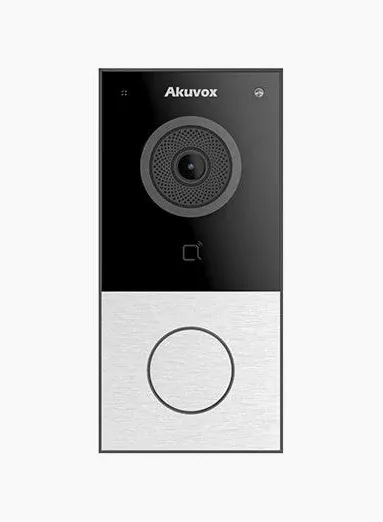
A product photo from the AESS job library, not taken in East Williamsburg: a slim video door station with a camera lens at the top and a large round call button. In an East Williamsburg tenement or small loft building, a station like this is often what replaced an older entrance camera that fed tenants' TVs. Whichever way the entrance picture reaches the apartments, the repair starts by checking whether the camera itself still produces a clean image.
Warehouses, workshops and the industrial blocks
The building on Stagg Street was burglarized through its rear door. All of our cameras face the street. What should a repair visit change?
Start with coverage, not equipment. We walk the building with you and check every door, dock, vent, skylight and fence line against what each camera actually sees. Often one or two street cameras are covering the same sidewalk, and one of them can be moved inside to watch the rear door from where nobody can reach it, with another re-aimed down the side street or alley. The recorder should sit away from the rear entrance, so a burglar who comes in that way does not walk past it. We price any new camera separately, but in many buildings re-aiming and fixing what is there closes most of the gap.
Sparks from the welding bench keep pitting the lens of our shop camera. Is there a camera that survives that?
The answer is usually placement and a cover, not a tougher camera. Spatter travels in fairly predictable directions from a bench or a grinder, and a camera mounted higher, farther back, or to the side of that spray lasts far longer. A dome or bullet with a replaceable clear cover lets you swap a scratched cover for a small part cost instead of replacing the camera. We also check the recorder and switch, because metal dust that pits a lens also clogs fans, and keep them away from the work area.
Our office is inside a steel warehouse, and the recorder there shuts itself off on summer afternoons. Can it stay where it is?
It can stay if the space can be ventilated, but usually it should move. Recorders and their drives need moving air; a small office with no window unit inside a metal building can get hot enough to trip the recorder's protection or shorten the drive's life badly. We read the drive's health, replace it if it is failing, and either add ventilation or move the recorder to a cooler spot, such as a lower shelf, a different room, or a small ventilated cabinet, with the cables extended to reach it.
Curbside, venues and nightlife
We park our food truck overnight on Johnson Avenue. Can a camera on the building watch it well enough to help, or does the truck need its own?
A building camera is usually the better choice. It has steady power, records to a recorder inside, and does not drain the truck's battery. It has to be aimed at the spot where the truck parks, close enough to see faces and plates at night, with infrared or a camera with its own light that reaches the curb. We test the view at night with the truck in place. A camera on the truck itself can add an inside view, but it runs on the truck's power and needs its own connection, so it works as an addition, not a replacement. Alerts for motion near the curb during parked hours tell you while something is happening.
On show nights, the haze from our venue's fog machine turns every camera into a grey blur. Is that a camera problem?
Mostly it is light. Haze scatters light, especially the camera's own infrared and the stage lights, so the camera sees a glowing fog instead of people. We turn off infrared on cameras near the stage and rely on the room light, adjust exposure so the camera does not chase every lighting change, and aim the cameras that matter at the doors, bar and cash area, where haze is thinner. A camera mounted lower and closer to a door often gets clear faces through the same haze that blinds one on the ceiling.
Power and the street
Con Edison blamed the Montrose Avenue outage on road salt reaching its underground equipment. Can salt on our sidewalk hurt the camera cable that runs under it to our gate?
It can, over time. A camera cable buried or run in conduit under a sidewalk or yard to a gate, a fence or a second building sits in the same wet, salty ground every winter. If the conduit is cracked or the connectors at either end are not sealed, water gets in, the copper corrodes, and the camera at the end starts to flicker in cold, wet weather and then fails. We test the run, replace corroded connectors, seal the ends and, if the run itself is damaged, replace it with cable rated for direct burial or in new conduit.
Equipment
Types of Security Cameras and Recorders We Repair
We repair whatever is on the building, whoever installed it. These are the kinds of equipment we find in East Williamsburg lofts, warehouses, workshops, tenements and shops, and the faults each tends to develop here.
Analog and HD-over-coax cameras
Cameras with round BNC connectors, from the older analog systems in loft stairwells to HD models added later. Typical faults: corroded connectors outdoors, failed power adapters, and worn infrared.
Network (IP) cameras
Cameras powered and connected through one data cable, common in newer buildings, offices and studios. Typical faults: dead switch ports after a surge, address conflicts, very long runs, lost passwords and outdated firmware.
DVRs, NVRs and hybrid recorders
The box holding the footage, in an office, rack, closet or cellar. Typical faults: cooked or desktop-type drives, damaged settings after an outage, clogged fans, and clocks that drift.
PoE switches and extenders
The switches that power network cameras, and the extenders used on long loft floors. Typical faults: dead ports or whole units after a surge, overloaded power budgets, and extenders that fail mid-run.
Power supplies and battery backups
Central power boxes, plug-in adapters and UPS units. Typical faults: blown channels, adapters killed by surges or motor dips, and backups whose batteries died long ago.
Wi-Fi and battery cameras
Plug-in and battery cameras in studios, shops and apartments. Typical faults: weak signal through steel and concrete, router changes, and accounts tied to someone who has moved out.
Bullet, dome and turret housings
Bullets on loading docks and arms, domes in vestibules and corridors, turrets on yards. Typical faults: pitted or painted covers, cracked domes, and brackets loosened by wind or wood movement.
PTZ and multi-sensor cameras
Pan-tilt-zoom cameras over yards and lots, and multi-lens cameras on large buildings. Typical faults: lost presets, sticking motors, and moisture inside the housing.
Phone apps, monitors and TV feeds
Viewing apps, office monitors, bar screens and the old TV channel feeds in some tenements. Typical faults: lost accounts, wrong camera names, frozen layouts, and disconnected TV converters.
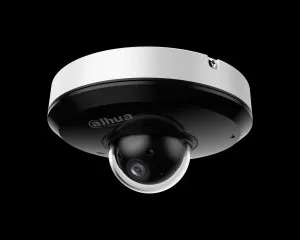
A product photo from the AESS job library, not taken in East Williamsburg: a mini pan-tilt dome camera with a white housing over a black lens dome. In a loft corridor or a studio building's shared hall, one camera like this can be pointed at different doors from the app. When it stops moving, the fault is often a lost preset or a power supply that can no longer drive the motor, not a dead camera.
National brands versus a local licensed repair
Some East Williamsburg businesses and residents have cameras from national alarm companies or consumer brands, and wonder who should fix them. The table shows how the choices usually compare when the job is a repair.
Question
ADT or a similar alarm company
Ring or SimpliSafe cameras
AESS local repair
Who owns the equipment
Depends on the contract; some is leased
You own it
You own it, and we repair it
Works inside steel or concrete buildings
Depends on how it was wired
Wi-Fi often weak through steel
Wired cameras on existing cable where possible
Mixed brands on one building
Usually its own only
Support covers its own devices
Any brand, any installer
Recorder and drive repair
Its own systems
Cloud storage, no local recorder
DVR, NVR and hybrid recorders, drives and footage export
Licensed technician on site
Varies by dealer
Remote support
Yes, NYS license #12000287431
Price before work
Varies
Price of a replacement device
$150 service call, then a written repair price
Owners of Ring cameras sometimes ask about police access. Ring ended its "Request for Assistance" tool for police in January 2024, and News 12 reported that law enforcement can still get videos with a search warrant. With a recorder in your own building, the footage stays with you, and you decide what to export and when.
AI Overview Reality Check
What AI Gets Wrong About Security Camera Repair in East Williamsburg
These claims show up in AI-generated answers, cost sites like Angi, HomeAdvisor and Fixr, and national how-to guides. Each is true somewhere, and each sends East Williamsburg owners toward the wrong repair, the wrong budget or a missing clip.
"Most camera repairs cost $100 to $300"
Quick answers about repair cost often quote a low national range built around suburban homes with one or two consumer cameras, where the fix is a new battery, a firmware update or a reset over the phone.
East Williamsburg systems are rarely that simple. A warehouse with a recorder in a hot office, a loft with network cameras at the end of long runs, or a building whose cables were cut during legalization work needs a technician on site with test equipment. HomeAdvisor's Brooklyn page goes the other way, putting the average for surveillance camera installation or repair at $1,416, but that figure mixes complete new systems with fixes.
Our Brooklyn list is the honest middle. The $150 service call finds the fault and is credited to the repair, most single faults land between $150 and $700, and a recorder replacement or multi-run rewire runs $700 to $1,500. You get the actual number in writing before work starts.
"A Wi-Fi camera is the easy replacement for a dead wired one"
Many answers suggest skipping cable repairs altogether by swapping a failed wired camera for a wireless one.
Inside a corrugated-steel warehouse or a concrete loft, that advice often fails on the first day. Metal walls and roofs block Wi-Fi far more than wood or brick, and a camera at a loading door or across a yard may never hold a steady connection. Every wireless camera still needs power, so the outlet or adapter can fail just as it does on a wired system. And each one depends on a router and an app account that someone has to keep.
Repairing the existing cable is usually cheaper and steadier. Wireless makes sense for a spot where cable truly cannot reach, set up on the owner's network with a signal test first, not as a blanket fix.
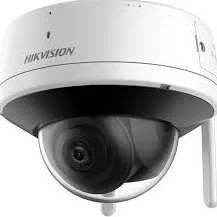
A product photo from the AESS job library, not taken in East Williamsburg: a Wi-Fi dome camera with an external antenna. The antenna helps, but inside the steel and concrete buildings common in East Williamsburg it cannot fix a signal the walls are blocking. We use cameras like this only for the rare spot a cable cannot reach, and we test the signal there before anyone buys one.
"A camera over the front door covers the building"
Advice aimed at homes tends to treat the front door as the place that matters, with a camera there and maybe one in the back yard.
East Williamsburg's own record says otherwise. The October 2025 Stagg Street burglary came through a rear door while the building was empty. The 2016 Randolph Street office burglary came through an air vent. The May 2026 generator thefts happened at the curb on Johnson Avenue. Commercial and loft buildings here have rear doors, docks, roof hatches, skylights, vents, side streets and yards, and those are where people get in when nobody is around.
A repair visit should end with a coverage check: every entrance listed, every camera's real view compared against it, and the gaps written down. Moving existing cameras is labor, not equipment, and it often matters more than replacing a dead one.
"Your landlord is responsible for fixing the building's cameras"
AI answers often state flatly that landlords must keep building cameras working, or flatly that they never have to.
The real answer depends on the building. A housing attorney quoted by Brick Underground, answering a Williamsburg renter whose packages kept disappearing, said city buildings are not required to have working cameras, and that a landlord does not have to share footage outside a legal process. Another attorney in the same piece said there is an argument that a landlord has a duty when theft is ongoing. And in a 2015 ruling, the state's housing agency upheld rent reductions when a vestibule camera tenants had relied on for 19 years was left disconnected, finding the landlord was required to maintain it.
If you are a tenant, put the problem in writing to the owner or manager and keep a copy, and if the building is rent-regulated, a long-provided camera service may count. If you own the building, a working system and a written repair record protect you as much as the tenants. We take repair requests from owners and managing agents, who approve and pay for work on building systems.
"Motion-only recording saves storage with no downside"
Storage advice often recommends switching every camera to record only on motion, to make a small drive last longer.
On Metropolitan Avenue and Grand Street, a street-facing camera sees motion nearly all the time, so motion-only recording saves little and floods the owner with alerts. In a quiet warehouse at night, the opposite problem appears: motion recording can start a second or two after someone enters the frame, which is the part a detective wants. Cameras that rely on detection also miss what they were never set to detect, such as a person moving slowly at the edge of the view.
For entrances, docks and curbs, continuous recording on a properly sized surveillance drive is usually the safer setting, with motion alerts layered on top. We size the drive for the number of days you need to keep, including a long weekend when nobody checks.
"Any handyman or electrician can repair your camera system"
General answers often treat camera repair as handyman work, no different from mounting a shelf.
In New York, a company that installs or services security systems for someone else needs a license from the Department of State, and the state's rules include closed-circuit television used to detect or monitor intrusion, theft or movement. An owner working on their own property, or having their own employee do it, is exempt. Beyond licensing, camera repair is mostly diagnosis: telling a dead camera from a dead switch port, a corroded connector, an address conflict or a failing drive. Guessing wrong means paying for a part that was never broken.
Ask any company working on your cameras for its license number. Ours is NYS license #12000287431, and it appears on our paperwork.
"Registering your cameras with the NYPD means police are watching them"
Some answers blur camera registration and camera sharing together, as if signing up means the police can see your feed.
They are different things. Registering tells the police where a camera is, so detectives know whom to ask after an incident. Integration is a separate step: the Connect New York pilot the city announced in 2024 linked participating businesses' cameras directly to the NYPD in nine precincts across the five boroughs, so police could view them in real time. A business that only registers still controls its recorder, and nothing leaves the building unless the owner exports it.
Either way, the program is only as useful as the camera. A registered camera that has been dark for a month helps nobody. If you plan to register or integrate, have the system repaired and checked first, with the clock set correctly, so the footage holds up when it is asked for.
Not Sure What Failed? Ask a Technician Before You Reset the Recorder or Order a Camera
Tell us the address, the type of building, how many cameras there are, which ones are out, and where the recorder sits. If the building has a second entrance on another street, give us both. If you need footage from a particular date, say so and the visit is planned around saving it. Photos of the recorder screen, the dark cameras and the power supply or switch help us bring the right parts. For anything urgent, call (347) 934-8335 now.
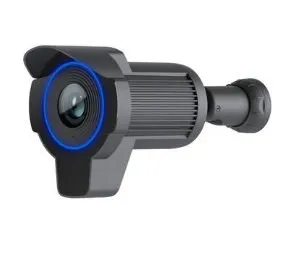
A product photo from the AESS job library, not taken in East Williamsburg: a black bullet camera with a long hood and a blue-lit ring around the lens. A long hood keeps rain and low sun off the glass, which matters on a loading dock or a yard fence facing the open sky over the industrial blocks. When you send us a photo of a camera like this on your building, we can often tell from the housing and the cable entry what kind of repair it is likely to need.
✅
Request Sent!
Thank you. A technician will be in touch about the East Williamsburg address shortly.
How It Works
Our Repair Process
1. Send photos and both addresses
A photo of the recorder screen or the dark camera, the street address, and the second entrance if the building runs through the block, by text, WhatsApp or the request form. Mention any night you need footage from.
2. Name the person who approves
Owner, managing agent, Loft Law building representative, warehouse landlord or business tenant: we confirm who approves the work and who holds the recorder password, so the visit does not stall.
3. Book the service call
The $150 Brooklyn service call books a two-hour arrival window and comes off the repair if you go ahead. Tell us your loading and opening hours.
4. Export footage before touching anything
Any clip that matters is copied to USB with its original timestamps before anything is restarted, unplugged or opened, and the recorder clock is compared with the real time.
5. Test from the power outward
Outlet, power supply, PoE switch, recorder and drive first, then each cable and camera, from the office, cellar or rack out to the loading door and the roof.
6. Explain the cause and write the price
You hear what failed and why, and get a written, itemized price before any part is replaced. If the price changes on site, you hear the new number first.
7. Repair and retest in real conditions
The failed part is repaired or replaced, and every camera is checked for picture and recording, after dark, with the gate down, or under show lighting where that applies.
8. Label, alert and hand over
Cables are labeled at both ends, alerts for lost video and drive errors are turned on, logins go to the right person, and you are shown how to export a clip yourself.
Coverage Area
Security Camera Repair Near East Williamsburg's Landmarks
Kosciuszko Bridge and the BQE
The bridge and expressway along the neighborhood's northern edge, with warehouses and yards tucked beneath and beside the highway.
Newtown Creek
The waterway at the Queens line, lined with the industrial lots and truck yards at the eastern end of East Williamsburg.
Knockdown Center
The arts and event space just across the Queens line, a neighbor to the venue and studio buildings on the Brooklyn side.
McKibbin Lofts
The McKibbin Street loft buildings, long home to artists and DIY performance spaces, and the subject of city illegal-hotel crackdowns in 2016 and 2017.
500 Stagg Street
The building where Evergreen, NYCEDC and ANHD closed on 10,000 square feet of affordable industrial space for local makers and manufacturers.
I.S. 49 on Graham Avenue
The William J. Gaynor school at 223 Graham Avenue, used as a warming center during the February 2026 Montrose Avenue outage.
East Williamsburg is billed at our Brooklyn rate. Every repair begins with the $150 service call, which covers the diagnosis on site and comes off the repair if you go ahead. The figures below are taken from our published list of Brooklyn security camera repair prices; your exact price is written down during the visit, once we know what failed.
Repair
Brooklyn price
Service call: on-site diagnosis and written repair price
$150, credited to the repair
Motion, alert, app or clock settings with no parts
Usually within the $150 service call
Clean and check for a dusty or blurry picture
$80
Connector reterminate or PoE port swap
$150–$350
Power supply repair
$150–$400
Dome or front cover replacement
$30–$80 part plus labor
Indoor camera repair
$200–$450
Hard drive swap, by capacity
$200–$450
Single camera replacement on a working system
$250–$600
Night vision camera repair
$250–$650
DVR not working, including drive and labor
$300–$700
NVR not recording, by model
$400–$900
Vandalized camera, per camera plus cable repair
$400–$900
PTZ camera repair
$450–$1,200
Hybrid recorder swap, channels reconfigured
$700–$1,200
DVR/NVR replacement with drive, or multi-camera wiring repair
$700–$1,500
Full rewire or whole-building overhaul
From $1,500
Three things move an East Williamsburg repair within those ranges. The first is height and reach: a camera at the top of a warehouse wall, over a loading dock, or on the roof of a loft building takes more time and ladder or lift work than one over a tenement door. The second is how many runs failed: a single corroded connector is a small job, while several runs cut during a renovation are priced run by run. The third is the recorder: one that has to be replaced, or a system whose cables nobody ever labeled, adds setup and tracing time. If the price changes on site, you hear the new number before work continues. Bundling a camera repair with intercom, alarm or cabling work on the same visit saves $200 to $400 in labor on our Brooklyn list.
Full terms — including 50% deposit, one-year parts-only warranty on AESS-supplied products, and the late-fee schedule — are set out in the service agreement.
Shop Our Systems
Security Camera Repair Packages & Pricing
Three ways East Williamsburg repairs usually come together, priced from our Brooklyn list.
Single-issue repair: $150–$700
One fault, one visit: a corroded connector redone, a power supply or switch port replaced after an outage, a cooked drive swapped, a low-light picture fixed, or a login recovered. Typical for a tenement, a studio, a small shop or a workshop with one camera or one recorder problem.
Major system repair: $700–$1,500
The recorder or the wiring: a DVR or NVR replaced with a new drive and the cameras reconfigured, or several runs replaced after construction cut them. Typical for a loft building after legalization work or a warehouse after a bad outage.
Annual maintenance: $250–$800
Every camera checked by day and in low light, lenses and covers cleaned, connectors and power tested, the drive's health read, alerts confirmed and a test clip exported. A good fit for warehouses and loft buildings that sit empty for long stretches.
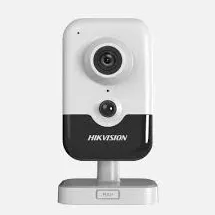
A product photo from the AESS job library, not taken in East Williamsburg: a white indoor cube camera. Small cameras like this sit on shelves in studios, shop back rooms and loft offices around East Williamsburg, often plugged into the nearest outlet on Wi-Fi. They are inexpensive, so when one fails we tell you plainly whether a repair or a like-for-like replacement makes more sense.
Bring your own equipment. If you have already bought a replacement camera or recorder, we can install it at labor-only rates. Send us the exact model and we quote the labor by phone or text; the visit is booked once it is paid. Equipment you supply is installed as supplied: we cannot stand behind parts we did not provide, and if a model will not work with your recorder, will struggle on Wi-Fi inside a steel building, or cannot handle the lighting where it is going, we tell you before the visit.
Complete Services
Every Security Camera Repair Service in East Williamsburg
Camera, cable and coverage repair
Dark cameras, corroded connectors, runs cut during construction, and rear, dock and curb cameras re-aimed to cover the way people really get in. Request a repair
Recorder, drive and outage repair
DVRs, NVRs and hybrids in offices, racks, closets and cellars, including systems that came back wrong after a power cut. Brooklyn security camera repair
Do you repair cameras on the Queens side of Newtown Creek, in Maspeth and Ridgewood?
+
Yes. The same crews cover both sides of the borough line. Addresses in Maspeth and Ridgewood are priced at our Queens rate rather than the Brooklyn rate shown on this page, and the service call works the same way: a diagnosis on site, a written price, and the call fee credited to the repair if you go ahead.
Our warehouse runs through the block, with the office on one street and the loading door on the other. Which address should we give for the visit?
+
Give us both, and tell us which door the technician should use and who will be there to open it. Through-block buildings are common in East Williamsburg, and a technician sent to a locked loading door while the office is open on the next street loses part of the arrival window. We note both entrances on the booking and call ahead when the technician is on the way.
We are subletting our studio for a few months. How do we stop the subtenant from changing camera settings or watching old footage?
+
Keep the administrator login yourself and give the subtenant a separate viewer account, if they need one at all. Most recorders let an owner create users who can watch live video but cannot change settings, play back older recordings, export clips or delete anything. We set that up, change any password the subtenant may already know, and switch off their access on the date the sublet ends.
A muralist is about to paint the wall our cameras are mounted on. Do the cameras have to come down?
+
Not always, but they should be protected. Spray paint drifts onto lenses and into connectors, and an artist working around a camera may move its bracket or pull its cable. We can cover the cameras and their connections before the work starts and uncover and re-aim them afterward, or take them down and remount them once the paint is dry. Either way, ask the artist to leave the cable path clear so the camera can go back in the same place.
Our warehouse is unheated over the winter holidays. Will the recorder and cameras survive near-freezing temperatures?
+
Outdoor-rated cameras are built for cold and usually do fine. The recorder and its drive are indoor equipment, and the risk is less the cold itself than condensation when the building warms up again, plus a drive that struggles to start in a very cold room after a power cut. Keep the recorder running rather than switching it off, keep it off the floor and away from loading doors, and if the office gets very cold, we can move it to the most sheltered spot in the building.
Can a camera be mounted on corrugated metal siding without the screws letting rain into the wall?
+
Yes, with the right mount. We fasten into the framing behind the siding where we can, use fasteners with sealing washers, seal the cable entry and route the cable so water runs away from the hole, not into it. On a repair, a rust streak or water stain below an existing camera usually means the original holes were never sealed, and we fix that along with the camera.
Every time our shop's air compressor kicks on, two cameras blink off for a second. Is the compressor hurting them?
+
The compressor is causing it, but the cameras are rarely damaged. A large motor draws a surge of current as it starts, and if the cameras' adapters or power supply share that circuit, the voltage dips long enough for them to restart. We move the camera power to a different circuit or onto a battery backup that rides through the dip, and replace any adapter that has been weakened by the repeated restarts.
We keep tools in a shipping container on our lot. Can a camera inside the container record reliably?
+
Yes, if it is wired. A steel container blocks Wi-Fi almost completely, so a wireless camera inside it will rarely stay connected. A camera inside needs a cable run to the building, protected where it crosses the yard, and a housing that copes with condensation, which builds up quickly inside a closed steel box. A camera on the building aimed at the container door is often the simpler first step.
The camera cable in our loft runs right alongside the old steam riser. Does the heat matter?
+
It can. Ordinary camera cable is not made to sit against a hot pipe through every heating season, and over years the jacket can soften, crack or shrink, especially where it was tied directly to the pipe. If a camera on that run drops out mostly in winter, heat damage is a likely cause. We test the run, and if it is damaged we reroute the new cable a safe distance from the riser.
Can the cameras be powered from the building's emergency lighting circuit so they stay on in a blackout?
+
We do not do that. Emergency lighting circuits are reserved for life-safety equipment, and adding camera loads to them is not allowed. The right way to keep cameras up in an outage is a battery backup sized for the recorder, the PoE switch and the cameras it powers, which also protects the drive from being cut off in the middle of writing.
How do we know a camera repair actually covers our insurance requirement for video at the loading dock?
+
Ask your insurer exactly what they need, such as which areas must be covered, how many days of video must be kept and whether the camera has to identify people or vehicles. Then we repair and set the system to meet that, and give you a written summary of each camera's view and the recorder's retention. Your insurer decides whether it qualifies; our report gives them the facts to decide with.
More Security Camera Repair near East Williamsburg
Ready to Have Every East Williamsburg Camera, Back Door Included, Recording Again?
Send a photo of the recorder screen or the dark camera, the address and any second entrance, and the date of any footage you need. We book within 2 hours, give you a two-hour arrival window, save your footage first, and put the repair price in writing before any part is replaced.