Recorder First, Then Every Cable Run Β· Written Price Before Parts Β· Any Brand, Any Installer Β· Brooklyn Rate
Security camera repair in Bay Ridge, Brooklyn starts with a $150 service call: a licensed technician tests the recorder, the hard drive, the power supply or PoE switch, the cable runs and the cameras, finds what failed, and gives you a written price before any part is changed. The $150 is applied to the repair if you go ahead, most repairs on our Brooklyn list land between $150 and $1,500, and we book the visit within two hours of your request in a two-hour arrival window. Bay Ridge systems also fail in their own ways. A camera on a limestone front on Bay Ridge Parkway sits in a landmarked district. A recorder on a Fifth Avenue cellar floor is one hard rain from a flood like October 30, 2025. A Third Avenue restaurant learns its cameras faced the wrong door only after a 3 a.m. break-in. This page covers each case, building by building.
Reviewed and updated November 11, 2026, against ABC7's August 2026 report on the overnight Third Avenue restaurant break-ins; CBS New York on the six Bay Ridge business burglaries of August and September 2022; News 12 Brooklyn on the December 2024 sledgehammer attempt at Pyramids Jewelry on Fifth Avenue; the Brooklyn Reporter on the Narrows Avenue stoop package theft, the 2020 NYPD Argus camera allocation for Council District 43 and the October 30, 2025 flash flooding; the Brooklyn Eagle on the Fifth Avenue camera request to Community Board 10; Brooklyn Paper on the 68th Precinct community council; the NYC Landmarks Preservation Commission's 2019 designation of the Bay Ridge ParkwayβDoctors' Row Historic District and its Permit Guidebook chapter on health and safety equipment; Brick Underground on Bay Ridge housing and on landlord cameras; Security Sales on the FCC's November 2022 equipment order; the NYS Department of State licensing rules; and HomeAdvisor's Brooklyn cost page. Β· Abstract Enterprises Security Systems, NYS license #12000287431 Β· crews dispatched from our office at 1282 Troy Avenue in Brooklyn

Owner-operated since 2002 Β· Thousands of jobs completed Β· Booked within 2 hours
Three pieces of information settle most Bay Ridge camera repair calls before anyone gets in the van. The first is a photo of the recorder's label, because the brand and model tell us which software, drive and power supply we are walking into. The second is a photo of the screen or the app showing which channels are black or offline and which still work. One camera gone points at that camera or its cable; every camera gone at once points at the recorder, the switch, the power or the network; cameras fine on the monitor but missing from the phone point at the internet side, often a new router. The third is the story: when it stopped and whether anyone worked on the building that week, which in Bay Ridge is often a renovation next door, a flooded cellar, a facade crew or a new internet provider. Send all three with your cross streets to (347) 934-8335 or on WhatsApp.
Bay Ridge already has a lot of cameras. Walk Third Avenue at closing time and you see domes over the doors of bars and restaurants; walk the side streets between the avenues and you see bullet cameras under the cornices of brick two-families and doorbell cameras beside the stoops of limestone rows. The neighborhood's problem is rarely the absence of a camera. It is the camera that has been quietly broken for weeks, the recorder whose drive filled up and stopped overwriting, the app that lost its connection when the router was replaced, the picture that was aimed well in 2017 and now looks at a tree. Nobody notices until the morning after something happens, when the owner opens the playback and finds a black square, a three-day gap or a blur where a face should be. The calls we take from southwest Brooklyn are mostly that call: the footage was needed and it was not there.
The local news shows how often that moment comes. In the early hours of Friday, August 28, 2026, thieves broke into several closed Bay Ridge restaurants, among them Bar Chuzo on Third Avenue, Cebu on 88th Street and Kettle Black on 87th Street. ABC7 reported staff arriving at 8 a.m. to find an office door kicked in and the safe broken open, and surveillance cameras showing a hooded figure searching a basement with a flashlight at 3:30 a.m. Police told nearby restaurants to activate alarms, check entry points and add lighting. In 2022, CBS New York reported six early-morning burglaries of Bay Ridge businesses on August 30 and September 5, several on Third Avenue, with about $28,000 taken; footage from Fantastic Bagels showed a thief heading straight for the register. In both cases the cameras that worked became the evidence, and every other owner on the strip asked whether theirs would have.
Daylight brings its own tests. In December 2024 News 12 Brooklyn showed footage of three people with sledgehammers trying to smash the glass of Pyramids Jewelry at 6911 Fifth Avenue on a Sunday afternoon before driving off in a blue Honda; a worker at a nearby candy store said the shops should have more protection "and more cameras." On the residential side, the Brooklyn Reporter told of a Narrows Avenue homeowner whose packages were taken from his stoop on September 8, 2016, and who gave the 68th Precinct footage of the man walking up the steps. Stoop, alley, counter and cellar cameras all earn their keep the same way, by recording a usable picture when nobody is watching, and a broken one gives a false sense of cover until the day it is needed.
Public cameras help, but they are not built for your door. In November 2020 Council Member Justin Brannan allocated $275,000 for ten NYPD Argus cameras at five sites across District 43, which takes in Bay Ridge, Dyker Heights and parts of Bath Beach and Bensonhurst. "The NYPD has been able to make arrests in some cases based on camera footage," he said, and police described most crimes in the 62nd and 68th precincts as thefts from unlocked vehicles. In 2018, Fifth Avenue residents between 80th and 81st Streets asked Community Board 10 for a police camera after late-night fights and were told those cameras come from elected officials' allocations. A pole camera may catch a passing car. It will not show who opened your vestibule door or what happened in your stockroom. That is the private system's job.
Bay Ridge buildings also wear systems out in particular ways. Brick Underground has described most of the neighborhood's multi-dwelling buildings as co-ops maintained and upgraded over the years, many along Shore Road, alongside streets of single- and multi-family houses. That means systems installed in stages: an analog DVR from one decade, IP cameras from the next, a doorbell on a separate app, and a cellar switch that grew one port at a time, rarely with a label on any cable. Add cellars where recorders live and flood in a hard rain, and facades that see scaffolding and pointing crews often, and camera cables get cut, soaked or pulled loose more than owners expect.
Where this page applies. It covers Bay Ridge from roughly 65th Street south to the Fort Hamilton area near the Verrazzano-Narrows Bridge, and from the Shore Road waterfront east across Ridge Boulevard, Third, Fourth and Fifth Avenues toward the Gowanus Expressway and Seventh Avenue, with 86th Street running through the middle. Neighbors in Dyker Heights, Fort Hamilton, Sunset Park and Bath Beach are served at the same rate, and the rest of the borough is covered on our Brooklyn security camera repair page. The price does not change from one side of 86th Street to the other.
Urgent camera calls from Bay Ridge come in three main shapes. The first is the morning after: something happened overnight, and either the camera that mattered was down or the clip is missing. The first job then is protecting what is still on the drive. Do not unplug the recorder, run a factory reset or let anyone "try a few things" in the menus, because a reset or a drive format can erase footage that still exists. Tell us the date and time window that matters, and we export it before fixing anything, on a USB stick in the recorder's native format and as a common video file with the time stamp visible, so it can go to the police the same day.
The second shape is the slow failure that suddenly gets noticed: a single camera that has been black for a month, a picture that went soft and grey, a recorder that beeps every few minutes, or a phone app that shows the cameras as offline. Those rarely need an emergency, and most are fixed on-site in one to two hours once the technician is there, but they are worth booking before the day the camera is needed. The third shape is damage: a camera hit by a ladder on a scaffold, a cable cut during a kitchen renovation, a dome kicked off the wall over a side door, or equipment that sat in water after a storm. Damage calls are where we start with photos, because the photos tell us which parts to bring. Whatever the shape, the visit begins with the $150 service call and a written price, and nothing is replaced until you have agreed to it. Call (347) 934-8335 and we will book the visit within two hours of your request.
Every repair below starts with the same $150 diagnosis and ends with every channel tested and labeled. What changes is where the fault sits: in the camera, in the cable between it and the recorder, in the recorder and its drive, in the power, or in the network and the app.
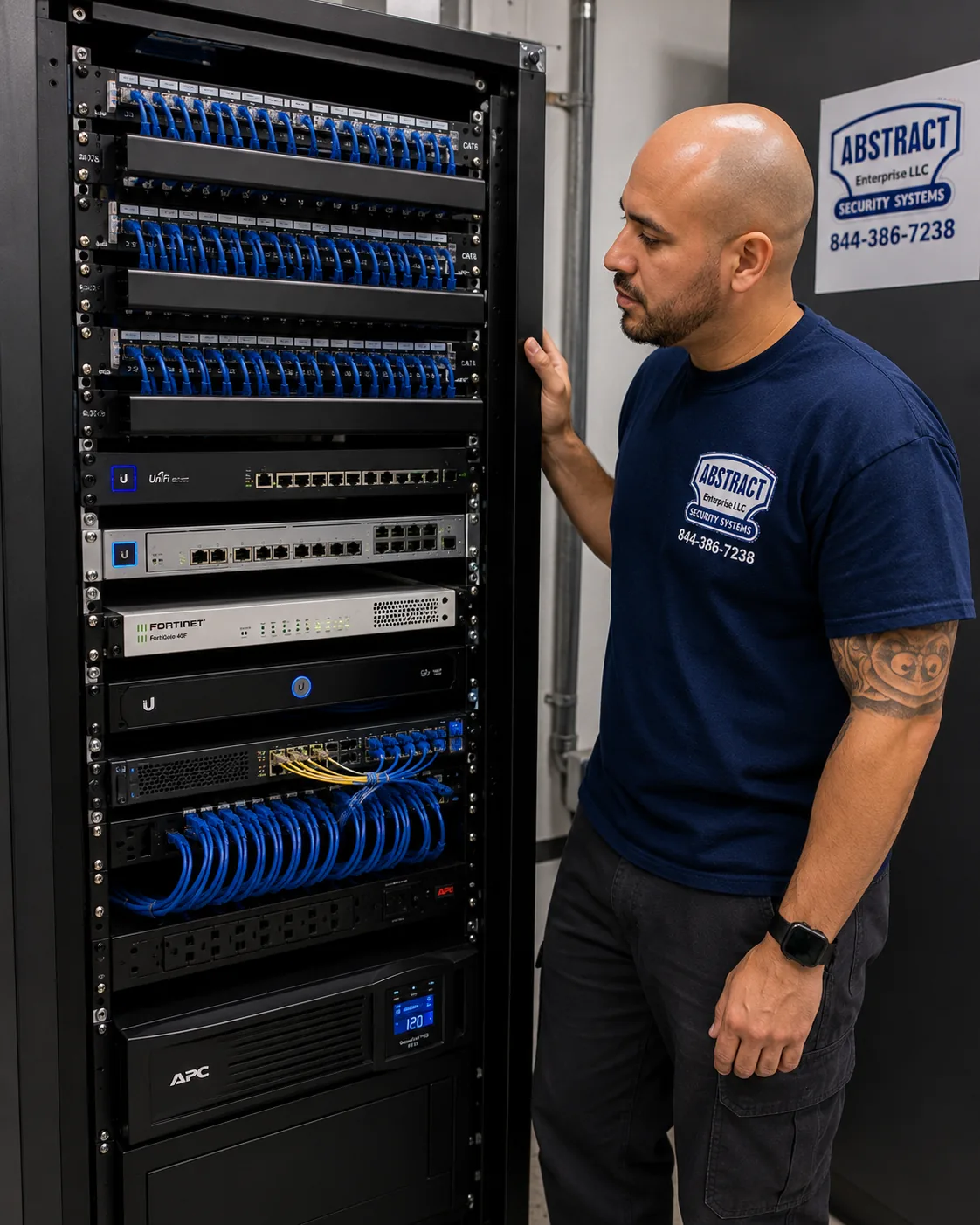
DVRs and NVRs that beep, freeze, reboot or stop saving, usually in a cellar or closet. Drive tests and swaps, recording schedules rebuilt, and overwrite turned back on so the recorder never fills up and stops.
Dead, fogged, cracked or painted cameras replaced on the existing mount where the facade allows, and working cameras turned back toward the stoop, the alley door or the register they were meant to watch.
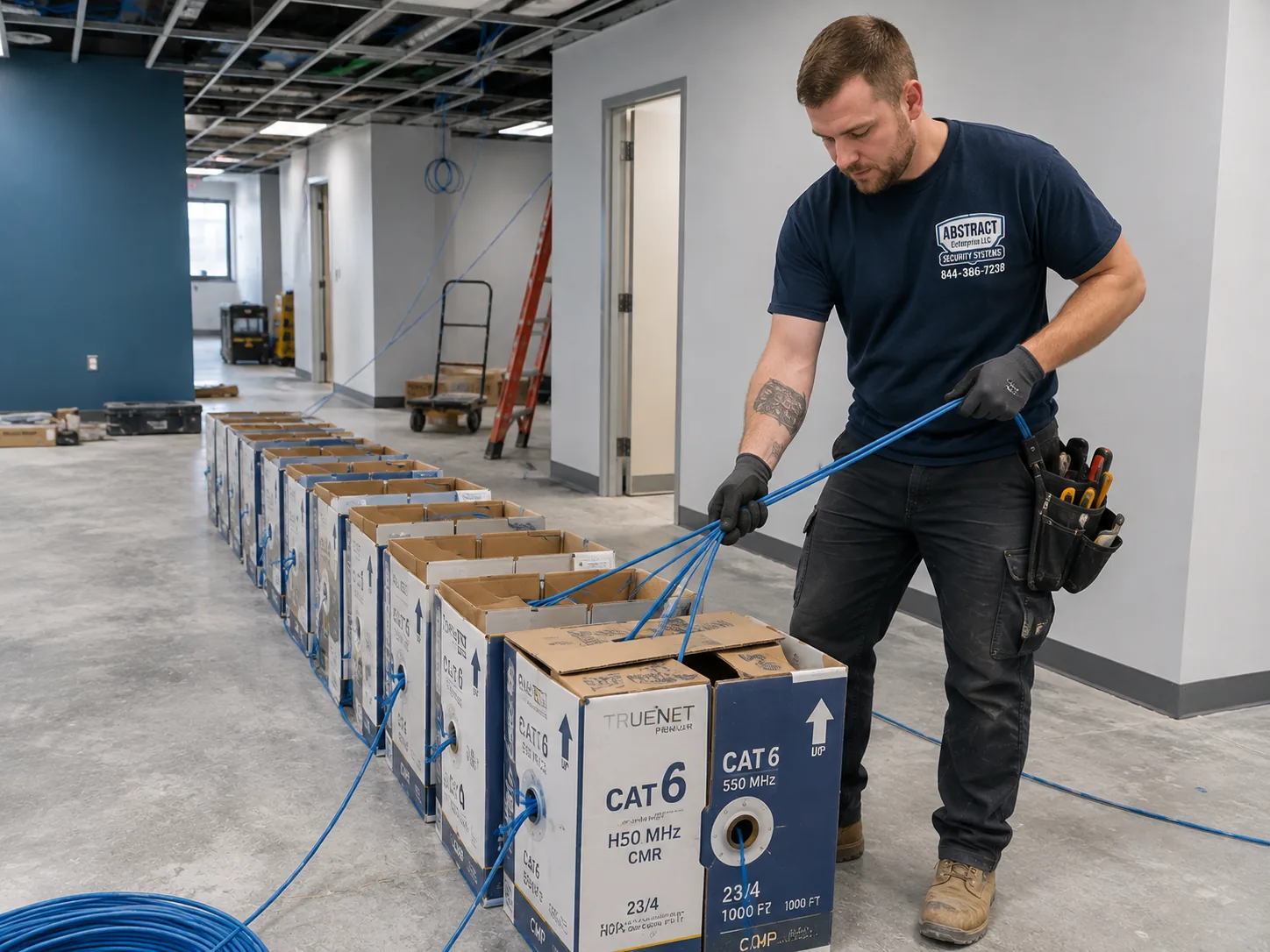
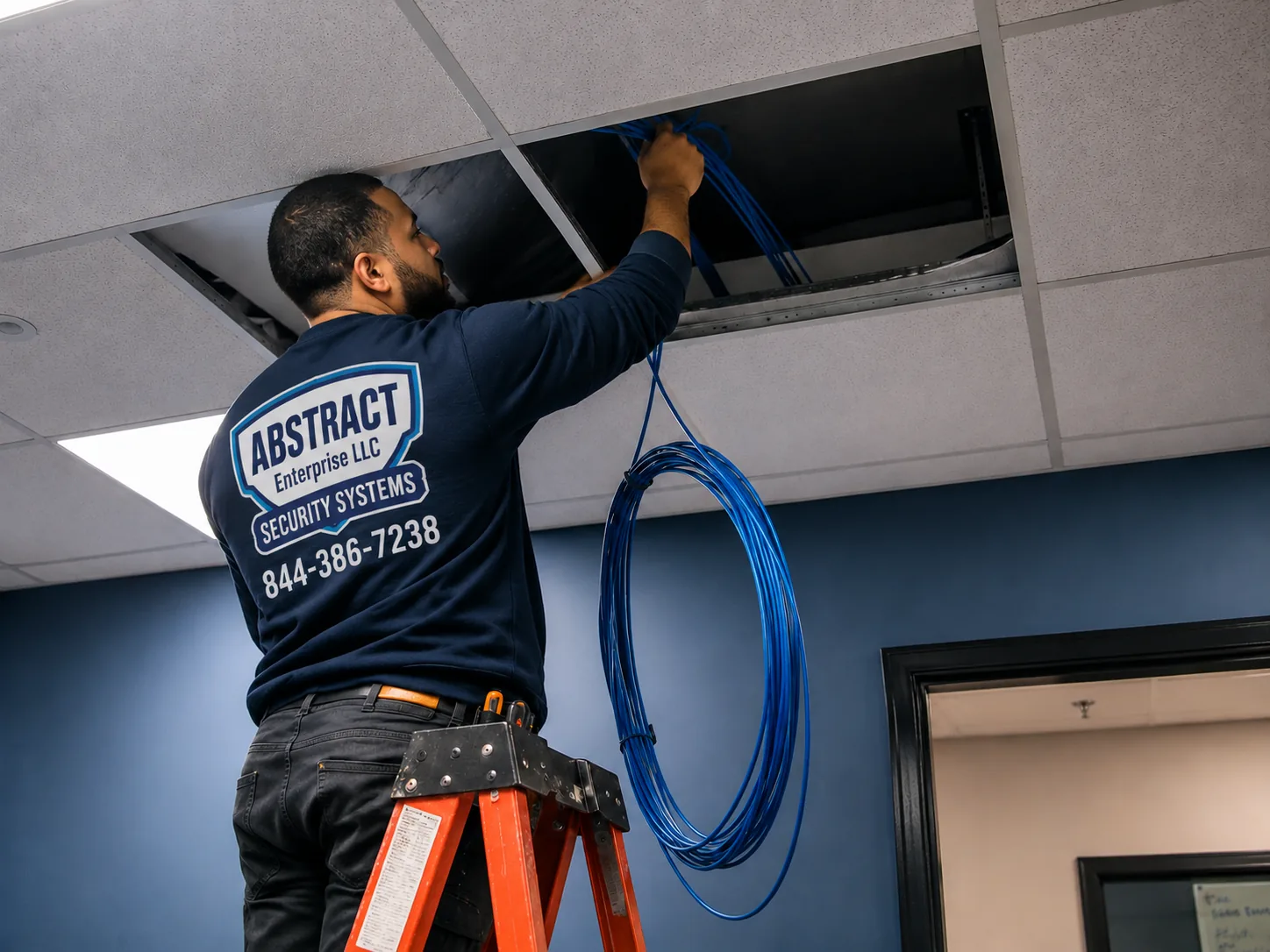
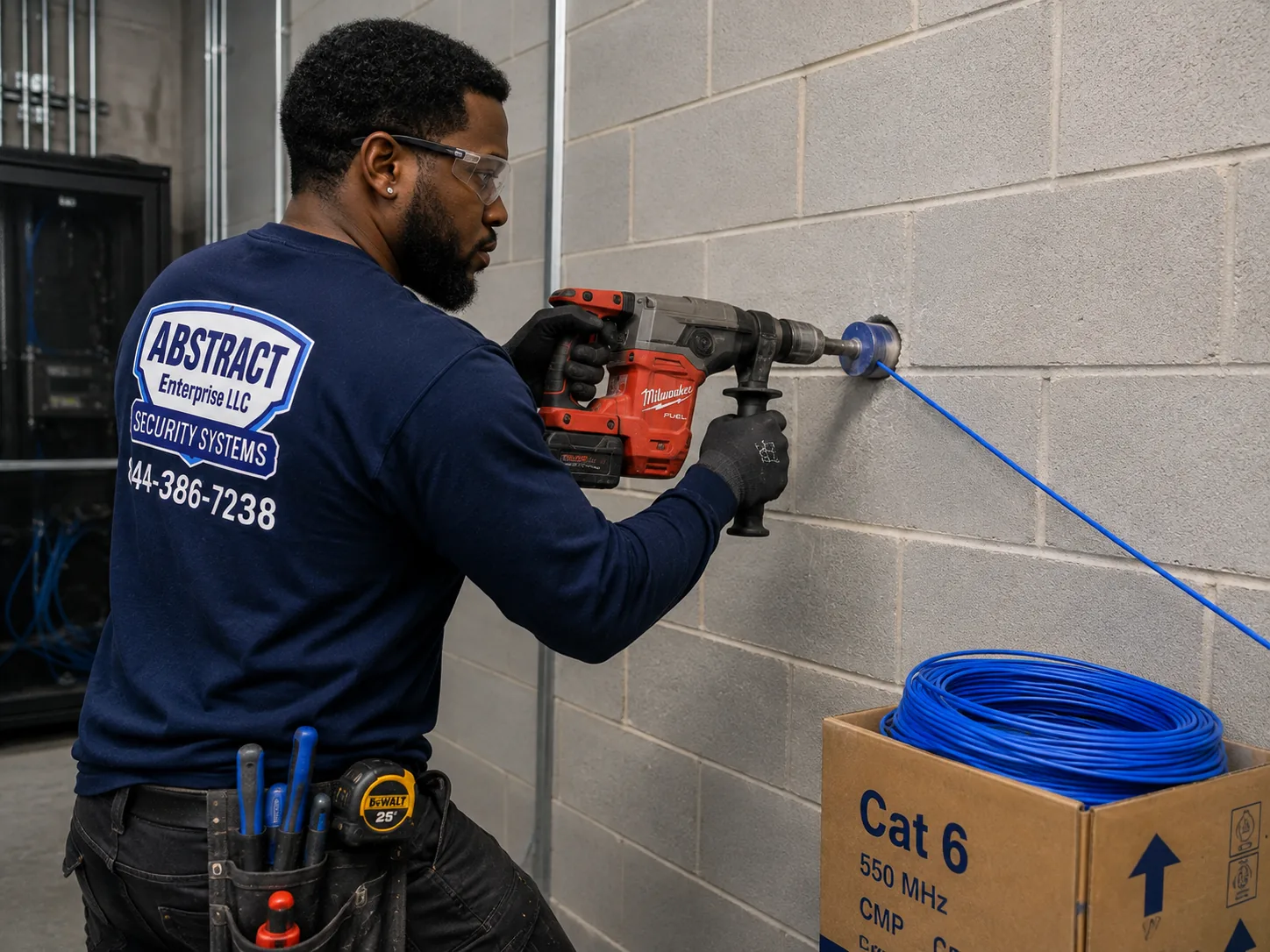
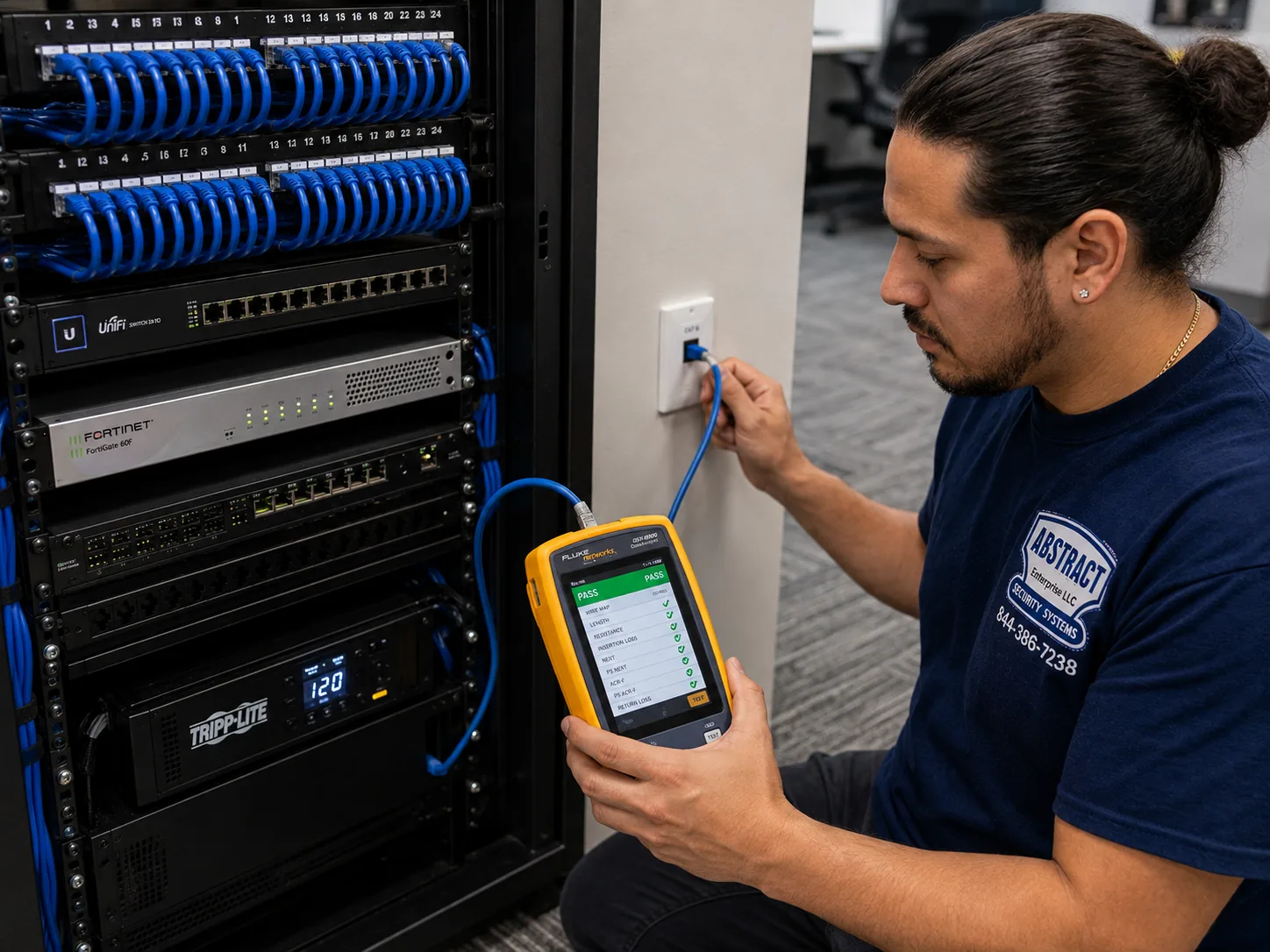
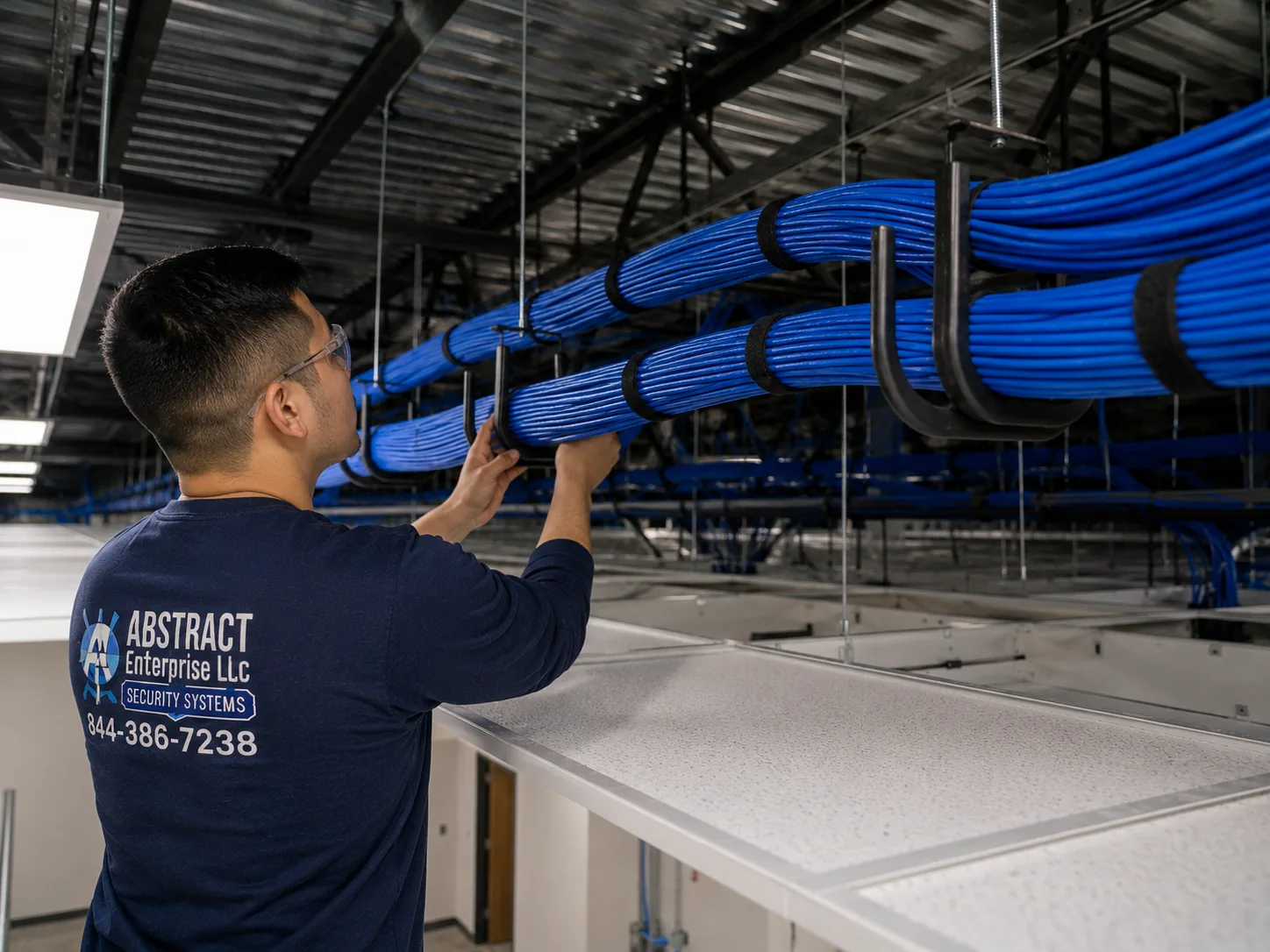
Coax and Cat6 runs cut by renovation crews, chewed in cellars or loosened by scaffolding, found with a tester and a tone probe and repaired or re-run in the shortest section that fixes it.
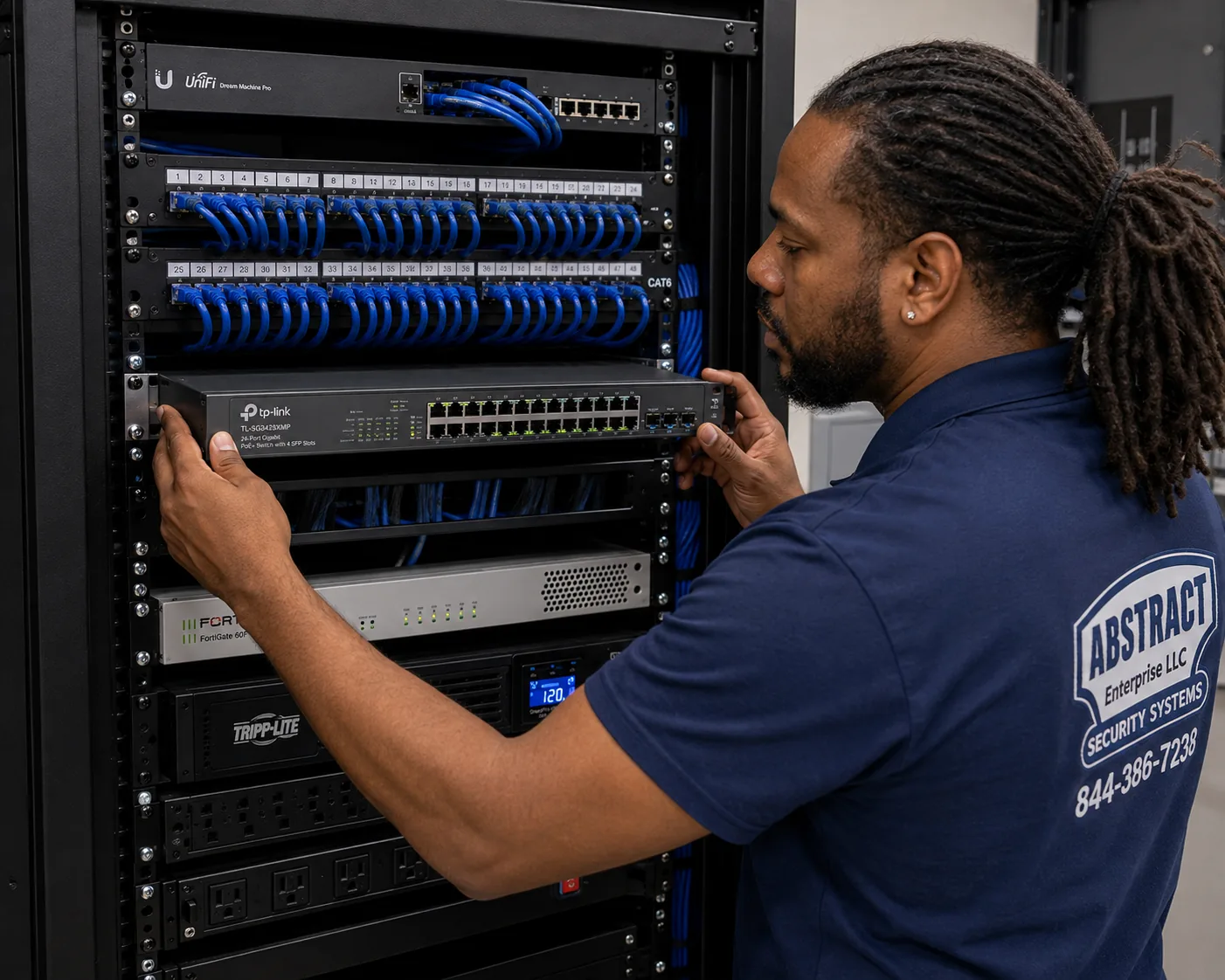
Failed camera power supplies, burned PoE switch ports, tripped circuits after storms and battery backups that quit, which is why a whole row of channels goes black at once.
Cameras that show on the cellar monitor but not on the phone, usually after a new router or a change of internet provider, reconnected and tested on every phone that needs them.
Clips pulled from the recorder for the police, an insurer or a landlord before any repair starts, in the native format and as a common video file, with the time and date checked against the clock.
Like-for-like replacement on the limestone fronts of the Bay Ridge ParkwayβDoctors' Row district, reusing existing holes and finishes, and the cut sheet prepared when a camera has to move.
Lobby, package room, elevator landing, laundry and garage cameras in Shore Road and Ridge Boulevard co-ops, with the managing agent's paperwork and the super's schedule settled first.
Counter, register, stockroom, cellar and back-door cameras on Third and Fifth Avenues and 86th Street, repaired before opening or after closing so the business is never blind during service.
Six kinds of property account for almost every Bay Ridge camera repair we are asked about. They differ in where the recorder lives, how the cables reach the cameras, who controls the facade and who has to approve the visit. Those four things decide how long a repair takes and what it costs far more than the brand on the box.
Two stories and a basement behind a carved stone front, with cameras over the stoop and the areaway gate and the recorder in the basement or under the stairs. On Doctors' Row the front is landmarked.
Brick or siding, an owner on one floor and tenants above, cameras on the stoop, the side alley and the backyard, and a recorder the owner controls but the tenants also depend on.
Larger lots near Shore Road and the side streets west of Ridge Boulevard, with driveway, garage and yard cameras on long cable runs, sometimes to a separate building.
Elevator buildings with lobby, package room, laundry, garage and elevator cameras, a recorder in a super's office or a cellar room, and a managing agent who approves every visit.
A store on the ground floor and apartments above on Third, Fourth or Fifth Avenue, with the store's system in the back office or cellar and the building's entrance camera on a separate box.
Dining room, bar, kitchen door, office and cellar cameras, a recorder often beside the safe or the beer lines, grease and humidity in the kitchen, and a night-time risk the 2022 and 2026 break-ins made plain.
Third, Fourth and Fifth Avenues are lined with buildings that have a store below and apartments above, and often two camera systems that grew up separately: the store's, with a recorder in the back office or cellar, and the building's, with an entrance camera on its own box. They may share a cellar, a power circuit and a cable path. When a store changes tenants, the old system is often abandoned in place, and the next technician has to work out which wire belongs to whom.
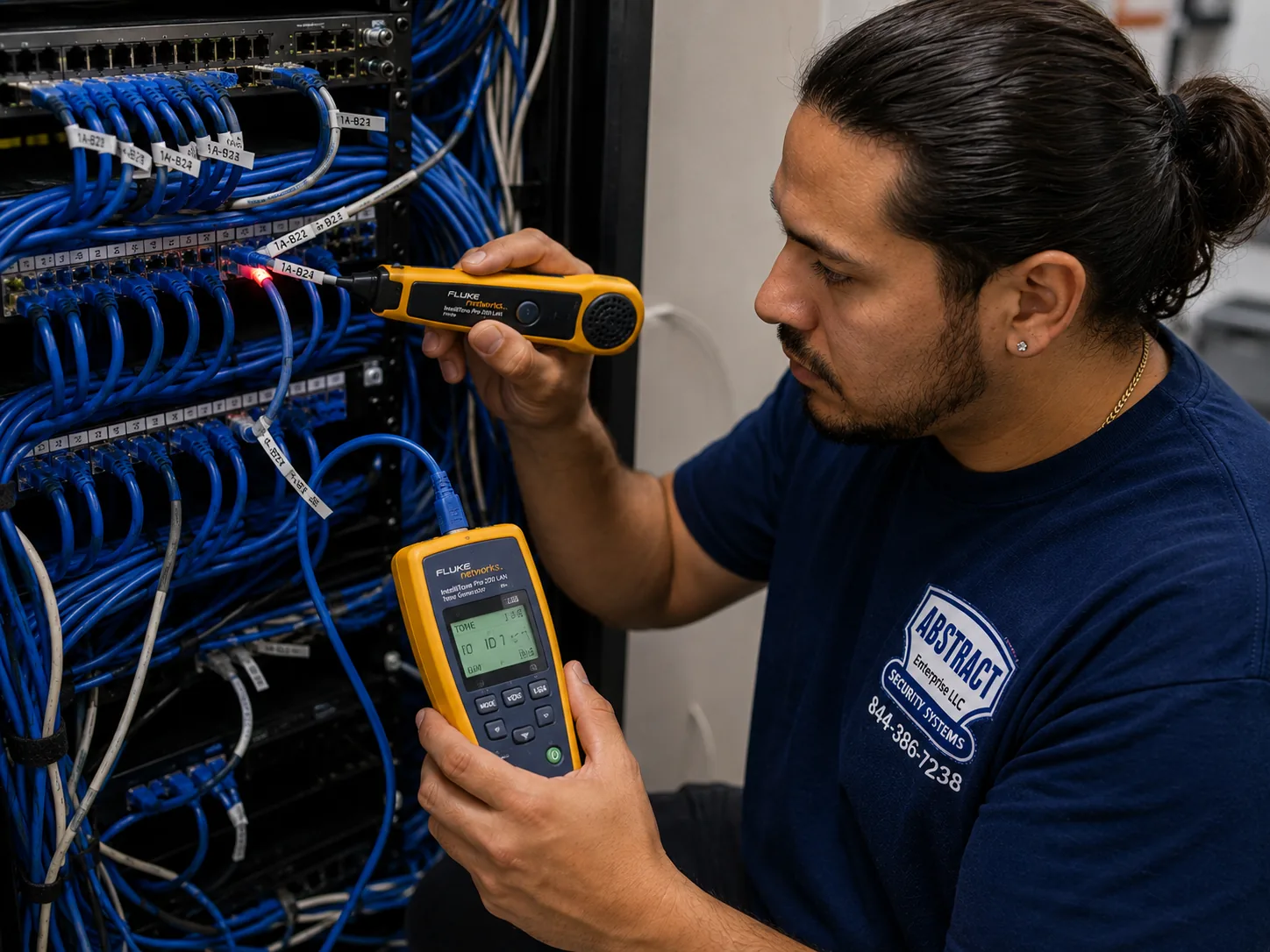
So we trace before we cut: every cable identified at the recorder end with a tone generator, followed to its camera and labeled, and dead runs from a former tenant removed if the owner agrees. Power is the other common fault, because a store's cameras and the building's lights may share a cellar circuit, and one tripped breaker or failed supply after a storm takes down every camera at once. We check the supply and circuit before blaming cameras, and recommend a battery backup on the recorder and switch.

In a multi-family house the system usually belongs to one person and serves several. The owner bought it, the recorder is in the owner's apartment or the basement, and the cameras watch the stoop, the side alley, the backyard and sometimes the shared hallway. The tenant upstairs often notices a fault first, and the owner may live elsewhere, so we settle who can let us in and who can see the footage before the visit rather than in the vestibule.
The faults are predictable. The stoop camera is the one most often hit, being low and close to the street. The alley camera's cable runs along the outside wall and gets cut when a neighbor's contractor puts up a fence or a gutter. The backyard camera gets blinded by a tree that has grown since the system went in. Inside there is often an older analog DVR plus a newer doorbell on its own app. We test each run, fix what failed, and keep to the rule Brick Underground describes for building cameras: common areas can be covered, but no camera may see into anyone's apartment.
Bay Ridge's detached houses, more common toward Shore Road and on the blocks west of Ridge Boulevard, bring distance into the repair. A camera at the end of a driveway or on a detached garage may sit 150 feet or more of cable away from the recorder, and long runs fail in their own ways. Analog coax loses picture quality with distance and can pick up interference, so a camera that used to look sharp may now look noisy because a connector halfway along has corroded. PoE cameras on Cat6 have a hard limit of about 100 meters per run, and a camera that was right at the edge of that limit can start rebooting when its cable or its switch ages. A garage camera fed from a separate building can also carry a surge back to the recorder during a storm, which is why we look at grounding and surge protection on these jobs and not only at the camera that failed.
The larger lot also changes what "working" means. A house with a long side yard may have cameras that each cover part of the property, and the whole system only does its job if every one of them is up and the overlaps are right. When one fails, there is a gap the owner may not notice for weeks. During a repair visit we walk the property with the live view on a tablet and check every camera's field of view against what the owner wants covered: the driveway entrance, the side gate, the back door, the garage door. If a tree, a new fence or a neighbor's addition has created a blind spot, we tell you and show you where a small adjustment fixes it. Re-aiming an existing camera is part of the repair. Adding a camera is a separate quote.
Bay Ridge's elevator co-ops along Shore Road and Ridge Boulevard usually run a building-wide camera system: the lobby and vestibule, the package room, the laundry, the garage or the parking area, the elevator cabs and landings, the trash room and the back door. The recorder sits in the super's office or a locked room in the cellar, and the lobby often has a monitor for the doorman or the super. A repair here is not just a technical job. The managing agent decides who works on the system, the board may need to approve the spend, the super controls access, and the building will want a certificate of insurance naming the corporation and the agent before anyone arrives. We handle that paperwork first, because a technician standing in a lobby waiting for approval helps nobody.
The technical faults in co-op systems follow the building's age. Many were installed in stages, with an older analog system in the garage and newer IP cameras in the lobby, sometimes on two recorders feeding one monitor. Elevator cameras are a category of their own, because the cable travels with the cab or the picture goes over a wireless link, and either can fail. Garage cameras deal with exhaust, dust and cold. Package-room cameras matter more every year as deliveries grow, and a package room with a dead camera is the first complaint the board hears. During a co-op repair we document every channel, what it covers and what we found, and we leave the managing agent a written note of what was repaired and what is near the end of its life, so the board can plan rather than react.
Third, Fourth and Fifth Avenues are lined with buildings that have a store on the ground floor and apartments above. These often have two camera systems that grew up separately: the business's system, with cameras over the counter, the door and the stockroom and a recorder in the back office or the cellar, and the building's system, with a camera at the apartment entrance and maybe the hallway and the roof door. They may share a cellar, a power circuit and sometimes a cable path. When one changes hands, a new tenant moves into the store, the old system may be abandoned in place with cables still running through the shared cellar, and the next repair technician has to work out which wire belongs to whom.
That is why we trace before we cut. In a mixed-use building we identify every cable at the recorder end with a tone generator, follow it to the camera it serves, and label it. If a run belongs to a previous tenant's dead system, we tell the owner, and if they agree, we remove it so the next person does not have to repeat the exercise. The other common fault in these buildings is power. A store's system and the building's lights may share a circuit in the cellar, and a tripped breaker or a failed power supply after a storm takes down every camera at once. We check the supply, the circuit and the battery backup before blaming the cameras, and we recommend a battery backup on the recorder and switch for any business that wants its cameras to keep recording through a short outage.
The 2022 and 2026 break-ins on and around Third Avenue happened in parts of restaurants customers never see: an office door kicked in and a safe opened, a register reached through a door. Most restaurant systems are built for the dining room and the bar. The cameras that decide whether a burglary is solved are at the back door, the office corridor, the safe, the cellar stairs and the sidewalk hatch, and those are the ones most likely to be broken, because kitchens are greasy and humid, cellars are damp and back doors take deliveries all day.
On a restaurant repair we check each back-of-house camera for three things: is it recording, is the picture usable at night with the lights off, and does it show a face rather than the top of a head. Grease on a dome softens the picture until it is useless; a cellar camera with a weak infrared illuminator shows grey. We clean, re-aim, replace or relocate within the existing cabling where we can, and we work before opening, between services or after close. Police advised Bay Ridge restaurants in 2026 to check entry points and add lighting, and a repair visit is the moment to do both.

These notes describe how our technicians work on camera systems in buildings like Bay Ridge's. They are our practice, not a story about any one address.
Find the recorder and look before touching. The recorder is usually in the cellar, a closet under the stairs, a back office or a super's room. Before touching a menu, the technician photographs the screen as it is, the front panel lights and the cables at the back. If the drive light is not blinking, the recorder may not be saving anything. If there is a red or amber warning, the menus will say why.
Check the floor and the wall behind it. In a Bay Ridge cellar, the first physical check is for water: tide marks on the wall, rust on the bottom of the recorder, a damp power strip on the floor. After storms like October 2025's, equipment that sat on the floor is the first suspect, and moving it up the wall is part of the fix.

Read the pattern of dead channels. One channel out is a camera or a cable. A group of channels out together usually shares something: a power supply, a PoE switch, a single cable bundle through one wall. Every channel out at once is the recorder, its power or its drive. That pattern tells the technician where to start testing.
Test the run before climbing. A cable tester at the recorder end, and a tone probe if nobody knows which cable is which, settle whether the fault is in the wall or on the facade. Nobody goes up a ladder against a limestone front until the cellar end has been ruled out.
Protect the footage first. If the owner needs anything from the past week, it is exported before the first part is changed. A recorder that is failing can stop booting at any time, and the drive is the only copy.
The block of Bay Ridge Parkway between Fourth and Fifth Avenues looks much as it did when the row houses went up between 1906 and 1913. The Landmarks Preservation Commission described the 54 houses as two stories with a basement, mostly Renaissance Revival with some Colonial Revival detail, united by a continuous cornice line and fronted in limestone. When it designated the Bay Ridge ParkwayβDoctors' Row Historic District on June 25, 2019, every one of those fronts came under LPC review for exterior work. Owners on the block still need cameras, and many have them. What changes is how a broken one gets fixed.
LPC's permit guidebook has a chapter on health, safety and utility equipment, and it is the document we work from. It says plainly that a permit is not required for "ordinary maintenance, repair, and retrofitting" of that kind of equipment. A camera that has failed, replaced in the same position with a camera of similar size and finish, fits that description. For new installations or relocations, the guidebook allows staff-level approval when the cameras meet set criteria: they "must be well spaced to avoid a cluttered, haphazard appearance," a small residential or commercial building may have no more than two cameras per 25 feet of street frontage, equipment "must not be attached through cast iron or on any decorative surfaces," and conduit should be concealed, with staff able to approve roughly ten inches of visible conduit painted to match. Applications go through LPC's Portico system and need the manufacturer's cut sheet for the camera.
In practice a Doctors' Row repair takes one of three paths. A like-for-like replacement on the same bracket and holes is done in one visit. If the closest current model is noticeably larger or a different shape, we show you the options with cut sheets and you choose a near match or apply for the change. If the old camera was badly placed, drilled into carved stone or trailing exposed cable, the repair is a chance to correct it through an application; we prepare the cut sheet and the description of work, and the filing is yours as the owner.

Stone fronts outside the district need no LPC permit, but limestone is just as unforgiving: it cracks around an anchor set too close to an edge. On any stone front we reuse sound fixings, keep new anchors out of carved work, and run cable through the existing hole rather than drilling a second one.
Bay Ridge is a neighborhood on a ridge, and people are sometimes surprised that it floods. The Brooklyn Reporter's account of October 30, 2025 explains why it does: a downpour that started around 3:50 p.m. dropped 1.80 inches of rain in Central Park that day, and in Bay Ridge it put water over Fort Hamilton Parkway toward Marine Avenue, into storefronts at Third Avenue and 79th Street around 4:20 p.m., halfway up a car's wheels at Shore Road and 86th Street, and across Fifth Avenue at 74th and 80th Streets. A Parks worker on Fort Hamilton Parkway said the water was "up to our knees." A resident put it simply: "Yes, the sewers are old. We know that." When the street floods that fast, cellars and garden levels along the avenues take water through floor drains, hatches and doors.
That matters for cameras because so many Bay Ridge recorders live in those cellars. A recorder sitting on a cellar floor, or a power strip on the floor feeding the recorder and the camera power supply, can be ruined by a few inches of water. The damage is not always immediate. A recorder that got wet and dried out may boot for days or weeks and then fail, or start corrupting its drive. Power supplies that took water corrode and begin to brown out, so cameras reboot in a loop. Connectors at the low point of a cable run fill with water and the picture goes snowy on analog systems or drops entirely on IP systems. We see all of these on calls in the weeks after a heavy storm, often from owners who thought the system had survived.
If water reached your equipment, keep the power off until the area is dry and an electrician has checked any outlets the water touched. Do not boot a recorder that sat in water; the drive may still hold footage that can be recovered if it is not powered up wet. Photograph everything for your insurer. When we come out, we test the drive separately, recover what we can, replace what is corroded, and move the equipment up onto a wall shelf with the power supply and switch on a battery backup beside it, with drip loops on the cables. If the cellar floods every few years, moving the recorder to a higher floor is worth discussing, and that cable work is quoted with the repair.
Bay Ridge's businesses sit mostly on a handful of streets: the restaurant and bar strip on Third Avenue, the long shopping run of Fifth Avenue, the stores and banks of 86th Street near the R train, the offices and practices on Fourth Avenue and Bay Ridge Parkway, and the shops toward Fort Hamilton. Most occupy the ground floor of a building they lease. The cards below describe the kinds of space where we repair systems; we do not name any business as a customer.
Back doors, office corridors, safes, cellars and sidewalk hatches, the places the 2022 and 2026 break-ins actually reached, with grease and humidity working against every lens.
Counter and door cameras, a camera on the sidewalk outside the glass, and a stockroom camera, in stores where daytime incidents like the December 2024 attempt at a jewelry store are part of the risk.
Busy entrances near the R train, larger floor areas, and systems with more channels and longer cable runs through drop ceilings.
Waiting rooms, entrances and medication or supply rooms, where cameras must never look at treatment areas and staff notice rules apply.
Reception, entry and server-closet cameras in second-floor offices above the avenues, often on the same network as the computers and the phones.
Register, cooler and door cameras running around the clock, where a recorder that silently stopped saving can go unnoticed until the footage is needed.
For a business, the cost of a broken camera is the incident that happens while it is broken. After the August 2026 break-ins police told nearby restaurants to check entry points and add lighting; after the December 2024 attempt on a jewelry store, Fifth Avenue shops said they were rethinking security. In both cases the first practical step was to make sure every existing camera was recording, at the right angle, with a picture that would identify someone. We check that channel by channel on every business visit, at the light levels the camera actually sees at night, which often surprises owners who only look at the live view in the afternoon.
Business repairs also come with timing and paperwork. We schedule before opening, between services or after closing, and send a certificate of insurance to the landlord or managing agent first. If you want your cameras available to the NYPD, the city's Connect New York program, piloted from May 2024, lets participating businesses integrate their cameras with the NYPD so police can view footage in real time; ask your precinct whether it takes part. Our part is making sure the system works, on a stable connection and with the right clock, so the footage is worth sharing.

These are the situations Bay Ridge owners, tenants, boards and businesses describe when they call: a landmarked stoop, a scaffold that came down, a cellar that took water, a back-door camera that saw nothing useful, a tenant who wants access, a co-op board that wants a report. Each is answered here in full and not repeated in the FAQ further down.
Usually not, if the replacement is a true repair. The Landmarks Preservation Commission's guidebook says ordinary maintenance, repair and retrofitting of health, safety and utility equipment does not need a permit, and a dead camera swapped for one of similar size, shape and color, on the same bracket and in the same holes, fits that. What would need an application is a change: moving the camera to a new spot on the limestone, choosing a much larger or differently shaped model, adding cameras beyond the guidebook's limit of two per 25 feet of frontage for a small building, or running new exposed conduit across the front. Before we order a part, we photograph the old camera and its mounting, find the closest current model, and show you both side by side with the cut sheet. If the match is close, we replace it in one visit. If it is not, you can choose to apply for the change, and we give you the cut sheet and the description of the work for the filing.
The three most common things are that they unplugged it, cut it or covered it. Scaffolding on a Bay Ridge front usually sits right where the camera is, and crews often unscrew a camera to work around it, disconnect the cable at the junction box, or tape the camera and the cable to protect them from mortar and then forget to remove the tape. Sometimes the cable is cut where it passes through the wall, because the crew was raking out the joint around it. Before we go up a ladder, we test the cable from the recorder in the basement: if the run tests good, the fault is at the camera or its connector, and if it tests open or shorted, the cable was damaged somewhere between. We photograph what we find before touching it. If the damage came from the facade work, those photos and our written diagnosis are what you show the contractor. The repair itself is usually a re-termination at the junction box or a new short section of cable through the existing hole.
It may work for a while, but we would not trust it. Water that reaches the inside of a recorder leaves minerals and corrosion on the circuit board and the power connections, and the failures tend to show up weeks later: random reboots, a drive that starts reporting errors, a power supply that browns out and takes the cameras down with it. The bigger risk is the drive. A hard drive that got wet may hold your footage now and fail without warning later. On a visit after a flood we test the drive's health separately, copy off any footage you want to keep, inspect the board and power supply for corrosion, and give you a written price either to replace the drive and the supply or to replace the recorder. Whatever we replace, it goes back up off the floor, on a wall shelf or bracket with a battery backup beside it, so the next storm does not repeat the job.
Probably not. When a group of cameras fails together and the rest keep working, the cameras that died usually share something: one power supply box feeding those four, one group of ports on a PoE switch, or one cable bundle passing through a single wall. A storm surge often kills that shared part and leaves the cameras themselves unharmed. We test the shared parts first. On an analog system that means checking the power supply's output at each channel. On an IP system it means checking whether the switch is still delivering power on those ports and whether the cameras come back on a known-good port. On our Brooklyn repair page, a power supply repair is typically $150 to $400, which is far less than four cameras. Only if a camera still fails on known-good power and cable do we price a replacement for it, one camera at a time.
Yes, and it is worth fixing before the next time footage is needed. Recorders keep time on a small internal battery and, if they are connected to the internet, can set themselves from a network time server. After a power cut, a recorder with a dead clock battery or no time server set can restart at a default date, or drift for weeks. The clips still exist, but the time stamp is wrong, and a clip that says 9:40 when the incident happened at 3:15 is harder for anyone to rely on. We set the correct time zone and daylight-saving rule, point the recorder at a time server, replace the clock battery where the model allows, and check that every camera's own clock follows the recorder. If you already handed over a clip with the wrong time, tell the detective the size of the offset; we can document it from the recorder's log for you.
In most cases, yes. A camera mounted high in a corridor and tilted steeply down records someone passing but never their face, because the angle shows the crown of the head and the shoulders. The fix is usually to move the camera lower and further back, so it looks along the corridor toward the door at about head height, or to add a second camera facing the door from the other side. Both can often reuse the existing cable with a short extension. The other common problem by back doors is light. A door that opens from a dark corridor onto a bright alley, or a corridor lit only by an exit sign at night, defeats many cameras, and police advised restaurants after the August 2026 break-ins to add lighting. We look at the camera's night image with the lights as they are at 3 a.m., adjust exposure and infrared settings, and recommend a light where the camera simply cannot see. We price the move and any extension in writing before doing it.
Yes, on most recorders from the last decade. The recorder has an administrator account, which stays with you as the owner, and it can have additional users with permission to view only the channels you choose. We set up a user for the tenant with the stoop, the vestibule and the shared side alley, and no access to any camera inside your own space or the backyard if that is yours alone. She installs the same app on her phone and signs in with her own account, and if she moves out you delete her user without changing anything else. Two rules go with it. The shared cameras must cover common areas and must not look into either apartment, which is also what Brick Underground's guidance on building cameras says. And if she needs a clip after an incident, she asks you to export it; viewing rights do not need to include the ability to download or delete footage.
If the recorder is recording and the cameras show on the app, the fault is between the recorder and the monitor. That chain is the video output on the recorder, a cable or extender to the desk, and the monitor itself. In many lobbies the recorder sits in a cellar room or the super's office and the picture reaches the desk over a long HDMI or VGA run, often through an extender that has its own small power supply. Those extenders fail, the power adapter gets unplugged by a cleaner, or the recorder's output resolution changes after an update and the monitor will not display it. We test each piece with a known-good monitor and cable, replace what failed, and set the recorder's output to a resolution the desk monitor supports. We also check the monitor's layout so the doorman sees the cameras the building actually needs at the desk: the vestibule, the package room and the elevator, rather than sixteen tiny squares.
A list of every camera, where it is, what it covers and whether it works; the recorder's make, model, age, drive size and how many days of footage it is actually keeping; the condition of the power supplies, switches and battery backup; the state of the cabling where we could inspect it; and any camera whose picture is unusable at night. For each fault we give the repair and its written price, and we separate what needs fixing now from what is near the end of its life and can be planned for. We also note anything that affects the board's risk, such as a camera aimed into a unit, a recorder on a cellar floor, or an administrator password that nobody at the building knows. The visit itself begins with the $150 service call. The managing agent receives the report, and the board decides what to approve.
Usually yes. The FCC rules adopted in November 2022 bar new equipment authorizations for covered companies, Hikvision and Dahua among them. Dahua said at the time that products already authorized were not affected, and the FCC asked for comment on what to do about existing authorizations. In practice that means the range of new models from those makers sold in the United States is narrower than it was, and some exact replacements are hard to find. It does not mean your recorder stops working. Most IP recorders from those brands accept other makers' cameras through the ONVIF standard, so we can often fit a camera from another brand that the recorder sees and records like the original, with the trade-off that some brand-specific features may not carry over. If the recorder itself is failing, we give you the choice of a like-for-like recorder where one is available or a different brand that keeps your existing cameras and cables.
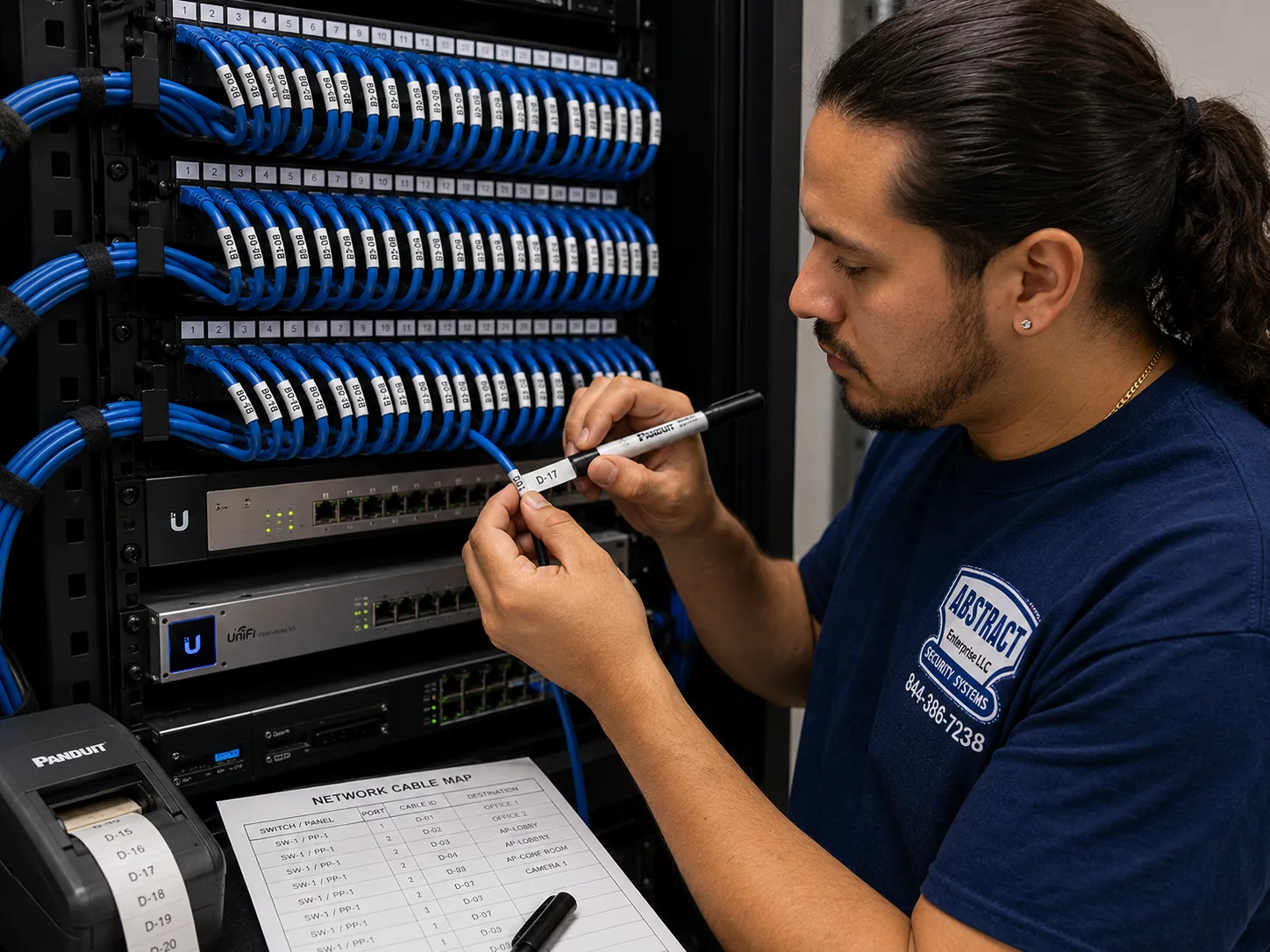
Bay Ridge systems span twenty years of technology, often in the same cellar. These are the kinds we repair, with what usually fails in each and where it tends to show up in the neighborhood.
The older generation in many two-families and row houses: coax cable to each camera, a separate power supply box, and a DVR in the basement. Connectors, power supplies and drives are the usual faults, and the cameras themselves often outlast them.
Cat6 to each camera, power from a PoE switch or the NVR itself, common in newer stores and co-op lobbies. Switch ports, network settings, firmware and the app connection fail more often than the cameras.
Recorders that take both coax and IP cameras, used where an old analog system was extended with new cameras instead of being re-cabled through stone and plaster walls.
Wired doorbells at the vestibule, stoop cameras on their own app, and doorbell cameras tied into the main recorder. Transformer power, wiring at the bell and Wi-Fi reach through masonry are the common faults.
Motorized cameras over parking areas, garages and larger storefronts. Motors, presets and the control link wear out; on our Brooklyn page PTZ repair is typically $450 to $1,200 because of the parts.
Consumer cameras added by owners and tenants. Many are sealed units that cannot be repaired inside, so the work is power, mounting, Wi-Fi coverage and app setup, or a wired replacement where Wi-Fi cannot get through the walls.

National camera brands, alarm companies and handyman apps each have a place. A sealed Wi-Fi camera under its maker's warranty is often best handled through the maker's support. A system leased from an alarm company is usually theirs to service. The table compares the options for the kind of wired, recorder-based system most Bay Ridge houses, co-ops and businesses actually have; it is about the work, not the quality of any company.
| What the repair needs | Maker support or alarm company | Handyman app booking | AESS in Bay Ridge |
|---|---|---|---|
| Mixed brands in one cellar | Usually only their own products | Depends on who is sent | Any brand and any installer, tested from the recorder out |
| State license to maintain the system | Usually yes | Varies | NYS license #12000287431 |
| Cable faults inside stone and brick | Often outside their scope | Varies | Tester, tone probe and repair through existing holes |
| Footage protected before work | Varies | Varies | Clips exported before the first part is changed |
| Monthly fees | Often part of the plan | None | None; you own the equipment |
| Price before work | Plan terms | Hourly or fixed booking | $150 diagnosis, written price, applied to the repair |
These are claims that turn up in generic online answers and national cost guides such as Angi, HomeAdvisor and Fixr, paraphrased, each followed by what Bay Ridge's buildings and streets actually show.
Generic answers quote a single national range, as if a camera on a ranch house and a camera on a limestone row in Brooklyn were the same job.
HomeAdvisor's own Brooklyn page shows how wide local reality is: it puts the average for surveillance camera installation or repair in Brooklyn at $1,416, with a typical range of $680 to $2,145 and a low-to-high spread of $160 to $3,500. Those figures mix new installations with repairs, which is exactly why they mislead someone with one dead camera.
Our Brooklyn repair list separates the two. The diagnosis is $150, applied to the repair; most repairs land between $150 and $1,500; and the written price comes before any part is changed. A single dead stoop camera on a working system is typically $250 to $600 with the camera, while a recorder ruined in a flooded cellar is a $700 to $1,500 job, and a national average describes neither of them.
Many troubleshooting answers recommend a factory reset as the first step when a recorder misbehaves.
On a Bay Ridge restaurant or store recorder, the reason someone is looking at the system is often that something happened. A reset can wipe the settings that make the footage findable, and some recovery steps format the drive. The August 2026 and 2022 break-ins both turned on footage that still existed after the fact.
Protect the footage first. We export the clips that matter, then repair, and a reset is the last resort, not the first. Even then we save the recorder's configuration before resetting, so camera names, recording schedules and user accounts can be restored afterward.
AI summaries often suggest replacing a troublesome wired camera with a Wi-Fi one to avoid cable faults.
Bay Ridge is built of limestone, brick, plaster and concrete. Wi-Fi struggles through all of them, and a camera on the back of a row house or in a co-op garage can be several masonry walls from the router. A wireless camera still needs power, and battery models need charging on a ladder. The cable problem simply becomes a signal and power problem.
Where a cable is damaged, we repair or re-run it; where a wire truly cannot reach, we recommend a point-to-point link or a properly powered camera, not a hope that Wi-Fi gets through stone.
Some answers suggest that city cameras make private ones less important in busy neighborhoods.
The 2020 allocation for Council District 43 paid for ten NYPD Argus cameras at five sites across Bay Ridge, Dyker Heights and parts of Bath Beach and Bensonhurst, placed by the NYPD. When Fifth Avenue residents asked for one camera at 81st Street, they were told to approach their elected officials. Public cameras are few and watch intersections.
Your stoop, your stockroom, your back door and your package room are covered only by your own system, which is why keeping it working matters.
Cost guides often treat camera repair as general handyman work.
New York State requires a license from the Department of State to install or maintain security systems, and the state's rules cover closed-circuit television used to detect or monitor intrusion, theft or movement. An owner working on their own property is exempt, but a person paid to do it is not.
AESS works under NYS license #12000287431 and carries insurance, and a Bay Ridge co-op's managing agent will usually ask for both before the visit.
Answers about camera health often stop at "check that the picture shows up."
Live view and recording are separate jobs. A recorder can display every camera perfectly while its drive has failed, filled up with overwrite switched off, or lost its recording schedule after an update. Owners in Bay Ridge usually discover this when they try to play back the night something happened.
Every repair visit ends with a playback test on every channel and a check of the oldest footage the recorder holds, so you know how many days it is keeping.
Generic advice treats the facade as the owner's alone to change.
On Bay Ridge Parkway between Fourth and Fifth Avenues, the 54 row houses of the Doctors' Row Historic District are under Landmarks Preservation Commission review. A new or moved exterior camera needs to meet LPC's spacing, size and finish rules and go through an application, while ordinary repair of existing equipment does not.
We tell you before ordering a part whether your repair is a like-for-like swap or a change that needs filing, and we prepare the cut sheet if it does.
Many Bay Ridge owners buy a new camera online for a fault that turns out to be a power supply, a connector or a router setting. Before you spend money, call a technician at (347) 934-8335, send a fast quote request, or send a photo of the recorder screen on WhatsApp. We will tell you what the pattern of dead channels points to and what the visit will involve.
Give us the cross streets, the kind of building, where the recorder sits, the brand if you can see it, and which cameras are out or what the picture is doing. A technician will call back to book the Bay Ridge visit, or you can call (347) 934-8335 right now.

Cross streets, the kind of building, which cameras are down, and a photo of the recorder label and the screen. That tells us what to bring.
Who lets us in, where the recorder is, co-op or landlord approval, the certificate of insurance and a two-hour arrival window, all arranged before the visit.
Recorder, drive, power and switch first, then each failed cable run, then the camera itself, with any footage you need exported before anything changes.
What failed, why it failed and what it costs to fix, in writing, before any part is replaced. The $150 service call is applied if you go ahead.
Connectors, cameras, drives, supplies or switch ports replaced, or the damaged cable section re-run, reusing existing holes on stone and landmarked fronts.
Live view, recording, playback, night image, time stamp and remote viewing on your phone, for every channel, not just the one that failed.
Runs labeled at both ends, a note of what was replaced and where the equipment sits, and a walk-through of how to export a clip yourself.

The 54 limestone row houses of 1906 to 1913 between Fourth and Fifth Avenues, landmarked in 2019, where camera changes follow LPC rules.
The waterfront road lined with co-op buildings and the long park and promenade, where water stood at 86th Street during the October 2025 storm.
The hilltop park at the north end of the neighborhood near Colonial Road and 68th Street, looking out over the harbor.
The avenue's long run of bars and restaurants, including the blocks around 87th and 88th Streets reached by the August 2026 break-ins.
The busiest shopping street in Bay Ridge, with the 86th Street station at Fourth Avenue on the R line.
The bridge to Staten Island, opened in 1964, rising over the Fort Hamilton end of Bay Ridge beside the Army's Fort Hamilton post.
We also serve Dyker Heights, Fort Hamilton, Sunset Park and Bath Beach at the same Brooklyn rate, every other Brooklyn neighborhood through our Brooklyn security camera repair page, and the other side of the bridge through our Staten Island camera repair page.
Bay Ridge is billed at our Brooklyn rate, with no travel markup. Every visit starts with the $150 service call, which covers the on-site diagnosis of power, cable, network, recorder and cameras and a written price for the repair; the $150 is applied to the repair if you go ahead. The ranges below are the ones published on our Brooklyn security camera repair page. Your written price comes after the diagnosis, because two systems with the same symptom can have very different faults. NYC sales tax applies.
| Repair | Brooklyn price or typical range |
|---|---|
| Service call: on-site diagnosis and written quote, applied to the repair | $150 |
| Connector re-termination or PoE switch port swap | $150β$350 |
| Power supply repair or replacement | $150β$400 |
| Hard drive swap on site, by capacity | $200β$450 |
| Single camera replacement on a working system, camera and labor | $250β$600 |
| Awkward row-house access (cable through plaster, garden-level or duplex routing) | Can add $100β$200 |
| Pan-tilt-zoom camera repair | $450β$1,200 |
| Vandalized camera repair, per camera, plus any cable repair | $400β$900 |
| Hybrid recorder swap, analog plus IP, installed and reconfigured | $700β$1,200 |
| DVR or NVR replacement with hard drive | $700β$1,500 |
| Full rewire or row-house system overhaul | From $1,500 |
| Annual maintenance visit, house to commercial scope | $250β$800 |
Three things move a Bay Ridge repair up or down that range. The first is where the fault is: a connector at the recorder is quick, a cable cut inside a limestone front is not. The second is access: a camera on a two-story row house is a ladder job, a camera on a fourth-floor cornice of an avenue building may need roof access or a longer ladder and a second technician, and a co-op garage may only be workable at set hours. The third is parts: a current camera that matches the recorder is a simple swap, while an older Hikvision or Dahua model may need a near match or an ONVIF-compatible substitute. We explain each of those in the written price, so you can see why the number is what it is.
Full terms β including 50% deposit, one-year parts-only warranty on AESS-supplied products, and the late-fee schedule β are set out in the service agreement.Three common Bay Ridge repairs, described with the ranges from our Brooklyn list. The final figure is always the written price you approve after the diagnosis.
A camera missing from the app after a new router, a recorder clock that drifted after a power cut, motion alerts tuned for a busy avenue, or a loose connector at the recorder. When no part is needed, the service call is often the whole bill.
A dead stoop or alley camera replaced on its existing mount, a failed drive swapped and the recording schedule rebuilt, or a burned power supply or switch port replaced, with every channel tested afterward.
A recorder ruined by a flooded cellar or simply worn out, replaced with a new DVR, NVR or hybrid recorder and drive, moved off the floor, put on battery backup and reconnected to every camera and phone.
Bring your own equipment β labor only. If you have already bought a replacement camera, drive or recorder, we can install it and connect it to your system at labor rates. Send us the model number first so we can confirm it works with your recorder, and we quote the labor by phone or text before booking. The part's own warranty stays with its maker, and if the part turns out not to suit the system, we tell you before fitting it.
Dead cameras, failed drives, beeping recorders and blank monitors. Request a repair visit
The full list of camera repair prices for the borough. Brooklyn camera repair prices
Brand-by-brand repair detail and every Brooklyn neighborhood. Security camera repair in Brooklyn
Repairs in all five boroughs from the same licensed crews. NYC security camera repair
We book the visit within two hours of your request. The technician is given a two-hour arrival window rather than an exact time, and visits are usually early in the day. If the timing does not suit you, you can choose another day.
No. Bay Ridge is billed at our Brooklyn rate with no travel markup, the same as Dyker Heights, Sunset Park or any other Brooklyn neighborhood. NYC sales tax applies to the repair.
Clear access to the recorder, whether it is in the cellar, a closet or an office, and to the rooms where the failed cameras are. Have your phone with the camera app on it, any login details you have for the recorder or app, and a list of which cameras are out and since when.
Yes. An adult who can let the technician into every part of the property involved, including the cellar and the roof or backyard if cameras are there, needs to be on site, and for a co-op that usually means the super. We also need someone to approve the written price before parts are changed.
Yes. We remove abandoned cameras, brackets and loose cable from the front or back of the building and point out the holes they leave so a mason can fill them. On a landmarked front we remove the equipment without adding any new fixings.
No. A camera repair has no monthly fee and no contract. You own the equipment, and the app on your phone works without a subscription from us. An annual maintenance visit is available if you want one, but it is optional.
Usually. Most cameras on Bay Ridge buildings can be reached with our ladders. A camera near a high cornice may need roof access or a second technician, and we ask for photos first so the right equipment comes on the visit and the access is included in the written price.
Yes. Wired doorbells often fail at the transformer, the wiring at the bell or the Wi-Fi reach through a masonry vestibule. We test the power and the signal, repair or replace what failed, and reconnect the doorbell to its app on your phone.
Replaced cameras and power supplies can be left with you or taken away. An old hard drive stays with you unless you ask otherwise, because it may hold footage you will want later, and we can show you how to keep it safely.
Parts are ordered only after you approve the written price. When a repair needs parts, a deposit is taken under the service agreement before they are ordered and the balance is due when the work is finished. Once a part has been ordered for your job it cannot be returned.
Yes. At the end of every repair the technician walks you through finding a time on the recorder or the app, saving a clip to a USB stick or your phone, and checking that the time stamp is right, and we leave the steps written down beside the recorder.
Yes, with the super's help. We agree a quiet time, set cones around the ladder, and work one camera at a time so no more than one area of the garage is blocked. Garage cameras are often on long runs, so we test the cable from the recorder before closing off any space.

Security Camera Repair Brooklyn | Same-Day | Brownstone Pros Β· Security Camera Repair NYC | Same-Day | Abstract Enterprises Β· Security Camera Repair Manhattan | Same-Day | Co-op COI Β· Security Camera Repair Queens | Same-Day | Driveway Pros Β· Security Camera Repair Bronx | Same-Day | Home Base Β· Security Camera Repair Staten Island | Same-Day | Sandy Zone Β· Security Camera Repair Long Island | Nassau & Suffolk Β· Security Camera Repair Hudson Valley | Westchester to Ulster Β· Security Camera Repair Nassau County | Same-Day Β· Security Camera Repair Suffolk County | Hamptons + East End Β· Security Camera Repair Westchester County | Same-Day Β· Security Camera Repair Rockland County NY | Nyack, Suffern Β· Security Camera Repair Orange County | Newburgh, Goshen Β· Security Camera Repair Putnam County NY | Carmel, Mahopac Β· Security Camera Repair Dutchess County | Poughkeepsie Β· Security Camera Repair Ulster County | Kingston Woodstock
Security Camera Repair Bath Beach Brooklyn NY Β· Security Camera Repair Bedford-Stuyvesant Brooklyn NY
Cat6 Repair Bay Ridge Brooklyn | Row Houses to Co-ops Β· Soundbar Installation Bay Ridge Brooklyn | Co-ops & Rows Β· Alarm Installation Bay Ridge Brooklyn NY Β· TV Installation Bay Ridge Brooklyn Β· Structured Cabling Installation Bay Ridge Brooklyn NY Β· Intercom Installation Bay Ridge Brooklyn NY Β· Door Buzzer Repair Bay Ridge Brooklyn NY | Lobby & Strike Β· Door Buzzer Installation Bay Ridge Brooklyn NY Β· Security Camera Installation Bay Ridge Brooklyn NY Β· Fire Alarm Installation Bay Ridge Brooklyn NY Β· Access Control Installation Bay Ridge Brooklyn NY Β· Smart Lock Installation Bay Ridge Brooklyn NY
Send a photo of the recorder's label and its screen with your cross streets, and we will tell you what the pattern of dead channels points to and book the visit. Call or text (347) 934-8335, message us on WhatsApp, or use the request form. Licensed under NYS license #12000287431, rated 4.7β across 201 Google Reviews, with the $150 service call applied to your repair.