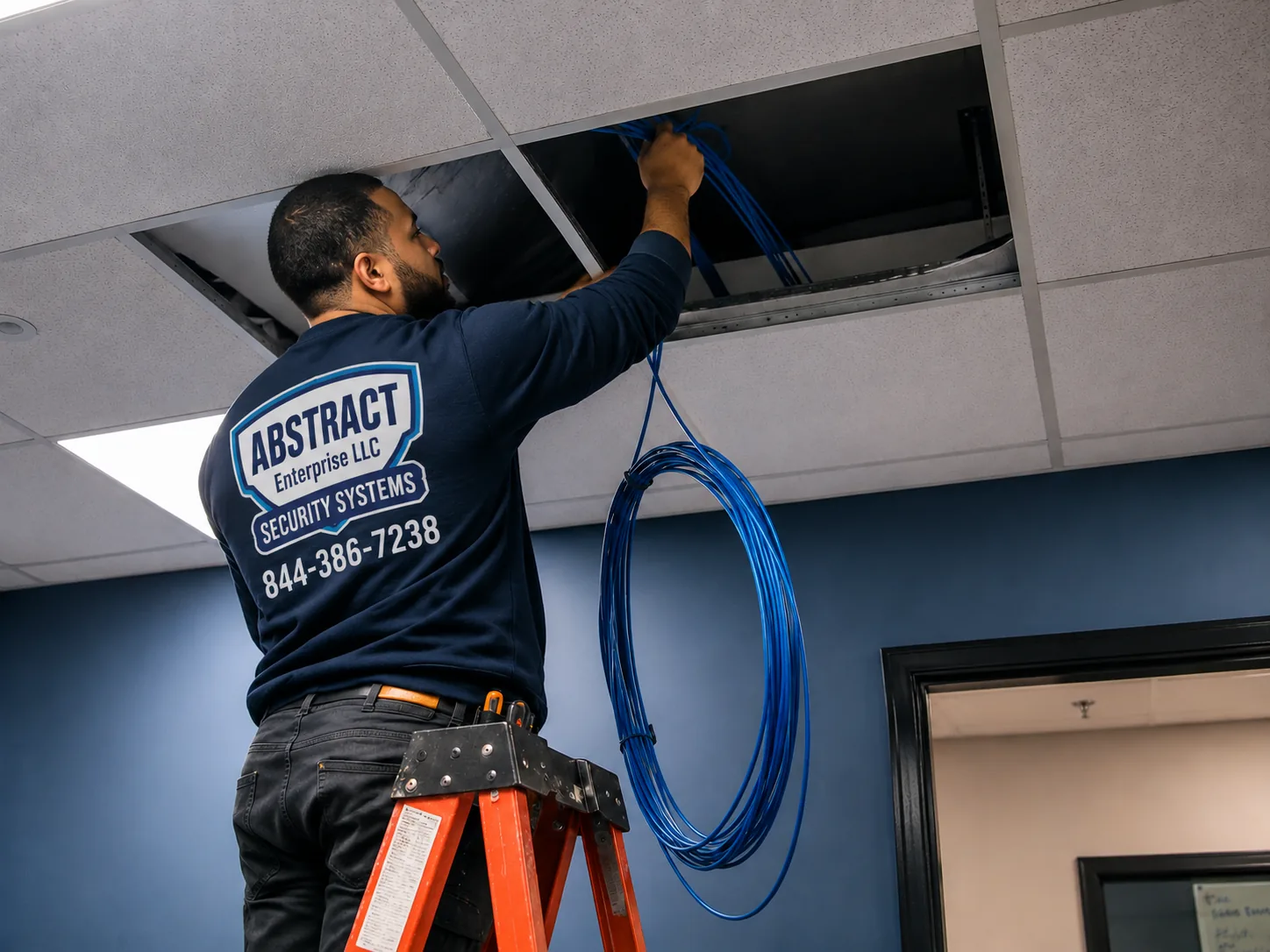
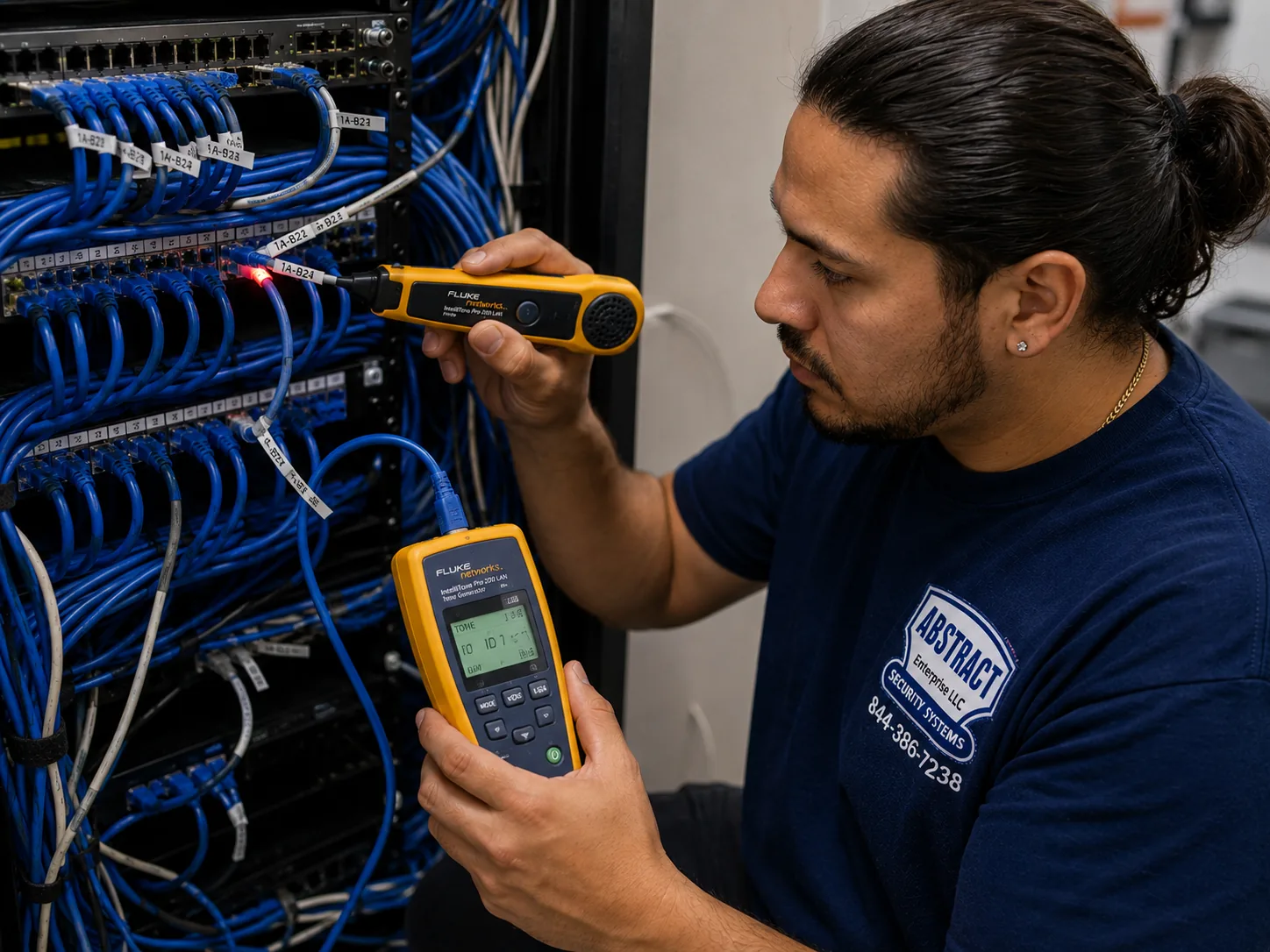
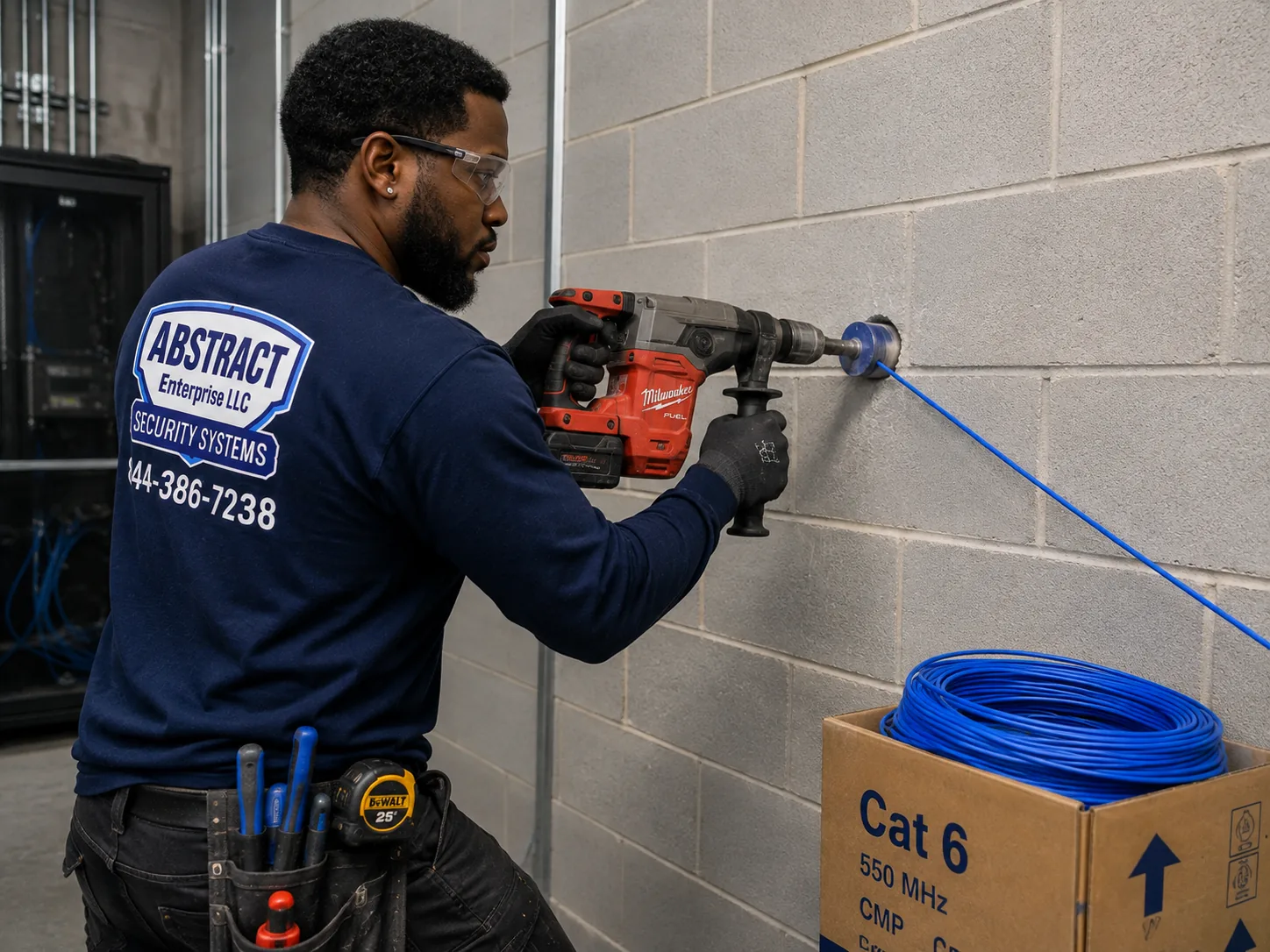
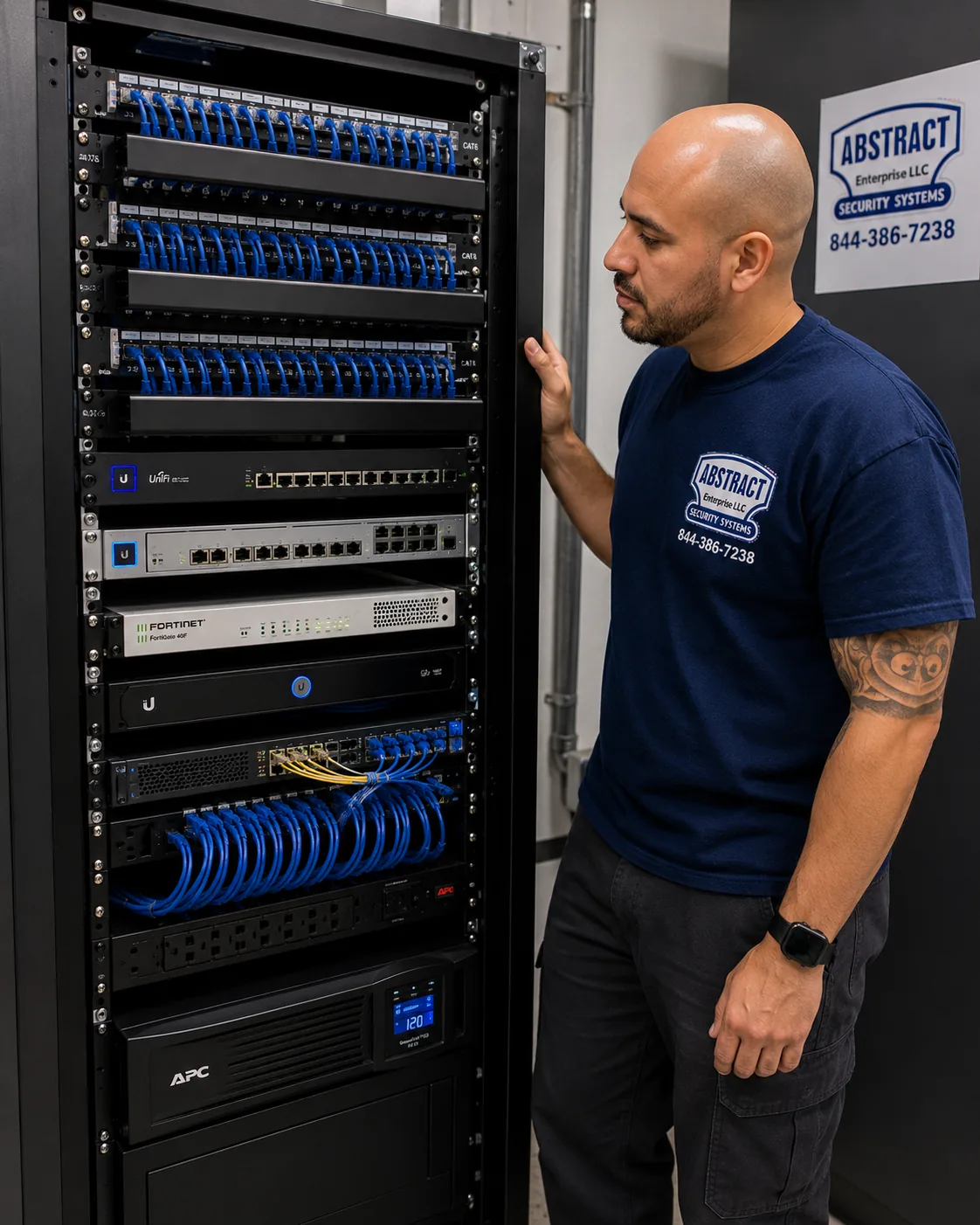
Brick, Concrete and Timber Read Before We Drill · Power Hidden the Legal Way · Freight and Stairs Planned · Brooklyn Rate
TV installation in East Williamsburg starts at $179.99 on our Brooklyn list for a screen up to 55 inches on drywall over wood studs, with $65 added for brick and $45 for plaster, and most jobs are quoted from photos and booked within two hours of your request. That simple price hides a neighborhood with some of the most varied walls in the borough. Between Flushing Avenue, Bushwick Avenue and the Queens line, a single block can hold a three-story walk-up with plaster partitions over a bodega, a four-story former factory where the living room wall is a century-old brick bearing wall, a studio building where the tenants built their own partitions out of whatever was on hand, and a warehouse office with steel studs and a concrete floor. City planners describe the historic loft buildings here as generally three to five stories, and many of them have been turned into apartments, artist studios and offices without ever losing their industrial bones. This page explains how we work out which wall you have, which anchor each one takes, how to hide wires without breaking the electrical code, who besides you may have a say in a Loft Law building or a co-op, and what the job costs, line by line.
Reviewed and updated November 13, 2026, against NYC Planning's North Brooklyn Industry and Innovation Plan; the NYC Loft Board's description of the Loft Law and interim multiple dwellings; PincusCo on the 2024 legalization filing at 57 Thames Street; Corcoran's and Wikipedia's East Williamsburg guides; Bushwick Daily on the Paper Mill offices at 456 Johnson Avenue; Brooklyn Paper on the Netflix studio at 333 Johnson Avenue; amNY and Relentless Beats on Brooklyn Steel; Haute Living on Brooklyn Pacha; NYCEDC's Connect IBZ broadband program; Greenpointers on the February 2026 Montrose Avenue manhole fire; Local Law 128 of 2024 on low-voltage wiring; NYC DEP's noise code; the U.S. Consumer Product Safety Commission's 2024 tip-over figures; OSHA's silica fact sheet for drilling concrete; HPD's lead-safe work rules; Brick Underground on tenants, wall mounting and deposits; StreetEasy, This Old House and the Brownstoner forum on brick, mortar and hidden power; and Angi, Bob Vila and TaskRabbit cost guides for Brooklyn and Williamsburg. · Abstract Enterprises Security Systems, NYS license #12000287431 · crews dispatched from our Troy Avenue office in Brooklyn

Quick answer: TV installation in East Williamsburg costs $179.99 for a screen up to 55 inches on drywall over wood studs, $244.99 on brick, $224.99 on plaster, and $119.99 if the TV stays on its stand. The bracket is extra unless you already own one rated for the TV. Hiding the wires is $59 with a paintable cord cover or $169 with an in-wall power and cable kit, a wall-mounted soundbar is $129, and taking down an old TV is $85. Send the wall, the model sticker on the back of the TV and your cross streets to (347) 934-8335 or WhatsApp, and you will usually hear back within two hours with the wall we expect, the add-ons that apply and the total.
East Williamsburg is a name people argue about. Wikipedia notes that much of the area is still called Bushwick, Williamsburg or Greenpoint by the people who live there, and that the label has been falling out of use since the 1990s. CityNeighborhoods draws it between Flushing Avenue, the Brooklyn-Queens Expressway, Bushwick Avenue and Woodpoint Road, and the Queens line along Newtown Creek. Corcoran's guide makes the most useful point for anyone hanging a TV: Morgan Avenue roughly splits the neighborhood in two. East of it, toward the creek, the land is zoned for industry and belongs to what the city calls the East Williamsburg Industrial Park. West of it, the blocks mix apartments, stores and old factory buildings that have become homes. We cover all of it at the same Brooklyn rate, so the name on your lease does not change your price. What changes the job is the building, and few Brooklyn neighborhoods put so many kinds of wall within a few blocks of each other.
NYC Planning's North Brooklyn Industry and Innovation Plan, which studied this area together with parts of Greenpoint and Bushwick, called it the third largest industrial hub in the city by employment, with about 19,500 jobs, 77 percent of them industrial. The same study found that between 2010 and 2016 non-industrial businesses grew faster than industrial ones, and that more than a third of new jobs were in offices, retail, arts and entertainment. That is the shift a TV installer sees on the ground. A building that made paper boxes or metal parts eighty years ago now holds a recording studio on one floor, a design firm on the next and, in some cases, apartments above. Planners also described the historic loft buildings here as generally three to five stories, which matters because buildings of that height and age were built with masonry walls thick enough to carry floors loaded with machinery. Those walls are some of the best anchors in Brooklyn for a heavy screen, as long as the drill goes into the brick and not into the tired mortar between bricks.
Many of those buildings became homes before the law caught up. The NYC Loft Board was created under the 1982 Loft Law to oversee the conversion of former commercial and manufacturing buildings into what the Board calls safe, rent-stabilized residential units, and buildings still going through that process are known as interim multiple dwellings, which must meet minimum standards of safety and fire protection while they are being legalized. PincusCo reported in December 2024 that plans had been filed to legalize 43 residential units in an East Williamsburg interim multiple dwelling, with a photo captioned 57 Thames Street. For a TV, a Loft Law home brings two practical questions that a normal rental does not: the walls inside the unit were often built by an earlier tenant rather than the owner, and the owner may want to know about any work in the unit while legalization plans are being drawn. We ask about both when you book, because a partition that a tenant framed out of two-by-threes in 1995 holds a screen very differently from the original brick around it.

The newer parts of the neighborhood bring their own walls. The Paper Mill at 456 Johnson Avenue, a paper mill built in 1931, was planned as 35 commercial office units after a gut renovation, and Bushwick Daily listed it alongside other creative office conversions at 455 Jefferson Street, 95 Evergreen Avenue and 215 Moore Street. Brooklyn Paper reported that the Netflix facility at 333 Johnson Avenue covers 170,000 square feet with six sound stages and editing and meeting rooms. Buildings like these get new interior walls of drywall on steel studs inside an old masonry shell, so the same office can have a meeting-room wall that needs a toggle rated for thin steel and an outside wall that needs a masonry sleeve anchor. On the residential side, Lindsay Park, the Mitchell-Lama housing cooperative of seven buildings and 2,702 apartments completed in 1965, sits on the western edge near Broadway, and its tower apartments bring the questions every co-op raises: what the walls are made of, and what the management office wants before anyone drills.
Then there is the evening side of the neighborhood, which is where a lot of commercial TV work happens. Brooklyn Steel at 319 Frost Street, a former steel fabrication plant, opened in 2017 with an 1,800-person capacity and, according to Relentless Beats, three full-service bars and an elevated mezzanine. Its co-owner John Moore told amNY, "It's a steel fabrication plant and we wanted to embrace that." Brooklyn Pacha opened on November 6 and 7, 2026 at 140 Stewart Avenue, with an indoor room for about 2,500 people. Along Morgan Avenue, Capricorn's listing names Roberta's, Otis, Sobre Masa, Sey Coffee, Swallow Cafe and Syndicated Bar Theater Kitchen among the food and coffee spots near the L. Every one of those kinds of business needs screens somewhere, whether it is a menu board over a counter, a game on behind a bar or a display at a door, and in a building that embraces its steel and brick, the wall behind that screen is rarely the drywall that a big-box installer expects.
Where this page applies. It covers the blocks most maps call East Williamsburg: from roughly Union Avenue and the Brooklyn-Queens Expressway east to the Queens line, and from Flushing Avenue north toward Grand Street, Metropolitan Avenue and the creek, including Graham Avenue, Bushwick Avenue, Grand Street, Montrose Avenue, Johnson Avenue, Meserole Street, Thames Street, Bogart Street, Morgan Avenue, Varick Avenue and the industrial streets near the water. The blocks to the south and east are covered on our Bushwick TV installation page, the blocks below Flushing Avenue on our Bedford-Stuyvesant page, and the whole borough on our Brooklyn TV installation page. The price is the same Brooklyn rate on every side of those lines.
The urgent TV calls from buildings like East Williamsburg's tend to fall into three groups. The first is a bracket on exposed brick that has started to work loose. Almost always, the screws went into the mortar joints because mortar is easier to drill, and in a building that is a hundred years old the mortar is often soft and sandy. A mason quoted by StreetEasy put it simply: "It's usually easier to drill in mortar than brick, but with older buildings, the mortar may be crumbling." This Old House is just as direct: "Mortar is much softer than brick, and the anchor's grip will eventually deteriorate." A screen that hung straight for a year and now tips forward or sits lower on one side is usually telling you exactly that.
The second group is a tenant-built partition that was never meant to carry a screen. In many converted lofts, the walls between bedrooms and living space were put up by earlier occupants, sometimes with studs far apart, sometimes with a single layer of thin board, sometimes with no studs where you would expect them. A bracket fixed with hollow-wall anchors into a wall like that can hold a small TV for years and then fail when someone pulls a full-motion arm out to watch from the kitchen. The third group is the mess an earlier tenant leaves behind when they move out: an empty bracket, a hole with a cable poking out of it, or a power cord pushed through the wall to an outlet below, which is not allowed under the electrical code and is one of the first things we take out.

If a screen is tipping, do not push it back up. If two people can safely lift it, take the weight off the bracket, unplug it and call (347) 934-8335. Taking down an old TV is $85 on our Brooklyn list. If the same TV is going back up in the same visit on a properly anchored bracket, it is priced as a new mount on that wall type, with the take-down added. We tell you before we start what the wall needs, and if the trouble turns out to be in the wall itself, a loose brick, a crack running through the plaster or a partition that flexes when you lean on it, we say so plainly so you can bring in the landlord, the owner or a mason before anything else is hung there.
Every service below is priced from the same Brooklyn TV list. The wall decides one add-on, the size of the screen may decide another, and the rest depends on how clean you want the finished wall to look and what the building allows.
Fixed, tilting and full-motion brackets anchored into the brick itself, never the mortar, on the bearing and party walls of converted factories off Bogart, Thames, Ingraham and Meserole Streets.
Screens on poured concrete walls, columns and painted block in warehouse offices, co-op towers and newer buildings, with dust captured at the drill and the price set in writing from your photos.
TVs on the plaster walls of walk-ups along Graham Avenue, Grand Street and Bushwick Avenue, and on tenant-built loft partitions, with fixings that reach solid framing or masonry behind the surface.
An in-wall power and cable kit that puts a real recessed outlet behind the screen, or a paintable cord cover on brick and concrete walls that cannot be opened.
Soundbars placed on a console or bracketed under the screen, tuned for big echoing loft rooms and for neighbors on the other side of thin partitions.
For renters who cannot drill, or anyone moving within a year: the TV set up on its own feet or a console, connected and tested, with no holes in any wall.
Review screens, client monitors and lobby displays for the studios, editing suites and creative offices around Morgan and Johnson Avenues.
Sports TVs behind bars, menu screens over counters and displays near doors, scheduled around service hours on Grand Street, Graham Avenue, Morgan Avenue and the venue blocks near Frost and Stewart.
Old TVs and brackets taken off loft walls, crumbling mortar fixings replaced with anchors in sound brick, and leftover cords pulled out of walls they should never have been in.
Six kinds of building make up nearly every East Williamsburg TV call. They differ in what the walls are made of, how the screen gets up to the unit, and who besides you has a say in what gets drilled. Those three things settle the plan long before anyone talks about brands or sizes.
Three to five stories of brick around open floors, with high ceilings, big steel or wood windows, and living spaces carved out with partitions. Freight elevators in some, long stairs in others.
A home inside a building still being legalized, or recently legalized, where an earlier tenant may have built the walls and the owner has its own reasons to follow any work in the unit.
Three- and four-story brick buildings on the avenues, with a shop on the ground floor, railroad or side-hall apartments above, plaster partitions inside and brick party walls.
Lindsay Park's seven buildings near Broadway and other postwar towers: concrete frames, block or plaster partitions, elevators, and a management office with rules about contractors.
Old industrial buildings fitted out for artists, makers, production companies and offices, with steel-stud walls built inside masonry shells and shared telecom closets.
Storefronts and big industrial rooms where screens go behind bars, over counters and near doors, often on brick, steel or block, and always around opening hours.
The classic East Williamsburg loft gives you two gifts and one problem. The first gift is the brick. An outside wall or a bearing wall in a three- to five-story factory building is usually several wythes of solid brick, and once a sleeve anchor is set in sound brick it will hold far more than any television weighs. The second gift is space: a long wall, a high ceiling and room to sit well back from a big screen. The problem is light. Factory buildings were built with large windows so workers could see what they were doing, and a TV on the wall opposite a row of tall windows can be close to unwatchable on a bright afternoon. We tape the outline of the screen on the wall and ask you to sit where you actually watch at the time of day you watch, because moving tape costs nothing and moving a bracket on brick costs a patch.
The brick itself needs care. Many loft walls were cleaned or sandblasted when the building was converted, which leaves a rough face and, sometimes, soft or recessed mortar joints. We plan the bracket so that every fixing lands in the body of a brick, at least half an inch from its edge, which is the margin This Old House gives to avoid cracking it. If the bolt pattern of the bracket forces a fixing onto a joint, we shift the bracket slightly within the TV's mounting range or use a bracket with longer slots. On our list, mounting on brick adds $65 to the $179.99 base, so a 55-inch TV on a loft brick wall is $244.99 before the bracket. Running power and signal across a brick wall cannot be done inside it, so the honest options are a paintable cord cover, routing down to a console, or a run through an adjacent partition, which we explain later on this page.

Loft Law homes are a special case, and we treat them that way. The Loft Board says the law exists to bring former commercial and manufacturing buildings to safe, rent-stabilized residential use, and interim multiple dwellings must meet minimum standards of safety and fire protection while that happens. In practice, the residents of many of these buildings did the original fit-out themselves years ago: the partitions, the kitchens, sometimes the electrical outlets. That means the wall you want for the TV may have been built by someone who is long gone, out of materials nobody wrote down. Before we drill a partition in a Loft Law unit we scan it, knock along it, and drill one pilot hole where the bracket plate will hide it, so we know whether there is wood framing, steel framing or nothing but board behind the surface.
The second question is the owner. When a building is moving through legalization, the owner's architect may be drawing plans that touch the same walls, and some owners ask tenants to give notice before any work in the unit. A TV bracket is a small thing, but a cut for an in-wall power and cable kit is an opening in a wall, and it is better to ask first than to find out later that the wall is coming down for a new fire-rated partition next year. We usually suggest a short note to the owner or managing agent saying which wall, what size TV, how many holes and whether anything will be opened. If an opening is not welcome, a paintable cord cover at $59 or a TV on its stand at $119.99 avoids the question entirely.
Along Graham Avenue, Grand Street, Bushwick Avenue and the side streets between them, the typical residential building is a three- or four-story brick walk-up with a store or restaurant on the ground floor. Inside, partitions are usually plaster, sometimes on wood lath and sometimes on metal lath, and the long wall in the living room is often the party wall shared with the next building, which is usually solid masonry under its plaster skin. A scanner can be fooled by both: metal lath reads as metal everywhere, and plaster on brick reads as nothing at all. Our list adds $45 for plaster on framing and $65 where the fixings go into brick. Which one applies is settled by the pilot hole, and if it is different from what your photos suggested, you hear it before any more holes go in.
Walk-ups also mean stairs, and the stairs in an old tenement are often narrow with tight turns. A 65-inch box is manageable for one technician; anything much bigger is a two-person carry, and we ask about the stairs when you book so the right crew arrives. The store downstairs matters too. If the TV wall is above a restaurant kitchen or a bar, there may be ducts, pipes or old flue openings inside it, and we check for heat and for any opening in the wall before we choose a position. Finally, many of these buildings were built well before 1960. HPD's lead-safe rules apply under Local Law 1 when a child under six lives in an older apartment and work disturbs two square feet or more of paint in a room. A bracket's few small holes are far below that, but an in-wall kit cut in an old painted wall is something we discuss with you and, where a child lives there, with the owner first.
Lindsay Park, completed in 1965 with seven buildings and 2,702 apartments, is the largest residential complex on the western edge of the neighborhood, and like other postwar towers it is built differently from the lofts and walk-ups nearby. Walls in buildings of that era are often concrete around the structure and block or plaster between apartments, and a forum thread about New York public housing from the same period sums up what many owners find: "You will need hammer drill for most areas of the apartment." That is a job for masonry anchors, and since poured concrete is not on our short list, we price it in writing from your photos before you book. Drilling concrete raises silica dust, so our technicians drill masonry with a dust shroud and vacuum attached, which is what OSHA's fact sheet for handheld drills calls for, and they clean the holes before the anchors go in.
The bigger question in a co-op is often permission rather than the wall. Many co-ops ask shareholders to tell the management office about contractor work, to send a certificate of insurance, and to keep work within set hours. NYC's noise code lists approved construction hours as weekdays between 7:00 a.m. and 6:00 p.m., and buildings may set their own narrower windows on top of that. We send the certificate of insurance ahead of the visit, book inside the building's hours, and keep the noisy part of the job, the drilling, to a few short bursts. If the office has a form for contractor access, send it to us with your booking and we fill in our part before the day.
The creative offices that have filled old industrial buildings near Morgan Avenue and along Johnson Avenue are usually fitted out with new walls of drywall over light steel studs. A screw driven into a light steel stud can spin out under load, so we fix brackets on those walls with hollow-wall anchors rated for thin steel, or add a plywood backer between studs when the layout calls for it, and we price steel-stud walls in writing from your photos. The outside walls of the same building are usually the original masonry, so it is common for one office to have both kinds of wall in the same room. A conference-room screen on a steel-stud wall and a reception display on the brick wall beside the entrance are two different jobs, and we treat them that way.
These buildings also bring building rules. Studio buildings often have shared freight elevators, a loading door, an on-site super, and a landlord who wants a certificate of insurance on file before any contractor comes in. Signal is the other question. A conference-room display that streams presentations needs a good network connection, and the industrial blocks of North Brooklyn have historically had weak broadband, which is why NYCEDC's Connect IBZ program called them digital deserts. We find out which network jack serves the wall and test it before the screen goes up. If there is no jack, we tell you so; running a new data line is a cabling job and we price it separately.

Bars and restaurants on Grand Street, Graham Avenue and Morgan Avenue, and the larger venues near Frost Street and Stewart Avenue, have the hardest walls in the neighborhood and the least flexible schedules. Brooklyn Steel's owners chose to keep the look of a steel fabrication plant, and many smaller bars keep their exposed brick and painted block for the same reason. Screens behind a bar are usually mounted high, on brick or block, where the staff can see them and the customers can watch from stools, and they have to clear bottle shelves, taps and back-bar lighting. We plan the height from the seats, not from the floor, and we keep every fixing in solid masonry.
The schedule matters as much as the wall. A bar cannot have a technician on a ladder during service, and a restaurant does not want drilling dust near the line. We book commercial installs before opening or on the day the business is closed, we bring drop cloths and a vacuum for masonry dust, and we leave the room ready to open. Where a screen will be on for many hours a day, we talk through ventilation behind it and where the power will come from, because a TV that runs all evening above a bar needs a proper outlet, not a long extension cord taped along the ceiling.
These notes describe how our technicians work in buildings like East Williamsburg's. They are our standard practice, not a story about any single address.
Find out who built the wall. In a converted building, the first question is whether the wall is original or added. Original walls are usually brick, sometimes concrete or block. Added walls might be drywall on wood, drywall on steel, or something an earlier tenant improvised. The technician looks at the corners, the base and the top of the wall: an added partition often stops short of a high ceiling or meets it with a gap, while an original wall runs up into the structure.
Knock, then scan, then trust neither. A knock along the wall at screen height says a lot: a hollow drum means a framed partition, a dead, hard knock means masonry or plaster on masonry. A deep-scan wall scanner then looks for framing and metal. On plaster over metal lath, or on brick, the scanner can say very little, which is why the next step matters.
One pilot hole, where the bracket will hide it. The technician drills a single small hole inside the outline of the bracket plate and reads the dust. Red grit means brick, grey grit means block or concrete, white powder followed by wood means plaster on lath, and a sudden drop into nothing means a hollow partition. That one hole decides the anchor and the add-on, and if it changes the price from what you were quoted, you hear it then.
Check the windows and the light. With painter's tape on the wall marking the screen, the technician asks you to sit where you watch, and checks the glare from the factory windows, the radiators and any pipes running along the wall. In a loft with exposed sprinkler or heating pipes, the screen and its cables are planned around them, never on them.
Plan the dust and the noise. In masonry, the drill runs with a dust shroud and vacuum attached, the floor is covered, and the drilling happens in a few short bursts after warning anyone in the next room or the next unit. Everything that can be done quietly, unboxing, assembling the bracket, programming the remote, is done quietly.
The single most useful thing you can tell us before a visit is what the wall is. In most of Brooklyn that means choosing between plaster, brick and drywall. In East Williamsburg the list is longer, because the buildings were put up for industry and then fitted out for living and working in several different decades. This section walks through each kind of wall we meet here, what holds a bracket in it, how wires can and cannot be hidden, and where it sits on the price list.
The exposed brick wall is the signature of a converted factory loft, and it is also one of the strongest walls in the borough for a screen. The rule is simple and often ignored: drill the brick, not the mortar. Brick is hard and holds a sleeve anchor or a masonry screw firmly; mortar in a building of this age may be soft, sandy or partly washed out by cleaning, and an anchor set in it loosens over time. This Old House puts the margin at half an inch from a brick's edge, and its advice to use proper masonry bits is not optional on old, hard brick. We use a hammer drill with a dust shroud and vacuum, set the anchors, and torque the bracket so it sits flat against an uneven face, sometimes with spacers where the brick is especially rough.
What you cannot do on a brick wall is hide wires inside it. There is no cavity to fish a cable through, and chasing a channel into a loft's brick is a masonry job with a landlord's permission, not part of a TV install. The clean options are a paintable cord cover, which can be painted to blend with brick reasonably well, a short drop to a console directly below, or bringing the wires through a neighboring partition. On our list, brick adds $65 to the base and a paintable cord cover is $59.
Concrete appears in the co-op towers near Broadway, in some warehouse buildings and in many newer buildings, often as columns or as walls around elevators and stairs. Concrete holds anchors very well, but it can hide reinforcing steel, and hitting a bar with a masonry bit stops the hole. When that happens, we move the hole within the bracket's slots rather than forcing through. Because concrete is not on our short price list, we quote it in writing from your photos. Hidden wiring in solid concrete has the same limits as brick: a cord cover, a drop to a console, or a route through an adjacent framed wall. Bob Vila's cost summary notes that concealing wiring in masonry costs more than in drywall, which matches what we see.
Block is common in warehouse offices, break rooms and storefronts east of Morgan Avenue. Hollow block has thin faces around large voids, so an anchor that works in solid brick can crush a hollow block face. We use anchors made for hollow masonry, or set fixings into the filled cores where the block was grouted, and we price block in writing from photos. Like brick and concrete, block cannot be fished, so wires go in a cover or down to a console.
Some older industrial buildings in this part of Brooklyn were built with heavy timber posts and beams and wood plank floors rather than steel and concrete. A big old timber post is sound wood and can take lag bolts well, but posts are usually narrower than a standard bracket, and a screen on a post is centered on the post, not on the room. We check the post for checks and splits, avoid old bolt holes, and use a bracket narrow enough to sit on the post's face. Timber is priced in writing. For many people a post is not actually the best spot; it is just the only one without a window. We say so if a nearby partition or a TV on a stand would serve the room better.
Plaster is hard on the surface and crumbly underneath, and it may sit on wood lath, metal lath or directly on brick. Anchors made for drywall grip the plaster skin but not what is behind it, and that is how most plaster mounts eventually fail. We fix into the framing behind the plaster, use toggles rated for hollow plaster, or, where the plaster is on brick, drill through into the brick and use masonry anchors. On our list, plaster adds $45. On plaster over framing, an in-wall power and cable kit is usually possible, $169 on our list, and we explain below why that kit is the only legal way to hide power.
New office fit-outs and many loft partitions are drywall on light steel studs, or on wood studs set at odd spacing. Steel studs look identical to wood until a screw spins in them. We use anchors rated for thin steel or add a plywood backer between studs, and we price steel in writing. Tenant-built partitions vary the most: we have to find out what is inside before deciding whether the wall can hold the screen at all, and if it cannot, we tell you and suggest a better wall or a stand. Framed partitions are the one kind of wall in a loft where an in-wall kit can usually go in, which is why we sometimes route a brick-wall TV's wires through the partition next to it.

The question we hear most about wires is whether a TV's power cord can simply be pushed through the wall and plugged in below. It cannot. A power cord is not rated to run inside a wall, and a StreetEasy discussion of TV mounting in New York makes the city's position clear, with one commenter warning that a Romex-based kit "is not NYC code compliant" because city walls need armored cable. The legal way to put power behind a screen is a proper in-wall power and cable kit, which carries power inside the wall in its own rated cable to a recessed outlet behind the TV, plugged into your existing outlet below, or a new outlet installed by a licensed electrician. We install the kit at $169 on our list and do not do electrical work beyond it. Low-voltage cables are different: under Local Law 128 of 2024, wiring that runs below 50 volts for communication and data does not need an electrical permit, which is why HDMI, network and speaker cables can be run without one when done properly.
Most homes in East Williamsburg are rented, and the walls belong to somebody else. That does not mean you cannot mount a TV. It means one short conversation should happen before the drill comes out, and the right person to have it with depends on the kind of building you live in.
Brick Underground asked New York lawyers and managers this exact question. Attorney Steven Kirkpatrick said it is not common for a landlord to ban hanging items, and that a restriction which is not in the lease would not be enforceable; broker Bill Kowalczuk said a landlord is within their rights to ban hanging items if the lease says so, and advised asking permission before installing TV brackets. Arik Lifshitz of DSA Property Group gave the line most landlords use: "If the hole is larger than the size of a nail, then it's considered damage." The same article explains that a landlord who keeps part of a deposit for holes has to itemize the charges and return the rest within two weeks of move-out.
So the practical steps are short. Read the alterations clause in your lease. If it says nothing, a polite text to the landlord or managing agent saying which wall, what size TV and roughly how many holes is still a good idea. If it forbids holes, a TV on its stand at $119.99, with a soundbar placed in front at $79, is a proper job on our list, and it leaves nothing to patch. When you move out, we can take the TV down for $85 and you can have the holes filled, which in brick usually means a matching mortar or filler and in plaster a quick patch and paint.
In a building working through the Loft Law, the relationship between tenant and owner is shaped by the Loft Board, and both sides tend to keep careful records. We do not give legal advice, but we do suggest that tenants in an interim multiple dwelling tell the owner in writing before anything beyond a simple bracket, especially an in-wall kit, and keep a copy. If the owner's architect is drawing legalization plans, a wall you want opened may be on them. If you are an owner, mounting TVs for residents on walls you choose, with wires in a code-compliant kit, is one way to keep improvised wiring out of walls that will eventually be inspected.
A co-op shareholder usually owns the right to the apartment, but the building controls the structure and sets the rules for contractors, often including insurance, hours and notice. Send us any contractor form your office uses and we will complete it before the visit. Residents of NYCHA developments such as the Williamsburg Houses and the Cooper Park Houses should know that NYCHA's house rules say residents may not alter apartments or add fixtures without written consent from the development's management office, and that TV antennas may be installed only inside the apartment, never on the building's exterior. If you are not sure whether a bracket needs consent in your development, ask the office first; we can work from whatever they approve, or set the TV up on its stand.

East Williamsburg's businesses run from one-person studios to a 170,000-square-foot production facility, and from corner bodegas to rooms that hold thousands. These are the corridors where we install most commercial screens, and what the businesses there usually need.
The avenue that runs south from Grand Street, historically the "Avenue of Puerto Rico" on its southern stretch and "Via Vespucci" to the north. Restaurants, bakeries, salons and shops want menu screens, sports TVs and waiting-area displays on old brick and plaster.
The east-west shopping street with bars, restaurants and stores under apartments. Screens behind bars and over counters, installed before opening so service is never interrupted.
Coffee bars, restaurants such as Roberta's and Sobre Masa, galleries and studio buildings like 56 Bogart Street. Displays for artwork, menus and lobbies, often on exposed brick.
Production and office conversions, including the Netflix facility at 333 Johnson Avenue and the Paper Mill offices at 456 Johnson. Conference-room screens, review monitors and reception displays on steel-stud and masonry walls.
The venue blocks, home to Brooklyn Steel at 319 Frost Street and Brooklyn Pacha at 140 Stewart Avenue. Bar screens, back-of-house monitors and displays near doors in big rooms with steel and brick.
Warehouses, food producers and trade businesses east of Morgan Avenue. Break-room TVs and dispatch-office screens on block walls, scheduled around shifts and deliveries.

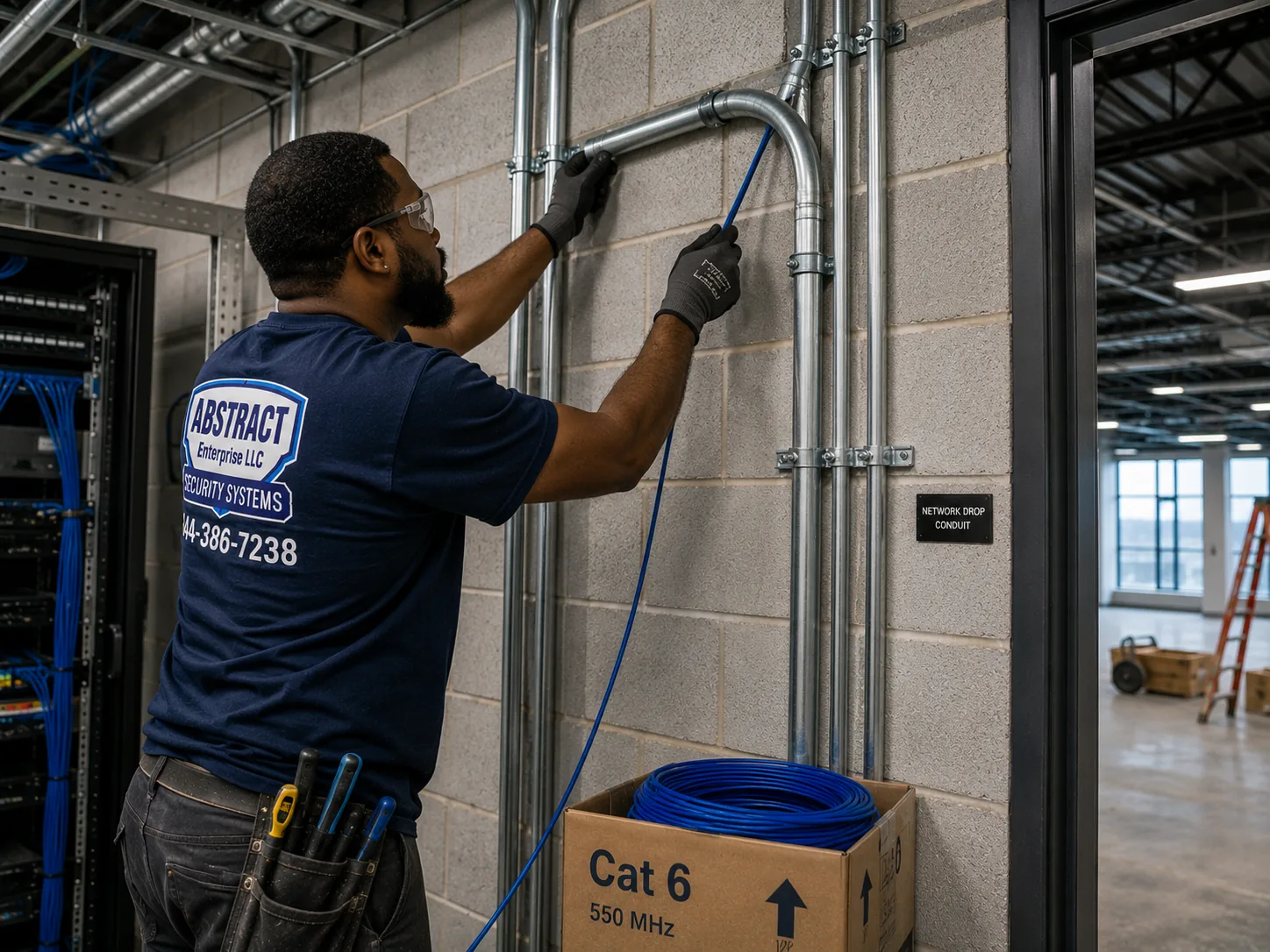
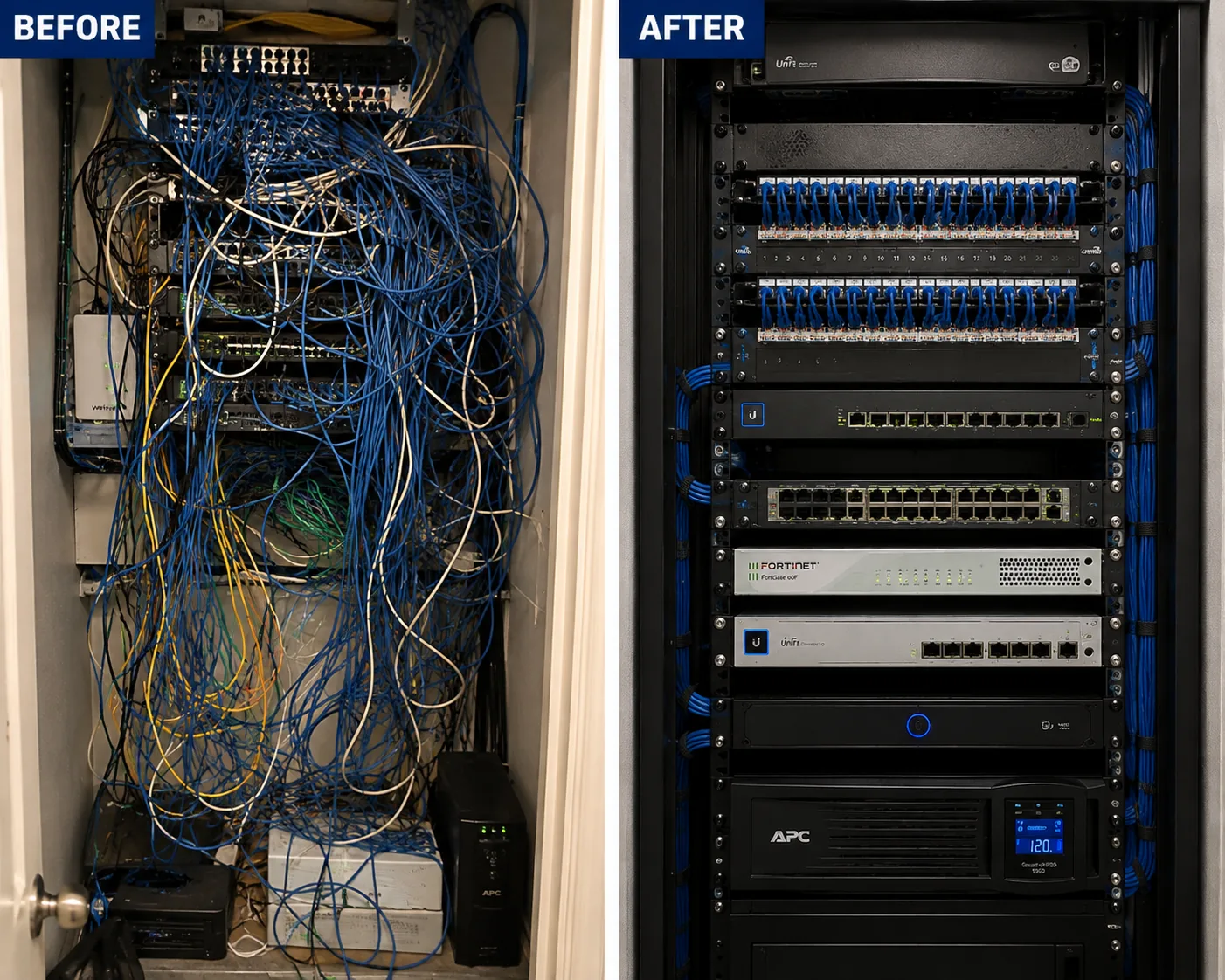
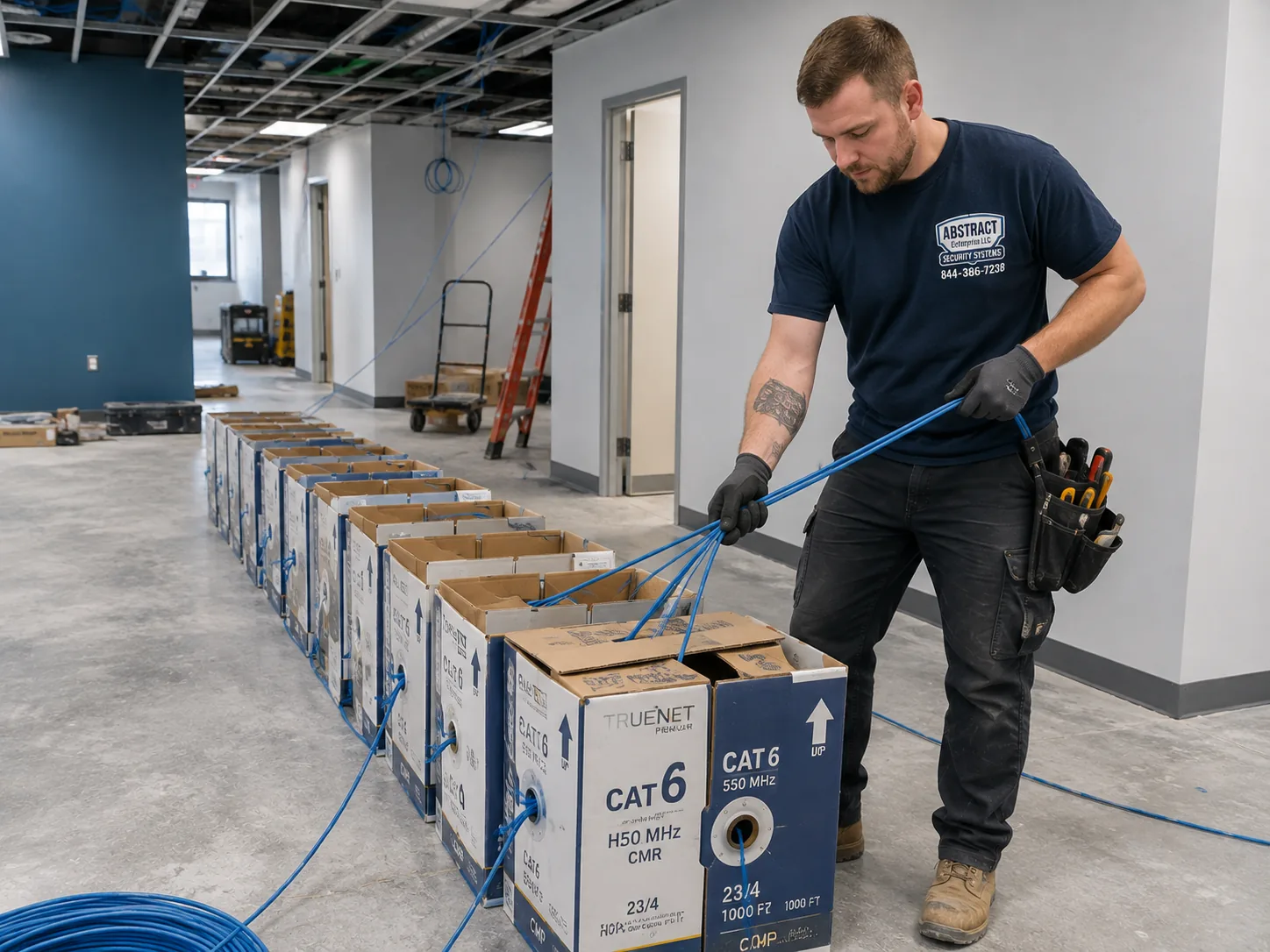
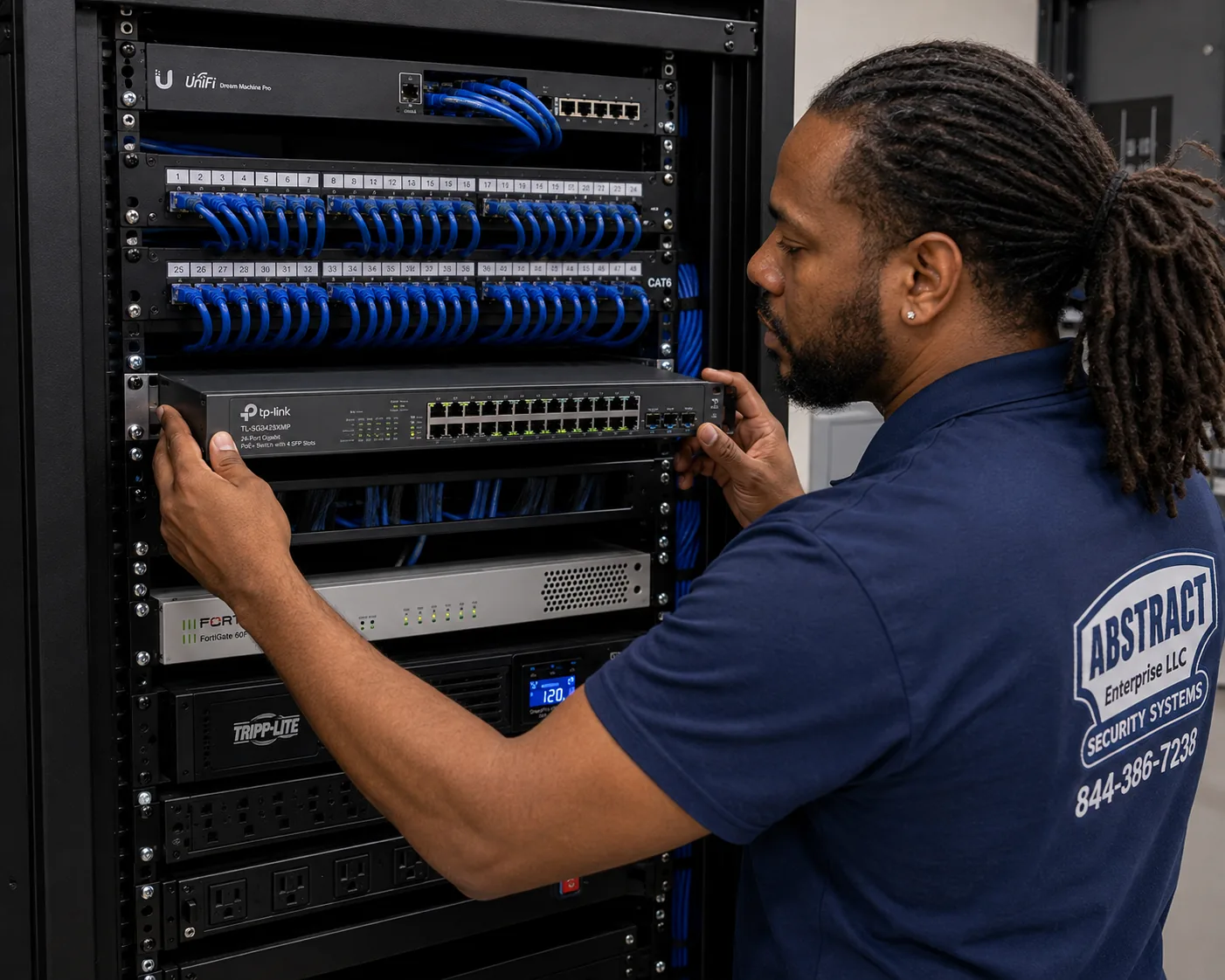
Many East Williamsburg businesses that put up screens also want a wired network drop to each one, because streaming menus and games over weak Wi-Fi in a brick room is a common source of frozen screens. Offices and bars in buildings like these often pair a TV install with structured cabling, and we can price both together.
These are the situations people in East Williamsburg lofts, Loft Law units, studios and businesses describe when they call: rooms with more windows than walls, structure that was built for machines, partitions with an uncertain history, owners with plans in progress, and commercial spaces with walls nobody planned for a screen. Each one is answered here in full and is not repeated in the FAQ further down.
Often it is, with a few conditions. A heavy timber post in an old industrial building is usually dense, seasoned wood that takes lag bolts very well, and a TV weighs far less than the floors that post was built to carry. The limits are width and condition. Most posts are narrower than a standard bracket's wall plate, so we choose a bracket whose plate fits the face of the post, center the screen on the post, and check the wood for deep drying cracks, rot near the base and old bolt holes before choosing where the lags go. We never notch or cut a structural post. Two other questions decide whether the post is the right answer: whether the screen centered on the post sits where you actually want to look, and where the power and signal will come from, since cables on a post can only run on its surface. Timber is not on our short list, so we price it in writing from photos of the post and the room.
It is possible, but it is rarely the best choice in a home. A ceiling mount hung from a steel beam uses a clamp or a bolted plate on the beam's flange, and it suits places where no wall faces the seating, such as a long loft where the TV has to float in the middle of the room, or a bar where screens need to be seen from both sides. The trade-offs are height, movement and wires. A screen on a long drop pole can sway, it usually ends up higher than is comfortable for long viewing, and the power and signal have to come down the pole from the ceiling, which in a loft with a concrete or plank ceiling means a surface run to the nearest outlet. Before anyone clamps anything to structure, the building's owner should agree, and in a Loft Law building that is worth getting in writing. Ceiling mounts are priced in writing from photos of the beam and the room.
We advise against it. A bookcase is furniture, built to carry books sitting on shelves, not a cantilevered load pulling outward from its face, and most freestanding units are not anchored to the floor or ceiling well enough to resist a screen being pushed, pulled or bumped. The Consumer Product Safety Commission counted 217 tip-over deaths from 2013 through July 2023, and 47 percent of them involved a television, so a tall divider with a screen on it is the kind of setup we would rather not create. The better options are a TV on its own stand or console in front of the divider, which is $119.99 on our list, or a real partition that can carry a bracket. If you want the room divided and the screen on that line, a properly framed partition built by a carpenter and anchored to floor and ceiling can do both jobs, and we can mount on it once it is up.
A little. A clear sealer or masonry coating does not weaken the brick, but it can chip around a drill bit as the hole starts, leaving small pale rings that show if the bracket plate does not cover them. We start each hole slowly, keep every hole inside the area the wall plate will hide, and use a dust shroud so the coating's surface is not dusted over around the TV. The bigger effect is on cord covers: adhesive-backed covers stick poorly to some glossy coatings, so on a sealed wall we fix a cover with small screws into the mortar or brick rather than trusting tape alone. The coating also makes the brick harder to read by eye, so the pilot hole matters even more for telling solid brick from a filled or repointed patch. None of this changes the price; brick is the same $65 add-on whether it is bare or sealed.
For an in-wall kit, waiting or asking first is sensible; for a simple bracket, it usually is not necessary. Legalizing a loft can mean new fire-rated partitions, new wiring and changes to walls that tenants built years ago, and the partition you want to open could be one of the walls on the architect's drawings. A bracket on that wall is a handful of small holes that can be filled if the wall is rebuilt, but an in-wall kit means two openings and a rated cable inside the wall, which you would not want to pay for twice. Our suggestion is to ask the owner or the managing agent, in writing, whether that wall is staying, and to keep a copy. If the answer is unclear, a paintable cord cover at $59 does the same visual job without opening the wall, and it can be replaced by an in-wall kit once the legalization work is finished.
Many owners in buildings like yours find it saves trouble. When each tenant mounts their own TV, the walls collect a different set of holes every few years, sometimes in the mortar, sometimes with cords pushed through partitions, and every move-out turns into a patching job. Picking one wall per unit, ideally a framed partition that can take an in-wall power and cable kit or a brick wall where the fixings will land in sound brick, and installing a quality bracket there, gives every future tenant a safe place to hang a screen. We would price each unit from our list: the base mount, the wall add-on and the kit, and we can do several units in one visit if they are ready together. Owners in Loft Law buildings should check that the walls chosen are not affected by legalization plans first.
Several things, and none of them require a different wall. First, the position: moving the screen a little lower and angling the seating slightly off the window line reduces the reflection more than people expect, and we test this with painter's tape before drilling. Second, the bracket: a tilting bracket lets you angle the screen down a few degrees, which pushes the reflection of high windows below your eye line, and a full-motion arm lets you swing it away from the light on bright afternoons. Third, the room: shades on the upper part of tall factory windows cut most of the glare while keeping the light that makes a loft worth living in. Matte-finish screens help too, though that is a choice to make when buying the TV. Bracket types other than a flat or tilting mount, and screens over 55 inches, are priced in writing on your quote.
By planning the removal before the installation. For a short show, we choose a bracket with the smallest wall plate that safely carries the screen, place every fixing inside the body of a brick so the holes are clean, round and easy to fill, and record the positions so the same holes can be reused if the gallery shows video in the same spot again. We run the cables to the floor or to a plinth in a cord cover fixed with screws rather than adhesive, since tape can lift paint or dust from old brick when it comes off. At the end of the show, taking the screen down is $85 on our list, and the gallery is left with a few neat holes for its own filler. If the artist's work calls for a screen in portrait orientation or at an unusual height, tell us on the request so the bracket suits it.
Usually yes, but not on the panel itself. Acoustic panels are soft and usually fixed with clips or adhesive, and they cannot carry a bracket. We remove or cut back the panel where the bracket goes, fix the bracket through to the steel studs with anchors rated for thin steel, or add a plywood backer between studs for a heavier screen, and then refit the panel around the bracket so the room's sound treatment is barely interrupted. If the landlord or the studio's acoustician does not want panels disturbed, a floor stand or a desk-mounted arm avoids the wall entirely. We also find out which network port and which video source feed the monitor, so it is ready for clients on the first session. Steel-stud walls are priced in writing from photos, and we coordinate with the building on freight elevator times and access before the visit.
Yes. Column-clamp brackets wrap around a steel or round column with bands or bolted clamps and carry a screen without a single hole in the steel, which is often what a landlord wants in a building that keeps its industrial structure on display, as Brooklyn Steel's owners chose to do. The fit depends on the column's size and shape, so we need photos and a rough measurement of each column's width or circumference. We check that the screen will clear sprinkler heads, exit signs and the path of people moving through the room, and we plan power so it reaches the screen without long cords taped along the column. Column mounts are priced in writing, and we install them before doors open or on a dark night so the room is never a work zone during an event.
Yes, with the right anchors in the right places. Hollow concrete block has thin faces around large voids, so a standard masonry anchor can crush the face and lose its grip. We use anchors designed for hollow masonry, which spread their load behind the block face, or we locate the grouted cores and the solid webs of the block and fix into those, which is where hollow block is strongest. On a break-room wall we also think about who uses the room: a fixed or tilting bracket is sturdier than a full-motion arm that people will pull and push all day. Wires on block cannot go inside the wall, so they run in a cord cover to the nearest outlet. Block and screens over 55 inches are priced in writing, and we schedule the drilling around your shifts so the noise does not land in the middle of a break.
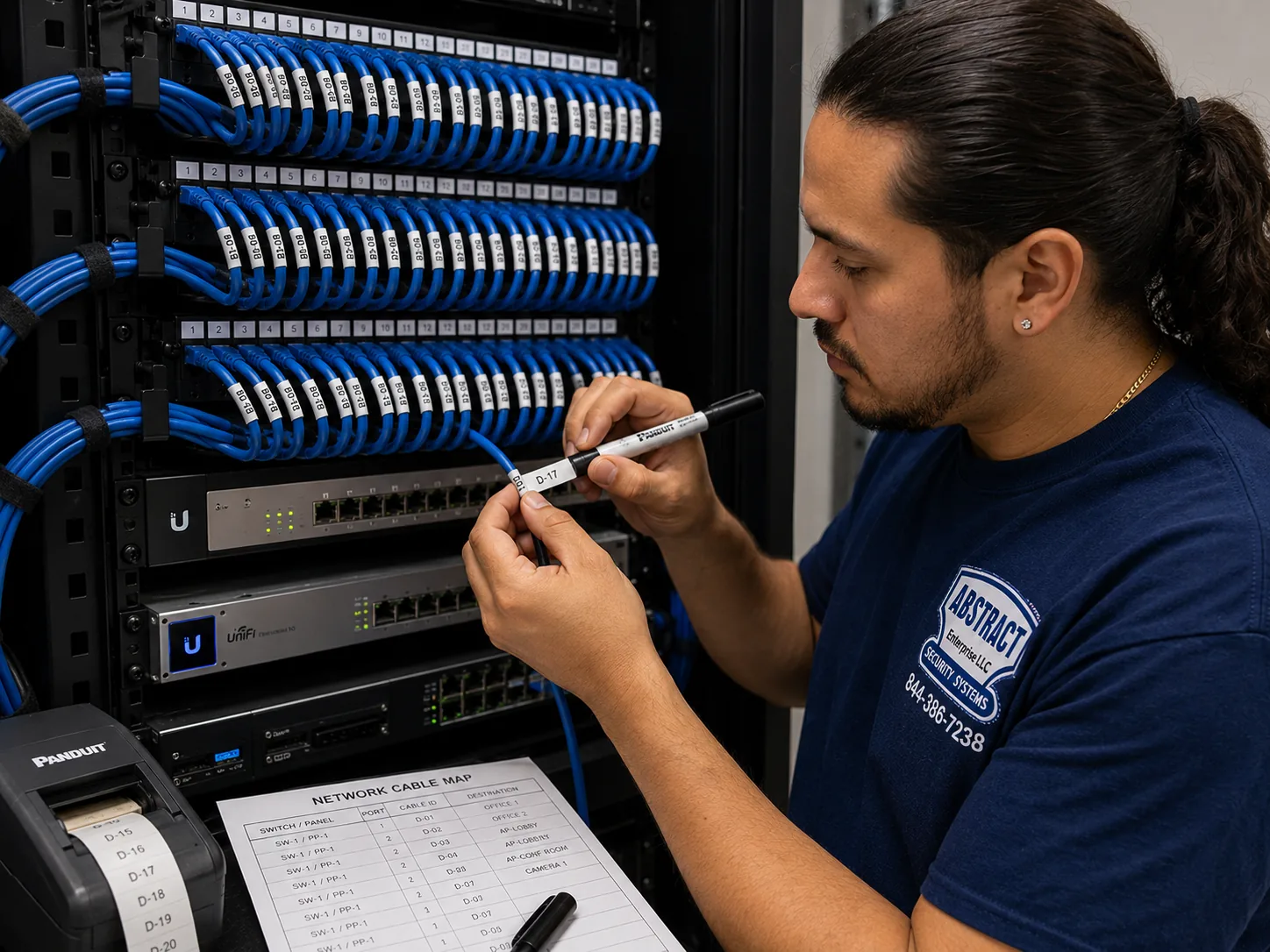
Brackets are sold separately and listed on your quote, or we hang your own bracket if it is rated for your TV's weight, size and bolt pattern. These are the kinds of hardware we fit in East Williamsburg homes, studios and businesses, and where each one earns its place.
The screen sits close to the wall. The sturdiest choice on loft brick and hollow block, and the easiest to remove cleanly when a renter moves or a show ends.
A few degrees of downward tilt to push the reflection of tall factory windows below eye level, or to suit a screen above a bar or a console.
For long, open loft rooms where the kitchen and the sofa both want a view. They need the strongest wall in the room, never a doubtful partition.
Sleeve anchors and masonry screws for solid brick and concrete, and anchors made for hollow block, each set into sound material and away from mortar joints.
The code-compliant way to put a recessed outlet behind a screen on a framed wall, with power carried in the kit's own rated cable, never a cord inside the wall.
Paintable cord covers screwed to brick or block, soundbars placed on a console or bracketed under the screen, and surge protection for every set we connect.

Electronics stores and handyman apps both book TV mounting, and for a screen on drywall over wood studs either can be a fair choice. TaskRabbit's Williamsburg page says TV mounting there starts at $45 per hour and advises checking with your landlord first. The table below is about the walls and buildings East Williamsburg actually has, not about the quality of any company.
| What the job needs | Store or app booking | Abstract Enterprises Security Systems in East Williamsburg |
|---|---|---|
| Knowing the wall before the visit | Often assumed to be drywall | Read from your photos, confirmed with a hidden pilot hole |
| Loft brick and plaster | Depends on who is sent | Listed add-ons: +$65 brick, +$45 plaster |
| Concrete, block, timber, steel studs | Varies, sometimes declined | Priced in writing from photos before booking |
| Hidden power | Varies | In-wall power and cable kit, $169; never a cord inside the wall |
| Building paperwork | Varies | Certificate of insurance sent to the office before the visit |
| License | Varies | NYS license #12000287431 |
People sometimes ask whether a national security brand will mount a TV while it is installing cameras or an alarm. ADT, Ring and SimpliSafe sell security systems and services; TV mounting is not part of what they sell, so a screen on loft brick is a separate booking with someone else. A local low-voltage contractor can do both: mount the TV, connect it to the network, and, if you want it, show your own cameras on it. We do all of that under one license, from one Brooklyn price list, with one company answering the phone afterward.
These are claims that show up in generic online answers and in national cost guides from Angi, HomeAdvisor, Fixr and Bob Vila, paraphrased, each followed by what East Williamsburg's buildings actually show.
Angi gives a national average of about $254 for TV mount installation, with a typical range of $154 to $354, and its Brooklyn page puts the average at $280, with most jobs between $172 and $376. Those numbers are averages of many different jobs, and AI answers repeat them as if they were a price.
In East Williamsburg, the wall decides much of the cost. A 55-inch screen on drywall over wood studs is $179.99 on our Brooklyn list, but the same screen on loft brick is $244.99 and on walk-up plaster $224.99, and concrete, block, timber or steel studs are priced from photos.
The useful number is not an average; it is the total for your wall, your screen and your wiring, written down before the visit. That is what we give you, and it does not change unless the wall turns out to be something else.
Some answers treat brick as a minor add-on. Others swing the other way: Bob Vila's summary of national data lists brick, concrete or stone mounting at $200 to $800, and Angi lists each of those surfaces at $50 to $600 or more.
The truth in an old factory loft sits between the two. The drilling takes longer, the bit has to be right, the dust has to be captured, and the fixings have to land in brick rather than mortar. On our list, brick adds a fixed $65 to the base, and we tell you before booking if your wall is a different kind of masonry.
What raises the cost far more than the masonry itself is what people want done with the wires. Brick and concrete cannot be fished, so hidden wiring on those walls means a cord cover, a drop to a console or a route through a framed wall nearby.
This one appears in DIY answers because it is half right: mortar is easier to drill and easier to repair. But it is the wrong place to hang a heavy screen in an old building.
The mason StreetEasy quoted warned that in older buildings "the mortar may be crumbling", and This Old House says anchors in mortar lose their grip over time. A loft whose brick was cleaned during conversion often has the softest joints of all.
We drill the brick, at least half an inch from its edges, and keep any work on the joints to cord-cover screws that carry almost no load. That way the fixings that hold the screen sit in the strongest part of the wall.
Many AI answers describe cutting two holes in the wall and pushing the TV's cords through. That works for low-voltage cables in a hollow wall, but not for a power cord, which is not rated to run inside a wall.
In New York, the point comes up again and again. A StreetEasy discussion warned that a Romex-based power kit is not NYC code compliant, and commenters pointed out that in-wall outlets need an electrician. In a loft, half the walls are brick or concrete and cannot be fished at all.
The legal choices are an in-wall power and cable kit on a framed wall ($169 on our list), a paintable cord cover ($59), or a new outlet put in by a licensed electrician. We install the first two and say clearly when you need the third.
Angi's own guidance is more careful than most AI summaries: drywall mounting takes about an hour, but brick can take several. AI answers often keep only the first half of that sentence.
In East Williamsburg, time goes into the parts of the job that are not drilling: carrying a large box up a walk-up's stairs or waiting for a freight elevator, reading a wall whose builder is unknown, and planning around tall windows, exposed pipes and soft mortar.
We price the job, not the hours, so a slow freight elevator does not change your total. For setup-only visits, where time really is the job, our list is $195 for the first hour and then 30-minute blocks.
Generic answers assume a strong home network. That is a fair assumption in many apartments and a poor one in a brick loft or an industrial building.
NYCEDC described the North Brooklyn and Greenpoint-Williamsburg industrial business zones as digital deserts when it launched Connect IBZ, and thick brick walls block Wi-Fi far more than drywall. A streaming TV at the far end of a sixty-foot loft can buffer even on a good plan.
Before we mount a smart TV in a big masonry space, we check the signal where the screen will be. If it is weak, we tell you, and the fix may be a wired drop or a better access point, which is network work we can quote separately.
AI answers about renters often say that if you cannot drill, just put the TV on its stand. That is a good choice, but not the whole answer.
The Consumer Product Safety Commission reported 217 tip-over deaths from 2013 through July 2023, 137 of them children, and found that 47 percent of the deaths involved a television. Its chair, Alex Hoehn-Saric, said: "Furniture and TV tip-overs remain a significant safety hazard in American households."
When we set a TV on its stand for $119.99, we place it well back on a sturdy console, route the cables so nobody trips on them, and talk through anti-tip straps, which in a loft may fix to a partition, a post or the console itself.
If you are not sure what your wall is made of, or which bracket suits your TV and your room, ask before you buy anything. Call now at (347) 934-8335, send a fast quote request, or send wall photos to a tech on WhatsApp. Same-day estimates are available on most weekdays, and requests are usually answered within two hours.
Give us the cross streets, the kind of building, the floor, the TV size and what you know about the wall. A technician will call back with the total for the East Williamsburg address, or you can call (347) 934-8335 right now.

The wall straight on, the TV's model sticker, where the box or console will sit, and your cross streets. Tell us if it is a loft, a walk-up, a co-op or a business.
Landlord, Loft Law owner, co-op office or building manager: we confirm who needs to approve the wall and send any paperwork they want before the visit.
Freight elevator hours, the loading door, the stairs and where the van can stop are agreed in advance, so the screen reaches the unit without a scramble.
Knock, deep scan and one pilot hole hidden behind the bracket plate confirm brick, concrete, timber, plaster, block or a tenant-built partition.
Painter's tape marks the screen. You sit where you watch, we check the window glare, and we agree where power and signal will run.
Anchors matched to the wall go into sound material, with dust captured at the drill in masonry and the floor covered.
The TV goes up and is leveled to true; cables go into an in-wall kit, a paintable cord cover or the console.
Every input, the soundbar and the remote are tested with you, the area is cleaned, and the bracket details are left with you.

The music venue at 319 Frost Street in a former steel fabrication plant, opened in 2017 with room for 1,800 and three full-service bars.
The studio and gallery building across from the Morgan Avenue L stop, with artist studios upstairs and galleries on the ground floor.
The L stop at the center of the studio and restaurant blocks, near the line Corcoran draws between the industrial park and the residential side.
The Mitchell-Lama cooperative of seven buildings and 2,702 apartments near Broadway, completed in 1965.
An industrial complex of ten interconnected structures built between about 1845 and 1951, listed on the National Register in 2009.
The neighborhood park slated for a new playground and running track under East Williamsburg's $20 million Downtown Revitalization Initiative grant.
We also serve Bushwick, Bedford-Stuyvesant and Clinton Hill, along with Williamsburg and Greenpoint to the west and north, and Ridgewood across the line on our Queens TV installation page.
East Williamsburg is billed at our Brooklyn rate, the same as every other Brooklyn neighborhood. The base covers a TV up to 55 inches on drywall over wood studs, labor only; the bracket is sold separately unless you already own a rated one. Everything else below is a listed add-on, and anything not on this list, such as concrete, block, timber, steel studs, larger screens or ceiling and column mounts, is priced in writing from your photos before you book. A job goes on the schedule once it is paid.
| Item | Brooklyn price |
|---|---|
| TV wall mounting, drywall on wood studs, up to 55 inches | $179.99 (bracket sold separately) |
| TV placed on its stand, no wall mount | $119.99 |
| Setup-only visit (smart TV, devices, settings) | $195 first hour, then 30-minute blocks |
| Brick or stone wall | +$65 |
| Plaster wall | +$45 |
| Above-fireplace mounting | +$130 |
| In-wall concealment with code-compliant in-wall power and cable kit | $169 |
| Paintable cord cover | $59 |
| Soundbar wall-mounted / soundbar placed | $129 / $79 |
| Take down old TV | $85 |
Three things decide most totals here. The first is the wall: loft brick adds $65 and walk-up plaster $45, while masonry and framing types not on the short list are priced from photos. The second is the wiring: leaving cables to drop to a console costs nothing extra, a paintable cord cover is $59, and an in-wall kit on a framed wall is $169. The third is sound: a soundbar placed on the console is $79, and one bracketed under the screen is $129. Size, bracket type and access only change the price where your quote says so, and you see every line before you book. For comparison, Angi's Brooklyn data puts the average TV mounting job at $280, with most between $172 and $376; the difference is that our number is written for your wall rather than averaged across everybody's.
Full terms — including 50% deposit, one-year parts-only warranty on Abstract Enterprises Security Systems-supplied products, and the late-fee schedule — are set out in the service agreement.Three typical East Williamsburg jobs, added up from the list above. Brackets are extra unless you supply a rated one, and anything beyond these lines is quoted in writing first.
The TV set up on its own stand or console ($119.99) with a soundbar placed in front of it ($79). Nothing goes into the wall, so there is nothing to patch at move-out.
A TV up to 55 inches on exposed loft brick ($179.99 + $65), a paintable cord cover down the brick ($59) and a soundbar bracketed under the screen ($129).
The old TV taken down ($85), a new screen up to 55 inches on a plaster partition ($179.99 + $45), an in-wall power and cable kit ($169) and a wall-mounted soundbar ($129).
Bring your own equipment. If you already own a bracket, we install it at the labor prices above as long as it is rated for your TV's weight, size and bolt pattern. The same goes for your own soundbar and cord cover. We check a customer-supplied bracket before we hang anything on it, and if it is not rated for the screen, we tell you before drilling.
Brick, plaster, block, concrete, timber and partitions. Request a quote
In-wall kits on framed walls and paintable cord covers on masonry. Ask about your wall
The same list and the same crews borough-wide. Abstract Enterprises TV installation in Brooklyn
Payment, rescheduling and what is included. TV installation policies
Lofts, offices and venues in every borough. TV installation across NYC
Bushwick's row houses and lofts south and east of here. TV mounting in Bushwick
We ask about the freight elevator when you book and plan the visit for a time it can be used, or for the stairs if it cannot. A screen up to about 65 inches in its box is a one-person carry; bigger boxes need two people on the stairs, and we send the right crew once we know the building. If the building wants the freight booked through the super or the managing agent, ask them for the slot and send it to us so the visit is set around it.
Yes, as long as we can agree on where you will sit. An empty loft is actually the easiest room to work in. We tape the screen outline on the wall and mark where the sofa will go, often with a chair placed at the same distance and height, so the TV lands at the right height for the furniture that is coming. If the console is arriving later, we leave the cables neatly coiled at the right height for it.
Often, with a smaller screen and a low-profile bracket. Mezzanines and sleeping lofts built inside tall industrial rooms usually have framed walls or railings rather than masonry, and limited headroom, so we check what the wall is made of, how the screen will be seen from the bed, and how a technician can work safely up there. A railing is not a mounting surface. If the only solid surface is a framed wall, it is priced from our list once we know what is inside it.
We recommend it, especially where children or pets live. The Consumer Product Safety Commission found that nearly half of tip-over deaths involved a television. In a loft where the stand faces open space, an anti-tip strap can fix the TV to the console and the console to a partition, a post or the floor, depending on what the owner allows, and we talk through the options when we set the TV up on its stand.
Reasonably well, though never invisibly. A cord cover is a smooth channel and brick is a textured surface, so the best results come from painting the cover to match the brick's main color and running it straight down along a mortar line or the edge of a column, where the eye expects a line. On a sealed or glossy brick wall we screw the cover on rather than relying on adhesive. The cover is $59 on our list; paint matching is up to you or your painter.
It can affect parking and traffic, so we plan around it. With Brooklyn Steel on Frost Street and Brooklyn Pacha on Stewart Avenue drawing large crowds in the evening, we book installs on those blocks during the day, well before doors open, and ask whether the street has any event restrictions that week. Working within the city's weekday construction hours of 7 a.m. to 6 p.m. usually keeps us clear of the evening crowds anyway.
Anyone over eighteen who knows where the TV should go and can approve the wall can let us in. Before the visit, tell us who will be there and make sure they know the screen position, how the wires should run and any building rules. At the start, the technician confirms the wall and the price with that person before drilling, and at the end tests every input with them.
Most of it never leaves the drill. In masonry, our technicians use a dust shroud with a vacuum attached, which captures the dust at the hole, the method OSHA describes for handheld drills in concrete. We also cover the floor and anything directly below the wall and clean up before leaving. If there is delicate artwork or open equipment within a few feet, move or cover it before the visit or tell us so we can plan around it.
Yes. Taking the TV down is $85 on our list, and putting it back up on the new wall is priced as a new mount on that wall type, for example $179.99 plus $65 if the new wall is brick. If your existing bracket is rated for the TV and in good condition, we can reuse it. The old fixings stay in the first wall unless you want them removed; filling the holes is up to you or your painter.
We work it out when you book. In the industrial blocks, technicians often use a legal loading spot briefly to unload the TV and tools, then park nearby; on busy shopping streets, we plan the arrival for a quieter hour. If your building has a loading dock or a yard that contractors may use, tell us, and if the landlord has to approve it, ask before the visit.
No. Every East Williamsburg address is billed at the same Brooklyn rate, whether it is a loft on the residential side or a break room in a warehouse near the creek. What changes the total is the wall, the screen and the wiring, not which side of Morgan Avenue the building is on.
It helps a lot. Take down anything hanging on the TV wall and clear the floor within about six feet of it, including shelves and plants. That gives the technician room to set the ladder, lay down the floor cover and see the whole wall when reading where the bricks and joints are. If something is fixed to the wall and cannot come down, tell us beforehand so the screen position can work around it.
Every local fact on this page comes from a published source. Neighborhood scale and building heights are from NYC Planning's North Brooklyn Industry and Innovation Plan. The Loft Law and interim multiple dwelling descriptions are from the NYC Loft Board, and the 57 Thames Street filing is from PincusCo. The Morgan Avenue split is from Corcoran's neighborhood guide; the name and boundaries are from Wikipedia and CityNeighborhoods. The Paper Mill at 456 Johnson Avenue is from Bushwick Daily, the Netflix facility at 333 Johnson Avenue from Brooklyn Paper, Brooklyn Steel from amNY and Relentless Beats, Brooklyn Pacha from Haute Living, and the Morgan Avenue restaurants from Capricorn's listing at 81 Morgan Avenue. The broadband description is from NYCEDC's Connect IBZ announcement and the Montrose Avenue outage from Greenpointers. Lindsay Park and 221 McKibbin Street are from Wikipedia. The rules on low-voltage wiring are from Local Law 128 of 2024, construction hours from NYC DEP's noise code fact sheet, lead-safe work from HPD, drilling dust from OSHA, and tip-over figures from the Consumer Product Safety Commission. Advice on brick and mortar is from StreetEasy and This Old House, tenant rules from Brick Underground, the hidden-power warning from StreetEasy Talk, and cost averages from Angi, Bob Vila and TaskRabbit.
TV Installation Brooklyn NY · TV Installation NYC · TV Installation Manhattan NY · TV Installation Queens NY · TV Installation Bronx NY · TV Installation Staten Island NY · TV Installation Long Island NY · TV Installation Hudson Valley · TV Installation Nassau County NY · TV Installation Suffolk County NY · TV Installation Westchester County NY · TV Installation Rockland County NY · TV Installation Orange County NY · TV Installation Putnam County NY · TV Installation Dutchess County NY · TV Installation Ulster County NY
TV Installation Bath Beach Brooklyn | (347) 934-8335 · TV Installation Bay Ridge Brooklyn NY | Mounting & Setup · TV Installation Bedford Stuyvesant Brooklyn NY · TV Installation Bensonhurst Brooklyn NY | Wall Mounting · TV Installation Bergen Beach Brooklyn NY | Wall Mounting · TV Installation Beverley Square Brooklyn NY | Mounting · TV Installation Boerum Hill Brooklyn · TV Installation Borough Park Brooklyn NY | Abstract Enterprises Security Systems · TV Installation Brighton Beach Brooklyn NY | From $179.99 · TV Installation Brooklyn Chinatown, Brooklyn NY · TV Installation Brooklyn Heights, Brooklyn NY · TV Installation Brooklyn Navy Yard, Brooklyn NY · TV Installation Brownsville Brooklyn NY | Mounting & Wiring · TV Installation Bushwick Brooklyn NY | Plaster & Brick · TV Installation Cadman Plaza Brooklyn NY | Concrete Towers · TV Installation Canarsie Brooklyn NY | Mounts from $179.99 · TV Installation Carroll Gardens Brooklyn NY | Brownstones · TV Installation City Line Brooklyn NY | Wall Mounting · TV Installation Clinton Hill Brooklyn · TV Installation Cobble Hill Brooklyn · TV Installation Columbia Street Waterfront Brooklyn NY · TV Installation Coney Island Brooklyn NY | TV Mounting · TV Installation Crown Heights Brooklyn NY | Wall Mounting · TV Installation Cypress Hills Brooklyn | (347) 934-8335
Intercom Installation East Williamsburg Brooklyn NY · Access Control Installation East Williamsburg Brooklyn NY · Fire Alarm Installation East Williamsburg Brooklyn NY · Door Buzzer Installation East Williamsburg Brooklyn NY · Door Buzzer Repair East Williamsburg Brooklyn NY · Alarm Installation East Williamsburg Brooklyn NY · Security Camera Installation East Williamsburg Brooklyn NY · Security Camera Repair East Williamsburg Brooklyn NY · Structured Cabling Installation East Williamsburg Brooklyn
Send a photo of the wall and the TV's model sticker with your cross streets, and we will tell you what the wall is likely to be and what the job costs on the Brooklyn list. Call or text (347) 934-8335, message us on WhatsApp, or use the request form. Licensed under NYS license #12000287431, rated 4.7★ across 201 Google Reviews, owner-operated since 2002, with same-day estimates on most weekdays.