Any Brand, Any Installer Β· Footage Saved First Β· Written Price Before Parts Β· Brooklyn Rate
Security camera repair in Cypress Hills begins with our $150 Brooklyn service call: a licensed technician comes out, tracks down what failed, writes down the repair price, and the $150 is credited to that repair if you go ahead. On our published Brooklyn list most single faults run $150 to $700, and a new recorder, a partial rewire or several cameras done together run $700 to $1,500. We fix systems other companies put in, on frame houses up the hill toward Highland Park, brick rows off Crescent Street, two-families near Euclid Avenue and stores along Fulton Street, Atlantic Avenue and Jamaica Avenue. Requests are booked within 2 hours, the visit comes in a two-hour arrival window, and you hear what broke before anything is replaced.
Reviewed and updated November 12, 2026, against News 12 Brooklyn's June 2026 report and surveillance video on the safe taken from a restaurant near Atlantic Avenue and Crescent Street and the register break-in on Conduit Boulevard; News 12's March 2026 report on the robbery at a smoke shop at 2945 Fulton Street; the March 10, 2025 City Council public housing hearing testimony of the Cypress Hills Houses tenant association president; the Brooklyn Eagle's 2014 list of NYCHA developments getting cameras; NYCHA's fact sheet on CCTV and layered access control projects; the Brooklyn Borough President's 2024 land use record on the Cypress Hills Fulton BID; NYC Small Business Services' commercial district needs assessment; Brownstoner on the 2023 State and National Register nomination of 105 Barbey Street and on Cypress Hills house types; Wikipedia on Highland Park, Cypress Hills Cemetery, the Cypress Hills station and the Cypress Hills Houses; the NYPD's 75th Precinct page; Reolink's guide to video loss; the CCTVForum thread on recorder lifespans; Brick Underground on tenants and footage; HomeAdvisor's Brooklyn cost page; and the New York Department of State on security system licensing. Β· Abstract Enterprises Security Systems, NYS license #12000287431 Β· crews dispatched from our Troy Avenue office in Brooklyn

Owner-operated since 2002 Β· Thousands of jobs completed Β· Booked within 2 hours
In Cypress Hills the question behind most camera calls is not "why did it break" but "will it work on the night we need it." This spring a man forced a door at a restaurant near Atlantic Avenue and Crescent Street, covered his face with a T-shirt, and walked out about seven minutes later with a safe; the business's camera recorded the break-in and a second camera picked him up carrying the safe across a parking lot. Those two clips are why investigators had photos to release. A repair here is about making sure your cameras would do the same: recording, with the right time on the clock, aimed at the way in and the way out, and with a picture clear enough to show clothing, build and direction even when a face is hidden. Send a photo of the recorder screen, the recorder's label and your cross streets to (347) 934-8335 or on WhatsApp, and we will tell you what most likely failed and what that repair costs on our Brooklyn list.
Cypress Hills sits at the far eastern edge of Brooklyn, where the borough runs up against Queens and the cemeteries. To the north are Highland Park and the Cemetery Belt, to the south and west the blocks run down into East New York, and Fulton Street, Atlantic Avenue and Jamaica Avenue carry most of the traffic and most of the shops. The housing is a mix: wood-frame houses from around 1900, brick rows put up by a single builder, semi-detached houses, two- to four-family houses and apartment buildings, with the 1955 Cypress Hills Houses south of Sutter Avenue. That mix matters for a camera repair, because every one of those buildings puts its cameras, cable and recorder in a different place, and most were wired by whoever was available at the time.
What brings people to a camera repair here, more than anything, is something that already happened. In the early hours of May 26, 2026, News 12 Brooklyn reported, a man forced open a door at Chef Quang Guyanese Chinese Express near Atlantic Avenue and Crescent Street, hid his face with a T-shirt, spent about seven minutes inside and left with a safe that staff said held about $100,000 in personal valuables. The station published the business's surveillance video, and "another camera captured the person carrying the safe across a parking lot." Investigators tied the same man to a register break-in on Conduit Boulevard four nights later, where about $2,000 was taken after a window was broken. The restaurant told News 12 it was not the first time it had been targeted. A few months earlier, on February 10, a man pulled a gun in a smoke shop at 2945 Fulton Street just before midnight, took the register cash and ran into the Cleveland Street station at the end of the block; police released photos of him in a hooded jacket, mask and gloves. In both cases, the only description anyone had came from cameras.

The third reason is that shared cameras are often the ones that fail longest. At the City Council's public housing committee hearing on March 10, 2025, James Elseviera, the tenant association president of Cypress Hills Houses, told members that "all the cameras are spray painted and taped up," that "none of the cameras is working," and that it had been that way since about December 10. Cypress Hills Houses had been on the city's 2014 list of developments getting new cameras, and NYCHA's own fact sheet says its camera and access projects typically take about three years from planning to the end of construction. NYCHA's cameras are NYCHA's to fix, not ours, but the pattern is the same in private buildings: a camera that serves everyone is the one nobody notices has gone dark, until somebody needs it.
The commercial strips add their own pressure. When the city's Small Business Services department surveyed the corridors in this part of Brooklyn, a quarter of merchants named security as the improvement they wanted most, and people described the lighting under the elevated tracks on Fulton Street as poor. The Cypress Hills Fulton Business Improvement District, formed in 2024 to cover 26 blocks of Fulton Street from Van Siclen Avenue to Eldert Lane, listed "improved sanitation, street lighting, public safety, and public space programming" as its priorities in its city filing. Better lighting helps cameras, but a change in lighting also changes what a camera sees at night, and a picture that was set up for one kind of light can turn useless under another. Stores that add bullet-resistant glass or a buzz-in door after a robbery, as the Fulton Street smoke shop did, often find the camera behind the counter now looks at a reflection.
Last, the land itself. Cypress Hills is built on the ridge left by the last glacier, and Brownstoner's writers have described the steep streets near Sunnyside Avenue, where houses sit above the street at the top of long stairs. For cameras, the slope means long cable runs up and down stairs and across porches, cameras that look down from well above a visitor's head, and back yards that open onto the dark of the park and the cemeteries rather than onto another lit yard. None of that breaks a camera by itself, but it shapes which repairs come up and how they are done.
Where this page applies. It covers Cypress Hills in Brooklyn Community District 5, roughly from the Highland Park and cemetery edge in the north down past Atlantic Avenue and the Cypress Hills Houses, and from the blocks around Van Siclen Avenue east to the Queens line at Eldert Lane, in ZIP codes 11207 and 11208. Bushwick to the northwest has its own page at Bushwick security camera repair, Woodhaven and Ridgewood across the line are on our Queens camera repair page, and the rest of the borough is on our Brooklyn security camera repair page. The price follows the fault, not the block.
Urgent calls from Cypress Hills come in three kinds. The first comes the morning after something happened on the block: a store was broken into, a package or a bike disappeared from a porch, a car window was smashed on a side street, and the owner opens the app to find the camera that should have seen it is dark, blurred or pointing at a wall. The second comes after a change to the building or the store: new glass at the counter, a new gate, a new awning, a renovation upstairs, a new internet provider, and suddenly one or more cameras show nothing useful. The third is the quiet one: someone checks playback for an ordinary reason and finds the recorder has not saved anything for days.
If you need footage, protect it first. Leave the recorder running, do not unplug it to reset it, and do not accept any prompt to format or initialize its drive, because each of those can erase or overwrite the hours you need. Call (347) 934-8335, give us the date and the time window, and we book the visit with saving that clip as the first task. We export it to a USB drive in the recorder's own format and in a common video format, write down the recorder's clock against the real time, and only then look for the fault. If the recording never happened, we tell you at once, and then we set the system to warn you the next time it stops.
Everything else follows the same path. The $150 service call is booked within 2 hours of your request and the technician arrives in a two-hour window. You hear the cause and get a written price before any part changes. Most single faults, a failed power box, a dead switch port, a connector redone, a drive replaced, a camera body swapped, are finished on the first visit when the part is on the truck. If a camera has to be ordered to match an older recorder, we tell you before you pay for it, and the repair is booked once the part arrives.
These are the repairs we are asked for most in Cypress Hills, each priced from our Brooklyn camera repair list. The service call pays for finding the fault; the repair is priced by what failed, never by the street.
Finding the minutes that matter in a night of video and saving them to USB with the original timestamp, for the 75th Precinct, an insurer, a landlord or your own records, before the recorder writes over them.
Analog DVRs and network NVRs that beep, freeze, restart or play back nothing. A DVR that will not work averages $300 to $700 with the drive and labor, and an NVR that is not recording $400 to $900.
Cameras that lost their view when a store added a bullet-resistant partition, a buzz-in door or brighter lights. Re-aiming and setting changes with no new part are covered by the $150 call.
Cameras re-aimed or moved so they see the door a burglar would force and the lot, alley or sidewalk he would leave by, with the existing cable extended where the new spot needs it.
Yard and side cameras facing the park and cemetery side that show black past the fence, and storefront cameras that wash out or band under new street lights. Night vision repair runs $250 to $650.
Plugs at the camera end that worked loose or corroded, runs on frame houses cracked by weather, and cables cut by roof, porch or siding work. A reterminate or PoE port swap runs $150 to $350.
Central power supplies that no longer carry every camera, plug-in adapters that died, and battery backups that beep but cannot hold the system up. Power supply repair runs $150 to $400.
Apps that lost the recorder after an internet change, relatives and tenants who need their own logins, and store owners who want to see the cameras from home. Setup with no parts is normally within the service call.
Cameras with water inside, cracked domes, bodies that simply died and cameras torn down by a thief. Outdoor replacement with the weatherproofing redone runs $250 to $600, an indoor camera $200 to $450.

Seven kinds of property cover nearly every camera call we take in Cypress Hills. What separates them for a repair is where the recorder ended up, how the cable gets from the recorder to the cameras, and how far the cameras sit from the people they are meant to see.
Detached and semi-detached houses from around 1900, many now under vinyl or aluminum siding, with cameras fixed to trim and corner boards and cable entering through drilled holes in the walls.
Brick rows with tile roofs, porches and bays, such as the houses Brownstoner describes on Sunnyside Avenue, where every house on the block has the same layout and often the same camera spots.
Houses on the steeper blocks near Highland Park that sit a full story above the sidewalk at the top of long stairs, so the front camera watches the street from well above head height.
Houses with several households and one recorder, usually in the cellar, with cameras on the porch, the driveway and the back yard, and a router that may belong to any of the tenants.
Brick buildings with a vestibule, a stair hall and a cellar, where cameras were added over the years and the recorder shares a shelf with the meters or the boiler controls.
Shops on Fulton Street under the el, on Atlantic Avenue and on Jamaica Avenue, with their own cameras inside and out and a recorder behind the counter or in a back room.
Businesses on Conduit Boulevard and Atlantic Avenue with parking lots, bays and fenced yards, where cameras sit on poles, fences and building corners and the cable runs are long.

The frame houses are some of the oldest buildings in Cypress Hills. Brownstoner's 2014 profile of 218 Arlington Avenue describes a Queen Anne house from about 1900 whose fish-scale shingles, visible in a 1941 tax photo, are now covered in vinyl siding, and that is typical. A camera on a house like this is fixed through the siding into whatever is behind it, and its cable usually goes into the wall through a hole drilled beside it. When the siding was put on over the original walls, the screws may be holding only the siding, and the hole may never have been sealed behind it.
The repairs that follow are predictable. A camera that sags or shifts in wind is held by too little. A camera that dies after every heavy rain has water running down the cable into its connection or into the wall. A camera that went dark after the siding or the gutters were redone had its cable pinched or cut by the crew. We find what the camera is actually fastened to, move the fixing into solid wood where it is not, put a drip loop in the cable below the entry so water drips off instead of running in, and seal the hole. If the connection inside the camera's base has already corroded, we redo it rather than hope it dries out.
Brownstoner's 2012 profile of 149 to 181 Sunnyside Avenue describes about 90 houses that Richards Real Homes built there between 1900 and 1920, in red and buff brick with tile roofs, deep porches and bays. Rows like this were built from one plan, and their cameras tend to be put up the same way too, often by the same installer working down the block. When one house on a row calls with a fault, it is common to find the same weak point on its neighbors: the same unsealed connection under the porch roof, the same adapter plugged into the same porch outlet, the same recorder on the same cellar shelf.
Brick changes the repair in two ways. A camera on brick should be anchored into the mortar joints or into the brick with the right masonry anchors, not into a wooden porch post that moves with the seasons. And cable that enters through brick needs a sleeve and a seal, or it will chafe and let water in. On a brick row we also look at the porch roof itself, because many cameras are fixed to the underside of it, where water collects and where the porch light circuit sits within reach of a careless switch.
On the steeper blocks of the ridge, houses sit well above the sidewalk at the top of long flights of steps. A camera mounted by the front door of a house like that is looking down a full story or more at the street, and the person ringing the bell from the bottom of the stairs is a small figure at the edge of the frame. Owners usually call because the camera is "blurry," but the camera is often fine; it is simply too far away and too wide to show a face.
There are three honest fixes, in order of cost. If the existing camera has a zoom lens, we narrow its view and refocus it on the steps. If it does not, we can move it lower or add a second camera at the gate or the bottom of the stairs on the same recorder. The cable for that second camera has to come down the steps or along the side of the house, and on a frame house that means a new protected run, so we price it before we pull anything. The same applies to the back of these houses, where the yard is often a story below the back door.
Two- and three-family houses are everywhere in Cypress Hills, and most have one camera system that the owner put in and everyone in the house relies on. The recorder is usually in the cellar, sometimes inside the basement apartment, and the cameras cover the porch, the side driveway and the back yard. When the system stops working, the call often comes from a tenant, but the person who can approve the repair and who knows the password is the owner.
The repair in these houses usually begins with the recorder's position and power. A recorder in a damp cellar, on the floor, plugged into the same strip as a dehumidifier or a freezer, wears its drive and its power supply faster. We check whether it is actually saving, whether its clock is right, and whether the drive reports errors, then we test every camera. Where the recorder sits somewhere only one household can reach, we say so in writing, because it decides who can save a clip when something happens at 2 a.m.
Small apartment buildings along the side streets and the larger buildings closer to the parks tend to have cameras added in stages: one at the vestibule when the door was replaced, two in the stair hall after a burglary, one at the back after packages went missing. Each may have come from a different installer, and each may run to a different recorder or to none at all. Brick Underground has pointed out that New York City does not require buildings to have cameras, so when one dies, nobody is obliged to notice.
Our first job in a building like this is an inventory: every camera, every cable, every recorder, and who controls each one. Then we test from the recorder outward, label what we trace, and write down which cameras are working, which are dead and which are not connected to anything. That written list is often the most useful thing a landlord or managing agent gets from the visit, because it turns a vague complaint into a priced repair.
On Fulton Street, Atlantic Avenue and Jamaica Avenue, most shops are small, many stay open late, and the camera system is often a recorder under the counter with four to sixteen cameras. The J and Z run overhead on Fulton Street, and the Small Business Services survey noted the poor lighting under the tracks. Store cameras here fail in a few repeatable ways: the counter camera loses its view when glass or shelving changes, the door camera sees a dark silhouette against the bright street, and the recorder under the counter gets kicked, unplugged or overheated.
We plan store repairs around the hours the store is open, test what can be tested with the store running, and keep any work on the recorder to a few minutes when it has to be switched off. Every store repair ends with us checking the cameras that cover the register, the door and the way out, because those are the clips the 75th Precinct asks for first.
The Conduit Boulevard break-in in May 2026 began with a broken window, and businesses with lots and yards along Conduit and Atlantic often have cameras at the far ends of their property, on poles, fences or the corners of sheds. Those cameras sit at the end of the longest cable runs, are the most exposed to weather and are the easiest to knock out of aim. We test the cable end to end, check that the camera at the far end is getting enough power over that distance, and re-aim it on the entrance and the line a vehicle or a person would take to leave.
When a store owner on Atlantic Avenue or Fulton Street calls because a business down the block was broken into, the visit follows a set order, and it is worth knowing before we arrive. We start with the recorder, not the cameras. We open playback for the previous night and the night before that, because a recorder that shows live pictures can still have stopped saving. We compare the recorder's clock with a phone, because a clip with the wrong time is hard to use. We read the drive's health page and how many days of video it is actually keeping.
Then we walk the store from the outside in, the way someone breaking in would. Which camera sees the door that would be forced? Which sees the window? Which sees the route out, to the sidewalk, the lot or the alley behind? In this spring's Atlantic Avenue case, the camera that showed the man carrying the safe across the parking lot was as important as the one inside. Most stores we check have the inside covered and the way out not covered at all.

Last, we look at the picture at night. A store camera that is perfect at noon can be useless at midnight under the el, so for a night complaint we either come back after dark or test with the store lights off. The owner gets a written list: what works, what does not, what it costs to fix, and which camera to fix first if the budget is tight. We do not take or keep any footage we see on the visit.
Reolink's guide to video loss lists the usual suspects: power that is too weak or too far away, power spikes, weak Wi-Fi or a loose connector, night-vision faults, cameras the recorder cannot read, damaged cable, old hardware or buggy firmware, and two devices fighting over one network address. In Cypress Hills nearly every call fits into one of four groups.
Analog cameras usually draw power from one central box with a fuse or a breaker for each camera, and network cameras get theirs from a PoE switch. When several cameras go dark at once, the cameras are rarely the problem. A blown fuse in the power box, a switch that lost ports, or a battery backup that has worn out and cuts the power during every flicker will take out a row of cameras together. We test each output under load, replace what has failed, and check that whatever powers the system is not sharing a strip with a space heater or a freezer. Power supply repair is $150 to $400 on our Brooklyn list.
The hard drive inside the recorder spins around the clock, and it is the part that fails most often. On a long-running CCTVForum thread about how long recorders last, one installer wrote, "In my experience, I've seen a lot of DVRs last 5-7 years," and several others said the drive, not the recorder, is usually what dies, and that a recorder that will not start or freezes on startup often runs again with a new drive. We read the drive's health report on every visit, swap it when it is failing, and set the recording schedule again so the new drive actually fills. A drive swap runs $200 to $450 by capacity.

A camera is set up for the light it sees. When a store adds bright lights, bullet-resistant glass or a new sign, when a block gets new street lights, or when a yard camera faces the open dark toward the park or the cemetery, the picture can go from good to useless without anything breaking. The fixes are usually settings, aim or the camera's position, and occasionally a different camera built for that light. We test at the time of day the complaint is about. Night vision repairs run $250 to $650; settings with no part fall within the service call.
A camera knocked by a ladder, turned by someone who did not want to be seen, or put up years ago for a door that is no longer used still works, it just watches the wrong place. In stores and houses here the most common gap is the way out: the parking lot, the alley, the side driveway or the gate at the bottom of the stairs. Re-aiming is part of the service call. Moving a camera to a new spot, with the cable extended, is priced in writing first.
The businesses of Cypress Hills are mostly small and mostly on four streets. Each corridor wears cameras out in its own way, and each has its own reason to keep them working. The common thread is that a store camera here is judged on one night, the night something happens, and on that night it either shows the door, the person and the way out, or it does not.
Fulton Street is the busiest shopping strip, with the elevated J and Z overhead and the stations at Van Siclen Avenue, Cleveland Street, Norwood Avenue and Crescent Street along it. The smoke shop at 2945 Fulton Street, robbed at gunpoint on February 10 just before midnight, sits at the Cleveland Street end; afterwards, the worker told News 12, the store added a buzz-in door and bulletproof glass. Changes like that are the right response to a robbery, and they almost always mean the cameras need to be looked at again. A camera that used to look over the counter now looks through a sheet of glass that reflects the store lights. A door camera that showed people walking in now needs to show them waiting outside to be buzzed in.
The Cypress Hills Fulton BID, which covers Fulton Street from Van Siclen Avenue to Eldert Lane, lists street lighting and public safety among its priorities, and News 12 quoted its chair, Chief Samsair, in November 2024: "With the BID, we're hoping to bring more foot traffic onto the corridor." New lighting under the tracks would help every storefront camera on the street, but it changes the night picture too, and cameras set up for the old light may need their settings redone.

Atlantic Avenue is a wide, fast road lined with restaurants, delis, gas stations, car businesses and buildings with parking lots behind or beside them. The May 2026 safe theft at the restaurant near Atlantic Avenue and Crescent Street is a case study in how footage gets used: one camera inside showed the man forcing the door and spending about seven minutes inside, and another camera showed him crossing a parking lot with the safe. The business said it was not the first time it had been hit. For a store on this stretch, the questions for a repair are concrete: is every door and window that could be forced on camera, is the lot covered, is the recorder somewhere a thief cannot simply carry off with the safe, and is the clock right?
Jamaica Avenue runs along the northern edge, past Cypress Hills Cemetery's Brooklyn gate at 833 Jamaica Avenue and the Cypress Hills station at Hemlock Street, the last J stop in Brooklyn. Many shops here face open, dark ground across the avenue at night, so their outdoor cameras have little light to work with and nothing behind the subject to bounce their infrared off. Night pictures on this side are a regular call, and the fix is usually aim, exposure settings or added light, rather than a new camera.
Conduit Boulevard carries traffic between Atlantic Avenue and the Queens line, and businesses along it often have lots, bays and fenced yards. The register break-in there on the night of May 30, 2026 came through a broken window. Cameras on these properties sit at the end of long runs, on fences, poles and the corners of sheds, and they are the first to suffer from water in a connector or a cable crushed by a vehicle. On the side streets off Crescent Street, Euclid Avenue and Fountain Avenue, the small businesses are often barbers, laundromats, churches and offices on the ground floor of a house, with a handful of cameras and a recorder in a back room.

A few rules apply to store and business repairs here. New York State requires a license to install or maintain security systems, and its rules name closed-circuit television used to detect or monitor intrusion, theft or movement; ours is NYS license #12000287431. If your cameras watch employees at work, New York Labor Law Section 203-c requires employers to post notice of video monitoring and get written acknowledgment, so a repair that adds or moves a camera covering staff is a good moment to check that the notice is up. The NYPD runs a free program for businesses to register their cameras and, if they choose, share live feeds, which some stores on busy corridors use after a break-in. And if the store is in a building you rent, the landlord should agree before cable goes through common walls or onto the facade.
These are the questions Cypress Hills owners, tenants and store managers actually bring us, grouped by the kind of problem. The answers are what we would tell you on the phone before a visit.
Yes. A face is the best thing a camera can catch, but it is not the only useful thing. In the May 2026 safe theft near Atlantic Avenue and Crescent Street, the man hid his face with a T-shirt, and investigators still released photos showing his cap, jacket, pants and what appeared to be a Citi Bike, taken from the business's cameras and a second camera across a parking lot. Clothing, build, the way someone walks, what they carry, the time they arrived and left and the direction they went are all things a working camera records. We set the repaired camera so its picture is sharp enough to show those details at the distance it is mounted, and we check it at night.
Sometimes. If the door and the lot are in the same direction from the camera, a wider view or a slightly different angle may cover both, at the cost of less detail on each. If they are not, the honest answer is a second camera on the same recorder, aimed down the lot toward the street. We look at both from where a person would actually walk, show you the picture each option gives on the screen before anything is fixed in place, and price the second camera in writing if you need one.
Usually, without a new camera. The reflection comes from the camera looking through the glass at an angle while bright lights sit behind or beside it. Moving the camera so its lens is close to the glass and square to it, or moving it to the customer side of the partition where it is protected, removes most of the glare, and a small hood around the lens can stop the rest. If the camera has to stay where it is, its exposure can sometimes be set to favor the customer's face. We test the change with the store lights on as they normally are.
Often, yes, depending on the recorder and the door system. Many recorders can switch a monitor to one camera full screen when an alarm input is triggered, and many door release and intercom systems have a contact that can trigger it. Where both are present, we wire the two together so the worker sees the person outside, full size, before pressing the release. Where the recorder cannot do it, we can set the door camera to stay in a large tile on the counter screen. We look at both systems before quoting.
Probably not. Some LED lighting flickers faster than the eye can see, and a camera whose shutter is out of step with that flicker records bands or a picture that pulses. It is a setting problem in most cases: changing the camera's shutter speed or anti-flicker setting to match the power frequency usually clears it. If the camera has no such setting, the bands may also ease if its view is moved so the light is not in the frame. We test after dark so we see what you see.
No, and nobody outside NYCHA's own contractors can. The cameras in NYCHA developments belong to NYCHA, and work on them has to go through the Authority. What helps is reporting the cameras through NYCHA's own repair channels with the building address and the camera locations, and raising them with your tenant association, as the Cypress Hills Houses association president did at the City Council in March 2025. If you own a private house or building near the development, we can repair your own cameras.
Not always. If the camera has a zoom lens, we can narrow and refocus it on the steps and the gate, which often turns a tiny figure into a usable face. If the lens is fixed, the choices are moving the camera lower on the house or adding a second camera at the gate or the bottom of the stairs, wired back to the same recorder. On a frame house the cable for that second camera needs a protected run down the side of the house, so we price it in writing before we start.
Usually it is working as designed. A camera's built-in infrared only reaches a limited distance, and it lights whatever is near it most brightly. Facing open, dark ground with nothing to reflect the light back, the picture fades to black a short way past the fence, while the fence itself may glow white. We check the infrared works, then improve the picture by aiming the camera at the part of the yard people would actually cross, adjusting its exposure, or adding a light, which also tells anyone in the yard they are being seen.

Sometimes, but more often it is set that way. Many recorders are set to save only a few frames a second to stretch the drive, and at that rate a person walking quickly jumps across the picture. It can also happen when the recorder is overloaded or its drive is failing and it skips frames. We check the recording settings and the drive's health, raise the frame rate on the cameras that cover doors and paths, and tell you how many days the drive will hold at the new setting so you can choose.
The ones covering the ways in and out. Start with the camera on the door or window someone would force, then the one covering the route away from the building, whether that is the sidewalk, a lot or an alley, then the counter or register. A camera on a corner nobody uses can wait. Before any of that, make sure the recorder is actually saving and its clock is right, because a perfect camera on a recorder that stopped recording last week is worth nothing. We can check all of this on one service call and give you a written list in that order.
Yes, with the landlord's agreement. We can put separate cameras on your store's own recorder, inside your space, so you control your footage and your password, and leave the building's cameras on the landlord's system untouched. Where a building camera already covers your door, it is often possible to share its picture with you without giving you control of the landlord's recorder, but that is the landlord's decision. We will need the landlord's permission before any cable runs through common areas or onto the facade.
Not because of the listing itself, as far as our sources go. Brownstoner, reporting on the 2023 nomination of the former English Evangelical Lutheran Church of the Reformation at 105 Barbey Street, noted that State and National Register listings, unlike city landmark designation by the Landmarks Preservation Commission, do not bring regulatory oversight over private owners, and we found no city historic district over Cypress Hills. A building with a grant or other public funding may have its own conditions, so check those. Either way, we mount replacements in the existing holes or in mortar joints, never through carved stone or terra-cotta.
We repair whatever is on the building, whoever put it there. These are the kinds of equipment we work on in Cypress Hills houses, apartment buildings, stores and lots, and the way each tends to fail here.
Cameras on round BNC plugs, from old analog to HD-TVI, HD-CVI and AHD, still common in two-families and small stores. They fail at the twist-on connector, the plug-in adapter and the central power box.
Cameras that get power and data through one cable from a PoE switch, found in newer buildings and larger stores. Faults: a dead switch port, a loose RJ45 plug, an address clash with a new device or firmware out of step with the recorder.
The box that keeps the footage, in a cellar, a closet, a back room or under a counter. Faults: worn drives, clocks that drift, overheating in tight spaces and passwords nobody remembers.
Cameras whose view can be narrowed and refocused, the first thing we try on houses set above the street and on lots where the subject is far away.
Cracked domes, fogged windows, brackets pulling out of siding, and housings knocked out of aim by ladders, deliveries or someone who did not want to be filmed.
Consumer cameras on porches, yards and doors that drop off when the router changes, run flat in cold weather or stop saving when a cloud plan lapses.
Cameras at the far end of lots and yards on Conduit Boulevard and Atlantic Avenue, where long cable, weather and vehicles cause most faults.
Central power boxes for analog cameras, plug-in adapters, PoE injectors and battery backups, tested under load and replaced when they can no longer carry the system.
The screen behind the register, the monitor in the hall and app access for owners, relatives, tenants and managers, set up again after an internet change or a change of owner.

Plenty of Cypress Hills houses and stores have cameras from a national alarm company or a consumer brand, sometimes bought by a previous owner. Here is how the options compare when one of those systems stops working.
| Question | ADT or similar alarm company | Ring or SimpliSafe camera | AESS local repair |
|---|---|---|---|
| Repairs equipment someone else installed | Usually only its own | Support for its own devices | Any brand, any installer |
| Wired recorders, coax and PoE | Its own systems | Mostly Wi-Fi and battery | Coax, network, hybrid and PoE |
| Saving a clip from a struggling recorder | Depends on the plan | Cloud clips if subscribed | On site, before anything is touched |
| Licensed technician on site | Varies by dealer | Remote support | Yes, NYS license #12000287431 |
| Monthly fee to keep recording | Depends on the contract | Often, for cloud video | None for a repair |
| Price before work | Varies | Price of a replacement device | $150 service call, then a written repair price |
If your cameras came with an alarm contract, read it before anyone else works on them, because some of the equipment may still belong to the alarm company. If they are Wi-Fi cameras trying to reach a router through brick walls and a cellar floor, the honest answer may be that no repair will make them dependable, and a wired camera on a recorder is the fix that lasts. We will tell you which you have and what it costs to put right.
These claims appear in AI-written answers and in national how-to and cost guides from sites such as Angi, HomeAdvisor and Fixr. Each is paraphrased below and then checked against what repairs actually look like in Cypress Hills houses, stores and lots.
Lifespan articles tend to give a range of years and treat the end of it as the time to replace everything, cameras, recorder and cable together.
The parts of a system do not age together. The cable in the walls of a Cypress Hills house can outlast several cameras. The recorder's hard drive is usually the first thing to wear out, and installers on the CCTVForum thread about recorder lifespans described recorders that ran again for years once only the drive was replaced. A camera that has faced the weather on a frame house for a decade may well be done; the one inside the hall may not.
So we test part by part. If the recorder is sound and only the drive is worn, a $200 to $450 drive swap is the repair. If the cameras are fine but the recorder cannot run a modern app, a new recorder on the same cameras may be enough. We tell you where replacing makes more sense than repairing, and why.
Many troubleshooting answers jump straight to the cable when a camera shows "no signal" or "video loss," and suggest re-running it.
Reolink's own guide to video loss puts power at the top of its list, from loose connections and failing PoE switches to one supply asked to power too many cameras, followed by spikes, weak Wi-Fi, a loose BNC connector, night-vision faults and compatibility. On the systems we see in Cypress Hills, a failed power box, a dead switch port or a corroded plug at the camera end are far more common than a cable that has actually broken inside a wall.
Re-running cable through an occupied two-family or a store ceiling is the most expensive repair there is, so it should be the last conclusion, not the first. We test the cable with an analyzer before anyone suggests replacing it.
Product listings and quick answers often suggest swapping a dead camera for a sharper model, as if every camera spoke to every recorder.
They do not. Reolink notes that a recorder may not be able to decode a camera's stream, especially with mixed brands, or may not support a camera with a higher resolution than it was built for. An older analog recorder in a cellar may not read an HD-over-coax camera of a different standard at all, and a network recorder may reject a camera from another maker until its settings are matched.
Before you buy a replacement, send us the recorder's label and model. We tell you what will actually work with it, or whether the recorder is the part holding the system back.
It is common to read that cameras only matter if they catch a clear face, and that masked intruders make footage worthless.
The May 2026 Atlantic Avenue case says otherwise. The man covered his face, but the business's cameras and a second camera across a parking lot gave investigators images of his clothing, what appeared to be a Citi Bike, how long he was inside and which way he went, and those images were released to the public. The Fulton Street robbery suspect in February was masked and gloved, and police still released his photos.
A repair should aim for detail at the distance that matters, a correct clock and coverage of the way out, not just a face at the door. That is how we set cameras up after a repair.
Some answers say a license only matters for new installations, or only for alarms, and that anyone can service an existing camera system.
New York's rules say otherwise for businesses that do this work for others. The state requires a license to install, service or maintain security or fire alarm systems, and its regulations cover closed-circuit television used to detect or monitor intrusion, theft or movement, whether full-time or part-time. An owner who works on their own system, or has an employee do it on their own property, does not need the license.
If someone else is working on your cameras, ask for their license number. Ours is NYS license #12000287431, and a certificate of insurance can be sent to a landlord, managing agent or church board before the visit.
Because so much of brownstone Brooklyn is landmarked, generic answers often assume that any old building in the borough needs city approval before a camera is mounted or replaced.
That is true inside a designated historic district, but we found no Landmarks Preservation Commission historic district over Cypress Hills' residential blocks. The 1908 church at 105 Barbey Street was nominated to the State and National Registers in 2023, and Brownstoner noted that those listings, unlike city designation, do not bring regulatory oversight over private owners.
That does not mean anything goes. A co-op, a landlord or a church board may have its own rules, and we still mount cameras in existing holes or mortar joints rather than through decorative stone. But for most Cypress Hills houses, replacing a dead camera does not wait on a city permit.
Answers about NYCHA often describe the city's camera programs, with new cameras, monitors and security operations centers, as if they meant every development's cameras were working.
The testimony from Cypress Hills Houses in March 2025 described cameras painted and taped over for about three months. NYCHA's own fact sheet says its camera and access projects typically take around three years from planning to the end of construction, and its federal monitor has published photos of painted, taped, missing and defective cameras across developments.
For residents of the development, the route is NYCHA's own repair process and the tenant association. For private owners on the blocks around it, it is a reminder not to assume a nearby camera has your door covered. Your own cameras, working and checked, are the only ones you control.
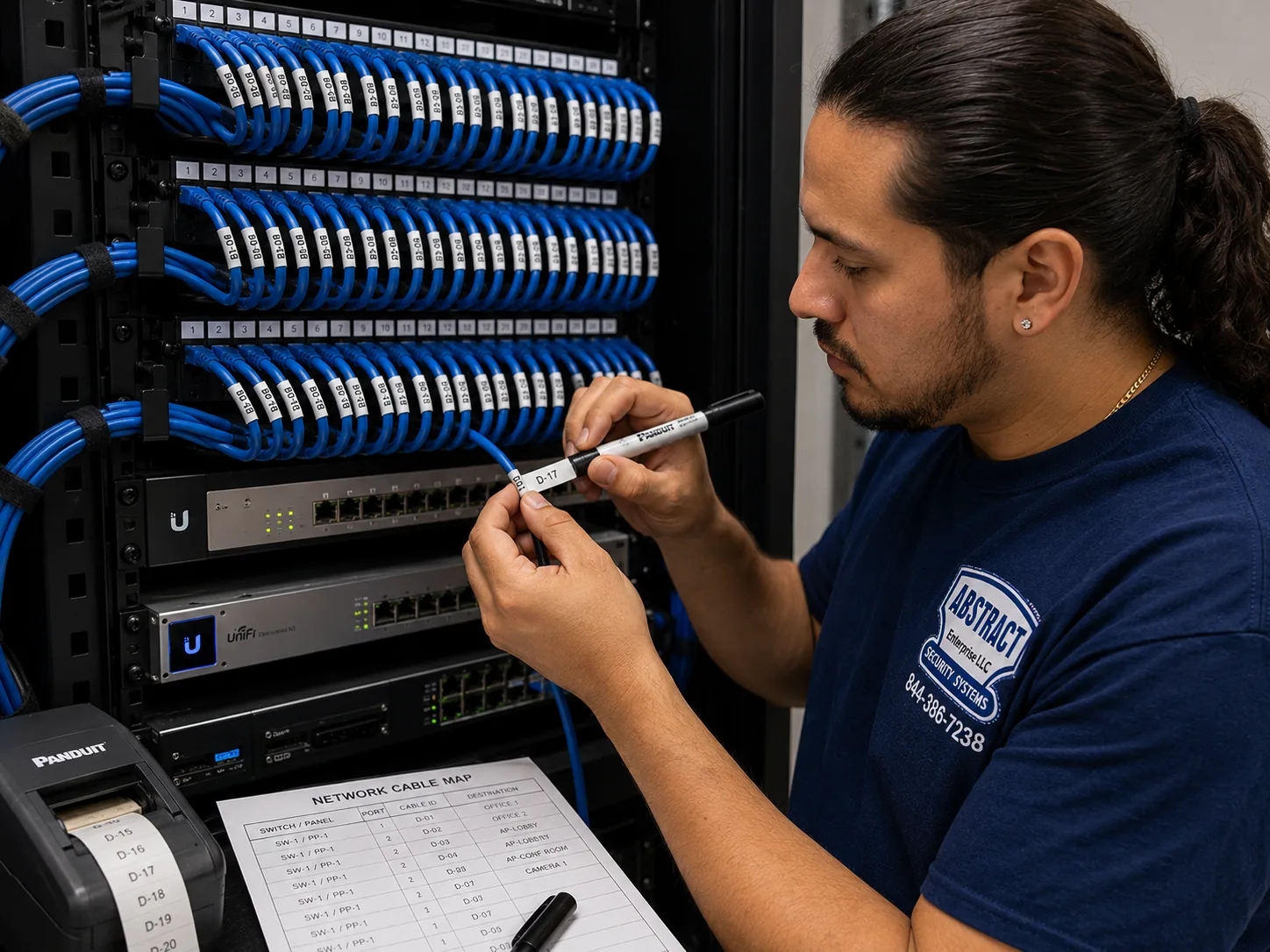
If you are not sure whether the problem is a camera, the power, the recorder or the internet, ask before you spend money or press a button you cannot undo. Call now at (347) 934-8335, send a fast quote request, or send a photo of the recorder screen to a tech on WhatsApp. Same-day estimates are available on most days, and requests are booked within 2 hours.
Tell us the cross streets, the kind of building, how many cameras there are, which ones are out, when it started and where the recorder sits. If you need a clip, give us the date and time window. A technician will come back to you with the likely cause and the next step for the Cypress Hills address, or you can call (347) 934-8335 now.

A photo of the recorder screen, its label and your cross streets, plus whatever happened first: a break-in nearby, a new counter or gate, siding or roof work, or a new internet provider.
Homeowner, landlord, store, managing agent or church: we confirm who owns the system, who holds the password and who approves the price, and arrange a certificate of insurance if needed.
The $150 Brooklyn service call puts the visit on the schedule in a two-hour arrival window once it is paid, with cellar, roof, yard or back-room access arranged ahead.
Any clip you asked for is exported to USB with the recorder's own timestamp, and the clock is checked against real time, before anything is restarted or changed.
Power and battery backup, the power box or PoE switch, the recorder and drive, the cable and connectors, then each camera, in that order.
You hear what failed and why and get a written repair price before any part is replaced, with the service call credited to it.
Only the failed part is repaired or replaced, then every camera is checked live and in playback, and after dark when the complaint was about night pictures or glare.
Traced cables are labeled, phone viewing is confirmed for each person who needs it, failure alerts are switched on and the notes stay on your job record.
The 141-acre park on the BrooklynβQueens border, opened in 1901 as Ridgewood Park, with the old Ridgewood Reservoir beside it; the hill streets below it hold many of the neighborhood's frame houses.
The 225-acre cemetery dedicated in 1848, with its Brooklyn gate at 833 Jamaica Avenue, whose dark ground across the avenue shapes the night pictures of the shops facing it.
The elevated J stop at Jamaica Avenue and Hemlock Street, opened in 1893, the last Jamaica Line station in Brooklyn before the line crosses into Queens.
The J and Z stop on Fulton Street at Cleveland Street, at the end of the block where the smoke shop at 2945 Fulton Street was robbed in February 2026.
The former English Evangelical Lutheran Church of the Reformation, completed in 1908 and nominated to the State and National Registers in 2023, now the Citadel Cathedral of Praise and Worship.
The station house at 1000 Sutter Avenue that covers Cypress Hills and East New York, and the precinct most local footage requests come from.
We also serve the neighborhoods around Cypress Hills, including East New York to the south and west, Bushwick to the northwest, and Highland Park, Ridgewood and Woodhaven across the Queens line, at the same rates. Next door, our Bushwick camera repair page covers the blocks beyond the Cemetery of the Evergreens, Woodhaven and Ridgewood are on our Queens security camera repair page, and the whole borough is on our security camera repair in Brooklyn page.
Cypress Hills is billed at our Brooklyn rate. Every repair starts with the $150 service call, which covers the on-site diagnosis and the written repair price and is credited to the repair if you go ahead. The ranges below are taken from our published Brooklyn security camera repair prices; your exact price is written down at the visit, once we know what failed. A visit goes on the schedule once the service call is paid. For comparison, HomeAdvisor's Brooklyn page puts the average surveillance camera install or repair job at $1,416, with a typical range of $680 to $2,145, a figure that mixes new systems in with repairs.
| Repair | Brooklyn price |
|---|---|
| Service call, on-site diagnosis and written repair price | $150, credited to the repair |
| Settings with no parts: aim, exposure, anti-flicker, motion, alerts, app, clock | Usually within the $150 service call |
| Clean and check for a blurry picture | $80 |
| Connector reterminate or PoE port swap | $150β$350 |
| Power supply repair | $150β$400 |
| Indoor camera repair | $200β$450 |
| Hard drive swap, by capacity | $200β$450 |
| Single camera replacement on a working system | $250β$600 |
| Night vision camera repair | $250β$650 |
| DVR not working, including drive and labor | $300β$700 |
| NVR not recording, by model | $400β$900 |
| Vandalized camera, per camera plus cable repair | $400β$900 |
| PTZ camera repair | $450β$1,200 |
| Hybrid recorder swap, channels reconfigured | $700β$1,200 |
| New recorder with drive, partial rewire, or several cameras at once | $700β$1,500 |
| Full rewire or whole-building overhaul | From $1,500 |
| Annual maintenance visit | $250β$800 |
Three things move a Cypress Hills repair within those ranges. The first is reach: a camera at the top of a frame house above a long flight of steps, on a pole at the end of a lot or under a porch roof needs more time and ladder work than one in a hallway. The second is finding the system: a two-family or store with cameras from several installers, no labels and a recorder in a cramped space takes longer to trace than a house with one recorder and four cameras. The third is whether a clip has to be saved from a struggling recorder before it can be repaired. If the price changes on site, you hear the new number before work continues. Doing the camera repair together with intercom, alarm or cabling work on the same visit saves $200 to $400 in labor on our Brooklyn list.
Full terms β including 50% deposit, one-year parts-only warranty on AESS-supplied products, and the late-fee schedule β are set out in the service agreement.Three ways Cypress Hills repairs usually come together, priced from the Brooklyn list above. Each starts with the $150 service call, credited to the repair, and your written price follows what the diagnosis finds.
One fault, one visit: a worn drive replaced, a power box or switch port fixed, a leaking frame-house camera resealed, a counter camera moved off the glare of a new partition, or a door camera re-aimed to take in the lot behind the store.
The recorder, the wiring or several cameras: a DVR or NVR replaced with a new drive and every camera set up again, a hybrid recorder so older coax cameras can stay, a second camera at the bottom of the stairs, or the recorder moved off a damp cellar floor.
A yearly check before winter: recording and drive health confirmed, clocks set, battery backup tested, connectors on porches, siding and poles resealed, night pictures checked, and failure alerts tested, from a house to a store with a lot.
Bring your own equipment. If you have already bought a replacement camera or recorder, we can fit it at labor-only rates. Tell us the exact model and we quote the labor by phone or text, and the visit is booked once it is paid. We cannot vouch for parts we did not supply, and if the model you bought will not work with your recorder, we tell you before the visit rather than on it.
Dark cameras, corroded plugs, leaking siding entries and runs cut by roof or porch work. Request a repair
DVRs, NVRs and hybrids that stopped saving, and clips that need rescuing. Brooklyn camera repair service
The full list behind every number on this page. Camera repair prices in Brooklyn
Owners and managers with properties in more than one borough. AESS security camera repair across NYC
Many recorders export video in their own file format, which plays only in the maker's player program. Most recorders can also export a common format such as MP4, or include the player on the USB drive. When we save a clip for you we export it both ways, so an investigator, an insurer or a relative can open it on any computer.
Not well with its infrared on. The infrared light bounces off the glass straight back into the lens, so the camera sees a white glare instead of the street. With the infrared switched off and enough outside light, such as a porch light or a street light, a camera pressed close to the glass can see out. For a dark yard, a camera mounted outside is the better answer.
Only if the recorder cannot handle the newer camera. Many recorders accept cameras of different resolutions side by side, but an older recorder may not support a 4K camera at full quality, or at all. We check the recorder's model and limits before recommending a replacement, so the new camera is not wasted on a recorder that cannot use it.
On that recorder, yes, eight cameras is its limit. If you need more, the choices are a recorder with more channels, which can usually take over the existing cameras and cable, or in some network systems a second recorder viewed in the same app. We count what you have and what you want before suggesting either.
They can be, especially where the street is dark at night. A camera that switches on a light when someone walks up records a color picture and lets the person know they are being filmed. The siren is more of a judgment call on a busy corridor, where it may go off for passers-by. We can set the light to come on without the siren, and only during the hours the store is closed.
A solid fence post or a dedicated pole, yes. A tree, we avoid, because it moves in the wind, grows around the bracket and shakes the picture enough to set off motion alerts. Wherever the camera goes, its cable needs a protected run back to the house, which we price before we start.
Yes, though the fix is often the panel rather than the camera. A solar camera that runs flat usually has a panel in shade, a dirty panel, a battery that no longer holds a charge, or a winter sun too low for where the panel was placed. We test the battery and the panel's output and move the panel if the spot is the problem.
Only to set up or test the app on it, and only with you there. We bring our own equipment to test the cameras and the recorder. At the end of the visit we check live view and playback on the phone of each person who needs access, with that person entering their own password where possible.
A clean, dry microfiber cloth and a gentle wipe, nothing more. Avoid paper towels, household glass cleaner and rough cloths, which can scratch the dome or the lens cover. If the lens is out of reach, leave it for a visit, because a ladder on porch steps or a slope is how most falls happen.
Power over Ethernet. The camera gets its power and sends its video through one network cable, from a PoE switch or a recorder with PoE ports. It means there is no separate power adapter at the camera, so when a PoE camera goes dark the switch or recorder port that powers it is one of the first things we test.
Many can. Most recorders and apps can send a phone notification with a snapshot, and many can also email one when a camera detects a person. We set it on the cameras where it is useful, such as the front door, and keep it off the busy ones so you are not flooded with messages.
Small and discreet cameras exist, and on a storefront or a porch a less visible camera is sometimes harder to cover or turn. In most places, though, a visible camera also discourages people, and hidden cameras in private areas such as bathrooms or bedrooms are never acceptable. We will talk through what you want to protect and suggest the right mix.
Security Camera Repair Brooklyn | Same-Day | Brownstone Pros Β· Security Camera Repair NYC | Same-Day | Abstract Enterprises Β· Security Camera Repair Manhattan | Same-Day | Co-op COI Β· Security Camera Repair Queens | Same-Day | Driveway Pros Β· Security Camera Repair Bronx | Same-Day | Home Base Β· Security Camera Repair Staten Island | Same-Day | Sandy Zone Β· Security Camera Repair Long Island | Nassau & Suffolk Β· Security Camera Repair Hudson Valley | Westchester to Ulster Β· Security Camera Repair Nassau County | Same-Day Β· Security Camera Repair Suffolk County | Hamptons + East End Β· Security Camera Repair Westchester County | Same-Day Β· Security Camera Repair Rockland County NY | Nyack, Suffern Β· Security Camera Repair Orange County | Newburgh, Goshen Β· Security Camera Repair Putnam County NY | Carmel, Mahopac Β· Security Camera Repair Dutchess County | Poughkeepsie Β· Security Camera Repair Ulster County | Kingston Woodstock
Security Camera Repair Bath Beach Brooklyn NY Β· Security Camera Repair Bay Ridge Brooklyn NY | AESS Β· Security Camera Repair Bedford-Stuyvesant Brooklyn NY Β· Security Camera Repair Bensonhurst Brooklyn NY | AESS Β· Security Camera Repair Bergen Beach Brooklyn NY Β· Security Camera Repair Beverley Square Brooklyn NY Β· Security Camera Repair Boerum Hill Brooklyn NY Β· Security Camera Repair Borough Park Brooklyn NY Β· Security Camera Repair Brighton Beach Brooklyn NY Β· Security Camera Repair Brooklyn Chinatown Brooklyn NY Β· Security Camera Repair Brooklyn Heights, Brooklyn NY Β· Security Camera Repair Brooklyn Navy Yard, Brooklyn NY Β· Security Camera Repair Brownsville Brooklyn NY | AESS Β· Security Camera Repair Bushwick Brooklyn NY | AESS Β· Security Camera Repair Cadman Plaza Brooklyn NY
Fire Alarm Installation Cypress Hills Brooklyn NY Β· Access Control Installation Cypress Hills Brooklyn NY Β· TV Installation Cypress Hills Brooklyn | (347) 934-8335 Β· Alarm Installation Cypress Hills Brooklyn NY | Porches Β· Door Buzzer Installation Cypress Hills Brooklyn NY Β· Door Buzzer Repair Cypress Hills Brooklyn NY | Lobbies Β· Security Camera Installation Cypress Hills Brooklyn NY Β· Structured Cabling Installation Cypress Hills Brooklyn NY Β· Intercom Installation Cypress Hills Brooklyn NY
Send a photo of the recorder screen, the label on the recorder and your cross streets, and we will tell you what most likely failed and what that kind of repair costs on our Brooklyn list. The $150 service call is credited to the repair, the price is written down before any part changes, and requests are booked within 2 hours. Abstract Enterprises Security Systems has been owner-operated since 2002, holds NYS license #12000287431, is rated 4.7β across 201 Google Reviews, and sends Brooklyn crews out from our Troy Avenue office.
Prefer to send photos? Message a technician on WhatsApp.