Store camera dark on New Lots Avenue, a laundromat recorder that keeps shutting off, or a two-family whose cameras died with the tenant's electric account? New Lots camera repair line, booked within 2 hours: (347) 934-8335
Two-Families Over Cellars · Storefronts on New Lots, Livonia, Sutter and Van Sinderen Avenues · Laundromats, Delis and Auto Shops · Walk-Ups and New Buildings Near the 3 Line
Security Camera Repair in New Lots
Any Brand, Any Installer · Footage Saved Before Anything Is Touched · Written Price Before Parts · Alerts Set So It Never Fails Quietly Again
Security camera repair in New Lots starts with our $150 Brooklyn service call, which pays for the on-site diagnosis and is credited to the repair if you go ahead. On our published Brooklyn list, most single faults cost $150 to $700, and replacing a recorder or rewiring several cameras runs $700 to $1,500. We fix systems other people put in, from the cellar recorder of a brick two-family off Hegeman Avenue to the counter cameras of a deli on Sutter Avenue, a laundromat on Livonia Avenue or an auto shop's lot on Van Sinderen Avenue. Requests are booked within 2 hours, visits come in two-hour arrival windows, and you hear what failed and get a written price before any part is replaced.
Every price on this page comes from our published Brooklyn camera repair list, and your own repair price is written down before work starts
Rated 4.7★ across 201 Google Reviews
Reviewed and updated November 12, 2026, against the NYC Department of Small Business Services' Avenue NYC study of the New Lots, Livonia, Sutter and Van Sinderen Avenue corridors (2024–2025); the NYPD's 75th Precinct page and its October 2026 CompStat report; city and PACT notices on cameras at Boulevard Houses and BK Reader's January 2025 report there; the Citizens Housing and Planning Council's 2023 study of Community District 5; the USGS 1976 report on eastern Brooklyn's water table; HPD intercom violation data for East New York–New Lots; the New York Housing Conference on Livonia Commons; ABC7's 2022 report on store-gate burglaries; the Landmarks Preservation Commission's permit guidebook; Brick Underground on landlords and footage; HomeAdvisor's Brooklyn cost page; CCTVForum and installer guides on recorder failures; New York Labor Law §203-c; and the New York Department of State on CCTV installer licensing. · Abstract Enterprises Security Systems, NYS license #12000287431 · crews dispatched from our Troy Avenue office in Brooklyn
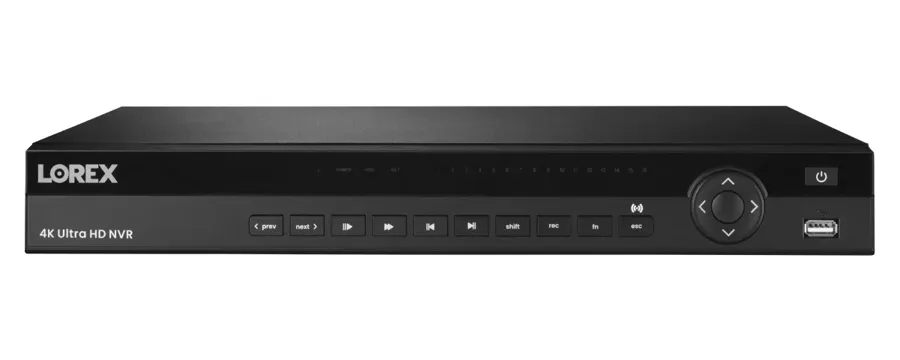
A product photo from the AESS job library, not taken in New Lots: a 16-channel network video recorder. In a New Lots two-family this box usually sits on a cellar shelf near the boiler or the internet modem; in a deli, laundromat or check-cashing store it lives in a back room, under the counter or in the cellar below the shop. Most of our repairs start at this box, because it holds the footage, it shows which cameras dropped and when, and it is the part of the system that quietly stops doing its job while every camera still looks fine from the street.
New Lots Camera Repair Request
House, two-family, walk-up, store, laundromat, church or auto shop: send the address and what the screen shows, and a technician calls back with the next step
✅
Request Sent!
Thank you. A technician will contact you about the New Lots address shortly.
25+
Years Experience
✓
Same-Day Estimates
100%
Licensed & Insured
4.7★
201 Google Reviews
Owner-operated since 2002 · Thousands of jobs completed · Booked within 2 hours
Security camera repair in New Lots is mostly about systems that stopped working without telling anyone. The cameras are still on the wall, the little lights still glow, and the store owner or homeowner has no reason to look until the morning after something happens. Then the playback shows a black square, a frozen picture from three weeks ago, a drive that filled up and quit, or a camera that was sprayed over at two in the morning and never cleaned. Here the people who own the cameras are also running the register or the household, so nobody's job is to check the recorder. Our repair has two halves: find and fix what failed, and then set the system up to tell you, on your own phone, the next time a camera goes dark or the drive stops saving. On a New Lots house or storefront the usual causes are a hard drive worn out by recording around the clock, a power supply or switch that died in an outage, cameras powered from the wrong apartment's outlet, connectors that let in water, and light that changed since the camera was aimed. Send a photo of the recorder screen to (347) 934-8335 or on WhatsApp, and we will tell you the likely fault and what that kind of repair costs on our Brooklyn list before you book.
Looking at your photos costs nothing. The $150 service call covers the on-site diagnosis and is credited to the repair if you go ahead.
All work is done under New York State license #12000287431, the license the state requires of companies that install or service security and CCTV systems for other people.
We repair any brand and any installer's work, and we say plainly when an old recorder or camera is not worth the money to fix.
The Neighborhood
Why New Lots Properties Need Security Camera Repair
New Lots is the southern, older part of East New York, the core of the old Town of New Lots that split from Flatbush in 1852 and became Brooklyn's 26th Ward in 1886. Today it is a neighborhood of brick two-families and attached houses over cellars, three- and four-family houses, walk-ups, public housing such as Boulevard Houses, a handful of new buildings along Livonia Avenue, and storefront corridors on New Lots, Livonia, Sutter and Van Sinderen Avenues, with the 3 line running overhead on Livonia to its last stop at New Lots Avenue. That is all the history this page needs. What matters for a camera repair is who owns the cameras and how they are looked after, and in New Lots the answer is almost always: a small owner, alone or with one helper, who bought a system once and has not had a reason to open its menu since.
The city's own numbers show it. In its Avenue NYC district study of the New Lots, Livonia, Sutter and Van Sinderen corridors, carried out with the Cypress Hills Local Development Corporation between July 2024 and June 2025, the Department of Small Business Services counted 367 storefronts. The merchants it surveyed had a median of two full-time employees, 72 percent rented their space and 77 percent had no website. Salons and barbershops were the largest group, at 48, followed by 41 delis, bodegas and smoke shops, 33 houses of worship and nonprofits, 22 medical offices, 14 auto businesses, 10 laundromats, 7 check cashers and 6 phone stores. When the study asked what should change on the corridors, safety came first for 66 percent of merchants and 67 percent of shoppers. These businesses have cameras, and rarely anyone whose job is to notice when one stops recording.
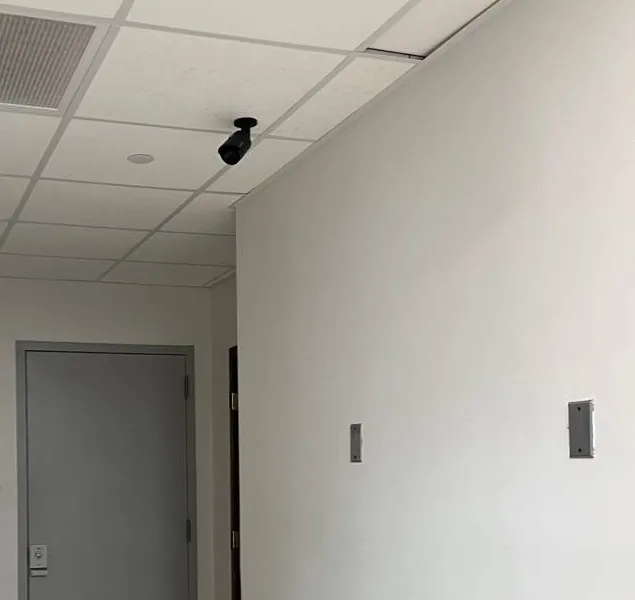
A photo from the AESS job library, not taken in New Lots: a small black bullet camera hanging from a white ceiling-tile grid and aimed down a short corridor at a grey steel service door. In New Lots this is the camera that watches the back door of a deli, the hall to a laundromat's boiler room or the corridor behind a clinic's waiting room. Because it hangs low, anyone walking toward the door can reach it, so on a repair we often move it higher or give it a second camera that keeps the first one in view.
The second reason repairs pile up is the way the corridors work. The same study found storefront gates "closed at odd hours", graffiti on gates, illegal dumping, and an elevated line over Livonia Avenue that keeps the street in shade and makes it feel less safe at night. It also found that 21 percent of the 367 storefronts were empty, against a citywide average of 12.1 percent, and on Van Sinderen Avenue the figure was 81 percent. A camera on a block like that watches a gate that is down while the owner is out, a side wall where people dump bags at night and an empty storefront next door. When it fails, nobody notices, because it was the only thing looking.
The third reason is how the homes are built and shared. The Citizens Housing and Planning Council's 2023 study of Community District 5, which takes in East New York and New Lots, counted about 16,000 one- to three-family properties, nearly 9,000 of them two-family homes with space below grade. Of the homes it assessed, 69 percent had cellars and 31 percent had a door leading straight out of the basement or cellar. In those houses the recorder almost always ends up in the cellar, beside the boiler and the internet modem, often on a shelf an installer picked years ago, and the cameras often draw power from whichever apartment's outlet was nearest. The cellar is also where water arrives: a USGS study in 1976 recorded the water table under this part of Brooklyn rising from about 12 feet below sea level in 1936 to 8 to 10 feet above it after the wells stopped pumping, with basement flooding reported from 1975 on. A recorder on a damp cellar shelf, powered from a tenant's circuit, is one of the most common New Lots repair calls we get.
Public housing adds its own layer. In 2014 the city began a $500,000, City Council-funded camera installation at Boulevard Houses, and the development's current PACT partner lists "increased security cameras throughout the campus" among its work. Those cameras belong to the landlord, and residents describe how slowly fixes can come: "A lot of the kids come in, and the door is not fixed," Boulevard Houses resident Latoya Druck told BK Reader in January 2025 about a broken entrance lock. The private houses and stores across the street from those campuses want their own systems working because they cannot count on anyone else's.
So a camera repair in New Lots means getting the system recording again, and making it report on itself so that the next failure is a text message on a Tuesday afternoon rather than a black screen on the morning a detective asks for video. Many owners pair the repair with a check of the door buzzer or video intercom at the same entrance, because in these buildings the same front door carries both.
Six New Lots facts that shape a camera repair
The owner is the IT department. The 2024–2025 Avenue NYC study found a median of two full-time employees among New Lots corridor merchants, and 77 percent had no website. So the repair has to include alerts that reach the owner's phone.
One precinct covers the neighborhood. The 75th Precinct, at 1000 Sutter Avenue, covers East New York and Cypress Hills. Its CompStat report for the week of October 12, 2026 showed 145 burglaries so far that year, down from 192 at the same point in 2025 and far below the 2,433 recorded in 1990.
Many cameras record around the clock. Delis, bodegas and laundromats keep long hours, and their recorders write video every minute of every day. Installers on CCTVForum put the working life of many DVRs at five to seven years, with the hard drive the part that usually goes first.
Cellars hold the recorders, and the cellars get damp. Nearly 9,000 two-family homes in Community District 5 have space below grade, and the USGS has documented the rise of the water table under this part of Brooklyn since the 1970s.
The front door often holds two systems. HPD's open data lists 489 intercom violations in East New York–New Lots at 227 buildings, 45 of them on New Lots Avenue and 41 on Hegeman Avenue. Where a door station has a camera, one often gets fixed and the other forgotten.
Repairs are priced by the fault, not the ZIP code. HomeAdvisor's Brooklyn page puts the average surveillance camera install or repair at $1,416, with a typical range of $680 to $2,145 for all job sizes; a single repair on our Brooklyn list usually lands between $150 and $700.
Where this page applies. It covers New Lots from Livonia Avenue and the blocks around the New Lots Avenue station south through New Lots Avenue, Hegeman Avenue and Linden Boulevard, and from Van Sinderen Avenue on the Brownsville side east past Pennsylvania Avenue toward Linwood Street, the same stretch the city's district study used, including the houses around the New Lots Reformed Church, Boulevard Houses and the Livonia Avenue corridor. For the rest of the borough, see our main Brooklyn security camera repair page. The price follows the fault, not the address.
Same-Day Repair in New Lots
Need Repair in New Lots? A Store Camera That Missed the Night, a Cellar Recorder That Quit, or a Clip the Precinct Wants Today
Urgent camera calls from New Lots come in three kinds. The first is the morning-after call: a gate was cut, a window was broken, the register was opened, a package went missing from a stoop, or a car on the block was damaged, and the owner needs the video now. The second is the after-outage call: the block lost power, or the store's power was cut for work in the building, and when it came back the recorder did not, or it came back missing half its cameras, or it started beeping and has not stopped. The third is the quiet discovery that nothing has been saved for weeks.
If you need footage from an incident, leave the recorder running. Do not restart it, unplug it, press any button the screen offers about the disk, or let a helpful relative reset it. Most recorders overwrite their oldest video once the drive is full, so the clock is already running on the clip you need. Call (347) 934-8335, give us the date and time window, and we book the visit with saving that footage as the first task. If a detective from the 75th Precinct has asked for a copy, say so when you book; the clip is exported to USB with the recorder's original timestamps, and we note the recorder's clock against the real time so the time on the video is never in doubt.
For everything else the path is the same. The $150 service call books a two-hour arrival window, the technician finds the cause, and you get a written price before any part is replaced. Requests are booked within 2 hours. We do not promise that the repair itself happens the same day, because some parts have to be ordered, but most single-camera, power and hard drive faults are fixed on the first visit when the part is on the truck.
What We Install
Security Camera Repair Services in New Lots
Every repair below is priced from our Brooklyn camera repair list. The service call pays for finding the fault. The repair itself is priced by what failed, how many cameras it touches and how hard the run is to reach, whether that is a camera over the side door of a two-family off New Lots Avenue or one at the back of a fenced lot on Van Sinderen Avenue.
Silent-failure recovery
Systems that look alive but saved nothing: drives that filled and stopped, recording schedules switched off, cameras dropped from the recorder after an update. We restore recording, confirm how many days the drive really holds, and turn on the alerts that tell you when it stops again.
Worn hard drives in all-day recorders
Recorders in delis, bodegas, laundromats and check-cashing stores that write video every hour of the year. We read the drive's health, copy off anything you need, and replace it by type and capacity before it takes the footage with it.
Dead camera diagnosis
One camera with no picture, tested at the camera, along the cable and at the recorder, so only the failed part is replaced. On New Lots houses the fault is often the connector or a plug-in adapter at the far end, which costs far less than a new camera.
Power and outage recovery
Systems that came back wrong after the block lost power or the building's power was cut for work: dead switch ports, blown power-box fuses, recorders stuck on a setup screen, and clocks reset to a factory date. We restore settings and add battery backup where it belongs.
Vandalized and painted cameras
Domes sprayed over, cameras turned to face the wall, housings knocked loose above a gate or a side door. We clean or replace covers, remount cameras out of reach and turn on the alert for a blocked or covered lens.
Picture and light fixes
Faces that turn into black shapes against a sunny glass door, white glare at night from the bars of an iron security door, and stairwells that stay dark until the lights wake up. Most fixes are settings, aim and light, not a new camera.
Cable and connector repair
Runs crushed in a driveway or a lot, chewed in a cellar, cut during a renovation, or full of water where they pass through brick. Repaired, re-terminated or replaced, and tested end to end.
Phone viewing and logins
Apps that lost the recorder after a new router, systems set up on a relative's or a former worker's phone, and recorders whose password left with the installer. We restore access for the right person, change default passwords and set up separate logins for staff.
Footage export for incidents
Clips copied to USB with original timestamps for detectives, insurers, landlords and boards, with a written note of any difference between the recorder clock and the real time.
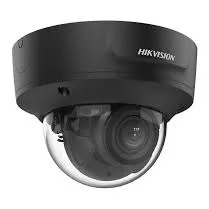
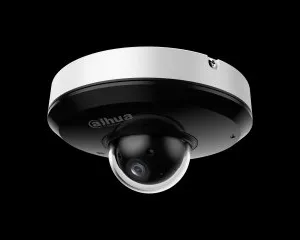
A product photo from the AESS job library, not taken in New Lots: a black varifocal dome camera. Its zoom lens can be set on site to fill the picture with a doorway or a counter instead of the whole room. In a New Lots deli or check-cashing store, a dome that "works" but shows the front door as a small patch at the edge of the screen is one of the cheapest things to fix on a repair visit: the camera stays, and only the lens setting and the aim change.
Building Specialists
Security Camera Repair for New Lots' Architecture
Six kinds of property make up nearly every camera repair call we take from New Lots. Each one breaks in its own way, and each decides where the recorder ends up, which outlet powers the cameras, how the cables reach the street and who has to say yes before the work starts.
Brick two-family over a cellar
Two apartments stacked over a cellar, one often owner-occupied, with the recorder on a cellar shelf and cameras at the front door, the side path, the yard and the cellar door.
Attached row houses
Rows of attached brick houses, older ones from the early twentieth century and owner-occupied rows built since the 1980s, where one installer often wired several houses the same way.
Three- and four-family houses
Larger frame and brick houses with several households, shared halls, more than one front door, and cameras added over the years by owners and tenants alike.
Walk-ups and older apartment buildings
Four- and five-story buildings with a vestibule, a staircase, a cellar and a super, where the camera system and the intercom share the front door and often the same neglect.
New buildings on Livonia Avenue
Recent affordable and supportive housing with stores on the ground floor, where the builder's camera system is new, large and often understood by nobody who still works there.
Store with apartments above
Two- and three-story buildings on New Lots, Livonia and Sutter Avenues with a shop at street level and apartments upstairs, where the store's cameras and the building's cameras share a cellar and sometimes a recorder.
The brick two-family: one recorder in the cellar, two households upstairs
The commonest New Lots house we work in is a two-story brick two-family with a cellar below, a stoop or a few steps at the front, a side path to the yard and often a separate cellar door. The CHPC study counted nearly 9,000 two-family homes with below-grade space in Community District 5 alone, and in our experience the recorder in most of them sits on a cellar shelf near the boiler, the water meter and the internet modem, because that is where the installer found an outlet and the cables from the front and back could meet. Cellars here are damp, the recorder breathes that air through its fan all day, and a low shelf near the washing machine catches every leak.
The bigger surprise for owners is power. In many two-families the cameras or the recorder were plugged into the nearest outlet, and the nearest outlet belonged to the downstairs apartment's circuit. When that tenant moves out and the electric account is closed, or a breaker on that panel trips, the cameras die with it, and the owner upstairs has no idea why. On a repair we trace which panel feeds the recorder, the switch or the power box and every camera, and where it makes sense we move the system onto the owner's own circuit. We do not do electrical work ourselves, so if a new outlet is needed on the owner's side we tell you exactly what and where, and an electrician adds it before we move the equipment. Then the recorder goes up off the floor, onto a shelf or a wall bracket above the damp, with a battery backup beside it.
Attached row houses: one installer, one mistake, a whole block
Rows of attached houses tend to have been wired the same way, often by the same small installer working door to door. That means the same faults show up all along the row: the same cheap power adapters failing in the same winter, the same connector type taking in water at the same spot under the cornice or the porch roof, and the same cable route through the same corner of the cellar ceiling. When one house on a row calls us, we can often tell from the first camera what the next one will look like.
In the newer owner-occupied rows, cables were often laid before the basement ceiling went up, so we find a break by measurement from both ends before opening anything, and price any access panel first.
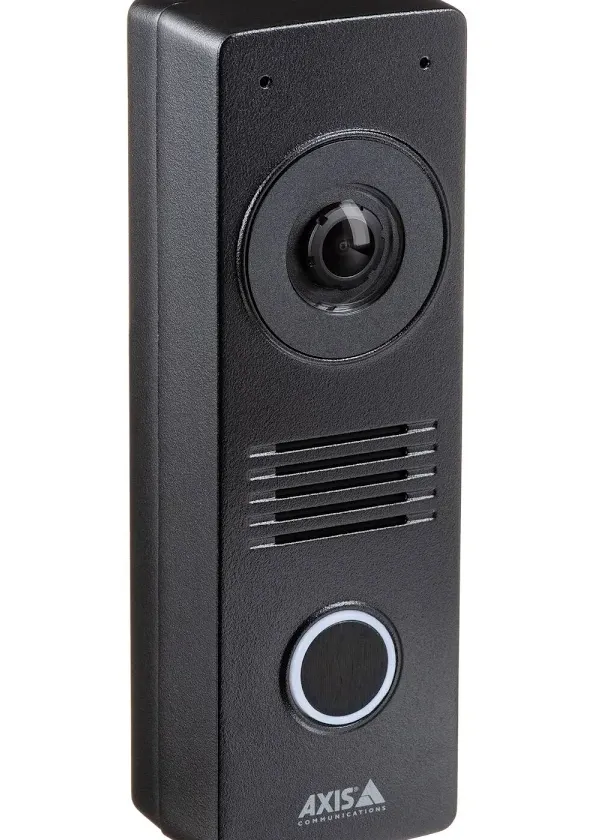
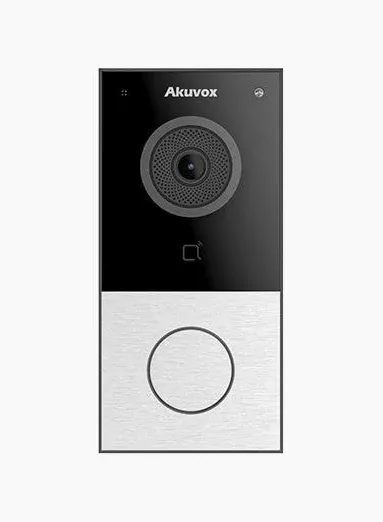
A product photo from the AESS job library, not taken in New Lots: a black video intercom door station with a camera lens, a speaker grille and a lit call button. On a New Lots three-family or a walk-up, the front door often has a door station like this beside a separate camera system, each with its own app and its own power. When we repair the cameras at that door we check whether the door station's camera is reaching the right phones too, and whether it records at all or only shows a live picture when someone presses the button.
Three- and four-family houses: cameras from everybody
The larger houses carry more households and more history. In a three- or four-family the cameras are often a mix: a wired system the owner put in, a Wi-Fi camera a tenant stuck in a window, a video doorbell on one of the two front doors, and a door station or buzzer panel at the other. None of them know about each other, and the first hour of a repair is often spent working out which cameras exist, where each records and which belong to a tenant.
The repair starts with a drawing of the house as it is now: each camera, the recorder it feeds, the outlet that powers it and the person who can see it. Then we fix what failed on the owner's system, move the owner's cameras onto the owner's power and internet where that is practical, and set up separate viewing for each household where the owner wants that. A tenant's own camera is left alone without their permission.
Walk-ups and older apartment buildings: the front door gets the attention, the cellar gets the recorder
The four- and five-story buildings along and between the avenues follow a pattern: an outer door and a vestibule, a staircase, a cellar with the boiler and the meters, and a super who may or may not live on site. HPD's open data shows how much attention the front doors of these buildings get: 489 intercom violations at 227 buildings in East New York–New Lots, including violations written in 2024 at 316 New Lots Avenue for a broken intercom in the foyer. The cameras at the same doors are not covered by any such rule, so they tend to fail without anybody being ordered to fix them.
The faults follow from that. Drives are full and set to record over themselves in a few days, so by the time a tenant asks about a stolen package the clip is gone. The vestibule camera hangs low enough to be turned or covered. And the recorder login belongs to a former super or the company that put it in. A repair here means fixing the cameras, setting the drive to hold enough days for the building to answer a request, putting the login in the owner's or managing agent's name, and, where the owner wants it, checking the intercom at the same door on the same trip.
New buildings on Livonia Avenue: big systems, short memories
The newest buildings in New Lots are along the Livonia Avenue corridor. The New York Housing Conference describes Livonia Commons as four buildings with 278 affordable apartments and 51 supportive units and about 28,000 square feet of stores and community space. Buildings like these come with large camera systems, a telecom room full of switches, and a management office that inherited the passwords from the builder's contractor.
The faults we see in new buildings are rarely the hardware: a switch that lost power when a breaker was reset, cameras that stopped recording after a firmware update, a drive set to keep too few days, and stair cameras dark until motion lights come on. We map the telecom room and settings before any parts. Where the building's own contractor still holds a service agreement, we check that before we work, so the owner is not paying twice or voiding something they rely on.
The store with apartments above: two owners, one cellar
Along New Lots, Livonia and Sutter Avenues many buildings are two or three stories, with a store at street level and apartments above. The store's cameras watch the counter, the door, the stockroom and the gate; the building's cameras, if there are any, watch the residents' door beside the shop and the stairs. Both systems usually end up in the same cellar, and in some buildings on the same recorder, because whoever put the second system in found the first one already there.
The repair starts by sorting out ownership. Which cameras are the store's, which are the building's, who pays for each fix, and who should be able to see what. Then we make the two systems independent where they need to be, so the store can change its recorder or its internet without blacking out the residents' door, and a landlord's repair upstairs does not cut power to the store's cameras.
Field Notes
Field Notes: Bringing a New Lots Store System Back From a Silent Failure
These notes describe how our technicians work through a typical New Lots deli, laundromat or small shop whose owner has just found out the recorder has not saved anything useful for a while. It is our working order, not a story about one address.
Save what is there. Before anything is restarted, the technician exports whatever the recorder still holds for the dates the owner cares about, and notes the recorder's clock against the real time.
Read the recorder's own record. Most recorders keep a log of disk errors, video loss, power loss and logins. That log usually says when the system actually stopped working, which is often weeks before anyone noticed, and whether it was the drive, the power or a single camera that went first.
A product photo from the AESS job library, not taken in New Lots: a mini pan-tilt dome camera with a white housing over a black lens dome. A camera like this can sweep a laundromat floor or a store's aisles on a preset tour, which looks thorough but means it may be facing the wrong way at the moment something happens. On a New Lots repair we often park it on the one view that matters most, usually the door or the counter, and let fixed cameras cover the rest.
Check the shelf before the ceiling. The technician looks at where the recorder lives: the heat around it, the dust or lint on its vents, the outlet and power strip it shares with a cooler, a dryer or a compressor, and whether it is on a battery backup at all.
Walk to every camera that matters. At each dark or weak camera, power and signal are tested at the camera, and the connector, bracket and cable entry are checked for water, paint or damage.
Price before parts, then make it report on itself. The owner hears the cause and gets a written price before anything is replaced. When the repair is done, every camera is checked by day and under the real night lighting of the block, and the recorder is set to send the owner's phone an alert for video loss, disk errors and a full or missing drive. The owner leaves with the logins and a list of what is connected where.
Fault by Fault
Worn Drives, Full Disks, the Wrong Meter, Changing Light and Spray Paint: Why New Lots Camera Systems Fail Quietly
Six causes account for most of the camera failures we find on New Lots houses, buildings and storefronts. What they share is that none of them announces itself. Knowing which one you have is the difference between a $150 visit and a new system.
Worn drives: the recorder that never gets a day off
A recorder in a deli, a bodega or a laundromat writes video every minute of every day, and on many systems it is set to record continuously rather than only on motion, because the owner wants the whole day. The hard drive inside does nothing but write, and it is the part that wears out. Installers on CCTVForum describe DVRs commonly lasting five to seven years, and point to the drive as the usual first failure; a failing drive can leave a recorder stuck on its start-up screen, freeze it, or simply stop it saving while the live picture carries on. The repair is a drive rated for round-the-clock recording, sized to the days you need, with the old one's footage copied off first if anything on it matters.
Full disks: the system that is recording over itself
"Running out of storage is the most common reason" security cameras stop recording, one New York service company writes, and it matches what we find. A drive that fills up does one of two things, depending on a single setting: it records over the oldest video, so you only ever have a few days, or it stops recording altogether and waits for someone to notice. When a theft is reported a week later, a recorder that keeps four days is no better than a broken one. On a repair we check which mode the recorder is in, work out how many days the drive actually holds at the cameras' current settings, and change the settings, the drive or both until the system keeps as much as the owner needs to answer a request.
The wrong meter: cameras powered by somebody else's apartment
In New Lots two-families and three-families, and in stores with apartments above, cameras are often powered from the nearest outlet rather than the owner's. That works until the apartment's account is closed, a breaker trips in a panel the owner cannot reach, or someone unplugs the power strip. It looks like a dead system, and owners sometimes replace a recorder that was never broken; the real repair is moving the system onto the owner's own circuit, as described above.
Changing light: the picture that went wrong without the camera changing
A camera is aimed and set once, under the light of that day. Then an awning goes up, a neighbor adds a bright sign, stair lights go on motion sensors, an iron security door is fitted, or the afternoon sun swings onto a glass door. On Livonia Avenue the elevated line keeps much of the street in shade, which the city's district study noted makes the corridor feel less safe at night; in shade like that, cameras spend more of the day in their low-light settings than an installer may have expected. The fix is usually exposure, backlight and day-night settings, a small change of angle, or a light added on purpose, and only sometimes a different camera.
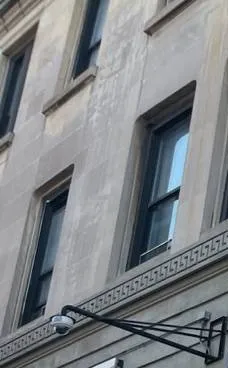
A photo from the AESS job library, not taken in New Lots: a bullet camera on a long black steel arm below a carved Greek-key band on a pale stone facade with tall sash windows. New Lots has few stone fronts like this one, but the same long arm is how a camera on a brick storefront on New Lots or Sutter Avenue can look along the sidewalk past the gate instead of straight across the street. An arm like this is also a lever: when the camera droops or swings after someone hangs on it, the bracket bolts are usually what failed, not the camera.
Spray paint and reach: the camera someone dealt with first
The same district study lists graffiti on store gates among the corridor's problems, and cameras above those gates get the same treatment. A dome sprayed black at two in the morning shows nothing from that moment on, and unless someone checks, it stays that way for weeks. Photographs in the NYCHA Federal Monitor's 2023 safety report show what happens to cameras across the city's public housing when nobody follows up: spray-painted, taped over, missing. On a private building the fix is a cleaned or new cover, a mount out of reach, and an alert for a covered lens.
Cables across lots, yards and cellars: the run that takes the abuse
Auto shops near Van Sinderen Avenue, churches with a parking area, and houses with a long side path and a garage at the back all have cameras at the end of a long run. Those runs get driven over, dug into, chewed in the cellar and soaked where they pass through the brick. A camera that drops out after rain, or that went dark the week a fence or a driveway was redone, almost always has a damaged cable or a wet connector somewhere along the way. We find the bad section and replace it on a protected route rather than the one that failed.
Commercial Security Camera Repair
Business Security Camera Repair in New Lots
New Lots businesses are small and owner-run: barbershops and salons, delis and bodegas, churches and nonprofits, clinics and medical offices, restaurants, auto shops, laundromats, check cashers and phone stores, in roughly that order of numbers in the city's district study. Their camera systems are usually one recorder in a back room, under a counter or in the cellar, with four to sixteen cameras. The repair has to fit around opening hours that are often long and irregular.
New Lots Avenue
The avenue that gave the neighborhood its name, lined with delis, barbershops, churches, clinics and two- and three-story buildings with apartments above, running past the New Lots Reformed Church at Schenck Avenue and the library at 665 New Lots Avenue.
Livonia Avenue under the el
Stores in the shade of the elevated 3 line, from Van Sinderen Avenue east to the New Lots Avenue station at Ashford Street, plus the new buildings and ground-floor stores of the Livonia Avenue corridor.
Sutter Avenue
A shopping street of delis, salons, restaurants and services at the north edge of the study area, with the 75th Precinct station house at 1000 Sutter Avenue.
Van Sinderen Avenue
The study's emptiest corridor, with 81 percent of its storefronts vacant, plus auto businesses and lots, where cameras watch long fences and yards with few neighbors nearby.
Pennsylvania Avenue
A wide north-south avenue through the neighborhood, with stores and apartment buildings, and the street with the most intercom violations in HPD's East New York–New Lots data.
Linden Boulevard and Hegeman Avenue
The southern blocks, with Boulevard Houses and other housing campuses, and the two-family streets where many of our residential calls come from.
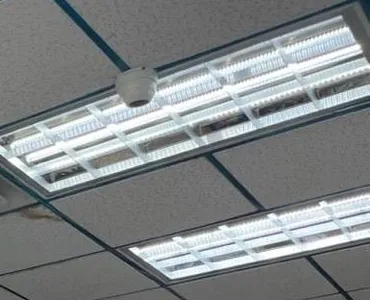
A photo from the AESS job library, not taken in New Lots: a small white dome camera on grey acoustic ceiling tiles right next to a long louvered fluorescent light. In a New Lots clinic waiting room, a check-cashing store or a laundromat, a dome placed this close to a ceiling light can be blinded by glare inside its own cover or pick up flicker, and a ceiling tile lifted for other work can leave it aimed at the wrong corner. Moving the dome a tile or two away from the light is often the whole repair.
The two-person shop: cameras that have to look after themselves
With a median of two full-time employees among the merchants the city surveyed, most New Lots stores cannot spare anyone to sit at a monitor, and many owners told the study they keep irregular hours, closing the gate for an hour to go to the bank or the wholesaler. The camera system in a shop like that has one job beyond recording: it has to tell the owner when it stops. On every store repair we set up phone alerts for video loss, a full or failed drive and a covered lens, confirm they arrive on the owner's phone, and show the owner a quick playback check that takes a minute.
Laundromats: heat, lint, water and long hours
The ten laundromats counted on the study corridors are hard places for a recorder. Dryers fill the air with lint and heat, washers put water on the floor, and many keep long hours. The recorder is often on a shelf near the machines or in a back room that shares their air, and its fan pulls lint into the case until it overheats and shuts down. Cameras over the folding tables pick up a film on their covers, so a regular cleaning belongs in the plan.
Check cashers, phone stores and delis: cash, counters and glass
Stores that handle cash or high-value stock have cameras at the counter, the door, the safe or the stockroom, and often a window or partition between the customer and the clerk. The repair questions there are about angles and glass as much as hardware: a camera that sees the customer's face through a partition without the reflections of the store lights, a second camera that sees the hands and the tray, and a recorder kept somewhere a robber cannot simply carry it out. In 2022, ABC7 reported a crew using bolt cutters on store gates across East New York and Queens, with one East New York business losing an ATM holding $7,000, a register with $3,000 and $13,000 in merchandise. The street was not reported, but the pattern is a reminder that the recorder itself should not sit in the open.
Auto shops and lots: long fences, few neighbors
With 14 auto businesses on the study corridors and most of Van Sinderen Avenue's storefronts empty, auto shops there often have nobody nearby after hours. Their cameras watch fenced lots full of customers' cars, the bay doors and the office. A lot repair usually means protected cable routes, sturdier mounts and settings that show a vehicle and the person beside it at the gate.
Churches, nonprofits and clinics
Thirty-three houses of worship and nonprofits sit on the study corridors, more than any other group except salons and delis, and 22 medical offices. Churches are often looked after by volunteers, and clinics must place cameras with patients' privacy in mind. For both we keep the login with the organization rather than one person, set alerts to reach whoever is responsible that week, and write down what each camera covers so the next volunteer or office manager knows.
Rules that touch a commercial camera repair
State licensing. The New York Department of State licenses companies that install or service security systems, and its rules cover closed-circuit television used to watch for intrusion, theft or movement. An owner can work on their own system, or have an employee do it, without a license; a company working on someone else's property needs one. AESS works under NYS license #12000287431.
Cameras that watch staff. New York Labor Law §203-c requires employers who monitor employees electronically, including by video, to give written notice and get acknowledgment. If a repair adds or moves a camera that watches a counter, a stockroom or a back office where staff work, the notice should be updated.
Footage requests. Detectives from the 75th Precinct may ask for a copy of a clip; a copy on USB with the original timestamps usually answers that without the recorder leaving the store. The NYPD runs a no-cost program for businesses to register where their cameras are. Ring ended its in-app tool for police video requests in January 2024, and police can still obtain video with a warrant. Whether to share a clip with a neighbor is the owner's call.
The neighborhood's landmark. The New Lots Reformed Church at 630 New Lots Avenue, built in 1823–24, was designated a city landmark in 1966. The Landmarks Preservation Commission's permit guidebook says ordinary maintenance and repair of existing safety equipment needs no permit, and sets rules for where new equipment may be attached, such as mortar joints and plain masonry rather than decorative stone. If a repair on a designated building means moving a camera or adding conduit, we check those rules with you before the visit.
Your Questions Answered
Security Camera Repair in New Lots: Questions Answered
These are situations New Lots store owners, homeowners, landlords and building managers describe when they call. Each answer is written for the houses, buildings and storefronts here.
Shops on New Lots, Livonia, Sutter and Van Sinderen
Our laundromat's recorder sits on a shelf a few feet from the dryers, and twice this year it has switched itself off in the middle of the afternoon. Could lint be doing that?
Very likely. A recorder cools itself with a small fan that pulls air through the case, and next to the dryers that air carries lint, which builds up on the fan and the vents until the drive and the board overheat and the recorder shuts down to protect itself. We open and clean it, replace the fan if it is worn, read the drive's health, and move the recorder to the coolest, cleanest spot the store has, ideally a closed cabinet or back room with its own air, on a battery backup.
The camera over our deli's front door faces the street, and every afternoon the sun through the glass turns everyone walking in into a black shape. Is the camera bad?
No, it is being asked to see a dark doorway against a bright street, and it sets itself for the bright part. Most cameras have backlight or wide dynamic range settings that bring up the faces, and we turn those on and test them in the afternoon light. If the camera cannot handle it, we move it to face the door from the counter side.
Twice this year someone sprayed black paint over the camera above our gate on Livonia Avenue. Can it be repaired so the next can of paint does not blind it for weeks?
Yes, in three steps. We clean or replace the dome cover, which is often a small part rather than a whole camera; we move the camera higher or under a hood so nobody can reach it from the gate box; and we turn on the recorder's alert for a blocked or covered lens so you hear about it the same night.
Our check-cashing window has a pass-through tray under thick glass. Should the camera there watch the customer's face or the tray?
Both, and that usually takes two cameras. One camera on the customer side of the glass, or angled so it does not see the store lights reflected in it, shows faces; a second, closer camera on your side shows hands, cash and documents in the tray. One camera set wide to catch both tends to show neither clearly. We price a second camera only if the first cannot be re-aimed to do the job.
The cable to the camera at the back fence of our auto shop's lot runs under the gravel where the tow trucks drive, and the camera has been dead since the winter. How is that usually fixed?
The cable has almost certainly been crushed or cut, and it will happen again if the new one takes the same path. We test the run to find the damaged stretch, then replace it in a buried conduit deep enough for the trucks, along the fence line in a protected channel, or, where neither is practical, give that one camera its own wireless link back to the building.
Houses and two-families
The camera beside our front door looks out through the bars of our iron security door, and at night the picture is a white glare. Is the camera failing?
Probably not. At night the camera turns on its own infrared light, and the bars a few inches in front of it reflect that light straight back into the lens, which washes out everything behind them. The fix is to move the camera so the bars are not in front of it, for example above the door frame looking down, or to turn off its built-in infrared and light the stoop another way. We test the new position after dark before we leave.
The cameras on our two-family went dark the same week our downstairs tenant moved out and closed the electric account. Why would the tenant's account affect our cameras?
Because the cameras, the recorder or the power box were almost certainly plugged into an outlet on the downstairs apartment's circuit, and when that account was closed, or the breaker turned off, they lost power. We trace every part of the system to its panel, and where your own circuit can reach, we move the system onto it. If a new outlet is needed on your side, an electrician adds it first, since we do not do electrical work, and then we move the equipment and add a battery backup.
Walk-ups, apartment buildings and new buildings
In our building the stairwell lights only switch on when someone walks in, and the stair cameras show black for the first few seconds of every clip. Can that be fixed?
Yes. The camera is waiting for light, and by the time the lights come on the person is halfway up the stairs. The usual repair is to set those cameras to use their own infrared in the dark so they see the person before the lights respond, and to set the recorder to keep a few seconds from before motion begins. Where the owner prefers, an electrician can set the stair lights to stay at a low level instead of going fully dark, and the cameras then work in both.
Our building's front door has a video door station with its own camera, but it only shows a picture when someone presses a button. Is that camera being recorded?
Usually not. Many door stations show video only during a call and keep no recording unless they are connected to a recorder or a cloud service. We check yours: if its camera can send a stream, we add it to the building's recorder so the entrance is saved like any other camera; if it cannot, we make sure a recorded camera covers the same doorway.
The recorder is in our building's cellar, and only the super has the key. When a tenant asks about something that happened, we can wait days to see the video. Can the owner reach the footage without the cellar?
Yes. Most recorders can be set up so the owner or managing agent plays back and exports clips from a phone or a computer, with a login that cannot change settings or delete video. We set that up, test an export from your phone, and leave the recorder itself locked in the cellar where it belongs.
Equipment
Types of Security Cameras and Recorders We Repair
We repair whatever is on the building, whoever put it there. These are the kinds of equipment we find on New Lots houses, walk-ups, stores and lots, and the faults each one tends to develop here.
Coax and HD-over-coax cameras
Cameras with round BNC connectors, from old analog to HD models, still common on two-families and stores wired ten or more years ago. Typical faults: wet connectors where the cable enters the brick, failed plug-in adapters, and infrared that has dimmed with age.
Network (IP) cameras
Cameras powered and connected through one data cable, standard in newer buildings and in many stores. Typical faults: dead switch ports after an outage, address conflicts after a router change, and lost passwords.
DVRs, NVRs and hybrid recorders
The box that holds the footage, on a cellar shelf, under a counter or in a back room. Typical faults: worn drives from round-the-clock recording, full disks, lint- or dust-clogged fans, and settings lost after a power cut.
Varifocal domes and bullets
Cameras with an adjustable zoom, common at counters, doors and lots. Typical faults: a lens set too wide to recognize anyone, focus that drifted after a knock, and covers that are scratched, sprayed or clouded.
Pan-tilt and 360-degree cameras
Moving cameras over lots and store floors, and fisheye cameras on shop ceilings. Typical faults: lost presets and sticking motors.
Wi-Fi, battery and cube cameras
Plug-in and battery cameras in windows, on shelves and in back yards. Typical faults: weak signal through brick, router changes, cold-weather battery drain, and accounts tied to a tenant or relative who has left.
Video door stations
Door stations with their own camera at the residents' door or the gate. Typical faults: video that reaches one phone but not another, failed call buttons, and pictures that are never recorded at all.
PoE switches and extenders
The switches that power network cameras, often on a cellar shelf or in a telecom room without backup. Typical faults: dead ports after an outage and overloaded power budgets.
Power supplies and battery backups
Central power boxes, plug-in adapters and UPS units. Typical faults: blown channel fuses, adapters on the wrong apartment's outlet, and backups whose batteries quietly died years ago.
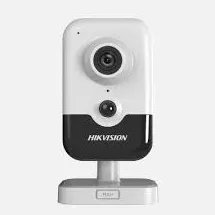
A product photo from the AESS job library, not taken in New Lots: a slim video door station with a camera lens at the top and a large round call button. Door stations like this one are going into New Lots walk-ups and newer buildings as owners replace old buzzer panels, and their cameras are often the only ones that see a visitor's face up close. When we repair a building's cameras, we check whether this one is saved to the recorder or only shown live to whoever answers the call.A product photo from the AESS job library, not taken in New Lots: a white indoor cube camera. Cameras like this sit on a shelf behind a counter, in the front hall of a two-family or in a back office, and they are the ones most often unplugged for a phone charger or turned to face the wall. When one keeps dropping off the app, the cause is usually its plug or the Wi-Fi it depends on rather than the camera.
National brands versus a local licensed repair
Some New Lots households and stores have cameras from a national alarm company or a consumer brand and wonder who should fix them. The table shows how the choices usually compare for a repair.
Question
ADT or a similar alarm company
Ring or SimpliSafe camera
AESS local repair
Who owns the equipment
Depends on the contract; some is leased
You own it
You own it, and we repair it
Recorder in a cellar or back room
Its own panels and recorders
No local recorder; clips go to the cloud
DVRs, NVRs, hybrids, drives and footage export
Telling you when it stops recording
Depends on the plan
App shows the camera offline
Recorder alerts for video loss and drive errors set to your phone
Other brands on the same building
Usually only its own
Support covers its own devices
Any brand, any installer
Signal through brick
Depends on its wiring
Wi-Fi often weak through masonry
Wired cameras on existing cable where possible
Licensed technician on site
Varies by dealer
Remote support
Yes, NYS license #12000287431
Price before work
Varies
Replacement device price
$150 service call, then a written repair price
AI Overview Reality Check
What AI Gets Wrong About Security Camera Repair in New Lots
These claims turn up in AI-generated answers, help forums and national repair guides. Each is true somewhere, and each sends New Lots owners toward the wrong repair, a lost clip or a bill they did not need.
"Your camera system will warn you when something breaks"
Quick answers often describe modern recorders as watching over themselves, sending alerts the moment a camera drops or a drive fails.
Many can, but out of the box most are not set to. Alerts for video loss, disk errors and a full drive are usually switched off, or switched on but sent to an email address nobody reads, or to the phone of whoever set the system up years ago.
Assume nothing is warning you until you have seen a test alert arrive on your own phone. On every repair we switch on the alerts that matter, send a test to the owner, and show how to check playback in under a minute.
"The hard drive will last as long as the recorder"
Buying guides tend to treat the recorder as a single appliance with a single lifespan.
The drive is the part that moves and the part that wears, and in a store that records around the clock it does nothing else. Installers on CCTVForum put many DVRs at five to seven years, and name the drive as the most common point of failure. A recorder with a tired drive can keep showing live video while it quietly fails to save.
Treat the drive as a part that gets replaced, and check its health on a schedule. We read it on every visit, and when we replace it we fit a drive rated for continuous recording, sized for the days you need.
"If the wiring is a problem, switch to wireless cameras"
Answers about failed cables often suggest replacing wired cameras with Wi-Fi models and skipping the wire altogether.
A Wi-Fi camera still needs power, so a cable or an outlet still has to reach it, or it runs on a battery that needs charging and drains faster in the cold. And Wi-Fi has to get through brick. In a New Lots two-family with the router upstairs and the camera on the back wall, the signal often is not there.
Wireless is a good answer for the one camera a cable cannot reach, such as the far fence of a lot. For the rest, repairing the existing cable is usually cheaper and far more reliable.
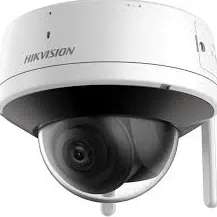
A product photo from the AESS job library, not taken in New Lots: a Wi-Fi dome camera with an external antenna. On a New Lots property this kind of camera makes sense for one hard spot, such as the back fence of an auto shop's lot or a garage at the end of a long yard. It still needs power, a strong signal back to the building and an account in the owner's name, which is why we treat it as the exception on a repair and not the fix for a wired system.
"Your landlord has to keep the building's cameras working, so call 311"
Some answers lump cameras in with intercoms, heat and locks as things a tenant can get the city to order fixed.
HPD does write violations for broken intercoms, and its data shows 489 of them in East New York–New Lots. Cameras are different. Brick Underground has reported, citing a New York real estate attorney, that city buildings are not required to have functioning cameras, and that landlords generally do not have to show tenants footage outside a legal process. A dark camera in a walk-up is usually a decision for the owner, not an order from the city.
For tenants that means asking the owner or managing agent in writing. For owners it means the camera system is yours to keep working, and a dark one helps nobody when a tenant, an insurer or a detective asks for video.
"Unplug the recorder and plug it back in"
Restarting is the first step in almost every quick troubleshooting answer.
A restart can clear a frozen screen, but it can also make things worse. One installer guide on recovering systems after an outage warns that "Repeated power cycling can worsen storage and power faults." A recorder that keeps restarting after a New Lots outage is often telling you about a failing drive or a weak power supply, and every unplug risks the footage on it.
If you need footage from the past few days, do not restart anything. Call first, and we save the video before we touch the power.
"Any electrician can fix a camera system"
Because cameras use power, some answers send people to an electrician for every camera fault.
Camera systems run on low-voltage cable, network switches, recorders and software, and New York requires a Department of State license for companies that install or service security and CCTV systems for other people. An electrician is the right person for a new outlet or a tripped breaker, and in New Lots two-families an electrician is often exactly who is needed to put the recorder on the owner's own circuit. But recovering a recorder password or reading a drive's health is camera work.
The two trades work together. We do not do electrical work, so when a camera repair needs a new outlet, we tell you exactly what and where for your electrician, and we handle everything on the camera side.
"Camera repair costs about $100 to $300"
Cost answers often quote a low national range taken from single consumer cameras.
HomeAdvisor's own Brooklyn page shows how wide the real spread is: an average of $1,416 for surveillance camera installation or repair, a typical range of $680 to $2,145, and jobs from $160 to $3,500. That page blends new systems with small fixes, which shows why one number tells you nothing.
On our Brooklyn list most single repairs land between $150 and $700, and you get a written price for your fault after the diagnosis, before any part is replaced.
Talk to a Technician Before You Restart the Recorder or Buy a New Camera
Tell us the address, the type of property, how many cameras there are, which ones are out, and where the recorder sits. If you need footage from a particular date, say so and we will plan the visit around saving it. Photos of the recorder screen, the dark cameras, the power supply and the shelf or cabinet the recorder lives on help us bring the right parts. For anything urgent, call (347) 934-8335 now.
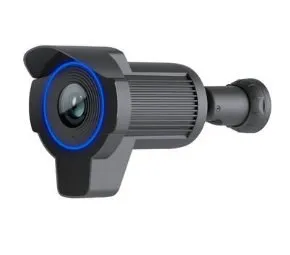
A product photo from the AESS job library, not taken in New Lots: a black bullet camera with a long hood and a blue-lit ring around the lens. The hood shades the lens from sun and rain and makes the camera harder to spray from below, which is why it suits the front of a store on a sunny stretch of New Lots Avenue or the side wall of a two-family facing the afternoon sun. If you send us a photo of the camera that failed, even a rough one from the sidewalk, we can usually tell its type before the visit and bring the right part.
✅
Request Sent!
Thank you. A technician will contact you about the New Lots address shortly.
How It Works
Our Repair Process
1. Send a photo and the address
A photo of the recorder screen or the dark camera, the New Lots address and the type of property, by text, WhatsApp or the request form. Tell us if you need footage from a particular day.
2. Confirm who owns the system
Homeowner, store owner, landlord or managing agent: we confirm whose cameras they are, who approves the work and who holds the recorder login, so nothing stalls at the door.
3. Book the service call
The $150 Brooklyn service call puts the visit on the schedule in a two-hour arrival window and is credited to the repair if you go ahead.
4. Save the footage first
Any clip that matters is exported to USB with its original timestamps before anything is restarted, unplugged or opened, and the recorder's clock is checked against the real time.
5. Test from the outlet to the phone
Outlet and the panel it comes from, battery backup, power supply or PoE switch, cables and connectors, recorder and drive, then the app, camera by camera.
6. Name the cause and write the price
You hear what failed and why, and get a written, itemized repair price before any part is replaced. If the price changes on site, you hear the new number first.
7. Repair and check day and night
The failed part is repaired or replaced, and every camera is checked for picture and recording, including under the real night lighting of the block, the stairwell or the store.
8. Set alerts and hand over
Alerts for lost video and drive errors go to your phone and are tested, cables are labeled at the recorder, logins go to the right person, and you are shown how to export a clip.
Coverage Area
Security Camera Repair Near New Lots' Landmarks
New Lots Reformed Church
The Federal-style church at 630 New Lots Avenue at Schenck Avenue, built in 1823–24 on land of Abraham and Cornelia Van Siclen, a city landmark since 1966.
New Lots Avenue station
The last stop of the 3 train, with its entrance at Livonia Avenue and Ashford Street, opened on October 16, 1922, with the tracks running on into the Livonia Yard.
New Lots Library
The Brooklyn Public Library branch at 665 New Lots Avenue, on the site since 1957, with a new building by MASS Design Group and Marble Fairbanks expected to be completed in 2028.
African Burial Ground Square
The park between New Lots and Livonia Avenues and Barbey and Schenck Streets, dedicated in 2013.
UCC Youth Farm
East New York Farms' half-acre youth farm on Schenck Avenue between New Lots and Livonia Avenues, home to a Saturday market.
75th Precinct
The station house at 1000 Sutter Avenue, which covers New Lots along with the rest of East New York and Cypress Hills.
New Lots is billed at our Brooklyn rate. Every repair starts with the $150 service call, which covers the on-site diagnosis and is credited to the repair if you go ahead. The figures below come from our published list of Brooklyn security camera repair prices; your exact price is written down on the visit, once we know what failed.
Repair
Brooklyn price
Service call, on-site diagnosis and written repair price
$150, credited to the repair
Alerts, recording schedule, motion, app or login settings with no parts
Usually within the $150 service call
Clean and check for a blurry or filmed-over picture
$80
Dome or front cover replacement, such as a sprayed dome
$30–$80 part plus labor
Connector reterminate or PoE port swap
$150–$350
Power supply repair
$150–$400
Hard drive swap, by capacity
$200–$450
Indoor camera repair
$200–$450
Single camera replacement on a working system
$250–$600
Night vision camera repair
$250–$650
DVR not working, including drive and labor
$300–$700
NVR not recording, by model
$400–$900
Vandalized camera, per camera plus cable repair
$400–$900
PTZ camera repair
$450–$1,200
Hybrid recorder swap, channels reconfigured
$700–$1,200
DVR/NVR replacement with drive, or multi-camera wiring repair
$700–$1,500
Full rewire or whole-building overhaul
From $1,500
Three things move a New Lots repair within those ranges. The first is reach: a camera at the back fence of a lot, above a store's gate box or under the cornice of a three-story house takes more ladder work and time than one beside a front door. The second is the number of runs that failed: one crushed cable is a small job, while several runs damaged by a renovation, a new fence or water through the cellar wall are priced run by run. The third is the recorder: one that has to be replaced, moved off a damp cellar floor or out of a lint-filled laundromat shelf, or separated from a second system in the same building adds time for setup and tracing. Bundling the camera repair with intercom, door buzzer, alarm or cabling work on the same visit saves $200 to $400 in labor on our Brooklyn list.
Full terms — including 50% deposit, one-year parts-only warranty on AESS-supplied products, and the late-fee schedule — are set out in the service agreement.
Shop Our Systems
Security Camera Repair Packages & Pricing
Three ways New Lots repairs usually come together, priced from our Brooklyn list.
Single-issue repair: $150–$700
One fault, one visit: a worn drive replaced, a power supply or switch port replaced after an outage, a sprayed dome cleaned or replaced, a backlit door camera reset, cameras moved onto the owner's own circuit once the outlet is in, or a login recovered.
Major system repair: $700–$1,500
The recorder or the wiring: a DVR or NVR replaced with a new drive and every camera reconfigured, two systems in one building separated or combined, or several runs replaced after a renovation, a fence job or water in the cellar.
Annual maintenance: $250–$800
Every camera checked by day and after dark, covers cleaned, connectors and power tested, the drive's health read, backup batteries checked, alerts tested to the owner's phone and a clip export tried. Residences start at $250, commercial systems at $400, and owners with several properties run $500 to $800.
Bring your own equipment. If you have already bought a replacement camera or recorder, we can fit it at labor-only rates. Tell us the exact model and we quote the labor by phone or text, and the visit is booked once it is paid. Your own equipment is installed as supplied: we cannot vouch for parts we did not supply, and if a model will not work with your recorder, will struggle on Wi-Fi through brick, or cannot handle the light where it is going, we tell you before the visit.
Complete Services
Every Security Camera Repair Service in New Lots
Camera, connector and cable repair
Dark cameras, sprayed domes, crushed lot runs and connectors full of water where the cable meets the brick. Request a repair
Recorder, drive and outage repair
DVRs, NVRs and hybrids on cellar shelves, under counters and in back rooms, including recorders worn out by round-the-clock recording. Brooklyn security camera repair
Owners and managing agents with buildings or stores in more than one borough. NYC security camera repair
FAQ
New Lots Security Camera Repair FAQ
Do you repair cameras in every part of New Lots, from the blocks around the New Lots Avenue station down past Linden Boulevard?
+
Yes. We cover all of New Lots, from Sutter and Livonia Avenues south through New Lots Avenue, Hegeman Avenue and Linden Boulevard, and from Van Sinderen Avenue east toward Linwood Street, along with the neighboring parts of East New York, Brownsville and Cypress Hills. Every address in the area is billed at the same Brooklyn rate, and the price follows the fault, not the block.
Our store lease says the landlord has to approve anything attached to the outside of the building. Does replacing a dead camera in the same spot count?
+
That depends on your lease, so read the clause or ask the landlord before the visit. Many owners treat a like-for-like replacement on the existing bracket as maintenance, while a new hole, a new bracket or a camera in a new spot usually needs their approval. We can give you the model, the size and a photo of where it will go to send to the landlord, and we keep the work on the existing mount unless you have approval to move it.
Our recorder sits on the floor under the deli counter, where the floor is mopped every night. Is that why its connectors look rusty?
+
Very likely. Mop water and cleaning chemicals splash the back of a recorder on the floor, and over time the connectors, the power plug and the fan corrode. We clean or replace the corroded connectors, check the drive and the board, and move the recorder up off the floor onto a shelf or a wall bracket under the counter, out of the splash and away from the heat of the coolers.
The only way into our store's cellar, where the recorder is, is through the steel doors in the sidewalk out front. Does the technician need anything special to work down there?
+
Only that someone can open the doors and that the stairs and lighting below are safe to use. The open doors are kept guarded or blocked off while the technician works below. If the cellar has no light, tell us when you book so we bring work lights, and if the recorder can be moved upstairs to a back room during the repair, we can price that too.
Our recorder's screen is asking us to format the hard drive. Should we press yes?
+
Not if anything on the drive matters to you. Formatting erases every recording on it. The message usually means the recorder cannot read the drive properly, because the drive is failing, came loose or was replaced without being set up. Leave the recorder as it is and call us; we try to copy off any footage you need first, and only then format or replace the drive.
How long should we hold on to a clip we saved for a police report or an insurance claim?
+
Keep at least one untouched copy until the case or the claim is closed, and ask the detective or the adjuster if they want it kept longer. A recorder will eventually record over its own copy, so the safe version is the one on a USB drive or a computer, labeled with the date, the camera and the recorder's time difference.
Our house is old and some outlets in the cellar only take two-prong plugs. Is it all right to plug the recorder into one with an adapter?
+
It is not a good idea. An ungrounded outlet gives a recorder and its surge protection nothing to send a spike to, and an adapter that cheats the third prong hides the problem rather than fixing it. We will tell you if the outlet the system uses is ungrounded, and since we do not do electrical work, an electrician should add a grounded outlet before we move the recorder and its battery backup onto it.
If one of our cameras cannot be saved, what do you put up in its place?
+
Our standard replacement is a camera from our own line chosen to work with your existing recorder, matched to the spot it watches, for example a hooded camera for a sunny wall or a varifocal one for a counter. If you prefer a particular brand, tell us and we price that instead. Either way, the written price names the camera before it is ordered.
We registered our store's cameras with the NYPD years ago. If you replace the recorder, do we need to register again?
+
The registration tells the police where your cameras are and how to reach you, so it does not need redoing just because the recorder is new. If the number of cameras, what they cover or your contact details have changed, update the record so it is accurate. We give you a written list of the cameras and what each one sees after the repair, which makes that update quick.
Can part of a camera's picture be blacked out, so it records our door but not the barber chairs or the window of the apartment across the way?
+
Usually, yes. Most recorders and network cameras have a privacy mask setting that blocks out a chosen area of the picture so it is never recorded, while the rest of the view is saved as normal. We set the masks on the visit and check the result in playback.
Ready to Have Every New Lots Camera Recording, and Reporting When It Stops?
Send a photo of the recorder screen or the dark camera, the address, and the date of any footage you need. We book within 2 hours, give you a two-hour arrival window, save your footage first, write down the repair price before any part is replaced, and set the system to warn you the next time a camera or the drive quits.