Porch camera dark since the November 6 lightning outage, a dome filmed over under the street trees, or a co-op lobby camera that stopped saving? Prospect Park South camera repair line, booked within 2 hours: (347) 934-8335
Freestanding Victorian Houses Behind Deep Lawns · Wood Porches and Shingle Walls · Co-ops on Parade Place and Albemarle Road · Shops on Church and Coney Island Avenues
Security Camera Repair in Prospect Park South
Any Brand, Any Installer · Storm and Surge Damage Traced Port by Port · Footage Copied First · Written Price Before Parts
Security camera repair in Prospect Park South starts with our $150 Brooklyn service call, which covers the on-site diagnosis and is credited to the repair if you go ahead. On our published Brooklyn list most single repairs cost $150 to $700, and a new recorder or a multi-camera rewire runs $700 to $1,500. We fix systems other people installed: porch and eave cameras on the big freestanding houses of Albemarle, Buckingham, Rugby, Marlborough, Argyle and Westminster Roads, lobby cameras in the prewar co-ops at the north edge, and counter cameras in the shops on Church and Coney Island Avenues. Requests are booked within 2 hours, visits come in two-hour arrival windows, and you hear what failed and get a written price before any part is replaced.
Every price on this page comes from our published Brooklyn camera repair list, and your own price is written down before work starts
Rated 4.7★ across 201 Google Reviews
Reviewed and updated November 12, 2026, against CBS New York's report on the November 6, 2026 lightning outage across ZIP codes 11226, 11203, 11210, 11234 and 11236; Patch's January 2026 report on the overhead-wire fire on East 48th Street; the NYPD 70th Precinct page and its CompStat report for the week of November 2–8, 2026; CBS New York's report on a lobby robbery at East 17th Street and Albemarle Road; the Prospect Park South Association's history and filming pages; the Brooklyn Eagle's 2025 history of the district; the Landmarks Preservation Commission's permit guidebook (Chapter 11); NYC Parks' tree work permit and illegal tree work rules and NYC311's tree pruning guidance; Flatbush Development Corporation's 2025 house tour notice; installer guides and forum threads on lightning, surge protection, squirrel damage, spider webs and repair-versus-replace decisions; and the New York Department of State on CCTV installer licensing. · Abstract Enterprises Security Systems, NYS license #12000287431 · crews dispatched from our Troy Avenue office in Brooklyn
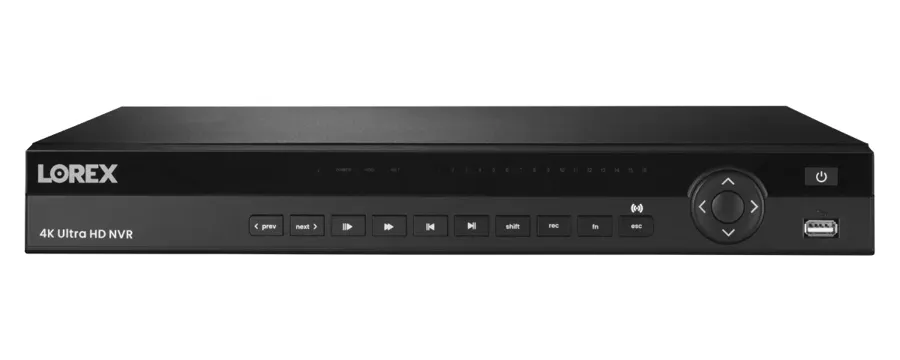
A product photo from the AESS job library, not taken in Prospect Park South: the front of a 16-channel network video recorder. In a freestanding Prospect Park South house a box like this usually sits in the cellar beside the boiler and the internet modem, or in a closet on the second or third floor where the cable from the porch, the eaves and the back yard all meet. It is the first thing we test on a repair, because it holds the footage, it keeps a log of which camera dropped and when, and after a storm it is often the one part that looks fine while it quietly stops saving.
Prospect Park South Camera Repair Request
House, co-op, apartment building, shop or house of worship: send the address and what the screen shows, and a technician calls back with the next step
✅
Request Sent!
Thank you. A technician will contact you about the Prospect Park South address shortly.
25+
Years Experience
✓
Same-Day Estimates
100%
Licensed & Insured
4.7★
201 Google Reviews
Owner-operated since 2002 · Thousands of jobs completed · Booked within 2 hours
Security camera repair in Prospect Park South is usually a house-sized problem, not a one-camera problem. These are big freestanding houses on wide lots, and their camera systems stretch from a porch forty feet back from the sidewalk to an eave on the third floor, a side door off the driveway, a garage at the back and a recorder somewhere in between. When something fails, it is rarely the camera everyone looks at. It is a switch port that a lightning surge killed weeks ago, a cable a squirrel found along the gutter, a dome clouded by the street tree above it, or a power adapter in the attic that cooked over the summer. On November 6, 2026, a suspected lightning strike cut power to 4,843 Con Edison customers in ZIP codes including 11226, which takes in Prospect Park South, and calls like these follow every storm of that kind. Our repair finds the real fault along that whole path, fixes it, and then sets the recorder to tell your phone when a camera or the drive stops, so the next failure does not sit unnoticed until someone needs the footage.
Looking at your photos costs nothing. The $150 service call covers the on-site diagnosis and is credited to the repair if you go ahead.
All work is done under New York State license #12000287431, the license the state requires of companies that install or service security and CCTV systems for other people.
We repair any brand and any installer's work, and when a part costs more to fix than it is worth, we say so and price the replacement instead.
The Neighborhood
Why Prospect Park South Properties Need Security Camera Repair
Prospect Park South is the planned suburb Dean Alvord laid out south of Church Avenue from 1899, about two hundred freestanding houses built in the first years of the twentieth century and protected as a city historic district since 1979. The Brooklyn Eagle's 2025 history of the district notes the 39-foot setbacks that keep the houses well back from the sidewalk, and the association still describes the neighborhood as two blocks long and four blocks wide. That is enough history for a camera page. What matters for a repair is what those facts do to a camera system: very long cable runs, cameras mounted on wood rather than brick, mature street trees in front of almost every house, and owners who often put the system in once, years ago, and have not opened its menu since.
The first reason camera systems fail here is weather and power. Parts of this side of Brooklyn are still fed by overhead lines, and a storm that knocks them out also sends surges into anything plugged into the house. In January 2026, Patch reported overhead power wires catching fire on East 48th Street between Church Avenue and Linden Boulevard, leaving nearly 80 homes without power. On November 6, 2026, CBS New York reported a power outage that Con Edison suspected was caused by lightning, affecting 4,843 customers as of 10:20 that morning across 11226, 11234, 11236, 11210 and 11203; power was largely back by 11:15. An outage that short sounds harmless, but installers who write about lightning describe exactly the damage we find afterwards: a switch port that fails weeks later, cameras that reboot on their own, or a recorder whose storage turns out to be corrupted only when someone searches for footage.
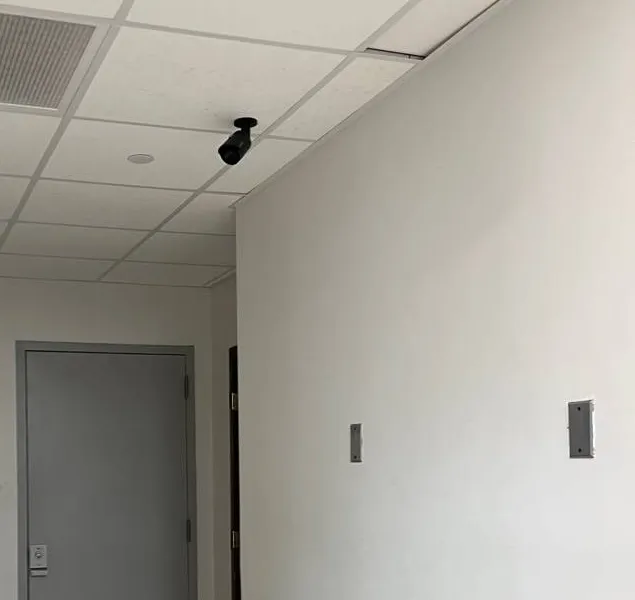
A photo from the AESS job library, not taken in Prospect Park South: a small black bullet camera hanging from a white ceiling-tile grid, aimed down a short corridor at a grey steel service door. In the prewar co-ops and apartment buildings at the edges of Prospect Park South, this is the camera that watches the door from the cellar corridor to the boiler room or the back yard. It hangs within reach, it shares a switch with the lobby cameras, and after an outage it is often one of the cameras that never comes back on its own.
The second reason is the trees and the wildlife that live in them. The district was planned with trees along both the curb and the building line, and a century later those trees are large. They drop sap and pollen on domes, grow into views that were clear when the camera went up, hide Wi-Fi cameras from the router once the leaves come out, and give squirrels and raccoons a road from the branches to the gutters where camera cables run. None of that is a defect in the camera, and most of it is fixable for less than the price of a new one, but it means a camera system on a Prospect Park South house needs more looking after than the same system on a row house with no tree in front of it.
The third reason is how the houses are used and handed on. Houses here are sold to new owners with a camera system already on them, rented to location crews for film and television shoots by the day, opened to hundreds of visitors on house tour days, and restored room by room over years. Each of those breaks something: a buyer inherits a recorder with someone else's password, a production electrician unplugs a power strip in the cellar, a painter tapes over a camera and never removes the tape, a restoration closes up a wall with a camera cable inside it. And the neighborhood is not immune to the crimes that cameras exist for. The 70th Precinct, which covers Midwood, Fiske Terrace, Ditmas Park and Prospect Park South, counted 80 burglaries and 111 robberies in 2026 through November 8, down from 117 and 168 at the same point in 2025. In a CBS New York report on a robbery in an apartment building lobby at East 17th Street and Albemarle Road, the station noted that "surveillance video from the hallway captured the entire ordeal." That only helps if the hallway camera is recording.
So a camera repair in Prospect Park South means three things: find the real fault across a long and complicated house, fix it in a way that suits wood porches, landmark rules and trees, and leave the system able to report on itself. Many owners pair the visit with a look at the door buzzer or video intercom on the same porch, because the porch door usually carries both.
Six Prospect Park South facts that shape a camera repair
The houses sit far back. The 39-foot setbacks described by the Brooklyn Eagle mean a porch camera is often 40 feet or more from the sidewalk, so a picture that "works" may still be too small at the gate to recognize anyone.
The power is exposed. Overhead lines still feed blocks on this side of Brooklyn, and the November 6, 2026 outage that Con Edison suspected was lightning reached 4,843 customers across 11226 and four neighboring ZIP codes.
The walls are wood. Most houses are wood frame with clapboard or shingle walls, so camera mounts, cable holes and junction boxes need sealing that a brick wall forgives.
Landmark rules apply. The district has been a city historic district since 1979. The Landmarks Preservation Commission's guidebook says ordinary repair of existing safety equipment needs no permit, and limits small residential buildings to two cameras per 25 feet of street frontage.
Street trees are protected. NYC Parks requires a Tree Work Permit to work on a street tree, and the city's Administrative Code makes it illegal to damage one, so a branch in front of a camera is a question for the city, not a pruning saw.
Crime is down, not gone. The 70th Precinct's CompStat report for the week of November 2–8, 2026 showed 80 burglaries for the year, against 3,365 in all of 1990, and 413 retail thefts.
Where this page applies. It covers Prospect Park South from Church Avenue south to Beverley Road, and from the open subway cut of the B and Q lines on the east to Coney Island Avenue on the west, including the co-ops and apartment buildings near Parade Place and at the north end of Albemarle Road and the shops on Church and Coney Island Avenues at its edges. For the rest of the borough, see our main Brooklyn security camera repair page. The price follows the fault, not the address.
Same-Day Repair in Prospect Park South
Need Repair in Prospect Park South? Cameras Dark After the Storm, a Porch Camera Hanging Loose, or Footage Someone Needs Today
Urgent calls from Prospect Park South tend to come in three kinds. The first follows weather: the power went out in a thunderstorm or a wind storm, and when it came back some cameras did not, the recorder started beeping, or the whole system looks fine but the phone app has shown nothing since. The second follows an incident: a package went missing from a porch, a car parked at the curb was opened, someone tried a side door at night, or a neighbor knocked to ask whether your camera saw anything. The third follows a disturbance to the house itself: a painter, a roofer, a gutter crew, a tree crew or a film production worked around the cameras, and afterwards one is dead, one is aimed at the sky and one is still wearing a plastic bag.
If you need footage from an incident, leave the recorder running. Do not restart it, unplug it, or press anything the screen offers about formatting or initializing the drive. Most recorders write over their oldest video once the drive is full, so the clip you need is already on a countdown. Call (347) 934-8335, tell us the date and the time window, and we book the visit with copying that footage as the first job. If a detective from the 70th Precinct has asked for a copy, mention it when you book; the clip goes onto USB with the recorder's own timestamps, and we write down how far the recorder's clock is from the real time so nobody argues later about when it happened.
After a lightning outage, do one thing before you call: walk the system and note which cameras show a picture and which do not, and whether the lights on the switch or the power box are on. That list tells us whether to expect one failed port, a dead power supply or a recorder that needs its drive checked, and which parts to bring. Then the path is the same as any repair. The $150 service call books a two-hour arrival window, the technician finds the cause, and you get a written price before any part is replaced. Requests are booked within 2 hours. We do not promise the repair is finished the same day, because some parts have to be ordered, but most single-camera, switch, power and drive faults are fixed on the first visit when the part is on the truck.
What We Install
Security Camera Repair Services in Prospect Park South
Every repair below is priced from our Brooklyn camera repair list. The service call pays for finding the fault; the repair itself is priced by what failed, how many cameras it touches and how hard the run is to reach, whether that is a camera on a porch column on Buckingham Road or one under the third-floor gable of a house on Westminster Road.
Storm and surge recovery
Systems hit by lightning, a wind storm or an overhead-line failure: dead switch ports, cooked power adapters, cameras that reboot on their own and recorders with damaged storage. Every port is tested, not just the cameras that are visibly dark, and surge protection is added where the damage came in.
Long-run camera faults
Cameras at the far end of the house, the garage or the back fence that drop out, flicker at night or fail in the cold. On runs this long the fault is often a connector, a splice hidden in the attic or a power supply too weak for the distance.
Tree, sap and wildlife damage
Domes coated by sap and pollen, views overgrown by branches, and cables chewed by squirrels along gutters and porch roofs. We clean or replace covers, re-aim around branches and move cable into protection animals leave alone.
Porch and wood-wall mounts
Cameras loose on clapboard, shingle or porch trim, mounts that let water into the wood, and brackets pulled crooked by a ladder or an animal. Remounted on a sealed block, with holes reused wherever possible.
Recorder and drive repair
DVRs, NVRs and hybrids in cellars, closets and third-floor studies: worn drives, full disks, settings lost after an outage, fans clogged with dust and recorders that only half came back after a surge.
After-work recovery
Cameras disturbed by painters, roofers, gutter crews, restoration contractors or a film production: tape left on lenses, cables cut or pinched, cameras put back facing the wrong way, and power strips left unplugged.
Inherited systems
Houses bought with a camera system already on them: recorders locked with a previous owner's password, apps registered to someone who has moved, and cameras nobody can match to a channel. We put the system in your name and tell you what is worth keeping.
Co-op and lobby systems
Lobby, mailroom, elevator-landing and cellar cameras in the prewar buildings at the edges of the district, with the login put in the board's or managing agent's name and alerts going to whoever is responsible.
Footage export for incidents
Clips copied to USB with original timestamps for detectives, insurers, boards and neighbors, with a written note of any difference between the recorder's clock and the real time.
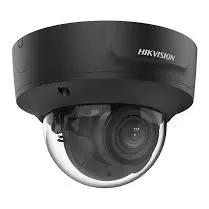
A product photo from the AESS job library, not taken in Prospect Park South: a black varifocal dome camera, whose zoom lens can be set on site. On a Prospect Park South house set far back from the sidewalk, a dome like this on the porch ceiling can be zoomed to fill its picture with the front walk and the gate instead of the whole lawn. When a porch camera "works" but shows the visitor at the sidewalk as a few pixels, changing the lens setting is often the whole repair.
Building Specialists
Security Camera Repair for Prospect Park South's Architecture
Six kinds of property account for nearly every camera repair call from Prospect Park South and the blocks along its edges. Each one fails in its own way, and each decides where the recorder sits, how far the cable has to travel, what the camera is screwed into and who has to approve the work.
The freestanding Victorian
A large wood-frame house on its own lot, with a deep porch, several entrances, an attic, a cellar and often a garage at the end of a driveway, and cameras spread across all of them.
The house with a rental apartment
A one-family house with an apartment on the top floor or in the basement, where owner and tenant share a front door, a porch camera and sometimes a recorder.
The house divided into apartments
A big house split into three or four units decades ago, with cameras added over the years by the owner, the tenants and whoever installed the newest intercom.
The prewar co-op
Six-story elevator buildings like The Sovereign on Parade Place, built in 1927 with 73 units, where the lobby and cellar cameras belong to the corporation and are run by a board and a managing agent.
The rental apartment building
Walk-ups and elevator buildings on Albemarle Road and the streets east of the subway cut, with a lobby, a hallway, a cellar and a super, and cameras that tend to be noticed only after something happens.
The avenue storefront
Shops, cafés and restaurants on Church Avenue and Coney Island Avenue at the district's edges, with a recorder under the counter or in the cellar and cameras on the door, the register and the back.
The freestanding Victorian: one system, four floors and a garage
A Prospect Park South house is several buildings' worth of camera system on one lot. A typical setup has a camera or two on the porch ceiling or a porch column, one at the side door off the driveway, one on the back of the house looking at the yard, one on the garage, and sometimes one high on an eave watching the front lawn from above. The recorder sits wherever the installer could bring the cables together, usually the cellar near the boiler and the modem, sometimes a closet on the second floor, sometimes a third-floor study where the owner wanted a screen. That means the runs are long, they cross floors and pass through attics and porch roofs, and they collect splices and junction boxes along the way.
On a repair we start from the recorder's log and a sketch of the house, because a camera that drops out at the far end of a house this size can fail at any of half a dozen points between the camera and the box. We test at the camera, at each splice we can reach and at the recorder, and we price access to anything hidden, such as a junction in a finished attic or a cable inside a porch column, before we open it.
Wood walls, porches and old paint
Most houses in the district are wood frame, and that changes how a camera should be fixed to them. On brick, a loose camera is a matter of new anchors in the mortar. On clapboard or shingles, a camera screwed straight through the siding lets water into the wall around every screw and every cable hole, and after a few winters the wood softens and the camera droops. A proper repair puts the camera back on a flat mounting block sealed to the siding, with the cable entering through a sealed box or a drip loop that sheds water away from the hole. On porch ceilings and columns, which carry more than a century of paint, we reuse existing holes wherever the camera allows, keep drilling to a minimum, and contain the dust from old paint layers rather than sanding or scraping around the mount.
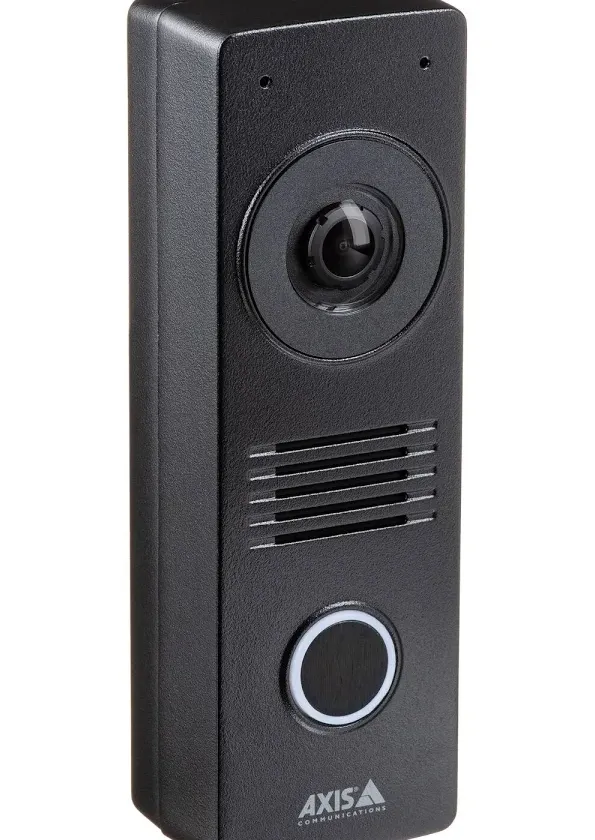
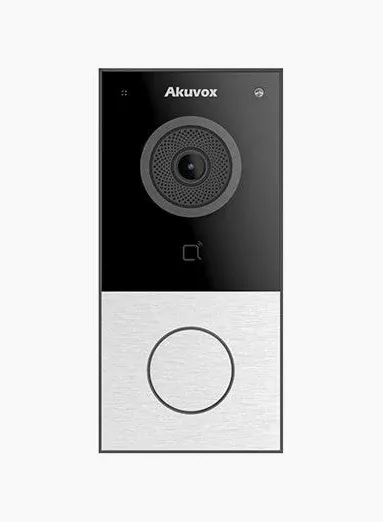
A product photo from the AESS job library, not taken in Prospect Park South: a black video intercom door station with a camera lens, a speaker grille and a lit call button. On a Prospect Park South house divided into apartments, or at the street door of a co-op near Parade Place, a door station like this often sits beside a separate camera system with its own recorder and app. When we repair the cameras at that entrance, we check whether the door station's camera is recorded anywhere, or only shown to whoever answers the call.
The prewar co-op: the board owns the cameras, the super holds the key
The six-story prewar buildings at the north end of the district, including The Sovereign at 55 Parade Place, follow a pattern we know from co-ops across Brooklyn: lobby cameras, a mailroom or package camera, cameras at the cellar door and the back yard, an elevator camera in some buildings, and a recorder in a locked room in the cellar. The cameras belong to the corporation, the board approves spending, the managing agent schedules the work and the super has the key. Repairs stall when any one of them is missing from the conversation.
We set up each co-op repair so that it does not stall. The managing agent gets a written condition note and a price before the visit if the board needs to vote, the login is moved into the corporation's name rather than a former super's, alerts go to the person the board chooses, and playback access is set up so the agent can pull a clip without a trip to the cellar. If the board wants to spread a larger replacement over two budget years, we plan the order so each stage leaves the building with a working, recorded lobby.
The rental apartment building: the lobby that matters most
The apartment buildings on Albemarle Road and the streets east of the subway cut have the camera layout that matters most when something goes wrong: the lobby, the hallway past the mailboxes, the elevator landing and the stairs. CBS New York's report on a robbery in a lobby at East 17th Street and Albemarle Road showed what a working hallway camera does, and residents interviewed there described the habits that follow an incident. "When I come in, I have to be looking in the back, and when I open the door, I have to be looking at who is in the elevator or in the lobby," resident Gricelde Greenidge told the station. A repair in a building like that means more than a picture on the monitor: it means checking that each lobby camera is actually recording, that the drive keeps enough days for a detective's request, and that at least one camera sees faces at the door rather than the tops of heads.
The avenue storefront: long hours, small staff
The shops at the district's edges, on Church Avenue to the north and Coney Island Avenue to the west, are mostly small businesses with one recorder and four to sixteen cameras. The repairs we see there are the ones any busy store produces: drives worn out by recording around the clock, cameras knocked by stock or deliveries, the camera at the door blinded by the afternoon sun through the glass, and recorders that lose their settings when the power drops. The 70th Precinct's 2026 figures through November 8 showed 413 retail thefts and 1,198 petit larcenies for the year, which is why store owners want the counter and the door cameras working before anything else.
Field Notes
Field Notes: Working Through a Prospect Park South House After a Lightning Outage
These notes describe the order our technicians follow on a large freestanding house after a storm outage, such as the one Con Edison linked to lightning on November 6, 2026. It is our working method, not a story about one address.
Copy before testing. If the owner needs anything from the day of the storm, it is exported to USB first, because power faults and failing drives both get worse with every restart.
Read the log for the minute the power went. The recorder's event log shows when each camera lost video, whether it came back, and whether the drive reported errors at the same moment. Cameras that dropped together and never returned usually share a switch or a power supply; a camera that came back and then dropped again days later points to latent damage on its port or its cable.
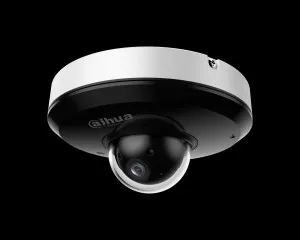
A product photo from the AESS job library, not taken in Prospect Park South: a mini pan-tilt dome camera with a white housing over a black lens dome. Owners of big corner lots sometimes put one of these on a porch or an eave to sweep the lawn and both streets. After a power cut it can wake up pointing at its home position rather than the view the owner set, so on a repair we check its presets, park it on the view that matters most and let fixed cameras cover the rest.
Test every port, not just the dead ones. Each switch port gets a camera that is known to work, and each power output gets a meter. A port that powers a camera but drops data under load is the kind of fault that looks fine on the day and fails a week later.
Follow the path the surge took. Surges come in on the power line, on a long outdoor cable, or on metal that runs up the house, such as an old antenna mast or a gutter the cable is clipped to. We look at each and note where protection is missing, because replacing a switch without closing the path means replacing it again after the next storm.
Price, repair and protect. The owner hears the cause and gets a written price. After the repair, every camera is checked by day and after dark, the drive's health is read, a battery backup and surge protection are fitted where they belong, and the recorder is set to send the owner's phone an alert for video loss and disk errors, with a test alert sent before we leave.
Fault by Fault
Lightning, Long Runs, Street Trees, Animals, Wood Walls and Busy Houses: Why Prospect Park South Camera Systems Fail
Six causes account for most of the camera failures we find on Prospect Park South houses, co-ops and storefronts. Several of them hide for weeks before anyone notices, which is why the repair always ends with alerts that reach a phone.
Lightning and surges: the damage that shows up later
A lightning strike does not have to hit the house to damage a camera system. Surge energy rides the power lines, the network cables and any metal on the outside of the house, and network cameras that draw power and data through one cable are especially exposed: a surge that enters at a camera can travel back to the switch, and one that enters at the switch can reach every camera on it. One installer guide on protecting cameras from lightning warns that "some strikes cause latent damage: a switch port that fails weeks later, intermittent camera reboots, or corrupted NVR storage that only surfaces when you search for footage." A Reddit user described the kind of list we see: a close strike "ruined my smoke detectors, router, POE switch and one Reolink camera."
That is why we treat any storm outage in 11226, like the one on November 6, 2026, as a reason to test the whole system rather than the one camera that is visibly dark. The repair replaces what failed, then closes the paths the surge used. The same guide lists the places protection belongs: the power feeding the recorder and switch, the network ports where outdoor cables come in, and the camera end of long outdoor runs. It also names the common mistake: "Only protecting the NVR power strip" leaves the cables to the outdoor cameras as a direct copper path. On a Prospect Park South house with long runs to a garage or an eave, protection at both ends of those runs is worth more than any other add-on.
Long runs: the camera at the end of the line
On a big lot the camera on the garage or the back fence can be a long way from the recorder by the time the cable has climbed through the cellar, up a wall, across the attic and down a porch roof. Long runs are fine when they are built for it. They fail when an installer stretched a short-run setup too far: a plug-in power adapter at the recorder feeding a camera at the far end through thin cable, so the voltage at the camera sags when its night lights switch on; a splice in the attic wrapped in tape; or a switch whose power budget was fine for four cameras and is overloaded at seven. The signature is a camera that works by day and drops at dusk, or works in summer and fails in the cold. We measure at the camera, under load and after dark, and fix the supply or the run rather than replacing a camera that was never the problem.
Street trees: sap, pollen, leaves and branches
Prospect Park South was planned with trees at the curb and along the building line, and a camera on the front of a house almost always has a tree in front of it or above it. Each season does something different to it. In spring, pollen and sap settle on a dome or a lens cover and turn the picture soft and yellow. In summer, leaves fill a view that was clear in winter and block the Wi-Fi signal to a camera across the yard. In autumn, wind moves the branches and the motion alerts never stop. Most of this is cleaning, aim and settings: a cleaned or replaced cover, a camera moved a few feet along the porch so it looks under the canopy instead of through it, and motion zones that ignore the branch but not the walk.
What we do not do is cut the tree. NYC Parks says you need a Tree Work Permit to work on a street tree, and its guidance on illegal tree work cites Section 18-129 of the Administrative Code, which makes it illegal to damage a street tree "whether intentionally or accidentally." The city's 311 service takes reports of trees blocking a street light, a sign, a sidewalk or a building, but notes that the Parks Department "does not accept requests for routine maintenance of street trees." So when a city tree is the problem, the camera moves, not the branch.
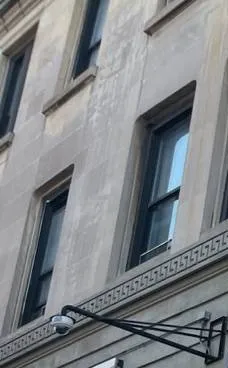
A photo from the AESS job library, not taken in Prospect Park South: a bullet camera on a long black steel arm below a carved Greek-key band on a pale stone facade with tall sash windows. A few Prospect Park South houses have stone and stucco details like this, and the Landmarks Preservation Commission's guidebook says equipment should be attached at mortar joints, plain masonry, wood or metalwork rather than decorative surfaces. A long arm like this one can also reach a camera out past a tree trunk or a porch post, which is sometimes the only way to get a clear view of the walk without touching the tree.
Squirrels, raccoons, birds and spiders
The same trees bring animals to the cameras. Squirrels run along gutters and porch roofs and chew the cable they find there, and the advice installers trade online is consistent: put the cable in metal conduit as close to the camera as you can, and guard the last stretch. Raccoons climb onto porch roofs and push cameras off their aim. Spiders build webs across the front of cameras because the infrared lights draw insects at night, and one guide on false alerts notes that "insects and spider webs near infrared lights can appear extremely large and bright at night," which is why a porch camera can send dozens of alerts that show nothing but a blur. The repair for each is physical: armored or conduit-protected cable along the gutter, a mount that cannot be pushed, a camera with its own infrared switched off where a porch light can do the work, and a cleaning on the maintenance visit.
Wood walls and water: the mount that rots the siding
Many cameras on these houses were screwed straight into clapboard, shingles or porch trim, with the cable pushed through a hole beside them. Water follows the cable and the screws into the wood, and after a few seasons the siding around the mount is soft, the camera tilts and the picture slowly drops toward the lawn. A camera that has "drifted" on a wood house is usually telling you about the wood behind it. We remove the camera, check how far the softness goes, and if the wood is sound enough we remount on a sealed block; if it is not, we tell you so your carpenter can replace the board before the camera goes back, rather than hanging it on rot.
Busy houses: sales, shoots, tours and restorations
The last cause is people. Prospect Park South houses change hands with systems still on them, are restored by trades who work around cameras, and are lent out for location shoots and house tours. The association's filming page describes productions large and small using the houses, scouts leaving flyers in mailboxes and a $750 donation it asks for each shoot day; the Flatbush Development Corporation ran its Victorian Flatbush House and Garden Tour on Albemarle and Westminster Roads on June 1, 2025. Every one of those events touches the cameras, and none is a hardware failure, yet each can leave a system that is not recording. The repair is a check after every such event, and a handover the owner understands.
Commercial Security Camera Repair
Business Security Camera Repair in Prospect Park South
Prospect Park South itself is almost entirely houses, so its business camera work sits on the avenues at its edges and in the larger buildings around it: the shops and restaurants on Church Avenue, the stores and auto businesses on Coney Island Avenue, the co-ops and apartment buildings at the north end, and the houses of worship and schools nearby. Their systems are usually one recorder and four to sixteen cameras, and the repair has to fit around business hours, services or a board's schedule.
Church Avenue
The shopping street along the district's northern edge, with cafés, restaurants and shops, including Lark, which the association asks film crews to support, and the Church Avenue station of the B and Q lines.
Coney Island Avenue
The wide avenue on the district's western side, with stores, restaurants and auto businesses, and part of the corridor City Planning is studying in its 2026 South of Prospect plan.
Parade Place and the north end
Prewar co-ops and apartment buildings near the Parade Ground, including The Sovereign at 55 Parade Place, with lobby, mailroom and cellar cameras run by boards and managing agents.
Albemarle Road east of the cut
Apartment buildings and walk-ups where the lobby and hallway cameras matter most, including the building at East 17th Street where CBS New York reported a lobby robbery caught on hallway video.
Beverley Road
The southern edge, with the Beverley Road station on the open cut of the Brighton line and the blocks that lead into Beverley Square and Ditmas Park.
Houses of worship and schools
Congregations and schools on and around the district, including the Albanian mosque on Albemarle Road, where cameras are often looked after by volunteers or a part-time custodian.
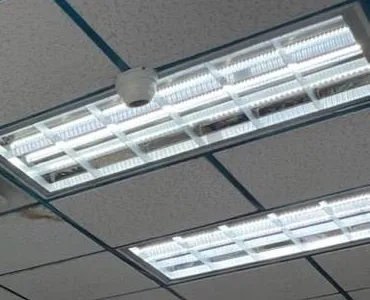
A photo from the AESS job library, not taken in Prospect Park South: a small white dome camera on grey acoustic ceiling tiles, right beside a long louvered fluorescent light. In a café or shop on Church Avenue, or the waiting room of an office on Coney Island Avenue, a dome placed this close to a ceiling light can be washed out by glare inside its own cover, and a tile lifted for other work can leave it aimed at the wrong corner. Moving it a tile or two away from the light is often the whole repair.
Church Avenue shops and cafés: the door, the counter and the sun
Most storefronts along Church Avenue have a glass front, a counter near the door and a small back room or cellar. The camera that matters most is the one at the door, and the most common complaint about it is that faces turn into dark shapes against the bright street behind them. That is a settings and angle problem far more often than a camera problem: backlight and wide-dynamic-range settings, a camera moved to look across the door rather than straight out through it, and a second camera at the counter that sees the customer from inside.
Rules that touch a commercial camera repair
State licensing. The New York Department of State licenses companies that install or service security systems, and its rules cover closed-circuit television used to watch for intrusion, theft or movement. An owner can work on their own system, or have an employee do it, without a license; a company working on someone else's property needs one. AESS works under NYS license #12000287431.
Cameras that watch staff. New York Labor Law §203-c requires employers who monitor employees electronically, including by video, to give written notice and get acknowledgment. If a repair adds or moves a camera over a counter, a stockroom or an office where staff work, the notice should be updated.
Landmark rules on the district's buildings. The Landmarks Preservation Commission's Chapter 11 guidebook says ordinary maintenance and repair of existing safety equipment needs no permit. For new or moved equipment it asks that cameras be well spaced, attached at mortar joints, plain masonry, wood or metalwork rather than decorative surfaces, with conduit concealed and only about ten inches visible, and it limits small residential and commercial buildings to two cameras per 25 feet of street frontage. A like-for-like replacement on the same mount is a repair; a new location is not, and we tell you which one you are asking for before the visit.
Footage requests. Detectives from the 70th Precinct may ask for a copy of a clip; a copy on USB with the original timestamps usually answers the request without the recorder leaving the building. Brick Underground has reported, citing a New York real estate attorney, that landlords generally do not have to show tenants footage outside a legal process, so a building's policy on requests is worth writing down before the first one arrives.
Your Questions Answered
Security Camera Repair in Prospect Park South: Questions Answered
These are situations Prospect Park South homeowners, buyers, boards and shop owners describe when they call. Each answer is written for the houses, buildings and storefronts here.
Storms, surges and the power
Since the November 6 outage, one port on our camera switch seems dead: any camera we plug into it stays dark, and the other ports work. Is the whole switch on its way out?
Possibly, and it is worth finding out before the next storm. A surge often kills one port outright and weakens others without any visible sign, so a switch with one dead port can lose more over the following weeks. We test every port under load, check the power supply inside the switch, and look at the cable that ran to the failed port, because the surge usually came in along it. If the switch is small and inexpensive, replacing it is usually cheaper than nursing it along; either way we add surge protection on the outdoor runs so the next strike stops at the protector instead of the switch.
An old TV antenna mast nobody uses still stands on our roof, and the cable to our eave camera is clipped to it on the way down. Does that matter?
Yes. A metal mast is the tallest conductor on the house, and anything fastened to it shares whatever reaches it, from a direct strike to the surge from a strike nearby. A camera cable run along the mast gives that energy a path straight to the camera and back to the switch and recorder. On a repair we move the camera cable off the mast onto its own route, add protection where it enters the house, and recommend that a roofer or electrician either remove the unused mast or check that it is properly grounded, since that work is outside the camera trade.
Trees, animals and the outside of the house
Every spring the dome camera under the big street tree in front of our house gets a sticky yellow film, and by June the picture is soft. Is a different cover the answer?
Usually the answer is a better position rather than a different cover. Sap and pollen fall straight down, so a dome mounted under the canopy collects them on its top surface, which is exactly where the lens looks through. Cleaning restores the picture for a while; moving the camera under the porch roof or the eave, where the overhang shields it, keeps it clear. Where the camera has to stay in the open, a bullet camera with a hood sheds far more than a dome, and a spring cleaning on the maintenance visit takes care of the rest.
A raccoon on our porch roof keeps pushing the camera at the roof edge off its aim. How do you make a mount an animal can't move?
The fix is a mount with nothing to grab or push. We replace a ball-joint bracket, which turns when anything heavy leans on it, with a fixed or locking bracket tightened after the camera is aimed, set the camera tight under the eave instead of out on the roof edge, and protect the cable so it is not something to chew or pull. We also turn on the recorder's alert for a changed scene, so if the view moves again you hear about it that night rather than finding out from a week of footage of the porch roof.
Our porch trim has over a century of paint on it. Can a replacement camera go up without turning the porch into a paint-scraping job?
Yes, with a little planning. Old paint layers on houses of this age may contain lead, so we do not sand or scrape around a mount. Where the new camera's base matches the old holes we reuse them, and where it does not we use an adapter plate that does, so the paint is disturbed as little as possible. Any drilling is done with the dust collected at the bit, and the area is wiped clean before we leave. If your porch is being restored anyway, the cleanest time to reset the camera is after the painters finish.
Buying, filming and opening the house
We are in contract on a Prospect Park South house that comes with eight cameras and an older DVR. Can you check the system before the closing so we know whether it is worth keeping?
Yes, with the seller's permission to visit. On a pre-closing check we test every camera by day, look at the recorder, read the drive's health, note what each camera actually covers and how many days the drive holds, and check whether the system can be put in your name without the seller's passwords. You get a written list of what works, what is failing and what each fix would cost on our Brooklyn list. One integrator's rule of thumb is useful here: if repairing a component costs more than about half of replacing it, replacement is usually the better money. We apply the same logic part by part, so you might keep the cameras and replace only the recorder.
A location crew used our house for a shoot, and since they wrapped, two cameras show "no video" on the recorder. What should be checked after a shoot?
Start with power and cables, because productions bring a lot of both. Crew electricians sometimes unplug power strips or adapters in the cellar or a closet to plug in their own equipment, cable mats and dollies run over cables on the porch and in the hall, and cameras get moved or covered for a shot. We check every power adapter and outlet the system uses, test the runs that crossed the work areas, look for tape, bags or gaffer's marks on lenses, and confirm each camera's view against its pre-shoot picture if you have one. A photo of each camera's view taken before the next booking makes this check quick.
Our house is on the route of a spring house tour, and hundreds of visitors will walk through the parlor floor. Should our indoor cameras be on or off that day?
That is your choice, but decide it before the day rather than unplugging things that morning. Many owners keep the outdoor and entrance cameras recording, as normal, and switch the indoor cameras to a privacy setting for the hours of the tour, so visitors are not recorded in your rooms. Most recorders can do that on a schedule, so the cameras switch back on by themselves afterwards and nobody forgets. If you prefer to keep the indoor cameras recording, a small notice at the door is the courteous way to do it. Either way, check the next day that everything is recording again.
Co-ops, apartment buildings and shops
Our co-op's lobby and cellar cameras run on an analog recorder that is close to the end, and the board wants to spread the replacement over two budget years. Can a repair be planned in stages?
Yes. The usual first stage is a hybrid recorder that keeps the existing analog cameras working while it accepts network cameras later, with the lobby, mailroom and front door cameras checked and repaired so the most important views are recorded properly from day one. The second stage replaces the remaining cameras as the budget allows, without another recorder change. We write the plan with prices for each stage from our Brooklyn list, so the board votes on known numbers and the building is never left with an unrecorded lobby in between.
We think someone at our shop keeps unplugging the stockroom camera when the store is quiet. Can the system show when it happens?
Yes. The recorder logs every loss of video with the time, so the log alone shows when the camera goes dark and for how long. The repair makes the camera harder to switch off, by powering it from the recorder or a locked power supply instead of a wall plug in the stockroom, and turns on an alert to the owner's phone for video loss on that channel. If you want to know who is in the room when it happens, a second camera at the stockroom door that keeps the first camera in view answers that. If staff work in that room, update your written camera notice under Labor Law §203-c.
Equipment
Types of Security Cameras and Recorders We Repair
We repair whatever is on the house or the building, whoever put it there. These are the kinds of equipment we find in Prospect Park South and the faults each tends to develop on big wood houses, prewar co-ops and avenue shops.
Network (IP) cameras
Cameras powered and connected through one data cable, now the most common kind on newer systems. Typical faults here: dead switch ports after a surge, power budgets exceeded on long runs, and cameras lost after a router change.
Coax and HD-over-coax cameras
Cameras with round BNC connectors, from older analog to HD models, still common on systems put in fifteen or more years ago. Typical faults: wet connectors at the siding, failed plug-in adapters and infrared that has dimmed with age.
DVRs, NVRs and hybrid recorders
The box that holds the footage, in a cellar, a closet or a third-floor study. Typical faults: worn drives, storage damaged by surges, settings lost after an outage and fans clogged with dust.
PoE switches and injectors
The small boxes that power network cameras, often on a cellar shelf with no surge protection. Typical faults: single dead ports after a storm, overloaded power budgets and failed internal supplies.
Varifocal domes and bullets
Cameras with an adjustable zoom, the right tool for porches set far back from the sidewalk. Typical faults: lenses set too wide to recognize anyone at the gate, covers clouded by sap and pollen, and focus that drifted after a knock.
Pan-tilt and 360-degree cameras
Moving cameras on corner lots and fisheye cameras in shops and lobbies. Typical faults: lost presets after a power cut and sticking motors.
Wi-Fi, battery and cube cameras
Plug-in and battery cameras in windows, on shelves and across back yards. Typical faults: signal lost when the trees leaf out, batteries drained in the cold, and accounts tied to someone who has left.
Video doorbells and door stations
Doorbells on porch doors and door stations at apartment and co-op entrances. Typical faults: video that reaches one phone but not another, pictures that are never recorded, and weak power from old doorbell wiring.
Surge protectors and battery backups
Protectors on power and network lines and UPS units for the recorder and switch. Typical faults: protectors that absorbed a hit and no longer protect, and backup batteries that died years ago without anyone noticing.
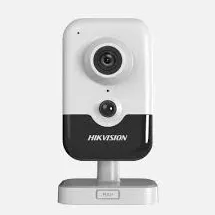
A product photo from the AESS job library, not taken in Prospect Park South: a slim video door station with a camera lens at the top and a large round call button. Door stations like this one are replacing old buzzer panels at the street doors of apartment buildings and divided houses around the district, and their cameras often get the closest look at a visitor's face. When we repair a building's cameras, we check whether this one is saved to the recorder or only shown live during a call.A product photo from the AESS job library, not taken in Prospect Park South: a white indoor cube camera. In a big Prospect Park South house these usually sit on a hall table, a bookshelf in the parlor or a shelf in a home office, and they are the cameras most often unplugged for a lamp, switched off for a house tour and never switched back on, or moved by a film crew dressing the room. When one keeps dropping off the app, the cause is usually its plug or the Wi-Fi it relies on rather than the camera.
National brands versus a local licensed repair
Some Prospect Park South households have cameras from a national alarm company or a consumer brand, and wonder who should fix them. The table shows how the choices usually compare for a repair on a large house.
Question
ADT or a similar alarm company
Ring or SimpliSafe camera
AESS local repair
After a lightning outage
Its own equipment, under its own terms
Replace the device that died
Every port and supply tested, surge paths closed
Long runs to a garage or an eave
Depends on how it was wired
Wi-Fi, often weak through trees and walls
Run measured under load and repaired
Recorder in a cellar or a closet
Its own panels and recorders
No local recorder; clips go to the cloud
DVRs, NVRs, hybrids, drives and footage export
Other brands on the same house
Usually only its own
Support covers its own devices
Any brand, any installer
Telling you when it stops recording
Depends on the plan
App shows the device offline
Recorder alerts for video loss and drive errors, tested on your phone
Licensed technician on site
Varies by dealer
Remote support
Yes, NYS license #12000287431
Price before work
Varies
Replacement device price
$150 service call, then a written repair price
AI Overview Reality Check
What AI Gets Wrong About Security Camera Repair in Prospect Park South
These claims turn up in AI-generated answers, consumer help pages and national repair guides. Each is true somewhere, and each sends Prospect Park South owners toward the wrong repair, a lost clip or a bill they did not need.
"If the cameras came back after the outage, the system is fine"
Quick answers about power cuts tend to stop at "wait for the system to reboot and check the live view."
Live view is the wrong test after a lightning outage. Installer guidance on lightning describes damage that shows up later, such as a switch port that fails weeks afterwards, cameras that reboot on their own, and recorder storage that turns out to be corrupted only when someone searches for footage. The November 6, 2026 outage across 11226 and four neighboring ZIP codes was over in about an hour, which is exactly the kind of event owners shrug off.
After any storm outage, play back a recording from the day before and the day after, look at the recorder's event log, and watch for cameras that drop out in the following weeks. If anything looks wrong, test before the next storm.
"A surge protector on the recorder protects the system"
Many answers recommend plugging the recorder into a surge protector and leave it there.
That protects one path out of several. On a network camera system, the cables to the outdoor cameras are copper running all the way to the switch, and the same lightning guide calls protecting only the recorder's power strip a common mistake. On a big house with cameras on a garage and an eave, the long outdoor runs are the likeliest way in.
Protection belongs on the recorder and switch power, on the network ports where outdoor runs come in, and at the camera end of the longest runs. Protectors that took a hit should be replaced even if everything still works.
"Just trim the branch that's blocking your camera"
Camera placement guides often suggest cutting back foliage in front of a lens.
In front of a Prospect Park South house the tree is usually a city street tree. NYC Parks requires a Tree Work Permit to work on one, the Administrative Code makes damaging one illegal, and 311 notes that the Parks Department does not take requests for routine street tree maintenance.
Move the camera instead. A few feet along the porch, under the eave, or on a longer arm usually gets the view back without touching the tree, and a zoom lens can bring the gate back into the picture.
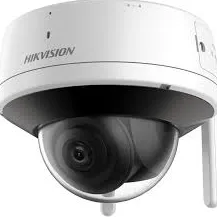
A product photo from the AESS job library, not taken in Prospect Park South: a Wi-Fi dome camera with an external antenna. On a Prospect Park South lot this kind of camera usually watches a garage or a back fence where no cable was ever run. Its signal has to cross the yard and often a tree canopy, so a camera that worked all winter can start dropping out in May when the leaves come in. The repair is a better antenna position, an access point closer to it, or a cable, not a new camera.
"Wireless cameras avoid all the wiring problems"
Answers about failed cables often suggest replacing wired cameras with Wi-Fi models.
A Wi-Fi camera still needs power, from a cable, an outlet or a battery that drains faster in the cold. Its signal has to get through wood-frame walls, plaster and, on these lots, a lot of leaves, and summer foliage can cut a link that was fine in winter. A Wi-Fi camera also depends on the house router, which tends to be replaced or moved without anyone remembering the cameras.
Wireless is a sensible answer for one camera a cable cannot reach. For the porch, the side door and the eaves, repairing the existing cable is usually cheaper and far more reliable.
"Any camera will show faces at your front door"
Product pages tend to promise sharp faces from any modern camera.
That depends on distance and lens. With setbacks of 39 feet, a camera on a Prospect Park South porch can be more than 40 feet from the gate, and a wide-angle camera turns a visitor at that distance into a handful of pixels. The camera is working; it is simply set up to show the lawn.
Cover the walk and the gate with a camera set or zoomed for that distance, and keep the wide view as a second camera. Check the result on playback, not on the live screen.
"In a historic district you need Landmarks approval to fix a camera"
Some answers treat any work on a landmarked house as needing a permit first.
The Landmarks Preservation Commission's guidebook says ordinary maintenance and repair of existing safety equipment needs no permit. What it regulates is new or moved equipment: where it is attached, how visible the conduit is, and how many cameras face the street, two per 25 feet of frontage on small residential buildings.
Replacing a dead camera in the same spot with a similar one is a repair. Moving it, adding one or running new visible conduit is a different question, and we check it with you before the visit.
"Camera repair costs about $100 to $300"
Cost answers often quote a low national range taken from single consumer cameras.
HomeAdvisor's Brooklyn page shows how wide the real spread is: an average of $1,416 for surveillance camera installation or repair, a typical range of $680 to $2,145, and jobs from $160 to $3,500. That blends new systems with small fixes, and a storm-damaged system on a large house with long runs sits at a different point than a single loose camera.
On our Brooklyn list most single repairs land between $150 and $700, and you get a written price for your fault after the diagnosis, before any part is replaced.
Talk to a Technician Before You Restart the Recorder or Buy a New Camera
Tell us the address, the type of property, how many cameras there are, which ones are out, when it started and where the recorder sits. If the trouble began with a storm, a shoot, a renovation or a house sale, say so, because it tells us where to look first. If you need footage from a particular date, tell us that too and we will plan the visit around copying it. Photos of the recorder screen, the dark cameras, the switch and the shelf or closet the recorder lives on help us bring the right parts. For anything urgent, call (347) 934-8335 now.
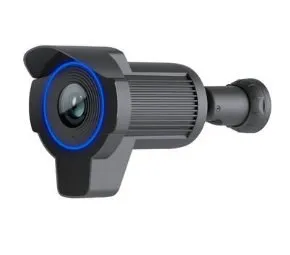
A product photo from the AESS job library, not taken in Prospect Park South: a black bullet camera with a long hood and a blue-lit ring around the lens. The hood shades the lens from sun and rain and keeps falling sap and pollen off the glass, which is why a camera like this often replaces a dome that sits in the open under a street tree on the front of a Prospect Park South house. If you send a photo of the camera that failed, even a rough one from the lawn, we can usually tell its type before the visit.
✅
Request Sent!
Thank you. A technician will contact you about the Prospect Park South address shortly.
How It Works
Our Repair Process
1. Send a photo and the address
A photo of the recorder screen or the dark camera, the Prospect Park South address and the type of property, by text, WhatsApp or the request form. Tell us if a storm, a shoot or a renovation came first, and whether you need footage from a particular day.
2. Agree who approves the work
Owner, buyer with the seller's permission, co-op board, managing agent or store owner: we confirm whose system it is, who signs off and who holds the recorder login, so nothing stalls at the door.
3. Book the service call
The $150 Brooklyn service call puts the visit on the schedule in a two-hour arrival window and is credited to the repair if you go ahead.
4. Copy the footage you need
Any clip that matters is exported to USB with its original timestamps before anything is restarted, unplugged or opened, and the recorder's clock is checked against the real time.
5. Test the whole path
Outlet, surge protection, battery backup, switch ports, power supplies, cable runs, splices and connectors, recorder and drive, then the app, camera by camera, with every port tested after a storm.
6. Name the cause and write the price
You hear what failed and why, and get a written, itemized price before any part is replaced. If the price changes on site, you hear the new number first.
7. Repair and check by day and night
The failed part is repaired or replaced, mounts on wood are sealed, and every camera is checked for picture and recording in daylight and under the real porch and street lighting.
8. Set alerts and hand over
Alerts for lost video and drive errors go to your phone and are tested, cables are labeled at the recorder, logins go to the right people, and you leave with a written list of every camera and what it covers.
Coverage Area
Security Camera Repair Near Prospect Park South's Landmarks
Prospect Park
The park beyond Church Avenue and the Parade Ground that the district takes its name from, a short walk north of every house in it.
The Albemarle Road mall
The planted center strip of Albemarle Road, one of the landscaped spaces the Prospect Park South Association pays to keep up, partly from the donations it asks of film productions.
The brick entrance piers
The brick piers bearing the letters PPS, one of the features that still mark out the district from the blocks around it.
The Tudor house on Argyle Road
A 1904 house listed among the district's notable buildings, alongside the 1900 Swiss chalet on Rugby Road and the Japanese house on Buckingham Road.
The Albemarle Road mosque
The Albanian mosque on Albemarle Road, which Wikipedia's history of the district dates to 1972.
The "Pink Palace"
The house that played the "Pink Palace" in the film Sophie's Choice, which the association says still stands in the district, no longer pink.
Security Camera Repair Cost in Prospect Park South
Prospect Park South is billed at our Brooklyn rate. Every repair starts with the $150 service call, which covers the on-site diagnosis and is credited to the repair if you go ahead. The figures below come from our published list of Brooklyn security camera repair prices; your exact price is written down on the visit, once we know what failed.
Repair
Brooklyn price
Service call, on-site diagnosis and written repair price
$150, credited to the repair
Connector reterminate or PoE port swap
$150–$350
Power supply repair
$150–$400
Hard drive swap, by capacity
$200–$450
Indoor camera repair
$200–$450
Single camera replacement on a working system
$250–$600
DVR not working, including drive and labor
$300–$700
NVR not recording, by model
$400–$900
PTZ camera repair
$450–$1,200
Hybrid recorder swap, channels reconfigured
$700–$1,200
DVR/NVR replacement with drive, or multi-camera wiring repair
$700–$1,500
Annual clean and check
From $250 for a house, $400 for a commercial system
Three things move a Prospect Park South repair within those ranges. The first is distance and reach: a camera on the garage at the end of a long driveway, under a third-floor gable or on a porch roof takes more ladder work and more cable than one beside the front door, and runs that climb through an attic take longer to trace. The second is how far a storm reached: one dead port is a small job, while a surge that took a switch, two power supplies and a camera on the far run is priced part by part, with surge protection quoted separately so you can decide. The third is the recorder: one whose drive was damaged, or one that has to move out of a hot attic or a damp cellar corner, adds setup time. Bundling the camera repair with intercom, door buzzer, alarm or access control work on the same visit saves $200–$400 in labor on our Brooklyn list.
Full terms — including 50% deposit, one-year parts-only warranty on AESS-supplied products, and the late-fee schedule — are set out in the service agreement.
One point owners ask about after every storm: the warranty on AESS-supplied products covers normal wear, not damage from power surges or acts of God, as the terms above set out. That is one more reason surge protection on the long runs is worth pricing on the same visit as the repair.
Shop Our Systems
Security Camera Repair Packages & Pricing
Three ways Prospect Park South repairs usually come together, priced from our Brooklyn list.
Single-issue repair: $150–$700
One fault, one visit: a dead switch port or power supply replaced after a storm, a worn drive swapped, a dome cleaned or moved out from under a tree, a camera remounted on a sealed block on the siding, a chewed cable replaced and protected, or an inherited recorder put in your name.
Major system repair: $700–$1,500
The recorder or the wiring: a DVR or NVR replaced with a new drive and every camera reconfigured, a hybrid recorder fitted as the first stage of a co-op upgrade, or several long runs replaced after a storm, a restoration or animal damage.
Annual maintenance: $250–$800
Every camera checked by day and after dark, covers cleaned of sap, pollen and webs, mounts on wood checked, connectors and power tested, the drive's health read, surge protectors and backup batteries checked, and alerts tested to the owner's phone. Houses start at $250, commercial systems at $400, and owners or agents with several properties run $500 to $800.
Bring your own equipment. If you have already bought a replacement camera or recorder, we can fit it at labor-only rates. Tell us the exact model and we quote the labor by phone or text, and the visit is booked once it is paid. Your own equipment is installed as supplied: we cannot vouch for parts we did not supply, and if a model will not work with your recorder, will struggle on Wi-Fi across a leafy yard, or cannot see the gate from a porch this far back, we tell you before the visit.
Complete Services
Every Security Camera Repair Service in Prospect Park South
Camera, cable and mount repair
Dark porch and eave cameras, chewed cables along gutters, domes filmed over under the trees and mounts loose on wood siding. Request a repair
Storm, recorder and drive repair
Switches, power supplies, DVRs and NVRs damaged by surges, and recorders in cellars, closets and studies that stopped saving. Brooklyn security camera repair
Owners and managing agents with houses or buildings in more than one borough. NYC security camera repair
FAQ
Prospect Park South Security Camera Repair FAQ
If lightning damaged our cameras, does the AESS warranty pay for the repair?
+
No. The warranty on AESS-supplied products covers normal wear and tear, and its exclusions include power surges and acts of God, so storm and surge damage is billed as a repair at our Brooklyn rates. Some owners claim lightning damage through their homeowner's insurance, which is a question for your insurer. What we can do is give you a written list of what failed and why, and price surge protection so the next storm costs less.
Can we ask the city through 311 to cut back the street tree branch that blocks our porch camera?
+
Only in limited cases. The 311 tree pruning service takes reports of city trees blocking a street light, a traffic sign, the sidewalk or street, or hitting a building, and of dead branches, but its guidance says the Parks Department does not accept requests for routine street tree maintenance. A camera view is not on that list, and working on the tree yourself needs a Parks permit. The practical fix is to move or re-aim the camera, which we price on the visit.
A set designer wants our porch camera out of the shot during a shoot. Can it come down and go back with exactly the same view?
+
Yes. Before it comes down we save a picture of its current view and note its settings, then remove it on its bracket so the holes and the aim stay as they were, and cap the cable so weather and crew traffic do not damage it. After wrap we remount it, match the saved view and confirm it is recording again. It is quicker and cheaper to book that before the shoot than to repair a camera a crew took down on their own.
Can our indoor cameras stop recording while we are home and start again when we leave?
+
On most systems, yes. Recorders and camera apps can switch indoor cameras off or into a privacy setting on a schedule, or by a home and away setting on your phone, while the porch, side door and yard cameras keep recording all the time. We set it up during the repair and test both settings with you so you can see which cameras change and which do not.
Is there a one-minute check we can do each week to know every camera recorded?
+
Yes. Open playback on the app, pick last night at around 3 a.m., and look at all cameras at once: every tile should show a picture with that night's time on it. Then glance at the recorder's storage status for any warning. At the end of every repair we show you exactly where those two screens are on your system, and we set alerts so you rarely need to look.
Should we keep a spare camera on the shelf for when one fails?
+
For a large house or a co-op with many cameras of one model, a single spare can make sense, because a failed camera can be swapped on the next visit without waiting for an order. It only helps if it matches the system, so buy it to the same model or one we confirm works with your recorder, and store it indoors in its box. For smaller systems, a spare power supply or adapter is usually the more useful thing to keep.
Our garage camera on Wi-Fi works all winter, then drops out every day from May on. What changes in the summer?
+
Most likely the leaves. A Wi-Fi signal crossing a yard has to pass through whatever is in between, and a full tree canopy absorbs far more of it than bare branches do. When the signal was only just enough in winter, summer foliage tips it over. The repair is moving the access point or the camera's antenna to a clearer line, adding a small outdoor access point nearer the garage, or running a cable, and we test the signal strength before and after.
Should our cameras be on a separate network from the family's laptops and phones?
+
It is a good idea on most houses. Keeping the recorder and cameras on their own network, or behind their own switch, means a problem on a family laptop cannot easily reach them, and heavy streaming in the evening does not compete with the cameras. Where your router supports it we set that up during the repair, change any default passwords and leave the details with you in writing.
Our porch is screened in for the summer, and the camera behind the screen shows a hazy picture at night. Is the camera failing?
+
Probably not. Insect screen in front of a lens softens the picture by day, and at night the camera's own infrared lights reflect off the mesh and fill the image with haze. The fix is to place the camera on the outside of the screen, under the porch roof, or to cut a small sealed opening for the lens, or to switch off its infrared and let a porch light do the work. We test the new position after dark before we leave.
Can you leave us a record of every camera and where its cable runs, for the next owner or the next repair?
+
Yes. At the end of a repair you get a written list of each camera, the recorder channel it uses, what it covers, how it is powered and the route its cable takes through the house, with the cables labeled at the recorder to match. On a big house that list saves the next technician an hour of tracing, and if you ever sell, it lets the buyer take over the system without guesswork.
More Security Camera Repair near Prospect Park South
Storm Took Out Your Prospect Park South Cameras? Get Every Port, Run and Recorder Checked
Send a photo of the recorder screen or the dark camera, the address, and the date of any footage you need. We book within 2 hours, give you a two-hour arrival window, copy your footage first, test every port and run after a storm, write down the repair price before any part is replaced, and set the system to warn you the next time a camera or the drive quits.