Recorder soaked in a Sheepshead Bay basement, a camera gone milky facing the bay, or co-op hallway screens gone black? Sheepshead Bay camera repair line, booked within 2 hours: (347) 934-8335
Postwar Elevator Co-ops on Ocean Avenue and East 13th Street · Bungalow Courts by the Bay · Restaurants on Emmons Avenue · Shops on Avenue U and Sheepshead Bay Road
Security Camera Repair in Sheepshead Bay
Any Brand, Any Installer · Footage Copied Before Anything Is Touched · Written Price Before Parts · Water and Salt Damage Checked at Every Camera
Security camera repair in Sheepshead Bay starts with our $150 Brooklyn service call, which covers the on-site diagnosis and is credited to the repair if you go ahead. On our published Brooklyn list most repairs land between $150 and $1,500: a connector or switch port fix runs $150 to $350, a single camera replaced on a working system $250 to $600, and a new DVR or NVR with its drive $700 to $1,500. We repair systems other companies installed, from the basement recorder of a co-op on Ocean Avenue to the patio cameras of a restaurant across Emmons Avenue from the piers, a store on Avenue U or a raised bungalow in one of the courts near the water. Requests are booked within 2 hours, visits come in two-hour arrival windows, and you get a written price before any part is replaced.
Every price on this page comes from our published Brooklyn camera repair list, and your own price is written down before work starts
Rated 4.7★ across 201 Google Reviews
Reviewed and updated November 12, 2026, against City Planning's Sheepshead Bay report, NYC Building Code Appendix G, the Brooklyn Eagle on the February 2026 water main break and on Lundy's, City Limits on Sandy, the NYPD's 61st Precinct page, Brooklyn Paper (2010), ABC7, News 12 and CBS New York crime reports, the 2021 Hikvision count on stopspying.org, FCC order 22-84 and notice DA 26-294, co-op listings on NYBits and CityRealty, FirstService Residential, New York YIMBY, ACTi, Swann, HomeAdvisor, New York Labor Law §203-c and the New York Department of State. · Abstract Enterprises Security Systems, NYS license #12000287431 · crews dispatched from our Troy Avenue office in Brooklyn
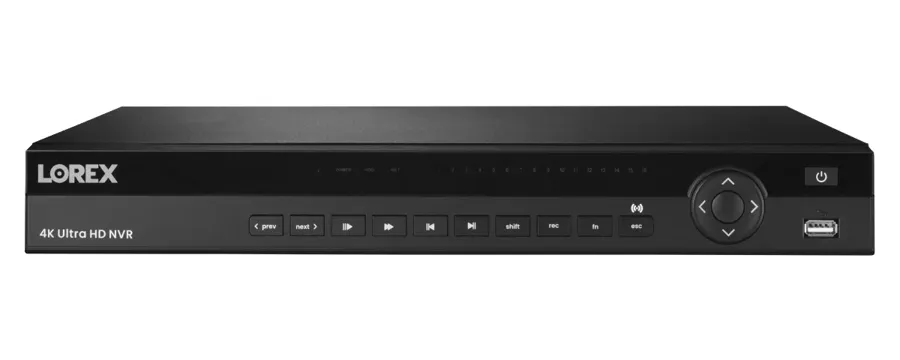
A product photo from the AESS job library, not taken in Sheepshead Bay: a 16-channel network video recorder. In a Sheepshead Bay house this box usually lives in the basement, near the boiler and the internet modem; in a six-story co-op it sits in the super's office, a storage room or a closet by the lobby; in an Avenue U store it is under the counter or in the back. A large share of the basements here sit below the city's design flood elevation, so on many of our repairs the first question is not which camera failed but how close to the floor this box has been sitting.
Sheepshead Bay Camera Repair Request
House, bungalow, co-op, condo, rental building, restaurant or shop: send the address and what the screen shows, and a technician calls back with the next step
✅
Request Sent!
Thank you. A technician will contact you about the Sheepshead Bay address shortly.
25+
Years Experience
✓
Same-Day Estimates
100%
Licensed & Insured
4.7★
201 Google Reviews
Owner-operated since 2002 · Thousands of jobs completed · Booked within 2 hours
Security camera repair in Sheepshead Bay is usually a story about water, salt or age, and only sometimes about a camera that simply wore out. The neighborhood runs from Avenue U down to the bay, and the closer a building sits to Emmons Avenue, the more its camera system has to put up with: basements below the flood line, a water main break in February 2026 that left some basements and garages with up to 20 inches of water, salt in the air that eats connectors and fogs domes, and the low sun off the water. Farther north, among the six-story co-ops and the shops of Avenue U and Sheepshead Bay Road, the trouble is more often a system that went up ten or fifteen years ago, when this precinct was known for cameras on every house, and has not been looked at since. Our repair has two halves: find and fix what failed, then move or protect whatever the water, the salt or the burglar can reach, and set the system to tell you on your own phone when it stops. Send a photo of the recorder screen to (347) 934-8335 or on WhatsApp, and we will tell you the likely fault and what that kind of repair costs on our Brooklyn list before you book.
Looking at your photos costs nothing. The $150 service call covers the on-site diagnosis and is credited to the repair if you go ahead.
All work is done under New York State license #12000287431, the license the state requires of companies that install or service CCTV and security systems for other people.
We repair any brand, including the Hikvision and Dahua recorders that are common in ZIP code 11229, and we say plainly when a part is not worth fixing.
The Neighborhood
Why Sheepshead Bay Properties Need Security Camera Repair
Sheepshead Bay runs roughly from Avenue U south to Emmons Avenue and the inlet, between Coney Island Avenue on the west and Nostrand Avenue on the east. It grew from farmland subdivided in the 1870s into a district of frame houses and bungalows, then filled with brick apartment buildings after the Second World War, and the Brighton Line has connected it to Manhattan since 1908. That is all the history a camera repair needs. What matters on a service call is the building stock that history left behind: dozens of six-story postwar elevator co-ops, walk-up co-ops and rentals, attached and semi-attached houses on the lettered avenues, clusters of 1920s bungalows near the water, two public housing campuses, and three very different commercial strips on Emmons Avenue, Sheepshead Bay Road and Avenue U.
Two things set this neighborhood apart for camera work. The first is how many cameras there are. In 2010 the Brooklyn Paper reported that video had become "the bane of thieves throughout Sheepshead Bay and Manhattan Beach," and the commander of the 61st Precinct at the time, Capt. George Mastrokostas, told the paper: "In 2009 we identified a lot of bad guys ... [Video] played a key role." A 2021 count of Hikvision cameras published on stopspying.org put ZIP code 11229, which takes in most of Sheepshead Bay, second in the whole city with 398, behind only the Rockefeller Center ZIP code. A great many of the systems we are called to here went up in that wave, from about 2008 to the late 2010s, often from the same few brands, and many are now old enough that their drives, power supplies and outdoor connectors are due to fail.
The second is water. The City Planning Department's Sheepshead Bay report says plainly that many homeowners here have basements below the design flood elevation and subject to flooding. During Hurricane Sandy roughly 85 percent of Emmons Avenue businesses suffered some damage. The bungalow courts north of Emmons Avenue sit lower than the streets around them, "like bathtubs," in one urban planning account. And in February 2026 a water main break left some basements and garages with up to 20 inches of water. A recorder on a basement shelf or a PoE switch on the floor beside the boiler is exactly what that water reaches first.
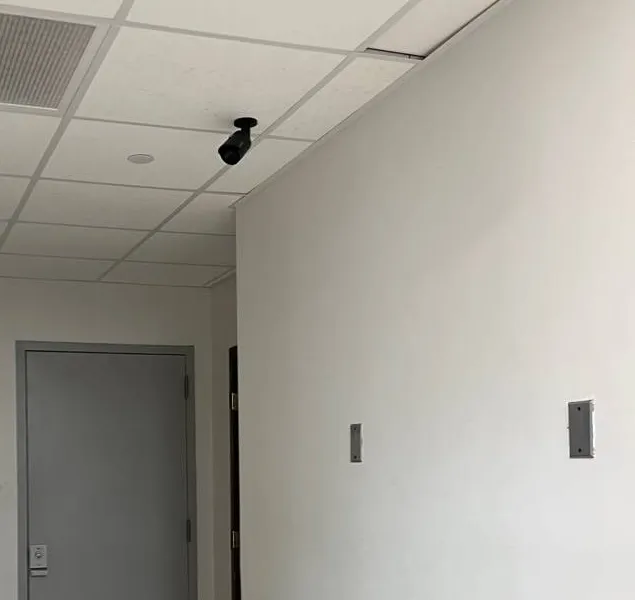
A photo from the AESS job library, not taken in Sheepshead Bay: a small black bullet camera hanging from a white ceiling-tile grid, aimed down a short corridor at a grey steel service door. In a Sheepshead Bay elevator co-op this is the view of the corridor to the laundry room, the boiler room or the storage cages, the basement spaces where packages, bicycles and tools go missing and where burglars elsewhere in the 61st Precinct have been caught on video reaching up to cover the camera. When we repair one like this we check the cable where it drops through the ceiling grid, because a leak from the floor above finds that cable before it finds anything else.
Crime here is mostly the quiet, overnight kind that only a working camera explains afterward. In March 2026 a house on East 9th Street was broken into and a car taken around two in the morning, and Shmira Public Safety stepped up patrols after a second break-in a few blocks away in Gravesend; its director, Levi Leifer, told News 12, "we do think it's a pattern and might be part of the same group." In September 2026 residents searching for a man who damaged more than 20 cars turned to footage from a neighbor's home camera, which showed someone jumping onto a car and shattering the windshield. In the 2018 to 2019 burglary spree that hit stores in Sheepshead Bay, Bensonhurst and Midwood, one burglar at Harvest Grocery could be seen trying to cover the security camera with a broom, and the owner of Lucky 7 Smoke Shop arrived to find the ATM knocked over and the cameras broken. Each story depends on a camera that was aimed right and still held the night in question.
What the record shows about cameras in Sheepshead Bay
One building directory lists 41 co-op buildings in Sheepshead Bay, 24 with elevators and 17 walk-ups. Many are six-story postwar buildings, such as 2620 and 2650 East 13th Street with 192 units each, where one recorder serves lobbies, elevators, laundry rooms and parking areas.
ZIP code 11229 had 398 Hikvision cameras in a 2021 count, the second highest of any ZIP code in New York City. Since FCC order 22-84 in November 2022, new Hikvision and Dahua surveillance equipment can no longer be authorized for sale in the United States, which changes how a failed part is replaced.
The Special Sheepshead Bay District, created in 1973, covers roughly 20 blocks along Emmons Avenue from Sheepshead Bay Road to Knapp Street, the waterfront strip of restaurants, piers and newer condos where outdoor cameras face salt air and open sky every day.
The former Lundy's building at 1901 Emmons Avenue has been described as the only city-designated landmark in Sheepshead Bay, so Landmarks Preservation Commission rules on camera mounts reach far fewer buildings here than in brownstone Brooklyn.
The NYPD's 61st Precinct, with its station house at 2575 Coney Island Avenue, covers Sheepshead Bay along with Gravesend, Kings Bay and Manhattan Beach, and it is where requests for video after a break-in or a car theft usually come from.
In February 2026 a water main break in Sheepshead Bay left some basements and garages with up to 20 inches of water, on top of the flood risk the city already maps for many basements here.
Most Sheepshead Bay co-ops and houses that call us about cameras also have an intercom or a door buzzer at the same front door, and the two systems often share the same basement closet and the same neglect. When we are already on site, it costs less to have both looked at in one visit.
Need Repair in Sheepshead Bay? A Recorder That Sat in Water, a Lobby Camera Gone Black, or a Clip the Precinct Asked For
If your cameras went dark after water came into the basement, do not switch the recorder back on until someone has looked at it; a drive that has been wet can still give up its footage, and powering it up is the step most likely to lose it. If a detective from the 61st Precinct, Shmira or a neighbor has asked for video from a particular night, tell us the date and time when you call, and the technician will copy that footage to a USB drive before anything else on the system is touched. If a camera at your store was covered, turned or broken overnight, leave it as it is and send a photo. Requests are booked within 2 hours, visits are given in two-hour arrival windows, and most single faults are fixed on the first visit once the cause is found. Call (347) 934-8335 or send the short request.
What We Install
Security Camera Repair Services in Sheepshead Bay
Every repair below is priced from our Brooklyn camera repair list. The service call pays for finding the fault; the repair is priced by what failed, how many cameras it touches and how hard the camera or the cable is to reach, whether that is a dome in a co-op lobby on Ocean Avenue or a bullet camera on the side of a raised bungalow near the water.
Water-damaged recorder recovery
Recorders, switches and power supplies that sat in a flooded basement or under a leak. We save the footage from the drive first where it can be read, dry and test what can be kept, replace what cannot, and put the new equipment high enough that the next flood misses it.
Salt and corrosion repair
Green, crusted connectors, rusted brackets and fasteners, and domes that have turned milky on cameras that face the bay along Emmons Avenue and the streets just north of it. We cut back to clean wire, re-terminate, reseal and replace hardware with corrosion-resistant parts where it matters.
One camera out, the rest fine
A single camera with no picture, tested at the camera, along the cable and at the recorder, so that only the failed part is replaced. In older systems here the fault is often a plug-in adapter or a power box fuse, which costs far less than a new camera.
Aging Hikvision and Dahua systems
Recorders and cameras from the brands that went up on so many houses and shops in 11229. We repair what still works, tell you honestly which replacement parts will and will not talk to the system you have, and plan a sensible replacement when a part can no longer be matched.
Co-op and condo building systems
Lobby, elevator, laundry room, package room, garage and parking lot cameras on one recorder, with a doorman or super watching the screen. We work through the managing agent and the board, and leave a written record of what was repaired for the building's files.
Tampered and vandalized cameras
Cameras turned to face the wall, covered, sprayed or knocked loose above a store gate or a back door. We clean or replace covers, remount out of reach, and switch on the alert that tells you when a lens is blocked.
Glare, fog and night picture fixes
Pictures washed out by low sun over the water, black faces against bright lobby glass, night images that glow white in fog or turn to blocks when a car passes. Most of these are settings, aim and light, not a new camera.
App access and lost logins
Apps that stopped showing the cameras after a new router or internet provider, logins that left with a relative, a former super or an old installer, and alerts that go to nobody. We restore access and put the admin login in the right hands.
Footage export for police and insurance
Clips copied to USB with their original timestamps for the 61st Precinct, a flood or theft insurance claim or a board, with the player file the recipient needs and the recorder's clock checked against the real time.
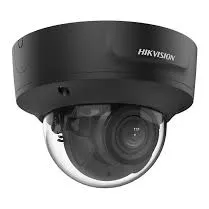
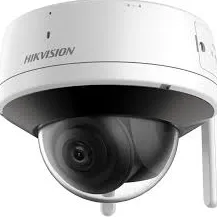
A product photo from the AESS job library, not taken in Sheepshead Bay: a black varifocal dome camera. Domes like this watch co-op lobbies, condo garages and store floors across the neighborhood. Their adjustable lens is often left set too wide, and on the water side the dome itself clouds over, so many repairs are a new cover and a tighter view rather than a new camera.
Building Specialists
Security Camera Repair for Sheepshead Bay's Architecture
Nearly every camera repair call we take from Sheepshead Bay comes from one of six kinds of property. Each fails in its own way, and each decides where the recorder ends up, how high the water can reach it, which way the outdoor cameras face and who has to approve the work before the technician starts.
Six-story postwar elevator co-ops
The brick buildings of the 1950s and early 1960s on Ocean Avenue, East 13th Street, Voorhies Avenue and Emmons Avenue, with a lobby, one or two elevators, a basement laundry and a super, and often a doorman watching a wall of camera squares.
Walk-up co-ops and rental buildings
Smaller buildings of three to five stories, some from the 1930s, with a vestibule, a stair, a basement and no one at a desk, where the camera system was often added by a board member or the landlord a few cameras at a time.
Attached and semi-attached houses
Brick and frame one- and two-family houses on the numbered East streets and the lettered avenues, with a basement, a driveway or a shared alley, and cameras added by successive owners.
Bungalows and raised houses near the water
Small 1920s bungalows in tight courts and on pedestrian walks near Emmons Avenue, many rebuilt or lifted onto new pilings since Sandy, where cameras sit on light frame walls and the recorder has nowhere dry to go.
Newer waterfront condos
Condo buildings along Emmons Avenue built since the 2000s, such as the 58-unit building at 1809 Emmons Avenue completed in 2017, with garages, pools, gyms and builder-installed systems that nobody left behind to explain.
Stores with apartments above
The one- to three-story buildings of Sheepshead Bay Road, Avenue U and Nostrand Avenue, with a shop at street level, apartments upstairs and a shared basement where two camera systems often meet.
Elevator co-ops: one recorder, a hundred and fifty households, and a desk that cannot save a clip
The building we are called to most in Sheepshead Bay is a six-story brick co-op from the postwar boom, the kind that fills Ocean Avenue, East 13th Street and the blocks near Voorhies Avenue. 1516 Voorhies Avenue, built in 1961, has 95 apartments on six floors with a live-in super; 1625 Emmons Avenue, from 1962, has 148; 3060 Ocean Avenue, from 1956, has 149 and a full-time doorman; the Atlantis at 3235 Emmons Avenue runs to seven floors and 172 units. A building like that may have sixteen to sixty cameras, from the lobby and elevators to the laundry room, storage cages, rear door and parking lot, all feeding one or two recorders in the super's office or a basement storage room.
The faults we find in these buildings follow a pattern. The recorder is old and its drive is tired, so it keeps fewer days than the board believes. The cameras on the upper floors run on long cables up the stair or elevator shaft, and when one of them goes it is often a connector in a ceiling or a riser closet rather than the camera. The login belongs to someone who is no longer around, a former board member, a retired super or the original installer. A good repair fixes the failed parts and then the arrangement: who can export, where the alerts go and how many days the drive really holds.
Co-op hallways and lobbies are common areas under the board's control, so we take instructions from the managing agent or the board. FirstService Residential advises that footage is generally kept 30 to 90 days and that requests for it go through the property manager with a reason, a timeframe and the cameras involved. Its president for the Manhattan condo and co-op division, Christina Forbes, puts the reason simply: "Limiting access protects the privacy of residents and helps prevent potential misuse." We set up the system so the board can follow that rule without relying on one person's memory.
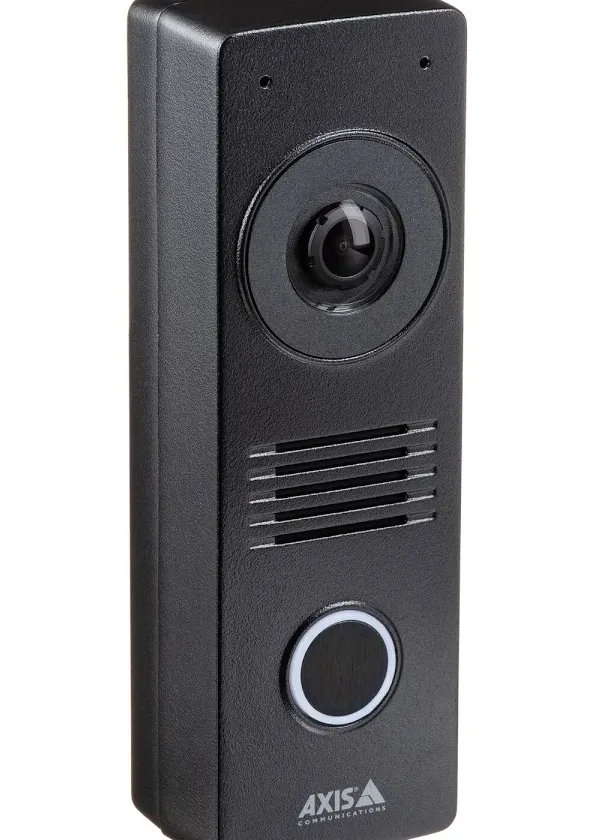
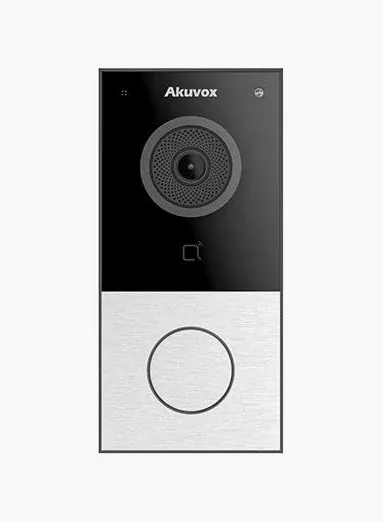
A product photo from the AESS job library, not taken in Sheepshead Bay: a black video intercom door station with a camera, a speaker grille and a lit call button. Many Sheepshead Bay co-ops have replaced their old buzzer panels with a station like this, and the board then assumes the camera in the panel is being recorded with the rest. Often it is not: the door station's video goes to the apartment monitors and the app, and the recorder never sees it. When we repair a lobby system we check whether the entrance is actually covered by a recorded camera, not just by the intercom.
Walk-up co-ops and rentals: cameras added a few at a time, by whoever was on the board
The 17 walk-up co-ops in the directory, and the rental walk-ups beside them, are a different repair. There is no desk and often no live-in super, and the cameras were added in stages, each bought by a different board member or by the landlord after a package theft or a break-in. In buildings like this we often find two or three recorders, cameras of three brands and a power supply in a basement closet that nobody remembers buying.
The repair starts with an inventory: every camera, where its cable goes, which recorder holds its video and which outlet powers it. Then we decide with the board or the owner which pieces are worth keeping. Many can be brought onto one recorder and one app without replacing every camera, which ends the commonest complaint: nobody knows where to look. Where tenants of a rental building have asked the landlord for footage, we point both sides to the building's written rule, because, as Brick Underground has reported, landlords are generally not obliged to show tenants footage outside a legal process, and a written policy prevents arguments later.
Attached and semi-attached houses: the basement recorder and the driveway camera
North of the waterfront, the house blocks between Avenue U and Avenue Z and along the numbered East streets are mostly brick and frame one- and two-family houses, many with basements, driveways and garages. Here the recorder is usually on a basement shelf near the boiler and the internet modem, the cameras watch the front door, the driveway, the side alley and the back yard, and the system was installed by whoever owned the house at the time. A house on East 15th Street made the news for carrying at least 51 cameras by one count; that is unusual, but large systems on single houses are not.
The faults in these houses are mostly the same few: a drive worn out after years of round-the-clock recording, a power supply in the basement that failed after a surge or a leak, a driveway camera whose night picture turns to smears when headlights hit it, and connectors at the outside wall that let water in. After the 2019 wave of daylight porch thefts on Bedford Avenue and nearby blocks, many houses also added a doorbell camera on its own app, so part of the repair is getting it and the wired system to agree on time and alerts. When a basement has flooded, we treat the whole lower part of the system as suspect, including cable runs that sat in water, and we move the recorder and power supplies above the reach of the next flood.
Bungalows and raised houses: small walls, short eaves and nowhere dry for the recorder
The bungalows near Emmons Avenue were built in the 1920s in clusters near the coast, originally for warm-weather use, and some, like the "Sheepshead Courts" near Plumb Beach, stand on pedestrian-only streets with no curb in front. Since Sandy many have been rebuilt or raised onto new pilings. Cameras here sit on light frame walls under short eaves, within reach of anyone on the walk, and the recorder ends up in a closet, crawl space or shed.
Repairs here are usually about reach, water and power. A camera under a low eave gets turned or knocked; a cable that runs along the outside of a raised house to a crawl space under it gets wet and chewed; a recorder in a closet with no air runs hot all summer. We remount cameras higher where the frame will hold them, re-route or protect exposed cable, and find the driest, coolest spot in the house for the recorder, on a battery backup. Where one camera serves a whole court, we confirm who can approve the work first; the need for agreement among neighbors that slowed rebuilding in the courts after Sandy applies to cameras too.
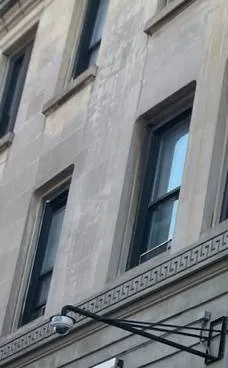
A photo from the AESS job library, not taken in Sheepshead Bay: a bullet camera on a long black steel wall arm below a carved Greek-key band on a pale stone facade with tall sash windows. Sheepshead Bay has few stone facades like this, but its older brick apartment buildings and its avenue storefronts have the same problem: the mount is fixed into masonry, the arm is steel, and near the bay the screws and the arm rust long before the camera dies. A long arm also acts as a lever, so a camera hit by wind off the water or by a broom handle pulls at its anchors. On a repair we check the anchors and the arm as carefully as the camera.
Newer waterfront condos: big systems, builder's passwords and a garage that floods
The condos built along Emmons Avenue since the 2000s are the opposite of the walk-ups: large, network-based systems installed all at once by the developer's contractor. 3112 Emmons Avenue, a 75-unit condo built in 2006, and 1809 Emmons Avenue, a 58-unit building from 2017 with a pool, a gym and on-site parking, are typical of the stock. These systems are usually in good shape, but the admin password stayed with the builder's installer, the switch and recorder sit in a ground-floor or cellar room near the garage, and the bay-side cameras face salt air every day.
When a condo board calls us, the first job is usually recovering control: getting into the recorder, documenting every camera and switch, and moving alerts and logins to the board or the managing agent. The second is checking the parts nearest the water and the garage, where a burst main, a storm surge or a leaking pipe does its damage. The city's flood-resistant construction code requires utilities and attendant equipment in flood zones to be at or above the design flood elevation; a low-voltage recorder is not called out by name, but the logic is the same, and we use it when deciding where the repaired equipment goes.
Stores with apartments above: one basement, two systems and two sets of rules
Sheepshead Bay Road developed in the 1920s and 1930s as a strip of ground-floor shops with apartments above, and much of Avenue U and Nostrand Avenue follows the same pattern. In these buildings the store's cameras and the building's cameras often share a basement, sometimes a power strip and occasionally a recorder, and the line between the tenant's system and the landlord's system is rarely written down.
Before we start, we confirm whose cameras are whose and who can approve work on each. Then we separate what needs separating: the store's recorder on its own outlet and its own battery backup, the building's cameras on the landlord's, and the cables labeled at both ends so the next contractor who works in the basement knows which ones not to cut.
Field Notes
Field Notes: Bringing Back a Sheepshead Bay System After the Basement Took Water
These notes describe the order our technicians work in when a Sheepshead Bay house, co-op or store calls after water has been in the basement, whether from a storm, a burst pipe or a break in the street main. It is our working method, not a story about one address.
Nothing gets switched on first. If the recorder, a switch or a power supply was wet, we ask the owner to leave it off until we arrive. Electronics that have dried on the outside can still hold water inside, and the moment they are powered is when a short does the real damage, sometimes to the drive that holds the footage.
The footage comes out before the repair begins. The technician removes the drive and, where it can be read, copies the dates the owner needs to a separate drive on a dry bench recorder, with the original timestamps. For an insurance claim we photograph the equipment, the water line and the model labels first.
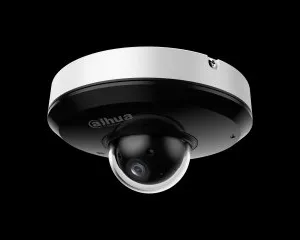
A product photo from the AESS job library, not taken in Sheepshead Bay: a mini pan-tilt dome camera with a white housing over a black lens dome. A camera like this can sweep a store floor on Avenue U or a co-op parking lot on a preset tour. After a power cut or a flood repair it often wakes up facing the wrong way, or with its tour switched off, and nobody notices until a clip is needed. Part of every post-flood check is confirming that moving cameras return to the view that matters.
Every connection below the water line is opened. Power supplies, PoE switches, splitters, junction boxes and cable joints in the basement are opened and checked for corrosion and silt. A cable that sat in water can carry it along its jacket and into a connector far from where it was wet, so we test each run end to end rather than trusting the ones that look dry.
Cameras upstairs are checked too. A camera on the second floor can die from a basement flood if its power came from a supply on the basement wall. We test every camera's power at the camera, not just at the recorder.
The new equipment goes higher. Whatever is replaced goes back on a wall bracket, a high shelf or the floor above, on its own outlet with a battery backup, with the cables brought down to it from above rather than across the floor.
The owner gets a written list. At the end, the owner has a list of what was damaged, what was replaced, what was kept and where everything now sits, which is the document an insurer, a board or the next technician will want.
Why Systems Fail Here
Floodwater, Salt, Low Sun, Burglars and Age: How Sheepshead Bay Camera Systems Break
The same handful of causes shows up again and again on our Sheepshead Bay repair tickets. Knowing which one you are dealing with is most of the diagnosis, and it decides whether the fix is a $150 visit or a new recorder.
Floodwater: the recorder on the lowest shelf in the house
In most houses and many co-ops here the recorder was put in the basement because that is where the internet modem, the boiler and the electrical panel are. In a neighborhood where the city says many basements sit below the design flood elevation, that is a gamble. Water does not need to reach the recorder to kill it; it only needs to reach the power strip on the floor, the PoE switch tucked behind the boiler or the cable joint in a box low on the wall. After every flood the calls follow one script: the cameras came back partly, not at all, or for a week before they started dropping.
The repair is half electronics and half placement. We save the footage, replace what the water ruined and test the rest, then move the recorder, switch and power supplies out of the water's reach.
Salt air: connectors, brackets and domes on the bay side
Cameras that face the water along Emmons Avenue, Shore Boulevard and the side streets near them live in what camera makers call a coastal environment. ACTi, a camera manufacturer, warns that coastal settings "present severe corrosion challenges to electronic security equipment" and that "sodium chloride and other halides are aggressive to metals, accelerating oxidation, pitting, and galvanic corrosion." The parts it lists as most at risk are exactly the ones we replace here: housings and fasteners, domes and seals, connectors, cable glands and junction boxes, and brackets, with failures that show up as rust, seal leaks, optical haze and loose mounts.
On a repair this usually means cutting back a corroded cable to clean wire, putting on a new sealed connector, replacing rusted screws and brackets, and cleaning or replacing a dome that has turned cloudy. A camera whose seal has failed often has moisture inside the lens, which no cleaning can fix; that one is replaced. A joint left hanging outside the wall corrodes years faster than one in a sealed box.
Low sun over the water: the picture that goes white every winter afternoon
The bay lies south of Emmons Avenue, so a camera on a waterfront restaurant, condo or house that looks out toward the water is looking south, toward the sun. In summer the sun is high and mostly out of frame. From late fall to early spring it sits low, and for part of each afternoon it is in the picture or bouncing off the water straight into the lens. Owners see a white, flared picture, or a camera that seems to "fail" at the same hour every day.
The camera is usually fine. The fix is a mix of aim, a hood or sunshield, the camera's backlight and wide dynamic range settings, and sometimes a second camera covering the same spot from another direction so one of them always has the sun behind it. We test this at the hour the problem happens, not at whatever time the visit falls.
Burglars who go for the cameras first
The 2018 to 2019 store burglaries in this area showed what experienced burglars do: one tried to cover a camera at Harvest Grocery with a broom, another left the cameras at Lucky 7 Smoke Shop broken, and at Sneaker Corner the stolen goods included the surveillance equipment itself. Elsewhere in the 61st Precinct a burglar was recorded covering a camera in a residential laundry room before breaking into the machines. A camera that can be reached from the floor or a ladder, and a recorder sitting in plain sight under the counter, invite exactly that.
A repair after a break-in replaces what was broken and then makes the next attempt fail: cameras remounted out of reach or under a hood, a second camera that watches the first, the recorder moved out of sight or into a locked enclosure, and the alerts for a covered lens and lost video switched on and sent to the owner's phone. Where the owner wants it, we add a copy of key cameras to storage off the premises, so taking the recorder no longer takes the evidence.
Age: the systems from the camera boom are wearing out together
When the precinct was crediting cameras for falling crime around 2010, a lot of systems went up within a few years of each other, often coax cameras on a DVR or early network cameras on a small NVR. Those systems are now ten to fifteen years old. The drives have been recording around the clock for years, the power supplies have been through every summer heat wave and outage, and the infrared lights on the outdoor cameras have dimmed. Many still show a live picture, so owners assume they are fine, while they keep fewer days and drop cameras at night.
We repair these honestly. A failed drive or power supply on an old system is worth replacing if the rest is sound. A recorder that can no longer get updates, or cameras so old that their night picture is useless, is a different conversation, and we tell you what a replacement would cost before you spend money keeping them alive.
Covered-list brands: when the right part is no longer on the shelf
Because so many of the systems here are Hikvision or Dahua, the FCC's November 2022 order matters on Sheepshead Bay repairs. Under FCC order 22-84, new Hikvision and Dahua video surveillance equipment can no longer be authorized for sale in the United States, and both brands appear on the FCC's Covered List. The FCC has also said that its proposed limits on existing authorizations "would not affect the continued use or operation of devices that consumers already possess." So the system on your house is not illegal to keep, and we can repair it, but an exact replacement part may not be available.
In practice that means a repair often mixes brands. A failed Hikvision camera can usually be replaced with another make that works with the recorder through common standards, though some features, such as the recorder's smart detection, may not carry over. A failed recorder can often be replaced with another brand that still accepts the existing cameras, especially network cameras; older HD-over-coax cameras are pickier about which recorders will show them. We check compatibility before we quote, so you are not paying for a part that will not talk to the rest of your system.
Commercial Security Camera Repair
Business Security Camera Repair in Sheepshead Bay
Sheepshead Bay's businesses sit on a handful of strips with very different conditions: restaurants and bars facing the water on Emmons Avenue, small shops under apartments on Sheepshead Bay Road, a busy run of Chinese and other immigrant-owned stores on Avenue U, and the mixed shops and offices of Nostrand and Coney Island Avenues at the edges. Most systems are one recorder with four to sixteen cameras, owned by someone who is also running the register, and the repair has to fit around opening hours.
Emmons Avenue
The waterfront strip inside the Special Sheepshead Bay District, from Sheepshead Bay Road toward Knapp Street, with restaurants, bars, piers and newer condos, where outdoor cameras face salt air and the low winter sun, and ground floors flooded in Sandy.
Sheepshead Bay Road
The 1920s and 1930s shopping street near the Sheepshead Bay station, lined with ground-floor stores and apartments above, where a store's cameras often share a basement with the building's.
Avenue U
The northern edge, where a second Brooklyn Chinatown grew up in the late 1990s between Homecrest and Sheepshead Bay, with long store hours, crowded counters and the elevated Q train crossing at East 15th Street.
Nostrand Avenue
The eastern edge, with shops, offices and apartment buildings, and the Sheepshead Bay and Nostrand Houses campus a short walk away.
Coney Island Avenue
The western edge, a wide commercial avenue of shops and offices, with the 61st Precinct station house at 2575 Coney Island Avenue.
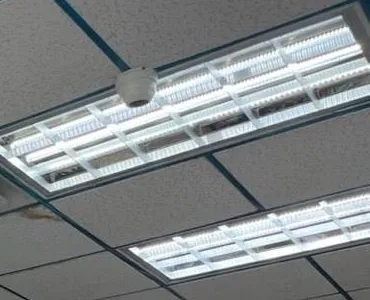
A photo from the AESS job library, not taken in Sheepshead Bay: a small white dome camera on grey acoustic ceiling tiles beside a long louvered fluorescent light panel. This is the ceiling of countless shops, offices and clinics on Avenue U, Nostrand Avenue and Coney Island Avenue. A dome this close to a bright fixture can see the fixture better than the room, so on a repair we check the picture with the lights on, look at whether the dome has yellowed, and confirm the cable above the tile has not been pulled loose by an electrician or an HVAC crew working in the ceiling.
Restaurants and bars facing the bay
A restaurant on Emmons Avenue usually has cameras at the front door, the host stand or bar, the register, the kitchen door, the back door where deliveries and garbage go out, and outside on the sidewalk or patio. The outdoor cameras take the salt and the sun; the kitchen cameras take grease and steam; the recorder, more often than not, is in a basement or a back office that took water in Sandy or since.
We plan restaurant repairs around service: early in the day before the kitchen opens, or on the slow day of the week. We move the recorder off the floor and away from kitchen heat, reseal the outdoor connectors, and set the back door camera for the light that is really there after closing.
Avenue U stores: long hours, small staffs and an app in two languages
Many of the stores along Avenue U are open long hours with one or two people behind the counter. Their cameras watch the door, the register and the aisles, and the owner checks them on a phone, often from home late at night. Calls here are most often about phone access lost after an internet change, a recorder that quietly stopped saving, or settings in a language the current staff do not read.
Swann's support guide notes that a recorder going offline "is a common occurrence when changes were made to the router," and that "you must have physical access to the DVR or NVR" to check it, which is why a lost app connection after a new internet plan often needs a short visit rather than a phone call. We restore remote access without opening risky ports on the store's router, put the admin login with the owner, and set the app up so that whoever minds the store can find and export a clip.
Shops under apartments on Sheepshead Bay Road and Nostrand Avenue
On Sheepshead Bay Road and much of Nostrand Avenue the store is the ground floor of a small mixed building. The shop's recorder is in the back or in a basement that the landlord, the upstairs tenants and sometimes a second store share. Faults come from that sharing: the landlord's plumber unplugs something, a leak from upstairs runs down a cable, or both systems end up on one power strip. A repair here is partly a separation job, with each system on its own outlet and every cable labeled.
Offices, clinics and ground-floor professional suites
Some co-ops here, such as 1625 Emmons Avenue, have a ground-floor unit with its own street entrance, and the avenues at the edges of the neighborhood have offices of their own. When a space like that is used as an office, a clinic or a professional suite, its cameras usually cover the door, the waiting area and the front desk. The repair questions are as much about privacy as about parts: cameras should watch doors and public areas, not exam rooms or screens with patient information, and employees must be told in writing that the workplace is monitored. We repair the cameras, check what each one actually sees, and point out any view that should change.
Synagogues, churches, schools and community spaces
Houses of worship, schools and community organizations here often have cameras paid for in part by state security grants and installed years ago by a contractor who is no longer involved. In April 2026 the governor's office announced up to $70 million in Securing Communities Against Hate Crimes grants, with up to $250,000 per organization for physical security and cybersecurity upgrades; the official list of eligible items does not name camera repair specifically, so organizations should confirm with the program before counting on it. We can give an itemized price and a written condition report for a board or a funder.
Rules that touch a commercial camera repair here
New York State requires a license to install, maintain or service CCTV used for detecting or monitoring intrusion or theft for other people; owners working on their own property are exempt, but a company you hire must be licensed, and ours is NYS license #12000287431. New York Labor Law §203-c requires an employer to post notice of video monitoring and get written acknowledgment from employees. The Department of Transportation does not let private businesses put cameras on city light poles. The Landmarks Preservation Commission matters for very few buildings here, mainly the former Lundy's on Emmons Avenue; its permit guidebook treats ordinary maintenance and repair of safety equipment as work that needs no permit, while a replacement application needs the manufacturer's cut sheet. The NYPD's free camera registration program, which tells police where private cameras are, is worth asking the 61st Precinct about; the city's announcement did not say whether this precinct is in the pilot.
Your Questions Answered
Security Camera Repair in Sheepshead Bay: Questions Answered
These are situations Sheepshead Bay boards, managing agents, homeowners and store owners describe when they call. Each answer is written for the buildings and blocks here.
Co-ops, condos and apartment buildings
The listing for our Ocean Avenue building says it has a "24/7 security system," but nobody sits at the screens overnight. What does that usually mean, and what should a repair check?
In most buildings it means the cameras are meant to record around the clock, not that anyone is watching them live. 2950 Ocean Avenue, a 1930 building with 63 units, advertises exactly that phrase. A repair should check that the promise is true: that every camera is actually saving video at night as well as by day, that the drive holds as many days as the board thinks, that the clock is right, and that someone gets an alert when a camera or the drive stops. Years ago, when cameras went into the Sheepshead Bay and Nostrand Houses, it came out at a public meeting that no one would be monitoring them at all; a system nobody watches has to be one that tells someone when it fails.
Our co-op's treasurer wants a yearly budget line for the 40 cameras, separate from emergency repairs. What does a building system like ours actually wear out?
The parts that wear on a schedule are the recorder's hard drives, the batteries in the battery backups, the power supplies, and the outdoor cameras' seals and connectors, which near the bay wear faster. Backup batteries in particular lose capacity over a few years and often fail silently. A sensible budget plans to replace drives and backup batteries on a cycle, sets aside money for a few camera replacements a year, and pays for one maintenance visit that checks every camera by day and after dark. Our Brooklyn list puts a typical annual maintenance visit at $250 to $800, depending on the size of the system.
The monitor at our doorman's desk faces the lobby, so anyone waiting there can watch the package room, the elevators and the garage on the screen. Should that change when the system is repaired?
Usually, yes. A screen visitors can see shows them which areas are covered and which are not, and puts residents' comings and goings on display. During the repair we can turn the monitor toward the desk, add a privacy filter, or set the screen to show only the entrance views while the rest record in the background. If the board wants a deterrent screen for the public, the better choice is a small separate monitor showing only the lobby camera, so people see that they are on camera without seeing everything else.
Our board wants to move from old coax cameras to network cameras over the next three years, one floor or one area at a time. How do we repair the old system this year without wasting money on parts we will replace?
Start with the recorder, not the cameras. A hybrid recorder that accepts both the existing coax cameras and new network cameras lets the building replace cameras area by area while everything records in one place. This year's repair then goes to what keeps the old cameras alive cheaply, such as connectors, power supplies and the drive, and not to new coax cameras that would be thrown out in a year or two. We give the board a written plan showing which areas to convert first and which old cameras can run until their turn.
Houses, bungalows and blocks near the water
The camera on our bungalow court's walkway was bought by several families together and records to one neighbor's recorder. That neighbor has sold the bungalow. Who controls the camera now, and can the rest of us have it repaired?
The recorder and its footage normally went with the house, unless the families agreed otherwise in writing, so the new owner now controls what that camera records. Talk to the new owner first: they may be happy to keep it, hand it over, or let the camera be moved onto someone else's recorder. Once the families agree, we can repair the camera, move its feed to whoever will look after it, and give each household that paid a view of it alone. We need a yes from the owner of the wall or post the camera is mounted on before we work on it.
A coastal flood warning is out for the bay. Is there anything we should do with the cameras and the recorder before the water comes?
Yes, and the most valuable step takes only a few minutes: export anything you might need from the recorder, such as a recent incident, to a USB drive or your phone, and take it upstairs. If the recorder, switch or power supplies are in a basement that floods, the safest course is to switch them off at the outlet and move them up before the water arrives, accepting that the cameras will not record for that time; a wet recorder that is still powered is the one most likely to lose its drive. When the water has gone, do not switch anything back on until it has been dried and checked.
Restaurants, shops and offices
We are moving our store from one Avenue U address to another a few blocks away. Can the cameras and the recorder come with us, or is it better to leave them?
The recorder, the drive and most of the cameras can come with you, and moving them is usually cheaper than buying new. The cables usually cannot: they are cut to the old store's layout and are often stapled or run through the ceiling, so the new store needs new cable runs. Before the move, export any footage you need to keep, because the drive will be reconfigured. We take the cameras down, check each one, fit the ones worth keeping at the new address, and tell you beforehand which are not worth moving.
We are opening a second shop on Sheepshead Bay Road and want both stores on the same phone app. Can two separate systems be shown together?
Yes, as long as the two recorders work with the same app or with a common viewing program. Each store keeps its own recorder, so if one store's internet goes down the other keeps recording and stays visible. If the two recorders are brands that will not share an app, the choice is two apps or one new recorder, and we tell you which is cheaper first.
Cars keep stopping in front of our delivery entrance on Nostrand Avenue for half an hour at a time. Can the camera we already have tell us when a car has been sitting there too long?
Many newer cameras and recorders can, with a feature usually called loitering or intrusion detection: you draw a zone on the picture, set how long something may stay there, and the system sends an alert or marks the recording when that time is passed. Older cameras and basic recorders often lack it. On a repair visit we check what your camera and recorder support, set the zone and the time if they can, and test it with a parked car. If they cannot, we tell you the cost of the one camera that would do it before you decide.
Footage and insurance
Our insurer is asking whether our cameras were actually working on the night of a loss we reported. How can we show the system was recording then?
Most recorders keep a log of their own events: power loss, video loss, disk errors, logins and recording status, with dates and times. If the log shows the cameras recording through that night, a copy of it, together with a clip from before and after the event and a photo of the recorder's clock against the real time, is usually what an adjuster wants. We can pull and export the log on a visit, and we leave the recorder's settings untouched while we do it.
Equipment
Types of Security Cameras and Recorders We Repair in Sheepshead Bay
We repair whatever is on the building, whoever put it there. These are the kinds of equipment we meet on Sheepshead Bay houses, co-ops, condos and storefronts, and the fault each tends to develop here.
HD-over-coax cameras and DVRs
The round-connector systems from the camera boom, still common on houses and walk-ups. Typical faults here: corroded connectors at the outside wall, failed plug-in power, dimmed infrared and DVRs with worn drives.
Network cameras and NVRs
Standard in the newer condos and many stores, powered and connected over one data cable. Typical faults: switch ports dead after a surge or flood, lost logins and address problems after a router change.
Hybrid recorders
Recorders that take both coax and network cameras, the usual bridge in co-ops replacing cameras in stages. Typical faults: channels mis-set after a reset and drives too small for the mix.
Varifocal domes
Zoom-adjustable domes in lobbies, garages and store ceilings. Typical faults: a lens set too wide to recognize anyone, focus drift and domes clouded by sun or salt.
Bullet cameras on arms
Outdoor cameras on wall arms facing driveways, yards, walkways and the water. Typical faults: rusted arms and screws, water in the cable joint and glare from low sun.
Pan-tilt cameras
Moving cameras over parking lots, store floors and waterfront patios. Typical faults: lost presets after power cuts and motors that stick in the cold.
Wi-Fi, battery and cube cameras
Plug-in and battery cameras in windows, bungalows and back yards. Typical faults: weak signal through brick and concrete, router changes and accounts held by a relative who moved away.
Video door stations
Entrance stations with their own camera in co-op vestibules and at house gates. Typical faults: video that reaches the apartment but never the recorder, and failed call buttons.
PoE switches, power supplies and backups
The boxes that feed the cameras, too often on a basement floor. Typical faults: flood and surge damage, blown fuses and backup batteries that died years ago.
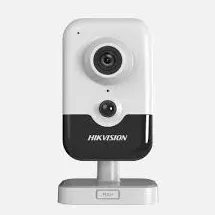
A product photo from the AESS job library, not taken in Sheepshead Bay: a white indoor cube camera. Cameras like this sit on shelves in bungalows, in the front rooms of houses and behind store counters, often added by a family member after a break-in. They connect over Wi-Fi to an account on one person's phone, so the usual repair is less about the camera than about the account, the router and getting its clips onto the same app as the rest of the system.A product photo from the AESS job library, not taken in Sheepshead Bay: a Wi-Fi dome camera with an external antenna. The antenna helps a camera reach a router through a wall, but the brick and concrete of the postwar co-ops and the metal of a raised bungalow's frame still block a lot of signal. When a camera like this keeps dropping, we test the signal where it hangs before replacing anything, and where a cable can reach it, a wired connection usually ends the problem for good.
National brands and a local licensed repair
Owners often ask whether to call the company whose name is on the camera, or a national security company, instead of a local repair shop. A self-installed consumer camera from Ring, Arlo or a similar brand comes with the maker's support line and warranty, and that is the right first call while the warranty runs; those companies do not send a technician to trace a corroded cable in a Sheepshead Bay basement. A licensed local company repairs mixed systems, older systems and systems whose installer is gone, on any brand, by the visit. What matters is that whoever works on the system holds the New York State license for CCTV work and gives you a written price before replacing parts.
AI Overview Reality Check
What AI Gets Wrong About Security Camera Repair in Sheepshead Bay
These claims turn up in AI-written answers, cost guides and help forums. Each is true somewhere, and each points Sheepshead Bay owners toward the wrong repair, a lost clip or a bill they did not expect.
"A camera system that got wet just needs to dry out"
Quick answers about flooded electronics often suggest letting the equipment dry for a few days and switching it back on.
Water leaves minerals, silt and, near the bay, salt behind, and those keep conducting and corroding after the surface is dry. Switching a recorder on too early is the moment most likely to destroy its drive, and with it the footage you may need for an insurance claim.
Leave wet equipment off, get the footage off the drive first, and test every power supply and connection below the water line. After the February 2026 water main break and every storm surge, the systems that came back cleanly were the ones nobody rushed to power up.
"Outdoor cameras are weatherproof, so the coast is not a problem"
Product pages and AI summaries lean on the IP weather rating and treat rain and salt as the same thing.
A weather rating tests against water getting in, not against years of salt on metal. Camera maker ACTi lists housings, fasteners, domes, seals, connectors, cable glands, junction boxes and brackets as the parts at risk in coastal settings, with rust, seal leaks and optical haze as the result.
On the blocks nearest Emmons Avenue, plan for connectors and hardware to need attention well before the camera's electronics fail, and check outdoor cameras on a schedule rather than waiting for the picture to go milky.
"National repair averages tell you what a Brooklyn repair will cost"
National cost guides put the average alarm or security system repair at $182, typically $97 to $269, according to HomeAdvisor, and AI answers repeat those numbers.
Those figures describe a single simple fix, often on a consumer camera. HomeAdvisor's own Brooklyn page for surveillance camera installation or repair shows an average of $1,416 and a typical range of $680 to $2,145, because Brooklyn jobs often involve recorders, multi-camera buildings and hard-to-reach runs.
On our Brooklyn list, the $150 service call finds the fault, and most repairs land between $150 and $1,500. The written price on the visit is the number that counts, not a national average.
"The FCC banned Hikvision, so those cameras have to come down"
Some AI answers read the FCC's 2022 action as a ban on owning or using Hikvision and Dahua cameras.
The order stops new equipment from those companies from being authorized for sale; it does not make existing systems illegal to own. The FCC has said its proposed limits on existing authorizations would not affect the continued use of devices consumers already have.
For the many Hikvision systems in 11229, the real effect is on parts: exact replacements may be scarce, so a repair often pairs your existing equipment with a compatible camera or recorder from another maker. That is a reason to plan, not to tear everything down.
"If you can see the live picture, the system is recording"
Help articles often treat a live view on the monitor or phone as proof the system works.
Live view and recording are separate. A recorder with a failed drive, a full disk or a switched-off schedule can show every camera live and save nothing. We regularly find systems in Sheepshead Bay co-ops whose owners checked the screen every day and had no recording when they needed it.
Check playback, not the live picture, and make sure the recorder sends an alert when the drive stops writing.
"The police can get footage from your camera company"
Answers about doorbell and cloud cameras often suggest that police routinely pull video from the provider.
Ring ended its "Request for Assistance" tool in January 2024, and police can still get video with a search warrant. Footage on your own recorder stays with you unless you hand it over or a court orders it.
If a detective from the 61st Precinct asks for video, the practical question is whether your recorder still holds that night and whether you can export it cleanly. That is why we copy requested footage first on every visit.
"A Wi-Fi camera is the easy way around a broken cable"
When a cable fails, AI answers often suggest swapping wired cameras for Wi-Fi ones.
A Wi-Fi camera still needs power at the camera, and its signal has to get through the brick and concrete of the buildings here. Battery cameras need charging, and in the cold they need it more often.
Wireless is right for some spots, such as a bungalow walkway or a window. For a co-op hallway, a driveway or a store door, repairing the cable is usually more reliable and cheaper over time.
Speak to a Technician Before You Power Up a Wet Recorder or Buy a Replacement Camera
Tell us the address, the type of building, how many cameras there are, which ones are out and where the recorder sits. If water was involved, say how high it came and whether anything has been switched back on. If you need footage from a particular date, give the date and time and we will plan the visit around saving it. For anything urgent, call (347) 934-8335 now.
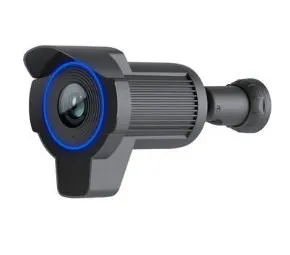
A product photo from the AESS job library, not taken in Sheepshead Bay: a black bullet camera with a long hood and a blue-lit ring around the lens. A long hood like this shades the lens from the low winter sun that comes off the bay and keeps rain and spray off the glass, which is why it suits a restaurant front on Emmons Avenue or the water side of a house nearby. A photo of your failed camera, even from the sidewalk, usually tells us its type before the visit.
✅
Request Sent!
Thank you. A technician will contact you about the Sheepshead Bay address shortly.
How It Works
Our Repair Process
1. Send a photo and the address
A photo of the recorder screen or the failed camera, the Sheepshead Bay address and the type of building, by text, WhatsApp or the form, plus any date you need footage from.
2. Confirm who controls the system
Homeowner, store owner, co-op board, condo board or landlord: we confirm who approves the work and who holds the recorder login before the visit.
3. Book the service call
The $150 Brooklyn service call is booked into a two-hour arrival window and credited to the repair if you go ahead.
4. Export the footage first
Any clip that matters is copied to USB with its original timestamps before the recorder is restarted, unplugged, moved or opened.
5. Test the whole chain
Outlet, battery backup, power supply or PoE switch, cables, connectors, recorder, drive and app, camera by camera, with extra attention to water, salt and heat.
6. Name the cause and write the price
You hear what failed and why, and get a written, itemized price before any part is replaced.
7. Repair and check by day and by night
The failed part is repaired or replaced, and every camera is checked for picture and recording in daylight and under the real night lighting.
8. Set alerts and hand over
Video-loss, tamper and disk alerts go to your phone and are tested, cables are labeled at the recorder, and you are shown how to export a clip.
Coverage Area
Security Camera Repair Near Sheepshead Bay's Landmarks
Former Lundy's building
The Spanish Colonial Revival restaurant building at 1901–29 Emmons Avenue, built in 1934 to a design by Bloch & Hesse, and described as Sheepshead Bay's only city landmark.
Shore Boulevard Mall
The waterfront promenade running for nearly a mile along the southern bank of the bay, across the water from the piers on Emmons Avenue.
Ocean Avenue Footbridge
The footbridge linking Emmons Avenue to Manhattan Beach at the Sheepshead Bay Piers, closed after Hurricane Sandy flooded the waterfront.
Sheepshead Bay station
The Brighton Line station near Sheepshead Bay Road, reached by the line since 1908, where new elevators opened in February 2026.
Nostrand Houses
The 16-building public housing development at 2241 Batchelder Street, completed in 1950, where a $607 million modernization including expanded CCTV closed its financing in October 2026.
61st Precinct
The station house at 2575 Coney Island Avenue, covering Sheepshead Bay, Gravesend, Kings Bay and Manhattan Beach.
Sheepshead Bay is billed at our Brooklyn rate, whether the address is a co-op on Avenue U or a restaurant on the water. Every repair starts with the $150 service call, which covers the on-site diagnosis and is credited to the repair if you go ahead. The figures below come from our published list of Brooklyn security camera repair prices; your exact price is written down on the visit, once we know what failed.
Repair
Brooklyn price
Service call, on-site diagnosis and written price
$150, credited to the repair
Clean and check for a blurry or salt-filmed picture
$80
Dome or front cover replacement
$30–$80 part plus labor
Connector reterminate or PoE port swap
$150–$350
Power supply repair
$150–$400
Hard drive swap, by capacity
$200–$450
Single camera replacement on a working system
$250–$600
Night vision camera repair
$250–$650
DVR not working, including drive and labor
$300–$700
NVR not recording, by model
$400–$900
Vandalized camera, per camera plus cable repair
$400–$900
PTZ camera repair
$450–$1,200
Hybrid recorder swap, channels reconfigured
$700–$1,200
DVR/NVR replacement with drive
$700–$1,500
Full rewire or whole-building overhaul
From $1,500
Three things move a Sheepshead Bay repair within those ranges. Water is the first: a recorder that sat in a flooded basement, or several cable runs that were underwater, means more parts and more testing than a single dead camera. Salt is the second: outdoor cameras facing the bay often need new connectors, brackets and screws along with the camera itself. Reach is the third: a camera on the third floor of a co-op facade, at the top of an elevator shaft or on the water side of a raised bungalow takes more ladder work than one beside a front door. Bundling the camera repair with intercom, door buzzer, alarm or cabling work on the same visit saves $200 to $400 in labor on our Brooklyn list.
Full terms — including 50% deposit, one-year parts-only warranty on AESS-supplied products, and the late-fee schedule — are set out in the service agreement.
Shop Our Systems
Security Camera Repair Packages & Pricing
Three ways Sheepshead Bay repairs usually come together, priced from our Brooklyn list.
Connector or port fix: $150–$350
One failed connection: a corroded connector at the outside wall re-terminated and sealed, or a dead switch port moved after a surge. The most common repair on the blocks nearest the water.
Single camera replacement: $250–$600
One camera that cannot be saved, often a dome clouded by salt or a camera with water inside the lens, replaced on the existing cable and set to match the system.
Recorder replacement: $700–$1,500
A DVR or NVR ruined by water, worn out or no longer matchable, replaced with a new drive, every camera reconfigured, and the new box mounted above the reach of the next flood.
A product photo from the AESS job library, not taken in Sheepshead Bay: a slim video door station with a camera lens at the top and a large round call button. Stations like this are common at bungalow gates, house doors and small walk-up vestibules here. Because the station sits outside, it ages like any other outdoor camera near the water, and because its video often never reaches the recorder, we check both on any entrance repair.
Annual maintenance visits run $250 to $800 on our Brooklyn list, depending on the size of the system: every camera checked by day and after dark, covers cleaned, connectors near the water inspected, the drive's health read and alerts tested to the owner's phone.
Bring your own equipment. If you have already bought a replacement camera or recorder, we can fit it at labor-only rates. Tell us the exact model and we quote the labor by phone or text, and the visit is booked once it is paid. Your own equipment is installed as supplied; if a model will not work with your recorder, will struggle on Wi-Fi through brick, or is not built for the salt near the water, we tell you before the visit.
Complete Services
Every Security Camera Repair Service in Sheepshead Bay
Camera, connector and salt damage repair
Dark cameras, cloudy domes, rusted brackets and corroded connectors on the water side. Request a repair
Recorder, drive and flood repair
DVRs, NVRs and switches in basements, super's offices and back rooms, including equipment hit by water. Brooklyn security camera repair
Do you repair cameras in every part of Sheepshead Bay, from Avenue U down to the bay and from Coney Island Avenue across to Nostrand Avenue?
+
Yes. We cover the whole neighborhood, from the stores on Avenue U to the restaurants and condos on Emmons Avenue, the bungalow courts near the water, the co-ops along Ocean Avenue and East 13th Street, and the house blocks on the lettered avenues, along with Manhattan Beach, Brighton Beach, Homecrest and Gerritsen Beach next door.
Does an address right on Emmons Avenue cost more to repair than one up near Avenue U?
+
No. All of Sheepshead Bay is billed at our Brooklyn rate, starting with the $150 service call that is credited to the repair. What changes the price is the fault, not the block: a waterfront camera may need new connectors and brackets because of salt, and that is written into the price before the work starts.
How quickly can a technician get to a Sheepshead Bay address once I ask?
+
Requests are booked within 2 hours, and the visit is given a two-hour arrival window. Same-day estimates are available on most days, but we do not promise a same-day repair before we know what failed.
Our business is in the former Lundy's building on Emmons Avenue. Does a camera repair there need Landmarks Preservation Commission approval?
+
Ordinary maintenance and repair of existing safety equipment does not need a Landmarks permit under the commission's guidebook, so fixing a camera in place is usually fine. Replacing a camera with a different one, adding a new mount or running new visible conduit on the facade is different, and the commission asks for the manufacturer's cut sheet with an application. We tell you which side of that line your repair falls on before we start.
Nostrand Houses is getting a large modernization with more cameras. Should residents there call you about a dead camera in the building?
+
No. The cameras at the Sheepshead Bay and Nostrand Houses belong to the housing authority and its development partners, and the $607 million modernization that closed its financing in October 2026 includes expanded CCTV. A dead camera there should be reported to the development's management. We repair private cameras that residents own inside their own apartments.
Shmira Public Safety patrols in this area. Can our repaired cameras be shared with them when something happens?
+
Sharing is your choice, and the safest way is by clip, not by login. After a repair we show you how to export a short clip with its timestamp and send it, so a patrol group, a neighbor or the precinct gets the minutes they need without access to your cameras.
Our co-op's intercom and its cameras share the same basement closet. Can both be looked at on one visit?
+
Yes, and it usually saves money. Combining camera repair with intercom, door buzzer, alarm or cabling work on the same visit saves $200 to $400 in labor on our Brooklyn list, because it is the same crew, the same trip and one invoice for the board.
If a coastal storm is forecast on the day of our appointment near the water, does the visit still go ahead?
+
Indoor work such as a recorder, a drive or a lobby camera usually goes ahead. Ladder work on outdoor cameras in high wind, heavy rain or standing water does not, for the technician's safety and because a camera sealed in the rain will not stay sealed. We call before the window to move the outdoor part to the next suitable day and keep the indoor part if you want it.
We inherited a house near the bay that has stood empty for a few years. Is the old camera system worth testing before we pull it out?
+
Usually, yes. Cable runs that are already in the walls are often reusable even when the cameras and recorder are not, and testing them costs far less than running new ones. In a house that may have taken water, we check the basement equipment, the power supplies and the outdoor connectors first, then tell you what can stay, what must go and what the rest would cost.
Do you repair the cameras at the Sheepshead Bay subway station or on the elevated Q platforms near Avenue U?
+
No. Station and platform cameras belong to the transit system and are serviced by it. If a station camera may have seen something that matters to you, the precinct is the right place to ask. What we can do is repair and aim your own store or building camera so it covers your entrance and sidewalk properly.
Do I need to be a customer already to get advice about which repair I need?
+
No. Send a photo of the recorder screen or the failed camera with the Sheepshead Bay address, and we will tell you the likely fault and what that kind of repair costs on our Brooklyn list. The detailed testing and the repair itself happen on the booked service call.
Ready to Have Every Sheepshead Bay Camera Recording Again, From the Basement to the Bay?
Send a photo of the recorder screen or the failed camera, the address, and the date of any footage you need. We book within 2 hours, give you a two-hour arrival window, save your footage first, write down the repair price before any part is replaced, and set the system to warn you the next time a camera or the drive stops.