Property management security in Westchester County starts at $250, the service call that puts a licensed technician in front of a dead lobby panel, a strike that stopped releasing, a reader that ignores fobs or a camera that went dark, at any building your firm runs. Prewar walk-ups in southwest Yonkers, elevator houses along Mount Vernon's avenues, new rental towers in downtown New Rochelle and White Plains, garden apartments in Greenburgh and the Sound Shore villages all go on one vendor file, one phone number and one set of records.
Quick answer: A Westchester managing agent needs one contractor who can fix the failed part today, plan the building-wide upgrade next quarter and keep both on a record the office can read. Repairs open with the $250 service call. Our Westchester service pages already publish the rest: $250–$525 for an apartment station, $450–$950 for an electric strike with alignment, $650–$1,800 for lobby panel work, $1,200–$3,500 for a video intercom in a four- to eight-unit building, $1,500–$2,500 for a single fob door and $1,875 per car for a Level 1 elevator reader. Larger buildings and portfolios are priced building by building after a site survey.
Last updated November 27, 2026 by Abstract Enterprises Security Systems, NYS license #12000287431 · Sources: Westchester County Department of Health, Housing in Westchester County 2019–2023 (Sept 2025) and Lead Rental Registry notice; Westchester County Department of Housing ETPA list; NYS Multiple Residence Law §3; NYS Real Property Law §235-b; 2025 Property Maintenance Code of New York State §304.18; City of New Rochelle downtown zoning; RM Friedland report via the Business Council of Westchester; Habitat magazine (Feb 2022); News 12 Westchester (June 2026); Con Edison (June and July 2026); City of White Plains alarm permit rules; NYS General Business Law §69-m
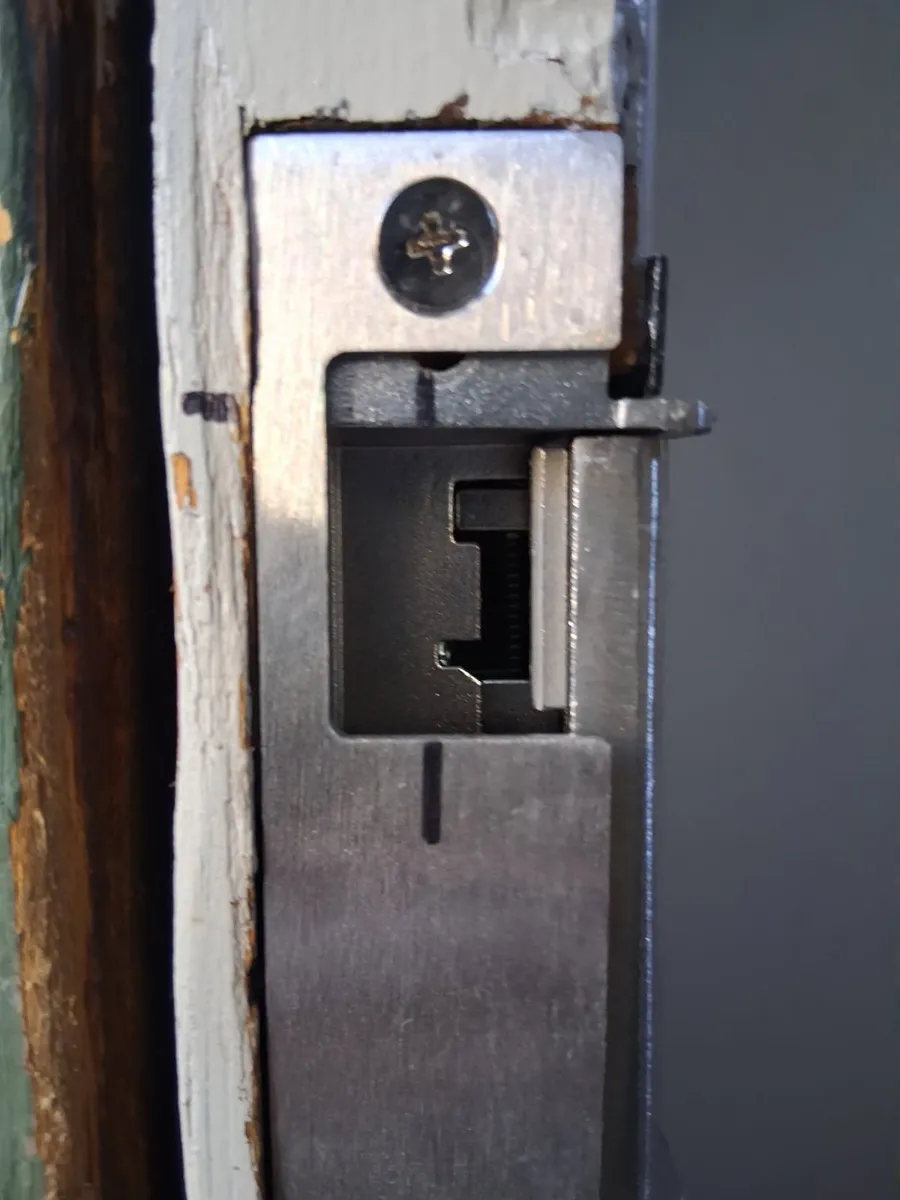
Real job photo: a stainless electric strike mortised into an old painted wood door frame. Frames like this one, worn and repainted many times, are what most Westchester walk-up entrances still have, and a strike that sits true in the frame is what makes the release button upstairs work.
Westchester Managing Agent Request
One building or the whole Westchester list
✅
Request Sent!
Got it. Our office will call or text you, normally within two hours, to set the visit.
25+
Years Experience
2 Hr
Booking
$250
Service Call
4.7★
201 Google Reviews
Licensed NYS low-voltage contractor · Vans dispatched from 460 E Fordham Rd in the Bronx · Westchester line (914) 877-2578
The County
Why Westchester Managing Agents Want a Single Security Vendor for the Whole List
Ask a managing agent in Westchester to describe the buildings on the books and the answer rarely fits one category. A typical list might hold a five-story brick walk-up off South Broadway in Yonkers with an audio intercom older than anyone on staff, a pair of 1960s elevator buildings in Mount Vernon with a fob lobby added by a previous owner, a downtown New Rochelle rental that opened two years ago on a cloud platform the developer picked, a garden complex in Greenburgh with eight separate entrances and a laundry building, and a mixed-use building on a Port Chester or Ossining main street with apartments over a storefront. Each property arrived with its own installer, its own login and its own idea of who was supposed to fix it.
That patchwork is the real cost of security in a Westchester portfolio. The hardware is rarely the expensive part; the expensive part is the office chasing a different contractor for every building, paying a second service call when the first one arrived without the right part, and losing a week while nobody can find the administrator password for a panel in a building the firm took over last spring. Property management security in this county is mostly a records problem dressed up as an equipment problem. Our work for a management firm starts by putting every building on one vendor record, documenting what is installed where, and making sure the next visit begins with notes instead of guesswork.
The numbers explain why Westchester needs that discipline more than most suburbs. The county health department's September 2025 housing brief, built on American Community Survey data for 2019 through 2023, counts 139,962 renter-occupied homes in Westchester against 230,294 owner-occupied ones, so nearly two in five households rent. The same brief shows that 27.7 percent of the county's homes were built in 1939 or earlier, which is why so many lobbies still run on cloth-insulated intercom pairs and strikes set into frames that have been repainted for eighty years. At the other end of the timeline, a development report from RM Friedland published through the Business Council of Westchester counts roughly 12,500 residential units delivered countywide since late 2021, with Yonkers, New Rochelle, White Plains and Mount Vernon accounting for 9,413 delivered units and 13,114 more under construction. A firm can be managing a 1920s walk-up and a building that opened last year on the same afternoon.
The legal setting is also different from the city a few miles south. Westchester apartment buildings fall under the state's Multiple Residence Law, which section 3 applies to cities of fewer than 325,000 people and to every town and village, rather than the Multiple Dwelling Law that governs New York City. There is no HPD here; complaints go to the city, town or village building department, which enforces the state Uniform Code and Property Maintenance Code. Eighteen Westchester municipalities have adopted the Emergency Tenant Protection Act, so many pre-1974 buildings of six or more apartments are rent-stabilized. We are a security contractor, not a law firm, and nothing on this page is legal advice, but we plan every job with the right set of rules in view and cite where each rule comes from so the owner's attorney can check it.
As for who shows up: the company is owned by a technician who has worked on entry systems since 2000 and has run the business since 2002. Crews leave our Bronx office at 460 East Fordham Road, a short drive from the Yonkers and Mount Vernon city lines, and every job is done under New York State low-voltage license #12000287431 with general liability coverage in place. Westchester requests come in on one line, (914) 877-2578, and the visit is booked within 2 hours of the request into the next open early-day arrival window, seven days a week.
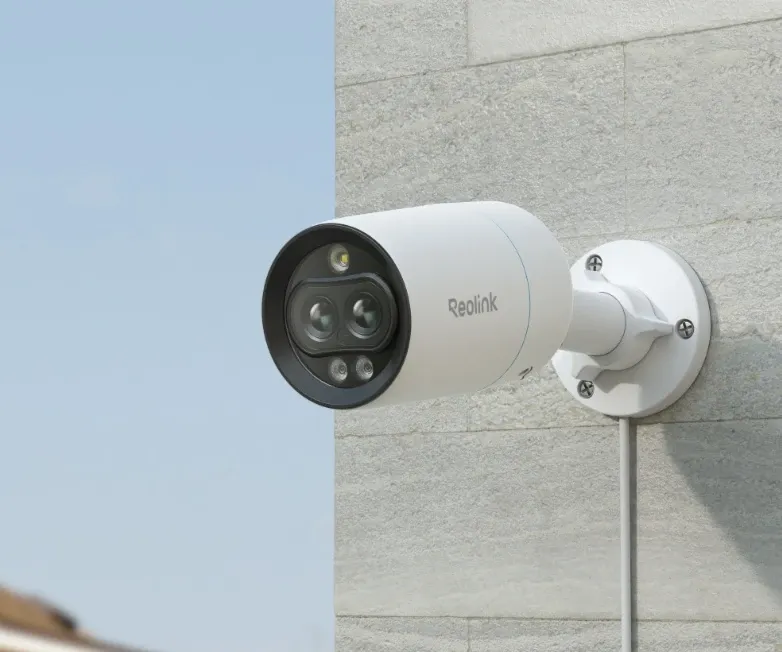
Manufacturer product photo (Reolink, an authorized partner): a white bullet camera on a round mount against a stone-clad wall. Masonry facades on Westchester apartment houses take a mount like this at an entrance or along a side walk, with the cable dropped inside the wall wherever the stone allows.
Westchester facts that shape a security plan
Two in five households rent. The county health department's 2025 housing brief lists 139,962 renter-occupied units and 230,294 owner-occupied units for 2019–2023 (American Community Survey).
A very old housing stock. The same brief puts 27.7 percent of Westchester homes in the "1939 or earlier" category, and roughly three-quarters were built before 1980.
A lead-paint registry with apartment visits. The county health department reports that New York State's Lead Rental Registry requires owners of pre-1980 buildings with two or more units in ZIP codes 10550 (Mount Vernon), 10801 (New Rochelle), 10701 and 10705 (Yonkers) to register, with visual inspections every three years by EPA-certified inspectors and tenant notice because apartment access is needed.
Rent stabilization in eighteen municipalities. The county housing department's ETPA list includes Yonkers, Mount Vernon, New Rochelle, White Plains, Port Chester, Tarrytown, Sleepy Hollow, Dobbs Ferry, Greenburgh, Harrison, Mount Kisco and others.
Housing law north of the city line. Multiple Residence Law §3 covers "all cities of less than three hundred twenty-five thousand population" and all towns and villages; Yonkers, the county's largest city, counted 211,569 residents in the 2020 Census.
Security is a maintenance duty. The 2025 Property Maintenance Code of New York State, §304.18, requires dwelling-unit doors, windows and hatchways to have devices that provide security for occupants and property, and Real Property Law §235-b implies a warranty of habitability into every residential lease.
Downtowns rezoned for rentals. New Rochelle adopted form-based zoning for its downtown in December 2015, and the city describes the result as a boom in residential and mixed-use development across 279 acres.
Outages hit the south of the county. Con Edison reported more than 5,000 Westchester customers out after a June 2026 storm, and said Westchester "experienced the greatest impact" of its July 2026 storms, with the largest outages in Greenburgh, Yonkers, Elmsford, Dobbs Ferry and Rye.
City or area
What a managed list usually holds there
Where the security work tends to concentrate
Yonkers
Prewar walk-ups and elevator buildings in the southwest and Getty Square, newer rentals on the waterfront, garden apartments toward the east side
Old intercom risers, rent-stabilized buildings, lobby package theft, lead-registry ZIP codes 10701 and 10705
Mount Vernon
Six-story elevator buildings and brick walk-ups close to the Bronx line, mixed-use blocks downtown
Strike and closer failures, aging panels, ZIP 10550 inspection access, Con Edison outages
New Rochelle
New downtown rental towers on the rezoned blocks, older apartment houses in the West End and near the Sound
Platform takeovers, amenity and garage access, salt air near the water, ZIP 10801
White Plains
Rental towers near the transit center, older elevator buildings, office and retail properties on the same list
Garage gates, elevator readers, alarm permits and false-alarm fees for leasing offices
River towns
Village apartment houses and small walk-ups in Tarrytown, Sleepy Hollow, Ossining, Peekskill and Croton
Hill-side entrances, older wiring, ETPA buildings in several villages
Sound Shore
Port Chester, Mamaroneck and Rye apartment buildings and mixed-use main streets
Corrosion on exterior hardware, storefront-and-apartment separation
Central and northern towns
Garden apartments in Greenburgh and Elmsford, smaller complexes in Mount Kisco and the northern towns
Many entrances per property, lots and laundry buildings, links between buildings
What fails most often in Westchester rental buildings
Across the calls we take from Westchester management offices, the failures sort into a short list. The commonest is a front door that stops latching: a strike pushed out of line as an old wood or steel frame settles, a closer that lost its adjustment, or a keeper worn by decades of slamming. Next comes an audio intercom where one floor cannot hear the lobby, usually a broken pair in the riser or a handset a tenant removed. Third is the cloud panel in a newer building that went offline because the building's internet account changed hands or a subscription lapsed in the developer's name. Fourth is the camera recorder in a boiler room or a closet with no ventilation, where the hard drive gave up in August. And fifth is the garage gate or overhead door reader that stopped talking to the access system after a power event. Every one of those starts with the $250 service call, and most are finished on the first visit when the technician has the building's history in hand.
The people we answer to on a Westchester job
The managing agent authorizes the work, so every quote, every appointment and every invoice runs through the office. A tenant who calls us directly is pointed back to the office, and nothing is scheduled with a resident on our own.
The owner or asset manager wants a figure before anything is ordered and a system that survives a change of management. Our scopes list hardware, labor and any platform fee on separate lines, and when there is a real chance that an old cable will fail testing and add cost, the owner hears about it before the equipment is ordered, because ordered equipment cannot be sent back.
The superintendent is the person who meets us at the door and calls when something breaks at night. Supers in Westchester often cover two or three buildings, so we label the controller, the power supply and the recorder, and leave a one-page map in the closet showing what each light means and when to call.
Residents experience the whole system in two moments: getting in with their hands full and letting a visitor up. Their complaints are the best early warning a management office gets, and when they reach us they go back to the office, which keeps the work authorized and the paperwork in one place.
What We Install and Repair
Property Management Security Services in Westchester County, One System at a Time
Each part below takes one system, describes how it usually fails in Westchester rental buildings, explains how we handle it for a management office, and links to the Westchester service page that carries the detail and the published prices. Buildings run by a board rather than an owner have their own audience pages for Westchester co-op security systems and condo security systems in Westchester County; this page is written for the firms and landlords who operate rentals and mixed portfolios for owners.
Lobby panels and apartment intercoms
"My buzzer doesn't work" is the call every Westchester management office knows by heart, and the cause depends on the building's age. In a prewar Yonkers or Mount Vernon walk-up it is usually the low-voltage transformer in the cellar, a corroded button plate at the street door, or one broken conductor in a riser that runs through plaster walls. In a 1960s or 1970s elevator building it is often a lobby amplifier that has been patched for decades and can no longer be repaired. In a building that opened since 2020 it is almost always the network: the panel is fine, but the internet account it depends on was cancelled, moved or throttled. We test before we recommend anything. If the riser is sound and only an end has failed, we fix the end. If the old panel cannot be supported any longer, a new one can often run on the existing pairs, which keeps the job in the lobby and the closet instead of in every apartment.
Repairs to existing systems are covered on our Westchester intercom repair page and our door buzzer repair page for Westchester County, which publishes $250–$525 to replace an apartment station, $325–$650 for a transformer, $450–$950 for a strike with alignment, $650–$1,800 for lobby panel or faceplate work and $850–$2,400 for riser pair repair or re-termination. New and replacement systems are on our intercom installation page for Westchester County, which lists video intercoms for four- to eight-unit buildings at $1,200–$3,500 and app-connected systems for larger buildings at $2,500–$8,000 and up. Agents weighing repair against replacement can also use our guide to intercom upgrades for co-op boards and the condo intercom replacement guide; the decision steps for an owner are much the same as those for a board.
One habit of ours matters in rent-stabilized and older buildings: we never move a building to a phone-only entry system without keeping a way to reach tenants who don't use smartphones. A panel that rings residents' phones is a sensible upgrade for a building of commuters, but a building with long-term tenants in their seventies needs in-unit stations or a landline option, and the owner should hear that before choosing a platform.
Strikes, maglocks and the door itself
The best intercom in the county is worthless if the door it releases doesn't close and latch. A large share of our Westchester service calls are really door calls: a strike whose keeper no longer meets the latch because the frame moved, a maglock that holds unevenly because its armature plate came loose, a closer that slams in winter and creeps in summer, or a door that has been propped so often its hinges sag. We set the electrified hardware, adjust it to the latch and test the release from every apartment station we can reach. Where the door itself needs a closer, a hinge or a new frame, we tell the office so a door contractor or locksmith can handle that part; mechanical locks and deadbolts on apartment doors stay with the locksmith.
Exit devices matter as much as entry devices. A maglock on an exit route needs a way out that works without the power, a request-to-exit sensor or button, and a connection that releases it when the fire alarm activates. A strike on a front door must still let people leave with a turn of the handle. We install those pieces as part of the job, not as extras, and if a building's existing hardware does not meet that standard, we say so in writing.
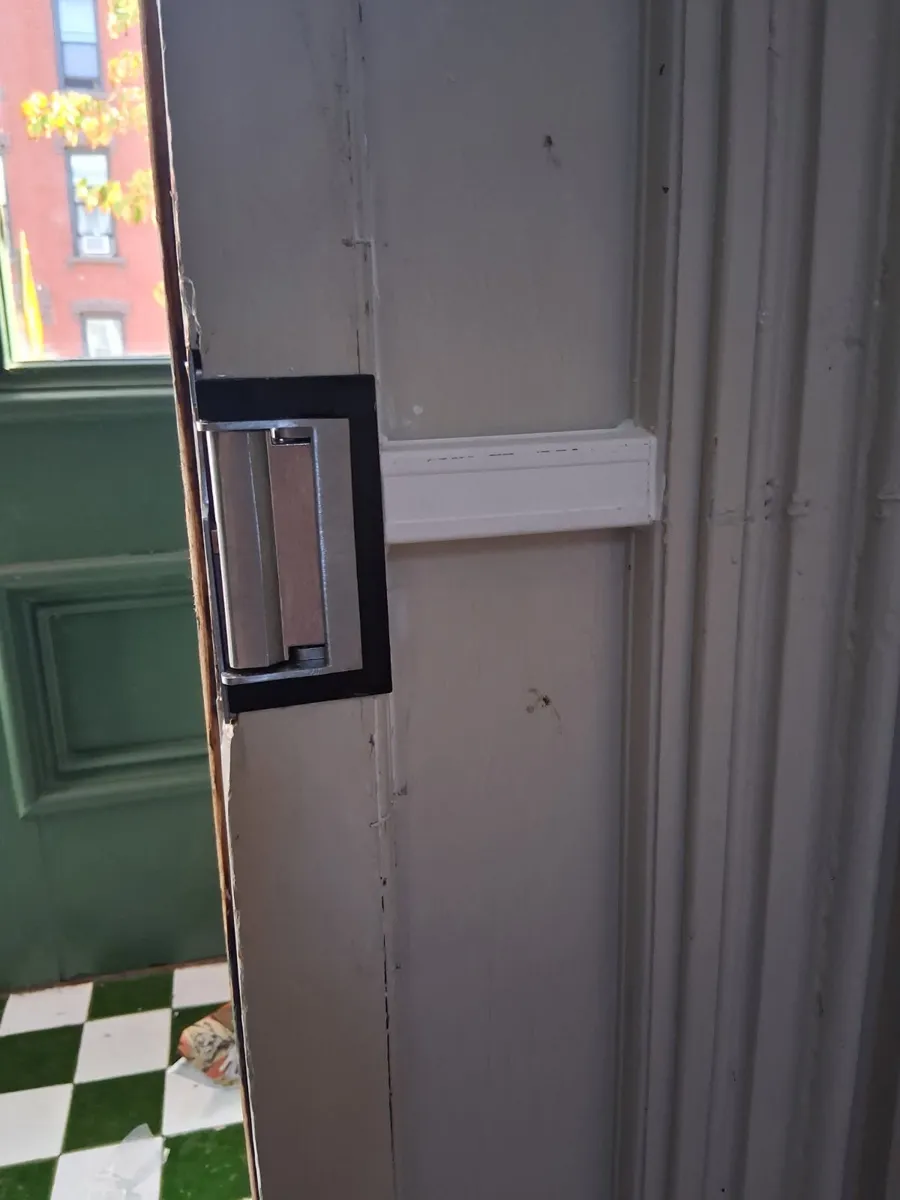
Real job photo: an electric strike with a black faceplate set into a painted wood jamb, its wiring carried across the frame in a short white raceway. On prewar entrances where the frame cannot be fished, surface raceway is the neat way to bring power to the strike.
Fobs, readers and multi-door access control
A fob system is how a management office stops cutting keys. Done right, the office adds a new tenant once and that tenant opens every door they should: the street door, the garage, the laundry room, the package room, the gym on the amenity floor. When the tenant moves out, one click locks them out everywhere. In a Westchester portfolio the hard part is not the reader; it is consolidation. Many firms inherit buildings with three different fob platforms, each with its own fob format, its own dashboard and its own monthly bill. We document what each building has, tell the owner which platforms are worth keeping, and plan the moves so a building changes system only when it makes financial sense.
Our access control installation page for Westchester County publishes $1,500–$2,500 for a single-door keypad or fob reader, $4,000–$15,000 for multi-door systems covering a lobby, service door and basement, and $15,000–$40,000 and up for a full building with elevator restriction. Those are installed figures; recurring platform fees, where a platform has them, are shown on a separate line so the owner can compare the long-term cost of each option. New York City's Tenant Data Privacy Act does not reach Westchester, but a fob system still logs every entry by every tenant, so we set retention to what the office actually needs, give each staff member a separate login with only the permissions their job calls for, and remove former tenants' credentials at move-out.
Garage gates, overhead doors and parking
Westchester rental buildings park cars in ways the city rarely does: underground garages under downtown towers in White Plains and New Rochelle, surface lots behind Mount Vernon elevator buildings, carports and open lots at garden complexes. Each one has an entry point that should respond to the same credential as the front door. We add readers or long-range credentials at garage gates and overhead doors, connect them to the building's access system, and coordinate with the gate or door company that services the operator itself, because the motor and the safety edges belong to them. Cameras at the garage entry and along the lot are covered on our Westchester parking lot camera page.
Elevator access in downtown towers
Newer rental towers often lock amenity floors, roof decks and garage levels to residents with a credential, and some owners restrict floors during lease-up or renovation. A reader in the cab tied to the floor buttons does that, but it connects through the elevator controller, so the building's elevator maintenance company has to be part of the job. We schedule that work with them rather than touching their equipment. Our elevator access control page for Westchester County publishes $1,875 per car for a Level 1 card, fob, code or intercom reader and $3,125 per car for a Level 2 biometric reader.
Cameras for lobbies, halls and lots (the short version)
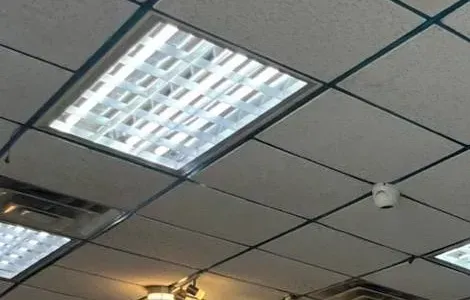
Real job photo: a small dome camera clipped into a drop ceiling grid between two light panels. In a rental lobby or a ground-floor hall, a ceiling spot like this sees everyone crossing the floor without pointing at any apartment door.
Package theft deserves a line of its own because it drives so many calls. News 12 Westchester reported in June 2026 that Yonkers police recorded a 50 percent drop in package thefts in the city's First Precinct, while White Plains had about 13 reports so far that year against 18 over the same period in 2025, and the city's deputy public safety commissioner said, "Cameras are still good." The pattern we see is consistent with that: a camera inside the vestibule aimed at where parcels are left, a door that actually latches, and a package room or locker area reachable only with a credential do more than any single gadget. We install the doors, readers and cameras; electronic parcel lockers are sold by the locker companies, not by us.
Intrusion alarms for leasing offices, storage and empty units
Residential floors rarely need an intrusion alarm, but a managed property usually has spaces that do: the leasing office with computers and files, a super's workshop full of tools, a storage room of appliances waiting for turnovers, and apartments sitting empty during a gut renovation. Central-station monitoring through our provider is $30 a month keypad-only or $45 a month with the phone app, as published on our alarm installation page for Westchester County. Local rules matter here: the City of White Plains alarm permit rules charge $25 for the first false alarm police or fire respond to in a calendar year, then $50, $75, $100 and finally $250 per false alarm as the count climbs, so we set entry delays, sensor placement and user codes to keep a busy leasing office from running up that bill.
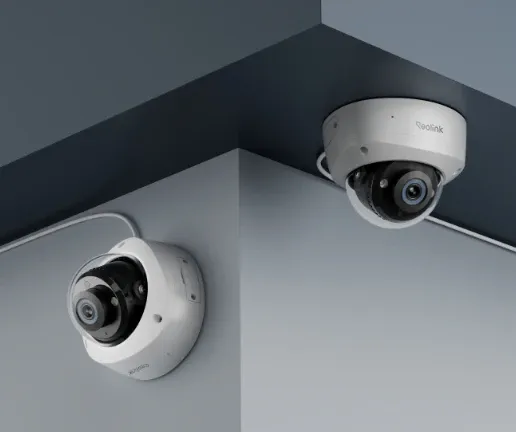
Manufacturer product photo (Reolink, an authorized partner): two dome cameras at an outside corner, one on the wall and one under the ceiling. Leasing offices and storage rooms are often covered the same way, one camera on the door and one across the room, alongside the alarm sensors.
Fire alarm systems for managed buildings
Fire alarm work is in our scope in Westchester. Outside New York City there is no FDNY plan review; approval runs through the city, town or village code enforcement office or fire prevention bureau under the state Uniform Code. The sequence is drawings from an engineer or architect, approval, installation and an acceptance test witnessed by the authority, and our fire alarm installation page for Westchester County walks a managed property through it. We do not publish fire alarm prices; each system is priced from the approved drawings. Where a building has electric locks, the fire alarm must release them, which is one more reason to plan both systems together.
Cabling, risers and networks
Everything above rides on cable. We pull Cat6 and riser cable, set racks and PoE switches, add battery backup, and build a separate network for security equipment so the cameras, readers and panels never compete with the leasing office Wi-Fi or a laundry vendor's card machines. In older buildings the route is the hard part: plaster walls, abandoned risers full of dead cable and cellars with no ceiling to hide anything in. Our structured cabling page for Westchester County lists Cat6 data drops at $175 and up per drop. We do not do electrical work; a new 120-volt circuit for a gate operator, a rack or a panel goes to the building's licensed electrician, and we coordinate with them.
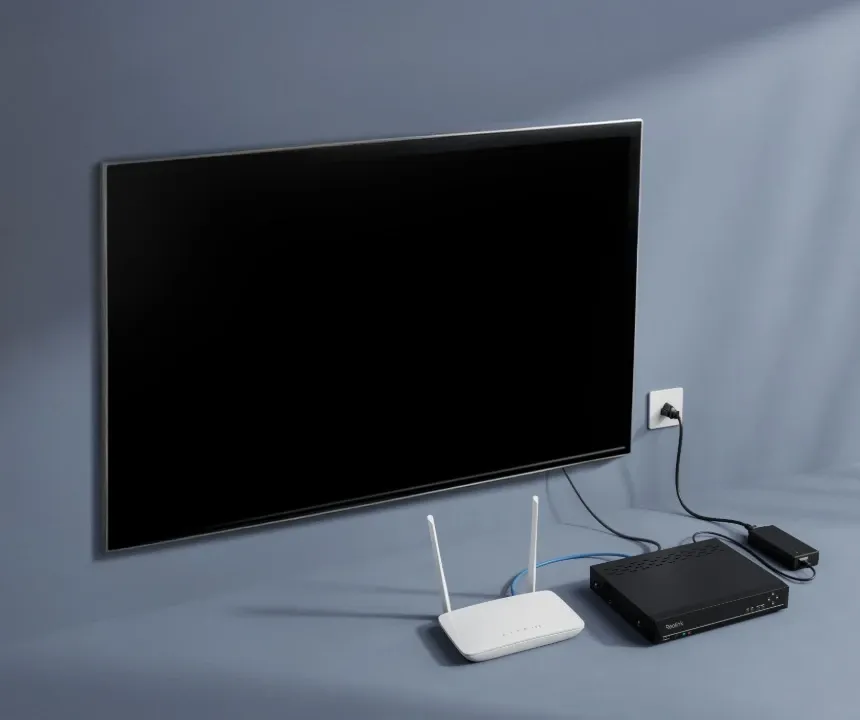
Manufacturer product photo (Reolink, an authorized partner): a wall monitor with a compact recorder and a router underneath. A small building can run its cameras like this, but the recorder and the network gear belong in a locked closet on their own network, not beside the leasing office TV.
Power, outages and surge protection
Southern Westchester sits on Con Edison's grid, and the utility's own 2026 updates show how often storms reach these buildings: more than 5,000 Westchester customers out after a June storm, and a July round of storms in which, by Con Edison's account, Westchester took the greatest impact, led by Greenburgh, Yonkers, Elmsford, Dobbs Ferry and Rye. When power flickers on and off at restoration, the equipment that dies first is the equipment without protection: a PoE switch, a panel power supply, a recorder that boots before its cameras and loses them. We put battery backup on the access controller and the network switch, surge protection on long outdoor runs, and a note in the building file explaining what to restart in what order. Doors on fail-secure strikes stay locked from outside during an outage and still open from inside; maglocks release, which is why buildings that depend on them need backup power sized for more than a few minutes.
Video doorbells and smart locks for small buildings
Not every building on a Westchester list needs a lobby panel. Two- and three-family rentals and small houses converted to apartments often do better with a wired video doorbell for each entrance, set up so each tenant controls their own and the owner resets the accounts at turnover. Our Westchester doorbell camera installation page covers that work. For leasing offices, model units and furnished rentals, code locks avoid handing keys back and forth, and our smart lock installation page for Westchester County explains the options.
Who owns the logins
The quiet failure in many Westchester buildings is not hardware at all; it is an administrator account in the name of a developer, a former super or a vendor who has since disappeared. When the account is lost, nothing can be changed, and the owner pays to recover access or to replace working equipment. We put administrator rights in the owner's name, give the managing agent a separate administrator account, and give staff limited accounts. When management changes, the owner removes the old firm's accounts and adds the new one's without anyone rebuilding the system.
Keeping unknown devices out of the entry system
Habitat magazine reported in February 2022 that at a large Westchester co-op in Yonkers, delivery-access devices had been installed inside intercoms without the board's authorization by a local vendor, under agreements signed by someone with no authority, and that the building's own intercom company found them. The building was a co-op, but the lesson applies to every rental on a manager's list: anyone who opens a lobby panel can add something to it. We record what is inside each panel and controller when we first service a building, flag anything nobody can account for, and recommend that the office approve in writing any device added to an entry system, whoever offers it.
Staffed services we do not sell
We do not run a virtual doorman, a remote concierge or a monitored video service, and we do not supply guards. Those are staffed services sold by companies that watch cameras and answer doors for a building. What we do is install and maintain the panels, readers, cameras and network such a provider needs, and connect to one the owner already uses. The service contract stays between the owner and that provider.
Building Types
Property Management Security for Westchester's Rental Building Stock
Westchester packs almost every kind of rental building into a county you can cross in under an hour. A management firm based in White Plains can send a technician to a 1910 tenement-style walk-up, a 1965 elevator building, a 2023 amenity tower and a garden complex built after the war, all in a single day, and each needs a different plan for the door, the wiring and the cameras.
Prewar walk-ups
Four- and five-story brick buildings in Yonkers, Mount Vernon and the river villages: audio intercoms, narrow vestibules, risers in plaster and a cellar that serves as the equipment room.
Postwar elevator buildings
Six- to fifteen-story buildings from the 1950s through the 1970s, many rent-stabilized, with a lobby, a mailroom, a laundry room and a parking lot behind.
New downtown rentals
Towers in New Rochelle, White Plains and Yonkers with fob lobbies, garages, amenity floors and package rooms, usually on a platform the developer chose.
Garden apartments
Two- and three-story buildings spread across a campus in Greenburgh, Elmsford, the Sound Shore and the northern towns, each with its own entrances.
Mixed-use main streets
Apartments over shops in Port Chester, Ossining, Peekskill and the downtowns, with residential and retail entrances that must stay separate.
Small multifamily houses
Two- to four-family rentals and converted houses where a doorbell per entrance often beats a panel.
Affordable and senior rentals
Newer regulated buildings with a staffed office by day and no one at night, where accessibility shapes the hardware.
Commercial on the same list
Office buildings, medical suites and retail strips that Westchester firms often manage beside their apartments.
Prewar walk-ups: the wiring is usually better than its reputation
Owners of old Yonkers and Mount Vernon walk-ups are often told the intercom must be ripped out because the wiring is "too old." Sometimes that is true. More often the copper pairs in the riser are fine and the failures are at the ends: a station a tenant painted over, a lobby button plate eaten by road salt, a transformer that has been running hot for thirty years, or a strike no longer meeting the latch. We test each pair before we write a scope. When the riser tests well, a new panel and new stations go in on the existing wires, and a two-wire video system can often use the same pairs if the owner wants video. When the riser fails, we price new cable per line so the owner can decide floor by floor. Either way, the owner pays for the job the building actually needs.
Walk-ups also have the most abused doors in the county. The street door takes deliveries, strollers, bicycles and moving dollies every day, and many frames are wood that has been patched and painted for a century. A strike set true in a solid frame with a properly adjusted closer is the single most valuable fix in these buildings, and it costs far less than a new intercom.
Postwar elevator buildings: the lobby is the whole system
A 1960s elevator building in Mount Vernon or southwest Yonkers usually has one lobby, one mailroom, one laundry room and a rear door to a lot or a trash area. That simplicity is useful. A video panel at the vestibule, a reader on the inner lobby door, a credential on the rear door and the laundry room, and cameras on the vestibule, the mailroom, the elevator landing and the rear door cover most of the incidents an office deals with. The complications are age and regulation: many of these buildings are rent-stabilized under the ETPA, so the change must keep every tenant's ability to be called and to let visitors in, and the original wiring often runs through a single riser that also carries the building's old TV and phone cable.
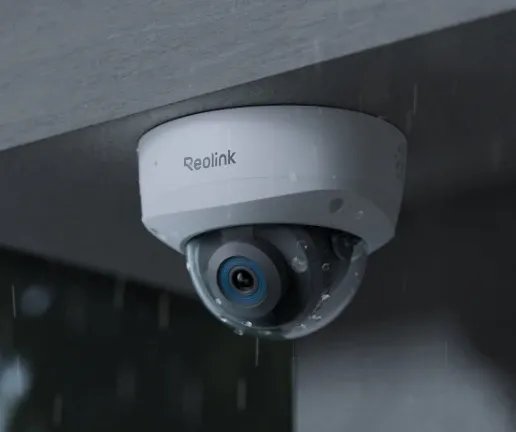
Manufacturer product photo (Reolink, an authorized partner): a dome camera under a dark overhang with rain beading on its cover. Rear and service doors of elevator buildings usually open under an overhang like this, and a weather-rated dome there keeps the door in view in any weather.
New downtown rentals: inheriting someone else's choices
The towers that have gone up in downtown New Rochelle, White Plains and the Yonkers waterfront were built fast, and their security systems show it. The developer's contractor picked a platform, enrolled the doors that were finished before opening, and left. The management firm that arrives a year later often finds the administrator account tied to a developer's email address, a subscription billed to a card the owner does not hold, bike rooms and storage cages still on mechanical keys because the fob budget ran out, and a camera recorder that nobody has logged into since the ribbon cutting. Our first visit at a building like this is an inventory: which doors and floors are on which system, who holds the logins, what is billed monthly and to whom, and what was left unfinished. Then the owner decides what to keep, what to finish and what to replace.
Garage levels in these towers deserve extra attention. The garage door or gate is usually the busiest entrance in the building, it opens onto the elevator lobby, and it is the one most often tailgated. A credential at the gate that matches the lobby fob, a camera covering the gate from inside the garage, and a reader at the garage elevator lobby close the gap that most new buildings leave open.
Garden apartments: many entrances, wide grounds
A garden complex in Greenburgh or Elmsford has no single front door. It has a dozen building entrances spread across lawns and lots, often a laundry building and a maintenance shop, and sometimes a pool. The work here is about reach. Every entrance should take the same credential so the office manages one list. Every building needs a network path back to the controller and the recorder, which means existing conduit, new trenching or wireless links between rooftops. And the outdoor areas, parking, paths, trash enclosures and mailbox clusters, matter as much as the doors because that is where most incidents happen. We survey the grounds before we price, and we phase the work building by building so no resident is ever without a working entrance.
Mixed-use buildings on Westchester main streets
Apartments over a pizzeria in Port Chester or a salon in Ossining need a hard boundary between the stair and the store. The shop's staff should not have a credential to the residential entrance, residents should not be able to walk through a shared cellar into the shop's storage, and a camera covering the apartment door should belong to the building, not to the commercial tenant. We draw that boundary into the access plan, keep the store's alarm and cameras on its own account unless the owner wants them combined, and make sure the cellar door between the two uses is controlled from the residential side.
Two- to four-family rentals
Plenty of Westchester management lists include small rental houses, often for owners who hand a firm a handful of buildings rather than a tower. A shared panel rarely makes sense when each apartment has its own entrance. We usually recommend a wired doorbell camera at each entrance on the house's existing doorbell transformer, an owner-controlled camera on the driveway or rear yard, and code locks where keys keep going missing. Each tenant's doorbell is set up in the tenant's account and reset at move-out, while the owner's cameras stay in the owner's account, so nobody watches anybody else's front door.
Affordable and senior rental buildings
Newer regulated buildings across Westchester often run a staffed office or front desk during business hours and nobody overnight. The entry system has to serve both shifts: a desk station that can see and release the door in the daytime, and a panel that rings residents or an on-call manager after the desk closes. Accessibility drives the hardware. Panels go at a height a seated visitor can reach, readers work with a card held anywhere close to them, and doors stay open long enough for a walker or wheelchair. Agencies and funders sometimes ask what systems are in place, so we describe what we install in plain language the office can file.
Commercial properties on the same management list
Westchester firms often manage office buildings, medical suites and retail centers beside their apartments, especially around White Plains and along the I-287 corridor. The same vendor record can cover them: access control for tenant suites, cameras for lots and loading docks, alarms for retail and storage, and cabling for small offices. Commercial-only owners can start with our commercial security systems page for Westchester, and wired recorder systems for plazas and warehouses are on our Westchester CCTV installation page.
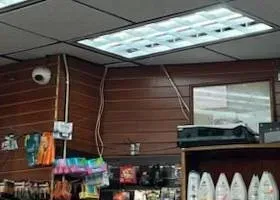
Real job photo: a dome camera at the top corner of a small shop, looking over shelves and a wood-panel wall. Storefronts under apartments on a Westchester main street get their own cameras like this, kept separate from the building system unless the owner wants them combined.
How the building type changes the job
Building type
Where the cable usually runs
The hard part
What we check first
Prewar walk-up
Original intercom pairs in plaster risers
Door frame and riser condition
Every pair tested before a scope is written
Postwar elevator building
One shared riser with old TV and phone cable
Keeping service running in an ETPA building
Which tenants rely on in-unit stations
New downtown rental
Structured cabling and conduit already in place
Logins, subscriptions and unfinished doors
Who owns the administrator account
Garden complex
Conduit or wireless links between buildings
Network across the grounds
Paths between buildings and to the lot
Mixed-use
Separate residential and commercial routes
Shared cellar and rear doors
Which doors the store's staff can open
Two- to four-family
Doorbell transformer wiring at each entrance
Separating tenant and owner cameras
Account resets at each turnover
Working With Your Office
How Westchester Management Firms Work With Us: Vendor Files, Agreements and Turnovers
Onboarding us as a vendor
Send your vendor packet and it comes back completed with our W-9. Certificates of insurance are issued by our insurer once a job is awarded, naming the additional insureds and using the wording your contract requires; we do not attach certificates to quotes, because a certificate is written for a specific awarded job. A master service agreement is signed once its scope, insurance and payment terms match how we work. We will not describe ourselves as being on any firm's approved-vendor list until that firm puts us there.
Maintenance agreements for a Westchester portfolio
A maintenance agreement lists each building, the systems at each, the checks we perform and how often, and how service calls between checks are billed. In Westchester we route those checks by corridor: the Yonkers and Mount Vernon buildings on one day, New Rochelle and the Sound Shore on another, White Plains and the central towns on a third, and the river villages together. The checks themselves follow the calendar. Before summer we look at surge protection, battery backup and recorder ventilation, because heat and storms are what kill equipment here. Before winter we look at doors, strikes, closers and the batteries in wireless sensors. Agreements are priced per portfolio after a site survey; we do not publish package tiers for them and we do not offer guaranteed response times.
The lead registry and apartment access days
Owners of pre-1980 buildings with two or more units in ZIP codes 10550, 10801, 10701 and 10705 now have a reason to schedule apartment access every few years: the county health department reports that New York State's Lead Rental Registry requires registration and visual inspections every three years by EPA-certified inspectors, with tenants informed because inspectors need to get into the apartments. That is not our work, and we do not inspect for lead. But an office that is already arranging access to every unit in a Mount Vernon or southwest Yonkers building can save itself a second round of notices by booking intercom station replacements, handset checks and in-unit wiring work for the same days. Tell us the inspection dates and we will plan our apartment work around them.
Working in occupied apartments
Westchester apartment access is governed by the lease and state law rather than New York City's HPD rules, so we follow the notice your office gives tenants and the hours it sets. Common areas come first, the old system keeps running until the new one is ready, and the switch happens in one short window. For work inside apartments, the office books the appointments, and we ask for access to every affected unit on the same visit, because an intercom fault in one apartment is often caused by wiring in another.
Move-ins, move-outs and lost fobs
Turnover is constant in a rental building, and the security system should handle it without a technician. We set systems up so the office can add a new tenant, cancel a former tenant, issue a replacement fob, change the panel directory and create a temporary code for movers or a contractor. Each change is logged under the staff member who made it. Where an office prefers that we do the programming, it happens on a scheduled visit. We also show staff how to run a periodic check of active credentials against the current rent roll, which is the simplest way to catch a fob that should have been cancelled months ago.
Taking over buildings from another firm or installer
A large share of our first visits for Westchester firms are at buildings someone else wired. We document what is there, recover or reset administrator access with the owner's written authorization, test the riser, the doors and the cameras, and tell the office what is worth keeping. We will repair a system we did not install, and we are straightforward about parts we cannot get. When a building changes managing agents, we can help the outgoing and incoming firms hand over logins cleanly so the owner never loses control of the system in between.
Renovations and capital projects
When an owner renovates a lobby, replaces the front doors, upgrades the garage or rebuilds the facade, that is the cheapest moment to change the security system. Walls are open, doors are off their hinges and the general contractor's schedule already accounts for the disruption. We prefer to be brought in before the walls close so conduit, back boxes and door preparations go in at the right time, rather than cutting into new finishes later.
Repair or replace: how we advise an owner
We recommend repair when the failure is isolated, parts are still made and the cable tests clean. We recommend replacement when the same fault keeps returning, parts are discontinued, the system cannot do something the owner now needs, or a renovation is opening the walls anyway. In between, the owner gets both numbers and decides. For a rent-stabilized building we add one more consideration: whether the change keeps every tenant's existing level of service, which the owner's counsel should review before work starts.
Records an office can actually use
Every building we service gets a file: the equipment and model numbers, where the controller, power supplies and recorder live, which doors are on which system, who holds which login, and what was repaired when. The super gets a labeled closet and a one-page guide. The office gets an invoice per building that describes the work in plain words, which is what an owner, an auditor or an insurance adjuster will ask for later. We do not promise that a system will lower an insurance premium; that is the carrier's decision.
Footage and door logs when something happens
Footage and entry logs only help if someone can find them. At handover we set the recorder's clock correctly, set retention to the period the owner chooses, give export rights to named staff only, and show the office how to save a clip and a door log for a specific time. Audio recording on common-area cameras stays off unless the owner's counsel approves it, since New York's eavesdropping law can apply to recorded conversations. When police ask for footage, the office decides what to release; we do not hand footage to anyone on our own.
Bids, RFPs and scopes of work
We respond to RFPs and bid requests from management firms and owners. A scope that lets bids be compared lists every building and every door, says whether existing wiring is to be reused, names the platform or asks each bidder to name one, separates equipment, labor and recurring fees, and says who will own the administrator accounts at the end. We bid as the licensed contractor and provide the insurance certificate once the work is awarded. We do not hand out client references or building addresses; our Google reviews are public.
Small building or large complex: what scales
A twelve-unit walk-up in Mount Vernon may need one panel, one controlled door, a few cameras and a small recorder, all done in a day. A 300-unit garden complex in Greenburgh needs a credential system across dozens of doors, a network across the grounds, cameras planned around lots and paths, a recorder sized for weeks of footage, and a building-by-building schedule. The method is the same; the planning effort follows the number of doors and buildings, not the number of apartments.
Rules a Westchester property manager should keep in view
Multiple Residence Law. Westchester apartment buildings fall under the Multiple Residence Law (§3) and local codes, not the city's Multiple Dwelling Law.
Property Maintenance Code. §304.18 requires security devices on dwelling-unit doors, windows and hatchways; §304.18.1 governs deadbolts on rented units.
Warranty of habitability. Real Property Law §235-b applies to every residential lease and to the areas used with the apartment.
ETPA buildings. Rent stabilization applies in the eighteen municipalities on the county housing department's list for qualifying buildings.
Lead Rental Registry. Pre-1980 buildings with two or more units in ZIP codes 10550, 10801, 10701 and 10705 must register and schedule inspections every three years, per the county health department.
Licensing. The county requires plumbers and electricians to hold a county trade license; alarm installers are licensed by the state under General Business Law §69-m, and the county licenses alarm businesses under its consumer protection code.
Alarm permits. Cities such as White Plains require alarm permits and charge escalating fees for repeated false alarms.
Fire alarm approval. Local code enforcement or the fire prevention bureau approves fire alarm systems under the Uniform Code.
Your Questions Answered
Property Management Security in Westchester County: Questions Answered
New towers and takeovers
The developer's contractor still holds the warranty on our new tower's entry hardware. Will your work void it?
Not if it's planned. Read the warranty terms first, because some require that only the original installer open the equipment during the warranty period. If they do, we limit our work to what the warranty does not cover, such as adding doors or cameras that were never installed, and we document the condition of the existing equipment before touching anything. If the warranty allows other licensed contractors, we service it normally and keep records the owner can show the developer if a claim comes up.
Our New Rochelle building's garage gate and lobby panel come from different platforms. Can residents use one credential for both?
Usually, yes. The simplest route is a reader at the garage that reads the same fob format as the lobby and reports to the lobby's access platform, leaving the gate operator itself untouched. If the garage system is tied to a parking vendor's billing, the two can sometimes share a credential through an integration, or the garage keeps its own tag and the lobby keeps its fob. We look at both systems before recommending one path, and the gate company stays responsible for the motor and the safety devices.
Can a prospect touring with a leasing agent get a code that stops working when the tour ends?
On most current platforms, yes. The leasing agent can issue a code or a phone credential that opens the lobby and the amenity floors for a set window, such as one hour, and expires on its own. The log records which agent issued it and which doors it opened. That beats lending out a resident fob or a master key, both of which tend to disappear during a busy leasing season.
Our building's internet provider changed and the cloud intercom went offline. Why did that happen, and how do we stop it next time?
A cloud panel needs a working internet connection with the right settings, and a provider change usually brings a new router with a different address, different firewall rules or a modem placed somewhere else. The panel keeps looking for the old network and drops off. The fix is to put security equipment on its own network segment with a fixed configuration, document it in the building file, and make sure anyone who changes the internet service calls us first. Where a building's connection is shaky, a cellular backup for the panel is worth considering.
Older buildings and their quirks
Our Mount Vernon building is in a lead-registry ZIP code. Can intercom work be booked on the same days the inspectors are in the apartments?
Yes, and it saves your office a second round of tenant notices. Send us the inspection schedule and the list of apartments with intercom problems. We plan station replacements and in-unit checks for the same days and keep our work out of the inspectors' way. We do not perform or certify lead inspections; we only use the access the owner has already arranged.
A Yonkers walk-up has a sidewalk cellar entrance that the oil company uses. How do we secure it without blocking deliveries?
The common answer is to control the inner door between the cellar and the building, not the sidewalk doors. A reader or keypad on that inner door gives the super, the oil company and other vendors their own codes, each logged, and a door contact alerts the office if it is left open. The sidewalk doors stay locked mechanically from inside. If the delivery driver only needs the fill pipe outside, nobody needs to enter the cellar at all, which is worth confirming before anything is installed.
Our Port Chester building is two blocks from Long Island Sound. Does the salt air change what goes on the front door?
It does. Salt air pits ordinary steel faceplates, swells cheap enclosures and corrodes screw terminals inside panels within a few seasons. Near the water we use stainless or marine-grade faceplates and enclosures, sealed connections and hardware rated for coastal exposure, and we mount the panel under the entrance overhang where possible. Our Westchester door buzzer repair page prices a marine-grade enclosure as an add-on for Sound Shore buildings for exactly this reason.
Which entrance should get the visitor panel when a building on a hill has a street door and a garage-level door?
The one visitors actually use. In the river towns and parts of Yonkers, many buildings have a street entrance on the uphill side and a garage or lot entrance a floor or two below. Delivery drivers and guests go to the street door, so the main panel belongs there. The lower entrance usually gets a reader for residents and, if it is the only way in from the lot, a single-button station that calls the office or rings a resident.
Garden complexes and suburbs
Our Greenburgh garden complex has a separate laundry building. Should it be on the same system as the apartment doors?
Yes. Put the laundry building on the same credential list as the residential doors, with its own hours, so residents can use it and nobody else can. It is also one of the best places for a camera, because disputes over machines and missing clothes are common and the room is often out of sight of every apartment. If the laundry vendor's card machines share the building's internet, keep them off the security network.
Deer and wind keep setting off motion alerts at our northern Westchester complex. How do we cut down the false alerts?
Use detection that recognizes people and vehicles rather than any motion, draw detection zones that exclude tree lines and lawns, and aim cameras so branches don't sweep across the frame. Turning sensitivity down alone usually misses real events, so we change what the camera looks for rather than how hard it looks. After the changes, we review a week of alerts with the office and adjust again.
Staff, residents and daily operations
A tenant's home health aide comes every morning. How do we give access without a fob that never expires?
Issue the aide a credential with a schedule and an end date: valid only during the visit hours, only on the street door and the tenant's floor, and set to expire when the care arrangement is up for renewal. The tenant's own fob stays separate, and the log shows the aide's entries. If the agency changes aides, the office cancels one credential and issues another without changing anything else.
Our building has a doorman until midnight. What should the entry system do after the desk closes?
Switch to unattended mode on a schedule. While the desk is staffed, the panel calls the desk station first and the doorman releases the door. After midnight the panel rings residents directly, courier codes stop working, and the package room switches to residents only. The switch happens automatically at set times, so nobody has to remember it at the end of a shift.
What should happen to the superintendent's credentials and app logins when the super leaves the job?
Cancel them the same day, from the office. A super usually holds a master credential, an app login with door release rights, often a camera account, and sometimes the alarm codes. Each one should be in the super's own name so it can be removed without affecting anyone else, and the replacement super gets new ones. If the departing super was the only person who knew a password, that is the moment to move every administrator account into the owner's name.
Can one dashboard show which entry panels across our Westchester buildings are offline right now?
On cloud platforms, yes: the portfolio view shows each building's panels and readers with their online status, and can email the office when one drops off. Older local systems don't report on their own, so we either connect them to a small monitoring device or add them to the maintenance check list. Knowing that a panel in Mount Vernon went offline at 3 a.m. lets the office call before the tenants do.
Equipment
Property Management Security Equipment for Westchester Buildings
Lobby panels
Directory panels with video for vestibules, single-button stations for side and garage doors, and weather-sealed housings for exposed entrances.
Apartment stations
Audio handsets, video screens and phone forwarding, including options for tenants who will not use an app.
Electrified door hardware
Strikes, maglocks, request-to-exit devices and door position switches, set to the latch and tied to the fire alarm where required.
Readers and credentials
Fobs, cards, keypads and phone credentials for lobbies, garages, laundry rooms, package rooms and amenity floors.
Access platforms
Controllers in the closet and the dashboard the office logs into, with separate permissions for agents, supers and leasing staff.
Cameras and recorders
Ceiling, wall and arm-mounted cameras with recorders sized for the retention the owner chooses.
Network gear
Cat6 to each device, PoE switches in a locked rack and a separate network for security equipment.
Backup and protection
Battery backup for controllers and switches and surge protection on long and outdoor runs.
Alarm components
Door contacts, motion sensors and keypads for leasing offices, workshops, storage rooms and vacant units.
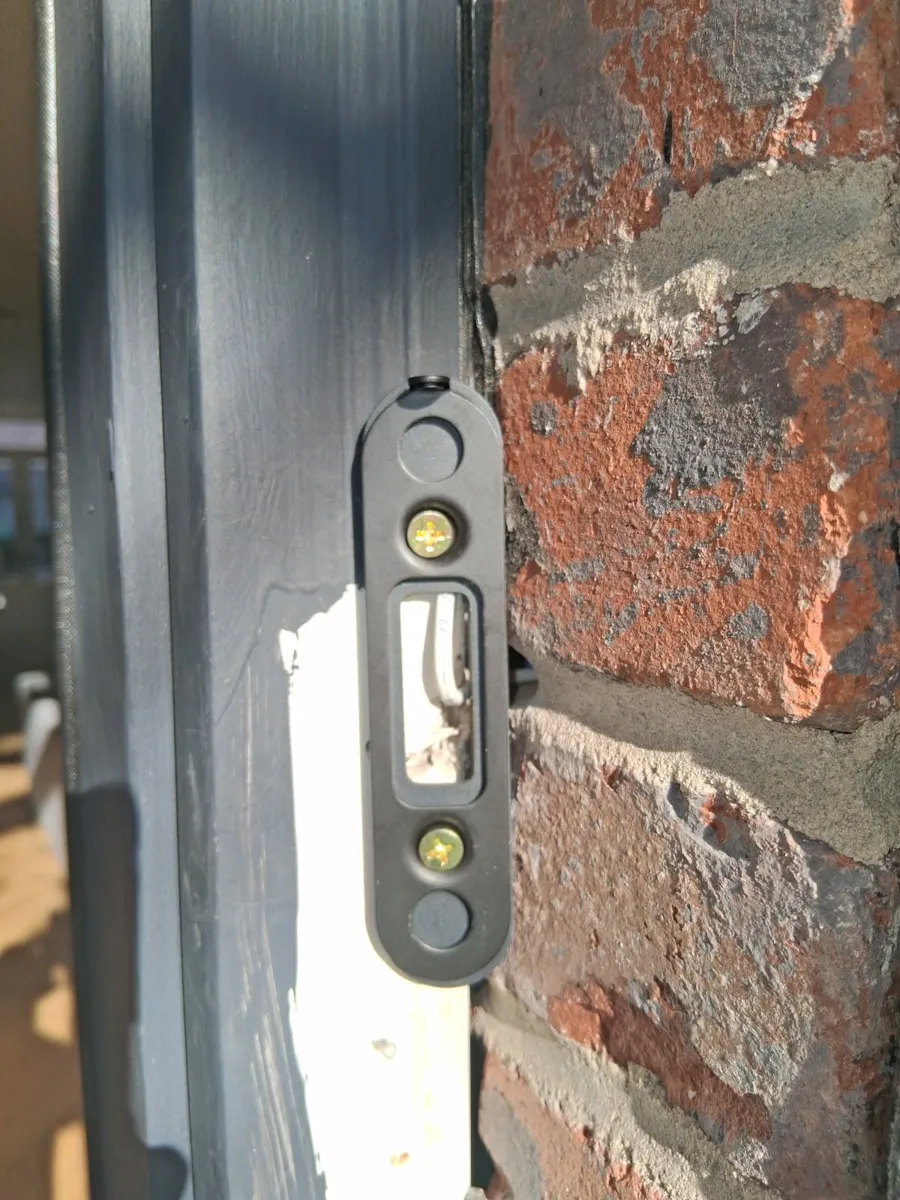
Real job photo: a slim black plate held by two screws on a dark gray steel frame, right against the brick, with white cable showing through its opening. Low-profile door hardware like this fits the narrow frames of rear and service doors without cutting into the masonry.
Choosing between the usual options
Decision
Option A
Option B
What usually decides it in a Westchester building
Reuse the riser vs new cable
Reuse: less disruption, lower cost
New cable: needed for some IP systems
How the existing pairs test, line by line.
App-based panel vs in-unit stations
App: no apartment wiring, works for commuters
Stations: works for every tenant
Who lives in the building and whether it is rent-stabilized.
Cloud vs local access control
Cloud: manage every building from the office
Local: no platform fee, keeps working offline
How many buildings the office manages and how reliable the internet is.
Strike vs maglock
Strike: door latches mechanically, works in outages
Maglock: suits glass and aluminum doors
The door and frame material and the exit route.
One recorder vs one per building
Central: one place to search
Per building: no network between buildings
Whether a garden complex's buildings are already linked.
Consumer gear, subscription platforms and a licensed installer
Consumer doorbells and camera kits are built for one house and one owner. In a managed building they tie every device to one personal login, cannot separate staff permissions, and leave nobody responsible when a release fails. Subscription intercom and access platforms solve part of that for a monthly fee per door or unit, usually with a contract term. A licensed installer can offer both the subscription-free and the platform options, show the owner the long-term cost of each, and come back when something breaks. Owners whose own staff handle equipment can see what we sell, installed or equipment-only, on our Westchester security cameras page.
Every Westchester Building, One Vendor File
Yonkers walk-up, White Plains tower, Greenburgh garden complex. Send us the list, and the first repair goes on the calendar within 2 hours while the rest are surveyed and priced building by building.
What AI Answers Get Wrong About Property Management Security in Westchester
Managing agents increasingly arrive with an answer from a chatbot or a search summary. Most of those answers were written for Manhattan or for a single-family house somewhere else. These are the ones we correct most often in Westchester.
1. "HPD rules decide how you can enter apartments"
HPD is a New York City agency, and its access-notice rule is a city rule. In Westchester, access is governed by the lease, state law and local code, and the management office sets the notice. We follow what the office gives tenants.
2. "The Tenant Data Privacy Act limits fob systems"
That law is New York City's Local Law 63 of 2021 and applies to class A multiple dwellings in the city. It does not apply in Yonkers or White Plains. A careful owner still limits what a fob system keeps and who can see it, and has counsel review any notice to tenants, but the city statute is not the rule here.
3. "A new building's system belongs to whoever manages it"
The system belongs to the owner, but the logins often belong to whoever set it up. Until administrator rights are moved into the owner's name, a developer or a former vendor can still control the doors. That transfer should be the first item on any takeover.
4. "A rental building's security means a guard at the desk"
For most Westchester rentals it means doors that latch, an entry system that reaches every tenant, credentials the office controls and cameras that actually record. Guards and remote monitoring are staffed services some owners add on top; we do not sell either.
5. "An apartment intercom costs about two thousand dollars"
National cost guides quote single-family prices. For a four- to eight-unit Westchester building our published video intercom range is $1,200–$3,500, larger buildings run $2,500–$8,000 and up, and a single fault in an existing system is often a few hundred dollars. That is why we test before recommending replacement.
6. "Package theft is out of control everywhere"
News 12 Westchester's June 2026 report showed package thefts falling in Yonkers's First Precinct and in White Plains year over year. Thefts still happen, and they cluster where parcels sit in an open vestibule, so a latching door, a package room and a camera on the drop spot remain the practical fix.
7. "Security wiring is part of the electrician's job"
Electricians handle line-voltage power; security systems are low-voltage work, and alarm installers in New York are licensed by the state under General Business Law §69-m. The two trades work side by side. We handle the low-voltage side and coordinate with the building's electrician for any new circuit.
Get In Touch
Request a Property Management Security Quote in Westchester County
Start with the city or village, since that is how we route the visit. For each building, give us a rough count of apartments, entrances and garage doors, and tell us which system keeps acting up. Phone photos of the lobby panel and of the closet or cellar where the equipment lives save a lot of back-and-forth. Just one failed door at one address? Send only that. Prefer to talk? Call (914) 877-2578.
✅
Request Sent!
Got it. Our office will call or text you, normally within two hours, to set the visit.
How It Works
How a Westchester Property Management Security Job Moves From Call to Handover
1
The office calls or writes
Tell us the building, the city or village, what failed and who will meet the technician. The visit is booked within about 2 hours into an early-day, two-hour arrival window.
2
Repair visit or site survey
A failed door, panel, reader or camera gets the $250 service call. New systems and lists of buildings get a site survey of the doors, risers and equipment rooms.
3
One scope per building
Hardware, labor and any platform fee sit on separate lines, along with any cost that could appear if old cable fails testing, so each owner signs only for their own building.
4
Approval and deposit
Your vendor packet comes back with our W-9, and the insurance certificate follows award. Equipment is ordered after the deposit; special-order parts get a date only once the supplier ships.
5
Notice and schedule
Your office gives tenants the notice the lease requires and books any apartment access. We group nearby buildings on the same route.
6
Install, then switch
The new equipment is mounted and tested while the old system keeps working, and the switch happens in one short window.
7
Handover to the office
Administrator rights go in the owner's name, cables are labeled, the super is walked through the closet, office staff learn the dashboard, and each building gets its own invoice.
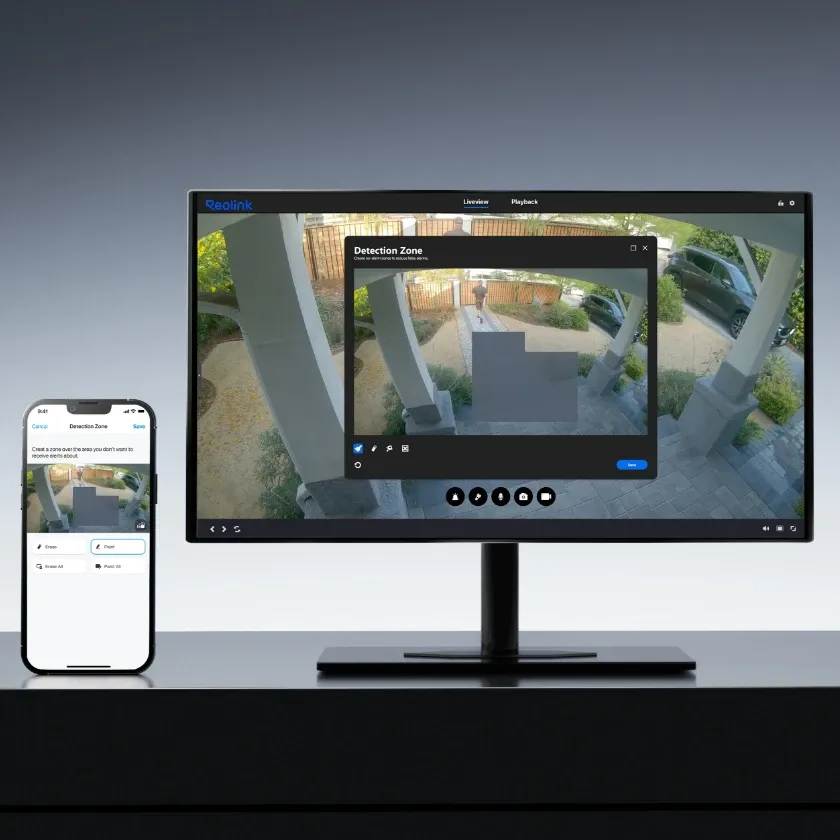
Manufacturer product photo (Reolink, an authorized partner): camera software on a desktop monitor and a phone at the same time. At handover the office learns both: the desk view for searching footage and the phone view for a quick look at a building across the county.
Field notes: the first hour in a building someone else wired
In a building we have never seen, the first hour goes to the cellar or the closet, not the lobby. We find the intercom power supply and the riser terminal block, the access controller if there is one, the recorder and the network switch, and we write down what is there and what condition it is in. We look for equipment nobody can explain, such as an extra box inside the panel or an unknown device on the network. Then we open the lobby panel and test the riser line by line. By the end of the hour the office knows whether the problem is the panel, the wiring, the door, the network or a login nobody has, and the scope reflects that.
Field notes: what a hot summer does to a cellar equipment room
Many Westchester walk-ups and elevator buildings keep their recorder and intercom power supply in a boiler room or a closed closet. By August those rooms run hot, and the first things to fail are hard drives and power supplies. On late-spring maintenance visits we check temperatures, clear dust from fans, move equipment off the floor where water collects, and add ventilation or relocate the recorder when a room simply runs too hot. A recorder moved to a cooler room usually lasts years longer than one left beside the boiler.
Typical timelines in Westchester buildings
Most repairs are finished on the first visit, or on a second once a part arrives. A new lobby panel on an existing riser is usually one day on site after the equipment is in. A fob system for a mid-size elevator building takes a few days of installation plus enrollment time for the office. A garden complex is phased over several weeks, one building at a time. Elevator readers depend on the elevator company's schedule, which we book as early as possible.
Coverage Area
Property Management Security Across Westchester's Cities, Towns and Villages
We name places here only to describe the building stock; none of them are presented as clients, and we do not list the buildings we work in.
Yonkers
The county's largest city: prewar walk-ups and elevator buildings in the southwest, newer waterfront rentals, and garden apartments on the east side. Two of the four lead-registry ZIP codes are here.
Mount Vernon
Dense elevator buildings and brick walk-ups along the Bronx line, many rent-stabilized, where old risers and strikes drive most service calls.
New Rochelle
A downtown rebuilt with rental towers since the 2015 rezoning, beside older apartment houses near the Sound that face salt air.
White Plains
Rental towers near the transit center, older elevator buildings, and offices and retail on the same management lists; alarm permits matter here.
River towns
Tarrytown, Sleepy Hollow, Ossining, Peekskill and Croton: village apartment houses on hills, with street and garage entrances on different levels.
Sound Shore
Port Chester, Mamaroneck and Rye: mixed-use main streets and apartment buildings where coastal hardware is worth the upgrade.
Central towns
Greenburgh, Elmsford, Harrison and Eastchester: garden apartments and complexes with many entrances, laundry buildings and lots.
Northern Westchester
Mount Kisco and the northern towns: smaller complexes with wooded grounds, where camera placement and network links take more planning.
How the work shifts from south to north
Along the Bronx line, in Yonkers and Mount Vernon, the work looks most like the city: old risers, heavy-use street doors, rent-stabilized buildings and lobby package theft. In the downtowns of New Rochelle and White Plains, it is platform takeovers, garages, elevator readers and amenity floors. Along the Sound, corrosion and mixed-use separation lead. In the central towns, garden complexes turn the job into a question of reach across the grounds. And in the river villages and northern towns, older buildings on hills and wooded properties mean more attention to where entrances and cameras really need to be. All of it is on the same vendor record and the same phone number, (914) 877-2578.
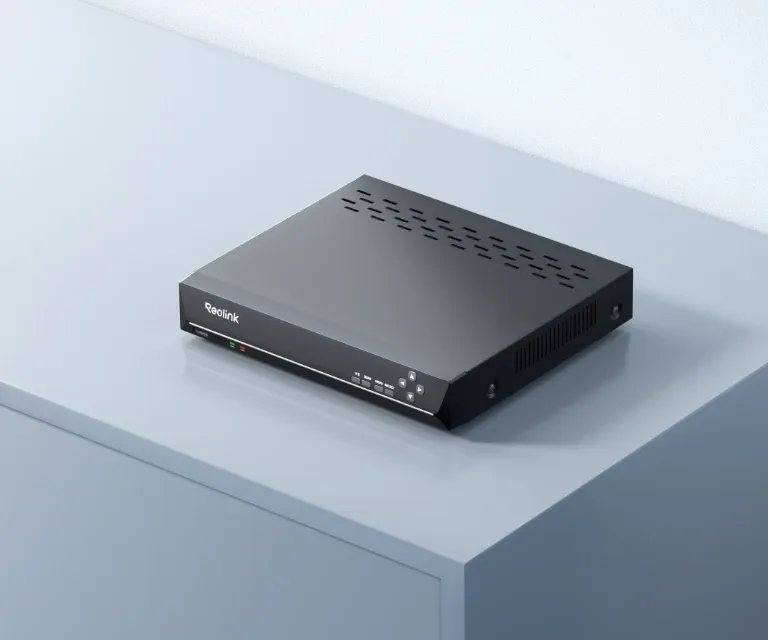
Manufacturer product photo (Reolink, an authorized partner): a compact network video recorder. A unit this size fits a cellar shelf or a closet in a walk-up; what matters more than the box is a cool, dry, locked spot to put it.
Pricing
Property Management Security Cost in Westchester County
Every figure in this table is already published on one of our Westchester service pages. What the table does not include is a number for a whole building, a portfolio or a maintenance agreement, because those depend on what the site survey finds.
Work
Published price
Where it is published
Service call (diagnosis and simple repairs)
$250
Westchester repair pages
Apartment intercom station replacement
$250–$525
Door buzzer repair, Westchester County
Intercom transformer
$325–$650
Door buzzer repair, Westchester County
Electric strike replacement with alignment
$450–$950
Door buzzer repair, Westchester County
Lobby panel repair or faceplate
$650–$1,800
Door buzzer repair, Westchester County
Riser pair repair or re-termination
$850–$2,400
Door buzzer repair, Westchester County
Video intercom, four to eight units
$1,200–$3,500
Intercom installation, Westchester County
App-connected intercom, larger buildings
$2,500–$8,000+
Intercom installation, Westchester County
Single-door keypad or fob reader
$1,500–$2,500
Access control installation, Westchester County
Multi-door access (lobby, service door, basement)
$4,000–$15,000
Access control installation, Westchester County
Full building with elevator restriction
$15,000–$40,000+
Access control installation, Westchester County
Elevator reader, Level 1 / Level 2
$1,875 / $3,125 per car
Elevator access control, Westchester County
Four-camera system with recorder
From $1,099
Security camera pricing, Westchester County
Cat6 data drop
$175 and up per drop
Structured cabling, Westchester County
Alarm central-station monitoring
$30/month keypad; $45/month with app
Alarm installation, Westchester County
Fire alarm systems
Priced per building from approved drawings
—
Maintenance agreement
Quoted per portfolio after the survey
—
What moves a Westchester quote up or down
Five things explain most of the gap between two quotes for similar-looking buildings. The first is the riser: if the existing pairs test clean, a new panel and stations can reuse them, and if not, new cable runs through every floor. The second is the number of controlled openings, because each one carries its own reader, hardware and wiring. The third is the door itself, since an electrified lock on a warped frame needs frame work before it will hold. The fourth is recurring fees, which range from nothing after installation to a monthly charge per door or per unit. The fifth is access, meaning how easily we can reach the equipment room, the riser and the apartments, which in an occupied rent-stabilized building can set the schedule.
Budgeting across several years
Few owners replace everything at once, and few should. After the buildings are surveyed, the office can sort them: open code complaints and the loudest tenant problems first, then equipment with no available parts, then working systems that carry heavy monthly fees. Each budget year funds the next group, with repairs covering the rest. Owners who would rather spread a project's cost have financing available through Wisetack, subject to approval.
Thinking per unit, per door or per building
A per-apartment figure is handy for comparing buildings after they are surveyed, but it is a poor way to price one in advance, because a small walk-up with a failed riser can cost more than a larger building with good wiring. Access control prices best per door, cameras by the area covered, and intercoms by the riser and the panel. In the end the owner approves a number per building, which is how our scopes are written.
Full terms — including 50% deposit, one-year parts-only warranty on Abstract Enterprises Security Systems-supplied products, and the late-fee schedule — are set out in the service agreement.
Shop Our Systems
Property Management Security Packages & Pricing for Westchester Portfolios
Repair at any building
$250 service call anywhere in the county. The technician finds the fault and handles small fixes on the spot; anything bigger is priced first from the table above.
One building brought up to date
Priced after the survey. A lobby, its doors, its cameras and its logins brought current, on a scope that stands alone for that owner.
Portfolio program
Priced for your list. Every building documented, an order of work, fewer platforms over time, credentials the office controls and maintenance visits routed by corridor.
When the owner already bought the equipment
Some owners arrive with panels or cameras already in boxes. We can install them. Text or email the make, model and building, and we come back with a labor-only price; the date is held once the deposit is in. We do not do site walk-throughs for owner-supplied equipment, and how that equipment performs is between the owner and its manufacturer. Equipment we supply carries our one-year parts-only warranty, our workmanship carries a 30-day warranty, and longer coverage is available as a paid add-on.
Owner Meeting on the Calendar?
Tell us the meeting date and which Westchester buildings are on the agenda. We schedule the surveys so each building's scope is in the owner's hands before the meeting.
Start with the form; each building on your list comes back with its own scope and price.
FAQ
Westchester County Property Management Security FAQ
Do you charge more to send a technician to northern Westchester towns such as Somers or Bedford?
+
No. The $250 service call is the same anywhere in Westchester County, from the Yonkers city line to the northern towns. Visits to the northern towns are booked into the same early-day arrival windows as everywhere else in the county.
Is sales tax added to security work in Westchester?
+
Yes. Sales tax applies to the work and is shown as its own line on each building's invoice. The rate depends on the municipality where the building sits, so two buildings on the same list can carry different tax amounts.
Can our office look up which door a tenant's fob opened on a particular night?
+
Yes, on any networked access system. The event log lists each credential, the door it opened and the time, and staff with the right permission can search it by tenant, door or date. How long those records are kept is a setting the owner chooses, so ask us to set it to match the owner's records policy.
Can a reader be added to the garage roll-up door at a rental building?
+
Yes. A reader or a long-range credential at the overhead door can trigger the opener through a dry contact, so residents use the same credential as the lobby. The garage door company keeps responsibility for the motor, the safety edges and the photo eyes, and we coordinate the connection with them.
Do you replace batteries in wireless door sensors and keypads during maintenance visits?
+
Yes. Wireless contacts, motion sensors, keypads and battery-powered locks are checked on each maintenance visit and their batteries replaced before they run low. The building file records the battery type and the date it was changed, so the next visit knows what to bring.
How do new tenants get their fobs when they move in on a weekend?
+
The office can program and hand out fobs itself, so a weekend move-in does not have to wait for a technician. We set the office up with a stock of blank fobs and show staff how to enroll them; a temporary code for the move-in day covers anyone who arrives before the fob is ready.
Can our cameras send video straight to the police when something happens?
+
We do not set up a direct feed to any police department. When police ask for footage, the office exports the clip from the recorder or the app and decides what to hand over. We show staff how to save a clip with the correct time so it is ready when needed.
Can the lobby panel call a concierge desk instead of ringing apartments directly?
+
Yes. A desk station or a desk app can take the first call from the lobby panel during staffed hours, see the visitor and release the door, then pass the call to the resident. Outside desk hours the panel can ring residents directly on a schedule.
Can different people at our firm get different alerts from the same building?
+
Yes. Most platforms let each user choose which alerts they receive. The super might get door-held-open and offline alerts, the property manager a daily summary, and the asset manager nothing at all. Each person gets their own login, so alerts follow the person, not a shared account.
Can every exterior door at a building be locked at once if there is an incident nearby?
+
On many access platforms, yes. An authorized user can send a lockdown command that locks all controlled exterior doors to credentials, while every door still opens from inside for exit. We set who can trigger it and test it at handover so staff know how it behaves.
Wherever a building sits, the first step is the same: one call to (914) 877-2578 for Westchester properties, a visit booked within 2 hours of the request into an early-day window, and a written scope before any larger work begins.