What are you looking for?
About Us Contact Us Careers Get a Free Quote (800) 486-0943
Pick a service
✅ Got Your Own System?
🎬 Home TheatreQuote 🎶 AV SoundQuote 🔑 Access ControlQuote
Now pick your area
Pick your area
Long Island
Hudson Valley
Services available
Pricing & Tools
Pick a service for pricing
🚪 Intercom Pricing 🔔 Buzzer Repair Pricing
Calculators
📹 Camera System Calculator 🚨 Alarm Calculator ⚡ Cabling Quote Builder ✅ Got Your Own System?
Select your area
Is your condo board weighing an intercom replacement? Get a building survey and written options for the board packet: (800) 486-0943
Home › Condo Intercom Replacement Guide
Board Guide · Condo Boards, HOAs, Managing Agents & Unit Owners

Condo Intercom
Replacement
Guide for NYC

Repair or Replace · Six Paths · Real Cost Ranges · Bid Checklist · Bylaws & Notices · Reserves

Condo intercom replacement in NYC starts with a $250 service call when the existing system needs a diagnosis, and a building-wide condominium intercom replacement is quoted in writing after a free on-site assessment of every door, riser and line. This guide gives condo boards, HOA boards, managing agents and unit owners the evidence, options and checklists to decide before a request for proposal goes out.

Short answer: repair while parts are sold and faults stay in one place; replace when the same faults return across lines, parts are discontinued or owners want video and phone calling. Published NYC ranges: $250–$525 per in-unit station, $650–$1,800 for lobby panel work, $850–$2,400 for riser repair in occupied walls, and $1,200–$5,000+ for a building-wide system in a 5–30 unit building. Bigger condos get a written scope after the survey. Who pays for stations inside units depends on your declaration and bylaws.

Last updated November 27, 2026 by Abstract Enterprises Security Systems, NYS license #12000287431 · Sources: NY Real Property Law Art. 9-B §§339-e, 339-v; NYS Multiple Dwelling Law §50-a; 28 RCNY §25-151; NYC Building Code §1010.1.9.8; NYC Admin. Code §28-105.4.7; HPD Tenant Data Privacy Law page (LL 63/2021); 2010 ADA Standards §308; CooperatorNews, Feb. 2020 and Nov. 2025; Habitat, Feb. 17, 2025; FirstService Residential

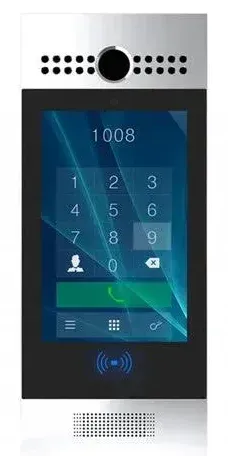
NYC condo intercom replacement: tall stainless lobby panel with a camera and speaker holes in the top bar, a touchscreen dial pad and a contactless reader symbol
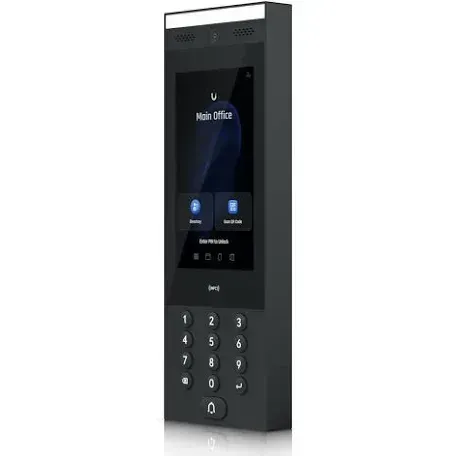
Product photo. A stainless lobby panel with a camera and microphone in the top strip, a touchscreen that works as a dial pad and a reader symbol near the base. It is the kind of directory panel many condo boards consider when an old button-strip audio unit reaches the end of its life.
Condo Intercom Replacement Request
Tell us the building, the borough and what the board is deciding

✅
Request Sent!
Got it. Expect a call or text from us to book the survey, usually within 2 hours.
25+
Years Experience
2 Hr
Booking
100%
Licensed & Insured
4.7★
201 Google Reviews

Owner-operated since 2002 · Thousands of jobs completed · Booked within 2 hours, 7 days a week

The Decision

Why Condo Boards End Up Replacing the Building Intercom

In a condominium, the intercom almost never fails all at once. It degrades. First the video on the lobby screen goes grainy, then two or three owners on the same line stop hearing visitors, then the door release works only if you hold the button for a count of five. Each problem gets its own service ticket, each ticket gets closed, and eighteen months later the managing agent is looking at a folder of invoices for the same entry system and a board of managers asking whether it is time to stop paying for patches. That is the moment this guide is written for.

Condo intercom replacement is a different decision from the same project in a rental or a cooperative, because of who owns what. Under New York's Condominium Act the lobby, the entrances and the equipment installed for everyone's use are, unless the declaration says otherwise, common elements administered by the board of managers, while each unit is owned outright by its owner. The entry panel at the street door is plainly the association's. The handset or touchscreen on the wall inside a unit sits in a grey zone that the declaration and bylaws settle, not the contractor and not this page. That split shapes everything that follows: who pays for in-unit stations, whether owners can be required to give access, how the project is approved and how it is funded.

We are the low-voltage contractor that diagnoses, repairs and replaces these systems in condominium buildings across the five boroughs, so this guide looks at the decision from the riser closet and the lobby wall rather than from a brochure. It covers the evidence that separates a repair from a replacement, the realistic replacement paths from cheapest to most invasive, the cost drivers expressed in the price ranges this site already publishes, a bid comparison checklist a board can actually use, the approval and owner-notice steps that the Condominium Act and a typical set of bylaws point to, and how associations budget for the work through reserves. It is general information, not legal or financial advice; the association's counsel and accountant confirm anything that turns on your own declaration.

One more thing before the detail. Two buildings with the same number of units can land at very different numbers, because what decides most of the cost is hidden in the walls: whether the cable from the lobby to each floor is sound, how many separate pairs it carries, and whether there is a clear path to pull something new. Unit count and door count are the starting point. The survey decides the rest.

The sourced facts behind a condo intercom decision

  • Entrances are common elements by default. New York Real Property Law §339-e lists, unless the declaration provides otherwise, "halls, corridors, lobbies, stairs, stairways, fire escapes, and entrances and exits of the building" and "all apparatus and installations existing for common use" among a condominium's common elements, and defines operation of the property to include "the maintenance, repair and replacement of" the common elements (RPL §339-e).
  • The bylaws set the board's powers and the voting math. RPL §339-v requires condo bylaws to state "the powers and duties of the board," whether the board may hire a managing agent, and the percentage of owners "necessary to adopt decisions binding on all unit owners," and allows them to provide for reserves "for major and minor maintenance, repairs, additions, improvements, replacements" (RPL §339-v).
  • Many buildings must have a working intercom. Multiple Dwelling Law §50-a requires an intercommunication system at the self-locking entrance door of class A multiple dwellings erected or converted after January 1, 1968 with eight or more apartments, with voice contact between each apartment and the door and a release from the apartment (MDL §50-a). Whether a particular condo building is covered is a question for counsel.
  • The city sets a low bar for the hardware itself. Under 28 RCNY §25-151, even a basic buzzer arrangement can qualify if it pairs a way to signal the unit with a return buzzer that unlocks the door; it also limits how high buttons and the talk unit may sit. Most boards replacing a system aim well above that floor.
  • Old intercom cable has a finite life. Wiring from the 1960s through the 1980s has "a typical lifespan of 25-50 years," Allan Liers of Metro Security Experts told CooperatorNews (Nov. 2025), and older systems that use a few dedicated wires can be incompatible with IP-based or multi-wire equipment.
  • Keyless entry carries data duties for rented units. Where a building grants entry by fob, card, app or biometrics, NYC Local Law 63 of 2021 requires a data retention and privacy policy, express consent and deletion of authentication data within 90 days unless anonymized for tenants it covers (HPD, Tenant Data Privacy Law). In a condo with renters, the board should ask counsel how it applies.
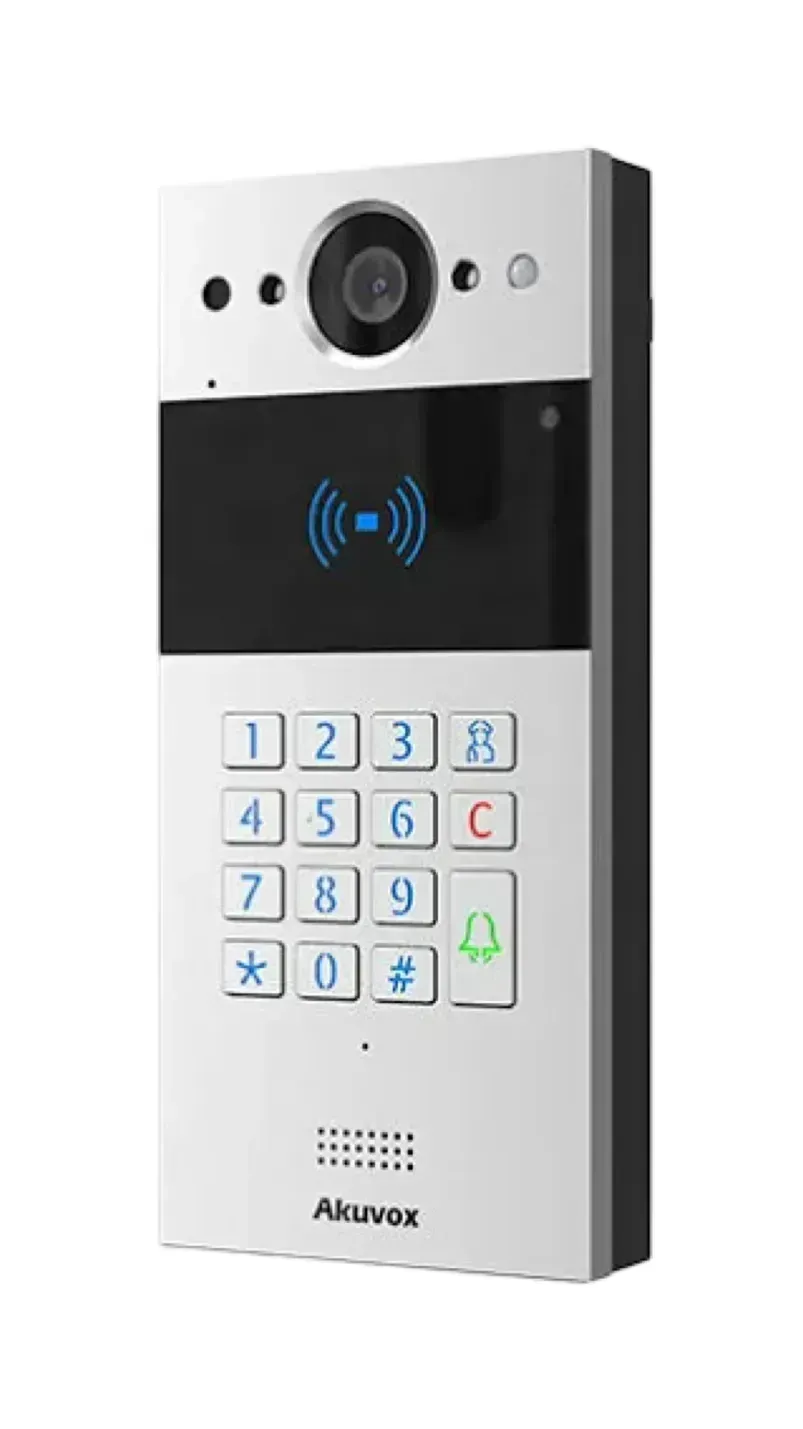
NYC condo intercom replacement option: silver door station with a camera at the top, a dark card-reader band with a wireless symbol and a twelve-key keypad below
Product photo. A camera, a contactless reader band and a metal keypad in one narrow housing. Boards that replace a button-strip panel often pick this layout for a side or garage door where owners will use fobs and a code, and visitors still need to call up.

Who is at the table, and what each of them is really asking

The board of managers wants a recommendation it can defend at the annual meeting: why now, why this system, why this contractor, and what happens if it goes wrong. The treasurer wants to know whether the figure is a one-time capital item or a cost that comes back every year as a subscription, and whether the reserve fund can absorb it. The managing agent wants a scope that three bidders will price the same way and a schedule that will not flood the office with owner complaints. Unit owners want to know whether anyone will need to come inside, whether they are paying for the station on their own wall, and whether the new system means learning an app. Residents who rent a unit from its owner care about the same door but cannot vote, which is one reason notices go to occupants as well as owners. In buildings where the sponsor still controls the board, a further question sits underneath: whether the sponsor-installed system was ever adequate, and whether the replacement should wait for turnover.

The rest of this page is arranged so each of those readers can find the part that answers them, then hand the board packet to the others.

Repair or Replace

Condo Intercom Repair vs Replacement: Reading the Evidence

The honest answer to "repair or replace?" depends on three things a board can learn cheaply before it spends real money: how often the system has failed and where, whether replacement parts for it can still be bought, and what condition the cable is in. A diagnostic visit on our side starts with the $250 service call, which counts toward the repair if more work is needed, and that single visit usually answers the first two questions and gives a strong hint about the third. For an existing system that has simply stopped working, our intercom repair service in NYC is the right starting page; this guide picks up where the question becomes building-wide.

Keep a failure log before anyone writes a scope

The most useful document a condo board can bring to the replacement discussion is a plain list: date, unit or door affected, the symptom in the owner's words, what the technician found and what was replaced. Most managing agents already hold this information in work orders; it just has not been put on one page. Patterns jump out immediately. Faults that keep returning to the same vertical line point to the riser cable or a junction box. Faults spread at random across the building point to an aging power supply or a central amplifier. A single unit that fails again and again usually has a bad station or a damaged run inside its own walls. Each pattern has a different remedy, and only one of them truly calls for a whole new system.

When repair still makes sense

  • Failures are isolated to one door or one or two units, and the rest of the building works normally.
  • The manufacturer still sells the lobby panel, the apartment stations and the power supply, or a compatible model is available.
  • Sound and video quality are acceptable on most lines when the system is working.
  • The board has no appetite yet for phone calling, fobs or a digital directory, and the existing directory format is adequate.
  • A larger renovation of the lobby or the risers is planned within a couple of years, so a new system is better installed once, at that time.

When replacement is the better spend

  • The same faults keep coming back after repairs, especially on several lines at once.
  • Key parts are discontinued and the only sources are used or refurbished units.
  • Hum, crackle or dropped calls appear on many lines, which tends to mean the cable or the central equipment is at the end of its life.
  • The board wants capabilities the old system cannot add: video, calling to owners' phones, remote door release for deliveries, multiple entrances on one directory, or a log of who was let in.
  • Repair invoices over the last year or two, added up, are approaching what the survey says a partial replacement would cost.
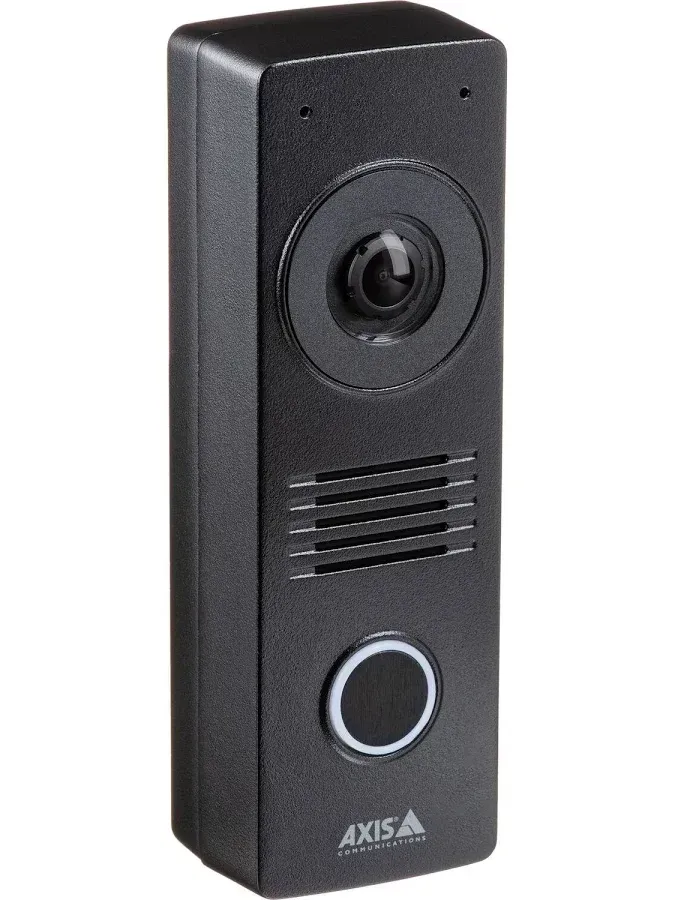
Condo intercom repair or replacement in NYC: compact dark grey surface door station with a camera lens, a speaker grille and one round call button
Product photo. A small surface-mount door station with a camera, a speaker grille and a single call button. A unit of this size suits a service door or a townhouse-style condo entrance; for a lobby with dozens of owners a board would usually need a directory panel instead.

Single parts: what a component replacement involves

Not every "replacement" is a building project. A cracked handset, a dead in-unit monitor, a lobby speaker that has gone silent, a power supply that hums, a worn push button or a door release that sticks are all single components, and they are replaced on a service visit. The job is the same every time: confirm on site which part has failed, match it to the system (or to a compatible model if the original is no longer made), swap it, then test the call and the door release from both ends. That is work for a licensed technician rather than a unit owner, because a miswired station can take down a whole line of the building, and because a door release is part of how the building controls entry. The published ranges we use citywide for those parts appear in the cost section below.

Signs that a "simple repair" is really a cable problem

Some symptoms look local but are not. If replacing a unit's station fixes it for a week, the cable feeding that unit is likely corroded, nicked or wet. If the problem gets worse in rain or after the boiler cycles, there is probably moisture or interference somewhere in the run. If adding one new unit to the directory knocks another out, the old system may be at the limit of its wiring. In each case the board is no longer choosing between a part and a system; it is choosing between repairing a stretch of cable inside occupied walls, which carries its own published range, and moving to a system that does not depend on that cable.

The repair-or-replace decision at a glance

What the board seesUsual causeUsual answer
One unit can't hear or can't buzz inThat unit's station or its branchRepair on a service visit
A whole vertical line is deadRiser cable or a junctionLocate and repair; replace if the riser is failing elsewhere too
Hum or crackle building-widePower supply, amplifier or ground faultRepair the head end; reassess if it returns
Lobby panel cracked or vandalizedPhysical damageReplace the panel, keep the rest if it tests clean
Parts listed as discontinuedSystem agePlan replacement; repair only to bridge the gap
Owners want calls on their phonesCapability gapReplacement path, often without new unit wiring

Where the building is covered by the Multiple Dwelling Law rule above, leaving the intercom out of service is not a neutral choice. A board that decides to replace rather than repair should still keep the current system working, even with patches, until cutover day.

Replacement Paths

Six Ways to Replace a Condo Intercom, From Lightest to Heaviest

Boards often picture replacement as one thing: tear everything out, run new wire, put a new box on every wall. In practice there is a ladder of options, and the right rung depends on what the survey finds in the walls and what the owners want the system to do. Below are the six paths we price most often in condominium buildings, ordered by how much they disturb the building.

Path A: new entrance panel, same system behind it

If the in-unit stations and the cable are healthy but the lobby unit is cracked, weathered, vandalized or missing buttons, the cheapest real fix is a new entrance panel from the same family or a compatible one, connected to the existing wiring and power. Owners see a new face at the front door and nothing changes inside their homes. The limit is obvious: the building keeps whatever capabilities the old system had. If that was audio only, it stays audio only.

Path B: audio to video over the existing wires

Several manufacturers make video systems designed to run over two conductors, and some older multi-wire buildings have enough spare pairs to carry video to the units that want it. Where the cable tests clean, a board can swap the lobby panel for a camera-equipped one and replace in-unit handsets with video monitors, one line at a time, without opening walls. This path does require entering each unit that gets a new monitor. It also depends entirely on the cable: if the old wiring is a shared bus with splices of unknown age, video may be unreliable, and we would rather say so after the test than discover it after the install.

Path C: calling owners' phones, with or without in-unit stations

Many current entry panels can place a call to a smartphone app or to an ordinary phone number instead of, or as well as, an in-unit station. For a condo, this is often the least disruptive route, because the work is concentrated at the doors and the head end; no new cable has to reach the units. Owners who want a wall station can keep one or have one added, and owners who live mostly on their phones never need one. The trade-offs are a dependency on internet or cellular service at the panel, an app that each owner must set up, and in many cases a recurring service fee charged by the platform's maker. We show that fee on its own line in every proposal so the treasurer can see it for what it is.

Path D: wired IP system on new network cable

An IP intercom puts every panel and every in-unit station on a building network, usually powered over the same Cat6 cable through PoE switches. It is the most flexible design: multiple entrances, a concierge desk, the garage and the amenity floor all share one directory; stations can show camera views; programming is done from a browser. It is also the heaviest path in a finished building, because it needs a cable from a network switch to every station, which means pulling through risers and into every unit that gets one. New-construction condos and full gut renovations are where it fits best, and it is the backbone behind our structured cabling work in New York City.

Path E: keep the old wiring with converters and gateways

Between Path B and Path D sits a hybrid that is easy to miss. Some manufacturers make converter modules that let a modern IP panel talk to an older analog or two-wire network inside the building, or let new IP stations coexist with old ones during a phased cutover. The lobby gets a current panel with phone calling and a digital directory; the units keep their wiring, and either keep their stations or receive compatible ones over time. Whether a converter exists for a particular legacy system, and whether it will behave on that building's cable, is a survey question. Model numbers come from the maker's own documentation, not from guesswork.

Path F: full entry replacement with access control and cameras

Some boards use the intercom project to solve the whole front door at once: a new directory panel, fob or mobile-credential readers at every common door, a reliable lock on each, camera coverage of the vestibule and package area, and one administrator dashboard for all of it. This costs the most and takes the longest, but it avoids three separate projects with three separate contractors pointing at each other. If the board is leaning this way, our pages on access control installation in New York City and condo security camera installation in NYC cover those pieces in detail.

In-unit station for a NYC condo intercom replacement: white-framed touchscreen monitor with a list menu and tile icons on its home screen
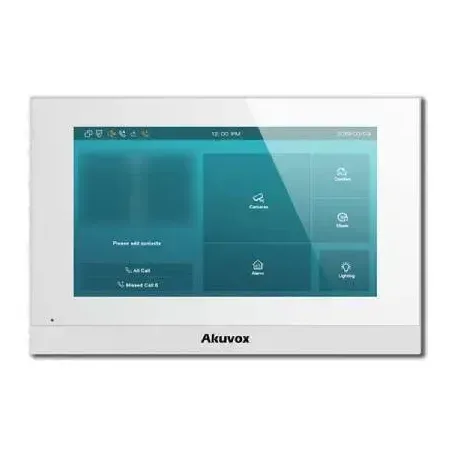
Product photo. A white-framed touchscreen that would hang inside a unit, showing a menu on the left and shortcut tiles on the right. In a condo, whether a monitor like this is an association cost or an owner's choice is settled by the declaration and bylaws.

The six paths compared

PathEntry into unitsUses existing cableVideo to ownersRecurring platform fee
A. Panel onlyNoneYesOnly if the old system had itRarely
B. Two-wire videoUnits getting a monitorYes, if it tests cleanYesUsually none
C. Phone / app callingOnly for optional stationsDoor side onlyOn the phoneOften
D. IP on new cableEvery unit with a stationNoYesDepends on the brand
E. Converter hybridOnly units being upgradedYesPartlyDepends on the brand
F. Full entryDepends on station choiceRarelyYesOften, for cloud access control

"Without entering units": the straight answer

Owners ask this more than anything else, and the answer has two halves. Paths A and C can usually be completed with no visit to any unit, because all the work is at the doors and the equipment room. Every other path needs access to each unit that receives new equipment, and a repair to a riser or a branch line may need access to several units on the same line even if only one is complaining. What a board can promise owners is a short, scheduled visit inside a published window, not zero visits. We confirm which units need access, and roughly how long each visit takes, after the survey.

How the building itself changes the path

New-construction high-rise condos were often built with an IP or cloud system already, and the problem is less the wiring than an outdated platform, an expired license or a sponsor who kept the administrator login. Converted loft and warehouse condos tend to have exposed or accessible ceilings in corridors, which makes new cable far easier than in plaster walls. Prewar buildings converted to condominium usually carry the oldest intercom cable in the hardest walls, so Paths A, C and E come first in the conversation. Small brownstone and townhouse condos of three to ten units sometimes need nothing more than a quality video door station that calls each owner's phone. Mixed-use condos with a commercial unit at street level need the residential entrance separated cleanly from the store's door and hours. Garden-style condos and HOA communities with gates add vehicle entry and long cable runs between buildings, which pushes toward cellular or networked call boxes. Our page on the apartment intercom system in NYC covers the rental side of the same building stock.

Small NYC condo intercom replacement: one-button video door station with a black camera section, contactless symbol and brushed silver call plate
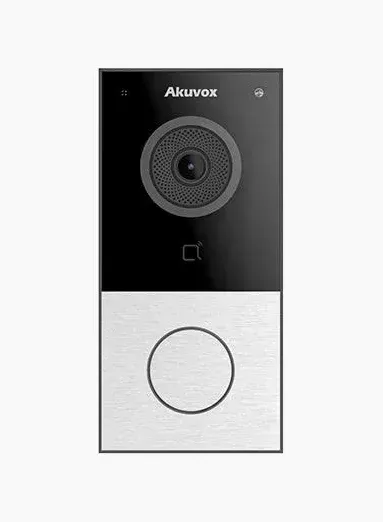
Product photo. One large call button under a camera and a contactless reader mark. On a three- or four-unit condo, a station like this can ring a short list of owners in turn or route to each owner's phone, with no directory screen needed.

Choosing between brands without the brochure

The paths above are brand-neutral on purpose. We install systems from Aiphone, Comelit, ButterflyMX, Akuvox, 2N, DoorBird and Swiftlane, among others, and when we propose a new system our default is our own unbranded line unless the board asks for a specific maker. The useful questions are the same for every brand: does it work on the cable this building has, what does it cost every year after the first, who controls the administrator account, how do owners add and remove phones, and what happens to the system if the company stops supporting it. Our side-by-side pages, Akuvox vs ButterflyMX and DoorBird vs 2N, walk through those trade-offs for two common pairings, and our ButterflyMX installation page for NYC covers that platform on its own.

Cost Drivers

What Drives the Cost of Condo Intercom Replacement

There is no honest per-unit price for replacing a condo intercom, and a board should be wary of anyone who quotes one over the phone. What exists are published ranges for components and for small buildings, and a set of factors that move a specific building up or down within and beyond them. Here are the numbers this site already publishes and the factors that decide where a building lands.

The published ranges, and where they come from

ItemPublished rangeSource page
Service call: diagnosis and simple repairs$250, applied to the job if more work is neededIntercom pricing
Apartment (in-unit) station$250–$525Door buzzer repair pricing
Door release relay or button$250–$475Door buzzer repair pricing
24V transformer$325–$650Door buzzer repair pricing
Electric strike replaced, door aligned$450–$950Door buzzer repair pricing
Lobby panel work$650–$1,800Door buzzer repair pricing
Riser repair inside occupied walls$850–$2,400Door buzzer repair pricing
Building-wide system, 5–30 units$1,200–$5,000+Intercom installation NYC
Floor-by-floor elevator access control$1,500–$6,000+Intercom installation NYC
New system we supply and installFree on-site assessment, then a written quoteIntercom pricing

Buildings larger than thirty units, multi-building associations and projects that combine the intercom with access control or cameras are quoted in writing after the survey. That is not evasion; it is that the unknowns in a larger building (cable condition, number of doors, network needs, phasing) swamp any average.

Driver 1: the number of doors, not only the number of units

Every entrance that needs a calling panel adds a panel, a lock or release, a power supply and a cable back to the head end. A condo with a main lobby, a side door to the courtyard, a garage, a package room and a service entrance has five openings to think about, even if only two need full panels. Boards that count only units tend to be surprised by bids, while boards that list every door get bids that line up.

Driver 2: whether the old cable can be reused

This is the single biggest swing factor. Clean, accessible cable keeps a project in panel-and-station territory. Cable that fails testing, or that a new system cannot use, means either pulling new wire through finished walls or choosing a path that avoids unit wiring altogether. Prewar walls of plaster on metal lath are slow and expensive to fish; corridors with drop ceilings are quick. The survey should report cable condition line by line, not as a single "good" or "bad."

Driver 3: in-unit stations versus phone calling

If every unit gets a new video monitor, the station hardware and the labor to mount, wire and program each one becomes a large share of the total, multiplied by the unit count. If owners answer on their phones and only some want a wall station, that share shrinks sharply, though a recurring software fee may replace part of it. Many associations land in the middle: phone calling for everyone, with an optional station that an owner can request.

Driver 4: locks, releases and the egress code

The intercom is only as good as the lock it releases. A worn electric strike, a door that drags on its frame or a magnetic lock without the required release devices will undo a new panel on day one. Door hardware is priced separately and has to meet the building code requirements described in the compliance section; boards should make sure every bid either includes it or states plainly that it does not.

Driver 5: power, network and backup at the head end

Modern panels may need PoE switches, a network connection, a cellular module or a battery backup so the door still works through a short outage. Where a new 120-volt outlet or circuit is needed, the association's electrician provides it; we connect low-voltage equipment to it. These items are small individually and easy to leave out of a bid, which is why the checklist further down asks for them by name.

Driver 6: subscriptions, licenses and who sets them

Some systems are fully local and carry no monthly charge after installation. Many cloud and app-based platforms charge a recurring fee, per door, per unit or per building, set by the manufacturer and subject to change on the manufacturer's schedule. Neither model is wrong. What matters is that the board compares totals over the same number of years. We name which items carry a recurring fee in every proposal and do not promise "no fees" for any brand without checking the maker's current terms.

Driver 7: directory, programming and training

Loading names or unit codes, enrolling phones, setting door schedules, configuring delivery access and teaching the managing agent and the staff to run the system take real hours, especially in a large building or one with heavy turnover of renters. Bids that bury this in a single line tend to under-deliver it.

Driver 8: phasing, access windows and working hours

Keeping the old system live while the new one goes in, scheduling unit visits line by line, and respecting the building's permitted working hours all add time. They also protect owners from a dead front door, which is the point. A bid that promises a one-day cutover in a large occupied building should be questioned.

Total cost of ownership: the worksheet the treasurer needs

Two bids can carry similar installation prices and very different ten-year costs. A simple worksheet fixes that. For each bid, list the installed price, then every recurring charge (software, cellular data, license renewals, maintenance agreement), multiplied out over the same period the board uses for its reserve planning. Add the expected cost of replacing in-unit stations that owners damage or move, and the cost of a technician visit at the published service-call rate for the few calls a year any system generates. The bid with the lowest first number is not always the one with the lowest last number.

  • Installed price, broken out by door, head end, units and programming.
  • Recurring fees with amount, basis (door, unit, building), frequency and who can raise them.
  • Expected service at the service-call rate, using the building's own repair history as a guide.
  • Station replacements over the period, if the association owns in-unit equipment.
  • End of life: what happens if the platform is discontinued and how portable the hardware is.

Financing is available through Wisetack, subject to approval.

Why the ranges don't scale straight up for large condos

The $1,200–$5,000+ building range is drawn from smaller buildings of five to thirty units. It is tempting to multiply it out for a 150- or 300-unit tower, and the result will be wrong in both directions. Some costs grow with units (stations, programming), some with doors (panels, locks), some barely grow at all (head-end equipment, the administrator setup), and some appear only in large buildings (network closets per floor, multiple entrances on one directory, a concierge station). A tower that goes with phone calling and keeps its cable may cost far less per unit than a twelve-unit walk-up that needs every wire replaced. That is why larger associations get a written scope after the survey rather than an extrapolation.
RFP & Bids

The Condo Board's RFP and Bid Comparison Checklist

Most bid disputes trace back to a request that was vague about the building. One contractor prices new cable to every unit, another prices phone calling with no unit work, a third leaves out the garage door, and the board is left comparing three different projects that happen to share a name. A short, specific request for proposal fixes most of that. It does not need an engineer for a small building; it needs facts the bidders would otherwise guess.

What the request for proposal should tell bidders

  • The building: address, number of residential and commercial units, floors, whether the lobby is staffed and when, and any separate buildings or wings in the association.
  • Every opening: each door, gate or garage entry to be covered, what it does now and what it should do (call, release, fob, code, camera).
  • The current system: make and model if known, photos of the lobby panel, one in-unit station and the equipment in the cellar or closet.
  • Repair history: the failure log described above, with dates and lines.
  • The path the board prefers, or the options it wants priced: for example, "price Path C and Path D separately."
  • In-unit equipment: whether every unit gets a station, none do, or owners may opt in, and who pays for opt-ins.
  • Working rules: permitted hours, freight elevator use, how unit access will be arranged, and the managing agent as the contact.
  • What must be priced separately: door hardware, power and backup, network equipment, recurring fees, programming and training, and removal of the old equipment.
  • Paperwork expectations: license, insurance requirements to be met on award, warranty terms, and the format of the price sheet.
  • The timeline: site-visit dates, question deadline, bid due date and the board meeting where bids will be discussed.

In a condominium, it helps to say in the request which items the board treats as common elements and which, if any, it expects owners to pay for, because the bylaws may draw that line differently from the bidders' assumptions. Bidders do not need to interpret the declaration; they need to know which column each item goes in.

Running the process so the numbers are comparable

Invite enough qualified bidders that one or two declining does not leave the board with a single number. Hold one walk-through, or a few at the same time, so every bidder sees the same closets and hears the same answers. Put every question and answer in writing and send it to all bidders. Ask for prices on the same sheet, in the same order. Set a firm due date. In its guide to bidding basics, CooperatorNews (Feb. 2020) describes this sequence of needs assessment, scope, request and leveled comparison as the standard way buildings run capital projects, and recommends opening sealed bids with at least two people present for transparency. Those are good habits for a board of managers too.

Directory option in a NYC condo intercom replacement RFP: tall dark entry panel with a screen showing a main office tile and a numeric keypad below
Product photo. A tall, dark entry panel with a display above a numeric keypad. A request for proposal should say whether the directory shows names, unit numbers or codes, because that choice affects owner privacy and how the panel is programmed.

The bid comparison checklist

CheckWhat a complete bid showsWarning sign
Scope matches the requestEvery door and option priced as askedDoors missing or options swapped without saying so
Cable assumptionReuse, partial or new cable, stated per lineNo mention of cable at all
Unit accessWhich units, how many visits, how long"No access needed" on a path that needs it
Door hardwareIncluded or excluded, by doorSilent
Power and networkSupplies, PoE, backup, internet or cellular needsAssumes the building provides "a network"
Recurring feesAmount, basis, frequency, who sets them"Low monthly fee" with no number
Administrator controlAccounts in the association's name, handed to the boardContractor keeps the login
Programming and trainingDirectory load, phone enrollment, staff trainingOne unexplained line item
Schedule and phasingOld system kept live until cutoverBuilding without an intercom for days
WarrantyParts, labor and manufacturer terms statedNothing in writing
License and insuranceLicense number given; insurance met on awardNo license number
Electrical workWho provides any new 120 V circuitLow-voltage contractor doing line-voltage work

Questions worth asking every bidder

  • What did your survey find about our cable, line by line, and how did you test it?
  • If the platform's maker raised its fees or stopped supporting the product, what would the association's options be?
  • Who will hold the administrator account on day one, and how is it transferred if the board changes contractors?
  • How will owners who do not use smartphones be served?
  • What do you need from the managing agent during the project, and how often will you report progress?
  • Which parts of this bid are fixed and which depend on conditions found during work?

Insurance and paperwork timing

A board should state its insurance requirements in the request and expect the winning contractor to meet them when the job is awarded. Certificates of insurance naming the association and the managing agent are issued at that point, not attached to every bid. We hold a New York State low-voltage license, #12000287431, and general liability coverage, and we make no claim of manufacturer certification or dealer status with any brand. If a board needs references, our Google reviews are the public record we point to; we keep client buildings out of our marketing.

What a board can reasonably ask a contractor to do before award

A survey, a written proposal and answers to written questions are standard. A live demonstration of the proposed panel, or a visit to see the platform's app on a phone, is reasonable for a large building. Free design work beyond that, such as a full engineered specification, is something boards usually pay an independent consultant to prepare, both for quality and to avoid a bidder writing a scope only it can meet.

Your Questions Answered

Condo Intercom Replacement in NYC: Questions Answered

Ownership and responsibility

Does the association or the unit owner pay for the station inside a condo unit?

That depends on the declaration and bylaws, and the answer is not the same in every building. Many condo documents treat equipment serving a single unit as part of that unit, while others treat the whole intercom system as common equipment. Some boards decide, by resolution or rule, to buy every station as part of the project so the building ends up uniform. Ask counsel to read the documents before the request for proposal goes out, then state the answer in it so bids are priced on the right basis.

Can an owner refuse to let installers into the unit for an intercom replacement?

Condo bylaws commonly give the board a right of access to units for work on common elements, with notice, but the exact wording varies and the board's counsel should confirm it. On the practical side, a phased schedule with clear windows and a reason for the visit settles almost every case. Where one owner still declines, the system can often be commissioned with that unit temporarily on phone calling or on its old station, and the visit made later.

Our sponsor still controls the board. Should the replacement wait for turnover?

There is no rule that says it must, but owner-elected boards often prefer to make capital decisions themselves, and some want an independent review of what the sponsor installed. A practical middle course is to commission a survey and a written assessment of the current system now, keep it in the association's records, and let the first owner-controlled board decide on the scope with that document in hand.

Technical choices

Our system was installed only a few years ago but the maker stopped supporting it. Is it trash?

Not necessarily. The cable and much of the door hardware usually remain useful. What has often lost value is the panel's software, its app or its cloud service. A survey can show whether a different maker's panel and stations will work on the same cable, or whether a converter can bridge the gap, so the association replaces only the parts that stopped being supported.

How do we handle owners who don't use smartphones?

Most phone-calling panels can also dial an ordinary landline or cell number, and owners who want one can keep or receive an in-unit station. Building the plan around both options from the start, rather than treating non-app owners as exceptions, avoids complaints after cutover and is kinder to older residents.

Can visitors at our garage gate and our lobby use the same directory?

Yes, if both panels belong to the same system or the same cloud platform. The garage panel needs its own power and a data path back to the system, which over a long driveway may mean cellular service or a new cable run. Vehicle gates bring their own safety devices, and the gate operator's maker sets how the intercom connects to them.

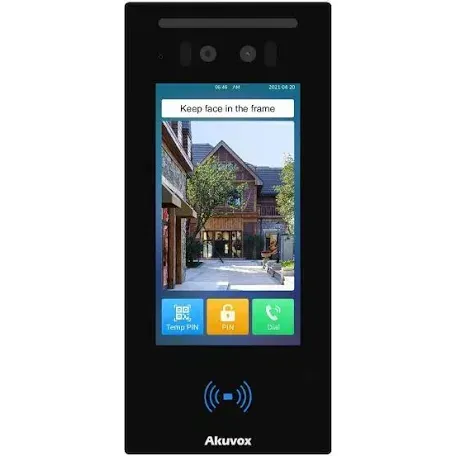
NYC condo intercom replacement with face entry option: black touchscreen entry panel with two cameras above the screen, on-screen buttons and a contactless reader symbol
Product photo. A black touchscreen panel with two lenses above the display, a "keep face in the frame" prompt and on-screen buttons for a PIN or a call. Face-recognition entry is available on panels like this, and a condo board should review the privacy rules with counsel before turning it on.

Is face recognition a good idea for a condo lobby?

It is convenient, and it is the feature that raises the most privacy questions. Owners must enroll, data must be stored somewhere, and in buildings with rented units NYC's smart-access data law may apply. Many boards choose fobs or phone credentials for entry and keep face recognition switched off, revisiting it after counsel reviews the policy it would require.

What happens to the intercom when the building internet goes down?

That depends on the design. Locally managed systems keep calling in-unit stations without the internet. Cloud and phone-calling panels need a data connection to reach phones, so a good design adds a cellular backup or keeps a local path for at least the main door, and a battery backup for short power cuts. Ask each bidder to describe exactly what still works during an outage.

Budget, timing and owners

Do we need an engineer, or can the managing agent run the project?

For a small building with one or two doors, a managing agent with a clear request for proposal and a survey report can run it well. For a large tower, a multi-building association or a project that combines the intercom with access control, cameras and door hardware, many boards hire an independent consultant or owner's representative to write the specification and review the bids.

How long does a condo intercom replacement take once the board approves it?

Equipment is ordered after the agreement is signed and the deposit is paid. Special-order panels can take longer to arrive, and we give the board a date only once the order is confirmed. On site, a small building may need a few days; a large phased project with unit visits runs by line or floor over a longer period. The survey report includes an estimated schedule for the path chosen.

Should the intercom replacement be timed with a lobby renovation?

Usually, yes. A lobby renovation opens walls and ceilings, which is the cheapest moment to pull new cable and set new backboxes at the right heights. If the renovation is more than a year or two away, a board can still keep the current system running with repairs, then install the new system's cabling while the lobby is open and the panels at the end.

How do we tell renters about a new intercom when only owners vote?

Send notices to every occupant, not just to owners of record, and ask owners who rent to forward the instructions and the visit schedule to their tenants. The new directory and app setup must include renters, because they are the ones answering the door. Some boards post the schedule in the lobby and mailroom as well.

Who keeps the directory current after owners sell or renters move?

Decide this before cutover. Typically the managing agent or the resident manager holds the administrator account and updates names, codes and phone enrollments when a unit changes hands. A written routine, tied to the sale or lease paperwork the agent already handles, keeps former occupants from still being able to open the door.

Approval & Notice

Declaration, Bylaws and Owner Notices for an Intercom Replacement

This section explains how approval and notice typically work in New York condominiums and points to the statute. It does not tell any board what its own documents require. Every condominium has a declaration and bylaws, recorded when the building was created, and those documents, read by the association's counsel, are the authority.

Where the authority to replace an intercom comes from

The Condominium Act requires the bylaws to describe the board's powers and duties and the operation of the property, which the statute defines to include maintenance, repair and replacement of the common elements (RPL §339-v; RPL §339-e). Replacing a failing entry system with a comparable one is, in many sets of bylaws, an ordinary board decision. Where the bylaws treat something as an "improvement" or "addition" rather than a replacement, or set a dollar threshold above which owners must vote, a larger or more ambitious project may need owner approval. The bylaws also state the percentage of owners needed for decisions binding on everyone. Counsel should read those clauses against the scope before the board votes.

Common elements versus unit equipment

The entrance panels, the equipment room, the risers in common areas and the locks on common doors are almost always the association's responsibility. In-unit stations and the wiring inside a unit's walls are where documents differ. Some declarations make everything serving only one unit part of that unit; others carve the intercom out as common equipment wherever it sits. The answer affects who pays for stations, who is responsible for a station an owner damages, and whether owners can choose their own. Write the answer into the project plan so it is applied consistently.

HOA communities and multi-building associations

Some townhouse and garden communities are organized as homeowners associations rather than as condominiums under the Act, and their governing documents may be a declaration of covenants and the association's own bylaws. Others have a master association above several condominium boards. In both cases the first step is the same: identify which body owns the gates, doors and equipment being replaced, and which body's approval and budget apply.

Common-element entrance hardware in a NYC condo intercom replacement: narrow dark grey video door station with a domed camera, a speaker grille and a lit call ring
Product photo. A narrow, dark grey door station with a camera lens behind a dome, a slotted speaker grille and a single call button with a light ring. Hardware mounted at a common entrance like this is, in most condominium documents, the association's to repair and replace.

A notice plan owners will actually read

Owners tolerate disruption they were told about. A short sequence of notices from the managing agent does most of the work:

  • Decision notice: what the board approved, why, what it costs the association and whether any owner charge is involved, sent after the vote.
  • Schedule notice: the dates, which lines or floors are visited on which day, the arrival window and how long a visit takes, sent well before work begins.
  • Access confirmation: a reply form or contact for owners to confirm a window or arrange access through the resident manager.
  • Setup instructions: how to download the app or enroll a phone, how the directory will show their unit, and what to do if they do not want an app.
  • Cutover notice: the day the old system stops, the day the new one starts, and who to call with problems.

We supply the schedule by line or floor and draft resident instructions for the managing agent to send; the board and its agent decide the wording and the channel.

Documenting the decision

A board protects itself by keeping a clean record: the failure log, the survey report, the request for proposal, every bid, the leveled comparison, the minutes of the meeting where the board chose, and any conflict-of-interest disclosures. If an owner later questions the choice, that file shows a reasoned process. It also gives the next board the history it needs when the system eventually reaches the end of its own life.

Presenting the options at a board meeting

Keep it to one page per option: what owners will notice, which units need visits, installed price, recurring cost over the planning period, what still works in an outage, and the risks. Put repair-and-wait next to the replacement paths so the board sees the cost of doing nothing as a real option. A live demonstration of a panel calling a phone is often more persuasive than any slide.

Reserve Planning

Budgeting an Intercom Replacement Through the Reserve Fund

An entry system is a predictable capital item. It wears out on a timeline that a reserve study can estimate, it serves every owner, and its failure has consequences for building security. That makes it a natural line in a condo's long-term plan rather than an emergency. This section describes, in neutral terms, how associations typically plan and fund it; it is not financial advice, and it says nothing about what any board can or should charge its owners.

Put the intercom in the reserve study

Reserve studies list each major component, its estimated remaining life and its replacement cost, then schedule contributions so the money exists when the component fails. The Condominium Act allows bylaws to provide for reserves for "major and minor maintenance, repairs, additions, improvements, replacements" (RPL §339-v), and property managers describe reserves as long-term savings for capital projects that keep a building safe, functional and compliant over time (FirstService Residential). For the intercom, a survey report gives the reserve preparer what it needs: the system's age and parts status, the condition of the cable, and a written estimate for the likely replacement path.

Split the components, because they age differently

Panels and in-unit stations, the electronics, typically need replacing long before the cable inside the walls does; the CooperatorNews piece cited earlier puts the life of 1960s–1980s intercom wiring at 25 to 50 years. Recurring software fees are an operating expense, not a reserve item. Splitting the intercom into "electronics," "cable and infrastructure," "door hardware" and "annual platform fees" gives the treasurer a far better picture than a single line called "intercom."

Staging the work across fiscal years

A board that does not want to fund the full project in one year can phase it. A common sequence is head-end equipment and the main lobby panel first, secondary doors and the garage next, then in-unit stations line by line as owners opt in. Each stage is priced separately in the proposal so each can sit in its own budget year, as long as the design ensures the first stage works on its own and the later stages connect to it without redoing anything.

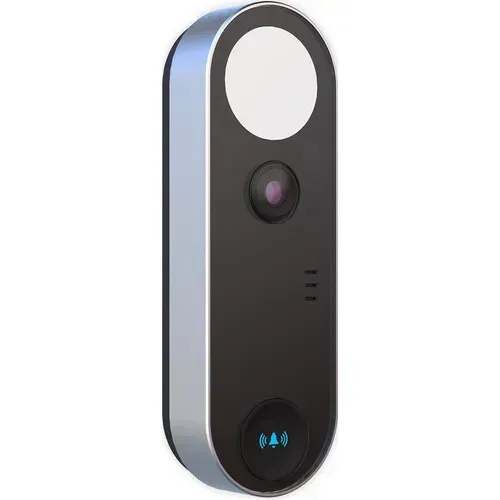
Phased NYC condo intercom replacement hardware: rounded black and silver video entry unit with a light panel at the top, a camera lens and a reader zone at the bottom
Product photo. A rounded black-and-silver video unit with a light panel above the camera and a reader area near the bottom. On a phased plan, a unit like this might go on a secondary door in a later budget year, joining the directory installed with the lobby panel.

How associations typically fund the gap

Where reserves cover the project, the board simply approves the expenditure. Where they do not, associations commonly use a combination of reserves, an assessment approved in the way the bylaws require, and timing. Habitat magazine reported in February 2025 that boards are often empowered by their bylaws to impose assessments by resolution, that condo assessments are typically divided among unit owners in line with their ownership interests, and that some boards spread assessments over several years (Habitat, Feb. 17, 2025). How any of that applies to a given building is for the board's counsel and accountant.

The case for planning ahead rather than waiting

An unplanned failure forces the worst version of the decision: an expensive repair to buy time, at short notice, while the front door misbehaves, followed by a rushed replacement. A planned replacement can be timed for the season and budget year that suit the building, competitively bid and coordinated with other work. It also lets the board fold in the features owners have been asking for, such as calls to phones and remote release for deliveries, rather than replacing like for like in a hurry.

Rules That Apply

Code, Accessibility, Permit and Privacy Points for the Scope

These are the rules we see come up most often on condo intercom work in the city, each with its source. Applicability to a specific building is for the association's architect, engineer or counsel.

Electrically locked doors on the way out

If the project adds or changes a lock on a door people use to leave the building, the NYC Building Code applies. For doors released by a sensor, §1010.1.9.8 calls for a sensor on the egress side, unlocking when power is lost, a manual release mounted 40 to 48 inches above the floor within five feet of the door, marked "PUSH TO EXIT" and holding the door unlocked for at least 30 seconds, unlocking on fire alarm activation where the building has one, and locking hardware listed to UL 294. The section that follows covers magnetic locks released by the door hardware itself. A scope that adds a mag lock to the lobby without these items is missing part of the job. Fire alarm connections stay within our fire alarm scope and the FDNY process.

Heights, reach and residents with disabilities

HPD's intercom rule caps push buttons at six feet and puts the speaking device between four and five feet (28 RCNY §25-151). For a wheelchair user, the 2010 ADA Standards set an unobstructed forward reach range of 15 to 48 inches (U.S. Access Board, §308.2.1). Whether the ADA reaches a given residential entrance is a legal question, but many boards simply mount the operable parts of the new panel within that range. Large-text directories, hands-free answering in units, visual call indicators and phone calling help older residents and owners with hearing or mobility limits.

Permits and licensing

NYC Administrative Code §28-105.4.7 exempts from electrical permits wiring that operates below 50 volts for signaling, communication, alarm and data circuits when done by a licensed master or special electrician or a qualified person as the electrical code defines, with exceptions including life safety systems and circuits that switch light, heat or power. Intercoms are low voltage. Abstract Enterprises Security Systems holds New York State low-voltage license #12000287431; we do not do electrical work, so any new 120-volt outlet or circuit for a power supply comes from the association's electrician. Landmarked facades and lobby alterations may need separate approvals that the board's architect manages.

Privacy: video, logs and who can see them

Video panels can save snapshots of callers, cloud platforms keep call and entry logs, and keyless entry systems store credentials. For buildings and tenants it covers, HPD's summary of Local Law 63 of 2021 says owners using smart access must provide a data retention and privacy policy, obtain express consent, collect only the listed minimum data, destroy authentication data within 90 days unless anonymized, and not require smart access to enter the tenant's own unit (HPD). Whatever the law requires of a particular condo, a board should write down who holds the administrator login, who may view footage and logs, how long they are kept and how owners and renters are told.

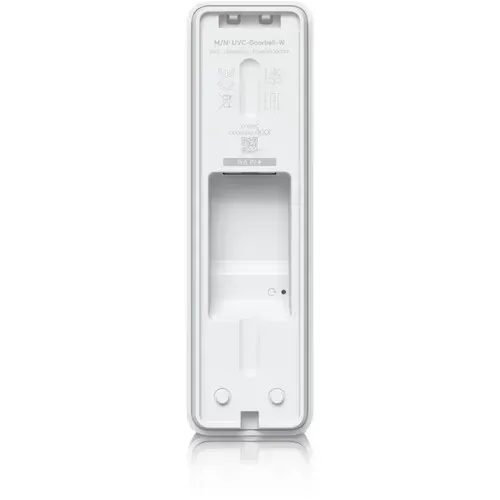
Mounting detail for a NYC condo intercom replacement: white plastic back plate of a slim door station showing the mounting slots, cable opening and screw points
Product photo. The back of a slim door station's mounting plate, with screw points and an opening for the cable. Mounting height, backbox depth and weather sealing are set at this stage, which is why boards should ask how each bidder plans to mount panels on stone, brick or glass entrances.

Want the Building's Own Numbers Before the Board Votes?

We walk every door and closet, test the cable line by line and send repair and replacement options in writing, each with its installed price, unit visits and any recurring fee, ready for the board packet.

AI Overview Reality Check

What AI Answers Get Wrong About Condo Intercom Replacement

Board members increasingly start with a chatbot or a search summary. Those answers are fine for vocabulary and weak on the parts that cost money. These are the claims we hear repeated most often in condo board meetings, with what we actually find in buildings.

Claim 1: "The association always pays for everything, including the units"

Summaries often blur condominiums and rentals. In a rental building the owner of the building owns every station. In a condominium, each owner owns a unit in fee simple, and the declaration decides whether the station on that unit's wall is association equipment or the owner's.

The statute gives a default list of common elements that includes entrances and apparatus for common use (RPL §339-e), but it starts with "unless otherwise provided in the declaration." That qualifier is the whole question for in-unit equipment.

The practical fix is to have counsel answer it once, write it into the request for proposal, and price stations as a separate column so the board can apply whatever the documents say.

Claim 2: "Expect to pay a fixed amount per unit"

Cost websites like to divide a national total by a unit count. The result ignores the two factors that dominate a New York condo: the number of doors and the state of the cable.

A tower that keeps its cable and moves to phone calling can come in far below a small walk-up condo whose wiring has to be replaced through plaster. The site's real figures are component ranges and a range for five-to-thirty-unit buildings, listed in the cost section above, and anything larger is quoted after a survey.

If a per-unit number appears in a board packet, ask where it came from and what it assumes about the cable.

Claim 3: "Replacing the intercom means rewiring the building"

Sometimes it does. Often it does not. Two-wire video, converter modules and phone-calling panels all exist precisely so that buildings can modernize without fishing new cable into every unit.

CooperatorNews quoted an industry specialist saying the initial recommendation for older buildings is generally to retain the existing infrastructure other than the panel (CooperatorNews, Nov. 2025). That matches what we find when the cable tests clean.

When it does not test clean, rewiring or a path that avoids unit wiring becomes the choice, and the survey shows which.

Claim 4: "Cloud intercoms have no ongoing costs"

Many cloud and app-based platforms charge a recurring software or service fee, set by the manufacturer, on top of the installed price. Some charge per door, some per unit, some per building, and the terms can change.

Locally managed systems may carry no subscription at all, while needing more in-unit hardware. Neither is automatically cheaper; the ten-year total is what matters.

A proposal should show every recurring charge, its basis and who sets it. Ours do, and we check the maker's current terms instead of repeating a "no monthly fees" line.

Claim 5: "Every owner has to vote on a new intercom"

Not usually for a like-for-like replacement. The Condominium Act leaves the board's powers and the voting thresholds to the bylaws (RPL §339-v), and many bylaws let the board replace failing common equipment on its own.

Owner votes tend to come into play when a project is treated as an improvement above a set threshold or requires an assessment that the bylaws send to the owners.

The answer lives in your documents. Counsel can read them in an afternoon, which is cheaper than calling a meeting no one needed or skipping one that was required.

Claim 6: "A virtual doorman can replace the intercom"

A remote attendant service still needs hardware at the door: a panel with a good camera and microphone, a lock it can release and often a lobby camera. It sits on top of an intercom; it does not remove the need for one.

We install and connect that hardware so it can work with a provider the association hires, but we do not operate a virtual doorman or any managed service, and we do not sell service level agreements.

If the board may add a remote service later, say so in the request for proposal so the panel chosen can route calls to an outside service.

Claim 7: "Any handy owner or super can swap the panel"

Online guides make a lobby panel look like a doorbell. In a multi-unit building, a wiring mistake at the head end can take every unit offline, and a door release wired wrong can leave the entrance unlocked or locked when it should not be.

Door locks on egress doors also have code requirements that a quick swap ignores (NYC Building Code §1010.1.9.8), and the association's insurer will care who did the work.

This is licensed low-voltage work. We do it with the old system kept live until the new one has been tested from both sides of every door.

Get In Touch

Request a Condo Intercom Survey and Written Options

Tell us the borough, how many units and doors the building has, what is on the wall now and what the board is deciding. If there is already a request for proposal, mention it and we will reply with how to send it. A photo of the lobby panel, one in-unit station and the equipment in the closet or cellar helps us prepare. Prefer to talk? Call (800) 486-0943.

✅

Request Sent!

Got it. Expect a call or text from us to book the survey, usually within 2 hours.

How It Works

How a Condo Intercom Replacement Runs, Request to Handover

1. First contact

The managing agent, a board member or an owner calls, texts or sends the form. We book within 2 hours of the request, seven days a week, with visits early in the day; slots are first come, first served once the visit is confirmed.

2. Diagnosis or survey

A failing system gets the $250 service call. A replacement gets a free on-site assessment: every door, the equipment room, the risers and a sample of units on each line, with the cable tested and model plates recorded.

3. Written options

Repair and replacement paths side by side, each with installed price, unit visits, recurring fees and what works in an outage, addressed to the board of managers and formatted for its packet.

4. Board approval and deposit

The board approves in the way its bylaws require. The agreement is signed, the deposit is paid, then equipment is ordered; the insurance certificate naming the association and agent is issued on award.

5. Owner and occupant notices

We give the managing agent dates, a line-by-line visit schedule and draft setup instructions for owners and renters, so the notice goes out before the first visit.

6. Phased installation

Head end first, then doors and units by line, with the old system kept working. Each door is changed so the building always has a working way in, within its permitted hours.

7. Commissioning and handover

Every door tested from both sides, every enrolled phone called, the directory checked unit by unit, and administrator accounts handed to the association in writing, with training for the agent and staff.

Full terms — including 50% deposit, one-year parts-only warranty on Abstract Enterprises Security Systems-supplied products, and the late-fee schedule — are set out in the service agreement.

After Cutover

Directory Migration, Training, Warranty and Upkeep

Moving the resident directory without losing anyone

The directory is where cutovers go wrong. Before the new system goes live, the managing agent provides a current list of units and the names or codes to display, plus contact numbers or emails for owners and residents who will use phone calling. We load it, then check it unit by unit against the panel. Boards that want privacy can display unit numbers or codes instead of surnames; many newer condos do. Credentials from the old system, such as fobs or entry codes, usually cannot be carried across directly, so a re-enrollment day in the lobby, announced in the schedule notice, saves the front desk a month of questions.

Training the people who run it

Each group needs something different. The managing agent needs the administrator account: adding and removing residents, issuing temporary codes, reading logs. The resident manager or super needs the daily tasks: rebooting a panel, checking a door release, helping an owner re-enroll a phone. Board members need enough to answer neighbors. Owners and renters need a one-page guide and, for app systems, a short walk-through. We cover the first three on site at handover and leave written instructions for the fourth.

Warranty

Equipment we supply is covered by the one-year parts-only warranty described in the service agreement, and each manufacturer's own warranty applies to its products under its terms. Longer coverage is available at purchase. Our help over the phone with the system we installed is free. When comparing bids, put each bidder's warranty terms side by side and treat silence as no warranty beyond the manufacturer's.

Maintenance and service after the project

Whether to sign a yearly maintenance contract is a budgeting preference more than a technical one. We sell neither guaranteed-response agreements nor monitoring. Associations book us the way any client does: we schedule within 2 hours of the request, any day of the week, in paid order, and repairs begin at the $250 service call. When another firm offers a contract, set its annual price against the handful of visits your failure log suggests, and check what it leaves out, such as vandalism or in-unit stations.

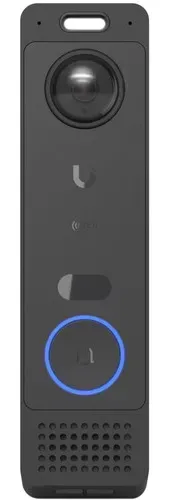
NYC condo intercom replacement for a secondary door: tall black video door station with a wide camera at the top, an indicator light, a reader area and a blue lit call ring
Product photo. A tall black door station with a wide camera lens at the top, a reader area in the middle and a blue-lit call ring above the speaker. A slim unit like this fits a narrow door frame at a package room, a bike room or a rear entrance.

Tying the intercom to cameras, access control and packages

Many new panels can show their camera on a recorder, release a door controlled by an access system and grant one-time codes to couriers. Integration is easiest when it is designed into the original scope rather than added later. If the association already has cameras or an access system, list the make and model in the request for proposal so bidders can confirm compatibility. Floor-restricted elevator access is a separate system coordinated with the elevator company; our page on elevator access control installation in NYC explains how that works. Buzzer-only buildings and door releases are covered on our door buzzer repair page for NYC.

Notes from the survey side

A few things we see repeatedly when we survey condo buildings. Sponsor-installed cloud systems where nobody on the current board knows who holds the administrator account; recovering it is the first job. Power supplies mounted in cellar closets that flood, on top of cable splices wrapped in tape. Lobby panels mounted at a height that suited the architect's drawings rather than residents in wheelchairs. Garage panels added years after the lobby, on a different system, with a second app. And directories where a third of the names belong to people who sold years ago. None of these is exotic, and each is cheaper to fix inside a planned replacement than one service call at a time.

Complete Services

Every Service Behind a Condo Intercom Replacement

Intercom installation in NYC

New audio, video, phone-calling and IP entry systems for multi-unit buildings.

Intercom pricing

The service call and new-system assessment terms used throughout this guide.

Buzzer and component pricing

Published ranges for stations, releases, transformers, strikes, panels and risers.

Apartment building cameras

Vestibule, mailroom and corridor coverage for multifamily buildings.

Co-op security systems in NYC

For mixed portfolios: the same systems seen from a cooperative board’s side.

Warranty terms

What is included with a system and what longer coverage adds.

FAQ

Condo Intercom Replacement FAQ

Is this condo intercom guide legal or financial advice?
+

No. Think of it as a field guide written by an installer, with citations so your own advisers can check them. Approval, ownership of in-unit equipment and anything charged to owners all come from your declaration and bylaws, so the association's attorney and accountant have the final word on those points.

Is the on-site assessment free when the board wants a replacement proposal?
+

There is no charge to walk the building and prepare replacement options when the result is a new system we would supply and install. Troubleshooting or fixing what is on the wall today is different: that begins with the $250 service call, credited toward the repair if the job turns out bigger.

Can you quote a building where owners supply their own in-unit stations?
+

Yes. Equipment supplied by the association or by owners is quoted as labor only, by phone or text, and booked with the deposit. We don't do site walk-throughs for customer-supplied equipment, and compatibility and performance of that equipment stay with whoever supplied it.

Will you respond to an RFP written by our managing agent or consultant?
+

Gladly. We walk the building with the document in hand, fill in the agent's price sheet line for line, and add a short page of assumptions, for example a riser we could not reach or a gate the request left out, so nothing in our number is hidden.

Do you hold manufacturer certifications for the intercom brands you install?
+

We don't present ourselves as certified by, or a dealer or partner of, any intercom maker. Our credentials are a New York State low-voltage contractor license, #12000287431, and general liability insurance; when we win a job, the association and its managing agent are added to a certificate at that point.

Can you share contact details for other condo boards you have worked with?
+

We keep client buildings and contacts private, the same way we will keep yours. Boards can read what customers have written publicly on Google, where we hold 4.7 stars across 201 reviews.

Do you handle the electrical work for a new intercom power supply?
+

No. Our license covers low-voltage work, so panels, stations, releases, cable and programming are ours, and any new 120-volt outlet or circuit comes from the association's electrician. We coordinate the location with them during the survey.

What happens to our current intercom service contract when we replace the system?
+

Read its cancellation clause early, because some agreements renew automatically or require months of notice. Once the managing agent knows the end date, we schedule the switchover around it so there is never a gap in who answers for the front door.

Can a single proposal cover several buildings in one condo association?
+

Yes. We survey each building or entrance and present them together with separate prices, so a master association or a multi-building board can approve them together or in stages, and the managing agent ends up with one administrator login.

When is the best time of year to schedule a condo intercom replacement?
+

Start the diagnosis and survey in spring or early summer if the goal is a working system before winter. That leaves time for bids, approval, equipment orders after the deposit and owner notices before cold weather makes a propped or failed door a bigger problem.

Do special-order intercom panels change the schedule?
+

They can. Some panels are ordered from overseas or built to order and are not stocked. They are ordered only after the deposit, shipping time is outside our control, and we give the board an installation date once the equipment's arrival is confirmed.

Areas & Related Guides

Condo Security Pages by Area, and Related Intercom Guides

This guide covers the intercom decision for condominiums anywhere we work. Each area page below looks at the rest of a condo's security, from fobs and package rooms to garage gates and cameras, for the buildings in that market. Across the city: condo security systems in NYC, with borough pages for Manhattan condo towers and conversions, Brooklyn condo buildings, Queens condominiums, Bronx condo associations and Staten Island condo communities.

East of the city, start with condo security on Long Island, then the county pages for Nassau County condos and Suffolk County condo and HOA communities. North of it, the Hudson Valley condo security page leads to Westchester County, Rockland County, Orange County, Putnam County and Dutchess County.

Boards that also sit on, or manage for, a cooperative will find the shareholder side of the same decision in our co-op board intercom upgrade guide, which deals with proprietary leases and shareholder notices rather than declarations and unit owners. Brand-specific pages for Comelit, Aiphone, Akuvox, 2N, DoorBird and Swiftlane systems in New York City are being added to the site.