Condo entrance panel dead, fobs from last year's renters still opening the gym, or a sponsor system nobody has the password to? Book a building survey anywhere in the five boroughs: (800) 486-0943
Condo security systems in NYC begin with a $250 service call for any repair, which pays for the diagnosis and the simple fixes and is credited to the bill when the work turns out to be bigger, and building-wide systems for a condominium are priced in a written proposal after a free on-site assessment. Boards of managers, HOAs and managing agents in Manhattan, Brooklyn, Queens, the Bronx and Staten Island can have the visit booked within 2 hours of asking.
Short version for the board: In a New York City condominium the lobby, the entrances, the elevators, the gym and the garage are usually common elements, so the intercom, the readers and the cameras that guard them are the board's to run. Start with the intercom and the fob list; that is where condo owners complain first. Any repair opens with the $250 service call. A new multi-unit intercom for a 5–30 unit building runs $1,200–$5,000+ on our intercom installation page, and moving a 30-unit building off copyable fobs to encrypted credentials typically runs $3,000–$8,000 installed. Larger condos get a written scope after the survey. Financing is available through Wisetack, subject to approval.
Last updated November 26, 2026 by Abstract Enterprises Security Systems, NYS license #12000287431 · Sources: NY Real Property Law Article 9-B (Condominium Act) §§339-e and 339-v; NYC Comptroller, Spotlight: New York City's Homeowner Housing Market (March 12, 2024, NYCHVS 2023); NYS Multiple Dwelling Law §§3 and 50-a; NYC Local Law 63 of 2021 and HPD's Tenant Data Privacy Law page; NYC Building Code §§1010.1.9.8–1010.1.9.9; NYC Admin. Code §28-105.4.7; CooperatorNews, Aug. 3, 2016
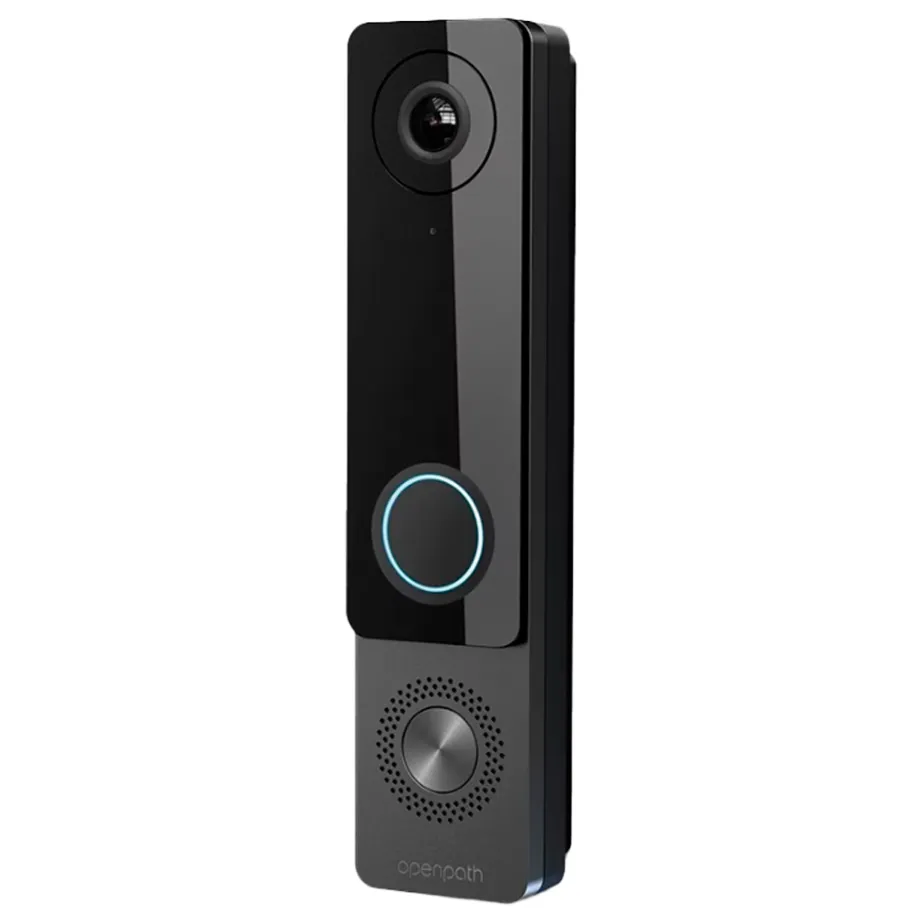
A slim black entrance station: wide-angle camera on top, a small credential zone in the middle and a blue-lit call button over the speaker. One narrow unit like this can handle the visitor call, the owner's fob tap and the video record at a condo side door.
NYC Condo Security Request
Tell us the building, the borough and what the board wants done
✅
Request Sent!
Thanks. We will reach out to book the visit, usually within 2 hours of your request.
25+
Years Experience
2 Hr
Booking
100%
Licensed & Insured
4.7★
201 Google Reviews
Owner-operated since 2002 · Thousands of jobs completed · Visits booked within 2 hours, seven days a week
The Neighborhood
Why New York City Condominiums Need a Security Plan Written for Owners
Condominium living is no longer a niche in this city. The NYC Comptroller's March 2024 housing spotlight, built on the 2023 Housing and Vacancy Survey, counts 318,000 occupied apartments in condominiums, and puts co-ops and condos together at 22 percent of the city's occupied housing. That is a lot of front doors governed by a board of managers rather than a landlord, and a lot of buildings where the people paying for the intercom are the same people who vote on it.
A condo is owned differently from every other kind of building, and condominium security has to be planned that way. Each owner holds a deed to a unit. Everything outside the units is shared. New York's Condominium Act spells out what that shared part usually includes: the act's definition of common elements lists the "halls, corridors, lobbies, stairs, stairways, fire escapes, and entrances and exits of the building," the "basements, cellars, yards, gardens, recreational or community facilities, parking areas and storage spaces," and "all apparatus and installations existing for common use" (Real Property Law §339-e). Read that list next to a security plan and it describes almost every place a camera, reader or entrance panel goes. Unless the building's declaration says otherwise, those spaces belong to all the owners together, and the board runs them on everyone's behalf.
The owners themselves are a more varied group than most people expect. The same Comptroller analysis found that 18 percent of condo units citywide are owned by LLCs, rising to 21 percent in Manhattan. Many condo apartments are rented out by their owners, some sit empty for part of the year, and some change hands often. For the front door that means a constantly moving list of people who need a fob, an intercom listing or an app login, and a list of people who should no longer have one. In our experience the single most common weakness in a New York condo is not a broken camera. It is a credential database nobody has cleaned since the building opened.
The condominium form also explains why condo boards hire differently. A condo board of managers is elected by the unit owners under bylaws that the Condominium Act requires to cover the board's powers and duties, whether it may hire a managing agent, how meetings of unit owners are called, and the method of adopting rules for the use of the common elements (§339-v). So a security upgrade is rarely one person's decision. The board weighs it, the managing agent collects bids and paperwork, the treasurer looks at the common charges and the reserves, and the owners hear about it in a notice and at the annual meeting. A contractor who can only talk about camera megapixels is answering the wrong question.
Facts that frame condo building security in New York City
318,000 occupied condo apartments in the city, alongside 450,000 in co-ops; together 22% of occupied housing (NYC Comptroller, March 12, 2024, from NYCHVS 2023).
18% of condo units are owned by LLCs citywide and 21% in Manhattan (same report, from Department of Finance tax records), one reason owner and occupant lists drift apart.
Common elements by default include lobbies, corridors, entrances, cellars, recreational facilities, parking areas, storage spaces and installations for common use, unless the declaration provides otherwise (RPL §339-e(3)).
Bylaws must set out the board's powers, whether it may hire a managing agent, how unit owners' meetings work, and how rules for the common elements are adopted; they may also govern reserves for repairs, replacements and improvements (RPL §339-v).
The intercom mandate: state law makes a working two-way voice intercom, with a release button in each apartment and a self-locking street door, standard equipment for post-1967 class A multiple dwellings of eight or more apartments in New York City; older buildings owe one when most tenants ask in writing (Multiple Dwelling Law §§3, 50-a).
Fob and app data has rules: Local Law 63 of 2021, the Tenant Data Privacy Law, makes buildings using keyless entry publish a privacy policy, collect consent, and purge authentication records after 90 days unless they are anonymized (HPD summary).
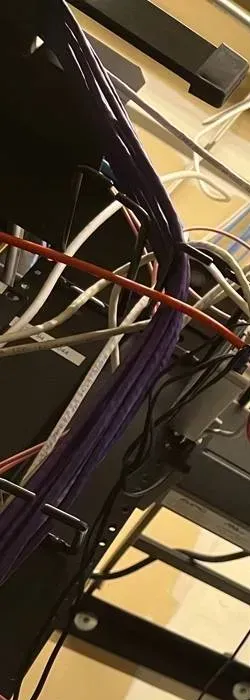
Patch cables running down the side of an equipment rack. In a newer condo this rack is where the intercom server, the access controller and the camera switch usually meet, and whoever holds its logins effectively holds the building's front door.
Who does what in a condo security project
The board of managers decides what the common elements get and approves the spending. A condo board wants two or three clearly different options, a cost for each that will survive the bidding process, and the ongoing costs spelled out, because those land in the common charges every owner pays. Board members are volunteers; they want to explain the choice to their neighbors without having to become intercom experts.
The managing agent turns the vote into a contract: vendor paperwork, the certificate of insurance once the job is awarded, the work schedule, the owner notices and the coordination with the resident manager or super. For a managing agent running a portfolio of condominiums, the value is one contractor who handles the door entry, the fobs and the cameras the same way in every building.
Unit owners want the panel to show their name, the call to reach their phone or their monitor, the gym door to open for them and not for the people who moved out, and their visitors and deliveries handled without fuss. Owners who rent out their units also want a simple way to get their tenants credentials and take them back at lease end.
Residents who rent from owners use the system every day but have no vote. They are the people most likely to be missing from the directory and the most likely to hold an old fob after they leave, so the credential process has to include them.
The resident manager or super keeps it all running. If the super can add a renter to the directory, disable a lost fob or pull an hour of video for the managing agent without calling anyone, the board saves money every month.
What We Install
Condo Security Services in NYC, One System at a Time
One company handles the whole chain here, from the survey and the design through supply, installation, programming, repairs and upkeep: that is how Abstract Enterprises Security Systems approaches a condominium. Every system below opens with the question a condo board actually asks about it, then sends you to the service page that covers it citywide in depth. We put entry and credentials at the top on purpose; condo boards search for them more than anything else, and they generate most of the complaints a managing agent fields.
Condo intercom systems: repair, replacement and modernization
The condo intercom system is the one piece of building technology every owner, renter, guest and courier touches. Our condo intercom work covers the entrance panel and any secondary door stations, the door release and its power supply, the wiring up the building, the in-unit monitors or handsets, the smartphone app if there is one, and the resident directory that ties them together. We service audio intercoms, video intercoms, telephone-entry systems that dial owners' phones, and IP intercoms that run over the building network, including systems another company installed.
When a condo board talks about condo intercom replacement, the real question is how far to go. A modernization can keep the existing two-wire or multi-wire cable and change only the entrance panel and the in-unit stations; it can move an audio building to video intercom; it can go fully IP over new network cable; or it can replace in-unit hardware with a smartphone system so most apartments need no new wiring. Each condo intercom upgrade path changes the price, the amount of work inside units, the monthly cost and how long the system will last. A condominium intercom replacement proposal from us puts those paths side by side, with what each does for visitor calls, deliveries, the directory and remote door release, so the board can compare them against other bids and against its reserve budget. Condo boards preparing an intercom RFP will find the scope checklist, bid comparison steps and owner-notice timeline in our condo intercom replacement guide, which is being prepared now.
When the system has just stopped, we begin with a $250 service call and find the fault: a blank panel, silence on certain floors, a release that clicks but never frees the door, calls landing in the wrong unit, or an app that went quiet after a phone update. Our intercom repair NYC page describes fault-tracing in lived-in buildings; for a full replacement, the intercom installation in New York City page covers equipment and installation.
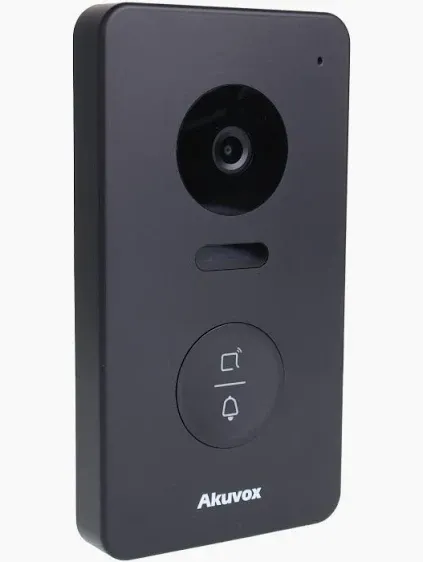
A dark surface-mount video door station with the camera at the top and two buttons below, one marked for a credential and one for the bell. A unit like this suits a condo garage door, a rear service entrance or a boutique building with a short directory.
Condo access control and key fobs
Condo access control swaps metal keys on the lobby, side, garage, package room, gym, pool, roof and storage doors for credentials the building can manage: key fobs, cards, PIN codes or mobile credentials. For a condominium the payoff is control over a population that changes all the time. When an owner sells, a renter's lease ends, a dog walker stops coming or a contractor finishes a renovation, the managing agent turns off that credential in a minute instead of rekeying a door. Logs show which credential opened which door and when, which settles a lot of arguments about the package room and the gym.
Many condo buildings opened ten or fifteen years ago with 125 kHz proximity fobs. Our access control installation NYC page explains why that matters: those fobs broadcast a fixed number that inexpensive handheld devices can read and copy. Moving a building to encrypted smart cards or mobile credentials replaces the readers and reissues credentials to every resident; for a 30-unit building that page puts the typical cost at $3,000–$8,000 installed. For condos we pair every access control job with a written credential policy (how many fobs per unit, what renters get, what happens at closing or lease end) and a privacy policy that fits the city's Tenant Data Privacy Law, covered further down this page.
Condo elevator access control
In a high-rise or luxury condo the elevator is a second lobby. Condo elevator access control limits each credential to the floors its holder belongs on, opens the amenity floor during posted hours, gives a penthouse or a private-landing unit its own protected stop, and lets a delivery or moving credential reach only one floor for one day. The reader connects to the car's control system, so the work is coordinated with the building's elevator contractor and must leave firefighter and fire service operation intact. Our elevator access control installation in NYC page explains floor restriction, the elevator company's role and what the system does during a fire alarm.
Door buzzers in boutique and walk-up condos
Not every condominium is a glass tower. Small conversion condos, brownstone condos and walk-ups with a handful of units often still run a simple condo door buzzer: a button in each unit, a strike on the street door and a transformer in the cellar. When the buzzer goes silent, the door buzzes but stays locked, or one unit stops working, the cause is usually the transformer, the strike, a relay, a corroded splice or a single unit station. Our door buzzer repair in NYC page walks through how we diagnose those faults. A buzzer that keeps failing is often the natural moment for a small condo association to move to a video entry panel with app calling.
Condo security cameras, briefly
On a condo, cameras belong where the association answers for what happens: front and garage doors, the lobby, mail and parcel areas, cars and stairs, the pool deck and gym, trash and storage rooms. Hanging the camera is the easy part. The board has to settle who watches, who may pull a clip for an owner or a detective, how long footage lives, and which views stay clear of unit entries and private terraces. Condo-specific placement and pricing will sit on our condo security camera installation in NYC page, now being written, and our apartment building security cameras in NYC page covers camera systems for multi-unit buildings generally.
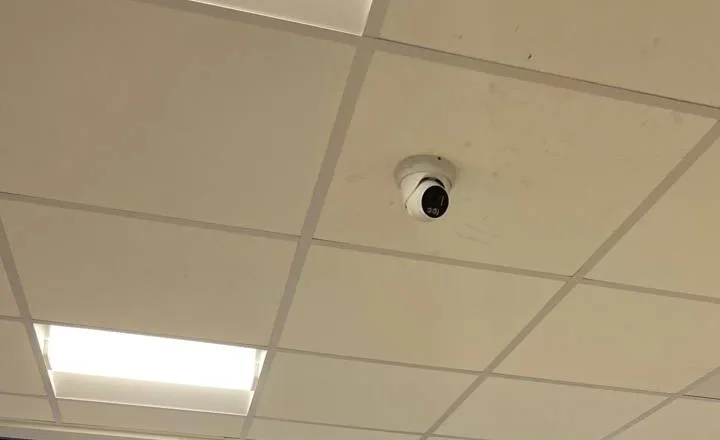
A small white turret camera on a ceiling tile between two light panels. Mounted flush in the grid like this, a camera covers a corridor or amenity room without drawing the eye, which matters in buildings where owners paid for the finishes.
Amenity spaces: gyms, pools, roof decks, storage and garages
Amenities are where condo security gets personal. Owners pay for the gym and the roof deck through their common charges and expect them to be for residents only; the board needs to know who was in the pool area when the furniture went missing. We install readers on each amenity door with schedules the board sets (the gym open early to late, the roof deck closed overnight, the children's playroom limited to daytime), cameras covering entrances and equipment, and intercom stations at gates or pool entries where guests need to call up. For storage cages and bike rooms, a reader with a log is often enough. For a garage, the gate or overhead door gets a reader or long-range tag reader, a camera on the ramp and an intercom station for visitors and service vehicles.
Package rooms, lockers and deliveries
Deliveries are the daily stress test of any condo building security plan. A workable setup usually combines a few pieces: a delivery code or one-time credential at the entrance so couriers reach the vestibule or package room without someone buzzing in strangers, a reader on the package room so only residents and staff enter, and a camera on the shelves and the door. Where the board has chosen smart package lockers, we handle the integration side: the door entry, power and network connection, and the camera coverage, while the locker company supplies and supports the lockers themselves. The goal is the same whether the building has a full-time concierge, a part-time porter or nobody at the desk.
Guest, renter and short-term access
Condos with many investor-owned units ask us how to handle guests and short stays. What we provide is the technical side: temporary credentials that expire on a set date, PIN codes limited to certain doors and hours, app invitations an owner can send and revoke, and logs that show when a guest credential was used. Whether a particular building's bylaws or New York's short-term rental rules allow a given arrangement is a question for the board and its counsel, not for us; we configure the system to match the policy the board adopts.
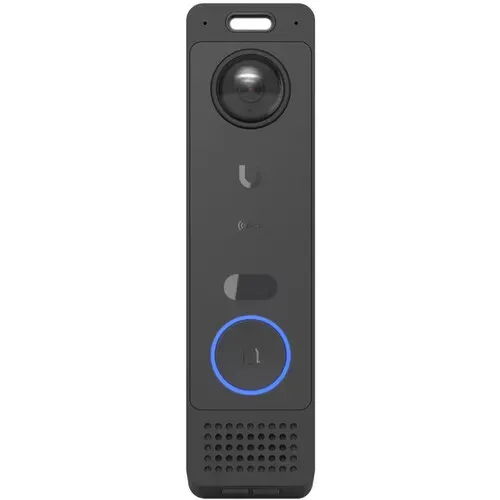
A narrow black video door station with a camera on top, a blue-ringed call button in the middle and a round speaker at the bottom. Narrow units like this fit the slim mullions on many new-construction condo entrances where a wide panel will not.
Alarms for staff rooms, storage and commercial units
Inside the units, alarms are each owner's own business. The association's needs are narrower: the management office, the super's workshop and supply room, a roof bulkhead, sometimes a commercial unit the condominium itself owns. For those spaces we put in a panel with door contacts, motion and glass-break sensors and a panic button, and can connect it to central-station monitoring through our provider on either of our two plans, $45 a month including the phone app or $30 a month using the keypad alone. Details sit on our alarm installation NYC page.
Fire alarm work, within our scope
A condo fire alarm is not a security add-on; in this city it is a separately regulated system that starts with drawings sealed by an engineer, goes through FDNY filing and review, and ends with an FDNY acceptance test. We accept that work only inside that process and inside our licensing scope, and because the approved drawings set the price, no fire alarm figure appears on this page. Where fire alarm and security always meet is the door: any reader-controlled door or mag lock has to drop when the fire alarm or sprinklers trip, and we wire and coordinate that release. The fire alarm installation NYC page lays out how those jobs proceed.
Cabling, network and backup power behind it all
Behind every entrance panel and reader is plumbing most owners never see: cable to each floor, a switch that powers cameras and stations over the network cable, a rack, and a battery unit that carries the front door through a brief power cut. We install and label all of it, segment the security gear away from the residents' amenity Wi-Fi, and leave a drawing showing each run. City rules spare this class of work from electrical permits when it stays under 50 volts and outside the life-safety exceptions (Admin. Code §28-105.4.7). Bigger backbone jobs are on our structured cabling installation NYC page. Line-voltage work is not ours: the condominium's electrician brings a 120-volt circuit where one is needed, and we take it from the outlet.
Concierge desks and virtual doorman providers
Buildings with a staffed desk need a master station or desk software that calls units, releases secondary doors, shows the cameras and logs visitors and packages. Buildings without staff sometimes look at a virtual doorman or remote concierge service. We do not operate one. What we do is install the entrance panels, cameras, readers and network that such a provider works through, and connect new equipment to a provider the board already uses, so the board can change providers later without ripping out hardware.
Integration: one user list, one picture
Integrated condo security means the systems share information instead of sitting side by side. A visitor's call can show the entrance camera on the owner's monitor; a fob tap at the garage can be matched to the clip from the ramp camera; the package room reader and its camera tell the same story. Above all, integration means one list of people: when an owner closes on a sale or a renter leaves, removing them once removes their directory listing, their fobs and their app access. Before anything is ordered we confirm the equipment the board picks can actually work together, and where the building already has working cameras or readers worth keeping, we connect to them instead of replacing them.
Accessible entry for every owner
Some owners are in their eighties; some are visually impaired; some simply refuse to put building software on their phones. A condominium entrance should still work for all of them: large type and strong contrast on the directory, unit stations with oversized buttons and volume control, a way to ring a landline instead of an app, and a release long enough for a walker or a double stroller to clear the door. If the lobby already has a power door operator, the intercom and readers trigger it too.
Maintenance plans and support between visits
A new system degrades the same way the old one did unless someone looks after it. Under a condo security maintenance agreement we come back on a schedule to exercise each lock and reader, wipe weathered stations and camera domes, read the health of recorder drives and UPS batteries, install firmware, and reconcile the credential list with the managing agent's current roster of owners and tenants. In between, phone and text support costs nothing: a photo of the screen is usually enough for us to talk a super through enrolling a new tenant or killing a lost fob. Out-of-warranty repairs begin with the $250 service call, and agreements are priced to each building's equipment, so no contract figure is posted here.
Building Specialists
Condo Security for New York City's Building Types
"Condominium" describes ownership, not architecture. A six-unit brownstone conversion and a sixty-story tower with a sky lounge are both condos, both answer to a board of managers, and need almost nothing in common from a security contractor. These are the condo building types we work in across the five boroughs and what each one usually asks for.
Luxury new-development towers
Glass and steel, a staffed lobby, a package room, a gym, a pool or spa, a roof terrace and a garage. These get the full set: video entry with app calling, encrypted credentials, elevator floor control, amenity schedules and a camera system sized for dozens of doors.
Conversion condos
Former rental buildings, warehouses, lofts or offices turned into condominiums. The shell is old and the finishes are new, so cable paths are tight, landmarked facades may limit exterior hardware, and the building often inherits part of an older intercom.
Boutique condos (5–20 units)
Small buildings with no staff and a self-managed or lightly managed board. One entrance panel, a few readers, simple administration a board member can handle, and no subscription the association does not need.
Townhouse and HOA-style communities
Rows of attached homes or low buildings sharing drives, lots and gates, run by a homeowners' association or a condo board. Gate entry, perimeter cameras on lots and paths, and weatherproof hardware matter more than lobby panels.
Mixed-use condos
Residential units above retail, medical or office units that are separate condo units with their own owners. The residential entrance, the commercial doors and shared spaces like the cellar or loading area each need their own credentials and camera permissions.
Large multi-building complexes
Several towers or many buildings on one site, often with a clubhouse, parking structures and walking paths. The design priority is one directory, one credential database and one management login across every entrance.
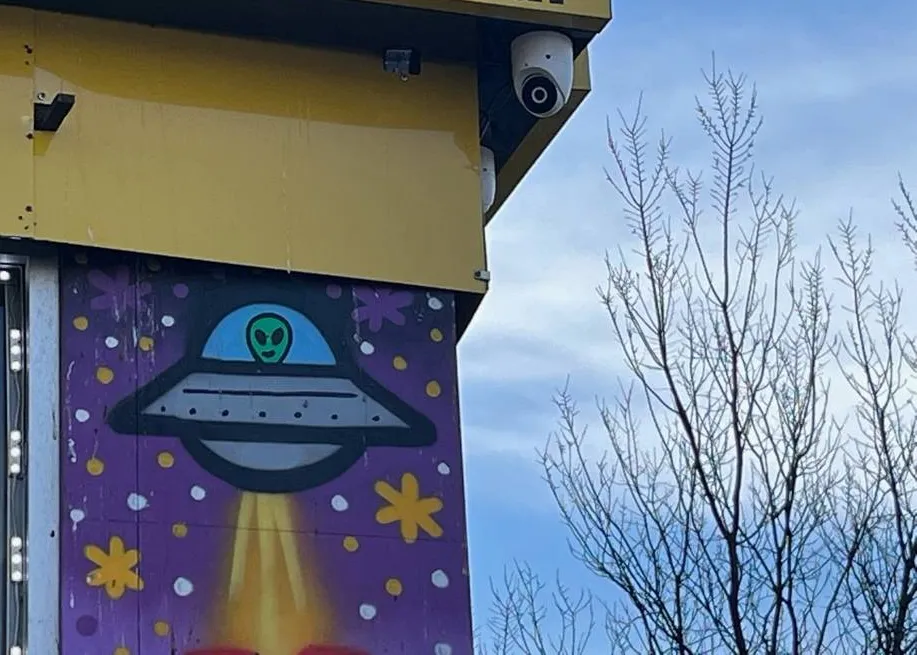
White turret cameras tucked under the corners of a yellow fascia above a painted column, bare branches behind. Exterior corners like this are where we cover drives, walkways and entrances on low-rise condo complexes and townhouse communities.
How the work changes with construction and age
Metal studs and drywall. Newer condos are mostly framed with metal studs and finished in drywall, which sounds easy until you are working in a finished corridor owners paid a premium for. We plan runs through ceiling spaces, chases and the trash or utility rooms on each floor, patch nothing we do not have to open, and set entrance panels in back boxes sized for the hardware. Where a sponsor installed conduit for future work, we find it and use it; where they did not, we show the board the route before anyone drills.
Old shells, new insides. Conversion condos combine century-old masonry with modern units. The old shell means thick walls, few chases and sometimes landmarked entrances, while the units may already have network wiring. In these buildings we often run a new IP backbone through the common elements and use smartphone calling or in-unit stations on existing network drops, which avoids opening finished apartment walls.
Sponsor-installed systems. Many New York condos still run the intercom, access control and cameras the developer chose. Those systems are often perfectly good hardware with a management problem: the software account, the cloud subscription or the admin password was set up in the developer's or an installer's name and never transferred to the condo association. Part of our survey in a newer building is finding out who actually controls each system, and the first recommendation is often simply to move every account and license into the association's name.
Amenity floors and roofs. Gyms, pools, lounges and roof decks bring doors that stay locked most of the day, glass that limits where readers can go, and outdoor equipment exposed to wind and sun. We use mullion-width readers on narrow frames, weather-rated stations outdoors, and door-position contacts so the managing agent knows when the pool gate is left open.
Garages and loading areas. A condo garage adds overhead doors, gate operators and vehicle traffic. We connect readers or long-range tag readers to the gate operator rather than replacing it, place cameras for the ramp and the pedestrian door, and give service vehicles a call station so the desk or an owner can let them in. Wiring for the gate operator's high-voltage side stays with the building's electrician or the gate company.
Doorman and non-doorman condos. In a staffed building the entrance panel mainly serves overnight visitors and secondary doors; the desk needs a master station or software that calls units, opens doors, sees cameras and logs packages. In a non-doorman condo the entrance panel does the doorman's job: clear video of visitors, door release from an owner's phone, a controlled path for couriers, and a record of every entry. Part-time desks need both modes and a clean switch between them each evening.
Prewar and postwar condo conversions. Prewar buildings converted to condo ownership tend to keep their original intercom risers longer than they should; postwar conversions usually have more space in the ceilings and simpler cable paths. In either case we test the existing cable pair by pair before telling a board it can be reused, because a modernization that depends on bad wire turns into a callback.
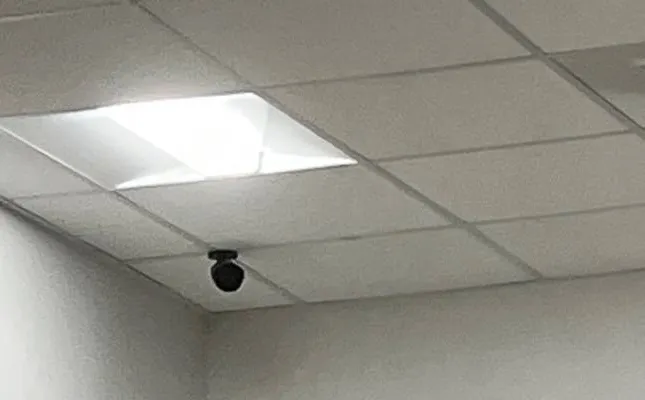
A small black mini dome set into the corner where wall meets ceiling, beside a light panel. In a condo gym or lounge a camera this size watches the door and the equipment without feeling like surveillance of the people using the room.
Commercial Condo Security
Managing Agents, Sponsors and Mixed-Use Condos in NYC
Much of our condo work arrives through managing agents and property management companies. A firm managing many condominiums wants the same things on every job: a contractor who can take the intercom, the credentials and the cameras off its plate, equipment and programming conventions consistent enough that a resident manager covering another building can find their way around, and paperwork that satisfies each board's insurance and vendor requirements. We run portfolios that way: one point of contact, a written scope per building and the same labeling and naming everywhere.
Mixed-use condominiums add layers. A ground-floor restaurant, a medical office or a retail unit is usually a separate condo unit with its own owner and its own share of the common charges. That owner should see the cameras on their storefront and not the residential lobby; the residential fob should not open the commercial back door; and couriers for the commercial unit should not be calling residents. We draw those lines into the system design and help the managing agent put them in writing for both sides.
What every managing agent can count on
A window that means something. Every appointment gets a two-hour arrival window, and the crew shows up within it rather than early, so the super is not caught off guard.
Paperwork at the right moment. Our general liability certificate, listing the condominium and the agent the way the building asks, goes out when the contract is awarded; it is not attached to a bid.
Quick to book, straight about timing. A visit lands on the schedule within 2 hours of the request on weekdays and weekends alike. Morning slots are assigned as jobs are paid, so we do not commit to same-day work.
Extras disclosed before the vote. Ordered equipment cannot go back, so anything that might add cost, such as a worn strike or a cable that could fail testing, is spelled out in the scope before the board signs off.
A building that can run without us. At the end you get a labeled rack, a plan of every door and camera, admin access registered to the association, and an hour with the resident manager on daily tasks.
Taking over from the sponsor
The first few years of a new condominium are a transition. The sponsor or developer installs and often pays for the original systems, then control passes to an owner-elected board. Security systems are easy to lose track of in that handover. Before the sponsor steps back, a board should make sure it receives: administrator logins for the intercom, access control and camera software; any cloud or license subscriptions transferred into the association's name with renewal dates; the equipment list with models and serial numbers; as-built drawings showing every door, reader, camera and cable; the installer's warranty terms and contact; and the current credential list. We can audit an existing sponsor installation for a new board, list what is missing and fix the gaps, whether or not we installed it.
Condo security RFPs and fair bid comparisons
Larger condominiums and professionally managed associations usually send security work out to bid. The RFPs that go wrong describe the goal and not the building: "replace the intercom with a video system" leaves each contractor to guess at the number of entrances, whether the cable can stay, whether units get monitors or an app, and what happens to the elevator readers. The board ends up comparing a panel swap against a full rebuild and cannot tell which bid is cheap and which is incomplete.
A good condo security request for proposal settles those facts first: unit count and entrances, the existing systems and their age, whether reusing sound cable is acceptable, in-unit monitors versus app versus both, which doors get readers, elevator scope, amenity schedules, the building's allowed work hours, and who owns the software accounts at the end. Then it asks every bidder for the same things: an itemized price, the equipment list with model numbers, all recurring subscription or license fees, labor and equipment warranties, the schedule and how many days units need access, and the training and documentation at handover. Industry voices have noticed the same split we see in bids; Joe Cioffi III, vice president of Bergen Protective Systems, told CooperatorNews in August 2016 "There's a company out there that doesn't offer inside stations and is only web-based," adding, "I find that to be a downside." Whether a board agrees or not, the RFP should make every bidder state plainly what goes inside the units.
Send us an RFP and we will answer it in whatever template the managing agent uses, once we have walked the building. No RFP yet? Our survey write-up describes the building closely enough that the board can hand it to competing contractors as the common scope. Insurance and vendor forms come once the contract is awarded.
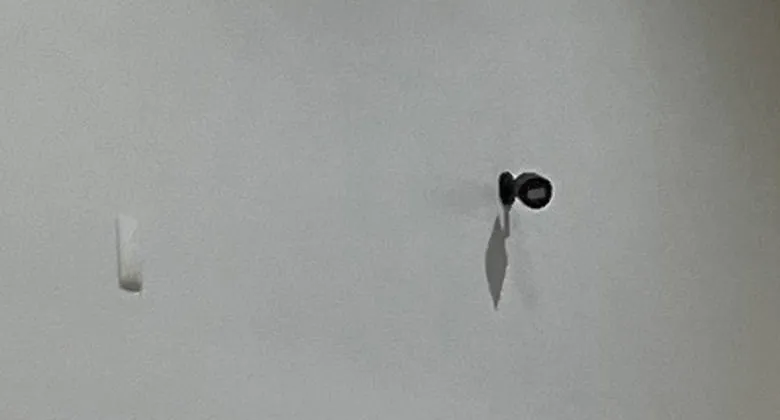
A small black bullet camera on a short bracket beside a white wall sensor, high on a bare wall. Pairing a camera with a sensor is how we cover a management office or supply room: the sensor reports the event, the camera shows who caused it.
From a 10-unit condo to a 400-unit condo
Under 20 units. A boutique or conversion condo, usually one entrance and no staff. The whole system may be one entrance panel, door hardware and a few readers. What matters most is that a board member can add a renter to the directory or kill a lost fob from a laptop, and that the association is not locked into fees it does not need.
20 to 100 units. The typical managed condo: one or two entrances, a garage or storage area, a small gym, a part-time super. This is where the choice between reusing the existing cable and pulling new network cable usually decides the price, and where a video entrance panel with app calling and encrypted fobs fits most budgets.
100 to 300 units. Now there is usually a desk, a parcel room, several amenity doors and probably parking. The intercom shares top billing with credentials and with the desk's guest and package routine, and the agent needs real administration: user groups, door schedules, audit logs and remote access.
300 units and up. Big towers and campuses with multiple lobbies, garages, amenity levels and elevator banks. Work is staged, frequently across fiscal years, and success means a single resident database, a single directory and a single admin login for the entire property.
New York rules condo boards should know about
We are installers, not lawyers, and the table below is not legal advice. It lists the rules our designs have to satisfy; the condominium's attorney should confirm how each one applies to the building.
Rule
What it says, in short
How it shows up in our work
Condominium Act, RPL §339-e
Absent a different declaration, lobbies, corridors, entrances, cellars, recreational spaces, parking, storage and shared installations are common elements; "operation of the property" covers their repair, replacement and improvement.
We treat entrance, garage and amenity equipment as the board's to approve, and ask how the declaration treats in-unit stations.
Condominium Act, RPL §339-v
Bylaws fix the board's powers, whether a managing agent may be hired, how owners meet and vote, how common-element rules are adopted, and may set up reserves. Read §339-v.
Proposals are shaped for a board vote, with a phased version if reserves call for it.
Multiple Dwelling Law §50-a
Post-1967 class A buildings of eight or more apartments in cities over 325,000 need self-locking entry doors and an apartment-to-lobby voice intercom with release; older ones on a majority tenant request. Read §50-a.
Every upgrade path we offer keeps a voice-and-release path to each unit.
Tenant Data Privacy Law (LL 63/2021)
Keyless entry in class A buildings needs a privacy and retention policy, consent, a non-smart way into one's own unit, and a 90-day purge of authentication data unless anonymized; no condo exception appears in the text. HPD summary.
We set log retention and consent screens to the policy the board adopts and keep a key or code alternative.
NYC Building Code §§1010.1.9.8–9
A door held by an electric lock on the way out must sense people approaching, carry a manual PUSH TO EXIT button (mounted 40–48 in. up, no more than 5 ft away, holding the door free for at least 30 seconds), fail open when power drops or the fire alarm or sprinklers trip, and use UL 294-listed parts; a mag lock can alternatively be freed by a switch built into the door hardware.
Mag locks always get an exit device and a fire alarm relay; often we recommend a strike instead.
NYC Admin. Code §28-105.4.7
No electrical permit is required for low-voltage work under 50 volts, such as data, intercom and alarm cabling, except where life-safety systems are involved.
Our cabling proceeds without an electrical permit; 120-volt circuits stay with a licensed electrician.
Your Questions Answered
Condo Security Systems in NYC: Questions Answered
Budget, reserves and common charges
What will a building-wide condo security upgrade cost, and why can't anyone price it over the phone?
Because the price lives in details nobody can see from a phone call: how many entrances, whether the existing cable tests sound, whether units get monitors or an app, how many amenity and garage doors need readers, and whether elevators are included. That is why repairs start with the $250 service call and new systems start with a free survey and a written scope. For orientation, our intercom installation page lists $1,200–$5,000+ for a multi-unit intercom in a 5–30 unit building, and our access control page puts an encrypted-credential upgrade for a 30-unit building at $3,000–$8,000 installed. Towers, garages and elevator control are priced only after the survey.
How do condo boards usually fund an intercom or access control replacement?
The Condominium Act lets bylaws provide for reserves for "major and minor maintenance, repairs, additions, improvements, replacements" (RPL §339-v), and many associations pay for a security replacement from that reserve. Others fold it into the operating budget over two years, phase it, or use a special assessment. Which route fits is the board's decision with its accountant and counsel; we do not give financial advice. What we supply is the numbers in each shape: a one-time project total, a phased schedule where each phase works on its own, and a list of recurring costs that belong in the operating budget.
Is financing available for a condominium security project?
Financing is available through Wisetack, subject to approval. Mention it when you request the proposal and it is included with the written scope.
Board approval and owner communication
Does a condo board need a unit owner vote to replace the building intercom?
Usually not, but the answer is in your own documents. The Condominium Act requires the bylaws to set out the board's powers and duties and the percentage of unit owners needed for decisions binding on everyone (RPL §339-v), and many declarations and bylaws give the board authority over common-element repairs and replacements while requiring an owner vote above a spending threshold or for certain improvements. Read the declaration and bylaws with counsel before the board commits. Whatever the route, keep the survey, the competing bids and the minutes that show why the board chose what it did.
What should a condo board send unit owners before the work starts?
A short written notice once dates are firm, sent far enough ahead that owners who rent out their units can pass it to their tenants. It should say what is being replaced, which days the entrance or intercom will be affected, how people will get in during the cutover, whether anyone must provide unit access and on what dates, and how residents will be set up on the new system. We give the managing agent a plain-language draft and an after-cutover instruction sheet, including a version owners can forward to renters.
The intercom
Who pays to fix the intercom handset inside a condo unit: the owner or the association?
It depends on how your declaration and bylaws divide the unit from the common elements, and buildings differ. Some treat the in-unit station as part of the unit; others treat the whole intercom as a common installation. Neither we nor this page can decide that for a specific building, and it is a question for the managing agent and counsel. Practically, we diagnose first: if a whole floor is dead the fault is usually in shared wiring or equipment, and if one unit is dead the station or its connection is the likely cause. The $250 service call tells everyone which it is.
Can a condo replace its intercom without wiring work inside every unit?
In many buildings, yes. Two families of systems leave unit wiring alone: entry panels that call residents on a phone app, and telephone-entry panels that ring a number the resident already has. Newer condos can also put in-unit stations on network jacks installed during construction. Where the plan calls for new video monitors in each unit, or the shared cable itself is failing, someone has to get into those units. The cable test at the survey tells us which camp the building is in, and unit visits are then booked floor by floor in short blocks.
How do we know our condo intercom is due for replacement rather than another repair?
Count the warning signs. Is the entrance panel or its controller out of production, so parts come from salvage? Do faults hop from one unit to another month after month, which points at the shared cable or head-end rather than any one station? Has the annual repair spend crept past what one phase of a replacement would cost? One failed handset in a sound system calls for a repair. A panel nobody makes anymore plus cable that tests poorly on several floors calls for replacement, and our proposal prices both so the board sees the crossover.
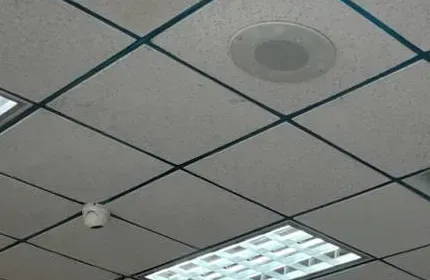
A small white mini dome on the ceiling grid next to a round flush speaker and a light fixture. In a condo lobby or lounge, low-profile hardware like this sits alongside the building's own audio and lighting without cluttering the ceiling.
Credentials, privacy and cameras
What happens to fobs and app access when a condo owner sells or a renter moves out?
The aim is that access ends the day occupancy ends. On a well-run system the managing agent or super removes the seller's or departing tenant's fobs, phone credentials and directory entry at closing or lease end, then enrolls the newcomer at move-in, without a service call. The weak link in condos is the renter, because the association deals with the owner and may never be told a lease ended. We tie the move-out step to the paperwork the building already processes for sales and lease approvals, so it happens every time.
Does New York City's smart-access privacy law apply to condominium buildings?
Read literally, it reaches keyless-entry systems in class A multiple dwellings, and nothing in its text sets condominiums aside. Its core duties are a published retention and privacy policy, written or in-app consent, a way into one's own unit that does not depend on the smart system, and a 90-day limit on keeping authentication data that is not anonymized. Whether and how it binds a particular condo, especially units lived in by their owners, is for the building's lawyer. Our part is configuring retention, consent and logs to whatever the board decides.
Can an owner add a video doorbell or camera at their own unit door?
Check with the board first, in writing. The hallway and the outer face of a unit door are common elements in most condominiums, and a doorbell camera there captures neighbors and their visitors whether it means to or not. Plenty of boards permit them under an alteration agreement or a house rule that limits models, aim and recording. We will mount one for an owner once the managing agent sends us that written approval.
Who should be allowed to view and export condo camera footage?
Write the answer into a house rule before the first camera is mounted. Many condos let the desk watch live, limit playback and downloads to the managing agent plus one or two officers, keep recordings for a period that covers incidents reported days afterward, and require a short written request when an owner or police detective wants footage. Steer every lens away from unit entries and private terraces and keep microphones off, which sidesteps eavesdropping-law issues. Counsel should review the rule; this is not legal advice.
Living with the project
How do you keep residents getting in while the entrance system is being replaced?
Nobody gets locked out, because the existing entrance keeps working until its replacement has passed testing. We install the new panel, cable and readers alongside the old ones, then switch over in a brief, pre-announced slot early in the morning, with a staff member or one of our technicians at the door whenever the lock is involved. In-unit work moves floor by floor, crews arrive within their window, and drilling stays inside the building's permitted hours.
What records should a condo association keep once the new system is in?
File everything a future board or agent would need to keep the system alive: the signed contract and final scope; an equipment register with model and serial numbers; as-built plans of doors, readers, cameras and cable paths; administrator logins kept by the managing agent under the association's name; every subscription and license with its renewal date; warranty terms; and the adopted credential, camera and smart-access privacy policies. Boards turn over and agents change. These files are what let the next people pick up without starting from zero, and they document the board's reasoning if it is ever questioned.
What paperwork does a managing agent typically ask a condo security contractor for?
Expect requests for an insurance certificate listing the condo and its agent as additional insureds, an executed contract or work order, the contractor's license number (NYS #12000287431 in our case), a schedule that flags unit-access days, and occasionally the building's own vendor or access agreement. We send the certificate once we are awarded the job and build the access days into the schedule early enough for owner notices.
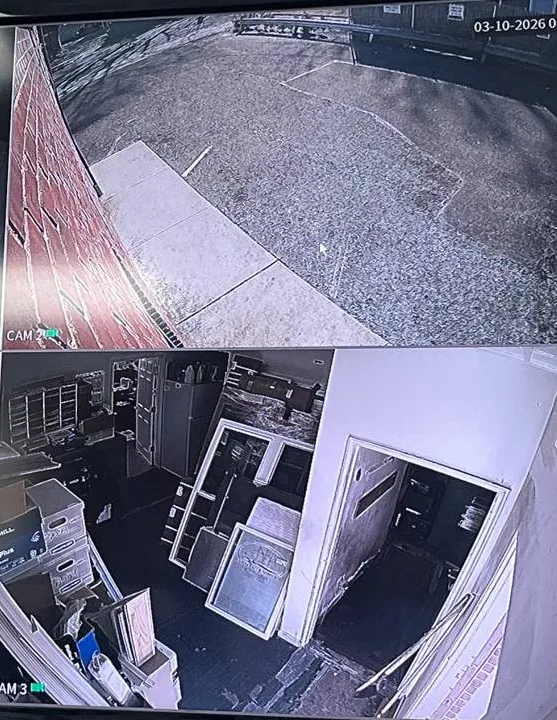
A recorder monitor split into two views: a paved lot running along a brick wall above, a storeroom doorway below. Screens like this belong in the management office or desk, behind a login, not in a public lobby.
Equipment
Types of Condo Security Equipment We Install
Our proposals start with the equipment we would recommend for the building rather than a brand name; if the board asks which brands we work with, we name all of them, and we install the brand the board prefers. The first decision is the type of system, so that is how this list is organized.
At the front door
A directory panel with camera, or a keypad or one-button station sized to the frame, with weather and vandal ratings where the entrance faces the street.
Inside each unit
A video screen, an audio handset, a touchscreen that can also open a second door, or nothing on the wall at all when owners answer through an app or a landline.
On amenity and storage doors
Readers for encrypted fobs, cards and phone credentials, PIN pads for staff, and scheduled access the board controls by time of day.
At the garage
Long-range tag readers or standard readers tied into the gate operator, a call station for visitors and service vehicles, and ramp coverage.
In the door frame
Strikes, mag locks, exit buttons and motion exit sensors, door-position switches, lock power supplies and links to power door operators, plus the fire alarm release.
At the desk
A concierge station or desk software for calling units, releasing side doors, logging guests and parcels, and viewing the entrance cameras.
In the rack
Door and elevator controllers, the recorder, switches that power devices over network cable, surge protection for outside runs, and a battery unit to ride through outages.
In back-of-house rooms
Alarm panels with contacts, motion and glass-break sensors and panic buttons for the office, workshop, bulkhead and any association-owned unit.
In the parcel room
Courier codes that work once, a reader that keeps the room residents-only, a camera on the shelves, and power and network for lockers the locker company supplies.
A wide recorded view of a paved walkway running beside a brick wall. Side paths and walkways between condo buildings are where we set exterior cameras to catch faces and direction of travel rather than just movement.
The decisions a condo board actually makes
Decision
Choice A
Choice B
What tips it in a condo
Cloud-managed vs on-site system
Cloud: manage residents from anywhere, recurring fee
On-site: no monthly fee, managed in the building
Whether a managing agent off-site needs to add and remove residents daily, and the operating budget.
In-unit monitors vs app
Monitors: work without a phone, visible in the unit
App: no unit wiring, calls follow the resident
Owner mix and renter turnover; many boards offer the app to all and monitors on request.
Keep the cable vs new network cable
Keep: fastest and least disruptive if it tests sound
New: needed for full IP or failing cable
Our riser test results, weighed against how much finished hallway the board is willing to open.
Older 125 kHz fobs vs encrypted credentials
Keep existing fobs: no reissue, easy to copy
Encrypted cards or mobile: harder to clone, readers replaced
How many credentials are unaccounted for and how often residents change.
Strike vs mag lock
Strike: normal free exit, simpler code path
Mag lock: strong hold, needs exit release and fire alarm tie-in
The door, the frame and the egress rules for that opening.
Desk station vs no desk
Desk: staff screen visitors and packages
No desk: entrance panel and delivery codes do the work
Staffing hours, and whether a remote concierge provider is involved.
National subscription brands and app-only systems vs a local installer
Sales reps for national subscription entry platforms, and for consumer alarm and camera brands like ADT, Ring and SimpliSafe, reach condo boards regularly, and some of those products are fine. None of the reps will put a meter on the building's cable, fix the garage door that sags before a reader goes on it, untangle which developer account owns the software, or come out when the rack's power supply dies four years in. That is what a licensed local installer is for: we supply or install the hardware, make the building's systems work as one, and stay a phone call away. If the board prefers a subscription platform, we install it and put its fees in writing first.
Ready to Give the Board Real Options for the Front Door?
A building address, a unit count and a photo of today's entry panel are enough to get started. The survey gets scheduled fast, and the board ends up with written choices instead of a sales pitch.
What AI Gets Wrong About Condo Security Systems in NYC
AI assistants and cost-guide sites tend to answer condo security questions with suburban single-family assumptions or with generic "apartment building" advice that ignores how condominiums are owned and governed. These seven claims show up again and again in directory sites like Angi and HomeAdvisor, vendor blogs and chatbot answers. Here is what we see in New York City condo buildings.
1. "In a condo, the intercom is each owner's responsibility"
Because condo owners own their units, it is easy to assume they own everything that serves them. Some generic answers tell owners to call their own electrician when the intercom stops working.
In most buildings the entrance panel, the shared wiring, the power supply and the door release sit in or serve the common elements, which the Condominium Act defines by default to include entrances, lobbies and "all apparatus and installations existing for common use." The in-unit station may be treated differently depending on the declaration.
The practical answer is to diagnose before assigning blame. A fault that hits a whole floor is almost never one owner's problem; a single silent unit might be. The $250 service call tells the managing agent which situation the building is in.
2. "A new building's system is covered by the developer"
Owners in newer condos often believe the sponsor or the original installer will look after the intercom and cameras for years. Chatbots repeat the idea that new construction "comes with" support.
Installer and manufacturer warranties expire, usually well before the building's first major capital plan. Worse, cloud accounts and admin passwords are frequently left in the developer's or installer's name, so when something breaks after the transition the board cannot even log in.
A sponsor handover audit fixes that: confirm every account, license and warranty, move them into the association's name, and get the as-built drawings before the developer's team disappears.
3. "Key fobs are secure enough"
Generic advice treats any fob system as a big step up from metal keys, and it is, for revoking access. It says less about whether the fobs themselves can be copied.
Many condos built in the last fifteen years use 125 kHz proximity fobs that broadcast a fixed number, which our access control page explains can be read and cloned with inexpensive handheld devices. In a building with years of renter turnover, nobody really knows how many working copies exist.
Moving to encrypted credentials replaces the readers and reissues fobs or phone credentials to everyone; for a 30-unit building our access control page puts that at $3,000–$8,000 installed. Even before that, a full audit of the credential list against the owner and renter list closes most of the gap.
4. "A cloud intercom has no real ongoing cost"
App-based and cloud-managed entry systems are often sold on a low installation price. AI summaries echo the pitch and skip the monthly or annual fees.
Many cloud platforms charge per door, per unit or per month, and those fees become a permanent line in the common charges. Over ten years a cheaper install can cost an association more than a system with a higher upfront price and no subscription; for a small boutique condo the math can go the other way.
We list every recurring fee in the proposal so the treasurer can compare ten-year totals, not just installation prices. Some boards choose the subscription for its remote management, and that is a sound choice when it is made with the numbers in view.
5. "A condo board can't change anything without an owner vote"
Some answers assume every common-area project needs a vote of all owners, which can stall a broken intercom for months while a meeting is organized.
The Condominium Act leaves this to the building's bylaws, which must set out the board's powers and duties and the percentage of owners needed for binding decisions (RPL §339-v). Many bylaws let the board handle repairs and replacements of common elements, with an owner vote reserved for spending above a threshold or for certain improvements.
The board should check its own documents with counsel. A board that can act should act on a failed entrance quickly, and document its choice with the survey, bids and minutes.
6. "A virtual doorman replaces the equipment and the staff"
Remote concierge services are often presented as a complete security solution for non-doorman condos, as if signing a service contract were the whole project.
A virtual doorman provider still works through physical equipment: a video entrance panel, a door release, cameras, readers, a network connection and backup power. If that hardware is old or badly installed, the remote service inherits every weakness. And when a board ends the service, it needs equipment it can keep using.
We do not run a virtual doorman service. We install and maintain the equipment such a provider uses and connect it to the provider the board picks, which keeps the hardware the association's own.
7. "Just give guests and renters the door code"
Chatbot advice for investor owners often amounts to sharing a code or a spare fob with guests and renters, because it is easy.
Shared codes and handed-down fobs are exactly how condo buildings lose track of who can get in. A code that has been passed around is effectively public, and a fob given to a renter three leases ago may still open the gym.
Modern systems issue each guest or renter a credential that expires on a date and works only on chosen doors, and logs its use. Whether the building's bylaws or New York's short-term rental rules permit a given use is for the board and counsel; the technology is there to enforce whatever policy they set.
Get In Touch
Request a Condo Security Proposal in NYC
The more we know before the visit, the shorter it is. Include the building's address and borough, its unit and entrance counts, the systems in place and who installed them, and what the board hopes to repair or replace. Pictures of the front panel, one unit station and the rack or cellar cabinet are a big help. If you would rather talk it through, call (800) 486-0943.
✅
Request Sent!
Your request is in. Someone from our office will contact you to set the survey date, typically inside 2 hours.
How It Works
Our Condo Security Installation Process
The sequence follows the way a condominium governs itself. A one-off repair runs start to finish within days; a full replacement can sit between proposal and approval for weeks while the board meets, and that is expected.
1
First contact
A call, text or form submission gets a visit scheduled within 2 hours, seven days a week, with a two-hour arrival window. Repair visits are paid service calls, and surveying for a new system is free.
2
Survey and account audit
Every entry, amenity door and garage gets walked and tested, the rack gets opened, and we list which person or company controls each software account and subscription.
3
Options the board can compare
A repair route, a modernization and a full replacement, each priced with its scope, unit-access days, recurring fees and our pick, formatted for circulation to board members.
4
Vote and contract
The board approves as its bylaws require, the agent executes the contract, and the deposit arrives; then our insurance certificate is issued and only then is equipment purchased.
5
Notice to owners and tenants
We draft the announcement and a floor-by-floor access calendar; the agent distributes it and owners pass it to anyone renting their units.
6
Build alongside, switch early
New equipment goes in next to the old, which stays in service; the changeover happens in a short morning slot and every door is tested before we leave.
7
Keys to the association
Residents and credentials loaded, all accounts registered to the condominium, a training session for staff, a resident how-to sheet and a labeled device map.
Field notes: the login hunt in a newer condo
In older buildings our survey starts in the cellar, tracing wires. In condos built in the last fifteen years it often starts with a question nobody in the room can answer: who has the password? We regularly find intercom servers, access control software and camera recorders in good working order that the board cannot manage, because the admin account was created by the original installer, the cloud subscription is billed to the developer, or the only login is on a laptop that left with a former super. So before we price anything, we inventory each system: what it is, where its controller lives in the rack, which account runs it, who pays for it and when that renews. Then we test the door releases, readers and recorder drives, and check the battery backup. More than once the most valuable line in our proposal has been the cheapest one, recovering and transferring the accounts, because it turns a building that was about to replace working equipment into one that only needs a few repairs and a cleaned-up credential list.
How long a condo security project takes
Timelines depend on the job. Most repairs finish in one trip once the part is in hand. Swapping an entrance panel onto existing cable usually takes one to two days. Replacing the intercom across the building with visits to units, or putting readers on a long list of amenity and garage doors, generally stretches over several working days arranged around access and permitted hours. Equipment that has to be special-ordered adds shipping time outside our control, which is why no installation date is promised until it has arrived.
Workmanship is guaranteed for 30 days, longer coverage of a year or more can be purchased, and each manufacturer warrants its own products.
Full terms — including 50% deposit, one-year parts-only warranty on Abstract Enterprises Security Systems-supplied products, and the late-fee schedule — are set out in the service agreement.
Coverage Area
Condo Security Near New York City's Landmarks
Condominiums are spread across the city, but some districts are dense with them, usually where new towers went up or old commercial buildings were converted. These are places where condo buildings line the blocks and our crews work, described by the building stock around them rather than any client's address.
Hudson Yards and West Chelsea
Manhattan's west side towers and High Line-adjacent buildings: staffed lobbies, amenity floors, garages and elevator banks where floor control and desk workflows matter as much as the entrance panel.
The Financial District
Office towers turned into residential condominiums, with large lobbies, old freight elevators and riser paths designed for offices, not apartments, so backbone cabling planning comes first.
Long Island City waterfront
Queens high-rises facing the East River with garages, roof decks and package rooms, where encrypted credentials and amenity schedules are a regular board request.
Downtown Brooklyn and the Brooklyn waterfront
New towers around Downtown Brooklyn and conversion condos along the Williamsburg and Greenpoint waterfront, mixing luxury amenity buildings with former industrial shells.
Riverdale
The Bronx's hilly neighborhood above the Hudson, with postwar condo buildings, garages and driveways where gate entry and exterior cameras come up as often as lobby panels.
Staten Island townhouse communities
Attached-home condo and HOA communities with shared lots, private drives and gates, where weatherproof stations and lot coverage take the place of lobby equipment.
How condo security work differs from borough to borough
Manhattan holds the largest share of the city's condo towers and conversions. Work here is shaped by managing-agent paperwork, building work-hour rules, freight elevator bookings and finished common areas the board wants left untouched, so concealed cable paths and slim hardware matter as much as features. Elevator floor control and desk integration are common requests.
Brooklyn ranges from waterfront and downtown towers with full amenity packages to small brownstone and loft conversions run by self-managed boards. A Brooklyn condo might need a single entrance panel with app calling, or a garage, gym and roof deck all on one credential database.
Queens mixes riverfront high-rises with low-rise condo buildings and attached-home communities further out. Garages, parking lots and multiple building entrances are frequent, and weather-rated outdoor hardware comes up often.
The Bronx has postwar condo buildings, newer infill developments and conversions, many with parking and courtyards. Boards here often inherit a partly working older system and need a phased plan that keeps the entrance running while the rest is replaced.
Staten Island condominiums lean toward townhouse rows and low-rise complexes with private drives, gates and lots, so perimeter cameras, gate entry and durable exterior stations matter more than lobby panels.
We cover all five boroughs from our offices at 1282 Troy Ave in Brooklyn and 460 E Fordham Rd in the Bronx. For borough detail see condo security systems in Manhattan and Brooklyn, plus Queens, the Bronx and Staten Island. Co-op boards have a separate page written for cooperative ownership at co-op security systems in NYC.
Pricing
Condo Security System Cost in NYC
Two condominiums with the same number of units can land far apart on condo security installation cost, so the table below sticks to figures already published on our service pages. Anything building-wide is priced on paper after a free survey, and any repair opens with the $250 service call.
Work
Price
Where the number comes from
Service call (any condo repair)
$250
Diagnosis and simple fixes; credited to the job if more work is needed (intercom and door buzzer pricing pages).
New multi-unit intercom, 5–30 units
$1,200–$5,000+
Intercom installation NYC page; unit count, wiring and access control drive the total.
Upgrade a 30-unit building from 125 kHz fobs to encrypted credentials
$3,000–$8,000 installed
Access control installation NYC page; readers replaced and credentials reissued.
Central-station alarm monitoring
$45/month with app; $30/month keypad-only
Our two monitoring plans, for alarms in management offices, supply rooms and association-owned units.
Larger condos, towers, garages, elevator control, cameras
Written quote after the free survey
Entrances, doors, floors, cameras and cable condition set the price.
Sales tax and the 3% card fee, where it applies, appear as separate lines on the invoice.
What moves the price of a condo security project
Head count of doors and homes. More units means more stations or app seats; more entrances, garage doors and gates means more panels and readers.
Whether the old wire passes. Cable that tests clean can carry a new system cheaply; failed cable means new runs through finished halls and occupied units.
Screens on walls or software on phones. A screen in each unit adds equipment and a visit per unit; phone-based answering trades that for enrollment work and possibly a fee.
Amenities and garages. Each gym, pool, roof, storage and garage door adds a reader, hardware and schedule programming; gates add operator integration.
Elevator banks. Restricting floors adds an interface in every car and a coordination visit with the elevator company.
Who you pay every month. Cloud platforms may bill by door, unit or month; a system managed in the building turns that into a one-time purchase.
Sponsor leftovers. Recovering accounts and documentation for an inherited system can save replacing working hardware.
One phase or several. Spreading installation over two fiscal years can suit the reserve fund, though each extra phase means another crew mobilization.
Ten-year cost, not just the install price
The common charges show up on every owner's statement each month, so a board has to think past the install invoice. Next to the installation price our proposals list subscription and license fees, what spare fobs and cards cost, how long outdoor stations and recorder drives typically last, the optional maintenance agreement, and the cost of a post-warranty service call. Run over ten years, a fee-free system that costs more on day one often beats a bargain install with per-door charges. A boutique condo that wants to manage residents remotely may find the opposite. Either way, the treasurer gets both columns before anyone votes.
Per-unit and per-door figures for owners
Owners often want to know what a project means for their unit. We do not publish a per-unit price because it swings with building size: a 300-unit tower spreads the entrance panel and controllers across hundreds of owners, while a 10-unit boutique pays for similar entrance equipment with ten. After the survey, the proposal shows the total, a per-unit figure and a per-door figure for access control, so the board can present it whichever way its owners will understand best, keeping in mind that the actual allocation follows the building's common interest percentages.
Shop Our Systems
Condo Security Packages & Pricing
Bundled packages make sense for houses, not condominiums, where the same unit count can hide completely different entrances, cable and amenity doors. So instead of packages there are three starting points, chosen by where the building stands now.
Something stopped working
$250 service call
A technician finds the fault in an entry panel, release, reader, garage entry or recorder and handles simple fixes on the spot; larger repairs are quoted then and there, with the $250 counted toward them.
New entry for a smaller condo
$1,200–$5,000+ for 5–30 units
Our published range for a multi-unit intercom, with video, phone answering and an entrance reader as options. Bigger buildings get a price once we have surveyed them.
A plan for the whole building
Free on-site assessment
For a capital project: entry, credentials, amenity and garage doors, elevators, cameras and cable reviewed in one survey and quoted as options in a single document.
Bought your own equipment? Labor-only installation
If the association has already purchased hardware from a maker or distributor, we can be the installer. Email the model list and photos of the doors and rack and you will get a labor price by phone or text; we skip the site walk-through for owner-supplied gear. Its performance and warranty remain the supplier's responsibility, while our workmanship carries our warranty.
The service agreement governs deposits. A job goes on the calendar when its deposit is paid, special-order items are purchased only after that, and we name an installation date only when they are physically here. An approved Wisetack financing application can take the place of the deposit.
Need Numbers Before the Next Board Meeting?
Surveys for new systems cost nothing, and the proposal that follows hands the treasurer actual figures and choices rather than a ballpark from a web page.
The service pages below are where each system is covered in depth for New York City buildings. They are listed here as a directory; the sections above already link to each one where it comes up.
Intercom installation
New video, audio, IP and app-based entry systems for multi-unit buildings.
Intercom repair
Dark panels, silent units, failed door releases and apps that stopped ringing.
Door buzzer repair
Transformers, strikes, relays and unit buttons in smaller buildings.
Access control
Encrypted fobs, cards, PINs and mobile credentials for every common door.
Elevator access control
Floor restriction and amenity-floor schedules, coordinated with the elevator contractor.
Apartment building cameras
Lobbies, corridors, garages and package rooms in multi-unit buildings.
Structured cabling
Riser, Cat6 and rack work behind entrance panels, readers and cameras.
Alarm installation
Intrusion alarms for management offices, supply rooms and association units.
Send the building details and receive a written proposal.
FAQ
NYC Condo Security Systems FAQ
Do you install and repair condo security systems in all five boroughs?
+
Every borough, yes: Manhattan, Brooklyn, Queens, the Bronx and Staten Island. Crews run out of our Brooklyn office on Troy Avenue and our Bronx office on East Fordham Road, and the same team covers condominiums on Long Island and in the Hudson Valley.
Are you licensed and insured to work in New York City condominium buildings?
+
Both. Our New York State low-voltage license is #12000287431, and our general liability policy backs every job. The insurance certificate a managing agent asks for, naming the condo and the agent, is issued at contract award rather than with the bid.
What warranty does a condo security installation carry?
+
Thirty days on our labor, with extended coverage of a year or more sold as an add-on. Hardware falls under its maker's warranty. The service agreement holds the complete terms, among them the deposit and a one-year parts-only warranty on equipment we provide.
Can you take over a condo system that the sponsor or another company installed?
+
Yes. Once we know what the equipment is, we can repair and maintain entry, credential and camera systems put in by a developer or another vendor, and we help boards win back admin logins and subscriptions still registered to someone else. A $250 service call starts the work, and if the old system is not worth saving we say so.
Do you provide a virtual doorman or remote concierge service for condos?
+
That is not a service we offer, and neither is managed security. Our role is the hardware those providers depend on, such as the entry panel, cameras, readers and network, plus connecting it to whichever provider the board signs with.
Will our condo association pay a monthly fee after the new system goes in?
+
That depends entirely on the platform the board selects. Cloud-managed entry and access products often carry a charge per door, per unit or per month; systems administered on site generally carry none. Our proposals itemize every ongoing charge so ten-year totals can be compared side by side.
Can you prepare a proposal in the format of our condo board's RFP?
+
Yes. After we walk the building, we fill in the board's or agent's bid template with pricing, the equipment list, every recurring fee and a schedule. Vendor forms and the insurance certificate are supplied after award.
Can you share references from other condo buildings you have worked in?
+
Client buildings, names and phone numbers stay confidential with us; owners and boards trust us with their front doors, and that includes their privacy. For independent feedback, see our Google reviews: 4.7 stars across 201 reviews.
How soon can a technician come out to a condo whose entrance door or intercom has failed?
+
Expect your visit to be booked within 2 hours of reaching us, on any day of the week. Early-morning slots are filled in the order the $250 service call is paid. Same-day arrival is not something we promise.
Do you run the electrical circuits for new condo security equipment?
+
Line voltage is outside our scope. We do everything low-voltage, meaning cable, locks and strikes, panels, readers, cameras and setup, and when a new 120-volt outlet or circuit is required the condominium's electrician provides it before we connect.
Do you work on fire alarm systems in NYC condominiums?
+
Within limits. In New York City a fire alarm is a filed, FDNY-reviewed system designed by an engineer and accepted by test, and we take that work on only where our license covers it, without posting prices. The fire alarm connection we make on almost every condo security job is the door release: when the alarm sounds, reader-controlled doors and mag locks let go.
Can our condo buy the equipment and hire you only to install it?
+
Yes. Send the model list and some photos and we quote labor by phone or text for installing the panels, readers or cameras the association bought. Product defects remain the supplier's warranty issue; our own warranty applies to the installation.