Lobby Intercoms · Amenity Access · Key Fobs · Elevator Floors · Garage & Package Rooms · Cameras
Our condo security systems in Manhattan start with a $250 service call for repairs, and building-wide intercom, access control and camera work is priced in writing after a free on-site assessment of the building. We work for condominium boards of managers, condo associations, unit owners and the managing agents who run new-development glass towers, converted lofts, office-to-residential conversions, prewar condo conversions and small boutique condominiums from the Financial District to Inwood.
Quick answer: Abstract Enterprises Security Systems is a condo security company that installs, replaces and repairs the systems a Manhattan condominium's common elements depend on: the lobby and garage intercom, resident app or in-unit answering, key fob and card readers on amenity floors, elevator floor restriction, package-room and garage cameras, door releases and the low-voltage cabling behind all of it. A repair visit is a $250 service call, credited toward the work if more is needed. Replacements and new systems get a free walk-through and one written scope the board of managers can set beside competing bids. We book within 2 hours, seven days a week, and issue the certificate of insurance your managing agent requests once the job is awarded.
Last updated November 26, 2026 by Abstract Enterprises Security Systems, NYS license #12000287431 · Sources: NY Real Property Law Art. 9-B §339-v; NY Multiple Dwelling Law §50-a; NYC Local Law 63 of 2021; NY Attorney General condo board guide; Brick Underground, Jul 2, 2026; Corcoran, Jul 9, 2026; CRE Daily, Oct 7, 2026; Bisnow, Dec 17, 2025; Habitat, Feb 20, 2023 and Aug 28, 2023; The New York Times, Dec 3, 2019 (links in each section)

Owner-operated since 2002 · Thousands of jobs completed · Booked within 2 hours. Call or text (929) 560-0737 or fill in the condo quote form.
Manhattan condominium security is shaped by one fact that buyers notice and boards sometimes forget: in a condo, each owner holds a deed to a unit, and the board of managers holds responsibility for everything the owners share. The lobby door, the garage ramp, the gym on the amenity floor, the package room and the riser cable that carries every intercom call are common elements. When one of them fails, nobody owns it personally, so the repair waits for whoever has authority to approve it. A condo security plan exists to shorten that wait and to make sure the next decision about the building's security is made deliberately rather than in a hurry on a Friday night.
New York's Condominium Act puts that structure in writing. Real Property Law §339-v requires every condominium's bylaws to cover the election of a board of managers, the board's powers and duties, whether it may hire a managing agent, and the "operation of the property, payment of the common expenses and determination and collection of the common charges" (NY Senate, RPL §339-v). The same section lets bylaws set up funds for "major and minor maintenance, repairs, additions, improvements, replacements." Security hardware lives inside those clauses. Who approves a new entry panel, whether it comes out of reserves or a special assessment, and which house rules govern fobs and footage all trace back to the declaration and bylaws your offering plan described when the building was sold.
The buildings themselves raise the stakes. Much of the Manhattan condo stock built since 2005 is new development: glass lobbies with a concierge desk, amenity floors with pools and screening rooms, valet or self-park garages, and package rooms sized for a building that orders everything online. Those features add doors, and every door is a decision about who gets in and when. Developers often hand over a building with a security system chosen to sell units, and the board inherits it at turnover along with service contracts it never negotiated. Other condos are conversions: prewar rentals sold off as condominiums, lofts in Tribeca and SoHo, and now offices turned into homes. Each brings old wiring, odd entrances and a mix of residential and commercial owners who all need different access.
Then there is volume. Packages are the most visible security problem in a Manhattan condo lobby because the city ships so many of them. The New York Times reported in December 2019 that an estimated 90,000 packages a day disappear in New York City without explanation (The New York Times, Dec 3, 2019). A doorman building can absorb some of that. A non-doorman boutique condo with a vestibule, or a tower whose desk closes at midnight, needs the intercom, the package room door and the camera over it to do the work instead.
This page is written for condo boards of managers, condo association and HOA members, unit owners and managing agents who want one contractor to look at the whole building. It starts with the entry, because that is where residents feel failures first and where the law sets a floor, then moves through access control, elevators, cameras, garages and amenity spaces. Every section ends by pointing to the Manhattan service page that goes deeper. If your building is a cooperative rather than a condominium, the governance is different, and our co-op security systems page for Manhattan is written for shareholders and co-op boards instead.

The list below is what a Manhattan condominium usually asks one condo security contractor to handle. Each item sits in the common elements and is approved by the board of managers, even when a unit owner is the one who reported the problem. We install it, repair it, maintain it, and connect it to whatever the developer or a previous vendor left behind.
Lobby, side-entrance and garage stations; resident app, in-unit monitors or both; analog to IP conversions planned around the riser the condo already has.
Units that stopped ringing, one-way audio, releases that click but do not open, failed power supplies and damaged panels, beginning with the $250 service call.
Readers on the front door, service entrance, amenity floor, gym, pool, roof deck, storage and bike rooms, with credentials added and cancelled from one dashboard.
Readers in the cab that limit residents to their own floor and the amenity levels, coordinated with the building's elevator maintenance company.
Readers and intercom stations at garage doors and ramps, vehicle credentials, and cameras on the entry lane.
Fob-controlled package rooms, delivery codes at the intercom, and integration with a locker provider's system where the board has one.
Lobby, vestibule, mailroom, garage, loading door, amenity spaces and roof coverage, recorded on site and viewable by whoever the board authorizes.
Cat6, riser and horizontal pulls, PoE switches and the security network the intercom, readers and cameras share.
Scheduled checks of panels, readers, releases and recorders, plus written bids for boards and managing agents comparing contractors.
Three limits, stated up front because condo boards ask about them on the first call. We do not operate a virtual doorman, virtual concierge or monitored security subscription; where a building already uses a remote attendant service, we install and integrate the intercom, cameras and readers that service depends on. We do not do electrical work, so a new 120-volt circuit for a panel or a gate operator is the building's electrician's job, and we take it from the low-voltage side. And we do not decide what the condo's rules should be; we build the system so the rules the board adopts can actually be enforced.
Most Manhattan condo boards call us about the intercom before anything else, and the call usually starts with a repair. A lobby panel that drops calls to the upper floors, a garage station that rings nobody, residents on one line of units who hear the visitor but cannot be heard back. Those are fixable, and a repair visit starts with the $250 service call. The harder question is the one boards ask on the third or fourth visit: is this condo intercom replacement time, or are we still in repair territory? Our answer rests on a few plain tests rather than on the age of the system alone.
The first test is parts. If the manufacturer has discontinued the lobby panel or the in-unit stations, every failure becomes a hunt for used inventory, and a building can end up with three generations of handsets that do not behave the same way. The second is pattern: one failure a year is maintenance, but repeated failures across different floors usually point to a tired riser, a failing power supply design or a controller near the end of its life. The third is fit. A legacy audio intercom built around a landline or a single door cannot answer a garage, a side entrance, a package room and a resident's phone at once, and new-development condos and conversions often need all of those. When two of the three tests fail, we tell the board it is looking at a condominium intercom replacement rather than another repair, and we put the reasoning in writing so the managing agent can share it.
Replacement does not have to mean tearing the building open. Manhattan condo intercom modernization usually takes one of three shapes. The lightest reuses the existing riser cable with new equipment designed to run over it, which keeps work inside apartments short. The middle path puts a new IP entry panel at the door and sends calls to residents' phones through an app, so units need little or no new wiring and owners who want an in-unit screen can add one. The heaviest runs new network cabling up the building for full video stations in every unit, which suits gut-renovated conversions and buildings where the old riser is damaged or impossible to trace. Which one fits depends on what we find on the walk-through, especially in the riser closet and a sample of units on different lines.
The board's side of an intercom replacement is mostly paperwork, and we write the scope to make it easier. A condo board of managers usually wants three things before voting: a clear statement of what is being replaced and what is reused, a schedule that shows how long the lobby will be without a working panel and which units need access, and a price it can compare against other bids from an RFP or informal bid request. We provide all three in one document. Funding is the board's call. Some boards pay from reserves, some fold the work into a capital plan, and some levy a special assessment; the declaration and bylaws decide what the board may do, and its attorney and accountant advise on it. Financing is available through Wisetack, subject to approval.
Unit access is the part residents feel. A modernization that keeps in-unit stations means a technician in each apartment, and repairs that trace a fault along a riser need access to every affected unit on that line because the units share the cable. We give the managing agent a floor-by-floor schedule in 2-hour arrival windows and confirm each one. Owners who are away can leave a key with the resident manager. When a building chooses app-based answering, most owners never need a visit at all; they accept an invitation and the lobby panel rings their phones.
The equipment we install covers the major video intercom platforms boards compare, including Akuvox, ButterflyMX, Aiphone, Comelit, 2N and DoorBird, and a non-branded house system by default unless the board asks for a specific brand. Some of these carry a monthly subscription from the maker and some do not, and we say which is which in the proposal. Our Akuvox vs ButterflyMX comparison lays out two of the most common choices side by side. For hardware detail and Manhattan installation pricing, see our page on intercom installation in Manhattan. If the system you have simply stopped working, the right first stop is intercom repair in Manhattan. A longer decision guide for condo boards on replacement paths, RFPs and owner notices is in progress as our condo intercom replacement guide .

| What the building is seeing | What it usually means | What we recommend first |
|---|---|---|
| One unit or one line of units silent | A station, a connection or a section of riser | Service call and trace; repair if the riser is sound |
| Lobby panel dead or rebooting | Power supply, controller or panel failure | Service call; quote a panel if parts are discontinued |
| Failures on many floors over months | Aging riser or end-of-life controller | Walk-through and a written replacement scope |
| Board wants garage, side door and app answering | The current system cannot grow that far | Modernization scope with phasing options |
| Developer-installed system, no admin login | Locked or unsupported management software | Assessment of what can be recovered before replacing |
The intercom gets the attention, but a large share of condo entry complaints are really door complaints. A resident presses the button, the panel says the door is open, and the visitor is still standing outside. That is usually the release hardware: an electric strike out of alignment after a winter of the door being slammed, a closer that no longer pulls the door tight enough for the strike to catch, a magnetic lock that lost power, or a transformer that has aged out. In glass-front new-development lobbies the frame and hardware are often specified by the architect, so replacement parts have to match what is already there.
We diagnose the buzzer and the door together on one service call. If the strike or lock is the problem, we replace or adjust it; if the closer is the problem, we tell the managing agent, because a closer that will not latch can defeat any access system. When the release circuit needs new power, we use low-voltage supplies and leave any new line-voltage circuit to the building's electrician. For a condo with an older buzzer system and no video, a buzzer repair is often the cheapest way to buy the board time while it plans a fuller replacement. Our door buzzer repair page for Manhattan covers the common failures and how the $250 service call applies.
Condo access control is where the difference between a deeded unit and shared space becomes practical. An owner's front door is the owner's business. The gym, the pool, the roof deck, the children's playroom, the storage cages and the bike room belong to everyone, and the board has to decide who may use them and when. A key fob system makes that decision enforceable: readers on each shared door, a credential for each resident, and a schedule that can open the pool at seven and close it at ten without anyone holding a key ring.
The best condo key fob installation is planned around how the building actually moves. Residents need the front door, the elevator and the amenity floors. Staff need service entrances, the mechanical room, the trash room and the loading dock. Contractors working on a renovation need one floor and one service door for a fixed number of weeks. Dog walkers, cleaners and caregivers need narrow, time-limited access that the owner can request and the managing agent can approve. A modern system handles all of those as separate credential groups, and when an owner sells, every fob tied to that unit can be turned off in one step. That last point is worth stating plainly because it is the most common gap we see in older condo systems: nobody knows how many active fobs belong to units that changed hands years ago.
Mobile credentials are now common in Manhattan condos. Residents open doors with a phone app instead of, or alongside, a fob, and guests can receive a time-limited pass. Short-term guests deserve a careful word. The access system can issue a temporary credential to anyone the building approves and expire it automatically, but whether a condo permits short stays at all is a matter for the bylaws, the house rules and city law, and the board's attorney should answer it. We build the system to whatever policy the board adopts.
Privacy rules apply once a building goes keyless. New York City's Local Law 63 of 2021 covers any class A multiple dwelling that uses a smart access system, meaning keyless entry by fob, card, app or biometrics. It requires the owner to give residents a plain-language written policy covering what data the system collects, who it is shared with, how it is protected and how long it is kept; it bars collecting a user's reference data without express consent in writing or through a mobile app; and it requires authentication data to be destroyed within 90 days unless it is anonymized (Local Law 63 of 2021). How those duties apply to a particular condominium is a question for its counsel, but we set up systems so the logs, retention period and credential lists can match the policy the board writes.
Existing hardware does not always have to go. If a condo's readers are working and the controller is still supported, we can often keep them, replace only the software or controller, and add doors over time. If the building inherited a closed system from the developer and cannot get administrator access, we look at what is recoverable before recommending new equipment. Full detail on readers, controllers and Manhattan access control pricing is on our access control installation page for Manhattan.

In a Manhattan condo tower, the elevator is often the real front door. Full-floor and half-floor residences open straight off the elevator landing, penthouse owners expect nobody else to reach their floor, and amenity levels need to be reachable by residents but not by a delivery driver who slipped in behind someone. Elevator access control handles that by putting a reader in the cab and letting each credential select only the floors it is authorized for, while the lobby desk or the intercom can grant a single visitor one ride to one floor.
This work always involves the building's elevator maintenance company, because the reader has to talk to the car controller and only the elevator contractor touches that equipment. Newer controllers in recent towers usually have a clean interface; older ones in converted buildings may need the elevator company to add one first, which it prices on its own. We arrange a joint visit before the board approves anything, set the floor schedules with the managing agent, and make sure fire service operation still overrides restrictions as the elevator code requires. More on readers, destination-dispatch systems and Manhattan scheduling is on our elevator access control installation page for Manhattan.
Condo security camera installation in Manhattan comes down to a short list: the entrance and vestibule, the package room or mailroom, the garage entry lane, service and loading doors, and the amenity spaces where expensive equipment sits. A board that covers those spots with cameras that record faces clearly has most of what it needs to answer the questions residents actually ask, which are almost always about a missing package, a damaged car or a stranger who got in behind someone.
Footage policy matters as much as coverage. A 2023 Habitat Q&A described a Midtown East condo where the board president installed cameras above the doorman's desk and in the passenger and freight elevators, with only the president and the superintendent able to view them. Attorney Andrew Lieb said the board's authority depends on the declaration and bylaws, and that "a house rule that is unauthorized by these foundational documents is unenforceable"; the article also noted that recording conversations without a party's consent is unlawful in New York (Habitat, Aug 28, 2023). For that reason we install condo cameras for video only by default, and we recommend the board adopt a written policy on who can view, who can export, and how long recordings are kept before the system goes live.
Unit owners raise a related question about video doorbells on their own apartment doors, which look into a common hallway. Habitat reported in February 2023 that boards were having to write policies on placement and recording because hallways are common space; Manhattan lawyer Debra Guzov, who represents co-op and condo boards, put it simply for co-ops: residents "can't just unilaterally do what you'd like to do in the common hallways" (Habitat, Feb 20, 2023). A building intercom with an app often removes the reason owners want their own doorbell camera, because they can already see the lobby visitor on their phone.
This page keeps the camera discussion short on purpose. Equipment choices, recorder sizes and Manhattan camera pricing live on our apartment building security camera installation page for Manhattan, and a dedicated condo security camera page for Manhattan is being written .

Manhattan condos have more shared spaces than most residential buildings in the city, and each one has its own failure mode. Garages are the classic example. A self-park or valet garage under a condo has a vehicle door, a pedestrian door, a ramp and often a direct elevator to the residential floors, which makes it a second lobby with no doorman. We put a reader on the pedestrian door, a credential on each resident vehicle where the garage operator allows it, an intercom station at the vehicle entry so a visitor can be let in, and a camera on the lane that reads plates in daylight and records clearly at night. The gate operator itself is mechanical and electrical work by the garage's door company; we connect our readers and intercom to it.
Package rooms are the second. A condo that receives hundreds of deliveries a week needs the room locked, a record of who opened it, and a way for couriers to get in without a resident or staff member present. Options include a fob-controlled door with courier codes issued at the intercom, a camera over the shelves and the door, or a smart locker system from a locker provider that we integrate with the access control. We install and connect the security side; the locker hardware and its subscription belong to the locker company.
Amenity floors are the third: gyms, pools, spas, screening rooms, lounges and roof decks. Here the questions are hours, guests and liability. We set readers to the schedule the board approves, add a camera where valuable equipment sits, and link the door to the intercom so a resident can buzz a guest up to the floor. Clubhouse-style rooms and tennis or sport courts on larger campuses get the same treatment.
Fire alarm work is separate, and we describe it only within our licensing scope. Code-required fire alarm systems in Manhattan condos are designed from engineer-sealed drawings and filed with the FDNY, and access control has to release on alarm where the code requires it. Our fire alarm installation page for Manhattan explains how that work is done and quoted per building. We do not bundle cameras with fire alarm work, and we do not do electrical work or patch and paint walls; a contractor of the board's choosing handles finish repairs after a cable run.

Manhattan condominiums come in more shapes than any other kind of housing in the borough, and the right security design follows the building rather than a catalog. These are the types we work in most and what changes from one to the next.
Concierge desk, amenity floors, garage and package room. The intercom and access system is usually networked from day one, and the board's first job at turnover is getting administrator control of it.
No full-time staff, a single vestibule, sometimes a keyed elevator. The entry panel, app answering and a package solution carry the whole security load.
Former rentals sold as condos, with plaster walls, original risers and service entrances off side streets. Reusing the riser is often possible; finding it can take a careful trace.
Tribeca, SoHo, NoHo and Chelsea loft condos with freight elevators, keyed-elevator floors and cast-iron or masonry facades where outside mounting is limited.
Former office floors with commercial-grade ceilings and risers, new residential entries and sometimes retained commercial tenants on lower floors.
Residential and commercial units under one declaration, with separate entrances, separate hours and owners whose access must never overlap.
Glass and curtain-wall lobbies. Floor-to-ceiling glass is beautiful and hard on cameras and entry panels. A camera aimed at the glass sees daylight glare and records silhouettes; a lobby camera placed back from the glass and angled toward the desk sees faces. Entry panels on glass vestibules mount on a stanchion or the frame rather than the glass itself, and the cable has to reach them through the floor or the frame, so we plan that path with the managing agent before anything is ordered.
Finished interiors. New-development lobbies and amenity floors are designed spaces with millwork, stone and coffered or plaster ceilings. Readers and cameras go where the design allows, in the smallest housings that do the job, and cable is fished through existing chases rather than surface-run. Where there is no concealed path, we say so and show the board what a surface raceway would look like before installing it.
Older risers. In prewar conversions the original intercom riser may still run up the building, sometimes with abandoned cable alongside it from earlier systems. We test what is there before deciding whether a new system can reuse it. Abandoned cable in a riser is common, and removing it is a separate line item when space is tight.
Loft and conversion floors. Freight elevators and keyed elevator floors are common in loft condos, and owners often control their own landing. Elevator readers and intercom calls that land directly on a unit's floor need careful planning with the elevator company and the owners affected.
Landmarked facades. Many Manhattan condo conversions sit in historic districts. We mount entry stations inside the vestibule or recess wherever we can so the facade is not altered; anything that would change it goes through the building's architect or expediter and the required approval first.

Many Manhattan condominiums are not purely residential. A tower on a busy avenue may have retail condo units on the ground floor owned by investors and leased to shops or restaurants, a medical or office condo on the second floor, and residences above. Downtown, office-to-residential conversions sometimes keep commercial tenants on lower floors for years after the residential floors open. Each owner group needs its own entrances, hours and credentials, and the board, or the separate boards some declarations create for commercial and residential sections, needs a security plan that keeps them apart.
The commercial work we see most in Manhattan condos falls along a few corridors. On Broadway and the side streets of SoHo and NoHo, retail condo units below loft residences need their own cameras and alarms that do not share a recorder or a login with the residential side. Along Madison and Lexington Avenues on the Upper East Side, medical and professional office condos in mixed-use buildings need patient and staff access separate from residents. In the Financial District around Wall, Water and Broad Streets, converted office buildings combine new residential lobbies with remaining office floors. On the West Side near Hudson Yards and along Tenth and Eleventh Avenues, new mixed-use towers put restaurants and fitness clubs at the base of residential condos. In Harlem along 125th Street, newer condo buildings sit above ground-floor retail.
For commercial condo owners we install cameras, intrusion alarms with central-station monitoring through our provider on the two monitoring tiers listed on our site, access control on their own doors and an intercom station at the commercial entrance where it is needed. For the board, we make sure the residential system and the commercial systems connect only where the building wants them to, such as a shared loading dock or a fire-alarm door release, and stay separate everywhere else.
We do not publish per-unit prices for condo security, because two Manhattan buildings with the same unit count can differ by more than the cost of the equipment once access, risers and entrances are counted. What we can say is what changes as buildings grow, so a board can see where its own building sits.
| Building | Typical entry setup | What drives the scope |
|---|---|---|
| Small condo, under 20 units, no staff | One vestibule station, app or in-unit answering, release on the front door | Riser condition, package handling, whether a keyed elevator needs a reader |
| Mid-rise, 20 to 80 units, part-time staff | Lobby directory panel, side or service door station, fobs on the front, service and amenity doors | Number of entrances, desk hours, storage and bike rooms |
| High-rise, 80 to 300 units, full-time desk | Concierge desk station, lobby and garage panels, elevator floor control, amenity-floor readers | Elevator interface, garage, amenity hours, credential groups for staff and vendors |
| Large tower or multi-building campus, 300+ units | Several entries, multiple elevator banks, garages and loading docks on one network | Phasing across banks and floors, integration with existing platforms, staffing workflows |
Two patterns hold across sizes. First, doorman and non-doorman condos need different things from the same equipment. A building with a 24-hour desk uses the intercom mainly for the desk to call residents, while a non-doorman building relies on the entry panel to let visitors in directly and on access control to keep the package room and side doors closed. Second, the larger the building, the more the board's real cost is time: how many days of work, how many units to visit and how long the lobby is in transition. That is why our proposals for large condos lead with the phasing plan.
Condo security decisions go faster when the board has its own facts in order before contractors arrive. This is the list we suggest a Manhattan condo board, or the managing agent working for it, run through first. None of it is legal advice; where a question turns on the governing documents, the condo's attorney is the right person to answer it.
A condo security system rarely fails all at once. It drifts. A door closer weakens until the strike no longer catches, a camera lens collects grime from the garage exhaust, a recorder drive fills and starts overwriting sooner than the footage policy says it should, firmware on the entry panel falls several versions behind, and the list of active fobs grows longer than the list of residents. None of those shows up as an emergency, which is why condo boards tend to discover them only when someone asks for footage that is not there or a former renter's credential still opens the gym.
Condo security maintenance plans exist to catch the drift. On a scheduled visit we check every entry panel and door station for audio, video and release; walk each reader door to confirm it locks, unlocks and reports its position; review the recorder for drive health, retention length and camera images; update firmware where the manufacturer has released fixes; and give the managing agent a short written report with anything that needs a repair quote. We also run the credential list against the managing agent's current resident roster so stale fobs can be cancelled.
Seasonal timing helps in Manhattan. Garage and exterior equipment takes the most abuse in winter, when salt, slush and slammed doors work against strikes and readers, so a check before the cold sets in is worth scheduling. Year-end is also when many boards set the next budget, and a maintenance report gives them real numbers for the repairs and replacements to plan rather than guesses.
Not every Manhattan condominium is a single tower with a single board. Some are campuses of several buildings under one declaration, some share a garage or a courtyard with a neighboring building under an easement, and some residential condos sit inside larger developments with a master association that governs shared plazas, parks or loading areas. In those communities the security question becomes whose system controls which door. A resident of one building may need the shared garage and the shared fitness center but not the other tower's lobby, and the master association may want cameras on the plaza that each building's board can view but not change.
We design those systems so each board or association keeps control of its own doors and recordings while shared spaces use credentials both sides can issue. In practice that means one access platform with separate administrator roles, or two platforms connected at the shared doors, depending on what each party already owns. The governing documents, and the agreements between the associations, decide who pays for shared equipment and who approves changes, so we price shared and private portions separately in the proposal.
These are the questions Manhattan condo boards, managing agents and unit owners raise most often before a project, grouped by where they come up: the building's turnover from the developer, the day-to-day running of the system, and the costs and contracts behind it.
Often, yes. Many networked intercom and access platforms let the hardware be re-registered to a new account once the building proves ownership, sometimes with the manufacturer's help. Others are tied to the original installer's dealer account and can be moved only with that dealer's cooperation. We check the make and model on the walk-through and tell the board which path applies before it spends anything on new hardware.
Not automatically. Systems in recent Manhattan towers are frequently sound; what boards lack is documentation, logins and a service relationship. We recommend an assessment in the first year that lists what works, what is under warranty, what the developer's contracts cost and where coverage is missing, so the board replaces only what earns it.
The condominium, not a contractor. We set up administrator accounts in the name of the condo or its managing agent, give the board a written record of every login and device location, and keep our own access limited to what service work requires.
The managing agent cancels every credential tied to the unit on the closing date and issues new ones to the buyer. A properly set-up system groups credentials by unit, so this takes minutes. Under Local Law 63 of 2021, reference data for a resident who has permanently left must be removed or anonymized within 90 days, so the building's process should cover that step too.
Yes, if the building's rules allow leasing and the owner requests it. Renters' credentials can carry an end date matching the lease, and the owner keeps or loses access according to the board's policy. The access system enforces the policy; the declaration and house rules set it.
Usually through delivery codes at the entry panel or courier access built into the intercom platform, opening only the vestibule or the package room door during set hours. Each entry is logged and, with a camera on the door, recorded. Some boards add a locker system so couriers never enter the package room at all.
Yes. Most current platforms route a visitor call to the desk first during staffed hours and straight to the resident's app or in-unit station after the desk closes. The schedule is set in software, so the board can change it without new equipment.
Building-wide systems in the common elements are generally a common expense, but the answer for any specific item, such as an in-unit monitor an owner wants upgraded, depends on the condominium's declaration and bylaws. The board's attorney is the right person to say; we price the work both ways if the board asks.
Some platforms charge a monthly or per-unit subscription from the manufacturer for cloud service and the resident app; others run locally with no maker subscription. Service visits are separate. We list every recurring cost in the proposal so the board sees the full picture before choosing.
Yes. Manhattan managing agents usually have vendor onboarding forms, insurance requirements and building work rules. We complete their forms, follow their hours and protection rules, and issue the certificate of insurance once the job is awarded.

Condo security equipment falls into a handful of categories. The right mix for a building depends on its entrances and staffing more than its size, and every category below can be added in phases as the board's budget allows.
Touchscreen directory panels for large lobbies, keypad stations for mid-size buildings, and slim single-button stations for garages, side doors and boutique condos.
In-unit video monitors, audio handsets on reused risers, or app answering on residents' phones, often mixed in one building.
Fob, card and mobile readers for doors, garages and elevator cabs, with credential groups for residents, staff, vendors and guests.
Strikes, maglocks, exit buttons and door contacts sized to the frames and doors already in the building.
Fixed cameras chosen space by space, from a lobby dome to a garage bullet, all feeding a recorder kept inside the building.
Cat6 cabling, PoE switches, low-voltage power supplies and battery backup for the security network.
Our default quote uses a non-branded house system for cameras and a mainstream platform for entry and access, and we name brands only when the board asks or when the building already runs a platform worth keeping. We install the brands condo boards most often ask about, including Akuvox, ButterflyMX, Aiphone, Comelit, 2N, DoorBird, Lorex, Luminys and Reolink. Special-order equipment, such as DoorBird stations that ship from Germany, is ordered after the deposit, and we give an install date only once it arrives.

Boards and managing agents increasingly start research with an AI answer or a cost site such as Angi, HomeAdvisor or Fixr. Those answers are a useful start, but they are written for a generic suburban condo complex, and several of their common claims do not hold in a Manhattan building. These are the ones we correct most often.
AI summaries often blend condo security with home security, suggesting each owner pick an alarm or doorbell camera for their own space. In a Manhattan condominium that misses the point. The entrances, garage, elevators, package room and amenity floors are common elements, and the systems that protect them are chosen, paid for and governed by the board of managers under the declaration and bylaws.
Unit owners can and do add their own in-unit alarms, and we install those too. But an owner cannot mount a camera on the hallway ceiling or swap the lobby panel, and the common hallway outside a unit door is shared space where the board's rules apply, as the Habitat reporting on video doorbells made clear.
The practical result is that condo security in Manhattan is a board project first. The owner's role is to report problems, follow the building's rules and give access when the board's contractor needs to reach a unit.
Cost guides like to quote a per-apartment number for an intercom replacement. In a Manhattan condo that number hides most of what matters. Whether the existing riser can be reused, how many entrances need stations, whether units get screens or app answering, how many days the building rules allow for work and how many apartments need visits each move the price more than the unit count does.
Two buildings with sixty units each can differ widely: one a postwar conversion with a sound riser and a single front door, the other a new tower with a garage, two lobbies and an amenity floor. A per-unit average applied to either one gives the board a figure it cannot use.
We do not publish per-unit prices for that reason. Repairs start at the $250 service call; replacements get a free assessment and a written price for the building in front of us.
AI answers often say a modern wireless or cloud intercom can be installed without touching the building's wiring. Partly true. App-based answering removes the need for new wiring to each unit, but the entry panel, the readers and the cameras still need power and a reliable network connection, and in a Manhattan high-rise that usually means cable in the riser and the ceilings.
Wi-Fi in a concrete tower is also less reliable than the summaries suggest. Lobby panels and garage readers that depend on Wi-Fi drop off at exactly the wrong moment, so we cable anything that has to work every time and keep wireless for convenience devices.
The honest version is that many upgrades can avoid entering apartments, but no serious condo system avoids cabling entirely. We confirm which applies after the site survey.
Several AI answers treat security installation as electrical work. In New York, intercom, access control and camera work is low-voltage work, done by licensed low-voltage contractors; Abstract Enterprises Security Systems holds NYS license #12000287431. Line-voltage circuits are a separate trade.
That division matters on a condo job. We do not do electrical work, so where a new panel location or gate operator needs a 120-volt circuit, the building's electrician runs it, and we handle everything from the low-voltage side onward. The scope should say who does what so the managing agent can schedule both trades.
Fire alarm work is a third category with its own drawings, filings and approvals, and we describe it only within our licensing scope.
Some AI answers suggest a condo needs consent from each owner to install common-area cameras. The Habitat Q&A on a Midtown East condo cited a New York Times column stating that cameras capturing images in common areas of residential buildings for security purposes are lawful, while noting that the board's authority comes from the declaration and bylaws and that audio recording without consent is not.
The more useful point for a board is process rather than permission. Install video only, put the decision on the record, adopt a written footage policy, and limit who can view and export recordings. Those steps protect the board when an owner questions a camera later.
We are not lawyers, and this is not legal advice; the condo's counsel should review the policy. Our part is building a system that can enforce it, with user accounts, export logs and retention settings that match what the board decides.
AI answers often present a virtual doorman service as a complete security solution for non-doorman condos. A remote attendant service still runs on hardware in the building: an entry panel, cameras, door releases and network gear, all installed and maintained by someone.
We do not operate a virtual doorman or managed security service. What we do is install and integrate the equipment such a service uses, or the equipment the board's own staff use, and keep it working. Boards considering a remote service should ask who maintains the hardware and what happens when a release fails at night.
For many boutique Manhattan condos, a well-configured app intercom, delivery codes and a locked package room solve the problem a virtual doorman was meant to solve, without a new monthly contract.
Summaries sometimes promise same-day or round-the-clock installation from local companies. Building-wide condo work does not happen that way in Manhattan. The board approves the scope, insurance paperwork goes to the managing agent, equipment is ordered after the deposit, and work follows the building's permitted hours.
What we do promise is response time. We book within 2 hours of a request, schedule seven days a week with early-day visits, and take jobs first come, first served once paid. Repairs often move quickly because the visit itself is the first step.
For special-order equipment we give no date until it arrives, because shipping is outside our control. Boards plan better with an honest schedule than with a promise that slips.
Call or text before the board meeting and get a clear answer on what to repair now and what to plan for.
Send the cross streets, the unit count, the entrances, any garage or amenity floors, the staffed hours and what the board wants done. New systems start with a free on-site assessment; repairs start with the $250 service call. You can also call or text (929) 560-0737.
Your request is with our office. Someone will reach out by phone or text about the Manhattan condominium and the visit.
Seven steps take a condo project from first contact to a system the managing agent can run. A simple repair covers steps one, two and six in one visit.
Call, text or use the form with the unit count, entrances, garage and amenity floors, staffed hours, the problem or goal, and the managing agent's contact.
We book within 2 hours, any day of the week, with early-day visits. Repairs begin with the $250 service call; new or replacement systems begin with a free assessment.
Every entrance, the garage, the riser and network closets, elevator machine room access, amenity and package rooms, and units on different lines.
One written scope with what is reused, what is replaced, recurring costs, unit-access needs and a phasing plan, ready for the managing agent to circulate.
Once the board of managers votes yes and awards the job, our insurance certificate goes to the managing agent, the 50% deposit comes in and we place the equipment order. Anything special order is scheduled only after it lands.
Work follows building hours and the owner notice: entry panels, readers, cameras and cabling installed; every unit, door and credential group tested with staff.
Administrator logins in the condo's name, a device list and floor-by-floor notes, a short training for staff and the managing agent, and one number for service after.
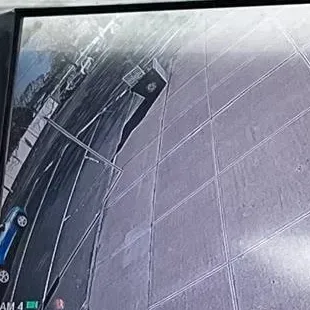
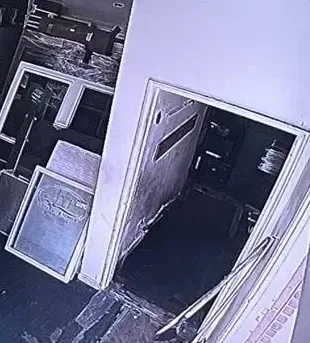
Two small photos on this page say a lot about how we assess a condo's cameras. One is a recorder view along a sidewalk and curb; the other is a night view of a service door standing open. When we walk a building, we ask to see the recorder before we look at a single camera, because the screen shows what the building actually captures, not what the installer meant to capture. A street view that shows the curb but not faces at the door, or a night image where an open door is visible but the person walking through it is not, tells the board exactly where its coverage fails.
The second habit is checking doors before cameras. The open service door in that night view is the most common condo security failure we find: a door propped for a delivery or a move and never closed. A door position contact that alerts staff, a closer that works and a camera aimed along the door's path usually do more than another lobby camera. In Manhattan condos with loading docks and garages, we walk those doors with the resident manager first.
The third is the closet. Recorders, intercom controllers and access panels end up in whatever closet the developer had free, sometimes beside the trash room or under a leak. Before quoting we note where the equipment lives, whether it has battery backup and whether the closet locks, because a system is only as reliable as the room it sits in.


Owners do not vote on the scope line by line, but they live with the work and with the system afterward. Most of the friction in a condo security project comes from owners finding out about it the morning the lobby panel comes off the wall. This section is written so a managing agent can adapt it for the owner notice.
It depends on the system the board chose. If in-unit stations are being replaced, each owner books a 2-hour window or leaves a key with the resident manager, and a technician spends a short time in the unit swapping the station and testing it with the lobby. If the board chose app answering, owners accept an invitation, install the app and add household members. If fobs are being reissued, owners collect new credentials and sign whatever consent the building's data policy requires.
Our technicians arrive within the scheduled window and never early, check in with the desk or resident manager, and protect lobby and elevator finishes the way the building requires. Most noise comes from cable work in closets and ceilings, which follows the building's permitted hours. The lobby panel swap is the one moment the whole building notices; we schedule it early in the day, keep the old panel working until the new one is ready where possible, and make sure staff can let deliveries in during the changeover.
Owners usually ask how to open the door from the app, why a call went to voicemail, how to give a cleaner access on Tuesdays only, and why night video looks grainy. We leave the resident manager and managing agent a one-page guide for the common questions, and many app or credential issues can be resolved remotely when the system is networked. Anything that needs hardware attention is a service call booked through the managing agent.
Owners who lease their apartments should tell the managing agent so renters receive credentials with an end date that matches the lease. When the lease ends, those credentials stop working automatically, which protects the owner as much as the building.
Alarms, cameras and smart locks inside a unit are the owner's choice and the owner's expense, within the building's alteration rules. We install those for owners too. What owners cannot change on their own is anything in the common elements, including the hallway outside the unit door, so it is worth checking the house rules before mounting a doorbell camera or a reader there.
Condo calls reach us from every part of the borough, but six areas account for a large share of them, each with its own building pattern.
New towers along the West Side rail yards and the elevated park, with garages, amenity floors and multiple building entrances on one network.
Supertall condos south of Central Park where elevator floor control and private landings matter more than the street-door panel.
Cast-iron and masonry loft conversions with freight elevators, keyed floors and ground-floor retail condo units.
Waterfront condo towers and office-to-residential conversions near Wall Street, mixing new residential lobbies with older commercial infrastructure.
Postwar and newer condo towers between Riverside Park and Lincoln Center, with garages and large package volumes.
Newer condo buildings and townhouse conversions north of the park, often boutique-sized and without full-time staff.
We also serve condos in Chelsea, the Flatiron District, NoMad, Gramercy, Murray Hill, Kips Bay, the East Village, the Lower East Side, Chinatown, NoHo, the West Village, Midtown East, Sutton Place, the Upper East Side, Yorkville, the Upper West Side, Morningside Heights, Hamilton Heights, Washington Heights, Inwood and Roosevelt Island. Manhattan scheduling runs through our Bronx office at 460 E Fordham Rd.
Pricing for condo security in Manhattan follows two tracks. Repairs start with a $250 service call: we visit, diagnose and fix what can be fixed on the spot, and if the job turns out bigger, the $250 is credited toward it. New and replacement systems start with a free on-site assessment and end with a written price for that building. We do not publish condo package prices or per-unit prices, because in Manhattan the building's risers, entrances and rules decide most of the number.
| What the condo is buying | How it is priced |
|---|---|
| Intercom, buzzer, release, reader or camera repair | $250 visit; the fee comes off the bill when the fix takes more |
| Condo intercom replacement or modernization | Written price after a free on-site assessment |
| Key fob, amenity and garage access control | Written price after a free on-site assessment |
| Elevator floor access | Written price after a joint survey with the elevator contractor |
| Lobby, garage, package room and amenity cameras | Written price after a free on-site assessment |
| Equipment the condo or an owner already purchased | Labor priced by phone or text |
Financing is available through Wisetack, subject to approval. Full terms — including 50% deposit, one-year parts-only warranty on Abstract Enterprises Security Systems-supplied products, and the late-fee schedule — are set out in the service agreement. Our own workmanship is covered for the 30 days stated on our site; extended coverage can be bought separately, and equipment makers stand behind their own products.
There are no off-the-shelf condo bundles here. Manhattan boards usually enter at one of the three levels below, and each gets a price written for its own building.
A $250 service call for a silent line of units, a release that will not open, a garage reader that stopped reading or a recorder that quit. If the fix turns into a bigger job, the $250 is applied to it.
A lobby intercom replacement with app answering, fobs on the amenity floor and package room, or garage cameras. Free assessment, written scope, board vote.
Entry, access, elevator floors and cameras on one network, phased over one or more budget years, written to answer a board RFP.
Already have the equipment? If the condo or an owner has already bought a panel, station, reader or camera, we price the labor by phone or text and book the install once the deposit is in. The equipment and its own warranty stay with whoever supplied it.
How intercom repairs and installations are priced across our service area.
What the service call covers on buzzers, releases and transformers.
Two premium door station makers compared for boutique buildings and garages.
How multi-unit intercoms work in New York City buildings.
The cabling behind networked intercoms, readers and cameras.
Intrusion alarms for unit owners and commercial condo units.
Multiple Dwelling Law section 50-a requires class A multiple dwellings erected or converted after January 1, 1968 with eight or more apartments to have an intercom at the self-locking lobby door that lets each apartment speak to a visitor and release the lock. Older buildings must install one when tenants occupying a majority of apartments request or consent in writing. Whether and how that applies to your condominium is a question for its attorney; this is general information, not legal advice.
Frequently. If the readers use a common credential format and the access controller is still supported, a new intercom can run alongside them or connect to them. If the access software is locked to a previous vendor or no longer updated, the board may choose to replace both at once. We test the readers and controller on the walk-through and price both options.
Yes, with an app-based intercom. A visitor presses the owner's name on the entry panel, the call rings the owner's phone with video, and the owner taps to release the door from anywhere. Owners can also send a one-time or scheduled pass to a guest, cleaner or dog walker, within whatever limits the board sets.
Boards commonly use reserve funds, a capital improvement budget or a special assessment, depending on what the declaration and bylaws allow and what the board's accountant and attorney advise. Financing is available through Wisetack, subject to approval. We can phase a project across budget years so it matches the board's funding plan.
Yes. We work with sponsors, sponsor-controlled boards and newly elected boards. During sell-out we document what exists and what we change so the owner-controlled board inherits clear records, logins and warranties at turnover.
Where the locker provider supports it, yes. We connect the package room door, courier access codes and cameras to the locker system so deliveries are logged end to end. The lockers themselves, and any subscription for them, come from the locker company.
It covers the visit and diagnosis of an intercom, buzzer, door release, reader or camera problem, and the fix itself when the repair is simple. If parts or more labor are needed, we give the price before doing the work and credit the $250 toward it.
Yes. Owners can hire us for an in-unit alarm, cameras inside the apartment, a smart lock or an in-unit intercom monitor, subject to the building's alteration rules. Anything mounted in the common hallway or on the building's entry system needs the board's approval first.
It should be. We put intercom panels, readers and cameras on their own network segment with their own switches, so a resident's router or the amenity-floor guest Wi-Fi cannot reach the security devices. This also keeps the system working when a residential internet provider has an outage, apart from remote app features.
Usually one walk-through and a few business days for a single system; larger multi-system scopes take longer because we may need to see the elevator machine room, garage and several units. Tell us the meeting date when you book, and we will say honestly whether the proposal can be ready in time.
Yes. A service agreement schedules regular checks of entry panels, releases, readers, cameras and recorders, written so the board knows what is included before anything fails. Repairs outside the agreement follow our standard service call rate, and the terms are set out in writing.
We keep client buildings private, so we do not hand out condo names, addresses or contacts. Our Google reviews, rated 4.7 out of 5 across 201 reviews, show what customers say about our work.
Manhattan is one of the five boroughs we cover. Boards and managing agents with buildings in more than one borough can start with our guide to condo security systems across NYC, or return to the Abstract Enterprises Security Systems home page. Across the East River, see condo security systems in Brooklyn. See also condo security systems in Queens, the Bronx and Staten Island; pages for Long Island and the Hudson Valley are on the way. We already serve condominiums and HOA communities in all of those areas, including Nassau and Suffolk and Westchester, Rockland, Orange, Putnam, Dutchess and Ulster counties. The series also covers condo security systems in Nassau County. Suburban associations have county pages too: condo security systems in Suffolk County, Westchester County, Rockland County, Orange County, Putnam County and Dutchess County.