Our condo security systems work in Nassau County starts with a $250 service call when a gatehouse call box, lobby intercom, clubhouse reader, pool gate lock or camera recorder stops doing its job, and anything community-wide is priced in writing after a free on-site assessment with the board or the managing agent. Abstract Enterprises Security Systems holds New York State low-voltage license #12000287431 and designs, installs, repairs and maintains the entry, access control, intercom and camera systems that Nassau condominium associations depend on, from two-story wood-frame garden condos and gated 55-and-over communities to the new concrete elevator buildings rising beside Long Island Rail Road stations.
Quick answer: A Nassau condo usually has more ways in than a city building: a vehicle gate or guard booth, a clubhouse, a pool enclosure, garages and several building doors spread across a campus. Repairs begin with the $250 visit, which covers the trip, the diagnosis and small fixes, and that fee is credited when a larger repair follows. New gate entry, fob, intercom or camera systems are quoted line by line after a free walk of the property, so the board can fund the work from reserves, an assessment or in phases. We book every request within 2 hours, schedule seven days a week with early-day visits, and work first come, first served once a job is paid.
Last updated November 26, 2026 · Prepared by the Abstract Enterprises Security Systems team, NYS license #12000287431 · Public sources relied on: NY Real Property Law Article 9-B (§339-e, §339-v); NY Multiple Residence Law §3; NY Executive Law §378; NY General Business Law Article 6-D and §395-b; Nassau County Administrative Code (alarm permits); Newsday reporting on Nassau condo sales and new condominium construction
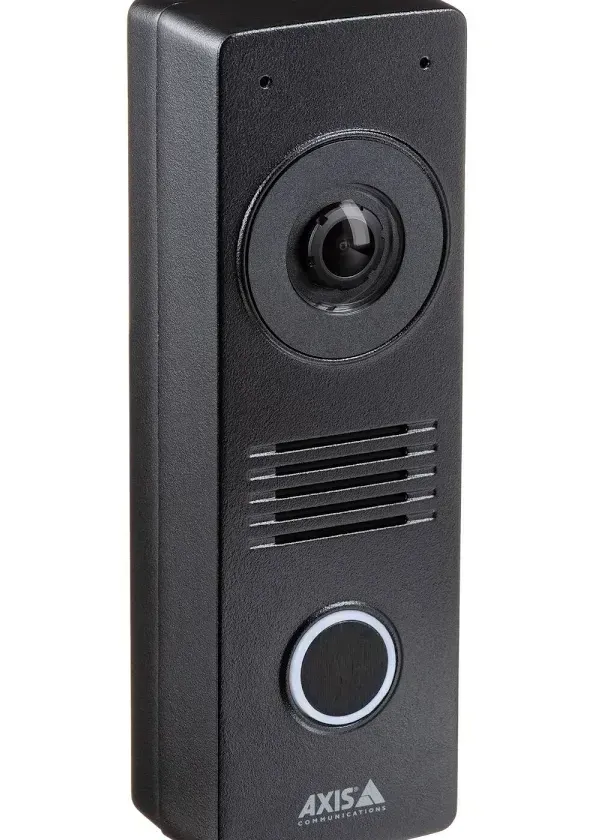
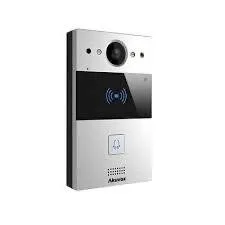
Manufacturer product photo of a slim video door station. On a Nassau County condo, a unit this size fits the narrow trim beside a garden-building entry or the post at a gated community's pedestrian gate.
Nassau County Condo Security Request
Board officers, HOA members, unit owners and managing agents
✅
Request Sent!
Thanks. We will call or text to set the Nassau County visit.
25+
Years Experience
2 Hr
Booking
$250
Service Call
4.7★
201 Google Reviews
Owner-operated since 2002 · Thousands of jobs completed · Booked within 2 hours · Call or text (516) 346-5778
The Neighborhood
Why Nassau County Condo Communities Need Security Planned Around Campuses, Gatehouses and Train Stations
Most people who buy a condominium in Nassau County are not buying an apartment in a tower. They are buying a two-bedroom unit in a cluster of two- or three-story buildings set around parking courts and lawns, often with a clubhouse at the entrance and a pool behind it. A developer building a new elevator condo across from the Mineola station told Newsday in April 2026 that his concrete-and-metal building would stand out from "existing condo communities made up of two- to three-story buildings with wood construction." That one sentence describes the county's condo stock better than any statistic: spread out, built of wood, organized as a campus. Condo building security here has to cover a site, not just a front door.
That changes what a board actually buys. A city condo can protect itself with one good lobby entry panel, a fob reader on the service door and cameras in the mailroom. A Nassau condominium complex may have a dozen building entrances, a vehicle gate or staffed booth, a clubhouse with a fitness room and party room, a pool enclosure that must lock when it is not supervised, detached garages and a maintenance shed. Every one of those is a door someone wants controlled, and every one sits at the end of a cable run that crosses a lawn, a parking court or an attic. A condo security system for Nassau County is mostly a question of how those points get tied together and who manages them.
Three kinds of condo property, one county
We see three broad types. The first is the older garden-style or townhouse condominium: low wooden buildings from the 1970s through the 1990s, often with original intercoms or buzzers, a call box at the drive and a pool that still runs on keys. The second is the planned community built for buyers 55 and over, frequently gated, with a guard booth, a large clubhouse and age-restricted sections alongside unrestricted ones. Newsday's coverage of one such development under construction on the Plainview–Old Bethpage border describes a 143-acre gated community with a guarded gatehouse, a roving security car, a 29,000-square-foot clubhouse and two heated outdoor pools. The third is the new transit-oriented elevator condo: concrete, four or more stories, a lobby, a garage and amenity floors, built a short walk from a Long Island Rail Road station in villages that have rezoned their downtowns.
Each type needs a different system. The garden condo needs entry panels that survive weather and cable paths that avoid opening finished hallways. The gated community needs a gatehouse that works whether or not a guard is in the booth, plus one credential list for the gate, the clubhouse and the pool. The elevator condo needs what a city building needs, with one difference: its residents arrive by car far more often, so the garage door, the garage-to-lobby door and the elevator are where the security actually happens.
Prices that make owners pay attention
Condos in Nassau are not inexpensive. Newsday, citing OneKey MLS, reported a 12-month median condo sale price of $815,000 in Nassau County for the period ending February 2026, and a February median of $920,000 on 41 closed sales. Owners paying that much expect the gate to open when they press the remote, the package to be there when they get home and the pool to be closed to people who don't live there. When those things fail, the complaints go to the board, and the board calls a contractor. A large part of our Nassau condo work is that call: a single failed device that turns out to be the visible symptom of an aging system.
Villages, towns and the two cities
Nassau County is a patchwork. The state describes it as two cities, three towns and 64 incorporated villages, plus more than 60 unincorporated hamlets. A condo in Garden City, Mineola or Great Neck Plaza answers to its village; a condo in an unincorporated hamlet such as East Meadow or Plainview answers to its town; condos in Glen Cove and Long Beach answer to those cities. For security work this matters in small, practical ways. A new camera pole or gate pedestal on a site plan may need the building department's approval, sign and fence rules differ from place to place, and some villages run their own police department while the rest of the county is covered by Nassau County police precincts. We ask early which jurisdiction the community sits in, so the proposal reflects the right approval path.
What Nassau condo owners and boards complain about
The complaints we hear are consistent. Visitors and delivery drivers follow residents through the vehicle gate. The call box at the drive still dials a landline number that half the owners no longer have. The clubhouse fob list includes people who sold years ago. The pool lock is a key that was copied long ago and nobody knows how many copies exist. The lobby panel in a newer building connects to an app the developer set up and the board cannot administer. Cameras exist but nobody knows how to pull a clip, or the recorder has been overwriting a dead drive for months. None of these are exotic problems, and most can be fixed without replacing everything at once.
Nassau County condo facts that shape the work
Building stock: most established condo communities are two- or three-story wood-frame buildings (Newsday, April 2026), so cable usually travels through attics, crawl spaces, basements and buried conduit rather than a central riser.
New construction near the trains: a 101-unit condominium planned across from the Mineola station is expected to open in 2028 (Newsday, April 2026), and the Garvies Point waterfront redevelopment in Glen Cove is planned to include 1,110 condos and apartments when complete (Newsday).
Prices: 12-month median condo sale price of $815,000 in Nassau through February 2026 (Newsday, citing OneKey MLS).
Governance: under New York's Condominium Act, entrances and exits, yards, recreational facilities, parking areas and "all apparatus and installations existing for common use" are common elements unless the declaration says otherwise (Real Property Law §339-e).
Housing law: the city's Multiple Dwelling Law does not govern Nassau villages and towns; the Multiple Residence Law "shall apply to all cities of less than three hundred twenty-five thousand population and to all towns and villages" (MRL §3).
Pools: state law requires pool-enclosure gates to be self-closing and self-latching and securely locked when the pool is not in use or supervised (Executive Law §378).
Owner alarms: Nassau County's Administrative Code ties alarm systems to a county police permit number, which the permit holder gives to the monitoring company.
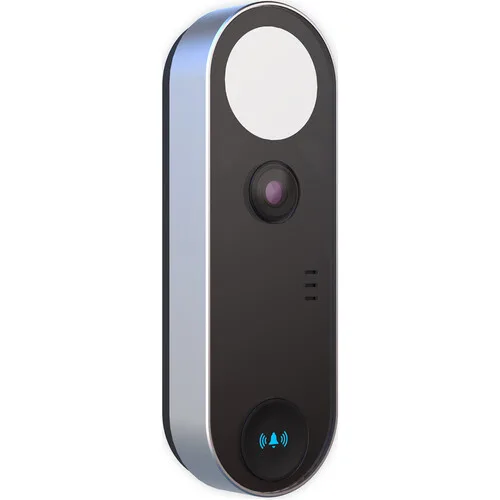
Manufacturer product photo of a rounded video intercom with a reader symbol under the call button. On Nassau County garden condos, a single-door unit like this can serve one building entry while the main gate or lobby carries the full directory.
What We Install
Nassau County Condo Security Services: Gatehouses, Lobbies, Amenities and Garages
This page is the overview for condo boards and HOAs. Each section below answers the condominium's version of the question and then points to the page where that service is covered in depth for Nassau County. We are the same licensed crew on all of them, so a board that starts with one broken reader can grow into a single plan for the whole property without changing vendors.
1
Gatehouse and call box entry
Visitor call boxes at the drive, guard-booth answering, resident remotes and the interface to the gate operator.
2
Lobby intercom replacement
Entry panels, directories and in-unit answering for elevator condos and multi-entry garden buildings.
3
Readers and fobs
One credential list for building doors, the clubhouse, the pool, garages and the maintenance shed.
4
Amenity scheduling
Hours and seasons for the pool, fitness room and party room, set by the board and changed from a browser.
5
Garage and elevator control
Garage doors, the garage-to-lobby door and elevator floor access in the newer elevator buildings.
6
Cameras and recording
Entrance drives, parking courts, mail kiosks and clubhouse doors, recorded on equipment the association owns.
The gatehouse and the call box at the drive
For many Nassau condo communities, the front door is a road. A visitor pulls up to a call box on a pedestal, finds the owner's name, and the owner answers on a phone or app and presses a key to open the gate. Where there is a guard booth, the guard may handle visitors during staffed hours and the call box takes over after. We repair and replace call boxes, wire them to the existing gate operator, add a camera that records the driver and the plate area, and set the system so the guard can answer from inside the booth. The gate operator's motor and arm are a mechanical system in their own right; our side is the access control that tells it when to open, and we work alongside the gate company when the operator itself needs service.
Older call boxes in the county tend to fail the same way. They dial out over a copper phone line the community no longer wants to pay for, their directory is programmed from a keypad on the box itself, and the only person who knows the administrator code moved to Florida. Current call boxes can use a cellular connection or the internet, keep their directory in software the board can edit, and log every entry. Moving to one usually reuses the existing pedestal, the conduit and the gate interface, which keeps the cost far below a full gate project.
Lobby intercoms in Nassau's elevator condos and multi-entry buildings
The newer elevator condos near the LIRR stations, and the older mid-rise condos in places such as Great Neck Plaza, have lobbies and therefore lobby entry panels. Garden condos have something in between: a small entry panel at each building door, each ringing six to twelve units. In both cases the board eventually faces the same decision we describe in our upcoming condo intercom replacement guide: keep repairing a system whose parts are getting hard to find, or replace it with a video or app-based platform. For the repair-versus-replace decision and condominium intercom modernization in general, see our page on intercom installation in Nassau County, where building-wide systems for 5 to 20 units are published at $1,200 to $4,500 and up.
When a condo board writes an RFP for an intercom replacement, the questions that matter most are not about brands. They are whether the new system reuses the existing two-wire or multi-wire cable inside the walls, whether owners will answer on an indoor monitor, an app or both, what the recurring platform fee will be per unit or per building, who holds the administrator login, and how the old system stays working while the new one goes in. Our written proposals answer each of those line by line so a board can compare bids that otherwise look nothing alike. Boards weighing two popular cloud platforms can read our comparison of Akuvox and ButterflyMX.
Intercom and buzzer repairs
Not every problem calls for new equipment. A building where half the units stopped hearing the entry panel may have one failed splice in an attic junction box; a door that will not release may have a burned-out strike or a loose wire at the transformer. A technician finds that with the $250 service call, makes small fixes on the spot and prices anything larger before starting it. Our page on intercom repair in Nassau County covers multi-unit repair work in more detail, and the older audio systems in walk-up condos are covered on our Nassau door buzzer repair page, which lists the typical parts ranges.
One rule applies to every condo intercom repair: the problem is often shared among several units on the same cable run, so we need access to each affected unit on the same visit. A repair that can only reach two of six silent apartments cannot be closed out. We ask the board or managing agent to arrange that access when the visit is booked.
Fobs, readers and one credential list
The most common upgrade we recommend in Nassau condominiums is a single access control platform that covers every controlled opening on the property: building entries, the clubhouse door, the pool gate, the fitness room, garage doors, the maintenance shed and, where there is one, the pedestrian gate beside the vehicle gate. Each household gets one credential, the board decides which doors and hours it covers, and a sold unit's credentials are shut off from a browser rather than by collecting keys. Readers can use encrypted fobs or cards, phone credentials, or keypads where a code is more practical. Our Nassau page on access control installation publishes encrypted fob and card reader installs at $1,500 to $3,500 per door.
Older communities often run two or three separate systems: a keypad at the pool, a different fob system at the clubhouse and remotes at the gate. Consolidating them is less about new hardware than about choosing one controller and one database, then moving each opening onto it as its old equipment wears out. We plan that sequence up front so that each year's work joins the same platform.
Pools, clubhouses and fitness rooms
Amenities are where Nassau condo security systems earn their keep. The pool deserves particular attention because New York's Executive Law §378 requires gates in a swimming pool enclosure to be self-closing and self-latching and to be securely locked with a key, combination or other child-proof lock when the pool is not in use or supervised. We keep the self-closing hinge and the latch in place and add an electrified lock or a reader beside them, so the gate opens for residents during pool hours and stays locked after. The board and the pool operator confirm with the local code official that the arrangement satisfies their enclosure; we do not decide that for them.
Clubhouses need a schedule, not just a lock. The fitness room may open early and close late, the party room only for the owner who booked it, the management office only for staff, and the whole building for an annual meeting. With an electronic reader on each door, those rules live in software and the board can see who came in after hours. For package lockers, we install the door control and network the locker vendor needs; the locker itself comes from the locker provider.
Garages and elevators in the newer buildings
In the elevator condos going up near the Mineola station and in the county's other new downtown and waterfront buildings, residents still arrive by car. The garage door opens on a remote or a long-range tag, the door from the garage into the building takes a fob, and the elevator decides which floors the fob can reach. When those three are configured together, an outsider who slips into the garage behind a resident still cannot reach a residential floor. Our page on elevator access control in Nassau County publishes Level 1 card, fob, code or phone readers from $1,725 per car and Level 2 face, fingerprint or iris readers from $2,875 per car, with the elevator maintenance company's work billed by that company.
Cameras, in brief
Cameras are a short section here on purpose, because condo camera work has its own page in the works for Nassau condo security camera installation. The basics for a board: start at the entrance drive, the gate and the mail kiosk, then the clubhouse doors and pool gate, then the parking courts. Record on a recorder the association owns, set a retention period the board writes down, and limit who can export footage. For the full picture on multi-building residential camera systems in the county, see our page on apartment building security cameras in Nassau County, and for current per-camera prices, the Nassau camera pricing page.
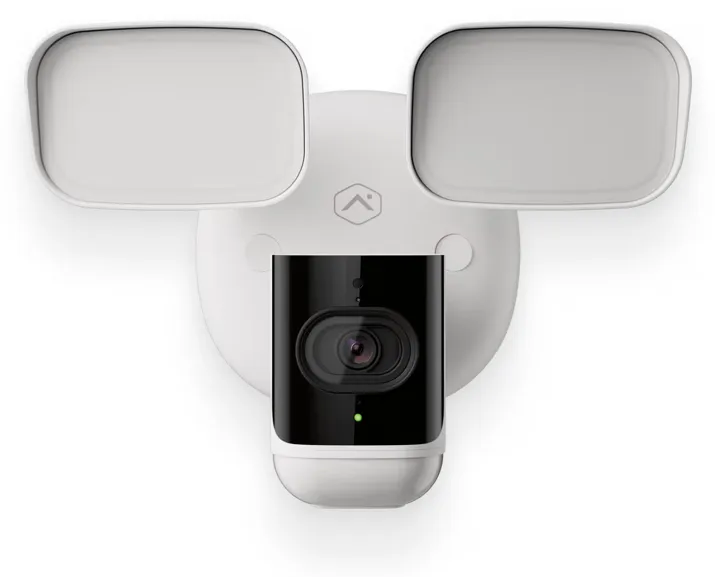
Manufacturer product photo of a floodlight camera with two lamps. Over a Nassau County condo carport, the light itself discourages car break-ins and gives the camera enough light to record in color after dark.
Alarms for owners and for the clubhouse
An owner's alarm inside a unit is a private contract between that owner and us, separate from the association's systems. Central station monitoring through our provider is $30 a month with a keypad or $45 a month with the phone app. Here, the county's Administrative Code ties an alarm to a county police permit number, and the permit holder passes that number to the monitoring company; we explain the step when we set up the account. The clubhouse and management office can carry their own intrusion alarm on the association's account. Details for residential and small commercial alarm systems are on our Nassau alarm installation page.
Fire alarm: within our scope, and stated plainly
Larger condo buildings may have a fire alarm system, and boards sometimes want one contractor for everything. In Nassau County, fire alarm work follows engineer-designed drawings and the Nassau County Fire Marshal's review and inspection process, explained on our page on fire alarm installation in Nassau County. We don't take Nassau fire alarm permits ourselves at this time; ask us first, and we will tell you exactly what we can and cannot do on your building. Where an access control door must release when the fire alarm activates, we coordinate that interface with whoever holds the fire alarm permit. We do not publish fire alarm prices.
Cable, network and power
Behind every reader and camera is a cable, a network switch and a power supply. In wood-frame condo buildings we route new cable through attics, crawl spaces and existing chases and avoid opening finished corridor walls wherever we can; across a campus we reuse buried conduit, pull new cable through it, or use a point-to-point wireless link where trenching would tear up lawns or pavement. Security equipment gets its own network, separate from the owners' internet and from the clubhouse Wi-Fi, with battery backup sized to keep the gate controller and call box alive through a short outage. We do low-voltage work only: if a gate pedestal or a new equipment closet needs a new high-voltage circuit, the association's electrician runs it.
Guards, patrols and "virtual doorman" offers
Some Nassau communities employ guards at a booth; others hire a patrol car service; some are approached by companies selling remote doorman or virtual concierge services. We do not provide guards and we do not run a virtual doorman or managed security service. What we do is install the call box, cameras, readers and booth equipment that guards or a remote service would use, and connect to an existing provider where its platform allows it. That keeps the association's equipment in the association's name, whichever staffing model the board chooses next.
Service calls, maintenance and support
A failed device gets the $250 service call. Communities that prefer to stay ahead of failures can book a seasonal visit before pool opening and before winter, when we test every reader and lock, check recorder drives, update firmware, clean camera housings and walk the credential list with the board to remove stale entries. Support calls on systems we installed are free. Our labor carries the 30-day warranty posted on the site; one year or more of extended coverage can be added when a new system is purchased.
Who we work with
Condo boards of managers, HOA boards in planned communities, managing agents and property management companies, resident managers and superintendents, and individual unit owners all call us. Developers and sponsors call during construction and handover. We answer to whoever signs the work order, coordinate with the managing agent on access and insurance, and give the board every administrator login in writing when the job is done. Cooperative boards have their own page, on co-op security systems in Nassau County, because shareholder buildings work differently.
Building Specialists
Condo Security for Nassau County's Architecture: Six Property Types
Nassau condominiums fall into a handful of physical types, and each one decides where the cable goes, what the entry looks like and how much of the budget goes to the site rather than the buildings.
A
Garden-style wood-frame condos
Two- and three-story buildings around parking courts, a door per building or per stair, attic and crawl-space cable paths.
B
Townhouse condos with private entries
Attached homes with their own front doors; the association controls the drive, the pool and the clubhouse.
C
Gated 55-and-over communities
A guard booth or call box at the gate, a large clubhouse, often several hundred homes on one campus.
D
Transit-oriented elevator condos
Concrete buildings near the train with a lobby, garage, amenity floors and ground-floor commercial space.
E
Waterfront condos
Buildings near the bays, the Sound or the ocean, where wind, salt and flooding shape every outdoor device choice.
F
Small village-center condos
A handful of units above stores or in a converted building, usually self-managed by a few owners.
Garden-style wood-frame condos: many doors, short runs, finished walls
This is the county's most common condo layout: eight to thirty buildings, each with one or two entries serving six to twelve units, connected by walkways and parking courts. The original intercoms are often audio panels with a button per unit, wired building by building with no central equipment room. Because the buildings are wood-frame with finished drywall corridors, the cheapest cable path is usually up through the attic and down inside a closet or a utility chase, not along the hallway. When a board wants fobs on every entry, we look first at whether a reader and an electrified lock can share the cable already serving the entry panel, and whether each building can network back to the clubhouse over buried conduit or a wireless link.
The weak point in these communities is rarely the lock. It is the self-closing door that no longer closes, the side door propped with a rubber wedge in summer, and the basement or laundry door that nobody thinks about. We include those doors on the site plan even when the board only asked about the front panels.
Townhouse condos with private entries: the association owns the edges
In a townhouse condo, every owner has a front door and often a garage. The association's systems live at the edges of the property: the entrance drive, the visitor parking, the pool, the clubhouse and the mail kiosk. Owners install their own doorbells and cameras on their homes, within whatever the declaration and rules allow. Our work for the association is the call box or gate, the amenity readers and a handful of cameras on common ground; our work for owners is separate and billed to them.
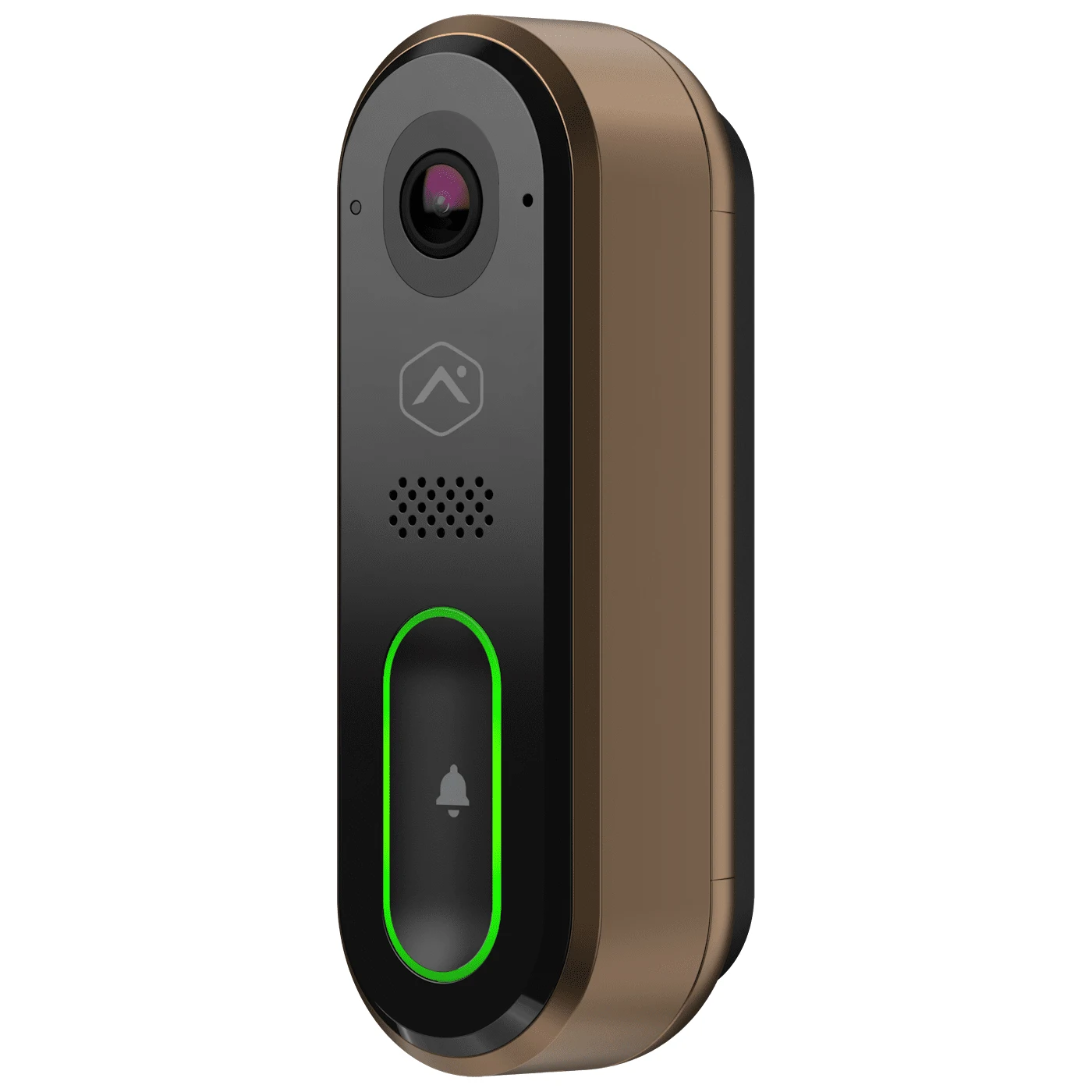
Manufacturer product photo of a wired video doorbell. In Nassau County townhouse condos, a doorbell like this normally belongs to the owner, while the association's gate, pool and clubhouse systems are separate.
Gated 55-and-over communities: the booth, the clubhouse and residents' needs
Planned communities for buyers 55 and over are a large part of Nassau's newer condo market. They tend to share a few features: a single main entrance with a guard booth or call box, sometimes a second gate for residents only; a clubhouse that functions as the community's town hall, gym and party space; and outdoor pools and courts. Security design here is about the gate first and accessibility second. Entry panels should have large, high-contrast directories and buttons, an audio level that carries, and a door-release time long enough for someone walking with a cane. In-home stations should be simple enough that a resident does not need an app to let a visitor in. The guard booth needs to see the gate camera, answer the call box and open the gate without leaving the booth.
Many of these communities are still being built or sold while residents move in, with the developer controlling the HOA board for the first years. That makes the handover of administrator accounts for the gate, cameras and access system an item the incoming owner-controlled board should put on its list.
Transit-oriented elevator condos: city building, suburban habits
The newest Nassau condos look like city buildings: concrete construction, an elevator, a lobby with an entry panel, a garage under or beside the building, a rooftop or amenity floor and, in several villages, ground-floor space for stores or events. The Mineola building Newsday described in April 2026 plans 101 units, a rooftop pool and 10,000 square feet of ground-floor event space beside the station plaza. Buildings like this need a lobby intercom, readers on every door between public and residential space, elevator floor control, a package solution and cameras in the garage and lobby. Because they open with new equipment chosen by the developer, the board's work is usually to take control of the accounts and adjust the schedules once owners move in, not to replace hardware.
Waterfront condos: choose equipment for the weather you actually get
Condos near the South Shore bays, the barrier beaches and the North Shore harbors take wind-driven rain, salt air and, in the worst storms, flooding. Outdoor call boxes, readers and cameras should carry ratings for the exposure they face, with stainless or coated housings and sealed cable entries, and the controller, recorder and network switch belong above any level that has flooded before. A device that is merely "outdoor rated" may still corrode within a few seasons at the water's edge. We ask boards in these buildings where water reached in past storms before we decide where to put anything that matters.
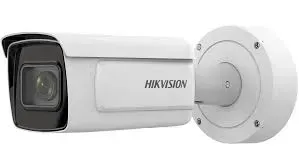
Manufacturer product photo of a varifocal bullet camera on a wall mount. At a Nassau County condo gate, a zoom lens can be set tight on the lane where cars stop at the call box.
Small village-center condos: a few owners, one door, no agent
Some of the county's condos are tiny: four to twenty units above a row of stores, or in a converted house or older building near a village center. They usually have no managing agent and a board of two or three volunteer owners. What they need is simple and dependable: an entry panel or buzzer that works, perhaps a reader on the front and back doors, and a camera at the entry and the mail area. They also need a system the volunteers can run without training, with the administrator login written down and stored where the next board can find it.
What changes with materials and methods
Wood frame and drywall: fishing cable through closets and chases; surface raceway only where the board approves it in writing, never by default.
Vinyl siding and stucco: mounting blocks behind outdoor devices so the siding is not crushed and water does not track behind it.
Concrete elevator buildings: existing sleeves and risers first, and coring only with the building's approval.
Campus distances: network runs beyond about 100 meters need fiber, a switch in an intermediate building or a wireless bridge.
Pavement and lawns: buried conduit reused wherever possible, because new trenching costs more than the equipment it feeds.
Commercial Condo Security
Clubhouses, Mixed-Use Buildings and Shared Grounds: Business Condo Security in Nassau County
Not every part of a condominium is residential. Nassau's downtown condo buildings often include stores, offices or event space owned by a commercial unit owner, and every planned community runs a clubhouse that behaves like a small business. Security for those spaces has its own rules.
Where mixed-use condos are appearing
Villages that have rezoned their downtowns around LIRR stations are where most new mixed-use condo buildings are going up. Newsday reported that more than 1,100 rental apartments opened in Mineola after 2010, citing the Long Island Regional Economic Development Council, and that the village issued building permits at a far higher rate than the rest of Long Island; the newest projects there include condominiums with ground-floor commercial space. On the Glen Cove waterfront, the Garvies Point redevelopment is planned to mix condos and apartments with parks, stores, offices and restaurants, according to Newsday. When a building combines homes and businesses under one condominium, the security plan has to serve both without letting one into the other's space.
Keeping the commercial owner and the residents apart
The rule we design to is simple: commercial staff and their customers reach their own space and nothing more. Every door between commercial and residential areas gets a reader, commercial credentials stop at those doors, the elevator ignores calls to residential floors from commercial credentials, and camera permissions are split so each owner sees only its own areas. Who pays for which hardware follows the declaration's allocation of common and limited common elements; the board and its attorney settle that, and we price each item separately so the split is easy.
The clubhouse as a small business
A clubhouse has staff, vendors, deliveries, cash or card payments for events, and a management office with owner records. It needs an intrusion alarm on the office, a reader on the staff door, cameras on the entrances and the reception desk, and a schedule that opens the public rooms only when they are booked. Locker rooms and restrooms are off limits to cameras: New York's General Business Law §395-b makes it a crime for an owner or manager to knowingly allow a device for surreptitiously viewing the interior of fitting rooms, restrooms, toilets, bathrooms, washrooms or showers. We will not install a camera in those rooms under any circumstances.
Vendors, landscapers and contractors
Condo communities in the county run on contractors: landscapers in summer, snow plows in winter, pool companies, cleaners, the gate company and package carriers every day. Each should have a credential or code limited to the gates, doors and days it needs, issued by the managing agent and expiring automatically. That one practice closes more gaps than any camera, because it ends the habit of handing a gate remote to a vendor and never getting it back.
Parking courts, carports and detached garages
Car break-ins and package thefts are the two complaints Nassau boards bring us most often. Parking courts are wide and dark, and carports offer cover. Lighting first, then a camera at each entrance to the court rather than one camera trying to see everything, gives the board footage that actually identifies a vehicle. Detached garage rows can be watched from the end of the row without looking into individual garages.
Compliance callouts for Nassau County condo security work
Condominium law: common elements and the board's authority are set by Real Property Law Article 9-B, including §339-e (definitions, including entrances, recreational facilities, parking and "all apparatus and installations existing for common use") and §339-v (bylaws, the board's powers and reserves). Your declaration and bylaws control the details.
State housing law: the Multiple Residence Law, not the city's Multiple Dwelling Law, applies in Nassau's towns, villages and smaller cities (MRL §3).
Who may do the work: General Business Law Article 6-D makes a Department of State license a condition of running a business that puts in or services security or fire alarm systems; our license number is 12000287431.
Pool enclosures: gates self-closing, self-latching and locked when the pool is not in use or supervised (Executive Law §378).
Privacy: no viewing devices in restrooms, showers, changing areas and similar rooms (General Business Law §395-b).
Alarm permits: alarm systems are linked to a Nassau County police permit number under the county's Administrative Code.
Egress: electrified locks on exit paths must still let people out; door hardware and release devices are coordinated with the building's code official and, where present, the fire alarm.
Insurance: certificates of insurance naming the association and managing agent are issued when the job is awarded, never as part of a quote.
Nothing on this page is legal advice. When a rule matters to a decision, the board should confirm it with its attorney or the local code official.
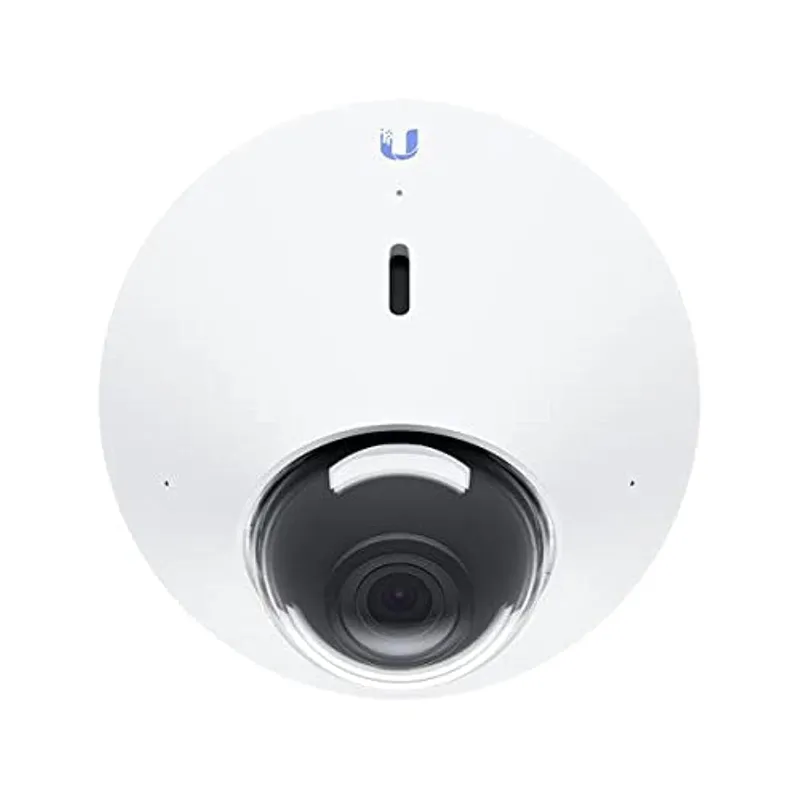
Manufacturer product photo of a low-profile dome camera. In a Nassau County condo clubhouse, a dome like this sits flush on the lobby or fitness-room ceiling, never in a locker room or restroom.
Your Questions Answered
Condo Security Systems in Nassau County: Questions Answered
These are the questions Nassau condo boards, HOA officers and managing agents ask us most often, grouped by topic. Each answer comes first; the detail follows.
Gatehouses and entrances
Can the gate system keep a record of which owner let each visitor in?
Yes. When the call box rings a home and the owner presses the key to open, a current access platform logs the time, the household that answered and the gate that opened, and the gate camera keeps the video of the car at that moment. The board or managing agent can pull both together when something goes wrong.
That record settles the questions boards actually argue about: who admitted the moving truck that damaged the clubhouse awning, whether a contractor came in on a resident's say-so or tailgated, how often one household buzzes in short-term guests. Older call boxes keep no such log, which is one of the strongest reasons to replace them.
Our guard booth is a small wooden structure with no closet. Where does the gate equipment go?
Usually not in the booth. The access controller, network switch and battery backup are better placed in a locked, ventilated enclosure on a post nearby, or in the nearest building with conditioned space, with only a booth station, a monitor and an open button inside the booth.
Small booths get hot in summer, cold in winter and are occasionally hit by cars. Keeping the electronics out of them extends their life and means a booth renovation or replacement does not take the gate down. Where the booth must hold equipment, we mount it high, away from the door and the space heater.
Can owners call the gatehouse from inside their homes?
Yes, if the in-home answering device and the booth station are on the same intercom platform. Owners press a button on their indoor monitor or in the app to reach the guard, for example to announce an expected visitor or report a problem, and the guard can call a home the same way.
Where owners answer only on their own cell phones, the booth can be given a phone line that owners save as a contact. That works, but it loses the advantage of the guard seeing which home is calling. We describe both options in the proposal and price them separately.
Can the guard booth check a visitor against a list the owner filled in ahead of time?
Yes. Many current access platforms let an owner enter an expected visitor's name, date and time window in an app or web portal; the guard sees the list on a tablet or booth screen and opens the gate without phoning the owner. Some platforms can also send the visitor a one-time code for the call box when the booth is closed.
Whether that feature is worth it depends on visitor volume. For a community of 150 homes with a lot of visitors on weekends, it saves the guard dozens of calls. For a small community, a phone call from the booth is usually enough.
Residents, accessibility and seasons
Can an owner with a hearing or vision impairment get a different in-home station from the rest of the building?
Usually yes, as long as the alternative station runs on the same platform. Some indoor monitors offer a larger screen, a flashing call indicator or adjustable volume, and an owner who needs one can have it installed in place of the standard unit.
Whether the association or the owner pays for the upgrade is a question for the board and its governing documents. We price the standard station and the alternative side by side so the board can decide, and we test the call from the entry panel with the owner present before we leave.
What happens to our directory and credentials if the platform company goes out of business?
It depends on how the system is built, which is why we ask before recommending one. Systems with an on-site controller keep working and can be exported or migrated if the maker disappears; purely cloud-based systems can stop working if the service is shut down or the subscription lapses.
For a Nassau condo spending tens of thousands of dollars, we suggest asking every bidder three things: whether the readers and panels work with other makers' controllers, whether the owner list can be exported in a standard file, and what happens to the hardware if the subscription ends. We answer those in writing for each platform we propose.
Can our cameras show whether the plowing contractor cleared the lanes when the invoice says it did?
Often, yes. Cameras on the entrance drive and parking courts record the time a plow comes through, and a board member can scan the night's footage quickly by jumping to motion events instead of watching hours of video.
If verifying contractors is a goal, tell us during the assessment. We can aim one camera to see the length of the main lane, make sure it records in low light during snow, and set a retention period long enough to cover the time between the storm and the invoice.
Buildings and wiring
Our buildings are two-story wood-frame with finished hallways. How is new cable run without opening every wall?
Mostly from above and below. In wood-frame buildings we pull cable through the attic and drop it inside a closet, a utility chase or the wall cavity beside the door frame; from a basement or crawl space we come up the same way. Small access holes are patched by the association's painter, since we do not patch or paint walls ourselves.
Where no hidden path exists, the options are a slim surface raceway painted to match, a wireless lock or reader where the door suits one, or reusing the cable already running to the old intercom. We show the board each path on the walkthrough and put it in writing so there are no surprises on installation day.
Our new building near the train has a ground-floor event space open at night. How do we keep its guests off the residential floors?
Separate the two at every point where they meet. The event space gets its own entrance and its own restroom path; every door from the event space into the residential lobby, stairs or garage takes a resident credential; and the elevator does not answer calls to residential floors from the event level after hours.
Cameras at those connecting doors, and an alert if one is propped open during an event, give the board a way to enforce the rule. The commercial owner's staff can hold credentials that open only the event space and its back-of-house doors.
We are a small condo in a village downtown with one front door. Is an intercom enough, or do we need fobs as well?
An intercom is the minimum; a reader on the same door is usually worth adding. The intercom lets owners see and admit visitors; the reader replaces brass keys that have been copied for years and lets the board shut off a sold unit's access in seconds.
Many current entry panels have a reader built in, so one device does both and one cable serves it. For a building with a back door to a parking area, a second reader there is the next step. Cameras at the entry and mail area round it out.
Rules, approvals and starting points
Does our village or town building department have to approve a new call box, gate reader or camera pole?
It depends on the municipality and on what is being built. Replacing devices on existing posts and walls rarely needs approval; a new pedestal, a pole with a foundation, a new gate, or anything that changes the site plan may. Nassau has dozens of villages and three towns, and each building department sets its own requirements.
We identify which jurisdiction the community is in at the walkthrough, flag any item that may need approval in the proposal, and work from whatever the board or its engineer files. We do not promise an approval timeline, because the municipality sets it.
What does a sensible first phase look like for a gated condo community?
Fix the gate, then build one credential list, then add cameras. In practice, phase one replaces or repairs the call box, connects it to software the board controls and records both lanes; phase two moves the clubhouse, pool and building doors onto the same access platform; phase three adds cameras at the mail kiosk, amenities and parking courts.
That order puts the money where owners notice it first and avoids buying cameras for a site whose gate still lets anyone in behind a resident. Each phase is priced on its own, so the board can fund one per budget year.
The developer put consumer Wi-Fi cameras on our amenity deck. Should the association keep them?
Usually not for long. Consumer cameras are registered to one person's account, store footage in a cloud subscription the association may not control, and rely on Wi-Fi that drops when the building is busy. When the developer's representative leaves the board, access to that footage can leave with them.
The fix is to move common-area recording onto a wired recorder the association owns, with accounts in the board's name. If the consumer cameras are recent, they can stay in place until the new system is installed, and owners can keep using similar products at their own doors under the community's rules.
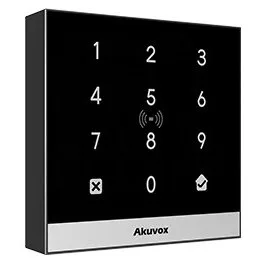
Manufacturer product photo of a combined keypad and card reader. On a Nassau County condo pool gate or clubhouse door, residents can use a fob while contractors get a scheduled code.
Equipment
Types of Condo Security Equipment We Install in Nassau County
1
Call boxes and gate stations
Pedestal-mounted visitor stations with directories, cellular or internet dialing, and a camera for the driver.
2
Lobby and building entry panels
Video panels with a directory and reader for elevator lobbies and garden-building doors.
3
In-home and booth stations
Indoor monitors for owners, a booth station for the guard, and app answering for those who want it.
4
Readers, keypads and controllers
Encrypted fob and card readers, keypads for contractors, long-range tags for vehicle gates.
5
Locks and door hardware
Electric strikes, magnetic locks, request-to-exit devices and gate interfaces.
6
Cameras, recorders and network
Outdoor and indoor cameras, recorders the association owns, network switches and battery backup.
Visitor entry options compared for Nassau condos
Option
Suits
Watch for
Call box dialing owners' phones
Gated communities without a full-time guard
Owners who change numbers; directory upkeep
Call box ringing a guard booth, then owners after hours
Communities with part-time booth staffing
Clear schedule and holiday rules
Video entry panel with in-unit monitors
Elevator condos and garden buildings with owners who prefer a screen
Cable inside each unit; parts life of older platforms
Cloud video panel with app answering
Buildings where most owners use smartphones
Recurring platform fees; a fallback for owners without smartphones
Audio panel or buzzer
Small walk-up condos on a tight budget
No visitor picture; often older wiring
Credentials: remotes, tags, fobs, codes and phones
Vehicle gates in Nassau communities still run mostly on handheld remotes, which are easy to lose and hard to account for. Long-range windshield tags read as the car approaches and are tied to one vehicle; phone credentials open the gate from an app; fobs remain the most practical credential for building and amenity doors. Older proximity fobs can often be copied, which is one reason boards move to encrypted credentials. Keypads stay useful for contractors and service companies whose codes can be scheduled and expired.
Locks for gates, pools, clubhouses and building doors
Building doors usually take an electric strike in the frame; glass and aluminum storefront-style doors in newer buildings often take a magnetic lock with a request-to-exit device. Pool gates keep their self-closing hinges and self-latching hardware, with an electrified lock added. Every electrified lock on an exit path must still let people out freely, and fail-safe or fail-secure behavior is set door by door with the building's code requirements in mind.
Manufacturer product photo of a compact door station with a camera, reader zone and call button. On a Nassau County condo clubhouse or management-office door, it lets staff see visitors while residents use their fobs.
Recorders, retention and remote viewing
The association's recorder should sit in a locked closet in the clubhouse or management office, on battery backup, with enough storage for the retention period the board chooses. Board members and the managing agent can view live and recorded video from a phone or computer with individual logins, so the system shows who looked at what. We set the retention period, the export procedure and the list of authorized viewers in writing at handover.
National alarm brands versus a local installer, for a condo association
Owners often ask whether a national brand would be simpler. ADT, Ring and SimpliSafe sell systems built around single homes: a hub, door sensors, a doorbell, monitoring. They work well inside a unit. They are not built to run a vehicle gate, a guard booth, forty fob doors and a pool schedule for a community of several hundred owners with a board that changes every few years. That is the work a local licensed installer does, with equipment the association owns outright and administrator accounts in the association's name.
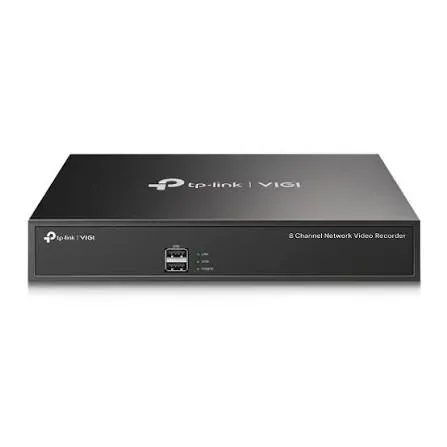
Manufacturer product photo of a compact network video recorder. In a smaller Nassau County condo, a recorder this size fits on a shelf in the management office closet with a battery backup beside it.
AI Overview Reality Check
What AI Gets Wrong About Condo Security Systems in Nassau County
Ask an AI assistant, or read a national cost guide on Angi, HomeAdvisor or Fixr, and the condo security advice you get is blended from urban apartment buildings and detached houses. Seven common claims, and how they hold up on a Nassau County condominium campus.
1. "A condo building needs one good lobby intercom"
That is true of a single tower. It is not true of most Nassau condos, which are campuses of low buildings with a gate or booth at the drive, a clubhouse, a pool and garages. The lobby, if there is one, is just one of many controlled points.
In a typical garden-style condo complex we may count twelve building entries, a clubhouse door, a pool gate, a fitness room, a maintenance shed and a vehicle gate. A plan that budgets for a single intercom leaves most of those doors on keys.
The right first question for a Nassau board is not which intercom to buy but how many openings the association controls and which of them matter most. The site plan answers that before any brand comes up.
2. "New York City intercom rules apply to every New York condo"
AI answers often quote New York City requirements as if they applied statewide. The Multiple Dwelling Law covers cities of 325,000 or more people. Nassau's villages, towns and two smaller cities fall under the Multiple Residence Law instead, which by its own terms applies to all towns and villages and to cities under that population.
The same goes for New York City's tenant data privacy law for smart-access buildings and its building code sections on locked doors. They are city laws. A Nassau board looking for the rule that governs its doors should look at the state codes, its village or town, its declaration and its bylaws.
We cite only the rules we can source and tell boards to confirm anything decisive with their attorney or code official. A contractor quoting city law on a Garden City or Long Beach condo has not done the homework.
3. "Condo security costs a set amount per unit"
Per-unit figures appear constantly in AI summaries and cost guides. They hide almost everything that drives the price in Nassau: distance between buildings, whether buried conduit exists, how many doors and gates there are, and whether the gate operator is sound.
Two communities of 120 homes can differ by thousands of dollars just in cable and trenching. One may have conduit to every building and a clubhouse closet with room for a controller; the other may need a wireless link to each building and a new equipment enclosure.
That is why our only fixed price for condo work is the $250 service call, and why we publish the Nassau ranges that genuinely apply to individual items. Community-wide plans are quoted after we walk the property.
4. "A guard at the gate makes access control unnecessary"
Guards are valuable, but a booth is only staffed part of the time in many communities, and guards cannot see who used a pool key at midnight or which fob opened the clubhouse on a Sunday. Access control and guards do different jobs.
The best gated communities pair the two: the guard handles visitors and judgment calls, while readers, logs and cameras handle the hundreds of resident entries a day and everything that happens after the shift ends.
When boards weigh guard hours against equipment, the useful comparison is coverage. Equipment works every hour; a guard works the hours the association pays for. The plan should assume the booth is empty at some point.
5. "Wireless cameras are the easy answer for a spread-out property"
Battery and Wi-Fi cameras are marketed for their simple installation. On a campus of parking courts and clubhouses, they meet long distances, exterior walls, trees and dozens of owners' home networks competing for the same airwaves.
The result is cameras that miss events, batteries that need climbing a ladder every few months, and footage stored in someone's cloud account. For common areas, wired cameras on a recorder the association owns are more reliable and cheaper over their life.
Wireless still has a place: a point-to-point bridge between a far building and the clubhouse, or a camera at a spot where cable truly cannot reach. We use it as a link, not as the system.
6. "Cameras and a gate will lower the association's insurance premium"
Some AI answers promise discounts for security upgrades. Whether an insurer gives any credit is up to the insurer, and many master policies do not. We never promise a premium reduction.
What we can do is respond to the insurer's own loss-control report. When a carrier's inspector lists items such as better lighting at the parking court, a camera on the clubhouse office or a lock on the pool equipment room, we price exactly those items.
If the board wants to ask about credits, the carrier or broker is the one to answer. Our proposal gives them an itemized list of what was installed.
7. "A contractor can come out today, any hour"
Many generic answers say help is always minutes away. We book every request within 2 hours, schedule seven days a week with early-day visits and work first come, first served once a job is paid. We do not promise same-day work, and we do not advertise round-the-clock service.
For a board, the practical consequence is to report problems as soon as they appear and to keep basic fallback measures in place, such as a mechanical key override at the gate and a working lock on the pool, while a repair is scheduled.
Seasonal maintenance visits before pool opening and before winter reduce the number of urgent calls. They are the cheapest way to keep a Nassau community's gate and amenity systems working on the days that matter.
Speak to a Technician About Your Nassau County Condo
Text us a picture of the failing device or forward the reserve-study line for it, and a date is on the calendar within 2 hours.
A few facts get us started: the village or hamlet, a rough home count, gate or booth or neither, elevators or not, and the complaint owners raise most. Photos of the controller closet or the gate pedestal save time. You can also call or text (516) 346-5778.
✅
Request Sent!
Thanks, we have it. Someone from our office will reach you by phone or text to agree a two-hour window for the Nassau County appointment.
How It Works
Our Installation Process for Nassau County Condos
Small or large, every condo job follows this order. On a big project, most of the calendar passes between the proposal and the go-ahead, while the board debates and sometimes polls owners.
1
Tell us about the community
Whoever calls, officer, agent or owner, we note the address, the home count, garden or elevator buildings, and what is broken or wanted.
2
Service call or free assessment
Something broken? A technician comes out for $250 and diagnoses it. Planning something new? We tour the entrance, buildings, amenities and closets at no charge.
3
Itemized written proposal
Every line names the opening, the equipment, the cable path and the price, grouped into phases the board can fund separately.
4
Approval, deposit and insurance
Once the vote passes and the down payment arrives, hardware is ordered and our insurer sends certificates to the association and agent.
5
Notice to owners
We write up the schedule and what residents will notice, and the association distributes it.
6
Installation one entry at a time
Each entrance switches to the new equipment on its own day, so owners can always get home and the pool still locks at night.
7
Programming, credentials and handover
We load the directory and credentials, test every opening with the board, and hand over all administrator logins in writing.
Scheduling around owners, guards and the seasons
Every visit is booked in a two-hour arrival window, and the crew arrives inside it. Gate work is easiest outside the morning and evening rush, pool readers should be finished before opening day, and outdoor trenching or pavement cuts wait for workable ground. In gated communities we coordinate with the booth so guards know which lane is affected and when.
What the notice to owners should cover
A good notice answers five things in plain language: which day and window, which entrance or amenity is affected, how long it will be down, how residents pick up their new credentials, and a phone number for questions. Copy tenants of rented units. We hand the board the technical details, and the notice goes out under the association's name.
Deposit, payment and financing
Our service agreement calls for 50 percent down before installation, and nothing is ordered until that payment clears. Some panels and readers are special order and arrive when the maker ships them, a schedule outside our control, so we lock in the install day only after the boxes are in our hands. Financing is available through Wisetack, subject to approval. Associations and management companies can pay by check.
Coverage after the job
Workmanship is covered for the 30 days stated on our warranty page, and a board buying a new system can choose a paid extension of a year or longer at the time of sale. Device makers stand behind their own products under their own terms, and if a system we put in raises a question later, phone support costs nothing. Full terms — including 50% deposit, one-year parts-only warranty on Abstract Enterprises Security Systems-supplied products, and the late-fee schedule — are set out in the service agreement.
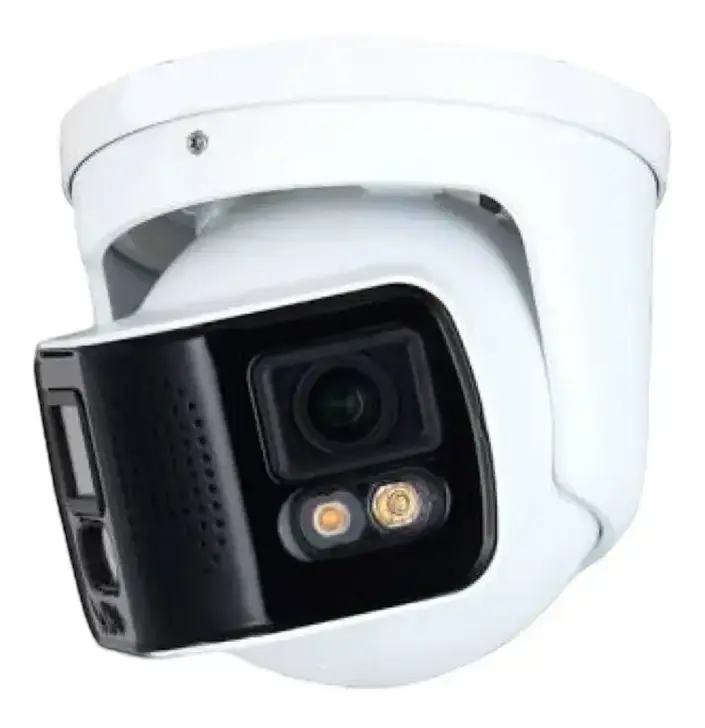
Manufacturer product photo of a dual-lens turret camera. Mounted on a Nassau County condo pool house, one unit can cover the pool gate and the deck in two directions.
Coverage Area
Condo Security Near Nassau County's Landmarks
Six familiar Nassau places, and the type of condominium property found around each. Client buildings are never identified on this page.
1
Mineola LIRR station
A village that has issued housing permits far faster than the rest of Long Island, with elevator condos and rentals beside the station plaza, garages, lobbies and ground-floor commercial space.
2
Garden City and Franklin Avenue
Low-rise condo and townhouse communities and newer buildings near the village center and its train stations, under a village building department with its own standards.
3
Great Neck Plaza
The downtown village where much of the Great Neck peninsula's condo and co-op housing sits, with older elevator buildings near the station that need lobby intercom and reader upgrades.
4
Long Beach boardwalk
Oceanfront and bayside condos on the barrier island, where salt air and storm flooding decide the housing and location of every outdoor device.
5
Garvies Point, Glen Cove
The waterfront redevelopment mixing condos and apartments with parks and shops on Hempstead Harbor.
6
Old Country Road corridor
From Westbury and Carle Place through East Meadow to Plainview, gated and age-restricted communities with guard booths, clubhouses and pools.
We also work in condo communities in Roslyn, Manhasset, Port Washington, Oyster Bay, Woodbury, Jericho, Hicksville, Rockville Centre, Lynbrook, Freeport, Oceanside, Valley Stream and the Five Towns. Crews come out from our Brooklyn office at 1282 Troy Avenue.
Pricing
Condo Security System Cost in Nassau County
One condo price is fixed before we arrive: $250 for a technician to come out, find the fault and make small fixes, credited toward any larger repair that follows. Individual items have published Nassau ranges, listed below from our service pages. A community-wide plan is quoted in writing after the free assessment, because in Nassau the site itself, with its distances, conduit and gates, often costs more than the devices.
Published Nassau County ranges that apply to condos
Item
Published price
Where it is posted
Technician visit to find the fault and handle minor fixes; applied to any bigger repair
New York's Condominium Act lets bylaws provide for reserves "for major and minor maintenance, repairs, additions, improvements, replacements" (Real Property Law §339-v), and most established Nassau associations plan capital work from a reserve study. Gate operators, call boxes, access controllers, entry panels and recorders belong on that study with an expected life and replacement year, but older studies often lump them together or leave them out. When asked, we give the board a plain inventory of each security component, its approximate age and what replacing it involves, which its reserve-study preparer can use. Whether the money comes from reserves, an assessment, the operating budget or financing is the board's decision on its accountant's advice.
What moves a community-wide quote
Getting cable there: existing pipe under the lawn is cheap to use; new trenches are not, and radio links sit in between.
Door count: each opening put under control means a lock, a reader and setup time.
Gate condition: a healthy operator arm and solid pedestal can stay; worn ones add a line to the quote.
Answering method: app-only answering, indoor monitors in every home, or a guard booth station.
Elevators: number of cars and the elevator company's own charges for the interface.
Video scope: the count of cameras and the storage needed for the number of days of recordings the board chooses.
Recurring fees: platform, cellular or cloud fees for some systems, shown separately in the proposal.
Who pays: some items belong to a master association, some to one condominium, some to a commercial owner, and each is priced apart.
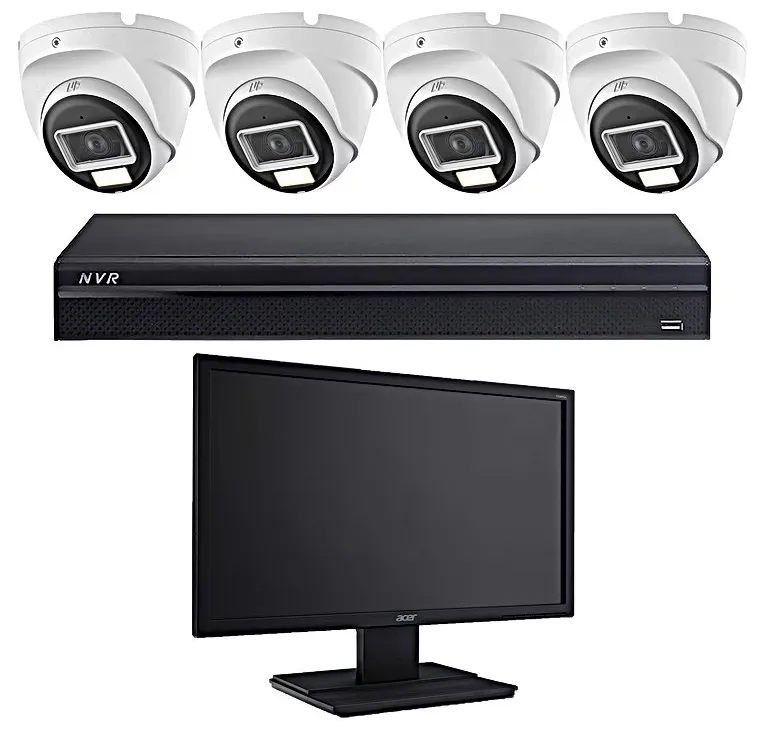
Manufacturer product photo of four turret cameras with a recorder and monitor. A set like this can cover a Nassau County condo's gate lanes, clubhouse door and mail kiosk as a first phase, with room to add more later.
Shop Our Systems
Condo Security Packages and How They Are Priced in Nassau County
Condo site plans in the county vary too much for a one-size bundle. Instead, nearly every job we take fits one of these three levels of work.
1
Get it working again
$250 service call. One visit to find why the gate, panel, reader, lock or recorder failed; quick fixes happen then, bigger ones get a price first.
2
Replace one entry point
Quoted in writing after a no-cost site tour. A single upgrade, say the gate call box or one building's panel, measured against the ranges in the tables.
3
One plan for the whole community
Quoted in writing after a no-cost site tour. Entrances, buildings, amenities and video laid out as one design, then broken into yearly phases.
Equipment the association already bought
Some associations buy hardware themselves, often a call box or a box of cameras from a supplier. Send us the model numbers and where each piece should go and we will give a labor-only price over the phone. Anything we did not furnish stays under its maker's warranty alone, and we cannot vouch for its Wi-Fi reach or its software.
Spreading a project over several budget years
Boards that fund security from reserves one piece at a time get the most from deciding the platform first. We design the whole property up front, then stage it so that each year's work stands on its own and joins the same system: the gate and credential platform first, the amenity and building doors next, cameras after. That avoids the common Nassau outcome of three systems from three eras that cannot share a credential list.
Responding to RFPs and board bid requests
We answer condo RFPs and managing agents' bid requests in whatever format the board uses, with each line priced and every assumption stated. We do not provide client references or name client buildings; boards can read our Google reviews. Certificates of insurance naming the association and managing agent are issued when the job is awarded.
On a Nassau condo campus, the first hour of a walkthrough is spent outside. We start at the gate and follow the cable to wherever the controller lives, which in older communities is often a closet in the clubhouse or a box in the maintenance shed nobody has opened in years. The route tells us what can be reused and what has to be pulled new, and that is most of the price.
Next we count the openings: every building door, the laundry and storage doors, the pool gate and the gap in the pool fence where a hedge used to be, the pedestrian gate beside the vehicle gate. Boards are often surprised by the total. A gate system with a perfect call box means little if the walkway gate twenty feet away does not latch.
Last, we ask who holds the keys and passwords: the gate's administrator code, the recorder login, the closet key, the developer's app account. In communities that turned over from the developer years ago, the answer is sometimes nobody. We reset what we can, write everything down and leave a copy with the board and the managing agent.
FAQ
Nassau County Condo Security Systems FAQ
Can the guard open the vehicle gate from inside the booth without stepping out?
+
Yes. A booth station or a button wired to the access controller lets the guard talk to the driver at the call box, see the gate camera and open the gate from the desk. Each opening is logged with the time, so the board can review booth activity later.
Does an owner's alarm in a Nassau County condo need a police permit?
+
Nassau County's Administrative Code links alarm systems to a county police permit number, and the permit holder gives that number to the monitoring company. When we set up an owner's monitored alarm, we explain the step and record the permit number on the monitoring account.
Can readers and cameras be mounted on vinyl siding without causing leaks?
+
Yes. We use mounting blocks made for siding so the device sits on a flat, sealed surface instead of crushing the panel, and we seal every cable entry. That keeps water from tracking behind the siding and keeps the device level.
Can cameras be installed in the clubhouse locker rooms or restrooms?
+
No. New York's General Business Law section 395-b prohibits owners and managers from knowingly allowing devices that surreptitiously view the inside of restrooms, bathrooms, showers, fitting rooms and similar rooms. We place cameras at the entrances to those areas, never inside them.
Can a fob reader go on the pool gate without removing its self-closing latch?
+
Yes, and the latch should stay. State law requires pool-enclosure gates to be self-closing and self-latching and locked when the pool is not in use or supervised. We add the reader and an electrified lock alongside the existing hinge and latch, and the board confirms the setup with its code official.
How do owners receive their new fobs, tags or app invitations when the system changes over?
+
We prepare credentials from the owner list the managing agent supplies. Fobs and windshield tags are handed out at a scheduled table in the clubhouse or by the agent, and app invitations go out by email or text. Old credentials stop working on the cutover date the board announces.
Can you add a reader to the door between the parking garage and the elevator lobby?
+
Yes, and in most newer Nassau elevator condos it is the single most useful door to control. With a reader there, someone who slips into the garage behind a car still cannot reach the lobby or elevators without a resident credential.
Can a fob send the elevator only to the owner's own floor?
+
Yes, with elevator access control. The reader in the car checks the credential and lights only the floors that owner may reach, plus shared floors such as the lobby, garage and amenity level. The elevator maintenance company handles its part of the connection.
Our insurer's loss-control report lists security items. Can you price exactly what it asks for?
+
Yes. Send the report and we will price each listed item, such as a camera on the clubhouse office, a lock on the pool equipment room or lighting at a parking court, as its own line. Any premium decision stays with the insurer.
Can the clubhouse front desk let visitors in as well as the guard booth?
+
Yes. Several answering stations can share one call box or entry panel, so a visitor call can ring the booth, the clubhouse desk or the management office in turn. The board decides the order and the hours for each station.
Can the clubhouse lights or heat come on when the first resident unlocks the door?
+
Often, yes. Most access controllers have outputs that can signal a lighting or building control system when a door is unlocked. We make that low-voltage connection; any new high-voltage wiring for the lights or heating is done by the association's electrician.
Can delivery trucks get a separate call box so they stop blocking the main gate?
+
Yes, if the property has room for a second lane or a service entrance. A call box there can ring the management office, the guard booth or a delivery code list, keeping trucks out of the residents' lane at the main entrance.
All Areas Served
Condo Security Systems Across Long Island and New York
Gates, Lobbies, Pools and Garages: One Licensed Vendor in Nassau County
Old gatehouse call box or brand-new lobby beside the station, one licensed team plans, builds and supports it. Broken equipment begins with a $250 visit; new projects begin with a no-cost walk of the grounds.