What are you looking for?
About Us Contact Us Careers Get a Free Quote (800) 486-0943
Pick a service
✅ Got Your Own System?
🎬 Home TheatreQuote 🎶 AV SoundQuote 🔑 Access ControlQuote
Now pick your area
Pick your area
Long Island
Hudson Valley
Services available
Pricing & Tools
Pick a service for pricing
🚪 Intercom Pricing 🔔 Buzzer Repair Pricing
Calculators
📹 Camera System Calculator 🚨 Alarm Calculator ⚡ Cabling Quote Builder ✅ Got Your Own System?
Select your area
Nassau County, New York

Network Installation Nassau County

Clinical and office network design · business Wi-Fi · managed switching · firewalls and VLANs · modality and shielded-room drops · repair

Commercial network installation across Nassau County — the Mineola, New Hyde Park and Lake Success medical corridor, the professional core at Garden City and Great Neck, the Plainview and Farmingdale office parks at the Route 110 edge, and the main-street commercial from Rockville Centre out to Long Beach.

More of the commercial space here is clinical than in any market we work outside Manhattan, and clinical space behaves nothing like general office space on a network. A twenty-person firm and a twenty-person imaging practice look identical on a headcount and their networks are not comparable, so we ask what the building actually does before we count a single drop.

4.7 / 201 Google Reviews NYS Low Voltage #12000287431 Licensed & Insured Small office networks from $4,900

Get a Nassau Network Quote

Tell us the suite and what runs in it — we'll come back with a number.

Or call (516) 346-5778

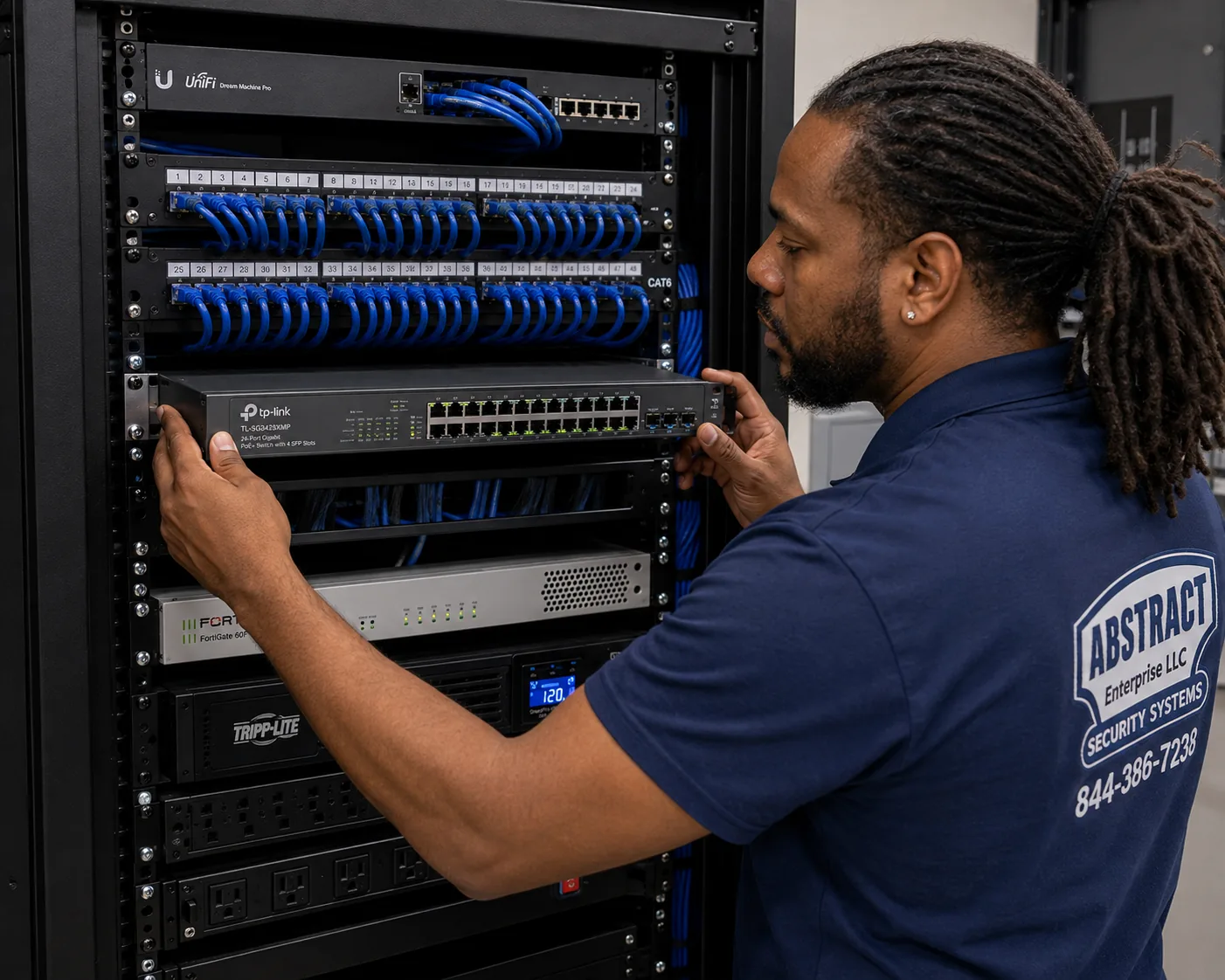
Network installation Nassau County technician mounting a managed PoE switch below patch panels in a medical suite rack
A PoE+ switch going in. A partitioned clinical suite runs more radios than its square footage suggests, and every one draws from this budget.
Scope

What a Nassau network installation covers

More of the commercial space in this county is clinical than in any market we work outside Manhattan, and clinical space changes what a network scope has to contain.

  • A walk that maps the clinical systems first. What runs the practice, what moves imaging, what talks to a hospital system, what the patients are given access to, and which of those can never be interrupted. That list drives the segmentation plan before anybody counts a drop.
  • An honest read of the traffic profile. Imaging moves files that dwarf ordinary office traffic, and a network sized on headcount will be wrong. We ask what modalities are in the building and where the studies go.
  • A written design. The addressing plan, how the VLANs are laid out, switches specified with capacity in hand, how many radios and where they go, and what hardware is on the schedule.
  • The plant. Cable on supported pathway, plenum-rated where a ceiling serves as a return, firestopped at rated penetrations, terminated on matched hardware and certified on every run.
  • The room. A frame or cabinet with its panels and managers, power on protection, a UPS, everything dressed and identified at each end.
  • The active layer. The switches, the firewall at the edge and the radios, all installed, set up, tuned and shown working.
  • Handover. The port map, an as-built, the addressing record, a hardware inventory with serials, and the admin logins.

Quoted as their own lines rather than absorbed: rack hardware, panels, switching and firewalls where we supply them, conduit where a medical building requires it, firestop materials, coring, dedicated coverage for shielded rooms, and evening or Saturday crews. Practices do not close for contractors, so out-of-hours labour is the normal case here rather than the exception, and it belongs on the quote as a stated assumption.

Worth asking any bidder in this county. What happens to this when the imaging system sends a study? A design priced on the number of desks has not been told what the building actually does.

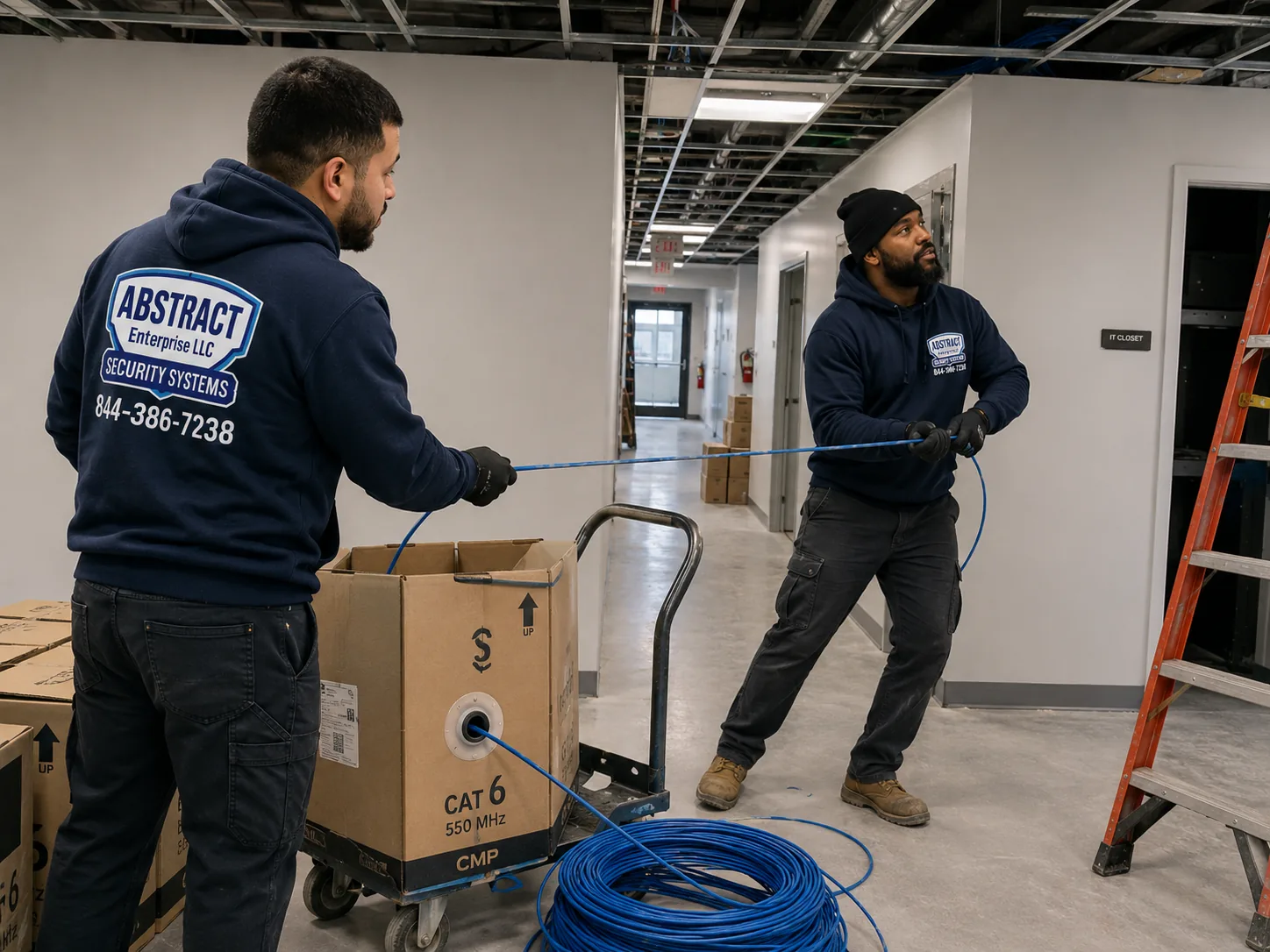
Office network installation Nassau County two technicians running cable toward a suite telecom room
Running back to the suite room, out of hours. Practices do not close for contractors, so evenings and Saturdays are the normal case here.
The Nassau constraint

Clinical density, and the traffic nobody sizes for

Mineola, New Hyde Park, Lake Success, Garden City and Rockville Centre hold one of the densest concentrations of medical office space in the region — and medical office space behaves nothing like general office space on a network.

A twenty-person professional firm and a twenty-person imaging practice look identical on a headcount, and their networks are not comparable. The firm moves documents and email. The practice moves studies — files an order of magnitude larger, produced in bursts, travelling from a modality to local storage and frequently onward to a hospital system or a reading service. A network sized for twenty desks will carry the first and stall on the second, and it will stall at precisely the moment a patient is waiting.

What that means for the design

  • Wire the modalities, always. Anything producing studies belongs on cable with a dedicated path, never sharing air with a waiting room.
  • Size the uplink for a burst, not an average. The number that matters is what happens when a study transfers while everything else is running, not the daily mean.
  • Separate clinical from everything else. Practice management, imaging, staff, patients and building services on their own segments, with defined paths between them rather than open access.
  • Plan for the hospital connection. Many practices here have a link to an affiliated system with its own requirements, and that link is somebody else's boundary — we make ours clean and documented up to it.
  • Coverage for shielded rooms. Imaging rooms are radio-opaque by design and need their own radio on their own drop; nothing useful reaches them from the corridor.

Multi-practice buildings

A great many Nassau medical buildings hold several unrelated practices on one floor, each with its own network, its own vendor and its own equipment — sometimes in a shared telecom room nobody maintains. That produces the same boundary questions a subdivided office building would, with higher stakes: your suite's network should be identifiable as yours, in a lockable cabinet where the room is shared, and documented so another practice's contractor works around your cable rather than through it.

And where none of this applies

Nassau also has a substantial professional, legal and financial base in Garden City, Mineola and Great Neck, plus retail and service commercial along the main corridors. Those jobs run like conventional office fit-outs, and we say so rather than importing clinical overhead into a project that does not need it.

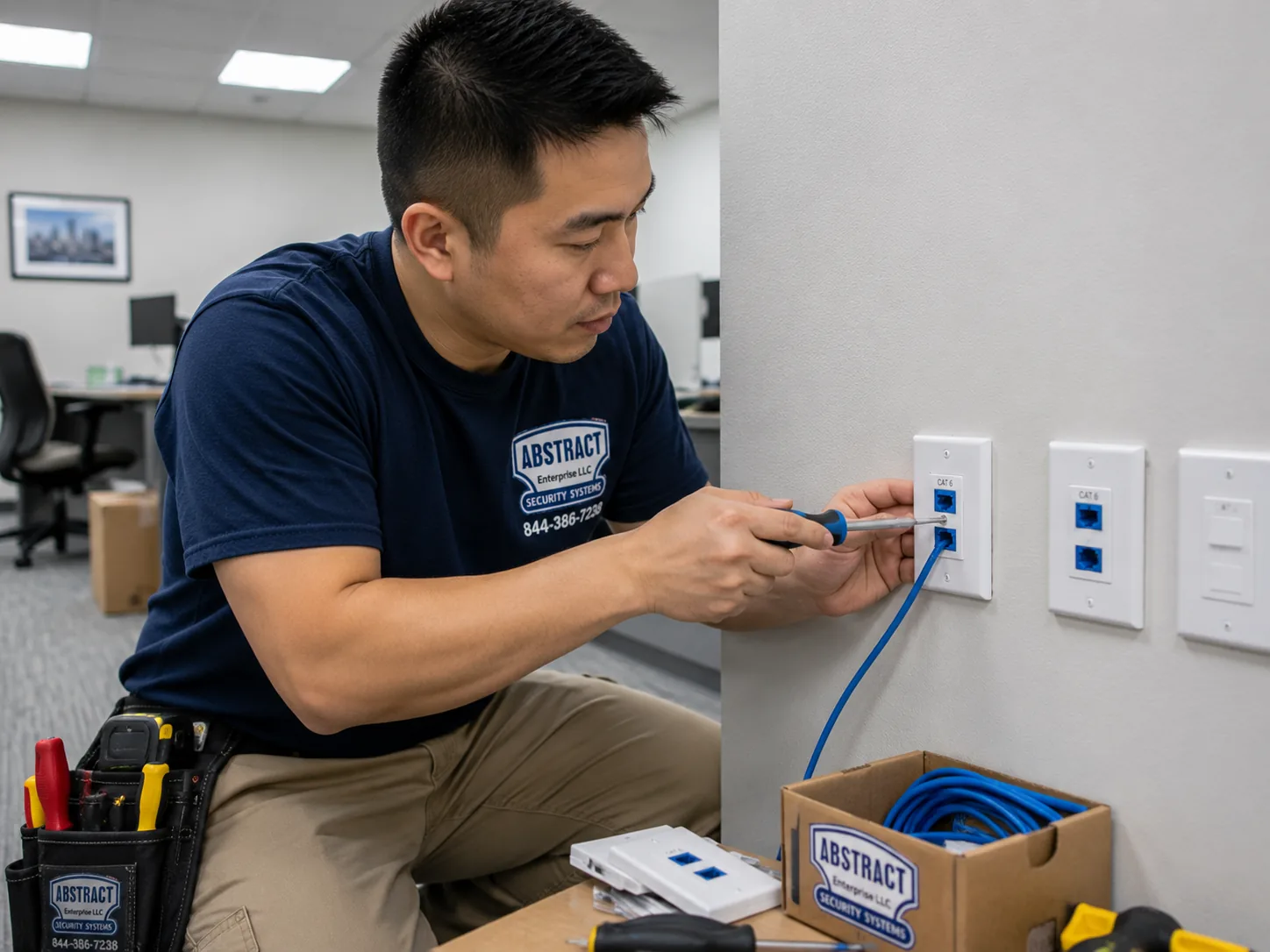
Network installation Nassau County technician terminating dual data outlets at a clinical workstation position
Terminating at a fixed position. Anything producing imaging studies gets a dedicated run rather than sharing air with a waiting room.
Building stock

Five kinds of Nassau commercial property

The corridor tells you the construction, and the construction tells you the job.

Medical office buildings

Mineola, New Hyde Park, Lake Success, Rockville Centre and the corridors around the county's hospital campuses. Purpose-built or converted for clinical use, frequently multi-tenant, with shielded imaging rooms, partition-heavy layouts, dedicated equipment rooms of variable quality, and schedules governed entirely by patient hours.

Professional office and the county seat

Garden City, Mineola's legal and civic core, Westbury and Great Neck. Legal, insurance, financial and professional tenancies in a mix of purpose-built commercial and older stock. Conventional fit-out work, two ports per desk, conference rooms as density problems, and property managers expecting insurance on file.

The Route 110 and corporate corridor edge

Plainview, Farmingdale and the Nassau approaches to Broad Hollow Road. Multi-storey office buildings with real telecom rooms, stacked closets and drop ceilings that serve as HVAC returns — the most straightforward commercial work in the county.

Main-street and mixed-use commercial

Rockville Centre, Valley Stream, Freeport, Hicksville and Long Beach. Retail at street level with practices, offices and studios above. Masonry party walls, older construction, no dedicated equipment space, and pathway created rather than found.

Light industrial and service

Bethpage, Syosset, Hicksville's industrial blocks and the corridors along the parkways. Single-story buildings with an office front and a shop or warehouse behind, slab construction, and the two-designs-under-one-roof problem that comes with it.

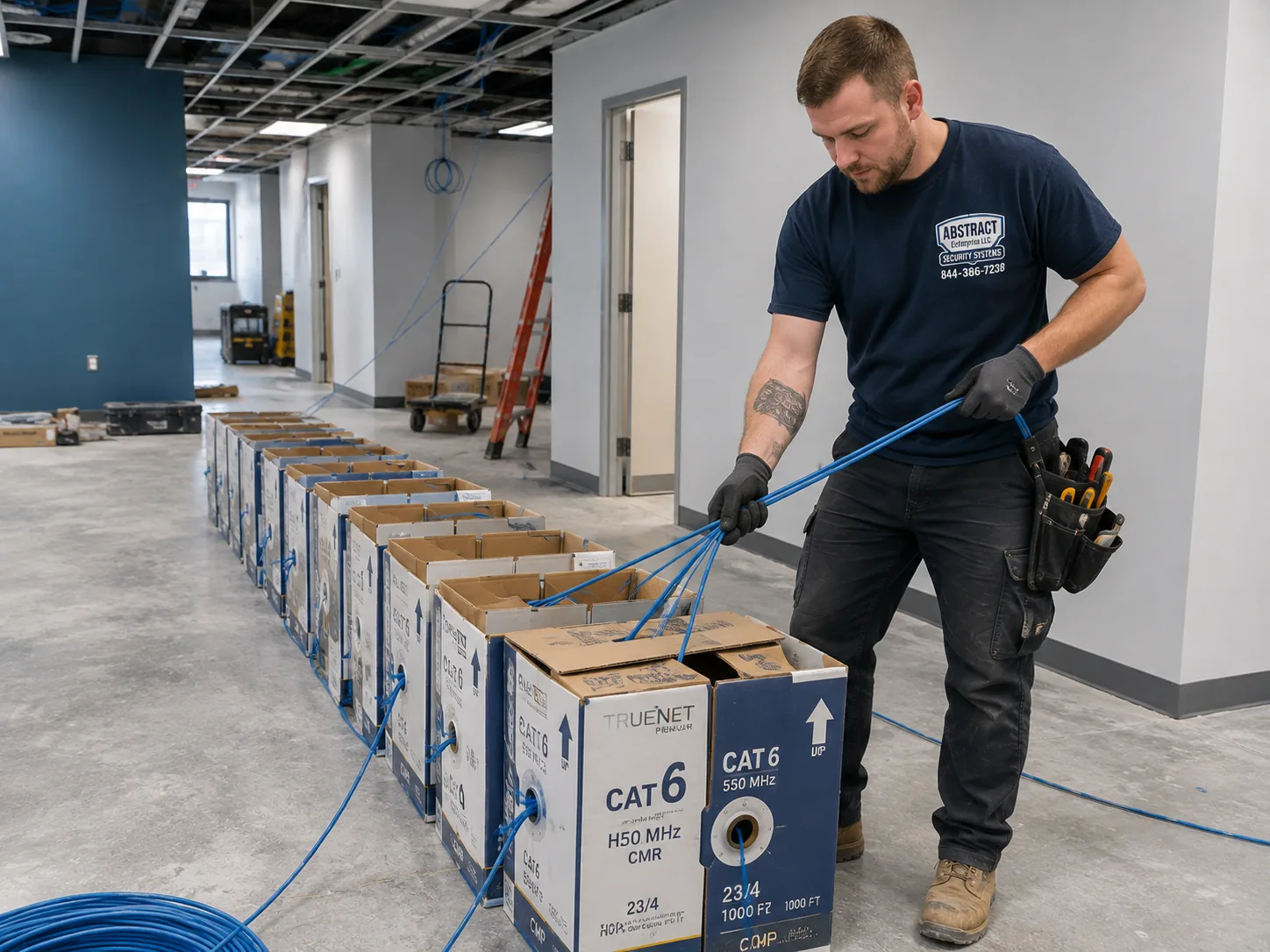
Commercial network installation Nassau County cable boxes staged for a multi-drop pull in a suite fit-out
Boxes staged for a suite pull. Rating follows the route — plenum where the ceiling is a return, riser inside the walls.
Wired layer

Switching, the edge, and a network that cannot pause

A practice does not close for a network upgrade, and a clinical system going down mid-session is a different order of problem from an office losing email.

Switch capacity against burst traffic

Port headroom matters, but on clinical work the more important number is what the switch does when several large transfers coincide. Non-blocking capacity and a properly sized uplink from the suite matter more here than in a general office, and they cost little at purchase. Where a practice runs local storage for studies, the path between the modalities, the storage and the reading positions is the part of the network that has to be right — everything else is ordinary.

The edge

One router or firewall per suite, positioned where the circuit arrives. Practices handling patient information benefit from a firewall that logs properly, because sooner or later somebody will ask what left the network and when. Where a practice has a link to an affiliated hospital system, that connection has its own requirements set by the other party, and our job is to present a clean, segmented, documented network up to that boundary rather than to improvise across it.

Building alongside, then cutting over

On an occupied practice the new plant, the new rack and the new equipment go in while the existing network stays live, and the changeover happens in a short window on an evening or a Saturday. Where a clinical system genuinely cannot drop at all, we run both networks in parallel on separate switching until the practice is satisfied, then decommission the old one on a later visit. That costs a little more in equipment overlap and it removes the risk entirely.

Power

Battery backup sized to the rack, which on clinical work is not optional. Equipment that boots in the wrong order after an interruption leaves a practice unable to see its own records, and the difference between that and a clean shutdown is a few hundred dollars of hardware. In buildings with generator power it is worth confirming the suite's telecom room is genuinely on the protected panel rather than assuming.

Segmentation

VLANs where patient information is on the network

Segmentation on a general office network is prudent. In a practice it is the mechanism by which patient information stays away from everything else in the building.

Leave a network unsegmented and each device on it can reach every other device on it. In a suite where a patient's phone in the waiting room, a smart display, the building's own thermostat and the machine holding clinical records share one space, the exposure is obvious once stated and is nonetheless the arrangement we find most often on takeovers here.

SegmentTypical occupants in a Nassau practiceWhy it is fenced
ClinicalPractice management, records, clinical applicationsThe segment everything else is kept out of
ImagingModalities, local study storage, reading positionsA traffic profile unlike anything else in the building
StaffWorkstations, administration, printers, schedulingSeparated from clinical systems by policy as much as practice
Patient and guestWaiting rooms and public areasIsolation and a throughput ceiling, with no route inward
VoiceHandsets across the suitePrioritised so calls hold through a study transfer
Building servicesThermostats, sensors, displays left by the landlordThe least maintained equipment in any suite, by a wide margin

The imaging row is the one that surprises people. It is separated not primarily for confidentiality but for behaviour: study transfers are large and bursty, and a segment of their own with a defined path means a transfer cannot starve the scheduling system while a patient stands at the desk. On a general professional tenancy in Garden City the same table reduces to staff, guest and voice, and we say so rather than selling six segments to a firm that needs three.

Patient wireless is a control, not a courtesy. An open network reachable from a waiting room, sharing a segment with clinical records, is a far larger exposure than most practices realise. Setting that boundary is a few minutes' work during the build and a nuisance to retrofit around connected devices.

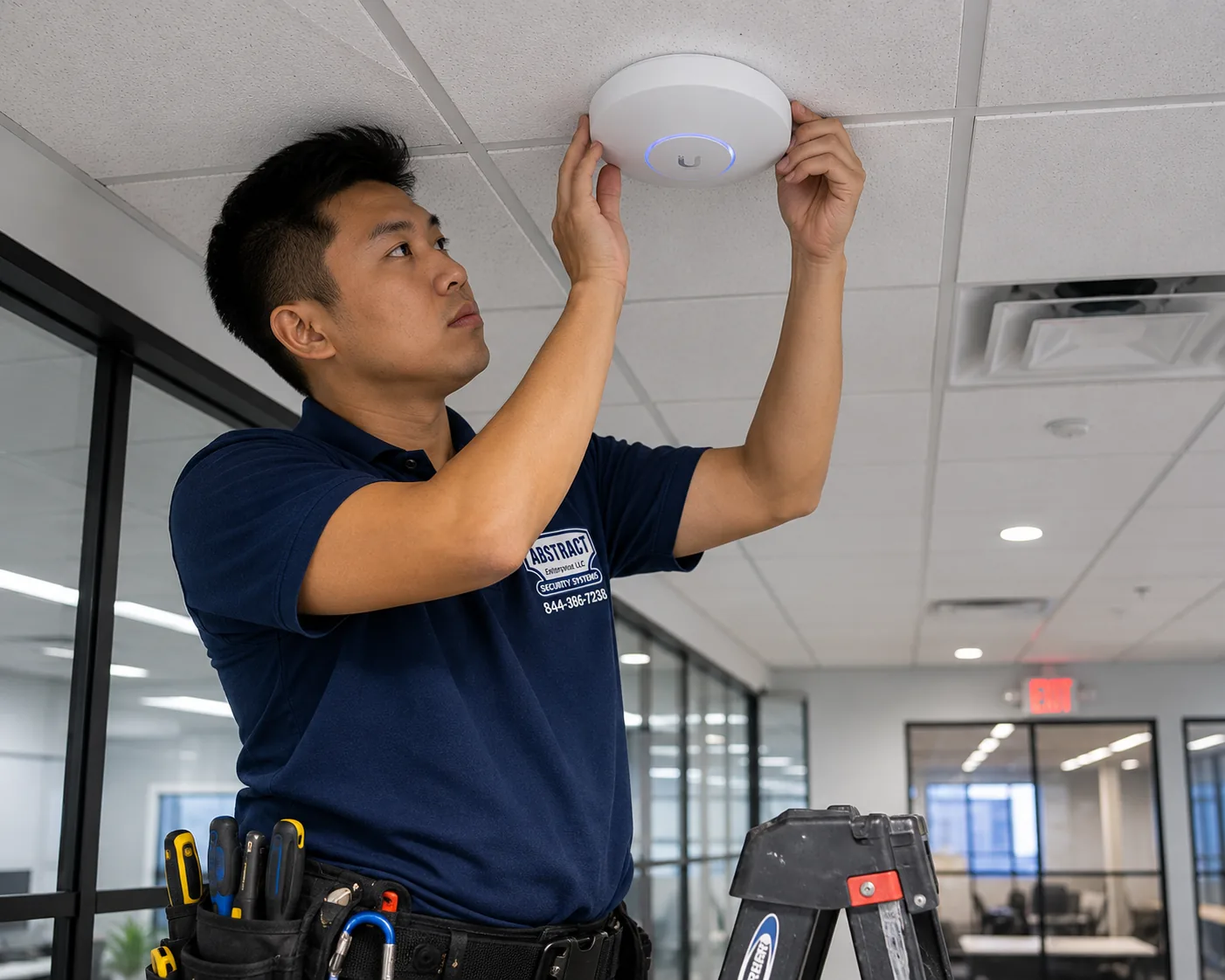
Wi-Fi installation Nassau County technician mounting a ceiling access point in a partitioned clinical suite
A radio going up on the grid. Partition count sets the number here, not floor area — a count drawn from square footage always comes out low.
Wireless

Wi-Fi installation in partitioned clinical space

Wireless network installation in a medical suite is a partition problem and a shielding problem at the same time, and neither is visible from a floor plan.

Partition density

A clinical floor is cut into far more rooms than an office floor of the same area — exam rooms, consult rooms, a lab, a records room, offices, a waiting area. Every partition attenuates a little, and enough of them in sequence attenuates a great deal. A radio count derived from square footage will be low, and the rooms that suffer are invariably the ones furthest down a corridor of exam rooms, which is where the staff spend their day.

Shielded rooms are absolute

Imaging rooms are lined to stop radiation leaving, and the same lining stops radio entering. There is no transmit power that reaches inside one from a corridor. Coverage there requires a radio inside the room on its own drop, and that is a line item rather than an assumption — a practice that needs a device to work at the modality and was not told this at design stage discovers it on the first day of clinic.

What is straightforward

Spectrum is the one part of a WiFi installation here that rarely fights you. Outside the denser office buildings, Nassau is not congested — a scan usually finds your own networks and perhaps a neighbour, which means channel planning has room to work and interference is rarely the explanation for a complaint. That is a real advantage over a city tenancy and it makes wireless problems here tractable rather than structural.

SpaceTypical radio countWhat drives it
Clinical suite, 4,000 sq ft, heavily partitioned4–5Partition count far more than floor area
Each shielded imaging room1 inside, on its own dropLining stops radio outright
Professional office floor, 5,000 sq ft3Conventional layout and clear spectrum
Waiting room at peak1 dedicated where volume is highDevice density rather than coverage
Suite above main-street retail2–3Masonry party walls in older stock
Flex building — office front plus shop2–3 front + 2 rearTwo designs under one roof
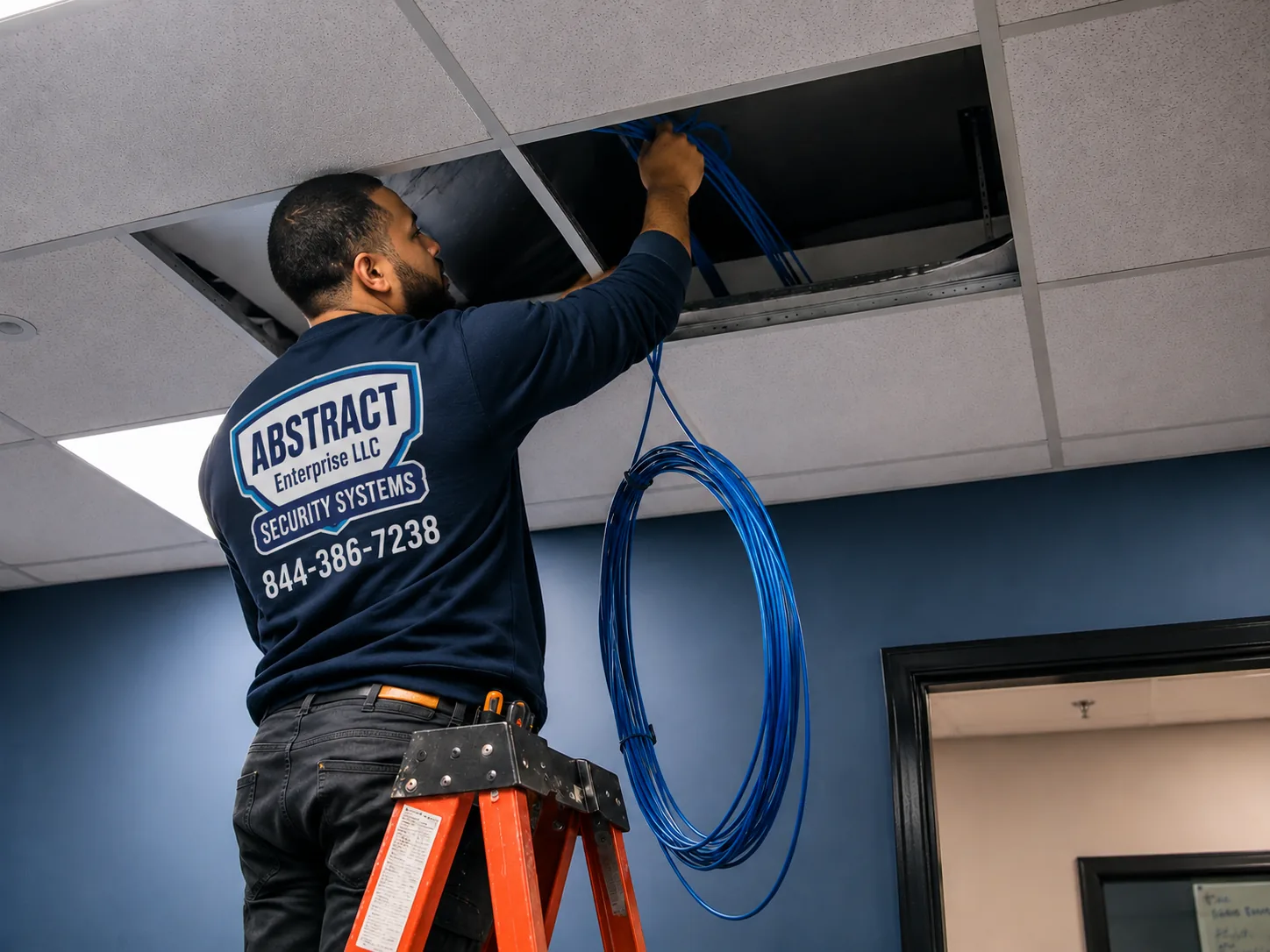
Network installation Nassau County technician working above a ceiling tile in an occupied medical suite
Working above the tiles in an occupied suite. The floor goes back every night: tiles replaced, protection cleared, nothing left in a corridor.
Survey

When measuring is worth the fee in Nassau

A survey is a measurement rather than a sales instrument, and this county divides cleanly between buildings that need one and buildings that do not.

A predictive exercise models coverage from the plan and the described construction. On a conventional office floor with accurate drawings that is close enough to design against. An on-site survey puts a meter in the space and records what is genuinely there — real signal, real neighbours, and how the specific partitions in front of you behave.

Worth the fee

  • Any heavily partitioned clinical suite. Partition count is the variable that defeats prediction, and it is the most common reason a medical wireless job here gets done twice.
  • Any suite containing shielded rooms, where a prediction will be wrong in the way that matters most.
  • Multi-practice buildings, where several independent networks share a floor and the spectrum has to be measured before channels can be planned.
  • Older mixed-use stock above retail, where masonry party walls decide the count.
  • Any premises where a wireless attempt has already failed, since a measurement decides whether the radio count, their placement or the building was responsible.

Not worth the fee

A conventional professional suite under roughly 4,000 square feet with a normal layout does not need a paid survey to reach a defensible radio count, and we will say so rather than sell one. We charge $450 for it and set that against the project. The validation walk after installation — a meter carried through the finished suite and into every exam and shielded room — is part of every project regardless, and in clinical space it is the step that catches the room somebody assumed would be fine.

Network installation Nassau County J-hook pathway carrying dressed cable bundles above a commercial ceiling
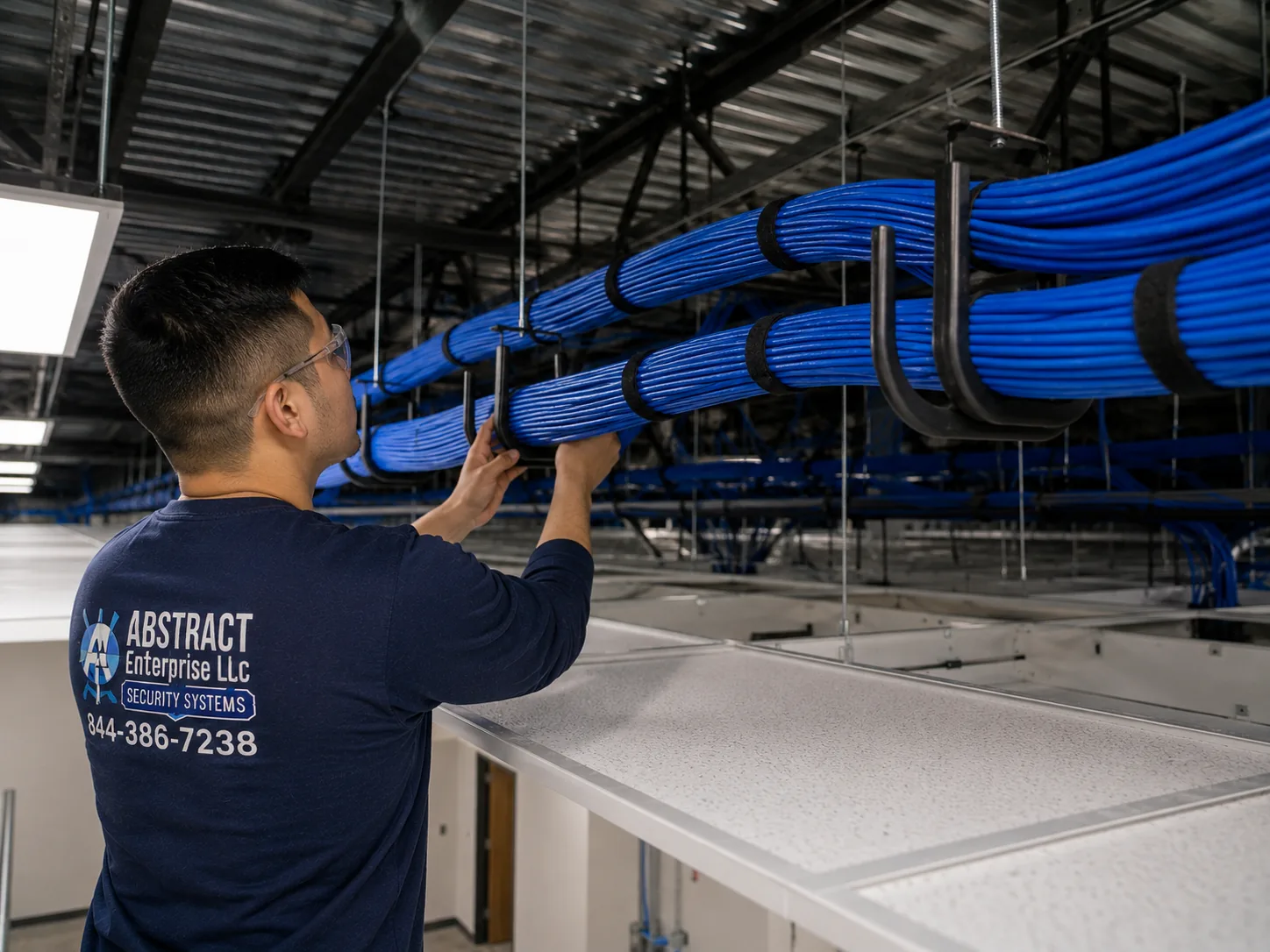
Bundles carried on proper supports at one height, clear of fixtures and parallel power runs.
Power budget

PoE budget in a suite full of small rooms

Power over Ethernet carries data and power down one cable to a radio, a handset or a powered device. It is also the fault that arrives disguised as something else.

Every PoE switch holds one total wattage shared across all its ports, well below the sum of what each could draw individually. A 24-port switch offering PoE+ throughout might carry a 370-watt budget; connect thirty-watt devices and the power runs out around the twelfth port.

StandardPer-port budgetTypical devices
PoE (802.3af)15.4WHandsets, sensors, older radios
PoE+ (802.3at)30WModern radios, video handsets, powered displays
PoE++ (802.3bt)60–90WWi-Fi 6E and 7 radios, large displays, PoE lighting

Why partitioned space eats budget

The design argument on this page — more radios because partitions attenuate, plus one inside every shielded room — means a clinical suite runs a higher radio count than its square footage suggests, and every one of those radios draws from the same switch. Add a handset in each exam room and a display in the waiting area and a budget that looked comfortable on paper is gone. The failure is quiet and selective: devices already drawing power keep working while new ones are refused, so what gets reported is that the equipment installed at fit-out works and the equipment added since does not.

The remedy is unglamorous. Size the budget against the finished device count including the handsets and displays that arrive after the network is signed off, and buy the switch with reserve rather than the one that exactly fits. On a practice that cannot easily schedule a second visit, that is the cheap decision.

Count the exam rooms twice. A handset and a powered device in each, plus a radio for every few rooms and one inside each shielded room, adds up faster than a headcount suggests.

The room

The network rack in a suite that runs on a schedule

In a practice the equipment room is rarely generous and never convenient. Choosing it well is worth more than anything that goes into it.

A good result is unremarkable: panels above, switching below, short cords in consistent colours through managers, labelled throughout, with air around it and space to grow. A poor one is equipment stacked on a shelf in a supply closet that also holds boxes, gets hot, and sits behind a door that is propped open when the room is busy.

What belongs in it

  • A network rack or wall cabinet in a space chosen for its conditions and its access rather than because nothing else was free, and lockable where staff and patients pass it.
  • Patch panels with ports in reserve, since panel capacity is the hardest element to extend once a practice is seeing patients.
  • Cable managers vertically and horizontally, which is what makes a frame serviceable in the twenty minutes between appointments.
  • Power. A circuit of its own where the building allows, a PDU in the frame, and battery backup rated against the real load.
  • Bonding to building ground at every point the installation requires it.
  • Labelling at every port, panel and cable end, matching the port map exactly and naming rooms the way the staff name them.

Heat in a supply closet

The space allocated in a medical suite is frequently an interior room with no supply air, sometimes shared with storage. A sealed cabinet holding a switch delivering three hundred watts becomes an oven by August, and heat produces the intermittent, temperature-linked faults that are miserable to diagnose — and worse to diagnose in a building where every visit has to be fitted between appointments. A vented door and a fan kit resolve most of it; where they do not, the answer is a different room chosen during design.

Cleanup as its own job

A large share of the work here is a room that several vendors have extended across a decade — a practice management supplier, an imaging vendor, a phone installer and whoever handled the last renovation — with nothing recorded and nobody able to say what is live. Everything gets traced, the genuinely dead is agreed and pulled out, the rest re-routed and re-terminated, then dressed, identified and mapped. On a suite where a fault has to be resolved between patients, that day pays for itself the first time something needs finding.

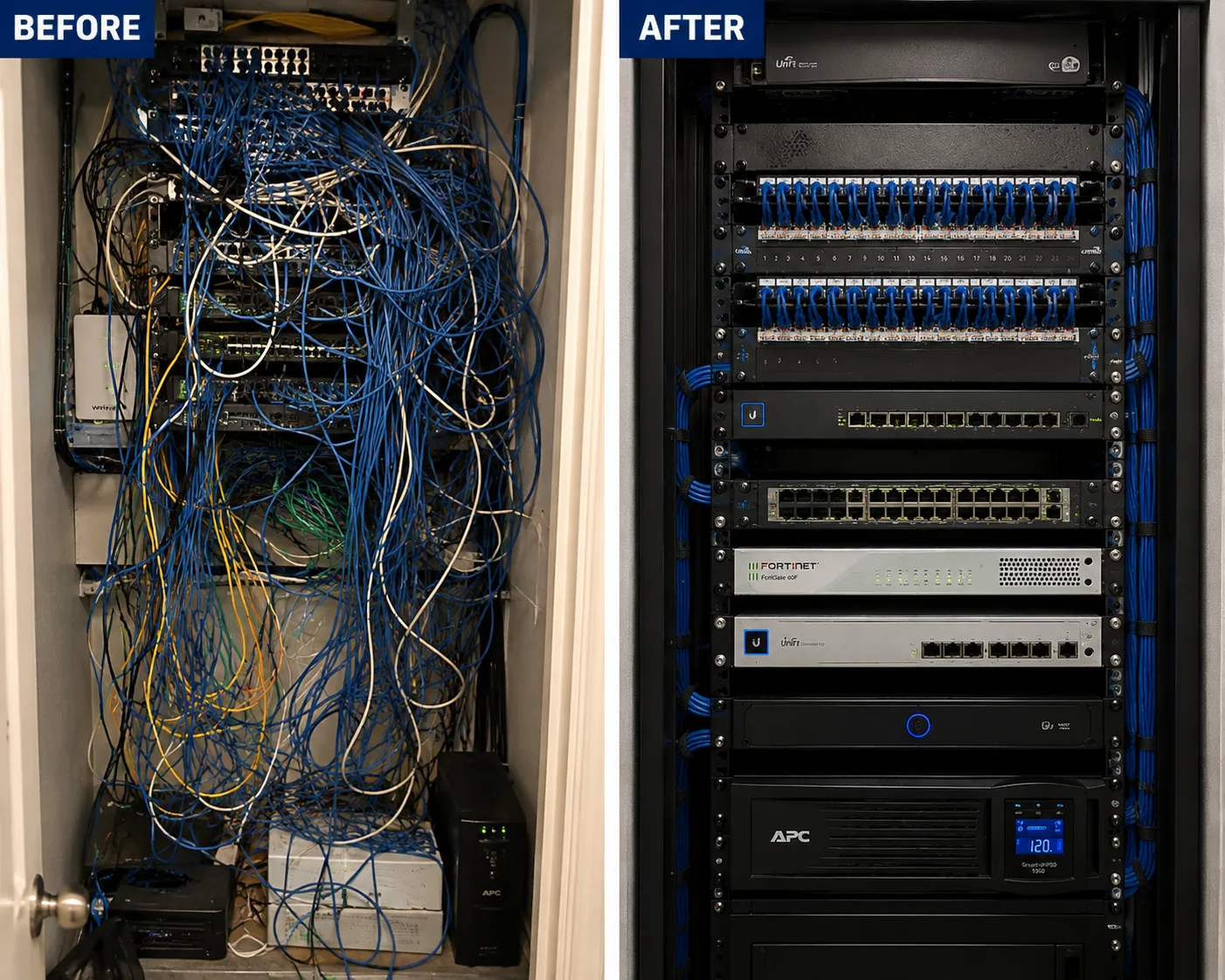
Network room cleanup Nassau County before and after showing an unlabelled multi-vendor rack rebuilt and documented
One room before and after. Four vendors contributed to the left-hand image across a decade and none of them recorded anything.
Plant

The cable behind the walls of a fitted-out suite

Every build carries a decision about the existing plant, and in a clinical suite the decision is unusually consequential because reopening a finished wall is disruptive in a way it is not elsewhere.

Wireless still needs a wire. Radios are backhauled on cable, modalities and workstations take runs of their own, and everything lands on a panel. The plant therefore sits inside the scope whether or not anything new is pulled.

What can stay

Existing cable is frequently serviceable. Runs of Cat5e or better, landed on matching hardware, inside the distance limit and passing certification carry a modern gigabit network without complaint, and age alone is not a finding. What is worth testing specifically in medical fit-outs is termination quality, since suites are commonly finished under a deadline set by a lease or a licensing date, and terminations done under that pressure are where marginal links hide.

What has to go

  • Anything that will not certify — split pairs, a damaged jacket, or a length past the limit once measured as it sits.
  • Cable of unidentifiable grade with nothing printed on the jacket, above all where a device now draws power over it.
  • Non-plenum cable sitting above a return-air ceiling — a code failing whatever numbers the link produces.
  • Runs to a modality position that were specified for an older device and never revisited when it was replaced.
  • Ends fitted with mismatched components, which hold the link to whichever grade is lower.

One rule set governs Ethernet installation on any network build, however many drops are involved: proper supports, a rating suited to the route, firestopping at rated penetrations, matched ends, labelling and certification. Two ports at each workstation and one at each ceiling position is the working default, with a dedicated run to every modality and to every shielded room. Per-drop rates and the grade comparison sit on the cabling pages.

Related: structured cabling installation in Nassau County covers the whole plant. Cat6 installation Nassau County covers grade and per-drop pricing.

Handover

Documentation a practice manager can act on

In most practices the person who calls when something breaks is not technical and is standing at a desk with patients waiting. The records have to work for them.

The full technical set is produced regardless, because the practice's IT provider or the next contractor will need it. What changes here is that it is written so somebody without a background in it can use the parts that matter.

  • A port map tying each panel port to its outlet and room, using the names the staff use — Exam 3, the front desk, the film room — rather than architectural references.
  • Labelling at both ends of every run, in a scheme that can be read aloud over a telephone during a clinic.
  • Certification run on every drop we install, with the output in the handover rather than a sample.
  • An as-built showing the rack, pathway, radio positions and every shielded room with its dedicated drop marked.
  • A written record of addressing and VLANs — the subnets, scopes, reservations and SSIDs, and which segment sits behind each one.
  • A hardware inventory listing make, model, serial and the firmware level at handover.
  • Admin access to every device we set up, signed across at completion.
  • A short note for the practice manager covering what the patient network is called, what to check before calling anybody, and which systems are on which segment.

On credentials, plainly: some contractors keep administrative access to their own installations so that changing supplier means starting again. That is not our practice, and it matters more here than in most places — a practice locked out of its own network cannot even authorise somebody else to help. It is your network. You get the keys.

Network installation Nassau County technician labelling a patch panel beside a printed port map
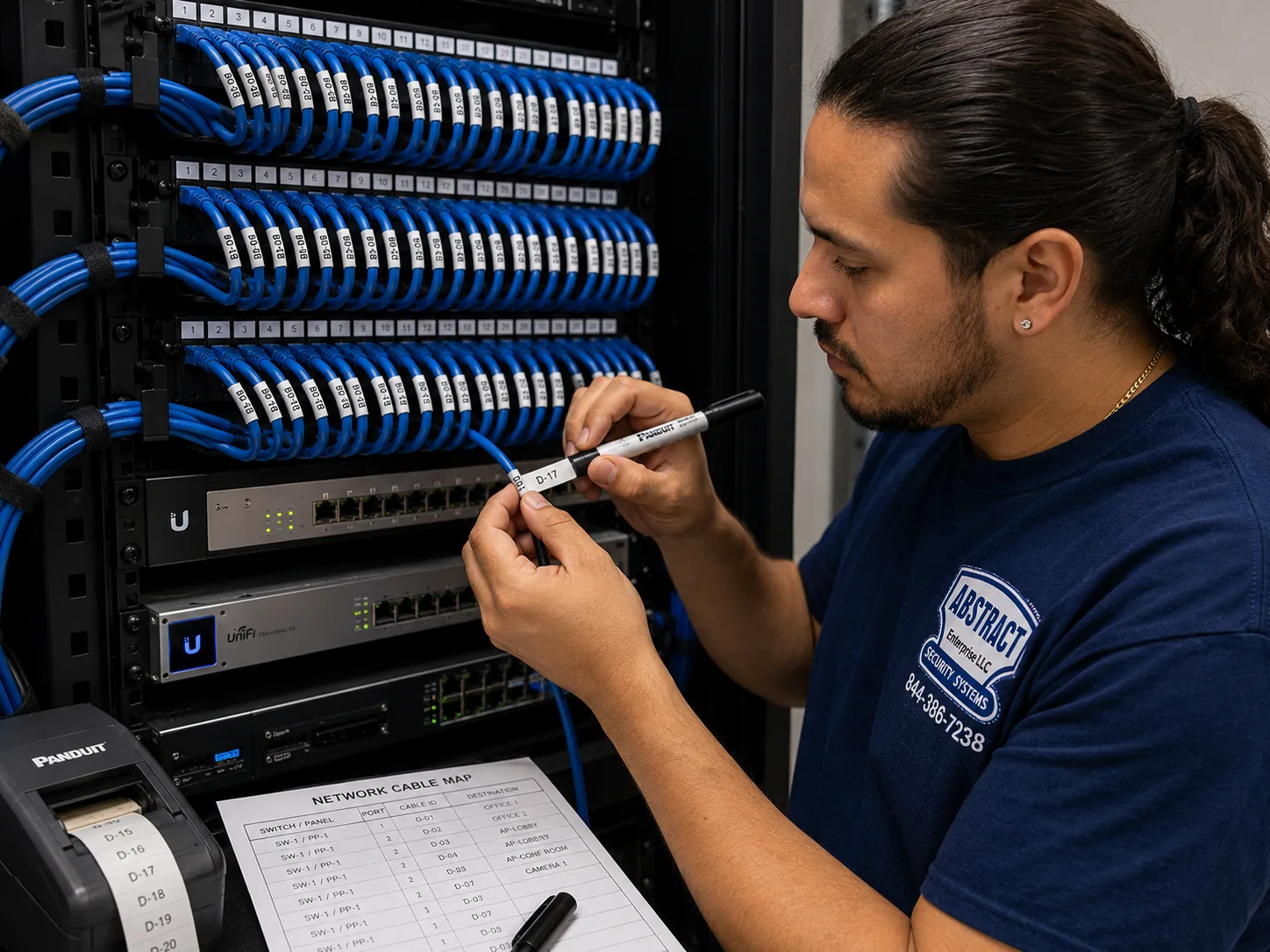
Labels made at the panel and entered on the map, naming rooms the way the staff name them rather than the way the drawings do.
Repair & takeover

The network a practice grew into

Most Nassau takeovers involve a practice that has added rooms, modalities and staff over a decade without anybody revisiting the network underneath.

The versions recur. A practice that took on the suite next door and bridged the two with whatever was to hand. A room extended by four different vendors, none of whom labelled anything. Wireless installed before a renovation added six exam rooms. A modality replaced with one that produces far larger studies, on the same cabling and the same uplink. And an installer from the original fit-out who no longer covers the area.

  1. Survey and write it up before touching anything

    What is physically present, what certifies, what configuration is reachable, which systems sit on which segments and which of them can never be interrupted. We produce a written assessment covering what is sound, what is failing, what is a risk and what is simply unrecorded, and nothing changes until the practice has read it.

  2. Establish whether it is the cable or the equipment

    These get conflated constantly and cost very different amounts. In a suite finished under deadline the cable is frequently fine and the equipment and configuration have simply been outgrown — a one-evening job rather than a rewire. Certification settles it, and having that answer before anybody prices reopening walls in a clinical suite is worth the hour it takes.

  3. Fix what is failing, then plan the rest

    Anything actively down is addressed first and separately. The redesign follows on a scheduled basis, out of hours, rather than during clinic — because rebuilding a network while a practice is seeing patients converts a one-evening problem into a week of them.

  4. Record it and leave the note

    Even where little changes, the room gets labelled, a map gets produced and the practice manager gets the short note. On a suite where four vendors have contributed and none documented anything, that is frequently the most valuable outcome of the engagement.

Network repair Nassau County technician tracing an unlabelled run at a patch panel with a tone generator and probe
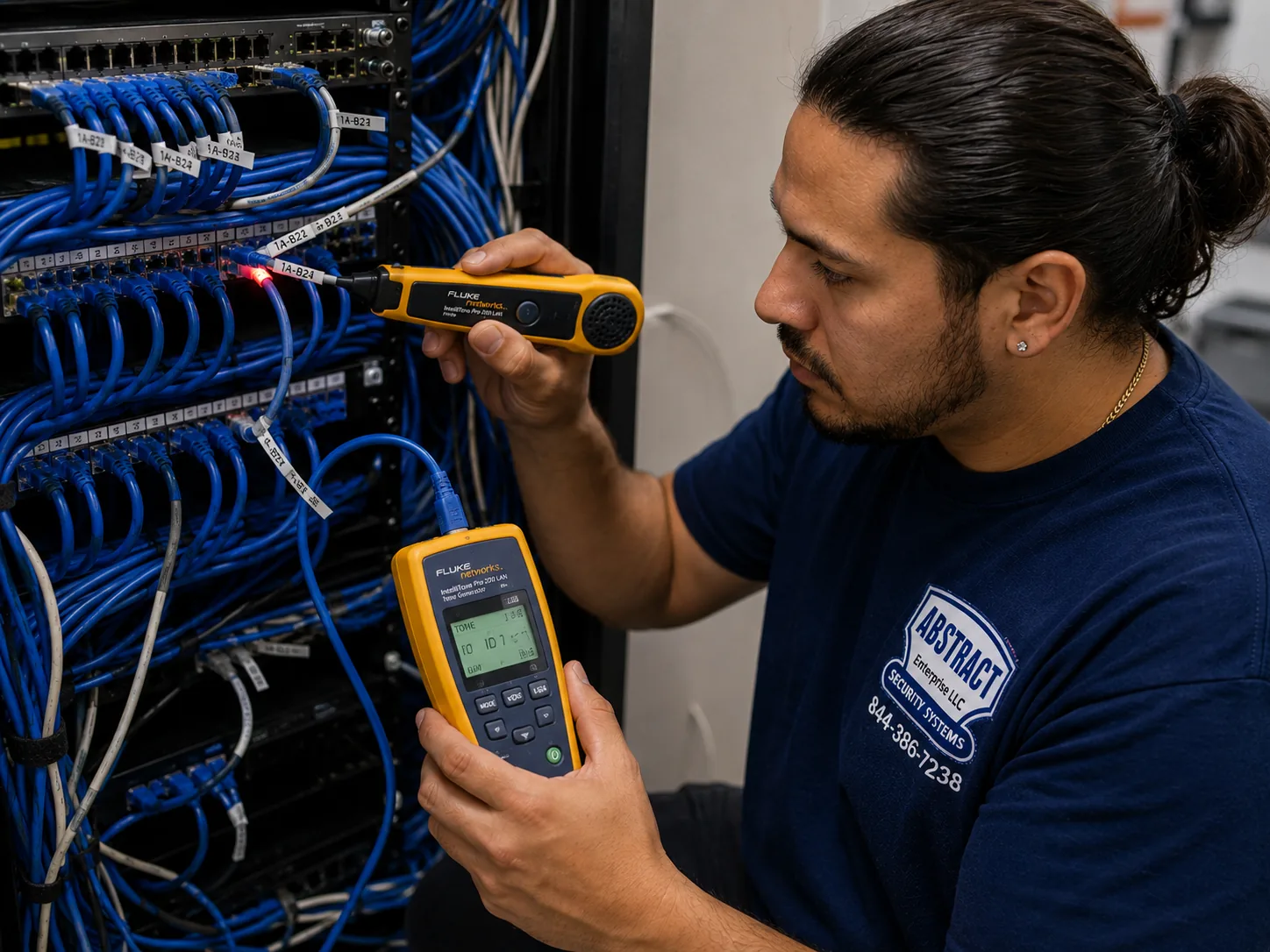
Tracing a run nobody documented. Most takeovers here are practices that grew across a decade with the network left underneath unchanged.
Diagnosis

Narrowing a fault between appointments

A fair share of the calls we take about a slow network turn out to be about something else. In a practice, establishing which over the phone is the difference between a fix and a lost session.

Points at the network

  • Certain rooms are affected and others are not. In a partitioned suite that is nearly always coverage, and it is nearly always the rooms furthest down a corridor.
  • Nothing works inside the imaging room and everything works outside it. That is the shielding, and it needs a radio inside rather than more power outside.
  • It slows when a study transfers. Either the network is flat or the uplink is too small, and in both cases configuration solves it rather than buying more bandwidth.
  • It tracks the clinic timetable — fine before opening, poor mid-morning, fine again after the last patient. Capacity or airtime.
  • The network keeps disconnecting rather than failing outright, with devices joining, falling away and rejoining a minute later. Roaming, channel overlap or a marginal run.
  • Only recently added powered devices are dead. The switch's power budget, most often after a renovation added rooms.

Points elsewhere

  • Slow in every room, on cable and wireless, at every hour. The circuit is responsible, and testing on cable at the edge proves it without a single ceiling tile coming down.
  • One clinical application is slow and everything else behaves. The application, its host, or a hosted service outside the building entirely.
  • A single workstation crawls and nothing else does. That workstation.
  • It began when the provider worked on the line and nothing changed at your end.

Where the equipment is managed we will narrow it remotely before dispatching anybody, which on a practice running to a schedule is frequently the whole value of managed hardware. When it truly is not clear, an hour spent isolating which layer is at fault is far cheaper than redesigning against the wrong cause.

Pricing

What network installation costs in Nassau County

Published line items at our New York City labour rates. Nassau is a core market and carries no mileage allowance. Switching, firewalls and radios carry their own quote lines or come from you.

Design and survey

ItemPrice
On-site assessment, systems review and room planningFree
Wireless site survey and heat map$450 (credited to the project)
Network design — addressing, VLAN scheme, as-built drawings$350–$650

Installation and configuration

ItemPrice
Router / gateway install and configuration$350
Business firewall install with rule set$450–$900
Managed switch install and configuration — 24-port$250
Managed switch install and configuration — 48-port$400
Each additional switch in a stack$175
VLAN / segmentation configuration, per segment$125
Patient or guest network with isolation and captive portal$200
Wi-Fi radio — mounted and tuned on an existing drop$225
Wi-Fi radio — including a new cable run$300
Radio inside a shielded imaging room, on its own drop$375
Dedicated modality drop, terminated and certified$185
Network rack or cabinet build — panels, managers, PDU, dressing$650
Lockable cabinet where a telecom room is shared between practicesfrom $850
Existing room cleanup, trace, re-route and re-labelfrom $500
Demarc extension to the suitefrom $350
Documentation package — port map, as-built, manager note, credentials$350
Certification testing, per drop$20

Clinical-practice lines

ItemPrice
Evening or Saturday crew — labour rateNo premium
Parallel running: temporary second path during transitionfrom $600 per suite
Segment and path preparation up to a hospital system boundaryfrom $350
Imaging path validation — burst transfer tested under load$250

Listed separately because they are what clinical work genuinely involves and what a general office bid leaves out. Parallel running is the line that lets a practice transition with no risk of losing access to records mid-session, and on any suite with a full appointment book it is worth its cost.

Whole-network packages

PackageScopeFrom
Small office or professional suiteUp to 10 users, 12 drops, firewall, 24-port PoE switch, 2 radios, wall cabinet, VLANs, documentation$4,900
Professional office floor25–50 users, switching, 4–6 radios, firewall, floor rack, full segmentation, certification, documentation$12,500
Clinical suitePartition-based radio count, clinical and imaging segments, modality drops, patient network with isolation, evening installfrom $9,800
Imaging practiceAs above with a radio inside each shielded room, imaging path validated under load and parallel transitionfrom $16,500

What moves the number

  • How many rooms the suite is divided into. Partition count drives the radio count here, not floor area.
  • How many shielded rooms need coverage inside them. Each is a radio and a dedicated drop.
  • What the imaging traffic looks like, which decides uplink sizing and whether the path needs validating under load.
  • Whether the practice can be interrupted at all, and therefore whether parallel running is in scope.
  • Cable pulled before a wall closes versus fished afterwards, which on a fitted-out clinical suite is a considerable difference.
  • Appointment hours, which push nearly all of this work to evenings and Saturdays.

Repair and service

Fault-finding and repair on an existing network is billed at $195 per hour with a three-hour minimum. Same-day dispatch across the county for outages, subject to building access, and a remote check first wherever the equipment allows it. If the visit becomes a quoted project, the hours are credited against it.

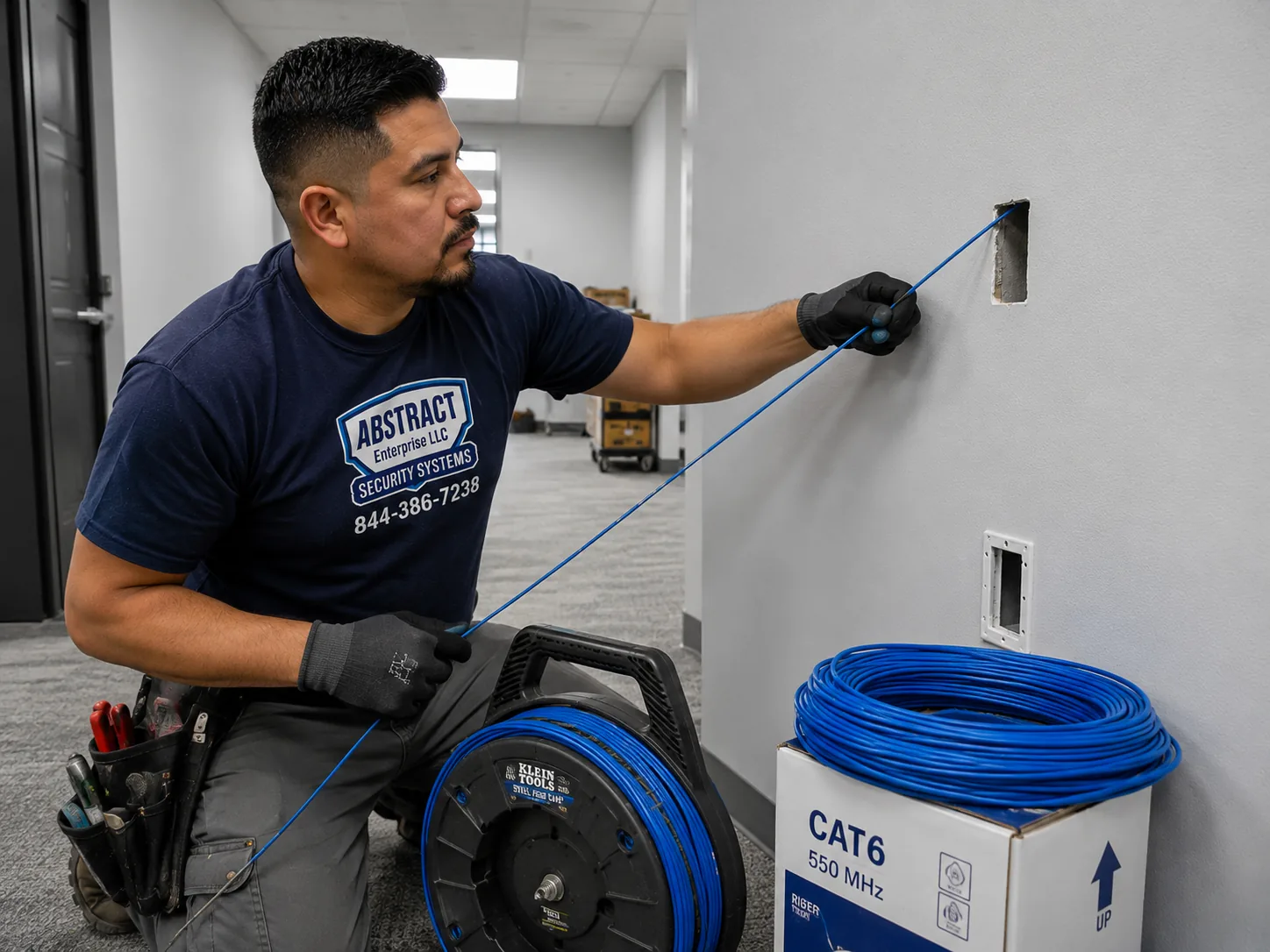
Network installation Nassau County technician fishing cable through a finished wall for a retrofit data drop
Fishing a drop into a closed wall. In a fitted-out clinical suite, reopening finished walls is disruptive in a way it is not elsewhere.
Equipment

What we deploy in Nassau suites

No manufacturer suits every practice. What matters is that the equipment segments properly, logs properly and can be supported by whoever the practice uses.

Ubiquiti UniFi

The common choice for small and mid-size practices and professional suites. Capable radios, no licence per unit, and a controller most IT providers can operate. Backing comes from a user community rather than a support agreement, which weighs differently for a twelve-provider practice than for a two-partner office.

Cisco Meraki

Run from the cloud, well tooled, with a vendor standing behind it — but licensed per device every year for as long as you own it, and the box quits when the licence does. Frequently the right answer for larger practices and anything affiliated with a hospital system, where a support contract and a defensible recurring line are expected.

Aruba Instant On and TP-Link Omada

Hardware from the cheaper end that does better than its price implies, and no yearly charge. Sensible for a small professional suite or a single-provider practice where the network is infrastructure rather than a strategic asset.

Firewalls — Fortinet and pfSense

Where the edge needs inspection, VPN for providers working remotely, and logs that can be produced when somebody asks what left the network and when — which in a practice handling patient information is a question worth being able to answer. Pick Fortinet when vendor support behind the appliance is worth paying for, pfSense or Netgate when an open, subscription-free platform fits the client better.

Client-supplied hardware

Where equipment is already purchased, or a practice's IT provider standardises on a line, we install and configure it. What we will say plainly is when something cannot do what is being asked — a radio count that will not cover a partitioned suite, an indoor unit expected to serve a shielded room from outside it, or a switch without the power budget for the devices the fit-out drawings already show.

What a Nassau practice does not need

A consumer router serving a clinical suite, which remains the most common thing we replace. Patient wireless on the same segment as records. Modalities on wireless where cable is possible. Extenders standing in for radios down a corridor of exam rooms. And a faster circuit purchased in the hope of fixing a coverage problem in the room at the end of the hall.

Comparison

Three terms that describe different scopes

They appear together in proposals and cover very different amounts of work.

TermWhat it coversWhat it excludes
Cat6 installationOne grade of cable and the components around it: the runs, the jacks, the panels, the terminations and the tests that back them.Equipment, configuration, wireless design
Structured cablingThe physical build of a suite or building: horizontal runs, backbone, rooms, fiber, pathway and certification.Switch configuration, routing, firewall policy, VLAN work, radio tuning
Network installationEverything that has to be true before traffic moves: design, addressing, switching, the edge, segmentation, coverage, records, and the cable plant supporting all of it.Server administration, desktop support, clinical software

In clinical work the split creates a specific risk. Segmentation is a configuration decision, but which systems can be segmented from which is a question about the practice's own software and its links outward — and the person pulling cable is not in that conversation. Split the layers and you get a correctly built plant carrying a flat network, which is the arrangement we find on most Nassau takeovers and the one that matters most to put right.

This is the Nassau County page. It sits beneath network installation Long Island, and the citywide hub above that is network installation NYC. The county immediately east is covered on network installation Suffolk County.

By business type

What the work looks like for different Nassau businesses

Headcount says little. What the building does, and how many rooms it is cut into, says most of it.

Imaging

Imaging and diagnostic practices

Modalities wired on dedicated drops, an imaging segment with a path sized for bursts, a radio inside every shielded room, the transfer path validated under load, and parallel running so records are never unavailable mid-session.

Clinical

Medical, dental and specialty practices

Radio count driven by partition count rather than square footage, clinical systems fenced from everything, patient wireless isolated with a ceiling, and installation scheduled into evenings and Saturdays because the practice does not close.

Legal

Legal, financial and professional firms

Garden City, Mineola, Great Neck. Conventional fit-out work — two ports per desk, conference rooms as density problems, segmentation driven by what sits on the file server, and property managers expecting insurance on file.

Corporate

Office park and corridor tenancies

Plainview, Farmingdale and the Nassau end of the Route 110 corridor. Real telecom rooms, stacked closets, plenum ceilings and accurate drawings — the most straightforward commercial work in the county.

Retail

Main-street retail and hospitality

Rockville Centre, Freeport, Long Beach, Valley Stream. Payment terminals wired and fenced from customer wireless, stockroom coverage that survives shelving, and trading hours setting the schedule.

Flex

Light industrial and service

Bethpage, Syosset, Hicksville. An office front and a shop behind, which is two designs under one roof, plus an operations segment kept clear of the office and a power budget worked out for the rear of the building.

Process

From systems review to closeout

Five stages, and the first is a conversation about what the practice actually runs.

  1. Map the systems, then walk the suite

    What runs the practice, what moves imaging, what talks to a hospital system, what patients are given, and which of those can never be interrupted. Then the space itself: how many rooms, which are shielded, where the circuit arrives, what the walls are, and what condition the existing plant is in.

  2. Design and quote

    Segmentation plan built from the systems list, addressing, switch capacity sized against burst traffic rather than headcount, radio positions for the partition layout with one inside every shielded room, the equipment list, and a line-item price with the clinical lines and the out-of-hours assumption stated.

  3. Pathway and plant, out of hours

    Cable on supported pathway, plenum-rated where the ceiling is a return, firestopped at rated penetrations, with dedicated runs to every modality and shielded room. Work happens evenings and Saturdays with the suite restored each night — tiles back, protection removed, nothing left in a corridor.

  4. Room, equipment and transition

    Rack or cabinet with panels, managers, power and battery backup. Switching, the edge firewall and radios fitted, configured and tuned. Where the practice cannot be interrupted, both networks run in parallel on separate switching until the changeover is agreed, then the old one is decommissioned on a later visit.

  5. Certify, validate and hand over

    Every drop certified and a validation walk with a meter through every exam room and inside every shielded room. Where imaging is in scope we test the transfer path under load rather than assuming it. Then the package — port map, as-built, addressing record, equipment list, credentials and the practice manager's note.

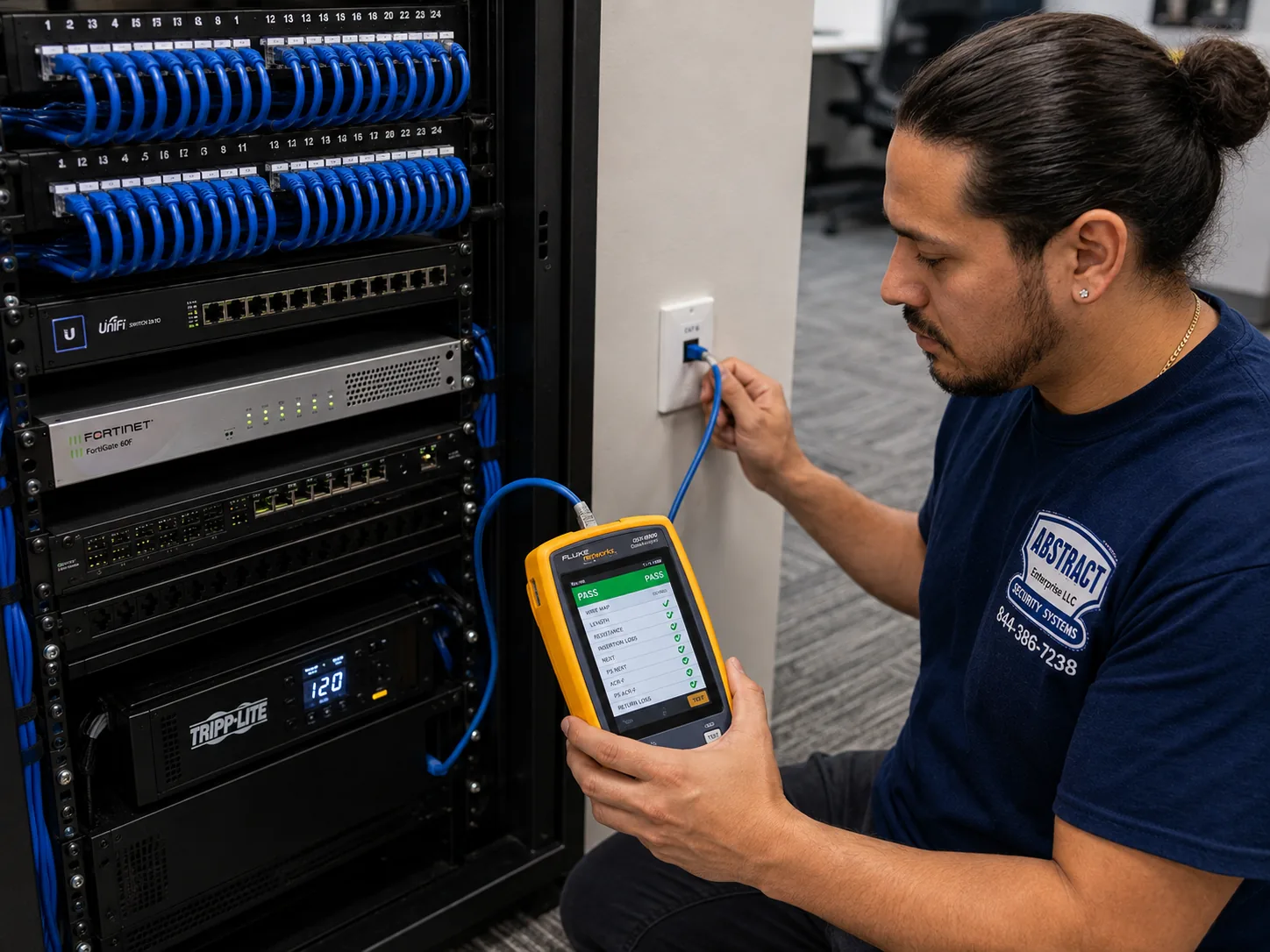
Network installation Nassau County technician certifying a data drop with a cable analyzer showing a PASS result
Certified at the outlet, run by run. In suites finished under a deadline, termination quality is where the marginal links hide.
Commitments

What you can hold us to

Undertakings you can check once the suite is seeing patients, rather than adjectives.

  • We ask what the building actually does before we quote, and the design follows the systems list rather than the headcount.
  • Clinical systems and patient access on separate segments, configured and tested rather than proposed and forgotten.
  • A radio inside every shielded room that needs coverage, quoted as its own line rather than assumed away.
  • Modalities on cable wherever cable is possible, on dedicated runs.
  • Parallel running offered wherever a practice cannot be interrupted, priced openly rather than discovered as a risk on cutover night.
  • Certification run on every drop we install, with the output in the handover rather than a sample.
  • A validation walk after installation, measured in every exam room and inside every shielded room, not read off a dashboard.
  • The imaging path tested under load where imaging is in scope.
  • Labelling at both ends and a port map that matches what is installed and names rooms the way your staff do.
  • The suite restored every night — tiles back, protection cleared, nothing left where a patient walks.
  • Admin access to every device we set up, signed across at completion.
  • Evening and Saturday work at no premium on the labour, because a practice that has to close for a contractor has already lost more than the job costs.
  • A licensed network installer on every job. NYS Low Voltage licence #12000287431, insured, certificates issued to owners or managing agents on request.
  • Three years of cover on the hardware we supply and the workmanship that installed it. Kit you purchase yourself remains covered by whatever its maker offers.
Network installation Nassau County technician core drilling a masonry wall to carry cable through to a suite room
Coring masonry to reach the room. Every penetration is firestopped to the assembly rating and recorded in the closeout package.
FAQ

Nassau network installation questions we get

A small office or professional suite of up to ten users — firewall, a 24-port PoE switch, two radios, a wall cabinet, VLANs, twelve drops and documentation — starts near $4,900 in labour and configuration, with switching, firewalls and radios quoted separately or supplied by you. A professional office floor for twenty-five to fifty users starts near $12,500. A clinical suite starts near $9,800, because the radio count follows the partition layout rather than the floor area and the segmentation work is more involved. An imaging practice starts near $16,500, which adds a radio inside each shielded room, the transfer path validated under load, and parallel running so records are never unavailable mid-session. Nassau is a core market and carries no mileage allowance.

Two reasons, and both are about the building rather than the price list. A clinical floor is cut into far more rooms — exam rooms, consult rooms, a lab, a records room — and every partition attenuates a little, so a radio count derived from square footage comes out low and the rooms that suffer are the ones staff spend their day in. Second, shielded imaging rooms are radio-opaque by design and need a radio inside on its own drop, because no amount of transmit power reaches in from a corridor. Add dedicated runs for the modalities and evening or Saturday scheduling because the practice does not close, and the difference is real work rather than a premium.

Yes, and it is usually a configuration problem rather than a bandwidth purchase. Imaging moves files an order of magnitude larger than ordinary office traffic, produced in bursts, and on a flat network a single transfer competes with the scheduling system a patient is standing in front of. The fix is an imaging segment with a defined path, an uplink sized against a burst rather than a daily average, and the modalities on cable rather than wireless. Where imaging is in scope we test that path under load rather than assuming it, which is offered as a $250 line so the result is measured instead of hoped for.

A systems review that establishes what the building actually runs before anything is designed, a walk of the suite, a written design covering addressing and segmentation, the plant on supported pathway with firestopping at rated penetrations and dedicated runs to every modality and shielded room, the rack with panels and battery backup, the switching and edge firewall, the Wi-Fi installation designed around the partition layout, certification on every drop, and a handover package that includes a short note the practice manager can act on.

Structured cabling is the physical build of a suite: cable, pathway, terminations, panels, certification. Network installation is everything that has to be true before traffic moves — design, addressing, switching, the edge, segmentation, coverage and records — plus the plant. In clinical work the split creates a specific risk. Segmentation is a configuration decision, but which systems can be separated from which is a question about the practice's own software and its links outward, and the person pulling cable is not in that conversation. Split the layers and you get a well-built plant carrying a flat network, which is the arrangement we find on most takeovers here.

It follows the partition count rather than the area. A heavily partitioned clinical suite of 4,000 square feet typically wants four or five, where a conventional professional floor of 5,000 square feet is well served by three. Add one inside every shielded imaging room on its own drop, and a dedicated radio for a high-volume waiting room, which is a density problem rather than a coverage one. A suite above main-street retail in the older south-shore stock wants two or three, because masonry party walls stop signal between rooms. Spectrum is rarely the constraint here — outside the denser office buildings a scan usually finds your own networks and perhaps one neighbour.

The lining that keeps radiation inside the room also keeps radio outside it. That is not a signal-strength problem and it cannot be solved from the corridor at any transmit power — the room needs a radio inside it on its own cable run. It is a $375 line and it is one of the most common omissions we find on suites networked by somebody who was never told the room was there. If a device has to work at the modality, this gets decided at design stage rather than discovered on the first day of clinic.

Always, and it should also carry a throughput ceiling. An open network reachable from a waiting room that shares a segment with clinical records is a larger exposure than most practices realise, and the ceiling stops guest use consuming the connection the scheduling system depends on. The wider table for a practice usually runs to clinical, imaging, staff, patient and guest, voice, and building services — that last one covering thermostats, sensors and displays, which are the least maintained equipment in any suite. On a straightforward professional tenancy the same list reduces to three segments and we say so rather than selling six.

No. New cable, the new rack and the new equipment go in while the existing network stays live, and the changeover happens in a short window on an evening or a Saturday. We change radios singly, which keeps some coverage live at every point. Where a clinical system genuinely cannot be interrupted at all, we run both networks in parallel on separate switching until you are satisfied, then decommission the old one on a later visit — that is a $600-per-suite line and it removes the risk entirely. Evening and Saturday labour carries no premium, because a practice that closes for a contractor has already lost more than the job costs.

A small professional suite is one to two days. A clinical suite is typically three to five evenings, since each session is shorter than a working day. A professional office floor for twenty-five to fifty users is three to five days. An imaging practice runs longer, driven by the shielded-room radios, the dedicated modality runs and the parallel transition rather than by the drop count. The items most likely to move a date are the provider's circuit install, managing agent insurance approval if it is left late, and drywall sequencing on a fit-out — cable installed before the walls close is the single largest saving available.

In a heavily partitioned clinical suite, yes — partition count is the variable that defeats prediction, and getting it wrong is the most common reason a medical wireless job in this county gets done twice. It is also worth it in any suite containing shielded rooms, in multi-practice buildings where several independent networks share a floor and the spectrum has to be measured before channels can be planned, and in older mixed-use stock above retail where masonry sets the count. For a conventional professional suite under about 4,000 square feet we will tell you it is not needed rather than sell one. It is $450 against the project total, and every job includes the post-installation walk whichever way you go.

It is manageable but it needs handling. A room several unrelated practices can enter is a room where somebody eventually unplugs something they did not know mattered, or routes their own cable through yours. The minimum is a lockable cabinet with your practice named on it, from $850. Better still is a rack inside your own demised space with the shared room holding only the provider's equipment and your extension leaving it. Either way, your infrastructure should be labelled as yours and documented, so another practice's contractor works around your cable rather than through it.

Past about eight people, yes, and in any practice handling patient information well before that. An unmanaged switch cannot segment traffic, cannot prioritise voice, cannot report which port is saturating or delivering power, and cannot be monitored — which means that when something degrades during clinic, nobody can establish from a screen whether it is one port, one segment or the circuit. On a suite where a visit has to be fitted between appointments, being able to answer that remotely is worth considerably more than the price difference.

Ceiling positions get Cat6A in virtually all commercial work, chosen for the power it carries and the margin it leaves rather than for speed. Current Wi-Fi 6E and 7 radios draw PoE++ under 802.3bt, and Cat6A's heavier conductors carry that with less heat rise through a bundle — which matters here because a partitioned suite runs a higher radio count in the same ceiling. It also delivers ten gigabit to the full hundred metres, and the radio is replaced every five to seven years while the cable stays for fifteen. Desks, printers and general connectivity are properly served by Cat6, which is why a mixed plant is standard. Modality runs are specified against what the device actually requires rather than by default.

Licensed low-voltage contractors do it, as do IT providers who farm the physical work out and cabling firms that finish at the patch panel. Anyone shortlisting a network installer here should also ask how the contractor handles clinical space, because in a county holding one of the densest concentrations of medical office space in the region, a design priced on desk count will be wrong about both the radio count and the traffic. We are the first kind and hold both layers: Abstract Enterprises Security Systems, NYS Low Voltage Electrical Contractor licence #12000287431, insured, working from Great Neck and Mineola across to Garden City, Hicksville, Plainview and Farmingdale and down to Freeport, Long Beach and Valley Stream. That covers the systems review, design and addressing, cabling and pathway including modality and shielded-room drops, the rack, switching, the edge firewall, VLAN segmentation, wireless design, parallel transition, certification, documentation and credential handover, plus repair and takeover of networks a practice has outgrown.

Quick answers

Short answers to what we are asked most

Is a permit needed for network cabling?

Low-voltage cabling inside a building is not permit work. What applies is landlord or managing agent approval, insurance on file and firestop documentation at rated penetrations.

Are you licensed to work in Nassau?

Yes. NYS Low Voltage Electrical Contractor licence #12000287431, insured, with certificates issued to owners or managing agents on request.

Will our practice have to close?

No. Work happens evenings and Saturdays at no labour premium, and where a system cannot drop at all we run both networks in parallel until you are satisfied.

Why does nothing work inside the imaging room?

The lining that stops radiation leaving also stops radio entering. No amount of transmit power from the corridor reaches inside — it needs a radio in the room on its own drop.

Can you work with our IT provider?

Routinely. We take the physical layer and the room to their standards and naming, then hand the logical layer back to them.

Should patient wireless be separate?

Always. Isolated, with a throughput ceiling, and no route to clinical systems. It takes minutes during the build and is awkward to add later.

Do you do emergency network repair?

Yes. Same-day dispatch across the county for outages, and a remote check first wherever the equipment allows it.

What does a survey cost?

$450, credited to the project. On a conventional professional suite we will tell you it is not needed. Either way the post-installation walk comes as part of the job.

Coverage

Where we install networks in Nassau County

The whole county. What changes between corridors is what the buildings are used for.

The medical corridor

Mineola. The densest concentration of clinical space in the county, around the hospital campus and along the surrounding streets, alongside the legal and civic core at the county seat. Medical office buildings holding multiple independent practices, shielded rooms, and schedules governed entirely by patient hours.

New Hyde Park and Lake Success. Purpose-built medical and corporate office property along the Marcus Avenue and Lakeville Road corridors. Multi-tenant clinical buildings with shared telecom rooms and the boundary questions that come with them.

Rockville Centre and Oceanside. Clinical and professional suites around the hospital and along the main commercial streets, with a good deal of the practice space sitting above street-level retail in older stock.

The professional core

Garden City. Legal, insurance, financial and professional tenancies along Franklin Avenue, Old Country Road and Stewart Avenue. Conventional office fit-out work with property managers who expect insurance and coordinated access.

Westbury and Carle Place. Office and retail commercial along Old Country Road and the surrounding corridors, in a mix of modern and older buildings.

Great Neck and the North Shore villages. Professional offices, medical suites and retail in village commercial buildings, many older and converted, where masonry party walls set the radio count.

The office park corridor

Plainview and Syosset. Multi-storey office buildings and light industrial along the parkways and the Route 106 and 107 corridors. Real telecom rooms, stacked closets, accurate drawings.

Farmingdale and the Route 110 edge. The Nassau approach to the Broad Hollow Road corridor — office, technology and light industrial tenancies in purpose-built commercial stock.

Bethpage and Hicksville. Office, industrial and service commercial along the Broadway and South Oyster Bay Road corridors, plus the retail concentration around the Hicksville junction.

The south shore

Freeport, Baldwin and Merrick. Main-street commercial and mixed-use, professional and medical practices above retail, and service businesses along Sunrise Highway and Merrick Road.

Valley Stream, Lynbrook and Hempstead. Retail, service, municipal and professional space in older mixed-use stock alongside modern commercial development.

Long Beach. Main-street retail, hospitality and professional offices, with the exposure considerations that come with working close to open water.

This page sits under network installation Long Island. The cable plant these networks run on is covered on structured cabling installation Nassau County, and cable grade and per-drop pricing on Cat6 installation Nassau County.
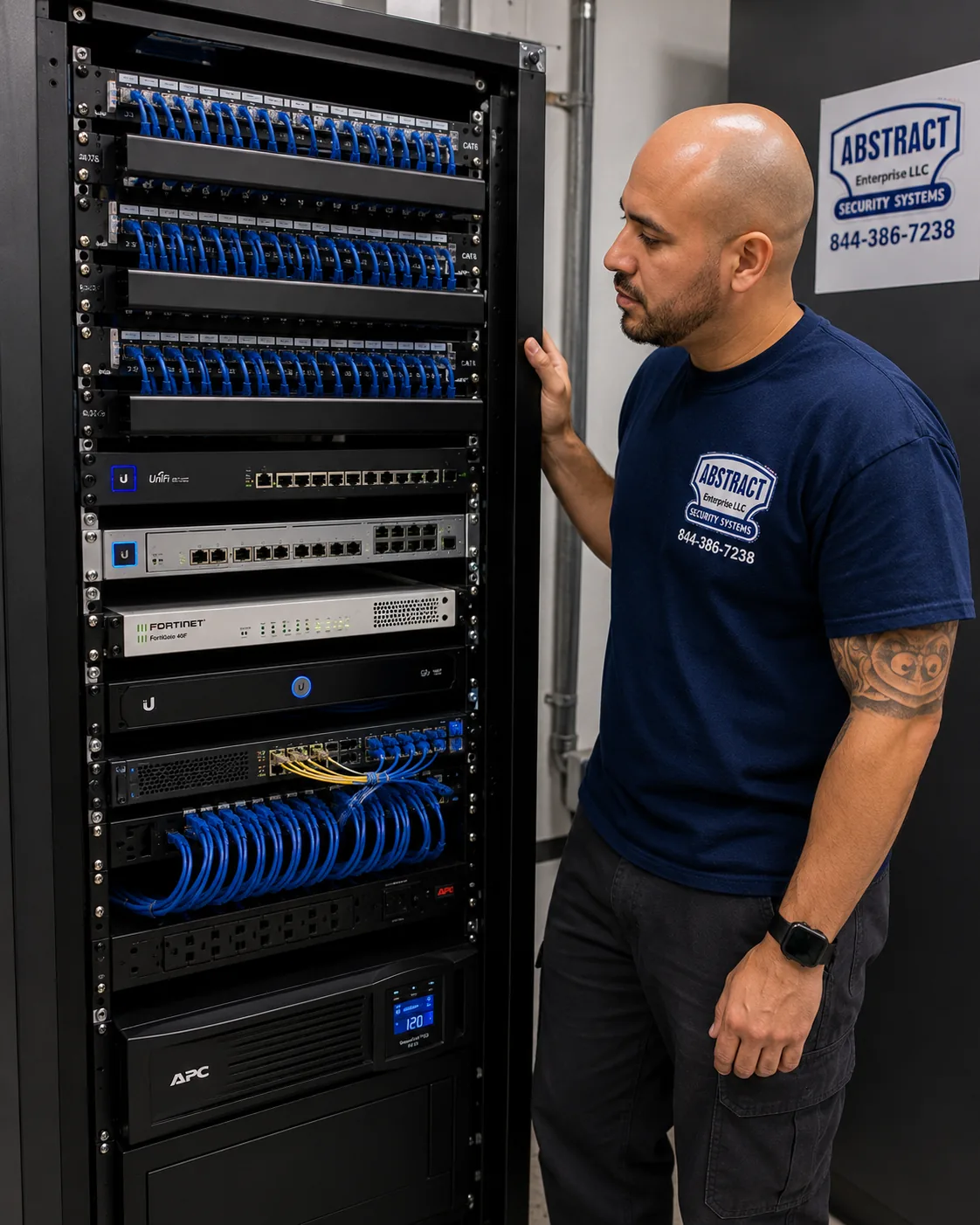
Finished network rack Nassau County with patch panels, switching, firewall and battery backup dressed and labelled
A finished room with battery backup at the base — which is what stops a practice losing access to its own records after an interruption.
Next step

Get a Nassau network quote

Tell us the suite and what runs in it. We will map the systems, walk the space, and come back with a line-item number.

Or call (516) 346-5778 · NYS Low Voltage #12000287431