Townhouse complex off Route 9 with a dead pool reader? Clubhouse alarm nobody can disarm? Dutchess County condo boards, HOAs and managing agents reach our crew at (845) 640-3835
For Dutchess County Condo Associations, HOA Boards, Unit Owners & Managing Agents · Served From Our Bronx Office
Condo Security Systems in Dutchess County
Townhouse Community Entry · Clubhouse & Pool Fobs · Building Intercoms · Owner Alarms · Cameras for Lots & Paths
Our condo security systems in Dutchess County start with a $250 service call from Abstract Enterprises Security Systems whenever an entry station, fob reader, pool gate lock, clubhouse alarm or camera recorder stops working, and anything new for the whole community is priced in writing after a free on-site assessment. We are licensed by New York State for low-voltage work (#12000287431) and we install, repair and look after the intercoms, access control, alarms and cameras that condominium associations use across the county, from the townhouse complexes that line Route 9 and Interstate 84 in Fishkill and Wappingers Falls to the commuter condos near the Beacon and Poughkeepsie train stations and the smaller communities in Hyde Park, LaGrangeville, Pawling and Rhinebeck.
Quick answer: Most Dutchess condos are townhouse and garden communities, not lobby buildings, so the work centers on the clubhouse, the pool gate, the management office, a few shared doors and the cameras that watch parking and paths. A broken device is a $250 visit, credited toward the repair if a bigger one follows. A new plan starts with a free walk of the grounds and a written price for each part, so the board can fund it from reserves, an assessment or a few budget years. We book within 2 hours of your call or form, schedule seven days a week with early-day arrival windows, and take paid jobs in the order they come in.
Last updated November 26, 2026 · Written and checked by Abstract Enterprises Security Systems (NYS license #12000287431) · Facts on this page come from: the OneKey MLS Dutchess County report for the third quarter of 2026; condo listings on Redfin and a Dutchess condo-complex directory read on November 26, 2026; Westfair Communications and The Highlands Current on new condo and townhouse projects; Dutchess County and Central Hudson storm and outage figures; Real Property Law §339-e and §339-v; Multiple Residence Law §3; Executive Law §378; General Business Law §69-m; and the alarm and electrical chapters of the Village of Fishkill, Town of East Fishkill, City of Beacon and Town of Poughkeepsie codes
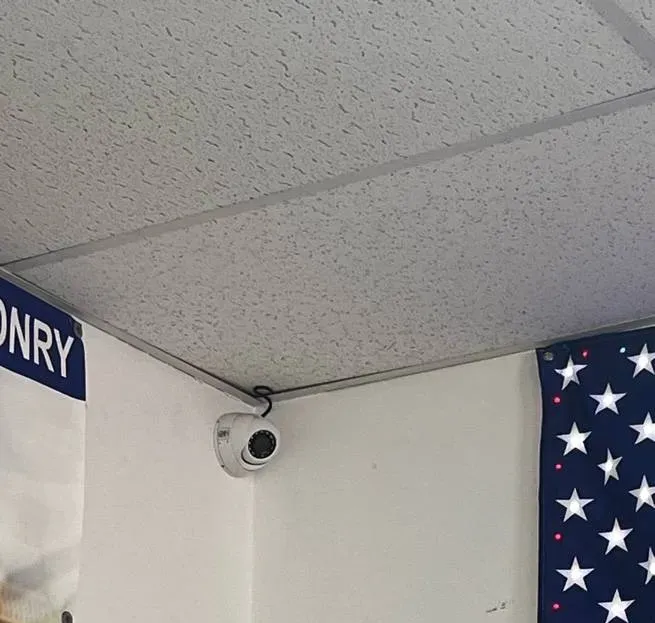
Job photo from our crew: a small dome camera set tight into the corner where wall meets drop ceiling, with its cable run along the joint. A Dutchess County condo management office or clubhouse front room takes the same corner mount, which covers the whole room and both doors from one spot.
Dutchess County Condo Security Request
Board members, HOA officers, unit owners and managing agents
✅
Request Sent!
Thanks. We will call or text to set up the Dutchess County visit.
25+
Years Experience
2 Hr
Booking
$250
Service Call
4.7★
201 Google Reviews
Owner-operated since 2002 · Thousands of jobs completed · Booked within 2 hours · Call or text (845) 640-3835
The Neighborhood
Why Dutchess County Condo Communities Need Security Planned Around Clubhouses, Pools and Six Decades of Townhouses
Ask someone in Fishkill where the condos are and they will point you to the side roads off Route 9 and Route 52, where clusters of two-story townhouses sit around a clubhouse, a pool and a tennis court. That is the typical Dutchess County condominium. There are a few buildings with a shared front door and a hallway, and a handful of newer developments with garages and gated entrances, but most associations here own roads, lawns, parking, a recreation building and some shared doors rather than a lobby. Condo security in Dutchess County is therefore less about one front door and more about the half-dozen places every owner shares.
The market is larger than people outside the county expect. In the twelve months through September 2026, OneKey MLS recorded 307 condo sales in Dutchess, up from 295 the year before, with the median price rising from $318,000 to $355,000. Co-ops, by comparison, closed 42 sales at a median of $114,000 over the same period. Condos are the main form of shared ownership in this county by a wide margin, and every one of those 307 closings handed somebody a set of pool fobs, a clubhouse code and, in some communities, a gate remote that the seller may never have returned.
Where Dutchess condos actually sit
A county-wide directory of condo and townhouse complexes that we read while writing this page listed forty-one communities by town: thirteen in Fishkill, nine in Beacon, seven in the Poughkeepsie area, five in Wappingers Falls, two each in Beekman, Pawling and Hyde Park, and one in Rhinebeck. Their build dates ran from 1965 to developments still adding homes after 2019. Most of them cluster along the Route 9 and I-84 corridor, close to the highways, the shopping and the train stations, which is where our crews spend most of their Dutchess days.
The condo listings on Redfin the same day told a similar story. Seventy-one condos were for sale at a median list price of about $279,000, in Fishkill, Wappingers Falls, Poughkeepsie, LaGrangeville, Beacon, Hyde Park and Pawling. Listing notes mentioned community pools, tennis courts, clubhouses, fitness centers and a scenic pond. Three described gated communities, two of them in Poughkeepsie and one a 55-plus community in Fishkill with a clubhouse and fitness center. Monthly association fees quoted ran from roughly $300 to almost $600. Several listings were tagged as near a train station.
Sixty years of construction in one county
The spread of build dates is what makes Dutchess condo work different from a newer suburb. A garden complex from the late 1960s may still have its original door hardware on the laundry room and a 1980s burglar panel in the pool house. A 1990s townhouse community usually has a clubhouse with a key lock, a pool gate with a combination lock and nothing networked at all. Communities finished in the 2010s often came from the builder with a keypad gate, a handful of consumer cameras and a developer account nobody transferred. One association can contain all three eras when it was built in phases. Our first job is often simply to list what is there, what still works and who holds the passwords.
What is being built now
New condo supply in Dutchess comes in small numbers and slowly. Westfair Communications reported in December 2023 that a developer was planning a condominium project called Fishkill Landing on the Hudson in the Town of Fishkill: 116 condo units in four buildings of two and a half and three stories on 7.5 acres, next to a 10-acre town park with public parking and a riverfront esplanade. In Beacon, The Highlands Current reported in May 2025 that the Planning Board had granted two more 90-day extensions to a 37-townhouse project, at least the sixth and seventh since 2022. Boards of new communities like these inherit decisions made long before the first owner moved in, which is why a plan written early saves money later.
Towns, villages and two cities
Dutchess has two cities, Beacon and Poughkeepsie, plus towns and villages that each keep their own codes. That matters for owners' alarms and for any wiring that needs a permit. The City of Beacon requires an alarm user permit from its police department. The Village of Fishkill revokes an alarm permit when ten or more avoidable alarms are recorded in a single permit year. The Town of East Fishkill requires a separate alarm registration for each alarm site and charges no fee for the first two false alarms at the same premises. The Town of Poughkeepsie adopted a new electrical inspection law in February 2026 that makes it a violation to install wiring for light, heat or power without a permit from its Building Department. None of New York City's housing rules apply here; the state's Multiple Residence Law covers every town, village and city under 325,000 people, which includes all of Dutchess.
Winters, storms and the long drive
Weather shapes every Dutchess proposal. Central Hudson serves more than 315,000 customers across its territory, and when the July 4, 2026 thunderstorm hit, the county reported over 33,000 Central Hudson outages and more than 7,400 NYSEG outages, with the worst damage in the City and Town of Poughkeepsie, East Fishkill, LaGrange, Beekman, Union Vale and Pawling. Winter is the other half of the story: ice, plowed snowbanks and freeze-thaw cycles work on outdoor equipment for months at a time. For a condo community that means battery backup that outlasts a long outage, locks that fail the right way for each door, readers rated for real cold, and cable runs between buildings that will not be cut by the next snowplow or irrigation repair.
What Dutchess condo boards call us about
The same complaints come up again and again. The clubhouse has a key lock and nobody knows how many keys are out. The pool gate combination has been the same for years and every former renter knows it. The board wants cameras on the parking areas after a string of car break-ins, but there is no power or network anywhere near the lot. The management company is an hour away and cannot add or remove a fob without a trip. A burglar panel in the pool house beeps every time the power blinks. An owner wants a monitored alarm and asks whether the town needs to be told. None of these require a new system on the first day, but each one is a reason to have a written plan.
Dutchess County condo facts that shape the work
Sales: 307 condo sales in the twelve months through September 2026, median $355,000, against 42 co-op sales at a $114,000 median (OneKey MLS, Dutchess County, third quarter 2026).
Listings: 71 condos for sale on Redfin on November 26, 2026, median list price about $279,000, with pools, clubhouses, tennis courts, fitness rooms and three gated communities mentioned in listing notes.
Population: 297,018 people countywide in the 2020 Census, with the Town of Poughkeepsie at 45,574, the City of Poughkeepsie at 31,596, the Town of Wappinger at 28,204, the Town of Fishkill at 23,605 and the City of Beacon at 14,380.
What the association controls: Real Property Law §339-e lists a condominium's exits and entrances, its parking, its recreational and community facilities and "all apparatus and installations existing for common use" among the common elements, subject to the declaration; under §339-v the bylaws may set money aside for "major and minor maintenance, repairs, additions, improvements, replacements".
Pool fencing: Executive Law §378 is the reason a Dutchess pool gate has a spring hinge and a latch at the top; the statute wants it to swing shut, catch on its own and stay locked whenever no one is swimming or watching the pool.
Who may install it: Albany, not the county, licenses companies that put in burglar and fire alarm systems (General Business Law §69-m), and our New York State number, #12000287431, appears on every proposal.
Transit: Poughkeepsie is the northern end of Metro-North's Hudson Line, which is one reason condos near the Poughkeepsie and Beacon stations draw commuters.
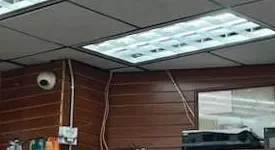
Job photo of a mini dome camera on a drop ceiling over a wood-slat wall, with the cable run visible below. Many Dutchess clubhouses from the 1980s and 1990s have paneled walls and drop ceilings like this, which makes it easy to add a camera without opening finished surfaces.
What We Install
Dutchess County Condo Security Services: Shared Doors, Amenities, Owner Alarms and Cameras
Start with the system that is giving the board trouble today; the rest can wait. Below, every part of a Dutchess condo security plan gets its own heading, a plain description of how it plays out on townhouse and garden properties here, and a link to the Dutchess service page with the technical detail. The crew that fixes a pool reader in June is the same crew that would design the gate system two years later, so nothing installed early has to be ripped out.
Clubhouse & pool access
Fob, card or phone entry for the recreation building, pool gate, fitness room and courts, with seasonal schedules.
Shared-door intercoms
Video entry for garden buildings and the few lobby buildings, plus call boxes at gated entrances.
Owner and clubhouse alarms
Burglar alarms with central-station monitoring for the clubhouse, office and individual units.
Cameras
Coverage for parking areas, mail kiosks, the pool deck, paths and entrances, recorded on site.
Cabling between buildings
Underground and building-to-building links so the pool house and gate join one network.
Service and upkeep
Repairs, battery and drive replacement, firmware updates and owner-list cleanups.
Clubhouse, pool and amenity access control
In a Dutchess townhouse community the clubhouse door and the pool gate are the real front doors, because they are the only places every owner shares. A metal key or a four-digit combination works until a few years of sales and rentals have spread it to people the board has never met. Electronic access ties each credential to a unit, so the managing agent can turn off one household's fobs in one step and the board can see who opened the pool after hours. Readers can follow a season: the pool opens Memorial Day weekend and locks itself again in September, the fitness room runs early morning to late evening, the party room opens only for a booking. Because state law expects pool enclosure gates to close and latch on their own and to be locked when the pool is not in use, we add a reader and electric lock without removing the self-closing hinge or latch. Read more on our Dutchess County access control installation page, and if the community also wants keyless deadbolts on the office or a maintenance shed, our smart lock installation in Dutchess County covers that hardware.
Condo intercom repair, replacement and modernization
The intercom question in Dutchess usually comes from the minority of associations with shared entrances: garden-style buildings where eight or twelve units share a front door, mid-rise buildings near the Beacon and Poughkeepsie stations, and gated communities with a call box at the road. For a failed station, a stuck door release or a panel that no longer rings anyone, we start with a $250 service call and price the repair before replacing anything; see our intercom repair service in Dutchess County for the common faults. When the board is weighing a full condo intercom replacement, the decision turns on a few questions: can the existing two-wire or multi-wire cable be reused, do owners want a screen in the unit or only a phone app, will the panel need a cellular connection because there is no phone line at the gate, and does the platform carry a monthly subscription. A video upgrade for a building of four to eight units is posted at $1,200 to $3,500 on our intercom installation page for Dutchess County, and larger networked systems with smartphone access start around $2,500. We answer condo intercom RFPs, write the scope so the board can compare bids line for line, and build owner notices into the schedule. A full decision guide for boards, the condo intercom replacement guide, is being written now; until it is live, the brand comparison on Akuvox vs ButterflyMX answers the most common platform question.
Door buzzers for small shared entrances
Some of the older garden complexes in Wappingers Falls, Poughkeepsie and Beacon still run a plain audio buzzer at each building door. When one apartment station goes silent or the strike no longer releases, the repair is usually a single part; the Dutchess repair ranges run from $250 to $525 for a station and $450 to $950 for an electric strike with door alignment, as listed on our door buzzer repair page for Dutchess County. Where a board would rather replace an audio buzzer than keep patching it, our door buzzer installation in Dutchess County covers new audio and simple video entry for a single door.
Garage and elevator access in the few buildings that have them
Elevator condos are rare in Dutchess, but the ones that exist tend to be near the train stations or downtown, often above shops. If a fob is supposed to call the car only for residents, or a parking level should open only for owners who pay for a space, the reader goes in the cab and the elevator company makes the connection to its controller. Our elevator access control installation in Dutchess County page lists the per-car prices: from $2,295 for a fob, card, code or phone reader and from $3,825 for a biometric reader.
Condo security cameras
Cameras are the most requested and the most misunderstood system in a Dutchess condo. Townhouse parking courts are long and dark, the mail kiosk sits at the entrance, the pool deck is out of sight of every unit, and the walking path along the pond has no lighting. A good plan places a handful of cameras where people and cars must pass, records everything to a recorder kept in the clubhouse or office, and lets the board pull a clip without calling anyone. We keep this section short because a dedicated condo security camera installation page for Dutchess County is on the way. Until then, our security camera installation in Dutchess County page has the area camera pricing, parking lot camera installation covers long lots and poles, and CCTV installation in Dutchess County covers wired recorders for clubhouses and offices.
Burglar alarms for the clubhouse, the office and owners' units
Associations often own a building that sits empty most of the night: a clubhouse with a kitchen, televisions and fitness equipment, or a management office with files and a computer. A burglar alarm with central-station monitoring covers it, with separate user codes for staff, board members and the cleaning service. Owners can buy their own monitored alarm for their unit as well. Our monitoring runs through a central station at two rates already published on the site: $30 a month for keypad-only monitoring and $45 a month with the phone app. Because Dutchess municipalities handle alarms differently, we tell each owner and the board what their town or city expects before the system goes live. Details are on our alarm installation in Dutchess County page.
Fire alarm work within our scope
Some Dutchess condo properties need a code-required fire alarm, typically a clubhouse used for assembly, a mixed-use building with shops below, or a larger multifamily building. Fire alarm work in the Hudson Valley is within our scope. The path starts with drawings from an engineer or architect, then review and inspection by the local code enforcement office under the New York State Uniform Code; we do not publish fire alarm prices, because every system is quoted from approved drawings. The steps are laid out on our fire alarm installation page for Dutchess County. Where access control and fire alarms meet, such as electrically locked doors that must release in an alarm, we coordinate both sides.
Package handling for townhouse communities
In a townhouse community each owner has a stoop, so packages are scattered rather than piled in one lobby. The options are modest: a camera on the main drive that records delivery vans coming and going, a video doorbell at each unit that owners buy themselves, or, for associations with a clubhouse near the entrance, a locked parcel room with a reader and a courier code that works only during the day. Smart lockers come from locker providers; we supply the power, network and door integration they need. Owners who want their own doorbell camera can read about doorbell camera installation in Dutchess County.
Cable, network and links between buildings
The single biggest cost driver on a Dutchess condo property is distance. The clubhouse may be four hundred feet from the pool gate and twice that from the entrance, with lawns, parking and a road in between. We look for existing conduit first, then decide between trenching new conduit, running cable through buildings, or using a point-to-point wireless link where a clear line of sight exists. Underground work waits for the utility locate required under the state's Code Rule 753, which asks excavators to call between two and ten working days ahead. The security network itself stays separate from residents' Wi-Fi and the management office network. Our structured cabling installation in Dutchess County and network installation in Dutchess County pages describe the wiring and switch side in more detail.
Maintenance and upkeep plans
Security equipment fails quietly. A recorder drive dies and keeps "recording" nothing; a reader battery runs down; a camera lens fills with spider webs. Twice-yearly visits catch most of this before an owner notices, and a cleanup of the credential list once a year keeps former owners out. We do not sell fixed maintenance contracts at a published price; visits are scheduled and priced for each property, and camera checks follow what our security camera maintenance in Dutchess County page describes. Owners and staff get free phone and text support for as long as the system is in place: send a photo of the screen and a short note, and a technician walks you through it.
Condo vs co-op in Dutchess
Co-ops in Dutchess are a smaller market with a different decision process: shareholders, a proprietary lease and a co-op board that controls who buys. Condo owners hold their units in fee simple and share common elements under a declaration and bylaws, and the association governs the grounds rather than approving buyers. The equipment is often the same; the paperwork, notices and funding questions are not. Boards of co-op buildings should read our co-op security systems page for Dutchess County instead.
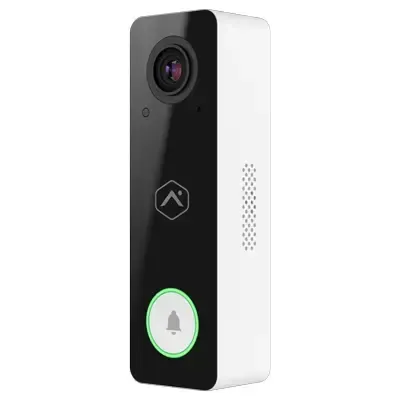
Manufacturer product photo of a slim video doorbell with a lit call button. On a Dutchess garden building door or a clubhouse side entrance, a single device like this can ring a phone and show the visitor, where a full entry panel would be more than the door needs.
Building Specialists
Condo Security for Dutchess County's Architecture: Six Property Types
Dutchess condo properties fall into six broad types. Most associations recognize themselves in one, and the phased communities built over twenty years often see two or three. Each card says what usually needs attention first.
1
1980s and 1990s townhouse loops
Two-story wood-frame units on private roads around a clubhouse, pool and courts. First priority: replace keys and combinations at the amenities with credentials tied to units.
2
Late-1960s and 1970s garden complexes
Brick or block buildings with a shared door for several units and a laundry room. First priority: the building door hardware and a simple entry station per door.
3
Gated 55-plus communities
Newer homes behind a vehicle gate, with a clubhouse and fitness center. First priority: a call box residents' guests and caregivers can use without trouble.
4
Station-area and downtown buildings
Small elevator or walk-up condos near Beacon and Poughkeepsie stations, sometimes over shops. First priority: a lobby entry panel and a separate residential entrance.
5
Riverfront and park-side proposals
New low-rise condo buildings planned beside public parks and the river. First priority: decide the security plan while the buildings are still on paper.
6
Rural and hamlet communities
Smaller associations in Beekman, Pawling, LaGrange and Rhinebeck with long drives and wooded grounds. First priority: remote management so nobody drives out to change a code.
Townhouse loops: amenities are the front door
In the communities built across Fishkill, Wappingers Falls and the Town of Poughkeepsie in the 1980s and 1990s, owners enter their own homes through their own doors, and the association's security job is everything else. The clubhouse usually has a single glass entry door and a back door to the pool, the pool sits behind a fence with one or two gates, and the courts have a chain-link gate. These doors were built for keys. Converting them is straightforward: a reader on each, an electric strike or a mag lock suited to the frame, a request-to-exit device where the code calls for one, and a small controller in the clubhouse utility room. The cost lies in the cable from the clubhouse to the pool gate and courts, which is why we look for existing conduit before anything else.
Garden complexes: one door for many units
The older garden buildings from the late 1960s and early 1970s, some of them listed with association fees above $500 a month, typically have a steel or wood door at each stair hall, a mailbox bank inside, and an audio buzzer or nothing at all. The doors themselves are often the weak spot: closers that no longer pull the door shut, frames that have shifted, latches that do not catch. We check the door before quoting any electronics, because an entry station on a door that does not latch secures nothing. Where the masonry is solid, cable goes through the basement or crawl space rather than the stair hall walls.
Gated 55-plus communities: easy in, hard to fake
The age-restricted communities in Fishkill and Wappingers Falls were built with a gate, a clubhouse and fitness rooms, and listings describe them that way. Their residents' needs are specific. Visitors, home-care aides and delivery drivers need a call box that is simple to use from a car; residents want large-button indoor stations or a phone app with big text; and the board wants a record of who came in. Many of these gates were installed by the builder with a phone-line call box and a keypad. When the phone line is cancelled or the keypad code leaks, a cellular call box with the directory managed online is the usual replacement.
Station-area and downtown buildings
The handful of Dutchess condos with a true lobby are mostly near the Beacon and Poughkeepsie train stations or in downtown blocks with shops on the ground floor. They behave like small city buildings: a front entrance with an entry panel, a rear or garage door, a mailroom and sometimes an elevator. Two problems come up often. The residential entrance and the commercial tenants share a door or a hallway, and the original panel calls a landline that no owner still has. In Beacon, the city's historic preservation chapter excludes security-related changes that do not substantially detract from a historic property from its definition of an alteration, which usually keeps a discreet panel or reader simple, though we confirm with the city before mounting anything on a historic facade.
Riverfront and park-side proposals
Projects like the condo buildings proposed next to a new town park in Fishkill raise questions that older communities never faced: a public esplanade and parking a few yards from residents' doors, visitors who are perfectly entitled to be in the park but not in the buildings, and a developer who may control the board for years. The cheapest moment to settle these is before the walls are closed. Empty conduit to each door, a dedicated room for the controller and recorder, and a decision about which camera views belong to the town park and which to the association save the future board thousands.
Rural and hamlet communities
Smaller associations in Beekman, Pawling, LaGrangeville, Hyde Park and Rhinebeck often have fewer than fifty homes, a volunteer board and a management company based in another town. Their priority is not the number of devices but the ability to run them from a distance: adding a new owner's fob from a laptop, checking whether the pool gate is locked, seeing why a camera went offline. Cloud-managed controllers and recorders that report their own health make this possible. We also plan for wooded grounds, which block wireless links in summer, and for longer power outages on rural lines.
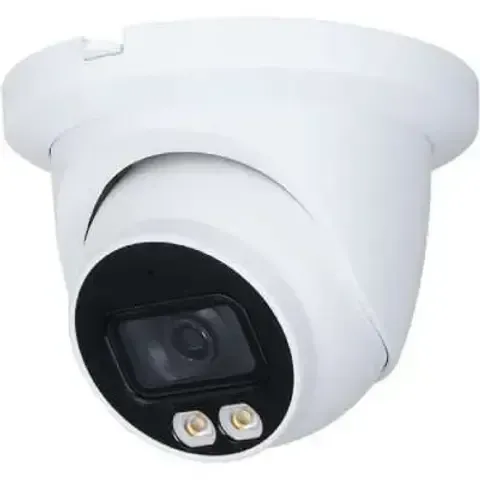
Manufacturer product photo of a white turret camera with two built-in lights. Mounted under the eave at the end of a Dutchess townhouse row, a camera like this can light and record the parking court in front of it without new pole lighting.
Commercial Condo Security
Clubhouses, Offices, Mixed-Use Blocks and Utility Buildings: Business-Side Condo Security in Dutchess County
Every Dutchess association runs a small business on the side. It owns a recreation building that is rented for parties, a pool that hires lifeguards, a maintenance garage full of mowers and plows, and sometimes an office with payroll files. A few condos also share a building with shops or offices. Each of these places has its own security needs, separate from the homes.
1
The clubhouse
Party room bookings, a fitness room, a kitchen and televisions. Readers with schedules, a monitored alarm at night and one or two cameras on the entry.
2
The management office
Files, a computer and the master credentials. A separate door schedule, a PIN plus fob, and an alarm code only staff hold.
3
The maintenance garage
Equipment, fuel and tools. A reader that logs which contractor came in and a camera on the overhead door.
4
Pump house or water building
Where a community runs its own water or wastewater equipment: a door contact, a reader and an alarm that tells the board if the door opens.
5
Shops under condos
Downtown buildings with stores below. Separate entrances and schedules so customers never reach residential halls.
6
Office and medical condos
Commercial condominiums along Route 9 and Route 55. Suite-level access and after-hours alarms for each owner.
Clubhouse rentals and the party-room problem
The clubhouse is where most Dutchess associations lose control of access. An owner books the party room for a Saturday, borrows the key on Friday, and returns it Monday, or a copy of it. An electronic system solves this by issuing the booking owner a code or app credential that works only for the reserved hours and only on the party room door, while the fitness room keeps its own schedule. The board sees which booking was active when the kitchen was left a mess. If the room has a monitored alarm, the booking credential can disarm it for those hours and no others.
Lifeguards, pool staff and seasonal workers
Pools bring a summer staff the association may employ directly or through a pool management company. Each staff member can get a credential that works from late May to early September, on the pool gate, the guard room and the chemical storage door, and expires on its own. When a staffing company changes guards midseason, the managing agent swaps names without touching anyone else's access.
Mixed-use and downtown condos
In the few Dutchess condo buildings with ground-floor shops, the residential board and the commercial unit owners usually share a rear door, a trash room or a basement. The fix is to separate entrances where possible and, where a door must be shared, to give the store owners credentials that work only during business hours and only on that door. Commercial units carry their own alarm accounts so a store's false alarm never becomes the association's problem.
Office and medical condominiums
Commercial condominiums are common along Route 9 in the Town of Poughkeepsie and Fishkill: small office parks where a dentist, an accountant and an insurance agent each own a suite. The association controls the building doors and the common hallway; each owner controls a suite. We install building-wide access with suite doors on the same platform, so the association sets the front-door schedule and each practice manages its own staff.
Compliance notes for Dutchess condo boards
The rules below are the ones that come up most on Dutchess condo work. They are summaries with sources, not legal advice; the association's attorney has the final word on how they apply to a particular property.
State law, not city law: Beacon and Poughkeepsie are both far below the 325,000 population line in MRL §3, so the Multiple Residence Law is the state housing statute here, as it is in every Dutchess town and village. The city-only Multiple Dwelling Law and Tenant Data Privacy Act stay inside the five boroughs.
Who owns the shared equipment: the Condominium Act's definition of common elements includes "all apparatus and installations existing for common use" unless the declaration provides otherwise (RPL §339-e). Whether a particular device inside a unit belongs to the owner or the association depends on the declaration and bylaws.
Readers on pool gates: Executive Law §378 already dictates the spring hinge, the latch and the lock; our reader and electric gate lock sit beside that hardware and never stand in for it.
Owners' alarms: Beacon requires an alarm user permit from its police department and expects central stations to attempt a callback before notifying police on residential alarms; the Village of Fishkill revokes a permit after ten or more avoidable alarms in a permit year; East Fishkill requires a separate registration for each alarm site. Other towns have their own chapters.
High-voltage wiring: the Town of Poughkeepsie requires an electrical permit for wiring for light, heat or power (Town Code Chapter 91, adopted 2026). We do not do electrical work; any new 120-volt circuit is the association's electrician.
Digging: underground cable waits for the utility locate under Code Rule 753.
Contractor credentials: ask any bidder for the state alarm installer license that GBL §69-m requires; a town business permit is not the same thing.
Insurance: we carry general liability insurance and issue a certificate of insurance naming the association and managing agent once a job is awarded.
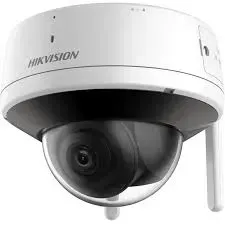
Manufacturer product photo of a white dome camera with two Wi-Fi antennas. For a Dutchess condo pump house or maintenance garage far from the clubhouse, a wireless camera can reach the network over a short link where trenching would cost more than the camera.
Your Questions Answered
Condo Security Systems in Dutchess County: Questions Answered
These are questions Dutchess condo boards, owners and managing agents bring to us that other pages on this site do not already answer. They are grouped by topic.
Rules, towns and paperwork
Can the board cap how many fobs and app users each unit gets?
Yes, and in communities with heavy turnover it is one of the most useful settings. Most platforms let the administrator set a limit per unit, for example four credentials of any kind, so a household cannot quietly hand fobs to friends, former tenants or a dog walker. When an owner asks for a fifth, the agent sees the existing four and can retire one first. The number itself belongs in the house rules, adopted the way the bylaws require; the system simply enforces whatever the board decides.
The clubhouse and several owners all have alarms in East Fishkill. Can they share one registration?
Not under the town's wording. The East Fishkill burglar alarm article says a separate alarm registration is required for each alarm site, so the clubhouse is one site and each owner's unit with its own alarm is another. The same chapter also says no fee is charged for the first two false alarms at the same premises, which is why we spend time at handover teaching staff and owners how to cancel an accidental alarm. Other Dutchess towns word their rules differently; we check the town that applies before the system goes live.
Grounds, paths and parking
Should cameras watch the association's pond and walking path?
A camera can show who was on the path and when, which helps after vandalism or a dispute, but it cannot prevent an accident or replace fencing, signs and lighting near water. Boards that add one usually aim it at the path entrance rather than the water, so it records who goes in and out, and they post the pond rules where people can read them. Paths without power can take a camera fed over cable from the nearest building or a solar unit if the canopy allows. We record common areas only, never a view into an owner's windows or yard, and we let the board's insurer weigh in on anything near the water.
After a divorce, one former spouse still has fobs for a unit the other now owns alone. Who can have them turned off?
The association acts on the owner of record, so the owner who now holds title asks the managing agent, and the agent removes the other person's credentials from that unit. Boards usually want to see the deed or the unit file updated first, and a written policy saves the agent from refereeing. Where title is still shared or a court order is involved, the board's attorney decides; we only carry out the change in the system, which takes a few minutes once the agent approves it.
An owner's car was keyed twice in the same space. Can we point a camera at that spot?
Yes, if the space is part of the common elements, and it is one of the more common reasons a Dutchess board adds its first parking camera. Aim it at the whole row rather than the single space so it reads as general coverage and does not look into anyone's home. A camera with built-in light and a recorder in the clubhouse keeps the footage on site. If the owner would rather pay for it, the board can decide whether that is allowed under the declaration and whether the camera then belongs to the association.
Amenities and residents
Owners want to check the pool camera from their phones to see if it is crowded. Is that a good idea?
It is possible but rarely wise. Giving every owner live view of the pool means anyone with the app can watch children in swimsuits from anywhere, and recordings can be shared further. Boards that want to show occupancy usually do it another way: a low-resolution or wide view shown only on a screen in the clubhouse, or a simple count of how many fobs opened the gate in the last hour. Live and recorded camera access stays with the board, the managing agent and anyone they authorize in writing.
Can our clubhouse cameras record sound as well as video?
Most cameras can, but sound is where boards should slow down. New York's eavesdropping laws treat recording conversations differently from recording video, and building-industry guidance has flagged that audio recording in common areas can raise those issues. Our default is video only. If the board wants audio somewhere specific, such as the management office front counter, it should get its attorney's view first; we can switch the microphone on or off in the settings either way.
Many owners rent to tenants on twelve-month leases. Can a tenant's fob turn itself off when the lease ends?
Yes. Most access platforms let the managing agent set an end date on any credential, so a renter's fob and app access stop working the day after the lease ends unless the owner renews it. The owner sends the lease dates when the tenant moves in, the agent enters them once, and the system does the rest. This keeps the list clean in communities where a large share of units turn over every summer or around college semesters.
Can owners use their phones instead of fobs at the pool and clubhouse?
Usually yes. Many readers accept a phone credential over Bluetooth or NFC alongside fobs and cards, so owners who prefer the phone can use it and those who prefer a fob keep one. The board decides whether phone access is offered to renters and guests. A fob still matters for anyone without a smartphone and for the moment a phone battery dies at the pool gate, so we never plan a system that relies on phones alone.
Buildings and equipment
Our community runs its own water treatment building. Should it be on the same access system as the clubhouse?
It can share the platform, but it should have its own door schedule and its own list of who may enter, usually only the operator, the maintenance contractor and one or two board members. A door contact that alerts the board when the door opens outside the operator's visits is often worth more than a camera. If the building has chemicals or electrical gear, any lock we install keeps free exit from the inside, and we coordinate with the operator before cutting into the door.
What happens to our camera recordings if someone steals the recorder from the clubhouse?
If the recorder is the only copy, the recordings go with it. That is why we place recorders in a locked closet or cabinet out of sight, not on the shelf under the clubhouse television, and why many boards add a second copy: a cloud backup of selected cameras, or a recorder in another building linked over the network. Even without a backup, a camera aimed at the closet door records the theft to the cloud or to a second device if one exists.
Who keeps the cameras' and entry panels' software up to date after installation?
Somebody has to, and boards should decide who in writing. Manufacturers release firmware updates that fix security holes; a device that never gets them becomes the easiest way into the network. During installation we change every default password, put the devices on their own network and record the firmware versions. After that, updates are part of a maintenance visit or a paid support call, or the board's own IT volunteer can do them with the credentials we hand over. The worst outcome is the common one: nobody owning the job at all.
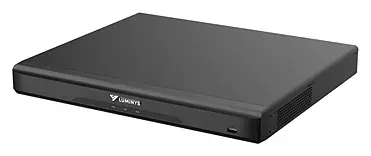
Manufacturer product photo of a flat dark grey network video recorder. In a Dutchess condo we mount a recorder like this in a locked closet rather than in plain view, so a break-in at the clubhouse does not take the evidence with it.
Equipment
Types of Condo Security Equipment We Install in Dutchess County
We install our own non-branded line by default and the major brands when a board asks for them, including Lorex, Luminys and Reolink cameras, and we service most intercom and access platforms already on Dutchess properties. Brand choice matters less than whether the equipment fits the place it goes: a reader at a pool gate faces chlorine, sun and wet hands; a camera on a townhouse end wall faces snow off the roof; a recorder in a clubhouse closet faces summer heat with no air conditioning.
Entry stations and call boxes
Video or audio stations for shared doors, and cellular call boxes for gates where no phone line exists.
Readers and credentials
Weather-rated readers for fobs, cards and phones, with encrypted credentials that cannot be copied at a kiosk.
Locks and door hardware
Electric strikes, mag locks, exit devices and gate locks matched to each frame and fence.
Controllers
On-site controllers that keep doors working when the internet drops, managed from a browser.
Cameras
Turrets, bullets and pan-tilt cameras with built-in light for dark parking courts and long drives.
Recorders and storage
Network video recorders with enough drive space for the board's chosen retention period.
Alarm panels
Monitored burglar alarms with keypad or app control for clubhouses, offices and units.
Network and power
Switches that power cameras over the data cable, direct-burial cable, radio links and batteries chosen for rural outages.
Surge protection
Protection on outdoor cable runs where lightning and utility switching can reach the head end.
Matching equipment to Dutchess conditions
Location
What usually works
What to avoid
Pool gate on an aluminum or steel picket fence
Weather-rated reader on a post beside the gate, a gate lock that keeps the self-closer and latch, cable in conduit under the deck
Keypads with worn buttons that reveal the code; locks that need the latch removed
Clubhouse entry
Reader plus electric strike, request-to-exit, door contact tied to the alarm, one camera inside facing the door
Cameras that look into the restroom or locker hallway
Gated entrance off a town road
Cellular call box reachable from a driver's seat, vehicle tags for residents, a camera on the exit lane
Phone-line call boxes that depend on a copper line the carrier no longer supports
Townhouse parking court
Bullet or turret camera with built-in light on the end wall of a building, recorded in the clubhouse
Battery cameras that die in January and need a ladder to recharge
Mail kiosk at the entrance
A single camera from across the drive so faces and vehicles both show
A camera mounted on the kiosk itself, where it is easy to tamper with
Garden building stair door
Entry station or video doorbell with fob reader, new closer and strike
Electronics on a door that no longer closes and latches on its own
Maintenance garage or pump house
Reader with schedule, door contact, wireless or buried link back to the clubhouse
Leaving the only key with a contractor who may change next season
Credentials that cannot be copied
Many older Dutchess clubhouse and pool systems use low-frequency proximity fobs that can be copied in seconds at a mall kiosk. Every copy works as well as the original, and the board never knows it exists. Encrypted credentials close that gap, and a board can switch over door by door. Because the change-over means handing out new fobs, we pair it with a clean owner list: each unit gets a fixed number of credentials, renters get dated ones, and nothing old stays active.
Doors that fail safe or fail secure
Each locked door has to be set up to do the right thing when power is lost. A clubhouse entry with an electric strike can stay locked from the outside while the exit hardware still lets people out. A mag lock releases when power drops, which is right on some interior doors and wrong on a pool gate that must stay locked. We specify each door on the proposal so the board, its insurer and any code official can see the choice before the work starts.
Batteries for long Dutchess outages
After storms like the July 2026 thunderstorm that cut power to tens of thousands of Central Hudson and NYSEG customers in the county, boards ask how long the system will run on battery. The answer depends on what has to stay alive: controllers and locks need little power, cameras and network switches need much more, and the heaters in some outdoor equipment need the most. We size batteries for the doors first, then decide with the board whether cameras should ride through a long outage or shut down to save the locks.
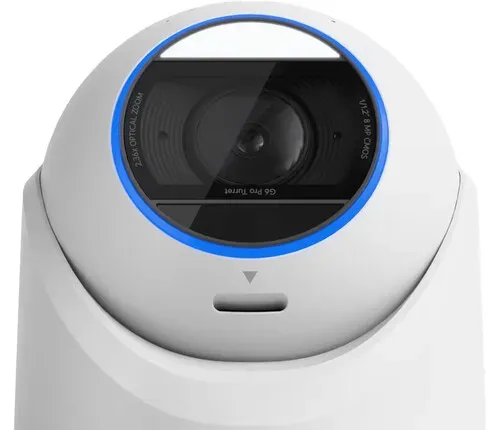
Manufacturer product photo of a white turret camera with a blue status ring around the lens. Under the eave of a Dutchess clubhouse facing the pool deck, a turret like this sits out of reach and shows residents that the area is recorded.
AI Overview Reality Check
What AI Gets Wrong About Condo Security Systems in Dutchess County
Chatbots, AI search summaries and national cost sites such as Angi, HomeAdvisor and Fixr give quick answers about condo security, and most of them are written with city apartment buildings or single-family houses in mind. Here are seven claims we hear repeated by Dutchess board members, and what the work actually looks like here.
1. "Condo security means a lobby intercom and a doorman"
That picture fits Manhattan, not Fishkill. A Dutchess condominium is far more likely to be a loop of townhouses with a clubhouse and pool than a building with a lobby. The county directory we read lists forty-one condo and townhouse complexes, current listings talk about pools, clubhouses and tennis courts far more than lobbies, and the gated communities put their entry point at the road, not at a front desk.
Because of that, the first dollars usually go to the shared amenities and the credential list, then to cameras in parking areas, and only then, if at all, to anything that looks like a lobby system. A board that starts by shopping for a lobby intercom often discovers it does not have a lobby.
The exceptions are real: the station-area buildings in Beacon and Poughkeepsie and the downtown blocks with shops below do behave like small city buildings. For those, a lobby entry panel is the right starting point.
2. "An intercom system costs $1,200 to $8,500"
HomeAdvisor's national guide gives a "normal range" of $1,200 to $8,500 for installing an intercom system. The range is not wrong, but it describes a house or a single building, not a condominium property with a clubhouse, a pool gate, a vehicle gate and a dozen shared doors spread over several acres.
In Dutchess, the drivers that move a condo price are distance between buildings, whether existing conduit can be used, how many doors and gates are controlled, and whether owners want indoor stations or the app. A small garden building with one door can sit near the bottom of a published range; a gated community with long underground runs can need a separate line just for trenching.
The only figure anyone can honestly quote without seeing the property is the $250 service call for a repair. Everything community-wide is a written quote after a free assessment, and our published Dutchess ranges, shown in the pricing section below, apply to individual systems.
3. "New York's intercom and smart-access privacy laws apply to your building"
AI answers often borrow New York City rules: the Multiple Dwelling Law's intercom provisions and the city's Tenant Data Privacy Act for smart-access buildings. Both are written for the city. The Multiple Residence Law, not the Multiple Dwelling Law, covers all towns and villages and every city under 325,000 people, which includes Beacon and Poughkeepsie.
That does not mean Dutchess condos have no rules. The Condominium Act governs common elements and bylaws, state law sets pool gate requirements, and each town and city has its own alarm chapter and building department. Privacy questions about face readers or phone-based entry are still worth putting to the association's attorney.
What we tell boards is simple: local rules come from the municipality the property sits in, and we check them for each job rather than applying a city template.
4. "Wireless battery cameras are all a condo needs"
Battery cameras sold for houses look like an easy answer for a townhouse community, and AI summaries recommend them often. On a Dutchess property they run into three problems: cold drains batteries fast in winter, recharging means a ladder on a snowy end wall, and Wi-Fi from a clubhouse rarely reaches a parking court three buildings away.
Cameras that take power and data over one cable, recorded on a recorder the association controls, keep working through the winter and keep the footage on site. Where a camera truly cannot be wired, a solar unit or a point-to-point wireless link is a better choice than a battery camera.
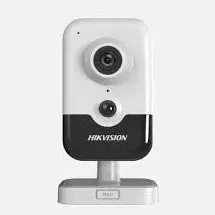
Manufacturer product photo of a small indoor cube camera. Inside a heated Dutchess clubhouse a compact camera like this is fine; outside on a townhouse end wall in January, a wired outdoor camera is the better choice.
Consumer cameras also tie footage to one person's account. When that board member leaves, the association can lose access to its own recordings.
5. "Any electrician can install it, and no permits are involved"
Two different trades are involved, and AI answers tend to blur them. Security and alarm installers in New York are licensed by the state under General Business Law §69-m. Electrical work for light, heat or power is a separate trade that local codes regulate; the Town of Poughkeepsie, for example, adopted a 2026 law requiring an electrical permit for that wiring.
For a condo project that means a low-voltage contractor installs the readers, locks, cameras and controllers, while the association's electrician adds any new 120-volt outlet a power supply needs. We do not do electrical work; we tell the board exactly where a circuit is needed so its electrician can quote it.
Confusing the two leads to delays: a project waiting on an outlet nobody ordered, or an electrician asked to program an access system they have never seen.
6. "A false alarm is only a nuisance"
In parts of Dutchess, false alarms carry consequences. The Village of Fishkill revokes an alarm user permit when ten or more avoidable alarms are recorded in a permit year. East Fishkill charges no fee only for the first two false alarms at the same premises. Beacon expects residential alarm notifications to include an attempted callback by the central station before police are notified.
For an association, the clubhouse alarm is the usual offender: a cleaner who does not know the code, a party guest who opens the wrong door, a motion detector aimed at a balloon display. Setup and training at handover prevent most of these.
We set entry delays to fit how the building is used, give each user a personal code, and make sure the central station has a current call list before the system goes live.
7. "Cloud systems never go down"
Cloud management is useful for Dutchess associations whose managing agent is an hour away, and AI answers are right to recommend it. But the cloud sits on top of local power and a local internet connection, and both fail in storms. When the July 4, 2026 thunderstorm hit, the county reported over 33,000 Central Hudson outages and more than 7,400 on NYSEG's lines.
A system that needs the internet to unlock a door leaves owners outside during exactly those outages. The controllers we install store the credential list on site, keep doors working without the internet, and sync changes when the connection returns. Recorders keep recording locally whether or not the cloud is reachable.
Cloud management is the right tool for remote administration; it is the wrong place to keep the only copy of anything a door or a recorder needs to work.
Talk to a Technician About Your Dutchess County Condo
Pool reader blinking red? Clubhouse keypad chirping? Snap it with your phone and send it over, or forward the reserve study line the treasurer is stuck on. You will have a booked visit within 2 hours.
Request a Free Quote for Your Dutchess County Condo
Tell us where the community is and what is bothering the board. Useful extras: the unit count, whether owners live in townhouses or share a building, which amenities the association runs, and pictures of the clubhouse door, the pool gate or the closet where the old equipment lives. Prefer the phone? Call or text (845) 640-3835.
✅
Request Sent!
Received. Our office will reach out by phone or text so you can choose the Dutchess County visit day.
How It Works
Our Installation Process for Dutchess County Condos
The steps are the same for one pool reader or a whole community. On bigger projects the slowest part is usually the gap between our proposal and the board's vote, and that is normal: boards meet monthly, and some decisions go to the owners.
1
Call, text or form
A board member, owner or agent reaches out; our office logs the property, its size, its layout and what has gone wrong or needs planning.
2
Service call or free assessment
Something broken? That is the $250 visit. Something new? We walk the grounds at no charge, from the entrance road to the pool deck and the utility closets.
3
Written, itemized proposal
The board receives a document listing each controlled point and each trench or link with its own price, sorted into phases it may approve one by one.
4
Approval and deposit
After the vote and the deposit, parts go on order and the managing agent receives our insurance certificate naming the association.
5
Owner notice and schedule
We draft the owner notice with dates, affected doors and how to get new credentials, and book two-hour arrival windows.
6
Installation and testing
The crew installs, programs and tests every door and camera, and the board contact signs off on each camera view.
7
Handover and training
The board receives logins, the device list and a short training session; owners get their fobs or app invitations.
Scheduling around seasons and owners
Every visit has a two-hour arrival window, and our crew arrives inside it, never early. In Dutchess we aim to finish pool gate and clubhouse work before Memorial Day weekend, do trenching while the ground is workable, and avoid outdoor entrance work in the deepest part of winter unless something has failed. Visits are booked early in the day, seven days a week, and paid jobs are scheduled first come, first served.
What owners should hear before the work starts
Owners forgive a closed pool gate for an afternoon if they knew about it a week ahead. Our draft notice covers the work days, which entrances and amenities are out of service and roughly how long, the temporary way in, the date new credentials or app invitations go out, and a phone number for problems. The board revises it and sends it through its usual channel; landlord owners forward it to their tenants.
Deposit, payment and special-order parts
Nothing is purchased until the contract is signed and half its price is paid as a deposit. Certain call boxes, readers and gate hardware are made to order, and the factory sets the ship date, not us; we confirm the installation day only after those items are in hand. Financing is available through Wisetack, subject to approval. Checks from the association or its management company are fine.
After the job
Manufacturers stand behind their own devices. For our labor, the warranty page spells out 30 days, and an association can buy extended coverage of a year or more at signing. Help by phone or text costs nothing for the life of the system. Full terms — including 50% deposit, one-year parts-only warranty on Abstract Enterprises Security Systems-supplied products, and the late-fee schedule — are set out in the service agreement.
Manufacturer product photo of a black network video recorder. At handover in a Dutchess condo, we sit with the board contact at the recorder, confirm each camera view and show how to export a clip.
Coverage Area
Condo Security Near Dutchess County's Landmarks
If you live in the county you have driven past all six of these. Each card describes the kind of condo property nearby, never a specific client.
1
Route 9 and I-84 in Fishkill
The county's densest cluster of condo and townhouse communities, including gated 55-plus developments, a short drive from the interchange.
2
Beacon station and Main Street
Townhouse communities on the city's edges and small condo buildings within reach of the Hudson Line station and the Main Street shops.
3
Walkway Over the Hudson, Poughkeepsie
Condos in the City and Town of Poughkeepsie, from garden complexes near the hospitals to gated communities with clubhouses and pools.
4
Wappingers Falls and Route 9D
Garden complexes from the late 1960s alongside newer age-restricted communities, many with pools and tennis courts.
5
Hyde Park and the Roosevelt sites
Smaller townhouse communities along Route 9 north of Poughkeepsie, with wooded grounds and long private drives.
6
Rhinebeck village
A newer condo community near the village, where historic streetscapes and quiet roads set the tone for what goes on building exteriors.
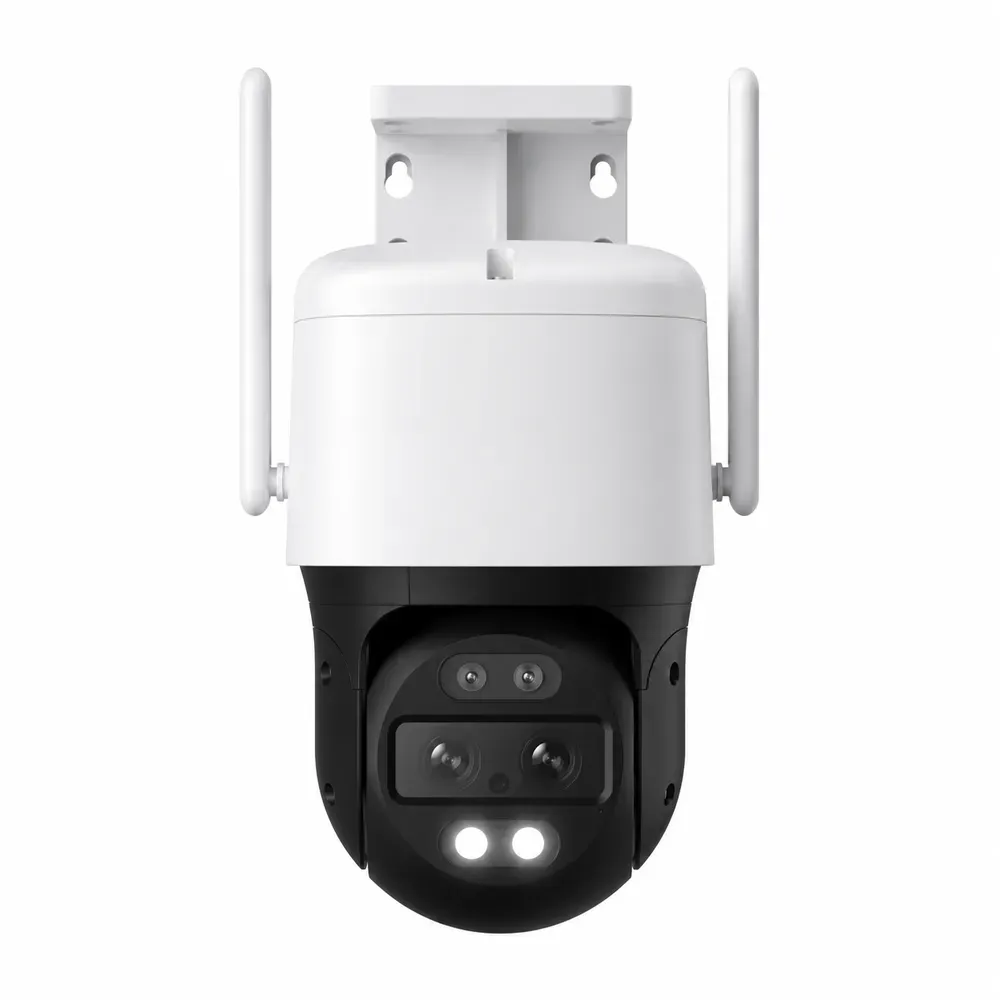
Manufacturer product photo of a white pan-tilt camera with two antennas and stacked lenses. At a gated Dutchess entrance far from the clubhouse network, a camera like this can follow a car from the town road to the gate over a wireless connection.
We also serve condo associations in LaGrangeville, Hopewell Junction, East Fishkill, Beekman, Pawling, Pleasant Valley, Red Hook, Millbrook, Dover, Amenia and every other town and village in the county. Crews come from our Bronx office at 460 E Fordham Rd; the $250 service call is the same anywhere in Dutchess.
Pricing
Condo Security System Cost in Dutchess County
Over the phone, one price is firm: the $250 repair visit. It pays for the drive, the troubleshooting and any small fix, and if the problem turns out to need a bigger repair, that $250 is applied to it. The table shows the published Dutchess County figures for single systems, copied from our service pages without changes. A plan for the whole property gets a written quote after the free walk, since the gap between the clubhouse and the gate, the state of old cable and the count of doors differ on every Dutchess site.
Published Dutchess County ranges that apply to condos
Item
Published price
Where it is posted
Technician visit to find a fault, small fixes on the spot; credited toward a larger repair
IP intercom with smartphone access, larger buildings
$2,500 to $8,000+
Dutchess intercom installation page
Access control, single door or gate
$1,900 to $6,000
Dutchess access control page
Access control, multi-door property
$5,000 to $18,000
Dutchess access control page
Elevator access, Level 1 fob, card, code or phone reader
From $2,295 per car
Dutchess elevator access control page
Elevator access, Level 2 biometric reader
From $3,825 per car
Dutchess elevator access control page
Central-station monitoring for an owner's or clubhouse alarm
$30 a month keypad, $45 a month with app
Site monitoring rates
Typical repair ranges for entry parts
Same figures as the Dutchess buzzer repair page and the door buzzer and intercom repair pricing sheet. The board contact approves each part price before the technician swaps anything.
Repair
Typical range
Apartment or in-unit intercom station
$250 to $525
Door release relay or button
$250 to $475
24V transformer
$325 to $650
Electric strike replaced and door aligned
$450 to $950
Lobby or entry panel repair or faceplate
$650 to $1,800
Riser or trunk cable repair
$850 to $2,400
How Dutchess boards usually fund the work
Three funding routes cover nearly every Dutchess project we price. If the reserve study already names the clubhouse doors or the gate, the money often comes out of reserves, which §339-v lets bylaws establish. A big one-time replacement may go to a special assessment. Many boards simply split the work into phases and fund one phase per budget year. The declaration and bylaws decide which route is open and whether owners vote; the board's accountant and attorney advise on that, and our job is to hand them accurate numbers.
What moves a community-wide quote
Distance comes first: how far apart the entrance, clubhouse, pool and courts are, and whether cable can use existing conduit, go through buildings, go underground or cross on a wireless link. After that come the number of controlled doors and gates, whether owners want in-unit stations or only the app, how much existing wiring can be reused, how much of the work is outdoors in hard ground, and how much programming it takes to clean up an old owner list. A small garden complex with two doors and a pool gate and a gated community with a call box, clubhouse, pool, courts and maintenance yard are different projects even if they have the same number of homes.
Ongoing costs after installation
Installation is not the last bill. Cloud-managed readers and app intercoms may come with a maker's subscription charged per door or per home, while on-site systems often have none, and the proposal says which is which. Alarm monitoring, for owners or the clubhouse, runs $30 or $45 a month. Plan to replace batteries every few years and recorder drives and outdoor readers sooner than indoor gear, and put all three in the reserve study.
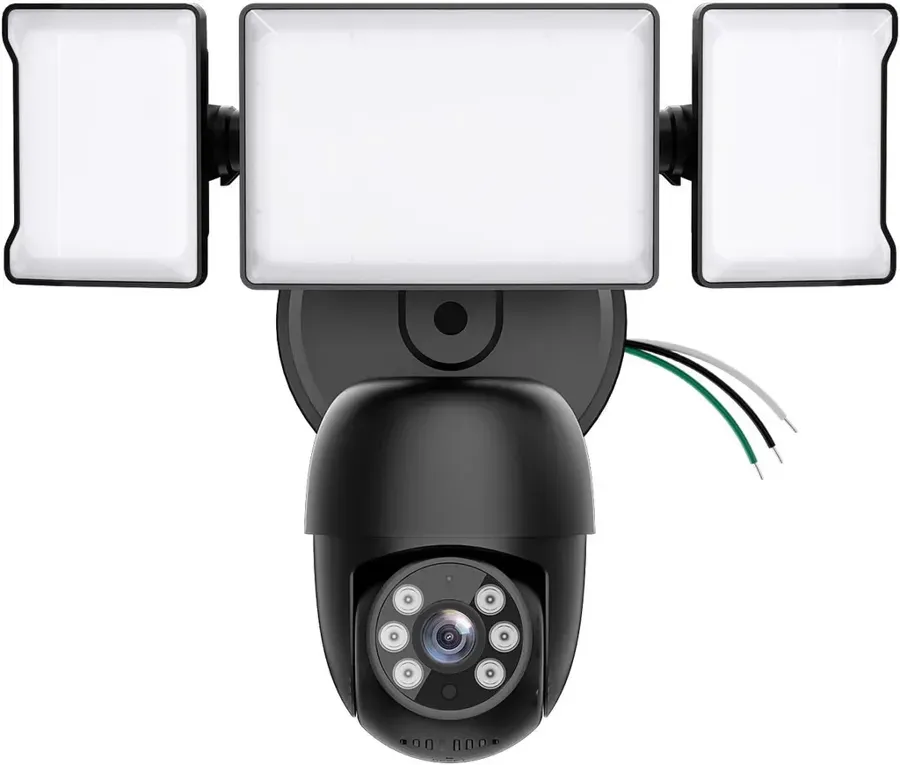
Manufacturer product photo of a black pan-tilt camera under three floodlight panels. On a Dutchess clubhouse corner overlooking a dark visitor lot, a light-and-camera unit like this replaces a failing floodlight and adds recording in one fixture.
Shop Our Systems
Condo Security Packages and How They Are Priced in Dutchess County
We do not sell kits to condo associations. What we see instead is three sizes of job, and almost every Dutchess request fits one of them.
1
Fix what broke
$250 service call. One trip to diagnose the dead reader, silent call box, stuck lock or blank recorder; quick fixes happen on the spot, and anything bigger gets a price before work continues.
2
Upgrade one place
Written price after a free look. A single project, maybe the clubhouse entry or the tennis court gate, checked against the published Dutchess figures in the table.
3
Plan the community
Free assessment, then a multi-year plan. Gate, clubhouse, pool, courts and cameras brought under one credential list, timed to match what the budget allows each year.
Equipment the association already owns
Some boards buy hardware first and look for an installer second. That works: send the model numbers and the door count, and we quote labor by phone or text. There is no site walk for equipment the association supplies, and that equipment's warranty stays with whoever sold it. When we supply the hardware ourselves, one company answers for every piece, which is why most associations go that way.
A typical Dutchess phasing plan
A common sequence here is the clubhouse and pool first, because that is where keys and combinations have leaked the most; then cameras on the parking areas, mail kiosk and entrance; then the shared building doors or the gate call box. Each phase runs on the same platform, so year-one equipment is still in use in year three, and the proposal prices each phase separately.
RFPs and board bid requests
Send the bid package as it is: a consultant's specification, a one-page scope from the managing agent or a list of complaints from the last owners' meeting. We price it item by item so it lines up against other bids. Our insurance certificate follows the award. Client names and properties stay private; the public Google reviews are there for any board that wants to check on us.
Complete Services
Every Condo Security Service in Dutchess County
Shared-door entry
Video and audio stations for garden buildings and lobby condos, repaired or replaced.
Amenity access
Readers and locks for clubhouses, pools, fitness rooms, courts and party rooms.
Gate call boxes
Cellular and networked call boxes and resident vehicle credentials at gated entrances.
Cameras and recorders
Parking, paths, kiosks and amenities, recorded on equipment the association controls.
Monitored alarms
Clubhouse, office and individual unit alarms at the published $30 and $45 monthly rates.
On a Dutchess townhouse property, we start at the clubhouse utility room, because that is where the phone line, the internet modem, the old alarm panel and any leftover intercom power supply usually live. What is in that room tells us more about the property's history than any drawing.
Next we walk the distance. We pace out the route from the clubhouse to the pool gate, the courts and the entrance, and look for the small signs of buried conduit: pull boxes in the lawn, a capped pipe beside a light pole, a sleeve under the pool deck. Finding one usable conduit can take the most expensive line off a proposal.
Last, we ask the board for the key and code count: how many clubhouse keys exist, how long the pool combination has been the same, who has a gate remote. The honest answer is usually "we don't know," and that answer is the strongest case for moving amenities to credentials tied to units.
FAQ
Dutchess County Condo Security Systems FAQ
Our pool gate lock fails but the rest of the access system works. Can you replace just that lock?
+
Yes. A single failed lock, reader or power supply is a repair, not a new system. The $250 service call covers finding the fault, and we price the replacement part before installing it. If the lock is discontinued, we fit a current model that works with the controller you already have.
Can the board remove items from your proposal and keep the other prices the same?
+
Usually, yes. Each door, camera and cable run is priced on its own line so the board can drop or postpone items. If removing one item changes the cost of another, for example a shared trench, the proposal says so next to both lines.
Can a reader go on the sliding glass door between the clubhouse and the pool deck?
+
Usually, yes. Sliding doors take a lock made for the slider's frame and a reader on the wall or a post beside it, with the cable hidden in the frame or the wall. If the slider is old or does not close tightly, we say so on the proposal, because a lock cannot hold a door that drifts open.
Will owners lose power or water while you work?
+
No. Our work is low voltage and does not touch the water supply or owners' electrical panels. The only interruption is to the door or gate being changed, usually for a few hours, and the owner notice says how people get in during that time.
Will our existing door closers and handles work with new electric locks?
+
Often, if they are in good shape. An electric strike usually works with the existing lever or knob, and a sound closer can stay. A worn closer that no longer pulls the door shut gets replaced, because an electric lock cannot secure a door that does not close. We list any hardware changes on the proposal.
Should the association post signs saying cameras are recording?
+
Many associations do, because signs discourage trouble and tell owners and guests what to expect. Whether signs are required in a particular place is a question for the association's attorney. We can recommend wording and placement at entrances, the clubhouse and the pool.
Our clubhouse exit door has a panic bar. Can it take a reader on the outside?
+
Yes. The panic bar stays exactly as it is, so anyone inside can always push out. On the outside we add a reader and either an electric strike or an electrified version of the existing exit hardware, chosen to suit the door and the code requirements for that exit.
Do owners need Wi-Fi in their unit for the intercom or access app?
+
No. The app works over the phone's own cellular data or whatever Wi-Fi the phone is on, and nothing new is wired into the unit. The entry station, gate box or reader is what needs a connection, and we provide that from the clubhouse network or a cellular modem.
Can the management company view our cameras from its office in another town?
+
Yes. Recorders and cloud-managed cameras allow secure remote viewing for named users, so the managing agent can check a camera or export a clip without driving out. Each person gets their own login, and the board decides who has access.
Can the system text board members when the clubhouse alarm goes off?
+
Yes. Alongside central-station monitoring, the alarm app can send push alerts to the board members and staff the association names, for alarms, arming and disarming, or a door left open. Each person chooses which alerts they receive.
Do readers and entry stations come in finishes that match our trim?
+
Most come in black, silver or white, and some makers offer other finishes or covers. We show the options on the proposal so an architectural review committee can approve the look before anything is ordered.
Can the local police watch our cameras live?
+
Only if the board decides to allow it. We do not connect cameras to any outside agency on our own. Most associations keep live access internal and provide clips to police when asked, through the managing agent or a board officer.
All Areas Served
Condo Security Systems Across the Hudson Valley and New York
Clubhouses, Pool Gates and Shared Doors: One Licensed Vendor Across Dutchess County
Whether it is one pool reader in Fishkill or a gate, clubhouse and camera plan for a gated Poughkeepsie community, the board deals with one licensed company from start to finish. Book the $250 repair visit, or have us walk the property free before the next budget meeting.