Condo security systems on Staten Island start with a $250 service call when an entrance gate reader, call box, clubhouse lock, intercom or camera stops working, and a community-wide plan for a condominium or HOA is priced in writing after a free walk of the property. Abstract Enterprises Security Systems is a licensed New York State low-voltage contractor, routed through our Brooklyn office, and we design, install, repair and maintain the gate entry, fob access, pool and clubhouse door control, intercoms, mailroom and package access and cameras that Staten Island condo associations rely on, from 40-home townhouse courts in Bulls Head and New Springville to the borough's elevator condos and newer mixed-use buildings on the North Shore.
Quick answer: Most Staten Island condos are low-rise townhouse communities, so security is less about a lobby and more about the entrance drive, the pool and clubhouse doors, the mail area and the parking courts. A failed device is a $250 visit that covers the trip, the diagnosis and quick fixes, and the fee is credited if a larger repair follows. New gate, fob, intercom or camera work is quoted line by line after a free site walk, so the board can budget it from reserves or put an assessment to a vote. We book every request within 2 hours, schedule seven days a week with early-day visits, and work first come, first served once a job is paid.
Last updated November 26, 2026 · Prepared by the Abstract Enterprises Security Systems team, NYS license #12000287431 · Public records relied on: NYC Department of City Planning MapPLUTO (NYC Open Data); NYC Department of Finance building classes; Condominium Act, RPL §339-e and §339-v; 13 NYCRR Part 22 (homeowners association offering plans); NY Multiple Dwelling Law §50-a; NYC Admin. Code ch. 30 (Local Law 63 of 2021); NYC Comptroller; Staten Island Advance/SILive
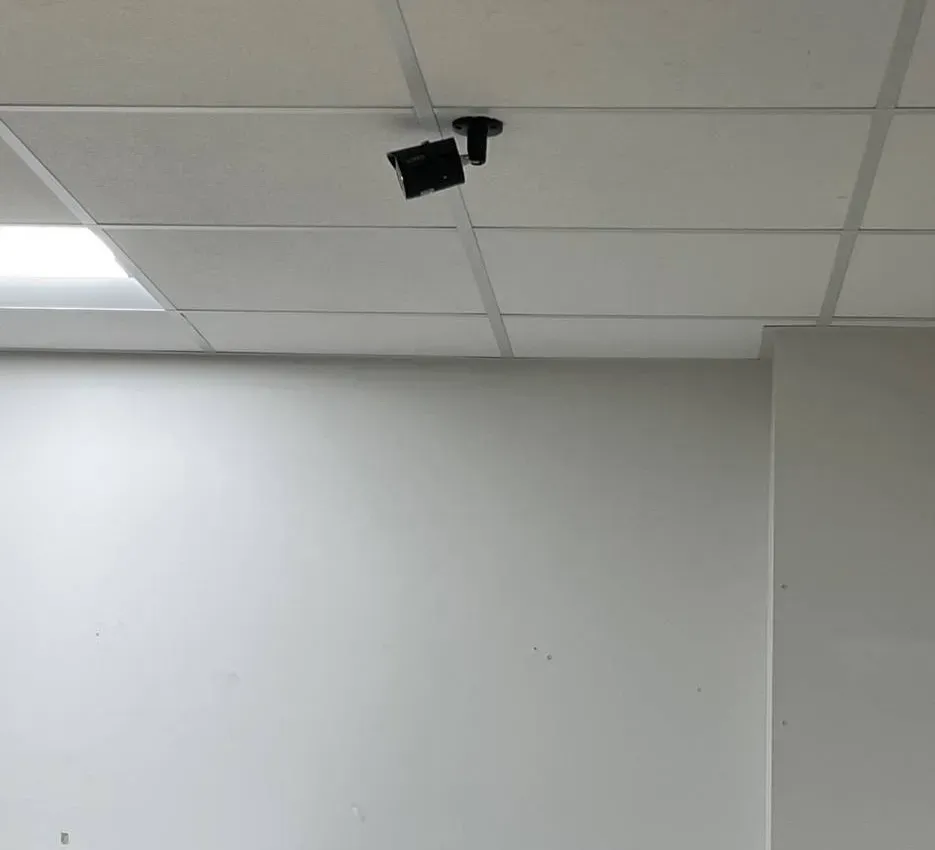
From our job library: a bullet camera bracketed to a drop ceiling over a blank wall. In Staten Island condo communities, this is the kind of mount we use inside clubhouse hallways, fitness rooms and maintenance garages.
Staten Island Condo Security Request
Board officers, HOA members, unit owners and managing agents
✅
Request Sent!
Thanks. We will call or text to set the Staten Island visit.
25+
Years Experience
2 Hr
Booking
$250
Service Call
4.7★
201 Google Reviews
Owner-operated since 2002 · Thousands of jobs completed · Booked within 2 hours · Call or text (347) 934-8335
The Neighborhood
What Makes Condo Security Systems Different in Staten Island's Townhouse Communities
Ask someone in Manhattan to picture a condominium and they see a tower with a doorman. Ask a Staten Islander and the picture is a row of two-story attached homes facing a private drive, each with its own front door and driveway, a clubhouse near the entrance and a pool fenced off behind it. That difference changes almost everything about condo building security here. There is often no shared front door to put an intercom on. The things a board actually controls are the entrance road, the gate or guard booth if there is one, the pool and clubhouse, the mailbox kiosk, the visitor parking and the shared lanes behind the garages. A condo security system on Staten Island has to be designed around that layout, or the association pays for lobby equipment it has nowhere to mount.
We checked the borough's condo stock against the city's own property records before writing this page. The Department of City Planning's MapPLUTO tax-lot file on NYC Open Data tags every condominium with a Department of Finance building class beginning with R. Grouping Staten Island's condo lots by that class shows the shape of the market plainly: class R3, which Finance describes as a "Condo; Residential Unit In 1-3 Story Bldg." (class list), accounts for 141 lots and 7,233 homes. Elevator condos (class R4) add 17 lots and 1,948 homes, walk-up buildings (R2) six lots and 483 homes, and mixed residential-and-commercial condos (RM) 29 lots and 1,550 homes. Across the residential condo classes we counted 11,458 homes on 216 lots, and roughly 63 percent of them sit in low-rise one-to-three-story buildings.
Where the condos are: Mid-Island first
The same file carries a ZIP code for each lot, and the concentration is striking. ZIP 10314, which takes in Bulls Head, New Springville, Willowbrook, Travis, Graniteville and Heartland Village, holds 72 condo lots and 4,947 homes, about 43 percent of the borough's condo housing. The next tier is far smaller: 10304 (Stapleton, Clifton, Park Hill) with 1,500 homes on 13 lots, then 10306, 10305, 10301, 10309 and 10312 with roughly 600 to 850 homes each. A board in Travis and a board in Tottenville face the same basic questions, but the Mid-Island communities tend to be bigger, older and more likely to have a gated entrance and a full clubhouse.
ZIP code
Main neighborhoods
Condo lots
Condo homes
10314
Bulls Head, New Springville, Willowbrook, Travis, Graniteville
72
4,947
10304
Stapleton, Clifton, Park Hill
13
1,500
10306
New Dorp, Midland Beach, Richmondtown
17
845
10305
Rosebank, South Beach, Arrochar, Grasmere
30
831
10301
St. George, Tompkinsville, Silver Lake
13
714
10309
Charleston, Pleasant Plains, Prince's Bay
11
654
10312
Annadale, Eltingville, Huguenot, Arden Heights
15
624
10303, 10308, 10310, 10307, 10302
Mariners Harbor, Great Kills, West Brighton, Tottenville, Port Richmond
43
1,341
All Staten Island
Residential condo classes R1–R4, R6, RM, RD
216
11,458
Read the table with two caveats. PLUTO counts a condominium at the level of its tax lot, so one large community can be a single row while a phased development may be split over several. Two lots carry no ZIP code at all, which is why the rows add up to two fewer than the total. And a ZIP code is a mail route, not a neighborhood boundary. The pattern still holds: Staten Island's condo market is a Mid-Island townhouse market with pockets on the North and South Shores.
A generation of 1980s communities reaching middle age
PLUTO also records a construction year for most lots. Among the low-rise, walk-up, elevator and mixed-use condo lots with a year on file, 63 were built during the 1980s, more than in any other decade, with another dozen from the 1970s and a second wave after 2004 made up mostly of small buildings of two to six homes. That timing matters for security. A community that opened in 1986 is now about forty years old. Its entrance keypad, gate operator, clubhouse door strike and the low-voltage cable buried between the gatehouse and the clubhouse were chosen by a developer who left decades ago. Many of these associations have replaced roofs and repaved roads on schedule while the electronics carried on until something failed. When boards call us, it is often the first time anyone has looked at that equipment as one system.
Two layers of governance in many developments
Condominiums in New York answer to the Condominium Act. Under Real Property Law §339-e, common elements, unless the declaration says otherwise, include the "basements, cellars, yards, gardens, recreational or community facilities, parking areas and storage spaces" and "all apparatus and installations existing for common use." Many Staten Island developments add a second layer: a homeowners association that holds the roads, pool, clubhouse or open space for several condominiums or a mix of condos and fee-simple houses. State rules for those associations, in 13 NYCRR §22.3, require the offering plan to describe the "land, buildings, lots, parking facilities, recreational facilities" the association owns or maintains. In practice, the entrance gate might belong to the HOA, the mailbox kiosk to the condo, and the camera on the clubhouse to whichever body paid for it. We sort that out at the first meeting, because the contract, the deposit and the administrator logins all belong with the body that owns the equipment. Which body that is comes from the offering plan and declaration, and the association's attorney is the right person to confirm it.
What residents complain about
The complaints we hear from Staten Island condo owners are mostly about cars and packages. In 2022, the Staten Island Advance reported that residents of one community believed thieves were getting into locked cars, noting that police had spent "more than two years" urging borough residents to lock their doors "amid a surge in car break-ins and grand larceny." In a 2025 SILive story about a porch theft, another member of the victim's household summed up a familiar frustration: "It's unfortunate that people are having to set up lock boxes because of people (who steal)." In townhouse courts, packages land on dozens of separate stoops instead of one lobby, and the cars sit in open parking courts instead of a locked garage. Those are the two problems a Staten Island condo security plan has to solve first.
After that, the list is specific to the layout. The entrance gate arm is stuck up for weeks after a plow clips the loop detector. Former owners' remotes still open the gate. Teenagers from outside the community climb the pool fence on summer nights. The clubhouse key has been copied so many times nobody knows who holds one. The camera at the entrance records a blur of headlights after dark. Each of those has a narrow, affordable fix, and none of them needs a lobby.
Staten Island condo facts that shape the work
11,458 condo homes on 216 lots across Staten Island's residential condo building classes, by our count of MapPLUTO (NYC Open Data, queried November 26, 2026).
About 63 percent low-rise: 7,233 of those homes are in class R3, Finance's category for condo units in one-to-three-story buildings.
43 percent in one ZIP code: 4,947 condo homes in 10314 (Mid-Island).
63 lots from the 1980s, the busiest decade of condo construction on the borough's dated lots.
1968 and eight apartments: the state lobby-intercom rule in Multiple Dwelling Law §50-a targets class A buildings built or converted after January 1, 1968 with eight or more apartments, which describes the borough's elevator condos far better than its attached-townhouse courts.
Associations that start by fixing the entrance gate usually move to the pool and clubhouse readers within a season, since a single fob list for every common door is what makes the gate upgrade pay off.
What We Install
Staten Island Condo Security Services: Call Boxes, Fobs, Amenities and More
Each part below answers what a Staten Island condo board, HOA or managing agent usually asks about that system, then points to the page where we cover that service in depth for the borough. Our condo security services are the same whether the association has 12 homes or 240: we install, repair, replace and maintain the equipment, and the board keeps control of it.
Entrance gates, call boxes and visitor entry
In a townhouse condo, the entrance is the intercom. A visitor pulls up to a call box on a post beside the drive, finds the owner in a directory, and the owner answers on a phone or indoor monitor and opens the vehicle gate or the pedestrian gate beside it. Where there is no gate, the same box often controls a clubhouse or mail-area door instead. Replacing that call box is the most common condo intercom replacement we do on Staten Island. Older units dial owners over a phone line, store a short directory that only the developer's software could edit, and sit in a weathered pedestal that lets rain into the keypad. A modern replacement calls owners' cell phones over a data connection, lets the board edit names from a browser, records a snapshot of every visitor and can issue a one-time code to a guest or a contractor.
For a board, the decision is less about the box and more about the plan around it: whether to replace the gate controls at the same time, whether owners will accept app-only answering, what the monthly platform fee will be if the chosen system carries one, and how to phase the work so the gate never sits wide open overnight. We answer each of those in a written condo intercom replacement proposal that separates the call box, gate interface, wiring and programming into lines a board can vote on. Associations working through a formal bid or a reserve-study item can send us their request for proposal and we follow its format. We cover installation in more detail on our Staten Island intercom installation page, and a call box or panel that has simply stopped working is handled through intercom repair on Staten Island. Our board-level guide to condo intercom replacement covers repair-versus-replace decisions, owner notices and how to compare bids.
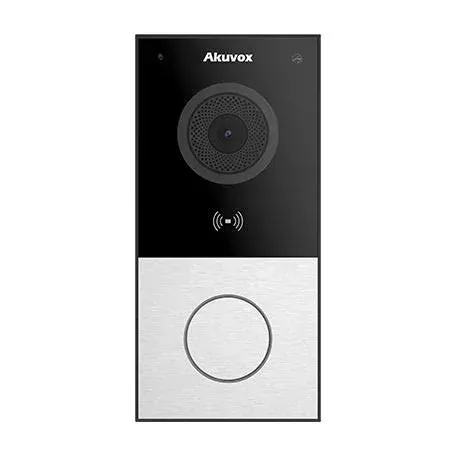
Manufacturer product photo of a compact one-button video station with a built-in card reader. A unit this size suits a Staten Island clubhouse, pool house or mail-room door where only one destination needs to ring.
Lobby intercoms in the borough's elevator and walk-up condos
About 2,400 of Staten Island's condo homes are in elevator or walk-up buildings, and those buildings do have a front door, a vestibule and a directory panel. Here the work looks more like the rest of the city: a lobby panel that rings apartments, in-unit stations or an app, a door release that actually pulls the door shut behind a visitor, and a service entrance on fobs. Several of the elevator condos date from the early 1960s or the 1980s, so the in-unit wiring is old but often reusable. We test a sample of apartments during the walk-through and tell the board whether the new system can ride the existing pairs or needs fresh cable to some floors. Where the building falls under the state's 1968 intercom requirement, the replacement keeps two-way voice and a release from each apartment, whatever the board decides about video.
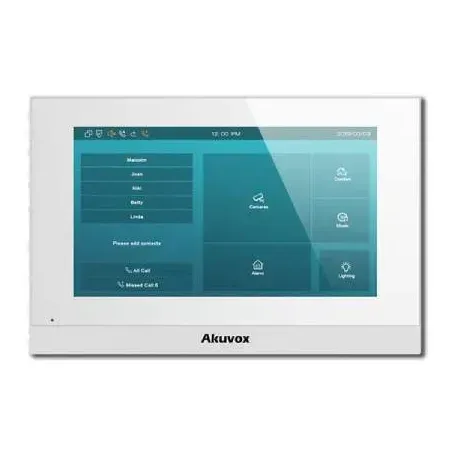
Manufacturer product photo of a wall-mounted touchscreen monitor. In Staten Island elevator condos, some owners prefer a screen on the wall to answering every visitor on a phone.
Door buzzers in small condo buildings
Most condo lots built on Staten Island since 2004 are small: two to six homes in a single building, often with a shared front door and separate entries above. Those buildings need a simple, sturdy buzzer or a small video station rather than a platform with a subscription. When an existing buzzer goes quiet or the release stops clicking, the owners can book door buzzer repair on Staten Island; when the building needs a new plate, station set and release, we cover it under door buzzer installation. Small associations without a managing agent appreciate that a buzzer has nothing to log in to.
One credential list for gates, pools and clubhouse doors
The single most useful upgrade in a townhouse community is one credential list for every shared opening: vehicle gate, pedestrian gate, clubhouse, pool, fitness room, mail area and maintenance shed. Instead of a drawer of gate remotes, a ring of clubhouse keys and a padlock code everybody knows, each owner household holds fobs or phone credentials the board can switch off the day a home is sold. Our Staten Island access control installation page lists the borough's published ranges, including $1,500 to $2,000 for a pedestrian gate keypad and $4,000 to $7,000 for a combined vehicle and pedestrian gate system. Associations still running 125 kHz proximity fobs should know those older fobs can be copied with inexpensive tools; we quote encrypted credentials or phone credentials as the replacement.
Pools, clubhouses, fitness rooms and tennis courts
Amenities drive more board meetings than the entrance does. A pool that opens Memorial Day and closes Labor Day needs a reader that follows the season, honors the posted hours and refuses fobs from households behind on common charges if the board's rules allow that. A clubhouse party room needs a door that unlocks only for the owner who booked it. A fitness room needs a log of who came in after closing when a treadmill is damaged. A tennis or pickleball court gate needs a reader that survives sun, rain and the occasional ball. We install the readers, locks, schedules and logs; the rules about who may use what belong to the board.
Mail kiosks, stoops and packages
Many Staten Island developments collect mail at a cluster box kiosk near the entrance or the clubhouse, while packages go to each front door. That splits the package problem across every stoop in the community. Boards have three practical options: cameras that cover the lanes and stoops from shared property, a staffed or self-service parcel room in the clubhouse with a reader on its door, or smart lockers from a locker provider that we integrate with the association's access system. We install the access and video side of each option; locker hardware and its service plan come from the locker company.
Cameras in brief
Condo security camera installation on a townhouse property is mostly an outdoor job: the entrance lanes, the parking courts, the pool deck, the mail kiosk and the clubhouse doors. Our page on condo security camera installation on Staten Island covers placement, retention and pricing for condo associations. For multi-family layouts in general, see apartment building security camera installation on Staten Island.
Elevator access control
The borough's elevator condos can restrict cars to the floors an owner lives on, lock the elevator out of the garage level after hours or send a visitor straight to one floor after the owner answers the lobby call. Those projects involve the elevator maintenance company and a separate interface in the controller room. We describe the work on elevator access control installation for Staten Island.
Alarms for unit owners and the clubhouse
Because Staten Island townhouse owners each have their own front door, back door and often an attached garage, many want an intrusion alarm of their own. That is a contract between the owner and us, separate from the association's systems, and it is covered on our Staten Island alarm installation page. Central station monitoring is $30 a month with a keypad or $45 a month with the phone app. Associations sometimes add an alarm to the clubhouse, the pool equipment room or the maintenance garage, armed outside open hours.
Fire alarm work within our licensing scope
Clubhouses, elevator condos and mixed-use buildings can carry fire alarm obligations that townhouse homes do not. We handle fire alarm work within our licensing scope and the approval steps that apply in New York City; the details are on our Staten Island fire alarm installation page. Security equipment that touches the fire alarm, such as a mag lock that must release when the alarm sounds, is wired and tested to that requirement.
Buried cable, conduit and the gatehouse network
The hidden cost in a Staten Island condo project is distance. The call box may be 300 feet of buried conduit away from the clubhouse that holds the controller, and the pool gate another 200 feet beyond that. Original conduits from the 1980s are often crushed, flooded or full of abandoned cable. Our walk-through traces each path and tests what is in it, then gives the board a choice: reuse what tests clean, pull new cable through good conduit, bridge a gap with a point-to-point wireless link, or trench where nothing else will work. Trenching and paving restoration are the most expensive line in any gate project, so we look hard for alternatives before proposing them. Low-voltage signaling and data wiring under 50 volts generally does not need a city electrical permit under NYC Admin. Code §28-105.4.7, though life-safety work has its own exceptions; any new 120-volt circuit at a post or gate operator is the association's electrician's job, not ours.
Guests, contractors and short stays
Townhouse communities see a steady flow of landscapers, snow crews, pool staff, dog walkers, aides and relatives who stay for a week. Modern entry systems handle them without sharing a permanent code: a guest code that expires after a set number of days, a landscaper credential that works only on weekday mornings, a pool-staff fob that works only in season. Whether owners may rent their homes for short stays is a question for the declaration, bylaws and city law, not for us; we only provide the credential tools the board decides to allow.
A site-plan checklist for Staten Island boards
Before calling any contractor, a board officer can take the community's site plan, or a printed satellite view, and mark six things on it. Our own free walk-throughs follow the same order:
Every way onto the property: the main drive, any service road, pedestrian gates, gaps in the fence line and footpaths to neighboring streets.
Every door and gate the association controls: clubhouse doors, pool and court gates, the maintenance garage, the mail kiosk or mail room, and any lobby or service door in an elevator building.
The equipment closet: circle the gatehouse, clubhouse room or utility closet with the brains of the system in it, and note if it gets hot in summer or loses power in storms.
Every credential in circulation: gate remotes, windshield tags, fobs, keypad codes and clubhouse keys, with a rough count of each and when the list was last checked against the owner roll.
Today's camera coverage: mark each camera's position and draw an arrow for its view, then note the retention period and the one person who knows how to export video.
Who owns each piece: HOA, condo or individual owner, according to the offering plan and declaration.
A marked-up plan like that turns a vague request into a precise one, and it usually shows that the most urgent problem is a single gate, a single fence gap or a single recorder rather than the whole system.
Storm season, plows and power
Outdoor equipment on Staten Island takes a beating. Salt spray reaches the communities near the South Shore and the Kill Van Kull, wind drives rain sideways into call box faceplates, and every winter a plow or a delivery truck clips a keypad pedestal. We specify weather-rated enclosures, set pedestals back from the plow path with a bollard where the board agrees, and put a battery backup on each gate controller and clubhouse lock so the community does not lose entry with the power. Before the first storm of the season is the right time to test that backup.
Service calls, maintenance visits and support
Condo security repair on Staten Island starts with the $250 service call. Boards that prefer a planned visit can book a spring check of the gate, readers, cameras and recorder before the pool opens, or an autumn check before the snow and package seasons. Phone tech support on systems we installed is free. We do not run a managed security service, a monitored-video subscription or a virtual doorman; we install and maintain equipment the community's staff, an outside provider or the owners themselves use, and we can connect it to a provider the association already pays.
1
Gate and call box entry
Visitor directories, owner phone answering, guest codes and the gate interface.
2
One fob list
Gates, clubhouse, pool, fitness room and mail area on credentials the board controls.
3
Amenity schedules
Seasonal pool hours, booked party rooms and after-hours logs.
4
Lobby intercoms
Panels, apartment stations and apps for elevator and walk-up condos.
5
Outdoor cameras
Entrance lanes, parking courts, pool decks and mail kiosks.
6
Cable and power
Conduit testing, wireless links, battery backup and weather-rated enclosures.
Building Specialists
Six Staten Island Condo Layouts and the Building Security Each One Needs
The six property types below cover nearly every Staten Island condo we are asked to quote. They come straight from the building classes and construction years in the city's tax-lot file, described by layout rather than by name.
A
Gated townhouse communities
Mid-Island developments of 60 to 160 attached homes with a single entrance drive, a gate arm or guard booth, a clubhouse and a pool. Entry control lives at the drive.
B
Open townhouse courts
Smaller groups of two- and three-story homes around a private lane with no gate. The shared assets are the lane, the parking court and the mail kiosk.
C
Garden-style flats
Two-story buildings with an upper and lower home behind a shared vestibule or separate doors. Small buzzers, local cameras and modest budgets.
D
Elevator condos
Seven- and eight-story buildings from the early 1960s and three- to seven-story buildings from the 1980s, with a lobby panel, mailroom and parking.
E
North Shore mixed-use
Newer buildings near Stapleton and St. George with stores or offices below, residential floors above and a garage.
F
Two-to-six-home infill
Small condo buildings put up since 2004 on former single-family lots, often without a managing agent.
Gated townhouse communities: the drive is the front door
The entrance of a gated community has to do four jobs: let owners in quickly, screen visitors, keep a record and fail gracefully when something breaks. Owners usually get a windshield tag or a remote for the vehicle gate plus a fob for the pedestrian gate. Visitors use the call box. Delivery drivers get either a time-limited code or a route through a separate service gate. A camera on each lane records the vehicle and, at a closer angle, the driver's side, and a second camera watches the exit lane where tailgaters most often slip through on the way in. We set the gate to stay open during busy morning hours only if the board wants that, and to lock down at night. The equipment closet is usually in the clubhouse or a small gatehouse; whichever it is, it needs ventilation and a battery backup.
Open townhouse courts: watching the lane, not the homes
Without a gate, a townhouse court relies on cameras, lighting and the mail-area door. Cameras go on shared structures such as the clubhouse fascia, light poles on common ground or the end walls of buildings where the declaration allows, aimed down the lane and across the parking court. The board's goal is to record who comes and goes on the association's property without looking into anyone's windows or garage. We draw the field of view for each camera on the site plan before installing anything, so owners at a board meeting can see exactly what will and will not be recorded.
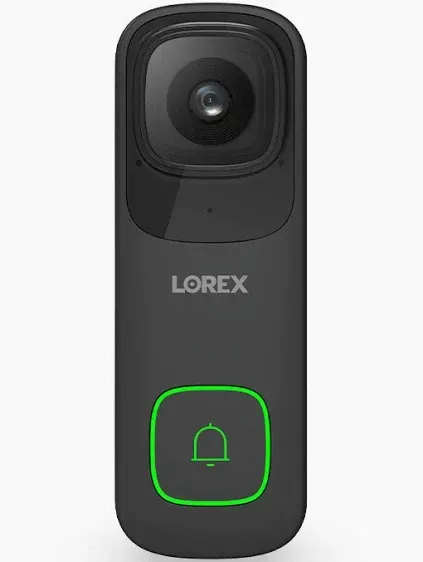
Manufacturer product photo of a wired video doorbell. On Staten Island townhouse condos, a doorbell like this usually belongs to the owner, while the association runs the gate and common-area systems.
Garden-style flats: small buildings, small systems
Two-story garden condos often pair an upper and lower home behind one outer door, or give each home its own entry under a shared porch roof. The right system is modest: a two- or four-button station, a release on the shared door, and a camera or two covering the entry and the parking spaces. The temptation is to buy a cloud platform built for a hundred-unit building. For a handful of homes, a wired station with no subscription is easier to own, and owners can still add their own doorbell cameras at private doors if the house rules allow.
Elevator condos: lobby, mailroom and garage
The borough's elevator condos behave more like mid-rises elsewhere in the city. The lobby panel, vestibule door and mailroom are the core; the garage ramp and the side door to the parking lot are where most unauthorized entries happen. Buildings from the early 1960s tend to have masonry walls and plaster corridors, so we reuse riser cable where it tests well and route new runs through closets and stairwells. Buildings from the 1980s usually have drop ceilings in the corridors and easier cable paths, but their original intercoms are long out of production and parts are scarce.
North Shore mixed-use: separate the stores from the homes
The newer mixed-use condos near the Stapleton and St. George waterfront put residential floors above commercial units and a garage. The residential board and the commercial unit owners need separate entrances, separate credential groups and clear lines about who pays for which camera. We set up those groups on one system so the managing agent administers a single platform while the shop tenants never receive a fob that opens a residential corridor.
Two-to-six-home infill: self-managed and practical
Small infill condos are usually run by the owners themselves. They need equipment that works without an administrator: a buzzer or small video station, a keypad or fob reader on the shared door, and a camera or two recording locally. We leave a one-page sheet with every code, login and warranty date so the next owner who joins the association is not left guessing.
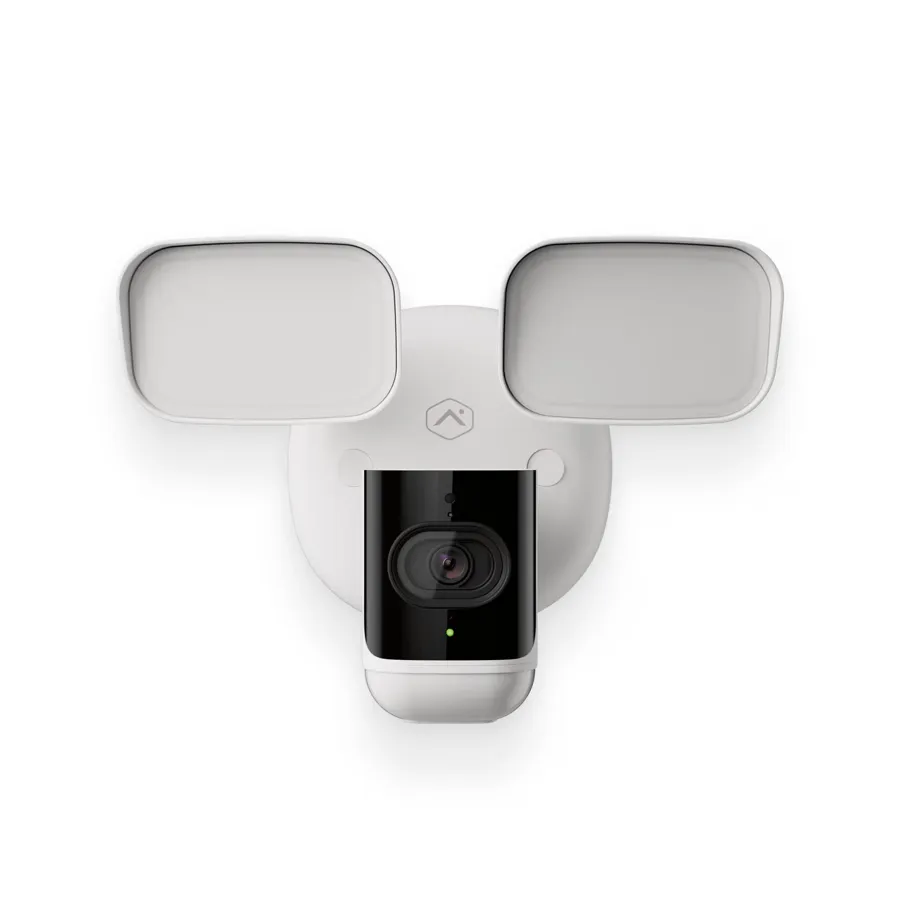
Manufacturer product photo of a floodlight camera. Over a Staten Island parking court or carport, the light itself deters car break-ins and gives the camera enough light to record color after dark.
Owners' own cameras and the association's rules
Because each townhouse has a private front door, many Staten Island owners have already installed their own doorbell cameras and driveway cameras. That is generally the owner's business at the owner's door, but cameras that look across a shared lane, into a neighbor's patio or onto the pool deck raise questions the board may want to settle in a house rule adopted under its bylaws. We do not draft those rules. What we can do is show the board what a typical doorbell or driveway camera actually records from a given spot, so the rule it writes fits the real equipment rather than a guess. Owners who want their own system tied into a professionally installed recorder can hire us directly for the work inside their own property line.
What changes with materials and methods
Vinyl and fiber-cement siding: common on townhouse end walls; cameras mount on a junction box fastened through to framing, sealed against wind-driven rain.
Brick veneer and masonry: anchors go into the brick, never the mortar joint alone, and cable enters through a sealed sleeve.
Gate pedestals and posts: concrete footings, a goose-neck or island pedestal set back from the plow path, and drip loops on every cable entry.
Buried conduit: tested end to end with a pull line before the board is told it can be reused; outdoor-rated, gel-filled or direct-burial cable where it runs underground.
Clubhouse interiors: drop ceilings and finished drywall; we fish cable rather than surface-mount it in rooms owners rent for parties.
Pool fences: locks and readers rated for wet, sunny locations, and a self-closing gate adjusted so the lock engages every time.
Hills, slopes and long sightlines
Many Mid-Island and North Shore developments sit on slopes, with townhouse rows stepping up a hillside and parking courts on several levels. A camera mounted at the top of a slope sees a long way but records faces poorly; one mounted at the bottom catches faces but loses the far end of the lane. We usually pair a wide view from high ground with a closer view at each pinch point, such as a stair between levels or the walk from a parking court to the homes.
Commercial Condo Security
Clubhouses, Shared Grounds and Storefront Condos: Security Beyond the Homes on Staten Island
A Staten Island condo association is a small business with a property to protect: a clubhouse that hosts parties, a pool that needs staff, a maintenance shed full of equipment and, in mixed-use buildings, commercial units with their own customers. This part covers the condo property security beyond the homes.
Where commercial and mixed-use condos cluster
Bay Street, Stapleton and Tompkinsville: the North Shore's newer mixed-use buildings, with ground-floor retail, residential floors and structured parking.
St. George near the ferry: older elevator buildings converted to condominium and newer buildings with offices or stores at street level.
Richmond Avenue near the Staten Island Mall: Mid-Island townhouse communities next to the borough's busiest retail corridor.
Hylan Boulevard: South Shore storefronts with condominium homes above, from New Dorp to Great Kills.
Victory Boulevard and Forest Avenue: mixed buildings in Westerleigh, West Brighton and Graniteville.
The clubhouse as a business
Clubhouses host birthday parties, board meetings, exercise classes and, in some communities, rentals to outside groups. That means a door that unlocks for a booked event and locks again afterward, a camera on the entrance and the parking area, and a record of who opened the building when something is broken or missing. Many boards also add a camera covering the pool equipment room and the chemical storage, both for theft and for insurance questions after an incident.
Manufacturer product photo of a dome with two lenses on one base. Mounted on a Staten Island clubhouse corner, one unit can record the parking court and the entrance path at the same time.
Maintenance sheds, staff and vendors
Mowers, snow blowers, salt and pool supplies are worth stealing. A fob reader on the maintenance garage, with credentials only for staff and the landscaping contractor, and a camera on its doors usually ends the losses. Vendor credentials can be scheduled to their working hours and switched off at the end of a contract, which is far easier than collecting keys from a departing landscaper.
Keeping commercial tenants and residents apart
In mixed-use condos, the commercial owner's employees need the service corridor and the trash room but not the residential elevator. Customers need the storefront and nothing else. We give each group its own credential profile, put a reader on every door that separates them, and record those doors on the same recorder so the managing agent can answer either side's questions. The commercial owner's own alarm and cameras inside the store remain the commercial owner's responsibility, and we can quote them separately.
Parking courts, carports and visitor spaces
Car break-ins are a parking-court problem, not a building problem. Good lighting does more than any camera, so we often start with floodlight cameras over carports and dark corners, then add fixed cameras at the court's entrance. Boards that want license plate capture need a dedicated camera at a lane where cars slow down, with infrared lighting tuned for plates; a general overview camera will not read them reliably at night.
The rules that apply
Licensing: security and fire alarm installers in New York need a state license under General Business Law Article 6-D; ours is NYS #12000287431.
Intercom requirement: MDL §50-a applies to class A multiple dwellings built or converted after January 1, 1968 with eight or more apartments; whether a given condo building is covered is a question for the association's counsel.
Smart access and privacy: NYC's Tenant Data Privacy Law (Local Law 63 of 2021) sets consent, retention and policy rules for smart access systems in class A multiple dwellings; how it applies to an owner-occupied condo is for the association's attorney to judge, and we configure systems to whatever policy the board adopts.
Audio: New York is a one-party consent state for recording conversations, so we leave audio recording off on common-area cameras unless the board's attorney approves otherwise.
Egress: electrically locked doors and gates on a path of egress must release on a fire alarm and allow free exit; we wire and test them that way.
None of the above is legal advice. We cite the rules so boards know which questions to ask their own counsel.
Your Questions Answered
Condo Security Systems on Staten Island: Questions Answered
Grouped by topic below: what we are asked most often at Staten Island board meetings, clubhouse walk-throughs and on the phone. The short answer comes first in each.
Layout and governance
Our townhouse condo has no lobby. What does a building intercom even mean for a community like ours?
It means the call box at the entrance, plus any door the association controls. In a gated community, visitors call owners from a post at the drive and the owner opens the gate from a phone or indoor monitor. In an open court, the same idea moves to the clubhouse or mail-area door. Each home's own front door normally stays the owner's business, and many owners already have a doorbell camera there. The association's system should cover the shared entry points and leave private doors alone unless the board decides otherwise.
Our development has a master HOA and a separate condo association. Which one signs the contract with you?
Whichever body owns or maintains the equipment being installed. Often the master HOA owns the entrance road, the gate and the clubhouse, while each condominium owns its buildings and mail area. If a single project spans both, we can write one proposal with separate sections and separate deposits so each board approves and pays for its own part. The offering plans and declarations decide ownership; we follow what the associations' attorney or managing agent tells us.
Can a volunteer officer run the gate and pool access from a phone, without a managing agent?
Yes, with the right platform. Most current access and entry systems have a browser or phone dashboard where an officer can add a household, cancel a lost fob, change pool hours or issue a guest code in a minute. We set up at least two administrator accounts, never just one, so access survives a board election or an officer moving away, and we hand the board a written list of every login.
Entrance and gate
Visitors keep slipping in behind residents at our entrance gate. Is the fix a camera, a second arm or something else?
Usually timing and detection come first, cameras second. Tailgating at a vehicle gate happens because the arm stays up too long or the loop detector under the pavement no longer senses the car behind. Shortening the close timer, replacing a damaged loop and adding a "one car per entry" sign fix most of it. A camera on the entry lane then records the cars that still get through. A second arm or a pedestrian turnstile is the costly last resort.
The plow knocks over our keypad post every winter. What are the options?
Move the pedestal, protect it, or both. We can set a new pedestal farther from the curb line on an island, install a steel bollard on the plow side, or switch owners to windshield tags and remotes so the keypad is used only by visitors and can sit in a more protected spot. Telling the snow contractor where the post is, with a reflective marker, is the cheapest fix of all.
What should our entrance gate do when the power goes out?
The board should choose, in writing, before the storm. Options are to hold the gate closed on battery for a set number of hours, to open and stay open when the battery runs low, or to switch to a manual release that staff or the fire department can use. We install a battery backup sized to the board's choice and test it, and we label the manual release so whoever arrives in the dark can find it.
Amenities and access
How should pool fobs work for a season that runs only from late May to early September?
The pool reader gets its own schedule: active only between opening and closing day, and only during posted hours within that window. Owner fobs stay the same all year, so nobody collects or reissues anything; the reader simply ignores them out of season. Lifeguard and pool-company staff get credentials that expire at season's end, and the board can extend the dates with a few clicks if the weather is kind in September.
Can guest passes for the pool or clubhouse expire on their own?
Yes. A guest credential can be a one-day phone pass, a code good for one weekend or a temporary fob for a visiting relative that stops working on a set date. The owner who requested it appears in the log alongside each entry, which gives the board a fair way to enforce guest limits without anyone standing at the pool gate.
Can the clubhouse party room open only for the owner who reserved it?
It can. The booking can come from a shared calendar the board already uses or be entered by the officer who manages reservations. The room's reader unlocks for that household's credential during the booked hours, plus setup and cleanup time, and locks again afterward. If something is damaged, the log shows who had access and when.
Cameras, packages and parking
Where should a townhouse community put its first two cameras?
At the entrance and at the place where trouble actually happens. For a gated community, the first camera records the entry lane and the second the exit lane or the pool gate. For an open court, the first goes where the lane meets the public street and the second over the parking court with the most break-ins. Coverage of individual stoops comes later, once the board sees what the first two record.
Several of our garages open onto a shared lane. Can a camera watch the lane without looking into the garages?
Yes. We aim the camera down the length of the lane rather than across it, and modern recorders let us black out privacy zones so the opening of each garage, and any window that falls in the frame, is masked in the recording. We show the board the masked view during setup, and the board can share that screenshot with owners before the camera goes live.
Our townhouses get packages on dozens of separate stoops. Does a central parcel room make sense for a community like ours?
It does if the community has a clubhouse or a spare room near the mail kiosk and owners are willing to walk there. A room with a fob reader, a camera on the inside and a shelving system for carriers, or smart lockers from a locker provider, keeps boxes off stoops. In communities where owners would rather keep doorstep delivery, cameras on the lanes and individual owners' doorbell cameras are the realistic alternative.
Wiring, timing and older equipment
The original low-voltage cable runs underground from the gate to the clubhouse. Can a new system reuse it?
Sometimes. Cable buried in the 1980s may be fine, waterlogged or chewed, and the only way to know is to test it. If the conduit is intact, we can often pull new cable through it using the old cable as a pull line. If it is collapsed, a point-to-point wireless link between the gate and the clubhouse often costs far less than trenching and repaving. The walk-through report tells the board which case applies.
How long does a gate, clubhouse and pool access project take in a community of about 100 homes?
Plan on the calendar more than the labor. The installation itself usually fits in a few working days once equipment is on site. Before that, the board approves the proposal, pays the deposit, and the equipment is ordered; special-order panels ship on the maker's schedule, which we do not control, so we set the install date only after the equipment arrives. Fob distribution and owner app setup add a week or two of the board's time after go-live.
We are a mixed-use condo with stores downstairs. Can the residential board and the store owners share one system?
Yes, as long as the groups are separated inside it. One platform with distinct credential profiles, schedules and camera permissions lets the managing agent administer everything while the residential board sees only residential doors and footage. The cost split between the residential and commercial sides follows the declaration, and we can break the proposal out to match.
Equipment
Types of Condo Security Equipment We Install on Staten Island
Condo security equipment for a townhouse community is mostly outdoor gear plus one well-kept equipment closet. The categories below are what a Staten Island proposal from us typically lists, before brands are discussed. Our default is our own unbranded line; if the board asks for a specific maker, we price that instead.
1
Call boxes and pedestals
Weather-rated visitor stations on goose-neck or island pedestals, with directories, cameras and keypads.
2
Gate interfaces
Relays, vehicle detection inputs, windshield-tag readers and remote receivers tied into the existing gate operator.
3
Readers and credentials
Copy-resistant key fobs, cards, keypads, smartphone passes and windshield tags read from the car.
4
Locks and gate hardware
Electric strikes and mag locks for clubhouse doors, weather-rated locks for pool and court gates, exit buttons.
5
Outdoor cameras and recorders
Turrets, bullets, multi-lens domes, floodlight cameras and a recorder sized for the retention the board wants.
6
Network and backup power
Switches, outdoor-rated cable, point-to-point wireless links and battery backup for gates and locks.
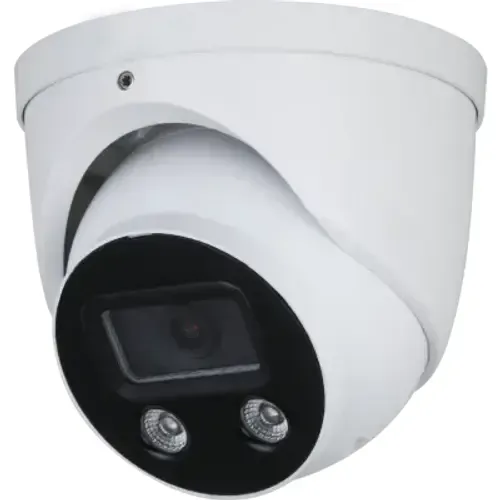
Manufacturer product photo of a turret camera with two built-in lights. On a Staten Island gatehouse or clubhouse eave, the built-in lights help the camera record color at night.
Visitor entry options compared for Staten Island condos
Option
Best fit
What to weigh
Cellular or internet call box calling owners' phones
Gated townhouse communities with no lobby
A data plan or platform fee may apply; owners need the app or a phone number on file
Call box wired to indoor monitors in each home
Communities where owners want a screen, not an app
Requires cable to every home; costly in a spread-out development
Lobby panel with apartment stations
Elevator and walk-up condos
Existing riser cable can often be reused; parts for 1980s panels are scarce
Small wired buzzer or video station
Two-to-six-home buildings
No subscription and nothing to log in to; limited guest features
Keypad only, no call function
Service gates and maintenance entrances
Codes spread quickly; pair with a camera and change codes on a schedule
Credentials: remotes, tags, fobs and phones
Gate remotes are convenient but easy to lose and hard to cancel one at a time on older receivers. Windshield tags read from the car as it approaches and are tied to one vehicle. Fobs and cards work on every pedestrian door. Phone credentials cost nothing to issue and can be revoked instantly, but some owners, especially older residents, prefer a physical fob. Most Staten Island associations end up with a mix: tags or remotes for the vehicle gate, fobs or phones for everything else, all managed from one list.
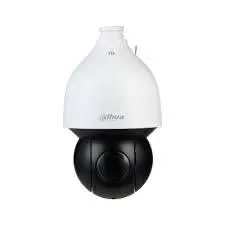
Manufacturer product photo of a pan-tilt-zoom dome. In a large Staten Island parking court, a staff member can steer it to follow an incident, but fixed cameras still record the entrances around the clock.
Locks for gates, pools and clubhouse doors
Pool gates and court gates take rain, sun and constant slamming, so we use locks rated for outdoor use and adjust the self-closing hinge so the lock engages every time. Clubhouse doors usually take an electric strike that keeps the existing hardware and fails secure, or a mag lock on glass doors that releases with the fire alarm. Every electrically locked door gets a clear way out from the inside.
Recorders, retention and remote viewing
A recorder in the clubhouse closet keeps footage on site, under the association's control, without a per-camera cloud fee. We size the drives for the number of days the board wants to keep, set separate viewing permissions for officers, staff and the managing agent, and enable remote viewing from phones. Boards that want cloud backup for the entrance cameras can add it, with the fee shown as its own line.
Why consumer gear struggles on association property
Consumer doorbells and Wi-Fi cameras are fine at an owner's front door. They struggle on an association's property: Wi-Fi rarely reaches a gate 300 feet from the clubhouse, batteries die in January, and each camera lives on a different owner's account. National alarm companies sell monthly plans built for single homes. A condo association needs equipment it owns outright, one administrator dashboard and a local contractor who answers when the gate sticks. That is the gap we fill.
AI Overview Reality Check
What AI Gets Wrong About Condo Security Systems on Staten Island
Search summaries, chatbots and national cost guides from sites like Angi, HomeAdvisor and Fixr give condo boards generic answers built on Manhattan towers and suburban single-family homes. Here is where those answers miss on Staten Island.
1. "Every condo needs a lobby intercom"
Generic answers start with a lobby panel because most writing about condos is about apartment buildings. On Staten Island, most condo homes are in one-to-three-story attached buildings where each household has its own front door.
For those communities, the shared entry point is a gate, a clubhouse or a mail area. Buying a lobby-style system with a directory for every home and nowhere sensible to mount it is a common and expensive mistake.
The right first question is which doors and gates the association actually owns, and we answer it on the site plan before anything is priced.
2. "Every condo pays the same per home for security"
Per-unit pricing assumes every home adds the same amount of wiring and hardware. In a townhouse community, the homes often add almost nothing, because the association's equipment sits at a handful of shared points.
What drives cost here is distance and ground: how far the gate is from the clubhouse, whether the old conduit is usable, and how many separate gates, doors and lanes need coverage. A 150-home community with one gate can cost less than a 40-home community with two gates and no usable conduit.
That is why we publish the $250 service call and the repair ranges, and quote community-wide work only after walking the property.
3. "Wireless cameras solve the cabling problem"
Wi-Fi cameras are marketed as cable-free, but they still need power, and outdoors that means an outlet, a solar panel or a battery that fails in cold weather. Their signal also has to reach a router, which a gate far from any building will not.
On large properties, the reliable answer is wired cameras on outdoor-rated cable, with a purpose-built point-to-point wireless link only where trenching would be unreasonable.
That keeps every camera on one recorder the association owns, instead of a dozen apps on owners' phones.
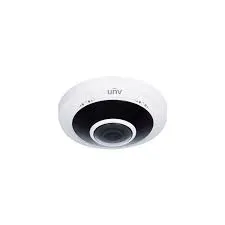
Manufacturer product photo of a ceiling fisheye camera. In a Staten Island clubhouse party room or fitness room, one unit can show the whole floor from above.
4. "The HOA and the condo board are the same thing"
Many summaries treat the two terms as interchangeable. In New York, a condominium is governed under the Condominium Act, while a homeowners association that owns shared land or amenities files its offering plan under separate Attorney General regulations.
On Staten Island, plenty of developments have both, and the gate, pool or clubhouse can belong to a different body than the buildings. Signing the wrong entity to a contract, or setting up logins under the wrong board, causes real trouble later.
We ask for the governing documents' answer early and write the proposal to the owner of each piece.
5. "The entrance camera will capture plates on its own"
Overview cameras record the scene; they do not reliably read plates, especially at night when headlights wash out the image. Plate capture needs a camera aimed at a lane where cars slow down, set to a narrow field of view with infrared lighting and a fast shutter.
If the board wants plates, we place a dedicated camera at the gate's stopping point. If it does not, a general camera at the entrance is enough to show what happened.
Either way, the board should decide in advance who may see that footage and how long it is kept.
6. "Smart gate systems have no ongoing costs"
Many cellular call boxes and cloud access platforms carry a monthly or yearly fee per device or per door, and some need a data plan of their own.
Those fees can be worthwhile for app answering and remote administration, but they belong in the board's budget, not in a surprise invoice. Wired systems with a local controller can run with no subscription at all, at the cost of some convenience.
Our proposals show any recurring fee as its own line so the board sees the five-year cost, not just the installed price.
7. "Cameras and readers will earn the association an insurance discount"
Some guides promise insurance savings from cameras or access control. Whether a carrier gives any credit depends entirely on the carrier and the policy.
What a well-run system does provide is a record: who entered the clubhouse before a fire, which car hit the gate, when a fob was used at the pool after closing. That record can help with a claim or a dispute.
Boards that want a premium answer should ask their broker before counting on a discount. We do not promise one.
Price Your Staten Island Condo's Gate, Pool and Clubhouse Work
Send a photo of the stuck gate arm, the silent call box or the dead pool reader, or forward the line in your reserve study that comes due next year. We book a date within 2 hours.
Give us the community's location, roughly how many homes, whether there is a gate, clubhouse or pool, and what owners are complaining about. A photo of the call box, the equipment closet or the gate pedestal helps. You can also call or text (347) 934-8335.
✅
Request Sent!
Your request is in. Expect a call or text from us with a two-hour arrival window for the Staten Island visit.
How It Works
How a Staten Island Condo Security Project Runs
A single stuck pool reader and a community-wide gate replacement follow the same seven steps. The large job just spends more time between steps three and four while the board deliberates.
1
Call, text or send the form
A board officer, managing agent or owner tells us the community, the number of homes, and the problem or goal.
2
Service call or site walk
A failed device gets the $250 diagnostic visit. A new system gets a free walk of the gate, clubhouse, pool, lanes and equipment closet with a board member or the agent.
3
Written proposal by owner and phase
Each line names the gate, door or lane, the equipment, the cable path and the price, split between the HOA and the condo where both own equipment.
4
Approval, deposit and insurance
The board votes, pays the deposit and we order equipment. Insurance certificates naming the association and the managing agent are issued once the job is awarded.
5
Notice to owners
We give the board the dates, the arrival window, what changes for owners and what they need to do; the board or agent sends it.
6
Installation in stages
We work one entry point at a time so the community is never left without a working gate or a locked pool overnight.
7
Programming, credentials and handover
We load the directory and credential list, test every gate and door, hand out or activate fobs and apps, and give the board every login in writing.
Scheduling around owners, staff and the season
We book seven days a week with early-day visits, always in a two-hour arrival window, and the crew arrives inside that window. Outdoor work at gates and pools goes best between April and November; winter jobs are possible but pavement cuts and concrete footings wait for workable weather. Pool readers should be in before opening day, and gate work is easiest outside the morning and evening commute. Where we need to enter specific homes, for example to test indoor monitors, the board's notice should name those homes and arrange access.
Writing the notice to owners
Owners want five things: the date and time window, what is being changed, whether the gate or pool will be out of service and for how long, how they will get their new fob or app invitation, and who to call with questions. Communities with renters should send the notice to tenants as well. We draft the facts; the board or managing agent sends it on the association's letterhead.
Deposit, payment and financing terms
Installation work requires a deposit of half the price under our service agreement, and equipment is ordered only once the deposit is paid. Special-order items ship on the maker's timeline, which we do not control, so we confirm the installation date after the equipment arrives. Financing is available through Wisetack, subject to approval. Associations and management companies can pay by check.
Coverage after the job
Our labor carries the 30-day warranty posted on our warranty page. Associations buying a new system can add one year or more of coverage at purchase, manufacturers' warranties on the equipment are the manufacturers', and support calls on systems we installed are free. Full terms — including 50% deposit, one-year parts-only warranty on Abstract Enterprises Security Systems-supplied products, and the late-fee schedule — are set out in the service agreement.
Coverage Area
Condo Security Near Staten Island's Landmarks
Staten Island condo communities cluster around a few well-known places. These six describe the kinds of condominium property we work on near each, by layout only.
1
Staten Island Mall and Richmond Avenue
The heart of the Mid-Island condo belt in New Springville and Heartland Village: gated townhouse communities with clubhouses, pools and busy entrance drives off a major retail corridor.
2
College of Staten Island, Willowbrook
Townhouse courts and garden condos along Victory Boulevard and in Willowbrook and Bulls Head, many from the 1980s building wave, with original gate and clubhouse equipment.
3
Freshkills Park
Communities in Travis and Arden Heights near the park's edges: long entrance roads, open parking courts and pool fences exposed to wind off the open land.
4
Staten Island Greenbelt
Hillside condos in the center of the island, where townhouse rows step up slopes and camera placement has to account for several parking levels.
5
Bay Street, Stapleton
The North Shore's newer mixed-use condos, with stores below, residential floors above and garages that need separate credential groups.
6
Conference House Park, Tottenville
South Shore condos at the island's southern tip, where salt air and coastal storms shorten the life of outdoor call boxes and cameras.
We also work in condo communities in Charleston, Annadale, Eltingville, Great Kills, New Dorp, Grasmere, Rosebank, Graniteville, Mariners Harbor and West Brighton. Crews come from our Brooklyn office at 1282 Troy Avenue across the Verrazzano-Narrows Bridge.
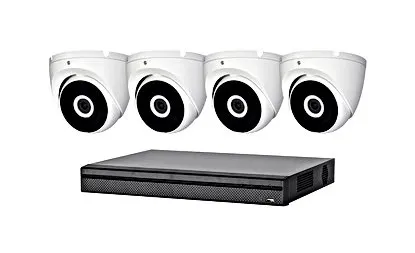
Manufacturer product photo of four turret cameras and a recorder. A set like this often covers a Staten Island clubhouse entrance, the pool gate and both entrance lanes as a first phase.
Pricing
Condo Security System Cost on Staten Island
One condo price on Staten Island is set before we arrive: $250 for a technician to find the fault and handle quick fixes, credited against any larger repair that follows. Common repairs have published ranges, shown below. The borough's own service pages also publish ranges for building intercoms and gate access, and anything community-wide is quoted in writing after we walk the property. We do not price condo security per home, because two communities with the same number of homes can differ by thousands of dollars in buried cable and gate hardware alone.
Published Staten Island ranges that apply to condos
Item
Published range
Where it is posted
Technician visit: the trip, the diagnosis and on-the-spot fixes, with the fee applied to any bigger job
Combined vehicle and pedestrian gate access system
$4,000 to $7,000
Staten Island access control page
Central station alarm monitoring for a unit owner
$30 a month keypad, $45 a month with app
Staten Island alarm installation page
Repair ranges for intercom and entry parts
The same repair ranges apply on Staten Island as across the city, listed on our door buzzer and intercom repair pricing page. The technician states the price before replacing anything.
Repair
Typical range
Apartment or indoor intercom station
$250 to $525
Door release relay or button
$250 to $475
24V transformer
$325 to $650
Electric strike replaced and door aligned
$450 to $950
Lobby or entrance panel work
$650 to $1,800
Riser or buried-run repair
$850 to $2,400
Reserve studies and the security line
Many Staten Island associations plan capital spending from a reserve study that lists each component, its expected life and its replacement year. Gate operators, call boxes, access controllers and camera systems belong on that list, but older studies often lump them under "miscellaneous" or leave them off entirely. When a board asks, we give it a plain inventory of each security component, its approximate age and what replacing it would involve, which the board can hand to its reserve-study preparer. How the association funds the work, whether from reserves, an assessment or financing, is the board's decision and its accountant's advice, not ours.
What moves a community-wide quote
Distance and ground: conduit that can be reused, cable that must be pulled, or a wireless link where trenching would be needed.
Number of controlled points: each gate, pool or court gate, clubhouse door and maintenance door adds hardware and programming.
The gate operator: whether the existing operator and loop detectors are sound enough to keep.
Answering method: app-only answering versus indoor monitors in every home.
Camera count and retention: how many lanes, courts and amenity doors, and how many days of footage.
Recurring fees: platform or data fees for cloud systems, shown separately.
Who pays for what: splits between a master HOA and a condo, or between residential and commercial owners.
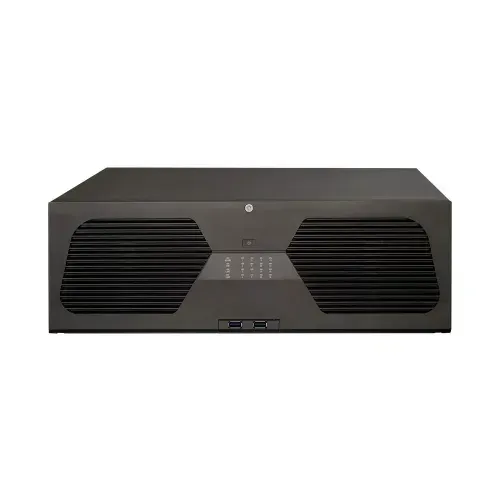
Manufacturer product photo of a rack-mount recorder. Larger Staten Island condo communities with cameras on several lanes and courts need a recorder with more drive bays than a desktop unit holds.
Shop Our Systems
Condo Security Packages and How They Are Priced on Staten Island
We do not sell a fixed condo bundle, because no two Staten Island communities share a site plan. Most work falls into one of three scopes.
1
Get it working again
$250 visit. A technician diagnoses the gate interface, call box, reader, lock or recorder, makes quick fixes on the spot and prices anything bigger before starting it.
2
Replace one entry point
Written proposal after a free site walk. One target, such as the call box, the pool gate reader or the clubhouse door, using the published ranges above as a guide.
3
One plan for the whole community
Written proposal after a free site walk. Gate entry, one credential list, amenity schedules and cameras designed together and staged across budget years.
Equipment the association already owns
If the community already bought a call box, a set of readers or cameras, we can install or reconnect them for labor only, quoted by phone after we know the model numbers and the locations. Equipment we did not supply carries only its own manufacturer's warranty, and its wireless signal or software quirks are not something we can guarantee.
Spreading the work over several budget years
Many boards fund security from reserves one piece a year. We design the whole community up front, then stage it so each year's work stands on its own: the gate and credential platform first, the pool and clubhouse readers next, cameras after that. Choosing one platform at the start keeps the community from ending up with three systems that do not talk to each other.
The first thing we do at a Staten Island townhouse community is walk from the call box to wherever the controller lives, following the cable. It is usually farther than anyone on the board thinks, and the path tells us most of what the job will cost. A board that has been told the gate needs a new system sometimes needs only a new loop detector and a fresh battery.
The second is to count the ways in. A gate with a fine call box means little if the pedestrian gate beside it has a broken latch, or if the back of the pool fence opens onto a public path. We list every opening on the site plan before talking about equipment.
The third is to find out who holds the keys to the system: the clubhouse closet key, the gate operator's manual release, the administrator login. In older communities, those answers often live with one long-serving officer. We write them down and leave copies with the board.
FAQ
Staten Island Condo Security Systems FAQ
Can the gate directory list owners without showing their full names?
+
Yes. Most current call boxes can show a first initial and last name, a household nickname or just a code that visitors are given in advance. Owners who prefer not to be listed at all can be reached only by code, and the board sets the rule for the whole community.
Can one fob open the vehicle gate, the pool and the clubhouse?
+
Yes, if all those openings run on the same access platform. Each household then holds one credential, and the board decides which doors and hours it covers. Vehicle gates can also read a windshield tag tied to the same household record.
Can the board see who opened the pool gate after closing time?
+
With an electronic reader, yes. Every credential use is logged with the household, door and time, and a camera on the gate can be linked to those events so the board sees the footage next to the log entry.
Can the entrance gate open for ambulances and fire trucks?
+
We can wire the emergency-access devices a gate operator supports, such as a key switch or a siren-activated sensor. The association should confirm with the fire department which device it expects at that gate before we install one.
What does alarm monitoring cost for a townhouse owner in the community?
+
An owner's alarm is a separate contract between that owner and us. Monitoring through our central station is $30 a month with a keypad or $45 a month with the phone app, and it is independent of the association's gate and amenity systems.
Can an owner's own doorbell tie in to the community gate system?
+
Usually not directly, since most consumer doorbells run on their own app. Owners can keep their doorbell for the front door and answer the gate call box through the association's app or a phone call; we can add an indoor monitor that handles both on systems that support it.
Can the gate stay open during the day and lock at night?
+
Yes. Gate and door schedules are set by the board: open during set daytime hours, locked to credentials and the call box at night, with exceptions for holidays or events entered in advance.
Can you add cameras to a recorder our association already owns?
+
Often, if the recorder has free channels and supports the cameras we would add. We check the model and its remaining capacity at the walk-through; if it is too old or full, we price a replacement and move the existing cameras onto it.
Our community has narrow private lanes and little visitor parking. Does that affect the visit?
+
We plan around it. Crews arrive in the agreed two-hour window, park where the board or agent directs, and keep lift or ladder work off the lane during school pickup and commute times when we can.
Does winter weather delay outdoor gate and camera work on Staten Island?
+
Some of it. Cameras, call boxes and readers can go in through the winter, but concrete footings, pavement cuts for loop detectors and trenching wait for workable ground. We say which items are weather-dependent in the proposal.
Can a mixed-use condo keep its residential entrance separate from the stores below?
+
Yes. We put readers on every door between commercial and residential space, give store staff credentials that stop at those doors, and keep separate camera permissions so each side sees only its own areas.
Do you also work in Staten Island's elevator condo buildings?
+
Yes. In the borough's elevator condos we replace and repair lobby panels, apartment stations and door releases, add fob readers to service doors and garages, and set up elevator access control with the elevator maintenance company.
Gates, Pools, Clubhouses and Lobbies: One Licensed Vendor on Staten Island
Whether it is a 1980s gate keypad or a new tower lobby, the same licensed crew designs it, installs it and answers the phone when it misbehaves. Repairs start at the $250 visit, and new work starts with a free walk of the property.