Pool reader quit before opening weekend? Lobby panel in a newer elevator building dark again? Orange County condo boards, HOAs and managing agents reach our crew at (845) 640-3835
For Orange County Condo Associations, HOA Boards, Unit Owners & Managing Agents · Served From Our Bronx Office
Condo Security Systems in Orange County
Lobby & Stair-Hall Intercoms · Fobs for Pools, Courts & Clubhouses · Elevator Readers · Entrance Call Boxes · Cameras
For condo security systems in Orange County, the first visit to a broken entry panel, stair-hall station, fob reader, pool lock or camera recorder is a $250 service call, while a system for the whole community is quoted in writing once we have walked the grounds at no charge. Our crews work under New York State low-voltage license #12000287431 and take care of condominium associations' intercoms, readers and cameras across the county: 1970s garden and townhouse complexes with pools and tennis courts near Newburgh, New Windsor and Middletown, newer phases of townhouses in Monroe, Highland Mills, Washingtonville and Chester, a 55-plus neighborhood in the Village of Warwick, and the new four- and five-story elevator condos in Kiryas Joel.
Quick answer: Orange County condos tend to be older, low-rise and spread over several acres, and their monthly common charges are modest. That usually points to a plan that repairs what is failing first, cleans up who holds fobs, and adds new equipment in phases. A repair visit costs $250, and that amount is credited if a bigger repair follows. New systems start with a free walk-through and an itemized proposal that can be paid from reserves, by assessment or over several budget years. We schedule within 2 hours of a request, work seven days a week with early-day arrival windows, and take paid jobs in the order they arrive.
Last updated November 26, 2026 · Abstract Enterprises Security Systems, licensed in New York State (#12000287431) · Facts here are drawn from OneKey MLS (Orange County, October 2026), Redfin's Orange County condo listings (November 26, 2026), two Times Herald-Record reports (December 10, 2017 and May 19, 2022), Census QuickFacts, the Condominium Act (RPL §339-e, §339-v), the Multiple Residence Law (§3), Executive Law §378, General Business Law §69-m and §395-b, New Windsor Town Code Chapter 86, News 12 Hudson Valley (January 26, 2026) and NJ Transit's Port Jervis Line station list
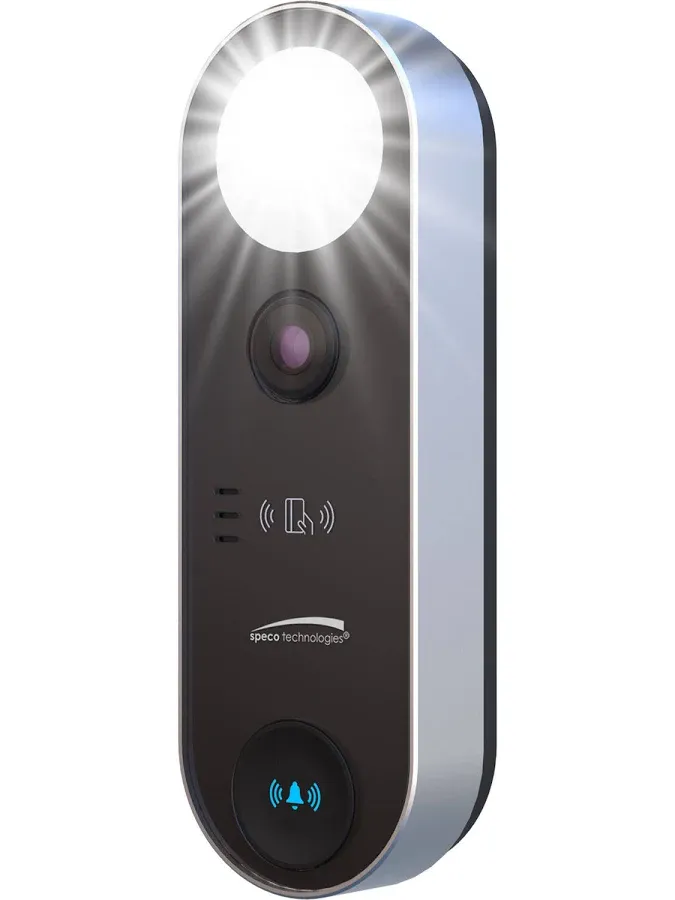
Product photo from our equipment library, not taken at an Orange County property: a narrow video door station with a light bar over the lens, a card symbol and a call button. On the frame of a garden condo's stair-hall door, a slim unit like this answers visitors and reads fobs in one place.
Orange County Condo Security Request
Board members, HOA officers, unit owners and managing agents
✅
Request Sent!
Thank you. We will call or text to arrange the Orange County visit.
25+
Years Experience
2 Hr
Booking
$250
Service Call
4.7★
201 Google Reviews
Abstract Enterprises Security Systems has been owner-run since 2002 and has finished thousands of jobs. Text or call (845) 640-3835 and your appointment is set within 2 hours.
The Neighborhood
Why Orange County Condo Communities Need Security Planned Around Aging Complexes, New Elevator Buildings and a Busier Market
Orange County's condominiums do not fit one picture. Around Newburgh and New Windsor, and on the edges of Middletown, most of them are complexes that went up in the 1970s and 1980s: two-story buildings or attached townhouses grouped around parking courts, a swimming pool, a pair of tennis courts and sometimes a small clubhouse. In Monroe, Highland Mills, Washingtonville and Chester the townhouses are often newer, built in phases with garages under the units. In the Village of Warwick there is a 55-and-over neighborhood that mixes condos and townhomes with single-family houses. And on the edge of Kiryas Joel, an entire district of elevator condo buildings has gone up within the last few years. A condo security plan in Orange County has to start by asking which of these a board actually runs.
The sales data shows why the question is coming up now. The OneKey MLS report for Orange County counted 359 closed condo sales in the twelve months through October 2026, 3.8 percent more than a year earlier, at a 12-month median price of $320,000. New condo listings over the same twelve months rose 14.9 percent to 502. The sharper number is supply: 126 condos were on the market in October 2026, against 83 in October 2025, an increase of 51.8 percent. A board reading those figures should expect more showings, more open houses, more sellers walking away with fobs and remotes, and more buyers asking what the community does to keep its grounds secure.
What the listings say about the buildings
On November 26, 2026, Redfin showed condo listings across the county in Newburgh, New Windsor, Middletown, Monroe, Highland Mills, Harriman, Washingtonville, Chester, Montgomery, Southfields, Fort Montgomery and Palm Tree. The descriptions read like a catalog of what a condo security system has to protect: community pools, tennis and basketball courts, a fitness center, a playground, a clubhouse, carports and garages, and in one Middletown listing a gated community. Two Newburgh listings gave construction years of 1973 and 1978. Others were brand new, with one Monroe unit built in 2023 and a Palm Tree unit built in 2022. Monthly association fees quoted in those listings ran from about $120 to about $584.
Those fees matter to every security proposal we write here. Common charges in that range leave little room for a new subscription billed per unit every month, so Orange County boards tend to ask the right question early: what will this cost after installation, and who pays it? We answer it on the proposal, line by line, before anyone votes.
Old developer equipment that nobody owns anymore
Complexes from the 1970s and 1980s were often handed over with whatever entry system the builder chose at the time: an audio panel at each stair-hall door, a handset in every kitchen, a buzzer that releases a strike, and a power supply in a basement or utility closet. Forty years later, the parts are discontinued, the original installer is gone and several repair companies have each left their own patch. When those buildings call us, the conversation is rarely about a fancy upgrade. It is about which doors still work, which units cannot buzz anyone in, and how to stop paying for the same repair twice a year.
The newer townhouse sections have the opposite problem. The developer installed consumer-grade gear because it was cheap and quick, the accounts sit under a builder's email address, and the association discovers at turnover that it cannot add or remove a single user. Both situations end in the same place: a written inventory of what exists, who controls it, and what the board should keep.
The elevator condo district on the edge of Kiryas Joel
Orange County also has condo construction at a scale the rest of the Hudson Valley rarely sees. The Times Herald-Record reported on December 10, 2017 that Kiryas Joel's planning officials had approved a 1,600-unit condominium complex on 70 acres. By May 19, 2022, the paper wrote that families had been moving into the four- and five-story buildings completed so far, that about 500 homes were built or nearly finished, and that units had sold for $260,000 to $575,000 since February of that year. The same article said three of the 69 planned residential buildings had been swapped in the plans for a six-story building expected to hold a supermarket, other stores and rentable offices.
For security, that kind of development looks nothing like a garden complex. Every building has an elevator, a lobby and a front door that sees heavy daily traffic, residents move in while construction continues next door, and a commercial building sits inside the same grounds. Each lobby needs a reliable entry panel, the elevators may need readers, and the whole campus benefits from one credential list rather than dozens of separate systems. We cover the specifics in the building types section below.
Three cities, many towns and a big map
Orange County covers about 812 square miles of land, according to the U.S. Census Bureau, and it has three cities, Newburgh, Middletown and Port Jervis, along with many towns and villages. None of those cities comes close to the 325,000-population line where New York City's Multiple Dwelling Law begins. Condominium buildings here fall under the state Multiple Residence Law, which "shall apply to all cities of less than three hundred twenty-five thousand population and to all towns and villages," and under whichever local building department has jurisdiction over the property. We confirm that office at the first visit, because a complex in an unincorporated hamlet answers to its town while one inside a village answers to the village.
Distance shapes the work too. A board in Port Jervis and a board in Cornwall-on-Hudson are an hour apart. We build travel into the written quote rather than adding a surprise line later, and we group visits on the days our crews are already working in the county.
Winter, storms and long private roads
Orange County winters are hard on outdoor equipment. News 12 reported that the January 2026 storm left about 18 inches in Monroe, the county's highest total that News 12 cited, with officials saying some areas saw up to 24 inches. For a condo, heavy snow means plow blades near entrance pedestals, readers and keypads that must keep working in deep cold, and pool and court gates that sit untouched for months before a spring rush. Summer storms bring a different risk: power losses that can outlast a small battery. We plan mounting heights, enclosures and backup power for both.
What Orange County condo boards tell us goes wrong
The calls repeat across the county. A stair-hall intercom in a 1970s building works for half the units and hums for the rest. The pool reader that worked last Labor Day will not accept fobs in late May. Former owners and their tenants still open the clubhouse. A recorder in the maintenance shed has not saved a usable day of video since its drive failed. A buyer's agent asks for a door code and receives the one that opens every building. In a newer townhouse section, nobody can find the login for the entrance camera. None of these needs a brand-new system on the first visit, but every one of them is a reason to put a plan on paper.
Orange County condo facts that shape the work
Market: OneKey MLS logged 359 closed condo sales in the county in the year ending October 2026 (+3.8 percent), a 12-month median of $320,000 (+1.6 percent), an October median of $329,000 and 46 days on market in October.
Supply: condo inventory reached 126 in October 2026, up 51.8 percent from 83 a year earlier, and 12-month new listings rose to 502.
Where condos are: November 2026 condo listings on Redfin covered Newburgh, New Windsor, Middletown, Monroe, Highland Mills, Harriman, Washingtonville, Chester, Montgomery, Southfields, Fort Montgomery and Palm Tree, with listed association fees from about $120 to $584 a month.
Elevator condos: a 1,600-unit condominium complex approved in Kiryas Joel in 2017 began housing families in 2022 in four- and five-story buildings (Times Herald-Record).
Shared equipment is shared property: in New York's Condominium Act, a condo's lobbies, entrances, parking, recreation facilities and any equipment installed for everyone's use count as common elements unless the declaration says something different (Real Property Law §339-e), and the bylaws may build reserves to repair, replace and improve them (§339-v).
Pool fence gates: Executive Law §378 asks for an enclosure gate that shuts and latches without anyone pushing it and stays locked whenever nobody is supervising the water.
Owner alarms in New Windsor: the town's alarm law bars automatic dialers from calling police or fire emergency lines directly and requires outdoor audible alarms to shut off automatically within 15 minutes (Town of New Windsor Code, Chapter 86).
Check the installer's credentials: New York's General Business Law §69-m puts burglar and fire alarm installation under a Department of State license; boards are entitled to see the number before signing, and ours is #12000287431.
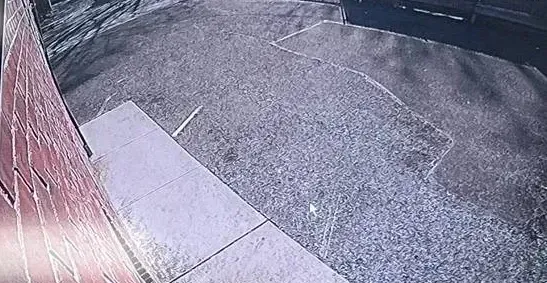
Job photo of a recorder image looking down a brick wall toward a paved area. For an Orange County condo, the same kind of view along a building wall covers a parking court and the walk to the stair-hall doors without pointing into anyone's windows.
What We Install
Orange County Condo Security Services: Intercoms, Fobs, Amenities, Elevators and Cameras
Below, each system gets its own short explanation for an Orange County condominium association, with a link to the county page that covers it in detail. The crew is the same for all of them, which means a single repair call today can become part of a larger plan next year without bringing in a second company.
1
Lobby and stair-hall intercoms
Repairs, video upgrades and full replacement, from one-door walk-ups to elevator lobbies.
2
Entrance call boxes
Visitor calling at the turn-in from the road, with or without a gate.
3
Fobs and one owner list
Every credential filed under a unit, across hall doors, the pool, courts, clubhouse and storage.
4
Pools, courts and clubhouses
Seasonal schedules, guest passes and a record of every opening.
5
Elevators and garages
Readers in cars and at garage doors for the county's elevator condo buildings.
6
Cameras and recording
Entrances, parking courts, mail areas and amenity doors, with sensible retention.
Condo intercoms: fix the failing doors, then plan the replacement
The intercom is where most Orange County requests start. Garden complexes typically have one audio panel per stair-hall door, wired to four to eight handsets in the apartments above and beside it; elevator buildings have a lobby directory panel that calls every unit. When one goes silent, we start with a repair through our intercom repair service for Orange County, covering panels, in-unit stations, power supplies and door releases, and we tell the board honestly whether it is a single failed part or the first sign of a complex-wide problem.
Repeated failures are the point at which condo intercom replacement and modernization belong on the agenda. Typical warning signs: the manufacturer no longer makes the parts, one building needs a call every season, handsets hum or drop out, or the whole system still rides on a phone line the association wants to stop paying for. There are several ways forward. A video upgrade can often reuse the existing two-wire or multi-wire cable. An IP panel can ring owners' phones through an app. A hybrid lets each owner choose a wall screen or the app. Whether a particular option means work inside every apartment depends on the building, and we answer that only after seeing it.
Owners will want to see what the board is paying for, so the scope we write is built to be shared. Each entrance, each in-unit station, the cable route, programming, training and warranty sit on their own lines, priced by phase, in a form the board can send out as an RFP or lay beside competing bids. For building-wide budgeting, our intercom installation page for Orange County publishes the county ranges: $1,200 to $3,500 for video intercom in a building of 4 to 8 units, $1,200 to $5,000 for multi-unit building systems, and $2,500 to $8,000 and up for IP smartphone systems in larger buildings. A board guide to condo intercom replacement is in progress.
Door buzzers in small buildings and older walk-ups
Some condos in Orange County are small: a converted house, a three-story building in a village center, or one stair hall with a handful of owners. Plenty of them still run on audio buzzers, and a buzzer that is repaired properly can keep working for years. Our door buzzer repair crews in Orange County handle silent stations, burned transformers, sticky releases and misaligned strikes, beginning with the $250 visit. That page lists typical part ranges, such as $250 to $525 for an apartment station and $450 to $950 for an electric strike with door alignment. Where a small association wants something new rather than repaired, our door buzzer installation work in Orange County covers new audio and video entry for a single front door.
Fobs, readers and one list organized by unit
A surprising number of Orange County boards get the most value not from new devices but from a clean, accurate list of who holds credentials. Our access control installation crews in Orange County mount readers on stair-hall and lobby doors, the clubhouse, the pool gate, the courts, storage rooms and the maintenance garage, and every credential is filed under a unit number. At a sale, the managing agent cancels that unit's fobs, remotes and phone access together. Older 125 kHz fobs, which a kiosk can duplicate in minutes, give way to encrypted credentials, and only people the board names can issue new ones. That page lists $1,700 to $5,000 for a single door or gate in the county and $4,500 to $15,000 for a multi-door property.
Pools, courts, playgrounds and the clubhouse
Every amenity comes with house rules, and the access system is how those rules get enforced without someone standing at the gate. The pool reader can open only during the season and the posted hours, while the gate keeps its self-closing, self-latching hardware as state law expects. Courts can unlock in the morning and relock at dark. The fitness room and the party room in the clubhouse can run on separate schedules, with the party room opening only for the owner who reserved it. Guest passes can expire automatically. Each door keeps a log, and that log tends to end disputes long before they become agenda items.
Elevators and garages in the newer elevator buildings
Most of the county's elevator condo buildings are recent, clustered in the new construction around Kiryas Joel, with a few mid-rise buildings elsewhere. Once someone is inside the lobby of one of those buildings, the elevator is the next barrier, and a garage door may be another. Readers at those points that use the same owner list stop a tailgater at the lobby from getting upstairs. Our elevator access control installation in Orange County covers floor-by-floor control when a building wants it. Published county figures there are $2,100 per car and up for Level 1 readers that take a fob, card, code or intercom station, and $3,500 per car and up for Level 2 face, fingerprint or iris readers. The elevator maintenance company makes its own connection at the controller.
Entrance call boxes on private roads
Where a townhouse condo owns its loop road, there may be a call box or keypad at the turn-in. More often than not it is the property's oldest device, dialing over a copper phone line with a directory nobody has touched since the builder left. A modern replacement calls owners' cells or an app over a cellular or network connection, builds its directory from the owner list and records each entry by unit. A working gate operator can stay; we connect to it, and the gate company remains responsible for the motor. We will not sell a gate a community does not need. Many complexes on busy county roads do better with an entrance camera and call box plus fobbed building and amenity doors.
Cameras, kept in proportion
Ask an Orange County board what it wants cameras to see and the list is usually short and practical: who drives in, who walks up to the stair-hall doors, who takes parcels from the mail area, and who is at the pool or clubhouse after hours; elevator buildings add their lobbies and garage ramps. Until our condo security camera installation page for Orange County goes up, the details of multifamily camera systems in the county sit on our apartment building security camera installation page for Orange County. Every camera quote begins with three decisions: the person responsible for watching, the number of days to keep, and the short list of people permitted to export footage.
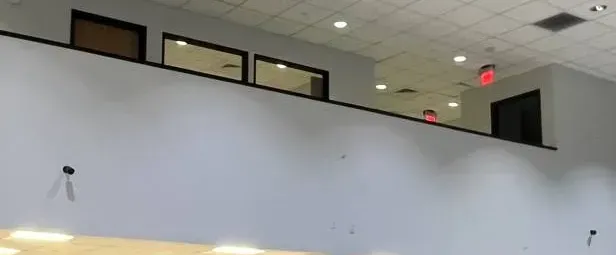
Job photo of two compact cameras set high on a tall wall beneath upper windows. In an Orange County condo clubhouse or double-height lobby, cameras placed this high stay out of reach and watch the doors and the floor below.
Packages, mail kiosks and delivery access
In townhouse communities, carriers drop parcels on dozens of separate stoops or at a central mail kiosk; in the elevator buildings, boxes pile up in shared lobbies and vestibules. The practical steps are the same in both: a controlled door into wherever packages are left, a camera that sees faces at that door rather than the tops of heads, and a delivery credential that works only in the vestibule and only during the day. Where a board wants smart package lockers, we install the access control and network the lockers need and integrate with the locker company, which supplies and services the lockers themselves.
Alarms for owners and for the clubhouse
Individual owners regularly ask for an alarm in their own townhouse or apartment, and boards sometimes want the clubhouse or management office protected too. Our alarm installation service in Orange County handles both, with central-station monitoring at $30 a month for keypad-only service or $45 a month including the phone app. Each town writes its own alarm rules. New Windsor's, for instance, cuts outdoor sirens off after 15 minutes and keeps automatic dialers off police and fire emergency lines, and we program systems to match the town they are in.
Fire alarm work, within our scope
Fire alarm work is part of what we offer in Orange County. A condo building that needs a fire alarm system goes through steps that security work does not: a design professional prepares drawings, the plans are filed with the local code enforcement office under the state Uniform Code, a licensed installer puts the system in, and the office witnesses an acceptance test. Our fire alarm installation page for Orange County walks through that sequence and does not publish prices. Where it touches an access project is the door: any electrically locked exit has to unlock when the fire alarm goes off, and we wire every such door with that release.
Cable, networks and backup power
In a spread-out complex, cable has to reach buildings that may be a parking court apart. We route it through crawl spaces and attics where we can, through conduit underground where we must, and over point-to-point wireless links where trenching makes no sense. All of it runs on a security network that stays separate from residents' internet and any clubhouse Wi-Fi; our network installation work in Orange County covers that side. Controllers, locks and recorders get battery backup sized for the outages the board expects. Electrical work is not ours: we handle low voltage and door hardware, and the association's electrician provides any new line-voltage circuit.
Guards, patrols and virtual doorman services
Staffing is outside what we do. There is no guard service, patrol car or remote doorman desk on our side of the contract. Where a board already pays a security company or an off-site monitoring provider, we make sure the intercom, cameras and readers we install work with that provider, and if the board is only considering one, we can tell it which of its current devices would carry over.
Service visits, inspections and support
Once a system is in, questions by phone are free. Sending a technician for a problem is the $250 service call. Many boards book two scheduled visits a year, one before the pool season and one before the first snow, to test batteries, clean camera housings, check that the recorder is actually saving video and apply firmware updates; cameras can be folded into our security camera maintenance visits in Orange County. Our workmanship warranty is the 30 days on our warranty page, longer coverage of a year or more can be bought at the time of sale, and the manufacturer warrants its own equipment.
Who calls us from Orange County
Our Orange County requests come from many directions: treasurers of small self-run associations, property managers responsible for a string of complexes along Route 17, builders closing out a final phase, and owners who just want a better doorbell or an alarm in their own unit. Association decisions go through the one contact the board appoints, and an owner's personal work is billed and handled separately from anything the association pays for.
Building Specialists
Condo Security for Orange County's Architecture: Six Property Types
Equipment that works well in a new elevator lobby can struggle on a weathered wood door in a 1970s stair hall, so we plan by property type. Six types come up again and again in Orange County, and each puts different demands on a security system.
1
1970s and 1980s garden complexes
Stair halls shared by a few apartments, each hall with its own outside door and decades-old wiring.
2
Townhouse loops with amenities
Private roads, parking courts, a pool, courts and a clubhouse spread over many acres.
3
Newer phased townhouse sections
Garage-under units in Monroe, Highland Mills, Washingtonville and Chester.
4
Elevator condo districts
Four- and five-story buildings by the dozen, with lobbies, elevators and shops on site.
5
55-and-over neighborhoods
Condos and townhomes beside single-family homes, close to a village center.
6
Small condos in hamlets and villages
A few owners, one front door and no managing agent.
1970s and 1980s garden complexes: many doors, tired wiring
These are the most common condos around Newburgh, New Windsor and Middletown. Each building has two or more stair halls, each hall has its own exterior door, and each door has its own panel wired to handsets upstairs and down. Multiply that by a dozen buildings and the board is maintaining dozens of small, separate intercom systems that happen to share a name. The decision is usually whether to keep a panel at every hall door and upgrade them in groups, or to move to fobbed hall doors with a smaller number of video panels at central points. Both are reasonable. The first keeps visitors walking to the right door; the second costs less to maintain. We price both when the board is undecided.
The original wiring in these buildings is often still usable for a two-wire video system, which can save a great deal of labor, but not always. Splices made by earlier repair companies, water in crawl-space junction boxes and cable chewed by rodents all show up. We find out what is there before the proposal, not during installation.
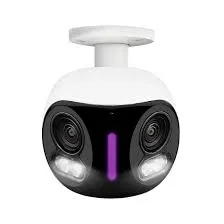
Product photo of a pendant camera with two lenses pointing in opposite directions. In an Orange County garden condo vestibule, one camera like this can watch both the outer door and the stairs.
Townhouse loops with pools, courts and clubhouses
Townhouse owners generally look after their own front doors, which leaves the association responsible for everything they share: the private road, the parking courts, the mailboxes, the pool and its fence, the courts, the playground and the clubhouse. Those points can be several hundred feet apart, so a single long directory panel does not fit. The board needs a handful of controlled spots, each tied to the same owner list. With wood-frame buildings and no central equipment room, the controller usually ends up in the clubhouse mechanical closet or an outdoor cabinet, and the route the cable takes between buildings is what sets most of the price, so we settle that route before anything else.
Newer phased townhouse sections: garages and handover
Many of the county's newer condos were built in phases, with each phase's units sitting over their own garages. Security here is less about the buildings and more about the edges and the handover: the entrance, the mail area, the amenity building and the accounts the builder set up. Boards inheriting these sections should insist that every administrator login moves to the association at turnover, that cameras are on a recorder the association owns, and that the equipment is commercial-grade rather than the consumer cameras some builders use to finish a model area quickly. We document everything at handover so the next board is not locked out.
Elevator condo districts: lobbies at volume
The elevator buildings near Kiryas Joel bring city-style problems to a suburban county. Each building has a lobby panel calling dozens of apartments, an elevator, a trash room and often storage, and the front doors open and close all day long. Repeated across many buildings on one campus, that means a large number of lobby panels that should run on one platform, so a resident's credential and the managing agent's list work the same way everywhere. Video entry at the lobby, readers on rear and service doors, and optional elevator readers are the core. Because residents move in while construction continues on neighboring buildings, contractor access needs its own group that the board can switch off in one step when each phase is finished.
Durability matters more here than in a quiet garden complex. Lobby panels and readers in busy buildings take constant handling, so we specify vandal-resistant faceplates, mount panels where strollers and carts will not strike them, and choose door hardware that holds up to heavy cycles.
55-and-over neighborhoods: simple for residents, firm about access
In the Village of Warwick, an age-restricted neighborhood puts condos and townhomes alongside single-family houses, a walk from the village center. Places like that tend to have busy shared spaces and residents whose comfort with technology varies widely: one owner opens the door from a phone without thinking, while a neighbor wants a big-button station by the kitchen and a fob on the key ring and nothing else. Aides, relatives and service providers arrive on regular schedules. The system should allow more than one way to answer a visitor, show a clear, readable display at the entrance, and give caregivers credentials that stop working when the arrangement ends.
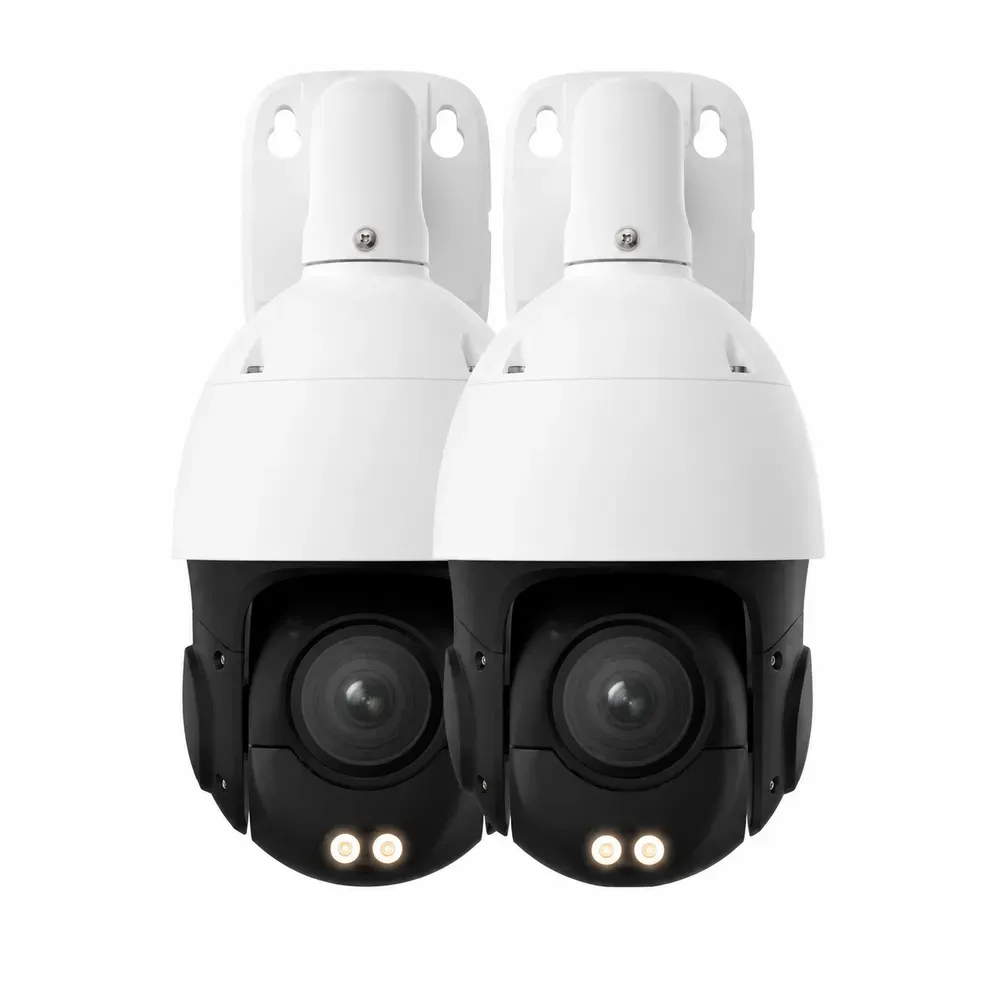
Product photo of two pan-tilt domes with built-in white lights. On an Orange County clubhouse corner, a light-equipped camera like these can cover a walkway or patio where the association has no pole lighting.
Small condos in hamlets and village centers: few owners, one door
Not every condo here is a large complex. Listings in Southfields and Fort Montgomery point to small associations with only a few units and no managing agent. Those owners need something simple and solid: a video door station or small entry panel that works every time, a strike that lets the door go cleanly, and maybe one fob reader so nobody has to cut extra keys. We are glad to do that work, the owners typically manage the approvals themselves, and our proposal is short enough to read and approve in one sitting.
What changes with materials and methods
Siding and trim are the first thing we look at on the outside of a garden building, because a reader or camera bolted straight onto vinyl leaks and sits crooked; a mounting block fixes both. Brick or fieldstone entrance walls take masonry anchors, and the conduit is pitched so water drains out. In the elevator buildings, lobby walls finished in stone or tile are drilled once, after the board signs off on the location. Inside older garden buildings we often meet wallboard or plaster over block; we patch the holes we make and leave paint to the association's painter. Cable that crosses lawns or paths always goes into conduit, after the utilities have been marked.
Commercial Condo Security
Shops on Site, Clubhouse Staff and Outside Crews: Business-Side Condo Security in Orange County
Part of what an Orange County condo association manages runs like a small business. The elevator-building districts include stores and offices on the same grounds, the clubhouse has staff and vendors, and in newer sections the builder may still keep a sales office between occupied buildings. Each group needs its own access rules inside one system the board controls.
Stores and offices inside a residential campus
When a condo development includes a building with a supermarket, shops and rentable offices, the public is supposed to reach that building and nobody else's. The security plan draws the line at the residential lobbies and garages: open where customers belong, controlled where residents live. Store and office tenants get credentials for their own building and the doors they use, not the residential buildings around them. Who pays for which piece depends on the declaration and on any separate agreements with the commercial owner, so we price each piece separately and let the parties divide them.
The clubhouse as a workplace
Clubhouses in the bigger complexes are workplaces several days a week. A part-time manager, a cleaning service, the pool company, someone who maintains the gym machines and caterers for owners' parties may all need to get in. Each gets a credential matched to when they actually work: cleaning days for the cleaner, the booked hours for the caterer. The office where owner files and spare keys are kept has its own reader and its own entry log. If the clubhouse has someone at a desk during the day, that person can pick up calls from the entrance call box, which roll over to owners' phones when the desk closes.
Builders still selling units
A builder finishing a phased section usually keeps a sales office and model units open a few doors from occupied homes. The people who live there want their buildings locked down, while agents and buyers have to reach the models. We give the builder its own credential group, visible to the board, that disappears with one action at turnover. We also record every administrator account so that each one actually transfers to the association when control changes hands.
Landscapers, plow crews and pool companies
Something is always being serviced on an Orange County condo property. Mowing and planting crews work from spring into late fall, plow and salt trucks take over in winter, the pool contractor opens and closes the pool, and elevator and fire alarm inspectors arrive on their own calendars. Give each of them a credential limited to their season and their service days, and none of them ends up holding a permanent key. Put readers on the doors they actually need, such as the maintenance garage, the pool equipment room or the salt shed, and the board can see exactly when each was opened.
Parking courts, carports and garage rows
Cars here sit in open courts, under carports, or inside rows of garages owned unit by unit. Cameras belong on the drive aisles and court entrances, never pointed into a private garage or the windows above the lot. Sometimes brighter lighting accomplishes more than another camera, and we tell the board when that is true. Shared side doors on garage rows are worth a reader, since people otherwise walk in behind an open overhead door.
Compliance callouts for Orange County condo security work
The declaration decides: the condo's declaration and bylaws set what the board can put on common elements and whether equipment inside an apartment is the owner's cost or the association's. Our job is the price; the board and its counsel make that call.
Town and village sign-off: most reader and intercom work needs no permit, but a new pedestal at the entrance, a camera pole or a lit sign can. We point out those items at the walk-through, and the board checks with the building department that covers the property.
Exit doors with electric locks: where the state Uniform Code calls for it, a locked exit must let go when the fire alarm activates and when power is lost, and we wire every such door that way.
Readers at the pool: our lock and reader work together with the gate's own closer and latch; the closer and latch are never removed.
Where cameras never go: General Business Law §395-b bars recording in restrooms, locker rooms, changing areas and similar spaces, so clubhouse and pool-house cameras stop at those doors. We also leave audio recording off unless the board's attorney approves it, since taping conversations can raise eavesdropping issues.
City rules stay in the city: the Tenant Data Privacy Law that governs smart-access buildings in New York City is a city local law, not a state one, so it does not reach Orange County. Boards writing their own privacy policy for fobs and app entry still find its ideas useful.
Owner alarms: towns set their own alarm rules; New Windsor's Chapter 86 is one example, with a 15-minute limit on outdoor sirens and fines for false alarms that rise with repeat offenses.
Who does what: low-voltage security work is done under our New York State license #12000287431; any new line-voltage circuit is work for the association's electrician.
Insurance paperwork: our certificate goes to the managing agent after award, not with the bid.
Housing cooperatives in the county work under proprietary leases and shareholder rules rather than a condo declaration; our page on co-op security systems in Orange County is written for them.
Product photo of a compact dual-lens camera designed to mount over a doorway. Above the shared door between a store and a residential lobby in an Orange County condo campus, a camera like this records who passes through in each direction.
Your Questions Answered
Condo Security Systems in Orange County: Questions Answered
Grounds, roads and children
Children wait for the school bus at our entrance. Should a camera cover the stop?
It is a reasonable place for one, as long as it is aimed with care. A camera at the entrance that already watches cars coming and going can usually be framed to include the spot where children wait, which helps the board answer questions about near-misses, a stranger hanging around or a dispute between kids. It should record the association's own property and the edge of the road, not into the windows of nearby homes, and the board should decide in writing who may view and export that footage. Good lighting at the stop, which the camera also benefits from, is often the more useful improvement. We put the camera on the same recorder as the rest of the entrance so there is one place to look.
Drivers speed through our private loop road. Can cameras help the board enforce its rules?
Cameras can show what happened and which vehicle was involved, which gives the board something concrete when it applies the speed rules in its own house rules. They do not measure speed the way a radar sign does, and they do not issue tickets; on a private road, enforcement runs through the association's rules and fines as the governing documents allow. A camera at each end of the loop, set to capture vehicles clearly in daylight and under the road's lighting at night, is usually enough. Many boards pair that with a driver-feedback sign from a sign supplier, which we do not sell. We can tell you where the cameras should sit to be useful.
Our complex has guest spaces where non-residents leave cars for days. Can cameras help?
Yes, mainly by showing when a car arrived and who walked away from it. A camera covering the guest spaces, with enough resolution to read a plate in daylight, lets the managing agent match a vehicle to the unit that let its driver in, or confirm that nobody did. That record supports whatever towing or parking rules the association has adopted under its own documents and any town requirements. Pairing guest parking with visitor passes issued through the entrance call box or the app makes the match easier, because each pass carries a unit number and a time. The board, not the camera, decides what happens next.
Pools and amenities
Can a lifeguard or attendant see the photo of the owner whose fob just opened the pool gate?
Several access platforms can show the cardholder's photo on a screen or tablet the moment a credential is used, next to a live image from a camera at the gate. When the faces do not match, the attendant knows a fob has been lent or copied. That makes it practical to enforce the one-fob-per-household rule many pools have without arguing with residents at the fence. It requires the association to collect owner photos with consent and to keep them only in the access system. We set up the screen where the attendant sits and limit who can see the photos.
Our pool is fenced with chain link. Can a reader and lock go on that kind of gate?
Usually, yes. Chain-link and aluminum pool gates flex more than a building door, so the work is in the mounting rather than the reader. We add a rigid post or bracket for the reader and the lock, choose a lock that tolerates some gate movement, and run the cable in conduit up the post rather than along the fence fabric. The gate keeps its self-closing hinges and self-latching hardware as state law expects for pool enclosures; the electric lock works alongside them. If the gate sags or does not close on its own, it should be repaired by the fence company first, because no lock fixes a gate that will not swing shut.
Our clubhouse has a standby generator. Can the security equipment run from it?
It can, provided the circuits feeding the controller, recorder and network switch are on the generator's panel, which is a question for the association's electrician. Even with a generator, the security equipment still needs its own batteries to cover the seconds before the generator starts and to keep locks behaving correctly during that transfer. We size those batteries and tell the electrician which devices need generator power. Readers and panels in outlying buildings that are not on the generator need their own battery backup sized for the outages the board is worried about.
Winter, doors and buildings
Do outdoor readers and keypads keep working through single-digit winter cold?
Equipment rated for outdoor use lists an operating temperature range, and for a pool gate, entrance pedestal or garage door in Orange County that range should go well below zero Fahrenheit. We check the specification before quoting. Cold is rarely what kills a reader, though. Water is: snowmelt that seeps into an unsealed cable entry and freezes overnight, or a keypad mounted where plow spray hits it. We seal cable entries, mount devices out of the plow line and fit hoods where wind-driven snow is a problem. Touchscreens and some face readers are slower in extreme cold, which is worth knowing before choosing them for an exposed location.
Families push strollers through our lobby doors all day. Can a powered door opener work with the fob system?
Yes. An automatic door operator can be tied to the access controller so that a valid fob both unlocks the door and opens it, and a push plate inside opens it on the way out. That helps with strollers, groceries, wheelchairs and walkers, and it reduces wear on the lock. The operator itself comes from a door operator company, and any new power it needs comes from the association's electrician. We wire the interface so the door never swings open without a valid credential and still releases when the fire alarm activates.
In a complex with many buildings, should every owner's fob open every building?
Most boards decide no. A typical setup lets an owner's fob open their own building, the shared amenities and the mail area, while other residential buildings stay closed to them. That limits the reach of a lost fob and keeps residents from cutting through other halls. Some communities prefer an open approach for convenience, and the system supports either. Whatever the board chooses, it is a setting, not a wiring decision, so it can change later without new hardware. We put the proposed access groups in the proposal so the board can approve them alongside the price.
Rules, data and splitting the work
Our complex sits across a town line. Which building department do we deal with?
Each building generally falls under the jurisdiction where it physically sits, so a complex spread across two municipalities can involve two offices. Most low-voltage security work needs no permit, but items such as a new entrance pedestal, a pole or any work that affects fire alarm or egress may need local review. At the walk-through we note which buildings fall where, list the items that might need approval, and the board or its attorney confirms with each office. This is not legal advice; it is the practical step that keeps a project from stopping halfway.
Can our cameras and intercom run without sending anything to an outside cloud service?
Yes, with trade-offs. Cameras can record to a recorder on site, and many intercoms and access systems can be managed from a computer on the property's own network with no cloud account. The board keeps full control of its data. What it gives up is easy remote access for the managing agent and owners' phone apps, which typically depend on a cloud service or a secure remote connection that someone has to maintain. Some associations choose a middle path: video stays on site, while the intercom uses an app. We lay out each option and its ongoing cost.
Our maintenance staff wants to pull some of the cable to save money. Can the work be split?
It can be discussed, but boards should know what they are trading. We test every cable before connecting equipment to it, and if a run pulled by someone else fails, fixing it becomes a change to the job. We also cannot warranty labor we did not do. Where an association has a capable maintenance person, the most useful split is usually prep work such as clearing access to crawl spaces and closets, moving stored items and arranging access to units. We will price the job both ways so the board can compare honestly.
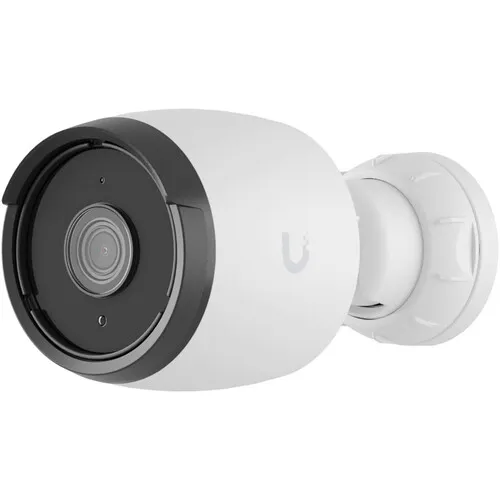
Product photo of a white bullet camera on a ball-joint mount. Fixed to a clubhouse or sign wall at an Orange County condo entrance, a camera like this can be aimed down the drive toward the turn-in from the road.
Equipment
Types of Condo Security Equipment We Install in Orange County
We install a range of brands and match the equipment to the property rather than to a catalog. Our default is a reliable non-branded commercial line, and we name brands and models when a board asks or when an existing system needs a matching part. The table shows what each category does in an Orange County condo.
Equipment
Where it goes in an Orange County condo
What to look for
Video entry panels
Elevator lobbies, stair-hall doors in garden buildings, clubhouse entrances
Vandal-resistant faceplate, readable display, directory managed from the owner list
Slim door stations
Narrow stair-hall door frames and single-door walk-ups
Fits the frame, built-in reader, weather rating
In-unit stations and apps
Kitchens and hallways of each apartment, or owners' phones
Choice per owner, works on existing wire where possible
Entrance call boxes
Turn-ins from the town road, gatehouses
Cellular or network calling, driver-height mounting, plow clearance
Fob and card readers
Building doors, pool gates, courts, clubhouse, storage, maintenance garages
Correct fail-safe or fail-secure choice, fire alarm release where required
Elevator readers
Elevator cabs in mid-rise and elevator condo buildings
Coordination with the elevator maintenance company
Cameras
Entrances, parking courts, lobbies, mail areas, pool and clubhouse doors
Low-light performance, correct lens for the distance, privacy masking
Recorders
Locked closet in the clubhouse, management office or lobby equipment room
Enough storage for the retention the board sets, backup power
Network and power
Equipment closets and links between buildings
Separate security network, surge protection, batteries sized for outages
Entry panels and stations
For lobbies, we lean toward video panels with a directory that updates from the same list the managing agent uses for fobs, so nobody keeps two lists. For garden-building stair halls, slim stations that fit a narrow door frame often beat a wide lobby-style panel. Inside the units, owners can have a screen, a simple handset or nothing but the app, and a mixed building can support all three.
Readers, credentials and locks
Each reader we fit on a condo door reads encrypted credentials, and nearly all of them also take phone credentials. Locking hardware is picked one opening at a time: an electric strike when the frame will take one, a maglock when it will not, and always the correct behavior on power loss and on fire alarm. Pool and court gates get outdoor hardware built for a gate that moves, not an indoor door part screwed to a post.
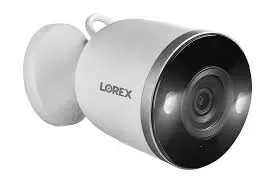
Product photo of a white bullet camera with a light on each side of the lens. On a building wall facing an Orange County parking court, its own lighting lets it record color at night where pole lights are spaced far apart.
Cameras for long drives and open courts
Orange County condo grounds are wide, so lens choice matters more than megapixel counts. A camera meant to see faces at a stair-hall door needs a different lens from one covering a 300-foot drive. Pan-tilt cameras help at entrances where one view cannot cover both the road and the parking court, and cameras with built-in lights fill gaps where the association never installed pole lighting. Privacy masking blocks out unit windows and neighbors' yards in the recorded image.
Recorders, storage and remote viewing
The recorder belongs in a locked, ventilated space with battery backup, not on a shelf in the pool pump room. We size storage for the number of days the board wants to keep, set up named user accounts so exports are traceable, and configure remote viewing only for the people the board approves.
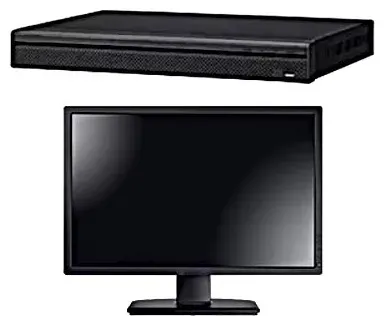
Manufacturer product photo of a slim video recorder above a flat monitor. In an Orange County condo management office or clubhouse closet, a setup like this lets the board's named users review and export clips.
AI Overview Reality Check
What AI Gets Wrong About Condo Security Systems in Orange County
Chatbots, search summaries and national price sites like Angi, HomeAdvisor and Fixr tend to give one answer for the whole country. Below are the claims we see repeated most, held up against what we actually find on condo properties in Orange County.
"Condo security means a doorman building with a lobby desk"
Generic answers picture a city tower with a concierge. Most Orange County condos have no lobby at all: they are garden buildings with a door per stair hall, or townhouses whose owners walk straight from their cars to their own front doors.
That changes the whole design. The security points are the stair-hall doors, the pool fence, the courts, the clubhouse, the mail kiosk and the entrance from the road, often hundreds of feet apart with no staff anywhere.
The newer elevator buildings near Kiryas Joel are the exception, and even there the lobbies are run by residents and a managing agent rather than a desk. A plan built for a doorman would put money in the wrong places.
"Every apartment building needs an intercom by law"
Summaries often repeat the intercom rule in New York City's Multiple Dwelling Law as if it applied statewide. That law applies to cities of 325,000 people or more, and none of Orange County's cities is anywhere near that size.
Orange County condo buildings fall under the Multiple Residence Law, which covers smaller cities, towns and villages, plus the state Uniform Code and local building departments. Whether a particular building must have a specific entry system is a question for the board's attorney and the local code office.
In practice, boards choose intercoms because owners want to know who is at the door and to stop handing out keys, not because a statute forces them to.
"A building intercom costs $1,200 to $8,500"
HomeAdvisor's national range for intercom installation, $1,200 to $8,500, lumps a single-family doorbell together with a multi-building system. In Orange County, the realistic answer depends on how many doors the complex has and how far apart they are.
For Orange County we publish three intercom price bands on our installation page: video intercom in a 4-to-8-unit building at $1,200 to $3,500, multi-unit building systems at $1,200 to $5,000, and IP smartphone systems for larger buildings at $2,500 to $8,000 and up. Twenty stair halls in one complex add up to twenty small systems, which is why a garden complex is priced phase by phase after a walk-through.
What no national average includes is the cable distance between buildings, which can matter more than the panel price. That is why we quote community-wide work only after seeing it.
"Battery cameras and Wi-Fi doorbells are enough for a condo"
Consumer devices are fine for an owner's own front door where the bylaws allow them. For common areas, they run into problems quickly: batteries die in an Orange County January, Wi-Fi does not reach the pool or the far parking court, and accounts end up in one board member's personal email.
A condo association needs equipment it owns, on a recorder it controls, with accounts that pass cleanly from one board to the next. That usually means wired cameras on a dedicated network.
Owners who want their own doorbell camera should check the declaration and house rules first, because the exterior of a unit is often a common element the board controls.
"Any handyman can install access control"
Plenty of general contractors will mount a reader. In New York, installing security and fire alarm systems is licensed by the state under General Business Law §69-m, and boards should ask for the license number before awarding work.
The licensing matters because access control touches life safety. A locked door that does not release on fire alarm, or a maglock wired so that it holds when power fails, is a real hazard in a residential building.
We hold license #12000287431, and the managing agent gets our insurance certificate when the job is awarded.
"Cloud subscriptions are always the modern choice"
Many summaries treat cloud-managed systems as automatically better. They are convenient, but they carry a monthly fee per door, per camera or per unit set by the manufacturer, which adds up quickly for an association whose monthly common charges are modest.
On-site systems with no subscription are still a reasonable choice for many Orange County condos, especially those with a capable managing agent or a board member willing to run the software. Hybrid setups, with video on site and an app for the intercom, are common.
The right answer is the one the board can afford to run for ten years, and we show that cost on the proposal before anyone signs.
"A technician can be at the door within the hour"
Some sites promise immediate service anywhere. Honest scheduling in a county this large looks different, and promising otherwise sets up a board to be disappointed.
Our practice is to book the visit within 2 hours of a request, seven days a week, with early-day arrival windows, and to handle paid jobs in the order they come in. Each appointment carries a two-hour window, and the technician arrives within it.
Parts that are built to order arrive on the manufacturer's timeline, which we cannot change, so we confirm an installation date only once the equipment is in our hands.
Speak to a Technician About Your Orange County Condo
Snap the failing panel, keypad or gate lock, or copy the reserve-study line in question, and text it over. Expect an appointment within 2 hours.
Start with the basics: the town or village, an approximate count of units and buildings, the building style (garden, townhouse or elevator) and the complaint owners raise most. Photos of the entry panel or equipment room help us prepare. Prefer the phone? Call or text (845) 640-3835.
✅
Request Sent!
Received. A member of our team will get back to you shortly about an Orange County appointment.
How It Works
Our Installation Process for Orange County Condos
One stair-hall station or a full complex, the process has the same seven steps. On large projects, most of the calendar time passes while the board waits for its next meeting to vote, which is expected.
1
Call, text or form
Whoever reaches us first, we write down the property, how many units and buildings it has, what kind of buildings they are and what needs solving.
2
Repair visit or free walk-through
Broken equipment is diagnosed on a $250 service call; planning a new system starts with a walk of the property that costs the association nothing.
3
Written proposal by phase
Prices are itemized per door, per device and per cable run, then grouped into phases that can be approved separately.
4
Approval and deposit
A signed approval plus the deposit starts the equipment order, and the insurance certificate goes to whichever agent or officer the association designates.
5
Owner notice
Owners get a plain-language letter from the board, drafted by us, covering timing, door changes and new credentials.
6
Installation building by building
One stair hall, lobby or amenity is switched over at a time, so nobody is ever left without a way in.
7
Testing and handover
We enter owners and credentials, test each controlled door alongside the board's representative and hand over logins and drawings in writing.
Timing around seasons and owners
Each appointment has a two-hour arrival window, and the crew arrives within it, never ahead of it. We try to wrap up pool and court access before Memorial Day weekend, set entrance equipment while the ground can still be dug, and keep elevator-building lobby work clear of the morning school and commuter rush. Early starts also beat the heaviest traffic on Route 17 and I-84.
What the owner notice covers
Good notices are short and practical. Owners mainly want the work dates, the doors involved and how long each will be affected, the way in while a door is out, how and when their new fob or app invite shows up, and a phone number for problems. We put all of that in a first draft, the board edits it, and the managing agent mails or emails it. Owners with tenants should pass it along.
Deposit, payment and financing
Think of the deposit as the starting gun. Half the contract price, paid after the board signs, is what releases our purchase orders. Lead times on intercom panels, readers and gate parts vary by maker, and some are assembled only when ordered, which is why we name an install day after delivery rather than before. Boards that prefer to spread the cost can apply for financing through Wisetack, subject to approval; most associations just send a check.
After the job
Coverage after the job has two layers. Manufacturers warrant their own equipment on their own terms. Our labor carries the 30 days explained on our warranty page, and boards wanting more can buy a plan of one year or longer at signing. Calls with questions cost nothing for the life of the system.
Full terms — including 50% deposit, one-year parts-only warranty on Abstract Enterprises Security Systems-supplied products, and the late-fee schedule — are set out in the service agreement.
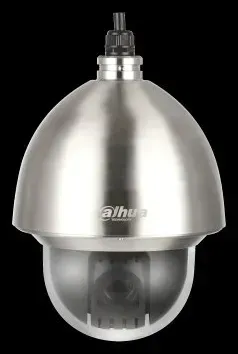
Manufacturer product photo of a stainless steel pendant speed dome. At an Orange County condo entrance exposed to road salt and winter weather, a corrosion-resistant housing like this outlasts painted aluminum.
Coverage Area
Condo Security Near Orange County's Landmarks
Orange County landmarks most residents would recognize, each paired with the type of condo housing around it. We name no customer properties.
1
Newburgh waterfront and the Newburgh-Beacon Bridge
Older garden and townhouse complexes from the 1970s with pools and courts, across the City and Town of Newburgh and into New Windsor.
2
Stewart International Airport
Condo complexes in New Windsor with clubhouses, pools and tennis courts, a short drive from the airport and the I-84 and I-87 interchange.
3
Middletown and the Port Jervis Line
Garden complexes, a gated community and newer buildings around the city, near the Middletown station and the Route 17 and I-84 corridors.
4
Woodbury Common and Harriman station
Townhouse condo communities in Highland Mills, Central Valley and Harriman, many with pools, courts and playgrounds.
5
Goshen and the county seat
Condo communities in nearby Chester and Washingtonville with fitness centers, pools and clubhouses, around the county government offices and the Legoland New York resort.
6
West Point and the Bear Mountain Bridge
Small condo communities in Fort Montgomery and Highland Falls along Route 9W, where a few owners share one entrance.
We also serve condo associations in Monroe, Kiryas Joel, the Village of Warwick, Montgomery, Walden, Maybrook, Cornwall, Cornwall-on-Hudson, Florida, Greenwood Lake, Tuxedo, Southfields, Pine Bush, Otisville and Port Jervis, and every other town and village in the county.
Pricing
Condo Security System Cost in Orange County
Until we have walked a property, the only firm number is $250 for a service call. That buys the trip, the troubleshooting and any small repair, and it is credited against a larger repair if one is needed. The table below repeats, word for word, the Orange County ranges published on our service pages for individual systems. Community-wide work gets a written quote after a free assessment, because building spacing, the condition of old wiring and the count of controlled doors differ so widely between complexes.
Published Orange County ranges that apply to condos
Item
Published price
Where it is posted
Service call: on-site diagnosis and small repairs, credited toward larger work
Elevator access, Level 1 fob, card, code or intercom-station reader
$2,100 per car and up
Orange County elevator access control page
Elevator access, Level 2 face, fingerprint or iris reader
$3,500 per car and up
Orange County elevator access control page
Central-station monitoring for an owner's alarm
$30 a month keypad, $45 a month with app
Orange County alarm installation page
Typical repair ranges for entry parts
Repair work on existing entry systems is priced in the ranges below, taken from our Orange County door buzzer repair page and our door buzzer and intercom repair pricing page. The exact amount for your building is quoted on site before any part goes in.
Repair
Typical range
Apartment or in-unit station
$250 to $525
Door release relay or button
$250 to $475
24V transformer
$325 to $650
Electric strike replaced and door aligned
$450 to $950
Lobby panel repair or faceplate
$650 to $1,800
Riser or trunk cable repair
$850 to $2,400
How Orange County boards usually pay
Money for this kind of work usually comes from one of three places in an Orange County association. If the reserve study already lists the intercom or access system, it can come out of reserves, which the Condominium Act lets bylaws set aside for repairs, replacements and improvements. A large replacement the reserves cannot cover may need a special assessment. Many boards simply split the job and pay for one phase per budget year. Whether owners have to vote depends on the declaration, the bylaws and the project's size, and those are questions for the association's accountant and attorney; our part is to give them reliable numbers.
What moves a community-wide quote
The number of entry points comes first. A garden complex with many stair halls has many doors to equip, while a townhouse loop may have only an entrance, a pool gate and a clubhouse door. Distance comes next: how far apart the controlled points sit, and whether cable can travel through buildings, underground or over a wireless link. After that come the in-unit choice between screens and the app, how much existing wire can be reused, elevator work, and the effort needed to clean up a messy credential list. Two Orange County condos of the same size can land far apart, and the written quote explains why.
Ongoing costs after installation
The installation invoice is only part of what a system costs over its life. Cloud-managed intercoms and access platforms often bill a monthly fee per door or per apartment, and the manufacturer, not us, sets that fee; systems managed on site may have no monthly charge at all. Owners who add alarm monitoring pay their own $30 or $45 a month. Expect to replace recorder drives, backup batteries and the most exposed outdoor readers sooner than anything else, and put them in the reserve study. Our proposals list each of these recurring items so nothing surfaces after the vote.
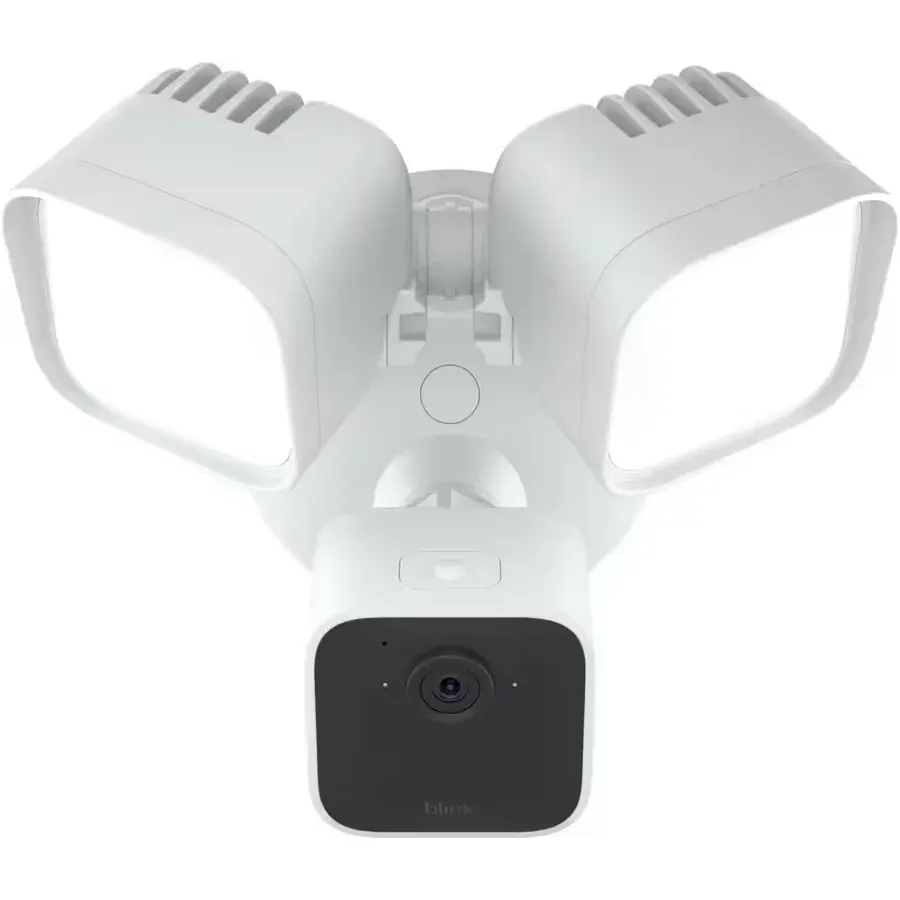
Manufacturer product photo of a twin-lamp floodlight above a camera. Beside an Orange County condo pool deck or tennis court with no pole lights, a combined light and camera covers the area after dark.
Shop Our Systems
Condo Security Packages and How They Are Priced in Orange County
We do not sell boxed packages to condos, because no two Orange County properties need the same thing. What boards end up buying almost always fits one of three shapes.
1
Repair what failed
$250 service call. We track down why the panel, station, lock, reader or recorder failed, make small fixes during the visit and quote anything bigger before doing it.
2
Upgrade one point
Written price after a free visit. A single target, for example the pool gate, one building's stair halls or an elevator lobby, checked against the county ranges above.
3
Plan the whole complex
Stair halls, lobbies, amenities and the entrance brought onto a single owner list, broken into phases the board can fund year by year.
Equipment the association already bought
Some associations buy their own panels, readers or cameras online or through a board member's contact. We will mount and program that equipment as labor-only work, and the price comes by phone or text once we have the model numbers and a door count. We do not send a technician out to inspect equipment the association bought itself, and any warranty claim on it goes back to wherever it was purchased. When we supply the hardware, there is one company answerable for every part of the system, which is why most boards end up choosing that route.
Phasing over several budget years
In Orange County the first phase is usually the doors that break most often, typically the oldest stair-hall intercoms, together with a cleanup of the fob list. Amenities such as the pool, courts and clubhouse come next, and cameras last. Because every phase runs on the same platform, equipment bought in the first year still fits in the third, and the board approves each phase as a separate price.
RFPs and board bid requests
Formal bid packages are welcome. If a consultant or engineer has written a specification, we answer it item by item in the board's own format, and if there is no specification, our proposal can serve as one for other bidders. The managing agent receives our certificate of insurance after the contract is awarded. We keep our clients private, so we do not hand out references or building names; anyone on the board can read our public Google reviews instead.
In the older garden complexes, the first thing we do is walk every stair hall and press every button. A board will tell us the intercom "mostly works," and the walk turns up three halls where nobody upstairs can be reached and one where the door release has been disconnected for years so the door can simply be pushed open. That list, building by building, is usually the most useful page of the proposal.
Next we find the power supplies. In buildings from that era they tend to sit in crawl spaces, laundry rooms or the back of a utility closet, sometimes behind stored furniture, and a few have been wired to an outlet someone later put on a timer. Moving them to one accessible, labeled spot with a battery saves the next technician an hour on every call.
At the pool, we look at the gate before the reader. A gate that drags or does not latch on its own will defeat any lock, so we tell the board to have the fence company fix the swing first. It is the cheapest line on the plan and often the one that matters most in June.
FAQ
Orange County Condo Security Systems FAQ
If your crew finds a wiring problem that belongs to an electrician, what happens next?
+
We stop work on that part, photograph the problem and tell the board contact exactly what we found and why it needs a licensed electrician. Low-voltage work that does not depend on it continues. Once the association's electrician has made the correction, we finish the affected section.
An agent left a lockbox hanging on our lobby door railing. Is that a security problem?
+
It can be, because a key to a common door inside a lockbox lets anyone with the box code into the building. A better approach is a temporary credential or code tied to the listed unit, limited to showing days and to the doors the showing needs, which ends on its own when the listing does.
Some owners want the fitness room open overnight. Can that be done safely?
+
Yes. The room can open only to owners' credentials during late hours, with each entry logged, a camera on the door and, if the board wants, a rule that guest passes do not work overnight. Owners who use it at night are then identifiable without anyone needing to staff the clubhouse.
Is there a way to tell which unit a lost fob found in the parking lot belongs to?
+
Yes. Each fob carries a number that the access software links to a unit and a person. The managing agent can present it at a reader or look up its number, see whose it is, and return it or switch it off if the owner already reported it missing.
Can owners switch off their own lost fob from an app?
+
With many current access platforms, the board can allow owners to suspend their own credentials from a phone app, so a lost fob stops working right away. Issuing a replacement still goes through the managing agent, which keeps the association in control of who receives new credentials.
Can a camera at the pool speak a warning to people who climb the fence after hours?
+
Cameras with a built-in speaker can play a recorded warning when they detect a person inside the pool area after closing, and an authorized board member can also talk through them from the app. We do not provide live monitoring, so the warning is automatic or comes from whoever the board authorizes.
An owner's outdoor siren keeps sounding while they are away. What do local rules expect?
+
Rules vary by town. New Windsor's alarm law, for example, requires outdoor audible alarms to shut off automatically after no more than 15 minutes and sets fines for violations. When we install an owner's alarm, we set the siren cutoff to meet the local rule.
Can a buyer's fobs be ready before closing so they can get in on moving day?
+
Yes. The managing agent can program the buyer's credentials ahead of time and set them to start on the closing date, at the same moment the seller's set stops working. The buyer picks them up at closing or from the managing agent.
Does the board need an engineer's drawings for an access control job?
+
Usually not for low-voltage readers and intercoms. Drawings are more likely to be needed when the work ties into a fire alarm system, changes how an exit door operates or adds structures such as poles or pedestals. The local code office makes that call, and we flag the items that may need it.
Will you price both a repair-only plan and a full replacement so the board can compare?
+
Yes. When the condition of a system leaves the choice open, we write both: the repairs needed to keep it running for a few more years and what they are likely to cost, alongside a phased replacement. The board can then weigh the two at the same meeting.
Can owners view the building entrance on their smart TV instead of a phone?
+
Some intercom and camera platforms offer apps for streaming devices or smart TVs, and a few in-unit stations connect to a television. Support varies by brand and model, so we confirm it on the proposal if the board wants it as a feature.
Should the association keep spare readers and fobs on hand?
+
For a larger complex, yes. A spare reader, a spare power supply and a box of blank fobs let us swap a failed part on the first visit instead of waiting for an order. We list sensible spares on the proposal, and the association stores them in the management office or clubhouse.
All Areas Served
Condo Security Systems Across the Hudson Valley and New York
Garden Complexes, Townhouse Loops and Elevator Lobbies: One Licensed Vendor in Orange County
From a dead stair-hall station in a Newburgh-area complex to a lobby panel in a brand-new elevator building, one licensed crew handles the diagnosis, the repair or replacement, and the support that follows. Start with a $250 repair visit, or have us walk the grounds for free before the board commits to anything new.