Gate call box silent since the last nor'easter? Owners who sold two years ago still opening the clubhouse? Condo boards and HOAs from Yonkers to Kingston book a survey at (800) 486-0943
For Condo Boards, HOAs & Managing Agents · Westchester to Ulster
Condo Security Systems in the Hudson Valley
Gate Call Boxes · Lobby Intercoms · Fobs · Clubhouse & Pool Access · Lot Cameras · Battery Backup
Condo security systems in the Hudson Valley begin at $250 for a service call on anything that has stopped working, while a new gate, intercom or fob system for a whole condominium community is priced in writing after a free on-site assessment. Our Bronx office at 460 E Fordham Road covers condo associations, HOA boards and managing agents in all six counties, Westchester, Rockland, Orange, Putnam, Dutchess and Ulster, and books the visit within 2 hours of your call.
The answer for a busy board: most Hudson Valley condominiums are spread out, so condo building security here means a vehicle gate or entrance call box, several building doors, a clubhouse and pool, parking lots and cluster mailboxes, all of which have to ride out ice, lightning and long power cuts. A repair visit is $250 and counts toward the fix. Our regional repair rates run $250–$525 for an apartment station, $325–$650 for a 24V transformer and $450–$950 for an electric strike, and one building's multi-unit intercom is $1,200–$5,000 on our Hudson Valley intercom page. Gates, campuses and anything bigger get a written scope. Financing is available through Wisetack, subject to approval.
Last updated November 26, 2026 by Abstract Enterprises Security Systems, NYS license #12000287431 · Sources: OneKey MLS Q3-2026 county reports (Westchester, Dutchess); NY Real Property Law §339-e and §339-v (Condominium Act); NYS Multiple Residence Law §3; NYS Attorney General, 13 NYCRR Part 22 homeowners association questionnaire and condo board guidance; Central Hudson, September 26, 2026; CooperatorNews, August 3, 2016
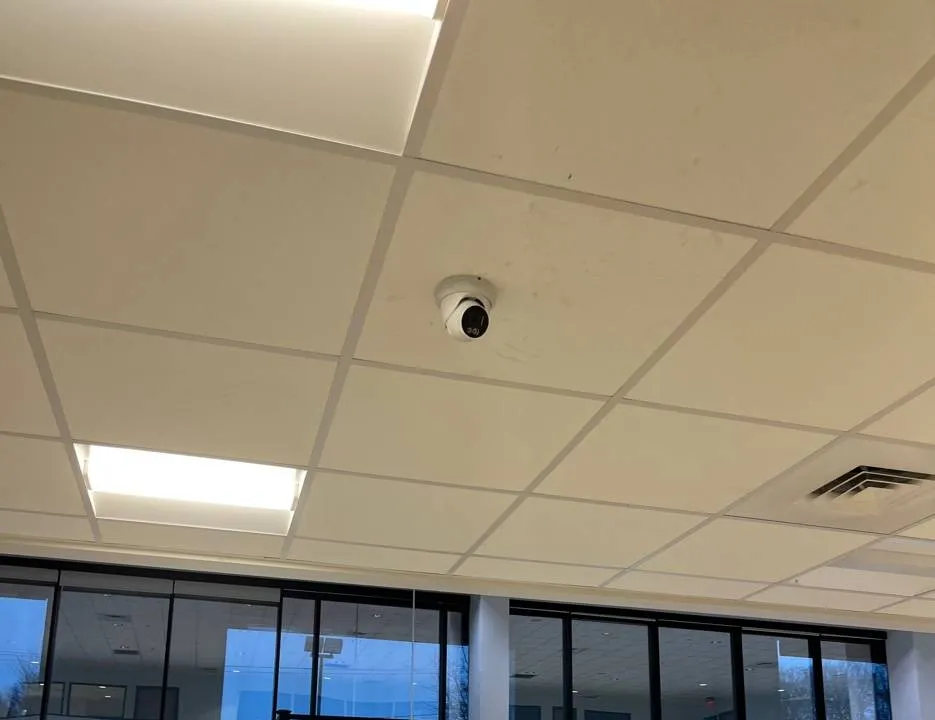
From our job library: one small dome on a drop ceiling, set between two light panels and looking toward a wall of glass. A condo clubhouse or community room usually needs exactly this: one camera on the entry side of the room, mounted where nobody can knock it, and nothing aimed at the seating.
Hudson Valley Condo Request
Town, number of homes, and what needs attention
✅
Request Sent!
Thanks. We will call or text to set the visit, normally within 2 hours.
25+
Years Experience
6
Counties North of NYC
100%
Licensed & Insured
4.7★
201 Google Reviews
Owner-operated since 2002 · Thousands of jobs completed · Booked within 2 hours, seven days a week
The Neighborhood
Why Hudson Valley Condo Communities Need Security Planned Around Gates, Grounds and Distance
Condominium ownership north of the city is not a niche. In the third quarter of 2026 alone, OneKey MLS recorded 341 condo closings in Westchester County, up 4.9 percent from a year earlier, at a median price that climbed 17.1 percent to $615,000. Farther up the river, the same listing service counted 91 Dutchess County condo sales that quarter at a $395,000 median. Owners paying those prices expect the gate to open for them, the clubhouse to stay locked to strangers and somebody to have a recording when a car gets broken into in the back lot.
What they are buying into is rarely a single tower. A typical condo community in Rockland, Orange, Dutchess or Putnam is a cluster of townhouse rows or garden buildings along private drives, with an entrance sign or gatehouse at the road, a clubhouse, a pool behind a fence, a maintenance shed, visitor parking and a bank of cluster mailboxes near the entrance. Westchester adds the other end of the range: elevator condominiums in downtown White Plains, New Rochelle and Yonkers that behave much more like city buildings, and riverfront and rail-station condos in places like Tarrytown and Rye. A security plan has to fit whichever of these the board actually runs.
The law that defines the association's job is the state Condominium Act, Article 9-B of the Real Property Law. Unless the declaration says otherwise, its definition of common elements in §339-e reaches "halls, corridors, lobbies, stairs" and "entrances and exits of the building," plus "recreational or community facilities, parking areas and storage spaces" and "all apparatus and installations existing for common use." Read plainly, the entrance panel, the gate operator interface, the clubhouse reader and the lot cameras are usually the association's to run and repair, which is why the call comes from a board or a managing agent rather than from one owner. Many townhouse communities are organized instead as homeowners associations whose offering plans the state Attorney General reviews under 13 NYCRR Part 22, and their governing papers settle the same question in their own words.
Distance and weather then shape every technical choice. Entry hardware at a Hudson Valley gate faces road salt, plow spray, July sun and lightning in a way a Manhattan vestibule never does. A long private drive can mean hundreds of feet of cable between the call box and the nearest building with power and internet. And outages are not rare: on September 26, 2026, Central Hudson reported crews restoring power to more than 19,000 homes and businesses after a slow-moving nor'easter, with Woodstock, Shawangunk, Plattekill and Hurley in Ulster County hit hardest. A condo whose gate and lobby doors go dead in a storm finds out in the worst way how its system handles losing power.
Numbers behind condo building security north of the city
341 condo sales, $615,000 median: Westchester County, Q3 2026, with closed sales up 4.9 percent and the median up 17.1 percent year over year (OneKey MLS Westchester County Q3-2026 report).
91 condo sales, $395,000 median: Dutchess County in the same quarter, with sales up 8.3 percent and the median up 21.5 percent (OneKey MLS Dutchess County Q3-2026 report). Condo communities are not just a southern Westchester story.
Common elements by default: RPL §339-e lists lobbies, entrances, parking areas, recreational facilities and "all apparatus and installations existing for common use" as common elements unless the declaration provides otherwise.
Reserves are a bylaw topic: RPL §339-v lets bylaws provide for reserves "for major and minor maintenance, repairs, additions, improvements, replacements," which is where most condo boards find the money for a gate or intercom replacement.
Which state housing law: every town, village and smaller city in the six counties sits under the Multiple Residence Law (MRL §3), whose reach stops at cities below 325,000 residents. Advice built on the big-city statute misses that.
19,000+ customers dark: Central Hudson's count after the September 26, 2026 nor'easter, concentrated in Ulster County towns. Gate controllers, door power supplies and recorders need battery backup sized for real outages.
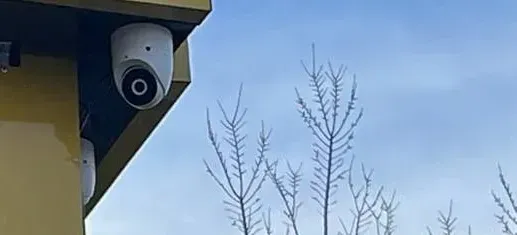
From our job library: a dome tucked under the corner of an eave with leafless branches behind it. Outdoor cameras on a Hudson Valley condo property are chosen for the January view as much as the July one, when snow glare and bare trees change what the lens sees.
The people around a Hudson Valley condo security decision
The board of managers or HOA board owns the decision. Its members are usually volunteers with jobs, and in smaller associations two or three officers do almost everything. What they need from a condo security contractor is a straight answer on whether the community is exposed, a set of options with prices, and a document they can circulate to owners without inviting a fight at the annual meeting.
The managing agent, when the association has one, often runs a portfolio of communities across two or three counties from an office in White Plains, Nanuet, Fishkill or Middletown. Their priorities are practical: a vendor who arrives inside the scheduled window, invoices the association correctly, sends insurance paperwork once the job is awarded, and leaves a system they can administer from a desk instead of a car.
The developer or sponsor is still in the picture in newer communities, especially ones being built in phases. Until owners take control of the board, the sponsor's choices about the gate, the intercom platform and the clubhouse access system are the ones everyone inherits, and the logins frequently sit with the sponsor's contractor.
Unit owners want a few simple things: the gate or front door opens for them and for their guests, packages and mail are where they left them, the pool fob works on Memorial Day, and someone can tell them who sees the camera footage. Owners who spend the winter elsewhere also want to know the community is watched while they are gone.
Maintenance staff or the superintendent live with the hardware. On a spread-out property they are the ones driving a golf cart to the far gate in sleet. They want fewer trips, replacement parts that are actually available, and permission to add a fob or fix a directory name without calling anyone.
What We Install
Condo Security Services in the Hudson Valley, From the Gate Inward
The simplest way to read a condo property is to walk it the way a visitor does: from the road to the entrance, through the gate or front door, along the drives to each building, into the clubhouse and amenities, and finally to the closets where the equipment lives. Each section below follows that walk, answers the question boards ask most about that piece, and links to the full Hudson Valley service page for the details we can't fit here.
Condo intercom systems and gate call boxes: repair, replacement and modernization
Demand for condo intercom work is where most associations start, and in the Hudson Valley the "intercom" is often two things. One is the lobby or building-door panel in an elevator condo or a garden building. The other is the call box at the community gate, which lets a visitor reach an owner and lets the owner open the gate. Both fail in familiar ways: a panel that powers up but rings nobody, a door release that hums without letting go, an audio line full of static after a wet week, a directory that still lists people who moved out years ago, or a call box that relied on a phone line the carrier retired.
Repairs come first when the system is otherwise sound. Our intercom repair in the Hudson Valley starts with the $250 service call, which covers diagnosis and simple fixes and is credited toward a larger repair. When parts are no longer made, when every winter brings another failure, or when owners want to answer from their phones, the board is looking at condo intercom replacement. That project is described on our Hudson Valley intercom installation page, where one building's multi-unit system runs $1,200–$5,000. Boards weighing an audio to video intercom upgrade, an analog to IP intercom upgrade or a full condo intercom modernization across many buildings will also find a dedicated condo intercom replacement guide on our site soon, covering repair-versus-replace decisions, RFP wording and owner notices.
For gate call boxes, the deciding question is how the box reaches owners. Older units dial out over a copper phone line. Newer ones use a cellular module, a network cable back to a building, or a radio link. Each has a cost: a cellular line carries a monthly data fee set by the carrier or the manufacturer's platform, a buried cable may need a trench, and a radio link needs a clear line of sight. We test signal and existing cable during the survey so the proposal names one approach and its recurring cost before anything is ordered. Owner directories, smartphone calling, remote door release, delivery codes and resident registration are all set up and programmed as part of the job, and a condo intercom maintenance check can be booked once a year if the board wants one.
Door buzzers in village condos and converted buildings
Not every Hudson Valley condominium is new. Some are older apartment houses or mill and school buildings converted to condo ownership in river cities and villages, and many still run a simple buzzer: a button panel at the door, a handset or buzzer in each unit, a transformer and an electric strike. When a whole building goes quiet, the transformer is a common suspect; when one owner can hear a visitor but can't let them in, it is often the unit station or the door release. Our Hudson Valley door buzzer repair page lists the rates we charge here, from $250–$525 for an apartment station to $850–$2,400 for riser re-termination. A condo door buzzer replacement or buzzer modernization makes sense when repairs pile up or when owners want video, and the old riser wiring can often be reused for a new system.
Condo access control and key fobs for buildings, clubhouses and pools
Condo access control is the piece that touches the most doors. In a garden or townhouse community it typically covers each building's main and rear doors, the clubhouse, fitness room, pool gate, mail room or package room, maintenance shed and sometimes tennis or pickleball courts. In an elevator condo it adds the garage, stairwells, roof and storage rooms. The goals are the same everywhere: one credential per person, no shared codes that never change, a log of which door was used and when, and the ability to shut off a credential the day a unit sells.
Many Hudson Valley communities still use proximity fobs installed when the property was built. Older 125 kHz fobs can be copied with inexpensive devices, which our access control installation in the Hudson Valley page explains in more detail, along with the regional price ranges. A key card to mobile access upgrade, or a move to encrypted fobs, can usually reuse door hardware and some wiring. Schedules let the pool open only in season, the gym only during posted hours and the clubhouse only for an owner's reservation. Condo credential management, lost key fob replacement, key fob deactivation and access logs are handled from one administrator account that belongs to the association, never to an individual board member's personal email.
Condo elevator access control in mid-rise and high-rise buildings
Elevator condominiums in Westchester's downtowns often want floor restriction: a resident's fob calls the car only to the lobby, garage and their own floor, while visitors buzzed in from the lobby are sent to the right floor. That work is planned with the elevator maintenance company, which controls the car's controller and must sign off on any connection. Our page on elevator access control in the Hudson Valley sets out the regional rates, starting from $1,875 per car in Westchester for a card, fob, code or intercom reader. Fire service operation always overrides the restriction, which the elevator contractor verifies.
Vehicle and pedestrian gates
Gates are the feature that most separates Hudson Valley condo security from city work. The gate operator itself, the motor and arm, is a mechanical system with its own maintenance; the access side is ours: the call box, the reader or keypad for residents, long-range tags for cars where the board wants them, the free-exit loop interface, the emergency-vehicle provision the fire department expects, and cameras that record the approach. A pedestrian gate beside the vehicle lane, with its own reader and a release that works when the power fails, keeps walkers and joggers from slipping in behind cars. Where a board asks about license plate recognition, we explain what a plate camera can and can't read at night on an unlit entrance road before anyone commits to it.
Condo security cameras, in brief
Cameras get a short section here because they have their own pages. On a Hudson Valley property the usual list is the gate lane, the clubhouse entrance, the pool gate, the mailbox kiosk, the dumpster area, the main lot and each building door that matters. Weather-rated housings, infrared or full-color night vision and surge protection count for more than resolution figures. For the full camera discussion, see our apartment building security camera installation in the Hudson Valley; a dedicated condo security camera installation page for the region is being prepared.
Packages, mail and delivery drivers
Package handling has become a board-level issue wherever owners order online. In elevator condos the answer is usually a locked package room with its own reader, a delivery code on the entry panel that works only during set hours, and a camera on the shelves. In townhouse communities, where couriers leave boxes at dozens of separate doors, a board may decide on a central parcel room at the clubhouse instead. Package lockers are a third route: we install the access, power and network connections for a locker provider's system, while the lockers and their software come from that provider. Cluster mailbox kiosks get a camera on a nearby pole or wall rather than on the mailbox unit itself.
Amenity spaces: clubhouse, pool, fitness room and courts
Amenities are where access rules get specific. The pool gate needs a reader that survives sun and chlorine air and a schedule that matches the season; the fitness room may be limited to owners who signed a waiver; the party room may open only for the owner who reserved it; tennis courts may need a keypad for guests. We install the readers, locks and cameras for each, and configure groups and schedules so the property manager changes rules in software, not with a locksmith.
A compact white indoor camera on a tilting stand. In a condo fitness room or party room, one small camera on the door side of the room records who came and went without making owners feel watched while they use the space.
Alarms for clubhouses, offices and maintenance buildings
Intrusion alarms make sense for the parts of a condo property that sit empty at night: the management office, the clubhouse, a maintenance garage full of equipment. Door contacts, motion sensors and a keypad can report to central station monitoring through our provider, at $45 a month with the phone app or $30 a month keypad-only. Details are on our Hudson Valley alarm installation page. Some towns and villages issue their own alarm permits, so we confirm the local rule before monitoring starts.
Fire alarm work, within our scope
The Hudson Valley is within our fire alarm scope. Outside New York City, fire alarm systems in multifamily and mixed-use buildings answer to the local code enforcement office of the city, town or village under the New York State Uniform Code: engineer or architect drawings come first, then the installing vendor, then local review and an acceptance test. Our fire alarm installation in the Hudson Valley page explains that path. We do not publish fire alarm prices; each building is quoted in writing. Security systems connect to the fire alarm where code requires it, for example releasing locked doors on alarm.
Cabling, network links and backup power
Everything above depends on cable, network and power. Inside buildings that means Cat6 to each panel, reader and camera, PoE switches in a locked closet and a labeled rack. Between buildings it means reusing existing underground cable where it tests clean, pulling new fiber in existing conduit, or bridging with point-to-point radios. Our structured cabling installation in the Hudson Valley page covers that work. We are a low-voltage contractor and don't do electrical work: when a gate, panel or closet needs a new 120-volt circuit, the association's electrician runs it, and we tell the board before ordering. Every head end gets a UPS sized to keep doors, gate controls and recording running through a typical outage.
Gatehouse attendants and virtual doorman providers
Some boards ask for a virtual doorman or virtual concierge. We do not run a remote-attendant or managed security service. What we do is install the equipment such a provider needs, a good entry camera, a call station and a lock or gate they can release, and connect it to an existing provider if the association already pays one. Communities with a part-time gatehouse attendant often pair the staffed hours with a call box that takes over when the booth is empty.
Planning the pieces as one system
The advantage of having one installer for the gate, the doors, the amenities and the cameras is that they can share one owner list. When an owner sells, the manager removes them once and the gate tag, the building fob, the pool access and the app all stop working together. Camera and intercom integration lets a call from the gate show the gate camera; access control and alarm integration can arm the clubhouse when the last fob leaves. We propose integration only where the board will use it, because every connection is something to maintain.
Maintenance, support and the years after
Our installations carry the 30-day warranty listed on our warranty page, with one-year and longer coverage available as a paid add-on, and manufacturer warranties stay with the manufacturer. Phone and text support is free: a manager or superintendent texts a photo of the screen and we walk them through the task. A board that wants a scheduled visit, say each fall before the first freeze, books it like any other appointment; there is no monthly security plan to subscribe to.
Manufacturer product photo: a compact silver call station with a camera, one call button and a card reader zone. A unit this size suits a pedestrian gate or a clubhouse door where visitors call one place and owners tap a fob.
Building Specialists
Condo Security for the Hudson Valley's Community Types
Two condo associations in the same county can need completely different things. A forty-unit elevator building a block from a Metro-North station has more in common with a Bronx high-rise than with the townhouse community ten minutes away, which in turn looks more like a small village with private roads. These are the six kinds of condominium property we see most in the region, and what each one tends to need first.
Gated townhouse HOAs
Rows of attached homes with private garages, a vehicle gate or staffed booth at the entrance, a clubhouse and pool. Security centers on the entrance, the amenities and the shared lots, with little or no interior common space.
Garden-style condo complexes
Two- and three-story buildings with shared hallways, many separate entrances, laundry rooms and surface parking. Lots of doors, long distances between them, and older wiring from the original construction.
Downtown elevator condominiums
Mid-rise and high-rise buildings in the county's cities, with a lobby, garage, package room and elevators. The work resembles city high-rise jobs, plus parking and loading that city towers rarely have.
Riverfront and station-area condos
Newer buildings and small developments near the Hudson or the train, often with a lobby entry, an underground or deck garage, a fitness room and a roof terrace facing the water.
55+ active adult communities
Age-restricted condo and HOA communities with a clubhouse at the center. Easy-to-use entry, caregiver access and clear audio matter as much as the hardware specification.
Office and medical condominiums
Commercial units owned separately in one building or park, sharing an entrance, corridors and parking. After-hours access, deliveries and tenant changes drive the design.
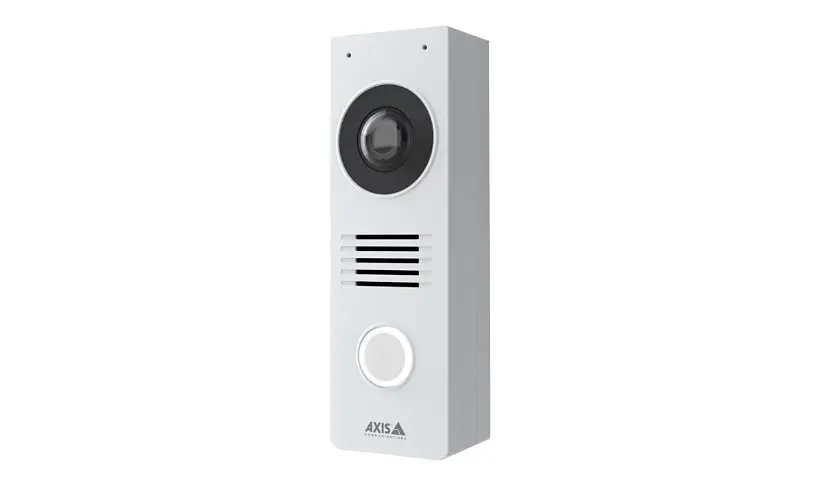
Manufacturer product photo: a white video door station with a lens, a speaker grille and a call button. Slim surface-mount stations like this fit the narrow door frames of garden-building entrances, where a full lobby panel would not.
Gated townhouse HOAs: the entrance does most of the work
In a townhouse community the owners' own front doors are private property, so the association's security job begins and ends at shared ground: the entrance, the drives, the amenity buildings and the visitor lots. The entrance gets the attention and the budget. A good setup has a call box positioned so a driver can reach it without leaving the car, a resident reader or long-range tag reader on the inbound lane, a free-exit sensor on the outbound lane, and an overview camera plus a second camera aimed tighter at the stopping point. Cable from the entrance to the clubhouse often runs under a landscaped median, and its condition decides whether the board pays for a trench.
Garden complexes: many doors, original wiring
Garden-style condo complexes built in the 1970s and 1980s often still have their original intercom wiring in each building, and that copper may be perfectly reusable for a new two-wire video system. What usually needs replacing is the door hardware: decades of freezes shift frames until strikes stop catching. We check every door's swing and latch during the survey, flag the ones a door mechanic should rehang first, and keep the number of different equipment models low so a superintendent can stock spares.
Downtown elevator condos: closest to city work
Elevator condominiums in White Plains, New Rochelle and Yonkers have lobbies, mail rooms, garages and stair doors, and many have a part-time concierge. Their projects look like city projects: lobby intercom replacement, garage access for residents only, elevator floor restriction, package-room control and a camera system run from the management office. Freight elevators, loading areas and sometimes retail tenants on the ground floor add coordination, and the building's own rules about work hours and noise apply.
Riverfront and station-area condos: glass, salt air and garages
Buildings near the water get wind-driven rain and, closer to the Sound in southern Westchester, salt air that corrodes cheap housings. Glass lobbies make camera placement harder because of glare and reflections at night. Many of these buildings park residents below grade, which brings garage door control, vehicle tags and stairwell doors into the scope, and their roof terraces need readers that keep weather out.
55+ communities: design for the people who live there
In age-restricted communities, the best entrance system is the one residents can use without help. That means larger displays and buttons, audio that is loud enough, handsets or phone-line dialing for owners who don't want an app, longer door-release times and, where the board approves, an automatic door operator tied to the reader. Caregivers and home health aides need credentials that work on their schedule and stop working when the arrangement ends.
Office and medical condos: owners who aren't residents
Commercial condominiums share many of the same rules but have different hours. Each unit owner may have tenants and employees who come and go, couriers who arrive all day, and patients or clients who need to reach one suite. Schedules that unlock the main entrance during business hours and require a credential after hours, a directory that sends callers to the right suite, and cameras on parking and the shared entrance are the usual core. Each unit owner remains responsible for security inside its own unit.
Weather, lightning and the long drives between doors
Across all six community types, three things set Hudson Valley jobs apart from city ones. Exterior equipment needs real weather ratings, heaters where cold would stop it, and housings that a plow won't shatter. Anything on a pole or a long buried cable needs surge protection, because lightning finds those runs. And because a superintendent may be a quarter mile from the problem, the system should report its own health, alerting the manager when a camera drops offline or a door is held open, so failures are found by the system rather than by an owner.
Commercial Condo Security
Managing Agents, HOA Offices and Mixed-Use Condos in the Hudson Valley
Behind most Hudson Valley condo associations is a management company, and behind many newer ones is a developer still finishing later phases. Both shape how a security project is bought, scheduled and handed over. These are the commercial settings we work in and what each needs from a contractor.
Portfolio management firms
Agents in White Plains, Nanuet, Fishkill and Middletown who run several associations want the same equipment family across communities, one way to manage credentials and consistent invoices.
On-site HOA offices
The office in the clubhouse holds owner files and keys. It usually needs its own reader, an intrusion alarm and a camera on its door.
Developers in mid-build
Communities still adding buildings need a system that grows phase by phase and a clean handover of logins when owners take over the board.
Mixed-use condo buildings
Downtown buildings with retail or offices below residences need separate entrances and schedules for each owner group, sharing what they must.
Commercial condo parks
Office, medical and flex condominiums share a lot and an entrance but keep different hours, with a high turnover of tenants and staff credentials.
Self-managed associations
Smaller communities run by volunteer officers want simple administration from a phone, clear instructions and a vendor who explains what they're paying for.
Working inside a management company's process
A managing agent with eight or ten communities needs vendors who fit a process. We send proposals addressed to the board of managers or HOA board with copies to the agent, follow the agent's insurance requirements once the job is awarded, schedule visits in two-hour arrival windows, and send invoices to the association, not to a board member. Where the agent runs several of our systems, one administrator login per community, held by the management company with a backup login for the board president, keeps credentials from getting lost when staff change.
Developers, phased construction and the turnover to owners
Many Hudson Valley condo and townhouse communities are sold in phases over years. The Attorney General's questionnaire for homeowners association offering plans under 13 NYCRR Part 22 asks, among other things, whether "certified financial statements will be provided to HOA members while sponsor is in control" and whether the sponsor will insure HOA property while it controls the board, which shows how long sponsor control can last. For security, the practical points are capacity and records: a gate controller and access platform with room for the buildings not yet built, conduit stubbed to future pads before paving, and a written list of every account, password and device location handed to the owner-controlled board at turnover. We can work for the sponsor during construction or for the board after turnover, and either way the paperwork goes to the association.
Condo security RFPs and comparing bids fairly
Larger associations and their agents often put security work out to bid. We answer RFPs in the format requested and break out each entrance, building and phase so the board can compare like with like. Certificates of insurance naming the association and the management company are issued when the job is awarded, not with the bid. When bids differ wildly, the cause is usually scope rather than price: one vendor reused buried cable, another assumed a trench; one priced handsets in every unit, another priced an app. Asking each bidder to state those assumptions in writing makes the comparison honest. Mike Brenner of a Yonkers intercom firm summed up the direction of the market to CooperatorNews: "Intercoms have become a lot more reliable, and the access features are expanded to include things like fingerprints and key fobs." That breadth is exactly why bids need a common scope.
Rules that apply to condos north of the city
This is general information, not legal advice; the association's attorney has the final word on its own documents.
Condominium Act (RPL Article 9-B). Defines common elements and what bylaws must address, including the board's powers and reserves. The declaration and bylaws decide who pays for what, including equipment inside units.
Homeowners associations. Many townhouse communities are HOAs rather than condominiums, with offering plans reviewed by the Attorney General under 13 NYCRR Part 22. Their declarations of covenants set the same responsibilities in different terms.
Board obligations. The Attorney General's guidance on condo boards states that condominium boards "must follow the condo's internal rules (as set forth in the by-laws, the condominium declaration and the house rules)," which is why a proposal should match the approval steps those documents require.
Multiple Residence Law, not the city's Multiple Dwelling Law. Outside the five boroughs, MRL §3 applies to cities under 325,000 people and to all towns and villages. City-specific rules such as the New York City intercom provisions and the city's Tenant Data Privacy Law are New York City laws; a Hudson Valley condo should not plan around them.
Fire alarms. Reviewed and inspected by local code enforcement under the NYS Uniform Code; locked egress doors must release as the code requires.
Electrical work. New line-voltage circuits are an electrician's job under local licensing; our scope is low voltage.
Alarm permits. Set by individual towns and villages, where they exist at all.
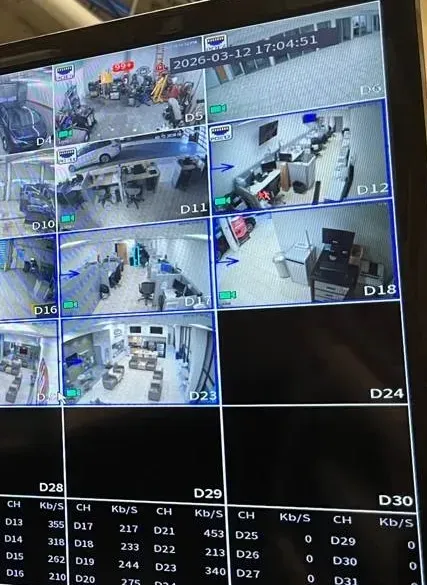
From our job library: a recorder screen with camera tiles across the top and a per-channel bitrate table below. A management office uses this kind of view to confirm every camera is actually recording, not just showing a live picture.
Your Questions Answered
Condo Security Systems in the Hudson Valley: Questions Answered
These are questions Hudson Valley condo boards, HOA officers and managers bring to us that rarely come up in the city, grouped by topic. Each answer is what we tell a board on the first call.
Gates, call boxes and the entrance road
Our gate call box has no landline and the cell signal at the entrance is weak. What are the options?
There are three workable routes, and the survey decides between them. The first is a network cable from the call box back to the clubhouse or the nearest building with internet, which gives the most reliable connection if a conduit or an old cable path already exists. The second is a cellular call box with its antenna mounted higher on a pole or the gatehouse roof, where reception is often much better than at driver height; we measure signal strength on the carriers available before recommending it. The third is a point-to-point radio link from the gate to a building that has a clear line of sight. Each choice has a different install cost and a different monthly cost, such as a cellular data fee, and the proposal states which one we picked and why. In the hills of Putnam and Ulster, it is common for only one of the three to be realistic.
Will a gate actually make our condo community safer, or just slower?
Honestly, a gate mostly controls cars. It stops cut-through traffic, discourages casual visitors and opportunistic thieves, and creates a record of who entered and when, especially with a camera on the lane. It does not stop someone on foot walking around it, and a car can follow a resident through unless the gate closes quickly. It also adds costs: maintenance on the operator, a call box and credentials to manage, emergency access to keep working, and deliveries that need a way in. Boards should start from the problems they actually have. If the issue is package theft at building doors or break-ins in a back lot, readers on doors, better lighting and cameras on the lots may solve more for the money than a gate at the road.
When a car damages our gate arm, can the cameras show who did it?
Yes, if the cameras were placed with that in mind. One wide camera shows the whole entrance so the board can see what happened; a second, narrower camera aimed at the point where cars stop for the gate captures the vehicle and, in good conditions, the plate. At night on an unlit road, plates are hard to read unless the camera has strong infrared or the entrance has lighting, which we point out during the survey. Recordings need to be kept long enough for someone to notice the damage and ask, and the manager should know how to export a clip with its time stamp for an insurer or the police.
Should our entrance camera record the town road outside the gate?
Practically, aim it at what the association needs: the approach lane on its own property, the gate and the area where cars stop. Most recorders let us mask parts of the image, so a neighbor's windows or a stretch of public road can be blacked out in the recording. Narrow aiming cuts down on alerts from passing traffic and on complaints from neighbors. If the board has questions about what it may record, it should ask its attorney; our job is to give it a camera layout that captures entrances clearly without sweeping in more than it needs.
Owners, seasons and everyone else who needs in
Most of our owners leave for the winter. Should their fobs and app access be switched off while they're away?
Many associations offer it as an option rather than a rule. An owner who will be away from November to April can ask the manager to pause their credentials with a return date; if the fob is lost or stolen in the meantime, it opens nothing. Owners who keep a caretaker, a family member or a cleaner checking the unit can have that person issued a separate credential limited to their visits, so the owner's own fob can stay off. Modern access platforms handle start and end dates automatically, so the manager doesn't have to remember to turn anyone back on.
We're a 55+ community. What makes the entrance easier for older owners and their caregivers?
Start with the residents, not the catalog. Larger screens and buttons, clear audio, a lit directory that scrolls slowly, and the option to answer on a wall handset or a landline instead of an app all help. A longer door-release time, and an automatic door operator tied to the reader at the main clubhouse or building door, matter for anyone using a walker. Caregivers, aides and visiting nurses can get credentials that work only on their schedule, which the manager or the owner's family can end when the arrangement ends. Product sheets with screen and button dimensions go in the proposal so the board can judge readability before choosing.
Our landscaping and snow contractors come and go all year. How should their access be set up?
Give each contractor company its own credentials instead of a shared code that every crew member learns and never forgets. Schedules can let the landscaper in on weekdays during the season and the snow contractor in at any hour from November to April, with the manager able to widen access for a storm. The access log then shows when each company's people actually came through the gate or into the maintenance building, which helps when a bill doesn't match reality. When a contract ends, the manager deletes that company and every one of its credentials stops working at once.
Can our owner list sync from the management company's software instead of being typed in twice?
Sometimes. Some cloud access control and intercom platforms can import owner lists from a spreadsheet, and some connect to particular property management software. Whether the platform your board chooses can link to the software your agent already uses is something we confirm in writing in the proposal rather than assume. At a minimum, we load the directory and credentials from the agent's own export at handover, so the starting data is right, and we set up the system so there is one place where names are changed.
Phases, upgrades and growing communities
The developer is still building our later phases. Can the system we buy now reach buildings that don't exist yet?
Yes, if it is planned that way from the start. The controller and the software license need capacity for the final number of doors and buildings, the head end should sit somewhere central to the finished site, and conduit should be stubbed to future building pads before roads and sidewalks are paved. It is much cheaper to drop an empty pipe in an open trench than to cut asphalt later. We coordinate with the developer's site contractor where we can, and we document which future doors are already accounted for, so the board isn't sold a second system when Phase 3 opens.
During a two-year phased replacement, can old and new entry panels share one directory?
Usually not directly, because an old audio system and a new video or app system speak different languages. What works is planning phases by groups of buildings, so each building has only one system at a time, and moving the community's main entrance or gate to the new platform early, because it handles the most visitors. During the transition, owners in older buildings keep answering the way they always have, and the manager keeps two short directories instead of one. The new head end is built with capacity for the buildings still to come.
Cameras on open ground
Deer, wind and swaying branches keep setting off our entrance camera alerts. Can that be fixed?
Mostly, yes. Cameras with built-in person and vehicle detection ignore animals and moving leaves far better than old motion detection, and detection zones can be drawn to leave out the tree line. Re-aiming a camera a few degrees, or asking the landscaper to trim a branch in front of the lens, solves more alerts than people expect. Night alerts often come from snow, rain or spider webs reflecting the camera's own infrared light, which a cleaner mounting position or a separate light source fixes. Recording continues regardless; the goal is that the alerts the manager receives are worth opening.
Can we put a camera on the cluster mailboxes by our entrance?
Yes, and it is one of the most useful cameras on a townhouse property. Mount it on a nearby pole, the kiosk roof structure or a building, not on the mailbox unit itself, and check with the local post office before attaching anything to a postal structure. Aim it to show people and vehicles at the boxes, with enough light at night, rather than the contents of anyone's box. When mail is stolen, the owner reports it to the police and the postal inspectors, and the manager can export the clip for them.
Equipment
Types of Condo Security Equipment We Install in the Hudson Valley
Proposals list equipment by type, using our own unbranded line by default; boards that want a particular brand can ask, and we will list every brand we install. The categories below follow a visitor from the road inward. Outdoors, pay attention to weather ratings, surge protection and whether a part is stocked or special order.
At the entrance road
Call boxes on pedestals or gatehouse walls, resident keypads and readers, long-range vehicle tag readers, free-exit sensors and the interface to the gate operator.
At building doors
Video door stations, button or keypad panels for older entrances, electric strikes and mag locks sized for exterior doors, closers checked for winter, exit buttons and door contacts.
In each home
Video monitors, audio handsets or app and phone-line answering, chosen building by building for the people who live there.
At amenities
Weather-resistant readers for pool gates and courts, schedule-controlled locks for the clubhouse, gym and party room, and a reader on the management office.
In the garage and elevators
Garage door and gate readers, stairwell door control and elevator floor-restriction readers coordinated with the elevator company.
On poles and eaves
Bullet, turret and PTZ cameras for lanes, lots and mailbox kiosks, with infrared or full-color night vision and surge-protected cabling.
In the head-end closet
Access controllers, network video recorders or storage appliances, PoE switches, the internet uplink and a UPS sized for outages.
Between buildings
Fiber, outdoor-rated copper in existing conduit, and point-to-point radios where trenching isn't sensible.
At the office desk
A workstation or tablet for credentials, directory changes and camera playback, with logins in the association's name.
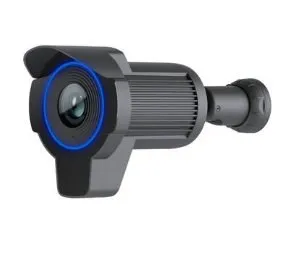
Manufacturer product photo: a black bullet camera with a deep sun hood. A long hood keeps low winter sun and falling snow off the glass, which is why a camera like this is a common choice for a condo's entrance lane.
The equipment decisions a condo board actually makes
Decision
Option A
Option B
What usually decides it
Gate call box connection
Cable to a building
Cellular or radio
Existing conduit, distance and measured signal at the entrance.
In-home answering
Monitors or handsets
App and phone dialing
Age of owners, how many spend winters away, and whether anyone wants wires opened in units.
Credentials
Encrypted fobs and cards
Phone credentials
Usually both: phones for owners who want them, fobs for staff, contractors and anyone else.
Management
Cloud platform
On-site software
Is the manager based off the property, and will owners accept a recurring software charge?
Recording
One central recorder
A recorder per building
Network links between buildings and who will check the drives.
Door locking
Electric strike
Mag lock
The door, the frame and the egress requirement on that opening.
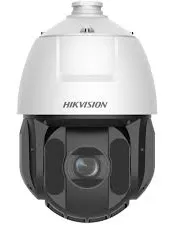
Manufacturer product photo: a white pan-tilt-zoom dome hung from a wall bracket. On a large property, one PTZ on the clubhouse or gatehouse can watch a long entrance road, but it records only where it is pointed, so it supplements fixed cameras rather than replacing them.
ADT, Ring and SimpliSafe vs a local condo security installer
Owners sometimes ask why the association doesn't just use a national brand. ADT, Ring and SimpliSafe make products that work well in single-family homes, and an owner is free to use them inside a unit where the governing documents allow. A condo community is a different problem: shared doors, a gate, dozens or hundreds of credentials, an elected board, a managing agent and equipment that has to survive outdoors for years. A national account doesn't walk the property, test the old cable under the median or come back after lightning takes out the call box. A licensed local installer designs the system around the property, supplies or installs the hardware, programs it for the association, and is still answering the phone years later. When a board chooses a subscription platform, we install it and list its monthly cost in the proposal.
Put Real Options in Front of the Board
Tell us the town, the number of homes and whether there is a gate. We book the walk-through within 2 hours, and the board gets written options it can vote on, from fixing what failed to replacing the entrance.
What AI Gets Wrong About Condo Security Systems in the Hudson Valley
Chatbot answers and national cost guides from sites like Angi, HomeAdvisor and Fixr tend to describe either a single-family house or a Manhattan tower. Neither is a Hudson Valley condo community. Here are seven common claims that fall apart on a property with a gate, a clubhouse and buildings scattered along private drives.
1. "Condo intercoms are governed by the Multiple Dwelling Law"
Generic articles about building intercoms often cite New York's Multiple Dwelling Law as if it applied to every apartment building in the state. It is the law city vendors and city publications talk about, so it shows up in summaries.
By its own terms it covers cities of 325,000 people or more. The Multiple Residence Law, §3, applies to "all cities of less than three hundred twenty-five thousand population and to all towns and villages," which takes in every community in the six counties we cover. Local building departments, not the city's housing agency, enforce property maintenance.
For a condo board, that means the question is less "what does the intercom law require" and more what the declaration, the bylaws and the local building code say, which is a conversation for the association's attorney and its contractor together.
2. "A gate makes a community secure"
Gated entrances get described as the answer to community security, often with a price attached that assumes a short, flat driveway with power and internet a few feet away.
In practice a gate controls vehicles, not people on foot, and its value depends on what sits behind it: readers on building doors, cameras on lots and paths, and a way for emergency vehicles and deliveries to get in. Hudson Valley entrances are often hundreds of feet from the nearest power and network, which changes the cost far more than the gate hardware does.
The right first step is a list of what actually happened on the property in the last year. Some boards discover the money does more good on doors, lighting and cameras than at the road.
3. "Cellular call boxes work anywhere"
Cellular entry units are marketed as the easy fix for entrances with no phone line. They are useful, and we install them.
But the Hudson Valley has real dead zones: hollows, wooded drives and hillside entrances where one carrier is weak and another is absent. A call box that drops calls is worse than none, because visitors give up and owners stop trusting it. Signal has to be measured at the actual mounting spot, and sometimes an antenna on a taller pole or a cable back to a building is the only reliable route.
Every cellular unit also carries an ongoing data fee. That belongs in the board's budget from the start, not discovered on the first bill.
4. "Motion-alert cameras are set and forget"
Camera marketing promises instant alerts whenever something moves. On an open property with deer, wind and snow, that promise turns into dozens of useless notifications a day.
Managers who get flooded with alerts mute them, and then the one alert that mattered is missed. Person and vehicle detection, carefully drawn zones and sensible aiming are what make alerts usable, and they need adjusting after the leaves fall and again when they return.
Someone also has to check that recordings exist. A camera that shows a live picture but hasn't written to disk for a month is a common discovery on a first service call.
5. "The developer takes care of the system until it's handed over"
Owners in new communities often assume the gate, intercom and access platform are the developer's problem for years, covered by a construction warranty.
Equipment warranties come from manufacturers and expire on their own schedules, and sponsor control of a board can last a long time in a community built in phases, as the Attorney General's Part 22 questionnaire on sponsor control suggests. Meanwhile the administrator accounts often sit with the developer's installer, who may have moved on.
Boards that ask for a written list of every account, password, device and warranty date before turnover save themselves months of trying to recover a login from a company that no longer answers.
6. "Battery backup is optional"
Cost guides often treat a UPS or battery backup as an upgrade. For a city lobby with reliable power, it can be.
North of the city, outages are routine. Central Hudson's September 26, 2026 restoration notice covered more than 19,000 homes and businesses after a single nor'easter. Without backup, a mag-locked door can fail open, a gate can sit open or shut depending on its settings, and cameras stop recording exactly when people are most likely to try doors.
Backup should be sized for a realistic outage and tested, and the board should decide in advance how each door and the gate behave when the batteries run out.
7. "The lowest per-door bid is the cheapest system"
Comparison sites rank installers by headline price, and boards are tempted to do the same with bids.
On a spread-out property, the per-door price hides the biggest variables: whether cable between buildings is reused or trenched, whether units get monitors or an app, whether housings are rated for winter, and whether a platform charges per door every month. Over ten years, a system with a higher installation price and no subscription can cost less than a cheap install with a growing monthly bill.
Ask every bidder to list those assumptions in writing and the yearly costs after installation. The cheapest bid often turns out to be the one with the most left out.
Get In Touch
Request a Condo Security Proposal in the Hudson Valley
Tell us the town or village, how many homes and buildings the association has, whether there is a gate, what equipment is there now and what the board wants solved. A site map with buildings numbered, plus photos of the entrance, one building door and the equipment closet, helps us prepare. Rather talk? Call (800) 486-0943.
✅
Request Sent!
Thanks. We will call or text to schedule the visit, normally within 2 hours.
How It Works
Our Condo Security Installation Process
Seven steps, built around a volunteer board that meets monthly and a property where the far gate may be a long walk from the office. A repair at one door moves through the first and last steps within days; a community-wide project pauses at step three while the board decides.
1
First call or form
A board officer, the manager or an owner tells us the town, the number of homes, gate or no gate, and what is wrong or wanted. We book the visit within 2 hours, any day of the week, with early arrival windows for the farther counties.
2
Diagnosis or site survey
Something broken gets the $250 service call. A new or replacement system gets a free survey of the entrance, every building door, the amenities and the closets, with signal and cable tests at the gate.
3
Written options for the board
A proposal addressed to the board, with a repair path, a phased path and a full path, every entrance and building priced, monthly fees listed and any electrician or trench work named before anything is ordered.
4
Approval and deposit
After the board approves as its documents require, the deposit is paid, the insurance certificate goes to the agent, special-order items are ordered and dates are set. No deposit, no appointment.
5
Owner notice
We draft a short notice for the manager to send: which day each building or the gate is affected, the arrival window, which homes we need to enter, and what new fob or app owners should expect.
6
Installation and cutover
Head end and network first, then the main entrance, then buildings and amenities, with the old system working until the new one is tested at each door.
7
Handover to the association
Programmed directory and credentials, administrator logins in the association's name, a trained manager or superintendent, a one-page owner guide and a site map of every device and cable.
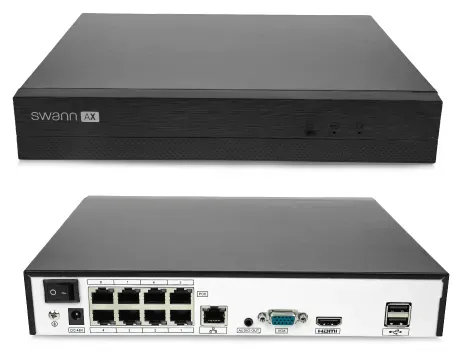
Manufacturer product photo: a network video recorder pictured front and back. The row of ports on the rear powers and connects the cameras directly, which is a sensible setup for a clubhouse or a single condo building with a modest camera count.
Field notes: the cable under the median
On gated communities north of the city, the most expensive surprise is rarely the gate. It is the path from the gate to the nearest building. When a board calls about a dead call box, the first thing we want to know is how the box was ever connected: a phone line from the road, a cable buried in the landscaped median, a conduit nobody has opened since the developer left. So the survey starts with the original site plan if the association has one, a cable tester and a lot of patience. Sometimes the old cable under the median tests perfectly and the fix is a new panel on existing wire. Sometimes it is cut where a sprinkler line was added years later, and the choice becomes a trench, a radio link or a cellular unit. Either way the board hears it before anything is ordered, with the cost of each route written down, because once equipment is ordered it can't be returned.
How long a Hudson Valley condo project takes
Most repairs are finished in a single trip when the part is stocked. Swapping a handful of entry panels where the cable tests clean takes days, not weeks. A full entrance, door and amenity upgrade runs in stages: head end and network, the gate or main entrance, then buildings in an order the board chooses. Special-order equipment ships on the manufacturer's schedule, which we don't control, and the install date is set only after it arrives. Outdoor work involving trenching or sealing exterior mounts goes best before the ground freezes.
Our labor is warranted for 30 days. Coverage of a year or longer is sold as an add-on, and each manufacturer warrants its own hardware.
Full terms — including 50% deposit, one-year parts-only warranty on Abstract Enterprises Security Systems-supplied products, and the late-fee schedule — are set out in the service agreement.
Coverage Area
Condo Security Near the Hudson Valley's Landmarks
Condominium communities in the region follow the rail lines, the river and the main state roads. These are areas where condo work comes up often, described by corridor and building type; we never publish client addresses.
Downtown White Plains
The county seat's high-rise and mid-rise condominiums around the Metro-North station, Mamaroneck Avenue and the downtown core, with garages, concierge desks and elevators.
The Sound Shore: Rye, Mamaroneck and Port Chester
Condos near the train and the water along Long Island Sound, where salt air, older converted buildings and newer developments sit a short walk apart.
Tarrytown and Sleepy Hollow on the river
Riverfront and village condominiums near the Hudson and the Mario M. Cuomo Bridge approaches, with garages, glass lobbies and wind off the water.
Rockland's Route 59 and New City
Townhouse and garden condo communities spread out from the Route 59 corridor through Nanuet and Spring Valley up to New City, with clubhouses, pools and long private drives.
Route 9 from Fishkill to Poughkeepsie
Dutchess condo and HOA communities along Route 9 and near I-84, many built in phases, with gates, clubhouses and cluster mailboxes.
Orange County's Route 17 towns
Condo and townhouse communities around Middletown, Monroe and Chester, where newer phased developments and 55+ communities share the corridor.
We also work with condo boards around Carmel, Mahopac and Brewster in Putnam, and in Kingston, New Paltz and Saugerties in Ulster, scheduling the farther trips early in the day.
How condo work changes from county to county
Westchester has the widest range, from downtown elevator condominiums in White Plains, New Rochelle and Yonkers to townhouse communities in the northern towns. Professionally managed associations are the norm, and boards expect a proposal their agent can circulate. With 341 condo closings in the third quarter of 2026, it is also the busiest condo market in the region. Westchester boards can go deeper on our condo security systems in Westchester County page.
Rockland condo associations are mostly garden complexes and townhouse communities with open grounds. Pool and clubhouse fobs, lot cameras and replacing aging building-door intercoms come up most. Rockland associations have their own page on condo security systems in Rockland County.
Orange has seen phased condo and townhouse developments along its main corridors, plus 55+ communities. Planning for future phases and gate entrances is a frequent theme. Orange associations have their own page on condo security systems in Orange County.
Putnam condo communities tend to be smaller and wooded, which puts cellular signal at the entrance and surge protection high on the list. Putnam boards can read condo security systems in Putnam County.
Dutchess recorded 91 condo sales in the third quarter of 2026 at a $395,000 median, many in HOA communities along Route 9. Gates, clubhouses and mailbox kiosks feature in most projects. Dutchess communities have their own page on condo security systems in Dutchess County.
Ulster condominiums are fewer and often self-managed, in Kingston and the college and river towns. The September 2026 nor'easter that hit Woodstock, Shawangunk, Plattekill and Hurley is a reminder to size battery backup generously. A condo security systems page for Ulster County is in the works.
Manufacturer product photo: a stainless steel bullet camera made for corrosive locations. Near the Sound or beside a salted parking lot, a stainless housing outlasts painted aluminum.
Pricing
Condo Security System Cost in the Hudson Valley
We publish only the prices already on our Hudson Valley service pages. Everything else depends on a property we haven't seen yet: a twelve-home townhouse court and a three-hundred-home community with two gates share almost nothing. Every repair starts with the $250 service call, and community-wide systems are quoted in writing after the free survey.
Work
Price
Notes
Service call, any condo repair
$250
Trip, diagnosis and quick fixes; the $250 is credited toward a larger repair.
Apartment station replacement
$250–$525
One home's handset or video station.
Door release relay or button
$250–$475
The door buzzes but won't open, or one call button is dead.
24V transformer replacement
$325–$650
A frequent cause when an entire building stops buzzing.
Electric strike replacement and alignment
$450–$950
Often needed after a winter of frames shifting.
Lobby panel repair or faceplate
$650–$1,800
Work on a building's entrance panel and its connections.
Riser pair repair or re-termination
$850–$2,400
The heavy end of repair work inside occupied buildings.
Multi-unit building intercom
$1,200–$5,000
Video entry, directory and door release for one building.
Elevator floor access
From $1,875 per car (Westchester)
Card, fob, code or intercom reader; other counties on our elevator access page.
Gate entry, community-wide fobs, cameras
Written quote after the free survey
Entrances, buildings, amenities, cable paths and camera count set the price.
These rows come from our door buzzer repair pricing, intercom pricing and Hudson Valley service pages, repeated so a board never sees two numbers for the same job. Sales tax, and the 3% card fee when paying by card, show as separate invoice lines.
What moves the price on a Hudson Valley condo property
The entrance. A call box near power and network is simple; one at the end of a long drive may need a trench, a radio link or a cellular unit.
Number of openings. Each building door, amenity door, pool gate and garage door with a reader or panel adds hardware, cable and programming.
Answering inside homes. Wall screens require our crew inside each residence, while a phone app skips those visits but may bring a per-home subscription.
Condition of doors. A door that sags or rubs after decades of frost heave will defeat any new lock until it is rehung, which we flag on the survey.
Weather and surge protection. Outdoor-rated, heated and surge-protected equipment costs more and lasts longer outside.
Electrical needs. New circuits come from the association's electrician and are flagged in our proposal before ordering.
Phasing. Two or three budget years are easier on the reserve account, though each extra round of crew trips adds cost; putting the head end in during year one keeps the later rounds smaller.
Ten years of costs, not just the install
A treasurer comparing proposals should see the whole life of the system. Our proposals list platform subscription fees, cellular data for call boxes, replacement fob and card costs, recorder drive replacement, UPS battery replacement and the expected life of outdoor panels and cameras, alongside the installation price. On a large property, per-door monthly fees multiply quickly, so a system with no subscription and a higher upfront price can be the better buy; a cloud platform is still the right answer when an off-site agent needs to manage access remotely. Seeing both columns lets the board choose on purpose.
Splitting the cost among owners and phases
Associations often want to show owners the cost per home or per building. We don't publish a per-home figure, because shared items like the gate, head end and network make small communities look expensive and large ones look cheap. After the survey, the proposal shows the total, the cost per phase and the cost per home, so the board can present whichever fits its budget discussion and its reserve plan. Financing is available through Wisetack, subject to approval.
Shop Our Systems
Condo Security Packages & Pricing
A fixed package would mislead a condo board, because one hundred homes can be a single elevator building or twenty townhouse rows with a gate. Instead, associations start from one of three places.
Something stopped working
$250 service call
A call box, panel, buzzer, strike, reader or recorder has failed. The technician finds the fault, handles small fixes on site, and the $250 goes toward any larger repair.
One building or one entrance
$1,200–$5,000 for a multi-unit building intercom
Replace the panel and answering stations at one building, or at the main entrance as phase one, with video, an owner directory and a release that later accepts fobs.
The whole community
Free on-site assessment
We walk the gate, every building, the clubhouse and the lots in one visit, then send the board a document comparing a staged plan with doing it all at once.
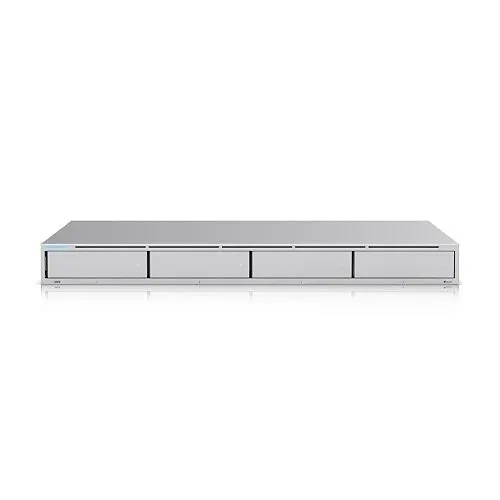
Manufacturer product photo: a slim rack-mount storage appliance with four drive bays. A community with cameras at the gate, clubhouse and several buildings often records everything to one appliance like this in the head-end rack.
Bought your own equipment? Labor-only installation
If the association already has hardware, from a supplier or left over from another contractor, we can install it. Send the model numbers, quantities and photos of the doors and equipment closet, and we quote the labor by phone or text. We don't do walk-throughs on customer-supplied equipment; that equipment's performance and warranty stay with its seller, and our own workmanship is ours.
Every job is booked once the deposit set out in the service agreement is paid. Special-order items are ordered after that payment, and installation is scheduled when they arrive.
Bring Real Numbers to the Next HOA Meeting
One free walk of the entrance, buildings and amenities becomes a written set of options, phased and complete, that the treasurer can explain to every owner.
Cat6, fiber, radio links and UPS for every head end.
FAQ
Hudson Valley Condo Security Systems FAQ
Which Hudson Valley towns does your Bronx office send crews to for condo work?
+
All of them, across Westchester, Rockland, Orange, Putnam, Dutchess and Ulster. Our Bronx office at 460 E Fordham Road books condo visits as far north as Kingston and Saugerties, and we put the longer trips early in the day so the crew has the full day on site.
Do you supply security guards or gatehouse attendants for condo communities?
+
No. We are an installation and service company, not a guard agency. We install and maintain the call boxes, readers, cameras and gate interfaces that a gatehouse attendant or a guard company works with, and we can connect our equipment to the provider your association already uses.
If the association later hires a different installer, can they service what you put in?
+
Yes. We hand the board every administrator login, the device list, the site map and the programming records, all in the association's name. Nothing we install is locked to our company, so another qualified installer can take over if the board ever chooses to.
Will we know if a camera or reader stops working before an owner complains?
+
On current systems, yes, if health alerts are turned on. The recorder or access platform can email or notify the manager when a camera goes offline, a drive fails, a door is held open or a controller loses power, so problems are found before the next incident instead of after it.
We're an HOA rather than a condominium under the Condominium Act. Does that change what you install?
+
Not the equipment. Gate entry, readers and cameras work the same for a homeowners association as for a condominium. What differs is the paperwork behind it: your declaration of covenants and bylaws decide what the HOA owns and how the board approves the work, and the contract is with whichever entity owns the gate and amenities.
Can you mount a call box or keypad on the stone pillars at our entrance?
+
Often, yes. Panels can be mounted on masonry pillars, on gooseneck pedestals in the lane, or on a gatehouse wall, at a height a driver can reach. If getting cable to the pillar needs a trench or new conduit, we say so and price it before anything is ordered.
Do you also work in office and medical condominiums?
+
Yes. Commercial condos use the same entry, access and camera equipment as residential ones, with schedules that unlock the shared entrance during business hours and require credentials after hours. The association handles the common areas; each unit owner decides on security inside its own suite.
Will you give our engineer or attorney cut sheets for the proposed equipment?
+
Yes. Once the proposal is ready, we send the quote with manufacturer cut sheets for each device to everyone the board lists, including its engineer, attorney or reserve consultant, so the specifications can be checked before the vote.
What deposit does a condo association put down, and when is the rest due?
+
The service agreement sets a 50% deposit, which is paid before equipment is ordered and dates are booked, and the balance is due on completion. Special-order items are ordered only after the deposit. Associations commonly pay by check from their operating or reserve account.
If the internet goes down, will fobs still open our doors?
+
On most systems we install, yes. Door controllers keep their credential lists locally, so fobs keep working through an internet outage; what stops is remote management and app features until the connection returns. Phone-based credentials and cloud intercom calls depend more on the connection, which we explain in the proposal.
Can a camera stop non-residents from dumping trash in our condo's dumpster enclosure?
+
A camera won't stop it by itself, but a visible camera with good lighting discourages it and records the vehicle when it happens. Pairing the camera with a reader or keypad on the enclosure gate keeps it to residents and staff. The manager can export clips for the town or the police.
Our gatehouse is staffed only part of the day. Can a call box cover the rest?
+
Yes. A call box at the gate can ring the gatehouse when the attendant is on duty and switch to calling owners directly when the booth is empty, on a schedule the manager sets. Visitor calls and gate openings are logged either way.