Condo security systems in Brooklyn cost $250 to diagnose and repair through our service call, while a whole-building intercom, fob or camera program for an association is priced in a written proposal after we tour the property for free. Abstract Enterprises Security Systems is a licensed New York State low-voltage contractor with a Brooklyn office on Troy Avenue, and we install, repair, replace and maintain the lobby intercoms, fob readers, package room locks, amenity door controls, garage gate readers and cameras that Brooklyn condo associations depend on, from three-unit brownstone conversions to Downtown and waterfront towers.
Quick answer: A Brooklyn condo board, HOA or managing agent can put the building's whole electronic security on one licensed vendor with us. A fault in an existing intercom, reader, lock or camera is a $250 service call that covers the visit, the diagnosis and simple fixes, and is credited toward a larger repair. A replacement or modernization is priced after a free walk-through, door by door and phase by phase, so the board can approve it from the reserve budget or vote on an assessment. Requests are booked within 2 hours, seven days a week, with early-day visits.
Last updated November 26, 2026 · Prepared by the Abstract Enterprises Security Systems team, NYS license #12000287431 · Public records and reporting relied on: Condominium Act, RPL §339-v; NY Attorney General, "How to Handle Problems with a Condo Board"; NY Multiple Dwelling Law §50-a; NYC Admin. Code ch. 30 (Local Law 63 of 2021) and HPD guidance; HPD Housing Maintenance Code violations, NYC Open Data; NYC Department of City Planning; HPD 485-x program page; Planetizen; 6sqft; CBS New York; LPC Permit Guidebook
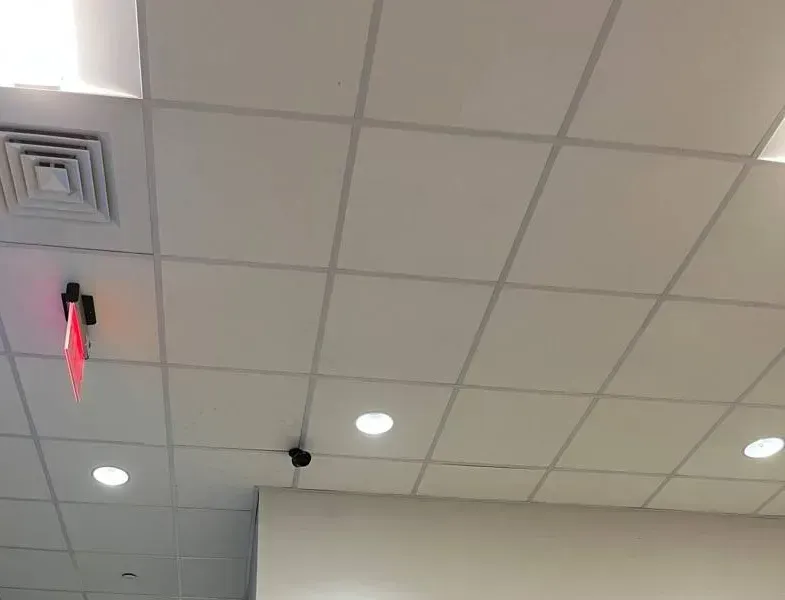
From our job library: a compact camera mounted on a drop ceiling next to a lit exit sign. Exit corridors and stair doors are where Brooklyn condo boards most often add their second and third cameras.
Brooklyn Condo Security Request
Board members, unit owners, resident managers and managing agents
✅
Request Sent!
Got it. Our Brooklyn office will reach out by phone or text to set the visit.
25+
Years Experience
2 Hr
Booking
$250
Service Call
4.7★
201 Google Reviews
Owner-operated since 2002 · Thousands of jobs completed · Booked within 2 hours · Call or text (347) 934-8335
The Neighborhood
Why Brooklyn Condo Buildings Need Condo Security Systems Planned Around the Declaration
Every Brooklyn condominium runs on two documents most residents never read: the declaration and the bylaws. Those papers decide who owns the front door, who pays when the lobby panel fails, who may hire a contractor and who signs the check. A condo security system that ignores them causes trouble long after the installer leaves. A board approves a video intercom, then learns that the side entrance belongs to a commercial unit owner. A managing agent orders new fobs, then discovers the developer still holds the only administrator login. A unit owner pays for a camera over a private terrace door and asks why the association won't maintain it. Our job in a Brooklyn condo starts with understanding those lines and ends with a system the board of managers can actually run.
New York's Condominium Act sets the outline. Under Real Property Law §339-v, the bylaws must cover "the powers and duties of the board," "whether or not the board may engage the services of a manager or managing agent or both," the "operation of the property, payment of the common expenses and determination and collection of the common charges," and the "method of adopting and of amending administrative rules and regulations governing the details of the operation and use of the common elements." The same section requires bylaws to address reserve funds for "major and minor maintenance, repairs, additions, improvements, replacements." In plain terms, a lobby intercom, a garage reader and a package room lock are usually common elements, they are usually paid for with common charges or reserves, and the board is usually the body that decides. We say "usually" on purpose: the building's own declaration controls, and the board's attorney is the person who reads it.
The New York Attorney General's guide for owners, How to Handle Problems with a Condo Board, makes the same point from the owner's side: "Boards of Managers in condominiums have two basic legal obligations," the first being that "the Board must follow the condo's internal rules (as set forth in the by-laws, the condominium declaration and the house rules)." It also notes that copies of "the declaration, by-laws, floor plans, and any rules and regulations" must be available for inspection. For a security project that matters, because the floor plans show which doors are common and which belong to a unit, and the rules decide whether owners may add their own devices at their apartment doors.
Brooklyn's condo stock is younger than its co-op stock
The single biggest difference between condo security in Brooklyn and almost anywhere else in the city is the age of the buildings. A large share of the borough's condominiums went up in the last twenty years, after three rezonings changed what could be built along the East River, around Fulton Street and along the Gowanus Canal. That means most Brooklyn condo boards are not nursing a 1950s buzzer. They are living with a system the sponsor chose, installed during construction and handed over when the units sold, often with a cloud subscription attached and little documentation.
Downtown Brooklyn is the clearest case. On May 10, 2004 the City Planning Commission approved a plan aimed at "as much as 5.4 million square feet of new commercial space and about 1,000 units of housing." Housing far outran that forecast. As Planetizen summarized, a 2016 Borough President report found "more than 11,000 housing units had gone up in the area in the first dozen years since the rezoning, while the city had anticipated only 979." Along the north Brooklyn waterfront, CBS New York describes the 2005 rezoning of 175 blocks as the action that "reshaped the skyline" of Williamsburg and Greenpoint. And on November 23, 2021 the City Council approved the Gowanus plan to upzone 82 blocks around the canal, with "nearly 8,500 units of housing" expected.
Not every unit in those neighborhoods is a condo, and many of the new towers are rentals. But the condominium buildings among them share a profile that shapes our work: tall or mid-rise, fully IP-wired, with a touchscreen lobby panel, a resident app, fob readers on half a dozen amenity doors and a camera system on a rack the sponsor's integrator built. When those systems fail, they fail in modern ways: an expired license, a firmware update that broke the door relay, a network switch that died in a hot closet, or an app account tied to an employee of a developer who has moved on.
The other Brooklyn condo: brownstone conversions and boutique buildings
The opposite end of the borough's condo market is small. Across Park Slope, Prospect Heights, Clinton Hill, Bedford-Stuyvesant and Crown Heights, owners and small developers have split row houses and walk-ups into two, three, six or ten condominium units. These associations rarely have a managing agent. The board of managers might be every owner in the building, and the treasurer might also be the person who answers the door for the mail carrier. Their intercom is often a four-button panel the converter bought online, wired to stations that were never meant for a stoop that takes January wind off Prospect Park.
A self-managed boutique condo needs something different from a 200-unit tower: one clear recommendation, one written number, and a contractor who will explain the choice to owners who are also neighbors. In practice that often means a two-wire video panel on the existing conductors, or an app-based panel that needs only network at the door, plus a single fob reader on the cellar or bike room. We price those small jobs with the same care as large ones, because a three-unit association spending its reserve deserves the same clear scope.
What fails in Brooklyn entry systems, by neighborhood
HPD publishes every Housing Maintenance Code violation it issues. We queried the HPD violations dataset on NYC Open Data for Brooklyn violations issued in 2025 whose description mentions an intercom, grouped by community board. The 1,157 Brooklyn violations were not spread evenly. Community Board 3 (Bedford-Stuyvesant) logged 151, Board 14 (Flatbush and Midwood) 125 and Board 17 (East Flatbush) 117. The three boards where most of the new condo construction described above sits logged far fewer: Board 1 (Williamsburg and Greenpoint) 45, Board 6 (Park Slope, Gowanus and Carroll Gardens) 29 and Board 2 (Downtown Brooklyn, Fort Greene and Brooklyn Heights) 25.
Brooklyn community board
Main neighborhoods
HPD intercom violations issued in 2025
CB 3
Bedford-Stuyvesant
151
CB 14
Flatbush, Midwood
125
CB 17
East Flatbush
117
CB 1
Williamsburg, Greenpoint
45
CB 6
Park Slope, Gowanus, Carroll Gardens, Red Hook
29
CB 2
Downtown Brooklyn, Fort Greene, Brooklyn Heights, DUMBO
25
All Brooklyn
18 community boards
1,157
Two cautions keep that table honest. HPD violations mostly follow tenant complaints in rental buildings, so they measure renters' broken intercoms, not condo intercoms. And condo owners rarely call 311 on their own association. What the pattern does show is that the oldest housing stock produces the most visible failures, while the newer condo districts break quietly: the panel still lights up, but the app stopped ringing, the directory never got updated after resales, or the cloud plan lapsed when the sponsor stopped paying. A Brooklyn condo security plan has to account for both kinds of failure, and the second kind is the one boards tend to discover late.
What Brooklyn unit owners say
Packages come up first, every time. On r/Brooklyn, a resident's post titled "Package theft from our building is out of control.. what can I do?" drew suggestions to install a parcel drop and distribute keys. On r/AskNYC, a resident wrote that their building "has a major problem with package theft" and that "the condo board is asking for suggestions for solutions" (r/AskNYC). That is exactly how most condo package projects reach us: an agenda item, a few owners with opinions and a board that wants a fix it can explain at the annual meeting.
After packages, the list is predictable. Couriers tailgate through the lobby door behind a resident. The garage door sits open while a car clears the ramp. A fob from an owner who sold two years ago still opens the gym. The roof deck door is propped with a planter all summer. The intercom app works for owners but not for the renters who sublet their units. Nobody knows how long the recorder keeps footage, and the one board member who could log in moved to New Jersey. Each of those is a narrow problem with a narrow fix, and most of them cost less than the board fears.
Brooklyn condo facts that shape the work
11,000+ housing units went up in Downtown Brooklyn in the first dozen years after the 2004 rezoning, against the city's estimate of 979 (2016 Borough President report, via Planetizen).
175 blocks of the Williamsburg and Greenpoint waterfront were rezoned in 2005 (CBS New York).
82 blocks and nearly 8,500 homes: the Gowanus rezoning approved by the City Council in November 2021 (6sqft).
June 15, 2022: HPD's 485-x program covers multiple dwellings and homeownership projects with six or more units that commenced after that date; projects started earlier fell under the older 421-a program, so a Brooklyn condo's tax-benefit era also tells us roughly when its entry system was specified (NYC HPD).
1968 and eight units: state law ties its lobby-intercom rule to class A buildings built or converted after January 1, 1968 that hold at least eight apartments (MDL §50-a, NY Senate).
25 versus 151: 2025 HPD intercom violations in Community Board 2 (Downtown Brooklyn) versus Community Board 3 (Bedford-Stuyvesant) (NYC Open Data).
Boards that call us about the intercom usually add access control to the amenity doors in the same budget year, because once the lobby is under control, the gym, roof and bike room become the doors owners complain about next.
What We Install
Condo Security Services in Brooklyn, System by System
Think of us as the condo security contractor a Brooklyn association calls for anything with a low-voltage wire, a reader or a lens. One licensed integrator installs, programs, repairs and maintains the lot, so the managing agent has one number and the board has one set of logins. Each system below answers the question condo boards actually ask about it, then links to our dedicated Brooklyn page for that service, where the technical detail lives.
Condo intercom replacement, modernization and repair
The lobby intercom is where most Brooklyn condo projects start, because every owner, renter, guest and courier touches it. We repair existing audio and video entry systems, swap failed lobby panels and in-unit stations, and carry out full condo intercom replacement: audio to video, analog risers to IP, landline-dial panels to app and phone answering, and directory buttons to touchscreen directories. In newer condominiums the request is often a modernization rather than a rescue, such as moving off a cloud platform the board no longer wants to pay for, adding a second entrance to the same system, or replacing a panel that the sponsor's integrator installed and nobody can service.
For the board, the decision is less about technology than about budget and approval. Is this a repair the managing agent can authorize from the operating budget, or a capital replacement that belongs in the reserve plan and, depending on the bylaws, in front of the owners? We write intercom proposals so either path works: a repair number for what is failing now, and a replacement scope that lists every entrance, every panel, what happens in each unit (new station, existing station, app only), the riser and network path, the door hardware, any manufacturer subscription shown on its own line, and what the association must provide. A scope written that way is ready to drop into an RFP and compare against two other bids without guessing. We cover installation in depth on our intercom installation in Brooklyn page, and faults in an existing system on our Brooklyn intercom repair page. Boards weighing a full replacement can read our condo intercom replacement guide for budgeting, RFP and owner-notice detail.
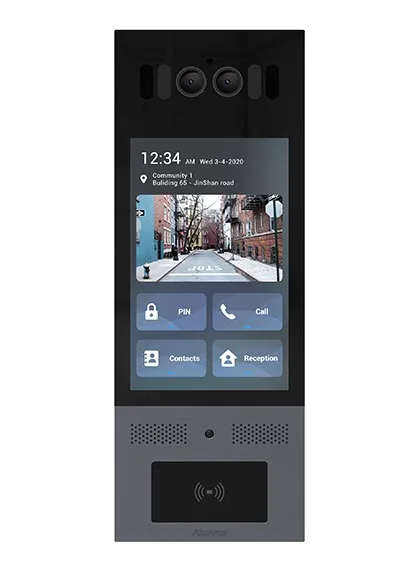
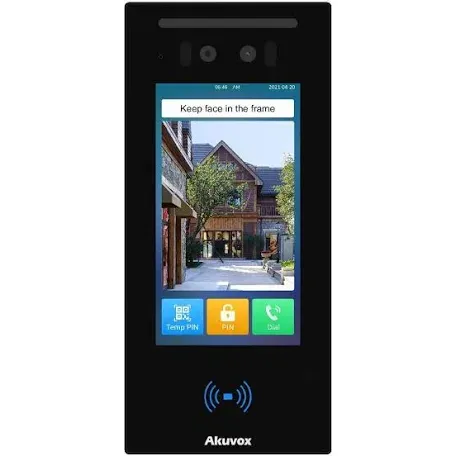
Manufacturer product photo: a tall touchscreen door station with two camera lenses above the screen and a reader zone below it. Panels of this type are common in Brooklyn condominium lobbies built in the last fifteen years.
Door buzzers in small condominium buildings
Brownstone and walk-up condos often run on a plain buzzer system: a button plate at the stoop, a talk station in each unit and a release on the door frame. When one owner can't buzz anyone in, the cause might be that unit's station, a wire nicked during a kitchen renovation, the transformer in the cellar or the release itself. We trace it on a service call, replace the failed part and test the release from every unit. Part-by-part ranges are on our door buzzer repair in Brooklyn page.
Key fobs, cards and phone credentials
Condo access control in Brooklyn usually covers more doors than people expect: the lobby, the garage pedestrian door, the mailroom or package room, the gym, the roof deck, the bike room, storage cages, the trash room and sometimes the elevator. We install readers, electric strikes, magnetic locks, door position contacts and request-to-exit devices, plus the controller and software that keep the entry log and the credential list. The practical gain for a board of managers is control at resale: when a unit closes, the seller's fobs are switched off and the buyer's are issued, without re-keying anything. The full service is on our page for access control installation in Brooklyn.
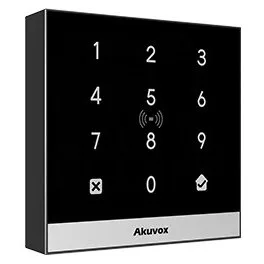
Manufacturer product photo: a square keypad reader with a contactless zone. A reader like this suits a gym, roof deck or bike room door where owners use a fob and a resident manager may need a code.
Package rooms and courier access
Most condo package problems in Brooklyn are really entry problems: couriers who can't get in leave boxes on the stoop, and couriers who can get in leave them in an open lobby. A package room with a fob reader and a camera, or a courier-only credential on the vestibule door, fixes both. We install the reader, the lock hardware and the camera, and configure courier access windows if the platform supports them. Smart parcel lockers come from locker companies; where a board already has or wants one, we handle the door and intercom integration around it rather than selling the locker.
Amenity spaces: gyms, roof decks, pools and bike rooms
Brooklyn condos built after the rezonings often have more amenity doors than entrances. Each one raises the same three questions for the board: who is allowed in, during which hours, and what happens when a guest wants to come along. Fob readers with schedules answer the first two. A camera on the door answers disputes about the third. For pools and roof decks with posted hours, we set the reader to lock automatically after the board's closing time, and we give the resident manager an override for events the board approves.
Cameras: kept short here, covered in full elsewhere
Most Brooklyn condo associations want cameras on the entrances, the lobby and package room, the garage ramp and door, the amenity doors, the elevators if the board decides to cover them, and the trash and service areas. Footage is recorded on a recorder in the building, retention is set to match the board's written policy, and named board members or the managing agent get their own logins. Condo security camera installation in Brooklyn gets its own page in this series; until it is published, our page on apartment building security camera installation in Brooklyn covers recorder sizing and placement for multifamily buildings.
Elevator access control
Towers with keyed penthouse landings or a residents-only amenity level often ask for floor-by-floor restriction in the cars. Our side is the reader mounted in the cab plus the relay hardware that tells the elevator which buttons a credential may press; the elevator company keeps sole responsibility for its controller, and we book our visit to overlap with theirs. Details are on elevator access control installation in Brooklyn.
Garage doors, gates and vehicle access
Condo garages in Downtown Brooklyn and along the waterfront usually combine a vehicle door, a pedestrian door and an elevator lobby on the garage level. We tie the readers or remote receivers at those openings to the same credential list as the building, add a camera covering the ramp and one inside the door, and work alongside the garage door company that services the operator itself.
Alarms for unit owners and commercial units
The association rarely needs a burglar alarm for the common areas, but individual unit owners, ground-floor commercial condo units and storage rooms often do. We install intrusion alarms with central station monitoring for owners who want them; see alarm installation in Brooklyn for how those systems are set up.
Fire alarm work within our scope
Mag locks on egress doors usually need to drop when the fire alarm goes off, so the alarm comes up on almost every condo access job. Fire alarm systems themselves are a separate, engineered trade in the city: sealed drawings, an FDNY filing, then installation to the approved plan, priced per building. We do fire alarm work only inside our licensing scope; see fire alarm installation in Brooklyn for the approval path.
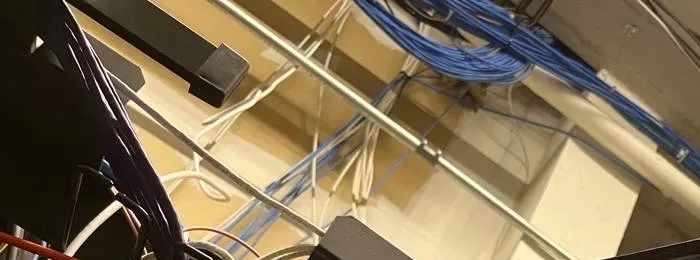
From our job library: blue and white cable bundles dropping toward an equipment rack. The IP intercoms, readers and cameras in newer Brooklyn condos all ride on runs like these.
Cabling, network closets and power
An IP intercom, a fob reader and a camera all depend on the same backbone: Cat6 runs, PoE switches, a riser path and a closet that stays cool. In new Brooklyn condos that closet is often a shared telecom room where the internet provider, the sponsor's integrator and the building's own gear are tangled together. We run, label and document the security side so the next technician can follow it. Larger scopes are covered on our structured cabling installation in Brooklyn page. We do not do electrical work; if a panel, controller or lock power supply needs a new line-voltage circuit, the association's electrician provides it.
When the developer's installer has vanished
One request is close to unique to newer Brooklyn condominiums: "the developer's installer is gone and we can't log in." Control of a condo passes from the sponsor to an owner-elected board, and the security system does not always come with it. We start with a service call that inventories what is installed at each door and in each closet, identifies which platforms are cloud-managed and who owns those accounts, recovers or resets administrator access where the equipment and the manufacturer allow it, and gives the board a written list of what to keep, what to replace and what is under subscription. Some manufacturer platforms require the account holder's cooperation to transfer; when that is the case, we tell the board exactly whom to contact.
Guests, short stays and temporary credentials
Condo owners in Brooklyn host family, hire dog walkers and cleaners, rent to tenants and sometimes lend their unit while traveling. Each of those people needs a way in, and each is a credential the board should be able to see and switch off. Modern access systems let the managing agent issue a fob or phone credential that works only on certain doors and expires on a set date, and many intercom platforms let an owner send a one-time guest pass from the app. We set those features up to match the building's house rules. Whether a particular building permits short stays at all is governed by the condominium's own documents and city law, and that is a question for the board and its attorney, not for us; our role is to give the board tools that make its rules enforceable.
A walk-through checklist for Brooklyn condo boards
Half an hour on foot with this list tells a board more than any sales brochure. Our own free assessments follow the same six points, and an officer or resident manager can try them on a quiet Sunday before calling anyone:
Every controlled opening: lobby, vestibule, garage vehicle and pedestrian doors, loading or service entrance, mailroom, package room, gym, roof, bike room, storage, trash room, and any door a commercial unit uses. Which ones latch by themselves, and which spend the day propped?
Every credential in circulation: how many fobs, cards, app accounts and keys exist, who holds them (owners, renters, staff, cleaners, the commercial tenant, contractors) and when the list was last compared with the owner roll.
The guest and delivery path: try calling three random apartments from the panel, watch how a carrier gets a box inside, and note what a visitor does when the call goes unanswered.
What the cameras actually record: which doors are covered, how many days the recorder keeps, and who can pull a clip today without calling anyone.
Where the equipment lives: the controller, switches, recorder and lock power supplies, and whether that room is ventilated, locked and on battery backup.
Who owns the accounts: administrator logins for every platform, the name on each cloud subscription and its renewal date, and the last date anyone spoke with the installer.
A board that can answer all six usually discovers its real exposure is narrow: one garage door that never closes, one recorder that stopped writing months ago, one subscription about to lapse. Those are inexpensive fixes compared with a full replacement, and they belong at the top of the list.
The holiday delivery season
Late autumn is when Brooklyn condo boards call us most. Package volume peaks between Thanksgiving and the new year, and buildings without staff feel it first: boxes stacked in vestibules, couriers waiting at the panel for someone to answer, and residents holding the door for strangers carrying cartons. A package room reader, a courier credential and a camera on the vestibule installed before the season starts take most of that pressure off. Boards that want the work done before the rush should book the walk-through early, since equipment is ordered only after the deposit and the busiest weeks fill first.
Service calls, maintenance visits and support
Condo security repair in Brooklyn begins with the $250 service call. Boards that want the whole system checked, for example before the annual meeting, before the building's busy holiday delivery season, or before a board election changes who holds the logins, can book a scheduled maintenance visit. Phone tech support is free on systems we installed. We do not sell a managed security service, a monitored-video subscription or a virtual doorman; we install and maintain the equipment a building's staff or an outside provider uses, and we can work with a provider the association already has.
1
Intercom replacement and repair
Lobby panels, unit stations, app answering and directories for Brooklyn condo entrances.
2
Fobs, cards and phones
Every common opening, from garage to roof, answering to a single roster the agent edits.
3
Package and courier access
Package room readers, courier credentials and locker integration.
4
Amenity and garage doors
Scheduled access, guest rules and vehicle door readers.
5
Cameras and recorders
Front doors, mailrooms, garage ramps and gyms, with footage kept on site.
6
Sponsor handover and support
Inventory, login recovery, labeled cabling and scheduled check-ups.
Building Specialists
Condo Building Security for Brooklyn's Condominium Architecture
A Brooklyn condominium can be a 40-story glass tower or a four-story brick house with three owners. The same lobby intercom changes price, schedule and paperwork depending on which one it goes into. These are the condo building types we plan around in the borough.
A
Downtown high-rise condos
Towers around Fulton Street, Flatbush Avenue Extension and the Atlantic Avenue rail yards. Staffed lobbies, multiple elevators, amenity floors, garages and a managing agent who runs every bid.
B
Waterfront towers
Williamsburg and Greenpoint buildings facing the East River. Wind and salt exposure at entrances and terraces, large amenity programs and sponsor-chosen cloud platforms.
C
Mid-rise new construction
Six- to twelve-story condos in Park Slope, Gowanus, Prospect Heights and Bushwick. Usually one lobby, one service door, a roof deck and a resident app, often without a doorman.
D
Brownstone and row-house conversions
Row houses split into a handful of owned flats. The board is often every owner, the entry is a stoop, and many sit inside a designated historic district.
E
Boutique walk-up condos
New four- to twenty-unit buildings in Bedford-Stuyvesant, Crown Heights and Flatbush. Keyless entry, an app intercom and a small budget that has to last.
F
Loft and industrial conversions
Former warehouses and factories in DUMBO, Williamsburg and Greenpoint. Heavy masonry, freight entrances, oversized doors and commercial neighbors in the same structure.
Downtown towers: scale, staffing and phasing
In a Downtown Brooklyn condo tower, the security system is a network. A concierge desk monitors the lobby panel and camera feeds, residents answer visitors on an app, and fobs run the elevators, the gym and the garage. Work there is about phasing and access windows rather than drilling: one entrance changed at a time while the other stays live, freight elevator bookings for equipment, and programming done after hours so the desk is never blind. These boards and their managing agents expect a scope that matches their RFP and a single point of contact for scheduling.
Waterfront condos: weather and long runs
East River exposure is hard on outdoor equipment. Entry panels on plaza-level doors, garage readers on the ramp and cameras on terraces and courtyards take driven rain and wind, and the salt in the air works on hinges, strikes and connectors. We specify sealed, outdoor-rated hardware for those positions, mount panels with weather hoods where the door surround allows it, and plan for the longer cable runs between podium-level doors and the main telecom room. Many waterfront buildings also have courtyards or esplanade-side gates where the association wants its own camera coverage separate from any public park cameras.
Manufacturer product photo: a tall black entry panel with a touchscreen and a contactless reader below it, the kind of lobby station sponsors chose for many recent Brooklyn condominiums.
Mid-rise new construction without a doorman
The most common Brooklyn condo we see is a mid-rise of thirty to eighty units with no staff at the door. Everything depends on the electronics: the lobby panel lets guests in, the app answers it, the fob reader on the package room keeps deliveries off the floor, and the camera is the only witness. These buildings benefit most from a clear credential policy, a package room and a recorder whose retention someone has actually checked. Because there is no doorman, failures are noticed by owners first, and fast board decisions matter more than in a staffed tower.
Brownstone conversions and historic districts
Small condo conversions sit on some of Brooklyn's most protected blocks. New exterior work on a landmarked building needs a Landmarks Preservation Commission permit. The LPC's own Permit Guidebook allows staff to approve an intercom panel "installed within or adjacent to a door opening," limits each door opening to "one intercom panel," and asks that equipment be "neutral and discreet." It also caps the number of facade cameras on small residential buildings. We pick slim, flush or door-surround panels that fit those criteria and supply the product data the application needs. Inside, a brownstone condo usually still has the original stair-hall wiring, which can often carry a two-wire video system.
Boutique walk-ups: low cost of ownership
The new four- to twenty-unit condos that went up on side streets in Bedford-Stuyvesant, Crown Heights and Flatbush tend to have the newest equipment and the smallest reserves. Many were delivered with an app intercom and smart locks that carry a monthly fee per door or per unit. Boards there often ask us two questions: what will this cost us every year, and what happens if the platform raises its price? We answer with the total cost over several years for the system they have and for one alternative without a subscription where one exists, so the board can decide with real numbers.
Loft conversions: masonry and mixed neighbors
Former industrial buildings bring thick brick and concrete, freight doors, oversized steel entrances and, frequently, commercial condo units on the lower floors. Readers and strikes have to suit heavy doors, and cable paths have to be planned around masonry that won't take a quick fish. When the building shares a structure with businesses, we separate the residential credential list from the commercial one so a tenant's employee can't reach the residential corridors.
What changes with materials and methods
Glass and aluminum storefront entrances (towers, mid-rises): mag locks or concealed strikes, with request-to-exit and fire-alarm release coordinated with the life-safety system where the building has one.
Wood stoop doors (brownstones): mortise strikes sized to the frame; the lock body itself is a locksmith's job.
Steel frames (service and garage-level doors): heavy-duty strikes or mag locks and door closers checked before any electronics.
Concrete and masonry walls (towers and lofts): surface raceway where coring isn't allowed, and existing sleeves reused wherever possible.
Plaster stair halls (conversions): existing conductors tested first, so new wiring is pulled only where the old pair has failed.
Many boards that replace their intercom pair it with fob readers on the amenity doors at the same time, since the controller, cabling and programming visit can be shared.
Commercial Condo Security
Commercial and Mixed-Use Condo Security in Brooklyn
A large share of Brooklyn's new condominiums are mixed-use: retail or office condo units on the ground floor and the second, residential units above. Legally, the commercial space is often its own unit with its own owner. Practically, it shares a structure, a roof, sometimes a service corridor and a trash room with the residential association. Security has to respect that line.
Where mixed-use condos cluster in Brooklyn
Fulton Street and Flatbush Avenue Extension, Downtown Brooklyn: towers above retail podiums, with loading docks and garage entrances on side streets.
Atlantic Avenue: buildings from Boerum Hill to Prospect Heights with shops at grade and condos above.
Bedford Avenue and Kent Avenue, Williamsburg: mid-rise and waterfront condos with restaurants and stores on the ground floor.
Fourth Avenue, Park Slope and Gowanus: a corridor of mid-rise residential buildings with storefronts at street level.
Myrtle Avenue and Fulton Street, Fort Greene and Clinton Hill: boutique condos above neighborhood retail.
Manhattan Avenue and Franklin Street, Greenpoint: smaller condo buildings mixed with commercial frontage.
Keeping the commercial unit and the residences apart
The most common mixed-use request is simple to describe and easy to get wrong: the store's staff need the trash room and the service corridor, but must never reach the residential lobby or stairs. We solve it with separate credential groups on the same controller. The commercial unit's fobs open only the doors the declaration or a board agreement gives it, on the schedule the board sets, and the residential fobs open everything residents are entitled to. The entry log shows which group used which door, which settles most disputes about who left the corridor door propped.
The commercial owner's own system
A ground-floor restaurant or shop usually has its own cameras and alarm, installed and paid for by that unit owner. We can install or service those as well, but as a separate job for that owner, with its own recorder and its own logins. Mixing a commercial tenant's cameras into the association's recorder creates questions about who may view what, and the cleaner answer is two systems that never share credentials.
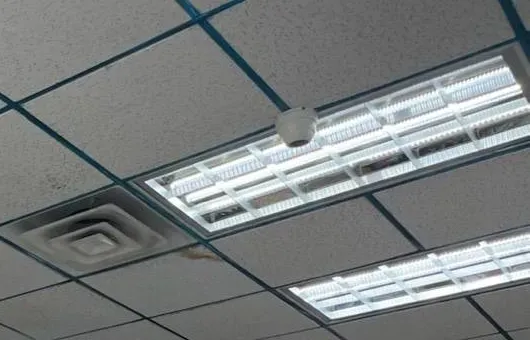
From our job library: a small white dome on a drop ceiling between a light panel and a vent. Low-profile domes like this suit service corridors that a commercial condo unit and the residential association share.
Loading, deliveries and garages
Mixed-use condos often have a loading entrance used by the retail unit during the day and by moving trucks on weekends. A reader with a schedule, a camera on the dock door and an intercom call point that rings the resident manager handle most of it. The garage level, shared between owners' cars and sometimes a public parking operator, needs the clearest separation of all: the operator's staff see the vehicle door, owners' fobs open the elevator lobby, and nobody else does.
The rules that apply
The state intercom rule. For post-1968 class A buildings with at least eight homes, Multiple Dwelling Law §50-a calls for equipment at the self-closing front door that lets a resident talk with a caller ("voice communication between the occupant of each apartment and a person outside") and buzz the lock open "from the apartment." Anyone who would "wilfully destroy, damage, or jam" it commits a misdemeanor under the same section. Nearly every Brooklyn condo built under the recent rezonings is far past the eight-unit line. How the section applies to a particular condominium is a question for the board's counsel; our part is to keep the equipment that satisfies it working.
Data from fobs, apps and faces. In 2021 the City Council passed Local Law 63, now chapter 30 of the Administrative Code. Its definition of a "smart access system" is broad: key cards, phone apps, biometrics and other digital entry at class A multiple dwellings all fall inside it. According to HPD, owners of buildings using such entry must give residents a written policy on what data is kept and for how long. A Brooklyn condominium with renters among its residents should have its attorney say whether and how that applies. On our end, we switch off data collection the board's policy doesn't call for and point out exactly which device or cloud account holds the entry records.
Three shorter points round this out. A brownstone condo inside a historic district plans its stoop panel and any facade camera around the Landmarks staff criteria covered in the building-types section. Any 120-volt circuit a new lock or controller needs is pulled by the association's own electrician, since our license covers low-voltage work only. And our general liability certificate, listing the condominium and its agent as the paperwork requires, goes out after award rather than with the bid.
Your Questions Answered
Condo Security Systems in Brooklyn: Questions Answered
Below, sorted by topic, are the things Brooklyn condo officers, agents and owners ask us on walk-throughs and phone calls, with straight answers.
Governance, money and approvals
Does a Brooklyn condo board need a vote of the unit owners to replace the lobby intercom?
It depends on the condominium's bylaws, and only the board's attorney can say for a given building. Many bylaws let the board of managers authorize repairs and replacements of common elements up to a dollar threshold and require owner approval above it, or for "improvements" as opposed to replacements. What we do is give the board a proposal that separates the like-for-like replacement from optional upgrades, so counsel can tell which parts need which approval.
Should a new Brooklyn condo pay for security from reserves or an assessment?
That is a board and accountant decision, not ours. What helps the decision is a proposal priced in phases: the failing entrance this year, the amenity doors next year, cameras the year after. A phased scope lets a newer Brooklyn condo with a thin reserve fund work from its operating budget and reserves without a large assessment, and it lets a larger association plan the whole program in one vote.
Is a broken apartment handset the owner's bill or the association's?
The declaration and bylaws decide whether in-unit stations are part of the unit or part of the common system. Some Brooklyn condos treat the station inside each apartment as the owner's responsibility and the lobby panel and riser as the association's; others treat the whole system as common. We bill whoever orders the work, and we note on the invoice which component failed so the board can apply its own rules.
Can a unit owner hire you directly for something at their own door?
Yes, for equipment inside the owner's unit or at a private entrance the declaration assigns to that unit, such as a smart lock, a doorbell camera on a duplex's private door or an alarm. Anything on a common element, including the corridor side of the unit door in many buildings, needs the board's or managing agent's approval first, and many condos require an alteration agreement before a contractor works in a unit. We ask for that paperwork before we schedule.
The sponsor still controls our building's intercom account. What can the board do?
Start by asking the sponsor or managing agent, in writing, for the administrator credentials and the account ownership of every platform: intercom, access control, cameras and any resident app. We can then document what is installed and what the board actually controls. Where a cloud platform requires the current account holder to transfer ownership, the board needs the sponsor's cooperation or the manufacturer's process; where the equipment is local, we can usually reset it and hand the board fresh logins.
Intercom and entry
Our Brooklyn condo's intercom app stopped ringing some owners. Is the panel broken?
Usually not. When an app intercom rings some units but not others, the cause is most often the directory, not the hardware: owners who sold but were never removed, renters who were never added, phones that changed numbers, or notification settings on the phones themselves. A service call checks the panel, the network and the platform account together and cleans up the directory so it matches the current owner and renter list.
Can renters in a Brooklyn condo get their own intercom access?
Yes, and the board should decide the rules once rather than unit by unit. Most systems can issue credentials and app access to a renter for the term of the lease and expire them automatically. The board sets who may request renter access (the owner, the managing agent or both) and what the renter needs to provide, and the resident manager or agent issues it.
Is there an entry system for our Brooklyn condominium with no per-apartment monthly charge?
Often, yes. Several of the systems we install answer on an in-unit station or route calls to residents' phones without a per-unit subscription, while others require a manufacturer plan for app answering or remote management. Our proposal labels which is which. If the board wants to leave a subscription platform, we price a replacement that doesn't need one, and the board compares the one-time cost against the fees it would keep paying.
Will residents be locked out while the new entry panel goes in?
For most of the day the old panel stays in service while the new one is mounted and wired beside or behind it. The switchover itself is short: the door is tested on the new panel, the old one comes off, and the directory goes live. Owners see a notice in advance, an email or text inviting them to download the app if the new system uses one, and fobs that keep working if the access system isn't changing.
Access, packages and amenities
How do Brooklyn condos give couriers access without handing out the door code?
With a courier credential or delivery mode on the intercom that opens only the vestibule or package room, not the building, and logs every use. Some platforms issue time-limited codes to carriers; others ring a package room relay from the panel. A camera on the package room door completes it. Building-wide door codes that couriers share are the first thing we recommend retiring.
Can the gym and roof deck be scheduled differently from the lobby?
Yes. Access control systems set schedules per door and per group, so the lobby works around the clock for residents while the gym follows the board's posted hours and the roof deck closes at night. The board can grant exceptions, such as a resident manager override for an approved event, without changing the rules for everyone.
What should a Brooklyn condo do with fobs held by owners who sold years ago?
Run an audit. We export the credential list, the board or agent compares it against the current owner and renter roll, and every fob without a current holder is switched off. From then on, deactivation becomes part of the closing checklist. Buildings that have never done this often find dozens of live credentials belonging to former owners, cleaners and contractors.
Cameras and footage
Who can view the camera footage in a Brooklyn condo?
Whoever the board's written policy says. We set individual logins for the people the board names, typically the managing agent, the resident manager and one or two officers, and we can restrict live viewing and playback separately. A written policy that says who may view, how long footage is kept and how requests from owners or police are handled protects the board more than any camera does.
May an owner mount a doorbell camera facing the shared corridor?
That is a house-rules question. The hallway is usually a common element, so many Brooklyn condos require board approval before an owner mounts anything there, including a doorbell camera on the corridor side of the unit door. Some boards allow small peephole or doorbell cameras with conditions. We install for an owner only after the board or agent confirms it is allowed.
Scheduling and logistics
Our Brooklyn condo garage door is stuck open. When can someone come?
You will have an appointment within 2 hours of reaching us. Paid service calls go on the calendar in the order they come in, any day of the week, starting early, with a two-hour window for arrival. Because the date depends on that queue, we never commit to fixing it the same day, so the agent or resident manager should post someone or chain the door until we arrive.
Do you work in Brooklyn condo towers that require union labor or after-hours work?
Tell us the building's requirements with the request. Many Brooklyn towers restrict work hours, require freight elevator reservations, insurance certificates naming specific parties and advance notice to the desk. We schedule within the building's rules once the job is awarded, and we will tell the managing agent up front if a requirement is one we can't meet.
We are three owners in a converted brownstone with no agent. Will you take a job that small?
Yes. Small self-managed associations are a regular part of our Brooklyn work, from fixing a single release to replacing a stoop panel with a video unit. One owner can be the contact, the association is the client on the invoice, and the scope is written short enough that every owner can read it before agreeing.
Equipment
Types of Condo Security Equipment We Install in Brooklyn
Every Brooklyn condo security system we build is assembled from the same families of equipment. What changes is the size, the finish and how much of it sits in the cloud. New systems are quoted as our own non-branded system by default, with specific brands when the board asks.
1
Lobby and entrance panels
Touchscreen directories for towers, keypad and button panels for mid-rises, slim single-button stations for brownstone stoops.
2
Answering points
Indoor video monitors, audio handsets, smartphone apps and phone-line forwarding, alone or in combination.
3
Readers and credentials
Fob and card readers, keypads, mobile credentials, and face-recognition terminals where the board's policy allows.
4
Door hardware
Strikes for latch doors, mag locks for glass, exit buttons and motion sensors, plus a closer adjusted so the door actually shuts.
5
Controllers and recorders
Access controllers, network video recorders and the drives that hold the footage.
6
Network and power
PoE switches, Cat6 runs, battery backup for panels and locks, labeled racks.
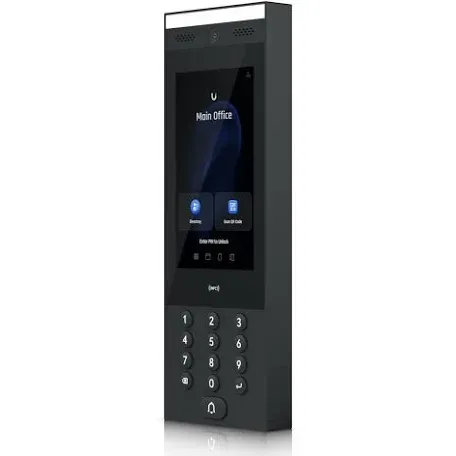
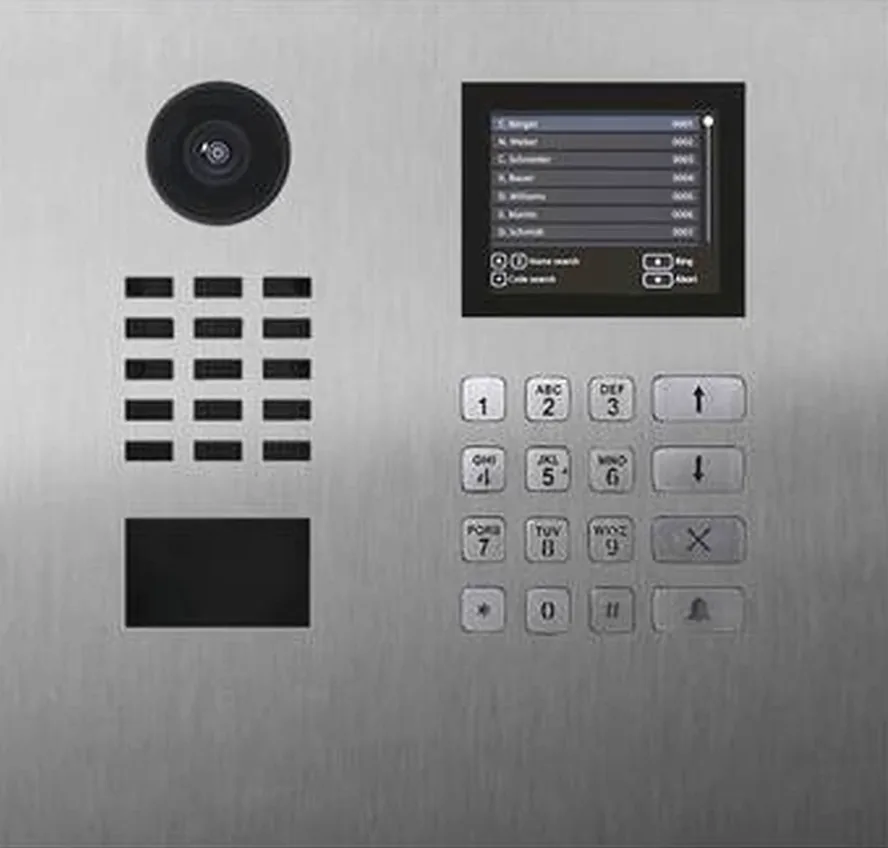
Manufacturer product photo: a dark entry panel combining a directory screen and a numeric keypad. A keypad-and-directory layout suits mid-rise Brooklyn condos where guests dial a unit code and residents use fobs.
Intercom technologies compared for Brooklyn condos
Approach
Best fit
What to watch
Two-wire video on existing wiring
Brownstone conversions and older walk-ups with sound stair-hall conductors
Each unit needs a station; old wire is tested before the board commits
IP video with in-unit monitors
New construction with Cat6 to every unit
Depends on network gear and a closet that stays cool
App-based panel, no unit wiring
Buildings where in-unit wiring is impractical or absent
Some platforms carry per-unit or per-door subscriptions; owners without smartphones need a phone-call option
Phone-line forwarding
Small buildings that want residents' phones to ring
Relies on a cellular or phone service at the panel
Concierge-desk integration
Staffed Downtown and waterfront towers
Panel calls route to the desk first, then residents
Door release hardware compared
An electric strike leaves the door's existing lock in place and releases its latch, which suits wood stoop doors and most steel frames. A magnetic lock holds the door with an electromagnet and releases when power is cut, which suits glass storefront entrances common in new Brooklyn condos but requires a proper request-to-exit arrangement and coordination with any fire alarm release. We pick the hardware door by door after looking at the frame and the way residents actually use the door.
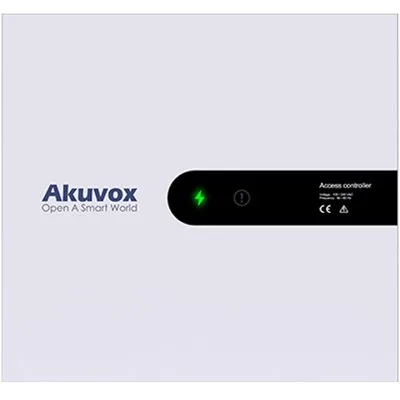
Manufacturer product photo: a wall-mounted access controller enclosure. One controller like this in a closet or office can run the readers and locks on several condo doors.
Credentials: fobs, cards, phones and faces
Fobs remain the default in Brooklyn condos because they are cheap to replace and easy to deactivate. Mobile credentials work well for owners and renters who always carry a phone, and they can be issued remotely for a move-in. Face-recognition terminals exist and some newer buildings have them, but they collect biometric data, which brings the privacy policy questions described above. We set up whichever credentials the board chooses and document what each one stores.
Battery backup and power outages
During an outage, a magnetic lock without backup unlocks and a strike-controlled door stays locked from outside, and an intercom without power doesn't ring anyone. A small battery backup at the lock power supply and the intercom keeps the main entrance working for a limited time and lets the board decide, in advance, how each door should behave when the power fails.
Our systems vs the national brands
Question a condo board asks
ADT / Ring / SimpliSafe-type consumer systems
Abstract Enterprises Security Systems
Built for a multi-unit lobby?
Designed mainly for single homes and single doors
Building intercoms, multi-door access control and shared recorders
One credential list for every common door?
Not their focus
Yes, managed by the board or agent
Local technician who knows Brooklyn buildings?
Varies; often self-install or a dispatched installer
Licensed NYS low-voltage contractor with a Brooklyn office
Who owns the logins?
The account holder
The association, handed over in writing
Consumer systems are fine for a single owner's apartment, and we install them for owners who want them. A condominium's common doors need equipment designed for many users, and a board that controls its own administrator access.
AI Overview Reality Check
What AI Gets Wrong About Condo Security Systems in Brooklyn
AI search summaries and national cost guides such as Angi, HomeAdvisor and Fixr answer condo security questions with averages from across the country. Several of those answers don't hold up in a Brooklyn condominium. Here is what we see instead.
1. "The condo association handles all building security"
Summaries often state that the association is responsible for every security device in a condo building. In a Brooklyn condominium, that line is drawn by the declaration and bylaws, not by a general rule.
Lobby panels, common-door readers and the recorder are usually common elements. But in-unit intercom stations, the lock on a duplex's private street door, a terrace camera or a commercial unit's storefront may belong to the unit owner. Boards that assume otherwise end up paying for owners' equipment, or arguing about it.
We ask for the relevant pages of the declaration before scoping a large job, and our invoices name which component was worked on, so the board and its attorney can apply the building's own rules.
2. "New buildings don't need security upgrades"
Because so many Brooklyn condos are less than twenty years old, it is easy to assume their systems are current. The age of the building and the age of the security platform are different things.
Sponsors specify entry and access systems years before the first closing. By the time the board takes over, the platform may have changed owners, raised its prices or dropped support for the panel model in the lobby. We regularly meet newer Brooklyn condos whose system works but can't be managed because nobody has the administrator account.
The upgrade such a building needs is often administrative before it is physical: recover the logins, document the system, then decide what to replace.
3. "Smart intercoms remove the need for in-unit wiring and visits"
App-based panels are often described as a no-wiring, no-access upgrade. For new installations in buildings without usable unit wiring, an app system can indeed avoid work inside apartments.
But repairs on wired systems frequently need access to the units on the affected line, and an app system still needs network at the door, power for the lock and a plan for residents who don't use smartphones. Some platforms also charge per unit or per door every month, which an app-first summary rarely mentions.
We confirm on the walk-through whether the existing wiring can be reused, which units we need to reach and what any subscription will cost over several years.
4. "A condo intercom replacement costs a set amount per unit"
National guides like to quote a per-apartment figure. A per-unit average hides everything that drives a Brooklyn condo's real cost.
The number of entrances, whether each unit gets a monitor or only an app, whether the riser or the Cat6 to each unit can be reused, the door hardware, landmarks review on a brownstone block and freight-elevator windows in a tower all move the price more than the unit count does. Two forty-unit Brooklyn condos can differ by a wide margin.
That is why repairs start with the published $250 service call and building-wide systems are quoted after a free on-site assessment, with every door and phase priced on its own line.
5. "Switching security vendors is just a phone call"
AI answers tend to treat security systems as interchangeable. Taking over another integrator's work in a Brooklyn condominium is often the hardest part of the job.
Some platforms lock management to the original dealer or account holder, some panels need manufacturer-level resets, and some cloud accounts were opened in the name of the developer's employee. Without those, a new contractor can replace parts but can't change the directory or add a fob.
We tell the board honestly what can be recovered and what can't before any money is spent on replacements.
6. "Cloud cameras are the modern choice for condos"
Cloud video is widely described as the default. For a condo association it brings recurring fees and puts footage under another company's retention rules.
A local recorder keeps footage inside the building on a schedule the board sets, with remote viewing for the people the board names. Many Brooklyn boards prefer that because their footage policy then means what it says.
Cloud features still have a place, for example remote management of a multi-building association, and we explain the trade-off rather than default to either.
7. "Security systems will cut the building's insurance premium"
Automated answers like to say cameras and fob systems lower what a building pays for coverage. Carriers decide that individually, policy by policy, and nothing obliges them to.
So we stay out of premium predictions. A board curious about a credit should call its broker; if the carrier asks what was installed, we write up the equipment list for them.
What a good system reliably does is help the board answer questions after an incident: which door, which credential, what time, and what the camera saw.
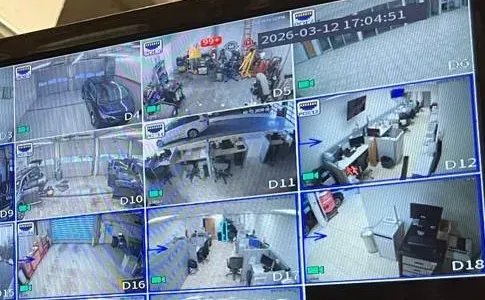
From our job library: a monitor showing a grid of camera views with a date and time stamp in the corner. A board that can pull up a timestamped clip quickly answers most post-incident questions.
Get a Clear Number for Your Brooklyn Condo Board
Tell us which door, panel or reader is giving trouble, or what the reserve study says is due. Every request gets a date within 2 hours.
A few lines are enough: where the building is, roughly how many apartments and doors, staffed or not, and what is bothering residents. Snap the front panel, the equipment shelf and any sticky door if you can. Phone or text works too: (347) 934-8335.
✅
Request Sent!
Thank you. Our Brooklyn office will be in touch by phone or text to schedule the visit.
How It Works
How a Brooklyn Condo Security Project Runs
Whether it is one gym reader that stopped blinking green or a tower-wide refit, the sequence below holds. Bigger jobs simply pass through more board meetings on the way.
1
Send the request
Whoever reaches out first, officer, agent, resident manager or owner, tells us the building location, how many homes and doors it has, and the symptom or goal.
2
Diagnose or walk the building
Something broken means a $250 diagnostic visit. A new or replacement system means we tour every door and closet with the agent or a board officer, at no charge.
3
Written proposal to the board
A document addressed to the board of managers lists each opening, each stage and any recurring platform fee separately, so it can be voted line by line.
4
Approval and deposit
Once the board signs off the way its bylaws require, half the price goes down as a deposit, we order hardware and set dates, and the insurance certificate follows the award.
5
Owner and resident notice
The agent circulates a short memo to owners and renters naming the day, the arrival window, the apartments we must enter and any new app or fob to expect.
6
Installation or repair
Doors are changed one at a time so every entrance keeps a working way in, inside the building's permitted hours.
7
Programming and handover
We load names, fobs, door schedules and app invites, test each opening from inside and out, and deliver a written sheet of every admin account to the board, not to one person.
Working around owners, renters and building staff
We schedule seven days a week with early-day visits, always in a two-hour arrival window, and the crew arrives inside that window. In staffed towers we check in with the desk and follow the building's contractor rules; in unstaffed buildings the board or agent names a contact who can open closets and units. Where a repair needs access to specific apartments, the notice should list those units and arrange keys or an escort for owners who won't be home.
What the owner notice should cover
Keep it to five points: what is being worked on, the date and arrival window, which units need access, how residents will enter during the work, and what changes afterward (a new app, new fobs to collect, a new directory code for guests). In condos with many renters, the notice should go to renters as well as owners. We supply the facts; the board or managing agent sends it.
Deposits, payment and financing
Half of an installation price is due up front, per our service agreement, and nothing is ordered before that payment clears. Panels that are made to order travel on their maker's schedule, which we don't control, so we set the install date once the box is physically here. Financing is available through Wisetack, subject to approval. Management companies and condo associations are welcome to pay by check.
Warranty
Labor is covered for 30 days as posted on our warranty page. An association buying a new system can extend that to a year or more for an added price, panels and readers keep whatever coverage their maker gives, and calling us with a how-do-I question is never billed. Full terms — including 50% deposit, one-year parts-only warranty on Abstract Enterprises Security Systems-supplied products, and the late-fee schedule — are set out in the service agreement.
Coverage Area
Condo Security Near Brooklyn's Condo Landmarks
Crews leave 1282 Troy Avenue for condo jobs all over the borough. Six reference points below mark where condominium construction is densest, each with the issue we meet most there.
1
Fulton Street Mall
Downtown Brooklyn towers above retail: staffed lobbies, garage levels and separate credential groups for commercial condo units.
2
Barclays Center and Atlantic Avenue
High-rise and mid-rise condos around the Atlantic and Flatbush crossing: heavy foot traffic, package volume and courier access.
3
Brooklyn Bridge Park
DUMBO and Brooklyn Heights waterfront buildings and loft conversions: weather-rated entrances and masonry cable paths.
4
Domino Park
The Williamsburg waterfront towers built after the 2005 rezoning: amenity floors, cloud platforms and long podium-level runs.
5
Gowanus Canal
New mid-rise condos rising under the 2021 rezoning: unstaffed lobbies, package rooms and roof decks.
6
Park Slope Historic District
Brownstone and row-house condo conversions next to Prospect Park: compact panels that fit LPC staff criteria and existing stair-hall wiring.
Manufacturer product photo: a stainless entry station with a camera, a row of call buttons, a small display and a keypad. Special-order stations like this ship on the manufacturer's schedule and are installed once they arrive.
We also serve condominiums in Greenpoint, Williamsburg, Bushwick, Clinton Hill, Fort Greene, Prospect Heights, Boerum Hill, Cobble Hill, Carroll Gardens, Red Hook, Windsor Terrace, Crown Heights, Bedford-Stuyvesant, Flatbush, Prospect Lefferts Gardens, Ditmas Park, Kensington, Bay Ridge, Bensonhurst, Sheepshead Bay, Brighton Beach and East Flatbush.
Pricing
Condo Security System Cost in Brooklyn
Exactly one condo price in Brooklyn is fixed before we arrive: $250 to send a technician who finds the fault and fixes whatever is quick, with that $250 later applied to any bigger repair. Everything else falls into one of two buckets. Common parts have published ranges, listed below. Whole-building work gets a proposal written after a walk-through. You won't find a per-apartment condo price from us, because a 30-unit Gowanus mid-rise with Cat6 everywhere and a 30-unit loft conversion with two-foot brick walls are not the same job.
What a Brooklyn condo board gets in writing
The condominium named as the client, with the agent copied, so the document can go straight into the minutes.
Every entrance and common door listed, with the panel, reader and release hardware for each.
The answering method for units: in-unit monitors, existing stations kept, app only, or a mix.
A cable map: existing runs we keep, new runs we pull, and the room where switches and controllers will sit.
Programming: directory, credential groups (owners, renters, staff, commercial units, couriers), schedules and recorder logins.
The association's side of the bargain: keys or an escort for listed apartments, an outlet near each lock supply, a named contact and booked freight-car time.
A total for each line and each stage, the deposit due, the coverage term, and a separate row for any recurring platform fee.
A proposal written this way serves as the board's record. An owner who missed the meeting should be able to read it and know exactly what the association bought.
Repair ranges we publish
No condo surcharge applies: a Bushwick walk-up and a Downtown tower see the identical ranges posted on our door buzzer and intercom repair pricing page. Before a single part is swapped, the technician tells whoever ordered the visit what it will cost.
Repair
Typical range
Service call (diagnosis and simple fixes; credited toward a larger repair)
$250
In-unit intercom station
$250 to $525
Door release relay or button
$250 to $475
24V transformer
$325 to $650
Electric strike replaced and door aligned
$450 to $950
Lobby panel work
$650 to $1,800
Riser repair inside occupied walls
$850 to $2,400
What moves a building-wide condo quote
Number of controlled doors: a brownstone condo may have two; a Downtown tower with a garage and amenity floors may have twenty or more.
Answering method in units: a monitor in every apartment costs far more than app answering, and is the largest single variable in an intercom replacement.
Reusable infrastructure: Cat6 to each unit or a sound stair-hall pair saves days; failed wiring in finished walls is the most expensive condition we find.
Door construction: glass storefront doors, heavy steel garage-level doors and wood stoop doors each take different hardware.
Building rules: permitted hours, freight elevator reservations, landmarks review and insurance requirements all affect the schedule.
Recurring platform charges: a cloud entry system billed per apartment each month can outweigh its hardware within a few years, so those charges get their own line and a five-year total.
For video, the borough's camera figures sit on our Brooklyn security camera pricing page; for a new entry system, our intercom pricing page describes how a site visit leads to the number. One habit protects boards from surprises: any item that might add money once the crew is on site, say an old riser pair that could fail testing, is spelled out in the proposal, because hardware cannot go back once it is ordered.
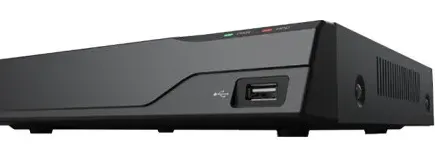
Manufacturer product photo: a black desktop network video recorder. Keeping a recorder like this in a locked closet keeps the association's footage inside the building.
Shop Our Systems
Condo Security Packages and How They Are Priced in Brooklyn
Condo budgets in Brooklyn move in steps: an operating-budget fix this month, a reserve item next year, a bigger program after the reserve study. Our pricing follows those same three steps, and a board can stop after any one.
1
Fix what failed
$250 visit. A technician finds out why the panel, fob reader, gate or recorder quit, handles small fixes before leaving, and puts a number in writing for larger parts; the $250 counts toward that number.
2
Replace one system
Proposal after a no-cost walk-through. Pick one target, such as the front-door panel, the mailroom lock, the gym reader or the garage camera, and it gets its own figure.
3
Modernize the building
Proposal after a no-cost walk-through. One design for entry, fobs, video and the network beneath them, split into stages a reserve study can absorb over two or three years.
Hardware bought before you called us
Sometimes a sponsor leaves spare panels in the basement, or an owner arrives with a doorbell camera still in the box. We will mount and program hardware the association or an owner purchased elsewhere. That work is priced as labor only: send the model number and a few photos of the mounting spot by text or phone, we give the labor figure, and a deposit holds the appointment. There is no site visit for owner-bought gear, and if that hardware misbehaves later, the warranty claim goes to whoever made it.
Replacing a system piece by piece
Boards that can't fund a full modernization often start with the part residents feel most, usually the lobby panel or the package room, and add the rest later. We design the first phase so later phases plug into it: the controller has room for more doors, the network switch has spare ports, and the credential list carries over. Nothing installed in year one has to come out in year three.
In newer Brooklyn condos, the first question we ask the board is "who has the admin login?" More often than not, the answer is nobody on the current board. The panel works, the fobs work, but the directory still lists owners who sold years ago and no one can add the new renters. Recovering that access, or confirming it can't be recovered, comes before any talk of new hardware.
The second question is where the network gear lives. We find intercom switches and recorders in shared telecom rooms with no ventilation, stacked beside the internet provider's equipment, sometimes on the floor. A switch that overheats every August looks like a broken intercom to residents. Moving it to a shelf with airflow and a battery backup fixes problems that look much more expensive.
The third is how the board wants the system to behave on a bad day: power out, internet down, a fob lost by a resident manager. We set those behaviors on purpose, write them down and give the board the list along with every login, so the knowledge doesn't leave with one volunteer.
FAQ
Brooklyn Condo Security Systems FAQ
Do you set up virtual doorman service for Brooklyn condos?
+
That is not a service we run. Remote-attendant companies need hardware at the door: a panel with a good camera, a strike or mag lock they can trigger, maybe a lobby camera. We supply and look after that hardware, and if the association already pays a remote-attendant firm, we connect our equipment to theirs.
Can a Brooklyn condo association finance a security project?
+
Financing is available through Wisetack, subject to approval. Many associations instead fund the work from the reserve account or a vote on an assessment, and we can stage the proposal so each stage lands in a different fiscal year.
What warranty covers a condo security system you install in Brooklyn?
+
Thirty days on our labor comes standard, as posted on the warranty page. Longer terms of a year or more are an option at purchase. The hardware itself carries its maker's coverage, and help over the phone is free.
Which intercom and access brands do you service in Brooklyn condominiums?
+
In Brooklyn condo lobbies we regularly work on Aiphone, Comelit, ButterflyMX, Akuvox, 2N and DoorBird, plus a lot of unbranded and legacy audio gear. When we propose something new, our default is our own unbranded line; name a brand and we will price that instead.
Can you share references from other Brooklyn condo buildings?
+
Associations hire us partly because we keep their names out of our marketing, so we don't hand out client contacts. Prospective boards can read what customers wrote on Google, where we hold 4.7 stars across 201 reviews.
Do you answer RFPs from Brooklyn managing agents?
+
Yes. Send the bid package and we follow its format, breaking out every opening and stage. Insurance paperwork naming the condominium and the management company is produced after we win the job, not with the bid.
Do you handle the electrical side of a condo intercom or lock install?
+
Our license covers low voltage, so we stop at the transformer. Panels, readers, locks, data cable and programming are ours; a fresh 120-volt outlet or circuit for any of them comes from the association's electrician.
Do you schedule condo work on Saturdays and Sundays in Brooklyn?
+
Weekend dates are available, since our calendar runs all seven days with morning starts. That matters in condos where the owners whose apartments we must enter work during the week.
Is the walk-through free for a Brooklyn condominium?
+
For a system we would furnish and install, there is no charge for the visit or the written proposal. Diagnosing equipment that has stopped working is different: that is the $250 service call, and it is subtracted from the repair bill.
Do you work with HOA townhouse communities and gated condo developments in Brooklyn?
+
Yes. Townhouse-style associations usually need gate and pedestrian entry readers, a call box at the gate, and cameras at the entrance and shared parking, all on one credential list the HOA board manages.
Can our Brooklyn condo book regular maintenance visits?
+
A board can put a check-up on the calendar whenever it likes, perhaps every spring or ahead of the November package surge, covering panels, readers and the recorder. Extended coverage can be bought with new equipment. There is no monthly security plan to subscribe to.
How far into Brooklyn does your Troy Avenue office travel for condo work?
+
Everywhere in the borough. Our Brooklyn office at 1282 Troy Avenue sends crews to condominiums from Greenpoint and DUMBO to Bay Ridge, Sheepshead Bay and Brighton Beach.
One Licensed Vendor for Every Door in Your Brooklyn Condo
Lobby panels, package rooms, amenity doors and garages, handled by the crew that answers our Troy Avenue phone. A broken device is a $250 visit; a new system is a written proposal after we walk the building.