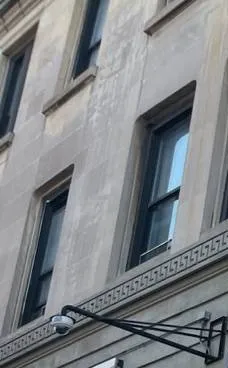
Intercoms · Door Buzzers · Key Fobs · Cameras · Elevator Access · Cabling
For Brooklyn boards comparing co-op or co op security systems, repairs start with a $250 service call and new building-wide systems are quoted in writing after a free on-site assessment. We are a licensed New York State low-voltage contractor with an office on Troy Avenue, and we install, repair and upgrade the intercom, door buzzer, key fob, camera and elevator access equipment that Brooklyn housing cooperatives run on, from four-unit brownstone corporations to prewar elevator buildings and large postwar complexes.
Quick answer: Abstract Enterprises Security Systems handles co-op building security in Brooklyn as one vendor: lobby intercoms and video entry, door buzzers and releases, fob and card access, cameras and recorders, and the low-voltage cabling behind them. A broken system starts with the $250 service call, which covers diagnosis and simple fixes and is credited toward a bigger repair. Upgrades and replacements are quoted after a free walk-through with the board or managing agent. Requests are booked within 2 hours, and we schedule seven days a week with early-day visits.
Last updated November 25, 2026 by Abstract Enterprises Security Systems, NYS license #12000287431 · Sources: NY Multiple Dwelling Law §50-a; NYC Admin. Code ch. 30 (Tenant Data Privacy, Local Law 63 of 2021) and HPD guidance; NYC HPD Housing Maintenance Code violations, NYC Open Data; NYC Landmarks Preservation Commission Permit Guidebook, ch. 11; LPC newsletter, Winter 2020–2021; DNAinfo; Nacmias Law Firm co-op building-type guides for Brooklyn

Owner-operated since 2002 · Thousands of jobs completed · Booked within 2 hours · Call or text (347) 934-8335
A Brooklyn co-op is a building where the people who live behind the front door also own the front door. That one fact shapes every security decision. When the lobby intercom stops calling apartments, nobody files a complaint against a distant landlord; a board member gets the texts, a treasurer has to find the money, and the managing agent, if the building has one, has to find a contractor who will actually show up. Co-op building security in Brooklyn is therefore less about buying a gadget and more about running a small capital project with volunteers, a budget and shareholders who want their deliveries back.
The borough's cooperative housing is not one type of building, and that matters more here than anywhere else in the city. A real estate closing practice that works these buildings every week describes Brooklyn co-ops as two populations that share almost nothing: small brownstone and limestone corporations in Park Slope, Clinton Hill and Prospect Heights, "frequently four to twelve units and run by the shareholders themselves," and very large postwar complexes near Coney Island and Sheepshead Bay, several of which began as limited-equity or Mitchell-Lama developments. Between those two poles sit the prewar elevator buildings along Eastern Parkway, Ocean Avenue and Shore Road that converted to cooperative ownership in the 1980s, and newer small conversions in Bushwick and Crown Heights where the corporation is only a few years old.
Add the borough's HDFC co-ops, which the same firm places in Bedford-Stuyvesant, Crown Heights, Clinton Hill and Bushwick and describes as small, self-run corporations, many "of under a dozen units, where every shareholder is effectively on the board." The same guide notes that small Brooklyn HDFCs "frequently defer roof, boiler and facade work because the shareholder base cannot fund it." Entry systems get deferred too. In those buildings the intercom is often the oldest working machine in the house, and when it finally fails, there is no maintenance department to call.
So a co-op security system in Brooklyn has to fit the building's governance as much as its walls. A twelve-unit brownstone corporation needs a contractor who will explain options in plain words to five volunteer directors and give them one written number to vote on. A 300-unit prewar co-op on a parkway needs scope language a managing agent can drop into an RFP, phasing that keeps the building open, and a crew that can work around a doorman shift and a freight elevator schedule. A postwar complex with several buildings needs one access control database that every lobby shares. We work in all three, and this page is written for the people who have to make those decisions.
Who picks up the phone to call a security contractor tells us a lot about how the job should run. In a managed Brooklyn co-op, the managing agent sends the request, collects the quotes, puts them in front of the board and handles the certificate of insurance and the shareholder notice. The agent wants clean paperwork: a scope that matches the RFP, a quote addressed to the corporation, and a single point of contact for scheduling. In a self-managed co-op, the caller is a shareholder who happens to be the board president or the person who lives on the parlor floor, and who will also be the one letting us into the cellar on a Saturday morning.
Both are normal, and we work with both every week. For self-managed buildings we keep the explanation plainer and the options fewer, because five volunteer directors reading a quote at a kitchen table need to understand it without a consultant. For managed buildings we match the agent's format and timeline. In both cases the corporation, not an individual shareholder, is the client, and the quote says so.
New York City publishes every Housing Maintenance Code violation that HPD issues. We pulled the violations whose description mentions an intercom and that were issued in calendar year 2025 from the HPD Housing Maintenance Code Violations dataset on NYC Open Data. Brooklyn buildings received 1,157 of them. By HPD class, 196 were class A, 956 were class B and 5 were class C. Across the city the 2025 totals were 1,637 in the Bronx, 1,157 in Brooklyn, 1,020 in Manhattan, 342 in Queens and 24 on Staten Island.
| Borough | HPD violations mentioning an intercom, issued in 2025 |
|---|---|
| Bronx | 1,637 |
| Brooklyn | 1,157 (A 196 · B 956 · C 5) |
| Manhattan | 1,020 |
| Queens | 342 |
| Staten Island | 24 |
Those numbers come mostly from tenant complaints in rental buildings, because that is how HPD inspections are usually triggered, so they are not a count of broken co-op intercoms. What they do show is how ordinary a failed entry system is in Brooklyn's housing stock: more than a thousand times in one year, an inspector stood at a Brooklyn front door and wrote up an intercom. Co-ops share the same aging wiring, the same weather on the same stoops and the same parts that stopped being made years ago. The difference is that in a cooperative building the shareholders are both the people inconvenienced and the people who pay.
The complaints we hear from Brooklyn co-op boards are remarkably consistent, and they line up with what New Yorkers post publicly. One resident on r/AskNYC described a building that "upgraded" to a buzzer system that rings residents' phones as a call and then failed repeatedly, in a thread titled "Intercom breaks once a month – 311?". Another, on a fifth-floor walk-up, wrote that a dead intercom meant they could not let in "guests, packages, food delivery" without walking down (r/AskNYC). In a co-op those posts become agenda items. The usual list is: the lobby panel calls some apartments but not others; the door release works from the third floor but not the fifth; the phone-dial entry stopped after the building changed its phone service; the side door is propped open because only one person has the key; packages vanish from the vestibule; and nobody can find the footage from last Tuesday.
Each of those has a different fix, and most of them are cheaper than a full replacement. That is the first thing we tell a board: diagnose before you budget. The second is that the intercom is almost always the place to start, because it is the system every shareholder touches every day, and it is the one New York law speaks to directly.
Most Brooklyn co-op boards that start with the intercom end up pairing it with key fob access on the side and cellar doors within a year or two, because once the front door is fixed, the propped-open back door becomes the weak point everyone notices.
We are a co-op security company in the practical sense: one licensed low-voltage contractor that installs, repairs and maintains every electronic security system a Brooklyn cooperative building owns. Each section below answers the board's question for that system, then points to our full Brooklyn page for the service, where the technical detail lives. Boards can hire us for one system or put the whole building on one vendor.
The intercom is where most Brooklyn co-op security projects begin, and it is where a board's money goes furthest. We repair existing audio and video intercoms, replace lobby panels and apartment stations, and carry out co-op intercom upgrades from audio to video, from analog wiring to IP, and from apartment handsets to smartphone answering. For a board, the decision is rarely technical. It is a co-op board intercom upgrade question: fix the system we have for a known cost, or replace it as a capital improvement and stop paying for repairs. We give boards both numbers when both are honest options, and we write the replacement scope so it can be compared line by line against other bids.
Every co-op intercom replacement we quote names the number of entrances, the panel type at each door, what happens at each apartment (new station, reused station, or app only), whether the existing riser wiring is reused, the door release hardware, and what the board must provide: access to units, power at the panel location, and a building contact. That structure is what lets a treasurer put three bids side by side for an RFP without guessing which one left out the apartment stations. For the installation side in depth, see our page on intercom installation in Brooklyn; when the existing system is the problem, our Brooklyn intercom repair page covers the faults we find most often.

In smaller Brooklyn co-ops the "intercom" is often a buzzer system: a button panel at the stoop, a talk-and-listen station in each apartment and a door release on the frame. When a shareholder presses the release and nothing happens, the fault can be the release itself, the transformer in the cellar, a broken wire in the riser or the station in that one apartment. We trace it, fix the failed part and test the door from every floor before we leave. Our door buzzer repair in Brooklyn page lists the part-by-part repair ranges.
Co-op access control in Brooklyn usually means replacing metal keys on the front, side, cellar, laundry, bike room and roof doors with fobs, cards or phone credentials that the board can turn off the day a shareholder sells or a contractor finishes. We install readers, electric strikes and magnetic locks, door contacts and request-to-exit devices, and the controller and software that keep the entry log. A board can see who used the cellar door at 2 a.m. and can stop a lost fob in a minute instead of re-keying the building. The full service is on our page for access control installation in Brooklyn.

Co-op security camera installation is a short conversation in most Brooklyn buildings: cover the entrances, the vestibule or package area, the mailroom, the elevator cab if the board wants it, the cellar and laundry, and the back yard or trash area, and record locally so the footage stays in the building. We set retention so the board's footage policy can actually be followed, and we give specific board members their own logins. For the camera side, including recorder sizing and placement in multifamily buildings, see apartment building security camera installation in Brooklyn.
Larger Brooklyn co-ops with doormen, garages or amenity floors sometimes want the elevator to serve only the floors a fob is allowed to reach. We install card or fob readers in the cab and the floor-control interface, coordinated with the building's elevator maintenance contractor, who handles anything inside the elevator controller. Details are on elevator access control installation in Brooklyn.
A package room with a fob reader and a camera solves most of what boards describe as package theft, because it moves deliveries out of the open vestibule and leaves a record of who opened the door. We install the reader, the lock hardware and the camera; the board decides who gets access and whether couriers get a time-limited code.
Some Brooklyn co-ops ask for fire alarm work alongside security. Fire alarm systems in New York City start with engineered drawings and an FDNY approval process, and they are quoted per building after a survey, never from a price list. We handle that work only within our fire alarm scope; see fire alarm installation in Brooklyn for how it is planned and approved.

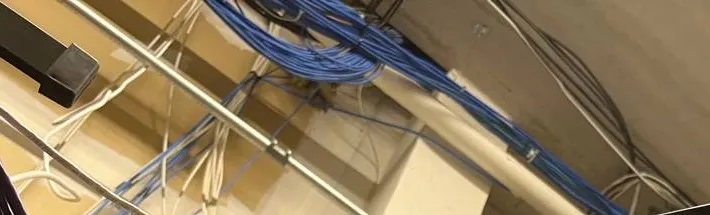
Modern intercoms, IP cameras and fob readers all ride on low-voltage cable and network gear: Cat6 runs, PoE switches, a riser path from cellar to roof and a small rack in the super's office or the cellar. We run and label that cabling as part of the job. For larger cabling scopes, our page on structured cabling installation in Brooklyn explains how we test and document it. We don't do electrical work: if a panel location needs a new high-voltage circuit, the building's electrician provides it.
Before the board votes on any single system, it helps to walk the building with a short list. These are the questions we work through on a free on-site assessment, and a board can use them on its own first:
A board that can answer those six questions knows where its real weak points are, and usually finds that the fix is narrower than it feared: one door, one panel, one missing camera, one recorder that has been full for a year.
Late autumn is when Brooklyn co-op boards call us most, for two reasons. Holiday deliveries pile up in vestibules, and cold weather exposes weak door hardware. An intercom maker's own guide to cold-weather problems notes that "metal parts contract in the cold", that moisture can get into exterior panels and lock hardware, and advises boards to "review strike alignment and look for doors that need extra pressure to latch or release." A front door that needs a shove in January is a strike that needs adjusting, not a door that needs replacing. Boards that want the system checked before winter or before the annual meeting can book a maintenance visit; we don't offer seasonal discounts, but an early-season booking gets the earliest dates.
Co-op security repair in Brooklyn starts with the $250 service call. A co-op security maintenance visit can be booked on its own when the board wants the whole system checked before winter or before a shareholder meeting. Tech support by phone is free for systems we installed, and boards can add a longer warranty when they buy the system. We don't sell a managed security service or a virtual doorman subscription; we install and maintain the equipment, and we can work alongside a provider the building already uses.
Audio, video, phone-dial and app-based entry for Brooklyn co-op lobbies and stoops.
Stations, transformers, releases and riser faults traced and fixed floor by floor.
Front, side, cellar, laundry, bike and roof doors on one list the board controls.
Entrances, vestibules, package areas and cellars, recorded in the building.
Cab readers and floor control, coordinated with the elevator contractor.
Riser cabling, PoE switches, labeled racks, and scheduled check-ups.
The same lobby intercom costs a different amount, takes a different number of days and needs different paperwork depending on what kind of Brooklyn cooperative it goes into. These are the building types we plan around, and what each one changes.
Four to twelve units, stoop entrance, often self-managed. One door panel, a handful of apartment stations, short risers, and a board that may also be the people holding the ladder. Landmarks rules apply on many blocks.
The six- to fifteen-story buildings along the parkways and avenues that converted in the 1980s. Long risers, plaster walls, a lobby with two sets of doors, a service entrance on the side street and a managing agent who runs the bid.
Large southern-shore developments with several buildings, many entrances, garages and a staffed desk. One access control database for every door matters more here than any single panel.
Small walk-ups and brownstones, many formed from City-owned buildings, run by shareholders with tight budgets. Repair-first plans and phased upgrades fit best.
Apartments over storefronts on commercial avenues. The residential entrance, the store and the cellar each need their own access rules and often separate camera views.
Recently converted buildings in Bushwick and Crown Heights where the corporation inherited whatever the developer installed, sometimes with no manuals and no admin passwords.

A brownstone co-op is the easiest building in Brooklyn to wire and one of the hardest to get approved, because so many of them sit in historic districts. The physical job is small: a panel at the top of the stoop or on the gate, four to twelve apartment stations or app accounts, a door release on the outer or inner door, and a short riser up the stair hall. Where the original buzzer wiring is intact, a two-wire video intercom can often run on it, which spares the plaster and keeps the job to a day or two.
The paperwork side is where these buildings differ. The Landmarks Preservation Commission's Permit Guidebook (chapter 11) says staff can approve intercom panels if they are "installed within or adjacent to a door opening," that an intercom "can also be installed on a fence or wall in front of the entranceway," that "a maximum of two light fixtures and one intercom panel can be installed per door opening," and that the design, size and finish must be "neutral and discreet." For a brownstone co-op board, that rules out the oversized stainless panel bolted to the brownstone next to the parlor-floor door, and it favors a compact flush or surface unit set into the door surround or the areaway gate post.
The same chapter limits security cameras on small residential buildings to "no more than two security cameras … for every 25 feet of street frontage," well spaced to avoid "a cluttered, haphazard appearance." A typical 20- or 25-foot brownstone front therefore gets two cameras at most on the facade, which is why we usually put the stoop camera inside the vestibule looking out, and the second one under the stoop or at the areaway.
The prewar co-ops along Eastern Parkway, Ocean Avenue and Shore Road are the Brooklyn buildings where intercom projects get most complicated. They have long, tired risers that run through occupied apartments, lobbies with an outer vestibule door and an inner lobby door, a separate service entrance, and sometimes a staffed desk. Many still use apartment handsets installed decades ago. When some apartments can't be reached from the lobby, the fault is often a broken conductor somewhere in a riser that passes through a dozen kitchens.
For these buildings the board's real choice is usually between three paths: repair the existing system floor by floor, replace the lobby panel and keep the apartment wiring with a compatible system, or move to an IP or app-based intercom that needs only network at the lobby and no new apartment wiring at all. The third path avoids entering most apartments for the install, but it changes how older shareholders answer the door, so we always recommend that the board keep an in-apartment option for anyone who wants one.
The big postwar co-ops near Coney Island, Brighton Beach and Sheepshead Bay are a different scale of project: several buildings, a dozen or more entrances, garages, laundry rooms and a security desk. Here the building-wide design matters more than any single device. One access control platform should run every door, so a fob issued at the management office works at the right doors in every building and stops working everywhere at once. Cameras should land on one recorder system the desk can watch. And the intercom, if it is being replaced, should be phased building by building so no entrance is ever without a working panel. These complexes also sit in flood zones; the closing guide we cite above flags flood coverage for exactly these buildings, so we keep controllers, power supplies and recorders off cellar floors wherever the board gives us a dry room.
An HDFC board usually has the least money and the most patience of any client we work with. A repair-first plan fits these buildings: fix what can be fixed for a known cost, then replace the oldest component when the budget allows. A small HDFC walk-up can often go from a dead buzzer system to a working video intercom with app answering for less than a larger building spends on one panel, because there are only a few apartments, a short stair hall and one door. We price the repair and the upgrade side by side so the board can vote on one without being sold the other.
Brooklyn Heights was designated New York City's first historic district in 1965 (DNAinfo), but landmarks rules now reach well past the Promenade. In November 2020 the Commission designated the East 25th Street Historic District, which its newsletter called "the first in the neighborhood of East Flatbush, Brooklyn", a short walk from our Troy Avenue office. Before a co-op in any historic district orders a new entry panel or facade camera, we check the address against the LPC map and size the equipment to the staff-level criteria so the permit is routine rather than a hearing.
Commercial co-op security in Brooklyn mostly means mixed-use buildings: a cooperative that owns the whole structure and leases ground-floor stores, a doctor's office or a garage. The co-op is the landlord of those spaces, and its security systems have to keep the commercial tenants and the shareholders out of each other's doors without making either one's day harder.
Mixed-use cooperatives are a feature of Brooklyn's commercial avenues, where four- and five-story buildings with stores below were common long before conversion. On those blocks the residential entrance usually sits beside a storefront, the cellar is shared, and the store's delivery path may run through a side door the building also uses for garbage. We see the same layout repeat on the borough's shopping streets, and the security plan is always the same in principle: three access zones (residential, commercial, shared service), each with its own credentials and its own camera views.
The commercial tenant usually gets its own cameras on its own recorder, paid for and managed by the tenant, with the co-op's system covering only the residential entrance, the hallways and the shared cellar. Where the board prefers one system, user permissions on the recorder let the store manager see only the store's cameras. For doors, the shared service entrance gets a reader that accepts both the store staff's credentials and the super's, while the residential lobby accepts only shareholders and building staff. The co-op keeps the master list.
When a commercial tenant wants its own cameras or an access reader on a shared door, the co-op's lease and alteration rules decide what the tenant may install and who pays. We work for whichever party hires us, but on a shared door we ask that the board or agent confirm the work in writing first, so the building's master credential list stays in the building's hands. A tenant's reader on a shared service door should be enrolled in the co-op's system, not run as a separate island that nobody on the board can see.
The same applies to doctors' offices, daycare programs and other professional tenants in Brooklyn co-op ground floors, which often have their own visitor flow. A separate entrance with its own intercom panel calling the office, and no path into the residential lobby, keeps the two worlds apart without anyone holding a key they shouldn't.
Larger co-ops with garages need gate and garage-door control tied to the same credentials as the building. We install readers, keypads and vehicle-gate interfaces on the low-voltage side and coordinate with the gate company for the operator itself. A camera that reads the gate approach and one that covers the inside of the garage door answer most of the incidents boards ask us about.

Multiple Dwelling Law §50-a. New York's Multiple Dwelling Law §50-a requires every class A multiple dwelling erected or converted after January 1, 1968 with eight or more apartments to have an intercommunication system at the self-locking lobby door that allows "voice communication between the occupant of each apartment and a person outside" and lets the occupant "release the locking mechanism of said door from the apartment." Buildings converted before 1968 come under a consent-based provision in the same section. The law also makes it a misdemeanor to "wilfully destroy, damage, or jam" that equipment. A Brooklyn co-op board should ask its counsel how the section applies to its own building; our part is to keep the system that satisfies it working.
Tenant Data Privacy Law. Local Law 63 of 2021 added a Tenant Data Privacy chapter to the NYC Administrative Code. It defines a "smart access system" as any system that uses "electronic or computerized technology, a radio frequency identification card, a mobile phone application, biometric identifier information, or any other digital technology" to grant entry to a class A multiple dwelling, its common areas or an apartment. HPD's guidance says owners of buildings using such systems must give residents a data retention and privacy policy and may collect only the minimum data needed. Whether and how that applies to a particular co-op is a question for the board's attorney; what we do is configure fob and app systems to collect only what the board's policy allows and show the board where that data lives.
Landmarks. Entry panels and facade cameras on landmarked buildings follow the LPC criteria described above. Electrical work. We are a low-voltage contractor; new line-voltage circuits are the building electrician's work. Insurance. We carry general liability insurance and issue a certificate of insurance naming the co-op and the managing agent when the job is awarded.
These are the questions Brooklyn co-op boards, shareholders and managing agents ask us most, grouped by the decision they belong to.
Repair it if the riser wiring is sound and parts are still available for the lobby panel and stations; replace it when the wiring itself has failed in several places or the manufacturer no longer makes the parts. The $250 service call tells the board which situation it is in. We test the panel, the power supply, the release and a sample of apartments, and report what failed and what is worn. If the system is fixable, the board gets a repair number. If it is near the end, the board gets a replacement quote with the same building measurements, so the two can be compared honestly.
Usually, yes. Many brownstone buildings still have the original two- or four-conductor buzzer wiring in the stair hall, and two-wire video intercoms are designed to run over a pair like that. Where the old wire is broken or too thin, an app-based system answers on shareholders' phones and needs no apartment wiring at all, only network at the door. We confirm which is possible during the walk-through by testing the existing conductors.
Specify the building, not the brand. List each entrance and what it needs (panel type, release hardware, camera at the panel or not), the number of apartments and what each gets (indoor station, app, or both), whether existing apartment wiring may be reused, the hours work may happen, how apartment access will be arranged, the warranty term the board wants, and that bidders must state what the building provides. Ask every bidder to price apartment stations as a separate line, because that is where bids most often differ. We answer RFPs in that format; our guide for boards on co-op intercom upgrades covers it in more depth.
Anyone whose apartment station is part of the problem. Intercom faults in older buildings are linked: a short in one apartment can kill the line for the floors above it, so a repair that can't reach every affected unit often can't be finished. We ask the board or agent to send a notice with the visit date and arrival window and to arrange keys or a building escort for units where nobody will be home.
Yes, new exterior work on a landmarked building needs an LPC permit, but an entry panel that meets the staff-level criteria in chapter 11 of the Permit Guidebook (inside or next to the door opening, one panel per opening, neutral and discreet) can be approved by staff without a public hearing. We size and place the panel to fit those criteria and provide the product specifications the application needs.
Yes, and many boards start that way. The doors that cause trouble are usually the secondary ones, propped open for deliveries, contractors and laundry. Putting fob readers on those first stops the key copies and gives the board an entry log, while the front door keeps its intercom and key. When the front door is later added, it joins the same system and the same fob list.
The board or managing agent deactivates the seller's credentials on the closing date and issues new ones to the buyer after the board approves the sale. With a fob system that takes a minute in the software. With keys, the only equivalent is re-keying every door the seller could open, which is why so many boards make the switch after a sale goes badly.
On most heavy prewar wood-and-glass doors, an electric strike in the frame is the better fit: it keeps the existing lockset, the door still opens mechanically from inside, and it doesn't hang hardware across the top of a decorative opening. A magnetic lock suits metal doors and frames where a strike can't be fitted, and it needs the release devices the code requires so people can always get out. We look at the door and the frame before recommending either one.
Yes, and in larger buildings it is often the sensible way. A common split is to replace the lobby panel and door release in the first phase, keeping the existing apartment wiring and stations working, and then add video stations or app answering apartment by apartment in the second. In multi-building complexes the phases follow the buildings. We price each phase separately and design the first one so the second doesn't undo it.
Very little, if it is planned well. The old panel stays connected until the new one is mounted and tested. Then the directory is loaded, each apartment is called from the new panel, and the release is tested from each floor. Shareholders who switch to app answering get an invitation to set up their account. The board should tell residents the date in advance and post a short note in the lobby with a contact for anyone whose station doesn't ring.
Put them on one sheet with the same rows: entrances covered, panel at each entrance, what each apartment gets, whether existing wiring is reused, door hardware, programming and resident setup, warranty term, ongoing software fees, and what the building must provide. A low bid that leaves out apartment stations or resident setup is not a low bid. If a line is missing from one proposal, ask that bidder to price it before comparing totals.
Either, depending on how the board sets it up. Access control software allows several administrator accounts with different rights, so a board can let the super issue and deactivate fobs while only the agent and one officer can change door schedules or pull entry reports. We create the accounts the board approves and record who holds which one.
If the new system reuses the old riser, the wiring stays in service. If it doesn't, the old cable is usually left in place inside the walls, disconnected and labeled, because pulling it out of occupied apartments would mean opening plaster for no benefit. Old lobby panels and apartment handsets are removed and the openings covered or reused for the new equipment.
At the main entrance looking at faces as people come in, in the vestibule or wherever packages land, at the service or side entrance, in the cellar near the laundry and storage, and at the back yard or trash area. Five or six well-placed cameras cover most walk-ups and small elevator buildings; larger buildings add the elevator cab, the garage and each stair door to the roof.
Move the packages out of the open vestibule. A small locked package room or closet with a fob reader, a code couriers can use during set hours, and a camera on its door stops most of it, because nobody can lift a box from a room they can't enter, and anyone who does enter leaves an entry record and a clip. A camera alone records the theft; access control prevents it.
That is a board policy decision, and it should be written down before the cameras go live. Many boards give live view and playback to the managing agent and one or two officers, give the super live view only, and require a written request for anyone else. We set up separate logins on the recorder so the system enforces whatever the board decides.
Boards typically pay for a building-wide upgrade from the reserve fund, through an assessment on shareholders, or by including it in a larger capital project; some spread the work over two budget years by phasing entrances. Those are decisions for the board and its accountant. What helps is a written quote with the phases priced separately, which we provide. Financing is available through Wisetack, subject to approval.
Requests are booked within 2 hours of reaching us, and we schedule seven days a week with early-day visits. Jobs go on the schedule first come, first served once the service call is paid. We don't promise same-day arrival, so when a door won't lock the building should keep a staff member or a temporary lock on it until we arrive.
Usually, and we provide it. When the job is awarded, we issue a certificate of insurance naming the co-op corporation and the managing agent as the agent requires. We don't send certificates with a quote; the agent tells us the requirements after award and the certificate comes from our insurer.
Yes. Self-managed co-ops hire us directly all the time. We ask that the person who books the work be authorized by the board, that the quote be addressed to the corporation, and that one person be the building contact for access and payment.
Yes. Large multi-building complexes are planned building by building, with the access control and camera systems designed for the whole campus and the work scheduled so each entrance keeps a working door and intercom while its neighbor is being changed.
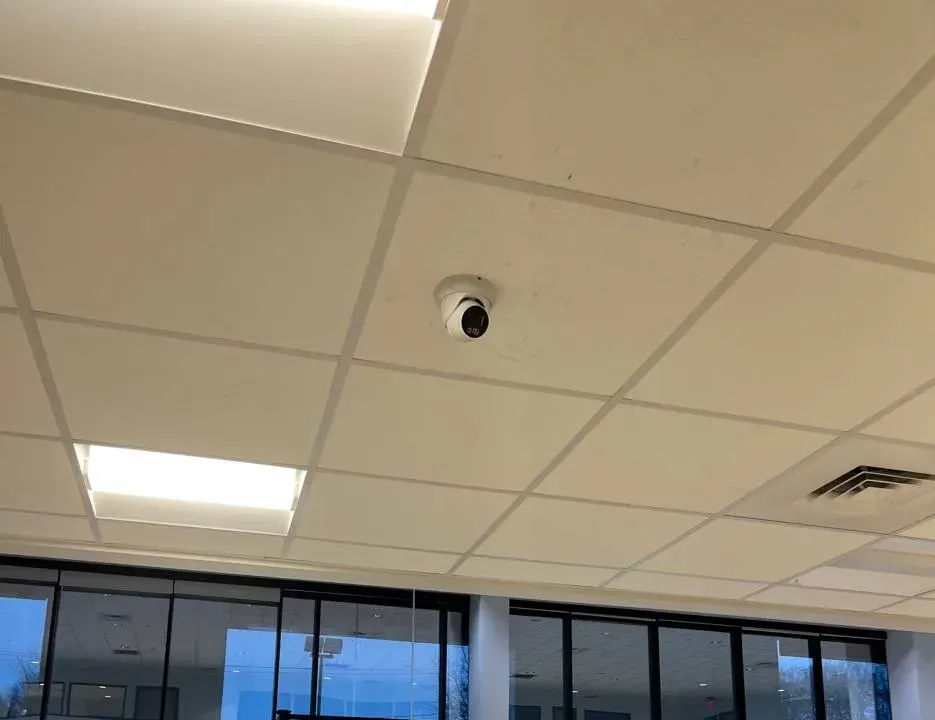
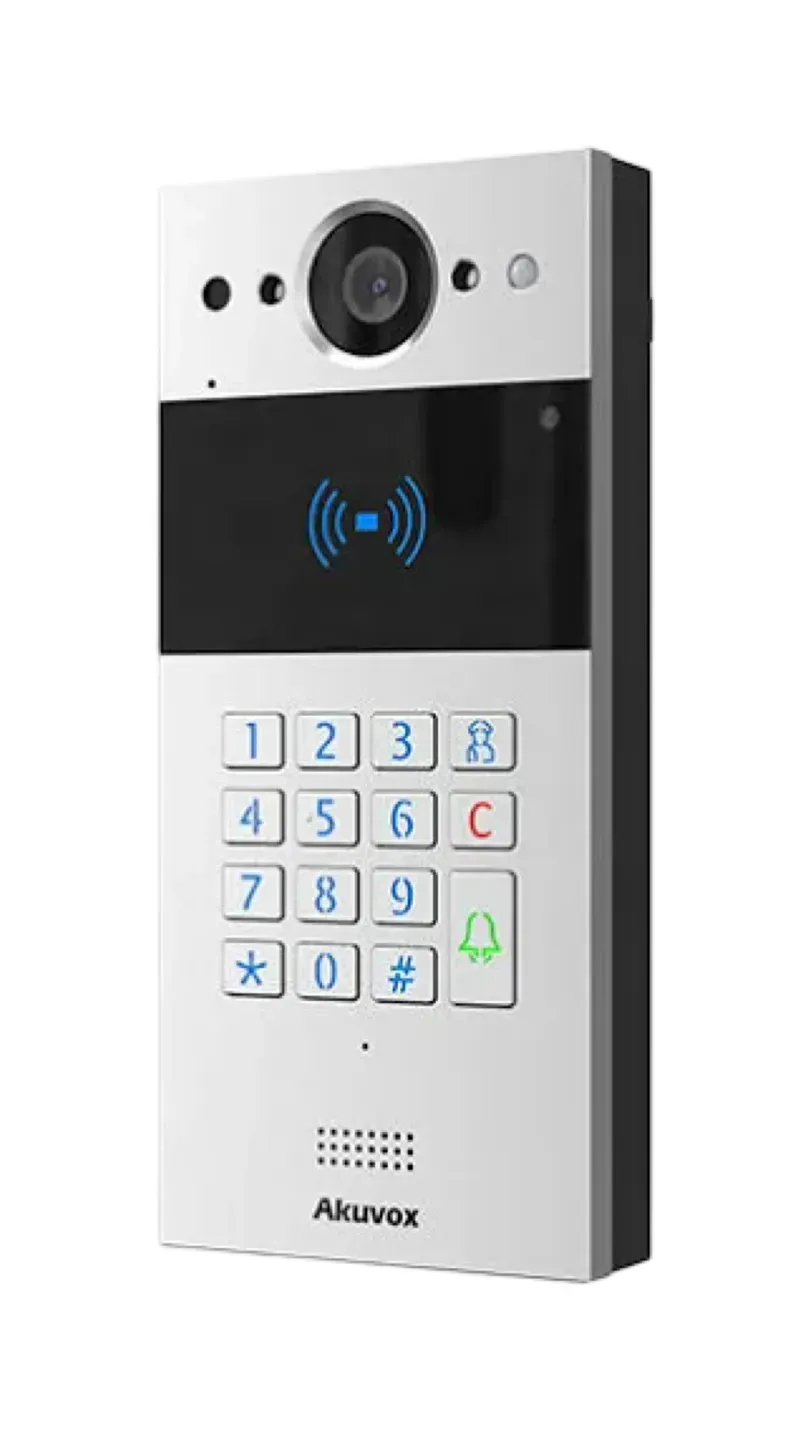
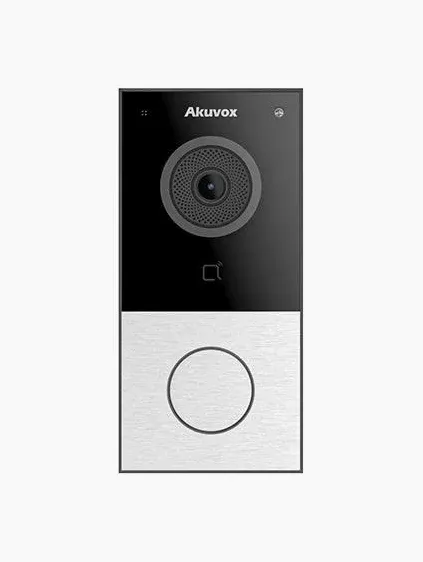
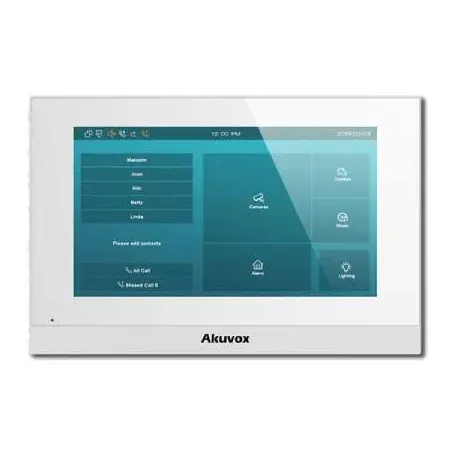
Co-op security equipment falls into a handful of families. We quote our own non-branded systems by default and name brands when a board asks or when a building already runs one. We install and repair the major intercom lines Brooklyn buildings already have, including Aiphone, Comelit, ButterflyMX, Akuvox, 2N and DoorBird, and boards weighing cloud-managed entry can read our Akuvox vs ButterflyMX comparison or our page on ButterflyMX installation in NYC.
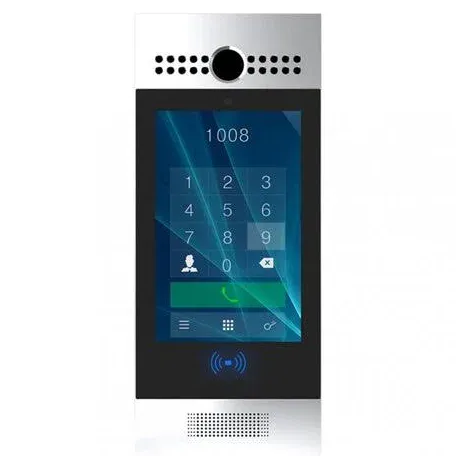
Touchscreen directory panels for buildings with many apartments, button panels for small ones, with a camera, a keypad and a fob reader built in where the board wants them.
Audio handsets, video monitors and touchscreen indoor stations, or none at all when shareholders answer on the app.
Electric strikes, magnetic locks, door closers we coordinate with a locksmith, request-to-exit devices and door position contacts.
Fob, card and phone credential readers, the door controllers that drive them and the software that holds the shareholder list.
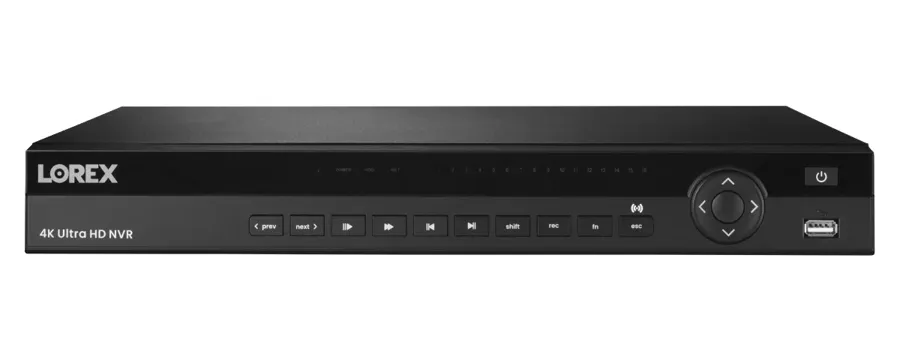
Dome, turret and bullet cameras with a network video recorder sized to the retention the board's policy calls for.
Low-voltage power supplies with battery backup, PoE switches, Cat6 and riser cable, and a labeled wall rack.

| Option | Apartment wiring | How shareholders answer | Fits best |
|---|---|---|---|
| Repair the existing audio system | Reuses everything | Same handsets as today | Sound risers, parts still available, tight budget |
| Two-wire video intercom | Reuses an existing pair in most cases | Video monitor in each apartment, app optional | Brownstone and walk-up co-ops with intact buzzer wire |
| IP video intercom | Network cable to each station, or app only | Indoor touchscreen and/or phone app | Elevator co-ops replacing everything, multi-building complexes |
| Cloud or app-only entry panel | None in the apartments | Phone app or phone call | Buildings that want no work inside units; keep a landline-style option for shareholders without smartphones |

| Hardware | Where it goes | Good for | Watch for |
|---|---|---|---|
| Electric strike | In the door frame | Prewar wood doors, keeping the existing lockset | Needs a solid frame and a door that latches cleanly |
| Magnetic lock | Across the top of the door | Metal doors and frames, side and cellar doors | Requires code-compliant release devices so people can always exit |
| Electrified lockset | In the door | Doors where neither of the above fits | Usually a locksmith-coordinated change of the lock itself |
Every Brooklyn co-op board should ask what its doors do when the power goes out. An electric strike can be set to stay locked or to release when it loses power, and a magnetic lock releases when its power is cut. That choice is about safety and security together: people must always be able to leave, and the building should not swing open to the street during a blackout. We fit low-voltage power supplies with battery backup for intercoms, readers and controllers, size them for the hardware on each door, and explain to the board how each door behaves without power so it can decide with full information.
Fobs remain the most practical credential in Brooklyn co-ops: they are cheap to replace, they work in gloves on a cold stoop, and nobody's phone battery decides whether they get into the building. Phone credentials are a convenient second option for shareholders who want them. Biometric readers exist, but they bring the data rules of the Tenant Data Privacy Law into sharper focus, and few Brooklyn boards we meet want to hold shareholders' biometric data. We install what the board decides, configured to its written policy.
Boards sometimes ask whether a national alarm brand or a do-it-yourself video doorbell could do the job instead. Consumer doorbells from companies like Ring are built for one household, not a lobby that calls forty apartments. National alarm companies such as ADT sell monitored alarms, which few co-ops need building-wide. A co-op entry system is a multi-tenant intercom, an access control database and a camera recorder that belong to the corporation, and that is what we install.
Boards increasingly start their research by asking an AI assistant or reading a search engine's AI summary. Those answers draw on national cost guides from sites like Angi, HomeAdvisor and Fixr, on manufacturers' marketing and on vendor blogs. Here is where the typical answer and a Brooklyn co-op's reality part ways.
The most common AI answer to a failing building intercom is to replace it with a cloud-connected smart intercom. That is sometimes right, and we install those systems. But the answer skips the step that decides whether it is right for a given building: finding out why the current system failed.
In Brooklyn's older co-ops the fault is very often one component, such as a power supply, a release, a corroded terminal in the cellar or a single bad station shorting a riser. Those are repaired for a fraction of a replacement. A board that skips diagnosis can spend a capital budget replacing a system that needed a transformer.
Our order is always the same: diagnose with the $250 service call, give the board the repair number, and give a replacement number alongside it only when the system is genuinely near the end of its life.
National guides like to express building intercom costs per apartment, and AI summaries repeat those numbers as if they applied everywhere. They don't. The cost of a co-op intercom upgrade in Brooklyn is driven by the number of entrances, whether apartment wiring is reused or replaced, whether every apartment gets an indoor station, the door hardware, landmarks constraints and whether the building pays an ongoing software subscription.
Two buildings with the same number of apartments can differ by several times in total cost because one has a sound two-wire riser and an app-friendly board, and the other has broken wiring through plaster and shareholders who want video monitors in every kitchen.
That is why we publish what parts and repairs cost, and quote building-wide replacements only after we have seen the building. Any per-apartment figure that arrives before a walk-through is a guess.
Vendor marketing often promises that a smartphone intercom can be installed without entering a single unit. For the installation of an app-only system, that can be true. For repairs to an existing wired system, it is not.
Wired intercom faults in older buildings are linked. A short at one apartment station can take down the line for every floor above it, and a repair that can't reach that station can't be finished. We have to be able to get into every affected apartment on the visit.
Boards also need to think about shareholders who don't use smartphones. An app-only system without an in-apartment option can lock an older shareholder out of answering their own door, which is why we recommend keeping an indoor station or phone-call option for anyone who needs it.
AI answers about co-op security often recommend a virtual doorman service as a cheaper replacement for lobby staff. A virtual doorman is a remote monitoring and answering service, and it still depends on the intercom, cameras and door hardware in the building.
We don't run a virtual doorman or a managed security service. We install and maintain the equipment such a provider uses, and we can integrate with a provider the building already has. A board comparing a virtual doorman with a doorman should get the hardware priced separately from the monthly service, so it knows what it owns.
If the board decides against a monitored service, the same hardware still works: shareholders answer on their stations or phones, and the board's cameras record in the building.
Many AI answers present cloud recording as the default for any modern camera system. For a co-op, cloud recording means a monthly fee per camera, footage stored by a third party and a building connection that has to carry every camera's upload.
Most Brooklyn co-ops we work with prefer local recording on a recorder in the building, with remote viewing for the people the board authorizes. The corporation owns the footage, pays no per-camera subscription, and can set retention to whatever its policy says.
Cloud makes sense in specific cases, such as a building with no secure room for a recorder or a complex where several buildings need one shared archive. We explain the trade-off rather than defaulting to either one.
AI answers often treat security installation as an electrician's job. Intercoms, access control and cameras are low-voltage systems, and the skills that matter are tracing riser wiring, programming panels and controllers, and setting up networks and recorders.
We are a New York State licensed low-voltage contractor, license #12000287431, and we work alongside the building's electrician when a panel or controller location needs a new high-voltage circuit. We don't do that electrical work ourselves.
For a board, the practical point is to ask any bidder who programs and supports the system after it is installed. A wiring contractor who leaves without setting up the directory, the fob list and the shareholders' apps leaves the board with hardware nobody can use.
AI summaries sometimes state that cameras and access control will reduce a building's insurance premiums. Some insurers do consider security measures, but there is no rule that guarantees a discount, and any change depends on the co-op's carrier and policy.
We don't promise insurance savings. If the board wants to know, its insurance broker is the right person to ask, and we provide the system description the broker may need.
What we can say from experience is that cameras and entry logs help boards answer the questions insurers and police ask after an incident: who came in, when, and through which door.

Book the service call or the free walk-through. Boards get a written answer they can vote on, and requests are booked within 2 hours.
Tell us the building, the number of apartments and entrances, and what the board wants to fix or upgrade. A board member, the managing agent or the super can send this. Photos of the lobby panel, the door and the cellar equipment help us prepare. Prefer to talk? Call or text (347) 934-8335.
Received. Our Brooklyn office will call or text to book the service call or the walk-through.
Whether the board needs one dead door release fixed or a building-wide modernization, the steps are the same. What changes is how many of them involve the board's vote.
A board member, the managing agent or the super tells us the Brooklyn address, the number of apartments and entrances, and what is wrong or what the board wants.
A broken system gets the $250 service call. An upgrade or replacement gets a free on-site assessment with the board's contact.
The board receives a repair number, an upgrade quote, or both, with each entrance and phase priced as its own line.
Once the board approves, a 50% deposit books the work and orders the equipment. Our certificate of insurance is issued on award.
The board or agent notifies shareholders of the date and two-hour arrival window and arranges access to the apartments that need it.
We work floor by floor and door by door, keeping each entrance usable while its equipment is changed.
Directory, fobs, apps and recorder logins are set up, every door is tested from every floor, and the board gets the credentials list.
We schedule seven days a week with early-day visits, in two-hour arrival windows, and our crew arrives inside the window. For work inside apartments, the board or agent sends shareholders a notice with the date and window, and arranges keys or an escort for units where nobody will be home. Lobby panel swaps are planned so the entrance is never left without a way in: the old panel stays live until the new one is tested, or the super has a temporary arrangement for the hours in between.
A good notice is short. It names the work ("the lobby intercom panel and the door release are being replaced"), the date and the two-hour arrival window, which apartments need access and for roughly how long, who to contact to arrange keys, and what will change for residents afterward, such as a new app to download or a new fob to collect from the agent. We give the board the facts it needs for the notice; the board or agent sends it.
Installed jobs are booked with a 50% deposit under the service agreement, and equipment is ordered only after the deposit. Special-order equipment has shipping times outside our control, so installs of special-order panels are scheduled once the equipment arrives. Financing is available through Wisetack, subject to approval. Company and corporation clients can pay by check.
Systems come with our 30-day warranty on the work listed on our warranty page, and boards can add one-year or longer coverage when they buy the system. Manufacturer warranties on equipment are the manufacturer's. Tech support by phone is free. Full terms — including 50% deposit, one-year parts-only warranty on Abstract Enterprises Security Systems-supplied products, and the late-fee schedule — are set out in the service agreement.
Our Brooklyn office at 1282 Troy Avenue puts the borough's main co-op corridors within a short drive. These are the places where Brooklyn's cooperative buildings cluster, and what we see in each.
Prewar elevator co-ops that converted in the 1980s, with long risers and two-door lobbies; intercom repair and phased lobby panel replacement.
Prewar apartment houses running south through Flatbush; fob access on service doors and package rooms in buildings without staff.
Elevator co-ops facing the Narrows in Bay Ridge; wind and salt air call for sealed entry panels and outdoor-rated cameras.
The city's first historic district, designated in 1965: compact, discreet entry panels sized to LPC staff criteria.
Large postwar co-op complexes, some with Mitchell-Lama roots: campus-wide access control and flood-aware equipment rooms.
East Flatbush's first historic district, designated in 2020, near our Troy Avenue office: landmarks-aware work on small residential buildings.

We also serve co-ops in Park Slope, Prospect Heights, Clinton Hill, Fort Greene, Bedford-Stuyvesant, Crown Heights, Bushwick, Windsor Terrace, Kensington, Midwood, Flatbush, Ditmas Park, Bay Ridge, Dyker Heights, Bensonhurst, Brighton Beach, Manhattan Beach, Canarsie, Mill Basin, Cobble Hill, Carroll Gardens, Boerum Hill and Downtown Brooklyn.
Co-op security pricing in Brooklyn starts with one fixed number: the $250 service call. It covers the visit, the diagnosis and simple repairs, and if the job turns out to be bigger, the $250 goes toward the total. Everything else is either a published repair range or a written quote after we have seen the building. We don't publish per-apartment or per-building package prices for co-ops, because no two Brooklyn co-ops cost the same to equip, and a number given before a walk-through would be a guess.
The proposal is the board's document. It should be clear enough that a shareholder who missed the meeting can read it and understand what the building is buying.
These are the typical ranges from our door buzzer and intercom repair pricing page, which apply to Brooklyn co-ops as to any other building. The exact number is given on site before any parts work begins.
| Item | Typical range |
|---|---|
| Service call (diagnosis and simple fixes, credited toward a bigger repair) | $250 |
| Apartment intercom station | $250 to $525 |
| Door release relay or button | $250 to $475 |
| 24V transformer | $325 to $650 |
| Electric strike replaced and door aligned | $450 to $950 |
| Lobby panel work | $650 to $1,800 |
| Riser repair inside occupied walls | $850 to $2,400 |
Camera prices for Brooklyn buildings are on our Brooklyn security camera pricing page, and installation of new intercom systems is quoted after the site visit, as described on our intercom pricing page. If anything might add cost on install day, such as an old cable that could fail its test, we tell the board before it orders, because equipment can't be returned once it is ordered.
Instead of fixed co-op packages, we work in three stages that match how Brooklyn boards actually spend money. Each one stands on its own.
$250 service call, credited toward the repair. Diagnosis of the intercom, buzzer, release, reader or camera, simple fixes on the spot, and a written repair number for anything larger.
Quoted after a free on-site assessment. A new lobby panel, video on the existing wiring, fobs on the side and cellar doors, or cameras at the entrances, priced as separate lines the board can approve one at a time.
Quoted after a free on-site assessment. Intercom, access control, cameras and cabling designed as one system, priced by phase so it can be spread across budget years.

If the board or a shareholder has already bought an intercom panel, camera kit or fob system, we can install it. Customer-supplied equipment is quoted for labor only, by phone or text, from the make, model and photos of where it goes, and the deposit books the date. We don't do separate walk-throughs for customer-supplied equipment, and the performance of equipment we didn't supply is the manufacturer's responsibility.
Many Brooklyn co-ops call us because the company that installed their system is gone or no longer answers. We can usually take over service of an existing intercom, camera or access system. The first visit is a service call to document what is installed, recover or reset admin access where the equipment allows it, and tell the board what can be kept.
New buzzer and audio entry systems for small walk-up co-ops.
Intrusion alarms for offices, storage rooms and commercial spaces in co-op buildings.
Cameras for shareholders' own homes and for commercial tenants.
Wired DVR and NVR systems for garages and storefront tenants.
Cleaning, drive health checks and firmware on the building's recorder.
(347) 934-8335 — call or text.
Field notes from our Brooklyn crew
The first thing we ask a Brooklyn co-op board is not "what system do you want" but "who can let us into the apartments." On an older wired intercom, the fault is rarely at the lobby panel. It is usually a station in one apartment, a splice in the riser behind a kitchen wall or a corroded terminal block in the cellar, and finding it means testing floor by floor. A visit where half the units are locked is a visit that ends with a partial answer.
The second thing we ask is where the equipment lives. In a lot of Brooklyn buildings the intercom power supply, the door release transformer and the recorder share a damp corner of the cellar with the boiler. Moving them onto a dry wall with a battery backup and labels fixes problems that look like electronics failures.
The third is who holds the passwords. Boards that inherited a system from a sponsor or a departed contractor often have no admin login for the panel or the recorder. We document every credential we set and hand the list to the board, not to one volunteer.
We don't run a virtual doorman or managed security service. We install and maintain the intercom, cameras and door hardware that a virtual doorman provider or the building's own staff use, and we can integrate with a provider a Brooklyn co-op already has.
Yes. Financing is available through Wisetack, subject to approval. Boards that prefer to pay from reserves or an assessment can ask for the quote split into phases so the work fits their budget calendar.
Systems come with our 30-day warranty listed on our warranty page, and the board can add one-year or longer coverage when it buys the system. Equipment also carries the manufacturer's warranty, and phone tech support is free.
We install and repair the major lines found in Brooklyn buildings, including Aiphone, Comelit, ButterflyMX, Akuvox, 2N and DoorBird, along with older audio and buzzer systems. New systems are quoted as our own non-branded system by default, with brand options when the board asks.
No. We do the low-voltage side: panels, stations, releases, readers, cabling and programming. If a panel or controller location needs a new high-voltage circuit, the building's electrician provides it.
We don't share client names or contact details, out of respect for the buildings we work in. Our Google reviews, 4.7 stars from 201 reviews, are the best place to see what clients say.
Boards can book a scheduled maintenance visit for the intercom, access control and cameras at any time, for example before winter or before the annual meeting, and buy a longer warranty with a new system. We don't sell subscription security services.
Yes, with an intercom that supports app answering. Many boards keep an indoor station or a phone-call option as well, so shareholders without smartphones can still answer and release the door.
Only within our fire alarm scope. Fire alarm systems in New York City start with engineered drawings and FDNY approval and are quoted per building after a survey, never from a price list.
Yes. We schedule seven days a week with early-day visits, in two-hour arrival windows, which helps boards whose shareholders are only home on weekends.
Yes, for a new system we would supply and install. The on-site assessment and the written quote cost nothing. A visit to diagnose a broken system is the $250 service call, which is credited toward the repair.
Yes. A service call can be used to record what is installed at each door, what works and what doesn't, and which admin logins exist, so the board starts its upgrade discussion with facts instead of guesses.
This Brooklyn page is part of co-op security systems in NYC, our hub for cooperative boards and managing agents across the five boroughs. Boards with buildings across the river can see co-op security systems in Manhattan. Our Brooklyn office covers every Brooklyn neighborhood from 1282 Troy Avenue. Co-op boards elsewhere in the city can see co-op security systems in Queens, co-op security systems in the Bronx and co-op security systems on Staten Island. Abstract Enterprises Security Systems home
Repairs start with the $250 service call; upgrades are quoted after a free walk-through. Call or text our Brooklyn office.