Intercoms · Door Buzzers · Key Fobs · Elevator Access · Cameras · Package Rooms
Co op security systems in Manhattan start with a $250 service call for repairs, and new building-wide intercom, camera and access control systems are quoted in writing after a free on-site assessment. We work for co-op boards, shareholders and managing agents in prewar elevator buildings on Riverside Drive and Park Avenue, postwar doorman towers on the East Side, walk-up co-ops in the Village and the big limited-equity complexes like the one that fills six blocks of Chelsea.
Quick answer: Abstract Enterprises Security Systems installs, upgrades and repairs the building security a Manhattan housing cooperative actually owns: the lobby intercom and the apartment stations, door buzzers and strikes, key fob readers, elevator floor control, lobby and package-room cameras, and the low-voltage cabling that ties them together. A repair visit is a $250 service call that goes toward the job if more work is needed. A new or replacement system is priced after a free walk-through, in one written scope a board can put next to other bids. We book within 2 hours, seven days a week, and the certificate of insurance your managing agent asks for is issued when the job is awarded.
Last updated November 25, 2026 by Abstract Enterprises Security Systems, NYS license #12000287431 · Sources: NYS Multiple Dwelling Law §50-a; NYC HPD Tenant Data Privacy Law page (Local Law 63 of 2021); Miller Samuel / Douglas Elliman Q4 2025 Manhattan report via The Real Deal, Jan 6, 2026; Habitat magazine, Feb 26, 2024 and Bricks & Bucks; Patch Upper West Side, Jul 10, 2023; I Love the Upper West Side, Aug 16, 2022 (full links in each section)

Owner-operated since 2002 · Thousands of jobs completed · Booked within 2 hours. Call or text (929) 560-0737 or use the quote form.
Manhattan is still a co-op borough. In the last quarter of 2025, roughly 1,500 co-op apartments changed hands in Manhattan against about 1,200 condos, and co-op sales outpaced condo sales for the first time in more than a year, according to the Miller Samuel report for Douglas Elliman covered by The Real Deal on January 6, 2026. The median co-op sold for $825,000; the median condo for $1.7 million. Behind those numbers is a housing stock that is older, more varied and more board-governed than anywhere else in the city, and that is exactly what makes co-op building security in Manhattan its own kind of job.
A condo owner can usually change what is inside the unit and call it done. A housing cooperative is a corporation that owns the whole building, and its shareholders hold proprietary leases. The lobby panel, the riser cable, the cellar door, the elevator and every camera belong to the co-op. So when the intercom in a 1920s elevator building on West End Avenue goes quiet on the fourth floor, the question is not which shareholder should fix it; it is how the board, the managing agent and the super get it diagnosed, approved, paid for and repaired without leaving residents locked out or buzzing strangers in.
That governance is the reason we built this page for boards, shareholders and managing agents rather than for one piece of equipment. Most co-op security problems we see in Manhattan are not a single broken device. They are a lobby intercom that still works on audio but cannot show a face, a basement service door that gets propped open for deliveries, a package pile in the vestibule of a building with a doorman only from four to midnight, a fob system nobody can add new shareholders to because the old software died with a laptop, and cameras that record to a recorder no one on the board can log into. Each one belongs to a different service, but the board has to approve all of them, often at the same meeting.
Manhattan adds its own pressure. Buildings are tall and occupied, so work has to be phased floor by floor around people who live there. Prewar plaster and terra cotta make every new cable run a decision. Managing agents ask for a certificate of insurance naming the co-op and the management company. Alteration rules apply to the building's own work, too, and landmarked facades limit what can be mounted outside. Neighborhood news shows why boards keep putting security on the agenda: Patch reported in July 2023 that a thief took packages from the lobby of the same West 74th Street building between Amsterdam and Columbus twice in one week, and I Love the Upper West Side reported in August 2022 that a man posing as a delivery worker walked into a West 89th Street brownstone carrying empty boxes and left with residents' packages, in a building whose tenant counted at least ten thefts that year even though both entrance doors were described as always locked.
None of that calls for an alarm-company sales pitch. It calls for a co-op security contractor who can look at the whole building, tell the board in plain words what is failing and what is merely old, and then fix things in an order that makes sense: the entrance first, because state law and daily life both depend on it, then the doors that leak, then the cameras that prove what happened. That is the order this page follows, and every section links to the Manhattan page for that service when the board is ready to go deeper. Most Manhattan co-ops that upgrade the intercom pair it with key fob access control within a year or two, so we plan the wiring for both from the first visit.

Every system below is something a Manhattan co-op owns, maintains and has to approve as a corporation. We install it, repair it, maintain it and integrate it with what is already in the building. The service pages linked in the sections further down carry the full detail for each one; this list is the board's map of what a single co-op security company can handle under one scope.
Audio to video, analog to IP, lobby panels, vestibule stations, in-unit monitors or phone-app answering, planned around the building's existing riser.
Dead apartments, one-way audio, door release failures, power supplies, strikes and lobby panels, starting with the $250 service call.
Fob and card readers at the front door, service entrance, roof, laundry, gym and package room, with shareholder fobs added and deleted from one place.
Floor-restricted elevator readers for full-floor and penthouse apartments, set up alongside the building's elevator contractor.
Lobby, vestibule, mailroom, package room, service door, cellar, laundry and roof coverage, recorded on site with no monthly fee required.
Camera coverage, fob-controlled doors and intercom delivery codes for buildings without a full-time doorman.
Cat6, riser pulls, PoE switches and network gear for the systems we install, run neatly through cellars, chases and hung ceilings.
Scheduled checks of panels, strikes, readers and recorders, written so the board knows what is covered before anything breaks.
Written scopes, bid responses and line-item pricing for boards and managing agents comparing contractors.
Two things we say plainly because co-op boards ask: we do not run a virtual doorman or a managed, monitored security subscription, and we do not do electrical work. If the building already uses a remote attendant or concierge service, we install and integrate the intercom, cameras and access control that service works through. When a new panel location needs a new high-voltage circuit, the building's electrician runs it and we handle everything low-voltage from there.
The intercom is where co-op building security starts in Manhattan, because it is the one system the law, the shareholders and every delivery driver all depend on at once. It is also the system boards most often inherit in the worst shape: original audio stations from the 1960s or 1970s, a lobby panel with half the name cards faded, a riser that has been spliced by four different repair companies, and an amplifier in the cellar that nobody has a part for. When a board asks us whether to repair or replace, the honest answer depends on three things we check on the first visit: whether the riser cable is sound, whether parts still exist for the system that is there, and how many apartments are already dead.

If a handful of apartments are out and the riser tests clean, a repair is usually right: a $250 service call finds the fault, and if the fix is bigger, that $250 goes toward it. If the system is so old that every repair is a used part from another building, or if more than a few floors have failed, the board is paying repeatedly to keep a dead end alive, and a co-op intercom replacement starts to cost less over the life of the building. We put that comparison in writing so the board can see it rather than take a contractor's word for it. A building already living with failures can see what a repair visit covers on our intercom repair in Manhattan page.
The co-op board intercom upgrade decision usually lands on the same tension a co-op board member described on Habitat's Board Talk forum in 2021: residents "have very fierce opinions about whether the system should be mobile or with built in panels." Older shareholders want a button on the wall; younger ones want the door on their phone; the board wants one system that does both without two monthly bills. Most current systems can do both, so we usually quote a hybrid: apartment stations where shareholders want them, app answering for everyone else, and a lobby panel that can call either.

Boards fund intercom work from reserves, a capital-improvement budget or an assessment, and that is the board's decision with its accountant and attorney, not ours. What we can do is give the board numbers it can plan around: a written scope with the lobby panel, the number of apartment stations or app licenses, the riser work, labor and any special-order lead time, so the treasurer is not guessing. A recurring question on Habitat's forum is whether a board can bill shareholders individually for in-unit panels; one manager there described a building that supplied a basic station and let shareholders upgrade at their own cost, with the building maintaining the result. That is a policy choice for your board and counsel. We simply price the base station and the upgrade separately so either policy works.
Once the board approves, we help the managing agent with the shareholder notice: which days work happens on which floors, whether anyone needs to be home, how long the lobby panel will be down, and how deliveries will be handled while it is. For an intercom replacement, plan on access to every apartment that is getting a station, because the station is inside the unit. Installation-side details, panel options and how a new system goes in are on our intercom installation in Manhattan page.
Boards that run an RFP get better bids when they say the same things to every contractor: number of apartments and entrances, whether the riser may be reused, video or audio, app answering yes or no, apartment stations yes or no, integration with fobs and cameras, who handles the electrician, warranty terms, and the schedule constraints of the building. When we respond to a co-op intercom proposal request, we answer each of those items line by line so the board can compare like with like. The certificate of insurance comes when the job is awarded, not with the bid.
Plenty of Manhattan co-ops never had a modern intercom. Walk-up co-ops in Greenwich Village, the East Village and Harlem, and small townhouse conversions on the Upper East Side, often run on a classic buzzer: a button at the street door, a bell or talk box in each apartment and a door release strike. When the strike buzzes but the door does not open, when one apartment's button rings the wrong unit, or when the whole system hums and does nothing, the fault is usually one of a short list: the transformer, the strike, a wire broken at a door frame, or a corroded terminal in the cellar.
A co-op door buzzer repair starts the same way as any other: a $250 service call, the super with the cellar keys, and access to the apartments that are affected, because a buzzer fault in one unit can sit in that unit's wiring. Boards in small buildings sometimes ask whether to fix the buzzer or move to a video door station; for a building of six to twenty apartments, a single-button or small keypad station on the existing pair is often the cheapest step up. Repair detail, what the service call covers and how strikes get aligned are on our door buzzer repair in Manhattan page.

Keys are the weakest part of most co-op building security. Every sublet, every contractor, every dog walker and every shareholder who moved out without returning keys is a copy nobody can account for. A fob system fixes that: each shareholder, staff member and approved vendor gets a credential that can be turned off the day it should be, and the board can restrict the roof, the gym, the bike room and the package room to the people who should be there.
Two Manhattan specifics change how we set it up. First, NYC's Tenant Data Privacy Law applies to owners of multiple dwellings that use smart access such as fobs, apps or biometrics. According to HPD's summary of Local Law 63 of 2021, owners must give residents a data retention and privacy policy, get express consent before collecting reference data, limit what is collected, destroy authentication data within 90 days unless it is anonymized, and may not require smart access to enter the dwelling unit itself. HPD's page does not say how the law applies to co-ops specifically, so a board should confirm that with its attorney; we configure the system's log retention and user records to whatever policy the board adopts. This is general information, not legal advice.
Second, a co-op door usually has to keep working with keys and the intercom while the fob reader is added, and the reader has to release the same strike or mag lock the intercom does. We wire the reader, the intercom release and the request-to-exit together so the door behaves one way no matter who opens it. Doors, locks and reader options are covered on our access control installation in Manhattan page.

Full-floor and penthouse co-ops are common on Park Avenue, Fifth Avenue and Central Park West, and so are elevators that open directly into an apartment's private landing. Those shareholders reasonably want the car to stop at their floor only for them, their staff and their guests. An elevator reader in the car, tied to the floor buttons through a controller, does that: tap a fob and only the floors that fob is allowed to reach light up.
The car's own controller belongs to the building's elevator contractor, and they make the connection on their side; we install and program the reader, the access controller and the credentials, and coordinate the visit so the elevator is out of service as briefly as possible in an occupied building. Older Manhattan elevators sometimes need the elevator company to add an interface before any floor restriction is possible, which is something we find out at the walk-through, not on install day. Details are on our elevator access control installation in Manhattan page.
Cameras are the system boards usually want first and need third. A camera records what happened; the intercom and the doors decide whether it happens. That said, a co-op lobby without a camera is the first thing a board hears about after a package theft, and the placement rules are simple: one camera inside the lobby facing the entrance, one on the vestibule or mail area, one on the package room door, one on the service or cellar entrance, and one on each elevator lobby or laundry room if the board wants them. Recording is on site, on a recorder in a locked closet, with no monthly fee required, and the board decides who can view footage and how long it is kept.
For co-op security camera installation details, camera counts by building size and footage policy, see our apartment building security cameras in Manhattan page. Hallway and elevator cameras in a co-op raise privacy questions among shareholders, so we always recommend the board adopt a written footage policy before the cameras go up.

The Upper West Side reports above are typical: a thief who looks like a courier gets through a locked door and leaves with what is stacked in the lobby. For a co-op with a part-time or no doorman, the fix is a combination rather than one device: a locked package room on a fob, a delivery code or one-time access through the intercom for carriers, a camera inside the room and one on its door, and a lobby panel that shows the super or the resident who is actually at the door. Boards that want to tighten this before the December delivery peak should start in early fall; equipment lead times and board approval take longer than most people expect.
Every system on this page rides on cable: the intercom pair or Cat6 up the riser, camera runs to the recorder closet, reader cable to the access controller, network to the PoE switch. In prewar Manhattan buildings, getting cable from the cellar to the twelfth floor is often the hardest part of the job, and it decides whether the board can reuse old pathways or needs a new chase. We run the low-voltage cabling for the systems we install and leave it labeled and documented; for larger network work, see our structured cabling installation in Manhattan page.

Some Manhattan co-ops ask us to tie the front door release into the fire alarm so the door unlocks when the alarm goes off. Fire alarm work in New York City goes through engineered drawings and FDNY approval, and we only take on fire alarm work within our licensing and the building's approved plans. We never quote fire alarm prices on this page. For how that process works, see our fire alarm installation in Manhattan page.
Boards that have just paid for a new system reasonably want to know what happens next year. We offer scheduled maintenance visits for co-op security systems: lobby panel and station checks, strike and closer adjustment, reader tests, recorder health and drive checks, and a written report to the managing agent. Between visits, many problems are solved by remote support when the system is networked, such as adding a new shareholder to the app or a fob to the access list. A failure that needs hands on the hardware is a service call, booked within 2 hours, seven days a week with early-day visits, first come, first served once the visit is paid. We do not promise same-day work, and we do not run an around-the-clock dispatch.
The same lobby panel goes into very different buildings in Manhattan, and the building decides how hard the job is far more than the panel does. These are the co-op building types we plan around, what each one does to a security project, and what a board should expect on the walk-through.
Twelve- to sixteen-story buildings from the 1910s to the 1930s along Riverside Drive, West End Avenue, Park Avenue and the side streets between. Plaster and terra-cotta walls, original risers, a hand-operated era elevator modernized at some point, and a lobby with marble that nobody wants drilled twice.
The 1950s and 1960s towers of the East Side, Murray Hill and Kips Bay, many converted to co-ops in the 1980s. Concrete slabs, hung corridor ceilings, a doorman desk, a garage or service entrance on the side street and long hallways that suit cameras.
Four- to six-story buildings with six to twenty apartments in the Village, the East Village, Chelsea, Hell's Kitchen and Harlem. A buzzer or small intercom, a vestibule, a cellar door to the street and no staff on site.
Multi-building co-ops with thousands of apartments, such as Penn South's ten 22-story buildings in Chelsea. Several lobbies, a campus network, a management office and staff who need one access database across every building.
Cast-iron and loft buildings in SoHo, Tribeca, NoHo and the Flatiron converted to residential co-ops. Freight elevators, full-floor units, keyed elevator access and landmark rules on the street facade.
Full-service co-ops on Fifth Avenue, Central Park West and Sutton Place with staffed lobbies around the clock. The security job is integration: elevator floor control, staff credentials, service-entrance cameras and intercoms that ring the desk first.
Prewar elevator buildings: the riser is the asset. We test the existing intercom pair floor by floor before quoting, because a sound riser lets the board upgrade to video without opening a single apartment wall beyond the station location. Where new cable is unavoidable, we look for the old dumbwaiter shaft, the original bell-wire chase or a pipe chase before any wall is opened. Lobby panels on marble get mounted once, on the existing opening where possible, with any new hole drilled with a diamond bit and the old one filled by the building's mason.
Postwar doorman buildings: the hung ceilings make horizontal runs simple, and the concrete makes vertical runs the hard part, so we work from the existing telephone or intercom riser closets. The desk usually becomes the hub: the lobby panel can ring the desk first, the desk sees the cameras, and the desk issues and removes fobs.
Walk-ups: small systems, but nothing is hidden. Cable runs in a walk-up stairwell are visible, so we use the existing buzzer wire wherever it tests clean and surface raceway painted to match where it does not. The cellar door gets the same attention as the front door, because in a building with no staff it is the door that gets propped.
Large complexes: one access database, many doors. We phase by building, keep old and new credentials working side by side during the changeover, and document every door and reader so management staff can run the system after we leave.
Loft conversions: keyed freight elevators and full-floor units mean elevator access control is often the first request. Street-facade work in historic districts is limited, so cameras and door stations go inside the vestibule where they can.
Luxury full-service co-ops: the work is mostly behind the scenes, in staff areas and service corridors, scheduled around residents and done with protection on floors and finishes that the managing agent signs off on before we start.

Many Manhattan residential co-ops own ground-floor retail that they lease to shops, restaurants and doctors' offices, and some buildings are commercial co-ops outright, with office or professional units owned by shareholders. In both cases the commercial side and the residential side share walls, a cellar and sometimes a service entrance, and the board's security plan has to keep them apart.
The corridors where we see this most are the long avenue blocks: Broadway and Amsterdam on the Upper West Side, Lexington, Third and Second Avenues on the Upper East Side, Second Avenue and Third in Murray Hill and Kips Bay, Eighth and Ninth Avenues through Chelsea and Hell's Kitchen, and the side streets of Greenwich Village where a restaurant sits under four floors of shareholders. Typical asks: the store's back door opens into the building's cellar corridor and needs to stay locked from the store side; the medical office tenant wants its own access control that does not touch the residential fobs; a restaurant's delivery door needs a camera the board can also see.
We separate those systems where they should be separate, share them where sharing saves money, such as one recorder with partitioned views, and write down who owns which equipment so the board and the commercial tenant are not arguing about it five years later.
All of the above is general information drawn from the cited sources, not legal advice. Boards should confirm how a rule applies to their building with the co-op's attorney.

Boards often ask what a building "like ours" needs. Size is the best single predictor, because it decides how many entrances there are, whether there is staff, how the intercom is wired and how much the access list changes every year. These are the patterns we see across Manhattan co-ops, from a six-apartment townhouse to a multi-building complex. They describe what changes with size; they are not price tiers, and every building is still priced on its own walk-through.
Typically a walk-up or townhouse conversion with a street door, a vestibule door and a cellar door, a buzzer or small audio intercom, and no staff. The board is often three shareholders doing everything themselves. Security work here is about the street door releasing reliably, the vestibule keeping strangers out of the stairwell, and the cellar door closing every time. A single-button or small keypad video station on the existing two-wire pair, apartment answering by station or phone, a camera at the street door and one at the cellar door cover most of it. The most common mistake we see in small co-ops is a doorbell camera on the street door that only one shareholder can see; a small building system gives every apartment the same view.
The classic Manhattan elevator co-op, prewar or postwar, often with a part-time doorman or a live-in super. Now there is a lobby, an elevator, a package problem, a service entrance and usually a laundry room and roof door. The intercom becomes a directory panel instead of a row of buttons, and the board starts to need a way to add and remove shareholders without calling a contractor. This is where fobs on the shared doors, a lobby panel that can ring the desk or the apartments, and four to ten cameras usually come together in one plan, phased if the budget needs it.
Usually a full-time doorman building with a staffed desk, a service entrance with its own staff traffic, a garage in some cases, and enough turnover that the access list changes every week. The desk becomes the center of the security system. The board's questions shift from "does it work" to "who can see what and who can change what": staff permissions, managing-agent access, footage policy and data retention. Elevator floor control becomes common for full-floor units. A networked platform with one management login is close to essential at this size.
Multi-building limited-equity complexes and large towers. Several lobbies, a management office, staff from several departments and a campus network. Everything above still applies, multiplied by the number of buildings, and the hardest part is the changeover: moving thousands of residents from old keys or old fobs to new credentials without a single day where people cannot get home. We plan those projects building by building, keep old and new credentials working side by side through the changeover, and document every door so staff can run the system.
A doorman is the best security device a co-op can have, and every system in a doorman building should make the doorman's job easier: panels that ring the desk, cameras visible at the desk, fobs the desk can issue. In a non-doorman co-op, the systems have to do the doorman's job instead: the panel identifies visitors on video, carriers get controlled access to a package room, and the doors report when they are left open. Part-time doorman buildings need both modes and a schedule that switches between them.
Boards that walk the building themselves before calling a co-op security company get better proposals and fewer surprises. This is the checklist we would use if we sat on the board. None of it requires tools; it takes the super, a flashlight and about an hour.
Send us the results and photos of the intercom equipment, and we can usually tell the board on the phone whether the first visit should be a $250 service call or a free on-site assessment for a new system. Holiday season is a good time to do the walk because package traffic shows exactly where the weak points are, but it is a bad time to install, so boards that walk in November usually schedule work for after the holidays.
These are the questions Manhattan co-op boards, shareholders and managing agents bring to the first call, grouped the way a board meeting usually takes them: the law and the old building first, then the logistics, then the money, then the specific problems.
Under Multiple Dwelling Law §50-a, class A buildings erected or converted before January 1, 1968 must install self-closing, self-locking doors and the two-way intercom when tenants occupying a majority of the apartments request or consent to it in writing, and the work then has to start within 90 days. Buildings erected or converted after that date with eight or more apartments must have the intercom outright. Whether a later co-op conversion changes your building's status is a question for the co-op's attorney. In practice nearly every Manhattan co-op we work in already has an intercom, and Habitat's February 2024 Q&A shows how attorneys view a broken one: as something the co-op has to fix.
Usually yes. We install the new riser alongside the old one, move apartments over a few floors at a time and keep the old lobby panel calling the floors that have not moved yet. The lobby goes dark only for the short window when the new panel is swapped in, which we schedule early in the day and announce in the shareholder notice. Buildings whose old riser is also the only pathway take longer to phase, and we say so in the scope.
Often, but the elevator contractor decides. If the car controller has been modernized, there is usually a clean place to connect a reader. If it has not, the elevator company may need to add an interface first, which they price separately. We arrange a joint look with the elevator contractor before the board approves anything so there is no surprise at install.
Typically a signed contract or work order, the certificate of insurance naming the co-op corporation and the management company with the limits they require, the work schedule and any building rules on hours, elevator padding and freight use. We issue the COI once the job is awarded, from our insurer, with the wording the managing agent sends. Some buildings also want a short description of the work for the shareholder notice, which we write.
For a repair that affects several apartments, we need access to every affected unit on the visit. Intercom faults on a shared riser are linked: a shorted station in one apartment can knock out the floors around it, and without getting into that apartment the job cannot be closed. The managing agent's notice should ask affected shareholders to be home or leave a key with the super. For a building-wide replacement, we need each apartment once to install its station or confirm app-only service.
Many Manhattan co-ops staff the door for part of the day, such as afternoon to midnight, and run unattended the rest. The usual plan: the lobby panel rings the desk when it is staffed and rings apartments directly when it is not; carriers get a delivery code or a one-time access path into a locked package room; and the desk monitor shows the cameras during staffed hours. Switching between modes can be scheduled in most current systems, so nobody has to remember to flip anything.
That is a policy choice for the board, its proprietary lease and its attorney. A common approach reported on Habitat's Board Talk forum is that the building supplies a basic station in each apartment, shareholders may pay to upgrade, and the building maintains what is installed because it becomes part of the building system. We price the basic station and the upgrade as separate lines so the board can adopt whichever policy it chooses without asking us to re-quote.
For a multi-building co-op, building by building almost always wins: it spreads the cost across budget years, lets staff learn the system on one lobby before the rest, and gives the board real feedback from shareholders before committing every building. The thing to settle up front is the platform, so that every building ends up on one access database and one management login.
For a building with a video intercom, fobs and cameras, a scheduled visit or two a year catches the things that fail slowly: door closers drifting, strikes wearing, recorder drives filling or failing, readers losing power. Whether it is worth it depends on how many systems the building has and how handy the super is. We write the agreement so the board can see exactly what each visit covers before signing.
Get the packages out of the lobby. A locked package room or a section of the cellar on a fob, carrier access through the intercom, a camera inside the room and one on its door, and a lobby camera that sees faces at the entrance. The Upper West Side thefts reported by Patch and I Love the Upper West Side both involved packages left where anyone who got past the street door could reach them.
Put a door contact and a camera on it, and give the people who prop it a better option. A propped-door alert to the super's phone, a fob reader for the porters and vendors who need it, and a closer that actually closes solve most of it. If the door is propped because deliveries go through it, a delivery code on the intercom at that door usually ends the habit.
The system can log every credential used at every reader. How long the building keeps it is the board's policy, and NYC's Tenant Data Privacy Law sets limits for smart access in multiple dwellings, including destroying authentication data within 90 days unless it is anonymized, according to HPD's summary. We set the system's retention to whatever the board's attorney approves.

We quote a non-branded system by default and name brands only when a board asks or a building already runs one. We install and repair the major intercom and access brands Manhattan co-ops already have, so a board does not have to throw out a working platform to add to it.
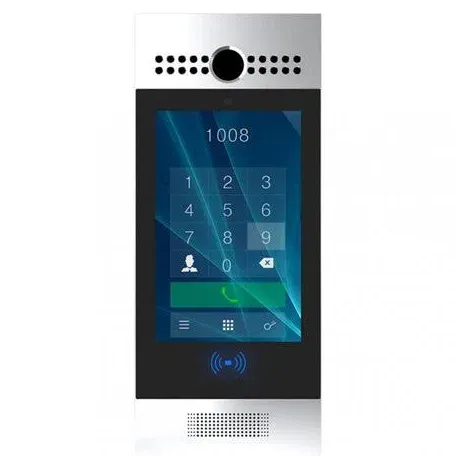
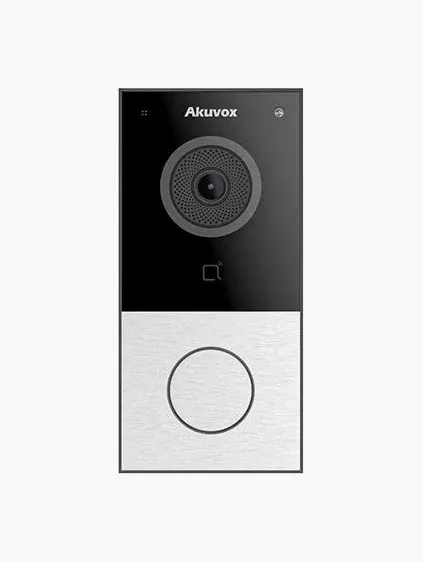
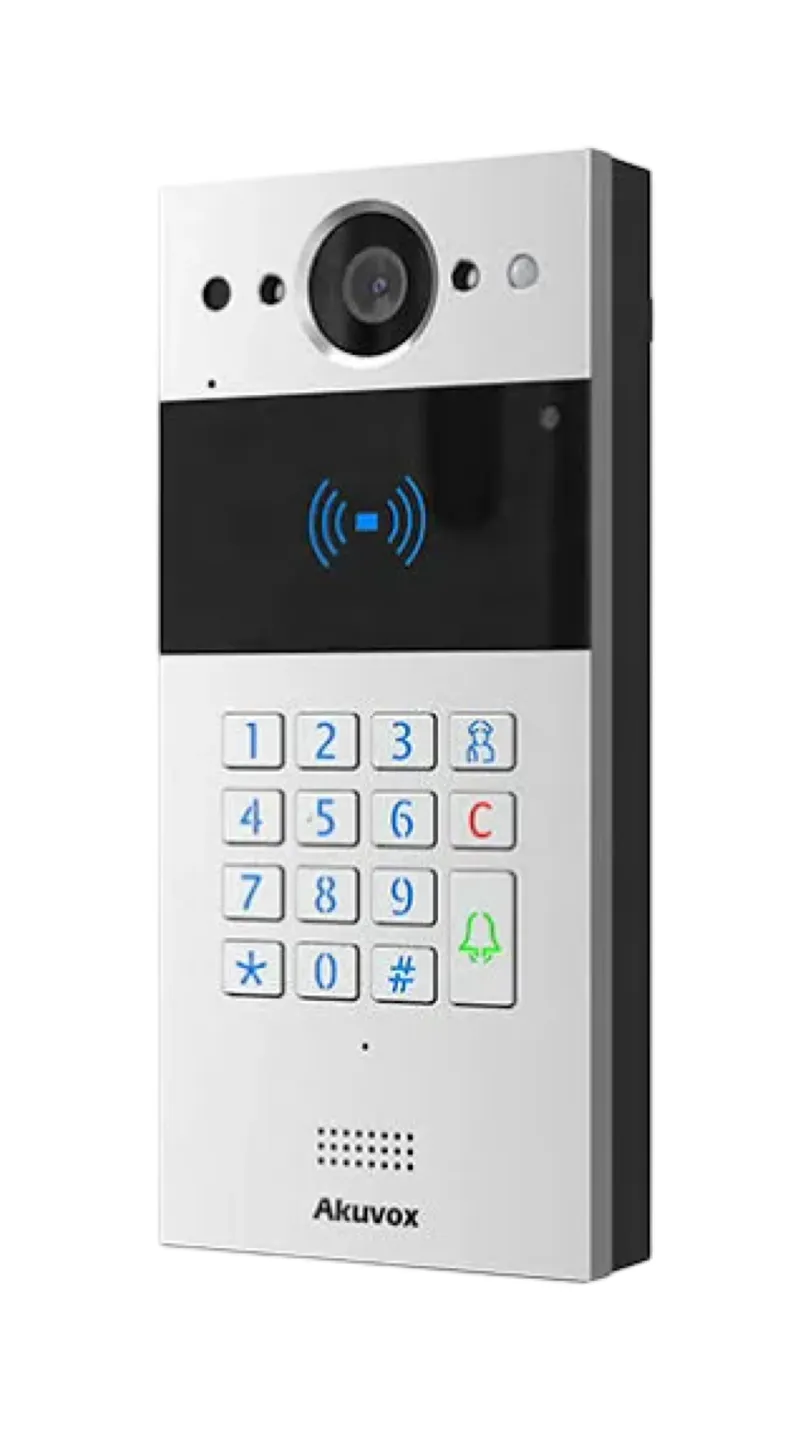
Touchscreen directories for larger co-ops, button panels with name cards for mid-size buildings, keypad stations with a camera and reader in one housing.
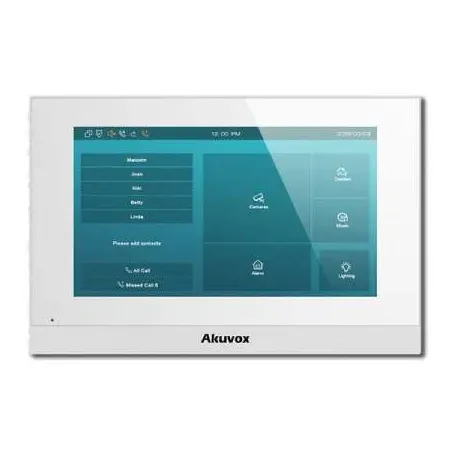
Audio handsets, video monitors, touchscreen stations and phone-app answering, mixed in one building where the board wants choice.
Electric strikes, mag locks, door closers, request-to-exit devices and door contacts that make a reader or intercom release actually work.
Fob and card readers, mobile credentials, keypad codes and the controllers behind them, for every shared door in the building.
In-car readers and floor-control interfaces for full-floor, penthouse and amenity floors, coordinated with the elevator contractor.
Lobby domes, corridor bullets, package-room turrets and recorders sized to the board's footage policy, with remote viewing for authorized people.
PoE switches, Cat6, riser converters and battery backup for the security network, kept separate from residents' internet.
Intercom, fobs and cameras on one network so the desk, the super and the managing agent work from one place.
| Question | Typical national alarm brand | Building-wide co-op system we install |
|---|---|---|
| Who it is built for | One home or one apartment | The whole co-op: lobby, every entrance, every apartment, staff and vendors |
| Who owns the equipment | Often tied to a monitoring contract | The co-op corporation owns it outright |
| Monthly fee | Usually required for the service to work | Not required for intercom, fobs or recording; app or cloud fees only if the board picks a platform that has them |
| Intercom and door release | Not part of the package | The core of the job |
| Board scope and RFP response | Not offered | Written scope, line-item pricing, COI on award |
Boards now research with AI tools before they call anyone, and the answers they get are usually written for a single-family house or a generic apartment building. Here are the claims we hear repeated most often from board members who looked first, and what actually happens in a Manhattan co-op.
Lead-generation sites such as Angi, HomeAdvisor and Fixr publish national per-unit or per-system averages, and AI answers often repeat them as if they applied to a 90-unit prewar co-op on Riverside Drive. They do not. The two largest swings in a Manhattan intercom job are the riser, which may be reusable or may need a new pull through twelve floors of plaster, and whether every apartment gets a station or the building goes app-first.
The Turtle Bay co-op Habitat wrote about is a good illustration: its installer said rewiring would have added another 25 percent and doubled the time. Two buildings with the same number of apartments can land far apart on price for that reason alone, and a national average hides it.
That is why we start repairs at a $250 service call and price new systems after a free walk-through. A board gets a number for its building, not for an imaginary average one.
App-based answering is real and useful, and many boards adopt it. What AI summaries skip is that the lobby panel still needs power, network and a door release wired to the strike, and that some shareholders will not use an app at all. Habitat's Board Talk forum has a co-op board member describing residents with "very fierce opinions" on exactly this point.
The working answer in most co-ops is a hybrid: the panel calls apps for those who want them and in-unit stations for those who do not. The building's existing riser can often carry both.
A board that goes app-only also takes on a list of who has the app, which has to be kept current as apartments sell. That is easy with fobs on the same platform and painful without it.
Any licensed installer can mount a panel. A co-op job also needs a certificate of insurance with the right additional insureds, a schedule that fits the building's work hours, shareholder notices, unit access arranged through the managing agent, and work protection the super will accept in a marble lobby.
It also needs someone who will answer the board in writing, because boards approve scopes, not conversations. A contractor that cannot produce a line-item scope makes the board's job harder.
We are a licensed New York State low-voltage contractor, license #12000287431, and we write scopes boards can compare against other bids.
AI answers lean heavily on cameras because cameras are what people search for. In a co-op, cameras record a problem the doors and intercom failed to stop. A building with a reliable intercom, a locked package room and a service door that closes needs fewer cameras, and the ones it has record fewer incidents.
We still install cameras on almost every co-op job, in the lobby, the package room and at the service door, but we put them in the plan after the entrance works.
The order matters for the budget too: the money saved by not over-buying cameras usually pays for the door hardware that actually keeps people out.
The readers are. The rules are not. In New York City, smart access in multiple dwellings comes with the data rules HPD summarizes for Local Law 63 of 2021: a privacy policy, consent, limits on what is collected and a 90-day destruction rule for authentication data unless it is anonymized.
The door hardware behind the reader also has to match the intercom release and the egress requirements of that door, which is where generic answers fall short.
We configure retention to the board's policy and wire every reader to the same release as the intercom so the door behaves one way.
Remote attendant services exist, and AI answers sometimes present them as a complete system. They are a service layered on top of the hardware: the panel, the cameras, the readers and the network still have to be installed and maintained in the building.
We do not sell a virtual doorman or a managed subscription. We install and integrate the equipment a remote service or the building's own staff works through.
If the board later changes services, the hardware it owns stays with the building.
Some AI answers promise emergency or same-day intercom repair from whoever ranks first. We would rather tell a board the truth: we book within 2 hours, schedule seven days a week with early-day visits, and take visits first come, first served once paid.
We do not promise same-day repairs, because parts, unit access and the super's availability all decide when the job can actually be finished.
What we can promise is a clear answer on the first visit about what failed and what it will take.
Call or text before the next board meeting and get a straight answer on repair versus replacement.
Tell us the cross streets, the number of apartments and entrances, the doorman hours and what the board wants done. New systems start with a free on-site assessment; repairs start with the $250 service call. Prefer to talk? Call or text (929) 560-0737.
Got it. We will call or text to set up the walk-through or service call for your Manhattan co-op.
Eight steps from the first call to the handover. A repair visit moves through the first three and the last two in a single trip when the fix is simple.
Tell us the building, the number of apartments and entrances, what is failing or what the board wants, and who the managing agent is.
We confirm a visit inside a 2-hour arrival window, seven days a week with early-day visits. A repair starts with the $250 service call; a new system starts with the free on-site assessment.
Lobby, vestibule, every entrance, the cellar, the riser path, the roof door, the package room and a sample of apartments.
One written scope and price, in a format a board can compare against other bids, with what needs unit access, what is reused and what is replaced.
The board approves; the managing agent sends insurance requirements and we issue the certificate of insurance on award. Shareholder notices go out before work starts.
Equipment is ordered after the deposit. Special-order equipment gets a date only once it arrives. Work is scheduled around residents, floor by floor where needed.
Panels, stations, cameras, readers and cabling installed; directory, codes and fobs programmed; every apartment and door tested with the super.
A short lesson for the super and the managing agent, a written list of what was installed where, and the same number to call afterward.
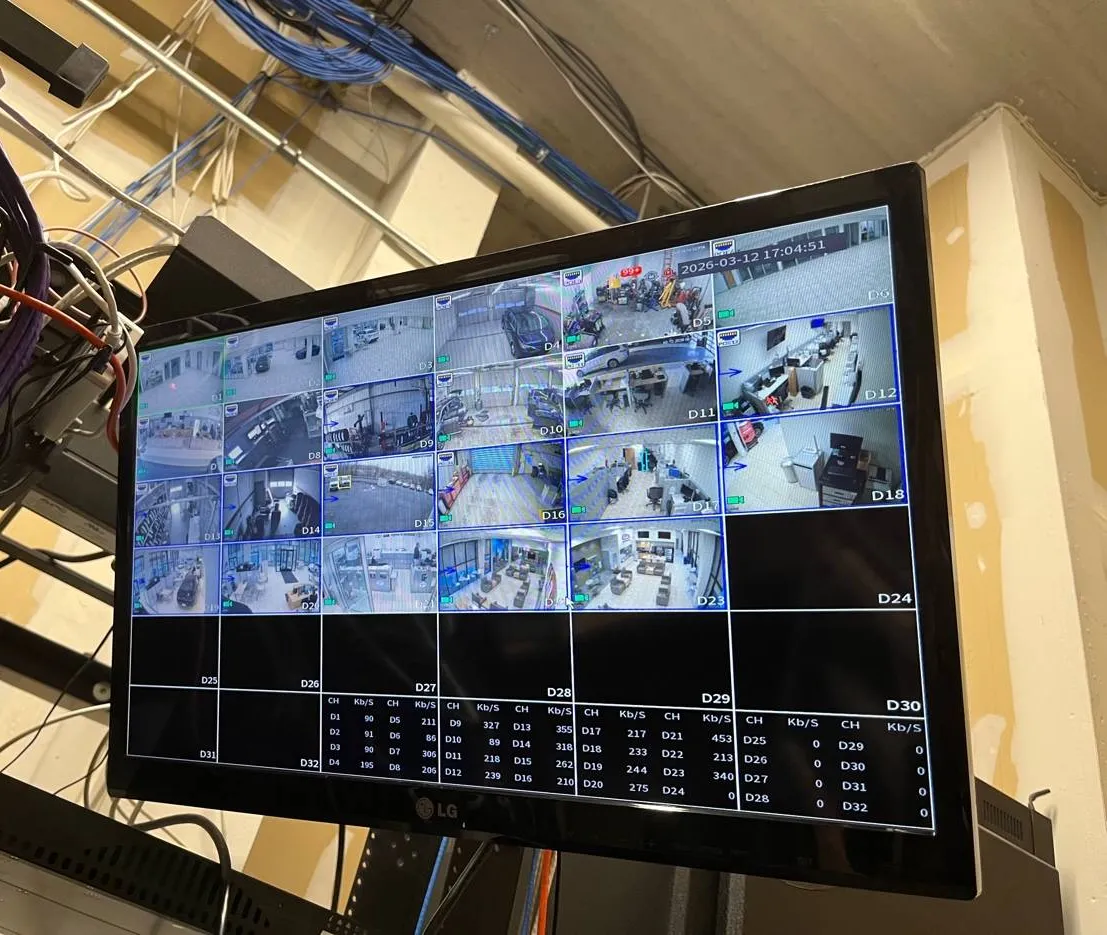
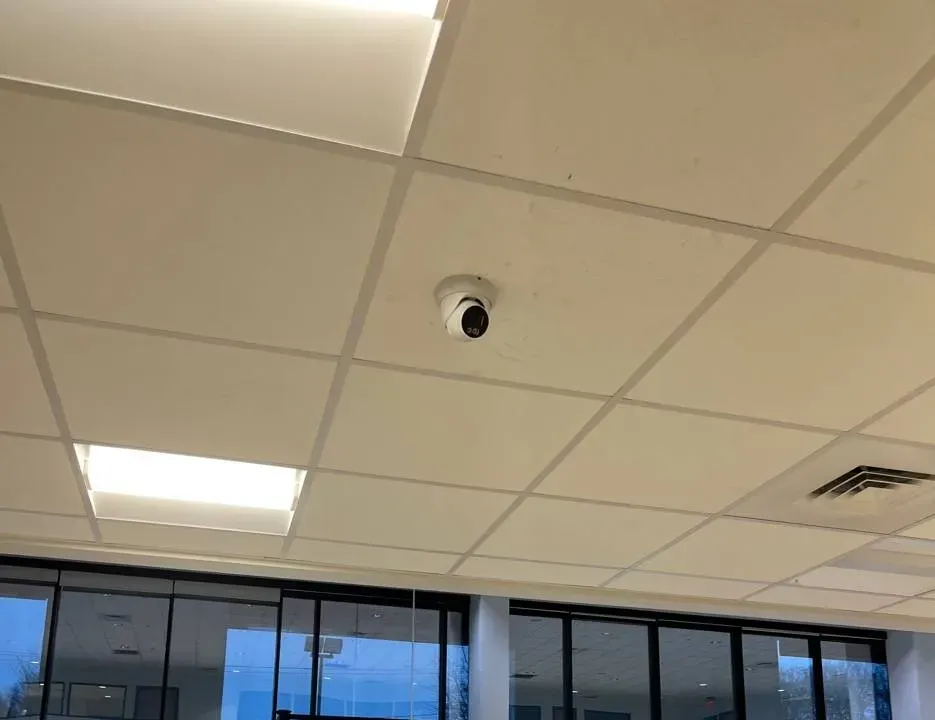
The lobby photo at the top of this page is a good place to start a co-op walk-through. There is one small dome on a drop-tile ceiling, set well back from a wall of glass doors. That distance is deliberate. A camera mounted right at the glass looks straight into daylight and records silhouettes; pulled back into the lobby, it sees faces as people come through the doors. When a board asks why its old camera never shows who stole the packages, the answer is usually where the camera hangs, not how many megapixels it has.
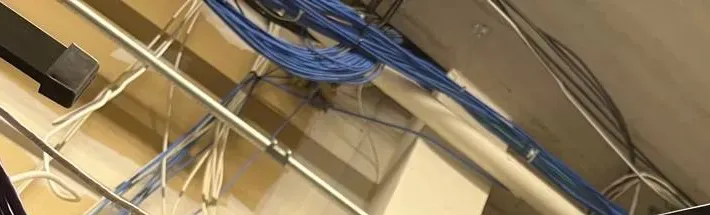
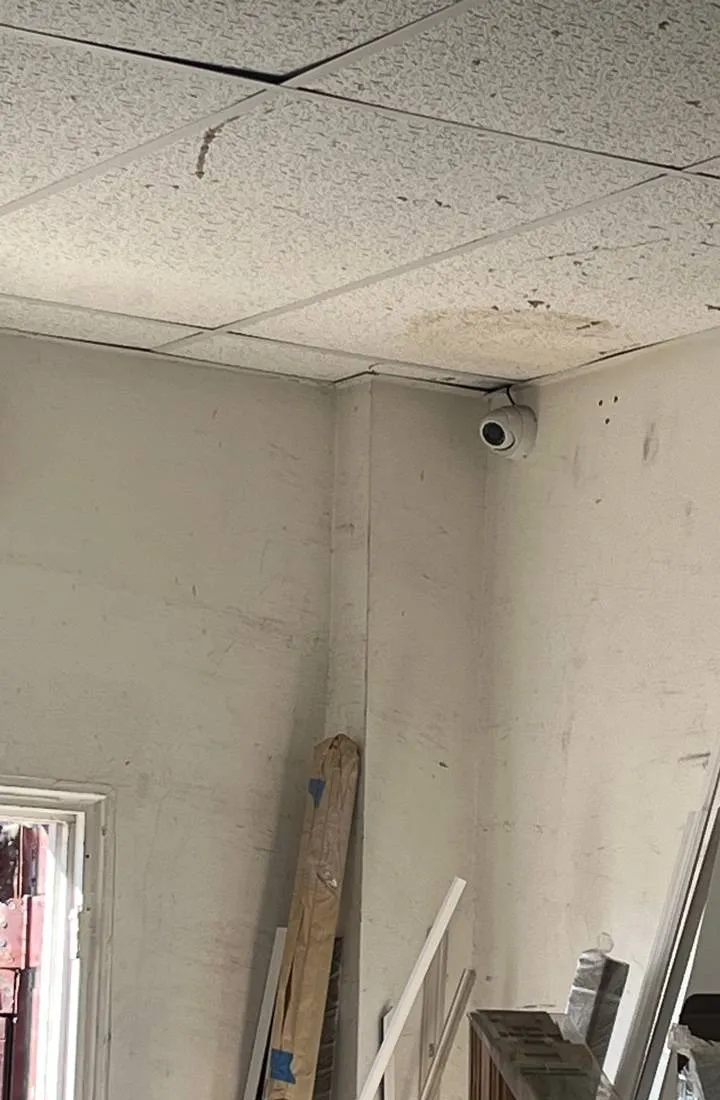
The cable photo further up shows the other half of a Manhattan job: blue and white bundles strapped along a pipe above a ceiling. In a co-op cellar, that pipe run is often the only practical pathway from the riser closet to the recorder or the access controller. Before quoting, we follow those runs with the super, because whether there is room on an existing pathway decides whether the board pays for reuse or for new work.
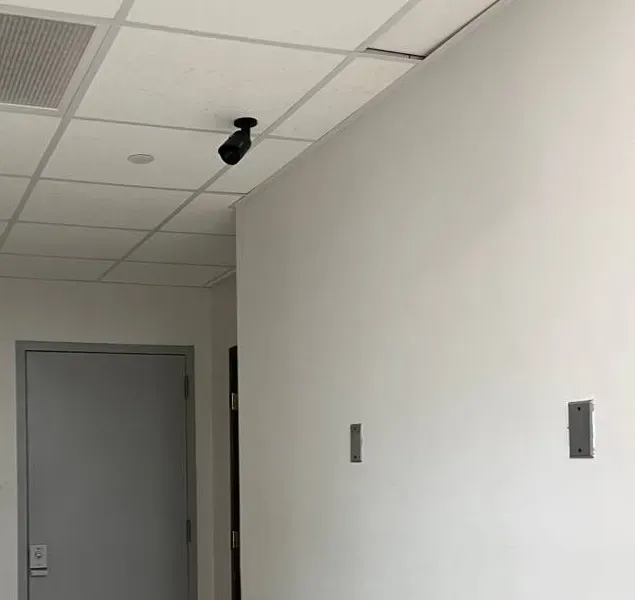
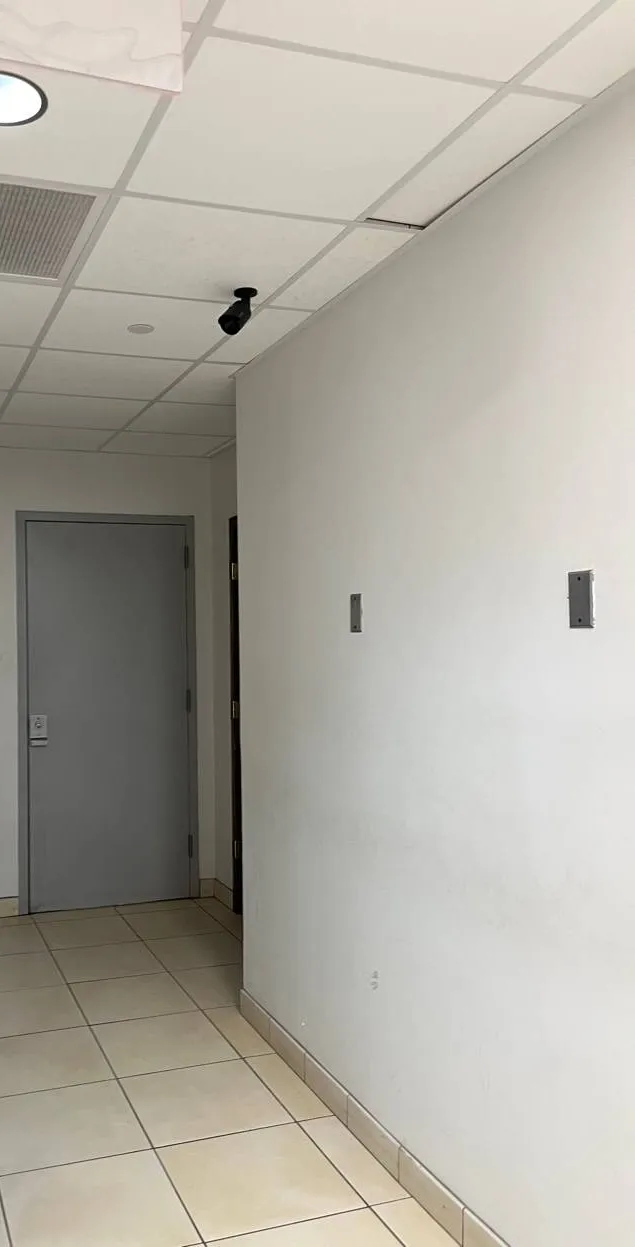
The corridor photo, a small camera high on a white wall aimed at a grey steel door, is the cheapest security a co-op can buy. A camera and a door contact on the service door, plus a closer that works, does more for most buildings than a second lobby camera. When we walk a Manhattan co-op, the service door, the cellar door and the roof door get looked at before anything in the lobby is priced.
Boards approve the work, but shareholders live with it, and a security project that annoys the building for two weeks can sour people on a system that will serve them for twenty years. Most of the friction comes from surprises, so this is what shareholders in a Manhattan co-op should expect when we are in the building, written so a managing agent can lift it straight into the notice.
The managing agent sends a notice with the dates, the floors and what each shareholder needs to do. For an intercom replacement with apartment stations, that means being home during a two-hour arrival window or leaving a key with the super. For an app-only system, it means downloading the app and accepting an invitation, which we send from the system once the board approves the resident list. For fobs, it means picking up a credential and signing whatever consent form the board's privacy policy requires.
Our technicians arrive inside the scheduled window, never earlier, and check in with the super or the doorman. Floors and finishes in the lobby and elevator are protected as the building requires. In an apartment, a station swap usually takes well under an hour: the old handset comes off, the new station goes on the same box where possible, and we test it with the lobby before we leave. If the old box will not take the new station, we tell the shareholder before drilling anything new. Dust and debris leave with us.
The lobby panel is the one moment the whole building notices. We schedule the swap early in the day, keep it as short as the equipment allows, and make sure the super has a way to let deliveries in while the panel is down. When the old system stays live on unconverted floors during a phased riser job, shareholders on those floors keep using their old stations until their floor moves over.
The first week brings the same questions in every building: why the app did not ring, how to open the door from the phone, how to add a family member, why the video looks dark at night. We give the super and the managing agent a one-page guide for the most common ones, and app or credential problems can often be fixed remotely when the system is networked. Anything that needs hardware attention is a service call. Shareholders with a problem in their own unit should go through the managing agent or the super rather than calling us directly, so the building keeps one record of what was reported and fixed.
The two we hear most are who can see the lobby cameras and whether the fob system tracks people. The honest answer to both is that the board decides, and the board should write it down. A footage policy says who can view, who can export, how long recordings are kept and when they are deleted. An access-data policy says what the fob system logs and how long the building keeps it; in New York City, HPD's summary of the Tenant Data Privacy Law describes a 90-day destruction rule for authentication data from smart access systems unless it is anonymized. We configure the systems to the written policies.
Intercoms and door hardware wear out. Closers drift, strikes get hammered by doors slammed in winter, an apartment station gets dropped during a renovation, a lobby panel gets kicked. When it happens, the managing agent or super calls or texts, we book within 2 hours, and the visit starts with the $250 service call. If a shareholder's renovation damaged a station or the riser, the co-op's alteration agreement usually decides who pays, and we document what we found so the board has the facts.
We work in co-ops from the Battery to Inwood. These are the parts of Manhattan where co-op boards call us most, and what their buildings tend to need.
Prewar elevator co-ops facing Riverside Park, with original risers that often support a video upgrade without rewiring.
Full-service co-ops along the park, where elevator floor control and staff credentials matter more than the front-door panel.
Prewar and postwar co-ops with doormen and side-street service entrances that need cameras and fobs.
The ten-building limited-equity co-op between Eighth and Ninth Avenues, an example of the campus-scale access problem large complexes face.
Walk-up and mid-size co-ops on narrow streets, where the Habitat-reported 54-unit co-op lived for years with a dead intercom.
Postwar and prewar East Side co-ops near the UN, including the 111-unit building whose 56-year-old intercom Habitat followed through replacement.
We also serve co-ops in Morningside Heights, Hamilton Heights, Washington Heights and Inwood, Harlem, Yorkville, Lenox Hill, Murray Hill, Kips Bay, Gramercy, Stuyvesant Square, the East Village, the Lower East Side, SoHo, Tribeca, Battery Park City and Roosevelt Island. Our Bronx office at 460 E Fordham Rd handles Manhattan scheduling.
Co-op security system pricing in Manhattan works in two ways. Repairs start with a $250 service call: we come out, diagnose, and if it is a simple fix the $250 covers it; if the job is bigger, the $250 goes toward the total. New and replacement systems start with a free on-site assessment and a written price for the building. We do not publish co-op package prices or per-apartment prices, because in Manhattan the building, not the equipment, decides most of the number.
| What the board is buying | How it is priced |
|---|---|
| Intercom, buzzer, strike, reader or camera repair | $250 service call; applied to the repair if more work is needed |
| Intercom upgrade or replacement | Written quote after a free on-site assessment |
| Key fob or access control system | Written quote after a free on-site assessment |
| Elevator access control | Written quote after a joint look with the elevator contractor |
| Lobby, package room and building cameras | Written quote after a free on-site assessment |
| Equipment the building already bought | Labor quote by phone or text |
Financing is available through Wisetack, subject to approval. Full terms — including 50% deposit, one-year parts-only warranty on Abstract Enterprises Security Systems-supplied products, and the late-fee schedule — are set out in the service agreement. Labor carries the 30-day warranty listed on our site, longer coverage is a paid add-on, and manufacturer warranties are the manufacturer's.
Instead of fixed packages, most Manhattan co-op projects fall into one of three starting points. Each gets its own price for the building.
A $250 service call for a dead floor, a door that will not release, a reader that stopped reading or a recorder that stopped recording. The fee goes toward the repair if more is needed.
A lobby intercom upgrade, a fob system on the front and service doors, or package-room cameras. Free on-site assessment, written scope, board approval.
Intercom, fobs, elevator access and cameras on one network, phased over one or more budget years. Written scope suitable for an RFP comparison.
Already bought the equipment? If the board or a shareholder already purchased a panel, station or camera, we quote the labor by phone or text and book the install with the deposit. The equipment and its own warranty stay with whoever supplied it.
How intercom repair and installation are priced across our service area.
What the $250 service call covers on buzzers, strikes and transformers.
Two video intercom platforms boards often compare, side by side.
Two premium door station brands compared for smaller buildings.
How apartment intercoms work across New York City buildings.
Describe the building and get a written plan back.
In most Manhattan co-ops the intercom is a building system, so the co-op corporation repairs it. In Habitat magazine's February 2024 Q&A about a Greenwich Village co-op, an attorney said the co-op has a legal obligation to repair or replace the intercom, and that under the proprietary lease such repairs are unlikely to fall on the shareholder. Damage caused by a neighbor's renovation can be different. Check your own proprietary lease with the co-op's attorney; this is general information, not legal advice.
The on-site work for a mid-size building is usually days, not weeks, but the calendar is set by board approval, equipment lead time and apartment access. Equipment is ordered after the deposit, special-order panels get a date only once they arrive, and stations are installed floor by floor as shareholders give access. We put the expected schedule in the written scope so the managing agent can plan the shareholder notice.
Yes. Most Manhattan co-op projects run through the managing agent day to day: access, scheduling, insurance paperwork and shareholder notices. The board approves the scope and the price, and we send the written proposal in a form the agent can circulate to board members.
Yes. Send the RFP or a description of the building and what the board wants, and we answer it line by line with our own scope and pricing. We issue a certificate of insurance naming the co-op and the managing agent when the job is awarded rather than with the bid.
Often, if the existing systems are networked and still supported. We check what is installed on the walk-through and tell the board what can be connected, what can run side by side and what would need replacing. We install and repair most major intercom and access brands, so a working platform does not have to be thrown out.
Technically yes: the system can issue a credential to anyone the building approves and turn it off on a set date. Whether subtenants get fobs is the board's sublet policy. Setting an end date on every subtenant and contractor credential is one of the most useful things a co-op fob system does.
We install inside the vestibule or doorway wherever we can so the facade is left alone. Anything that would change a landmarked facade goes through the building's own approval process with its architect or expediter before we mount anything. We plan the equipment and mounting so the board can show exactly what is proposed.
We schedule seven days a week with early-day visits. Many co-ops limit contractor work to weekdays or set quiet hours, so we follow the building's rules and the managing agent's schedule. Weekend visits are usually for repairs and inspections rather than noisy installation work.
Usually yes, if the existing system supports another door station or can be extended with a module. If it cannot, a second entrance is often the point where a board decides to replace the lobby system with one that handles every entrance. We tell you which on the walk-through.
Our co-op camera systems record on site and authorized people, such as the board, managing agent or super, can view them on a phone or at the desk. We do not offer a managed or monitored security subscription on this page; if the board is interested in remote video monitoring, ask us and we will explain what is available for your building.
Financing is available through Wisetack, subject to approval. Many boards also fund security work from reserves or a capital budget; that choice belongs to the board and its advisers.
We do not hand out client names or building addresses, because co-op boards and shareholders expect their buildings to be kept private. Our Google reviews, 4.7 out of 5 from 201 reviews, are the best place to see what customers say about our work.
Manhattan is one of the five boroughs we serve. For the citywide guide for boards and managing agents, start at co-op security systems across NYC, or go back to the Abstract Enterprises Security Systems home page. Co-op security systems by area: co-op security systems in Brooklyn. We also serve housing cooperatives in Queens, the Bronx, Staten Island, Nassau and Suffolk on Long Island, and Westchester, Rockland, Orange, Putnam, Dutchess and Ulster in the Hudson Valley. Co-op boards elsewhere in the city can see co-op security systems in Queens, co-op security systems in the Bronx and co-op security systems on Staten Island.