What are you looking for?
About Us Contact Us Careers Get a Free Quote (800) 486-0943
Pick a service
✅ Got Your Own System?
🎬 Home TheatreQuote 🎶 AV SoundQuote 🔑 Access ControlQuote
Now pick your area
Pick your area
Long Island
Hudson Valley
Services available
Pricing & Tools
Pick a service for pricing
🚪 Intercom Pricing 🔔 Buzzer Repair Pricing
Calculators
📹 Camera System Calculator 🚨 Alarm Calculator ⚡ Cabling Quote Builder ✅ Got Your Own System?
Select your area
Entry panel dead since the last storm, strangers cutting through the parking court, or fobs nobody can account for at your Orange County co-op? Call or text (845) 640-3835
Home › Co-op Security Systems Hudson Valley › Co-op Security Systems Orange County
Licensed NYS Low-Voltage Contractor · Garden Co-ops, Townhouse Co-ops & Single-Building Co-ops from Newburgh to Port Jervis

Co-op Security
Systems in
Orange County

Entry Intercoms · Buzzer Repair · Key Fobs · Elevator Readers · Lot Cameras · Package Rooms

For co op security systems in Orange County, the starting point is a $250 service call when something is broken, while a new entry, fob or camera system for an entire cooperative gets an itemized written price once we have walked the grounds. Most of the county's housing cooperatives are not tall buildings with a doorman. They are two-story garden courts from the 1960s, townhouse-style co-ops around a parking loop and, less often, a single walk-up or elevator building in a city or village center, and each of those needs a different kind of co-op building security. We plan it for boards, shareholders and managing agents from our Bronx office, with travel built into every written quote.

Quick answer: Abstract Enterprises Security Systems puts in, fixes and modernizes the security a cooperative owns in common across Orange County, New York: building entry intercoms and buzzers, electric strikes and releases, fob readers for lobby, laundry and storage doors, elevator readers where a building has an elevator, and cameras for entrances, mail areas, parking courts and long drives. A repair begins with the $250 service call, and the $250 is credited if the job needs parts or a longer visit. A new or building-wide system gets an itemized written price after a free on-site assessment, set out so the board can compare it with other bids. Visits are confirmed within two hours of your request on any day of the week, and we issue the managing agent's certificate of insurance when the job is awarded.

Last updated November 25, 2026 by Abstract Enterprises Security Systems, NYS license #12000287431 · Sources: U.S. Census Bureau QuickFacts (Orange County, NY); OneKey MLS Q3 2026 Orange County report via HGAR; NYS Multiple Residence Law §3; NYS General Business Law §69-m and NYS Department of State; Court of Appeals, Levandusky (1990); City of Newburgh and City of Middletown alarm codes (eCode360); Orange & Rockland Utilities (July 6, 2026); News 12 Hudson Valley (Jan. 26, 2026); New Windsor Police Department; NJ Transit Port Jervis Line; Homes.com and OneKey listing data (links in each section)

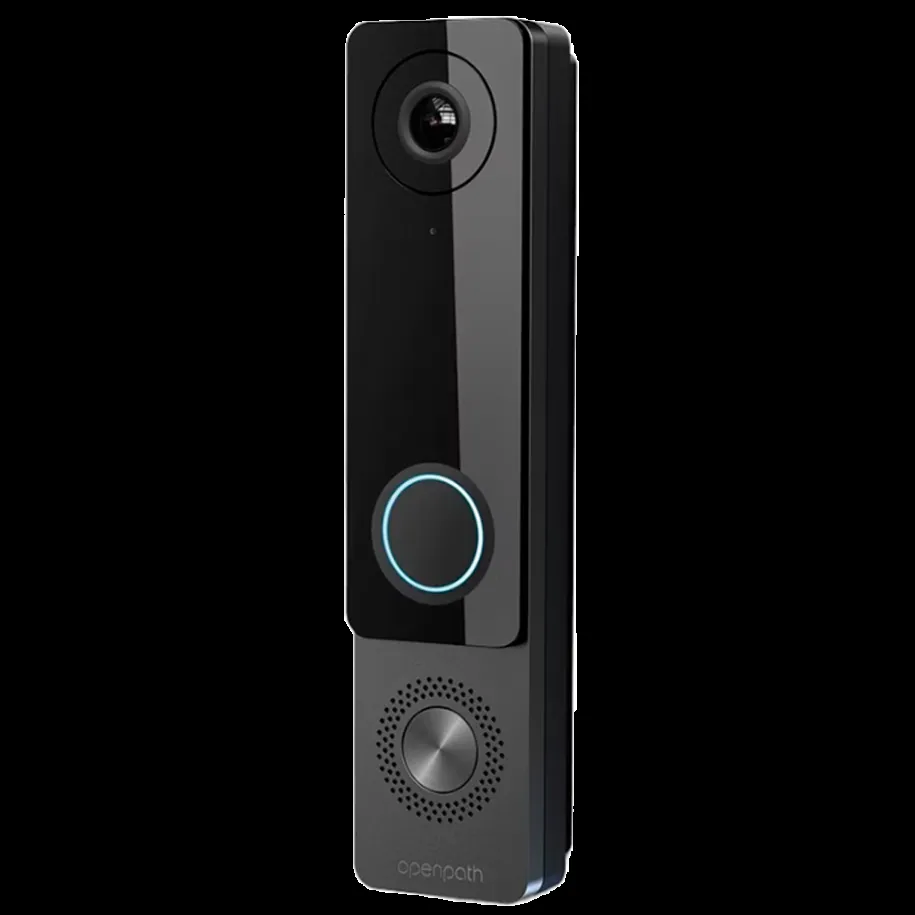
Orange County co-op intercom entry: product photo of a slim black video reader with a camera lens at the top, a call button with a lit blue ring and a speaker grille
Product photo from the Abstract Enterprises Security Systems product library, not taken at an Orange County co-op: a slim video reader with a camera, a lit call ring and a speaker. On a garden co-op's stair-hall door, a narrow unit like this fits the door frame where a wide lobby panel would not.
Orange County Co-op Security Quote
Board member, managing agent, super or shareholder

✅
Request Sent!
Thank you. We will call or text to set a time for your Orange County co-op.
2002
In Business Since
2 Hr
Visits Booked In
$250
Repair Visits Start At
4.7★
201 Google Reviews

Owner-operated since 2002 · Thousands of jobs completed · Booked within 2 hours. Call or text (845) 640-3835 or fill in the short form.

  • A single low-voltage contractor covering the front doors, the laundry building, the parking court and the long drive in from the road
  • Written scopes broken out by building and by door, easy for a treasurer to compare and easy to attach to a shareholder notice
  • 4.7 out of 5 across 201 Google reviews, licensed as a security installer by the New York Department of State, and fully insured
The County

Orange County Cooperatives: Spread Out, Low-Rise and Mostly Off the Train Line

Orange County is big, and its co-ops are scattered across it. The Census Bureau puts the county at 812 square miles of land and estimates 417,669 residents as of July 2025, up from 401,310 at the 2020 count, living in about 154,500 housing units, with roughly two homes in three occupied by their owners (U.S. Census Bureau QuickFacts, Orange County, New York). Most of that housing is single-family. Cooperative apartments are a small slice of it, and they sit in pockets: older garden complexes in places like New Windsor and Cornwall, townhouse-style co-ops off the main roads, the occasional single-family cooperative, and small buildings in the cities and villages. A board in one of those pockets is often the only cooperative for miles, which shapes everything from who it calls for a repair to how long a part takes to arrive.

The market numbers show how thin and specific the co-op slice is. The Q3 2026 Orange County report built on OneKey MLS data counted six co-op closings in the quarter, up from three a year earlier, with a co-op median sales price of $167,000, up 4.7 percent; condos in the same report had a median of $326,950 and single-family homes $510,000 (OneKey MLS data, Orange County Q3 2026 report). Six sales is a small sample, so the median can swing, but the gap is the point: an Orange County co-op is the most affordable way to own in the county, and its shareholders tend to watch the maintenance charge closely. A security plan that adds a monthly subscription per apartment lands differently here than it does in a Westchester elevator building.

The listings themselves describe the typical property. A November 2026 search of co-ops for sale in the county showed seven units, three in Cornwall, three in New Windsor and one in Monroe, priced from about $130,000 to just under $300,000; one New Windsor unit was described as townhouse-style and the Monroe listing as a ranch-style single-family co-op (Homes.com, Orange County NY co-ops for sale). One New Windsor garden co-op listing gives a 1960 build date, on-site laundry and a monthly maintenance that covers grounds, pool service, snow removal, trash and water (Coldwell Banker listing data, New Windsor garden co-op). A Cornwall co-op listing describes a two-level complex built in 1965 with a parking lot, a shared laundry and a playground behind the buildings (William Raveis listing data, Cornwall co-op). We don't name complexes or addresses on this page, but those three details, 1960s garden buildings, a shared laundry and a parking lot, describe the job we are most often asked to plan in this county.

Then there is the distance. A shareholder in a Cornwall garden court and one in a Port Jervis walk-up can be an hour apart. The county's commuter rail, the Port Jervis Line, runs through Harriman, Salisbury Mills, Campbell Hall, Middletown, Otisville and Port Jervis toward Secaucus and Hoboken rather than up the river (NJ Transit, Port Jervis Line stations), so most co-op residents drive, and most co-op properties are built around parking. That turns Orange County cooperative security into a question about lots, drives and outbuildings as much as front doors. It also means the contractor is coming a fair way, which is why travel is priced into our written quotes.

Orange County facts that change a co-op security plan

  • A small, affordable co-op market: six co-op closings in Q3 2026 at a $167,000 median, against $510,000 for single-family homes (OneKey MLS data via HGAR). Subscription costs per apartment matter to these boards.
  • Garden and townhouse stock: listings in New Windsor and Cornwall describe 1960 and 1965 garden buildings with shared laundry and parking (Coldwell Banker; William Raveis).
  • State housing law outside the big cities: the Multiple Residence Law applies to all cities under 325,000 people and to all towns and villages, which covers every Orange County community (NY Senate, Multiple Residence Law §3).
  • A licensed trade statewide: under General Business Law §69-m, a company that puts in or services security or fire alarm systems for pay needs a Department of State license (NY Senate, GBL §69-m).
  • City alarm rules: the City of Newburgh requires a permit to possess or use an alarm system and can suspend one after more than four false alarms in 30 days or ten in a year (City of Newburgh code, alarm systems).
  • Weather that reaches the hardware: the January 2026 storm left about 18 inches in Monroe, with county officials saying some areas may have seen up to 24 (News 12, Jan. 26, 2026).
Orange County cooperative building security: job photo of two white dome cameras mounted under a yellow fascia corner with bare winter branches and blue sky behind
Job photo from the Abstract Enterprises Security Systems job library, not taken at an Orange County co-op: two dome cameras tucked under a fascia corner, with bare trees behind. Mounting under an overhang like this keeps snow and ice off the lens on a garden building's end wall.
What We Do

The Nine Systems an Orange County Co-op Board Hands Us

Every job below can go to a single co-op security contractor. Each one has its own section further down, linking to the matching Orange County service page for anyone who wants the hardware specifics. We scope by building and by door rather than by apartment, because on a campus of two-story buildings the number of doors and the distance between them drive the cost, not the unit count.

01

Entry intercom upgrades

Replace worn stair-hall and lobby call stations with video, and let shareholders pick up on an indoor screen, a phone, or both.

02

Buzzer and intercom repair

Dead buttons, a release that hums but never clicks, static on every call after rain: traced to the part and fixed.

03

Key fobs on shared doors

Laundry building, storage rooms, pool gate, maintenance shop and rear doors on one fob list instead of a ring of keys.

04

Readers in the elevator cab

For the few co-op buildings that have a car: shareholders' fobs call the elevator, strangers who followed someone in don't ride up.

05

Parking court and drive cameras

Coverage where the drive meets the road, along the parking rows and at the doors residents use from their cars.

06

Entrance and mail cameras

Faces at each entry door and hands at the mailboxes, recorded on equipment the co-op owns.

07

Package room or locked drop

One fob-controlled room or closet for deliveries instead of boxes left in a dozen vestibules.

08

Cable between buildings

Low-voltage runs, conduit and point-to-point links that tie a spread-out complex onto one system.

09

Board-ready proposals

Itemized written scopes by building and phase, ready for an RFP comparison, a budget meeting and a shareholder notice.

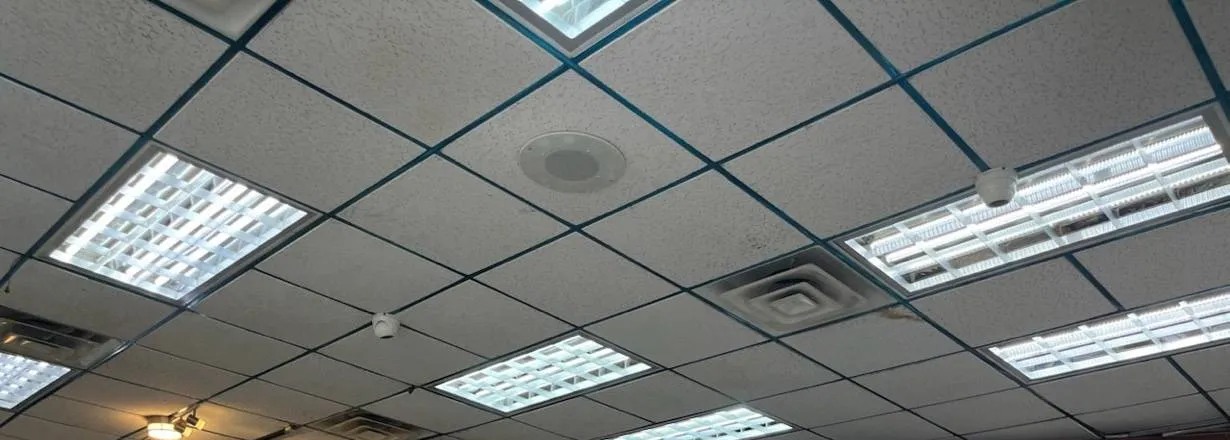
Orange County co-op common room ceiling: job photo of a tiled drop ceiling with two small white dome cameras, a round ceiling speaker, light panels and an air vent
Job photo from the Abstract Enterprises Security Systems job library, not taken at an Orange County co-op: two small dome cameras in a tiled drop ceiling beside light panels and a speaker. Laundry buildings and community rooms in garden co-ops often have ceilings like this, which make cable runs easy.
Intercom

Replacing the Co-op Intercom in Orange County: Stair Halls, Lobbies and Unit Doors

The entry intercom is where nearly every Orange County board starts, and it is a different decision here than in a city tower. A 1960s garden co-op rarely has one lobby. It has a stair hall behind each exterior door, each with a small call panel serving four to eight apartments, and sometimes a second door at the back facing the parking court. Some townhouse-style co-ops have no shared entry at all, because each unit opens straight onto a walk. And a co-op that owns a single walk-up or elevator building, in Newburgh, Middletown or a village center, works like any city building: one lobby panel, a riser to every floor, and apartment stations that may be as old as the building. A co-op intercom upgrade in this county starts by counting which of those three situations the property actually has. Our page on intercom installation in Orange County covers the equipment itself in more depth.

For a garden complex, the usual question in front of the board is whether to keep many small audio panels or move to video stations at each stair-hall door. Video costs more per door, but it fixes the complaint we hear most from these properties: shareholders buzzing in whoever pressed the button because they cannot see who is there. The second question is how the call reaches the apartment. Older garden buildings were wired with a pair or two from each stair-hall panel to the units above it. When that cable tests clean, a new video station at the door can often keep using it, and the work stays mostly outside the apartments. When it doesn't, the board chooses between new cable up each stair, which means entering every unit, or a phone-based answering system that skips the apartment wiring entirely.

That second option is popular with boards here for a reason that has nothing to do with technology: access to units. A garden co-op with sixty apartments spread over ten buildings can take weeks of shareholder scheduling to get into every home. App answering lets the board replace the door end, enroll shareholders' phones and leave the old handsets on the wall until the building's painter removes them. The catch is cost over time. Many app platforms charge a monthly fee per apartment or per building, and in a county where the co-op median is $167,000, a board should see that number in writing before it votes. We put the subscription, if there is one, on its own line, and we quote a no-subscription option beside it whenever the building allows one.

A single-building co-op follows the familiar path: test the riser from the lobby, decide what to do with the apartment stations, and plan the lobby panel to fit the opening. What changes in older city and village buildings is the plaster walls and narrow chases, which make reusing what is already in the wall matter more than usual. A separate guide for boards on co-op intercom upgrades, covering repair versus replacement, writing the request for proposals and drafting the shareholder notice, is in preparation.

How the project is funded and approved is set by the co-op's bylaws and proprietary lease. We have seen Orange County boards draw on reserves, levy an assessment, or spread an intercom modernization over two fiscal years with the worst buildings first. Choosing among those is the board's call; we never suggest what shareholders should be assessed. We do lay the price out so any of those paths works: door stations, cable work, apartment options and any subscription each priced separately, and each building on its own line so a phased plan is easy to approve. Our Orange County intercom page lists multi-unit building systems at $1,200–$5,000; a co-op campus gets a written figure after the free walk-through, broken out building by building. Financing is available through Wisetack, subject to approval. A COI listing the co-op and the managing agent comes after award, never attached to a quote.

Matching the answering method to the Orange County property

Property typeWhat usually worksWhat the board should weigh
1960s garden co-op, stair halls of 4–8 unitsVideo station at each stair-hall door, reusing stair wiring where it tests cleanNumber of doors drives cost; old handsets can stay on the wall if the cable is reused
Garden co-op where unit access is hard to scheduleVideo door stations with phone answering onlyLittle work inside apartments; check any per-apartment monthly fee
Townhouse-style co-op, each unit with its own doorA wired video doorbell or one-button station per unit, chosen by the boardUniform look across the property; the board, not each shareholder, picks the model
City elevator building in Newburgh or MiddletownLobby panel plus wall stations, app answering or a mixRiser test first; access to every unit if stations change
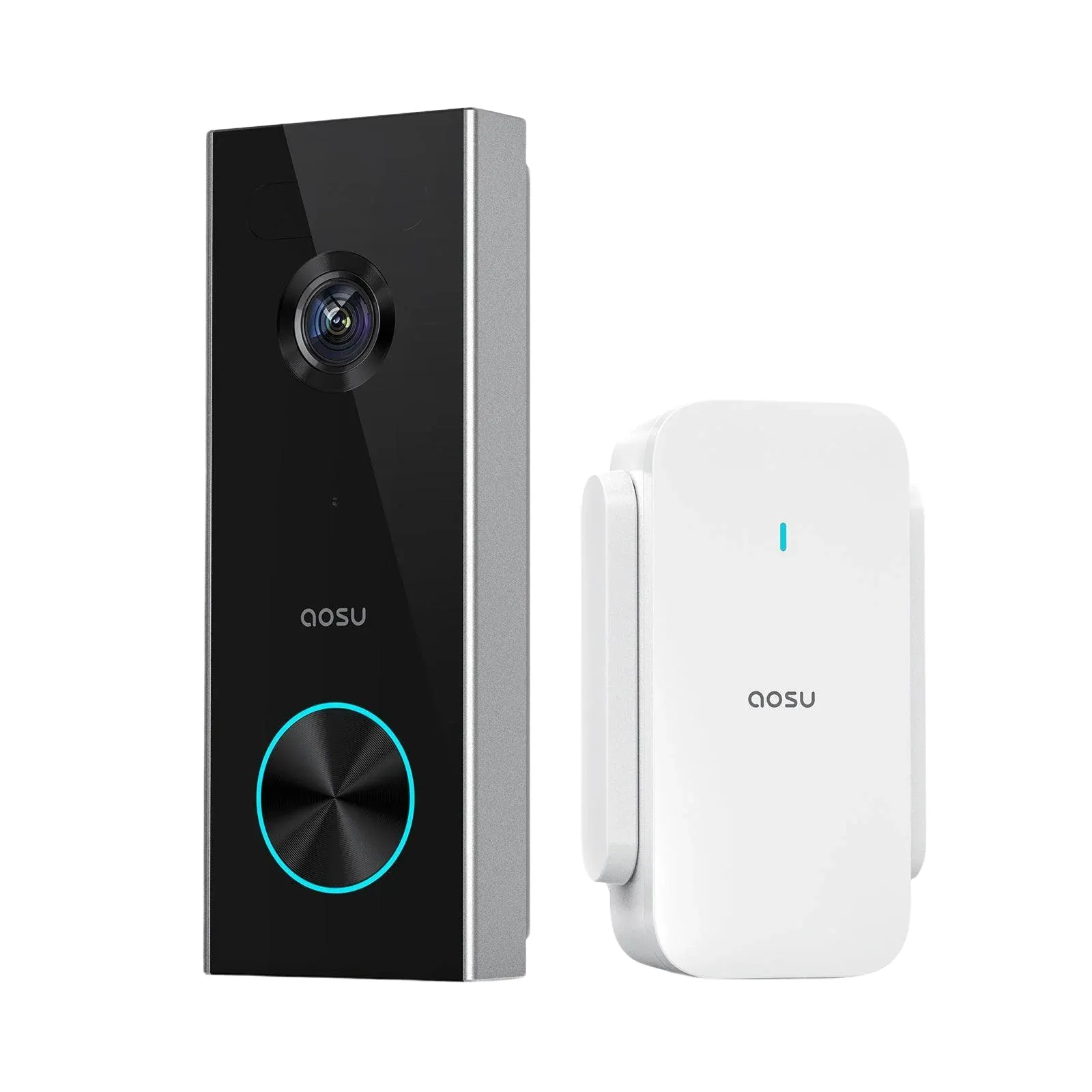
Orange County townhouse co-op unit entry: product photo of a black and silver video doorbell with a lit blue button beside a white plug-in chime
Product photo from the Abstract Enterprises Security Systems product library, not taken at an Orange County co-op: a video doorbell beside a plug-in chime. For a townhouse-style co-op, the board can pick one doorbell model for every unit door so the property looks uniform; we wire it rather than relying on batteries wherever a doorbell circuit exists.
Repairs

Fixing Buzzers and Entry Panels in Orange County Co-ops

A repair call from an Orange County co-op usually arrives as one sentence from the super or a shareholder: the buzzer in building C doesn't work. On site it turns out to be one of a short list. A transformer in a utility closet that cooked in a summer heat wave. A door release that buzzes but no longer pulls the latch because the frame has shifted with the frost. A stair-hall panel whose buttons stopped working after water got behind the faceplate. Or a cable between two buildings that failed somewhere under the lawn. Co-op intercom repair here begins with the $250 service call: the technician isolates the failed part, the super or managing agent hears the cause and the repair price before anything is replaced, and the $250 is credited if the fix needs parts or a longer visit.

The common parts have published ranges that apply across the county. Our page for Orange County door buzzer repair publishes them: transformers at $325–$650, apartment stations at $250–$525, relays or release buttons at $250–$475, strikes including alignment at $450–$950, lobby panel work or a new faceplate at $650–$1,800, and riser pair re-termination at $850–$2,400. Those ranges are the same ones on our Hudson Valley repair page; a long cable fault between buildings or a gate entry at the end of a drive is quoted after we have found it. When a small building's system is beyond repair and the board wants a straightforward replacement rather than a video platform, our page on door buzzer installation in Orange County explains the simpler systems we put in.

Two patterns repeat on Orange County properties. The first is weather tracking: a fault that appears after rain or a thaw and vanishes when things dry out. That is almost always water at an exterior panel, a junction box on an outside wall, or a buried run between buildings, and it is slower to find than an indoor fault because it may not be failing on the day we visit. We ask the super to keep a log of the days it fails before we come, and we test with the panel open and the box seals off. The second is the back door. In garden co-ops the door facing the parking court gets more traffic than the front, its closer wears first, and its strike takes the most abuse from people pulling on a door that hasn't released. We check both on every visit.

Cooperative repairs come with one practical condition. Intercom faults tend to span several apartments, and the technician has to get into each one the fault touches. If three units above one stair hall can't hear the door, the fault could be in any of their stations or in the stair cable between them. The managing agent's visit notice should ask those households to be in or to give the super a key. Bookings are confirmed within two hours of a request on any day of the week, early slots included, and slots go in the order paid visits arrive. Because the trip from the Bronx is a long one, we try to group a co-op's small repairs into one visit, and we won't promise a repair is done on a set day, since that depends on the fault and on parts.

Key Fobs

Fob Access for Laundry Buildings, Storage Rooms and Pool Gates

On an Orange County co-op campus, the front doors are rarely the problem. The problem is everything else that needs a key: the laundry building that residents use at all hours, the storage room in the basement or a shed, the maintenance shop, the pool gate in summer, the rear door of each stair hall. Over decades those keys spread. Shareholders who sold kept theirs, contractors had copies made, a former super never handed back his ring. Co-op access control swaps that key ring for fobs or cards kept on a single roster; after a sale, a move or a loss, the super disables one credential and nobody pays a locksmith to re-key a building. Our page on access control installation in Orange County covers the hardware, and lists a single door or gate there at $1,700–$5,000 installed.

Distance is what makes access control on a campus different. A controller in one building can't reach a reader three buildings away without a cable, so the first design question is how the doors connect. Where buildings share a basement or a utility trench, cable goes there. Where they don't, the choices are a buried conduit, which is cheapest to add when the co-op is already digging, a point-to-point wireless link between buildings, or a cloud-managed controller at each building that the managing agent runs from one screen. We show the board the trade-offs in the proposal rather than picking one for them, and we design so that a building that loses its link keeps working on its own list of fobs.

The doors themselves come first. Exterior doors on garden buildings take snow, ice and frost heave, and a door that drags or doesn't latch will defeat any reader. We check the closer, the frame and the strike before we propose electronics, and if the door needs work first we say so. Whatever locking we add, people inside walk out with a push, no credential needed, and every maglock gets its own egress release. The electrified hardware, readers and request-to-exit devices are ours; mortise locks and cylinders are a locksmith's work, and a door that needs a new frame is the building's carpenter.

Every fob swipe leaves a record of door, time and credential, so the board should put a brief data policy in writing. New York City's Tenant Data Privacy Act stops at the city line, and we are not aware of a county or town rule in Orange County that replaces it. The co-op and its lawyer therefore decide who may read the logs, how many months they are kept and how requests for them are answered. We configure retention and permissions to match, and the administrator account passes to the co-op at handover.

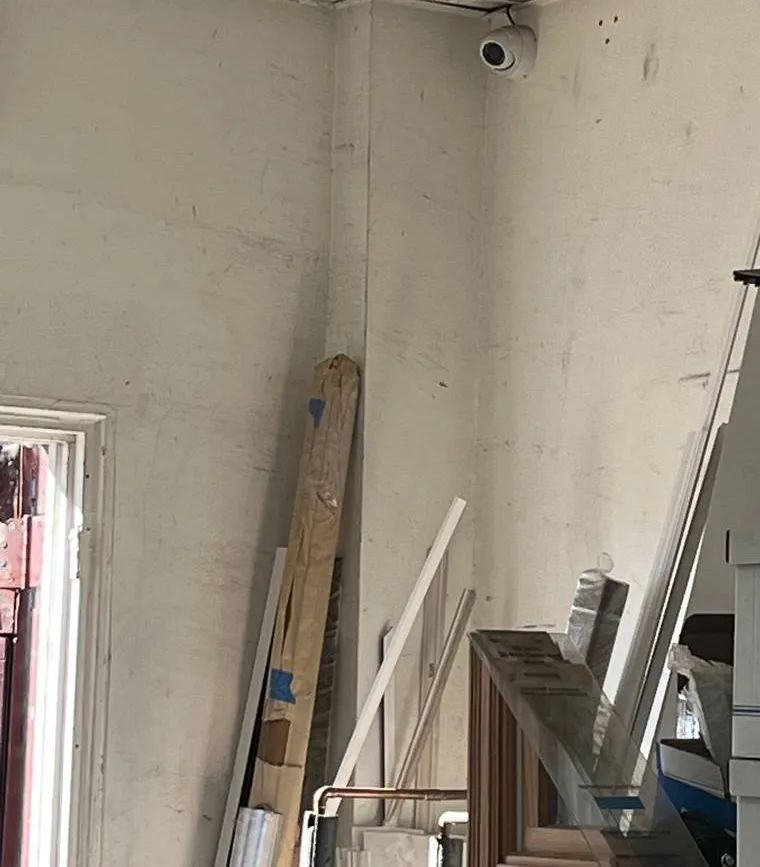
Orange County co-op storage room security: job photo of a white dome camera high in the corner of a plain storage room above boards, trim and glass panels leaning against the wall
Job photo from the Abstract Enterprises Security Systems job library, not taken at an Orange County co-op: a dome camera high in the corner of a storage room. In a co-op's storage building or maintenance shop, a camera aimed at the door and the stock, paired with a fob reader on the door, shows who came in and what left.
Elevators

Elevator Readers for the Orange County Co-ops That Have a Car

Most Orange County co-ops have no elevator at all, so this section applies to a minority of boards: the occasional co-op building with an elevator, whether an older city building or a newer one. Where there is one, co-op elevator access control does a simple job. With a reader in the cab, someone who tailgated through the lobby still can't reach the upper floors, and the board can limit each fob to the floors it chooses. Our page on elevator access control installation in Orange County sets out what each level includes; in Orange County a Level 1 card, fob, code or phone reader in the car starts at $2,100 per car, and a Level 2 face, fingerprint or iris reader starts at $3,500 per car.

The elevator contractor is part of every one of these jobs. Our reader connects to the car's controller, usually through spare conductors in the traveling cable, and only the licensed elevator company works inside the controller cabinet. That company bills the building directly, and its schedule in this part of the state can run weeks out, so we build its visit into the timeline before the board signs. Whether a given change needs a permit or an inspection is a question the elevator contractor settles with the city or town code enforcement office; we provide the drawings and equipment data they ask for.

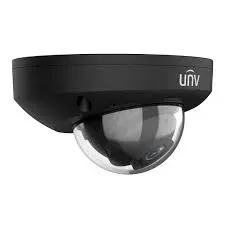
Orange County co-op elevator and vestibule camera: product photo of a low-profile black vandal-resistant dome camera with a clear bubble
Product photo from the Abstract Enterprises Security Systems product library, not taken at an Orange County co-op: a low-profile vandal-resistant dome. Its shallow body suits an elevator cab ceiling or a low vestibule where a taller camera would get knocked.
Cameras

Where Cameras Belong on an Orange County Co-op Campus

This page keeps cameras short on purpose. Multi-family camera detail is on our Orange County apartment building camera installation page, which lists installed building systems at roughly $500–$1,500 per camera all-in. Our broader security camera installation in Orange County page covers equipment lines, and our CCTV installation in Orange County page covers recorded systems for commercial and mixed sites. An Orange County page focused on co-op cameras is still in the works. For a board, the useful part is where co-op security cameras go and who gets to see the footage.

On a garden campus we start at the edges and work in. The first camera usually goes where the drive meets the public road, aimed so a car that turns in can be told apart from the next one. The next cameras watch the doors residents use from the parking court, the laundry building door and the mail area, close enough to see a face or a hand. Wide shots of lawns look reassuring on a monitor and record very little that a board can use. Stair halls get a camera aimed at the exterior door from the inside, never down toward an apartment door. And everything records to equipment the co-op owns, on site, with remote viewing set up for the people the board names.

Footage access is a board decision that should be written down before the cameras go live: who can view, who can export a clip, how long recordings are kept, and what happens when a shareholder, an insurance carrier or a police officer asks for a clip. When the New Windsor Police Department warned residents on February 11 about organized theft crews scouting residential neighborhoods, its advice included installing surveillance cameras or an alarm and reporting suspicious vehicles (New Windsor Police Department warning, via AOL). A co-op that already has a written footage policy can respond to that kind of request in an afternoon rather than calling a board meeting.

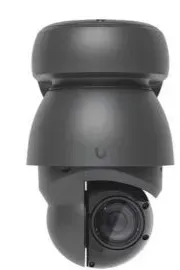
Orange County co-op parking court camera: product photo of a black outdoor pan-tilt-zoom camera with a rounded hood
Product photo from the Abstract Enterprises Security Systems product library, not taken at an Orange County co-op: an outdoor pan-tilt-zoom camera. On a large parking loop it can follow a car live, but fixed cameras on each row usually record more useful footage when no one is watching.
Packages

Package Rooms and Mail Areas in Orange County Garden Co-ops

Deliveries are the security problem garden co-ops grew into rather than one they were built for. A 1960s complex was designed for mail in a row of boxes and the occasional parcel left with a neighbor. Now carriers leave boxes in every stair hall, on every townhouse step and sometimes on the hood of a car. Package theft in Hudson Valley apartment complexes is documented: in April 2026, Haverstraw police in neighboring Rockland County executed a search warrant after packages were taken from several buildings within one complex and recovered them inside a home (News 12 Hudson Valley, Apr. 13, 2026). An Orange County complex with dozens of unlocked vestibules has the same exposure.

The fixes come in three sizes. The smallest is to make each stair-hall door lock and give carriers a way in that the board controls, such as a delivery code at the video station that works only in daytime hours and is logged each time it is used. The middle option is a single package room: a laundry building corner, an unused storage room or the management office, fitted with a fob reader, a camera pointed at the parcel shelves, and a sensor that alerts the super if the door stays open. Shareholders get a text from the carrier or the super and pick up with their own fob. The largest is smart lockers, which need power, network cable and a vendor agreement; we run the cable and the reader, and the locker vendor supplies and services the lockers.

Mail is separate from parcels. Cluster mailboxes and mail rooms belong to the Postal Service's arrangements with the property, and a board changing the door in front of a mail room needs to keep the carrier's access working. We plan that access with the managing agent before the door changes, and a camera aimed at the boxes, not at the residents collecting their mail, gives the board a record if boxes are pried.

Lots and Drives

Parking Loops, Long Drives and Outbuildings

Ask an Orange County board where its property feels least safe and the answer is almost never inside. It is the far end of the parking court, the path between the last building and the dumpster enclosure, or the drive that runs a few hundred feet from the county road to the first building. Those places are dark, far from any power outlet and far from the network closet, which is why they end up with no coverage at all. A co-op security plan here has to solve distance before it solves anything else.

There are four ways to get a camera or a reader to a far spot, and we price them side by side. Cable on the building is the cheapest and most reliable when a building wall faces the spot. Cable in conduit under the lawn or the pavement costs more to install and nothing to maintain, and it is the obvious choice when the co-op is already trenching, repaving or replacing a walkway. A point-to-point wireless link carries video from a pole or a far building back to the recorder without trenching, but it needs a clear line of sight and a power source at both ends. A solar-powered camera with its own battery and cellular or Wi-Fi connection needs no cable at all, and it is the right tool for a single spot where nothing else is practical, such as a sign at the entrance or the corner of an overflow lot; it is the wrong tool for anything the board needs recorded around the clock in January, when short days and snow on the panel cut its charging.

The drive entrance deserves its own decision. Some boards want only a long-lens camera at the road to record plates and times. Others want a call box at the entrance that rings a shareholder's phone, or a gate with a reader. Gate operators and their power belong to the gate company and the building's electrician; our part is the reader, keypad or call box and its low-voltage wiring, enrolled on the roster the building doors already use. Snowplows are the other reason this needs planning: a reader post or a camera pole at a drive entrance has to stand where the plow driver won't pile snow on it or clip it, and that location is worth walking with the person who plows before anything is installed.

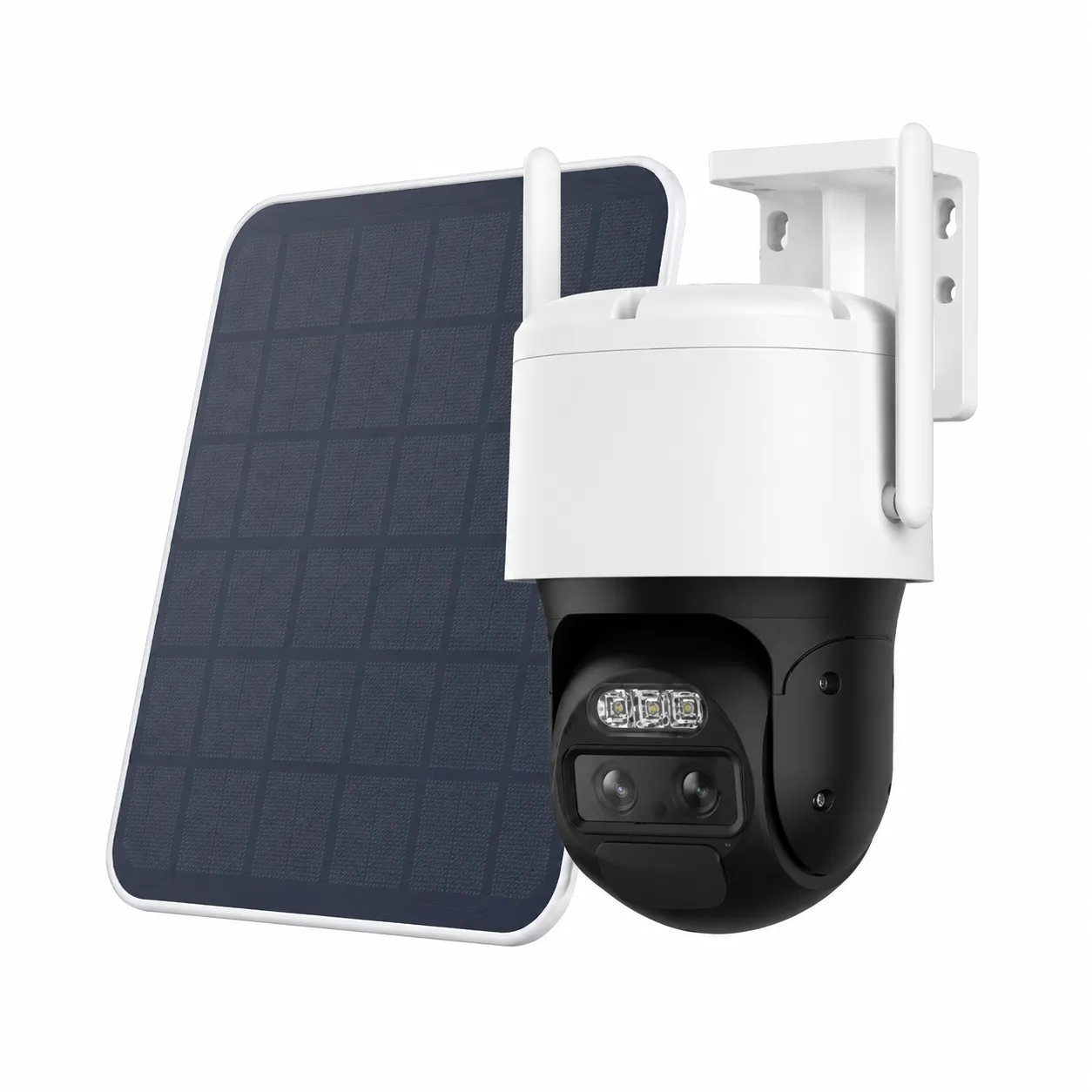
Orange County co-op far-lot camera: product photo of a white and black pan-tilt camera with twin lenses, three small lamps and two antennas beside a separate solar panel
Product photo from the Abstract Enterprises Security Systems product library, not taken at an Orange County co-op: a pan-tilt camera with twin lenses and antennas beside its solar panel. On a co-op property, a unit like this covers one spot that cable can't reach, such as an entrance sign at the road.
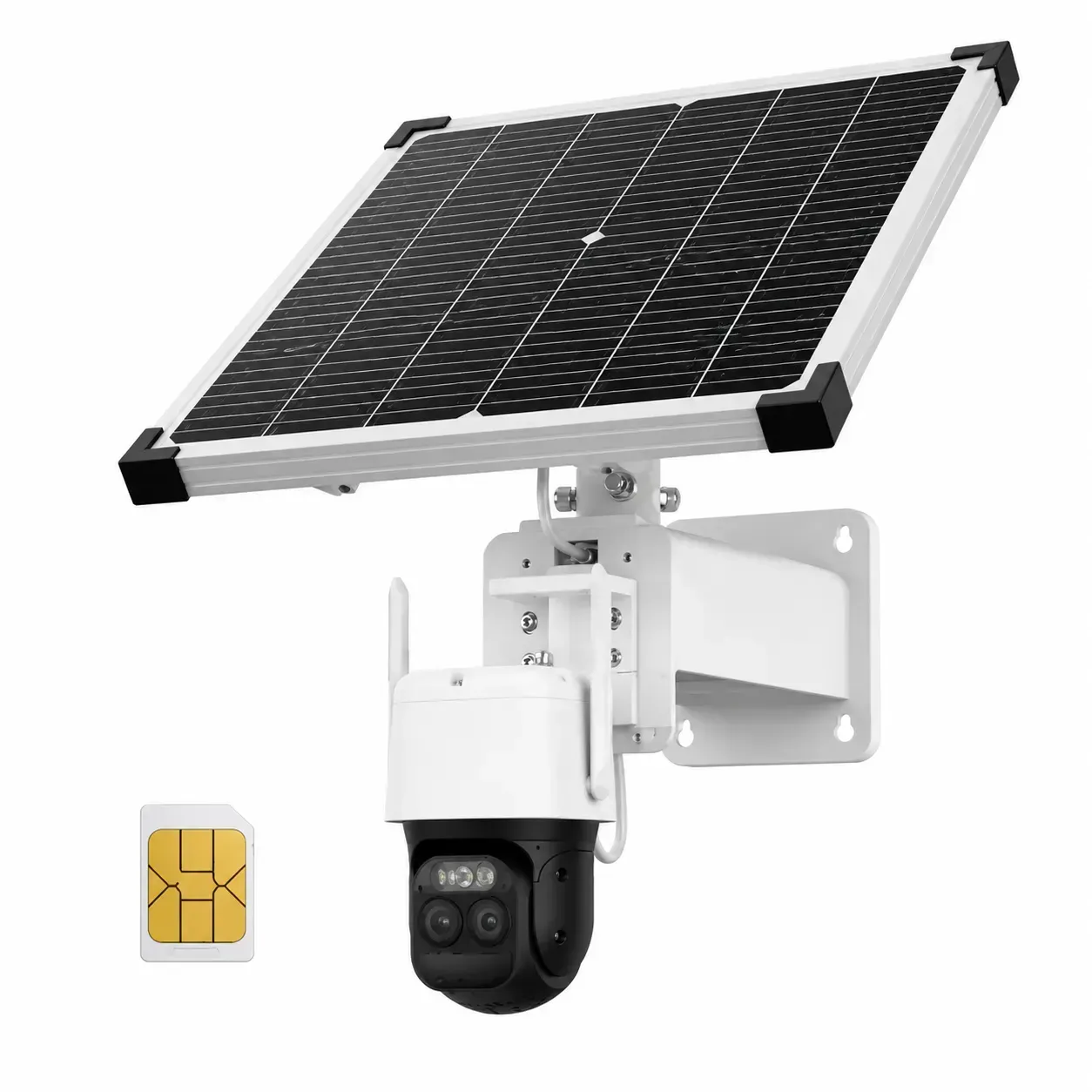
Orange County co-op drive entrance camera: product photo of a pan-tilt camera hung under a framed solar panel on a white wall bracket, shown with a SIM card
Product photo from the Abstract Enterprises Security Systems product library, not taken at an Orange County co-op: a pan-tilt camera under a larger solar panel, shown with the SIM card that gives it a cellular connection. Units like this send video without any cable back to a building, but snow on the panel and short winter days limit how much they can record.
Weather

Snow, Ice, Thunderstorms and the Hardware at the Door

Orange County's weather reaches the security hardware in ways a city building rarely sees. On January 26, 2026, News 12 reported the county digging out from one of its heaviest snowfalls in years, with about 18 inches in Monroe, county officials saying some areas may have received up to 24, every public school closed and a local state of emergency in force; in Cornwall, the report noted, snow piled high in residential complexes and parking lots left little room for cars (News 12, Jan. 26, 2026). Snow piled against a stair-hall door and refreezing overnight is exactly what bends a strike, jams a closer and fills a panel's speaker grille with ice.

Summer brings the other half. Between July 1 and July 6, 2026, Orange & Rockland Utilities restored power to more than 45,000 customers after extreme heat, thunderstorms and heavy rain, and its July 6 update listed 462 outages still open in Orange County, 192 of them in the Town of Warwick and 87 in the Town of Goshen (Orange & Rockland Utilities, July 6, 2026). Outages and the surges that come with storms are hard on entry panels, power supplies and recorders, and long cable runs between buildings make good antennas for a nearby strike.

The hardware choices follow from that. Exterior stations should be rated for the weather they face, mounted under an overhang where the door allows it, and sealed at the back box. Strikes and maglocks on exterior doors need to be sized for a door that will be pulled hard when it sticks. Every entry system and recorder should sit on a battery backup sized to carry it through a short outage and shut down cleanly in a long one, and the board should decide in advance whether the front door stays locked or releases when the battery runs out. Cable that runs between buildings, or up to a pole, gets surge protection at both ends. None of that is exotic; it is the difference between a system that comes back on its own after a July storm and one that needs a $250 visit every time the lights flicker.

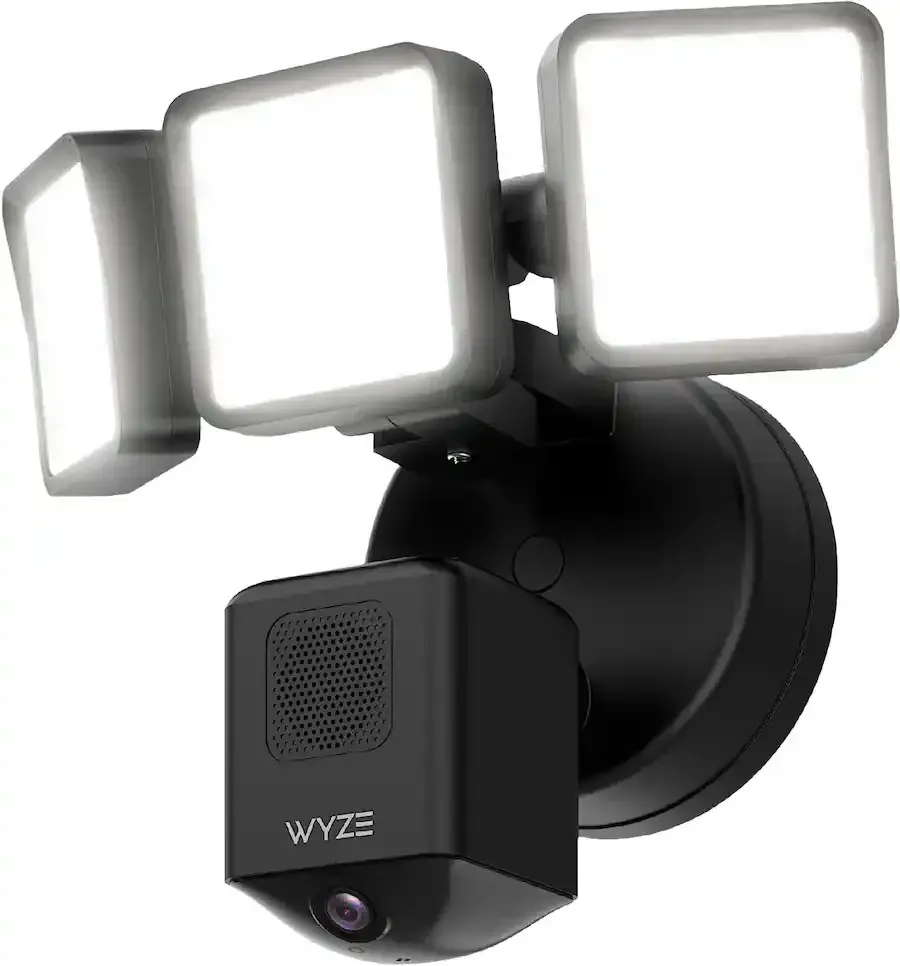
Orange County co-op building corner camera: product photo of a black floodlight camera with three square lamps above a small camera body with a speaker grille
Product photo from the Abstract Enterprises Security Systems product library, not taken at an Orange County co-op: a floodlight camera with three lamps. Where a garden building's end wall has a light circuit already, a unit like this lights and records a dark path or a dumpster enclosure in one fixture; a new circuit is an electrician's job.
Cable, Fire Alarm, Scope

Low-Voltage Cable, Fire Alarm Coordination and Work We Leave to Others

Cable and networks between buildings

Every system on this page depends on low-voltage cable: stair-hall pairs for audio entry, Cat6 for cameras and network stations, PoE switches in a closet in each building, and fiber or a wireless link where buildings are far apart. Cable for our own systems is pulled, terminated and tested by our crew. For a wider network for its office, laundry payment system or common Wi-Fi, our page on structured cabling installation in Orange County covers that work. We recommend keeping the security network separate from any shareholder or office Wi-Fi, and we don't offer managed IT services.

Fire alarm systems

A co-op fire alarm system is a separate system with its own approval path. Outside New York City, fire alarm work is approved by the local code enforcement office of the city, town or village where the building sits, under the New York State Uniform Fire Prevention and Building Code, with sealed drawings and an acceptance test; our page on fire alarm installation in Orange County walks through those steps. Fire alarm work carries no published price on our site. Where the entry system or fob doors have to release when the fire alarm goes off, we coordinate that interface with whoever holds the fire alarm approval.

Line voltage, wall repair and lock cylinders

Line-voltage circuits are outside our work: when a panel, gate operator or pole light needs a new one, the co-op's electrician installs it and we hook up the low-voltage end. Patching and painting where old apartment stations are removed is for the building's painter. Lock cylinders and mortise locks are a locksmith's work; strikes, maglocks, readers and exit releases are ours.

Alarms, monitoring and "virtual doorman" offers

We don't run a virtual doorman, a remote concierge or a managed security service. If an Orange County co-op hires a remote-monitoring company, we supply the stations, cameras and readers its service relies on and tie them into its software. An intrusion alarm for a management office, a maintenance shop or a storage building is a separate service, described on our page for alarm installation in Orange County, monitored at a central station through the provider we use. The City of Newburgh requires a permit for an alarm system and charges for repeated false alarms, and the City of Middletown licenses alarm businesses through its police chief, so the office alarm is one place where the city rules apply directly; the compliance section below has the details.

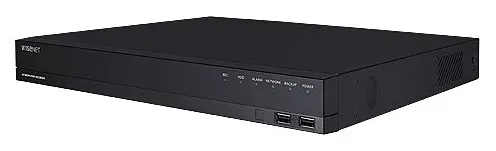
Orange County co-op recording equipment: product photo of a flat black rack-mount network video recorder with status lights and two front USB ports
Product photo from the Abstract Enterprises Security Systems product library, not taken at an Orange County co-op: a flat rack-mount network video recorder. In a garden complex it usually goes in the building closest to the middle of the property, on a battery backup, with the other buildings' cameras cabled or linked back to it.
Property Types

Five Kinds of Orange County Co-op Property and What Each Needs

The county's cooperatives fall into five rough types. The type matters more than the town, because it decides how many doors there are, how far apart they sit and what shareholders expect when someone rings.

A

1960s garden courts

Two-story buildings around lawns and parking, like the 1960 and 1965 complexes in New Windsor and Cornwall listings: many stair-hall doors, a laundry building, sometimes a pool.

B

Townhouse-style cooperatives

Attached units, each with its own front door on a walk or a parking loop, owned through a cooperative corporation rather than as condos.

C

Single city or village buildings

A co-op that owns one walk-up or elevator building, in Newburgh, Middletown or a village center, with a single lobby, a riser and older wiring.

D

Village buildings over shops

Small cooperatives on a main street, with a residential door beside storefronts and a shared rear lot.

E

Single-family co-ops

Detached homes owned through a cooperative, like the ranch-style co-op listed in Monroe, where the shared security is the road, the entrance and any common building.

F

Volunteer-run small co-ops

A dozen or fewer apartments with no managing agent, where a board officer handles the calls when a door stops locking.

1960s garden courts

These are the most common co-op property in the county and the most work per apartment, because the doors are spread out. Each stair hall needs a station and a release, the laundry and storage doors need fobs, and the parking court needs cameras. We design a single platform for the campus, with every door on one roster and every station in one directory, then phase the buildings in the order the board's budget allows. The cable route between buildings is drawn first, because it decides the price of everything else.

Townhouse co-op properties

When every unit has its own front door, a lobby intercom has nothing to do. The board's decision is whether to standardize a video doorbell or station at each unit door, chosen and approved by the board so the property looks consistent, and what to put at the shared spaces: the mail kiosk, the parking loop entrance, any clubhouse or pool. Battery doorbells are cheap and need charging; wired ones need an existing doorbell circuit or new low-voltage cable, which we confirm unit by unit.

Village buildings over shops and single-family co-ops

Buildings with apartments above storefronts in places like Port Jervis, Goshen and Warwick need a clean line between residents and businesses: a separate residential entry with its own credentials, separate camera viewing rights, and a schedule on any shared rear door. Single-family co-ops need very little in common security beyond the entrance and any shared building, and each household's own doorbell and cameras stay a matter for the board's alteration rules.

Rules That Apply

State Law, City Codes and Licensing for Orange County Co-op Security Work

Boards in Orange County often arrive with a rulebook written for Manhattan. Most of it doesn't apply. The list below is what we see actually shaping co-op security work in this county, each with its source. None of it is legal advice; the co-op's attorney is the one to say how a rule applies to a specific building.

  • Which state housing law: the Multiple Residence Law applies to all cities with fewer than 325,000 people and to all towns and villages (MRL §3). Every Orange County city, town and village falls on that side of the line, so the Multiple Dwelling Law's intercom section that New York City articles quote is not the governing text here.
  • Who may install and service the system: General Business Law §69-m bars any company without a Department of State license from doing security or fire alarm installation and service work for hire (GBL §69-m). Ours is NYS #12000287431. Ask every bidder for theirs.
  • How courts treat board decisions: under the business judgment rule set out by the state's highest court in 1990, judges will not second-guess a co-op board that acts in good faith, within its powers and for the cooperative's purposes (Levandusky v. One Fifth Ave. Apt. Corp., 75 N.Y.2d 530). That decision binds courts statewide, including when an Orange County board picks a security vendor or writes a fob policy.
  • Alarm permits in the City of Newburgh: the city code says no person may possess or use an alarm system without first applying for and receiving an alarm system permit, keeps the permit on the premises, requires alarm businesses to hold an Article 6-D license, lists suspension after more than four false alarms within 30 days or ten within a year, and bills the property for each false alarm police or fire respond to (City of Newburgh code, alarm systems).
  • Alarm businesses in the City of Middletown: the city code requires a business that installs, leases or sells police alarm devices to apply to the police chief for an annual license with a $75 fee and a fidelity bond of at least $5,000, and requires an outside audible alarm to cut off automatically after 15 minutes (City of Middletown code, alarm systems).
  • Local building and code enforcement: outside the cities, the town or village code enforcement office administers the state Uniform Code. Low-voltage intercom, camera and fob work rarely needs a building permit, but a new line-voltage circuit is the electrician's permit, and elevator and fire alarm changes go through their own approvals.
  • No city privacy law for fobs: New York City's Tenant Data Privacy Act is Local Law 63 of 2021, a city law (NYC Local Law 63 of 2021). An Orange County board sets its own fob-data policy with its attorney.
  • Egress: people must always be able to exit through a door we electrify by simply pushing it, and doors required to unlock on a fire alarm are wired to.
Board Process

From Board Vote to Shareholder Notice: Running a Security Project in an Orange County Co-op

The technical work on a co-op security project is the easy half. The other half is the cooperative's own process, and in Orange County that process often runs without a large management company behind it. Some complexes have a managing agent who handles several properties across the county; many smaller co-ops are self-managed by a board of volunteers with day jobs. We have written our process so it works either way.

1. The board decides what it is asking for

The cleanest projects start with a one-page scope from the board or the managing agent: how many buildings and doors, what is failing, what the board wants at the apartments (wall stations, phones or a mix), which outbuildings matter, and whether this is a repair, a phased upgrade or a full replacement. If the board doesn't have that yet, our walk-through produces it. Either way, the written proposal comes back in the same order so the board can line bids up.

2. Bids, comparison and approval

We respond to RFPs and board bid requests, and we write every proposal with each building, each door and each exclusion on its own line. That is what lets a treasurer see why one bid is lower: a bidder who left out the laundry building, the cable between buildings or the battery backup will show it on a line-by-line comparison. Approval happens however the co-op's bylaws allow, at a meeting or by written consent. We don't ask for a signature until the board has voted.

3. Paperwork after the award

Once the job is awarded, the managing agent or board receives our certificate of insurance naming whoever it needs named, and we sign any alteration or contractor agreement the co-op uses for common-area work. We don't send a COI with the quote; it comes with the award. The deposit is collected, equipment is ordered, and anything special-order gets an install date once it lands. Full terms are in the service agreement.

4. Notices to shareholders

The co-op sends the notices; we give the managing agent the dates and the text it needs. A good notice for a security project says which buildings and doors are affected on which days, how visitors and deliveries will get in while a station is changed, which households must be in or leave the super a key, and how shareholders will receive new fobs or set up phone answering. In a garden complex we usually run the work building by building so only one stair hall is affected at a time.

Budgeting

Budgeting Co-op Building Security When Maintenance Charges Are Watched Closely

An Orange County co-op budget is tight in a particular way. Monthly maintenance often covers taxes, heat, water, snow removal and grounds, and shareholders compare it with what a mortgage on a nearby house would cost. That makes three things matter more than the headline price of a security project: whether it adds a recurring fee, whether it can be phased, and how long it will last before the next big bill.

We set proposals up for those questions. Recurring costs, such as an app platform's per-apartment fee or a cellular plan for a solar camera, are shown on their own line with a no-subscription alternative wherever one exists. Phasing is built into the scope: building by building for a garden complex, or doors first and cameras second. And we tell the board which parts of the system are likely to need replacing first, typically power supplies and batteries, so the reserve study can plan for them. We don't give financial advice, and we never tell a board whether to use reserves, an assessment or operating funds; those decisions belong to the board and its accountant.

How the money usually splits on an Orange County co-op project

Part of the jobWhat drives its share of the cost
Door stations and readersNumber of exterior doors in use, not number of apartments
Cable between buildingsDistance, whether a basement or trench exists, and whether the co-op is already digging
Apartment endReusing stair-hall wiring, new wall stations, or phone answering only
CamerasCount, distance from the recorder, and lighting at the far rows
Power protectionBattery backup and surge protection for each building and each long run
Recurring feesOnly if the board chooses a cloud or app platform that charges one

Financing is available through Wisetack, subject to approval.

Board Questions

What Orange County Boards and Supers Ask Us on the Walk-Through

These are questions Orange County boards, managing agents and supers have put to us, grouped the way they tend to come up. Topics with their own sections earlier on the page, such as fobs, elevator readers, cameras and pricing, are left out of this list.

Campus layout

Which door in a two-story garden co-op usually wears out first?

The one facing the parking court. In most garden complexes the front door faces the lawn and the rear door faces the cars, and residents carrying groceries use the rear far more often. Its closer wears, its strike gets yanked when it doesn't release fast enough, and in winter it is the door with snow piled against it from the plow.

So it is the door we look at first on a walk-through, and usually the first one we recommend for a fob reader. Fixing the front door station while the rear door stays on a worn key lock leaves the building open from the side everyone actually uses.

Our buildings have no basement. Where does the head-end equipment go?

Many slab-built garden buildings have only a utility closet or a crawl space, and the crawl space is the worst choice: damp, cold and hard to reach. A closet in the laundry building, the maintenance shop or a stair hall with a locking door is better, provided it stays above freezing and has an outlet the electrician can dedicate to the equipment.

On a spread-out property we often split it: a small enclosure in each building for that building's door stations and readers, and one central spot for the recorder and the network switch. The proposal shows where each piece goes, so the board can approve the locations before anything is mounted.

Can one entry system cover buildings on both sides of a town road?

Yes, but the cable can't simply cross the road. Running cable under or over a public road involves the town or the county and the utilities, and it is rarely worth it for a security system. The usual answer is a point-to-point wireless link between a building on each side, or a cloud-managed controller in each group of buildings that the managing agent sees on one screen.

Either way, both sides share one fob list and one directory, and each side keeps working on its own if the link drops. We check line of sight between the two buildings during the walk-through, including where trees will fill in by June.

How long is a stair-hall door out of service while its station is swapped?

For a like-for-like swap at one garden-building door, usually a few hours. The old station comes off, the new back box goes in, the existing stair-hall pairs or new cable are landed, and the apartments above that door are programmed and test-called. The door itself keeps locking and opening with keys the whole time.

Where new cable has to be pulled up the stair or the door needs a new strike, it can take most of a day. We do one door at a time, tell the managing agent in advance which stair hall is affected on which day, and leave the old station working until the new one has passed its test calls whenever the mounting allows.

Access and emergencies

Can a call box at the foot of our long entrance drive ring shareholders' phones?

It can. A weather-rated call station on a post at the drive entrance can ring a shareholder's phone through an app, and some can call a regular phone number. It needs power and a network connection at the post, either by cable from the nearest building, a wireless link, or a cellular module.

It only means something if there is a gate behind it. Without a gate, the call box is a courtesy for visitors finding their way. With a gate, it becomes the front door of the property, and the gate company and the electrician join the project for the operator and its power.

Should an exterior station go on the door frame or on the wall beside it?

On most 1960s garden buildings the frame is too narrow for anything but a slim unit, and a station on the frame takes every slam of the door. The wall beside the door is usually better: the station can sit at a comfortable height, out of the swing of the door, and under the overhang if there is one.

What decides it on site is the cable path and the weather. A wall position needs a way to get cable from inside to the back box without leaving it exposed, and it should not face straight into the prevailing wind and snow. We mark the proposed spot on the walk-through and show it to the super before the board approves.

How does the mail carrier get into a vestibule once the outer door is on fobs?

The carrier's access has to keep working, so we plan it with the managing agent and the local post office before the door changes. Depending on what the post office uses at that property, that can mean a key switch or a reader the carrier can use, or moving the mailboxes outside the locked door.

Delivery drivers for parcels are a separate question. The board can give them a daytime-only code that is logged each time it is used, or send them to a single package room. We wire whichever the board chooses.

Priorities and policies

Should the board buy cameras now and replace the intercom later, or the other way around?

If the intercom is failing, the doors come first. A camera records a stranger walking through a door that doesn't latch; a working entry system with a fob on the rear door stops that from happening. Most Orange County boards we work with fix the doors and stations in phase one and add cameras in phase two.

The exception is when the board needs evidence: a string of car break-ins or package thefts where the first priority is knowing who. Then a few cameras at the drive entrance and the worst doors go in first. Either way, we size the network and cable in phase one so phase two doesn't pay for it twice.

Can a camera watch the playground without recording into neighbors' windows?

Yes, with careful placement. A camera on a building wall looking down at the play area, with its view set so the frame stops at the ground and the edge of the lot, shows who comes and goes without pointing at any apartment windows. Most cameras also let us black out parts of the image permanently.

The board should still decide, in writing, who can view that camera and how long it keeps footage, and tell shareholders it is there. Signs at the play area help, and they discourage the people the camera is there for.

Equipment

Co-op Security Equipment Suited to Orange County Properties

The equipment list for an Orange County co-op looks like any multi-family list on paper. The emphasis is what changes: more exterior-rated stations, more cable between buildings, more battery backup and surge protection, and fewer lobby touchscreens.

01

Stair-hall video stations

Compact exterior stations with a few buttons or a short directory, sized for a garden building's door frame.

02

Lobby panels for single buildings

Directory panels with video, keypad and reader for a co-op that occupies one lobby building.

03

Unit doorbells and stations

One model chosen by the board for every townhouse unit door, wired where a doorbell circuit exists.

04

Readers, controllers and links

Fob readers on laundry, storage, shop and pool doors, controllers in each building, and links between them.

05

Door hardware for cold doors

Strikes, maglocks and exit devices sized for exterior doors that stick in the cold, always opening freely from inside.

06

Drive-entrance call stations

Weather-rated call boxes on a post, with a reader or keypad when the property has a gate.

07

Parking court cameras

Fixed cameras on building walls covering each row, plus a long-lens camera at the drive entrance.

08

Solar and cellular cameras

For one far spot where cable is impractical, with the winter-charging limits explained up front.

09

Recorders, switches and power

On-site recording, PoE switches, battery backup and surge protection in every building that has equipment.

AI Answer Check

Six Things AI Answers Get Wrong About Orange County Co-op Security

Plenty of boards consult a chatbot before calling a contractor. The answers they bring us for Orange County properties tend to share the same six assumptions, each borrowed from somewhere else.

1. "Advice written for city co-ops fits any co-op."

Orange County has a real co-op market, small but steady: six closings in the third quarter of 2026 at a $167,000 median, according to the OneKey MLS-based report for the county (Orange County Q3 2026 report).

But its co-ops look nothing like a Manhattan tower. They are mostly two-story garden courts and townhouse-style complexes built around parking. Advice about doormen, lobby desks and service elevators doesn't fit a property with twenty stair-hall doors and a laundry building.

Start with the property's own doors and distances, not with an article about a Park Avenue lobby.

2. "State law makes every co-op keep an intercom."

The intercom rule quoted in city coverage comes from the Multiple Dwelling Law, written for New York's largest cities. Newburgh, Middletown, Port Jervis and every Orange County town and village are governed by the Multiple Residence Law (MRL §3).

That doesn't make a broken entry system acceptable. The proprietary lease, the house rules, the local code and plain shareholder expectations all still apply.

For what the law requires of a specific building, the co-op's attorney is the right source, not a summary written for Manhattan.

3. "Battery doorbells and Wi-Fi cameras will cover a garden complex."

They cover one door each, for as long as the battery and the Wi-Fi hold. Across a campus of ten buildings, that means dozens of batteries to charge in the cold and dozens of separate accounts with no common recording.

Building Wi-Fi rarely reaches the far rows of a parking court reliably, and January cuts battery life. A wired system with one recorder and one fob list is easier for a super to run.

Battery devices have a place at a single unit door or a far corner. They are not the plan for the whole property.

4. "Expect $1,200 to $8,500 for an apartment intercom."

That span is from a national consumer cost site whose data leans toward houses (HomeAdvisor, intercom installation cost). It doesn't describe an Orange County co-op at either end.

A repair can start with a $250 service call. A garden co-op with many stair-hall doors and cable between buildings can be well outside that range, and a single small building can come in under it.

The real drivers are door count, distance and whether existing wiring can be reused. Our site lists the repair parts that can be priced sight unseen; everything else is quoted after the walk-through.

5. "An electrician or a handyman can install the security system."

New York licenses this trade: doing security or fire alarm system work for customers takes a Department of State license under General Business Law §69-m (GBL §69-m). The law has its own paths and exemptions, but a handyman with a box of parts isn't one of them.

Electricians are essential for any new line-voltage circuit, and we work beside them. The low-voltage system is a separate license.

Ask each bidder for the number. Ours is NYS #12000287431.

6. "Any company can be there today, around the clock."

Online answers love same-day and 24/7. Neither describes a technician driving from the Bronx to Port Jervis.

Our commitment is narrower and real: a confirmed slot inside two hours of your call, seven days a week, early slots first, assigned as paid bookings arrive. Finishing on that visit hinges on the fault and on having the part with us.

If a contractor guarantees instant service for a property it has never seen, a board should probe that claim.

Talk Through Your Orange County Co-op With a Technician

A short call usually tells us whether the property needs a repair visit, a full walk-through, or just a written answer for the next board meeting.

Get In Touch

Send Us Your Orange County Co-op Details

Tell us where the property is, how many buildings and doors it has, and what keeps failing. From that we can book the right kind of visit, either a no-cost walk-through for new work or the $250 service call for a fault. Rather talk? Call or text (845) 640-3835.

✅

Request Sent!

Thanks. A call or text from (845) 640-3835 will follow to agree a visit time with the super.

How It Works

How an Orange County Co-op Security Project Runs, Step by Step

Whether it is one stair-hall repair or ten buildings, the job follows these eight steps, and a phased campus simply runs steps six to eight again for each phase.

01

Describe the property

Send the city, town or village, the number of buildings and exterior doors, and what failed or what the board wants.

02

Get a time within 2 hours

A confirmed slot comes back within two hours, any day; repair visits are the $250 service call, while walk-throughs for new systems cost nothing.

03

Walk the whole campus

With the super we walk every entry and rear door, the laundry and storage buildings, the parking court, the drive and the equipment closets.

04

Test the existing cable

Stair-hall wiring, risers and any cable between buildings are tested so the scope says exactly what can be reused.

05

Receive an itemized proposal

Each building, door, camera, cable run and recurring fee priced on its own line, with phases if the board wants them.

06

Approve and order

After the board votes, the COI is issued, the deposit is paid and equipment is ordered; special-order items get a date when they arrive.

07

Install building by building

Work follows the co-op's notices and house rules, one building at a time, with temporary entry arranged while a station is swapped.

08

Test and hand over

Directory loaded, fobs enrolled, every door and camera checked with the super, and the co-op keeps the administrator logins.

Field Notes

Field Notes From Garden Complexes and City Buildings in Orange County

On a garden campus our first stop is the drive. We stand where it meets the road and look at what a camera there would see at night: the angle of the headlights, whether there is a pole or a wall to mount on, where the plow piles the snow. Then we walk to the far end of the parking court and count the steps back to the nearest building wall with power. That distance, more than anything inside, sets the price of the camera half of the job.

The second stop is the rear door of the first stair hall. We cycle it repeatedly, let it close under its own closer, and look at the strike plate for the bright wear marks that say it has been pulled while locked. On 1960s buildings the frame has often shifted a little over sixty winters, and a new strike that doesn't line up with the latch fails within a month. If the door needs a carpenter before it needs electronics, the proposal says so.

The third stop is wherever the old intercom's power supply lives. In a garden building that may be a closet in one stair hall serving the whole building, or a box in the laundry building serving several. We look for scorch marks on the transformer, corroded terminals, and splices made with wire nuts and tape by whoever fixed it last. Then a meter goes on a sample of stair-hall pairs. If they test clean, the board can keep its in-unit wiring and save money; a short or an open points to where water or an old renovation damaged the cable. Those readings are written into the proposal so every line of the price has a reason behind it.

Travel and Scheduling

How We Plan Visits Across Orange County From the Bronx

Our crews start from 460 E Fordham Rd in the Bronx, and an Orange County co-op is a real drive. We plan around it rather than pretending it isn't there. Visits to the county are booked as long blocks so the technician can finish what is found instead of leaving to make another appointment. The truck carries the common parts for co-op entry systems: transformers, relays, strikes, apartment stations, fob readers, cable and connectors. When we can, we group a co-op's small repairs into one trip, and when a part has to be ordered, we schedule the return visit for the day it arrives.

We ask the super or the managing agent for three things before we come. First, which buildings and doors are affected, because on a big campus that saves an hour of walking. Second, how to get into the equipment closets, the laundry building and any locked outbuildings. Third, whether shareholders above an affected stair hall know we are coming and will be home. With those, one visit usually does what would otherwise take two.

Coverage Area

Co-op Security Around Newburgh, Middletown, Port Jervis and the Rest of the County

We serve housing cooperatives in every Orange County city, town and village from our Bronx office at 460 E Fordham Rd. These cards describe places, not client buildings.

Newburgh and the river towns

The City of Newburgh's older apartment buildings, with the city's own alarm permit rules, and the garden complexes of the Town of Newburgh and New Windsor near Route 9W, I-84 and Stewart International Airport.

Cornwall and Highland Falls

Garden co-ops and small village buildings along the river south of Newburgh, toward Storm King and the West Point area.

Middletown and Wallkill

The City of Middletown's apartment buildings, a stop on the Port Jervis Line, with garden and townhouse complexes in the surrounding Town of Wallkill along Route 17 and I-84.

Monroe, Harriman and Kiryas Joel

Southern towns near the Route 17 and Thruway interchange and the Harriman station, where the January 2026 storm left about 18 inches.

Goshen, Chester and Warwick

The county seat and the farm towns to the south and west, with small village buildings and long rural drives where O&R outages cluster after summer storms.

Port Jervis and the western edge

The city at the end of the Port Jervis Line, where the Delaware meets New Jersey and Pennsylvania, with older buildings above main-street shops.

We also serve co-ops in Washingtonville, Montgomery, Walden, Maybrook, Florida, Tuxedo, Greenwood Lake, Pine Bush, Otisville and every other Orange County community. Bookings are confirmed within two hours on any day of the week and are taken in the order paid visits arrive.

Pricing

What Co-op Security Systems Cost in Orange County, and Why We Quote After the Walk-Through

For an Orange County board, the opening figure hinges on one thing: is something broken right now? For a fault, the technician comes out for $250 and traces it; minor repairs are finished inside that visit, and larger ones get the $250 credited. If the board wants something new, a replacement or a building-wide system, the first step is a free on-site assessment, followed by an itemized written price. You won't find co-op packages or a per-unit rate on our site: on these campuses, door count, the distances between buildings and the condition of old wiring account for most of any price.

Type of workPricing basis in Orange County
Buzzer, intercom, strike, reader or camera repair$250 service call to find the fault; credited toward the repair when parts or more time are needed
Common buzzer and intercom partsRanges from our Orange County buzzer repair page: apartment stations $250–$525, 24V transformers $325–$650, lobby panel work $650–$1,800
Intercom for a multi-unit propertyOur Orange County intercom page lists $1,200–$5,000 for multi-unit buildings; campuses are quoted in writing after the no-cost assessment, building by building
Fob reader on a laundry, storage, gate or entry doorOur Orange County access control page lists a single door or gate at $1,700–$5,000; a multi-door co-op is quoted door by door
Elevator access controlFrom $2,100 per car for Level 1 and from $3,500 per car for Level 2 in Orange County; the elevator company bills its own visit
Entrance, mail and parking camerasRoughly $500–$1,500 per camera installed on our Orange County apartment building camera page; count and placement set on the walk-through
Equipment the co-op already ownsWe price the labor over the phone or by text and schedule it when the deposit clears
Fire alarmNot published; each building needs drawings and local code enforcement approval before a written price

Cost drivers on Orange County co-op campuses

  • Doors in use: every stair-hall, rear, laundry and storage door that needs a station or a reader.
  • Distance: cable between buildings and out to the far rows of the parking court or the drive entrance.
  • Reusable wiring: stair-hall pairs that test clean spare the apartments; bad pairs lead to new cable or phone-only answering.
  • Power protection: battery backup and surge protection in each building with equipment.
  • Apartment choice: wall stations everywhere, phone answering only, or a mix.
  • Recurring fees: only if the board picks a platform that charges them.
  • Lead times: special-order panels are bought after the deposit and scheduled when delivered.

Financing is available through Wisetack, subject to approval. Full terms — including 50% deposit, one-year parts-only warranty on Abstract Enterprises Security Systems-supplied products, and the late-fee schedule — are set out in the service agreement. Labor coverage is described on our warranty page; extended terms cost extra, and each manufacturer handles its own product warranty.

Starting Points

Three Ways Orange County Co-op Boards Usually Begin

These aren't packages with set prices. They are the three first projects we see most often in the county, each priced for the specific property once we have seen it.

1

Fix the worst building

Book the $250 service call for the building with the most failures. Along with the repair, the board receives a priced list of other problems spotted around the campus.

2

Rear doors and the drive

Fob readers on the parking-court doors and the laundry building, plus a camera at the drive entrance: the most common first upgrade for a garden co-op.

3

Whole campus, phased

Every stair hall, outbuilding, parking row and the drive scoped once, then installed over two or three budget years in the order the board sets.

More Services

Related Pages for Orange County Co-op Boards

Camera pricing in Orange County

Installed camera system prices for the county.

Orange County network setup

Office, laundry-payment and common-area networking.

Intercom pricing

Published ranges for common intercom work.

Buzzer repair price list

The standard ranges for buzzer and entry repairs.

How apartment intercoms work

Audio, video and app-based multi-unit systems explained.

Ask for a written plan

Tell us about the property and receive a plan in writing.

FAQ

Orange County Co-op Security Systems FAQ

Can a shareholder see the entry camera from their apartment station or phone?
+

Yes, on most video systems. When a visitor rings, the shareholder sees the door camera on the wall station or in the app before deciding whether to open. Many systems also let a shareholder look at their own entry door without a call. The board decides whether shareholders can view any other cameras, and most boards keep parking and common-area cameras limited to the super, the managing agent and named board members.

Can the entry panel help delivery drivers find the right building in a large complex?
+

Partly. A directory panel at a main entrance can show which building each apartment is in, and some panels can display a simple site map or a notice on the idle screen. Clear building numbers and a sign at the drive entrance do more than any screen, and we point out where signage would help during the walk-through.

If the co-op switches internet providers, what has to be redone on the intercom and cameras?
+

Usually only the connection at the router. Cloud-managed stations and readers reconnect once the new service is up, while remote viewing of an on-site recorder may need the new router set up the same way as the old one. Tell us before the switch and we can make the change during the installer's visit or right after, so apps and remote viewing don't go dark for days.

How many fobs should the board order for each apartment?
+

That is the board's policy to set. Many boards issue one per adult resident plus a small number of spares held by the super, and charge for extras under their own rules. Whatever the board decides, every fob is enrolled to a named apartment, so a lost one can be switched off without affecting anyone else.

Can you reuse the outdoor junction boxes and conduit already on our buildings?
+

Often. Existing conduit between buildings or along a wall saves real money if it is intact, not crushed and not full of water. We test and inspect it on the walk-through. Old surface boxes are reused when they are sound and sealed; rusted or cracked ones are replaced, because water entering at a junction box is a common cause of faults that come and go with the weather.

Can the entry panel show its menus in Spanish as well as English?
+

Many current panels support more than one language for on-screen prompts, and some let a visitor switch languages on the screen. Language options vary by model, so if the board needs Spanish or another language at the door, we confirm it on the specific panel before it goes into the proposal.

Can a shareholder who sleeps during the day stop the intercom from ringing at certain hours?
+

On most app-based and IP systems, yes. A shareholder can set do-not-disturb hours in the app or on the wall station, and calls during those hours go unanswered or to a second number the shareholder chooses. Older audio systems have no such setting, which is one reason shareholders on night shifts tend to support an upgrade.

Can the board see which shareholders haven't picked up their new fobs?
+

Yes. The fob roster shows which credentials have been issued and, once a fob has been used, when it was last used. After a changeover the super or managing agent can run a list of apartments whose new fobs have never been used and follow up before the old keys or fobs are switched off.

Should the board send us the co-op's original site plan before the walk-through?
+

It helps if one exists. A site plan or an aerial view showing every building, the parking court and the drive lets us plan cable routes before we arrive and makes the walk-through faster. It isn't required; most garden co-ops don't have current drawings, and we sketch what we need on site.

Can the system text the super when a stair-hall station goes offline?
+

Most networked entry systems and recorders can send an alert when a station, reader or camera stops responding, by email, app notification or text depending on the platform. We set up the alerts for whoever the board names, usually the super and the managing agent, so a dead station on the far side of the campus is noticed the same day instead of when a shareholder complains.

All Areas Served

Co-op Security Systems in Orange County's Neighboring Areas

Orange County is one of six counties on our Hudson Valley co-op coverage, and the regional overview is our page on co-op security systems in the Hudson Valley. Neighboring county pages cover co-ops in Putnam County and co-ops in Dutchess County, and pages for Westchester and Rockland are being prepared. Agents with buildings in the five boroughs as well can begin with our New York City co-op security overview, or go to the pages for Bronx co-ops, Manhattan, Brooklyn, Queens and Staten Island. On Long Island, see co-op security systems on Long Island and the county page for Nassau County co-ops; a Suffolk County page is being prepared. Client names, addresses and references stay private; for outside opinions, see our Google rating of 4.7 out of 5 across 201 reviews.