Garden co-op door panels fading out building by building? Pool gate keys handed around every summer? Book a co-op survey anywhere in Nassau or Suffolk: (800) 486-0943
For Co-op Boards & Managing Agents · Nassau & Suffolk
Co-op Security Systems on Long Island
Building Entry Panels · Fobs & Gates · Pool & Clubhouse Doors · Lot Cameras · Cabling
Co op security systems on Long Island begin with a $250 service call for any repair — the visit diagnoses the fault, handles simple fixes and is applied to the bill if the job turns out bigger — and whole-property systems for garden complexes, mid-rise buildings and multi-building campuses are priced in writing after a free on-site assessment. Requests are booked within 2 hours, seven days a week, for co-op boards, shareholders and managing agents across Nassau and Suffolk.
Quick answer: Out here, a co-op's security plan reaches past the building doors to the land around them: several entrances spread across a garden complex, a parking lot, a pool or clubhouse gate and long cable runs between buildings. Repairs start at the $250 service call. Our Long Island component ranges run $250–$525 for an apartment station, $325–$650 for a 24V transformer, $650–$1,800 for lobby panel work and $850–$2,400 for riser repair, and our Long Island intercom installation page puts a building-wide multi-unit system at $1,200–$4,500+. Bigger complexes get a written scope after the survey. Financing is available through Wisetack, subject to approval.
Last updated November 25, 2026 by Abstract Enterprises Security Systems, NYS license #12000287431 · Sources: NYS Multiple Residence Law §3; NYS Multiple Dwelling Law §3; NYS Department of State, Legal Memorandum LG03 on the Uniform Code; Matter of Levandusky v One Fifth Ave. Apt. Corp., 75 NY2d 530 (1990); CooperatorNews, June 29, 2020 and April 2006; Habitat, May 11, 2015, Dec. 17, 2019 and July 9, 2025; NYC Local Law 63 of 2021 (HPD summary)
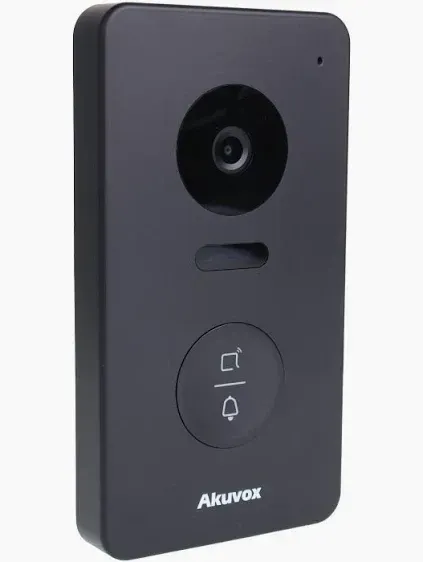
A dark single-button video door station: camera at the top, a narrow window below it and one round call button. On a garden co-op where each building has its own small vestibule, this is the size of panel that fits beside the door.
Long Island Co-op Security Request
Town or village, number of buildings and what's not working
✅
Request Sent!
Thank you. We will reach out to book the visit, normally within 2 hours of your request.
25+
Years Experience
2 Hr
Booking
100%
Licensed & Insured
4.7★
201 Google Reviews
Owner-operated since 2002 · Thousands of jobs completed · Booked within 2 hours
The Neighborhood
Why Long Island Co-ops Need a Security Plan Built for Campuses, Not Lobbies
Long Island has been home to cooperative apartments for a century. CooperatorNews traced the island's first purpose-built co-op to Kenwood Gardens in Great Neck, a seven-story, 69-unit building put up in 1925, and the peninsula around it still holds what a 2006 CooperatorNews profile described as close to 100 co-ops and condos belonging to the local co-op and condo council. Most of the island's co-op stock, though, does not look like a Great Neck elevator building. It looks like a garden apartment complex: two- and three-story brick buildings set around lawns and parking courts, each with its own small entrance, sharing a pool, a laundry building or a clubhouse.
That shape changes how a housing cooperative thinks about security. In a single city building, the lobby door is the front line, and nearly everything a co-op security company does happens within a few feet of it. On a Long Island campus, the front line is a perimeter: twenty or thirty building doors, a drive entrance, a parking lot that anyone can pull into, cluster mailboxes at the curb, and amenity gates that are busy four months a year and idle the rest. Habitat described a Roslyn Heights garden co-op with 381 apartments in 25 buildings on 14 acres, each building with one small entryway. Multiply one entry panel, one door strike and one transformer by twenty-five, and the maintenance math looks very different from a single lobby.
Budgets on the island are tight in a different way, too. Shareholders here pay maintenance that covers the property taxes, and the complaint that comes up again and again on the r/longisland forum is about those charges climbing. One commenter put it bluntly: "Co-ops are very restrictive and are prone to constant maintenance increases." Another told a prospective buyer to "look into the age and maintenance history of the building" before signing anything. Boards feel that pressure. They want co-op security solutions that fix the real weak spots first, can be phased across budget years, and do not lock the corporation into a monthly fee for every door.
The rules are different as well. Much of what New York City co-op boards hear about intercom obligations and smart-access privacy comes from city law that does not reach Nassau or Suffolk. Outside the five boroughs, the state's Multiple Residence Law and the Uniform Code enforced by each town, village or city apply instead, and the people who sign off on a new gate operator or a reworked egress door are local building officials, not a citywide agency. A co-op security contractor working on Long Island has to know which set of rules applies before it writes a scope.
Numbers behind co-op security on Long Island
1925: the year Kenwood Gardens in Great Neck was built, which CooperatorNews calls the first co-op building constructed on Long Island (CooperatorNews, June 29, 2020).
381 units, 25 buildings, 14 acres: the scale of one Roslyn Heights garden co-op whose board refreshed all 25 entryways from reserves for $750,000, working on three buildings at a time (Habitat, July 9, 2025).
15 and 45 days: under a Nassau County law passed 15–1 in December 2019, co-op boards have 15 days to acknowledge a complete purchase application and 45 more to decide it, with fines for repeat violations (Habitat, Dec. 17, 2019). New shareholders arrive on a schedule the board does not fully control, so fob and directory changes need a routine.
About 30 inches: how far a Long Beach co-op raised its replacement emergency generator off the floor after Superstorm Sandy, sizing it so it can also carry security systems in a crisis (Habitat, May 11, 2015).
Roughly 220 vs 120: a Trulia search we ran in November 2026 returned about 220 co-op listings for sale in Nassau County and about 120 in Suffolk County, a rough snapshot of where the island's co-op stock sits.
Every town, village and city: the state Multiple Residence Law applies to all towns and villages and to cities under 325,000 people (MRL §3), which covers all of Long Island; the Multiple Dwelling Law covers only cities of 325,000 or more (MDL §3).
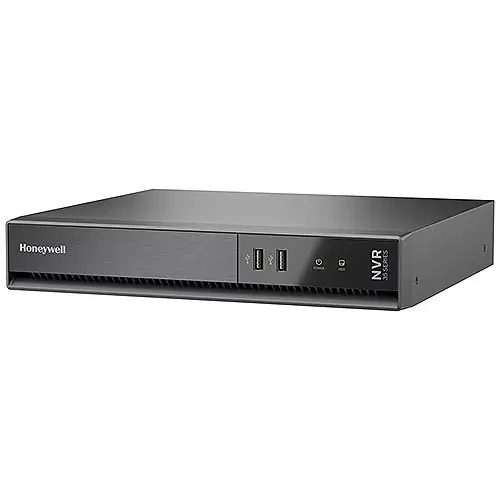
A desktop network video recorder with two USB ports and status lights on the front. On a garden campus, a box like this usually lives in the management office or a laundry building, and the cameras from every other building have to reach it.
The people a Long Island co-op project has to satisfy
Co-op boards. Many Long Island boards are small and volunteer-run, with a president, a treasurer and a secretary who also hold day jobs. They need a proposal they can read in one sitting: what is failing, what it costs to repair, what it costs to replace, and what can wait until next year. When a board puts work out to bid, the scope has to describe the whole property so that every bidder prices the same job.
Managing agents. Professional management on the island often covers several complexes from an office in another town. The agent wants one vendor who handles intercoms, fobs, gates and cameras, keeps arrival windows, sends the certificate of insurance once the job is awarded, and leaves the system documented well enough that a superintendent or groundskeeper can deal with small changes alone.
Superintendents and grounds staff. On a campus, the super may be the only person who knows which transformer in which laundry room feeds which building's door. Our job is to replace that tribal knowledge with labels, a map and a login, so the next failure is a ten-minute fix rather than a hunt.
Shareholders. Residents want a buzzer that rings, a lot that feels safe after dark, mail that is still in the box when they get home and a pool that is used by people who live there. Many are long-time owners, and many spend part of the year somewhere warmer, so the system has to reach them wherever they are without leaving anyone out.
What We Install
Co-op Security Services on Long Island, From the Front Door to the Back Lot
Abstract Enterprises Security Systems works as a co-op security installer, repair contractor and maintenance partner in one, so a Long Island board can hand the whole property to a single licensed vendor. Each block below answers what a cooperative usually asks about that system and then sends you to the Long Island page where we cover the service in depth. The intercom comes first because it is the system shareholders touch every day and the one boards most often ask us to fix.
Every building's front door: the co-op intercom
A Long Island co-op intercom is rarely one panel. A mid-rise building in a village downtown may have a lobby station and a rear door off the parking lot; a garden complex may have a separate entry panel at every building, each wired to its own handful of apartments, plus a call box at the drive entrance or the guard booth. We repair and replace all of it: audio and video door stations, apartment handsets and indoor monitors, door releases, power supplies and the wiring that ties each building together. Systems that call shareholders' phones or an app are on the table as well, and so are hybrid setups where some shareholders keep a wall handset and others answer on a phone.
For a co-op board intercom upgrade on the island, the core decision is usually how much to standardize. Boards that replaced panels one building at a time over twenty years often have three or four different makes on the same property, each with its own spare parts and its own way of adding a name. An upgrade is the chance to put one family of equipment on every building so a single directory, a single management login and a single set of spare parts cover the whole complex. We lay out the options in the board proposal — replace panels only and keep apartment wiring, move to video with new indoor stations, or go to app and phone calling with minimal work inside apartments — with the cost, disruption and ongoing fees of each. Boards writing an intercom replacement RFP can use the scope checklist and bid comparison steps in our co-op board intercom upgrade guide, which is being prepared now.
When an entry panel has simply quit, the work starts with the $250 service call. Our Long Island intercom repair page explains how we trace no-sound, no-ring and no-release faults on long runs between buildings, and our intercom installation on Long Island page covers new systems for multi-unit buildings and complexes.
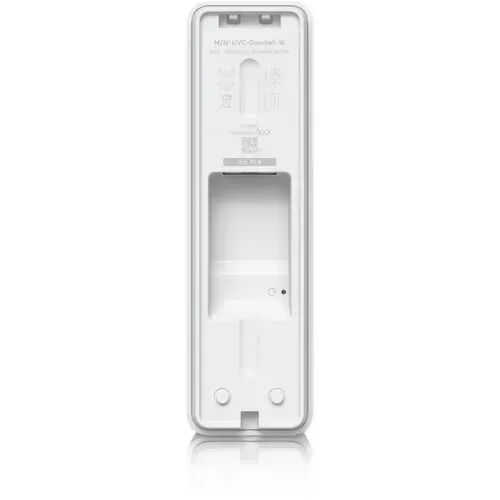
A white mounting back plate for a slim door station, with screw slots at the top and bottom and a rectangular opening for the cable. Plates like this decide whether a new panel can go on an existing brick jamb without new holes or a bigger box.
Co-op door buzzers on smaller buildings
Plenty of Long Island cooperatives, especially older two-story garden buildings, still run a plain co-op door buzzer: a button in each apartment, a strike on the building door and a transformer in a utility closet or basement. These systems fail in predictable ways. A transformer cooks after years in a hot closet, a strike seizes after a winter of salt and slush blowing into the vestibule, a splice corrodes where the run passes under a walkway. The ranges we use on Long Island are the same component ranges published on our door buzzer repair on Long Island page: an apartment station $250–$525, a door release relay or button $250–$475, a 24V transformer $325–$650, an electric strike with alignment $450–$950, lobby panel work $650–$1,800 and riser re-termination $850–$2,400. When a board has paid for the same building's buzzer three times in two years, it is usually time to talk about an upgrade instead of another patch.
Fobs and readers for doors, gates and amenity rooms
Co-op access control on a Long Island campus covers more doors than most boards first list. Building entrances, yes, but also the laundry building, the storage lockers, the boiler or meter room, the management office, the pool gate, the clubhouse or community room, the trash enclosure and, on some properties, a parking gate. Moving those doors from metal keys to key fobs, cards, PIN codes or phone credentials gives the board one thing keys never could: the ability to switch off one person's access without rekeying a building. When a shareholder sells, a contractor finishes or a summer guest leaves, one credential is turned off and nothing else changes. Our access control installation on Long Island page covers readers, controllers, strikes and mag locks in detail.
On a campus, access control also has a networking question built into it: how do readers at twenty buildings talk to one system? Some properties already have conduit or direct-burial cable between buildings; some have none and need wireless bridges or controllers that sync over the internet. We sort that out during the survey because it often costs more than the readers themselves.
Elevators in village mid-rises and beach towers
Long Island's elevator co-ops sit mostly in village downtowns and along the shore: mid-rise buildings near train stations and oceanfront towers in beach communities. Where a building has an elevator, co-op elevator access control can tie each fob to the floors that shareholder may reach, keep the roof or amenity floor closed outside set hours, and let staff and deliveries reach only the floors they need. It has to be coordinated with the building's elevator maintenance company and must never interfere with fire service operation. Our elevator access control installation on Long Island page explains floor restriction and the coordination with the elevator contractor.
Co-op cameras for the grounds, in brief
Co-op security cameras on a Long Island property usually start outdoors: the drive entrance, the parking lot, the walkways between buildings, the mailbox kiosk, the pool deck and the dumpster area, then the inside spaces like laundry rooms and lobbies. In a cooperative, every camera is also a policy decision about who may watch, who may export a clip and how long video is kept. This page stays brief on cameras; our dedicated co-op security camera installation page for Long Island is next in line, and our apartment building security cameras on Long Island page already covers multi-unit camera systems, recorders and coverage planning.
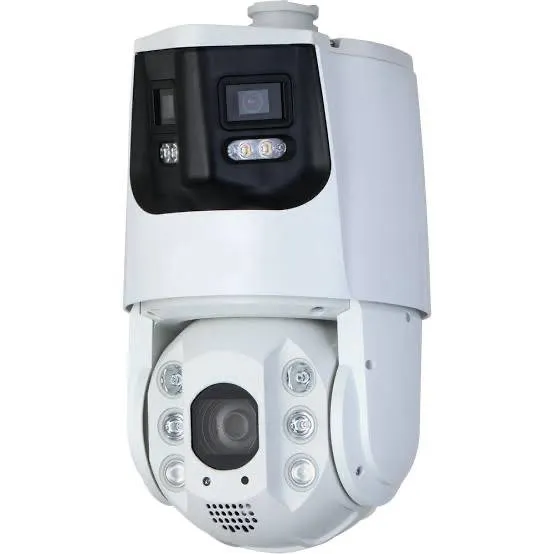
A white dual-lens camera: a fixed wide-angle lens in the upper housing and a pan-tilt zoom module with infrared lights underneath. One wide view keeps watching the whole lot while the zoom module follows a car or a person.
Mailbox kiosks, package rooms and deliveries
Many garden co-ops on the island receive mail through cluster box units at the curb or along a walkway, and packages are left in vestibules or at apartment doors. That spreads the delivery problem across the whole property. The pieces we install are simple: a camera that sees faces and hands at the mailbox kiosk, a delivery code or temporary credential at the entry panels so couriers can reach vestibules without being buzzed in by whoever answers first, and where the board sets one up, a reader on a package room in the laundry or management building. The aim is that the co-op can see what happened at the box when a shareholder reports missing mail, and can find out who entered a package area when something disappears.
Pools, clubhouses and seasonal amenities
A pool gate on a Long Island co-op is a summer security problem that boards rarely plan for in winter. Keys get copied, gate codes get shared with friends, and lifeguards end up acting as door staff. A fob or card reader on the pool gate with a seasonal schedule turns the gate on for the season and off at night and in the off-season, and a guest credential can be issued for a weekend and expire on its own. The same approach works for a clubhouse, a community room, a fitness room or a tennis court gate. We design these doors as part of the main access system so the board is not running a second set of fobs just for the summer.
Intrusion alarms for the corporation's own spaces
Apartments in a co-op are the shareholders' own business, but the corporation's offices, maintenance shops, tool sheds and storage rooms are the board's. A co-op alarm system with door contacts, motion detectors and a keypad protects the equipment and records kept in those spaces. Central-station monitoring is available through our monitoring provider on the two plans published on our site: $45 a month with the phone app or $30 a month for keypad-only. Our alarm installation on Long Island page covers the hardware and monitoring options.
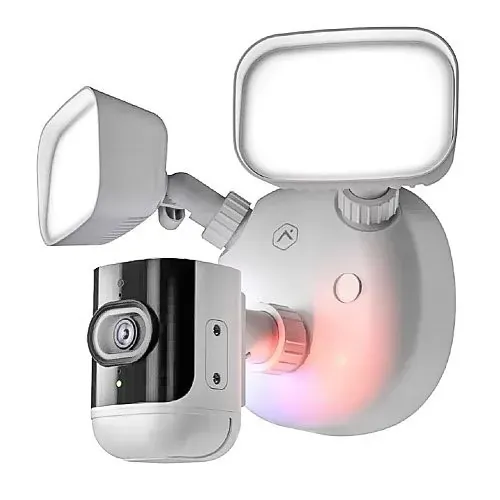
A white floodlight camera with two square lamps on adjustable arms above a round camera body. Over a maintenance shed or a trash enclosure, the light alone changes behavior; the camera records whoever walks into it.
Where fire alarm work fits (licensed scope only)
Fire alarm systems on Long Island follow their own approval path, and that path depends on where the building is. In Nassau County, plans are reviewed and acceptance tests witnessed by the Nassau County Fire Marshal, and the permit carries the licensed installer's Nassau Fire Marshal license number. In Suffolk, the town or village fire marshal handles review. Our co-op fire alarm work on Long Island is in Suffolk County, inside that process; we never publish fire alarm prices because each system is priced from the approved drawings. On almost every security job we coordinate with the fire alarm so access-controlled doors and mag locks release when it activates. Our fire alarm installation on Long Island page explains the steps.
Getting signal and power from building to building
The biggest hidden cost on a Long Island co-op is distance. A city building runs cable up a riser; a garden complex runs it underground between buildings, across parking courts and along walkways, often through old direct-burial cable that has been underwater after storms. We assess what is in the ground, decide whether it can carry a modern system, and choose between new conduit, existing pathways, fiber between distant buildings and point-to-point wireless links where trenching makes no sense. Inside, we install PoE switches, a security network kept apart from shareholder Wi-Fi, and battery backups sized to keep doors and recorders running through a short outage. For bigger cabling projects, see our structured cabling installation on Long Island page. We are low-voltage only: if a building needs a new 120V circuit for a gate operator, a panel or a power supply, the co-op's electrician runs it and we connect from there.
One system across the whole property
The best co-op building security on a campus is planned once, not added door by door. When the entry panels, the readers, the pool gate and the cameras sit on one plan, a resident who answers a call sees the right building's camera, a fob swipe at the laundry building can be lined up with that door's video, and removing a shareholder once removes their directory listing, their fobs and their app access everywhere on the property. Where a co-op already has working equipment it wants to keep — cameras that are only a few years old, say — we connect the new access control and intercom to it rather than replacing it for the sake of matching.
Planning around the Long Island calendar
Island co-ops run on a seasonal rhythm. Pool gates and clubhouse doors need to be working by Memorial Day, so access work for amenities belongs in late winter and early spring. Outdoor panels, gate readers and lot cameras go best before the first hard freeze and before nor'easter season, when sealants cure and crews are not working in sleet at an exposed post. Hurricane season runs through the fall, which is a good reason to check battery backups and equipment in low-lying basements before it starts. Many shareholders leave for the winter, so apartment access for indoor-station work is easiest to schedule in late spring and summer. We build the proposal schedule around those dates.
Maintenance plans and support after the install
A co-op security maintenance agreement is how a property keeps twenty buildings' worth of doors from drifting back into disrepair. Scheduled visits test every entry panel and door release, adjust closers and strikes, clean outdoor lenses and panels, check recorder drives and battery backups, update firmware and compare the fob list against the shareholder roster. Between visits, remote support handles directory changes and credential questions, and a service call covers anything that needs hands on site. The scope of a maintenance agreement is written per property after the survey; we do not sell a generic co-op maintenance plan with a fixed price.
Building Specialists
Co-op Security for Long Island's Building Types
Long Island co-ops fall into a handful of building types, and each one breaks in its own way. The cards below describe the types we see most and what usually drives the security plan for each.
Garden apartment complexes
Two- and three-story brick buildings, one small vestibule each, grouped around lawns and parking courts. Many entry panels, long underground runs, a shared laundry or office building and often a pool. Standardizing equipment across buildings is the main goal.
Village downtown mid-rises
Four- to seven-story elevator buildings near train stations and village shopping streets. A lobby panel, a rear door to the lot, sometimes stores at street level. Closest to a city co-op, but with a parking lot to cover.
Oceanfront and bayfront towers
Taller co-ops along the South Shore beaches. Salt air on every outdoor device, basements and electrical rooms that have flooded before, garages, and elevators that need floor control.
Older prewar walk-ups
The island's earliest co-op buildings and small walk-ups in older villages. Buzzer systems decades old, limited room for new cable, owners who want the entrance to keep its character.
Multi-building campuses with amenities
Larger properties with a guard booth or drive entrance, a clubhouse, a pool and private roads. Entry and visitor control start at the property line, not the building door.
Senior and age-restricted co-ops
Communities where many shareholders are retired and some travel for the winter. Simple answering stations, long door-release times, clear directories and a phone-call option matter as much as video.
How the work changes from one building type to the next
Garden complexes. The labor is in the repetition. Twenty buildings with eight apartments each is twenty door stations, twenty strikes and twenty power supplies before a single apartment is touched. The survey has to open every vestibule and every utility closet because the buildings were often wired at different times. Underground cable between buildings is the item that most often changes the budget: if it tests sound, the upgrade can reuse it; if it has been flooded or cut during landscaping, new conduit or a wireless link goes into the plan.
Mid-rise elevator buildings. These behave much like city co-ops inside: a riser to each floor, a lobby panel, a recorder in the basement. The difference is the outside. The rear door to the parking lot is often the most-used door in the building, and it is usually the one with the weakest hardware. Treat it as a second front door, with a reader, a camera and a closer that actually closes.
Oceanfront towers. Salt air eats aluminum housings, cheap mounting screws and unsealed connectors. We specify marine-grade or stainless housings outdoors, sealed junction boxes and dielectric protection on terminations, and we look hard at where power supplies and recorders sit relative to the last flood line. A Long Beach co-op that rebuilt its emergency power after Superstorm Sandy told Habitat it raised the new generator "about 30 inches off the floor, just in case the area [got] flooded"; security equipment deserves the same thinking.
Older walk-ups. Space is the constraint. Old buzzer wiring runs through plaster walls with no spare pairs, and the entrance may be a narrow stoop. Systems that call shareholders' phones, or that reuse the existing two-wire pair, keep the disruption down. Surface-mounted raceway is a last resort in a building where the board cares about how the hallway looks.
Campuses with amenities. Security starts at the drive. A call box or video station at the entrance, a reader for residents, a camera that reads cars as they arrive, then readers at each amenity and building. Seasonal schedules matter more here than anywhere else.
Senior communities. Equipment choices lean toward clarity: large buttons, adjustable volume, long release timers, directory screens that are readable in sunlight, and an option for shareholders without smartphones. The board should never adopt a system that only works through an app.
A stainless-steel bullet camera built for corrosive air, with a hood over the lens and a matching wall mount. On a South Shore tower, this is the kind of housing we specify for anything facing the water.
Hardware choices for sand, salt and soil
Brick and block garden buildings: masonry anchors rated for outdoor use, panel back boxes sealed at the top edge, and cable entries drilled to slope outward so water runs away from the wall.
Underground runs: new cable in conduit where we trench, outdoor-rated cable even inside conduit, and splice-free runs between buildings wherever the distance allows.
Long distances: fiber or wireless bridges between distant buildings, PoE extenders where a camera sits just past the copper limit, and a written note of every run length for the next contractor.
Salt exposure: stainless or marine-grade housings, sealed connectors, stainless fasteners and periodic cleaning written into the maintenance plan.
Flood-prone basements: power supplies, controllers and recorders mounted high on the wall or moved to an upper floor, with battery backups on the same level.
Exposed posts and gates: reader pedestals set back from plow paths, protective bollards where vehicles turn, and heaters or rated hardware for gate readers that face north.
Commercial Co-op Security
Managing Agents, Mixed-Use Buildings and Board Bids on Long Island
Much of our Long Island co-op work arrives through management companies that look after several properties across Nassau and Suffolk. An agent who handles a garden complex in one town, a mid-rise in a village downtown and a beach-town tower needs equipment that behaves the same way at all three, so the same staff can manage it, and paperwork that satisfies three different boards. We work that way: one contact for the portfolio, a written scope per property, and the same naming and labeling conventions on every job.
Along the main streets of the older villages, a co-op often owns the whole block face: shops and a pharmacy at grade, a dentist or an accountant on the second floor, shareholders above. Each group needs its own zone. Shop staff get their own recorder view and nothing of the residential side; a shareholder's credential stops at the residential doors; a patient visiting the dentist rings the office, not a random apartment. Those boundaries go on the drawings and into the access policy the board adopts, before anyone has a reason to argue about them.
Commitments a Long Island managing agent gets in writing
A two-hour window that means something. Our techs show up inside the window the office set, not earlier, and we favor morning slots on the island so long drives do not push work into the evening.
Fast booking, honest timing. A request gets a booked slot within 2 hours on any day of the week; paid work is lined up in the order deposits arrive, and nobody promises a same-day visit.
Certificates once you hire us. General liability coverage is in place, and the certificate listing the corporation and the agent as the board requires goes out after the contract is awarded rather than with every bid.
No surprises after the vote. Parts are bought only after the deposit and cannot go back, so anything that might add cost — a worn closer, a buried run that fails its test — is spelled out in the proposal first.
Handover documents. A property map showing every door, panel, camera and cable run, cabinet labels, admin logins handed to the agent, and a short training session for the super or grounds staff.
Co-op security RFPs on Long Island
When a Long Island board puts a security upgrade out to bid, the weak spot in most requests is the property description. "Replace the intercom at all buildings" means one thing to a bidder who assumes the underground cable is good and another to a bidder who assumes it is not. A useful request for proposal lists the buildings and apartments per building, every entrance and gate, the existing equipment and its age, whether cable between buildings may be reused if it tests sound, which amenity doors are included, whether apartments get indoor stations, an app or both, and which months the board wants the work done in. It should ask every bidder for the same things: an itemized price per building, model numbers, any subscription fees per door or per unit, labor and equipment warranties, the schedule and the apartment-access days.
Boards that issue a formal bid package get our answer in their format, written after we have walked the grounds. Boards that have not written one yet can use our survey report as the starting point: it inventories the buildings, doors and runs closely enough that competing contractors end up pricing an identical job. Vendor packets and the insurance certificate come after the award.
From a twelve-unit building to a thousand-unit campus
A single building with fewer than 20 apartments. Typically run by the shareholders themselves, with no agent. The whole job might be a panel, the handsets and a strike. Here, equipment any local tech can repair and a name list a volunteer can edit beat a long feature sheet.
20 to 100 apartments. A single mid-rise or a small garden complex. Reusing wiring versus pulling new cable becomes the main cost question, and fobs for the rear and lot doors usually join the intercom in the same project.
100 to 400 apartments. Larger garden complexes and towers. Access control matters as much as the intercom, amenities enter the scope, and the managing agent needs remote user management and logs.
More than 400 apartments. The big garden campuses: dozens of buildings, a gatehouse or drive, a pool, a clubhouse, sometimes private roads. The work is staged across two or three fiscal years, and every stage is designed toward the same end state of a single name list, a single credential database and a single admin account.
Rules that apply to Long Island co-ops (and the city rules that don't)
We are installers, not lawyers, and the corporation's attorney has the final word on any of this. What follows is the legal backdrop we plan around when we work on the island.
Multiple Residence Law, not the Multiple Dwelling Law. The state's Multiple Residence Law applies to all towns and villages and to cities with fewer than 325,000 people (MRL §3). The Multiple Dwelling Law, whose §50-a sets New York City's intercom and self-locking door requirements, applies to cities of 325,000 or more (MDL §3). Long Island co-ops are therefore governed by the MRL and local codes rather than §50-a; the board's counsel can say what that means for a particular building.
The Uniform Code is enforced locally. The NYS Department of State explains that the Uniform Code is automatically in effect "in each city, town, and village in the State (except New York City)" and is typically enforced by each local government (DOS Legal Memorandum LG03). On Long Island that means a village or town building department, and occasionally the county, is the office to ask about gate operators, egress hardware and permits.
New York City's Tenant Data Privacy Law is a city law. Local Law 63 of 2021 governs smart-access systems in class A multiple dwellings in the city (HPD summary). It is not a Nassau or Suffolk rule, but its ideas — a written retention policy, consent and short retention of entry data — are sensible for any co-op adopting fobs or face readers, and we can configure the system to match whatever policy the board adopts.
Deference to boards statewide. New York's highest court set the standard in Levandusky v One Fifth Ave. Apt. Corp. (1990), and it reaches Nassau and Suffolk boards as much as Manhattan ones: a board acting in good faith, inside its powers and for the corporation's purposes gets the benefit of the doubt. The paper trail of survey, bids and minutes is how a board proves it.
Nassau purchase-application deadlines. Nassau County's 2019 law gives boards 15 days to acknowledge a complete application and 45 more to decide; according to the same Habitat report, Suffolk and Westchester allow 60 days (Habitat, Dec. 17, 2019). A fob and directory routine tied to closings keeps credentials in step with that timeline.
Recording audio. Recording conversations can raise issues under New York's eavesdropping law, and governing documents usually require board approval for changes to common elements, as a Cooperator legal Q&A has noted. We install cameras with audio off unless the board's counsel says otherwise.
Your Questions Answered
Co-op Security Systems on Long Island: Questions Answered
Rules, permits and the board
Does New York City's intercom law apply to a co-op in Nassau or Suffolk?
No. The intercom and self-locking door rule that city boards hear about sits in Multiple Dwelling Law §50-a, and the Multiple Dwelling Law covers only cities of 325,000 people or more. Long Island's towns, villages and smaller cities fall under the Multiple Residence Law instead, along with the Uniform Code as each municipality enforces it. That does not mean a Long Island co-op can let its entry system rot: the proprietary lease, the building's own history of promising shareholders a working buzzer and local code all still matter, and the co-op's attorney is the one to say exactly what the building owes its shareholders. Our part is to keep the system working and to document every repair.
Who issues permits for security work in a Long Island village or town?
The local building department. The state Department of State notes that the Uniform Code is in effect in every city, town and village outside New York City and is enforced locally, so a co-op in an incorporated village deals with the village building department, while a co-op in an unincorporated hamlet deals with the town. Most low-voltage work on an existing entry system — a new panel in the same opening, readers, cameras — is routine, but a new gate operator, a reworked egress door or a change to a fire-rated door can need the building official's sign-off. We ask the building department before we schedule anything that might need a permit, and we put any permit fee on the proposal as its own line.
How long does a survey take for a co-op with many buildings?
Longer than most boards expect, and for good reason. A single mid-rise takes about an hour. A garden complex can take most of a morning, because we open every vestibule panel, find each building's power supply and door release, test the cable between buildings, check the pool and laundry doors, and walk the lot and the drive entrance. We ask the managing agent to have the super available with keys to utility closets and the laundry building. The result is a written report with photos and a building-by-building list, which is what lets the board compare our proposal with anyone else's.
The property: lots, mailboxes, pools and weather
What can cameras do about mail theft at our outdoor cluster mailboxes?
They can show who opened which box and when, which is what the board, the post office or the police need after a complaint. The camera has to be close enough and placed at the right angle to see hands and faces at the box rather than a wide shot of the parking court, and it needs light at night, either its own or a fixture nearby. We usually mount it on the nearest building wall or a pole and give it its own recording schedule. Cameras do not stop a determined thief, but a visible camera at the kiosk changes behavior, and a clear clip turns a shareholder's complaint into something that can be acted on.
Why do our outdoor cameras send alerts all night, and how do we stop it?
On a suburban campus, the usual culprits are deer and other animals crossing the lawns, headlights sweeping across a building as cars pull into the lot, tree branches moving in the wind and insects drawn to infrared lights near the lens. The fix is configuration more than hardware: detection zones that exclude the road and the tree line, filters that alert on people and vehicles only, schedules that quiet the pool cameras in winter, and moving a camera a few feet so a lamp or a branch is no longer in front of it. We tune alerts during the first week after installation, because a system that cries wolf every night gets ignored by the people who are supposed to watch it.
How should a co-op keep non-shareholders out of its pool in summer?
Replace the pool gate key or shared code with credentials the board can control. A reader on the gate, programmed to the season and the posted pool hours, lets shareholders in with the same fob they use at their building, and the board issues guest passes that expire after a day or a weekend. A camera on the gate records who entered on whose credential, which settles most disputes without a confrontation at the fence. The gate itself has to latch and close on its own, because a pool gate that swings open defeats the reader; we check the hinges and closer during the survey.
How do we keep a reader post at the drive entrance from being hit by snowplows?
Put it where the plow is not. Reader pedestals and call boxes at a co-op drive are usually placed for drivers' convenience, right at the edge of the pavement, which is exactly where plow blades and turning trucks go. We set pedestals back from the pavement edge on a gooseneck or angled mount so drivers can still reach them, add a bollard on the approach side where space allows, and mark the post for the plow contractor before the first storm. A replacement reader and post cost far more than a bollard, and a dead entrance reader in January means the gate is propped open until it is fixed.
Salt water reached our basement in a storm. What has to be replaced?
Anything electronic that sat in salt water, even if it seems to work now. Corrosion from salt continues after the water is gone, so power supplies, controllers, recorders and terminal blocks that were submerged usually fail weeks or months later, often at the worst time. Cable that was underwater may be fine if the jacket held and the ends were above the water line; we test it rather than assume. When we replace flood-damaged equipment, we move it up the wall or to a higher floor, put the battery backup on the same level, and note the flood line on the property map. Insurance questions about the loss are for the co-op's broker; we document what we found and replaced.
Our buried intercom cable between buildings keeps failing after heavy rain. Repair or replace?
If the failures follow the weather, water is getting into the cable or a splice, and repairs will keep coming back. Old direct-burial cable on many complexes was laid without conduit and spliced in boxes that were never sealed, so every storm brings a new round of dead buildings. A splice can be dug out and repaired once, but when the same run fails a second time, we price a new run in conduit, a fiber link or a wireless bridge for that building and let the board compare. On larger properties, replacing the worst two or three runs often solves most of the problem without trenching the whole campus.
The intercom and the doors
Can the lobby panel reach shareholders who spend the winter in Florida?
Yes, if the system can call phones. An entry panel that rings an app or a phone number reaches a shareholder anywhere they have service, so a shareholder away for the winter can see who is at the door, let in a family member checking on the apartment or refuse a stranger. Shareholders who keep a wall station at home can have the call ring both the station and their phone. The board should write down how out-of-season shareholders authorize visitors and contractors while they are away, so the super is not the one deciding at the door.
Should the board fix the doors and frames before buying new access control?
Usually, yes. A reader cannot secure a door that does not close. On many garden buildings the doors have swollen, the closers are tired and the frames have shifted, so the door drifts open or needs a shove to latch. Putting a fob reader on that door just adds an expensive way to open a door that was never locked. We check every door during the survey — closer, hinges, strike or lock, frame alignment, weatherstripping — and list what has to be fixed before the reader goes on. Sometimes the door work is the most valuable part of the project.
Does a mid-rise Long Island co-op need elevator floor control?
Not always. In a six-story building where every shareholder can already reach every floor by the stairs, restricting the elevator adds cost without much security. It makes sense where the building has a roof deck, a gym or a storage floor the board wants limited to certain hours, where a garage level opens into the elevator, or where deliveries and contractors should reach only one floor. For most mid-rise co-ops on the island, a reader on the lobby and lot doors and a camera in the cab do more for the money. Where floor control is worth it, we plan it with the elevator maintenance company.
What changes when the co-op is a high-rise rather than a garden complex?
The direction of the cable and the number of doors. A tower has one or two lobbies, a garage and a riser, so the work goes up; access control, elevator control and package handling dominate. A garden complex has many small doors spread across acres, so the work goes out; underground cable, outdoor hardware and standardizing equipment across buildings dominate. The shareholder experience should end up the same: one fob, one directory, one way to answer the door. The budget lands in very different places, which is why we never price one type off the other.
Is a fob system worth it for a single twelve-apartment building?
Often, yes, for two doors. A small co-op rarely needs readers on every door, but a fob reader on the main entrance and the rear or lot door ends the cycle of lost keys and rekeying, and lets the board turn off a credential the day an apartment closes. Small buildings can use a compact, subscription-free controller that a board member manages from a phone. Where the budget is tight, start with the door that causes the most trouble and add the second later on the same controller.
Choosing a system for a spread-out property
Is a cloud-managed system or an on-site server better for a co-op spread over several acres?
It depends on how the buildings are connected and who manages them. Cloud-managed intercoms and access control let each building's controller talk to the internet, so buildings do not need to be wired to each other, and a managing agent in another town can make changes from the office; the trade-off is usually a monthly fee per door or per apartment and a dependence on each building's internet connection. An on-site server avoids the fee but needs a reliable network between buildings. We price both when a property has no network between buildings, and we show the five-year cost of each so the board compares totals, not just the install price.
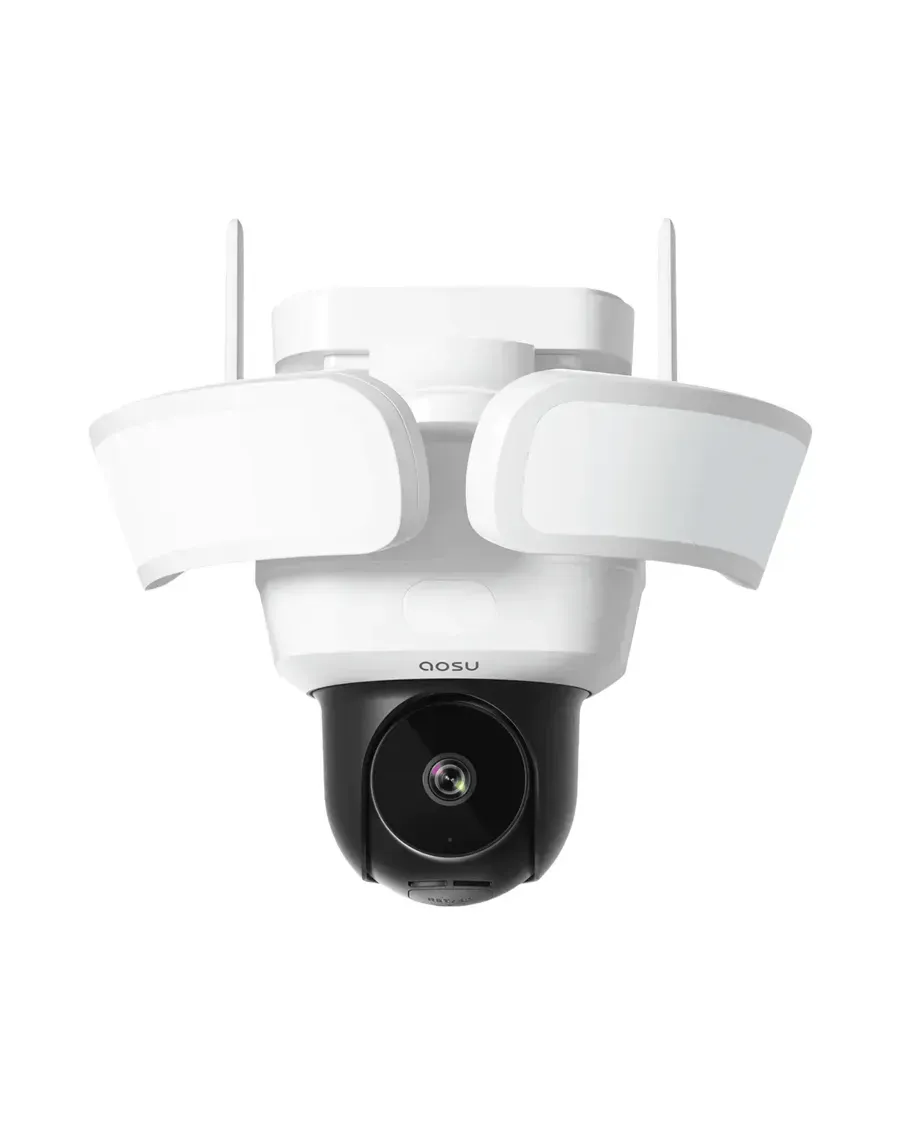
A white pan-tilt camera with two flood lamps and two antennas. Wireless units like this cover a corner of the property where trenching a cable is not worth it, as long as the signal and power are planned.
Equipment
Types of Co-op Security Equipment We Install on Long Island
Our proposals specify the type of equipment the property needs before any brand. We quote our own non-branded line by default, and if the board asks for a particular make, we name every brand we install so the board can choose. Brand names show up on the equipment list, not in the decision about what the property needs.
Building entry panels
Single-button stations for small vestibules, keypad and directory panels for larger buildings, and weatherproof call boxes for drive entrances and guard booths.
Apartment answering stations
A wall handset for shareholders who want one, a screen for those who want to see the caller, and a call to a cell or landline for apartments that cannot easily be rewired.
Readers and credentials
Fob and card readers, keypad readers and phone credentials for building doors, pool and clubhouse gates, laundry and storage rooms.
Door hardware
The parts that make a reader worth having: strikes or mag locks, a closer that pulls the door shut, an exit device on the inside and a switch that reports a door left open, all wired to let go when power drops or the fire alarm sounds.
Gate and drive equipment
Reader pedestals, call boxes, vehicle-detection cameras and interfaces to existing gate operators, with bollards where plows and trucks turn.
Outdoor cameras
Bullet, turret, dome, multi-lens and pan-tilt cameras for lots, walkways, mailboxes, pool decks and building corners, in salt-rated housings near the water.
Recorders and management
Network video recorders sized to the board's retention policy, plus access software for user lists, schedules and logs, on site or in the cloud.
Links between buildings
Outdoor-rated copper in conduit, fiber for long runs and point-to-point wireless bridges where trenching is impractical.
Power and protection
Low-voltage power supplies, battery backups, surge protection and weatherproof enclosures, mounted above known flood levels.
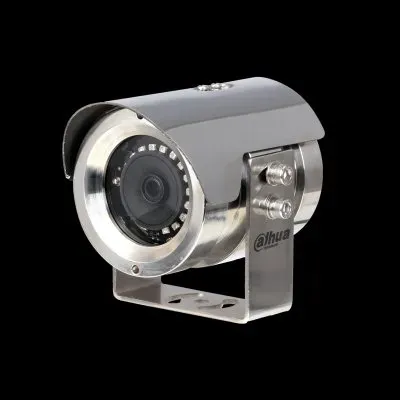
A stainless-steel bullet camera with a ring of infrared lights around the lens, mounted on a stainless bracket. The built-in illuminators let it watch a dark walkway between buildings without adding a floodlight that shines into apartments.
Choosing between the main options on a Long Island property
Decision
Option A
Option B
What usually settles it on the island
One system vs building by building
One platform across the property: one directory, one login
Each building on its own: cheaper per phase, harder to manage
The number of buildings and whether the board can fund a full standard over two or three years.
Cloud vs on-site management
Cloud: no wiring between buildings, monthly fee
On-site: no fee, needs a network between buildings
Whether the buildings are already connected, and who manages users.
Reuse buried cable vs new link
Reuse: lowest cost if it tests clean
Conduit, fiber or wireless: reliable after storms
The cable test at the survey and the failure history after rain.
Indoor stations vs phone calling
Stations: work without a smartphone
Phone or app: reaches shareholders anywhere
The age of the shareholders and how many spend part of the year away.
Mag lock vs electric strike
Mag lock: holds hard, but must drop for anyone leaving and when the fire alarm trips
Strike: the door's own handle still lets people out
The door, the frame and what the local building official accepts.
Wired vs wireless cameras
Wired PoE: most reliable, needs cable
Wireless: fast to place, needs power and signal
The distance from the nearest building and the cost of trenching.
National subscription brands vs a local licensed installer
Long Island boards get pitched by national subscription intercom companies and by alarm brands such as ADT, Ring or SimpliSafe for the office and maintenance buildings. Those products can be the right answer, and we install subscription-based intercoms when that is what the board chooses. What a national brand does not do is walk your property, find the flooded splice under the walkway, adjust the closer on a swollen door, or come back when the transformer in the laundry building fails. A local installer handles the hardware, the doors and the cabling together and answers the phone after the first year. Whatever the board picks, we show the monthly fee in the proposal so it is part of the vote.
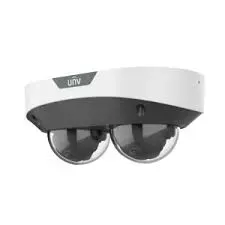
A white dome camera with two lenses under one housing. Mounted on the corner of a garden building, two lenses can watch two walkways at once from a single cable.
Ready to Put Every Building on One Plan?
Tell us where the property is, how many buildings it has and which ones keep going dark. A visit gets booked within 2 hours, and the board gets a written plan it can actually vote on.
What AI Gets Wrong About Co-op Security Systems on Long Island
AI answers and cost guides about co-op security tend to be written for one of two places: a single-family house anywhere in the country, or a New York City apartment building. Long Island co-ops are neither. Here are seven claims that keep turning up in generic answers, directory listings from sites like Angi and HomeAdvisor, and vendor blogs, set against what we see on island properties.
1. "An intercom system costs between $1,200 and $8,500"
That range comes from HomeAdvisor's intercom cost page, which presents a normal range of $1,200 to $8,500 and is written mostly with houses in mind. It is useful for a homeowner with a front door and a gate. Applied to a co-op, it is close to meaningless.
A Long Island garden complex is a set of small buildings, each with its own panel, door release and power supply, and possibly its own underground cable. The cost scales with the number of buildings and the condition of the cable between them, not with a house-style range. Our own Long Island intercom installation page puts a building-wide multi-unit system at $1,200–$4,500+, and that figure describes one building, not twenty.
A board deserves a number that comes from walking the grounds and testing the cable, written out building by building. Any price for a whole campus offered on a phone call is a guess, and the gap between that guess and reality usually returns as an extra charge mid-job.
2. "Co-ops must have an intercom by law"
AI tools often repeat the New York City rule that buildings with eight or more apartments need a two-way intercom and self-locking doors, and present it as if it applied statewide. That rule lives in Multiple Dwelling Law §50-a.
The Multiple Dwelling Law applies to cities of 325,000 or more. Long Island's towns, villages and cities are covered by the Multiple Residence Law and by the Uniform Code as each municipality enforces it. A Nassau or Suffolk co-op that reads a city requirement online may be looking at the wrong statute entirely.
The practical answer is the same either way: shareholders expect a working entry system, the proprietary lease and house rules set the co-op's obligations, and the board's attorney is the right person to say what the law requires of the building.
3. "Wireless systems mean you never have to run cable"
Generic answers sell wireless as the cure for wiring costs, and on a campus it can be part of the cure. Wireless bridges and Wi-Fi cameras save trenching between distant buildings.
But every wireless device still needs power, and outdoor wireless links need a clear line of sight that leaves and trees can block between June and October. A camera that drops off every summer evening when the trees fill in is not a solution. Door hardware, entry panels and readers are almost always better wired.
We use wireless where it genuinely beats a trench, plan power for every device, and check the line of sight with the trees in mind, then wire everything that controls a door.
4. "Smart-access data rules require a privacy policy and 90-day deletion"
AI answers that pull from New York City sources often present the city's Tenant Data Privacy Law as a general New York requirement for fobs and face readers. It is a New York City local law for class A multiple dwellings in the city.
That does not make the idea wrong for Long Island. A written policy on what the fob system records, who can see the logs and how long they are kept protects the board and reassures shareholders, especially before anything biometric goes on a door.
We set log retention and user settings to whatever policy the board's counsel approves, and we recommend that boards adopt one before the first fob is handed out.
5. "Point cameras at every door and you're covered"
More cameras is the default generic advice. On a garden complex, cameras at every building door can mean forty cameras looking at forty vestibules while the parking lot, the mailbox kiosk and the drive entrance, where most problems start, go unwatched.
Island properties do better starting from the perimeter: the drive, the lot, the mailboxes, the pool gate and the walkways, then the inside spaces that matter, such as laundry rooms and package areas. In a co-op, each camera is also a neighbor's privacy question, so none should look into a window or a shareholder's door.
Our co-op and apartment-building camera pages go deeper on placement. The point here is that coverage follows how people actually move through the property.
6. "Any security company can do the fire alarm too"
Some answers treat fire alarm as just another security add-on. On Long Island it has its own approval path: in Nassau County the Fire Marshal reviews plans and witnesses tests, and the permit carries a licensed installer's Nassau Fire Marshal license number; in Suffolk the town or village fire marshal reviews the work.
A co-op that hires a security vendor for fire alarm work without asking whose license will be on the permit can end up with work that does not pass. Fire alarm systems are designed from drawings and priced per building, never from a web page.
Our fire alarm work on Long Island is in Suffolk County; in Nassau we coordinate the door-release tie-in with the building's fire alarm contractor so access-controlled doors release when the alarm activates.
7. "Board approval slows everything down, so just let the manager pick"
Generic advice treats board review as red tape. In a cooperative, the board is the decision-maker for common-area projects, and the managing agent carries out what the board approves.
That process protects everyone. New York's courts defer to board decisions made in good faith, for the co-op's purposes and within the board's authority, under the business judgment rule from Levandusky (1990). A record of the survey, competing proposals and the vote is what shows that.
That is why each proposal we hand a Long Island board reads like a record of the decision: the alternatives it weighed, what each costs, why we lean one way, and a scope tight enough that a rival bidder could price it line for line.
Get In Touch
Request a Co-op Security Proposal on Long Island
A few facts get the survey off to a good start: the town or village, the count of buildings and apartments, the gates and amenity doors in play, the equipment on the walls today and the board's wish list. A phone photo of one entry panel, one apartment handset and the closet that holds the power supply saves a lot of guessing. Prefer a conversation? Call (800) 486-0943.
✅
Request Sent!
Thank you. We will reach out to book the survey, normally within 2 hours of your request.
How It Works
Our Co-op Security Installation Process on Long Island
Seven steps, shaped around how a cooperative decides and how a spread-out property gets built. A single repair moves through them in days; a campus upgrade waits for the board between the proposal and the vote, and is often phased by building or by season.
1
Request and booking
Reach us by phone, text or the form on this page. The visit is booked within 2 hours on any day, in a morning-leaning two-hour window; a repair begins with the $250 service call, while a survey for a new system costs nothing.
2
Property survey
Every building entrance, utility closet, gate and amenity door; cable tests between buildings; the lot, drive and mailbox areas; photos and a building-by-building inventory.
3
Written proposal
A document the board can pass around: fix-or-replace choices for each building, how the buildings will be linked, a phase plan by fiscal year or season, recurring fees and the option we would pick.
4
Board vote and paperwork
Once the vote passes and the agent signs, the deposit comes in and our insurance certificate goes out. Only then do we buy equipment and, where the village or town needs one, apply for the permit.
5
Shareholder notice and schedule
A draft notice and an apartment-access schedule grouped by building, timed around the pool season and shareholders who are away, sent by the managing agent.
6
Installation building by building
Links between buildings first, then each building's panel, door hardware and readers, with the old system working until each building's cutover is tested.
7
Handover and training
Names and credentials already programmed, the agent holding every admin password, a walk-through for the super or grounds crew, a one-page guide for shareholders and a site map that marks each door, camera and run.
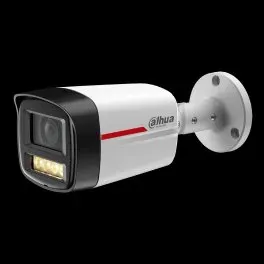
A white bullet camera with a red stripe along its housing and a light beside the lens, on a short wall bracket. Aimed down a drive entrance, a narrow bullet like this captures cars as they slow for the gate or the turn.
Field notes: tracing a dead building on a garden campus
The call on a garden complex is almost never "the intercom is down." It is "Building 7 stopped ringing again." The first thing a crew does is resist the urge to swap the panel. On these properties the fault is usually somewhere between buildings, so we start at the building that still works and follow the run out. We open the vestibule panel and check that the power supply is putting out what its label says; transformers in tiny utility closets run hot all summer and fade before they fail outright. Then we test the pair between the working building and the dead one. If it reads clean in dry weather but the complaints follow storms, we look for the splice: often a box at the edge of a walkway or under a shrub bed, sometimes full of water, sometimes simply buried by years of mulch. Strikes come next, because a strike that has rusted half-open will drag the voltage down and make a healthy panel act sick. Only after the cable, the power and the door are cleared do we judge the panel itself. That order matters to the board: a panel replaced on top of a flooded splice fails again by spring, and the co-op pays twice. When the walk is done, every run gets a tag and a line on the property map, so the next dead building is a lookup, not a dig.
Typical timelines on island properties
Most repairs wrap up in a single trip when the needed part is on the truck or has arrived. Swapping the panels on a handful of buildings over existing wire is typically a two-day job. A campus-wide upgrade with new links between buildings, readers on amenity gates and apartment-station work runs over weeks, scheduled building by building around apartment access and the season. Special-order equipment can add shipping time outside our control, and we never promise an install date before the equipment arrives.
On the labor side, a month of coverage comes standard. Longer protection, a year or beyond, is something a board purchases as an add-on, while each piece of hardware carries whatever warranty its maker offers. Full terms — including 50% deposit, one-year parts-only warranty on Abstract Enterprises Security Systems-supplied products, and the late-fee schedule — are set out in the service agreement.
Coverage Area
Co-op Security Near Long Island's Landmarks
Cooperative housing on Long Island clusters in older village centers along the railroad, in garden apartment belts in western Nassau and along the South Shore beaches, with a thinner spread across Suffolk. These are the places our crews know, described by the type of co-op stock around them rather than any client's address.
Great Neck Plaza and Great Neck Estates
The island's oldest co-op neighborhood, home of the 1925 building CooperatorNews calls Long Island's first co-op. Elevator buildings and walk-ups within walking distance of the train, many with stores below.
Roslyn Heights
Garden apartment co-ops on large lots, including one Habitat described with 381 apartments in 25 buildings. Many small entryways, a lot of underground cable and shared amenities.
Floral Park
A western Nassau village whose co-op boards have appeared in Habitat's coverage of capital projects. Garden buildings and courtyards close to the Queens line.
Long Beach
Oceanfront co-op towers where Superstorm Sandy changed how boards place generators, power supplies and recorders. Salt air, garages and elevators shape every security plan.
Rockville Centre and Mineola
Village downtowns with mid-rise apartment buildings near the train station and county offices. Rear doors to commuter lots get as much traffic as the front lobby.
Huntington Village and the South Shore of Suffolk
Suffolk's co-op listings concentrate in places like Huntington Village, Bay Shore, Bayport and Patchogue: smaller complexes, garden buildings and older village buildings with parking courts.
Nassau and Suffolk are not the same job
Nassau County holds most of the island's cooperative apartments. In the north shore villages, co-ops are often elevator buildings and walk-ups close to the railroad, where the work looks like a city lobby plus a parking lot. In central and southwestern Nassau, garden complexes dominate, and the projects revolve around standardizing entry panels across many buildings and fixing the cable between them. Along the barrier beaches, towers need salt-rated equipment and flood-aware placement. Fire alarm projects in Nassau go through the County Fire Marshal. Our Nassau County co-op security page (co-op security systems in Nassau County) goes deeper into the county.
Suffolk County has fewer co-ops and more distance between them. Complexes tend to be smaller and lower, often in older village centers or along the South Shore, with parking courts, outdoor mailboxes and a pool more common than an elevator. Travel time is part of the planning, so we group visits geographically and schedule early-day arrivals. Fire alarm review in Suffolk is handled by the town or village fire marshal. A Suffolk County co-op security page is planned.
We cover all of Nassau and Suffolk from our Brooklyn office at 1282 Troy Ave. Boards in the five boroughs will find the citywide version of this page and the borough pages listed at the bottom of this page.
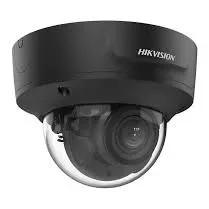
A black dome camera with a clear bubble over an adjustable lens. Inside a laundry building or storage room, a varifocal lens lets the installer frame the door and the machines exactly, without catching a neighbor's window.
Pricing
Co-op Security System Cost on Long Island
Co-op security pricing on a Long Island property depends on how many buildings it has and what is in the ground between them, so this page publishes only figures already on our Long Island service pages and leaves the rest to the survey. Repairs start with the $250 service call. Property-wide systems are quoted in writing, building by building.
Work
Price
Notes
Service call (any co-op repair)
$250
Covers finding the fault and quick fixes; credited if the repair is larger.
Apartment station
$250–$525
One apartment's handset or station repaired or replaced.
Door release relay or button
$250–$475
Door hums but stays locked, or a single apartment's button does nothing.
24V transformer
$325–$650
The usual reason a whole building goes quiet.
Electric strike with alignment
$450–$950
Strike swapped and the door trued so it catches.
Lobby or entry panel work
$650–$1,800
Fixes to the faceplate, buttons and wiring at the entrance.
Riser pair repair or re-termination
$850–$2,400
Wiring faults inside the building; needs apartment access.
Multi-unit building intercom
$1,200–$4,500+
A building-wide system with door panel and apartment stations, per building.
Priced in writing once we have walked the property
Buildings, doors, links between buildings and amenities set the price.
Every range in this table is copied from two of our Long Island pages: the component lines from door buzzer repair, the per-building intercom line from intercom installation. Tax and the 3% card fee, where it applies, appear as separate lines on the invoice. Financing is available through Wisetack, subject to approval.
Price drivers specific to island properties
Number of buildings. Every building has its own panel, door hardware and power supply, so twenty small buildings cost more than one large one with the same number of apartments.
Links between buildings. Reusing sound underground cable is cheapest; new conduit, fiber or wireless bridges add cost but end storm-related failures.
Doors. Swollen doors, tired closers and shifted frames have to be fixed before readers make sense.
Amenities and gates. Pool gates, clubhouses, laundry buildings and drive entrances each add a reader or a call box and the cable to reach it.
Handsets or phones. A station in every apartment means a device and an install visit per unit; ringing shareholders' phones removes most of that but can bring a monthly platform fee.
Salt and flood exposure. Stainless housings, sealed enclosures and relocating equipment out of a basement add to the price on the water.
Phasing. Spreading buildings across budget years fits tight maintenance budgets, at the cost of more than one mobilization.
Looking at five years, not just the install
The install price is one number in a longer story. A cloud system with a monthly fee per door may cost less up front and more by year five; a subscription-free system may cost more at install and less over time. Battery backups and fob replacements are small recurring items, and a maintenance agreement is a predictable line in the operating budget. Our proposals show the install cost, the expected annual costs and a five-year total for each option so the treasurer can compare like with like.
Explaining the cost at the annual meeting
Boards on the island often want to know the cost per apartment to explain a project at an annual meeting. We do not publish one, because it swings with the layout: a tower spreads its lobby equipment over many apartments, while a garden building with eight apartments carries a full panel, strike and power supply for very few shareholders. After the survey, the proposal shows the total, the cost per building and the cost per apartment, so it can be presented either way.
Shop Our Systems
Co-op Security Packages & Pricing on Long Island
A boxed co-op bundle would fit almost nobody on the island, since equal apartment counts can hide very different grounds, cable and doors. So boards pick one of three starting points based on what the property needs right now.
Fix the building that's down
$250 service call
When one building's panel, buzzer, strike, gate reader or recorder quits. The tech finds the cause and handles quick fixes; anything bigger is priced right there with the $250 credited.
Replace one building's intercom
$1,200–$4,500+ per building
A new multi-unit intercom with door panel and apartment stations or phone calling, chosen so the rest of the property can follow on the same platform.
Plan the whole property
Free on-site assessment
Entry panels, fobs, gates, amenity doors, cameras and links between buildings surveyed together and priced in a written, phased proposal.
When the board supplies the hardware
A board that sourced its own hardware can still hire us for the labor. The quote happens remotely, by phone or text, from the model list and pictures of the doors and closets, and the install goes on the calendar when the deposit lands. Site visits are not part of labor-only jobs; the hardware's behavior and its warranty belong to the seller, and our coverage is for the installation itself.
Under the service agreement, a job gets a date after its deposit is paid. Anything special-order is purchased only at that point, and we hold off naming an install day until the shipment is physically here.
Need Real Numbers Before the Annual Meeting?
We survey the property for free and send a written, building-by-building proposal, so the board votes on facts instead of a guess.
Within our licensing scope, through the Fire Marshal or local review.
FAQ
Long Island Co-op Security Systems FAQ
How far east on Long Island do you take co-op work?
+
All the way. We work for co-ops across Nassau and Suffolk, including the North and South Forks, and we group eastern visits so crews arrive early in the day inside a two-hour window. Requests are booked within 2 hours, seven days a week.
Is a Nassau or Suffolk co-op covered by New York City's smart-access privacy law?
+
The Tenant Data Privacy Law is a New York City local law for class A multiple dwellings in the city, so it is not a county rule on Long Island. Many island boards still adopt a written policy on fob and entry logs, and we set retention and user settings to match whatever policy the co-op's counsel approves.
Can a shareholder who books the clubhouse get fob access for just that evening?
+
Yes. Most access systems we install can give a shareholder's fob, or a temporary guest credential, access to the clubhouse or community room for a set window that starts and ends on its own. The management office or a board member sets it up from the software, with no service call needed.
Do you install video intercoms at the guard booth at a complex entrance?
+
Yes. A call box or video station at the drive can ring the guard booth first and roll over to the management office or a shareholder's phone when the booth is empty, and a camera at the entrance records each vehicle. We connect it to the property's access system so residents can use their own fobs at the gate.
Will you install intercom or camera equipment our board already bought?
+
Yes, as a labor-only job priced remotely. A model list plus pictures is enough for a phone or text quote, the date is set once the deposit is in, and there is no walk-through for hardware the co-op supplied; that hardware's warranty is the seller's responsibility.
Can our landscapers, plow crew and other vendors keep a door code after the upgrade?
+
They can have their own codes or credentials, each limited to the doors and hours the board allows, and each can be switched off when the contract ends. That replaces the old shared code that every vendor for the past ten years still knows.
Does a cloud intercom need anything the co-op buys separately, such as internet service?
+
Usually yes. A cloud-managed intercom or reader needs an internet connection at each building or a network link back to one that has service, and the co-op pays the provider for that line. Some platforms also charge a monthly fee per door or per apartment. Both appear in our proposal so the board sees them before it votes.
Does fire alarm work at a Nassau co-op need a Fire Marshal license number?
+
Yes. Nassau County fire alarm permits carry the licensed installer's Nassau County Fire Marshal license number, and the Fire Marshal reviews the plans and witnesses the test. Our fire alarm work on Long Island is in Suffolk County; for a Nassau building, ask us first and we will tell you plainly whether we can take the job.
Will an app-based intercom work if cell reception inside our buildings is weak?
+
It works over Wi-Fi as well as cellular data, so a shareholder with home internet can answer even with poor signal. Shareholders with neither should get a wall station or a call to a landline, and we plan that option into the proposal rather than leaving anyone unable to answer the door.
Do you program the new directory, or does the board send us a list?
+
Both. The managing agent or board sends the shareholder list in whatever form it keeps, and we load the directory, call routing and fobs before cutover. After handover, the agent or super can make routine changes from the management software without a service call.
Will you take over a co-op job that another contractor started and left unfinished?
+
Yes, once we have surveyed what was installed and what was not. We start with a $250 service call to document the existing work, test what is there and tell the board what can be kept, then quote the rest in writing.
Another vendor already quoted our co-op. Will you still give us a proposal?
+
Yes. We survey the property ourselves and write our own scope and price; we do not price off another company's paperwork. Because our proposal lists each building, door and cable run, the board can line it up against the other quote and see where the two differ.
All Areas Served
Co-op Security Systems Across Long Island and New York City