What are you looking for?
About Us Contact Us Careers Get a Free Quote (800) 486-0943
Pick a service
✅ Got Your Own System?
🎬 Home TheatreQuote 🎶 AV SoundQuote 🔑 Access ControlQuote
Now pick your area
Pick your area
Long Island
Hudson Valley
Services available
Pricing & Tools
Pick a service for pricing
🚪 Intercom Pricing 🔔 Buzzer Repair Pricing
Calculators
📹 Camera System Calculator 🚨 Alarm Calculator ⚡ Cabling Quote Builder ✅ Got Your Own System?
Select your area
Putnam County co-op officer, managing agent or super with an entry panel that died in the last storm, a side door nobody can lock or a buzzer that only reaches half the apartments? Call or text (845) 640-3835
Home › Co-op Security Systems Hudson Valley › Co-op Security Systems Putnam County
Licensed NYS Low-Voltage Contractor · Small Co-ops, Garden Associations & Village Buildings

Co-op Security
Systems in
Putnam County

Entry Intercoms · Buzzer Repair · Key Fobs · Grounds Cameras · Storm-Ready Power

For co op security systems in Putnam County, a repair visit is the $250 service call, and a new intercom, fob or camera plan for a cooperative is priced in writing after a free visit to the property. Putnam has very few co-ops, and most are small: one village building near a Metro-North platform, a cluster of townhouse-style units on a wooded slope, or a garden association run by volunteer officers who also hold day jobs. We plan building security for those properties in Brewster, Carmel and Mahopac, Patterson, Kent, Southeast, Putnam Valley and the Philipstown villages of Cold Spring and Nelsonville, with the county's hills, long cable runs and winter outages built into the plan from the first visit.

Quick answer: Abstract Enterprises Security Systems repairs, replaces and installs what a Putnam County housing cooperative owns at its doors and on its grounds: entry intercoms and apartment answering, door buzzers and releases, key fob readers, the rare elevator reader, and cameras for entrances, mail areas, parking and paths. A repair visit is the $250 service call, and it counts toward the repair if more work follows. Any replacement or new system gets an itemized written quote after a free on-site assessment, in a form a small board can read in one sitting. We book visits within 2 hours of a request, seven days a week, and issue the certificate of insurance once the job is awarded.

Last updated November 25, 2026 by Abstract Enterprises Security Systems, NYS license #12000287431 · Sources: OneKey MLS Putnam County Quarterly Indicators (Q3 2026); U.S. Census Bureau QuickFacts; Putnam County hazard mitigation county profile; Putnam County Consumer Affairs and Board of Electrical Examiners; NYS Multiple Residence Law §3; NYS Department of State Article 6-D; Town of Carmel, Patterson, Putnam Valley and Southeast alarm laws; NYSEG; Daily Voice; News 12 Hudson Valley; Earth Networks; The Highlands Current (links in each section)

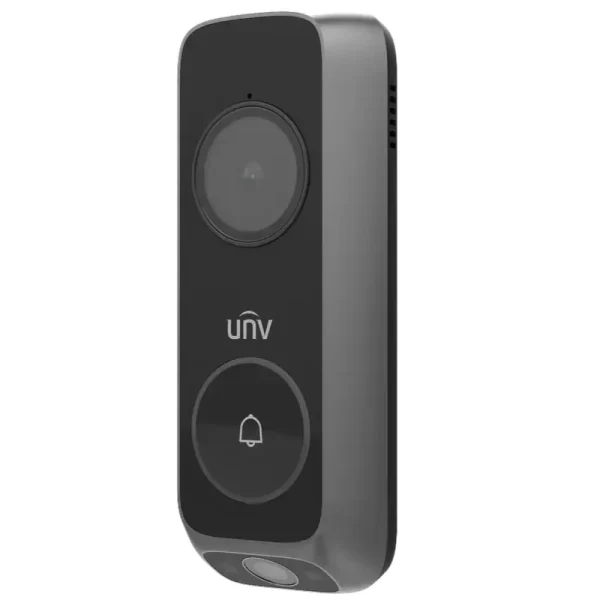
Putnam County co-op entry: product photo of a slim black video door station with a camera lens at the top and a round bell button below
Product photo from the Abstract Enterprises Security Systems product library, not taken at a Putnam co-op: a slim video door station with a single call button. On a townhouse-style co-op where each unit has its own front door, a station this size fits the trim beside the door without a new opening.
Putnam County Co-op Security Quote
Board officer, managing agent, super or shareholder

✅
Request Sent!
Thank you. We will call or text to set a time for your Putnam County co-op.
2002
Owner-Operated Since
2 Hr
Booked Within
$250
Service Call
4.7★
201 Google Reviews

Owner-operated since 2002 · Thousands of jobs completed · Booked within 2 hours. Call or text (845) 640-3835 or use the quote form.

  • One low-voltage contractor for the entry, the side doors, the mail area and the grounds of a small cooperative
  • Plain written scopes a volunteer board can approve by email and attach to a shareholder notice
  • Rated 4.7 out of 5 on Google from 201 reviews, licensed by the New York Department of State as a security installer, and fully insured
The County

Why Putnam County Co-ops Need a Security Plan Sized for Few Doors, Long Distances and Rough Weather

The first thing to know about cooperative housing in Putnam County is how little of it there is. OneKey MLS's quarterly indicators for the county counted two co-op closed sales in the third quarter of 2026, two for the year to date, and two co-ops in inventory, against none at all in the same periods of 2025. In the same quarter the county recorded 51 condo sales and 260 single-family sales (OneKey MLS, Putnam County Quarterly Indicators, Q3 2026). The co-op median printed in that report, $62,500, rests on two sales and says more about how thin the market is than about what a Putnam co-op apartment is worth. On the day this page was updated, a Homes.com search for co-ops for sale in Brewster returned no listings at all (Homes.com, Brewster co-ops search, Nov 25, 2026).

That scarcity shapes everything about co-op building security here. A Putnam cooperative is rarely a tower with a lobby desk. It is more often a single older building near a village center, a small walk-up above or beside shops, or a set of townhouse-style or garden units sharing a driveway, a mail shelter and a parking area. The county as a whole is mostly owner-occupied houses: the Census Bureau counts 38,713 housing units and an owner-occupancy rate of 83.8 percent (U.S. Census Bureau QuickFacts, Putnam County). Even the purpose-built multifamily buildings are modest. The Putnam County Housing Corporation describes one of its senior complexes as a two-story garden apartment building of 24 units (Putnam County Housing Corporation). A building that size is the scale most Putnam co-op boards are working at, and a security plan that assumes a doorman, a security office or a full-time super will be wrong before it starts.

Small also means self-run. Many Putnam cooperatives have no outside managing agent, or one who visits monthly. The president answers the calls about the front door, the treasurer pays the invoices, and a shareholder who is handy changes the light bulbs. Those officers are volunteers with jobs, often commuting to Westchester or the city, so the questions we get are practical: what breaks least, what can be managed from a phone, and what a board can approve by email without three meetings. A coop security system in Putnam has to be simple enough that the next board, two years from now, can still run it from the notes we leave behind.

The land adds its own demands. Putnam covers more than 240 square miles across six towns and three villages; about three quarters of it lies inside the New York City watershed, most of it sits on Hudson Highlands bedrock, and forest covers roughly two thirds of the county (Putnam County hazard mitigation plan, county profile). On a cooperative property that translates into steep driveways, detached garages down a slope, mail shelters at the road, rock just under the lawn and trees between every building. Cable runs are long, trenching is harder than it looks, and wireless links fight with leaves for half the year.

Then there is the weather and the power. When Tropical Storm Isaias came through in August 2020, NYSEG reported 34,150 of its 38,693 Putnam customers without power (Daily Voice, Aug 5, 2020). On Christmas Day that same year NYSEG was still restoring 27,375 customers in its Brewster division after wind gusts it put as high as 71 miles an hour (NYSEG, Dec 25, 2020). Lightning is a regular summer event: Earth Networks counted 75,093 lightning pulses and 35 thunder days in Putnam in 2020 (Earth Networks, 2021 New York lightning report). Every one of those events reaches the entry panel, the door strike's power supply and the camera recorder. In Putnam, building security for co-ops is as much about what happens when the lights go out as about what happens when someone rings the bell.

Finally, the trains. The county's co-ops and small apartment buildings cluster where people can walk to Metro-North: Brewster, Southeast and Patterson on the Harlem Line, and Cold Spring and Garrison on the Hudson Line (Putnam County, "All Aboard!! Next Stop... Putnam County!", Aug 15, 2024). The county's own Main Street study notes that the Village of Brewster has a long-established mixed-use Main Street with a Metro-North station at its end (Putnam County Main Street Partnership Planning Study). A station-area building sees foot traffic, early and late commuters and delivery vans that a co-op on a lake road never does, and the doors and cameras need to be set up for the building it actually is. So the order of this page follows the order we work in a Putnam property: the front entry and the intercom first, then the buzzer and wiring behind it, then fobs, cameras, packages, power and paperwork.

Putnam County facts a co-op board can use

  • A very small co-op market: two co-op closings in Q3 2026 and two co-ops in inventory, next to 51 condo and 260 single-family closings in the same quarter (OneKey MLS).
  • Six towns, three villages: Carmel, Kent, Patterson, Philipstown, Putnam Valley and Southeast, plus the villages of Brewster, Cold Spring and Nelsonville, each with its own building department or code office (county profile).
  • The state housing law that applies: New York's Multiple Residence Law covers all towns and villages and cities under 325,000 people, so a Putnam co-op falls under it rather than under the Multiple Dwelling Law that governs New York City (NY Senate, MRL §3).
  • Who may install security systems: a business that installs, services or maintains security or fire alarm systems in New York needs a Department of State license under General Business Law Article 6-D (NYS Department of State). Ours is #12000287431.
  • Outages are routine: 34,150 of 38,693 NYSEG customers in Putnam lost power during Isaias in 2020 (Daily Voice).
  • Lake communities with seasonal residents: Lake Carmel, Lake Peekskill and Putnam Lake were laid out as summer colonies from 1928 on (Historic Patterson), and the Census still counts 1,757 seasonal or occasional-use homes in the county (ACS 2023, table B25004).
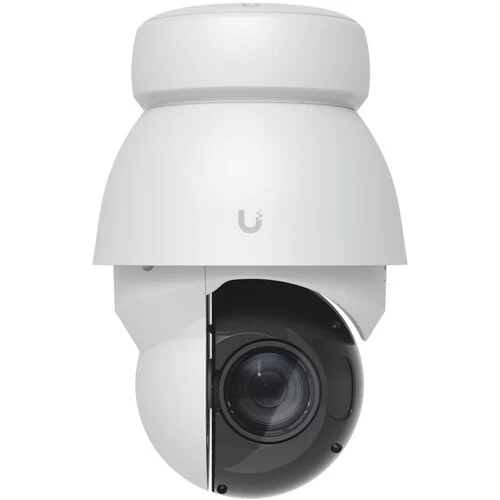
Putnam County co-op grounds camera: product photo of a white outdoor pan-tilt-zoom dome camera with a round housing
Product photo from the Abstract Enterprises Security Systems product library, not taken at a Putnam co-op. A pan-tilt-zoom dome like this one can cover a long, curving driveway from one mount, which matters on a hillside property where every extra camera means another long cable run.
What We Install

Co-op Security Systems Services Across Putnam County

These are the nine jobs a Putnam cooperative most often gives us, roughly in the order boards take them on. Each has its own section below with a link to our Putnam County page for that service, which is where a super or a technically minded shareholder will find the equipment detail. We scope by door and by building, not by apartment count, because on a small property the number of entrances people actually use decides most of the work.

01

Entry intercom replacement

A tired audio panel swapped for video, with shareholders answering on a wall screen, a phone app, or both.

02

Buzzer and release repairs

No ring upstairs, a release that hums without unlocking, static on every call: traced to the part and fixed.

03

Fobs on the doors that matter

Side, laundry, storage, boiler and garage doors on one list, so a lost fob is cancelled instead of a lock rekeyed.

04

Elevator readers, where there is an elevator

Uncommon in Putnam, but when a building has a car we can tie it to the same fobs.

05

Entrance and mail-area cameras

Cameras that see faces at the door and hands at the mailboxes, recorded on site.

06

Driveway, lot and path cameras

Coverage for the drive entrance, the parking area and the walk between buildings.

07

Package handling

A locked spot for deliveries with a reader, a camera and a release the carrier can use.

08

Cable, surge and backup power

Runs between buildings, protection at each entry point, and batteries that ride out short outages.

09

Board proposals and bids

Itemized scopes for volunteer boards, ready to compare with other bids and attach to a notice.

Intercom First

Replacing the Entry Intercom in a Small Putnam Cooperative: The Decisions That Come Before the Hardware

The intercom is where nearly every Putnam co-op conversation starts, because it is the one system every shareholder touches and the one most likely to be decades old. In a building of a dozen or twenty apartments, the entry panel was often installed when the building went co-op, the wiring is older still, and the company that sold it may be gone. The board's question is rarely "which brand?" It is "repair it one more time, or replace it, and what will replacing it involve?" Our intercom installation work in Putnam County answers that question the same way on every property: we test what is there before anyone talks about what to buy.

Industry writers who cover co-op buildings make the same point. In a CooperatorNews piece on replacing intercoms, a security contractor described full replacement as something that "can be expensive and highly disruptive" and recommended that buildings "retain the existing infrastructure with the exception of the panel" where they can, noting that wiring from the 1960s to the 1980s has "a typical lifespan of 25-50 years" (CooperatorNews, "Replacing Intercom Systems: Not as Easy as it Seems," Nov 14, 2025). That range covers most Putnam co-op wiring we see. Some of it is perfectly good and will carry a modern panel; some of it has been spliced, painted over and rained on so many times that every call is a gamble. A meter on the apartment pairs tells us which, and that test is the single biggest factor in what the upgrade will cost.

Three upgrade paths a Putnam board usually weighs

  • Keep the apartment wiring, replace the entry panel. When the pairs test clean, a new video panel at the front door can use the existing cable, and the apartments keep their stations or get new ones on the same wires. This is the least disruptive coop intercom upgrade and often the right one for a two- or three-story building.
  • Entry panel plus phone answering. Shareholders answer the door on a phone app instead of, or as well as, a wall station. It avoids running new wire to every unit, which is attractive in a building with plaster walls or units spread across several small buildings. The trade-offs are internet service at the panel, a phone that is charged and on, and a plan for shareholders who prefer a handset.
  • New system end to end. When the riser is failed, the old stations are obsolete and parts are gone, the cleanest answer is new cable, new stations and a new panel. It is the most work and needs access to every apartment, so it is scheduled with the board and announced well in advance.

Townhouse-style and garden co-ops add a fourth option that city buildings rarely have. Where every unit has its own front door, there may be no common entrance to put an intercom on at all. Those properties often need a single entry panel only at a shared vestibule, a gate or a mail building, and wired video door stations at each unit door. Asking "do we have a common door?" before asking "which intercom?" saves a board from buying a lobby system for a property without a lobby.

Budget, approval and the bid

Our Putnam intercom installation page publishes $1,200 to $5,000 for a multi-unit building video intercom with a resident directory and door release, and $1,200 to $3,500 for a video intercom serving four to eight units. Those are the ranges a co-op treasurer can put in a first budget line. A real number comes after the free assessment, because the wiring test, the number of entrances and the apartment choice move it more than anything else. If the board is comparing bids, ask every bidder to price the same items separately: the entry panel, the apartment side, any new cable, door hardware and programming. A board intercom upgrade guide for co-op boards is being prepared; until it is live, the itemized list on our quote is the easiest way to line bids up side by side.

Small boards ask us what an intercom request for proposals should say. Keep it short and factual: the number of buildings, apartments and entrances; which doors residents actually use; what fails today and since when; whether shareholders want wall stations, app answering or a mix; whether the board wants fob readers built into the panel; and when apartments can be entered. Ask bidders to state what they will reuse and what they will replace, what the co-op will own at the end, whether any subscription is required and who holds the passwords. Ask for the certificate of insurance on award. Most of the bids we compete against in Putnam are not wildly different in price; they differ in what they include.

What changes in a Putnam building compared with a city one

Three things. First, the law: New York City's intercom rule sits in the Multiple Dwelling Law, which applies to cities of 325,000 or more, and a Putnam co-op falls under the Multiple Residence Law instead (NY Senate, MRL §3). Boards should ask their own attorney what that means for their building; we build to the board's decision and the local code office's requirements, and we don't give legal advice. Second, power: an entry panel that dies in every outage is a front door that won't open for visitors or deliveries until NYSEG restores service, so we size a battery for the panel and the door release on every Putnam job. Third, connectivity: app answering depends on internet at the panel and cell or Wi-Fi at the shareholder's phone, and parts of the county are known for weak cell coverage. A system that relies on app answering alone needs a fallback for the unit owner whose phone has no signal at home.

On approval, the sequence we see most often in a small Putnam co-op is simple. The president or the managing agent calls us, we walk the property and test the wiring, the board receives a written scope with options, it votes by email or at its next meeting, a deposit is paid and equipment is ordered, and the shareholders get a notice before any apartment is entered. Financing is available through Wisetack, subject to approval. A coop intercom replacement in a building this size is usually one to three days of on-site work once equipment is in hand; the calendar is driven by the board's vote and the equipment order far more than by the install itself.

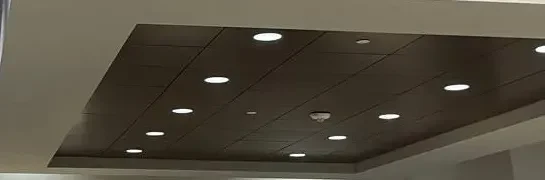
Putnam County coop entry vestibule example: dark recessed lobby ceiling panel with round downlights and a small ceiling device
Job photo from the Abstract Enterprises Security Systems library, taken at another property, not a Putnam co-op: a dark recessed lobby ceiling with downlights. In a small entry vestibule, the ceiling is where the camera that watches the intercom panel usually goes, so a visitor's face is recorded at the moment they ring.
Repairs

Fixing the Buzzer You Already Have: Repair Visits for Putnam Co-op Buildings

Not every Putnam board is ready to replace anything, and many shouldn't. A building whose entry panel is sound but whose third-floor apartments stopped ringing last month needs a repair, not a proposal. That visit is the $250 service call. We trace the fault from the power supply to the door station, along the wiring and into the apartments, and we tell the board what failed before we replace anything. Small fixes are done within the visit; larger ones are quoted on the spot with the $250 already counted toward them.

The faults we find in Putnam co-ops follow the seasons more than they do in the city. In summer it is lightning: a nearby strike that takes out the transformer, a relay or a door station's board, sometimes all three, with no visible damage. In winter it is cold and moisture: a strike that no longer pulls the latch because the door frame shifted with the frost, a panel whose buttons stick after an ice storm, a buried cable to a detached building that fails after the ground thaws. All year it is age. The parts list on our Putnam County door buzzer repair page shows the published ranges: $250 to $525 for an apartment station, $250 to $475 for a door release relay or button, $325 to $650 for a 24-volt transformer, $450 to $950 for an electric strike with alignment, $650 to $1,800 for lobby panel repair or a new faceplate, and $850 to $2,400 for riser pair repair or re-termination.

Video and app-based systems have their own fault patterns: lost network connections, expired cloud accounts, firmware that stopped talking to the phone app, a camera module fogged inside the panel. Our intercom repair service for Putnam County covers those systems and lists its own line items. Where a figure on that page differs from the buzzer page, treat both as guides; the board gets a written price for its own building after the visit, before any work beyond the service call goes ahead.

Sometimes a building has never had a buzzer system at all: a converted house with four or six co-op apartments, or a small building whose original system was removed years ago. For those, our door buzzer installation in Putnam County page covers new systems, from a simple audio buzzer to a small video set. A co-op that size often does well with one entry panel, a release on the front door and either handsets or app answering, and nothing else.

Who has to be home for a repair

A fault that affects only some apartments usually means testing in those apartments. The board or the managing agent sends a short notice, shareholders who can't be home leave a key with the super or a board member, and we work through the list in one visit where possible. In a self-managed co-op, it helps to name one officer as our contact for the day, so the crew isn't knocking on doors looking for someone with a key. Repairs inside a unit stay inside the scope the board approved; anything a shareholder wants beyond it, such as a second station in a bedroom, is the shareholder's own job and invoice.

Access Control

Key Fobs for a Putnam Housing Cooperative: Fewer Keys, Faster Shut-Offs

In a small co-op, the case for fobs is usually made by one event: a shareholder sells and keeps a key, a contractor's crew copies the laundry room key, or a side door is found propped open with a rock for the third week running. Rekeying a building after every one of those is expensive and slow. A fob system lets the board cancel one credential in a minute and leave everyone else's alone. Our access control installation in Putnam County page publishes $1,900 to $6,000 for a single door or gate with a keypad, fob reader or video controller, and $5,000 to $18,000 for multi-door properties; a co-op gets its own figure after the walk-through.

Which doors? In a Putnam building we usually start with the front entry, then the door residents actually use most, which is rarely the front: the side door off the parking area, the door from the garage, or the path door nearest the train. Laundry, storage, bike and boiler rooms follow. On a garden property the list may include a mail building, a pool gate or a maintenance shed. Each door gets a reader, an electric strike or magnetic lock, a way to exit without a fob, and a door closer that actually closes. The hardware matters more than the reader: a fob is worthless on a door that doesn't latch, and hilltop doors that take wind full-on are the ones we see swinging open most.

A fob list is only as good as its upkeep. In a self-managed co-op, decide before installation who adds and removes fobs, where that is recorded and what happens when a unit is sold. Cloud-managed systems let an officer do it from a phone; on-site systems keep everything on a local controller. Either way, the board should own the administrator login, not the installer. New York City's Tenant Data Privacy Act, which sets rules for smart-access systems in city buildings, is a city law (NYC Local Law 63 of 2021) and does not reach a co-op in Putnam; a board that wants a written policy on entry logs and how long they are kept should still have its attorney review it, and we set the system to match whatever retention the board chooses.

Licensing is worth checking here too. Putnam County's own low-voltage and limited data communications technician license covers work such as data wiring, IP camera cabling and speaker wiring, but the county's application states that it does not include fire and burglar alarm systems, CCTV and access control, because those are licensed by the state under Article 6-D (Putnam County Board of Electrical Examiners, low voltage application, Apr 30, 2025). A bidder for a fob system should be able to give the board a Department of State license number.

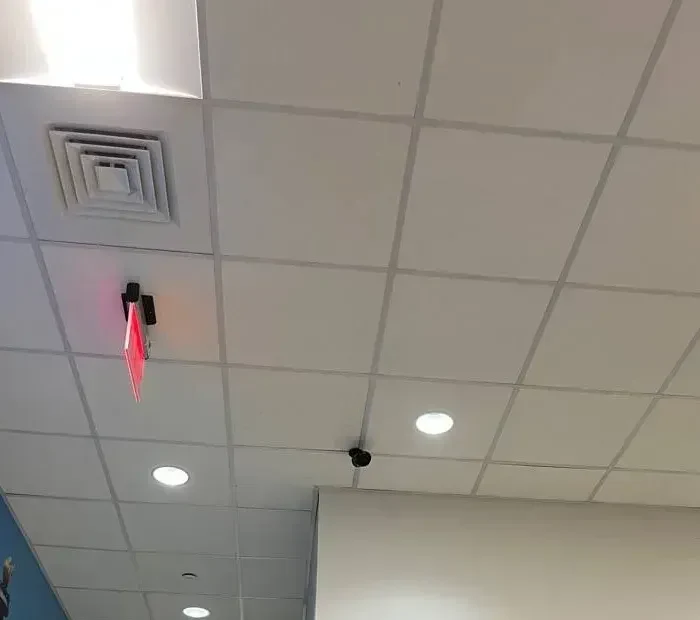
Putnam County cooperative access example: small black camera on a white drop ceiling near a lit red exit sign and air vent
Job photo from the Abstract Enterprises Security Systems library, taken at another property, not a Putnam co-op: a small camera on a drop ceiling near a lit exit sign. Fob doors need a working exit path and a camera that sees who goes out as well as who comes in.
Elevators

Elevator Readers in Putnam: Rare, but Here Is When They Make Sense

Most Putnam cooperatives have no elevator. They are two- and three-story walk-ups, garden units and townhouse rows. We say that plainly because some security proposals arrive with an elevator line regardless. When a Putnam co-op does have a car, usually in a newer mid-rise near a village center or a building converted with accessibility in mind, a reader in the cab can make the elevator answer only to shareholders' fobs, or keep a garage or basement stop for residents.

Our elevator access control installation for Putnam County page publishes Putnam prices: from $2,175 per car for Level 1, a reader that enables the car or chosen floors with a fob, card, PIN or phone, and from $3,625 per car for Level 2, which adds biometric readers. The elevator maintenance company's own connection visit is billed by that company. For a one-car building, the honest question is whether the reader solves a problem the front door doesn't already solve. If the entry and the garage door are both on fobs and working, an elevator reader may be a later phase rather than a first one.

Cameras

Co-op Cameras in Putnam: Doors, Mail and the Drive, Kept Short

Cameras get their own co-op page; a Putnam co-op security camera installation guide is being prepared. Here is the short version for a small cooperative. Start with the entry door, positioned to see a face at the panel. Add the mail area or package spot. Then cover the door people use from the parking area, and the drive entrance if the property has one. Inside, a hallway or laundry room camera is worth it only where there is a real problem to solve. That is five or six cameras for most Putnam co-ops, not twenty.

Two Putnam-specific choices come up on every job. The first is wired versus wireless: on a wooded lot, Wi-Fi cameras lose their signal when leaves come out and in heavy snow, so we run cable wherever we can and use a point-to-point link only where trenching is impossible. The second is recording: footage should be stored on a recorder in the building, on a battery, so an outage doesn't erase the evening that matters. The equipment detail sits on our security camera installation page for Putnam County, and recorded systems for larger properties are covered under CCTV installation in Putnam County. Our published Putnam camera packages start with the price on those pages; a co-op's layout is priced after the survey.

Who sees the footage is a board decision. In most small co-ops it is the president and one other officer, with the managing agent if there is one, and exports go to police on request. Write the policy down before the first incident, not after.

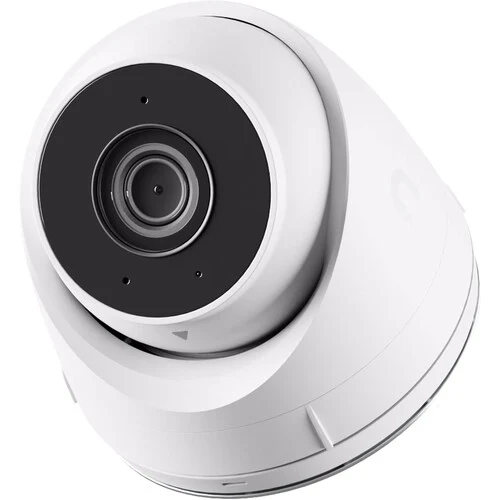
Putnam County co-op hallway camera: product photo of a white turret camera with a round lens housing
Product photo from the Abstract Enterprises Security Systems product library, not taken at a Putnam co-op: a white turret camera. Turrets like this suit low hallway and laundry room ceilings, where a camera within reach needs to look ordinary and resist a casual twist.
Packages & Mail

Packages and Mailboxes at a Putnam Co-op With No Front Desk

Few if any Putnam co-ops have a doorman, which means deliveries end up wherever the driver decides: inside an unlocked vestibule, on the steps, or at a mail shelter by the road. Mail theft is a local story too. In December 2022, News 12 Hudson Valley reported three arrests after police stopped a car near Route 6N in Mahopac whose occupants appeared to be stealing mail out of mailboxes in the area (News 12 Hudson Valley, Dec 5, 2022). A co-op whose mailboxes stand at the end of a driveway, out of sight of every window, has exactly that exposure.

The fixes are modest. Put a camera on the mailboxes that records faces and hands, not just the box. Give deliveries one place to go: a lockable closet, a vestibule with an inner door on fobs, or a parcel locker, with a reader or keypad code the carriers can use and a camera over it. Make sure the entry panel has a code or call option for drivers so they don't leave boxes outside. Before the holidays, when volumes peak, check that the vestibule door actually closes behind every driver. None of this needs a big budget; it needs a decision about where packages belong.

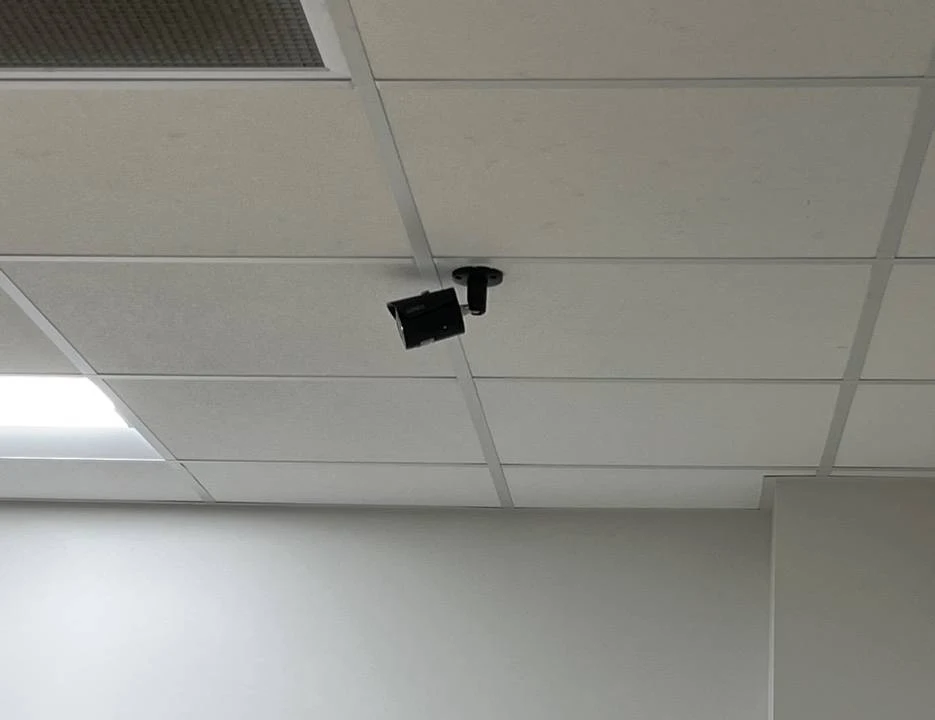
Putnam County co-op mail area example: small black bullet camera on a ceiling-grid mount above a pale wall
Job photo from the Abstract Enterprises Security Systems library, taken at another property, not a Putnam co-op: a small bullet camera on a ceiling mount above a plain wall. Aimed down a short run of mailboxes or a package shelf, one camera like this covers the spot deliveries go missing from.
Before Winter

A Late-Fall Walk-Around for Putnam Co-op Officers

Most of the failures we see in Putnam co-ops between December and March were visible in October. An officer with twenty minutes and a flashlight can catch many of them before the first ice storm, and none of it needs a contractor. If the walk turns up something that does, that is a $250 service call booked before the rush rather than during it.

  • Close every door you can find. Let each fob or entry door swing shut on its own from fully open. If it stops short, bounces or needs a push, the closer or the strike needs attention before cold makes it worse.
  • Look at the entry panel's face. Cracked lenses, buttons that stick, fogging behind the glass and a gap where the panel meets the wall all let water in once it freezes and thaws.
  • Find the battery. Locate the backup for the panel and the door release, check the date on it, and note whether its indicator shows a fault. A battery older than a few years may not carry the door through the next outage.
  • Check the cameras at night. From the recorder or the app, look at each view after dark. Spider webs, dead infrared lights and branches that grew into the view over the summer all show up at night first.
  • Walk the cable routes. Look where outdoor cable enters each building and along any run between buildings for chewed jackets, loose clips and gaps where water can follow the cable inside.
  • Update the lists. Remove fobs and app users for shareholders who sold during the year, and confirm the board still has the administrator login for every system.

The same list works after a big storm. If anything on it changed after a summer thunderstorm or a long outage, that is usually where the next fault will come from, and a short note to us with photos is often enough for us to say whether a visit is needed.

Cable & Power

Cable Between Buildings, Surge Protection and Riding Out a NYSEG Outage

A Putnam co-op's security system is only as reliable as the cable and power behind it, and on a hillside property both are harder than they look. We run the low-voltage cable and network gear for the systems we install: Cat6 to entry panels, readers and cameras, PoE switches in a heated closet, and fiber or a buried conduit where two buildings are too far apart for copper. Larger network and cabling projects are covered on our structured cabling installation page for Putnam County. We don't sell managed IT services, and any new 120-volt circuit is the building's electrician's job, not ours.

Getting cable between buildings is where Putnam differs most. Rock close to the surface, slopes, tree roots and wetlands all limit where a trench can go. In the Town of Carmel, for example, regulated wetlands include areas of one-eighth of an acre or more along with a 100-foot buffer around them (Town of Carmel wetland permit application), and a co-op near a lake or stream should check with the town before anyone digs. Where a trench isn't practical, we look at existing conduit, aerial runs along a building, or a point-to-point wireless link aimed through a clear line of sight, checked in leaf season and out of it.

Lightning and surges

Every cable that enters a building from outside is a path for a lightning surge. With tens of thousands of lightning pulses recorded in the county in a single year, we put surge protection where outdoor cable enters each building, ground it properly, and keep exterior camera and gate runs separate from the panel's main power where we can. The cost is small next to the price of replacing a panel, a switch and a recorder after one storm.

Outages

When the power goes out, three things matter: the entry panel, the door release and the recorder. A battery backup on the entry and door power keeps the front door working through a short outage; an uninterruptible power supply on the recorder and network switch keeps cameras recording. For outages measured in days, the answer is the building's generator, if it has one, and we can put the security equipment on a circuit the generator feeds once the board's electrician has wired it. Decide in advance which way fob doors fail when the battery runs out: fail-safe locks release, fail-secure strikes stay locked, and each has consequences for an empty building in a storm.

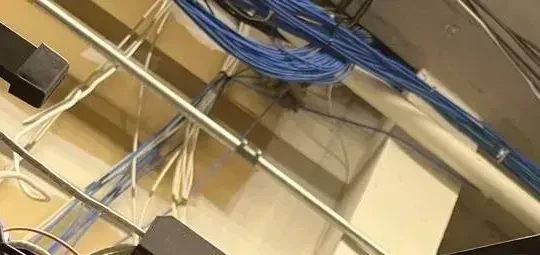
Putnam County co-op cabling example: blue and white low-voltage cable bundles running over a ceiling beam
Job photo from the Abstract Enterprises Security Systems library, taken at another property, not a Putnam co-op: bundles of blue and white low-voltage cable over a beam. In an older co-op basement, labeling each run as it goes in is what lets the next technician find the door that stopped working.
Fire & Alarms

Fire Alarms, Burglar Alarm Permits and What Stays Outside Our Scope

Fire alarm

Fire alarm work in a Putnam co-op goes through the town or village code enforcement office and, depending on the building, the local fire inspector, under the New York State Uniform Code. We handle it within our fire alarm scope on our fire alarm installation page for Putnam County, with drawings, the approval the code office requires and an acceptance test. We don't publish fire alarm prices; each building is quoted on its drawings. Where fob doors are involved, we tie their release to the fire alarm when the code requires it, so locked doors open when the alarm sounds.

Alarm permits in Putnam towns

Several Putnam towns regulate alarm systems directly, which matters for a co-op office, storage area or common room with a monitored burglar or fire alarm. The Town of Carmel requires an alarm permit from its Building Department to install or maintain police or fire alarm devices, bars connecting them straight to the Police Department, and requires outside sounders to cut off within 15 minutes (Town of Carmel Code, Ch. 37). Patterson fines properties with more than two false alarms in a 12-month period at no less than $100, $200 and $300 for the first, second and later offenses (Town of Patterson, Ch. 43). Putnam Valley requires a town permit before an alarm calling the fire department is installed (Town of Putnam Valley, Alarm Systems Law), and Southeast requires an annual permit and a maintenance inspection by a licensed alarm agent within the prior 12 months (Town of Southeast emergency alarm ordinance). Monitoring itself runs through our central-station provider on the tiers already published on our site; we don't invent co-op monitoring contracts.

What we leave to others

  • Electrical circuits: any new line-voltage circuit for a panel, gate or camera pole is the building's licensed electrician.
  • Locks and cylinders: we install the electrified hardware (strikes, magnetic locks, exit devices); mortise locks and key cylinders are the locksmith's.
  • Virtual doorman and managed security: we don't run a virtual doorman, live guard service or subscription security program. We install the intercom, cameras and fobs such a provider would use, and we can connect to an existing one.
  • Painting and patching: we make the opening neat and close it up; finish painting belongs to the co-op's painter.
Property Types

How Security Differs Across Putnam's Kinds of Cooperative Property

The handful of Putnam co-ops fall into a few patterns, and each pattern changes where the money goes. These describe kinds of property, not client buildings.

Village walk-ups near the station

Two- and three-story buildings in Brewster or near the Southeast and Cold Spring platforms. Commuter foot traffic, a street-facing entry and a rear door to parking.

Townhouse-style associations

Rows of units with their own front doors on a shared drive. Unit door stations, a mail building and drive cameras matter more than any lobby.

Garden complexes on a slope

Several small buildings around parking, with paths and stairs between them. Cable routing and lighting decide the layout.

Lake communities

Older summer-colony areas around Lake Carmel, Lake Peekskill and Putnam Lake, with seasonal owners and closed-up units in winter.

Historic Cold Spring buildings

Nineteenth-century masonry and frame buildings in a historic district, where what shows on the facade gets reviewed.

Mixed-use over storefronts

Apartments above shops on a main street, with a resident stair door that must stay separate from the stores.

Village walk-ups near Metro-North

A building within walking distance of a station is used at all hours. The entry panel needs a camera that works at 5 a.m. in December, the rear door from the parking area needs to latch every time, and shareholders tend to want app answering because they are on a train when the delivery arrives. The front vestibule is often too small for a package shelf, so the parcel question comes up early.

Townhouse-style and garden associations

With no common lobby, we plan by unit door and by shared space: a wired video station at each unit, a reader on the mail building or laundry, and cameras along the drive and at the parking area. The long distances between units are why we price these properties by building and by run, and why a phased plan, one row a year, is common.

Lake communities and seasonal shareholders

Units closed for the winter are a security exposure of their own. Fobs can be suspended for the off-season and re-enabled in spring; cameras on the access road and the common building watch for activity when no one should be there. The Putnam County Sheriff's Office offers a Dark House Check for residents who are away (Putnam County Sheriff, Dark House Check); a co-op's own cameras complement that, not replace it.

Cold Spring's historic district

Exterior changes to buildings in Cold Spring's historic district have needed the approval of the village's Historic District Review Board since 1976, while work that can't be seen from the street is not reviewed (The Highlands Current, Aug 8, 2025). A new entry panel or camera on a street-facing facade may therefore need a certificate of appropriateness, and a recessed or interior-vestibule mounting may avoid the question. We plan placement with that in mind and leave the application to the board or its architect.

Apartments over storefronts

The county's Main Street study describes buildings where a doorway leads straight up a stair to second-floor apartments (Putnam County Main Streets study). In a co-op of that kind, the residents' door gets its own panel and fob list, the shop tenants get nothing on it, and any shared rear door is set by schedule so deliveries to the stores don't become a way into the stair.

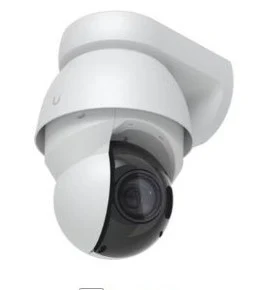
Putnam County garden co-op grounds: product photo of a compact white PTZ camera hanging from a short wall arm
Product photo from the Abstract Enterprises Security Systems product library, not taken at a Putnam co-op: a compact pan-tilt-zoom camera on a wall arm. Mounted at the corner of one building on a sloped garden property, it can follow the stairs and paths down to the parking area.
Board Process

From First Call to Board Vote: Running a Security Project in a Volunteer-Run Putnam Co-op

A Putnam co-op board rarely has a building engineer, a property management firm with a project desk or a staff super to walk contractors around. It has three to five officers and a calendar. So we run the project in a way those officers can follow without becoming security experts.

Before the walk-through

One officer is our contact. They send us a short description: town or hamlet, number of buildings and apartments, the doors residents use, what fails and since when. Photos of the entry panel and the equipment closet help us bring the right meters and parts. If the co-op has a managing agent, we copy them on everything. If it doesn't, we keep the email thread simple enough that the officer can forward it to the rest of the board as is.

The walk and the written scope

The free assessment covers every entrance, the mail and package area, the equipment closet, the paths and the parking. We test the existing wiring and door hardware, note what can be reused, and send a written scope that lists each item separately: entry panel, apartment side, readers, door hardware, cameras, cable, surge protection and backup power. Options are labeled as options, so the board can approve the first phase and leave the rest for next year's budget.

Approval, alteration agreement and insurance

Boards approve the work by whatever process their bylaws require. Courts in New York generally defer to co-op board decisions made in good faith, within the board's authority and for the co-op's purposes, under the business judgment rule set out by the Court of Appeals in 1990 (Matter of Levandusky v One Fifth Ave. Apt. Corp., 75 NY2d 530). We are not the board's lawyer, and nothing on this page is legal advice. When work happens inside a shareholder's apartment, such as a new station or an in-unit reader the shareholder asked for, the co-op's alteration agreement may apply, and we follow whatever the board's process requires. We issue the certificate of insurance once the job is awarded, naming whoever the board or managing agent needs named; we don't send it with the quote.

Notices to shareholders

Before any work that affects the front door or the apartments, shareholders get a notice from the board or the agent with the dates, what will be down and for how long, how visitors and deliveries will get in, and which apartments need access and when. We supply the plain-language details the notice needs. On install day the old panel stays live until the new one is tested, or the board agrees a temporary arrangement in advance.

Handover

At the end, an officer walks the system with us: each door, each reader, a sample of apartment calls and every camera view. The board receives the administrator logins, a list of what was installed and where, and the warranty terms. That written record is what lets the next board, or the next contractor, pick up where we left off.

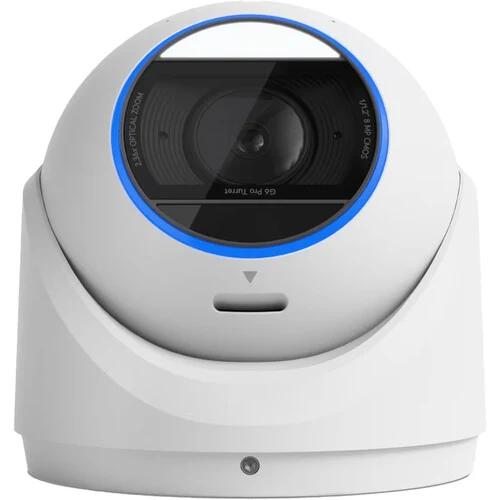
Putnam County co-op common room camera: product photo of a white turret camera with a blue light ring around the lens
Product photo from the Abstract Enterprises Security Systems product library, not taken at a Putnam co-op: a white turret camera with a status light ring. Whatever the camera, the handover sheet lists where each one is, what it covers and who on the board can view it.
Pricing

Co-op Security Systems Cost in Putnam County, and How a Small Board Budgets for It

The first number is simple. If something is broken, the visit is $250, the fault is traced during it, small fixes are done within it, and if a larger repair follows the $250 is already counted. If the board wants something new or replaced, the on-site assessment is free and the price comes back in writing, item by item. We don't publish co-op package prices or per-apartment prices, because in Putnam the number of doors, the condition of the wiring and the distance between buildings decide almost all of the cost.

What the co-op needsHow it is priced (Putnam County)
Any repair: intercom, buzzer, strike, reader or cameraThe $250 service call to find the fault, applied to the repair if more work follows
Common buzzer partsPublished Putnam ranges, for example $250–$525 for an apartment station, $450–$950 for an electric strike with alignment and $650–$1,800 for lobby panel repair; see our door buzzer repair pricing
Video intercom for a multi-unit building$1,200–$5,000 published for Putnam ($1,200–$3,500 for four to eight units); written quote after the free assessment
Fob or keypad on one door or gate$1,900–$6,000 published for Putnam; multi-door properties $5,000–$18,000; written quote after the assessment
Elevator readerFrom $2,175 per car (Level 1) or $3,625 per car (Level 2); elevator company visit billed by that company
Entrance, mail, drive and lot camerasCamera count and cable runs set at the survey; series prices on our Putnam camera pages
Equipment the co-op already boughtLabor quoted by phone or text; booked once the deposit is in
Fire alarmNo published prices; quoted per building on drawings

Where two of our pages publish different figures for similar work, as our Putnam intercom repair and buzzer repair pages sometimes do, the board should read both as guides and rely on the written quote that follows the visit. More detail on intercom parts and systems sits on our intercom pricing page.

Budgeting when the co-op has twelve apartments, not two hundred

A small co-op feels a security bill more than a large one does, because the cost of an entry panel doesn't shrink with the number of apartments. Boards fund this work from reserves, from the operating budget, from an assessment or by phasing it over two or three budget years; which is right is the board's and its accountant's decision, not ours. What we can do is make phasing easy. The written scope separates what has to happen together from what can wait: a new entry panel and its power can't be split, but fobs on the laundry door, a second camera on the drive or an elevator reader can each be a later line. Financing is available through Wisetack, subject to approval.

What moves the number on a Putnam property

  • Doors in use: each one needs working hardware and, usually, a reader or station.
  • Wiring condition: reusable pairs keep the work out of apartments; failed pairs mean new cable.
  • Distance and terrain: cable to a detached building, down a slope or across rock adds labor and materials.
  • Power: battery backup and surge protection are on every Putnam scope; a generator circuit is the electrician's line.
  • Apartment choice: wall stations, app answering or both.
  • Historic review: a street-facing mount in Cold Spring may need a different location or finish.

Full terms — including 50% deposit, one-year parts-only warranty on Abstract Enterprises Security Systems-supplied products, and the late-fee schedule — are set out in the service agreement. Our labor warranty is the one listed on our warranty page; longer coverage is a paid add-on, and manufacturer warranties stay with the manufacturer.

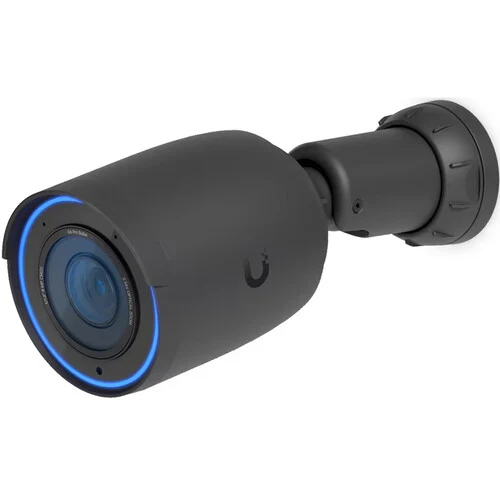
Putnam County co-op parking camera: product photo of a black bullet camera with a blue ring around the lens on a wall mount
Product photo from the Abstract Enterprises Security Systems product library, not taken at a Putnam co-op: a black bullet camera on a wall mount. The camera itself is rarely the expensive part of a Putnam co-op job; the cable to reach the far end of the lot usually is.
Shop Our Systems

Co-op Security Projects & Pricing: Where Putnam Boards Usually Start

These are starting points, not fixed-price packages. Each is priced on the property after the service call or the free assessment.

1

Get the door working

The $250 service call on the entry that stopped ringing or releasing. The board also gets a written list of everything else we saw, with prices, to decide on later.

2

Front entry, rebuilt for outages

A video entry panel with app or station answering, a door release with battery backup, surge protection and one camera on the entry, quoted after the free assessment.

3

Whole property in phases

Entry, side and service doors on fobs, mail and drive cameras, cable between buildings, scoped once and installed over the budget years the board chooses.

When the co-op buys its own equipment

We install equipment a co-op supplies. Labor is quoted by phone or text without a walk-through and booked once the deposit is paid. Compatibility and the equipment warranty stay with the seller, so it is worth a call to us before ordering, especially for app-based panels that need a particular network setup.

Your Questions Answered

Putnam Co-op Security Systems: Questions From Boards, Supers and Shareholders

These questions come from small Putnam cooperatives and their officers, grouped by the situation that prompts them. Prices, fobs, elevators and cameras are covered in their own sections above and aren't repeated here.

Small boards, short on time

Our Putnam co-op is a single building with fewer than twenty apartments and a volunteer board. Where should a security budget go first?

To the front door and the power behind it. A building that size gets the most out of an entry panel that works, a door that latches and releases reliably, and a battery that keeps both going through an outage. After that, a camera on the entry and the mail area. Fobs on secondary doors come next, and only for the doors that are actually a problem. We would rather see a twelve-unit co-op spend on one door done properly than on six readers on doors nobody uses.

The written scope we send lists those items in that order, so a board can approve the first two lines and come back for the rest when the budget allows.

Everyone in our small co-op knows each other's cars. Is a building-wide intercom still worth having?

Usually, yes, but not for the reason boards expect. Neighbors recognizing each other doesn't stop a delivery driver, a contractor or a stranger at the door when nobody is home. An intercom lets a shareholder see who is there and open the door from upstairs or from a phone, which is what keeps the door shut the rest of the time. In a co-op of six or eight units, that can be as simple as a two- or four-button video panel and app answering, which costs far less than a lobby system for a large building.

Our president handles everything by email from a day job. How much of the project can run without an officer on site?

Most of it. The walk-through needs someone to open doors and closets, which can be the super, a shareholder or the president on a morning off. After that, the scope, approval and scheduling run by email. On install day we need one person with keys for the apartments on the access list, and an officer at the end for a short walk-through and the logins. A cloud-managed panel or fob system also lets an officer add or remove a resident from a phone later, so routine changes don't need a visit.

Hills, woods and weather

How do you reach a detached garage or a mailbox shelter at the bottom of a steep driveway?

First we look for a path that already exists: an old conduit, a buried phone or power run with spare room, or a wall the cable can follow. If there isn't one, we price a trench or a directional bore where the ground allows it, and a point-to-point wireless link where it doesn't, aimed through a gap that stays clear in summer. A link like that needs power at both ends, so a mail shelter with no electricity may need the co-op's electrician first. On rock, the honest answer is sometimes that the far building gets a battery-powered camera and nothing else.

After a summer thunderstorm our door station and the camera recorder both went dark. What usually failed?

Most often a surge came in on an outdoor cable, such as a camera or gate run, and took out whatever it reached first: the power supply, a switch port, the recorder's network card or the panel's board. Sometimes only a fuse or a power supply needs replacing; sometimes the panel has to be swapped. The service call finds out which. When we repair it, we add surge protection where the outdoor cable enters the building, so the next storm stops there.

When the backup batteries finally run flat in a long outage, should our fob doors lock or release?

It depends on the door, and the board should decide before the storm rather than during it. A fail-secure strike stays locked with no power, which keeps an empty building closed but means every shareholder needs a working key. A fail-safe magnetic lock releases with no power, which keeps the exit free but leaves the door open to anyone. On most Putnam entries we use fail-secure strikes with a mechanical key override and keep exit hardware free in both directions. Where the code ties a door to the fire alarm, that requirement decides it. Whatever the choice, we write it on the handover sheet so the next officer knows how each door behaves in the dark.

A school bus stop sits at the end of our driveway. Will a camera on the drive cause a privacy problem?

Aim it at the co-op's own property. We set drive cameras to cover the entrance, the mailboxes and the parking area, and use privacy masking to black out the road and any neighbor's windows that fall inside the view. We leave audio recording off on outdoor cameras, because recording conversations raises separate legal issues under New York law; CooperatorNews has noted that audio may implicate the state's eavesdropping statute (CooperatorNews, camera placement Q&A). A short written camera policy adopted by the board, and a sign at the drive, settle most questions before they become complaints. For anything beyond that, the board's attorney is the right person to ask.

Villages, lakes and local rules

Our co-op building is in Cold Spring's historic district. Will a new entry panel on the front facade need review?

It may. Exterior changes visible from the street in the district have gone to the village's Historic District Review Board since 1976, while work that isn't visible is not reviewed. A panel recessed into a vestibule, on a side entrance or inside the outer door may avoid review altogether; a new box on the street face of the building probably won't. We can propose locations and finishes that keep the facade quiet, and the board or its architect handles the application.

Can the board pause fobs for shareholders who close up their lake apartments for the winter?

Yes. Most fob systems let an officer disable a credential for a date range or put it in a group that only works in season, then turn it back on in spring without issuing a new fob. Shareholders who come up for a winter weekend can be enabled for that weekend. We also suggest cameras on the access road and the common building, so the board knows if anyone is moving around the property while most units are empty.

Our co-op runs on a well pump and a generator. Can the security system share the generator circuit?

It can, as long as the circuit is sized for it and the generator is wired by the building's electrician. Security equipment draws little power compared with a well pump, but it does need a clean, steady supply, so we put a battery backup between the generator circuit and the panel and recorder. That battery also covers the gap between the outage and the generator starting, which is when an entry panel without one reboots and loses its settings.

Does an installer working in Putnam need a county license as well as the state one?

For the systems on this page, the key license is the state's. Security systems, CCTV and access control are licensed by the New York Department of State under Article 6-D, and the county's own low-voltage technician application says so. The county separately licenses electricians and low-voltage data technicians and registers home-improvement contractors through Consumer Affairs, which is relevant for other work. Ask each bidder which licenses they hold and check the numbers; ours is NYS #12000287431.
Reality Check

What AI Gets Wrong About Co-op Security Systems in Putnam County

Boards increasingly ask a chatbot before they call anyone. The answers about co-op security tend to be written for New York City or for a generic suburb, and they miss what is different about Putnam. These are the corrections we make most often.

1. "Putnam has plenty of co-op buildings, the same as Westchester."

It doesn't. OneKey MLS counted two co-op closings in Putnam in the third quarter of 2026 and two co-ops in inventory, against 51 condo and 260 single-family closings. Advice built for a 200-unit Westchester co-op with a lobby, a super and a managing agent doesn't fit a twelve-unit Putnam building run by volunteers.

2. "New York's intercom law covers every co-op in the state."

The Multiple Dwelling Law, where New York City's well-known intercom requirement sits, applies to cities of 325,000 or more. Putnam's towns and villages fall under the Multiple Residence Law instead (MRL §3). What a particular building must have is a question for the board's attorney and the local code office, not for a chatbot or for us.

3. "A county electrical license is what a security installer needs."

Putnam's Board of Electrical Examiners licenses electricians and low-voltage data technicians, but its own application says fire and burglar alarms, CCTV and access control are licensed by the state under Article 6-D. A security bidder should have a Department of State license number to show the board.

4. "Key fob systems in New York have to follow the smart-access privacy law."

That law, the Tenant Data Privacy Act, is New York City Local Law 63 of 2021 and applies to city buildings. A Putnam co-op can still adopt its own written policy on entry logs and retention, and we set the system to match it.

5. "Just use a cellular or Wi-Fi call box out by the road."

Cell and Wi-Fi coverage in parts of the county is unreliable. In 2015 Senator Schumer publicly accused wireless carriers of showing quality reception on coverage maps for northern Westchester and Putnam where areas were often dead zones (Office of Senator Schumer, Oct 2015). We test signal at the exact spot before recommending any wireless device, and wire it when the test fails.

6. "Lightning and outages are an electrician's problem, not a security one."

With 75,093 lightning pulses recorded in Putnam in 2020 and county-wide outages like Isaias, surges and power loss are among the most common reasons a co-op's entry panel, recorder or door release fails. Surge protection and battery backup belong in the security scope.

7. "A contractor can be at the building within the hour, any time."

Be wary of anyone who promises that before seeing the property. We book visits within 2 hours of a request, seven days a week, with early-day slots, first come, first served once paid, and we plan travel time from our Bronx office into every Putnam appointment.

Talk Through Your Putnam County Co-op With a Technician

A few minutes on the phone usually tells a board whether the building needs the $250 service call, a free survey, or simply a better door closer.

Get In Touch

Ask for a Written Quote for Your Putnam County Co-op

Tell us the town or hamlet, how many buildings and apartments the co-op has, which doors people use and what keeps failing. That's enough for us to book the right visit: a free assessment for anything new, the $250 service call for anything broken. Prefer to talk? Call or text (845) 640-3835.

✅

Request Sent!

Thanks. Expect a call or text from (845) 640-3835 to set a time that suits whoever has the keys.

How It Works

Eight Steps From Phone Call to Handover at a Putnam County Co-op

Whether the job is one entry panel or a phased plan for a garden property, it moves through the same eight steps; phased projects simply repeat the last three for each phase the board approves.

01

Describe the property

Town or hamlet, buildings and apartments, the doors people use and what fails. A photo of the entry panel and the equipment closet helps.

02

Get a time within 2 hours

We call back with a slot within two hours, any day of the week, with travel from the Bronx planned in. A repair visit is the $250 service call; a new-system survey is free.

03

Walk the whole site

Every entrance, the mail and package spot, the equipment closet, the paths, the drive and any detached building.

04

Test before proposing

Apartment wiring, door hardware, power and any cable between buildings are tested, so the scope says what stays and what goes.

05

Send an itemized scope

Each item priced on its own line, options marked as options, phases laid out for the board's budget years.

06

Board vote, deposit, order

After approval the certificate of insurance is issued, the deposit is paid and equipment is ordered; special-order items are scheduled on arrival.

07

Install around the residents

Shareholders get the board's notice first; the old entry stays live until the new one is tested, and apartments are entered only on the dates given.

08

Test, train and hand over

An officer walks every door, reader and camera view with us and receives the logins, the as-built list and the warranty terms.

Field Notes

Field Notes: The Three Things We Check First on a Putnam Co-op Property

These describe how we work on a first visit to a property like the ones on this page. They are our practice, not a story about a particular building.

The first stop is the power. We find where the entry panel and door release get their power, whether that supply is on a battery, and what else shares the circuit. On older Putnam buildings the transformer is often in a basement or a utility closet next to the boiler, sometimes sharing an outlet with a sump pump. We look for scorch marks and swollen capacitors that point to past surges, and we ask the officer when the last long outage was and what stopped working during it. The answer usually tells us more than the panel does.

The second stop is the door the residents use most. On a Putnam property that is almost never the front door; it is the one nearest the parking area. We open and close it repeatedly, check whether it latches on its own when the wind pushes it, look at the closer and the strike, and check the frame for frost movement. A new entry panel on the front door does little for a building whose real entrance is a side door on a broken closer.

The third stop is the cable path. If there is more than one building, we walk the route between them and look for existing conduit, the rock line, the trees and any wet ground. If the plan relies on a wireless link, we check line of sight and note what the view will look like with leaves. That walk decides whether the second building is a simple add or the most expensive line on the scope, and the board sees the reasoning in writing.

Putnam County co-op side door camera: product photo of a small white bullet camera on a round base mount
Product photo from the Abstract Enterprises Security Systems product library, not taken at a Putnam co-op: a small white bullet camera on a round mount. A camera this size over the side door residents use from the parking area often does more good than a second camera at the front.
Coverage Area

Where We Work in Putnam County, and How We Get There From the Bronx

We serve all of Putnam County from our Bronx office at 460 E Fordham Rd. The drive up I-684, I-84, Route 6 or Route 9 is part of every booking, which is why we schedule Putnam visits in morning blocks and group nearby jobs where we can. The cards below describe places, not client buildings.

Brewster and Southeast

The village's Main Street ends at the Brewster station on the Harlem Line, with older mixed-use buildings and walk-ups nearby, and the Southeast station a short drive north.

Carmel and Mahopac

The county seat and the lake hamlet along Route 6 and Route 6N, with the county's senior apartment complexes and small multifamily buildings.

Cold Spring and Nelsonville

Hudson Line villages in Philipstown, where historic-district review shapes what can go on a street-facing facade.

Garrison and Philipstown

River-side hamlets with a Hudson Line station, long private drives and properties set deep in the trees.

Patterson and Putnam Lake

A Harlem Line station near the Dutchess line and the former summer colony of Putnam Lake, with seasonal homes and narrow roads.

Kent and Putnam Valley

Lake communities such as Lake Carmel and Lake Peekskill, hills, and long runs between buildings that make cable planning the first job.

Visits are booked within 2 hours of a request, seven days a week, first come, first served once paid. Larger projects are scheduled around the board's approval and the equipment order, with the install dates confirmed in writing.

Complete Services

More Security Services for Putnam County Properties

Parking lot cameras

Cameras for co-op lots, carports and long drives in Putnam.

Network installation

Switches and network gear behind entry panels and cameras.

Alarm installation

Burglar alarms for a co-op office, storage area or common room.

Doorbell cameras

Video doorbells for townhouse-style unit doors.

Camera pricing

Published Putnam camera series prices, installed.

Free quote

Describe the co-op and get a written plan back.

FAQ

Putnam County Co-op Security Systems FAQ

Will shareholders be able to use a fob or the keypad with winter gloves on?
+

A fob works through a glove, since it only has to be held near the reader. Keypads and touchscreens are harder: small buttons and capacitive screens often ignore gloved fingers. For an exposed Putnam entry we favor fob readers or panels with large mechanical buttons, and we mount them under an overhang so ice doesn't form on the face.

Can our townhouse-style units keep their own doorbells while the shared doors go on fobs?
+

Yes. Unit doors can keep their own wired video doorbells or door stations, answered by each owner, while the mail building, laundry, storage and any shared entrance go on the co-op's fob list. The two systems stay separate, so a unit owner's doorbell choice never affects the common doors.

Will a new entry system work with the gate our association already has at the road?
+

Usually. If the gate operator accepts a dry contact or relay input, the new panel or a fob reader can open it. We check the operator's make and wiring at the survey. If the gate needs its own call box, we can tie it to the same app or answering stations as the building entry.

Does Carmel's alarm permit apply if our co-op only adds cameras and an intercom?
+

Carmel's alarm law covers police and fire alarm devices, so cameras and an intercom on their own are generally not what it regulates. If the co-op also adds a monitored burglar or fire alarm, the town's permit and its rules on false alarms and sounder cutoff apply. The board can confirm with the Carmel Building Department.

Our co-op is on a private road the GPS gets wrong. How do your crews find it?
+

Send us the turn-by-turn the residents give delivery drivers, the nearest public road and a landmark, and where the crew should park. We save it to the job so every visit uses the same directions. If there is a gate code or a key box, give it to us privately and we keep it off the written scope.

What spare parts should a small co-op keep on the shelf?
+

A few fobs already enrolled to a spare group, a replacement power supply for the entry panel, a fuse or two if the system uses them, and the door strike's spare if it is a model that is slow to order. We list the part numbers on the handover sheet so an officer can reorder them without a visit.

Can you give us wording the board can paste into its notice to shareholders?
+

Yes. With the schedule we send a short plain-language paragraph: what is being installed, which days the entry will be affected, how visitors and deliveries get in meanwhile, which apartments need access and when, and who to contact. The board edits it and sends it under its own name.

Do we need town approval to trench cable near a stream or wetland on our property?
+

Possibly. Towns such as Carmel regulate work in and near wetlands, including a buffer around them, and much of the county lies in the New York City watershed. Before we dig near water we ask the board to confirm with the town, and if a permit is needed we wait for it or choose a route that avoids the area.

How high should the entry panel sit so a shareholder using a wheelchair can reach it?
+

We mount call buttons and readers within comfortable reach from a seated position and keep the approach clear, and we confirm the final height with the board and, if it has one, its architect. Longer door release times and a powered door operator from a door company can be connected to the entry system for residents who need more time.

Can the boiler room or well pump room door go on the fob system?
+

Yes, and in a small co-op it is often a good idea, because those keys tend to multiply. The door gets a reader and electrified hardware, and only the officers, the super and named service companies get credentials. Each opening is logged, so the board can see when the oil company or the pump contractor was there.

Can a new video panel at the front door call our existing apartment buzzers?
+

Sometimes. Some video panels can drive older audio or buzzer stations through an interface, so apartments keep their handsets while the entry gets video. It depends on the old system's wiring and type, which we check at the survey. Where it works, it is often the least disruptive first step.

Can you price a repair now and a full replacement later on the same proposal?
+

Yes. Many small boards ask for exactly that. The proposal shows the repair that gets the building working today and, separately, the replacement it may want in a later budget year, with what from the repair carries over. The board can approve the first and keep the second on file.

All Areas Served

Co-op Security Systems Elsewhere in the Hudson Valley, New York City and Long Island

Putnam is one of six Hudson Valley counties we cover; the regional guide sits one level up at co-op security systems in the Hudson Valley. Our neighbors to the north and west have their own pages: co-op security in Dutchess County and co-op security in Orange County. County pages for Westchester and Rockland are being prepared. Boards whose officers or managing agents also look after buildings in the city can start at co-op security across New York City, or go to the borough pages for Manhattan, Brooklyn, Queens, the Bronx and Staten Island. On Long Island, see the Long Island co-op guide and Nassau County co-ops; a Suffolk County page is being prepared. Or go back to the Abstract Enterprises Security Systems home page.