Carmel · Kent · Patterson · Southeast · Philipstown · Putnam Valley · Licensed Low-Voltage
CCTV Installation in Putnam County
Road-to-House Coverage · Footage Kept on Your Recorder · Battery-Backed · Wired IP & HD-Analog
CCTV installation in Putnam County NY is mostly about the private stretch between the public road and your front door, the part no county camera will ever see. Abstract Enterprises Security Systems installs wired closed circuit television systems in all six Putnam towns, from a lake cottage on Lake Oscawana to a ridge-top colonial above Route 301 and a storefront on Route 6 in Mahopac. Every camera in a wired CCTV installation is cabled back to a recorder that sits inside your walls, writes to its own hard drive and keeps working when the NYSEG lines are down or the cell signal fades. House-brand 4-camera systems with the recorder, the wiring, the installation and two weeks of recording start at $1,199, with no monthly fee.
Reviewed November 16, 2026 · Abstract Enterprises Security Systems, NYS license #12000287431 · Data used: Putnam County Sheriff’s plate-reader figures (Putnam County Press, Aug. 23, 2026); Highlands Current reporting (Sept. 17, 2026); state DCJS agency crime counts; Census ACS town housing tables; NYSEG outage reports; NYC DEP reservoir pages
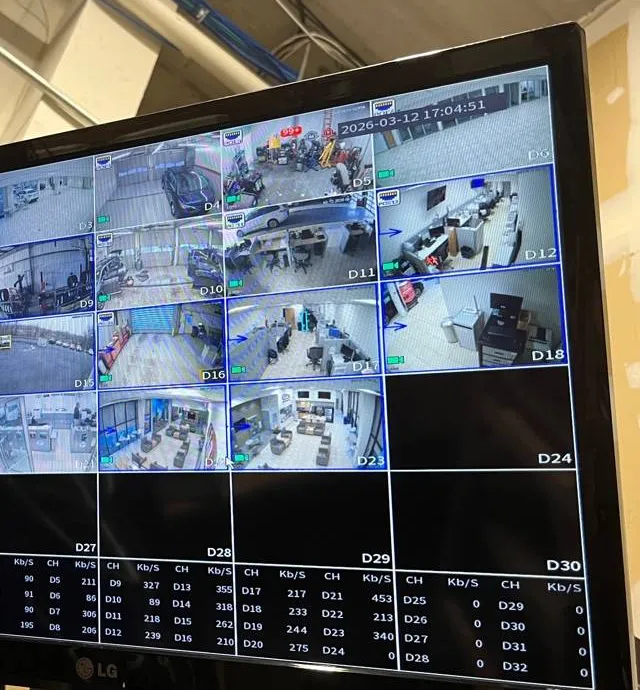
From one of our CCTV jobs (Rockland County car dealership): the right half of the recorder's monitor, with live tiles up to D18, black spare tiles such as D24 and D30, and a stream table whose last columns read 0 Kb/s because nothing is plugged into those channels yet.
Putnam County CCTV Request
Tell us the town, the driveway length and what you want to see
✅
Request Sent!
Thanks. We will call or text to set up your Putnam County CCTV visit, normally within 2 hours of your request.
25+
Years Experience
2 Hr
Booking
100%
Licensed & Insured
4.7★
201 Google Reviews
In business since 2002 · Licensed NYS low-voltage contractor · Putnam requests answered within 2 hours
Quick answer: for CCTV installation Putnam County NY homeowners pay from $1,199 for our 4-camera house-brand package (recorder, cabling, labor and 14 days of recording in the price), $1,340 to $2,500 for a 4- to 8-camera home system, and $1,500 to $5,000+ for a business, with nothing billed monthly afterward. A camera at the bottom of a long driveway, a run to a detached garage or well house, conduit along a stone wall and concealed wiring in a finished house are priced once we confirm the layout, because those are the items that change most from one Putnam lot to the next. We book within 2 hours of your request and schedule 7 days a week with early-day visits, first come first served once the deposit is paid.
PoE network cameras or HD-over-coax cameras, cabled to one recorder inside the building, under NYS license #12000287431
Footage stays on your hard drive: no cloud plan needed, and nobody but you holds the admin password
Battery backup for the recorder and switch, so a NYSEG outage does not wipe the night you needed
Putnam County CCTV Begins Where the Public Road Ends
Putnam has the fewest homes of the six Hudson Valley counties we cover and some of the lowest crime counts, and residents tend to say so first when they call us. What they say second is more useful: the house sits 200 or 400 feet up from the road, the woods close in on three sides, the nearest neighbor is out of sight, and the one camera they bought online loses its Wi-Fi somewhere around the second bend in the driveway. A Putnam house is rarely seen by anyone passing by. That is pleasant to live in and convenient for anyone who wants to visit unseen.
The county itself has been building a different kind of camera network. In late summer 2026 the Putnam County Sheriff’s Office and the Carmel and Kent police chiefs published how the county’s license-plate readers work: 48 cameras at 21 fixed sites along county roads and state routes, data kept on a government server through the regional Real Time Crime Center, and searches allowed only for criminal investigations. Between January 1 and August 11, 2026, those readers generated 808 investigative alerts on 250 vehicles of interest, including 184 stolen vehicles, 27 vehicles tied to known burglary crews and 22 linked to organized retail theft rings. Nearly half of the burglary-crew alerts, 46 percent, fired at cameras on the county line, the moment those cars entered Putnam.
“When one of these vehicles shows up here, it is a strong indicator that a crew is canvassing our neighborhoods for target homes.” Putnam County Sheriff’s Office, quoted in the Putnam County Press, August 23, 2026
Those readers stop where the public road stops. They photograph plates on Route 6, Route 22, Route 9D or Route 301; they do not see a car that turns into your driveway, idles by the garage and leaves. That last few hundred feet is the part private CCTV surveillance covers, and it is why our Putnam layouts almost always begin at the road and work back toward the house: a camera that sees each vehicle enter, one on the approach where faces become clear, then the doors, the garage and any outbuilding that holds tools, a generator or a boat.
There is a second reason Putnam owners ask for a wired recorder rather than a cloud subscription. The same months that brought those LPR numbers also brought a public argument about who gets to see camera data. At a September 9, 2026 meeting of the Legislature’s Protective Services Committee, Philipstown residents pressed the Sheriff on data sharing, and The Highlands Current covered the exchange. A system that records to a drive in your own basement, with logins only you hand out, sidesteps that question for your property entirely. We set it up that way by default.
Putnam County property crime, by the police agency that answers the call
Putnam’s numbers are small, which makes each case matter more to the household it happens to. The state’s Division of Criminal Justice Services counted 519 index crimes in the county in 2024, 456 of them property crimes: 38 burglaries, 400 larcenies and 18 motor vehicle thefts. Larceny rose from 341 in 2023 to 400 in 2024, about 17 percent. Just over half of all reported index crimes, 272, were handled by the Sheriff’s Office, which, with the State Police, covers the towns that have no police department of their own: Patterson, Putnam Valley, Southeast outside Brewster village and Philipstown outside Cold Spring village.
Two things in that table shape how we plan cameras here. First, larceny is the crime that moved, at the Sheriff’s Office from 166 to 208 and in Kent from 17 to 55. Larceny covers packages taken from the end of a driveway, tools lifted from an open garage, a generator or outboard motor carried off, and shoplifting along the Route 6 and Route 22 retail strips. Second, in a large rural patrol area a deputy may arrive well after the person has gone. The footage, and whether it shows a face, a vehicle and a plate, is often the only evidence left.
The housing behind those numbers
The Census Bureau’s 2023 American Community Survey counts 38,369 housing units in Putnam County, and 77.7 percent of them are single-family detached houses, the highest share in the Hudson Valley. In Putnam Valley the figure is 95.6 percent. Most of that stock is heated with fuel oil, 57.8 percent of occupied homes countywide, so most houses have a tank, a fill pipe and a delivery truck in the driveway several times a winter. And 1,757 homes are held for seasonal or occasional use, most of them lake cottages and weekend houses.
Driveways measured in hundreds of feet. The road, the mailbox and the place a car first appears are often past what one copper run can reach without help, so the road camera gets its own plan: a midpoint switch, an extender, fiber or a short wireless link.
Ledge, stone walls and old trees. Much of the county sits on rock a few inches under the topsoil, threaded with fieldstone walls and mature oaks and maples. Cable routes follow what is already there instead of trenching through it.
Weak cell signal. In October 2015 Senator Charles Schumer asked the FCC to investigate carrier coverage maps after a RootMetrics study placed the Hudson Valley, including Putnam, last of 125 metro areas for mobile network performance. A recorder that records locally does not care how many bars you have.
NYSEG outages. After the May 15, 2018 storms, NYSEG had 28,043 customers in Putnam without power the next morning, with more than 4,000 each in Southeast, Putnam Valley, Patterson, Kent and Carmel. A battery under the recorder is standard on our Putnam quotes.
Watershed land on the property line. New York City’s West Branch, Boyd Corners and Croton Falls reservoirs sit in Kent, Carmel and Southeast, and many houses back onto city-owned buffer land. No neighbor behind you means no witness behind you.
Lake communities. Lake Mahopac, Lake Carmel, Lake Oscawana, Lake Peekskill, Lake Gleneida and Peach Lake ring the county with small lots, private roads, docks and cottages closed from fall to spring.
“There are more cell phone dead zones in Northern Westchester and Putnam Counties than post-winter potholes on the West Side Highway.” U.S. Senator Charles E. Schumer, press release, October 5, 2015
Home broadband is better than the cell map suggests: the same Census survey finds 94.6 percent of Putnam households with a broadband subscription. The gap is inside and around the house, where a phone may have no signal in the kitchen and full signal at the end of the drive, and in the cottages and outbuildings that never got a line at all. That is also the honest answer to whether CCTV cameras can record without internet: every system on this page records first and connects second. The cameras talk to the recorder over cable we pull, the recorder writes to its own drive, and the internet only matters when you want to watch from somewhere else.
Six towns, six different camera jobs
Carmel and Mahopac. The county’s largest town, with 12,783 housing units, the county seat in Carmel hamlet and the lake neighborhoods around Lake Mahopac and Lake Gleneida. Carmel PD reported 91 larcenies in 2024. Our Carmel work splits between split-levels and colonials on cul-de-sacs, lakefront houses with a dock and a detached garage, and the stores, banks and restaurants along Route 6 and Route 6N.
Southeast and Brewster. The most built-up part of Putnam, with the lowest detached share at 61.3 percent and the highest share of homes on utility gas. Brewster village has older two- and three-story buildings with apartments over shops, townhouse and condo communities sit off Route 312 and Route 6, and the I-84 and I-684 interchanges bring trucks, contractors and commuter parking. Business CCTV, multi-building condo systems and lot cameras are most of what we do here.
Kent. Hilly and wooded, with 83.9 percent detached houses, the Lake Carmel and Kent Lakes neighborhoods, and long stretches of Route 301 and Route 52 bordered by city reservoir land. Kent PD’s larceny count tripled from 17 to 55 between 2023 and 2024. Kent jobs often include a lake cottage with a crawl space, a camera on a steep driveway and a run to a detached garage.
Putnam Valley. Almost entirely detached houses at 95.6 percent, the highest vacancy rate in the county at 17.3 percent, and 451 seasonal-use homes, the most of any Putnam town, many around Lake Oscawana, Lake Peekskill and Roaring Brook Lake. These are the owners who watch from somewhere else most of the week, so remote viewing, health alerts and a heated spot for the recorder come first.
Philipstown, Cold Spring and Garrison. The river side of the county, with the oldest housing (26.3 percent built before 1940), Cold Spring’s Main Street historic district, Nelsonville and the estates and farms of Garrison. Village buildings need small, tidy cameras and routes that respect old plaster and trim; the large properties in Garrison need the long-run planning described below.
Patterson. Northeast Putnam along Route 22 and Route 311, with farm fields, older farmhouses, newer subdivisions and a short drive to Connecticut. Larger lots, barns and equipment buildings make Patterson the town where we most often put a recorder in the house and a small switch in an outbuilding.
What We Install
CCTV Installation Services in Putnam County
Our CCTV installers handle the whole job: the survey, the cable, the mounts, the recorder, the network settings, the phone app and the follow-up. One crew, one written quote and one number to call later. If you are comparing quotes for a single doorbell camera or a couple of Wi-Fi cameras, our security camera installation service in Putnam County covers that work and lists the same package prices; this page is about wired closed circuit television systems built around a recorder.
📹
Full CCTV system installation
A turnkey job: cameras, recorder, surveillance hard drive, PoE switch, cable, mounts, monitor and app, delivered as one system. A typical Putnam house starts at four to eight cameras; a shop or office usually starts at six.
🛣️
Road and driveway-entrance cameras
Driveway CCTV installation at the point where every vehicle turns in, placed where headlights and plates are readable, with power and data carried down the drive by cable, extender, fiber or a short wireless link.
🖥️
Recorder setup: NVR or DVR
The box that stores everything, picked for your camera type and bought with empty channels for next year’s additions. Swapping only the recorder? Start with our NVR installation page for Putnam County.
🔁
Old DVR and analog upgrades
A DVR to NVR upgrade or an analog to IP CCTV upgrade: replace a ten-year-old DVR, keep coax that still tests clean, and move the house to smart detection. Read how it works on our DVR upgrade service in Putnam.
🔋
Battery backup and surge protection
CCTV UPS installation with a battery sized to carry the recorder and switch through short NYSEG outages, surge protection on outdoor runs, and a clean shutdown before the battery runs flat.
📱
Remote viewing that respects slow links
CCTV mobile app setup on every phone you choose, low-bandwidth substreams for viewing over a weak connection, person and vehicle alerts, and a written record of every password.
🛠️
Repair and troubleshooting
CCTV camera replacement, a hard drive replacement, a channel that went black after a storm, a camera knocked crooked by snow off the roof. Our camera repair crew for Putnam County handles service calls.
🧰
Maintenance and seasonal checks
A spring visit after ice and plowing season, a fall visit before the lake house closes: hard drive test, firmware, clean domes and tight brackets. Plans are on our camera maintenance in Putnam County page.
📦
Labor-only installation
Have a box of cameras from a big-box store or a website sitting in the garage? Send us the model numbers; the labor price comes back by text, and a deposit holds the date.
Most first visits combine several of those cards. A common Putnam job is a 4 camera CCTV installation or a 6-camera wired system on the house, one camera at the driveway entrance, a battery under the recorder and the app on two or three phones. A common business job, CCTV installation for small businesses on Route 6 or Route 22, is six to twelve cameras covering the doors, the register or counter, the stockroom and the lot, with the recorder in a locked closet. We plan both from the same question: what does each camera have to prove if you ever need the footage?
CCTV installation and setup is only half the job. CCTV installation and configuration is where systems succeed or fail: the stream sizes, the recording schedule, the detection zones, the time and date, the user accounts and the way the app connects from outside the house. We do that part in person, on your network, and we test it from a phone that is not on your Wi-Fi before we call the job finished.
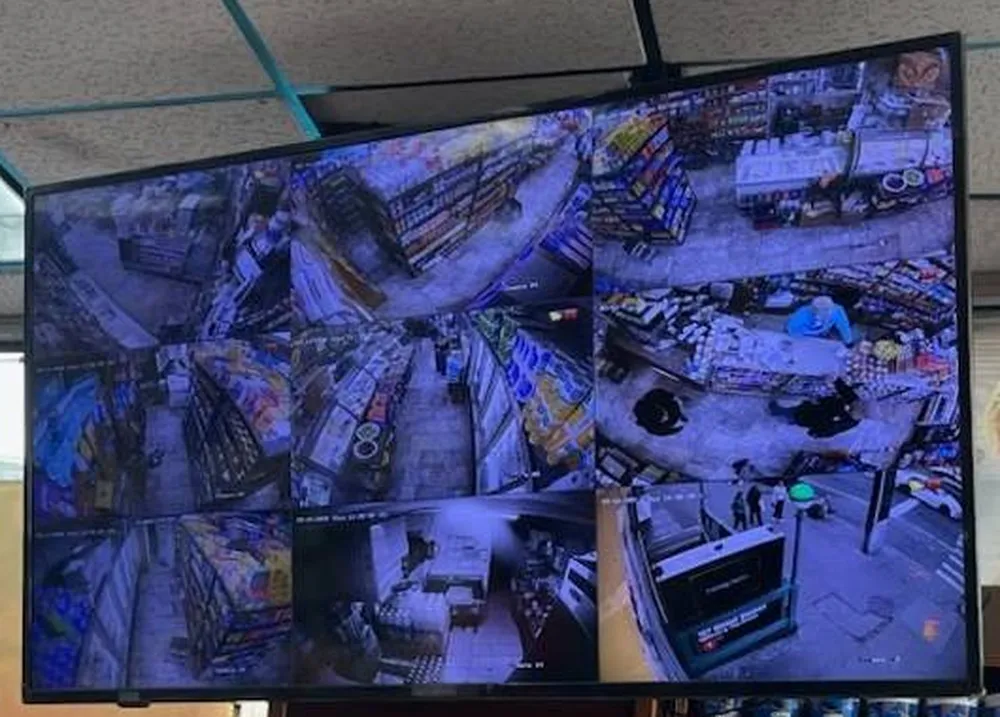
From one of our CCTV jobs (Manhattan corner deli): a wall-mounted TV split into camera tiles showing the aisles, the counter and a back room. The same live view is available on the owner's phone through the recorder app.
Building Specialists
CCTV for Putnam's Lake Cottages, Ridge Colonials and Village Blocks
Home CCTV installation in Putnam is shaped less by the size of the house than by what surrounds it: the slope of the lot, the rock under it, the lake in front of it or the reservoir land behind it. These are the property types we see most often, and how residential CCTV installation changes on each.
🛶
Lake cottages and lake-community houses
Small lots on Lake Mahopac, Lake Carmel, Lake Oscawana and Lake Peekskill, often on piers or a crawl space, with a dock, a shed and a shared private road. Cable goes through the crawl space; the recorder goes somewhere that stays dry and above freezing.
⛰️
Ridge and hillside colonials
Houses set high above Route 301, Route 6N or the Taconic, with steep paved or gravel drives. The road camera is often 30 or 40 feet below the house, so height and angle matter as much as distance.
🌳
Houses on reservoir and watershed edges
Lots in Kent, Carmel and Southeast that back onto New York City watershed land. Nobody lives behind you, so the rear of the house and any trail access need their own coverage.
🏘️
Split-levels and raised ranches
The suburban core of Mahopac and Carmel hamlet, with a garage under the living space and a lower level where the recorder can sit near the panel. These are the quickest houses in the county to wire well.
🏚️
Old farmhouses and stone-foundation homes
Philipstown, Patterson and Kent farmhouses with balloon framing, plaster walls and fieldstone cellars. Old framing hides useful cable paths; old stone needs careful anchors or a wooden mounting surface.
🏛️
Village buildings in Cold Spring and Brewster
Two- and three-story brick and frame buildings with a shop below and apartments above. Shared walls, tight ceilings and, in Cold Spring’s historic district, village review of exterior changes.
🏢
Condo and townhouse communities
HOA CCTV installation for Southeast and Carmel developments with shared parking, mailboxes and clubhouse pools. CCTV installation for multi-family buildings like these means cameras on several buildings tied to one board-controlled recorder.
🚜
Barns, sheds and well houses
Equipment barns in Patterson, horse sheds, well houses and pump sheds. Outbuildings get sealed housings, a small switch fed from the house and surge protection where the cable enters.
Materials and mounting, house by house
Cedar shingle and clapboard. Exterior home CCTV installation on wood is its own craft. A lot of Putnam houses, especially around the lakes and in Garrison, are clad in cedar shingles or wood clapboard rather than vinyl. Wood moves and holds water at every hole. We mount on a block cut to the siding profile or on a junction box, seal the fasteners and the cable entry, and keep the camera base flat so rain runs off rather than into the wall. Cable usually drops from the attic or rises from the basement rim joist straight behind the camera, which is how home CCTV installation with hidden wiring looks on a shingled house.
Fieldstone, block and ledge. CCTV camera mounting on old stone takes judgment. Cellars and retaining walls in older houses are often dry-laid or mortared fieldstone. Drilling into a single stone works if the stone is sound; drilling into a mortar joint that is already crumbling does not. Where the stone is doubtful, we mount on a wooden sill, a deck ledger or the fascia above instead. Outside, Putnam’s ledge means a trench may hit rock after a few inches, so buried runs are planned around it and surface runs follow walls, fences and the house itself.
Log, timber-frame and contemporary houses. Exposed beams, cathedral ceilings and window walls leave few hollow cavities. We route through closets, along beams and under floors, and use painted raceway where there is no hidden path, which is still the cleanest way to install CCTV cameras without visible wires on a house that was never built for them.
Cottages on piers and crawl spaces. CCTV conduit installation earns its cost here. Many lake cottages sit on short piers or over a shallow crawl space with a vapor barrier. Cable under the house runs in conduit or is fastened up off the ground, because mice, squirrels and seasonal dampness are hard on bare cable. The recorder stays inside the heated part of the cottage, never in an unheated porch closet that freezes when the house is closed.
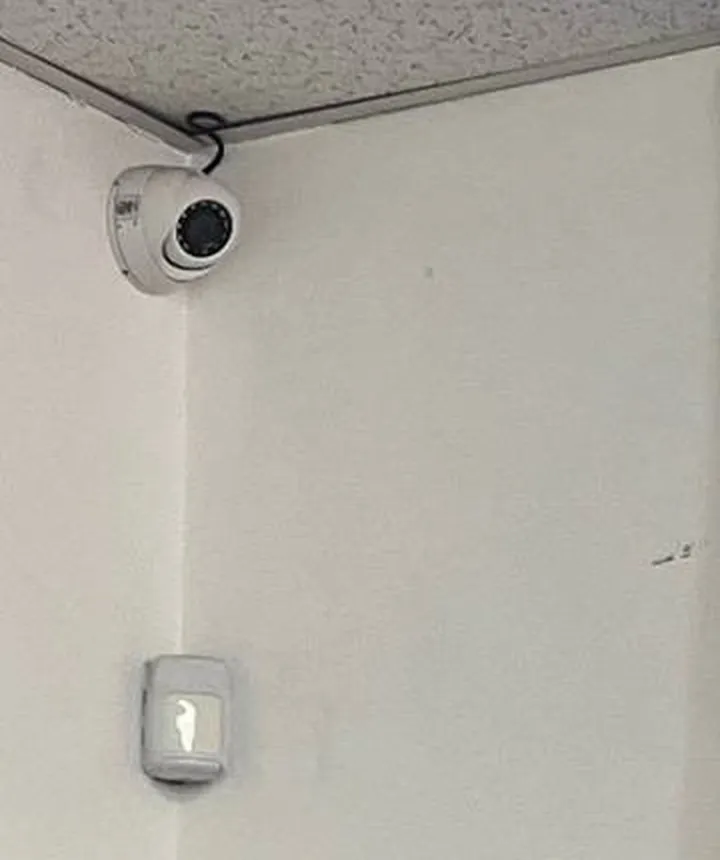
From one of our CCTV jobs (Nassau County window and door showroom): high in a white corner, a dome hangs just below the ceiling tiles while the alarm’s motion detector sits a few feet lower on the same wall; from that spot one lens takes in the whole room.
Commercial CCTV Installation
Business CCTV Installation in Putnam County
Putnam’s businesses sit along a handful of state roads, and most of them are small: one storefront, one office, one restaurant, one contractor yard. Commercial CCTV installation here is less about 60-camera systems and more about covering every door, every register and every vehicle that comes and goes, then making it easy for the owner to pull a clip on a Sunday night. These are the corridors where we work most.
Route 6 and Route 6N in Mahopac and Carmel. Grocery stores, pharmacies, bank branches, restaurants and strip plazas near the county offices in Carmel hamlet. Supermarket CCTV installation here means busy lots, several entrances and traffic from morning to late evening.
Route 22 and Route 312 in Brewster and Southeast. Retail plazas, auto service bays, contractor supply and the businesses clustered near the I-84 and I-684 interchanges, with truck traffic and commuter parking nearby.
Route 52 through Kent and Lake Carmel. Delis, service stations and neighborhood shops serving the lake communities, where convenience store CCTV installation is mostly about the counter, the door and the pumps.
Route 22 and Route 311 in Patterson. Farm stands, landscapers, equipment dealers and small industrial buildings on larger lots.
Main Street in Cold Spring and Route 9 in Philipstown. Antique shops, galleries, cafes and restaurants in old buildings, plus service businesses along Route 9.
Peekskill Hollow Road and Oscawana Lake Road in Putnam Valley. Small offices, contractors and storage buildings tucked off the main roads.
Whatever the road, a commercial CCTV contractor in Putnam is hired to do the same few things: see every face that comes through the door, every hand at the register, every vehicle in the lot and every delivery at the back, keep it long enough to matter, and make sure the owner can find and export a clip without calling anyone. Commercial CCTV systems run $1,500 to $5,000+ depending on the camera count, the building and the cabling, and every business quote is written after we confirm the layout. For a business that also wants access control, intercom or a broader camera plan, see our commercial security camera installation for Putnam County businesses.
Retail theft crews and the Route 6 store
The Sheriff’s plate-reader report lists 22 vehicles linked to organized retail theft rings in the first seven months of 2026, and describes them as crews that travel to Putnam specifically to steal from local stores. For a store, that changes where the money goes. The register camera still matters, but the cameras that help most are the ones at the entrance, facing in at head height so every face is clear, and the one on the lot that shows which car the group arrived in and which way it left. Combined with the time stamp, that is what lets an investigator match your store to a vehicle the county’s readers already flagged.
Contractor yards, landscapers and warehouses
Putnam has a lot of trades: landscapers, excavators, builders, oil and propane dealers, plumbers and electricians, many working out of a yard or a pole barn behind the owner’s house. Trailers, mowers, generators and copper are the targets. CCTV installation for industrial facilities and yards like these, and self storage CCTV installation for the unit buildings nearby, means a camera on the gate, one on each side of the building that stores equipment, and lighting or color night vision where the yard is dark. Larger storage and distribution buildings near Brewster are planned the way we describe in our warehouse security camera installation guide for Putnam County, with dock doors, truck courts and high-bay aisles.
Restaurants, medical offices, churches and schools
Restaurants and bars. CCTV installation for restaurants covers the front door, the bar, the register, the back door and the walk-in, with cameras kept out of the cooking line where grease coats a lens in weeks. Late-closing places on Route 6 and Main Street want a clear view of the parking area at closing time.
Medical and dental offices. A Carmel or Brewster practice usually wants the front door, the check-in desk and the drug cabinet on camera, and nothing at all in the operatories or exam rooms. Medical office CCTV installation and dental office CCTV installation therefore stop at the waiting room, with playback limited to the office manager’s login.
Houses of worship and community halls. Church CCTV installation, or house of worship CCTV installation in general, is mostly about the parking lot, the main doors and the office. Many Putnam churches are old stone or frame buildings, so we plan routes with the trustees and keep cameras discreet.
Rules every Putnam business camera system should follow
The points below summarize state statutes and one village rule so you can plan a layout. They are not legal advice, and a lawyer should review anything specific to your business.
Bathrooms and changing areas are off limits. If you employ staff, the state Labor Law (section 203-c) forbids you to video record any restroom, locker room or room where employees change clothes; only a court order changes that.
Audio is a separate decision. Under New York’s eavesdropping law (Penal Law §250.05 and the definitions in §250.00), recording a conversation you are not part of without a participant’s consent is a crime. Our business installs ship with audio switched off.
Private spaces stay private. Penal Law §250.45, unlawful surveillance, covers secretly recording people undressing or in places where they reasonably expect privacy. We will not aim cameras into neighbors’ windows or yards.
Cold Spring’s historic district. The Village of Cold Spring’s Historic District Review Board reviews exterior changes to buildings in the district under Chapter 64 of the village code, through a Certificate of Appropriateness. A camera on a Main Street facade is an exterior change, so ask the village Building Department before the mounts go up; we can supply cut sheets and photos for the application.
Tell people. A sign at the door saying the premises are recorded costs a few dollars, discourages casual theft and is something many insurance carriers like to see.
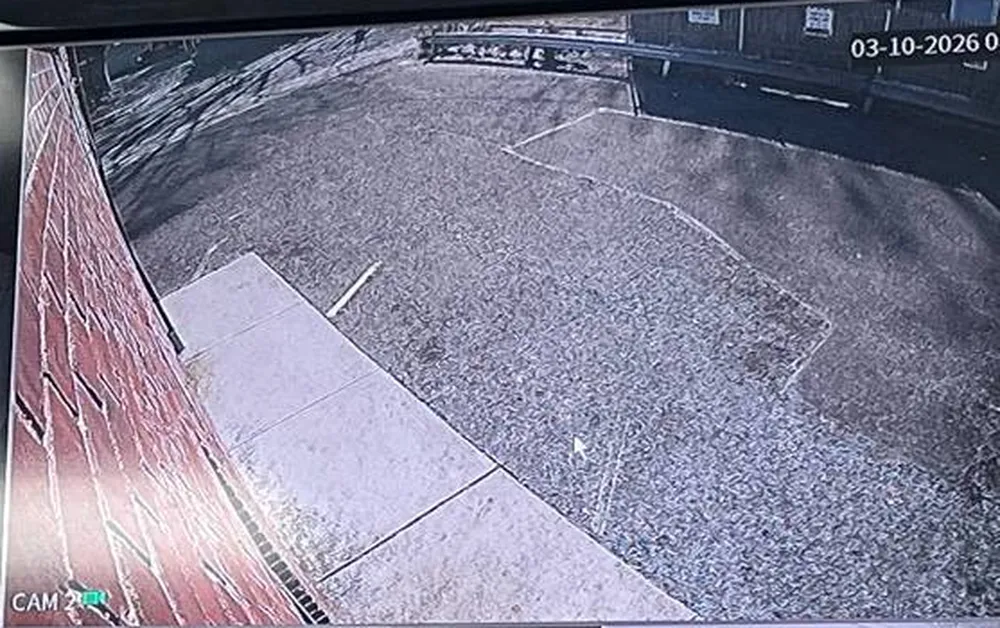
From one of our CCTV jobs (Nassau County window and door showroom): one tile of the office monitor, a wide camera looking down the side lot along the building’s brick wall, with the recorder’s date stamp in the top corner. That stamp is what ties a vehicle in the lot to a time an investigator can check.
Your Questions Answered
CCTV in Putnam County: Questions Answered
These are the questions Putnam owners ask us on survey calls. Very few of them are about megapixels. Most are about the road, the rock, the lake, the signal and who gets to see the footage.
What does a burglary crew checking out Putnam houses look like on a driveway camera?
Usually like nothing much, which is the point. The Sheriff’s Office says burglary-crew vehicles showing up on its road cameras are a strong sign a crew is canvassing neighborhoods for target homes, and on a private driveway camera canvassing tends to look ordinary: a car that pulls in, sits for a minute and backs out; someone walking up with a clipboard or a package that is never left; a knock at the front door in the middle of a weekday, followed by a walk around to the side of the house when nobody answers. Each event alone means little. A pattern across a few days, or the same car at two houses on your road, means a lot.
The cameras that catch it are the one at the driveway entrance, set to record every vehicle with a time stamp the investigators can trust, and a face-height camera at the front door. We set vehicle alerts for the hours the house is usually empty, so a car turning in at 1 p.m. on a Tuesday reaches your phone. If something looks wrong, save the clip and call the Sheriff’s Office or your town police with the time and a description of the vehicle; that is information the county’s plate readers can work with.
Our land borders New York City watershed property. Where can our cameras point?
Point them at your own house, your own driveway and your own outbuildings, and draw the rear cameras so they cover your yard and the edge of the tree line rather than deep into the city land. In Kent, Carmel and Southeast, many lots back onto land owned by the New York City Department of Environmental Protection around the West Branch, Boyd Corners and Croton Falls reservoirs. That land may be open to permit holders for fishing and hiking, so people can pass behind your property legitimately.
What you want from those rear cameras is a clear record of anyone who crosses from the woods into your yard, not hours of video of an empty forest. We aim them slightly downward toward the lawn line, add a person-detection zone that starts at your side of the boundary, and use privacy masking on any section of the view you do not need. This is practical guidance, not legal advice.
Can I still get camera alerts at home when my phone gets no cell signal inside the house?
Yes, as long as the house has internet and your phone is on the home Wi-Fi. Camera apps send alerts over whatever data connection the phone has, and Wi-Fi counts. Plenty of Putnam houses have one bar of cell service in the kitchen and a solid cable or fiber line in the basement, and the alerts arrive normally. We test alerts on your phone both on the home Wi-Fi and on cellular before we leave, so you know which places on the property work.
If the internet itself goes down, the recorder keeps recording to its drive and you can watch live and play back on the monitor in the house, which needs no internet at all. When the line comes back, the app reconnects on its own. For owners who are often away in places with weak coverage, we keep the app’s live view set to a small substream so it loads on a slow connection instead of spinning.
Our driveway curves through the woods. How do you cover a drive no single camera can see end to end?
With two or three cameras that hand the view off to each other, each with its own job. The first sits near the road where vehicles slow to turn in, zoomed tight with a varifocal lens so the car, and ideally the plate, fills the frame. The second covers the last stretch where the drive comes out of the trees near the house, where faces and the vehicle’s side become clear. On a long S-curve, a third may cover a gate, a bridge or a parking pad halfway up. Together they show a vehicle arriving, how long it took to reach the house and whether it left the same way.
Each of those cameras is aimed across the vehicle’s path rather than straight down the drive, so oncoming headlights pass the lens instead of blinding it, and each gets its own night settings. The near-house camera is easy to wire from the house; the road camera is the one that needs a planned route and is priced after we walk it, because a drive that curves around ledge and old trees can be twice as long on the ground as it looks from above.
How do you keep mice and squirrels from chewing camera cable in a lake cottage crawl space or attic?
Rodents chew cable for the same reason they chew anything: it is there, it is soft, and in a closed cottage nobody disturbs them for months. A single chewed run can take a camera offline all winter, and you will not notice until you check the app in March. We avoid laying cable loose on the ground of a crawl space or across attic insulation where mice travel.
Instead, cable in crawl spaces and attics runs in conduit or is fastened up along joists and rafters, and the point where it leaves the house is sealed so the hole does not become a doorway. Outdoor runs near the ground go in conduit. We also turn on the recorder’s video-loss alerts, so if a camera does drop offline in an empty cottage, your phone tells you that week rather than in spring.
Can camera cable follow a stone wall or a fence line where ledge stops any digging?
Often that is the best route on a Putnam property. Old fieldstone walls and post-and-rail fences tend to run exactly where you want cable to go, along the drive or the property edge, and a trench a few feet away may hit ledge after six inches. Cable rated for outdoor use and sunlight, inside UV-rated conduit, can run along the base of a wall or be fixed to fence posts, tucked low and out of the way of mowers and plows.
Where the route crosses the driveway or a lawn that gets mowed, we cut a shallow channel for conduit or go overhead instead. The run is measured and planned on the survey, because following a wall that curves around a field can add a lot of length, and anything near the 100-meter copper limit needs a powered midpoint, an extender or fiber rather than hope.
Can camera cable be strung overhead between the house and a garage or shed?
Yes, and on rocky lots it is common for garage CCTV installation. An aerial run uses a steel support wire, called a messenger, tensioned between the two buildings, with the camera cable lashed to it, so the cable itself never carries its own weight or a load of ice. Rated outdoor cable, drip loops at both ends and sealed entries keep water from following the cable inside. The span needs enough height to clear vehicles, snowplows and anyone carrying a ladder.
The weakness of an overhead run is the same as the power lines along your road: falling limbs. We look up before we plan one and keep it out from under dead branches. If the span would pass under big trees, or if the outbuilding has its own electric service, fiber in conduit on the ground or a short point-to-point wireless link may be the better choice, and we will price both so you can compare.
Our lake community maintains a private road. Can the road association put a camera at the entrance?
Usually yes, if the association has authority over the road and the board approves it. Several Putnam lake neighborhoods are reached by private roads maintained by a road or lake association, and the entrance is the single point every vehicle passes. A camera there, mounted on an association pole or with a property owner’s written permission on their land, records every car in and out, which helps after package thefts, break-ins at closed cottages and damage to the road itself.
The details belong in writing: who owns the camera and recorder, where the recorder lives, who can view footage, how long it is kept and how a member requests a clip. We prepare a short scope and camera map for the board, keep the view on the roadway and away from members’ windows, and set up a separate login for the officer who handles footage requests.
Can a camera tell us when someone comes ashore at our lake house from the water side?
Yes, and on many Putnam lakes the shore is the least watched side of the house. Kayaks, canoes and small boats can reach a dock at night without passing any road, and in a closed cottage nobody would notice for weeks. A camera mounted on the house or a dock post, aimed down at the dock and the path up from the water, records anyone who steps ashore. The detection line is drawn across the top of the dock and the shoreline path, not over the open water, so a passing boat or a heron does not set off an alert.
Water is hard on cameras. Afternoon glare off the lake, reflected lights at night and morning fog all fool basic motion detection, so a camera with person detection and good low-light performance does much better here than a cheap motion camera. Any part of the frame that shows a neighbor’s dock or yard is blacked out with a privacy mask. When the lake freezes, the same line still catches anyone who walks across the ice to your shore.
Does a camera on a building in Cold Spring’s historic district need village review?
It may. The Village of Cold Spring’s Historic District Review Board reviews exterior changes to buildings in the historic district, and the village code sets out a Certificate of Appropriateness process for them. A camera bolted to a Main Street facade, a conduit run up the brick or a new box on the front of a building can count as an exterior change, so the right first step is a call or visit to the village Building Department at Village Hall, 85 Main Street.
From our side, we help the application along with a cut sheet for each camera, photos of the planned locations and a description of how the cable is hidden. In practice, the least visible plan is also the easiest to approve: small cameras placed under cornices or awnings, mounted into mortar joints rather than face brick, with cable run inside the building wherever possible.
How do we record vehicles that enter a Brewster or Southeast business lot from two different roads?
This is a parking lot CCTV installation question first: give each entrance its own camera, aimed at the spot where vehicles slow down to turn, and add one wide camera that ties them together. A lot with an entrance on Route 22 and another off a side street needs both covered, because a driver who knows the area will use the one less likely to be watched. Each entrance camera is set for plates and faces through the windshield; the wide camera shows where each vehicle parked and how long it stayed.
On the recorder, we name the cameras by entrance so an owner searching footage at 11 p.m. does not have to guess which tile is which. For lots that also need plate capture in the dark, our parking lot camera installation for Putnam County page covers lighting, pole heights and plate cameras in more depth.
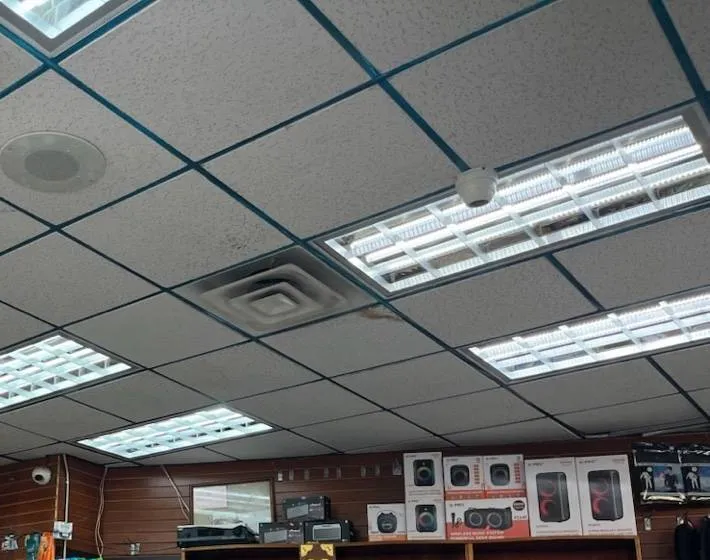
From one of our CCTV jobs (Manhattan corner deli): two small dome cameras on the ceiling grid, one beside a long light fixture and one above the shelves at the back wall, placed so the aisles are covered from two directions.
Equipment
Cameras, Recorders and Cable for Putnam Properties
Unless you ask for something else, a Putnam quote from us is written around our house-brand cameras and recorder, the line we stock, warranty and know inside out. Lorex, Luminys and Reolink are our authorized partner brands. If a house or shop already runs Hikvision, Dahua, Uniview, UniFi Protect, Axis or Hanwha gear, we install, integrate and service that equipment too.
🎯
Bullet and varifocal cameras
Bullet camera installation and varifocal camera installation for driveway entrances, gates and long lots. A varifocal lens lets us zoom onto the turn-in point so a vehicle fills the frame instead of a corner of it.
⚪
Turret and dome cameras
Turret camera installation for doors, porches and garage fronts, and dome camera installation inside shops and offices, where a camera close to people should look neat and resist a swipe.
🌙
Night cameras for unlit lanes
CCTV installation with night vision matters because most Putnam roads have no streetlights at all. Infrared models see in total darkness in black and white; color night vision models need a porch or garage light nearby to show true colors after dusk.
🚨
Cameras that talk back
With active deterrence camera installation, the cameras flash a strobe, sound a siren or let you speak through a speaker once a person steps into a zone you draw, a good fit for a detached garage or a landscaper’s yard.
🔭
Pan-tilt-zoom and wide-view models
PTZ camera installation and panoramic camera installation, used sparingly: a motorized PTZ suits someone who actually steers it, such as a yard manager; a 180-degree panoramic suits a plaza lot where one mount must see every row.
🔢
License plate cameras
LPR camera installation with dedicated plate models for a road association entrance or a business driveway, zoomed tight onto the lane where cars slow down, with shutter settings tuned so the plate stays sharp after dark.
🖥️
Recorders of every kind
An NVR for PoE cameras, a DVR when the house is already wired with coax, or a hybrid that accepts both while you change over one camera at a time.
🔌
Switches and long-distance links
CCTV PoE switch installation covers the switch that feeds power to every camera, a powered midpoint in a weatherproof box on a long drive, and glass fiber when the far camera sits by the road or on a barn.
🔋
Backup power and protection
A battery unit under the recorder for NYSEG outages, arrestors where copper enters the house from outdoors, and lockable cabinets for business recorders.
Matching the system to the lot
Option
Wiring
Where it shines here
Limit
PoE network cameras + NVR
Cat6, power included
Fresh wiring in a typical Putnam house or store
328 ft per copper run
HD-over-coax cameras + DVR
Existing RG59 coax
1990s and 2000s houses pre-wired for cameras
Fewer smart alerts
Hybrid recorder
Coax and Cat6 together
Changing over gradually
Split channel count
Fiber or radio link
Glass or a pair of antennas
Road, gate, garage, well house
Far end needs power
Wi-Fi or battery camera
None to the recorder
One awkward spot
Leaves, stone, cold
Five install decisions that matter after the first winter
Cable choice. CCTV wiring inside the house is Cat6, the standard for PoE camera installation; on longer runs or for cameras with heaters, motors or deterrent lights we may step up to Cat6A. Outside, the cable is rated for outdoor and UV exposure, and anything underground is direct-burial rated or in conduit. Between buildings or down a long drive, fiber optic CCTV installation carries the signal with no electricity on the line, which also keeps a lightning surge at the far end from traveling back to the recorder. Every cable is labeled at both ends so the next technician does not have to guess.
Power budget. An 802.3af PoE port can supply up to 15.4 watts and an 802.3at port up to 30 watts. A plain fixed camera uses a fraction of that by day, but infrared at night, a heater in a cold housing and a deterrent light all add up on a January night. We total the worst case for every camera on the switch and leave headroom, so the coldest night of the year is not the night cameras start rebooting.
Storage and compression. How much storage do CCTV cameras need? Less than people expect when the system runs H.265, which stores a similar picture in much less space than H.264; we switch it on wherever both the camera and the recorder support it. Every system we sell keeps at least two weeks of recording; for a seasonal house or a store that wants a month or more, a CCTV storage upgrade means a larger drive or a second one and confirm the real retention after a few days of recording.
Placement. Where should CCTV cameras be installed? CCTV camera placement on a wooded lot starts at the road and moves inward: where vehicles appear, where people walk, where doors open, where valuable things are stored. Face cameras go at roughly 8 to 10 feet so they look at people rather than at the tops of their heads. Lot and road cameras go higher with tighter lenses.
Network security. CCTV remote access setup is where cheap installs cut corners. Default passwords are changed on every device, unused services are switched off, cameras on business networks sit on their own segment, and remote access goes through the manufacturer’s secure app rather than an open port on your router.
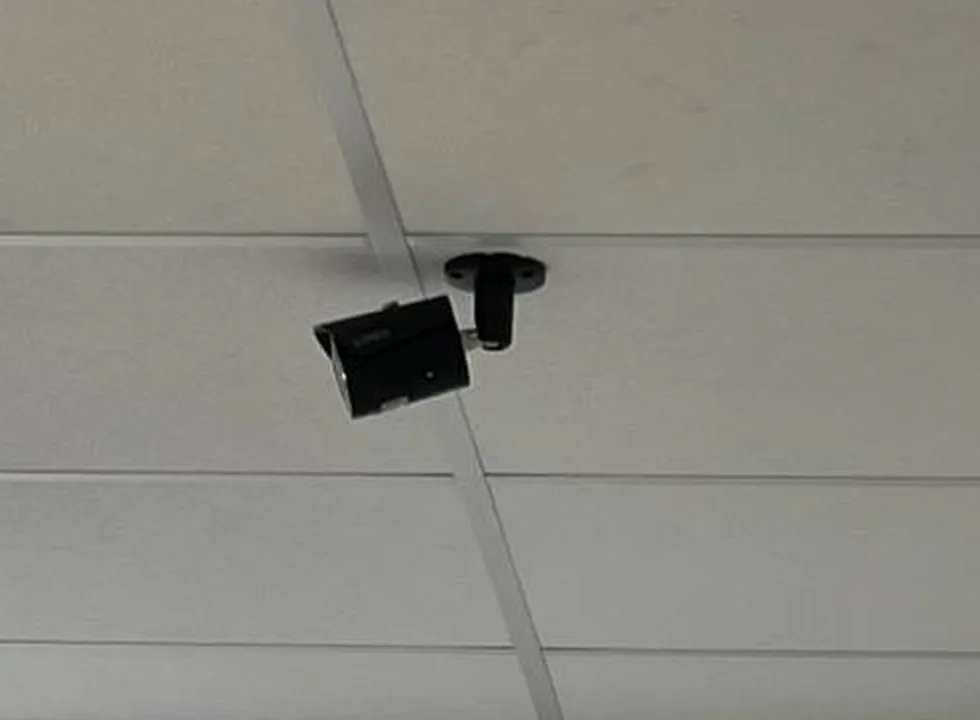
From one of our CCTV jobs (Rockland County car dealership): close up, the black bullet hangs from a stubby round bracket screwed through a single white tile, tilted toward the desks below; the same bracket works under a porch ceiling or a garage soffit.
Is your driveway longer than your Wi-Fi?
Mark the road, the house and the spots you care about on a map screenshot and text it to us. You get back a plain answer on which cameras are a simple cable run, which need a powered midpoint or glass fiber, and what the $1,199 package already includes.
Ask a chatbot or a search summary about cameras for a house in Putnam and you get advice written for a suburb with sidewalks, streetlights and five bars of cell service. Cost guides on Angi, HomeAdvisor and Fixr average national numbers that say nothing about ledge or a 400-foot drive. Here is where the generic answers go wrong here, and what we do instead.
“Putnam is so safe that cameras are a waste of money”
Putnam’s crime counts are low; nobody disputes that. But low is not zero, and the trend in the most camera-relevant category went the wrong way: the state counted 400 larcenies in the county in 2024, up from 341 the year before, and the Kent police reported 55 after 17. Larceny is the theft of things left outside or in reach: packages, tools, a generator, a catalytic converter, merchandise from a shelf.
The Sheriff’s own plate-reader report adds context the totals do not show. Twenty-seven vehicles tied to known burglary crews and 184 stolen vehicles were flagged on Putnam roads in just over seven months of 2026, and the Sheriff’s Office described stolen cars as typically driven into the county by people intending to commit more thefts.
A camera system does not have to stop a crime to be worth having. Its job is to show what happened, clearly enough that a deputy, an insurer or you can act on it. In a county where a patrol car may be miles away, recorded footage is often the only witness.
“The county’s cameras already watch my road, so I am covered”
The county’s 48 license-plate readers sit at 21 fixed sites on public roads. They capture plates, not faces, and they are searchable only by police during a criminal investigation. They will not show you who walked up your driveway, which door they tried or what they carried away.
They also do not cover most roads. A reader on a state route sees traffic on that route; it does not see the dead-end lane or lake road your house sits on, or anything past the end of the pavement.
The two are complementary. Your system records the event on your property and the vehicle at your driveway; the road readers can help investigators trace where that vehicle went. Neither replaces the other, and the private system is the only one you control.
“Any camera app works the same in Putnam as it does in the city”
The app may be the same, but the connection under it is not. When Senator Schumer asked the FCC to look at carrier coverage maps in 2015, he cited a RootMetrics study that put the Hudson Valley, including Putnam, last of 125 metro areas for mobile performance. Coverage has improved since, but dead spots in hollows, along the reservoirs and inside stone houses are still common.
A camera that depends on the cloud to record is only as reliable as the link from your house to that cloud. A camera that records locally to a recorder in the house does not need the link at all to do its main job.
We set up remote viewing to suit the connection you have: small substreams for live view on a phone, event clips instead of continuous uploads, and alerts that work over home Wi-Fi when the cell signal inside is weak.
“Cloud cameras are more private than a box in the basement”
This one gets repeated because cloud services encrypt their uploads, which is true. But privacy is also about who holds the footage and on what terms. With a cloud-only camera, your video sits on a company’s servers under that company’s policies, and you pay a monthly fee per camera to keep it there.
Putnam residents have spent much of 2026 debating exactly that question about public cameras: where data is stored, who can search it, and for how long. The same reasoning applies at home. A recorder on your premises, with an admin password only you hold, keeps the footage in your hands.
We still offer off-site copies for owners who want them, because a burglar can take a recorder. The answer is to hide or lock the recorder, put it on a battery, and add an off-site copy of key events on top of local recording if you choose, not instead of it.
“A small battery backup from an office store keeps cameras up all night”
A small UPS meant for a desktop computer may run a recorder and a loaded PoE switch for only a few minutes, and many are not set up to tell the recorder to shut down cleanly before the battery dies. A sudden power cut in the middle of writing is hard on hard drives.
Outages here are not hypothetical. NYSEG had about 13,000 Putnam customers out after the October 29–30, 2017 storm and 28,043 the morning after the May 15, 2018 storms. Long outages need a plan: a UPS sized to the real load, the recorder on a generator circuit if the house has one, and settings that bring every camera back on its own when power returns.
We size the battery to your equipment, connect its shutdown signal where the recorder supports it, and test a power cut before we leave. If you have a standby generator, the UPS only has to cover the seconds before it starts.
“Lay the cable on the ground and cover it with mulch”
It works for a summer. Then a mower or a string trimmer finds it, a plow catches it at the edge of the driveway, or a squirrel decides it is food. Indoor-rated cable left outside also cracks in the sun and wicks water inside the jacket.
On Putnam lots, where ledge often stops a proper trench, the alternatives are better than mulch: UV-rated conduit along a stone wall or fence line, an aerial run on a messenger wire, a shallow channel cut where the route crosses lawn or pavement, or fiber or a wireless link to skip the ground entirely.
Each of those is priced after we confirm the layout, because the right one depends on the distance, the obstacles and what is at the far end. What we will not do is leave a run where the first mowing of spring will cut it.
“Strap battery cameras to trees and you have covered a wooded lot”
Battery cameras appeal on a wooded lot because there is no cable to run. The trouble is that they sleep to save power and wake on motion, so they often catch the second half of an event. Cold Putnam winters drain batteries faster, and someone has to climb a ladder to recharge them.
Trees add their own problems. Trunks sway in wind, which shakes the picture and triggers false alerts, and a tree-mounted camera on Wi-Fi is usually at the edge of the router’s range, especially once leaves come in.
We wire cameras to the house or to a post or outbuilding where we can, and use a properly mounted pole with its own power when a camera must stand alone.
Field Notes
Field Notes: Planning the Channels You Will Need Next Year
The photo at the top of this page is the right half of a recorder screen from a car dealership job in Rockland County. It shows live tiles running to D18, then black tiles with no picture, labeled D24, D29, D30 and on to D32. Underneath, a table lists each channel’s stream rate in kilobits per second. The live channels show a few hundred; the black ones read zero. Those zeros are not faults. They are channels we left open on purpose when we chose a 32-channel recorder for a 23-camera job.
That same habit matters more on a Putnam property than at a dealership. Owners here almost always add cameras after the first winter: the road camera they decided to try after a package went missing, the shed or the well house, the dock once the boat goes back in. If the recorder was bought with exactly as many channels as the first install, every addition means a second recorder or a replacement. If it has spare channels and the PoE switch has spare ports and power, the addition is a cable run and an afternoon.
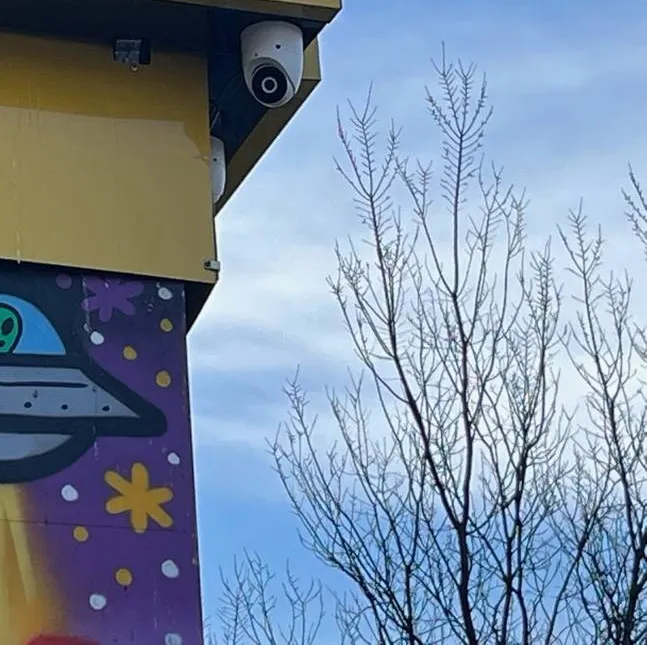
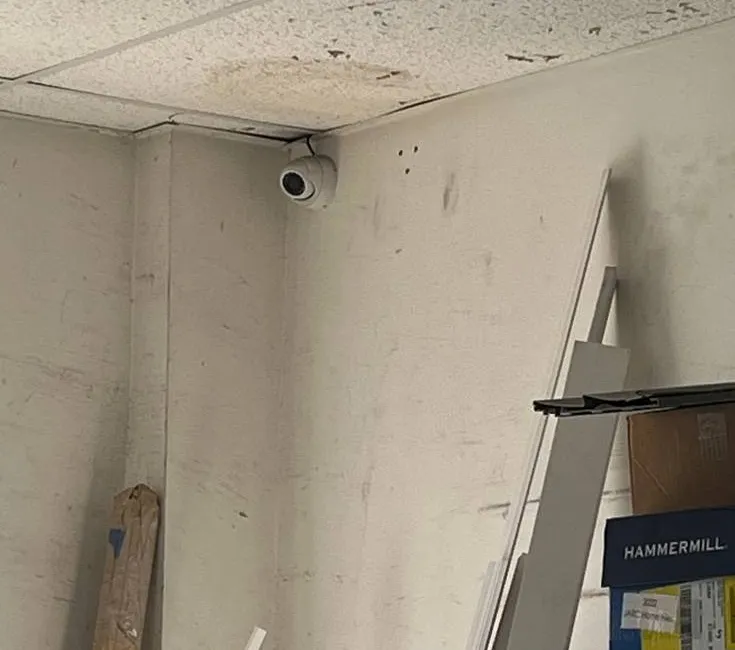
From one of our CCTV jobs (Manhattan corner deli): a white dome camera fixed under the corner of the storefront’s yellow awning band, sheltered from rain and snow, with bare winter branches against the sky beside it.From one of our CCTV jobs (Nassau County window and door showroom): tucked where two walls meet the stained drop ceiling, a compact white dome watches long trim boards propped against the wall and a stack of file boxes below.
Two more lessons from those photos carry straight to Putnam work. An outdoor camera tucked under a roof edge or an awning, as at that Manhattan corner, stays clear of snow and rain far better than one on an open wall, which is why we look for eaves and soffits on every Putnam house before we look at siding. The Nassau stockroom dome, high in a corner over stacked material, is the view a Putnam owner wants inside a detached garage full of tools.
Before You Hire
Eight Questions to Ask Any Putnam CCTV Company
Whoever you hire, a handful of questions separate an installer who has worked on Putnam lots from one who has only done townhouses. Ask them of every company and compare the answers in writing.
How do you get to the camera at the road? Ask for the distance they measured and the method: cable, midpoint switch, extender, fiber or wireless link. “Wi-Fi will reach” is not a method.
Where does the cable run outside, and what protects it? Conduit, wall lines, aerial runs or burial, and what they do where ledge stops a trench.
What happens in a NYSEG outage? Is a UPS included or quoted, how long will it carry your equipment, and will the recorder shut down cleanly?
If the Wi-Fi dies, does the footage stop? It should not: a properly built system keeps writing to the drive in the house no matter what the internet does.
Exactly how far back can I search? A good answer is a number of days for your cameras at their resolution, written into the quote.
Who holds the admin password and who can see my footage? You should own the admin account; the installer should not keep a hidden login.
Can I see your license and your insurance certificate? A New York State low-voltage number you can verify online, plus a general liability certificate, should both be on paper before the first hole is drilled.
What paperwork stays with the house? Expect a list of cameras and where each cable runs, the logins, and a lesson on finding and saving a clip.
Our written quotes answer each of those eight points before you are asked for a deposit. To hear from past customers, read our Google reviews, 4.7★ across 201 reviews; our pages carry no testimonials.
When Owners Call Us
When Putnam Owners Usually Call About CCTV
The week after something happened. A garage emptied overnight, a car rifled in the driveway, a mailbox smashed: CCTV installation after a break-in goes to the front of our queue. The first cameras we hang are the ones that would have shown the last incident, and the recorder goes somewhere out of sight. Any damage we find gets photographed for your insurer.
When the lake house closes for the season. CCTV installation for winter property security peaks in October and November, with calls from owners who are about to drain the pipes on a Lake Oscawana or Lake Mahopac cottage and leave it until spring. They want to see the driveway and the doors from the city, know the system will keep running through a winter of outages, and hear about it if a camera drops off.
Before moving into a new house. CCTV installation before moving in is the easiest timing: attics and basements are clear, furniture is not in the way and concealed wiring takes less time.
When a business opens or gets ready for the holidays. CCTV installation for a new business opening is about timing. A shop, restaurant or office opening on Route 6, Route 22 or Main Street wants cameras recording on opening day. Retailers want CCTV installation for the holiday shopping season finished before Black Friday and the Christmas rush, when traffic and theft both rise. We plan around fit-out schedules so cameras go up after the ceilings close.
Vacant properties and construction sites. CCTV installation for vacant property is common in Putnam during estate sales and gut renovations, when a house sits dark for months. Those houses, and new construction where lumber, copper and tools stay overnight, need cameras that record locally, alert on people and vehicles, and run on temporary power. For active job sites, our construction site camera installation in Putnam County covers pole and trailer setups.
Get In Touch
Request a Free Putnam County CCTV Quote
Tell us the town or hamlet, the type of property, roughly how many cameras and where, and how far the road or your farthest spot is from the house. A satellite screenshot with the driveway marked, and a photo of any old recorder, speeds up the quote. Let us know too whether the house has reliable internet and cell signal. Prefer to talk? Call (845) 640-3835.
✅
Request Sent!
Thanks. We will call or text to set up your Putnam County CCTV visit, normally within 2 hours of your request.
How It Works
Our CCTV Installation Process in Putnam County
Every Putnam job follows the same six steps, whether it is four cameras on a split-level in Mahopac or a house, a garage and a road camera on ten acres in Garrison.
1
Share the lot and the goal
Text or call with the hamlet, the kind of house or business, and a rough sketch of the drive. A booking comes back within 2 hours.
2
Walk the routes
Simple houses by photos and satellite view; long drives, ledge, outbuildings and businesses in person. We measure the real cable routes and find a dry, heated spot for the recorder.
3
Sign off on a written quote
The quote names every lens, every run and link, the battery unit and our labor, line by line. Half down reserves your install day.
4
Pull cable and mount cameras
Hidden routes through attics, basements and crawl spaces, protected runs outside, sealed holes in shingle and siding, and surge protection on outdoor copper.
5
Program the recorder
We load the drive, set stream sizes, schedules, person and vehicle zones, masks over neighbors’ land, the clock and each family member’s login, then watch every view at dusk.
6
Hand over and follow up
Everyone who needs the app gets it on their own phone. We show you how to scrub back to last night and save a clip, leave the logins in writing, and call a week later to fine-tune alerts.
Coverage Area
CCTV Installation Near Putnam County's Landmarks
We work in all six towns and both villages, from the Westchester line at Lake Peekskill and Brewster up to the Dutchess border in Patterson and Kent.
Lake Mahopac
The county’s best-known lake, ringed by year-round houses, older cottages and docks, with Route 6 shopping a few minutes away. Lakefront CCTV here is about the road side and the water side at once.
Historic Courthouse, Carmel
The county seat on the shore of Lake Gleneida, with county offices, Route 6 and Route 52 businesses and the split-level neighborhoods of Carmel hamlet around it.
Main Street, Brewster
The village center near the Metro-North station and the I-84 and I-684 interchanges, with older mixed-use buildings and the retail and contractor businesses of Southeast nearby.
Main Street, Cold Spring
The river village of antique shops, cafes and nineteenth-century buildings in a local historic district, with Nelsonville and the Garrison estates just beyond.
Clarence Fahnestock State Park
Woodland and lakes spanning Kent, Philipstown and Putnam Valley along Route 301, surrounded by long private drives and houses far from any streetlight.
West Branch and Croton Falls Reservoirs
City water-supply reservoirs in Kent, Carmel and Southeast, crossed by Route 301 and causeway roads, where many houses back onto watershed land.
We also serve Mahopac Falls, Lake Carmel, Kent Lakes, Patterson hamlet, Towners, Brewster Hill, Peach Lake, Garrison, Nelsonville, Continental Village, Lake Peekskill, Lake Oscawana and Putnam Valley hamlet, and every road in between.
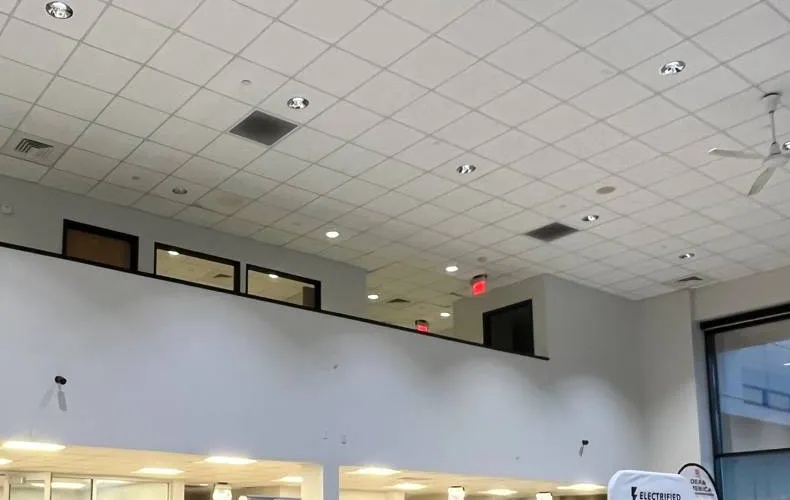
From one of our CCTV jobs (Rockland County car dealership): a small camera on the white mezzanine wall of a two-story showroom, under the tiled ceiling, with an exit sign and the upper windows off to the right. High mounts like this see an entire open floor from above the reach of anyone in the room.
Pricing
CCTV Installation Cost in Putnam County
Every figure below matches what our Putnam County security camera page publishes; nothing here is a teaser rate. Each series price buys four cameras, the recorder, the cable, our labor and 14 days of storage.
System
What it is
Starting price
A Series
2MP 1080P, DVR
from $1,199
F Series
5MP 2K, DVR, siren and lights
from $1,247
E Series
4-5MP IP, 4K NVR
from $1,406
C Series
8MP 4K, DVR, long range
from $1,641
D Series (top tier)
8MP 4K IP, two-way talk
from $1,641
Home systems
4 to 8 cameras, NVR, PoE
$1,340 to $2,500
Business CCTV
Shops, offices, yards
$1,500 to $5,000+
Monthly fees
Recording stays local
$0
What moves the price on a Putnam job
The series price covers a standard 4-camera installation; additional CCTV camera installation is priced per camera. Extra cameras, the road or gate camera, runs past 100 meters, midpoint switches and extenders, fiber and media converters, wireless links, conduit along walls or fences, aerial runs, concealed wiring in finished rooms, pole mounts, larger drives for longer retention and a UPS are each priced per item after we confirm the layout. That is why CCTV installation cost per camera varies so much on a wooded lot: a camera over the front door and a camera at the bottom of a 300-foot driveway share a price for the hardware and very little else.
Three typical Putnam layouts show how it adds up. A Mahopac split-level on a cul-de-sac, with the garage under the house and a short paved drive, usually fits the 4-camera package as is: front door, back door, garage front and driveway, all wired through the lower level. A Putnam Valley lake cottage often takes the package plus a dock camera and conduit in the crawl space, with the recorder moved to a heated closet. A Kent or Garrison house with a long drive starts with the package on the house and adds the road camera and its link, priced once the route is walked. Small shops on Route 6 or Route 22 usually fall in the commercial range.
Supplying your own cameras? CCTV installation for customer supplied cameras is priced as labor only: the CCTV installation labor only price is worked out from the model numbers and a sketch you text us, and the deposit secures the date. CCTV installation financing is available on our own systems; ask when you call. You will not find crossed-out “regular” prices or countdown deals here; the numbers in the table are what we charge, itemized so another contractor’s quote can be laid beside ours line by line.
The CCTV installation warranty: workmanship is covered by our 30-day warranty, and extended coverage of one year or longer is available as a paid add-on. Full terms — including 50% deposit, one-year parts-only warranty on Abstract Enterprises Security Systems-supplied products, and the late-fee schedule — are set out in the service agreement.
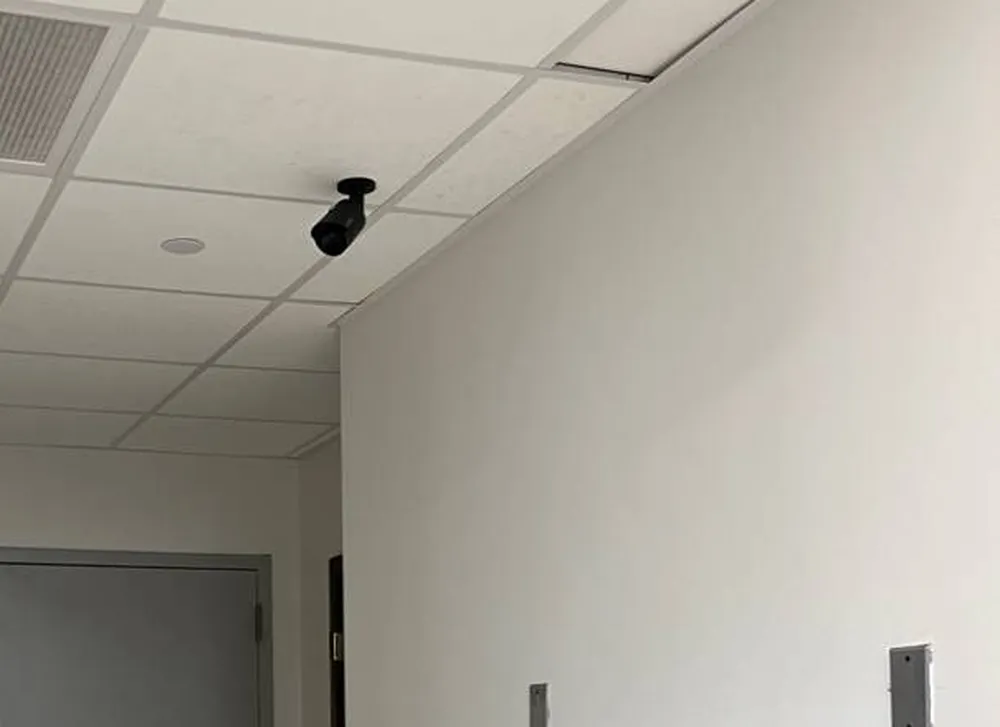
From one of our CCTV jobs (Rockland County car dealership): a black bullet camera on the drop ceiling at the corner of a white wall, aimed down a short hallway toward a grey back door. One camera placed like this records the face of everyone who walks toward that door.
Shop Our Systems
CCTV Installation Packages for Putnam Homes and Businesses
Choosing among our five series comes down to four Putnam questions: how dark is the lot at night, how far must the farthest camera see, do you want alerts that skip deer and turkeys, and is there old coax worth keeping? Each card is a four-camera starting point, installed, with the recorder and two weeks of storage.
A
A Series · from $1,199
2MP HD 1080P cameras, 4 camera packages with DVR. Night vision 60-100 ft, motion detection, smart AI, full-color night vision, audio, remote access. Models A1, A2, A3.
A sensible start for a split-level or a small shop with short cable runs.
F
F Series · from $1,247
5MP DVR 2K HD cameras in eyeball, bullet and dome styles. Night vision 90-100 ft, active deterrent with siren and lights, 20" monitor. Models F1 to F6.
A good match for a garage or contractor yard that wants a light and siren after dark.
E
E Series · from $1,406
4-5MP IP 2K HD cameras on a 4K NVR. Night vision 90-100 ft, IP67, smart detection, audio, full-color, 20" monitor, remote access. Models E1, E2, E3.
Our usual pick for a wooded lot where person and vehicle alerts matter most.
C
C Series · from $1,641
8MP 4K Ultra HD DVR, eyeball and long-range styles. Night vision 100-120 ft, IP66, audio, full-color, monitor included. Models C1, C2, C3.
For older houses with sound coax where 4K detail down the drive is the goal.
D
D Series · top tier · from $1,641
8MP 4K Ultra HD IP cameras, eyeball and bullet. Night vision 90-120 ft, IP67, audio, full-color, active deterrent, two-way talk, 20" monitor. Models D1 to D5.
For larger properties and businesses that want every feature on one recorder.
Text us the brand, the model numbers, how many cameras there are and a rough idea of where each should hang. We price the labor from that, without a site walk-through, and the deposit locks in the install day. Wireless cameras you supply are yours to answer for: their range and their hardware are outside what we cover. We will still warn you, before we drill, if a Wi-Fi camera is headed for a spot like the foot of a long driveway where your router will never reach it.
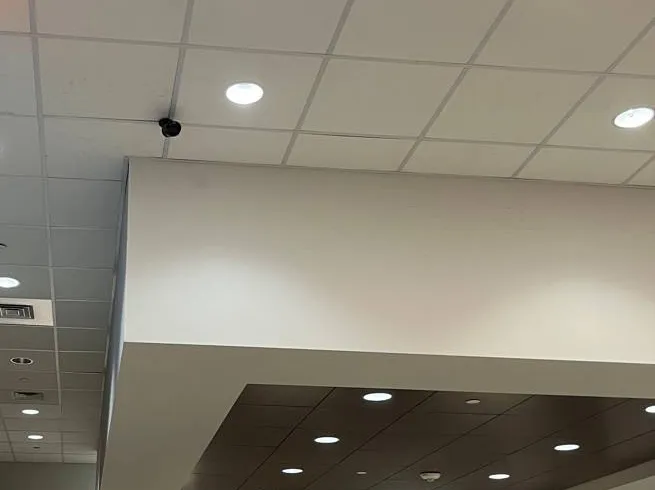
From one of our CCTV jobs (Rockland County car dealership): a small black camera sits on the white tiles beside two round downlights, right where the ceiling steps down to a soffit; beyond it, a darker recessed ceiling dotted with pot lights.
Complete Services
Every CCTV Service We Offer in Putnam County
Cameras rarely arrive alone on a Putnam job; doorbells, floodlights, Wi-Fi and alarms often come up on the same call. Each link below has the county-specific details.
Do you install CCTV in all six Putnam towns, including the lake hamlets and Garrison?
+
Yes. We work in Carmel, Kent, Patterson, Southeast, Philipstown and Putnam Valley, including Mahopac, Lake Carmel, Brewster, Cold Spring, Nelsonville, Garrison, Lake Peekskill and the Lake Oscawana area. Our office is at 460 E Fordham Rd in the Bronx and our crews drive to Putnam jobs from there. Call the direct Putnam line at (845) 640-3835 or send the form.
Does Abstract Enterprises Security Systems keep a copy of my footage or have access to my cameras?
+
No. Your footage records to the hard drive in your own recorder, and at handover you receive the admin login. We do not keep a hidden account or a copy of your video. If you later want us to help remotely, you can create a temporary user for us and delete it afterward. Any off-site copy of footage is set up only if you ask for it.
Will the camera app work if our only internet is Starlink or a cellular home-internet box?
+
In most cases, yes. The recorder app connects outward through the manufacturer's relay service, so it does not need a public address or an open port on your router. Live view on a slow or busy connection uses a small substream, and alerts arrive as short notifications. Recording itself never depends on the connection; it continues on the recorder's drive either way.
Can the system tell me when the power at the house goes out?
+
It can, with the right parts. When the recorder and switch run on a battery backup that supports network alerts, or when the recorder itself reports power events, we set up a notification to your phone as long as the internet equipment is also on backup. At a minimum, the app shows the cameras going offline, which tells you something is wrong at the house.
Is a yearly check-up worth paying for before a Putnam winter?
+
For a system that has to run through ice, snow and outages, usually yes. A fall visit checks the hard drive's health, updates firmware, cleans lenses and domes, tightens mounts loosened by summer storms, tests the battery backup and confirms every camera is still aimed where it should be. Maintenance plans and service visits are quoted separately from the installation.
Can you still come if our driveway is icy or has not been plowed?
+
We need safe access for the van, a ladder and the crew, so a steep drive that has not been plowed or sanded may mean moving the visit. We schedule 7 days a week with early-day visits, so a postponed winter appointment can usually be rebooked quickly once the drive is clear. Indoor work, such as the recorder and cabling, can sometimes go ahead first.
Can one of the cameras just watch wildlife on the property?
+
Yes. A camera aimed at a feeder, a pond or a trail through the woods can record continuously without sending you alerts, so it adds to the footage without filling your phone with notifications about deer, turkeys or bears. It still sits on the same recorder and timeline as your security cameras, and you can change its schedule whenever you like.
Should driveway cameras be easy to see from the road, or hidden?
+
Usually a mix. A visible camera at the driveway entrance or over the garage tells anyone looking for an easy target that this house records, which is often enough to send them on to the next one. Cameras covering the doors and the back of the house can be smaller and less obvious, so a person who ignores the first camera is still recorded. We plan both kinds on the survey.
Which house-brand series suits a house on a wooded Putnam lot?
+
Most owners on wooded lots choose the E Series or the D Series, because both are IP systems with smart detection that tells people and vehicles apart from animals and moving branches. The E Series starts at $1,406 for four cameras and the D Series at $1,641, adding 4K detail, deterrent lights and two-way talk. We confirm the choice after seeing the property.
Is CCTV worth it in a county with as few burglaries as Putnam?
+
Putnam reported 38 burglaries in 2024, but 400 larcenies, up from 341 the year before, and most CCTV footage is used for theft, damage and trespass rather than burglary. Cameras also cover a long driveway, a closed lake house and outbuildings that no neighbor can see. Whether it is worth it depends on how much of your property is out of sight.
All Areas Served
Where This Page Fits in Our Service Map
This page covers Putnam County. Our Hudson Valley CCTV installation hub explains how we work across the region’s counties, and the links below lead to each area page.
Abstract Enterprises Security Systems · 460 E Fordham Rd, Bronx · Putnam line (845) 640-3835 · NYS low-voltage license #12000287431, insured · 4.7★ / 201 Google Reviews · serving Carmel, Kent, Patterson, Southeast, Philipstown, Putnam Valley, Brewster, Cold Spring and Nelsonville · reviewed November 2026.