What are you looking for?
About Us Contact Us Careers Get a Free Quote (800) 486-0943
Pick a service
βœ… Got Your Own System?
🎬 Home TheatreQuote 🎢 AV SoundQuote πŸ”‘ Access ControlQuote
Now pick your area
Pick your area
Long Island
Hudson Valley
Services available
Pricing & Tools
Pick a service for pricing
πŸšͺ Intercom Pricing πŸ”” Buzzer Repair Pricing
Calculators
πŸ“Ή Camera System Calculator 🚨 Alarm Calculator ⚑ Cabling Quote Builder βœ… Got Your Own System?
Select your area
Mailroom hit again? Roof door propped open? Our Bronx office is on Fordham Road. Call the Bronx line: (646) 490-0629
Home › CCTV Installation NYC › CCTV Installation Bronx
Licensed NYS Low-Voltage Contractor · Bronx Office on Fordham Road

CCTV
Installation in
the Bronx

Elevator Buildings · Courtyard Walk-ups · Mixed-Use Corners · Fordham Road Stores · Hunts Point Warehouses · Auto Shops

CCTV installation in the Bronx starts at $950 for a four-camera system wired to a recorder you own, with two weeks of footage stored on site, phone viewing set up and no monthly bill. We plan most Bronx jobs around apartment buildings, where the lobby, mailroom, laundry, stairs and roof door all need a view, and around the stores and warehouses below and beside them. Surveys are booked within 2 hours of your call.

Quick answer: Bronx four-camera CCTV packages are priced at $950 for the A Series (1080p, DVR), $998 for the F Series, $1,157 for the E Series (IP cameras with a 4K NVR) and $1,392 for either the C Series or the top-tier D Series (8MP 4K). A four- to eight-camera system with an NVR and PoE wiring usually comes to $1,062–$2,500, and commercial CCTV for stores, restaurants, offices and multi-story buildings runs $1,500–$5,000+. Larger apartment-building systems, extra cameras and concealed wiring are priced per camera after we confirm the layout. Nothing is billed monthly.

Reviewed and updated November 16, 2026 by Abstract Enterprises Security Systems, NYS license #12000287431 · Sources: U.S. Census Bureau, American Community Survey 2019–2023 5-year estimates, table DP04, Bronx County; NYPD CompStat, Patrol Borough Bronx, Volume 33 No. 20; Office of the New York State Comptroller, Hunts Point Food Distribution Center snapshot (Report 14-2024); NYC Department of Small Business Services, Fordham Commercial District Needs Assessment; NYC HPD, Tenant Data Privacy Law (Local Law 63 of 2021); NYS Multiple Dwelling Law §50-c; PIX11 News, March 26, 2024; NYS Labor Law §203-c; NYS Penal Law §§250.05 and 250.45; NYC Administrative Code §22-1202

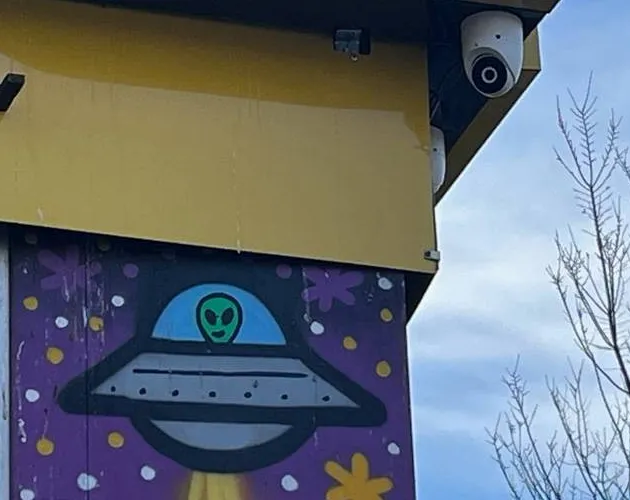
CCTV installation Bronx storefront reference: white dome camera under a yellow awning above a painted corner pier
From one of our CCTV jobs (a Manhattan corner deli): a white dome camera tucked under the awning corner, above a painted pier and out of arm's reach. Bronx corner stores on Westchester Avenue and Third Avenue get the same kind of mount.
Bronx CCTV Request
Building, store, warehouse or house: tell us what has to be watched

✅
Request Sent!
Thanks. Our Fordham Road office will call or text to book the survey, usually within 2 hours.
25+
Years Experience
2 Hr
Booking
100%
Licensed & Insured
4.7β˜…
201 Google Reviews

Owner-operated since 2002 · Bronx office at 460 E Fordham Rd · Booked within 2 hours, 7 days a week

The Neighborhood

Why Bronx Properties Need CCTV Installation

The Bronx is a borough of big apartment buildings, and that single fact shapes almost every CCTV job we do here. Drive up the Grand Concourse, along Pelham Parkway or through Mott Haven and the pattern repeats: six-story brick buildings with a lobby, one or two elevators, a courtyard or an alley, a basement with the boiler and the laundry room, and a roof door that somebody keeps propping open. A camera system in that kind of building is not a gadget for one family. It is shared equipment that dozens of households walk past every day, that the super depends on, and that the owner may one day have to hand to a detective.

The census numbers are blunt about it. The U.S. Census Bureau's American Community Survey 2019–2023 estimates for Bronx County count 553,231 housing units, and 60.6 percent of them, 335,481 homes, sit in buildings with 20 or more apartments. Add the 6.3 percent in buildings of 10 to 19 units and two out of every three Bronx homes are in a sizable multifamily building. Only 6.5 percent are one-family detached houses. And 79.7 percent of occupied homes are rented. In most of the borough, the person who decides whether cameras go up is a landlord, a managing agent or a co-op board, not the person who lives behind the door.

The buildings are old, too. The same survey puts 34.3 percent of Bronx housing in buildings from 1939 or earlier and another 10.1 percent from the 1940s, so about 44 percent of the borough's homes were standing before 1950. Those are the Art Deco and pre-war elevator buildings of the Concourse, Highbridge and Morris Heights, the courtyard walk-ups of Crotona and Tremont, and the red-brick rental and co-op complexes that went up across the East Bronx around the Second World War. Their walls are brick and terra cotta block, their hallway ceilings are plaster, their basements are crowded with pipes, and their original wiring was never designed for a camera on every floor. That is why CCTV wiring in the Bronx is a planning job before it is an installation job.

Crime numbers here are better than they were, but they are not small. The NYPD's CompStat report for Patrol Borough Bronx gives a full-year look back: in calendar 2025 the borough recorded 2,857 burglaries, 9,105 grand larcenies and 4,258 stolen vehicles. For scale, the same Bronx CompStat page shows 19,326 burglaries in 1990, so burglary is down by about 85 percent over a generation. Grand larceny is the opposite story: 9,105 in 2025 against 4,373 in 2001, a rise of 108 percent. In practical terms that means fewer people kicking in apartment doors and more theft of packages, phones, bikes, catalytic converters and merchandise, which is exactly the kind of loss a well-placed camera records.

This year's numbers, from the most recent Bronx CompStat report posted when we checked (Volume 33, No. 20, year to date), show burglary down 16.8 percent, from 1,096 to 912, vehicle theft down 26.8 percent, from 1,632 to 1,195, and retail theft nearly flat, 2,076 complaints against 2,123. Retail theft that will not fall is the reason so many bodegas, pharmacies and clothing stores along Fordham Road, Third Avenue and Westchester Avenue have asked us to add cameras at the register and the door rather than just in the aisles.

Store owners have said the same thing in public. When PIX11 reported in 2024 that bodegas in the Bronx and Upper Manhattan were adding facial recognition cameras, Francisco Marte of the Bodega and Small Business Association put it plainly: “We’ve been having a lot of problems with shoplifting, robbing the store, violence in the store.” (PIX11 News, March 26, 2024). The same report quoted the New York Civil Liberties Union warning about privacy and false matches. We cover both sides of that argument further down, because a Bronx store owner deserves to know what the law requires before buying any camera that looks at faces.

Bronx numbers we plan CCTV jobs around

  • 60.6% of Bronx homes are in buildings of 20 or more units, and another 6.3% in buildings of 10 to 19 units (Census ACS 2019–2023, DP04).
  • 79.7% of occupied homes are rented, so most camera decisions belong to owners, agents and boards, with tenants as the daily users (Census ACS).
  • About 44% of Bronx housing was built before 1950: brick, plaster, terra cotta block and crowded basements on most jobs (Census ACS).
  • 2,857 burglaries, 9,105 grand larcenies and 4,258 vehicle thefts in the Bronx in calendar 2025 (NYPD CompStat, Patrol Borough Bronx).
  • Retail theft nearly flat this year, 2,076 complaints against 2,123 at the same point in 2025, while burglary fell 16.8% (NYPD CompStat, Vol. 33 No. 20, preliminary).
  • 329 acres and about 150 food businesses at the Hunts Point Food Distribution Center, the largest food distribution center in the United States (NYS Comptroller).
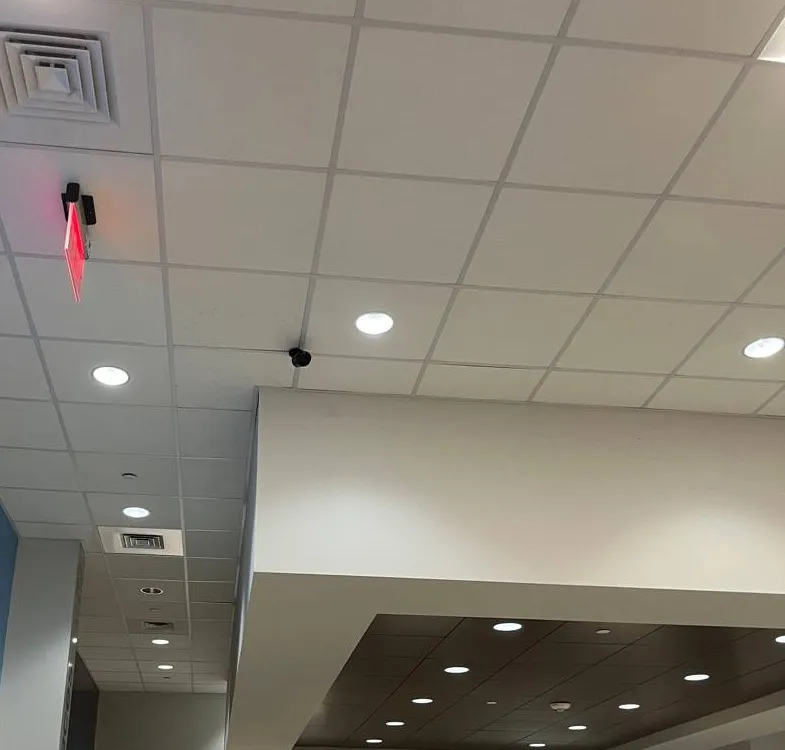
Building CCTV installation Bronx lobby reference: small active deterrence camera on a drop ceiling above a lobby leading to a hallway
From one of our CCTV jobs (a Rockland County car dealership): a compact camera on the drop ceiling where the lobby narrows into a hallway. In a Bronx elevator building the same position catches everyone walking from the front door to the elevator.

South Bronx, the Concourse, the East Bronx and the north end

The borough splits into a few working zones for us. The South Bronx, from Mott Haven and Port Morris through Melrose, Longwood and Hunts Point, is where apartment buildings sit next to auto shops, scrap yards, last-mile delivery warehouses and the food market, and where new buildings are going up on old industrial lots. Jobs here often mix a residential building and a business on the same block, sometimes for the same owner. Truck traffic, highway noise from the Bruckner and the Major Deegan, and long fence lines decide which cameras we choose.

The West Bronx, along the Grand Concourse, Jerome Avenue, University Avenue and up through Fordham, Bedford Park, Kingsbridge and Norwood, is the heart of the pre-war elevator building, with the borough's busiest shopping street at Fordham Road and a long auto-repair strip under the elevated 4 train on Jerome Avenue. The East Bronx, from Soundview and Parkchester through Castle Hill, Throgs Neck, Pelham Bay and out to Co-op City, swaps in big planned complexes, row houses, two-families with driveways and waterfront bungalows. The north end, in Wakefield, Williamsbridge, Eastchester and Riverdale, is closer to a suburb, with detached houses, hillside co-ops and quiet streets where a camera on the driveway matters as much as one on the lobby.

Abstract Enterprises Security Systems runs its Bronx work out of our office at 460 E Fordham Rd, so most of the borough is a short drive for the crew. We are a licensed New York State low-voltage contractor and insured, we have been doing this since 2002, and the people who survey your building are the same people who pull the cable and set up the recorder. If you want the broader comparison of how this work changes from one borough to the next, our CCTV installation guide for New York City covers all five.

Field Notes · Surveying a Bronx apartment building

No real Bronx job photos are on this page yet, so instead of a story, here is what our crew actually checks when we walk an occupied Bronx building for a CCTV quote. First the front door: where people stand while they buzz, where the mailboxes are, and whether the lobby light is bright enough after dark. Then the basement, because the basement decides the job. We look for a dry, ventilated spot for the recorder away from the boiler, an outlet that is not on a switch, and the path a cable can take up to the lobby ceiling without crossing a steam pipe.

Next come the stairs and the roof. We open the roof door to see whether the bulkhead has power, check whether the stairwell is fire-rated, which limits how cable can pass through it, and look at the hallway ceilings on the top floor, since that is where cable usually travels sideways. Last, we ask the super who gets called when something happens at 2 a.m. That person gets an account on the recorder.

As our crew puts it to every owner: “Show us the basement before you show us the lobby.” It is a process rule, not a slogan. The camera list is easy; the cable path is what makes a building job fast or slow.

What We Install

CCTV Installation Services in the Bronx

Every CCTV installation service we sell in the Bronx ends in the same place: cameras cabled back to a DVR or NVR that sits in your building, footage you control, and an app on the phones of the people who need it. What changes is where the cameras point. A Concourse elevator building needs the lobby, the elevator landing and the mailboxes; a Westchester Avenue bodega needs the counter and the door; a Hunts Point distributor needs the dock and the trailer row at 4 a.m. These are the jobs we are called for most often in the borough.

🏒

Apartment building common areas

Front door and vestibule, lobby, mailboxes, elevator landings, laundry room, basement corridor, stairwells, roof door and courtyard, recorded on one system the owner controls, with a view-only account for the super.

🏬

Mixed-use corner buildings

A store on the ground floor and apartments above, with separate cameras and separate logins for the shop and the residential entrance, so the tenant business sees its counter and the landlord sees the hallway.

πŸ›’

Bodega, pharmacy and retail CCTV

The register, the door, the cooler aisle, the stockroom and the sidewalk, framed tight enough to read a face at the counter and a hand at the shelf, for stores along Fordham Road, The Hub and White Plains Road.

πŸ₯Ά

Food distribution and cold storage

Docks, trailer rows, gates and cooler doors for produce, meat and fish businesses, with housings rated for the cold side of the door and lenses that cope with headlights pointed straight at them.

πŸ”§

Auto repair, auto glass and tire shops

Bays, the customer drop-off spot, the key box, the parts room and the curb, so a damage dispute ends with a clip instead of an argument. Common under the el on Jerome Avenue and along Bruckner Boulevard.

🏠

Houses, two-families and row houses

Stoop, driveway, side gate, back yard and garage for the owner-occupied houses of Wakefield, Williamsbridge, Throgs Neck, Pelham Bay and Country Club, wired to a recorder in the cellar.

πŸ…ΏοΈ

Parking lots and garages

Entrance lanes, rows and pay stations for building lots, supermarket lots and garages under large complexes, with enough cameras to cover the whole lot instead of one wide view that shows nothing useful.

πŸ—„οΈ

NVR and DVR recorder setup

The box in the basement that does the real work: network video recorder installation or digital video recorder installation, enough drive for the days you asked for, a clock that never drifts, and separate logins for owner, agent and super.

♻️

Upgrades, repairs and take-overs

A building bought with a dead system in the cellar, a lobby redone around old cameras, a DVR nobody can log into: we test what survives, swap what does not, and convert analog to IP where it pays.

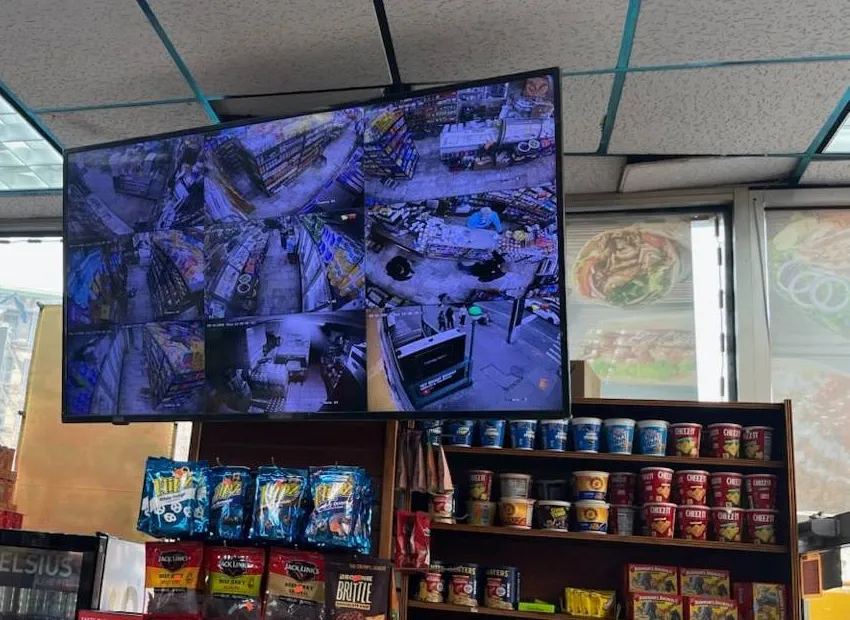
Commercial CCTV installation Bronx bodega reference: wall-mounted monitor with a multi-camera grid above shelves of snacks and drinks
From one of our CCTV jobs (a Manhattan corner deli): the live camera grid on a wall monitor over the snack shelves, where customers can see that the aisles are recorded. Bronx bodegas often ask for the same public monitor.

What closed circuit television means in a Bronx building

Closed circuit television installation is an old name for a simple idea: the cameras send their video over your own cable to your own recorder, and nobody outside that circuit sees it unless you allow it. That is different from a cloud camera that streams everything to a company's servers and stops working when the subscription lapses. In a Bronx apartment building the closed circuit matters for a practical reason. The recorder keeps writing video when the building's internet goes down, when a tenant's Wi-Fi is overloaded, or when the cable company is working on the block. The internet only matters when someone wants to watch from outside.

Modern CCTV systems come in two families. HD analog cameras (HD-TVI, HD-CVI or AHD) run on coax, usually RG59 with a power pair, into a DVR. IP cameras run on Cat6 network cable into an NVR or a PoE switch, which sends power and video down the same cable. Plenty of Bronx buildings already have coax in the walls from a system installed in the 1990s or 2000s, and an HD analog upgrade can reuse it. New construction and gut renovations almost always get IP and PoE. We explain both, and we price both, before you decide.

What a CCTV installation includes from survey to handover

A complete job covers the survey, a written camera list, the cable runs, the mounts, the recorder, the drives, the programming and the training. The survey is where a CCTV installation technician walks the property, stands where each camera will go and checks what it will really see. The cable work is where a building job is won or lost: finding a path from the basement to the top floor, through existing sleeves and chases where possible, with fire-stopping restored wherever a cable passes a rated wall or floor. The programming is where the recorder is told what matters: detection zones that ignore the street, schedules for after-hours alerts, retention in days, and accounts with the right permissions for owner, super and manager.

Handover is not a formality. We put the app on each phone, show playback and clip export, label every cable at both ends, and leave a camera map with the recorder. Six months later, when a camera is knocked out of line by a moving truck or a painter, that map turns a long service call into a short one. It is also what a new managing agent needs the day they take over the building.

When Bronx owners usually call us

The first call often comes after something has already happened. A package room is emptied over a weekend, a tenant's bike disappears from the basement, a store loses a case of merchandise out the side door, or a car is broken into in the building lot. CCTV installation after a break-in is common, and we can usually survey within days, but the better time is before: when a building changes hands, when a lobby is renovated, when a new store signs a lease, or ahead of the holiday shopping season, when Fordham Road and The Hub fill up and shoplifting climbs with the crowds.

Owners also call when an old system quietly dies. The DVR in the basement has been beeping for a year, half the cameras show black, and nobody knows the password. A CCTV system upgrade in that situation means checking which cameras and cables are still good, replacing the recorder, adding cameras where the building changed, and getting the passwords back into the owner's hands.

Building Specialists

CCTV Installation for the Bronx's Architecture

Bronx buildings fall into a handful of types, and each one has its own rules for where cameras can go and how cable gets there. These are the ones we see week after week.

πŸ›οΈ

Pre-war elevator buildings

Five- and six-story buildings on the Grand Concourse, Walton Avenue and University Avenue, many with Art Deco lobbies, sunken entries, terrazzo floors and ornamental plaster ceilings that nobody wants scarred by surface wiring.

πŸ”²

Courtyard walk-ups

U- and E-shaped buildings around a central court in Tremont, Crotona and Morrisania, with several entrances, a courtyard gate, and halls that do not connect inside, so each wing needs its own camera path.

🧱

Large planned complexes

The red-brick and high-rise complexes of the East Bronx, with dozens of buildings, shared grounds, parking garages and their own management and security staff, where cameras are a board or management decision.

πŸͺ

Mixed-use corner buildings

A bodega, laundromat or pharmacy at street level with two to five floors of apartments above, very common along Westchester Avenue, Third Avenue, Southern Boulevard and White Plains Road.

🏑

Row houses and two-families

Brick and frame houses with a stoop or a short driveway in Wakefield, Williamsbridge, Throgs Neck and Soundview, many with a rental unit downstairs and a recorder that belongs to the owner upstairs.

⛰️

Hillside houses and co-ops

Riverdale and Fieldston detached houses on steep, wooded lots and hillside co-ops with long driveways and retaining walls, where a camera on the gate can be a long cable run from the house.

Terra cotta block, brick and plaster

Most pre-war Bronx buildings have brick exterior walls and interior partitions of terra cotta block or gypsum block finished with plaster. That combination is hard to fish cable through. Terra cotta is hollow but brittle, so drilling it carelessly cracks the block and the plaster face with it. Where a cable has to drop down a wall, we look first for existing chases: the old dumbwaiter shaft, a plumbing chase, a disused intercom riser, or the conduit left behind by a removed system. When no hidden path exists, a painted surface raceway along the ceiling line is cleaner than a wall full of patches, and on a decorative lobby ceiling it can be routed along the crown molding so it almost disappears.

Art Deco lobbies on the Concourse

The Grand Concourse is famous for its Art Deco apartment buildings, part of it is a city historic district, and many lobbies still have their original murals, terrazzo, mirrored walls and ornamental plaster. Owners rightly want cameras there that do not look like an afterthought. We use small domes and turrets in neutral or matched colors, mount them on the plain plaster field rather than on the ornament, and run cable above the ceiling where an access point exists. Where the building sits inside a landmark district, exterior changes on the facade can need sign-off from the Landmarks Preservation Commission; interior lobby cameras in a private building usually do not, but we check before drilling into anything original.

Courtyards, side gates and the problem of many doors

A courtyard building may have three, four or six entrances, each with its own stair and its own set of mailboxes. Covering only the main door leaves most of the building unwatched. The usual layout is one camera per entrance facing in toward the door, one or two covering the courtyard itself, and one at the courtyard gate or the alley to the street. Because the wings often do not connect inside, cable runs through the basement, which in older courtyard buildings is usually continuous. The recorder then sits in the one basement room that is dry and lockable.

Big complexes with their own rules

The East Bronx has some of the largest housing complexes in the city, including Parkchester and Co-op City, plus many mid-size co-op and rental campuses. Jobs inside complexes like these are rarely just about cameras. Management or the board sets the specification, the security office decides who watches, and there may be an existing video system the new cameras have to join. We work to the management's specification, label every camera to their numbering, and coordinate with whatever security or maintenance staff runs the property day to day. For a single building inside such a complex, the work looks like any other Bronx apartment building; for a whole campus, it starts with a written plan the board can review.

Mixed-use corners: two owners, one wall

On a mixed-use corner the store and the building often share a facade, a cellar and sometimes an electrical room. That raises questions a house never has. Who owns the camera over the corner that sees both the shop door and the residential entrance? Whose recorder does it go to? Can the store's camera see into the building's vestibule? We sort that out on the survey with both parties, and the usual answer is two separate systems with clearly divided views, so the store can export a clip of a shoplifter without the landlord's password and the landlord can review the hallway without the store owner's.

Row houses and two-families in the north and east Bronx

Owner-occupied houses in Wakefield, Edenwald, Williamsbridge, Throgs Neck and Pelham Bay are closer to Queens than to the Concourse: a stoop, a short driveway or a parking pad, a side alley and a yard. Residential CCTV installation here usually means four to eight cameras, the recorder in the cellar, and a separate tenant view of the shared entrance if there is a rental unit. Aluminum and vinyl siding are common, so cameras go on mounting blocks screwed into the sheathing behind the siding, and every hole is sealed.

Hills, retaining walls and long driveways in Riverdale

Riverdale and Fieldston have some of the steepest residential lots in the city, with houses set well back from the road and gates at the bottom of a driveway. A camera at the gate can be well over 100 meters of cable from the recorder, which is beyond what plain Ethernet carries. The fixes are a PoE extender partway down the run, a small switch in an outbuilding, or a short fiber hop. Wireless bridges work too, if the trees allow a clear line of sight. We decide on the survey, after we walk the route.

Waterfront edges: City Island, Throgs Neck and Clason Point

The Bronx has more shoreline than people expect, and the houses and marinas along it get wind, salt and spray that inland cameras never see. Outdoor CCTV installation near the water means stainless or coated mounts, sealed junction boxes, dielectric grease on connectors and housings rated IP66 or IP67. The cheapest camera on the market lasts about one winter out there; a weatherproof CCTV camera installation with the right hardware lasts years.

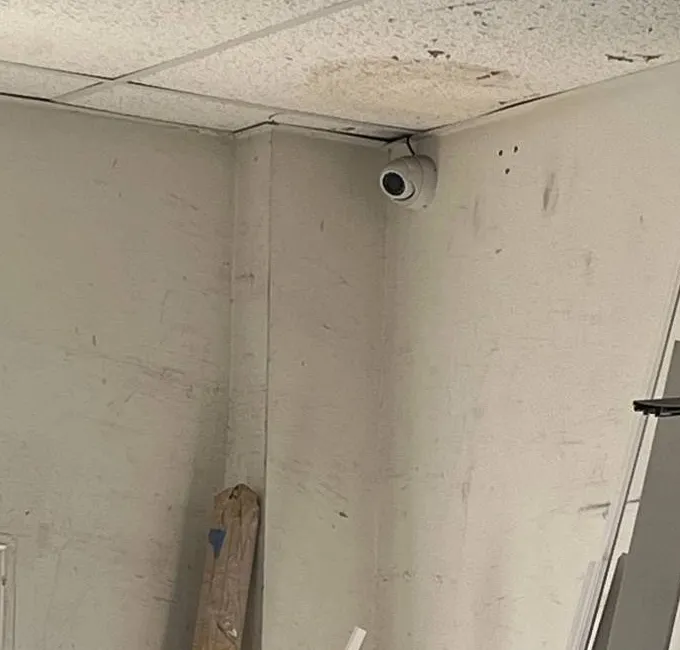
Indoor CCTV installation Bronx basement reference: dome camera in the corner of a worn plaster room with stained ceiling tiles above stored lumber
From one of our CCTV jobs (a Nassau County window showroom): a dome camera in the corner of a worn storeroom with stained ceiling tiles. Bronx basement storage and bike rooms look a lot like this, and a corner dome covers the whole room from one spot.
Commercial CCTV

Business CCTV Installation in the Bronx

Commercial CCTV installation in the Bronx covers an unusually wide range of businesses: the busiest shopping strip in the borough, hundreds of corner bodegas, the country's largest food distribution center, a stretch of auto shops under an elevated train, self-storage buildings along the highways, and a growing number of last-mile delivery warehouses in Port Morris and Hunts Point. For storefronts and offices, our commercial security camera installation page for the Bronx goes deeper into store layouts. This section is about the CCTV side: recorders, channel counts, cable and coverage.

Corridors where we install business CCTV

  • Fordham Road, from Jerome Avenue to the Bronx Zoo: the borough's main shopping street, which NYC Tourism describes as having almost 300 specialty stores. The city's Fordham Commercial District Needs Assessment counted 7,296 pedestrians in its weekday-afternoon count. Clothing, shoes, phones, jewelry and discount stores, each with a door, a register and a back room.
  • The Hub at East 149th Street and Third Avenue: a dense retail crossing in Melrose with national chains, small independents, food carts and constant foot traffic from the subway.
  • Westchester Avenue, Southern Boulevard and White Plains Road: long commercial strips under or beside elevated train lines, full of bodegas, laundromats, salons, pharmacies, takeout restaurants and mixed-use corner buildings.
  • Arthur Avenue and East 187th Street in Belmont: food shops, bakeries and restaurants where the cameras have to cope with steam, flour, open doors and busy weekend crowds.
  • Jerome Avenue under the 4 train: auto repair, tire, auto glass and body shops in a long row, each with open bays, cars parked at the curb and customer keys on a board.
  • Hunts Point and Port Morris: the food distribution center, cold storage, scrap and recycling yards, trucking companies and new last-mile warehouses near the Bruckner Expressway.

Hunts Point: the food market and its neighbors

The Office of the New York State Comptroller describes the Hunts Point Food Distribution Center as the largest food distribution center in the United States: 329 acres in the Bronx, about 150 wholesalers, distributors and processors, and roughly 4.5 billion pounds of food a year. The same report says about 12 percent of all food in the city passes through it, including about 25 percent of produce, 35 percent of meat and 45 percent of fish, and that the center accounted for about 8,500 jobs in a 2016 study. That is a lot of product moving through a lot of doors, much of it at night.

CCTV installation for warehouses and food businesses at Hunts Point is a different job from a store. The cameras that matter are at the dock doors, along the trailer rows, at the gate where trucks check in and out, and on the cooler and freezer doors. Lighting changes every few minutes as headlights swing across the yard. Temperatures run from below freezing inside to summer heat on the dock. Recording often has to run 24 hours with a month or more of retention, because a shortage on an invoice may not surface for weeks. Our warehouse camera installation page for the Bronx covers the dock layout in detail; on the CCTV side, these jobs usually mean an NVR with 16 or 32 channels, PoE switches in the warehouse, fiber or long-run cable to gatehouses, and a UPS on everything.

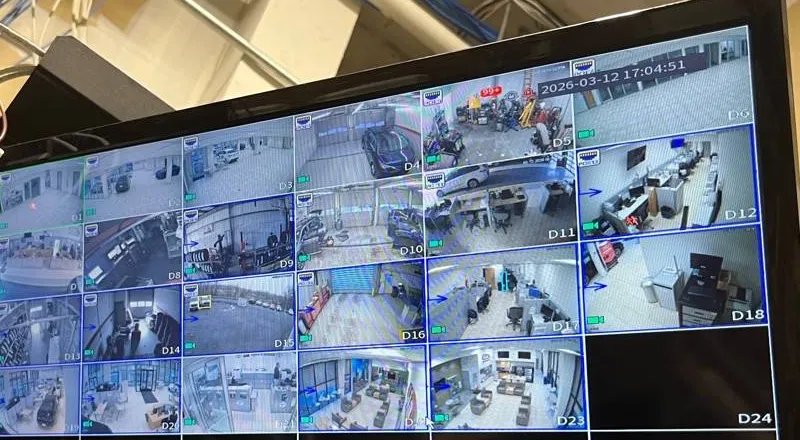
Large scale CCTV installation Bronx warehouse reference: NVR live view with a grid of more than twenty camera tiles on a monitor
From one of our CCTV jobs (a Rockland County car dealership): a recorder's live view with more than twenty camera tiles across showrooms, offices and the lot. Hunts Point distributors and Bronx self-storage buildings run systems of this size.

Bodegas, delis and 24-hour stores

A Bronx bodega is small, busy and open almost all the time, which makes it one of the hardest places to get CCTV right. The counter camera has to read faces under the menu board lights, the door camera has to cope with daylight blasting in from the street, and the aisle cameras have to see over the chip racks. Convenience store CCTV installation here usually means six to twelve cameras: the door from inside, the door from outside, the register from in front, the register from behind to see the cash drawer and the lottery terminal, the cooler aisle, the deli counter, the stockroom and the back door. The recorder goes somewhere locked, never on the counter where it can be grabbed.

Retail stores, pharmacies and restaurants

Retail CCTV installation on Fordham Road and at The Hub focuses on three places: the entrance, where every customer can be identified on the way in, the register, and the stockroom or receiving door, where losses often happen without a single customer involved. Pharmacies add the counter and the controlled-substance storage. Restaurant CCTV installation adds the kitchen line, the back door and the cash drawer, with cameras chosen to survive grease and heat. For bars and lounges, the door and the bar rail matter most, and night performance is everything.

Auto repair, auto glass, tire shops and lots

Auto repair shop CCTV installation along Jerome Avenue and Bruckner Boulevard has two goals: protecting the shop from theft at night and protecting it from disputes during the day. A camera on the drop-off spot, recording each car as it arrives, settles arguments about a scratch or a cracked windshield. Cameras over each bay show the work, and a camera on the key board shows who took which key. Lots get perimeter coverage and, where the lane allows, a license plate camera at the entrance.

Warehouses, self storage and industrial yards

Beyond Hunts Point, the South and East Bronx have warehouses and yards along the Bruckner, around Zerega Avenue and in Port Morris, plus self-storage buildings beside the highways. Self storage CCTV installation means the gate, the office, the elevators, every hallway intersection and the loading area. Industrial facility CCTV installation means fence lines, yard lights that may or may not be on, and long cable runs. Thermal and long-range infrared cameras earn their cost here.

Offices, medical and dental practices

Office CCTV installation for Bronx medical offices, dental practices, social service agencies and professional offices is quieter work: the front door, the waiting room, the reception desk and the records or supply room, with cameras kept out of exam and treatment rooms. Most of these offices sit inside larger buildings, so we coordinate with the building's management for access to ceilings and risers.

Churches, schools, daycares and community centers

Houses of worship, private schools, daycares and community centers across the borough want entrances, parking areas, offices and play spaces covered, with cameras kept out of bathrooms and changing areas. We schedule installation around services, classes and programs. Our school camera page for the Bronx covers schools specifically.

Compliance callouts for Bronx businesses

  • No video in restrooms, locker rooms or changing rooms used by employees, under NYS Labor Law §203-c (NY Senate).
  • No recording where people expect privacy, such as a bathroom or a dressing area, under NYS Penal Law §250.45, unlawful surveillance (NY Senate).
  • Audio is a separate question. New York's eavesdropping law, Penal Law §250.05, makes it a crime to record a conversation you are not part of without consent from at least one party. Many businesses leave audio off for that reason.
  • Face-matching cameras need a sign. Under NYC Administrative Code §22-1202, a shop, restaurant or venue that captures face geometry or other biometric identifiers of customers has to say so on a sign posted at its customer entrances, and it may not sell or trade that data.
  • Smart access in apartment buildings. NYC's Tenant Data Privacy Law, Local Law 63 of 2021, sets rules for key fob, app and biometric entry systems in multiple dwellings (NYC HPD).

We lay out cameras with these rules in mind, but none of this is legal advice; a lawyer can tell you how they apply to your own store or building.

Your Questions Answered

CCTV Installation in the Bronx: Questions Answered

These are the questions Bronx owners, supers, managing agents and store owners ask us most, grouped by the kind of property. Each answer is the short version of what we explain on a survey.

Where do the first cameras go in a Bronx courtyard building?

Start where people enter and where things get taken. In a courtyard building that means one camera inside each entrance facing the door, so faces are caught coming in, one on each bank of mailboxes, and one or two covering the courtyard and its gate. Next come the basement corridor, the laundry room and the roof door. Hallways on each floor come last, because they add the most cameras for the least benefit in most buildings. For a building with three entrances, that first round is often eight to twelve cameras on a 16-channel recorder, which leaves room to add hallways later without replacing anything.

How is CCTV priced for a 40- to 80-unit Bronx apartment building?

A building of that size is a commercial CCTV job, and our commercial systems run $1,500–$5,000+ depending on the camera count, the cable paths and the recorder. Where a building lands in that range is driven mostly by how the cable reaches each camera: a basement with open ceilings and an old intercom riser is fast, while a building with finished ceilings, terra cotta walls and no chases takes much longer. Hallway cameras on every floor push a large building past the top of the range, and those jobs are priced per camera after we confirm the layout. We put the camera list, the recorder, the drive size and the price in writing before any work starts.

Is a camera allowed in a building's laundry room, and where must it never point?

A laundry room is a common area, and most owners can put a camera there, aimed at the door and the machines, to deal with theft of clothes, broken coin boxes and vandalism. It must not look into any area where people undress or use a toilet, and if a laundry room has a restroom attached, that door stays out of frame. New York's unlawful surveillance law, Penal Law §250.45, is aimed at recording people where they have a reasonable expectation of privacy. We also recommend posting a small notice that the room is recorded. This is general information, not legal advice.

Our building uses key fobs. Does adding cameras bring the Tenant Data Privacy law into play?

The law is about the entry system, not the cameras. NYC's Local Law 63 of 2021 covers smart access systems in multiple dwellings, such as key fobs, phone apps and biometric readers. According to HPD, owners must give tenants a data retention and privacy policy, get express consent to collect reference data, collect only a minimum set of data, destroy authentication data within 90 days unless anonymized, and never use the system to track or harass tenants. Ordinary common-area cameras recording a lobby are not a smart access system. But if a camera is tied into the entry system, for example a face-recognition door reader, the rules apply to that part. Ask your attorney for a specific building.

Can a tenant patrol in the lobby use the building's cameras?

New York's Multiple Dwelling Law §50-c gives tenants in a class A multiple dwelling with eight or more apartments the right to run a lobby attendant service when the owner's attendant is not on duty, and it bars owners from unreasonably interfering with it. The law does not say the owner must hand over camera access. In practice, many Bronx buildings with active tenant patrols agree on a live-view-only monitor in the lobby or a view-only account, so volunteers can see the doors and the elevator landing without being able to play back, delete or export recordings. We set up exactly that kind of limited account when an owner asks. This is general information, not legal advice.

How do you watch a roof door and bulkhead that trespassers keep opening?

Roof doors in the Bronx are a common entry point for trespassers and for people who want the roof for themselves. A camera inside the bulkhead at the top of the stairs, facing the roof door, shows who opens it from the stair side, and a weatherproof camera outside on the bulkhead wall shows who comes across from the next roof. The roof door is usually an emergency exit, so the camera is mounted to watch it and never to block it, and nothing is added to the door hardware. Power usually comes from the PoE switch in the basement up the stair cable, so no outlet is needed on the roof. Motion alerts set for overnight hours tell the super the moment the door opens.

Can a camera on the garbage set-out area help with Sanitation tickets?

It can help with the cause, if not the ticket itself. The Department of Sanitation can issue summonses to property owners when trash and recycling are set out wrong or at the wrong time, and in many Bronx buildings the problem is outsiders dumping bags or bulk items on the building's pile overnight. A camera covering the set-out area and the compactor room door shows when the pile grew and who added to it, which helps a super fix the routine and helps an owner report illegal dumping. Whether footage helps contest a particular summons is a question for the hearing, not for us.

What do we hand an NYPD detective who asks for footage from our building?

Usually a short clip exported from the recorder to a USB drive, covering the time window the detective asks for, with the camera name and the recorder's time stamp intact. That only works if three things are true: the recorder's clock is correct, the footage has not been overwritten, and someone in the building knows how to export. We set the clock to sync automatically, size the drives so footage lasts at least two weeks, and teach the owner or super the export steps at handover. Keep a few spare USB drives next to the recorder. Whether and what you share is your decision; police may ask, and in some cases may come back with legal process.

Can a management company watch a portfolio of Bronx buildings from one office?

Yes. Each building keeps its own recorder, so recording never depends on the office connection, and the office reaches each one over the internet through the manufacturer's app or a video management system. We name every recorder by address and every camera by location, so the office sees “Walton Ave lobby” and not “Camera 7.” Permissions are set per building: the management office sees everything, each super sees only his own buildings, and an owner can be added to any of them. Matching recorder brands across the portfolio makes this much simpler.

Do cameras inside a Hunts Point cooler or freezer need special housings?

Inside a cooler, a standard outdoor-rated camera is usually fine. Inside a freezer, check the camera's rated operating temperature, because many cameras are rated only to about −30°C, and some need a heated housing below that. The bigger problem is condensation: a camera on the warm side of a freezer door fogs every time the door opens. We mount cameras so they look through the doorway from the dock side rather than sitting in the airstream, and use housings with heaters or blowers where fogging cannot be avoided. Cable runs into cold rooms are sealed where they pass through the insulated panel.

Should a Fordham Road store keep a camera on the roll-down gate after closing?

Yes, if the store has had break-ins or graffiti. Once the gate is down, the inside cameras see nothing useful, and the outside of the gate is where someone works on a lock or cuts into the shutter. A camera under the awning or on the facade, looking along the gate at a shallow angle, shows anyone working on it, and active deterrence cameras can sound a siren and flash lights when a person lingers after hours. The camera has to be mounted where it is out of reach and where the gate's housing does not block it when the shutter is up.

What resolution does a register camera need to read the bills and the screen?

Resolution matters less than distance and angle. A 4MP or 5MP camera mounted directly above and slightly in front of the register, two to three feet from the cash drawer, shows the denominations being handed over and the numbers on the screen. The same camera mounted across the room on a wide lens shows only a person standing at a counter. For stores that want to read card terminals or lottery slips, a varifocal lens zoomed in on the counter does the job better than a 4K camera on a wide view. We frame the register shot on the survey with the owner watching the live picture.

Can cameras at a Bronx auto glass or body shop prove a car's condition at drop-off?

They can, if they are planned for it. A camera over the drop-off spot, mounted high and to one side, records each car as it pulls in, and a second camera on the opposite side catches the other half of the car. Because glass and body damage is easier to see in daylight color than at night, a well-lit drop-off area and color night vision cameras help. Recording has to last long enough to cover how long a car stays in the shop, which for body work can be weeks, so these shops usually need more storage than a store of the same size.

Can one camera cover a whole Bronx parking lot at night?

Not usefully. A single wide camera on a lot of any size shows that something happened but rarely who did it, because at that distance a person is a few pixels tall and a plate is unreadable. Parking lot CCTV installation works in layers: one camera at each entrance lane framed for faces and plates, then cameras along the rows that each cover a reasonable stretch, then a wide overview for context. Lighting is half the result. If the lot lights are on timers or burned out, color night vision cameras or added infrared still need some light to identify a person. For larger lots, our parking lot camera page for the Bronx covers layouts.

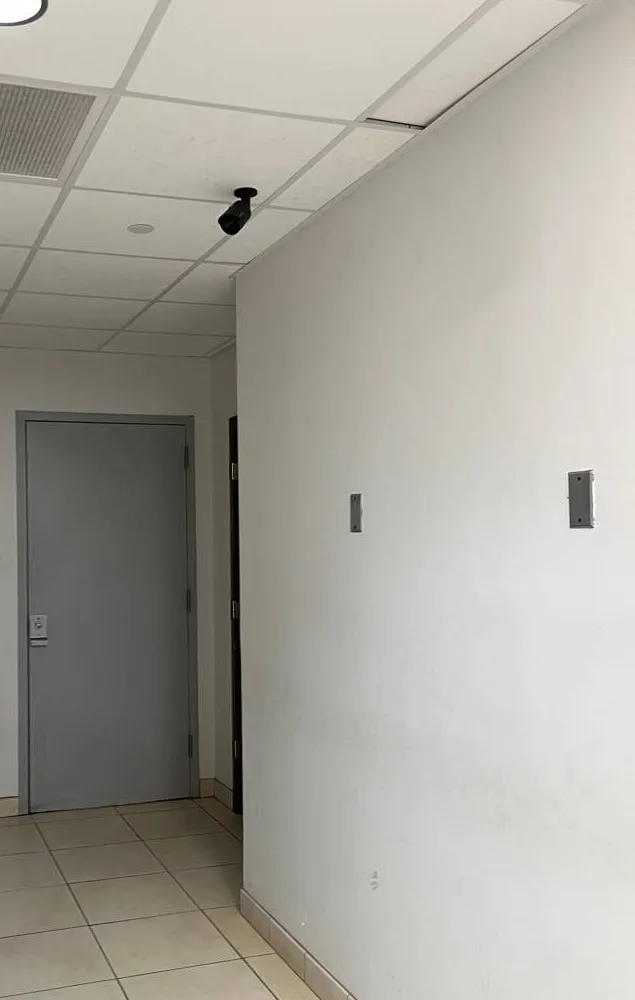
Apartment CCTV installation Bronx hallway reference: small bullet camera high on a hallway wall aimed down a tiled corridor toward a grey back door
From one of our CCTV jobs (a Rockland County car dealership): a small bullet camera high on the corridor wall, aimed down a tiled hallway at the grey back door. The same placement covers a Bronx basement corridor that leads to the boiler room and the rear exit.
Equipment

Types of CCTV Systems We Install in the Bronx

The right equipment for a Bronx job depends on the building more than the brand. A plaster lobby, a freezer dock and a stoop each call for a different camera, and the recorder has to fit how long you need footage to last. This is the kit we choose from.

βšͺ

Turret and dome cameras

Small, neat and hard to knock out of line. Turrets for lobbies, hallways and under awnings; vandal-resistant domes for low ceilings in basements, laundry rooms and stairwells where a passer-by can reach.

πŸ”¦

Bullet and varifocal cameras

The long-reach camera: down an alley, across a courtyard, along a dock. A varifocal lens is zoomed on site until the gate or the counter fills the frame, and the housing itself warns people off.

πŸŒ™

Color night vision and infrared

Night range runs 60 to 120 feet across our series. Where a street lamp or a lobby light helps, color night models keep a jacket's color; on an unlit roof or courtyard, infrared takes over in black and white.

🚨

Active deterrence cameras

A built-in siren and strobe that fire when a person stays in a set zone during set hours, useful on roll-down gates, roof bulkheads and lot entrances after closing. Offered in the F and D Series.

🧠

AI and smart detection

Person and vehicle detection that ignores rain, headlights and the cat in the courtyard, line-crossing at a gate, and people counting at store doors, so alerts mean something.

πŸ”’

License plate cameras

Plate-reading LPR and ANPR cameras need a narrow lane, a shallow angle and a fast shutter, so they go only where a vehicle is forced to slow, such as a building garage ramp or a yard gate. Priced once we have seen the spot.

πŸ—„οΈ

NVRs, DVRs and drives

Recorders from 4 to 32 channels, picked with spare inputs for the cameras you will add. Surveillance-grade drives are fitted to your retention target, and a short-memory system gets a CCTV storage upgrade.

πŸ”Œ

Cable, switches and backup power

Cat6 to every IP camera, existing RG59 kept where it tests clean, fiber between wings or buildings, PoE switches with watts to spare, and a UPS so a brief dip in building power does not reboot the recorder.

Choosing cameras for Bronx lobbies, basements and yards

A lobby camera has to handle a bright glass door with a dark interior behind it, which is the hardest lighting there is. Cameras with true wide dynamic range keep faces visible against that glare; cheap ones turn everyone at the door into a silhouette. Basement cameras face the opposite problem: low light, low ceilings and steam pipes. Here a small vandal-resistant dome with good infrared does better than a bullet that sticks out into the corridor. Yards, alleys and courtyards need either color night vision with some ambient light or strong infrared, and a lens chosen for the actual distance, which in a courtyard may be 40 feet and in an alley may be 120.

Mounting height matters as much as the model. Too high and the camera sees the tops of heads; too low and someone covers it with a hand or a hat. For entrances we aim for about eight to ten feet, angled so the face is in frame for several steps. Inside bodegas and stores the ceiling decides it, and on Bronx facades we often mount under the cornice or the awning, out of reach but not so high that the view becomes a map.

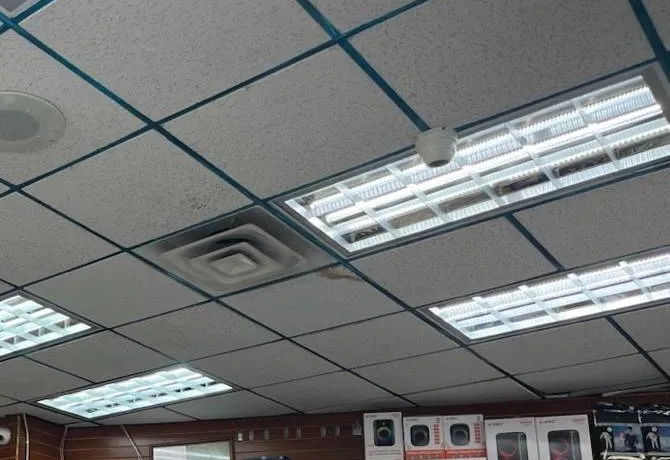
Dome camera installation Bronx store ceiling reference: small dome camera on a drop ceiling between fluorescent light panels and an air vent
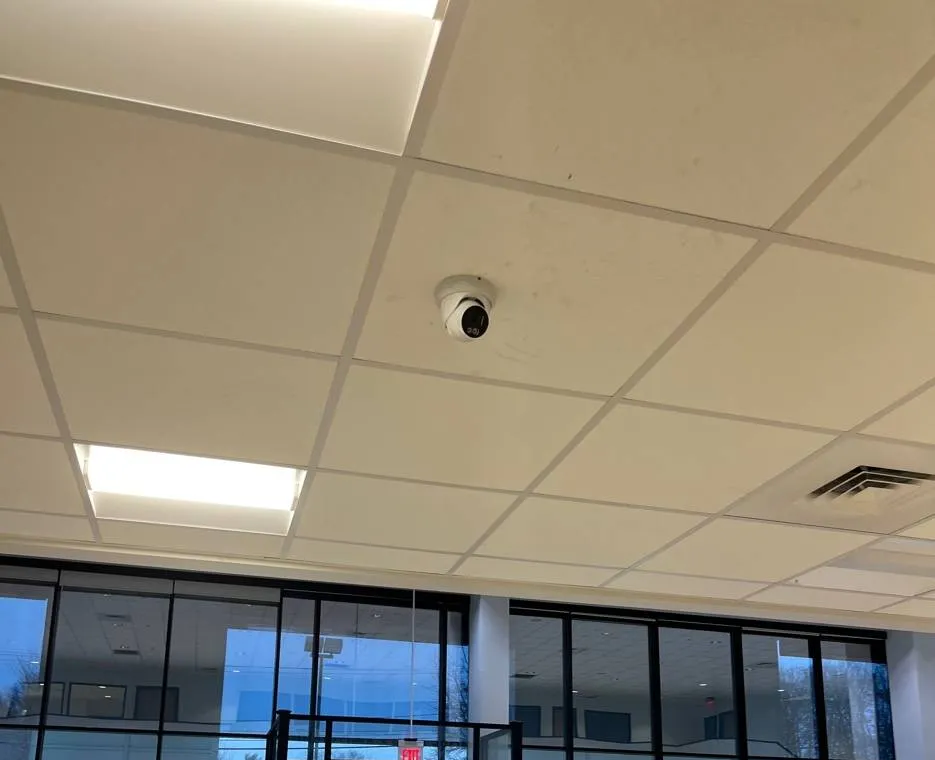
From one of our CCTV jobs (a Manhattan corner deli): a small dome on the drop ceiling between fluorescent panels and an air vent, high enough to look over the shelving. Bronx pharmacies and bodegas with drop ceilings get the same mount.

HD analog, IP PoE or wireless for a Bronx building

HD analog CCTV installation is the right call when a building already has decent coax running to the places you want cameras. The coax is reused, new HD-TVI or HD-CVI cameras go on the ends, and a new DVR replaces the old one, which can lift a 2000s-era system to 4K without opening walls. IP CCTV installation with PoE is the right call for new cable, for buildings being renovated, and for anywhere you want smart detection, higher resolution or remote management at scale. One Cat6 cable per camera carries both power and video, so no outlet is needed at the camera.

Wireless CCTV installation is the exception in big Bronx buildings, not the rule. Brick and terra cotta walls eat Wi-Fi, dozens of tenant routers crowd the airwaves, and a camera still needs power wherever it hangs. Wireless earns its place for a single hard-to-reach camera, such as a detached garage or a gate across a courtyard, or as a point-to-point bridge between two buildings. Battery cameras are a poor fit for common areas that see constant traffic, because they wake up late and their batteries drain fast in a busy lobby.

Recording, storage and how long footage lasts

Every package includes two weeks of recording, and that is a sensible floor. How much storage CCTV cameras need depends on camera count, resolution, frame rate, compression and whether the system records all the time or only on motion. H.265 compression roughly halves the space H.264 needs for the same picture, which is why we set it wherever the cameras support it. A building with frequent package complaints may want a month so that a tenant who reports a theft late still has footage to find. Warehouses and auto shops often want longer. CCTV storage upgrades are usually just a larger drive or a second drive in the same recorder.

Recording mode is a trade-off. Continuous 24-hour recording means nothing is missed between motion events, which matters for a lobby or a dock. Motion-only recording stretches storage further but can clip the first second of an event. Many systems run continuous recording at a lower bitrate with motion events flagged for fast search, which gives most of the benefit of both.

Cable runs, PoE budget and long distances

Standard Ethernet carries PoE and video about 100 meters, roughly 328 feet, from the switch to the camera. In a six-story building with the recorder in the basement, most cameras fall inside that. Camera runs to a far courtyard gate, a garage across a lot or the far end of a warehouse may not, and that is where a second switch, a PoE extender or a fiber link comes in. The PoE switch also has a power budget: add up the watts every camera draws, especially PTZ and heated cameras, and leave spare capacity for the cameras you will add later. Running out of PoE budget is one of the most common reasons a newly added camera reboots at night when its infrared turns on.

PTZ, fisheye, panoramic and thermal cameras

PTZ camera installation suits a large lot, a truck yard or a big open warehouse floor where an operator can steer the view, but a PTZ that is pointing the wrong way when something happens records nothing useful, so we always pair it with fixed cameras. Fisheye and panoramic cameras cover a lobby, a laundry room or a store floor from one ceiling point. Multi-sensor cameras put several views in one housing for corners of a dock or a parking area. Thermal camera installation is for fence lines and yards in total darkness, where it detects a person by body heat at distances an ordinary camera cannot.

Network setup, remote viewing and cybersecurity

Remote viewing is set up through the manufacturer's app with a unique strong password, never the default, and with firmware updated at installation. In a building where the recorder shares the internet with an office or a management system, we put the cameras on their own network or VLAN so a compromised camera cannot reach the office computers. Port forwarding is avoided; peer-to-peer connections or a VPN are used instead. Separate user accounts for owner, manager and super mean anyone who leaves can be removed without changing everyone else's password.

Brands we install, integrate and service

Our default is our own house-brand system, the packages listed below, because we know every model and keep spares. Lorex, Luminys and Reolink are the three brands that list Abstract Enterprises Security Systems as an authorized partner. We also install, integrate and service other common brands, including Hikvision, Dahua, Uniview, Hanwha, Axis, Ubiquiti UniFi Protect, Amcrest, Swann, Night Owl and Annke, without claiming dealer or certification status with any of them. If you bought cameras already, we can install those too, as a labor-only job.

Lobby, Mailroom, Roof Door and Register, All on One Recorder?

Send the address and the problem that keeps coming back. A survey is offered within 2 hours, and you get every camera location and the total on paper before a single hole is drilled.

AI Overview Reality Check

Where AI Summaries Miss the Mark on Bronx CCTV

Search summaries, chatbots and the cost guides on Angi, HomeAdvisor and Fixr give generic answers built for a suburban house. Some of those answers are simply wrong for a Bronx apartment building, bodega or warehouse. Here are the claims we hear most, and what we actually find in the field.

“Facial recognition cameras will stop shoplifting at a bodega”

Bronx bodega owners have tried it. In the 2024 PIX11 report, Francisco Marte of the Bodega and Small Business Association described the goal directly: “So when you come, you’re going to be recognized. We’re going to know you are here.” Face-matching systems can send an alert when a flagged person walks in, and that can help an owner who keeps losing to the same few people.

But the same report quoted Daniel Schwarz of the New York Civil Liberties Union warning that facial recognition “could violate New Yorkers’ privacy rights and result in dangerous situations” and has “a high risk of false identification, especially for people of color.” In New York City, a store that collects face geometry must post a clear sign at its customer entrances under Administrative Code §22-1202, and may not sell or share that data.

What actually stops most bodega losses is less exotic: a sharp face shot at the door, a camera over the register, a visible monitor and a staff that knows how to pull a clip. We install those first. If an owner still wants face recognition after that, we explain the signage rule and the risks before quoting it. This is general information, not legal advice.

“The Bronx is past its burglary problem, so cameras are a formality”

Burglary really has collapsed. NYPD CompStat shows 19,326 burglaries in the Bronx in 1990 and 2,857 in 2025, a drop of about 85 percent. If burglary were the only risk, that argument might hold.

It is not the only risk. The same CompStat page shows 9,105 grand larcenies in 2025, more than double the 4,373 of 2001, and 4,258 stolen vehicles. Retail theft this year is roughly flat. The losses have shifted from forced entry to theft in plain sight: packages from lobbies, merchandise from stores, cars and parts from the street and from lots.

Those are precisely the events cameras record well, because they happen in common areas, at doors and in parking spaces rather than behind a locked apartment door. The case for CCTV in the Bronx today is less about stopping someone breaking in and more about knowing who walked out with what.

“Wi-Fi cameras are fine for an apartment building's hallways”

This advice comes from houses, where one router covers a few rooms. A six-story Bronx building has brick exterior walls, terra cotta or block partitions, steel in the floors and dozens of tenant routers all competing on the same channels. A Wi-Fi camera on the fourth-floor landing will drop out, buffer or fail entirely.

There is also the power problem. Hallway ceilings rarely have outlets, so a “wireless” camera still needs a power cable or a battery that someone must change. In a common area with constant motion, batteries drain in days, not months.

A wired PoE camera solves both problems with one cable, and that cable can almost always reach the hallway through the same paths the building's intercom and phone wiring already use. It is more work on day one and far less work for the next ten years.

“One good camera in the lobby is enough for a building”

One lobby camera tells you someone came in the front door. It does not tell you who propped open the side door, who emptied the package shelf in the mailroom, who went up to the roof, or who has been sleeping in the basement stairwell. In most Bronx buildings the problems happen everywhere except the spot with the camera.

A courtyard building with three entrances has three front doors, and buildings with a basement passage to the street have another. Thieves and trespassers learn very quickly which door has the camera.

A realistic minimum for a mid-size Bronx building covers every entrance, the mailboxes, the elevator or stair landing on the ground floor, the basement corridor and the roof door. Hallways can come later. That is still a modest system, and it records the places where problems actually happen.

“You need a cloud subscription to share footage with police”

Cloud companies like to suggest this, but it is not how most NYPD requests work. A detective asks for footage from a specific camera over a specific time window, and the owner or super exports it from the recorder to a USB drive. No subscription is involved.

What matters is that the recorder's clock is right, that the footage still exists when the request comes, and that someone knows how to export. Those are configuration and training issues, not cloud features.

Some businesses choose to register or share cameras with police programs voluntarily, and that is their decision. A building with a local NVR, correct time and two weeks or more of storage is fully able to help an investigation without paying anyone monthly.

“Any outdoor camera works on a cold storage dock”

An outdoor rating means the camera handles rain and dust. It says nothing about the temperature swing between a freezer and a summer loading dock, or about the moisture that condenses on glass when cold air hits warm air. At Hunts Point, where meat, fish and produce businesses run coolers and freezers next to open docks, that swing happens every time a door opens.

Cameras placed in the airstream of a freezer door fog over, and some models simply stop working below their rated temperature. Cable entries that are not sealed let moisture into the housing.

We check the rated operating range of each camera, mount them outside the airstream, seal cable entries, and use heated housings where needed. The cameras that cost the least to buy are not the cheapest when they need replacing every season.

“A landlord can put cameras anywhere in the building”

Owners have broad room to record common areas such as lobbies, hallways, laundry rooms and entrances, and most Bronx tenants are glad they do. But there are hard limits. New York Penal Law §250.45 makes it a crime to record people where they have a reasonable expectation of privacy, and NYS Labor Law §203-c bars video in employee restrooms, locker rooms and changing rooms, which includes the super's or porter's facilities.

Audio is another line. Under Penal Law §250.05, recording a conversation without the consent of at least one party is eavesdropping, and a hallway microphone picking up tenants' conversations can cross it. Most building systems we install keep audio off.

And no camera, in the building or outside it, should look into a tenant's apartment through a door, a peephole or a window. We aim every camera at the common area it is meant for and use privacy masks where a view clips a private space. This is general information, not legal advice.
Get In Touch

Request a Free CCTV Installation Quote in the Bronx

Give us the address or cross streets, the type of property, the number of units or floors if it is a building, the areas that need cameras and whether an old recorder is still in the basement. Photos of the lobby, the storefront or the dock help us price it faster. To talk it through, call our Bronx line at (646) 490-0629.

✅

Request Sent!

We have it. Someone from our Bronx office will call or text to offer a survey time, normally within 2 hours.

How It Works

Our CCTV Installation Process

Book CCTV installation in the Bronx the way most owners and managers do: one call, one survey, one written scope. Here is what happens between your first message and the moment the recorder is handed over.

1

Call, text or send the form

Reach the Bronx line at (646) 490-0629 or use the form. A survey time is offered within 2 hours, crews work 7 days a week with early starts, and once a deposit is paid, jobs are scheduled first come, first served.

2

Building or site survey

A technician walks the entrances, the basement, the stairs and the roof, or the store, dock and lot, checks each view live, traces the cable paths and notes anything that needs owner, board or management approval.

3

Written scope and price

A document you can hand to an owner or a board: each camera named by spot, the recorder size, how many days it keeps, how the cable travels, and one price, with any hidden wiring or conduit broken out.

4

Cable, mounts and fire-stopping

Cable pulled through basements, chases and ceilings, labeled at both ends, fire-stopped where it passes rated walls or floors, and every camera mounted on the right box or bracket for brick, plaster or block.

5

Recorder programming

Views aimed, detection zones drawn, night settings checked, time sync and daylight saving set, drives tested, and accounts created for the owner, the manager and the super with the right permissions.

6

Handover and training

Owner, agent and super each get the app and a hands-on lesson in finding an event and saving it to a USB stick. A labeled camera map stays taped inside the recorder cabinet.

Surveillance recording system installation Bronx reference: one recorder tile showing a stockroom with shelving, stacked frames and an open doorway
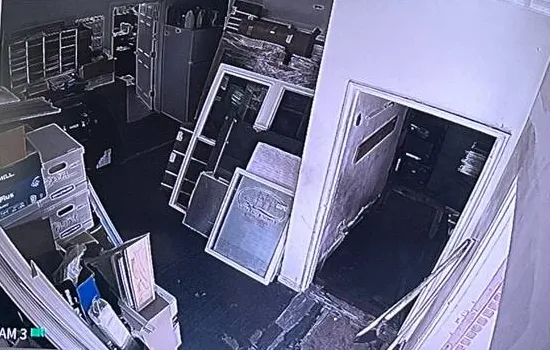
From one of our CCTV jobs (a Nassau County window showroom): a single recorder tile showing a stockroom with shelving, stacked frames and an open doorway. Aiming each view live on the recorder, with the owner watching, is part of step 5.

How long a Bronx CCTV job takes

How long CCTV installation takes depends on the cable more than the cameras. A four-camera house or a small store with an open basement is usually a one-day job. A bodega with eight to twelve cameras is often a day as well, sometimes split across two visits so the store never has to close. An occupied six-story building with cameras at every entrance, the basement, the roof and some hallways typically takes two to four days, because the crew works around tenants, deliveries and elevator use, and because fishing cable through pre-war walls is slow. Warehouses and campuses are scheduled in phases. We give you the expected duration in the written scope.

How to choose a CCTV installation company in the Bronx

A search for CCTV installation Bronx mostly turns up directories and lead-sellers, so vet whoever you call. Ask for the contractor's New York State license and certificate of insurance, and check that the name on them matches the company you are hiring. Ask who actually does the work: a company that sends its own crew is easier to hold to account than one that subcontracts your building to whoever is free. Ask for the camera list, recorder model, drive size and retention in writing, and ask who will have the admin password at the end. It should be you. Finally, read the reviews, especially the replies. Abstract Enterprises Security Systems holds NYS low-voltage license #12000287431, is insured, and has a 4.7-star rating from 201 Google reviews.

Warranty, maintenance and service after the install

Every CCTV installation we complete carries a 30-day warranty on the work, and longer coverage, from one year up, can be added for a fee. Full terms β€” including 50% deposit, one-year parts-only warranty on Abstract Enterprises Security Systems-supplied products, and the late-fee schedule β€” are set out in the service agreement. After the install we offer maintenance visits for lens cleaning, drive health checks, firmware updates and a review of every view, and we handle repairs, added cameras and camera moves when a lobby or a store is renovated.

Coverage Area

CCTV Installation Near the Bronx's Landmarks

Our crews cover the whole borough from the Fordham Road office, from Mott Haven at the southern tip to Riverdale, Wakefield and Co-op City at the city line. These landmarks give a sense of the buildings and businesses around each part of the Bronx.

⚾

Yankee Stadium and the Concourse

Pre-war elevator buildings along the Grand Concourse and Gerard Avenue, game-day crowds, and the retail and parking businesses around East 161st Street.

πŸ›οΈ

Fordham Road and Fordham Plaza

The borough's busiest shopping street, a short walk from our office, lined with clothing, phone and discount stores, plus the apartment buildings of Fordham and Belmont behind them.

🦁

Bronx Zoo and the Botanical Garden

Surrounded by Belmont's Arthur Avenue food shops, the apartment buildings of West Farms and Bronx Park South, and the row houses toward Van Nest.

πŸš›

Hunts Point Food Distribution Center

Produce, meat and fish wholesalers, cold storage, trucking yards and the industrial blocks of the Hunts Point peninsula and Port Morris.

πŸ™οΈ

Co-op City and Bay Plaza

One of the largest housing cooperatives anywhere, the Bay Plaza shopping center beside it, and the houses of Eastchester and Baychester nearby.

β›΅

Orchard Beach and City Island

Pelham Bay Park, the waterfront houses and marinas of City Island, and the bungalows and detached houses of Throgs Neck and Pelham Bay.

We also serve the neighborhoods in between: Highbridge, Morris Heights, University Heights, Kingsbridge, Norwood, Bedford Park, Tremont, Crotona, Morrisania, Melrose, Longwood, Soundview, Castle Hill, Parkchester, Westchester Square, Morris Park, Pelham Parkway, Allerton, Williamsbridge, Edenwald, Fieldston and Spuyten Duyvil.

Pricing

CCTV Installation Cost in the Bronx

CCTV installation pricing in the Bronx follows the same published numbers as our Bronx security camera installation page, because it is the same equipment and the same crew. Every package below includes the cameras, the recorder, the installation and two weeks of recording, with no monthly fees.

SystemWhat it coversPrice
4-camera packageA, F, E, C or D Series: four cameras, recorder, installation, 2 weeks of recording$950 · $998 · $1,157 · $1,392 · $1,392
Residential systemFour to eight cameras on an NVR, PoE-wired by our crew, for a house, a two-family or a small building$1,062–$2,500
Commercial systemStores, restaurants, offices and buildings of several floors; can tie in door access and the intercom$1,500–$5,000+
Monthly feesFootage stored on your recorder, no cloud subscription, no contract$0

What moves the price on a Bronx job

  • Cable path. An open basement ceiling and an old riser are quick; finished plaster ceilings and terra cotta walls without chases take far longer.
  • Camera count and channels. More cameras means a larger recorder, more drive space and more cable. Building a 16-channel system for 10 cameras leaves room to grow.
  • Resolution and series. 8MP 4K cameras cost more than 1080p and need more storage for the same days of footage.
  • Retention. Two weeks is included; a month or more means larger drives.
  • Concealed wiring and conduit. CCTV installation with concealed wiring or conduit on a facade is extra and listed separately.
  • Special environments. Freezers, docks, rooftops and long runs to gates add housings, extenders or fiber.
Office CCTV installation Bronx cost reference: black bullet camera on a short ceiling mount above a row of office desks and monitors
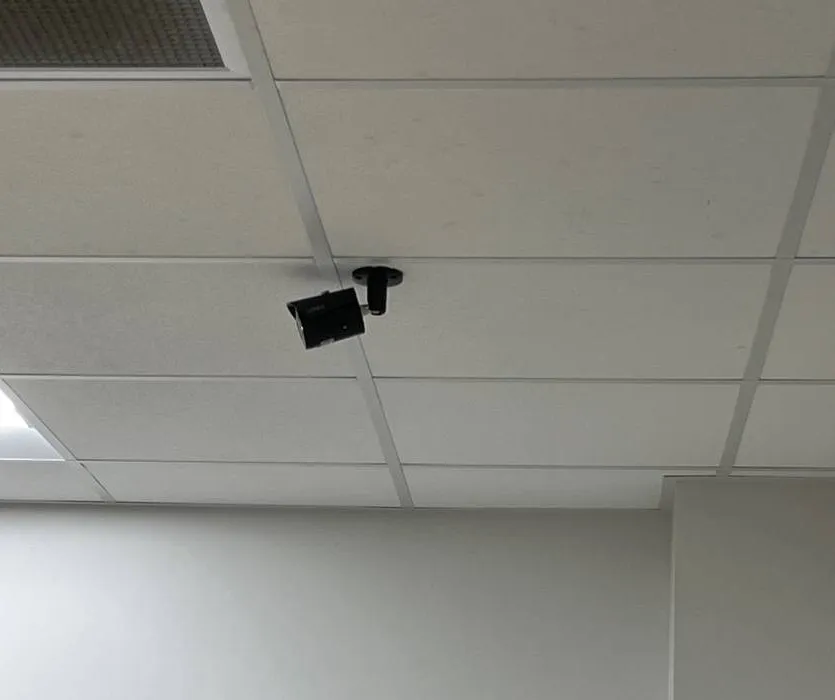
From one of our CCTV jobs (a Rockland County car dealership): a bullet camera on a short ceiling mount over a row of desks. A camera like this over a drop ceiling is a quick run; the same camera on a plaster ceiling in a pre-war Bronx building takes longer, which is why extra cameras are priced per camera.

Why there is no flat price per extra camera

People search for a 2 camera, 6 camera, 8 camera, 12 camera or 16 camera CCTV installation cost and expect one number. The honest answer is that the four-camera packages above are fixed, and beyond four, CCTV installation cost per camera depends on where each camera goes and how its cable gets there. A camera on the lobby ceiling with an open basement below is a short run; a camera on the sixth-floor landing of a pre-war building is a long one. So extra cameras are priced per camera after we confirm the layout, and that price is in writing before the job starts. The same rule applies to the CCTV installation hourly rate question: we price by the job, not by the hour.

Our equipment, your equipment, or the whole building done for you

Most Bronx owners take a turnkey CCTV installation with equipment included, because one company is then responsible for the cameras, the recorder and the cable. If you already bought cameras, CCTV installation labor only is available: send the equipment list and photos, we quote the labor by phone or text, and the job is booked with the deposit. We do not do walk-throughs for customer-supplied equipment, and we are not responsible for the signal or the hardware of customer-supplied wireless cameras. Financing is available on our packages; ask about any current offers when you call.

Shop Our Systems

CCTV Installation Packages & Pricing

Each package is a four-camera starting point with installation, a recorder, two weeks of recording and phone viewing included, and most come with a 20-inch monitor. In a Bronx building or store a package is usually the first four cameras of a larger plan, with more added on the same recorder.

A

A Series · from $950

The entry kit for a back office, one stockroom or a single doorway: a DVR with 2MP HD 1080p cameras that offer audio, smart AI and motion detection, full-color night vision, 60–100 feet of night range and remote access.

F

F Series · from $998

Built for roll-down gates and roof doors that need noise after hours: active-deterrent models with siren and lights, plus eyeball, bullet and dome cameras at 5MP 2K on a DVR, a 20-inch monitor and 90–100 feet of night range.

E

E Series · from $1,157

The PoE system behind most of our Bronx lobbies, bodegas and mixed-use corners: a 4K NVR feeding 4–5MP IP cameras rated IP67, with smart detection, audio, full-color night view to 90–100 feet and a 20-inch monitor.

C

C Series · from $1,392

For buildings with sound coax already in the walls: a DVR running 8MP 4K Ultra HD eyeball and long-range cameras, IP66 rated, with audio, full color, a monitor in the box and the longest night reach, 100–120 feet.

D

D Series · from $1,392 · Top tier

What docks, auto shop curbs and building lots get: IP eyeball and bullet cameras at 8MP 4K Ultra HD with active deterrence and two-way talk, IP67 housings, audio, full color, 90–120 feet at night and a 20-inch monitor.

Already bought your cameras? Text or call with the model numbers and a few photos of where they should go, and we quote the labor only; the deposit books the date. There is no survey visit for customer-supplied equipment, and customer-supplied wireless cameras keep their own signal and hardware issues. Details are on our install your own camera system page.

Authorized partner brands: Lorex, Luminys and Reolink each name Abstract Enterprises Security Systems an authorized partner, and each has its own Bronx page: Lorex camera installation in the Bronx, Luminys installation prices in the Bronx and Reolink installation prices in the Bronx.

Bullet camera installation Bronx reference: small black bullet camera mounted high on a plain grey wall above a drop ceiling
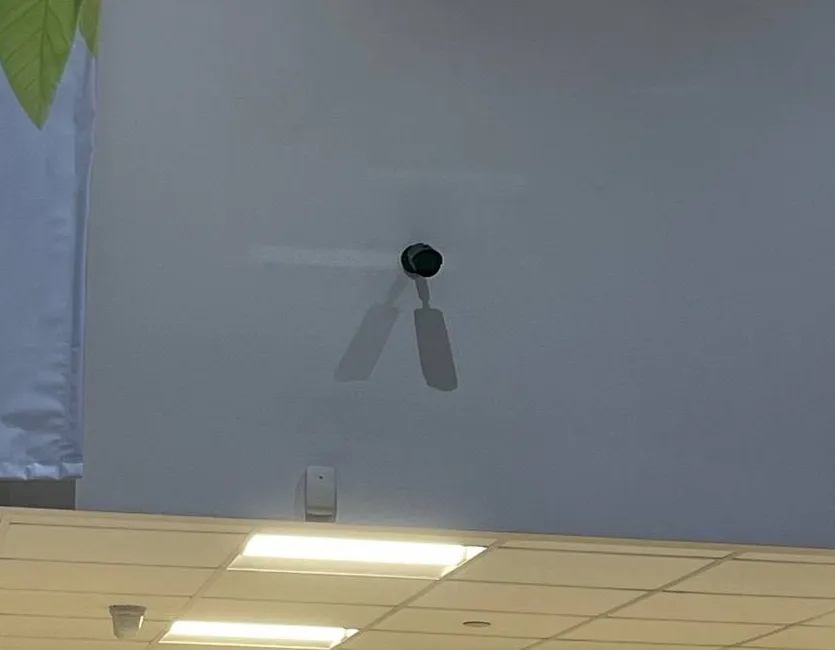
From one of our CCTV jobs (a Rockland County car dealership): a small bullet camera on a plain grey wall, well above the drop ceiling below it. Bronx lobbies with tall ceilings use the same high mount so the camera stays out of reach.
Complete Services

Every CCTV Service in the Bronx

CCTV is one part of what our Bronx crews do. For an apartment building, start with our apartment building security camera installation page; for the rest, these Bronx pages go deeper.

Home cameras

Stoops, driveways, yards and garages for Bronx houses.

Construction site cameras

Temporary systems for gut renovations and new buildings.

NVR installation

Network recorders, drives and retention setup.

DVR upgrade

Keep the coax, replace the recorder, gain resolution.

Camera repair

Dead cameras, lost video and recorder faults.

Camera maintenance

Lens cleaning, drive checks and firmware updates.

Structured cabling

Network cable, fiber and racks for whole buildings.

Free quote

Tell us the address; we send a priced plan.

FAQ

Bronx CCTV Installation FAQ

Is Abstract Enterprises Security Systems actually based in the Bronx?
+

Yes. Our Bronx office is at 460 E Fordham Rd, and Bronx CCTV jobs are dispatched from there. The direct Bronx line is (646) 490-0629. We are a licensed New York State low-voltage contractor, NYS license #12000287431, insured, and have been installing camera systems since 2002.

What happens if someone smashes or spray-paints a camera after you install it?
+

Physical damage and vandalism are not covered by the installation warranty, but we can clean, replace or move the camera as a service call. The recorder usually captured whoever did it, so export that clip first. For spots that keep getting hit, we switch to vandal-resistant domes mounted higher or behind a protective cage.

Do insurers give a discount for CCTV on a Bronx building or store?
+

Some do and some do not; it depends on the carrier and the policy. Ask your broker before the install which cameras or recording features they want to see. When the job is finished we give you a written description of the system, the camera locations and the retention, which is what most insurers ask for.

Does a Bronx landlord have to register common-area cameras with HPD?
+

We are not aware of any HPD registration for ordinary common-area cameras. HPD's Tenant Data Privacy Law covers smart access entry systems such as key fobs and biometric readers, not standard lobby cameras. Many owners still post a notice that common areas are recorded. This is general information, not legal advice.
Can you install cameras in a 24-hour bodega without shutting the store?
+

Yes. We work one area at a time, keep the aisles clear, and do the register and door cameras during the quietest hours, usually early morning. Ladders and cable stay out of the customers' path, and the old system keeps recording until the new recorder is ready to take over.

Can you work alongside a complex's own public safety or security staff?
+

Yes. On large Bronx complexes and campuses we work to the management's camera specification, match their camera numbering, and set up accounts for the security office, management and maintenance with the permissions each one needs. Any existing video system the cameras must join is checked on the survey.

Do the cameras show color at night, or only black and white?
+

Our packages include full-color night vision models, which show color in low light where a street lamp or a lobby light gives them something to work with. In total darkness, such as an unlit roof or courtyard, cameras switch to infrared and record in black and white. We choose which to use per view on the survey.

Should we tell tenants before the crew starts work in the hallways?
+

Yes, and it saves time. A notice in the lobby a few days ahead, giving the dates, the hours and the fact that ceilings and stairwells will be worked on, means fewer surprised tenants and fewer blocked doors. Have the super available for roof, basement and meter room keys on install days.

How many people can watch the building cameras at the same time?
+

Usually several, but not unlimited. Each recorder supports a set number of simultaneous remote streams, and the building’s upload speed is shared among them. For an owner, an agent and a super watching now and then, that is rarely a problem. If a lobby monitor, a security office and many phones will all watch live, we size the recorder and the internet plan for it.

Can the recorder alert me when a camera goes offline?
+

Yes. Most recorders we install can send an app notification or an email when a camera loses video, a drive reports an error, or the recorder stops recording. We turn those alerts on at handover, so you hear about a dead camera the day it fails instead of the day you need its footage.

Office CCTV installation Bronx reference: white dome camera on a drop ceiling facing a wall of glass windows and an entrance vestibule
From one of our CCTV jobs (a Rockland County car dealership): a white dome on the drop ceiling facing the glass front and the entrance vestibule. Bronx medical offices and storefronts with glass fronts need cameras that handle this kind of backlight.
All Areas Served

CCTV Installation Across New York City

One level up, our New York City CCTV installation page sets the Bronx beside the other four boroughs. Intercoms, alarms, access control and the rest live on the Abstract Enterprises Security Systems home page.