What are you looking for?
About Us Contact Us Careers Get a Free Quote (800) 486-0943
Pick a service
✅ Got Your Own System?
🎬 Home TheatreQuote 🎶 AV SoundQuote 🔑 Access ControlQuote
Now pick your area
Pick your area
Long Island
Hudson Valley
Services available
Pricing & Tools
Pick a service for pricing
🚪 Intercom Pricing 🔔 Buzzer Repair Pricing
Calculators
📹 Camera System Calculator 🚨 Alarm Calculator ⚡ Cabling Quote Builder ✅ Got Your Own System?
Select your area
Driveway, detached garage, boat slip or storefront on Sunrise Highway? Wired CCTV with local recording and no monthly fee, booked within 2 hours of your call: (800) 486-0943
Home › CCTV Installation Long Island
Nassau & Suffolk · Houses · Strip Centers · Marinas · Offices · Licensed Low-Voltage Contractor

CCTV
Installation in
Long Island

Wired PoE · HD Analog · DVR & NVR · Remote Viewing · $0 Monthly

CCTV installation Long Island jobs start with distance, because properties here are spread out. A house in Massapequa has a long driveway, a detached garage and a backyard that a single doorbell camera never sees; a deli on Hempstead Turnpike has a rear lot, a dumpster corner and a back door; a boatyard in Freeport has docks that stretch past any Wi-Fi signal. Abstract Enterprises Security Systems designs and installs closed circuit television systems for that kind of ground: cameras placed for faces, plates and approaches, cable run so it survives salt air and nor'easters, and a recorder in your own building that keeps recording when the internet goes down, with battery backup for when the power does too.

Updated November 2026 by Abstract Enterprises Security Systems, NYS license #12000287431 · Sources: Nassau County Police Department crime data as reported by the New York Post (March 2025); Suffolk County Police Department SCPD SHIELD Camera Registry Program; LIPA task force report on Tropical Storm Isaias as reported by Newsday; Town of Southampton Housing Plan (October 2022); Suffolk County District Attorney via CBS New York (November 2025); NY Penal Law §250.45 and §250.00–250.05; NY Labor Law §203-c

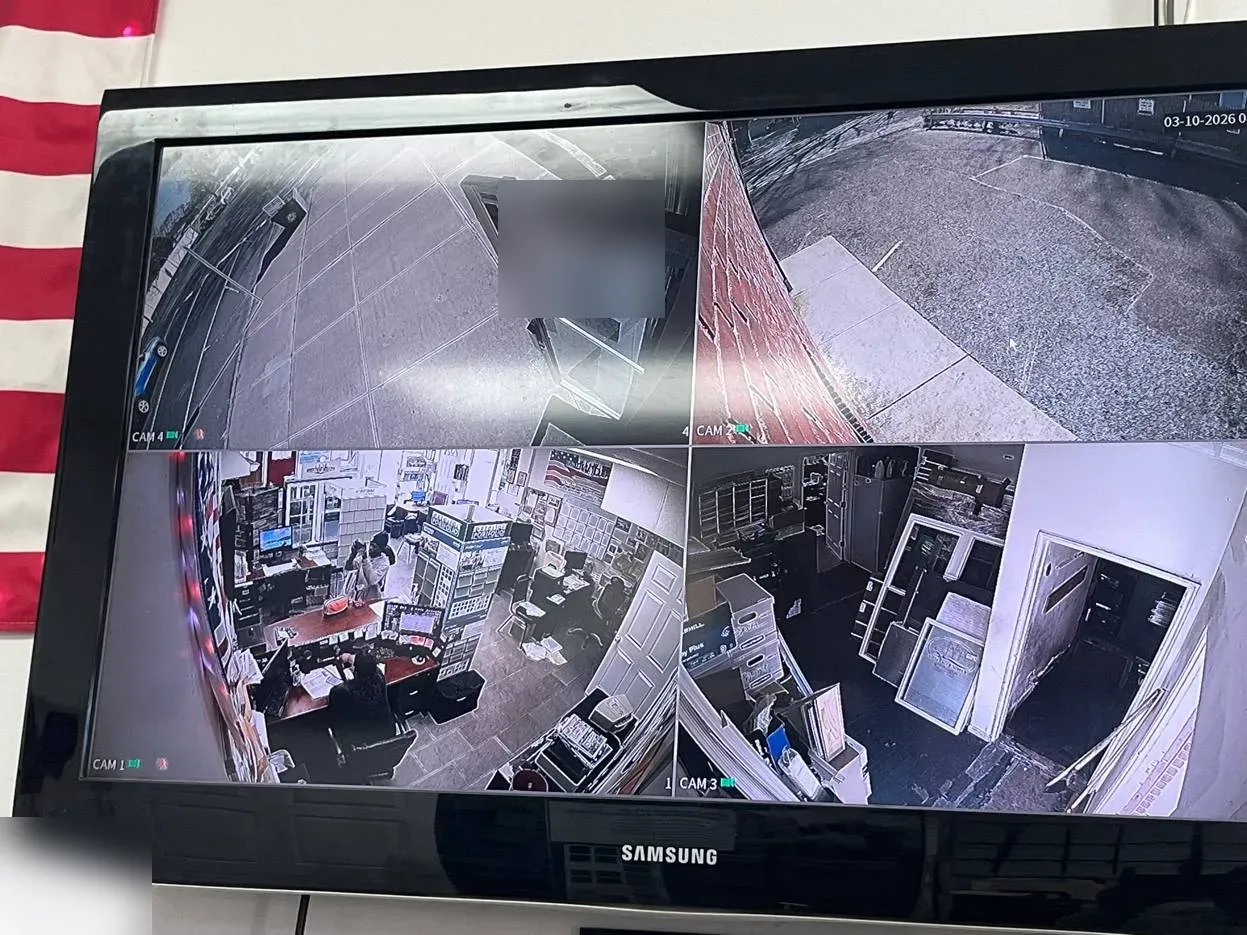
CCTV installation Long Island job: wall monitor showing a four-camera split of an office floor, a storage room, a front walkway and a side lot along a brick wall
From our Nassau County job: the four-camera CCTV view on the office monitor, showing the office floor, the storage room, the front walk and entrance, and the side lot along the brick wall, each tile labeled and time-stamped.
Long Island CCTV Request
Tell us your town, the property and how many cameras

✅
Request Sent!
Thank you. We will be in touch to book your CCTV job, usually within 2 hours of your request.
25+
Years Experience
2 Hr
Booking
100%
Licensed & Insured
4.7★
201 Google Reviews

Owner-operated since 2002 · Thousands of jobs completed · Booked within 2 hours

CCTV installation Long Island pricing starts at $999 for a complete 4-camera house-brand system with the recorder, wiring, installation and 2 weeks of recording included, and commercial CCTV systems for stores, offices, warehouses and marinas run $1,500 to $5,000+ depending on camera count, cable distance and mounting. There is no monthly fee: footage records to a DVR or NVR on your property, and you watch live and recorded video on your phone. We book your job within 2 hours of your request, schedule 7 days a week with early-day visits, and take jobs first come, first served once the deposit is paid.

  • Four house-brand series, from 2MP HD on a DVR (A Series, from $999) to 8MP 4K IP on an NVR (D Series, from $1,441)
  • Wired PoE or HD-analog cameras for driveways, detached garages, docks and rear lots where Wi-Fi drops out
  • Cameras you already bought installed for a labor-only price, quoted by phone or text
The Neighborhood

Why Long Island Properties Need CCTV

Most of the CCTV work we do in the city happens inside buildings that share walls: a lobby, a hallway, a basement, a storefront with one door. Long Island is a different job. Nassau and Suffolk are counties of detached houses on their own lots, strip centers with parking fields in front and service alleys behind, office parks set back from the road, and waterfront properties where the thing you most want to watch is a hundred feet or more from the house. The distance between the recorder and the camera is the first thing we plan on almost every Long Island job, because it decides whether a camera will be wired, how it gets power, and whether it will still be recording after the first ice storm.

The second thing is what people are actually worried about. Island residents rarely call us about strangers in a hallway. They call because a car was gone from the driveway in the morning, because packages keep disappearing from the front step, because the shed or the detached garage was opened during the night, because a boat engine walked off the dock, or because a summer house in the Hamptons sat empty from October to May and nobody knew a pipe had burst or a window had been forced until spring. A business owner on Jericho Turnpike calls after a smash-and-grab, after an employee dispute over a register, or because the insurance carrier asked what the cameras recorded and the answer was "nothing usable." Those calls all ask the same question: where should the cameras go, and how do we make sure the footage exists when we need it?

The third thing is weather and power. Long Island sits between the ocean and the Sound. Salt air corrodes cheap connectors and steel mounts, wind-driven rain finds every unsealed cable entry, and the island's overhead power lines come down in tropical storms and nor'easters. When Tropical Storm Isaias hit in August 2020, a LIPA task force report described more than 646,000 outages, with more than 500,000 customers in the dark over a summer week. A CCTV system that goes blind every time PSEG Long Island loses a feeder is not a security system. That is why we put the recorder, the PoE switch and the modem on a battery backup (UPS) on most Long Island installs, and why we use outdoor-rated cable, sealed connectors and drip loops at every exterior entry.

Crime numbers on the Island have been falling, and that is good news, but they also show why recorded video matters. Nassau County Police data reported by the New York Post in March 2025 counted 710 major crimes in the first two months of 2025 against 951 a year earlier, with car thefts down nearly 18% and non-residential burglaries down from 87 to 45. Fewer incidents means each one gets more attention, and the cases that get solved are the ones where someone can hand detectives a clear clip of a face, a vehicle and a direction of travel. In Suffolk County the police department goes further and asks residents and businesses to tell it where their cameras are.

“Video surveillance is one of the best methods for apprehending criminals and convicting suspects who are caught in the act of committing a crime.”

— Suffolk County Police Department, SCPD SHIELD Camera Registry Program

Long Island facts that shape a CCTV design

  • Nassau County, January–February 2025: 710 major crimes versus 951 in the same months of 2024, car thefts down nearly 18%, commercial robberies down from 32 to 24 (Nassau County Police Department data, New York Post).
  • Suffolk County camera registry: the SCPD SHIELD program lets residents and business owners register where their cameras are, so detectives can ask them to check a specific date and time; footage is collected at the owner's convenience (SCPD SHIELD).
  • Package theft: in November 2025 the Suffolk County District Attorney charged 14 men in a porch-pirate ring that targeted 31 communities over two years, including Brentwood, Central Islip, Shirley and Deer Park, and stole more than 200 phones and tablets (CBS New York).
  • Storm outages: Tropical Storm Isaias caused more than 646,000 outages on Long Island in August 2020, per the LIPA task force report (Newsday via NYSenate.gov).
  • Empty winter houses: in Bridgehampton and Water Mill, more than 60% of housing units are seasonal, according to the Town of Southampton Housing Plan (2022). Those homes sit unwatched for months at a time.
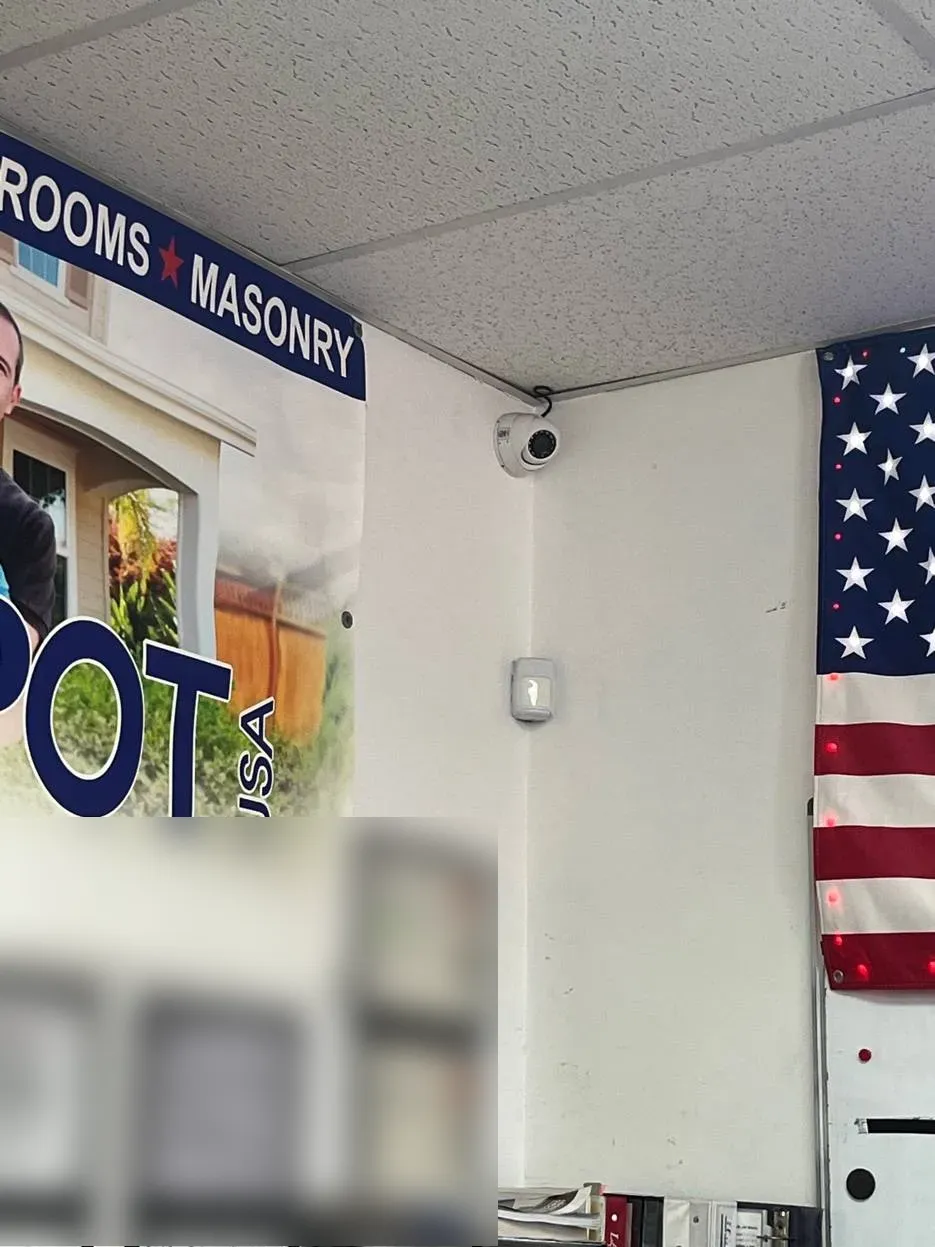
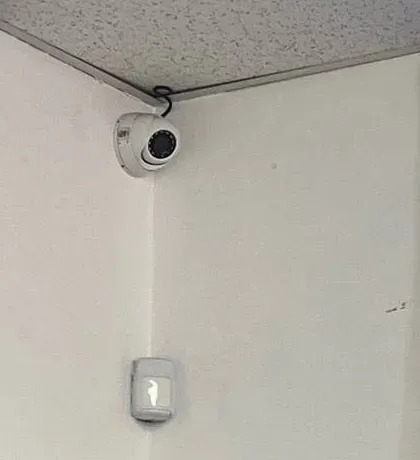
Office CCTV installation on Long Island: white turret dome camera in a drop-ceiling corner beside an American flag, above a wall-mounted motion sensor
From our Nassau County job: the office camera, a compact turret dome mounted tight in the ceiling corner beside the flag, above the alarm motion sensor, looking across the desks and the door.

Put together, the Long Island brief is simple to say and harder to do well: cover the approaches to the property, not just the front door; record locally so footage survives an internet outage; keep the system running through a power outage; and build it with parts that hold up outdoors near salt water. If you only want the general picture of camera systems on the Island, our security camera installation guide for Long Island covers it. This page is about CCTV specifically: the recorder-based, wired systems that most Long Island businesses and a growing number of homeowners choose when they want video they can rely on.

Field Notes

Field Notes: A Four-Camera CCTV Job at a Nassau County Showroom

This job is a good picture of what a small Long Island business actually needs. The client runs a window-and-door showroom with a working office in Nassau County: a front walk off the street, a side lot along a brick wall, an office floor where staff and customers meet, and a back storage room full of trim, glass and boxed paperwork. They wanted four cameras, local recording, and a screen in the office so they could glance up and see the whole property at once.

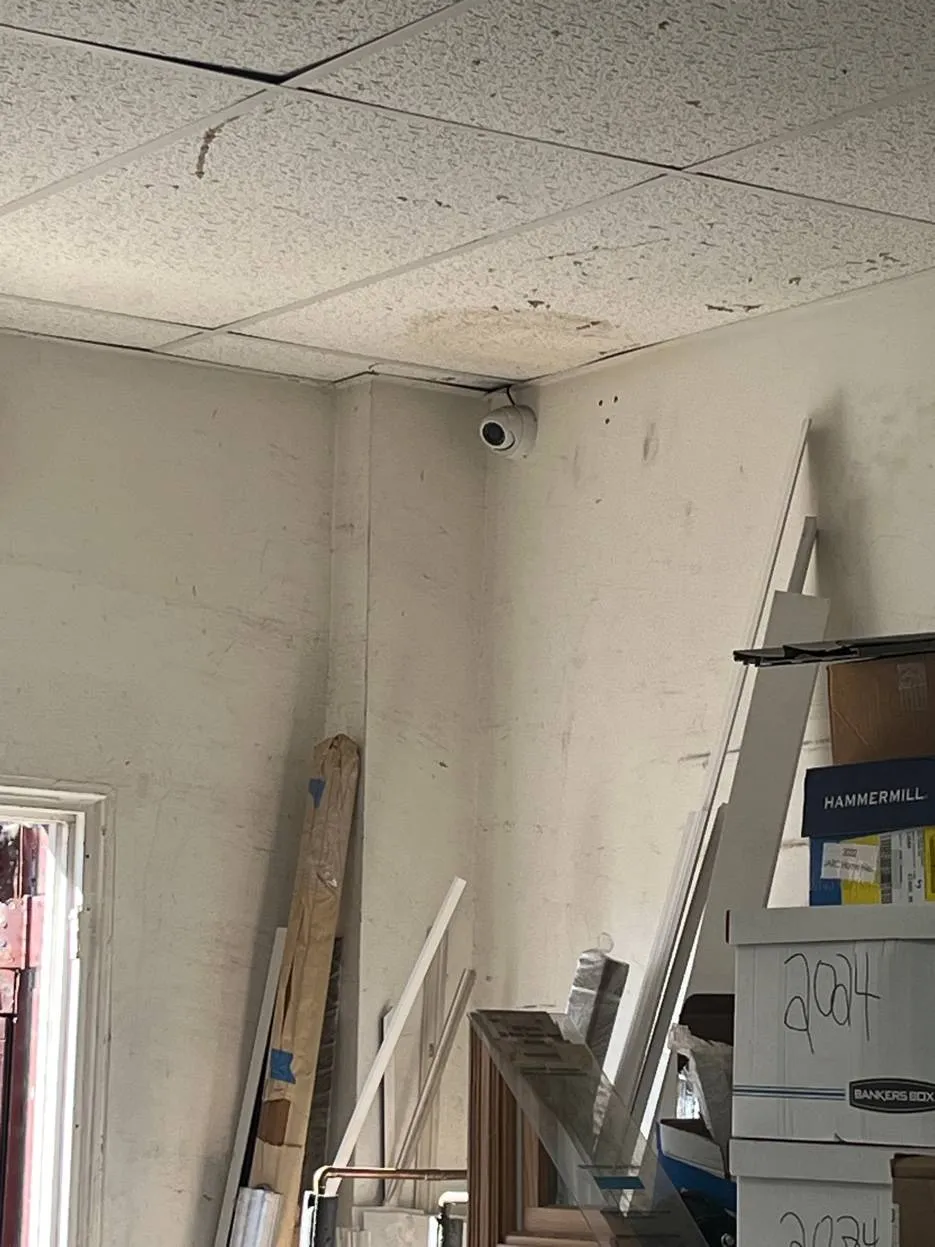
Inside, we mounted compact turret dome cameras high in the corners, tight to the drop ceiling, so each lens looks across the room instead of down at the tops of heads. In the office, the dome sits in the corner beside the flag, above the alarm motion sensor, where it sees the desks, the counter and the door in one frame. In the storage room the ceiling tiles were old and water-stained, so we kept the mount on the solid corner and ran the cable above the grid rather than trusting a sagging tile. Outside, one camera watches the front walk and entrance door and another runs along the brick side wall toward the lot, so anyone walking or driving in is on video before they reach the building.

Indoor CCTV camera installation on Long Island: corner dome camera under a water-stained drop ceiling in a storage room with boxes and leaning trim stock
From our Nassau County job: the storage-room camera, mounted on the solid corner below old, water-stained ceiling tiles, covering boxed files, trim stock and the doorway.

The recorder feeds a wall-mounted monitor in the office in a four-way split: office floor, storage room, front walk and side lot, each labeled and time-stamped. We set motion recording with a pre-record buffer, set the owner up on the phone app for remote viewing, and printed a one-page sheet showing which camera covers what. Nothing about it is exotic, and that is the point. Four well-placed cameras on a wired recorder answer the questions a Long Island business owner actually gets asked: who came in, when, from which direction, and what they did.

What We Install

CCTV Installation Services Across Long Island

Every job below is done by our own licensed crew as a CCTV installation service from design to handover: we place the cameras, run and terminate the cable, set up the recorder, configure the network and the phone app, and show you how to pull a clip. These are the services Long Island customers ask for most, from a two-camera driveway job to a multi-building commercial system.

🏡

Residential CCTV Installation

Home CCTV installation for detached houses, split-levels, capes and colonials: front door, driveway, garage, backyard, side yard and pool gate, recorded on a DVR or NVR in a closet or basement. Residential CCTV installation with smartphone viewing, motion alerts and night recording, without a monthly bill.

🏬

Commercial CCTV Installation

Business CCTV installation for strip-center stores, delis, salons, pharmacies, auto shops and medical offices along the turnpikes and Route 110. Register, entrance, stockroom, rear door and parking field, with remote access for the owner and a clip-export routine for insurance and police.

🔌

PoE & IP CCTV Installation

IP CCTV installation over Cat6, with each camera powered through the same cable by a PoE switch or a PoE NVR. One cable per camera, no outlet needed at the camera, and up to 4K resolution. This is our default for new Long Island systems where cable can be run.

📼

HD Analog CCTV & DVR Setup

Analog CCTV installation on coax using HD-TVI, HD-CVI or AHD cameras and a DVR. It is the right call when a building already has good coax runs, and our A, F and C Series systems use it. CCTV installation and DVR setup, including hard drive sizing and remote viewing.

🛥️

Marina & Waterfront CCTV

Outdoor CCTV installation for docks, boatyards, bulkheads and waterfront homes from the South Shore canals to North Fork harbors: weatherproof cameras, stainless or coated hardware, long cable runs or point-to-point links to reach the end of a dock, and night vision tuned to avoid glare off the water.

🔁

CCTV Upgrade & Replacement

CCTV installation and upgrade work: replacing blurry analog cameras, a dead DVR or a full hard drive, moving from DVR to NVR, adding cameras to an existing system, or reusing good coax with HD-analog cameras. We tell you what to keep and what to replace before we quote.

📱

Remote Viewing & Recording Setup

CCTV installation and remote viewing set up properly: the recorder on your network, the app on every phone that needs it, user accounts with separate permissions, motion alerts that are useful instead of constant, and recording schedules that match how your property is used.

🔋

CCTV UPS & Storm Backup

CCTV UPS installation for the recorder, PoE switch and modem so recording continues through short PSEG Long Island outages and the system shuts down cleanly in long ones. We size the battery for your camera count and tell you honestly how long it will run.

🧰

Labor-Only CCTV Installation

Already bought a Lorex, Reolink, Amcrest or Swann kit? CCTV installation for customer supplied cameras is labor only, quoted by phone or text from the model list and a few photos, and booked with the deposit. We mount, wire and set up what you bought.

Need something more specific? We also handle NVR installation on Long Island, DVR upgrades, camera repair and scheduled maintenance on systems another company installed.

Building Specialists

CCTV for Long Island's Houses, Complexes and Waterfronts

The building decides the design. Here is how we approach the property types we see most often across Nassau and Suffolk, and what changes from one to the next.

🚗

Detached Houses with Long Driveways

Driveway CCTV installation is the most common Long Island request. A camera on the garage corner looking down the driveway, aimed so a car's front plate and the driver's door land in frame, does more than a wide view of the street. Long driveways may need a second camera near the curb.

🛖

Detached Garages, Sheds and Pool Houses

Garage CCTV installation on a detached garage means either trenching cable in conduit, running it overhead on a messenger, or a point-to-point wireless bridge. We price the options separately so you can choose; a camera on Wi-Fi at the edge of the router's range is the one that drops first.

🏠

Ranches, Capes and Split-Levels

Most postwar Levittown-era capes and ranches have an attic or crawlspace that makes concealed wiring straightforward, and split-levels often let us drop cable from the attic to soffits on several faces of the house. We plan cable paths before we drill, so exterior walls stay clean.

🌊

Waterfront and Canal Homes

South Shore canal homes in places like Massapequa, Freeport and Lindenhurst want the bulkhead and the boat covered, plus the street side. We specify cameras rated for outdoor exposure, use stainless or coated mounts and sealed junction boxes, and keep the recorder inside and above flood level.

❄️

East End Seasonal Homes

A Hamptons or North Fork house that sits empty all winter needs CCTV that works without anyone on site: wired cameras, a recorder on a UPS, remote viewing and alerts for doors and driveway activity, and settings that keep weeks of footage so a problem found in March can be traced back.

🏘️

Condo, Co-op and Garden Apartment Complexes

Condominium building CCTV installation and HOA CCTV installation cover mailrooms, entrances, parking fields and dumpster corrals across several buildings. We plan where the recorder lives, how cable or fiber links buildings, and who on the board or management team gets access.

🏢

Two-Family and Small Multi-Family Buildings

Multi-family CCTV installation in two-family houses and small apartment buildings in places like Hempstead, Long Beach and Huntington Station focuses on common entrances, shared driveways, mailboxes and rear stairs. For larger properties see our apartment building camera page.

🔨

New Construction and Renovations

CCTV installation for new construction is cheapest before the drywall goes up. We pre-wire Cat6 to each camera location, leave service loops and labeled ends at a central point, and come back to mount cameras and set up the recorder after the painters are gone.

How we run cable on Long Island houses

Most of the time we can hide nearly all of the cable. On a house with an accessible attic, we run Cat6 or coax across the attic, drop it into the soffit and mount the camera on a junction box under the eave, so the only thing you see outside is the camera. Where there is no attic access, such as a flat-roof extension or a finished cathedral ceiling, we run along the basement rim joist and come up through the sill plate, or we use paintable exterior raceway along trim lines. Every exterior penetration is sealed and every outdoor connection sits inside a weatherproof box. For a detached garage, we price trenching in conduit, an overhead aerial run, and a wireless bridge side by side, because the right answer depends on how far it is, what is in the way and whether you are planning landscaping work anyway.

Salt air, sun and wind

Within a mile or two of the ocean or the Sound, cheap zinc-plated screws and unsealed RJ45 connectors corrode within a few seasons. We use stainless or coated hardware outdoors, weatherproof connector boots or junction boxes at every camera, and drip loops so water runs off the cable before it reaches the entry hole. South-facing cameras on beach houses deal with low winter sun and glare off sand and water, so we angle them down slightly and pick models with good wide dynamic range. On exposed waterfront poles and dock pilings, we use mounts designed for the load and check that wind won't make the image shake on a gusty night.

Outdoor CCTV installation example for Long Island: dome camera on a black steel arm bracket projecting from a stone building facade below a carved cornice
From one of our CCTV jobs: a dome camera on a black steel arm bracket projecting from a stone facade, holding the camera out past the cornice so it can see along the wall.

Wi-Fi reach versus wired PoE

Long Island lots are wider than city lots, and a house's Wi-Fi rarely reaches the back fence, the far end of the driveway or a detached garage with solid signal. Wireless cameras on weak Wi-Fi drop frames, miss motion events and go offline after a router reboot, and battery cameras slow down in cold weather. A wired PoE camera has none of those problems: Ethernet carries video and power on one cable up to 100 meters (328 feet) per run, and the recorder keeps working whether or not the internet is up. Where a wired run truly is not practical, we use a dedicated point-to-point wireless bridge to a PoE switch at the remote building, which behaves like a cable instead of like a phone on the edge of your Wi-Fi.

Commercial CCTV

Business CCTV Installation on Long Island

Commercial CCTV installation on the Island usually means a building on a road with parking in front and a service area behind. The cameras that matter most are often the ones customers never notice: the rear door, the dumpster corner, the loading area and the far end of the lot. Our crews work along the main commercial corridors every week, and each has its own pattern.

🛣️

Sunrise Highway (Route 27)

South Shore strip centers, car dealerships, gas stations and fast-food pads from Valley Stream out through Babylon and Patchogue. Wide parking fields and fast traffic mean we pair a wide overview camera with a narrow varifocal camera on entrances and exits.

🛍️

Hempstead Turnpike (Route 24)

Delis, bodegas, salons, phone stores and restaurants packed close together from Elmont through Levittown. Retail CCTV installation here is about the register, the front door at face height and the back door, with the recorder locked away from the counter.

🏪

Jericho Turnpike & Route 25

Shopping plazas, medical buildings and car lots along Jericho Turnpike through Syosset and Commack, continuing east on Middle Country Road. Mixed tenants often share a parking field, so we coordinate camera views with the landlord and neighbors.

🏭

Route 110 & Industrial Parks

Offices, flex buildings and warehouses along Route 110 between Amityville, Farmingdale, Melville and Huntington, and in industrial parks like Hauppauge. Warehouse CCTV installation here means high-bay mounts, dock doors and fence lines; see our warehouse camera page.

⚓

Marinas and Boatyards

From the Freeport Nautical Mile to Port Jefferson and Greenport, boatyards want gates, fuel docks, slips and stored boats on video. Long runs to the end of a dock, salt exposure and night glare off the water are the design problems we plan for.

🅿️

Parking Lots and Garages

Parking lot CCTV installation for plazas, medical offices, houses of worship and apartment complexes: pole-mounted cameras, vehicle entry and exit coverage and, where it fits, license plate capture at a choke point. Details on our parking lot camera page.

Commercial CCTV installation example for Long Island: turret dome camera on a ceiling tile above a glass-walled office area, between light panels and an air vent
From one of our CCTV jobs: a turret dome centered on a ceiling tile above a row of glass office partitions, placed between the light panels and the air vent.

What a Long Island business system usually includes

A typical commercial CCTV installation for a single storefront or office on Long Island runs eight to sixteen cameras on an NVR with enough drive space for two weeks or more of footage, a PoE switch or PoE recorder, a UPS, and a monitor at the counter or in the office. We set separate user logins for the owner, managers and staff, turn on motion alerts only where they help, and leave the recorder in a locked closet or cabinet so it cannot be carried off with the footage on it. Multi-site owners can view several stores in one app. For more on larger systems see our commercial security camera installation page for Long Island.

Bullet camera installation for Long Island businesses: black bullet CCTV camera on a short pendant mount fixed to a drop-ceiling grid
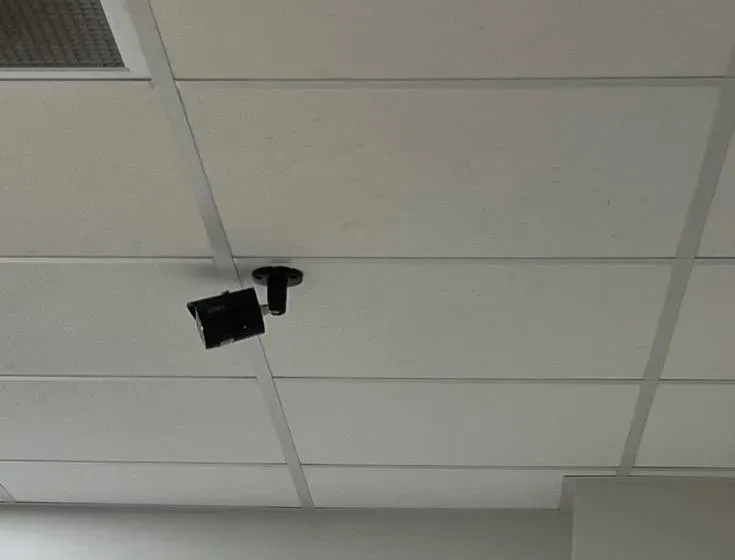
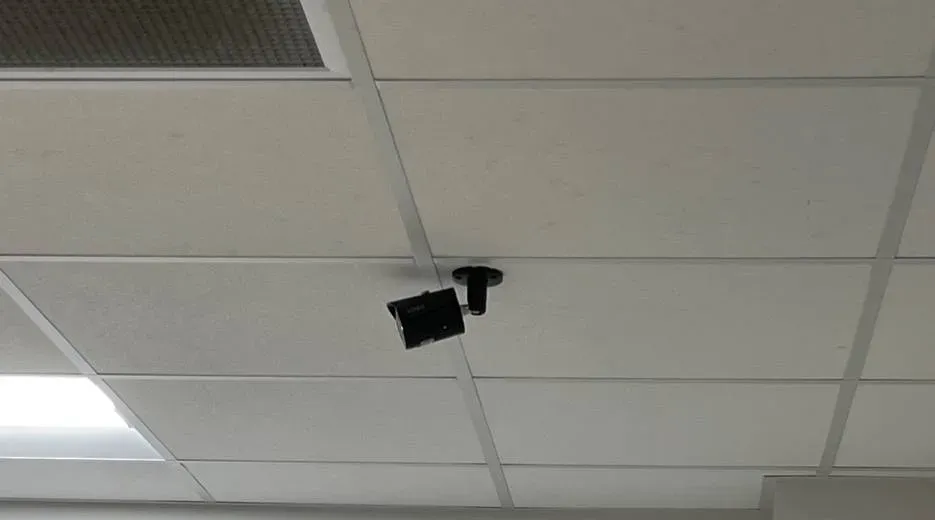
From one of our CCTV jobs: a black bullet camera on a short pendant mount fixed to the ceiling grid, angled down along an aisle.

Rules every Long Island business should know before adding cameras

This is general information, not legal advice. New York Labor Law §203-c bars employers from placing video recording devices in restrooms, toilets, showers, locker rooms and changing rooms, and we will not install a camera in any of those spaces. New York's eavesdropping law (Penal Law §250.00 and §250.05) treats recording a conversation without the consent of at least one party as a crime, so we leave audio recording off on business cameras unless you have a clear reason and posted notice, and we explain the trade-off before turning it on. Penal Law §250.45 makes it unlawful surveillance to record someone in a place where they have a reasonable expectation of privacy, such as a bathroom or bedroom. Signs that say video recording is in use are a good practice for customers and staff. If you lease, check your lease before mounting cameras on the building exterior or in shared areas; many Long Island landlords want to approve camera locations and cable paths.

Working with your insurer and the police

Insurance carriers increasingly ask what cameras a business has and whether footage is retained. We document camera locations, retention days and the recorder model so you can answer that question in writing. In Suffolk County, you can also register your camera locations with the police department's SCPD SHIELD Camera Registry, which lets detectives ask you to check a specific date and time after an incident nearby. In Nassau, the police department runs an information-sharing network for businesses called SPiN; ask your precinct how to join. In both counties, the most useful thing we can do is make sure you can export a clean, time-stamped clip to a USB stick or a phone in a couple of minutes, because that is what investigators ask for.

Upgrades & Maintenance

Upgrading an Older CCTV System on Long Island

A lot of Long Island businesses and houses already have a CCTV system from ten or fifteen years ago: grainy analog cameras, a DVR in a closet that nobody has logged into since the installer left, and a hard drive that may or may not still be recording. Before you replace everything, it is worth knowing what can be saved.

Existing coax in good condition can usually carry modern HD-analog video, so an older analog system can often be upgraded to sharp 5MP or 8MP 4K images by replacing the cameras and the DVR and keeping the cable. Where the coax is damaged, the runs are too long, or you want features like PoE power and AI detection, an analog to IP CCTV upgrade with new Cat6 is the better long-term choice. A DVR to NVR upgrade can be done in stages, too: we can install a hybrid recorder that accepts both old and new cameras so you replace cameras as budget allows.

CCTV camera mounting in an older Long Island building: dome camera fixed in a corner below cracked and stained ceiling tiles
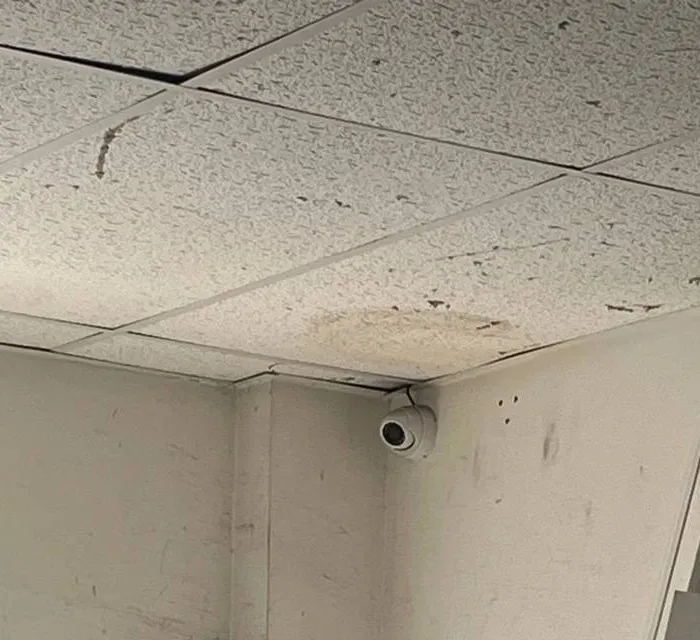
From one of our CCTV jobs: a dome camera fixed to the wall corner below cracked and stained ceiling tiles, the kind of older space where we mount on solid structure rather than the tile.

Recorders fail quietly. The most common call we get on an older system is "the cameras show live, but nothing was recorded," which almost always means a failed or full hard drive or a recording schedule that was changed. CCTV hard drive replacement, a CCTV storage upgrade, resetting the recording schedule and a firmware update fix most of these. We also handle CCTV camera relocation and repositioning when renovations or new landscaping block a view, CCTV cable replacement for runs damaged by weather or pests, CCTV power supply replacement on older analog systems, and CCTV mobile app setup when the old remote access stopped working after a router change.

For systems that matter to a business, a CCTV maintenance plan is cheap insurance: a visit to clean lenses salted over from the shore, check every camera day and night, verify retention days and drive health, update firmware and adjust aiming after the trees leaf out. Details are on our camera maintenance page.

Placement Guide

Where CCTV Cameras Belong on a Long Island Property

Camera placement is the part of CCTV system design that decides whether you ever get a usable clip. The plan we draw for a Long Island house or business starts with the ways a person or a vehicle can arrive, then the things worth stealing, then the places where a face will be close to a lens. Here is how that plays out on the properties we see most.

Front door and porch

Front door CCTV installation should show a face, not just a figure. We mount the porch camera at about head-and-a-half height under the porch ceiling or soffit, angled so it sees a visitor's face as they reach the door and the package spot on the step. A doorbell camera alone sees the top of the head of anyone standing close, and many miss the package left to one side. If package theft is the problem, a second camera that looks back toward the walk and the street captures the vehicle that stopped, which is usually the detail police want.

Driveway and street approach

On most Long Island houses the driveway is the main approach for both cars and people. A wide camera on the garage corner shows the whole driveway; a narrower camera aimed at the point where a car slows down to turn in captures the plate and the driver's side. On long driveways we add a camera near the curb or on a post, powered over PoE. We keep driveway cameras out of direct headlight glare where we can, because a bright headlight at night washes out the plate on cheaper cameras.

Backyard, patio, pool and side gates

Backyard CCTV installation covers the rear door, the patio slider, the pool gate and the side gates between houses. Side gates are the approach burglars use most on suburban blocks because they are hidden from the street. A turret camera on the rear corner of the house can often see both a side gate and the back door; a second one on the opposite corner covers the other side and the pool. Patio CCTV installation also helps with the less dramatic problems: a gate left open, a dog that got out, a delivery left at the back.

Detached garage, shed and boat

Outbuildings hold bikes, tools, mowers, outboard motors and sometimes a second car. We aim one camera at the outbuilding's door from the house, which needs no cable to the outbuilding, and, when the outbuilding is far or has a side door, a second camera on the outbuilding itself. On a waterfront lot, the boat and the dock get their own camera, aimed along the dock toward the land so anyone stepping onto it is facing the lens.

Inside a store, office or showroom

Indoor CCTV installation for a business follows the money and the doors: the register from the side, at an angle that shows hands, the cash drawer and the customer's face; a camera inside the entrance at about seven feet, aimed at faces coming in; the stockroom and its door; and the back door from inside. Office CCTV installation adds the reception desk, any server or records room and, where it matters, the hallway between public and private areas. We never put cameras in restrooms, locker rooms or changing rooms, and we keep indoor audio off unless there is a clear and legal reason.

Parking field, dumpster corral and loading area

Behind most Long Island strip centers is a service lane with dumpsters, grease bins, back doors and loading docks. That is where after-hours trouble starts, and it is often the darkest part of the property. We use color night vision or cameras with built-in white light on the rear, mount them high enough to discourage tampering, and add a camera at the lane entrance to capture vehicles. In the front parking field, pole or building-mounted cameras cover the rows nearest the doors, and a narrow camera at each driveway catches vehicles coming and going.

Seasons on the Island

CCTV Through a Long Island Year

The Island's calendar shapes what people ask us for. Most of our seasonal calls fall into a few patterns, and planning for them ahead of time costs less than reacting after an incident.

Holiday shopping season and Black Friday

From late November through December, stores in strip centers and around the malls carry more stock, take more cash and stay open later. CCTV installation for the holiday shopping season should be finished before Thanksgiving week, not during it. For retailers that means the register and entrance cameras tuned, the stockroom covered, the rear door and the parking field on video, recording retention checked so the busiest weeks are not overwritten, and staff shown how to pull a clip without calling anyone. For homeowners, the same weeks bring the heaviest package deliveries of the year, so a front step camera that sees the package and the street pays for itself in December.

Winter on the East End and the North Fork

CCTV installation for winter property security matters most for houses that close after the season. When the summer residents leave the Hamptons, Montauk, Shelter Island and the North Fork, many homes sit empty until Memorial Day. Remote viewing lets you check the driveway after a snowfall, see whether a caretaker came by, and confirm that doors and garage doors are closed. Pair it with a UPS, a recorder set to keep a long stretch of footage, and an internet connection that stays on through the winter, and you will know about a problem in days instead of months.

Summer rentals and before vacation

In summer the pattern reverses: many houses are full of guests or renters, and year-round residents leave for vacations. CCTV installation before vacation should be done a week or two ahead so you can check that alerts reach your phone and that every camera looks right at night before you leave. If you rent a house out, aim cameras only at the exterior approaches, never inside the living space, and tell renters in writing that exterior cameras are in use.

Hurricane season

From late summer into fall, tropical storms and nor'easters bring wind, rain and outages. Before the season, check that exterior cameras are tight on their mounts, that cable entries are sealed, that the UPS battery still holds a charge and that the recorder is above any flood level in a basement. After a storm, a quick look through the cameras from your phone can show downed trees, standing water and whether the house is secure, which is useful if you evacuated or live elsewhere.

New business openings and construction

CCTV installation for a new business opening goes best when the cable is run during the fit-out, before ceilings close, and the cameras go up a few days before the grand opening. Construction site CCTV installation on new builds and renovations protects tools and materials during the weeks when the site has no doors or locks; for a temporary construction site, we plan cameras and recording that can move to the finished building afterward. After a break-in, burglary or vandalism, we prioritize getting coverage on the point of entry quickly, then plan the rest of the system properly.

Footage

Recording, Retention and Getting a Clip When You Need One

A CCTV system is only as good as the footage you can find and hand over. These are the settings we take care of on every Long Island installation, and the questions to ask any installer about them.

Continuous or motion recording

Recording all day and night on every camera gives you the most complete record but fills the drive fastest. Motion recording saves space but can miss the moments just before something happens. Our usual setup is continuous recording on the cameras that matter most, such as the driveway, entrance and register, with motion recording and a pre-record buffer on quieter cameras. AI detection that separates people and vehicles from leaves and rain keeps the motion recording and the alerts useful.

How long footage is kept

Our packages include 2 weeks of recording. Many homeowners find that enough, because they notice a problem within days. Businesses, HOAs and seasonal homes often want 30 days or more so footage still exists when a problem is reported late or an insurance claim takes time. Retention is a drive-size question, and we can size the drive to the number of days you need. The recorder overwrites the oldest footage automatically, so the only way to keep an important clip longer is to export it.

Exporting and sharing a clip

Before we leave, we show you how to find an event by date and time, play it back, and export a clip to a USB stick or your phone. Detectives and insurers want a clip with the date and time stamp visible and the original file, not a phone video of the monitor. We also make sure the recorder's clock is correct and set to sync automatically, because a recorder that drifts by an hour makes footage harder to use. If you register with the Suffolk County camera registry, this is the skill that makes the program work for you.

Who can see the cameras

Every person who views the system gets their own login, with permissions to match their role. An owner sees everything, a manager may see live video and playback, and staff may see only live video. For condo and HOA systems, the board decides who can view and export footage, and we set it up that way. Default passwords are changed on every device, remote access goes through the recorder's secure app, and firmware is updated at installation.

Before You Hire

How to Choose a CCTV Installer on Long Island

There are a lot of CCTV companies on the Island, from one-person crews to large alarm dealers. Whoever you call, these questions separate a solid installer from one who will leave you with cameras that look fine on day one and fail by winter.

  • Are you a licensed low-voltage contractor, and are you insured? Ask for the license number and proof of general liability insurance. Ours is NYS license #12000287431.
  • Does the price include the recorder, the drive, the cable and the mounting? A per-camera number that leaves out the recorder or the cable is not a price.
  • How many days of recording will I have? Get it in writing, with the drive size.
  • Is there a monthly fee? Many CCTV systems need none. If there is a fee, ask what it pays for and what happens if you stop paying.
  • Which cameras will be wired and which wireless? Anything far from the house or business should be wired or on a dedicated bridge.
  • What happens in a power outage? Ask whether a UPS is included or offered.
  • Who will own the recorder password? You should, with your own admin login.
  • What warranty covers the work, and what covers the equipment? Ours: 30-day workmanship warranty with longer coverage as an add-on, and a one-year parts-only warranty on equipment we supply.
  • Where can I read reviews? Look at the company's Google reviews rather than a list of references the installer hands you.

We will answer every one of those on the first call. If a company cannot, keep looking.

Who We Work For

CCTV for Long Island Businesses and Institutions

Beyond houses and storefronts, these are the kinds of Long Island properties we design CCTV systems for, and the one or two things each one gets right that a generic system misses.

🍽️

Restaurants, Bars and Delis

Restaurant CCTV installation covers the register and bar, the front door, the kitchen back door and the dumpster area. Grease and steam mean kitchen cameras need cleaning access and the right housing; bar cameras need to handle dim light.

🩺

Medical and Dental Offices

Medical office and dental office CCTV installation watches entrances, reception, the parking lot and medication or records rooms, while keeping cameras out of exam rooms and anywhere patients undress.

💊

Pharmacies and Convenience Stores

Pharmacy and convenience store CCTV installation puts a face-height camera at the entrance, clear views of the counter and high-theft aisles, and a locked recorder away from the register.

🚘

Car Dealerships and Auto Shops

Car dealership and auto repair shop CCTV installation covers lot rows, key boxes, service bays and the after-hours drop-off, with long-range cameras for wide lots along Sunrise Highway and Jericho Turnpike.

⛪

Houses of Worship and Schools

Church and house of worship CCTV installation, and school and daycare CCTV installation, focus on doors, drop-off areas, parking and hallways, with viewing limited to the people the board or administration approves.

🏨

Hotels, Motels and Self Storage

Hotel and motel CCTV installation covers lobbies, corridors, parking and side doors; self storage CCTV installation adds gates, keypad stands and the rows between units, often over long cable or fiber runs.

⛽

Gas Stations

Gas station CCTV installation covers every pump island, the store counter, the air and vacuum station and the entrances, with cameras that read plates as cars pull up to the pumps.

🏗️

Construction Sites

Construction site CCTV installation for new builds and renovations, with cameras covering material drops and tool storage, and a recorder that can move to the finished building.

Larger operations get more planning: CCTV installation for multiple buildings links each building's cameras back to one recorder or one app; multi-site owners with stores in several towns can view every location from one login; and enterprise CCTV installation with dozens of cameras gets a rack, a managed switch, a camera VLAN and a written camera schedule. For these we confirm the design on site before quoting.

Glossary

CCTV Terms in Plain English

  • CCTV (closed circuit television): cameras wired to a recorder you control, rather than broadcasting or streaming to a public service. Today the term covers both analog and IP systems.
  • DVR (digital video recorder): the recorder for analog and HD-analog cameras on coax. Our A, F and C Series use DVRs.
  • NVR (network video recorder): the recorder for IP cameras on a network, often with built-in PoE ports. Our E and D Series use NVRs.
  • PoE (Power over Ethernet): power and video on a single Cat6 cable from a switch or NVR to the camera, up to 100 meters per run.
  • HD-TVI, HD-CVI, AHD: HD-analog formats that send high-resolution video over coax, letting older cable carry modern images.
  • H.264 and H.265: video compression standards. H.265 stores similar quality in less space, so the same drive holds more days.
  • Retention: how many days of footage the recorder keeps before it overwrites the oldest.
  • Varifocal lens: a lens we can zoom and focus on site to frame a distant gate, plate or dock.
  • Active deterrence: a camera with a light and siren that reacts to a person or vehicle in a set zone.
  • UPS (uninterruptible power supply): a battery that keeps the recorder and switch running through short outages and allows a safe shutdown in long ones.
  • VLAN: a separate network segment that keeps cameras apart from your computers and phones for security.
Your Questions Answered

CCTV on Long Island: Questions Answered

These are the questions Long Island homeowners, landlords and business owners ask us on the phone before they book, answered the way we answer them on the call.

How many CCTV cameras does a typical Long Island house need?

For a detached house on a standard suburban lot, four cameras cover the basics: front door and walkway, driveway, backyard, and one side yard or the detached garage. Corner lots, long driveways, pools and waterfront yards often push it to six or eight. We count approaches, not walls: every way a person or a car can reach the house should cross at least one camera at a distance where a face or a plate is readable, and the side gates that only neighbors know about deserve a camera too.

Can CCTV cameras reach a detached garage or a shed at the back of the lot?

Yes. The three ways are a buried cable in conduit, an overhead aerial run, or a point-to-point wireless bridge between the house and the outbuilding. Buried conduit is the most durable and the most disruptive; the bridge is fast and clean when there is line of sight. We avoid relying on the house Wi-Fi for a camera that far out, because that is the camera that stops recording first. All three options are priced after we confirm the layout and distance.

Will my CCTV keep recording when PSEG Long Island loses power?

Only if the recorder and the switch are on battery backup. Without a UPS, the system goes dark the moment power drops, which is also when some burglars choose to act. We install a UPS sized to your camera count so recording continues through short outages and the recorder shuts down safely during long ones, protecting the hard drive. Outdoor cameras powered over PoE run as long as the switch they connect to has power, which is another reason we prefer PoE on Long Island.

Does CCTV installation require internet at our property?

No. A CCTV system records to a DVR or NVR on site, so the cameras record with or without internet. Internet is only needed for remote viewing on your phone and for push alerts. That matters on the East End, where some seasonal homes shut off service in winter, and at boatyards with weak connections: the footage is still on the recorder when you arrive. If you want remote viewing at a place with no wired internet, a cellular router can provide it.

How long does CCTV installation take on a typical Long Island home?

Most four-camera house jobs with attic access are done in one visit. Six to eight cameras, a detached garage, or a house without an accessible attic can take a full day. Commercial systems with ten or more cameras, ceiling lifts or long outdoor runs can take two days or more. We tell you the expected time when we confirm the layout, and we book within 2 hours of your request, with jobs scheduled 7 days a week first come, first served once the deposit is paid.

Should a Hamptons or North Fork summer house have CCTV while it sits empty?

It is one of the best uses of CCTV on the Island. An empty house can go months without anyone checking it, and in the hamlets where most homes are seasonal there may not be a neighbor home all winter either. A wired system with remote viewing lets you or your caretaker look in from anywhere, check the driveway after a storm and confirm the doors are shut. Set retention long enough that footage from a break-in found weeks later still exists.

Can you put a CCTV camera on a dock or a bulkhead?

Yes, with the right parts. Dock and bulkhead cameras need weatherproof housings, corrosion-resistant mounts, sealed connections and a cable route that does not sit in standing water. Distance is the main question: a camera at the end of a long dock may need a cable in conduit along the dock, a PoE extender or a wireless bridge. We aim cameras to avoid glare from lights on the water at night and to show the boat, the slip and the approach from land.

What is the difference between CCTV and a Wi-Fi camera from a big-box store?

CCTV means closed circuit: the cameras are wired to a recorder you own, and the video stays on that recorder unless you choose to view it remotely. Most consumer Wi-Fi cameras send video to a cloud service, depend on your Wi-Fi to work, and charge a monthly fee to keep recordings. Wi-Fi cameras are fine for a single door; for a whole property, a wired CCTV system is more reliable, records continuously, and has no subscription.

Can I register my cameras with the police in Suffolk or Nassau?

In Suffolk County, yes: the police department's SCPD SHIELD Camera Registry Program lets residents and businesses register camera locations so detectives can ask them to check footage for a specific date and time. Joining is voluntary and you decide when and how video is handed over. Nassau County Police run SPiN, an information-sharing network aimed at businesses. We can help you note camera locations and field of view so registering is easy.

How far from the recorder can a wired CCTV camera be?

A standard Ethernet run for a PoE camera is limited to 100 meters (328 feet). HD-analog cameras on good coax can usually go farther. Beyond those limits, we add a PoE extender, a remote switch or a fiber link. On large Long Island properties and business parks we often put a small network switch in an outbuilding or a second building and connect it back, which keeps every camera run short and every camera powered.

Do I need permission from my HOA or village to install outdoor cameras?

Usually not for cameras mounted on your own house, but some homeowners associations and condominium boards have rules about anything on the exterior, and a few villages regulate structures like poles. If you are in an HOA or condo, check the rules before we mount. Aim cameras at your own property and approaches rather than into a neighbor's windows or yard; it avoids disputes, and recording inside a neighbor's home where they expect privacy can be illegal.

Can a CCTV installer hide the wires on a finished house?

In most Long Island houses, yes. Attics, basements, crawlspaces and soffits give us paths to most exterior camera spots without opening walls. Where a run has to be exposed, we use paintable raceway along trim or downspout lines so it blends in. Fully concealed wiring through finished interior walls takes more time and is priced after we confirm the layout. We will tell you up front which runs can be fully hidden and which cannot.

Is professional CCTV installation worth it for a small Long Island shop?

For most shops, yes, because the expensive part of CCTV is not the camera; it is getting the right camera to the right place with footage you can actually use. A badly placed system records hours of the tops of heads and back-lit doorways. We aim cameras at the register at an angle that shows hands and faces, place one at face height inside the entrance, and make sure you can export a clip quickly when the insurer or police ask.

Equipment

Types of CCTV We Install

Our house-brand cameras and recorders are the default on every quote because we know how they hold up and we can support them. We also install and integrate other brands customers already own or prefer. Here is the hardware you will see on a Long Island job and what each piece is for.

🔘

Turret & Dome Cameras

Dome camera installation and turret camera installation for ceilings, soffits and corners. Turrets avoid the reflection problem domes can have with infrared at night; vandal-resistant domes suit low ceilings and public areas.

🔦

Bullet Cameras

Bullet camera installation for driveways, fence lines and parking fields. The shape points clearly at what it covers, which helps as a deterrent, and longer bodies hold bigger lenses and stronger infrared.

🔭

Varifocal & Long-Range Cameras

Varifocal camera installation lets us zoom the lens on site to frame a gate, a plate or a dock end at a distance a fixed wide lens cannot resolve.

🌙

Color Night Vision & Active Deterrence

Color night vision camera installation with built-in white light, and active deterrence cameras with a siren and strobe that react to people or vehicles in a zone you draw.

🧠

AI Detection Cameras

Smart detection CCTV installation that separates people and vehicles from trees, rain and headlights, cutting false alerts. Useful on windy waterfront lots and busy roads.

🔄

PTZ & Panoramic Cameras

PTZ camera installation and panoramic or fisheye camera installation for large lots, marinas and warehouses, where one camera position needs to cover a wide area or follow activity.

💾

DVRs & NVRs

Network video recorder installation and digital video recorder installation with drives sized for your retention, local monitor output and app access. CCTV hard drive installation and storage upgrades on existing recorders too.

🔀

PoE Switches, Cable & UPS

CCTV PoE switch installation, Cat6 and outdoor-rated cable, weatherproof junction boxes, CCTV rack installation in larger buildings, and a UPS to keep recording through outages.

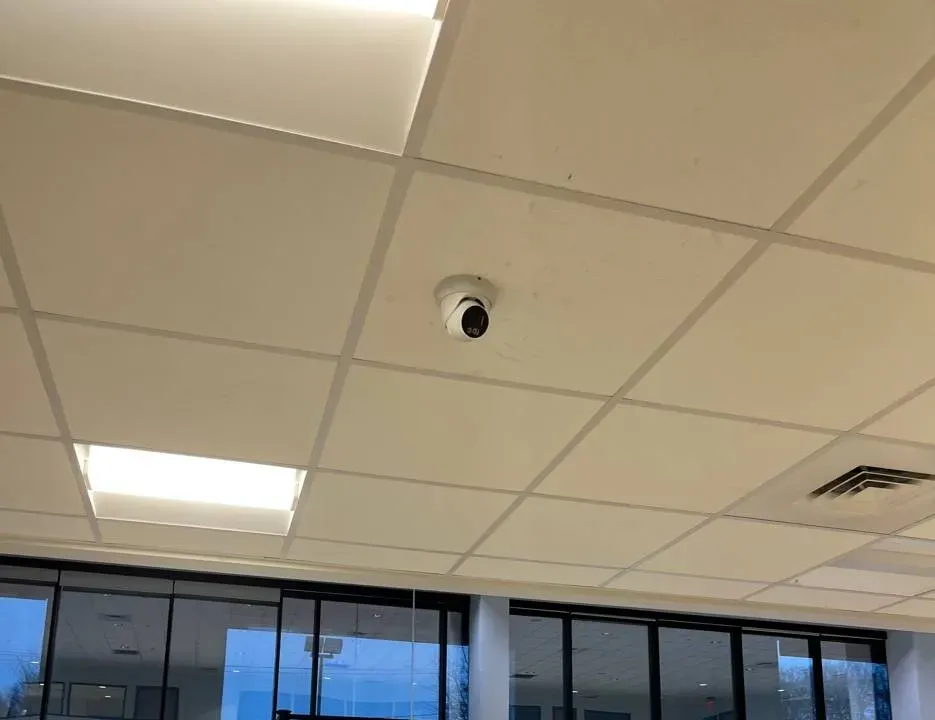
4K CCTV camera installation example for Long Island: white turret dome mounted in the middle of a ceiling tile beside an LED light panel
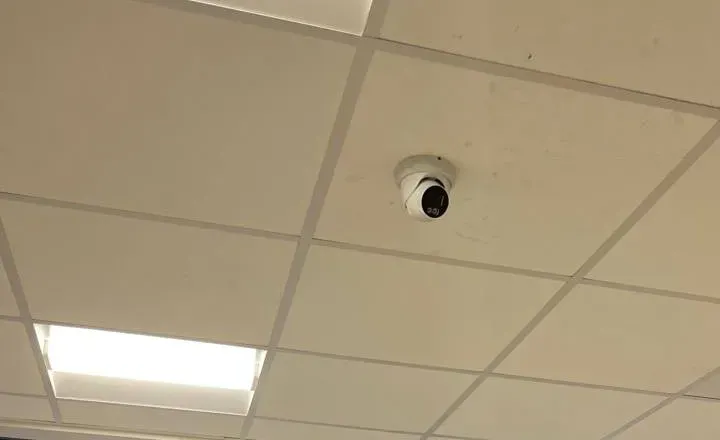
From one of our CCTV jobs: a white turret dome mounted in the middle of a ceiling tile next to an LED light panel, clear of the light so the image is not washed out.

HD analog vs IP PoE vs wireless: which CCTV system fits a Long Island property

QuestionHD analog (DVR)IP PoE (NVR)Wireless / Wi-Fi
CableCoax (often reuses existing runs) plus powerOne Cat6 cable per camera for video and powerPower at the camera; video over Wi-Fi
Resolution1080p up to 8MP 4K (C Series)4MP up to 8MP 4K (E and D Series)Varies by model
Reach on a big lotGood on quality coax100 m per run; extend with switches or fiberLimited by Wi-Fi range and walls
Storm and outage behaviorRecords if DVR and camera power are on UPSRecords if NVR or PoE switch is on UPSStops when the router or outlet loses power
Best forUpgrading older systems with good coaxNew systems, driveways, businesses, outbuildingsOne door or a temporary spot
Monthly fee$0, local recording$0, local recordingOften a cloud plan

Storage math: how much hard drive a Long Island system needs

How long CCTV footage can be stored depends on four things: the number of cameras, resolution, compression and whether you record all the time or only on motion. As a worked example, a 4MP camera streaming at about 4 megabits per second around the clock writes roughly 43 GB a day. Four of them write about 173 GB a day, so two weeks of continuous recording needs about 2.4 TB. Switching to H.265 compression, which our recorders support, typically cuts that bitrate substantially compared with H.264, and motion-based recording on quiet cameras stretches it further. Every package we sell includes 2 weeks of recording; if you need 30 days for an insurer or a board policy, we size a larger drive and tell you the cost before we install.

PoE power budget

A PoE switch or PoE NVR has a total power budget, and each camera draws from it. A basic turret might draw a few watts; a camera with a white-light floodlight, a siren or a PTZ motor can draw much more, especially on a cold night with heaters and infrared on. We add up the worst-case draw of every camera and leave headroom, because an overloaded PoE switch is a common reason cameras reboot at night. On a CCTV network installation we also keep cameras on their own network or VLAN, change default passwords, and keep firmware current, which is the basic CCTV camera cybersecurity every system should have.

Office CCTV installation example for Long Island: black bullet camera on a round ceiling mount near a return-air grille and a light fixture
From one of our CCTV jobs: a black bullet camera on a round ceiling mount near a return-air grille and a light fixture, aimed down a long room.

Brands we install, integrate and service

Abstract Enterprises Security Systems is an authorized partner of Lorex, Luminys and Reolink; see our Lorex, Luminys and Reolink camera installation pages for Long Island. We also install, integrate and service Hikvision, Dahua, Uniview, Hanwha Vision, Axis, UniFi Protect, Amcrest, Swann, Night Owl, Digital Watchdog and other brands customers already own, along with Ring, Nest, Arlo and Wyze cameras. Our house-brand system remains the default on quotes.

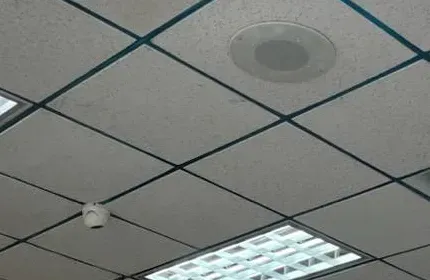
Mini dome CCTV camera for Long Island retail and offices: small dome on a dark ceiling grid near a round ceiling speaker and a light fixture
From one of our CCTV jobs: a small dome camera on a dark ceiling grid, sharing the ceiling with a round speaker and a louvered light fixture.

Ready to Plan Your Long Island CCTV System?

Send us the address, the number of cameras you have in mind and a few photos of the spots you want covered. We book within 2 hours and schedule 7 days a week.

AI Overview Reality Check

What AI Gets Wrong About CCTV on Long Island

AI search answers about CCTV are written for an average American house. Long Island is not average: bigger lots, salt air, storm outages and a lot of empty winter homes. Here are seven claims we hear repeated, and what our crews actually see in the field.

“Wireless cameras are just as good as wired ones”

For a single front door twenty feet from the router, that can be true. AI answers tend to stop there, because the typical question assumes a small house where every camera is close to the Wi-Fi.

On a Long Island lot the camera that matters is often the farthest one: the end of the driveway, the detached garage, the back fence by the pool, the bulkhead. That is where Wi-Fi signal is weakest, where frames drop and where battery cameras slow down on January nights. Residents on local forums describe exactly that pattern: Wi-Fi cameras that drop off and batteries that die in the cold.

Our rule: wire everything that can be wired, use PoE so one cable carries power and video, and use a dedicated point-to-point bridge, not the house Wi-Fi, when an outbuilding cannot be cabled.

“Cloud storage is the safest place for footage”

Cloud storage protects footage if a recorder is stolen, and AI answers like to recommend it. What they leave out is that cloud cameras need a working internet connection to upload, and a monthly plan to keep what they upload.

When the power and the internet go down together, as they did for hundreds of thousands of Long Island customers in Tropical Storm Isaias, a cloud-only camera records nothing. A local DVR or NVR on a battery backup keeps recording, and the footage is waiting when service returns.

We put the recorder somewhere hidden and locked, on a UPS, and if you want an offsite copy we can set up clip backup on top of local recording rather than instead of it.

“Higher megapixels always means better evidence”

Resolution helps, but AI summaries treat it as the whole answer. An 8MP camera aimed down a sixty-foot driveway with a wide lens can still turn a license plate into a few blurry pixels.

What decides whether a face or plate is readable is pixels on target: how many pixels cover the subject at the distance it will be. On Long Island driveways and parking fields that usually means a varifocal or narrower lens on the approach, placed at a height and angle that sees the front of a person rather than the top of a hat.

We pick lens and placement first and resolution second. Often a well-aimed 4MP camera beats a poorly aimed 4K one.

“You can install a full CCTV system yourself in an afternoon”

Plug-and-play kits are real and some homeowners do fine with them. AI answers make it sound quick because they skip ladders, attics, exterior penetrations and weatherproofing.

The hard parts on a Long Island house are fishing cable from the attic into soffits, sealing every entry against wind-driven rain, keeping connectors away from salt corrosion, reaching a detached garage, and setting up the recorder, the network and remote access securely. Mistakes show up later as leaks, dead cameras and a system nobody can log into.

That is why a licensed installer does it: work at height, clean cable paths and a commissioned system with a handover. If you already bought a kit, we will install it for a labor-only price.

“Police can pull your footage anytime once you register your cameras”

This one shows up when people ask about camera registries. Suffolk County's SCPD SHIELD program is real, but AI answers sometimes describe it as if registering hands police a live feed.

The Camera Registry Program records where cameras are so detectives can ask participants to check a specific date and time; if the owner finds something, video is retrieved at the owner's convenience. A separate emergency remote-access option exists only for previously authorized IP systems, only for true emergencies, and participants can opt in or out.

So registering is voluntary and you stay in control. Our part is making sure your system can export a clean, time-stamped clip quickly when you decide to share one.

“Crime is down, so cameras matter less”

Falling crime numbers are real. Nassau County Police data showed major crimes down by more than a quarter in early 2025 compared with early 2024, and AI answers sometimes conclude that cameras are less necessary.

The theft that still happens on the Island is the kind cameras help with: car thefts from driveways, packages taken from front steps, break-ins at empty houses and after-hours entries at businesses. The Suffolk porch-pirate ring charged in 2025 hit 31 communities over two years, which is the scale at which a neighbor's clear video becomes evidence.

Lower crime also means each incident gets attention. A usable clip is often what moves a report from filed to solved.

“CCTV installation costs $100 to $300 per camera everywhere”

National per-camera averages are what AI tools quote most often, usually without saying where the number came from or what it includes. They rarely include the recorder, the drive, the cable or the mounting on a two-story soffit.

Our Long Island prices are complete systems: a 4-camera house-brand package starts at $999 with the recorder, wiring, installation and two weeks of recording, and the series go up to $1,441 for 8MP 4K. Commercial systems run $1,500 to $5,000+. Extra cameras, long runs, trenching and concealed wiring are priced after we confirm the layout.

You get a written price before work starts, and no monthly fee afterward.
Get In Touch

Request a Free Long Island CCTV Quote

Tell us the town, the type of property and how many cameras you have in mind. Photos of the driveway, the outside corners of the building, the spot you want the recorder and any existing cameras help us quote faster. If you already own the cameras, list the brand and model for a labor-only price. Prefer to talk? Call (800) 486-0943.

✅
Request Sent!
Thank you. We will be in touch to book your CCTV job, usually within 2 hours of your request.
How It Works

Our Installation Process

How CCTV installation works with us, from the first call to the day you check your phone and see every camera live.

1

Send the details

Call, text or use the form with your town, property type, camera count and photos. For cameras you already own, send the model list for a labor-only quote.

2

Confirm the layout

We confirm camera spots, cable paths, recorder location and any detached garage, dock or second building, then give you a written price. Larger commercial layouts are confirmed on site.

3

Book the visit

We book within 2 hours of your request. Visits run 7 days a week with early-day starts, first come, first served once the deposit is paid.

4

Install and wire

Our crew mounts cameras, runs and seals cable, installs the recorder, PoE switch and UPS, and keeps cable hidden wherever the building allows.

5

Commission and tune

We aim and focus every camera, set recording, motion zones and alerts, secure the network and passwords, and check night images before we leave.

6

Hand over

We set up the app on your phones, show you playback and clip export, and leave a camera map with the recorder and retention details.

Coverage Area

CCTV Near Long Island's Landmarks

We work in every town in Nassau and Suffolk. These are some of the places our crews pass on the way to Long Island CCTV jobs, and the kind of work we do around them.

🛍️

Roosevelt Field, Garden City

Shops, offices and medical suites around the mall and along Old Country Road, plus houses in Garden City, Westbury and Carle Place.

⚓

Freeport Nautical Mile

Restaurants, fish markets and marinas on Woodcleft Avenue, and canal homes on the surrounding South Shore streets.

🏬

Walt Whitman Shops, Route 110

Retail and office buildings along Route 110 in Huntington Station and Melville, and houses in the surrounding hills.

🛒

Smith Haven Mall, Lake Grove

Strip centers and pad sites along Middle Country Road and Nesconset Highway, and houses in Lake Grove, Centereach and Stony Brook.

🏷️

Tanger Outlets, Riverhead

The gateway to the North Fork and the Hamptons, where we cover farm stands, wineries, businesses and seasonal homes heading east.

⛴️

Port Jefferson Harbor

Village storefronts, restaurants and marinas around the ferry terminal, and older homes on the harbor hills.

We also serve Hempstead, Levittown, Hicksville, Massapequa, Long Beach, Great Neck, Oyster Bay, Babylon, Islip, Brentwood, Smithtown, Commack, Patchogue, Riverhead, Southampton, East Hampton and Montauk, along with every other village and hamlet in Nassau and Suffolk. County pages: Nassau County cameras and Suffolk County cameras.

Pricing

CCTV Installation Cost on Long Island

How much CCTV installation costs on Long Island depends on what is being recorded, how far the cable has to travel and how the cameras are mounted. We keep pricing simple: complete systems with a published starting price, and anything that depends on the property quoted after we confirm the layout.

What you needPrice on Long IslandWhat is included
4-camera house-brand systemFrom $999 (A Series) to $1,441 (C and D Series)4 cameras, recorder, wiring, installation, 2 weeks of recording, app setup
Commercial CCTV system$1,500 to $5,000+Offices, stores, restaurants, warehouses, marinas and multi-building sites, sized to camera count and cabling
Additional camerasPriced per camera after we confirm the layoutCamera, cable run, mount and recorder channel
Labor only on your camerasQuoted by phone or textMounting, wiring and setup of customer-supplied equipment
Concealed wiring, conduit, trenchingPriced after we confirm the layoutFished walls, exterior conduit, buried runs to garages and docks
Monthly fees$0Footage stays on your recorder; no cloud plan required

What moves the price up or down

The biggest variables on a Long Island job are distance and access. A four-camera system on a ranch with an open attic is about as straightforward as CCTV gets. The same four cameras on a two-story colonial with a finished attic, or with one camera on a detached garage eighty feet away, take more labor and more cable. Commercial jobs add ceiling heights, lift rental where needed, conduit in warehouses, and the number of separate areas to cover. Upgrades can cost less than new installs when existing coax or Cat6 is in good shape and can be reused. That is why we do not quote a per-camera number off a national average: we look at your property and give you one written price.

4, 8 and 16-camera systems

A 4-camera CCTV installation is where most houses start and where our package prices apply. An 8-camera system is common for corner lots, waterfront homes and small businesses that need the lot and the back door covered; a 16-camera system is typical for a plaza tenant with a stockroom and loading area, a medical office with several entrances, or a small apartment complex. Recorders come in 4, 8, 16 and 32 channel sizes, and we usually leave spare channels so you can add cameras later without replacing the recorder. Larger systems are quoted per camera after we confirm the layout, and the commercial range above covers most single-building projects.

Indoor home and office CCTV installation on Long Island: small dome camera tucked into a wall-and-ceiling corner directly above a motion sensor
From one of our CCTV jobs: a small dome tucked into the corner where two walls meet the ceiling, mounted directly above a motion sensor so both watch the same doorway.

Warranty and terms

Our installation work carries a 30-day workmanship warranty; extended coverage of one year or longer is available as a paid add-on. Full terms — including 50% deposit, one-year parts-only warranty on Abstract Enterprises Security Systems-supplied products, and the late-fee schedule — are set out in the service agreement. Customer-supplied cameras are covered by their manufacturer, and the signal and equipment of your own wireless cameras are your responsibility. Financing is available on our packages; ask when you call.

Shop Our Systems

CCTV Packages & Pricing for Long Island

Every package is a complete 4-camera CCTV system with professional installation, the recorder, wiring and 2 weeks of recording, with remote smartphone access. Pick the series that matches what you need to see.

A

A Series · 2MP HD on a DVR

From $999. 1080p HD cameras on a DVR with 60–100 ft night vision, motion detection, smart AI detection, full-color night vision and audio. The value choice for front doors, driveways and backyards.

F

F Series · 5MP DVR

From $1,047. 5MP 2K cameras in eyeball, bullet and dome styles, 90–100 ft night vision, active deterrent with siren and lights, and a 20″ monitor. Good for houses and shops that want deterrence.

E

E Series · 4–5MP IP on an NVR

From $1,206. 4–5MP IP cameras on a 4K NVR over PoE, IP67 weather rating, 90–100 ft night vision, smart detection, audio, full-color night imaging and a 20″ monitor.

C

C Series · 8MP 4K DVR

From $1,441. 8MP 4K Ultra HD on a DVR with eyeball and long-range cameras, 100–120 ft night vision, IP66 rating, audio, full-color and a monitor included. 4K detail on existing coax.

D

D Series · 8MP 4K IP (Top Tier)

From $1,441. 8MP 4K IP eyeball and bullet cameras, 90–120 ft night vision, IP67, audio, full-color, active deterrent, two-way talk and a 20″ monitor. Our top tier for 4K CCTV installation.

Bring your own equipment: labor-only CCTV installation

Already bought cameras online or at a store? We install customer-supplied CCTV systems for a labor-only price. Send the brand, the model of the cameras and recorder, how many there are and photos of where they go; we quote by phone or text and book the job once the deposit is paid. We do not do walk-throughs for customer equipment, and because we did not choose the hardware, the equipment itself and the signal of any wireless cameras are on you, not on us. If a supplied part turns out to be faulty or incompatible, we tell you on the spot and you decide what to do. See also got your own system?

Complete Services

Every CCTV Service on Long Island

Commercial Camera Systems

Stores, offices, restaurants and plazas across Nassau and Suffolk.

Apartment Building Cameras

Entrances, mailrooms, parking and common areas for landlords and boards.

Warehouse Cameras

High-bay, dock door and fence-line coverage in industrial parks.

Parking Lot Cameras

Pole-mounted coverage and vehicle entry and exit views.

NVR Installation

Network video recorders, drives and PoE for IP camera systems.

DVR Upgrade

Replace an old DVR or move to NVR while reusing what still works.

Camera Repair

Dead cameras, lost recordings and remote access that stopped working.

Camera Maintenance

Scheduled checks, lens cleaning, drive health and firmware.

Lorex Installation

Authorized Lorex partner installs on Long Island.

Luminys Installation

Authorized Luminys partner installs on Long Island.

Reolink Installation

Authorized Reolink partner installs on Long Island.

Free Quote

Send details and photos for a written price.

FAQ

Long Island CCTV Installation FAQ

How much is a 4-camera CCTV system installed on Long Island?
+

Our 4-camera house-brand systems start at $999 for the A Series with 2MP HD cameras on a DVR, and go to $1,441 for the 8MP 4K C and D Series. Every package includes the recorder, wiring, installation and 2 weeks of recording, with no monthly fee.

Do you charge a monthly fee after the CCTV system is installed?
+

No. Footage records to the DVR or NVR at your property and you view it on your phone through the recorder's app. There is no cloud plan or monitoring contract required, so the monthly cost is $0.

How quickly can you get to a job in Nassau or Suffolk?
+

We book your job within 2 hours of your request and schedule visits 7 days a week with early-day starts. Jobs are taken first come, first served once the deposit is paid, so the date depends on the calendar that week; we do not promise same-day installation.

Will you install CCTV cameras I bought online?
+

Yes. Send the brand and model of the cameras and recorder and photos of the locations, and we quote a labor-only price by phone or text and book it with the deposit. We do not do walk-throughs for customer-supplied equipment, and the equipment itself and any wireless signal are your responsibility.

Are you licensed and insured to install CCTV on Long Island?
+

Yes. Abstract Enterprises Security Systems is a licensed New York State low-voltage contractor, license #12000287431, insured for general liability, and has been owner-operated since 2002. Our offices are at 1282 Troy Ave in Brooklyn and 460 E Fordham Rd in the Bronx, and our crews travel to every town in Nassau and Suffolk.

What does the warranty on a Long Island CCTV job cover?
+

Installation work has a 30-day workmanship warranty, and longer coverage of one year or more is available as a paid add-on. Equipment we supply carries a one-year parts-only warranty, and the deposit, warranty and late-fee terms are set out in the service agreement.

Can you take over a CCTV system another company installed?
+

Usually, yes. We check the cameras, cable, recorder model, hard drive and whether the software is still supported, then tell you what can stay and what should be replaced. Many older systems can keep their coax or Cat6 and get a new recorder and cameras.

Can I watch my Long Island cameras from another state or a boat?
+

Yes. Once the recorder is connected to the internet and the app is set up, you can view live and recorded video from anywhere you have a data connection, including a winter home out of state. Recording on site continues even if that connection drops.

Do you install CCTV for HOAs and condo boards on Long Island?
+

Yes. We design systems for entrances, mailrooms, pools, parking fields and dumpster areas across several buildings, agree with the board on who can view and export footage, and document camera locations and retention for the managing agent.

Where can I read reviews of your CCTV work?
+

Our Google Business Profile reviews are the place to see what customers say; the business is rated 4.7 stars across 201 Google reviews. We do not hand out client contact lists, and we do not publish testimonials on this site.

All Areas Served

CCTV Installation Across New York

Our three regional CCTV pages each cover their own area: CCTV installation for New York City · CCTV installation for Long Island · CCTV installation for the Hudson Valley. Long Island camera pages: Commercial Cameras Long Island · Apartment Building Cameras Long Island · Warehouse Cameras Long Island · NVR Installation Long Island · DVR Upgrade Long Island · Free Quote · Home

Abstract Enterprises Security Systems is a licensed NYS low-voltage contractor (license #12000287431), insured for general liability, with offices at 1282 Troy Ave, Brooklyn, NY 11203 and 460 E Fordham Rd, Bronx, NY. Our crews travel to every town in Nassau and Suffolk. Rated 4.7★ / 201 Google Reviews.

Updated November 2026. Written by Abstract Enterprises Security Systems. Prices reflect our current Long Island packages; anything not listed is quoted after we confirm the layout.