What are you looking for?
About Us Contact Us Careers Get a Free Quote (800) 486-0943
Pick a service
โœ… Got Your Own System?
๐ŸŽฌ Home TheatreQuote ๐ŸŽถ AV SoundQuote ๐Ÿ”‘ Access ControlQuote
Now pick your area
Pick your area
Long Island
Hudson Valley
Services available
Pricing & Tools
Pick a service for pricing
๐Ÿšช Intercom Pricing ๐Ÿ”” Buzzer Repair Pricing
Calculators
๐Ÿ“น Camera System Calculator ๐Ÿšจ Alarm Calculator โšก Cabling Quote Builder โœ… Got Your Own System?
Select your area
Co-op lobby, doorman desk, avenue storefront or office suite in Manhattan? COI-ready CCTV crews, booked within 2 hours: (929) 560-0737
Home › NYC CCTV Hub › CCTV Installation Manhattan
Licensed NYS Low-Voltage Contractor · Inwood to the Battery

CCTV
Installation in
Manhattan

Doorman Buildings · Co-ops & Condos · Avenue Storefronts · Office Suites · Riser Cabling

CCTV installation in Manhattan starts at $1,099 for a four-camera house-brand system with the recorder, cabling, mounting, setup and two weeks of recording included, and we book the visit within 2 hours of your call. Our crews arrive with the certificate of insurance your managing agent asks for, work inside the building's hours, and leave a recorder the board, the super and the store owner can actually use.

Quick answer: A four-camera CCTV system in Manhattan starts at $1,099 (A Series DVR), $1,147 (F Series), $1,306 (E Series IP) or $1,541 (C Series 4K DVR and the top-tier D Series 4K IP). A 4–8 camera system for a co-op, condo, apartment or townhouse runs $1,228–$2,500, and commercial CCTV for offices, retail, restaurants and multi-story buildings runs $1,500–$5,000+. There are $0 monthly fees. Riser runs, concealed wiring and extra cameras are priced per camera after we confirm the layout.

Reviewed and updated November 16, 2026 by Abstract Enterprises Security Systems, NYS license #12000287431 · Sources: NYPD CompStat, Patrol Borough Manhattan South and Manhattan North, week of November 2–8, 2026; 2023 NYC Housing and Vacancy Survey (HPD) and CHPC's “Taking Stock”; New York Landmarks Conservancy, 2020; Manhattan District Attorney's Office release of June 17, 2022; NYC Department of Buildings Facade Inspection & Safety Program; NYS Penal Law §250.45; NYS Labor Law §203-c

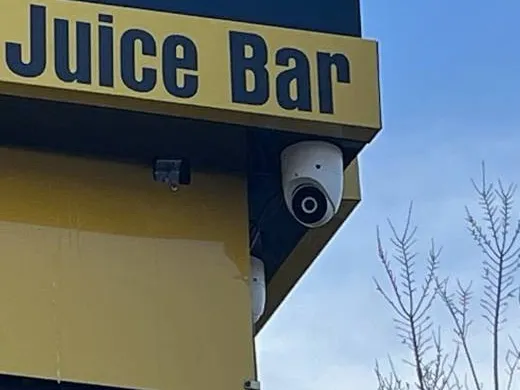
CCTV installation Manhattan: white turret dome camera tucked under the corner of a yellow deli awning beside the Juice Bar sign
From our corner deli CCTV job at West 157th Street and Broadway in Manhattan: the turret dome sits in the angle of the awning, out of reach from the sidewalk and turned to watch both frontages.
Manhattan CCTV Request
Building type, cross streets and roughly how many cameras

✅
Request Sent!
Thanks. We will reach out to book your Manhattan CCTV visit, usually within 2 hours.
25+
Years Experience
2 Hr
Booking
$0
Monthly Fees
4.7โ˜…
201 Google Reviews

Need to move fast? Call or text (929) 560-0737 or use the 60-second quote form.

  • Certificate of insurance sent to your managing agent before the visit
  • Written scope with every camera, cable path and retention target
  • Licensed NYS low-voltage contractor, owner-operated since 2002
The Neighborhood

Why Manhattan Properties Need CCTV Installation

Manhattan packs a quarter of New York City's homes onto about 7.5 percent of its land, according to the Citizens Housing & Planning Council's reading of the 2023 Housing and Vacancy Survey: roughly 927,000 housing units, nearly all of them in buildings with six or more apartments. That density is the first fact behind every CCTV job on the island. A single lens on a Manhattan lobby door sees residents, dog walkers, delivery riders, porters, contractors, guests and strangers who followed someone through the vestibule. One camera on an avenue storefront watches more foot traffic in an afternoon than a suburban driveway camera sees in a year.

The second fact is who makes the decision. In most of the borough the person who wants cameras is not the person who owns the wall. A shareholder answers to a co-op board. A condo owner answers to the condo board and its managing agent. A retail tenant answers to a landlord and, on a landmarked block, to the Landmarks Preservation Commission. An office tenant answers to the building's property manager and chief engineer. CCTV in Manhattan is as much about getting a clear, written plan through those people as it is about cameras and cable, and that is the part most installers skip.

The third fact is the numbers. The NYPD splits the island into two patrol boroughs, and both are trending down. In the CompStat report for Patrol Borough Manhattan South for the week of November 2–8, 2026, retail theft complaints for the year stood at 11,973, down 15.2 percent from 14,115 at the same point in 2025, and burglaries at 1,459, down 15.1 percent. Patrol Borough Manhattan North showed 5,080 retail theft complaints, down 16.4 percent, and 1,198 burglaries, down 7.6 percent. Falling is good news. But add the two halves together and Manhattan still logged about 17,000 retail theft complaints in ten months, roughly 43 percent of the 39,978 recorded citywide in the same report. Every one of those complaints is easier to follow up when the store has a clear, correctly time-stamped clip.

Small owners have been saying this for years. When the Manhattan District Attorney's Office announced its retail theft plan with the Manhattan Small Business Alliance, Isidrio Medina, executive director of the Washington Heights Business Improvement District, said: “Our small business community has been plagued by this insidious problem for some time.” (Manhattan D.A.'s Office, June 17, 2022.) The same release reported that between 2015 and 2021, 18 percent of people arrested for shoplifting in Manhattan accounted for nearly half of all shoplifting arrests. A small group of repeat offenders is exactly the problem good CCTV helps with: the same faces return, and a recorder with clean footage from three visits makes a far stronger case than a description of one.

Manhattan facts that shape a CCTV design

  • Patrol Borough Manhattan South (precincts 1 to 18) logged 11,973 retail theft complaints this year up to November 8, which is 15.2% fewer than at this point in 2025.
  • Patrol Borough Manhattan North (precincts 19 to 34) counted 5,080 retail thefts, a 16.4% drop, alongside 1,198 burglaries.
  • About 43% of the city's retail theft complaints this year came from the two Manhattan patrol boroughs combined (our arithmetic from the same CompStat reports).
  • 927,000 housing units, a quarter of the city's homes, sit on about 7.5% of its land (2023 NYCHVS via CHPC).
  • Slightly more than 20% of Manhattan's lot area is under Landmarks Preservation Commission oversight (New York Landmarks Conservancy, 2020).
  • 18% of people arrested for shoplifting in Manhattan from 2015 to 2021 made up nearly half of all shoplifting arrests (Manhattan D.A.'s Office).
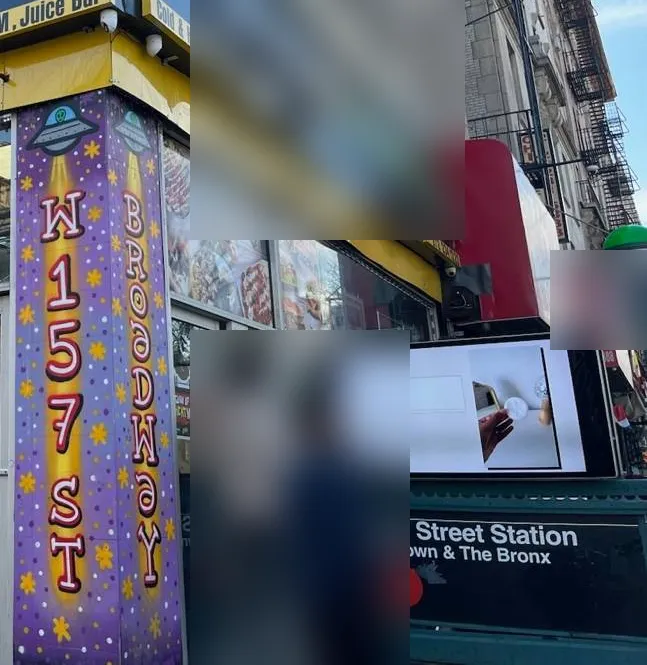
Manhattan CCTV cameras under a deli awning beside the 157 Street subway stairs on Broadway, with the painted W 157 St Broadway corner pillar
Our Manhattan corner deli job at Broadway and West 157th Street: domes under the awning edge cover the corner pillar and the subway stairs, the busiest few square feet on the block. Sign text and passers-by are blurred.

Two Manhattans for a CCTV installer

Below 59th Street the work is dominated by towers. Office floors with landlord-controlled risers, hotel back-of-house corridors, flagship retail on Fifth Avenue and around Herald Square, garment-district lofts with freight elevators, and condo towers where the developer left a camera system that nobody has updated since the sponsor sold the last unit. Jobs below 59th tend to involve chief engineers, union porters on the freight elevator, tight loading-dock windows and long cable distances measured in floors rather than feet.

Above 96th Street, and through Harlem, Hamilton Heights, Washington Heights and Inwood, the work looks different. Five- and six-story walk-ups and pre-war elevator buildings line the side streets, with corner groceries, delis, pharmacies, barbershops and phone stores on the avenues: Broadway, Amsterdam, St. Nicholas, Frederick Douglass, Lenox, Dyckman. Here the recorder usually goes in the cellar, cable climbs through the dumbwaiter shaft or an old chase, and the owner is often a family that has run the same store for twenty years and wants to see the register on a phone from home.

The Upper East Side and Upper West Side sit between those two worlds: large pre-war co-ops with doormen and lobby attendants, brownstone and limestone townhouses on the side streets, and medical and dental suites on the ground floors of Park, Lexington, West End and Central Park West buildings. Downtown, SoHo, Tribeca, the Village and the Lower East Side add cast-iron loft buildings, tenement walk-ups and a lot of landmark-district frontage.

Abstract Enterprises Security Systems has been working in this building stock since 2002. Manhattan jobs are scheduled from our Bronx office at 460 E Fordham Rd, a short drive down the Major Deegan or across the Harlem River bridges, and the same crew that surveys your building does the install. If you need a camera moved after a lobby renovation or a drive swapped in year three, you call the same direct line: (929) 560-0737.

What We Install

CCTV Installation Services in Manhattan

Every Manhattan job ends with the same three things: cameras that show faces at the doors that matter, a recorder that keeps the footage long enough for the building's policy, and the right people able to see it on their phones. The services below are how we get there in a doorman building, a walk-up, a storefront or an office floor.

๐Ÿ™๏ธ

Doorman and lobby CCTV

Front door, vestibule, lobby, mailroom, package room, service entrance, garage ramp and elevator landings, with a live monitor at the desk and playback limited to the managing agent and the super.

๐Ÿงต

Riser and high-rise cabling

Cat6 or fiber pulled up the building's riser or telecom closets, firestopped at every floor and labeled at both ends, so a camera on the 18th-floor roof door reaches a recorder in the cellar.

๐Ÿ”Œ

IP and PoE CCTV systems

Network cameras powered over a single Cat6 cable from a PoE recorder or switch. Our default for new work in Manhattan because it scales from four cameras to forty without a new design.

๐Ÿ“ผ

HD-analog on existing coax

HD-TVI, HD-CVI and AHD cameras on a new DVR, reusing a building's sound RG59 runs where tearing open plaster lobbies and marble halls would cost more than the cameras.

๐Ÿ›๏ธ

Avenue storefront CCTV

Door, register, aisles, stockroom, cellar hatch and the sidewalk approach for delis, groceries, pharmacies, boutiques and phone stores, with a customer-facing monitor near the counter.

๐Ÿข

Office and tenant-suite CCTV

Suite entry, reception, IT closet and storage on the tenant's own network, routed above the hung ceiling under the landlord's rules and kept separate from the base-building system.

๐Ÿ—„๏ธ

NVR and DVR recorders

Recorder sizing, hard drive selection, retention targets in days, clock sync and user accounts with the right permissions for a board, a manager, a doorman or a store owner.

๐Ÿ”„

Replacements and upgrades

Dead 2000s-era DVRs swapped, analog moved to IP, 1080p raised to 4K, cameras added after a lobby renovation, and systems re-aimed after a sidewalk shed comes down.

๐Ÿ“ฑ

Remote viewing setup

The app on the owner's, the manager's and the super's phones, each with a separate login, plus a short lesson on finding an event and exporting a clip for a detective or an insurer.

๐Ÿงฐ

Labor-only installation

Cameras already sitting in boxes in the back office? Text us the model list and a few photos; we quote the labor, take the deposit and put them up.

A note on our own pages, so you land on the right one. Our security camera installation in Manhattan page is the full camera menu for the borough, including doorbell cameras and home options. This page is about CCTV in the classic sense: wired cameras, cable you can trace and a recorder you own, built for buildings with boards, risers and doormen. If your property fits one type cleanly, we also have dedicated pages on commercial security camera installation in Manhattan for stores, restaurants and offices, apartment building security cameras in Manhattan for owners and boards, and warehouse security cameras in Manhattan for loading docks and storage floors.

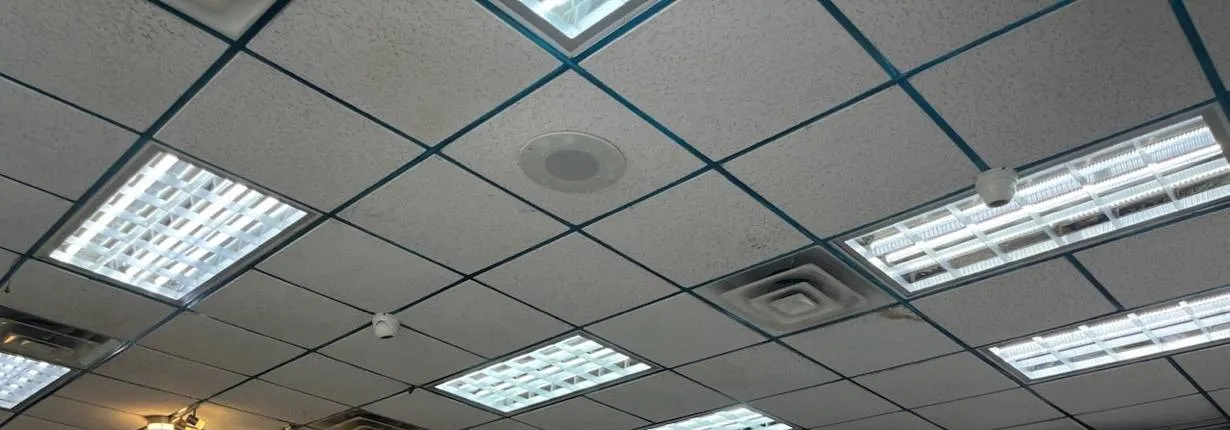
Indoor CCTV installation in Manhattan: small white dome cameras spaced across a drop-tile deli ceiling between fluorescent light panels and a ceiling speaker
Inside the Manhattan deli: two small domes ride the drop-tile grid between the light panels, one over the counter line and one over the center aisle, with the speaker and air diffusers left clear.

What CCTV installation actually involves in a Manhattan building

Closed circuit television installation means a private system: cameras send video over cable you control to a recorder on your premises, and nothing is broadcast. In a Manhattan building that idea runs into very practical questions. Where does the cable go between the lobby and the cellar when the walls are plaster on terra-cotta block? Which closet can hold a recorder without blocking the meter room or the sprinkler valve? Who signs off before the crew opens a ceiling, and on which days are contractors allowed in? A CCTV installation service in the borough is the answer to all of those, not just the mounting of cameras.

The work divides into the same stages on every job. Design picks the camera, lens and mounting point for each view. Cabling decides the path from each camera to the recorder and how it will be hidden. Mounting matches the bracket to the surface: limestone, brick, marble, metal awning, drop tile or plaster. Commissioning sets recording schedules, detection zones, night settings, clock sync and user accounts. Handover shows the people who will use the system how to find and export footage. Leave out any stage and you get the system we see too often on service calls: eight cameras, a blinking recorder in the lobby desk drawer and no footage from the night that mattered.

Home and townhouse CCTV in Manhattan

Residential CCTV installation on the island splits into two very different jobs. In a townhouse or brownstone, the owner controls the building, so the work looks like a house job adapted to a stoop: a camera over the front door looking down at faces, one at the areaway gate under the stoop where deliveries get left, one on the rear facade covering the garden and the back door, and often one inside the entry hall. The recorder goes in the cellar or a closet, with the phone app set to alert on people at the door rather than every passer-by on the sidewalk.

In an apartment, the owner controls only what is inside the unit. Indoor home CCTV installation is straightforward there: a camera covering the entry foyer from inside the apartment, the living area, or a home office, recording to a small recorder or a card. Anything in the hallway, on the door frame facing the hall or on a terrace parapet needs the board's or landlord's written approval first, and we will ask to see it.

Building Specialists

CCTV Installation for Manhattan's Architecture

Manhattan's buildings were put up over two centuries by people who never imagined a camera cable, and each era hides its own problems. These are the building types we work in most, and how a CCTV system has to be built for each.

๐Ÿ›Ž๏ธ

Pre-war doorman co-ops

Twelve- to sixteen-story buildings on West End, Riverside, Park and Fifth with marble lobbies, service halls and a basement full of old conduit. Cameras go on the lobby ceiling, service entrance and package room; cable rides the service stair or an empty conduit to the cellar.

๐Ÿ—๏ธ

Post-war and glass high-rises

White-brick and curtain-wall towers from the 1960s onward, usually with a telecom riser closet on every floor. That riser is the cable path for roof, gym, garage and amenity-floor cameras, and the managing agent will want every penetration firestopped.

๐Ÿชœ

Tenement and walk-up buildings

Five- and six-story walk-ups on the Lower East Side, East Village, Harlem, Washington Heights and Inwood. No ceiling cavity in the stair hall, brick bearing walls, a dumbwaiter shaft or an old gas riser chase if you are lucky, and a cellar where the recorder belongs.

๐Ÿ›๏ธ

Brownstones and limestone townhouses

Stoop, areaway and garden coverage for single-family and converted townhouses from Harlem and Hamilton Heights to the Upper West Side and the Village, usually inside a historic district, so facade cameras follow Landmarks rules.

๐Ÿญ

Cast-iron and loft buildings

SoHo, Tribeca, NoHo and the garment district: tall ceilings, exposed sprinkler mains, freight elevators and ornate cast-iron fronts that cannot be drilled. Cameras attach to plain masonry, wood or inside the storefront instead.

๐Ÿข

Office towers and tenant floors

Base-building cameras belong to the landlord; tenant cameras cover the suite. Cable runs above the hung ceiling to the tenant's IT closet, and the chief engineer approves the plan before any tile moves.

Riser cabling: getting a camera signal up twenty floors

The single biggest difference between a Manhattan high-rise job and a store job is vertical distance. A network cable can carry a PoE camera's power and video about 100 meters, roughly 328 feet, from the switch. On a twenty-story building the roof door alone can be farther than that from a cellar recorder once the cable has wandered through closets and across ceilings. We solve it the way large buildings are meant to be wired: a small PoE switch in a telecom or riser closet partway up, fed by Cat6 or fiber from the head end, with short runs to the cameras on the floors around it. Every switch gets a battery backup so a power blip does not take half the building's cameras down.

Riser work in New York comes with rules that suburban installers rarely meet. Cable that runs vertically between floors has to be riser-rated, and every hole through a fire-rated floor or wall has to be sealed with a listed firestop product so the opening does not become a chimney in a fire. Managing agents and building engineers check this, and many ask for photos of each sealed penetration. We do it as a matter of course and label the cable on both sides of each floor so the next technician can follow it.

Old coax in the lobby: test it before you trust it

Many Manhattan co-ops installed analog cameras in the late 1990s or 2000s, with RG59 siamese cable running from the lobby to a DVR in the super's office. Some of that coax is perfectly good, and an HD-analog upgrade can put 4MP or 8MP cameras on it with a new DVR and no new holes in a marble lobby. Some of it was spliced with twist-on connectors behind a ceiling, crushed under a radiator cover or soaked in a cellar flood. We test each run for signal before we promise anything, and the written scope says which runs we reuse and which we replace.

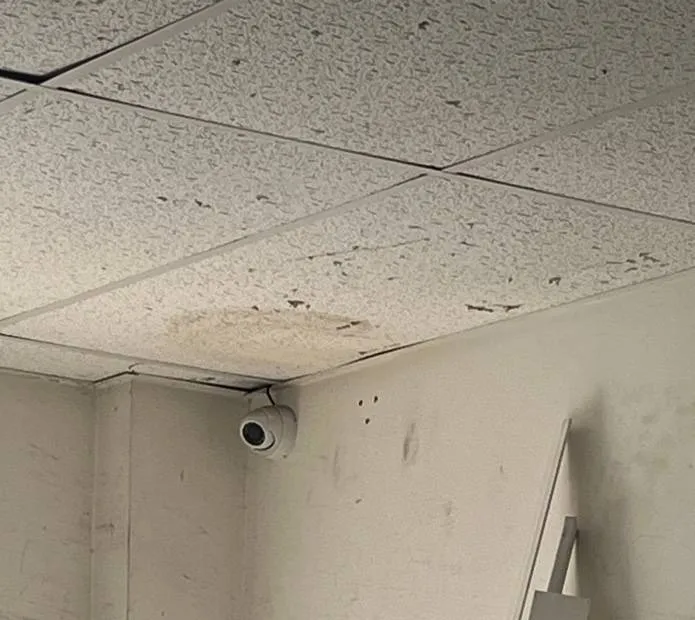
Basement CCTV camera placement for Manhattan storage rooms: white dome camera in the corner where two walls meet a water-stained drop ceiling
From one of our CCTV jobs (Nassau County window and door showroom): a dome tucked into the corner of a storage room under a water-stained ceiling. The same corner position works for Manhattan storage cages, bike rooms and boiler-room doors.
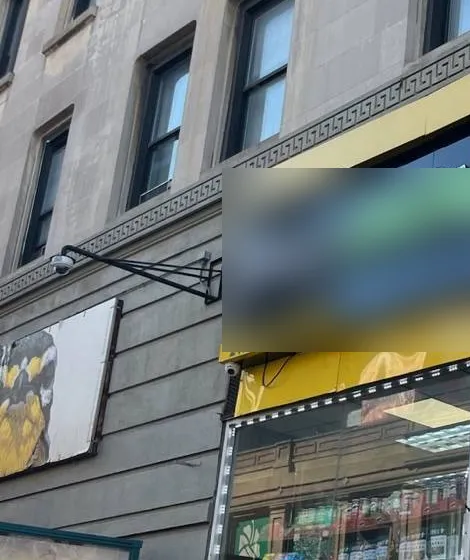
Outdoor CCTV installation Manhattan: dome camera on a black steel wall arm fastened to a pre-war stone facade below a Greek-key band
The Broadway frontage of the same Manhattan deli: a dome on a black steel arm holds the lens out past the window line, fastened into plain stone under the carved band. The store sign is blurred.

Landmarked frontage across the borough

The New York Landmarks Conservancy's 2020 report “Historic Preservation in the City of New York” found that slightly more than 20 percent of Manhattan's lot area is under the Landmarks Preservation Commission's oversight. In practice that means a large share of the townhouses, storefronts and apartment houses we work on, from the Upper West Side and Hamilton Heights to Greenwich Village, SoHo and Tribeca, need an LPC permit for anything fixed to the facade. The commission's staff can approve small, well-spaced cameras fastened into mortar joints or plain masonry with concealed or painted conduit; cast iron and carved stone are off limits. We lay out facade cameras to that standard, supply the cut sheets, and when a permit would slow the job, we often find an interior position behind the storefront glass or under the vestibule ceiling that covers the same door without touching the facade at all.

Sidewalk sheds and facade work

Manhattan's tall buildings live under the city's Facade Inspection & Safety Program, which requires buildings taller than six stories to have their exterior walls inspected every five years. When repairs follow, a sidewalk shed goes up, and any camera on the lower facade suddenly looks at plywood and pipe. We regularly relocate cameras to the underside of a shed for the duration, with the building's approval and the shed contractor's sign-off, and return them to the facade brackets when the shed comes down. If your building has a shed going up, call before the crew arrives, not after.

Pairing CCTV with the front door

Most Manhattan buildings that call us about cameras also have an intercom or a key-fob entry that is twenty years old. Doing both in the same visit saves a second set of ceiling openings in the lobby and lets the camera over the door double as the picture the intercom shows. If your building is in that position, ask us to quote the intercom or access control at the same time; we will keep the two on separate lines of the scope so the board can approve them independently.

Commercial CCTV

Business CCTV Installation in Manhattan

Commercial CCTV installation in Manhattan covers everything from a two-camera nail salon to a forty-camera hotel back-of-house. What every business job here shares is a landlord, a street that never empties and a need to hand clean footage to police or an insurer quickly. These are the corridors and business types we wire most often.

๐Ÿฅช

Broadway, Washington Heights and Inwood

Delis, groceries, pharmacies, money-transfer shops and phone stores from 145th Street to Dyckman, many at subway entrances. Two frontages, a cellar hatch on the sidewalk and long hours.

๐ŸŽท

125th Street and Harlem's avenues

National chains and long-time local shops along 125th Street, Frederick Douglass, Lenox and St. Nicholas, plus restaurants and bars where the door and the bar rail need the clearest views.

๐Ÿ›’

Herald Square, 34th Street and Fifth Avenue

High-volume retail floors where people-counting at the door, fitting-room approaches (never inside) and stockroom coverage matter as much as the register.

๐Ÿงต

Garment District and Chelsea lofts

Showrooms, sample rooms, small manufacturers and storage floors with freight elevators, loading doors on side streets and inventory that walks out a case at a time.

๐ŸฅŸ

Chinatown, Canal Street and the Lower East Side

Restaurants, bakeries, wholesale shops and tenement storefronts where the recorder sits in a tight cellar and cameras must survive kitchen grease and steam.

๐Ÿจ

Midtown hotels and Financial District offices

Hotel CCTV installation covers lobbies, elevator landings, luggage rooms and loading docks; office CCTV covers suite doors, reception and server closets on the tenant's network.

Retail and convenience store CCTV on a Manhattan avenue

Store CCTV installation in Manhattan starts at the door and works inward. The first camera identifies each person coming in, mounted inside the glass at head height and aimed back at the door so the bright sidewalk is behind the camera, not behind the face. The second sees the register from above and slightly behind the cashier, so hands, cash and the customer's face are all in the frame. Then each aisle, the cooler wall, the deli or prep counter, the stockroom, the cellar stairs and the back door. Corner stores add the second frontage and, at a subway entrance, the stair head. A grocery or convenience store on an avenue typically ends up with eight to sixteen cameras, and a visible monitor by the counter so customers see what the camera sees.

Restaurant, bar and nightlife CCTV

Restaurant CCTV installation is about the moments that turn into disputes: the host stand, the bar rail, the register, the delivery door where cases are signed for, the walk-in cooler and the cellar. Kitchens need cameras rated for heat and grease and placed away from hoods. Bars and nightclubs need low-light cameras that hold detail when the room is dark and a door camera that sees faces under the canopy. New York's Labor Law §203-c bars video recording in restrooms, locker rooms and changing rooms, so staff areas are covered at the door, never inside.

Medical, dental and pharmacy CCTV

Medical office CCTV installation on the Upper East Side and around the hospital campuses is about the entrance, the waiting room, the reception desk and the medication or supply room. Cameras stay out of exam and treatment rooms and away from screens and charts. Pharmacy CCTV adds the pickup counter, the controlled-substance area and the back door. Dental offices usually want the front desk and the sterilization area doorway, not the operatories.

Construction, garage and warehouse sites in the borough

Manhattan still has parking garages under apartment towers, construction sites wrapped in plywood, and storage and distribution space in Inwood, East Harlem and along the West Side. Parking garage CCTV installation focuses on the ramp, the pay station and the entrance lane at plate-readable angles. Construction site CCTV installation for a temporary job uses cameras on the site fence or the hoist, with a recorder in the field office. Warehouse CCTV covers loading doors, aisles and the dock.

Biometric rules for Manhattan stores and restaurants

Some cameras can analyze faces. In New York City, a retail store, food and drink business or entertainment venue that collects customers' biometric identifiers must post a clear sign at customer entrances under Administrative Code §22-1202, and may not sell or trade that data. We install cameras with face matching switched off unless the owner has taken legal advice and posted the required notice. This is not legal advice.

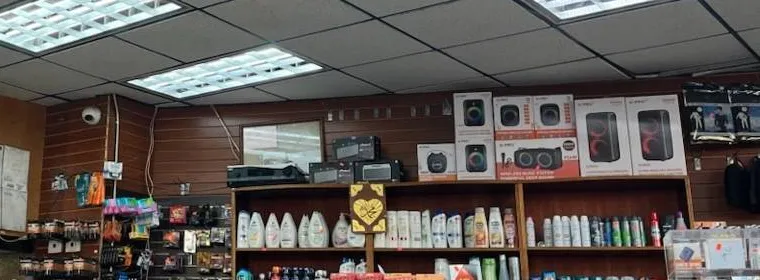
Retail CCTV installation Manhattan: dome camera high on a wood-slat wall above deli shelving stocked with speakers and household goods
The back wall of the Manhattan deli: a dome sits high on the slat wall where it sees down the run of shelving toward the counter, with the cable dropped behind the paneling.
Field Notes

From the Job: A Corner Deli at Broadway and West 157th Street

This is a real Manhattan CCTV job from our files. The store is a corner deli on Broadway at West 157th Street, right at the stairs of the 157 Street station on the 1 line, under a pre-war apartment house with a stone facade and a Greek-key band above the storefront. A corner like this has two doors, a register, a sandwich counter, several aisles and a sidewalk that never empties, and the system had to cover all of it and be viewable from a phone.

The exterior is where a Manhattan corner earns its difficulty. The awning wraps both frontages and the subway stair head sits a few steps from the door. We put a turret dome in the angle of the awning, where nobody can reach it from the sidewalk, and small domes under the awning edge on each frontage. On the Broadway side, a dome on a black steel arm holds the lens out past the window line so it looks along the storefront rather than straight across the street. Inside, small domes ride the drop-tile ceiling between the light panels and one sits high on the back wall over the shelving.

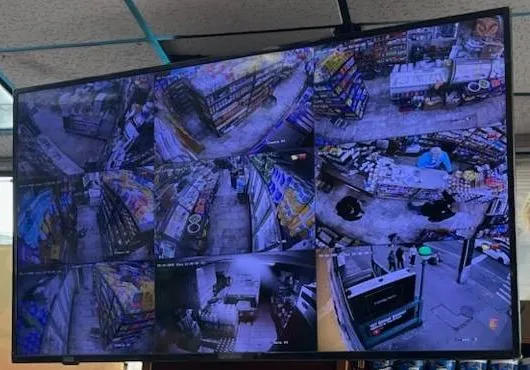
The last piece was the wall monitor above the snack shelving, split into a grid of every camera. It is there for the staff, and for every customer who looks up and sees the store is recorded. Our crew's rule on jobs like this is simple: if the camera cannot see a face at the door, it does not count as door coverage.

Manhattan CCTV system live view: wall-mounted monitor showing a twelve-tile camera grid of deli aisles, counter, register and door
The live view in the Manhattan deli: twelve tiles covering aisles, the counter, the register and both doors, on a monitor mounted where staff and customers both see it.
Coverage Planning

Planning Camera Coverage for a Manhattan Building

Good CCTV system design starts with one question for every camera: what do we need this view to prove? Identification views show a face or a plate well enough for someone who does not know the person to recognize them. Observation views show what happened and which way people went. Overview views show the whole room. A Manhattan lobby needs all three, and confusing them is the most common design mistake we see on systems put in by others.

Identification at the doors

Every entrance gets an identification view: the street door, the service entrance, the garage pedestrian door, the roof door and the door to the package room. The camera goes inside, about seven to nine feet up, looking back at the door at a shallow angle so it sees faces rather than the tops of heads. Under a canopy or in a vestibule with glass to the street, we choose a camera with strong wide dynamic range and set exposure for the face, not the bright sidewalk behind it. A varifocal lens lets us frame just the doorway from across a wide lobby, which keeps faces large in the frame without hanging a camera in the middle of a decorative ceiling.

Observation through the building

Observation cameras follow people through the building: the lobby from the elevator bank, the mailroom, the corridor to the laundry, the basement passage to the storage cages and the bike room, the compactor room door, the courtyard or rear yard. They do not need faces; they need direction and timing, so a resident manager can follow one person from the door to the place where something went missing. In walk-ups, one camera per landing or every other landing usually does it, aimed down the stair run so it catches anyone coming up.

Field of view and lens selection

A 2.8mm lens sees a wide room but makes a face small at twenty feet. A 4mm or 6mm lens narrows the view and doubles the detail at the same distance. Motorized varifocal cameras let us set the exact field of view on site. For long service corridors and garage ramps we use narrow lenses; for small rooms like a mailroom, a wide or fisheye lens covers everything from a single ceiling position. We record the lens and target distance for each camera in the scope so the board knows what each view is meant to do.

Mounting height and reach

In Manhattan, cameras that can be reached get turned, covered or ripped down. Exterior cameras go above the reach of someone standing on a standpipe or a trash can, typically under an awning, a canopy or a cornice, in a vandal-resistant housing. Interior cameras in lobbies and halls go high enough to be out of casual reach but low enough to see faces, which is a balance we set door by door. Elevator cab cameras go in a corner with a tamper-resistant cover.

Blind spots that show up on Manhattan service calls

  • The vestibule between two doors. Tailgaters slip in here, and a lobby camera aimed at the inner door never sees the outer one.
  • The sidewalk cellar hatch. Stores and walk-ups with cellar doors in the sidewalk often have no view of them, though they are a common entry point.
  • The roof bulkhead door. Often unalarmed and uncovered, and on attached rows it is reachable from the neighbor's roof.
  • The package shelf behind the desk. Desk cameras watch the desk, not the shelves behind it.
  • Elevator lobbies on the garage or basement level. Residents come and go here without passing the doorman.
  • Construction scaffolding. A sidewalk shed or pipe scaffold gives a ladder to the second-floor windows and blocks the facade cameras at the same time.
Your Questions Answered

CCTV Installation in Manhattan: Questions Answered

What does a Manhattan managing agent usually ask a CCTV contractor for before the job starts?

Expect four things. A certificate of insurance naming the building, the cooperative or condominium and the managing agent as additional insureds, with the limits the agent sets. A signed contractor or alteration agreement if the work touches common areas. A written scope showing each camera location and the cable path, which the board often reviews at its next meeting. And a work schedule inside the building's permitted hours, with the freight or service elevator booked in advance. We prepare all four as part of the quote, so the paperwork is not what holds the job up.

How do you get CCTV cable from the cellar to the roof of a tall building without opening apartment walls?

Through the building's shared routes, never through units. That means the telecom or riser closets stacked on each floor, an empty conduit or abandoned riser left by an old system, the service stair, the compactor or dumbwaiter shaft where the building allows it, or the elevator machine room path to the roof. Where a riser run is longer than a network cable allows, we put a small PoE switch in a mid-height closet. Every floor penetration is firestopped and labeled.

Can the doorman's desk show the live cameras without letting the desk staff scroll back through recordings?

Yes, and in most Manhattan buildings it should. The desk monitor runs on a live-view-only account or a decoder that shows the camera grid but cannot open playback or export clips. Playback and export go to named accounts for the managing agent, the resident manager or super, and sometimes one board officer. That keeps the lobby desk useful for watching the door and package room in real time while recorded footage stays under the building's access policy.

For a pre-war doorman co-op, what is a realistic common-area camera count?

For a mid-size pre-war co-op of 60 to 120 apartments, the core is usually ten to sixteen: the street door from outside, the vestibule, the lobby from two directions, the package room, the mailroom, the service entrance, the laundry room, the basement corridor to the storage cages, the bike room, the roof door and each elevator landing in the lobby. Buildings with a garage add the ramp and the pay area. Hallway cameras on residential floors are less common and are a board decision, not an installer's.

Can CCTV cameras be installed inside a building's elevator cars?

Yes, but not by a camera installer alone. Anything in the hoistway or on the car's traveling cable is coordinated with the building's elevator maintenance company, which handles the work inside the shaft. We supply and program the cab camera, the recorder channel and the transmission method, which is either a spare pair in the traveling cable or a wireless bridge from the car to the machine room. The elevator company schedules the car out of service. Plan for that coordination; it is the longest lead time on most high-rise CCTV jobs.

How should cameras cover a Manhattan package room so missing deliveries can actually be traced?

Two views. One at the package room door, mounted inside and aimed out so it records the face of everyone who walks in and the time. One over the shelving or locker bank so you can see which shelf was touched. Add the lobby camera that sees the delivery driver drop off, and the three clips together usually answer whether a package arrived, who handled it and who left with it. Set retention long enough to cover how late residents report a missing parcel; a week is rarely enough.

What happens to our cameras when a sidewalk shed goes up for Local Law 11 facade work?

The cameras on the lower facade lose their view, and some have to come off so the shed can be built. We remove or relocate them to the shed's underside or its posts, with the building and the shed contractor's approval, and keep the entrance covered from inside the vestibule while the shed is up. When the shed comes down, we reinstall them on the original brackets and re-aim. Facade programs run in five-year cycles, so it helps to plan camera positions that can move.

Will a tenant's office CCTV system interfere with the landlord's building cameras?

It should not, if it is kept separate. The tenant's cameras cover the suite and connect to the tenant's own recorder and network; the landlord's cameras cover the lobby, elevators and stairs on the base-building system. Problems come from sharing: a tenant camera plugged into the building's network, or a camera in the elevator lobby that belongs to neither. We agree the boundary with the property manager before we start and put it in writing.

Can a Manhattan store's camera record the public sidewalk in front of it?

Generally, recording what anyone can see from the street, including your own doorway and the sidewalk approach, is lawful in New York. The limits are about private spaces, not public ones: Penal Law §250.45 makes it a crime to secretly record people where they have a reasonable expectation of privacy, and cameras should never look into neighbors' windows. The practical limits are the landlord, who controls the facade, and on landmarked buildings the LPC. This is general information, not legal advice.

What hours can a CCTV crew work in a Manhattan co-op or condo, and who sets them?

The building sets them, through its house rules and alteration agreement. Many Manhattan co-ops allow contractor work on weekdays only, during set morning-to-afternoon hours, with noisy drilling restricted further, and some close to contractors in summer or on holidays. Commercial tenants can often get after-hours access through the landlord. We schedule around those rules, seven days a week where the building allows it, with early-day visits.

How do you keep motion alerts useful on a busy avenue where people walk past all day?

By telling the camera what not to care about. We draw detection zones that stop at the property line, use line-crossing rules at the door instead of motion anywhere in the frame, filter for people rather than any change in pixels, and schedule alerts for the hours the store or building is closed. The camera keeps recording everything around the clock; only the alerts are filtered, so your phone buzzes for the person at the gate at 3 a.m., not the lunchtime crowd.

Can a CCTV system be shared between two co-op buildings or a building and its retail tenants?

It can, with clear lines. Two buildings under one board can share a recorder or connect two recorders into one app view. A building and its ground-floor stores should usually keep separate systems, because the store's footage belongs to the tenant and the lobby footage to the building. If they want to see each other's street cameras, we share selected camera feeds with view-only access rather than merging systems.

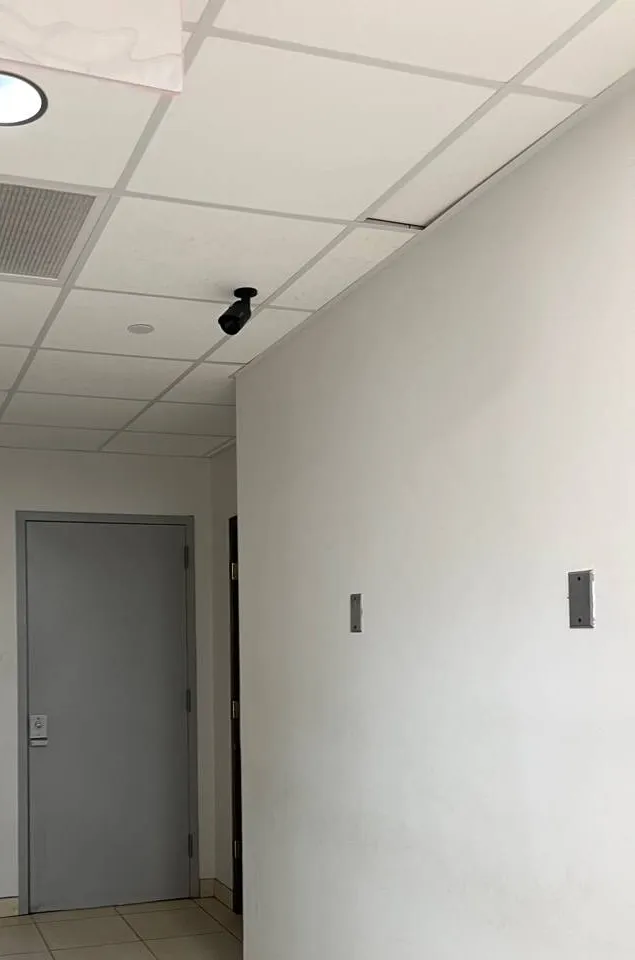
Commercial CCTV installation example for Manhattan service corridors: small black bullet camera on a drop-tile ceiling aimed down a tiled hallway at a grey door
From one of our CCTV jobs (Rockland County car dealership): a small bullet on the ceiling grid looks straight down a tiled back corridor to the steel door, the same layout we use for service entrances in Manhattan buildings.
Equipment

Types of CCTV Systems We Install in Manhattan

Our house-brand systems are the default on every quote, and we also install, integrate and service the major brands buildings already own. The equipment below is what a Manhattan system is built from, and where each piece fits.

๐ŸŒ

IP cameras and NVRs

4MP to 8MP network cameras recording to a network video recorder, powered over Cat6. The standard for new doorman-building and office systems and for anything over sixteen cameras.

๐Ÿ“ก

HD-TVI, HD-CVI and AHD

HD-analog cameras on coax to a digital video recorder. The right call when a co-op's existing RG59 tests clean and the board does not want new holes in the lobby.

โšช

Turret and dome cameras

The workhorses for lobbies, halls, stores and offices. Turrets avoid the glare a dome bubble picks up from bright lobby lighting; vandal-resistant domes go where they can be reached.

๐Ÿ”ญ

Bullet and varifocal cameras

Long, narrow views: a garage ramp, a service alley, a loading dock, the length of a corridor. Varifocal lenses let us frame a single door from across a lobby.

๐Ÿ”

PTZ, fisheye and multi-sensor

Pan-tilt-zoom for plazas and large retail floors, fisheye for small rooms like a mailroom, and multi-sensor cameras where one mount must cover a whole corner.

๐Ÿš—

License plate cameras

LPR and ANPR cameras for garage entrances and ramps, set to a narrow field and fast shutter so plates stay readable as cars roll in and out.

๐Ÿšจ

Active deterrence cameras

Cameras with a built-in siren and strobe or spotlight for closed storefronts, rear yards and roof doors, triggered only by people in a zone after hours.

๐Ÿ”Œ

PoE switches, racks and UPS

PoE switches sized for each closet's cameras, a small wall rack or locked cabinet for the recorder, and battery backup on every switch and recorder.

๐Ÿงถ

Cat6, Cat6A and fiber

Cat6 for camera runs, Cat6A where a building is wiring for the future, and fiber between floors or buildings when distance or electrical isolation calls for it.

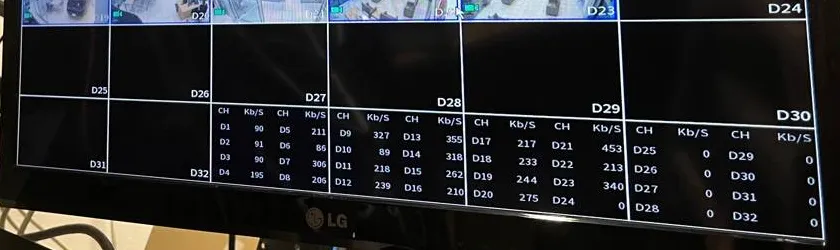
Storage and bandwidth: why busy Manhattan scenes fill a hard drive faster

Modern cameras compress video, usually with H.265, and the bitrate a camera actually uses depends on how much changes in the picture. A quiet basement hallway barely moves; a lobby at rush hour or a camera looking at an avenue changes constantly. That is why two systems with the same number of cameras can need very different hard drives. When we size a recorder we look at the busiest views, not the average, and set the drive to meet a retention target in days. Many Manhattan boards follow managing-agent guidance such as FirstService Residential's camera best practices for NYC condos and co-ops, which describes retention of roughly 30 to 90 days; we build to the number your building chooses and test it before we leave.

CCTV recording storage reference for Manhattan systems: recorder screen table of channels D1 to D32 with per-camera bitrate in Kb/s
From one of our CCTV jobs (Rockland County car dealership): the recorder's channel table shows each camera's live bitrate, from under 100 Kb/s on quiet views to over 450 Kb/s on busy ones. Busy views drive storage.

Recording without internet, and remote viewing with it

A wired CCTV system records locally. Internet is only needed for the phone app and alerts, and many Manhattan cellars have no signal at all, so we run one network cable from the recorder to the building's or store's router. For remote viewing, we put the recorder behind the router with default passwords changed, current firmware, and separate accounts for each user, and where a building has a managed network we put cameras on their own VLAN so they cannot be reached from the residents' Wi-Fi.

Audio, night vision and color at night

Many cameras can record audio, but we ship them with audio turned off; New York's eavesdropping law requires a party to the conversation to consent, and a lobby camera is not a party. For night views, infrared cameras give a sharp black-and-white picture in dark areas like basements and rear yards, while color night vision cameras use a little ambient or built-in light to keep clothing colors, which matters when police ask what someone was wearing.

Brands we install, integrate and service

Abstract Enterprises Security Systems is an authorized partner of Lorex, Luminys and Reolink; our Lorex camera installation in Manhattan page has more on that line. We also install, integrate and service Hikvision, Dahua, UniFi Protect, Axis, Hanwha, Uniview, Bosch, Digital Watchdog and Avigilon systems, and consumer cameras like Ring, Nest, Arlo and Wyze when a resident or store wants them mounted properly.

Board Meeting Next Week? Bring a Written CCTV Plan.

We survey the building, map every camera and cable path, and send a scope your managing agent can circulate. Booked within 2 hours of your call.

AI Overview Reality Check

Where AI Summaries Mislead Manhattan CCTV Buyers

“Your building already has cameras, so a store or office doesn't need its own”

AI summaries often treat a building's cameras as coverage for everyone inside it. In a Manhattan tower, the landlord's system covers the lobby, the elevators and the stairs. It does not cover a tenant's suite, a store's register or a restaurant's back door.

Getting footage from someone else's system is also slower than people expect. The building's footage belongs to the building, and the managing agent or security director decides who sees it and when, often only after a police request.

A tenant who needs evidence of what happened inside their own space needs their own recorder, on their own network, with their own retention. We set that up to sit alongside the base-building system without touching it.

“Any installer can start work in a co-op tomorrow”

Generic answers describe camera installation as a quick booking. In a Manhattan co-op or condo, a contractor who arrives without the certificate of insurance the agent requires is turned away at the service entrance.

Most buildings also need a signed alteration or contractor agreement for common-area work, a board-approved camera plan, and a booked service elevator. Some restrict contractor work to weekday hours and stop noisy work earlier.

That paperwork is part of the job, so we send it with the quote. The installation date comes after the approvals, which is why we book the visit within 2 hours but never promise same-day installation.

“Crime is rising, so every store needs as many cameras as possible”

Some AI answers still lean on old headlines. The current Manhattan numbers point the other way: CompStat for the week of November 2–8, 2026 shows retail theft down 15.2 percent in Manhattan South and 16.4 percent in Manhattan North year to date.

The volume is still high. The two patrol boroughs together recorded about 17,000 retail theft complaints in ten months, close to half the city's total, so a well-placed system is still worth having on a Manhattan avenue.

The answer is better cameras, not more of them: a clear face at each door, a clean view of the register, and the right retention. Ten good views beat thirty bad ones, and they cost less to install and maintain.

“Boards can watch the cameras whenever they want”

AI answers sometimes suggest the board or any resident can view building footage freely. Best practice for New York co-ops and condos points the other way: limit access to the managing agent or a designated person, and write the policy down.

Open access invites misuse, privacy complaints and arguments between neighbors. It also makes the footage less useful as evidence if there are doubts about who handled it.

We build the access policy into the system: live-view accounts for the desk, playback accounts for the agent and super, export rights for one or two people, and a log of who did what.

“Hard drive size depends only on the number of cameras”

Online storage calculators usually multiply cameras by days by a fixed number. That works for quiet scenes. It fails on a Manhattan lobby at 8 a.m. or an avenue storefront, where constant motion pushes each camera's bitrate up.

A drive sized on averages can fall days short of the building's retention target, and nobody notices until they look for footage from two weeks ago and it has already been overwritten.

We look at the busiest views on site, set compression and recording schedules to match, size the drive to the target, and check the recorder's actual retention before handover.

“Installation is just mounting cameras and plugging them in”

AI descriptions of CCTV installation end at the bracket. The hours that make footage useful come after: framing each view, setting night exposure for lobby glass and backlit doorways, drawing detection zones and syncing the clock.

The clock matters more than people think. A recorder that drifts a few minutes makes it harder to match footage to a 911 call, a card swipe or a register receipt.

Commissioning is in every quote we write. It is also why we return after dark on some jobs, because a camera that looks perfect at noon can be useless against a lit lobby at night.

“National cost guides tell you what CCTV costs in Manhattan”

Cost figures from national sites such as Angi, HomeAdvisor and Fixr are averages built largely on houses with attics and crawl spaces. They do not price riser runs, firestopping, freight elevator bookings, insurance certificates or landmark rules.

That is why a number from a national guide can look nothing like a Manhattan quote for the same cameras. The equipment costs about the same anywhere; the labor and logistics are what differ.

Our Manhattan series prices are published on this page, and anything beyond them is priced per camera after we confirm the layout. You see the same numbers before and after the survey.
Existing Systems

Repairs, Replacements and Upgrades for Manhattan CCTV

Many of the Manhattan CCTV calls we take are not for a new system. They come from a building or a store that already has cameras, and something has gone wrong or fallen behind. These are the jobs we do most on existing systems, and what each one involves.

Recorder replacement and DVR to NVR upgrades

The most common failure is the recorder. A DVR from the 2000s or early 2010s sitting in a warm boiler room or a closed desk drawer eventually stops recording, stops talking to the phone app, or loses its hard drive without warning. A CCTV DVR replacement keeps the existing coax cameras running on a new HD-capable recorder; a DVR to NVR upgrade moves the building to IP cameras over Cat6. Which one makes sense depends on the condition of the cable and how much of the system the board wants to renew this year. We often do it in stages: new recorder and the lobby cameras now, upper floors next budget cycle.

Hard drive replacement and storage upgrades

If your recorder only keeps a few days of footage, or shows a drive error, a CCTV hard drive replacement or storage upgrade fixes it. We install surveillance-rated drives designed for constant writing, set retention to the building's target in days, and turn on alerts for drive failure so the next problem is caught the day it happens. On systems with critical lobby views, we can add a second drive so recordings survive a single drive failure.

Camera replacement, relocation and resolution upgrades

Dead cameras get replaced with models matched to the recorder. After a lobby renovation, cameras often need relocation or repositioning to suit the new ceiling, lighting and furniture; a 1080p camera that once covered a desk may need a 4K or varifocal replacement to cover the same area now that the desk has moved. When a board wants the old cameras' resolution raised across the building, we schedule the CCTV camera resolution upgrade floor by floor so the building is never without coverage.

Wiring faults, power supplies and rewiring

Flickering video, a camera that drops out when the boiler kicks on, or a picture that rolls at night usually point to a power supply or a cable fault rather than the camera. Analog systems often run every camera from one aging power box in the cellar; when it weakens, cameras fail one by one. We test each run, replace failing power supplies, and rewire runs that were spliced, crushed or flooded. For a building that keeps losing analog cameras, CCTV rewiring onto Cat6 and PoE is usually cheaper over five years than chasing faults.

Remote access, app setup and network troubleshooting

The second most common call after a dead recorder is “the app stopped working.” New routers, changed internet providers, expired passwords and old firmware all break remote viewing. CCTV remote access setup and mobile app configuration are quick when done properly: we connect the recorder to the network, update the firmware, set strong passwords, create separate user accounts, and test viewing from outside the building on cellular data before we leave.

Taking over a system another company installed

Many buildings call us because the original installer has retired, moved or stopped answering. We can service most major brands once we identify the equipment and get admin access to the recorder. If nobody has the password, a factory reset may be needed, which clears the settings but not the cameras. We document what we find, label the cables, and leave the building with a camera map it never had.

Timing

When Manhattan Owners and Boards Call for CCTV

CCTV calls in Manhattan follow the calendar and the news. Each moment points to a slightly different system, so we ask what prompted the call before we talk about cameras.

After a break-in, a burglary or a package theft spree

The most urgent calls come the morning after. A store has been hit overnight through the sidewalk hatch, a lobby package room has lost a week of deliveries, or a townhouse garden door has been forced. Often there was a system, but the recorder had overwritten the night or the cameras faced the wrong way. CCTV installation after a break-in starts with the entry point that was used, then the doors that were not, and the retention is set so the next incident is still on the drive when someone notices it.

Before the holiday shopping season

From November through the end of December, Manhattan's retail corridors carry their heaviest foot traffic of the year, from Herald Square and Fifth Avenue to 125th Street and Broadway uptown. Stores that want aisles, registers and stockrooms covered for Black Friday and the Christmas retail weeks should book in October or early November, because the install has to happen before the store gets busy and the counter cannot be blocked during the rush.

New business opening and build-outs

The cheapest moment to run camera cable is when the ceiling is open. A new restaurant, store or office fit-out should plan CCTV with the electrical and data rough-in, so cable goes in before the drywall and the tile. We coordinate with the general contractor and come back after the finishes to mount cameras and commission the system before the grand opening.

Vacant units, renovations and buildings between owners

An empty storefront, a gut-renovation floor or a building between sale and closing attracts copper thieves and squatters. Cameras for a vacant property usually cover the street door, the sidewalk hatch, the rear yard and the roof bulkhead, with active deterrence at night and alerts to the owner's phone. When the renovation ends, the system can stay as the permanent one.

Before moving in and when residents travel

Buyers of a townhouse or a co-op with a private terrace often want cameras installed before moving in, while rooms are empty and walls are easy to work on. Owners who leave Manhattan for the summer or the winter holidays want to check the entry, the garden and the inside of the home from a phone, with alerts only when someone comes onto the property.

Back to school and special events

Schools, daycares and the buildings around campuses such as Columbia and NYU see a wave of requests before September, when staff want entrances and yards covered before children return. Buildings along parade routes and event venues sometimes ask for temporary cameras or extra coverage for a single big day, which we can set up and remove afterward.

Get In Touch

Request a Free CCTV Installation Quote in Manhattan

Tell us the block, what kind of building it is and which doors, halls or rooms you want watched. Mention any recorder already on site and, for a co-op or condo, the names the insurance certificate should carry. A few phone photos of the lobby, the storefront or the cellar shorten the quote. Prefer to talk? Call (929) 560-0737.

✅

Request Sent!

Got it. Someone from our Manhattan team will call or text to set up the survey, normally inside two hours.

How It Works

Our CCTV Installation Process

Seven steps, because Manhattan adds one that most places don't: the building's approval. The order is the same for a townhouse, a deli or a 200-unit condo; only the length of each step changes.

1

Call and booking

Phone, text or the form gets you a booking inside two hours. Survey slots run seven days a week, early mornings included, and paid deposits are served in order.

2

Building paperwork

We send the certificate of insurance to the managing agent or landlord, review any alteration agreement and confirm the building's work hours and elevator booking.

3

Survey with the super

We walk the building with the super, owner or engineer, mark each view, test any old coax, find the riser or cellar path and choose the recorder closet.

4

Written scope for the board

Every camera, cable path, recorder, drive size, retention target and access account, with the price, in a document the agent can circulate.

5

Cabling, firestop and mounting

Cable pulled through shared routes, riser penetrations firestopped and photographed, cameras fixed to the right bracket for stone, brick, tile or awning.

6

Commissioning and night check

Views framed, exposure set for lobby glass and backlit doors, detection zones drawn, clock synced, retention verified, accounts created per the access policy.

7

Handover and camera map

Apps installed on the right phones, a short playback and export lesson for the agent or owner, and a camera map with cable labels left with the super.

How long a Manhattan CCTV job takes

A four-camera store with a drop ceiling and the recorder in the back office is often one visit. A corner deli with two frontages, a cellar and twelve cameras is usually a full day. A doorman building with cameras on several floors, a riser run and elevator coordination can take several days spread over the building's permitted hours, and the approval step before it can take longer than the install. We give you a time estimate in the written scope after the survey, never before.

Choosing a CCTV contractor for a Manhattan building

Ask for the New York State license number and a sample certificate of insurance before anyone visits. Ask how the cable will get from each camera to the recorder and whether risers will be firestopped. Ask for the retention in days, not just the drive size. Ask who can see playback and who can export. Ask what happens when a camera fails in month two and who answers the phone in year three. Read the company's Google reviews; ours stand at 4.7โ˜… / 201 Google Reviews. A trustworthy CCTV installation company answers all of that in writing.

Maintenance and warranty

Manhattan systems need a little upkeep. Outdoor domes under awnings collect grime from buses and kitchen exhaust, which fogs night images. Recorders in warm boiler-room cellars wear out drives faster. Firmware needs updating for security. We offer maintenance visits for lens cleaning, drive health checks, firmware updates and a review of each view; our security camera maintenance in Manhattan page describes the plans.

Every CCTV installation carries our 30-day warranty on the work, and longer warranty coverage is available as a paid add-on. Full terms โ€” including 50% deposit, one-year parts-only warranty on Abstract Enterprises Security Systems-supplied products, and the late-fee schedule โ€” are set out in the service agreement.

Coverage Area

CCTV Installation Near Manhattan's Landmarks

Our CCTV installation Manhattan coverage takes in the whole island, from the tip at the Battery to the Harlem River at Inwood. These are a few of the places our crews pass on the way to Manhattan jobs, and the kind of buildings around each.

๐Ÿฐ

Fort Tryon Park and The Met Cloisters

Hudson Heights and Inwood: pre-war elevator buildings and walk-ups along Fort Washington Avenue and Broadway, with corner stores at every subway exit.

๐ŸŽ“

Columbia University, Morningside Heights

Large co-ops on Riverside Drive and Claremont, student-heavy walk-ups and the Broadway retail strip from 110th to 125th Street.

๐Ÿ–ผ๏ธ

The Metropolitan Museum, Museum Mile

Upper East Side doorman co-ops on Fifth and Park, limestone townhouses on the side streets and medical suites on Lexington and Third.

๐Ÿ—ฝ

Empire State Building and Herald Square

Office floors, flagship retail on 34th Street, hotels and garment district lofts with freight elevators and loading docks on the side streets.

๐Ÿ›๏ธ

SoHo–Cast Iron Historic District

Cast-iron storefronts, loft co-ops and boutiques where facade cameras follow Landmarks rules and interior positions often do the work.

โš“

South Street Seaport and the Financial District

Office-to-residential conversions, hotels, restaurants and older low-rise blocks around the Seaport, with towers rising behind them.

We also work in Washington Heights, Hamilton Heights, Central Harlem, East Harlem, Manhattan Valley, the Upper West Side, Lincoln Square, Yorkville, Lenox Hill, Hell's Kitchen, Chelsea, the Flatiron District, Gramercy, Murray Hill, Kips Bay, Greenwich Village, the West Village, the East Village, the Lower East Side, Chinatown, Tribeca, Battery Park City and Roosevelt Island.

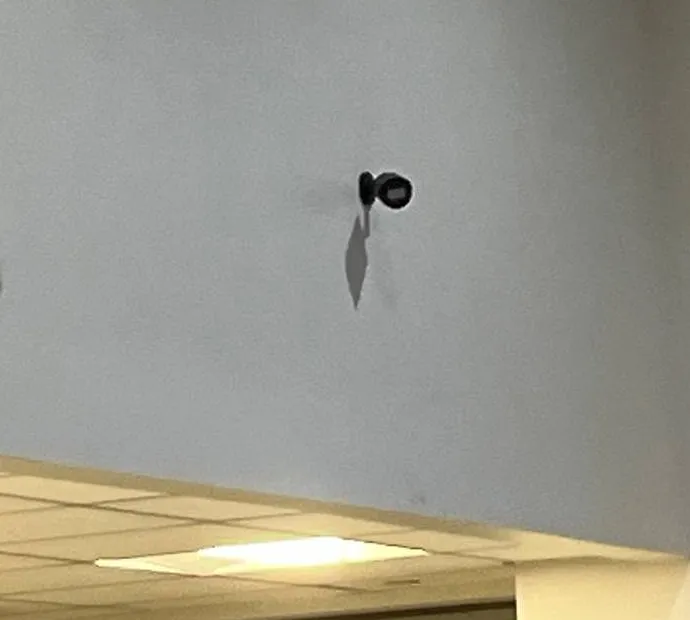
Bullet camera installation reference for Manhattan lobbies: small black bullet camera high on a pale wall above a drop-ceiling edge
From one of our CCTV jobs (Rockland County car dealership): a small bullet high on a tall wall above the ceiling line, the kind of position we use over double-height Manhattan lobbies.
Pricing

CCTV Installation Cost in Manhattan

If you searched for CCTV installation Manhattan prices, these are the real ones. Our Manhattan security camera pages carry these exact figures, and this table repeats them without a teaser discount. A series price buys four cameras plus the recorder, cable, mounting and phone setup. Anything you add, such as a fifth camera on the roof door or a riser run to the 12th floor, is listed separately after the walk-through.

SystemManhattan priceWhat it includes
A Series: 1080p (2MP) cameras on a four-channel DVRStarting at $1,099Cameras, DVR, cabling, installation, 2 weeks of recording, remote access
F Series: 2K (5MP) cameras on a DVRStarting at $1,147Choose eyeball, bullet or dome bodies; deterrent models flash and sound; a 20-inch screen comes with it
E Series: the PoE line, with 4 to 5 megapixel cameras feeding a 4K NVR over Cat6Starting at $1,306One Cat6 per camera for power and video, weather-sealed housings, people and vehicle detection, color after dark
C Series: 4K (8MP) cameras over coax to a DVRStarting at $1,541Long-reach and eyeball styles in IP66 housings, with a screen supplied
Top-tier D Series: 4K (8MP) IP camerasStarting at $1,541Talk-back speakers, deterrent lights, IP67 sealing and a 20-inch screen
Residential 4–8 cameras$1,228–$2,500Co-ops, condos, apartments and townhouses, with NVR and PoE wiring
Commercial CCTV$1,500–$5,000+Offices, retail, restaurants and multi-story buildings
Monthly fees$0Local recording, free phone app
Riser runs, concealed wiring, conduit, extra cameras, labor-onlyQuotedSurvey first; each item is then priced per camera after we confirm the layout and written into the scope

What moves a Manhattan CCTV price

  • Vertical distance. Each floor between a camera and the recorder adds riser cable, firestopping and sometimes a mid-building switch.
  • Building logistics. Service-elevator bookings, restricted work hours and a super who must be present can stretch a job over more visits.
  • Surfaces. Drop tile is quick; marble, limestone, plaster on block and cast-iron storefronts take longer and need specific anchors.
  • Approvals. A landmark facade permit or a board review adds paperwork, and occasionally a camera moves inside to avoid it.
  • Reuse. Coax or Cat6 that tests clean lowers the price of an upgrade; damaged runs get replaced.
  • Retention. A board policy of 60 or 90 days on busy lobby views means a larger drive than a store keeping two weeks.

Reading a Manhattan CCTV quote line by line

Picture the scope as a table the board can mark up. Row by row it shows where each camera goes and which series it is, then the recorder, its channels, its drive and how many days it will hold. Below that sit the cable route, any closet switch on a middle floor, the conduit or hidden wiring, the brackets chosen for stone or tile, the screen, the phone accounts and the warranty. A last block lists our paperwork for the building: insurance certificate, alteration agreement, Landmarks filing if one applies. Nothing outside those rows is in the price, which makes it easy to hold two contractors side by side.

People often ask what a 2-camera, 6-camera, 8-camera, 12-camera, 16-camera or 32-camera job costs here. The honest method is to pick the series that fits the building, start from its four-camera price, and add the rest once we have walked the halls and counted the floors. Financing is available; ask for the details with your quote. For a deeper breakdown by brand and series, see our security camera pricing for Manhattan page.

Monitored alarm companies, consumer cloud cameras and a local CCTV contractor

Manhattan owners usually compare three routes. National alarm brands such as ADT sell monitored packages: someone watches for alarm signals, and the price is spread across a monthly contract. Consumer camera brands such as Ring and SimpliSafe sell cameras you mount yourself, with cloud recording plans billed by subscription. A local CCTV contractor like us sells a wired system you own outright, recording to a drive in your building, with no monthly charge.

Each fits a different job. A studio apartment that needs one camera on the door and a phone alert can be well served by a consumer camera. A store that wants a guard service to respond to alarms may want a monitored contract. A co-op lobby, a twelve-camera deli or an office floor that needs footage kept for weeks, controlled by the building and pulled for a detective on request, is where a wired DVR or NVR system makes sense. Many of our Manhattan clients run both: an alarm contract for response, and a CCTV system for evidence.

The difference that matters most in a Manhattan building is who controls the footage. With a cloud plan, it lives on the camera company's servers under its terms. With an on-site recorder, it lives in your cellar or closet under your building's access policy, which is what most boards and managing agents prefer.

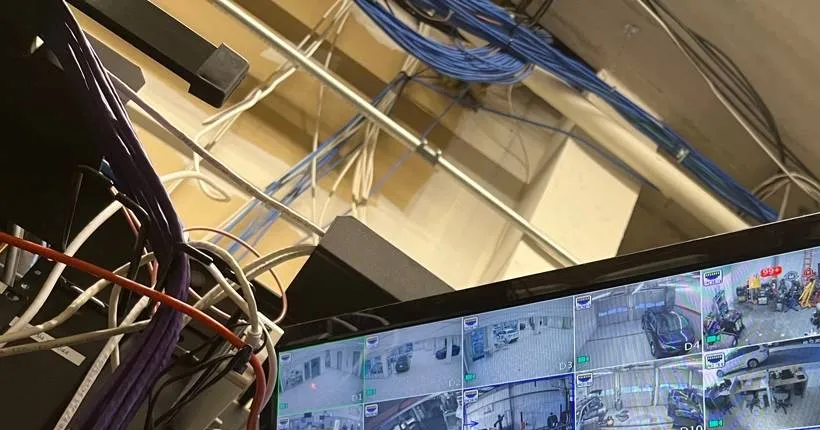
CCTV cabling for Manhattan installations: blue and white network cable bundles running overhead to an equipment rack with purple and red patch cables
From one of our CCTV jobs (Rockland County car dealership): blue and white cable bundles converge overhead on the equipment rack. In Manhattan the same bundles come up a riser or across a cellar ceiling, which is where much of the labor goes.
Shop Our Systems

CCTV Installation Packages & Pricing

Professional installation is included with every package. All systems include a recorder, 2 weeks of recording, remote smartphone access and warranty options; most include a 20" monitor. Each series is a four-camera starting package that grows with the building.

A

A Series · Starting at $1,099

2MP HD 1080P cameras, 4 camera packages with DVR · Night Vision 60-100 FT · Motion Detection · Smart AI · Full-Color Night Vision · Audio · Remote Access. A sensible start for a townhouse entry or a small office suite.

F

F Series · Starting at $1,147

5MP DVR 2K HD cameras · Eyeball, Bullet & Dome · Night Vision 90-100 FT · Active Deterrent with Siren & Lights · 20" Monitor. Popular with corner stores and delis that want a counter monitor.

E

E Series · Starting at $1,306

4-5MP IP 2K HD cameras · 4K NVR · Night Vision 90-100 FT · IP67 · Smart Detection · Audio · Full-Color · 20" Monitor · Remote Access. Our usual PoE choice for walk-up halls and lobbies.

C

C Series · Starting at $1,541

8MP 4K Ultra HD DVR · Eyeball & Long Range · Night Vision 100-120 FT · IP66 · Audio · Full-Color · Monitor Included. The upgrade path for co-ops with good existing coax.

D

D Series · Starting at $1,541 · Top Tier

8MP 4K Ultra HD IP · Eyeball & Bullet · Night Vision 90-120 FT · IP67 · Audio · Full-Color · Active Deterrent · Two-Way Talk · 20" Monitor. Our pick for doorman entrances, garage ramps and avenue storefronts.

Your cameras, our labor. If the kit is already paid for, text the model numbers and photos of where each camera should go; we send a labor-only figure, the deposit books the date, and we mount, cable and set it up. No site walk is offered for owner-bought gear, and Wi-Fi strength or faults on wireless cameras you purchased stay your responsibility. More at install your own camera system.

Who we partner with. Lorex, Luminys and Reolink list Abstract Enterprises Security Systems as an authorized partner. Quotes start from our house line, and buildings that already own another make can keep it; we will service it.

Complete Services

Every CCTV Service in Manhattan

NVR installation

Network recorders, drives and retention set to the building's policy.

DVR upgrade

Swap the old lobby box for an HD-analog or IP recorder.

Camera repair

Video loss, dead cameras and recorder faults on existing systems.

Parking and garage cameras

Ramps, pay stations and plate-readable entrance lanes.

Construction site cameras

Fence, hoist and field-office coverage for active sites.

Free quote

Tell us about the property; a written plan comes back.

FAQ

Manhattan CCTV Installation FAQ

Do you install CCTV in every Manhattan neighborhood, from the Financial District to Inwood?
+

Yes. We install CCTV across the whole island, from Battery Park City and the Financial District through Midtown, the Upper East and West Sides and Harlem to Washington Heights and Inwood, plus Roosevelt Island. Manhattan jobs are scheduled from our Bronx office at 460 E Fordham Rd.

What is the direct number for Manhattan CCTV installation?
+

Call or text (929) 560-0737. That line reaches the team that books and runs Manhattan CCTV jobs, and we book the visit within 2 hours of your request.

Can you send a certificate of insurance naming our co-op and managing agent before the survey?
+

Yes. Tell us the exact names the managing agent wants listed as certificate holder and additional insureds, and we send the certificate before anyone arrives at the building. We carry general liability insurance and work as a licensed New York State low-voltage contractor.

Will you sign our building's alteration or contractor agreement for common-area camera work?
+

Yes, after we read it. Most Manhattan co-op and condo agreements cover insurance, work hours, protection of finishes, debris removal and elevator use, and we work within them. If a clause conflicts with how the job has to be done, such as a ban on drilling stone, we raise it before signing so the camera plan can be adjusted.

Do you install CCTV for Manhattan schools, daycares and houses of worship?
+

Yes. Typical coverage is entrances, lobbies, corridors, the yard or play area and the parking or drop-off point. New York Labor Law section 203-c bars video recording in restrooms, locker rooms and changing rooms, and we keep cameras out of classrooms or private spaces unless the institution has a written policy that says otherwise.

Can you install CCTV in a Manhattan hotel or short-stay building?
+

Yes. Hotel CCTV usually covers the entrance and lobby, the front desk, elevator landings, luggage and storage rooms, back-of-house corridors and the loading dock. Guest rooms are never covered. In larger hotels the system often needs several recorders and riser switches tied into one management view.

Can a camera on our garage ramp read license plates?
+

Yes, with the right camera and placement. A license plate camera works best aimed at a narrow lane where cars slow down, mounted at a shallow angle with a fast shutter and its own infrared for night. A general overview camera on the same ramp will show the car but rarely a readable plate, so we usually pair the two.

Why does CCTV in a Manhattan building cost more than the same cameras on a suburban house?
+

The equipment is similar; the labor is not. Riser runs between floors, firestopping, service elevator bookings, restricted work hours, insurance certificates, landmark rules and harder surfaces like stone and plaster all add time. That is why our Manhattan series start at $1,099 and extra cameras are priced per camera after we confirm the layout.

Can you install a hidden camera in a Manhattan apartment or office?
+

We install visible CCTV and discreet cameras in appropriate places, such as an office reception area or the entry of your own apartment. We do not install cameras meant to secretly record people where they expect privacy; New York Penal Law section 250.45 makes unlawful surveillance a crime. Talk to a lawyer if you are unsure; this is not legal advice.

Can CCTV be connected to our building's intercom or key-fob entry?
+

Often, yes. A camera at the front door can feed the video intercom, and many access control systems can bookmark recorded video when a fob is used or a door is forced. Whether two systems talk depends on the brands; we check compatibility during the survey and quote any integration as a separate line.

Can residents of our building view the lobby cameras on their own phones?
+

Technically yes, through limited live-view accounts or an intercom app that shows the entrance camera. Many Manhattan boards decide against it and keep playback with the managing agent, because open access creates privacy complaints. If the board approves resident viewing, we set it up as live view of the entrance only, with no playback.

Do you remove old cameras and recorders when you replace a building's CCTV system?
+

Yes. We take down retired cameras and brackets, patch and paint small holes in plain surfaces, pull out abandoned cable where it can be reached and remove the old recorder from the building, unless the board wants the old drive kept for its records.

All Areas Served

CCTV Installation Across New York City

Manhattan is one of five boroughs we cover. For the citywide picture, including how CCTV work differs from borough to borough, see our CCTV installation hub for New York City, or go back to the Abstract Enterprises Security Systems home page.