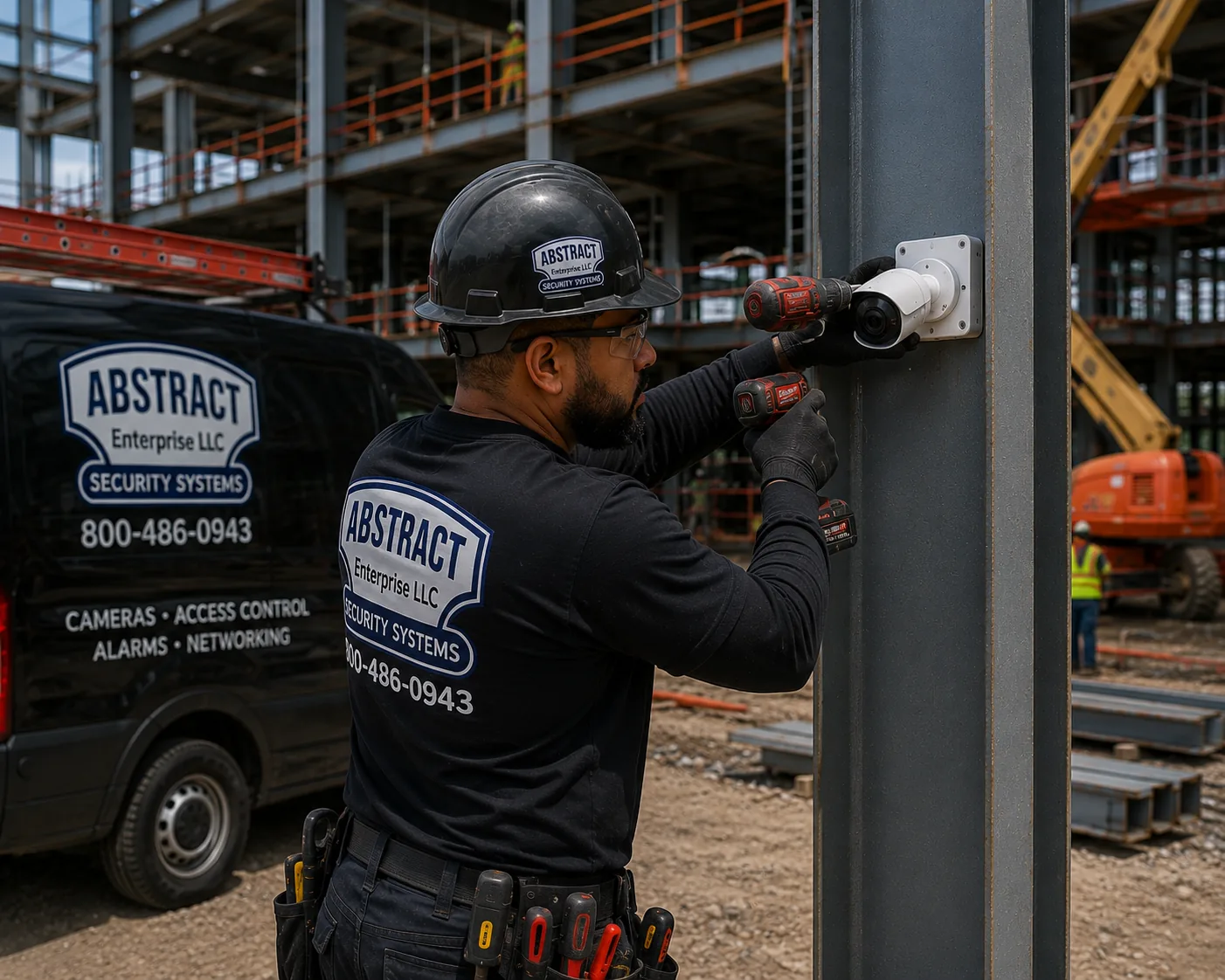
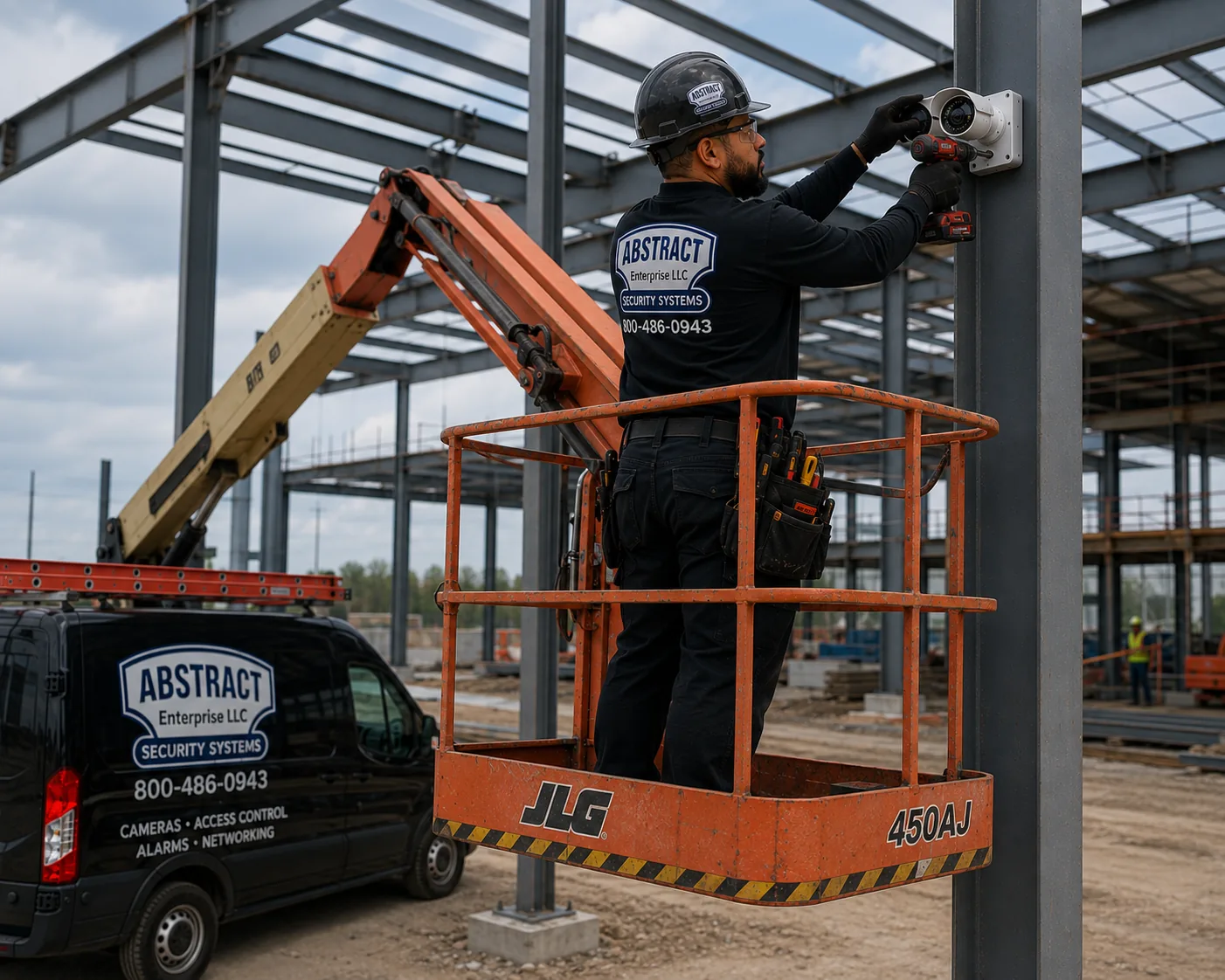
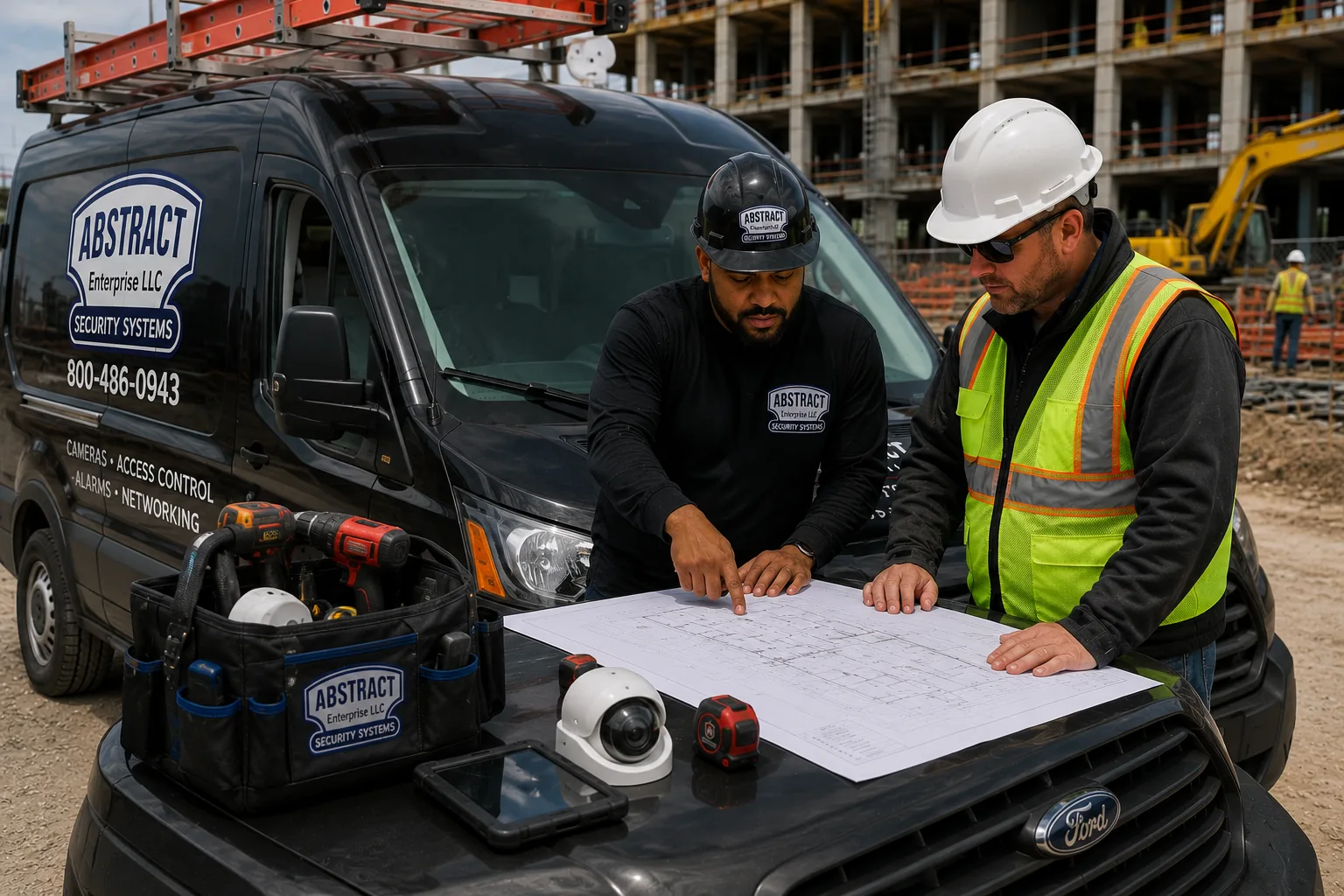
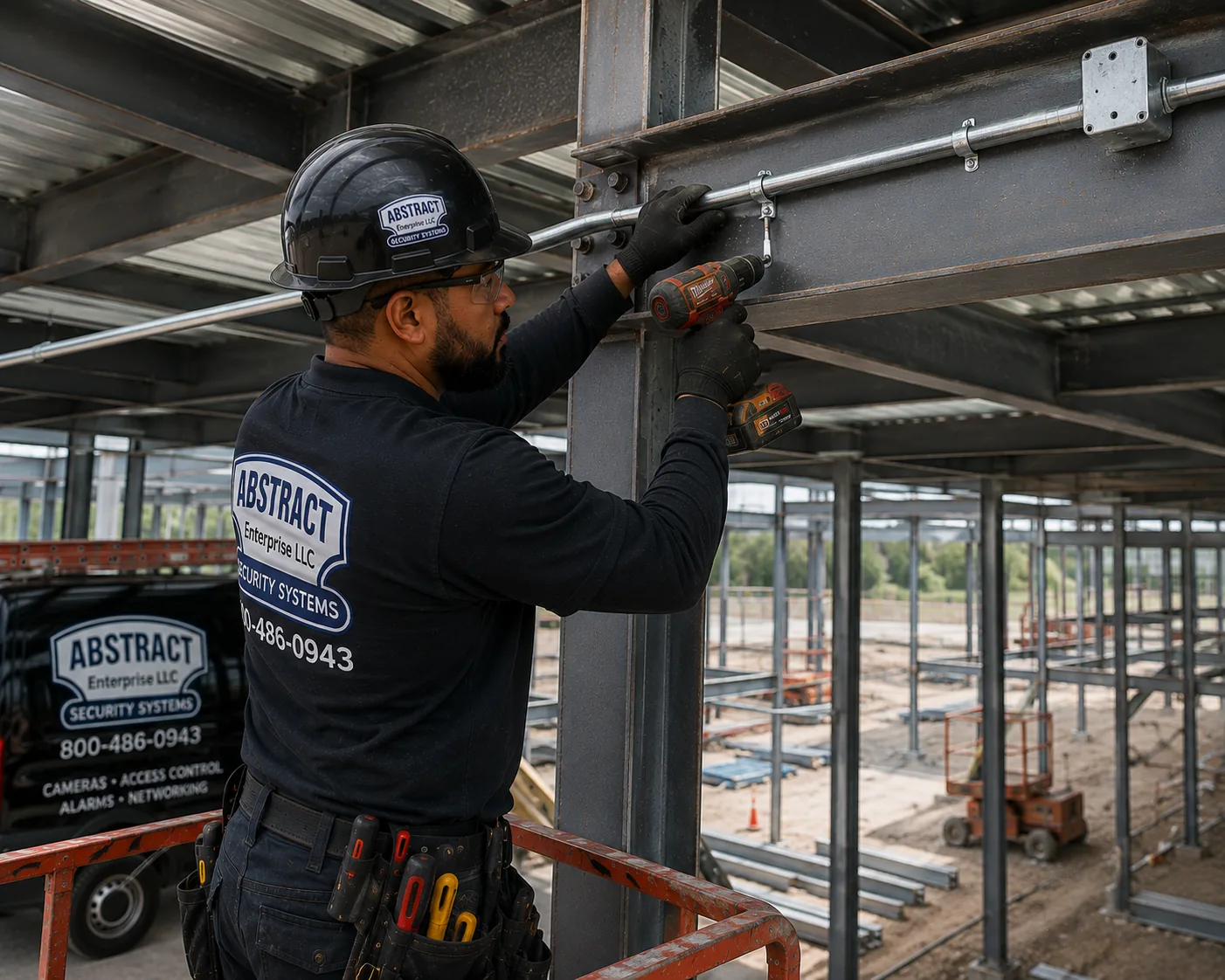
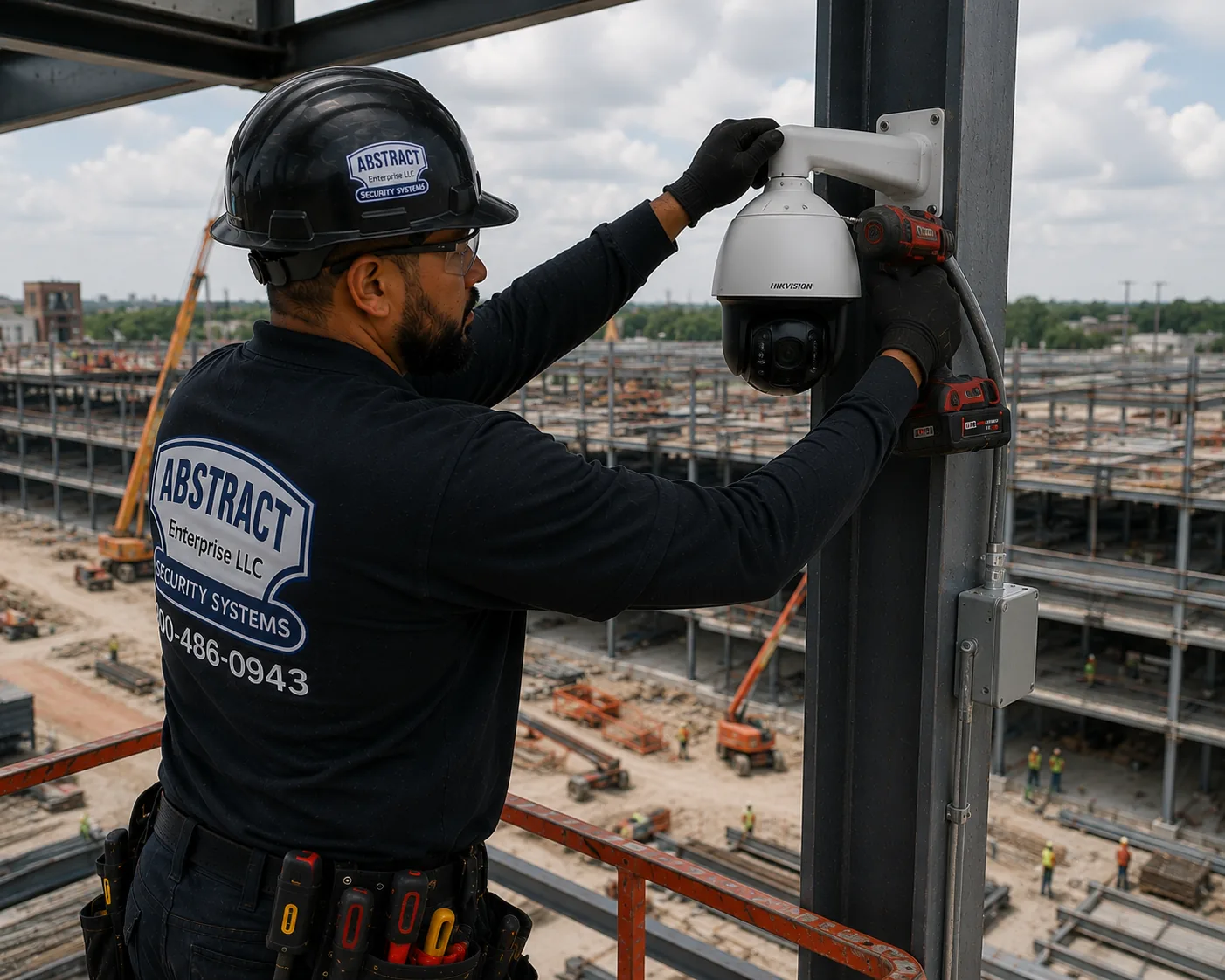
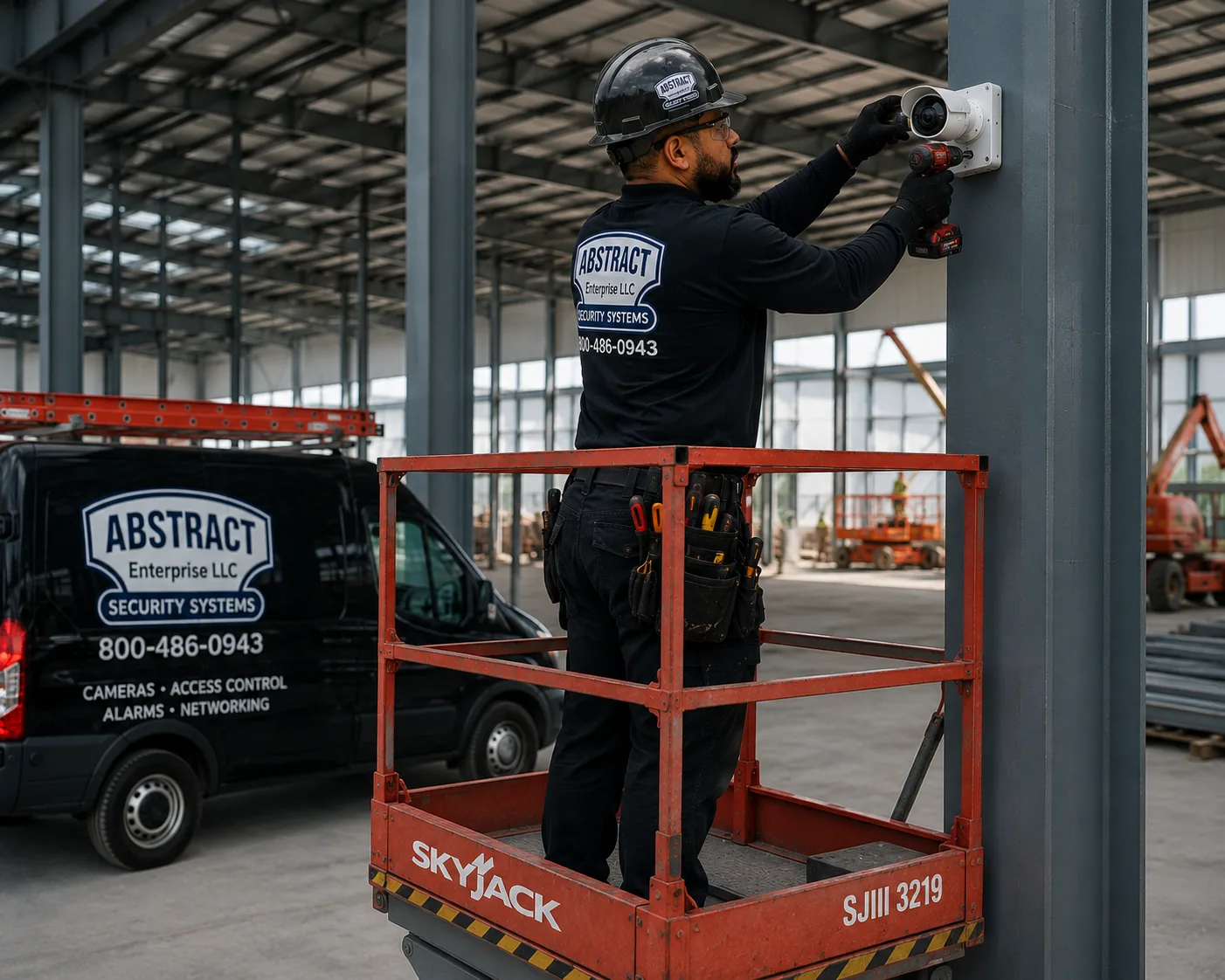
Jobsite cameras installed and monitored from inside the borough — our office sits at 460 E Fordham Rd, which makes every Bronx project a local run. Gut renovations with copper in the walls, affordable towers rising on public financing, rail-corridor work, scaffold-and-shed street phases, and dark takeover sites coming back to life: covered by a licensed NYS low-voltage contractor that doesn't cross a bridge to reach you.
Bronx construction runs on renovation and rebirth — gut rehabs opening a century of walls, publicly financed towers rising on formerly vacant blocks, landmark structures coming back after decades dark, and rail corridors under active rebuild. Every one of those job types concentrates the same thing: metal. Copper risers and branch wiring exposed for months, scaffold pipe and plank staged at the curb, brass and mechanical trim stacked by the floor — in the one borough where the scrap ecosystem that absorbs stolen metal operates closest to the work. Stripped copper here isn't hidden in a garage; it's weighed and gone before the morning coffee run.
The national baseline is bad enough — $300 million to $1 billion a year in stolen equipment and materials per NER/NICB reporting, tool recovery under 7% — and the borough's texture adds its own lines: work vans emptied through a broken window at the curb, the same fence cut in the same corner three weekends running, scrap crews that materialize the day the demo dumpster lands, and dark takeover sites inheriting months of unrecorded damage. None of it sophisticated. All of it repeatable — until something on the site answers.
And to be straight about the rules: none of this is a code problem. Most Bronx projects run below the thresholds that trigger the city's heaviest site-safety staffing tiers, and nothing in the code — fencing, sheds, permits, inspections — requires a camera anywhere. What a monitored system is here is the working substitute for presence: the gate logged, the copper floors armed after hours, the shed line recorded, and a live voice answering the 2 AM visitor. Presence, without the payroll.
A gut rehab, a publicly financed tower, a shed-wrapped streetface, and a dark building coming back online don't share a spec. The catalog, matched to how the borough actually builds:
Self-powered LTE heads live the day the fence goes up or the day you take a building over — no temp service, no internet, no waiting on the utility.
Compact units on the floors where walls are open and risers are exposed — armed after hours, relocated upward as the copper phase climbs the building.
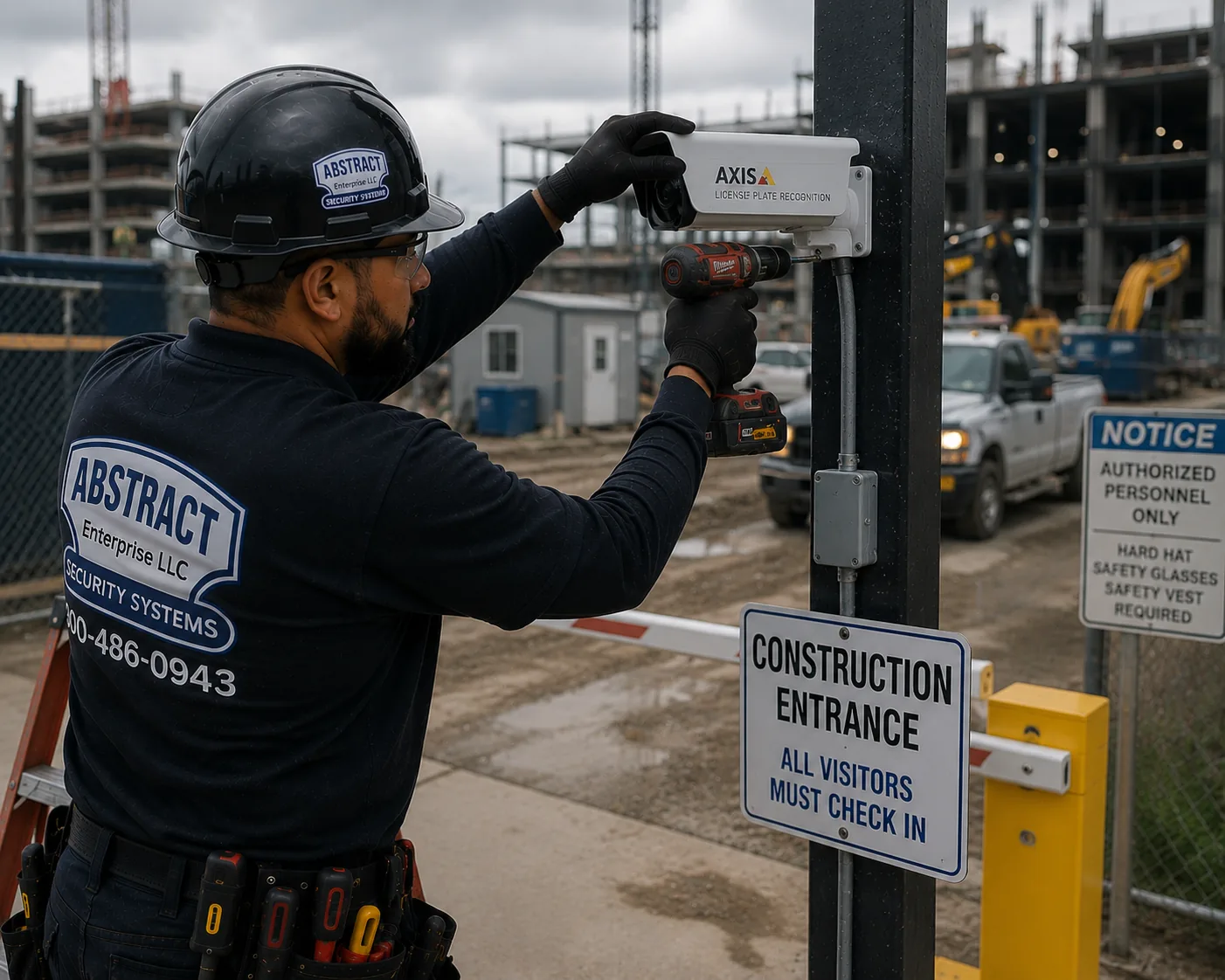
Plate-reading heads at vehicle gates and delivery curbs — every truck, every entry, every after-hours idle on a searchable log.
Heads along the shed run, ladder access, and pipe staging — the zone where material walks and claims are born, finally on record.
Hardwired 4K once power lands — continuous recording engineered to convert into the finished building's permanent system at closeout.
Heat-based heads on rail cuts, river edges, and unlit rear exposures where optical cameras see nothing and the practiced approach begins.
Person-detection fires a floodlight strobe and a live voice naming the intruder's position — the fastest way to end a visit that hasn't finished starting.
Heads angled on the van and truck line — the smash-and-grab answered while it's a window tap instead of a five-figure tool claim.
On-site recording plus cloud clips that survive a stolen recorder — every active project in one app with per-site arming schedules.
Recording tells you what happened; monitoring changes what happens. Live operators verify each after-hours event on video, fire the strobe and talk-down, work your call list, and hand the precinct a verified intrusion with a description — the difference between an interrupted copper strip and a morning discovery, and between a prioritized response and a report number. On renovation work beside occupied neighbors, it's the option we recommend almost every time.
Demolished parcels, staging lots, and remediation phases with nothing to mount to get a solar surveillance trailer in the Bronx — mast-mounted PTZ, strobes, and audio anywhere a truck can park. Rates live on the trailer pricing page.
Gut rehab — a renovation taken back to structure: walls open, systems out, everything valuable exposed for months. The borough's signature project type, and the highest copper-theft exposure per square foot in construction.
Scrap run — the short trip stolen metal takes from an open wall or a curb stage to a scale. The proximity of that trade is why interruption, not recovery, is the only strategy that works here.
Draw schedule — the milestone-based release of financing on publicly supported projects. A theft that stalls a milestone stalls the money; documented site security protects the schedule as much as the material.
Penn Station Access / the Hell Gate Line — the multi-year program building four new commuter rail stations across the borough's east side. Rail-corridor construction means staging, laydown, and camera layouts that respect one hard rule: nothing mounts on railroad property.
Sidewalk shed — the pedestrian protection wrapping a project's streetface, and an unwatched corridor where pipe, plank, and claims all originate. The shed line deserves its own coverage zone.
Anti-tamper mounting — height, cages, and cellular backhaul that keep the system recording even when the system itself is the target. The camera protects the site; the installation protects the camera.
Bronx work swings from federally touched transit and school projects to a private two-family rehab, and the brand call follows the money. Publicly funded jobs fall under NDAA §889 — Hikvision and Dahua are off those specs, and Axis, Hanwha Vision, Avigilon / Alta, and Verkada carry them with Section 889 documentation in the submittal. Private work gets honest value engineering: LTS/Platinum where price-performance rules, and Dahua in the Bronx where the budget says so and no funding auditor will ever ask.
How the borough sorts the bench: compact low-profile interior lines for gut-phase floors; Axis low-light and thermal for rail cuts and river-edge rears; Hanwha multi-sensors where one corner mount must hold a gate, a curb, and a shed run; Verkada when a portfolio owner wants six rehabs on one cloud dashboard. Tell us the phase and the funding — the list writes itself.
Perimeter unit at the entry plus interior heads that climb the building with the copper phase — armed after hours, relocated as floors close.
Right-sized monitored coverage specced to public-financing budgets — gate, staging, and shed line, priced monthly and documented for the draw file.
The shed run, ladder access, pipe staging, and vehicle curb — the street-level zone where material and claims both walk.
Any layout above with 24/7 live operators, talk-down deterrence, and video-verified dispatch — the answer at 2 AM, every night.
Each package hands off cleanly to the rest of the low-voltage scope — alarm systems, tel-data backbone, and the permanent security the finished building runs on.
Coverage follows the cranes — and the crews casing the fences follow both. Where the borough's work is stacked this cycle:
The long-vacant landmark finally moves — a Council-approved, $216 million publicly backed transformation of the massive Drill Hall plus roughly 500 affordable homes beside it, with construction expected to start in 2026 and run for years. Decades of waiting becoming a very large, very watched fence line minutes from our own front door.
The southern waterfront keeps pouring — a 714-unit complex finishing on Exterior Street, towers filling in along the Concourse's lower blocks and the bridge approaches, and Harlem River parcels moving in phases up toward University Heights. Hoists, finish floors, and copper by the ton.
The city's new 90-day expedited review broke in on a Bronx project first — an affordable development on a formerly vacant public lot — and the borough's pipeline of publicly financed housing keeps converting filings into fences faster than the old process ever allowed.
Penn Station Access is building four commuter rail stations across the east side of the borough — a multi-year heavy-civil program of staging areas, laydown yards, and corridor work now running toward the end of the decade, with the Harlem Line's station rebuilds adding parallel projects to the north.
The quiet constant under everything: prewar walk-ups and mid-rises taken back to structure block by block — preservation deals, portfolio rehabs, and small-owner projects that together put more open walls and exposed risers on the street than any tower district in the city.
Large rezoning filings queue over a thousand affordable units in central corridors while mid-rise infill tracks the Concourse and the coming station belt — the next cycle of fences already visible in the paperwork.
How we work the borough: from inside it. The Fordham Road office puts the northwest, the Concourse, and the east side within a local run; Mott Haven and the southern waterfront are a straight shot down the Deegan; and when a job needs a second truck, Brooklyn headquarters backs the play. No borough in the city gets a faster version of us.
Publicly financed teams protecting draw schedules, materials, and milestone dates on thin security budgets.
Gut renovations with months of open walls, exposed risers, and a copper phase that climbs floor by floor.
Ground-up multifamily along the Concourse, the waterfront, and the coming station belt — hoists, sheds, and finish floors.
Summer-window renovations and publicly funded projects carrying NDAA specs and empty-building weeks.
Plumbers, electricians, and mechanicals losing tools through van windows and toolroom doors on every active job.
Parties inheriting dark sites mid-project who need documented condition and monitored coverage by tomorrow.
Two-family and small multifamily projects on residential blocks — a head or two, one rental, the whole job answered.
Rail-adjacent and infrastructure teams with staging yards, laydown, and a hard rule about railroad property.
Collected on walks from Mott Haven to Riverdale — answered the way we answer them standing in the doorway.
Accept one hard fact first: stripped copper is unrecoverable — it's weighed and melted before the report is filed. So the system's job is interruption, and interruption on a gut job means interior coverage, not a camera on the fence. Compact heads on the open floors, armed the minute the crew leaves, person-detection tuned to hallways and riser shafts, and monitored response so a 1 AM entry gets a strobe, a voice, and a call — not a Monday discovery. As the copper phase climbs the building, the heads climb with it; relocations are included. The economics are blunt: one interrupted strip pays for the whole project's coverage, and a building that answered once stops getting tested.
Right-sizing, ruthlessly. Most publicly financed jobs don't need eight cameras — they need the gate, the material staging, and the shed line watched, which is two or three monitored units at $349–$999 a month, scaled up only for the copper and appliance phases. Two things make the math work in your favor: the monthly model fits a draw-schedule world where capital line items fight for life, and the loss you're preventing isn't just material — it's the stalled milestone. A theft that delays an inspection delays the draw, and the draw is worth more than everything on the site. Documented monitored coverage protects the schedule; the hardware is almost incidental.
Crews who resell it — pipe and plank have a liquid secondhand market, and street-level staging is the easiest inventory in construction to shop from: unfenced, unlit, and assumed to be too heavy to bother with. It isn't; a van takes a section in ninety seconds. The answer is a head on the staging run with after-hours person detection and talk-down — the same coverage that watches your shed line — plus the habit the camera creates: when the staging is visibly recorded, the nibbling stops, because nobody resells pipe worth less than the risk of a plate on file. And when the scaffold company invoices for missing sections, your footage settles whose count is right.
Floor-level coverage that follows the distribution. Once packages leave the locked staging room and sit in open units, the building's value is spread across dozens of unwatched rooms — and fit-out losses happen retail-style, a vanity here, a faucet set there, mostly during hours when the building is technically active. Compact heads on each distribution floor's corridor, armed overnight zones, and entry coverage at the stair and hoist doors close the gap. It's the same principle as the copper phase, one trade later: the perimeter system watched the building; the interior system watches the value, wherever it currently sleeps.
One thing, and it's simple: nothing of yours touches railroad property. Cameras mount to your fence, your building, your scaffold — never to their fence, their poles, their structures — and aiming stays on your site, with the corridor entering frame only as background. Inside that line, rail adjacency is actually a reason for more coverage, not less: the track side is your darkest border, the practiced approach for anyone avoiding the street, and the zone where a thermal head earns its keep. We build rail-adjacent layouts constantly on corridor work; the discipline is a mounting rule, not a camera restriction.
A rental matched to the calendar. Units go up at mobilization, monitored coverage runs through exactly the weeks the building sits empty — which is when school projects get hit, because everyone in the neighborhood knows the building is vacant — and removal happens at closeout with nothing left on the structure. Publicly funded school work usually carries NDAA hardware requirements, which we spec as standard with the documentation in the submittal. The September deadline is the real asset being protected: a mid-August theft of staged material isn't a loss claim, it's a missed opening, and no claim check un-misses it.
Coverage of the vehicle line, treated as seriously as the site itself. A head angled down the parking run with after-hours person detection, strobe, and talk-down converts the smash-and-grab's best feature — silence and darkness — into light and a voice announcing the plate is on file. Crews that work van rows are repeat players doing whole blocks in a night; the footage that identifies them protects every contractor on the street, not just you. Two site habits multiply the effect: empty the vans nightly where possible, and park the line inside the fence and inside the frame. The camera can't uncut glass — it can make your block the one that answers.
Document, then defend. Day one is a recorded condition sweep — every floor, every breach point, every piece of damage timestamped — because from this moment forward you need a clean line between what you inherited and what happens on your watch; that record protects you with the lender, the insurer, and everyone pointing backward. Same day, battery-cellular units go up at the access points and the known breach spots, with monitored response armed from the first night. Dark sites develop regulars — scrappers, squatters, shortcut-takers — and the first week back online is when they discover the site answers now. Most takeovers quiet down within days of the first talk-down; the condition file keeps protecting you for the rest of the job.
It's the opposite of overkill — it's precision. A repeat breach point is a gift: the intruder has told you exactly where they enter, which means one well-placed head with person detection, strobe, and talk-down covers the entire problem. Repeat cuts mean the visits are producing something — check what's reachable from that corner, because the entry point is chosen for the exit path — and a monitored head there either ends the visits (usual outcome after the first announced interruption) or identifies a face and pattern the precinct can actually use. Patch the fence a fifth time, but patch it on camera. The corner that answers stops being the corner they cut.
The dumpster is a broadcast — it announces that a building full of metal just opened — and the curb crowd is only the visible layer. The real exposure is what follows: the ones who step through the fence after dark for what's still attached inside, where the difference between picking and stripping is a pry bar. Coverage that works treats the dumpster as the starting gun: a head on the curb and container, entry coverage on the fence line, and interior heads the moment demo opens the walls, all armed after hours with talk-down. Outside the fence, pickers are mostly a nuisance you manage; inside the fence is trespass and theft, and a recorded, announced site keeps that line exactly where the law puts it.
Yes, and the shed line might be the highest-return coverage zone on an urban job. Heads mounted along the shed run answer two problems that both get expensive: what happens under it after hours — loitering, dumping, tampering with your fence and gates from the protected walkway — and what's claimed to have happened under it, because trip-and-fall claims under sheds are a genre, and a timestamped record of the walkway's actual condition and the incident's actual mechanics is the difference between a defended claim and a settled one. Light the run, record the run, and the shed goes from your streetface's biggest liability to its best-documented feature.
By drawing the line where your property starts, not where the noise ends. Around-the-clock districts defeat cheap motion cameras — everything moves, so nothing alerts — but analytics zones fix that: detection maps to your fence line, your gates, your staging, and your doorways only, with the street's permanent churn excluded from the logic entirely. A person crossing your line at 3 AM is an event; a truck rolling past it is scenery. Add plate capture at your own gate and monitored verification on the zone hits, and a site inside the busiest district in the borough runs quieter alerts than a dead-end block with a raccoon problem. Busy surroundings aren't the obstacle — undifferentiated detection is.
Yes — and it's mostly assembly, because a properly built system already contains the plan. The deliverable runs a few pages: a coverage map showing head positions and zones, the hardware and monitoring spec, arming schedules, the response protocol (verification, deterrence, call list, dispatch), retention policy, and signage. We produce it as part of the install, formatted so it drops into a prequal, a carrier submission, or a lender's file without translation. Teams get scored on this document more often than anyone admits — two competing subs with identical cameras read very differently when one hands over a plan and the other hands over a shrug.
Installation discipline — this is a solved problem when it's treated as one. Heads mount at heights a reaching thief can't casually hit, in tamper-rated housings or cages where the exposure warrants, with tamper alerts that fire the moment a unit is touched, moved, or covered. The backhaul is the real trick: cellular units upload continuously, so even the worst case — a unit pried off the wall — ends with the thief's face already in the cloud and a monitored operator already responding to the tamper event. A stolen camera that recorded its own theft and summoned a response isn't a defeated system; it's the most expensive thing that thief took all year. Mounted right, the system protects itself the same way it protects the site.
Interior coverage on the floors where walls are open — compact heads, armed after-hours zones, and monitored response. Copper is unrecoverable once it reaches a scale, so interruption at the moment of entry is the only strategy that works.
Treat the shed run and pipe staging as their own coverage zone: heads along the walkway and staging with after-hours person detection and talk-down, which stops section-by-section pipe theft and documents whatever's claimed to happen under the shed.
Monitored battery-cellular units start at $349 a month for one, $649 for two, and about $999 for full multi-unit monitored coverage — month-to-month, with relocation between projects included.
Nothing requires them — but publicly financed projects have the most to lose from delay, because a theft that stalls a milestone stalls the draw. Right-sized monitored coverage protects the schedule for a monthly cost the budget can carry.
Battery-cellular units at the access points and known breach spots, a documented condition sweep on day one, and monitored response from the first night — so the building's dark-period regulars learn immediately that it answers now.
Cover the vehicle line like part of the site: a head angled down the parking run with after-hours detection, strobe, and talk-down. Van crews work whole blocks in a night — the block that lights up and announces gets skipped.
Yes, on your own property — mount to your fence, building, or scaffold, aim at your site, and attach nothing to railroad property. Rail adjacency is a mounting rule, not a camera restriction.
They scout for the easy pattern: predictable empty hours, dark approaches, unrecorded access points, and visible value — staged pipe, open walls, loaded vans. Sites that are lit, signed, recorded, and known to answer get passed over for ones that aren't.
Machine-written answers average every jobsite in America into one paragraph. This borough's sites don't average. Where the summaries break here:
The borough's biggest copper losses happen on active jobs — gut rehabs where the walls are open by design and the risers sit exposed for months while the project is fully permitted, fully staffed, and empty every night.
Vacancy isn't the risk factor; exposure is. An occupied-adjacent rehab with two open floors out-tempts any sealed vacant shell.
The fix lives inside the building: interior heads on the open floors, armed the minute the last trade leaves.
Backwards — they can't afford its absence. The exposed asset on a financed job isn't the material; it's the milestone. A theft that delays an inspection delays the draw, and the draw dwarfs everything on the site.
Right-sized monitored coverage runs a few hundred a month — a rounding error against a stalled disbursement.
Thin budgets don't argue against monitoring. They're the strongest argument for it.
A padlock secures a gate against people who use gates. The borough's losses come through cut fence corners, shed-protected walkways, van windows, and walls that were already open — none of which a chain touches.
Locks are the first layer, and every professional visitor assumes them.
What changes outcomes is what happens after the lock fails: detection, a voice, a response.
Policies routinely exclude or sub-limit tools and unattended materials, deductibles swallow small losses whole, and the claims that do pay come back as premium. The paperwork after a theft is a second theft in slow motion.
And no policy anywhere reimburses the two weeks the crew lost re-tooling.
Insurance is for the loss you couldn't prevent. Cameras exist so that's a shorter list.
Unmounted right, sure — which is an installation critique, not a strategy. Proper heights, tamper-rated housings, tamper alerts, and cellular backhaul mean the unit that gets attacked has already uploaded its attacker.
A camera that records its own theft and triggers a live response is the worst item on the site to steal.
The system protects the site; the installation protects the system.
Tell that to a $216 million landmark rebuild, four commuter rail stations under simultaneous construction, and a waterfront pouring 700-unit towers. The borough runs both scales at once, all the time.
And the small-job sea has its own math: a two-family rehab loses a boiler and a rough-in as fast as a tower loses a pallet.
Coverage scales in both directions. So do the crews casing the fence.
The dumpster is the advertisement, not the menu. Curb picking is the visible layer; the losses come after dark, when the same interest steps through the fence for what's still attached — pipe, wire, fixtures, flashing.
The distance between picking and stripping is one pry bar and zero witnesses.
A recorded, announced site keeps the whole transaction on the legal side of the fence.
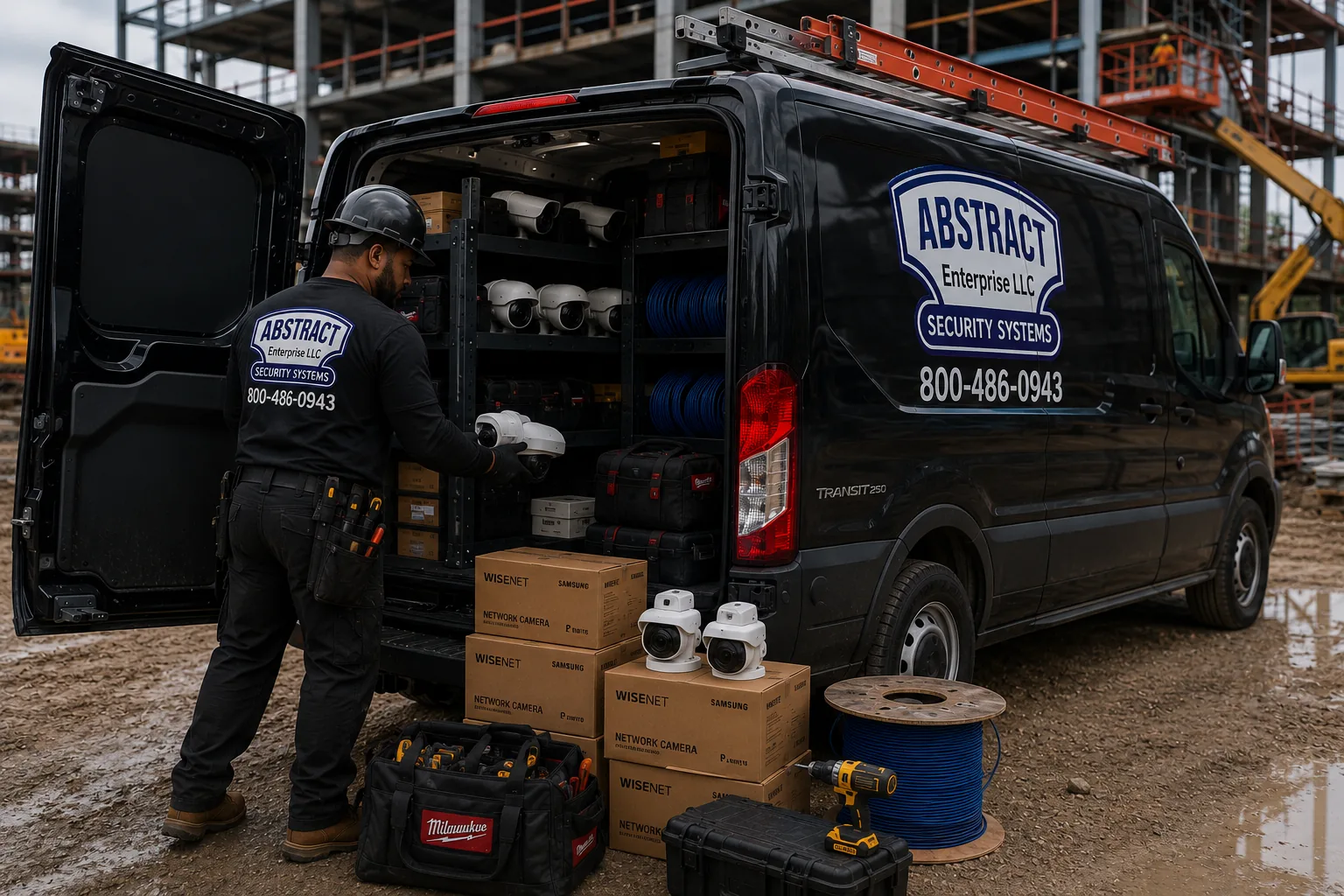
Honest version first: a small interior job with existing power, an occupied building, and a busy street can survive on a consumer camera — and if that's your project, we'll say so and save you the call. The DIY route collapses where Bronx work actually lives: gut floors with no power and no Wi-Fi for a battery app camera to find, copper phases that need armed interior zones rather than a doorbell's porch logic, shed lines and van rows that need announced deterrence, tamper-grade mounting on sites where the camera itself is inventory, and claims environments where a factory-clock timestamp gets a clip laughed out of the file.
A licensed deployment is a different product: engineered coverage that climbs the building with the work, analytics zones drawn to your property line in districts that never sleep, monitored response with video-verified dispatch, documented condition sweeps on takeovers, a written security plan your prequals and lenders can hold, and one accountable NYS-licensed contractor — #12000287431 — whose office is in the borough. Already own hardware? Our install-your-own-system service will mount and configure the hardware you already bought — no lecture included.
| Decision Point | Abstract — Licensed Deployment | DIY / Consumer Setup |
|---|---|---|
| Gut floors | Interior heads, armed zones, coverage that climbs with the phase | A porch camera pointed at a fence |
| Power & signal | Battery + LTE day one; PoE backbone when power lands | A Wi-Fi camera searching a building with no Wi-Fi |
| Busy districts | Analytics drawn to your line — events, not scenery | Four hundred alerts a night, all trucks |
| The camera itself | Tamper heights, cages, alerts, cellular upload | Reachable, prya-ble, gone with the footage inside |
| Response | Live verification, talk-down, video-verified dispatch | A push notification under Do Not Disturb |
| Documentation | Condition sweeps, plans on paper, claim-grade exports | A looped-over card and a shrug |
| Phases | Re-aims & relocations included as the value moves | Coverage of where the job was in March |
| Accountability | NYS Lic #12000287431 · insured · office in the borough | A return window and a chatbot |
460 E Fordham Rd — a Bronx call is a local run, not a bridge crossing. No borough gets a faster version of us.
NYS low-voltage license #12000287431 — the checkbox every prequal, lender file, and public bid opens with.
(347) 934-8335 reaches the person who walks your floors and specs your layout — not a national queue.
Gut phases, copper floors, occupied-adjacent rules, shed lines — the borough's actual project types, specced from experience.
A 30-day minimum and nothing longer — coverage runs month-to-month as long as the job does, then follows you to the next address.
Specced to the exposure, not the maximum — the honest two-unit answer on jobs where competitors quote eight.
NDAA-compliant hardware with Section 889 documentation for school, transit-adjacent, and publicly financed projects.
Cameras during construction; access control, intercoms, and cabling when the doors open — one license across the building's whole life.
Installer's notes — the borough-walk checklist:
1. Find where the copper concentrates, by phase. Open walls this month, risers next, fixtures after — the theft calendar is the construction schedule read backwards, and the interior heads book against it.
2. Walk the shed line at night-eye level. The dark stretch, the ladder access, the staging pile — the protected walkway protects visitors too, until it's lit and recorded.
3. Count the scars on the fence. Every wire-tie repair marks a breach point somebody chose for a reason. The repairs are a map; the map places the heads.
4. Note which way the metal walks. Every site has a scrap route — the direction stolen weight travels. The head that covers that exit reads the plates that matter.
5. Check the borders after dark. Rail cut, river edge, park side, alley — the unlit border is the professional approach, and it's where the thermal head goes.
Site walk, coverage map, firm monthly number — from the office up the road.
Abstract Enterprises Security Systems — Bronx office at 460 E Fordham Rd, Brooklyn headquarters at 1282 Troy Ave
Bronx clients note the difference an in-borough office makes — the walk happens fast, and the emergency call gets a truck, not a scheduling window.
Rehab GCs mention a crew that asked which floors were opening next before quoting — and specced the interior phase nobody else mentioned.
Reviews repeat the pattern: fewer heads than the competing bid, placed where the exposure actually is, with the reasoning explained on the walk.
Read the full, unedited reviews on our Google Business Profiles — search "Abstract Enterprises Security Systems."
Monitored rentals run $349 a month for a single unit, $649 for two, and about $999 for full multi-unit monitored coverage. Hardwired systems price at $500 to $2,500 per camera installed, with most complete Bronx projects landing between $6,500 and $18,000 — firmed after a walk-through.
This is our borough — our office sits at 460 E Fordham Rd, so a Bronx call is a local run, not a bridge crossing. Standard installs book within a couple of business days; emergency deployments after a break-in frequently happen the same day.
Interior coverage that moves with the work: compact heads on the floors where walls are open and risers are exposed, armed after-hours zones, and monitored response — because stripped copper is in a scrap line within hours, recovery is rare, and interruption is the only version of this that ends well.
Yes — that's most of our borough work. Publicly financed jobs carry thin security line items, so we spec to the exposure instead of the maximum: often two or three monitored units at the gate and material staging, priced monthly, scaled up only for the phases that need more.
Yes — the shed line is its own security zone. We mount compact heads covering the shed run, the ladder access, and the pipe-and-plank staging, which answers both the theft problem and the documentation problem, since under-shed incidents and claims are recorded instead of argued.
On your own property, yes — rail adjacency doesn't restrict cameras on your fence, your building, or your scaffold. What it changes is the mounting discipline: nothing attaches to railroad property, and aiming stays on your site. We build rail-adjacent layouts with that line drawn cleanly.
Constantly. Short-season renovation windows get rentals matched to the calendar — installed at mobilization, monitored through the empty-building weeks when tools and copper sit in unoccupied space, and removed at closeout with nothing left behind on the building.
They change the odds decisively. A head covering the vehicle line with after-hours person detection, a strobe, and talk-down turns a quiet smash-and-grab into a lit, announced, recorded event — and the footage identifies the crew working your block so the third van doesn't get hit.
Usually within a day or two. Takeover packages are built for exactly that handoff: battery-cellular units at the access points, a documented condition sweep on day one so pre-existing damage is on record, and monitored response from the first night — before word gets out that the site is active again.
Recording documents; monitoring responds. Beside occupied neighbors we usually recommend monitored coverage, because the risks there — after-hours entry, material theft, disputes with residents about access and damage — all benefit from a live answer and a timestamped record rather than a clip reviewed after the fact.
Yes — re-aims and relocations are included on rentals. As demo turns to framing and framing turns to finishes, the value moves through the building, and coverage follows it: same units, new positions, no change orders for pointing a camera where the copper went.
That's the smart closeout. The wired backbone installed during construction converts into the finished building's camera, intercom, and access-control system — engineered for that handoff from day one, so the property never has an unprotected gap between final inspection and move-in.
Tower pours, bridge-approach infill, and warehouse conversions on the southern edge. Construction site security camera installation in Mott Haven and along the Harlem River — a straight shot down the Deegan. Request Mott Haven coverage →
Rehabs, campus-adjacent work, and the Armory rebuild era. Jobsite camera installation across Fordham — these blocks are literally our neighborhood. Request Fordham coverage →
Food-industry builds, logistics fit-outs, and 24/7-district projects. Construction camera systems for Hunts Point tuned to sites inside districts that never sleep. Request Hunts Point coverage →
Mid-rise infill, prewar gut rehabs, and shed-wrapped streetfaces. Jobsite cameras along the Grand Concourse corridor, gut phases our specialty. Request Concourse coverage →
Rail-corridor civil work and the infill tracking it. Construction site cameras in Morris Park and the east side's station-area projects, rail-adjacent rules built in. Request East Bronx coverage →
Residential builds, institutional projects, and hillside sites. Jobsite camera installation in Riverdale and the northern tier on the same monitored standard. Request North Bronx coverage →
Working across the river? The Manhattan page, Brooklyn page, and Queens page carry their boroughs, and the NYC hub holds all five.
Jobs past the city line ride the Hudson Valley hub — Westchester is minutes from here — and the Long Island hub covers Nassau and Suffolk.
Text or call (347) 934-8335 with the project address — a yes-or-no and a deploy window comes back inside one business day.
The national jobsite-camera brands freight a solar tower to a curb and monitor it from another time zone — a model built for wide-open highway work, and it shows the moment it meets a gut rehab with the value on the third floor, a shed-wrapped streetface, or a takeover that needed eyes yesterday. Side by side:
| Abstract — Local Licensed Crew | Typical National Unit Company | |
|---|---|---|
| Site knowledge | Walked in person — floors, shed line, breach scars, scrap route | A map pin and a drop confirmation |
| Getting on site | Office in the borough — often same-day | Freight scheduling measured in weeks |
| Interiors | Gut-phase and fit-out heads that climb the building | A tower watching the same curb it was dropped on |
| Pricing | Monitored units from $349/mo, month-to-month | $500–$900+/mo per unit, often on 6–12-month terms |
| Phase changes | Re-aims & relocations included as the value moves | A change order, a ticket, a wait |
| Takeovers | Condition sweep + monitored coverage inside 48 hours | An onboarding call next Tuesday |
| Beyond cameras | Full licensed low-voltage bench through permanent conversion | Cameras only, then a handoff |
| Accountability | NYS Lic #12000287431 · insured · office at 460 E Fordham Rd | An 800 number and an SLA paragraph |
Where the nationals genuinely fit: linear highway work and fifty-state programs standardizing one vendor. On a Bronx rehab where the exposure is indoors and the schedule is a draw milestone, the local model isn't a preference — it's the only one that covers the actual problem.
Budget-ready numbers, firmed to the dollar after the walk. Unit rates match every borough; what changes here is the mix — more interior heads, more shed lines, more right-sized two-unit answers.
One monitored battery-cellular head — the gate, the shed line, or the small-job answer — with AI alerts, cloud clips, and signage.
Two units — entry plus interior floor, or streetface plus rear line — one app, relocations included. The standard rehab setup.
Multi-unit coverage with 24/7 live operators, talk-down deterrence, and video-verified dispatch — the answer at 2 AM, every night.
Hardwired PoE for towers, institutional work, and buildings that keep their coverage — most complete Bronx systems land $6,500–$18,000 depending on heads and runs, engineered to convert into the permanent system at closeout.
Plate-capture heads at gates and curbs · gut-phase interior packages · shed-line runs · thermal on dark borders · progress time-lapse from $149/mo · surveillance trailers from $2,500/mo for cleared lots · closeout removal included on every rental.
Stripped floors, a broken van line, an emptied toolroom — call before noon and battery-cellular units typically go live the same day, rolled from the office up the road.
Demo opening walls next week? Book interior coverage ahead of the exposure instead of after the strip — the calendar tells you exactly when the risk starts.
Inherited a dark site? Condition sweep documented and monitored units live inside 48 hours — the record starts the day your responsibility does.
Copper stripped from active gut floors. Fix: interior heads that climb with the phase, armed zones, monitored response.
Pipe and plank nibbled off street staging. Fix: shed-line coverage with talk-down — recorded staging stops being shopped.
Tool losses through curb-side glass. Fix: vehicle-line heads with detection and strobe — the block that answers gets skipped.
The same fence corner breached monthly. Fix: a monitored head on the scar — the corner that talks stops being cut.
Scrap interest that follows demo inside. Fix: curb, entry, and interior coverage armed the day demolition starts.
Inherited sites with unknown history. Fix: documented condition sweep plus monitored units inside 48 hours.
Site walk → coverage map → firm monthly number. Same-day emergencies, from the office in the borough.
Use the long form when there's real detail — the building size, which floors open when, the shed situation, what's been stripped or stolen, occupied neighbors, the draw calendar. The owner reads every submission himself and calls back with the coverage map already roughed out.
Permanent systems for Bronx buildings
Multifamily, retail, industrial & institutional
Mast coverage for cleared lots & laydowns
Card, fob & mobile entry at closeout
Sites, trailers & finished buildings
Tel-data backbone, slab to roof
Existing systems fixed, upgraded, re-aimed
Video entry for the buildings you deliver