🏗️ Licensed jobsite security specialists  |  NYS Lic. #12000287431  |  Call (347) 934-8335  |  Se habla español
What are you looking for?
About Us Contact Us Careers Get a Free Quote (347) 934-8335
Pick a service
✅ Got Your Own System?
🎬 Home TheatreQuote 🎶 AV SoundQuote 🔑 Access ControlQuote
Now pick your area
Pick your area
Long Island
Hudson Valley
Services available
Pricing & Tools
Pick a service for pricing
🚪 Intercom Pricing 🔔 Buzzer Repair Pricing
Calculators
📹 Camera System Calculator 🚨 Alarm Calculator ⚡ Cabling Quote Builder ✅ Got Your Own System?
Select your area
Long Island City · Astoria · Flushing · Jamaica · Maspeth · The Rockaways

Construction Site Security Camera Installation, Queens

Jobsite cameras for the borough building the biggest projects in the city — high-rise decks, stadium-scale sites, airport-corridor warehouses, contractor yards full of sleeping machines, and one- and two-family jobs on quiet blocks. Installed and monitored 24/7 by a licensed NYS low-voltage contractor working Queens from both flanks: our Brooklyn headquarters to the south, our Bronx office across the bridge to the north.

NYS Lic #12000287431 Two offices flanking Queens Yard & site coverage No power or internet needed Month-to-month rentals

60-Second Site Camera Match

Tell us the site. We spec the system before we call you back.
Or call the owner direct: (347) 934-8335
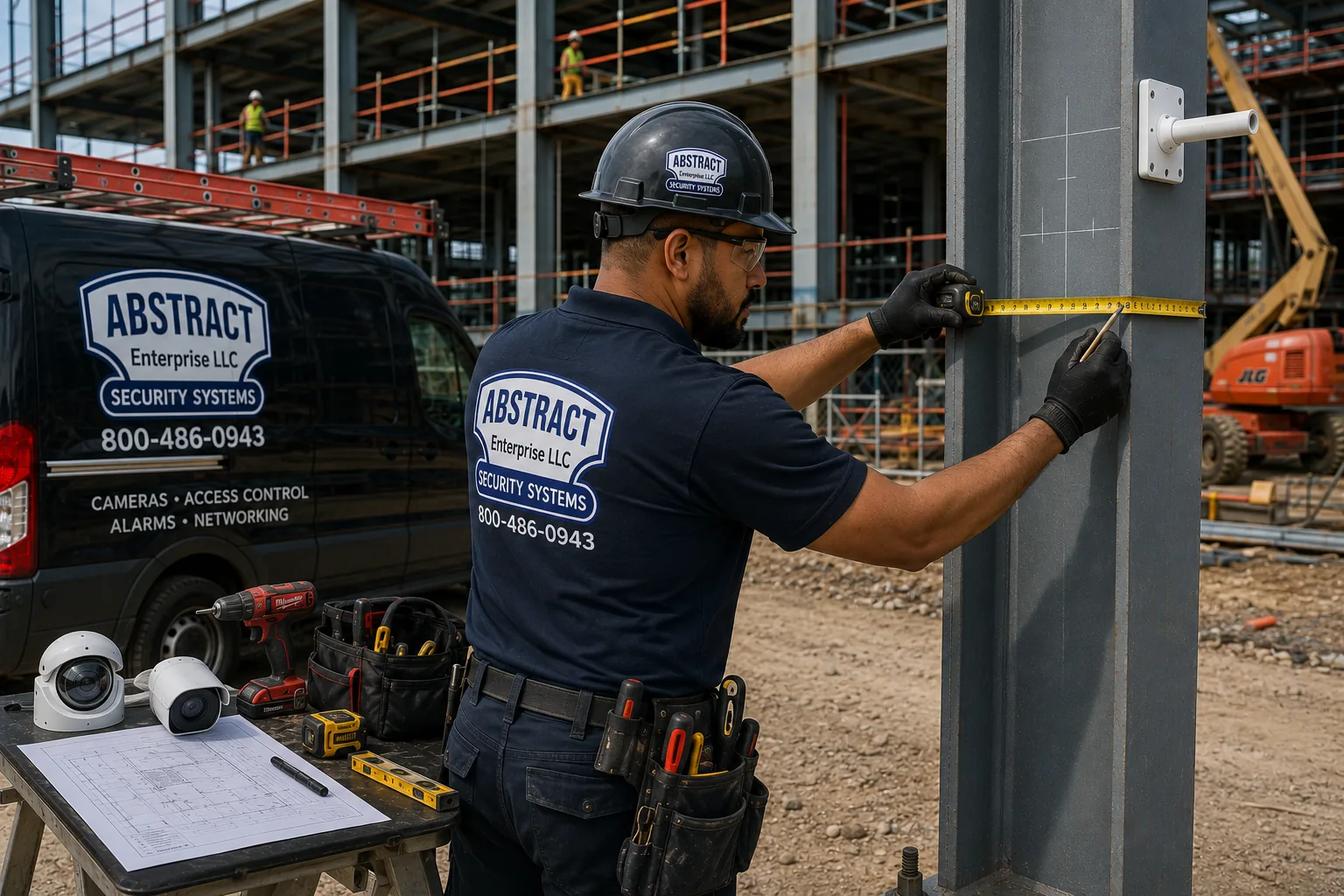
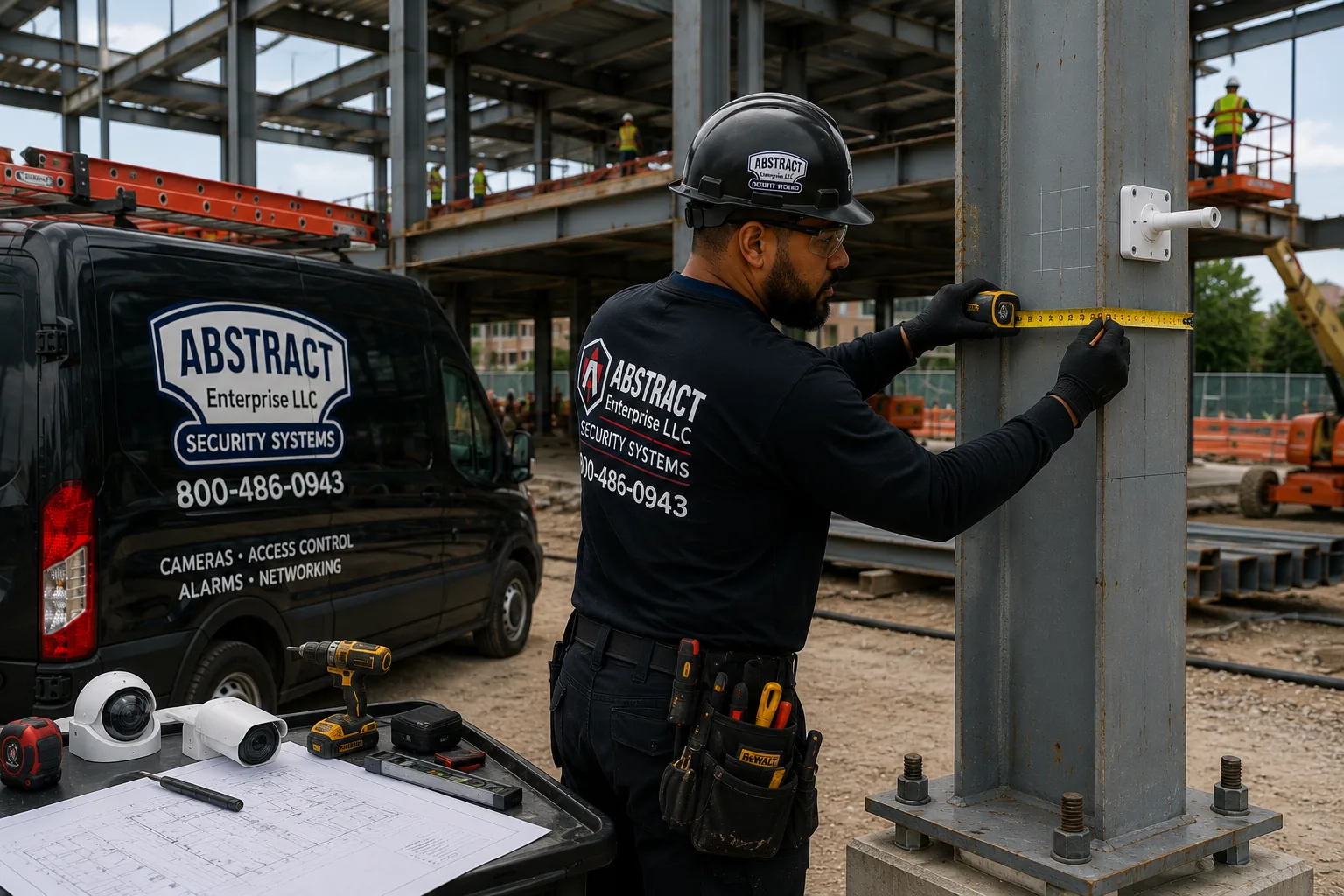
Abstract Enterprises technician marking camera mounting positions on a steel column with dome heads and site plans staged on a work table during a construction site security camera installation in Queens
Construction site security camera installation in Queens — positions marked off the plans so every head earns its sight line.
🗺️ Two offices flanking the borough — Brooklyn HQ + Bronx ⏱ Same-day emergency deploys, yards & sites 🔋 Battery + cellular — no power, no problem Call (347) 934-8335

The Biggest Sites in the City, the Fullest Yards, and the Longest Fence Lines

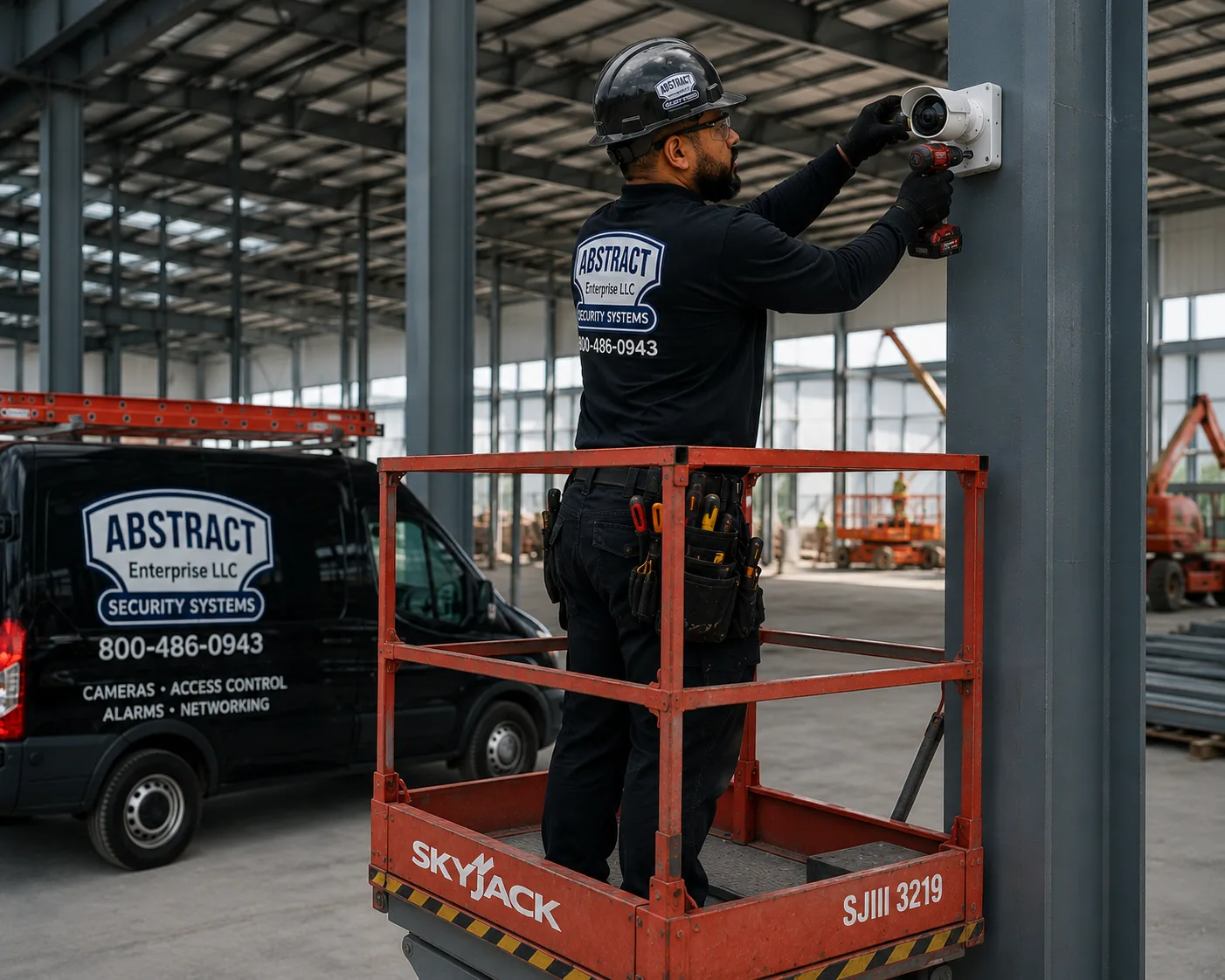
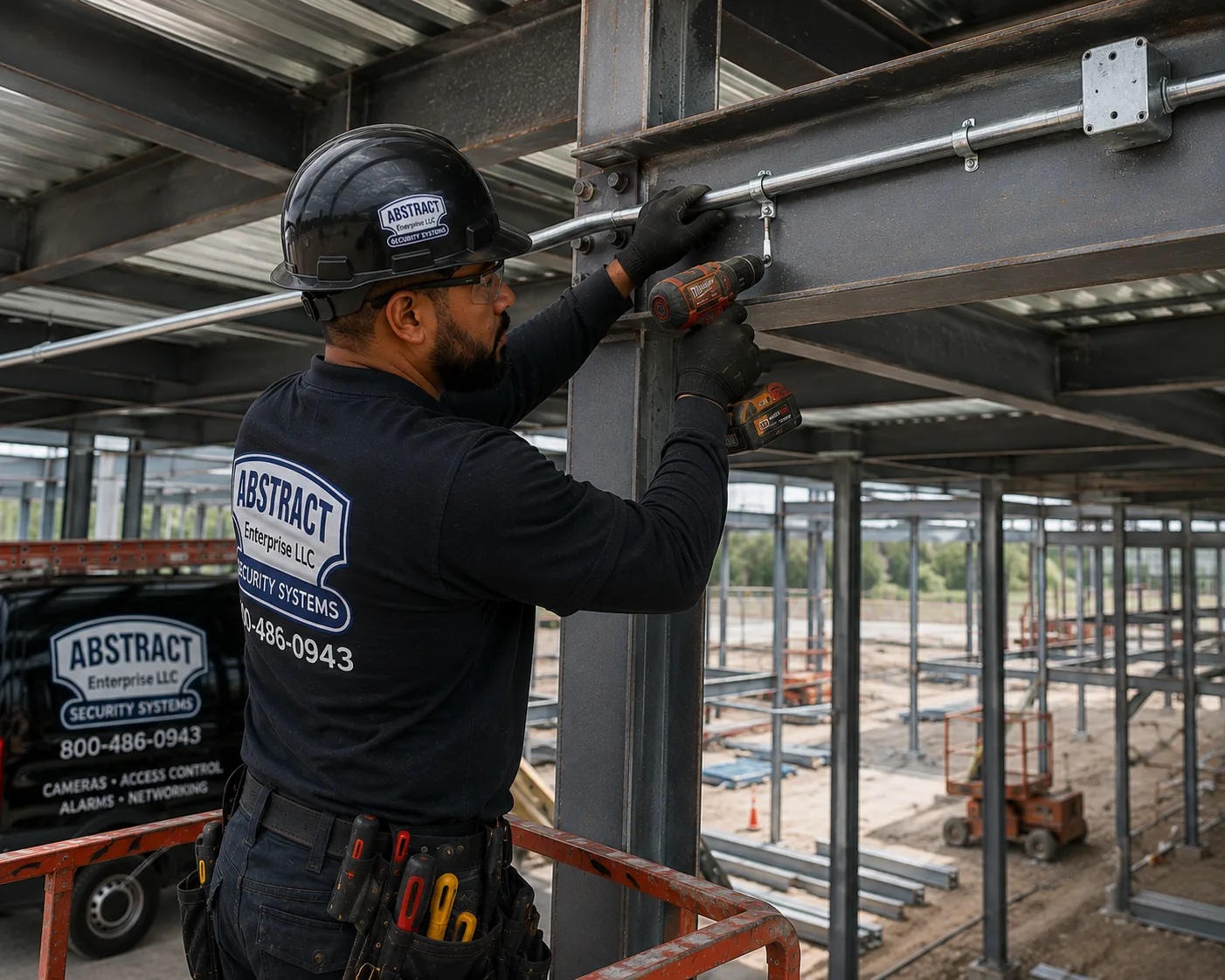
Technician on a scissor lift installing a compact security camera on a steel column inside a bright unfinished floor during a commercial construction camera installation in Queens
A commercial construction camera installation inside a Queens project — coverage mounted while the trades still own the floor.

Queens is where New York's construction goes big and spreads out — stadium-scale redevelopment rising by Flushing Creek, a multibillion-dollar airport rebuild, the busiest high-rise submarket in the city along the East River, and mile after mile of warehouses, yards, and small residential jobs in between. Big and spread out is exactly what thieves like: long fence lines nobody can see all of, laydown areas measured in acres, machines that sleep outdoors, and a highway network that puts a loaded pickup on the Van Wyck or the LIE ninety seconds after it clears your gate.

The national numbers set the floor — $300 million to $1 billion a year in stolen equipment and materials per NER/NICB reporting, with tool recovery under 7% — and Queens adds its own line items. Diesel siphoned from parked excavators. Catalytic converters cut from fleet trucks in fenced yards overnight. Cargo-adjacent theft along the airport corridors, where whatever ships also stages. Illegal dumping on vacant lots that turns into the owner's summons unless somebody recorded the truck that did it. None of it is exotic; all of it is nightly.

And none of it is solved by code compliance, because the code doesn't ask for cameras. DOB governs your permits, fencing, sheds, and — on the borough's bigger jobs — site-safety staffing tiers; nothing in any of it requires surveillance, and we won't pretend otherwise. What a camera system is here is the only practical way to be present on a footprint too large to guard and too spread out to fence perfectly: the gate logged, the fuel rows watched, the laydown answered, and the frontage recording the dumper's plate at 4 AM. Presence, priced monthly.

$300M–$1Bannual U.S. equipment & material theft (NER/NICB)
<7%recovery rate on stolen tools & small equipment
$780Mstadium rising at Willets Point — topped out, fitting out
2offices flanking the borough — Brooklyn HQ & Bronx
⚠️ Straight talk: no law requires cameras on a Queens jobsite or yard — fencing and lighting have code sections; surveillance doesn't. What cameras replace is the guard you'd never budget for a five-acre laydown and the fence-walker you can't hire for a 600-foot frontage. Deterrence, verification, and a plate log, at a monthly rate one recovered generator pays for. That's the honest pitch.

Every Way We Cover a Queens Footprint — Site, Yard, or Both

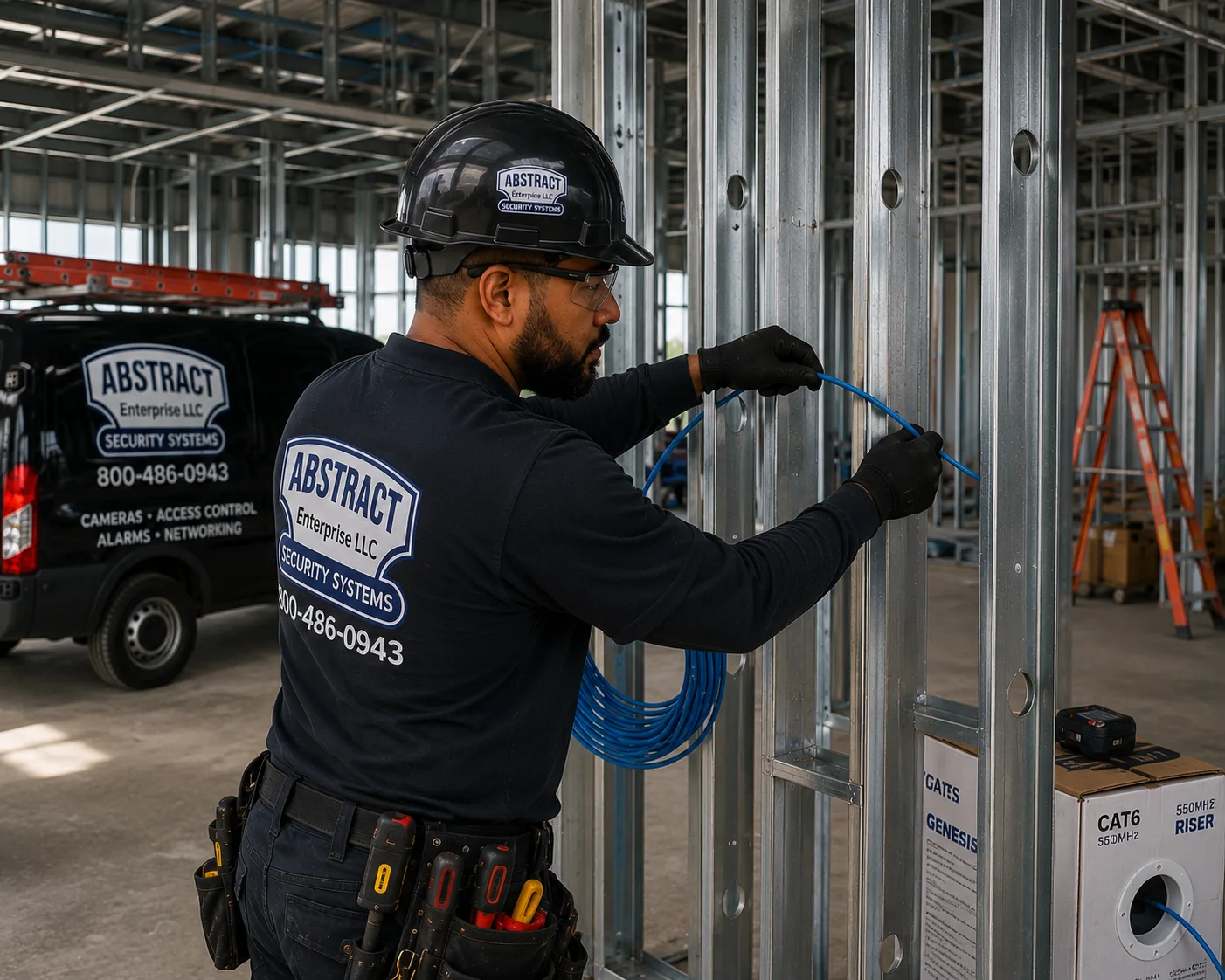
Installer feeding blue Cat6 cable through steel stud framing next to a boxed spool while wiring construction cameras in Queens
Construction camera cabling on a Queens build — the wired backbone that carries a permanent system when the project converts.

A tower deck by the river, a five-acre laydown, a fleet yard on the industrial belt, and a two-family on a residential block don't share a security spec. The Queens catalog, matched to how the borough actually builds:

🔋
Day-One Default

Battery + Cellular Units

Self-powered LTE heads live the day the fence goes up — no temp service, no internet, no trenching across a footprint the size of a city block.

🔭
Big-Footprint Answer

PTZ & Auto-Tracking

Elevated pan-tilt-zoom sweeping laydown areas, parking rows, and long fence runs — one head doing the work of six where the site measures in acres.

🚚
The Plate Log

Gate & Frontage Capture

Plate-reading heads at every vehicle gate and along dumping-prone frontages — the truck, the time, the plate, every entry and every 4 AM tailgate lift.

Queens Specialty

Fuel & Machine Rows

Analytics zones over where equipment sleeps — a person at a fuel cap or a saddle tank after hours triggers the talk-down before the siphon starts.

🎥
The Backbone

Wired IP / PoE Systems

Hardwired 4K for towers, hotels, and warehouses once power lands — continuous recording engineered to convert into the finished building's permanent system.

🛏️
Pre-Opening Window

FF&E & Interior Coverage

Compact heads on receiving floors and storage rooms when furniture, fixtures, and finishes load in — the softest, most-walked-off inventory of any build.

🌡️
Dark Edges

Thermal Detection

Heat-based heads on unlit fence lines, creek-side edges, and rail-adjacent runs where optical cameras see nothing and intruders know it.

📢
Active Deterrence

Strobe + Talk-Down Audio

Person-detection fires a strobe and a live voice calling out the intruder's position — which empties a laydown area faster than any siren.

🖥️
One Pane

NVR + Cloud Hybrid

On-site recording plus cloud clips that survive a stolen recorder — yard and active sites together in one app with per-site arming.

Monitored Option

24/7 Live Monitoring — Presence for Footprints You Can't Staff

Nobody guards a five-acre site or a fleet yard on a rental budget — but operators can watch every zone of it at once. Monitored plans put live eyes on each after-hours event: video verification, strobe and talk-down, your call list worked in order, and the precinct handed a verified intrusion report with a description and direction of travel. The difference shows up in outcomes — interrupted siphons, abandoned loads at the fence line, and dispatches that treat your call as confirmed instead of another alarm shrug.

No Structure? No Problem

Trailers for Lots, Laydowns & Remediation Phases

Cleared blocks, staging fields, and long remediation phases with nothing to mount to get a solar surveillance trailer in Queens — mast-mounted PTZ, strobes, and audio anywhere a truck can park, moved as the work moves. Rates live on the trailer pricing page.

📐 Temporary vs. permanent: active-site units install as relocatable rental equipment and come off — or move to your next job — at closeout, while yards and finished buildings get permanent systems: a commercial camera installation in Queens tied into access control and video intercoms so the property never goes uncovered between construction and operation.

Laydown, FF&E, Siphon Rows, Form 7460 — the Queens Vocabulary

Laydown area — the open ground where material, formwork, and equipment stage between deliveries and installation. On the borough's big footprints it's the largest concentration of value on site and the hardest zone to fence convincingly — which is why elevated PTZ coverage was practically invented for it.

Contractor / equipment yard — the fenced lot where the fleet, the fuel, and the racked material live year-round. Queens has one of the densest yard belts in the city, and a yard is a permanent security problem, not a project-length one.

FF&E — furniture, fixtures, and equipment: the beds, TVs, appliances, and casegoods that load into hotels and residential buildings in the final weeks. The lightest, most resellable, most-stolen inventory of any project's life.

Siphon theft — diesel pulled from parked machines and saddle tanks overnight. A crew with a pump clears hundreds of gallons in minutes; the countermeasure is detection at the parking rows, not a padlocked cap.

FAA Form 7460 — the federal airspace review filed for tall temporary structures like cranes near flight paths. It belongs to the crane and the hoisting plan; security cameras carry no aviation paperwork at all, a distinction that confuses more airport-corridor builders than it should.

Video verification — a live operator confirming a real intruder on camera before police are contacted, which moves the call up the queue on a busy night and is the working difference between response and paperwork.

jobsite security camerasconstruction camera rentalequipment yard securitylaydown area camerasfuel theft preventionconstruction gate camerasbattery powered jobsite camerasmonitored construction camerasillegal dumping cameraswarehouse construction security4G LTE jobsite camerasafter-hours site monitoring

The Hardware Bench — Sorted by Funding, Footprint & Weather

Queens work swings from federally touched airport-corridor projects to a two-family on a side street, and the brand call follows the money and the geometry. Public, school, and federally funded jobs fall under NDAA §889 — Hikvision and Dahua are off those specs, and Axis, Hanwha Vision, Avigilon / Alta, and Verkada carry them with compliance documentation in the submittal. Private jobs get honest value engineering: LTS/Platinum where price-performance rules, and Dahua in Queens where the budget says so and no auditor ever will.

How the borough sorts the bench: PTZ lines with strong auto-tracking for laydowns and yards; Axis low-light and thermal for creek edges, rail-adjacent runs, and unlit frontages; Hanwha multi-sensors where one corner mount must hold a gate and two fence runs; Verkada when an owner wants the Maspeth yard and four active jobs on a single cloud dashboard. Salt air on Rockaway work pushes marine-rated housings. Tell us the site and the funding — the list writes itself.

Four Setups That Cover Most Borough Work

🏗️

Big-Site Package

PTZ over the laydown, plate capture at the gates, battery units on the far fence — scaled for the borough's block-sized footprints and phased builds.

🚜

Yard Package

Permanent wired coverage of parking rows, fuel points, and racks with monitored after-hours response — the year-round system the fleet sleeps under.

🏨

Hotel & FF&E Package

Site coverage through structure, then interior receiving-floor heads and dock escalation for the load-in weeks — carried straight into the operating property's system.

🌙

Full-Watch Package

Any layout above with 24/7 live operators, talk-down deterrence, and video-verified dispatch — presence for sites too big to staff.

Each package hands off cleanly to the rest of the low-voltage scope — alarm systems, tel-data backbone, and the permanent security the finished property runs on.

The Spec Sheet, Line by Line

Hardware

On the Site

  • ▸ 4K & 2K weatherproof IP cameras (IP66/IP67)
  • ▸ Battery + LTE units — live before temp power
  • ▸ PTZ with auto-tracking for laydowns & yards
  • ▸ Plate-capture heads for gates & frontages
  • ▸ Thermal for unlit edges & rail-adjacent runs
  • ▸ Compact interior heads for FF&E floors
  • ▸ Marine-rated housings for shore-side work
  • ▸ Strobes, talk-down speakers, tamper alerts
  • ▸ Lockable NVR enclosures, solar options
Software

On Your Phone

  • ▸ Yard + every active site in one app
  • ▸ AI person/vehicle zones per area of the lot
  • ▸ Independent arming schedules per site
  • ▸ Instant alerts with clip previews
  • ▸ Cloud + on-site recording, 30–90 day retention
  • ▸ Plate-log search by date, gate & direction
  • ▸ Time-lapse & progress documentation
  • ▸ Per-user permissions for PMs, supers & partners
Operations

On Us

  • ▸ Site walk from whichever office is closer
  • ▸ Same-day emergency deploys borough-wide
  • ▸ Relocations between your projects included
  • ▸ Re-aims as fences, phases & laydowns move
  • ▸ 24/7 live operator monitoring (optional)
  • ▸ Video-verified dispatch on confirmed intrusions
  • ▸ Yard systems serviced as permanent installs
  • ▸ Closeout removal — or conversion to permanent

The Corridors Carrying the Borough's 2026 Construction Load

Coverage follows the cranes — and so does the crew casing the fence. Where the borough's work is stacked this cycle:

The Headline

Willets Point, All Phases at Once

The 23-acre transformation is running on every front — the $780 million, 25,000-seat Etihad Park topped out and fitting out toward its 2027 opening, the first 880 affordable units delivered, and the next phase of roughly 1,400 homes plus a hotel and a school queuing behind them. Years of fences, laydowns, and hoists in one square of the borough.

The Gateway

The JFK Rebuild & Its Corridor

The New Terminal One opens its first gates in 2026 with construction running to 2030, terminal renovations wrap alongside, and the corridor around the airport keeps sprouting the hotels, warehouses, and cargo-adjacent projects that follow $19 billion of runway-side work.

Flushing Meadows

Stadium-Belt Upgrades

An $800 million overhaul of Arthur Ashe Stadium is rolling through phased construction between tournaments — crane work, premium build-outs, and staged logistics in the same park where the soccer stadium rises next door.

The Skyline

Long Island City's Tower Machine

The city's busiest high-rise residential submarket keeps pouring — waterfront and inland parcels alike — which means hoists, finish floors, and copper risers by the hundred, all on the compressed schedules that make pre-TCO theft so expensive.

The Working Belt

Maspeth to College Point

The industrial spine — yards, fleet lots, fuel depots, and last-mile conversions — where security is a permanent operating cost, not a project phase, and where diesel and converter theft do their steadiest business.

Everywhere Else

Jamaica's Plan & the Small-Job Sea

Downtown Jamaica's freshly approved growth plan is feeding a mid-rise pipeline near the transit hub, while the borough's quiet volume — one- and two-family builds, ADUs, and small multifamily under the city's new zoning reforms — spreads lightly staffed sites across every eastern neighborhood.

Installer measuring mounting positions on a steel column with camera heads and drawings laid out on a table while planning construction site cameras in Queens
Construction site camera planning for a Queens footprint — the laydown, the gates, and the fuel rows mapped before a single bracket goes up.

How we work the borough: from both sides at once — Brooklyn HQ up the Van Wyck and the Jackie Robinson to Jamaica, Maspeth, and the airport corridor; the Bronx office across the Whitestone to Flushing, College Point, and Astoria. Two launch points, no borough crossing tax, and the truck that's closer takes the call.

Built for the People Who Own the Exposure

🏗️

Big-Site GCs & CMs

Stadium-scale and block-scale footprints with laydowns, multiple gates, and phased fencing that moves quarterly.

🚜

Yard & Fleet Owners

Excavation, paving, and trucking outfits whose machines, fuel, and attachments sleep in one fenced lot every night.

🏢

Tower Developers

High-rise residential teams racing TCO dates with finish floors full of appliances and risers full of copper.

🏨

Hotel & Hospitality Builders

Airport-corridor and transit-hub projects where the FF&E load-in is the most valuable month of the build.

🏭

Warehouse & Logistics Teams

Fit-outs and ground-ups along the industrial belt with truck courts, docks, and cargo-adjacent exposure.

🏠

Small-Home Builders

One- and two-family and ADU projects on residential blocks — two or three heads, one rental, the whole job answered.

🏫

Public & Institutional Work

School, agency, and federally touched projects carrying NDAA specs and formal documentation requirements.

🧱

Lot Owners Fighting Dumping

Vacant-parcel holders who need the truck, the plate, and the timestamp — not another summons addressed to them.

What the Borough Asks After the Fuel Gauge Reads Empty

Collected on walks from Astoria to the Rockaways — answered the way we answer them standing at the gate.

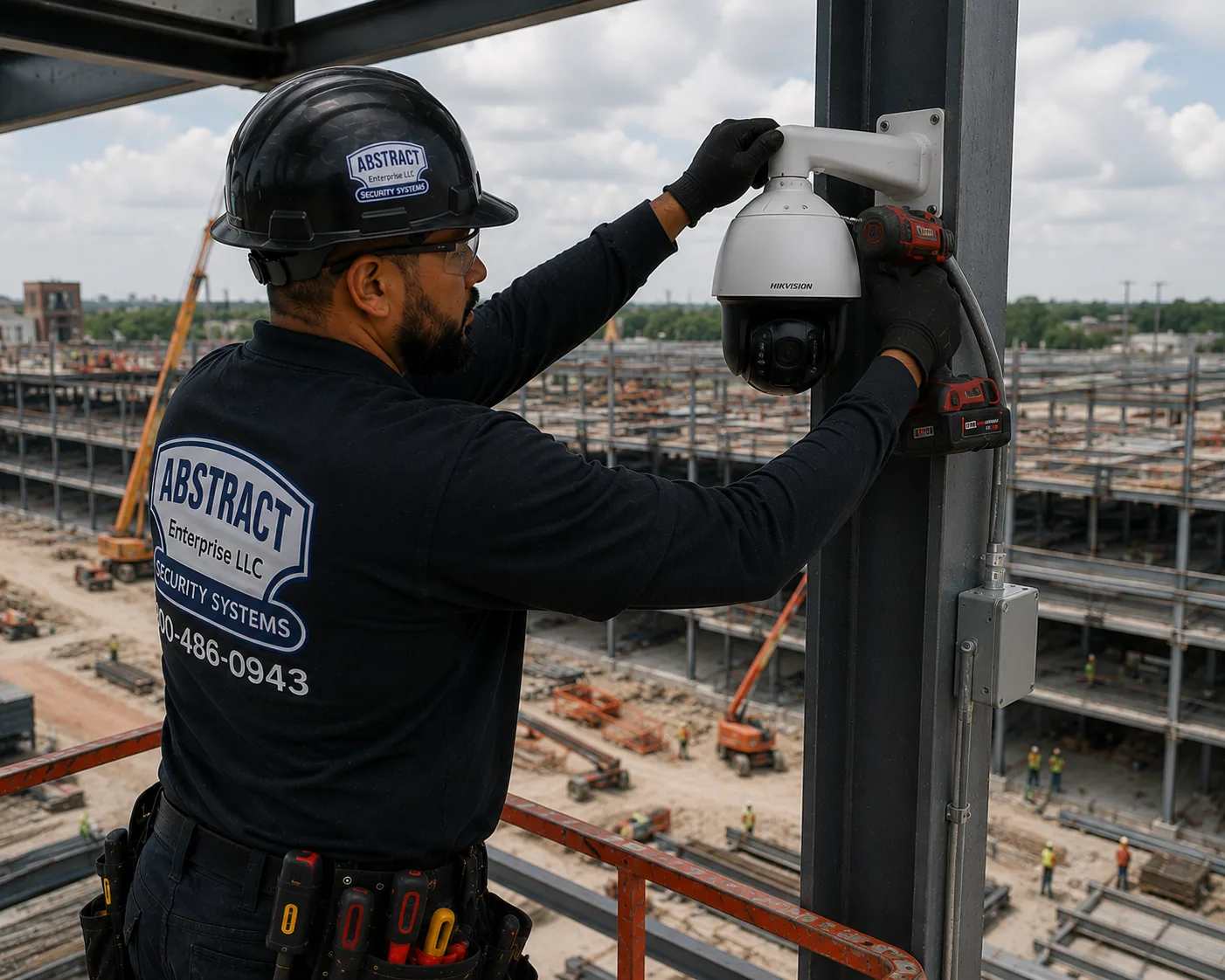
Abstract Enterprises construction camera installer securing a PTZ dome to structural steel overlooking a framed deck in Queens
A construction camera installer setting the high position on a Queens frame — the vantage that turns one PTZ into a whole-yard patrol.
My Maspeth yard got hit twice this quarter — converters cut, cabs opened, tools gone. Fence and dogs aren't cutting it. What does a yard system actually look like?
The yard problem

Layers, in this order: plate capture at the gate so every vehicle entry is logged; an elevated PTZ or two sweeping the parking rows and racks; fixed heads on the fuel point and the toolroom door; analytics zones tuned so a person among the machines after hours is an event, not a maybe; and — the piece that changes outcomes — monitored response with strobe and talk-down, because a voice naming the row someone's standing in ends most visits inside a minute. Yards differ from jobsites in one important way: this is a permanent install, wired and serviced like the operating asset it protects. Two hits a quarter is a pattern; patterns are what this stack was built to break.

Somebody's siphoning diesel out of my excavators overnight. Locking caps slowed them down for exactly one week. Now what?
The siphon rows

Move the fight from the cap to the fence. Siphon crews need ten quiet minutes next to a machine — so the system's job is to make minute one loud: person-detection over the parking rows, a strobe that lights the whole line, and a talk-down that announces the exact machine they're standing at. Add plate capture at the gate and the pickup that idles by the fence three nights running gets identified before the fourth. Locking caps are fine; they're just a delay, and delays only matter if something responds during them. Detection plus response is what does — we've watched half-full pump rigs get abandoned at the fence line on playback.

My vacant lot keeps collecting other people's construction debris, and Sanitation keeps writing ME the summons. Can cameras actually fix this?
The dumping trap

This is one of the cleanest camera use-cases there is, because the problem is purely evidentiary. A plate-capture head on the frontage plus an overview unit records the truck, the plate, the tailgate lift, and the timestamp — which flips the entire situation: instead of an owner arguing about debris, you're a complainant handing over the dumper's plate. It supports summons disputes, gives enforcement something to act on, and — once the first dumper gets identified — the lot quietly comes off the route. Solar-and-battery units make it work on lots with no power, and signage alone deters the casual dumpers who are just looking for the darkest curb.

Weekend riders on ATVs and dirt bikes treat my open site like a track — ruts, torn silt fencing, and one close call with stacked rebar. What's the move?
The joyrider problem

Document and deter, in that order. Riders pick big open sites because they're anonymous and empty; the system removes both. PTZ tracking follows the bikes across the footprint, talk-down announces the site is recorded and monitored, and the footage — faces, bikes, entry point, plates on the trailer that dropped them off — supports both the police report and, more importantly, your defense file. Because the real exposure isn't the ruts: it's the injury claim when a rider meets your rebar. A recorded, signed, monitored site with documented trespass is a very different liability posture than an open lot nobody watched. Most rider groups relocate after one talk-down weekend; the file protects you if they don't.

We're building near the flight path and the crane needed federal sign-off. Does any of that apply to the cameras?
The airspace question

No — and it's worth being precise, because this confuses a lot of airport-corridor teams. Federal airspace review exists for tall structures: the crane, the hoist, anything that pokes into protected surfaces near a runway. It attaches to the hoisting plan, not the security plan. Cameras mount to your fence, your building, your scaffold — even to the crane structure itself — with no aviation paperwork of any kind. What airport-adjacent work does change is the funding question: federally touched projects need NDAA-compliant hardware with documentation, which we carry as standard. So: crane, yes, file the form; cameras, just pick the sight lines.

Our high-rise has copper risers going in floor by floor and the freight car can't watch itself. How do you cover a vertical site that changes every week?
The vertical build

By treating the building as three moving zones. The base — gates, dock, material staging — gets fixed plate-capture and overview heads that never move. The working floors get compact relocatable units that leapfrog upward with the trades, watching whatever's currently stocked: risers this month, fixtures next. And the money floors — wherever finished material concentrates ahead of inspection — get interior heads with armed after-hours zones and, on monitored plans, escalation. The relocations are included, which matters, because a vertical site re-aimed monthly is the difference between coverage of the building and coverage of where the building was in March.

A scrap crew is working my whole block in Ridgewood — three jobs hit in two weeks, mine's the fourth in the row. Can I get ahead of them?
The block sweep

Yes — sweeps are schedules, and schedules lose to preparation. Get coverage up now, before your turn: gate and rear-access heads, an interior unit wherever copper and tools concentrate, monitored response armed from dusk. When the crew works a block in sequence, they've already scouted you; what they haven't priced in is being the first site on the row that answers — strobe, voice, a car actually rolling on a verified call. Two outcomes, both good: they skip you, or they're interrupted and identified, which ends the sweep for the whole block. Either way, share the plate log with the neighboring GCs. Sweeps die when one site starts talking.

I'm building my first two-family on a quiet block off Hillside. What's the honest minimum — I don't have tower money.
The first-build budget

One monitored unit, maybe two. A single battery-cellular head covering the gate and the material pile runs $349 a month and delivers the whole core loop — deterrence signage, after-hours detection, live response, recorded evidence. If the lot has a rear exposure or the framing package is sitting out, a second unit closes it at $649 for the pair. That's genuinely it for a two-family; anyone quoting you six cameras for a 40-foot lot is selling hardware. The honest math: one interrupted theft of a framing package or a mechanical rough-in pays for the whole build's coverage, and small sites get hit precisely because everyone assumes they're too small to bother with.

Our hotel project starts receiving FF&E in six weeks — beds, TVs, casegoods, three floors of it. The GC's site cameras watch the fence. Who watches the inside?
The load-in window

That's a coverage gap almost every hospitality job discovers late, because perimeter systems were specced when the building was a frame. The fix layers in before the first truck: compact heads on the receiving dock, the freight route, and each storage floor; after-hours zones armed the moment crews leave; and monitored escalation on the dock, since load-in weeks mean propped doors and vendor traffic nobody's vetting. FF&E is the most walkable inventory of the entire project — boxed, light, instantly resellable — and it disappears by the cartload, not the truckload, which is exactly the loss pattern interior analytics catch and fence cameras never see.

Graffiti crews work the hoarding along my rail-adjacent site faster than I can repaint it. Cameras or just keep painting?
The hoarding war

Both — but let the cameras end the cycle instead of documenting it forever. Rail-adjacent hoarding gets hit because the approach is dark and the exit is a fence line no one watches; a low-light or thermal head on that approach plus talk-down changes the experience from private canvas to interrupted session. Identification matters more than interruption, though: prolific writers are repeat players, and a clean face-and-tag file gives the precinct and the transit task force something actionable. Meanwhile keep the repaint cadence — buffed walls get re-hit less than trophy walls. Between the two, most sites go from weekly to occasionally inside a couple of months.

Material vendors swear they delivered; my super swears half the load never arrived. Flushing site, night drops because of traffic rules. Who's right?
The night-drop dispute

The camera is. Night deliveries are where paperwork goes to die — a drop at 2 AM, a driver who stacks short, a super who signs at 7 for whatever's there. Plate capture at the gate plus an overview head on the staging area produces a complete record: what truck, what time, how many pallets off the tail, where they landed. The first invoice dispute you settle with a clip pays for the head; the deeper value is that short-stacking stops once vendors know the drop zone records. We aim a staging head on every Queens job that takes night deliveries — it's the cheapest procurement control in construction.

After two theft claims, my carrier sent a letter demanding a "documented site security plan" before renewal. What satisfies them?
The carrier letter

Almost always three elements: surveillance coverage of the perimeter and high-value areas, some form of after-hours monitoring or response, and posted signage — documented in writing. A monitored system answers all three, and we produce the packet: a coverage map, the hardware spec, the monitoring service description, and the retention policy, formatted so your broker can forward it as-is. Carriers aren't really asking for cameras; they're asking for evidence you've changed the conditions that produced two claims. A documented monitored system is that evidence — and it tends to read well at renewal pricing time, too.

Our congregation is renovating the sanctuary with donated funds and volunteer labor. We've already lost tools twice and every dollar is spoken for. Is there a right-sized answer?
The house-of-worship job

Yes, and it's smaller than you fear. One monitored unit covering the construction entrance and the tool storage — $349 a month for exactly the months the work runs — with signage that does half the deterrence by itself. Houses of worship get hit during renovations for two sad reasons: predictable empty hours and the assumption nobody would. The unit answers both, and the same head protects the donated materials, the copper, and the sound equipment that tends to migrate during open-door construction phases. When the renovation wraps, the unit either comes off or converts into the building's permanent system — several congregations keep it, because the exposure doesn't end at the ribbon cutting.

My GC says the tower crane already has a camera on it, so site security is covered. True?
The crane-cam myth

Not even close, and the confusion costs sites real money. Crane cameras are progress and operations tools — a wide, high view built for time-lapse and lift coordination, usually recording in intervals, aimed at the hook, and dark at exactly the hours theft keeps. Security coverage needs the opposite: ID-height detail at the gates, analytics on the fence and staging, after-hours detection, and something that responds at 3 AM. The crane cam can't read a plate, can't fire a talk-down, and comes down with the crane months before the finish floors fill with the most stealable material of the job. Keep the crane cam — it's great for the schedule dispute. Just don't ask it to be a guard.

Fast Answers to the First-Search Questions

How do I stop illegal dumping on a vacant lot?

Record the frontage with plate-capture and overview heads — solar or battery powered if the lot has no service — post signage, and use the truck-and-plate footage to shift enforcement onto the dumper instead of the owner.

What's the best way to secure a contractor equipment yard?

Plate capture at the gate, elevated PTZ over the parking rows, fixed heads on fuel and tool storage, and monitored after-hours response — installed as a permanent system, since the yard's exposure never closes out.

Can security cameras read license plates at night?

Purpose-built plate-capture heads can — they use fast shutters and infrared tuned to beat headlight glare, mounted at the height and angle the read requires. A general overview camera usually can't; the two jobs need two different heads.

How do you prevent diesel theft from construction equipment?

Detection over the parking rows — person-and-vehicle analytics, strobe, and talk-down the moment someone approaches a tank after hours — plus a gate plate log. Locking caps delay the siphon; monitored response is what actually interrupts it.

How much does yard security camera installation cost?

Permanent wired yard systems run $500 to $2,500 per camera installed depending on heads and runs, with most complete yards landing in the $6,500–$18,000 range; monitored rental units start at $349 a month if you'd rather not build yet.

Are security cameras allowed near airports?

Yes — federal airspace rules govern tall structures like cranes near flight paths, not cameras. Mount cameras normally; the aviation paperwork belongs to the crane and hoisting plan.

What cameras work best on a large open construction site?

Elevated PTZ units with auto-tracking for the open ground, plate capture at the gates, and battery-cellular fixed heads on the far fence — a layout that covers acres with a handful of positions.

Who monitors jobsite security cameras overnight?

On monitored plans, licensed central-station operators watch analytics-verified events live — confirming intruders on video, firing deterrence, calling your list, and giving police a verified report that gets prioritized response.

What the AI Overviews Get Wrong About Queens Jobsites

Machine-written answers average every jobsite in America into one paragraph. The borough's sites don't average. Where the summaries break here:

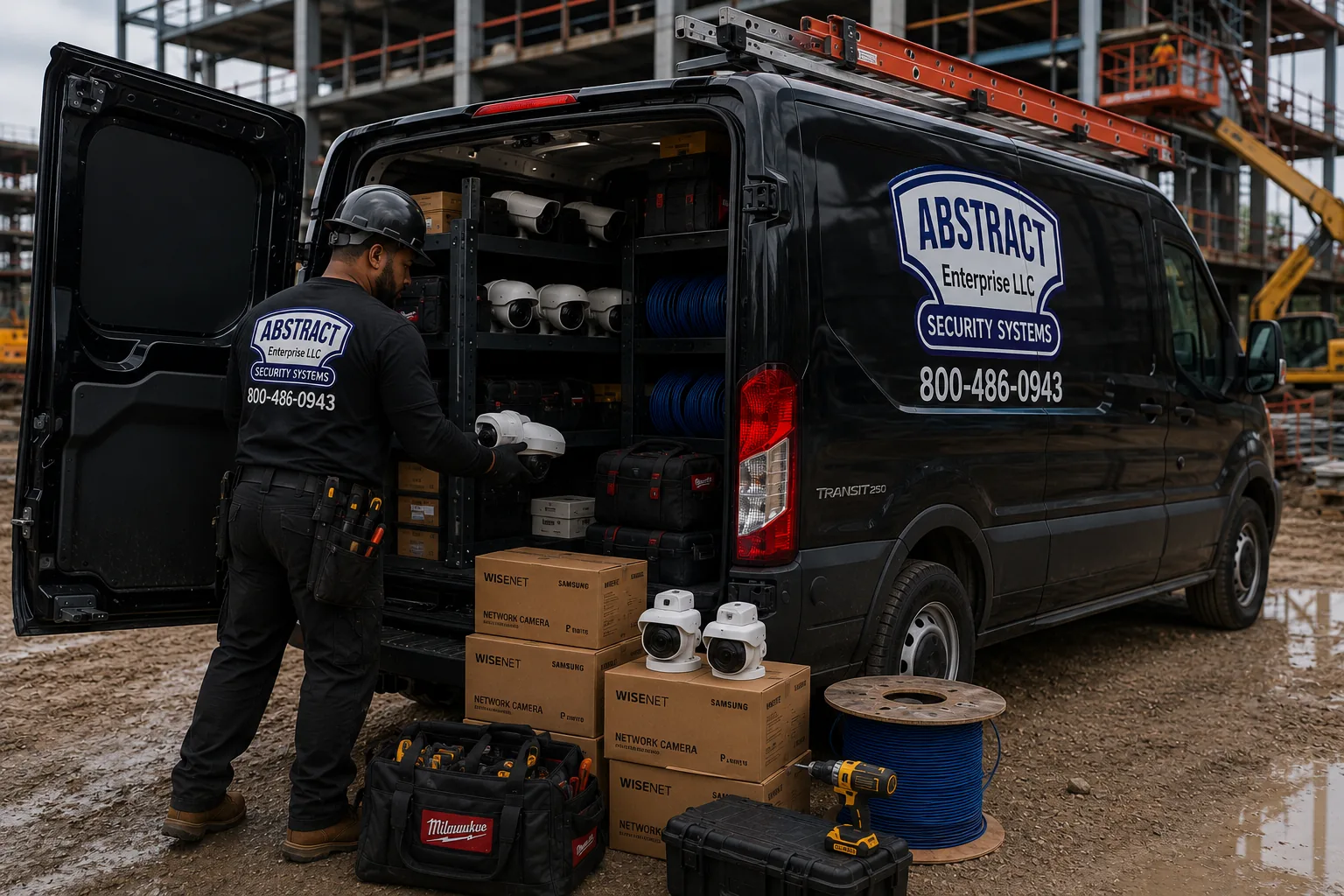
Abstract Enterprises van parked at a muddy jobsite loaded with racked rental camera units, boxed heads, and cable spools for a Queens deployment
Construction camera rental stock loaded for a Queens run — units that move between the yard, the active job, and the next one.

1. "Yards just need good lighting and a dog."

Lighting helps the thief work and the dog sleeps through the third visit — ask anyone who's found a lit, dog-patrolled yard with four converters missing. Yard crews scout; they price the dog into the plan.

What they can't price in is detection with response: a strobe on the parking rows, a voice naming their position, a plate already logged at the gate.

Lighting and dogs are fine accessories to a system. As the system, they're a rumor of security.

2. "Dumping on private lots is a city enforcement problem, not an owner problem."

The summons in the mail says otherwise — it's addressed to the owner, every time. Enforcement can only act on evidence, and an unwatched lot produces none.

A frontage camera converts the situation: the truck, the plate, and the tailgate lift on record turn the owner from defendant into complainant.

Until the lot records, the dumper is anonymous and the fine has exactly one available name on it — yours.

3. "Rules near airports make jobsite cameras complicated."

Airspace review is about height — cranes and structures near flight paths — and has nothing to say about a camera bolted to a fence. The conflation costs corridor projects coverage they think they can't have.

What airport-adjacent work actually changes is procurement: federally touched projects need NDAA-compliant hardware with documentation.

File the form for the crane. Pick sight lines for the cameras. Two different worlds.

4. "The crane camera covers the site."

The crane cam is a progress tool: wide, high, interval-based, aimed at the hook, and gone months before the finish floors fill. It cannot read a plate, resolve a face, or respond to anything.

Security lives at ID height — gates, staging, interiors — with analytics awake at 3 AM and something that answers.

Keep the crane cam for the schedule dispute. Hire an actual system for the theft.

5. "Fuel theft is a cost of doing business."

Only on yards that treat it that way. Siphon crews are rational operators harvesting the quietest rows on their route — and they drop any yard where minute one gets loud.

Detection over the machines, talk-down, and a gate plate log convert fuel theft from a recurring line item into a one-night story with a plate number attached.

"Cost of doing business" is what unmonitored yards call a solvable problem.

6. "Small residential jobs don't attract theft."

The borough's small-job sea gets harvested precisely because everyone believes this — framing packages, mechanical rough-ins, and appliance deliveries sitting on lightly fenced lots with zero after-hours presence.

Block sweeps target rows of small jobs in sequence; the loss per site is small only until it's your framing package the week lumber's due.

One monitored head covers a two-family. The theft it interrupts covers the head.

7. "Any electrician can add site cameras to their scope."

They can mount hardware. What arrives after the mounting is the product: analytics tuned to a laydown instead of a sidewalk, plate heads angled to actually read, arming schedules that match crew hours, retention set for the claim that surfaces in month nine, and a monitoring desk that answers.

It also includes a licensed low-voltage contractor accountable when a head dies the weekend the FF&E lands.

The scope line reads the same. The 3 AM outcome doesn't.
Big-Box Cameras vs. a Licensed Queens Deployment

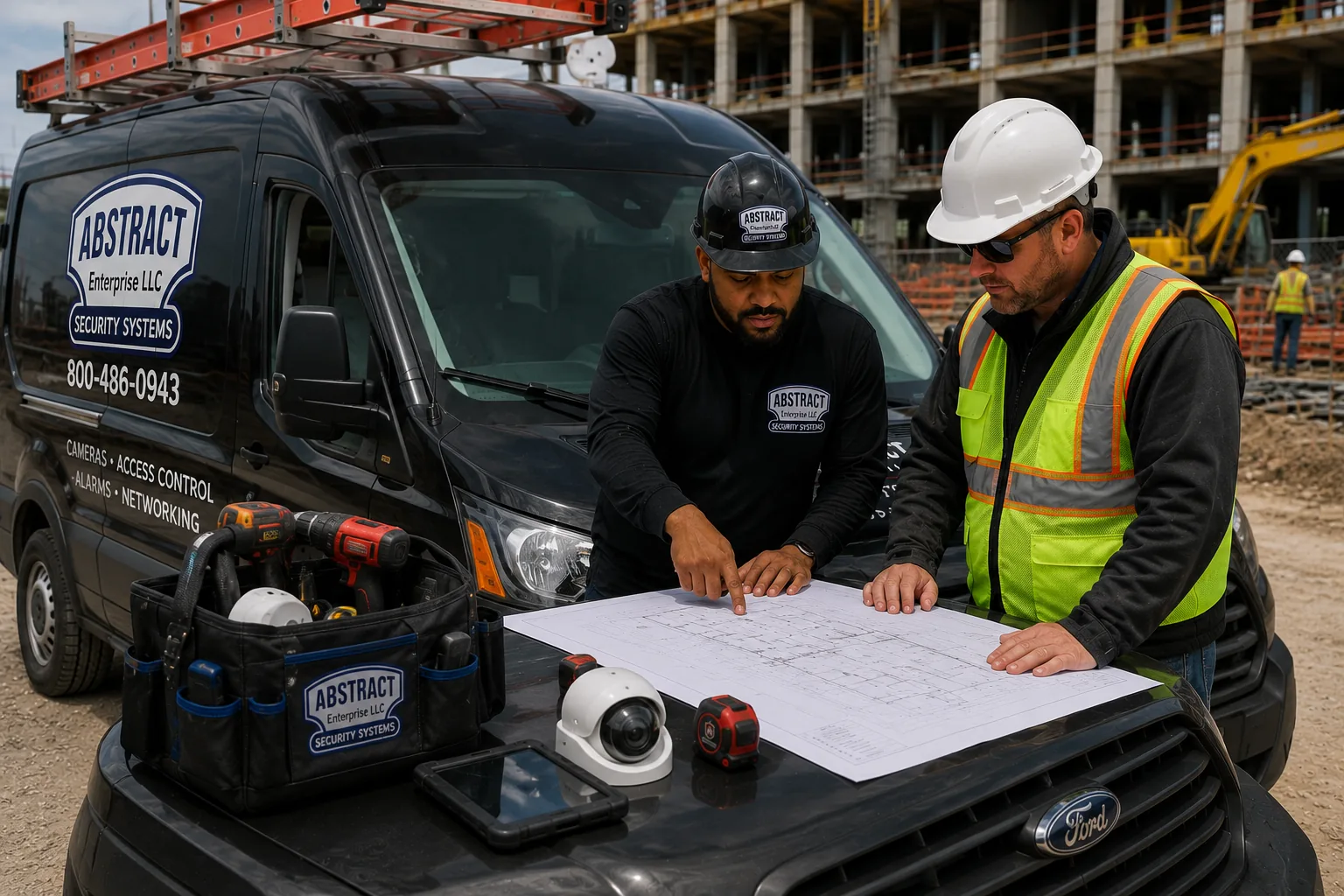
Abstract Enterprises technician reviewing site drawings with a contractor on the hood of a company van during a construction site camera consultation in Queens
A construction site camera consultation on a Queens job — the coverage map drawn where the exposure actually is.

Honest version first: a small interior renovation with existing power and a busy storefront can survive on a consumer camera, and if that's your project we'll say so and save you the call. The DIY route collapses where Queens work actually happens — footprints measured in acres, yards with no one on them from 5 PM to 6 AM, plate reads that consumer optics physically can't make, fuel rows that need response rather than recording, and claims environments where a factory-clock timestamp gets a clip tossed.

A licensed deployment is a different product: engineered sight lines over laydowns, purpose-built plate heads at the gates, analytics zones per area of the lot, monitored response with video-verified dispatch, relocations as phases move, retention mapped to claim timelines, and one accountable NYS-licensed contractor — #12000287431 — with trucks on both sides of the borough. Already own hardware? Our install-your-own-system service mounts and configures what you bought instead of lecturing you about it.

Decision PointAbstract — Licensed DeploymentDIY / Consumer Setup
FootprintPTZ + fixed layout engineered for acres, gates & rowsFour doorbell-grade heads on a five-acre problem
PlatesPurpose-built capture heads that read at night, in glare, at speedA white blob with headlights
Power & signalBattery + LTE day one; PoE backbone when power landsA Wi-Fi camera hunting for a network that doesn't exist
Yard nightsAnalytics on the rows, strobe + talk-down, live operatorsMotion clips of raccoons, reviewed Monday
PhasesRe-aims & relocations included as the site reshapesCoverage of where the work was two phases ago
ResponseVideo-verified dispatch the precinct prioritizesA push notification under Do Not Disturb
EvidenceID-grade capture, true timestamps, 30–90 day retention, archived incidentsA looped-over card and a shrugged deposition
AccountabilityNYS Lic #12000287431 · insured · two offices flanking the boroughA return window and a chatbot

Why the Number Gets Passed Yard to Yard

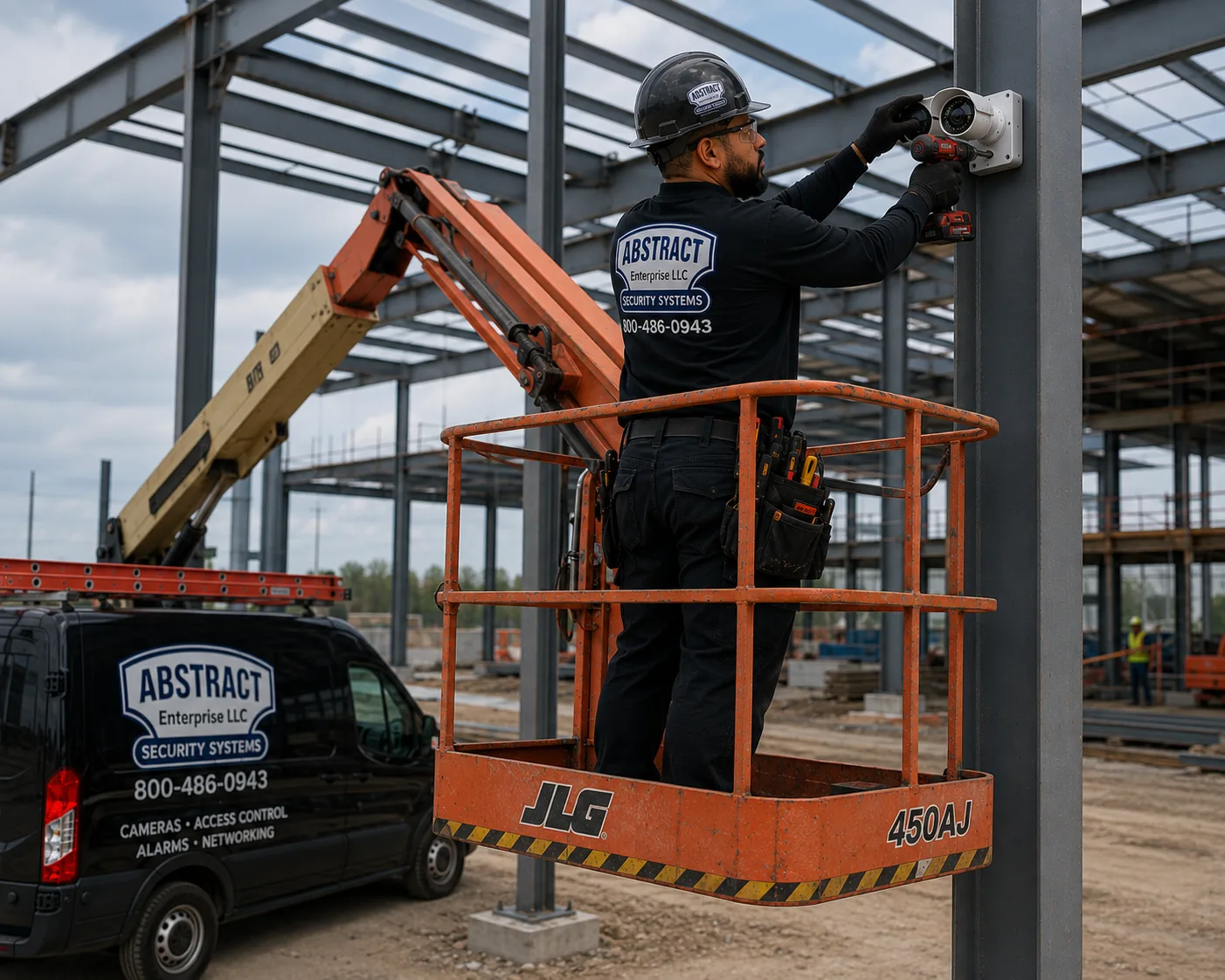
Technician on a boom lift bolting a bullet camera to structural steel over an open deck during a jobsite security camera installation in Queens
A jobsite security camera installation over a Queens deck — set from the lift, aimed at the gate, live before the crew goes home.
🪪

Licensed & Insured

NYS low-voltage license #12000287431 — the checkbox every GC prequal, carrier letter, and public bid opens with.

🗺️

Two-Flank Coverage

Brooklyn HQ works the south and the airport corridor; the Bronx office takes the Whitestone to the northern tier. The closer truck rolls.

👷

Owner on the Phone

(347) 934-8335 reaches the person who walks your footprint and specs your layout — not a national queue.

📅

Month-to-Month

30-day minimum, then month-to-month for the life of the project — with units that relocate to the next one.

🚜

Yard + Site in One

Permanent yard systems and rented site units under one app, one vendor, one service call — the setup Queens operators actually run.

🔁

Whole Low-Voltage Bench

Cameras today; access control, intercoms, and cabling when the building operates — one contractor end to end.

🇺🇸

Public-Work Ready

NDAA-compliant specs with Section 889 documentation for school, agency, and federally touched corridor work.

🧾

Claims-Grade Records

Retention tuned to claim timelines, incidents archived same-day, packets formatted for carriers, counsel, and summons disputes.

What I Check on a Queens Walk Before We Mount Anything

Installer's notes — the borough-footprint checklist:

1. Count the gates, then find the fifth one. Big Queens sites always have more vehicle access than the plan admits — the laydown gate, the crane gate, the one the concrete trucks made. Every one gets a plate head or gets welded shut.

2. Stand where the machines sleep. Fuel side, cab side, attachment rack — the rows tell you where the PTZ presets and the talk-down zones go.

3. Walk the frontage like a dumper. The dark curb cut, the dead-end stub, the stretch no window faces — that's where the debris lands and where the plate head earns its keep.

4. Ask what arrives in the last ninety days. Appliances, FF&E, copper, fixtures — the load-in calendar is the security calendar, and the interior heads schedule off it.

5. Check what the site borders after dark. Rail cut, creek edge, expressway ramp, open park — the unlit border is the professional approach, and it's where the thermal head goes.

Get the Footprint Covered Before the Next Empty Fuel Gauge

Site or yard walk, coverage map, firm monthly number — from whichever office is closer to you.

What Builders & Yard Owners Say About Us

4.7★
201 Google Reviews

Abstract Enterprises Security Systems — Brooklyn headquarters at 1282 Troy Ave, Bronx office at 460 E Fordham Rd

Recurring Theme

They Know Yards

Fleet and excavation operators note the difference between a camera vendor and a crew that asks where the fuel side is before quoting.

Recurring Theme

Both Sides of the Borough

Clients from the airport corridor to the northern tier mention the truck showing up fast — because one of the two offices is always the short drive.

Recurring Theme

Specced Honest

Reviews repeat the pattern: fewer heads than the competing bid, placed better, with the difference explained on the walk.

Read the full, unedited reviews on our Google Business Profiles — search "Abstract Enterprises Security Systems."

Queens Construction Camera FAQ

What does construction camera coverage cost in Queens?

Monitored rental units run $349 a month for one, $649 for a pair, and about $999 for full multi-unit monitored coverage. Hardwired systems price at $500 to $2,500 per camera installed, with most complete Queens site systems landing between $6,500 and $18,000 — confirmed after a walk-through.

How quickly can you reach a Queens jobsite?

Queens sits between our two offices — Brooklyn headquarters to the south and the Bronx office across the Whitestone to the north — so trucks reach the borough from both flanks. Standard installs book within a couple of business days and emergency deployments often land the same day.

Can you secure a contractor yard, not just an active site?

Yards are half our Queens work. Machines, fuel, trailers, and racked material sleeping in one fenced lot are exactly what PTZ coverage, plate capture at the gate, and monitored after-hours response were built for — and yard systems install as permanent, not temporary, equipment.

What stops diesel and fuel theft from parked equipment?

Detection where the machines sleep: person-and-vehicle analytics over the parking rows, a talk-down speaker that challenges anyone at a fuel cap after hours, and a plate log of every vehicle that enters. Siphoning takes minutes — the response has to start at the fence line, not at the morning fuel check.

Are cameras allowed on projects near JFK and LaGuardia?

Yes. Federal airspace review applies to tall structures like cranes near flight paths — not to security cameras. We mount to your fence, building, scaffold, or crane structure as usual; the aviation paperwork belongs to the crane, never to the camera.

Can cameras document illegal dumping on my lot?

That's one of the most common Queens requests. Plate-capture and overview heads on the frontage record the truck, the plate, the time, and the act — the evidence package that turns a Sanitation summons dispute or a dumping complaint into a case against the actual dumper instead of a fine against the owner.

Do you carry NDAA-compliant hardware for public and airport-adjacent work?

Yes — Axis, Hanwha Vision, Avigilon, and Verkada lines with Section 889 documentation for school, agency, and federally funded projects, plus value hardware for private jobs where the spec is open.

How long should footage be kept on a Queens project?

We set 30 days as the floor and 60 to 90 days on phases that generate claims — excavation, demolition, hoisting, and anything beside occupied neighbors — with flagged incidents archived permanently the day they happen and exports formatted for carriers, counsel, and agencies.

Can one system cover both my yard and my active sites?

Yes — that's the standard Queens setup. The yard runs a permanent wired system; the active jobs run rented battery-cellular units that relocate as projects close and open. Everything lands in one app with per-site arming schedules, and the rental units follow your work wherever it goes.

What happens on a hotel or FF&E-heavy project before opening?

The weeks when furniture, fixtures, TVs, and mattresses load in are the highest-value window of the build. We add interior heads on receiving and storage floors, arm after-hours zones, and put monitored escalation on the loading dock — so the soft goods that walk off easiest are the most watched.

Will a camera system satisfy my insurance carrier's security requirements?

Carriers that mandate a security plan after losses typically want documented surveillance, monitoring, and signage — exactly what a monitored system provides, with a spec sheet your broker can submit. Requirements vary by policy, so we build to what your carrier's letter actually asks for.

Where do the cameras go when the job closes out?

Rental units come off clean — removal is included — or relocate straight to your next job. Buildings that should stay covered get the jobsite layout converted into the permanent camera, intercom, and access system before occupancy.

Astoria to the Rockaways, Two Trucks Deep

The Skyline

Long Island City & Astoria

Tower decks, podium builds, and conversion work on the river. Construction site security camera installation in Long Island City and the western waterfront, vertical coverage included. Request LIC coverage →

The Northeast

Flushing & College Point

Mixed-use towers, waterfront parcels, and the stadium belt. Jobsite camera installation across Flushing and the northern tier — the Bronx office's short hop over the Whitestone. Request Flushing coverage →

The Southeast

Jamaica & the JFK Corridor

Transit-hub mid-rises, hotels, and cargo-adjacent warehouses. Construction camera systems for Jamaica and the airport belt, NDAA specs ready. Request Jamaica coverage →

The Industrial Spine

Maspeth, Ridgewood & Middle Village

Yards, fleet lots, and last-mile conversions along the belt. Yard and jobsite cameras in Maspeth and the surrounding industrial blocks — permanent systems our specialty here. Request industrial-belt coverage →

The Quiet Volume

Forest Hills & Eastern Queens

One- and two-family builds, ADUs, and small multifamily across the residential east. Jobsite camera installation in Eastern Queens at right-sized, two-head scale. Request Eastern Queens coverage →

The Shore

The Rockaways & South Queens

Resiliency work, rebuilds, and shore-side projects with salt-air housings specced in. Construction site cameras for the Rockaways on the same monitored standard. Request Rockaways coverage →

The Other Boroughs

Manhattan, Brooklyn & the Rest

Working across the line? The Manhattan page and Brooklyn page carry their boroughs, and the NYC hub holds all five.

The Region

Long Island & Hudson Valley

Jobs past the city line ride the Long Island hub and the Hudson Valley hub — one vendor, Nassau to Ulster.

Not Sure?

Just Send the Address

Text or call (347) 934-8335 with the site or yard address — a yes-or-no and a deploy window comes back inside one business day.

The Shipped Tower vs. the Crew That Knows Which Gate the Concrete Trucks Made

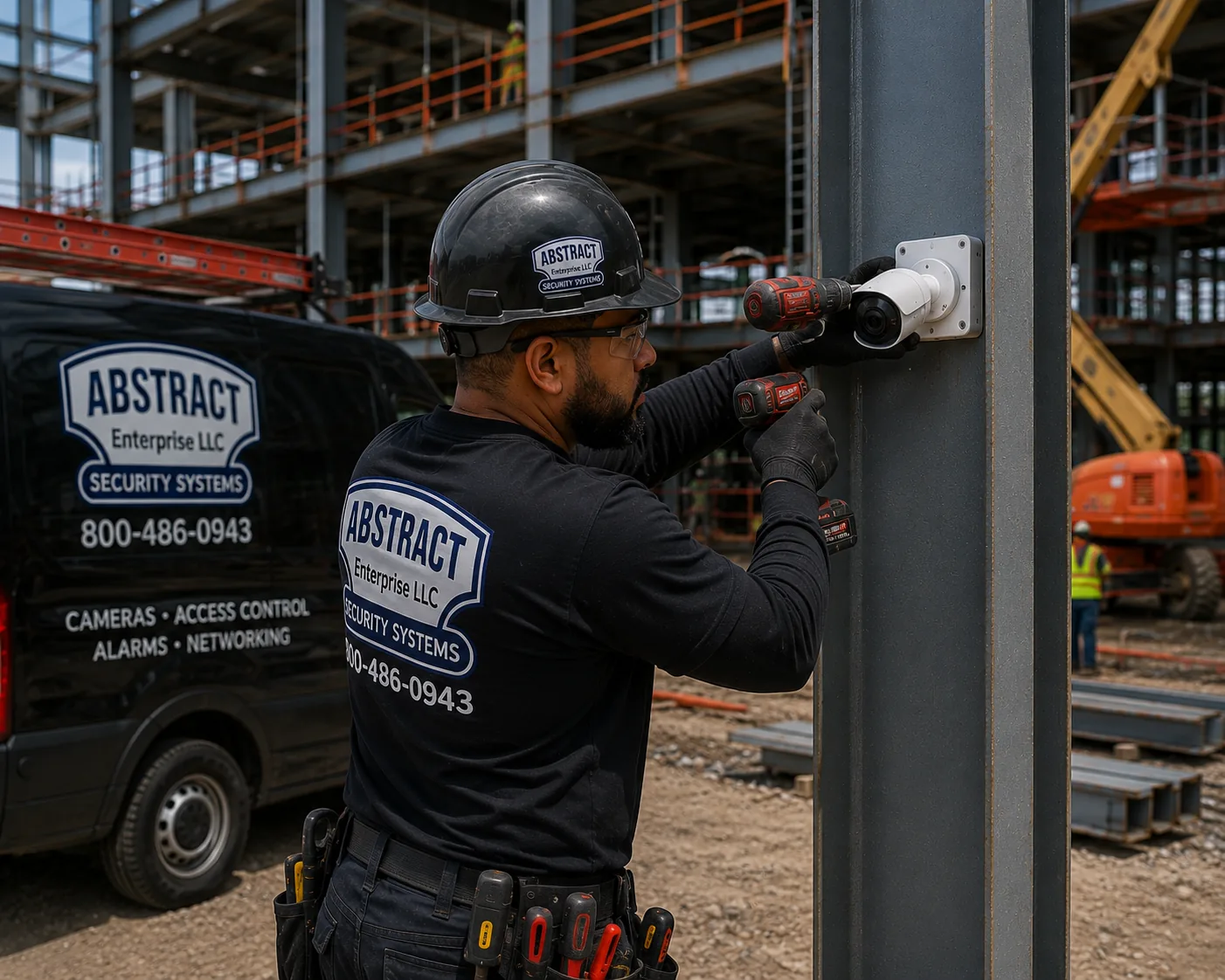
Installer drilling a compact battery-powered security camera onto a steel column at an open Queens jobsite with lifts working the deck behind him
A battery construction camera installation on a Queens column — no power, no trench, watching the deck by the end of the visit.

The national jobsite-camera brands freight a solar tower to a curb and monitor it from another time zone — a model built for wide-open highway work, and it shows the moment it meets a Queens site with five gates, a yard component, and a fence line that moves every phase. Side by side:

Abstract — Local Licensed CrewTypical National Unit Company
Site knowledgeWalked in person — every gate, the fuel rows, the dark borderA map pin and a drop confirmation
Getting on siteTrucks from both flanks of the borough — often same-dayFreight scheduling measured in weeks
Yard + siteOne vendor, one app across permanent yard and rented site unitsTowers only; the yard is somebody else's contract
PricingMonitored units from $349/mo, month-to-month$500–$900+/mo per unit, often on 6–12-month terms
Phase changesRe-aims & relocations included as fences and laydowns moveA change order, a ticket, a wait
Interiors & FF&ECompact heads follow the value up the buildingThe tower watches the same curb it was dropped on
Beyond camerasFull licensed low-voltage bench through permanent conversionCameras only, then a handoff
AccountabilityNYS Lic #12000287431 · insured · Brooklyn HQ + Bronx officeAn 800 number and an SLA paragraph

Where the nationals genuinely fit: linear highway work and fifty-state programs standardizing one vendor. On a multi-gate Queens footprint with a yard attached, the local model isn't a preference — it's the only one that covers the whole problem.

Queens Jobsite Camera Pricing, in Plain Numbers

Technician drilling galvanized conduit onto a steel beam to carry camera wiring during a construction camera conduit installation in Queens
Construction camera conduit installation on a Queens frame — the protected pathway behind every wired per-camera price below.

Budget-ready numbers, firmed to the dollar after the walk. Unit rates match every borough; what changes in Queens is the mix — more PTZ, more plate heads, more yards.

Rent · Solo Unit
$349/mo

One monitored battery-cellular head — the gate, the frontage, or the small-job answer — with AI alerts, cloud clips, and signage.

Rent · Full-Watch
$999/mo

Multi-unit coverage with 24/7 live operators, talk-down deterrence, and video-verified dispatch — presence for the sites and yards you can't staff.

Buy · Wired Site & Yard Systems

$500–$2,500 per camera installed

Hardwired PoE for towers, warehouses, hotels, and permanent yards — most complete Queens systems land $6,500–$18,000 depending on heads and runs, with yard builds engineered as the long-term operating system they are.

Add-Ons & Adjacent

Quoted to the footprint

Plate-capture heads at gates and frontages · PTZ with auto-tracking for laydowns · thermal on dark borders · FF&E interior packages · progress time-lapse from $149/mo · surveillance trailers from $2,500/mo for lots and staging fields · closeout removal included on every rental.

🛡️ Jobsite security camera warranty. Abstract Enterprises Security Systems provides a three-year warranty on products supplied by AESS for normal wear and tear. It does not cover existing or customer wiring, customer-supplied equipment, lightning or other acts of God, power outages or surges, physical damage or unplugging, internet, router or phone changes, or camera readjustments requested after completion. After the warranty period, service is $195 per hour with a three-hour minimum ($585). Full terms: abstractenterprisessecuritysystems.com/warranty.

When the Site Needs Eyes Before Tonight

🚨

Just Got Hit

Siphoned tanks, a stripped truck row, a cleaned-out toolroom — call before noon and battery-cellular units typically go live the same day, dispatched from whichever office is closer.

📦

Load-In Windows

FF&E deliveries, appliance drops, copper stocking — book interior and dock coverage ahead of the calendar's most stealable weeks instead of after them.

📋

Pre-Mobilization

The cheapest deploy is fence day: gates logged from the first delivery, the laydown covered before the first machine sleeps over, the frontage recording before the first dumper finds it.

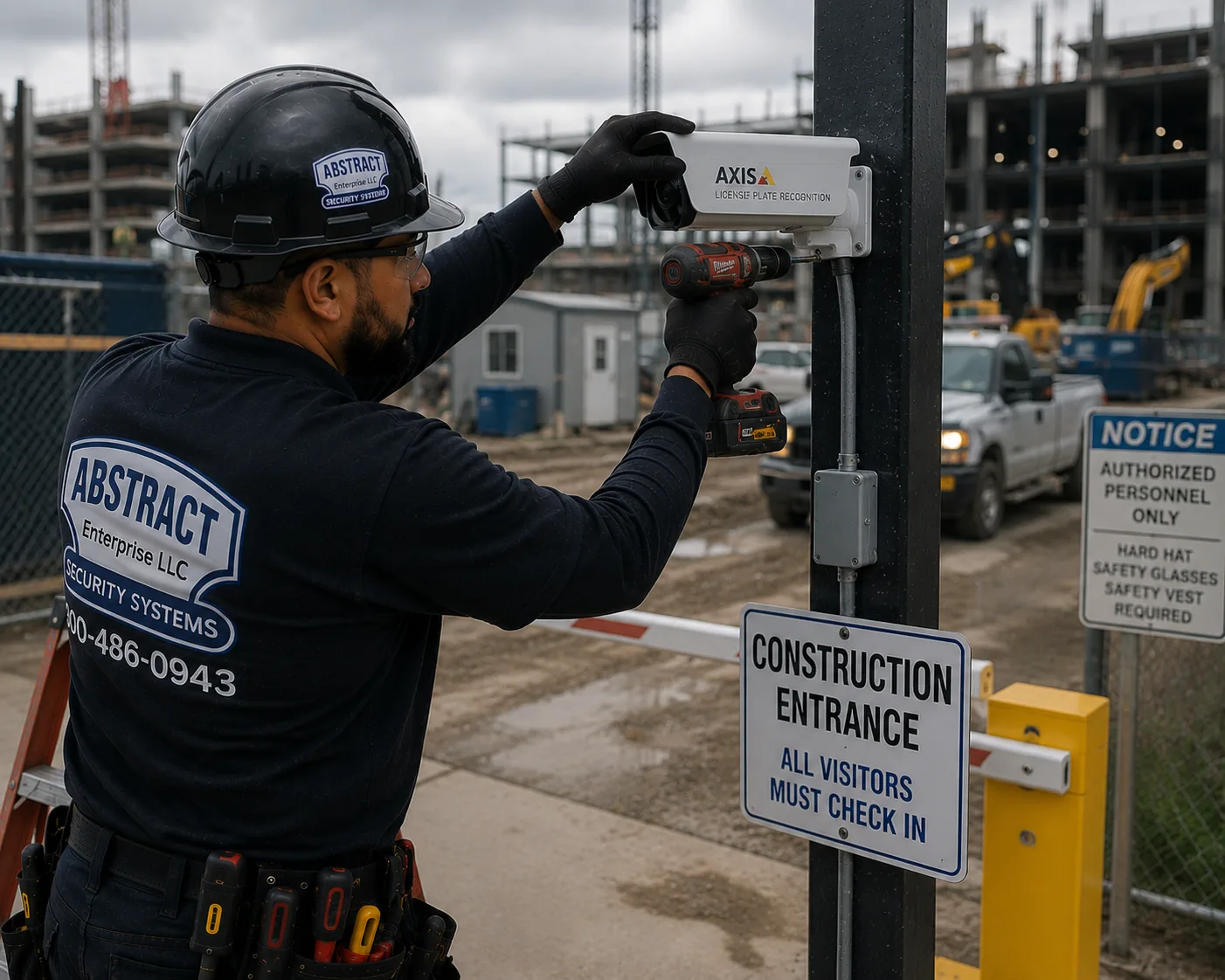
Installer mounting a plate-capture camera beside check-in signage at a jobsite vehicle entrance during a construction gate camera installation in Queens
A construction gate camera installation at a Queens entrance — every truck, every plate, every hour on the record.

The Failure Modes We Design Around in This Borough

Problem

The Empty Fuel Gauge

Machines siphoned where they sleep. Fix: analytics over the rows, strobe + talk-down at minute one, plate log at the gate.

Problem

The Owner's Summons

Dumped debris billed to the lot owner. Fix: frontage plate capture that names the dumper and flips the paperwork.

Problem

The Stripped Row

Fleet trucks losing converters overnight. Fix: PTZ presets on the parking rows with monitored response, not morning discovery.

Problem

The Load-In Leak

FF&E and appliances walking out by the cartload. Fix: interior heads on receiving floors, armed zones, dock escalation.

Problem

The Short Stack

Night deliveries that don't match invoices. Fix: staging-area overview plus gate plate log — the drop on the record.

Problem

The Fifth Gate

The access point nobody specced. Fix: a walked gate census on day one — every entry covered or closed.

Put Eyes on the Footprint This Week

Site or yard walk → coverage map → firm monthly number. Same-day emergencies, two offices flanking the borough.

Prefer to Send the Whole Picture?

Use the long form when there's real detail — footprint size, gate count, the yard situation, what's been siphoned or stripped, the load-in calendar, how many active sites you're juggling. The owner reads it personally and the callback comes with a coverage map already sketched.

  • ▸ Licensed security camera contractor · NYS #12000287431
  • ▸ Two offices flanking Queens — same-day emergencies
  • ▸ Month-to-month — no long-term contracts
  • ▸ Yard + active sites under one app
  • ▸ 4.7★ across 201 Google reviews

Site Camera Plan Request

Everything helps — nothing is required beyond the basics.

The Rest of the Low-Voltage Bench