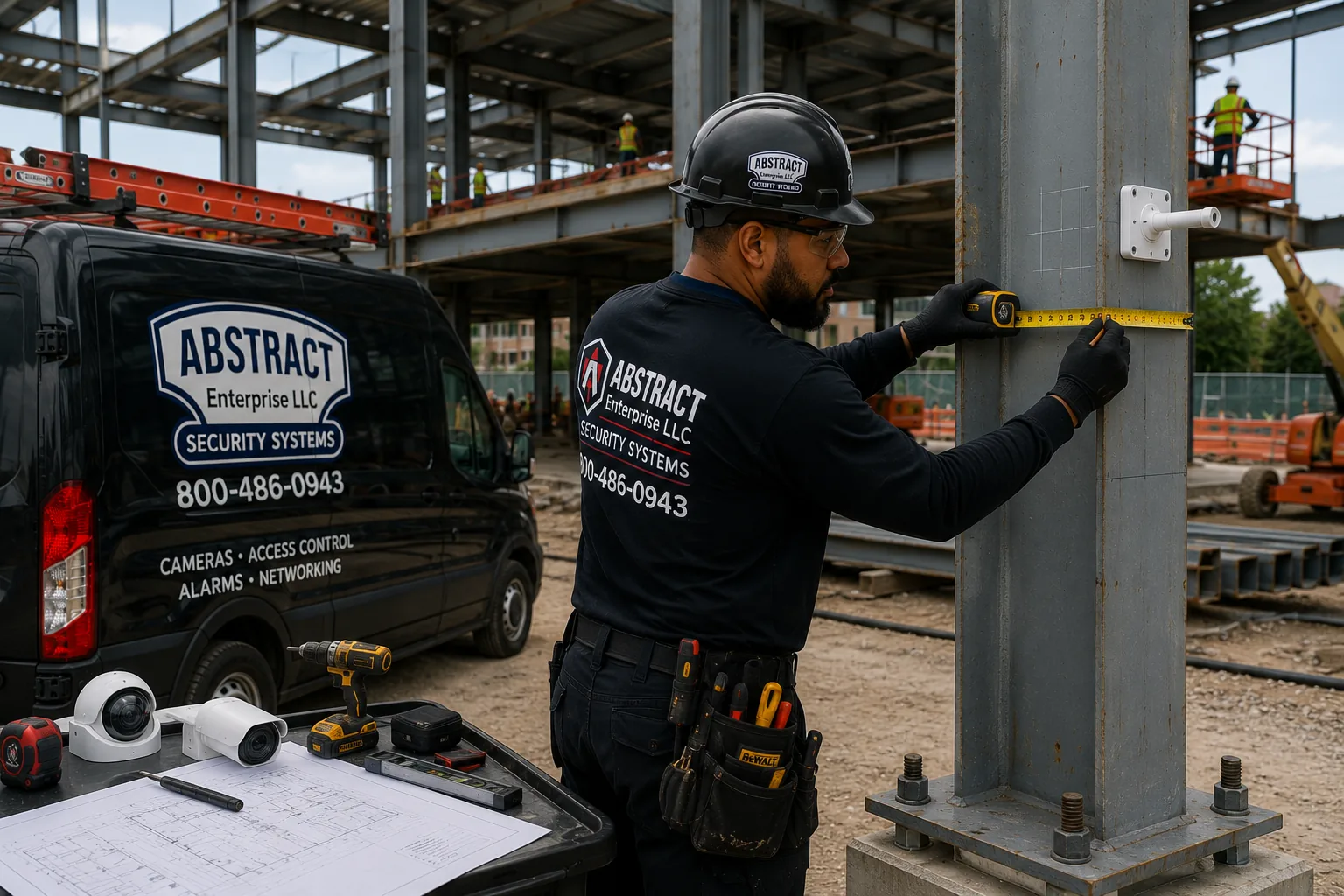
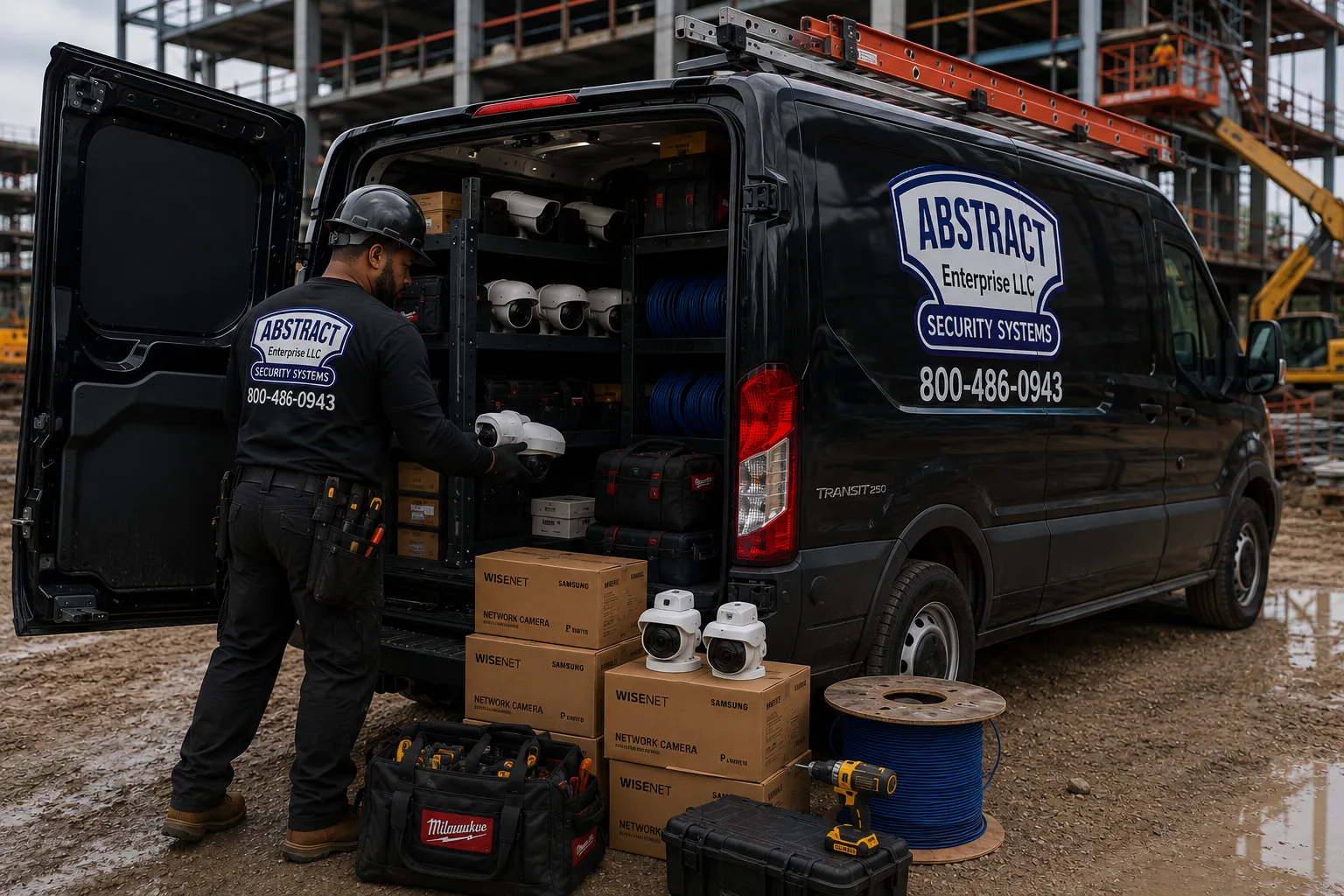
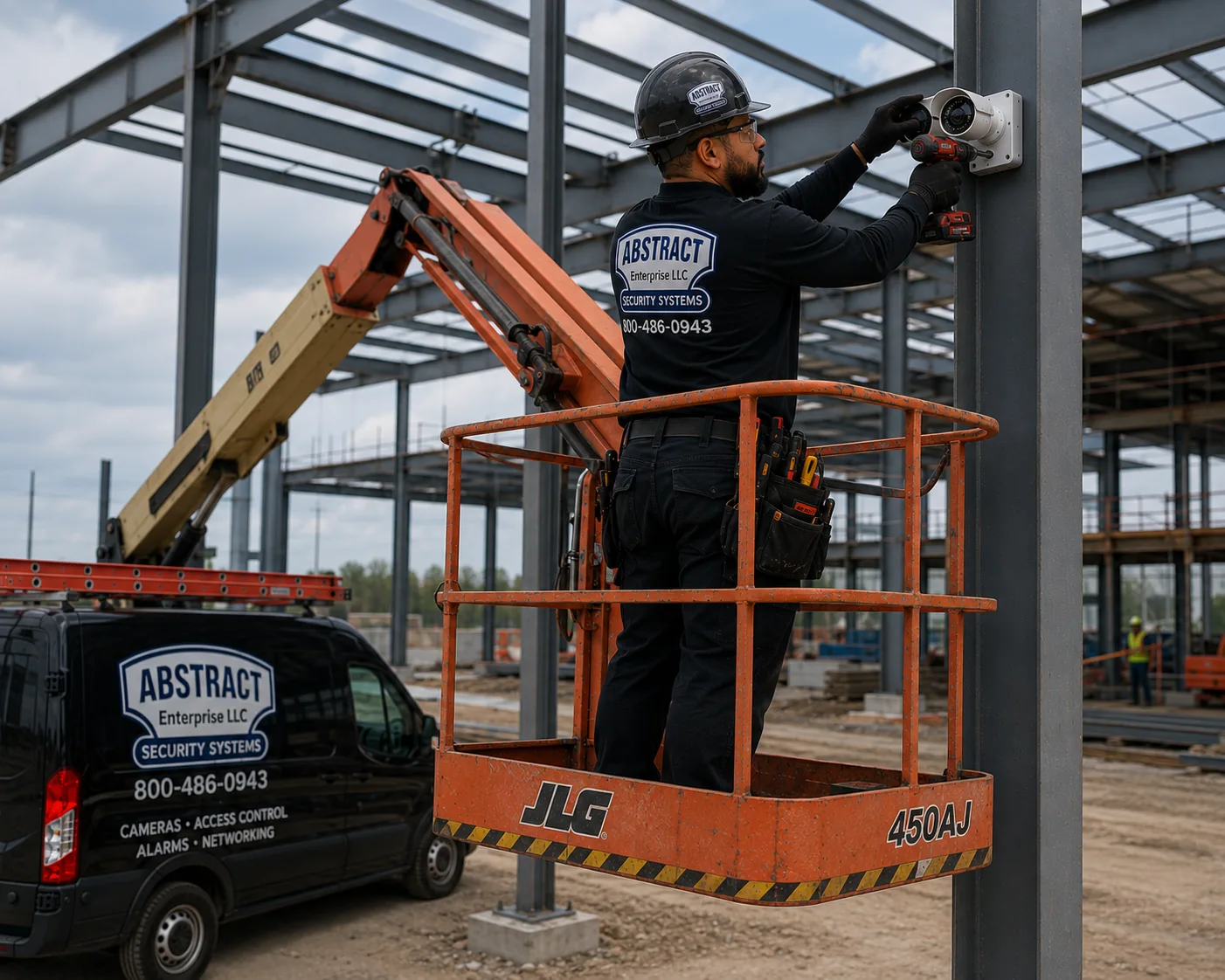
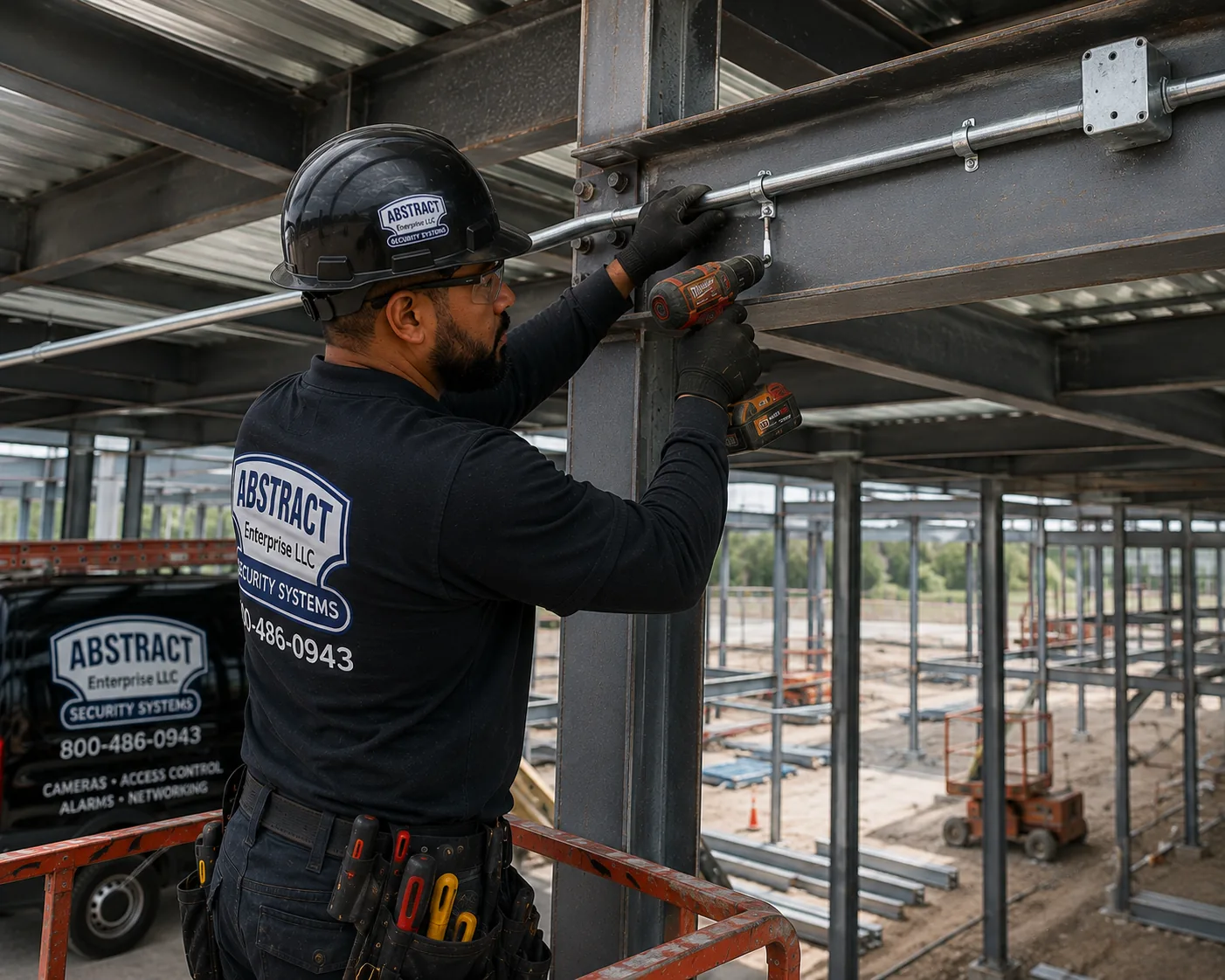
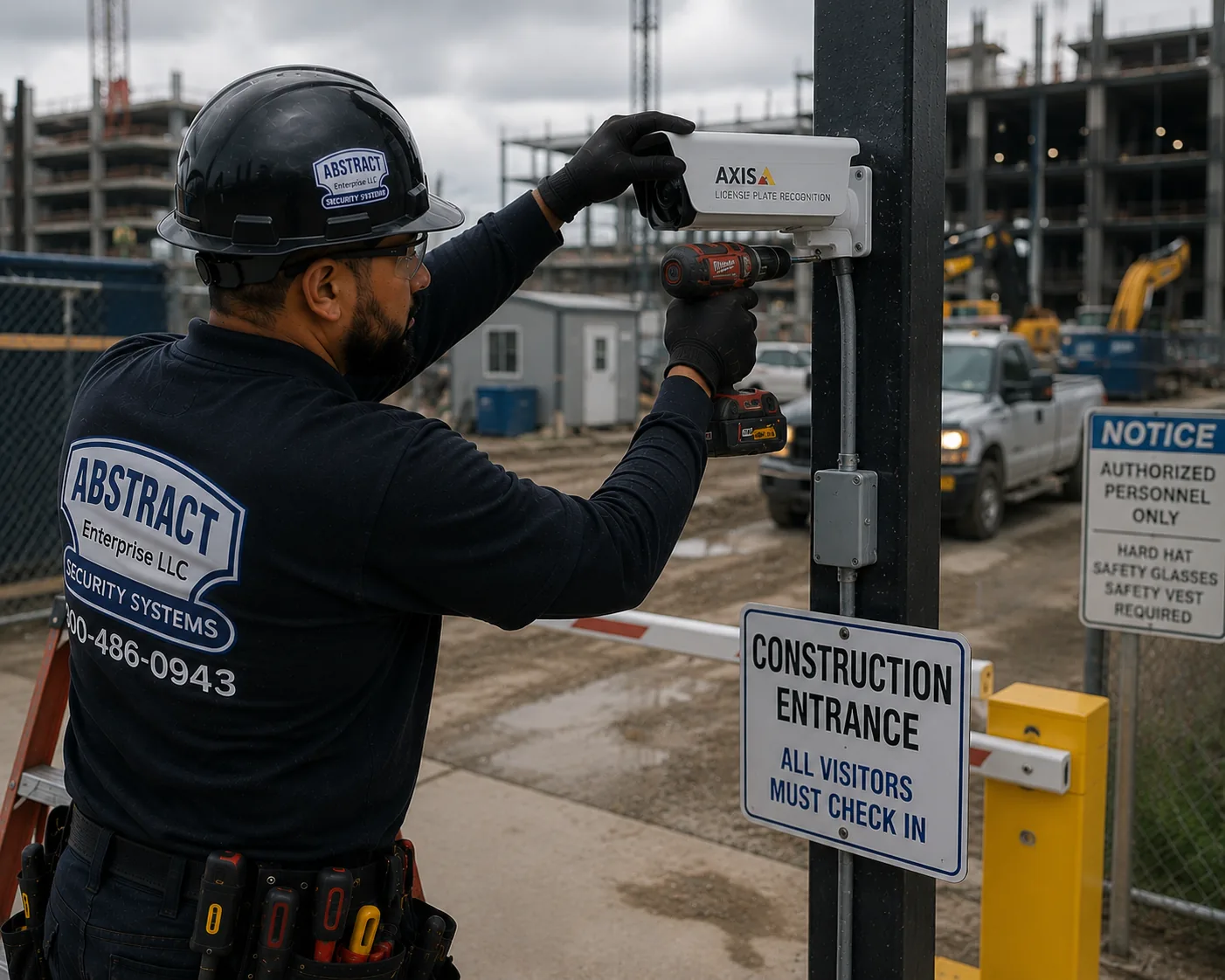
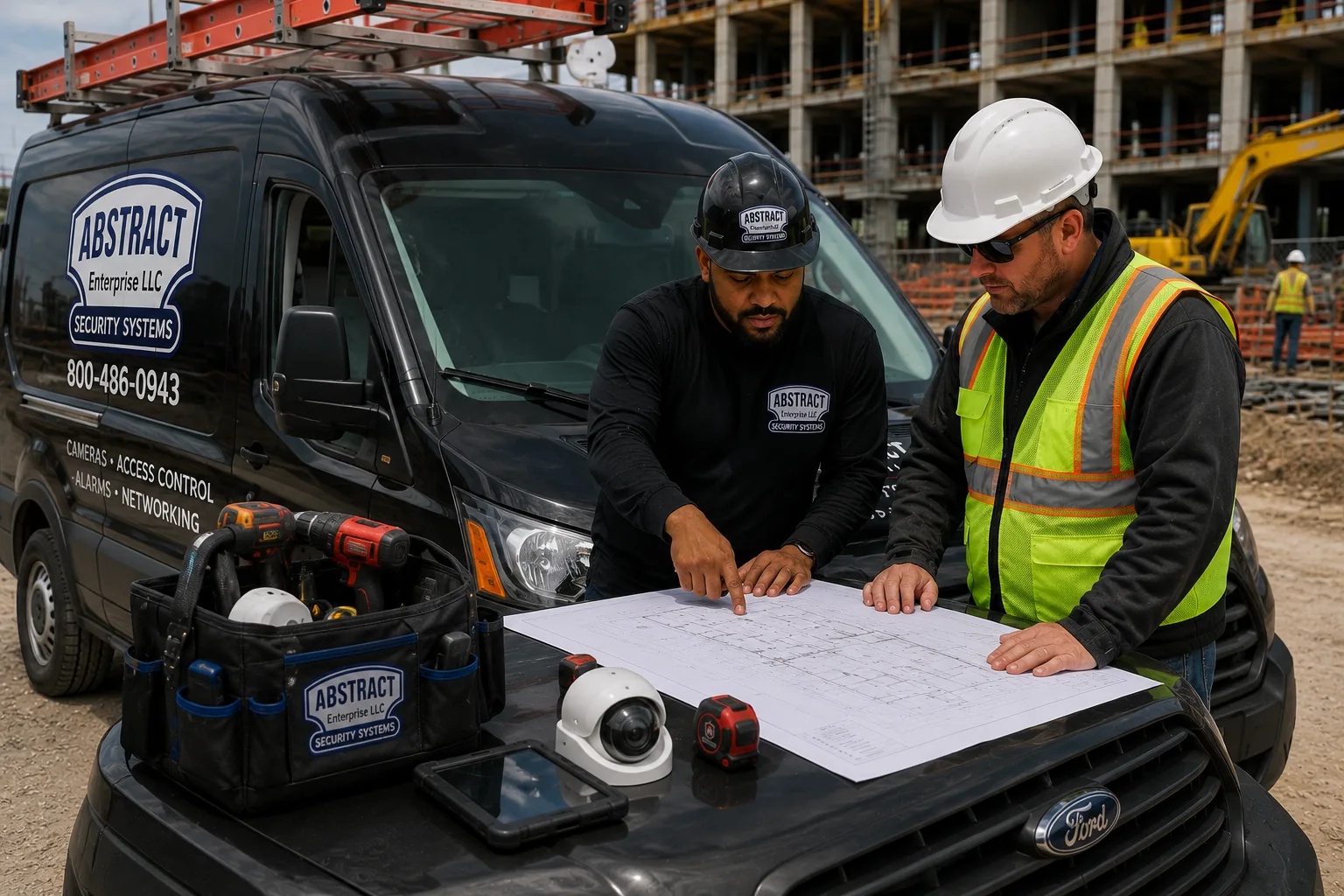
Jobsite cameras for the borough that builds like the suburbs — subdivision rows framing eight houses at once, pre-CO homes full of appliances on unlit blocks, model homes staged to sell, West Shore warehouse boxes filling in, and a North Shore waterfront finally rising. Installed and monitored 24/7 by a licensed NYS low-voltage contractor one bridge away: our Brooklyn headquarters is a straight run over the Verrazzano, and the systems we leave behind don't need us standing next to them.
Staten Island builds the way no other borough does — detached and semi-attached houses in rows, whole tracts framing at once, additions rising over occupied kitchens, and now West Shore warehouse boxes and a North Shore waterfront pipeline. That building pattern creates a theft pattern the rest of the city doesn't have: value spread across quiet blocks with no doormen, no foot traffic, and often no real fence — just orange mesh, a porta-john, and a framed structure holding tens of thousands in lumber, Romex, and boxed appliances that anyone driving past can inventory through the studs.
The national numbers set the floor — $300 million to $1 billion a year in stolen equipment and materials per NER/NICB reporting, tool recovery under 7% — and the Island's rhythm adds its own lines. Framing packages that vanish before the crew starts. Condensers unbolted a week from CO. Rough-in pulled back out of open walls. Model homes relieved of their staging TVs. And the timing is dependable: long weekends, when a block goes three days without a delivery truck, an inspector, or a witness.
And to be straight about the rules: none of this is a code issue. One- and two-family work here rarely touches the city's heavier site-safety tiers, and nothing anywhere in the code requires a camera on any of it. What a monitored system is on this Island is the witness the block doesn't have — detection where there's no fence, light where there's no streetlamp, and a live response at 3 AM on a cul-de-sac where the nearest awake human is otherwise a mile away. Presence, priced monthly.
A single house on a raw lot, a nine-lot tract, a furnished model, and a million-square-foot box don't share a spec. The catalog, matched to how the Island actually builds:
Self-powered LTE heads live the day the stakes go in — raw lots welcome, no utility, no Wi-Fi, no trench across the yard.
Two or three units covering a whole buildout — parked on whichever houses are in their exposure window and relocated as phases advance, included.
Condenser pads, appliance staging, and rear access on finished-but-empty houses — the most-robbed weeks of any residential build, finally watched.
Plate-reading heads on the frontage and driveway cut — every vehicle that slows, stops, or loads logged with a searchable timestamp.
Hardwired 4K for warehouses, mixed-use projects, and models — engineered to convert into the finished property's permanent system.
Entry and interior heads with arming that follows sales-office hours — the staging furniture and TVs protected without a thought from the sales team.
Sensors built for streets with no lighting at all — the unlit cul-de-sac becomes the easiest place on the Island to get caught.
Person-detection fires a floodlight strobe and a live voice — pitch black to daylight in half a second, with an announcement that the plate is on file.
Every scattered lot in one app with per-site arming — plus cloud clips that survive anything that happens to the hardware.
On a residential street after midnight there is no passing traffic, no lit storefront, no one to notice a pickup backing to a framed house — which is exactly why monitored coverage earns its keep here. Live operators verify every after-hours event on video, fire the strobe and talk-down, work your call list, and hand the precinct a verified intrusion with a description and direction of travel. On the Island's quiet blocks, the difference between recorded and monitored is the difference between reviewing a theft and interrupting one.
Graded tracts, staging fields, and heavy-civil laydowns with nothing to mount to get a solar surveillance trailer on Staten Island — mast-mounted PTZ, strobes, and audio anywhere a truck can park. Rates live on the trailer pricing page.
Pre-CO window — the stretch between substantial completion and the certificate of occupancy, when a house is finished, furnished with mechanicals and appliances, and empty. Per square foot, the most-robbed phase in residential construction.
Rough-in — the wiring, plumbing, and HVAC installed in open framing before insulation and drywall. On the Island's house builds it sits visible through the studs for weeks — copper, Romex, and PEX on open display to every passing vehicle.
The leapfrog — our tract method: a small set of units relocated lot to lot as each house enters its exposure window, so three cameras protect nine houses across a buildout instead of nine cameras standing guard over foundations.
Exposure window — the phase when a given house holds its peak stealable value: lumber drop, rough-in, and pre-CO. Coverage scheduling on a tract is just mapping these windows across the lots.
Condenser pad — the exterior slab where the AC unit lands late in the build, usually at the rear, usually dark, and removable by two people with straps in under ten minutes. The single most targeted object on a finishing house.
Model home — the furnished sales asset on a tract: staged, advertised, and predictably empty every night. It gets a permanent-style package because it's a retail store that closes at five.
Island work runs from a private two-family to publicly funded school, civic, and port-adjacent projects, and the brand call follows the money. Public and federally touched jobs fall under NDAA §889 — Hikvision and Dahua are off those specs, and Axis, Hanwha Vision, Avigilon / Alta, and Verkada carry them with Section 889 documentation in the submittal. Private builds get honest value engineering: LTS/Platinum where price-performance rules, and Dahua on Staten Island where the budget says so and no auditor ever will.
How the Island sorts the bench: long-battery cellular lines for raw lots and tracts; Axis low-light and thermal for unlit blocks and wooded rears; Hanwha multi-sensors where one pole must hold a frontage and two lot lines; Verkada when a scattered-lot builder wants the whole portfolio on one cloud dashboard; marine-rated housings anywhere the salt air reaches. Tell us the project and the funding — the list writes itself.
One or two monitored units riding the build from raw lot through CO — repositioned at framing, rough-in, and finish, included.
The leapfrog: a small unit set plus street capture covering a whole multi-lot buildout, phase by phase, one app.
Elevated PTZ, gate plate capture, and interior dock-phase heads for the West Shore's logistics-scale footprints.
Any layout above with 24/7 live operators, talk-down deterrence, and video-verified dispatch — the block's only witness, on duty.
And when the houses deliver, the same license carries the permanent scope — alarm systems, tel-data backbone, and whatever else the finished property runs on.
Coverage follows the work — and the pickups slow-rolling past framed houses follow it too. Where the borough's building is stacked this cycle:
The former Navy base site is planned for over 2,100 homes with retail, a school, and public open space — the Island's most ambitious waterfront build — while a newer 500-plus-unit project at Front and Canal adds to the same corridor. Years of fences, hoists, and finish floors coming to the North Shore.
The city's action plan for the ferry-adjacent corridor points toward roughly 2,400 new homes across its phases, layered over a borough pipeline that already counts hundreds of units under construction and thousands more in pre-development.
The 32-acre Arthur Kill Terminal remains a proposed offshore-wind staging and assembly port near the Outerbridge. The project received a $48 million federal grant in 2022, but the U.S. Department of Transportation withdrew that award in August 2025. Its permitting, financing, and construction schedule remain subject to change.
The industrial corridor keeps filling with warehouse-scale projects — fit-outs and ground-ups where the laydown measures in acres, dock equipment and racking arrive by the truckload, and site security is a logistics problem, not a padlock.
The Island's zoning keeps most of its land in one- and two-family use, and the borough's steady economy of tract rows, semi-attached pairs, infill lots, and additions never stops — the quiet volume that puts more framed houses on dark blocks than anywhere else in the city.
Shore-hardening along the eastern waterfront, school and healthcare renovations, and civic upgrades round out the load — publicly funded work carrying NDAA specs, seasonal windows, and formal documentation requirements.
How we work the Island: over the bridge, on a schedule. Brooklyn HQ is one Verrazzano run out — and because the systems are battery-cellular and centrally monitored, the service model is planned runs and same-day emergencies, not a truck that lives on the block.
One- and two-family specialists with framed houses, staged appliances, and closing dates riding on the pre-CO weeks.
Multi-lot buildouts where every phase multiplies the exposure — eight framing packages, eight condenser pads, one leapfrog.
West Shore fit-outs and ground-ups with acre-scale laydowns, truck courts, and equipment arriving by the trailer.
North Shore mixed-use teams running hoists, sheds, and finish floors on the Island's biggest fences.
Model homes and sales offices staged with the furniture, TVs, and appliances that make the tract sell.
Plumbers, electricians, and HVAC crews whose rough-in material and van inventory are the Island's favorite targets.
School, civic, resiliency, and port-adjacent projects carrying NDAA specs and documentation requirements.
Marine, shoreline, and infrastructure teams with laydown yards, cranes, and tidal-edge staging to protect.
Collected on site walks from the ferry to the Outerbridge — answered the way we answer them standing on the subfloor.
No — you need coverage that reads the tract the way the thief does. A buildout concentrates its risk in whichever houses are in an exposure window — lumber drop, rough-in, pre-CO finish — and that's rarely more than two or three lots at once. The working setup: one unit on the street approach logging every vehicle that enters, plus two leapfrogging to the houses currently holding value, relocated as phases advance, included. Three cameras, nine houses, full coverage of the actual risk — for less per house than the plywood you'd spend boarding windows, and unlike plywood, it identifies the truck.
Quickly, unfortunately — installed rough-in is just staged copper to someone with side cutters, and a framed house displays it through every stud bay. The two-house pattern says you're being watched: someone knows your inspection rhythm and hits the window between sign-off and drywall. Close it deliberately — an interior unit on the main floor, armed the minute the crew leaves, plus a frontage head logging the vehicle that keeps slowing down. Rewiring a stripped house costs multiples of the copper's scrap value in schedule, re-inspection, and callbacks, which is why this theft justifies coverage faster than almost any other.
Watch the pad like it's a safe, because economically it is. Condensers vanish pre-CO for the reasons you've discovered: outside, at the rear, fast to unbolt, on a house nobody visits daily. The counter is a monitored head on the pad and rear approach — person detection, strobe, talk-down — turning the fifteen-minute job into a lit, announced thirty seconds, plus the habit of setting condensers as late as the trades allow. Cages slow a theft; a talk-down cancels one. And the same head covers the appliance staging inside, next on the same shopping list.
Treat it as what it is: a retail store that closes at five. A model is advertised, photographed, furnished, and predictably empty every night — a burglary target designed by a marketing department. The fix is small and permanent-style: entry heads, an interior head over the main living space, arming that follows sales-office hours so the staff never touches a keypad, and monitored response overnight. Signage does half the deterrence, since the whole point of a model is that people look at it. When the tract sells out, the system comes off or converts into the final buyer's home cameras — more than once, the closing incentive that sold the model itself.
Everyone's describing wired systems and calling it a law of nature. Battery-cellular units carry their own power and signal — high-capacity batteries, solar assist where the sun allows, LTE backhaul — and mount to a pole, a tree line, or the structure the day it exists. No fence changes the philosophy, not the feasibility: on an unfenced lot the property line is enforced by detection instead of chain link, analytics drawing the boundary and a talk-down announcing it. Half the Island's house builds run exactly this way, stakes to CO, without a wire on the lot. The infrastructure you're missing is the infrastructure the units bring.
Consumer cameras will. Site-grade ones treat your dark block as home-field advantage: infrared sees in zero ambient light, low-light sensors pull usable color out of near-nothing, thermal reads body heat with no light at all — and the strobe inverts the situation entirely, converting pitch black to stadium lighting the instant a person crosses the zone. The part worth internalizing: darkness was only ever the thief's ally because nobody could see. Once the site can see and the block can't, the darkness switches sides — the unlit cul-de-sac becomes the easiest place on the Island to get caught on camera.
The logistics stack, scaled to acreage. Elevated auto-tracking PTZ sweeps the laydown and truck court — one high head doing the work of six fixed ones. Plate capture at the gates logs every tractor and box truck against the delivery schedule. Once the interior phase starts — racking, dock levelers, the equipment that arrives by the trailer and disappears by the pallet — compact heads move inside to receiving and staging, with monitored escalation on the docks. Same monitored-response philosophy as a house lot with an extra zero on the footprint, engineered from day one to convert into the facility's permanent system at turnover.
With more precision and more courtesy than a vacant site needs. Coverage targets the construction zones only — exterior staging, scaffold access, the upstairs work area — armed for the hours the crew is gone and the family is asleep, exactly when staged material on an addition gets shopped. Aiming discipline matters doubly: heads point at your scaffold and material, privacy masking blacks out the neighbors' yards and the family's own windows, and the homeowners get feed access — which they invariably love. Done right, the system protects your tools, their home, and the relationship. We do it right.
Yes — and the pile weeks deserve dedicated coverage, because banded framing packages are the most liquid asset in residential construction: untraceable, universally needed, pre-loaded onto skids for the thief's convenience. A monitored unit with detection, strobe, and talk-down covers the drop; a frontage head logging plates covers the reconnaissance that precedes it. Two schedule habits multiply the protection: take delivery close to framing start, and stage the package deep on the lot — every foot from the curb adds carry time, and carry time is what talk-downs interrupt. The unit that guards the pile then rides the build to CO.
It's the realest pattern in residential site theft. A holiday weekend hands the thief three straight nights with no deliveries, no inspectors, no crews — and on a residential block, no witnesses either, since the neighbors are at the shore too. Sites get scouted Thursday, harvested Saturday, discovered Tuesday. We build for the calendar: extended arming across the long stretch, monitored response prioritized when the block goes quiet, and a pre-holiday health check confirming every head is aimed, charged, and reporting. Your luck isn't bad — your exposure was scheduled. So is the coverage.
It is, and your instinct is better than most builders' spreadsheets. The pre-CO stretch combines maximum contents with minimum presence: the house holds its full appliance package, fixtures, condensers, and finish material while daily traffic drops to nothing. Every incentive that protected the site — crews at seven, deliveries at ten — has evaporated, and the only thing between the contents and a box truck is a builder's lockset. The fix is cheap relative to the exposure: keep one monitored unit through closing, on the rear access and interior staging, armed continuously. It's the same rental that watched the framing — it just stays six more weeks, through the only phase where the house is both full and abandoned.
It works better on them, actually. Theft crews weigh risk against payoff; vandals — usually local, young, and on foot — run on zero payoff, so any risk at all changes the math. A strobe that turns the yard to daylight and a live voice announcing they're recorded ends the average window-breaking career on the spot, because the activity depends on being consequence-free. When it doesn't end immediately, the footage identifies repeat players — faces, routes, the same three kids — and gives the precinct something concrete. Glass is insurable; blown closings aren't. The deterrence package exists for exactly this species of loss.
It's right for their inventory and wrong for your lot. The tower exists for highway projects and hundred-acre laydowns, where a twenty-foot mast earns its freight bill. On a quarter-acre residential lot it's a monument — overkill in coverage, oversized in cost, conspicuous on a block of two-family homes. The right-sized answer is one or two compact battery-cellular heads on the structure or a pole: same detection, same monitoring, same talk-down, at a fraction of the monthly. We stock both scales and quote what the site needs, which on a house lot is essentially never the tower. When the footprint grows into warehouse acreage, we'll talk masts.
Then don't manage five setups — run one account with five addresses. Every lot gets the units its phase calls for, all in a single app: one login, per-site arming, alerts labeled by address, footage searchable across the portfolio, one monitoring protocol, one call list. The fleet flexes as the portfolio does — when the Annadale house closes, its units shift to the new foundation without a new contract. Scattered-lot builders are half our residential book precisely because the alternative really is worse than the theft. One screen, whole operation.
Time deliveries close to framing start, stage the package deep on the lot, and cover it with a monitored unit — person and vehicle detection, strobe, and talk-down turn a quiet load-out into an interrupted one, and a frontage head logs the scouting that precedes it.
Set them as late in the schedule as possible, and watch the pad with a monitored head covering the rear approach — detection plus talk-down cancels the fifteen-minute unbolt job that cages only slow down.
Keep one monitored unit through the pre-CO stretch — the weeks when the house is full of appliances and fixtures but empty of people — covering the rear access and interior staging, armed continuously until closing.
Monitored rentals start at $349 a month for one unit, $649 for two, and about $999 for full multi-unit monitored coverage; wired systems run $500–$2,500 per camera installed.
They need them more — on an unfenced lot, detection is the perimeter. Battery-cellular heads with analytics zones enforce the property line that chain link never got built, with a talk-down announcing it.
Entry and interior heads, arming synced to sales-office hours, and monitored overnight response — a furnished, advertised, predictably empty house is a retail store after closing, and it gets protected like one.
A small monitored unit set that rides each build from lumber drop through CO, relocations included, plus a portfolio app when the lots multiply — coverage that follows the exposure window instead of the address.
Long holiday weekends and the pre-CO stretch — the calendar's quietest windows, when sites go days without deliveries, inspectors, or witnesses. Coverage should be built around both.
Machine-written answers average every jobsite in America into one paragraph. The Island's sites don't average. Where the summaries break here:
They're quieter, which is not the same thing. A dense-borough site has all-night foot traffic, lit corners, and a hundred accidental witnesses; a residential block at 2 AM has none of those — just a framed house displaying its contents through the studs.
Low witness density is the thief's favorite site condition, and the Island's building pattern supplies it by the mile.
Quiet blocks don't reduce the risk. They privatize it.
A tarp advertises that something under it was worth covering. Framing crews, thieves, and everyone else on the Island reads a blue rectangle on a lot the same way: banded package, pre-skidded, ready to load.
Concealment isn't a strategy when the object is the size of a car and the block is empty.
Detection with response is the strategy. The tarp can stay for the rain.
Two people, two straps, a hand truck, ten minutes — the weight argument dies at every stripped pad on the Island. Resale and scrap value make the effort a wage, and the rear-yard placement makes it private.
The same logic once claimed catalytic converters were safe under parked trucks.
Heavy means slower, not safe. Slower is exactly what monitored detection is built to exploit.
At 3 AM on a residential block, the neighbors are the least reliable security system ever proposed — asleep, away for the long weekend, or reasonably assuming the truck at the framed house is the builder's.
A pickup loading material looks identical whether it's authorized or not. Neighbors can't tell; a plate log can.
The site needs its own witness. That's the entire product.
Per square foot, the framed shell with rough-in is the value peak — lumber at market prices, copper and Romex on open display, and everything at its most liquid and least traceable.
Waiting for drywall means insuring the vault after the cash moved out.
Coverage should start when the value arrives — the lumber drop — not when the house looks finished.
Trackers are a recovery bet on a sub-7% recovery game — they tell you where the tools went after the loss already happened, assuming the tag survives the first parking-garage sweep.
Cameras with monitored response play the only winning position: interruption, before the truck loads.
Track the tools if you like. Watch the site either way.
Porch logic on a construction problem. A consumer floodlight cam watches one approach, needs house Wi-Fi that doesn't exist yet, and alerts a phone that's on Do Not Disturb — while the build has four approaches, no network, and no one awake.
Site coverage is zones, self-powered units, analytics, and a monitoring desk that answers.
The floodlight cam is a fine housewarming gift for the buyer. It's not site security.
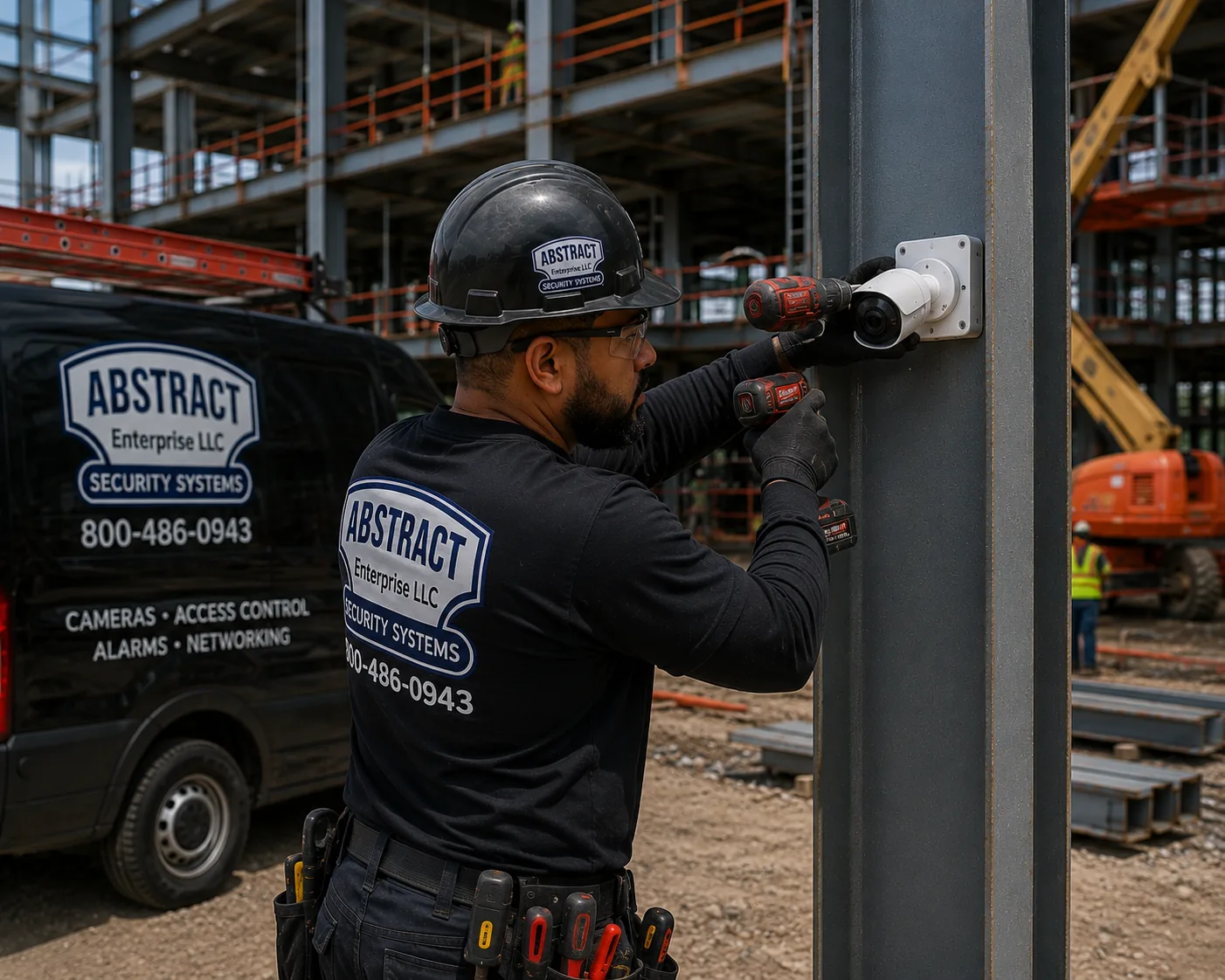
Honest version first: a finished, occupied house on a busy street can absolutely run a consumer camera, and if that's your situation we'll say so and save you the call. The DIY route collapses where Island building actually happens: raw lots with no Wi-Fi to join, tracts where the exposure moves lot to lot faster than anyone remounts a doorbell cam, pre-CO houses whose alerts land on a sleeping phone, unlit blocks where consumer sensors record noise, and claims files where a factory-clock timestamp gets a clip dismissed.
A licensed deployment is a different product: self-powered units for utility-free lots, leapfrog scheduling tracking the tract's exposure windows, analytics tuned to lot lines instead of porches, monitored response with video-verified dispatch, holiday-calendar arming, and one accountable NYS-licensed contractor — #12000287431 — a bridge away. Already own hardware? Our install-your-own-system service mounts and dials in whatever you bought, judgment-free.
| Decision Point | Abstract — Licensed Deployment | DIY / Consumer Setup |
|---|---|---|
| Raw lots | Battery + LTE + solar — zero utilities required | A Wi-Fi camera with no Wi-Fi and a dead power tool battery |
| Tracts | Leapfrog units tracking each lot's exposure window | One doorbell cam on the model, eight houses dark |
| Dark blocks | IR, low-light, thermal + strobe that makes daylight | Grainy gray footage of a shape |
| Pre-CO weeks | Armed zones + live monitored response | An alert under Do Not Disturb until Tuesday |
| Holiday weekends | Extended arming + pre-holiday health checks | Three silent nights and a Tuesday discovery |
| Evidence | ID-grade capture, true timestamps, 30–90 day retention | A looped-over card and a shrugged claim |
| Portfolio | Every lot in one app, one call list, one vendor | Five logins and a group chat |
| Accountability | NYS Lic #12000287431 · insured · one bridge away | A return window and a chatbot |
Brooklyn HQ is a Verrazzano run from the North Shore — and the systems are engineered to not need a truck on the block.
NYS low-voltage license #12000287431 — the line every lender file, prequal packet, and public bid asks for first.
Exposure windows, condenser pads, pre-CO weeks, closing calendars — residential building's actual rhythms, specced from experience.
(347) 934-8335 reaches the person who walks your lots and specs your layout — not a national queue.
Lot-to-lot relocations and phase re-aims built into every tract rental — coverage follows the value at no change order.
A 30-day minimum, then rolling — timed to your closings, with removals scheduled around the final walk-through.
NDAA-compliant hardware with Section 889 documentation for school, civic, resiliency, and port-adjacent projects.
Site cameras now — access control, intercoms, and cabling for the properties you deliver.
Installer's notes — the house-lot checklist:
1. Map the exposure windows across the lots. Which house gets lumber this month, which hits rough-in, which is waiting on a CO — the leapfrog schedule writes itself off the phase map.
2. Stand at the curb and inventory the site like a passerby. Whatever I can identify through the studs at 15 mph is what the site is advertising. That view decides the interior heads.
3. Find the condenser pads and the appliance staging. The two most-shopped positions on any finishing house — rear, dark, and removable. Both get named zones.
4. Check the block's light and sight lines after dusk. No streetlight, no facing windows, a wooded rear — the darker the block, the harder the strobe and thermal work, and the more the site is its own witness.
5. Read the calendar before the layout. Closings, holiday weekends, delivery dates — half of Island security is scheduling. The arming plan gets built against the calendar, not just the floor plan.
Site walk, coverage map, firm monthly number — one bridge, one call.
Abstract Enterprises Security Systems — Brooklyn headquarters at 1282 Troy Ave, Bronx office at 460 E Fordham Rd
Builders note a crew that asked about closing dates and condenser schedules before quoting — and specced the pre-CO weeks nobody else mentioned.
Island clients mention deploys that landed same-day and systems that ran for months without needing a visit — the distance never showed up in the service.
Reviews repeat the pattern: two well-placed units where a competitor quoted a tower — with the reasoning walked through on site.
Read the full, unedited reviews on our Google Business Profiles — search "Abstract Enterprises Security Systems."
Monitored rentals run $349 a month for one unit, $649 for a pair, and about $999 for full multi-unit monitored coverage. Hardwired systems price at $500 to $2,500 per camera installed, with complete systems typically landing between $6,500 and $18,000 — firmed after a site walk.
Straight answer: our headquarters is in Brooklyn, one bridge away — the Verrazzano puts most of the Island about twenty minutes from our door. More to the point, the systems don't need babysitting: battery-cellular units run themselves, monitoring is 24/7 from the central station, and re-aims or relocations are scheduled runs, not emergencies.
Yes — detection replaces the perimeter a suburban lot never gets. Battery-cellular heads on poles or the structure itself watch the approaches with person and vehicle analytics, so the property line is enforced by alerts and talk-down instead of chain link. Half the Island's builds run exactly this way.
Cover the pre-CO window deliberately — it's the most-robbed stretch of any house build. A monitored unit watching the condenser pad and rear access, an interior head where the appliances stage, and armed after-hours zones turn the finished-but-empty weeks from an open invitation into a recorded, answered space.
No — coverage follows the phase, not the lot count. Two or three units typically hold a tract: one on the street approach and gate, the rest leapfrogging to whichever houses are in their exposure window — framing, rough-in, or pre-CO. Relocations between lots are included, so the same hardware protects the whole buildout.
Yes — model homes get a small permanent-style package: entry and interior heads, arming that follows sales-office hours automatically, and monitored response overnight. The staging furniture, TVs, and appliances that make the model sell are exactly what walks out of an unwatched one.
One account, every site. Each lot gets the units its phase needs, and everything lands in a single app with per-site arming, alerts, and footage. When a house closes, its units shift to your next lot — the portfolio stays covered continuously and you manage it from one screen.
Holiday weekends are harvest season — three quiet days, no inspectors, no deliveries — so we build for them: extended arming windows, monitored response prioritized on the long stretches, and pre-holiday checks that every head is aimed and healthy before the site goes silent.
Darkness is a solved problem: infrared and low-light sensors see in zero ambient light, thermal heads detect body heat where optics can't, and the strobe converts pitch black into daylight the moment a person crosses the zone. On an unlit block, the system is the only witness — and it's the one that works best at night.
Yes — logistics builds get the big-footprint stack: elevated PTZ over the laydown and truck court, plate capture at the gates, and interior heads once racking, dock levelers, and equipment start landing. Same monitored response, scaled to a site measured in acres instead of lots.
The units bring their own everything: high-capacity batteries, solar assist where the exposure allows, and LTE cellular for signal. Nothing on the lot is required — coverage starts the day the survey stakes go in and runs until the house has walls, power, and a wired option if you want one.
Yes — removal at closeout is included, timed to your closing calendar so coverage runs through the final walk-through. Builders who want a selling point instead can have us convert the setup into the buyer's permanent home camera system — a clean handoff either way.
The Homeport, the ferry corridor, and the mixed-use pipeline. Construction site security camera installation in St. George and along the rising waterfront. Request North Shore coverage →
House builds, additions, and commercial corridors. Jobsite camera installation across New Springville and the central belt. Request Mid-Island coverage →
Tract rows, semi-attached pairs, and the Island's quietest, darkest blocks. Construction cameras in Tottenville and the south-end house belt. Request South Shore coverage →
Warehouse boxes, laydown yards, and the coming port work. Jobsite camera systems on the West Shore at logistics scale. Request West Shore coverage →
Rebuilds, raises, and shore-hardening work. Construction site cameras in New Dorp and the coastal belt, marine housings specced in. Request East Shore coverage →
New subdivisions, retail pads, and the Outerbridge corridor. Jobsite camera installation in Charleston and the developing southwest. Request Charleston coverage →
Working over the bridge? The Brooklyn page and Manhattan page carry their boroughs, and the NYC hub holds all five.
Work that leaves the five boroughs lands on the Long Island hub for Nassau and Suffolk or the Hudson Valley hub for the six counties north — one license end to end.
Text or call (347) 934-8335 with the lot or project address — a yes-or-no and a deploy window comes back inside one business day.
The national jobsite-camera brands freight a solar tower to a curb and monitor it from another time zone — a model built for highway medians and hundred-acre laydowns, and it shows the moment it meets a quarter-acre lot, a nine-house tract, or a model home with a closing calendar. Side by side:
| Abstract — Local Licensed Crew | Typical National Unit Company | |
|---|---|---|
| Site knowledge | Walked in person — lots, phases, pads, closing dates | A map pin and a drop confirmation |
| Scale honesty | Compact units for house lots; towers only where acreage earns them | The tower is the product, whatever the lot |
| Getting on site | One bridge from Brooklyn HQ — often same-day | Freight scheduling measured in weeks |
| Tracts | Leapfrog relocations included as phases move | A change order per move, if offered at all |
| Pricing | Monitored units from $349/mo, month-to-month | $500–$900+/mo per unit, often on 6–12-month terms |
| Closings | Removals timed to the walk-through — or buyer conversions | A pickup window and a pallet |
| Beyond cameras | Full licensed low-voltage bench for delivered properties | Cameras only, then a handoff |
| Accountability | NYS Lic #12000287431 · insured · Brooklyn HQ + Bronx office | An 800 number and an SLA paragraph |
Where the nationals genuinely fit: linear highway programs and fifty-state standardization. On an Island house lot with a closing date, the right-sized local model isn't a preference — it's the only one that matches the work.
Budget-ready numbers, firmed after the walk. Unit rates match every borough; the mix here just runs more single-unit house builds, leapfrog tracts, and removals timed to closings.
One monitored battery-cellular head — the house build, the pile weeks, or the pre-CO stretch — with AI alerts, cloud clips, and signage.
Two units — frontage plus interior, or two lots on one tract — one app, leapfrog relocations included. The Island's standard setup.
Multi-unit coverage with 24/7 live operators, talk-down deterrence, and video-verified dispatch — the block's only witness, on duty.
Hardwired PoE for warehouses, models, mixed-use, and delivered properties — most complete systems land $6,500–$18,000 depending on heads and runs, engineered to convert into the permanent system at turnover.
Plate-capture frontage heads · pre-CO interior packages · model-home setups · thermal for wooded rears · progress time-lapse from $149/mo · surveillance trailers from $2,500/mo for graded tracts and laydowns · closeout removal included on every rental.
A stripped rough-in, an empty condenser pad, a cleaned-out model — call before noon and battery-cellular units typically go live the same day, one bridge run out.
Memorial Day to Labor Day is harvest season — book the coverage and health check before the block goes quiet, not after Tuesday.
The cheapest deploy is stake day: the lumber drop covered before it lands, the frontage logging plates before the first scout drives by.
Framing lumber gone before the framers start. Fix: delivery timing, deep staging, and a monitored head on the pile weeks.
Rough-in pulled from open framing. Fix: interior heads armed between inspection and drywall — the window the thief was counting.
Condensers unbolted pre-CO. Fix: rear-approach detection with strobe and talk-down — fifteen minutes becomes thirty loud seconds.
Staging TVs and appliances walking out. Fix: the retail-store package — sales-hours arming, overnight monitoring.
Long-weekend losses found after the fact. Fix: holiday arming windows plus pre-holiday health checks.
Scattered lots, scattered systems. Fix: one portfolio app, one call list, units that follow the buildout.
Site walk → coverage map → firm monthly number. Same-day emergencies, one bridge away.
Use the long form when there's real detail — the lot count, which houses are in which phase, closing dates, what's been taken, the model situation, how many active sites you're juggling. Every submission gets read start to finish, and the return call opens with a layout, not a script.
Permanent systems for Island properties
Warehouse, retail, mixed-use & institutional
Mast coverage for tracts & laydowns
Card, fob & mobile entry at turnover
Models, sites & finished homes
Tel-data backbone, slab to roof
Existing systems fixed, upgraded, re-aimed
Video entry for the properties you deliver