🏗️ Licensed jobsite security specialists  |  NYS Lic. #12000287431  |  Call (845) 640-3835  |  Se habla español
What are you looking for?
About Us Contact Us Careers Get a Free Quote (845) 640-3835
Pick a service
✅ Got Your Own System?
🎬 Home TheatreQuote 🎶 AV SoundQuote 🔑 Access ControlQuote
Now pick your area
Pick your area
Long Island
Hudson Valley
Services available
Pricing & Tools
Pick a service for pricing
🚪 Intercom Pricing 🔔 Buzzer Repair Pricing
Calculators
📹 Camera System Calculator 🚨 Alarm Calculator ⚡ Cabling Quote Builder ✅ Got Your Own System?
Select your area
Yonkers · White Plains · New Rochelle · Mount Vernon · Port Chester · Peekskill · Tarrytown · Rye · Bedford

Construction Site Security Camera Installation, Westchester County

Jobsite cameras for a county building in two directions at once — transit-oriented towers going up beside the Metro-North platforms in Yonkers, New Rochelle and White Plains, and seven-figure renovations running quietly behind stone walls in Bedford, Scarsdale and Rye. Installed and monitored by a licensed NYS low-voltage contractor working out of the Bronx, one parkway exit from the county line, with systems built to run on a site that has no power, no internet and no one on it after four o'clock.

NYS Lic #12000287431 TOD & estate builds Village design-review aware No power or internet needed Month-to-month rentals

60-Second Site Camera Match

Tell us the site. We spec the system before we call you back.
Or call the owner direct: (845) 640-3835
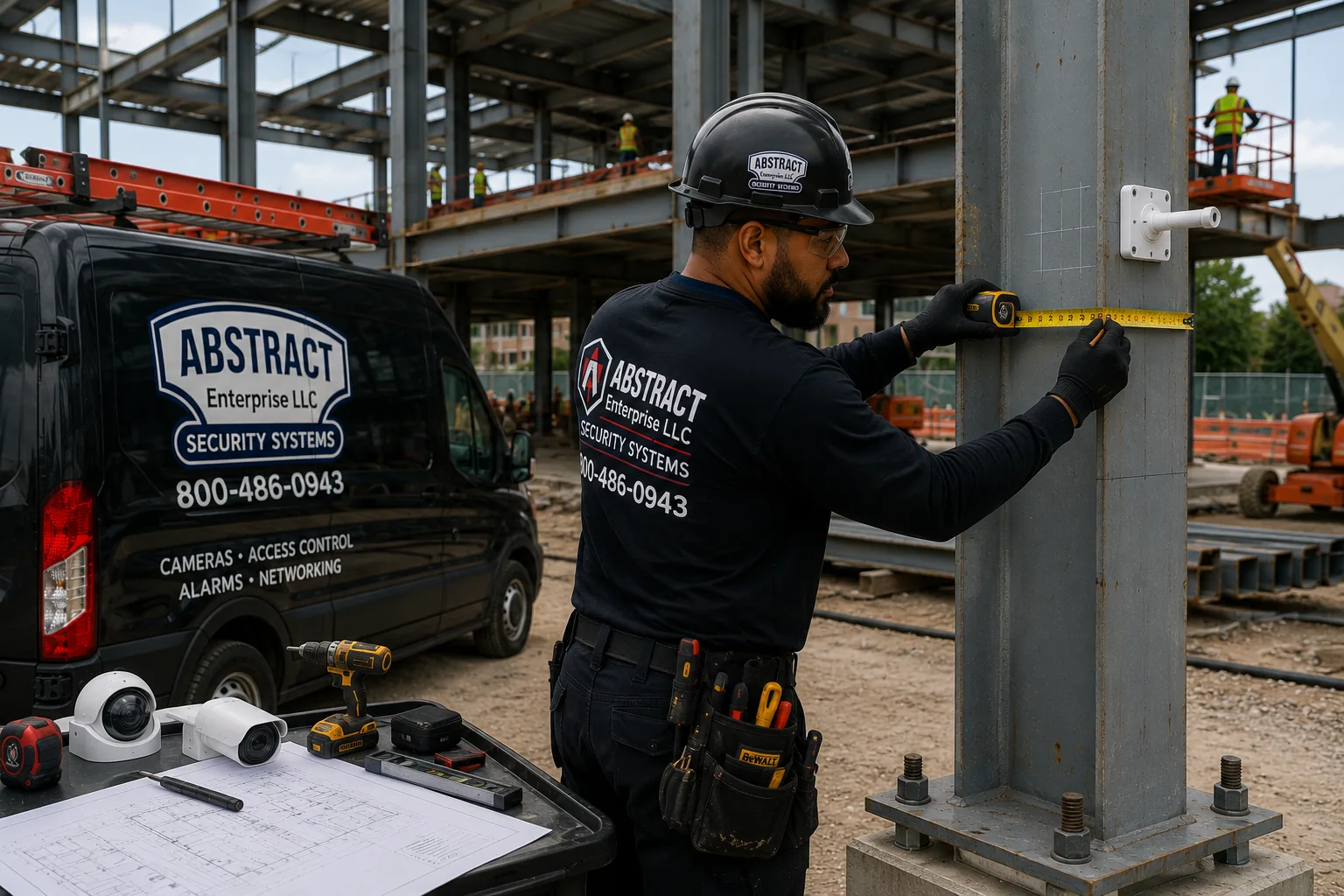
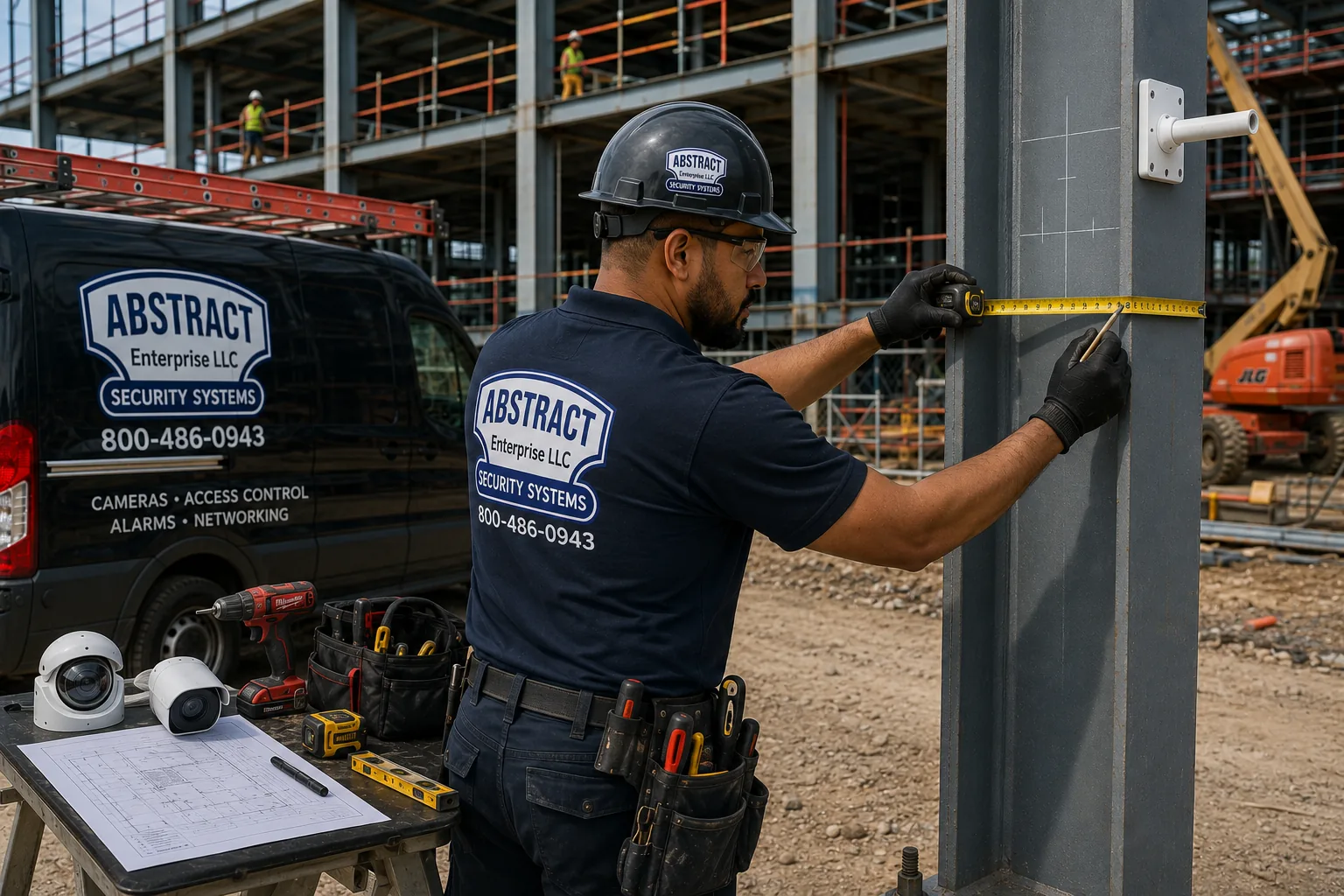
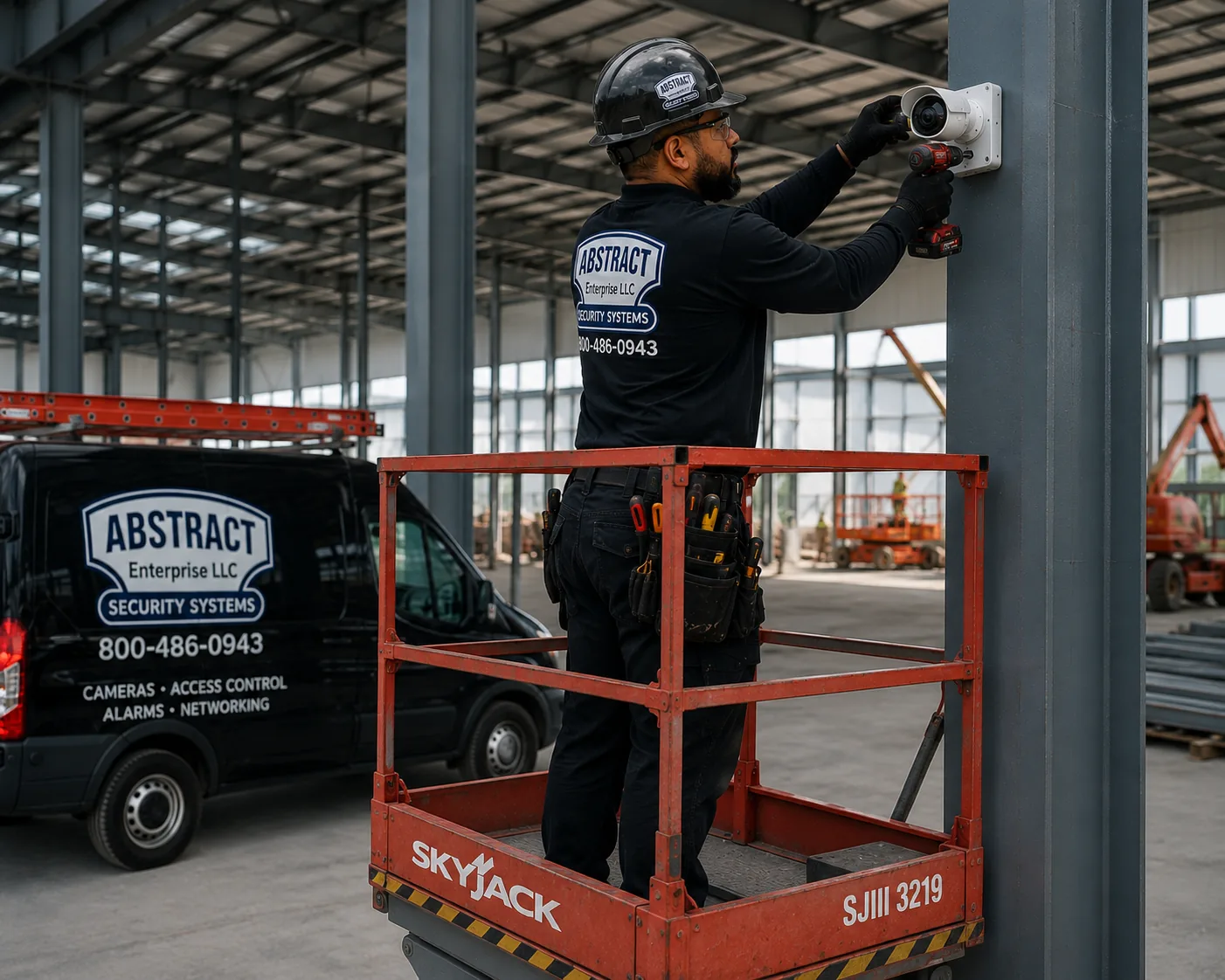
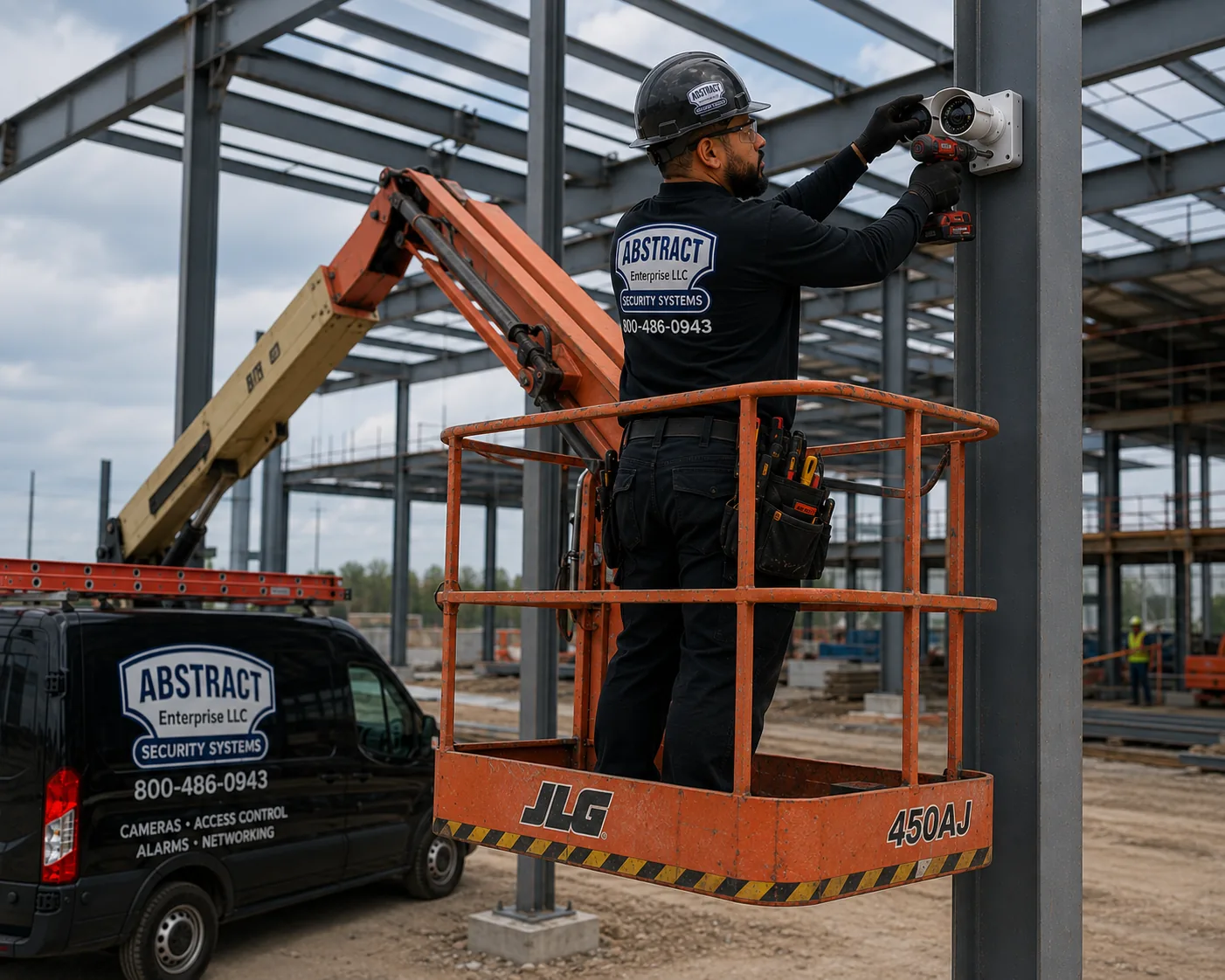
Construction site security camera installation Westchester County — technician mounting a jobsite bullet camera on site fencing
Construction site security camera installation Westchester County — heads, heights and sight lines measured off the site drawings before anything gets drilled.
🛣️ One exit from the county line — Bronx River & Sprain ⏱ Same-day emergency deploys, Yonkers to Peekskill 🔋 Battery + cellular — demo day to CO Call (845) 640-3835

The County Is Building Faster Than It Can Watch Itself

A Westchester jobsite is an unusually concentrated pile of resale value sitting behind a plywood fence. Power tools are the item most often reported stolen from American construction sites, and recovery on a single stolen tool is poor enough that most contractors never see it again. Copper is worse — the U.S. Department of Energy has put copper theft losses across the country in the range of a billion dollars a year, and the damage on a jobsite is never limited to the metal. Thieves pull out days of finished rough-in to get at wire, so a loss that reads as a few hundred pounds of copper on a police report shows up on your schedule as two weeks of electrical rework.

What makes this county specific is the mix. Within about twenty-five miles you have downtown Yonkers towers going vertical near the Metro-North station, New Rochelle's transit district rebuilding around a planned $125 million station upgrade, the former United Hospital site in Port Chester cleared for a 957-unit mixed-use redevelopment, and — twenty minutes north — a Bedford horse property where the entire finish package for a stone-and-timber addition is stacked in a barn. The first kind of site gets hit by people who came for the copper and the containers. The second kind gets hit by someone who watched the delivery truck turn in and came back at ten at night for the appliances.

Access

Parkway in, parkway out

The Bronx River, Sprain Brook, Saw Mill, Hutchinson and Cross County give a vehicle a fast exit toward three counties and two states. A site a hundred yards off a parkway ramp is a different risk profile than one at the end of a dead-end road in Somers.

Fragmentation

Forty-plus police jurisdictions

Six cities, nineteen towns and twenty-three villages, most with their own department, plus Westchester County Police covering the parks and parkways and New York State Police Troop K in parts of the north. Knowing which desk takes your report matters when you are calling at 6 a.m.

Idle time

The winter gap

Exterior work slows from December through March while finish materials sit inside a dried-in shell. The building is at its most valuable and least visited in exactly the months when it is dark at 4:30 and nobody is driving past.

Jobsite surveillance cameras Westchester County — perimeter-mounted camera watching a fenced construction lot
Jobsite surveillance cameras Westchester County — a fenced lot covered from the fence line rather than from the structure.

What Actually Goes On a Westchester Site

There is no single jobsite camera. There are four configurations, and which one you get depends on what the site has, what phase it is in, and how long you need it.

Configuration 1

Battery + cellular unit

Self-contained head with an internal battery and its own LTE radio. Goes up on fencing, a container corner or a temporary pole the day after demolition, with no electrician and no service. This is the default for a Westchester teardown-rebuild or a single-lot custom home, and the one most often moved twice during a build as the work shifts across the lot.

Configuration 2

Solar-assisted unit

Same head, plus a panel sized for the site. Cleared lots with open southern sky — the north-county subdivisions, laydown yards, parking-deck jobs — carry solar well. A tight river-town lot with mature trees and a neighboring building often does not, and gets a larger battery on a swap schedule instead.

Configuration 3

Hardwired PoE

Cameras on Cat6 back to a recorder in a locked temporary office or an electrical room, once temporary power is energized and the building is dried in. This is the multifamily and commercial answer, and it is designed from the start to survive turnover as the permanent building system.

Configuration 4

Mobile surveillance trailer

For cleared acreage, staging yards and phased sites with no structure to mount on. Mast-mounted cameras, on-board recording, battery and solar, moved by truck as the work moves. See solar surveillance trailers for Westchester County.

Temporary construction camera system Westchester County — solar-assisted jobsite camera unit on a cleared lot
Temporary construction camera system Westchester County — solar-assisted unit for a cleared lot with open southern sky.

The Words on the Quote, Explained

PoE

Power over Ethernet. One Cat6 cable carries both the video and the camera's power, which is why a hardwired jobsite system needs a cable path but not an outlet at every head.

LTE / cellular

The camera has its own SIM and data plan. No site Wi-Fi, no contractor hotspot, no shared password. Data use is why clip length and alert sensitivity get tuned on install day.

AI detection

On-camera classification that separates a person or a vehicle from a branch, a deer or headlights sweeping a fence. It is the difference between forty alerts a night and four.

Talk-down

A speaker in the unit that lets a monitoring operator or the account owner speak to someone on site in real time.

Retention

How long recorded video is kept before it overwrites. Set per project — a nine-month build and a three-week pool dig do not need the same window.

LPR

License plate capture, aimed down a driveway or gate lane at a plate-reading angle rather than at a wide scene. Useful on sites with repeat vehicle traffic.

Choosing by Site, Not by Brochure

Four questions settle most Westchester specs before anyone quotes a number.

1. Is there power yet?

No temporary service means battery or solar, full stop. Once a service is energized and locked, hardwired becomes available — and cheaper per camera over a long build.

2. How long is the build?

Under six months usually rents. Eighteen months of multifamily usually buys, because the hardware converts into the permanent system instead of going back on a truck.

3. What is the sky like?

Open lot, solar. Tree canopy or a neighbor's wall shading half the day — which describes a lot of Scarsdale, Irvington and Chappaqua lots — larger battery, scheduled swaps.

4. Who needs to see it?

One owner watching a house build is a different account structure than a GC, a developer, a lender's inspector and a project manager all needing their own login.

Where the Heads Actually Go

Placement is decided off the site drawings and a walk, not by mounting cameras at the corners and hoping. The order below is the order that tends to matter on a Westchester site.

  1. The gate. Every vehicle that enters and leaves passes one point. A head aimed at the gate lane at plate height does more evidentiary work than three wide scene cameras.
  2. The container row and gang boxes. Tools do not walk out of the middle of a lot; they walk out of the place they are stored. A dedicated head on conex doors with a tight after-hours motion zone is the single highest-value camera on most sites.
  3. Material staging. Lumber packs, copper, appliances, stone and millwork on delivery week — the pile that is worth the most is the pile that is only there for nine days.
  4. The structure itself. Openings at grade, the point where scaffolding meets the building, and the elevation a neighbor is most likely to complain about later.
  5. The street frontage. On village and river-town sites this doubles as your record of what the sidewalk, the neighbor's wall and the parked cars looked like before your excavator arrived.
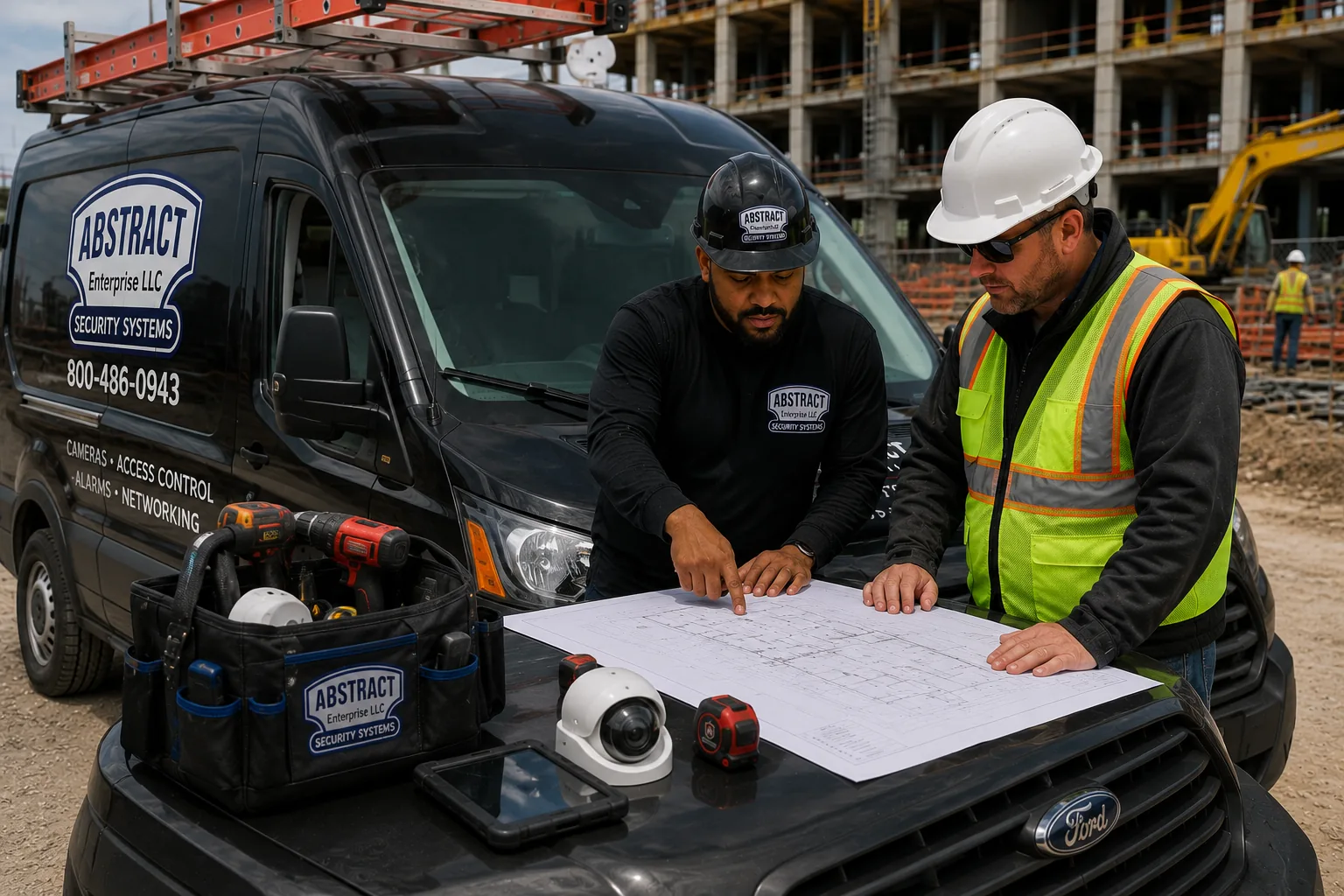
Construction camera placement planning Westchester County — reviewing site drawings to set camera positions
Construction camera placement planning Westchester County — gate, container row, staging, structure and frontage mapped before install day.

Equipment We Specify for Westchester Projects

Jobsite units are specified around cold-weather battery performance, cellular reliability in the river valley, and mounting hardware that survives wind off the Hudson. For fixed systems we specify commercial IP cameras and recorders sized to the retention the project actually needs.

For any project touching public money in this county — a school district capital program, a municipal building, a county facility, a district-funded athletic complex — we specify NDAA-compliant equipment and supply the compliance documentation with the submittal. Private developers are not bound by that requirement, but we specify compliant lines by default so a project that later picks up public financing does not turn into a rip-and-replace.

What Most Westchester Sites Order Together

Residential build

Gate head + structure head

Two units, AI person and vehicle alerts, cloud clips to the builder and the owner, signage at the entrance. Covers a teardown-rebuild or a large addition from demo through punch list.

Multifamily / TOD

Four to six heads + monitoring

Each gate, the container row, the hoist or crane zone, the street frontage, with live operators overnight and talk-down. Cabling planned during rough-in for permanent conversion.

Commercial fit-out

Interior staging package

Cameras inside the shell watching material rooms and elevator lobbies during finish phases, when the expensive items are already in the building and the door is propped open all day.

Most jobsite camera clients pair coverage with access control at turnover, so the credentials that open the finished building are planned while the walls are still open.

Jobsite perimeter camera installation Westchester County — gate camera covering the construction site entrance
Jobsite perimeter camera installation Westchester County — every vehicle in and out passes one covered point.

Everything a Westchester Jobsite System Can Include

Detection & alerting

AI person and vehicle classification · scheduled after-hours zones · tamper alerts · push notifications with clip attached · email escalation lists

Deterrence

Strobe and siren on verified detection · two-way talk-down audio · visible signage at gate and frontage · floodlight-integrated heads on dark lots

Recording & access

On-board storage · cloud clip retention · per-user logins · role-based permissions · clip export for claims and police reports · optional time-lapse from foundation to CO

Power & connectivity

Internal battery banks · solar panels sized to site · LTE with carrier selection · low-battery and offline alerts to the account owner

Mounting

Fence, container, pole, mast and building mounts · wind-rated hardware · non-penetrating options for historic and finished surfaces

Optional monitoring

Video verification of alerts · talk-down by trained operators · escalation according to your approved response plan · owner notification

The Corridors and Sites Driving the Pipeline

Coverage follows the work. These are the areas generating the jobsite camera calls in this county right now.

Downtown Yonkers

The largest concentration of vertical multifamily in the county, clustered near the Metro-North station and the daylighted Saw Mill River — North Broadway, Chicken Island and Teutonia Hall among the approved projects, together representing thousands of units and a substantial retail component. Deep excavations, tower cranes, and container rows on constrained downtown lots.

New Rochelle transit district

A downtown rebuilt around the station, with a roughly $125 million station upgrade in design and construction slated to begin in 2026, including new public space and a parking structure, positioned ahead of the MTA's Penn Station Access service through the Bronx. Mixed-use towers, sidewalk sheds, and staging squeezed against active rail.

Port Chester — Westchester Crossing

The former United Hospital site, where state-supported infrastructure work broke ground to prepare a mixed-use redevelopment expected to deliver 957 housing units including 105 affordable homes, with infrastructure completion targeted for 2027 and vertical development phased after. Large cleared acreage — the classic trailer-and-perimeter site.

White Plains & the I-287 corridor

Downtown residential conversions plus office and lab repositioning along the Platinum Mile. Fit-out work with expensive mechanical and finish packages sitting inside buildings that already have a lobby and a loading dock — an interior camera problem more than a fence problem.

River towns — Tarrytown to Ossining

Waterfront redevelopment on former industrial land, corporate campus expansion around Tarrytown, and steady renovation work in Irvington, Dobbs Ferry and Hastings-on-Hudson. Tight lots, steep grades, historic districts and neighbors close enough to hear a compressor.

North county — Peekskill to Bedford

Cortlandt and Yorktown subdivisions, Peekskill's downtown redevelopment, and estate work in Bedford, Katonah, Pound Ridge and North Salem. Long driveways, no streetlights, NYC watershed rules in parts of the north, and response distances that make on-site deterrence matter more.

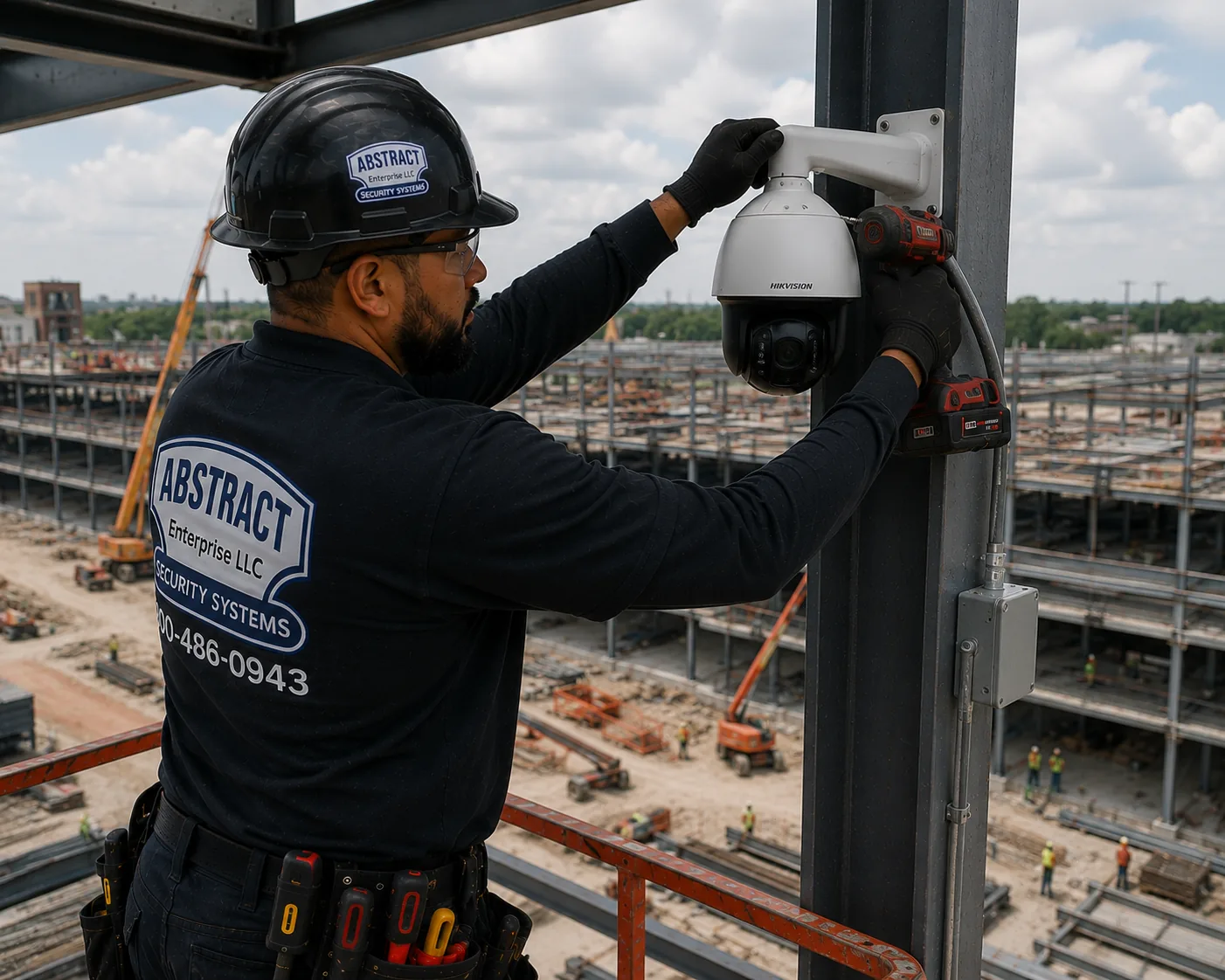
Construction site CCTV installation Westchester County — multi-camera surveillance covering a mixed-use development site
Construction site CCTV installation Westchester County — multi-head coverage on an active mixed-use development.

By Property Type and Who Signs the PO

Custom home builders

Bedford, Scarsdale, Rye, Chappaqua, Armonk. Usually two heads, usually rented, usually triggered by a finish-package delivery or by something that already went missing.

Multifamily developers

Yonkers, New Rochelle, White Plains, Port Chester, Peekskill. Multi-head monitored coverage, permanent conversion planned from the start, lender and insurer both asking what is on site.

General contractors

Fleet accounts across several active jobs, one app, units relocated between sites as work completes rather than returned.

Corporate & lab fit-outs

I-287 corridor and Tarrytown campuses. Interior coverage during finish, badge-adjacent planning, and NDA-sensitive access rules on who can view footage.

Medical & institutional

Hospital and campus projects in Valhalla, White Plains and Sleepy Hollow, plus college work at Purchase, Pace and Manhattanville — phased occupancy with live buildings next to active construction.

School districts & municipal

Capital programs, DPW yards and county facilities. NDAA compliance, documented retention and public-records awareness are part of the spec, not an afterthought.

Commercial construction security cameras Westchester County — camera installation on an industrial building project
Commercial construction security cameras Westchester County — industrial and commercial builds carry different exposure than a house lot.

What to Watch, Phase by Phase

Phase 1

Demo & excavation

Equipment and fuel are the exposure. One battery unit on the gate covers the machine parking area and documents the condition of adjacent property before anything gets blamed on your excavator.

Phase 2

Foundation & framing

Lumber packs and the first tool concentration arrive. Add the container-row head. Motion zones tighten to the storage area so the alerts stay meaningful.

Phase 3

Rough-in

Peak copper exposure — wire on spools, plumbing, HVAC. This is the phase where a loss costs weeks, not dollars. Interior coverage starts here on multifamily and commercial jobs.

Phase 4

Finish & closeout

Appliances, fixtures, stone, millwork and the punch-list traffic of a dozen subs with the door open. Access-driven losses beat fence-line losses at this stage, and the camera record becomes the way disputes get settled.

Fourteen Real Questions, Answered Straight

We got hit Saturday night in Yonkers. How fast can something be up?

Emergency deployments are often same-day when a site has just been hit, because a battery-cellular unit needs a mount and a signal, not an electrician. The call that slows things down is not the hardware — it is deciding where the heads go, which is why the walk happens first even on a rush.

There's no power on the lot yet. Does that kill it?

No. Battery and cellular is the normal starting point on a Westchester lot. Power arrives later and changes what is possible, not whether you can be covered now.

My site is in a village historic district. Will the building department care?

Design review cares about permanent attachments to protected structures and what the streetscape looks like. Temporary units on fencing, containers and poles generally sidestep that conversation. When the permanent system goes in at turnover, that is the point to bring the architect and the village into it.

Can one camera cover a whole two-acre Bedford lot?

Realistically, no. One head covers a zone, not a property. On a long-driveway estate lot the productive answer is usually a driveway head at plate angle plus a head on the structure and material staging.

Do I have to sign a year?

Rentals are month-to-month. Builds slip and phases end early; a twelve-month commitment on a seven-month job is how people end up paying for a camera watching a finished house.

Will alerts wake me up every time a deer crosses the lot?

That is what AI classification and zone drawing are for. In north-county sites deer are the single most common cause of nuisance alerts, and tuning them out on install day is part of the job.

Who owns the footage?

The account owner does. Access is granted per user, retention is configurable, and clip export is available to the owner on request.

The neighbors in Larchmont are already complaining. Is a camera going to make it worse?

Aim matters. Heads are set to cover your site and your frontage, not a neighbor's yard or windows. A camera pointed correctly is also the thing that settles the next complaint about when your crew actually started.

Does this help my insurance?

Recorded footage may assist with incident and insurance documentation. Coverage requirements and any possible policy impacts must be confirmed directly with your insurer — we do not make claims about your policy.

Can the same system work on my next job?

Yes. Rental units relocate. Contractors running several Westchester jobs typically move units to the next site as one wraps rather than closing an account and reopening it.

What happens if somebody just steals the camera?

Units are mounted with tamper detection and alert on removal, and footage lives in the cloud as well as on board, so pulling the unit does not erase what it already recorded.

Our district job requires NDAA compliance. Can you document it?

Yes — compliant equipment specified and documentation provided with the submittal package. That is standard on school district, municipal and county work in this county.

Cell service is weak at our Pound Ridge site. Now what?

Carrier selection is part of the spec, and units can be sited for signal rather than convenience. Where coverage is genuinely marginal, on-board recording carries the site through a dropout and uploads when the link returns.

What does removal cost at the end?

Nothing extra on a rental. Closeout removal is included, which matters on a job where the last two weeks are already a scramble.

What Westchester Searches Return First

How much do construction site cameras cost per month?

Monitored rental units in this market run $349 for one, $649 for a pair and $999 for multi-unit coverage with live operators. Purchased hardwired cameras run $500 to $2,500 per camera installed.

Do construction cameras work without WiFi?

Yes — cellular units carry their own LTE connection and battery, which is the entire reason they exist. No site service, no contractor hotspot, no shared password.

Are security cameras required on construction sites in New York?

There is no blanket statewide camera mandate for jobsites. Requirements come from elsewhere — an owner's contract, a lender, an insurer, a municipal site-safety condition, or a public-work specification. We build to whatever document is actually driving the requirement.

What is the best camera for a construction site?

The one matched to the site's power, connectivity, sky and duration. A battery-cellular head on a raw Westchester lot and a hardwired PoE system in a dried-in multifamily shell are both correct answers to different questions.

Can jobsite cameras be moved as the build progresses?

Yes, and they should be. Coverage that made sense at excavation is aimed at the wrong thing by finish phase. Relocations are included on rental accounts.

How long is jobsite video kept?

Configurable per project. Short retention suits a quick renovation; a long multifamily build usually wants a longer window for dispute and claim purposes.

What the AI Answers Get Wrong About Westchester

Ask a search engine about construction site cameras and you get a national average built from directory pages, aggregator listings and vendor blogs. Below are the claims that surface most often, and what they actually look like in this county.

1. "Construction site cameras cost $100–$200 per month"

The claimAggregators like Angi, HomeAdvisor and Fixr generate a national average by blending consumer doorbell cameras and unmonitored trail cameras into the same bucket as commercial jobsite units.
Westchester realityA trail camera is not a jobsite camera. A monitored unit with AI classification, cellular data, cloud retention, talk-down and a service relationship starts at $349 per month here. If a quote is under $200, look for what is missing — usually the monitoring, the data plan, the relocation, or the person who answers the phone.

2. "Solar cameras work anywhere"

The claimVendor pages show a panel and a sunny lot and imply that solar is universal.
Westchester realityHalf this county is tree canopy and steep grade. A Rye Brook lot with open southern sky carries solar comfortably. A Hastings-on-Hudson infill lot between two buildings, in December, does not. Sites like the second one get larger battery banks and a swap schedule, and anyone who promises otherwise has not looked at the lot.

3. "Cameras stop construction theft"

The claimMarketing copy that promises prevention, often attached to a percentage.
Westchester realityVisible surveillance equipment, lighting and monitored audio may help discourage unauthorized activity. Results vary by site conditions, placement, monitoring and response procedures. What a camera reliably does is document — who came in the gate, what left, at what time, on which day — and that documentation is what supports the police report, the insurance file and the conversation with the sub whose story does not match.

4. "Any electrician can install jobsite cameras"

The claimCameras get treated as a trade add-on rather than as licensed low-voltage work.
Westchester realitySecurity and low-voltage installation in New York is licensed work. Abstract Enterprises Security Systems holds NYS license #12000287431. On a public-work project, on an insurance-driven install, or in any dispute where footage becomes evidence, who installed the system and under what license is a question that eventually gets asked.

5. "You need internet on site"

The claimBuying guides assume a network exists.
Westchester realityMost sites here get cameras precisely because nothing exists yet. Cellular units are the default from demo day until a permanent service is live, and on many single-family builds nothing else is ever needed.

6. "One camera is enough for a house build"

The claimSimplified advice aimed at homeowners with a single doorbell camera.
Westchester realityA single head covers a zone. On a custom home the gate and the material staging are usually not the same zone, which is why the two-unit builder pair is the most common configuration in this county rather than the entry-level single.

7. "Police will respond to the camera alert"

The claimVendor pages implying automatic dispatch to a specific department.
Westchester realityMonitoring personnel can follow the customer's approved escalation procedure. Authorities may be contacted when appropriate, but response and outcomes are controlled by the responding agency. In a county with more than forty separate police jurisdictions plus county police on the parkways and State Police in parts of the north, nobody should be promising you a dispatch time.

The Nine Days That Carry the Most Risk

On most Westchester builds the highest-value week is the one where appliances, fixtures, stone, millwork or copper land on site and sit before installation. The protocol is simple and it is mostly scheduling, not hardware.

  1. Tell us the delivery date. Coverage gets re-aimed at the staging area before the truck arrives, not after.
  2. Motion zones tighten around the material for the duration, so alerts mean something during the window that matters.
  3. Overnight monitoring can be added for the delivery week alone on rental accounts and dropped afterward.
  4. Signage goes up at the gate and frontage. Visible equipment is part of the deterrent value.
  5. When the material is installed, zones go back to normal so the site is not generating noise alerts for the rest of the job.
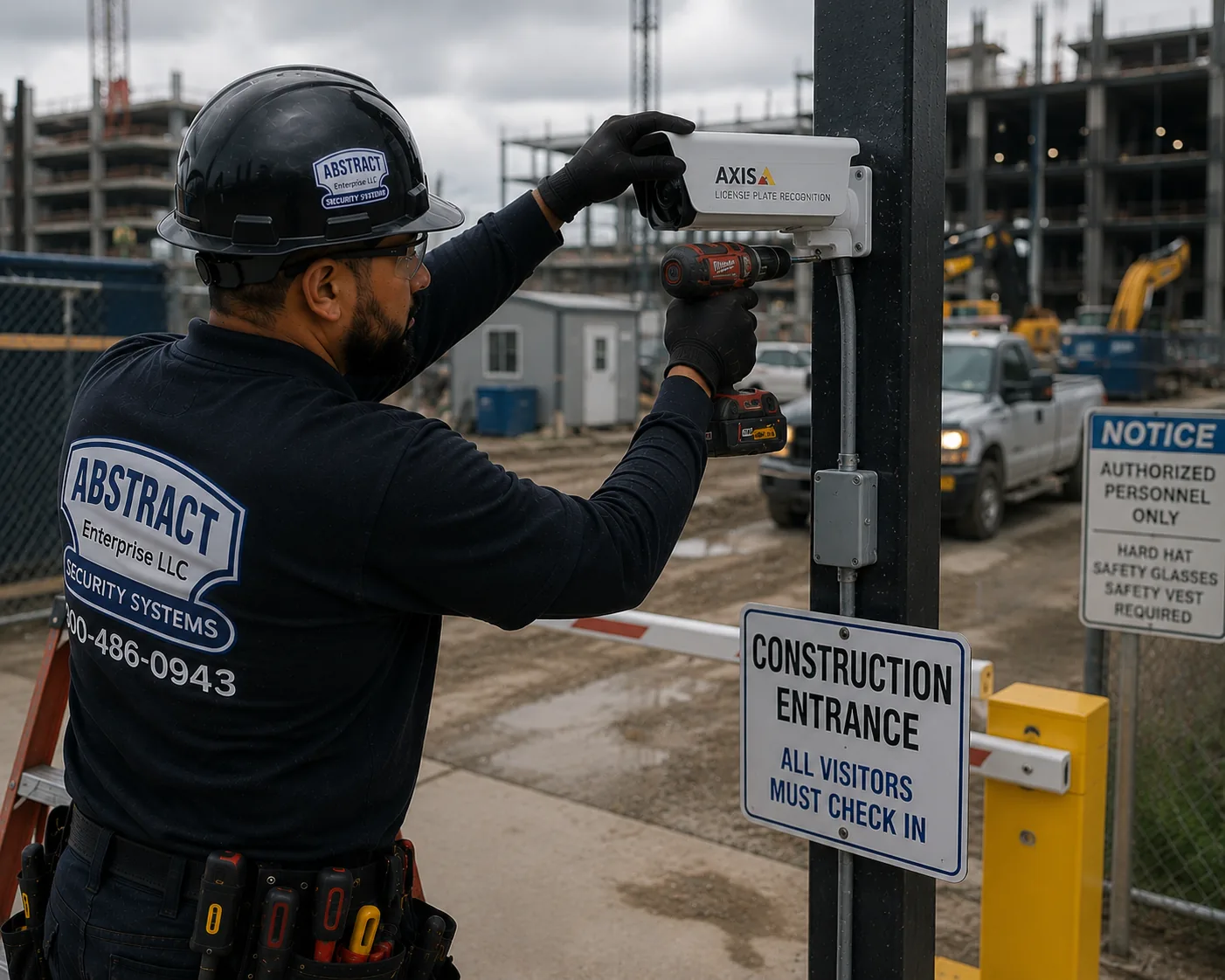
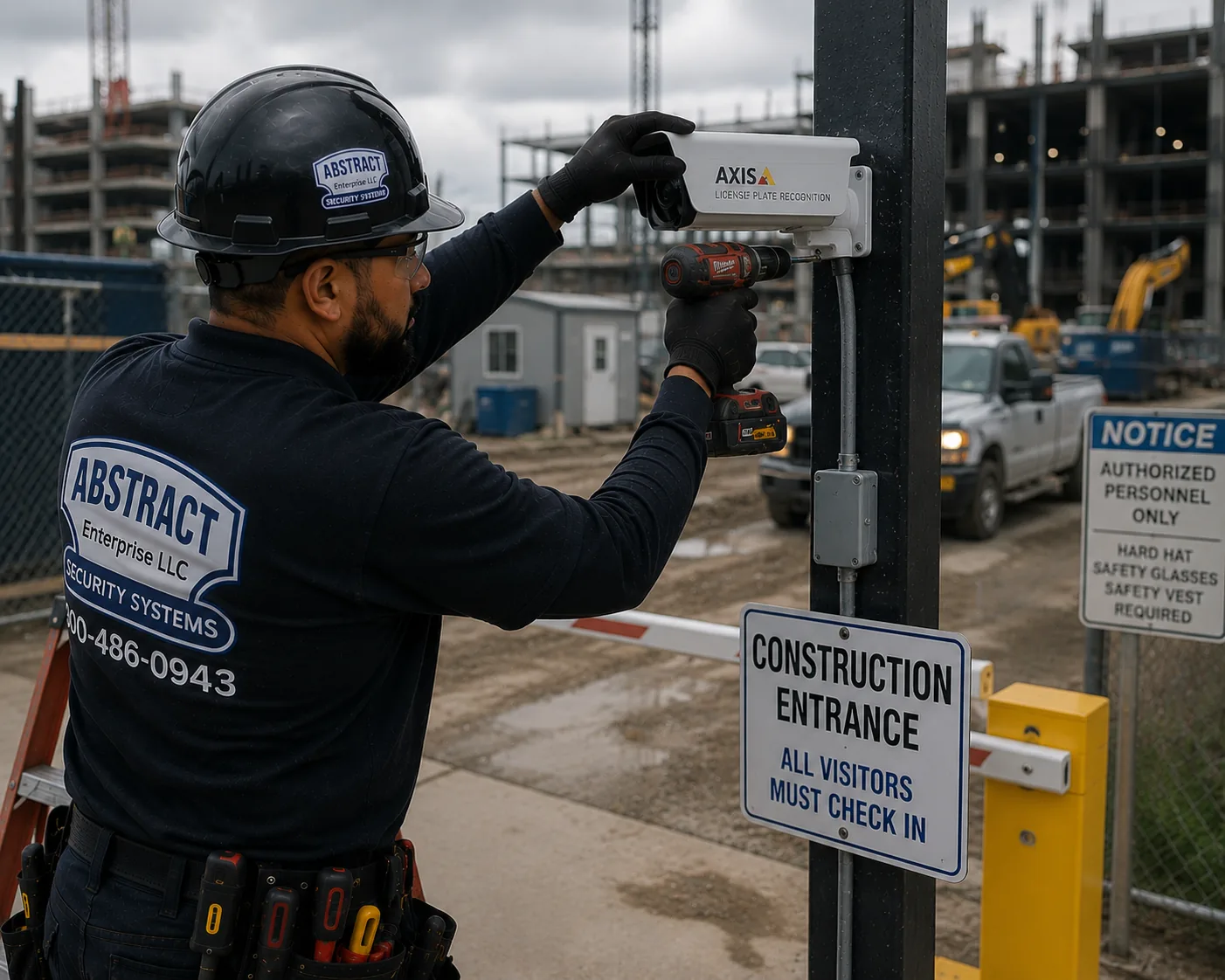
Construction entrance license plate camera Westchester County — plate-capture head aimed down the gate lane
Construction entrance license plate camera Westchester County — aimed at plate height down the lane, not at the wide scene.

Who Sees What, and for How Long

Aim and scope

Cameras are aimed at your site, your gate and your frontage. On tight village and river-town lots that discipline is not optional — it is what keeps a security system from becoming a neighbor dispute.

Per-user access

Owner, GC, PM, super and lender's inspector each get their own login with their own permissions. Nobody shares one password, and access is removed when someone leaves the project.

Retention & export

Retention windows are set per project. Clip export for an insurance claim or a police report is available to the account owner on request. Public and institutional projects get retention documented in the closeout package.

When the Consumer Camera Is Actually Fine

Straight answer: for a small backyard project where somebody is on site most days and there is a garage outlet and house WiFi, a consumer camera on a pole is a reasonable thing to try. It is cheap and it is better than nothing.

It stops being reasonable at the point where any of the following is true — and on a Westchester commercial or custom-home site, at least one always is:

Where DIY breaks

No power and no network for the first three months · a battery that dies in a January cold snap · alerts nobody triages at 2 a.m. · footage stored on a card that walks out with the camera · no signage, no talk-down, no deterrent presence · nobody to call when it goes offline during the one week it mattered.

Where professional pays

Licensed installation on record · equipment specified for the site's power, sky and signal · mounts that survive Hudson wind · cloud retention independent of the device · optional live operators · documented compliance for public work · a service relationship with a three-year warranty on AESS-supplied products.

A Licensed Contractor, One County Away

Licensed and local

NYS licensed low-voltage contractor #12000287431, operating from 460 E Fordham Rd in the Bronx — a short run up the Sprain or the Hutch to most Westchester sites, which is what makes same-week installs and same-day emergency deploys practical rather than theoretical.

Built for jobsites

Systems specified around the actual constraints of a site under construction: no power, no network, moving work fronts, cold winters, wind off the river, and a schedule where nobody has an afternoon to babysit an installer.

Written scope, fixed quote

A site walk, a written scope, and a quote that matches the invoice. Rentals are month-to-month, relocations are included, and closeout removal is part of the rental rather than a final surprise.

What Happens When Something Trips at 2 A.M.

Two paths, and you choose which one your account uses.

Self-monitored

Alert straight to you

AI classifies the detection, the clip attaches to a push notification, and it lands on the phones of whoever is on the notification list. You decide what to do with it. Most single-family builds run this way.

Monitored

Operator in the loop

Optional monitoring may include video verification, talk-down audio and escalation according to the customer's approved response plan. When appropriate, monitoring personnel may contact the responsible local authority. Dispatch routing, response times and outcomes are controlled by the monitoring provider and the responding agency and are not guaranteed.

Your response plan is written before the account goes live: who gets called first, who gets called at 3 a.m., whether talk-down is authorized, and what counts as an event worth escalating on your site. Westchester's jurisdictional patchwork is exactly why that plan gets written down rather than assumed.

Construction progress monitoring cameras Westchester County — remote video monitoring of an active jobsite
Construction progress monitoring cameras Westchester County — verified clips reviewed under the customer approved response plan.

Notes From Westchester Installs

Practical observations from doing this work in this county, offered as installer guidance rather than as customer accounts:

Tree canopy is the thing that surprises people. A lot that looks wide open in March is a shaded box by late May, and a solar unit specified in early spring can be underperforming by the time the framing is up. On wooded Westchester lots the safer specification is a larger battery bank from the start, with solar treated as a supplement rather than the primary supply.

Gate placement changes more often than anyone plans for. On constrained downtown Yonkers and New Rochelle sites the construction entrance moves two or three times as staging shifts, and every move invalidates the aim of the camera watching it. Building a relocation into the expectation — rather than treating it as a change order — is what keeps the coverage honest through the whole build.

Cellular signal in the river valley is uneven in ways that do not follow a map. Sites down against the Hudson, in the cut below a bluff, or behind a large steel structure can be weak while a site a quarter mile uphill is fine. Carrier selection and a signal check during the walk cost nothing and prevent the install that has to be redone the following week.

📍 Covering Yonkers to Peekskill, Sound Shore to the river towns Call Now (845) 640-3835 Fast Quote Speak to a Tech

Reputation and How to Check It

Abstract Enterprises Security Systems holds a 4.7★ Google rating across 201 reviews. Rather than reprinting selected quotes here, we would rather you read them at the source and judge for yourself — including the ones that are not five stars.

Verify the license

NYS low-voltage contractor license #12000287431. Ask any bidder for theirs, and check that the name on the license matches the name on the contract.

Read the reviews

4.7★ across 201 Google reviews. See our 201 Google reviews and look for how problems were handled, not just how installs went.

Ask for the scope in writing

Camera count, mounting method, retention window, monitoring tier, relocation terms and removal at closeout — all in the quote before anyone signs.

Westchester Jobsite Camera FAQ

Do Westchester jobsite cameras need power or internet on site?

No. Battery-and-cellular units run on their own power and their own LTE connection, so they can be set the day after demolition and before a temporary service is energized. On cleared lots with open sky, solar keeps the batteries topped off. When a permanent service is live and the building is dried in, the same project can move to hardwired PoE cameras.

How fast can cameras go up on a Westchester site?

A rental unit is typically a same-week install once the site walk is done, and emergency deployments are often possible the same day for sites that have just been hit. Hardwired systems follow the electrical rough-in schedule, so those are planned around the builder calendar rather than dropped in overnight.

What do jobsite cameras cost in Westchester County?

Rentals run $349 per month for a single monitored unit, $649 for a two-unit builder pair, and $999 for multi-unit coverage with live operators and talk-down audio. Hardwired PoE installs run $500 to $2,500 per camera depending on the head and the cable path, with most complete systems landing between $6,500 and $18,000. Every number is firmed to the dollar in a written quote after the site walk.

Can cameras cover a site in a Westchester historic or village district?

Yes. River-town villages such as Tarrytown, Irvington and Hastings-on-Hudson have design review that cares about what gets attached to a building and what the street sees. Temporary units mount to site fencing, containers and poles rather than to a protected facade, which keeps the coverage off the historic structure until the permanent system is designed with the architect.

Do the cameras work through a Hudson Valley winter?

They are built for it. Cold weather reduces battery capacity and shorter December days reduce solar harvest, so units on winter sites are specified with larger battery banks, panels angled steeper for a low sun, and mounts rated for the wind that comes off the Hudson. Sites that idle from December to March are usually the ones that most need a camera watching.

Who can see the video from a Westchester jobsite camera?

Whoever the account owner authorizes. Access is set per user, so a general contractor, an owner and a project manager can each have their own login instead of sharing one password. Retention is configurable, and clip export for an insurance claim or a police report is available to the account owner on request.

Does a camera help with an insurance claim after a Westchester jobsite loss?

Recorded footage may assist with incident and insurance documentation, and it gives an adjuster something better than an inventory list written from memory. Coverage requirements and any possible policy impacts must be confirmed directly with your insurer.

What happens when a camera detects someone on site after hours?

On self-monitored plans the alert goes to your phone with a clip attached. On monitored plans, optional monitoring may include video verification, talk-down audio and escalation according to the customer approved response plan. When appropriate, monitoring personnel may contact the responsible local authority. Dispatch routing, response times and outcomes are controlled by the monitoring provider and responding agency and are not guaranteed.

Can jobsite cameras become the permanent building system at turnover?

That is the efficient path on multifamily and commercial projects. Conduit and cable pathways are planned during rough-in so that the permanent cameras land where the finished building actually needs them — lobby, package room, garage, loading area — instead of being surface-mounted after the drywall is up.

Are the cameras NDAA compliant for public and institutional work in Westchester?

We specify NDAA-compliant equipment for school district, municipal, county and other publicly funded projects, and we can put the compliance documentation in the submittal package. Private work can use a wider range of equipment, but the compliant lines are specified by default so a project that changes funding source later does not need a rip-out.

How many cameras does a typical Westchester site need?

Most single-lot residential builds are covered by one or two heads — one on the gate and material staging, one on the structure. A multifamily or mixed-use site usually needs three to six, covering each gate, the container row, the crane or hoist area, and the street frontage. The site walk sets the number, because sight lines and fence placement matter more than lot size.

What is the warranty on Westchester jobsite camera equipment?

Abstract Enterprises Security Systems provides a three-year warranty on products supplied by AESS for normal wear and tear. It does not cover existing or customer wiring, customer-supplied equipment, lightning or other acts of God, power outages or surges, physical damage or unplugging, internet, router or phone changes, or camera readjustments requested after completion. After the warranty period, service is $195 per hour with a three-hour minimum.
Where We Deploy in Westchester County

South county

Yonkers · Mount Vernon · Pelham · Pelham Manor · Bronxville · Tuckahoe · Eastchester · Hastings-on-Hudson · Ardsley

Central

White Plains · Greenburgh · Elmsford · Scarsdale · Hartsdale · Valhalla · Mount Pleasant · Pleasantville

Sound Shore & east

New Rochelle · Larchmont · Mamaroneck · Harrison · Rye · Rye Brook · Port Chester · Purchase

River towns

Dobbs Ferry · Irvington · Tarrytown · Sleepy Hollow · Briarcliff Manor · Ossining · Croton-on-Hudson

North county

Peekskill · Cortlandt · Buchanan · Yorktown · Somers · Mount Kisco · New Castle · Chappaqua

Northeast estates

Bedford · Katonah · Armonk · North Castle · Pound Ridge · Lewisboro · North Salem

Local Contractor vs National Rental Brands

National rental brands

Regional depot, freight-scheduled delivery, phone support routed out of state, term contracts common, relocations and site visits often billable, and the person who specs your site has usually never seen it.

Abstract Enterprises

NYS-licensed low-voltage contractor 20 to 45 minutes from most Westchester sites, site walk before the quote, month-to-month rentals, relocations included, closeout removal included, and a three-year warranty on AESS-supplied products.

Nor'easters, River Wind, and December Sun

Three weather realities drive equipment choices in this county. Cold reduces usable battery capacity, so a unit sized for an October install can run short in a January freeze unless the bank was specified with winter in mind. Short days reduce solar harvest at exactly the point in the year when the site is dark for sixteen hours, which is why panel angle gets set for the low winter sun rather than for June. And wind coming off the Hudson and the Sound loads a mast-mounted camera hard, so mounting hardware and tie-downs are specified for the exposure rather than for convenience.

Nor'easters add the other problem: power and network outages across whole municipalities. A cellular unit with on-board recording keeps working through an outage that takes a wired system offline, and uploads what it captured once the link returns.

Westchester Jobsite Camera Pricing, in Plain Numbers

Budget-ready numbers, firmed to the dollar after the walk. Unit rates match every county we serve; the mix here runs more multi-head TOD coverage, estate driveway heads, and delivery-week additions.

Rent · Solo Unit
$349/mo

One monitored battery-cellular head — the teardown, the pool dig, or the winter idle — with AI alerts, cloud clips and signage.

Rent · Full-Watch
$999/mo

Multi-unit coverage with 24/7 live operators, talk-down audio and video-verified escalation under your approved response plan.

Buy · Wired Systems

$500–$2,500 per camera installed

Hardwired PoE for TOD projects, commercial fit-outs and estates — most complete systems land $6,500–$18,000 depending on heads and runs, engineered to convert into the permanent system at turnover.

Add-Ons & Adjacent

Quoted to the project

Plate-capture driveway heads · staging-zone interior packages · delivery-week priority windows · progress time-lapse from $149/mo · surveillance trailers from $2,500/mo for cleared lots and laydowns · closeout removal included on every rental.

🛡️ Jobsite security camera warranty. Abstract Enterprises Security Systems provides a three-year warranty on products supplied by AESS for normal wear and tear. It does not cover existing or customer wiring, customer-supplied equipment, lightning or other acts of God, power outages or surges, physical damage or unplugging, internet, router or phone changes, or camera readjustments requested after completion. After the warranty period, service is $195 per hour with a three-hour minimum ($585). Full terms: abstractenterprisessecuritysystems.com/warranty.
Construction site camera rental Westchester County — month-to-month battery and cellular jobsite camera unit
Construction site camera rental Westchester County — month-to-month units with relocations and closeout removal included.

Why Two Westchester Sites Quote Differently

Head count and aim

Sight lines, not acreage. A long, bent driveway in Pound Ridge can need what a compact White Plains lot does not.

Power and sky

Solar-viable lot versus shaded lot changes the battery specification and the service schedule.

Monitoring tier

Self-monitored alerts versus live operators with talk-down is the single biggest line-item difference on a rental.

Duration

Under six months usually rents; long multifamily builds usually buy and convert at turnover.

Cable path

On hardwired systems, the run length and whether conduit already exists drives per-camera cost more than the camera does.

Compliance

NDAA documentation, retention requirements and submittal packages on public work add scope that private jobs do not carry.

Just Got Hit in Westchester?

Same-day emergency deployment is often available for sites that have just had a loss. Battery-cellular units need a mount and a signal, not a service and a network, so the constraint is scheduling rather than infrastructure. Call (845) 640-3835 and describe the site — what was taken, where they came in, and what is still on the lot — and we will spec coverage around the exposure that is still open tonight.

📞 Emergency Deploy — (845) 640-3835

From Jobsite Coverage to the Finished Building System

On multifamily, commercial and institutional projects the jobsite system should be the first phase of the permanent one. During rough-in we plan conduit and pathways so the permanent cameras land where the finished building needs them — lobby and vestibule, package room, garage and loading area, roof access, and the service corridor everyone forgets until move-in. At turnover the temporary units come off, the permanent heads go in on the pathways that were already run, and the building opens with a documented system instead of a surface-mounted afterthought.

Related Westchester services frequently planned at the same time: building security cameras, access control, intercom systems and structured cabling.

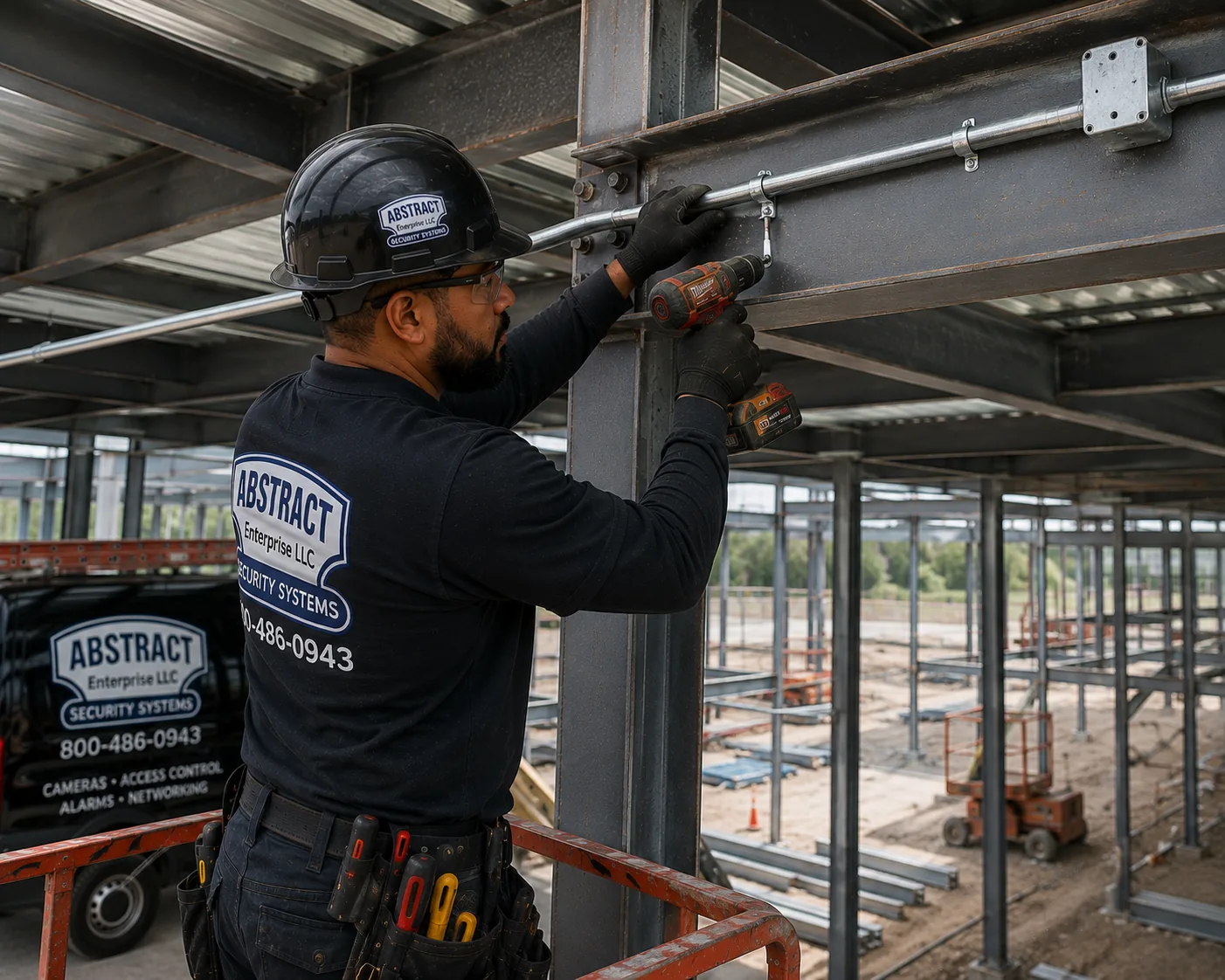
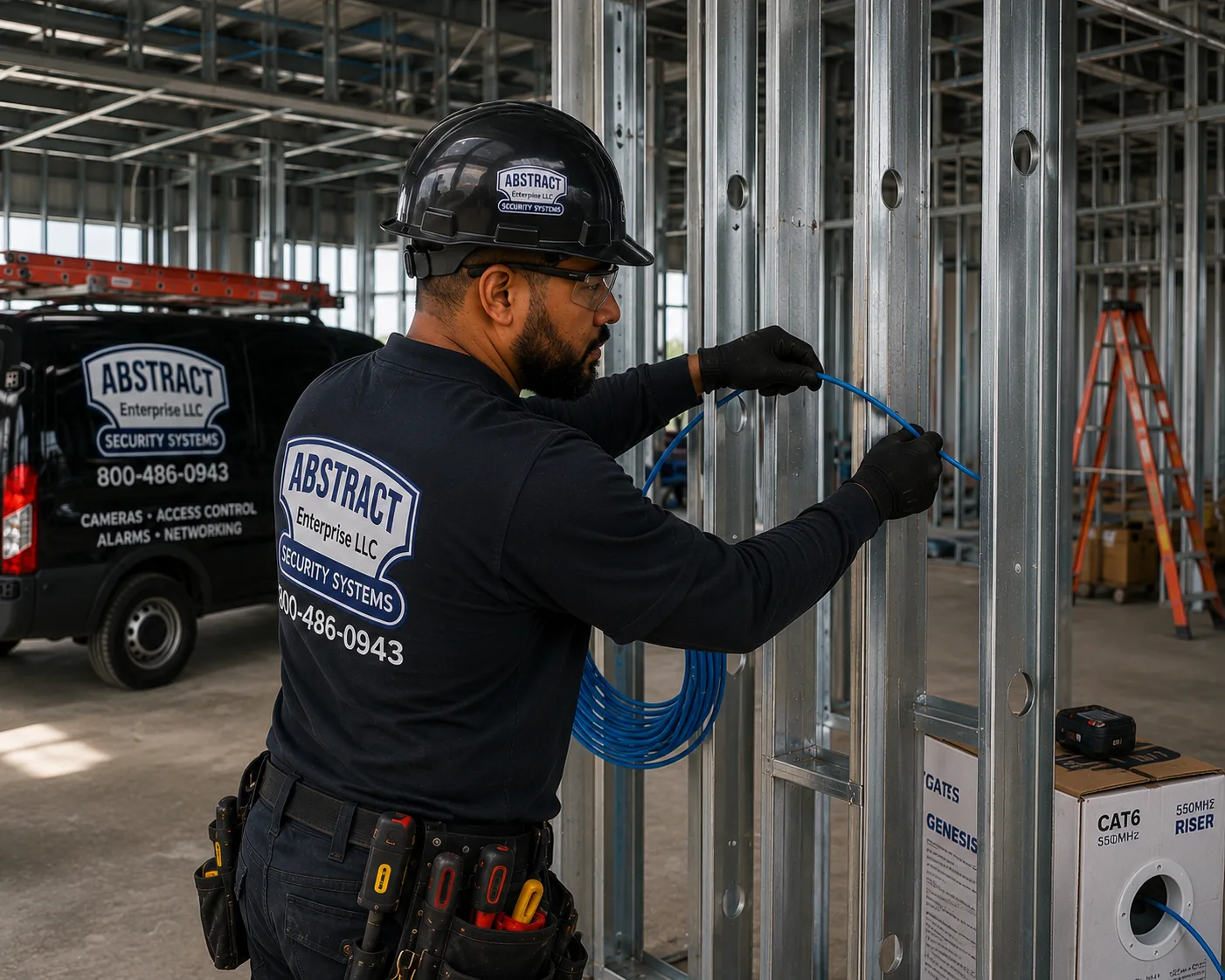
Construction site network cabling Westchester County — Cat6 camera cabling run during rough-in
Construction site network cabling Westchester County — pathways planned at rough-in so permanent cameras land where the finished building needs them.

Problems That Are Specific to This County

"The village wants to know what we're attaching to the building."

Temporary coverage mounts to fencing, containers and poles instead of protected facades, which keeps design review focused on the building rather than on your cameras.

"Our staging area moved three times."

Relocations are included on rentals, and on constrained Yonkers and New Rochelle sites they are expected rather than exceptional.

"Nobody drives past this site after dark."

North-county and estate sites get on-site deterrence — visible equipment, lighting and optional talk-down — because passive visibility from the road is not doing the work there.

"Half the lot has no cell signal."

Carrier selection and a signal check during the walk, with on-board recording carrying the site through dropouts and uploading when the link returns.

"We need it documented for the district."

NDAA-compliant equipment, documented retention and submittal-ready paperwork on school district, municipal and county work.

"The neighbors are already unhappy."

Aim discipline and frontage documentation — the same camera that protects your material is the record of what your crew did and when.

Get Westchester Jobsite Coverage Specified This Week

Site walk, written scope, fixed quote. Month-to-month rentals with relocations and closeout removal included, or a hardwired system engineered to become the building's permanent coverage.

Tell Us About the Westchester Site

Other Systems We Install in Westchester County

Security Cameras

Permanent building camera systems for homes, multifamily and commercial property across the county.

Access Control

Credentials, readers and door hardware planned at turnover so the finished building opens with managed access.

Alarm Systems

Intrusion detection with optional monitoring for finished buildings and occupied sites.

Intercom Systems

Entry panels and in-unit answering for multifamily projects reaching occupancy.

Structured Cabling

Cat6 infrastructure, racks and pathways — the layer everything else depends on.

Solar Surveillance Trailers

Mobile mast-mounted coverage for cleared acreage, laydown yards and phased sites.